

Architects: Edward Durell Stone & Associates
Area: 5,017 m² (54,000 ft²)
Year: 1964
Photography: Ezra Stoller, Esto, Michael Minn, Allied Works, Wikimedia Commons, Renate O’Flaherty, H0n0r, Skylinerider, ajay_suresh, Beyond My Ken, Stefanweisman, hunterdouglasarchitectural.com
Associate Architect: Handel Architects
Client: Huntington Hartford
Renovation Architect: Allied Works Architecture / Brad Cloepfil
Renovation: 2005–2008
Current Client: Museum of Arts and Design
City: New York City
Country: United States
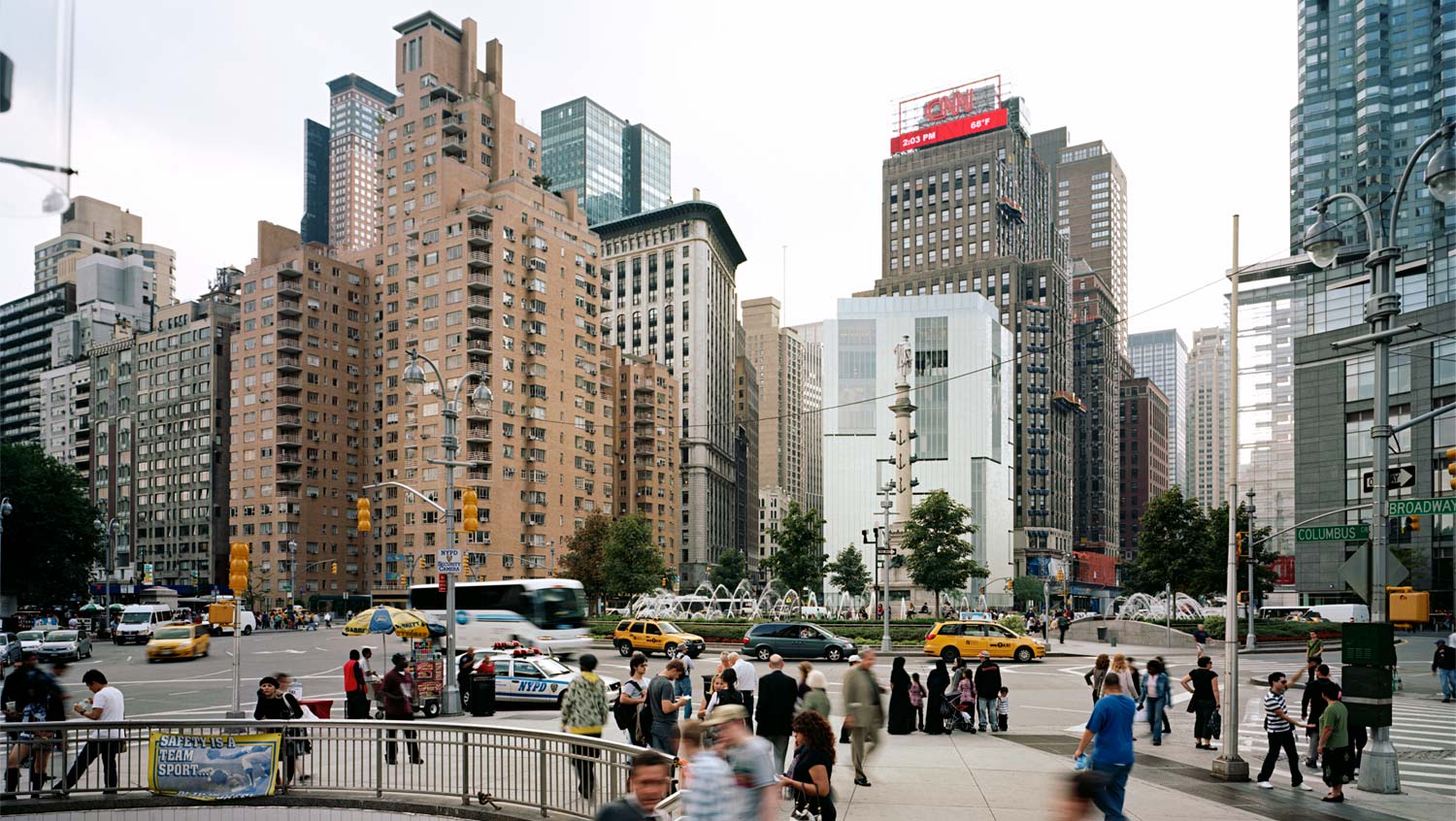
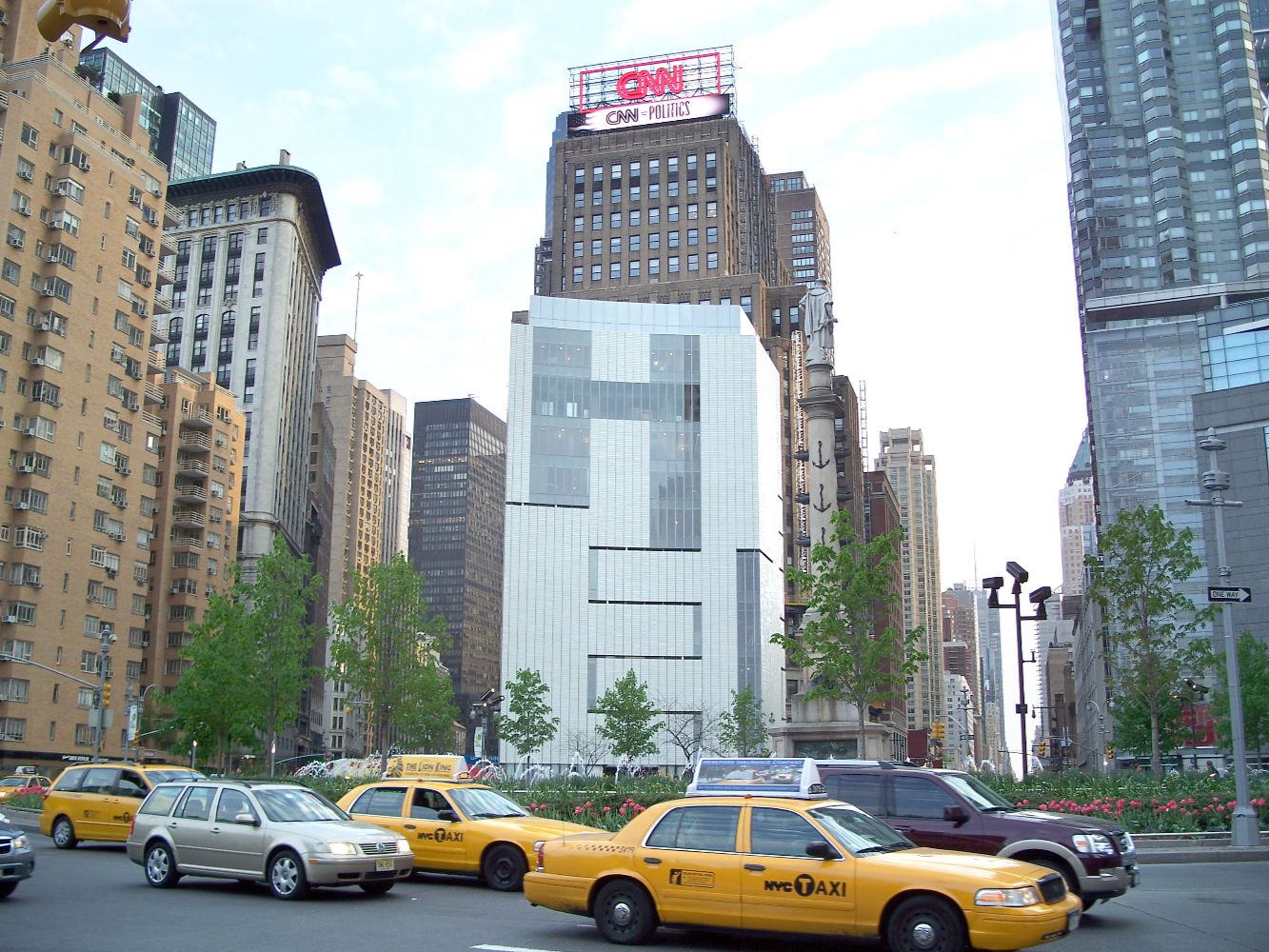
2 Columbus Circle museum building designed by Edward Durell Stone & Associates in New York redefined mid-twentieth-century cultural architecture through its ornamental modernism, compact urban footprint, and controversial later adaptation, completed in 1964. Commissioned by Huntington Hartford as the Gallery of Modern Art, the building occupied an irregular island site at Columbus Circle and combined a reinforced concrete structure with a white Vermont marble façade, small circular windows, arcades, and upper loggias. 2 Columbus Circle challenged the dominant glass-and-steel language of postwar modernism by introducing historical references and decorative abstraction into a modern museum form. Its reception was divided from the beginning, with critics questioning its Venetian and Byzantine references while others recognized its distinct position in New York’s architectural landscape. After brief use as Hartford’s museum, the building became the New York Cultural Center, later entered municipal use, and eventually stood vacant. Between 2005 and 2008, Allied Works Architecture adapted the structure for the Museum of Arts and Design, replacing Stone’s façade with a glazed terracotta rainscreen and new glass cuts that introduced daylight, views, and expanded museum space. The project remains significant as a case study in preservation, adaptive reuse, and the changing cultural value of modern architecture.
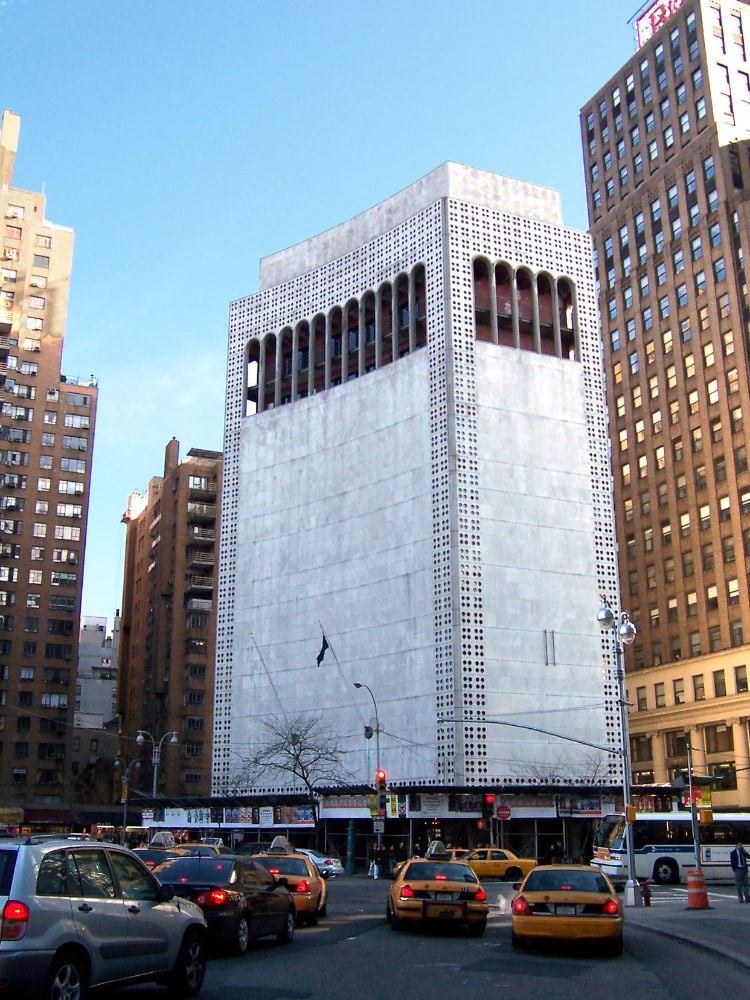
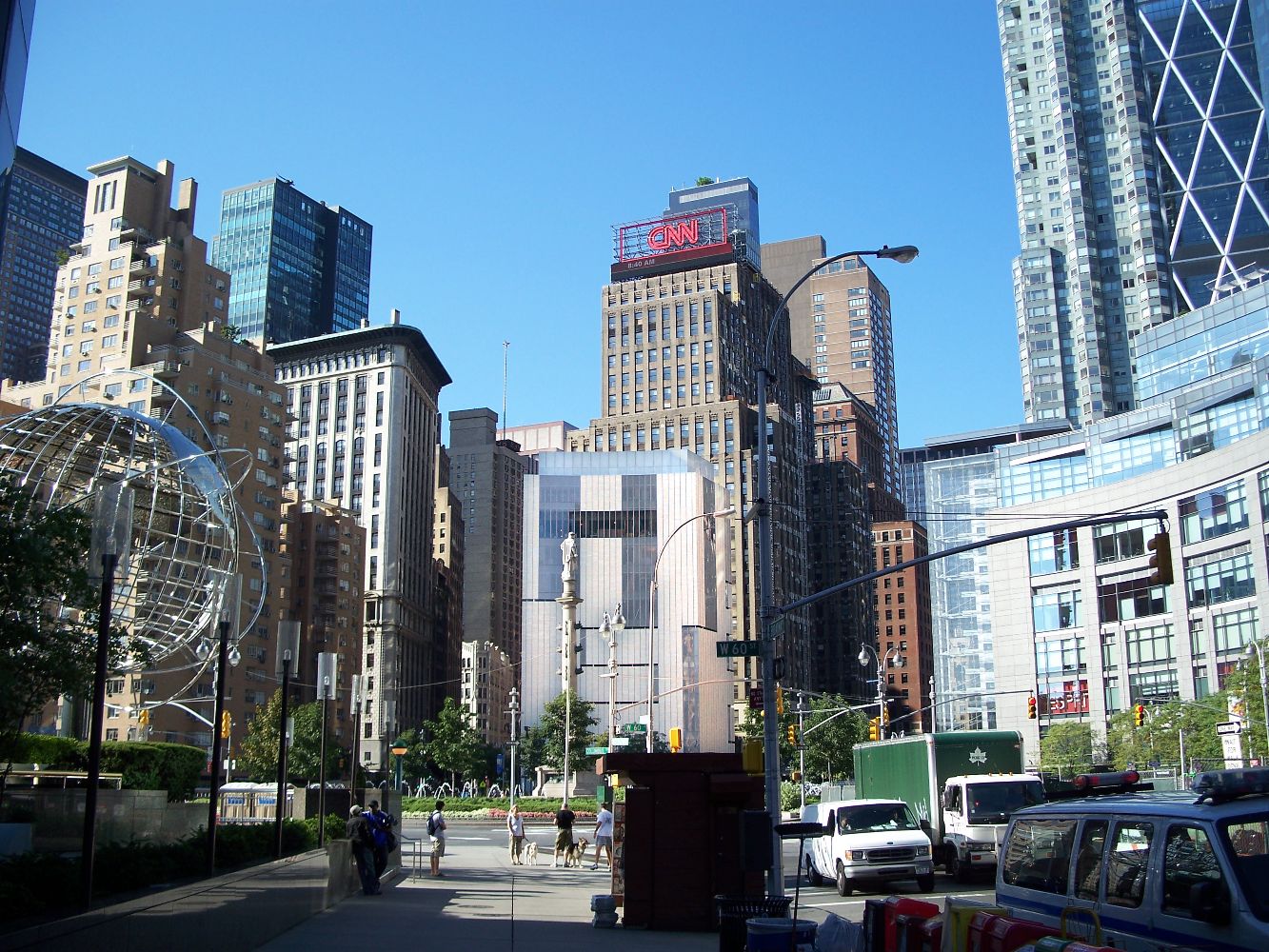
2 Columbus Circle is a museum building located on a small irregular site at one of Manhattan’s most visible intersections. Originally designed by Edward Durell Stone & Associates for Huntington Hartford as the Gallery of Modern Art, the building opened in 1964 and quickly became one of New York’s most debated works of postwar architecture.
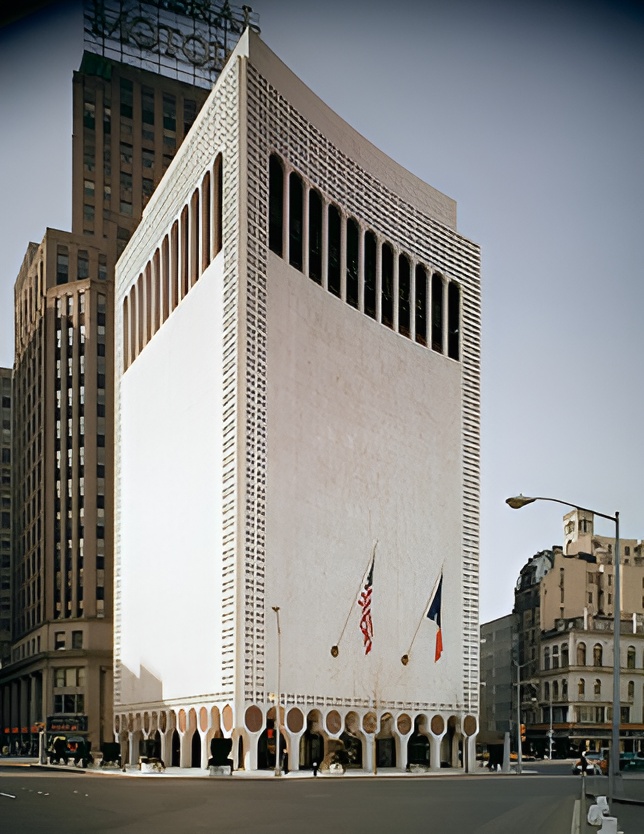
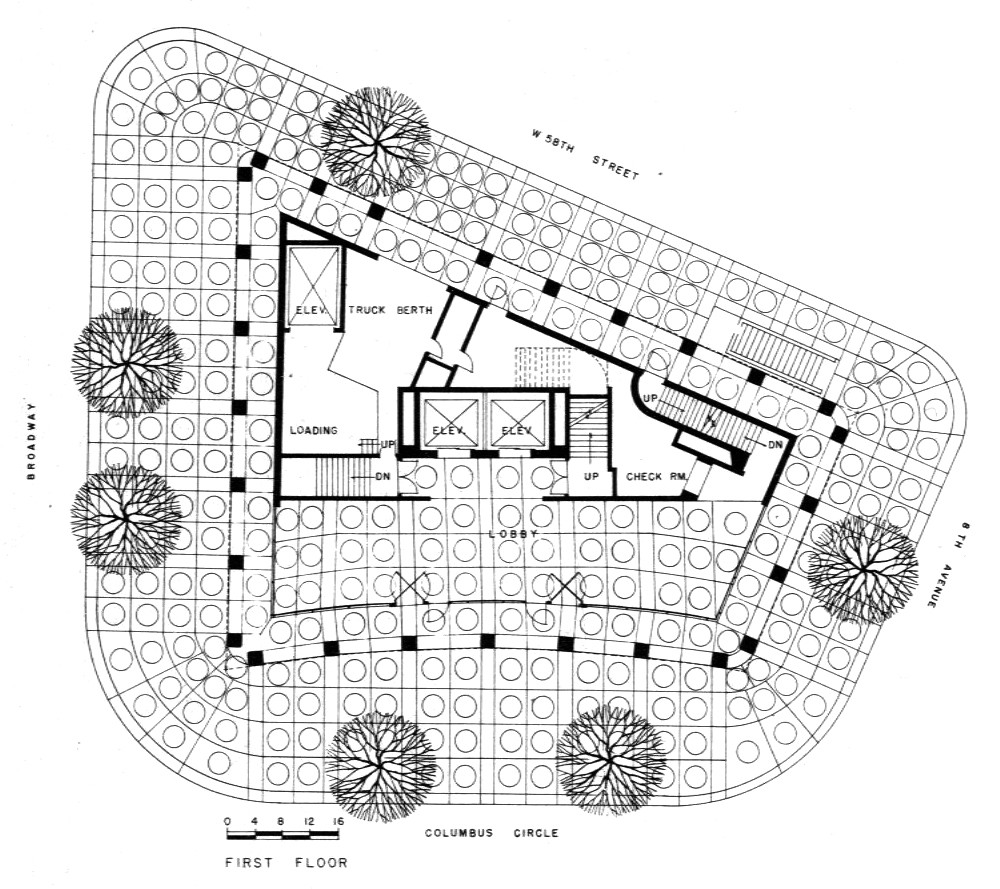
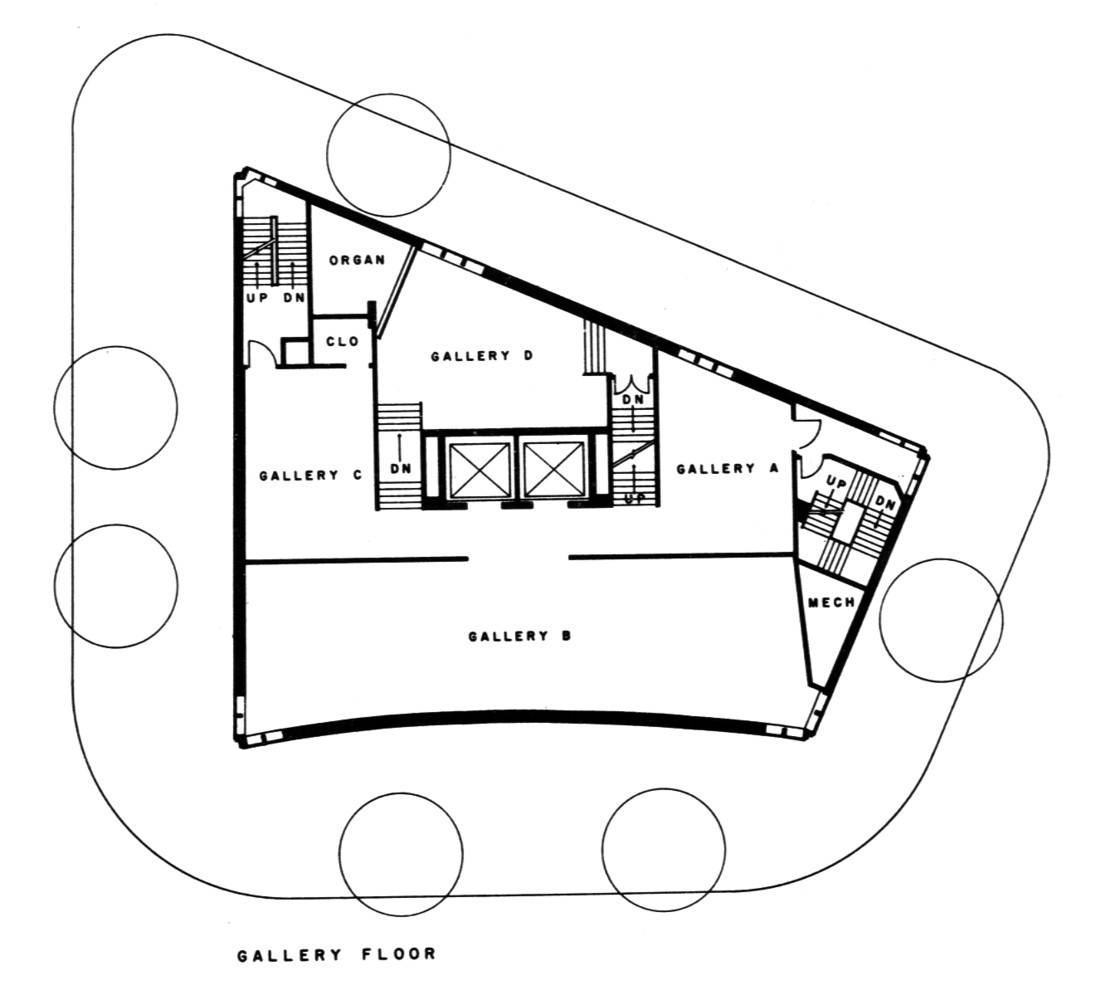
Hartford purchased the site in 1956 with the intention of creating a museum for his personal collection of nineteenth- and twentieth-century art. The project was delayed by legal disputes, construction challenges, labor issues, and the difficulty of building on a compact lot with no right angles. The completed building occupied the full block between Columbus Circle, Broadway, Eighth Avenue, and 58th Street.
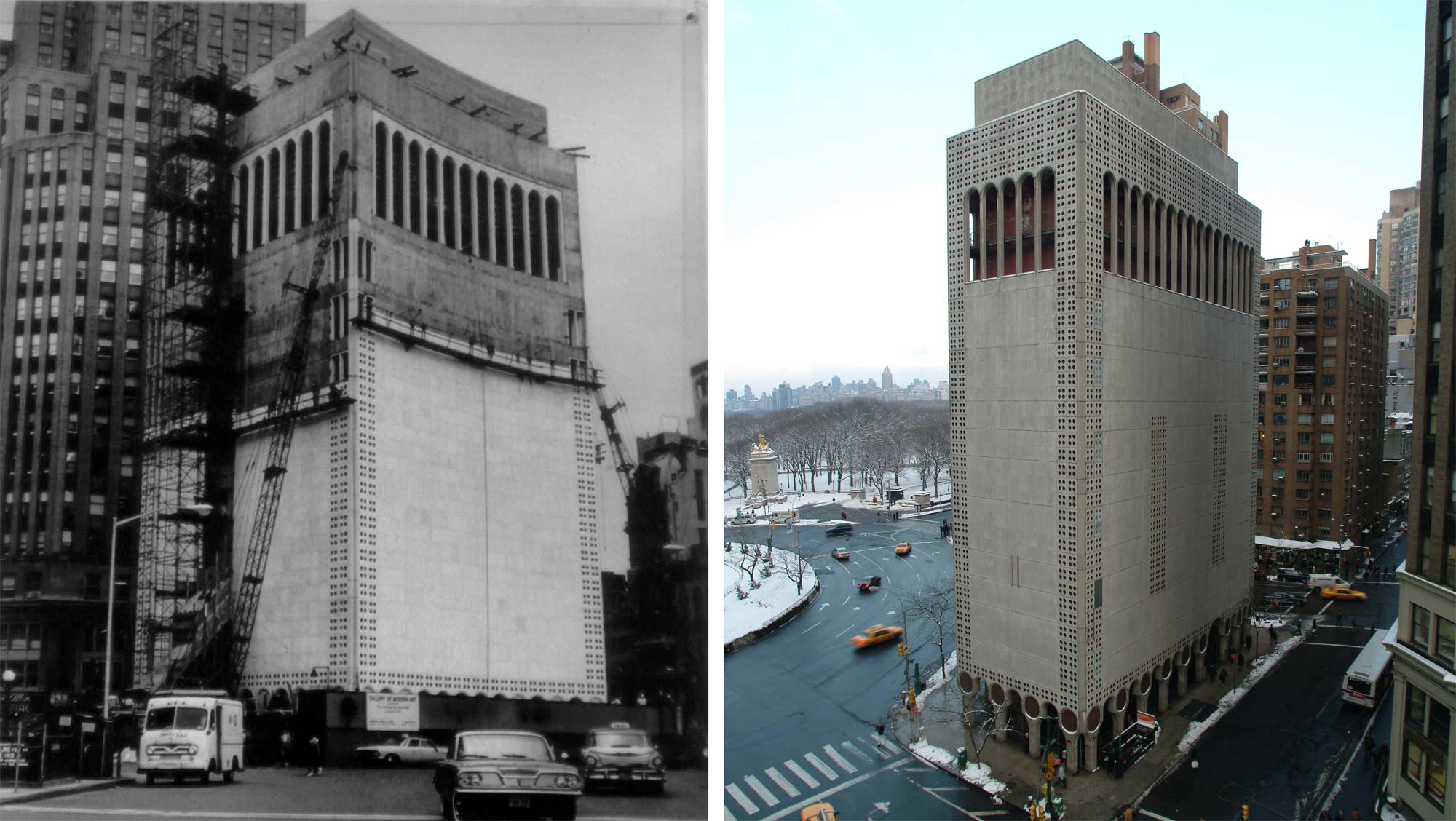
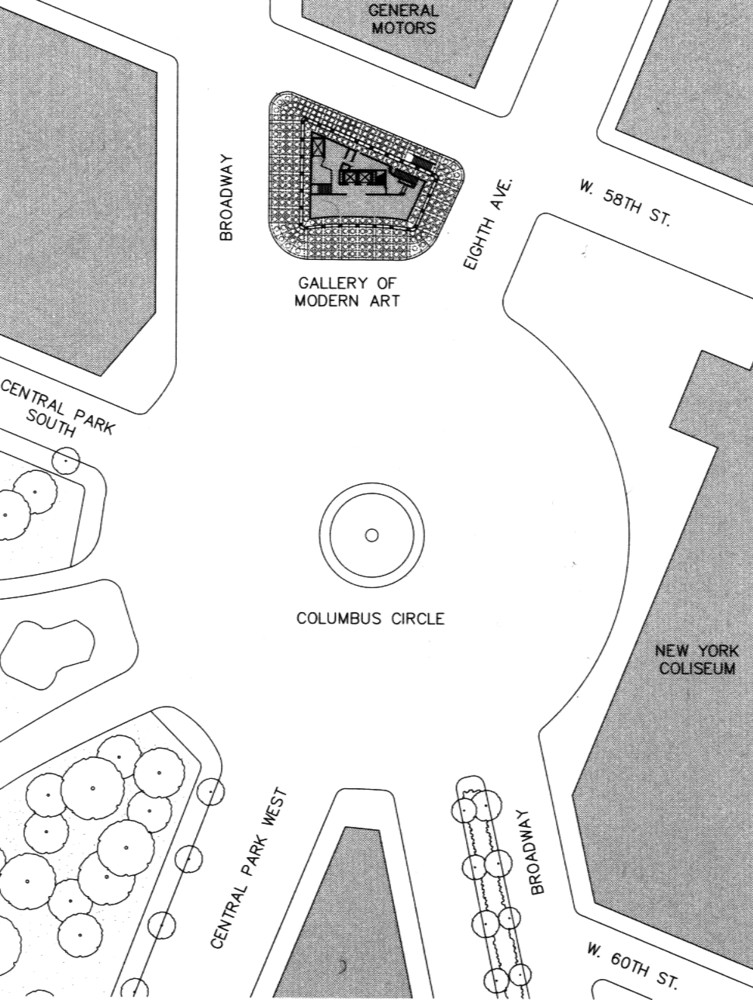
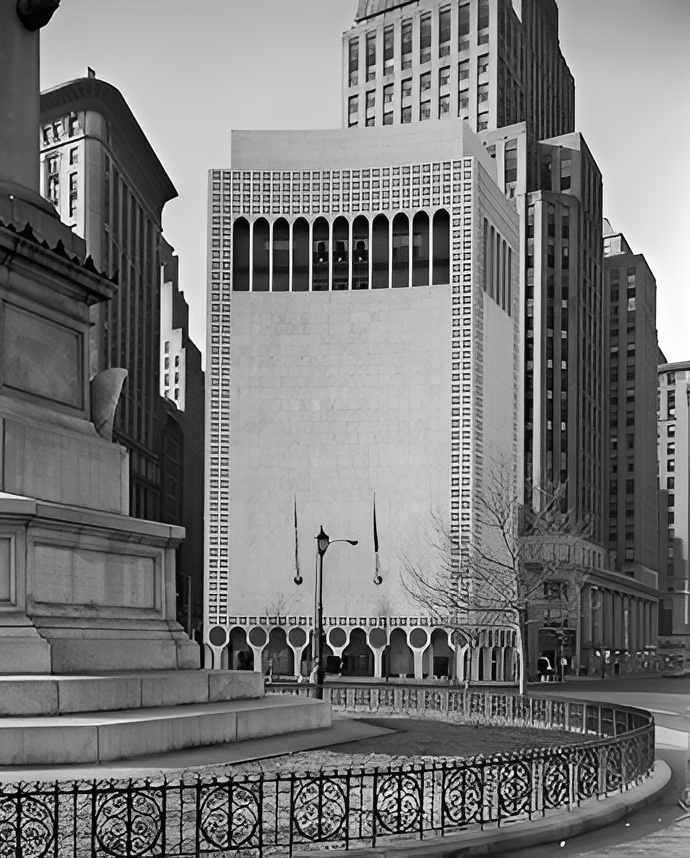
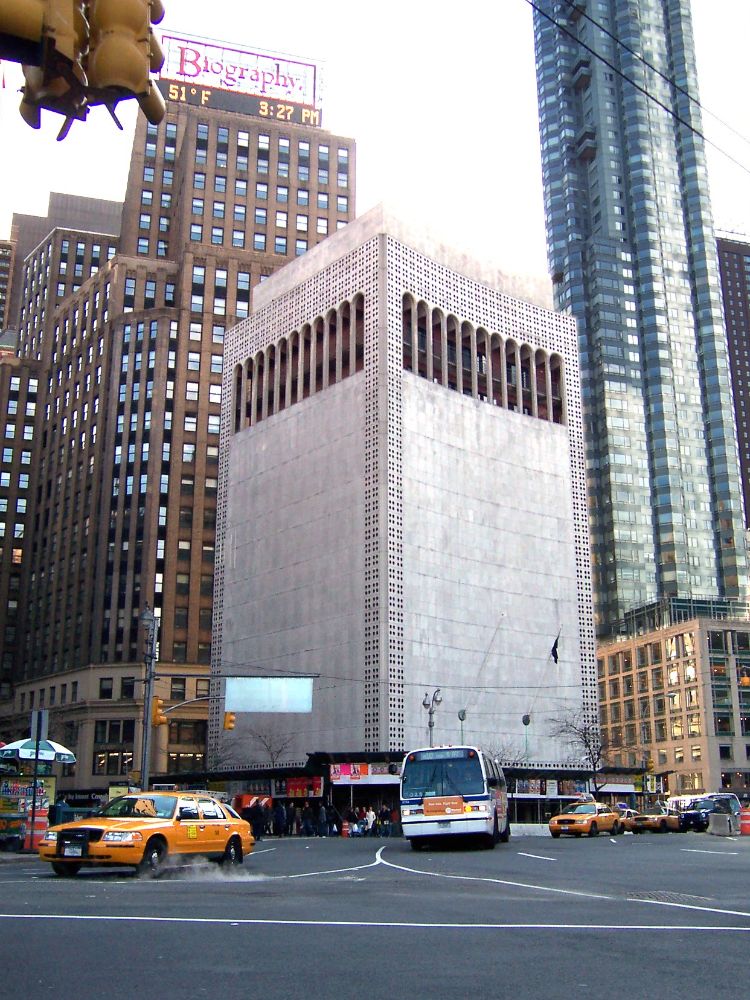
Stone’s design was a reinforced concrete structure with load-bearing exterior walls. The original façade was clad in white Vermont marble with gray and gold veining. Small circular bronze-framed windows were grouped near the corners and upper levels, while a ground-floor arcade and upper loggias gave the building its distinctive public image. Ada Louise Huxtable famously described it as a “die-cut Venetian palazzo on lollipops,” a phrase that shaped much of the building’s critical history.
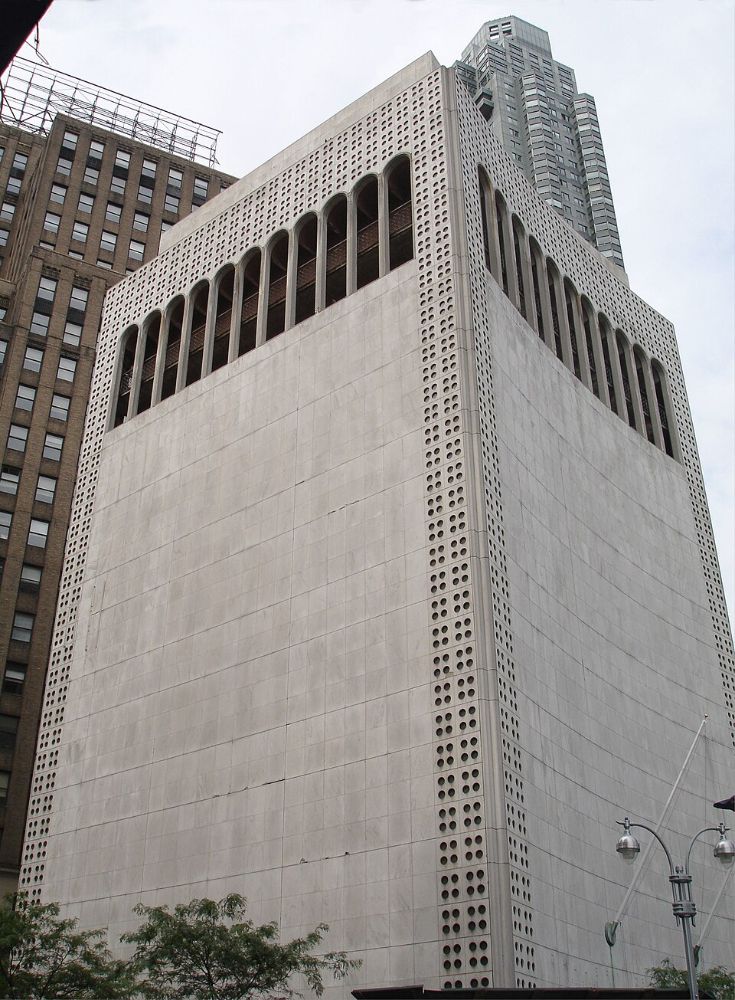
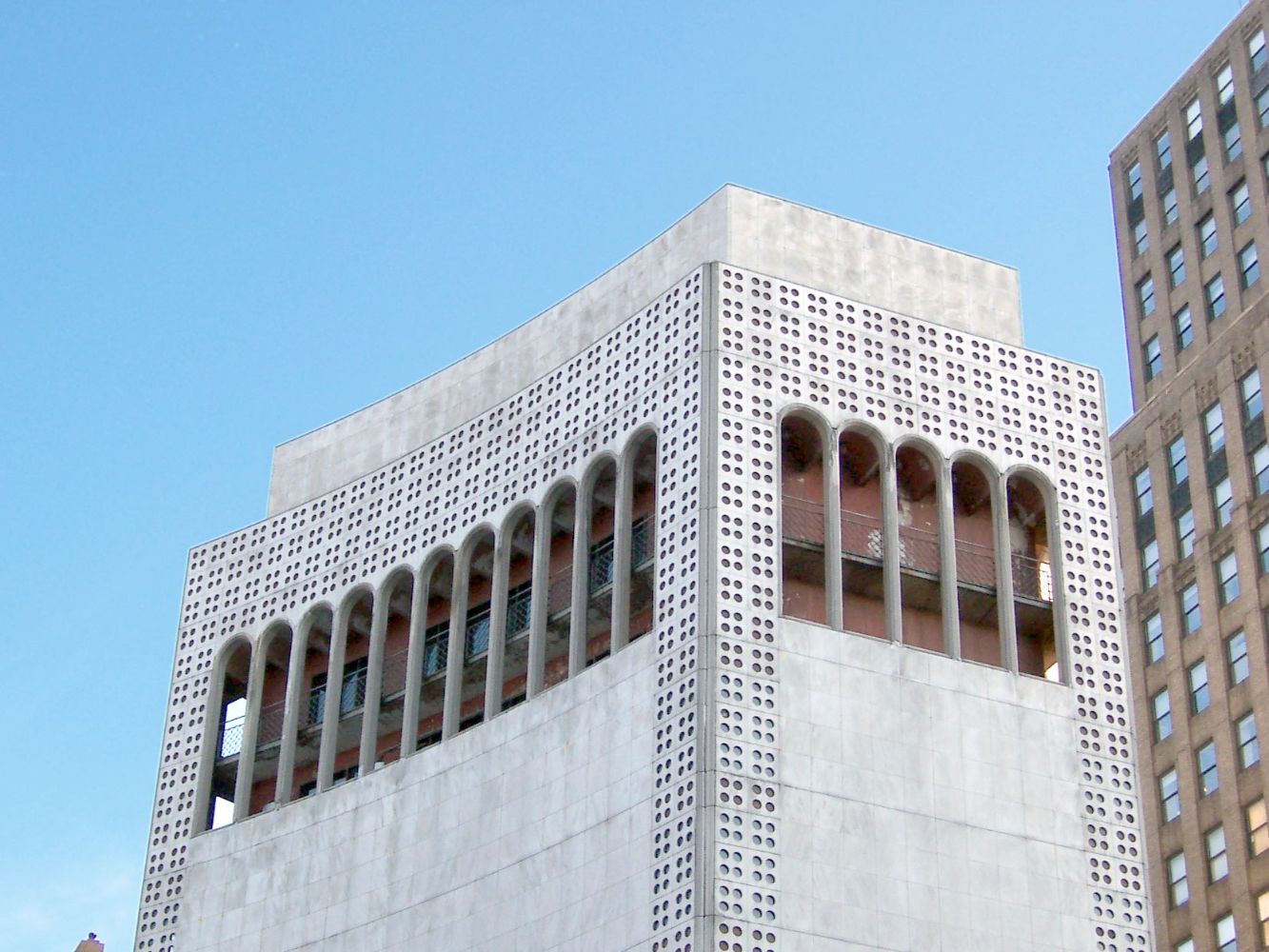
The design departed from the dominant glass-and-metal office architecture of the period. Stone used ornament, historical references, and a strong sculptural mass to create a building that challenged the prevailing language of modernism. Its arcades recalled Venetian Gothic precedents, while the compact vertical volume and largely windowless gallery walls responded to the demands of museum display.
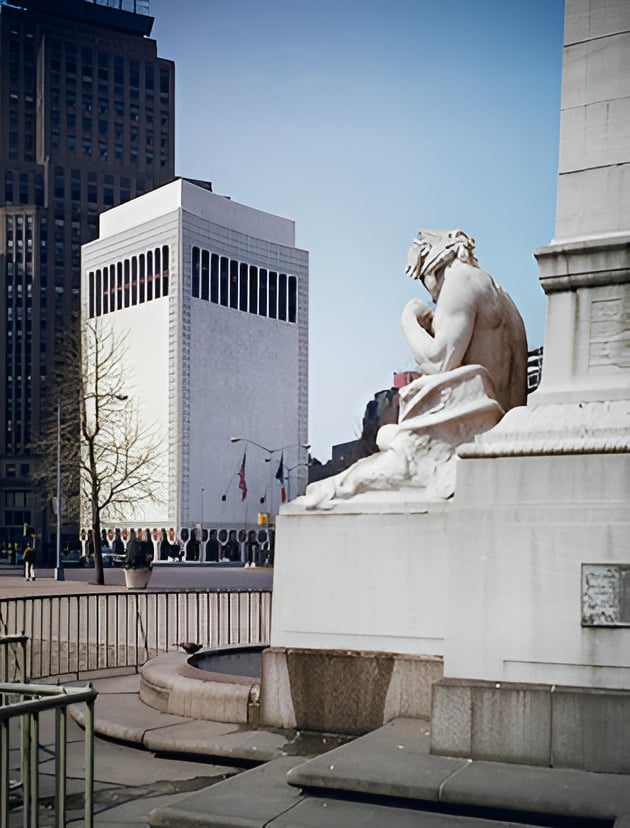
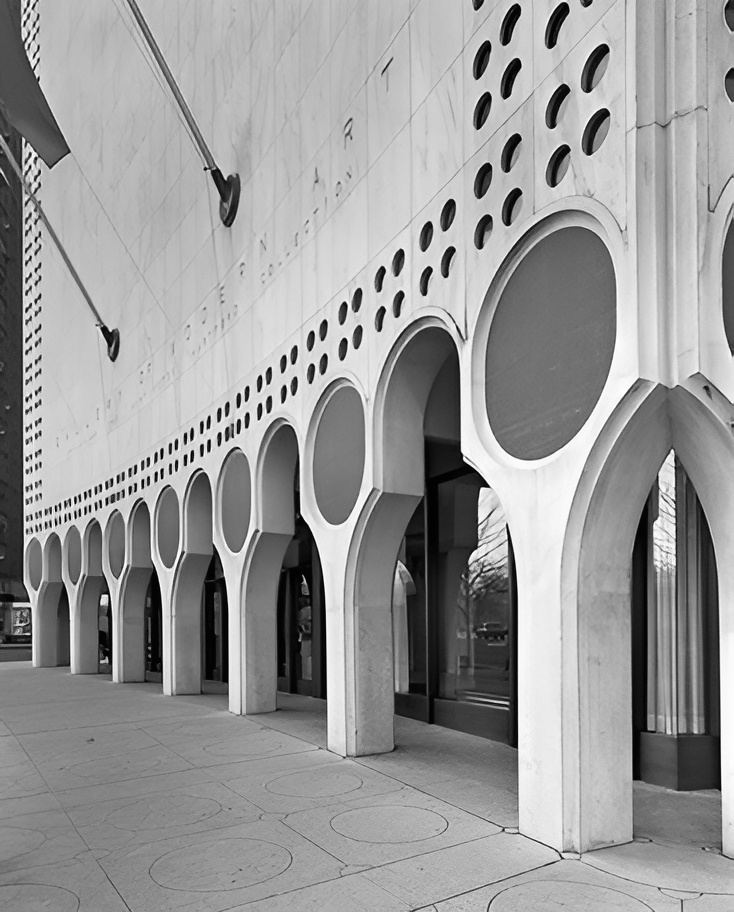
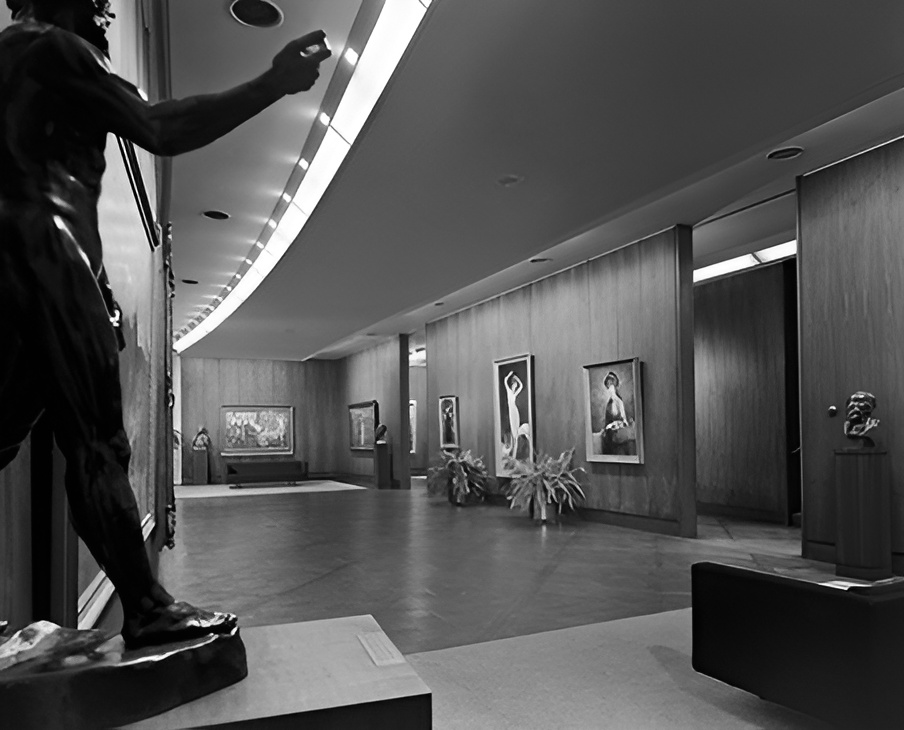
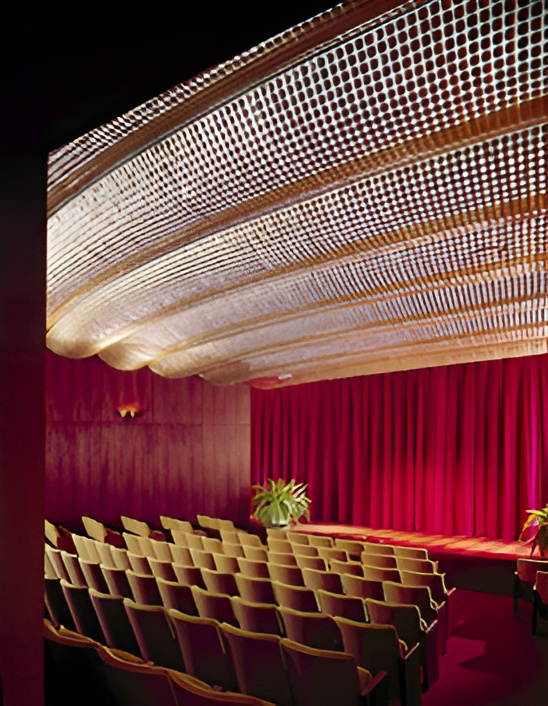
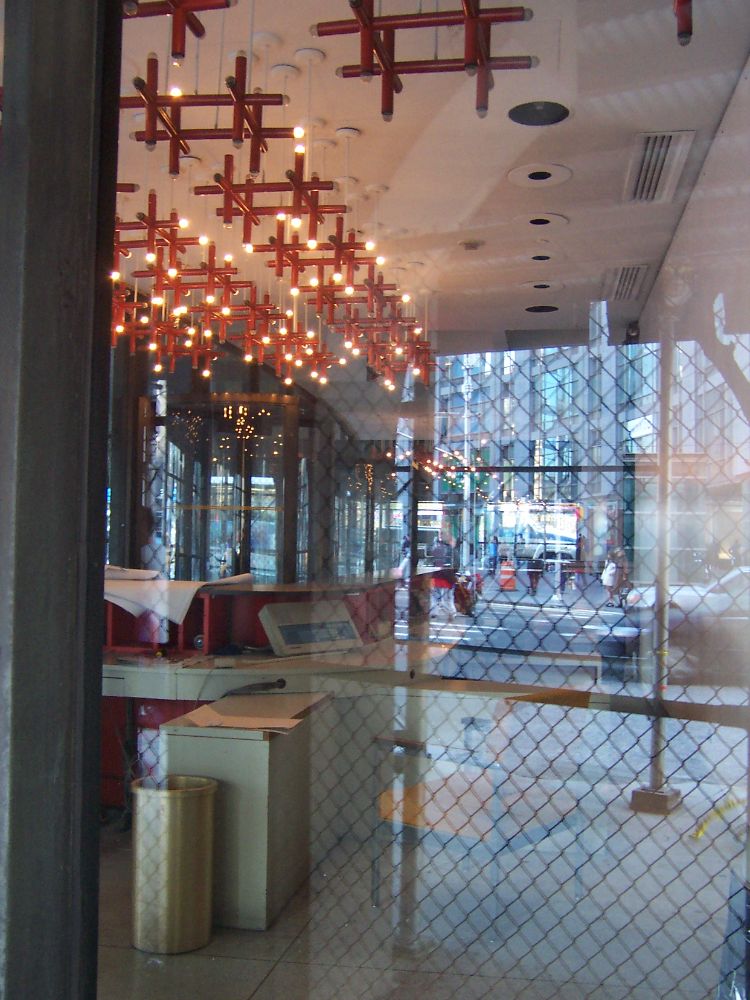
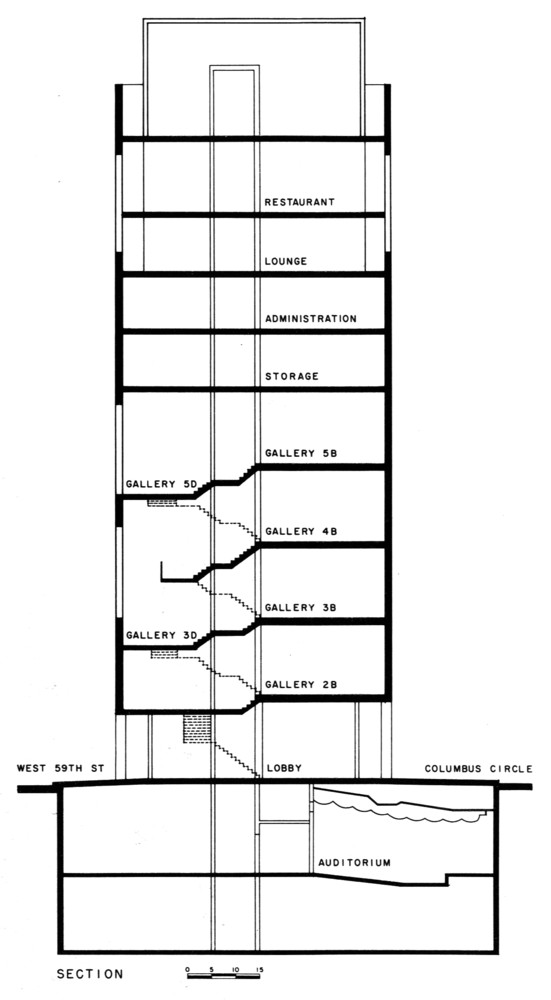
Inside, the Gallery of Modern Art contained galleries across the lower and middle floors, a below-grade auditorium, storage and administrative spaces, and upper-level dining and lounge areas with views toward Central Park. Visitors moved through the building by elevator and descended gradually through a sequence of galleries, a circulation arrangement often compared to the Guggenheim Museum.
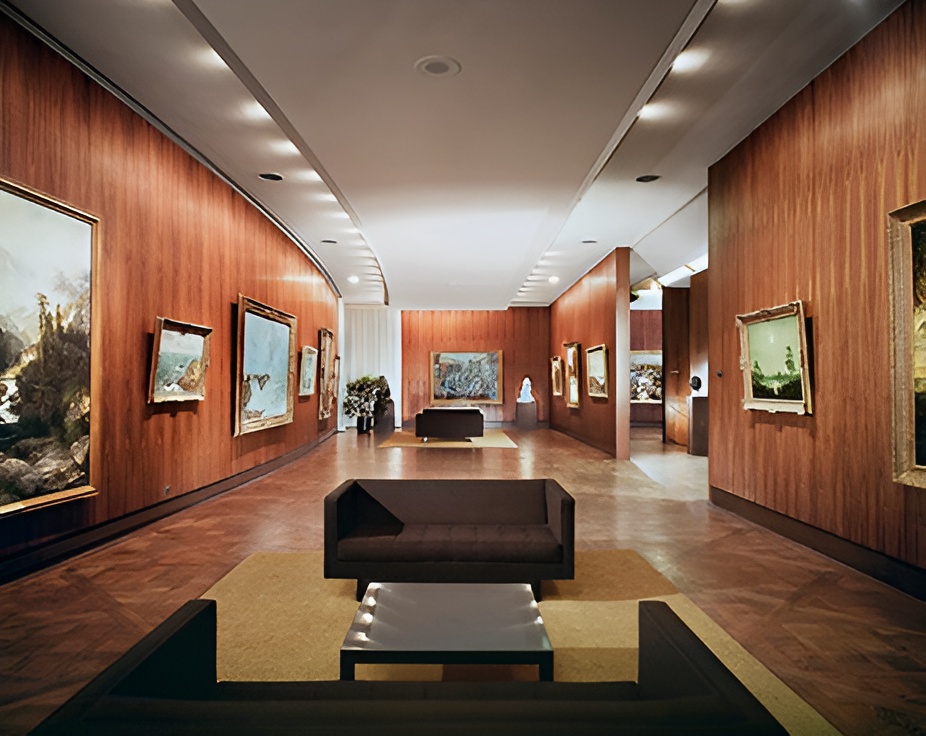
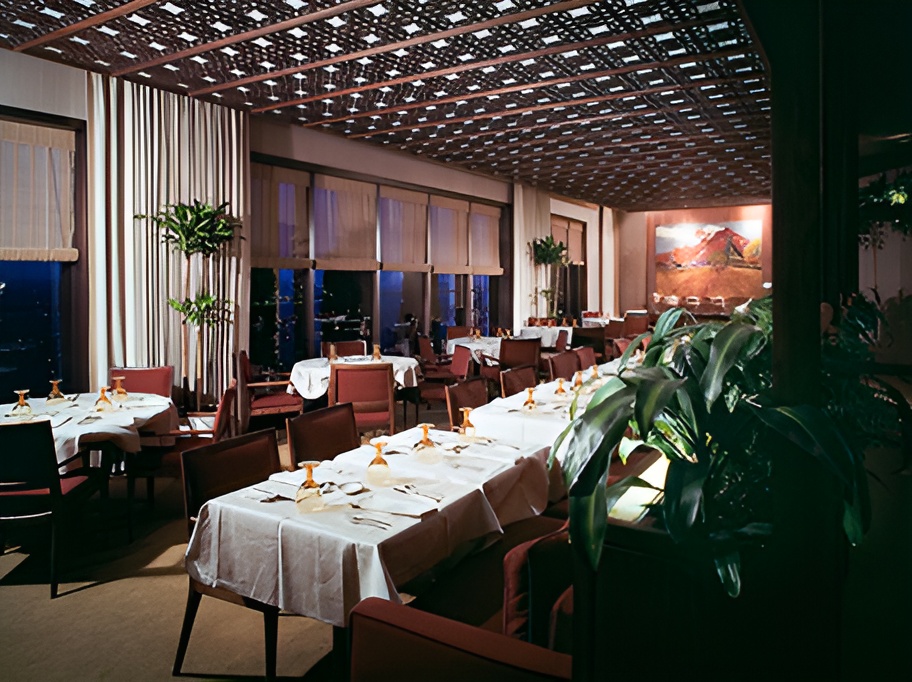
The museum was popular after opening but financially unstable. It closed in 1969 and was taken over by Fairleigh Dickinson University as the New York Cultural Center. The building was later purchased by Gulf and Western Industries and donated to New York City. From 1980 to 1998, it housed the Department of Cultural Affairs and the New York Convention and Visitors Bureau before falling into disuse.
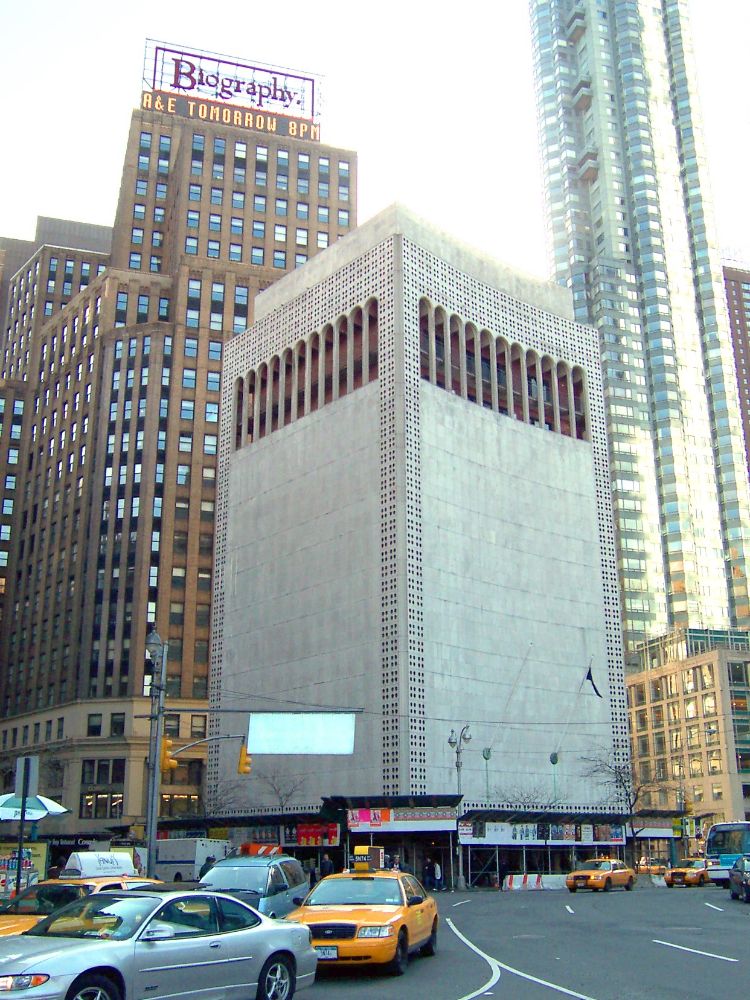
In the early 2000s, the future of 2 Columbus Circle became the subject of an intense preservation debate. Supporters argued that Stone’s design was an important and unusual example of mid-century modernism and an early challenge to strict modernist orthodoxy. Others viewed the building as outdated, difficult to use, and unsuitable for contemporary museum needs.
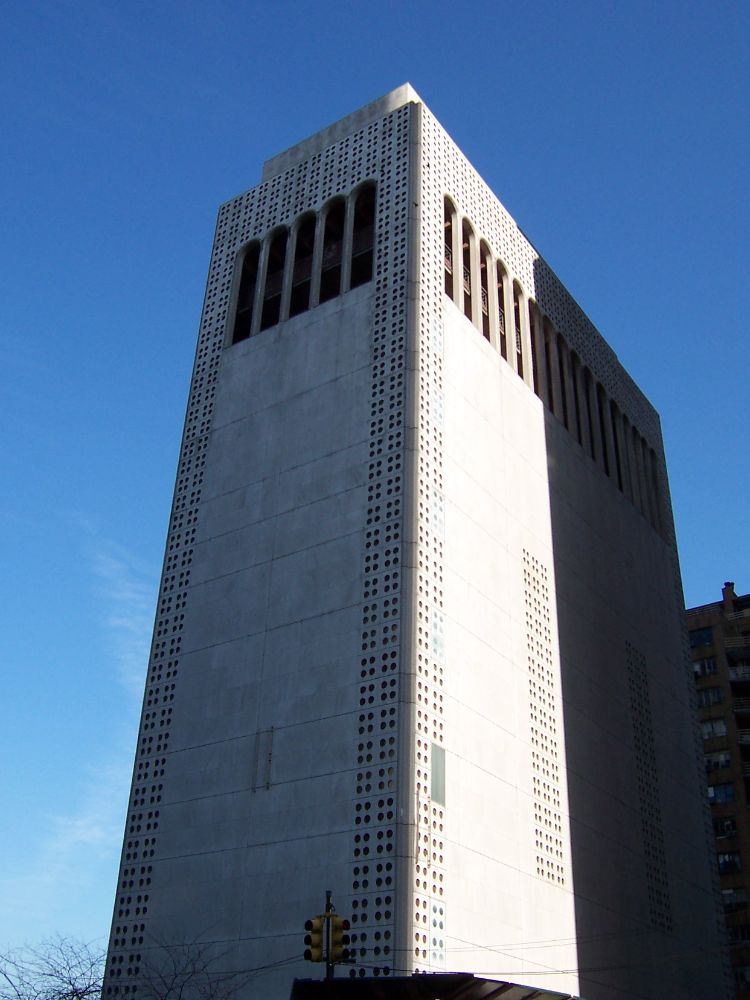
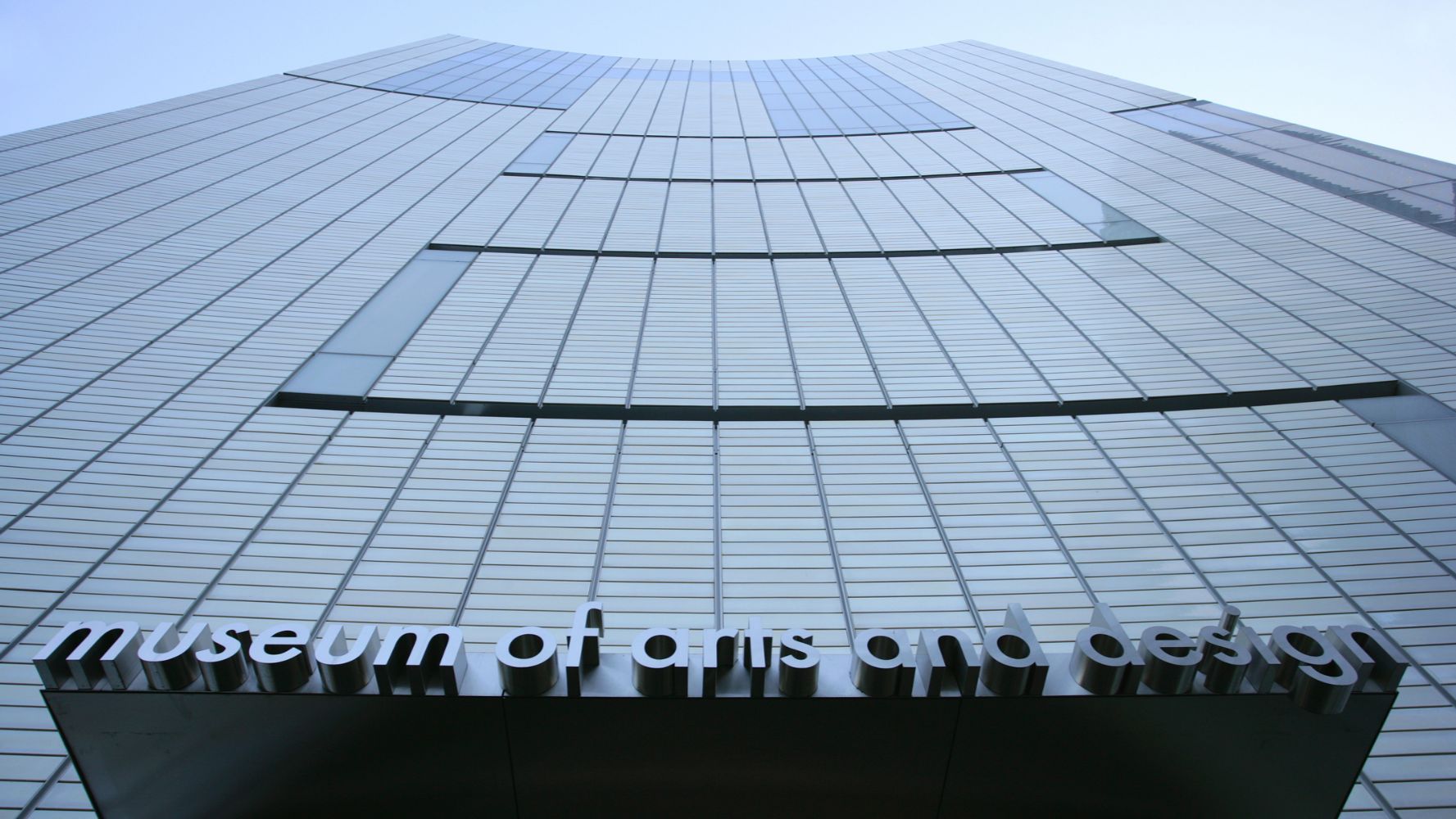
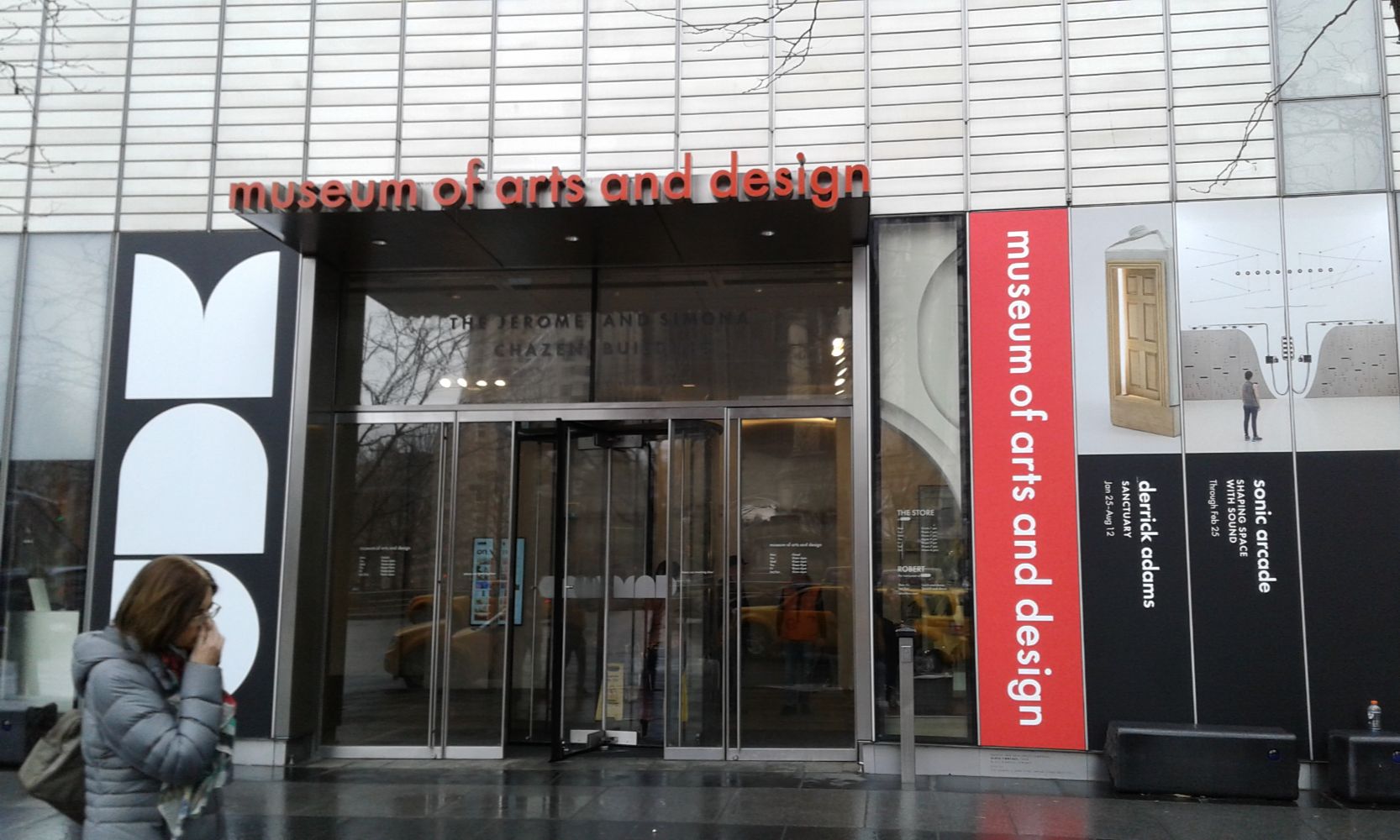
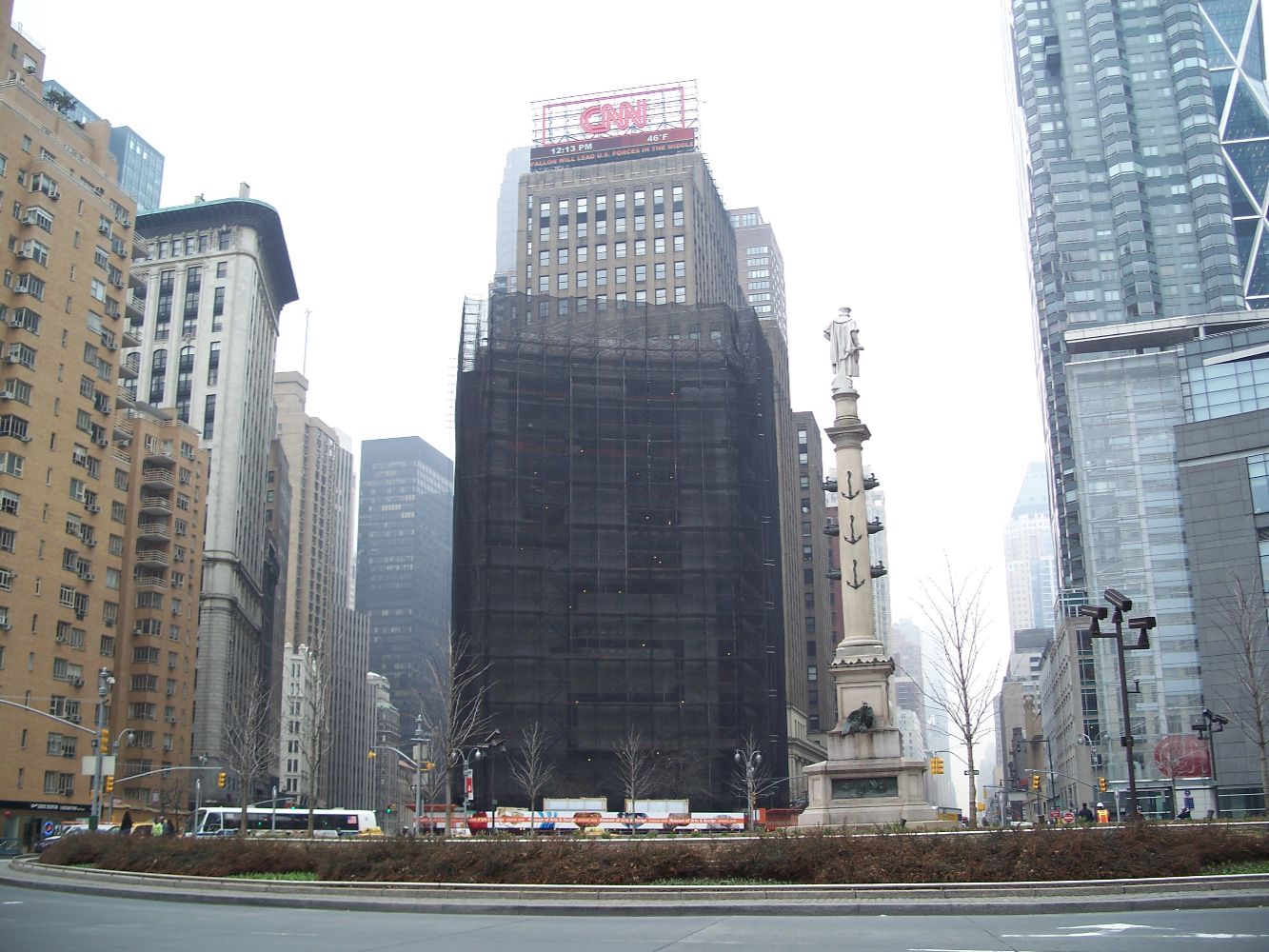
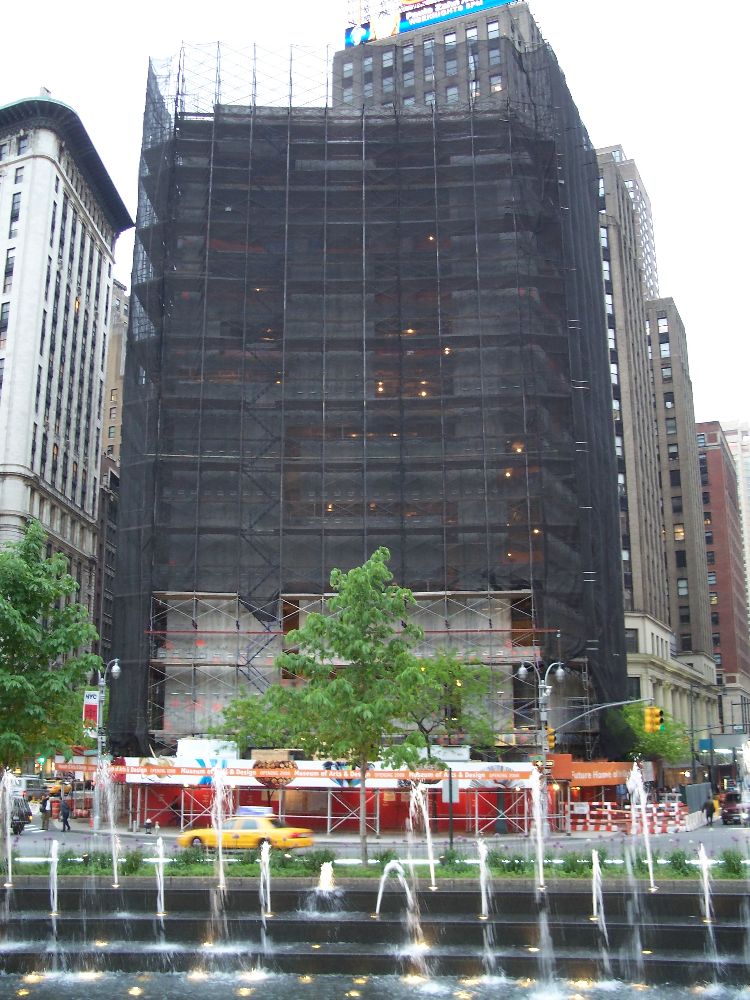
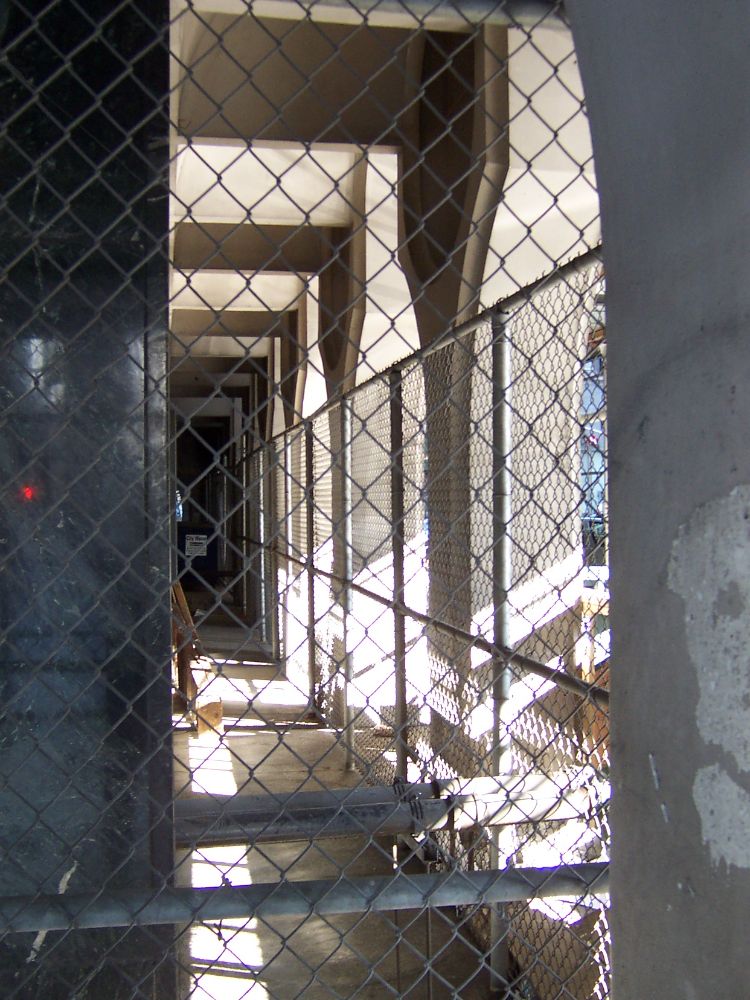
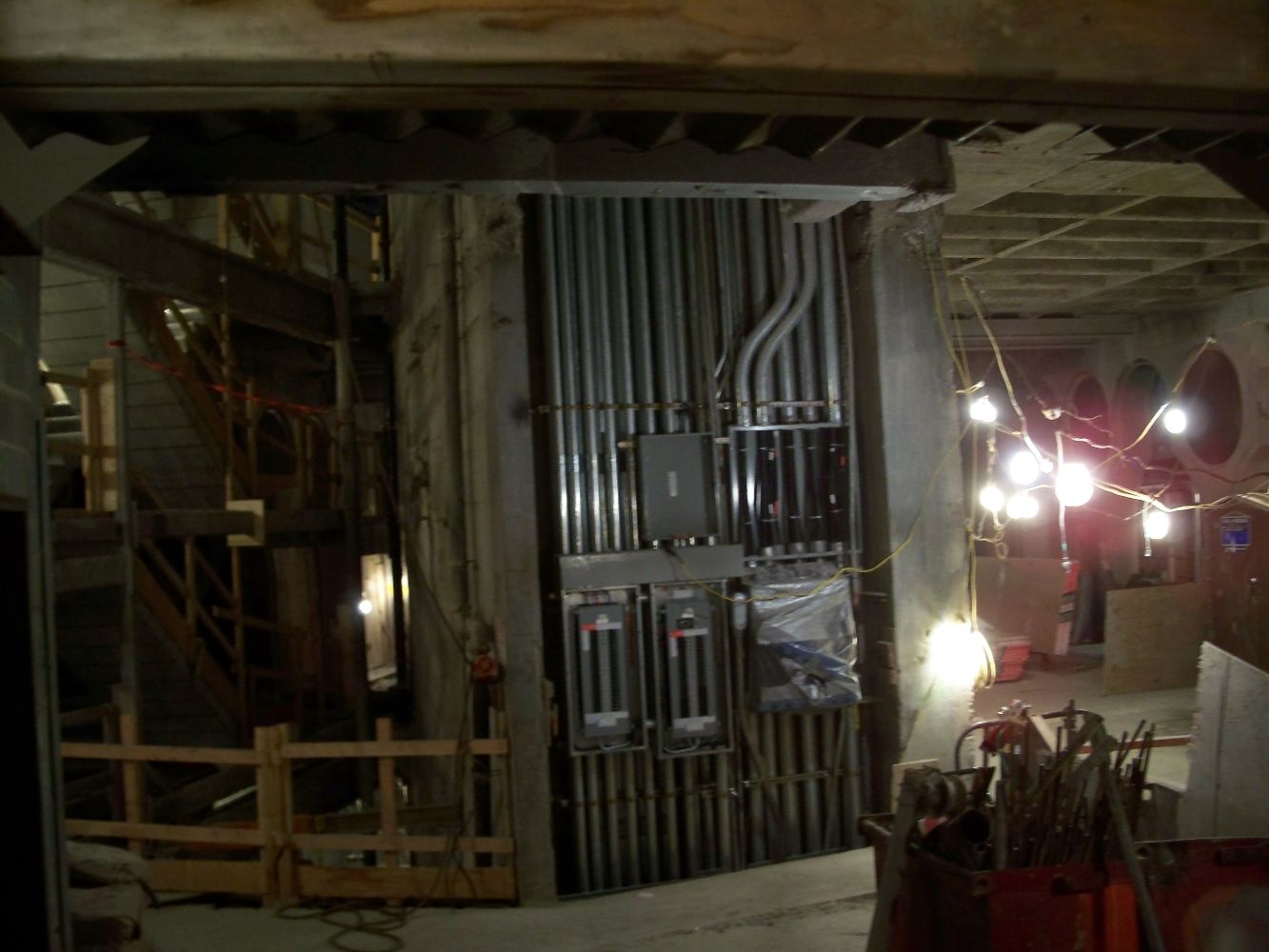
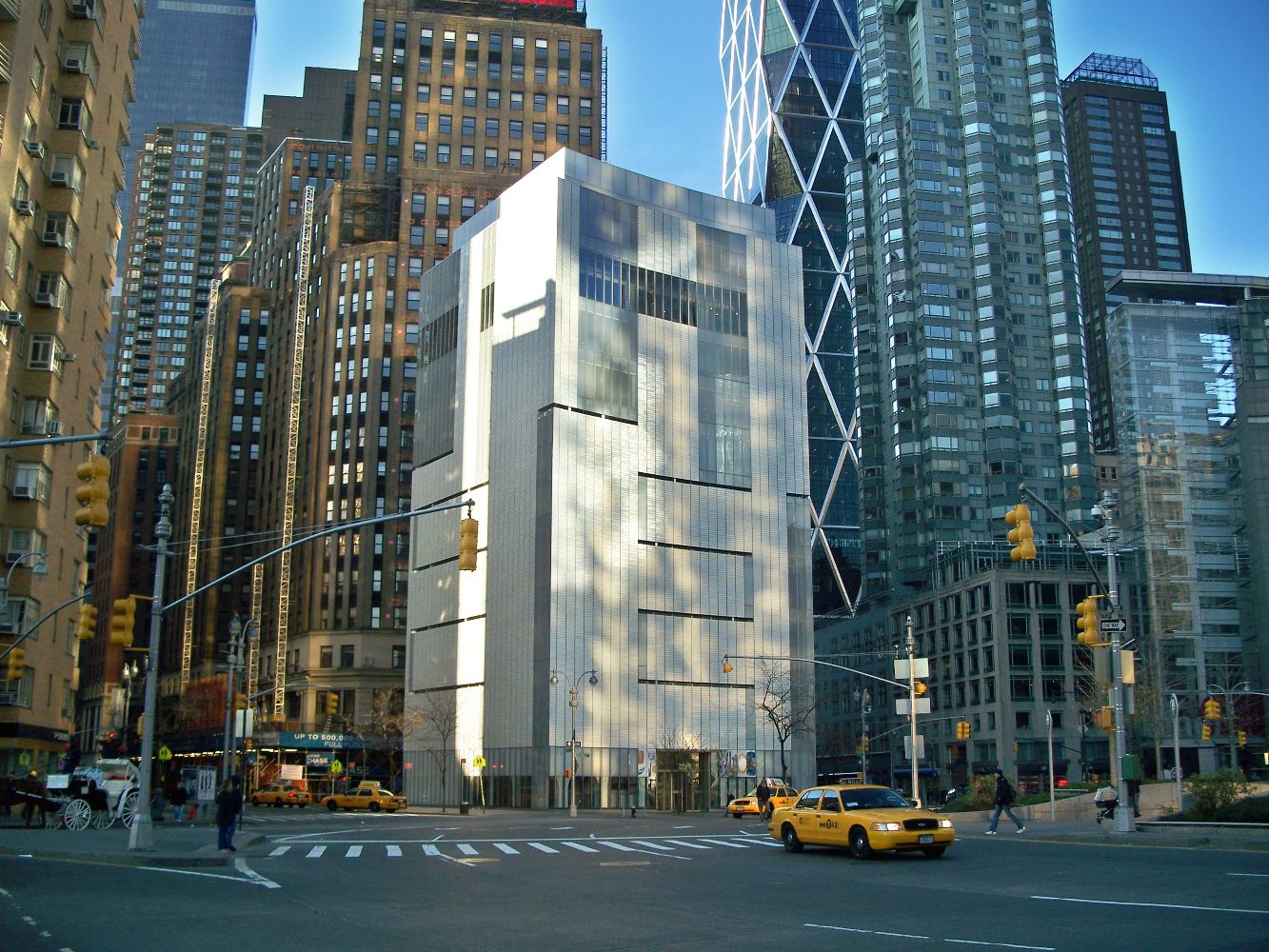
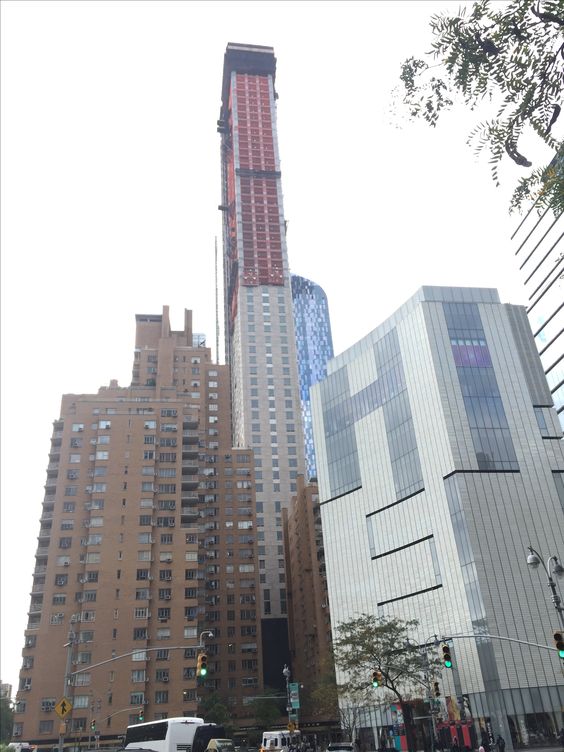
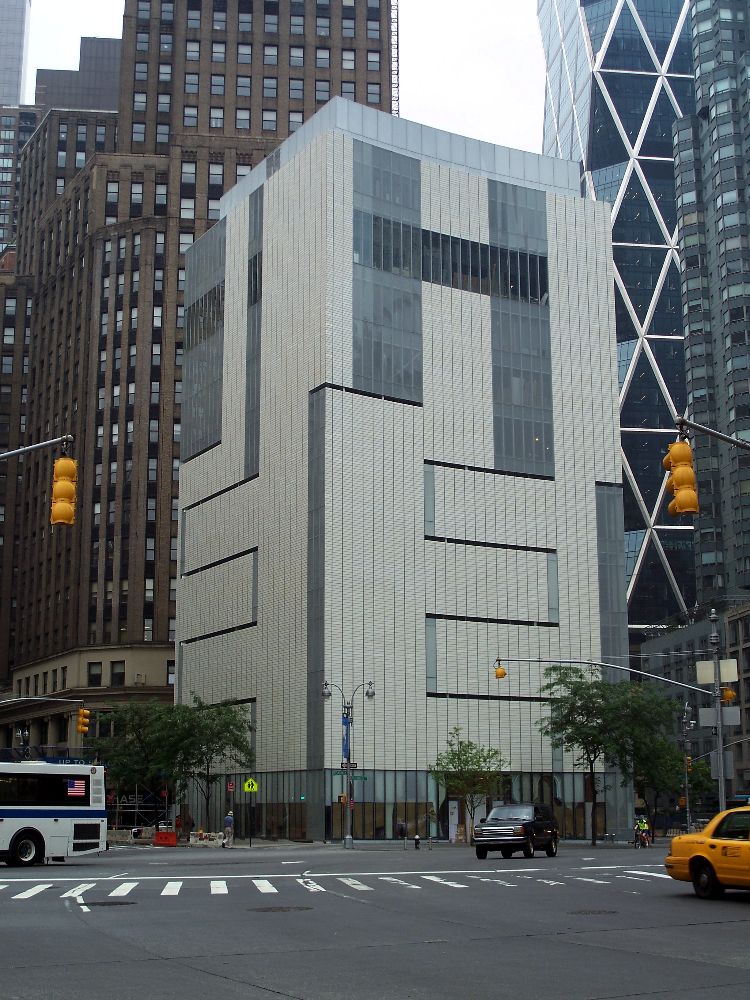
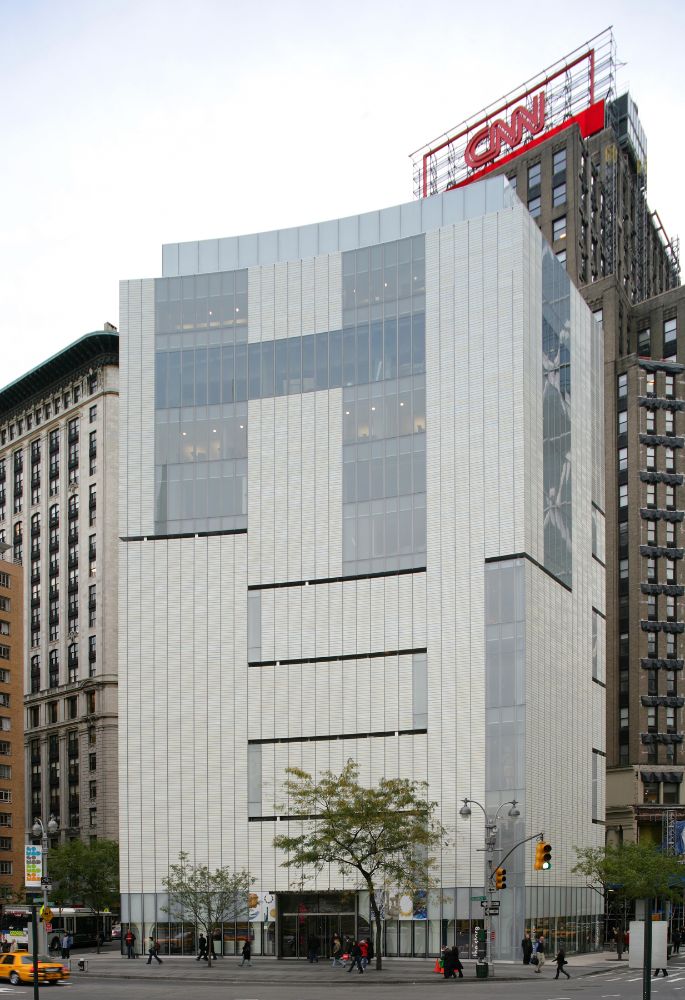
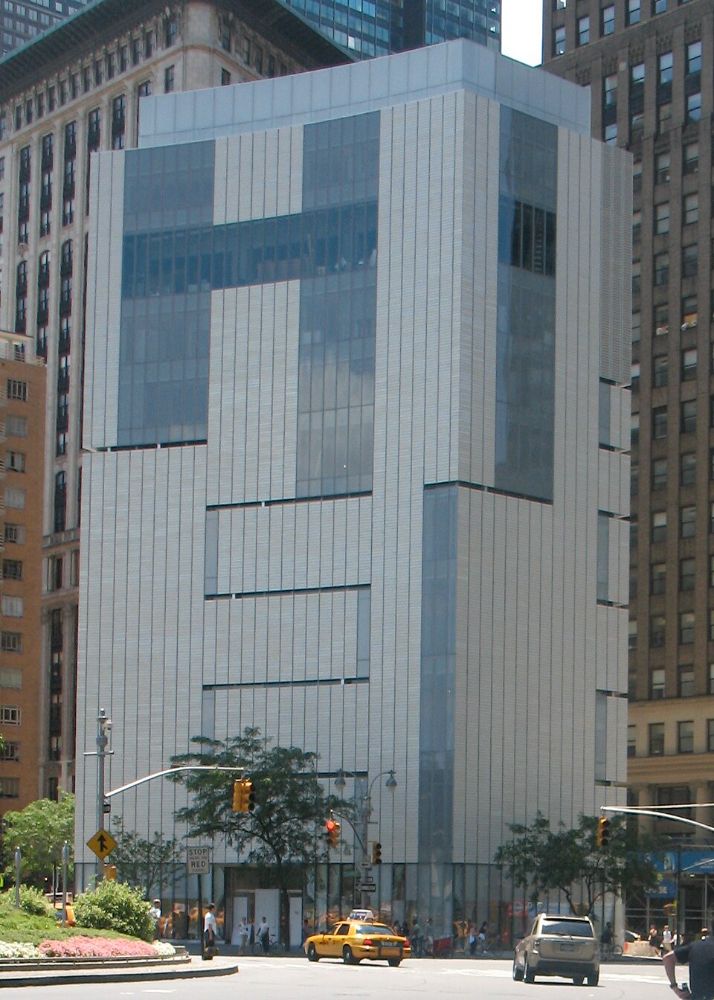
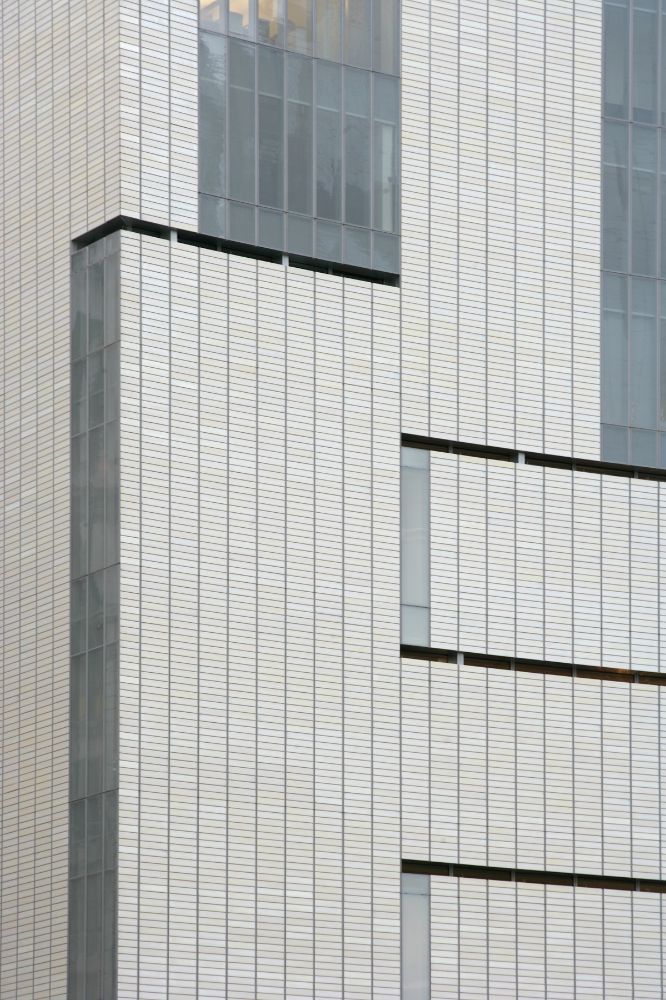
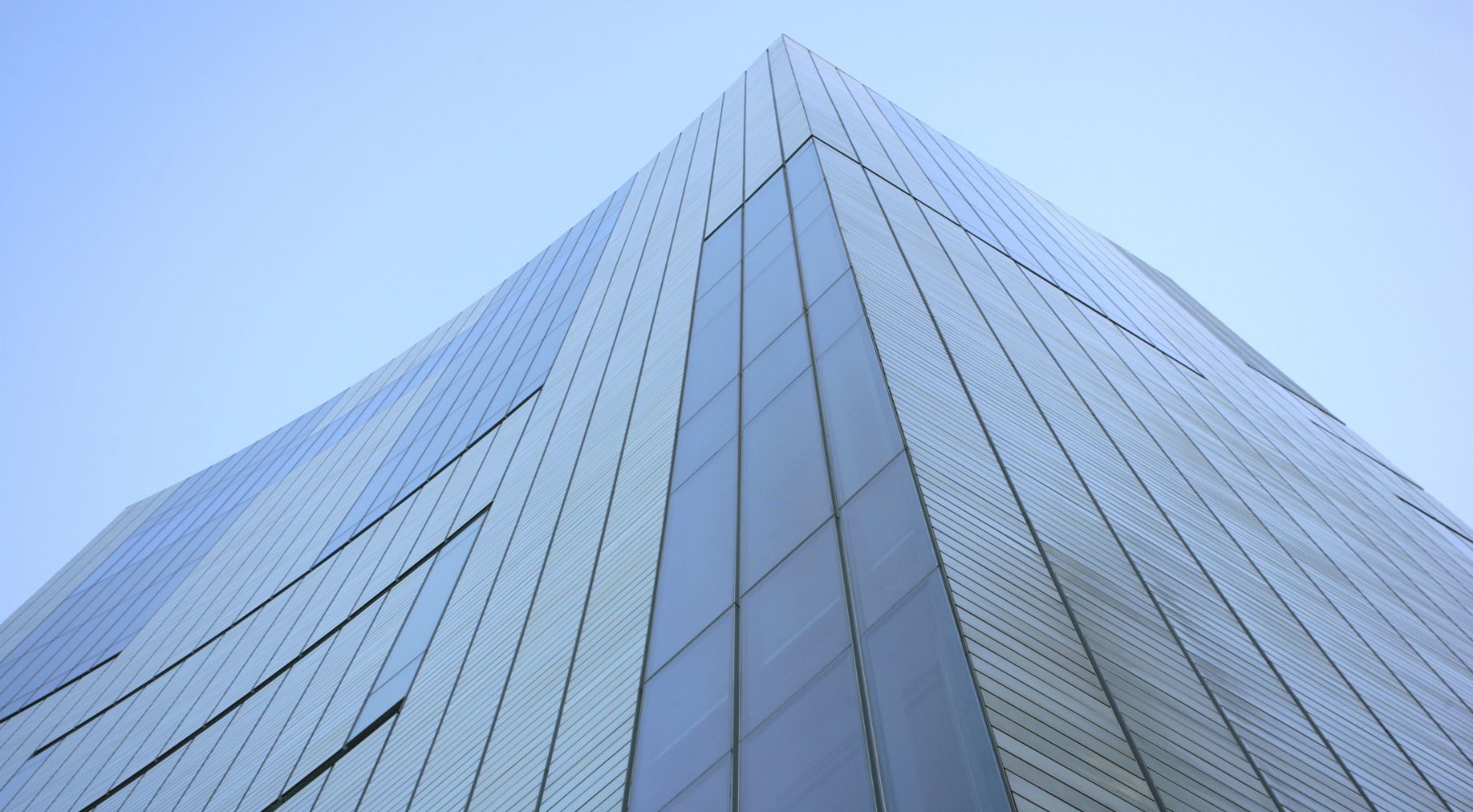
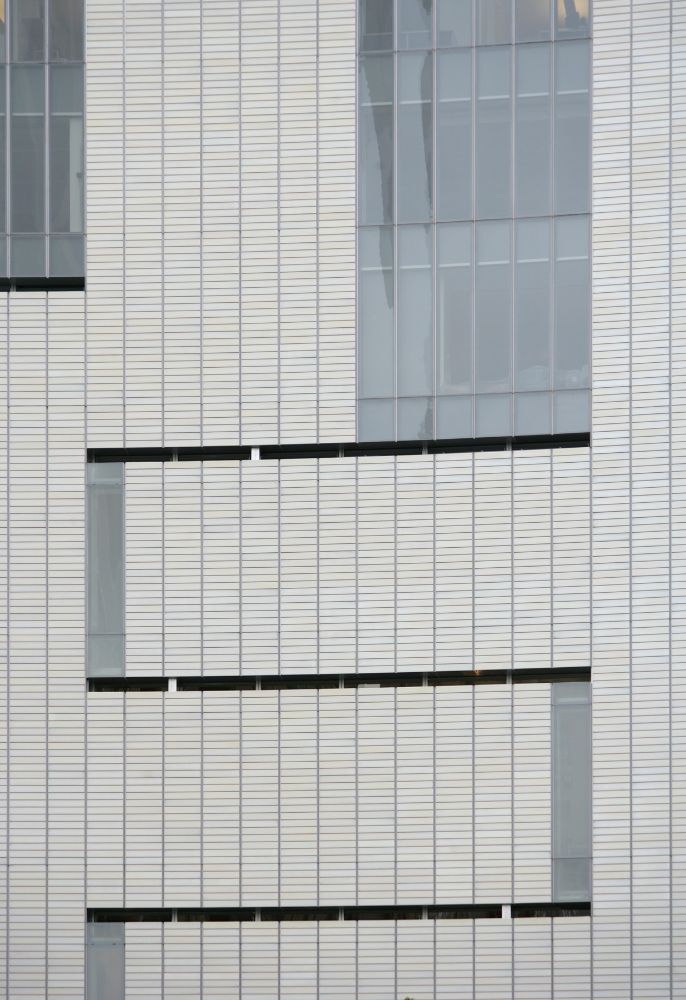
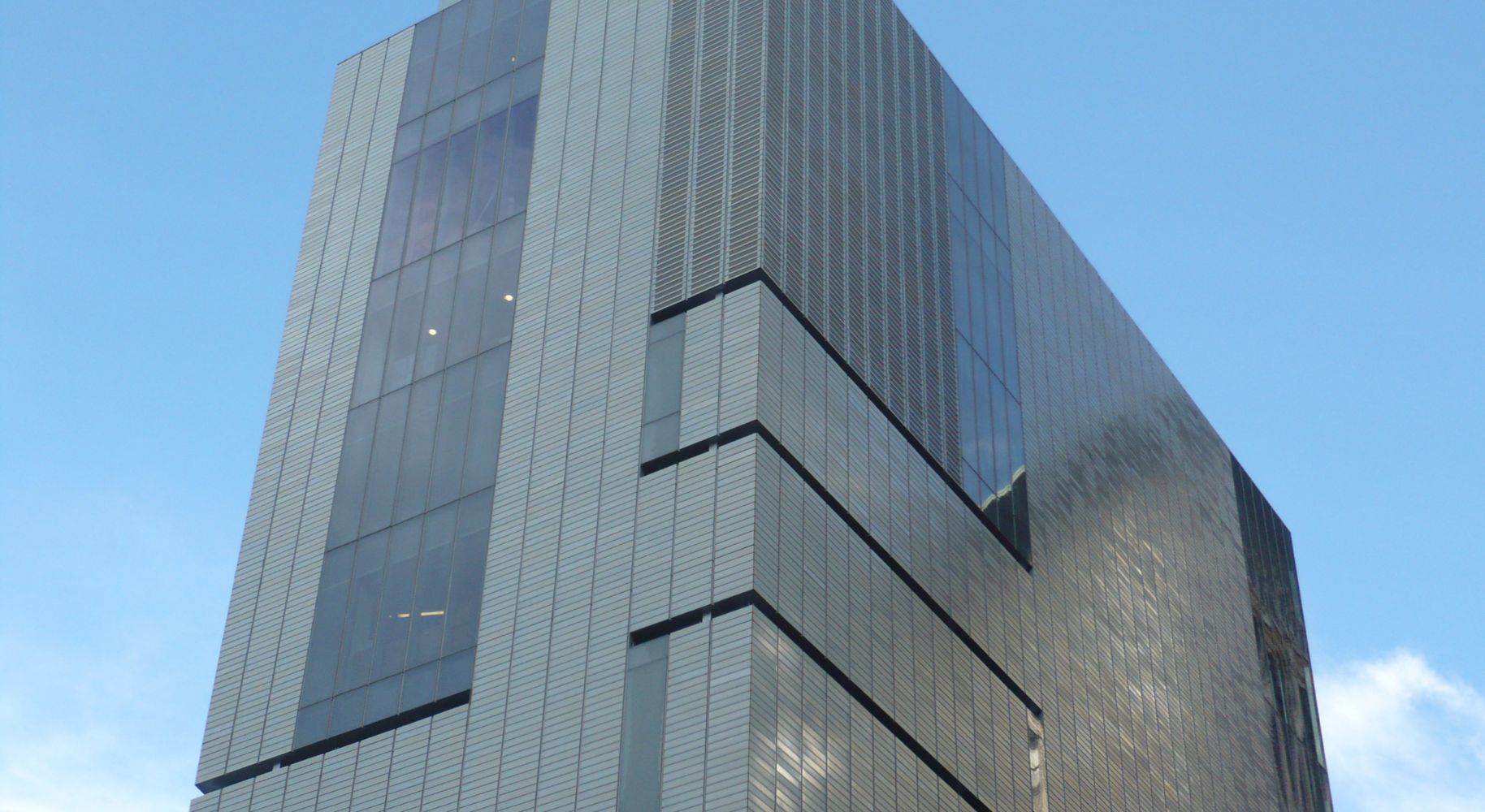
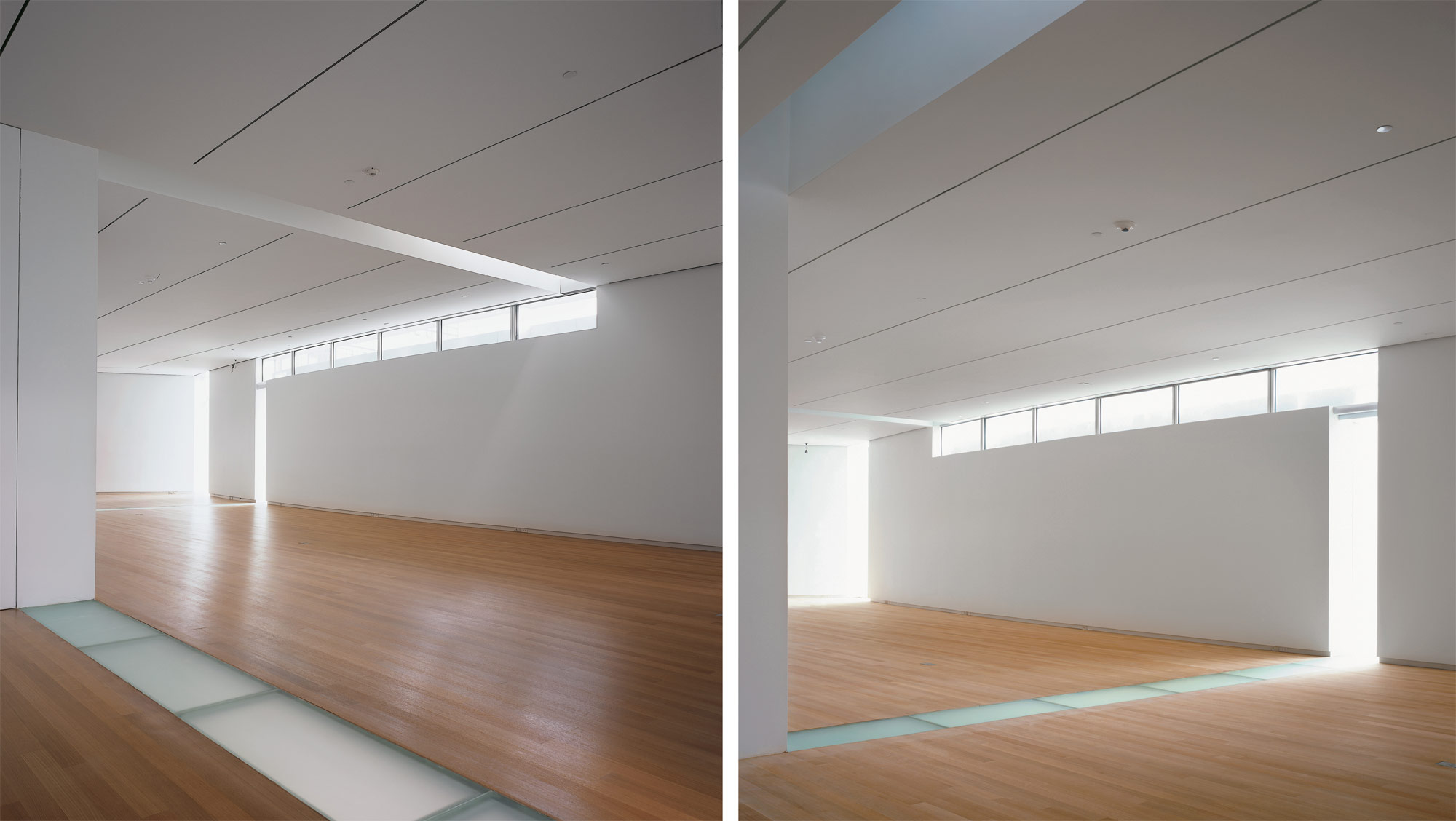
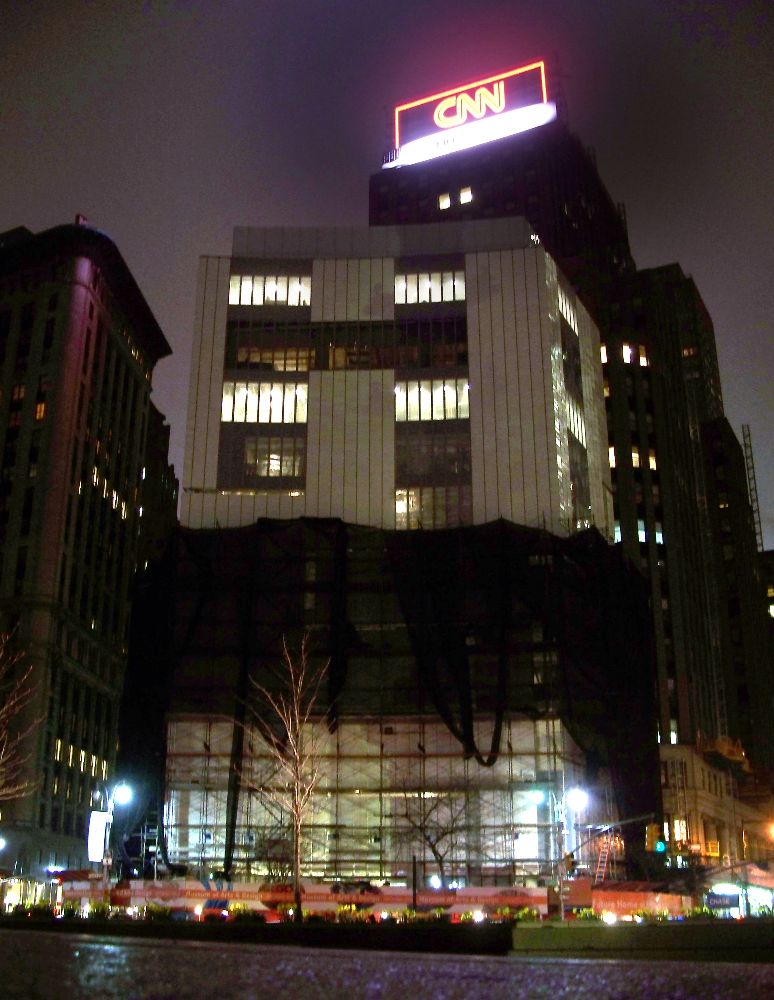
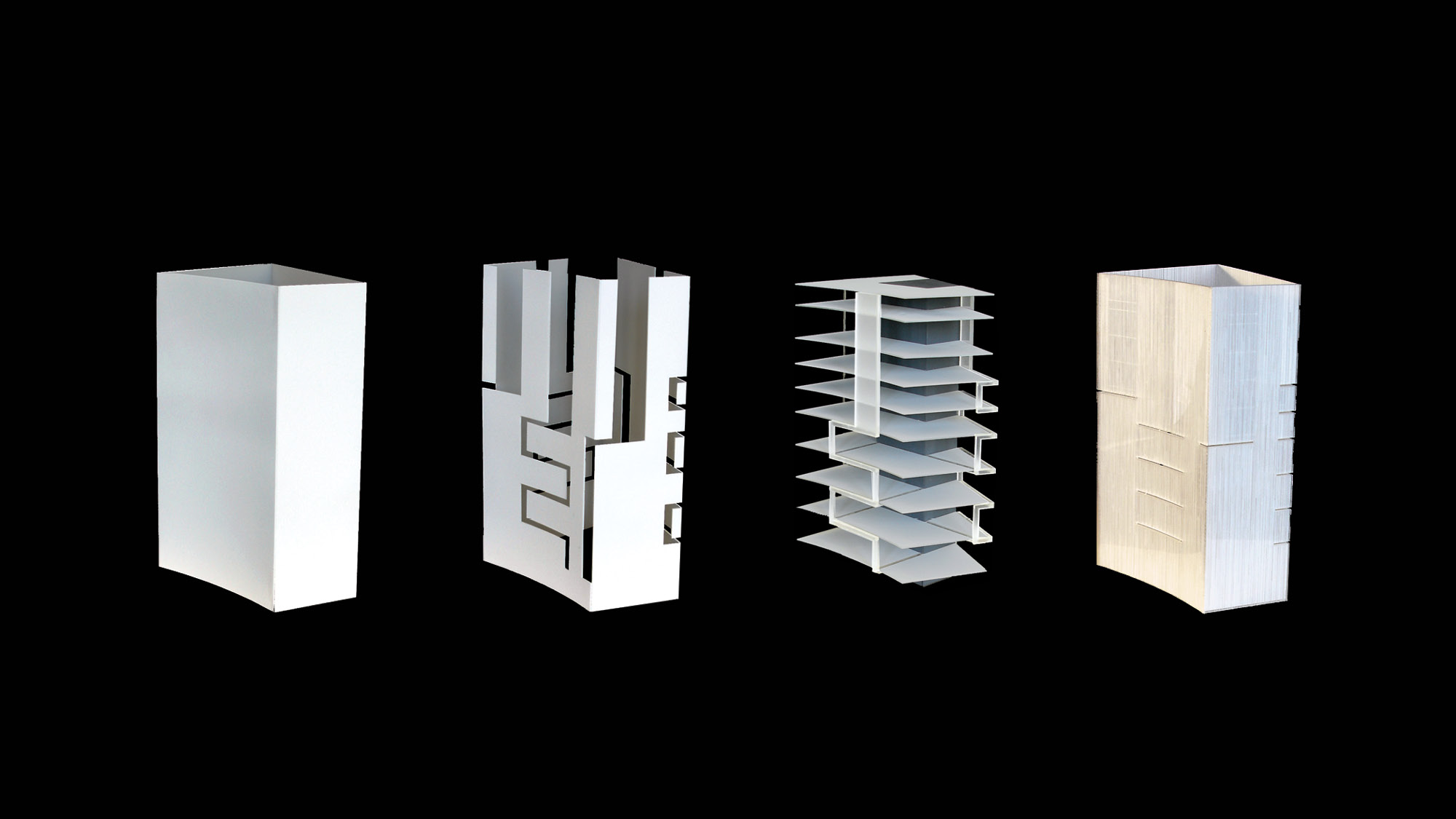
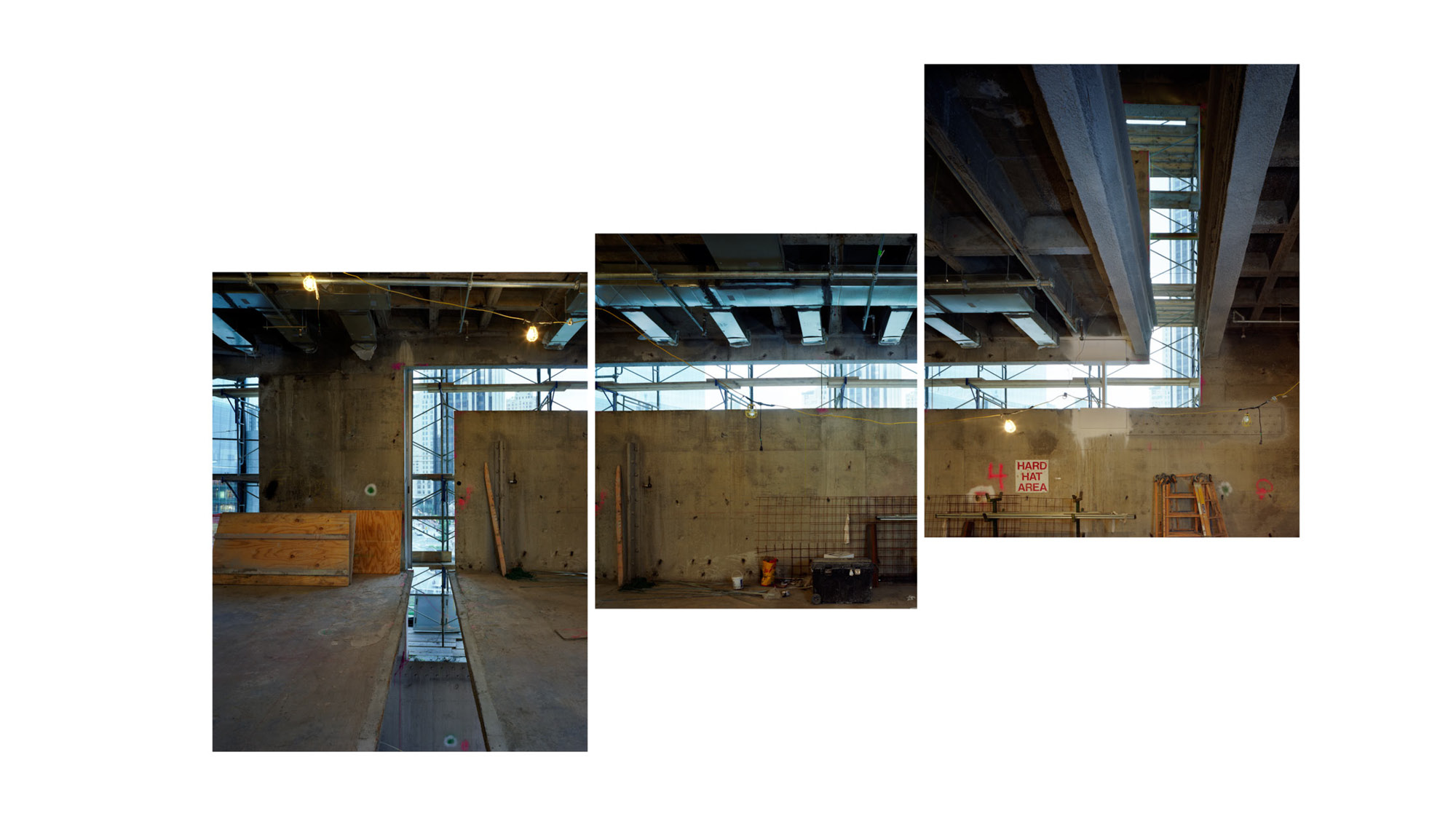
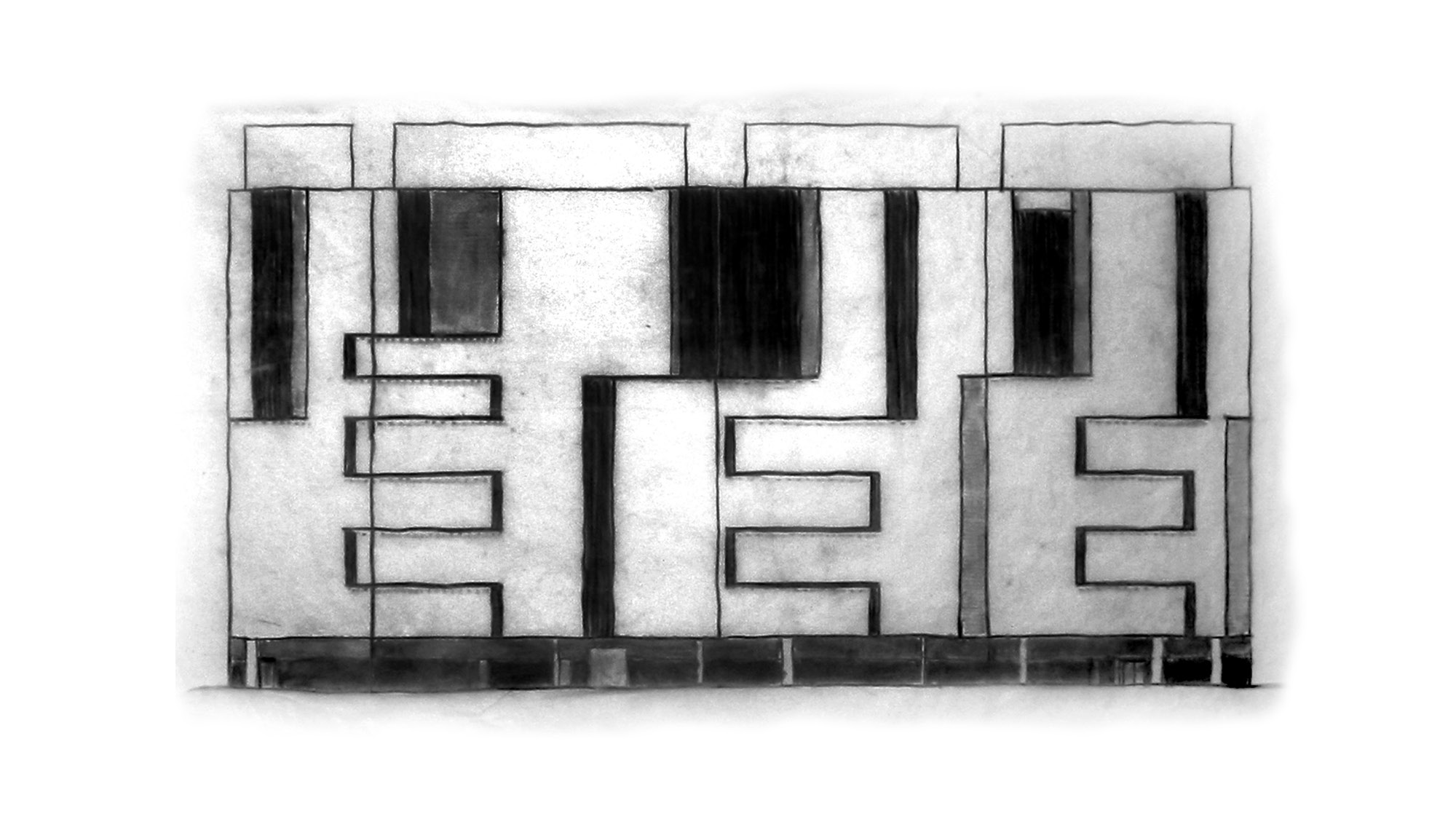
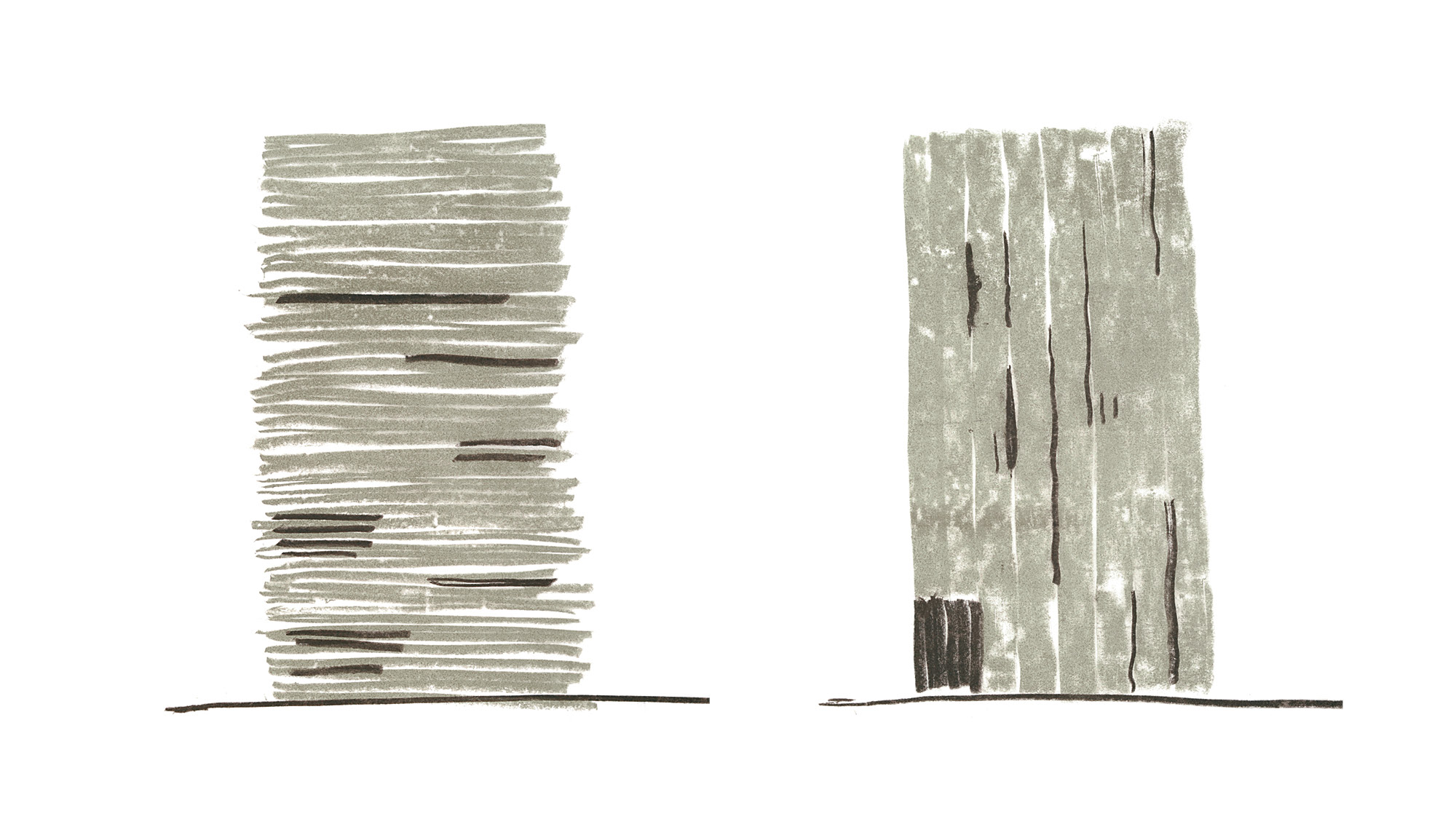
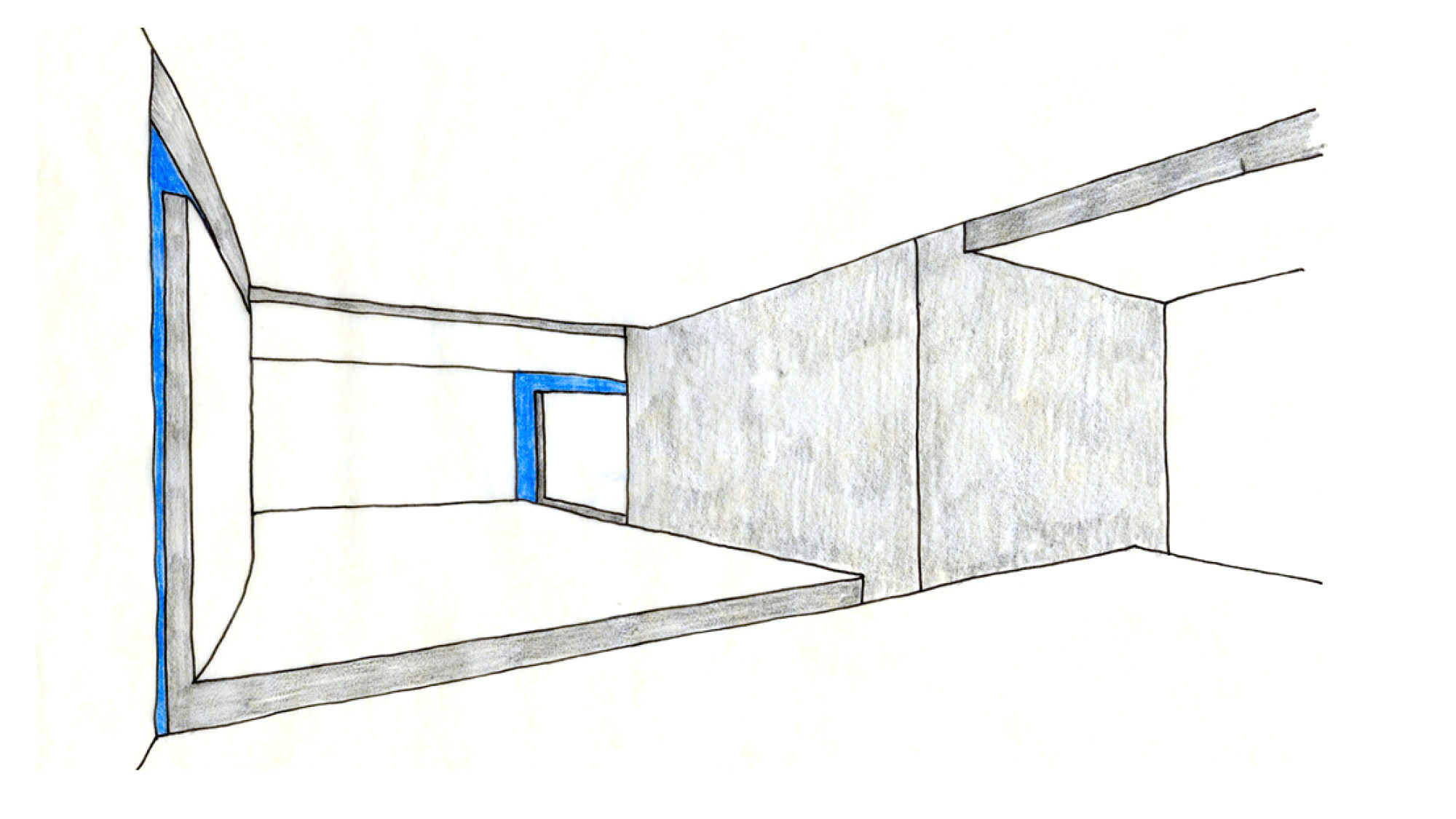
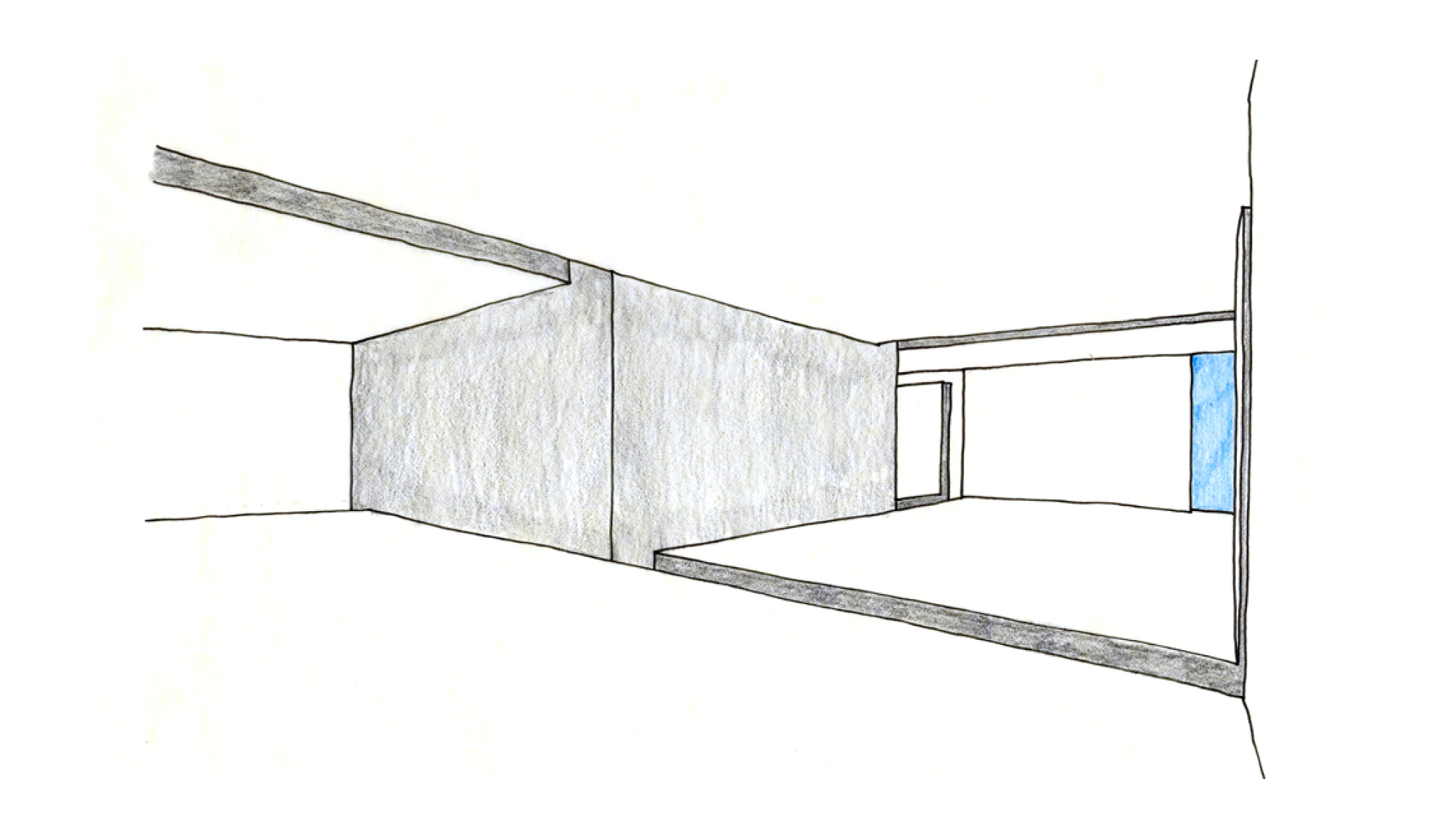
The Museum of Arts and Design acquired the building and commissioned Allied Works Architecture, led by Brad Cloepfil, to transform it into a new museum. The renovation, completed in 2008, retained the building’s concrete structure and curved massing but replaced the original marble façade, porthole windows, and upper loggias with a new exterior of glazed terracotta panels and vertical glass cuts.
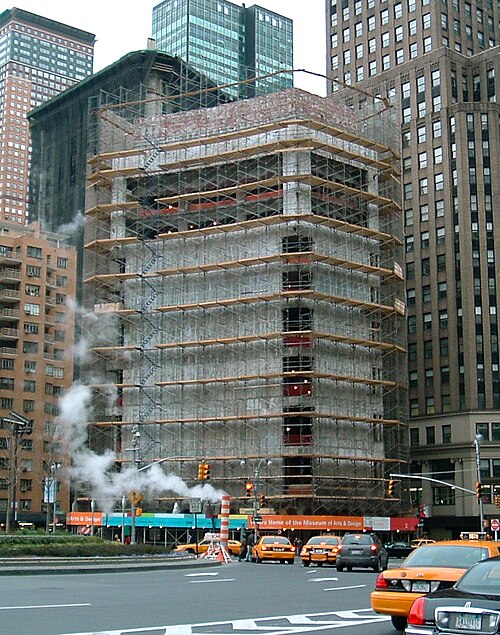
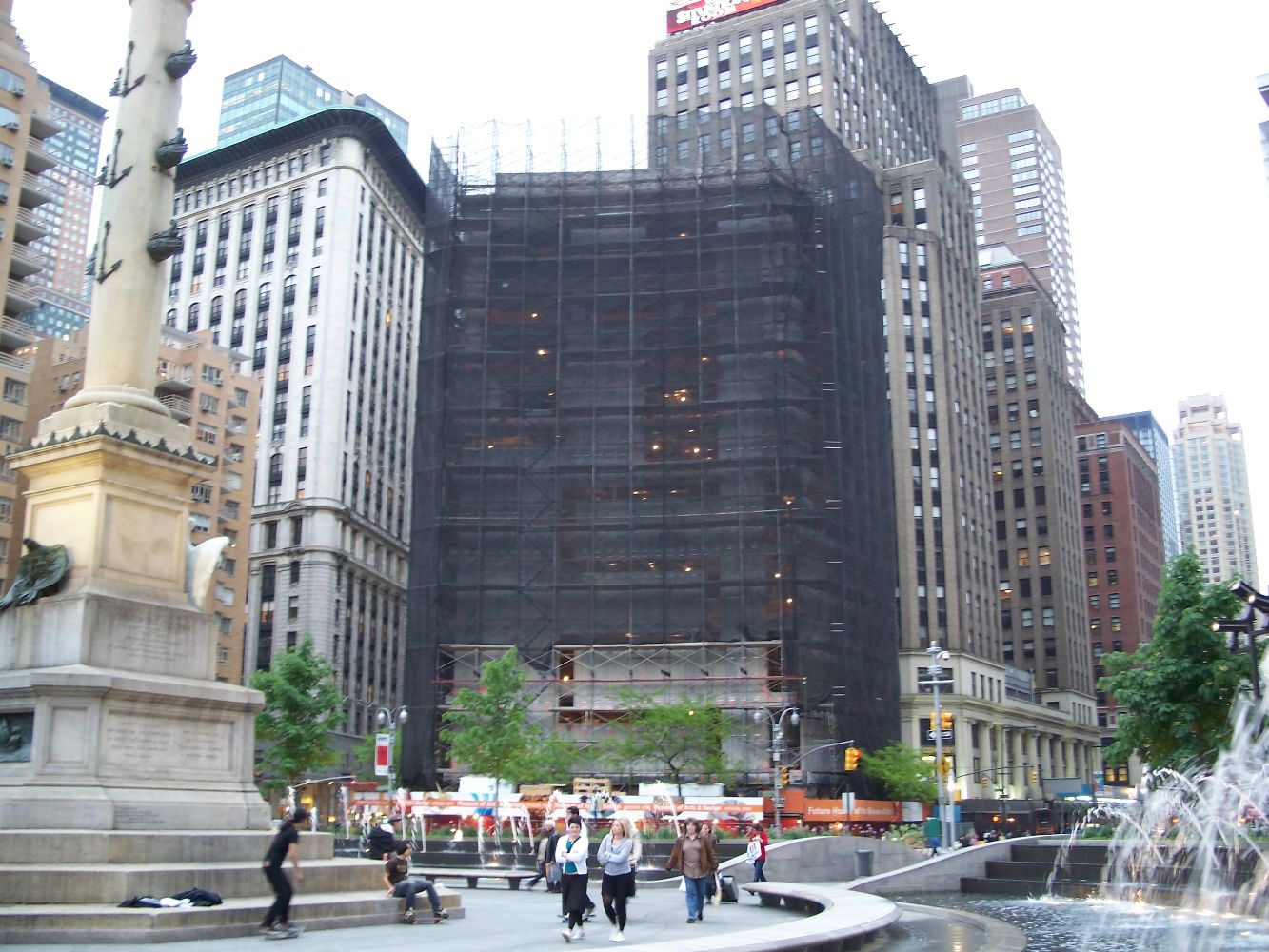
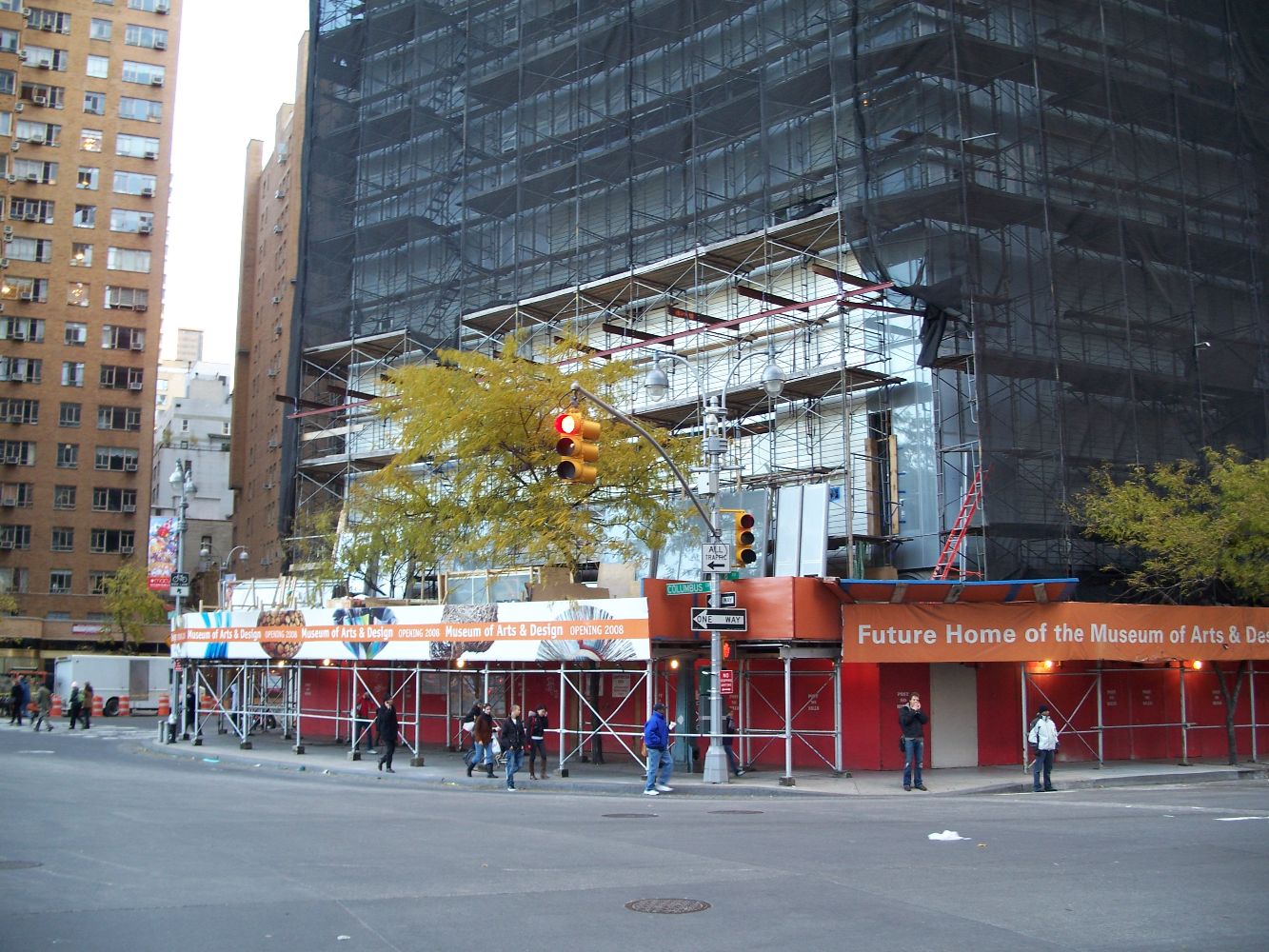
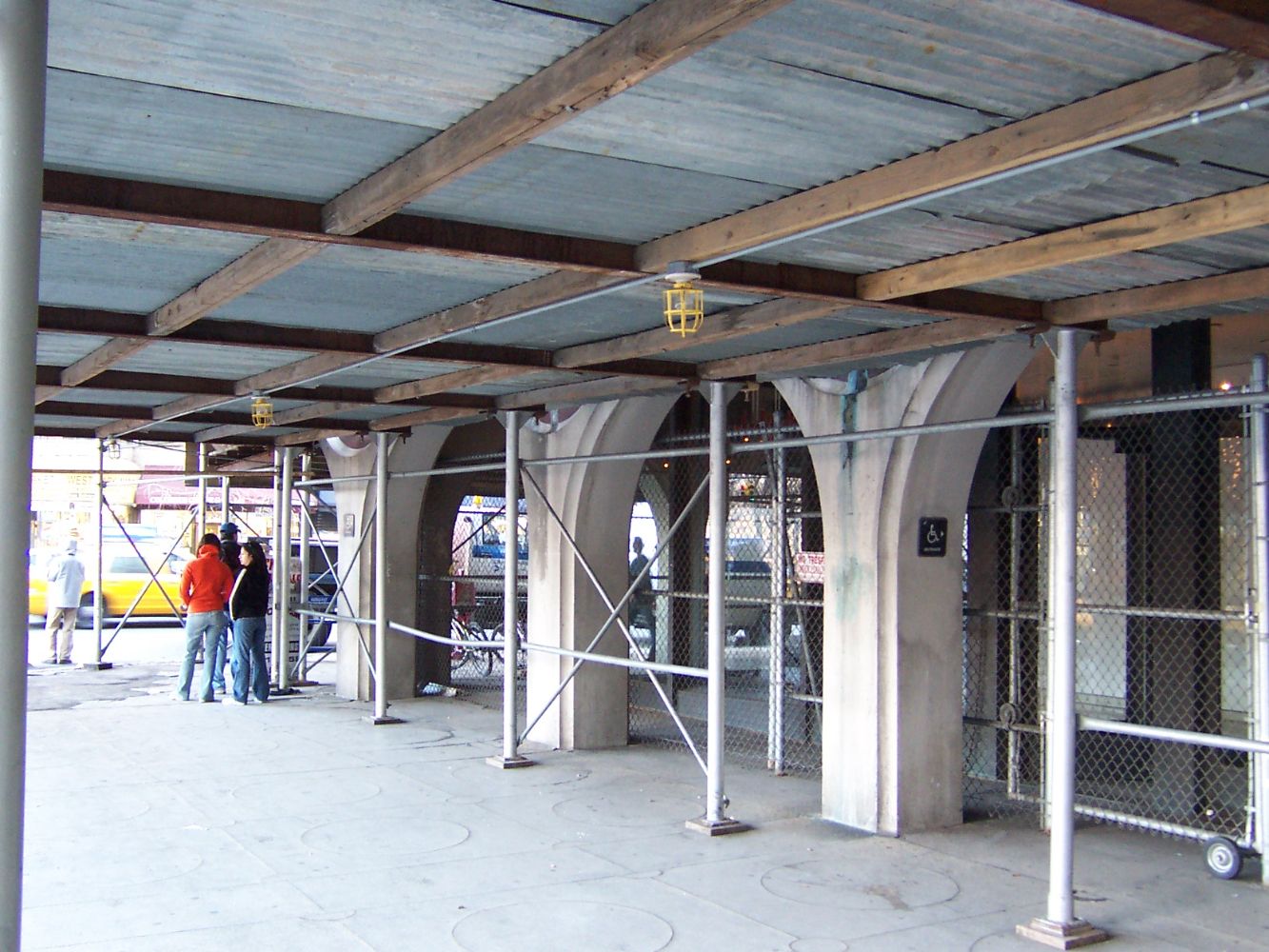
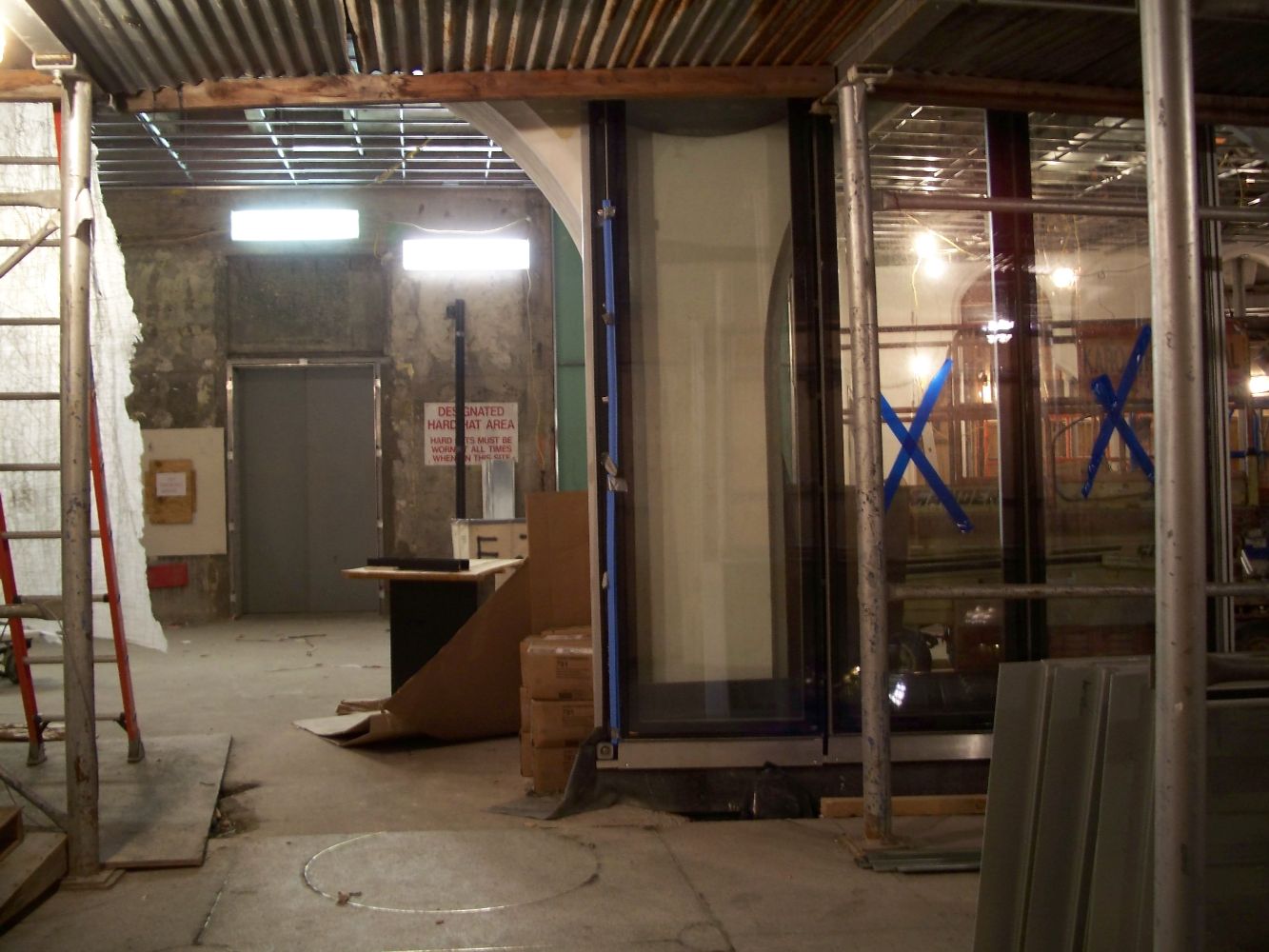
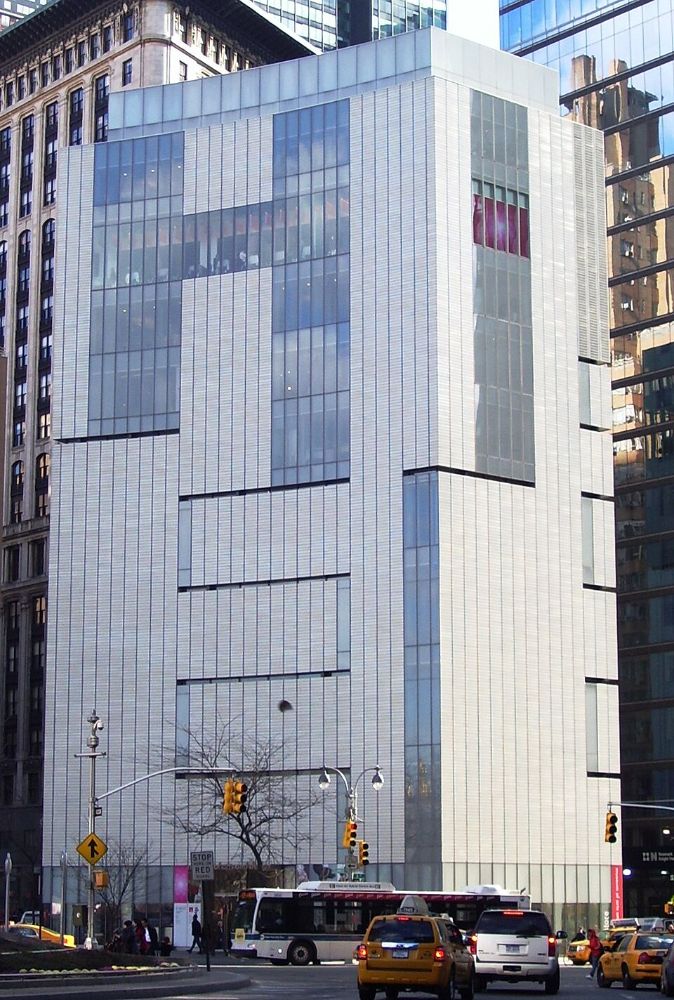
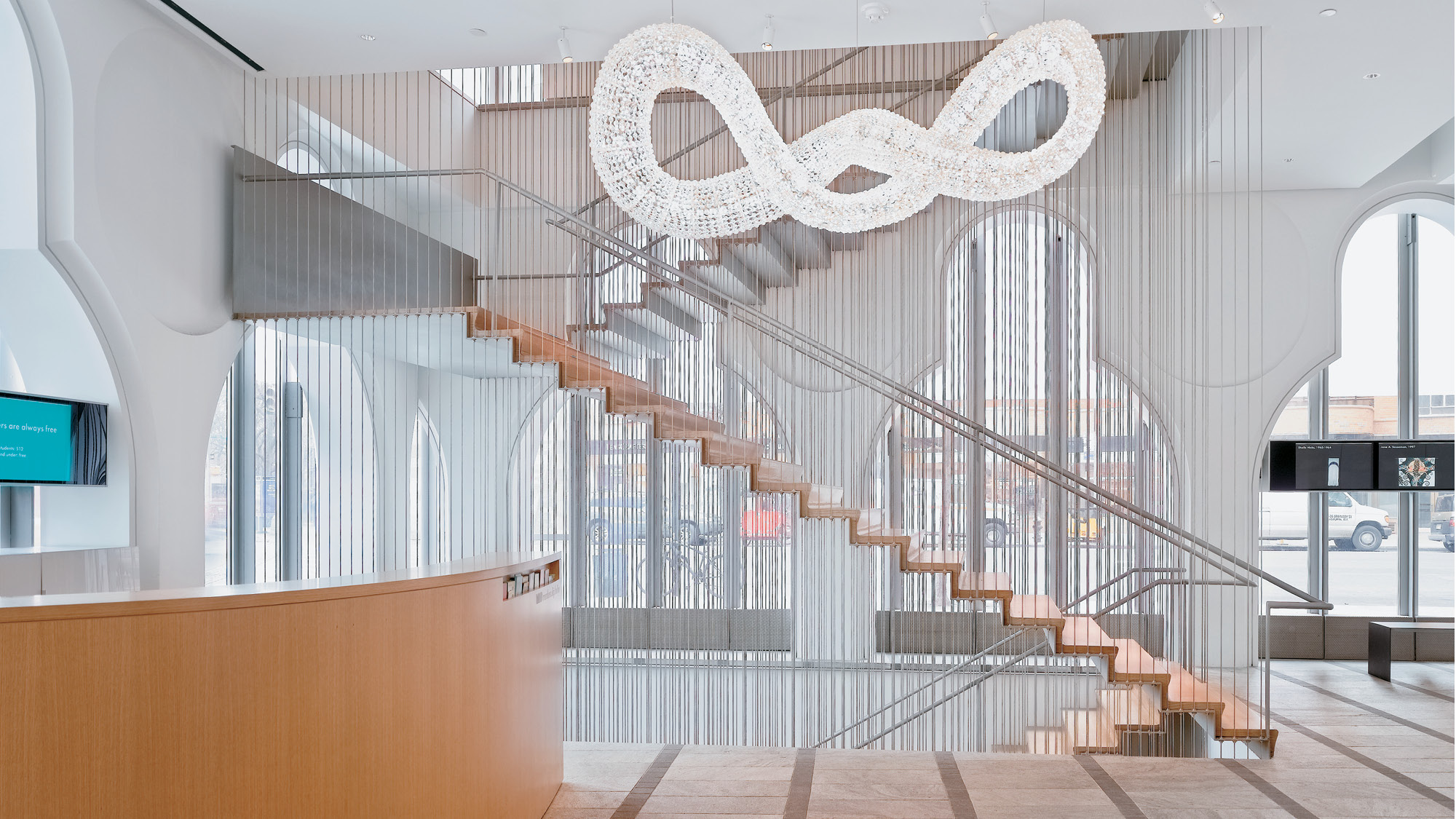
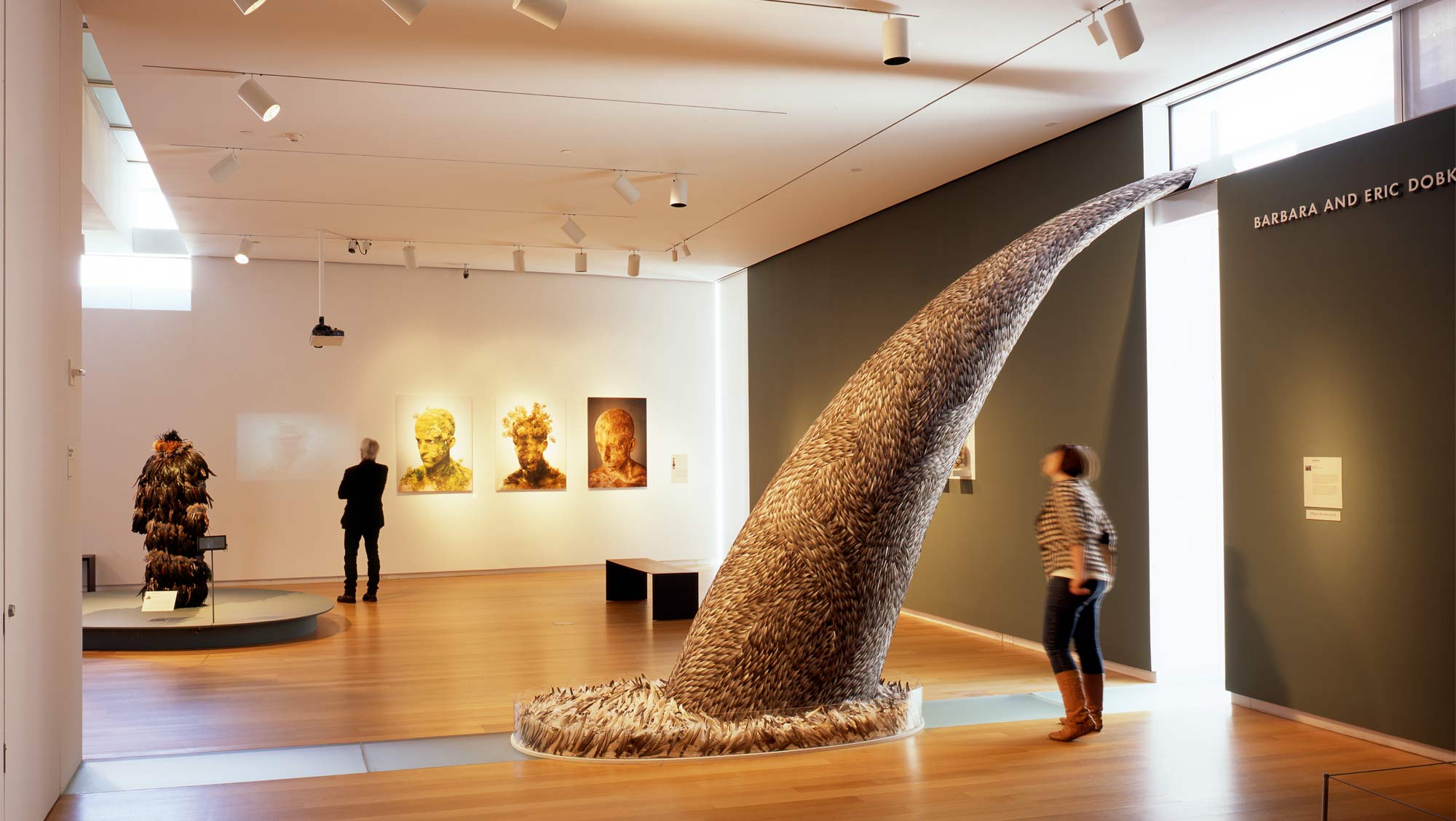
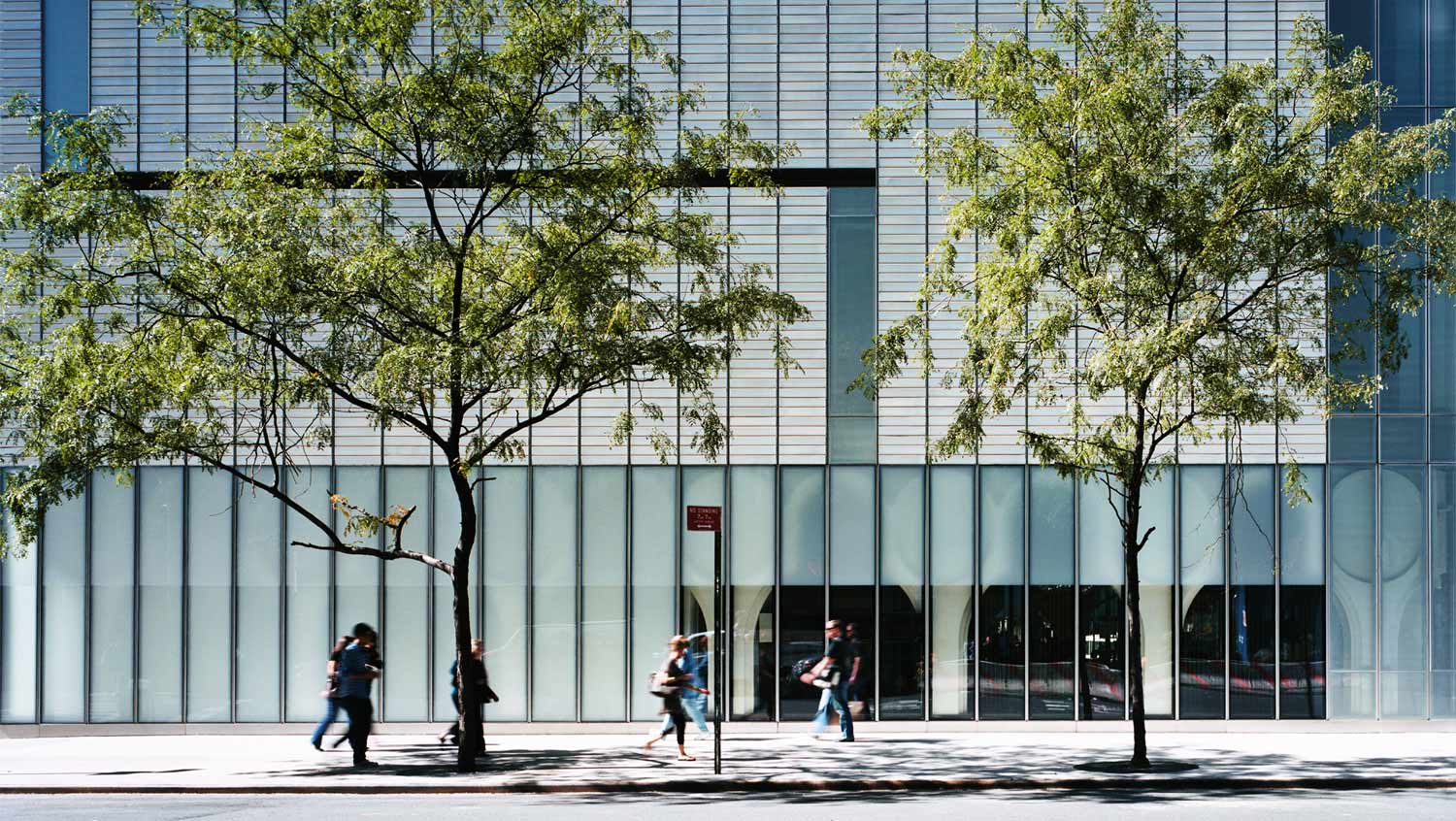
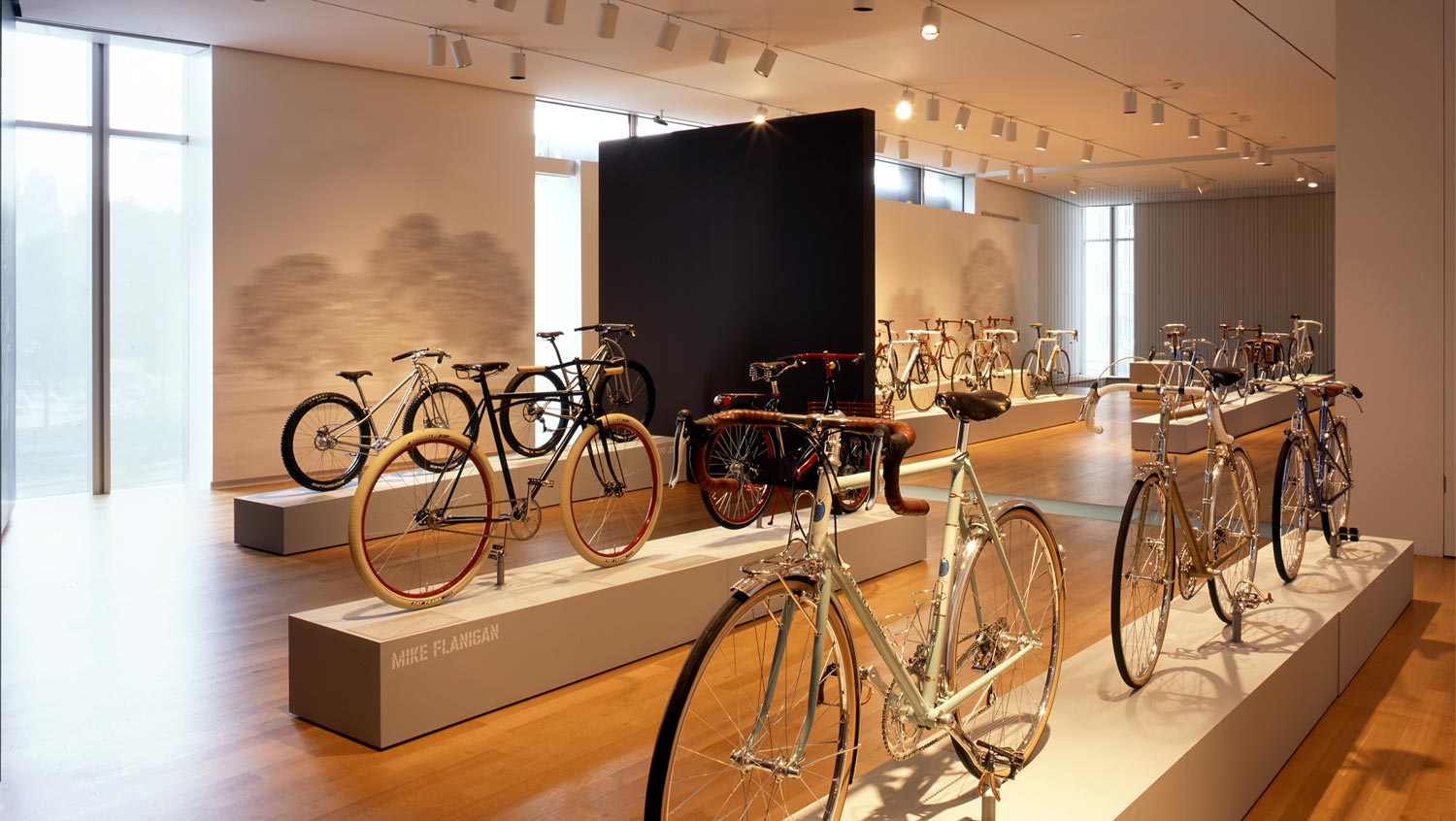
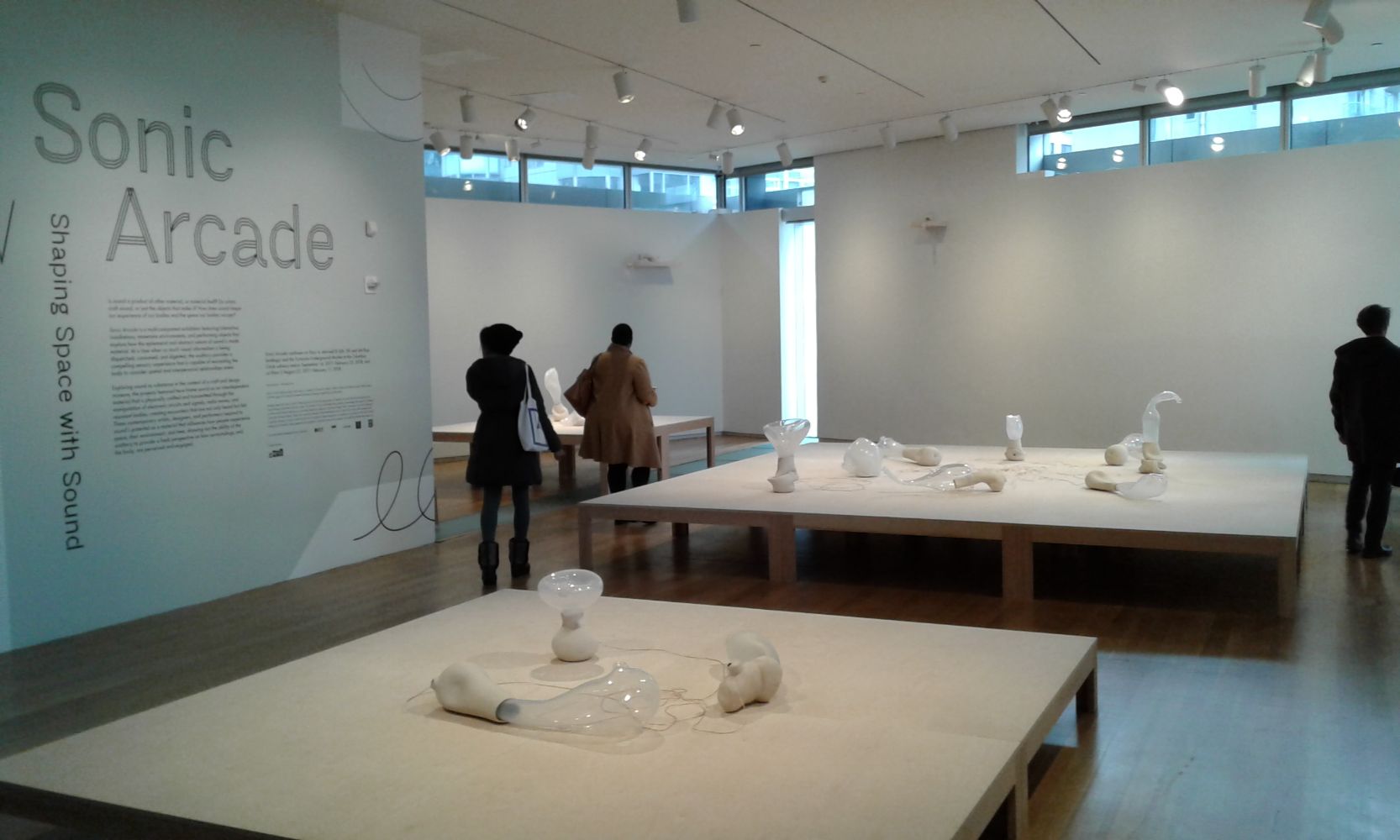
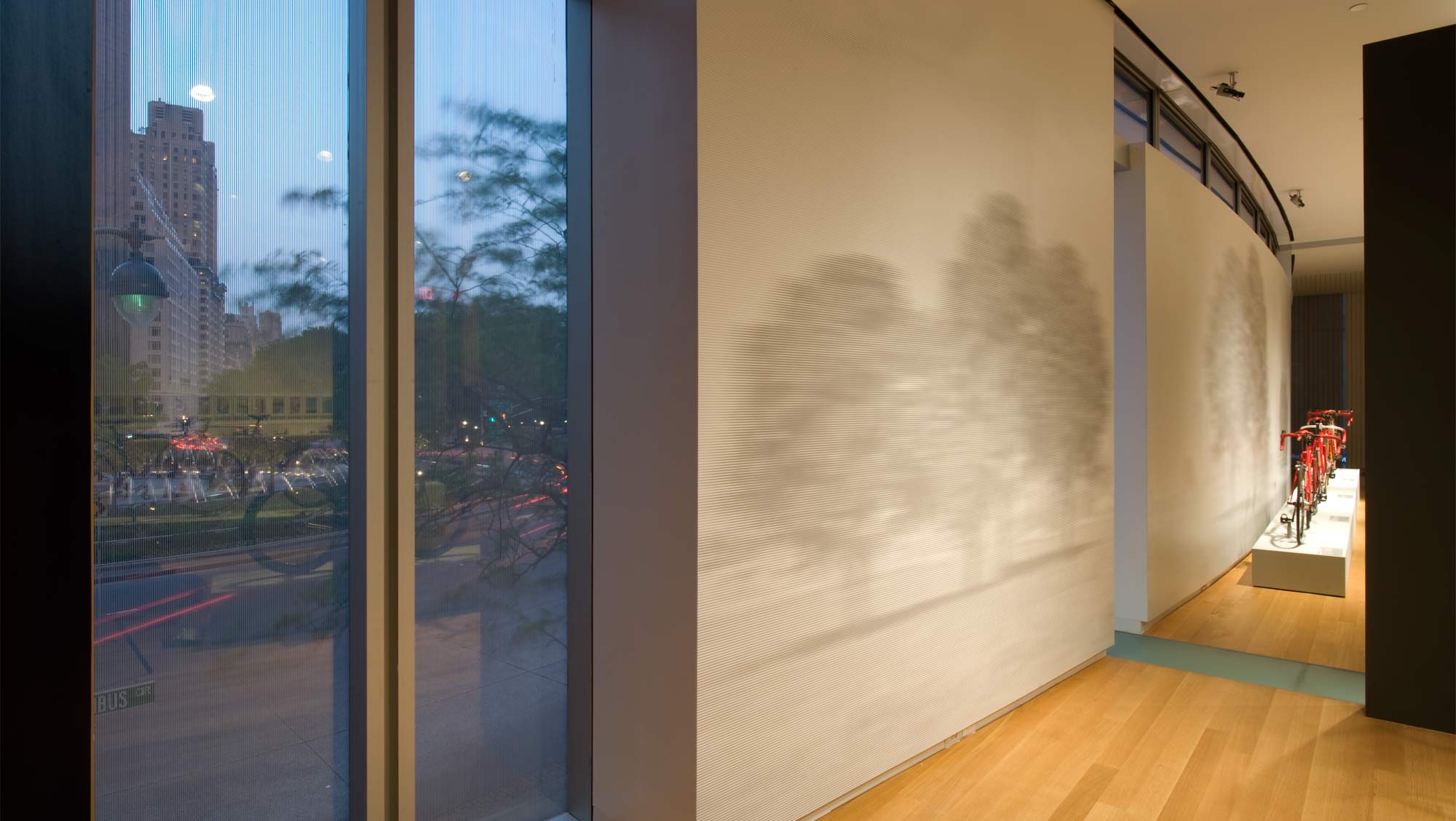
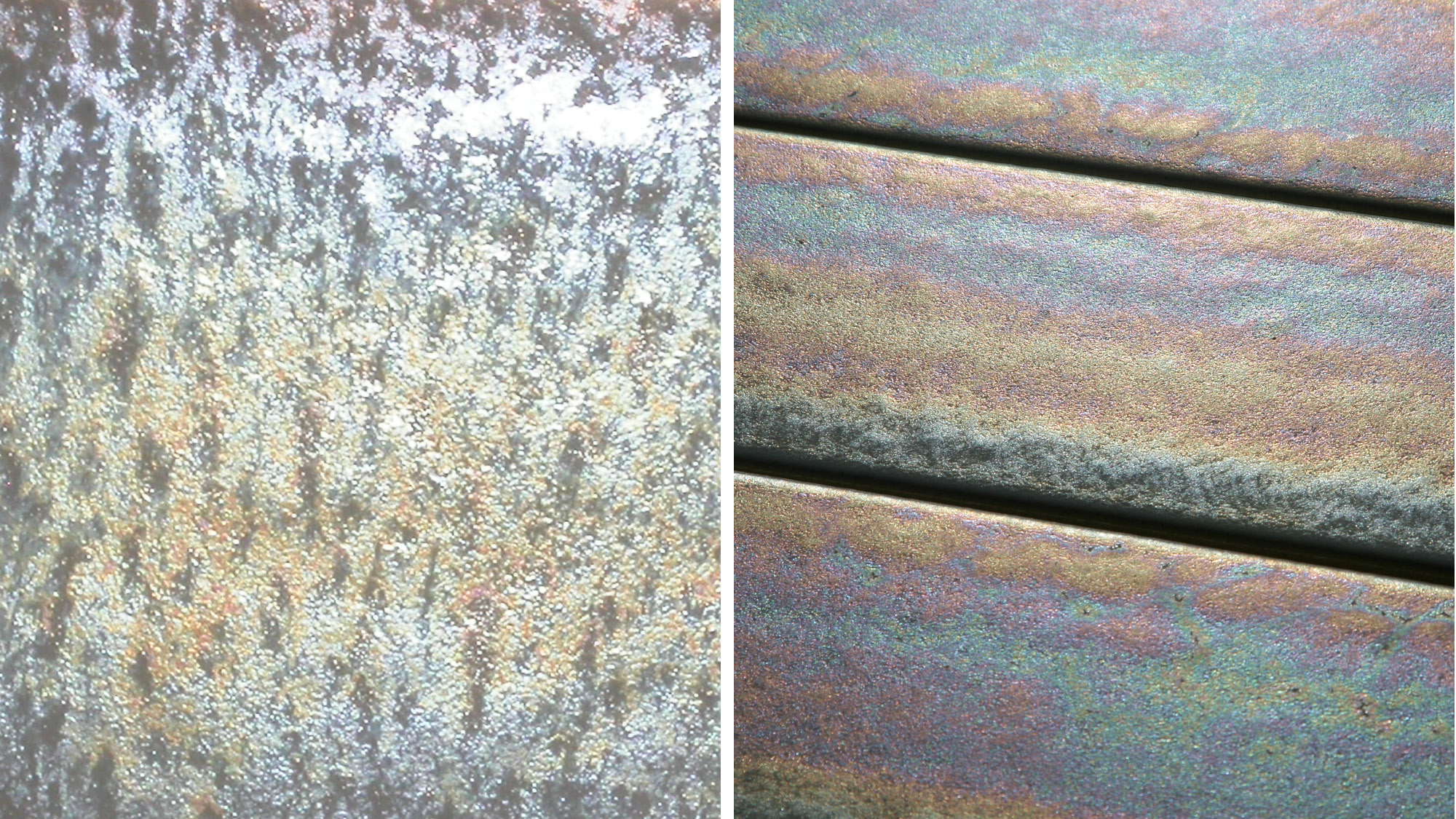
The new façade uses approximately 22,000 iridescent terracotta tiles and fritted glass openings to bring daylight into the galleries and create views toward Central Park, Broadway, and the surrounding city. Interior mezzanines and circulation routes were reworked to increase usable floor area, open the museum to light, and support galleries, artist-in-residence studios, classrooms, offices, event spaces, and a museum store.
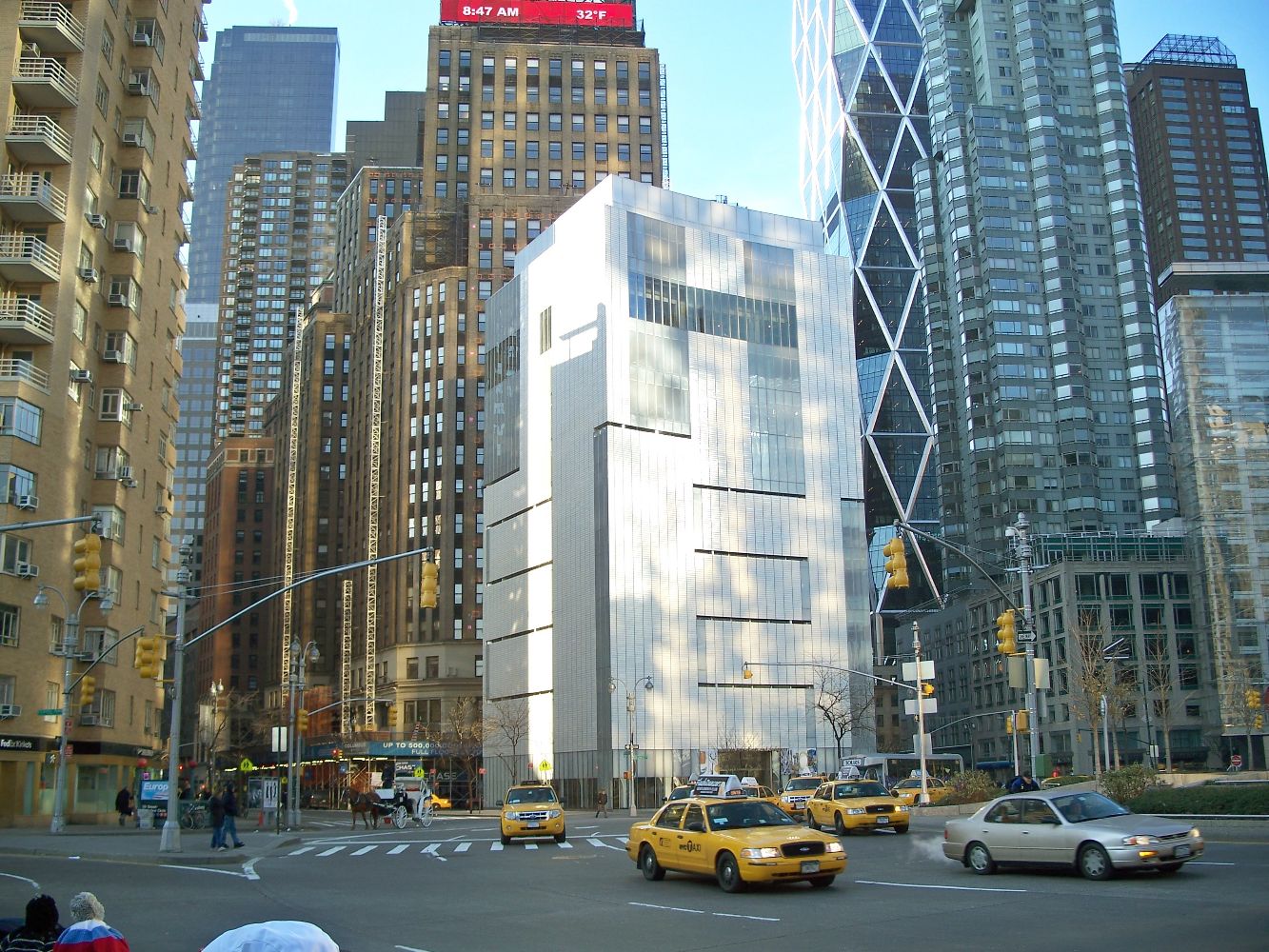
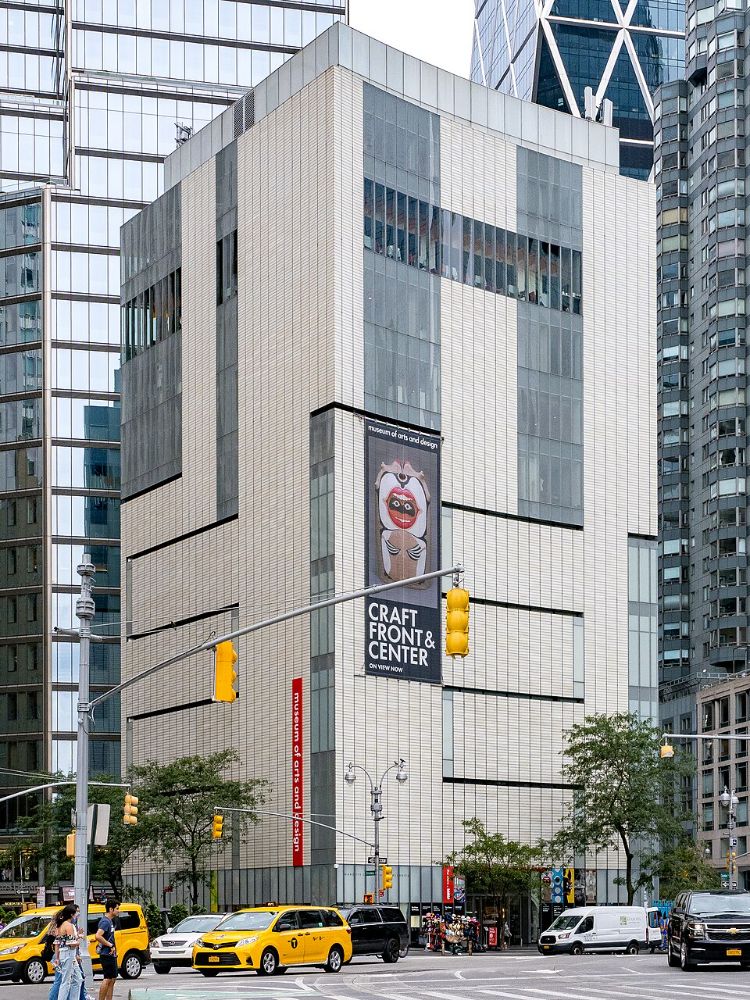
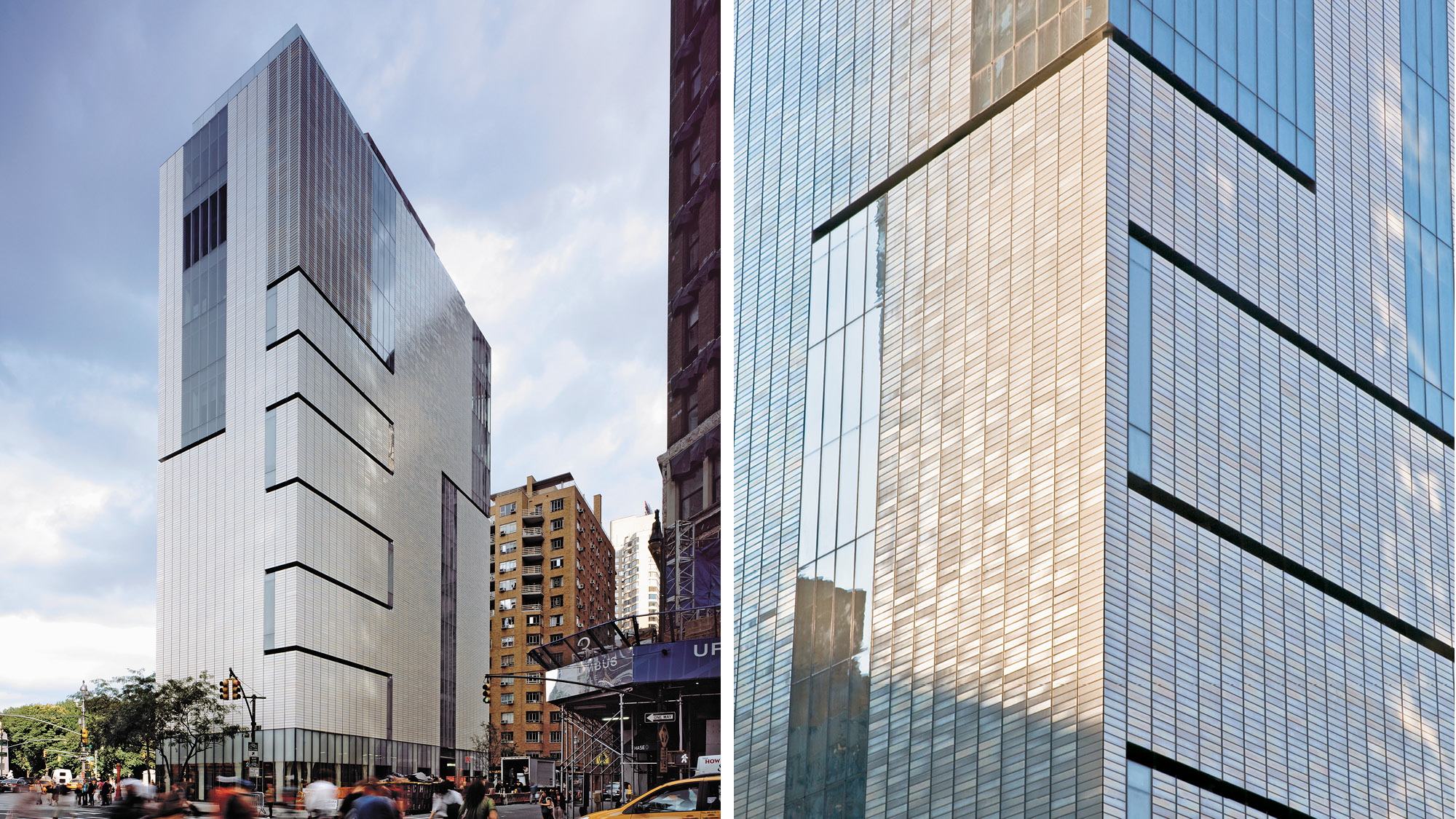
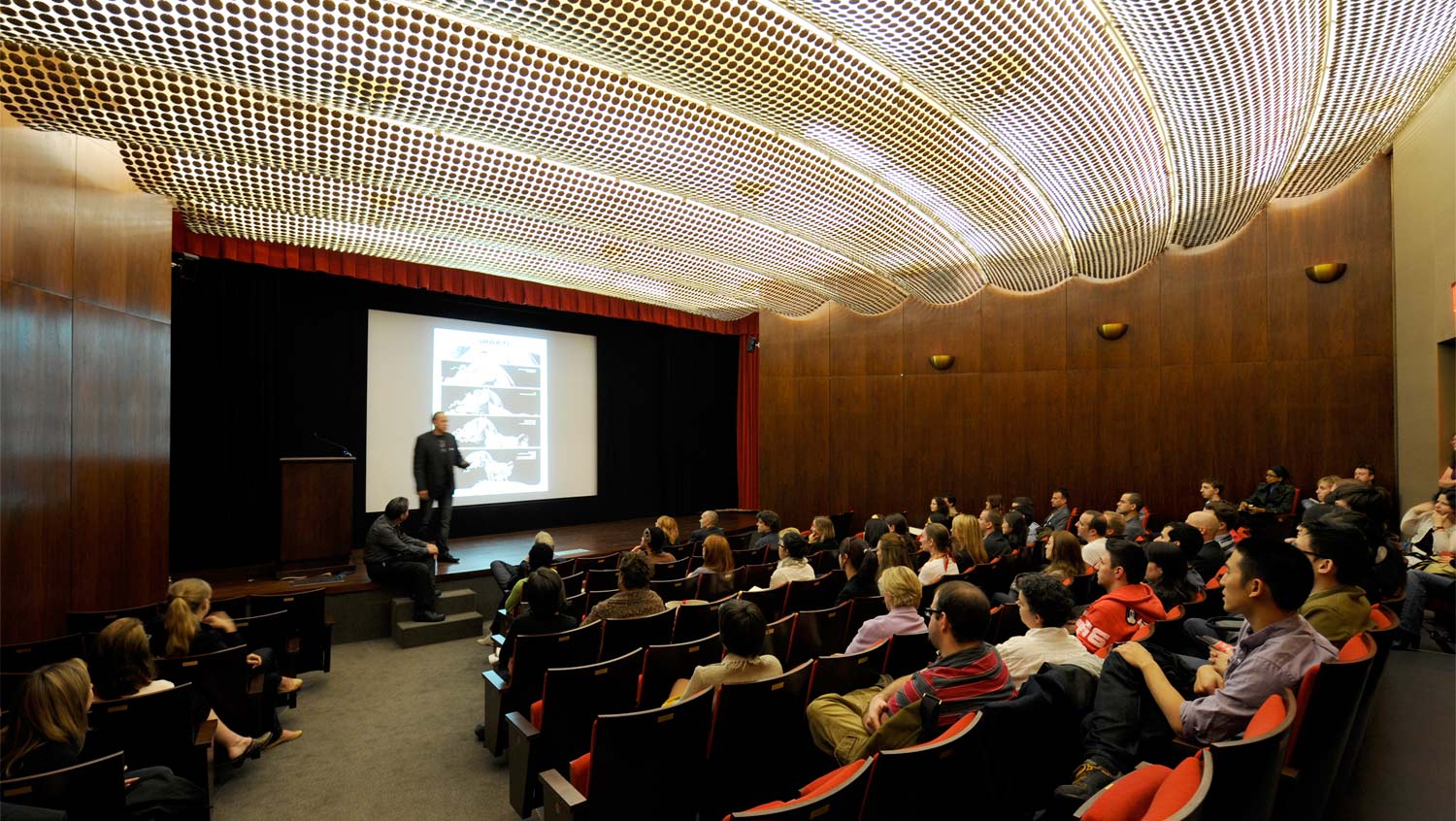
One major element of Stone’s interior was preserved: the auditorium, restored with its original bronze and red-toned character. The building now serves as the Museum of Arts and Design, combining exhibition space with education, events, craft studios, and public programming.
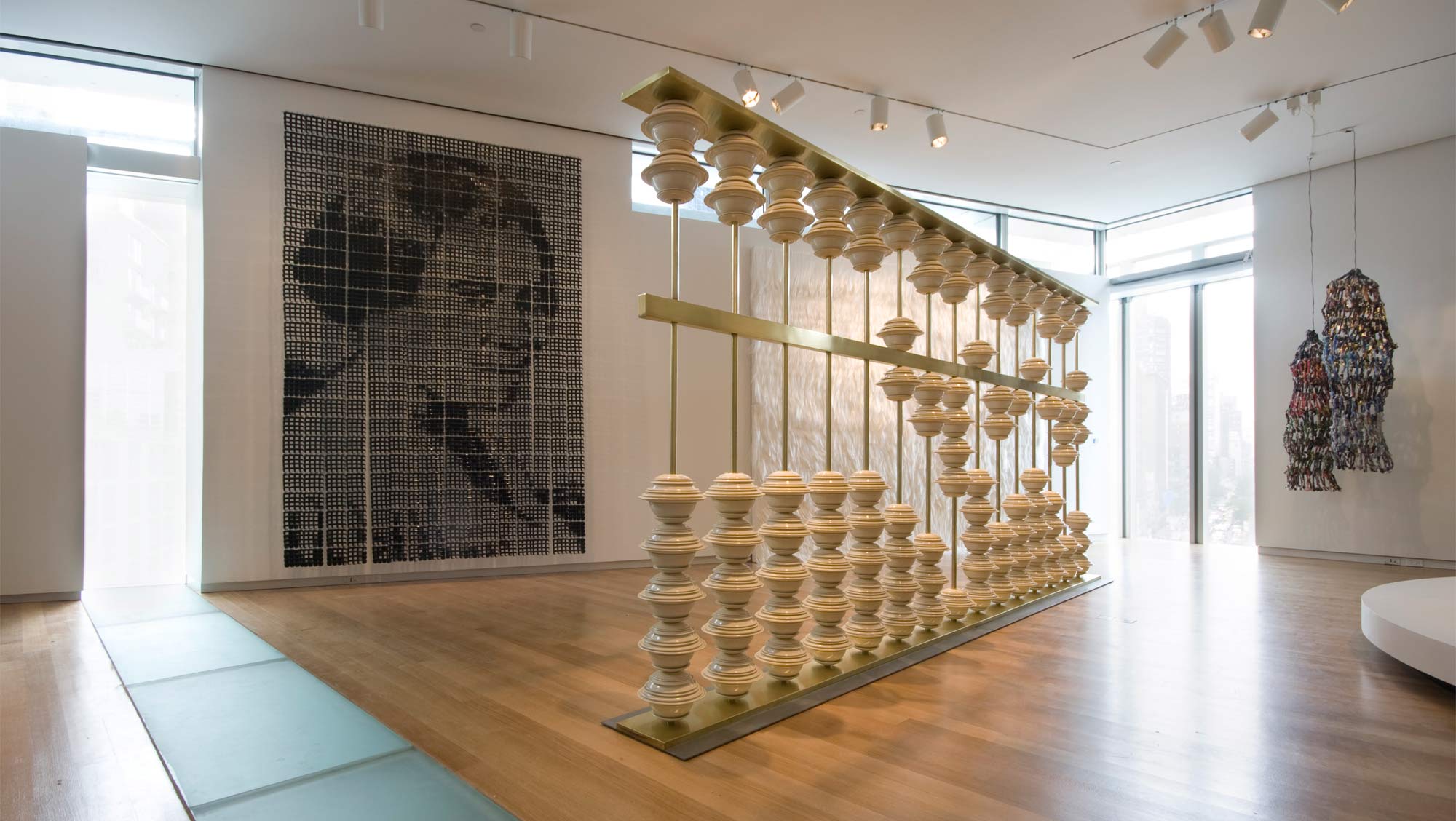
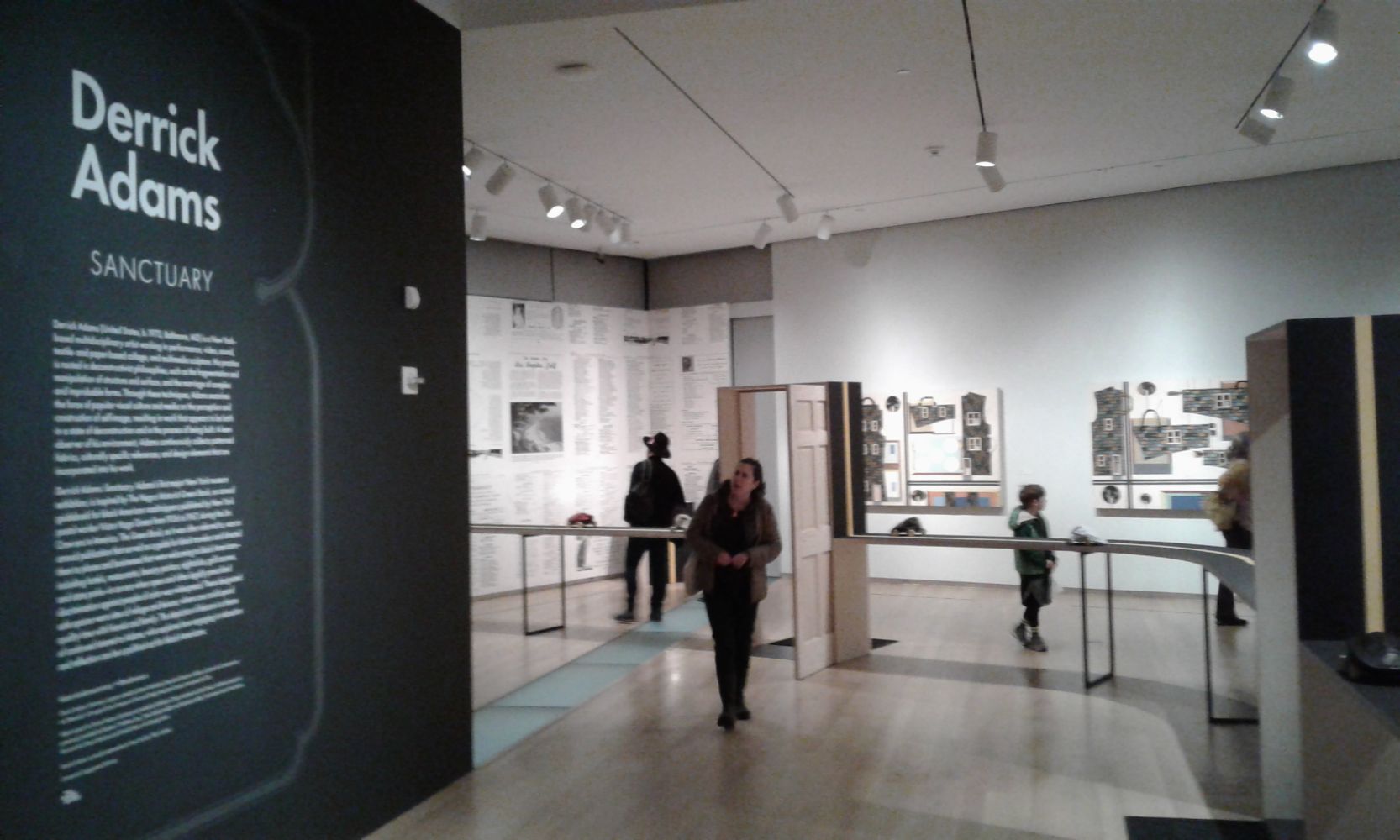
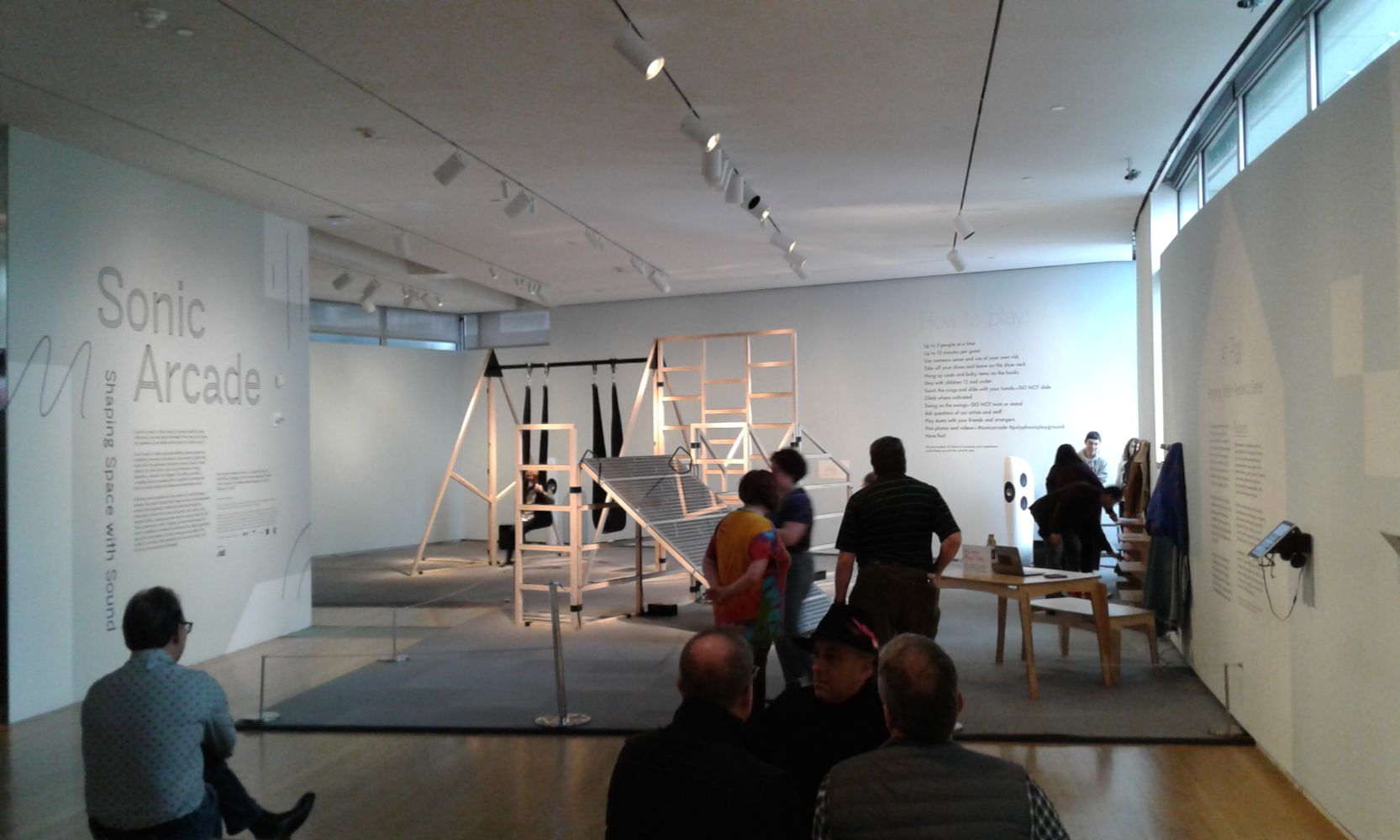
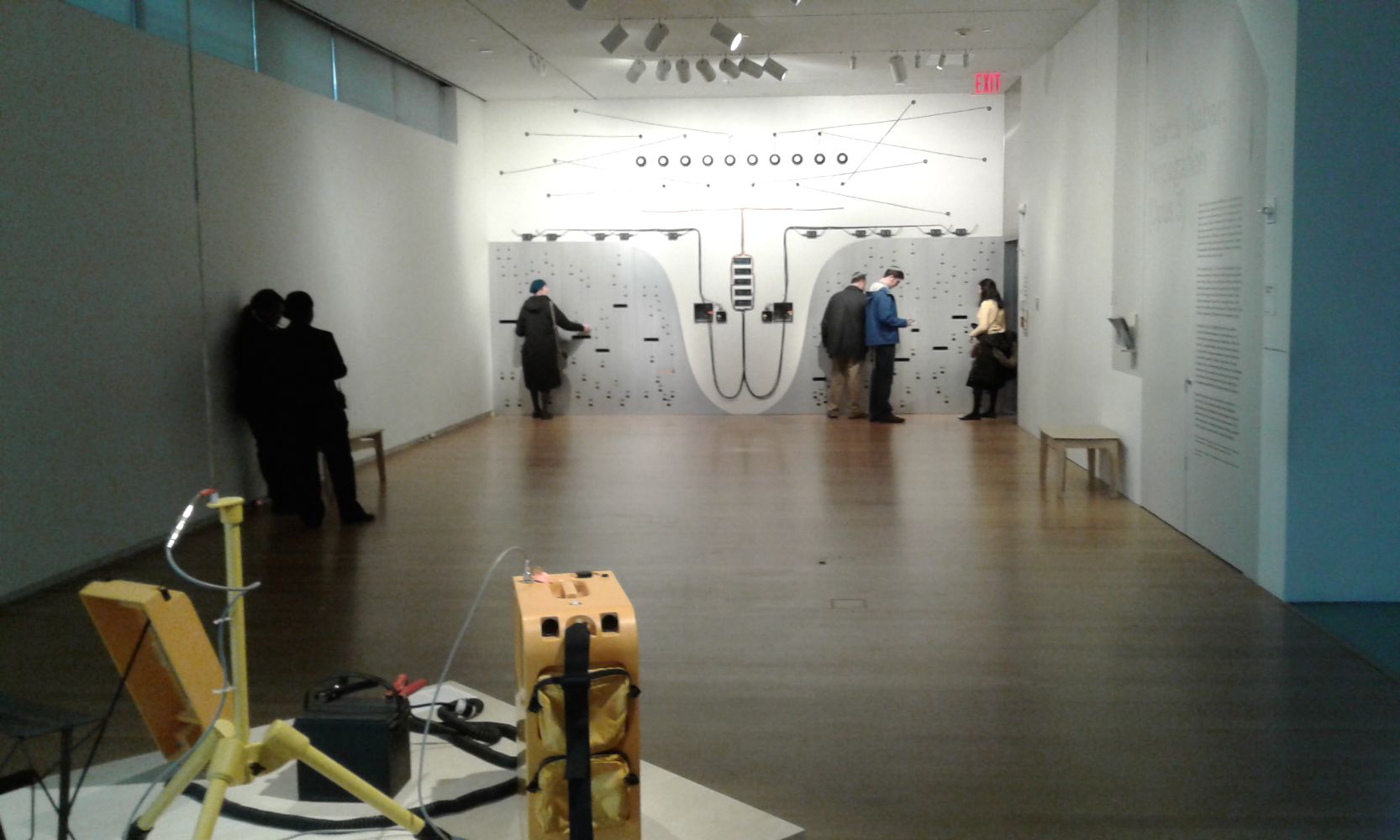
2 Columbus Circle remains important less as a settled object than as a layered architectural debate. Its history links postwar modernism, ornament, museum design, preservation politics, and adaptive reuse. The building’s transformation from the Gallery of Modern Art to the Museum of Arts and Design reflects changing attitudes toward twentieth-century architecture and the ongoing difficulty of deciding what should be preserved, altered, or replaced.
Project Gallery
Project Location
Address: Columbus Circle, Midtown Manhattan, New York, NY 10019, United States
Location is for general reference and may represent a city or country, not necessarily a precise address.

