

Architects: Ludwig Mies van der Rohe
Year: 1951
Photography: Hagen Stier, Bill Zbaren, Wikimedia Commons, Marc Rochkind, kosheahan, AlasdairW, JeremyA, architecture-history.org, Archiseek.com
Consulting Architects: Holsman, Holsman, Klekamp & Taylor
Associated Architects: Pace Associates
Engineer: Frank J. Kornacher
Lighting Designer: Richard Kelly
Developer: Herbert Greenwald, Robert Hall McCormick
Project Team (Mies office): Joseph Fujikawa, Edward Duckett
General Contractor: Metropolitan Structures Inc.
Steelwork: American Bridge Company
City: Chicago
Country: United States
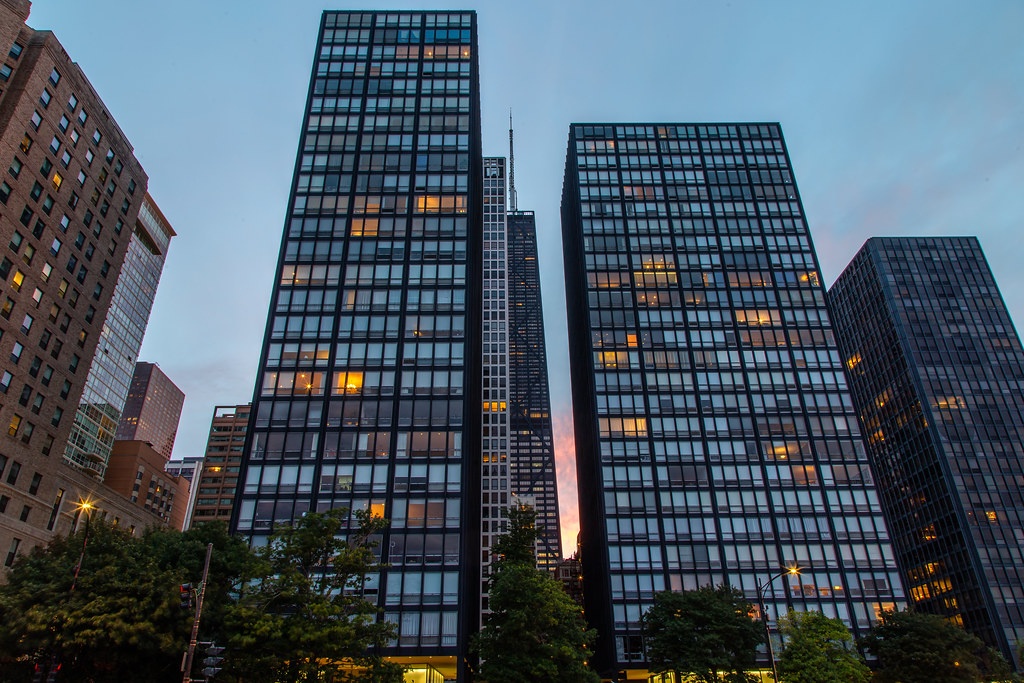
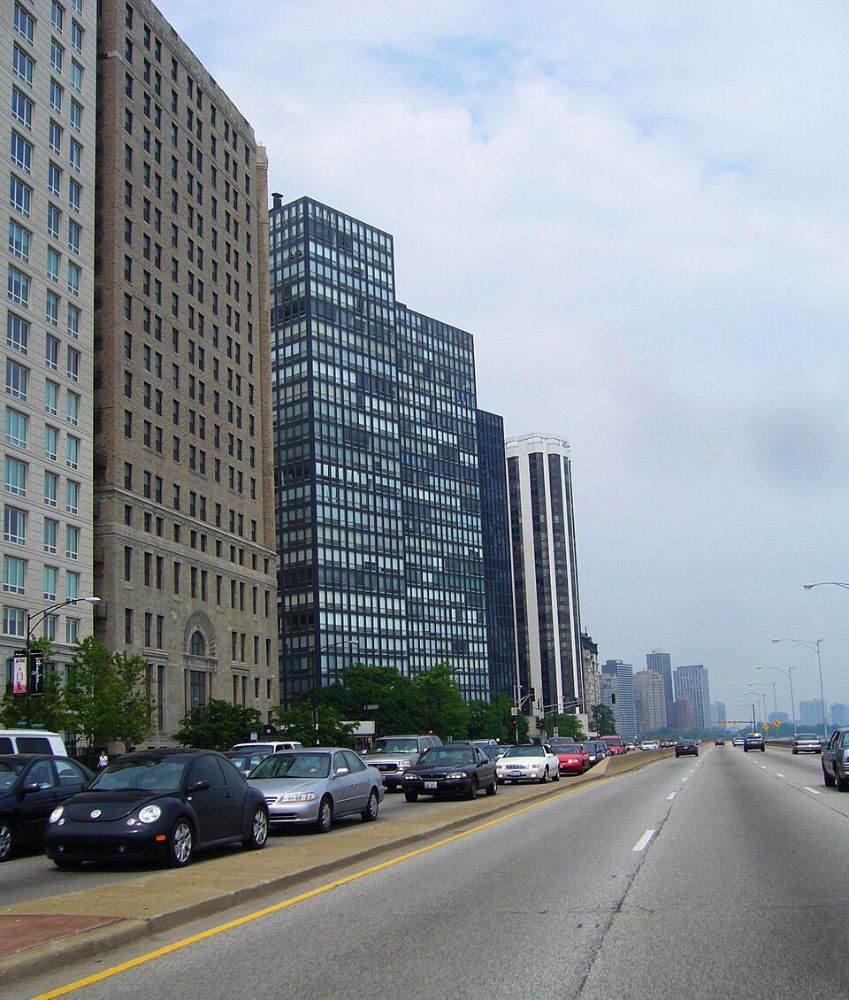
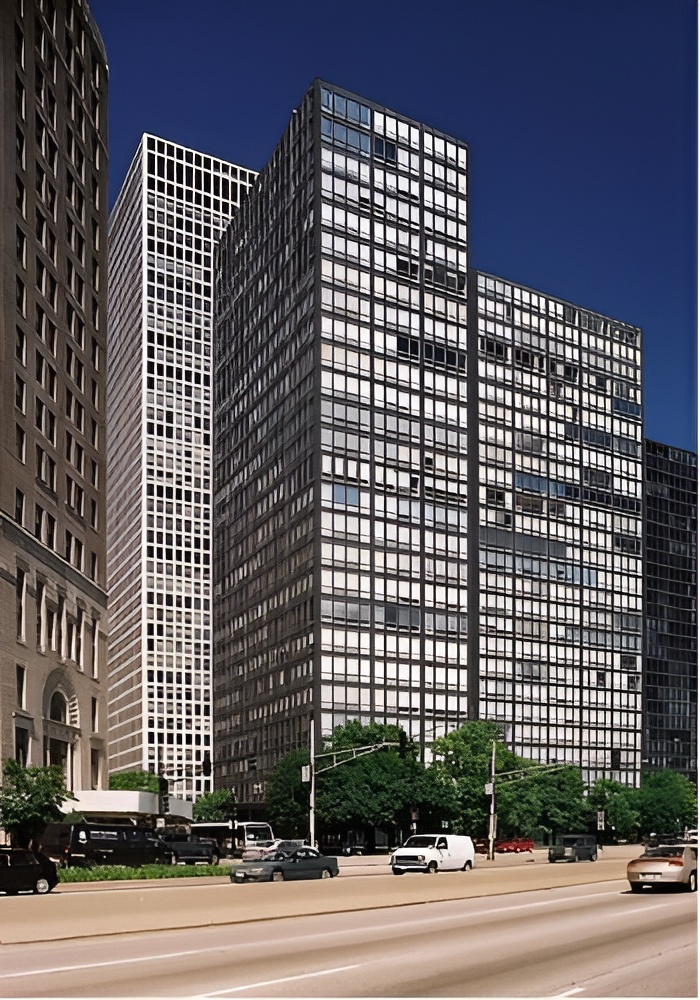
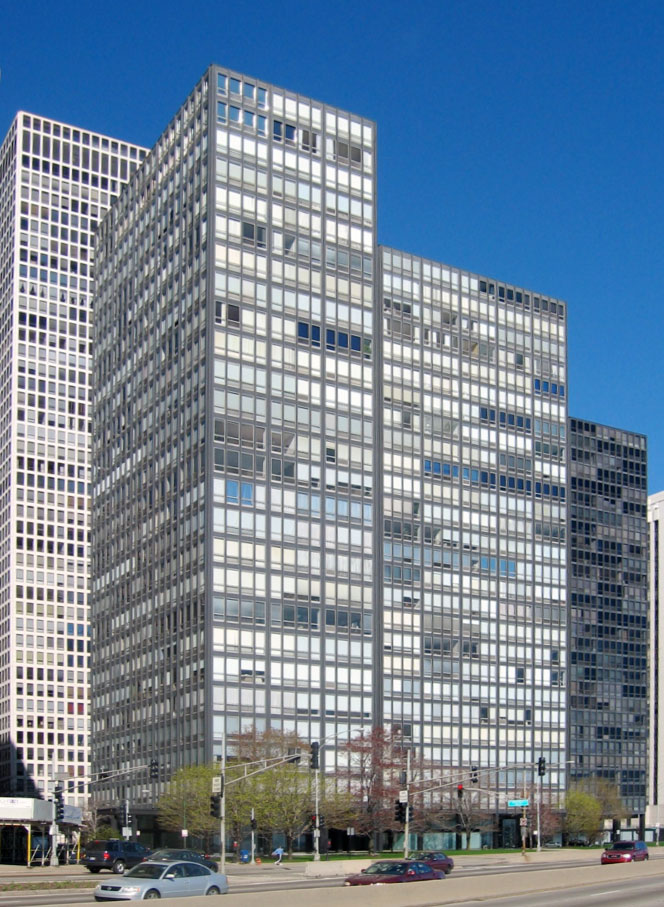
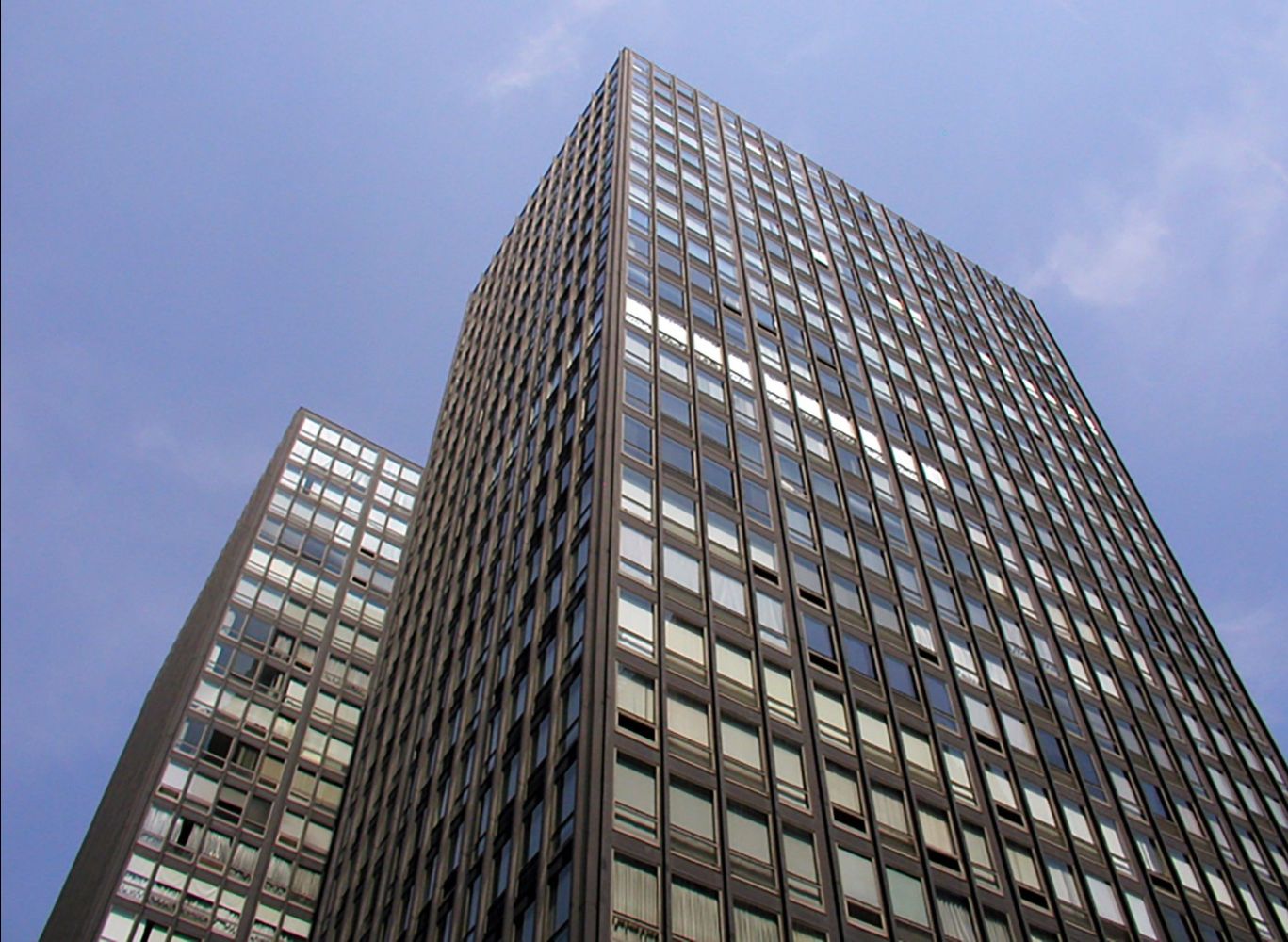
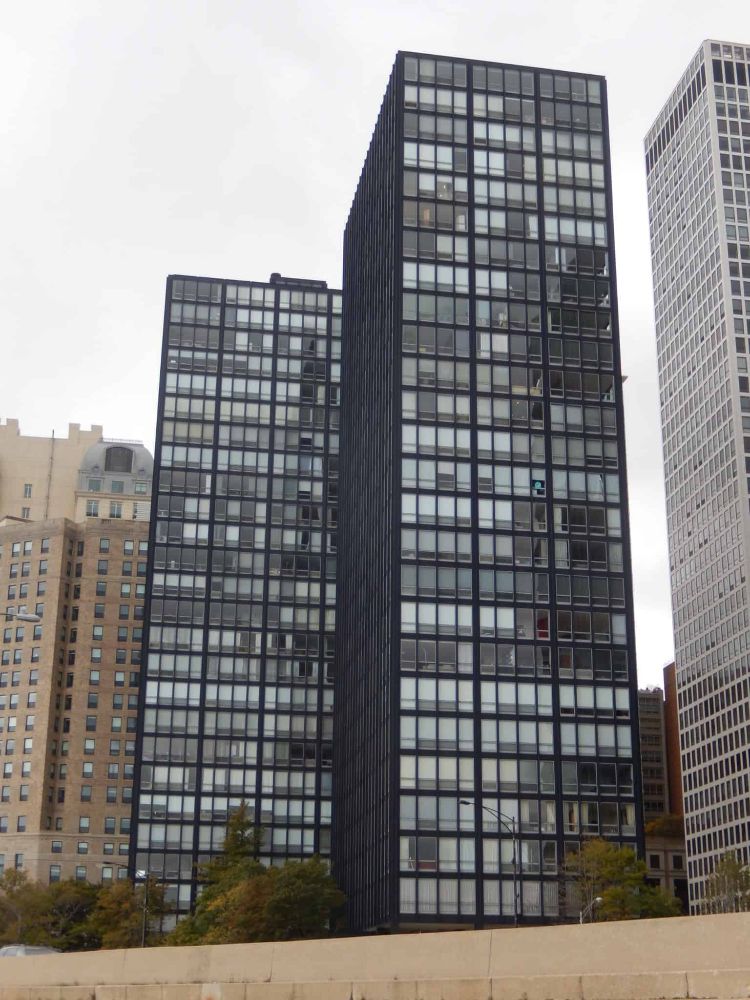
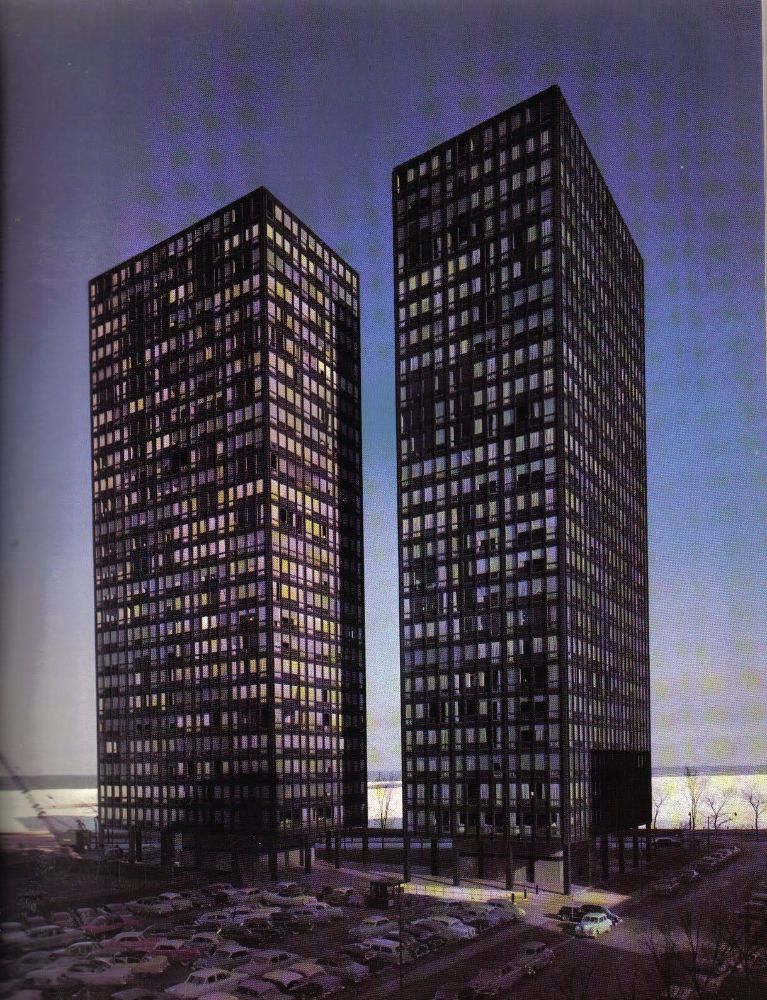
860–880 Lake Shore Drive residential towers designed by Ludwig Mies van der Rohe in Chicago have redefined the relationship between structure, enclosure, and high-rise living through a disciplined steel-and-glass system completed in 1951. The project organizes two 26-story towers on perpendicular axes, allowing views toward Lake Michigan, Lake Shore Drive, and the city while forming a shared open ground plane. A strict 21-foot structural grid governs steel columns, façade modules, and interior partitions, establishing a unified architectural system. Structure is expressed through black-painted steel elements and exposed I-beam profiles applied to the façade, reinforcing vertical articulation. Prefabricated window units and curtain wall logic define a repeatable construction method, advancing a “skin and bones” approach where construction sequence determines spatial and formal outcomes. The project has influenced the global development of glass residential towers, establishing a model for modern high-rise architecture through structural clarity and modular precision.
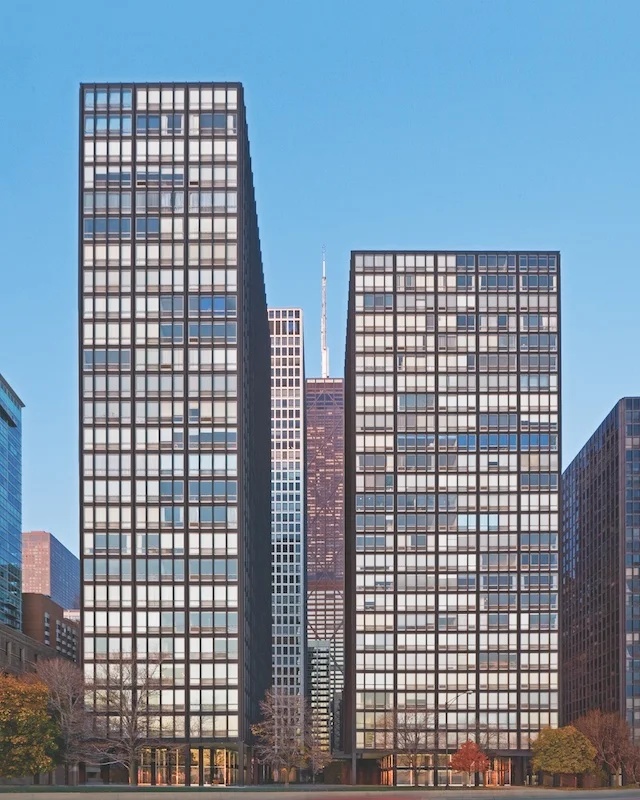
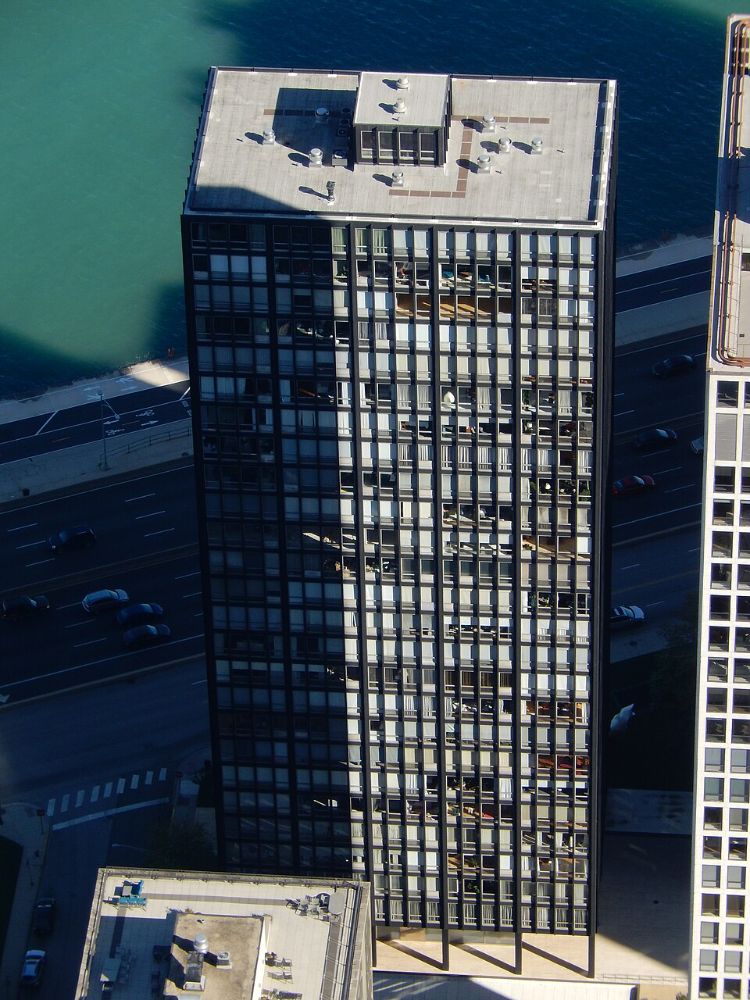
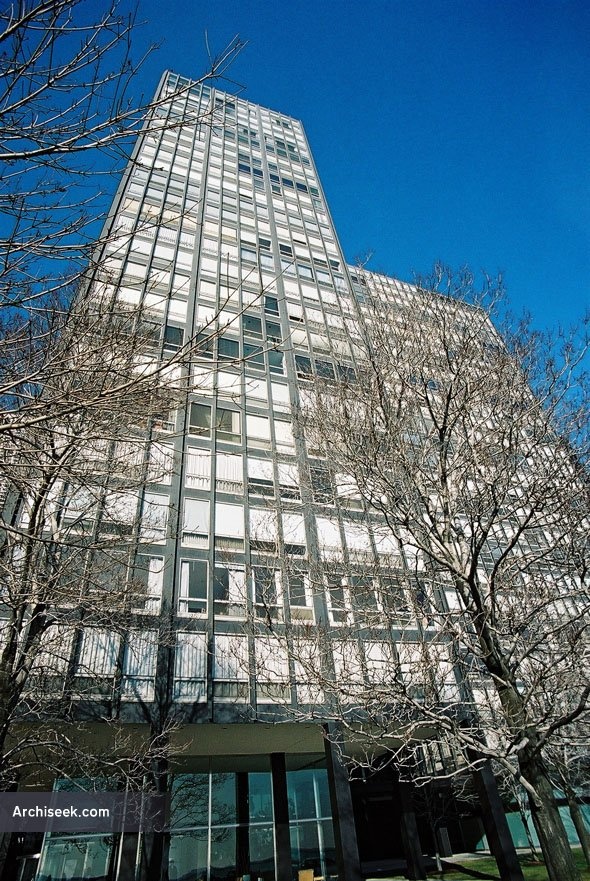
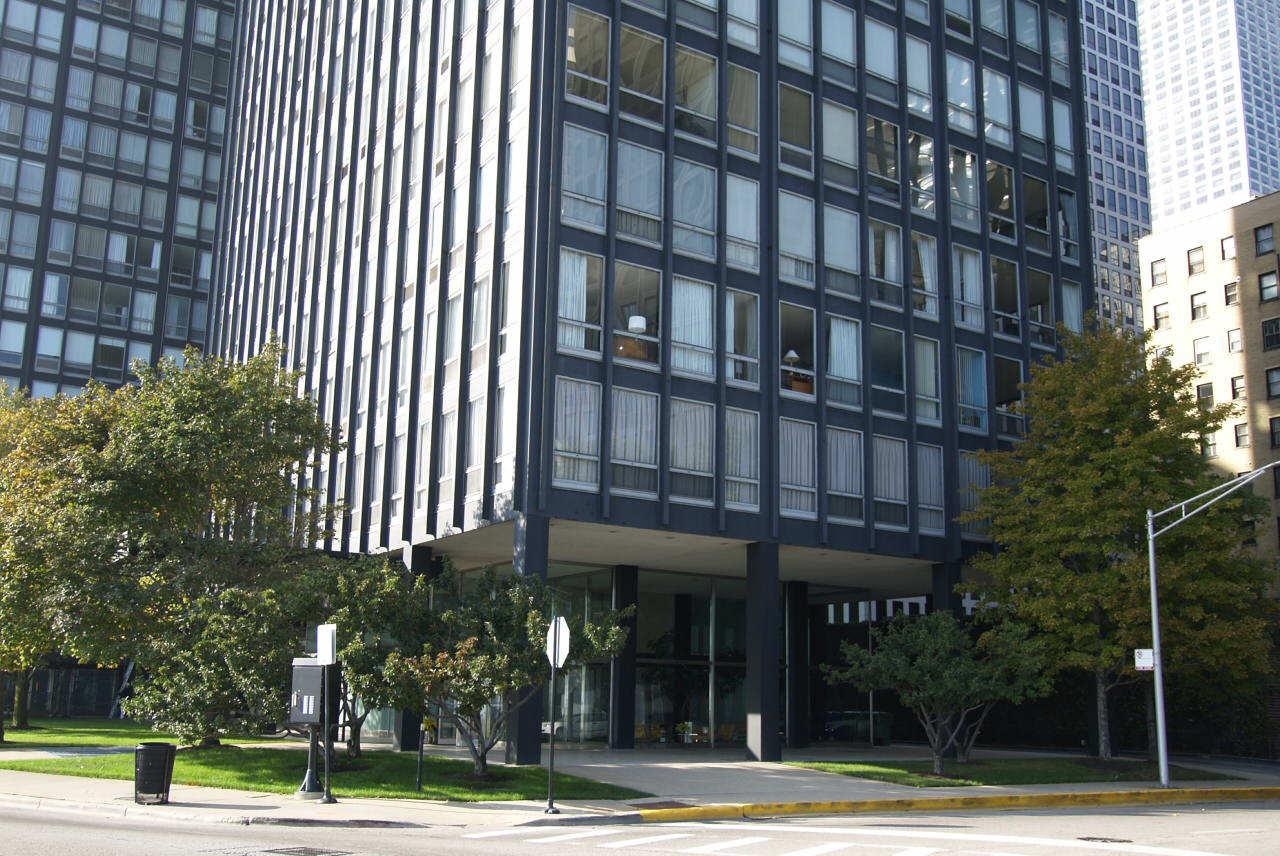
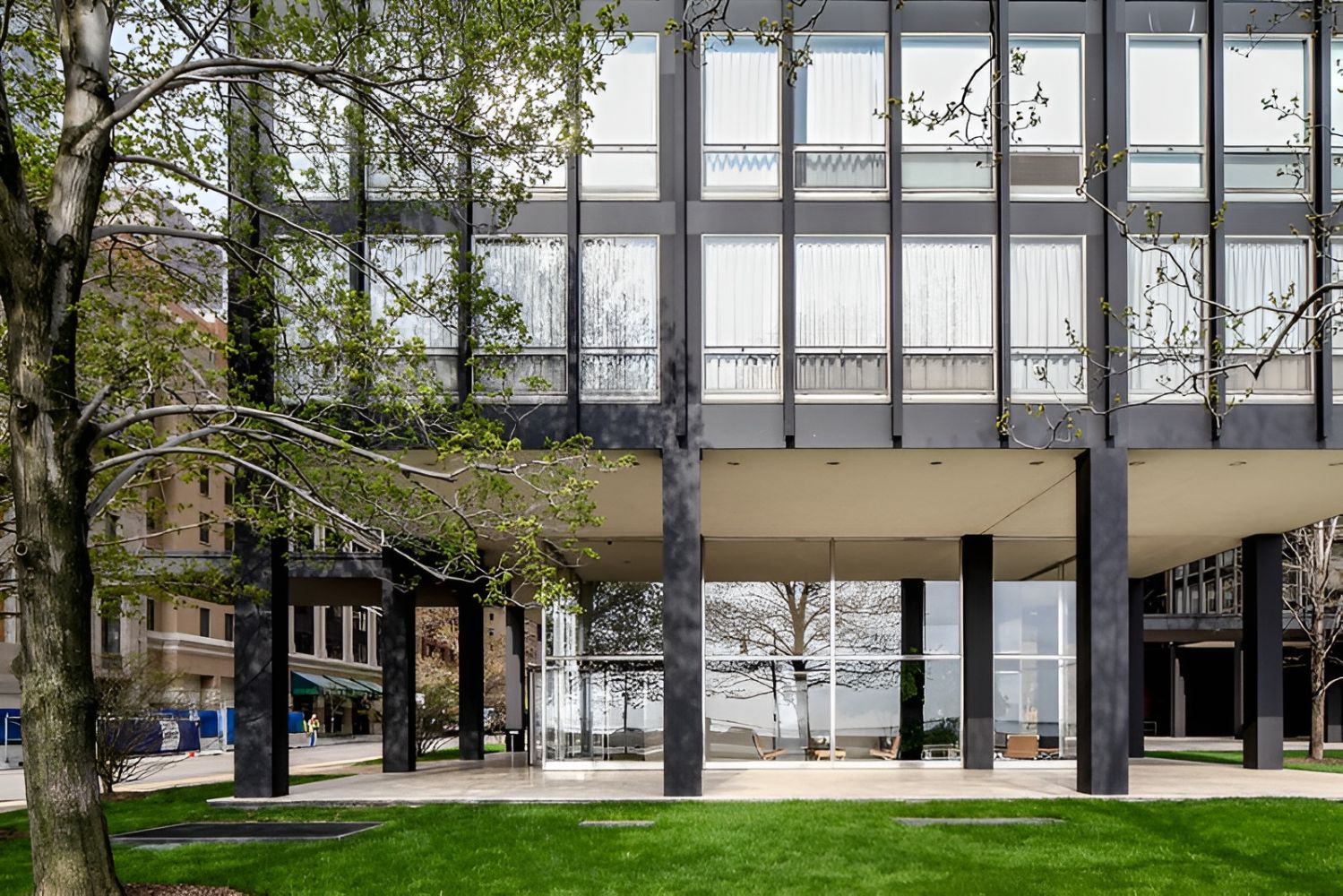
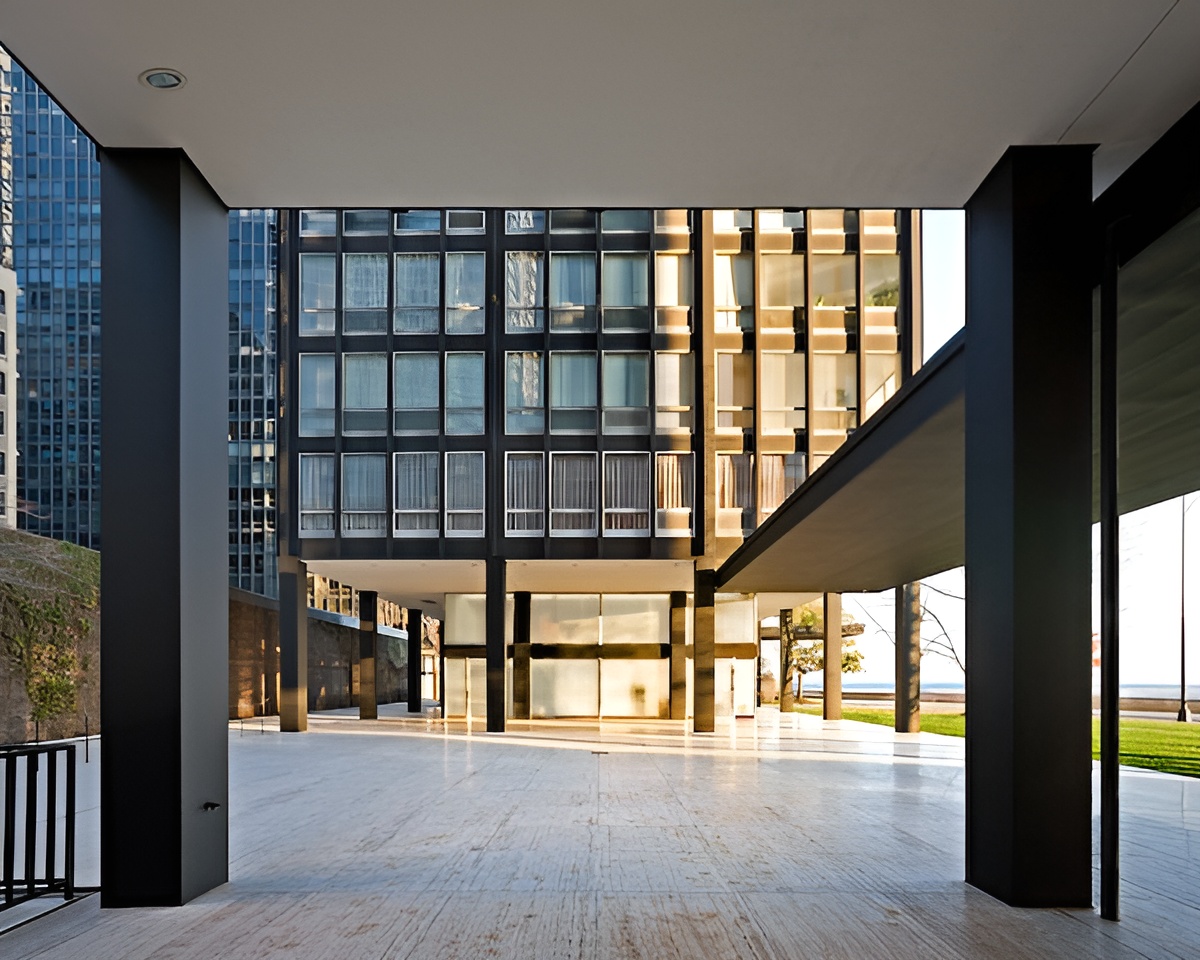
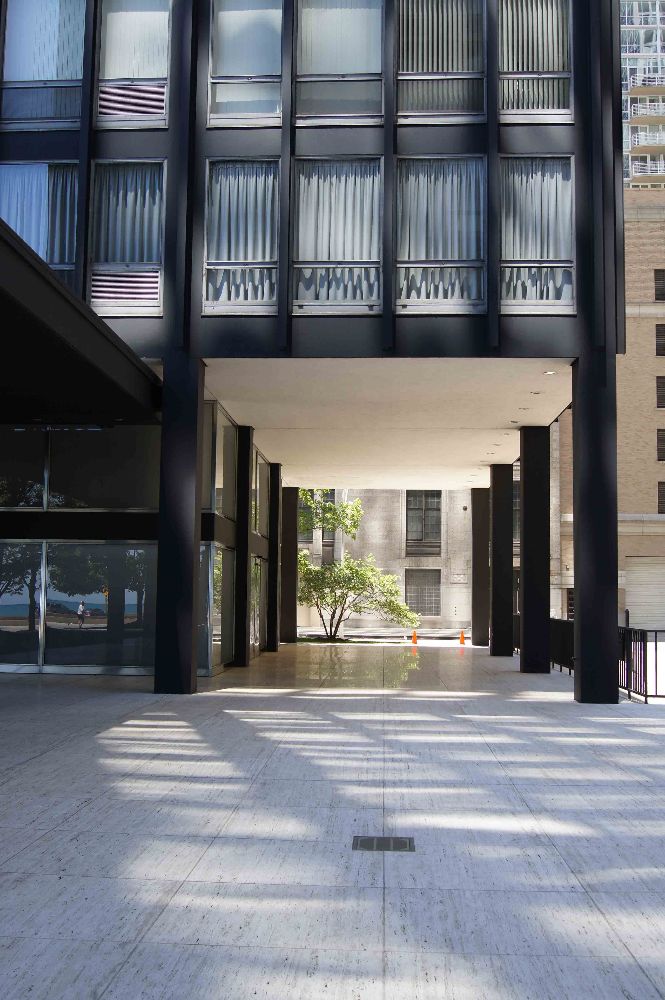
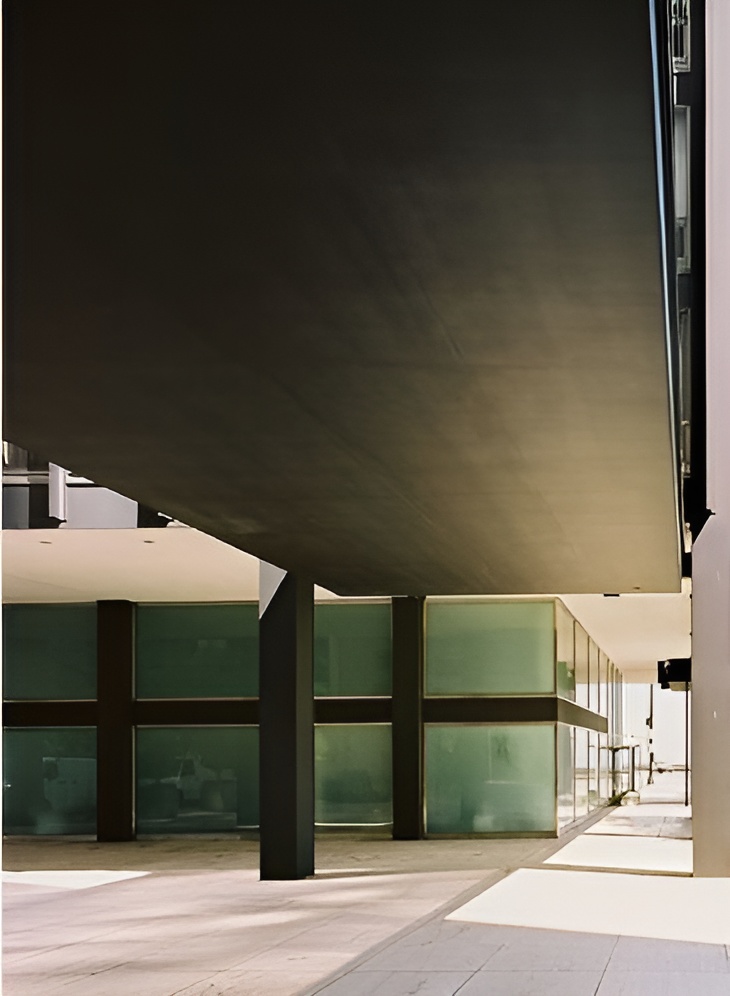
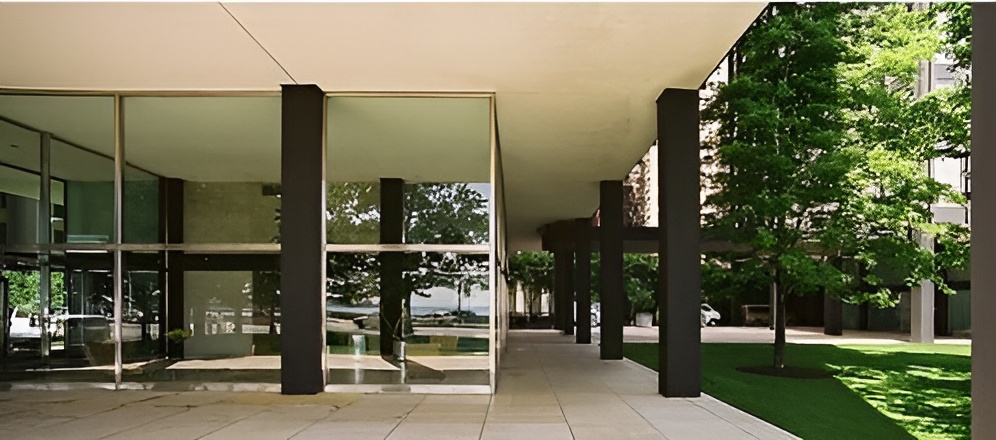
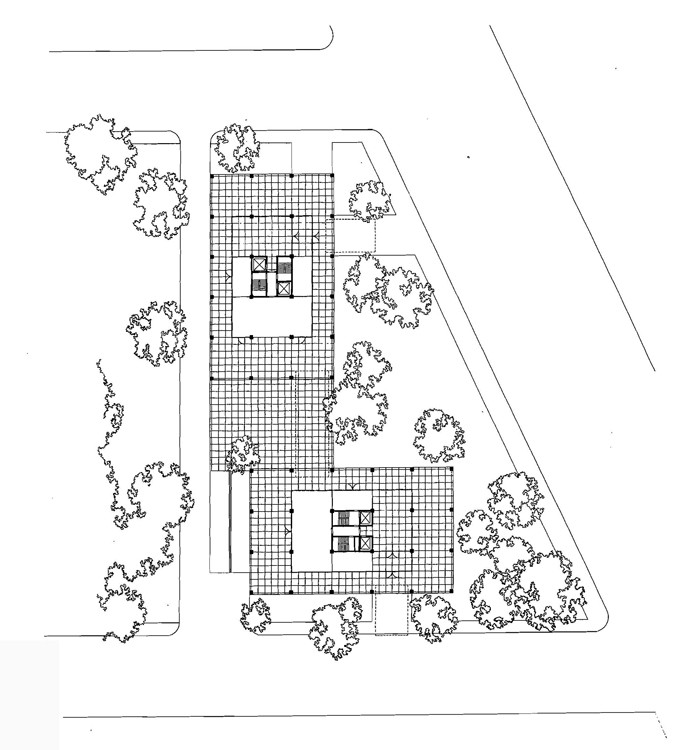
The two towers are positioned perpendicular to each other on a constrained site facing Lake Michigan, forming a cross-axis arrangement that maximizes views while defining an open plaza at ground level. The buildings are raised on pilotis, allowing the ground plane to remain open and continuous. At the entrance level, a minimal horizontal canopy connects the towers, marking the threshold without enclosing space.
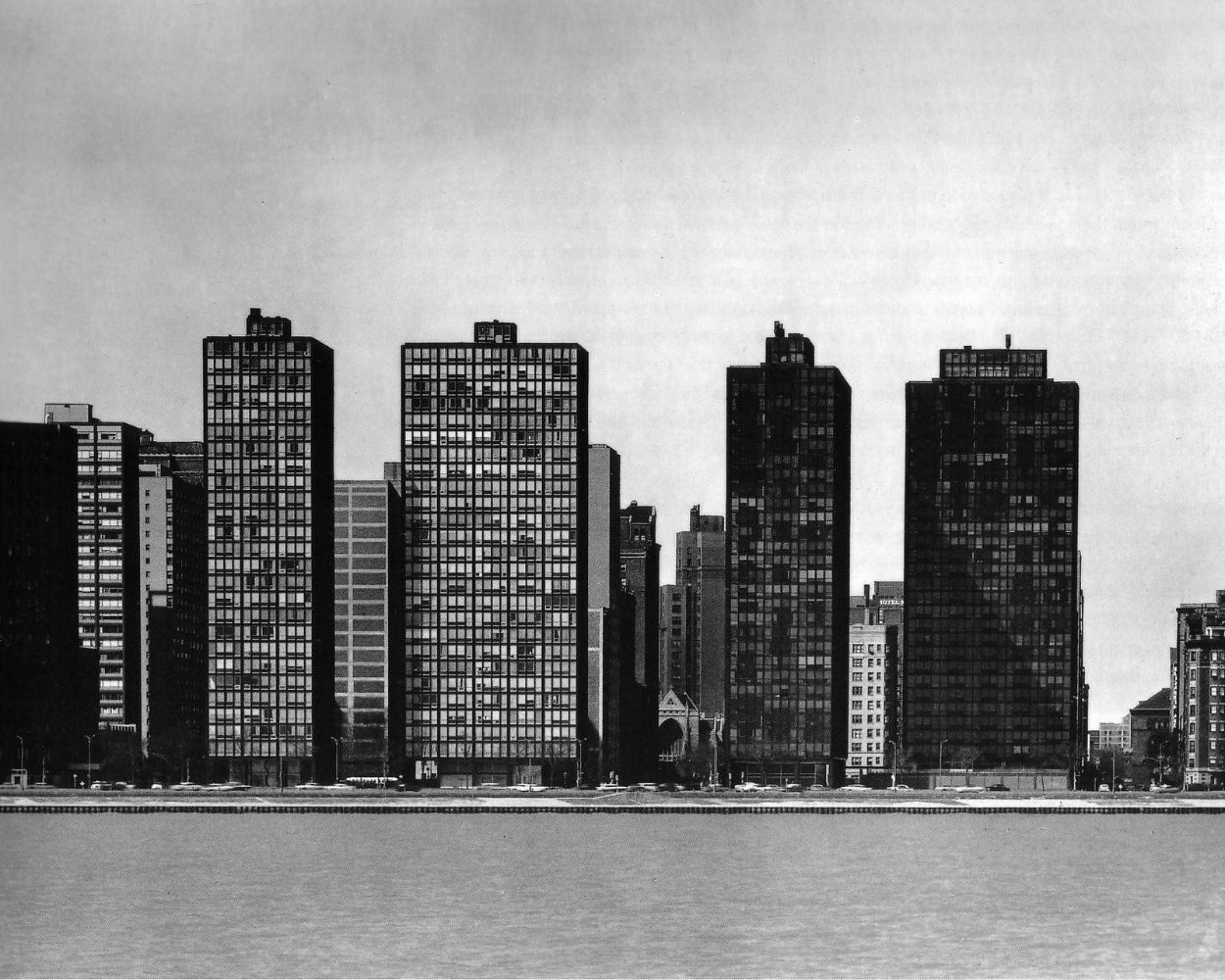
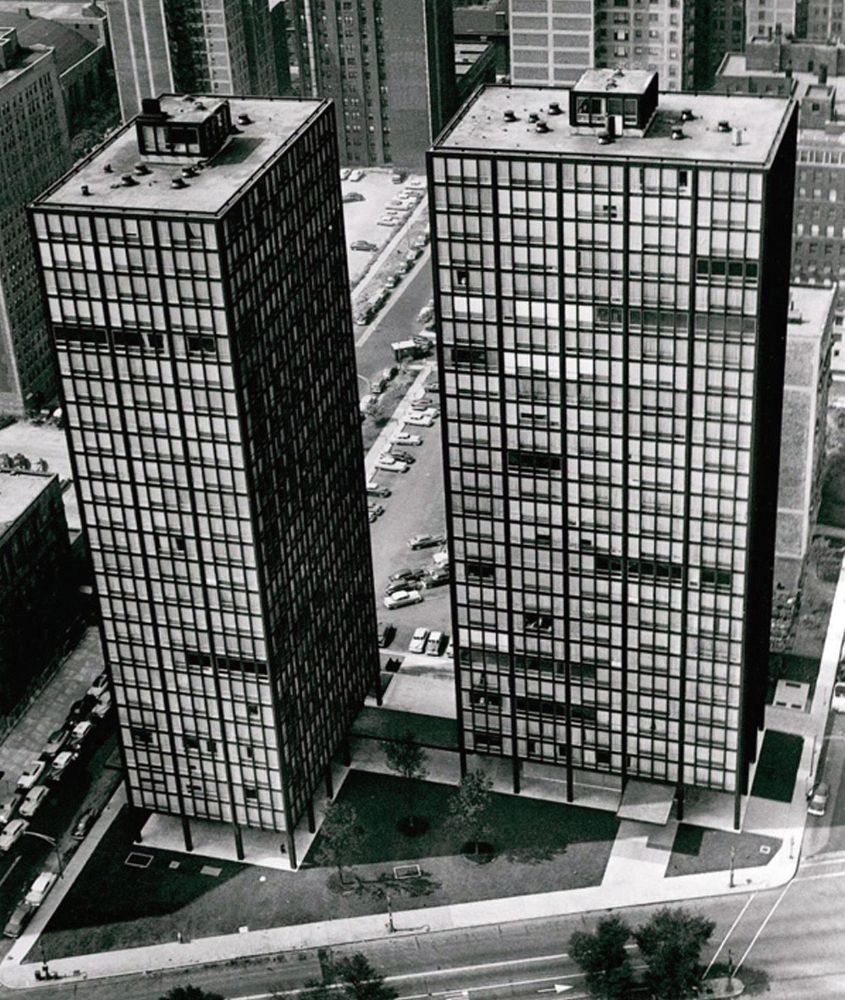
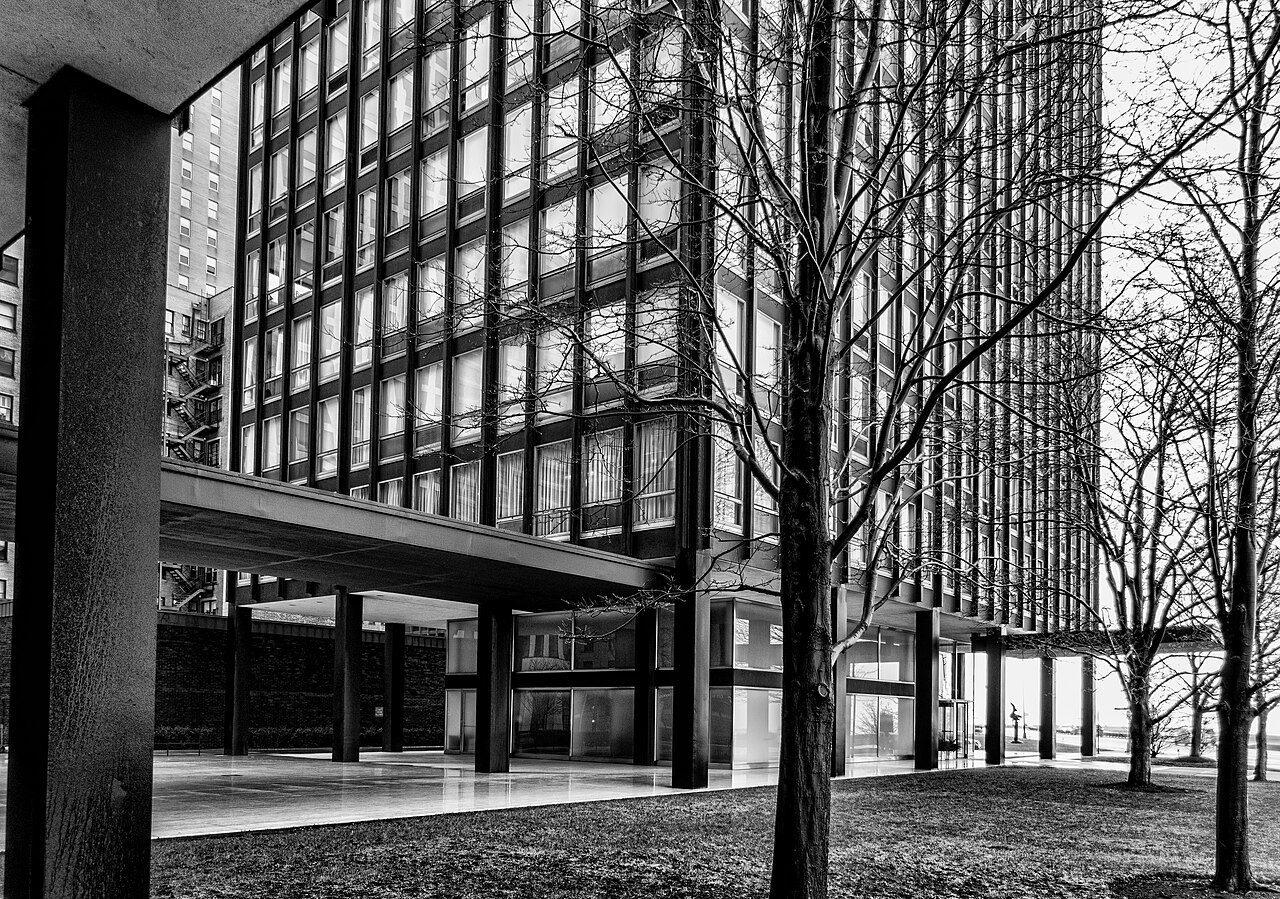
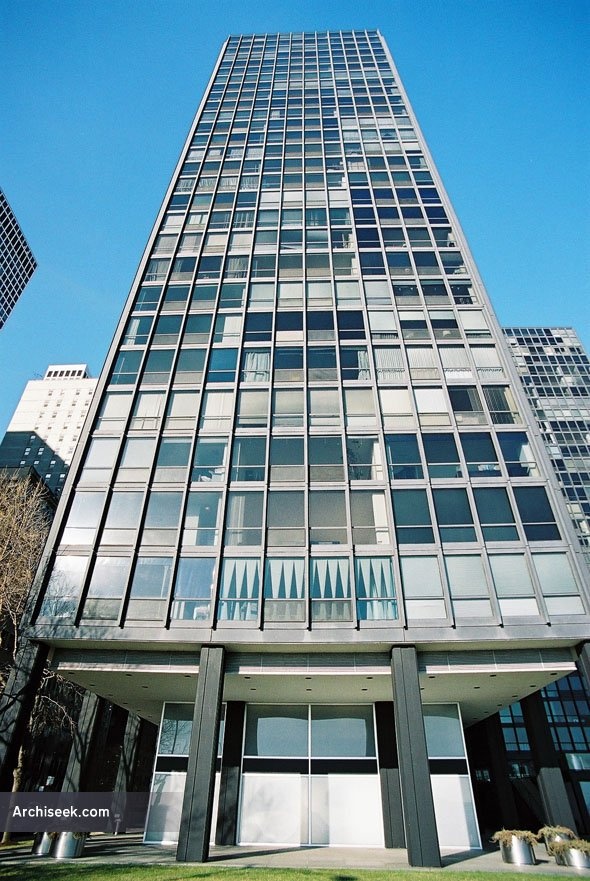
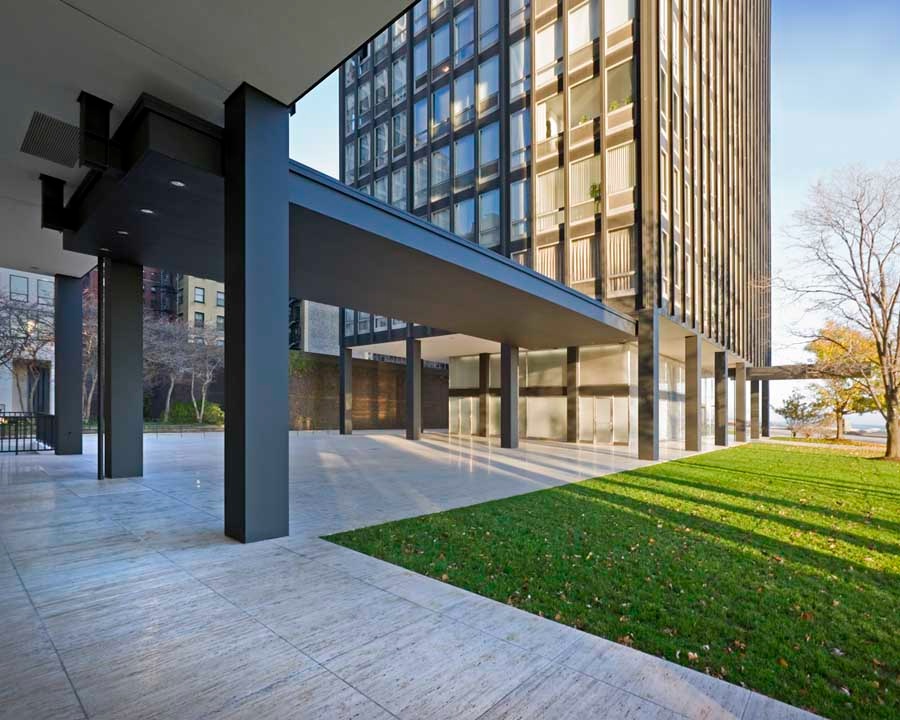
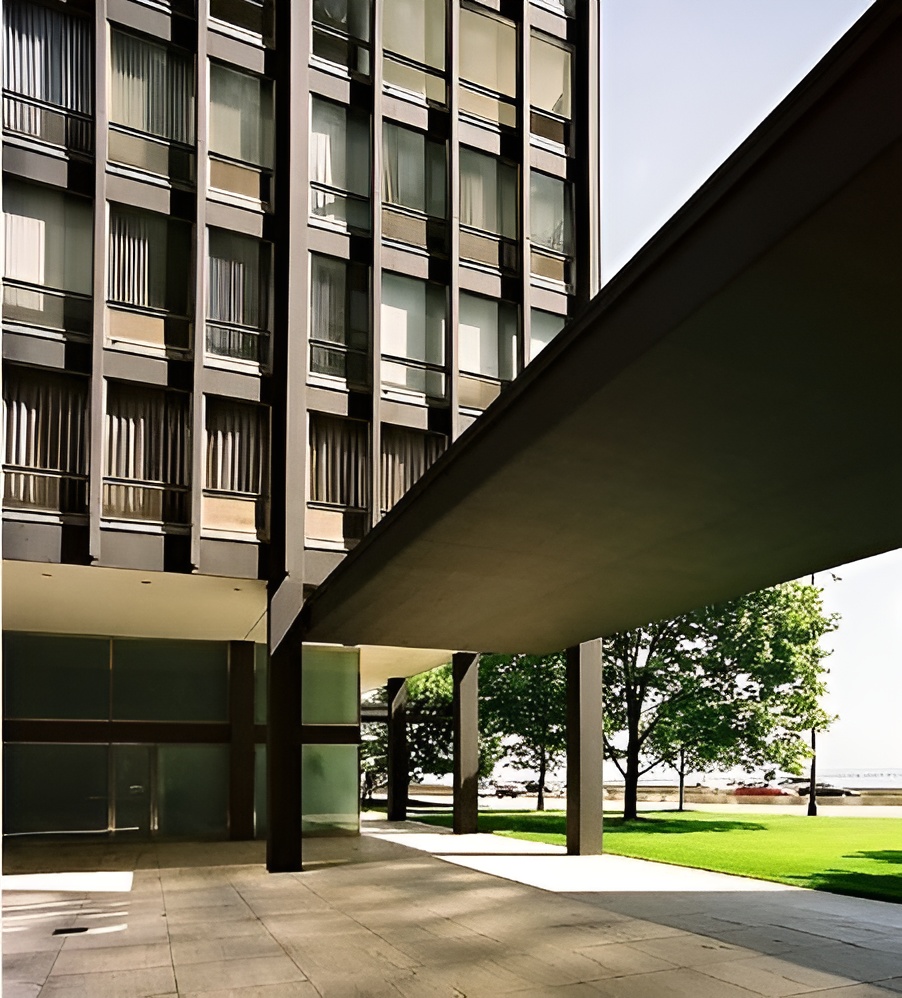
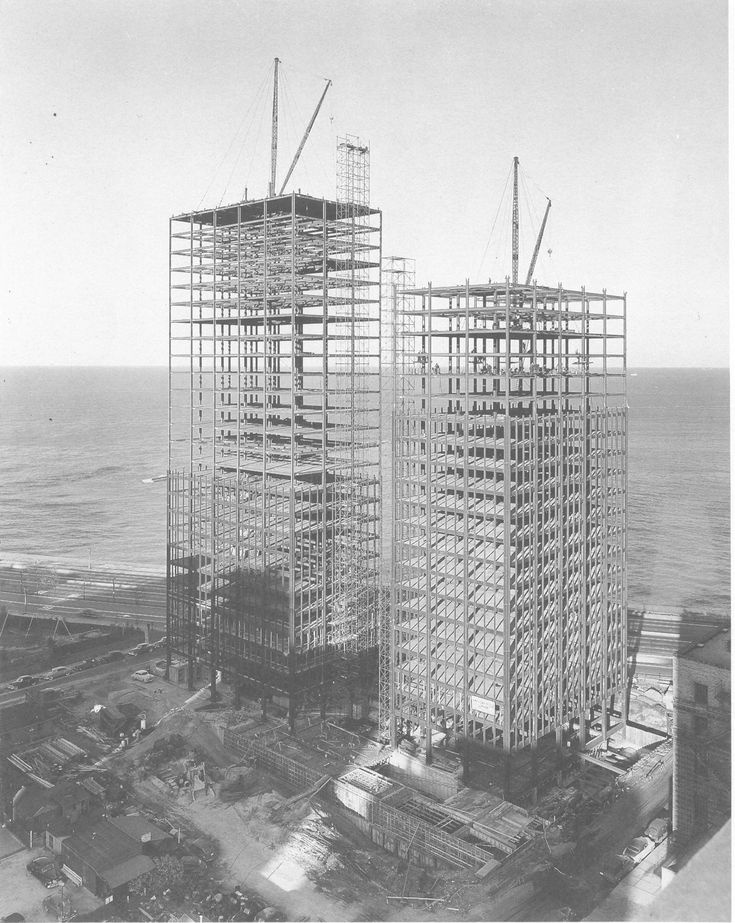
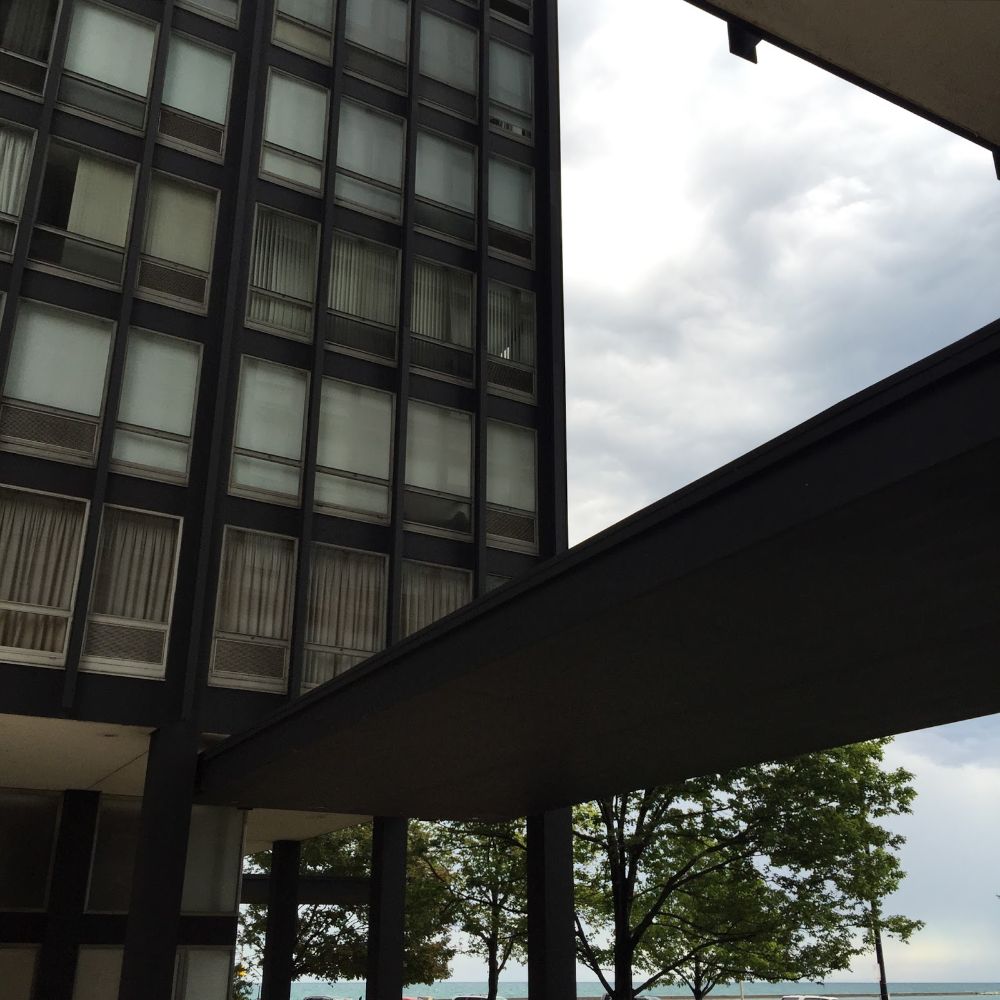
The structural system operates on a strict grid, where steel columns define both load-bearing logic and spatial organization. Although fire regulations required the steel frame to be encased in concrete, its presence remains legible through the application of steel I-beams on the façade. These elements articulate a vertical rhythm and reference the concealed structure behind the glass surface.
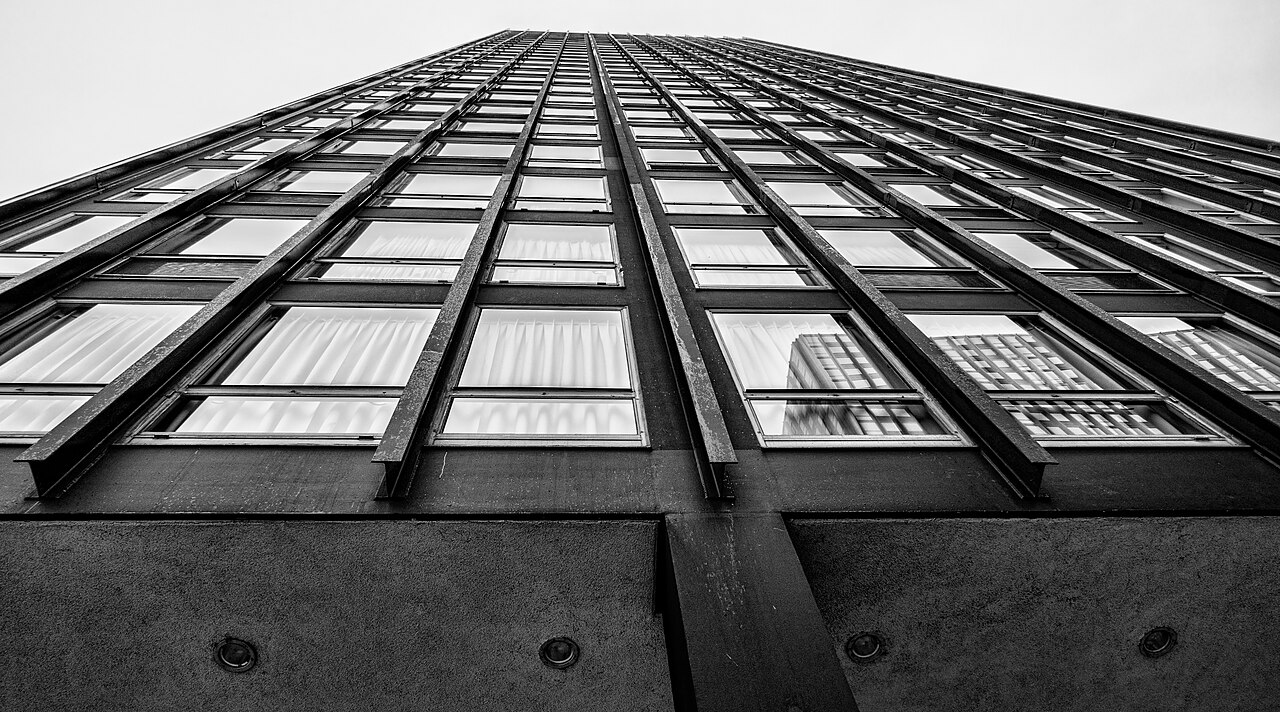
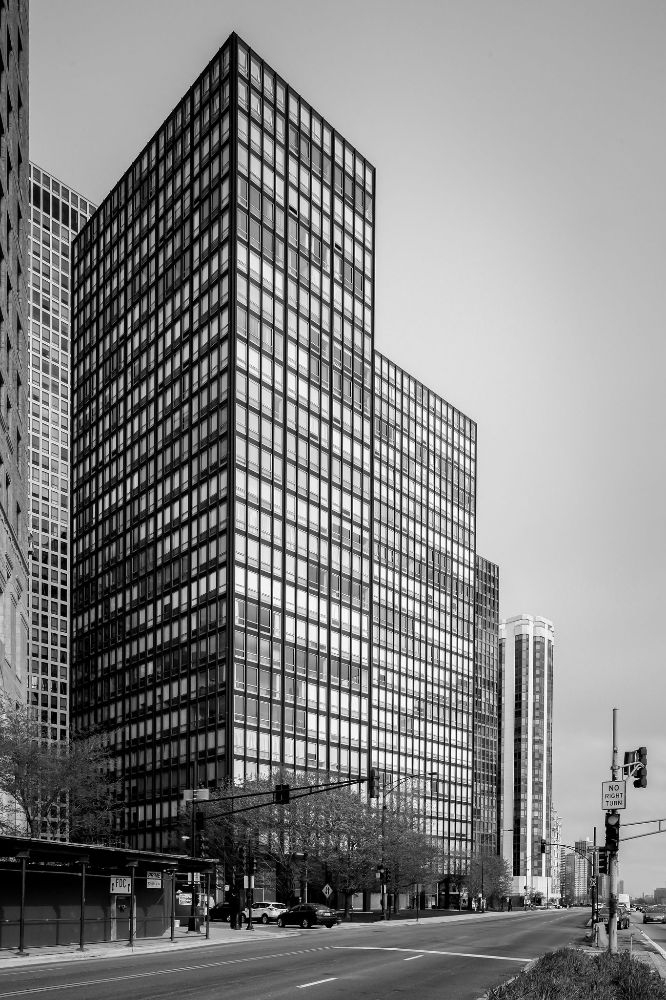
The façade is composed of prefabricated window units installed between structural columns, forming a consistent grid of glass and steel. Mullions and spandrel panels define each bay, while standard steel sections allow efficient assembly. The contrast between dark steel profiles and transparent glazing reinforces the clarity of the structural system.
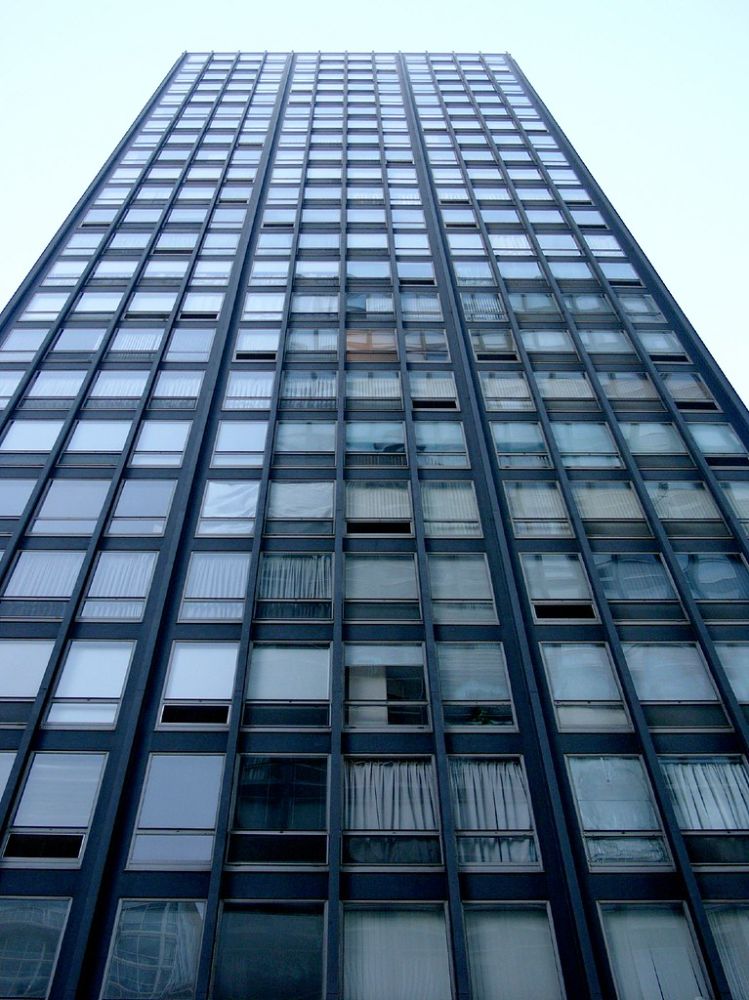
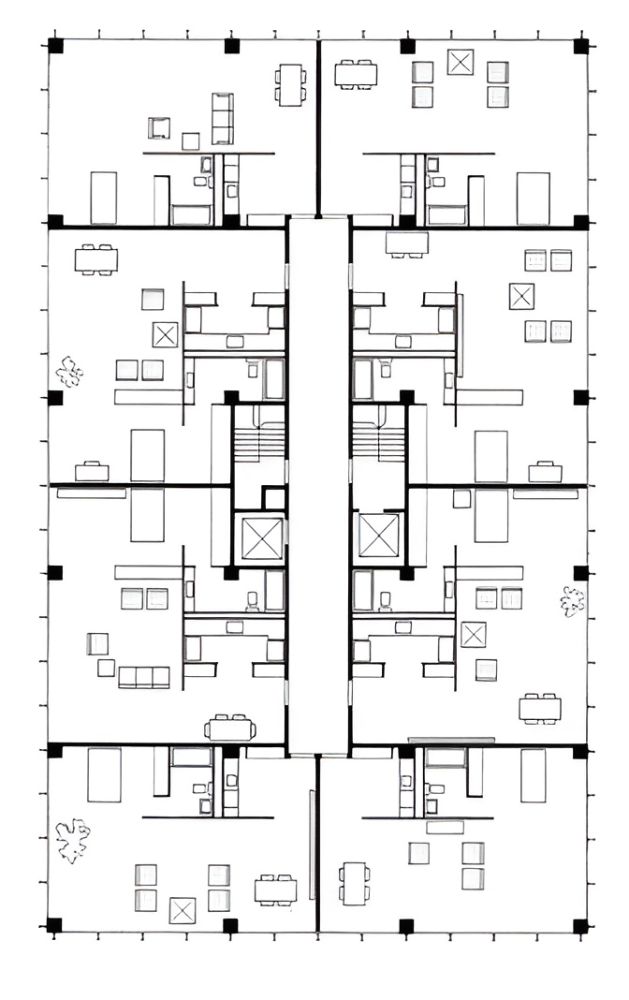
Interior layouts are organized around a central service core containing circulation and utilities. Apartment divisions align with the structural grid, where larger units occupy full bays and smaller units subdivide them. Full-height glazing introduces continuous light and maintains a direct visual connection to the exterior.
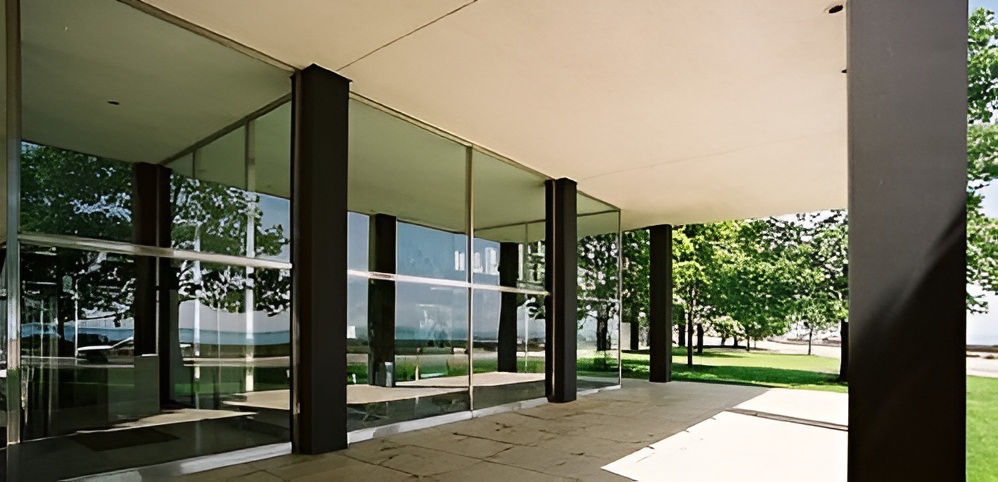
The design follows a clear construction logic, where “from outside to inside, from permanent to temporary, the architecture evolved in the sequence of construction.” This approach removes applied ornament and emphasizes structural clarity through material expression and proportional order.
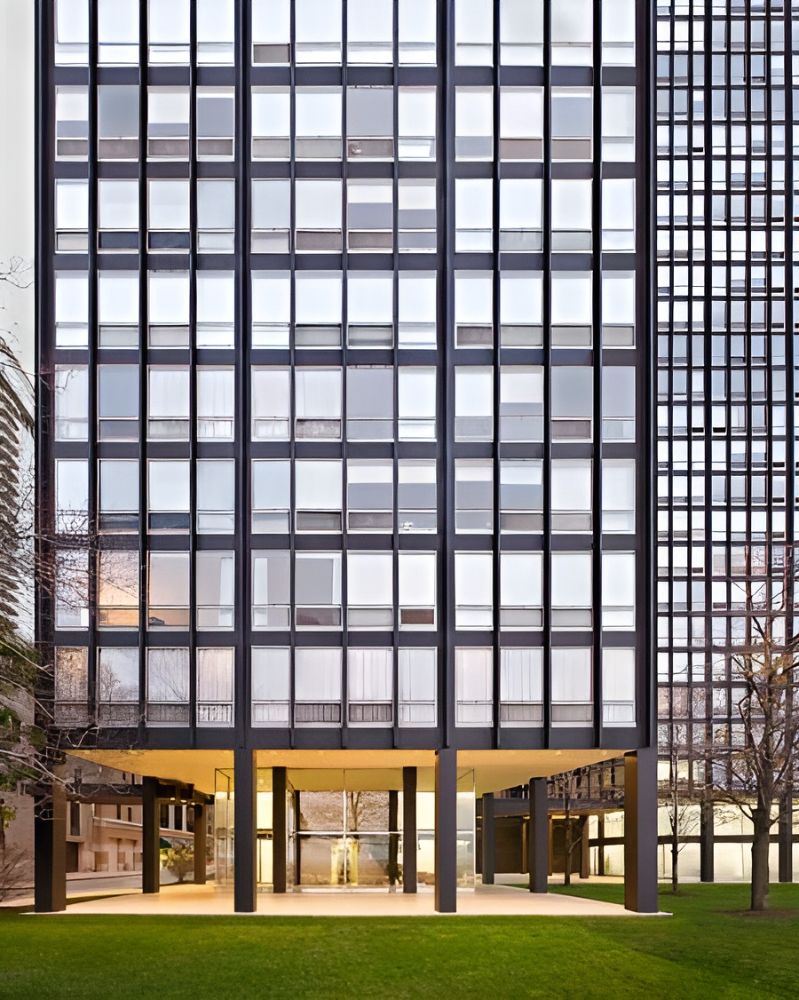
The project has influenced the development of modern architecture, particularly in the adoption of glass curtain wall systems and steel frame articulation. It established a repeatable model for high-rise construction that shaped residential and commercial buildings worldwide, remaining a reference for structural precision and architectural restraint.
Project Gallery



Project Location
Address: 860–880 North Lake Shore Drive, Streeterville, Near North Side, Chicago, Illinois 60611, United States
Location is for general reference and may represent a city or country, not necessarily a precise address.

