

Álvaro Siza Vieira, born in Matosinhos in 1933, is a Portuguese architect and educator whose work developed through site-responsive planning, measured geometry, civic restraint, and close attention to landscape, urban fabric, and construction. Siza studied architecture at the School of Fine Arts of the University of Porto, opened his practice in Porto in 1954, and worked with Fernando Távora from 1955 to 1958. His architecture developed through houses, coastal projects, social housing, schools, museums, public pavilions, and urban reconstruction, linking modern abstraction with local continuity. Siza’s main accomplishment is establishing a model of contemporary architecture grounded in context and spatial precision, a contribution recognized by the Pritzker Architecture Prize in 1992. His portfolio includes the Boa Nova Tea House, Leça Swimming Pools, Quinta da Malagueira, the Faculty of Architecture of the University of Porto, the Serralves Museum of Contemporary Art, the Portuguese Pavilion for Expo ’98, and the Iberê Camargo Foundation. Siza influenced architecture through exact relations between site, route, proportion, light, and material. His career has not been marked by major personal scandal, though the 2014 distribution of his architectural archive generated public debate in Portugal. His work remains a reference for contextual modernism, public space, construction logic, and architecture shaped through drawing.
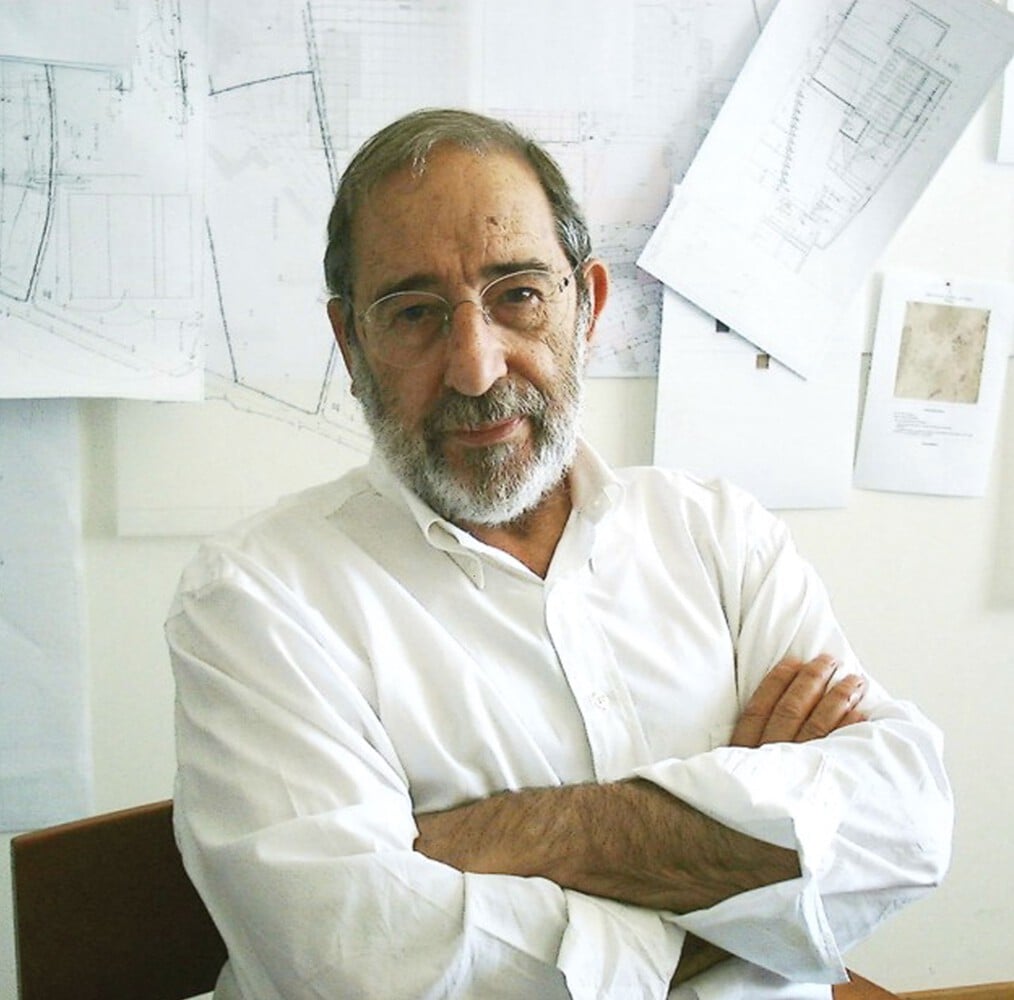
Who is Álvaro Siza Vieira?
Álvaro Siza Vieira is a Portuguese architect born on June 25, 1933, in Matosinhos, Portugal, whose work spans architecture, urban design, furniture, and teaching. Siza studied architecture at the School of Fine Arts of the University of Porto from 1949 to 1955. Siza completed his first built works, four houses in Matosinhos, before finishing his studies and opening his private office in Porto in 1954. Siza collaborated with Fernando Távora between 1955 and 1958 and later taught at the Porto school. Siza continued to practice into the mid-2020s.
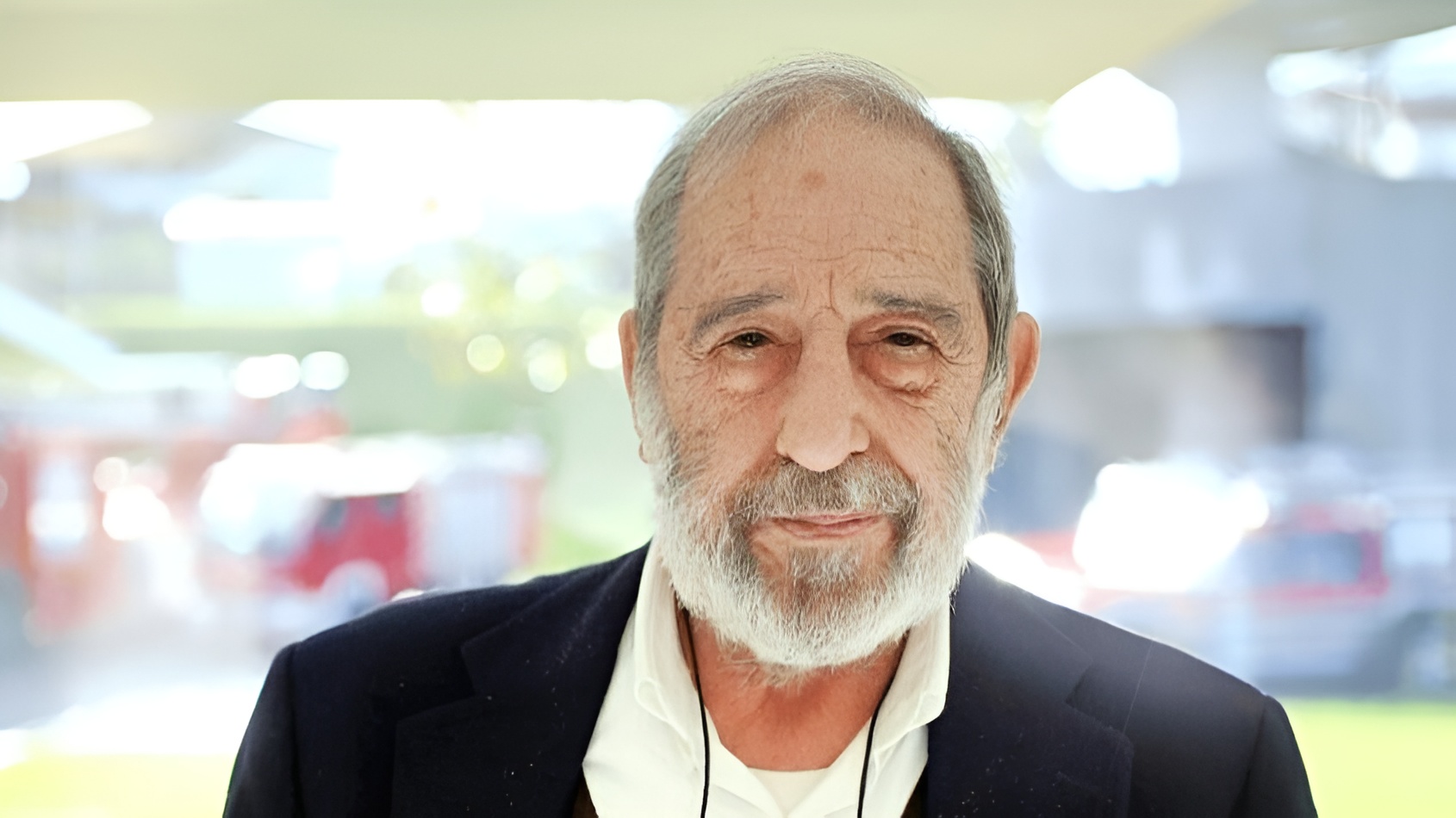
What type of architecture does Álvaro Siza Vieira represent?
Álvaro Siza Vieira represents a contextual form of modern architecture grounded in the Porto School, vernacular continuity, and spatial composition. Siza’s work retains the abstraction of modernism while responding to topography, historic fabric, climate, circulation, and civic use. Siza organized buildings through sequences of walls, ramps, courts, passages, stairs, thresholds, and framed views rather than isolated formal gestures. Siza frequently used white rendered surfaces, reinforced concrete, stone, timber, and controlled openings to structure spatial relationships. Siza’s architecture fits no single fixed label, yet his practice is associated with modernism, critical regionalism, and a Portuguese architectural tradition developed through Fernando Távora and the Porto School.
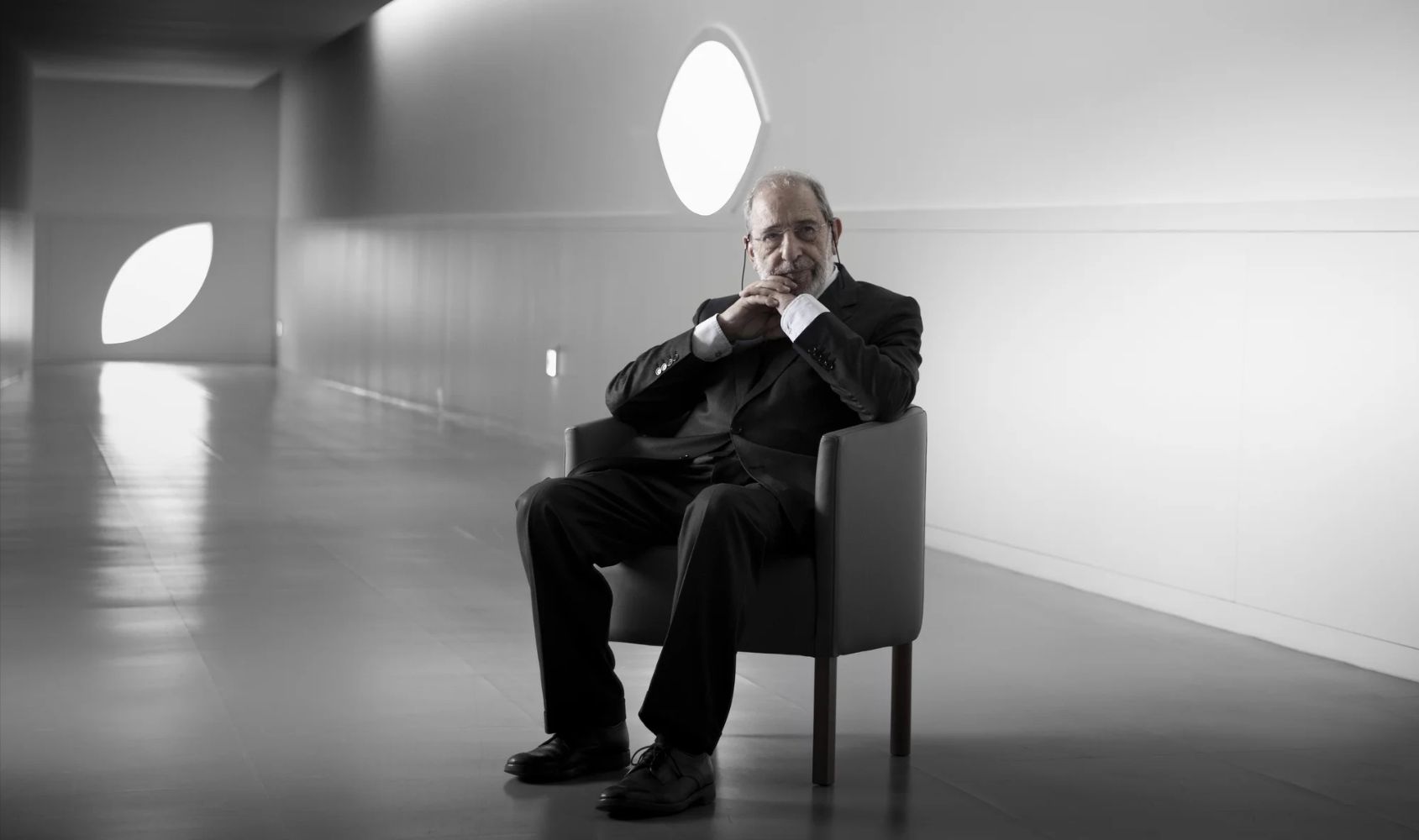
What is Álvaro Siza Vieira’s great accomplishment?
Álvaro Siza Vieira’s great accomplishment is defining a model of modern architecture grounded in place, history, and daily use. Siza received the Pritzker Architecture Prize in 1992 for work that had already transformed Portuguese architecture and gained recognition across Europe. Siza’s projects demonstrated that a swimming pool, a tea house, a social housing quarter, a school, a museum, or an urban reconstruction plan could receive equal architectural treatment. Siza’s Chiado reconstruction in Lisbon after the 1988 fire reinforced this position through a contemporary intervention that addressed historical continuity without imitation. Siza’s architecture treats context as an active design structure rather than a decorative reference.
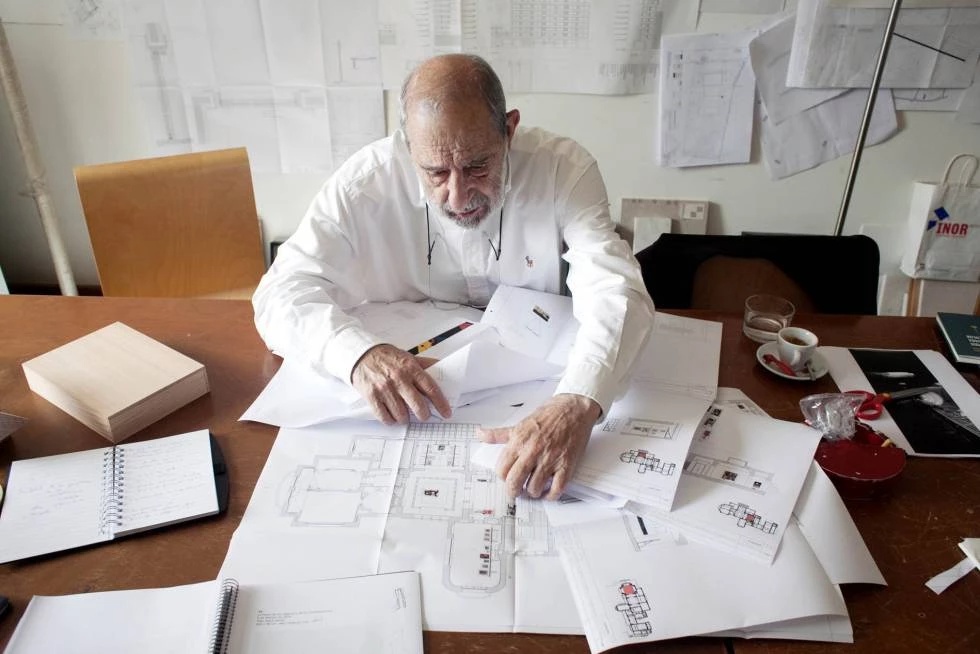
What are Álvaro Siza Vieira’s most important works?
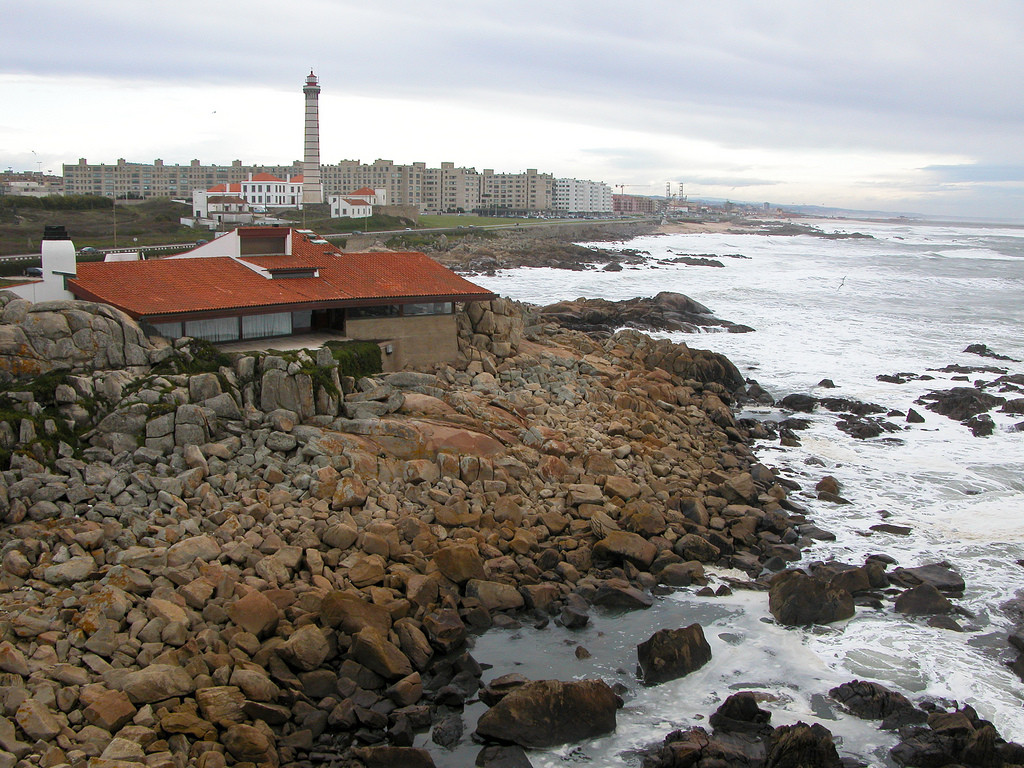
Álvaro Siza Vieira’s most important works include coastal buildings, public institutions, social housing, national pavilions, and museums. His portfolio includes the Boa Nova Tea House in Leça da Palmeira, a restaurant integrated into the Atlantic coastline through rock formations, low rooflines, and controlled approach sequences; Leça Swimming Pools on the Atlantic coast, a public saltwater complex embedded within coastal rock; Quinta da Malagueira in Évora, a social housing development organized through row houses, patios, pedestrian routes, and elevated infrastructure; the Faculty of Architecture of the University of Porto, an academic campus arranged through separated white volumes and exterior voids; the Serralves Museum of Contemporary Art in Porto, a museum structured through galleries, courtyards, and relations to the surrounding garden; the Portuguese Pavilion for Expo ’98 in Lisbon, a national exhibition building defined by a suspended post-tensioned concrete canopy; and the Iberê Camargo Foundation in Porto Alegre, a museum formed through white concrete masses and external circulation ramps.
01. Boa Nova Tea House, Leça da Palmeira
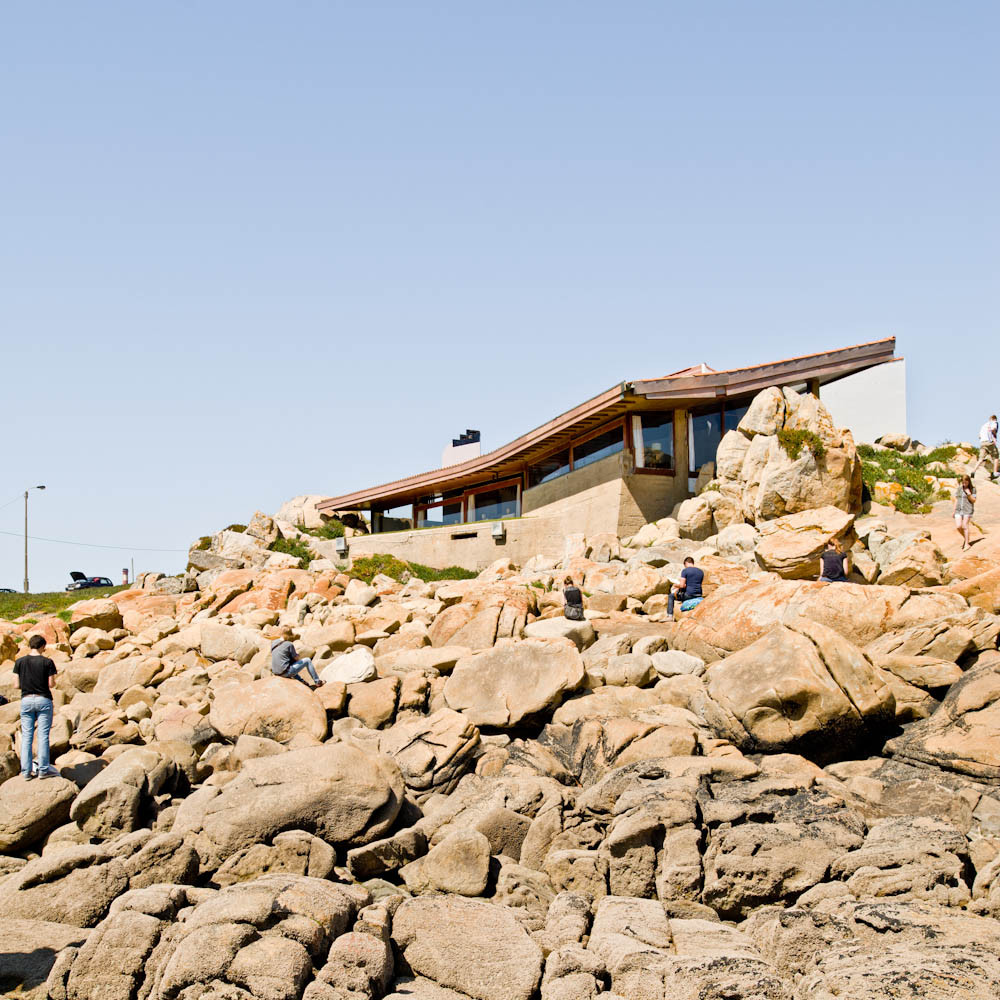
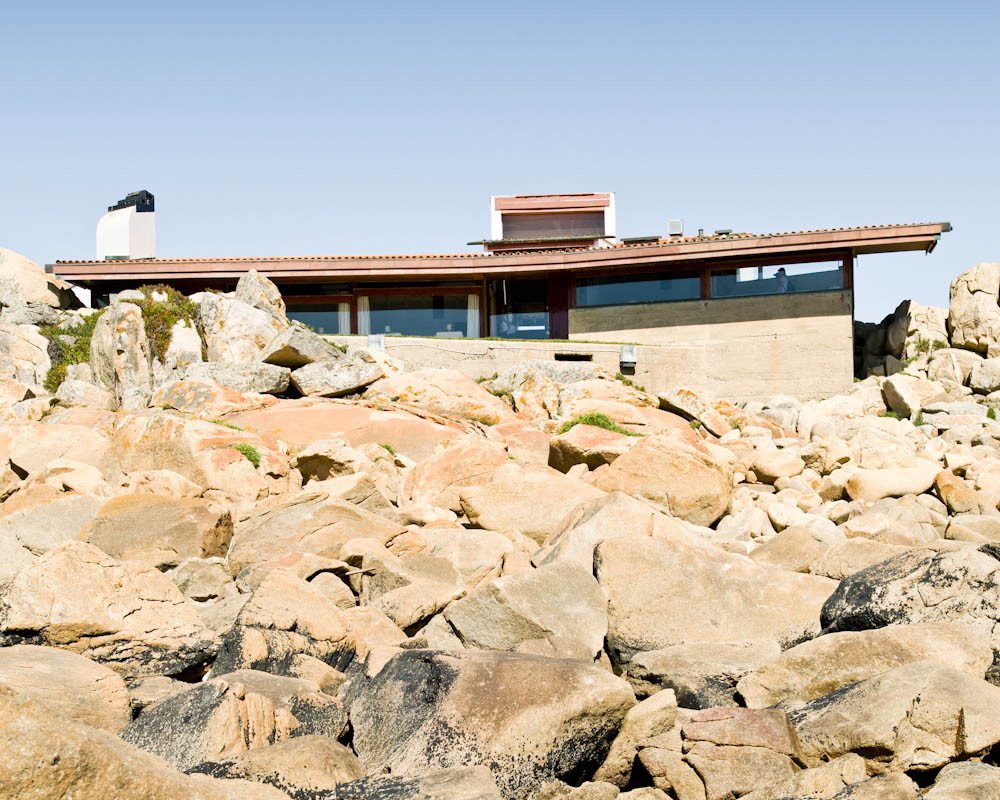
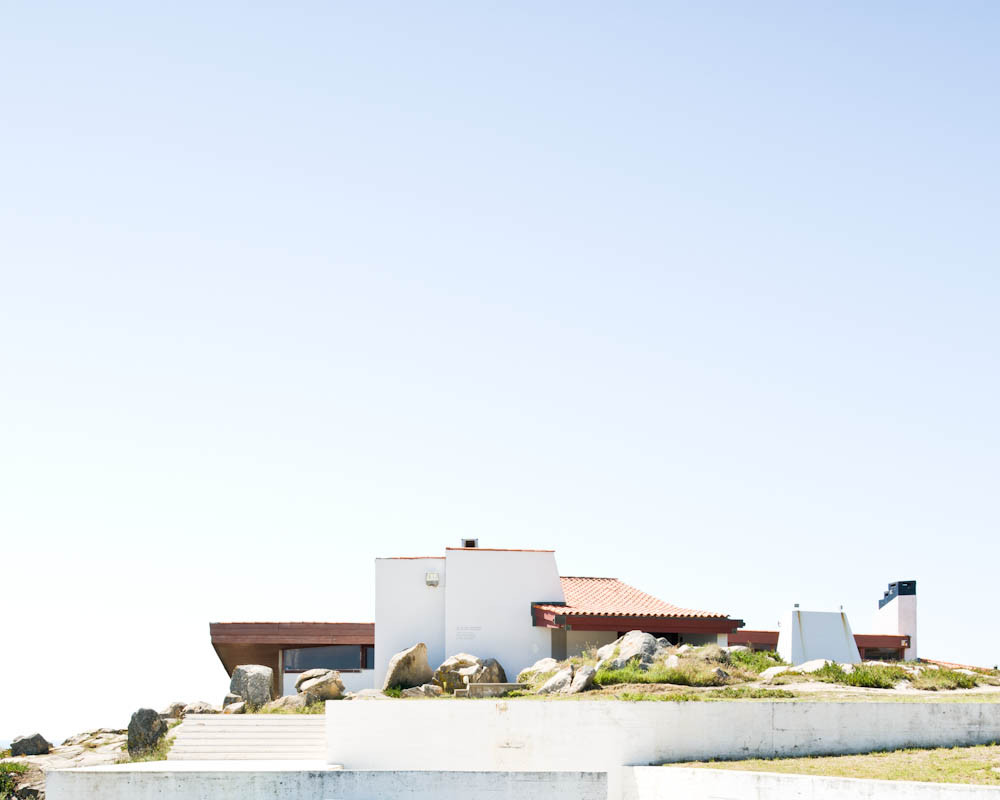
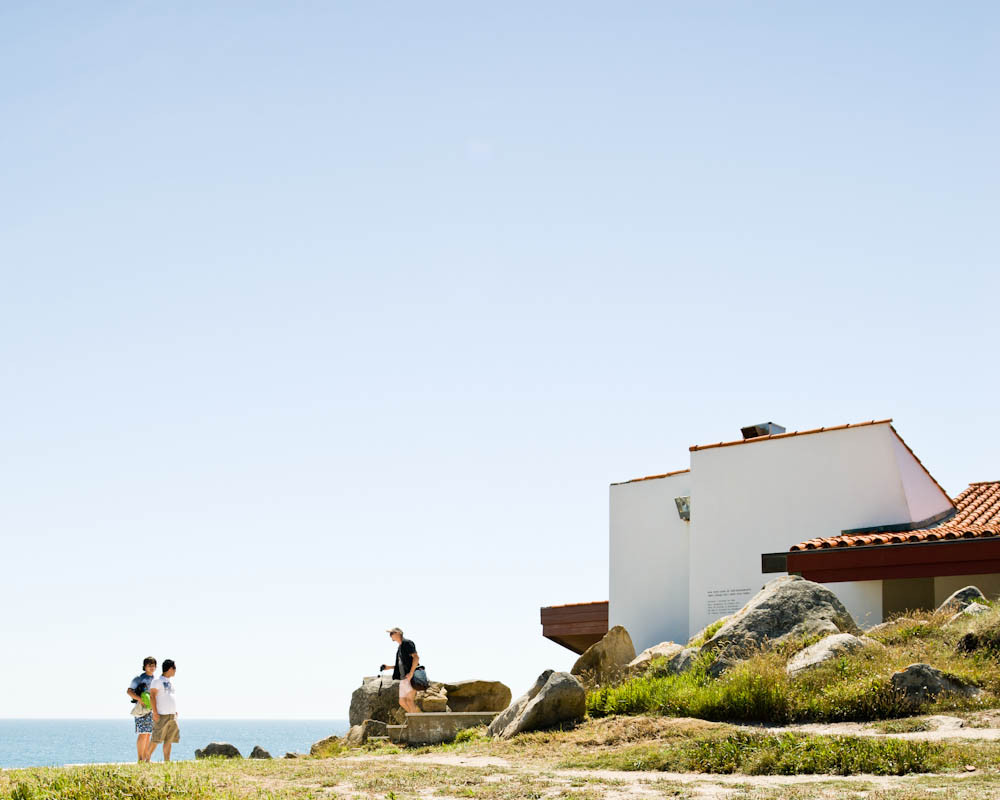
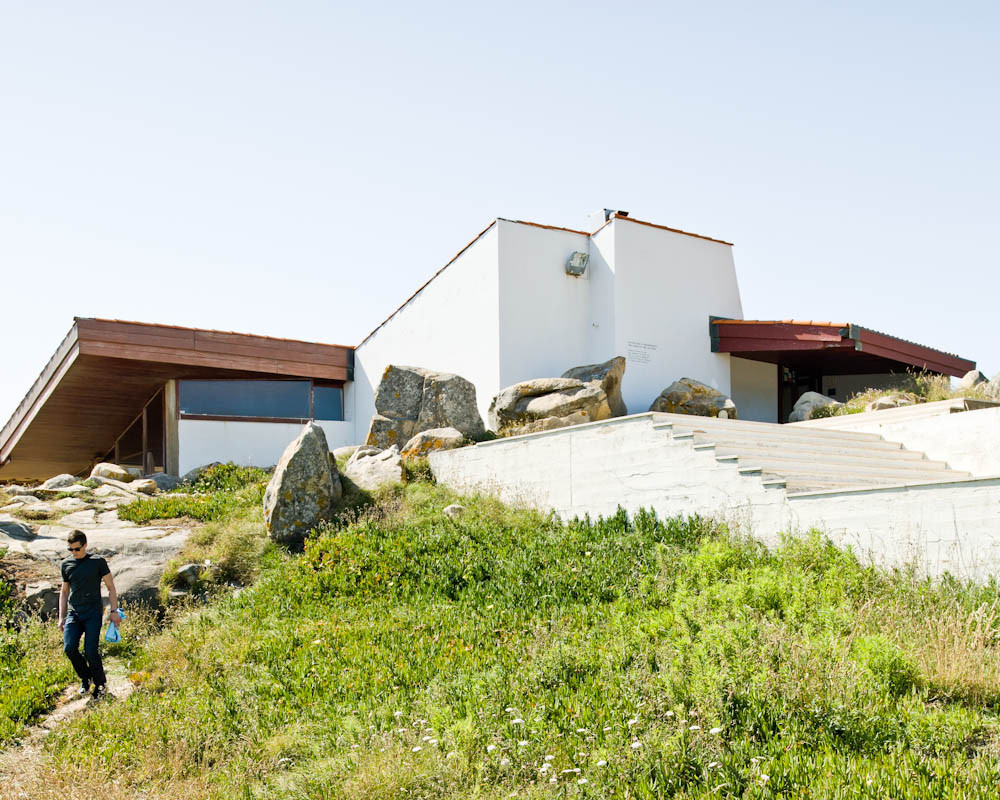
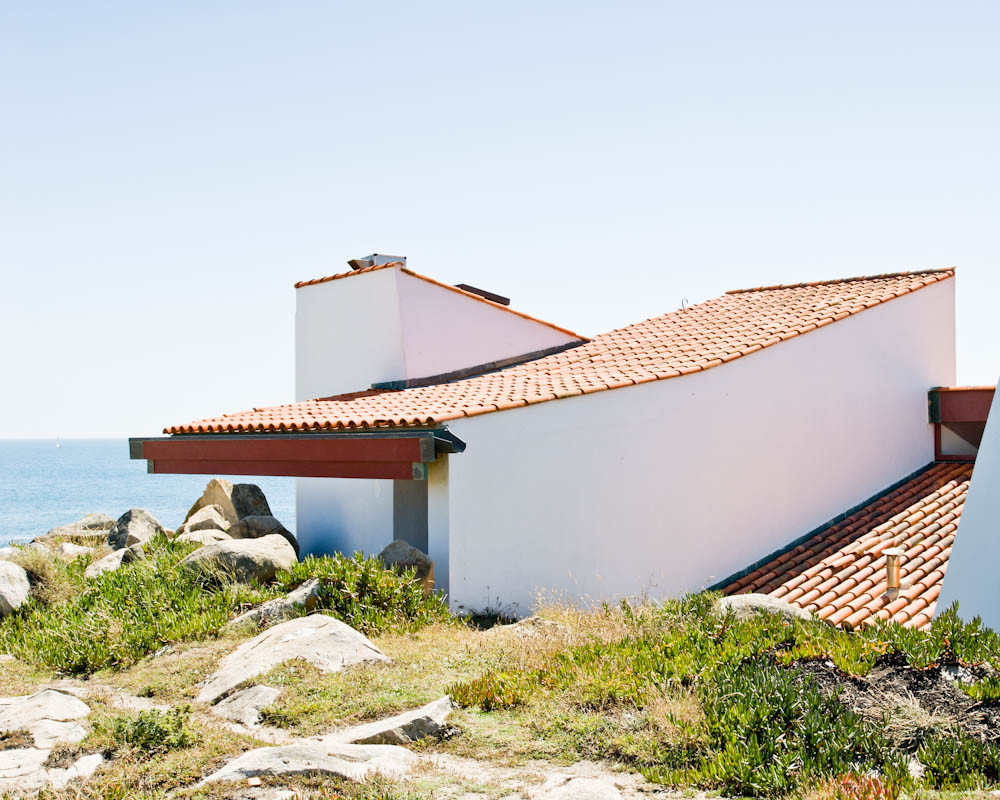
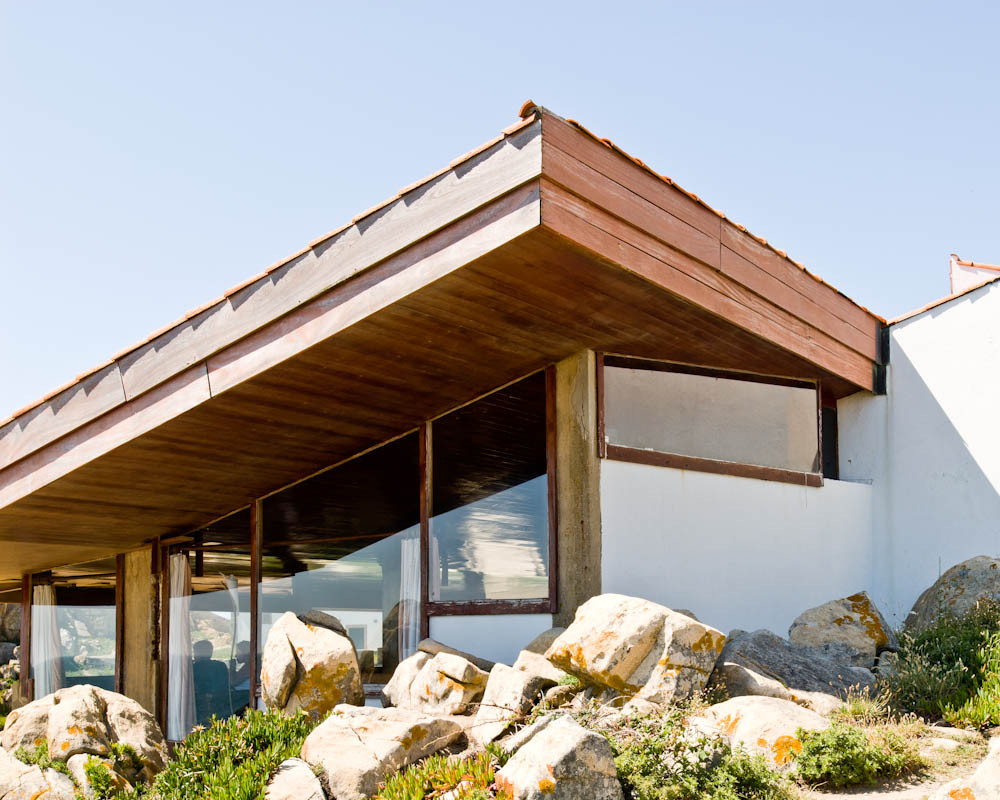
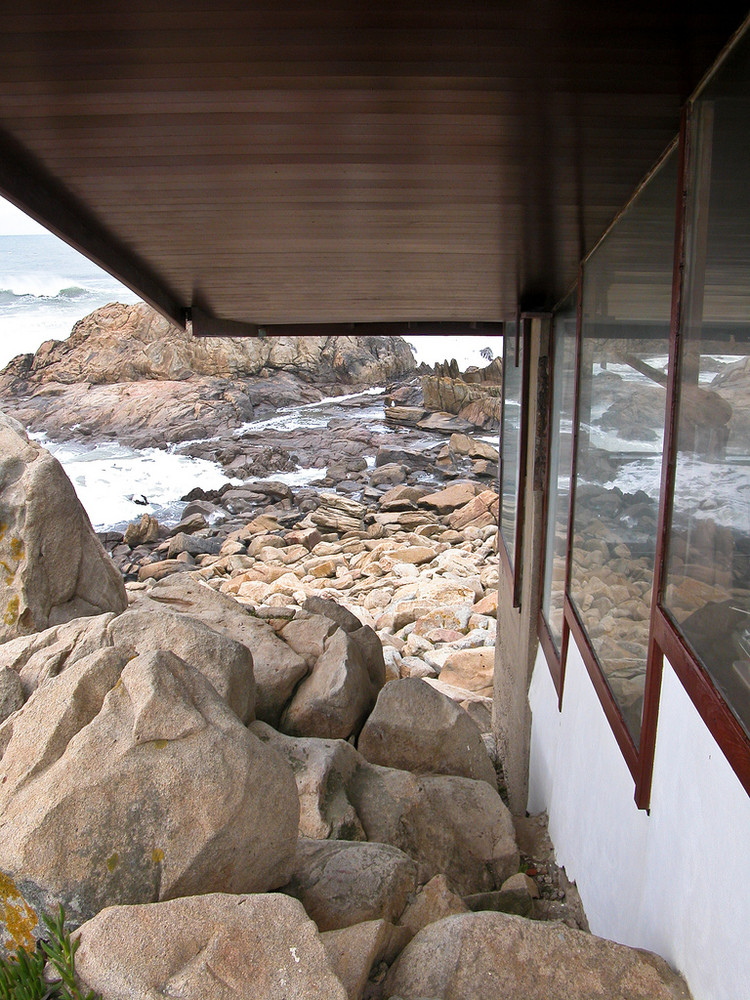
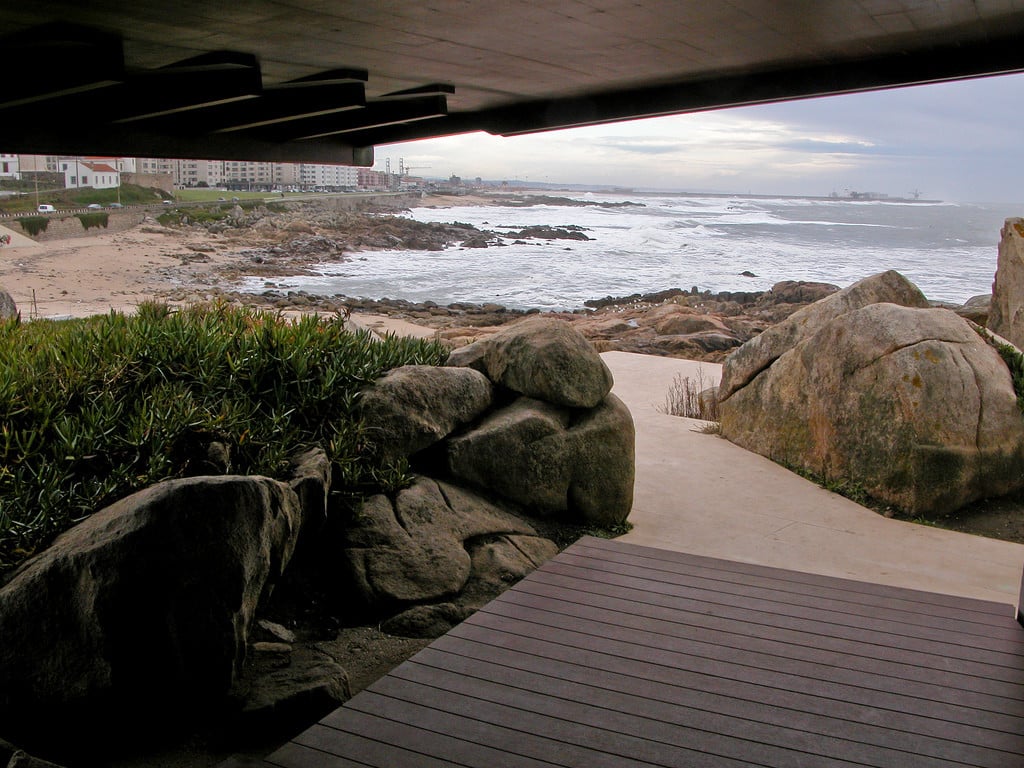
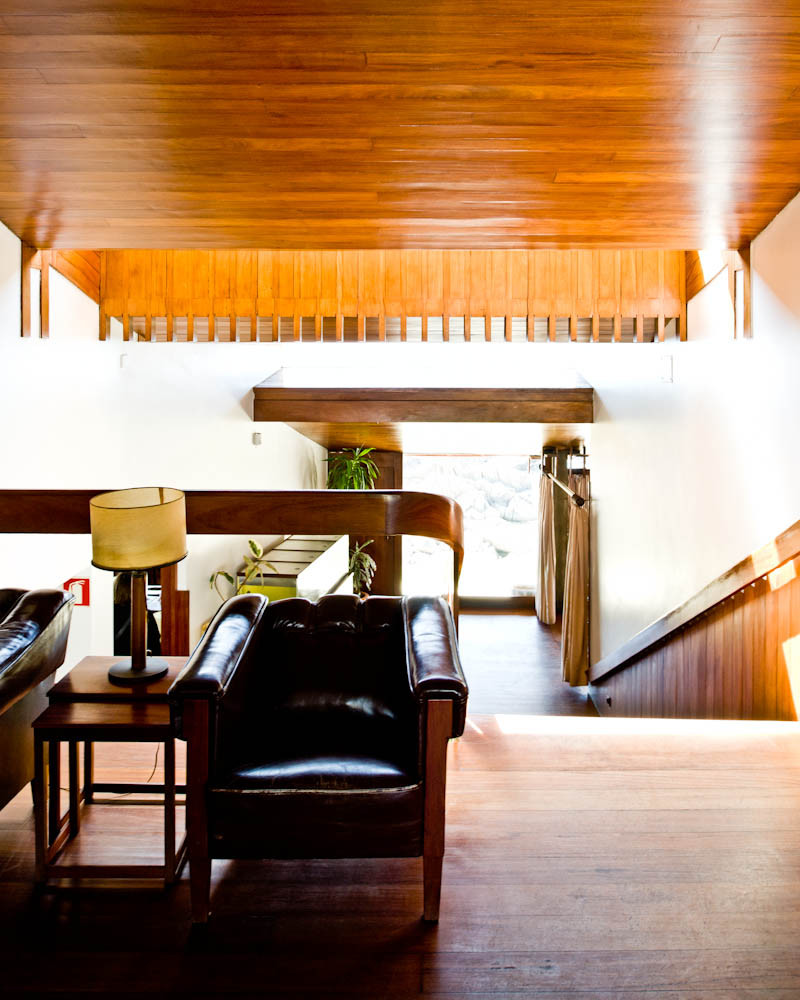
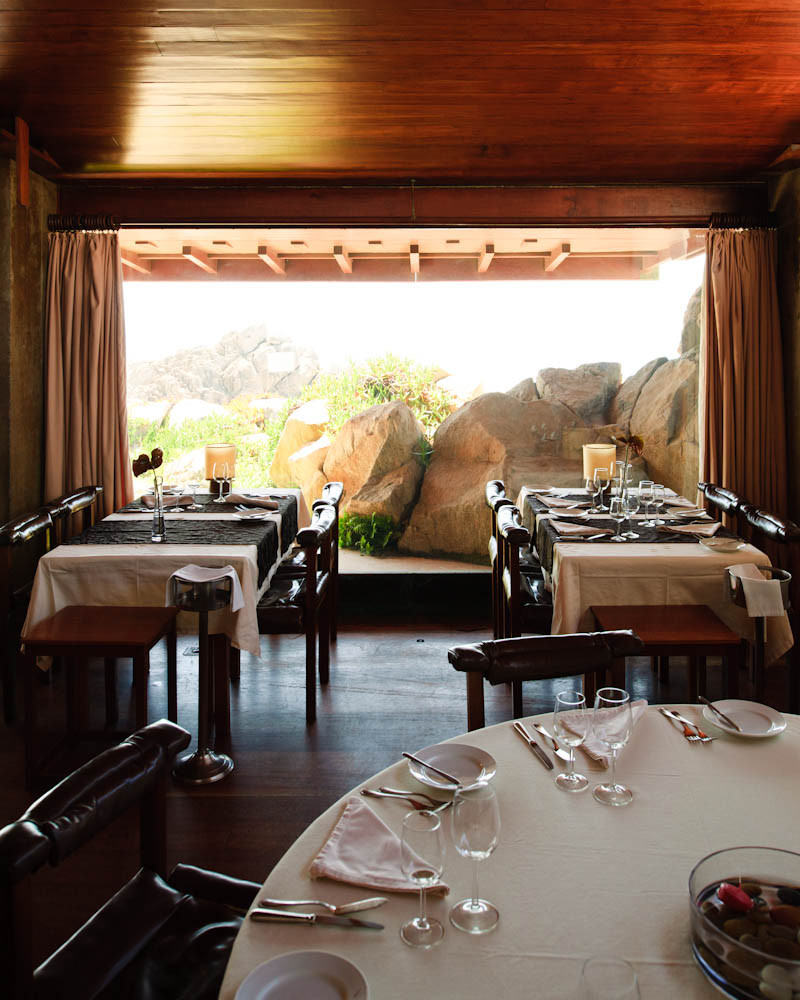
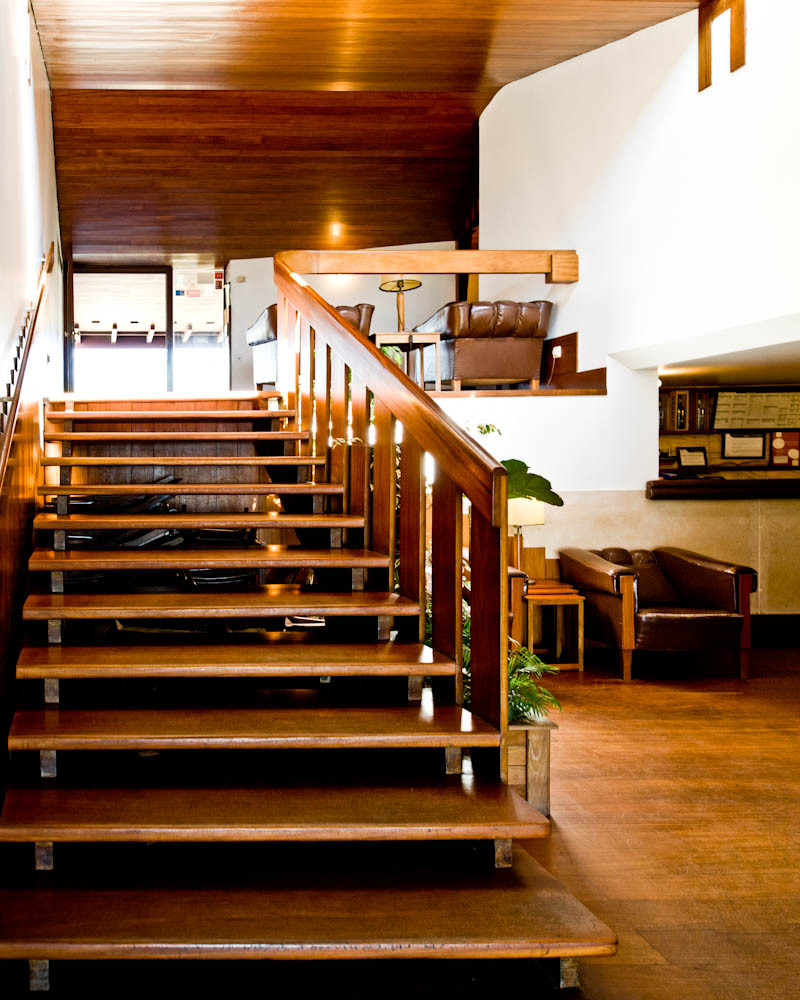
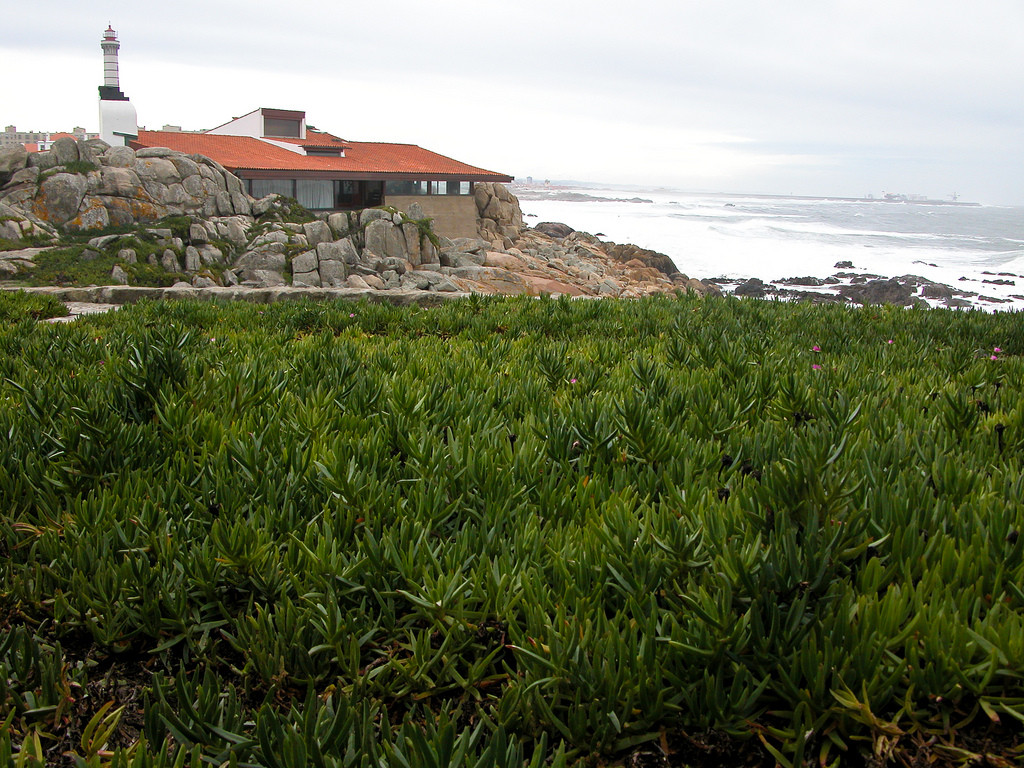
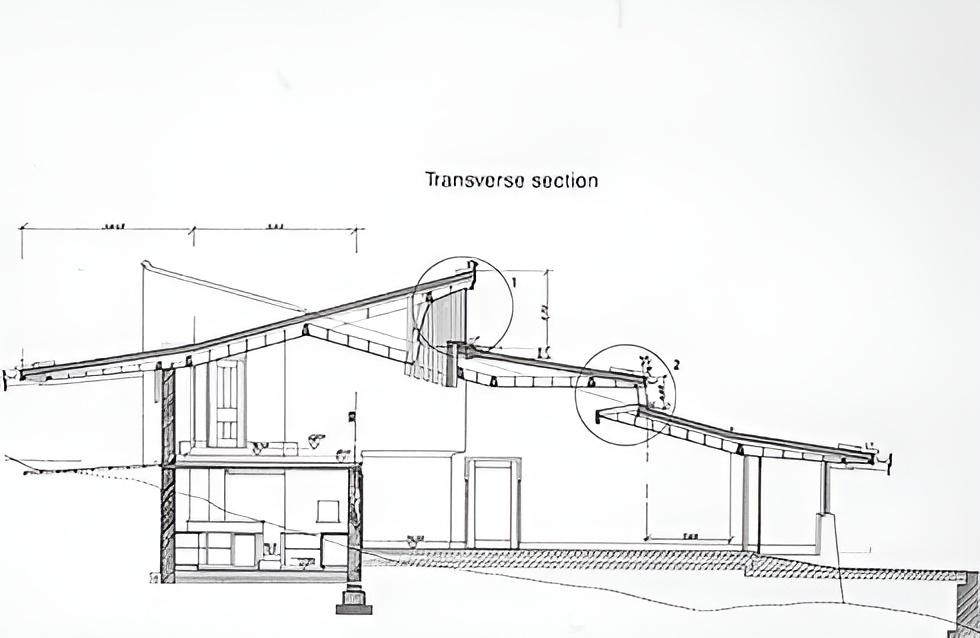
Boa Nova Tea House in Leça da Palmeira is an early restaurant designed by Álvaro Siza Vieira on a rocky Atlantic coast near Matosinhos. Siza received the commission after Fernando Távora won the original competition in 1956 and passed the project to him. Siza completed the building in 1963 as a hospitality project that joined a low roofline, stepped entrance route, sea-facing rooms, and rock formations into one sequence. Siza used white-painted walls, reinforced concrete, timber interiors, ceramic roof tiles, stone paths, and built-in furniture to relate modern construction to local building traditions. Boa Nova Tea House established themes of Siza’s later work, including delayed views, the relation between landform and structure, and architecture developed through arrival.
02. Leça Swimming Pools, Leça da Palmeira
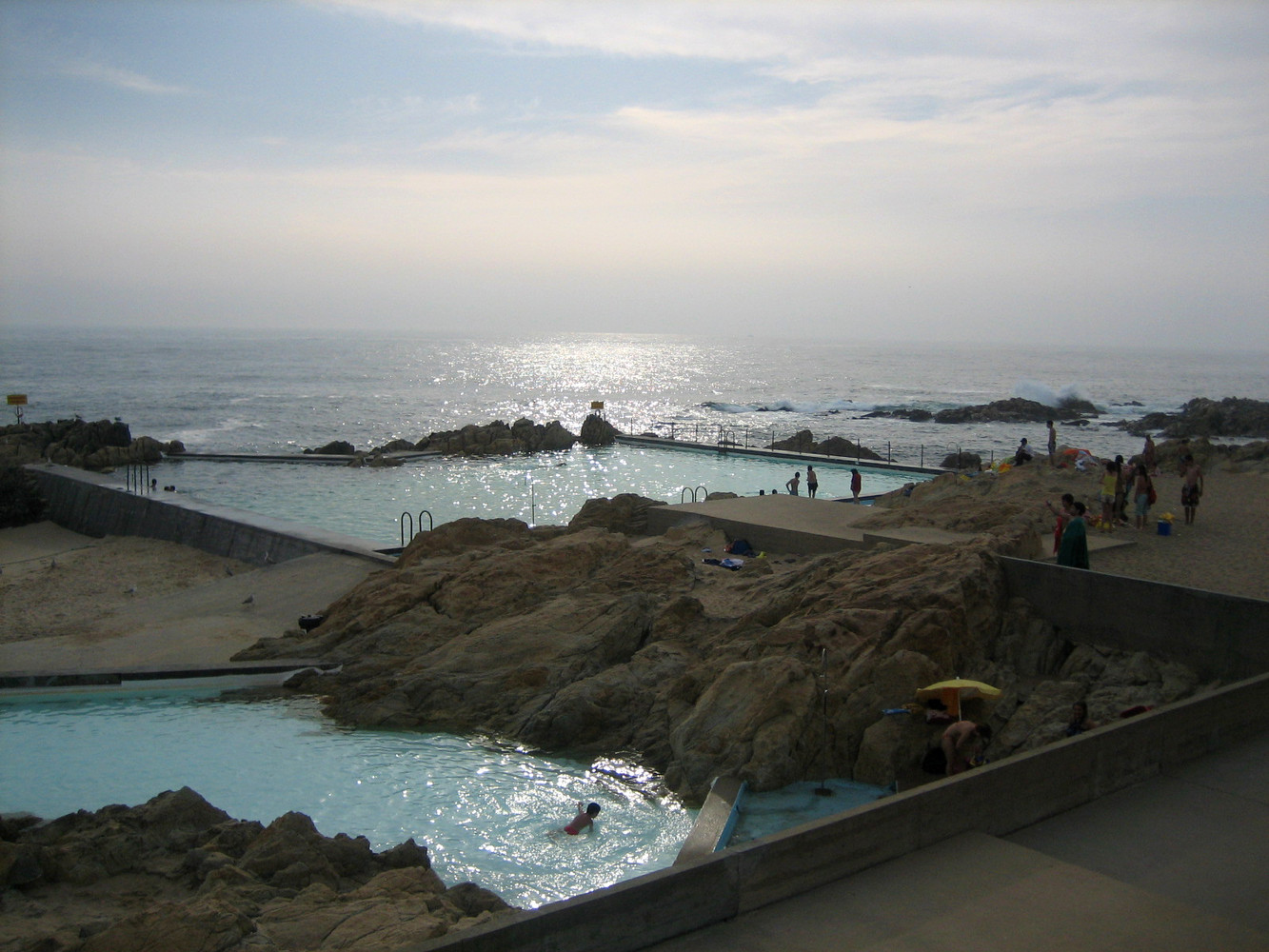
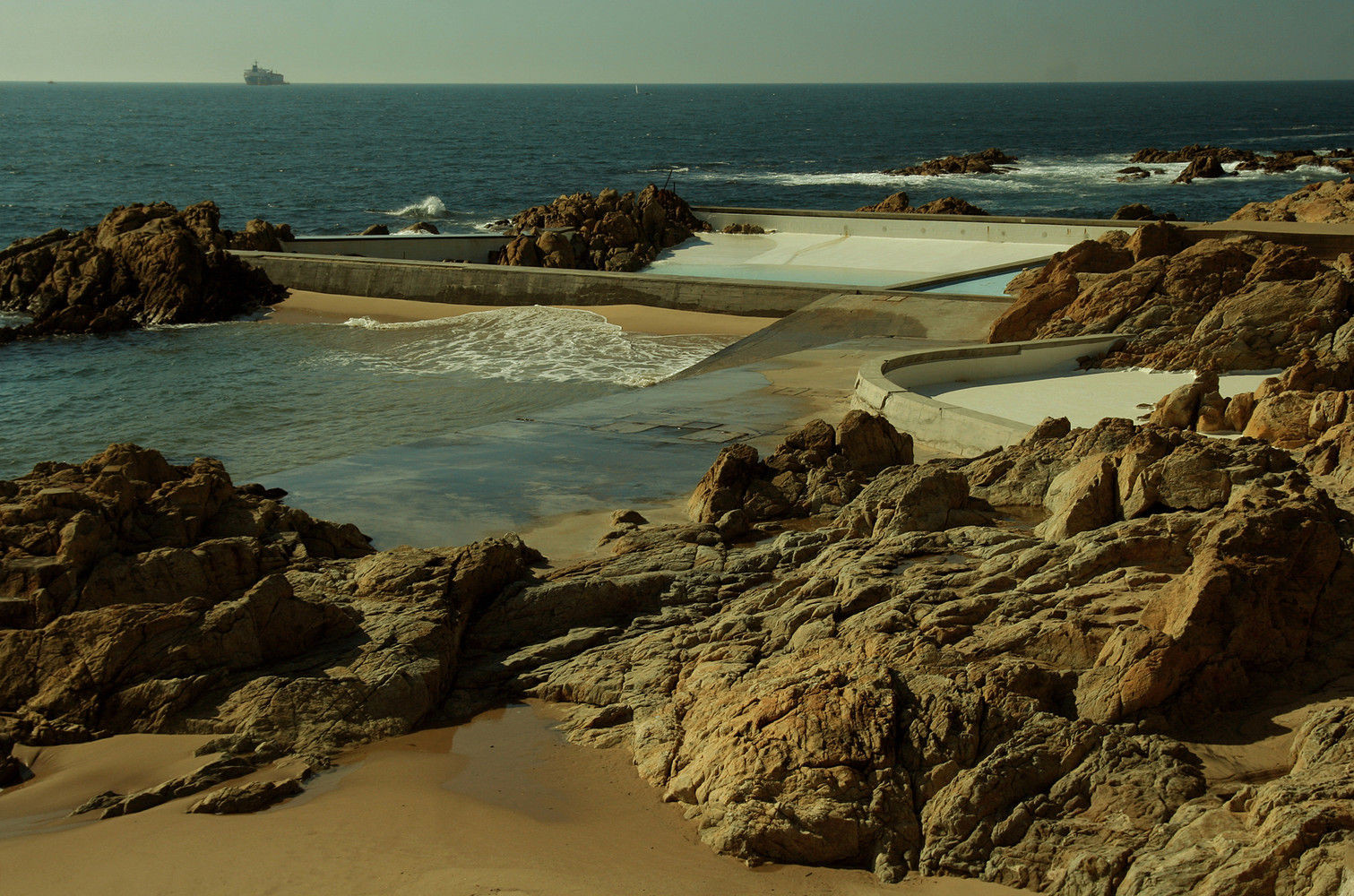
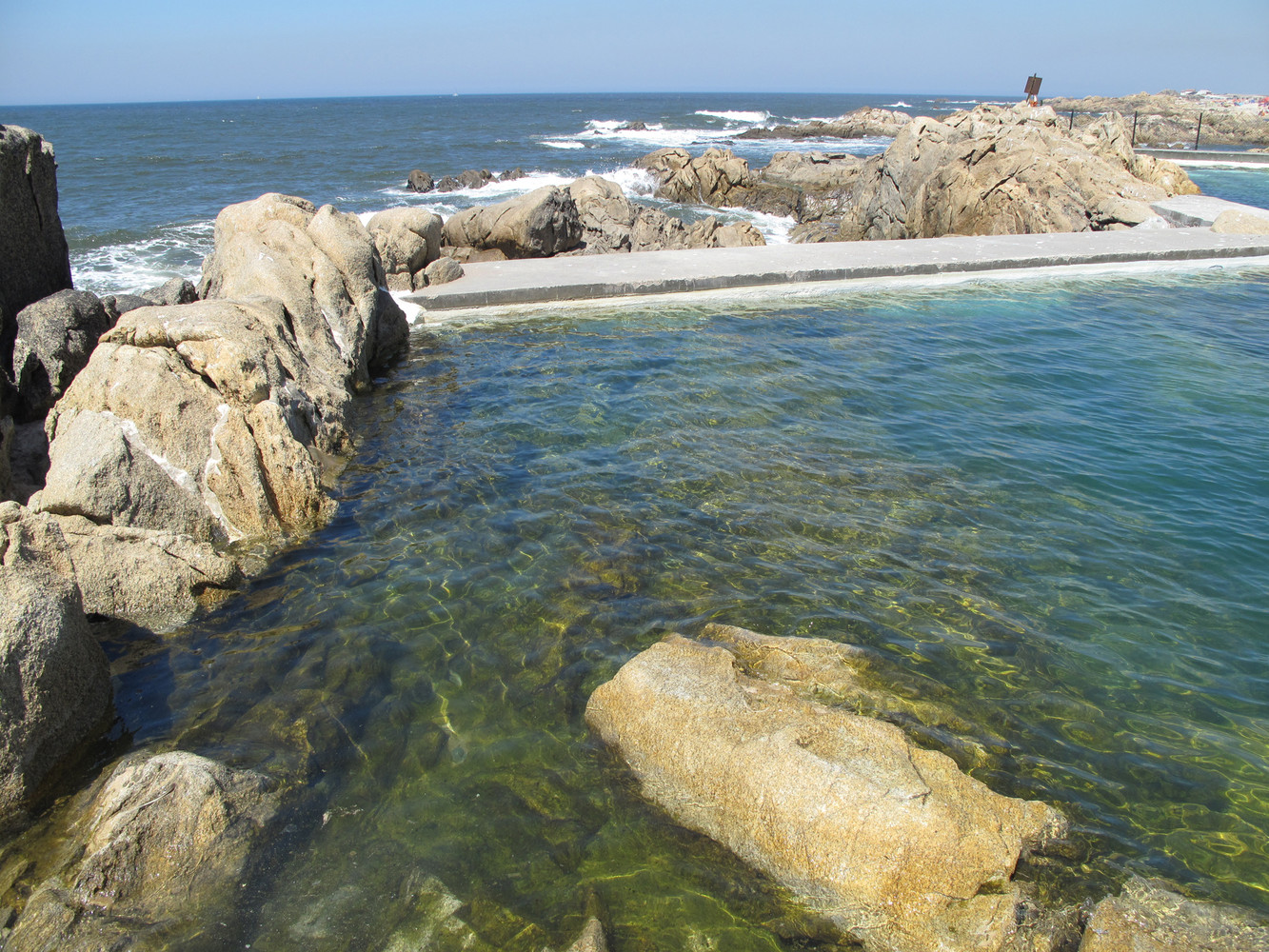
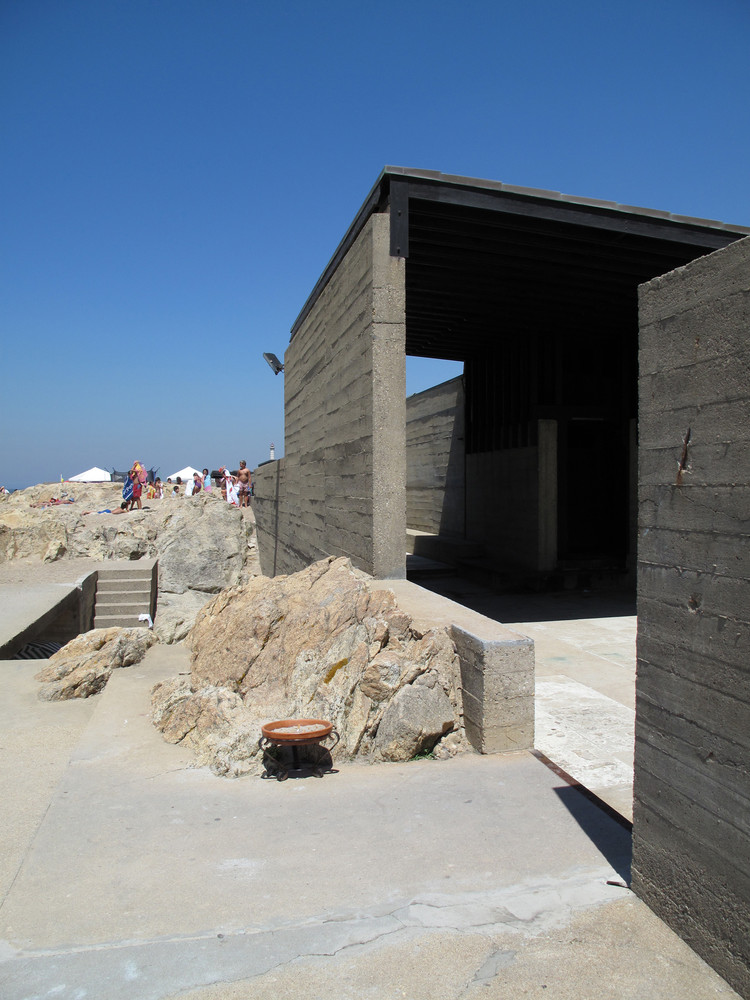
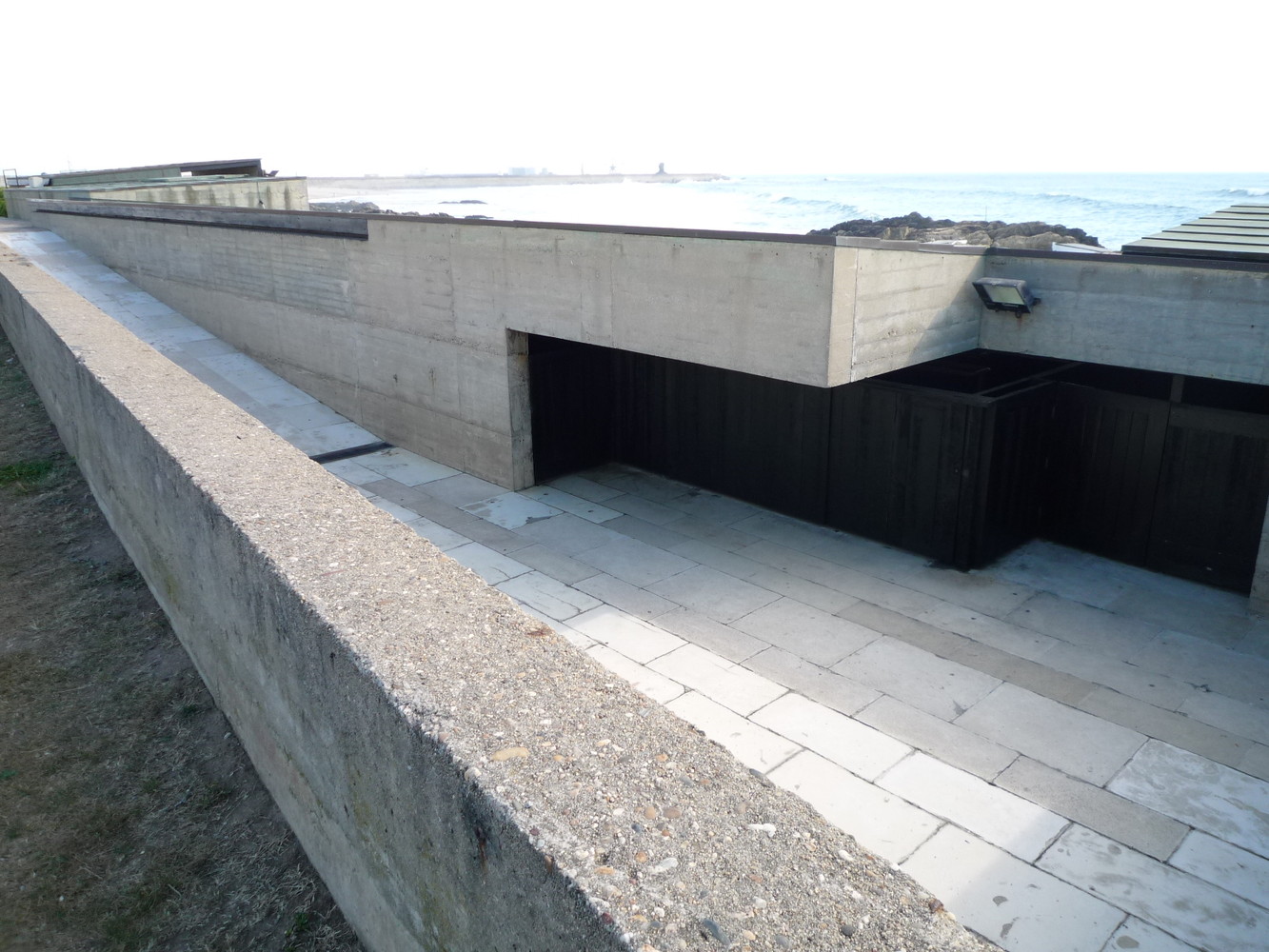
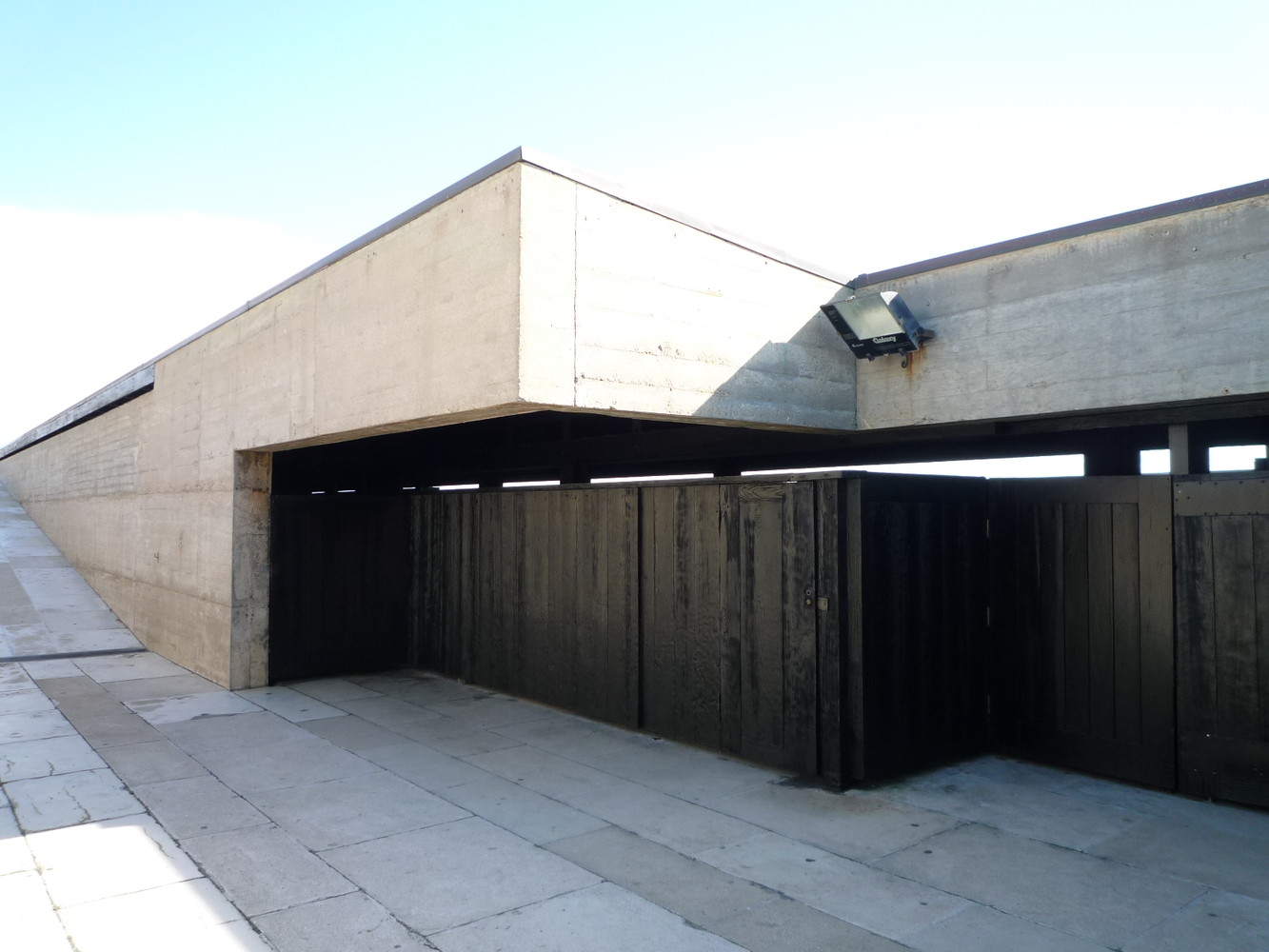
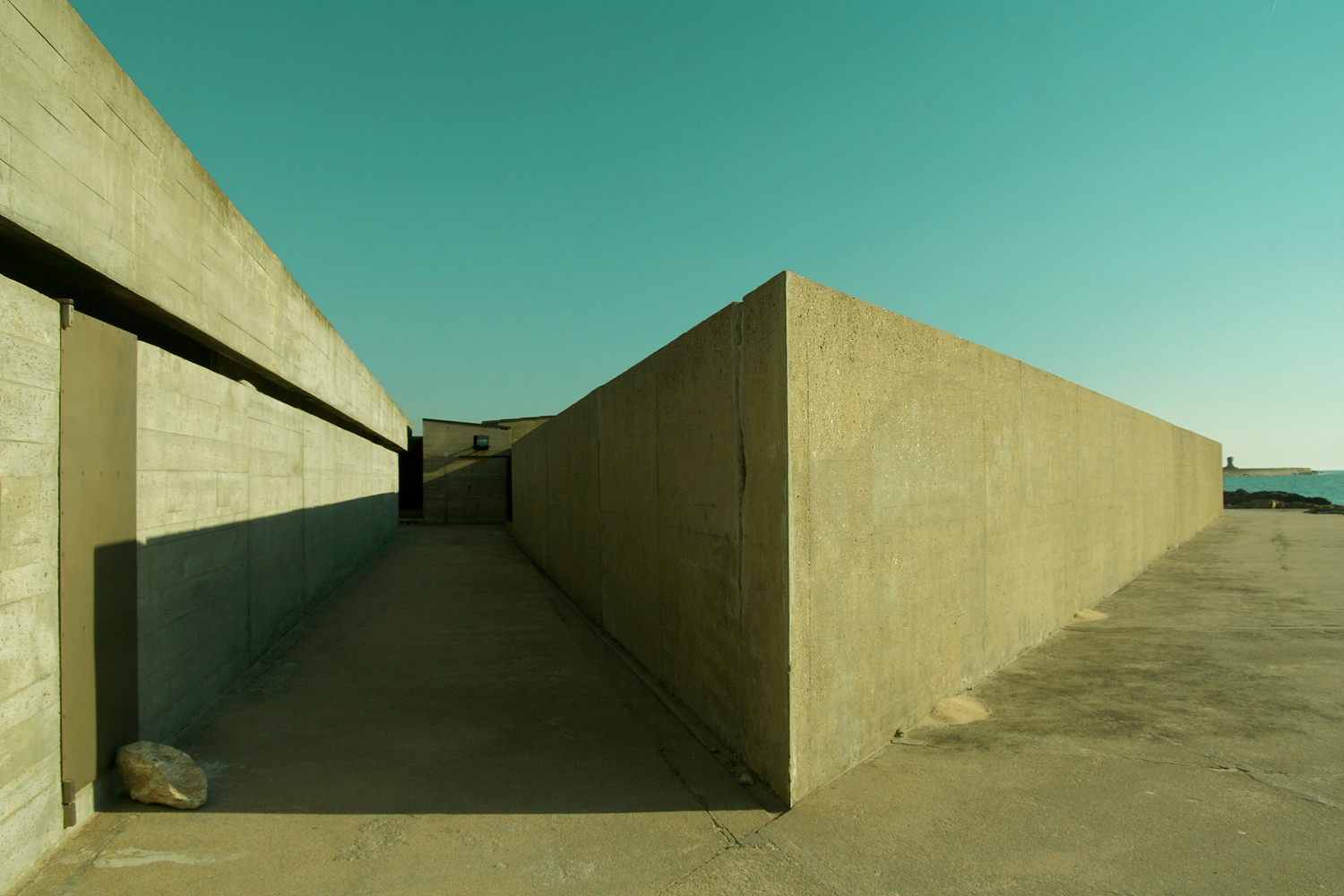
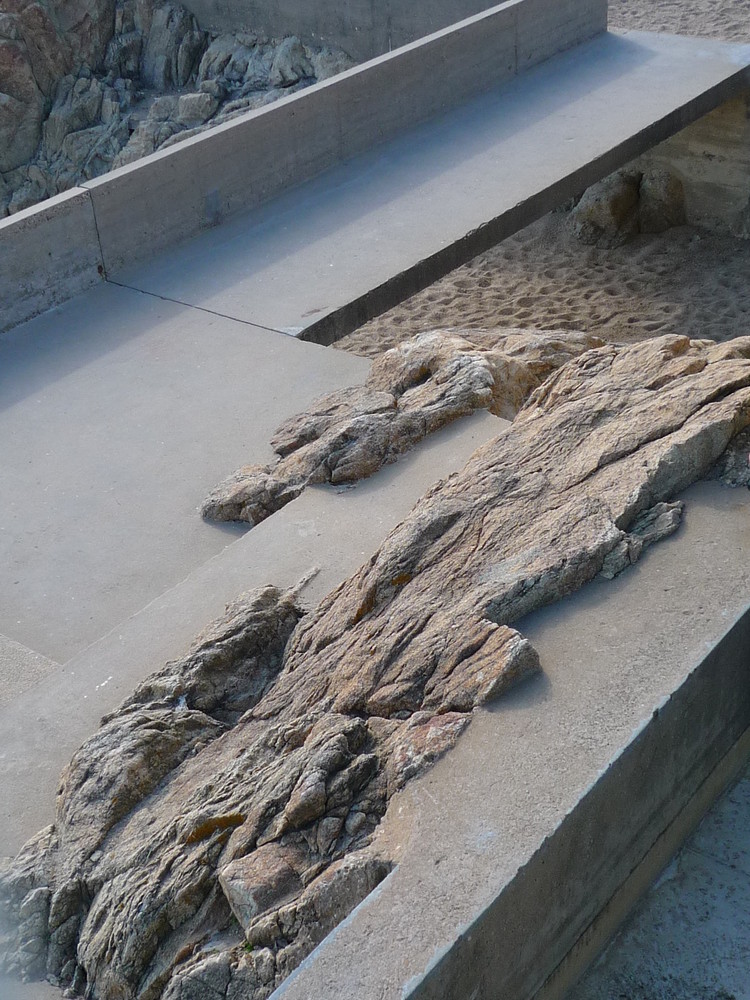
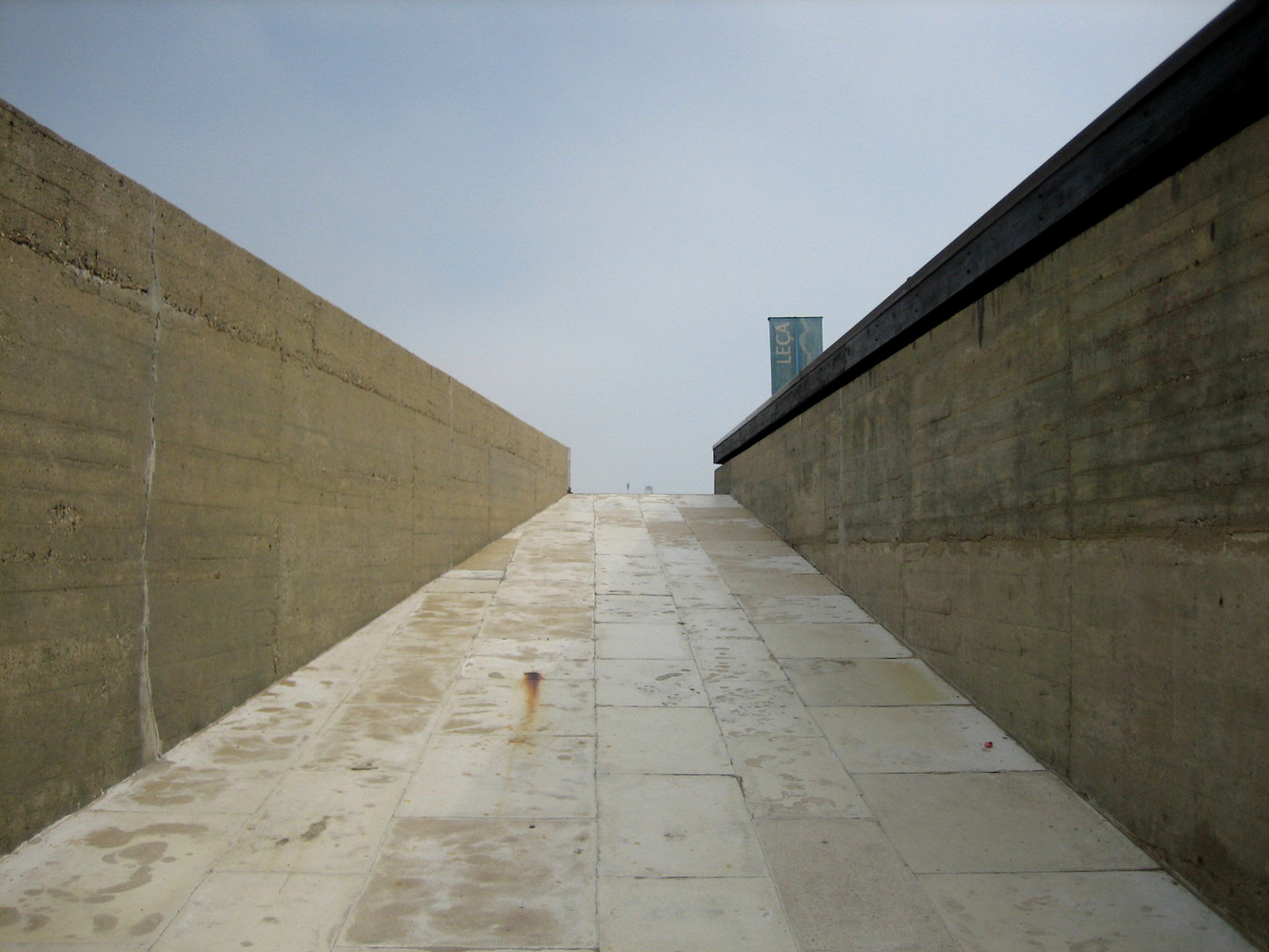
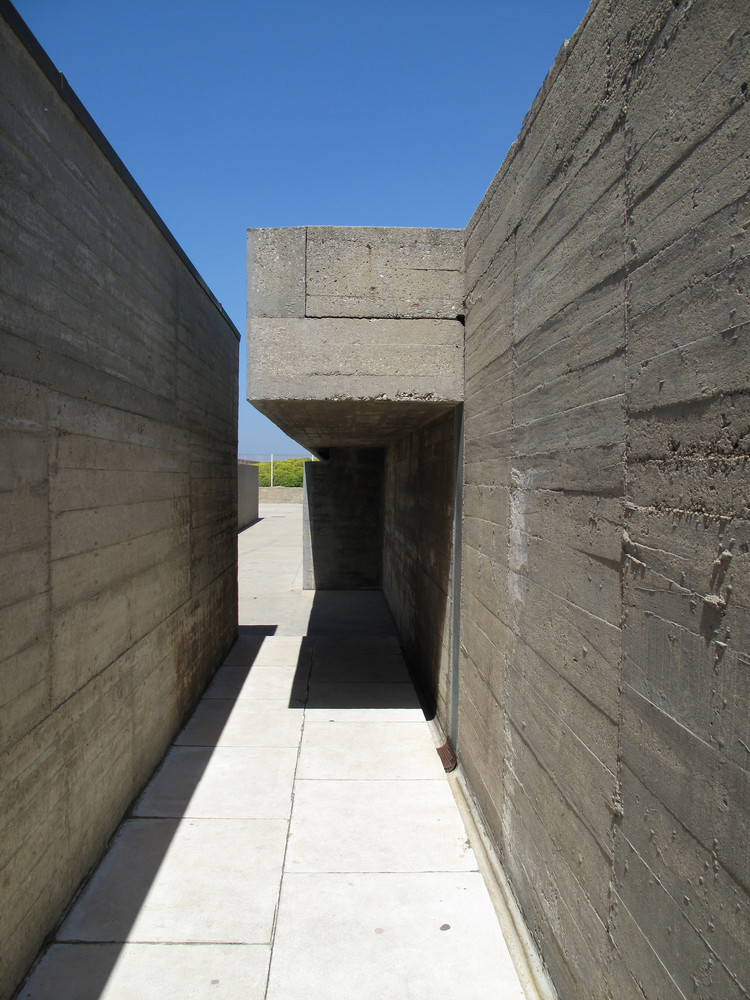
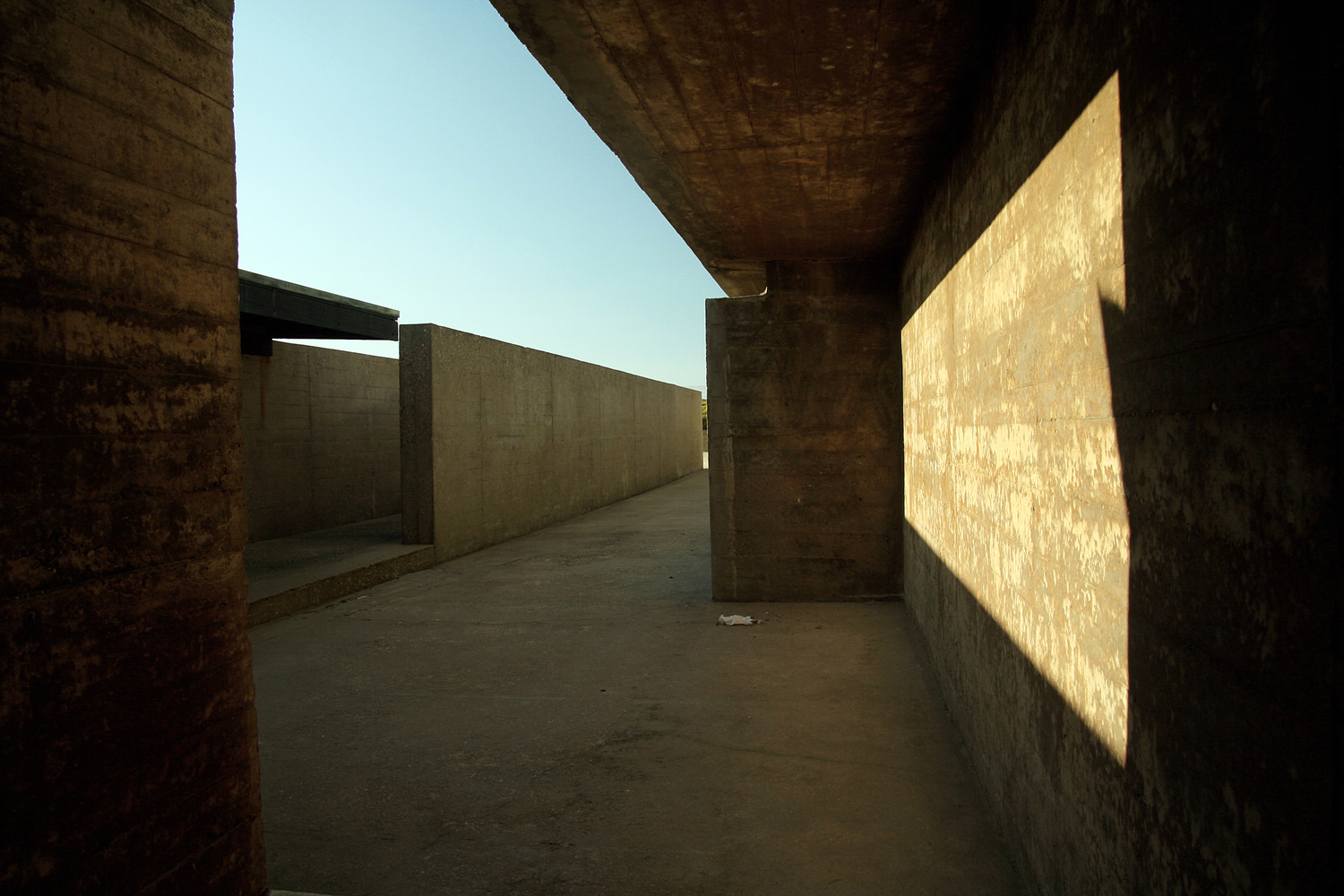
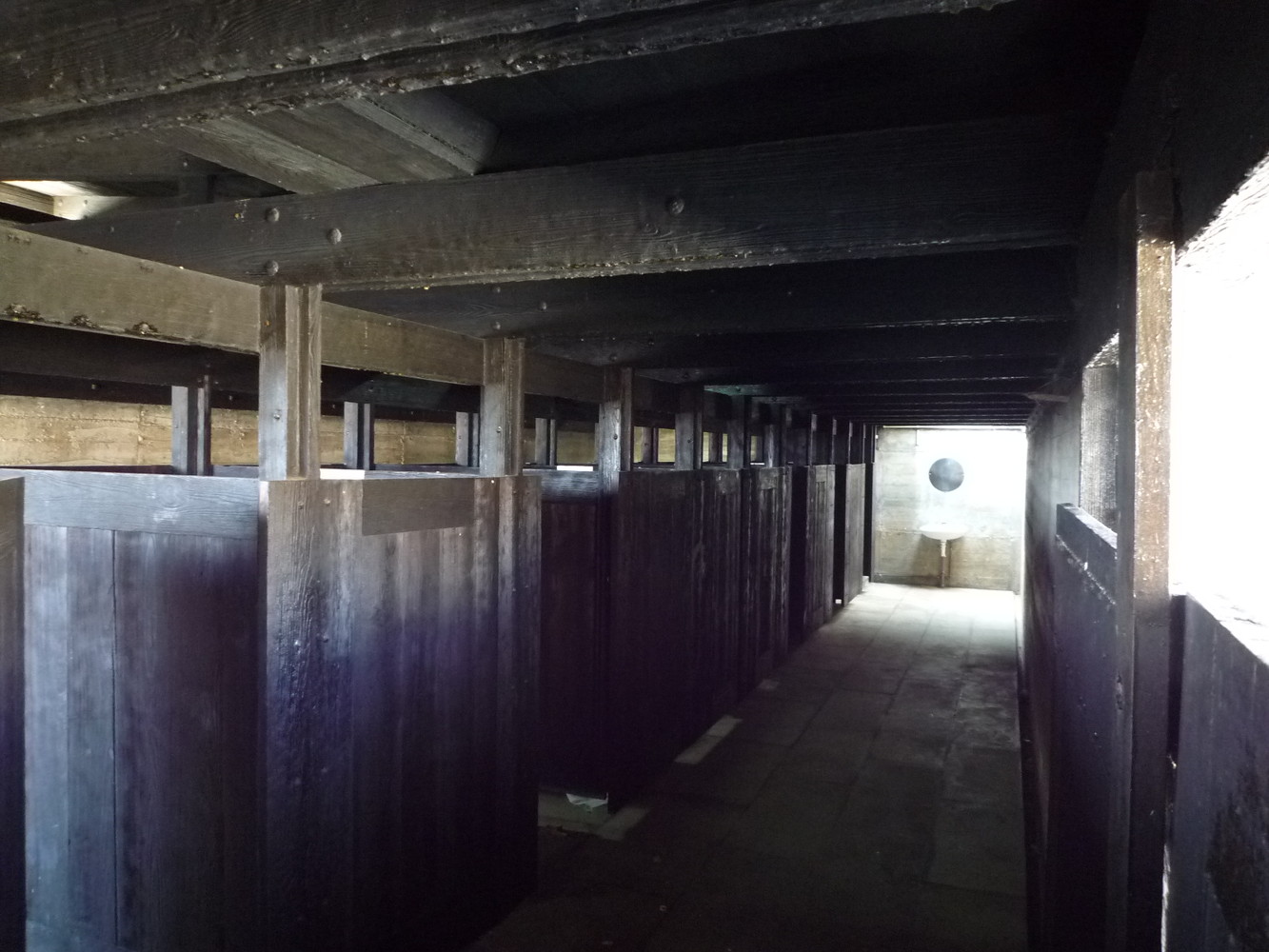
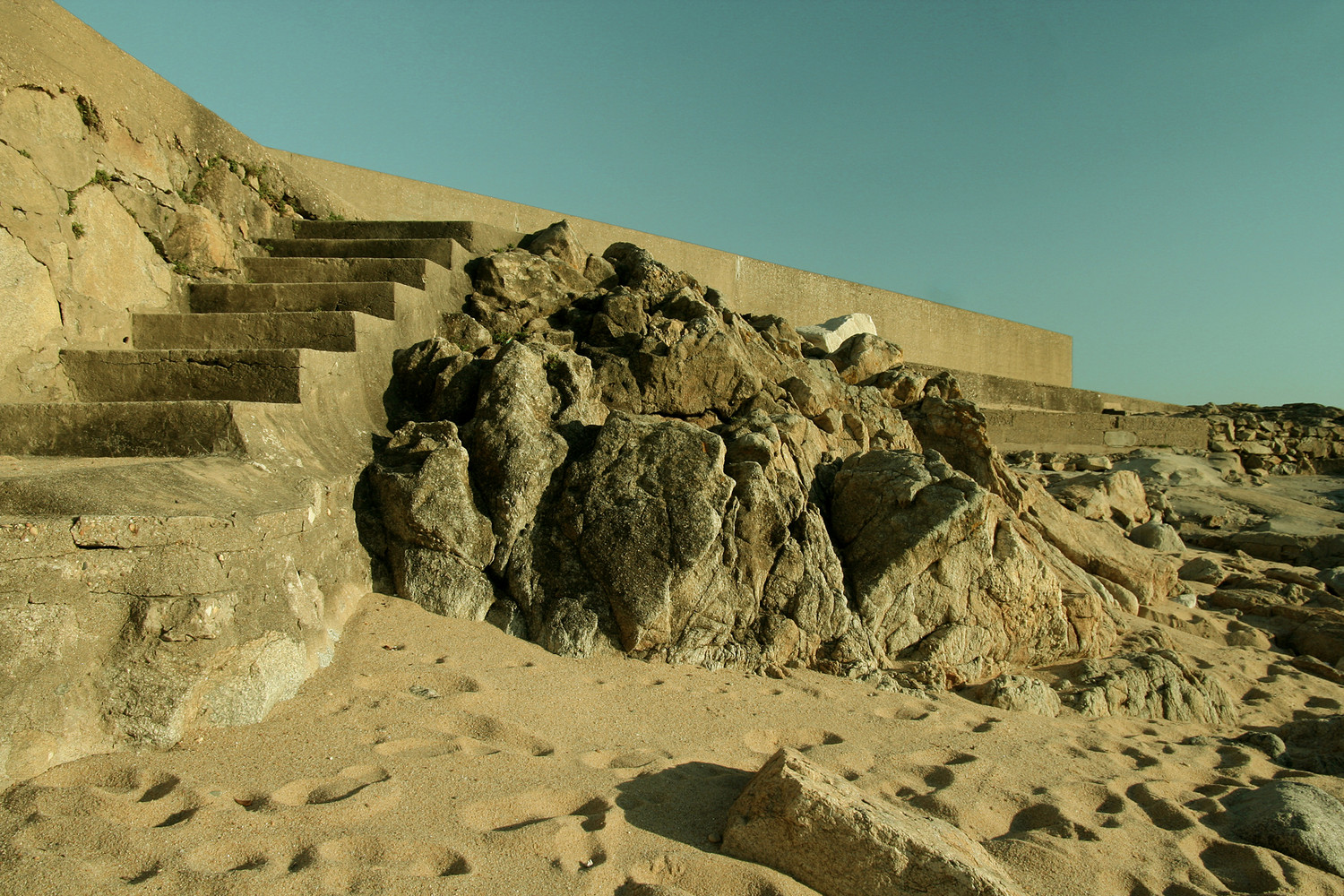
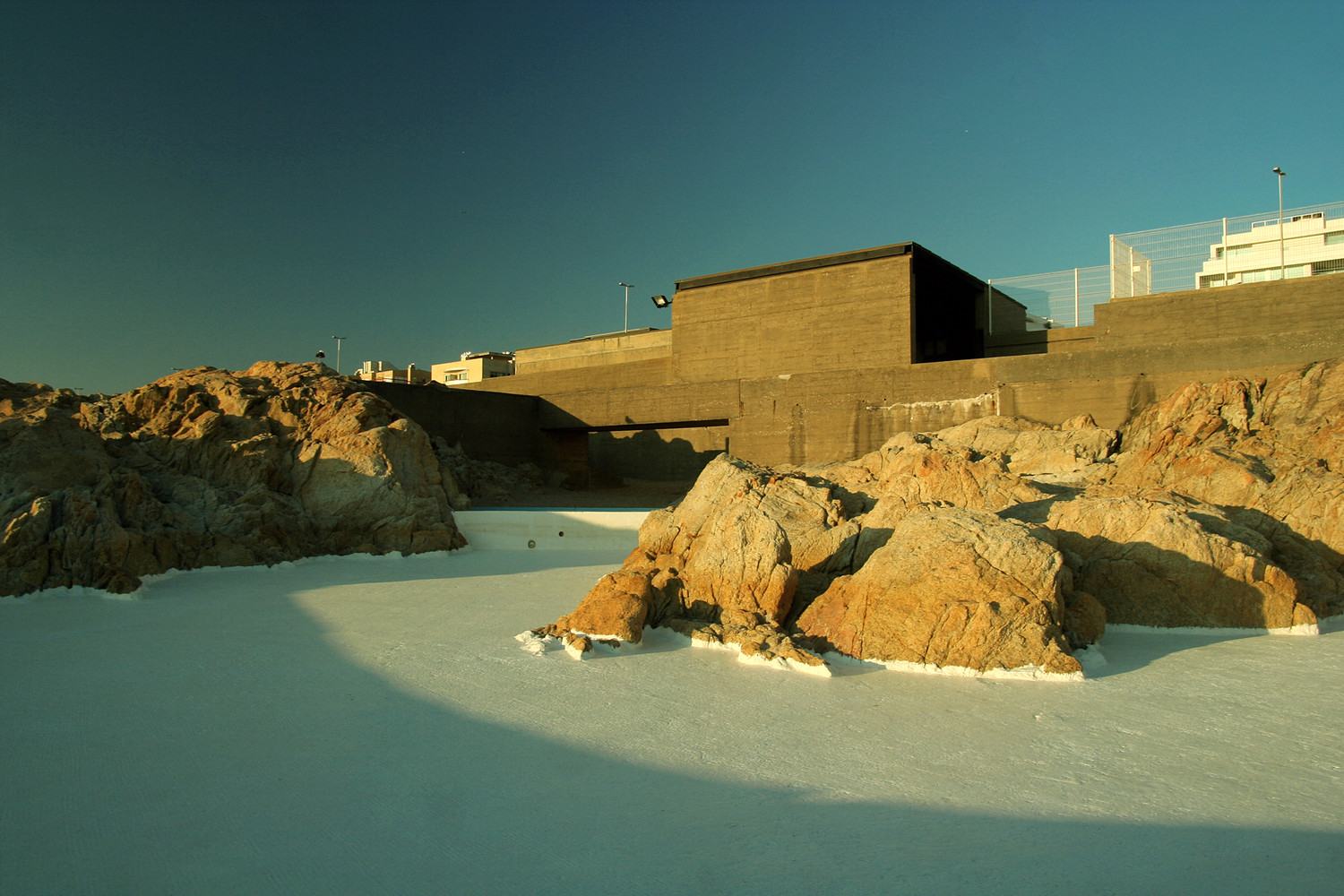
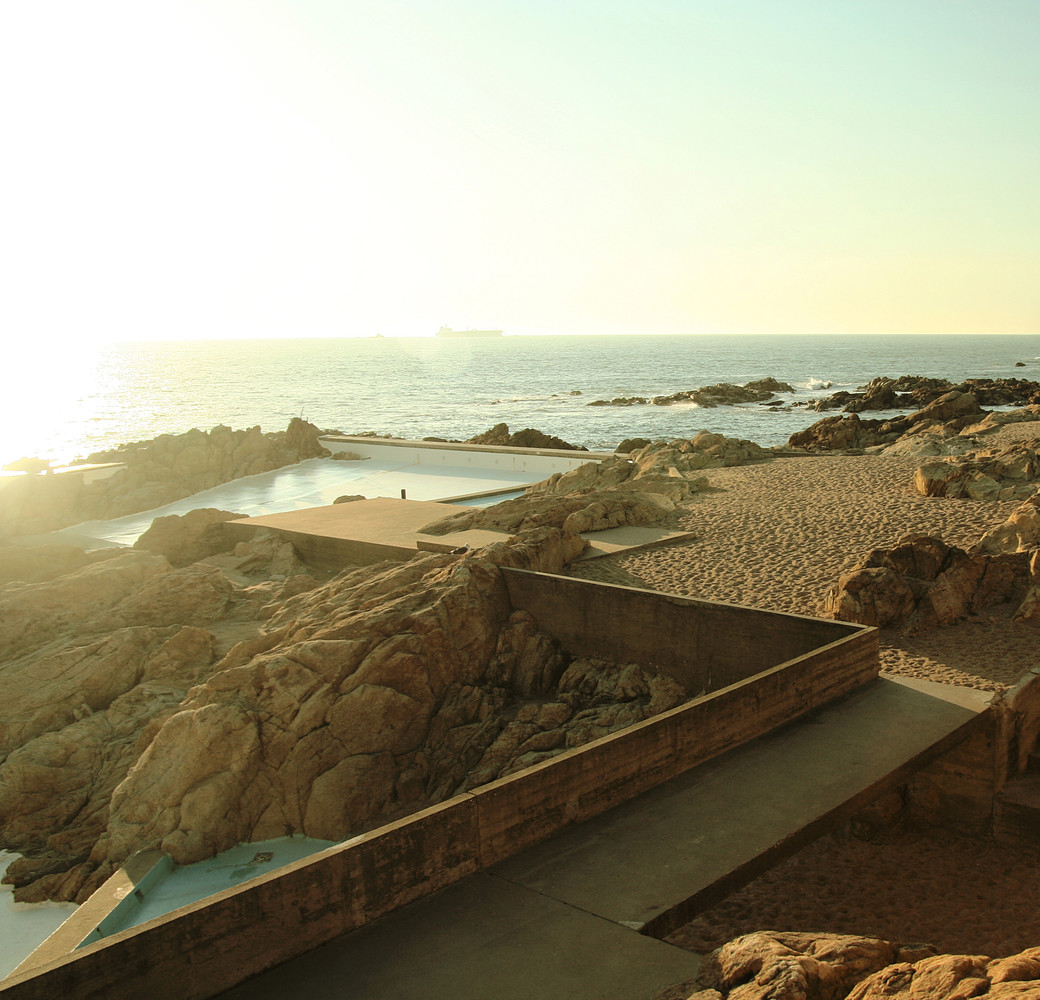
Leça Swimming Pools in Leça da Palmeira is a public saltwater pool complex designed by Álvaro Siza Vieira along the Atlantic edge of northern Portugal. Siza completed the project in 1966 by embedding changing rooms, walls, paths, and two seawater basins within an existing field of coastal rock. Siza treated the landscape as a construction element, so the pools appear as adjustments to the shoreline rather than objects placed upon it. Siza used concrete retaining walls, stone surfaces, timber elements, and natural rock formations to define movement and enclosure. Leça Swimming Pools became one of Siza’s most studied works because the project transforms bathing infrastructure into an architectural passage between city, body, and sea.
03. Quinta da Malagueira, Évora
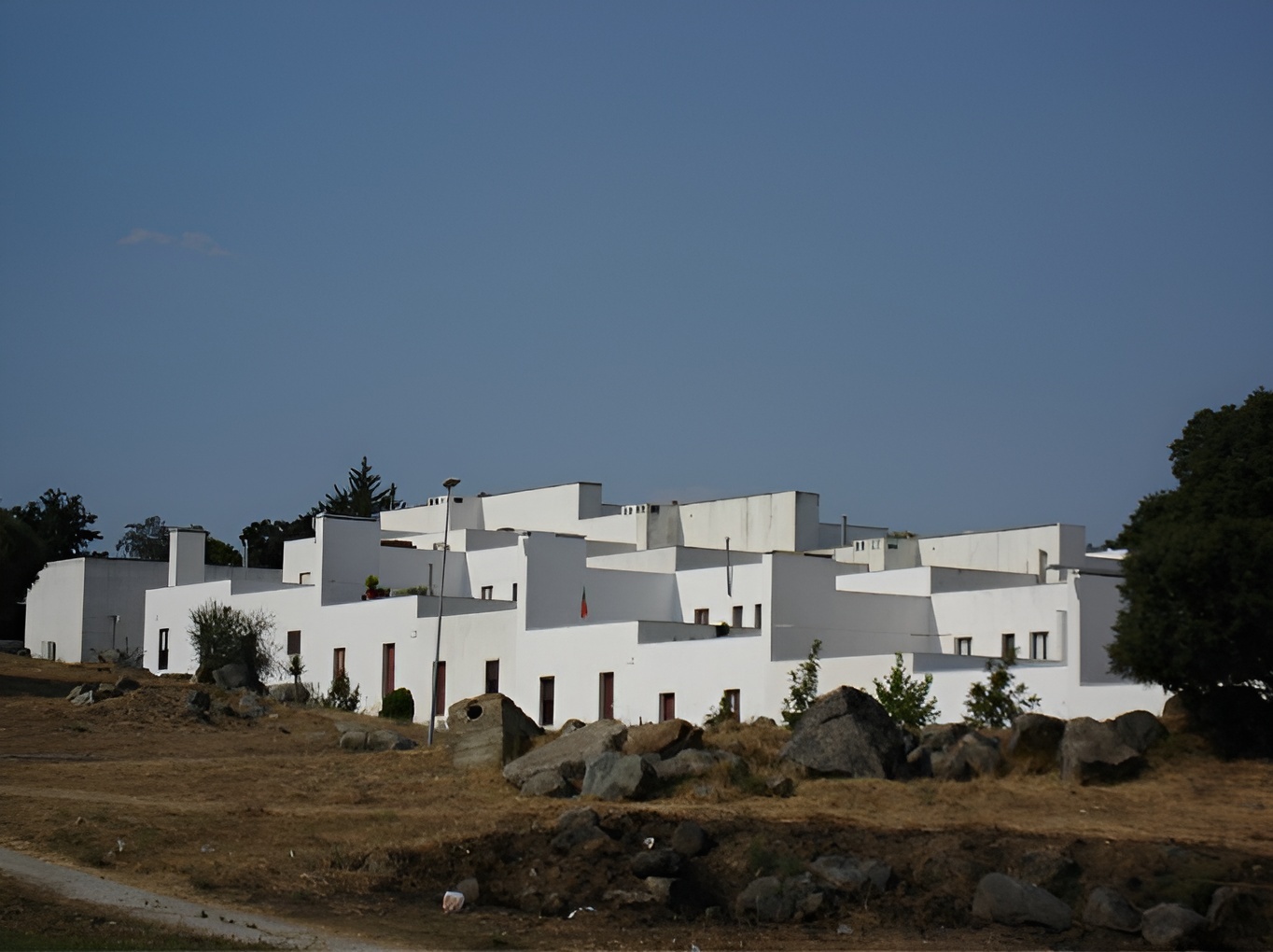
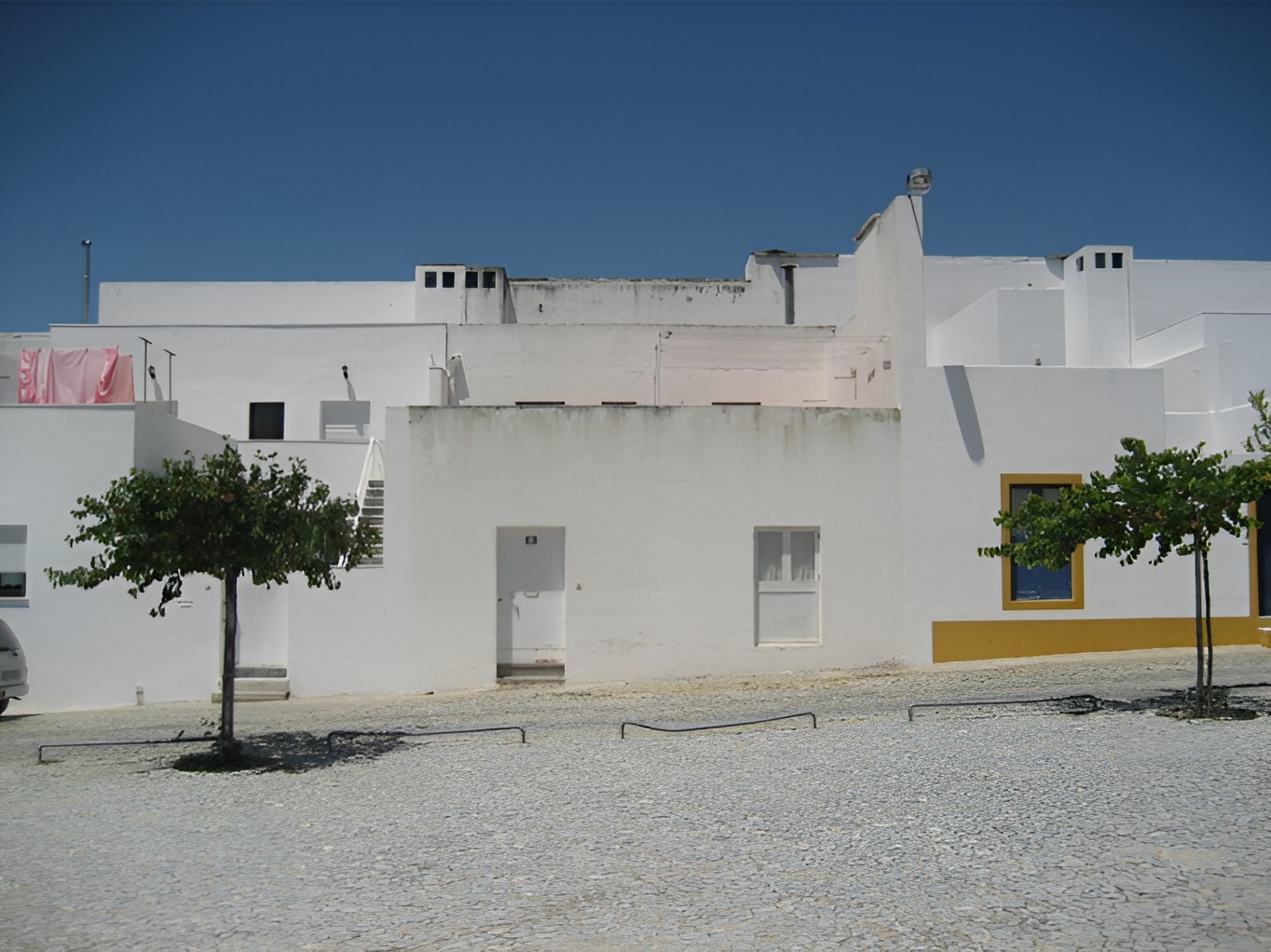
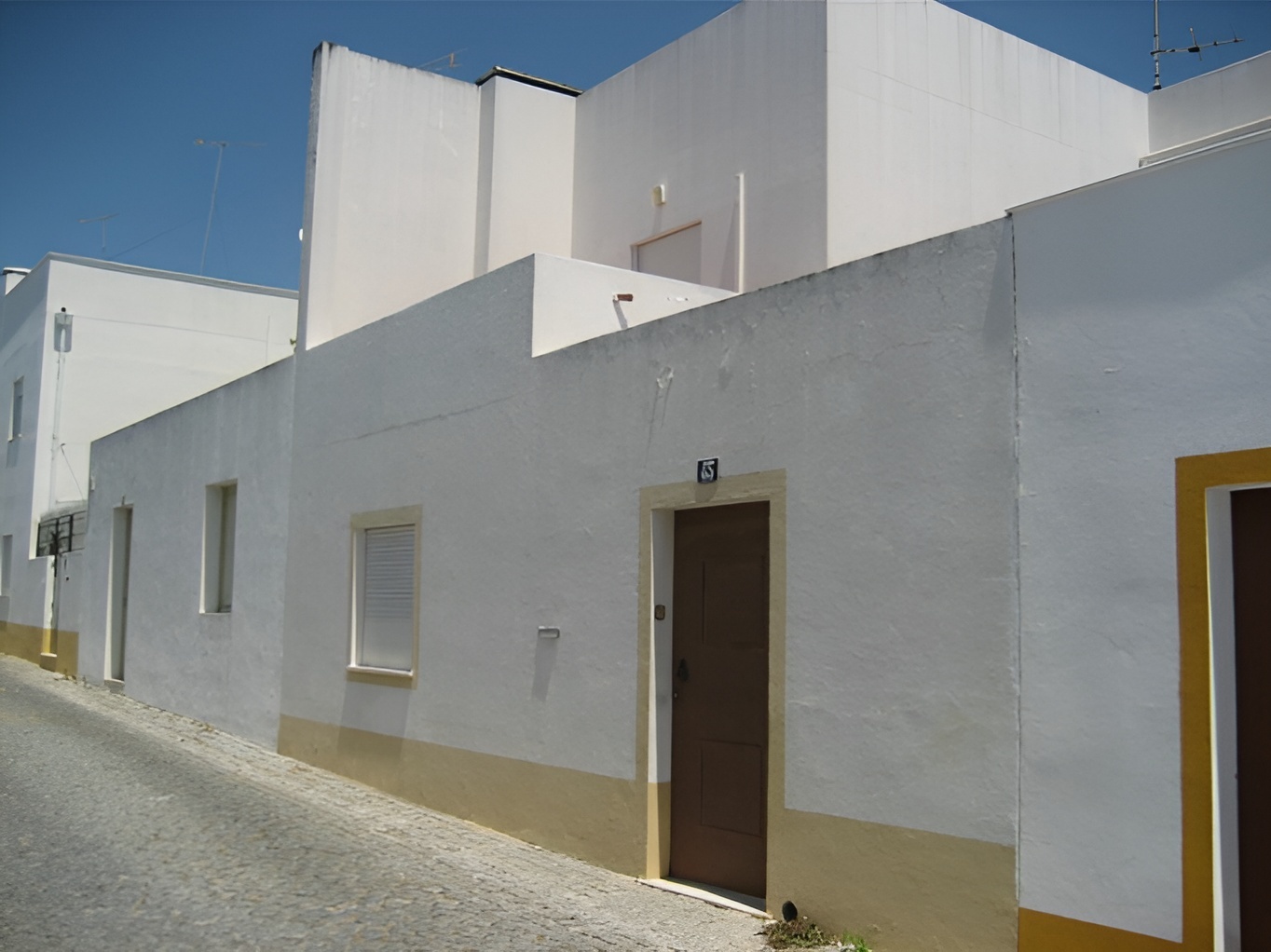
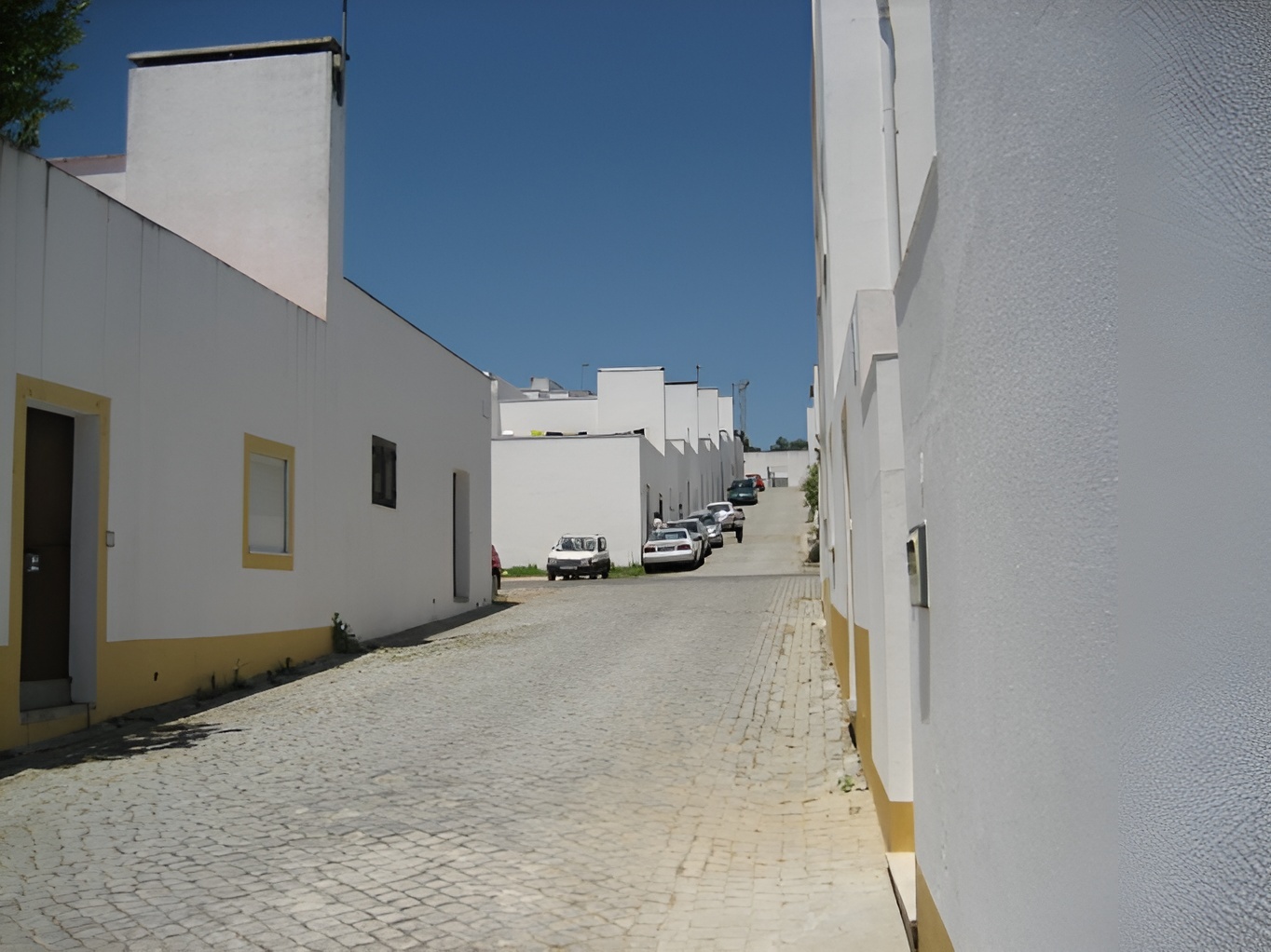
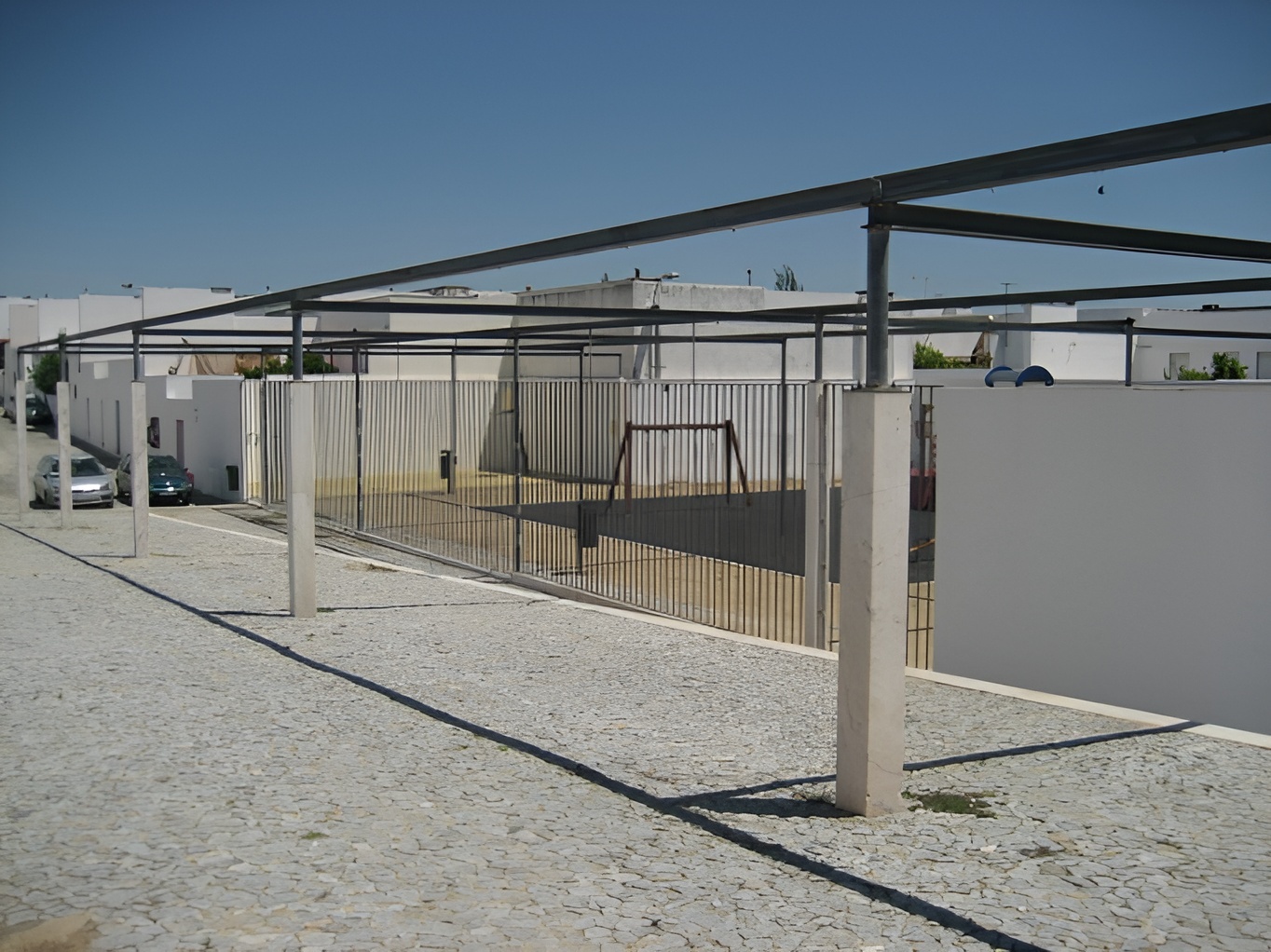
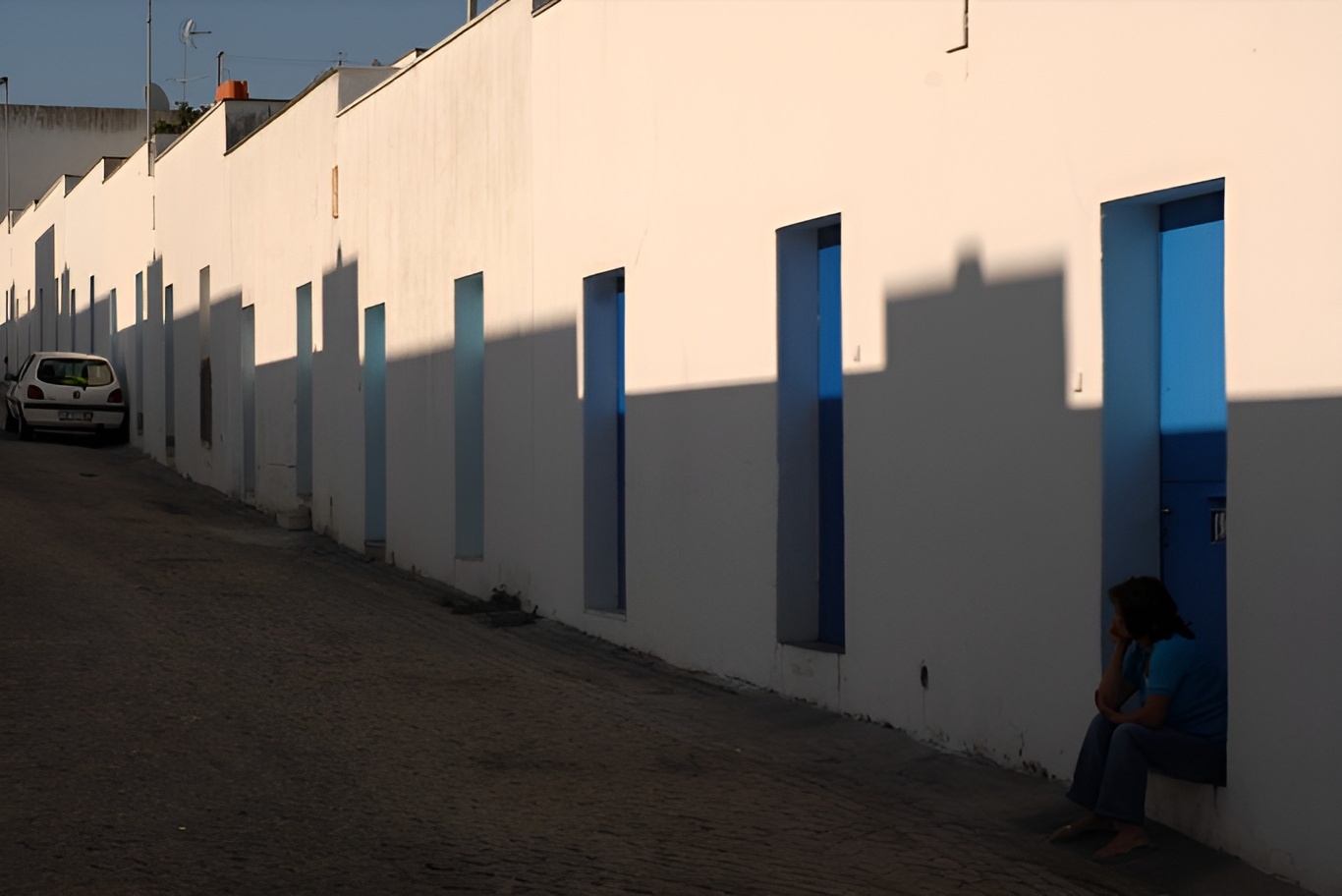
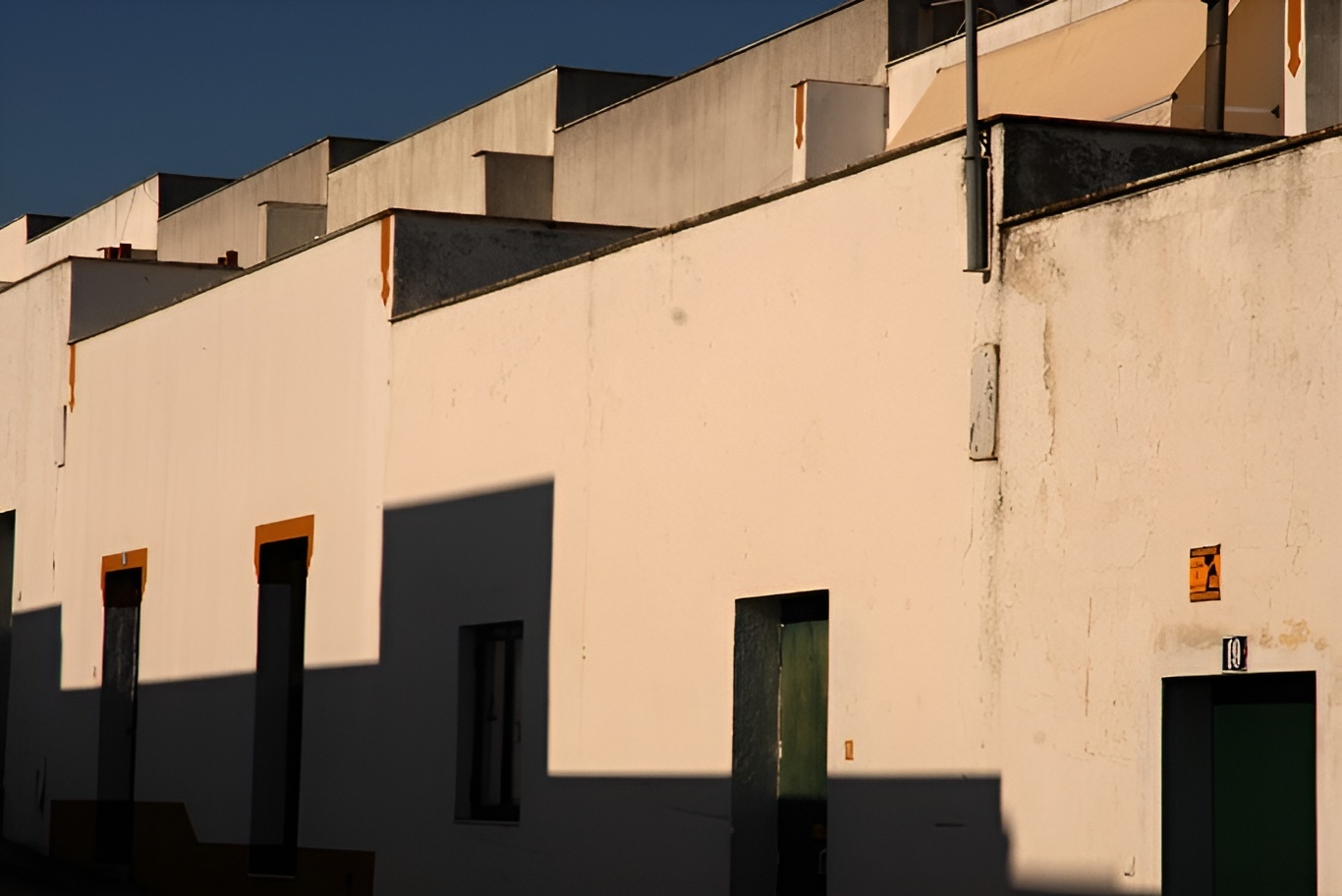
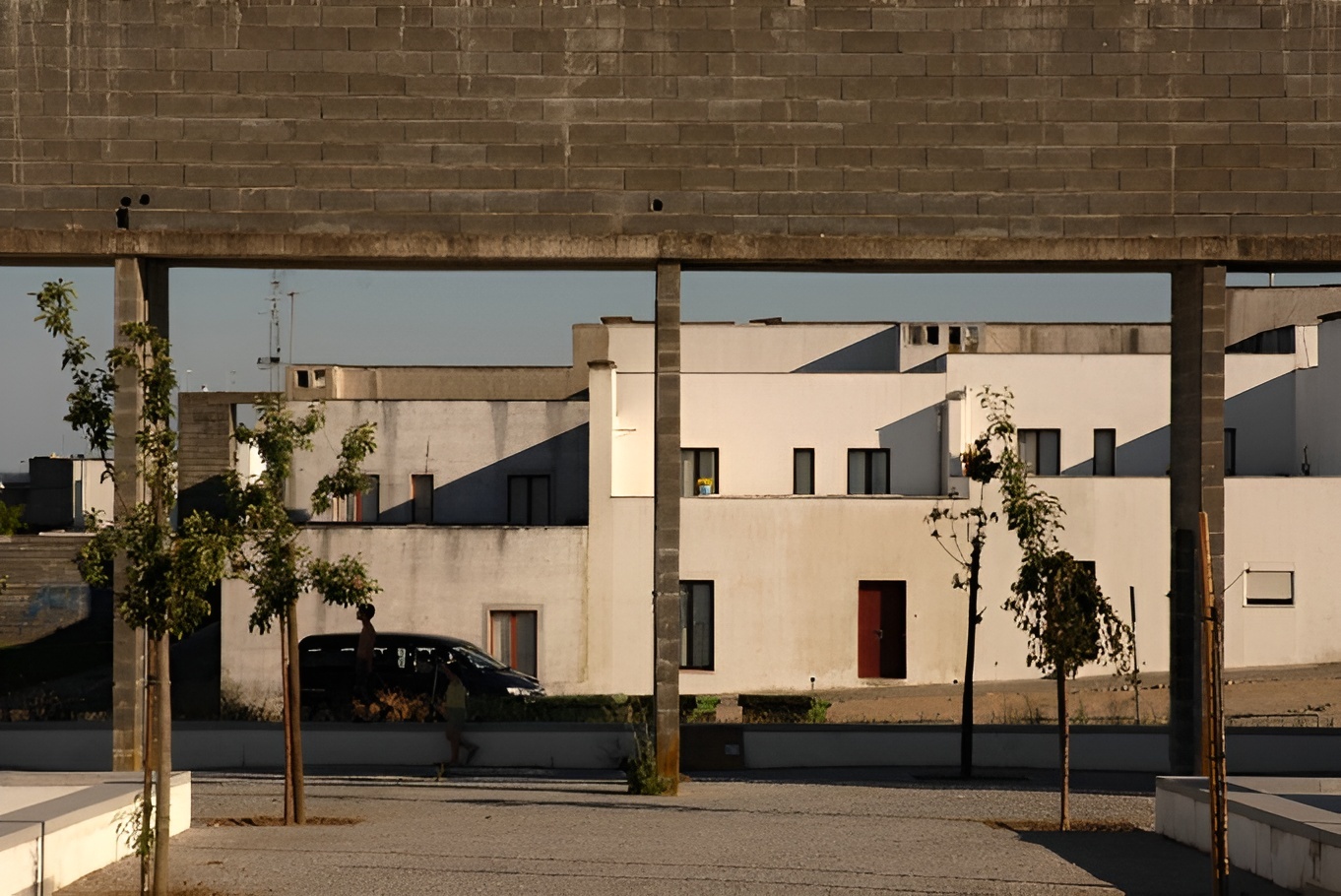
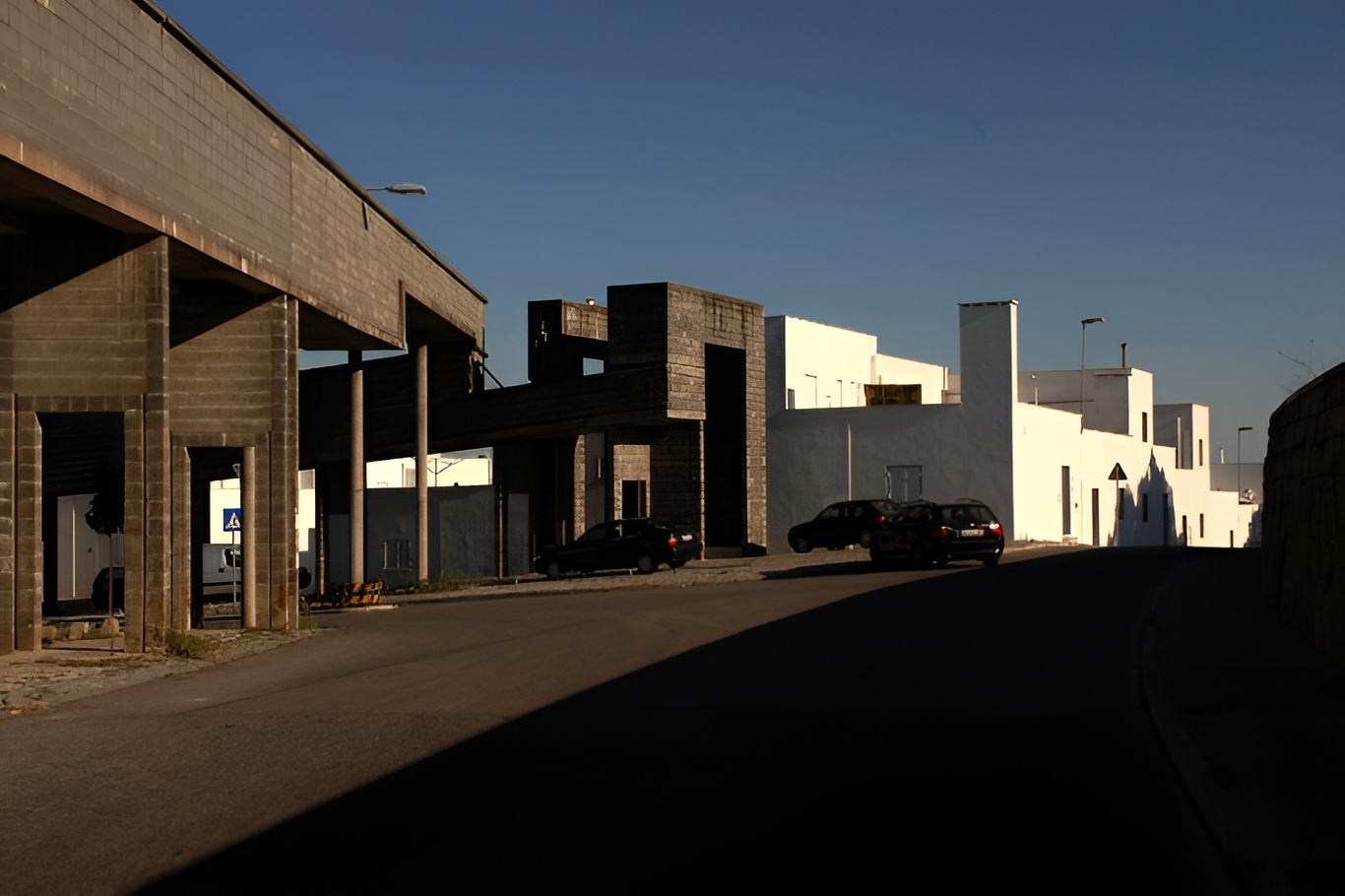
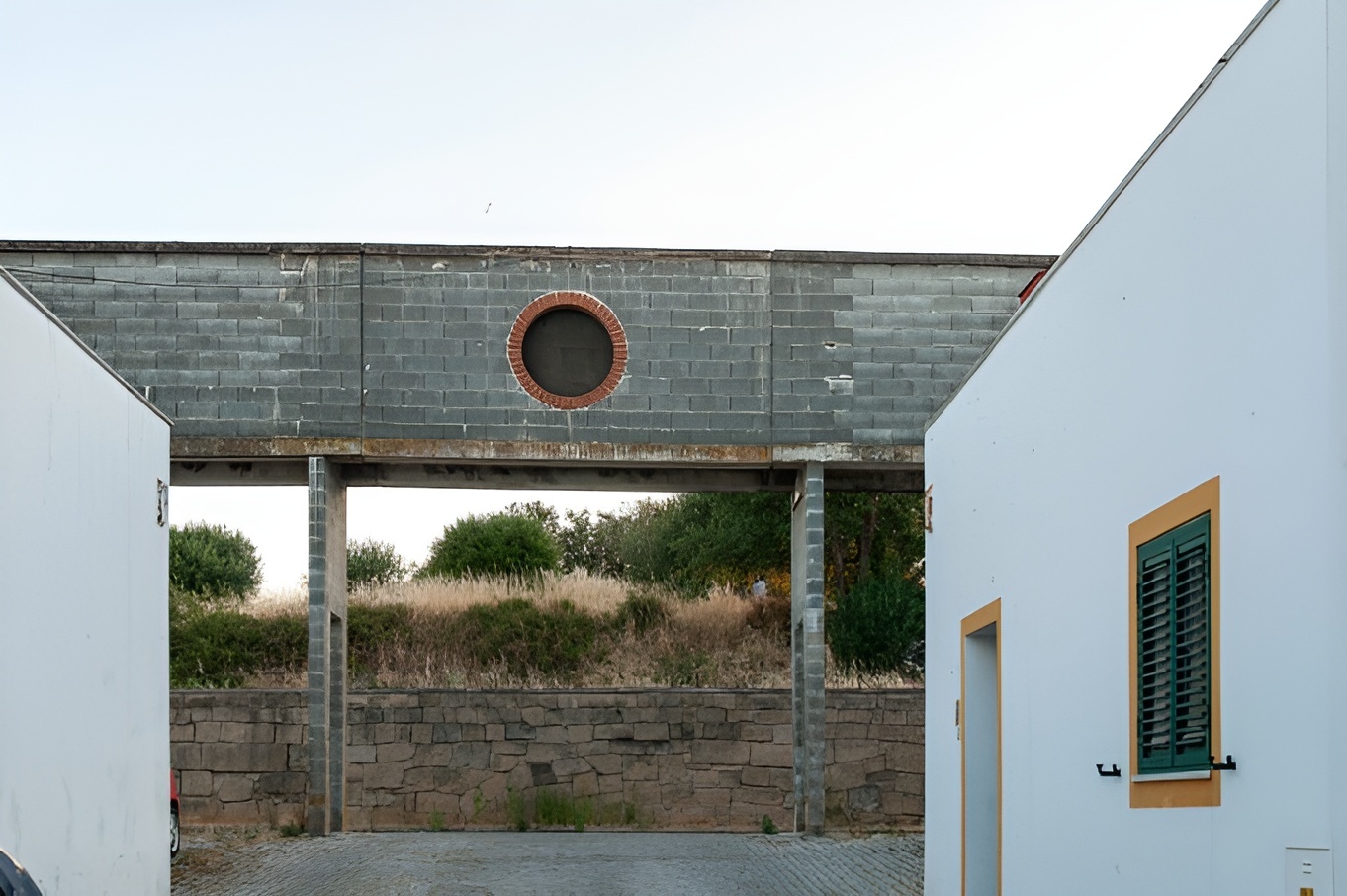
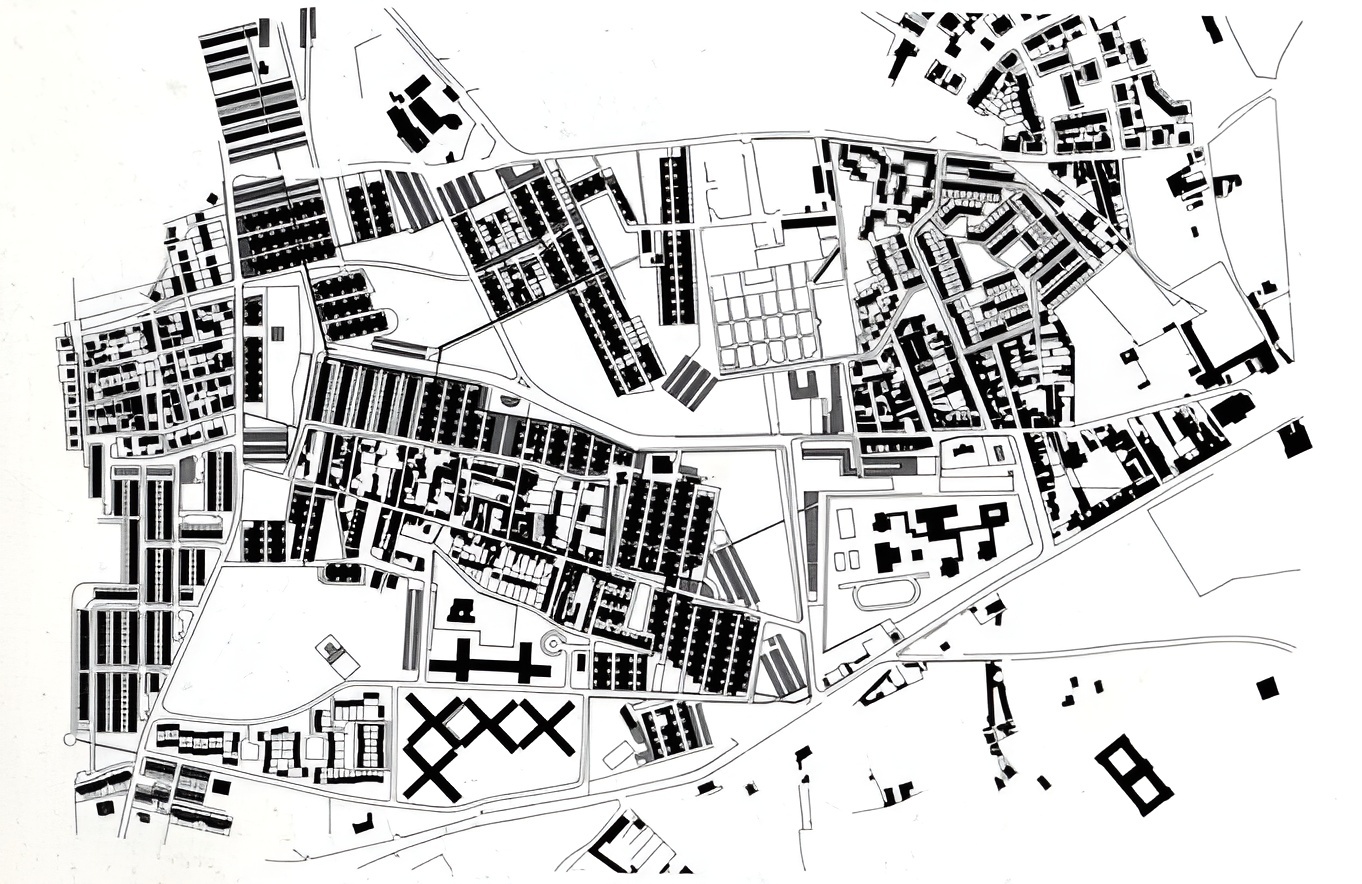
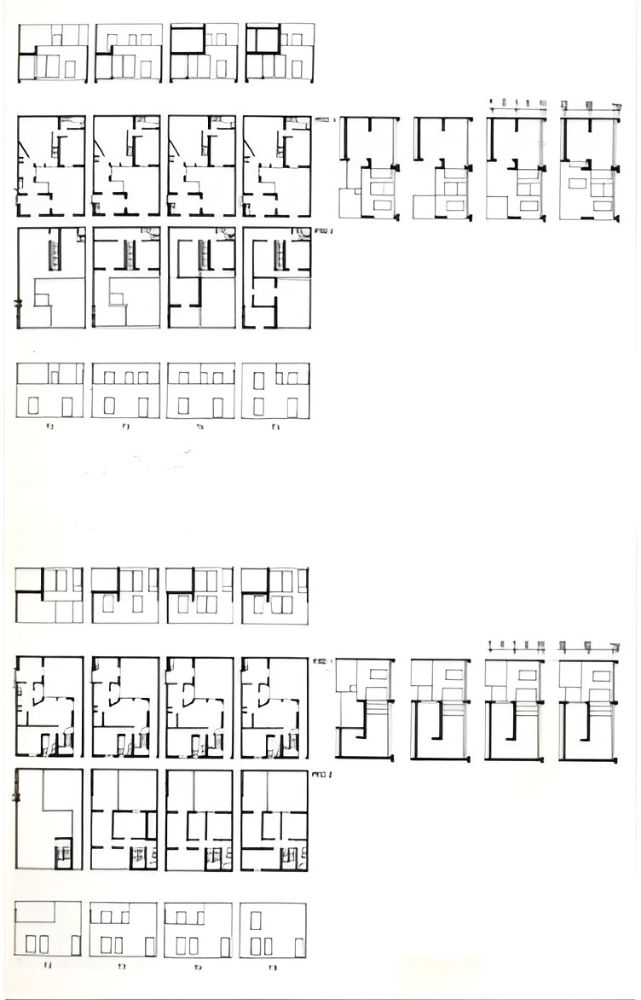
Quinta da Malagueira in Évora is a social housing project designed by Álvaro Siza Vieira after the Portuguese Revolution of 1974. Siza began the project in 1977 for a site outside the historic walls of Évora, where the plan addressed the need for about 1,200 dwellings. Siza organized the housing through low-rise row houses, patios, pedestrian routes, small public spaces, and an elevated service conduit that recalls the scale and line of an aqueduct without reproducing historic form. Siza developed an urban framework that allowed resident adaptation while maintaining spatial order. Quinta da Malagueira expanded Siza’s practice from singular buildings to neighborhood design and became a reference in social housing, participatory planning, and the relation between collective structure and individual dwelling.
04. Faculty of Architecture of the University of Porto, Porto
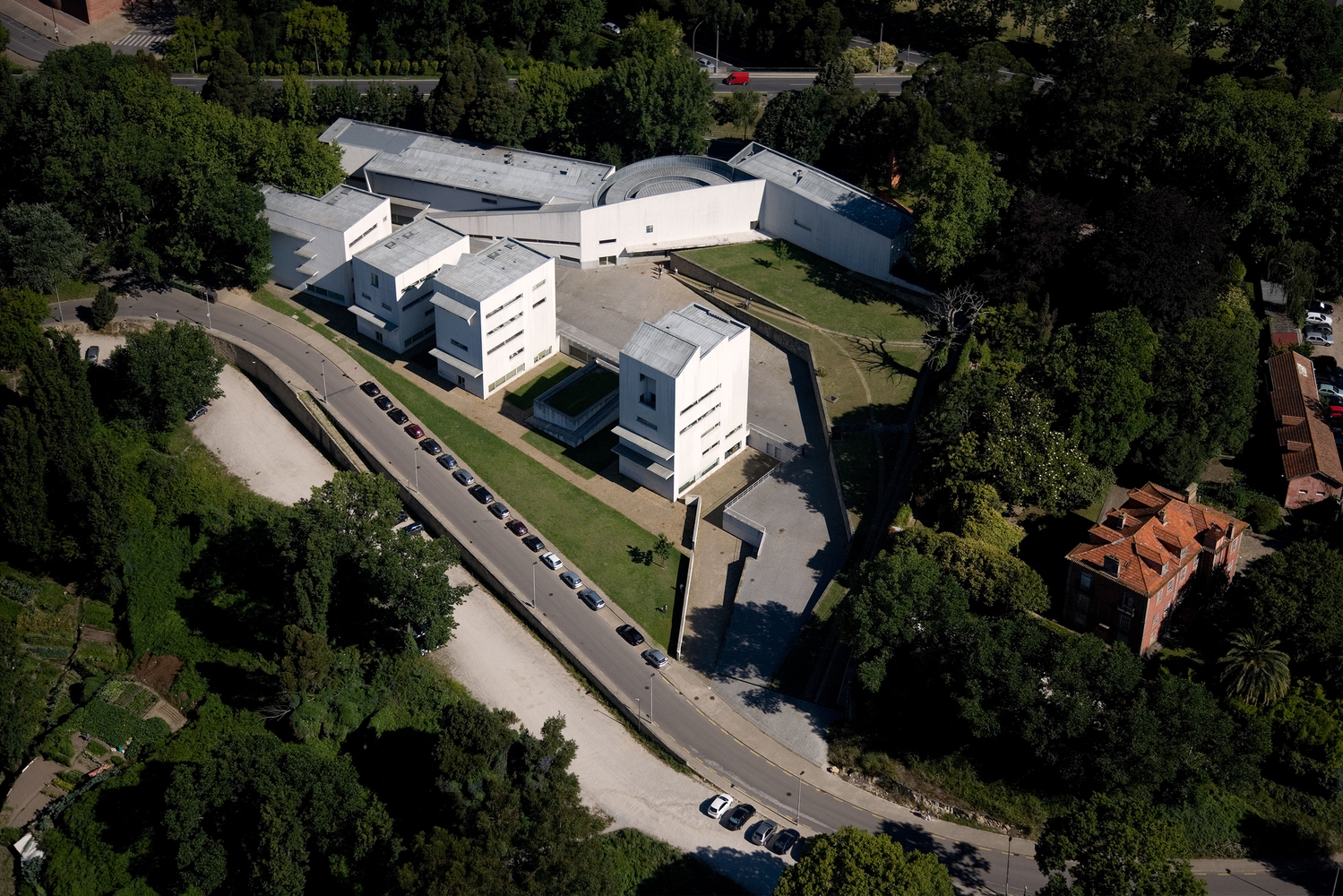
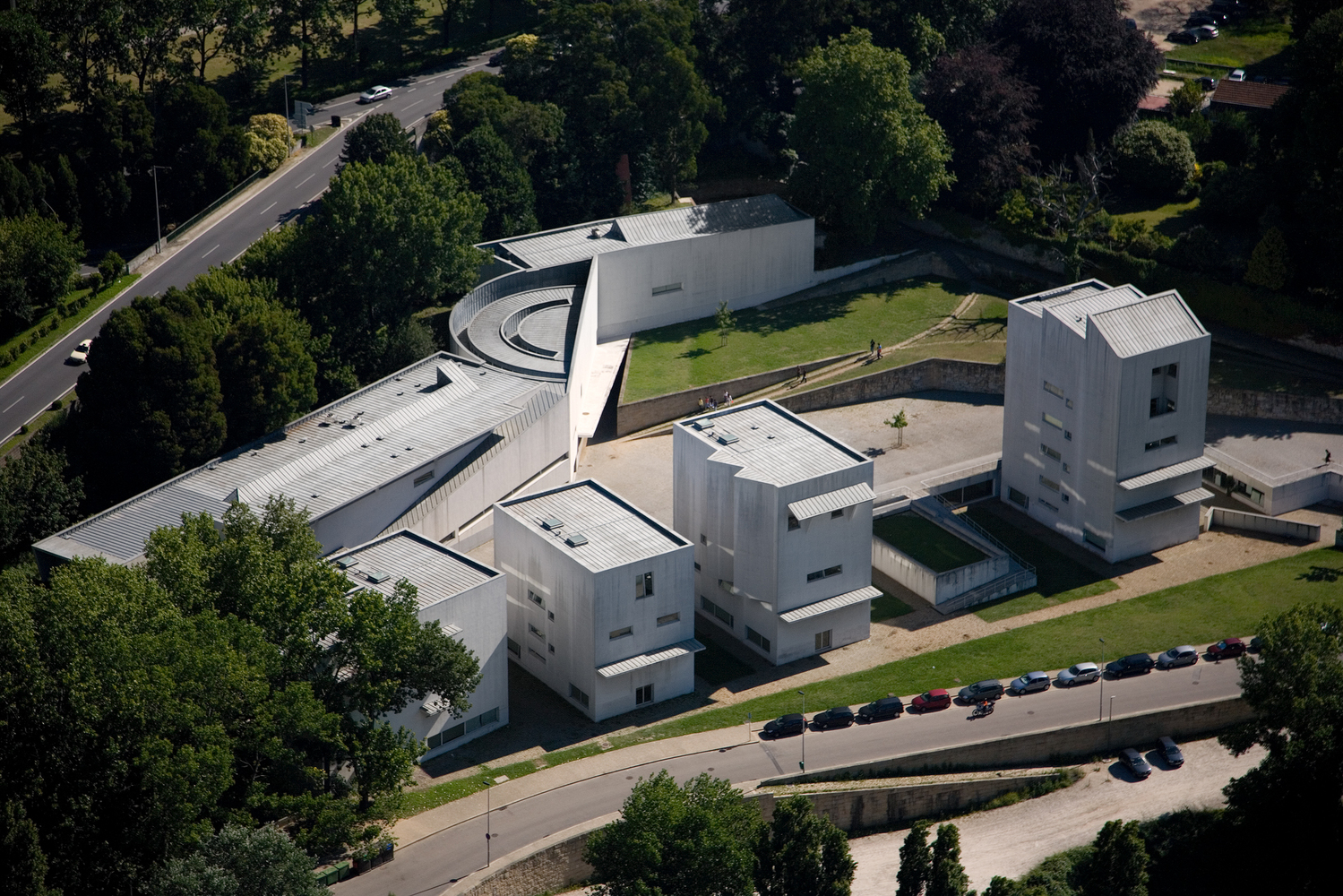
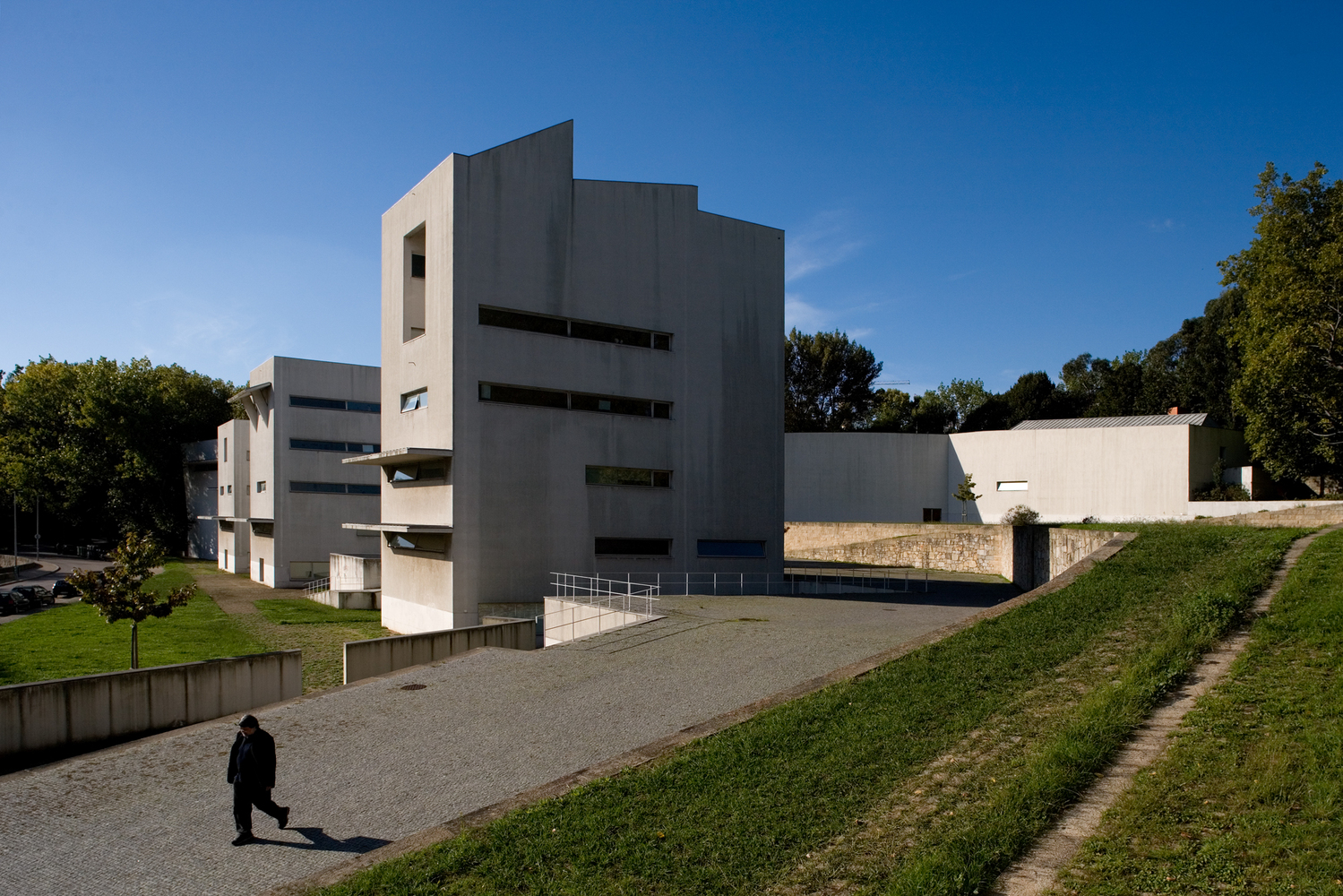
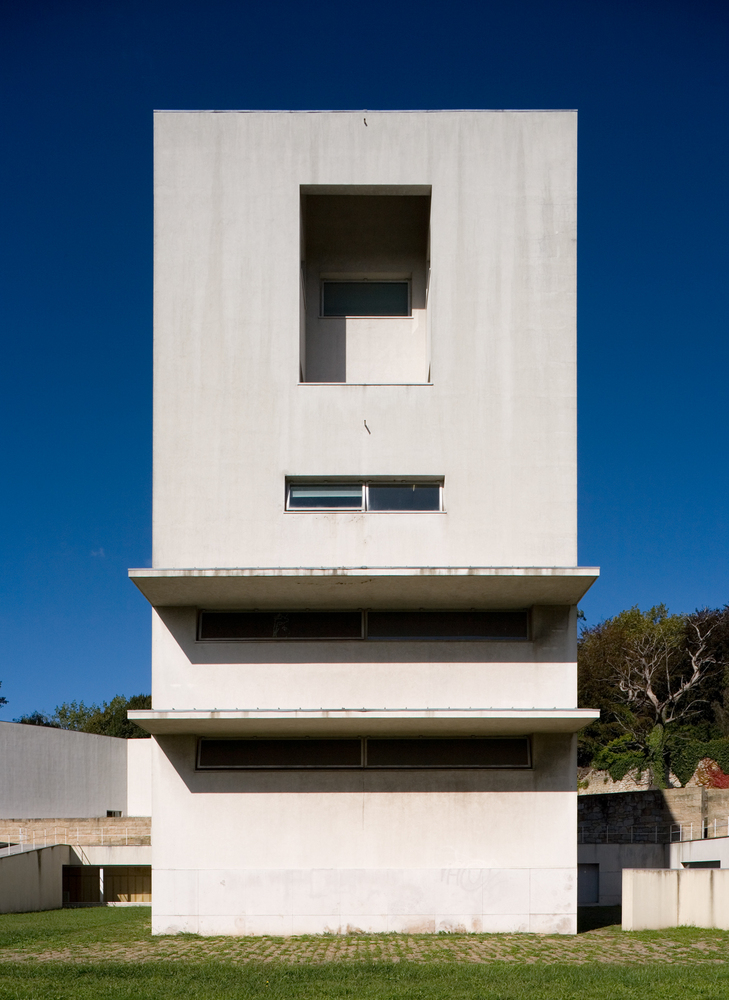
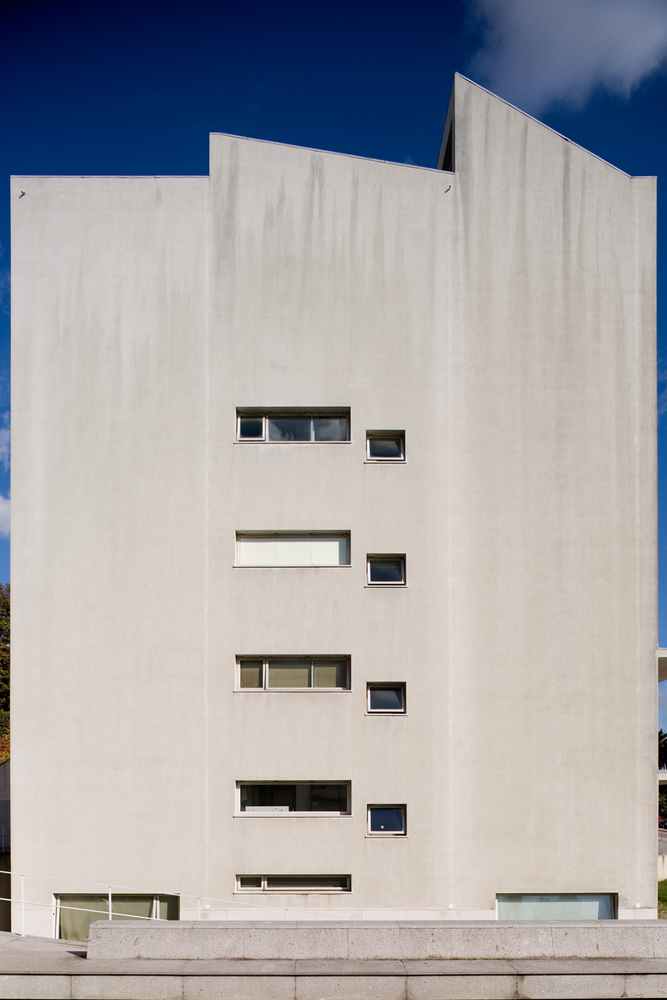
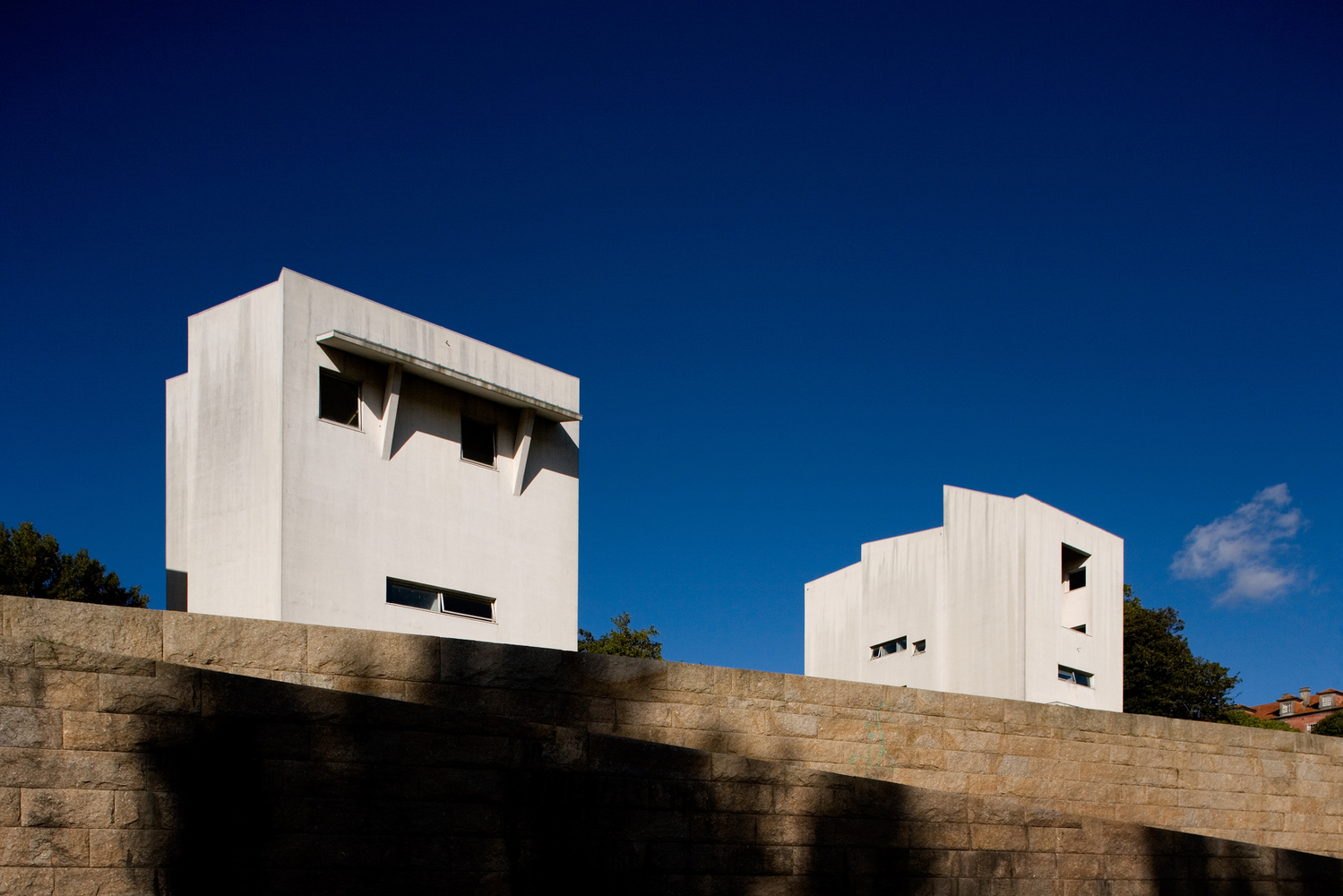
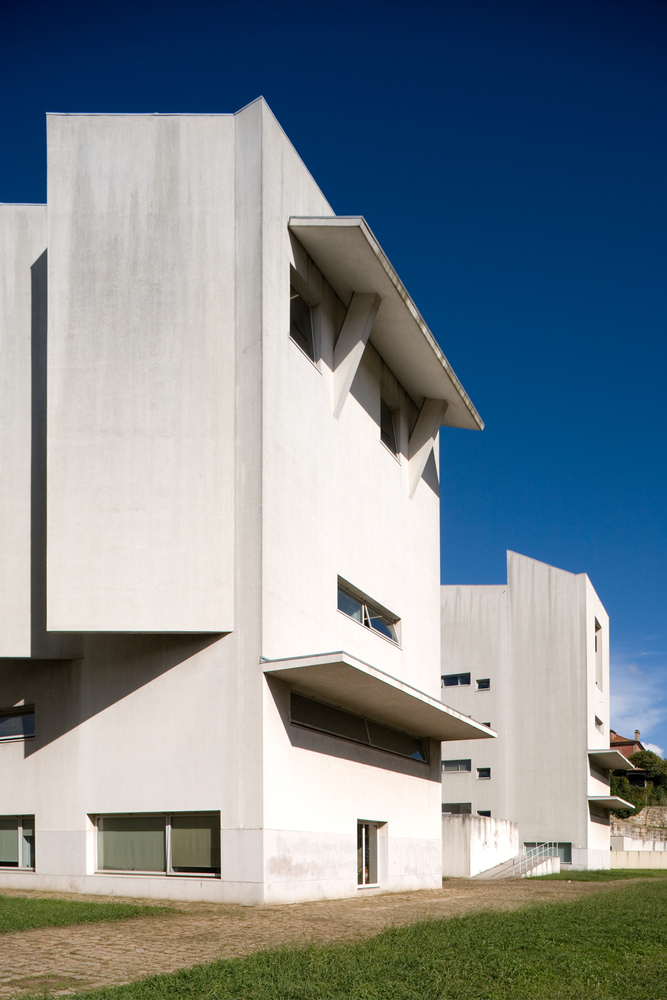
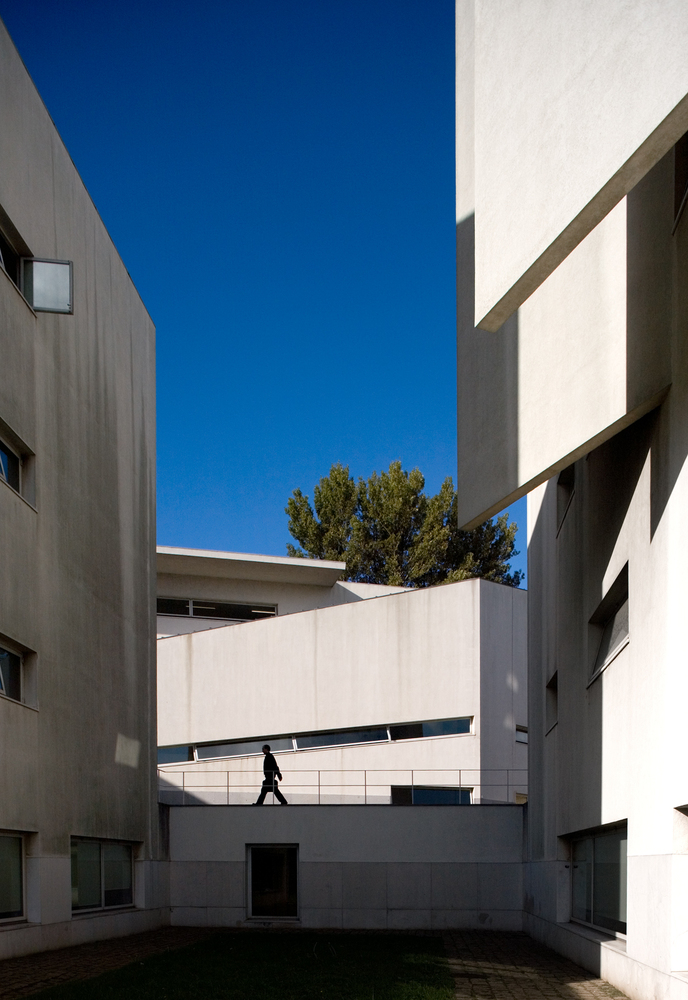
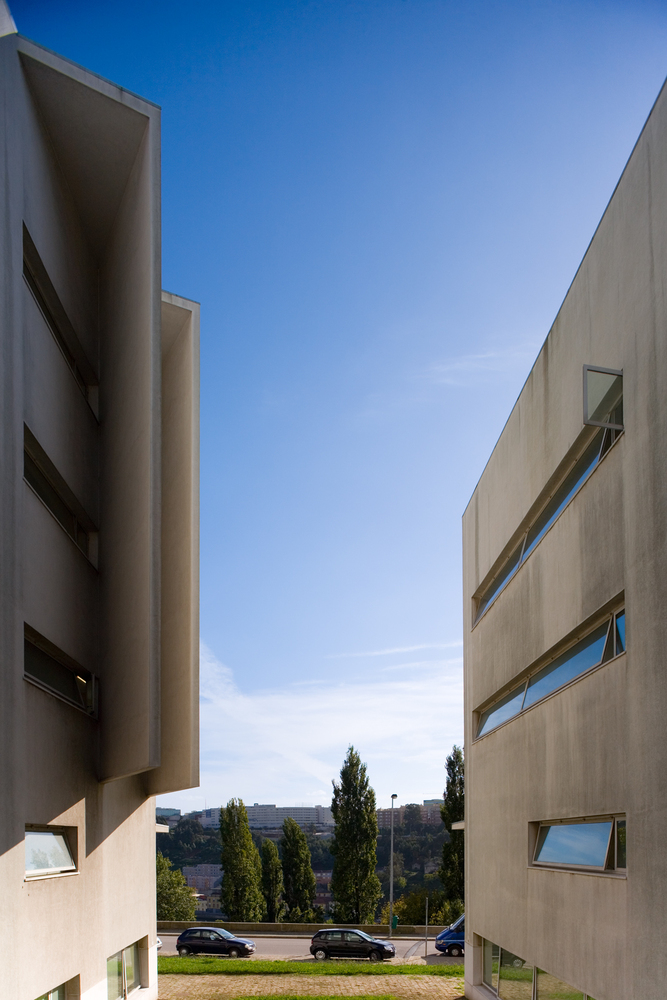
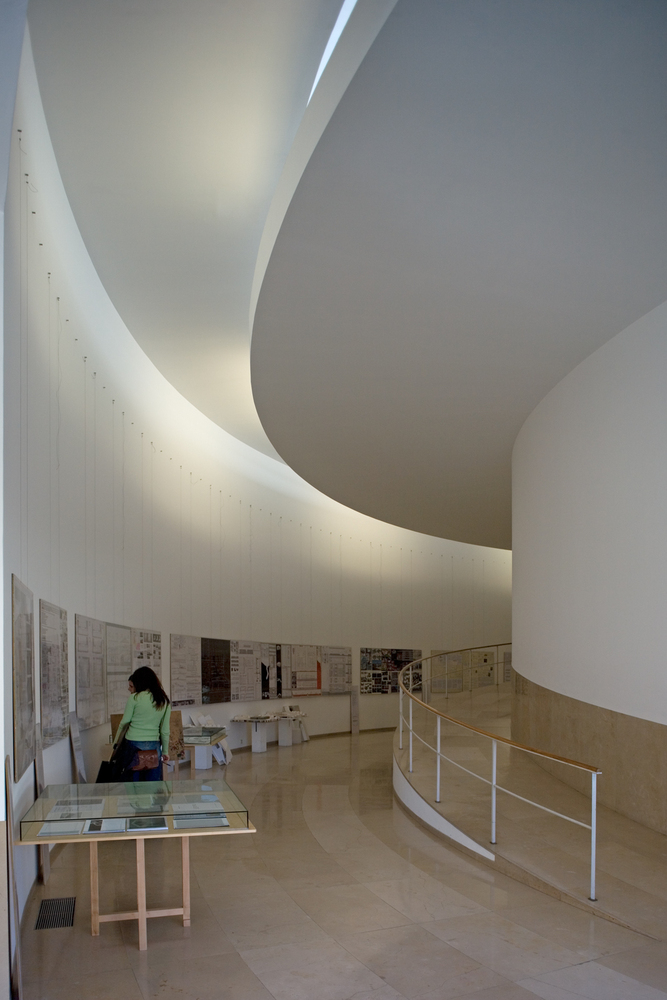
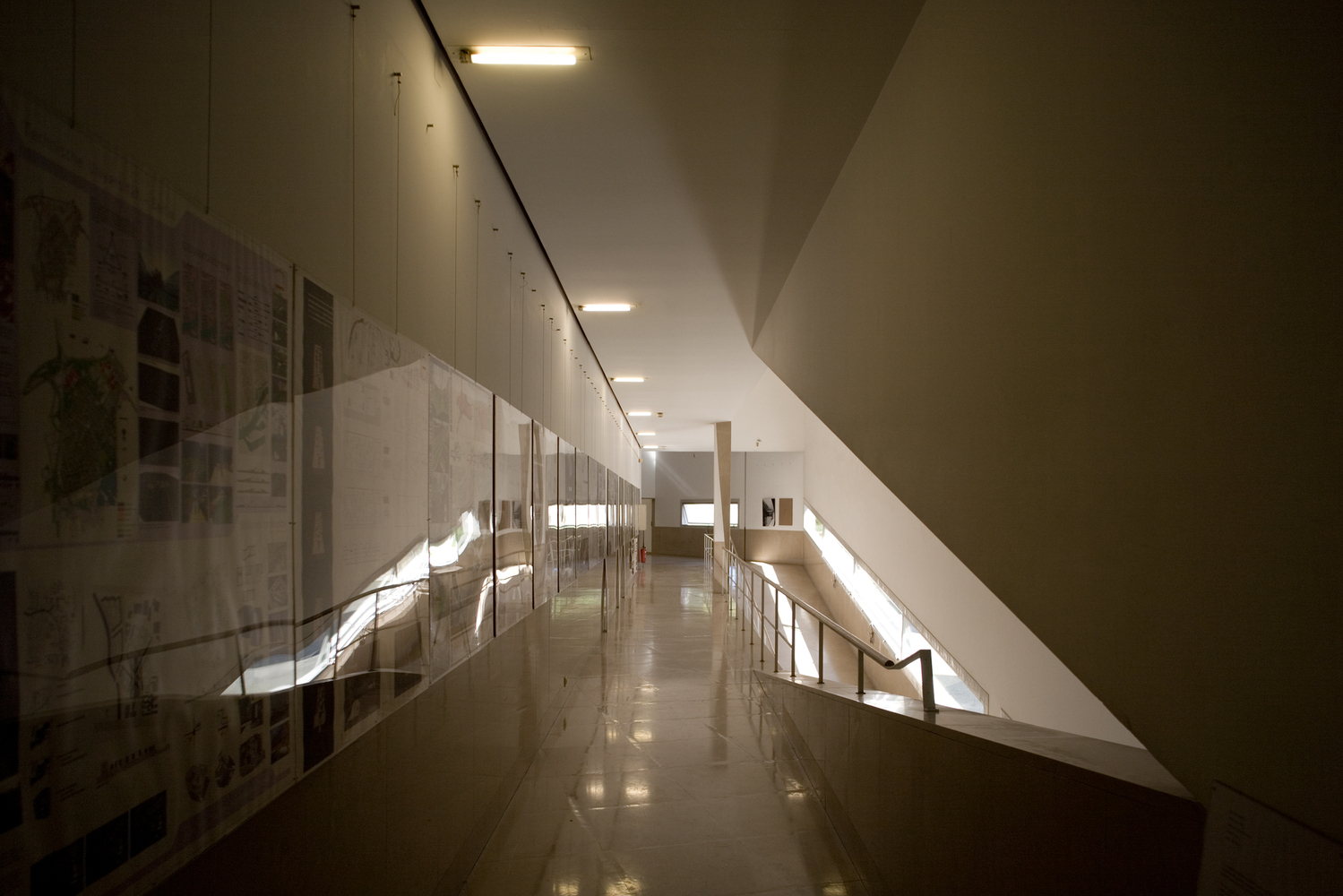
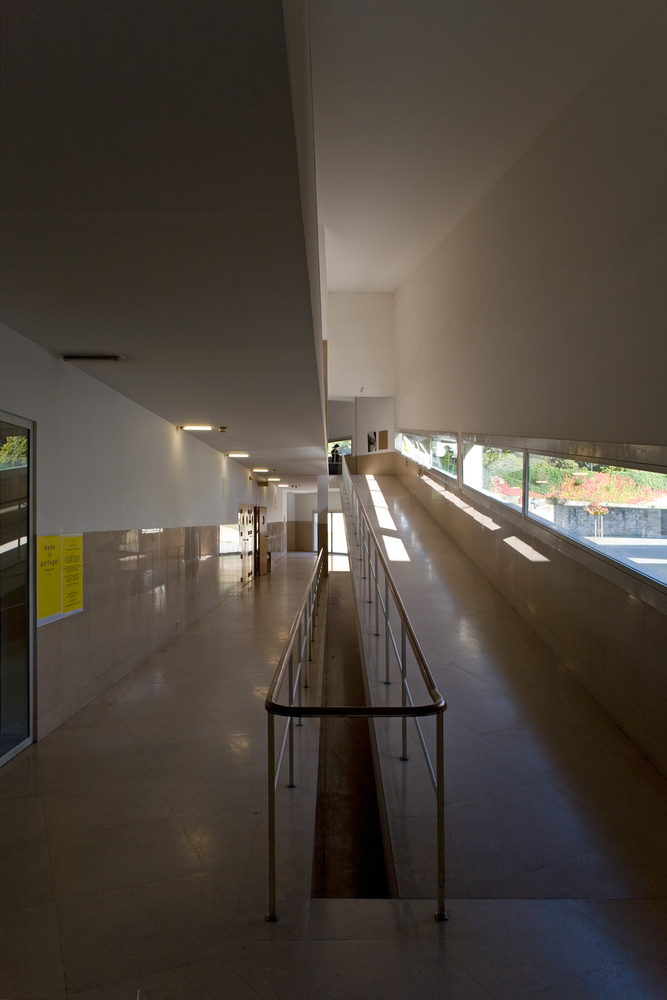
Faculty of Architecture of the University of Porto in Porto is an academic complex designed by Álvaro Siza Vieira on a sloping site above the Douro River. Siza developed the project from 1985, with the complex completed in phases during the 1990s. Siza designed the campus as an ensemble of teaching towers, studios, administrative spaces, circulation paths, courts, and exterior voids. Siza used separate white volumes instead of a single institutional block. Siza arranged the ensemble through topography, angled views, and distances between buildings, allowing open space to carry equal importance with enclosed rooms. The Faculty of Architecture expresses the Porto School through the relation between pedagogy and form, and the building functions as an educational environment organized through section, proportion, and site.
05. Serralves Museum of Contemporary Art, Porto
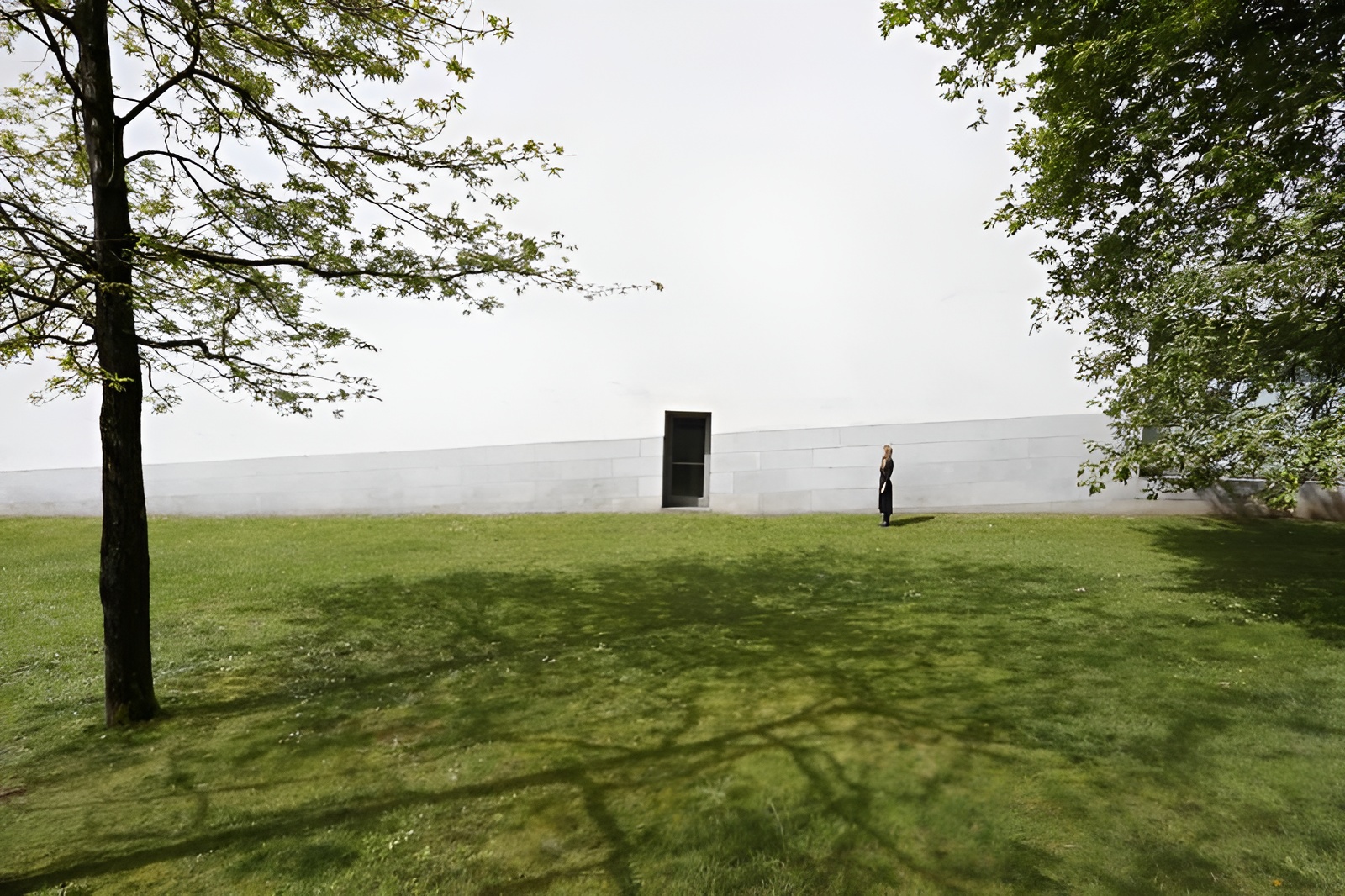
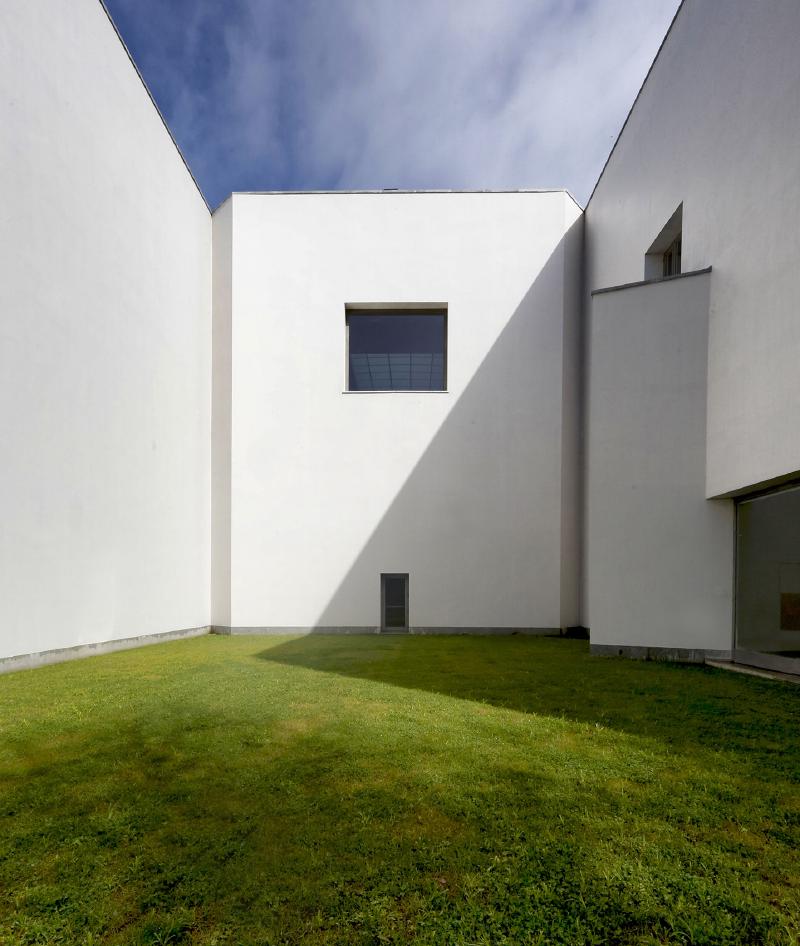
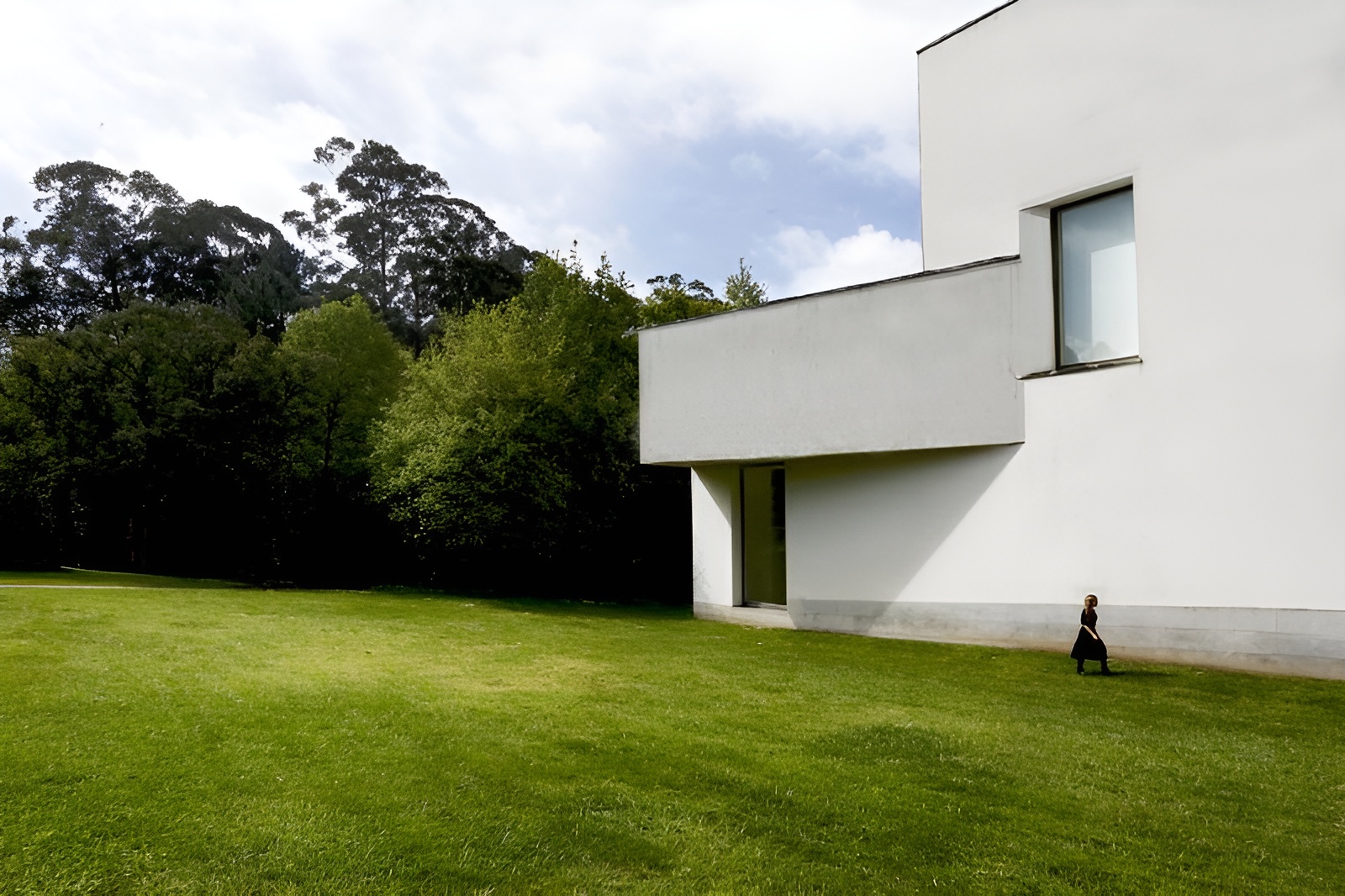
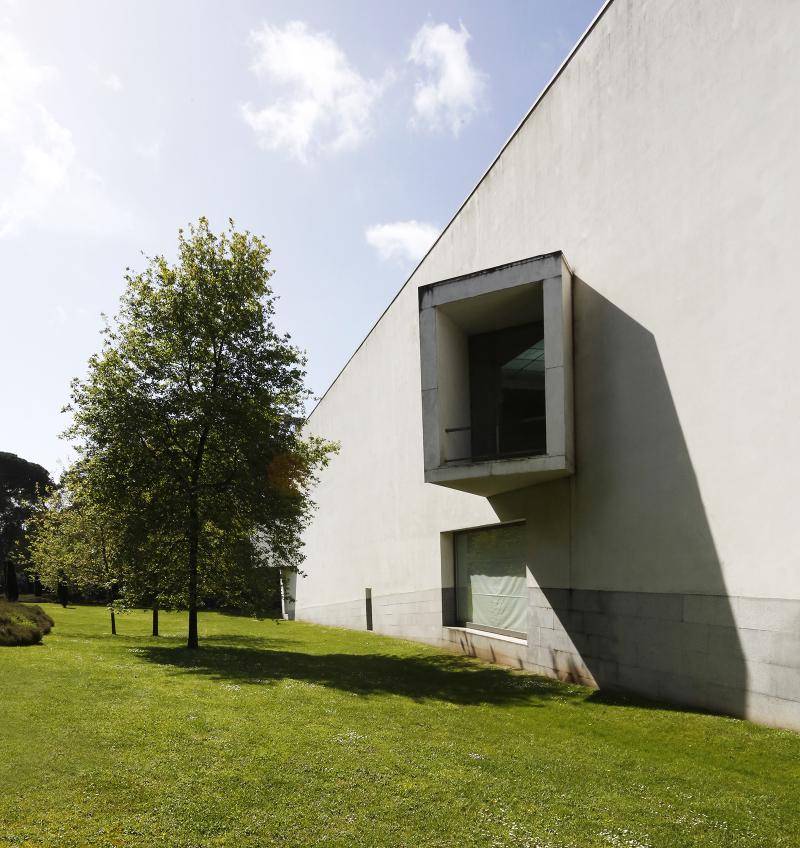
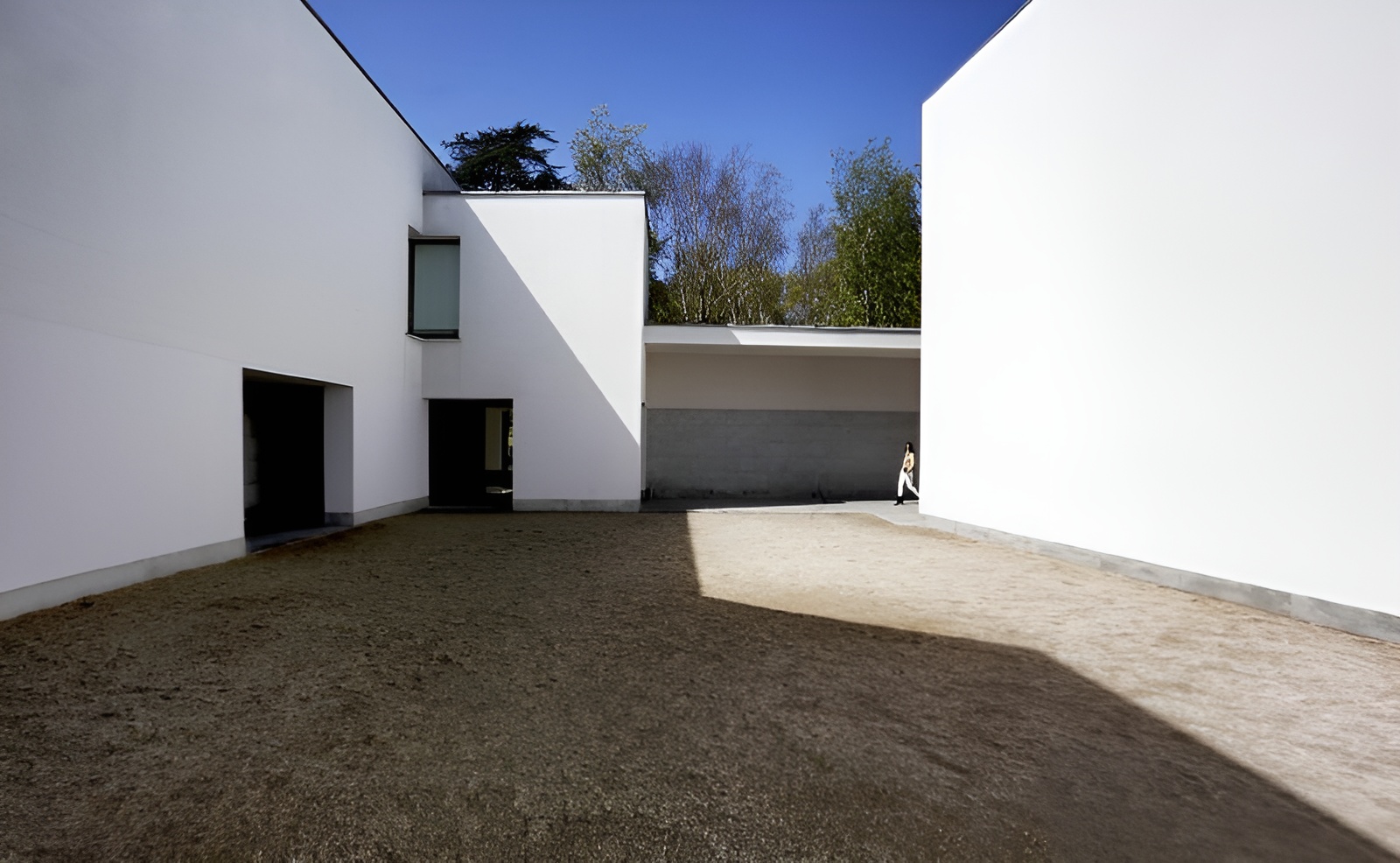
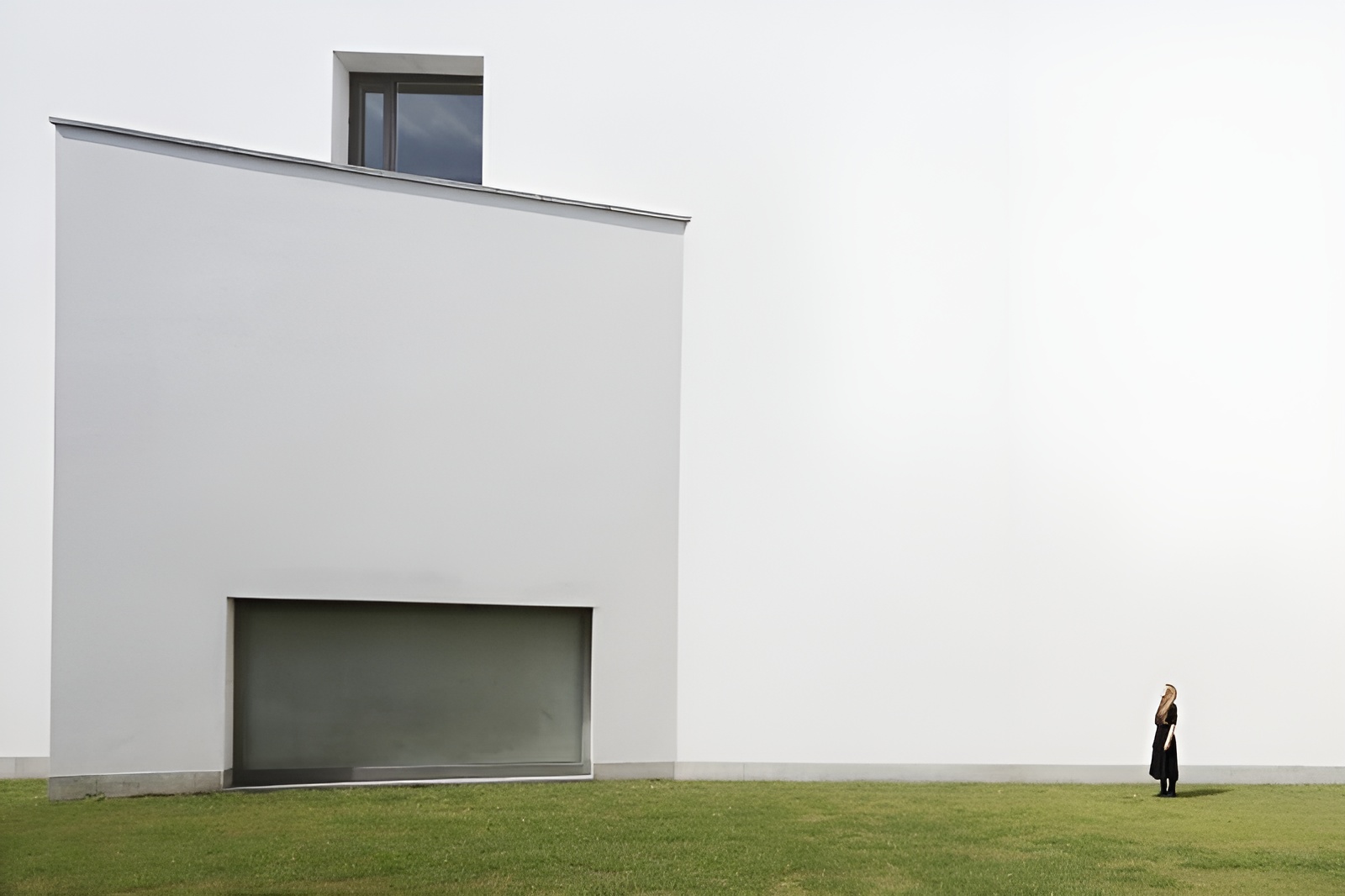
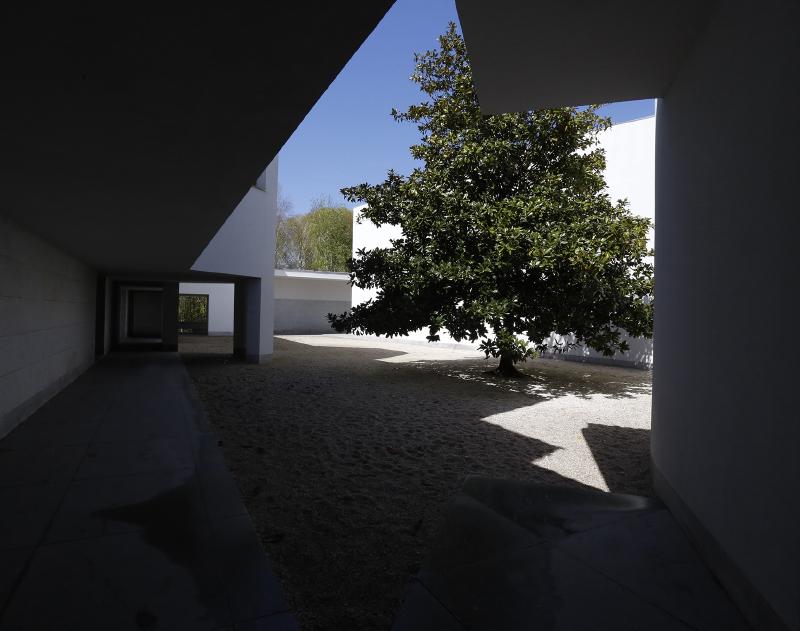
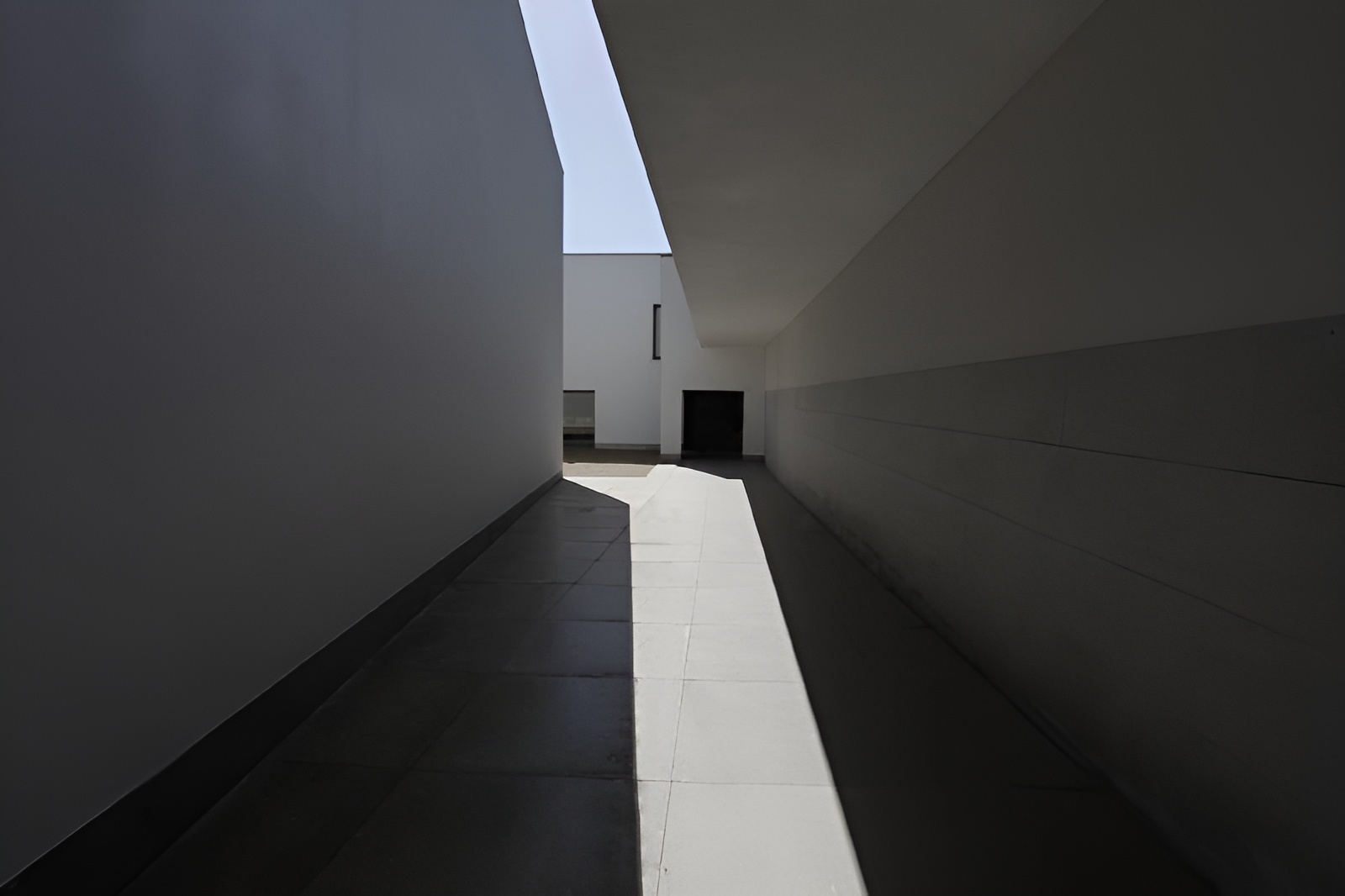
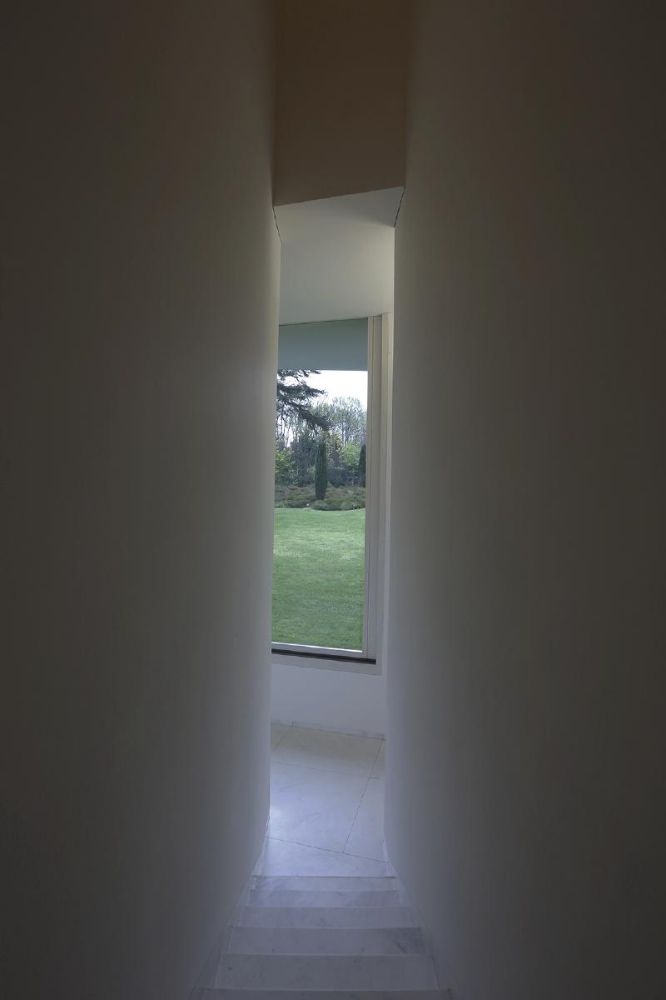
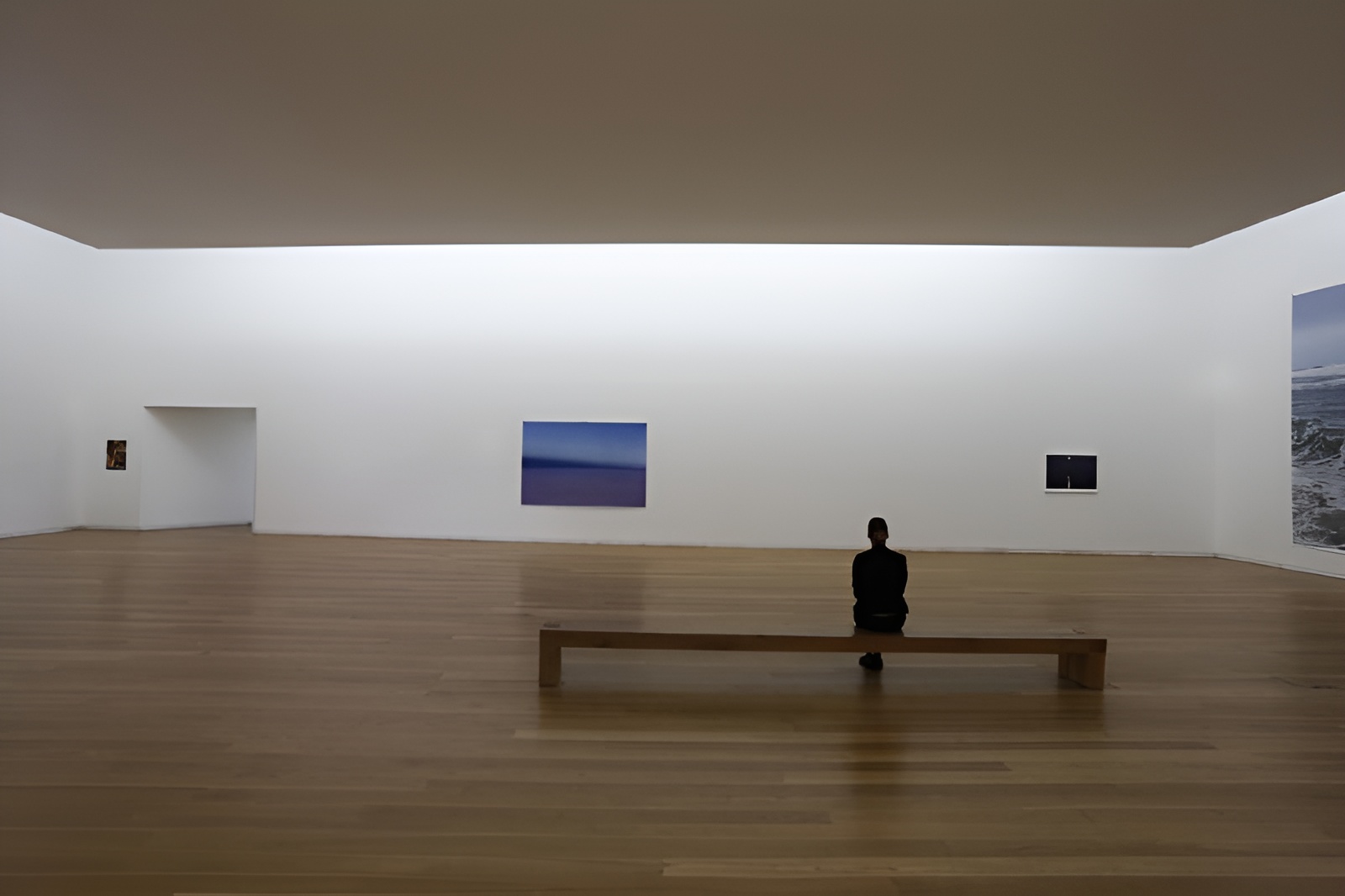
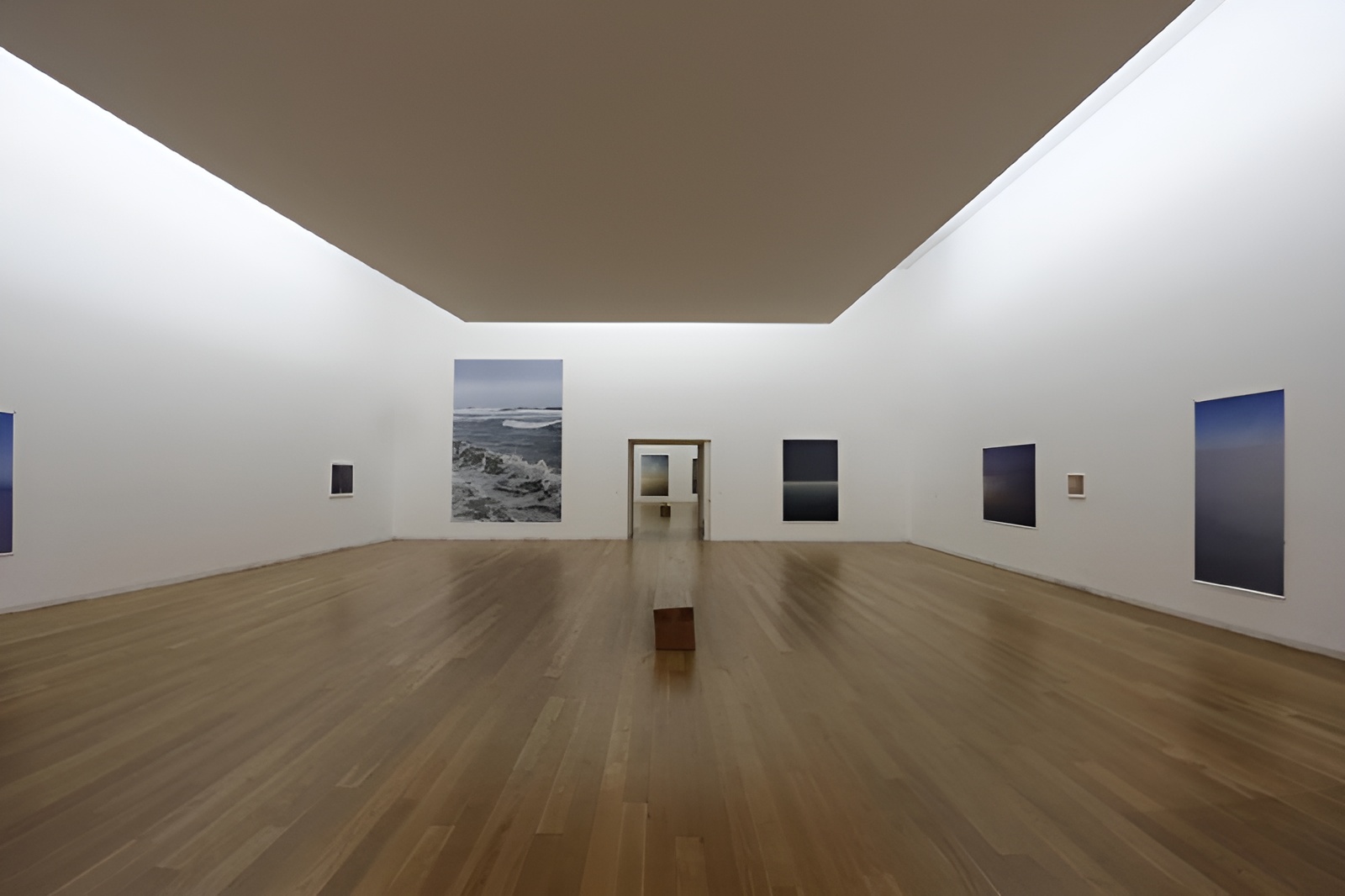
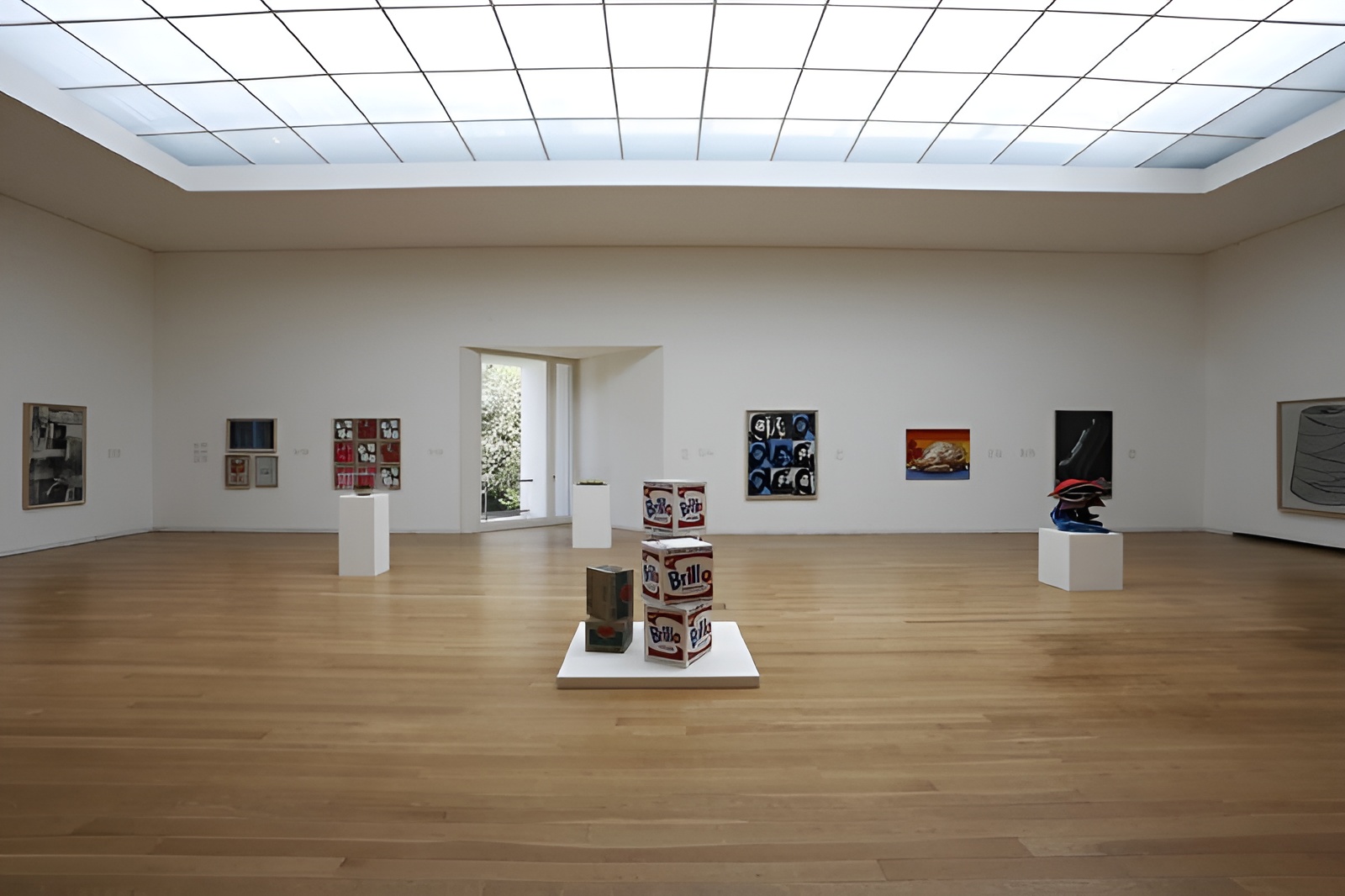
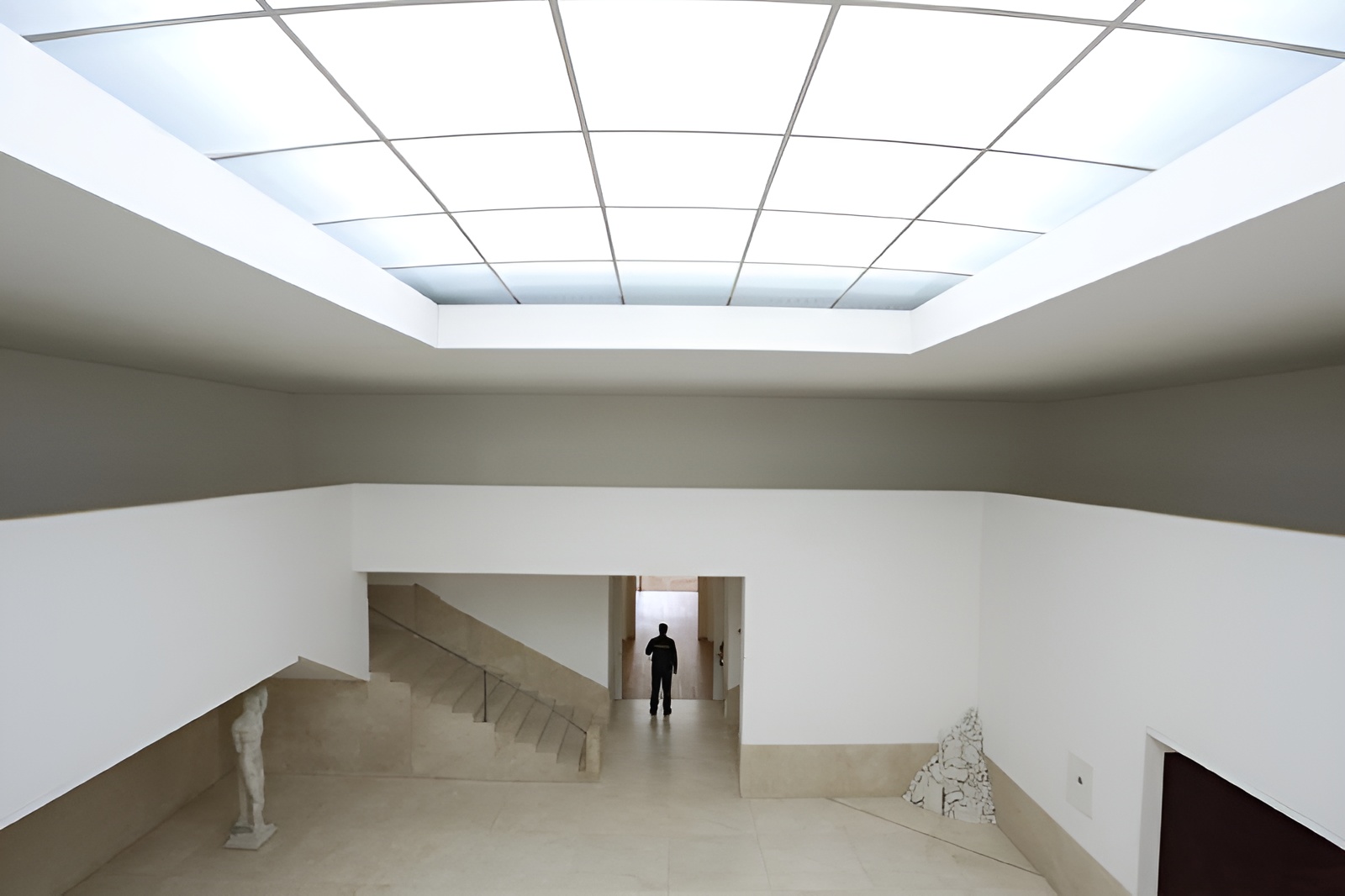
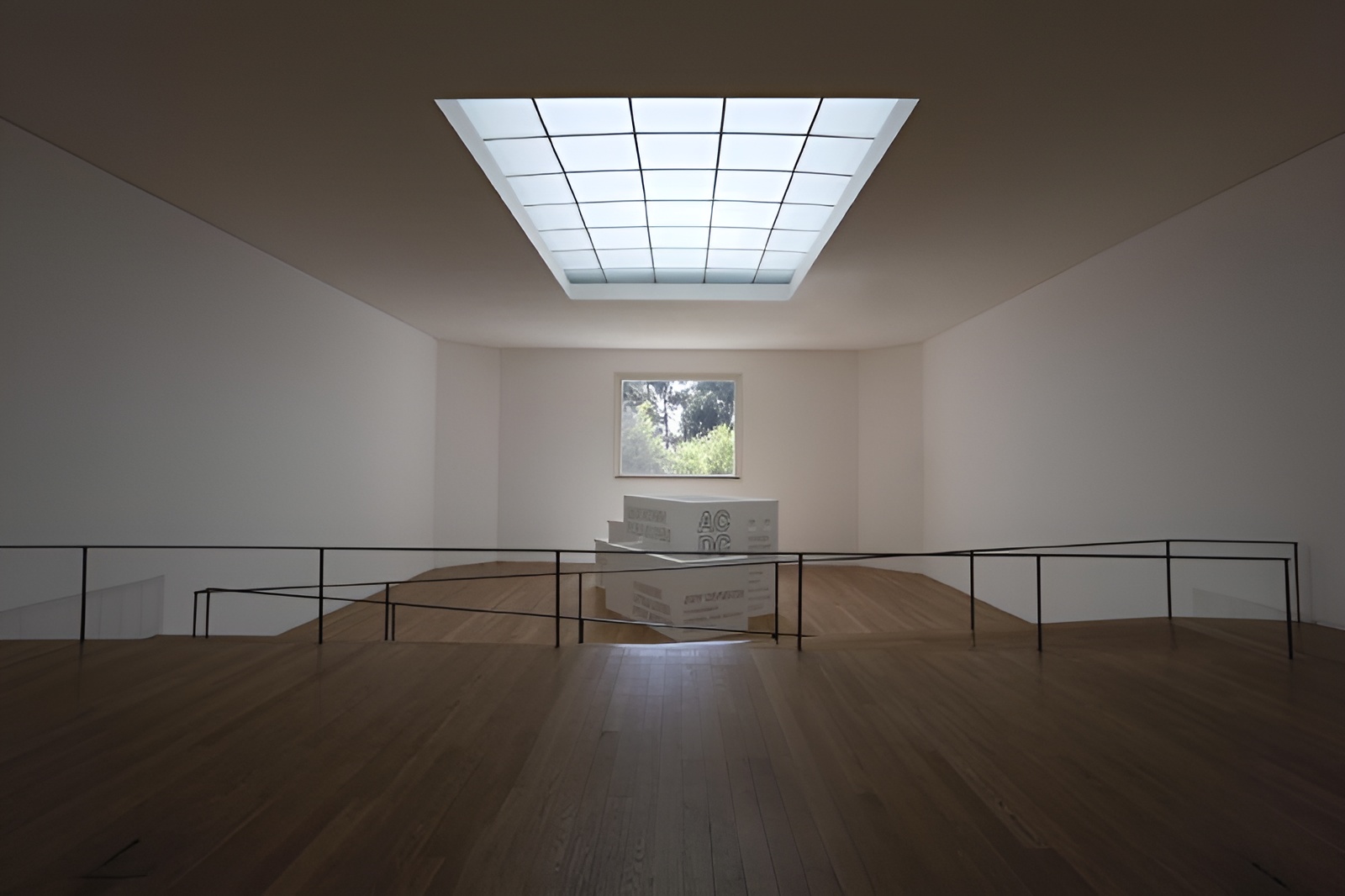
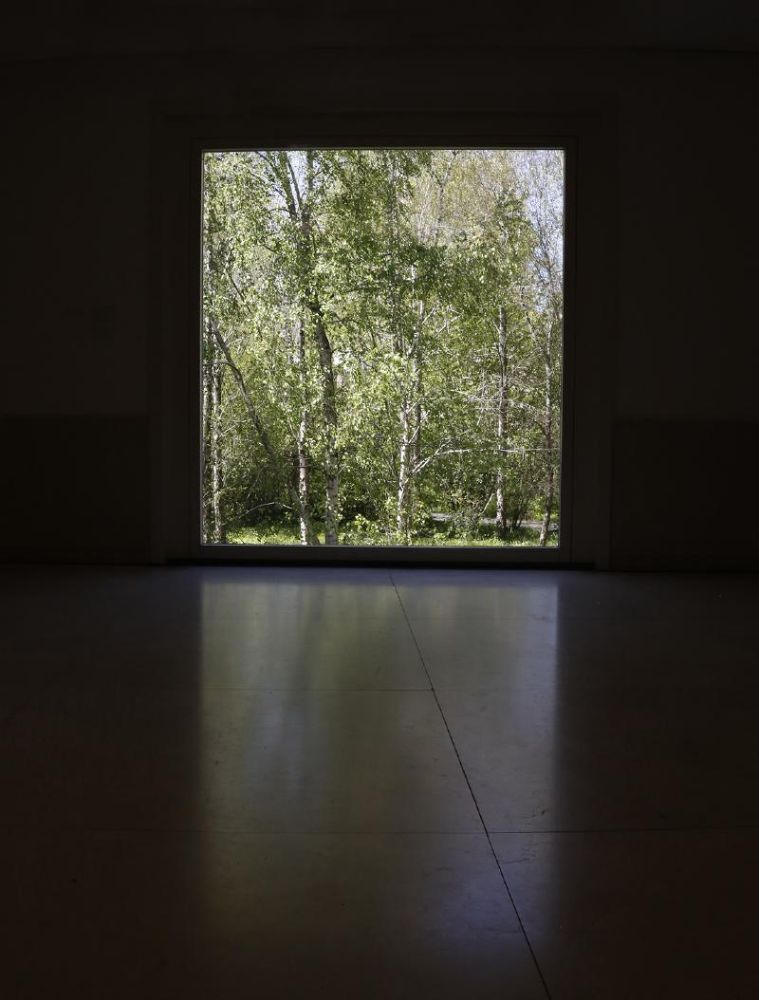
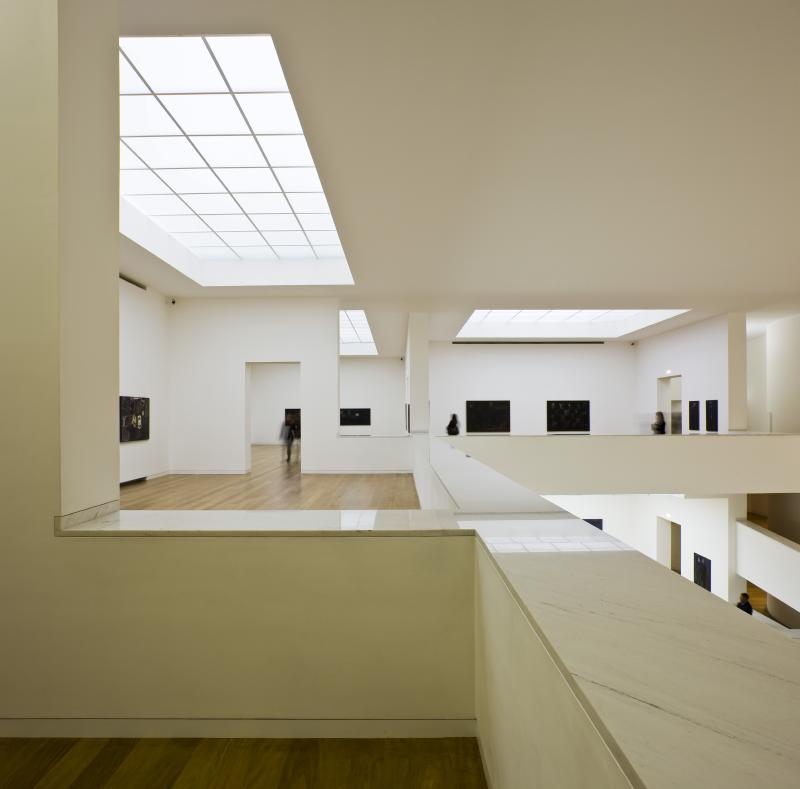
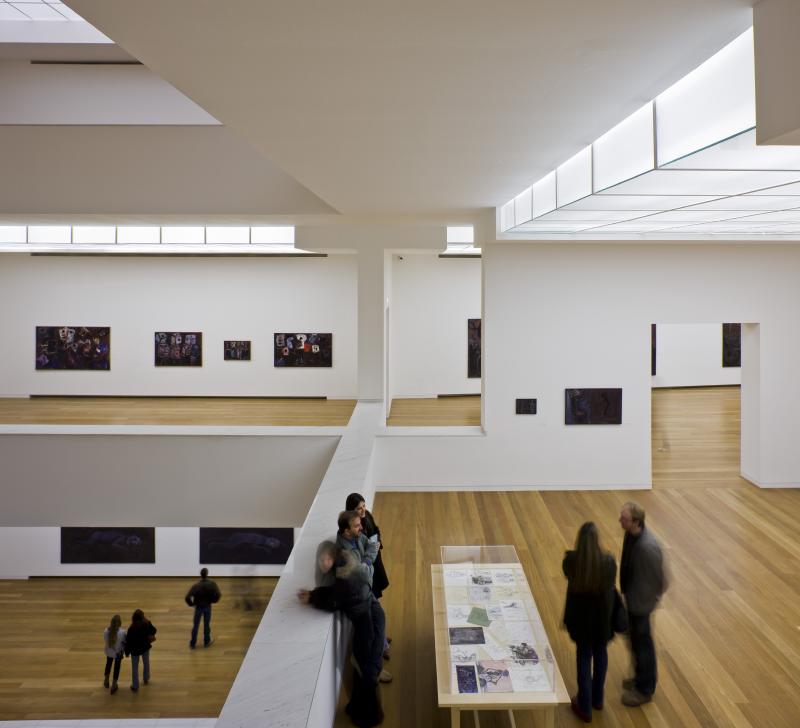
Serralves Museum of Contemporary Art in Porto is a museum designed by Álvaro Siza Vieira within the grounds of the Serralves Park and Villa. Siza developed the architectural plans from 1991, and the museum opened in 1999. Siza organized the building through a main body, galleries, circulation passages, courtyards, and relations to the surrounding garden. Siza used a concrete and steel structure, granite and painted plaster outside, oak and marble floors inside, and painted plaster walls and ceilings to form exhibition rooms. Serralves Museum presents institutional scale through light, route, and transitions rather than visual excess.
06. Portuguese Pavilion for Expo ’98, Lisbon
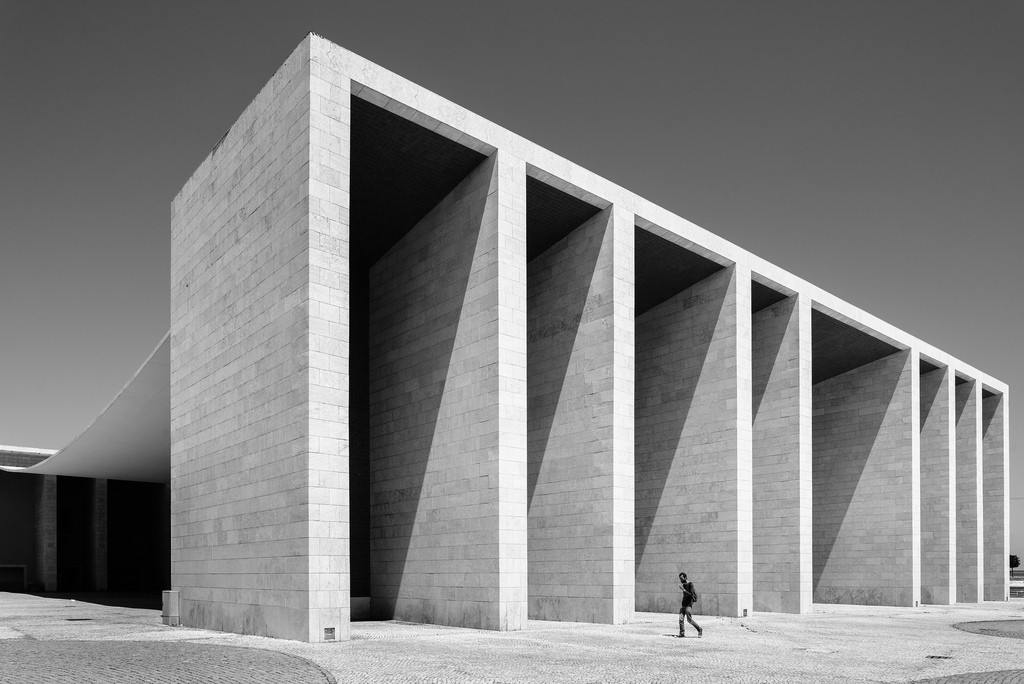
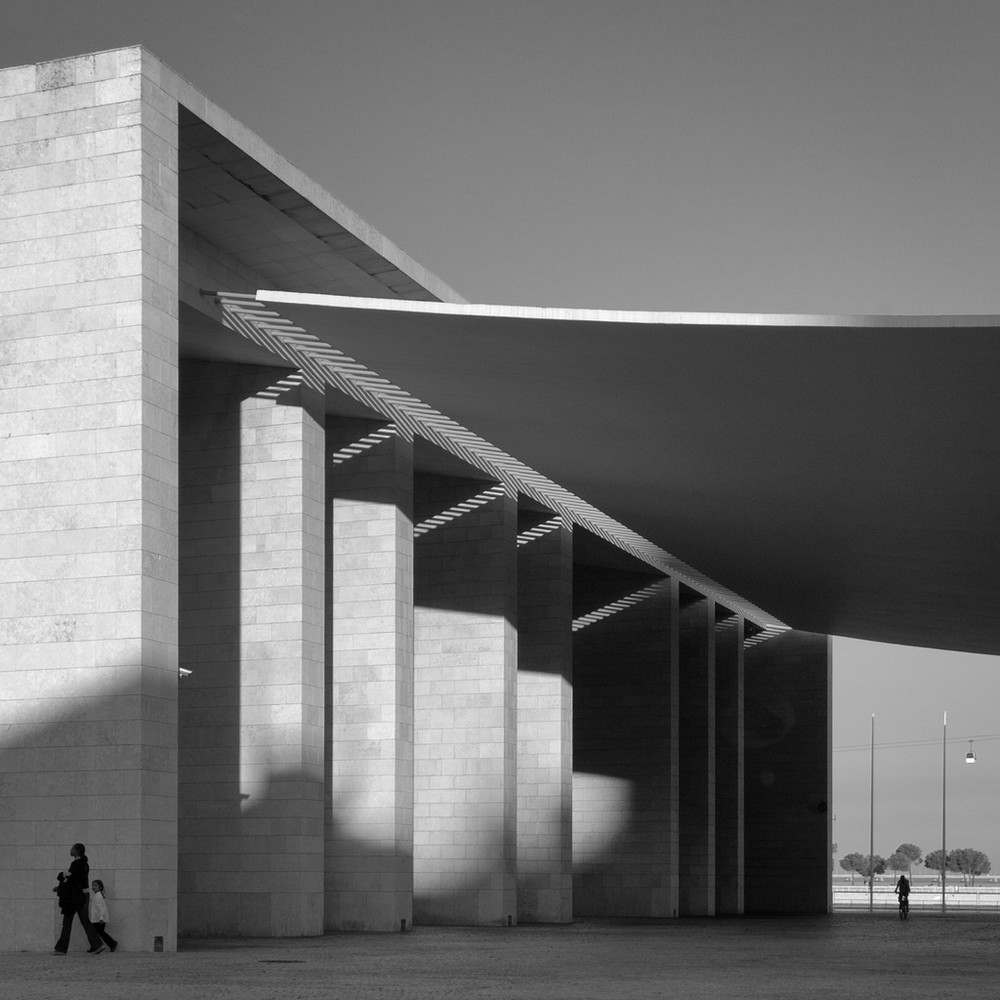
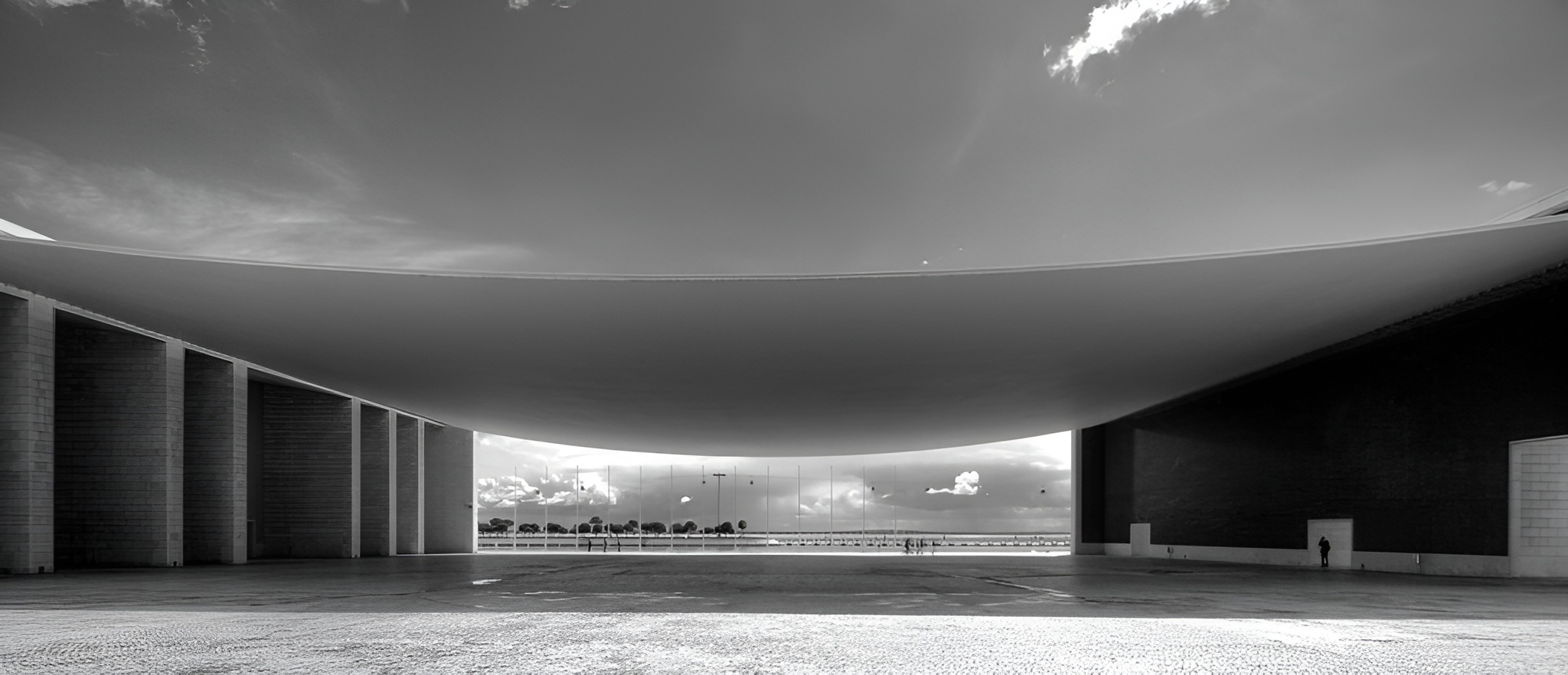
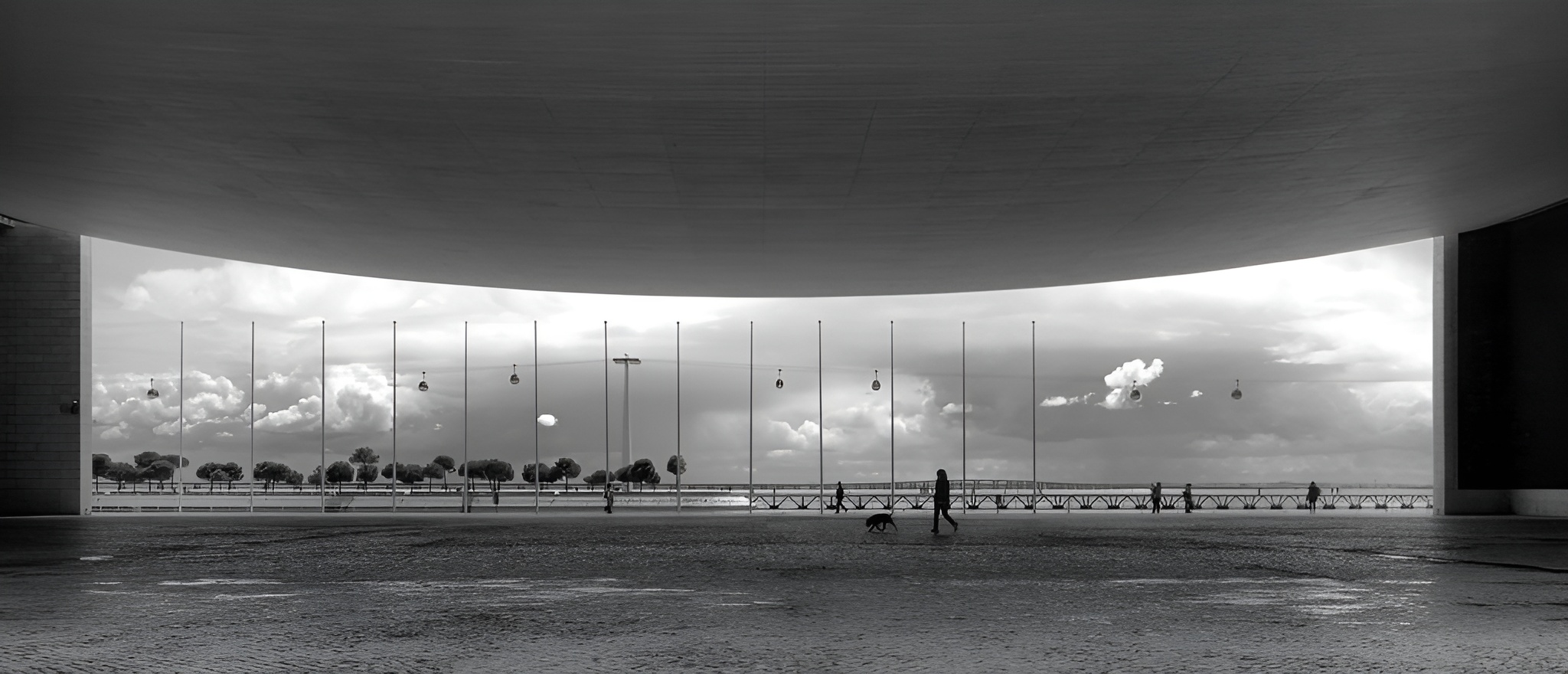
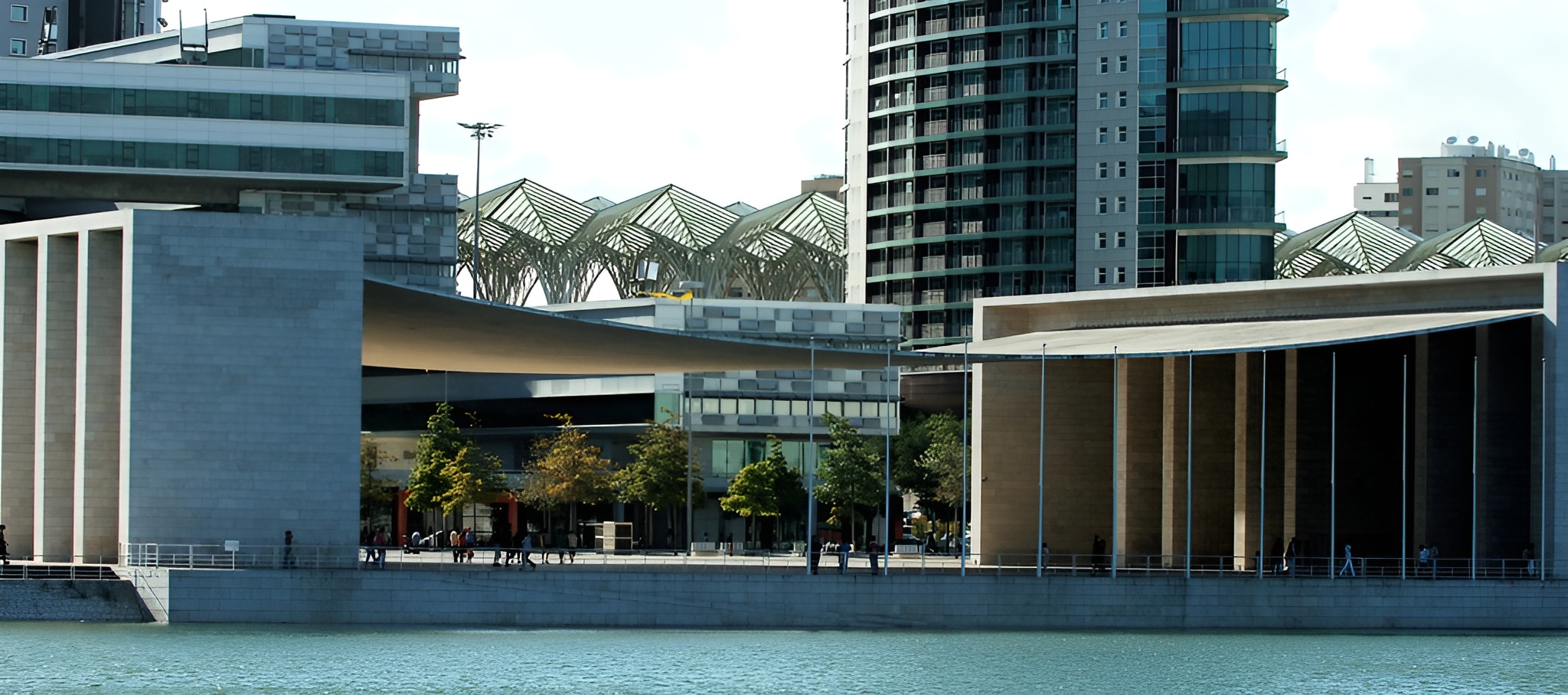
Portuguese Pavilion for Expo ’98 in Lisbon is a national exhibition building designed by Álvaro Siza Vieira for the 1998 World Exposition. Siza completed the pavilion in 1998 in Parque das Nações beside the Tagus River. Siza defined the public face of the building through a broad plaza covered by a thin post-tensioned concrete canopy suspended between two porticoes. Siza used the canopy to form an open civic space that frames the waterfront and marks the pavilion without enclosing the public ground beneath it. The Portuguese Pavilion uses structure, span, and compression as primary architectural elements.


07. Iberê Camargo Foundation, Porto Alegre
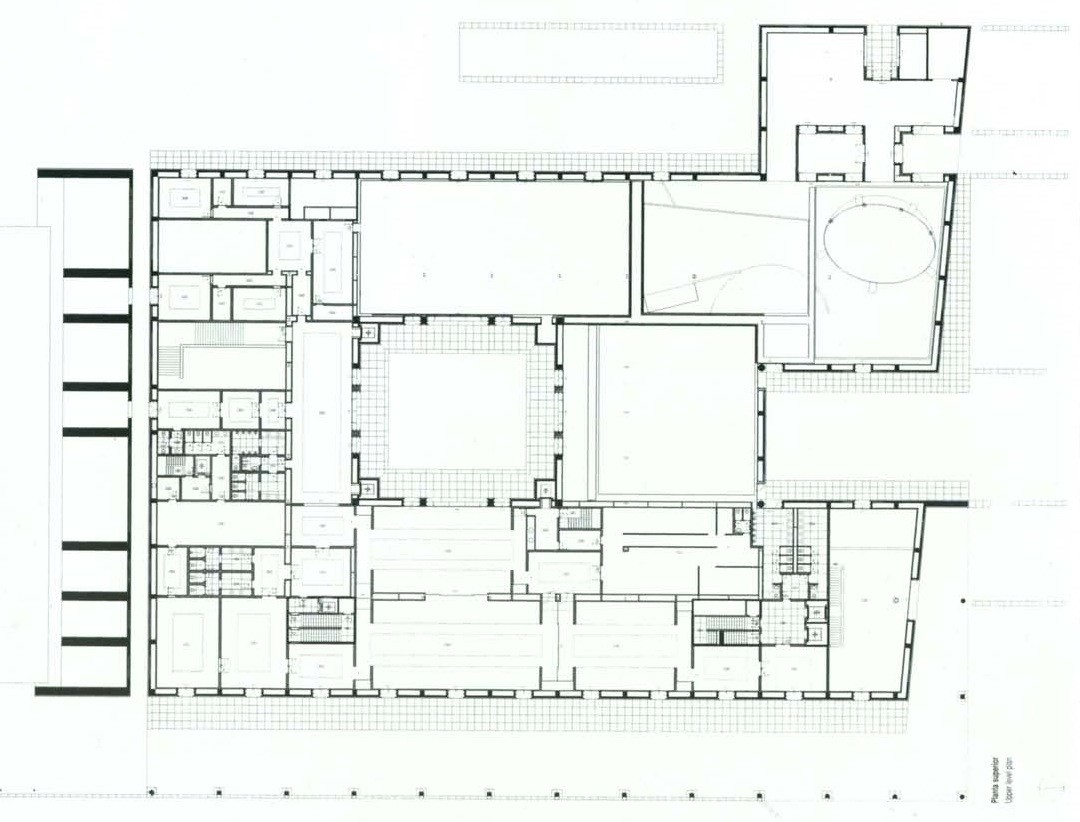
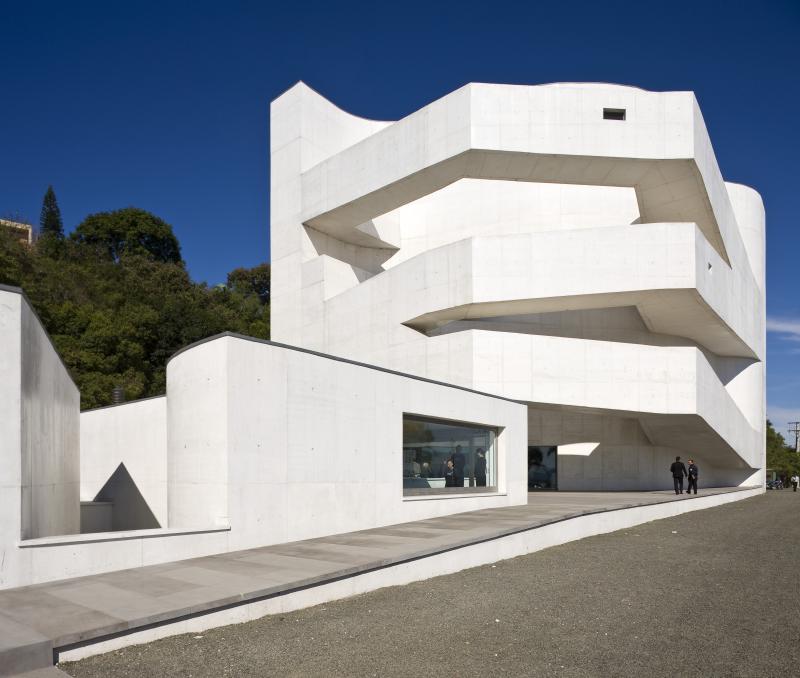
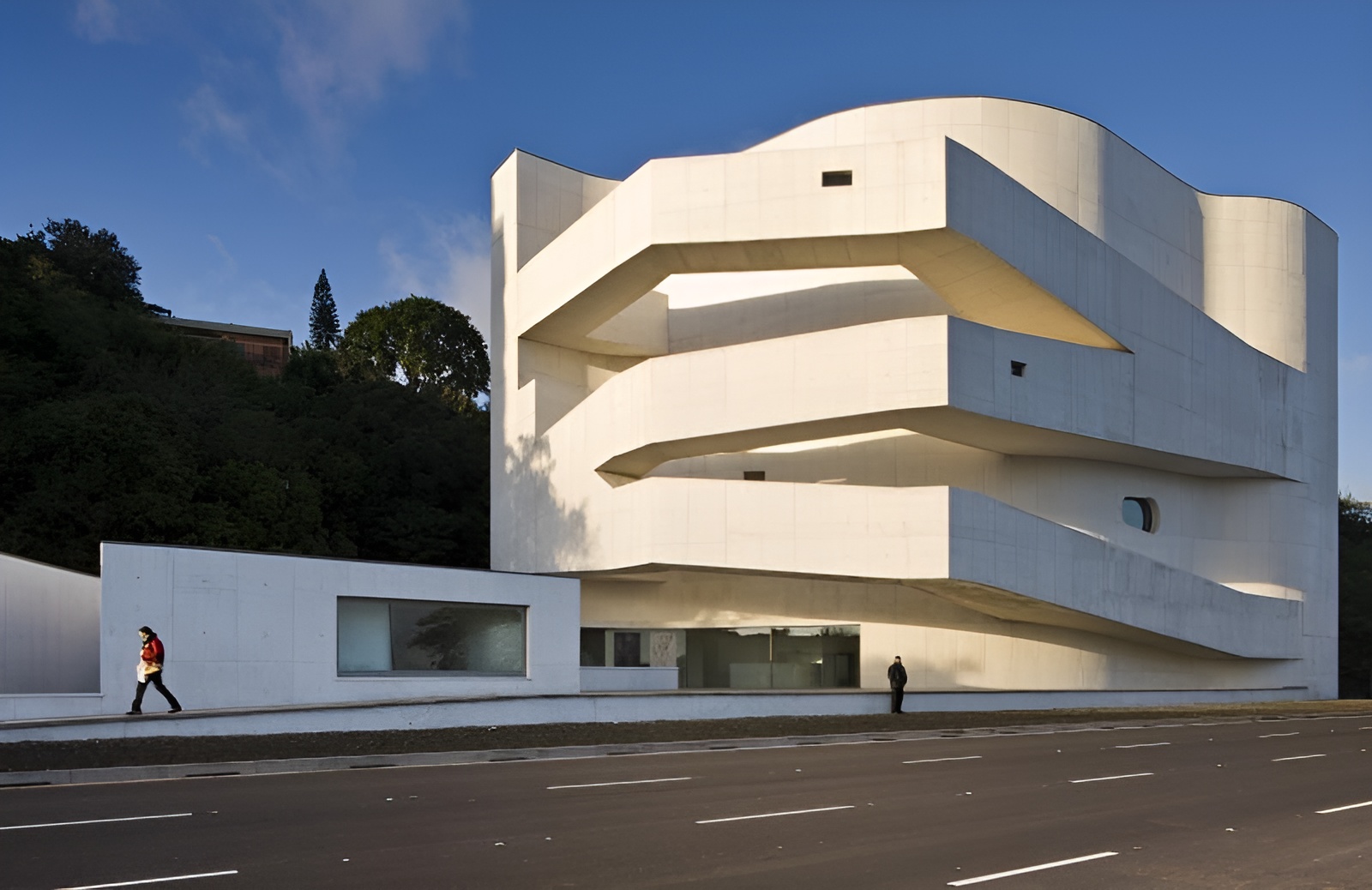
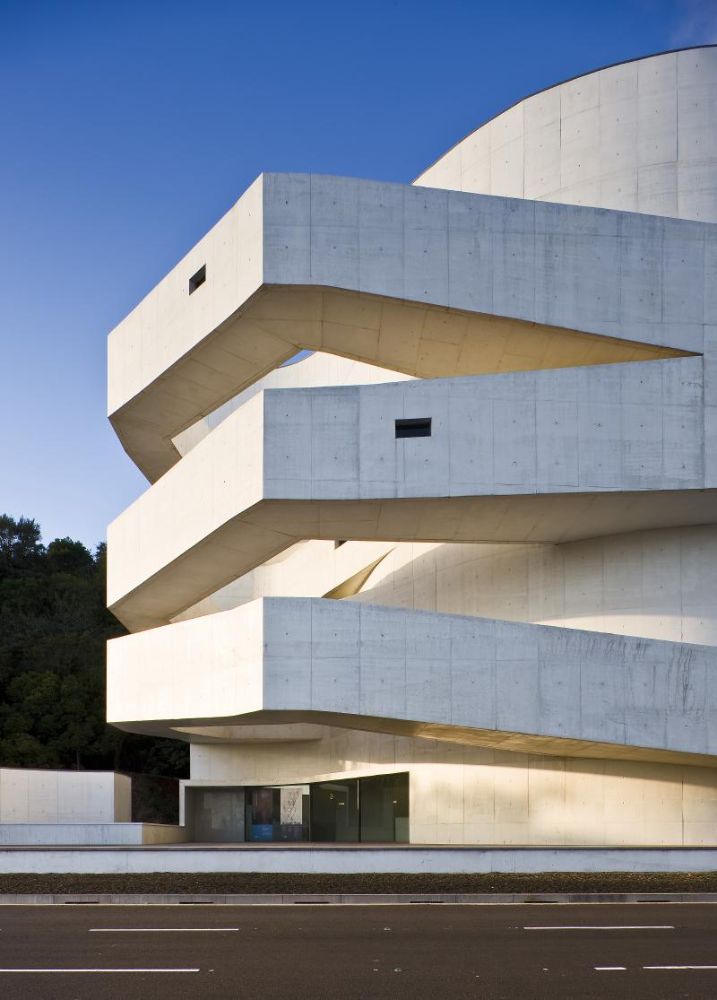
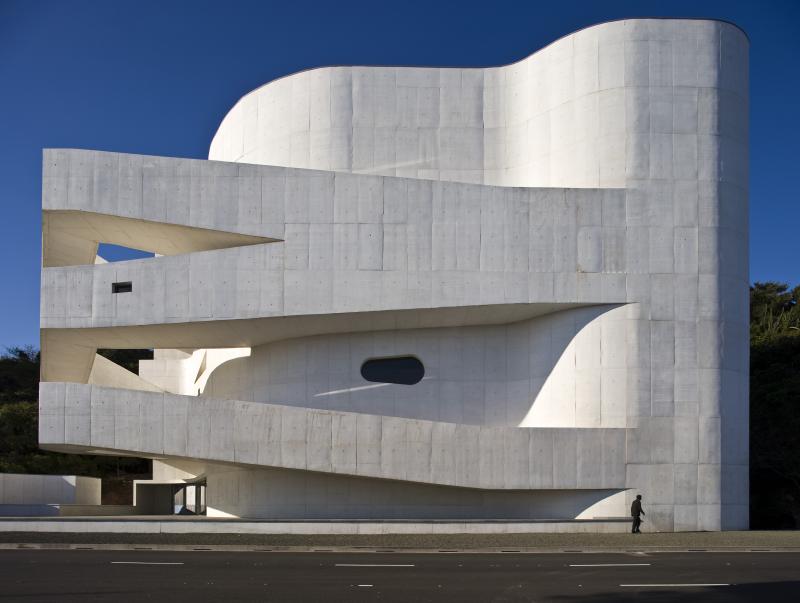
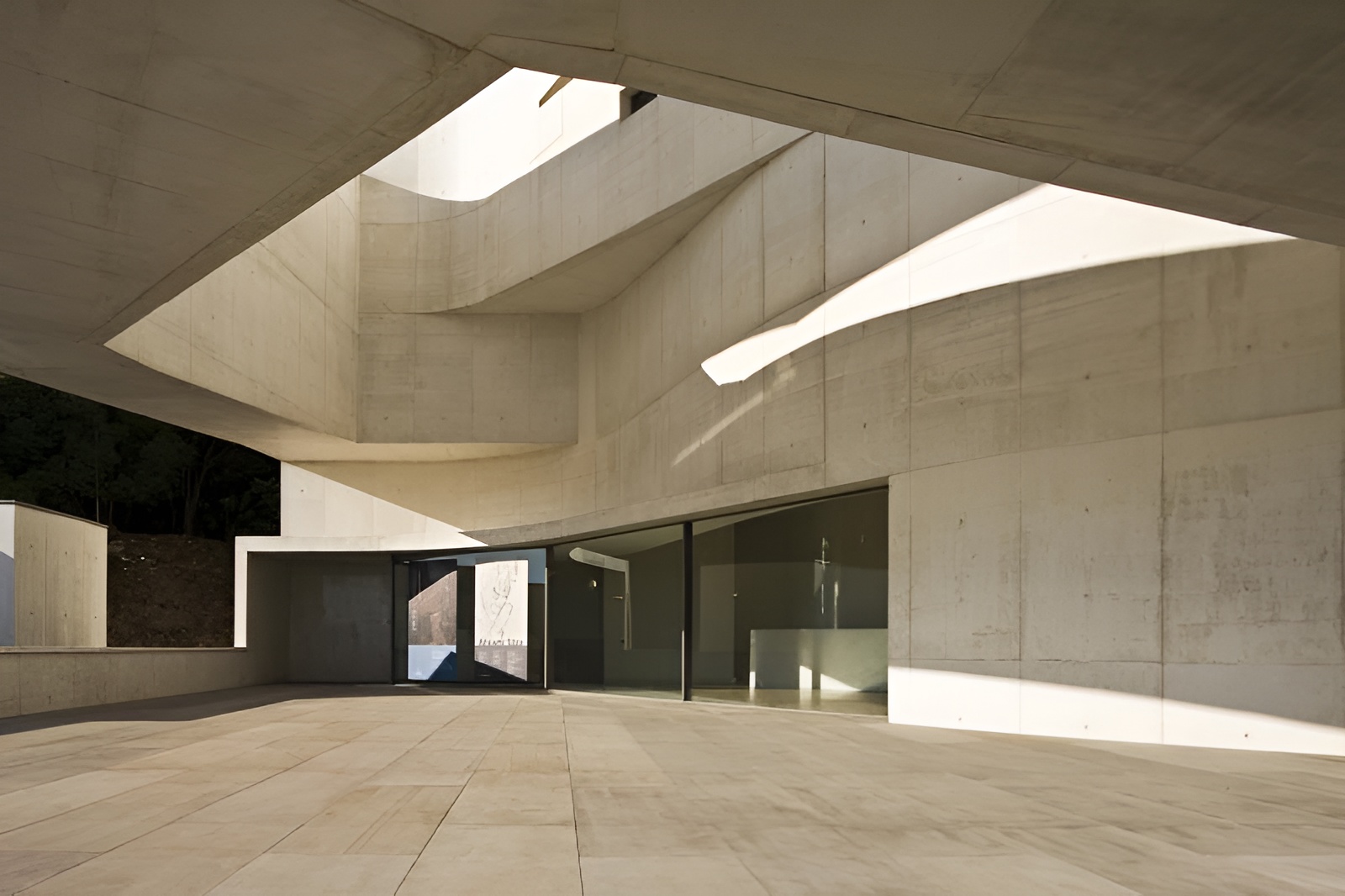
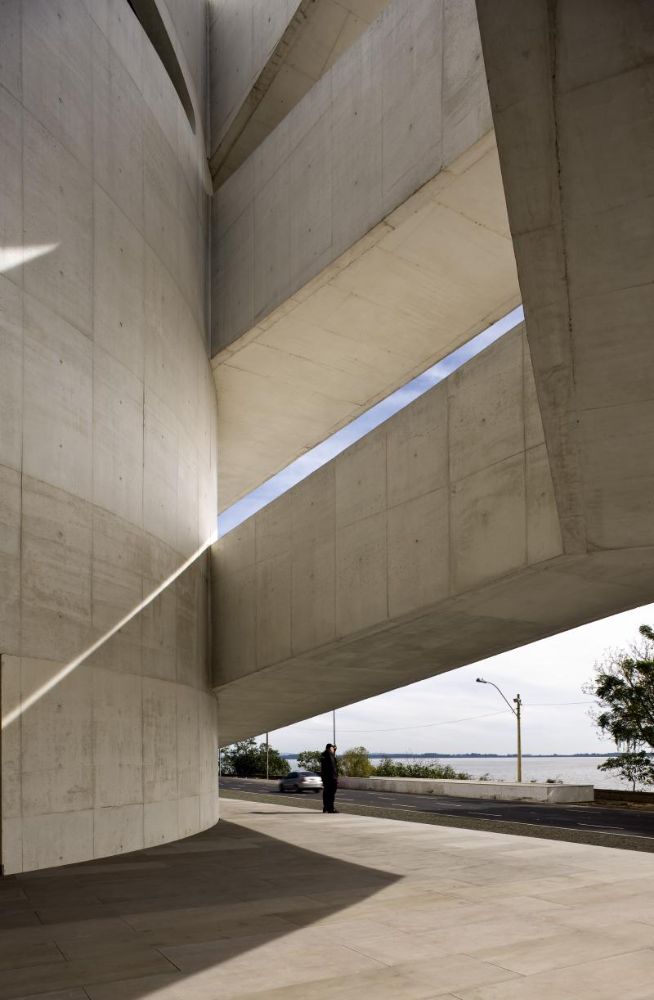
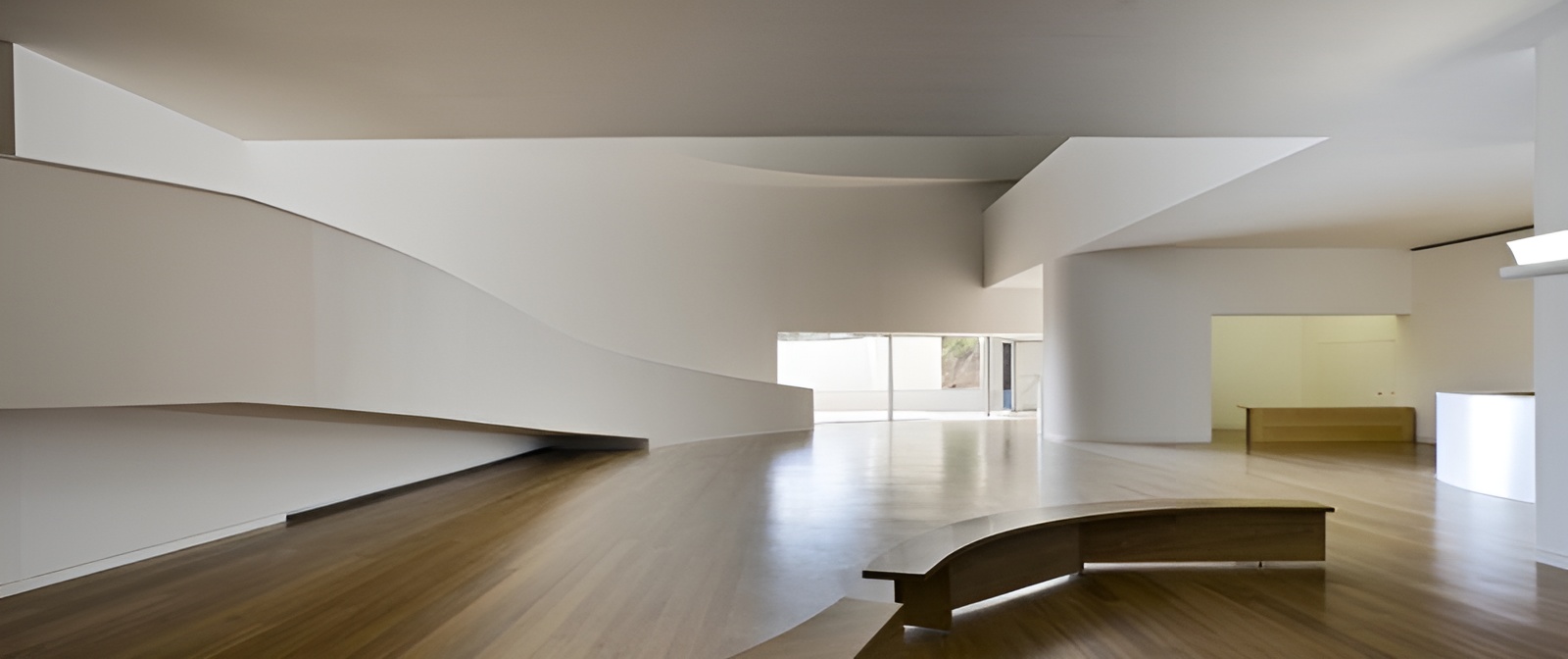
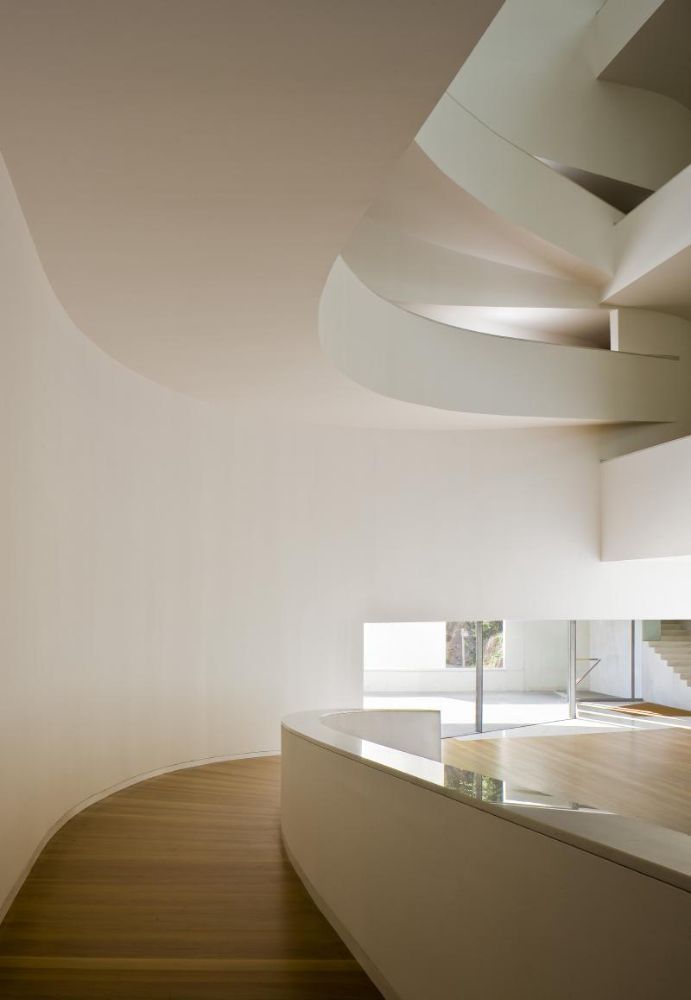
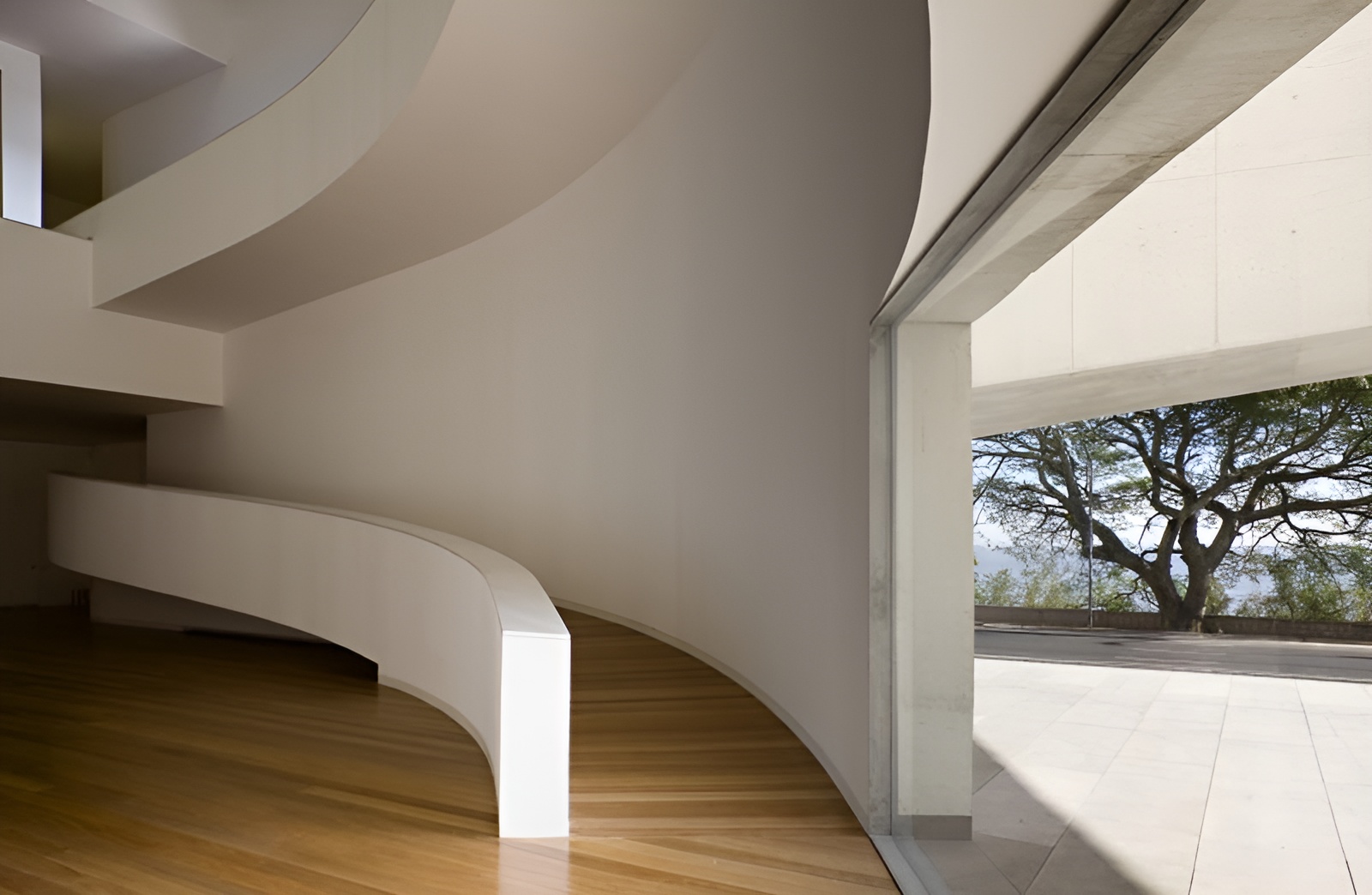
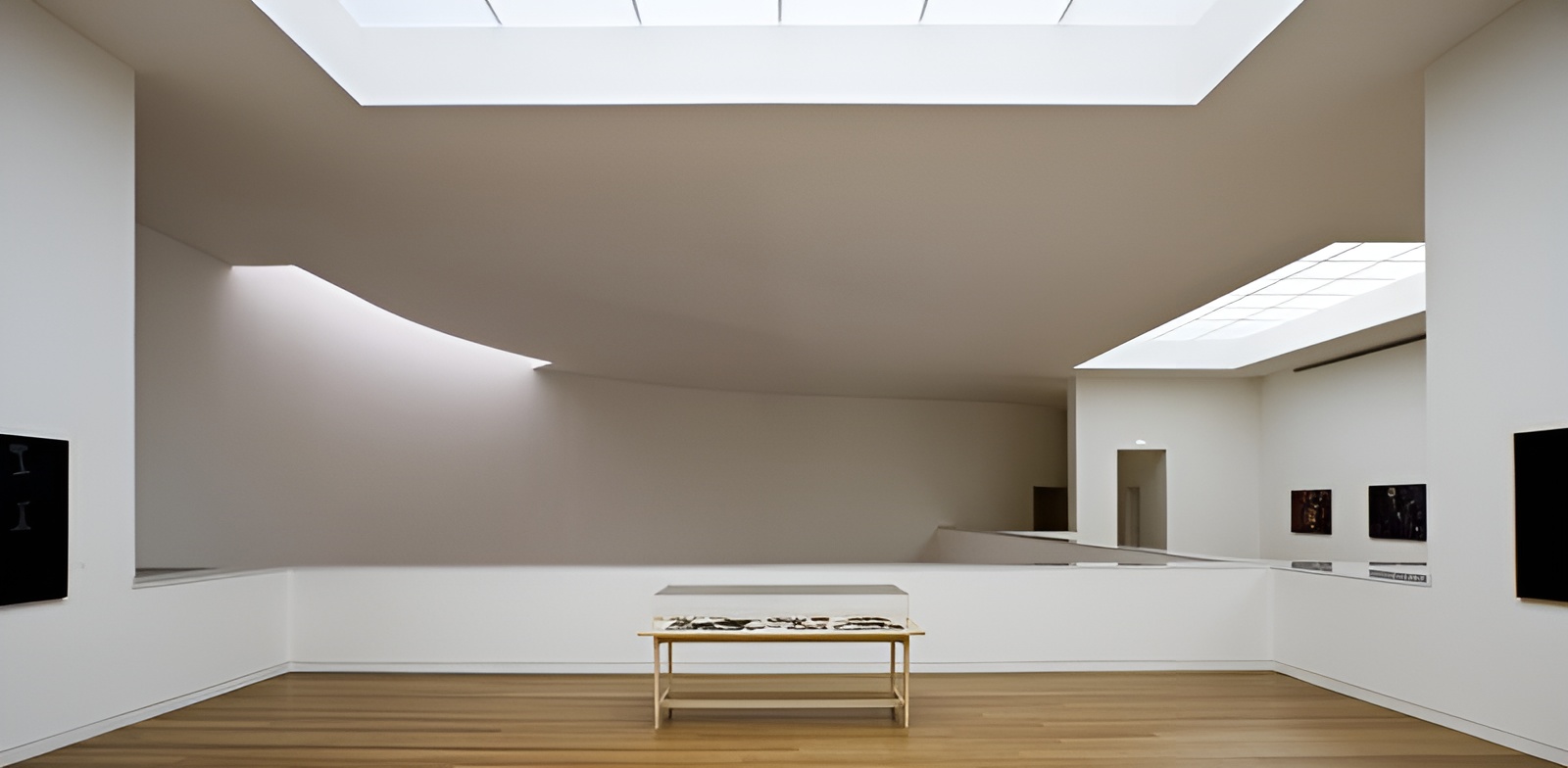
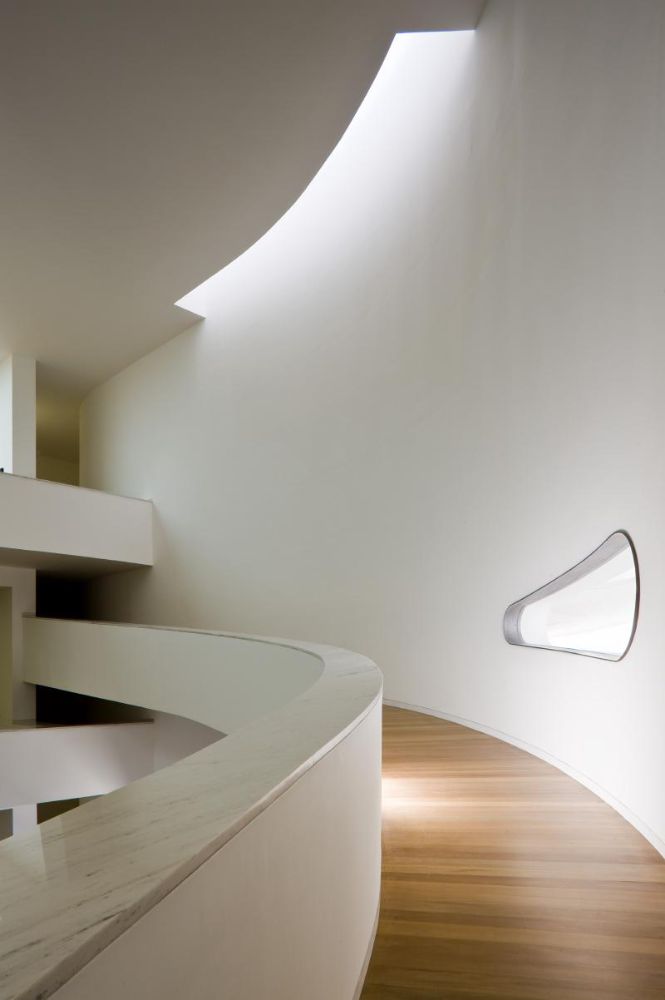
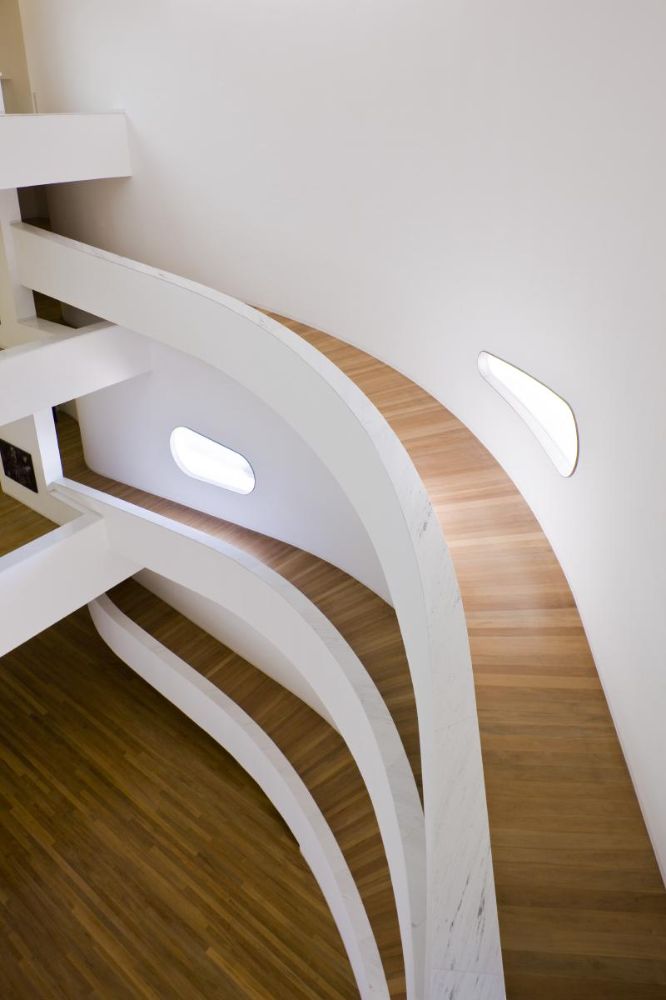
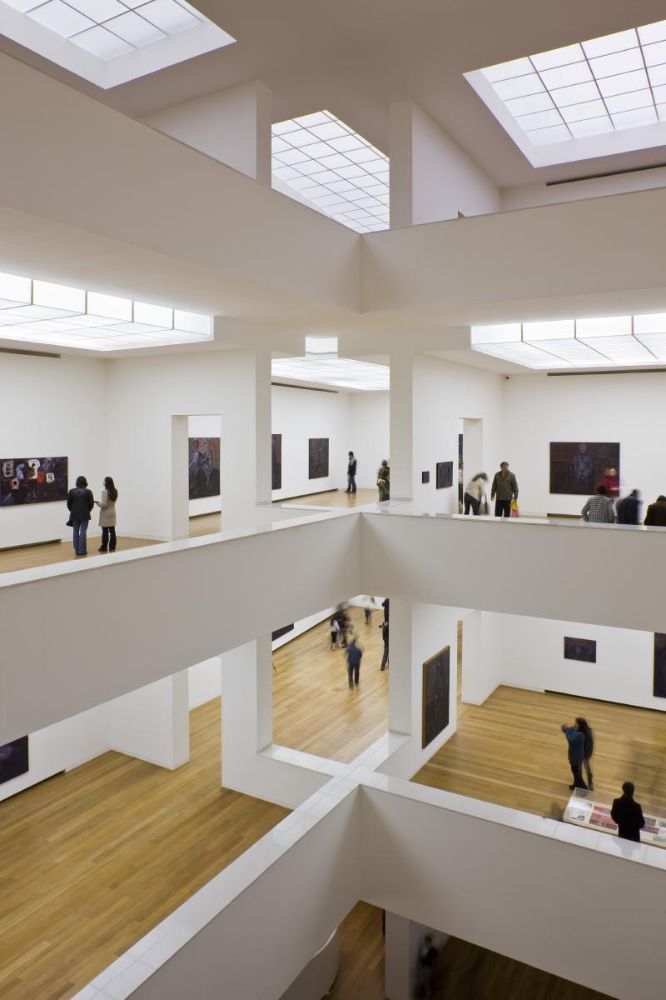
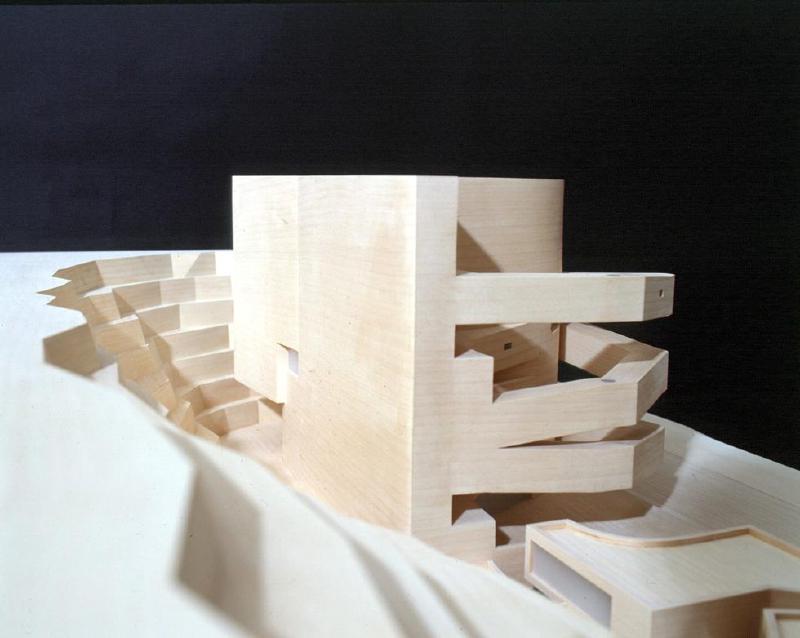
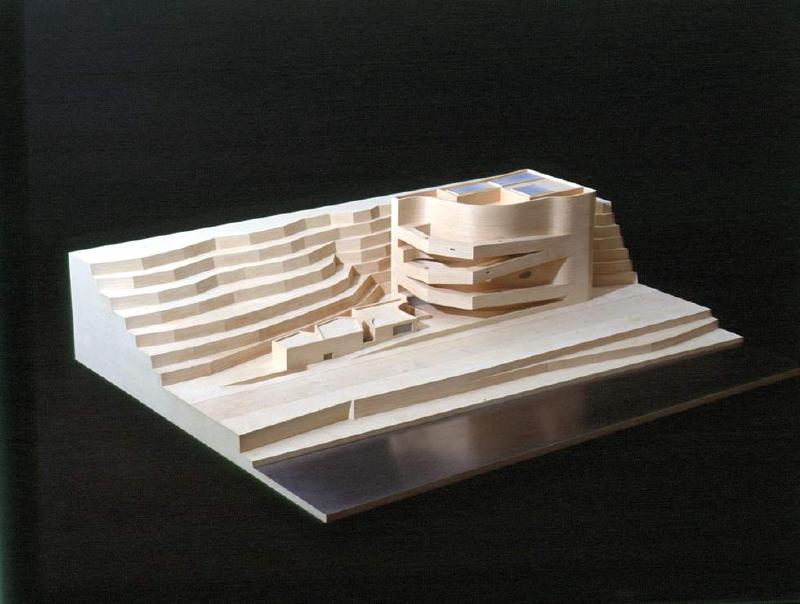
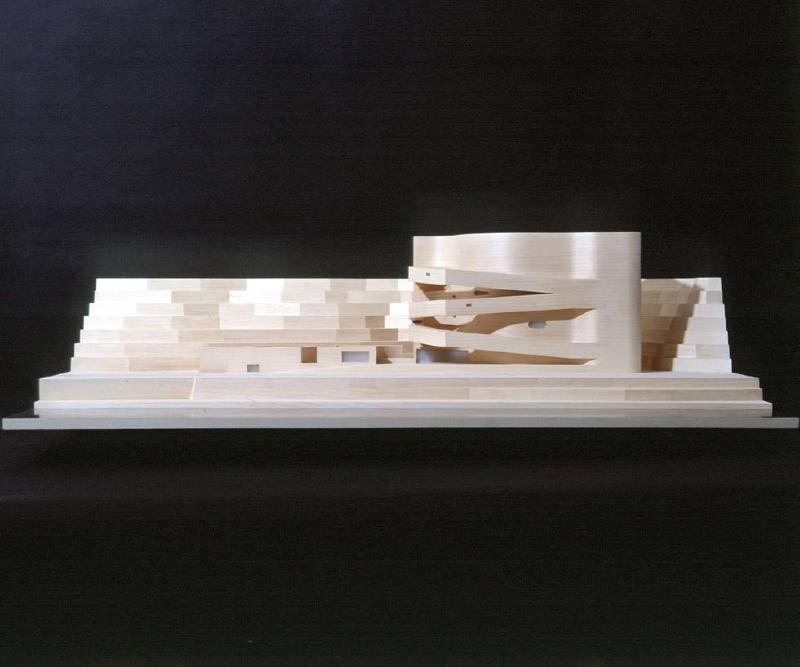
Iberê Camargo Foundation in Porto Alegre is a museum designed by Álvaro Siza Vieira for the work of Brazilian painter Iberê Camargo. Siza developed the project in the early 2000s, and the building opened in 2008 beside the Guaíba waterfront. Siza formed the museum as a compact white concrete mass crossed by external ramp volumes that curve out from the facade and return to the main body. Siza organized exhibition areas around a central interior void, connecting galleries through ramps and internal circulation. Iberê Camargo Foundation uses white reinforced concrete as its primary material and extends Siza’s architectural language into a sculptural institutional form organized through section, promenade, and spatial control.
How did Álvaro Siza Vieira contribute to architecture?
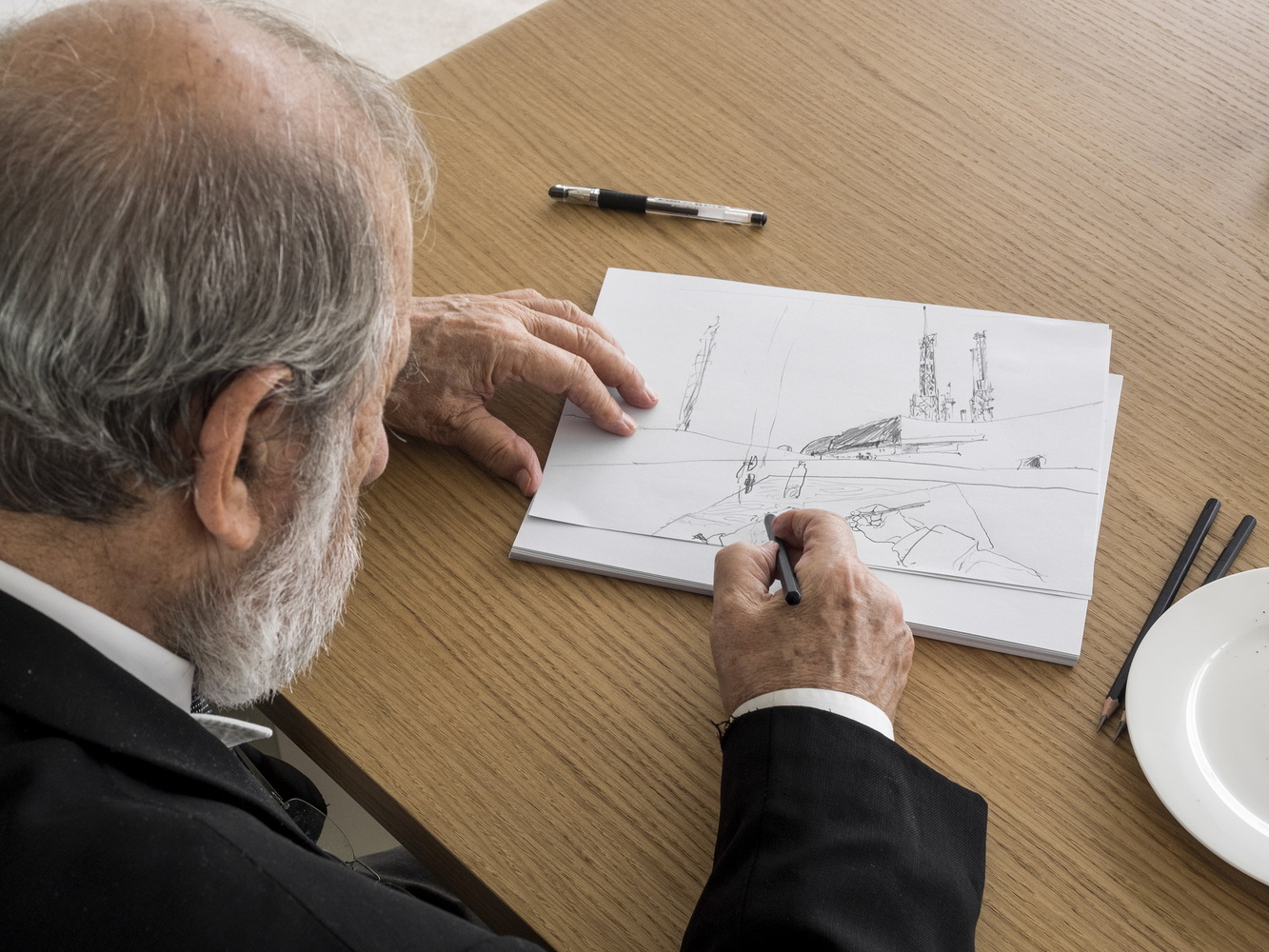
Álvaro Siza Vieira contributed to architecture by advancing a form of modern practice in which context, construction, and movement determine design. Siza treated architecture as a process of reading conditions rather than the application of a preset style. Siza’s houses and coastal works established methods for integrating buildings into the landform. Siza’s social housing and urban projects addressed civic needs through modern architecture and spatial organization. Siza’s museums, schools, and pavilions used proportion, route, and light as primary architectural elements. Siza’s teaching in Porto and his influence on Eduardo Souto de Moura extended this approach across generations. Siza’s drawings, archives, interviews, and buildings continue to guide architects studying design through observation, reduction, and adjustment.
What awards and honors has Álvaro Siza Vieira received?
Álvaro Siza Vieira has received awards and honors for architecture and urbanism, including:
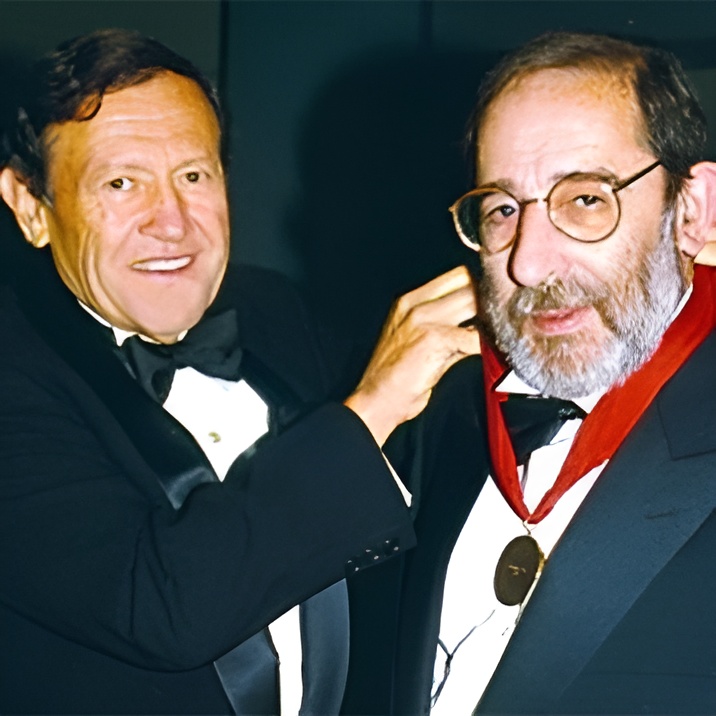
- Pritzker Architecture Prize (1992) – International architecture prize awarded for Siza’s contribution to architecture.
- Praemium Imperiale for Architecture (1998) – Arts award from the Japan Art Association.
- RIBA Royal Gold Medal (2009) – Royal Institute of British Architects award for architectural contribution.
- UIA Gold Medal (2011) – International Union of Architects distinction for architectural contribution.
- Wolf Prize in Arts (2001) – Awarded for contribution to architecture.
- Mies van der Rohe Award for European Architecture (1988) – Awarded for the Borges & Irmão Bank in Vila do Conde.
- Golden Lion for Lifetime Achievement (2012) – Venice Architecture Biennale award for career achievement.
- Alvar Aalto Medal (1988) – Awarded for contribution to modern architecture.
Álvaro Siza Vieira has received national architectural recognition in Portugal and Spain, including the National Architecture Prize of Portugal in 1993 and the National Architecture Award of Spain in 2019, where Siza became the first non-Spanish architect to receive the distinction.
Did Álvaro Siza Vieira change the architecture industry?
Álvaro Siza Vieira changed architecture by establishing a model of practice in which modern form remains tied to place, construction, and civic life. Siza’s work moved attention away from universal architectural repetition toward projects shaped by local ground, historical condition, and human movement. Siza’s career strengthened the position of contextual modernism in architectural discourse and expanded the international recognition of the Porto School. Siza’s buildings used modest materials, geometries, and routes as primary architectural elements. Siza’s awards, commissions, teaching, and influence on later architects contributed to broader attention toward continuity, context, and spatial organization.
Was Álvaro Siza Vieira ever controversial in any way?
Álvaro Siza Vieira has not been associated with personal scandal, though the distribution of his architectural archive generated debate in Portugal in 2014. Siza donated parts of the archive to the Canadian Centre for Architecture in Montreal, the Calouste Gulbenkian Foundation in Lisbon, and the Serralves Foundation in Porto. The decision followed the cancellation of a planned Casa da Arquitectura headquarters project in Matosinhos and raised questions about national custody, institutional capacity, and international access to Portuguese architectural heritage. The dispute concerned archive stewardship rather than misconduct by Siza. Siza’s professional activity remained centered on architecture, teaching, and cultural institutions.
Who are the most famous architects in modern history besides Álvaro Siza Vieira?
Aside from Álvaro Siza Vieira, Le Corbusier, Frank Lloyd Wright, Ludwig Mies van der Rohe, Alvar Aalto, Louis Kahn, Tadao Ando, Norman Foster, Richard Rogers, Frank Gehry, and Zaha Hadid are among the architects who shaped modern architecture. Le Corbusier (Swiss-French, 1887–1965) established modernist principles through projects such as Villa Savoye and the Unité d’Habitation and contributed to urban planning through Chandigarh in India. Frank Lloyd Wright (American, 1867–1959) developed Organic Architecture through buildings such as Fallingwater and the Solomon R. Guggenheim Museum in New York. Ludwig Mies van der Rohe (German-American, 1886–1969) developed steel-and-glass modernism through projects such as the Barcelona Pavilion and the Seagram Building in New York. Alvar Aalto (Finnish, 1898–1976) connected modern architecture with landscape, timber, and human scale in projects such as Villa Mairea and the Paimio Sanatorium. Louis Kahn (American, 1901–1974) developed institutional architecture through projects such as the Salk Institute in California and the National Assembly Building in Dhaka. Tadao Ando (Japanese, born 1941) developed concrete architecture organized through light and geometry in buildings such as the Church of the Light in Osaka and the Chichu Art Museum in Naoshima. Norman Foster (British, born 1935) and Richard Rogers (British, 1933–2021) developed High-Tech architecture through exposed systems, structural expression, and large-span construction. Frank Gehry (Canadian-American, born 1929) developed sculptural architectural form in projects such as the Guggenheim Museum Bilbao and the Walt Disney Concert Hall in Los Angeles. Zaha Hadid (Iraqi-British, 1950–2016) developed architecture through dynamic geometry and fluid spatial systems in projects such as the MAXXI Museum in Rome and the Heydar Aliyev Center in Baku.
What did Álvaro Siza Vieira mostly design?
Álvaro Siza Vieira mostly designed civic, cultural, educational, residential, and urban projects developed through contextual modern architecture. His portfolio falls into several main categories:
- Residential Architecture: Siza designed private houses, social housing, and urban residential schemes, including early houses in Matosinhos, Quinta da Malagueira in Évora, and later housing projects in Portugal, Germany, and the Netherlands.
- Coastal and Landscape Projects: Siza designed buildings and public works that respond to terrain and shoreline, including the Boa Nova Tea House and Leça Swimming Pools.
- Educational Buildings: Siza designed schools, university facilities, and academic complexes, including the Faculty of Architecture of the University of Porto.
- Museums and Cultural Buildings: Siza designed institutions for art, exhibition, and public culture, including the Serralves Museum of Contemporary Art and the Iberê Camargo Foundation.
- Pavilions and Civic Structures: Siza designed national and public structures such as the Portuguese Pavilion for Expo ’98, where public space forms the primary architectural element.
- Urban Reconstruction and Public Realm: Siza worked on the reconstruction of Lisbon’s Chiado district after the 1988 fire and contributed to planning projects that connected historical continuity with contemporary architecture.
Siza’s work spans multiple scales, and each category is organized through site, movement, section, light, and construction.
Where did Álvaro Siza Vieira study?
Álvaro Siza Vieira studied architecture at the School of Fine Arts of the University of Porto from 1949 to 1955. Siza entered the school in Porto during a period when Portuguese architecture debated the relation between international modernism and local tradition. Siza’s studies provided a technical and cultural foundation, while his later collaboration with Fernando Távora expanded his understanding of vernacular continuity within modern design. Siza later returned to the same academic environment as a teacher and contributed to the development of the Porto School.
Did Álvaro Siza Vieira have any famous teachers or students?
Álvaro Siza Vieira had an important teacher in Fernando Távora and an important younger architect associated with his office in Eduardo Souto de Moura. Fernando Távora taught Siza and later employed him from 1955 to 1958, shaping his understanding of how modern architecture engages local culture without relying on imitation. Eduardo Souto de Moura worked in Siza’s office for five years while still a student and later received the Pritzker Architecture Prize in 2011. Siza influenced architects through teaching, office culture, lectures, and built work, while Souto de Moura remains the clearest example of sustained collaboration within Siza’s practice.
How can students learn from Álvaro Siza Vieira’s work?
Students learn from Álvaro Siza Vieira’s work by studying how architecture develops through site observation, drawing, sequence, and construction rather than immediate formal display. Students can examine the Boa Nova Tea House to understand arrival, horizon, and the pacing of views. Students can study Leça Swimming Pools to see how walls, rock, and water form a spatial system. Students can analyze Quinta da Malagueira to understand the relation between housing type, collective infrastructure, and urban continuity. Students can read the Faculty of Architecture of the University of Porto as a study in campus composition and exterior space. Students can study the Serralves Museum and the Iberê Camargo Foundation to compare two museum strategies, one planar and the other more compact and sculptural. Siza’s work teaches that architecture develops through adjustment rather than excessive form.

