

John Lautner (1911–1994) was an American architect whose experimental approach expanded the possibilities of modern design in the twentieth century. Born in Marquette, Michigan, he earned a liberal arts degree from Northern Michigan University in 1933 and joined Frank Lloyd Wright’s Taliesin Fellowship, where he trained from 1933 to 1939. This apprenticeship formed the basis of his architectural philosophy, grounded in organic principles and direct engagement with construction. Lautner moved to Los Angeles in 1938 and established a practice that spanned five decades. Representing an individual branch of modernism, his work merged Wright’s organic ideas with mid-century technological expression, bridging craft and engineering. Lautner is best known for his residential architecture, particularly his California houses that demonstrated structural innovation and spatial experimentation. Key works include the Malin Residence (Chemosphere), the Elrod House, the Sheats-Goldstein House, the Reiner-Burchill Residence (Silvertop), and the Hope Residence (Bob Hope House). He also designed commercial and roadside projects such as Googie’s Coffee Shop, which helped define the Googie style of mid-century Los Angeles. Unbuilt proposals like the Griffith Park Nature Center illustrate his effort to extend organic design to civic architecture. Lautner redefined modern residential architecture by demonstrating that experimental forms could achieve structural integrity and human connection to the landscape. His projects combined cantilevers, thin-shell concrete, and glass expanses to merge architecture with terrain, light, and view. Though debated in his time, his buildings have become preserved works of mid-century modernism and influenced later architects, including Frank Gehry. A Fellow of the American Institute of Architects, Lautner remains a central figure in the architectural history of Southern California, his work studied for its integration of structure, material, and site into a unified architectural vision.
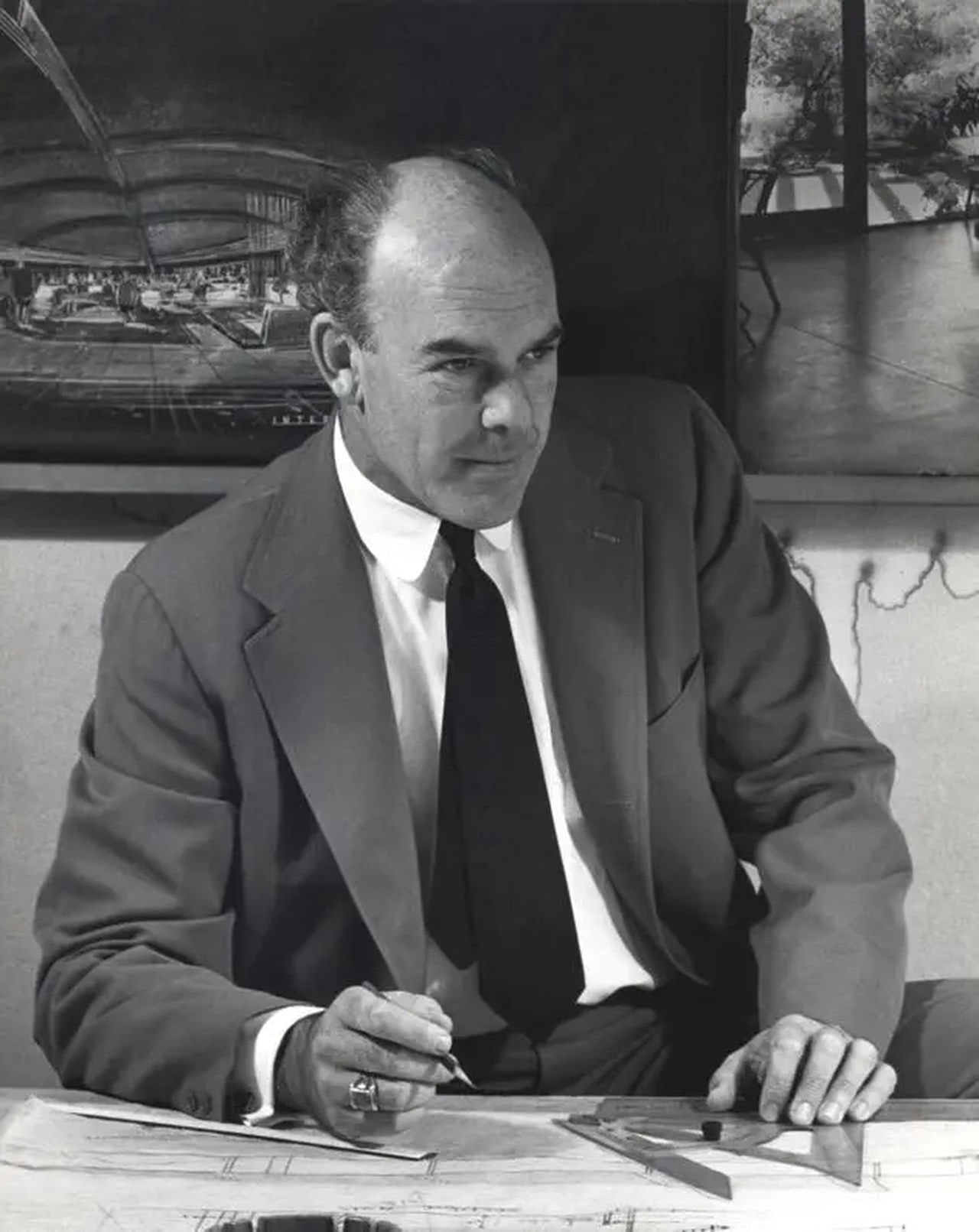
Who is John Lautner?
John Lautner was an American architect born on July 16, 1911, in Marquette, Michigan, recognized for his innovative contributions to modern design. Lautner grew up in a family that valued art and construction, and in 1933 earned a liberal arts degree with an English major from what is now Northern Michigan University. He did not attend a formal architecture school but trained directly under Frank Lloyd Wright as one of the first apprentices at Wright’s Taliesin Fellowship from 1933 to 1939 in Wisconsin and Arizona. In 1938, after completing his apprenticeship, Lautner moved to Los Angeles and established his practice. Over the next fifty-five years, he worked primarily in Southern California, designing expressive houses and several commercial buildings that reflected his distinct style. He built more than fifty structures in California and a few in Mexico. Lautner died on October 24, 1994, in Los Angeles, after a career that spanned from the mid-century modern movement to the late twentieth century. He is remembered as an independent architect who maintained a singular vision outside mainstream trends.
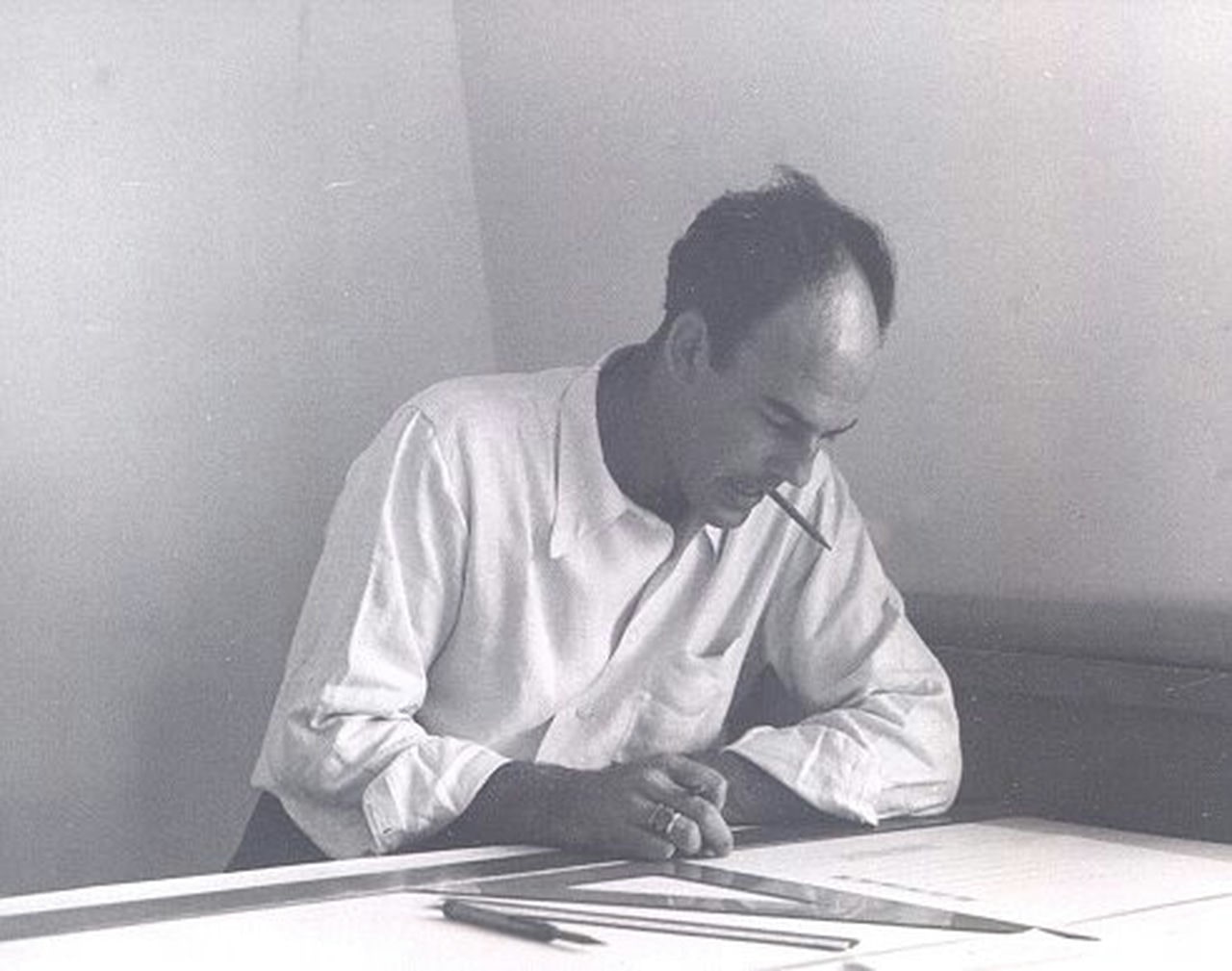
What type of architecture does John Lautner represent?
John Lautner represented an individualistic form of modern architecture that merged organic design with futuristic expression. Lautner was influenced by Frank Lloyd Wright’s philosophy of organic architecture, designing buildings to harmonize with their surroundings through flowing forms and direct use of materials. He also pioneered the Space Age aesthetic emerging in mid-20th-century America. His work became closely linked to the Googie style, a futurist architectural trend defined by bold geometry and inventive use of steel, concrete, and glass, first seen in 1950s coffee shops and roadside structures. Lautner’s architecture resisted strict classification but remained fundamentally modernist in its embrace of technology and its rejection of historical imitation. His buildings emphasized structure and function in equal measure, often featuring cantilevers, sweeping roofs, and glass walls that dissolve boundaries between interior and exterior space. Lautner did not follow the austere International Style of his contemporaries; instead, he developed a personal approach that was fluid, experimental, and grounded in the belief that architecture should provoke experience through form and space.
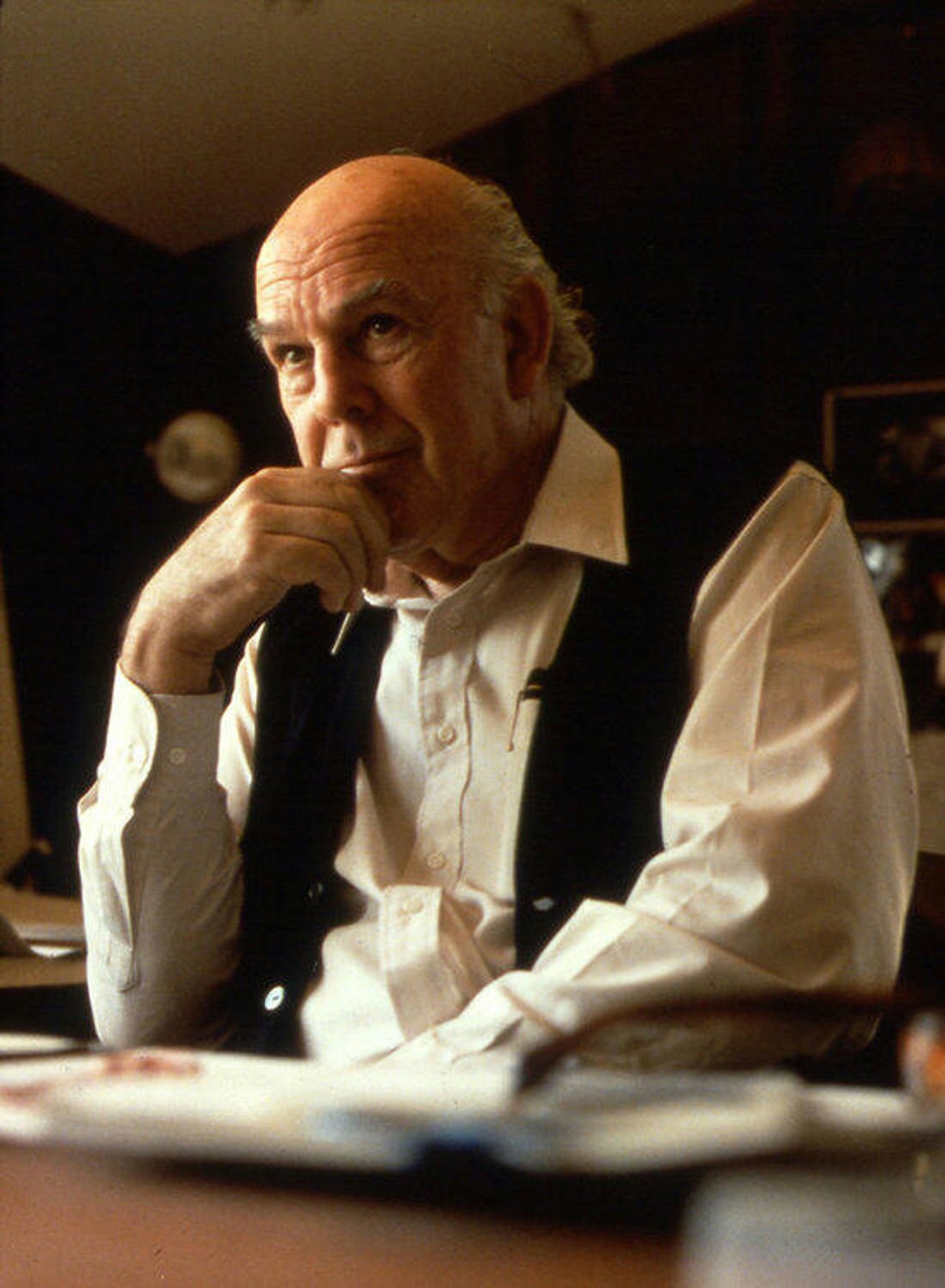
What is John Lautner’s great accomplishment?
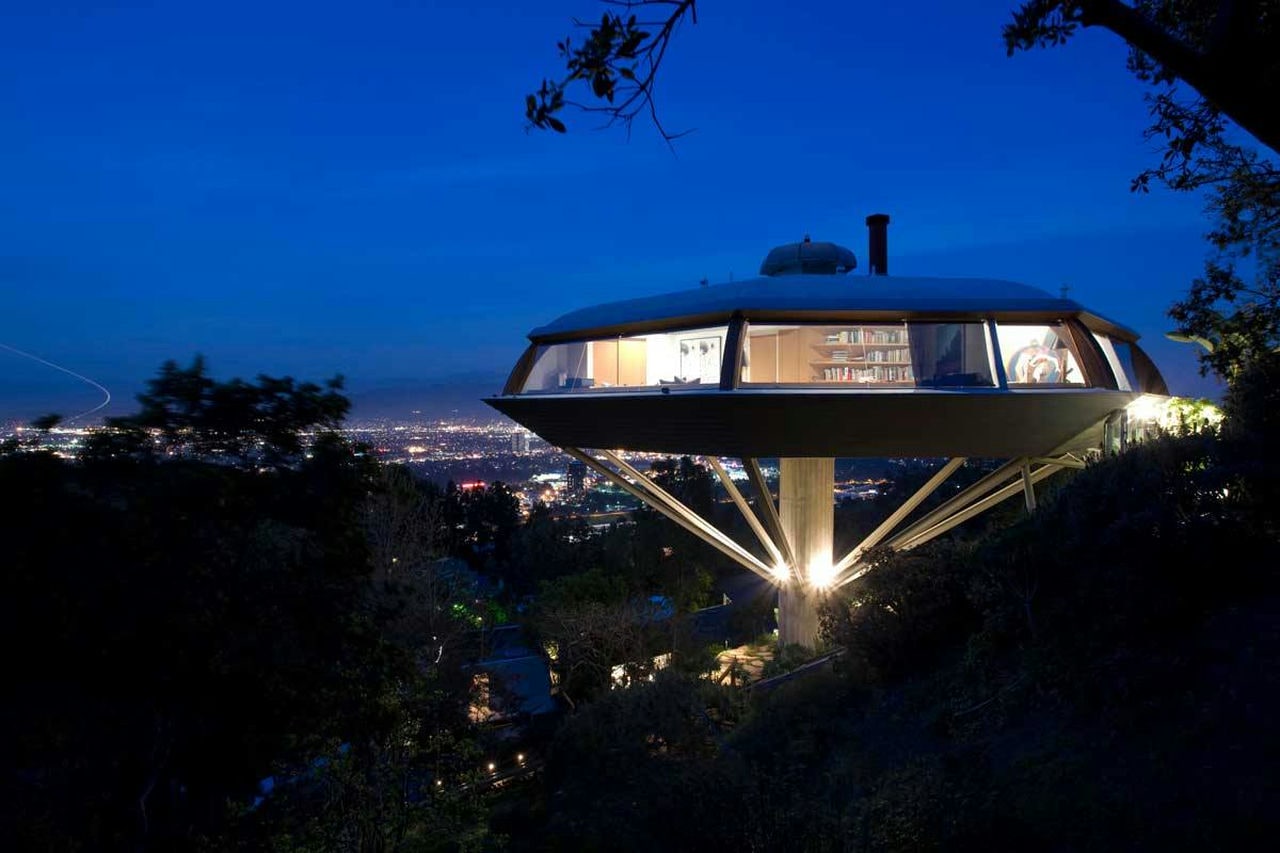
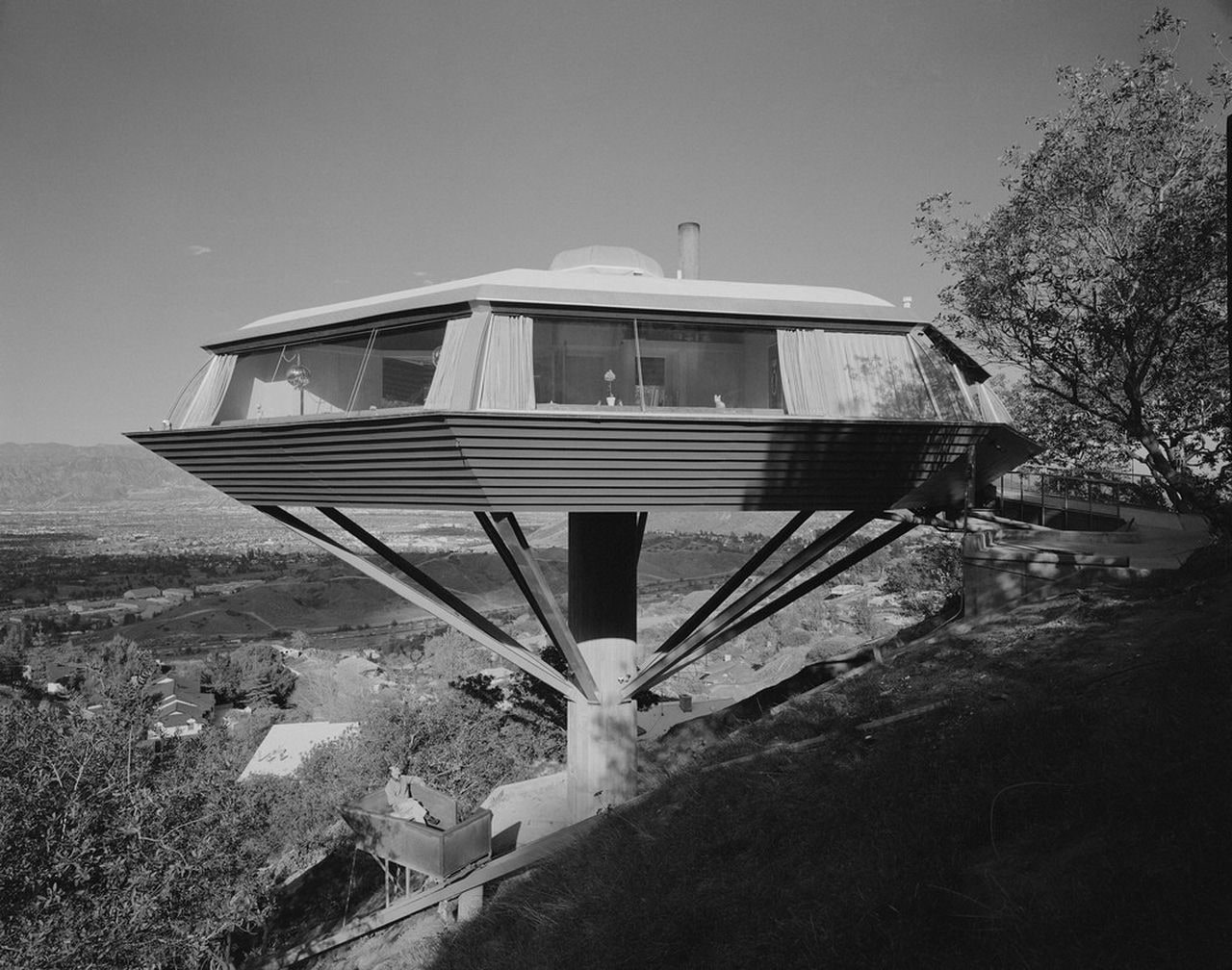
John Lautner’s greatest accomplishment was expanding the scope of modern architecture through experimental residential design. During a period defined by orthodox modernism, Lautner rejected convention and proved that houses could achieve unprecedented forms and engineering feats. A defining example is the Malin Residence, known as the Chemosphere, a circular hilltop home completed in 1960 that rests on a single concrete column. This design resolved an extreme mountainside condition and became one of the most recognized modern houses in the world. Lautner’s work transformed mid-century residential architecture by demonstrating that structure, sculptural form, and integration with the landscape can coexist. His influence is visible in the renewed appreciation of experimental modernism from the late twentieth century onward, inspiring bolder approaches to domestic architecture.
What are John Lautner’s most important works?
John Lautner’s most important works and career output center on experimental residential architecture, exemplified by the Malin Residence in Los Angeles, balanced on a single concrete column; the Elrod House in Palm Springs, defined by its concrete dome and desert integration; the Sheats-Goldstein House in Los Angeles, carved into a hillside with coffered concrete ceilings; the Reiner-Burchill Residence in Los Angeles, framed by a thin concrete shell roof; and the Hope Residence in Palm Springs, distinguished by its monumental curved roof and open plan.
01. Malin Residence “Chemosphere”, Los Angeles
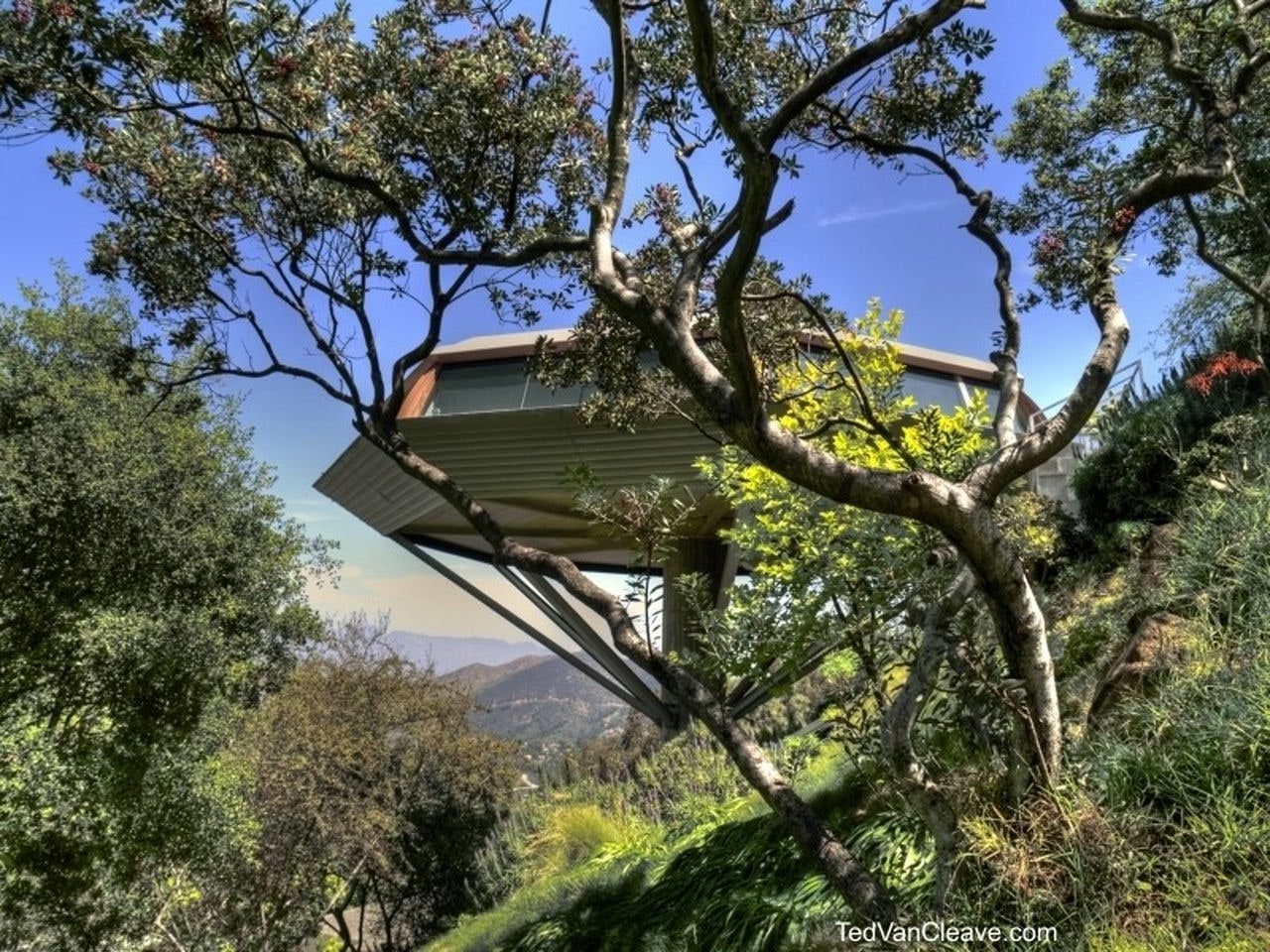
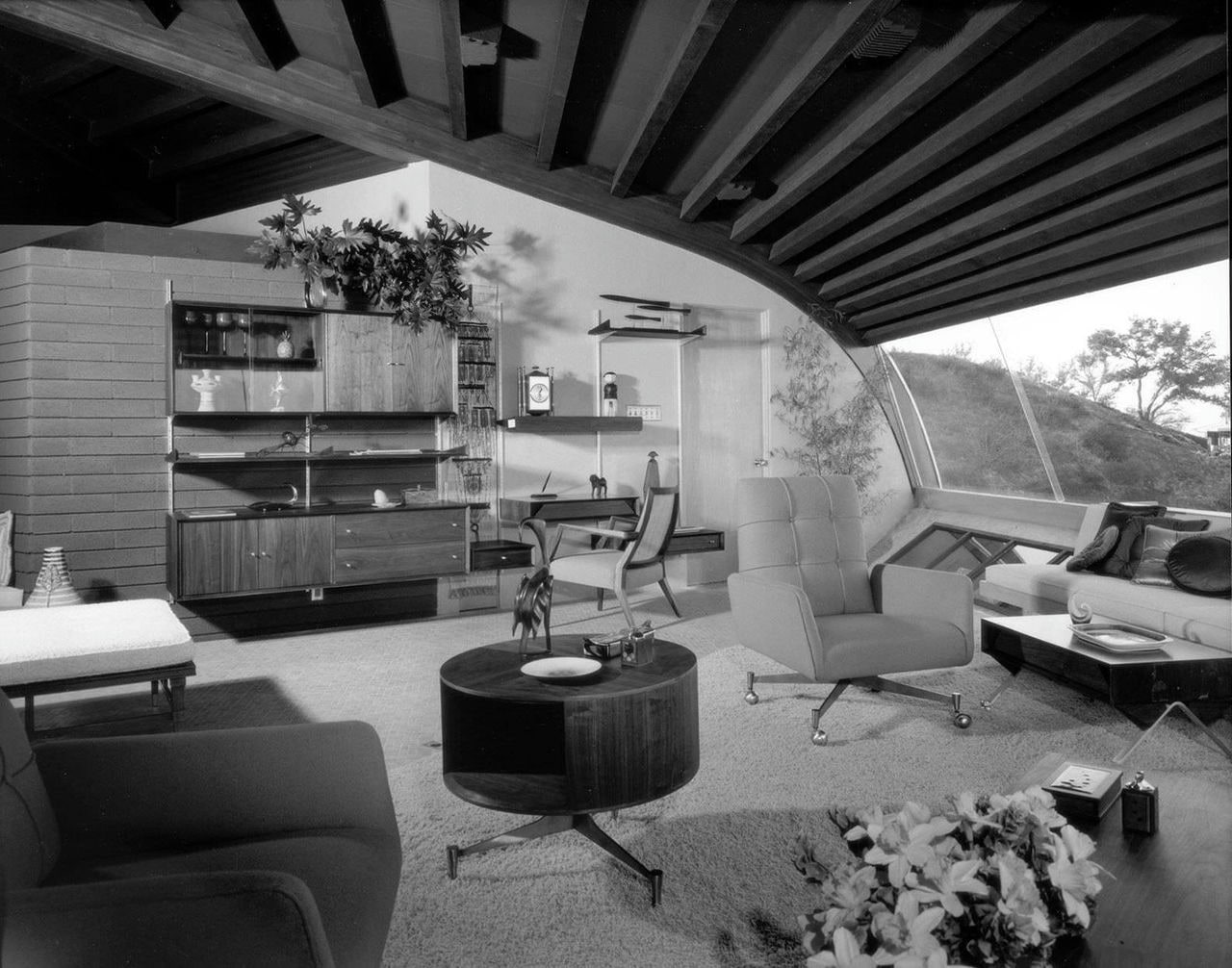
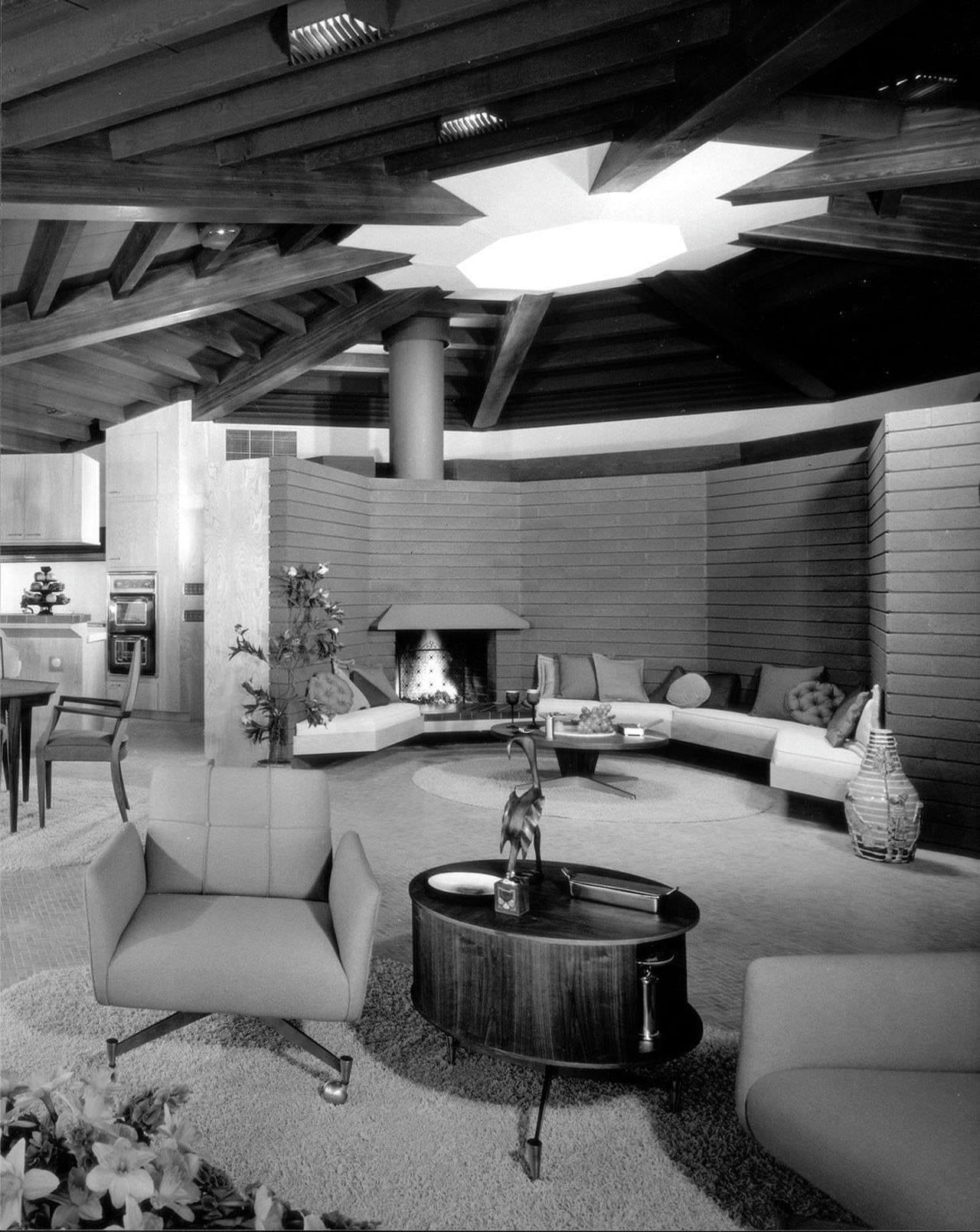
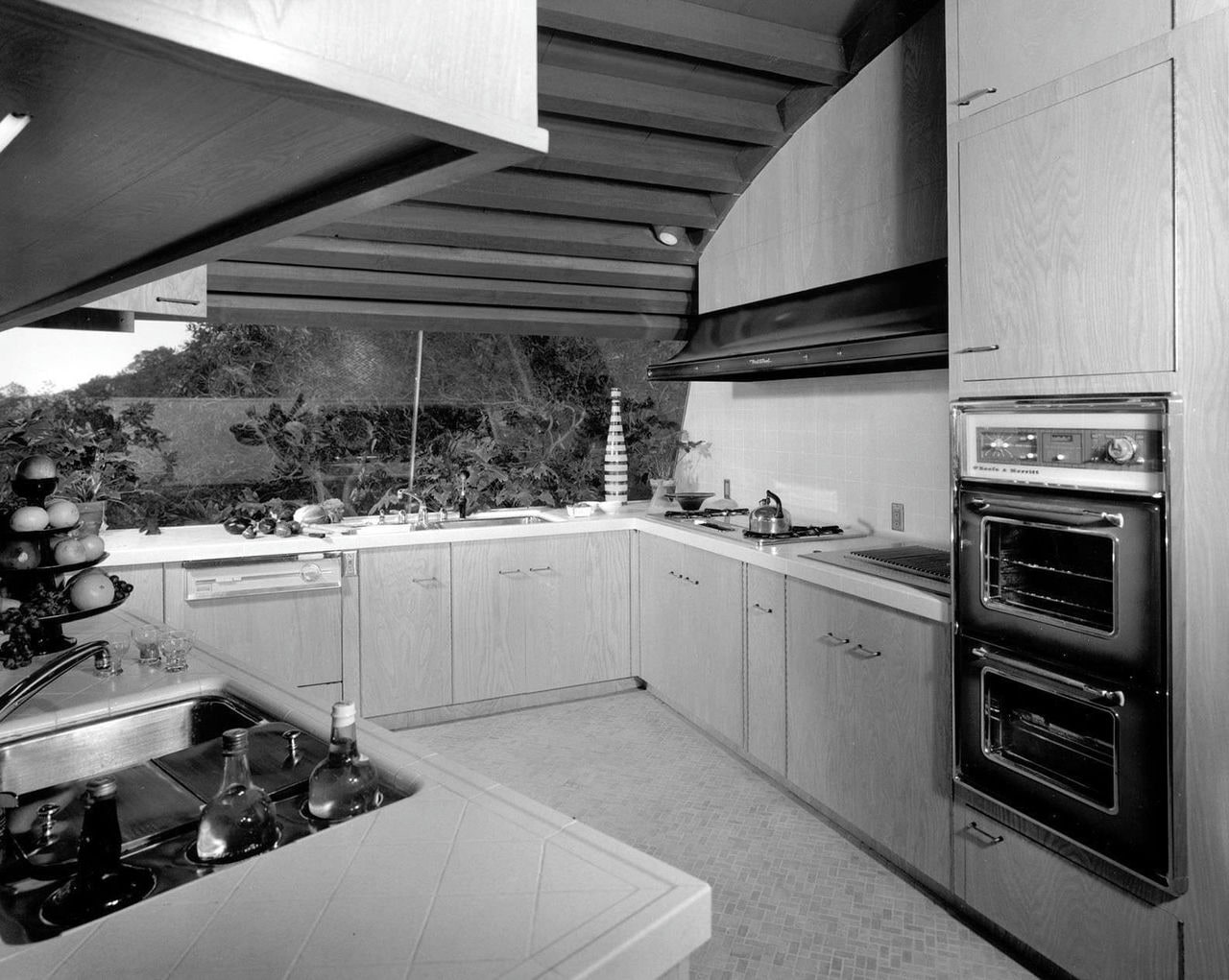
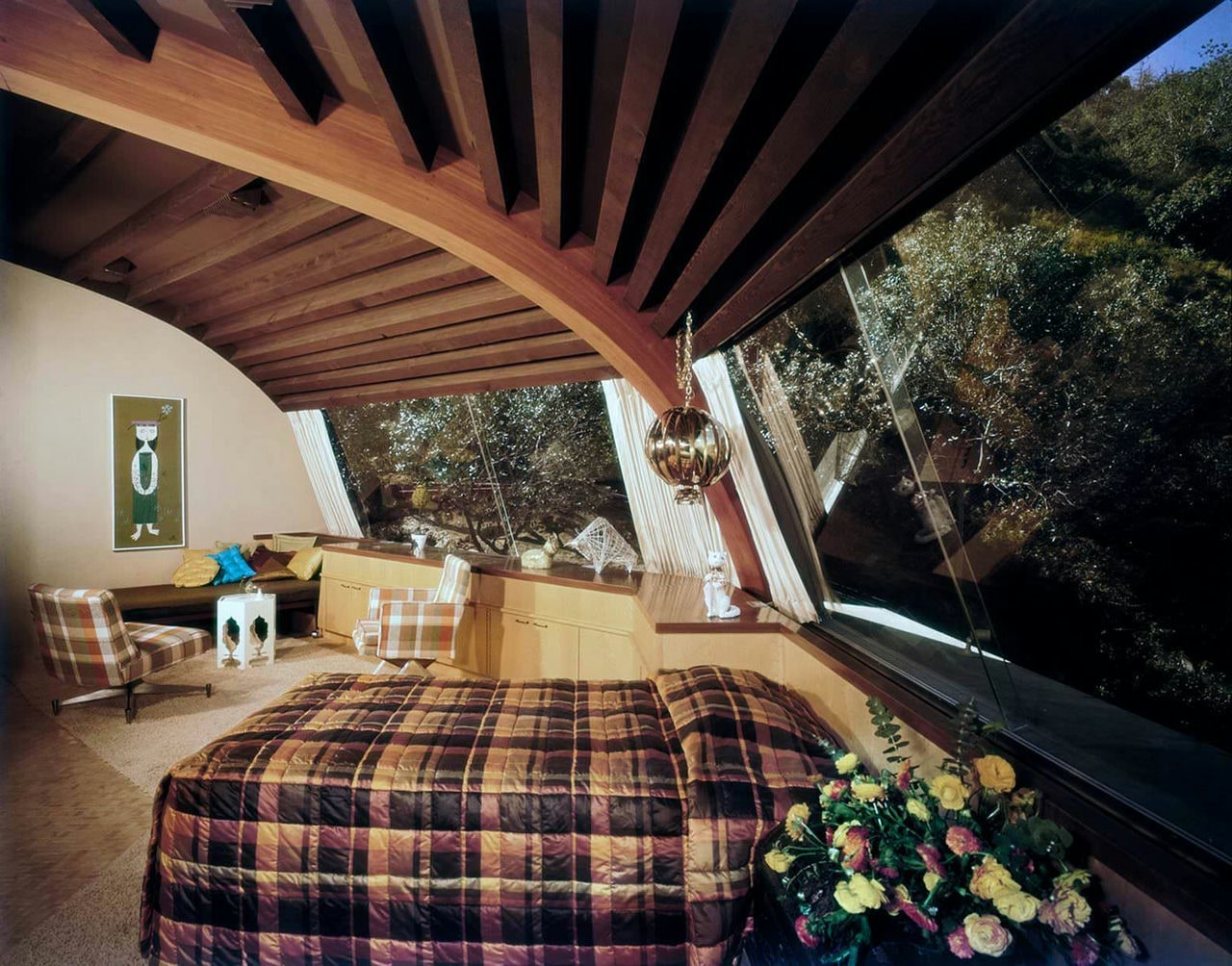
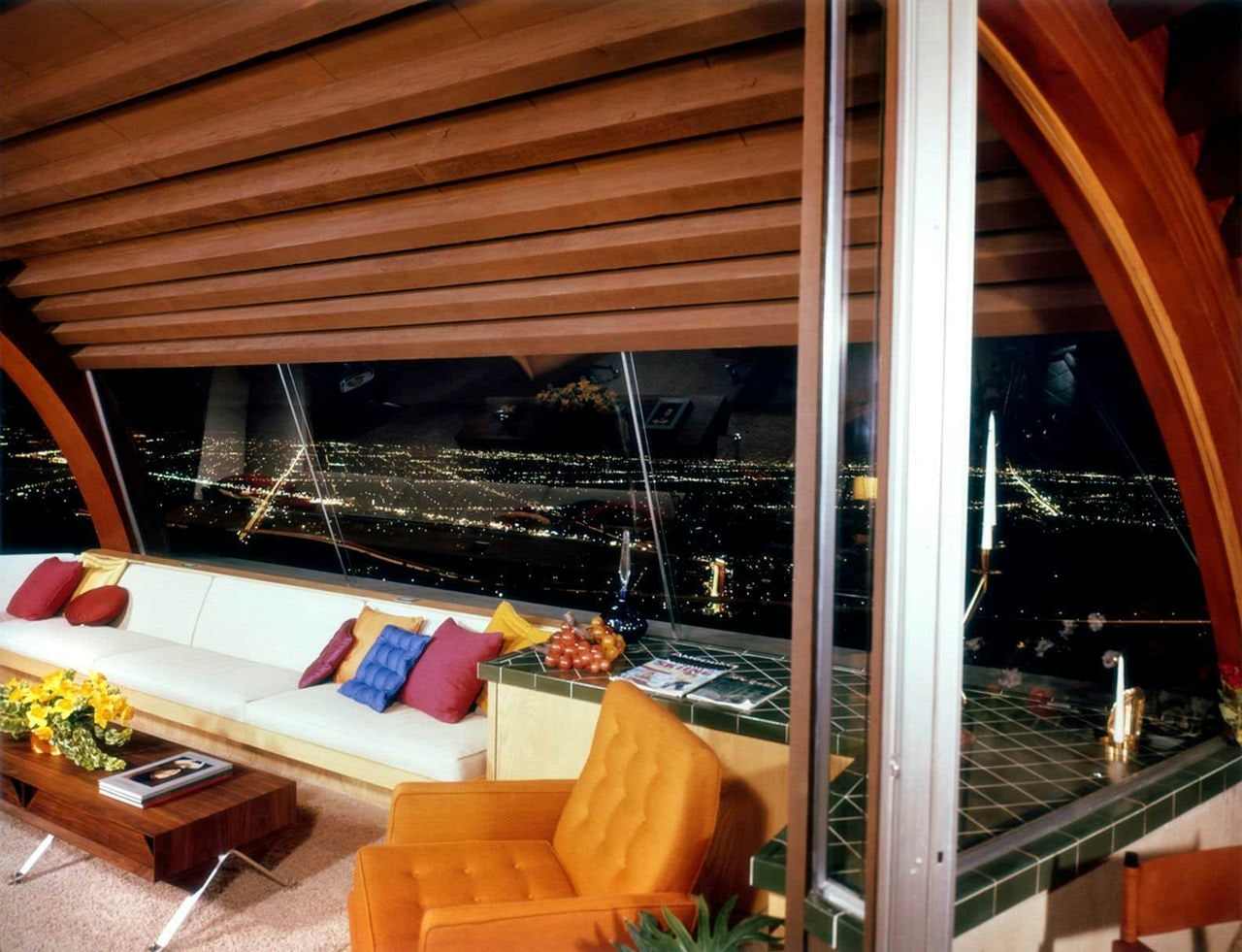
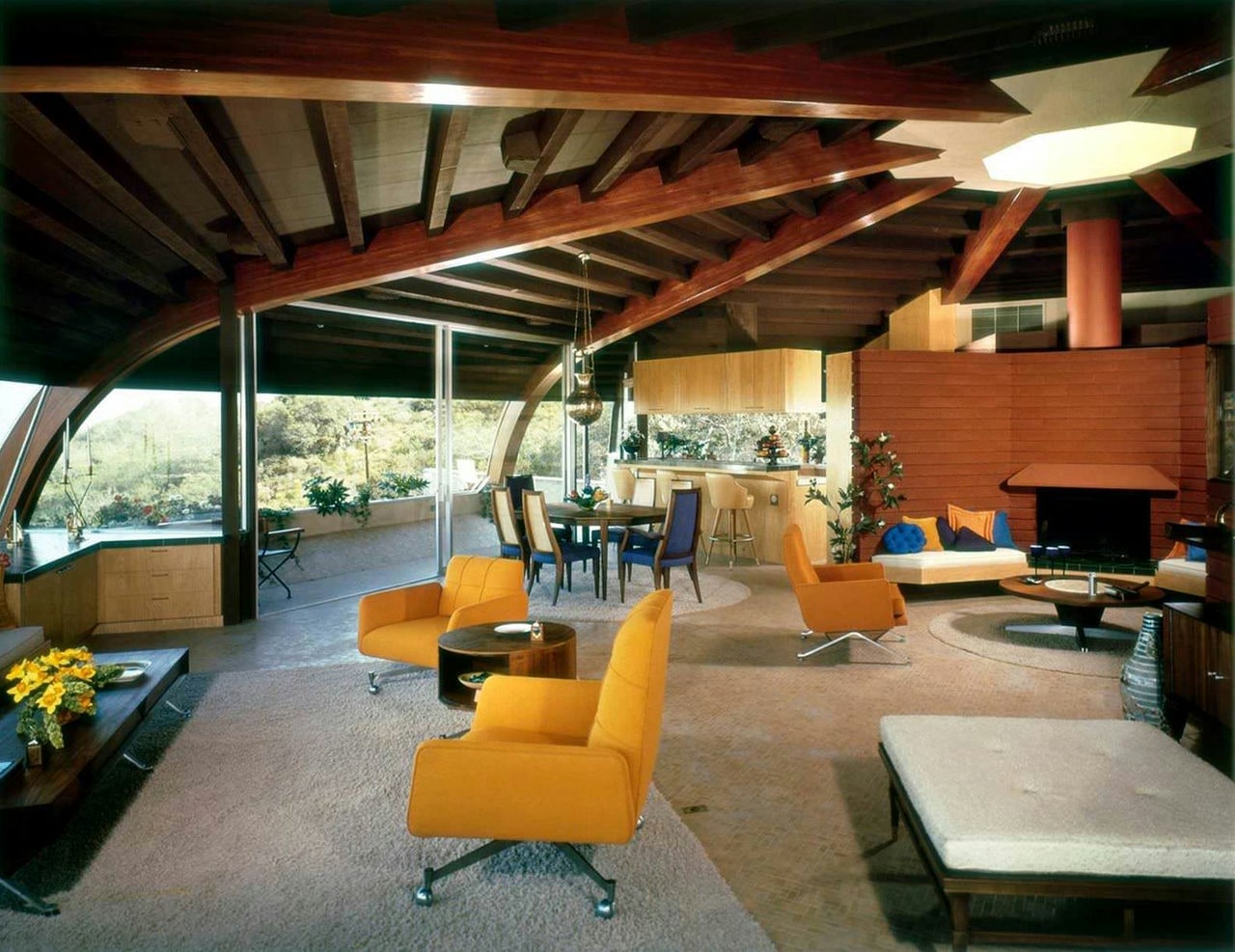
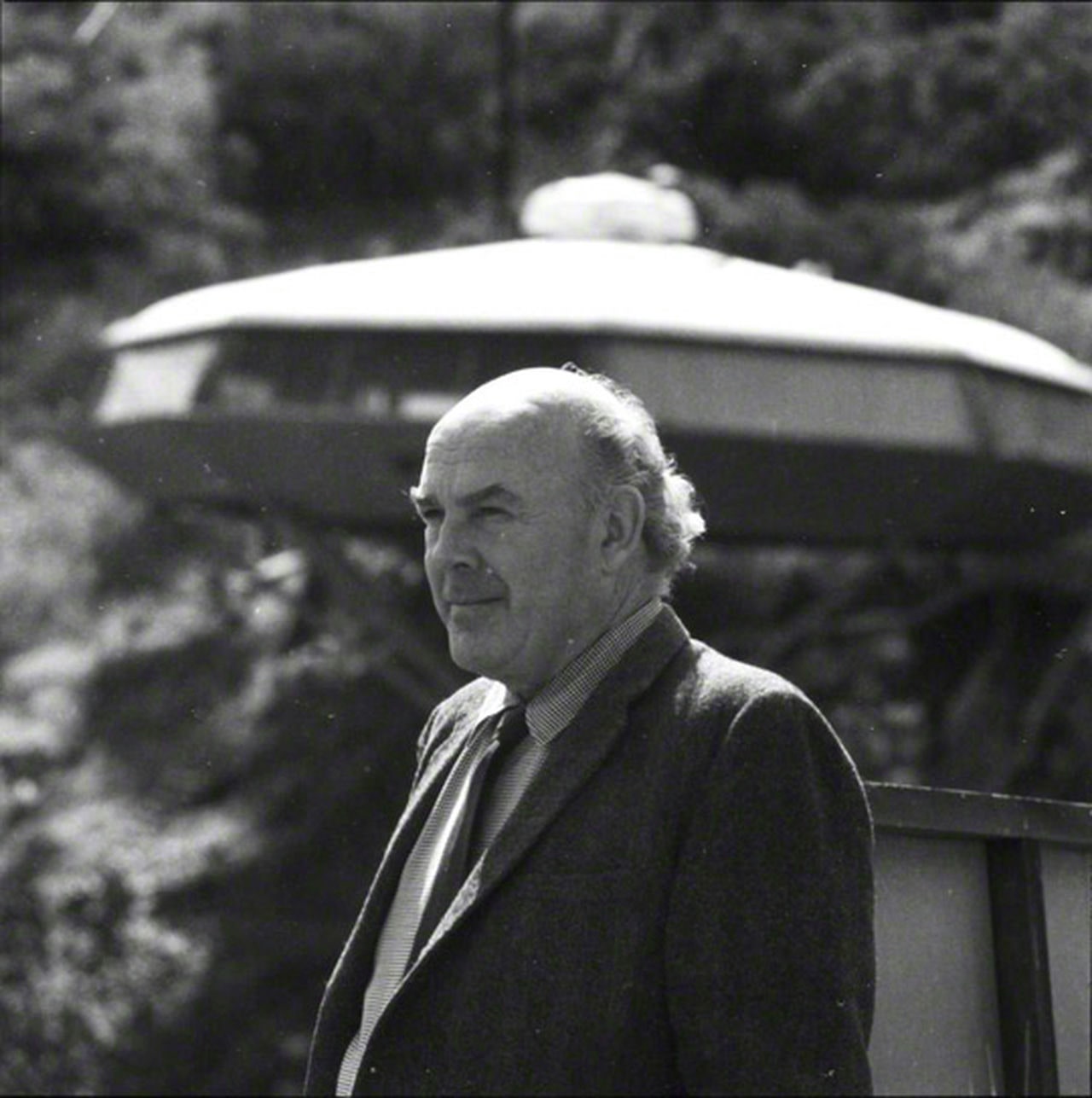
The Malin Residence, known as the Chemosphere, is one of John Lautner’s most recognized works and a landmark of futuristic residential architecture. Lautner completed the house in 1960 for Leonard Malin on a steep lot in the Hollywood Hills of Los Angeles. The structure takes the form of an octagonal pod elevated above the ground on a single concrete column and pedestal base. This configuration raises the living space above the slope, providing panoramic views while minimizing contact with the site. The Chemosphere is a private single-family dwelling that reflects mid-century modern experimentation with a space-age sensibility. Lautner used concrete, steel, wood, and glass to construct the Chemosphere. The central column and radial floor beams, made of concrete and steel, provide structural stability against earthquakes and wind loads despite the building’s unusual geometry. The exterior is composed mainly of glass panels that encircle the plan and fill the interior with natural light. Inside, the open-plan layout emphasizes spatial flexibility and outward views, complemented by built-in furniture that follows the octagonal geometry. The Malin Residence provided an unprecedented response to an extreme hillside site and became a Los Angeles architectural landmark that established Lautner’s reputation for structural innovation and formal experimentation.

02. Elrod House, Palm Springs
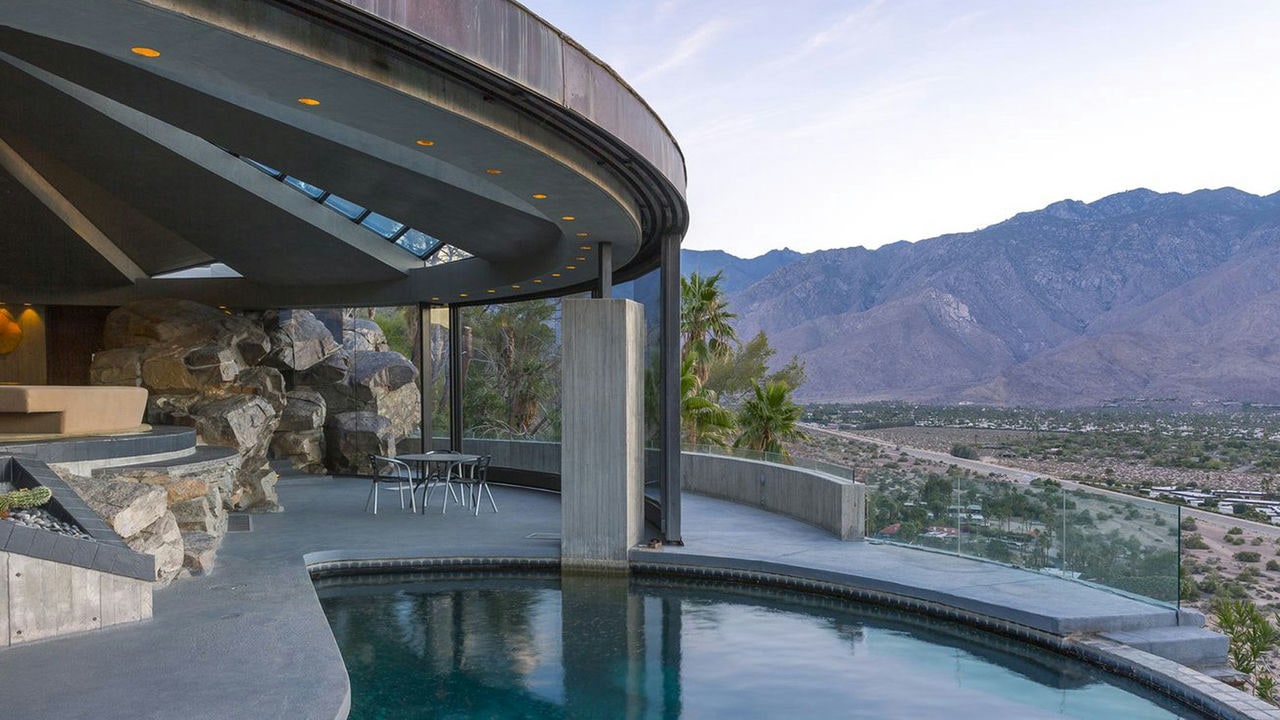
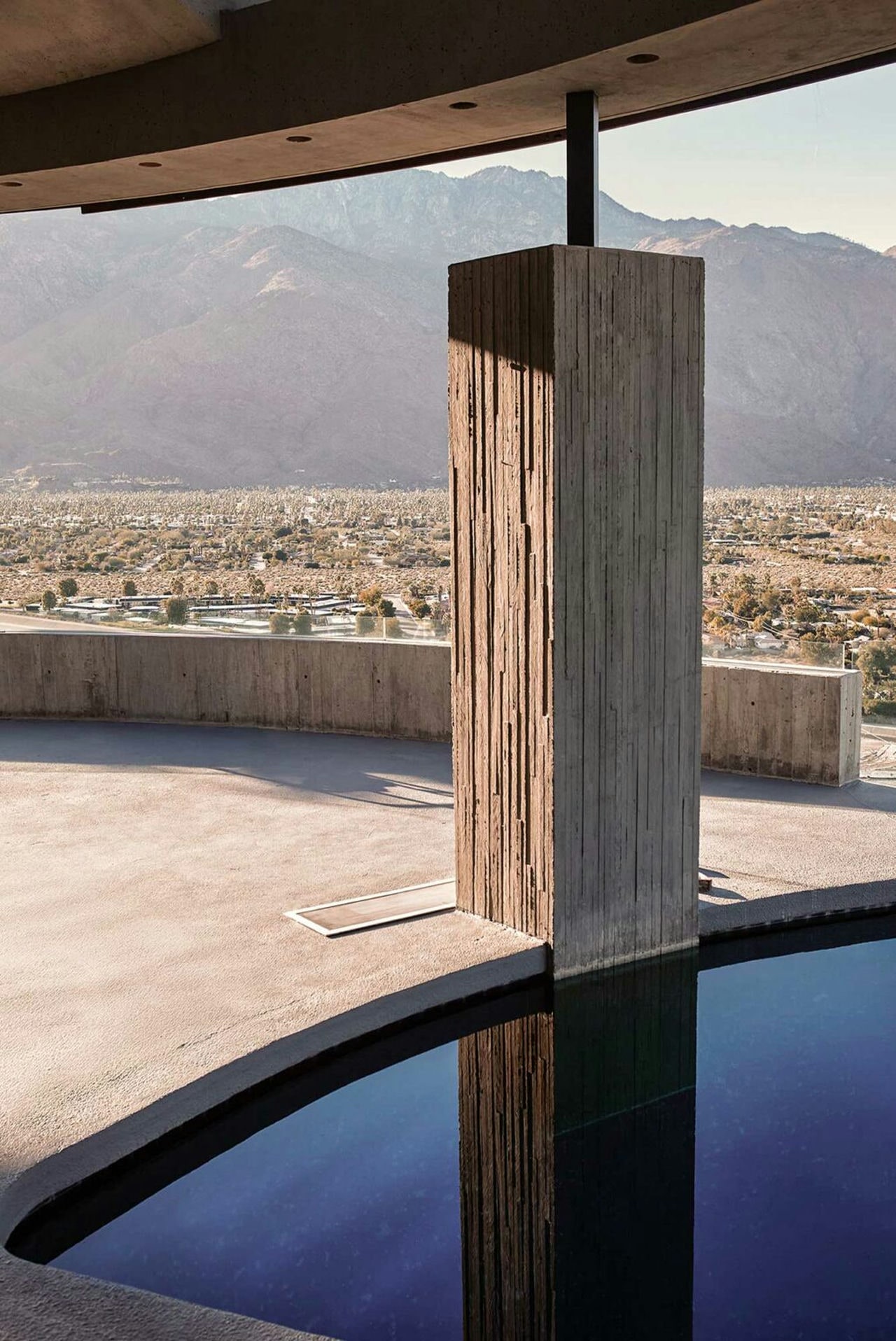
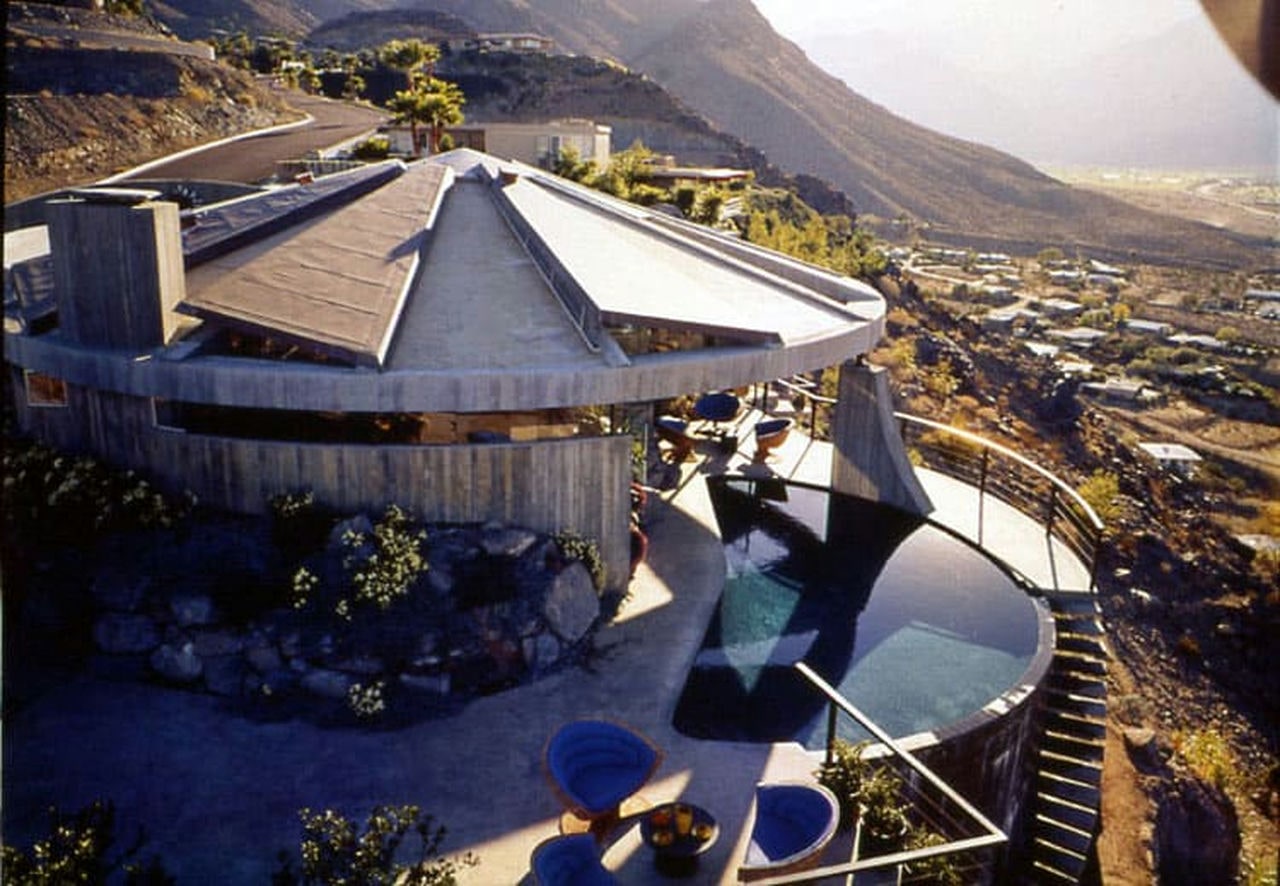
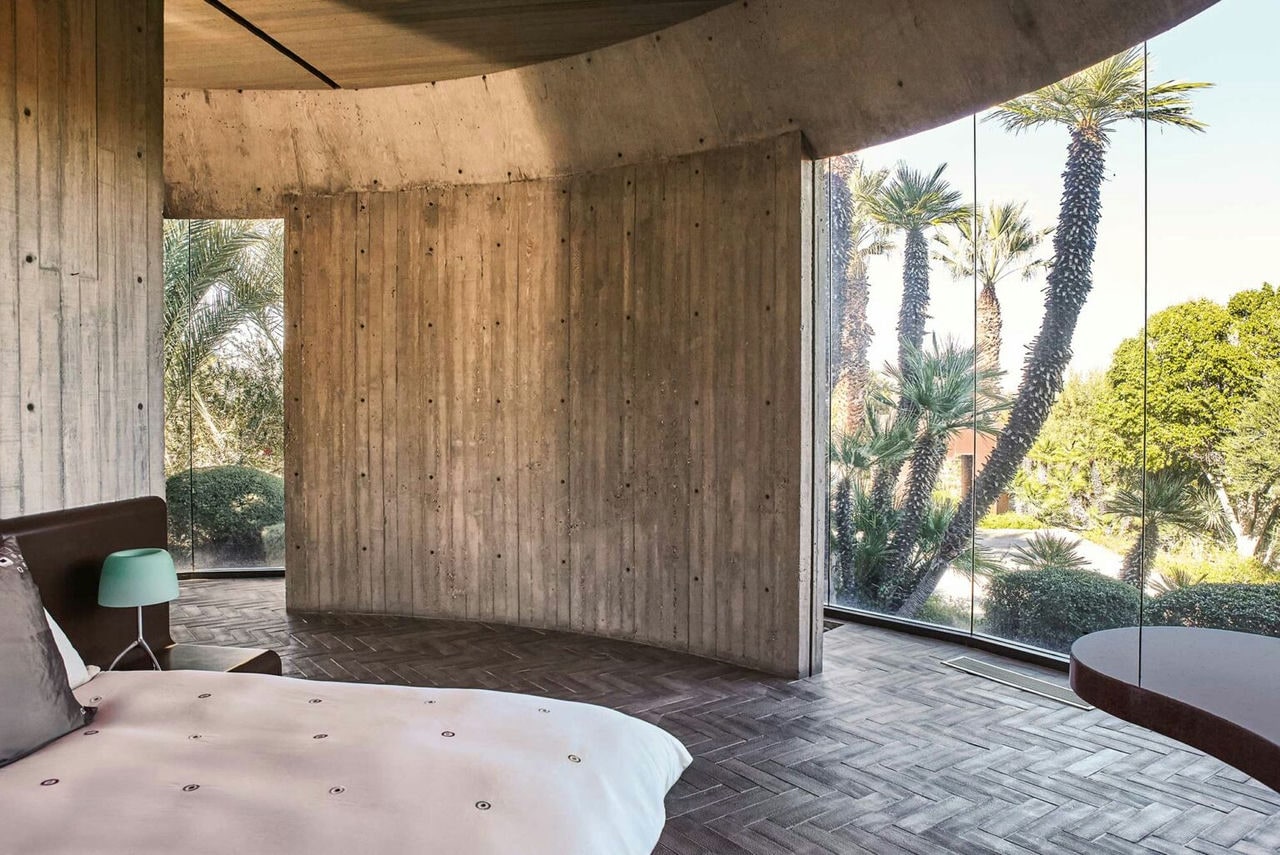
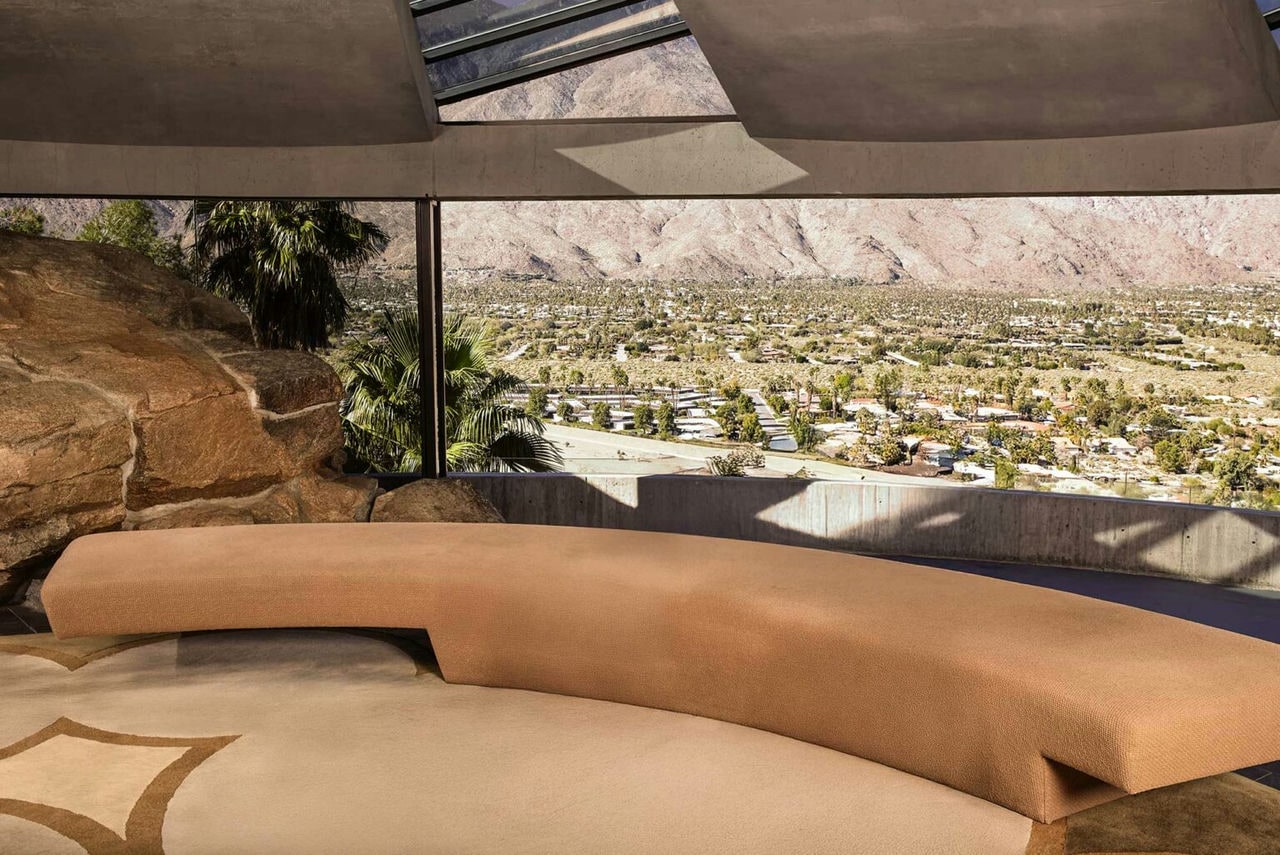
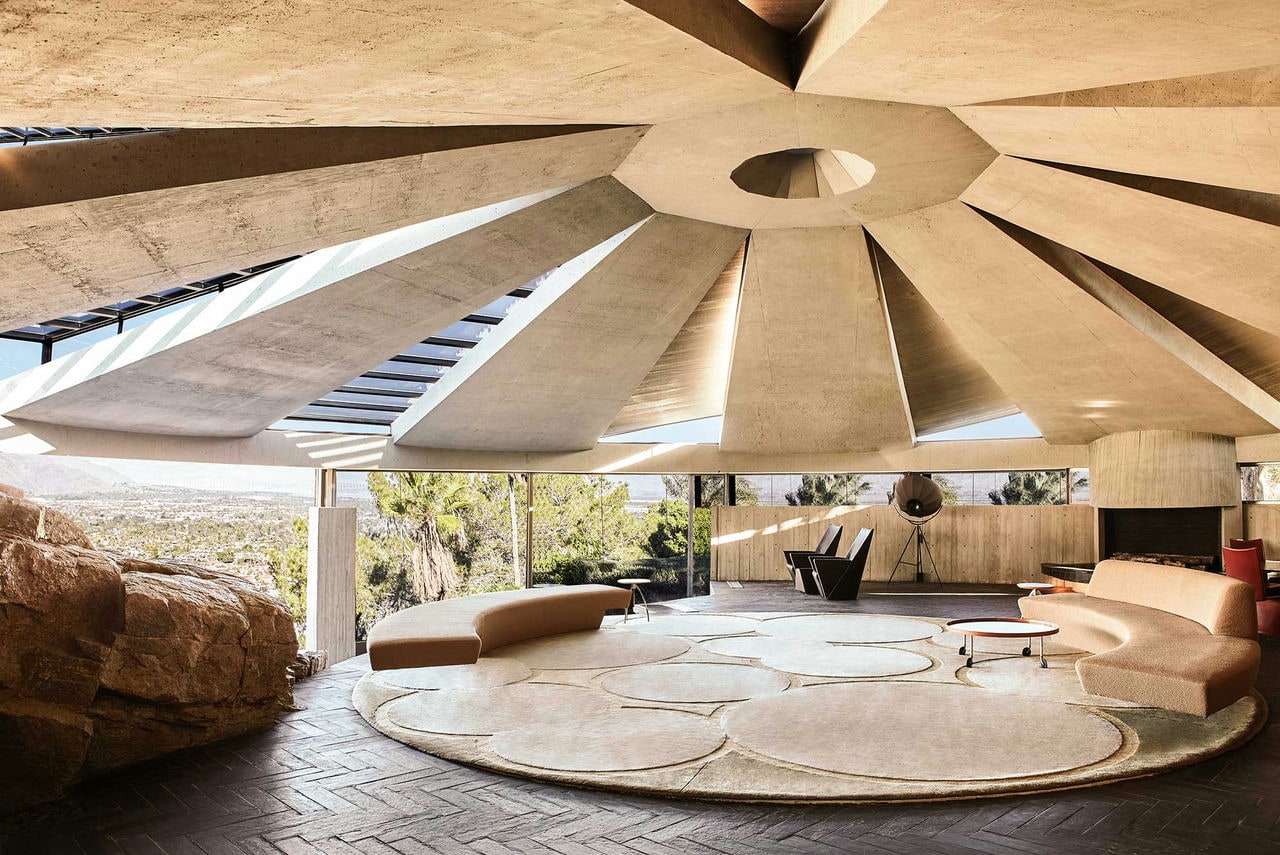
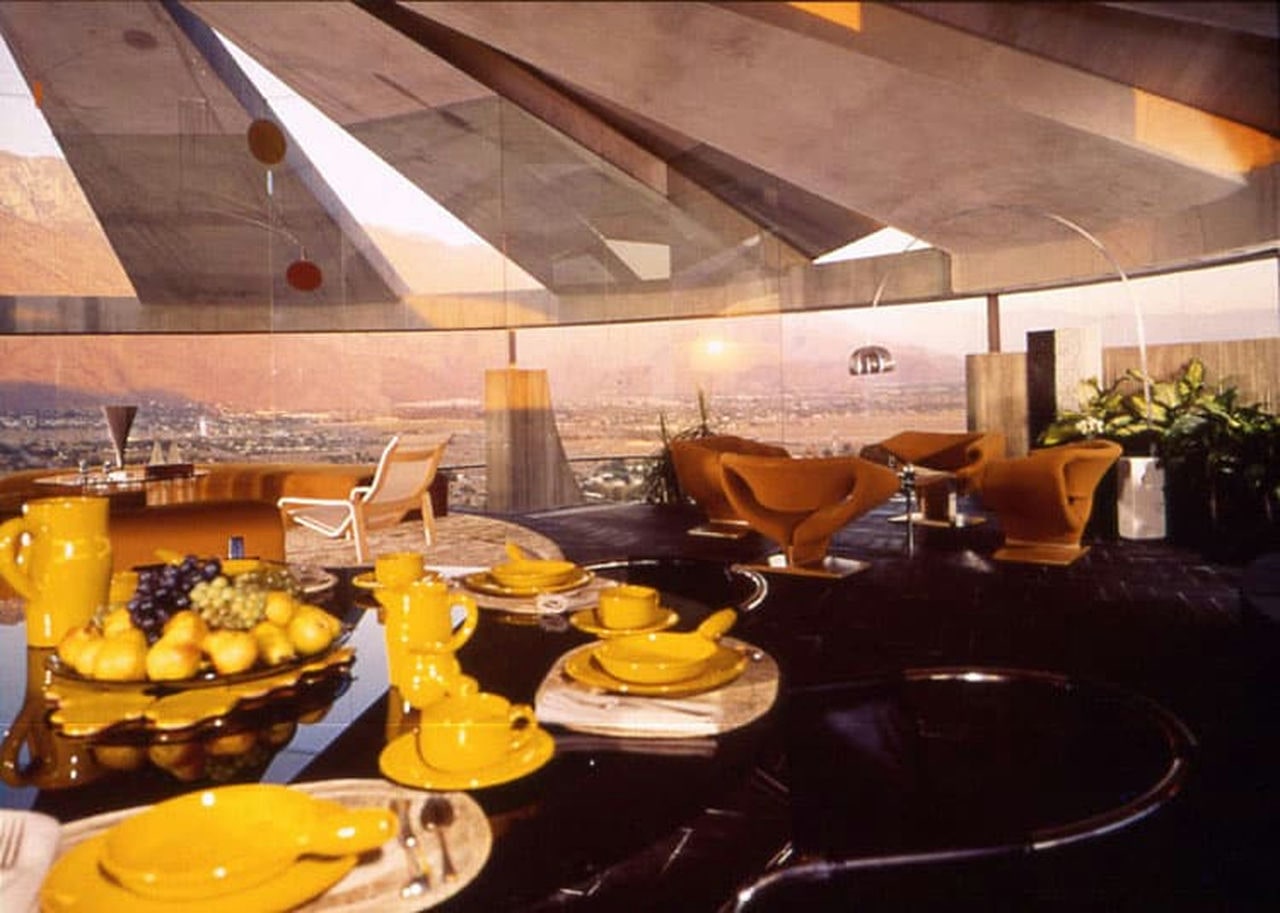
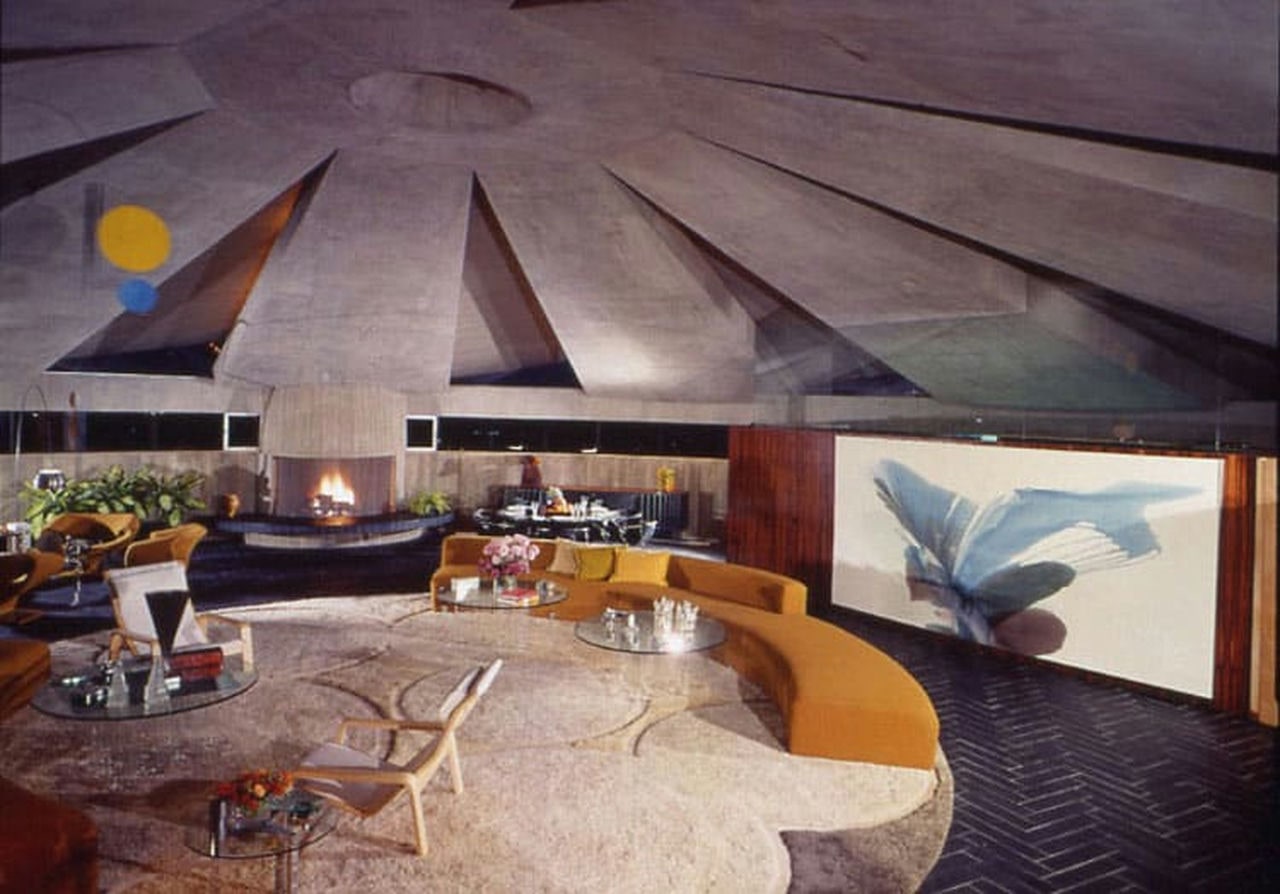
The Elrod House in Palm Springs, California, is one of John Lautner’s most recognized residential works, partly noted for its appearance in a James Bond film. Lautner designed the house for interior designer Arthur Elrod, completing it in 1968 on a rocky hillside overlooking the desert valley. The residence is a private single-family dwelling defined by its concrete domed roof that shelters the main living area. The dome contains wedge-shaped openings that direct patterned sunlight into the space. Beneath the sweeping roof, the circular living room includes curved glass walls that slide open to connect the interior with a semicircular swimming pool and terrace. Lautner’s design for the Elrod House demonstrates organic architecture adapted to an arid landscape. He used concrete and native stone, integrating large boulders from the site into the interior as structural and spatial elements. The design merges the house with its environment; the living space extends into the rocky terrain, and natural formations serve as interior walls and furniture. Extensive glazing and a radial floor plan maximize views of the surrounding mountains and desert. The Elrod House became a defining example of desert modernism in Palm Springs, uniting structural ingenuity with topographic sensitivity and serving as a backdrop for popular culture, notably in the 1971 James Bond film Diamonds Are Forever.
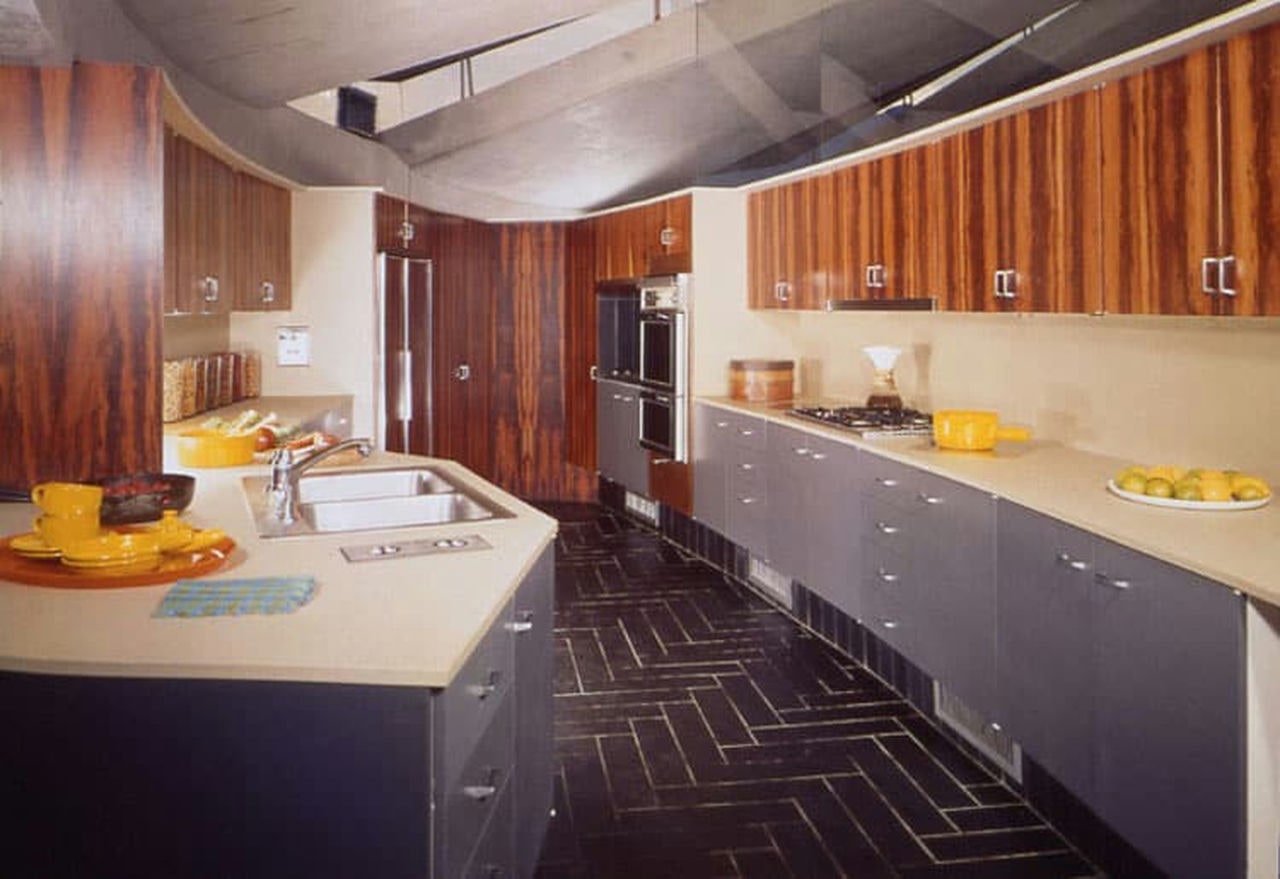
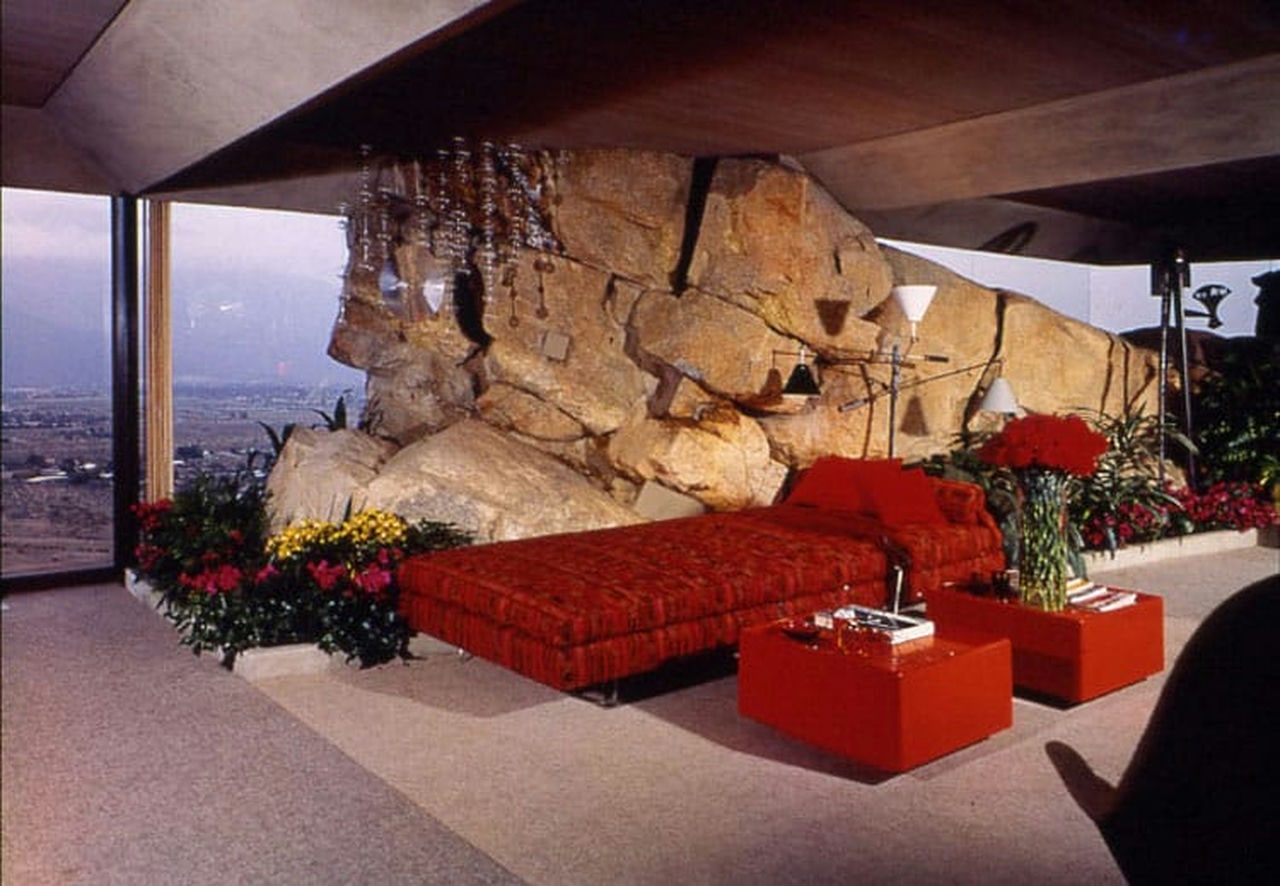
03. Sheats-Goldstein House, Los Angeles
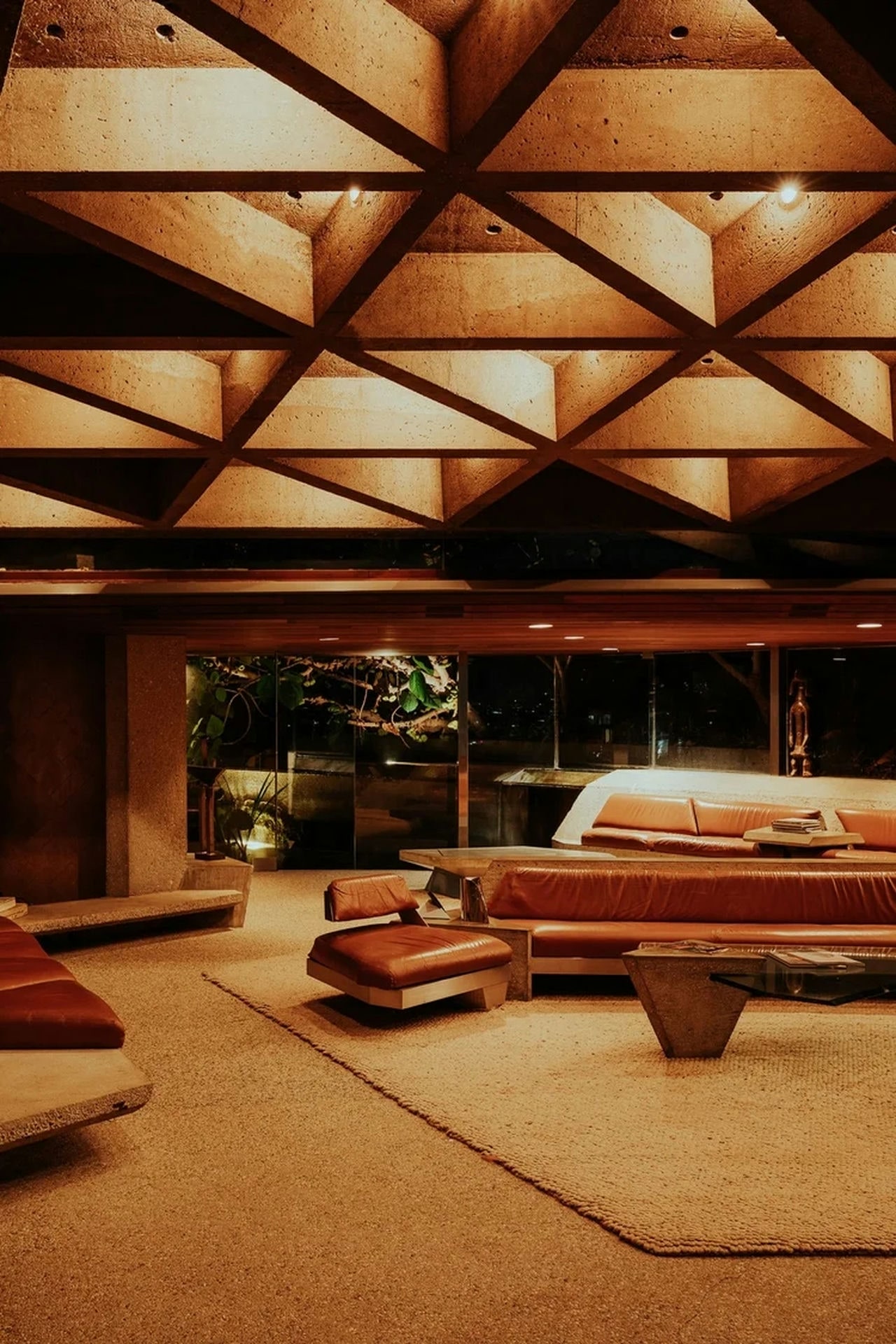
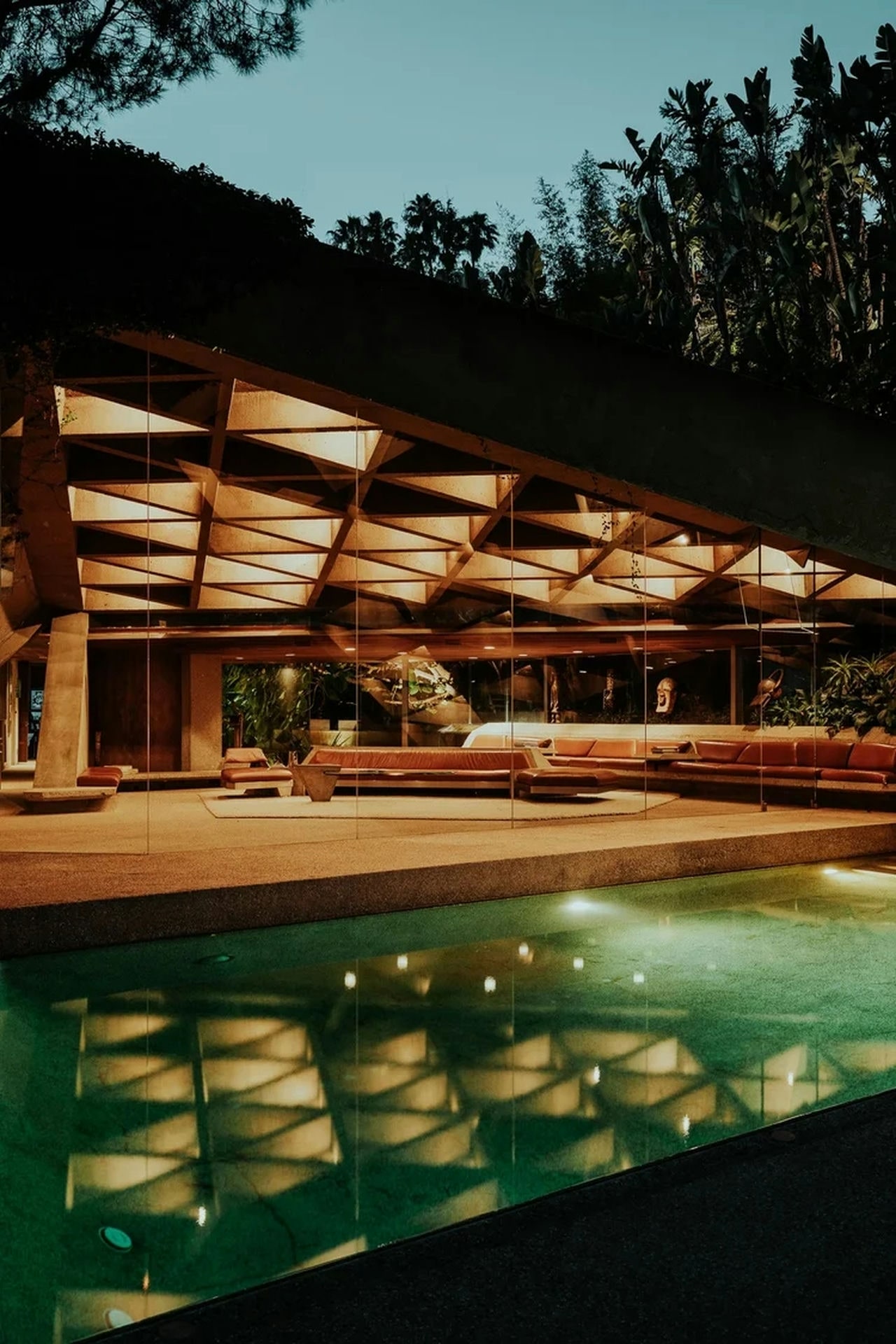
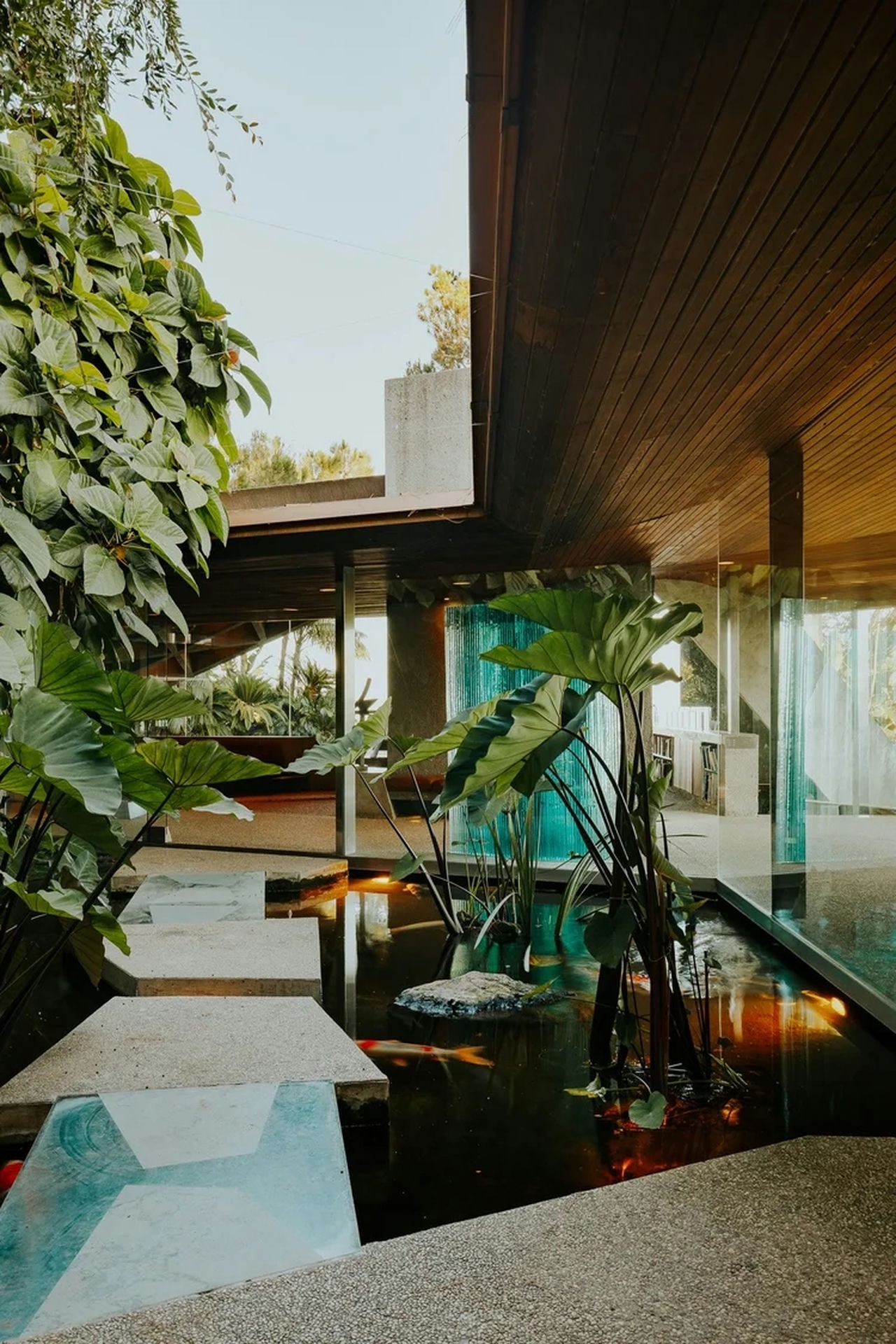
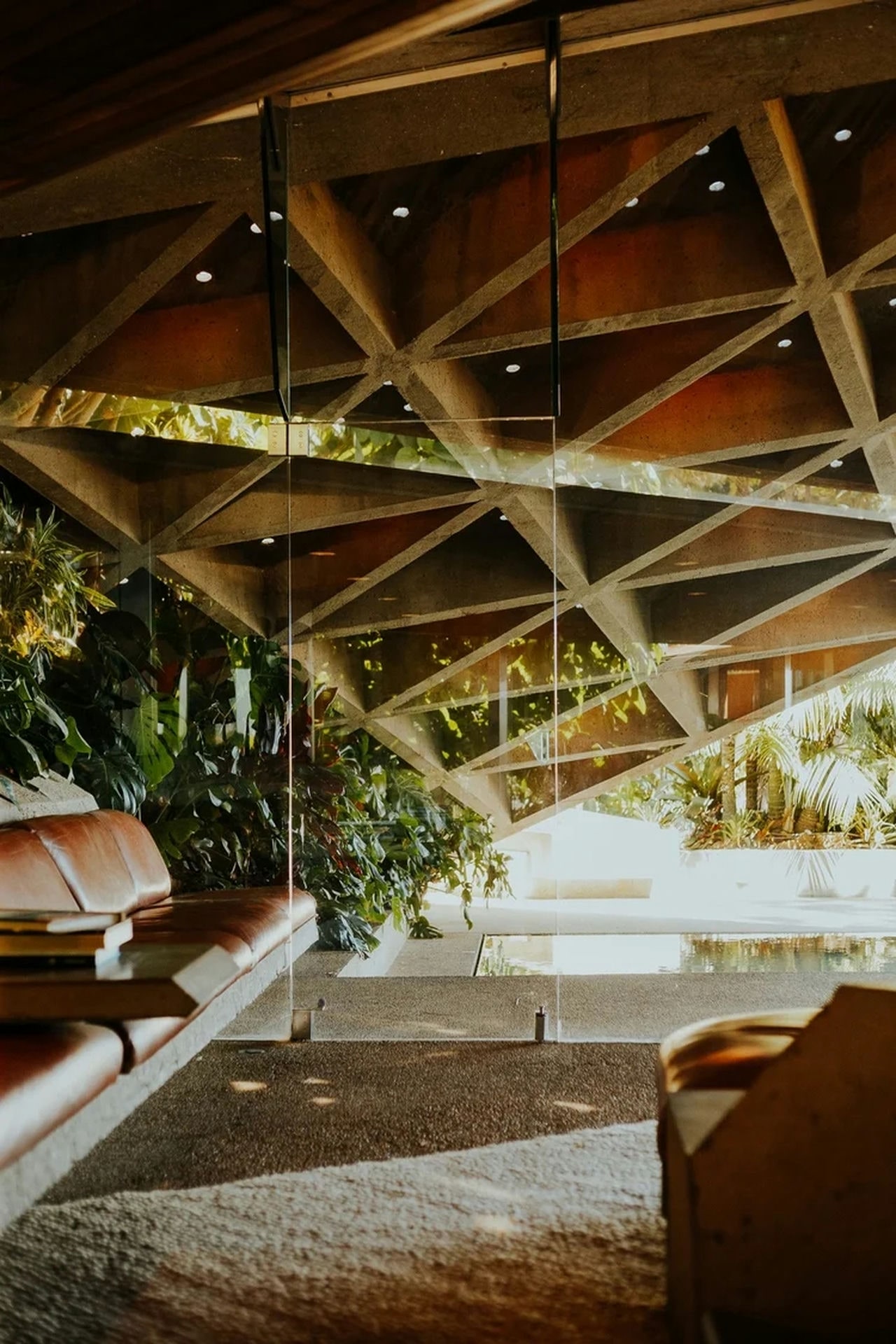
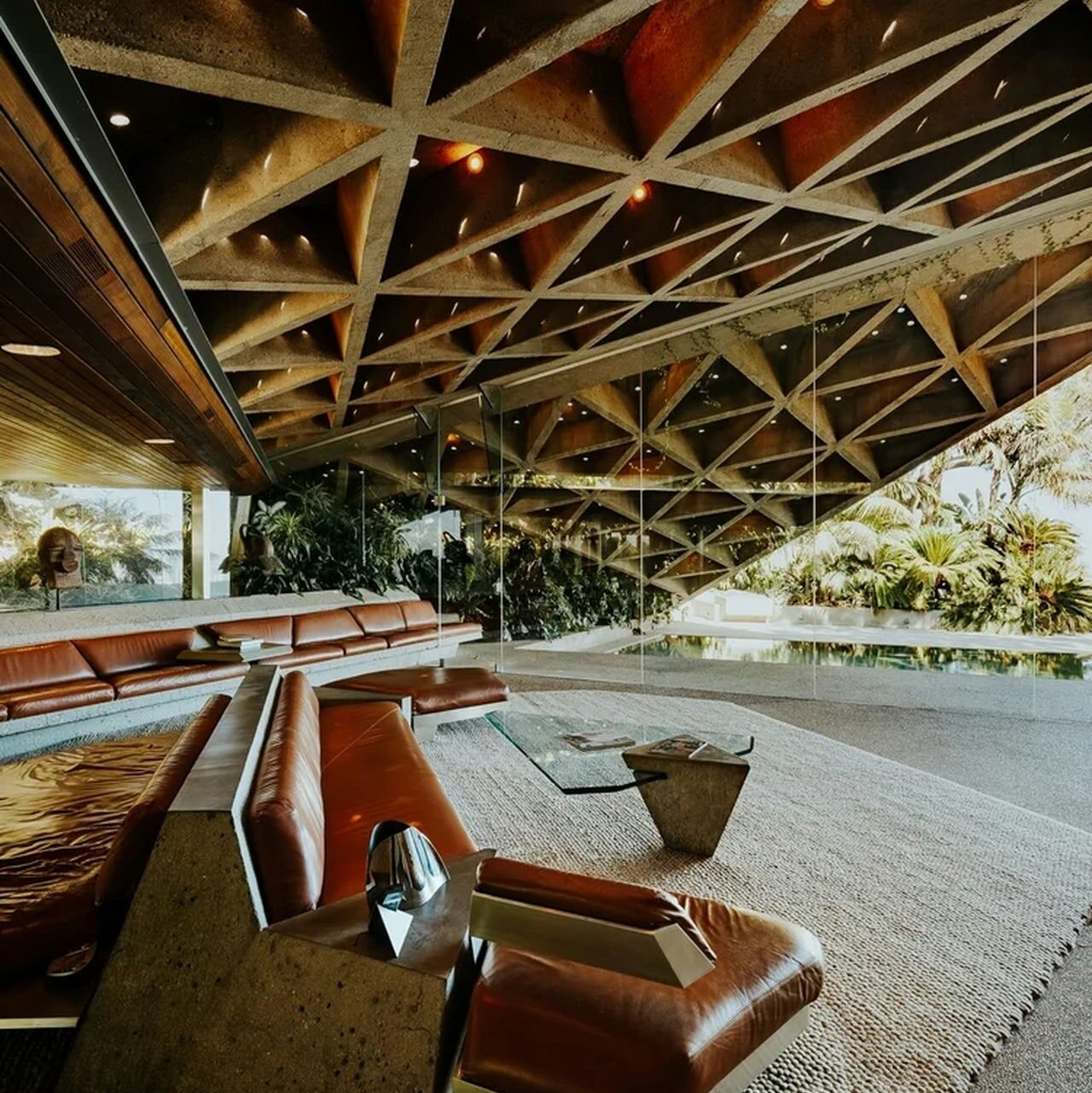
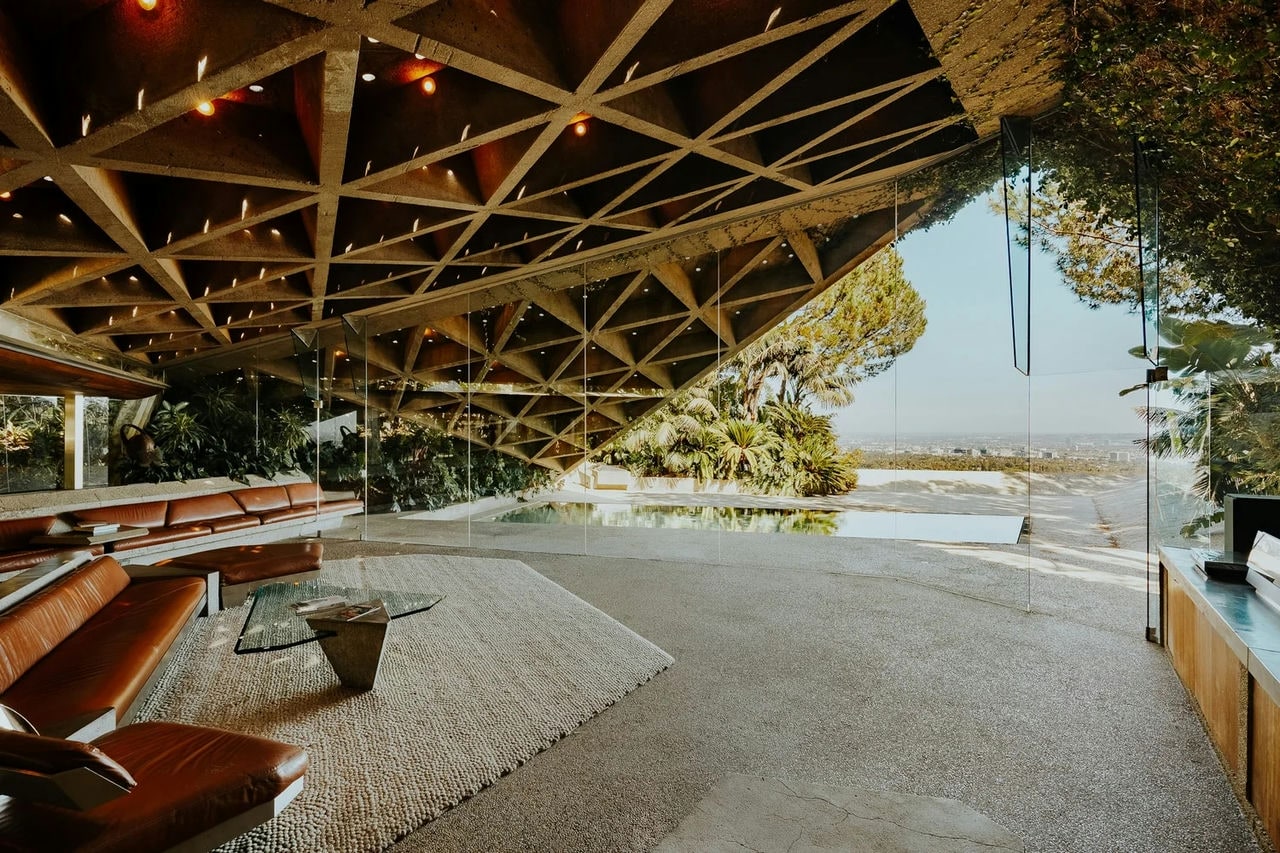
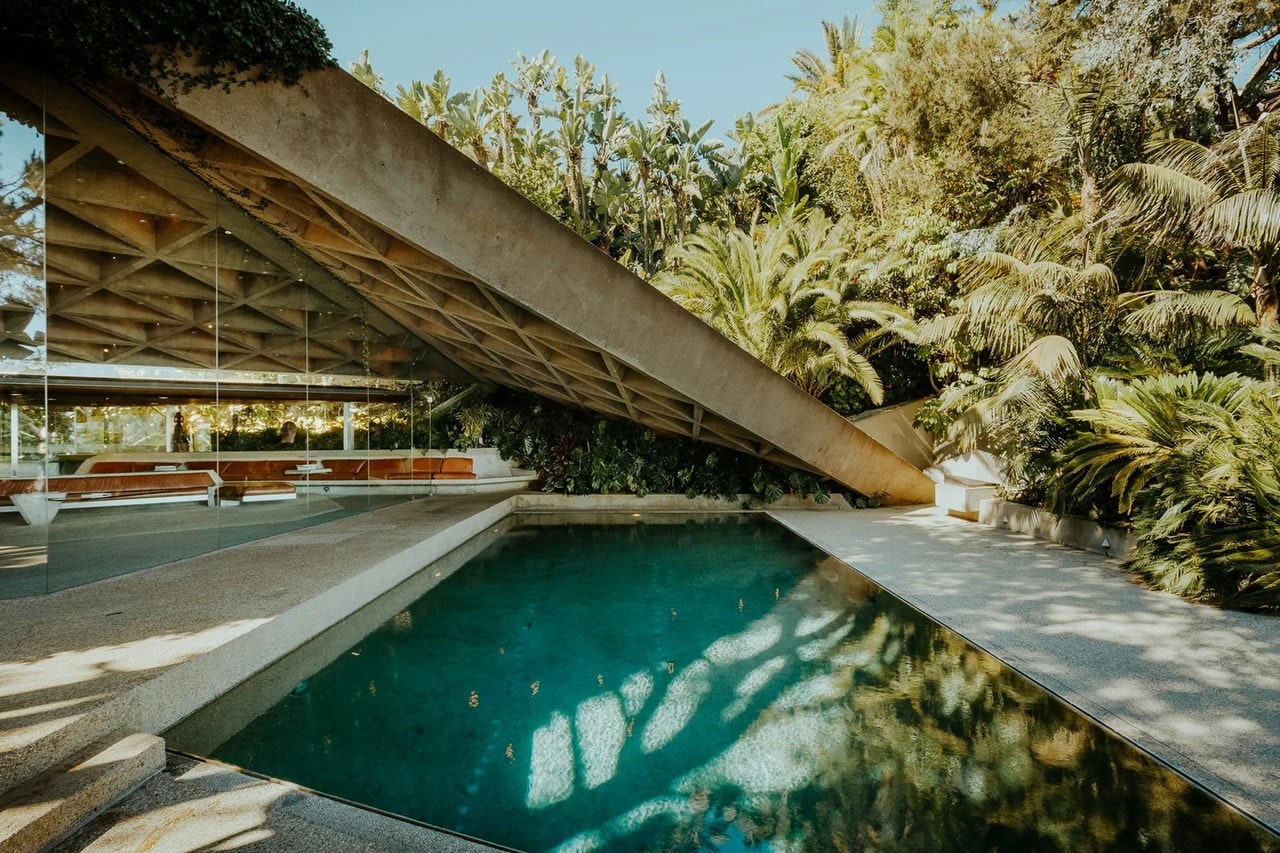
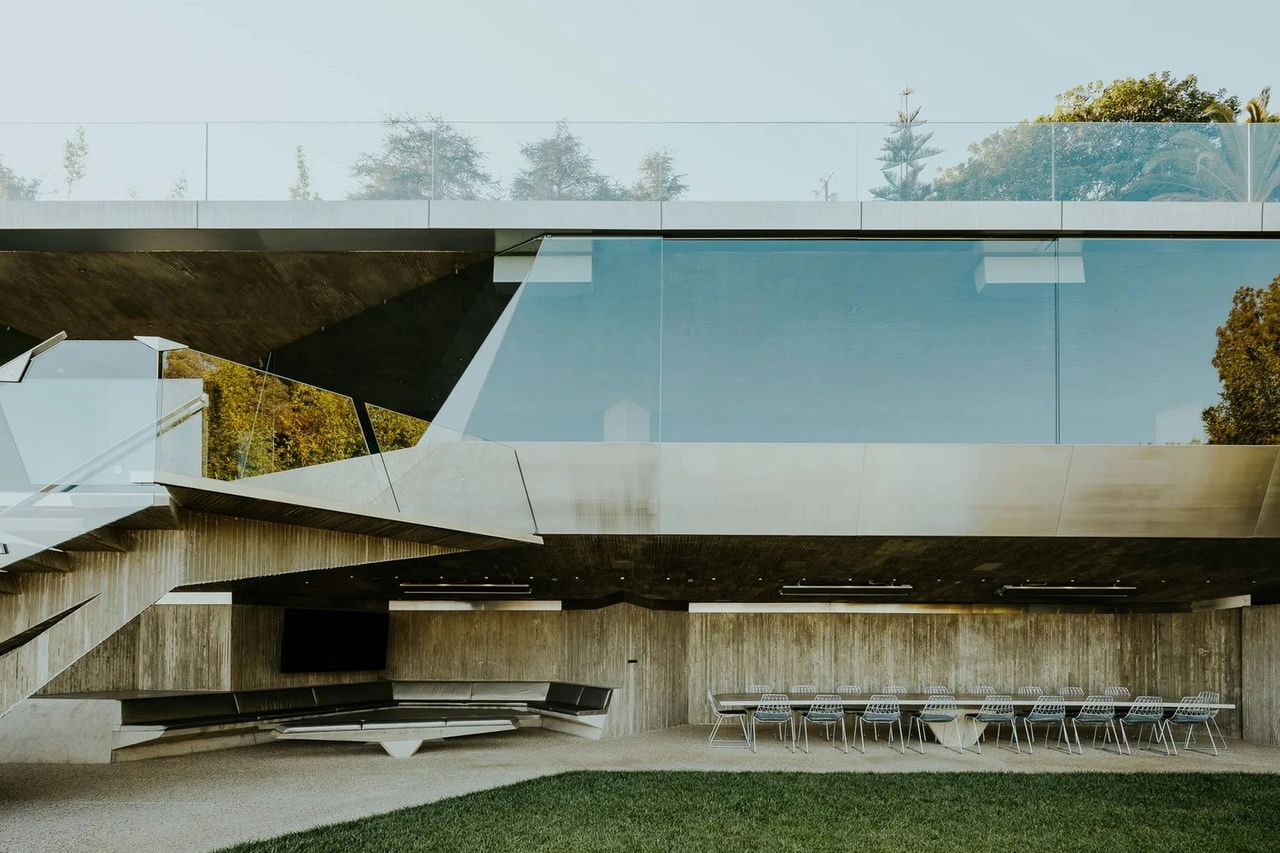
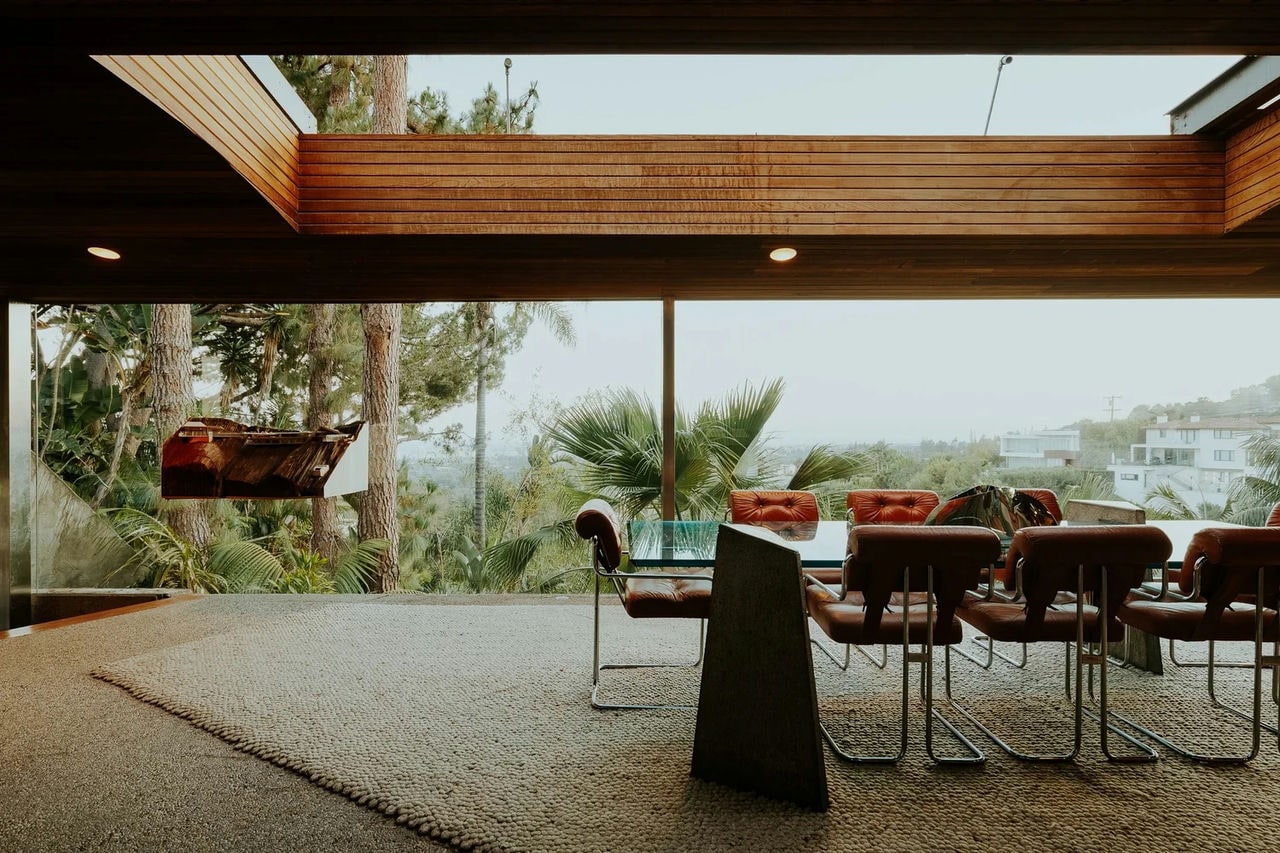
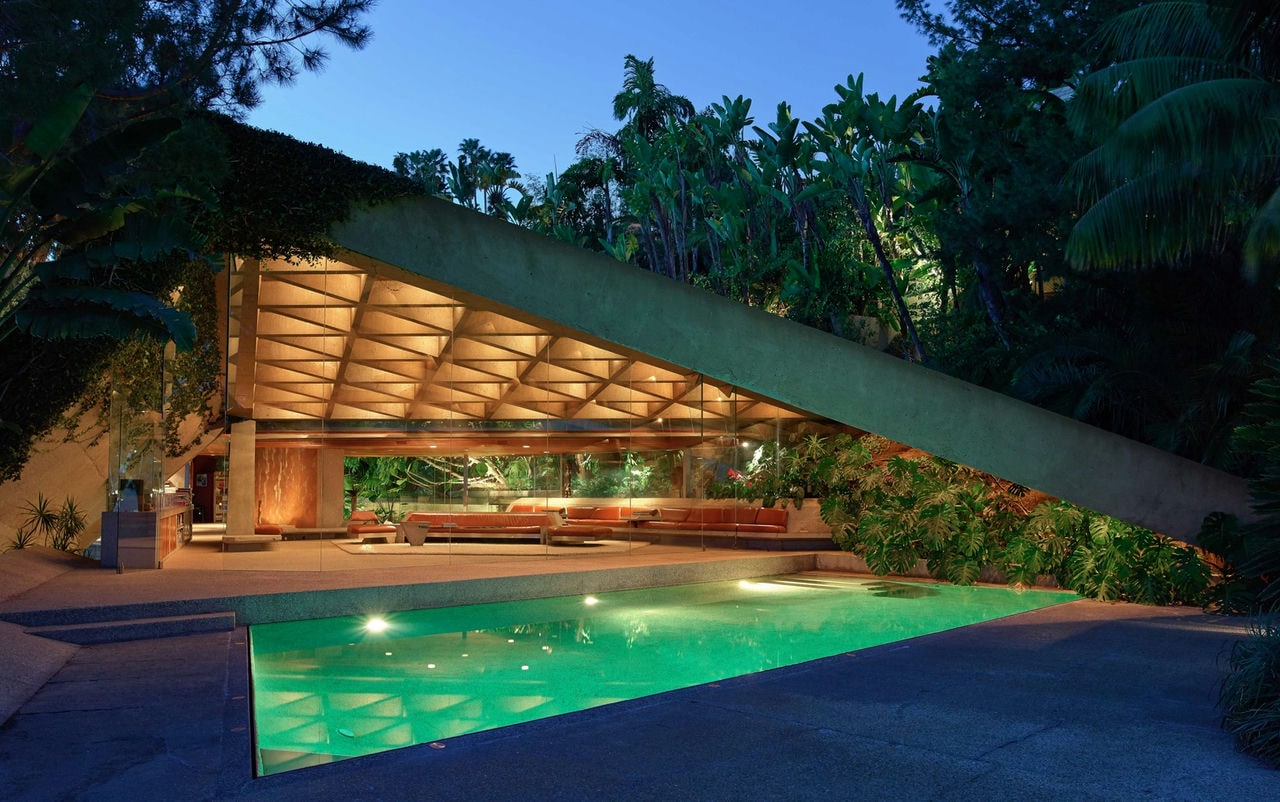
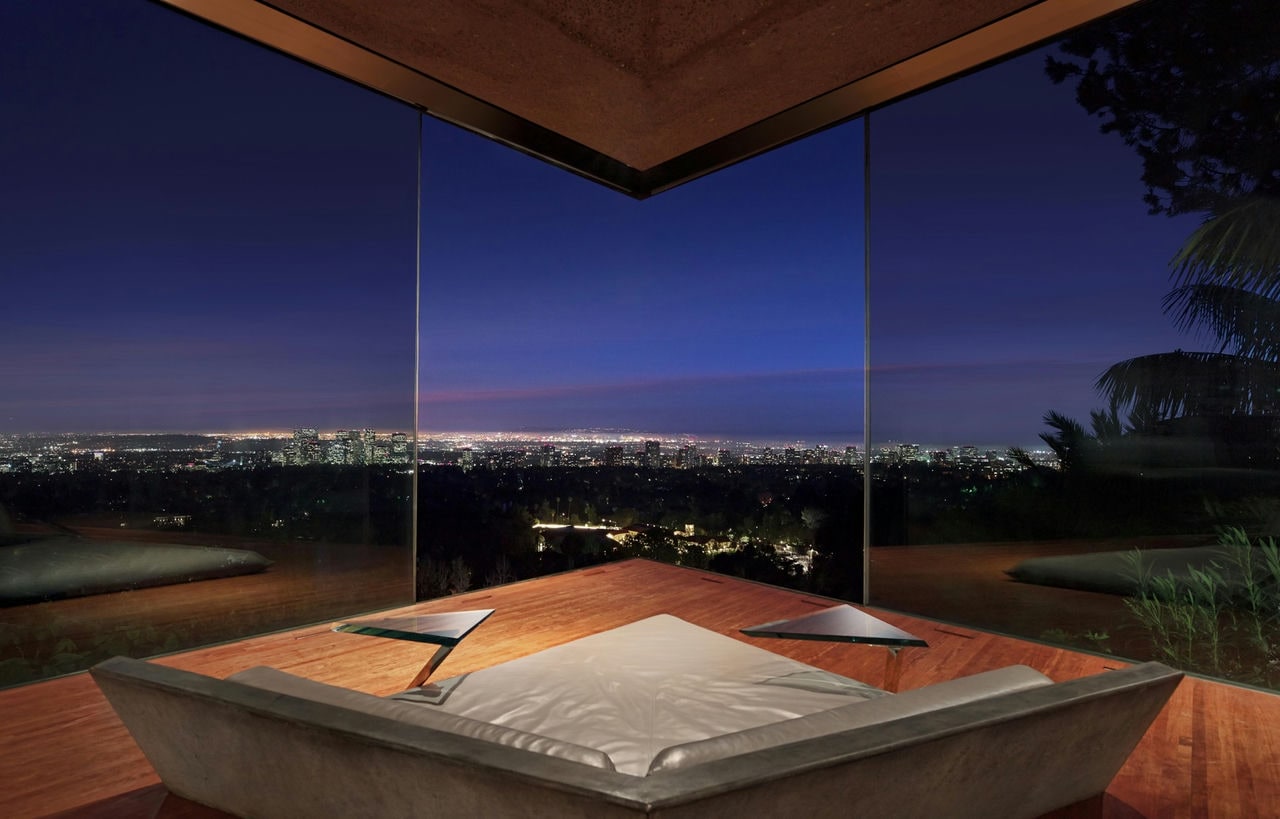
The Sheats-Goldstein House in the Beverly Hills area of Los Angeles is a concrete and glass residence that demonstrates John Lautner’s ability to integrate architecture with the landscape. Lautner designed the house for Paul and Helen Sheats, completing it in 1963; it was later acquired by James Goldstein, whose name became closely associated with the property. The structure is embedded in a steep hillside, with much of its form set into the earth. Its design includes a coffered concrete ceiling that slopes toward a large triangular opening above the main living area, producing dynamic light and shadow. The living space opens entirely to the exterior through sliding glass walls that lead to a terrace and an infinity-edge pool extending visually into the canyon below. Lautner constructed the house using cast-in-place concrete, steel, wood, and glass to achieve an organic yet modern spatial character. The interiors include custom-built-in furniture and distinctive detailing; portions of the roof are punctured with patterned openings that diffuse daylight throughout the space. Although a private residence, the house serves as an architectural experiment exploring spatial continuity, acoustics, and the integration of art—the current owner collaborated with artist James Turrell on a skyspace installation. The Sheats-Goldstein House became a Los Angeles architectural landmark, recognized for its futuristic atmosphere. It has appeared in films and fashion photography, notably as a setting in The Big Lebowski, and was bequeathed to the Los Angeles County Museum of Art for preservation as part of its architectural collection.
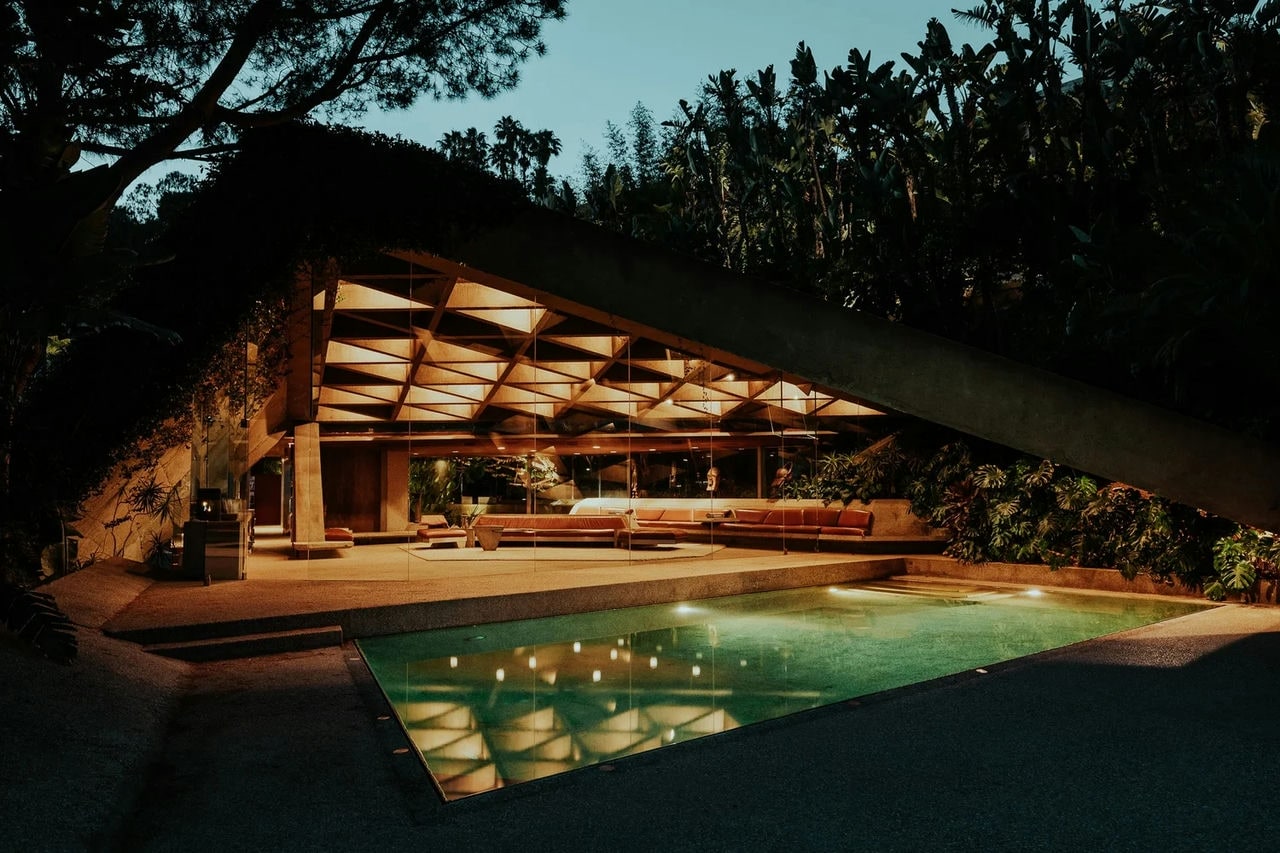
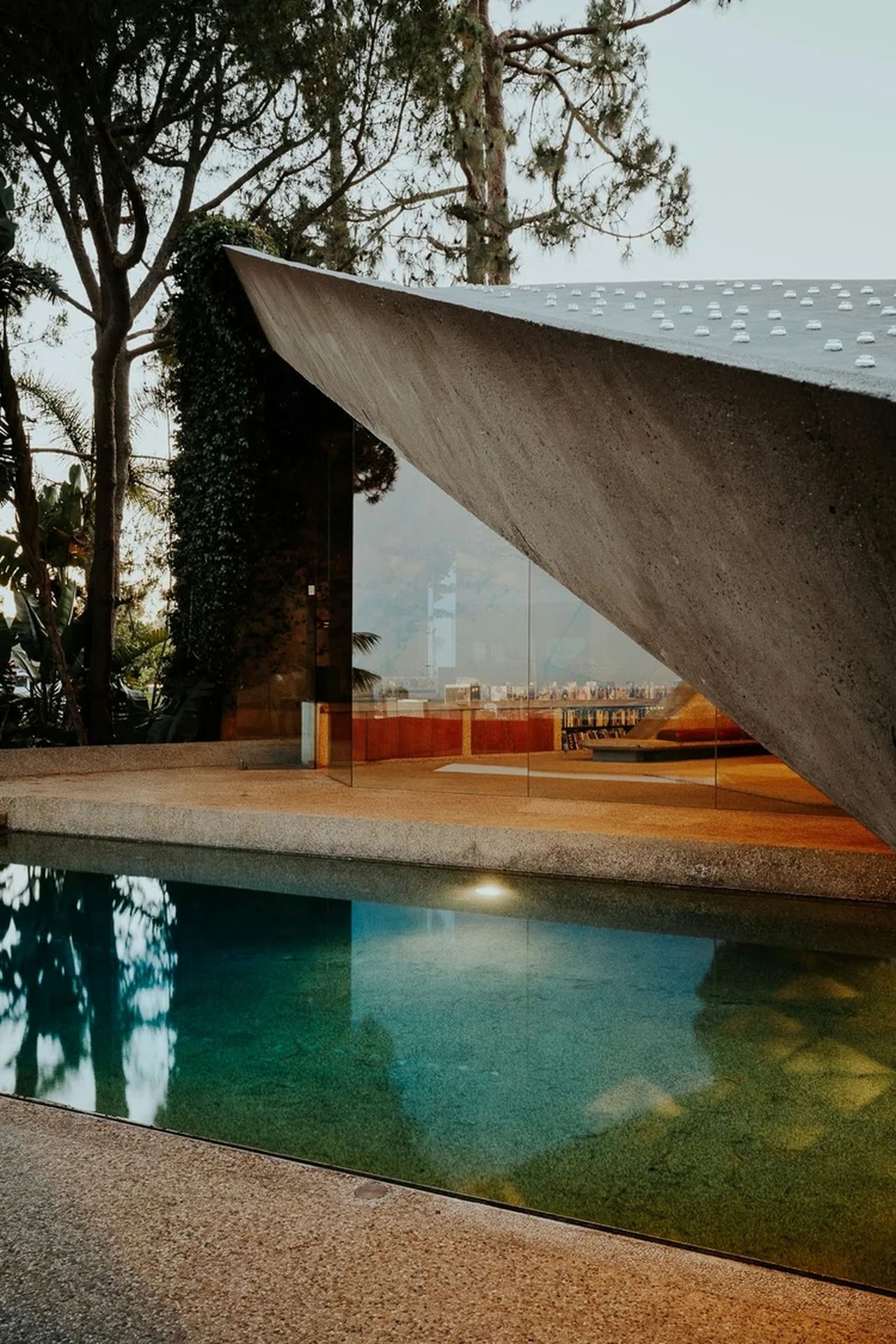



04. Reiner-Burchill Residence (“Silvertop”), Los Angeles
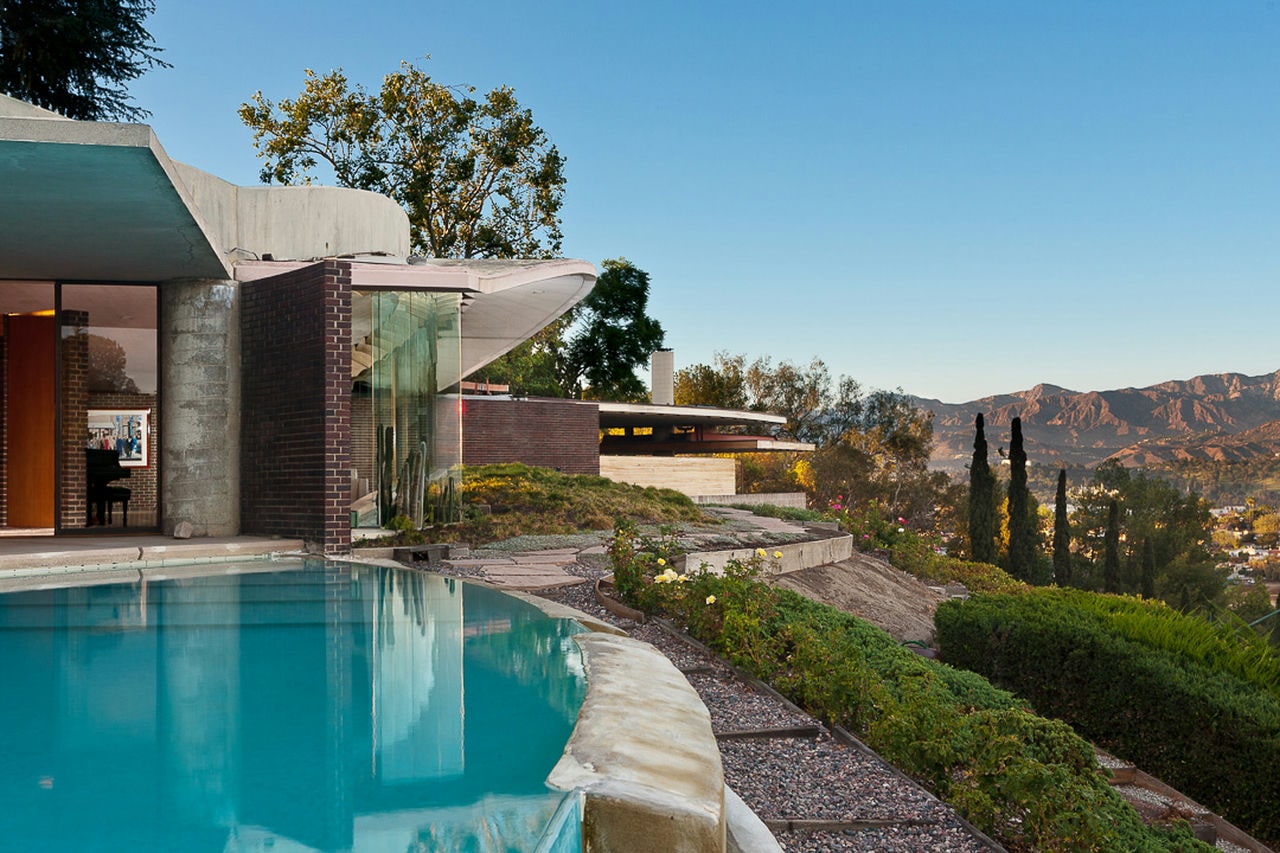
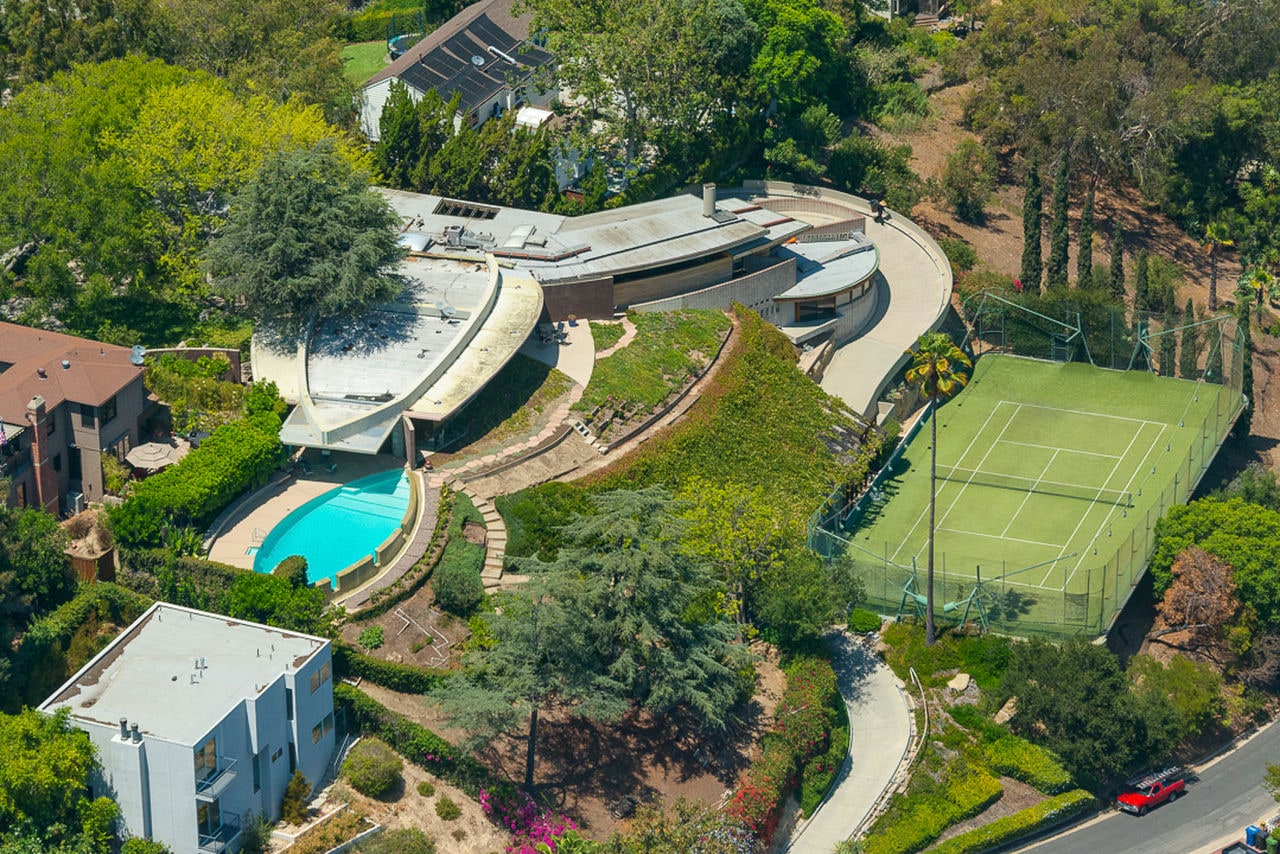
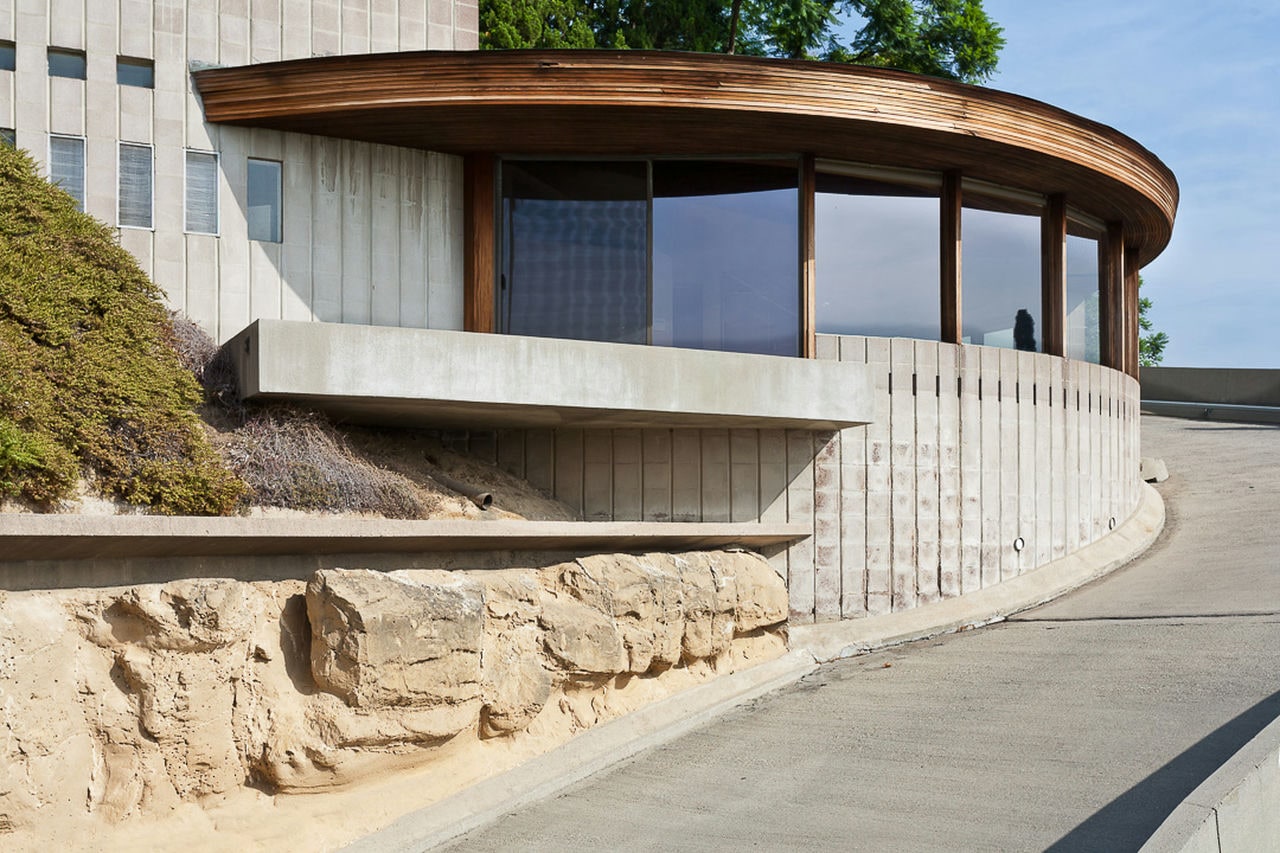
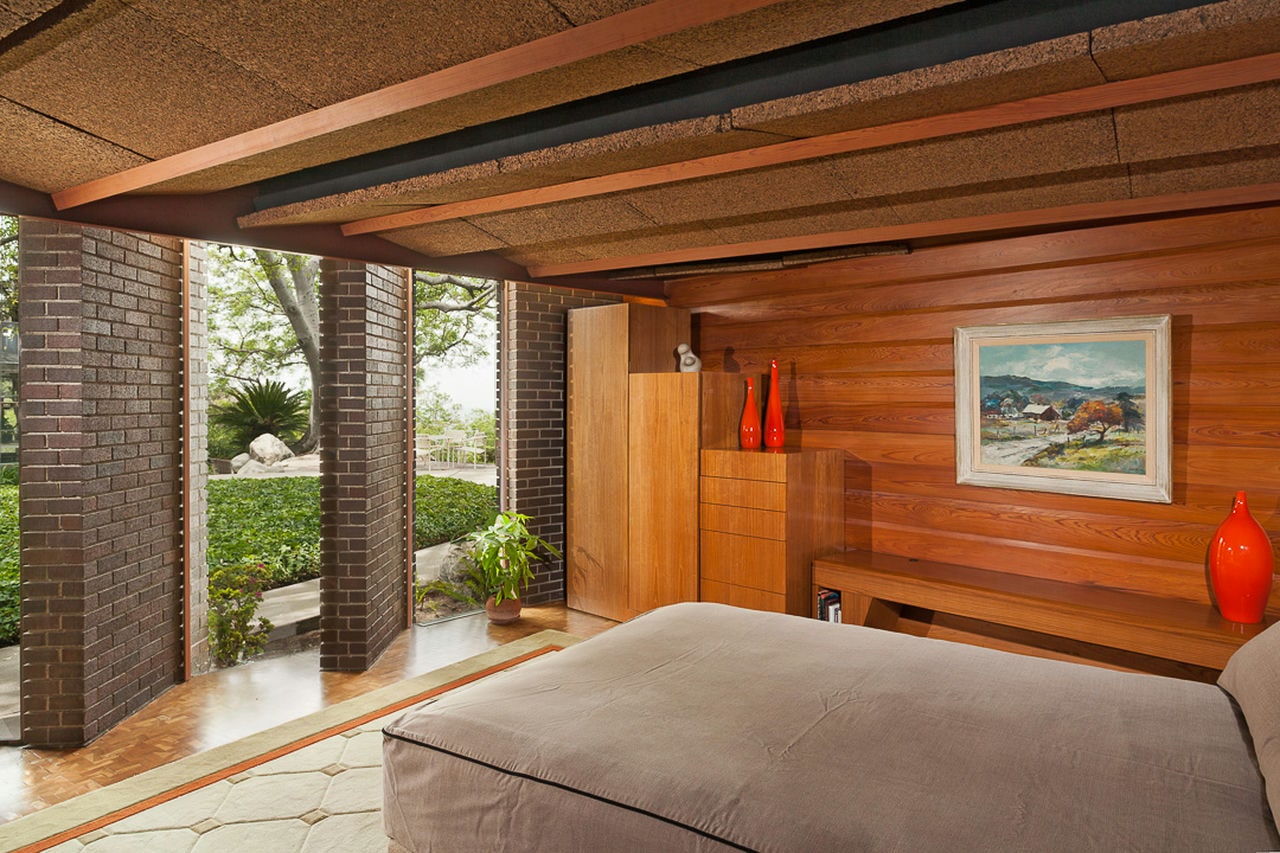
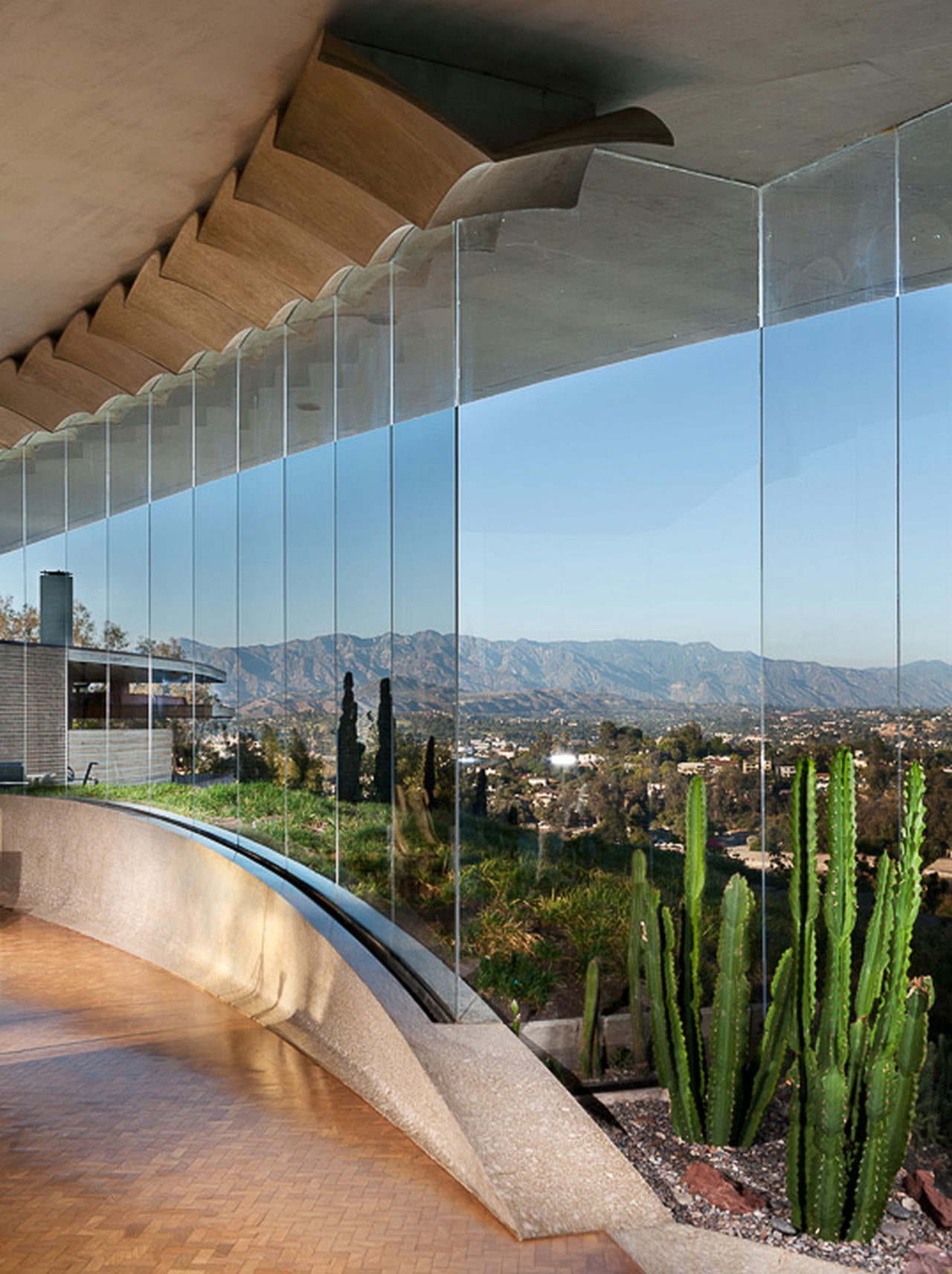
The Reiner-Burchill Residence, known as Silvertop for its distinctive concrete roof, is a key example of John Lautner’s structural innovation. The house occupies a hillside site in Los Angeles’s Silver Lake neighborhood. It was commissioned by inventor Kenneth Reiner in the 1950s and largely completed by 1963; decades later, a new owner, Jack Burchill, oversaw its completion, giving the house its hyphenated name. Silvertop is a private residence featuring one of the earliest ultra-thin concrete shell roofs built for a domestic structure. The roof’s curved form spans the building like a cantilevered wing, appearing to float above the interior and producing the silvery-gray effect that inspired its name. Architecturally, the Reiner-Burchill Residence combines advanced engineering with refined domestic space. Lautner’s design includes a cantilevered concrete driveway and an infinity-edge swimming pool—features considered pioneering at the time. The façade facing the reservoir is lined with broad glazing beneath the roof’s arch, framing views of Silver Lake and the Los Angeles skyline. The house is built primarily from concrete and steel, with large glass panels that open to surrounding terraces. Inside, a continuous, curvilinear plan and integrated furniture express Lautner’s forward-looking approach; the original client even installed an early electronic home control system in the 1960s. Silvertop’s restoration in the 2010s renewed attention to this project, affirming its importance as a landmark of experimental mid-century residential architecture.
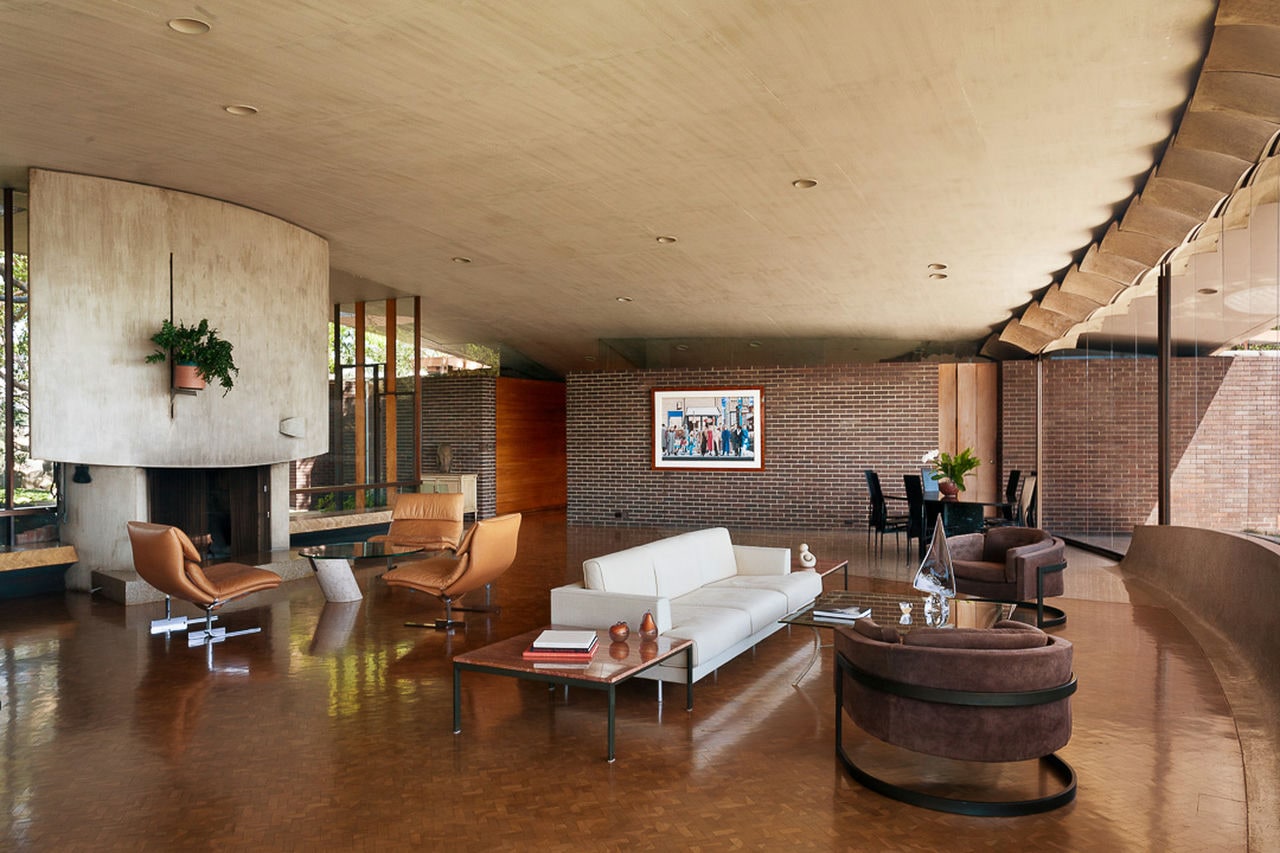
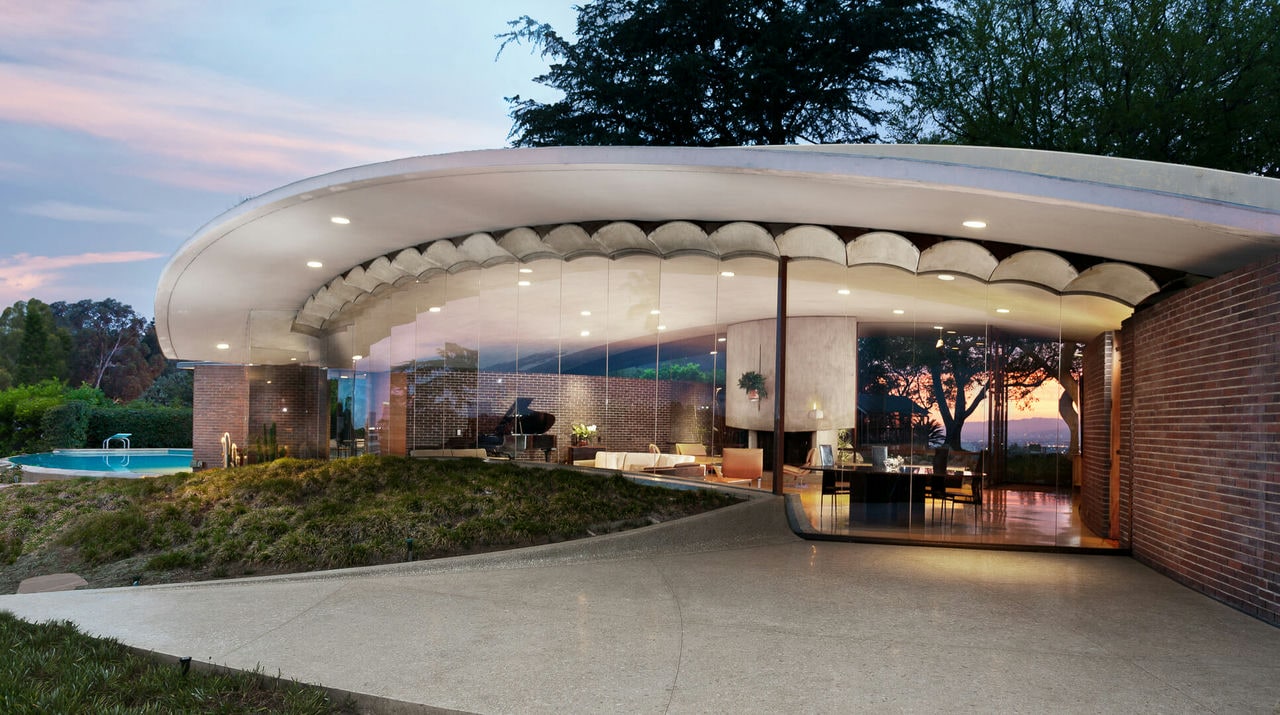
05. Hope Residence (Bob Hope House), Palm Springs
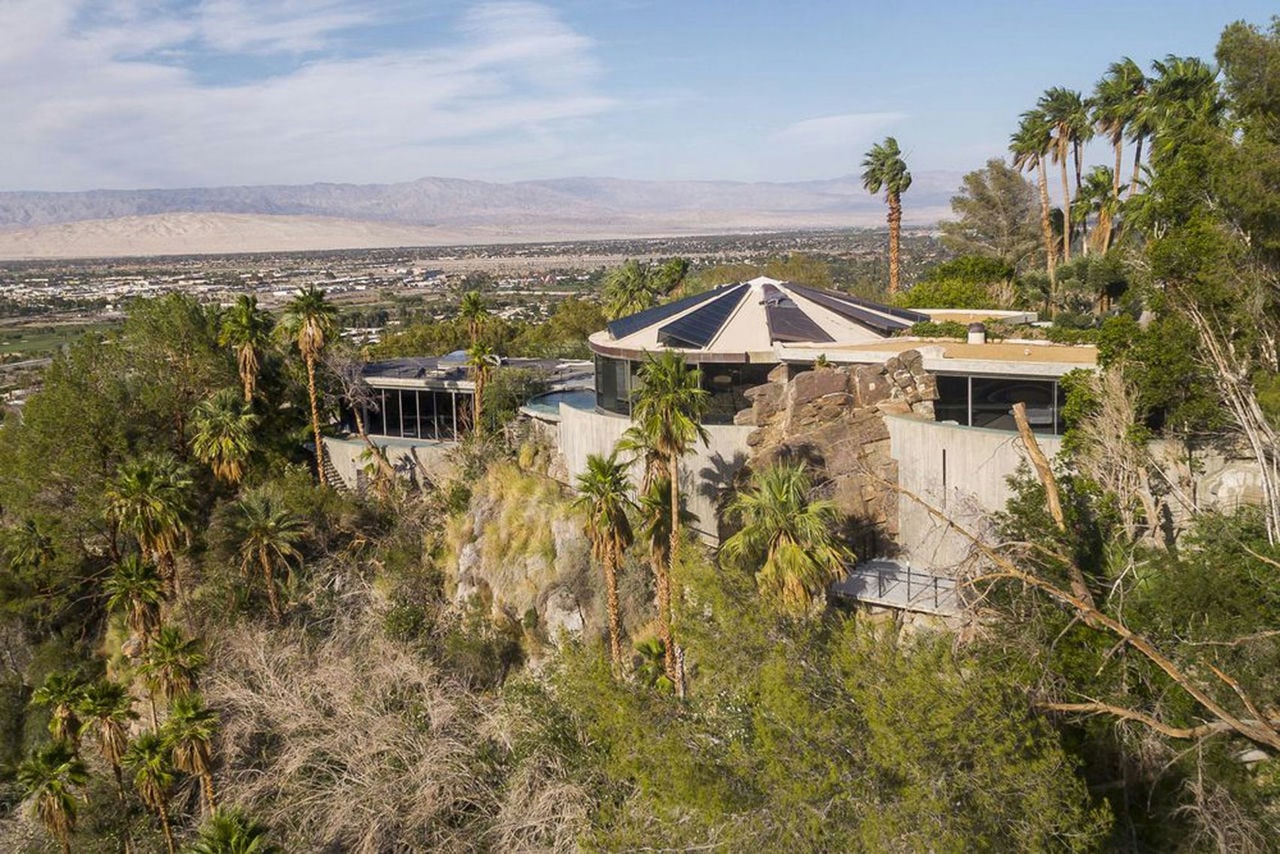
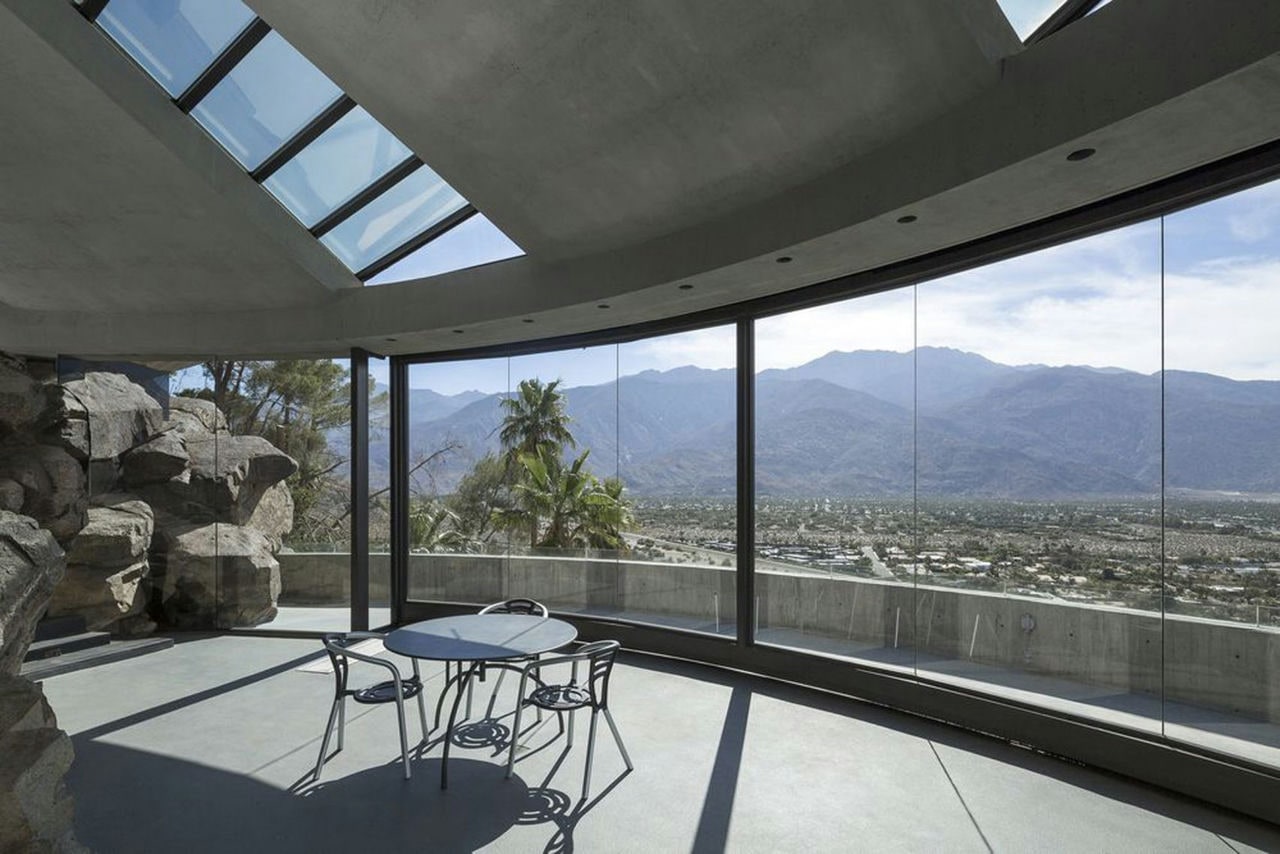
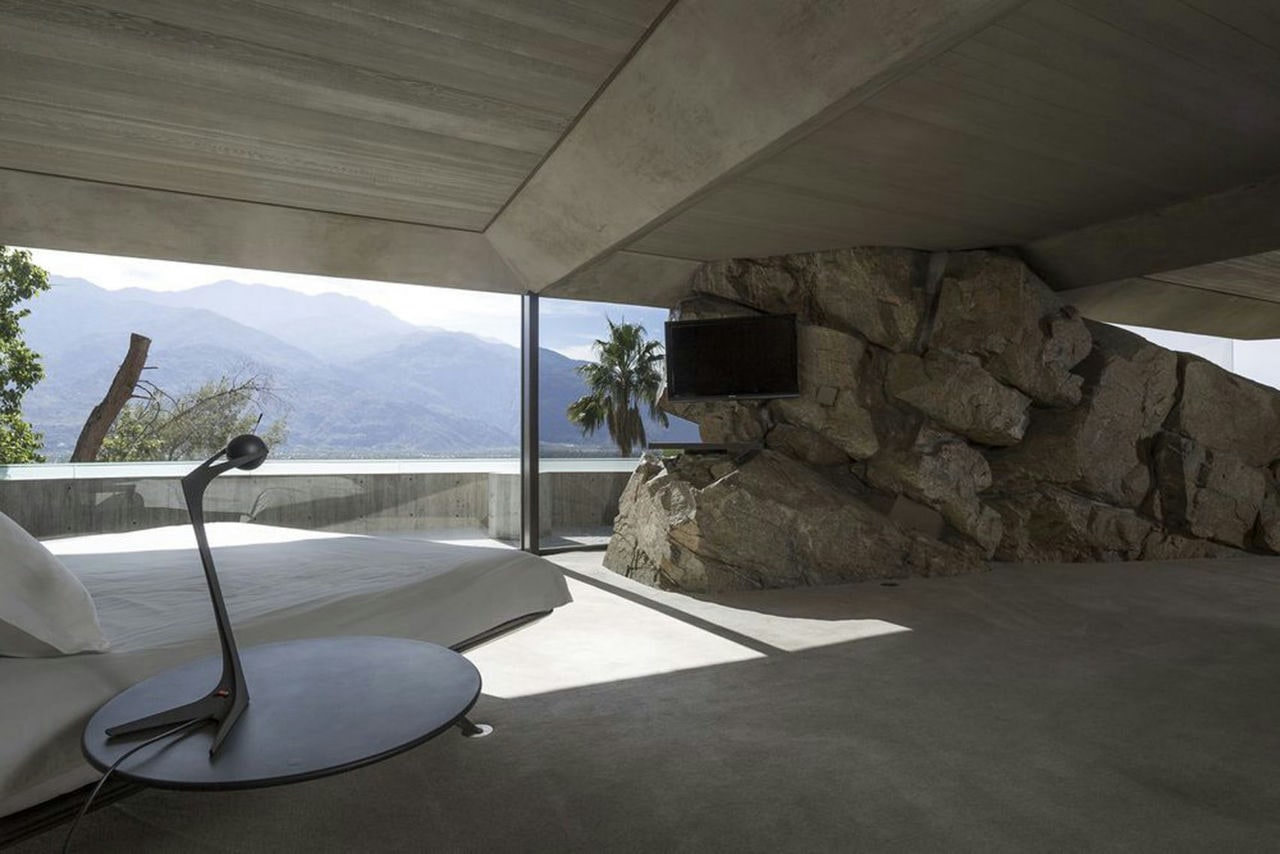
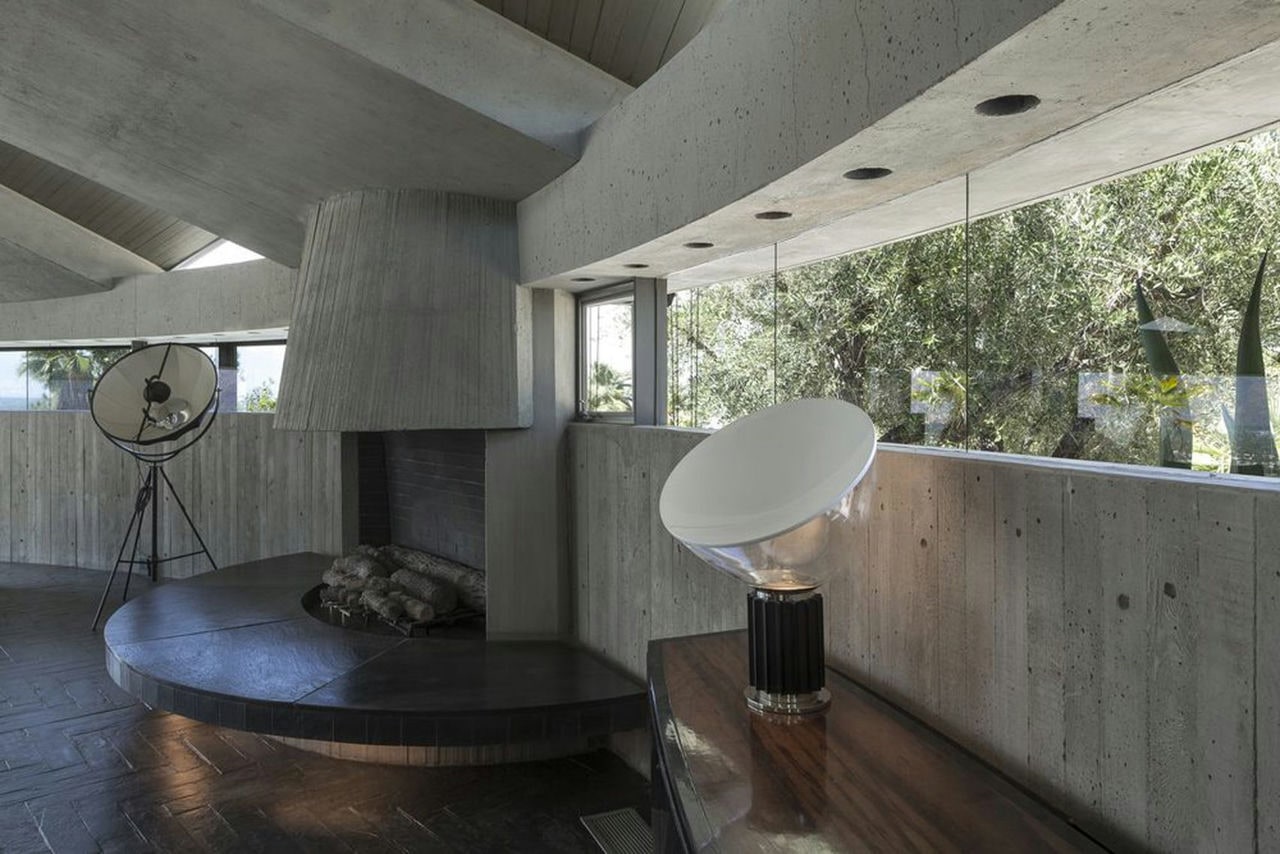
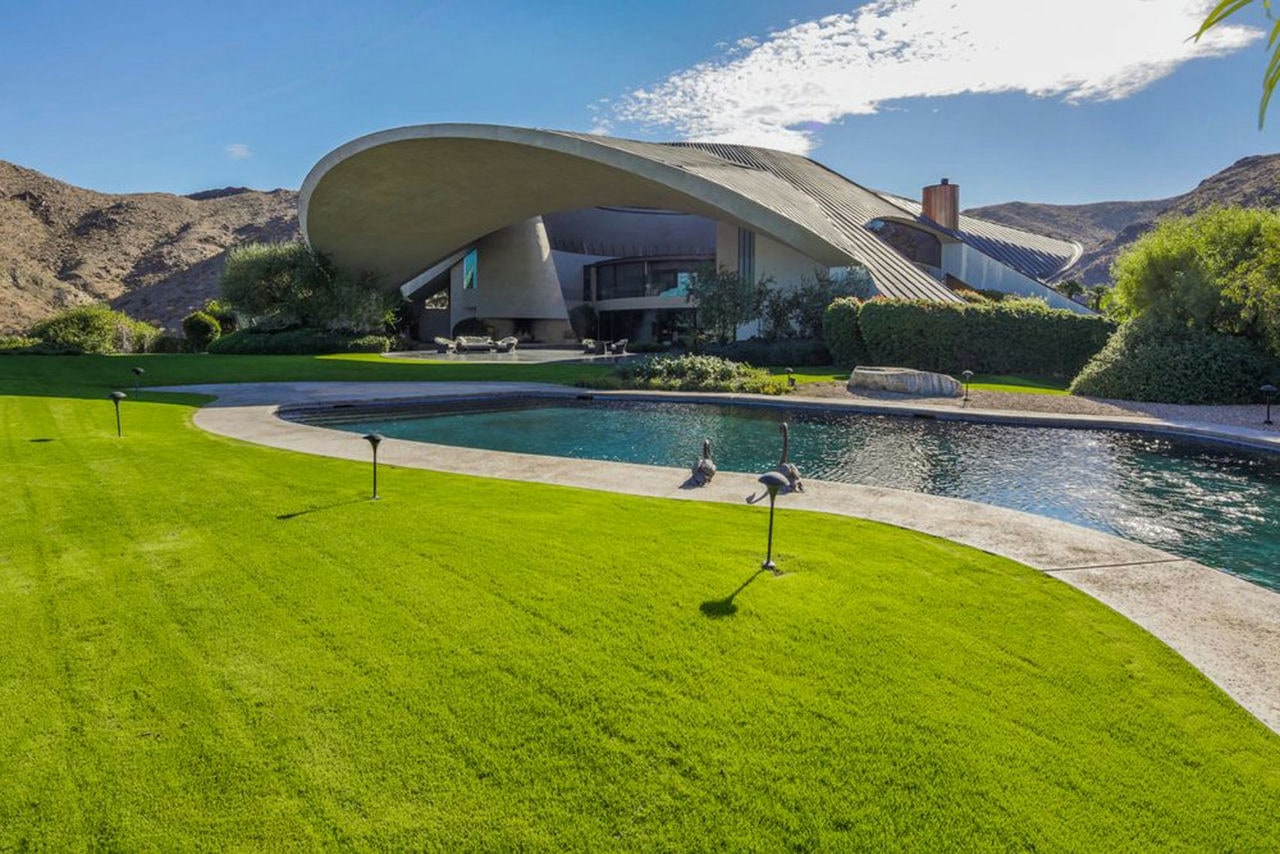
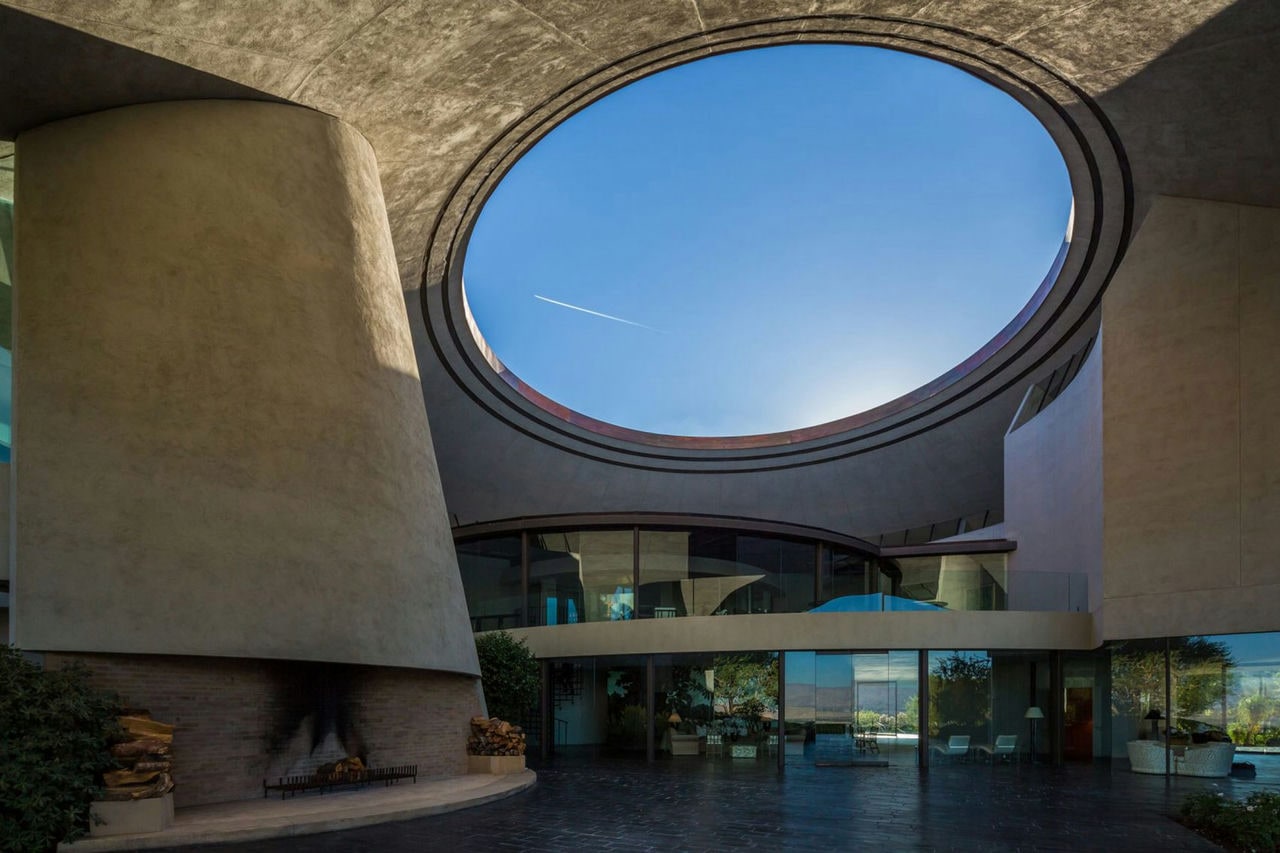
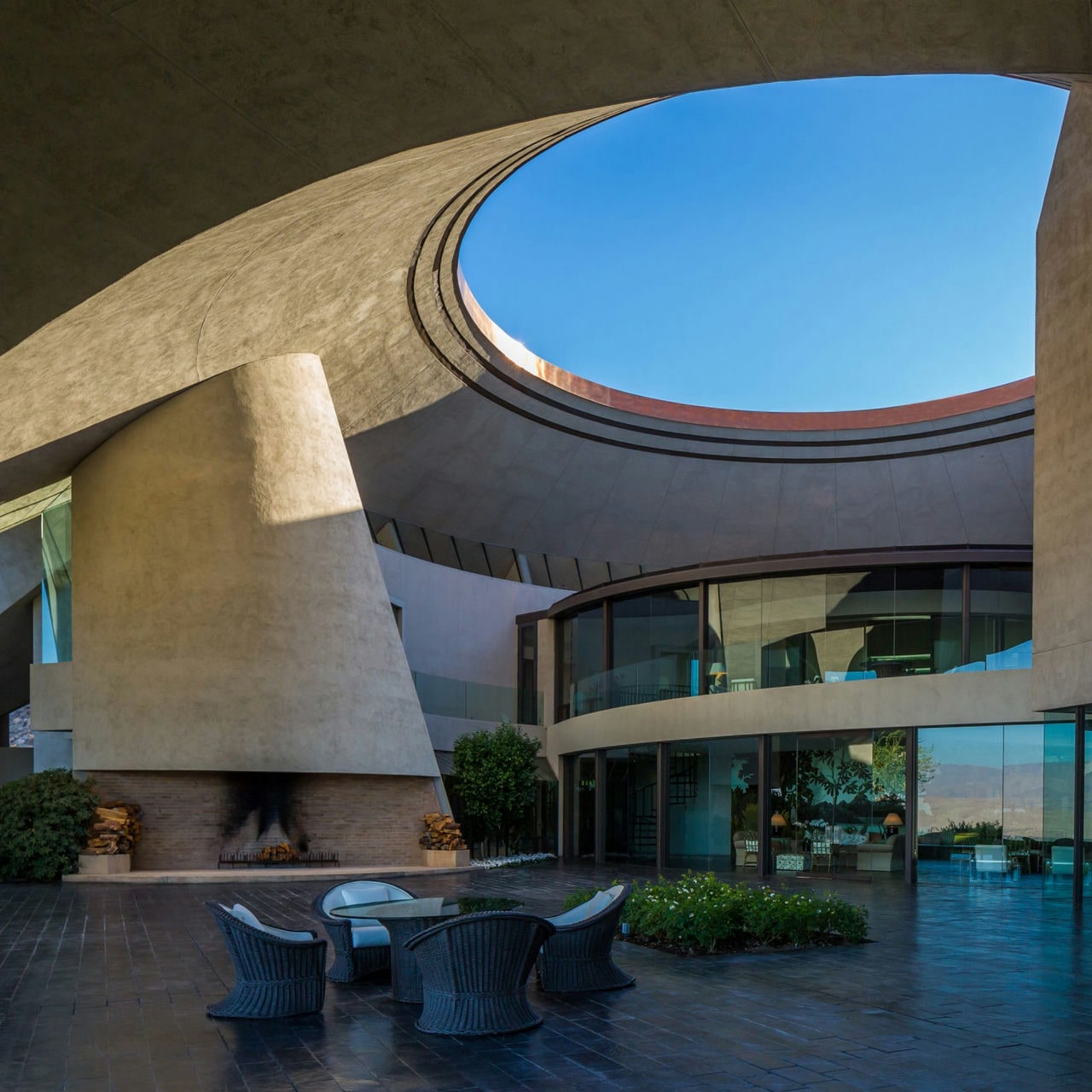
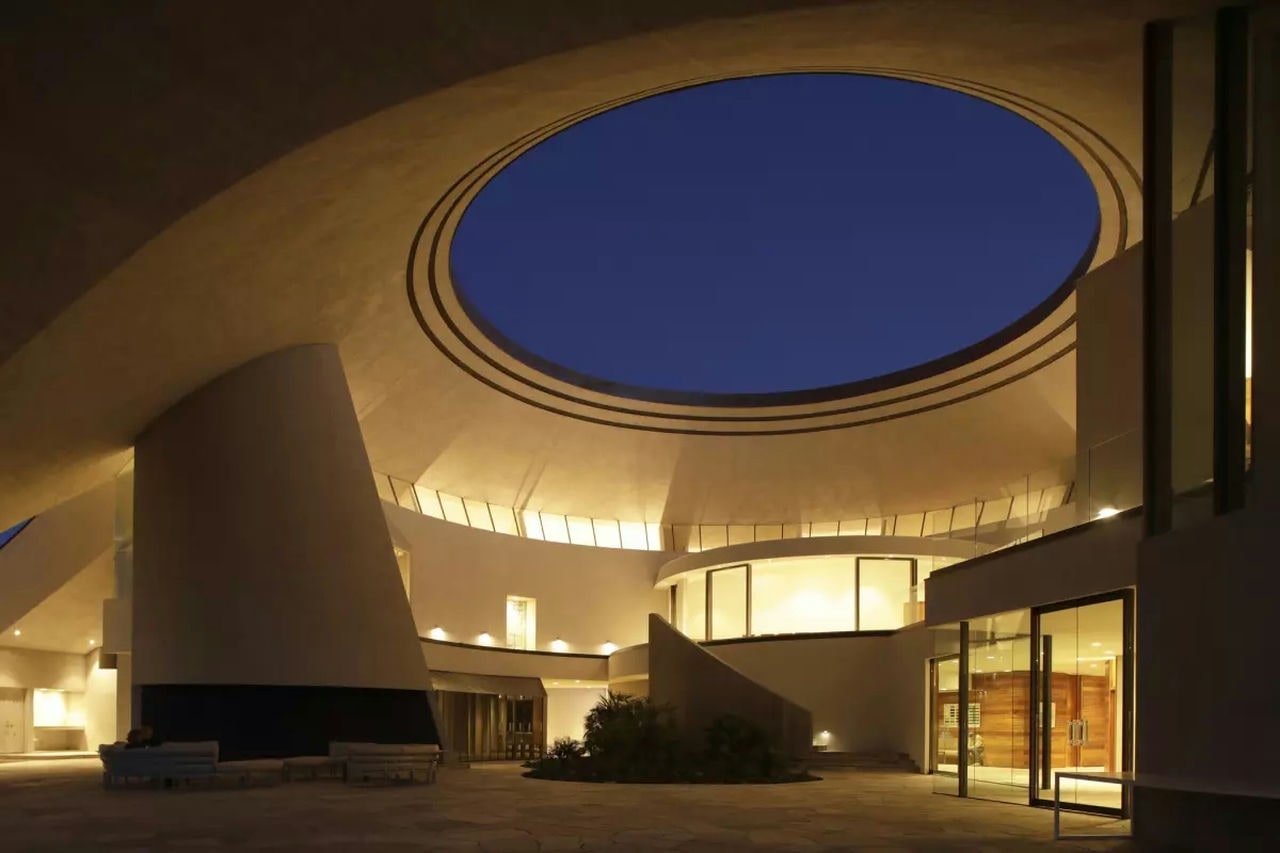
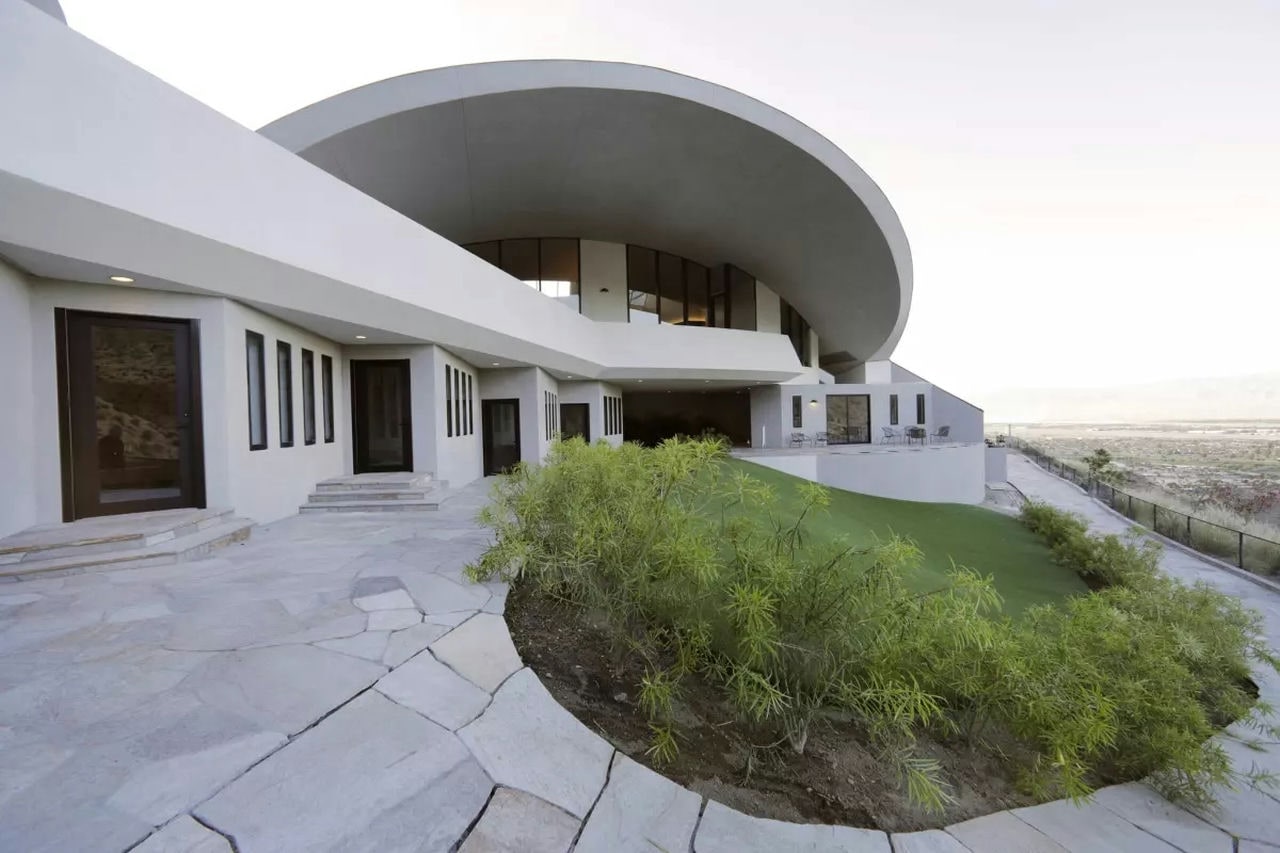
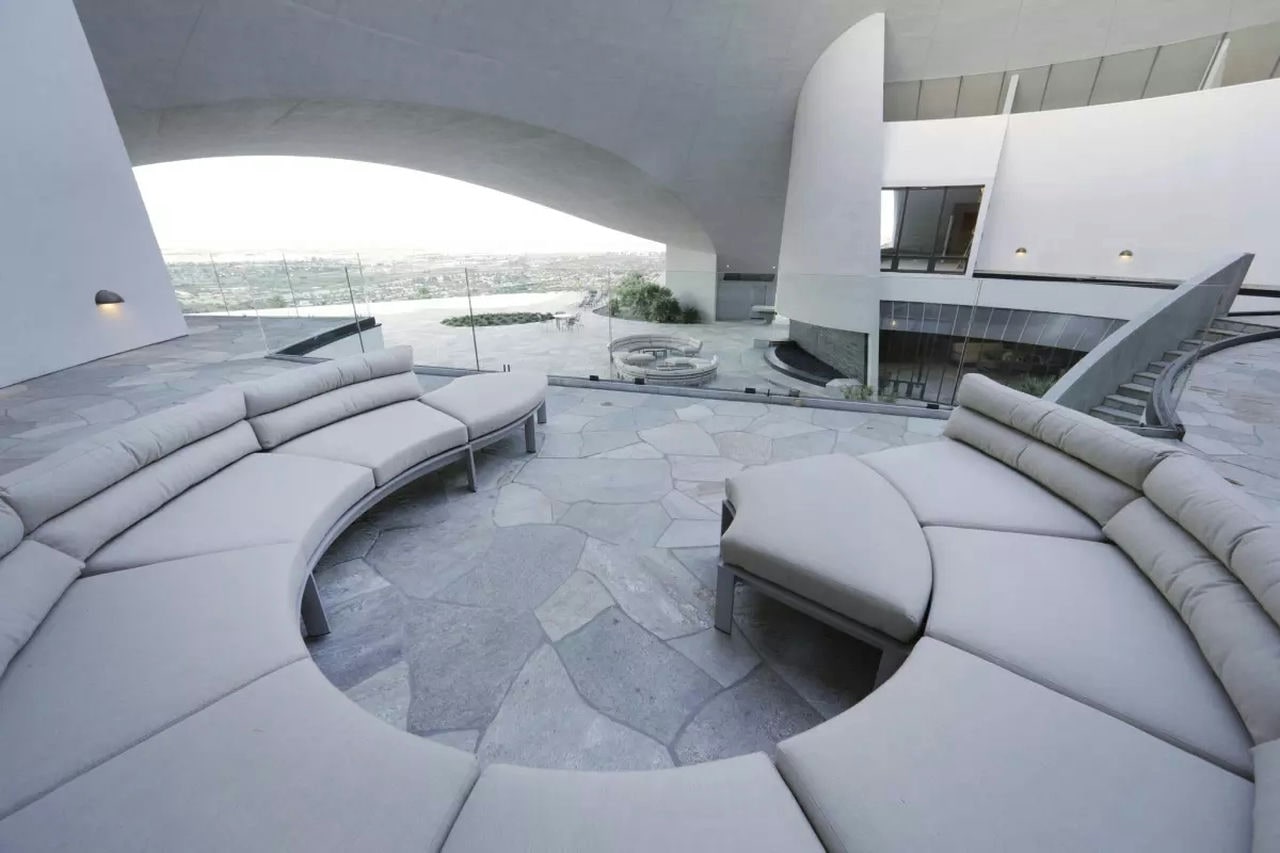
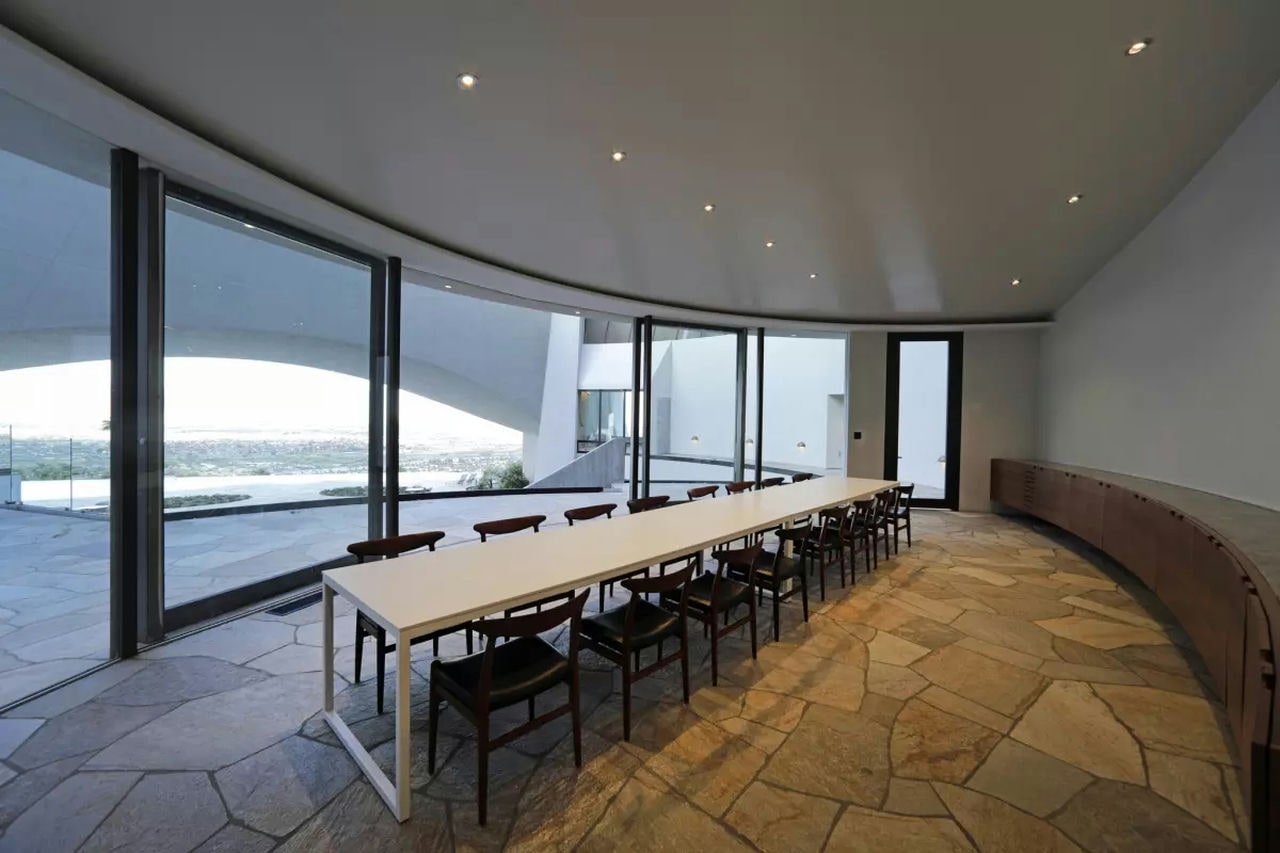
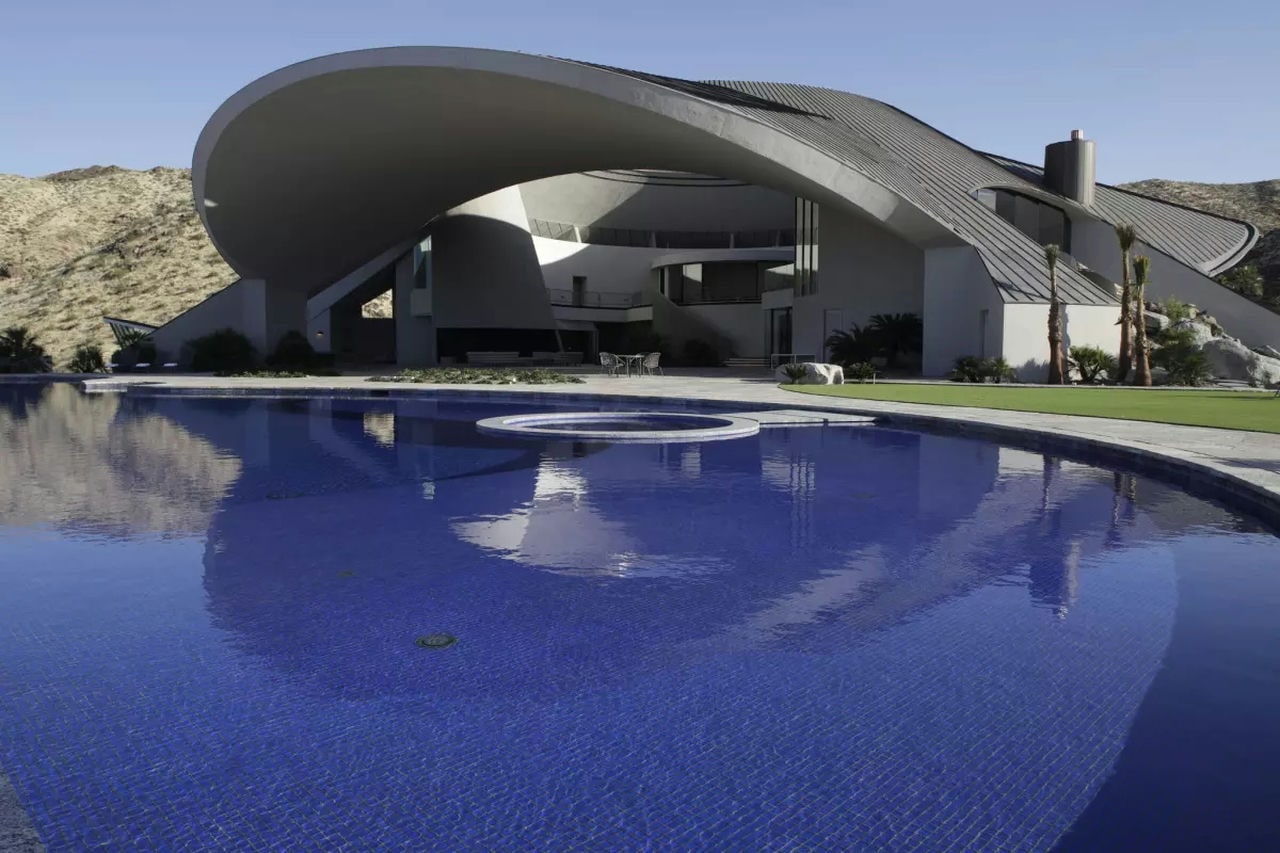
The Hope Residence, known as the Bob Hope House, is an expansive desert estate that demonstrates John Lautner’s interest in large-scale sculptural form. Lautner designed the house for entertainer Bob Hope and his wife, Dolores, completing it in 1979 in Palm Springs, California. The private residence, measuring about 23,000 square feet, is positioned on a ridge overlooking the Coachella Valley. It is defined by a vast curved concrete roof that dominates the composition. The roof resembles a cratered dome with a circular oculus at its center, channeling sunlight into a courtyard below. Three petal-shaped arches extend from the central roof, enclosing separate wings of the house and forming partially open living spaces. Lautner’s design for the Hope Residence advanced residential architecture in both scale and engineering. The structure is built primarily of concrete and steel, supporting broad spans and complex roof geometry. Large glass curtain walls fill the spaces beneath the roof, providing panoramic views and connecting interior areas to the desert landscape. Although designed as a single-family dwelling, the house also functions as an entertainment space with extensive indoor-outdoor areas for gatherings. Some later client modifications, which Lautner disowned due to creative disagreement, altered aspects of the original design. The Hope Residence remains a Palm Springs landmark recognized for its monumental concrete form and for embodying Lautner’s ambition to expand the limits of domestic architecture.
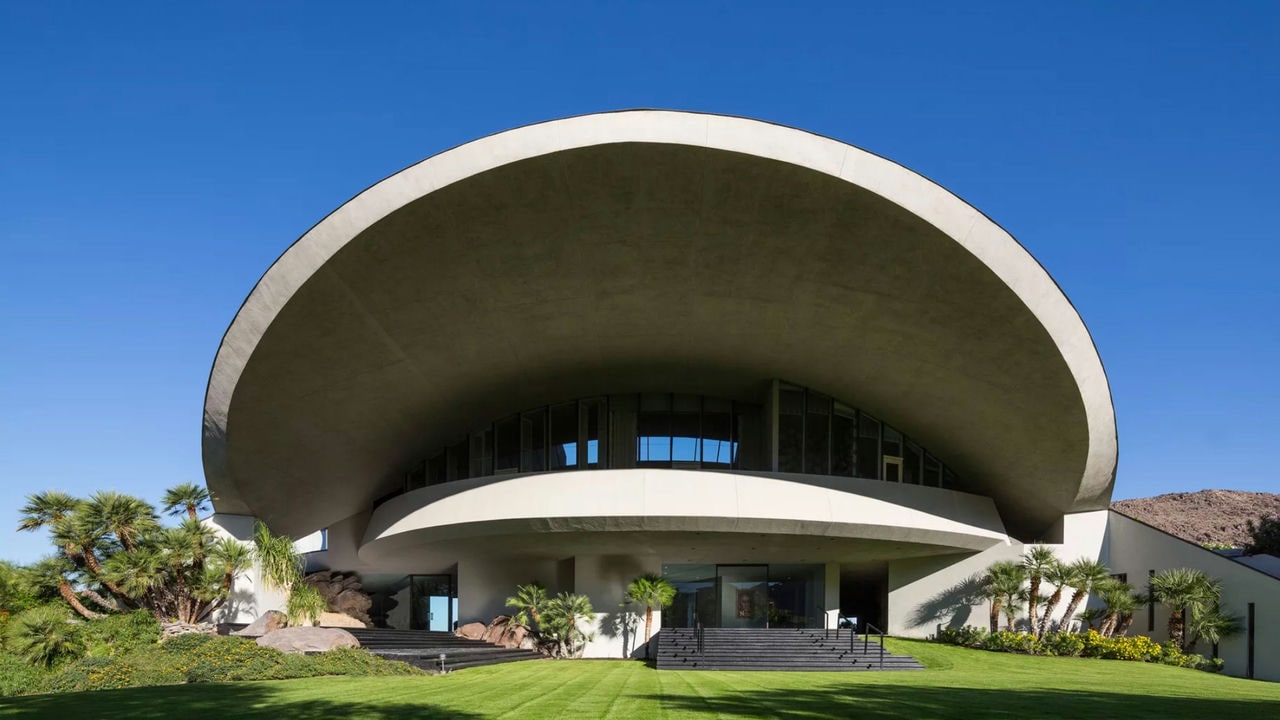
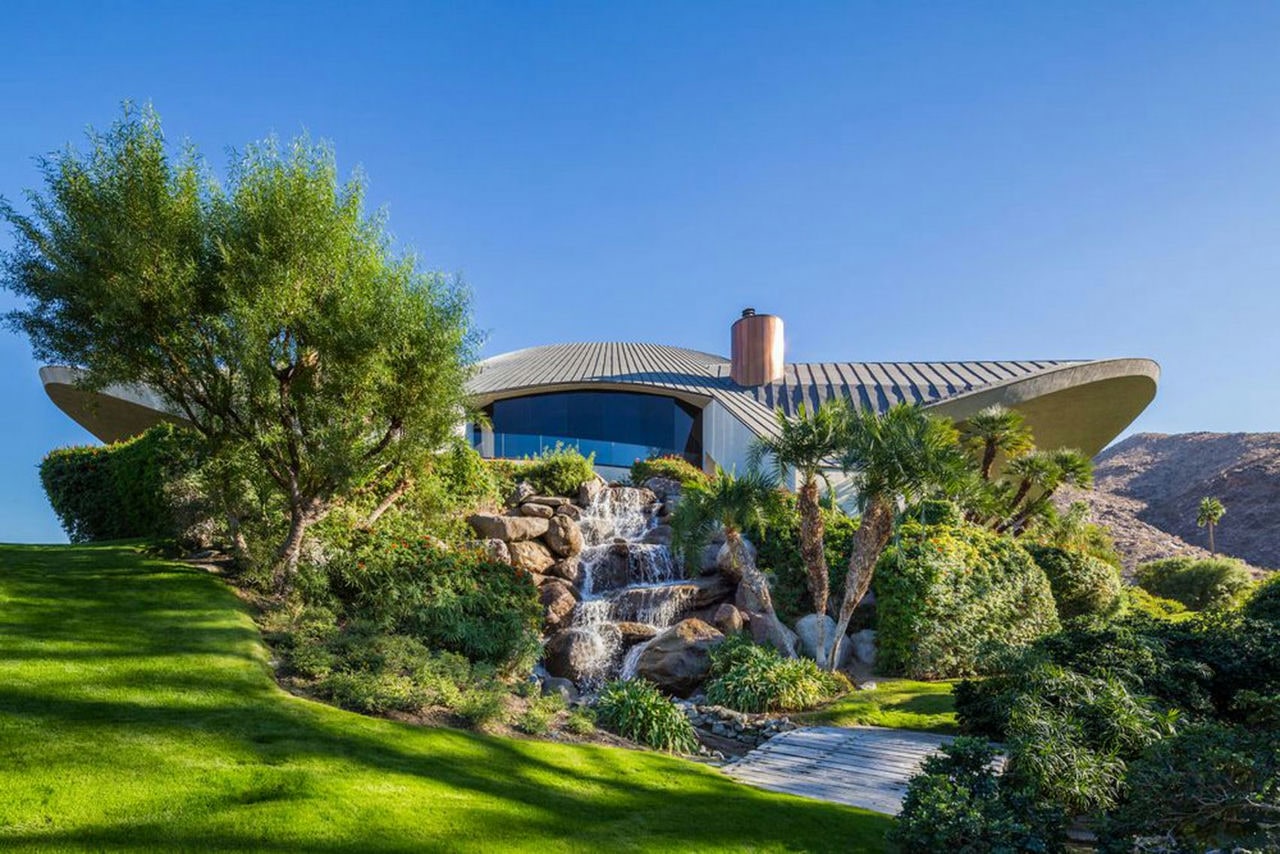


Unbuilt Projects and Proposals
Beyond his built works, John Lautner developed several unbuilt designs that reflected his experimental approach to architecture. One example is the Griffith Park Nature Center (1972–1974), a proposal for a public facility in Los Angeles. Lautner envisioned concrete forms integrated into the landscape of Griffith Park, but the project remained unrealized. Earlier in his career, he developed plans for a community in Desert Hot Springs (1947), testing housing prototypes for a desert environment, though these were never constructed.
How did John Lautner contribute to architecture?
John Lautner contributed to architecture by expanding the scope of modern design, particularly in residential buildings. He demonstrated that experimental structures could be realized, influencing other architects to explore new forms and materials. Through his work, Lautner advanced the integration of architecture and landscape, extending Frank Lloyd Wright’s organic principles into the technological optimism of the mid-twentieth century. Lautner helped introduce expressive modernism into everyday structures through the Googie style, which applied advanced engineering and modern aesthetics to coffee shops and roadside architecture. His close involvement with construction and collaboration with engineers showed how innovation emerges from practical experimentation. As many of his once-radical houses gained recognition as significant works, Lautner’s influence encouraged architects to explore sculptural form, environmental integration, and the union of art and engineering in building design.
What awards and honors has John Lautner received?
John Lautner received awards and honors throughout his career that recognized his contribution to modern architecture, including:
- Fellowship of the American Institute of Architects (1970) – Awarded for professional achievement and influence.
- Architectural Record Award for Excellence (1971, 1977) – Recognizing design quality in his completed works.
- Distinguished Alumni Award, Northern Michigan University (1975) – Presented by his alma mater for professional accomplishment.
- Los Angeles AIA “Man of the Year” Award (1980) – Given by the Los Angeles chapter of the American Institute of Architects for contributions to regional architecture.
- Gold Medal, AIA Los Angeles Chapter (1993) – The chapter’s highest distinction, honoring his lifetime of architectural work.
John Lautner also received professional recognition for his local influence, including the Cody Award in 1980 for design excellence and the honorary title of “Olympic Architect” in 1984 associated with the Los Angeles Olympics.
Did John Lautner change the architecture industry?
John Lautner changed the architecture industry in a focused but lasting way. He expanded the boundaries of residential design by demonstrating that unconventional houses could be built and appreciated by both clients and the public. During a period when many architects adhered to the vocabulary of the International Style, Lautner introduced new spatial forms and engineering techniques that broadened the possibilities of domestic architecture. His achievements with projects such as the Chemosphere encouraged the profession to engage more openly with experimental design, particularly in private residences. Lautner’s impact is evident in the preservation and renewed interest in mid-century modern architecture. Many of his once-controversial buildings are now protected, showing that experimental architecture can hold enduring value. Although he did not establish a large corporate office or define a global movement, Lautner’s independent practice reshaped architectural thinking by prompting designers to pursue innovation according to their own principles. In this way, he influenced the industry toward greater creative freedom and individuality in design.
Was John Lautner ever controversial in any way?
John Lautner’s work generated some controversy during his career, though he was never involved in a personal scandal. His early Googie-style projects, such as a 1949 coffee shop in West Hollywood, drew criticism from parts of the architectural establishment that dismissed their futuristic forms and expressive geometry. Among conservative modernists, these commercial buildings were sometimes seen as excessive or inconsistent with the restrained ideals of the International Style. As a result, Lautner’s work was occasionally overlooked by professional circles even as it attracted public curiosity. A significant dispute arose during the construction of the Hope Residence in Palm Springs in the late 1970s. Lautner disagreed with Bob and Dolores Hope over unauthorized design changes and interior alterations, ultimately disassociating himself from the completed house. This conflict reflected the broader tension between his experimental vision and client expectations. In later years, some of Lautner’s works, such as the 1951 Shusett House in Beverly Hills, became subjects of preservation debates after their demolition or alteration. While controversy occasionally surrounded his designs, it centered on their challenge to architectural conventions rather than on Lautner himself.
Who are the most famous architects in modern history besides John Lautner?
Aside from John Lautner, Frank Lloyd Wright, Frank Gehry, and Zaha Hadid rank among the most influential architects to have shaped modern architecture, each leaving a lasting impact on the profession. Wright (American, 1867–1959) advanced organic architecture through works such as Fallingwater and the Guggenheim Museum, redefining the relationship between structure and nature. Gehry (Canadian-American, born 1929) transformed late twentieth-century architecture with his sculptural, deconstructivist forms, seen in the Guggenheim Museum Bilbao and the Walt Disney Concert Hall in Los Angeles. Hadid (Iraqi-British, 1950–2016), the first woman to receive the Pritzker Architecture Prize (2004), introduced dynamic geometries in projects like the Guangzhou Opera House and the London Aquatics Centre, expanding the expressive language of contemporary design. Beyond these figures, many architects have shaped the discipline across generations. The Architecture Foundation’s “49 Architects” program in the United Kingdom identifies practitioners recognized for their influence at different career stages. Among established architects with over two decades of practice are Sir David Adjaye, designer of the National Museum of African American History and Culture in Washington, D.C.; Alison Brooks, author of the Stirling Prize–winning Accordia housing project in Cambridge; and Lord Norman Foster, known for high-tech works such as 30 St Mary Axe (“The Gherkin”) in London and the HSBC Main Building in Hong Kong. In the mid-career group, notable names include Amanda Levete, architect of the MAAT Museum in Lisbon; Sadie Morgan, co-founder of dRMM and designer of the Stirling Prize–winning Hastings Pier; and Alex de Rijke, recognized for his experimental use of timber in projects such as the Endless Stair in London. Emerging architects identified by the program include Asif Khan, designer of the Coca-Cola Beatbox Pavilion for the 2012 London Olympics; Mary Duggan, whose studio redeveloped the Garden Museum in London; and David Kohn, author of the Skyroom rooftop pavilion at the Architecture Foundation. Among the “ones to watch” are Jack Richards, designer of a floating church in East London, and Hikaru Nissanke, co-founder of OMMX and designer of House of Trace in London.
What did John Lautner mostly design?
John Lautner primarily designed custom residential architecture and experimental small-scale structures. His work focused on distinctive single-family homes, roadside buildings, and select commercial or civic projects that reflected his technical inventiveness and sculptural approach to form:
- Private Residential Homes: Lautner concentrated much of his career on individually commissioned houses. He designed numerous custom residences across Southern California, ranging from modest early works to complex later projects. These houses are characterized by innovative structural systems such as cantilevers, thin-shell concrete roofs, and column-supported platforms. Each residence was designed to harmonize with its site and to reflect the lifestyle of its occupants.
- Restaurants and Roadside Architecture: In the late 1940s and 1950s, Lautner designed commercial projects including cafés, drive-ins, and showrooms. He was instrumental in shaping the “Googie” architectural vocabulary, defined by expressive forms, dramatic rooflines, and the use of glass and neon. Notable examples include Googie’s Coffee Shop in Los Angeles (1949) and several other now-demolished roadside buildings that brought architectural experimentation into everyday American settings.
- Commercial and Institutional Projects: Beyond domestic and roadside architecture, Lautner executed a limited number of offices, motels, and retail structures. These included the Desert Hot Springs Motel (built 1947, now “Hotel Lautner”) and unrealized civic schemes such as the Griffith Park Nature Center (1970s). Though these categories formed a smaller portion of his output, Lautner treated each project with the same commitment to material innovation, open planning, and spatial continuity between architecture and landscape.
Although John Lautner’s portfolio focused on private residences and a small number of roadside and institutional projects, its influence extended beyond those types. His archive at the Getty Research Institute includes hundreds of drawings, models, and unbuilt designs that show his continued interest in material experimentation, structural efficiency, and site-specific composition.
Where did John Lautner study?
John Lautner’s education did not follow a conventional architecture program. He first studied at Northern State Teachers College (now Northern Michigan University) in Marquette, Michigan, earning a bachelor’s degree in liberal arts in 1933. His studies included literature, art, physics, and architectural history. The college offered no professional architecture curriculum beyond a single history course, so Lautner supplemented his learning through independent study and by spending time in Boston and New York to gain exposure to design culture. The defining phase of Lautner’s architectural training came under Frank Lloyd Wright. In 1933, immediately after college, Lautner joined Wright’s Taliesin Fellowship—an apprenticeship rather than a formal academic program. He moved to Taliesin in Spring Green, Wisconsin, and later to Taliesin West in Arizona, where he trained from 1933 to 1939. During these six years, he worked on design and construction projects under Wright’s supervision and participated in the daily life of the Taliesin community. This practical experience served as Lautner’s architectural education, instilling the principles of organic design and giving him the foundation for his professional career.
Did John Lautner have any famous teachers or students?
John Lautner’s most influential teacher was Frank Lloyd Wright. Wright served as Lautner’s mentor during the Taliesin Fellowship, where Lautner trained for six years and absorbed the principles of organic architecture. Under Wright’s instruction, Lautner learned to integrate buildings with their natural surroundings, a principle that remained visible throughout his career. Lautner did not teach formally in an academic setting but influenced many younger architects through his practice. Those who worked in his studio or studied his buildings often adopted aspects of his approach in their own work. Frank Gehry, among others, has expressed admiration for Lautner’s architecture, citing it as an influence on his pursuit of experimental forms. In this way, Lautner became an indirect teacher to a generation of designers who learned from his built work rather than from classroom instruction.
How can students learn from John Lautner’s work?
Students can study John Lautner’s work to understand the relationship between design philosophy and built form. An effective approach is to analyze his major houses through drawings, photographs, or site visits to observe how he resolved structural and spatial challenges. For example, the Chemosphere demonstrates how a hillside can be occupied through an efficient structural system, while the Elrod House integrates natural rock formations within its interior. Examining these projects offers lessons in site-responsive design, structural innovation, and the controlled use of light, space, and materials. Students should also engage with Lautner’s writings and recorded interviews, including his oral history at UCLA, where he discussed his design principles and experiential learning methods. The documentary Infinite Space: The Architecture of John Lautner provides additional insight into his process and philosophy. Aspiring architects can apply Lautner’s hands-on approach in their own education by constructing study models, testing materials, and designing small-scale prototypes. Through active experimentation with form and structure similar to Lautner’s methods at Taliesin and his own projects, students can grasp the importance of integrating design, engineering, and environment.

