

Luis Moreno Mansilla (1959–2012) was a Spanish architect whose work shaped contemporary architecture in Spain through museums, civic buildings, and research-based practice. Born in Madrid and initially considering naval engineering, Mansilla studied architecture at the Escuela Técnica Superior de Arquitectura de Madrid and completed his degree in 1982. He developed early artistic connections during Madrid’s cultural movement known as “La Movida” and refined his architectural thinking while working for Rafael Moneo throughout the 1980s on projects that included museums and civic buildings. In 1992, Mansilla co-founded Mansilla and Tuñón Arquitectos with Emilio Tuñón, establishing a practice that integrated design, teaching, and research within the framework of contemporary Spanish architecture. Mansilla’s greatest accomplishment was advancing a model of architecture that combined contextual analysis with modern spatial strategies, a direction recognized when the Museo de Arte Contemporáneo de Castilla y León (MUSAC) received the Mies van der Rohe Award in 2007. His most important works aside from MUSAC include the Museo de Colecciones Reales in Madrid, the Auditorio Ciudad de León, the Museum of Zamora, the Castellón Fine Arts Museum, and the Atrio Restaurante Hotel in Cáceres. Mansilla contributed to architectural discourse by linking research with built work, co-founding the journal Circo, and teaching at ETSAM, Harvard University, and Princeton University. He showed that modern public buildings could operate within historic environments without diminishing their character. His work influenced architects who adopted his approach to collaborative design, contextual research, and integrated cultural programming. Some projects generated debate about scale and placement, but these discussions remained within architectural discourse. He focused on museums, auditoriums, archives, and civic buildings rather than commercial towers or private developments. Educated in Madrid, Rome, and Stockholm and mentored by Rafael Moneo, he, in turn, mentored Spanish architects through studio teaching and practice. Students learn from Mansilla’s work by studying his drawings, analyzing his projects, and observing how he combined research, context, and material precision in contemporary architecture.
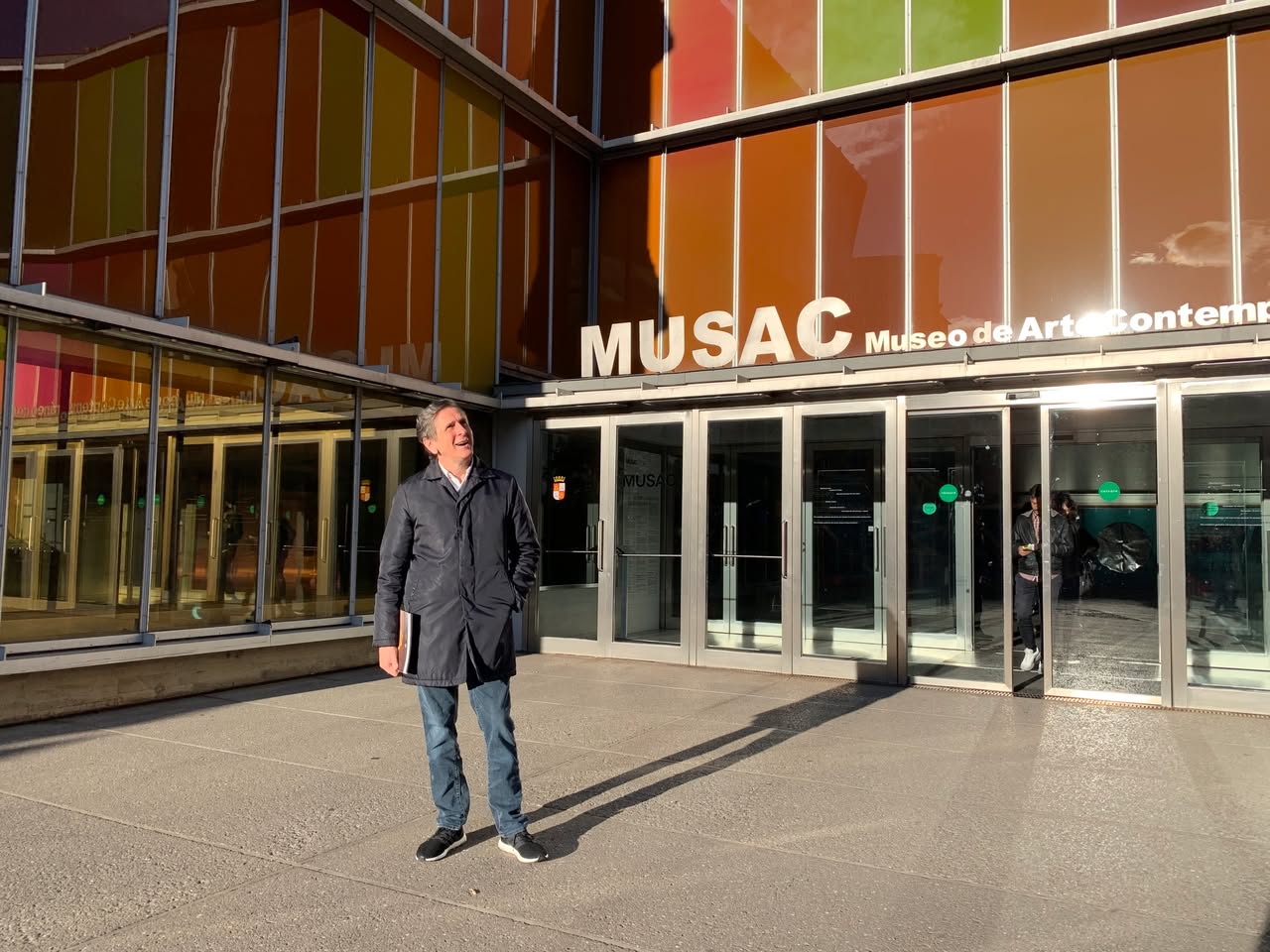
Who is Luis Moreno Mansilla?
Luis Moreno Mansilla was a Spanish architect born in 1959 who was recognized for his modern architecture and his contributions to Spain’s cultural landscape. Born in Madrid, he initially considered naval engineering before choosing architecture. He studied at the Escuela Técnica Superior de Arquitectura de Madrid (ETSAM) and graduated in 1982. In the 1980s, Luis Moreno Mansilla participated in Madrid’s cultural movement “La Movida,” forming connections with artists who influenced his creative outlook. Early in his career, Luis Moreno Mansilla worked for a decade in the studio of Rafael Moneo, participating in projects such as the Thyssen-Bornemisza Museum and Seville’s airport. In 1992, he partnered with Emilio Tuñón to establish Mansilla + Tuñón Arquitectos, a practice that integrated design, research, and teaching. Luis Moreno Mansilla became a professor at ETSAM and served as a visiting lecturer at Harvard, Princeton, and EPFL through his academic involvement. He focused on the relationship between contemporary architecture and historical context and continued this work until he died in 2012, producing projects known for intellectual rigor and simplicity.
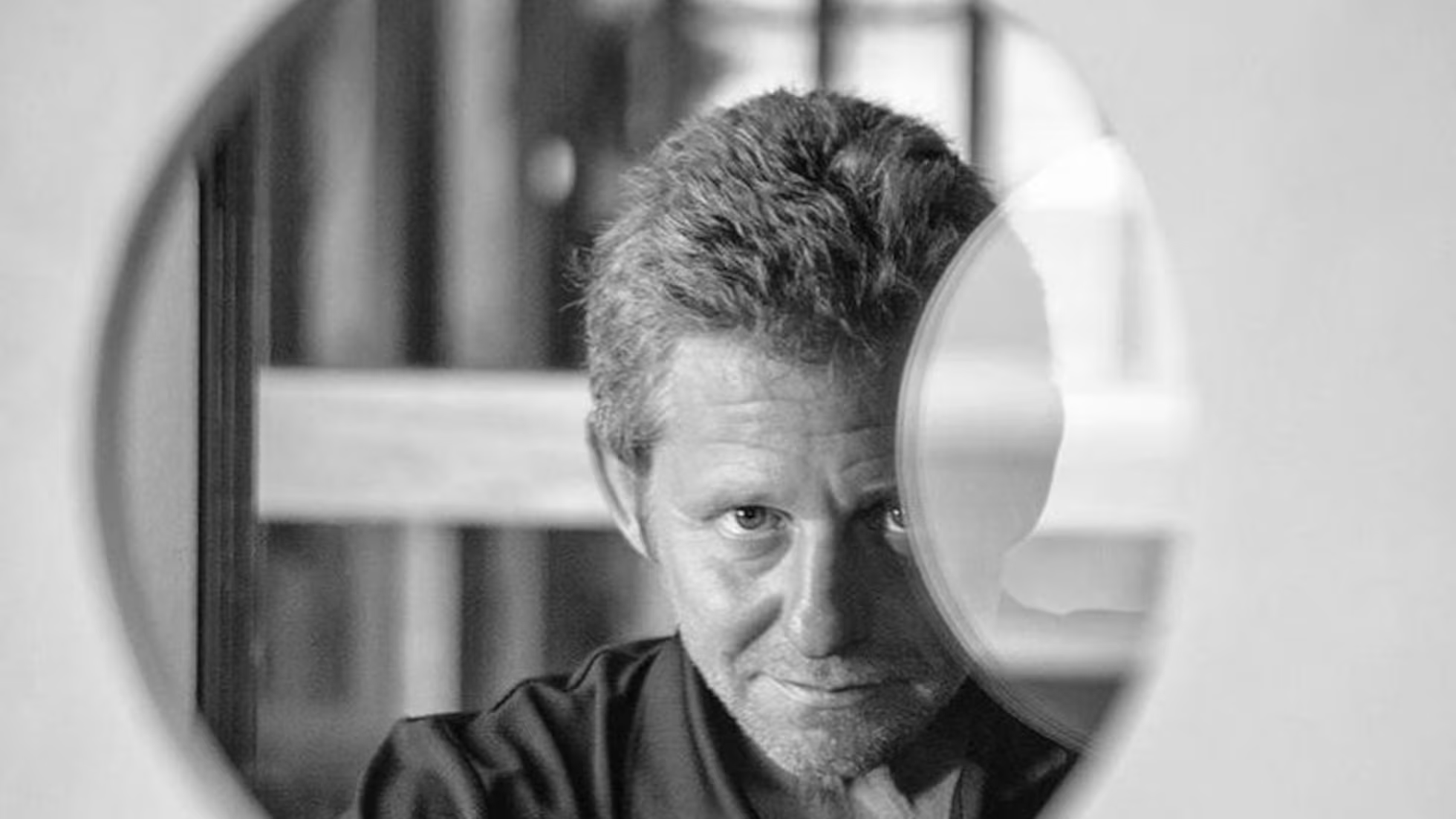
What type of architecture does Luis Moreno Mansilla represent?
Luis Moreno Mansilla’s architecture represents a modern, contextually sensitive approach of architecture styles associated with contemporary Spanish design rather than a defined style. His work is characterized by clear geometric forms, inventive use of materials, and dialogue with art and history. Instead of adopting the High-Tech style or Deconstructivism, he embraced a philosophy of “essential” architecture – balancing simplicity with conceptual richness. His buildings frequently reference their cultural environment. The Museo de Arte Contemporáneo de Castilla y León (MUSAC) features a multicolored glass facade inspired by local stained-glass traditions. Projects by Mansilla and Tuñón insert modern structures into historic urban fabrics with care, emphasizing harmony between new and old. This approach aligns with the broader late-20th-century Spanish architectural movement that values context and continuity.
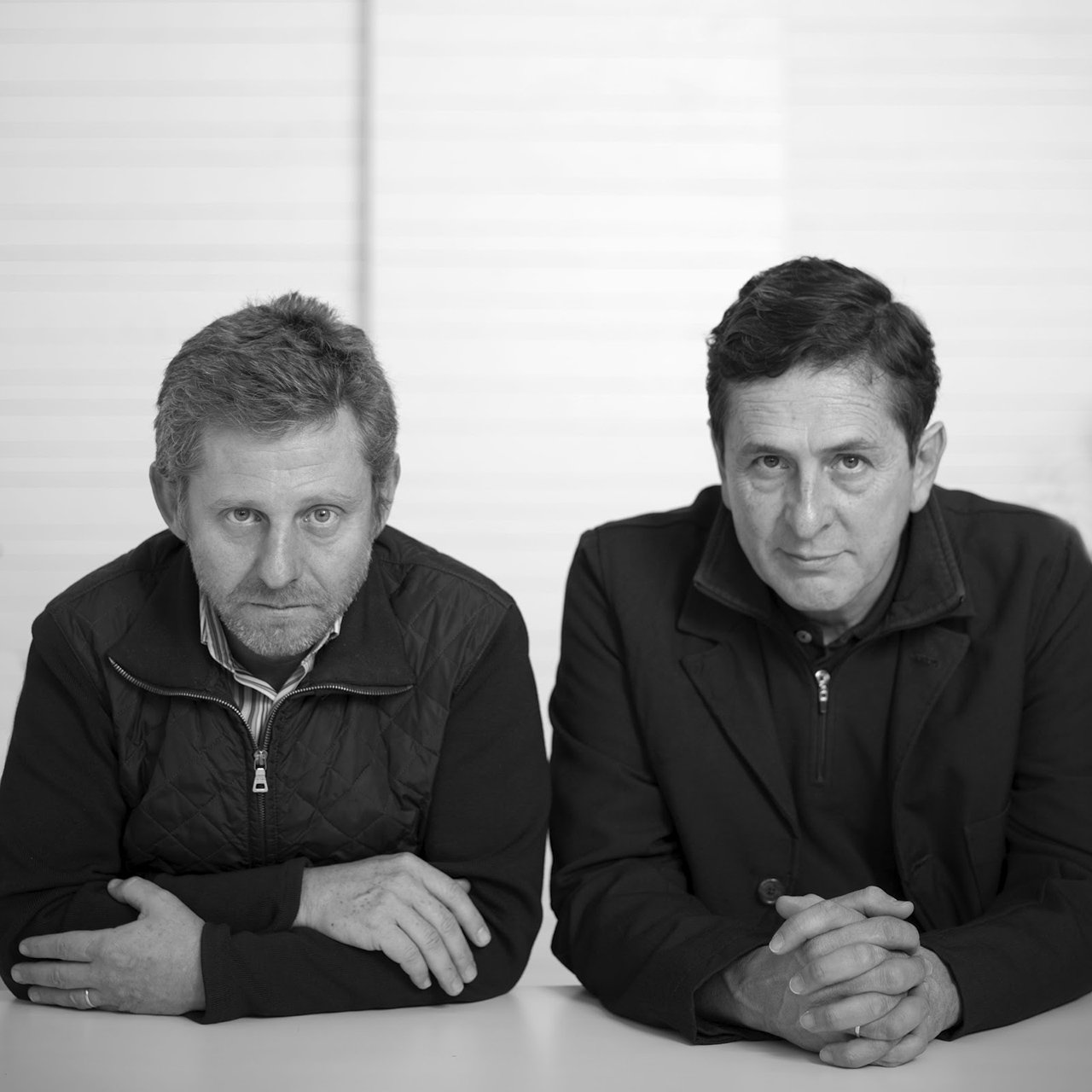
What is Luis Moreno Mansilla’s great accomplishment?
Luis Moreno Mansilla’s great accomplishment is the creation of landmark cultural buildings in Spain that earned international awards and set new standards for integrating contemporary architecture within historic settings. His most distinguished recognition was the 2007 Mies van der Rohe Award for the MUSAC in León. This marked the first time a young Spanish firm received Europe’s highest honor for contemporary architecture. His work on the MUSAC – a museum composed of modular galleries with a multicolored facade – exemplified architecture that was both expressive and contextually grounded. Mansilla, with Emilio Tuñón, also received the Spanish Architecture Award in 2003 for the Auditorio Ciudad de León. By the time of his death, Luis Moreno Mansilla had established a legacy through these projects. His greatest achievement was proving that concept-driven architecture can revitalize cities and cultural institutions while enriching historic environments with new civic spaces.
What are Luis Moreno Mansilla’s most important works?
Luis Moreno Mansilla’s most important works include museums, auditoriums, and civic buildings in Spain, created mostly in partnership with Emilio Tuñón. His portfolio features award-winning cultural projects recognized for design precision and contextual sensitivity. Notable works include the Museo de Arte Contemporáneo de Castilla y León (MUSAC) in León, with its multicolored glass facade; the Museo de Colecciones Reales in Madrid, a museum embedded beside the Royal Palace; the Auditorio Ciudad de León, a concert hall that redefined the city’s cultural venue; the Museo de Zamora, a museum integrated into a historic urban fabric; the Museo de Bellas Artes de Castellón, a fine arts museum with an aluminum-clad exterior; and the Atrio Restaurante-Hotel in Cáceres, a hotel and restaurant inserted into a medieval setting.
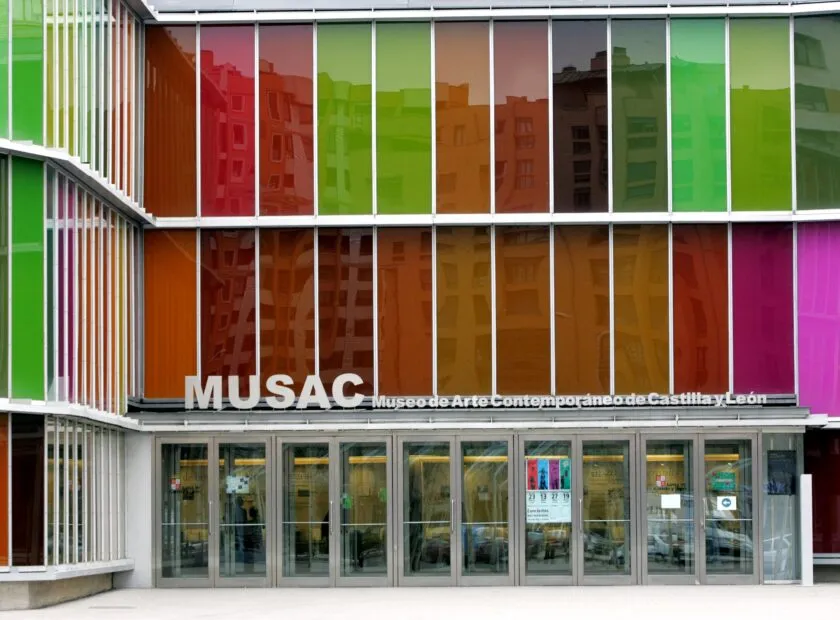
01. Museo de Arte Contemporáneo de Castilla y León (MUSAC), León
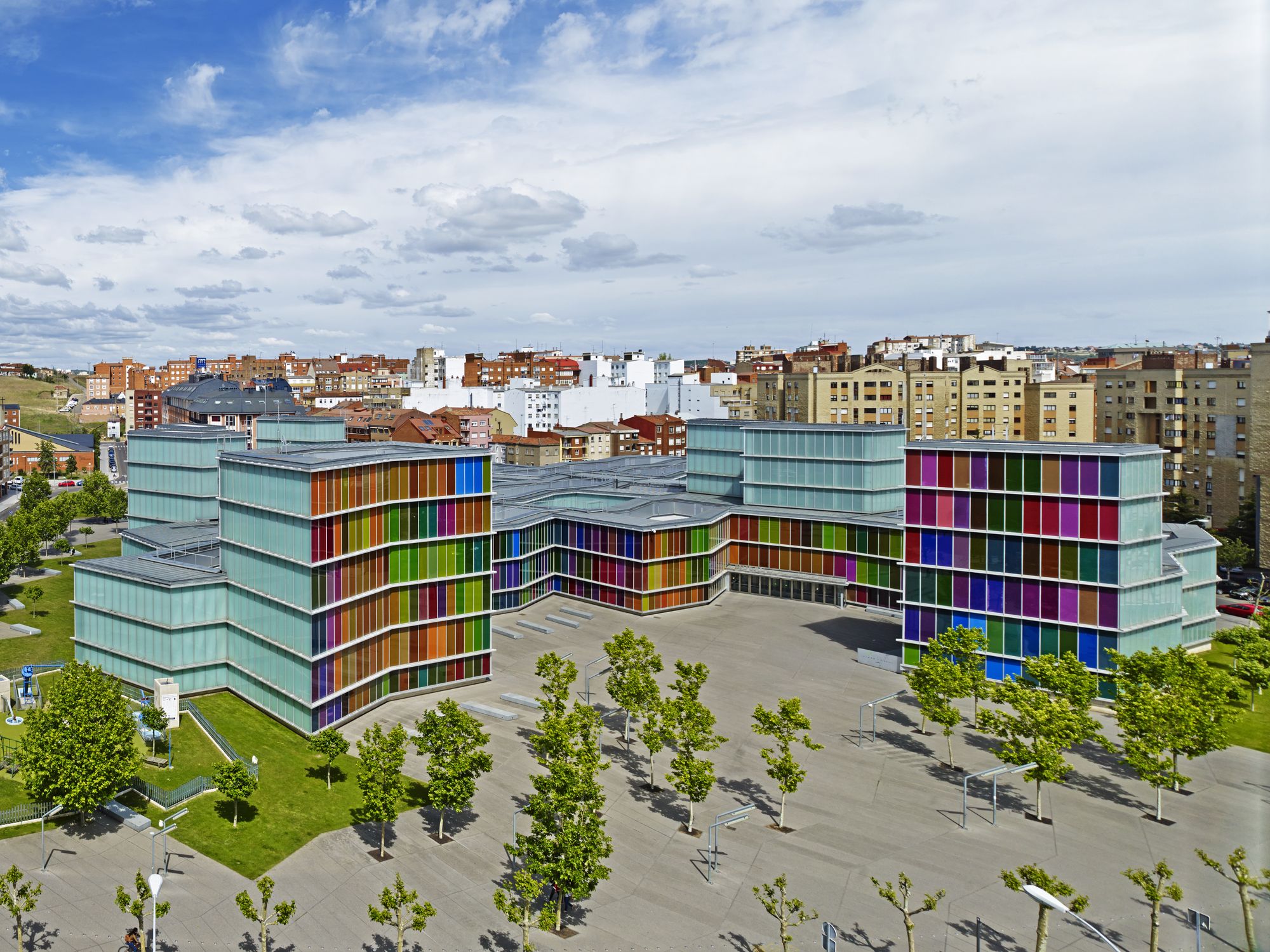
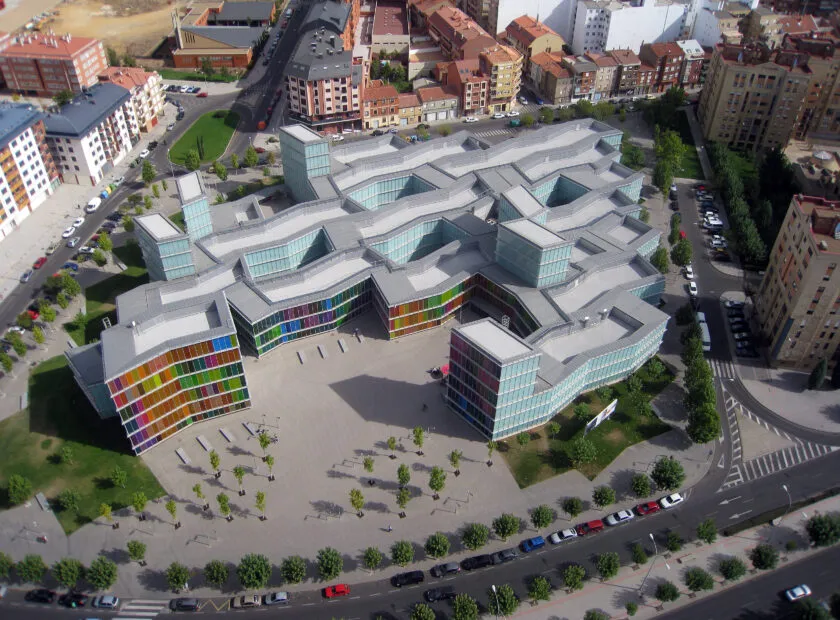
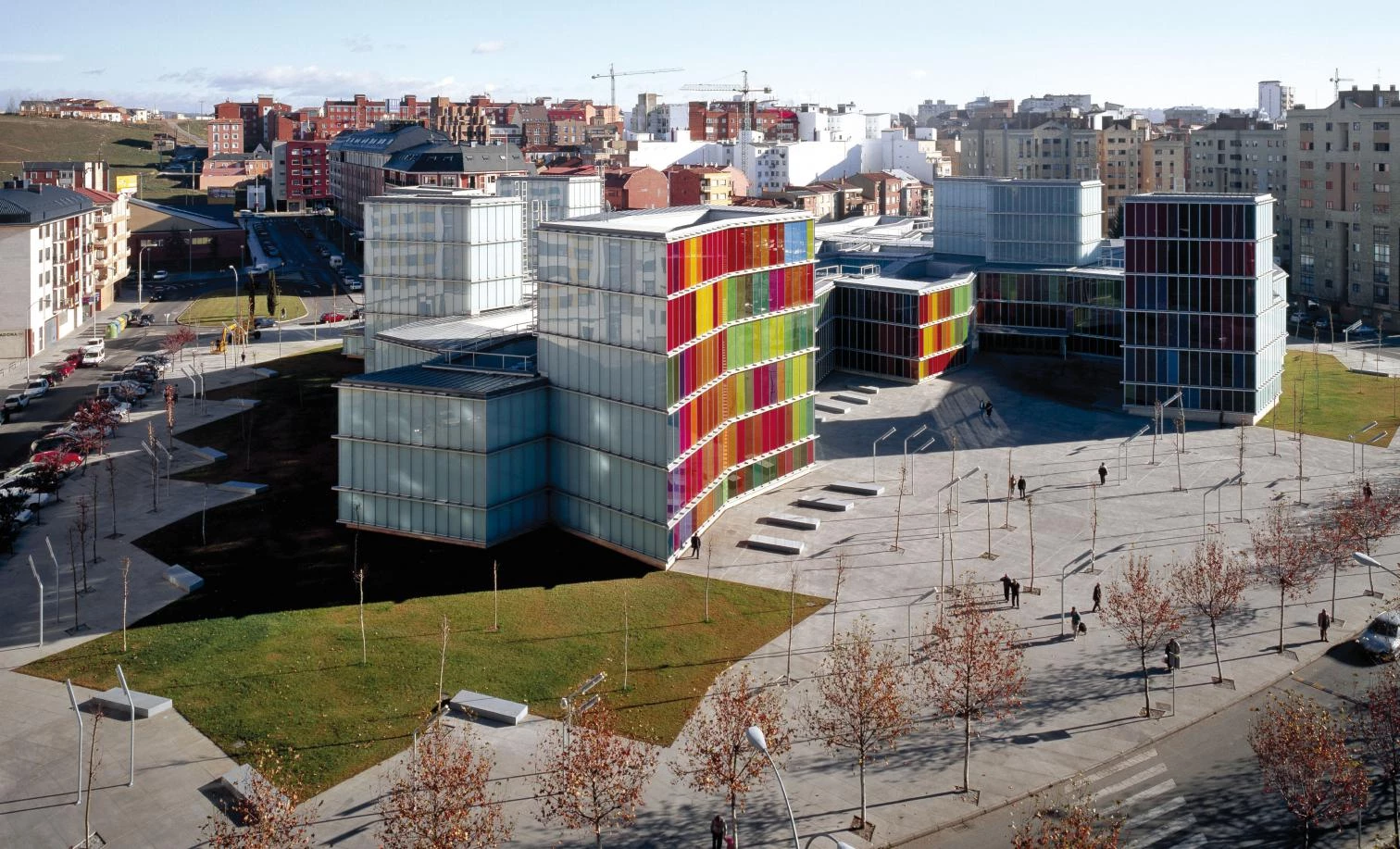
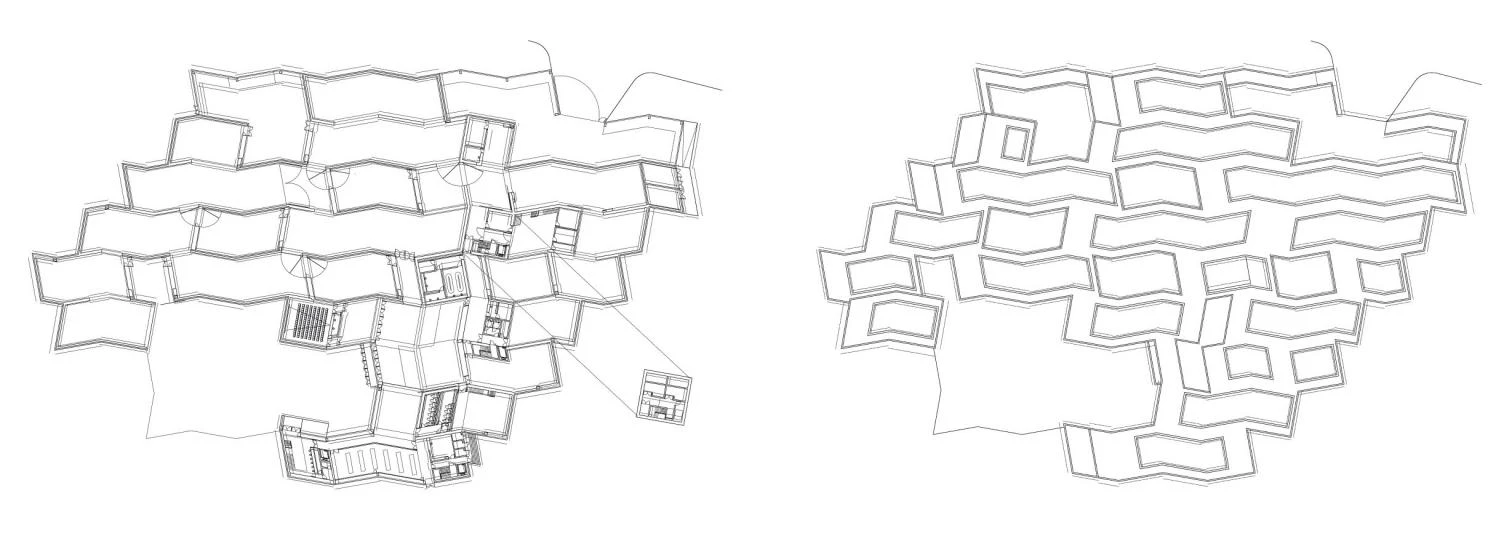
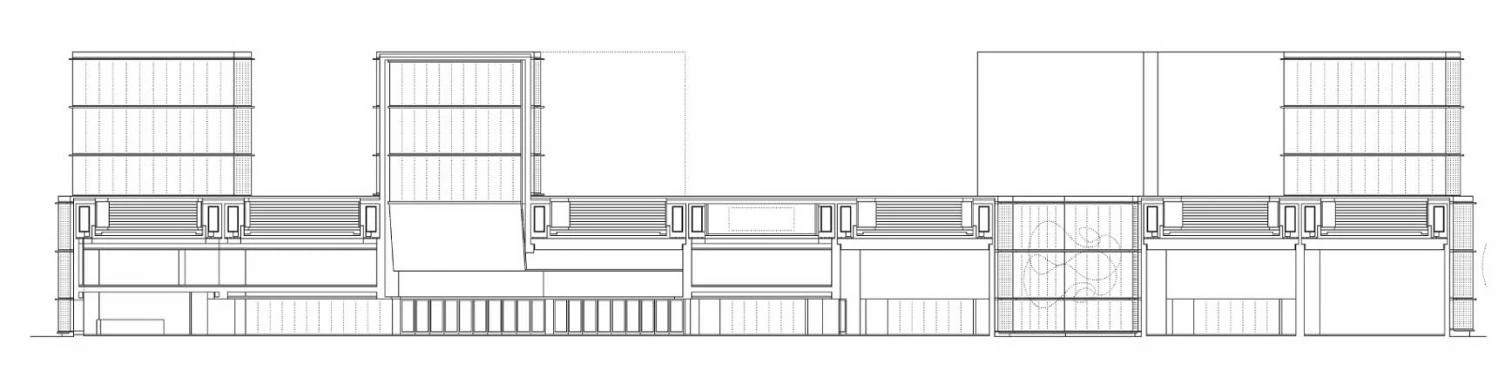
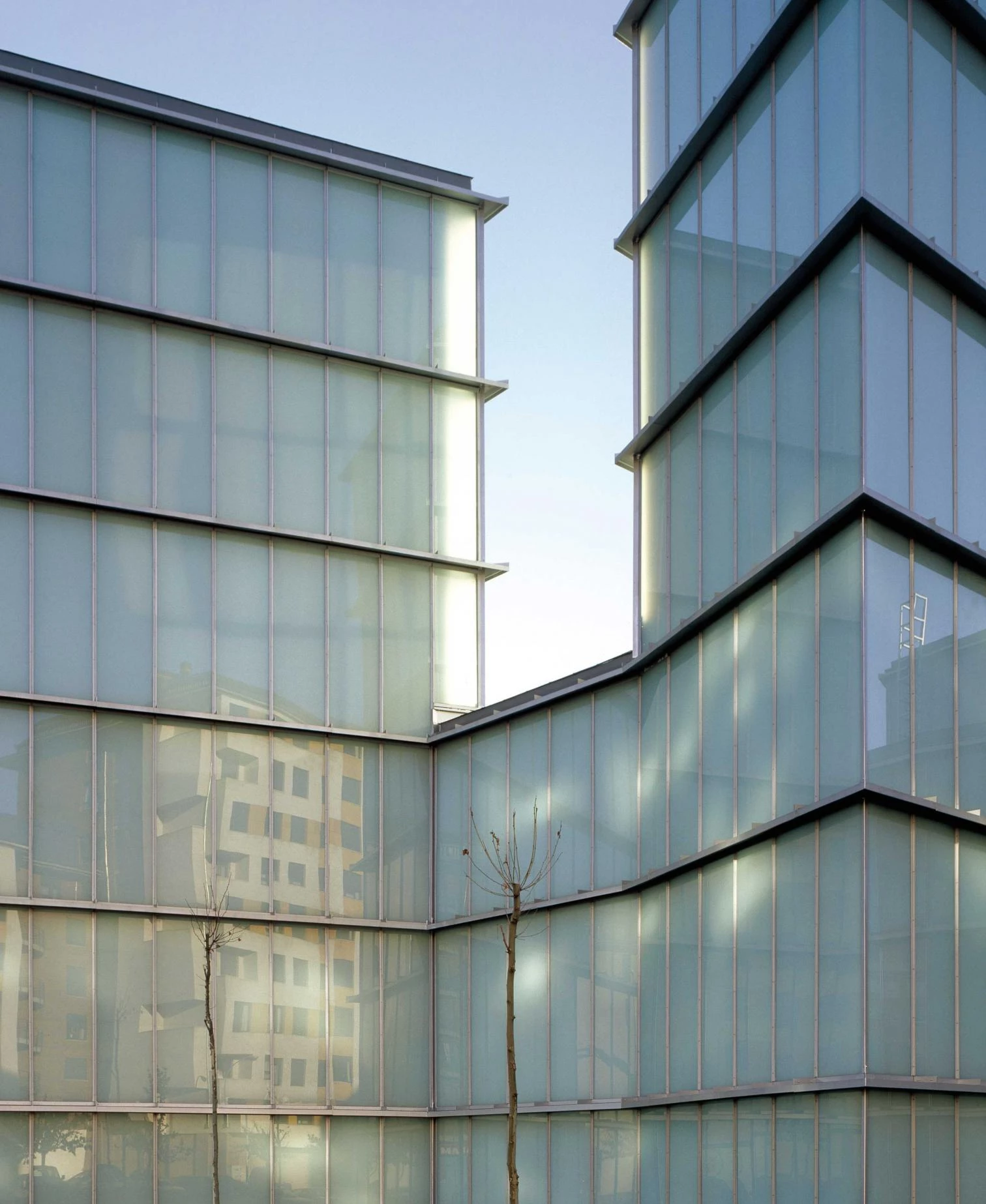
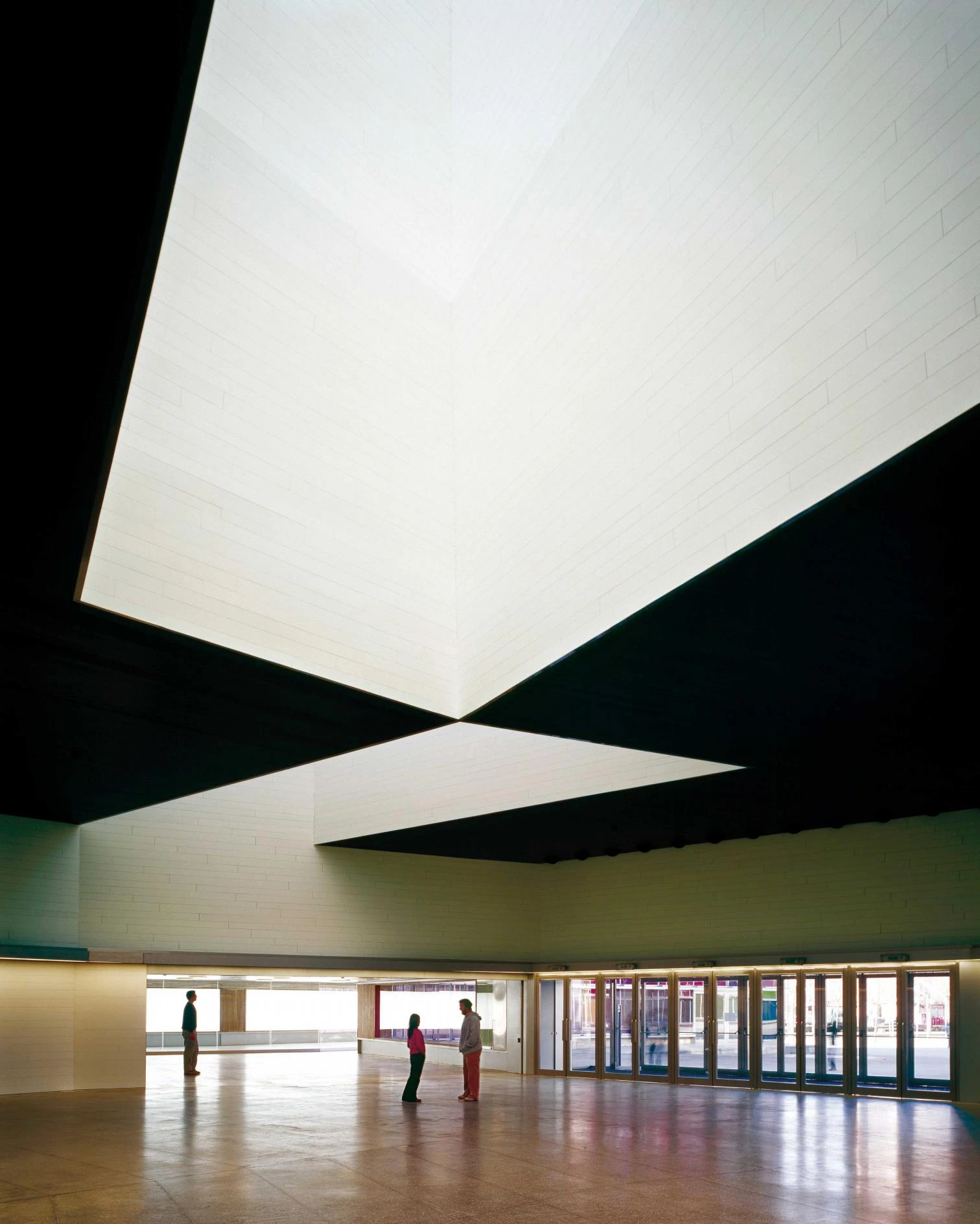
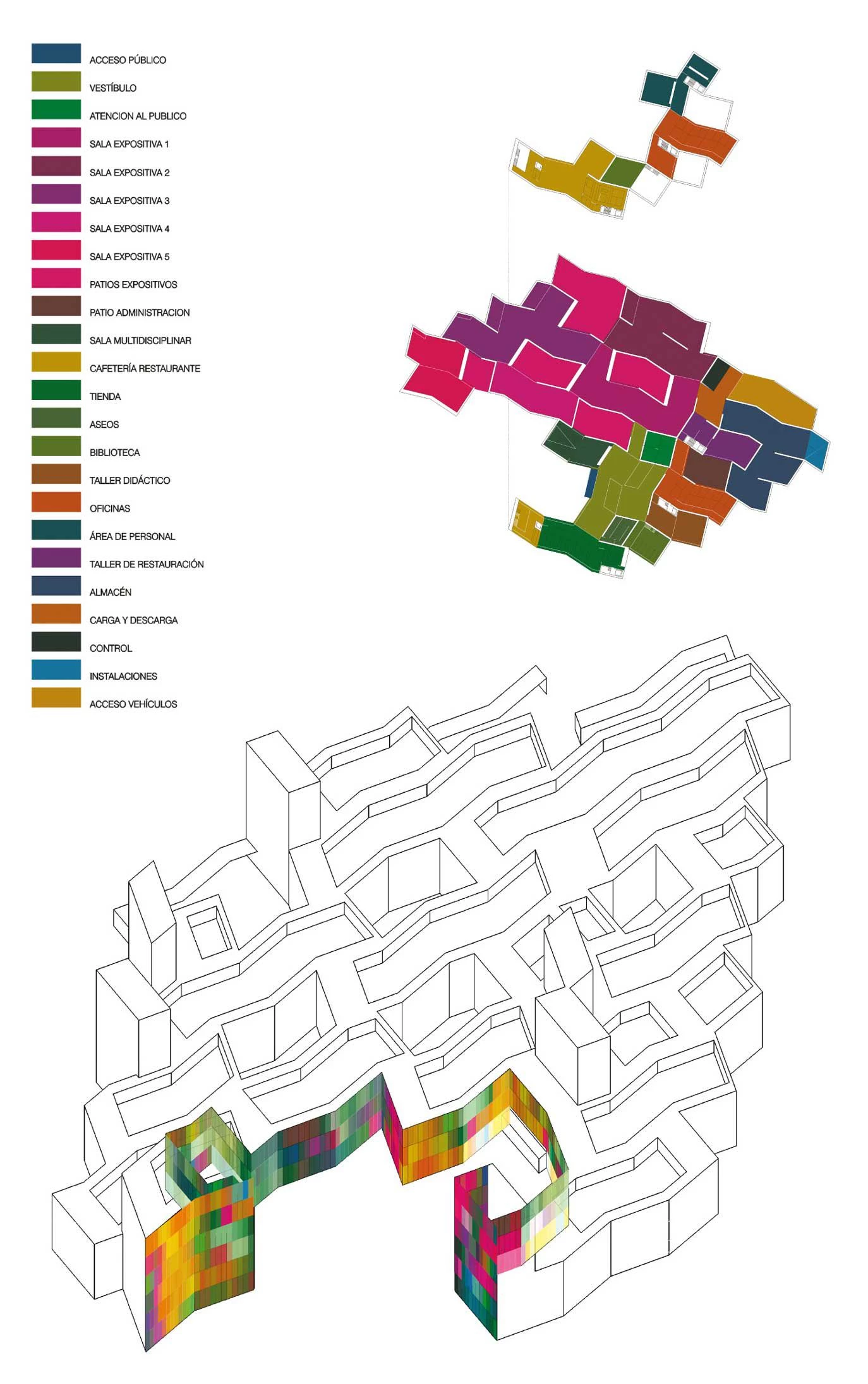
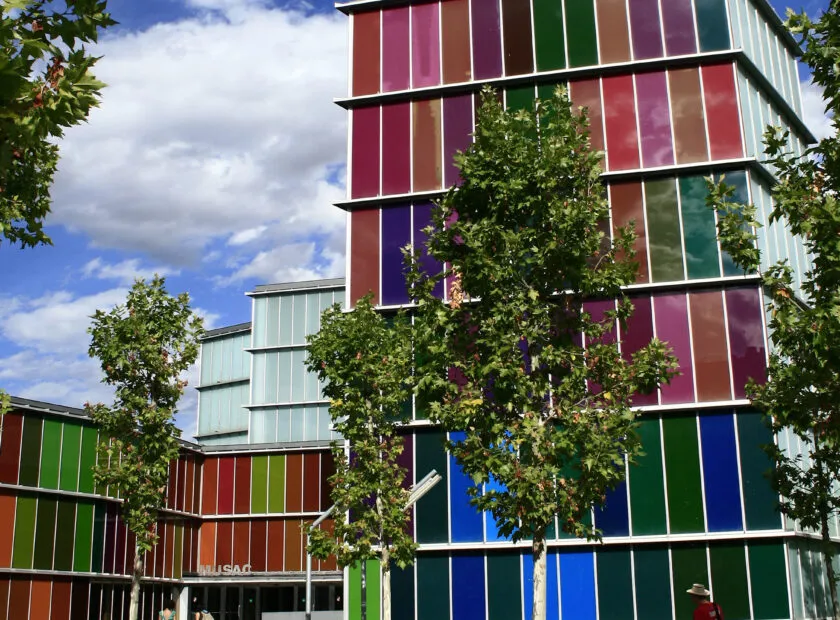
The MUSAC, completed in 2004 in León, is one of Luis Moreno Mansilla’s signature works and a reference in 21st-century Spanish architecture. Designed by Mansilla + Tuñón as a contemporary art museum, the building is composed of five rectangular volumes organized around a central plaza. Its most distinctive feature is the facade: a patchwork of colored glass panels that filter daylight into the galleries and reference León’s cathedral windows. The MUSAC’s design emphasizes flexibility; the interior contains large, adaptable exhibition halls capable of hosting varied installations. Mansilla’s approach combined geometric clarity with spatial openness. The colored geometry on the exterior wraps white-cube galleries inside. The project received the 2007 Mies van der Rohe Award, with the jury highlighting the use of materials and the versatility of its exhibition spaces. The MUSAC revitalized an urban block in León and became a reference for contemporary museum design.
02. Museo de Colecciones Reales (Royal Collections Museum), Madrid
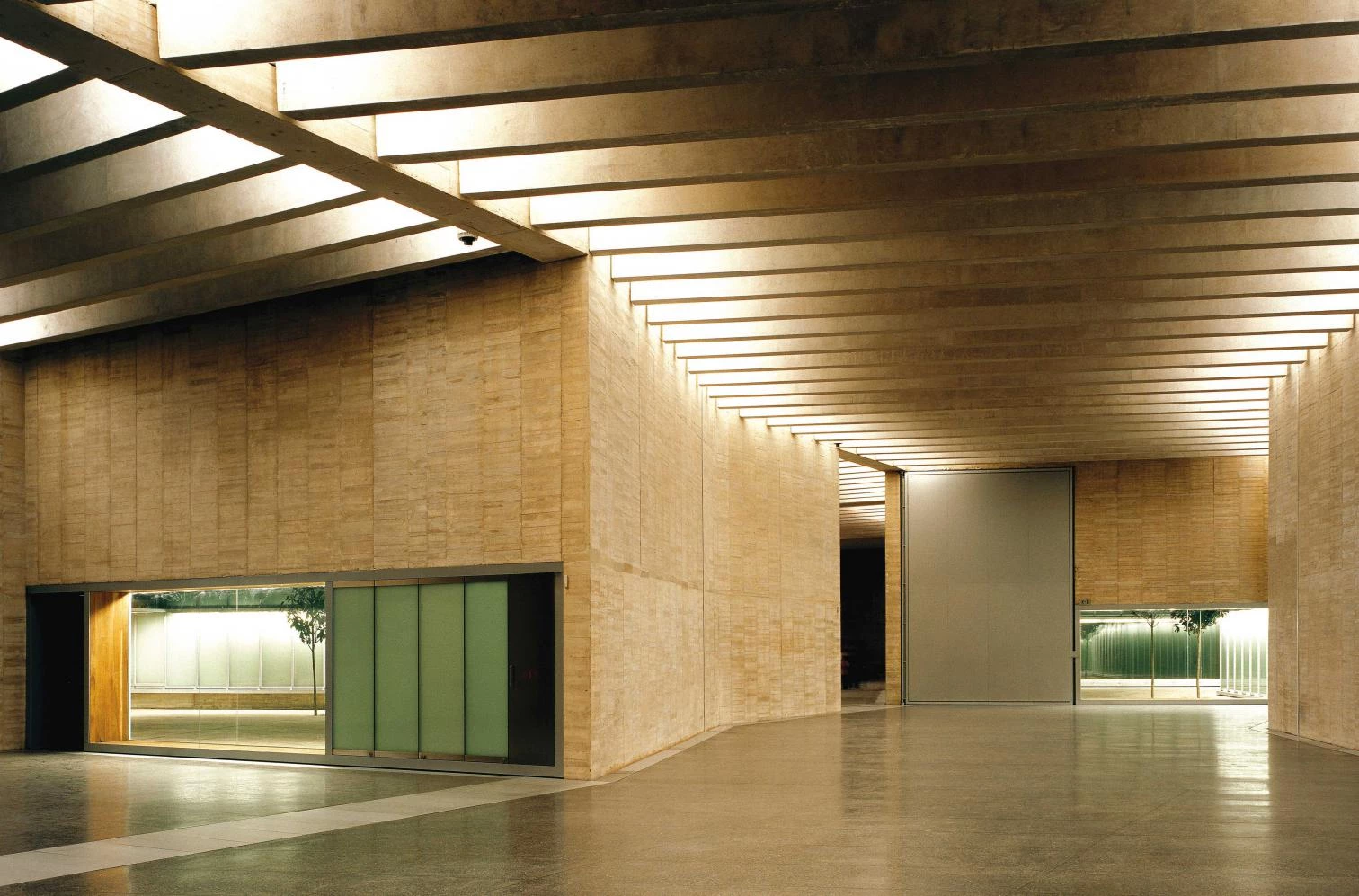
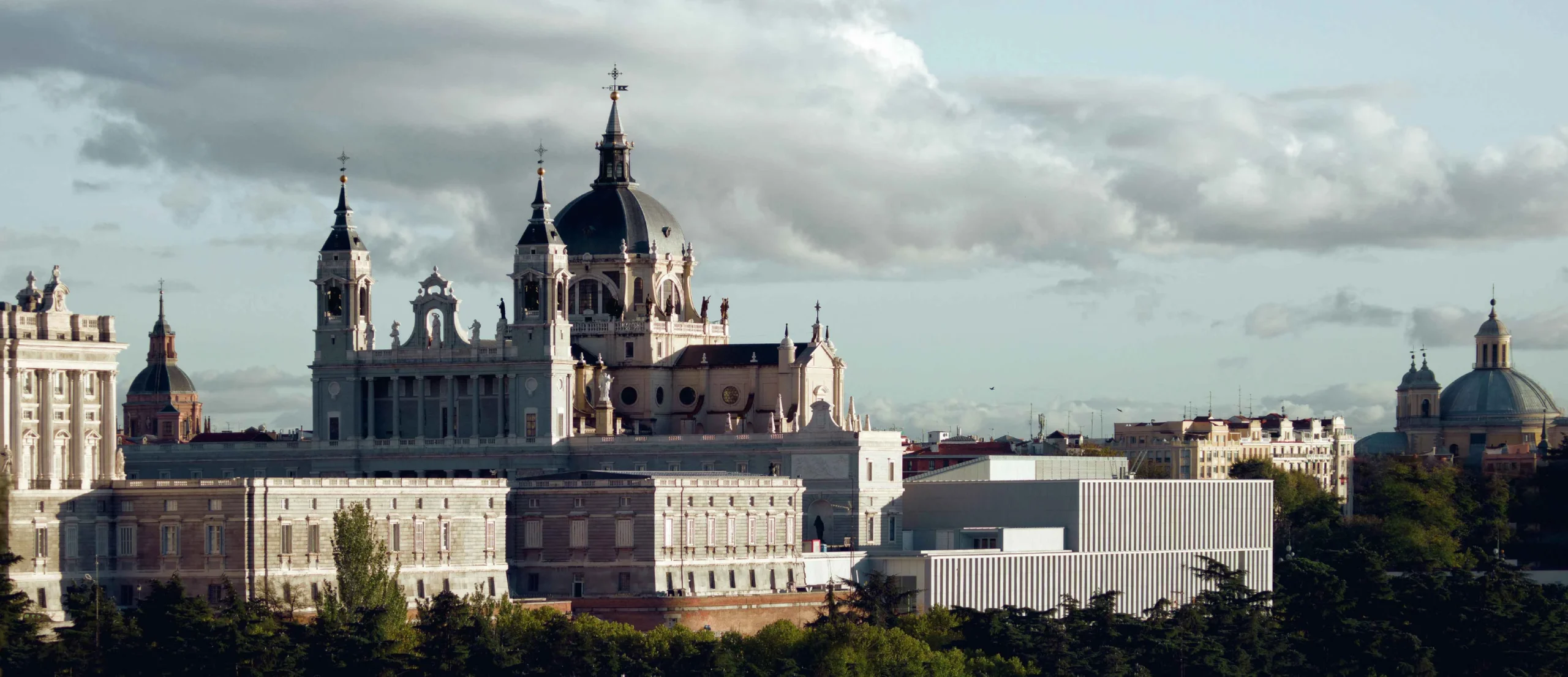
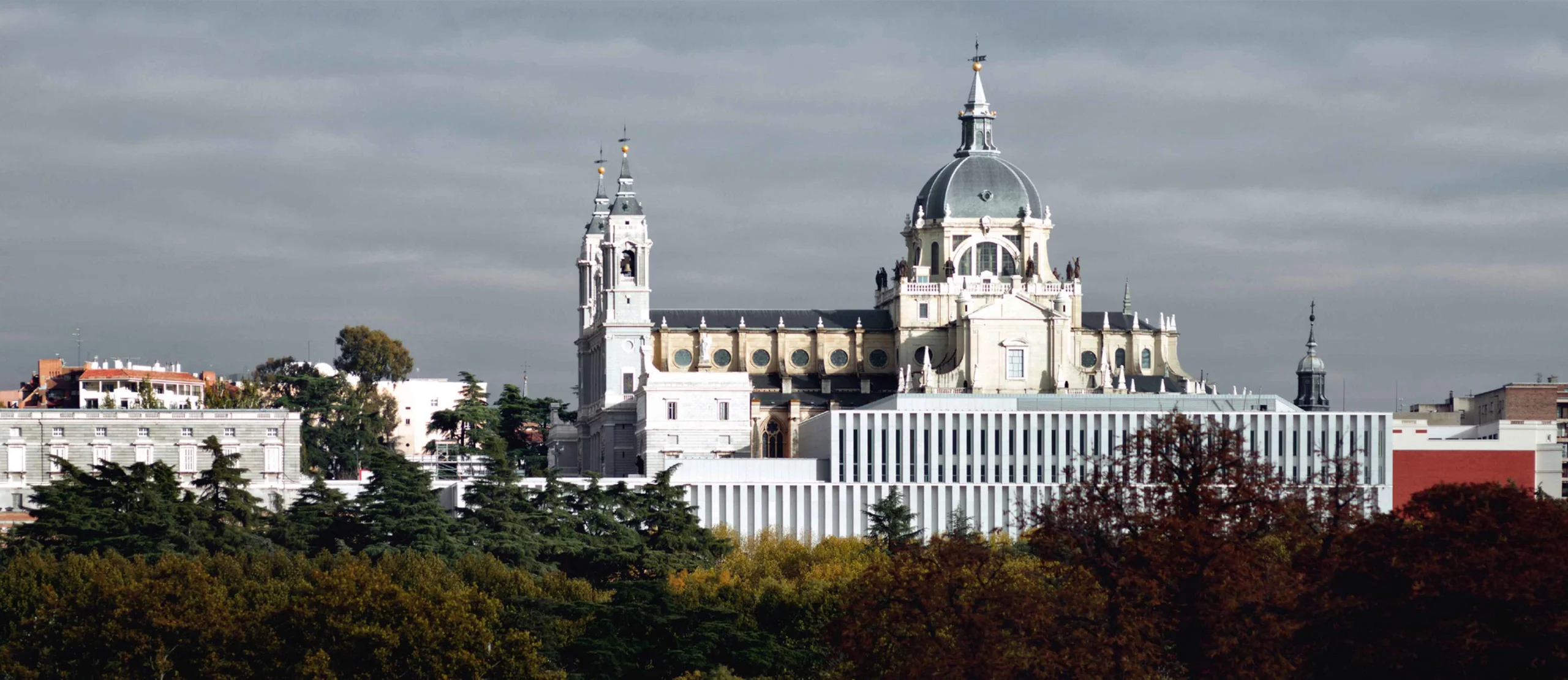
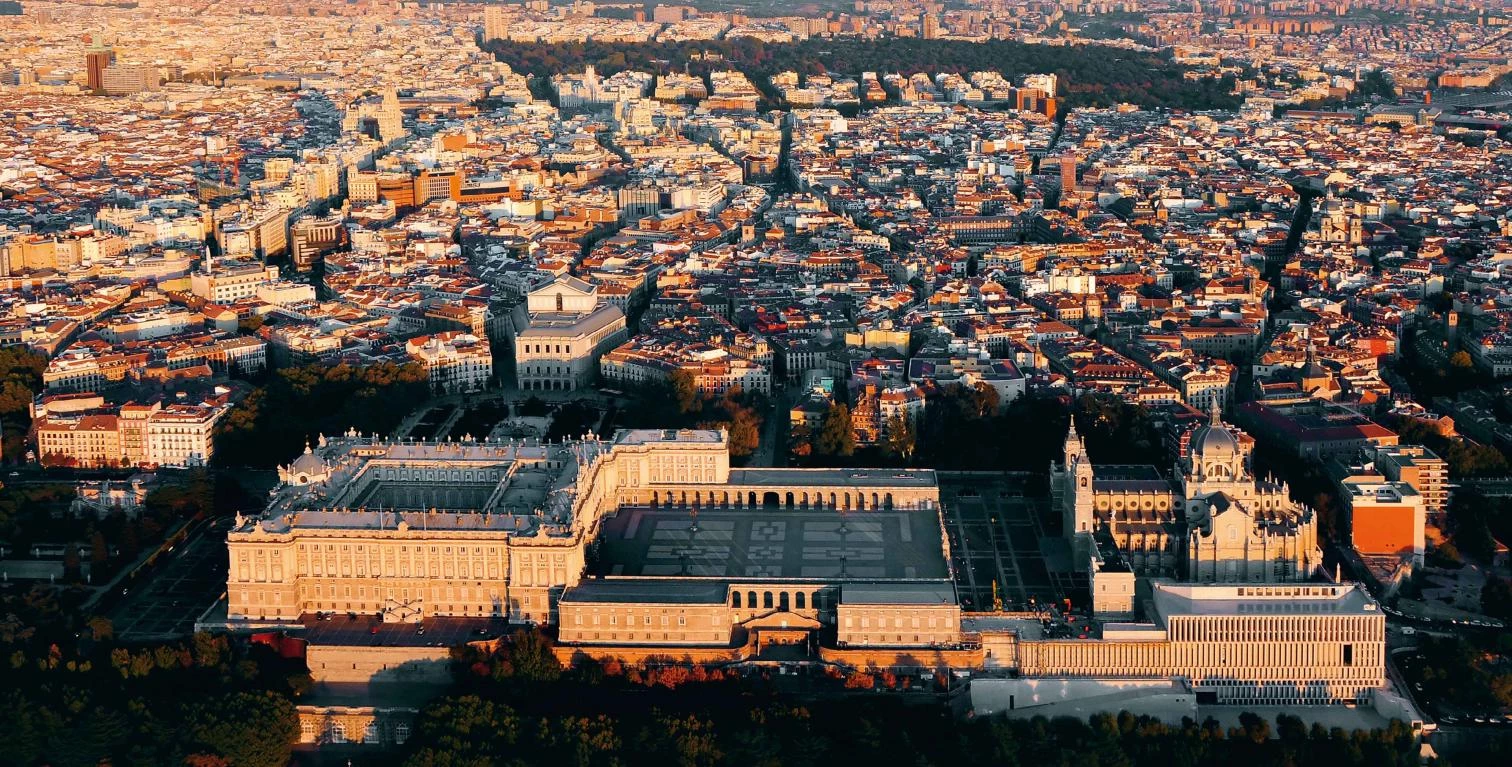
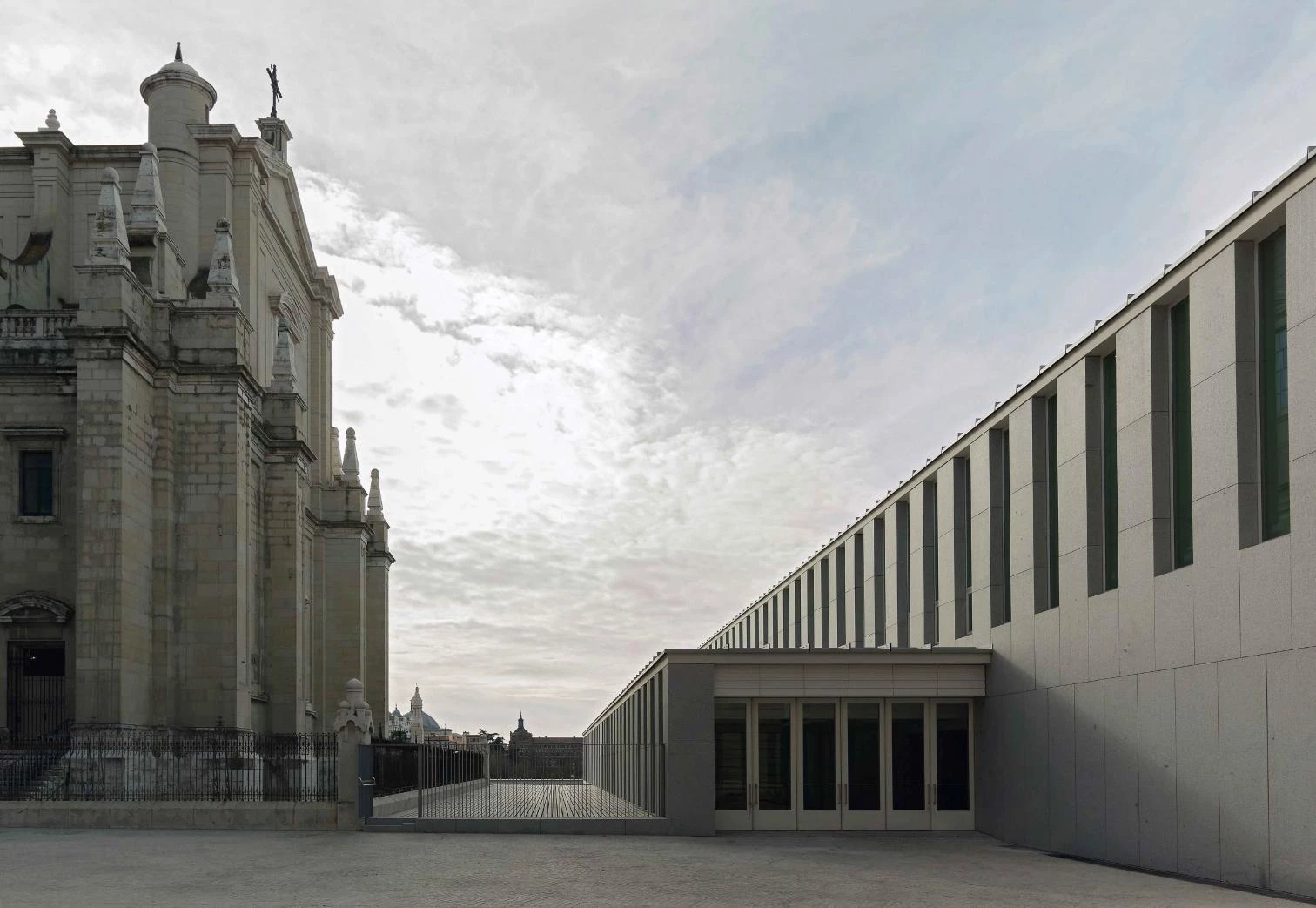
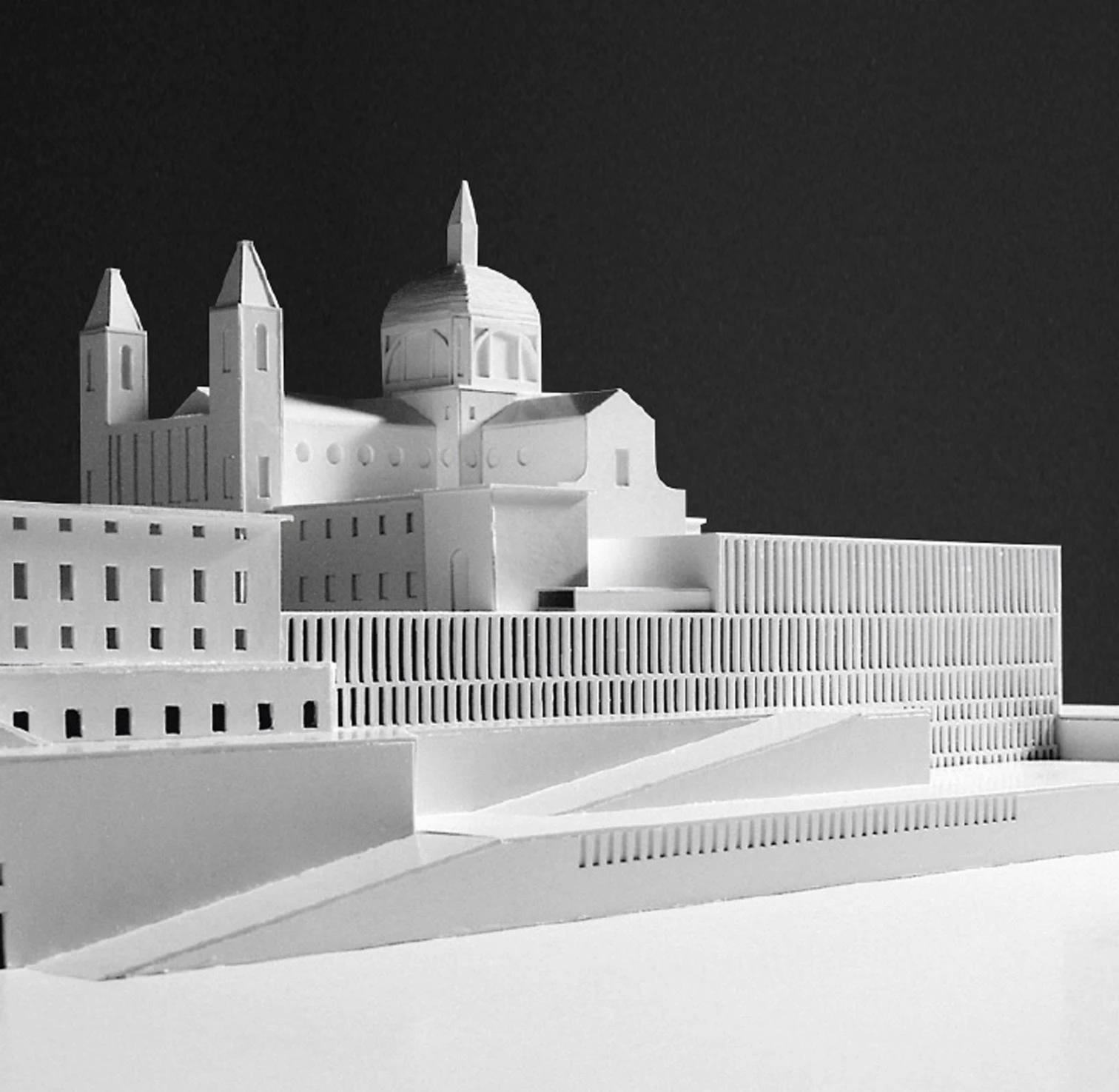
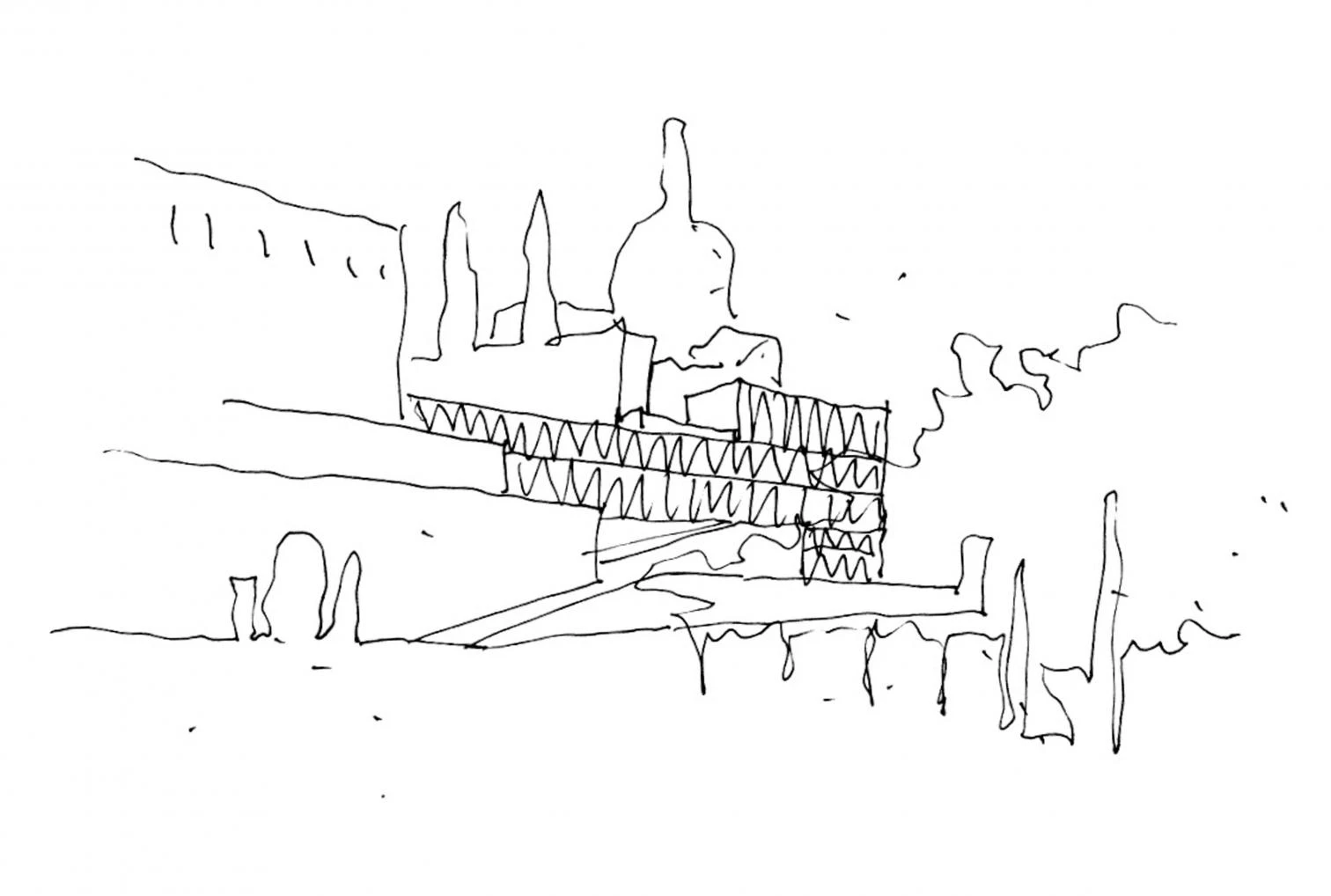
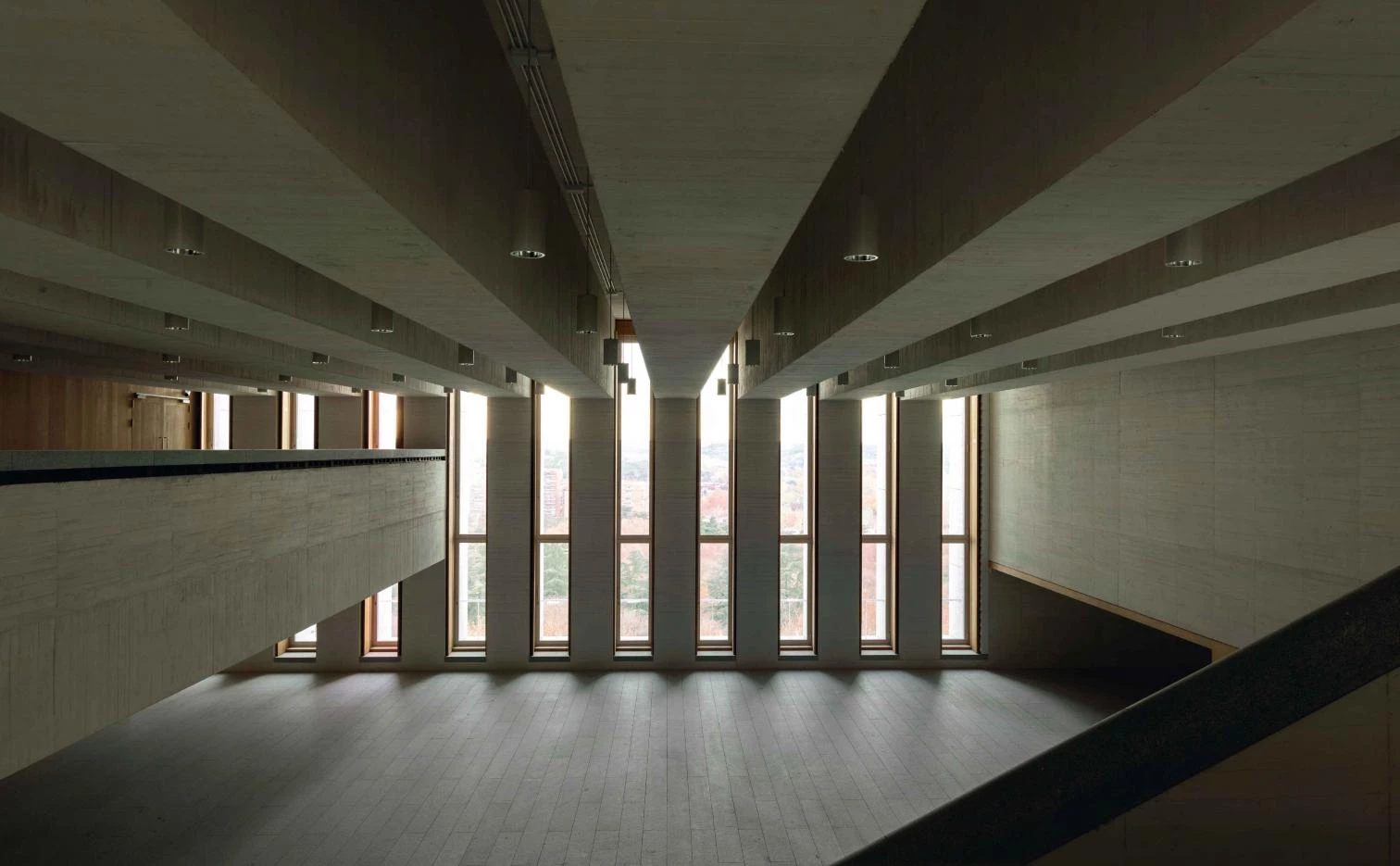
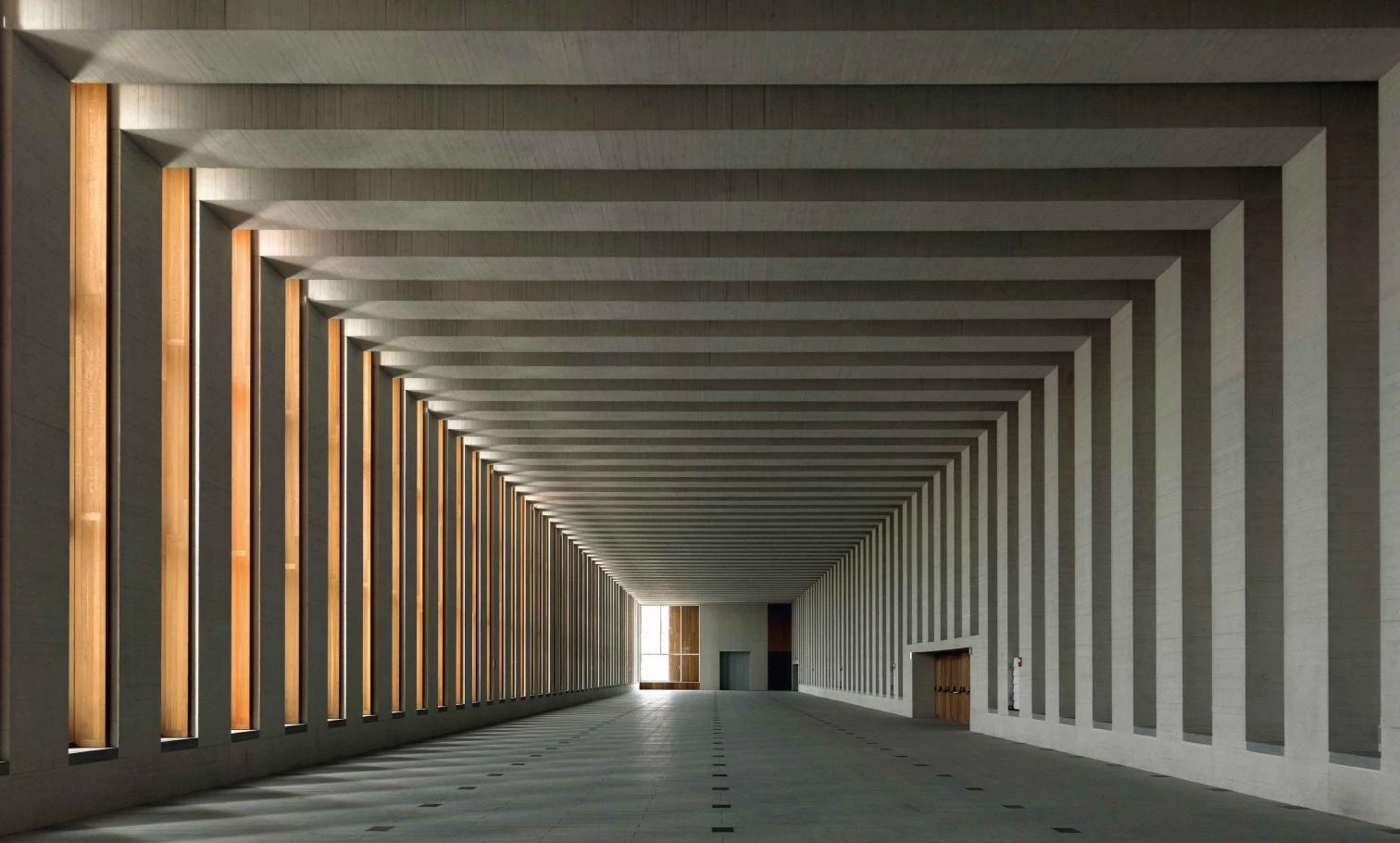
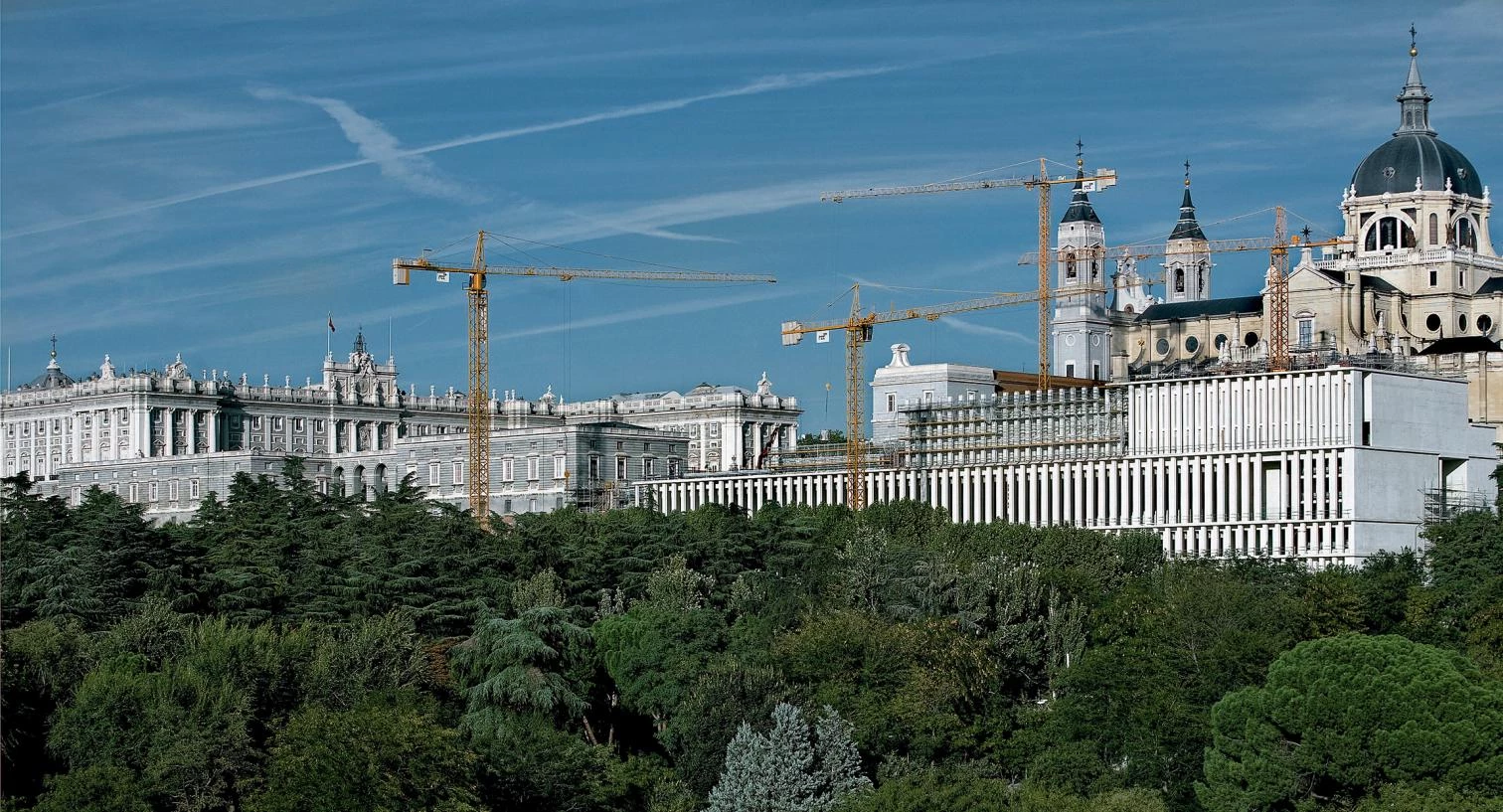
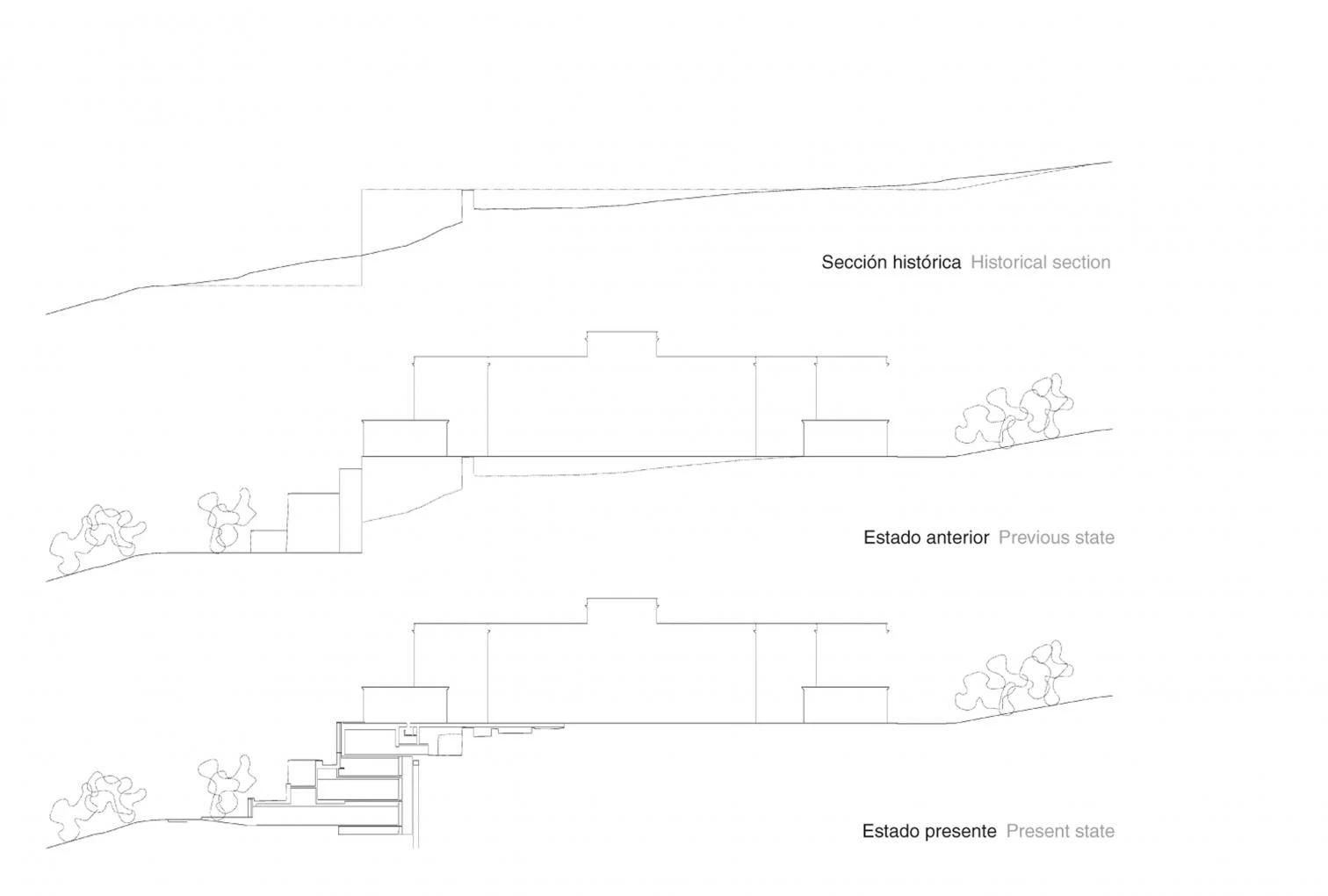
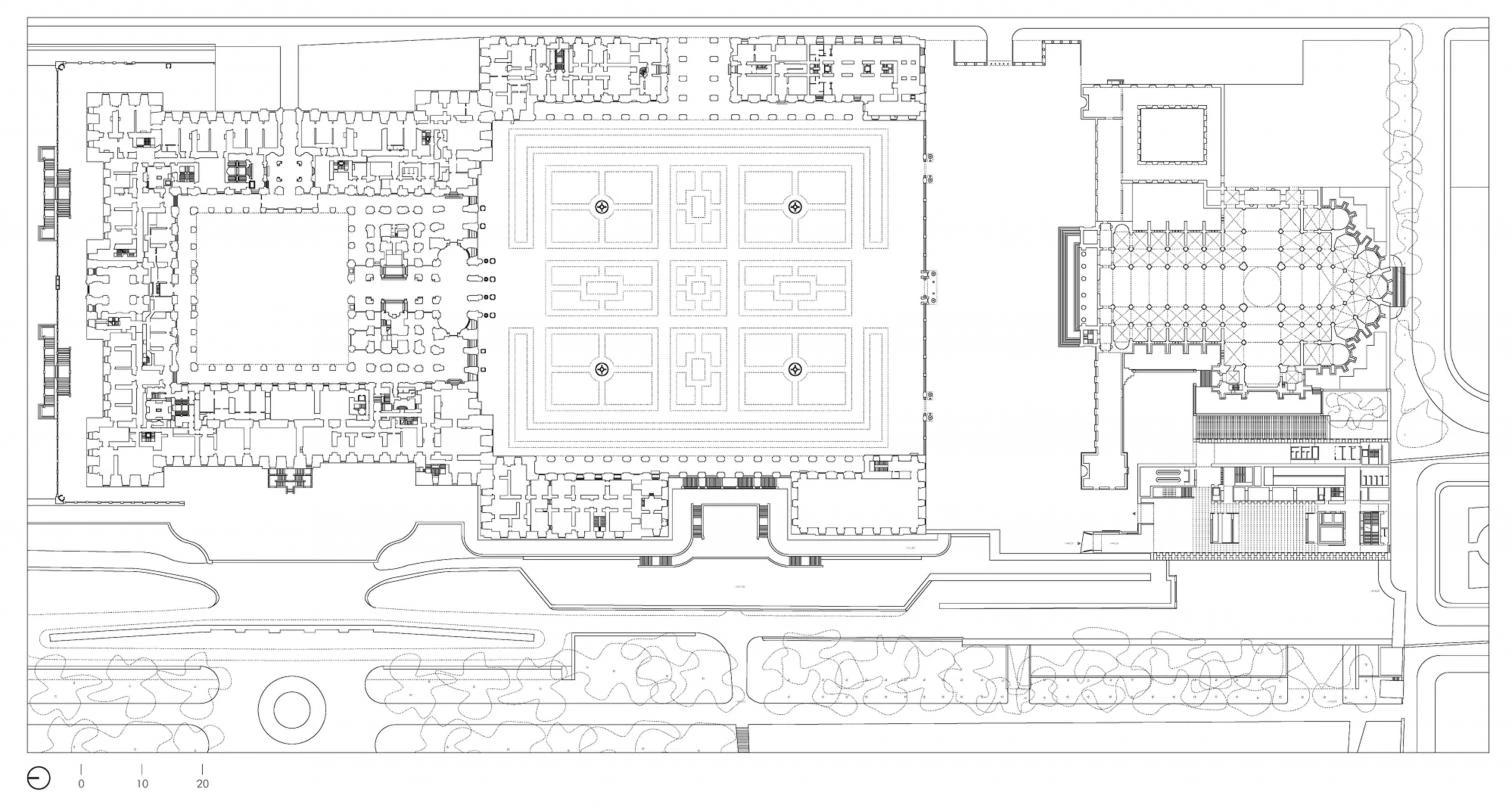
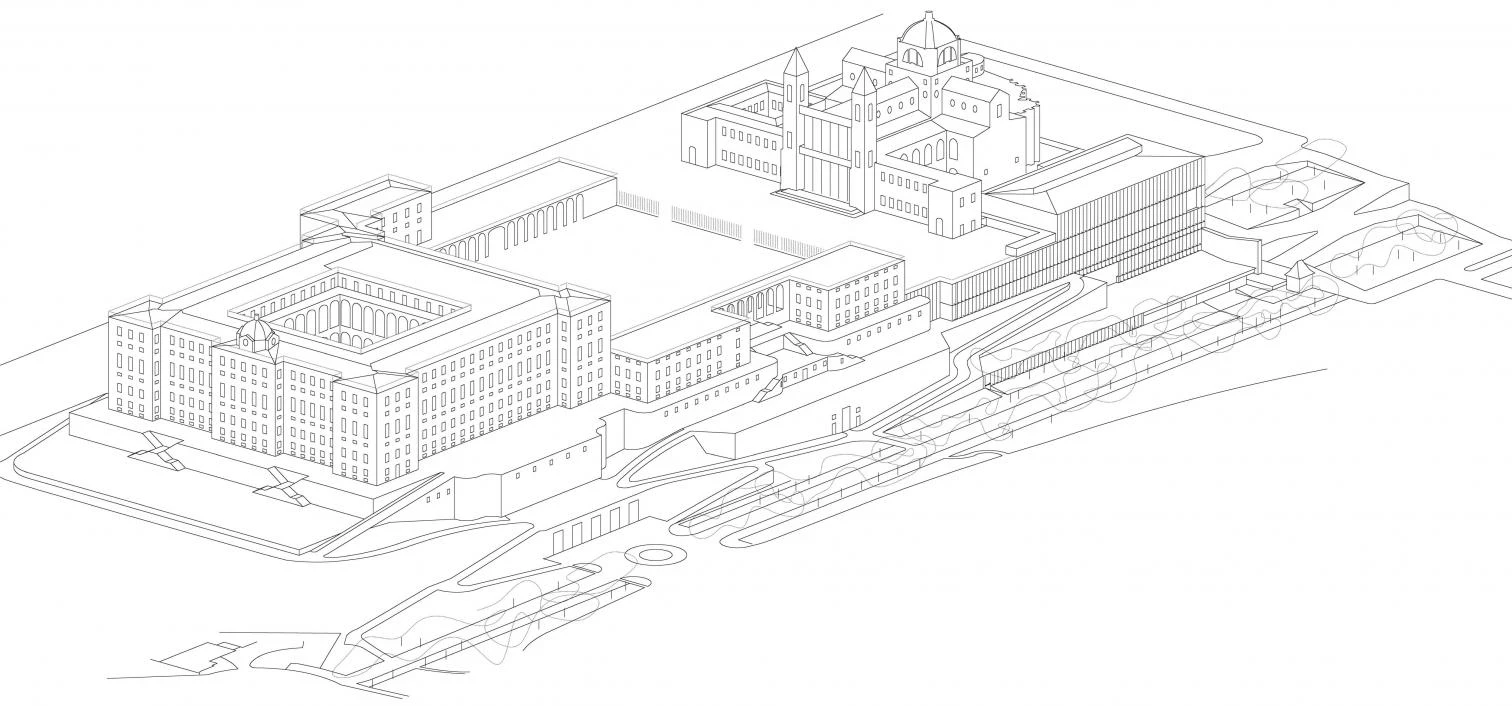
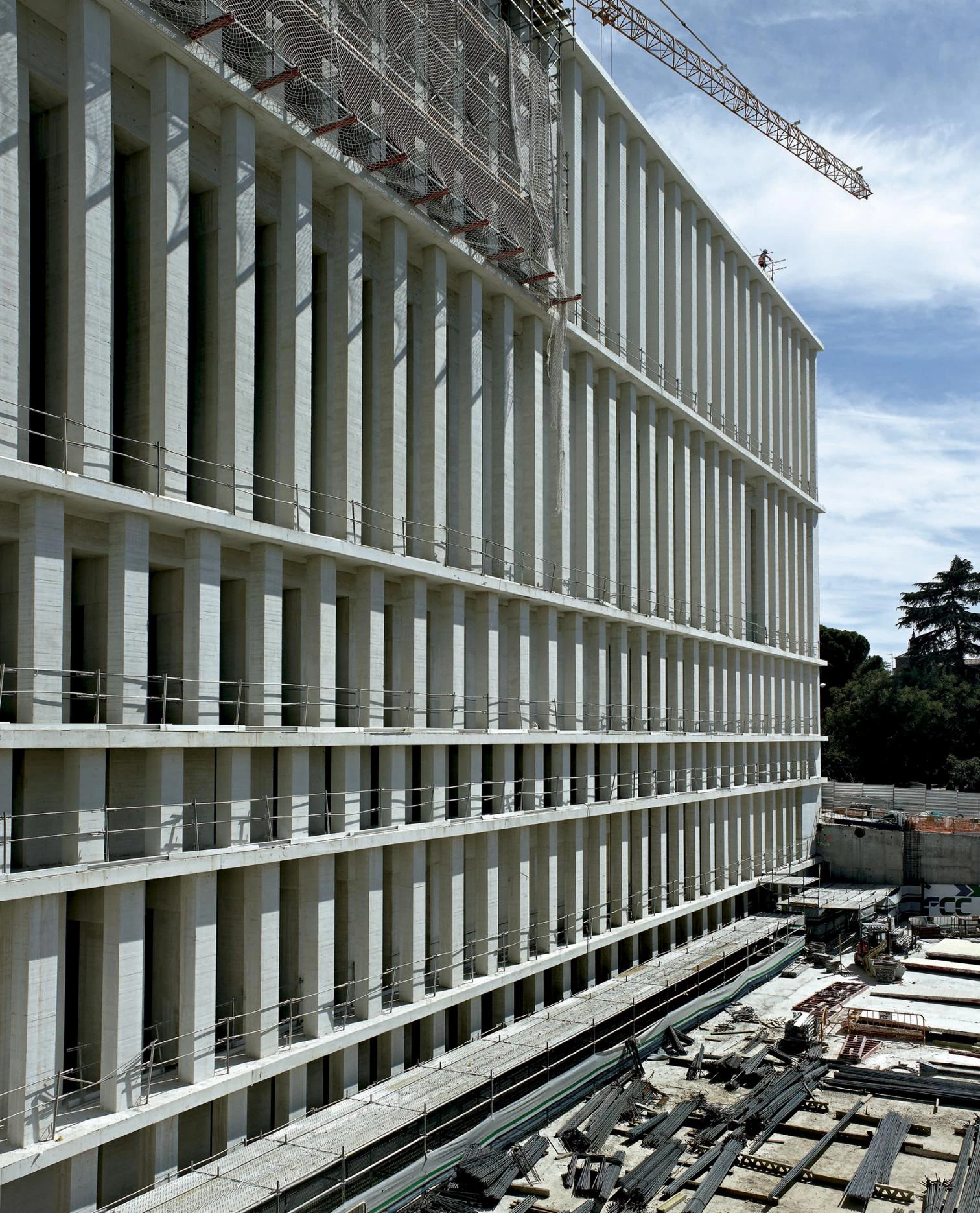
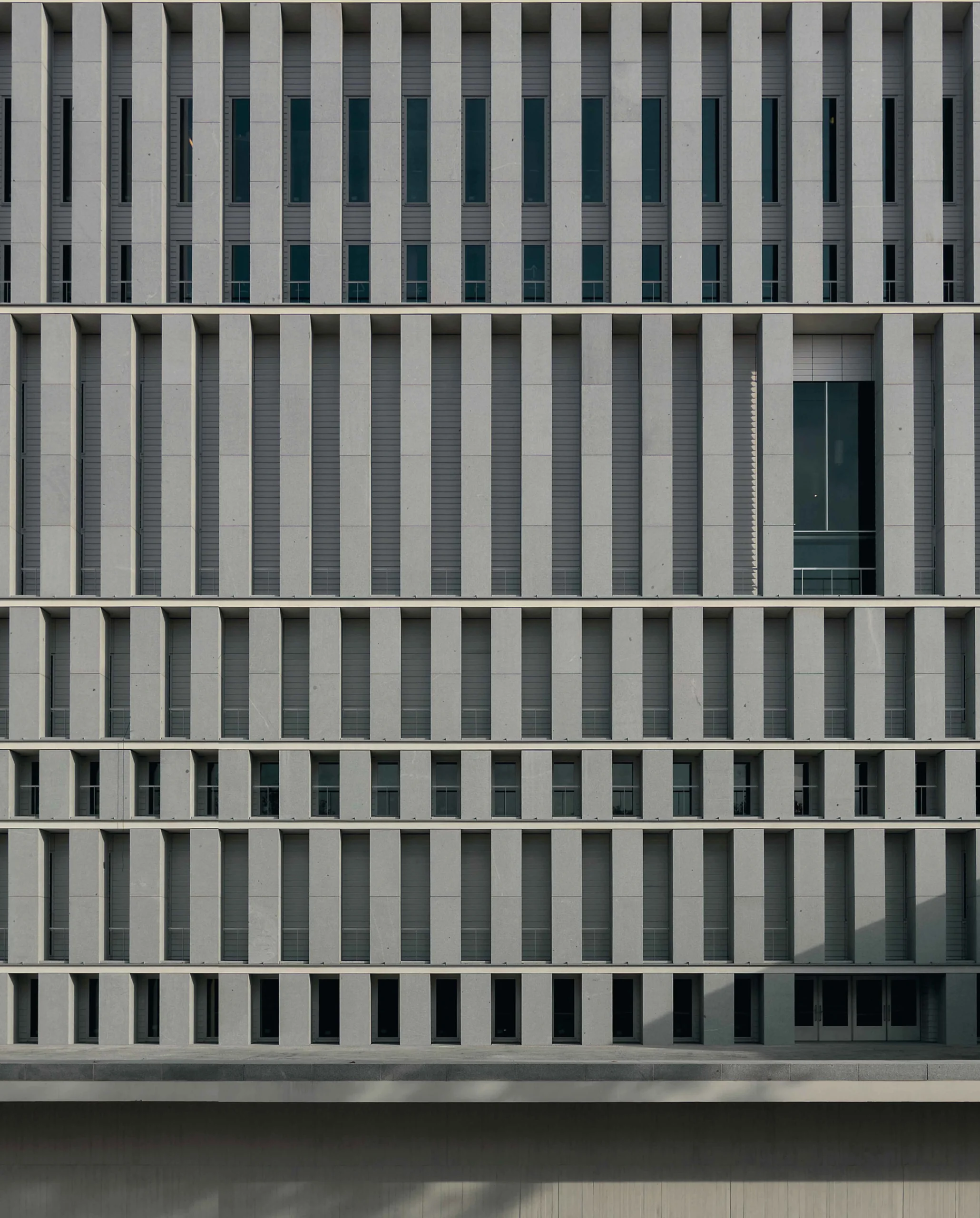
The Royal Collections Museum in Madrid is a project by Mansilla + Tuñón, conceived in 2002 and completed in 2016, that demonstrates the firm’s integration of modern architecture within a historic royal setting. The museum occupies a site beside the Palacio Real and Almudena Cathedral and was designed to house Spain’s royal art and artifact collections. The design embeds the museum into the hillside, functioning as an inhabited plinth that extends the palace base. Much of the structure sits below ground level to preserve open views of the palace and cathedral, described by the architects as “an inhabited retaining wall” that minimizes visual impact. The facade is composed of granite and concrete pillars, aligning with the material language of the adjacent historic buildings while producing a contemporary abstract form. Inside, the museum presents a sequence of large exhibition halls across three levels, connected by ramps and staircases that guide visitors downward through chronological displays of tapestries, paintings, carriages, and other royal objects. Glass openings between structural piers introduce filtered daylight and framed views of the surrounding gardens. This balance of mass and permeability earned the Museo de Colecciones Reales the Spanish Architecture Award in 2017. The project shows Luis Moreno Mansilla’s capacity to address complex historic contexts with modern architectural precision.
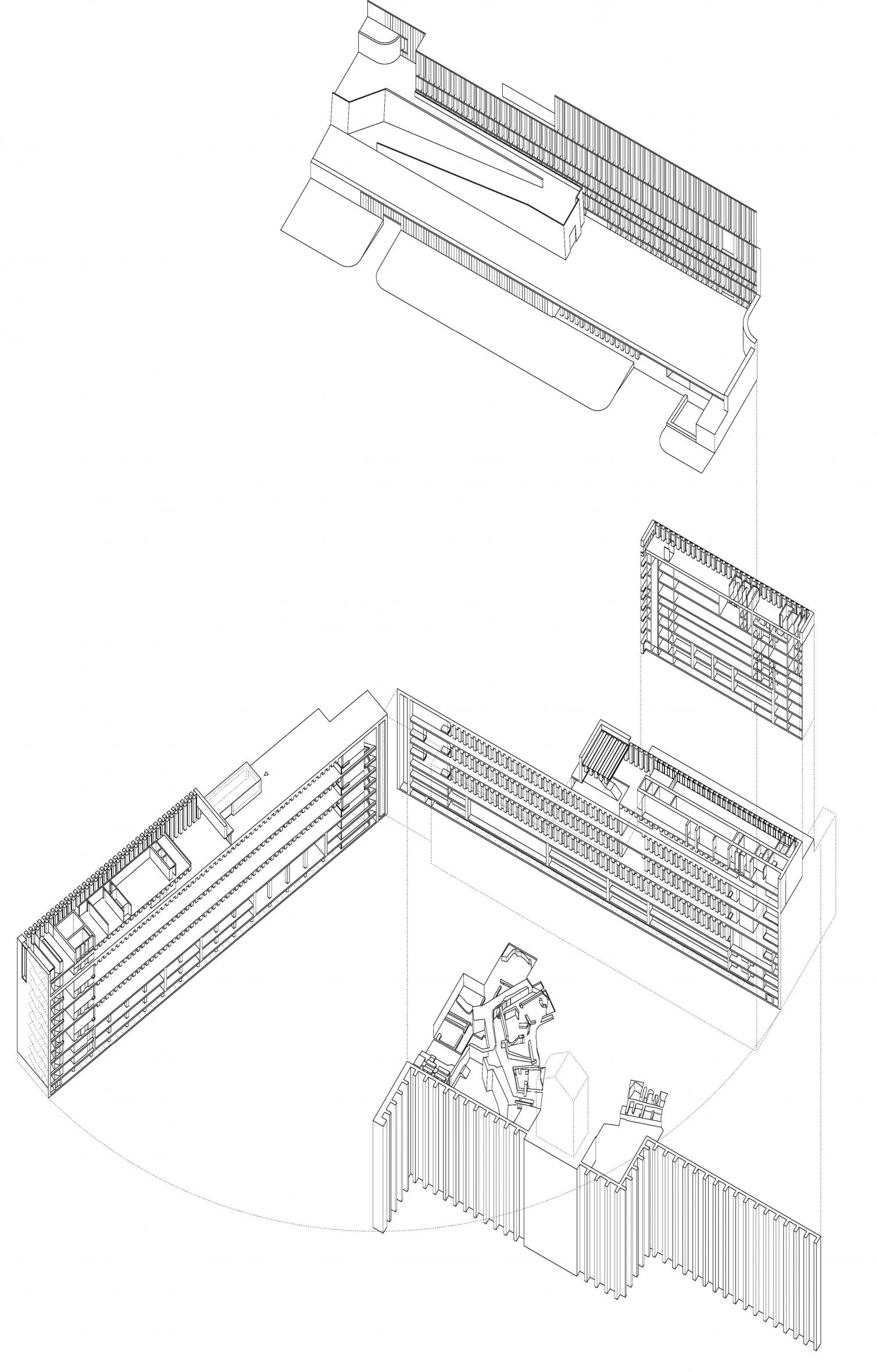
03. Auditorio Ciudad de León (León Auditorium)
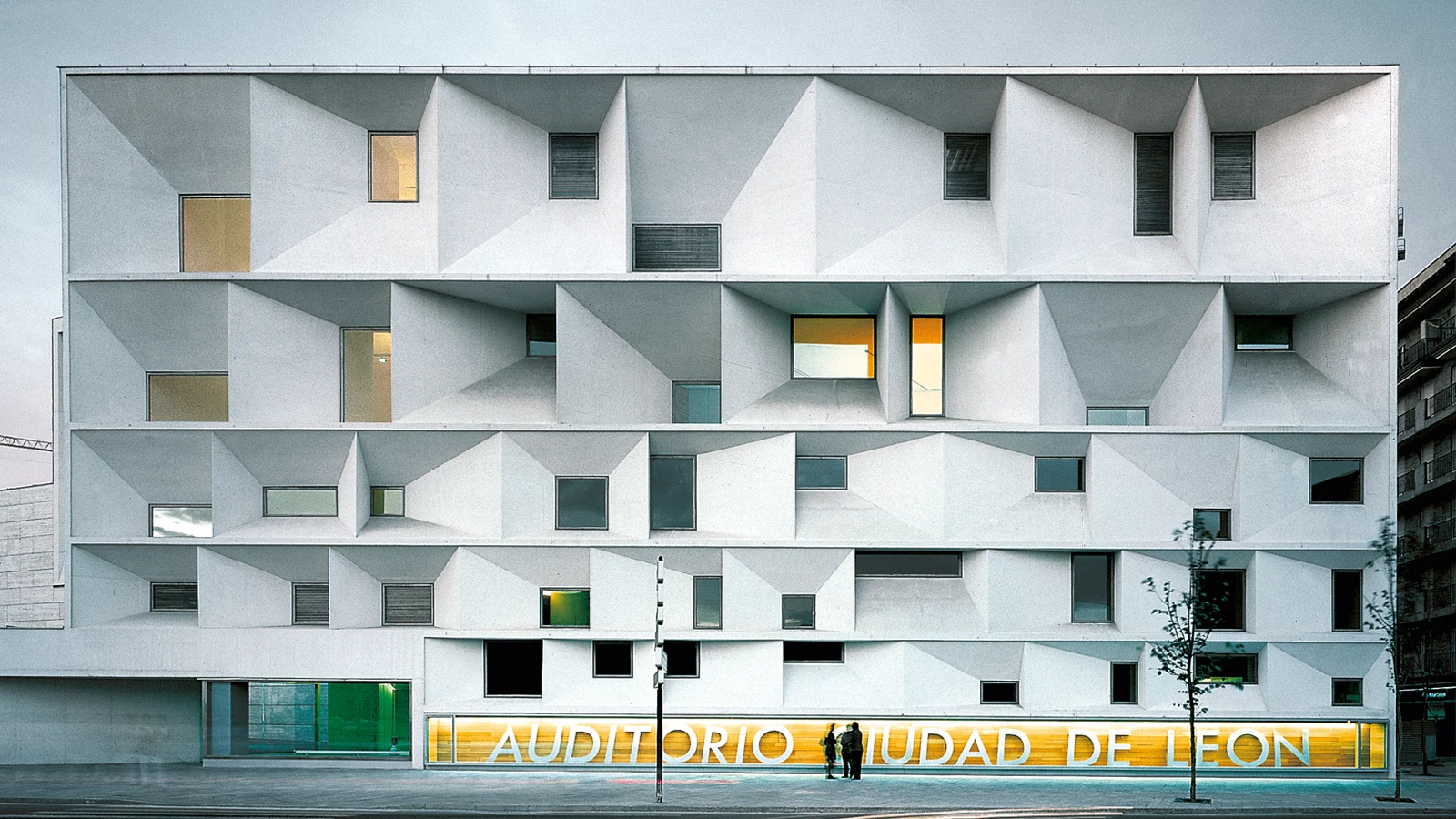
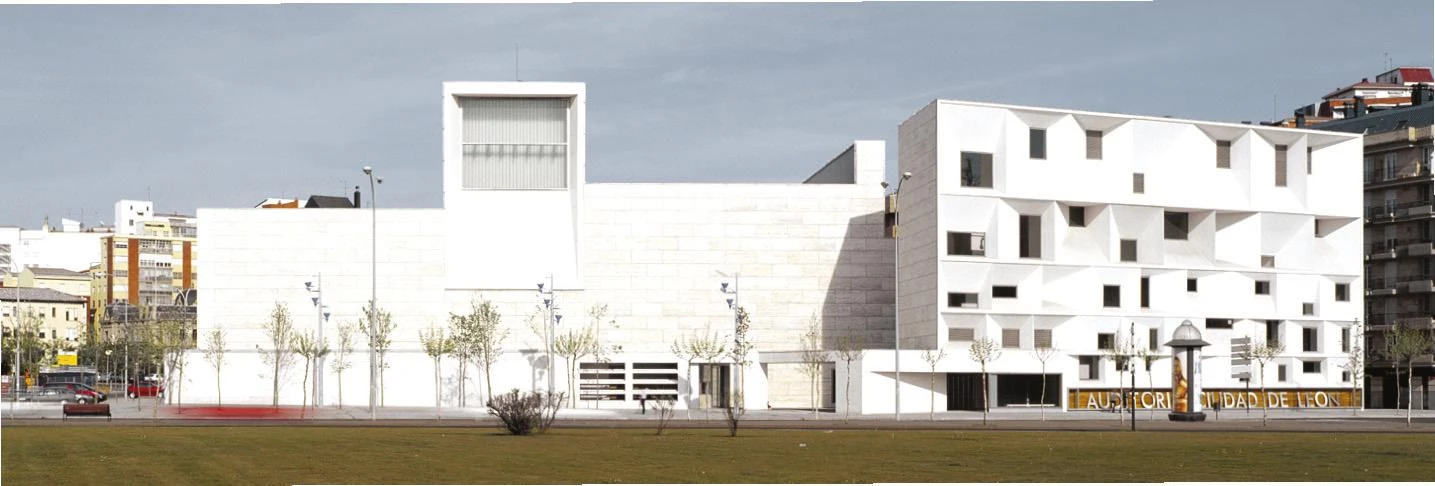
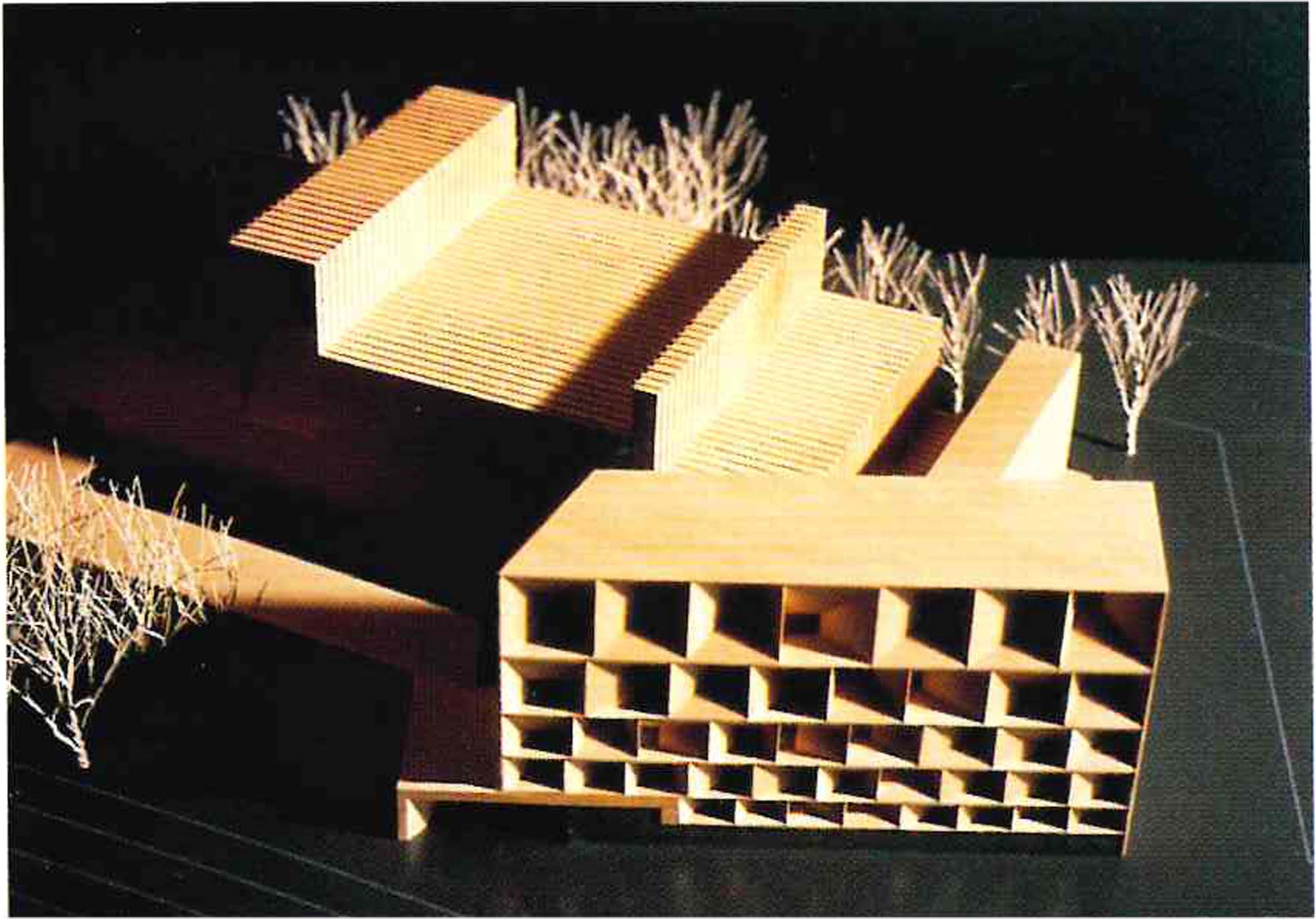
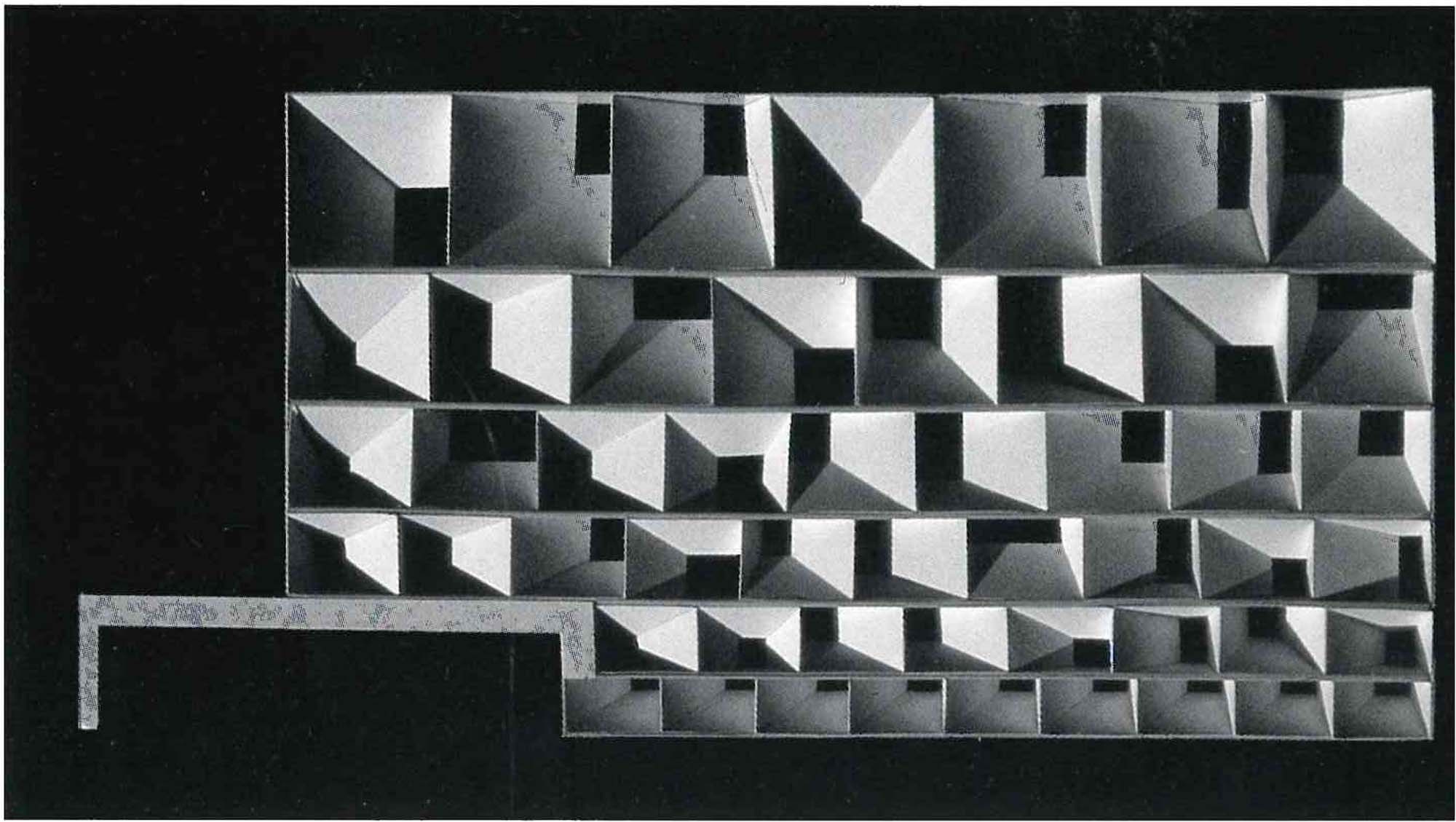
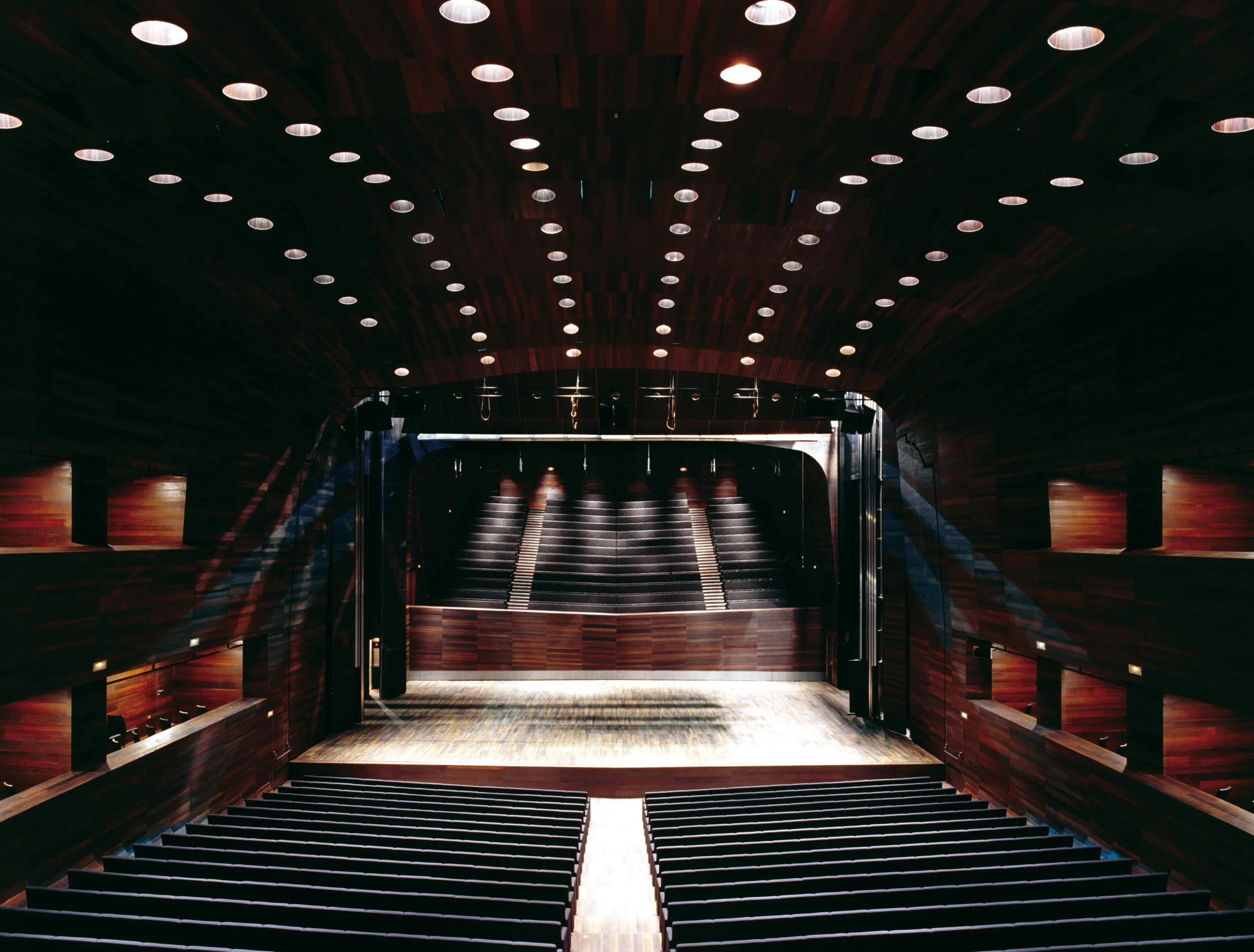
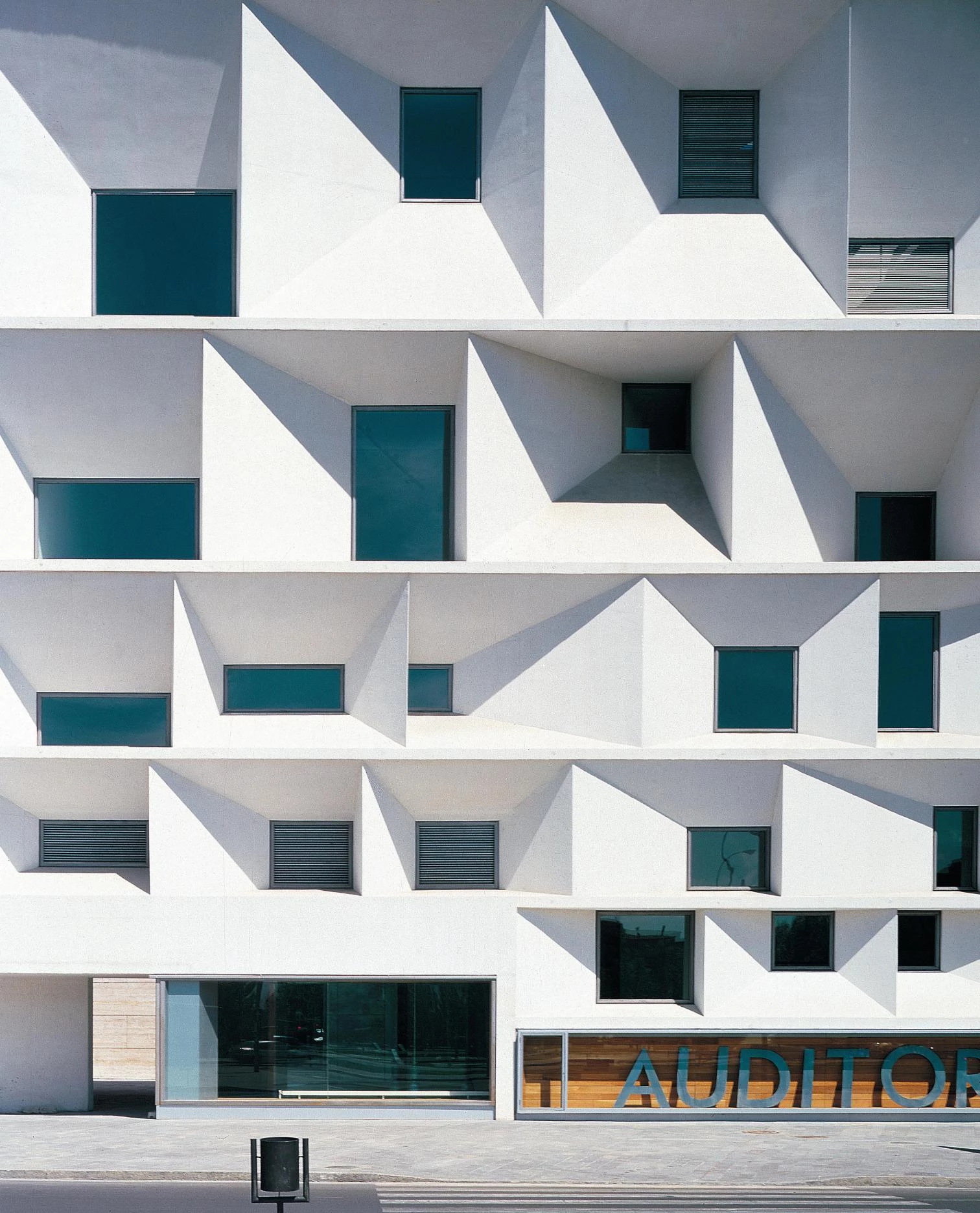
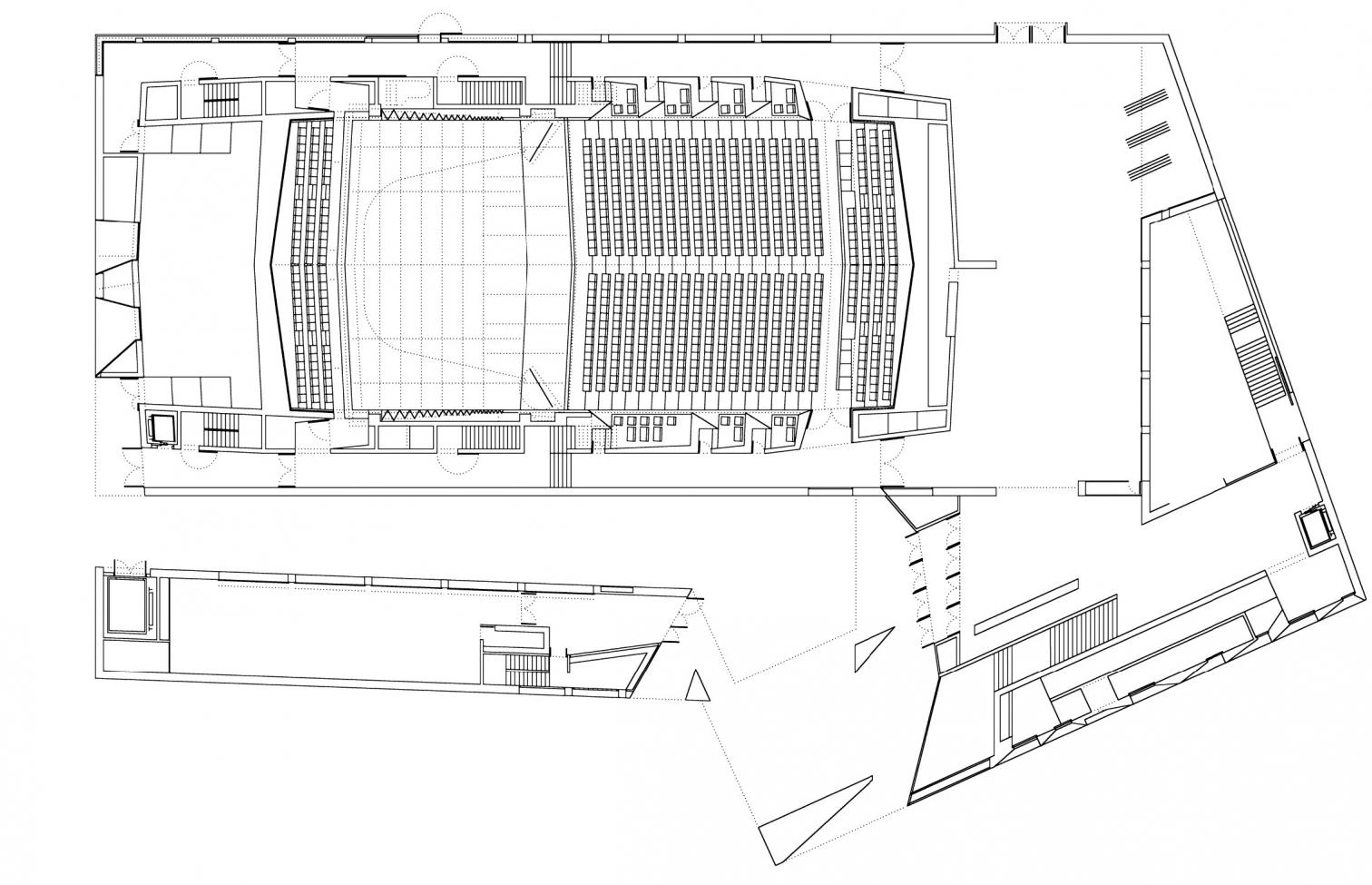
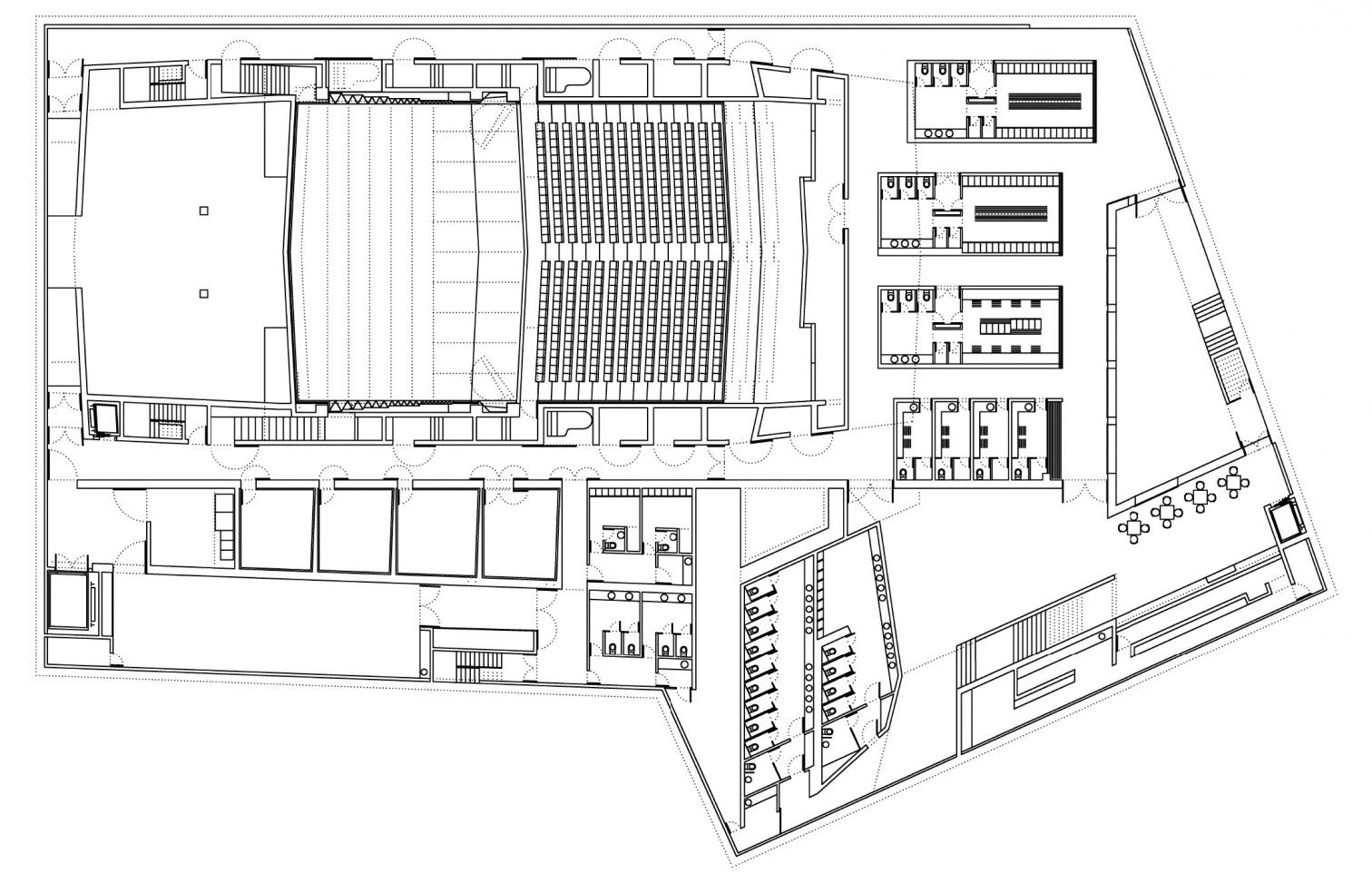
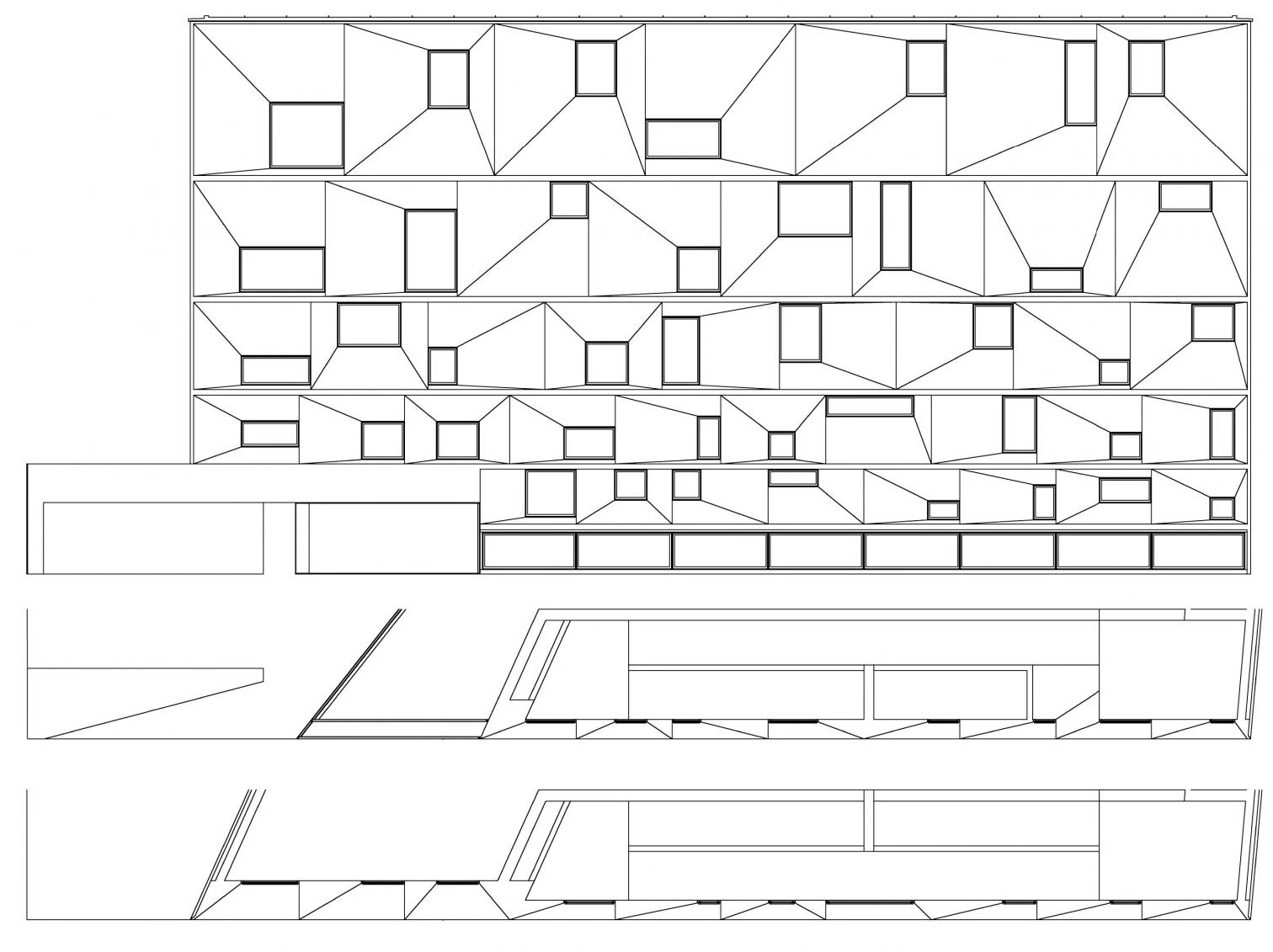
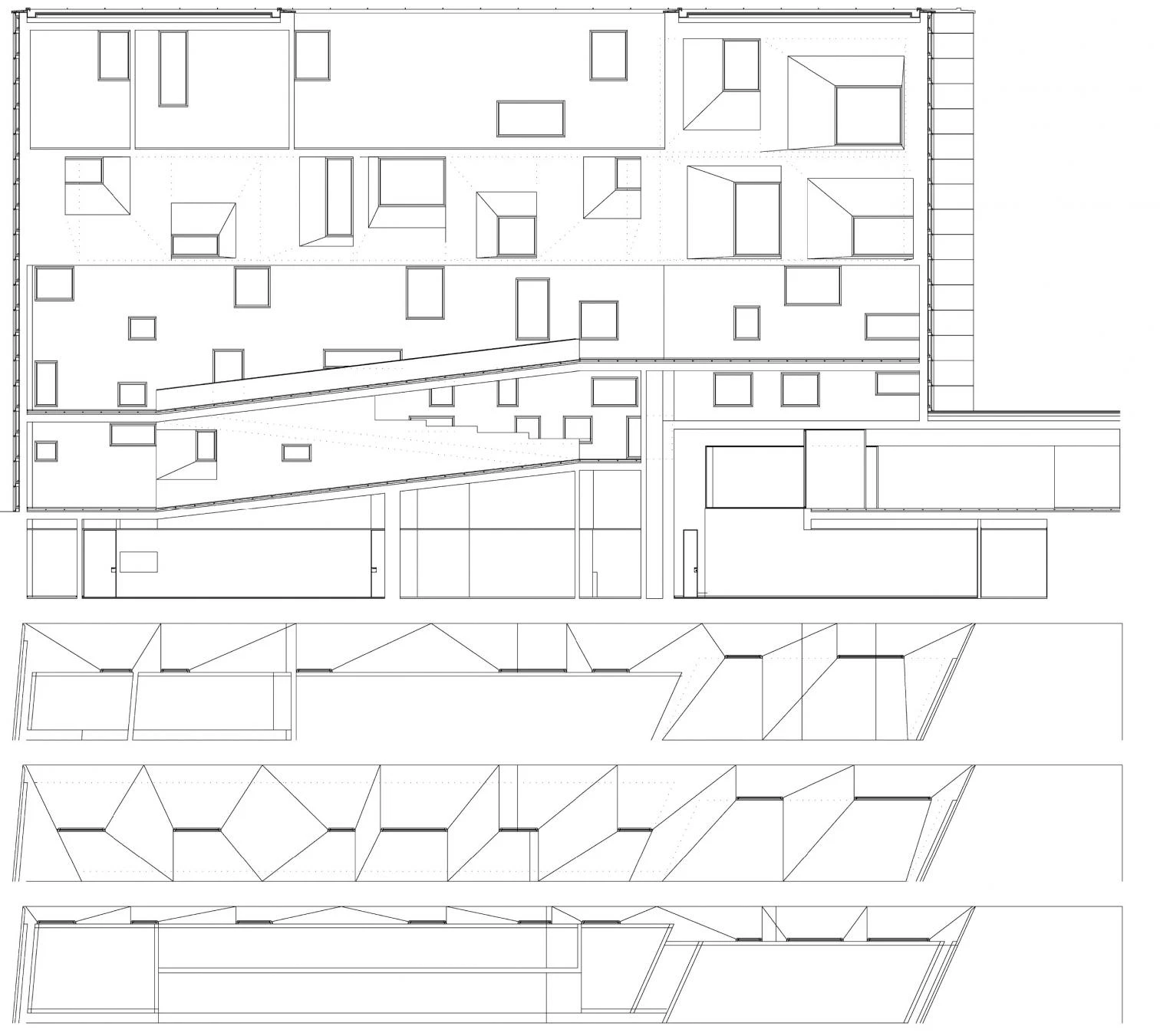
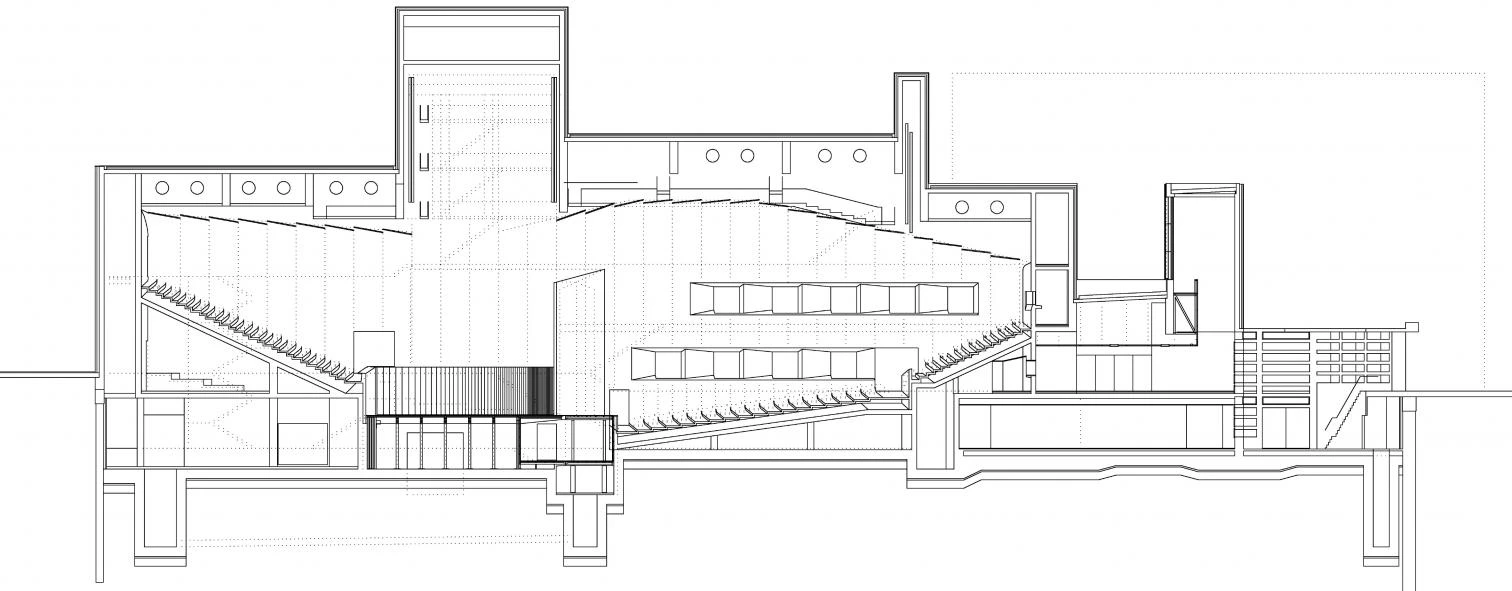
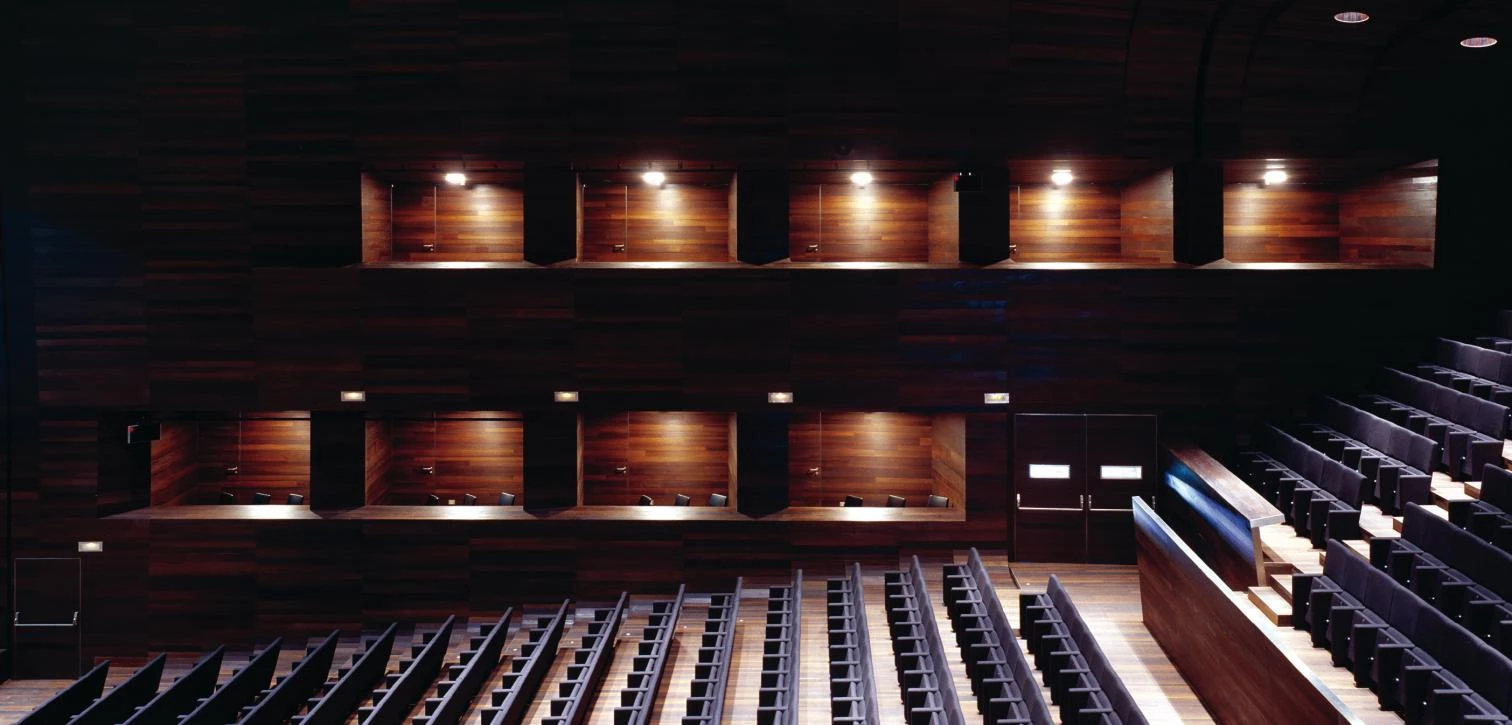
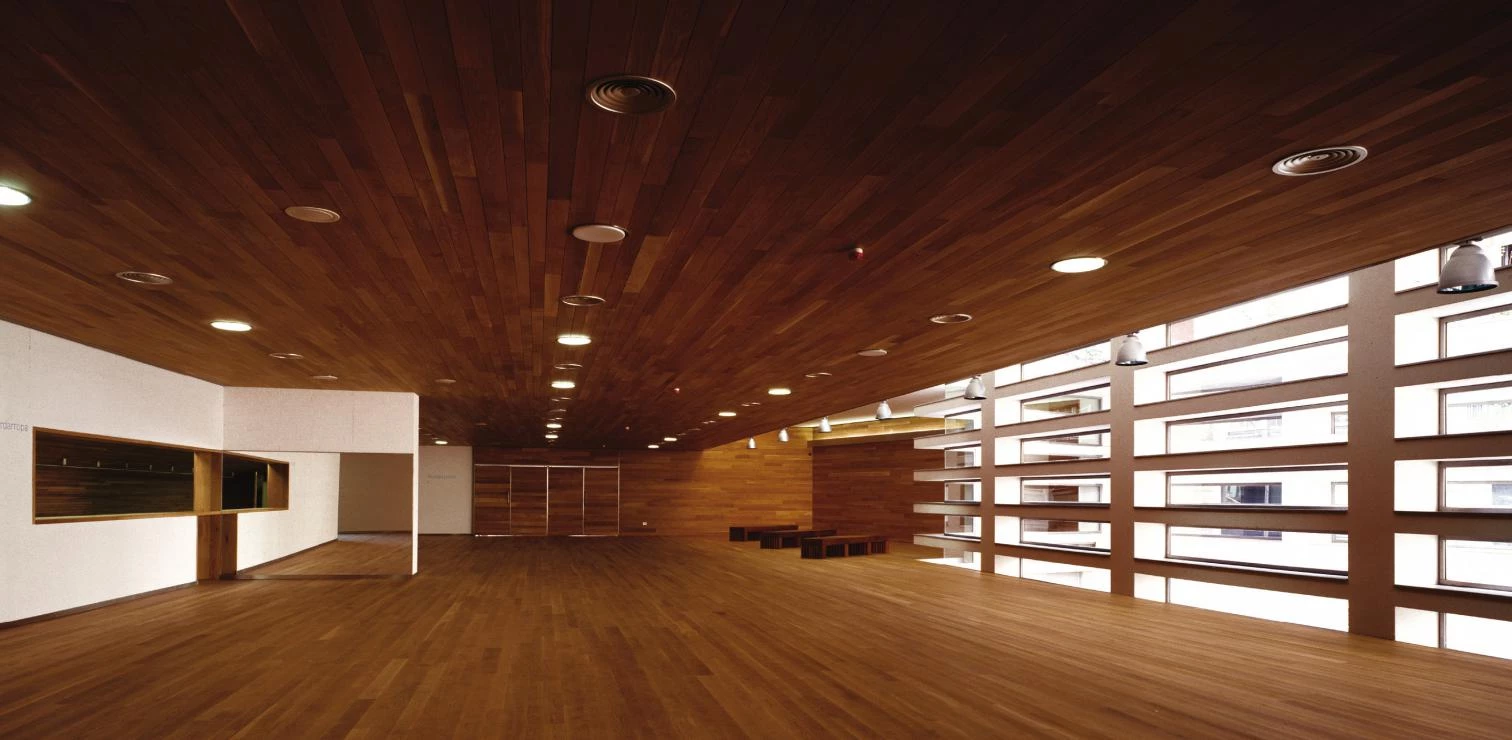
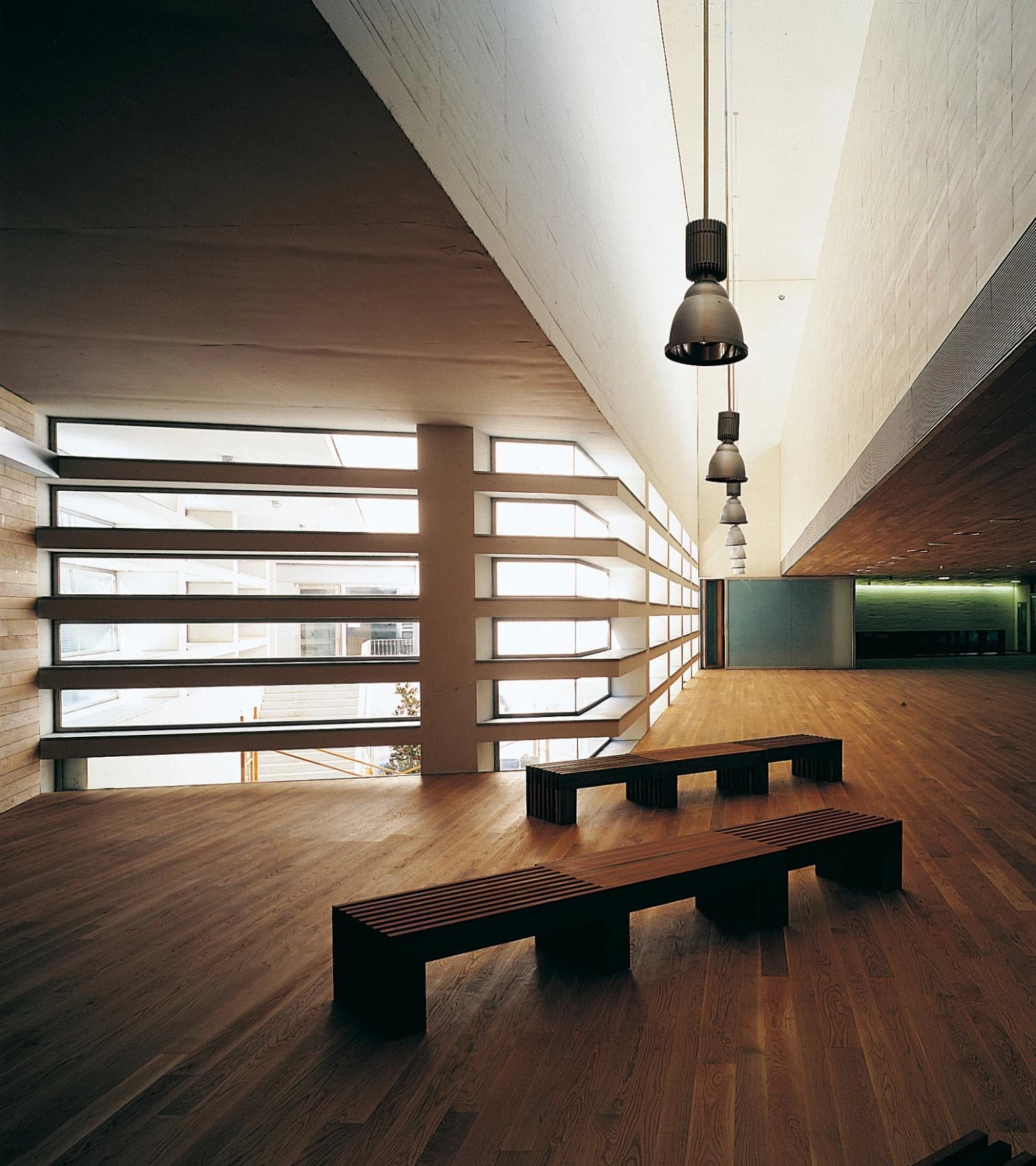
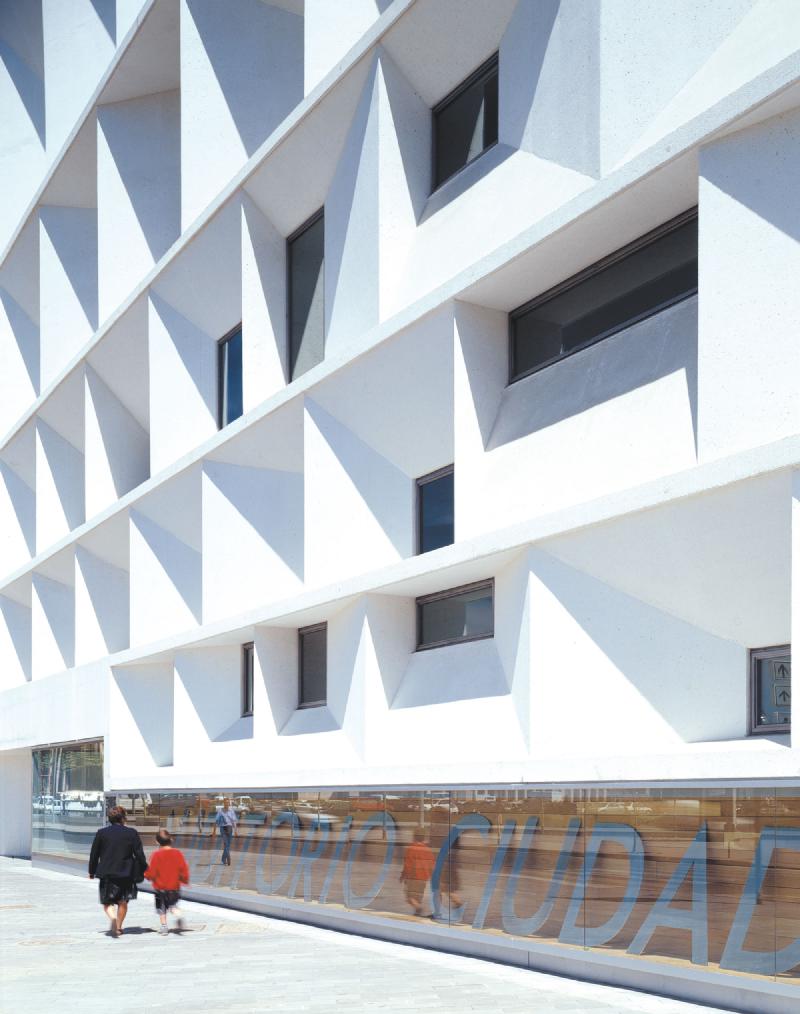
The León Auditorium, completed in 2002, is a cultural venue in León and one of Luis Moreno Mansilla’s early works in public architecture. Mansilla + Tuñón won the design competition in 1996, proposing a concert hall to anchor León’s civic quarter. The building is composed of prismatic volumes clad in white concrete, with a grid of varied openings punctuating the facade. Inside, the main hall provides seating for approximately 1,200 people and integrates modern interpretations of traditional theater design. The León Auditorium has been noted for its geometric forms and material clarity, drawing comparisons to the work of Marcel Breuer and Spanish modernist Miguel Fisac. In 2003, the project received the Spanish Architecture Award. The building contributed to urban renewal in León and helped establish a cultural district. The Auditorio Ciudad de León reflects Mansilla’s approach to civic architecture through simplicity, spatial clarity, and cultural resonance.
04. Museo de Zamora
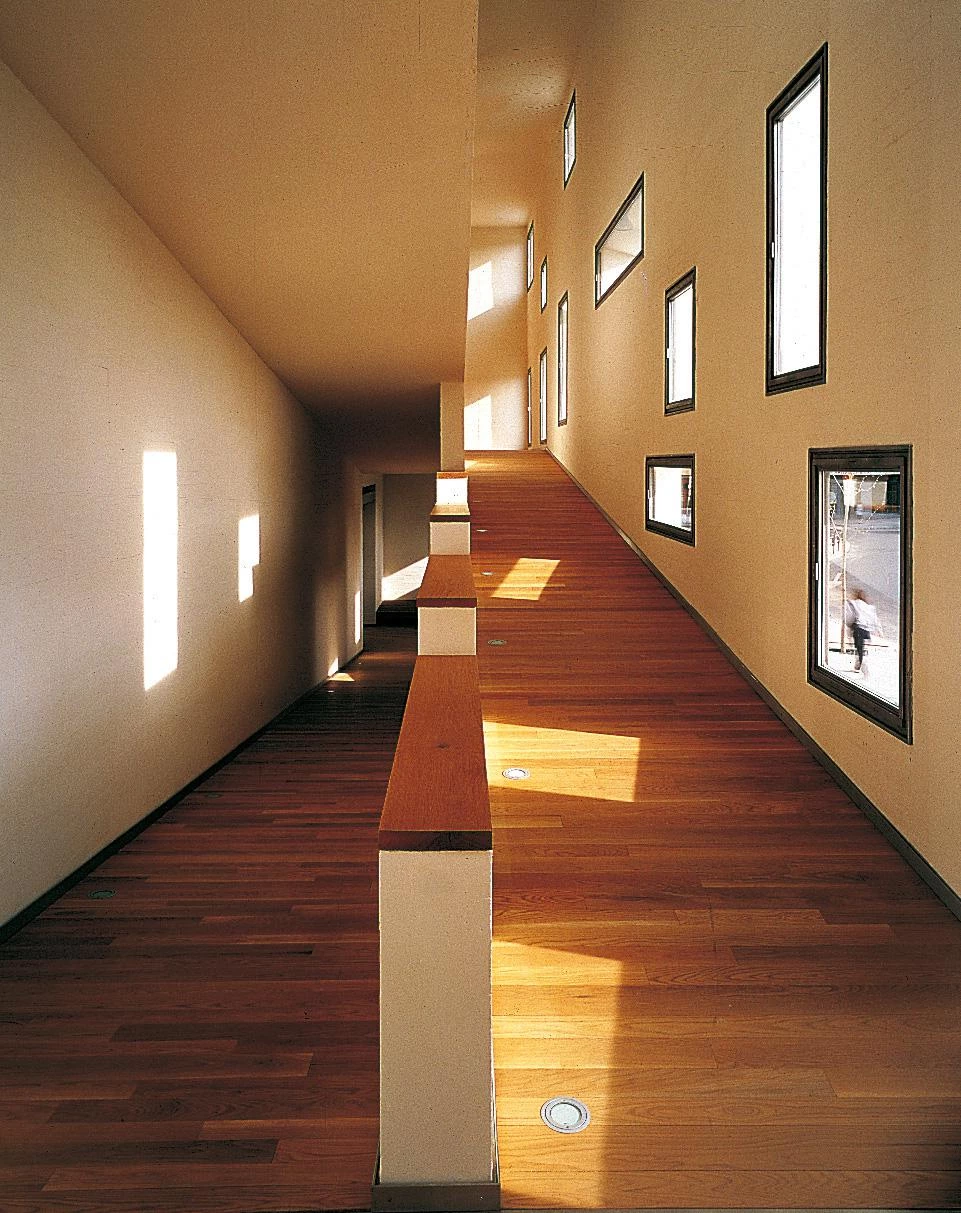
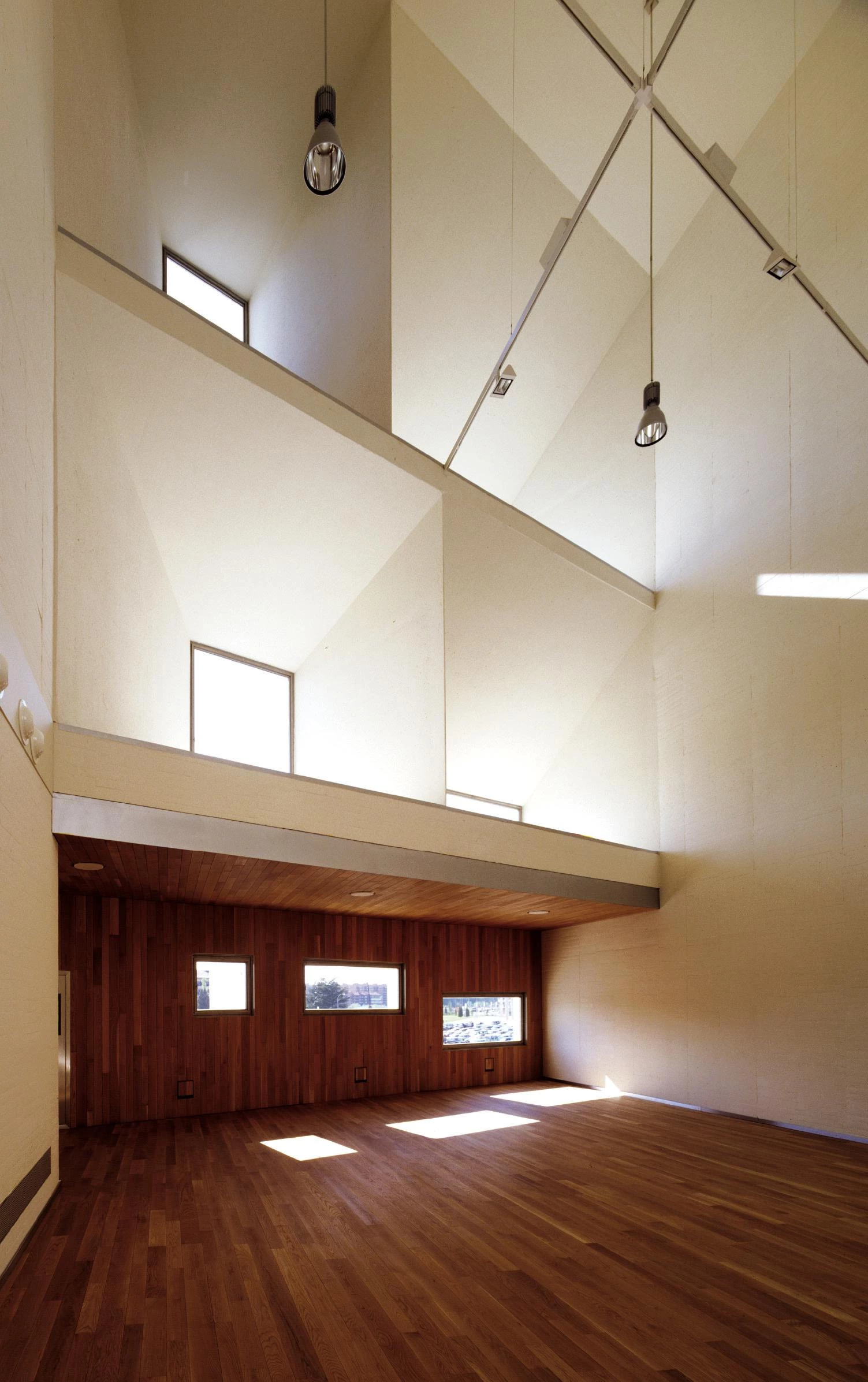
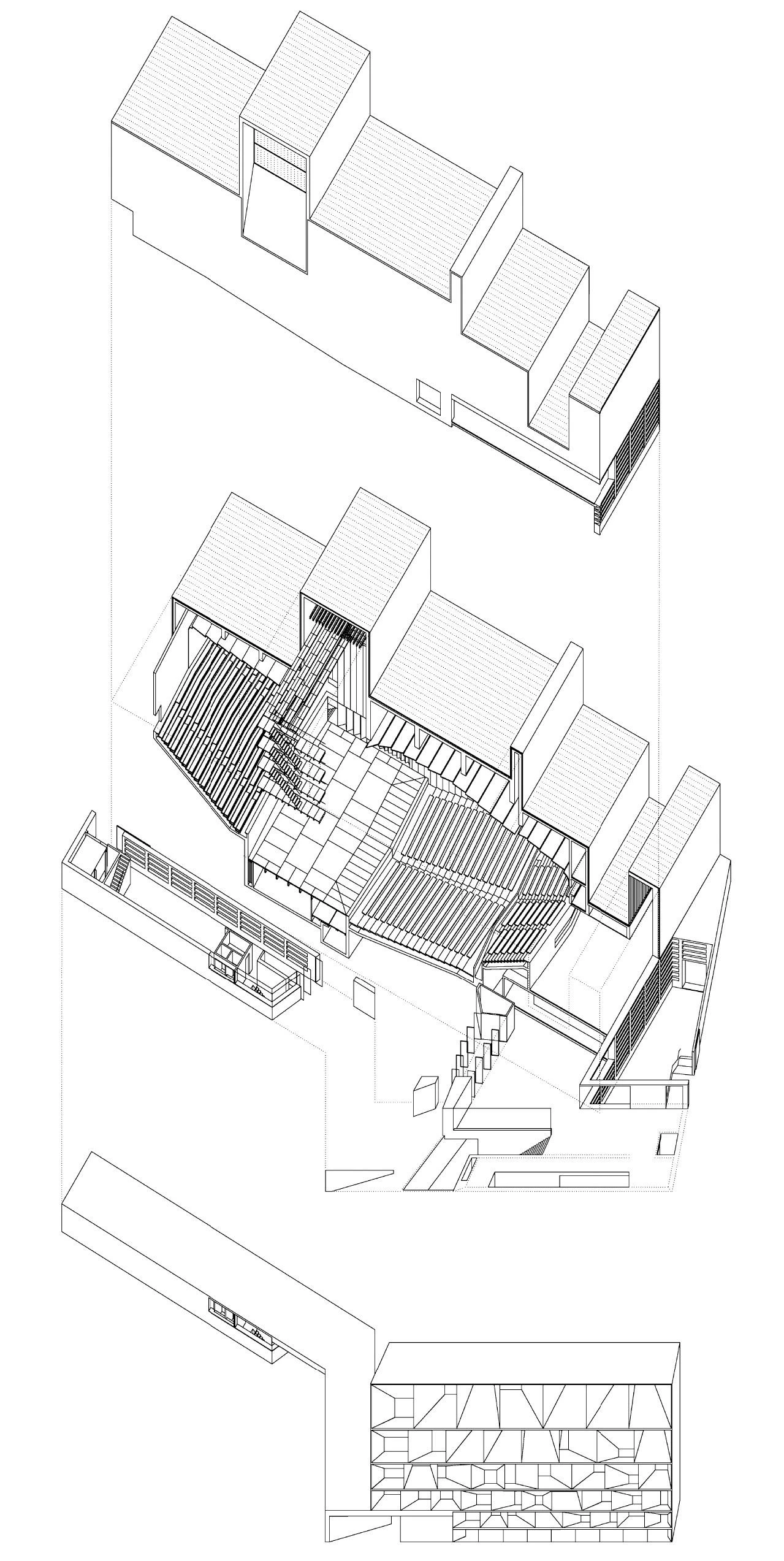
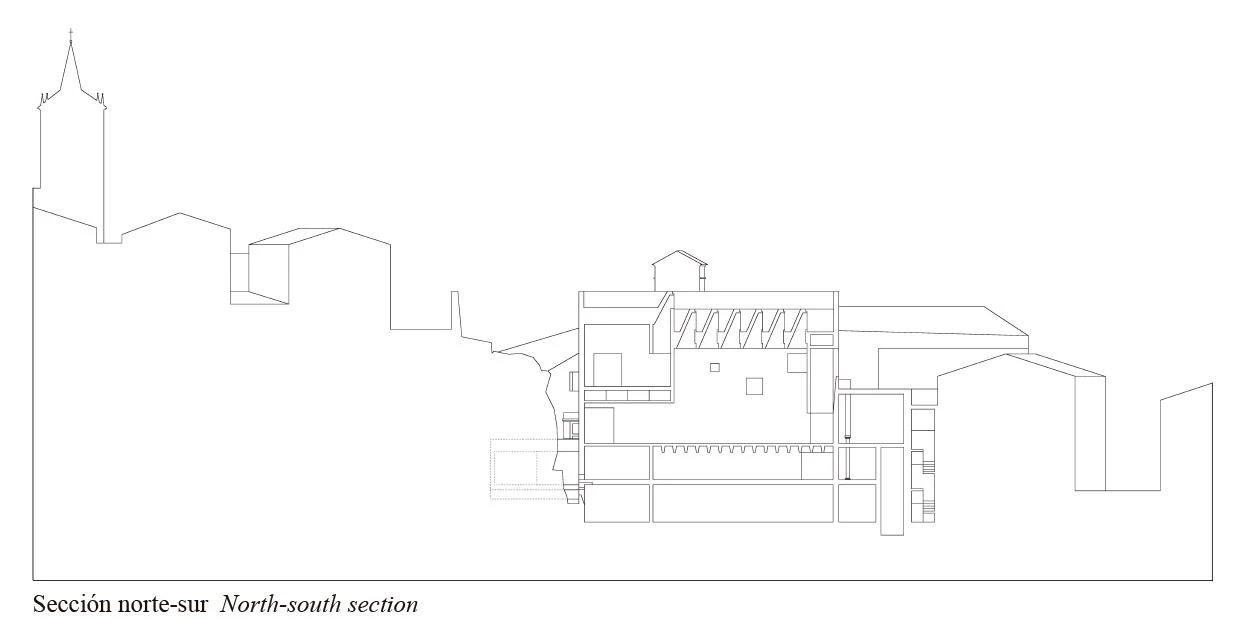
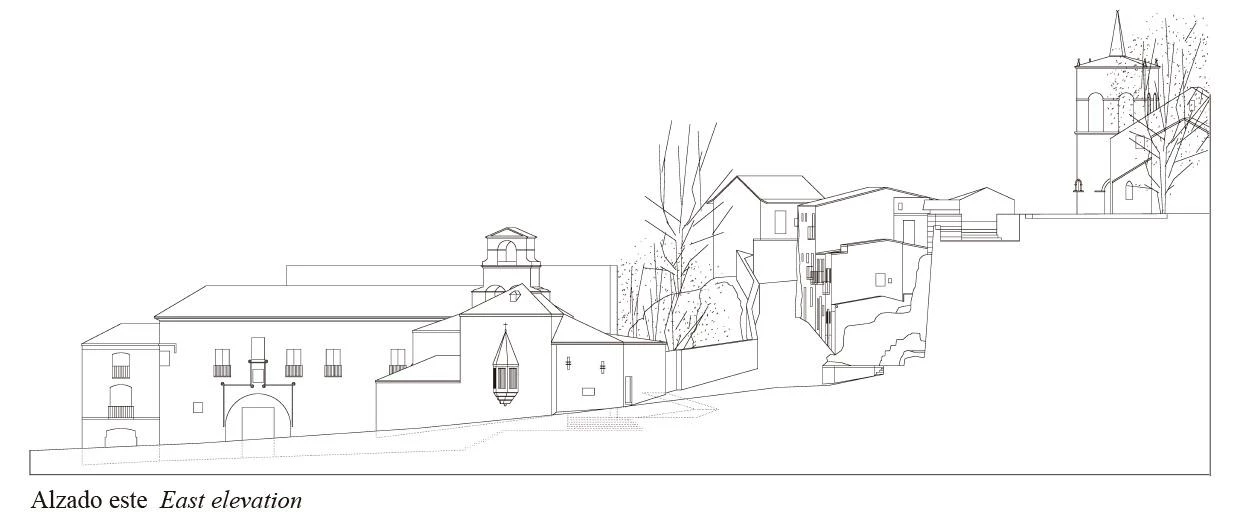
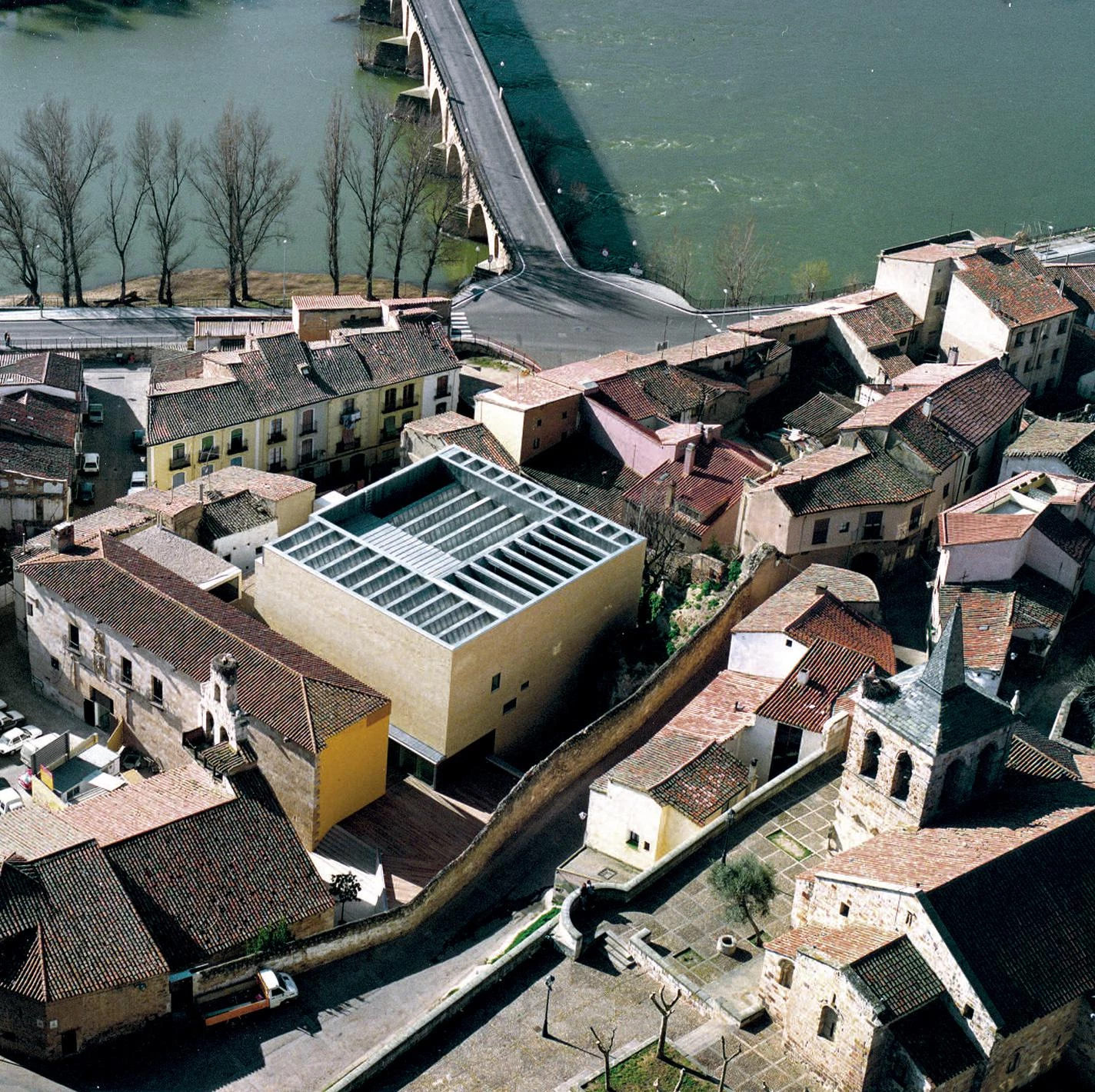
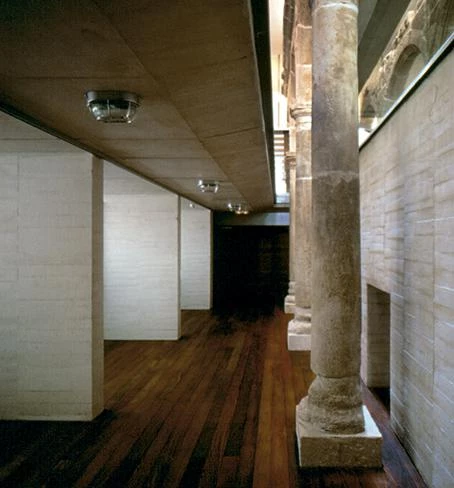
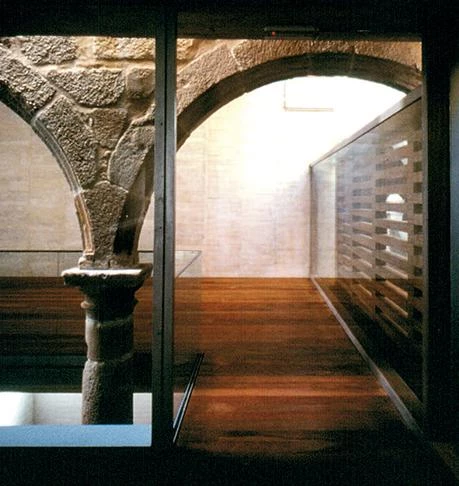
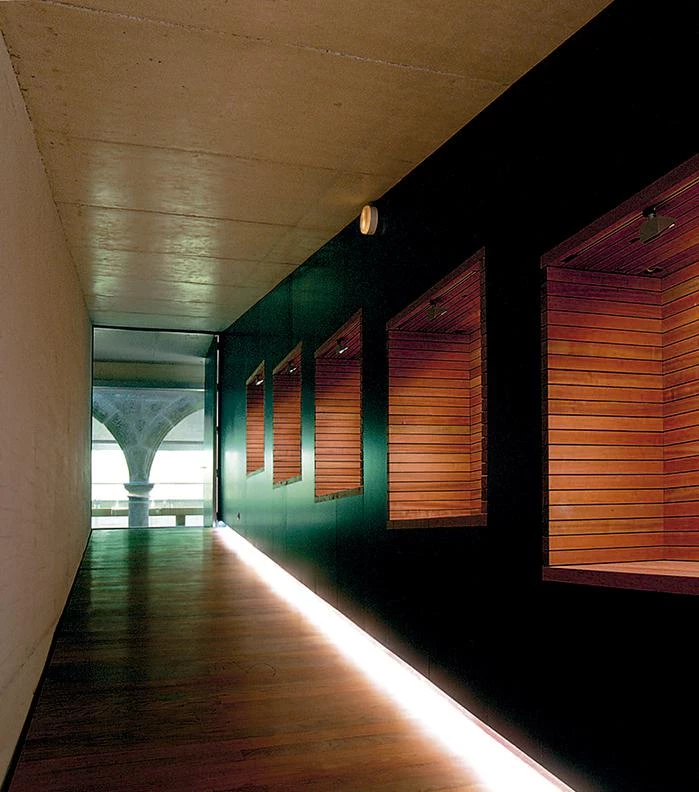
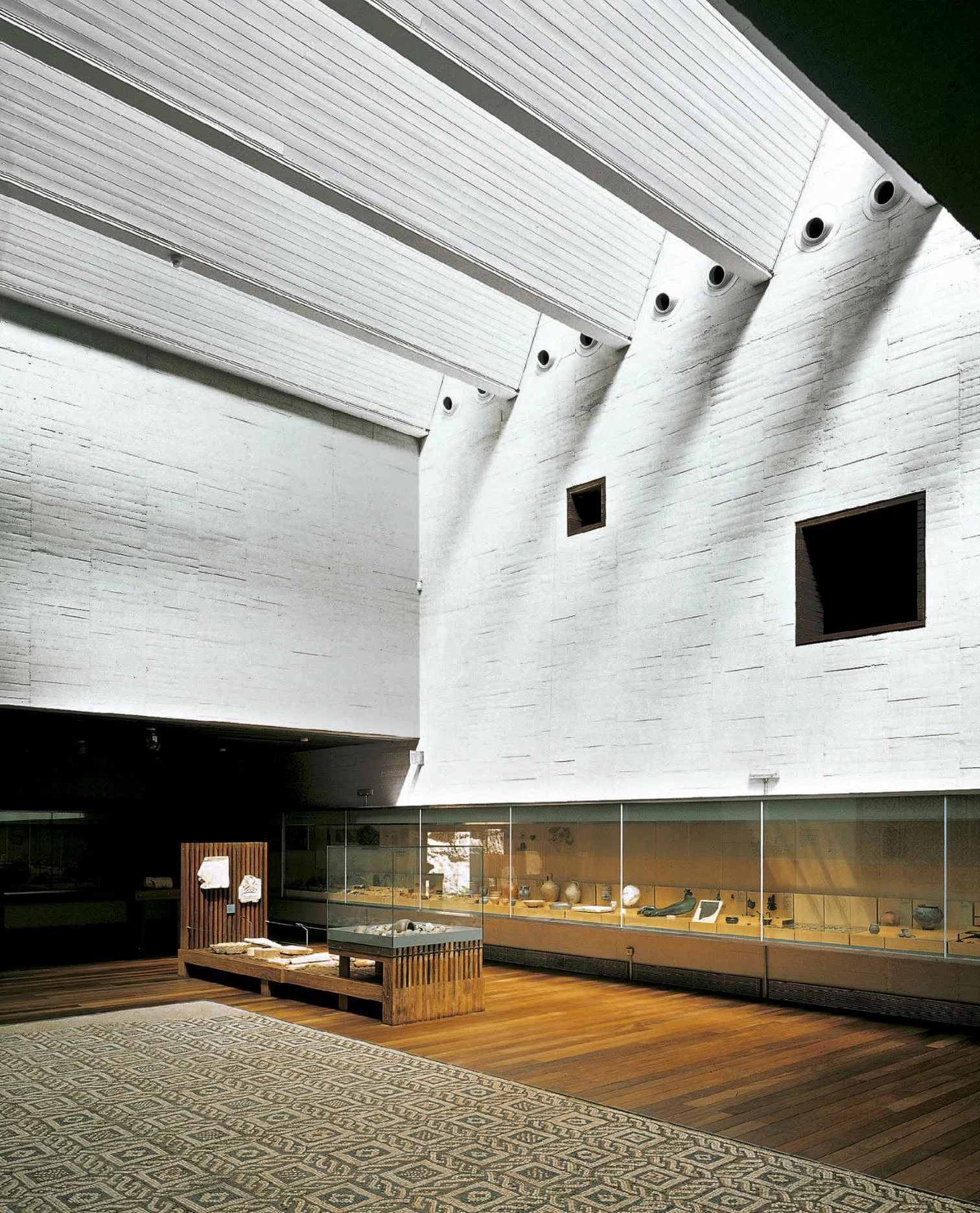
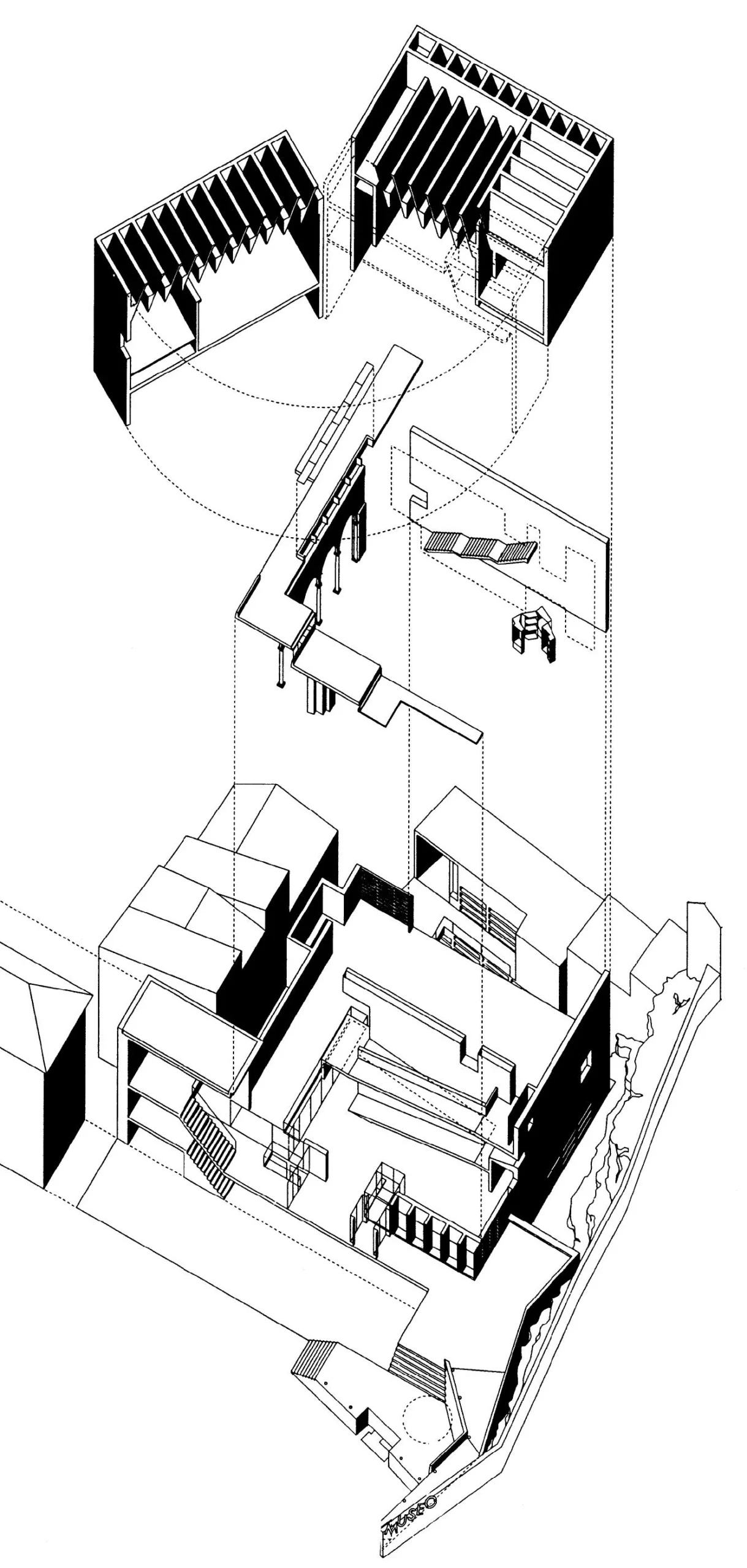
The Museum of Zamora, opened in 1996 in the city of Zamora, was the project that first brought critical attention to Luis Moreno Mansilla’s work. This museum, dedicated to the archaeology and art of the Zamora region, is situated within a dense medieval urban fabric. Mansilla + Tuñón’s design is understated from the exterior, using planar stone and concrete surfaces that reflect the color and scale of surrounding buildings. The interior presents a sequence of modern exhibition spaces illuminated by natural light, creating a dialogue between old and new. The Museum of Zamora was noted for its integration into a complex historic environment. It incorporates fragments of existing structures and archaeological remains into the exhibition layout. The project was a finalist for the 1997 Mies van der Rohe Award. The museum’s success established Luis Moreno Mansilla’s reputation for contextual design and led to subsequent commissions.
05. Museo de Bellas Artes de Castellón (Castellón Fine Arts Museum)
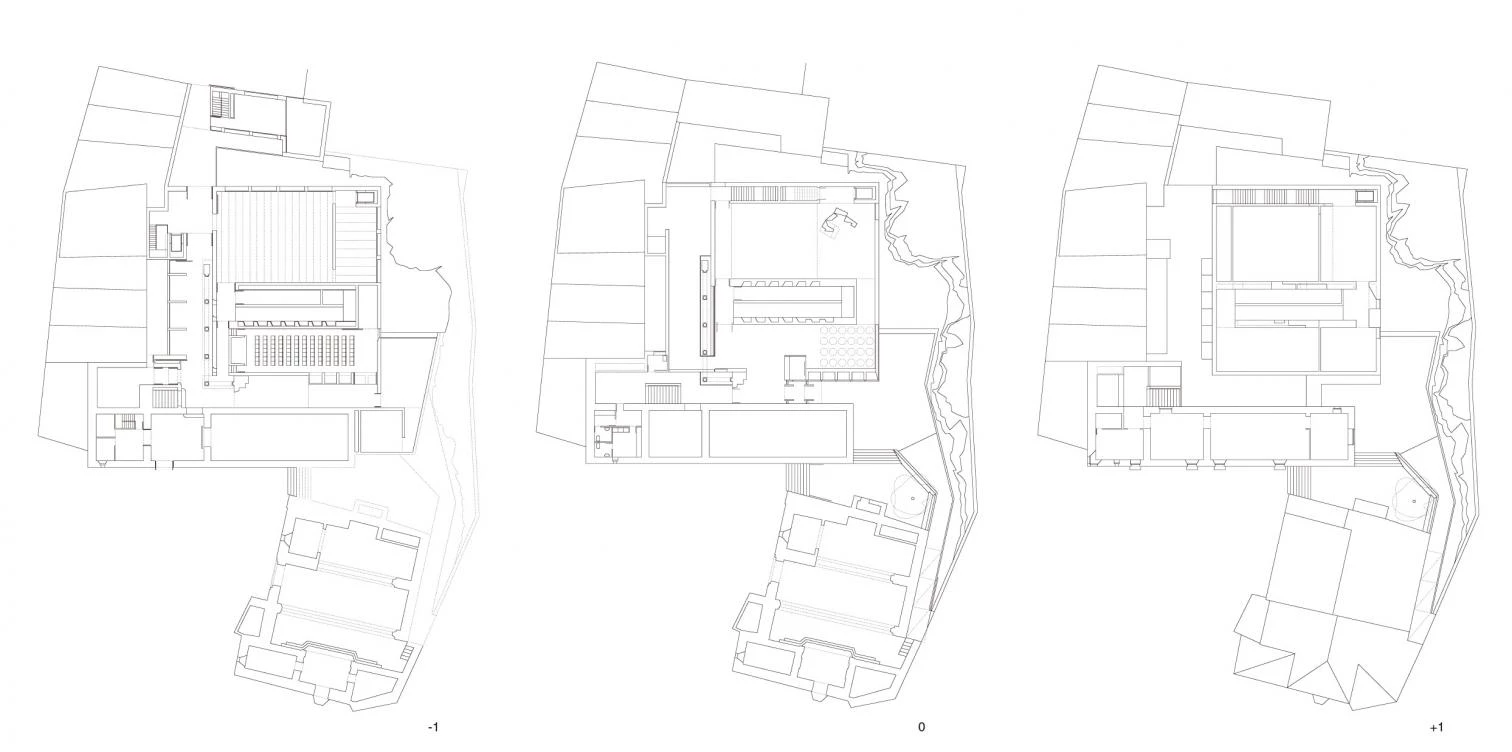
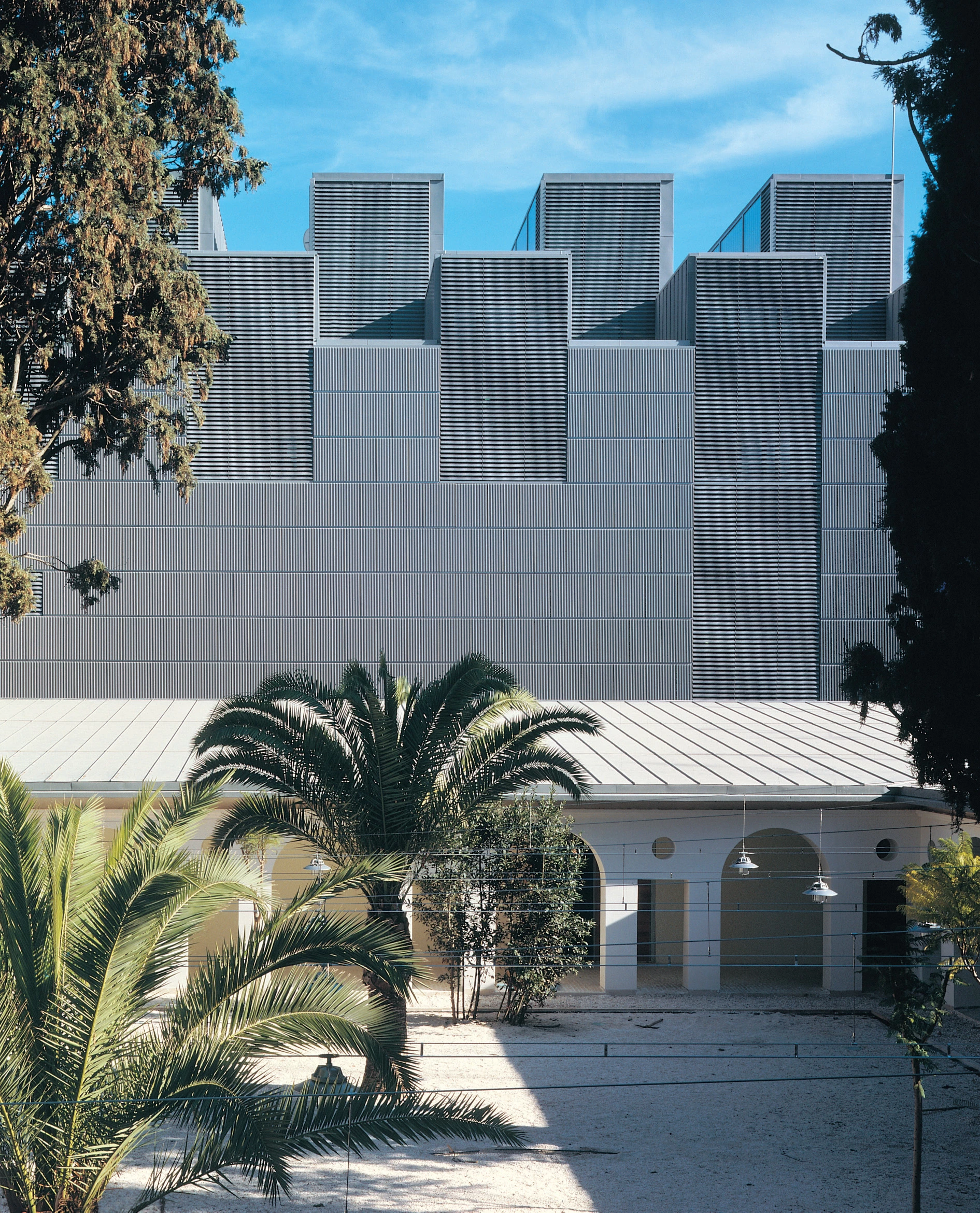
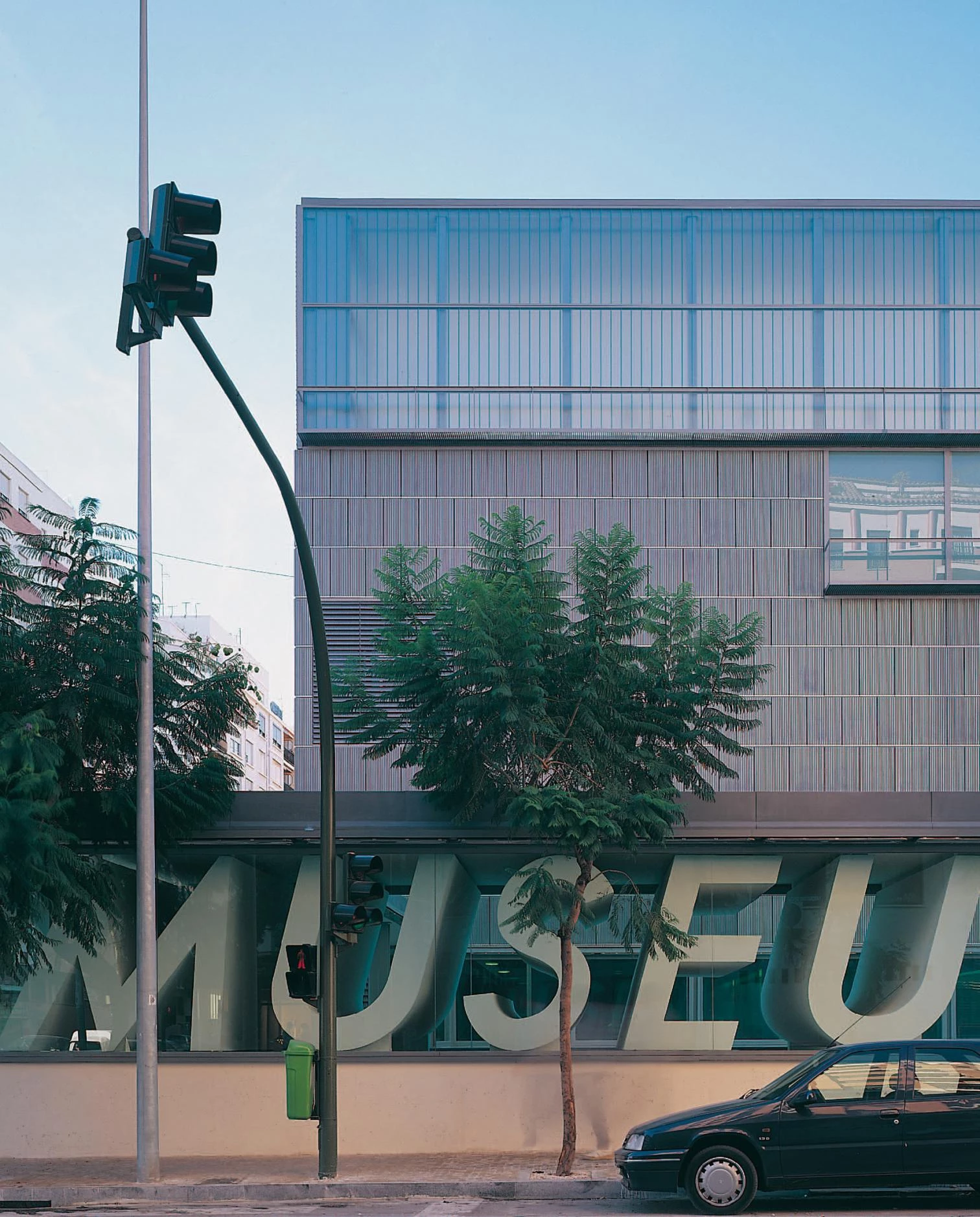
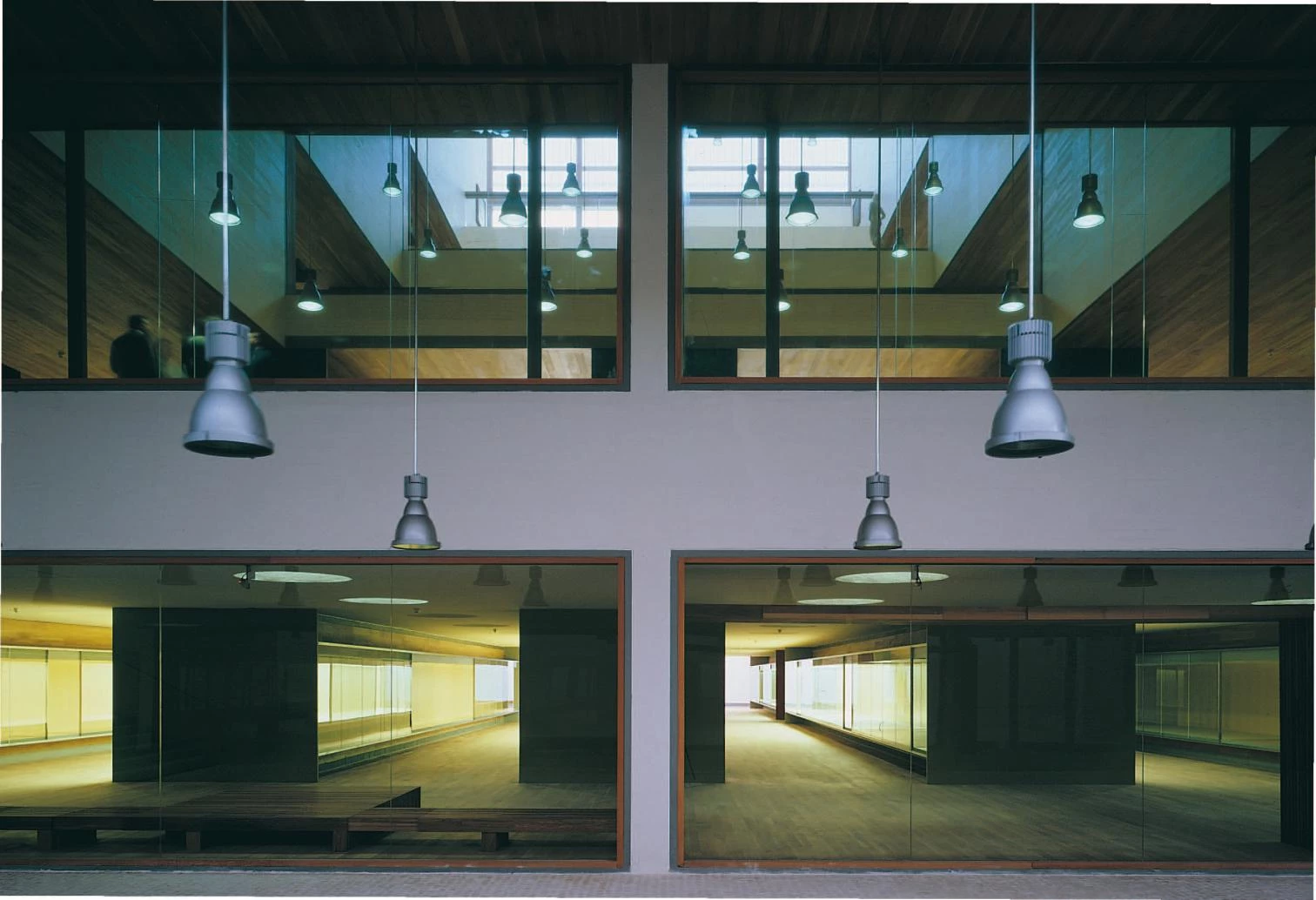
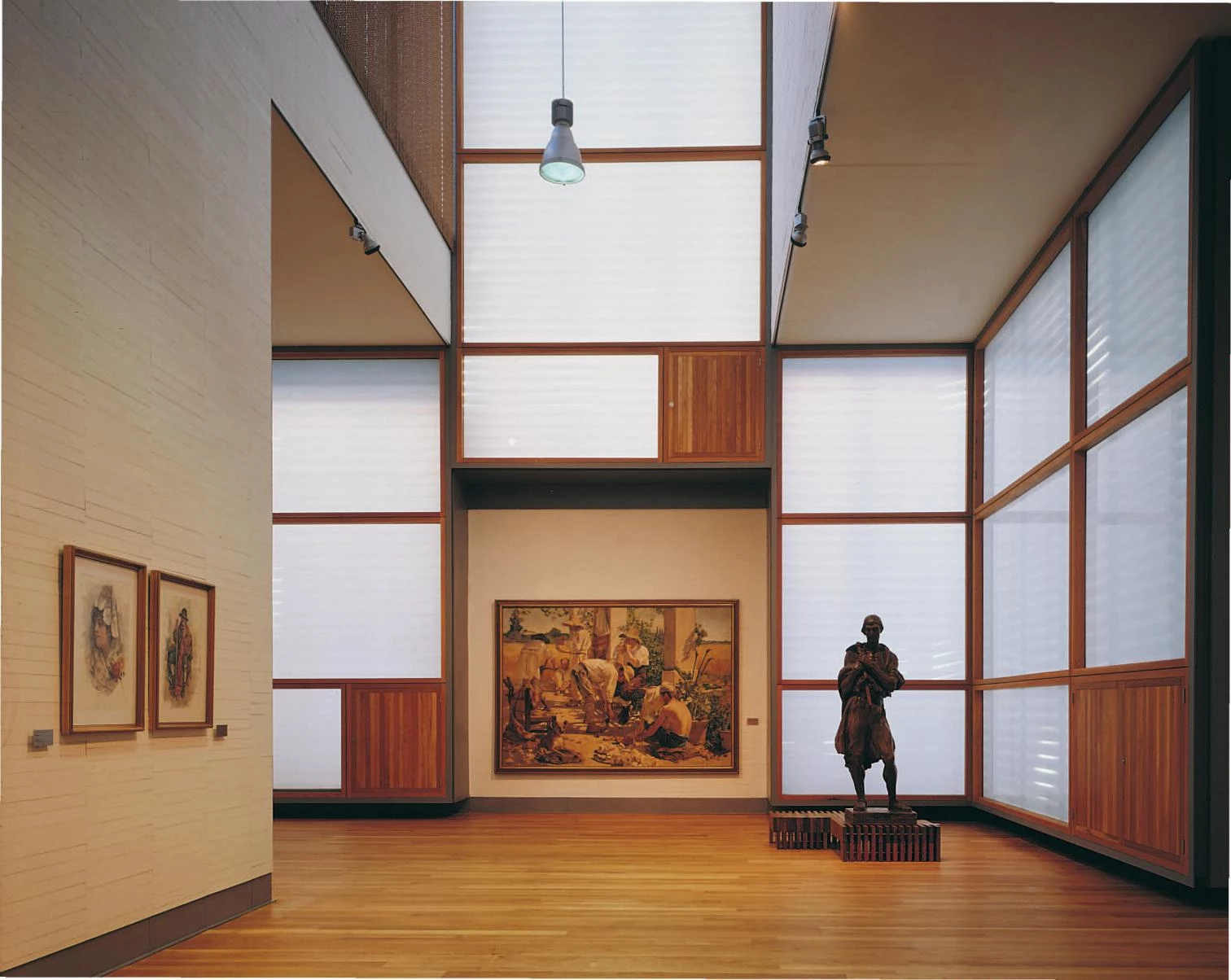
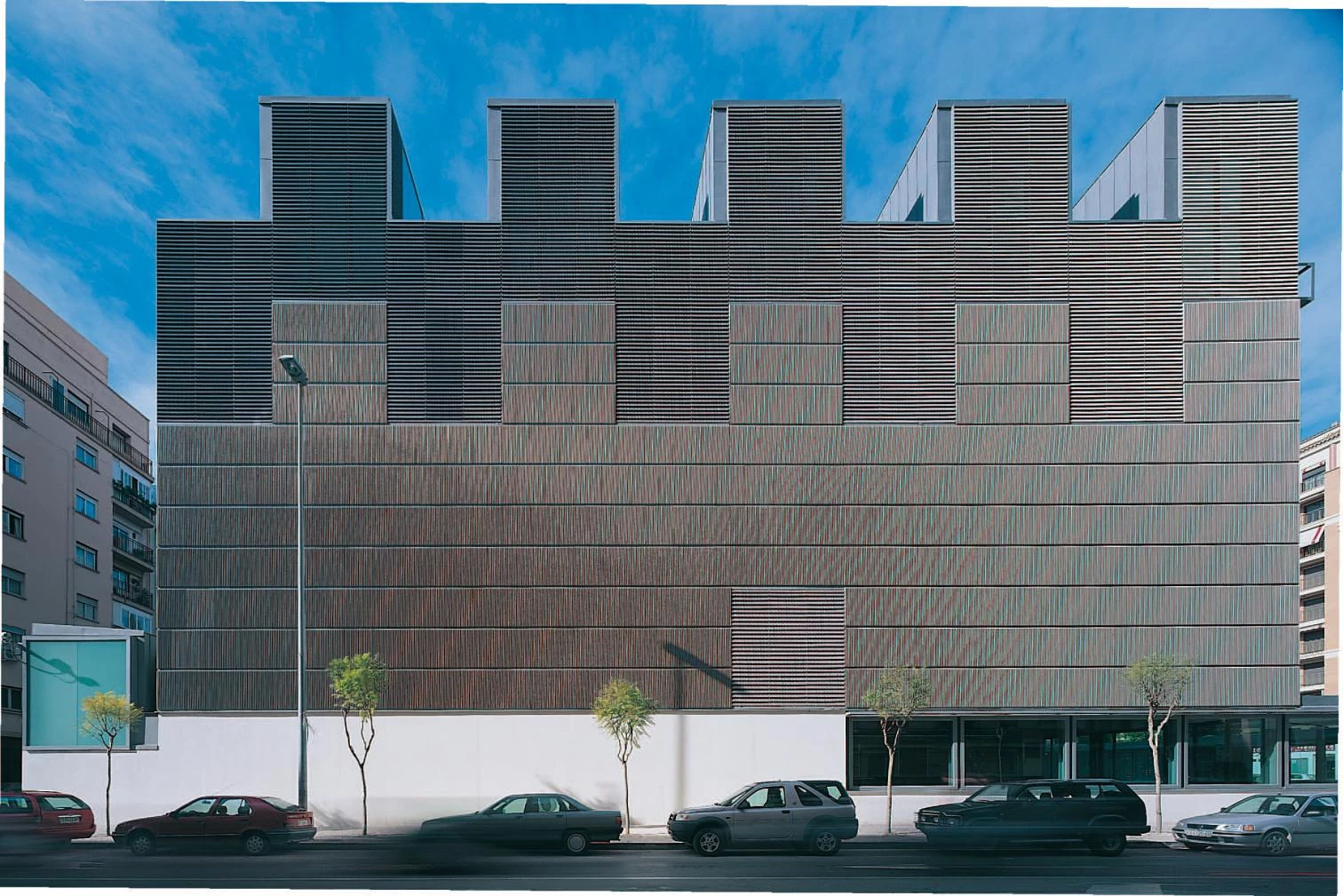
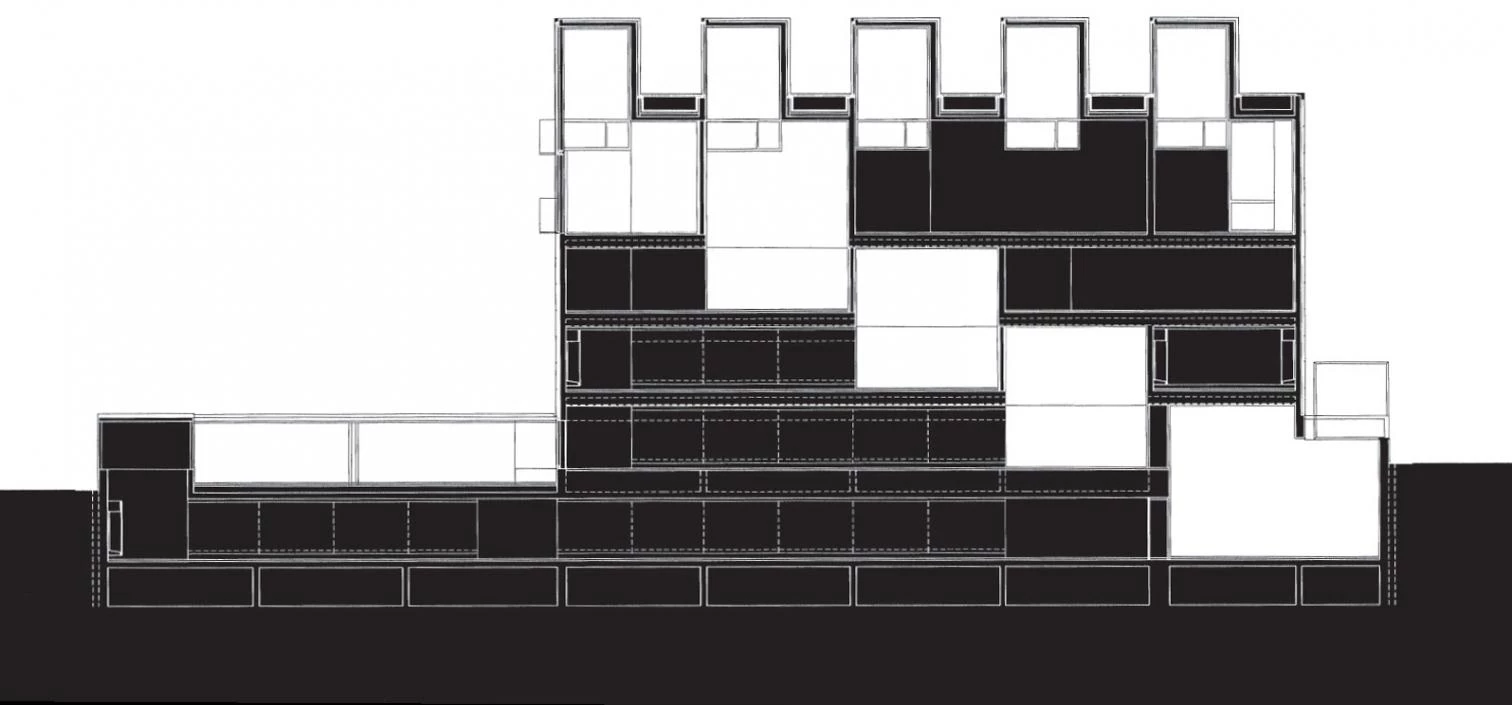
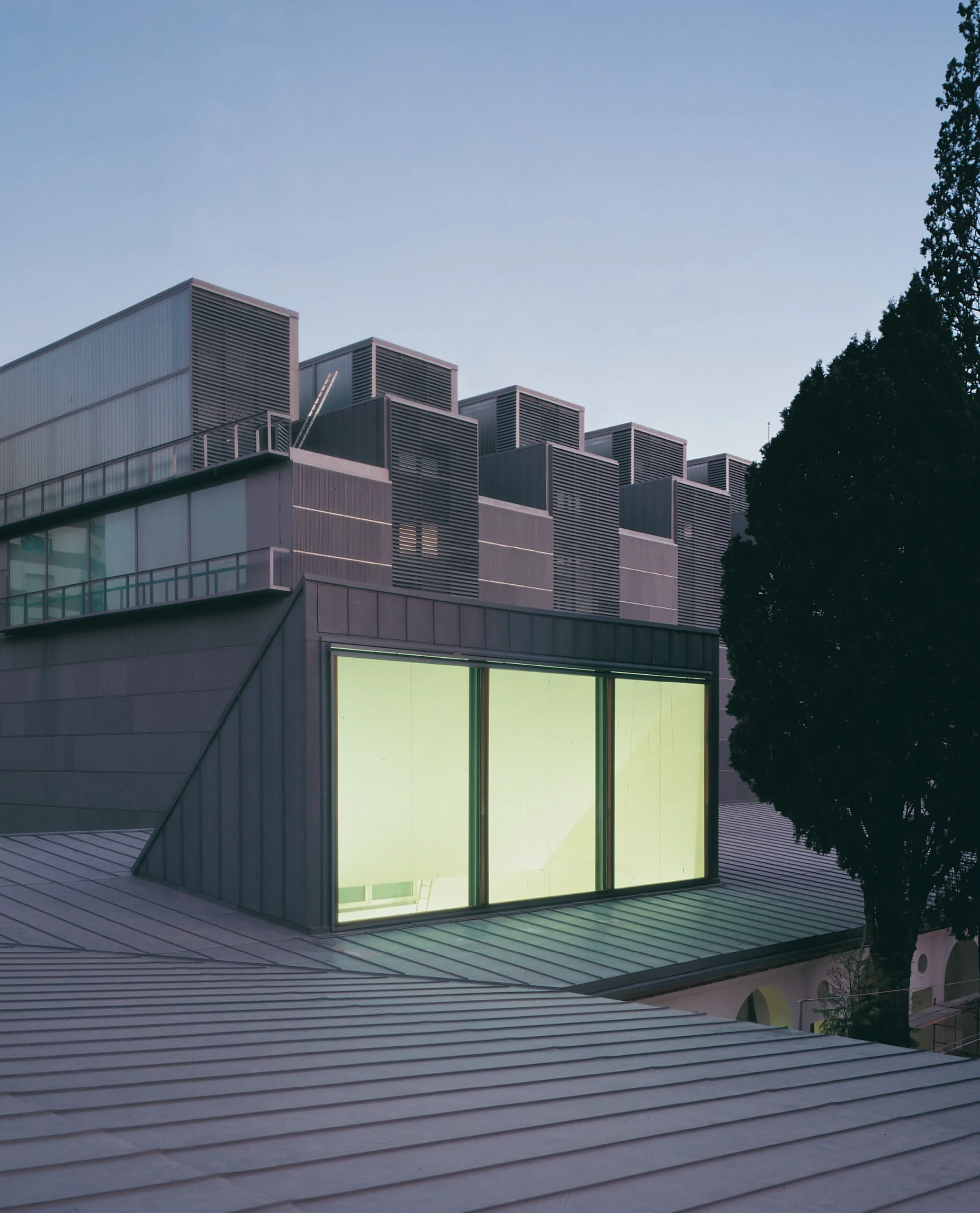
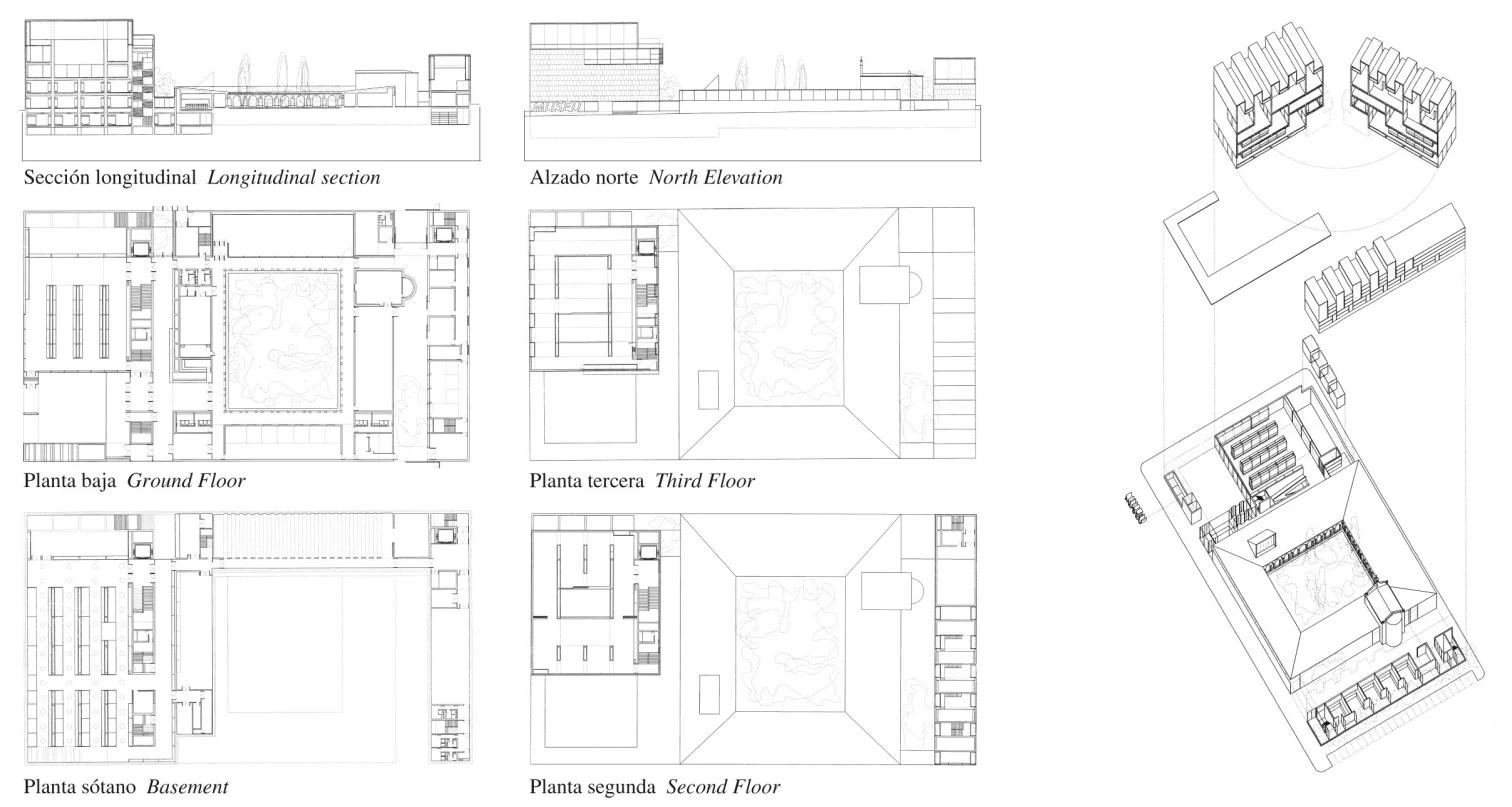
The Castellón Fine Arts Museum, completed in 2000 in Castellón de la Plana, reflects Luis Moreno Mansilla’s approach to museum architecture. Built on the site of a former school, the design by Mansilla + Tuñón centers on a cloister garden preserved from the original structure, featuring tall cypress trees. The new building is composed of stacked rectangular floor plates surrounding the courtyard, with double-height voids staggered between levels to create interlocking views through the interior. Externally, the museum features a ventilated facade of cast aluminum panels. Each panel is embossed with the words “MUSEU DE BELLES ARTS,” recalling the Roman practice of stamping building materials. The use of white concrete and metal gives the museum a modern appearance that contrasts and complements the masonry of Castellón’s historic fabric. Inside, the museum contains six exhibition halls and auxiliary spaces—an auditorium, library, and restoration workshops—organized into public and private zones. The project received multiple awards, including Spain’s FAD Architecture Prize in 2001 and a nomination for the EU Mies Award. The Castellón Fine Arts Museum demonstrates Mansilla’s attention to material detail and engagement with historical reference.
06. Atrio Restaurante-Hotel, Cáceres
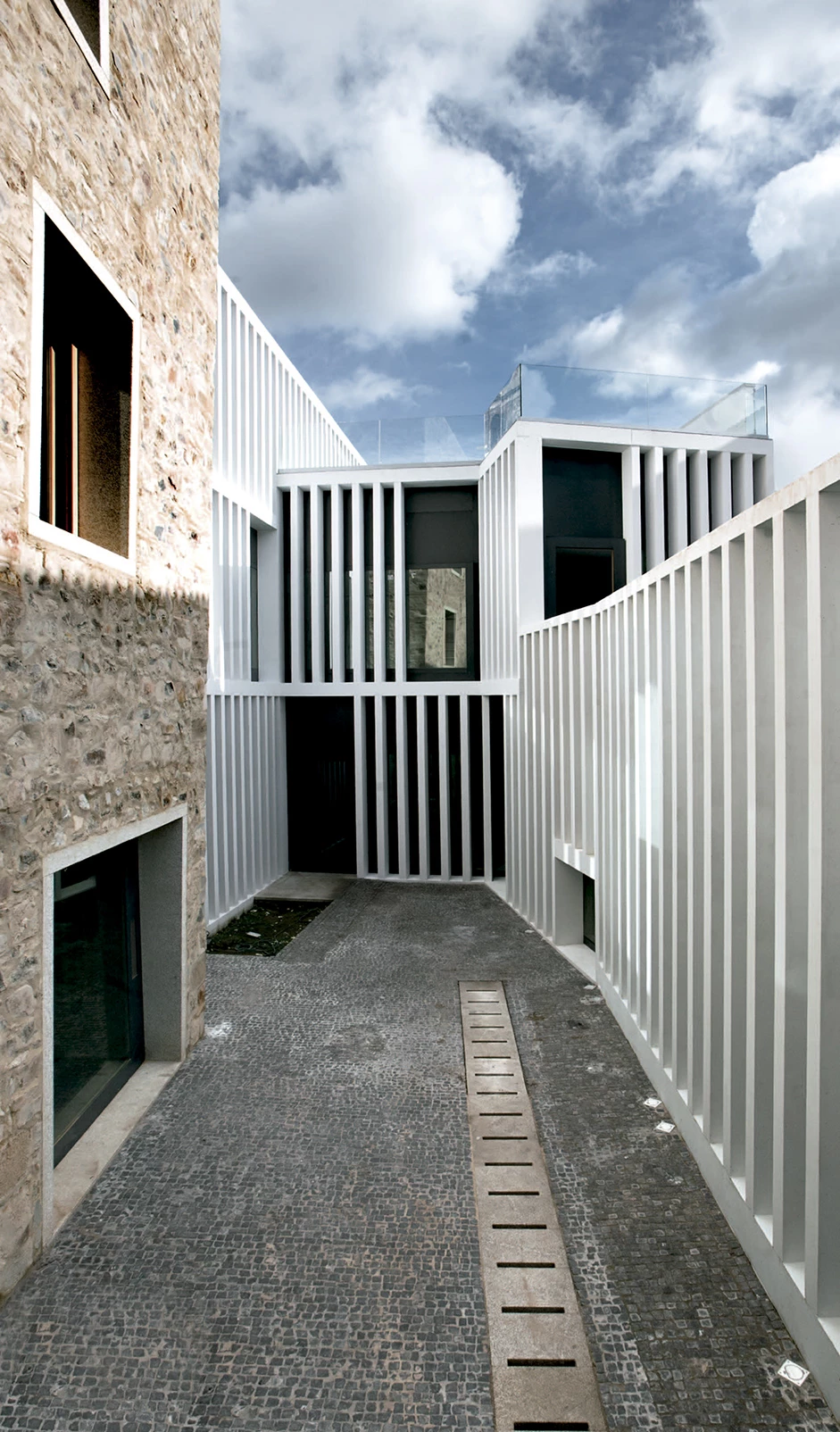
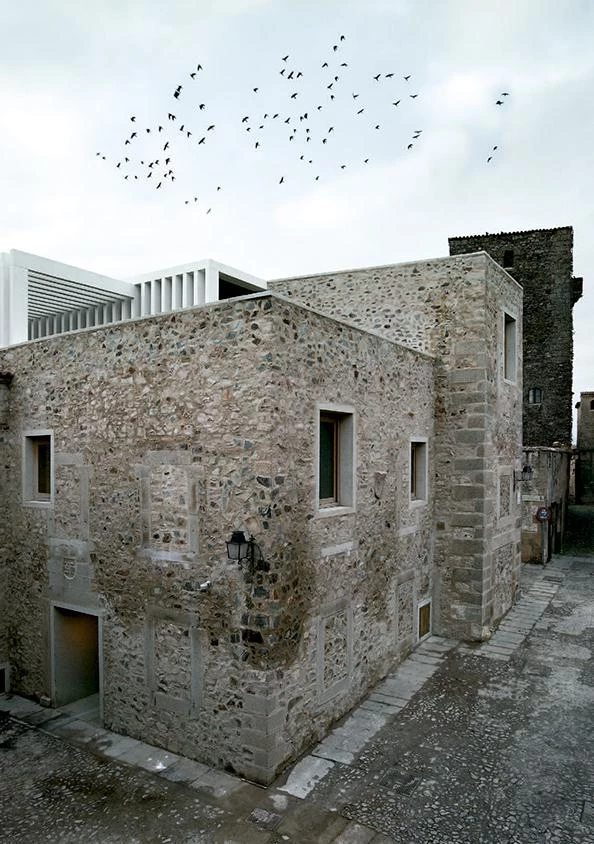
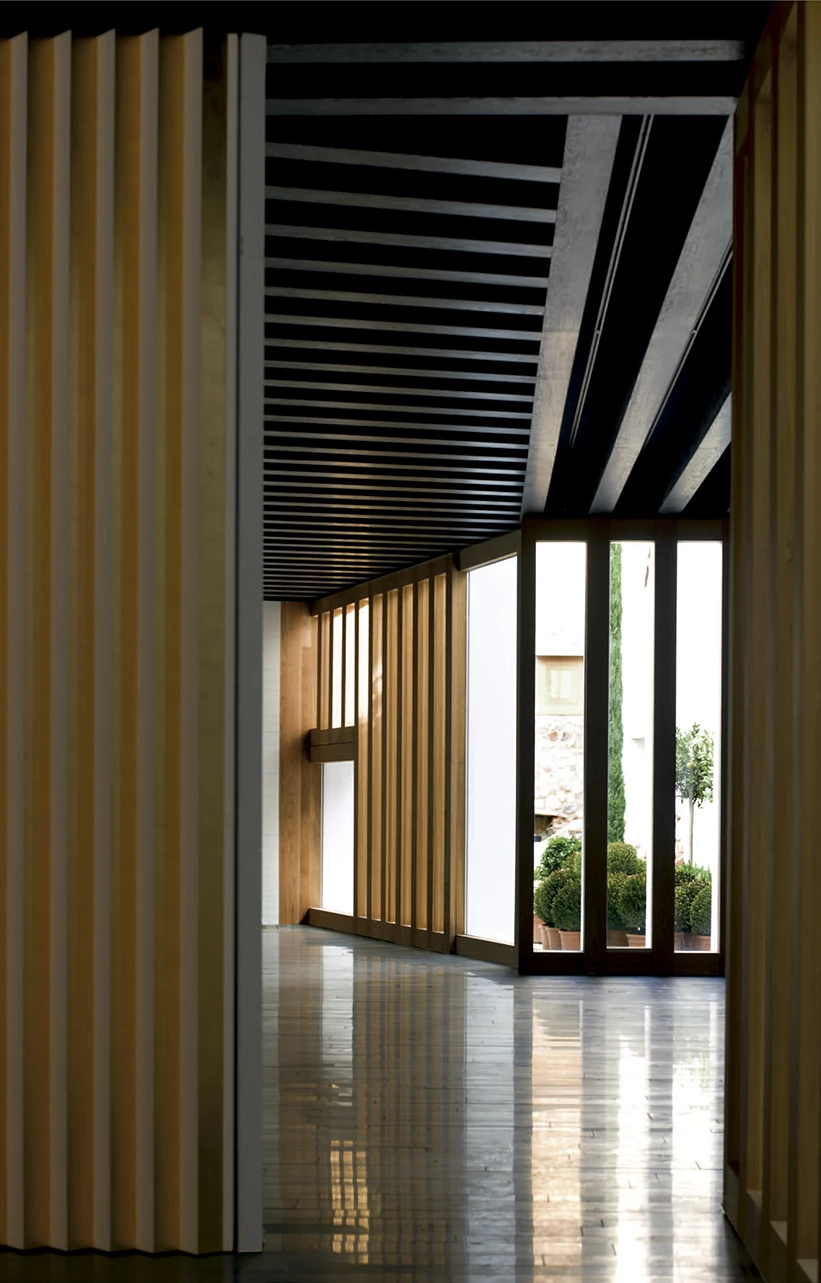
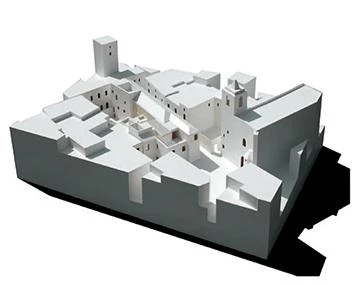
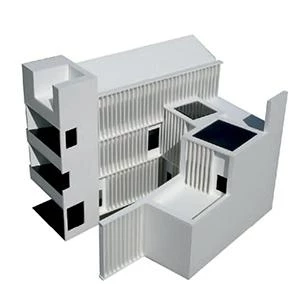
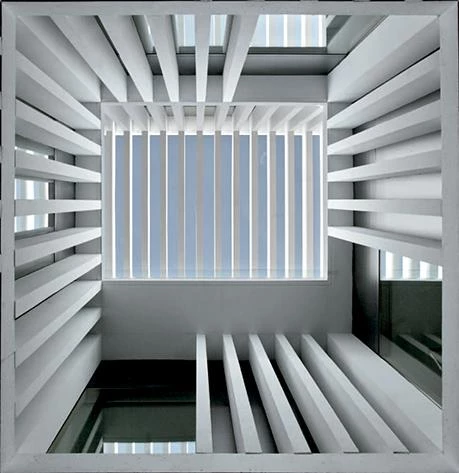
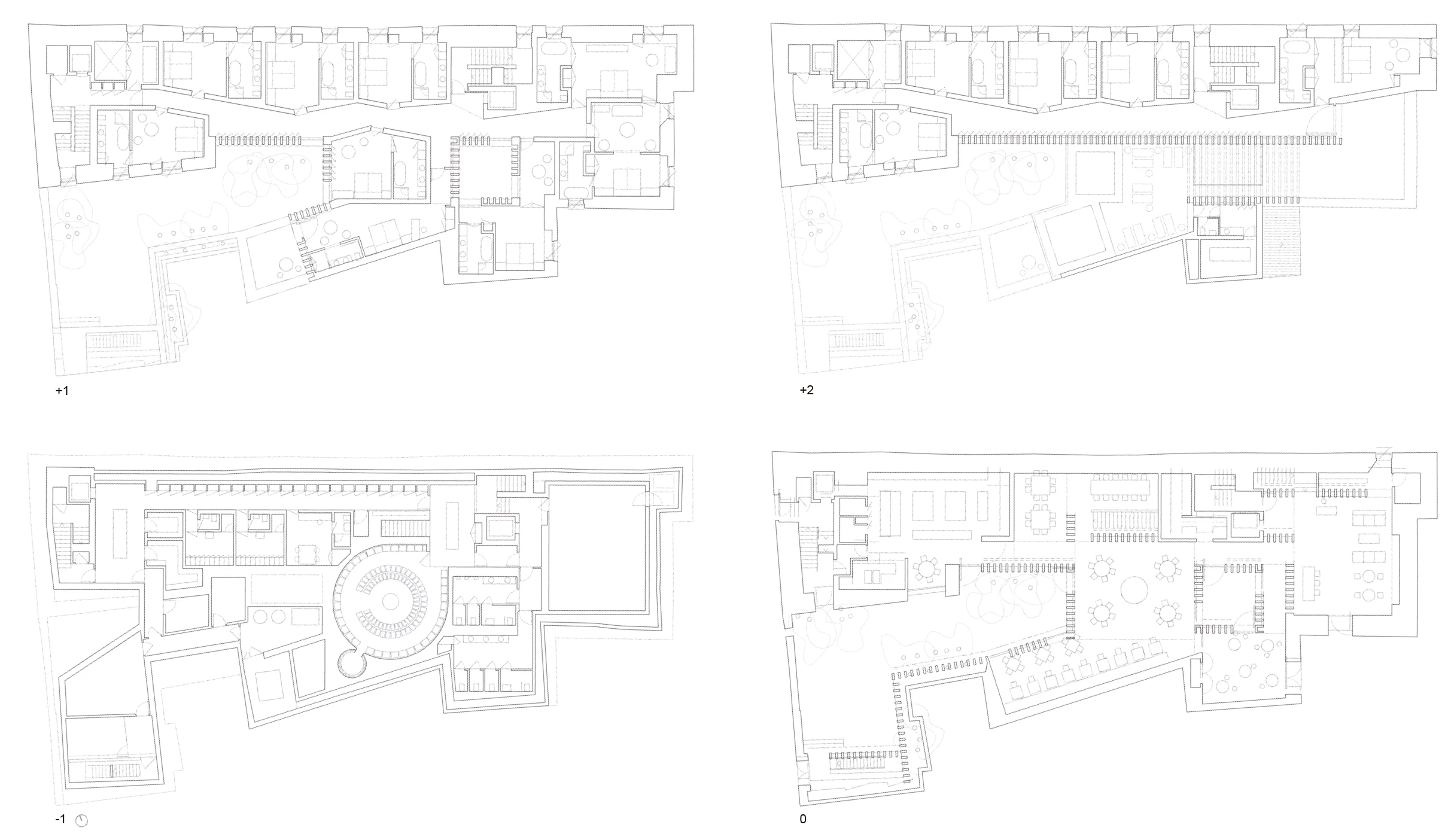
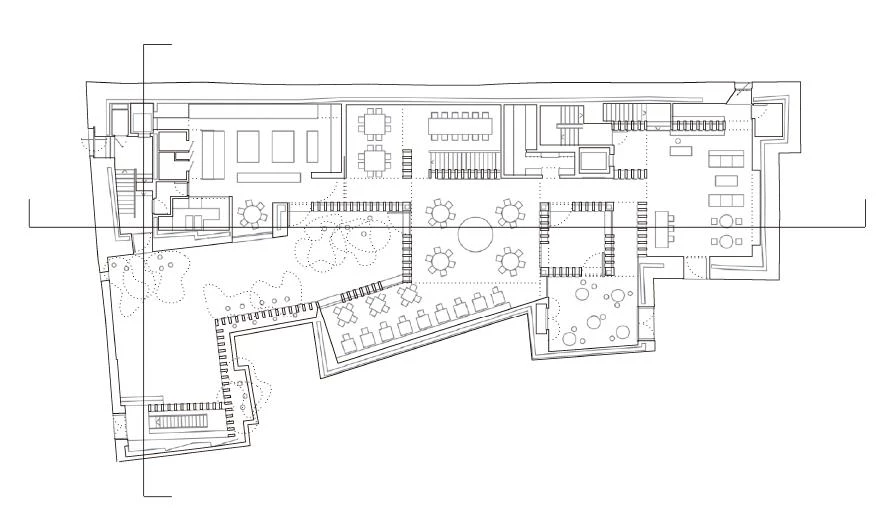
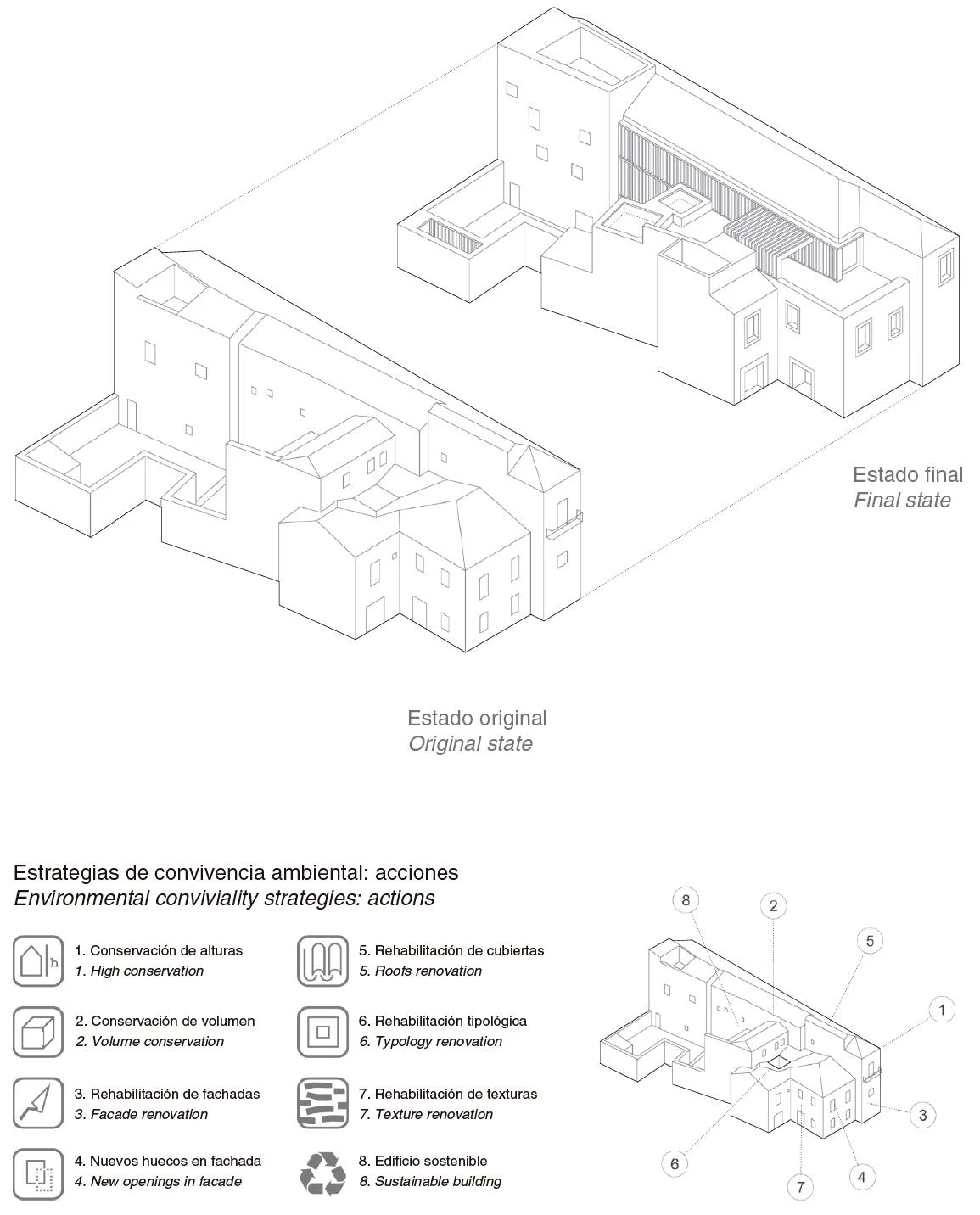
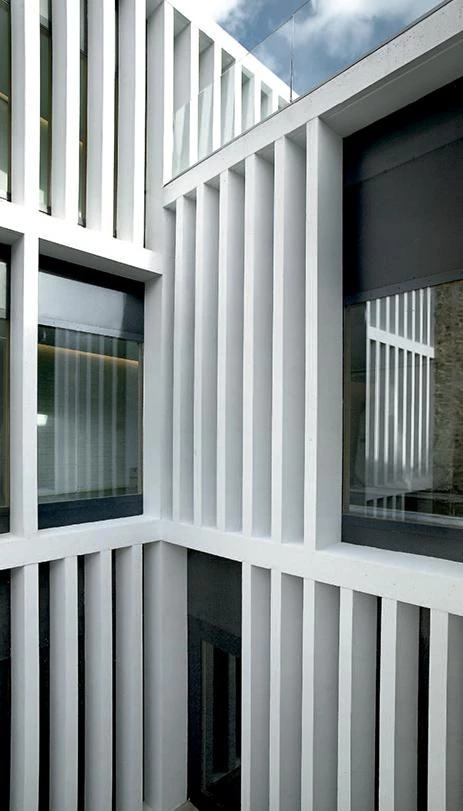
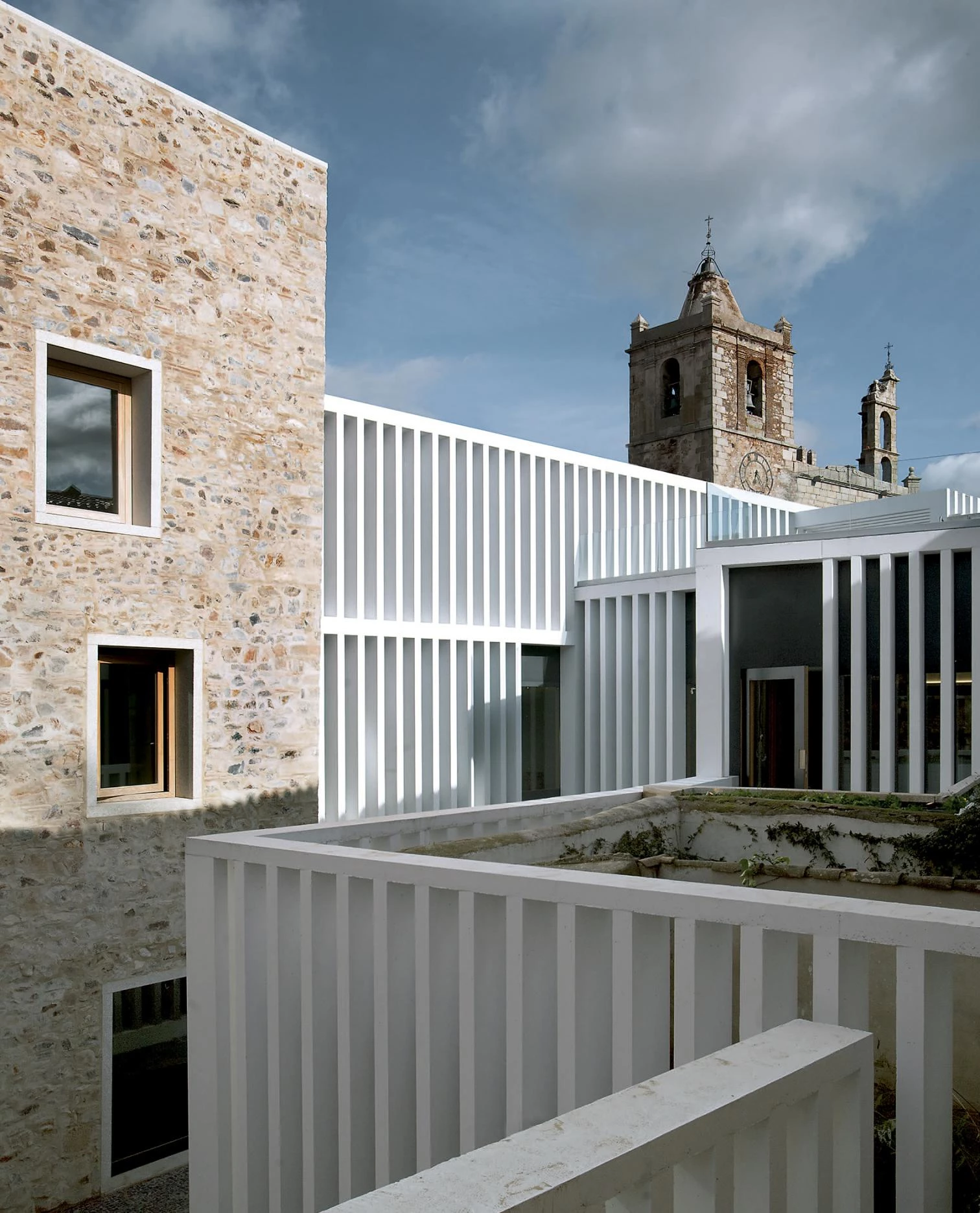
The Atrio Restaurante-Hotel in Cáceres, completed in 2010, reflects Luis Moreno Mansilla’s approach to integrating contemporary design within historic urban contexts. Located in Cáceres’s UNESCO-listed medieval town center, the project involved converting and expanding two existing structures, a former government office and a small historicist house, into a hotel and Michelin-starred restaurant. Mansilla + Tuñón preserved the stone facades and street-facing volumes, with only minimal changes on the exterior, such as new openings indicating the transformation. In contrast, the interior and courtyard introduce a modern composition. The central patio organizes the circulation of both the restaurant and hotel. Facing this space are new white concrete structural elements, oak wood finishes, and large glass panels. The hotel contains 14 rooms, while the restaurant features an oak-coffered ceiling that conceals mechanical systems and enhances acoustics. Atrio received the 2011 FAD Architecture Prize. The project illustrates Luis Moreno Mansilla’s approach to adaptive reuse through the juxtaposition of modern spatial language and preserved historic fabric.
How did Luis Moreno Mansilla contribute to architecture?
Luis Moreno Mansilla contributed to architecture by developing design strategies that reconciled modernity with historical context and by fostering intellectual rigor in practice. His work demonstrated that contemporary architecture can be both expressive and contextually responsive, influencing architects in Spain and internationally. He emphasized architecture’s connection to art and culture, drawing on modern art and local history to inform design decisions, as seen in projects such as MUSAC and the Castellón Museum. Through Mansilla + Tuñón’s competition wins and built works, he broadened the scope of Spanish civic architecture and encouraged public institutions to support contemporary design. His academic role was also central: as a professor and lecturer at several universities, he promoted critical thinking and research-based design. He co-founded the architectural journal Circo in 1993, which received recognition for its contribution to architectural discourse. By integrating practice, teaching, and theory, Luis Moreno Mansilla helped shape a more comprehensive architectural culture. His legacy endures in the architects he taught and in Spain’s contemporary architecture, which continues to mediate between historical continuity and modern expression.
What awards and honors has Luis Moreno Mansilla received?
Luis Moreno Mansilla received awards and honors during his career, many shared with his partner Emilio Tuñón, including:
- Spanish Architecture Award (2003) – Awarded for the Auditorio Ciudad de León, recognized as the best architectural work in Spain that year.
- Mies van der Rohe Award (2007) – Conferred the European Union Prize for Contemporary Architecture for the Museo de Arte Contemporáneo de Castilla y León (MUSAC) in León.
- FAD Architecture Prize (2001, 2011) – Granted in 2001 for the Museo de Bellas Artes de Castellón and in 2011 for the Atrio Restaurante-Hotel in Cáceres.
- Aplus (A+) Architecture Award (2011) – Awarded for contemporary architectural work by Mansilla + Tuñón.
- Gold Medal of Merit in the Fine Arts (2014) – Presented to Mansilla + Tuñón for their contribution to Spanish architecture.
- Spanish Academy in Rome Fellowship (1984) – Granted for advanced architectural study at the Royal Spanish Academy in Rome.
Luis Moreno Mansilla received additional honors that reflect broader professional recognition. He served as co-director of the 10th Spanish Architecture Biennial in 2009, an appointment that acknowledged his role in architectural discourse in Spain. The architectural journal Circo, which he co-founded, earned the Ibero-American Biennial Award in 2002 and a Special COAM Prize for architectural dissemination. These honors show the scope of recognition Luis Moreno Mansilla received across cultural institutions and professional platforms.
Did Luis Moreno Mansilla change the architecture industry?
Luis Moreno Mansilla helped change the architecture industry, particularly in Spain, by redefining architectural ambition in historic cities and promoting a model of practice that merges design with research. During the 1990s and 2000s, his work on projects like the MUSAC and the León Auditorium showed that contemporary architectural ideas could be realized in provincial cities, decentralizing the notion that advanced design was confined to major centers. This gave clients and municipalities outside large hubs confidence to pursue contemporary architecture as a tool for urban regeneration. Mansilla’s work encouraged more contextually aware designs; he demonstrated that modern buildings and historic settings can complement each other to create cultural venues. Mansilla’s interdisciplinary teamwork model at Mansilla + Tuñón, bringing together architects, artists, and engineers from a project’s inception, influenced how collaborative processes are valued in the industry. Many Spanish architecture firms adopted this integration of theory and practice. Within professional circles, he set benchmarks for conceptual clarity and contextual sensitivity. Luis Moreno Mansilla changed the trajectory of contemporary Spanish architecture by expanding its horizons beyond stylistic categories and showing that innovation and tradition can coexist in the built environment.
Was Luis Moreno Mansilla ever controversial in any way?
Luis Moreno Mansilla was not a controversial figure in his personal life, and he maintained a reputation for professionalism. A few of his projects, however, generated debate within the architecture community. One example is the Museo de Colecciones Reales in Madrid; its construction near the Royal Palace and Almudena Cathedral prompted discussion, with critics arguing that the large modern structure might affect views of the cathedral. This debate reflects the tension that emerges when contemporary architecture is inserted into historic settings. Another instance was a design Mansilla proposed with Emilio Tuñón for an International Convention Center in Madrid that featured a circular high-rise tower; the concept attracted scrutiny and was never built. Despite these discussions, there were no scandals associated with Mansilla’s career. His work raised questions about scale and location, but these critiques remained within architectural discourse rather than personal controversy. Mansilla navigated the professional environment with consistency, and any disputes were limited to design critiques and planning debates.
Who are the most famous architects in modern history besides Luis Moreno Mansilla?
Aside from Luis Moreno Mansilla, Rafael Moneo, Frank Gehry, and Zaha Hadid are among the most famous architects who have shaped modern architecture. Moneo (Spanish, born 1937) was a mentor to Mansilla and is known for work that connects contemporary architecture with historical contexts; he received the Pritzker Prize in 1996 and designed the Kursaal Auditorium in San Sebastián and the Cathedral of Our Lady of the Angels in Los Angeles. Gehry (Canadian-American, born 1929) influenced late-20th-century architecture with Deconstructivist designs; his Guggenheim Museum Bilbao (1997) in Spain is associated with the “Bilbao effect” linked to urban redevelopment. Hadid (Iraqi-British, 1950–2016) was the first woman to receive the Pritzker Prize (2004); projects such as the MAXXI Museum in Rome and the Heydar Aliyev Center in Baku demonstrate her use of fluid geometries. Beyond these figures, modern architectural history includes early modernists such as Le Corbusier (Swiss-French, 1887–1965) and Ludwig Mies van der Rohe (German-American, 1886–1969), who defined 20th-century architecture through functionalism and new structural approaches. High-Tech architects like Norman Foster (British, born 1935) and Richard Rogers (British, 1933–2021) introduced an emphasis on transparency and technical expression. Antoni Gaudí (Spanish, 1852–1926) and Santiago Calatrava (Spanish, born 1951) contributed work that explored formal experimentation in buildings and infrastructure. Contemporary architects such as Rem Koolhaas (Dutch, born 1944), Tadao Ando (Japanese, born 1941), and Bjarke Ingels (Danish, born 1974) continue to influence architecture in the 21st century.
What did Luis Moreno Mansilla mostly design?
Luis Moreno Mansilla mostly designed public and cultural buildings, reflecting a focus on civic architecture and the arts. His works fall into a few key categories:
- Museums and Cultural Centers: Mansilla’s portfolio includes museums and exhibition spaces such as the MUSAC in León and the Museo de Zamora, where he created galleries for art and historical collections. These projects became cultural venues and were noted for layouts that integrated artwork with architecture.
- Auditoriums and Civic Buildings: He designed performance halls, governmental buildings, and educational facilities, including the Auditorio Ciudad de León and a town hall in Lalín, Galicia. In these buildings, Mansilla emphasized functionality and public use, producing venues that supported civic activity.
- Adaptive Reuse and Urban Interventions: Many of Mansilla’s projects involved working within historical contexts or renovating existing structures. Examples include the conversion of the El Águila brewery complex in Madrid into the Regional Archive and Library, and the Atrio Hotel in Cáceres, which inserted hospitality spaces into heritage structures. In these projects, Mansilla combined existing conditions with new construction.
Luis Moreno Mansilla’s work was concentrated in public architecture, especially cultural infrastructure. He did not design conventional commercial skyscrapers or suburban housing; instead, he produced museums, concert halls, libraries, and civic centers that shaped urban cultural settings. Each design responded to its place and purpose, resulting in buildings that range from contextually integrated museums to expressive public structures.
Where did Luis Moreno Mansilla study?
Luis Moreno Mansilla studied architecture at the Universidad Politécnica de Madrid’s School of Architecture (ETSAM), where he completed his degree in 1982. During his studies and early career, he earned opportunities for development abroad. In 1984, he became a fellow at the Spanish Academy in Rome, an experience that allowed him to study classical architecture and art in Italy. In 1987, he received a scholarship to study in Stockholm through the Swedish Institute. These fellowships supplemented his formal education and exposed him to international perspectives in architecture. He later pursued a doctorate in architecture, which he obtained in 1998. Mansilla’s educational background combined training in Madrid with periods in Rome and Scandinavia. This mix of influences, Spanish modernism from ETSAM, classical heritage from Rome, and Nordic design approaches from Sweden, shaped his architectural outlook.
Did Luis Moreno Mansilla have any famous teachers or students?
Luis Moreno Mansilla’s most influential teacher and mentor was Rafael Moneo, one of Spain’s foremost architects. Mansilla worked under Moneo for about eight years in the 1980s, collaborating on projects that included museums and civic buildings and absorbing Moneo’s approach to connecting modern design with historical context. Moneo’s guidance was formative, and observers often referred to Mansilla and Tuñón as the natural heirs of Moneo’s legacy in Spain. In terms of students, Mansilla became a professor at ETSAM and taught as a visiting professor at institutions such as Harvard and Princeton, influencing many students over the years. While he did not have a single protégé who achieved international recognition, he mentored a generation of young Spanish architects. Several of his former students and employees continued into successful careers and carried forward aspects of his design philosophy. His long-time professional partner Emilio Tuñón was a peer rather than a student, and they met as colleagues in Moneo’s office and founded their practice together. Tuñón continued to lead the firm after Mansilla’s death and received the 2022 Spanish National Architecture Prize, which reflects the impact of their joint work.
How can students learn from Luis Moreno Mansilla’s work?
Students of architecture can learn from Luis Moreno Mansilla’s work by studying his design principles, his integration of theory with practice, and his handling of context and materials. Examining his major projects, such as visiting the MUSAC in León or reviewing the plans of the Castellón Fine Arts Museum, shows how to create modern spaces that respond to cultural and urban surroundings. Students can note how the MUSAC’s flexible galleries and colored facade relate to contemporary art and community, and how the Castellón Museum’s layout uses a courtyard and varied room heights to organize spatial sequences. Mansilla’s work underscores the importance of context. In academic studios, students can emulate his method of researching a site’s history and scale, as he did with museums in historic settings, to inform new design proposals. His career also shows the value of combining architectural design with research. He documented ideas in writings, including his doctoral thesis and the Circo journal, and drew from art, literature, and architectural history. Students can study these texts to understand his conceptual approach and how inquiry shaped his projects. Learning from Mansilla also involves observing his attention to construction and materials, such as his use of local materials or facades that carried specific references. Mansilla’s collaborative approach is another lesson; he credited teamwork and learning from each project as part of his process. By studying both the built work of Luis Moreno Mansilla and the methods behind it, students can gain insight into designing context-aware architecture.

