

Tatiana Bilbao, a Mexican architect born in 1972 in Mexico City, is recognized for advancing social housing, sustainable architecture, and context-driven design in contemporary practice. Educated at the Universidad Iberoamericana, where she earned a Bachelor’s degree in Architecture and Urbanism in 1996, she developed an approach grounded in urban analysis, local materials, and collaborative methodologies. After early work in Mexico City’s urban development office, she founded Tatiana Bilbao Estudio in 2004, establishing a practice focused on community programs, climate-responsive construction, and incremental housing strategies. Her key projects include the Culiacán Botanical Garden in Sinaloa, the Pilgrim’s Route Chapel in Jalisco, the Bioinnova Building in Culiacán, a low-cost housing prototype developed for Mexican social housing programs, and Los Terrenos House in Monterrey. Across these works, Bilbao applies modular systems, passive environmental strategies, and spatial layouts shaped by climate and user behavior. She received the Global Award for Sustainable Architecture in 2014 for work aligned with ecological and social priorities. Tatiana Bilbao’s contributions extend through teaching appointments at Yale School of Architecture, Columbia GSAPP, Rice University, and the Universidad Iberoamericana, as well as publications and lectures that address housing, regional identity, and material practice. Her portfolio and academic work position her as a reference point in discussions on community-oriented architecture, incremental construction, and locally adapted design in Latin America and beyond.
Who is Tatiana Bilbao?
Tatiana Bilbao is a Mexican architect recognized for her socially conscious designs and influence in contemporary architecture. She was born on August 2, 1972, in Mexico City, into an architectural family, and developed an early interest in building and urbanism. Tatiana Bilbao earned her architecture degree in 1996 from the Universidad Iberoamericana in Mexico City, where she studied design and urban solutions. In the late 1990s, she worked as an urban development advisor for the Mexico City government, an experience that strengthened her interest in improving living conditions through design. In 2004, she established her own firm, Tatiana Bilbao Estudio, which became known for projects that address social needs. Throughout her career, Tatiana Bilbao has completed works across Mexico, Europe, the United States, and Asia, collaborating with artists and experts from other fields. Her architectural philosophy emphasizes collaboration, user experience, and respect for local context. Today, Tatiana Bilbao is regarded as a leading voice in sustainable and humanitarian architecture, with a portfolio that demonstrates how design can impact communities.

What type of architecture does Tatiana Bilbao represent?
Tatiana Bilbao represents a humanistic and sustainable approach to modern architecture. Her work does not align with a single stylistic “ism,” but is defined by its emphasis on social functionality and harmony with the environment. Tatiana Bilbao’s designs often merge geometric structures with natural elements, using local materials and landscape. She focuses on sustainable design and social housing, creating buildings adapted to their climate and community. This includes natural ventilation, local construction techniques, and flexible layouts that evolve. The architect’s projects range from public museums to rural housing, unified by an ethos of architecture as a form of care for people.

What is Tatiana Bilbao’s great accomplishment?
Tatiana Bilbao’s great accomplishment is redefining how architecture serves social needs on an international stage. She has proven that high-quality design is achievable within limited budgets to improve lives. One of her key achievements is the development of a flexible, low-cost housing prototype for underserved communities. In 2015, Tatiana Bilbao presented a prototype house of about 62 square meters that could be built for under $8,000 USD, a solution commissioned to address Mexico’s affordable housing shortage. This project demonstrated a modular home that families expand over time using local materials and adapting to different climates. By creating dignified homes for low-income families, Tatiana Bilbao showed that architects address social issues. This accomplishment earned her acclaim and honors such as the Marcus Prize in 2019. Beyond this project, Tatiana Bilbao’s broader legacy is her role in advancing socially responsible architecture. Through teaching, public lectures, and exhibitions of her work, she has influenced a new generation to view architecture as a tool to foster community and well-being. Her greatest accomplishment is the shift in mindset she promotes, showing that architecture integrates design ambition with social purpose.



What are Tatiana Bilbao’s most important works?
Tatiana Bilbao’s most important works span public landscape projects, religious and cultural structures, institutional buildings, housing prototypes, and private residences. These include the Culiacán Botanical Garden in Sinaloa, a public landscape project with art installations and small architectural structures; the Pilgrim’s Route Chapel in Jalisco, an open-air religious pavilion built along a pilgrimage trail; the Bioinnova Building in Culiacán, an institutional facility for research and education; a low-cost housing prototype developed for adaptable single-family dwellings in Mexican social housing programs; and Los Terrenos House in Monterrey, a residence composed of two pavilions integrated into a wooded hillside.
01. Culiacán Botanical Garden, Sinaloa
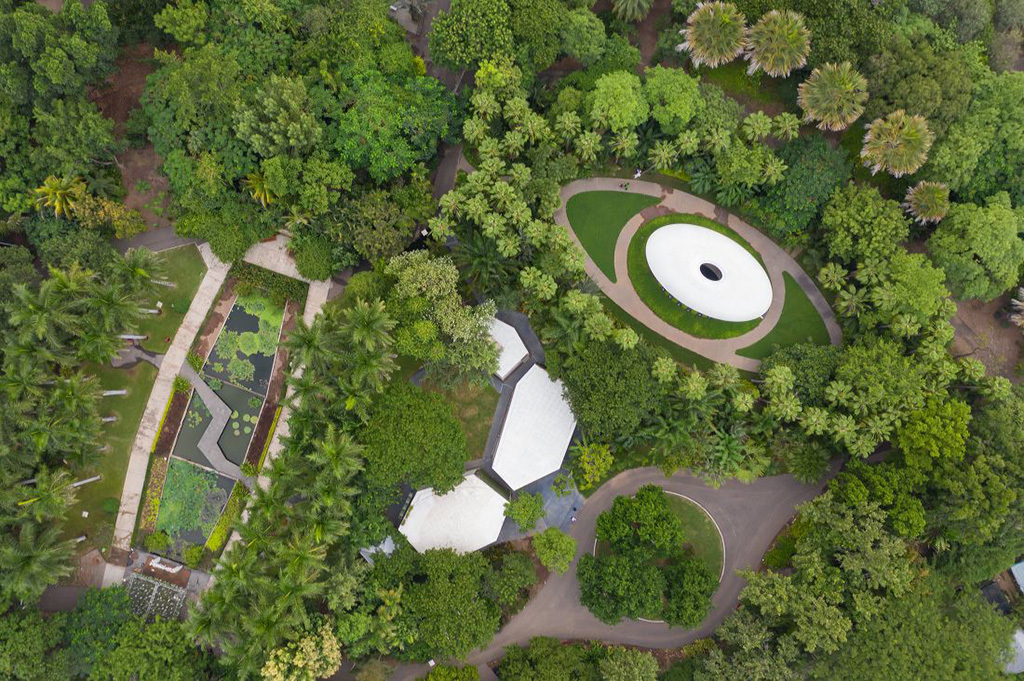
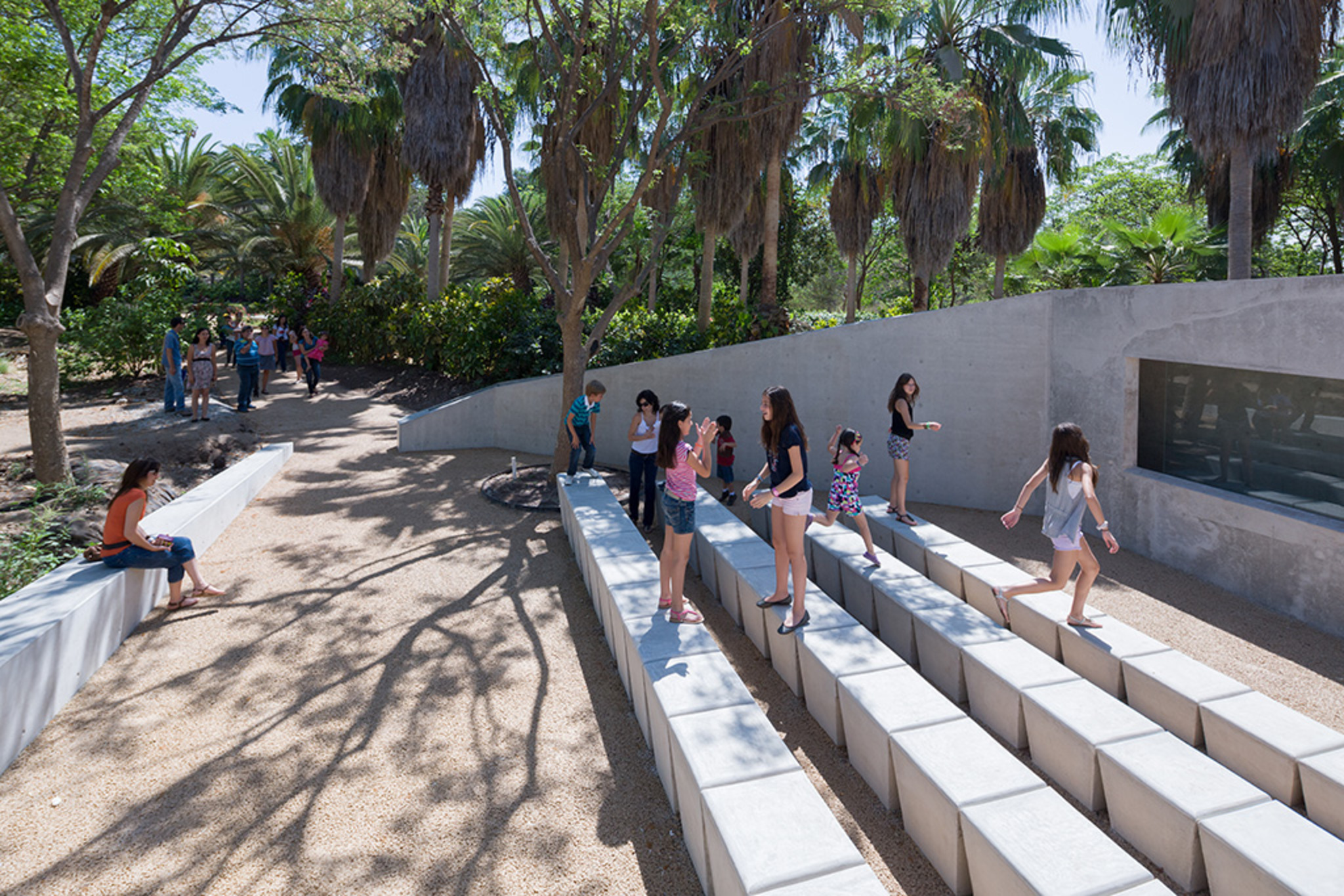
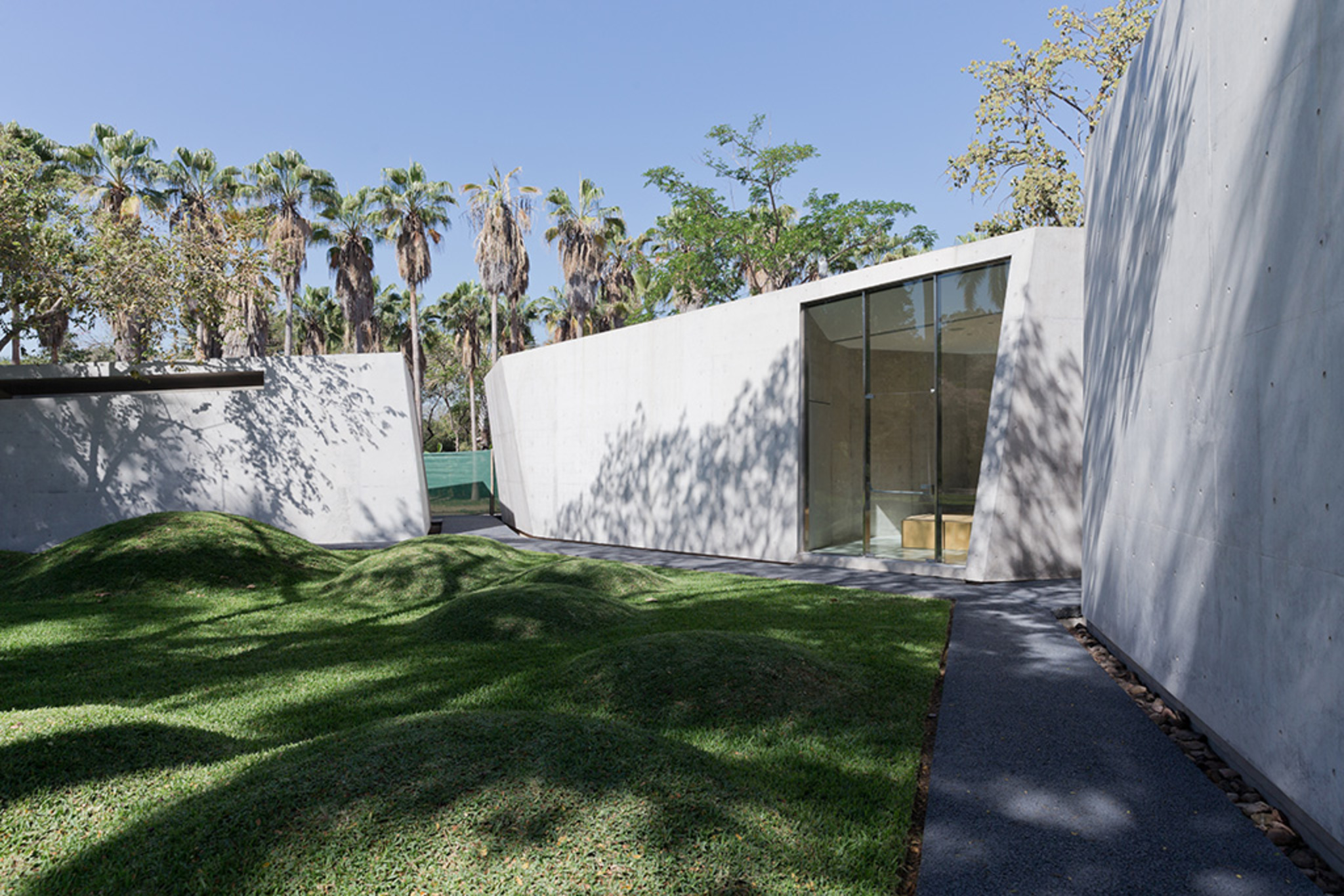
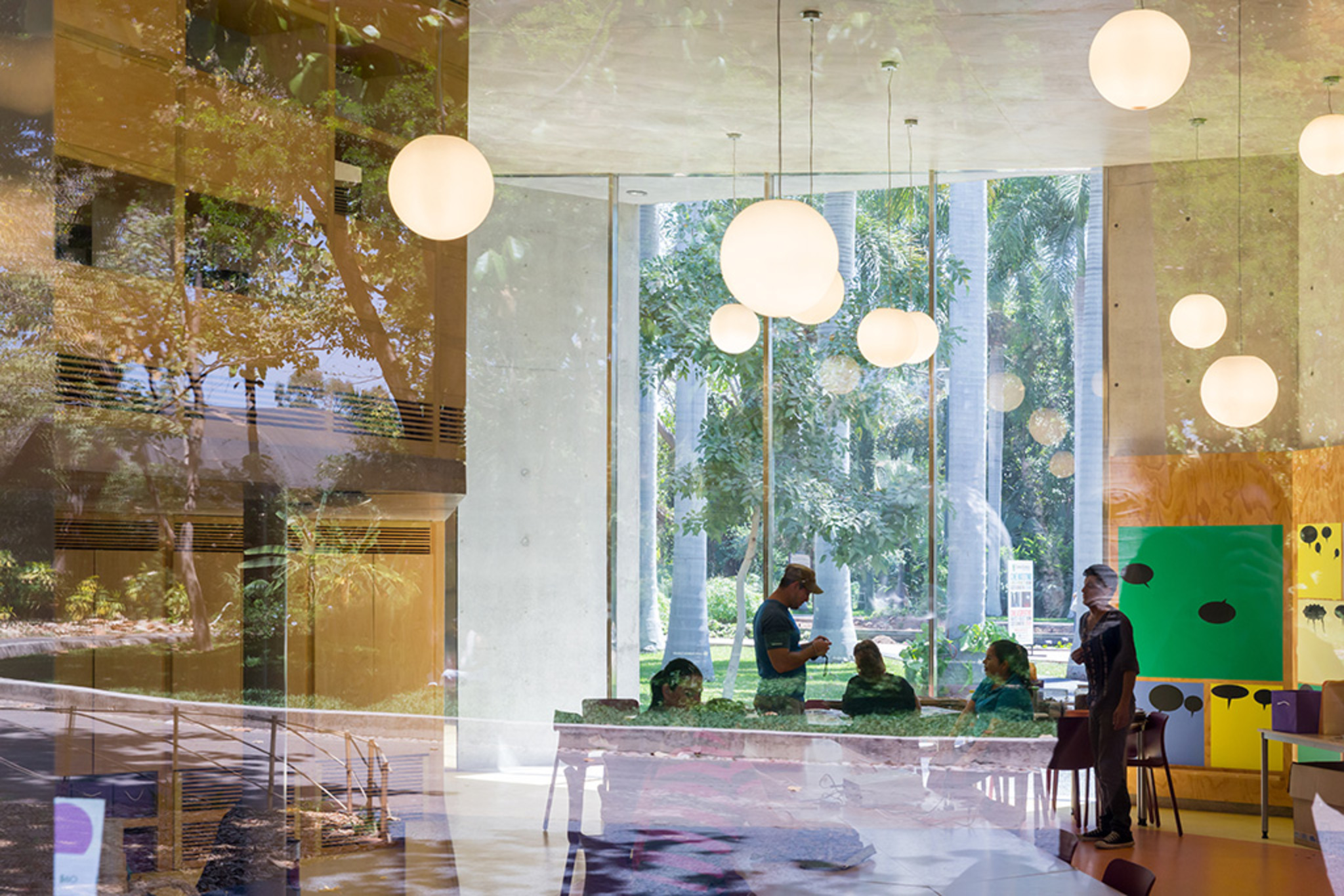
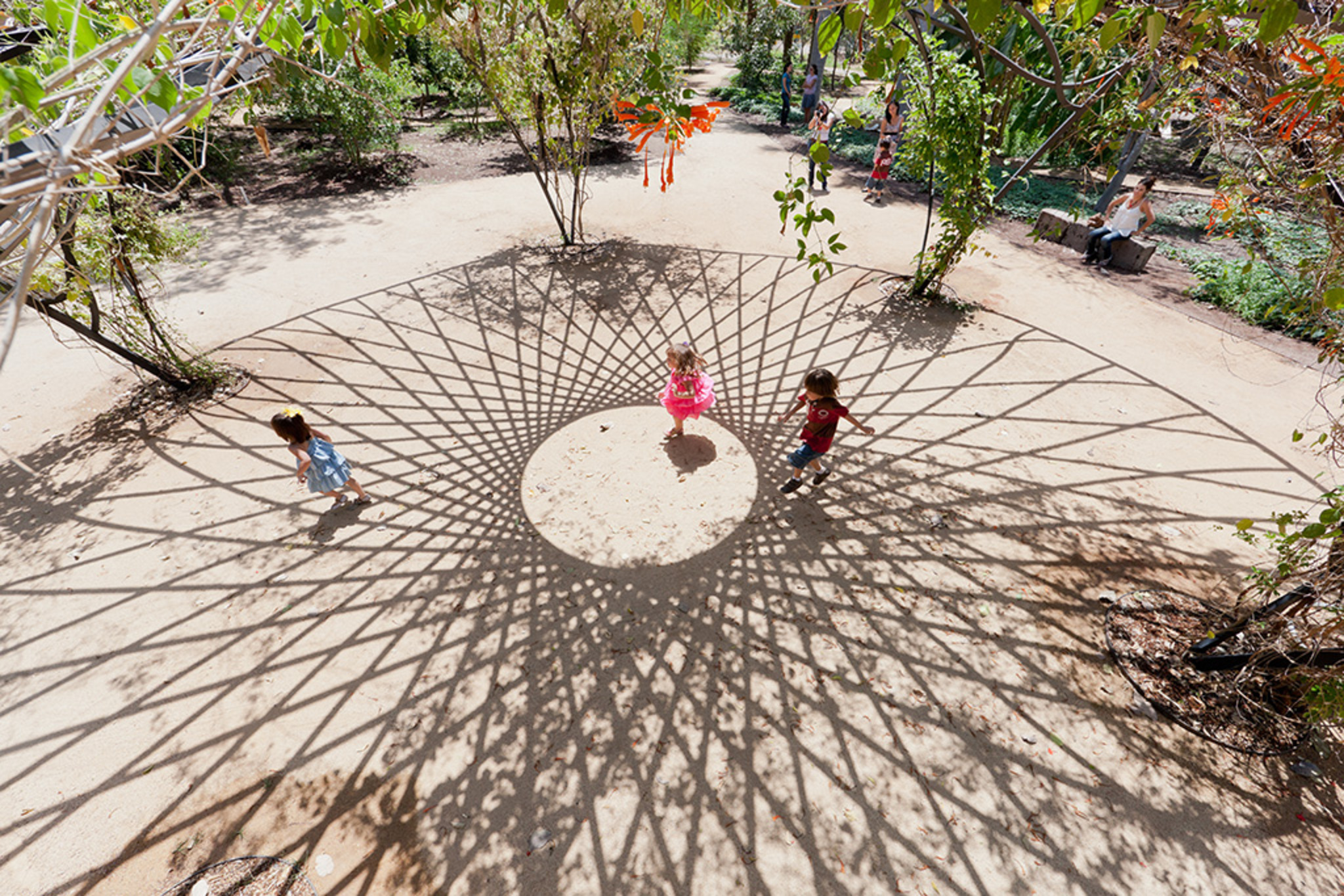
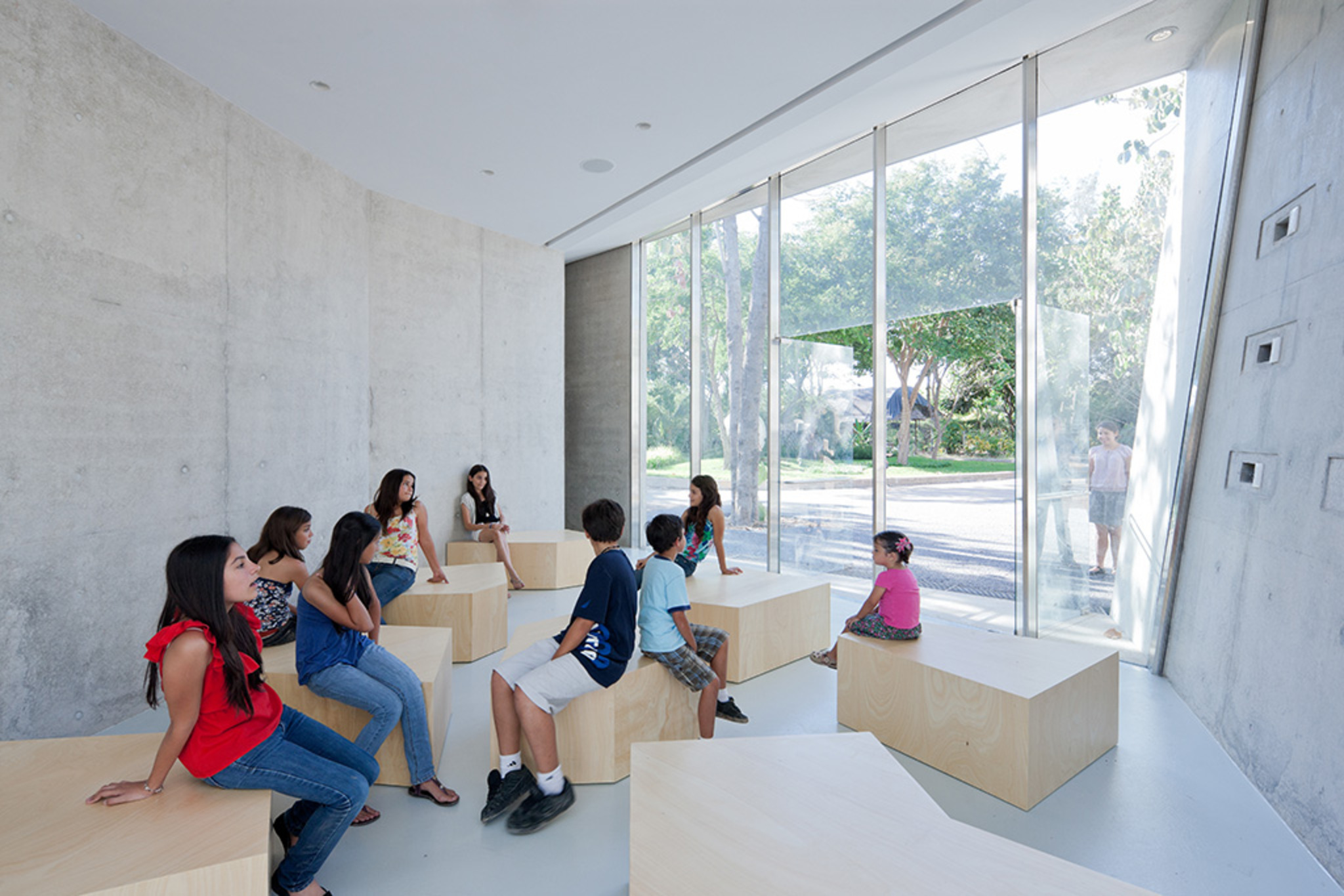
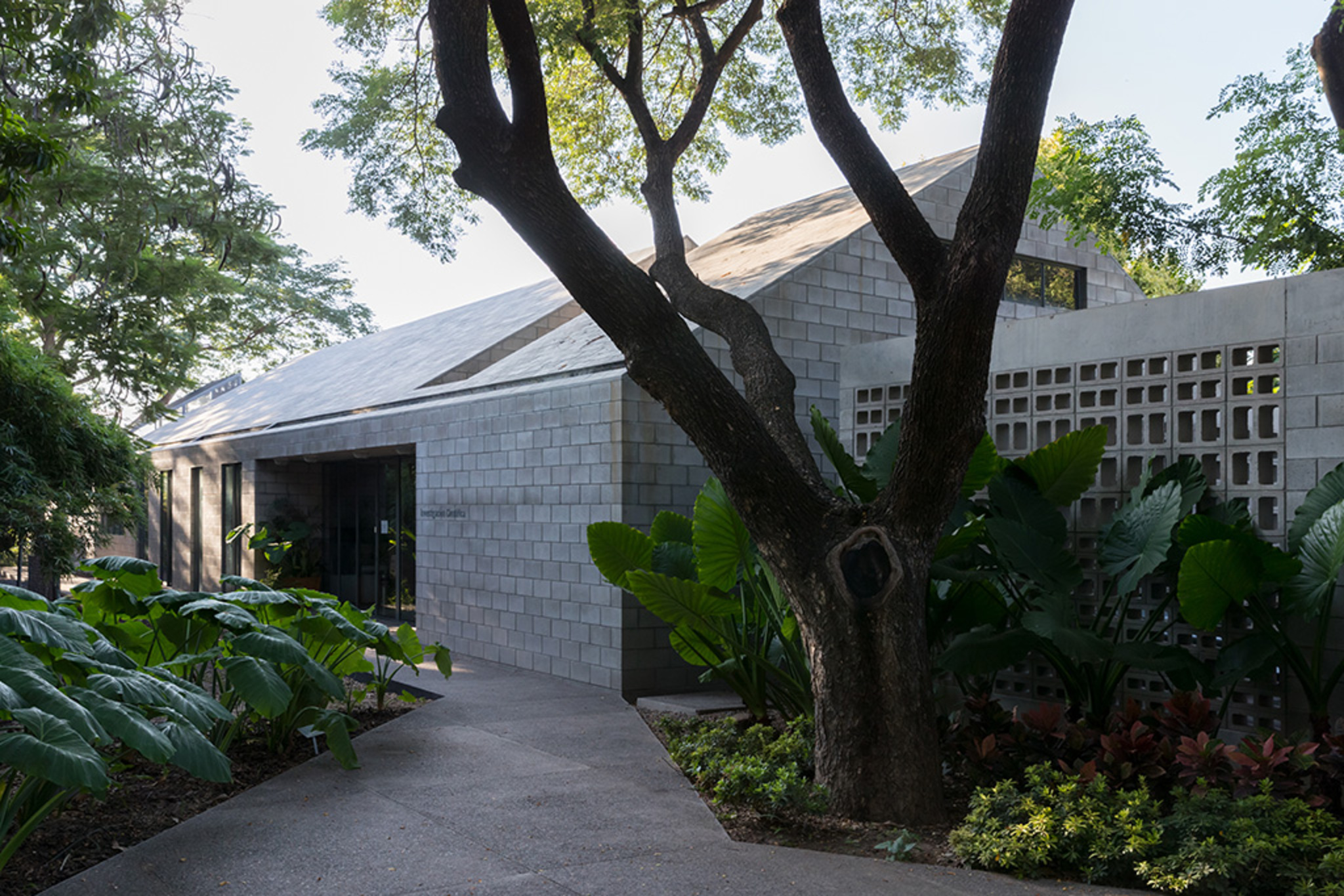
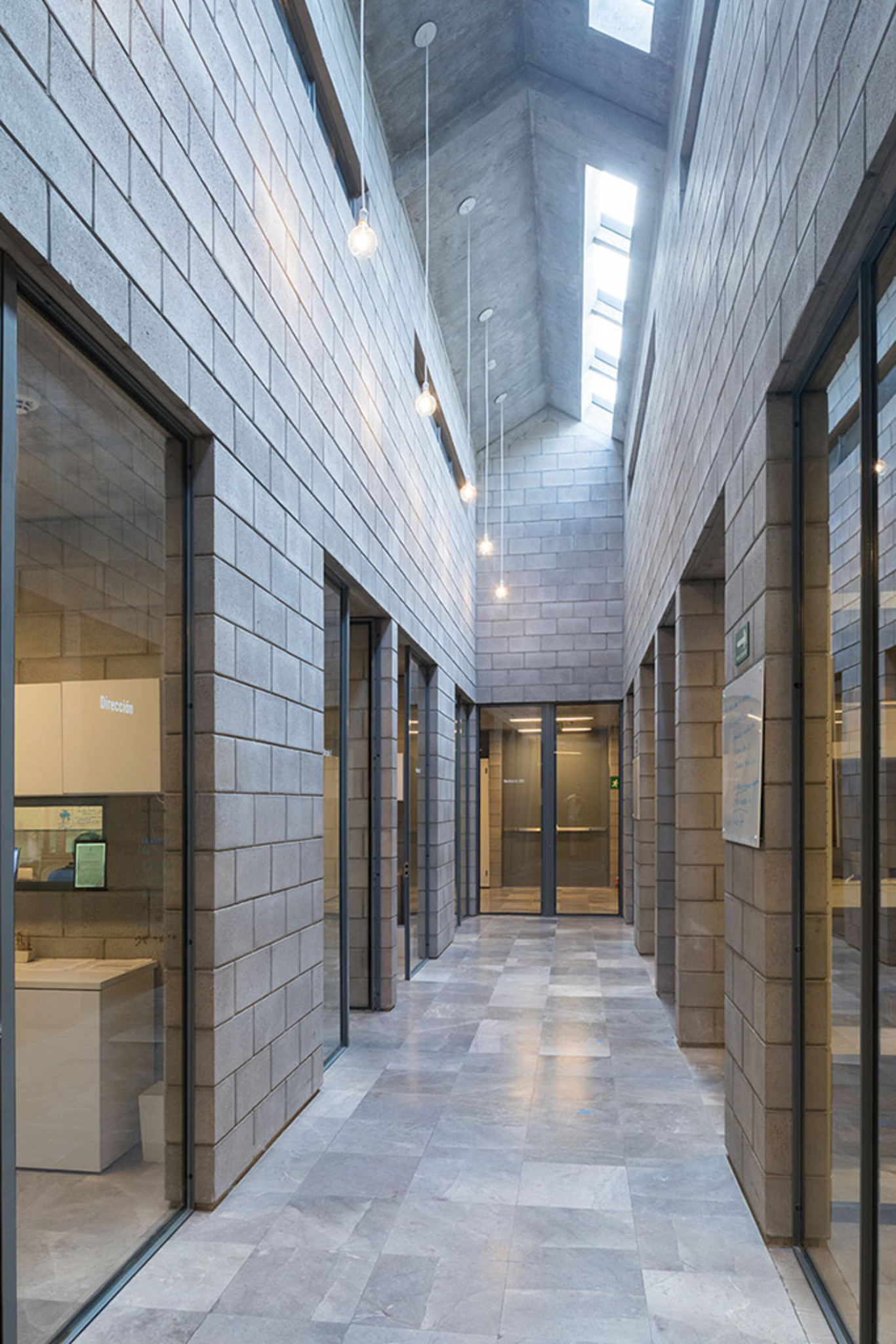
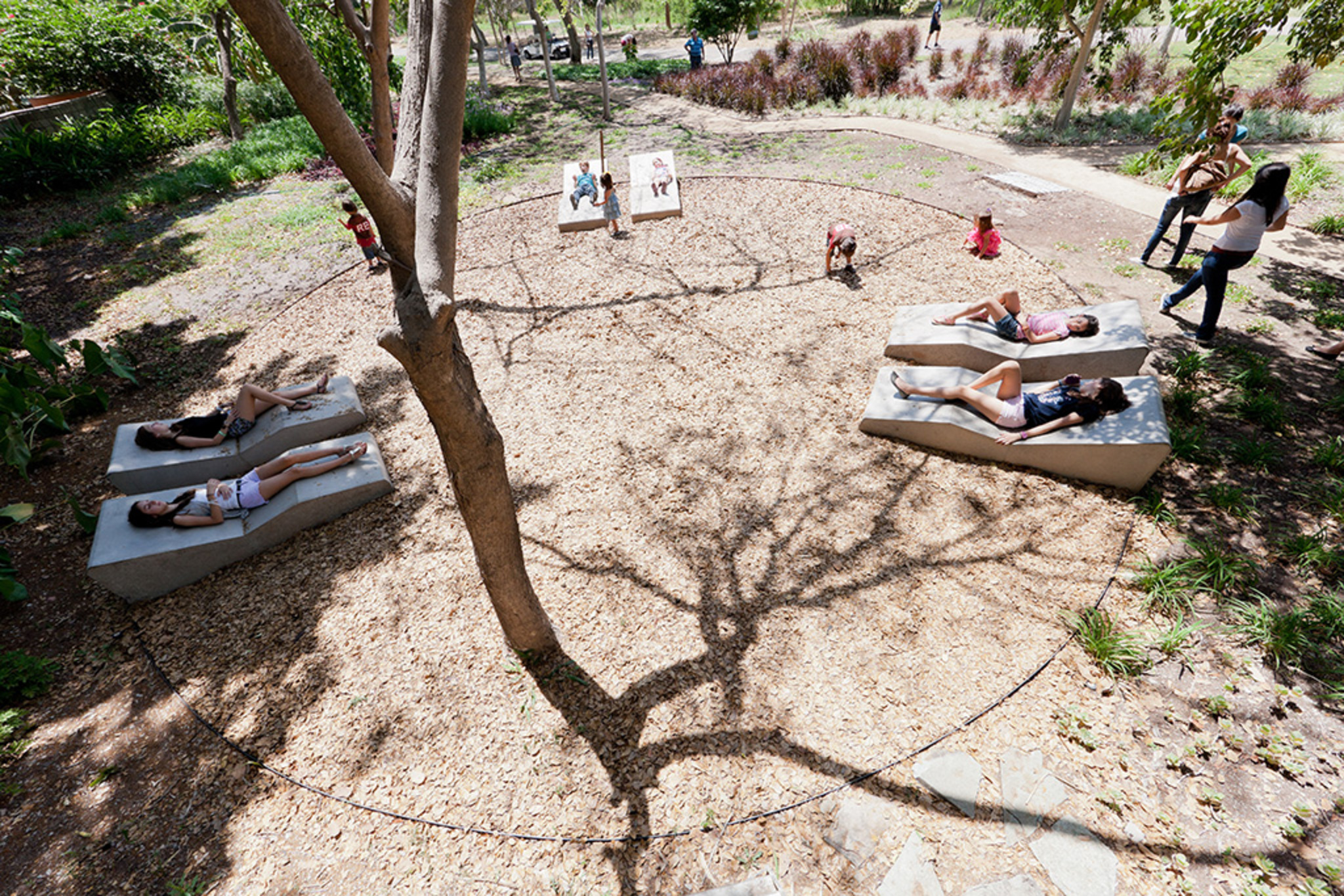
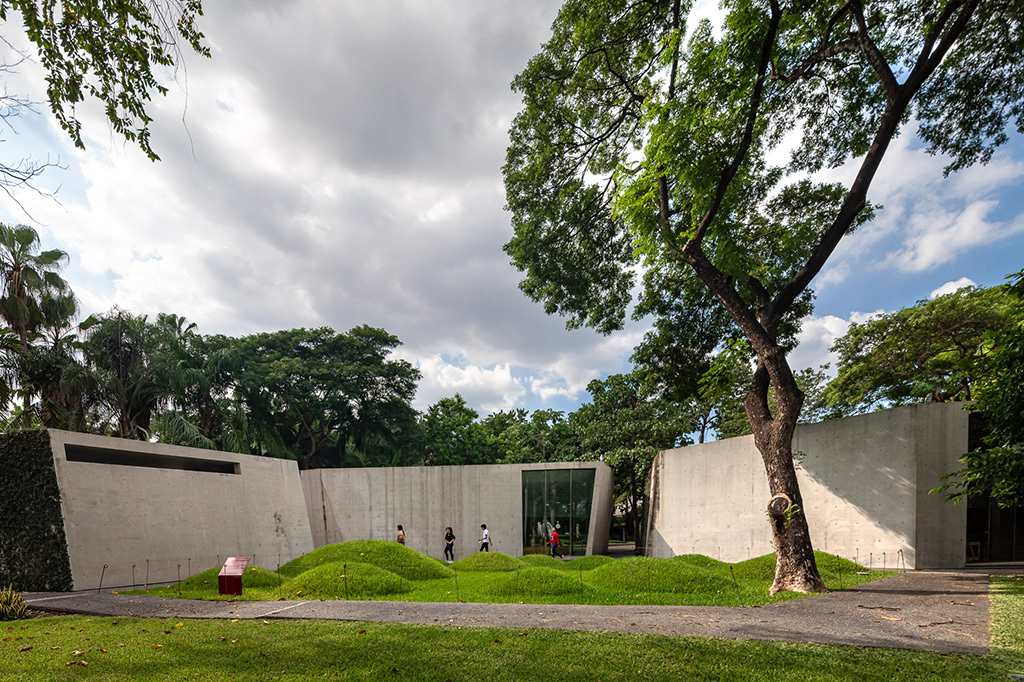
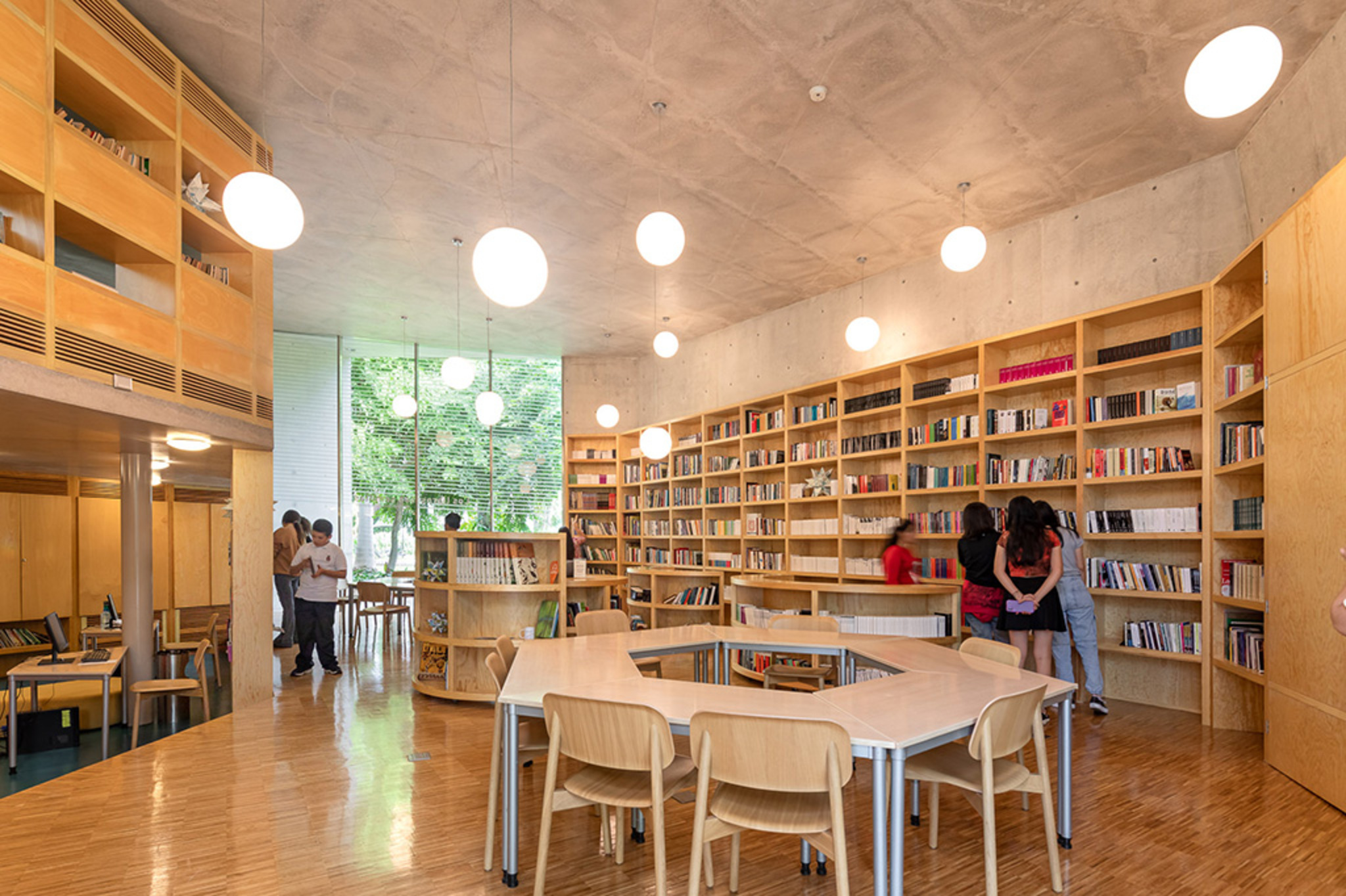
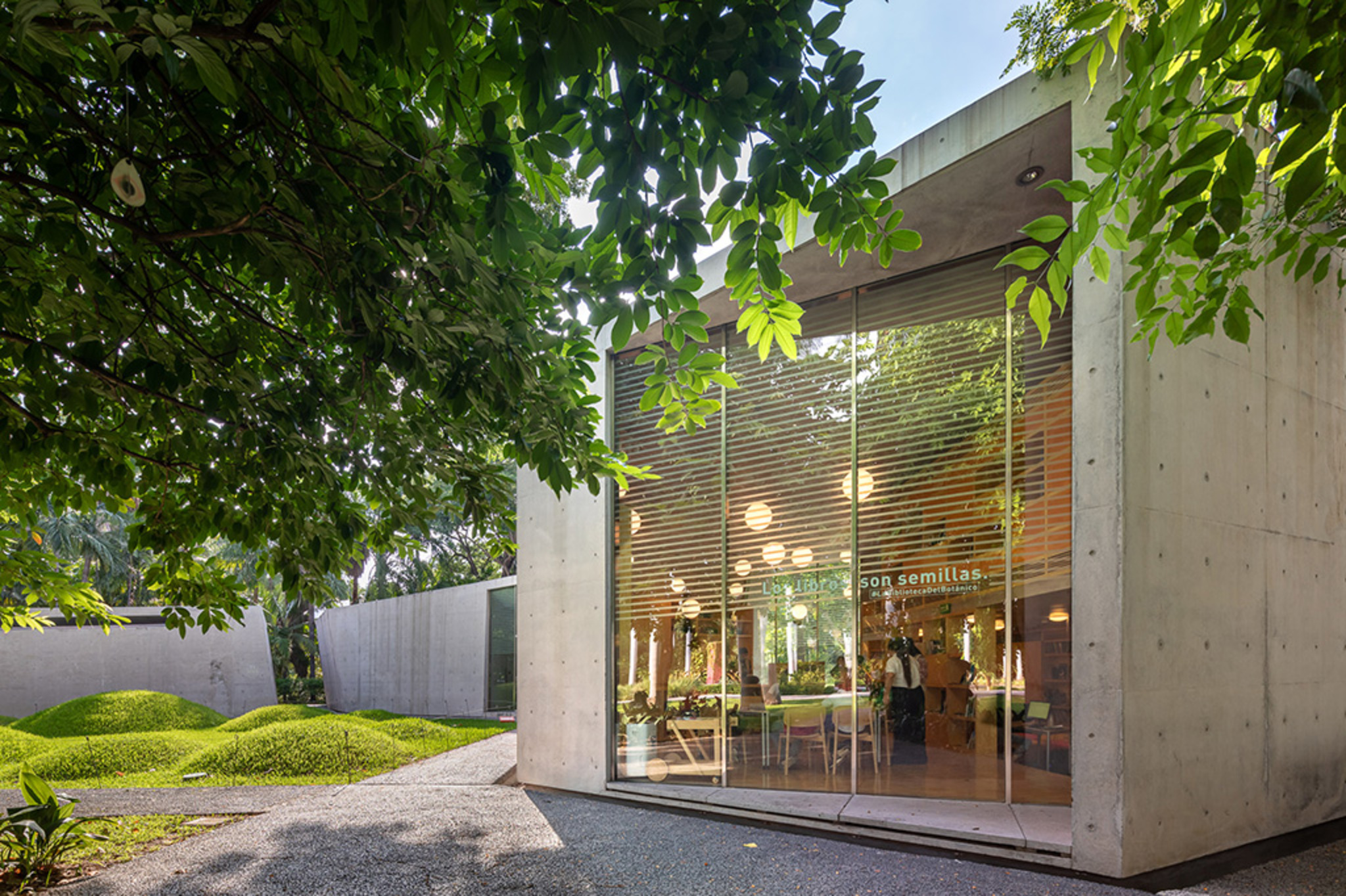
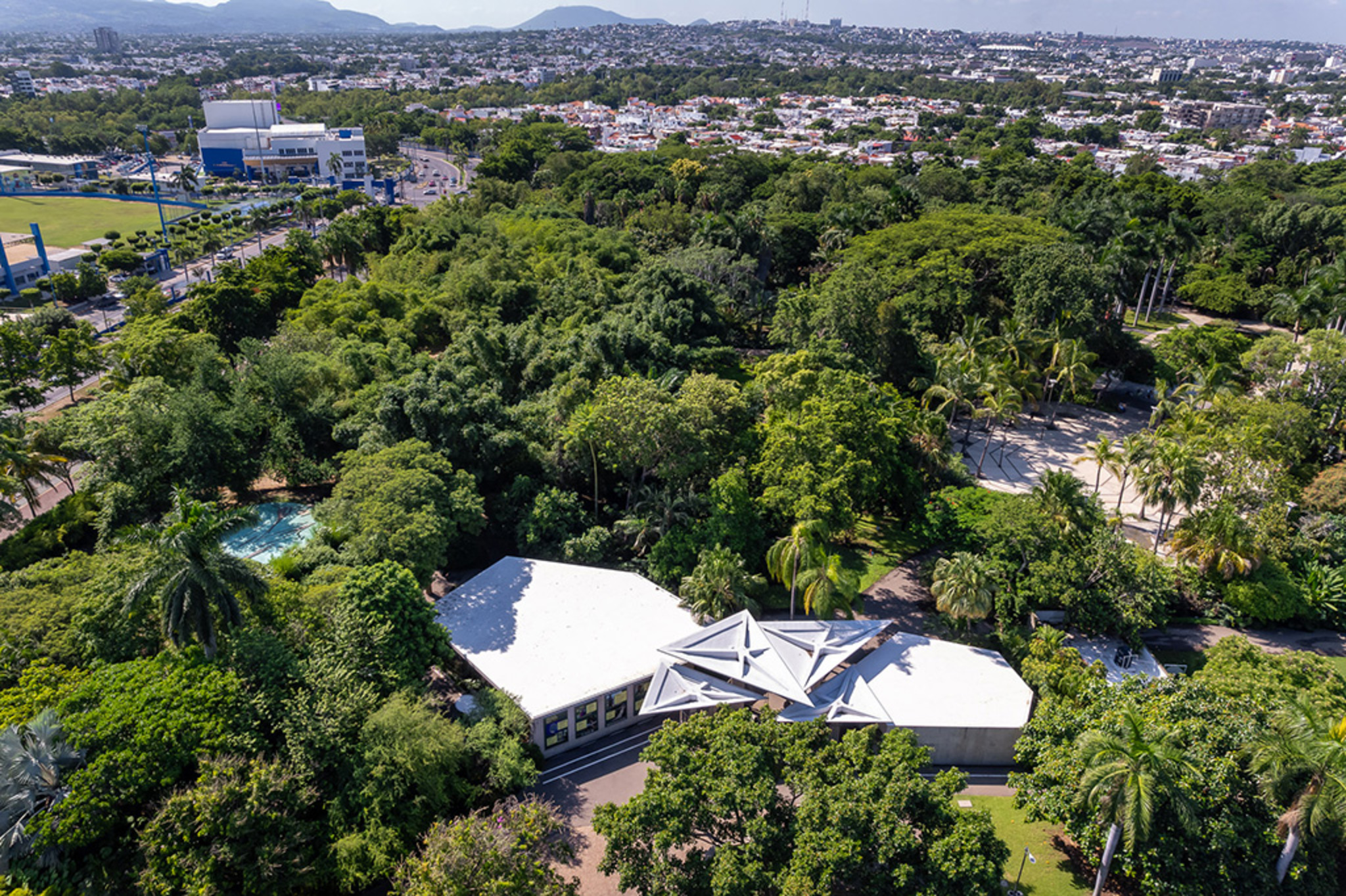
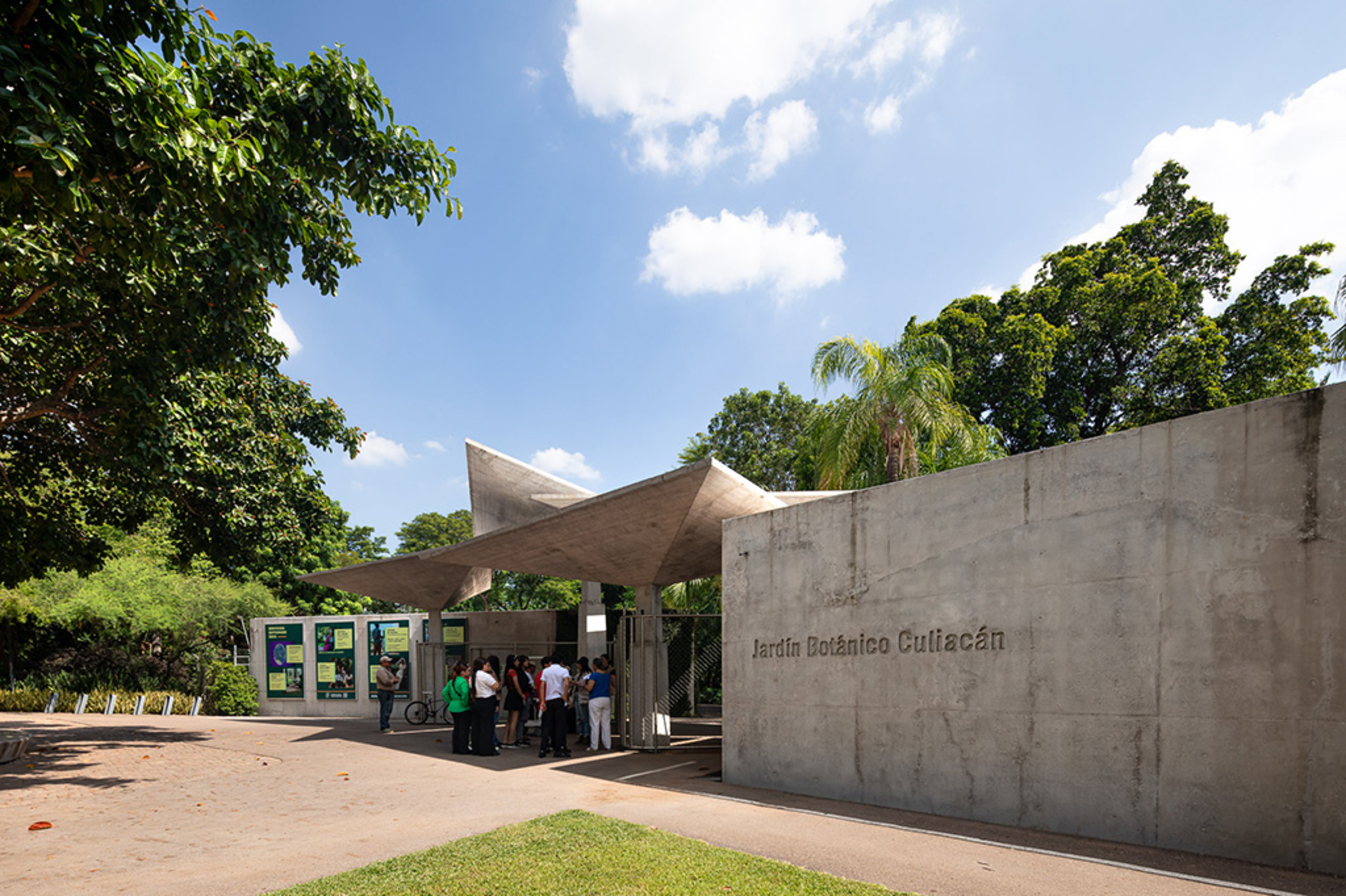
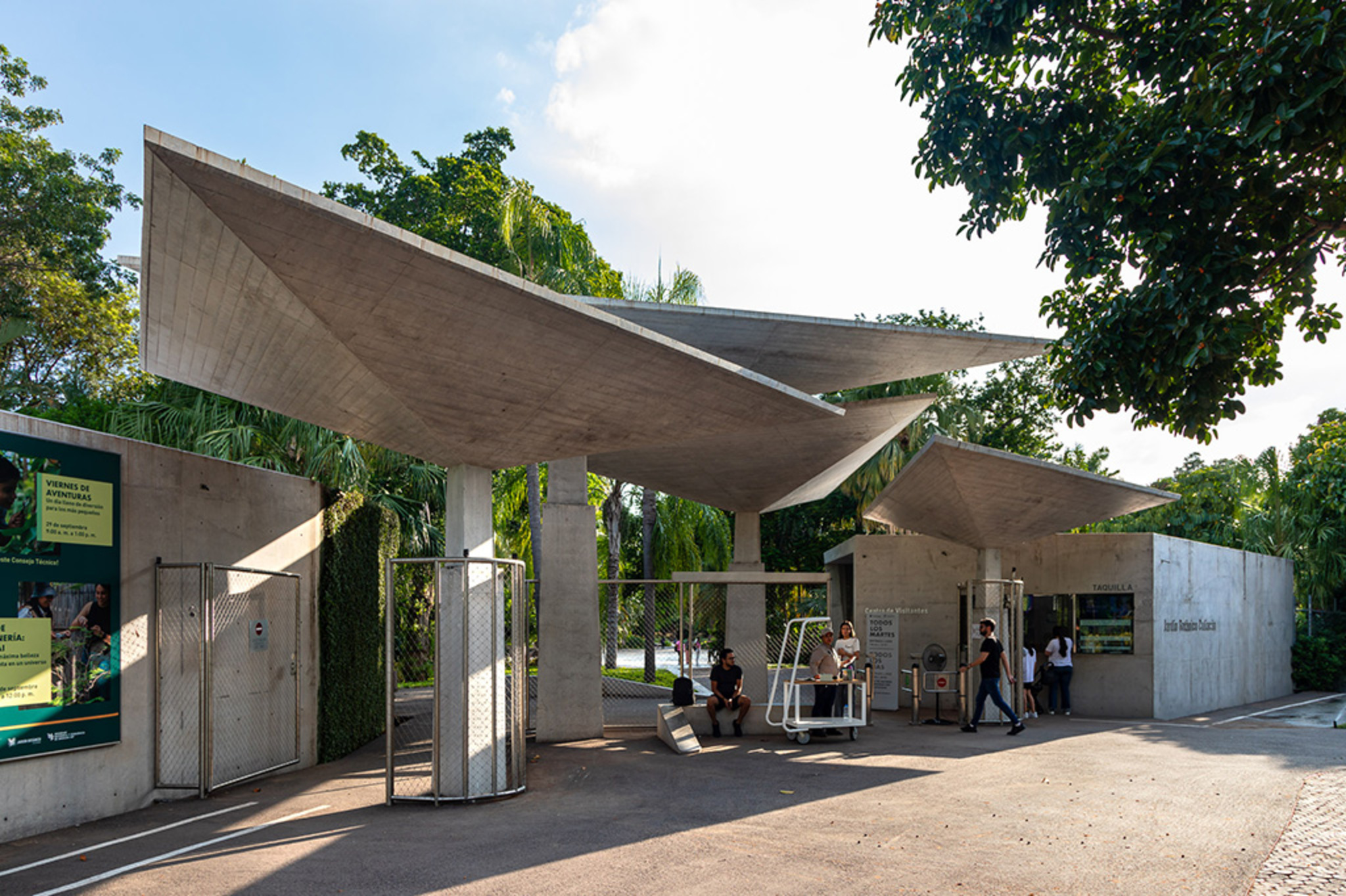
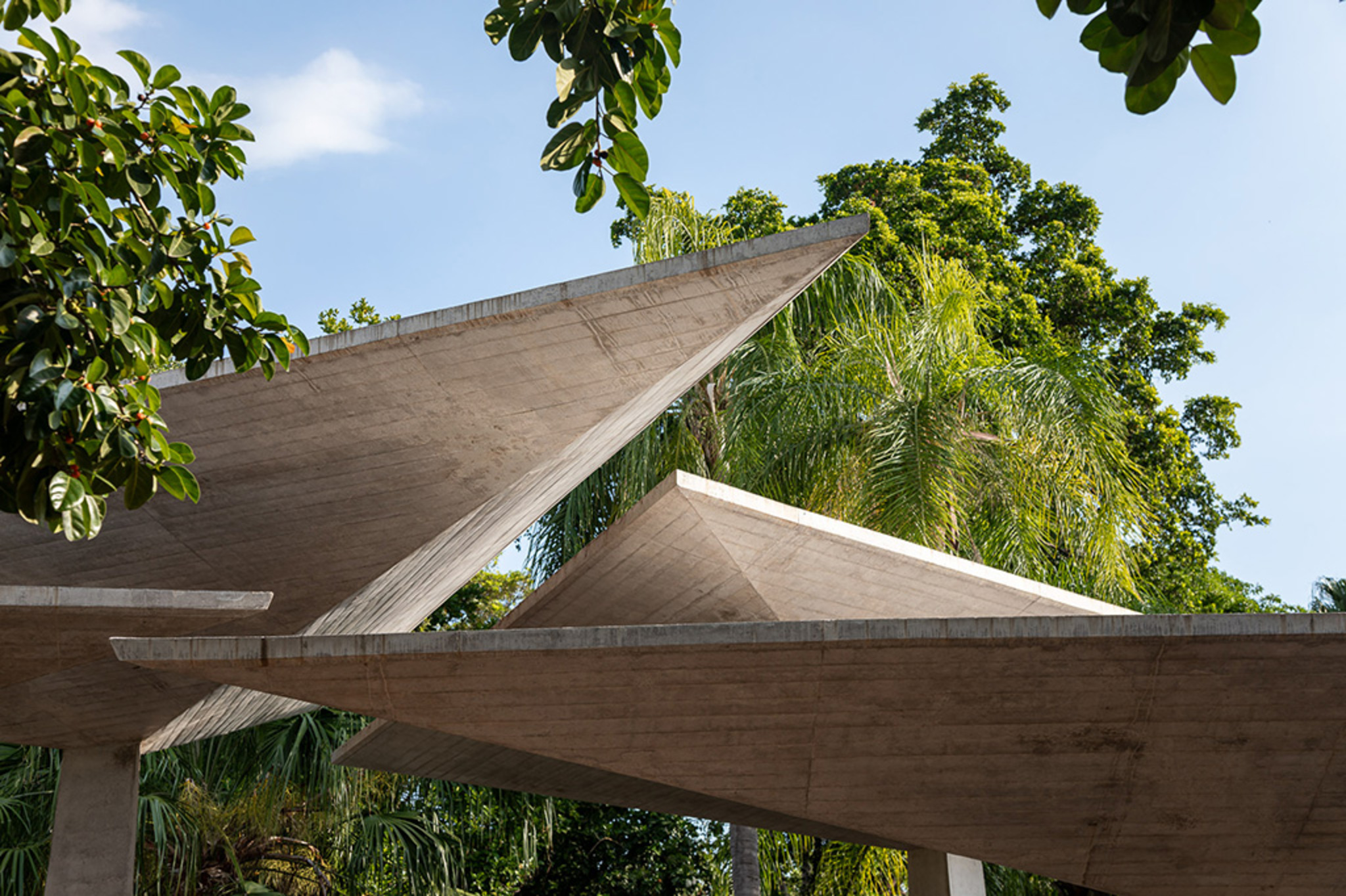
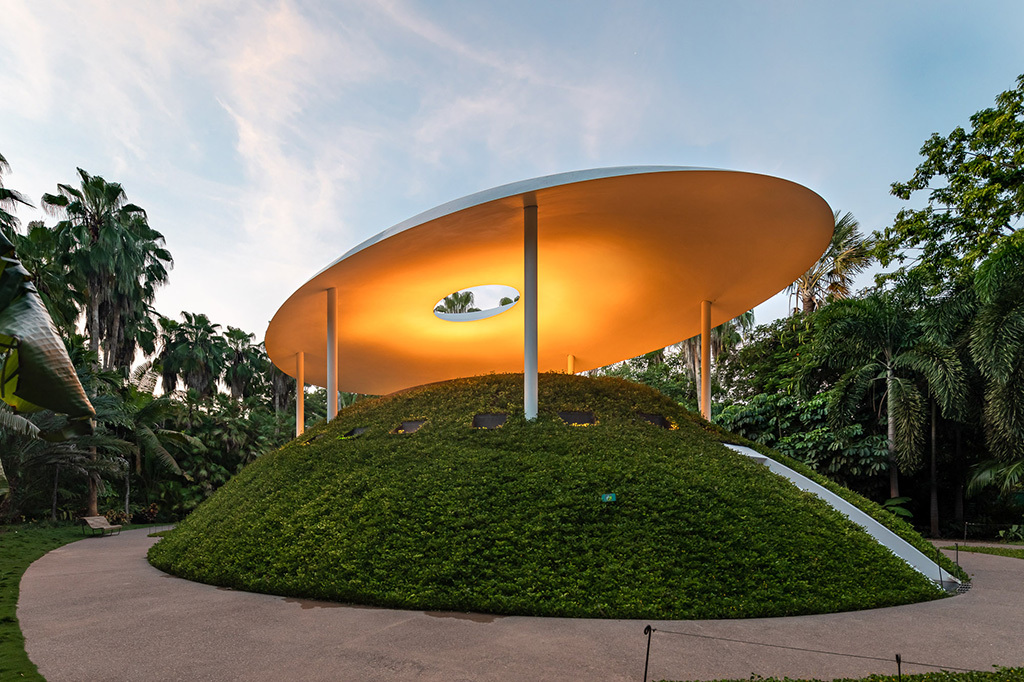
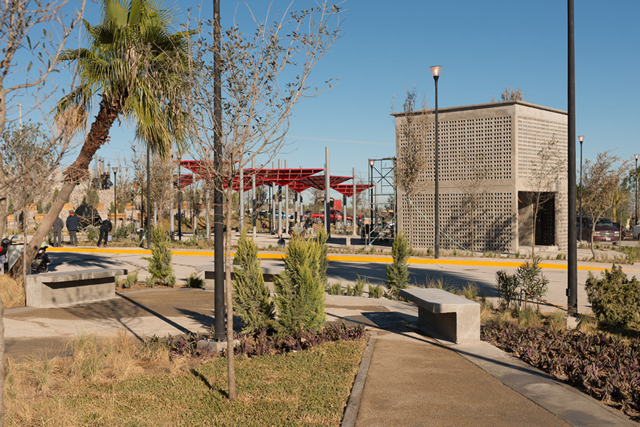
The Culiacán Botanical Garden (Jardín Botánico de Culiacán) is a public landscape project and one of Tatiana Bilbao’s signature works. Initiated in the early 2000s in Culiacán, Sinaloa, the project transformed a conventional botanical garden into a multidisciplinary cultural landscape. The 10-hectare garden contains native and exotic plant collections and incorporates contemporary art installations created in collaboration with artists. Tatiana Bilbao began working on the redevelopment in 2005, and the garden evolved through phased construction across the 2010s. The site organizes an organic network of paths and pavilions inspired by natural forms, with winding routes branching through multiple zones. The design includes small architectural structures such as viewing platforms, shade pavilions, and service buildings. These elements use concrete for pathways and pavilion structures, steel and wood for pergolas, and glass for enclosed areas. The project integrates architecture, art, and ecology, creating a public space that preserves plant biodiversity while engaging the community. Today, the Culiacán Botanical Garden functions as a major cultural and environmental site in the city.
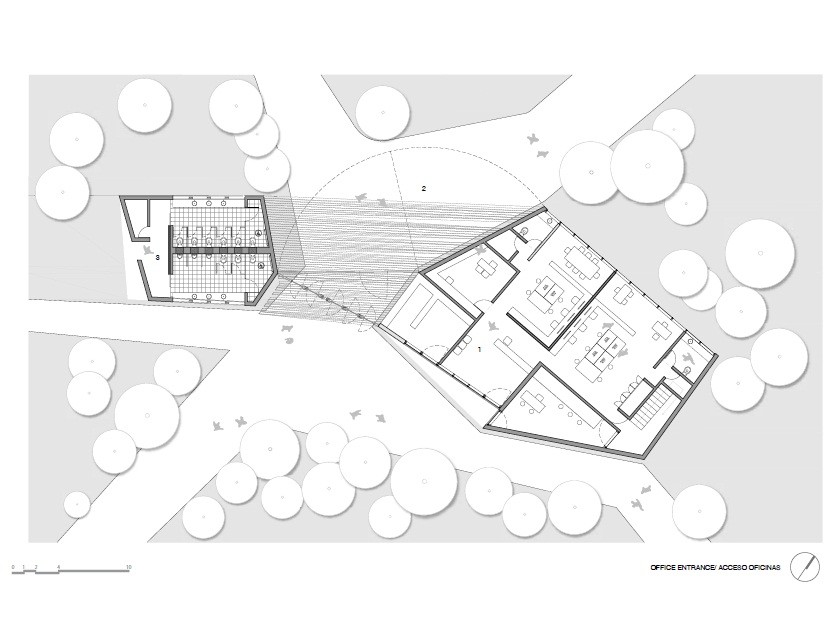
©Tatiana Bilbao Estudios
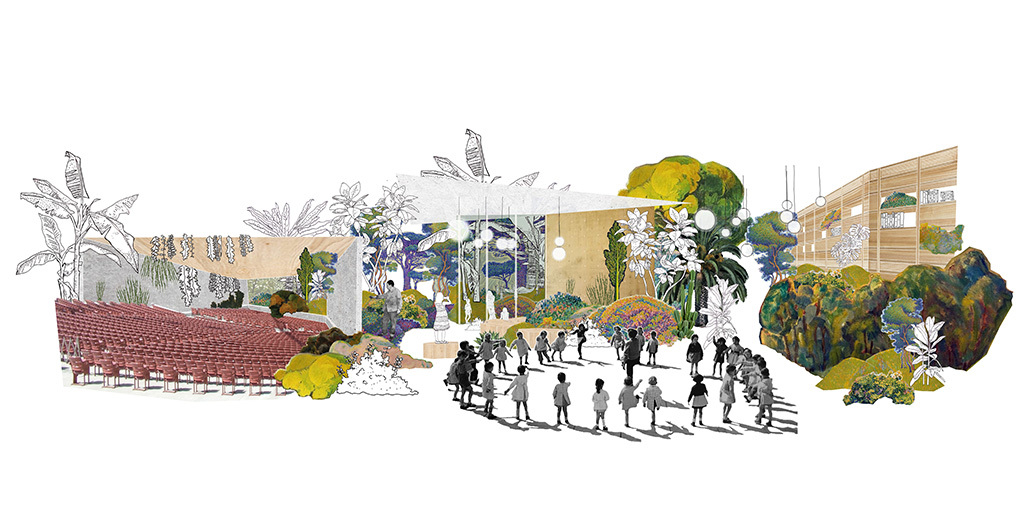
©Tatiana Bilbao Estudios
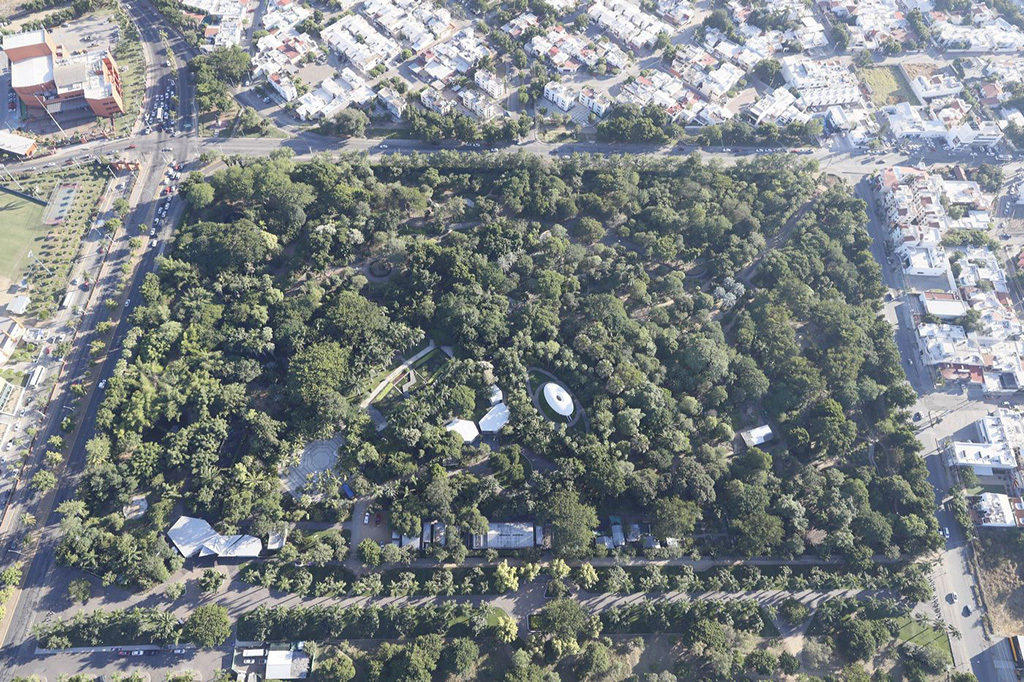
©Tatiana Bilbao Estudios
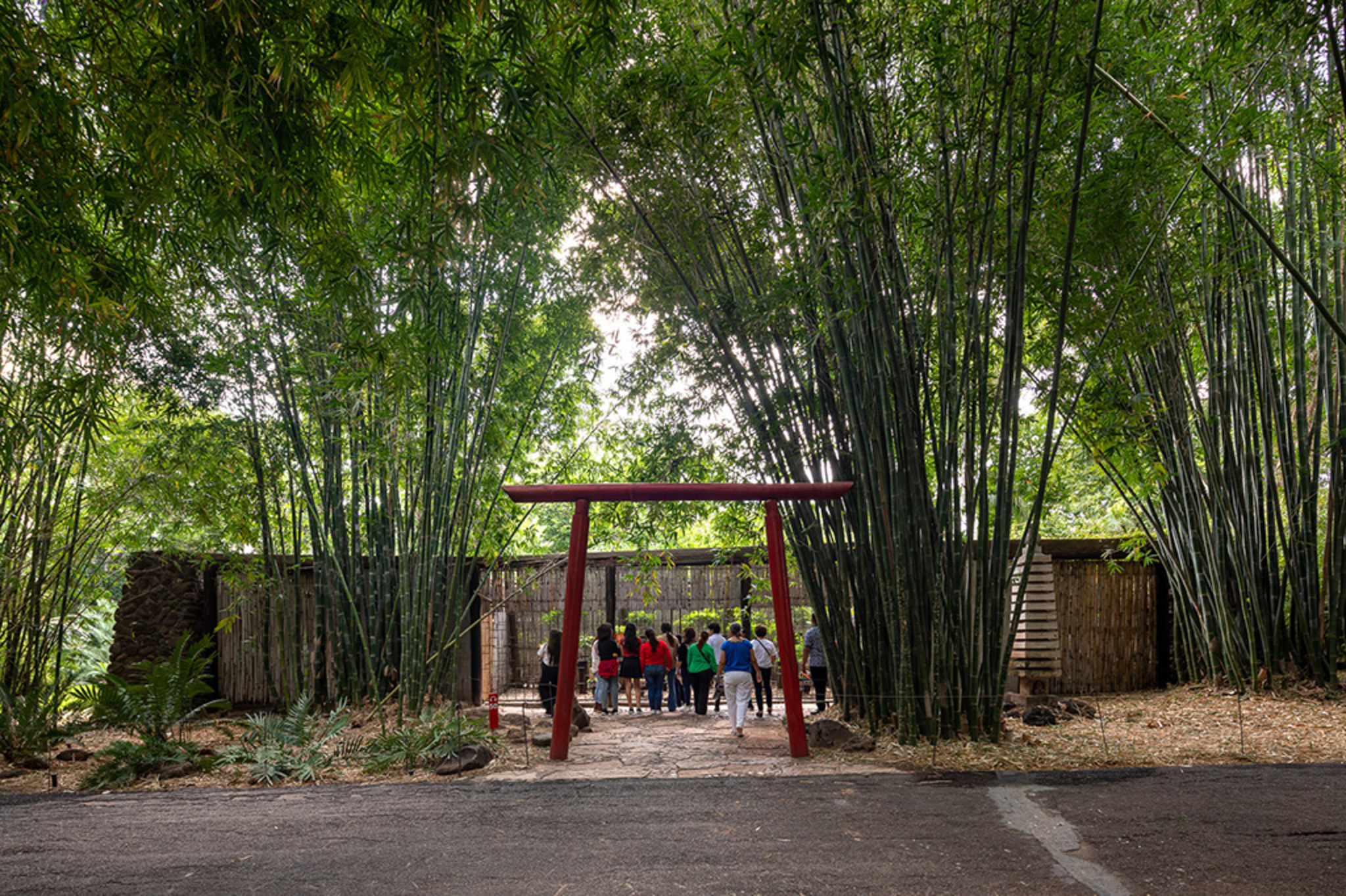


02. Pilgrim’s Route “Gratitude Open Chapel,” Jalisco
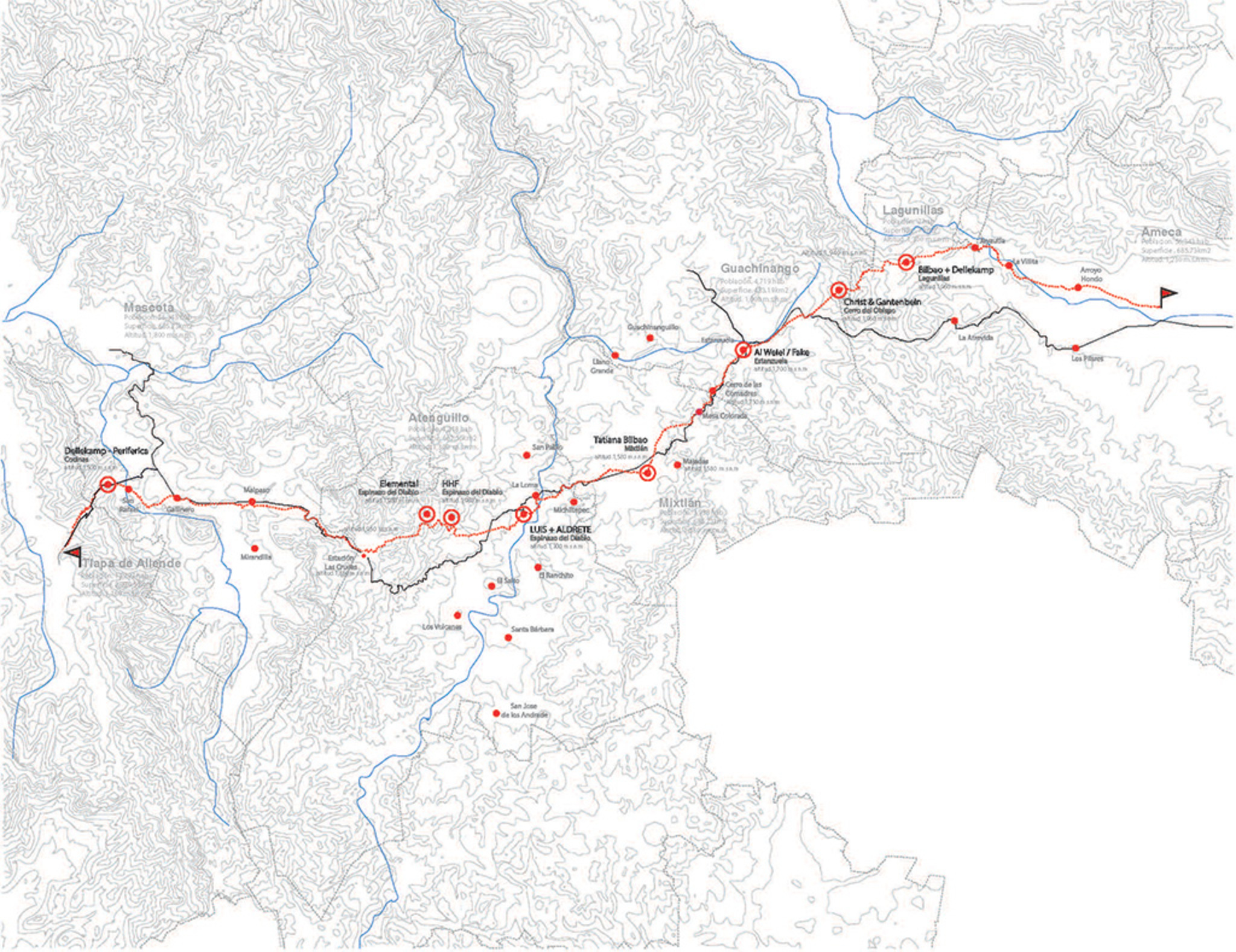
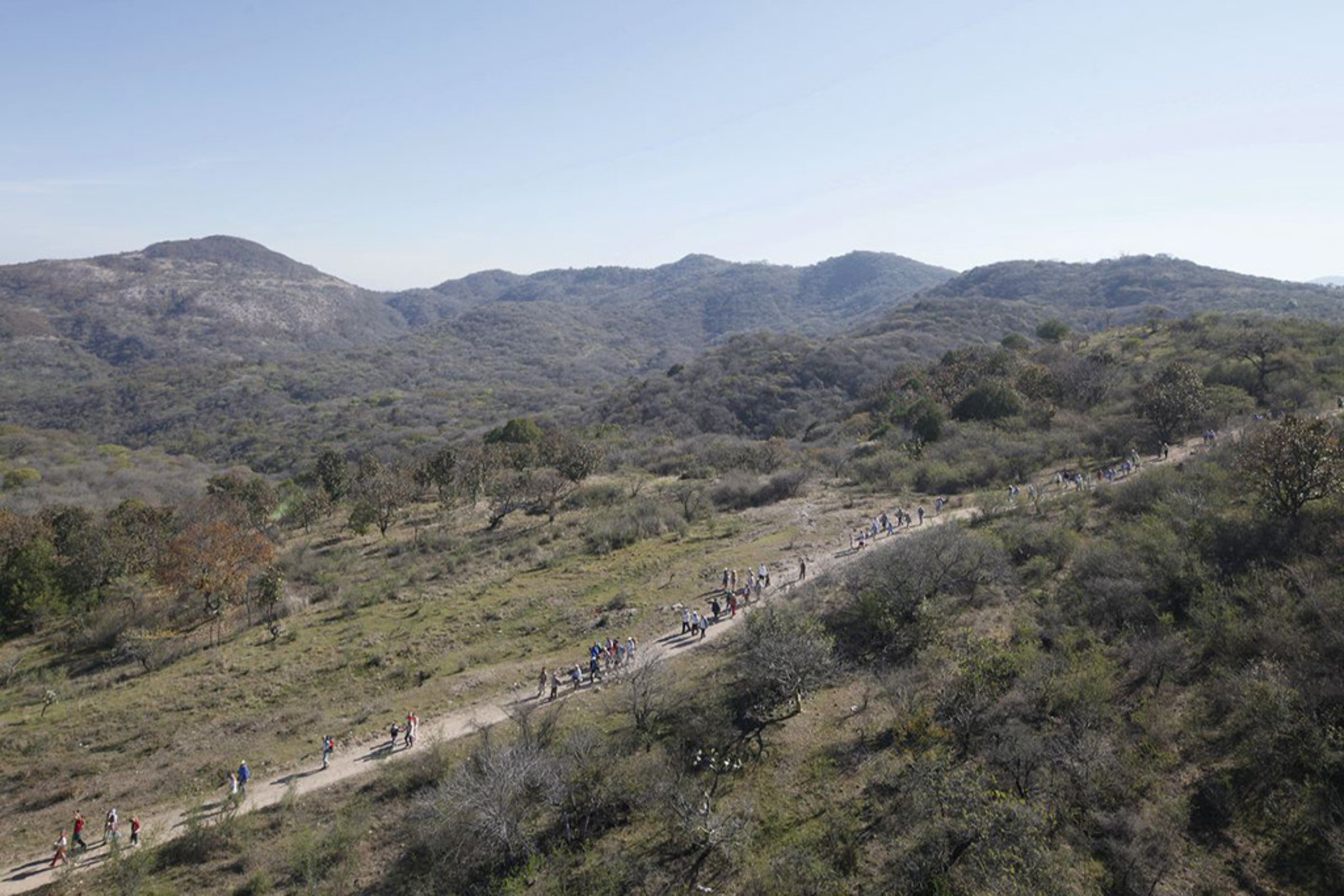
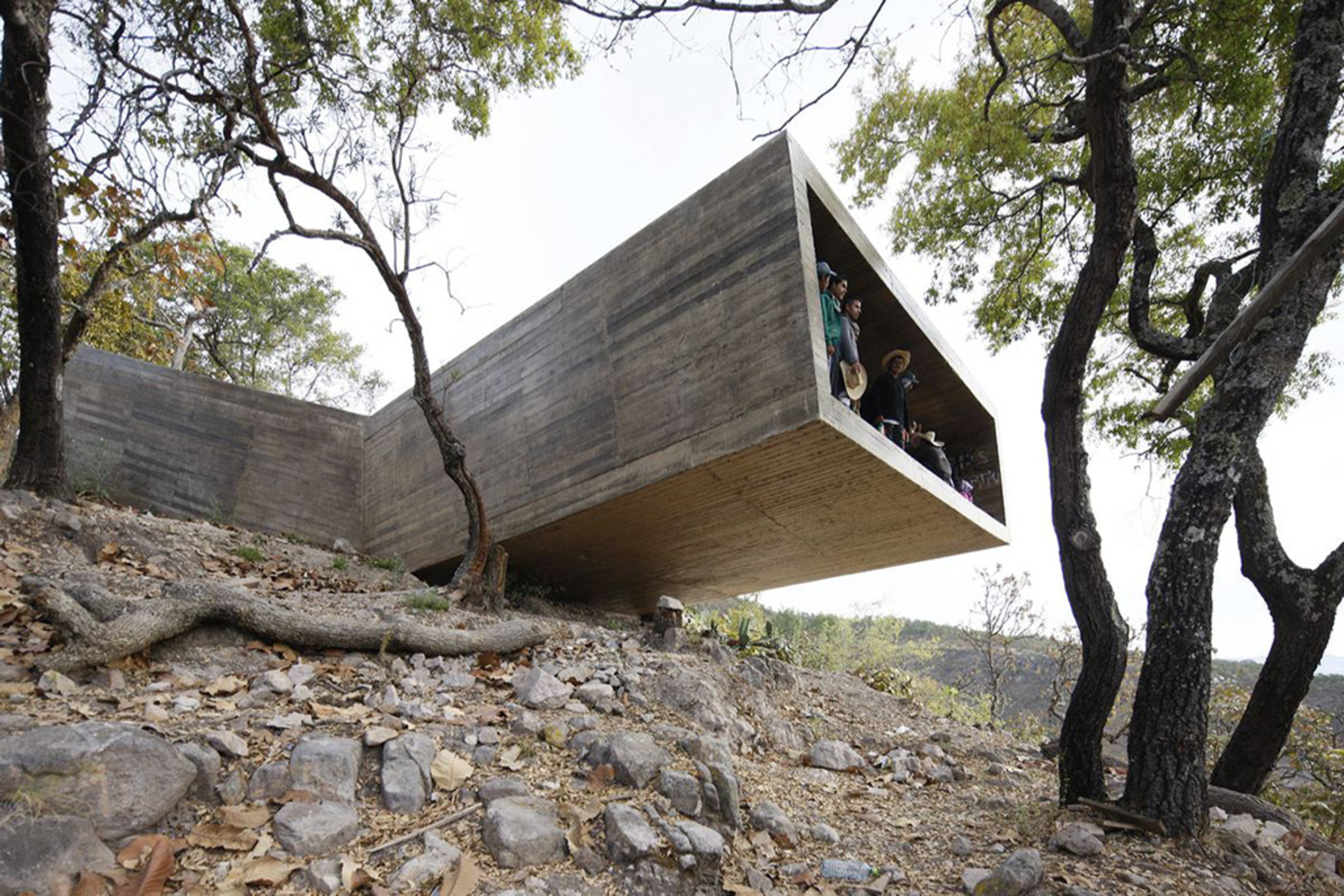
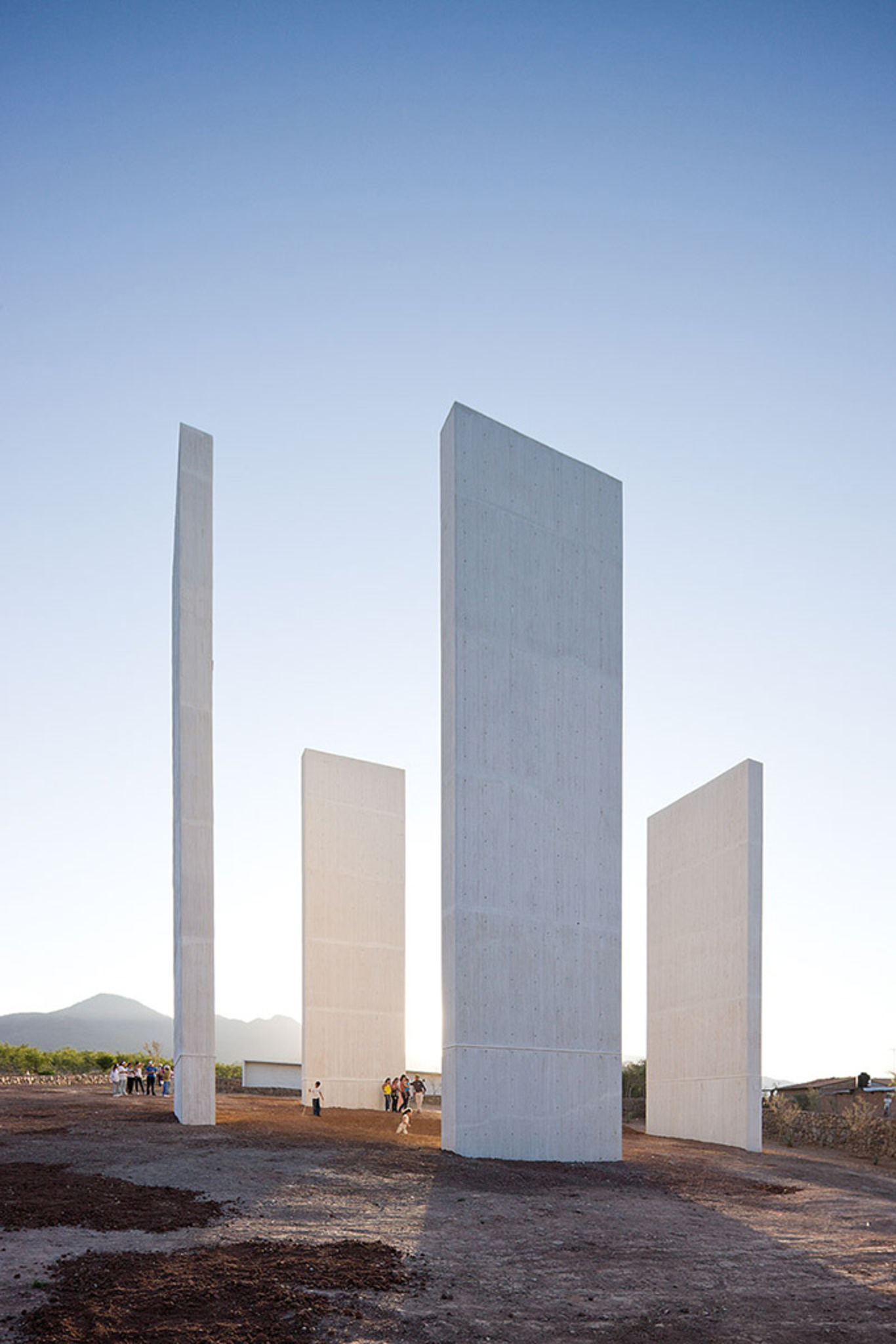
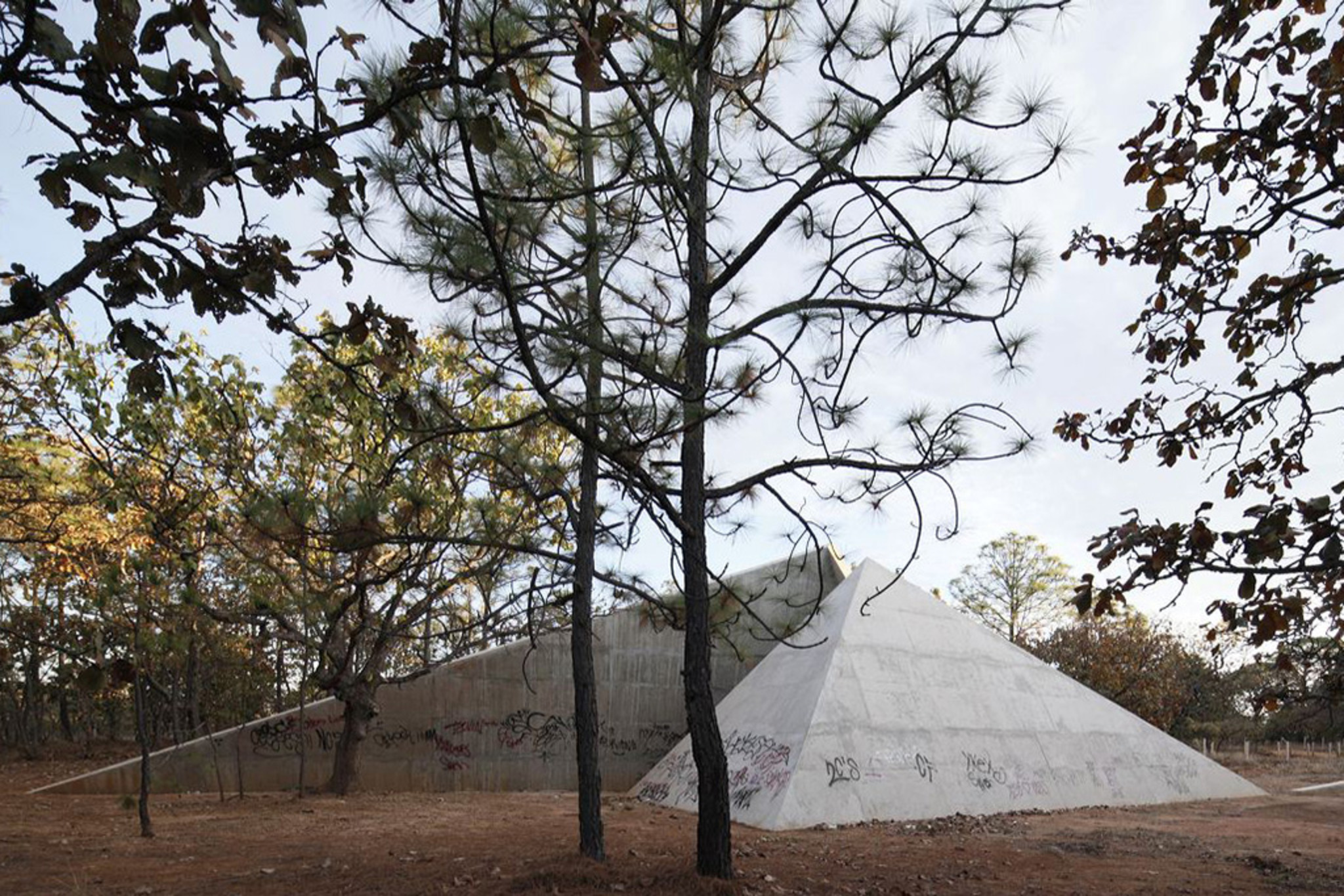
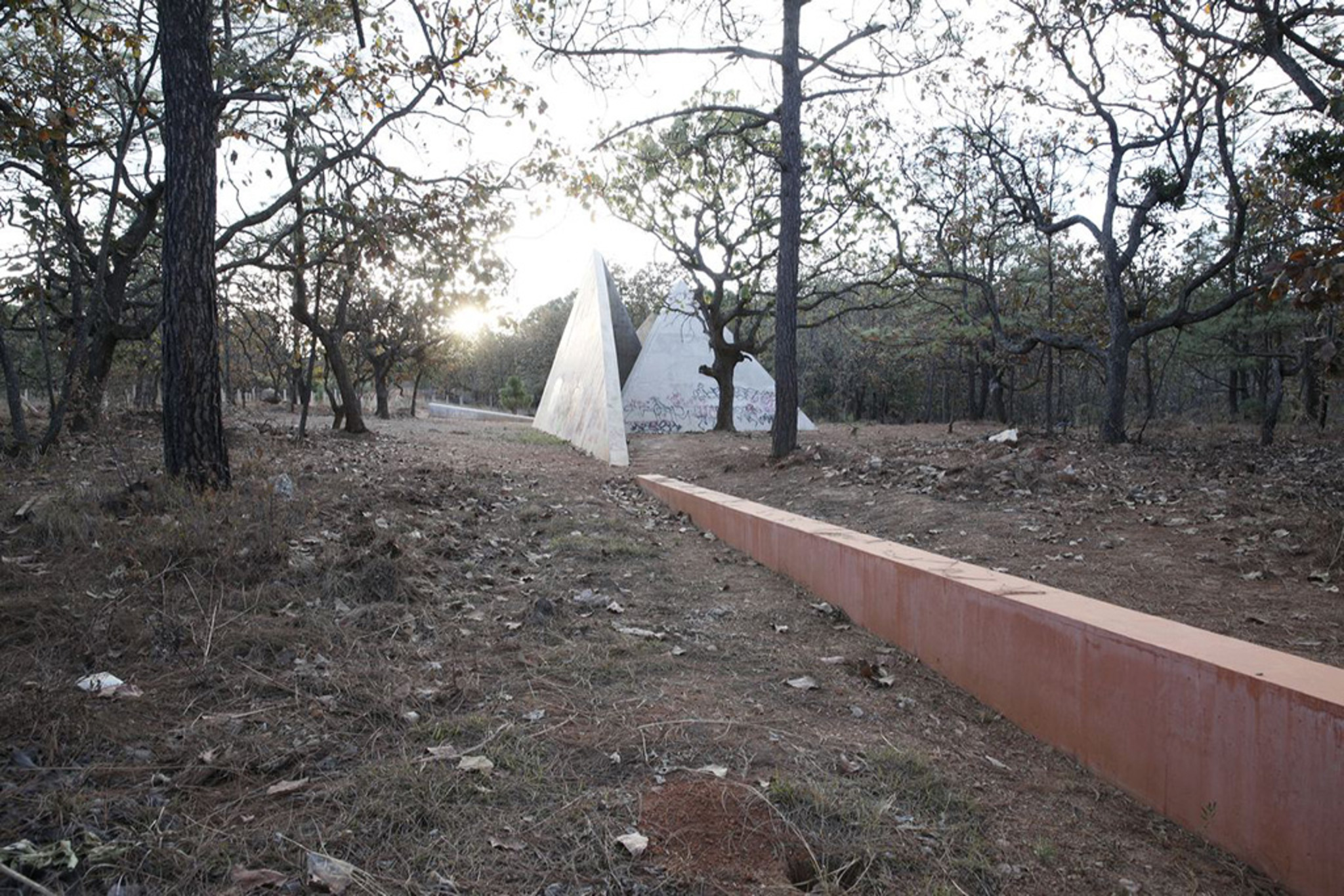
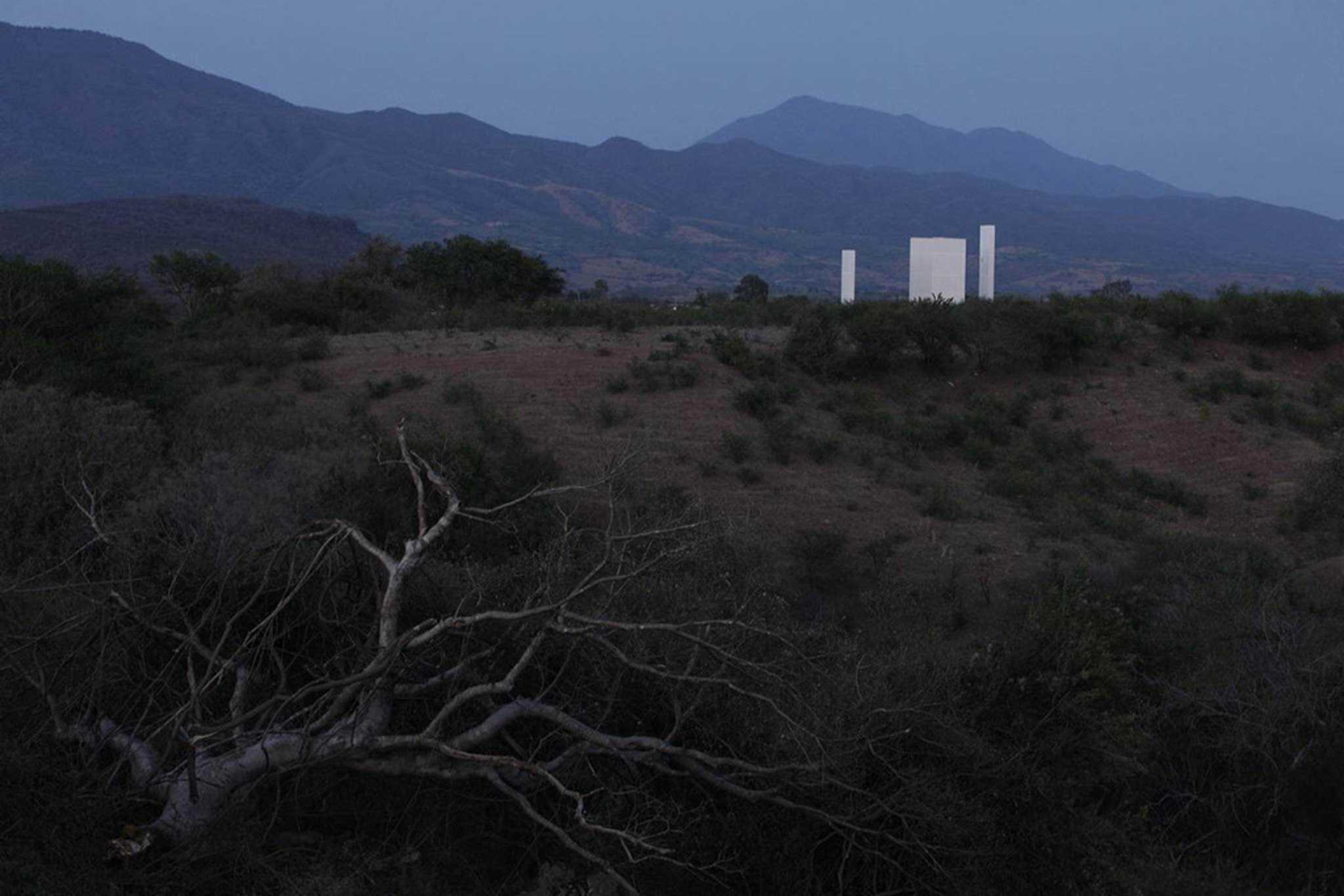
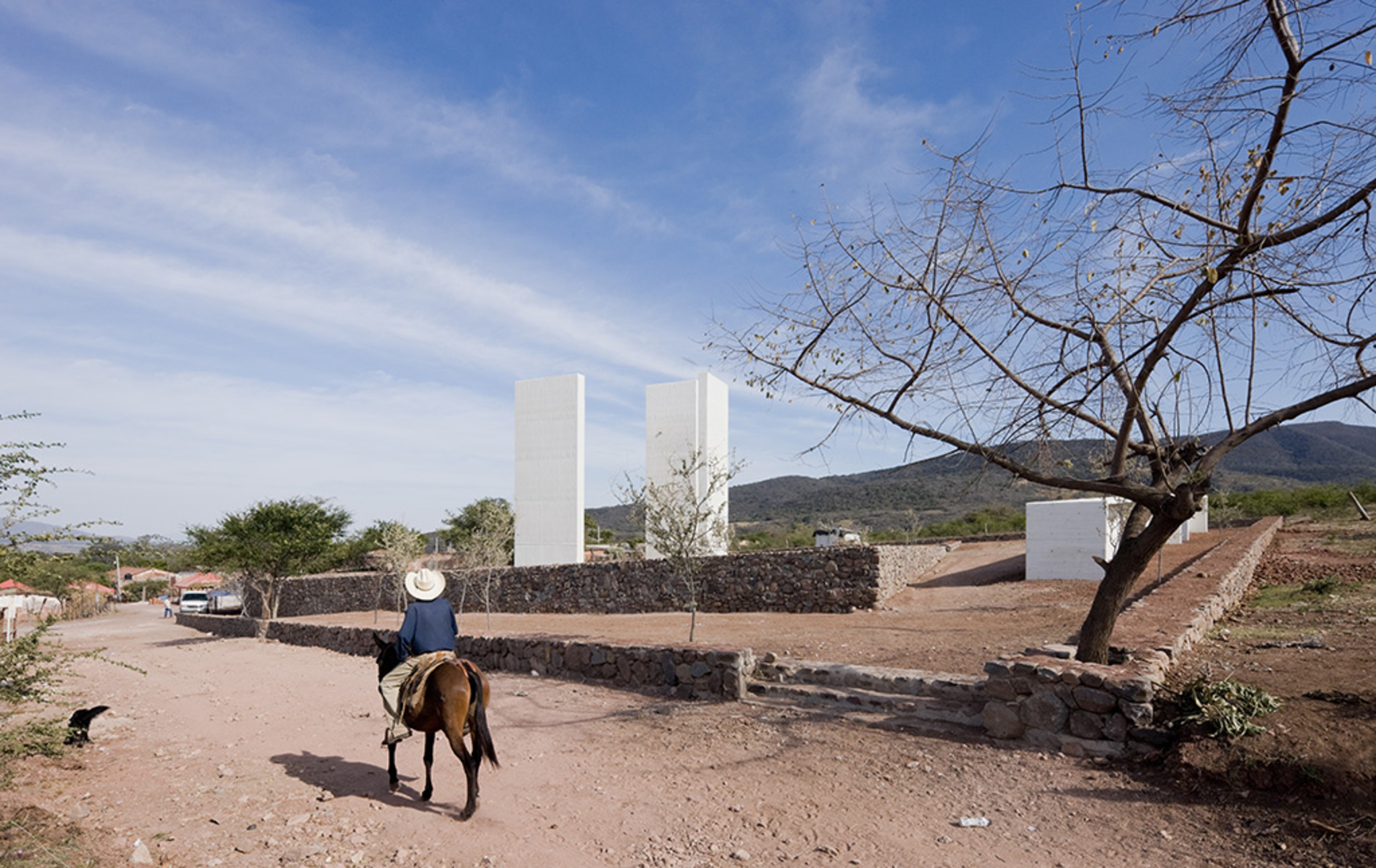
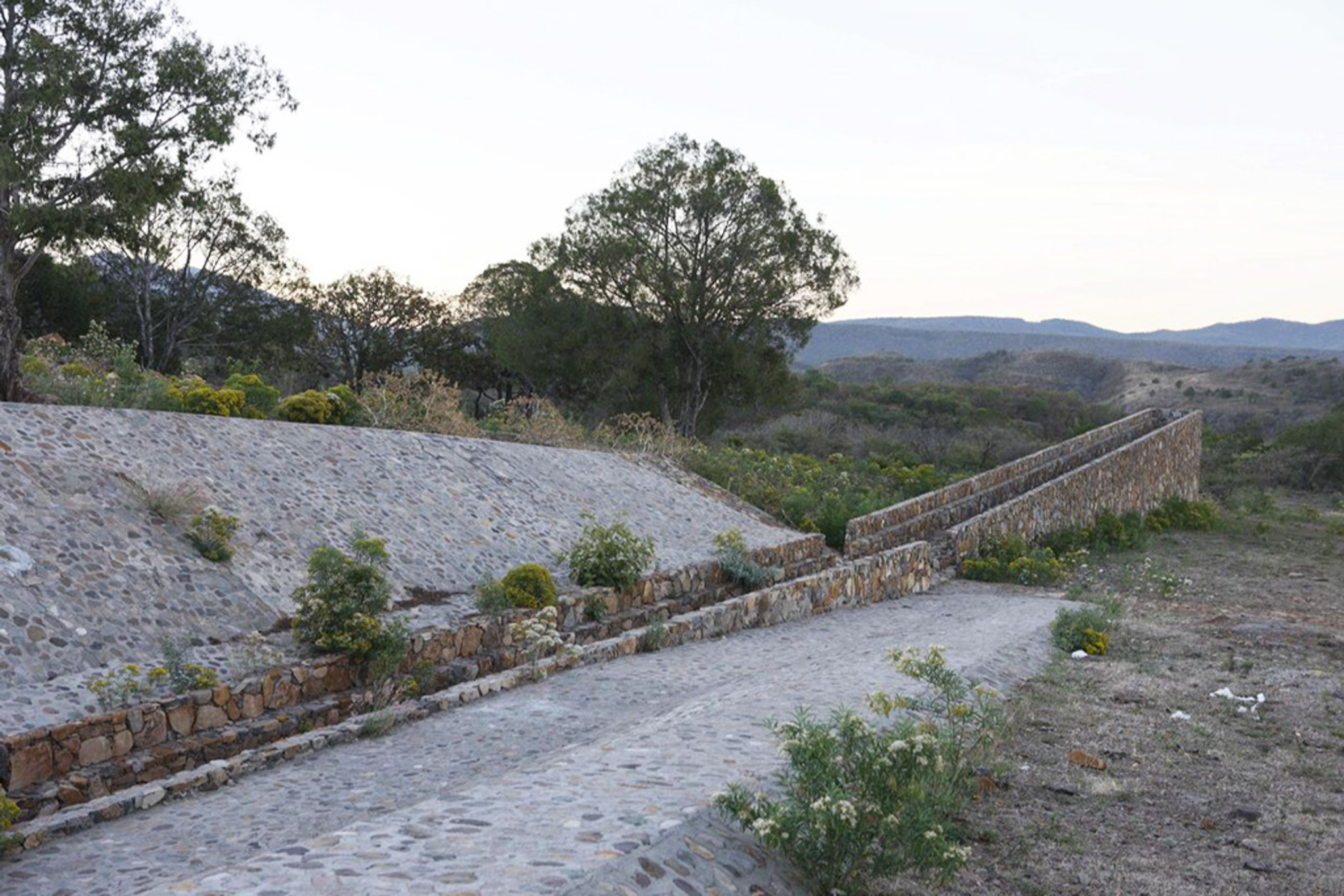
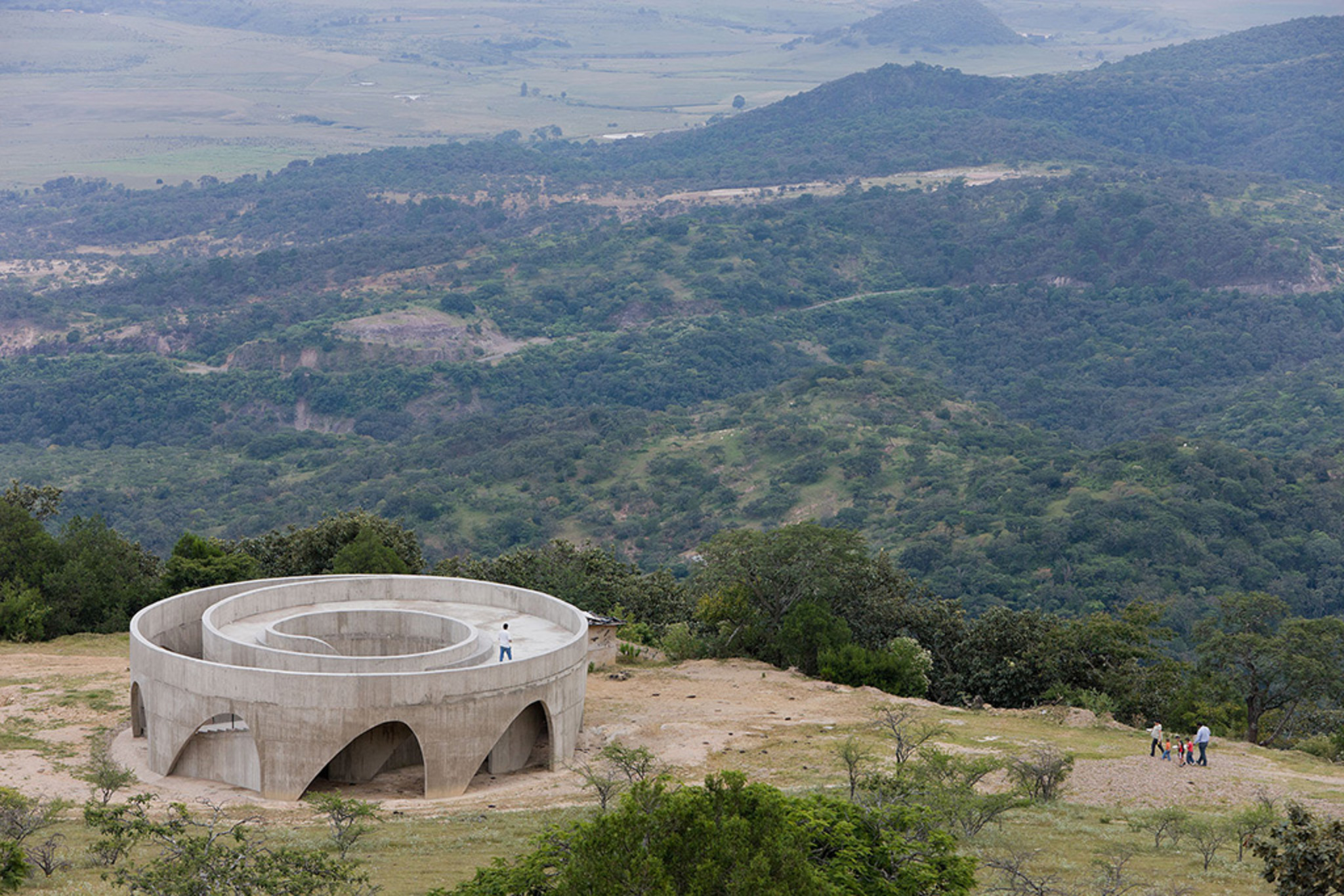
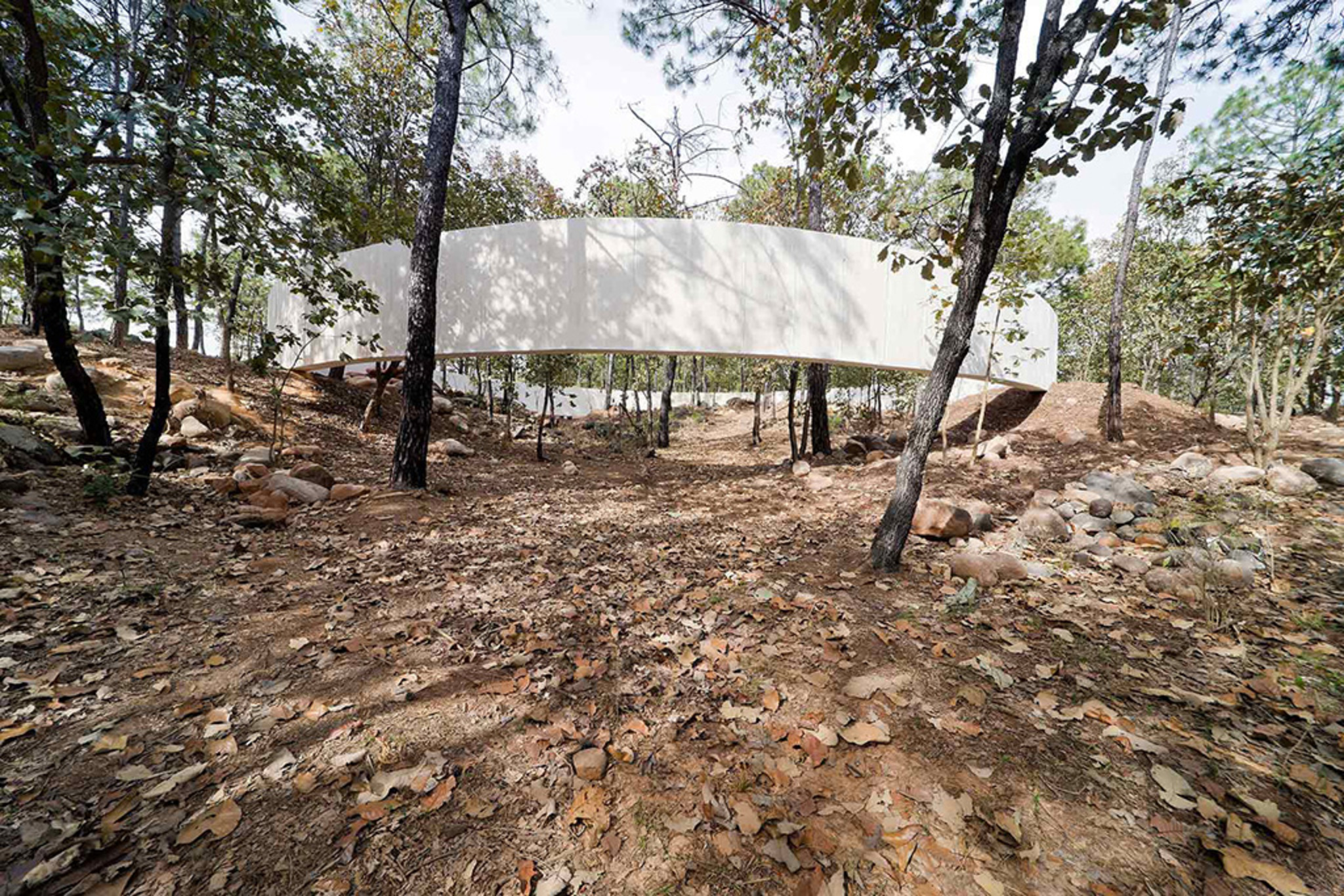
Along the historic Ruta del Peregrino in Jalisco, Tatiana Bilbao designed the Gratitude Open Chapel, an open-air religious pavilion built as part of a master plan to enhance a 117-kilometer pilgrimage trail in the mountains of Jalisco, Mexico. The chapel was completed around 2010 as one of several interventions along the route. It is located near the town of Ameca on Cerro del Obispo, overlooking the surrounding landscape. The structure functions as a religious and cultural pavilion for pilgrims, conceived as an open sanctuary exposed to the sky. Tatiana Bilbao, in collaboration with Derek Dellekamp, designed the chapel as four white cast-in-place concrete walls arranged in a cross-like configuration without a roof, forming an abstract outline of a church nave and altar. Pilgrims approach by a ramp leading to a wall designed for offerings and messages before entering the inner space. The design emphasizes the movement of sunlight between the walls, creating illuminated zones across the platform. The chapel uses white concrete as the primary material, with the open configuration allowing natural light, air, and landscape views to define the spatial experience. The project engages the religious tradition of the route through a site-specific design that integrates architecture, landscape, and ritual use.
03. Bioinnova Building, Culiacán
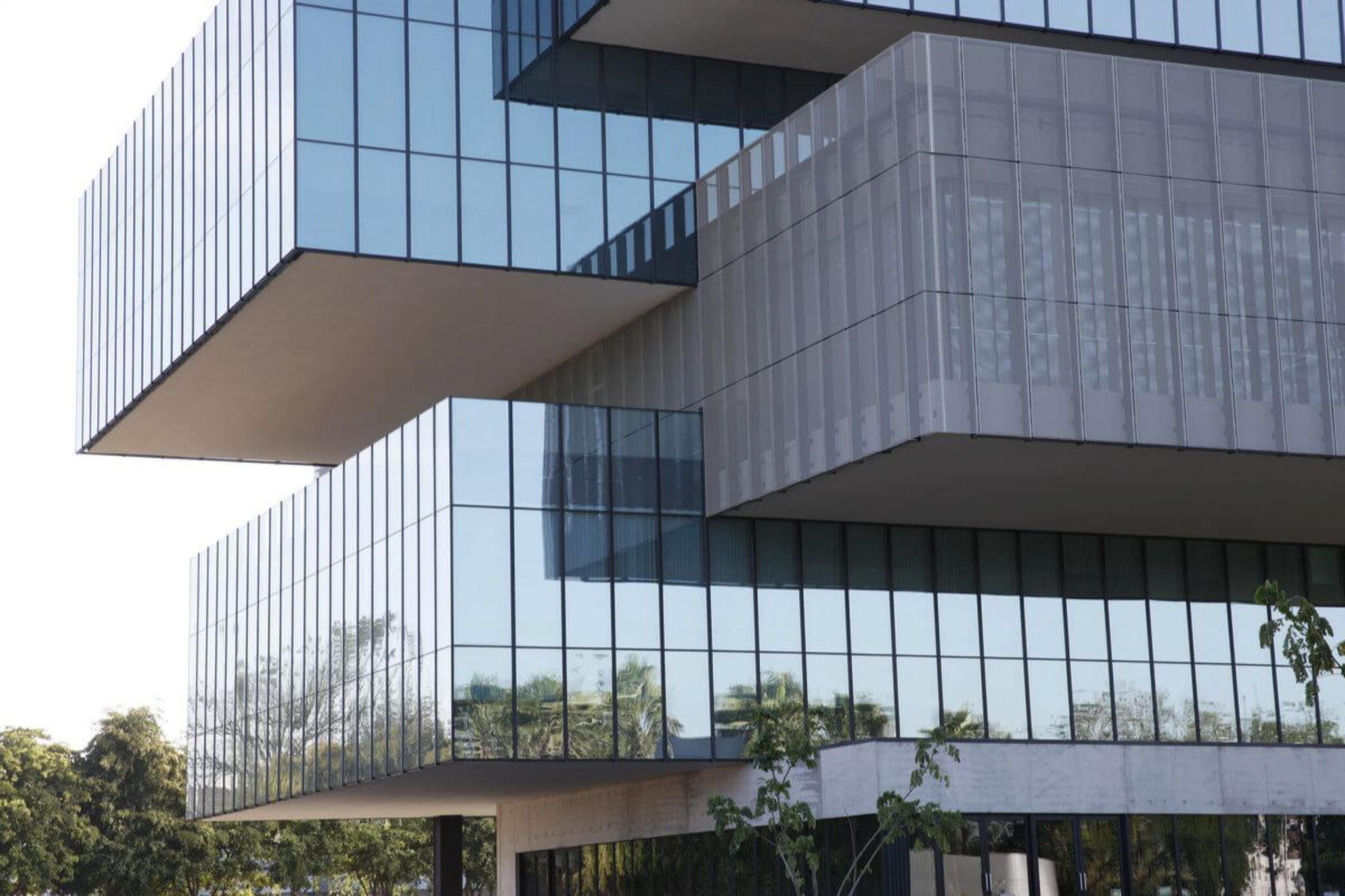
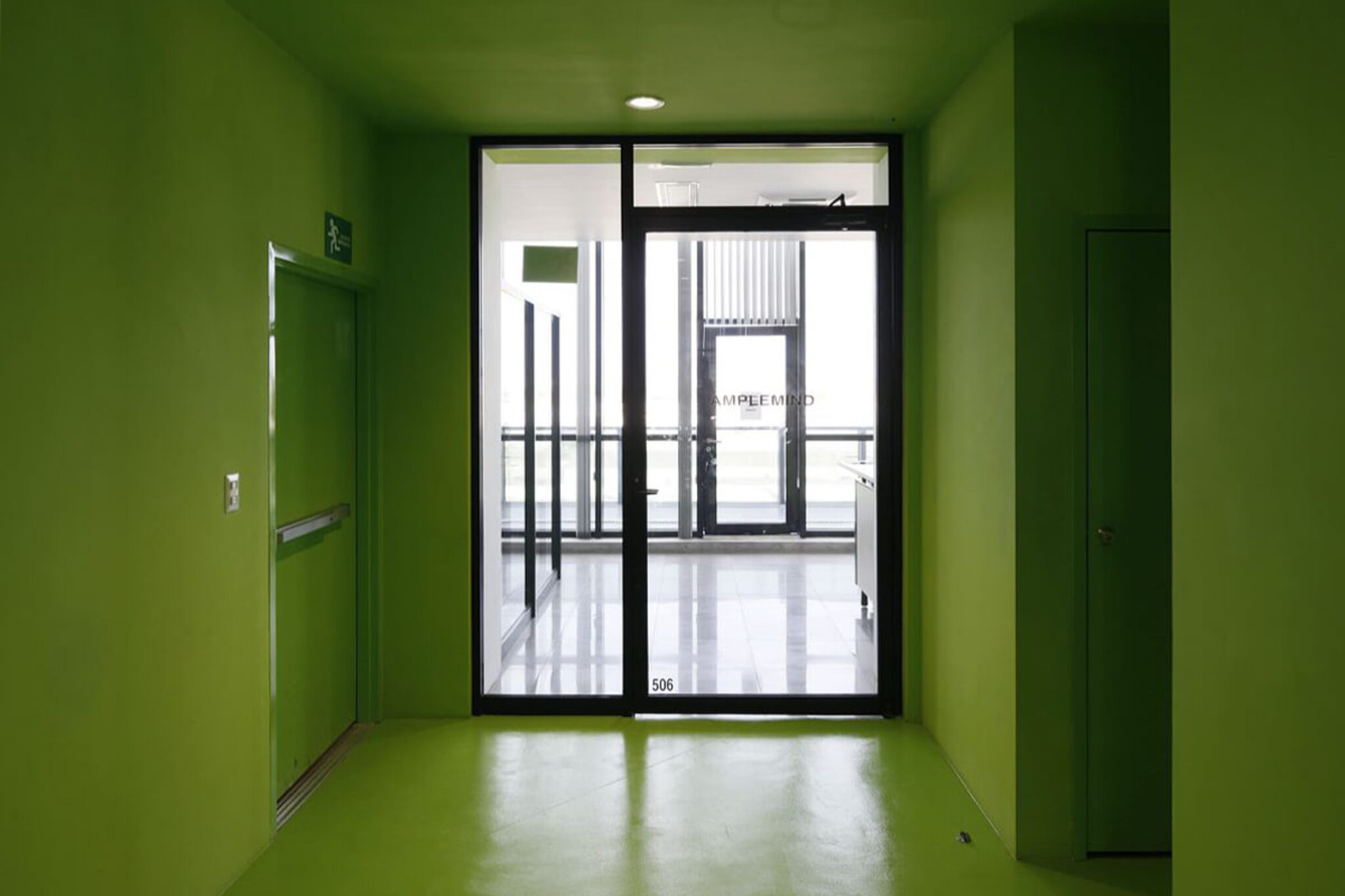
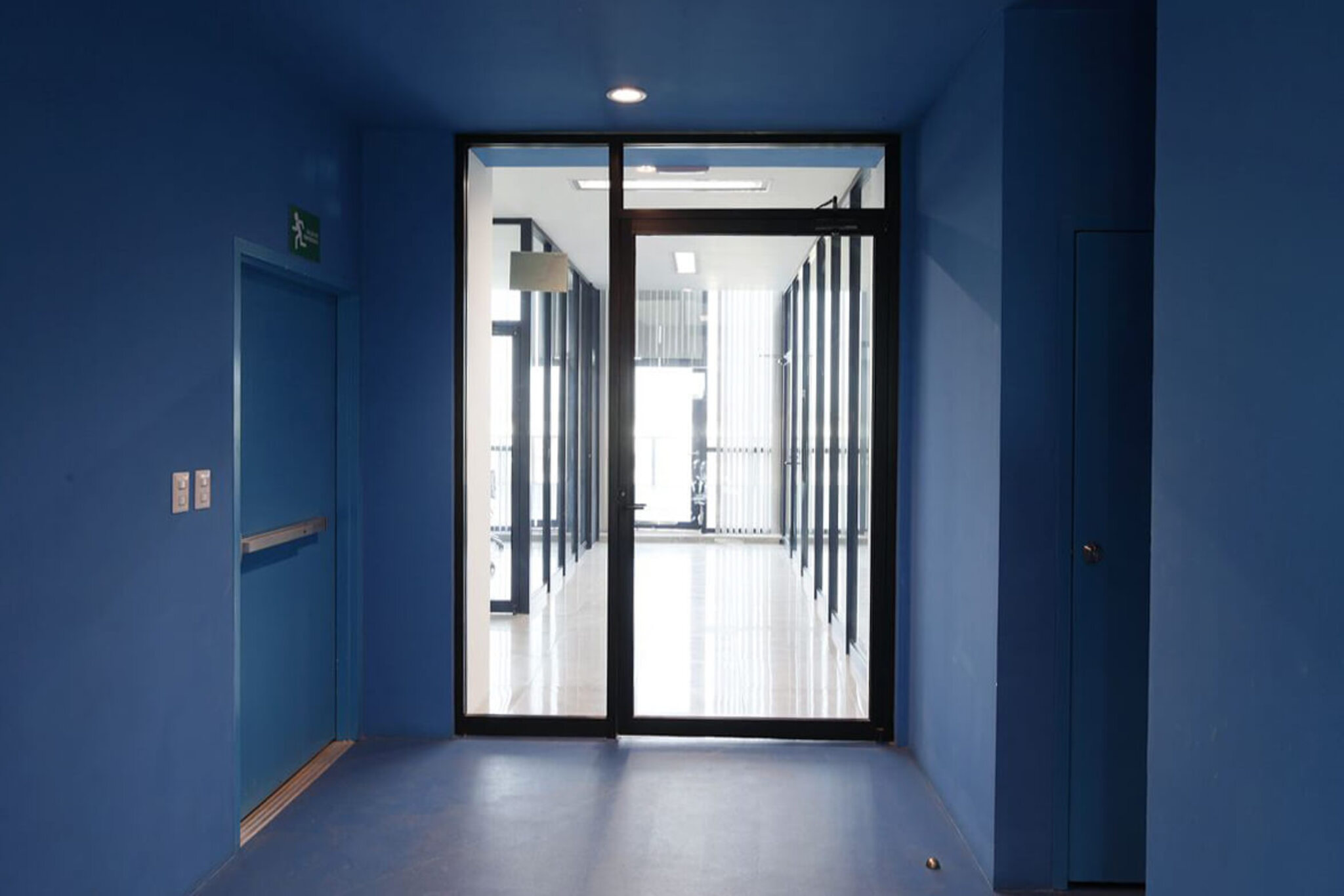
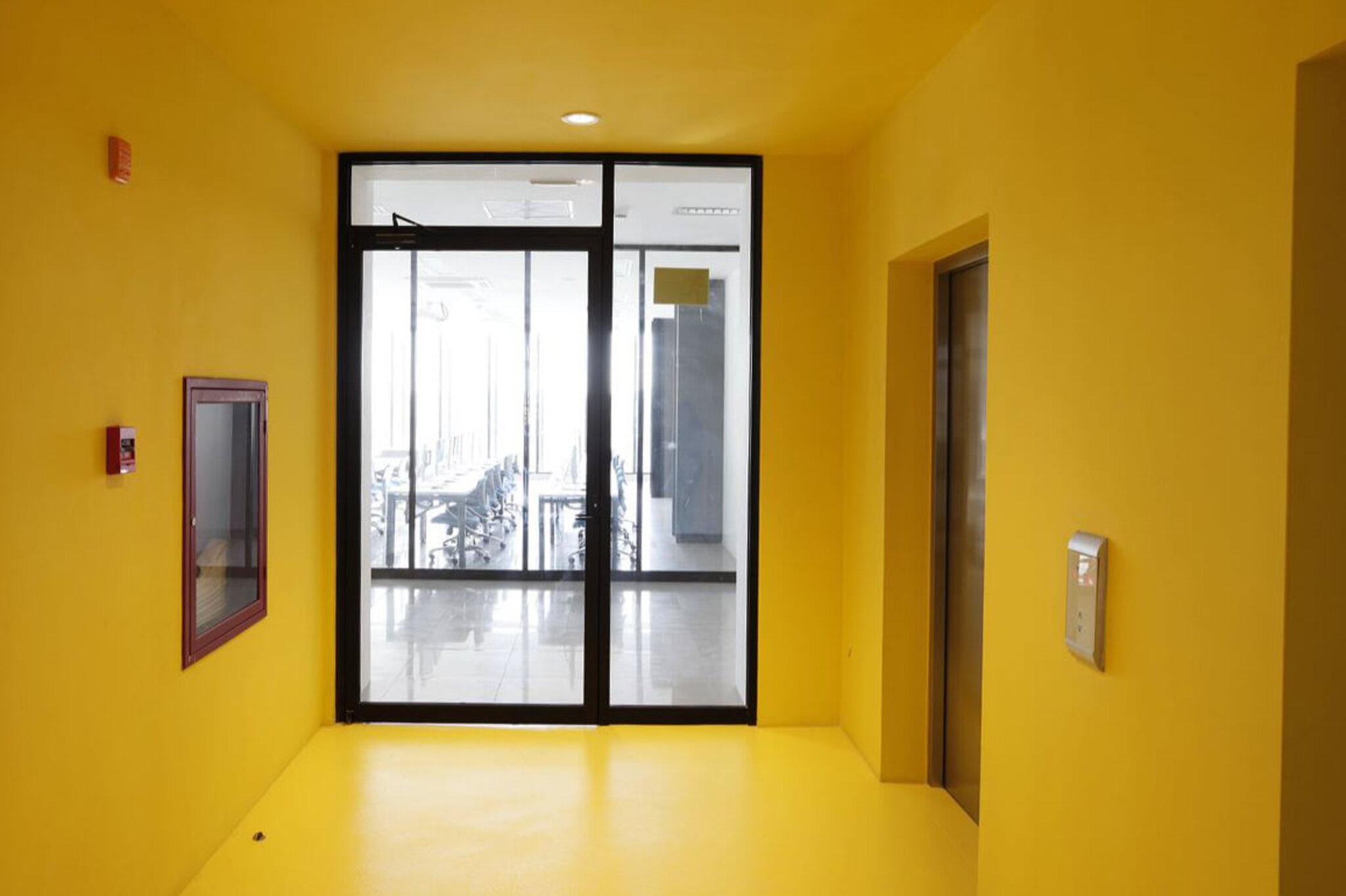
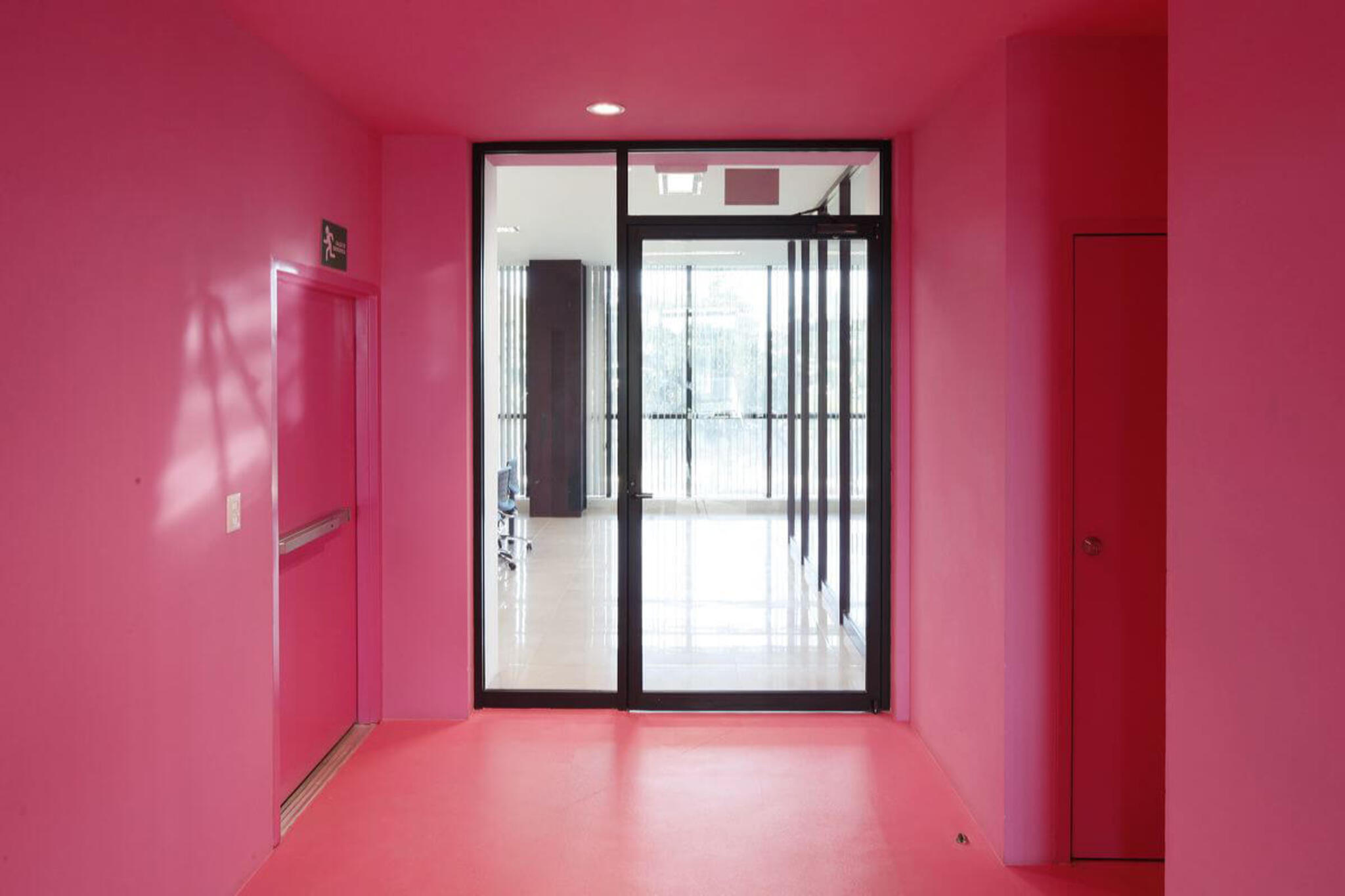
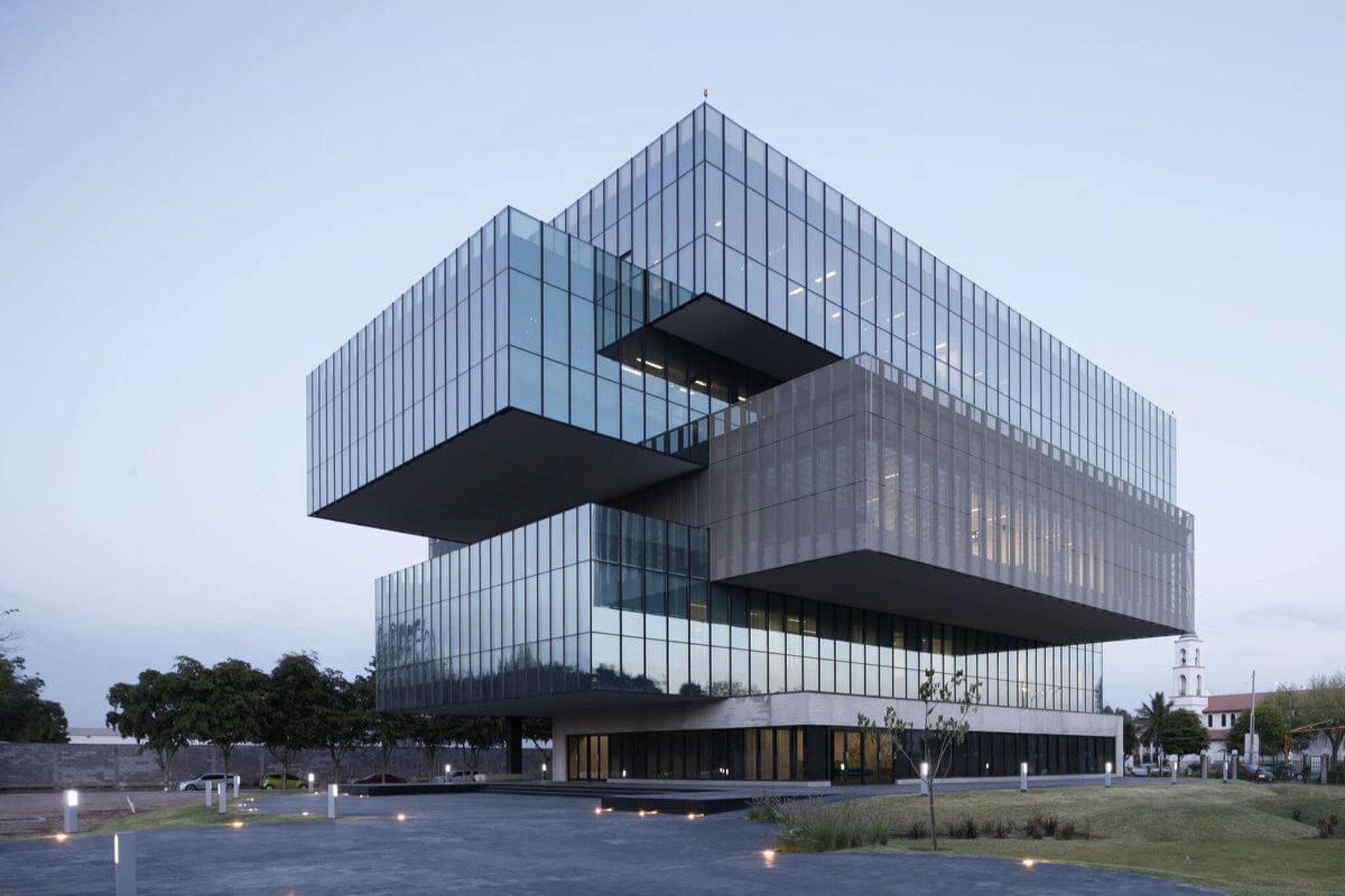
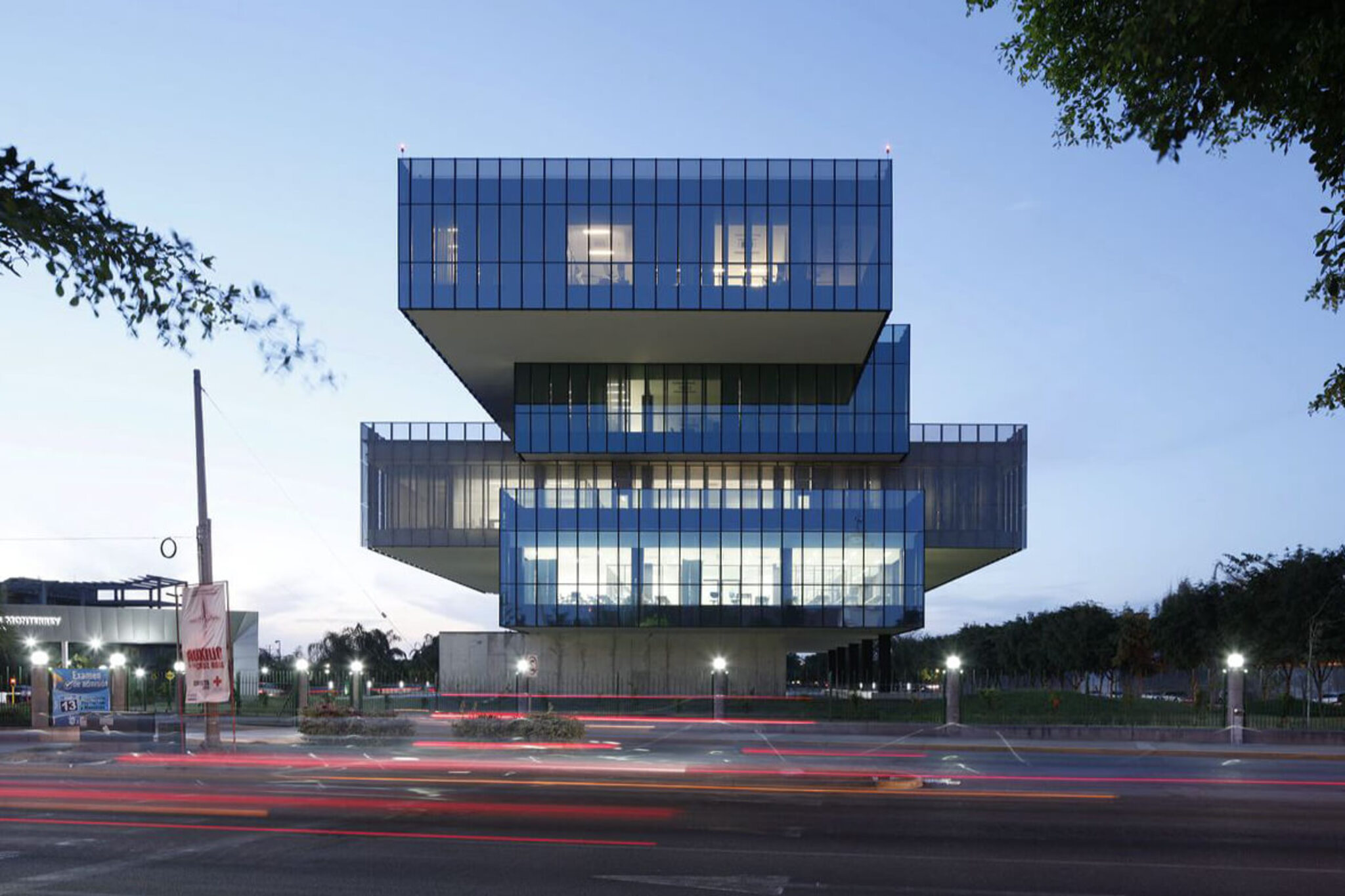
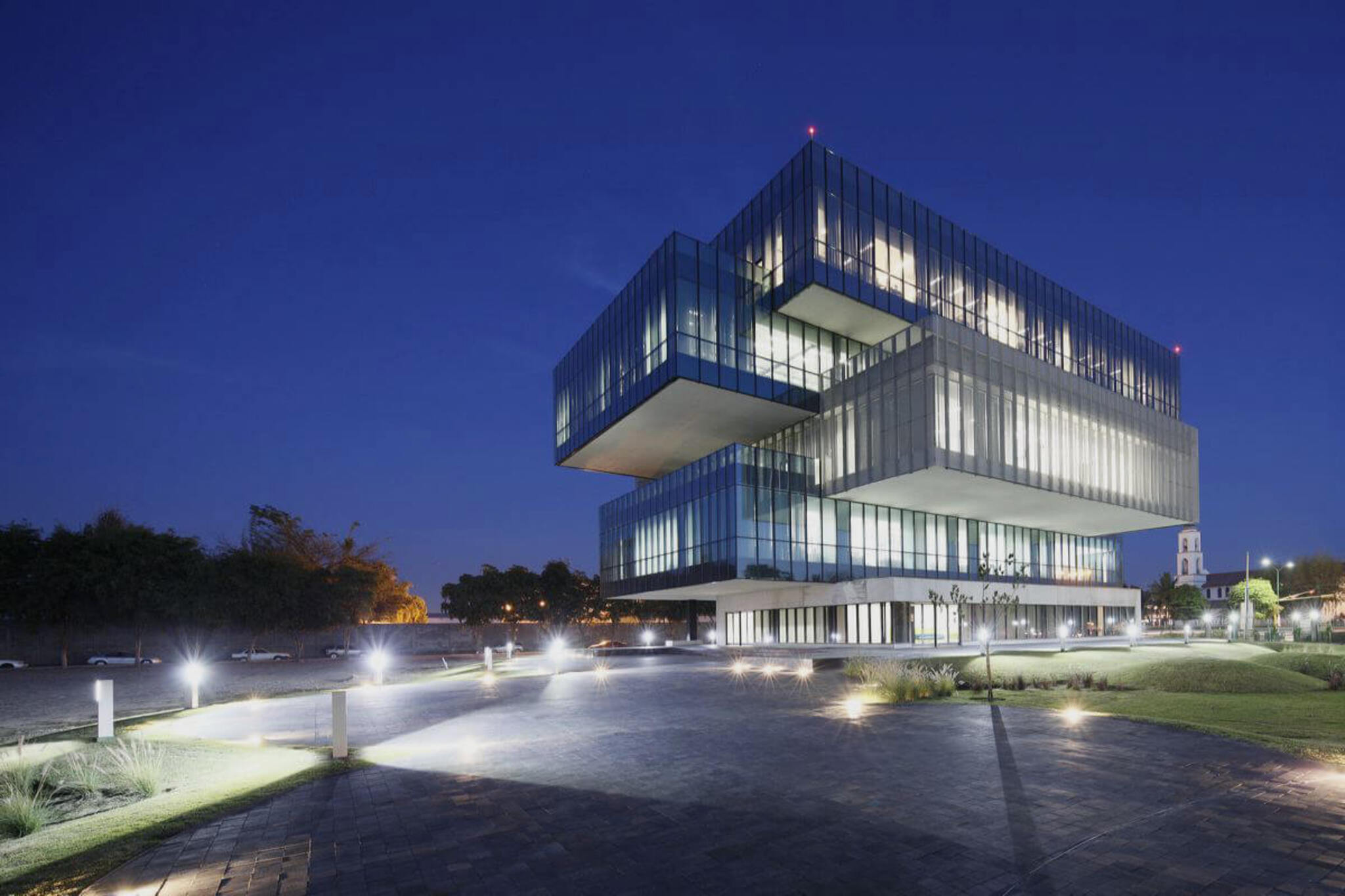
Bioinnova is a research and educational building designed by Tatiana Bilbao on the Monterrey Institute of Technology campus in Culiacán, Sinaloa. Completed in 2012, the building functions as a biotechnology research center with laboratories, offices, and academic facilities serving faculty and students. The structure consists of four rectangular floor plates that are stacked and staggered, with each level shifted horizontally to create cantilevered overhangs and terraces. One floor is rotated 90 degrees, breaking the alignment of the volumes and producing a configuration influenced by branching patterns. The layout is organized around a central reinforced concrete core that contains circulation and service elements. The building uses reinforced concrete for its structural system and glass curtain walls for the exterior, with each floor incorporating tinted glass and interior walls finished in distinct colors. One level is enclosed with a steel mesh screen that provides shading and distinguishes the rotated floor. The combination of concrete, glass, and metal mesh forms a climate-responsive envelope suited to the region’s heat. The project applies staggered volumes and shaded terraces to improve environmental performance and create outdoor circulation areas. Bioinnova demonstrates Tatiana Bilbao’s interest in geometric variation and climate-appropriate design through a building that supports research activity and campus life.


04. Low-Cost Housing Prototype, Mexico
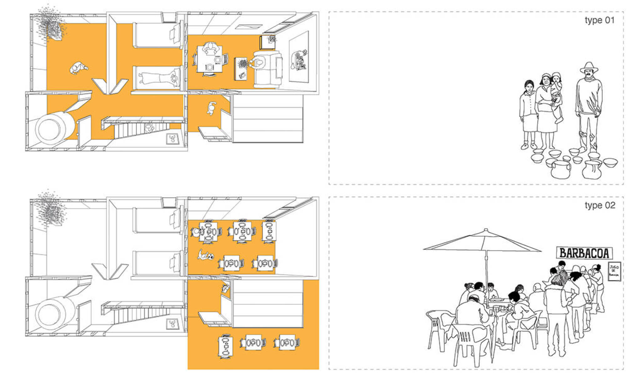
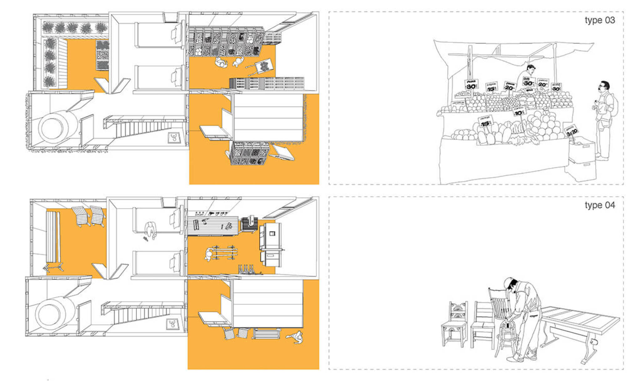
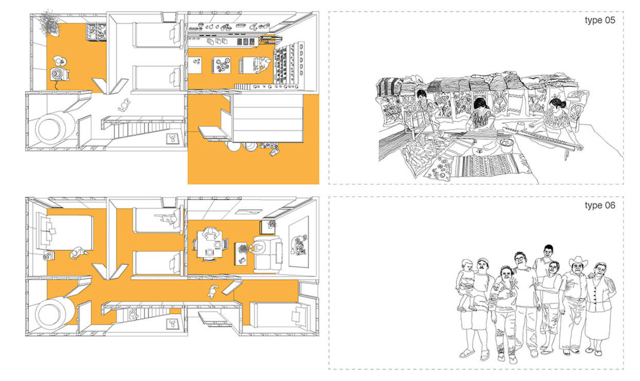
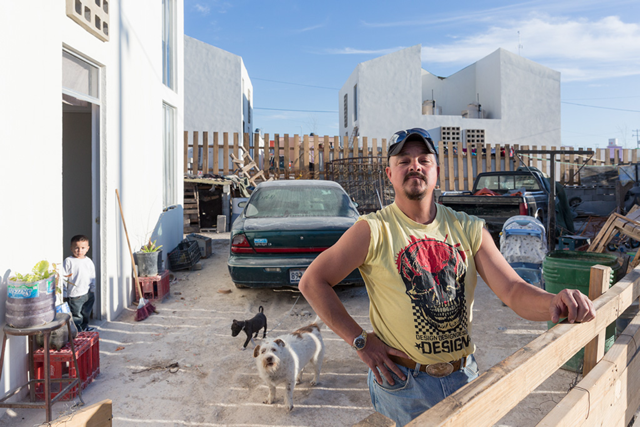
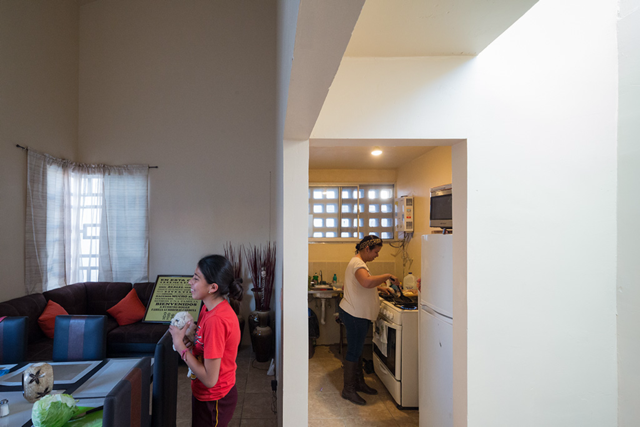
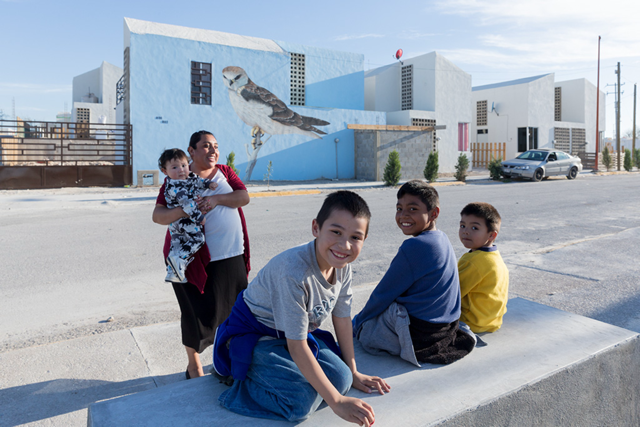
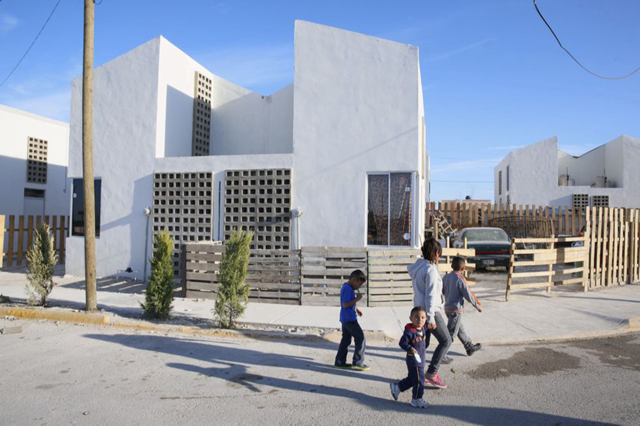
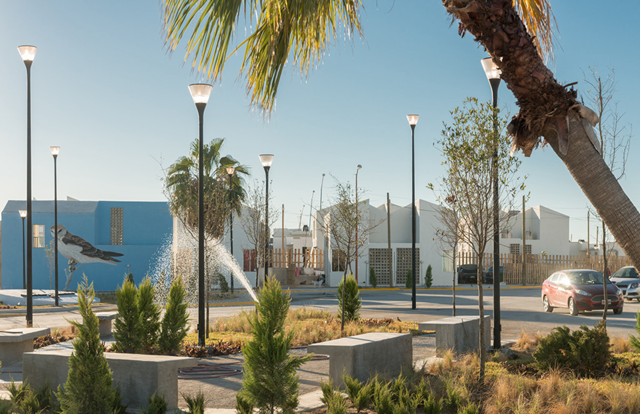
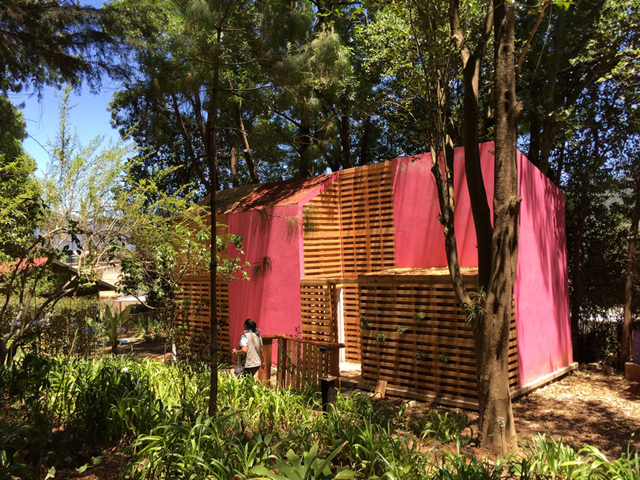
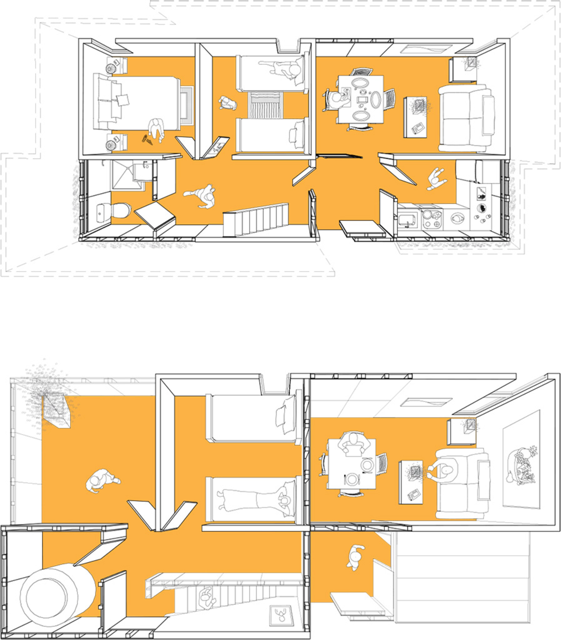
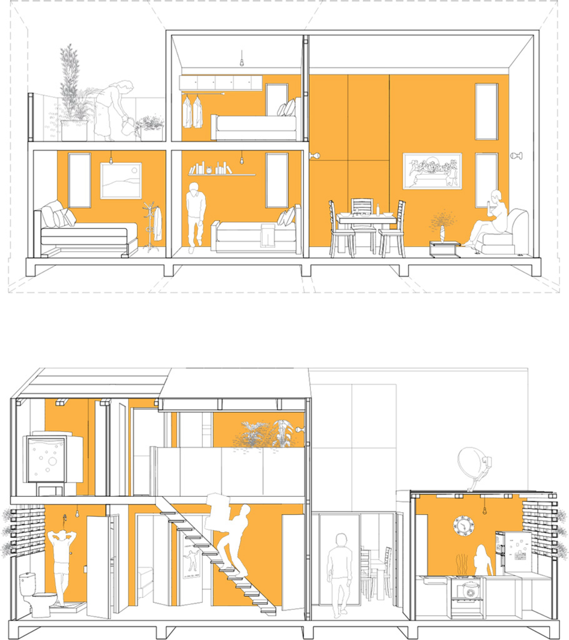
Tatiana Bilbao’s low-cost housing prototype is a social housing model developed to provide an adaptable single-family dwelling that can be constructed at low cost and expanded over time. The design was unveiled in 2015 at the Chicago Architecture Biennial and later implemented in Mexico, particularly in rural and peri-urban areas where incremental housing is needed. The prototype was conceived for large-scale replication as part of programs addressing national housing shortages. The base unit measures about 62 square meters and uses a rectangular layout containing essential living spaces such as a kitchen, bathroom, living area, and bedrooms. The layout allows expansion through additional modules as families gain resources, enabling the house to double in size over time. Variations accommodate different climates by adjusting elements such as roof pitch and ventilation. The prototype relies on cost-effective local materials, including concrete blocks or bricks, concrete slab or metal-sheet roofing, and standard fittings, supporting local labor and reducing cost. Facade finishes vary from raw blockwork to stucco, depending on budget and site conditions. The project applies modular design and incremental construction strategies to address housing demand in low-income communities and demonstrates a climate-appropriate, adaptable approach to housing provision.
©Tatiana Bilbao Estudios
©Tatiana Bilbao Estudios
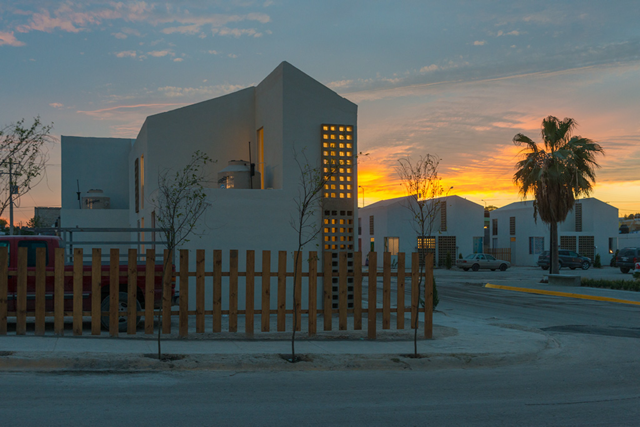
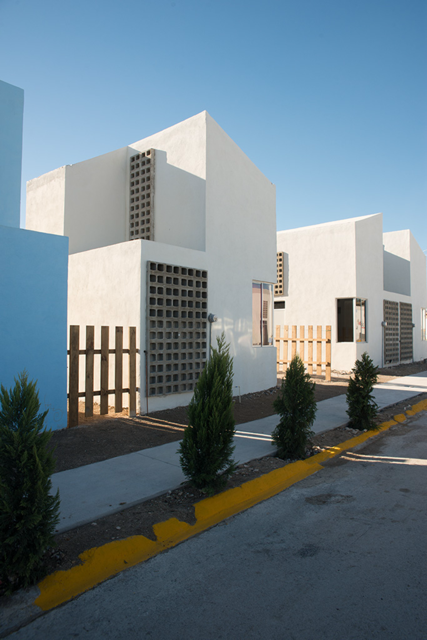

©Tatiana Bilbao Estudios
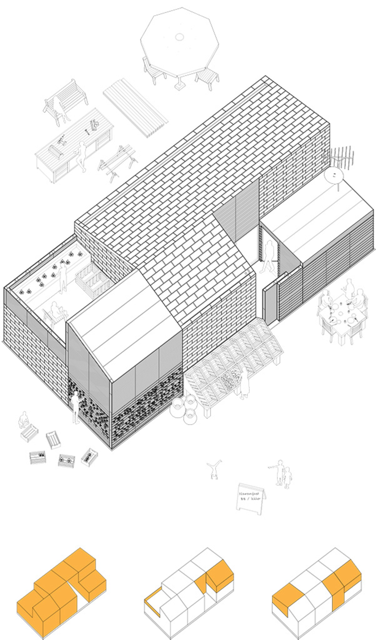
©Tatiana Bilbao Estudios
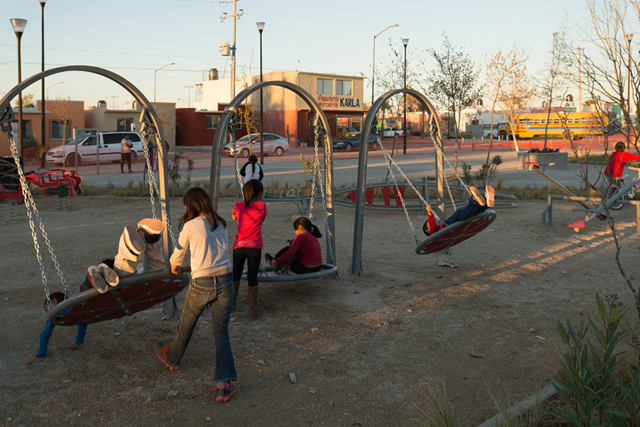
©Tatiana Bilbao Estudios
©Tatiana Bilbao Estudios
©Tatiana Bilbao Estudios
05. Los Terrenos House, Monterrey
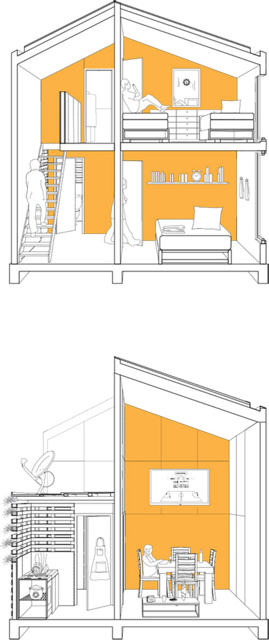
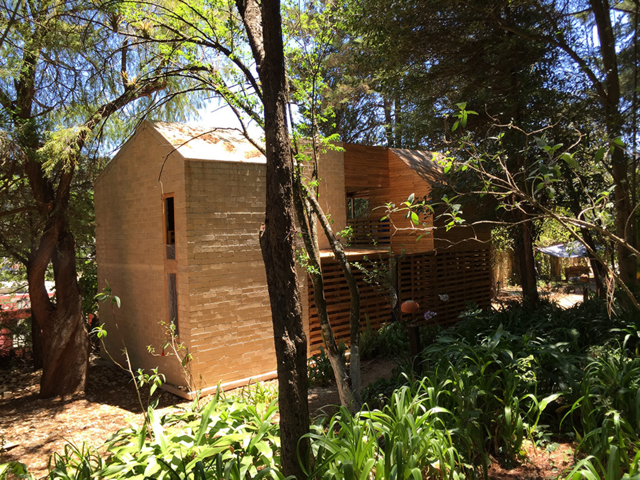
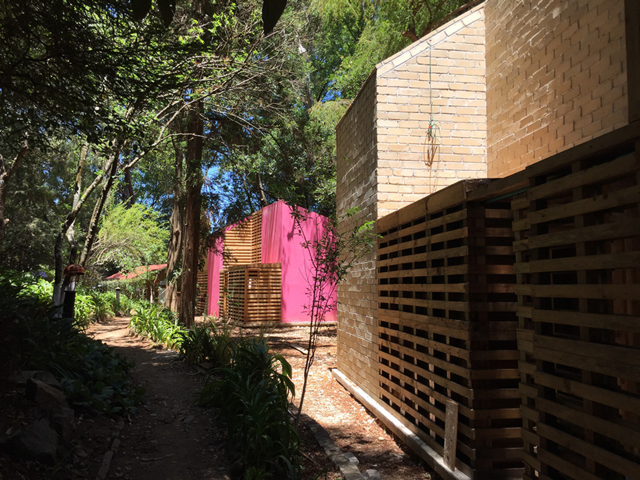
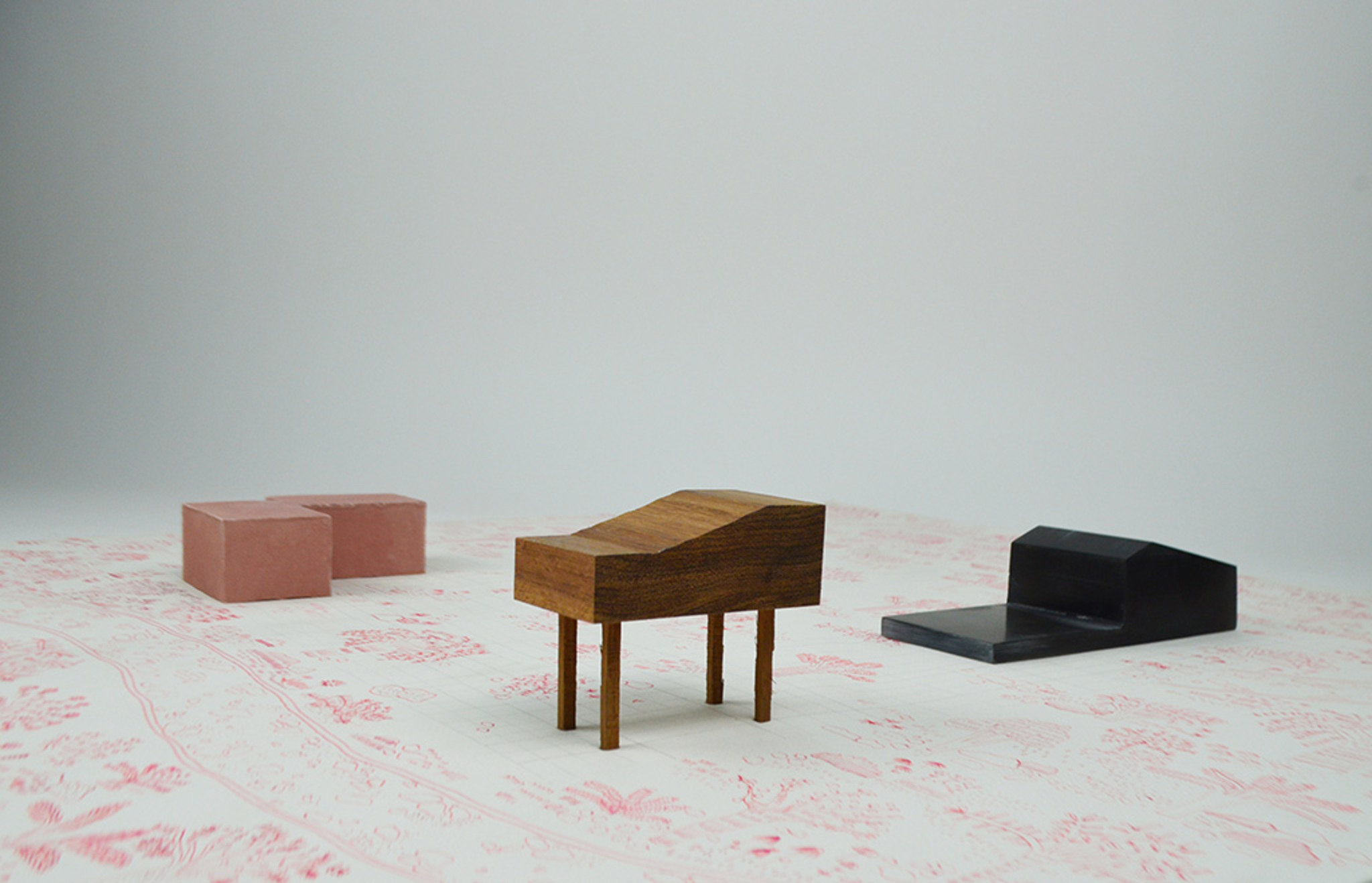
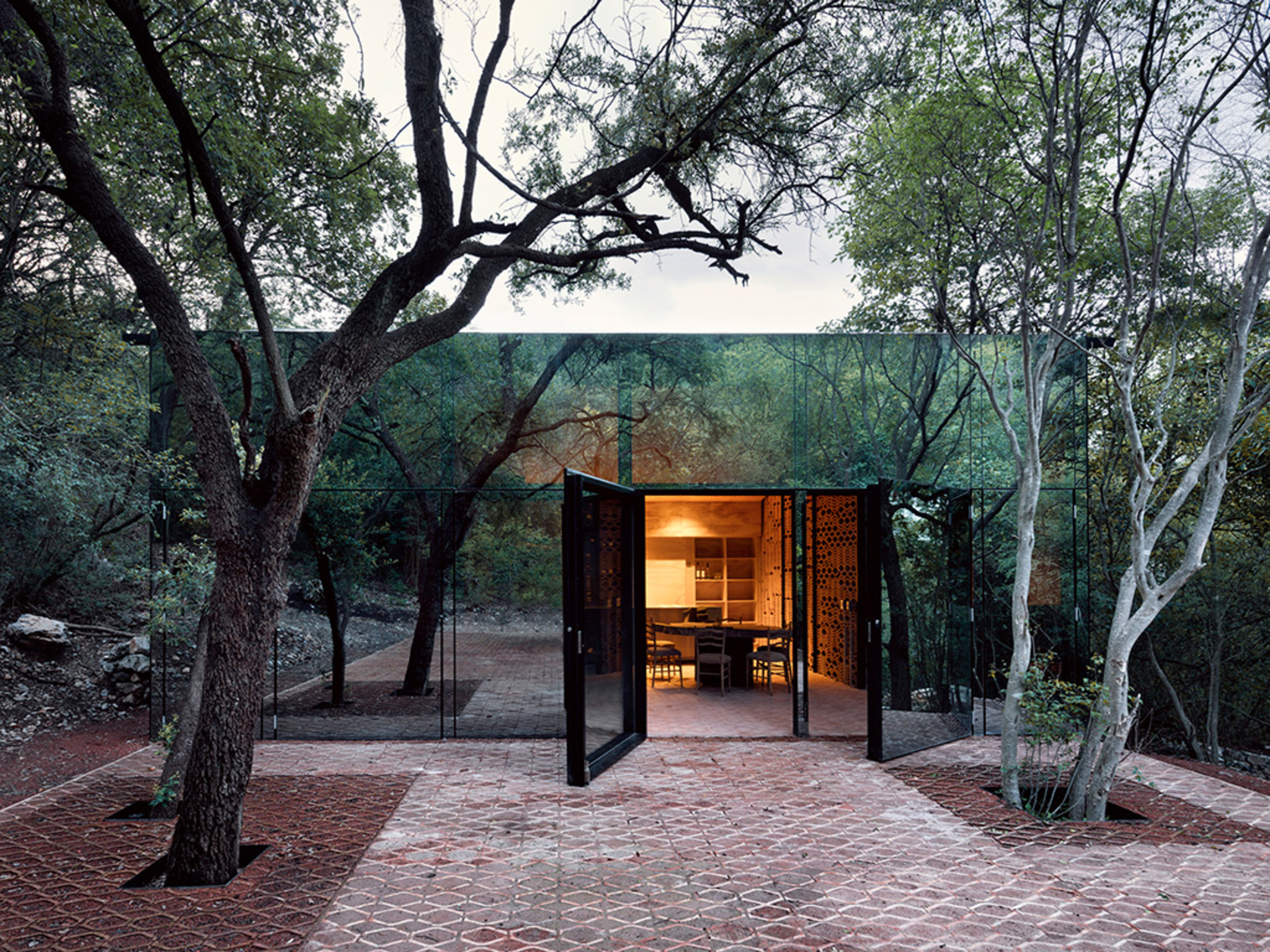
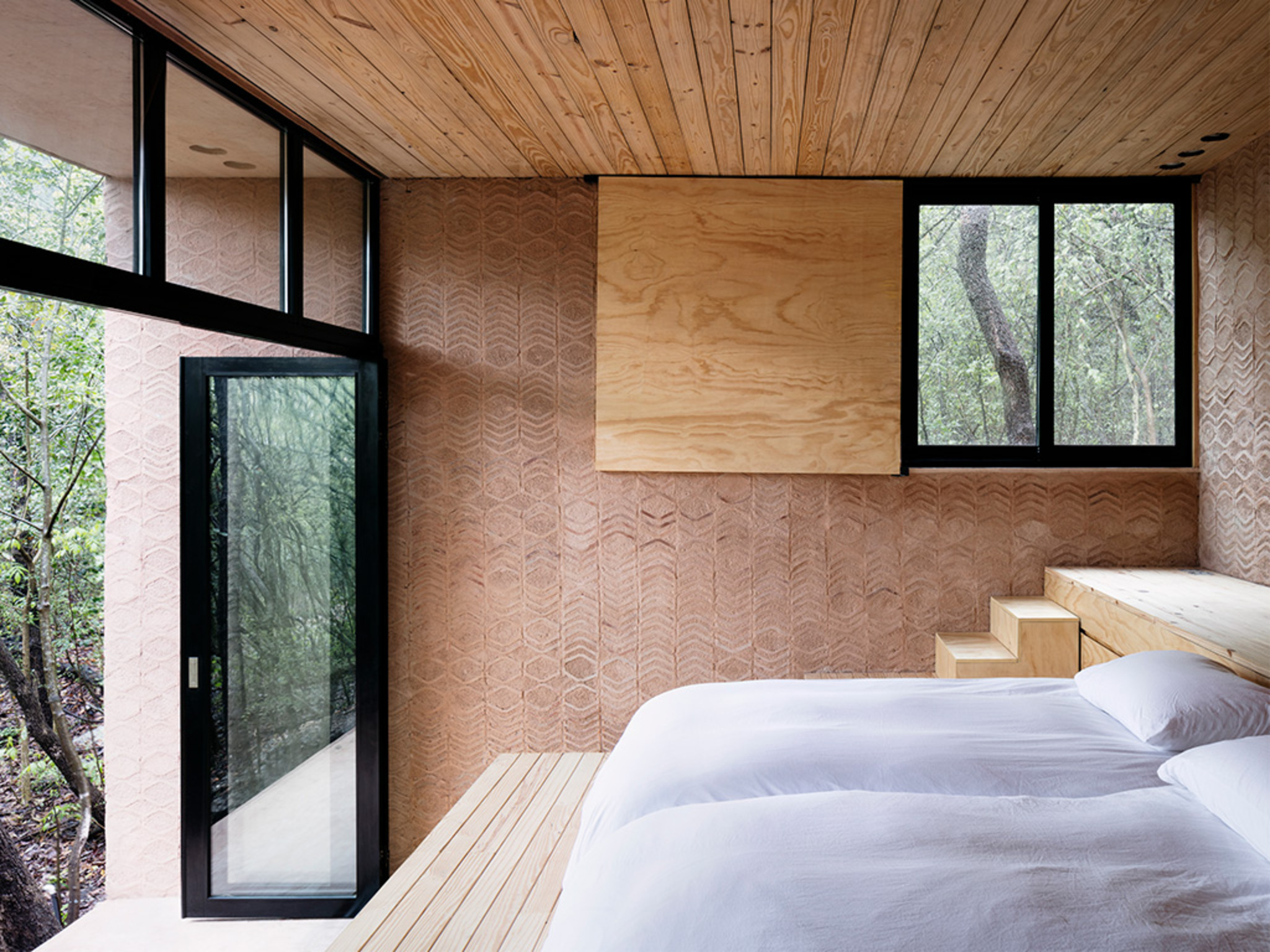
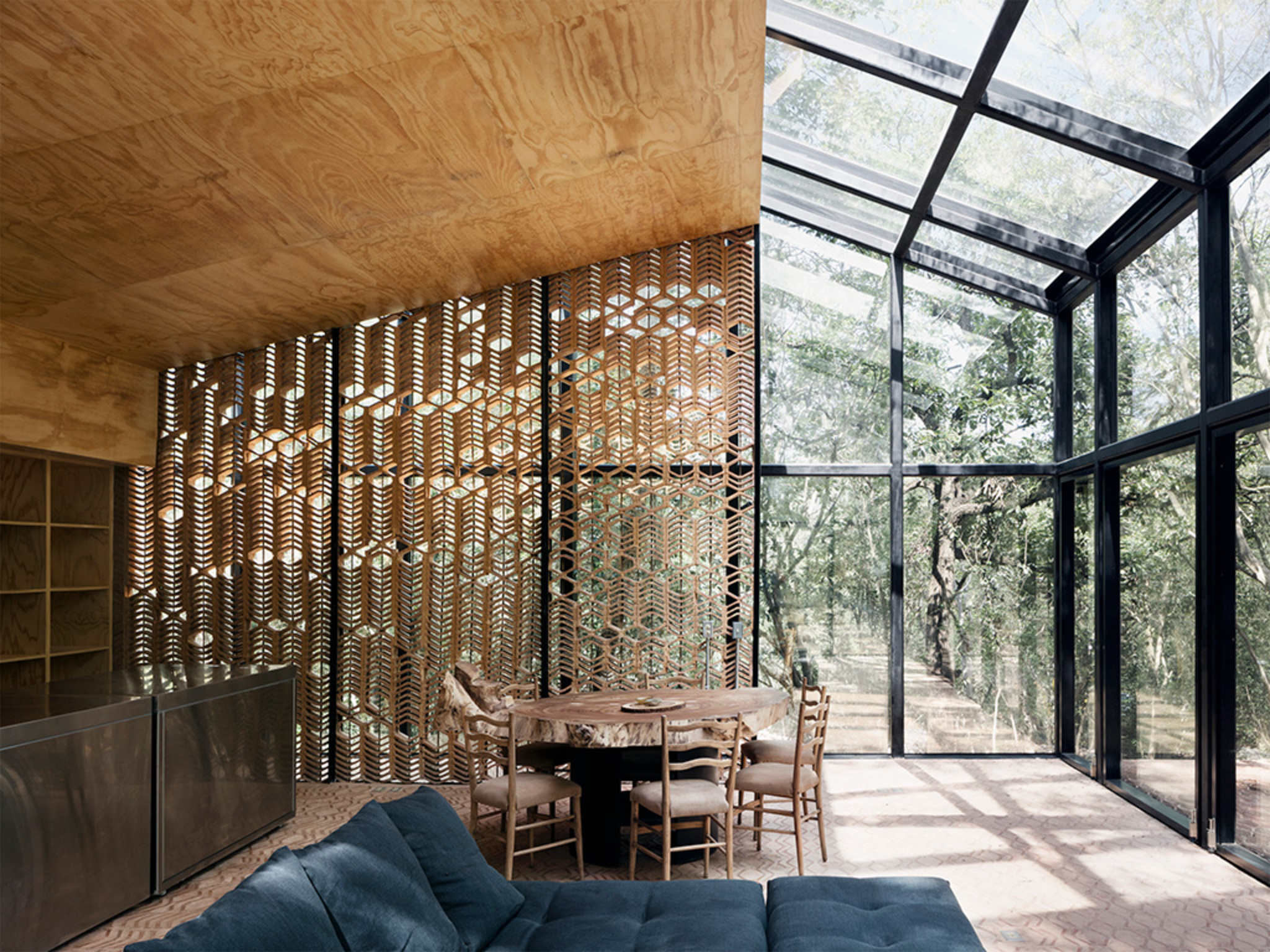
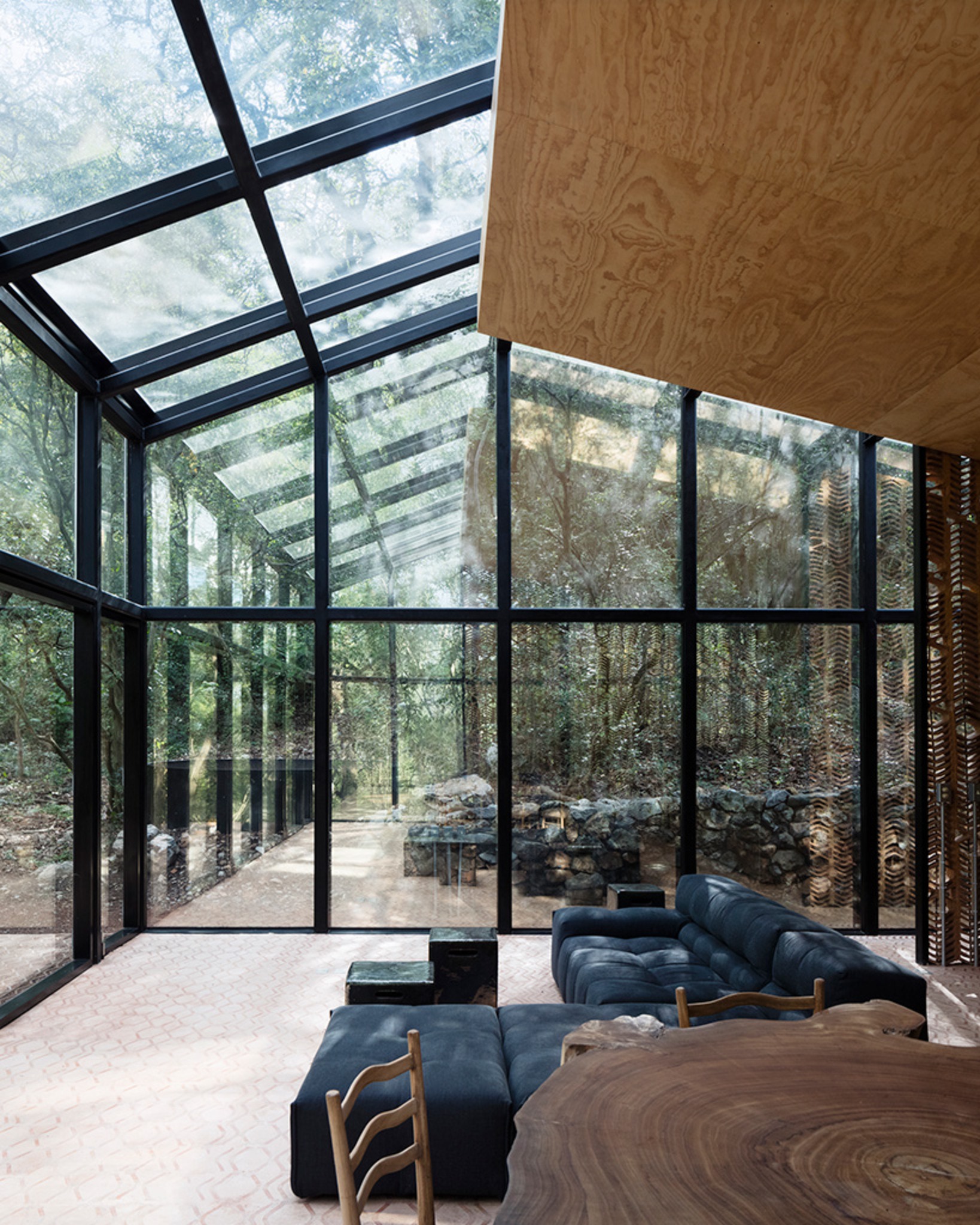
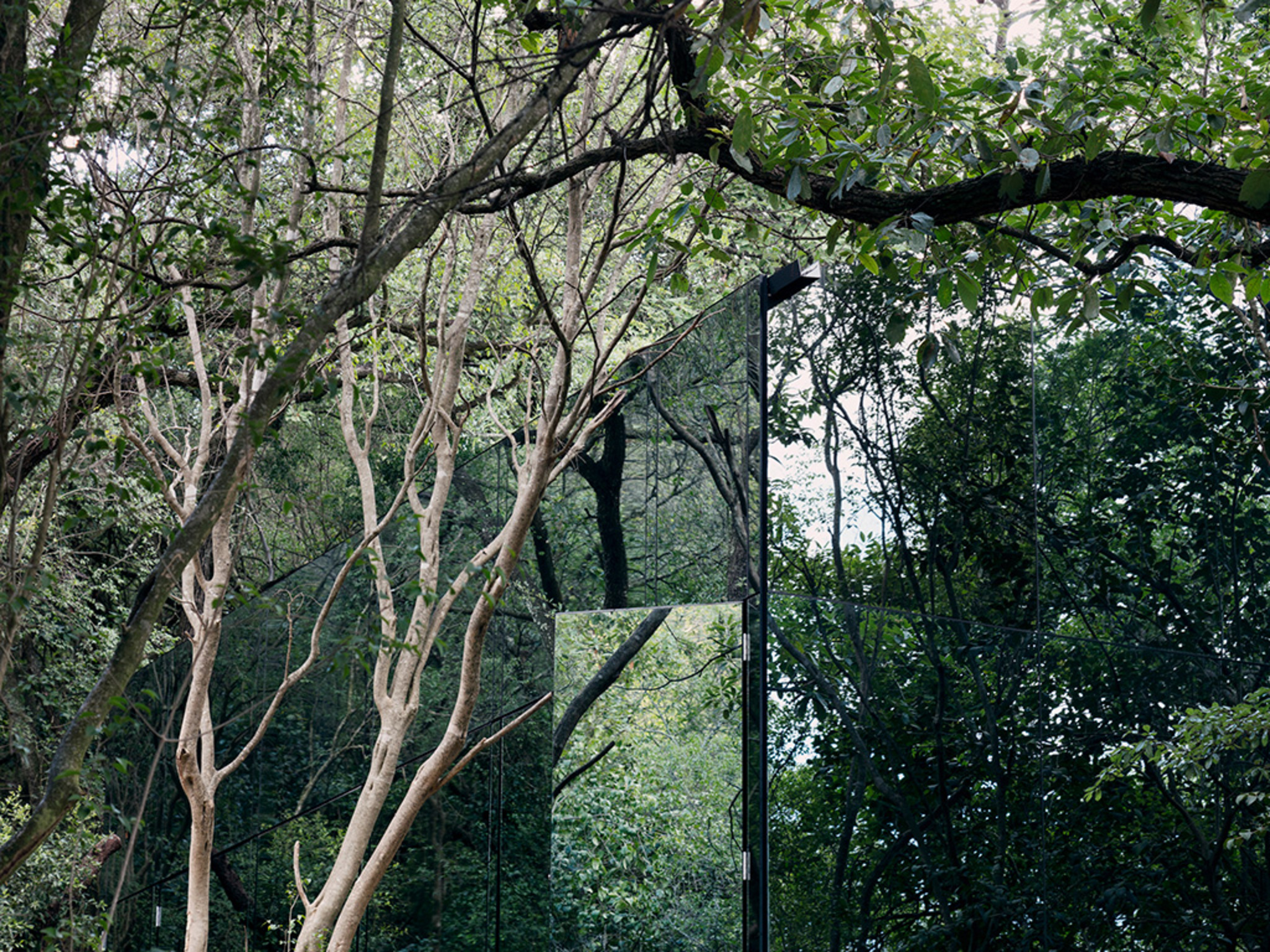
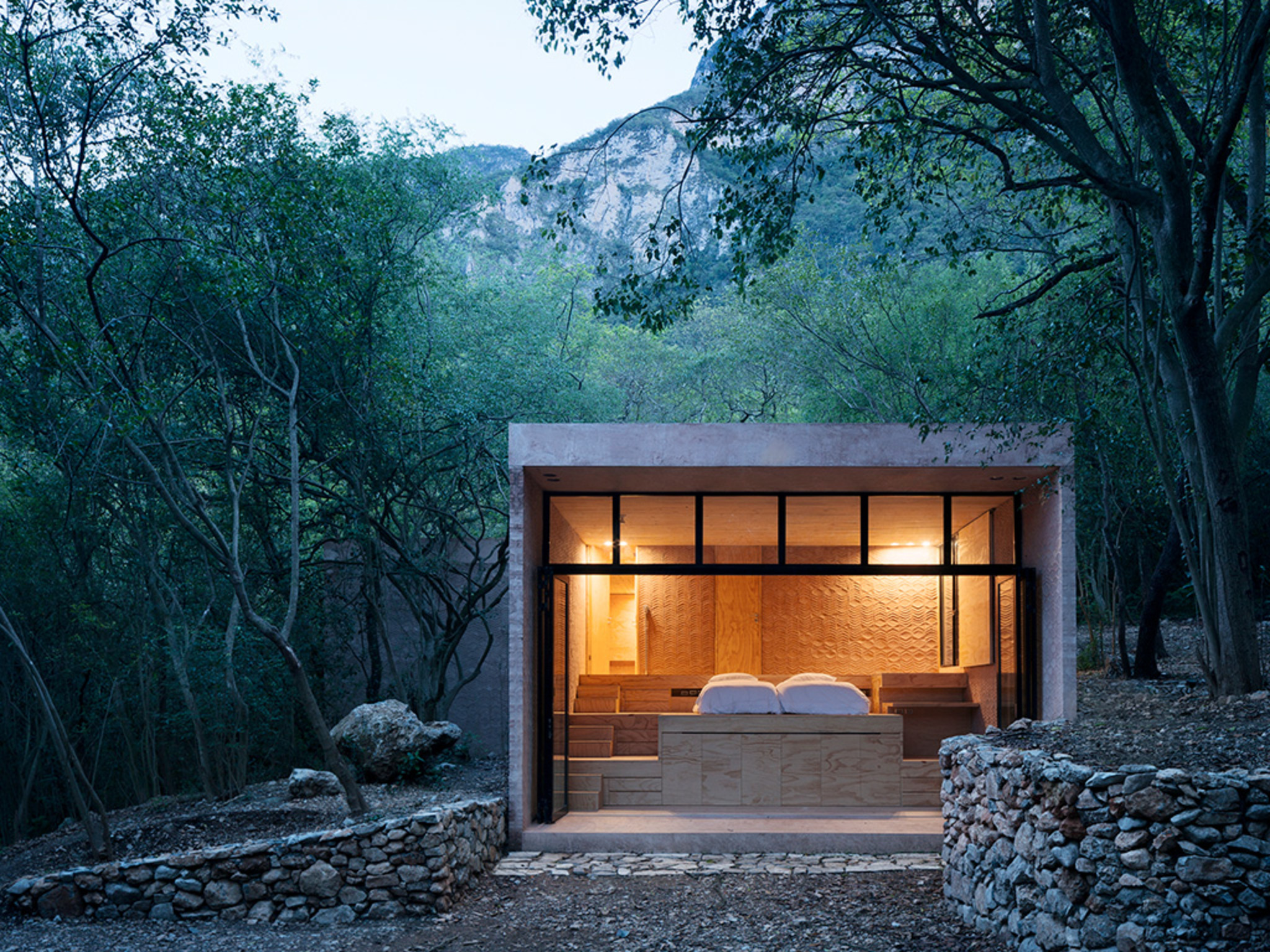
Los Terrenos is a private residence designed by Tatiana Bilbao and completed in 2016 on a wooded hillside in the suburbs of Monterrey, northern Mexico. The project functions as a weekend house composed of two pavilions arranged diagonally around a curved outdoor pool. The larger pavilion contains living, dining, kitchen, and common spaces within a rectangular volume capped by an asymmetrical roof, while the smaller L-shaped pavilion houses two bedrooms and bathrooms. The configuration creates a courtyard-like relationship between interior and exterior spaces. The larger pavilion incorporates mirrored glass cladding that reflects the surrounding forest, with transparent interior views toward the landscape. The opposite facade uses a terracotta brick lattice that forms a perforated screen providing ventilation and filtered daylight. The smaller pavilion is constructed from rammed earth and clay brick, giving it a solid enclosure suited to the site’s topography. The project uses glass, earth, brick, wood, and concrete, with plywood applied to interior surfaces and cabinetry. The design applies material contrast, fragmented volumes, and open boundaries to integrate the residence with the forested site and provide outdoor living areas adjacent to the interior rooms.

How did Tatiana Bilbao contribute to architecture?
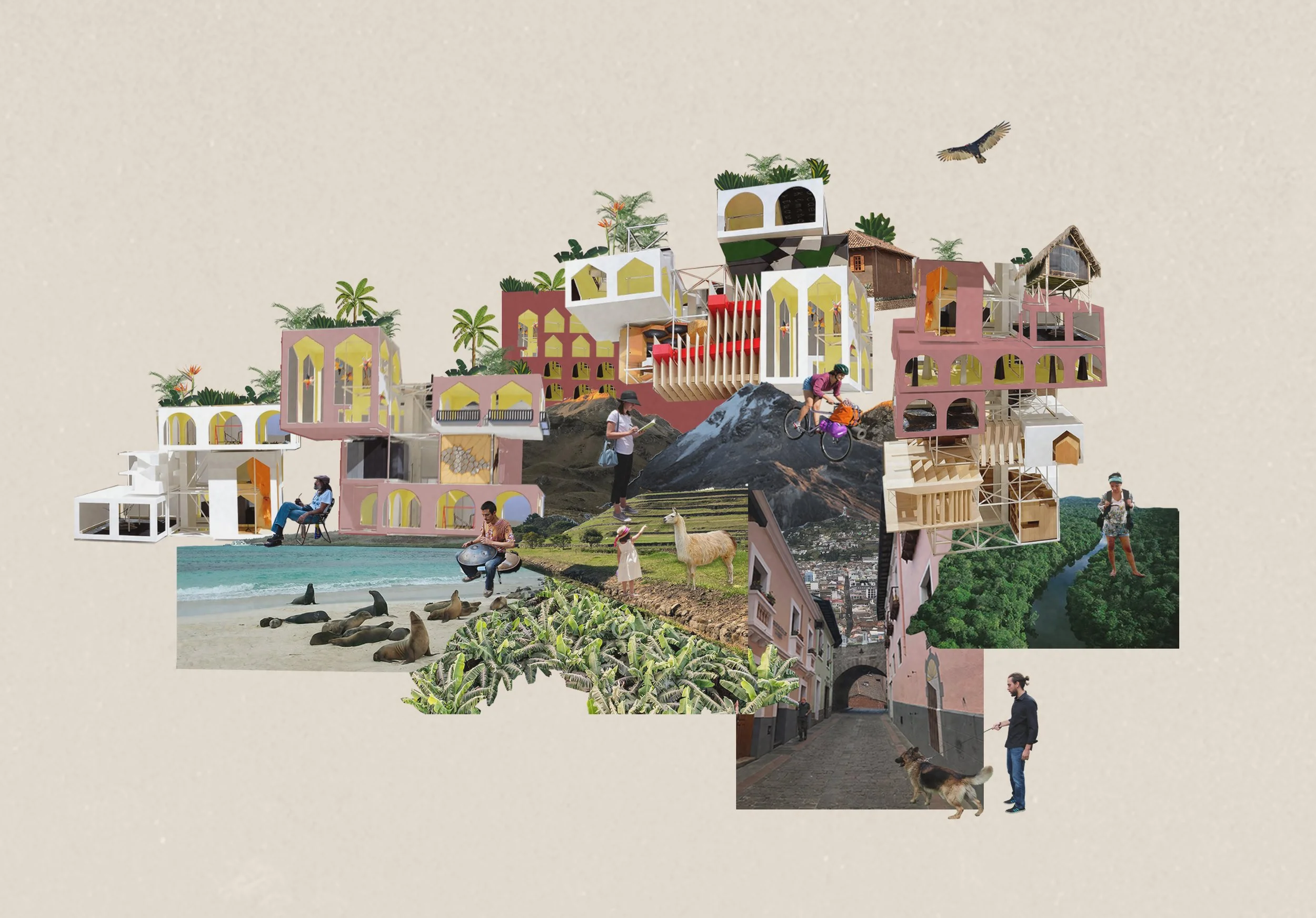
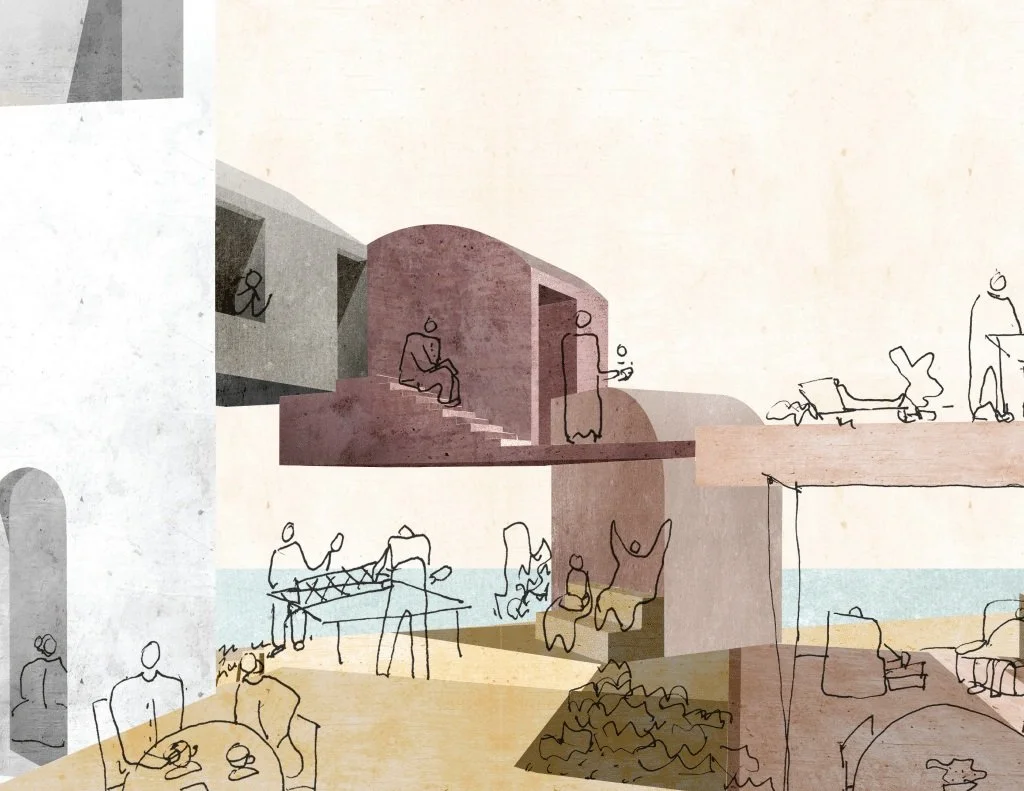
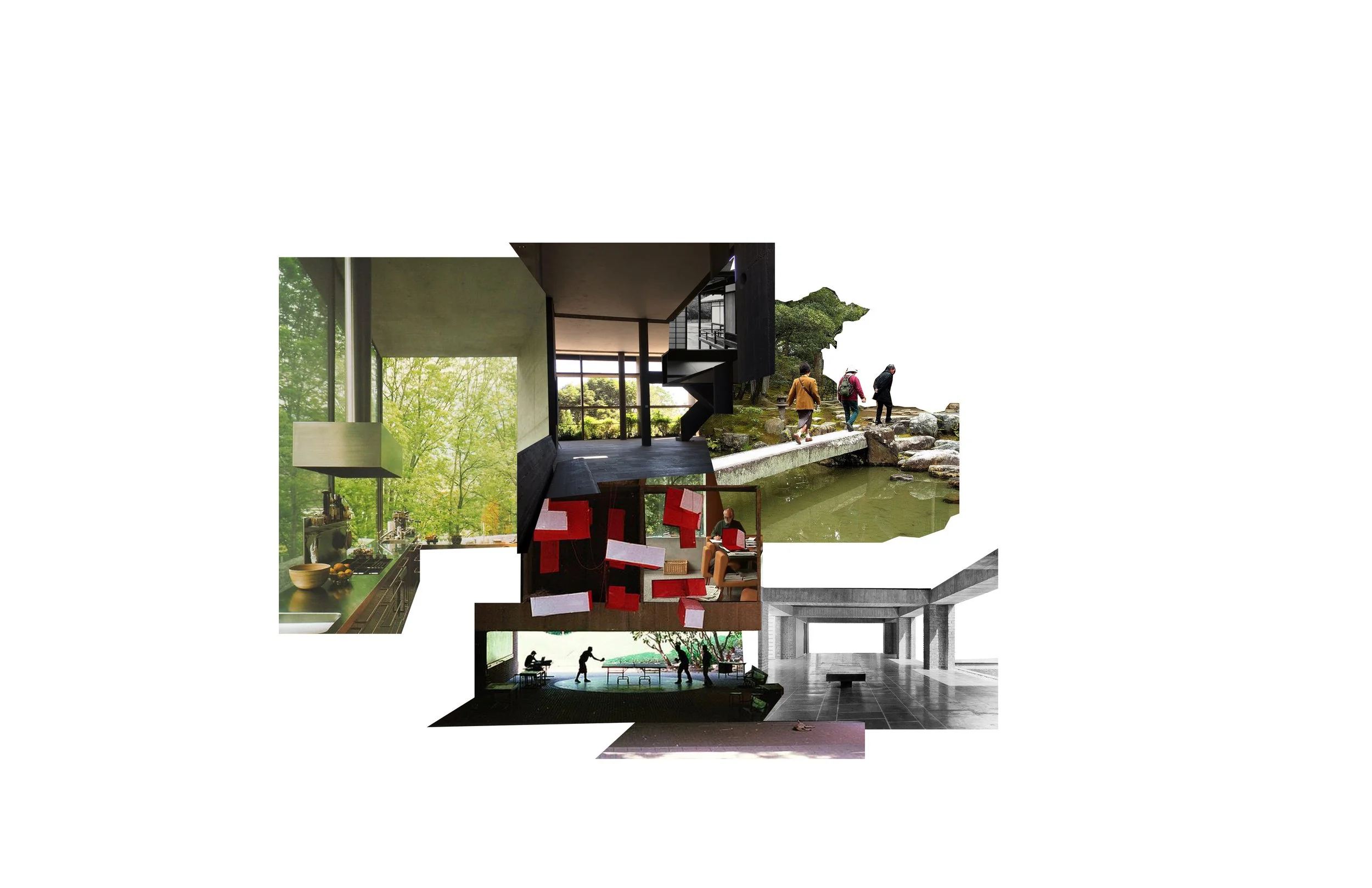
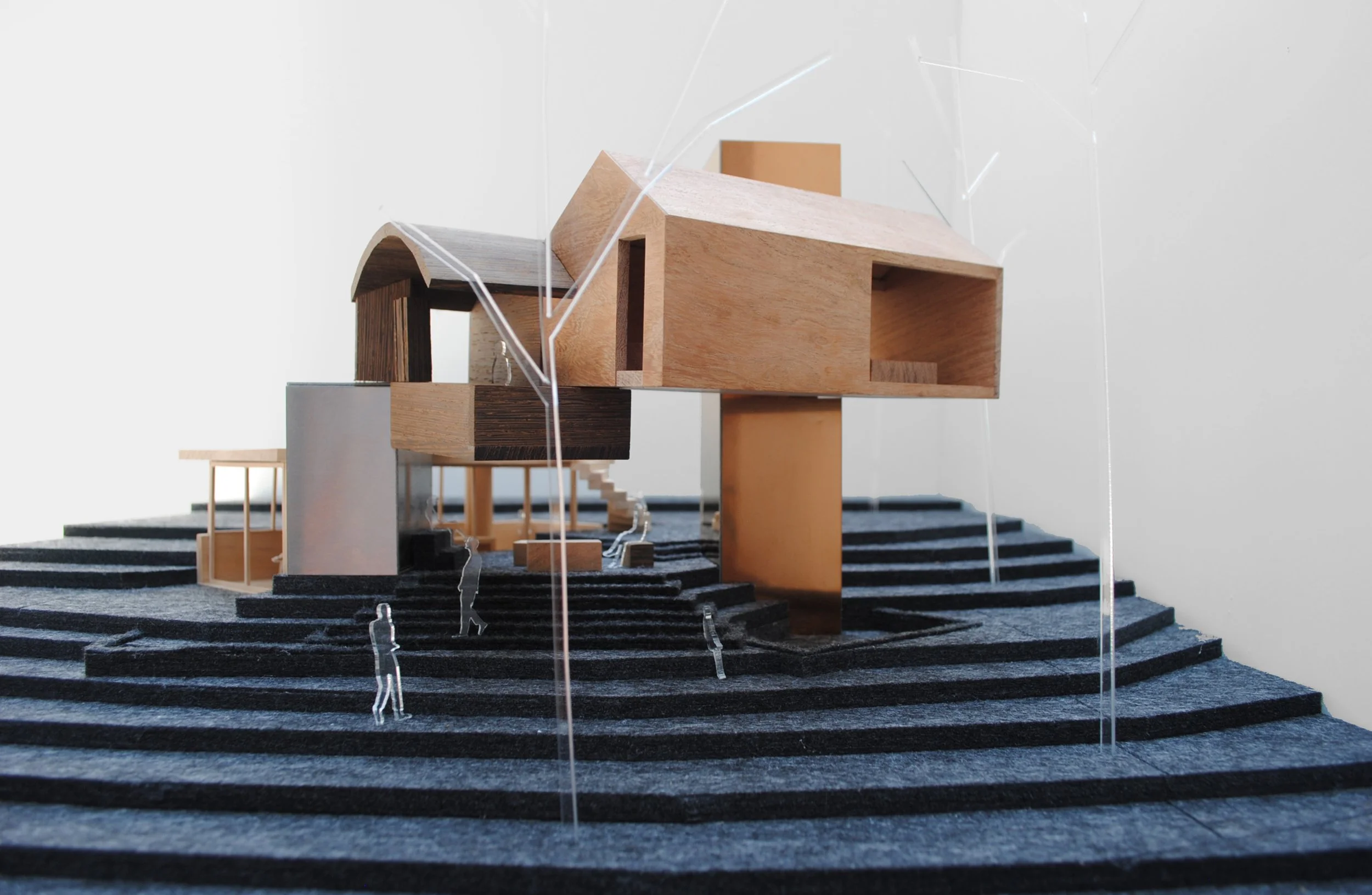
Tatiana Bilbao contributed to architecture by advancing social housing, collaborative design processes, and contextual sustainability. Her work expanded the role of architecture in addressing housing needs by prioritizing affordable housing and community buildings at a time when much of the discipline focused on large cultural or commercial projects. The $8,000 housing prototype demonstrated an incremental, low-cost model that prompted renewed attention to housing provision in low-income contexts. Tatiana Bilbao also developed an integrated design process that involves collaboration with artists, urban planners, sociologists, and project users. This approach appears in projects such as the Culiacán Botanical Garden and the Pilgrim’s Route, where community participation and interdisciplinary work shaped key design decisions. Her studio’s use of hand-drawn collages and physical models reflects a method intended to involve clients early in the design process. Tatiana Bilbao contributed further through an emphasis on climate-appropriate design strategies, including building orientation, local materials, and adaptable layouts suited to different regions. Her career has broadened representation within architecture, with her work demonstrating that architects from outside traditional centers contribute to global architectural discourse. Through teaching positions at Yale, Harvard, Columbia, and other institutions, she has influenced emerging architects by promoting socially oriented, collaborative, and environmentally responsive design practices.

What awards and honors has Tatiana Bilbao received?
Tatiana Bilbao’s work has been recognized with awards and honors in the field of architecture, including:
- Design Vanguard Award (2007) – Her studio was named one of the “Top 10 Emerging Firms” in Architectural Record’s Design Vanguard.
- Emerging Voices, Architectural League of New York (2010) – Selected as an Emerging Voice, an honor that identifies and supports architects with defined design approaches in early stages of practice.
- CEMEX Building Award – Work of the Year (2011) – Won a national award in Mexico for built work as part of the CEMEX Building Award program.
- Kunstpreis Berlin (Berlin Art Prize, 2012) – Received from the Academy of Arts in Berlin, Germany, for work in architecture.
- Global Award for Sustainable Architecture (2014) – Granted by the LOCUS Foundation and the Cité de l’Architecture in Paris for work related to sustainable development and social responsibility in design.
- Architizer A+ Awards, Impact Award (2017) – Awarded for work related to social housing and sustainable architecture.
- Marcus Prize (2019) – A biennial international award from the Marcus Corporation and the University of Wisconsin–Milwaukee, with a monetary prize and a teaching residency.
- Tau Sigma Delta Gold Medal (2020) – Received from Tau Sigma Delta, the honor society for architecture and allied arts, for work in architectural design.
- Honorary Fellowship, RAIC (2021) – Made an Honorary Fellow of the Royal Architectural Institute of Canada for work in the architectural field.
- Richard Neutra Award for Professional Excellence (2022) – Awarded by Cal Poly Pomona College of Environmental Design for work related to ecological and human-centric architecture.
In addition to formal awards, Tatiana Bilbao has been invited to lecture and exhibit internationally, including a 2019 retrospective of her work at the Louisiana Museum of Modern Art in Denmark. These activities document work across sustainability, design research, and community-oriented practice.
Did Tatiana Bilbao change the architecture industry?
Yes, Tatiana Bilbao has changed architecture by advancing social housing, participatory design processes, and locally informed construction practices. Her work expanded the discipline’s engagement with affordable housing and community projects by demonstrating that small-scale, low-cost buildings can address specific needs and function as part of an architect’s core portfolio. By publishing material such as the plans for her housing prototype, she supported open-source approaches and collaborative design methods. Her emphasis on local labor, regional materials, and climate-appropriate strategies contributed to broader conversations about sustainability and context-driven construction. Themes associated with social housing and community design have become more prevalent in architectural exhibitions and biennales during the period in which she has been active. Tatiana Bilbao’s position as a prominent architect from Latin America has contributed to increased visibility of diverse perspectives within the field, and her projects, including the Pilgrim’s Route and the Culiacán Botanical Garden, have provided examples of coordinating public institutions and local communities in the development of public architecture.
Was Tatiana Bilbao ever controversial in any way?
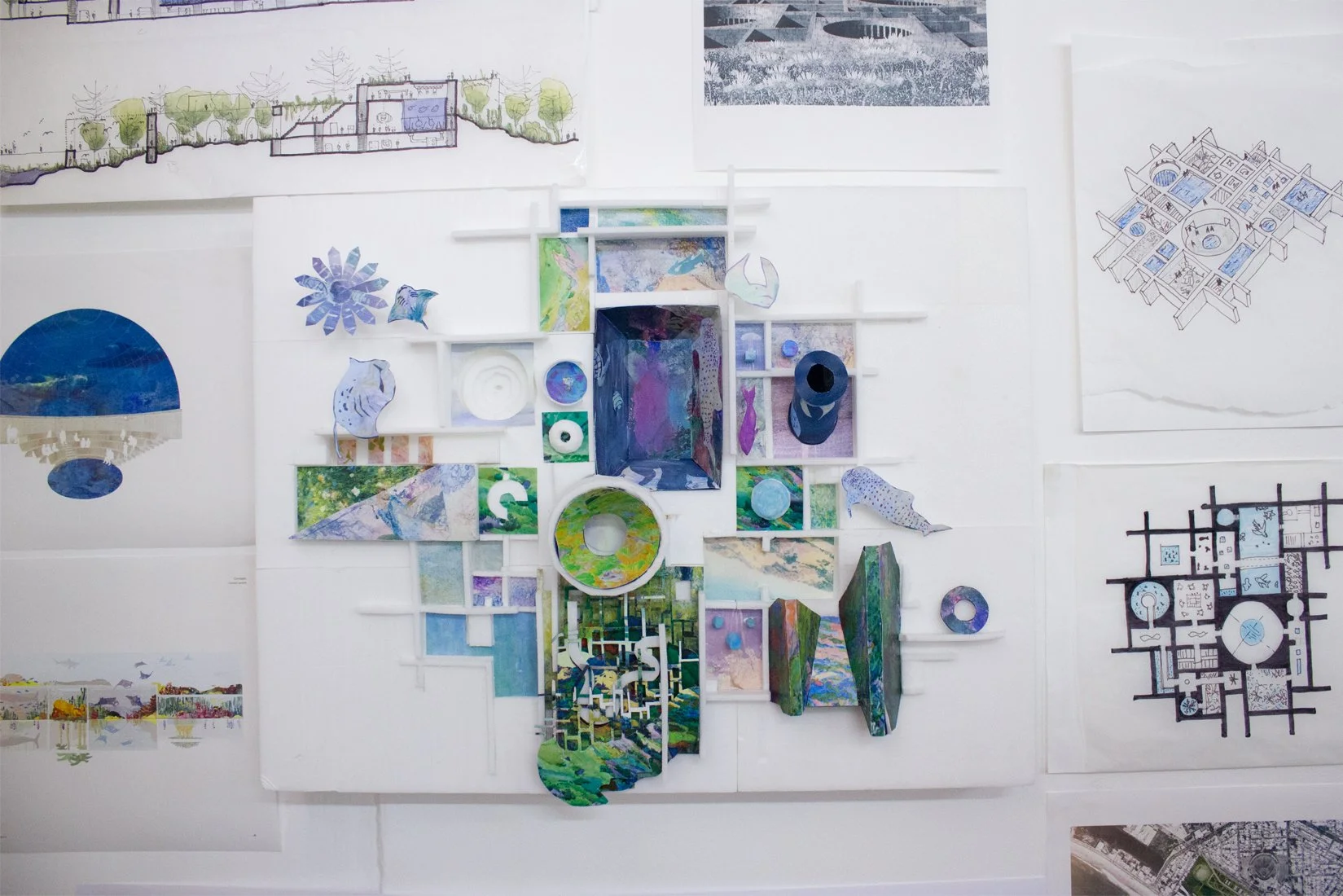
Tatiana Bilbao has not been involved in major scandals or personal controversies. Some projects have generated discussion or required responses to public concerns, such as the expansion proposal for the Mexican American Cultural Center in Austin, where community feedback focused on how the new design would relate to the existing structure and its users. Tatiana Bilbao addressed these concerns by engaging stakeholders and adjusting design elements to align with contextual expectations. Her public comments have also prompted debate, including her criticism of the overuse of the term “sustainability” in architecture, which contributed to conversations about terminology and design practice. Certain experimental concepts, such as an aquarium imagined as a future ruin, have been viewed as provocative by some observers, reflecting differing opinions about formal and conceptual approaches in her work.
Who are the most famous architects in modern history besides Tatiana Bilbao?
Aside from Tatiana Bilbao, Frank Lloyd Wright, Frank Gehry, and Zaha Hadid are among the most recognized architects who have shaped modern architecture. Wright (American, 1867–1959) is often described as a central figure in modern American architecture and is associated with the Prairie School and the development of Organic architecture. His work includes houses and public buildings that integrate structure, interior space, and landscape, such as Fallingwater in Pennsylvania and the Solomon R. Guggenheim Museum in New York. Frank Lloyd Wright’s use of open-plan interiors and horizontal circulation influenced later approaches to domestic and cultural architecture. Gehry (Canadian-American, born 1929) is known for experimental forms and sculptural building envelopes. His work includes the Guggenheim Museum Bilbao in Spain and the Walt Disney Concert Hall in Los Angeles, where large metal-clad surfaces define the exterior. Frank Gehry’s use of digital tools and complex geometries advanced deconstructivist tendencies in architecture and affected how offices use computer-aided design in practice. Hadid (Iraqi-British, 1950–2016) developed a distinctive formal language characterized by strong geometries and non-orthogonal spatial organization. Zaha Hadid was the first woman to receive the Pritzker Architecture Prize in 2004. Projects such as the MAXXI Museum in Rome, the London Aquatics Centre for the 2012 Olympics, and the Heydar Aliyev Center in Baku use curved surfaces and continuous interiors to produce large-scale public spaces. Zaha Hadid’s work contributed to the adoption of parametric design tools in architecture and extended the range of forms explored in contemporary practice. Beyond these figures, modern architecture includes many other architects across regions. In Latin America, Luis Barragán (Mexican, 1902–1988) received the Pritzker Architecture Prize in 1980 and is associated with a precise use of color, light, and simple geometric volumes, visible in works such as his own house and studio in Mexico City and the Chapel of the Capuchinas in Tlalpan. Oscar Niemeyer (Brazilian, 1907–2012) developed a language based on reinforced concrete curves and civic ensembles, most notably in Brasília, where projects such as the National Congress and the Cathedral of Brasília structured the new capital’s public core. In the contemporary period, Alejandro Aravena (Chilean, born 1967) received the Pritzker Architecture Prize in 2016 and has focused on social housing and post-disaster reconstruction, including the Quinta Monroy housing project in Chile, which uses incremental construction strategies to address low-income housing needs. Other frequently cited modern architects include Le Corbusier (Swiss-French, 1887–1965), whose ideas on functionalism and urban planning informed projects such as the Unité d’Habitation in Marseille and the plan for Chandigarh in India. Mies van der Rohe (German-American, 1886–1969) established a steel-and-glass vocabulary that appears in works like the Barcelona Pavilion and the Seagram Building in New York. Renzo Piano (Italian, born 1937), co-designer of the Centre Pompidou in Paris and architect of numerous institutional buildings, is known for detailed structural systems and technical integration in museums, cultural projects, and research facilities worldwide.
What did Tatiana Bilbao mostly design?
Tatiana Bilbao has built a diverse body of work, but she mostly designed cultural spaces, housing, and educational buildings that reflect a focus on people and context. Her portfolio spans several categories:
- Public and Cultural Projects: Tatiana Bilbao has designed museums, parks, and religious structures that serve public and community use. Examples include the Culiacán Botanical Garden, structures for the Pilgrim’s Route in Jalisco, and her collaboration on the Mexican American Cultural Center expansion in Austin, Texas. These works organize landscape, circulation, and program into settings for collective activity.
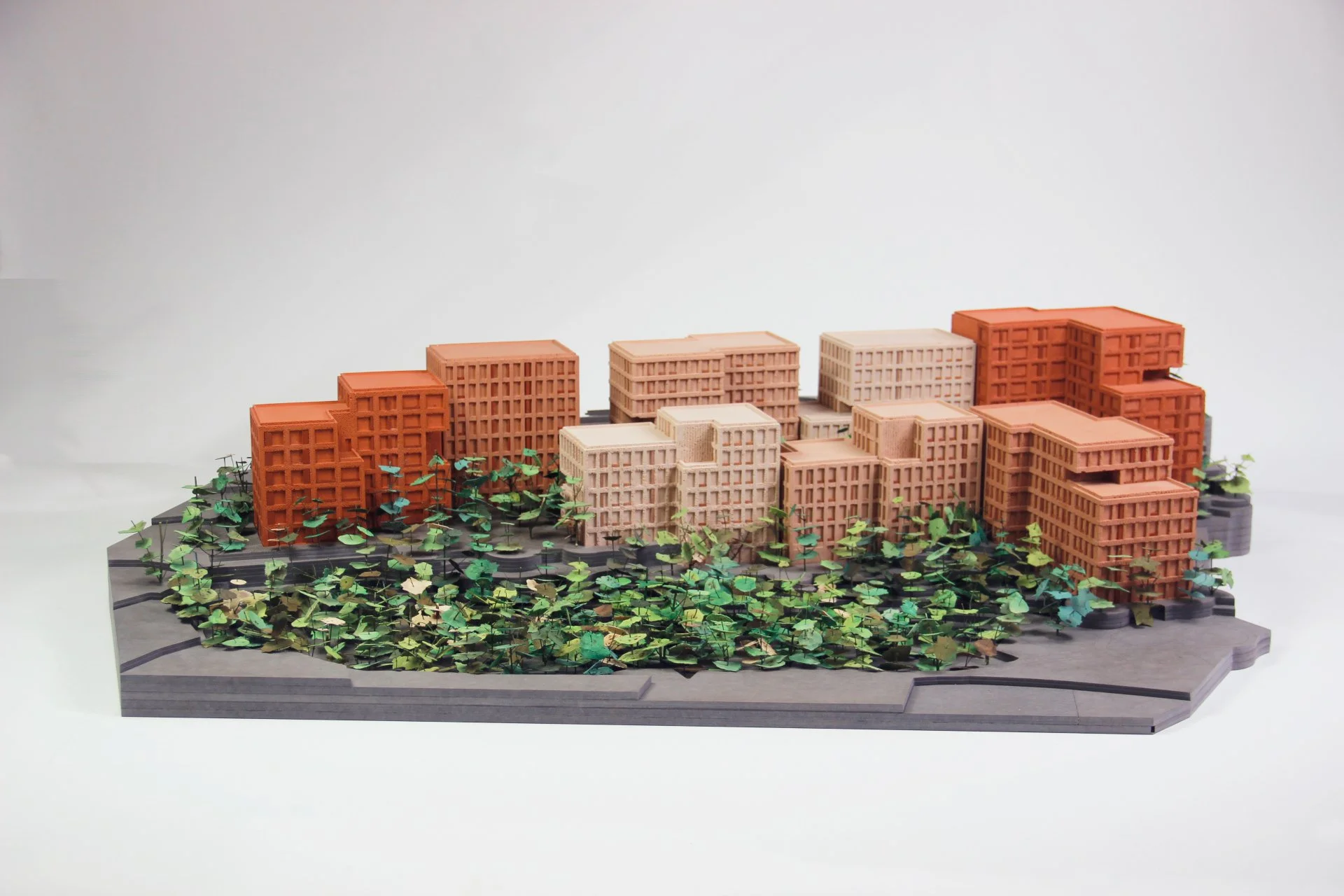
- Housing and Residential Architecture: A substantial portion of Tatiana Bilbao’s work involves housing, ranging from private residences to social housing prototypes. Projects such as Casa Ventura and Los Terrenos House respond to specific site conditions, while her low-cost housing prototype and mixed-income developments address housing needs in Mexico and France. These projects use modular layouts and adaptable components suited to residents’ requirements and varied budgets.
- Educational and Institutional Buildings: Tatiana Bilbao has contributed to the design of schools, research centers, and other institutional facilities. The Bioinnova Building in Culiacán functions as a research and educational facility. She also designed components of the University of Monterrey campus, such as the Ángel Bustamante amphitheater, and an extension to the Anahuacalli Museum in Mexico City. Additionally, her firm worked on the master plan for a new aquarium and research center in Mazatlán (Research Center of the Sea of Cortés), which combines research areas with public programming. These projects demonstrate her approach to institutional architecture through the use of adaptable layouts, climate-responsive strategies, and programmatic coordination between interior and exterior spaces.
Across these types, Tatiana Bilbao’s work applies a context-driven approach shaped by climate, user habits, and local materials. Her practice also includes urban planning and research initiatives that examine how cities accommodate community needs. Tatiana Bilbao’s projects extend her design approach across public, residential, and institutional programs. Tatiana Bilbao’s versatility means her portfolio spans a wide range of project types, from small chapels and exhibition pavilions to large master plans. This range reflects her application of a consistent design methodology across multiple scales and building programs.
Where did Tatiana Bilbao study?
Tatiana Bilbao studied architecture at the Universidad Iberoamericana (UIA) in Mexico City. She enrolled in UIA’s School of Architecture in the early 1990s and obtained her Bachelor’s degree in Architecture and Urbanism in 1996. The Universidad Iberoamericana is a private university with an architecture program that includes design, urbanism, and coursework related to social issues. During her studies at UIA, Tatiana Bilbao developed skills in design and urban planning and worked on projects connected to built-environment conditions. Her thesis project received an honorable mention as the best architecture thesis of the year in 1998. In addition to her formal university education, Tatiana Bilbao’s formation was influenced by her family and early work experience. Coming from a family of architects, including her grandfather Tomás Bilbao, she was exposed to architecture from a young age. After graduation, she worked for the government of Mexico City as an advisor in urban development from 1998 to 1999. This role provided exposure to housing and urban policy implementation and connected her academic training with practical applications related to urban development. Tatiana Bilbao did not pursue a master’s degree abroad; instead, she expanded her expertise through practice and research in Mexico. She later returned to UIA as a professor in 2005, teaching design courses. This combination of academic study and practical experience contributed to the development of her architectural approach.
Did Tatiana Bilbao have any famous teachers or students?
Tatiana Bilbao did not have a single mentor comparable to the “master–apprentice” relationships associated with some architects, but she was influenced by a network of professionals and has, in turn, influenced students and collaborators. During her education at the Universidad Iberoamericana in Mexico City, her professors were local architects and scholars rather than internationally known figures. Her architectural outlook was shaped by Mexico’s modernist legacy and her family background. Her grandfather, Tomás Bilbao, was an architect and a former minister of urban development in Spain who emigrated to Mexico, and his career exposed her to architecture and urban planning from an early stage. In her early professional years, Tatiana Bilbao worked alongside contemporaries in collaborative environments. She co-founded the urban think tank LCM (Laboratorio de la Ciudad de México) in 1999 and later the research center MX.DF with architects, including Derek Dellekamp and Michel Rojkind. Although these peers were not her teachers, the shared work provided opportunities for exchange and professional development. She also collaborated with international figures such as the Chinese artist Ai Weiwei, who invited her in 2007 to design a pavilion for the Jinhua Architecture Park in China. This experience introduced her to broader discussions linking architecture, art, and global practice. Tatiana Bilbao has mentored students through university teaching and through her studio. She has held visiting professor positions at Yale School of Architecture, Columbia GSAPP, Rice University, and other institutions. Her teaching roles, including appointments as the Louis Kahn Visiting Professor in 2015 and the Norman R. Foster Visiting Professor in 2017 at Yale, involved leading advanced design studios. Many architects who have worked at Tatiana Bilbao Estudio have established their own practices or contributed to architecture in Mexico and abroad. These academic and professional settings have extended her design approach to emerging practitioners.
How can students learn from Tatiana Bilbao’s work?
Students can learn from Tatiana Bilbao’s work by studying both her design outcomes and her design process. Analyzing her key projects helps explain how she addresses design requirements under specific constraints. For example, examining the low-cost housing prototype shows how she combines flexibility, affordability, and incremental expansion in a small dwelling. Reviewing the plans and modules of this prototype illustrates how Tatiana Bilbao balances standardization for cost control with variations suited to family needs. Researching the Culiacán Botanical Garden demonstrates how she integrates art, landscape, and user behavior into a single project, with small structures and pathways responding to site conditions and observed patterns of use. This highlights the role of site analysis and community interaction in her design process. Students can also study Tatiana Bilbao’s design approach through her lectures, interviews, and her book A House is Not Just a House. In this work and elsewhere, she discusses housing, user needs, and the relationship between architecture and social conditions. Students may consider how these principles apply to their projects, including strategies for involving users in the design process or creating spaces that adapt to changing requirements. Learning from her process is another avenue. Tatiana Bilbao’s studio uses collage techniques and physical models in early design stages. Students can apply similar methods by developing collages that combine programmatic, contextual, and spatial information before moving to digital tools. This approach keeps design options open and incorporates input from diverse contributors. Tatiana Bilbao collaborates with professionals from other fields, including artists and sociologists, offering an example of interdisciplinary coordination. Engaging with her completed buildings through visits or case studies provides additional insight. Projects such as the Pilgrim’s Route Chapel and Los Terrenos House illustrate how spatial configuration, material use, and environmental response shape user experience. When direct visits are not possible, students can analyze drawings, photographs, and post-occupancy evaluations to understand scale, material effects, and design performance. Finally, students can examine Tatiana Bilbao’s emphasis on community engagement and collaborative practice. Her work often includes coordination with users, local stakeholders, and specialized consultants. A useful exercise for students is a small community-based design-build project with limited resources, requiring direct responses to client needs. Such work provides practical experience in applied design, construction decisions, and user interaction.

