

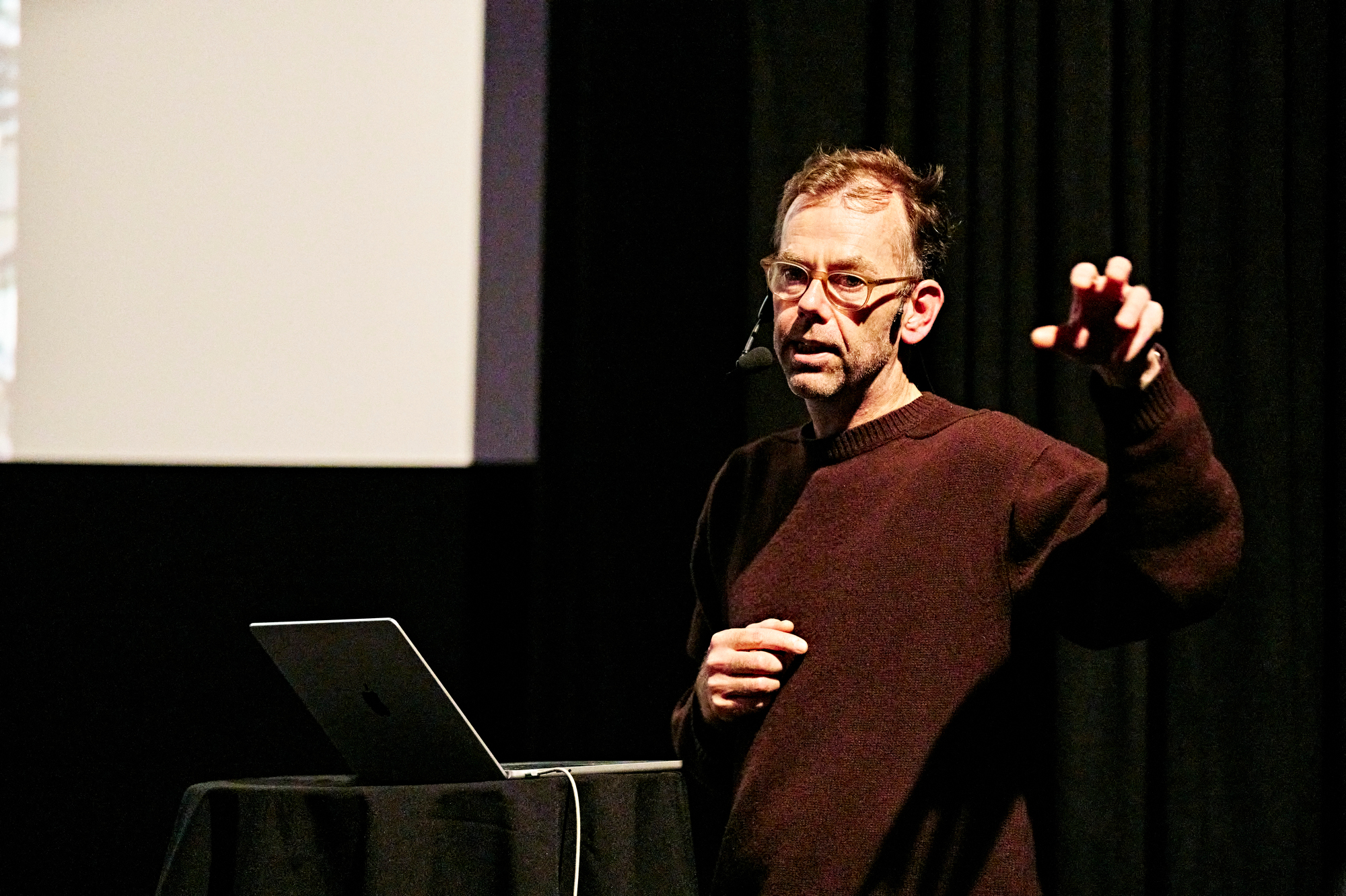
Tom Emerson, born in Paris in 1970 and raised in Belgium, is a British architect known for context-driven contemporary architecture. He studied at the University of Bath, the Royal College of Art, and the University of Cambridge. In 2001, he co-founded 6a architects in London with Stephanie Macdonald, a practice noted for adaptive reuse, material precision, and integration with historical and natural contexts. His minimalist, narrative-based design approach avoids iconic form-making in favor of site-specific clarity. His most acclaimed project is the Studio for Juergen Teller, a concrete-and-brick complex in London shortlisted for the Stirling Prize. Other major works include Raven Row in London, the South London Gallery Fire Station, Cowan Court at Churchill College in Cambridge, and MK Gallery in Milton Keynes. He has completed residential and commercial projects such as the Coastal House, Black Stone House, Blue Mountain School, and the Paul Smith flagship store, as well as international commissions including the CARA art center in New York and studio buildings in Hamburg’s HafenCity. Since 2010, Emerson has led Studio Tom Emerson at ETH Zurich, where students complete full-scale design-build projects such as the Pavilion of Reflections for Manifesta 11. His academic and professional work emphasizes research, interdisciplinary collaboration, and construction as inquiry. Awarded an OBE in 2021 and elected Royal Academician in 2023, Emerson has influenced a generation of architects while avoiding public controversy. He primarily designs cultural, educational, and residential buildings with understated modern interventions rooted in context, material, and craft.
Who is Tom Emerson?
Tom Emerson is a British architect known for contextually precise designs in contemporary architecture. He was born on 29 September 1970 in Paris, France, and grew up in Belgium before studying in the UK. Emerson co-founded 6a architects in London in 2001 with Stephanie Macdonald. Over two decades, he developed a portfolio focused on cultural and educational buildings. Based between London and Zürich, Tom Emerson combines practice and academia, holding a professorship at ETH Zurich. He was appointed Officer of the Order of the British Empire (OBE) in 2021 for services to architecture and education and elected Royal Academician of the Royal Academy of Arts in 2023. Emerson’s work integrates new design within historical or natural contexts, emphasizing material precision and collaboration.

What type of architecture is Tom Emerson representing?
Tom Emerson represents a context-driven form of modern architecture focused on adaptive reuse and contemporary intervention. His work avoids a singular stylistic signature and reflects a research-based, analytical approach. Emerson integrates historical structures and landscapes with modern needs, guided by a belief that architecture should emerge from existing site conditions and materials. This method continues modernist craft traditions and is often framed as a reinterpretation of Modernism. Buildings by Tom Emerson and 6a architects use exposed materials such as timber, brick, and concrete in ways that emphasize aging and surface quality. His style prioritizes function, simplicity, and environmental fit while incorporating influences from contemporary art and sustainability.
What is Tom Emerson’s great accomplishment?
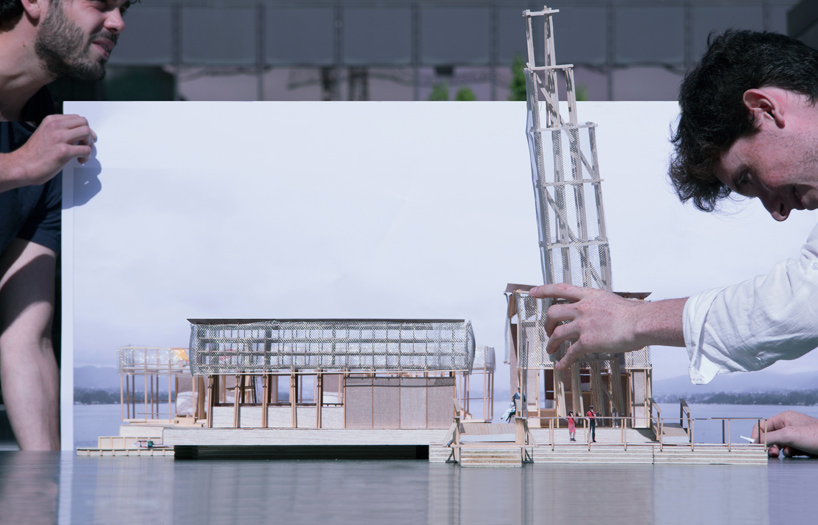
Tom Emerson’s great accomplishment is redefining how modern architecture merges contemporary design with heritage and landscape. Emerson demonstrated that architecture does not require scale to achieve recognition; it requires precision in site, material, and context. His projects prove that small-scale, context-rich buildings can gain international acclaim. A key milestone was the Studio for Juergen Teller (2016), a photographer’s workspace in London that won the RIBA London Building of the Year and was shortlisted for the Stirling Prize. The design combined raw materials with controlled spatial sequences and a sunken reflecting courtyard. Its Stirling nomination affirmed that conceptual clarity and material execution define architectural merit. Emerson also influenced architectural education: since 2010, he has led Studio Tom Emerson at ETH Zurich, where students engage in full-scale design-build research, including the Pavilion of Reflections in Zürich for Manifesta 11. Through this dual role, Emerson extends his architectural influence through pedagogy and practice.
What are Tom Emerson’s most important works?
Tom Emerson’s most important works include art galleries, educational buildings, and cultural spaces. Key works include Raven Row in London, a contemporary art center created by inserting new architecture into 18th-century Huguenot townhouses; the South London Gallery expansions, including the conversion of a Victorian fire station into modern exhibition and community spaces; the Juergen Teller Studio in London, a photographer’s workspace composed of concrete and brick volumes; Cowan Court at Churchill College, Cambridge, a timber-clad student residence that reinterprets the college’s 1960s modernist campus; and MK Gallery in Milton Keynes, a museum extension that references the city’s planned modernist design.
01. Raven Row, London (2009)
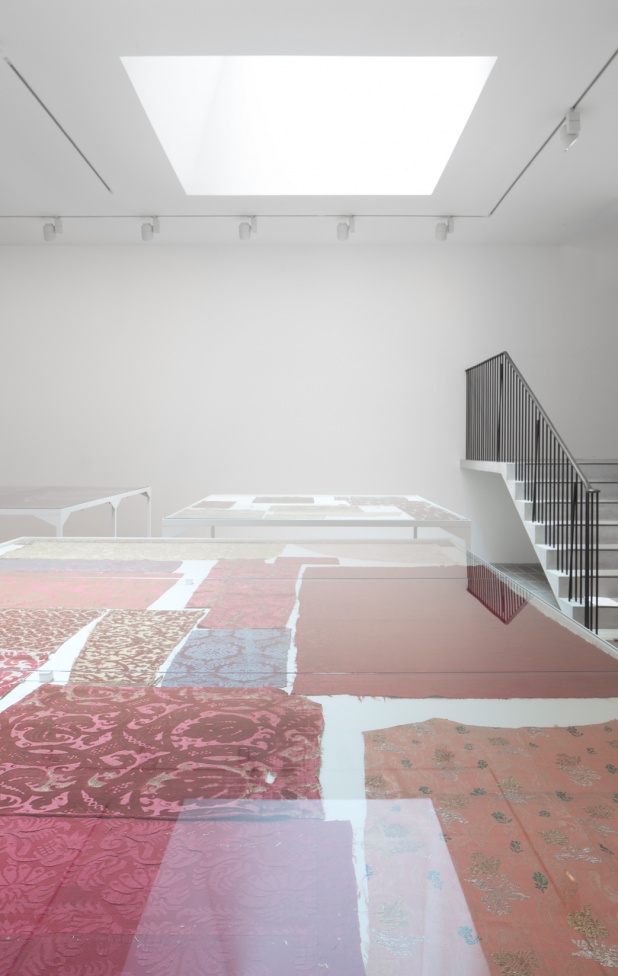
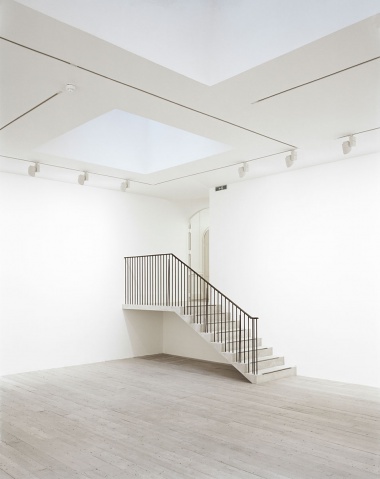
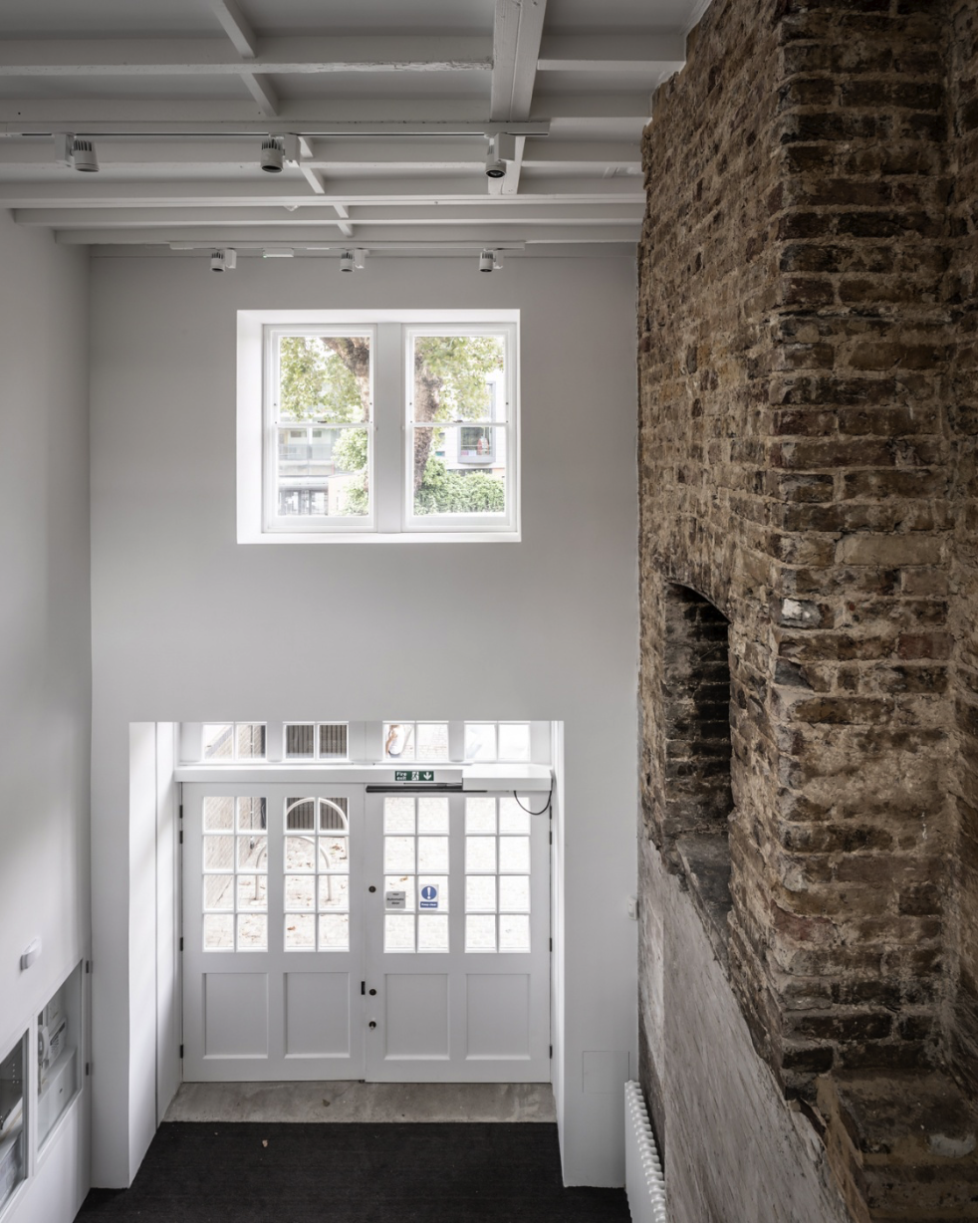
Raven Row is a contemporary art exhibition center in Spitalfields, London, and one of Tom Emerson’s early projects. Completed in 2009 by 6a architects, the project transformed two adjoining 18th-century silk merchants’ houses into a gallery. The building is at 56–58 Artillery Lane. The design combines restoration and modern intervention. Emerson’s team retained Georgian paneling and rococo plasterwork while inserting minimalist galleries and circulation elements. The design type is adaptive reuse: a residential heritage structure converted for public exhibition. Materials include original brick and timber, repaired and exposed, and new elements such as black steel stairs and charred timber for a roof light structure referencing a past fire. The gallery consists of a sequence of rooms combining historic fabric and new construction. Raven Row received an RIBA Award in 2011 and was nominated for the EU Mies van der Rohe Award.
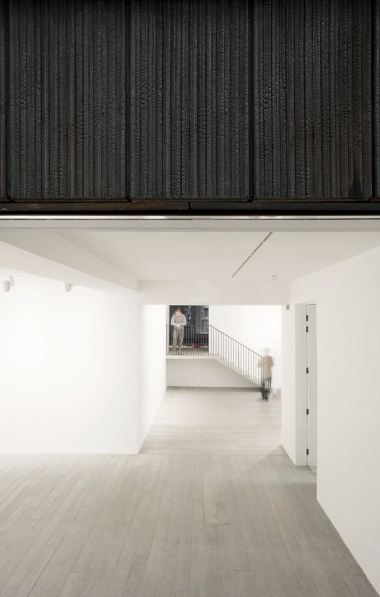
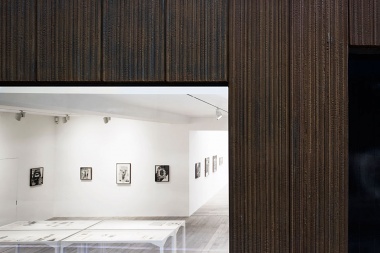
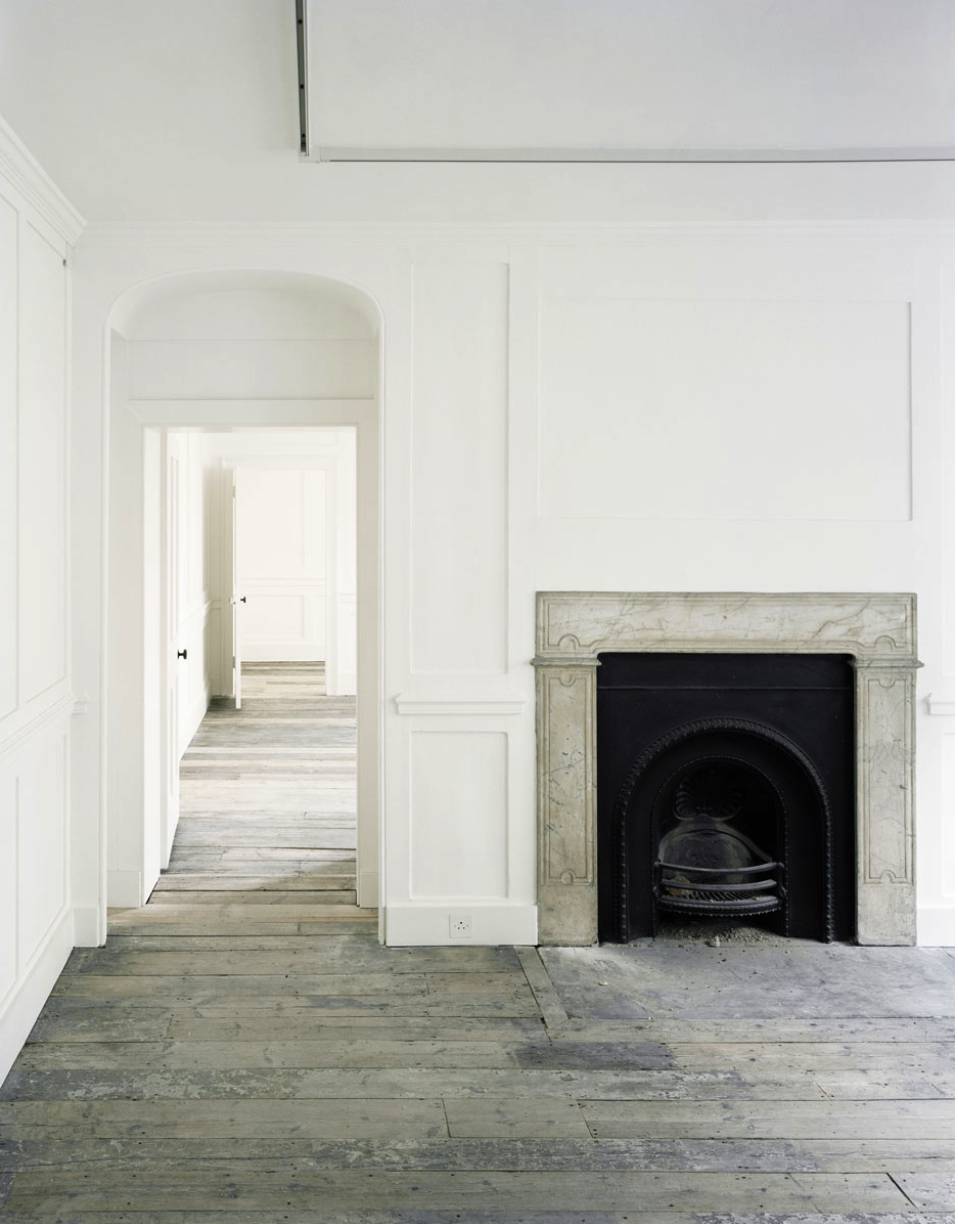
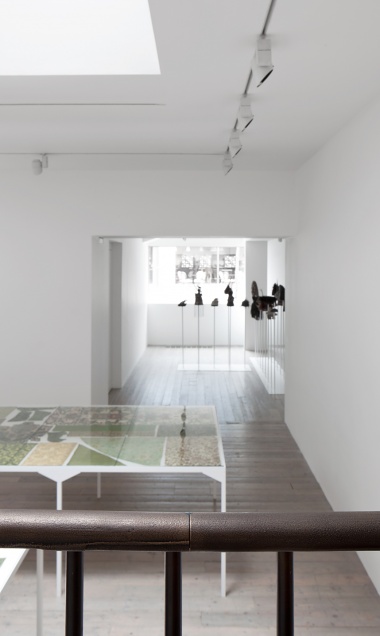

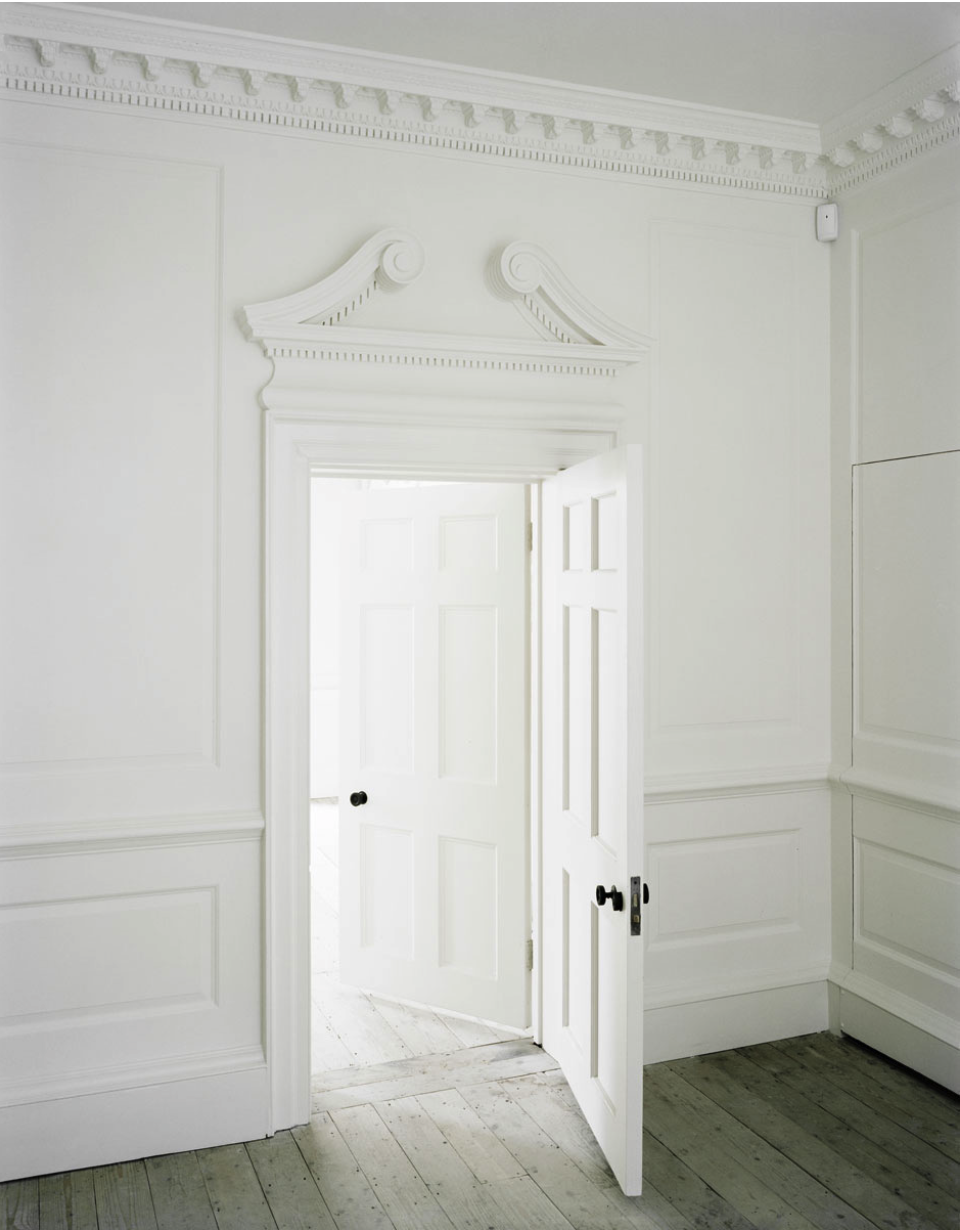
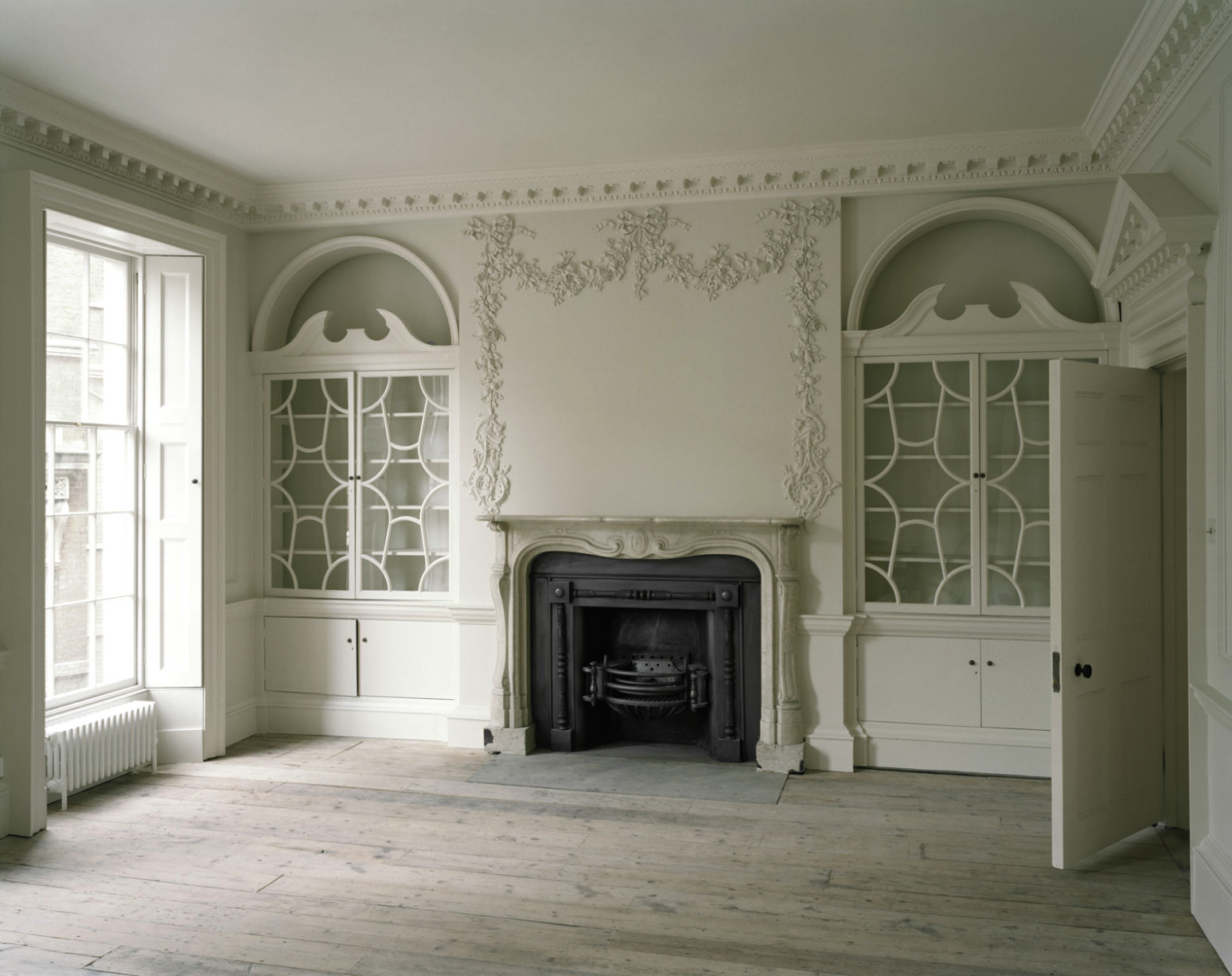
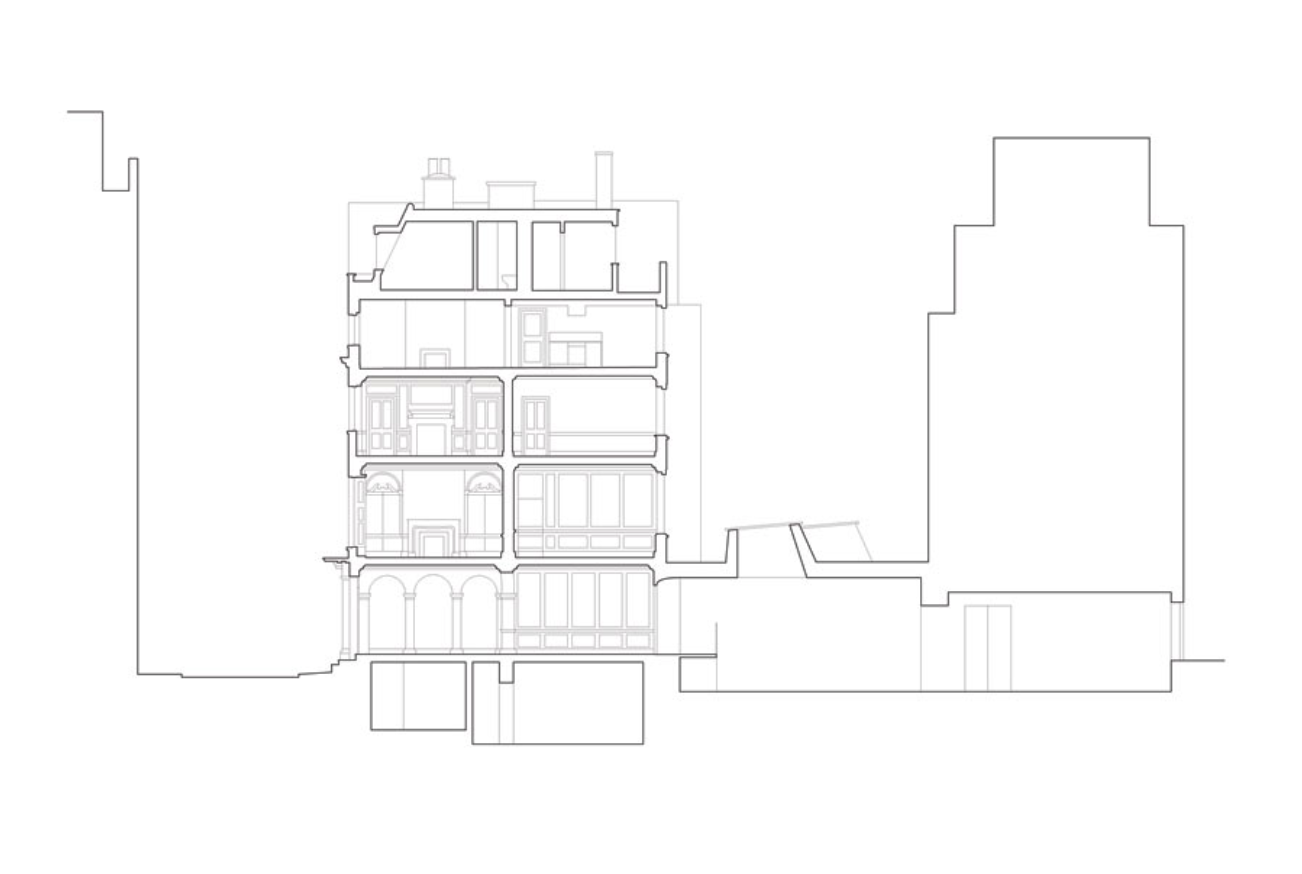
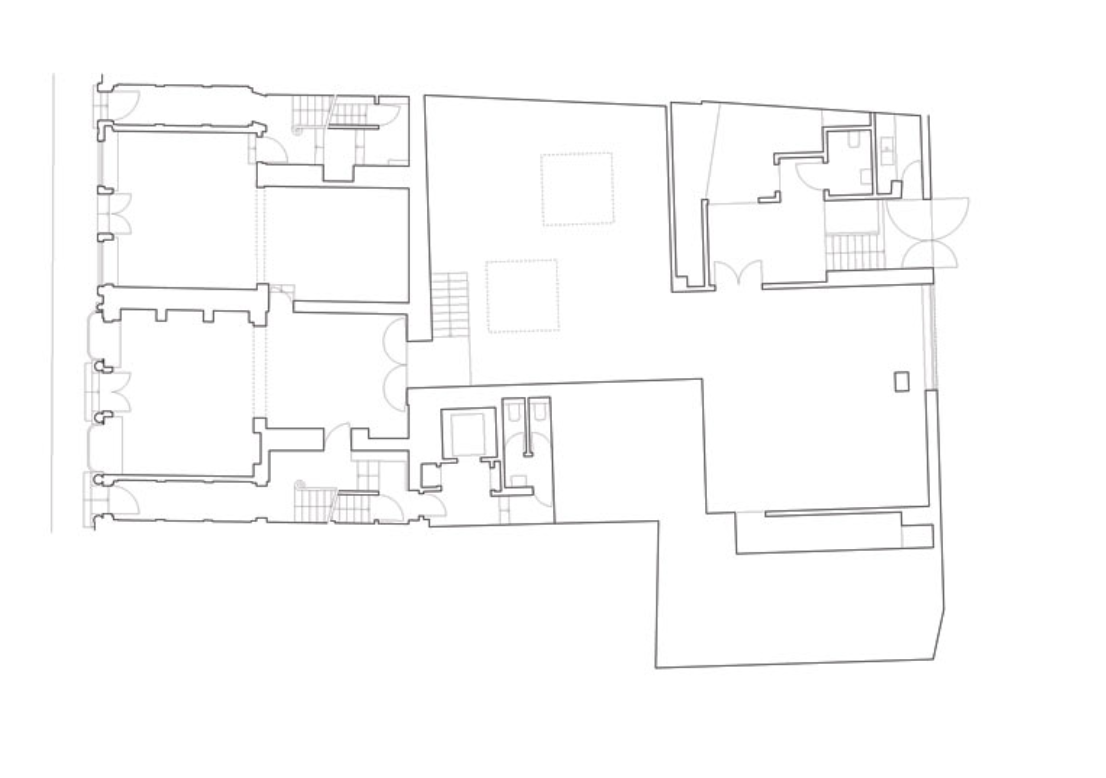
© 6a Architect
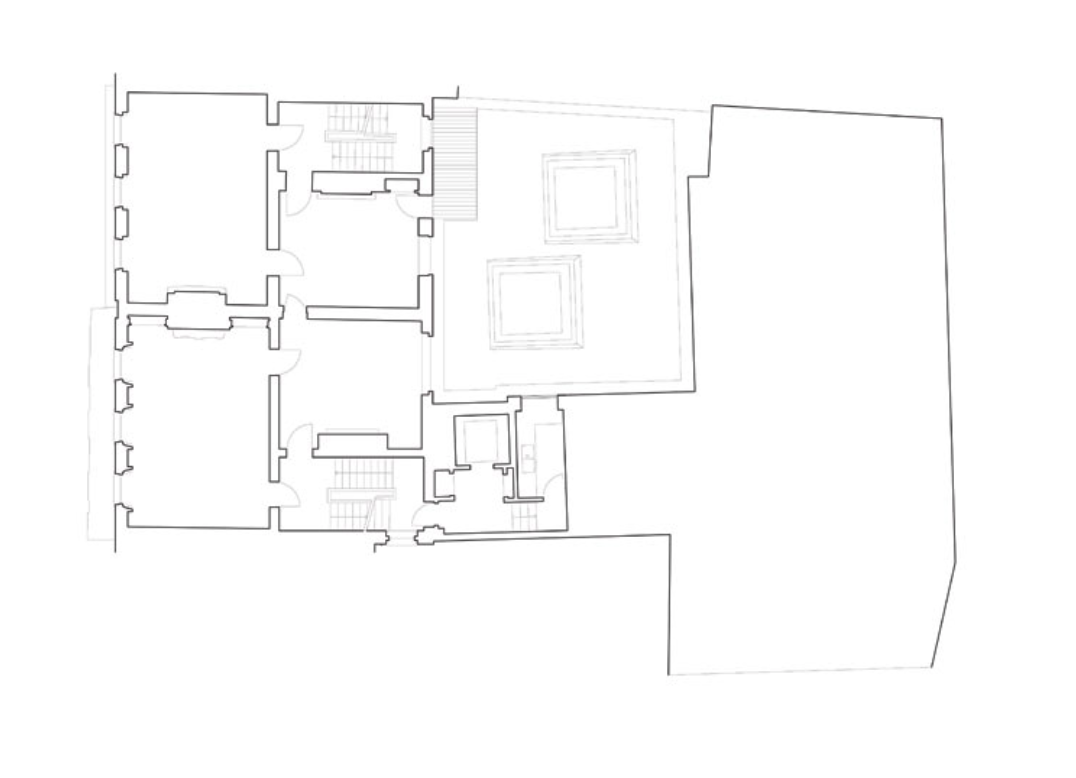
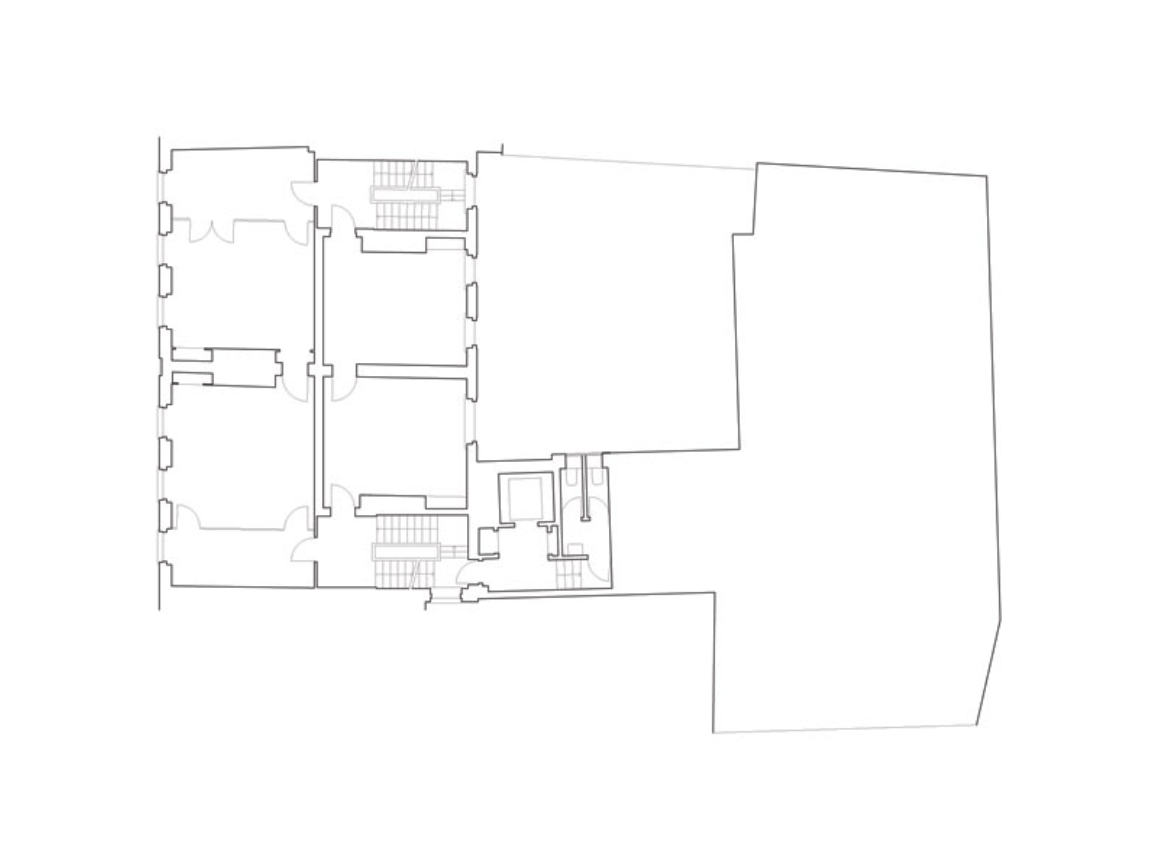
© 6a Architect
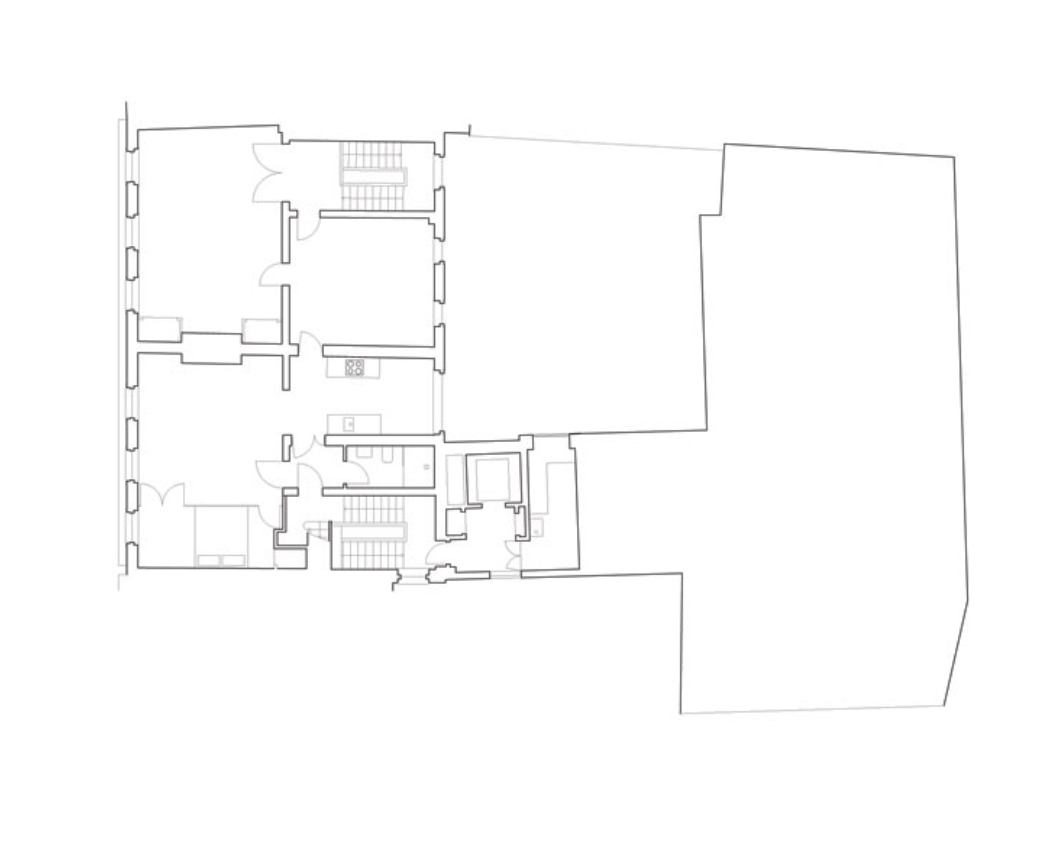
© 6a Architect
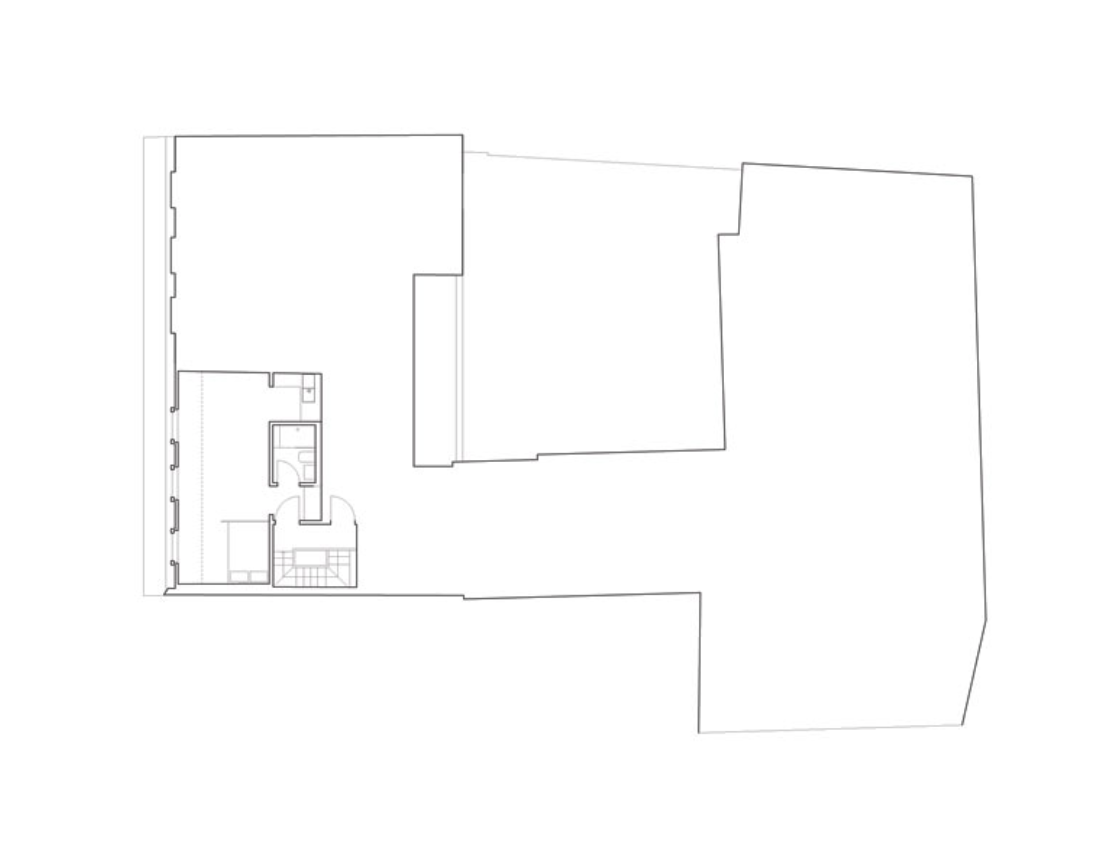
© 6a Architect
02. South London Gallery & Fire Station, London (2010–2018)
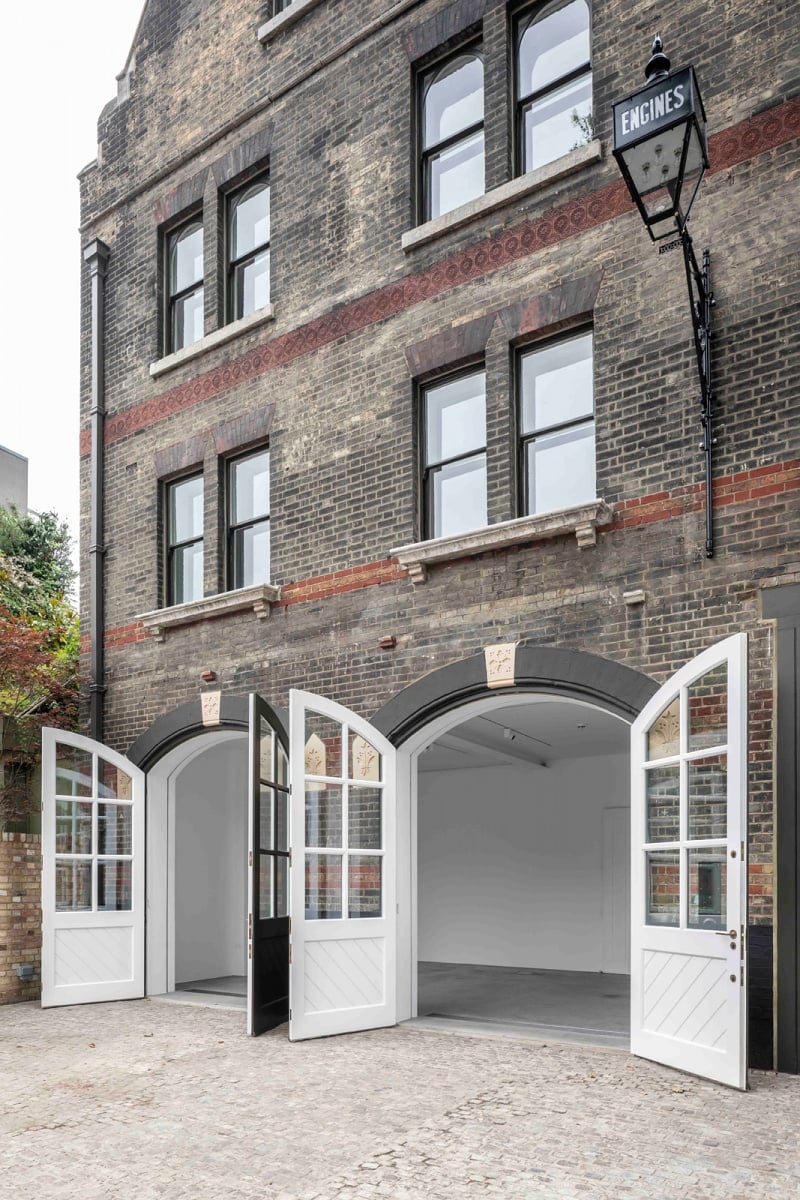
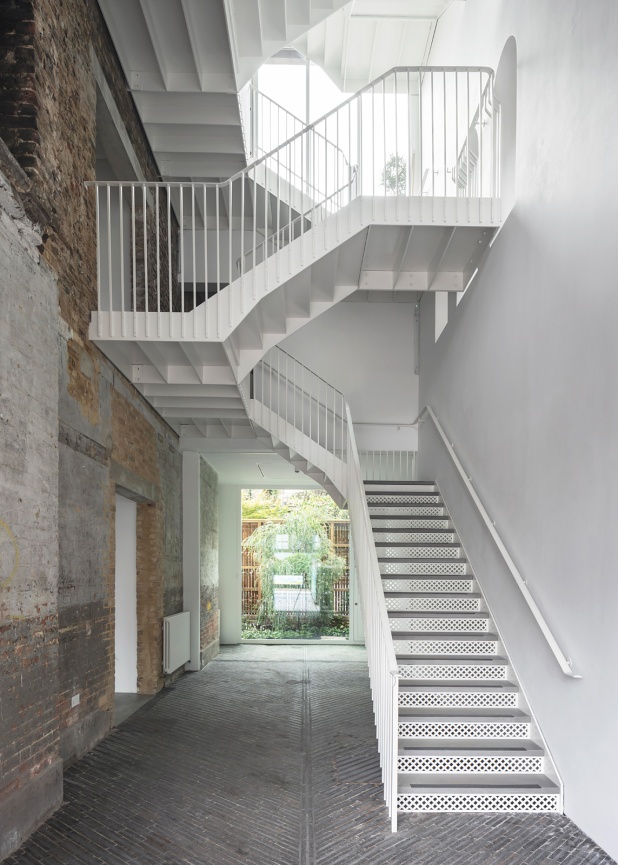
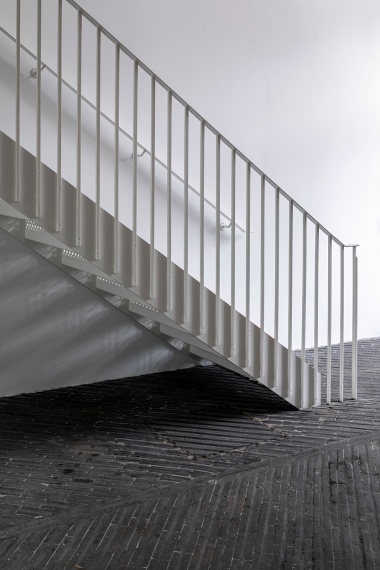
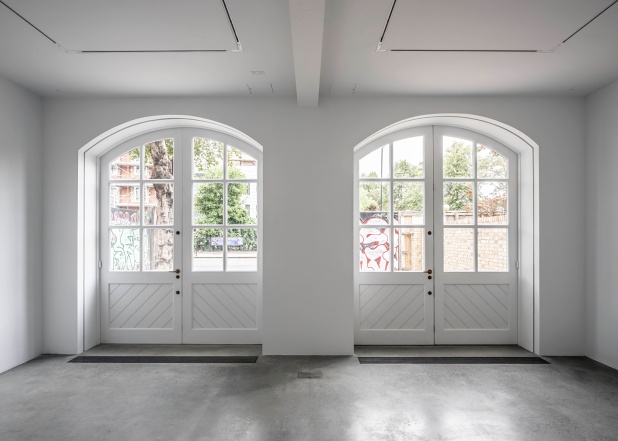
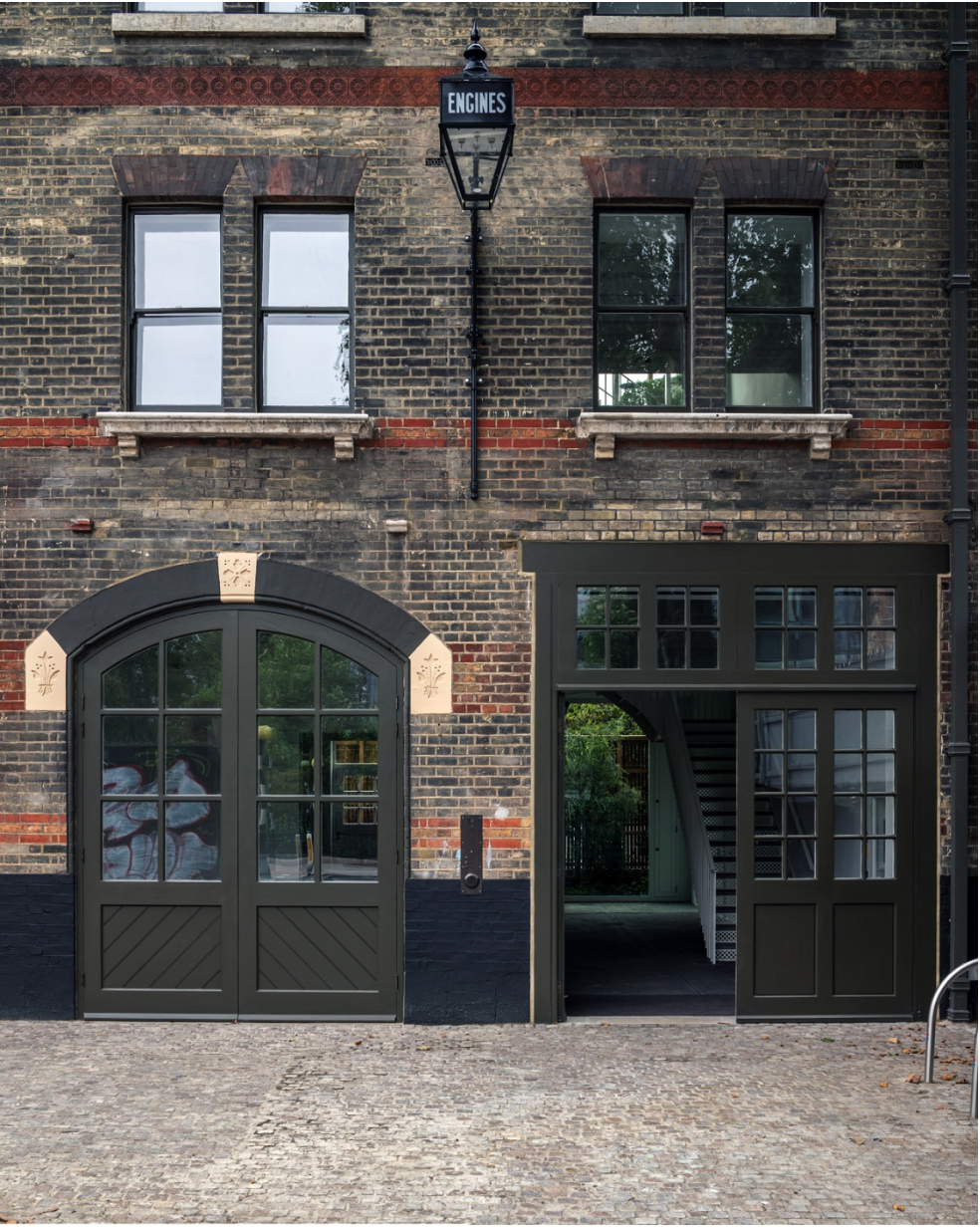
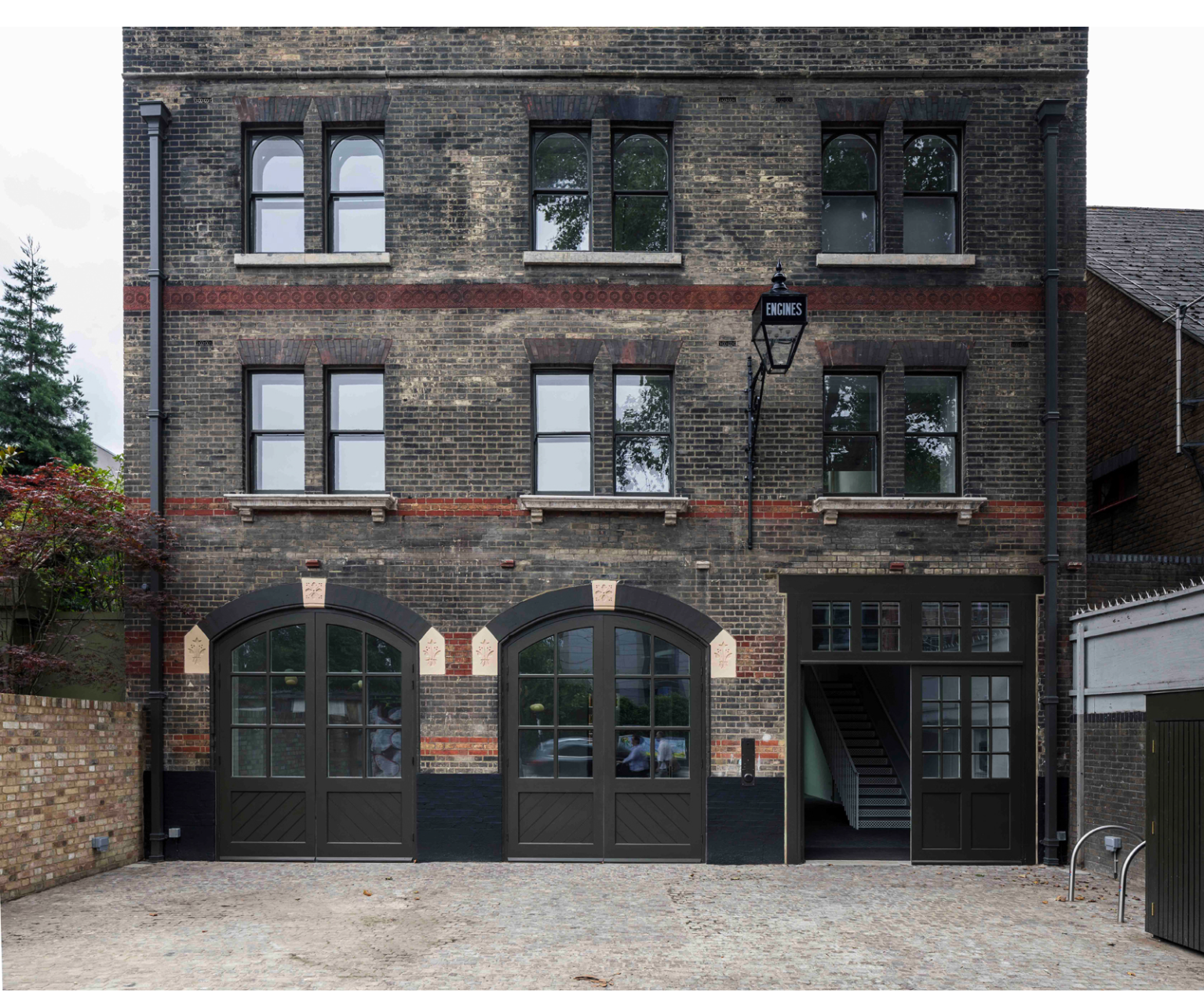
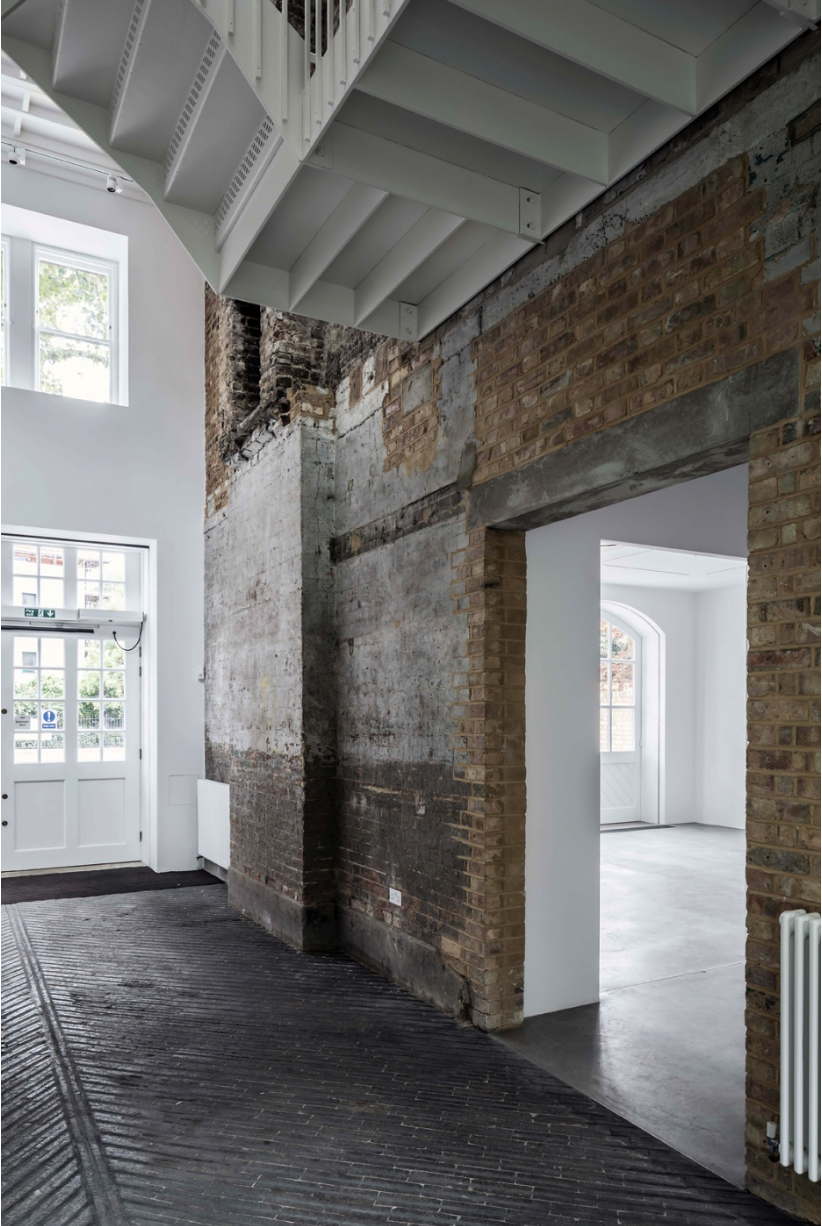
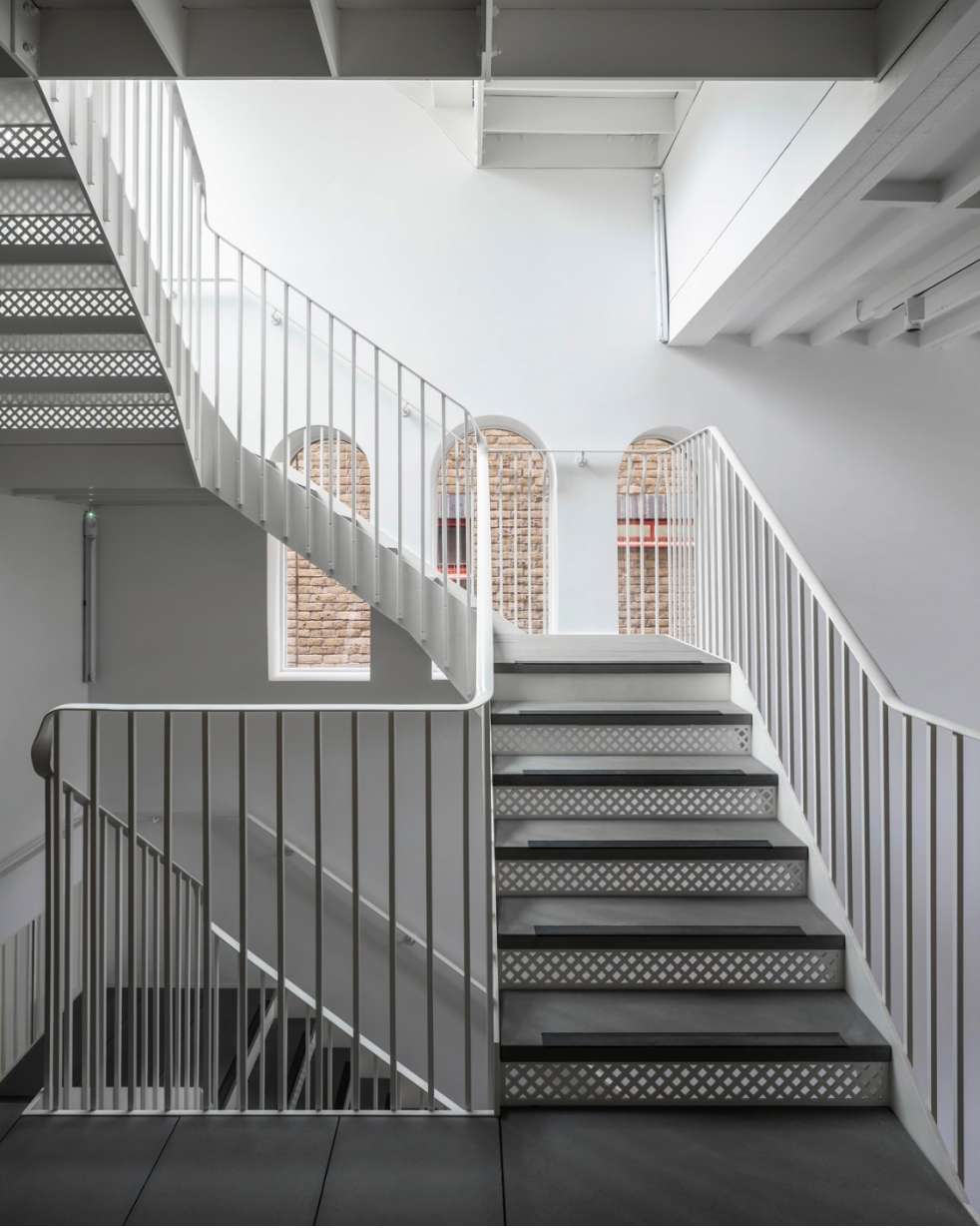
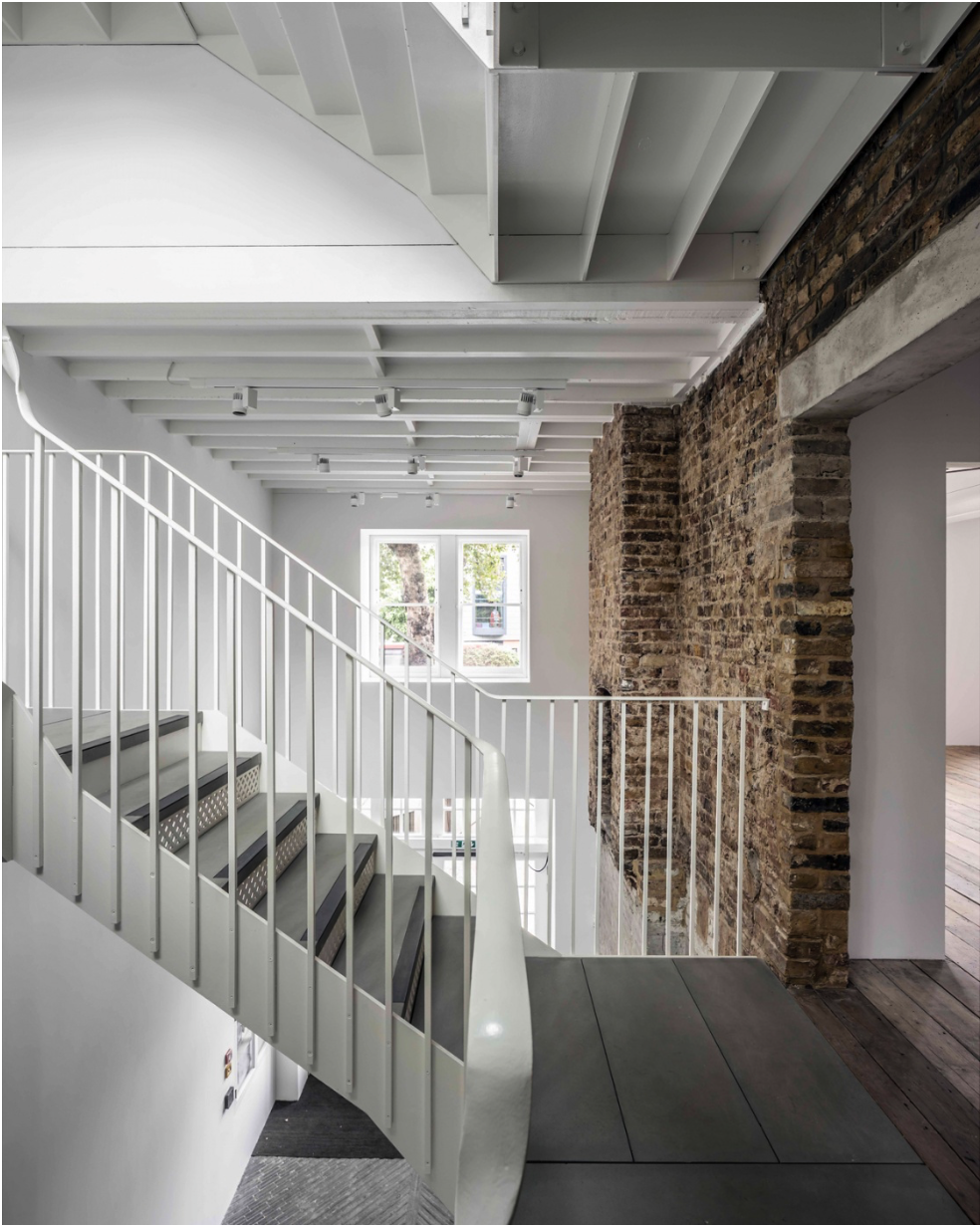
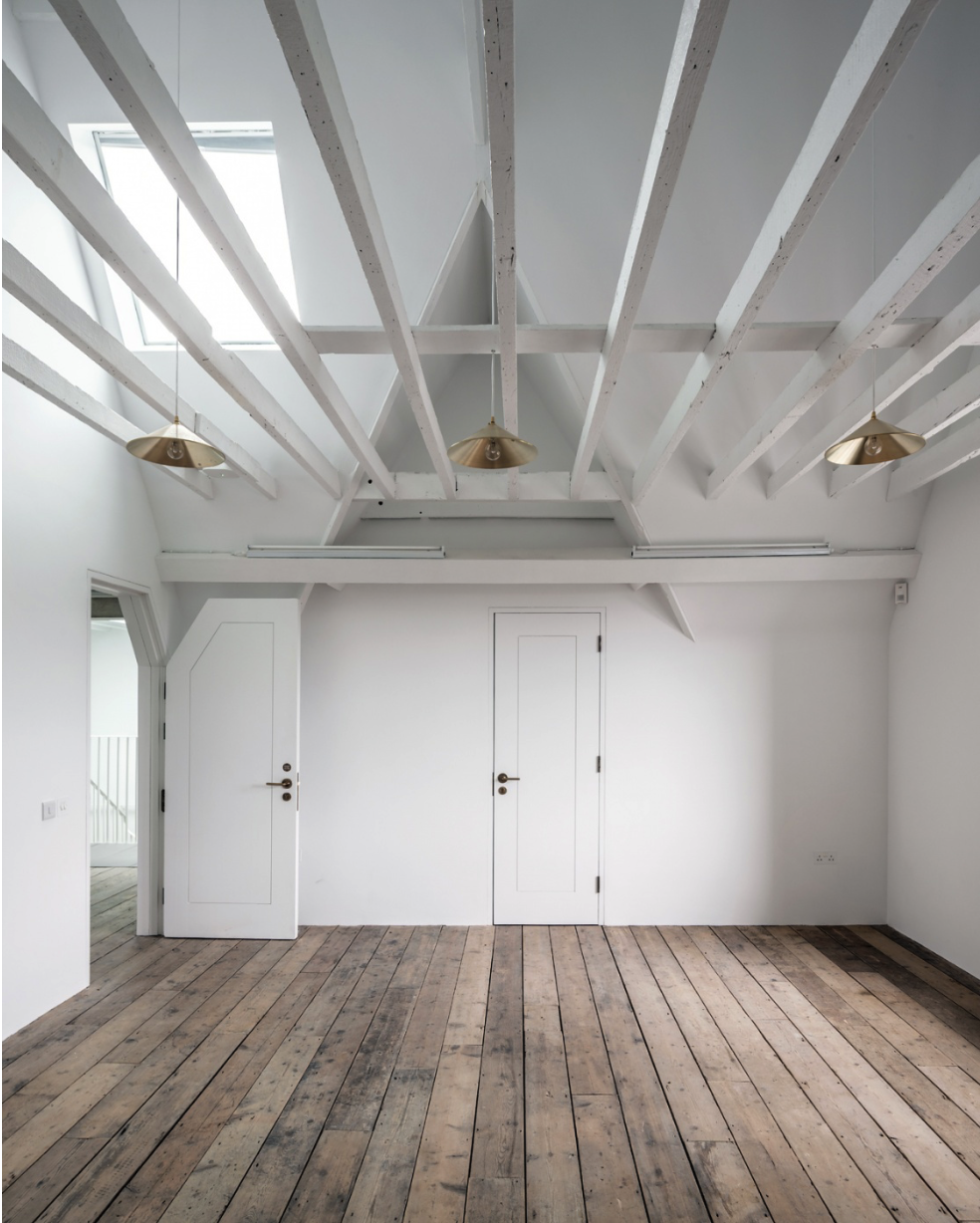
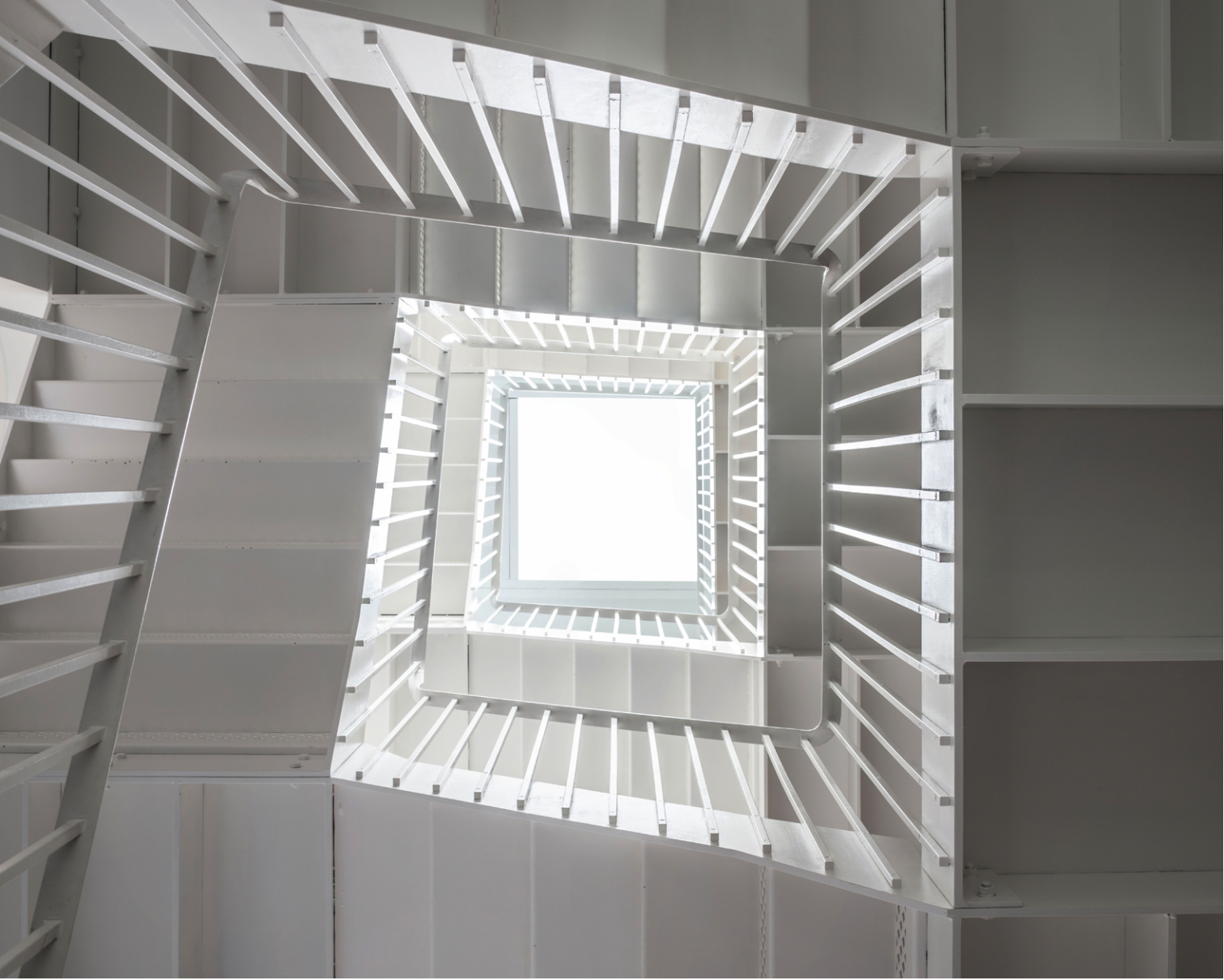
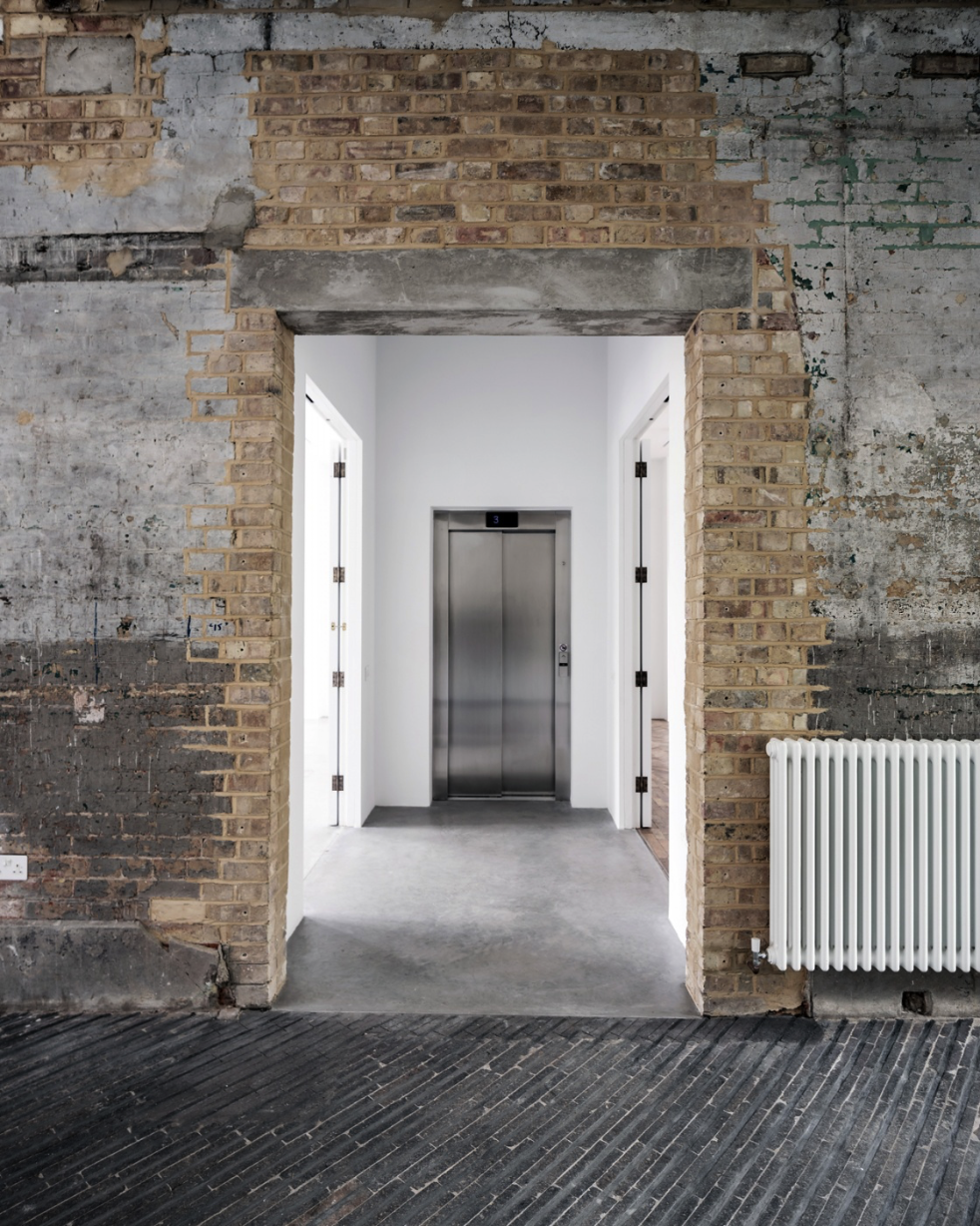
The South London Gallery (SLG) project includes a series of expansions and renovations led by Tom Emerson over nearly a decade. The initial phase, completed in 2010, doubled the size of the contemporary art gallery in Peckham, South London. Emerson converted an adjacent derelict house into exhibition spaces, a café, an artist’s apartment, and added an education studio on a bomb-damaged rear site. In 2018, 6a architects converted a former 1860s fire station into an annex for the gallery. The Fire Station project transformed London’s oldest surviving firehouse into a gallery with four exhibition rooms, studio spaces, archives, and a kitchen. The residential context required engagement with the local community. Emerson retained original elements, including the Gault brick façade, industrial brick flooring, and reused timber for new floors. Contemporary additions include a staircase in painted steel and concrete and enlarged window openings. The design type is a hybrid of restoration, gallery conversion, and community use. Materials include brick, wood, and steel, composed to blend old and new. The South London Gallery Fire Station opened in 2018 and received a RIBA National Award in 2019.
03. Studio for Juergen Teller, London (2016)
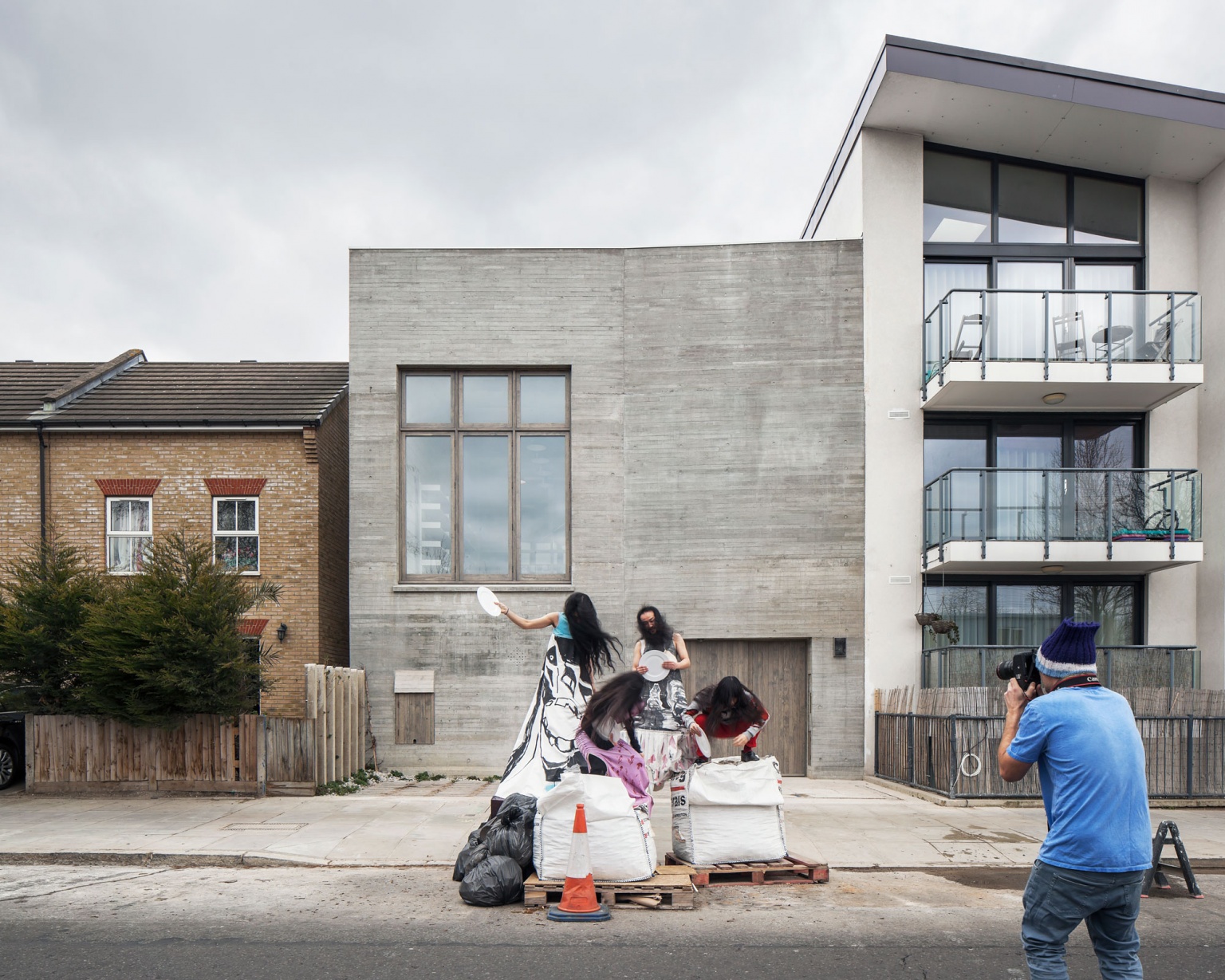
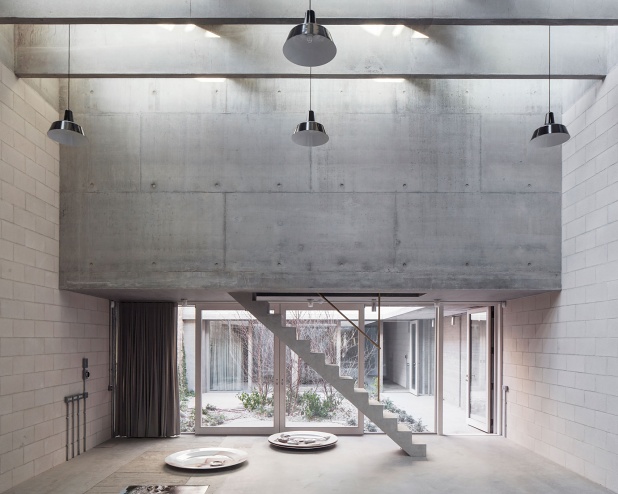
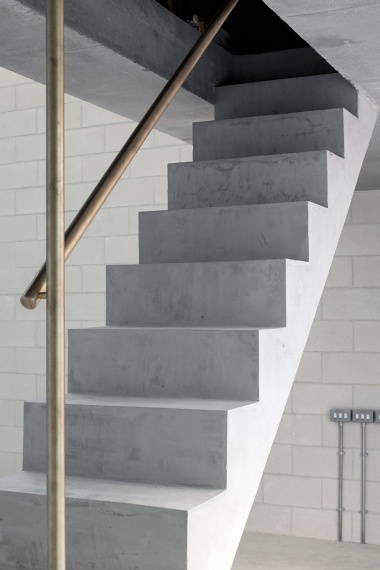
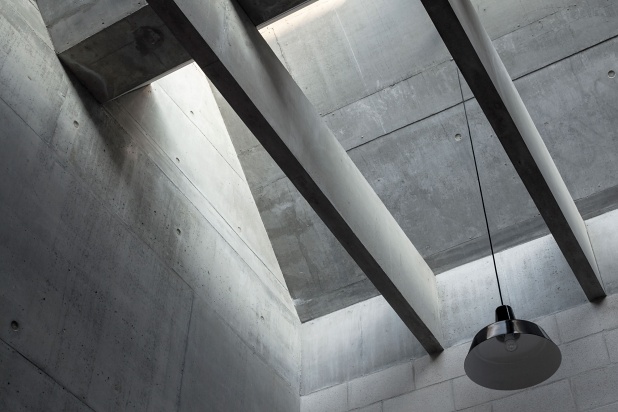
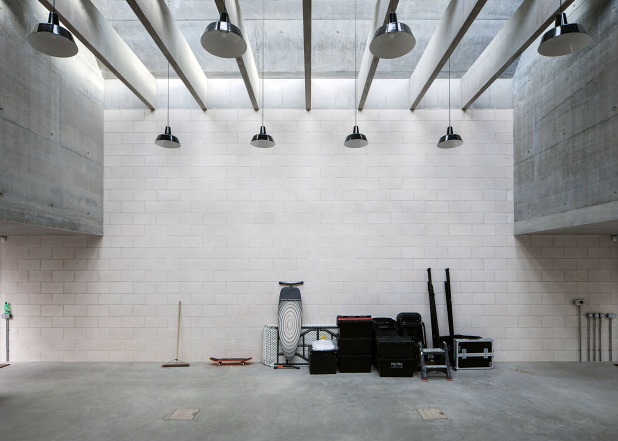
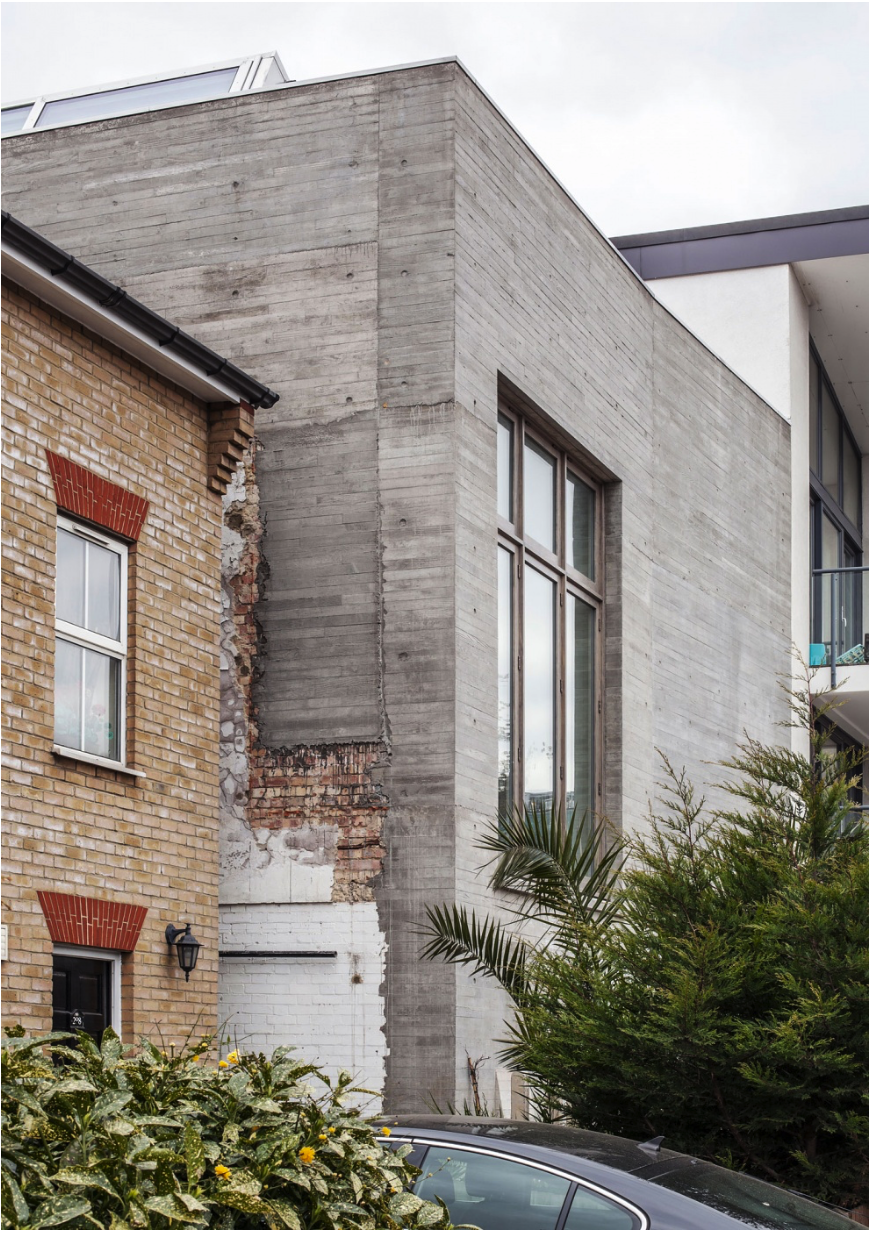
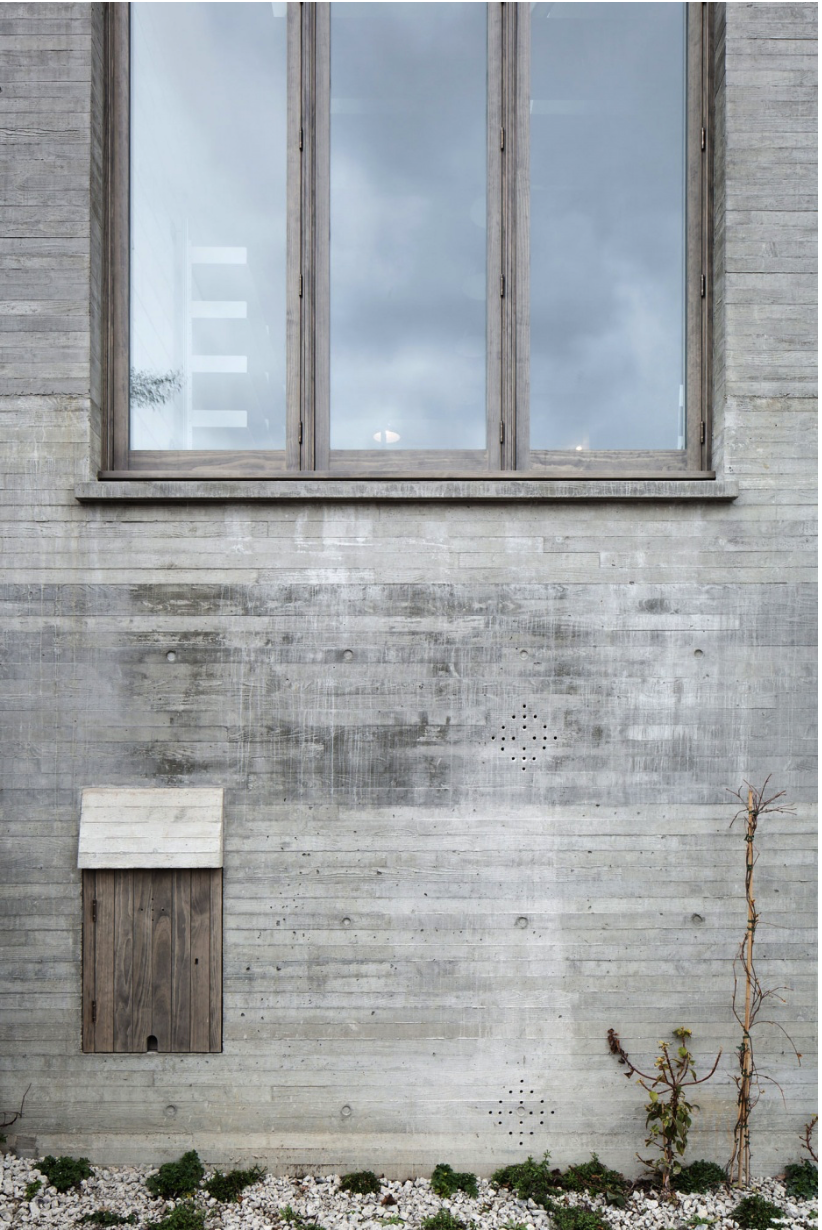
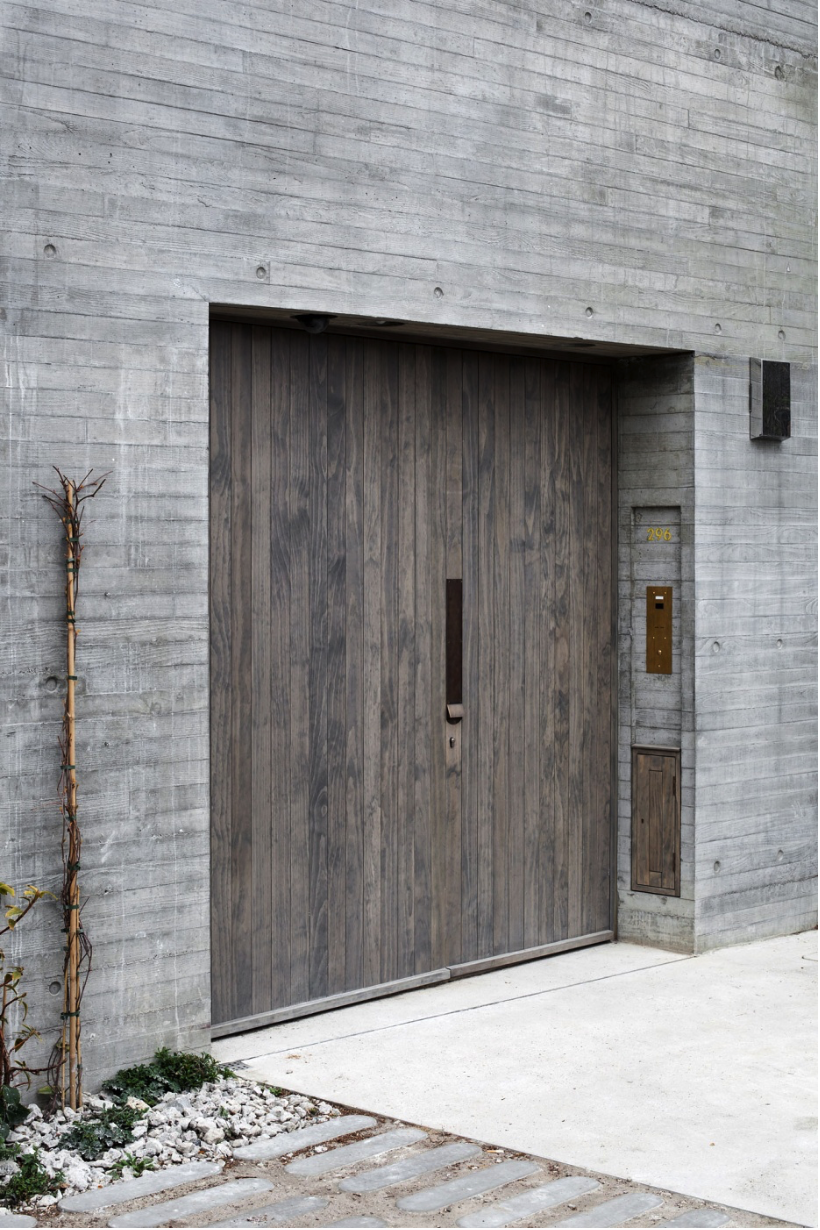
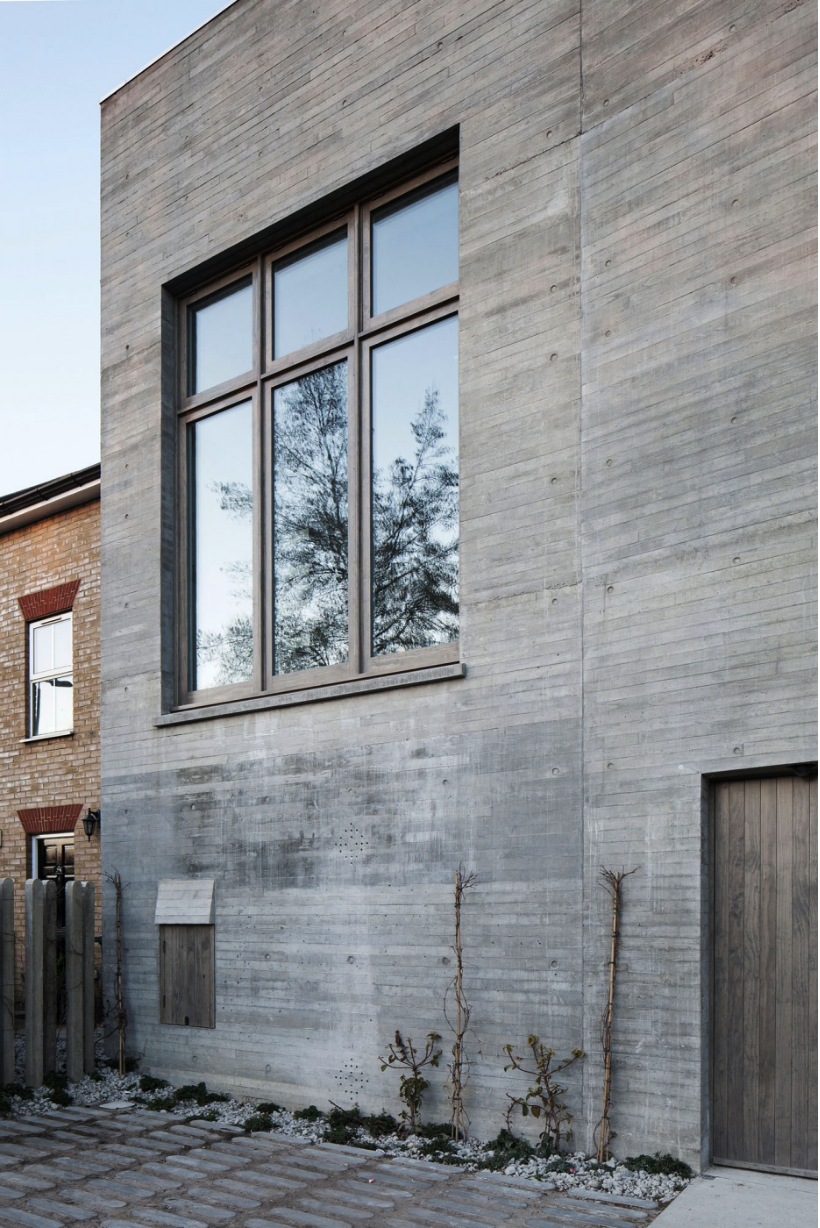
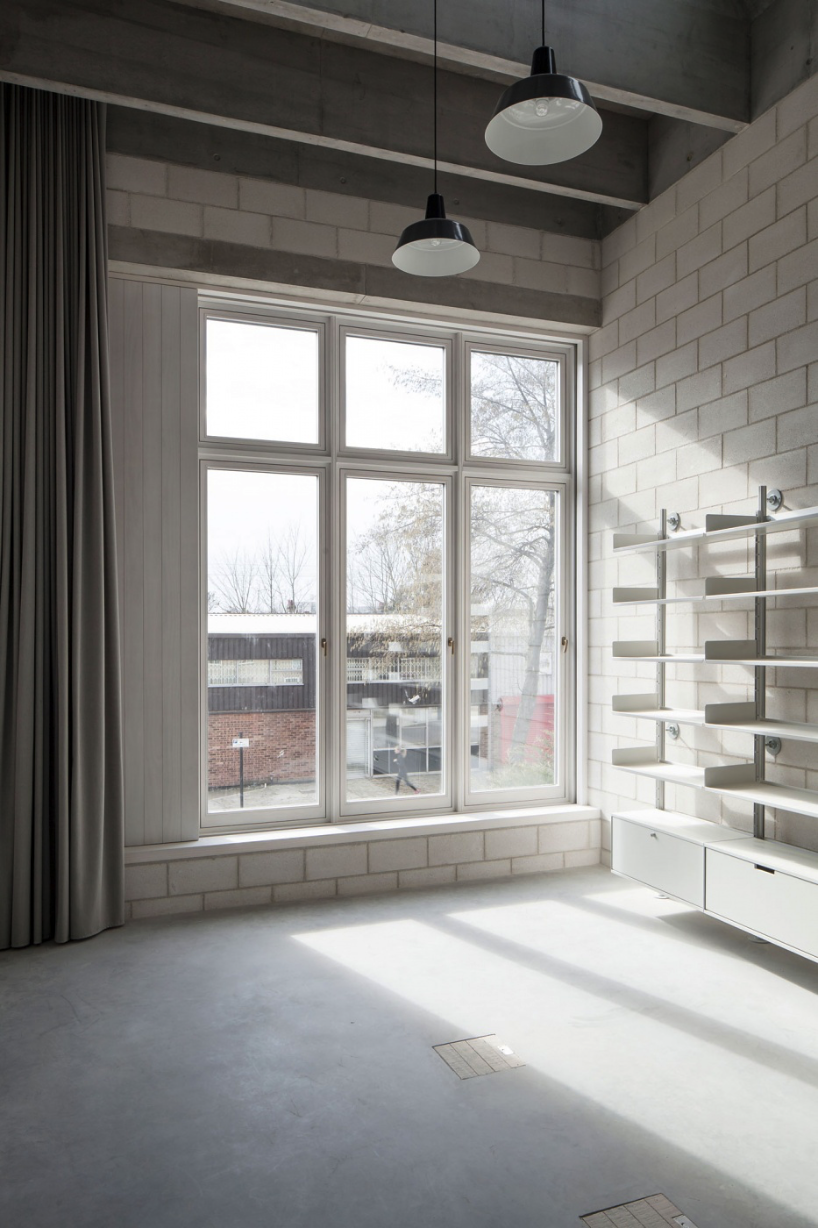
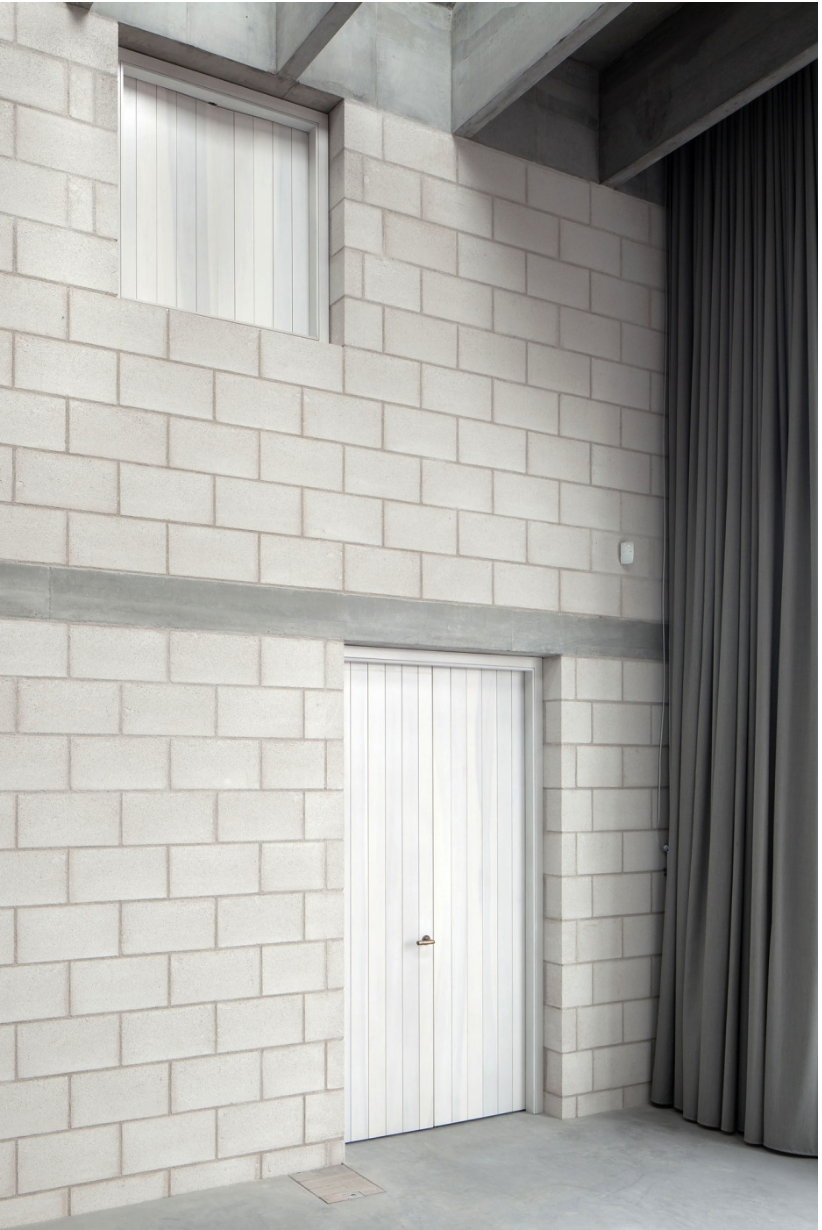
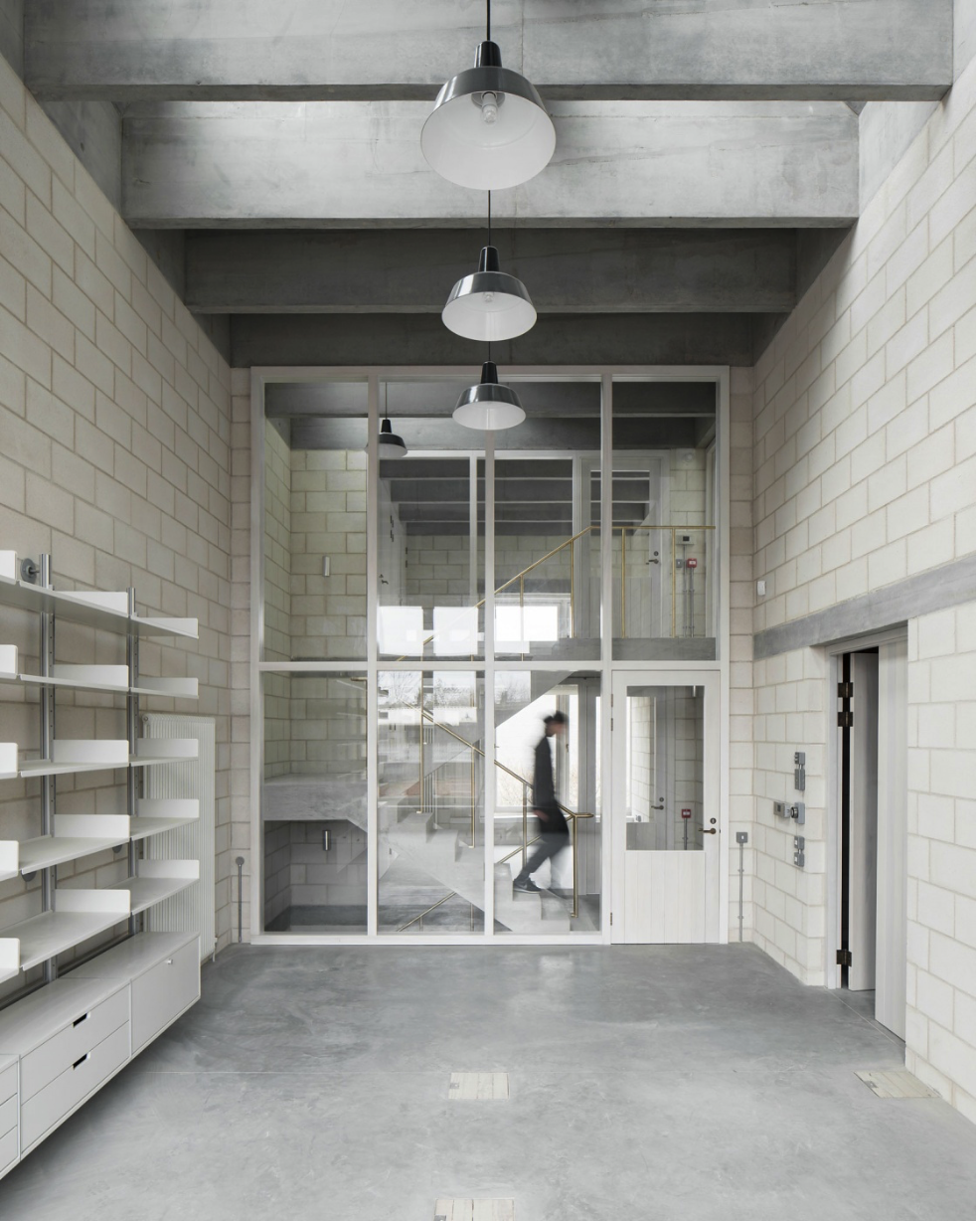
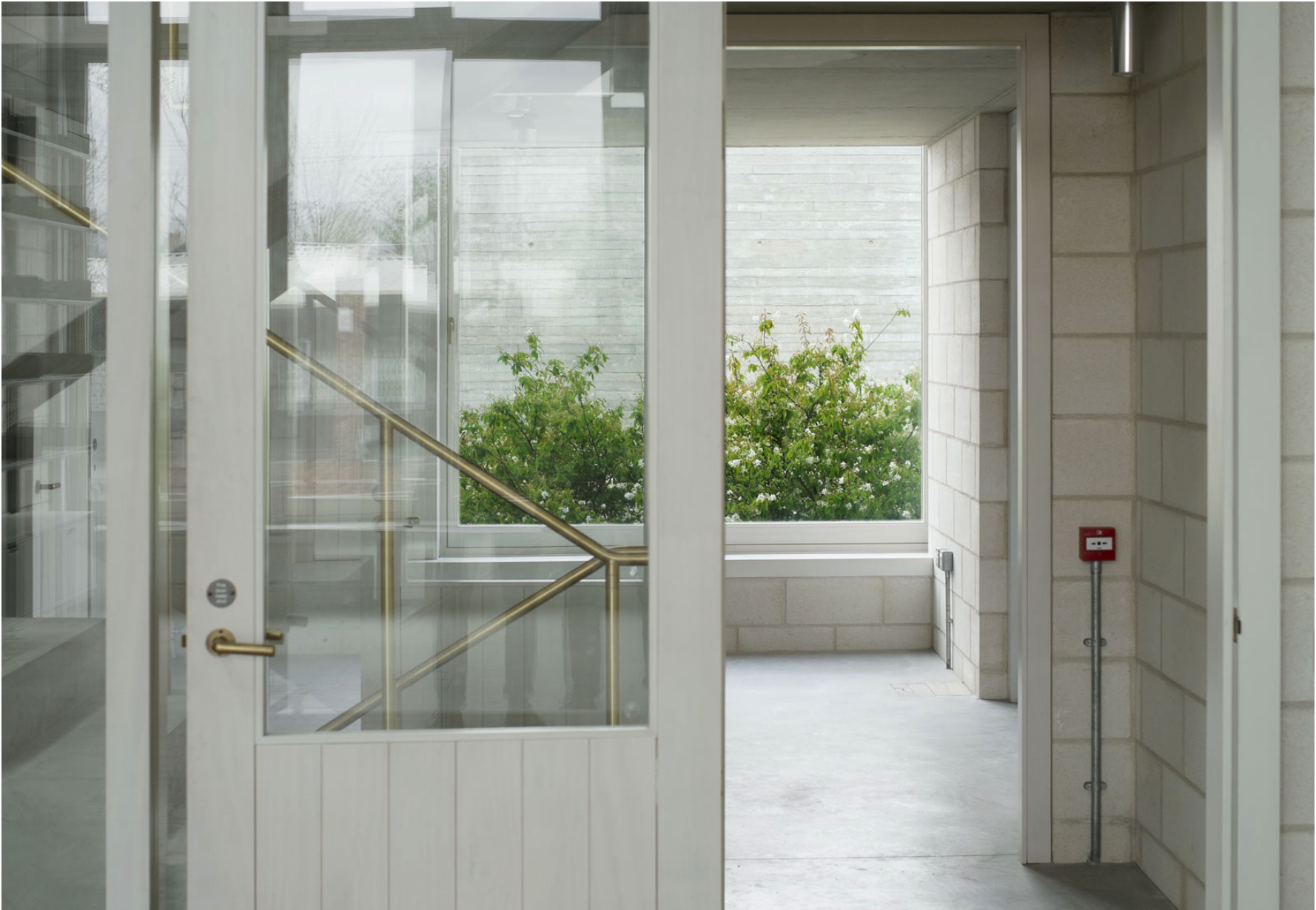
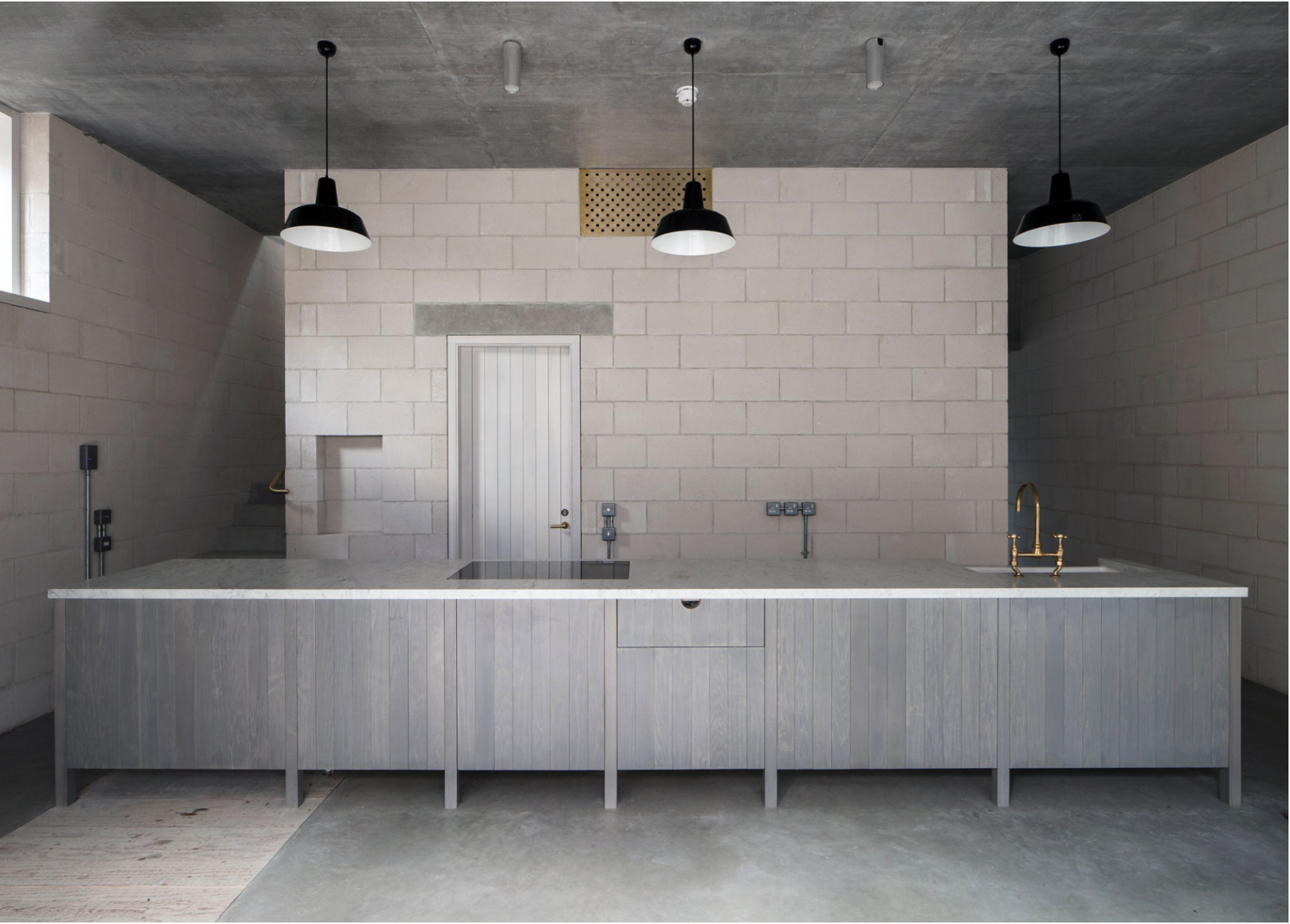
The Juergen Teller Studio is a photography studio and office complex in North Kensington, West London, designed by Tom Emerson for artist Juergen Teller. Completed in 2016, the project consists of three new volumes constructed on a formerly vacant urban lot, serving as Teller’s studios, archive, and administrative spaces. The buildings are located behind a row of houses in a mixed residential and light-industrial context. The complex functions as a creative studio and gallery space, organized around a central courtyard with a shallow reflecting pool. Emerson’s design adopts a raw industrial aesthetic defined by concrete block and brick walls, exposed concrete beams, untreated mild steel details, and large pivoting metal-framed windows. Interiors use polished concrete flooring and minimal finishes to support flexible use. The courtyard and pool provide both spatial organization and passive lighting benefits, with the water reflecting light into the surrounding workspaces. The project received the RIBA London Building of the Year award and was shortlisted for the Stirling Prize. The studio is recognized for redefining the typology of the artist’s workspace through precise detailing and spatial clarity using utilitarian materials.



04. Cowan Court, Cambridge (2016)
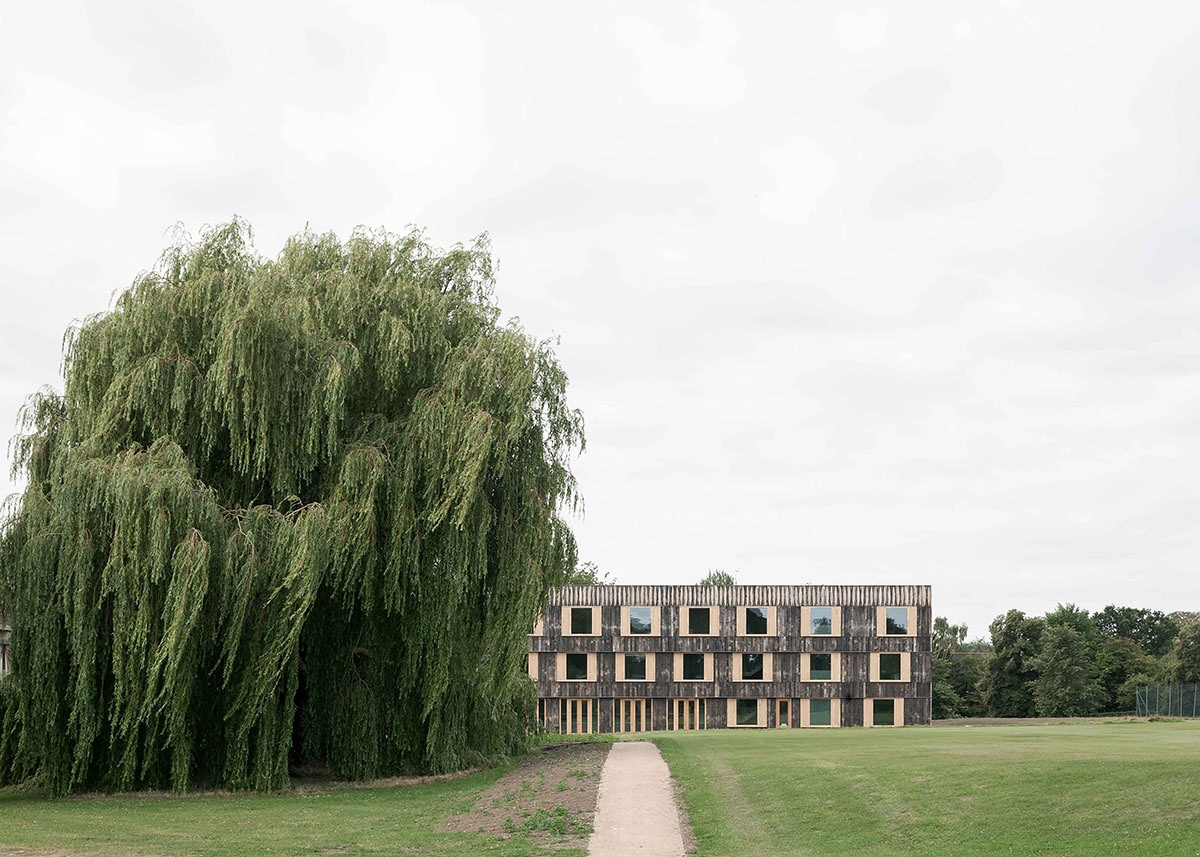
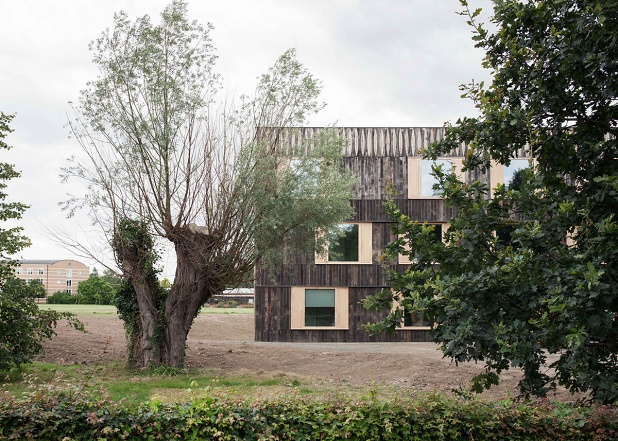
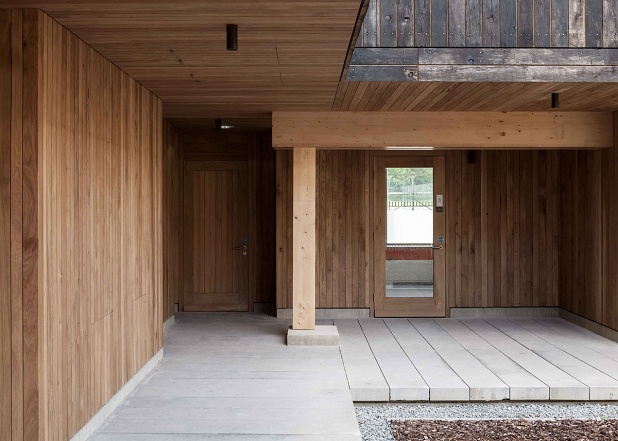
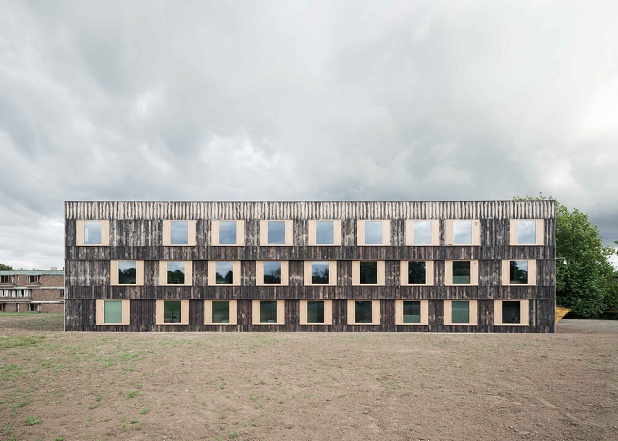
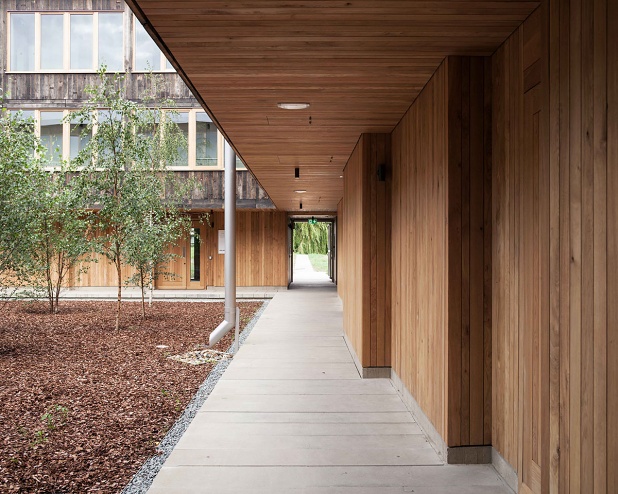
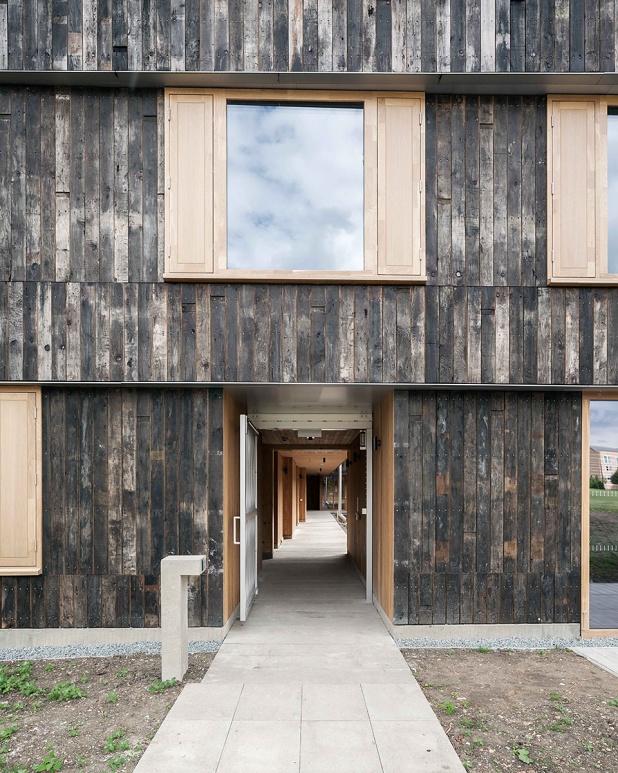
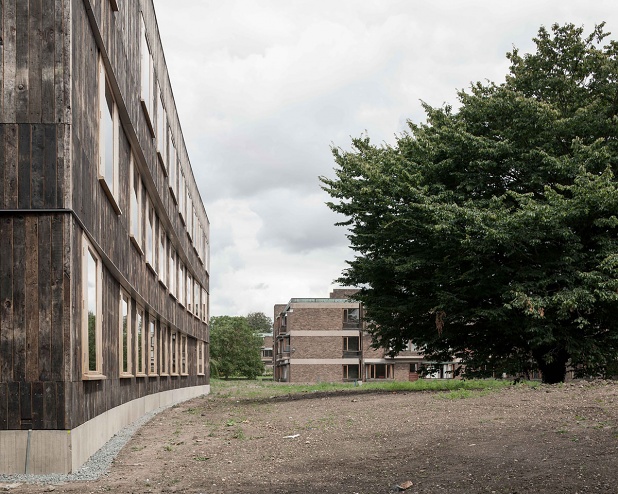
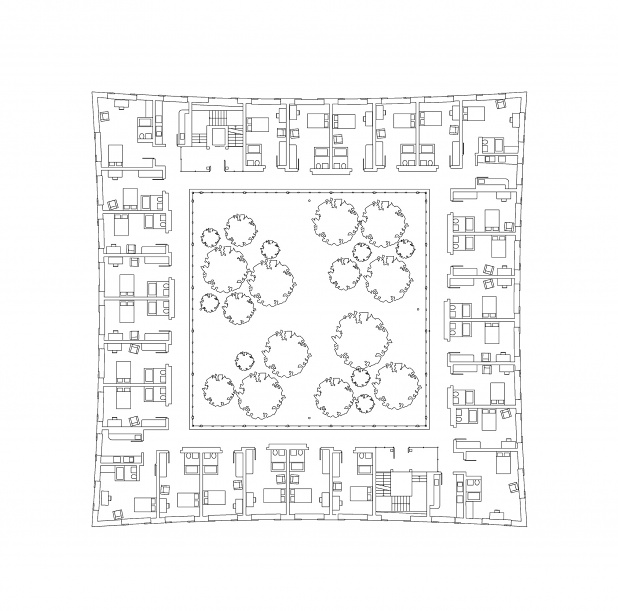
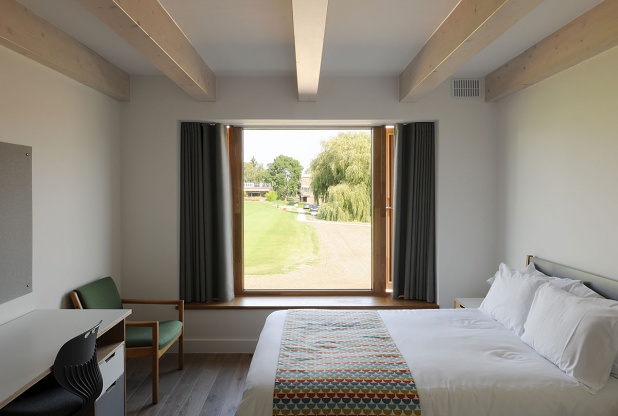
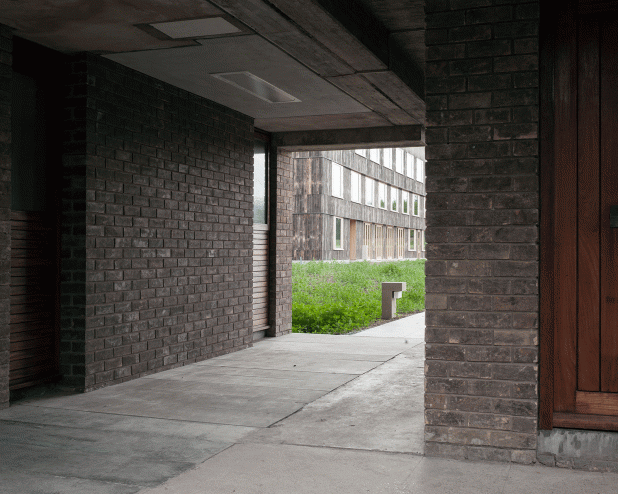
Cowan Court is a student residence at Churchill College, University of Cambridge, designed by Tom Emerson and completed in 2016. The building forms a three-story quadrangle that adds a new court to the modernist campus. Located within the Churchill College grounds in Cambridge, the project engages directly with the college’s original 1960s architecture by Sheppard Robson. Cowan Court is a contemporary reinterpretation of the traditional Cambridge collegiate court, aligning with mid-century modern language through updated material strategies. The building is constructed primarily from engineered timber and clad in oak panels, in deliberate contrast to the original concrete structures. The façade includes over 300 oak panels in a modular grid that will weather over time. Large windows align with the campus’s geometric layout while incorporating high-performance glazing. The interior exposes timber beams and ceilings, with cork flooring and other natural materials. The structure encloses a landscaped courtyard with a single tree at the center, mirroring the college’s original plan. Cowan Court received an RIBA East Award and was recognized for sustainable design. The project demonstrates how Emerson extends Cambridge’s architectural legacy through low-energy, context-responsive student housing.
05. MK Gallery, Milton Keynes (2019)
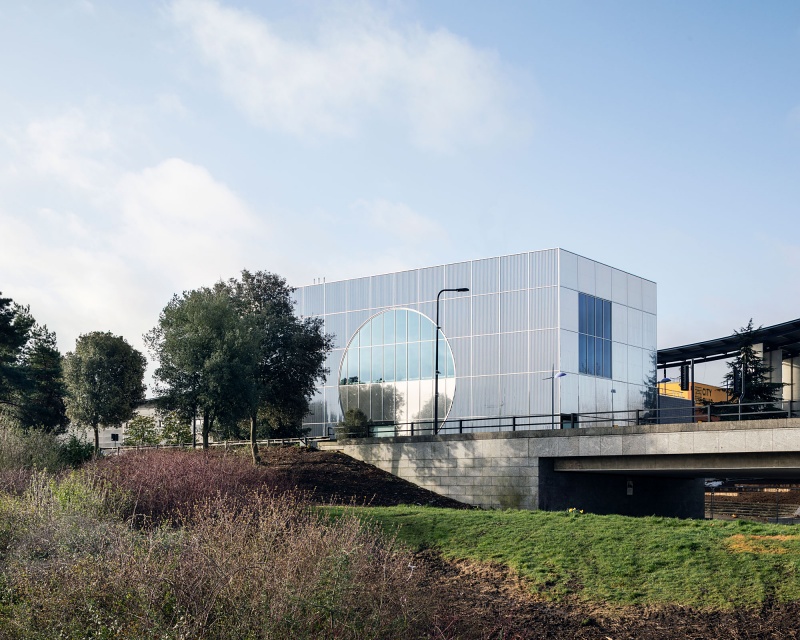
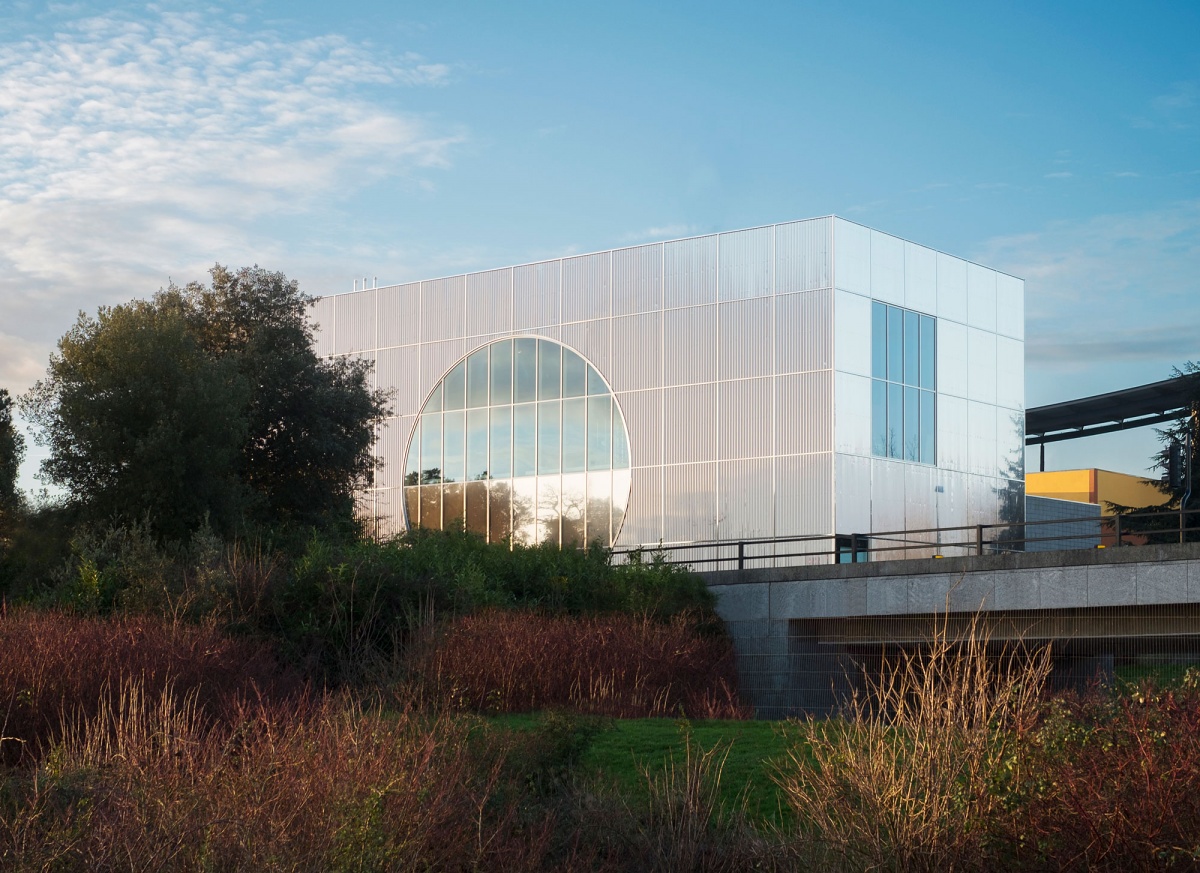
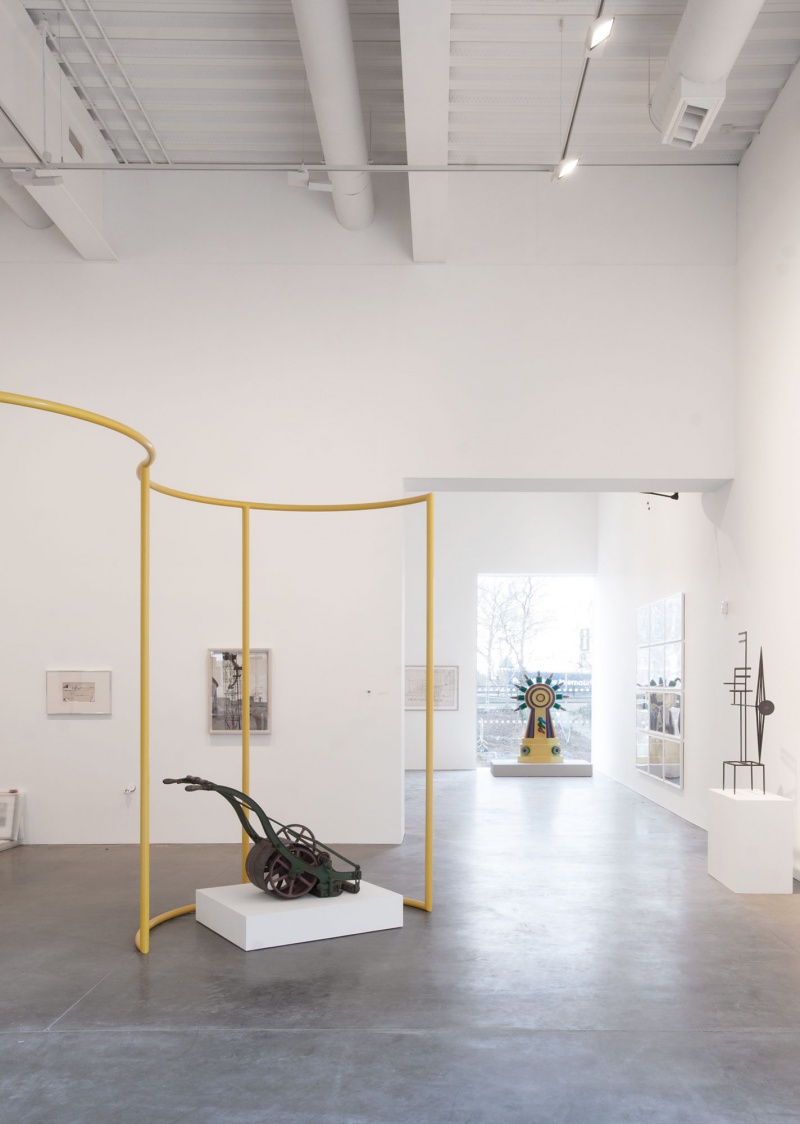
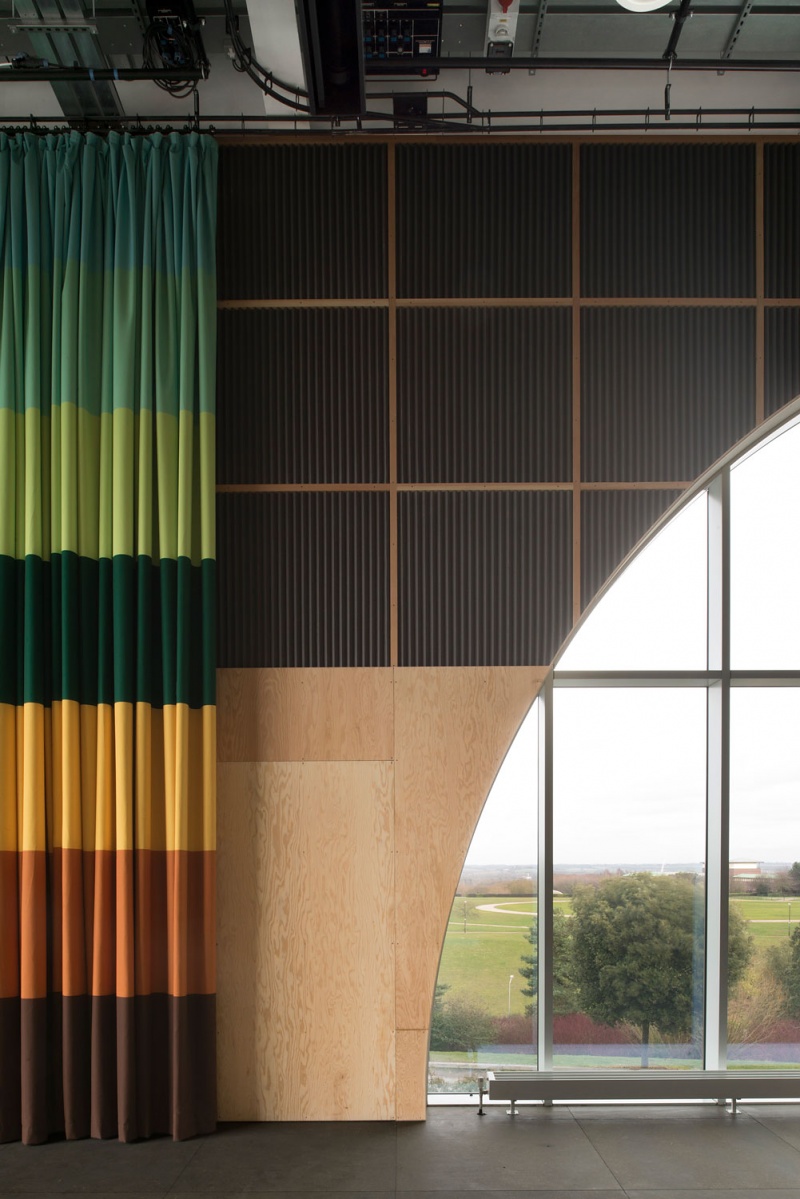
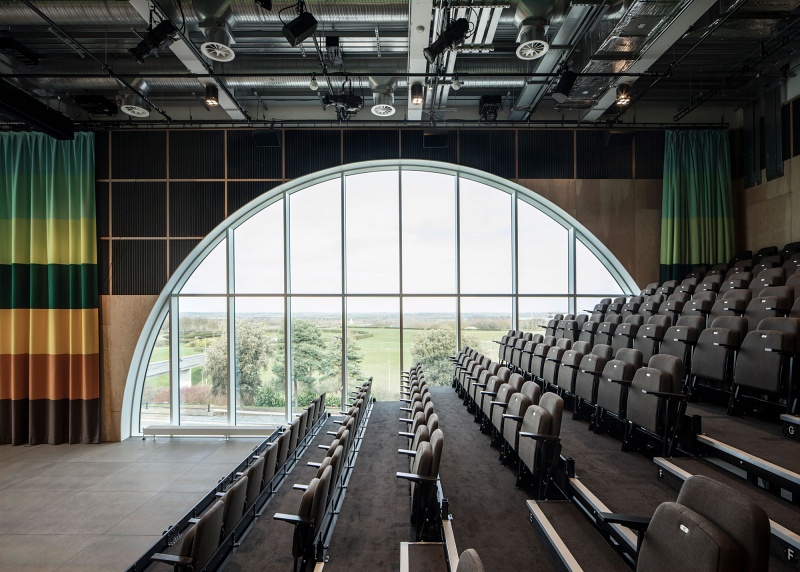
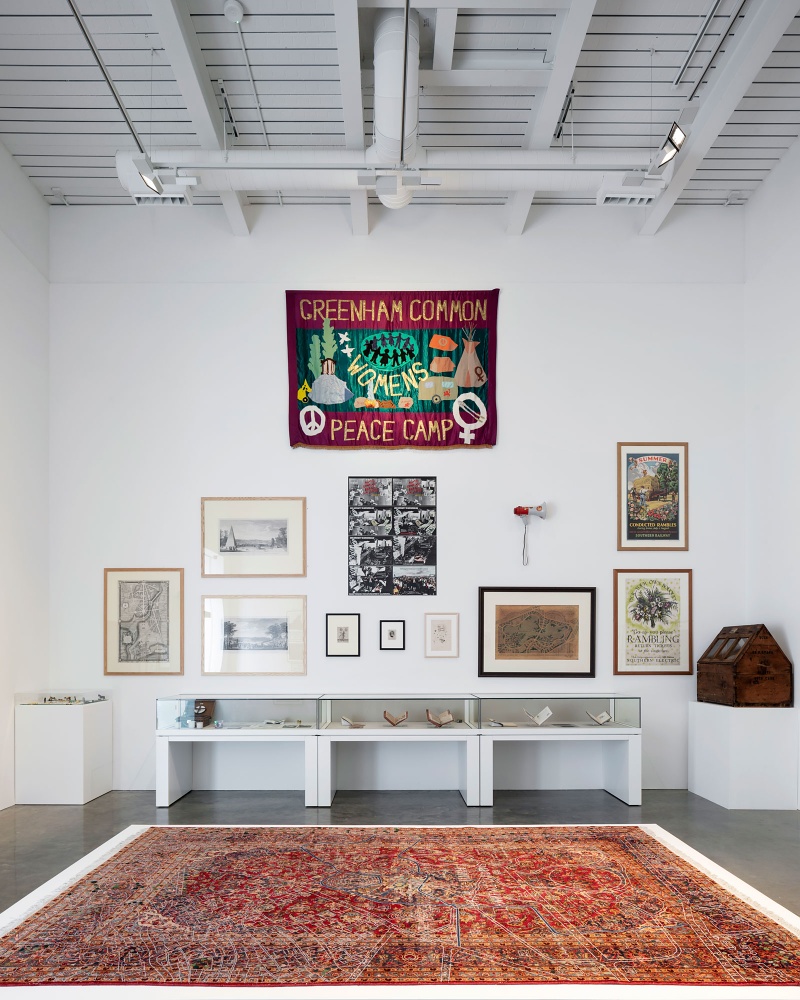
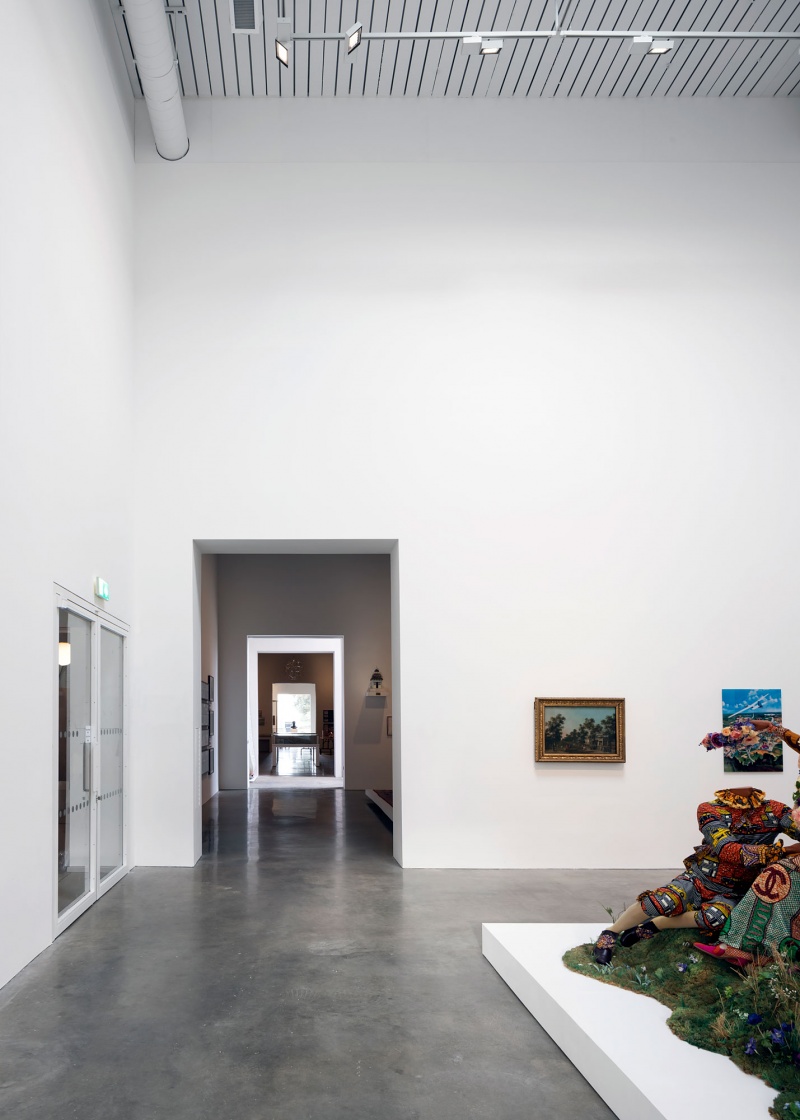
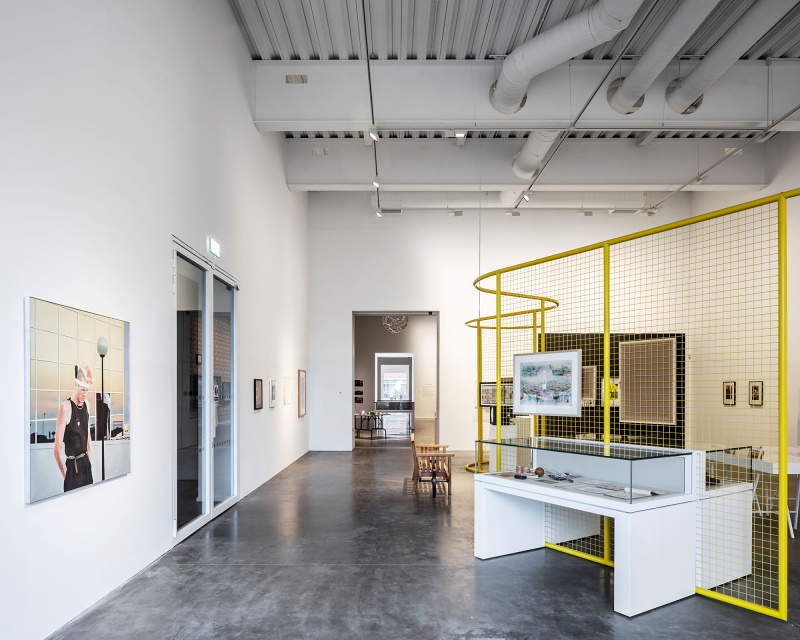
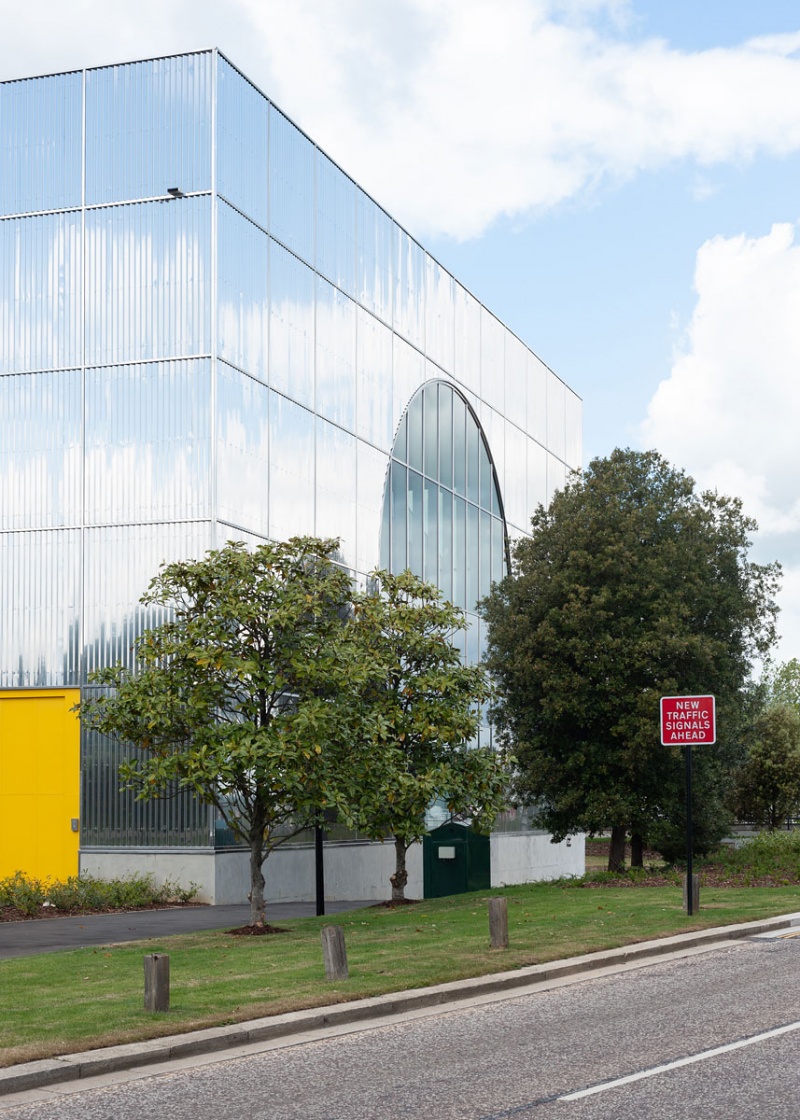
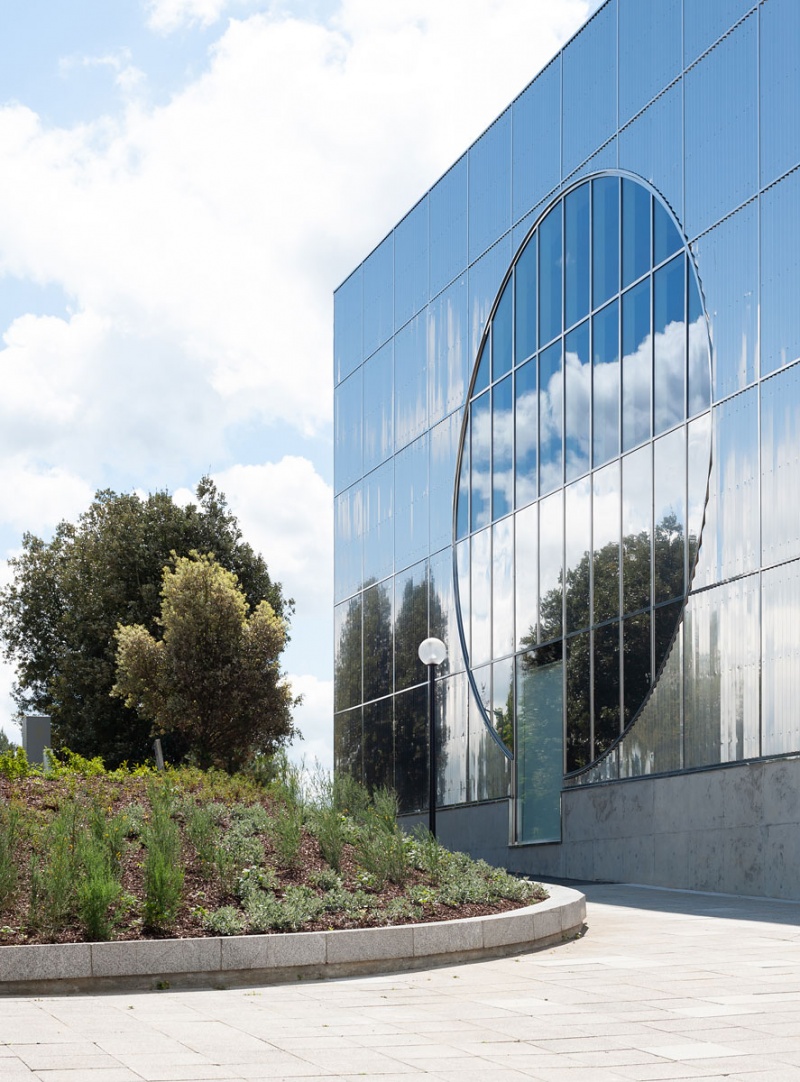
The MK Gallery expansion in Milton Keynes, England, is a cultural project by Tom Emerson completed in 2019. Located at the edge of Campbell Park in the city center, the building serves as a public art gallery and community arts venue. Originally a municipal gallery opened in 1999, it was expanded and reconfigured by 6a architects to include a new wing and tower element, doubling its size. The design combines refurbishment and extension. The façade incorporates mirrored glass, brick, and brightly colored tiles arranged in geometric patterns that reference Milton Keynes’ early modernist planning. Interior spaces include five exhibition galleries, an auditorium, education rooms, and a café. Materials are utilitarian: white gallery walls, polished concrete floors, painted steel structure, and timber finishes. MK Gallery received multiple regional architecture awards and was named “Building of the Year” by The Observer. The project demonstrates Emerson’s method of integrating contemporary architecture with local context through material reference and spatial clarity.






How did Tom Emerson contribute to architecture?
Tom Emerson’s architectural work combines contemporary design with historical context and promotes a research-based, hands-on educational model. In practice, he has shown that modern buildings can enhance their surroundings rather than dominate them. Projects such as Raven Row and the South London Gallery Fire Station illustrate approaches to adaptive reuse and the insertion of modern elements into existing structures. These projects highlight the role of narrative, material, and community engagement in architectural renovation. Emerson’s studio also emphasizes interdisciplinary collaboration, working with artists, horticulturalists, and engineers to integrate diverse expertise into the design process. In academia, Emerson has influenced architectural education through his role as Professor at ETH Zurich, and previously at the Architectural Association and the University of Cambridge. At ETH, his Studio Tom Emerson gained recognition for projects such as the Pavilion of Reflections, a floating structure on Lake Zurich built with students. His teaching merges design, construction, and research, encouraging an educational model that prioritizes context, material experimentation, and direct engagement with site and craft.
What awards and honors has Tom Emerson received?
Tom Emerson has received awards and honors in recognition of his contributions to architecture, including:
- Officer of the Order of the British Empire (2021) – Appointed OBE in the Queen’s New Year Honours for services to architecture and education.
- Royal Academician of the Royal Academy of Arts (2023) – Elected as an RA in recognition of contributions to the arts.
- Heinrich Tessenow Gold Medal (2023) – International award recognizing architectural clarity and craftsmanship.
- Erich Schelling Medal for Architecture (2012) – Awarded as part of the Schelling Architecture Foundation program, recognizing 6a architects’ early theoretical contributions.
- Conrad Ferdinand Meyer Prize (2018) – Swiss cultural prize acknowledging Emerson’s academic and architectural work in Zurich.
- RIBA Stirling Prize Nomination (2017) – Shortlisted for the Juergen Teller Studio by the RIBA, as part of its annual Stirling Prize program.
Tom Emerson’s practice, 6a architects, has received multiple Royal Institute of British Architects (RIBA) National and Regional Awards between 2011 and 2023 for projects including Raven Row in 2011, the Juergen Teller Studio which was named London Building of the Year in 2017, the South London Gallery Fire Station which won a National Award in 2019, and MK Gallery, which received the South Award in 2021. In 2020, the Italian magazine Domus named 6a one of the world’s 50 best architectural practices.
Did Tom Emerson change the architecture industry?
Tom Emerson has influenced the architecture industry, particularly in demonstrating the value of context-focused design and integrated practice. While his name is not as globally recognized as some well-known architects, Emerson’s influence can be seen in how younger practices approach renovations and cultural projects. By achieving visibility with designs that are modest in scale but grounded in narrative and craftsmanship, he shifted ideas about what contemporary architecture can prioritize. His projects illustrated that reimagining an old building, rather than demolishing it, can lead to outcomes recognized by major awards—an approach increasingly used in sustainable architecture. Emerson’s practice has intersected with shifts in industry norms around collaboration and education. At 6a architects, working closely with artists, landscape designers, and researchers on each project was not common when the firm began; today, interdisciplinary teams are more frequently used. His academic work has shaped professional practice: the emphasis on research and making in his teaching has influenced a generation of architects who carry those methods into their firms.
Was Tom Emerson ever controversial in any way?
Tom Emerson’s career has been notably free of public controversy. He is regarded for maintaining a low public profile and has not been associated with high-profile conflicts or scandals. There have been no major personal or ethical issues reported in connection with his work. His professional conduct and collaborative working methods are consistently described as measured and respectful within the field. At times, some projects by 6a architects have prompted discussion within architectural circles. For example, during the conversion of historic buildings such as the South London Gallery’s Fire Station, there were differing views on how much of the original fabric to retain and how visible new additions should be. These design questions were addressed through revisions and consultation, and are typical of heritage-related projects. Completed works have generally been described as sensitive responses to their contexts. Emerson tends to work with arts institutions and community-based organizations, and his designs have typically been well received by clients and users. He has not taken part in politically sensitive developments or large-scale commercial projects that often generate public debate.
Who are the most famous architects in modern history besides Tom Emerson?
Aside from Tom Emerson, architects such as Frank Gehry, Norman Foster, and Zaha Hadid are the most famous architects who have shaped modern architecture. Gehry (Canadian-American, born 1929) developed a Deconstructivist style known for sculptural buildings with fragmented forms. His major works include the Guggenheim Museum in Bilbao and the Walt Disney Concert Hall in Los Angeles, both noted for their titanium surfaces and complex geometries. Foster (British, born 1935) is associated with High-Tech architecture and has designed projects such as the HSBC Headquarters in Hong Kong and 30 St Mary Axe in London. He received the Pritzker Architecture Prize in 1999. Hadid (Iraqi-British, 1950–2016) was the first woman to win the Pritzker Prize in 2004. Her buildings, including the MAXXI Museum in Rome and the Heydar Aliyev Center in Baku, are characterized by fluid geometries and complex engineering. Beyond these global figures, modern architecture includes many British architects across generations. Among established practitioners are David Adjaye (Ghanaian-British, born 1966), designer of the National Museum of African American History and Culture in Washington, D.C., and Alison Brooks (Canadian-British, born 1962), whose housing project Accordia in Cambridge won the Stirling Prize in 2008. Mid-career architects such as Amanda Levete (British, born 1955), known for the MAAT museum in Lisbon; Sadie Morgan (British, born 1969), co-founder of dRMM and designer of the 2017 Stirling Prize–winning Hastings Pier; and Alex de Rijke (Dutch-born British, born 1960), known for timber structures such as the Endless Stair installation in London, have also played significant roles. Among emerging architects, names such as Asif Khan (British, born 1979), designer of the Coca-Cola Beatbox Pavilion at the 2012 London Olympics; Mary Duggan (British, born 1972), known for the redesign of the Garden Museum in London; David Kohn (British, born 1972), architect of the Skyroom rooftop pavilion in London; and Hikaru Nissanke (British-Japanese, born 1983), co-founder of OMMX, have gained recognition.
What did Tom Emerson mostly design?
Tom Emerson has primarily designed cultural, educational, and residential architecture, often focusing on adaptive reuse and integration with the surrounding context. His portfolio can be grouped into several categories:
- Art Galleries and Cultural Spaces: A significant portion of Emerson’s work consists of museums, galleries, and arts venues. Examples include Raven Row in London, MK Gallery in Milton Keynes, and the South London Gallery extensions. These projects often transform or extend existing buildings to provide contemporary exhibition halls, studios, or performance spaces while retaining historical elements. Emerson’s cultural designs are noted for their compact scale and attention to materials, creating environments that serve both art and public use.
- Educational and Institutional Buildings: Emerson has designed buildings for academic institutions and public programs. The most prominent is Cowan Court at Churchill College, Cambridge, a timber-clad student residence emphasizing sustainable design. His firm has also created libraries, university facilities, and community centers, including Holborn House in London, a neighborhood hub completed in 2022. These buildings prioritize durability, usability, and spatial openness, often incorporating gardens or courtyards.
- Residential and Private Projects: Under Emerson’s direction, 6a architects has designed private homes and residential models, including the Coastal House in Devon and the Black Stone House in London. The firm has also completed interior and retail designs such as the Blue Mountain School in Shoreditch and a flagship store for Paul Smith in Mayfair. Across these projects, Emerson maintains a consistent approach to detail, material use, and local context.
- Temporary Installations and Pavilions: Through academic and professional collaborations, Emerson has engaged in experimental structures and exhibition designs. Notably, students from his ETH Zurich studio built the Pavilion of Reflections in 2016, a floating timber structure for Manifesta 11. Other projects include exhibition displays and public installations that emphasize construction as a form of inquiry.
Emerson’s work extends internationally. Projects include studio buildings in Hamburg’s HafenCity and the CARA art center in New York City, completed in 2022. His current and upcoming projects include the reimagining of Tate Liverpool and a planned mixed-use development in Melbourne. Across locations, his designs maintain a consistent emphasis on context, environment, and architectural continuity.
Where did Tom Emerson study?
Tom Emerson studied architecture in the United Kingdom at several institutions. He completed his undergraduate studies at the University of Bath, where he received technical training with an emphasis on practical design. After working in professional practice, he undertook postgraduate studies at the Royal College of Art (RCA) in London. While studying architecture at the RCA in the late 1990s, he met Stephanie Macdonald, who would later co-found 6a architects with him. The RCA’s interdisciplinary environment supported his interest in the relationship between architecture, art, and theory. Emerson completed a Master’s degree there, producing thesis work focused on cultural context in design. He later pursued further study at the University of Cambridge, where he earned a postgraduate diploma in architecture. His time at Cambridge provided exposure to advanced architectural history and design research. By studying at Bath, the RCA, and Cambridge, Emerson received training across technical, artistic, and academic dimensions of architecture. This educational path shaped a practice that spans building, design research, and teaching.
Did Tom Emerson have any famous teachers or students?
Tom Emerson did not study under a single widely known mentor but learned from several notable figures and has mentored many young architects in turn. During his studies at the Royal College of Art and the University of Cambridge, he was taught by respected architects and theorists, including Dalibor Vesely and Pierre d’Avoine. Emerson later worked for four years with d’Avoine, whose practice in London offered him early professional experience and practical design training. While none of his teachers were internationally prominent figures, they shaped his approach to thoughtful architectural practice. As a teacher, Emerson has influenced a generation of students. He held teaching positions at the Architectural Association and Cambridge before becoming a professor at ETH Zurich. His ETH studio is known for its emphasis on hands-on design and construction. Several of his students have gone on to establish their own practices or win honors such as the ETH Medal for outstanding thesis work. Others have developed their careers through work at 6a architects, applying lessons from Emerson’s teaching and practice.
How can students learn from Tom Emerson’s work?
Students of architecture can learn from Tom Emerson’s work by studying both his design methods and built projects as examples of contextual and material-focused design. A good starting point is to analyze key works such as Raven Row, the South London Gallery Fire Station, and the Juergen Teller Studio. These projects show how new architecture can be integrated into existing environments. For example, Raven Row demonstrates how restoration and minimal intervention can coexist—materials were selected to echo the building’s history, and modern elements were kept understated to enhance the display of art. This illustrates the value of working with a site’s memory and character. Emerson also emphasizes materials and detail. Visiting or studying Cowan Court in Cambridge reveals how choices such as timber cladding and interior finishes contribute to sustainability and user comfort. Students can observe how natural light enters spaces, how old and new are joined, and how movement is shaped—each element reflects a design approach that prioritizes human scale and experience. Reading Emerson’s writings, such as the book Never Modern, which he co-authored, offers further insight. This text outlines 6a architects’ philosophy of engaging with time and context rather than pursuing novelty. It introduces ideas like the “everyday” and “small histories” as design sources, encouraging students to find meaning in ordinary settings. Emerson’s practice also shows the value of collaboration and research. He often works with artists, gardeners, and engineers to inform design. His teaching at ETH Zurich includes students building full-scale pavilions, reinforcing the importance of making, construction knowledge, and teamwork in architectural education.

