

Architects: Ludwig Mies van der Rohe, Lilly Reich
Year: 1929
Photography: Gili Merin, wotjek gurak, gondolas, Greg Kristo, Hans Peter Schaefer, Cl3phact0, Mcginnly, Christian Gänshirt, SANDRO MAGGI, vicens, Ashley Pomeroy, MartinD, Maciek Jeżyk, Adria Goula, Pepo Segura,
Reconstruction Architects: Ignasi de Solà-Morales; Cristian Cirici; Fernando Ramos
Client: Government of Germany (Weimar Republic)
Reconstruction: 1983–1986
City: Barcelona
Country: Spain
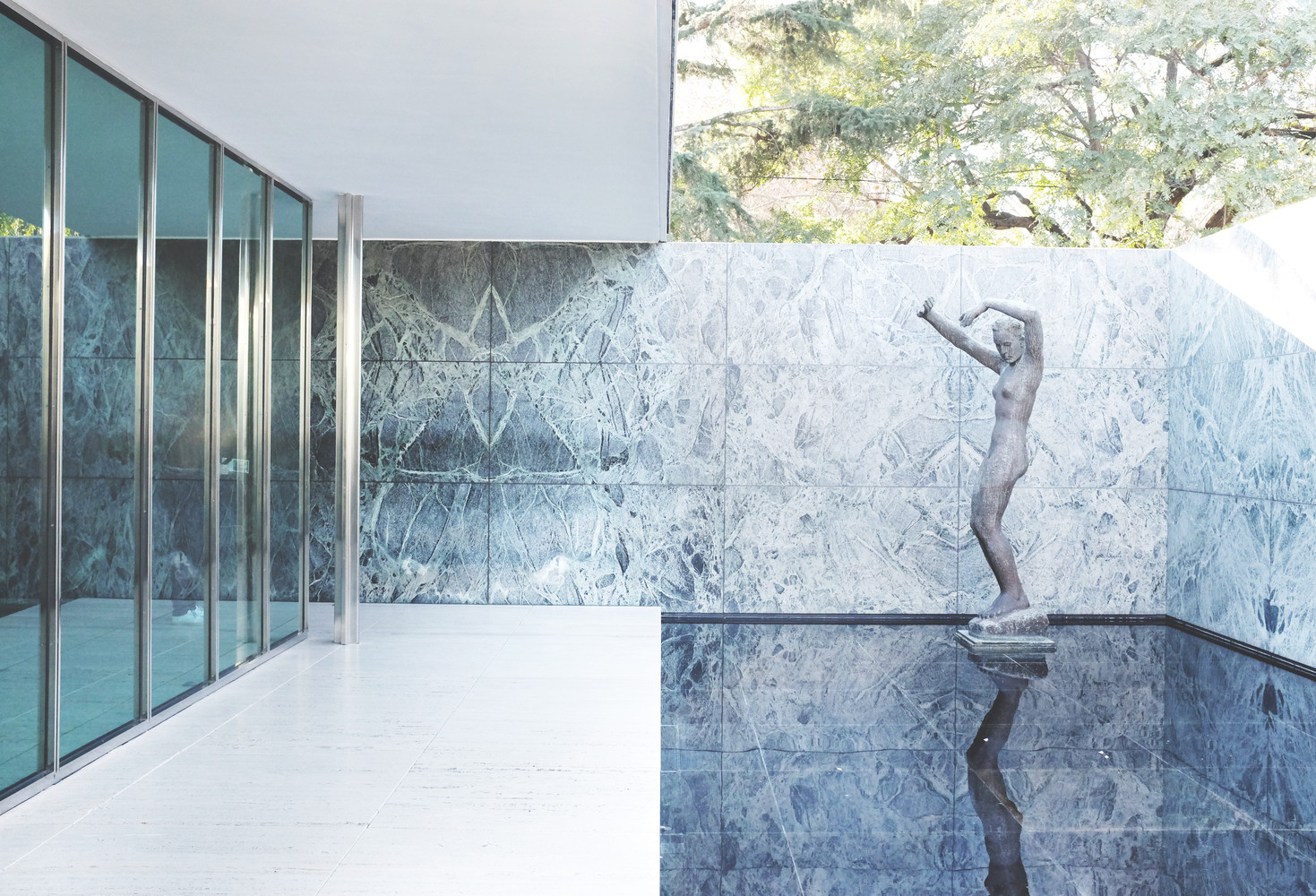
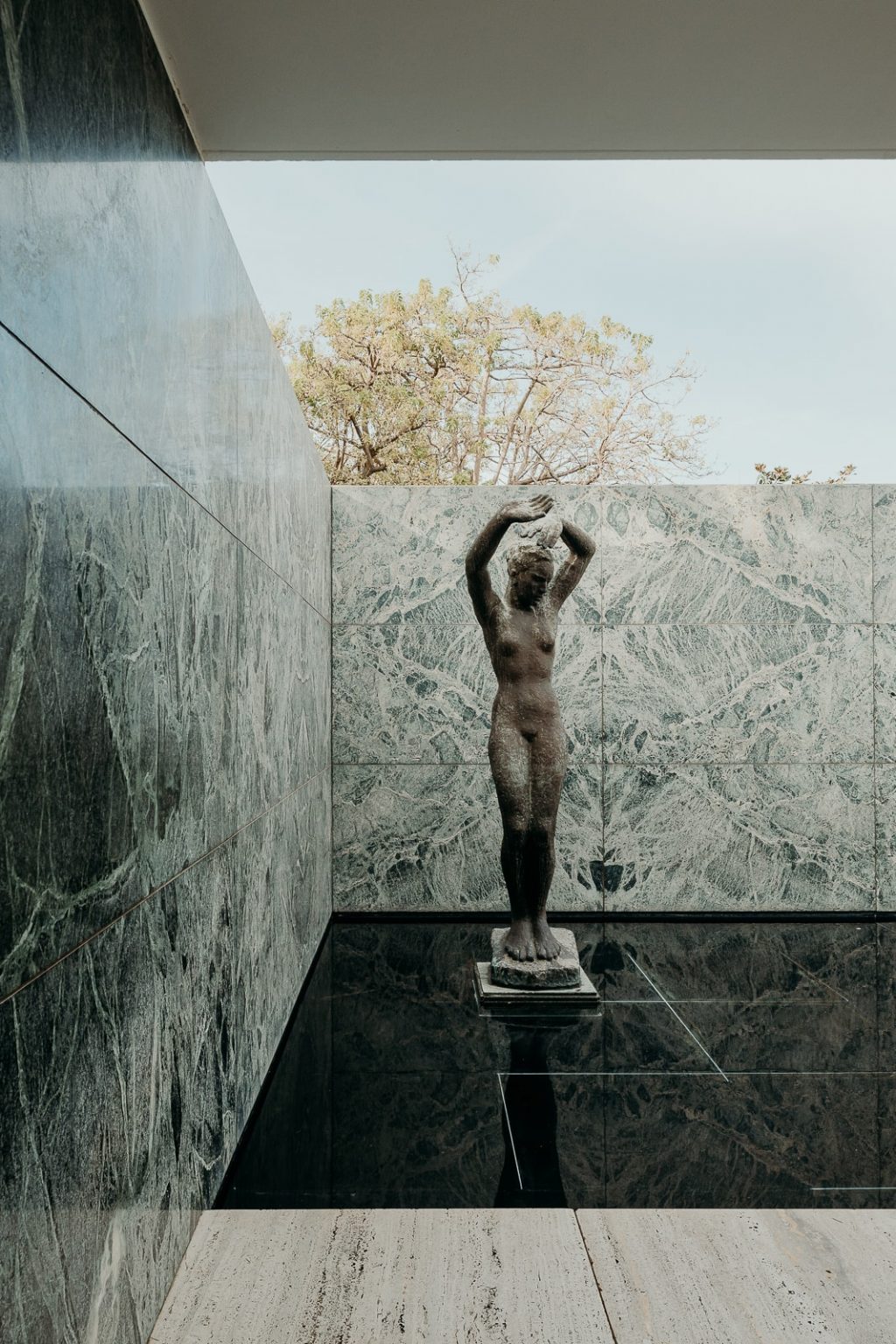
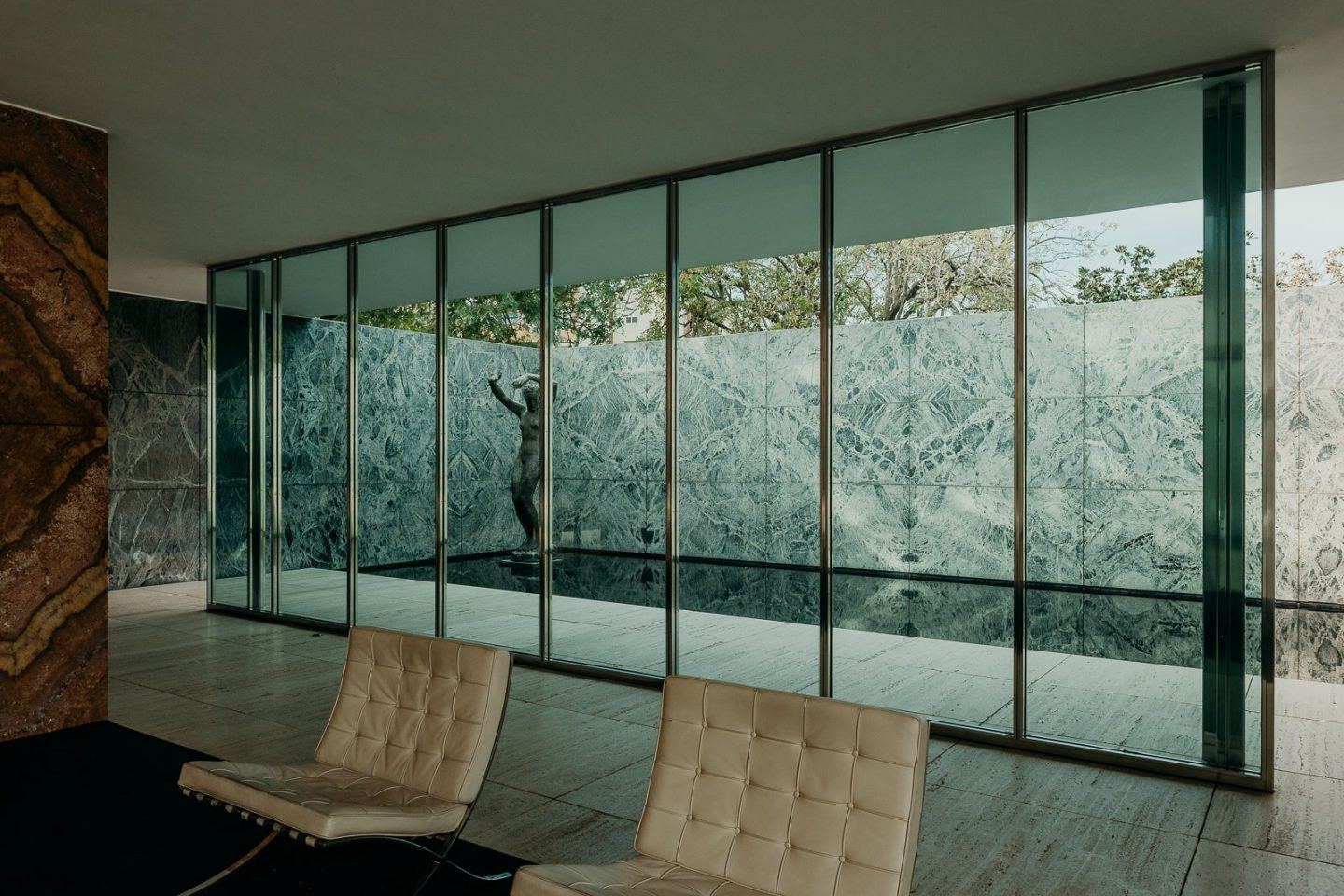
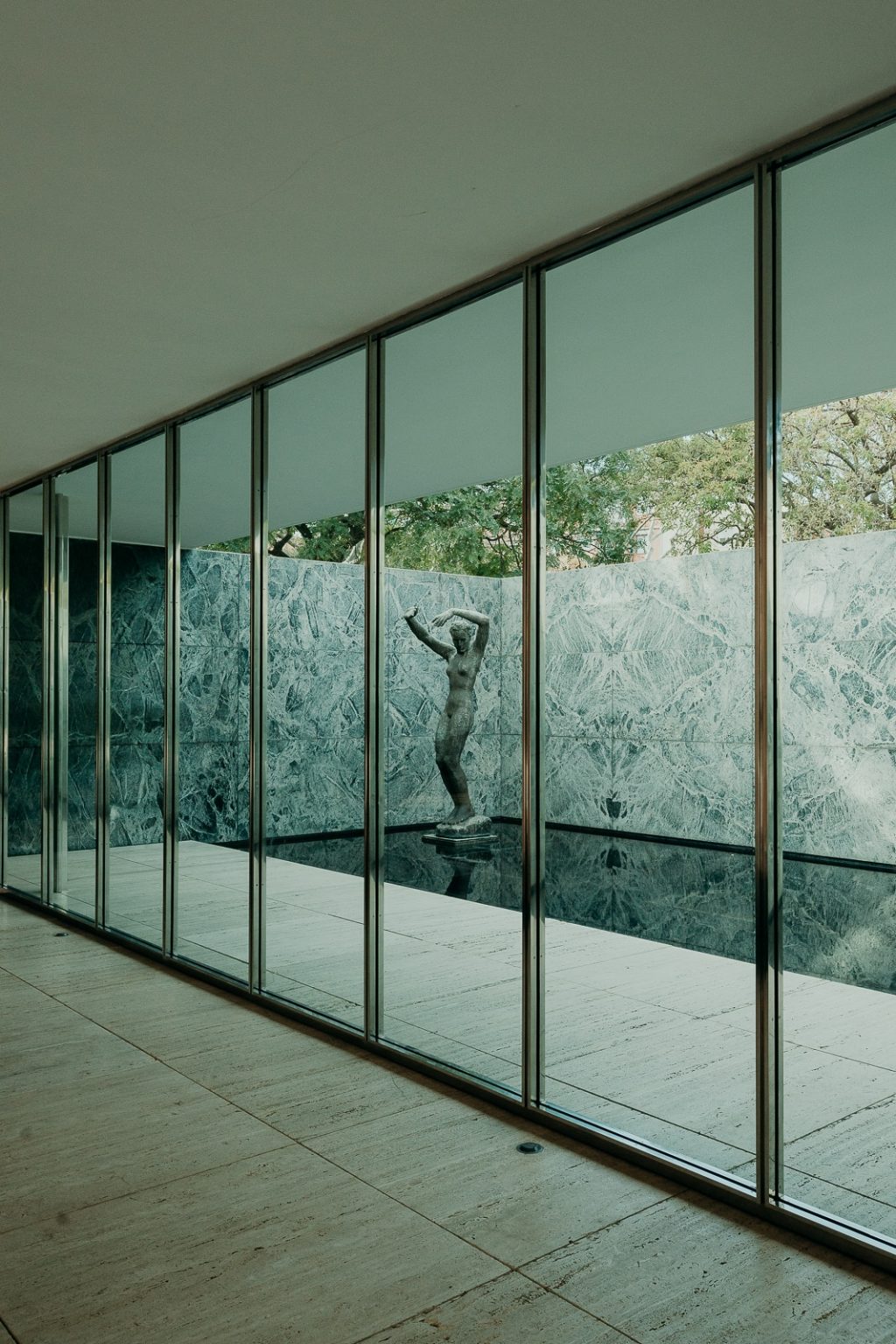
Barcelona Pavilion exhibition building, designed by Ludwig Mies van der Rohe and Lilly Reich in Barcelona, redefined modern architectural space through the free plan, structural clarity, and material precision, completed in 1929 for the International Exposition. Barcelona Pavilion served as the official reception building for the German section and represented the Weimar Republic as progressive and democratic, positioned at Montjuïc on a Roman travertine plinth that frames the structure as an autonomous composition. Barcelona Pavilion is organized by a modular grid of chrome-clad cruciform steel columns and freely arranged marble and glass planes, separating structure from enclosure and enabling continuous spatial flow between interior and exterior. Barcelona Pavilion integrates Roman travertine, green Alpine marble, ancient green marble, golden onyx, tinted glass, and polished steel, while custom furniture, including the Barcelona Chair, forms part of the architectural ensemble. Barcelona Pavilion extends the podium into terraces and two reflecting pools, one framing Georg Kolbe’s sculpture Alba, reinforcing reflection and alignment. Barcelona Pavilion was dismantled in 1930 and reconstructed between 1983 and 1986 by Ignasi de Solà-Morales, Cristian Cirici, and Fernando Ramos, and it now operates under the Fundació Mies van der Rohe as a permanent architectural reference.
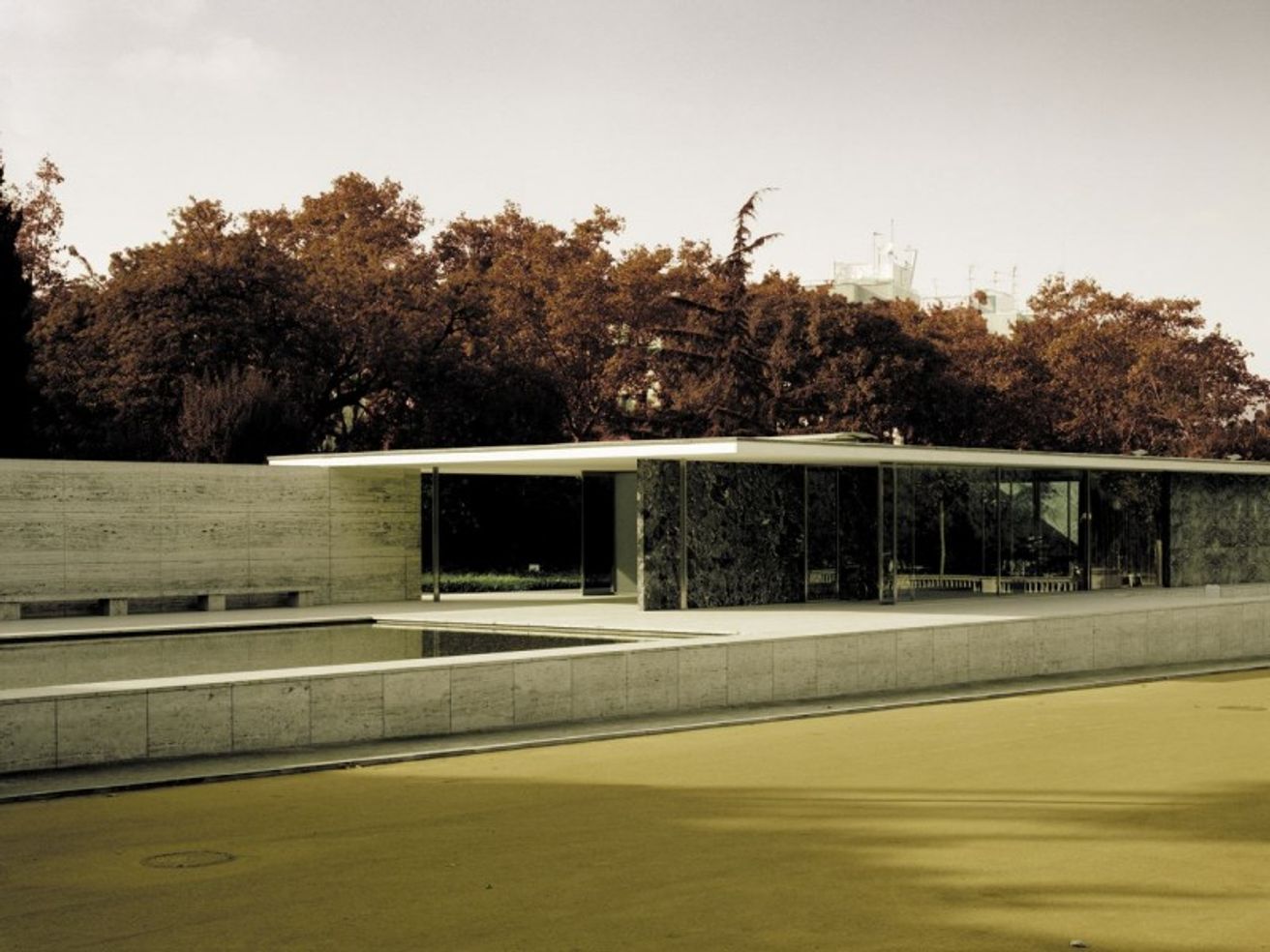
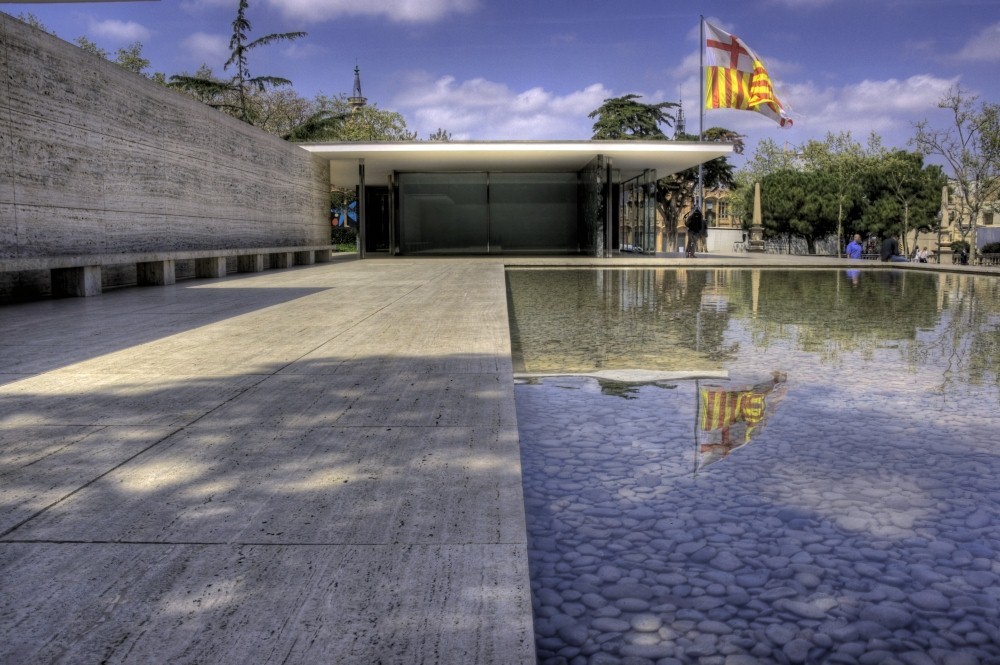
Barcelona Pavilion, designed by Ludwig Mies van der Rohe and Lilly Reich for the 1929 International Exposition in Barcelona, redefined modern architectural space through the free plan, structural clarity, and material precision. Conceived as the official reception building for the German section, the pavilion presented the Weimar Republic as progressive and democratic following World War I. The building occupies a quiet site at Montjuïc and rises on a Roman travertine plinth that establishes separation from the surrounding ground and frames the composition as an autonomous object.
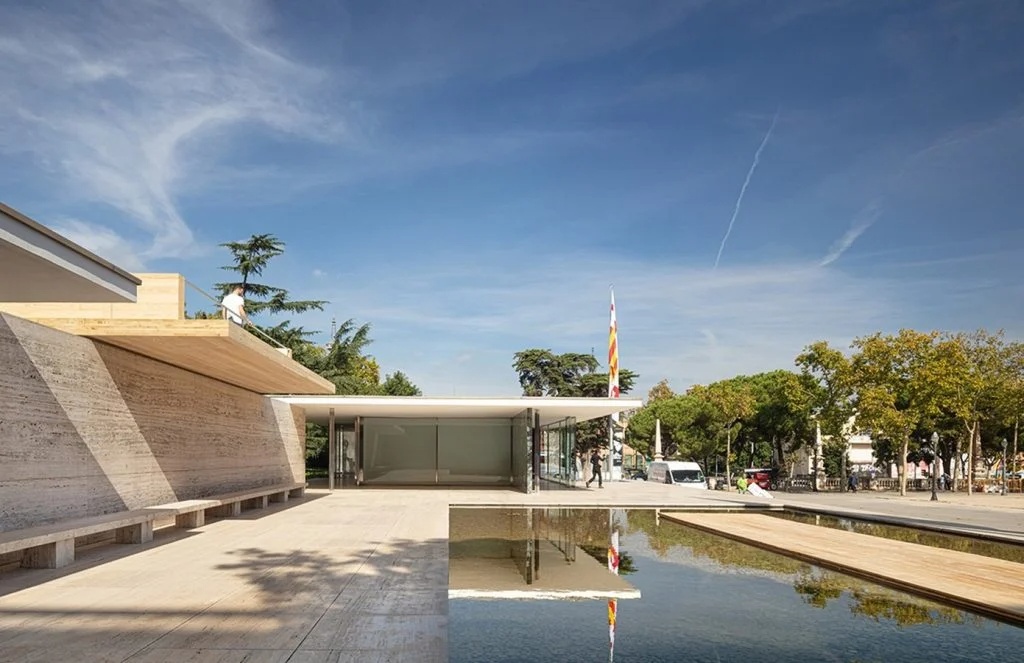
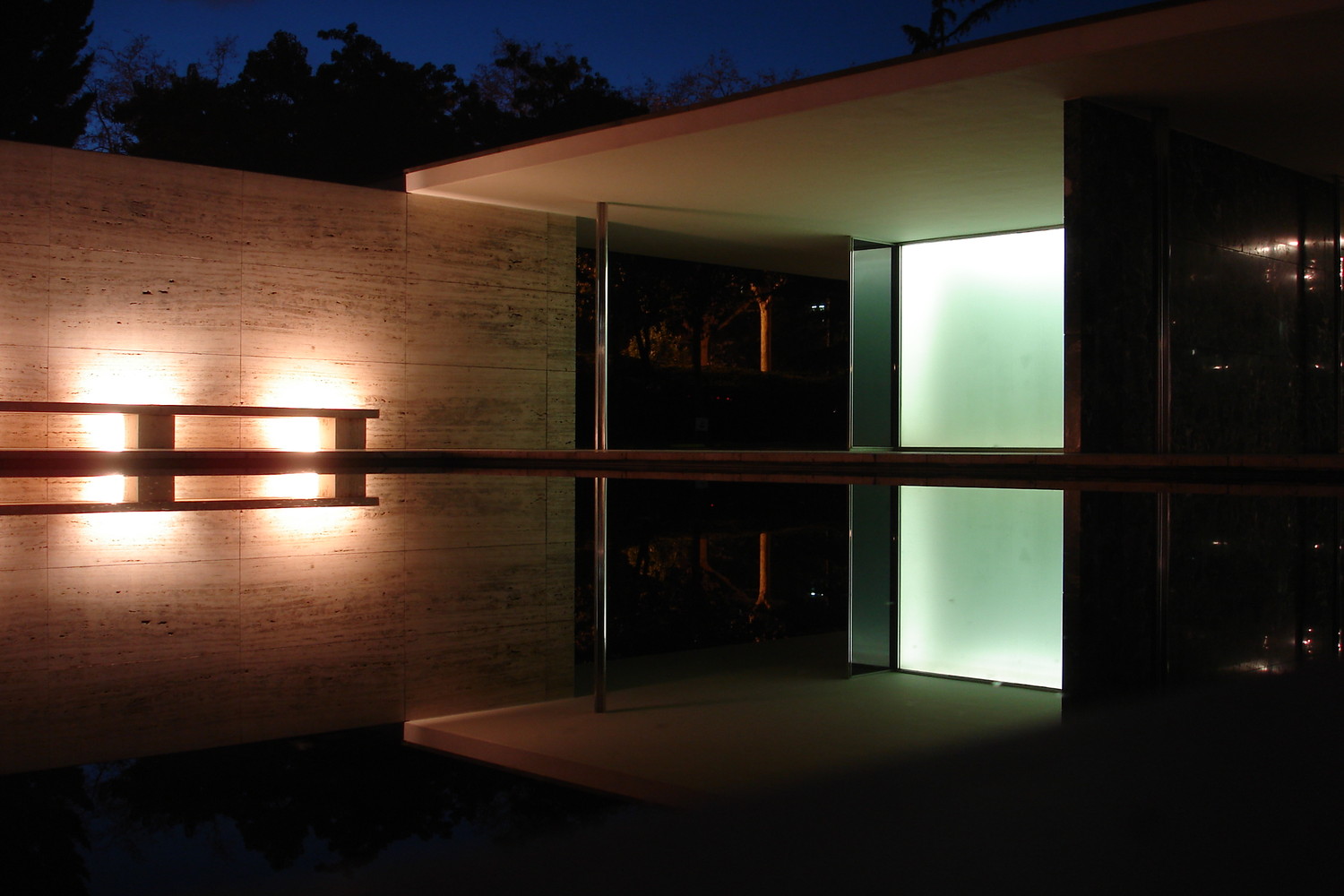
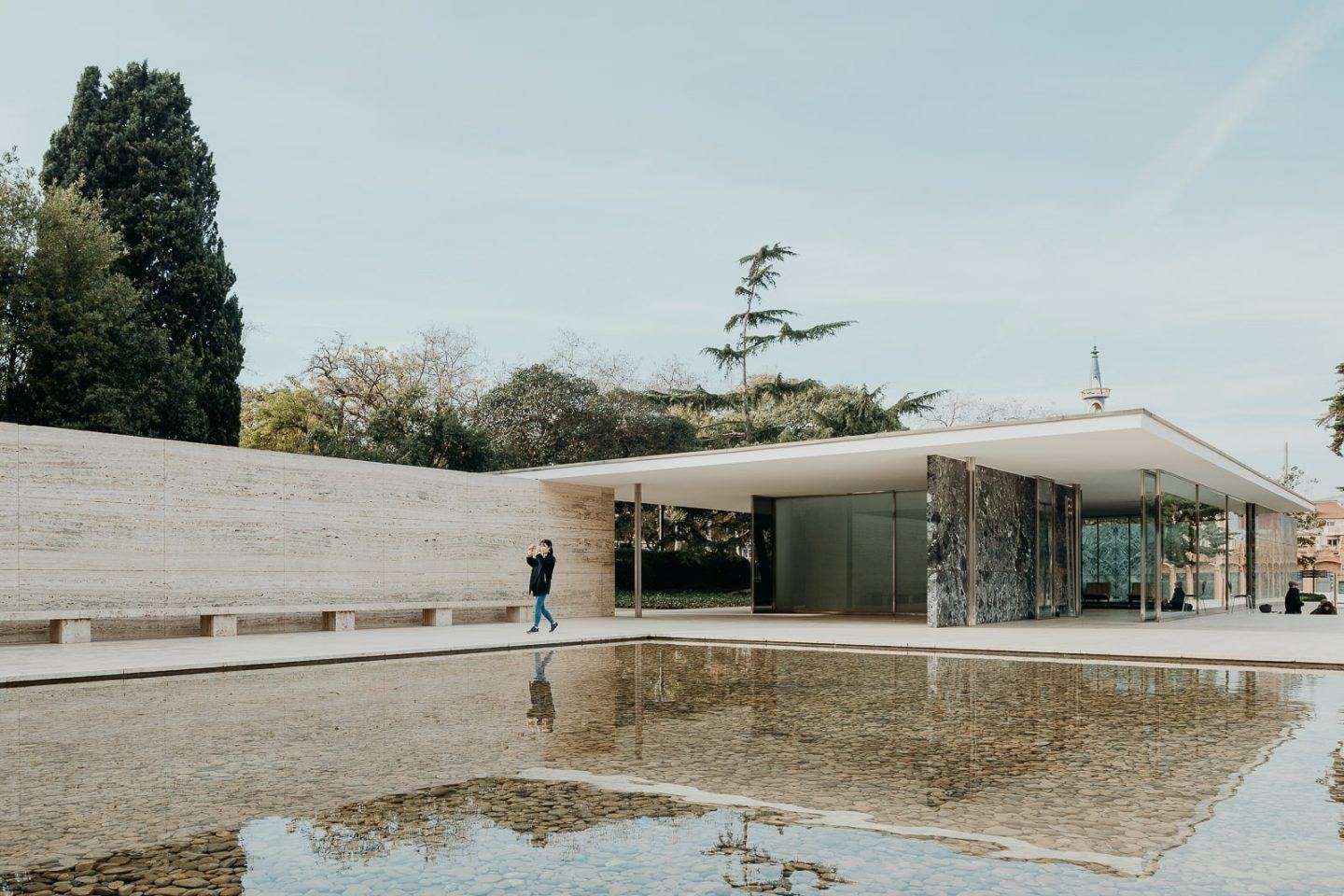
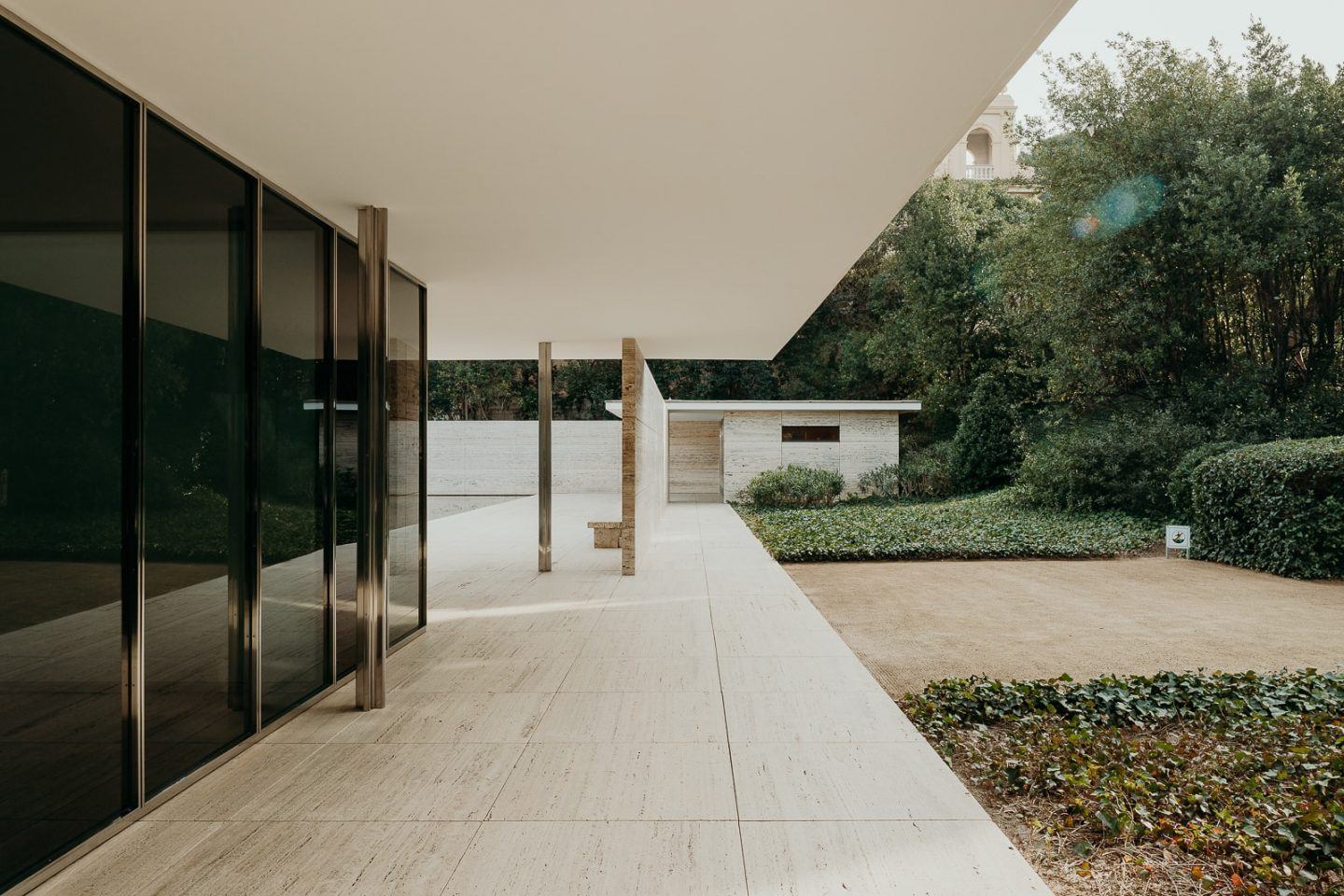
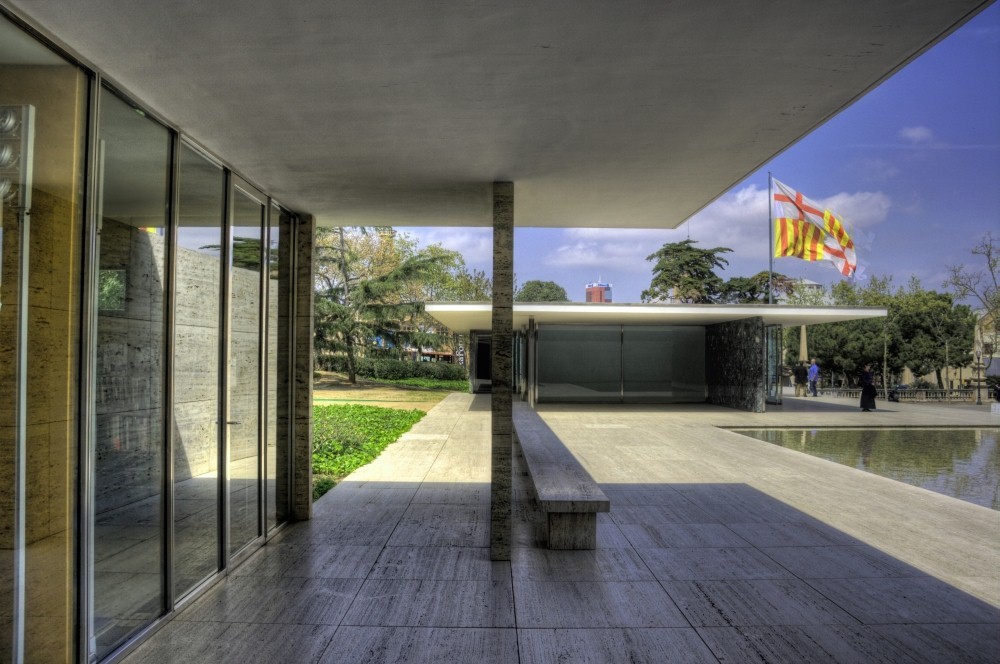
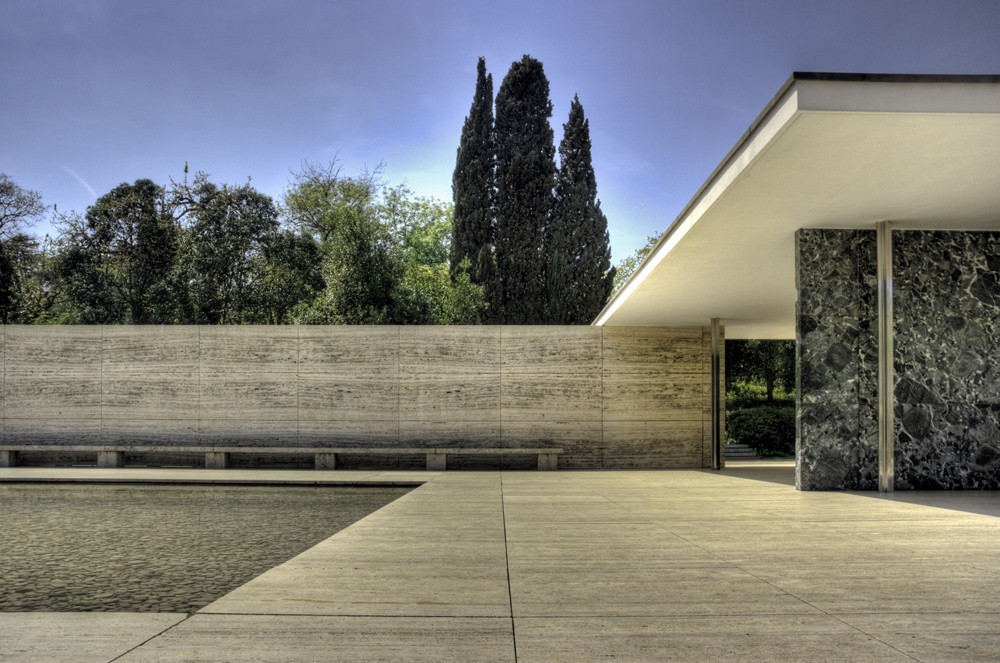
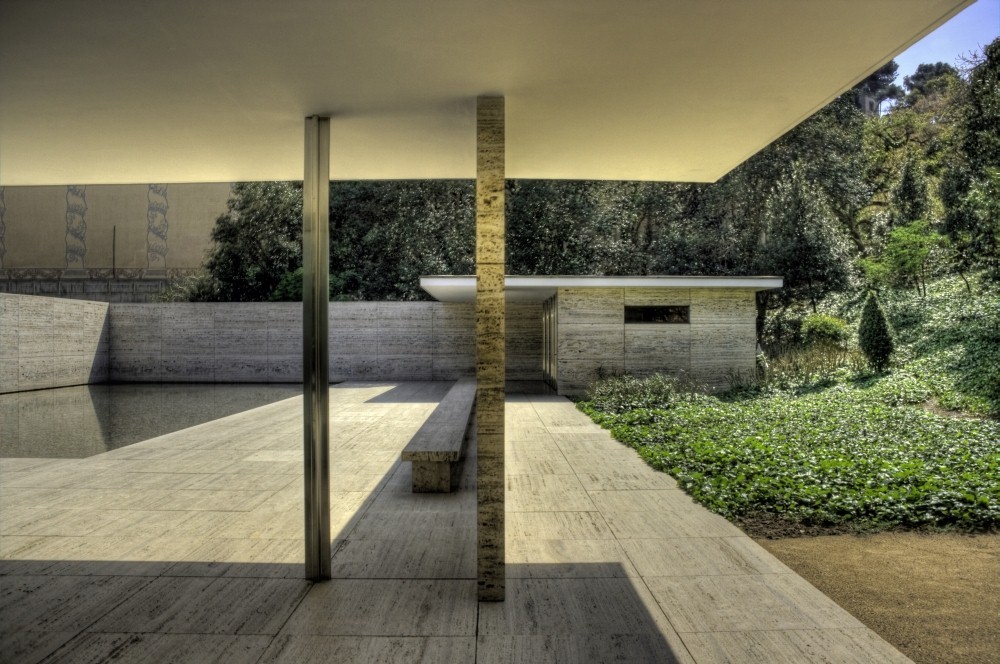
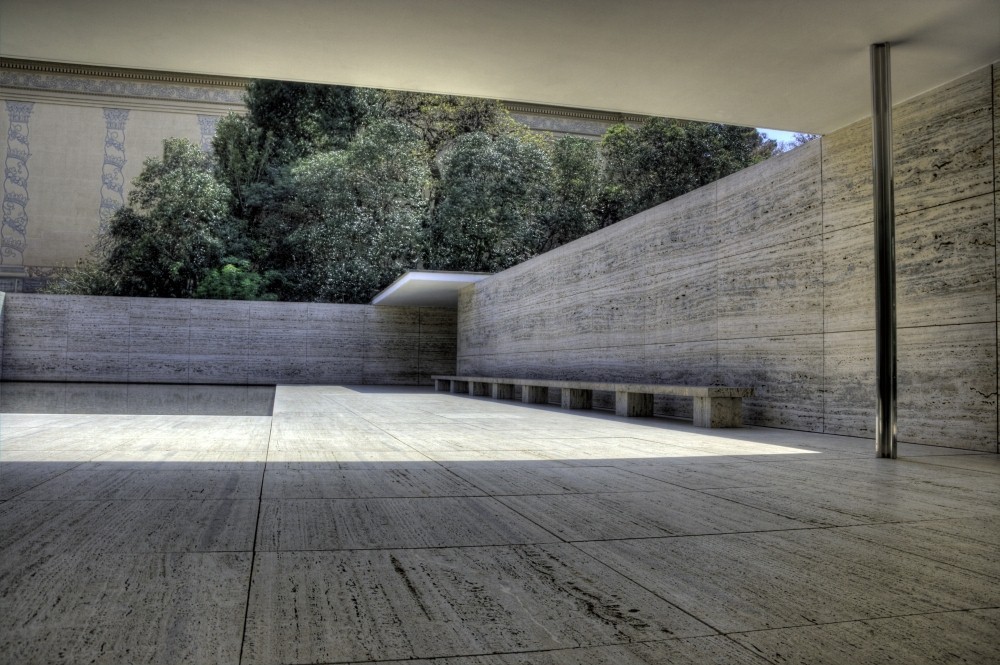
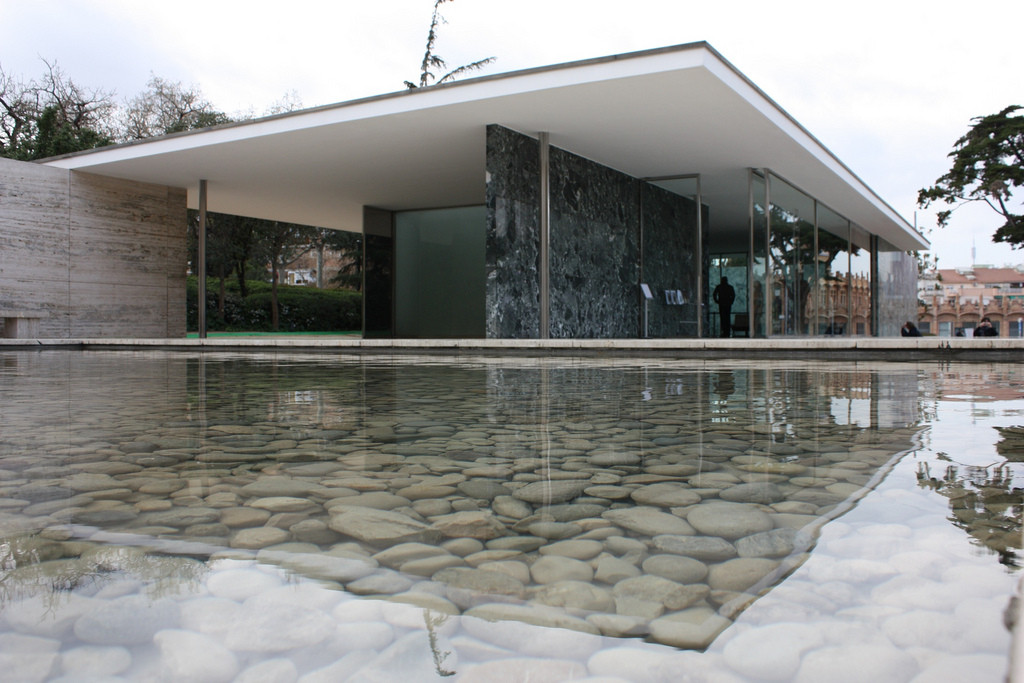
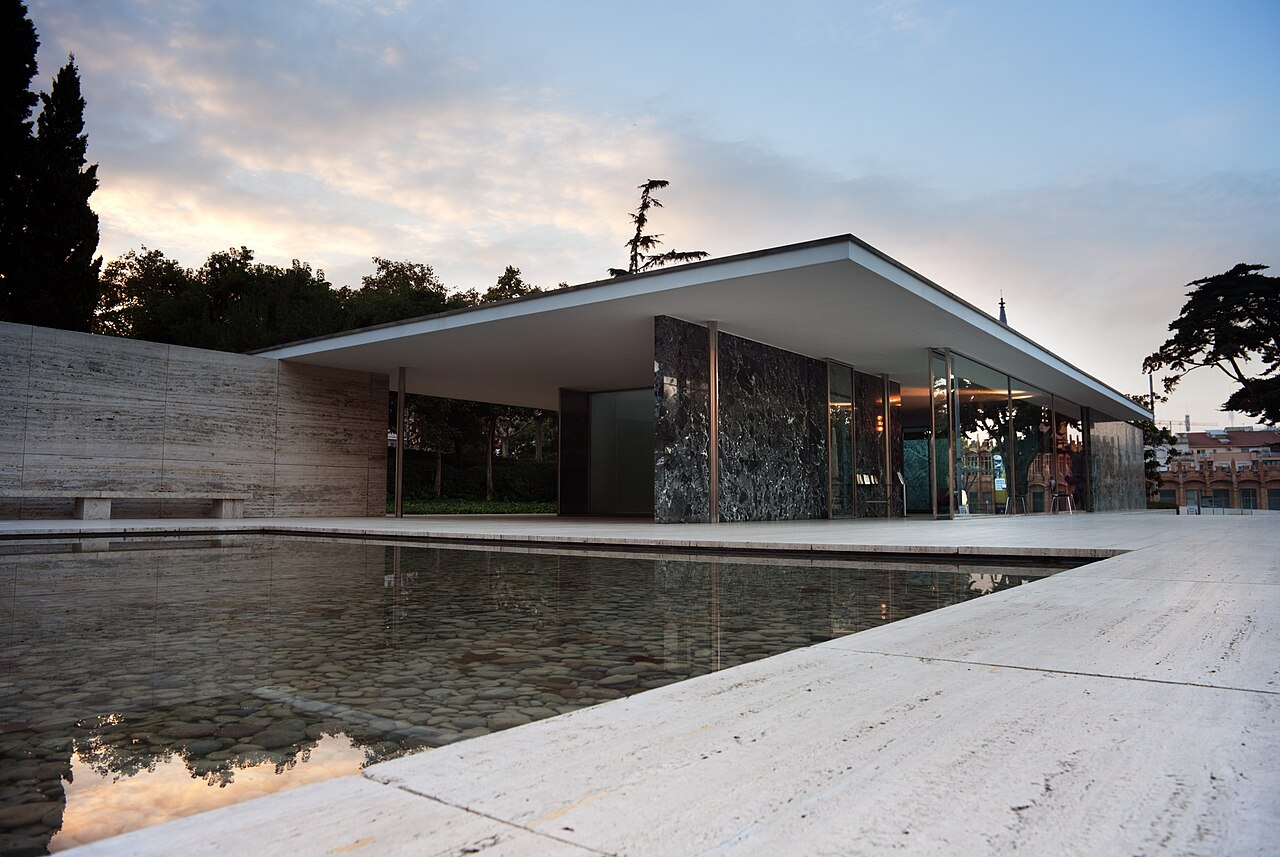
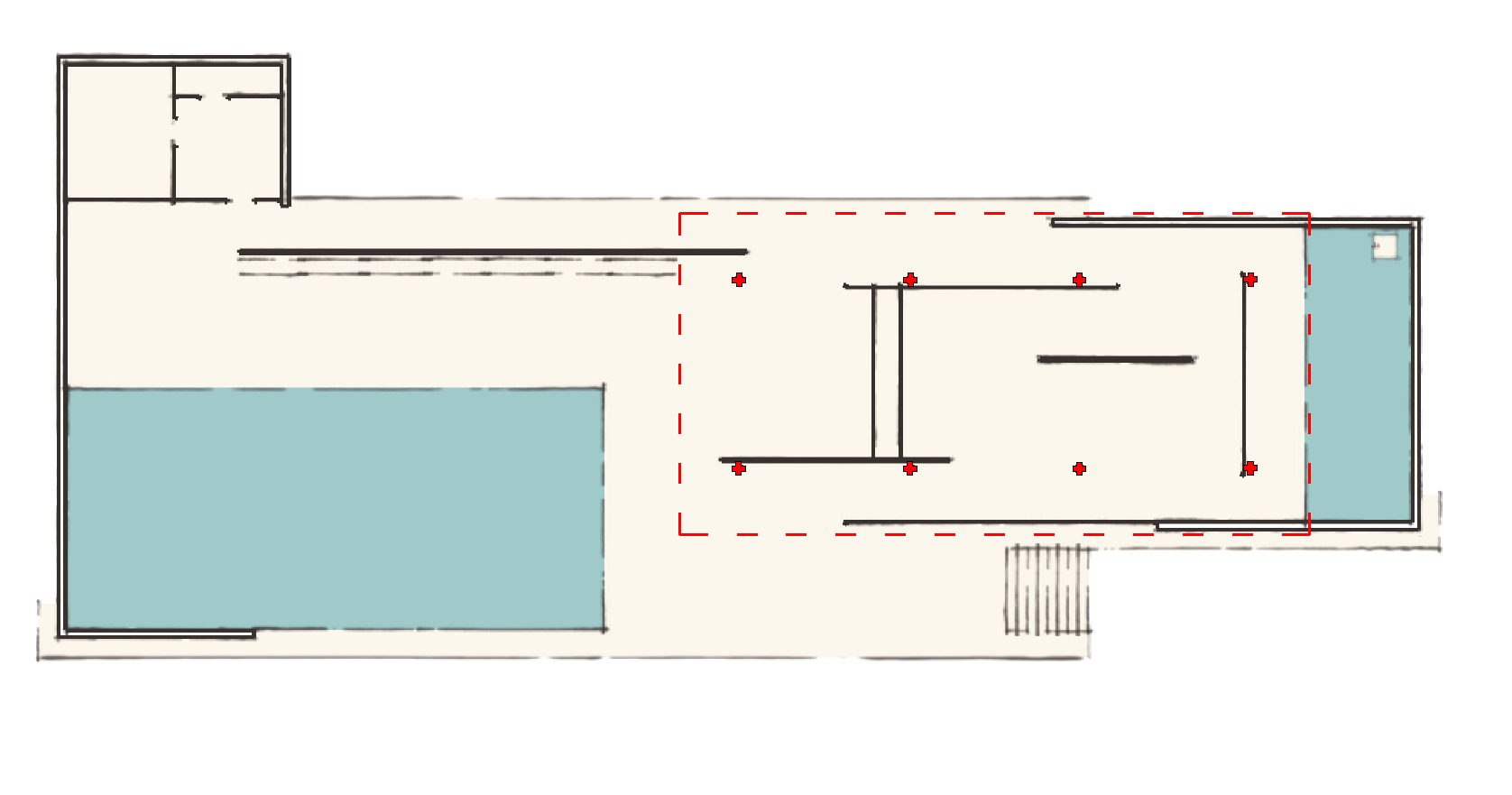
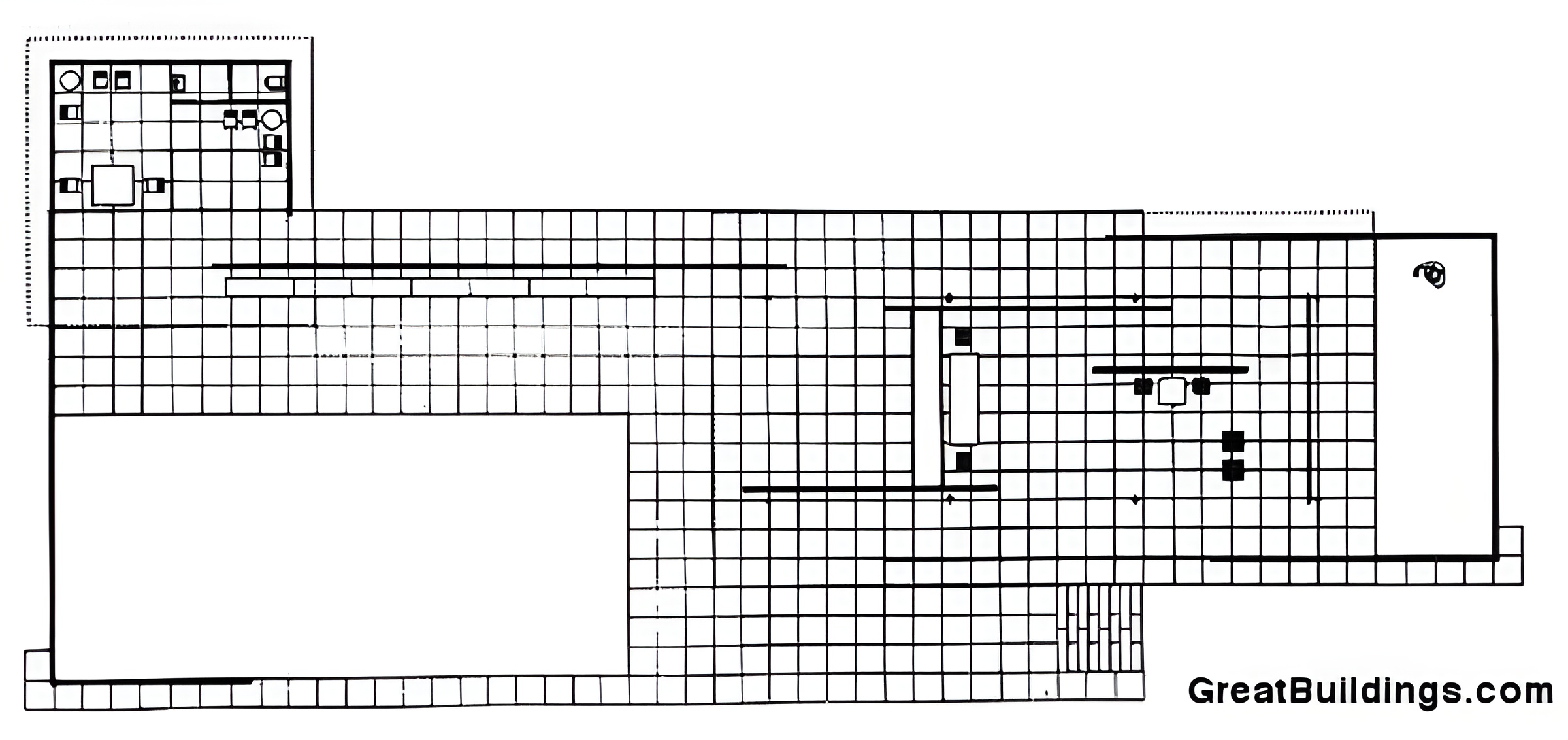
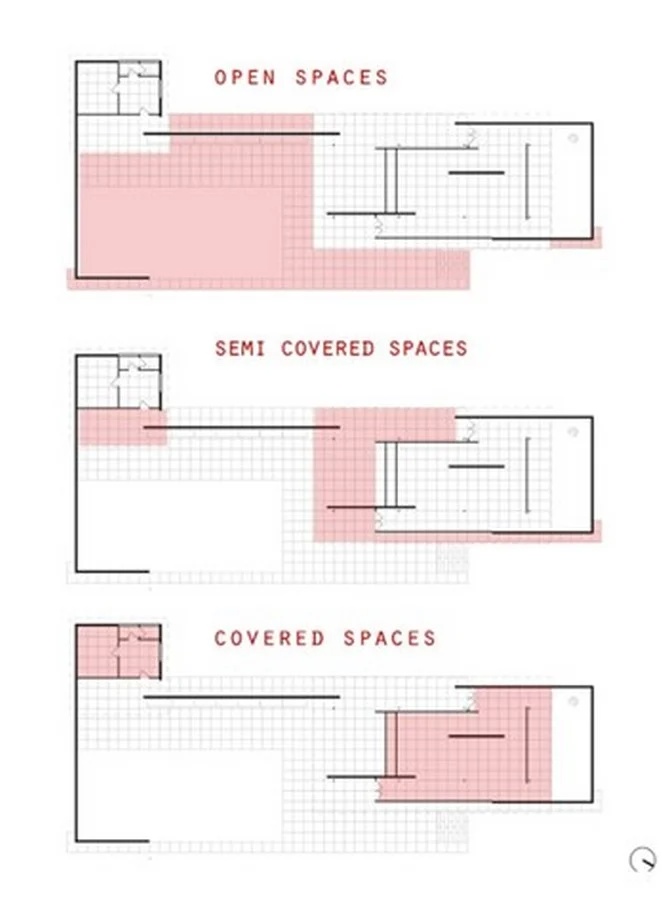
The pavilion is organized through a modular grid that coordinates paving patterns, column placement, and wall alignment. A steel frame with chrome-clad cruciform columns supports thin roof slabs, allowing marble and glass planes to function independently of structural constraints. This separation of structure and enclosure enables spatial continuity rather than enclosed rooms. Shifting wall planes, continuous flooring, and two reflecting pools dissolve the boundary between interior and exterior.
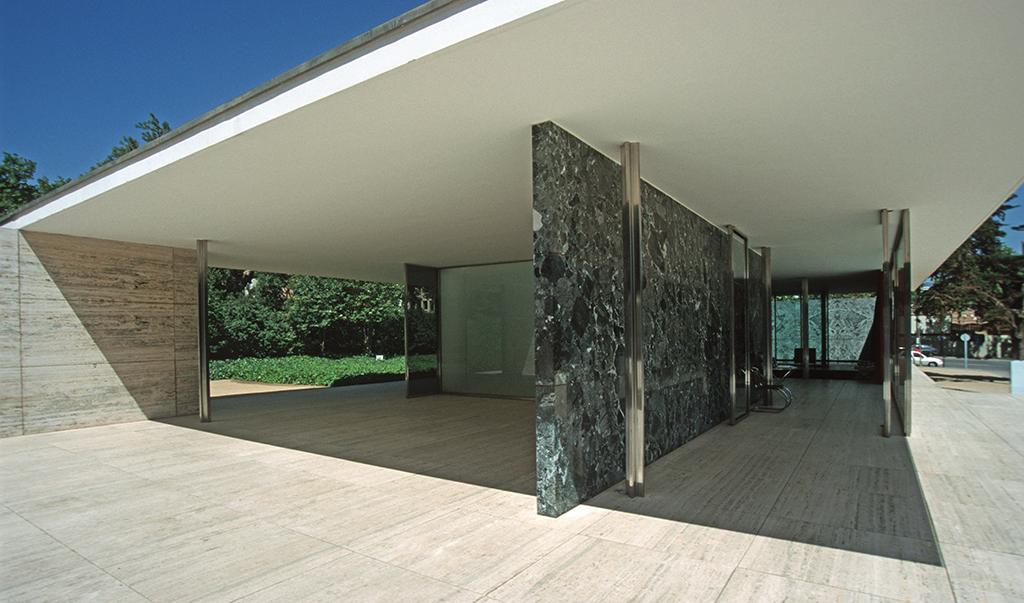
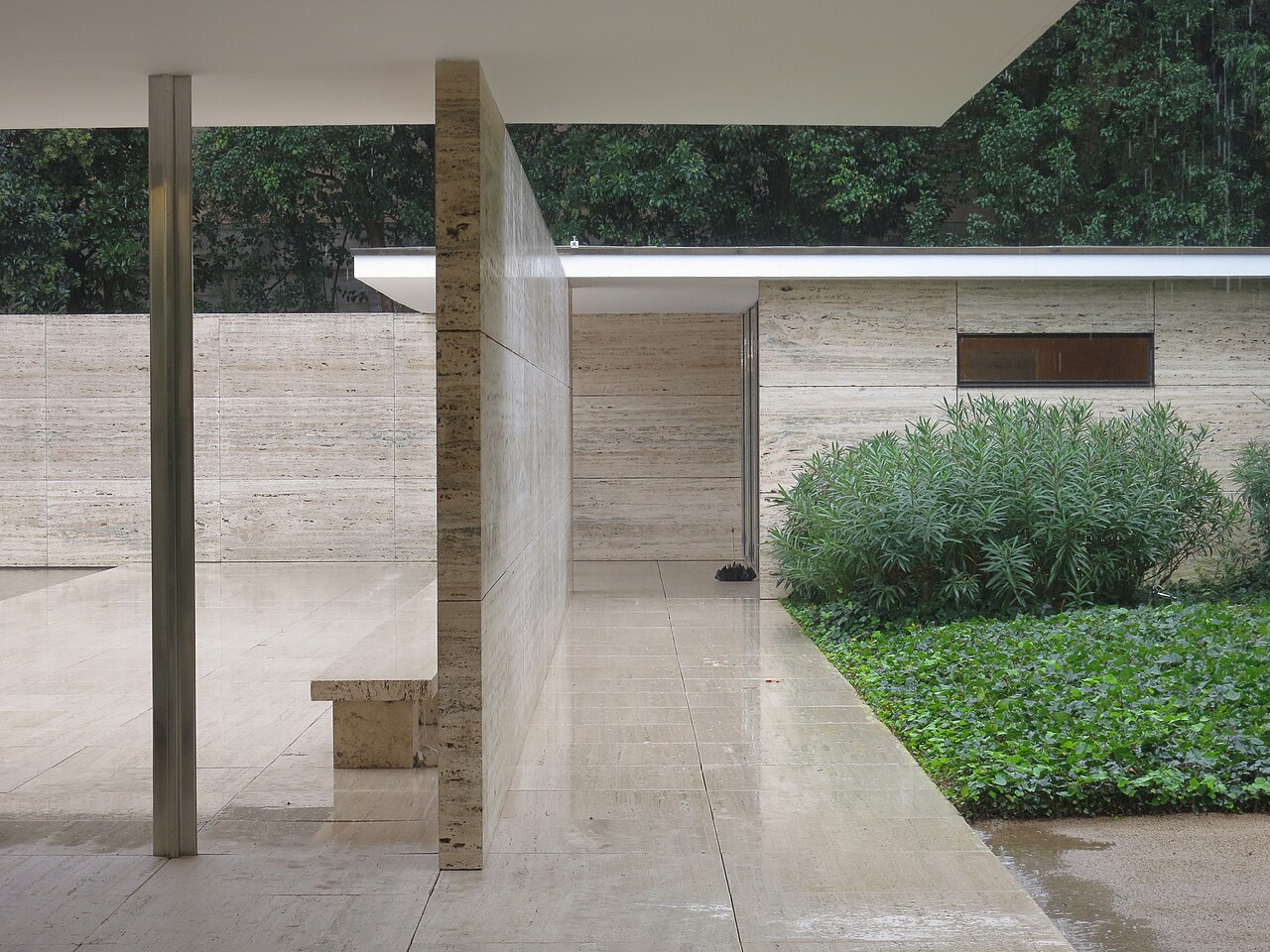
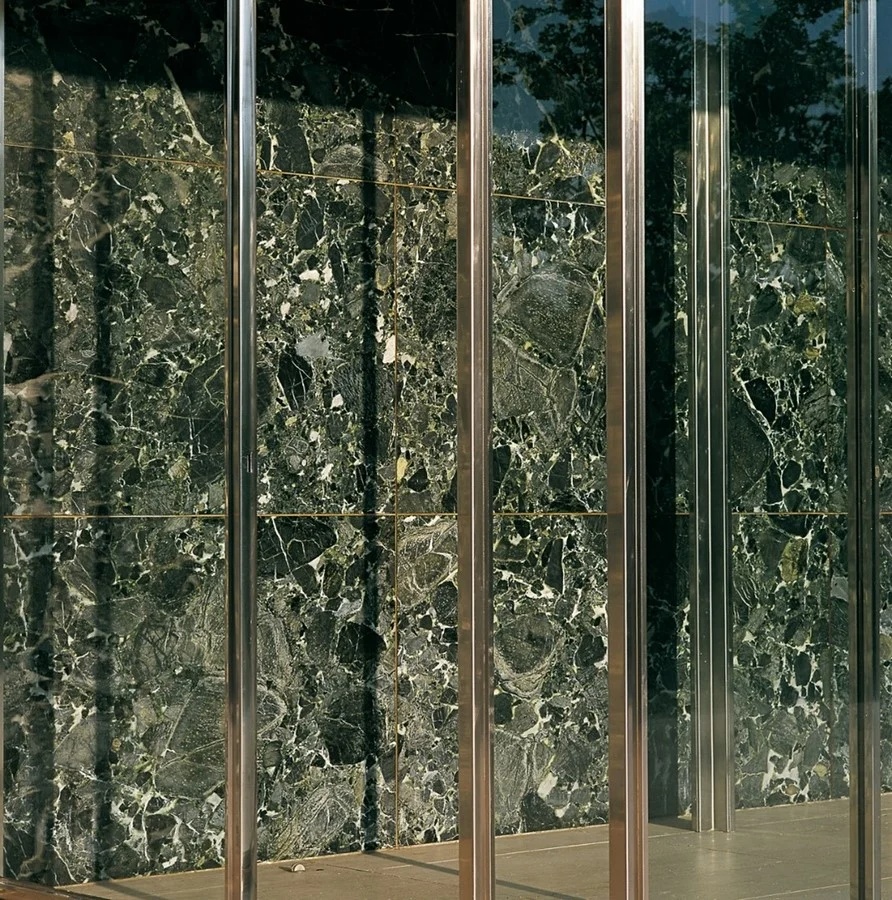
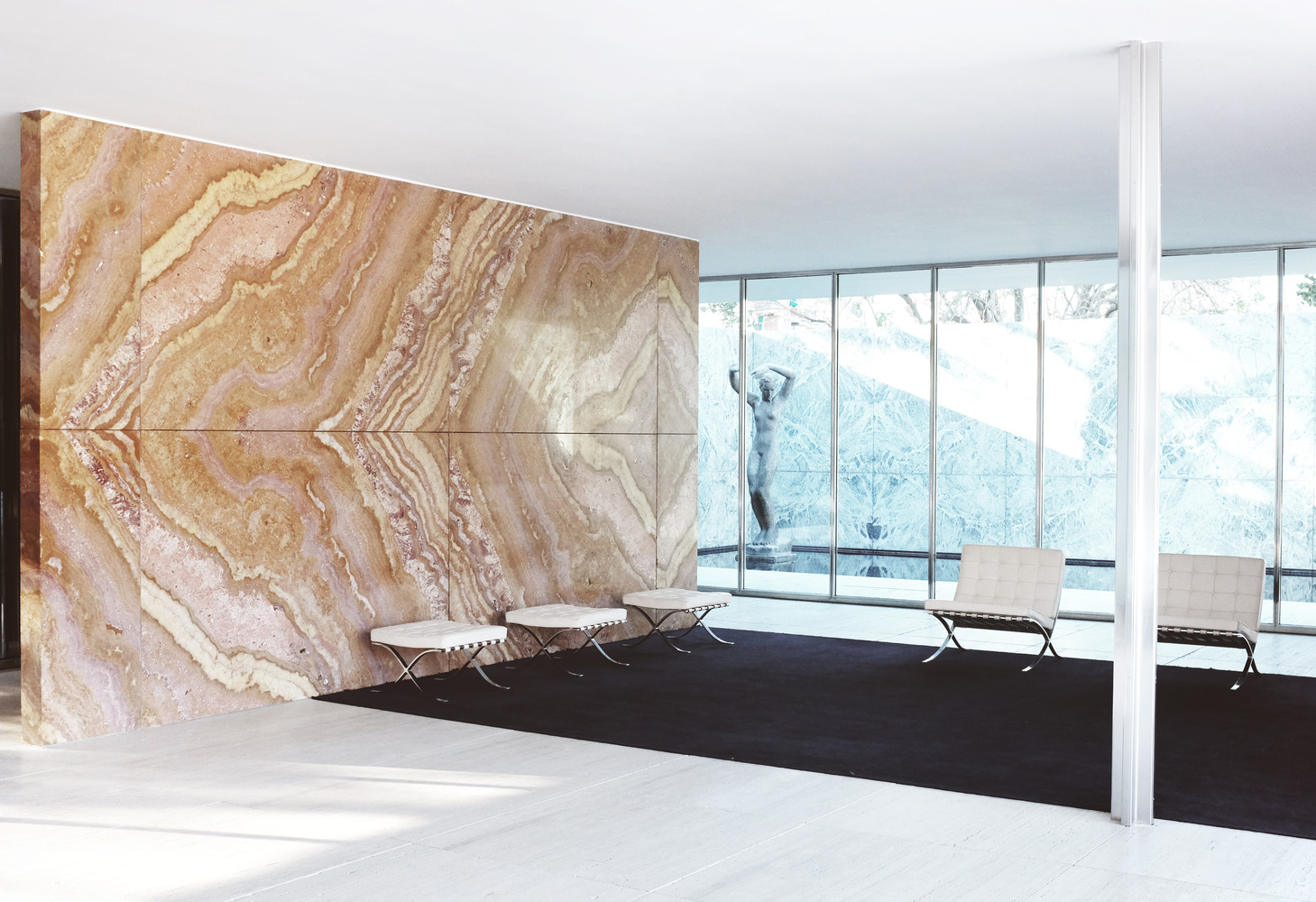
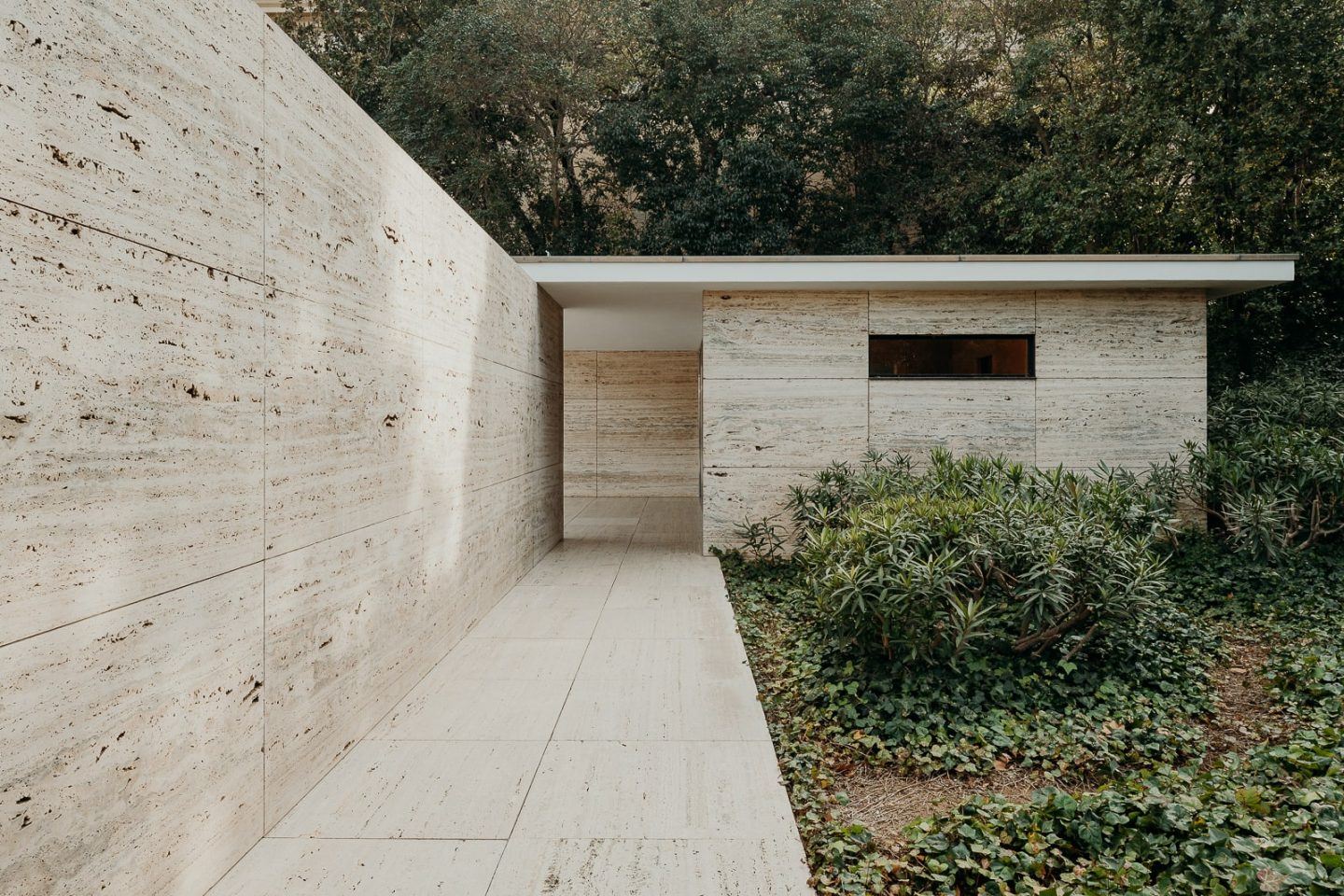
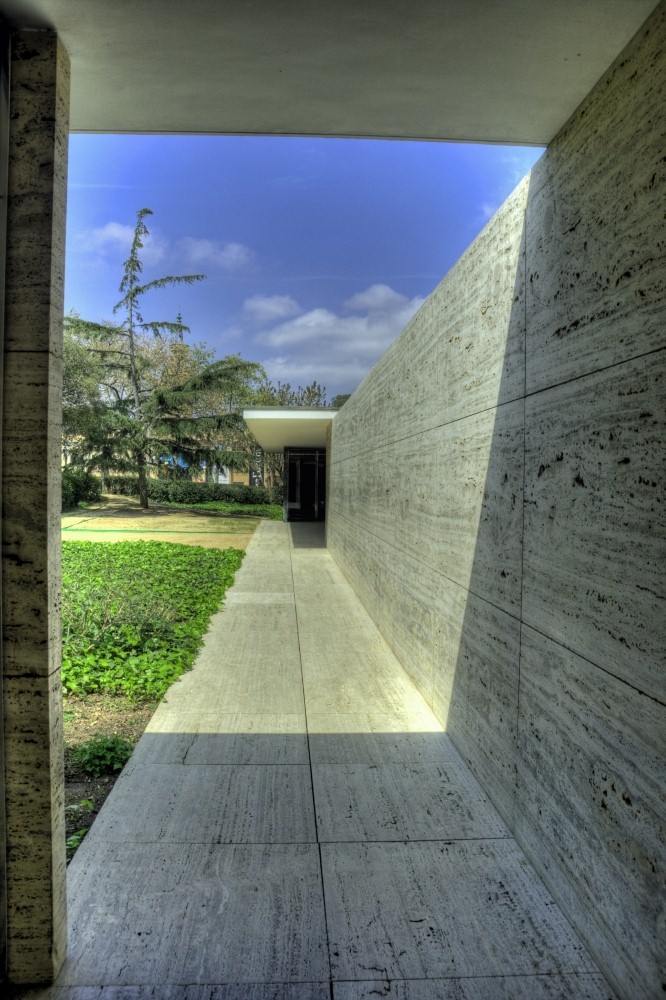
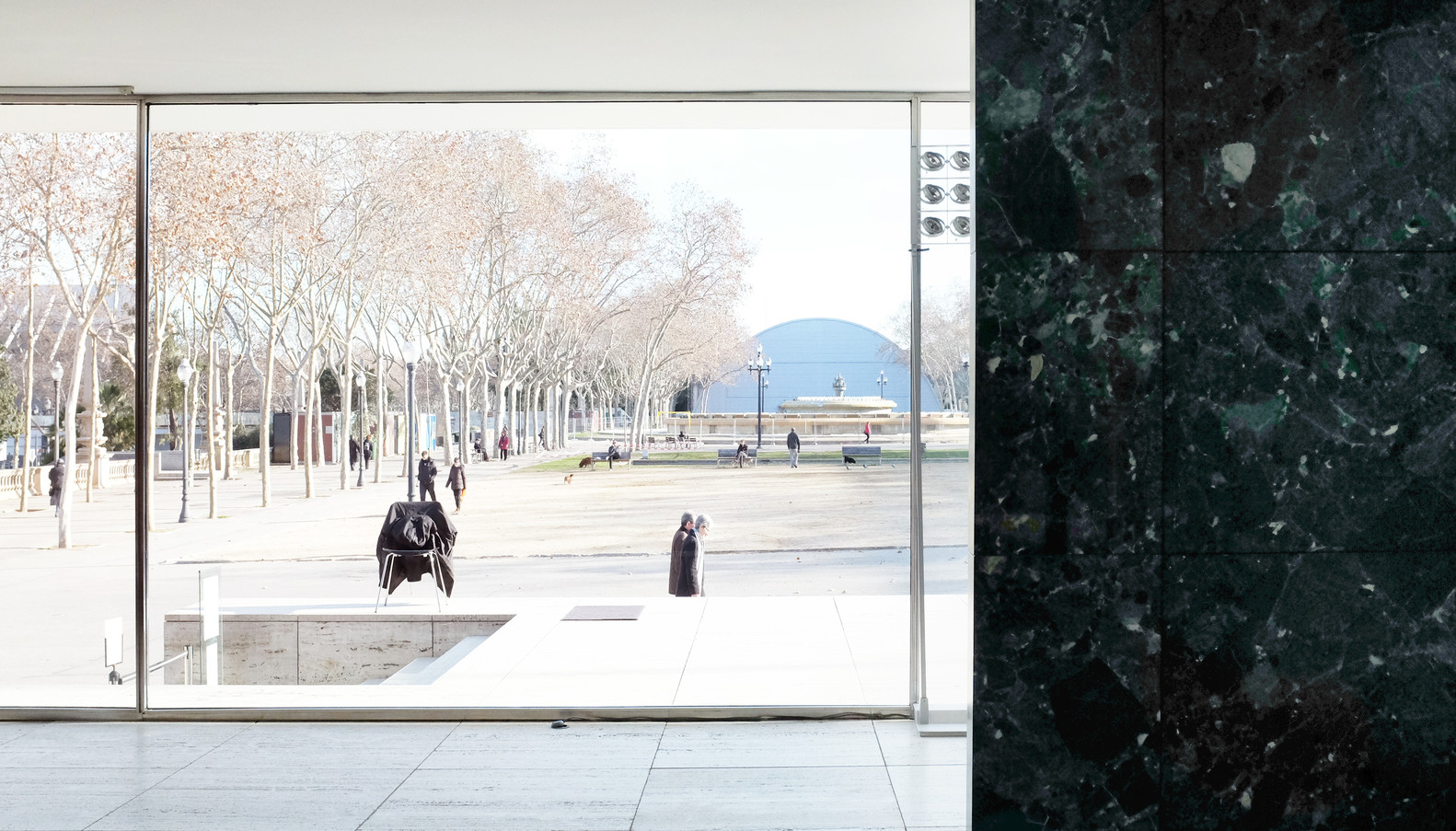
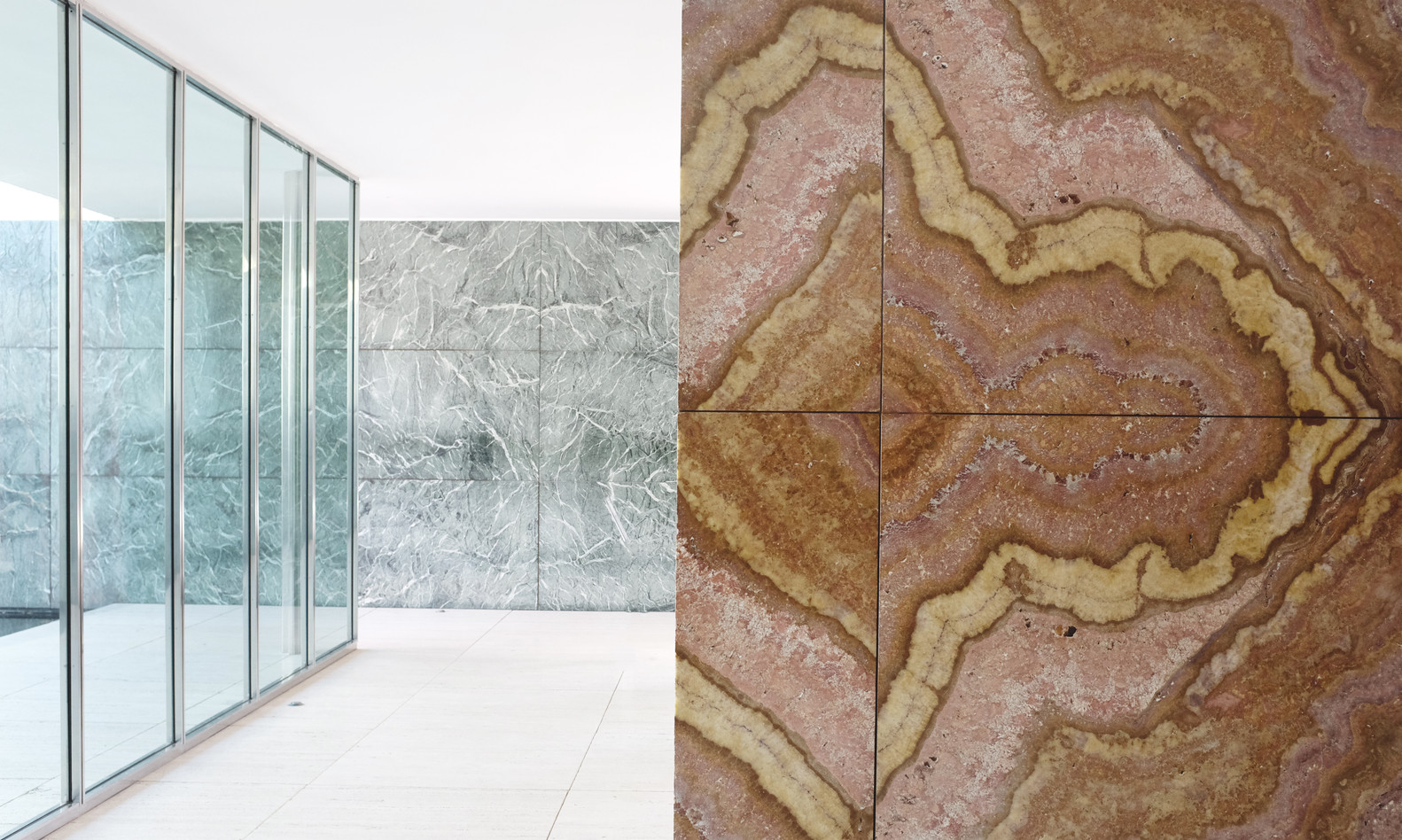
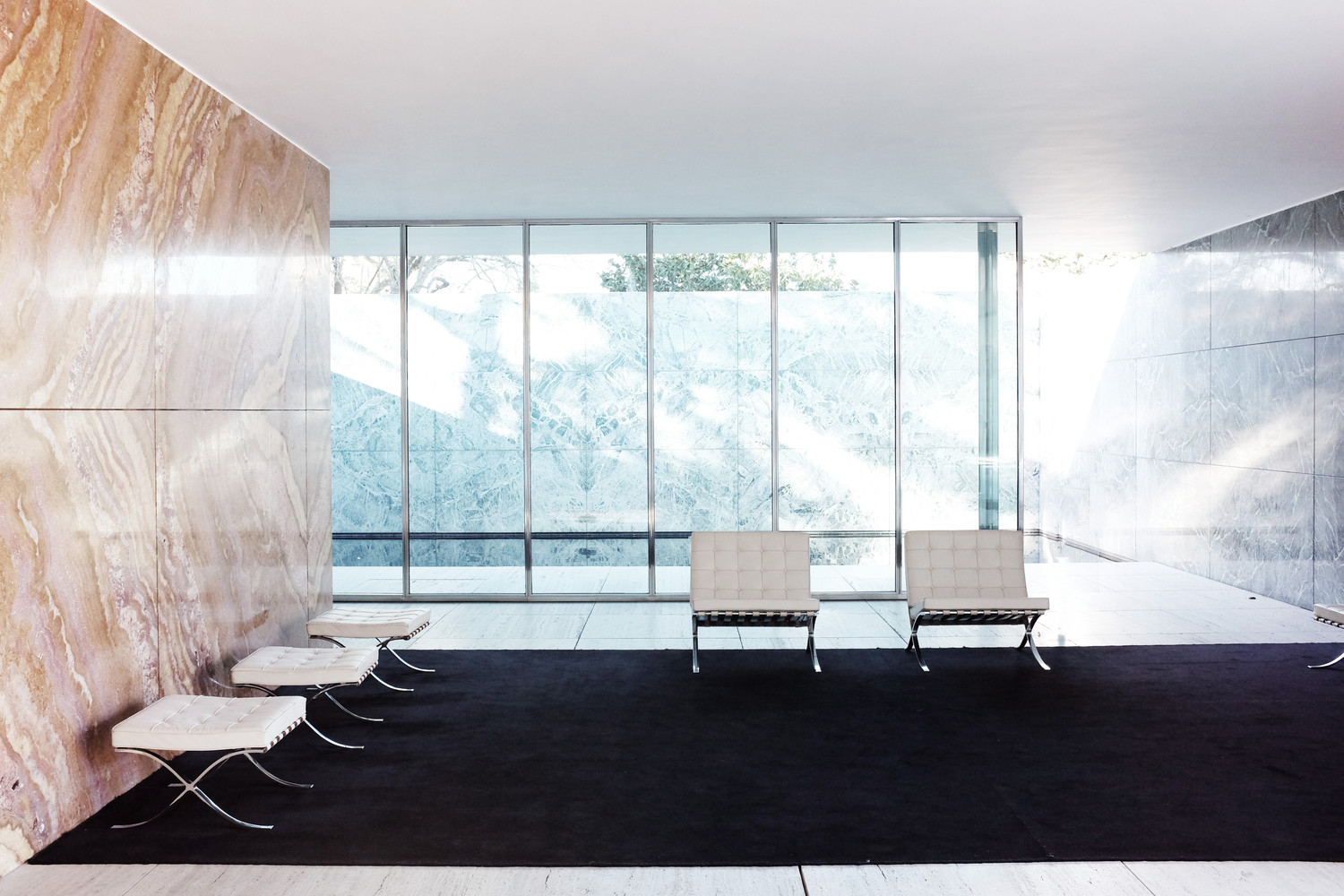
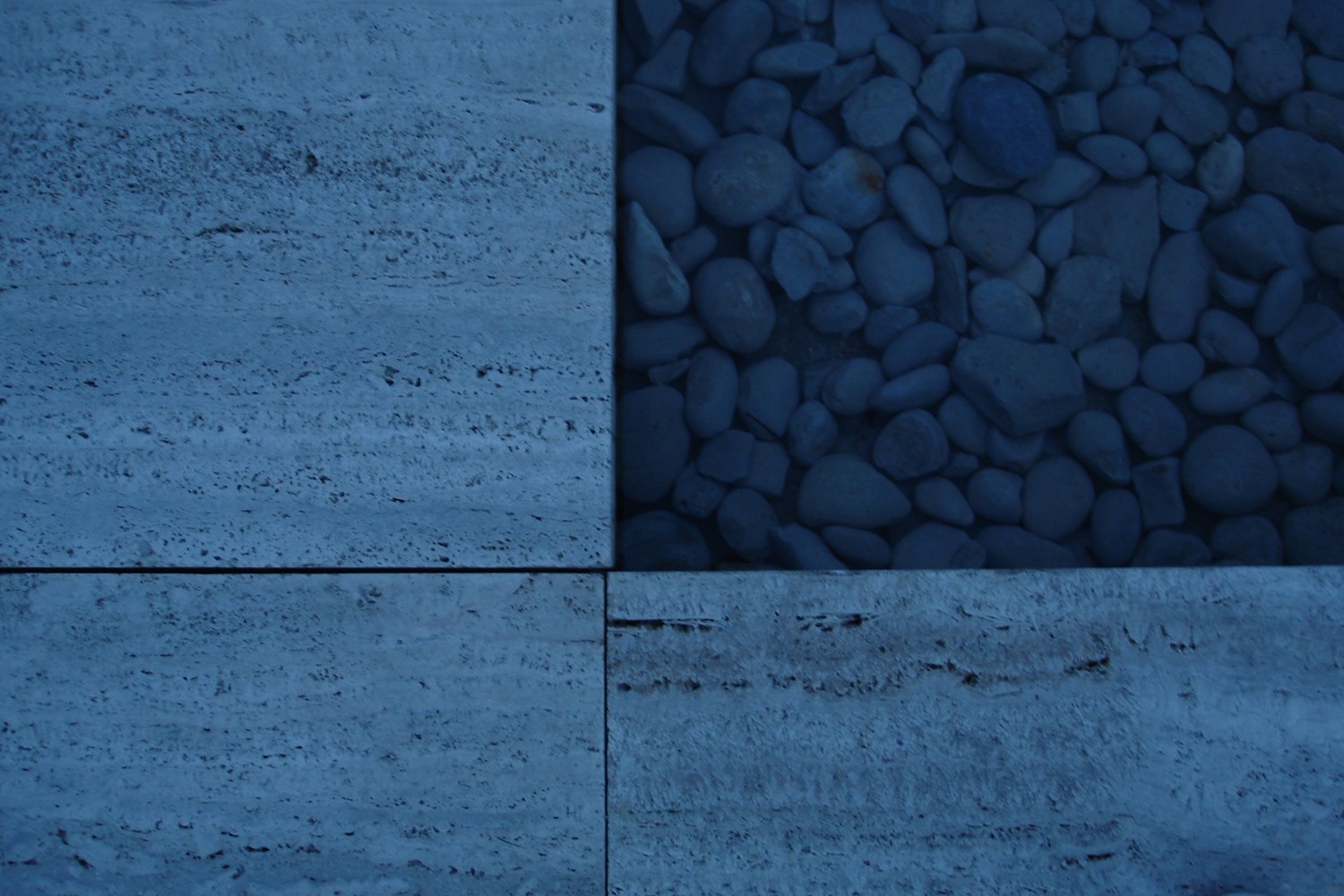
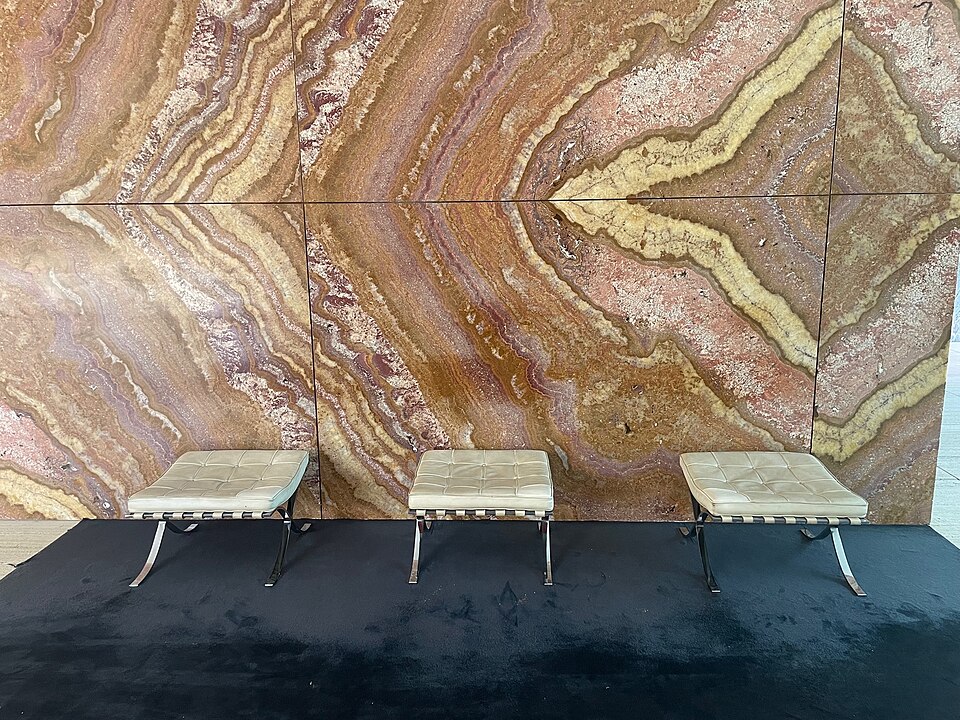
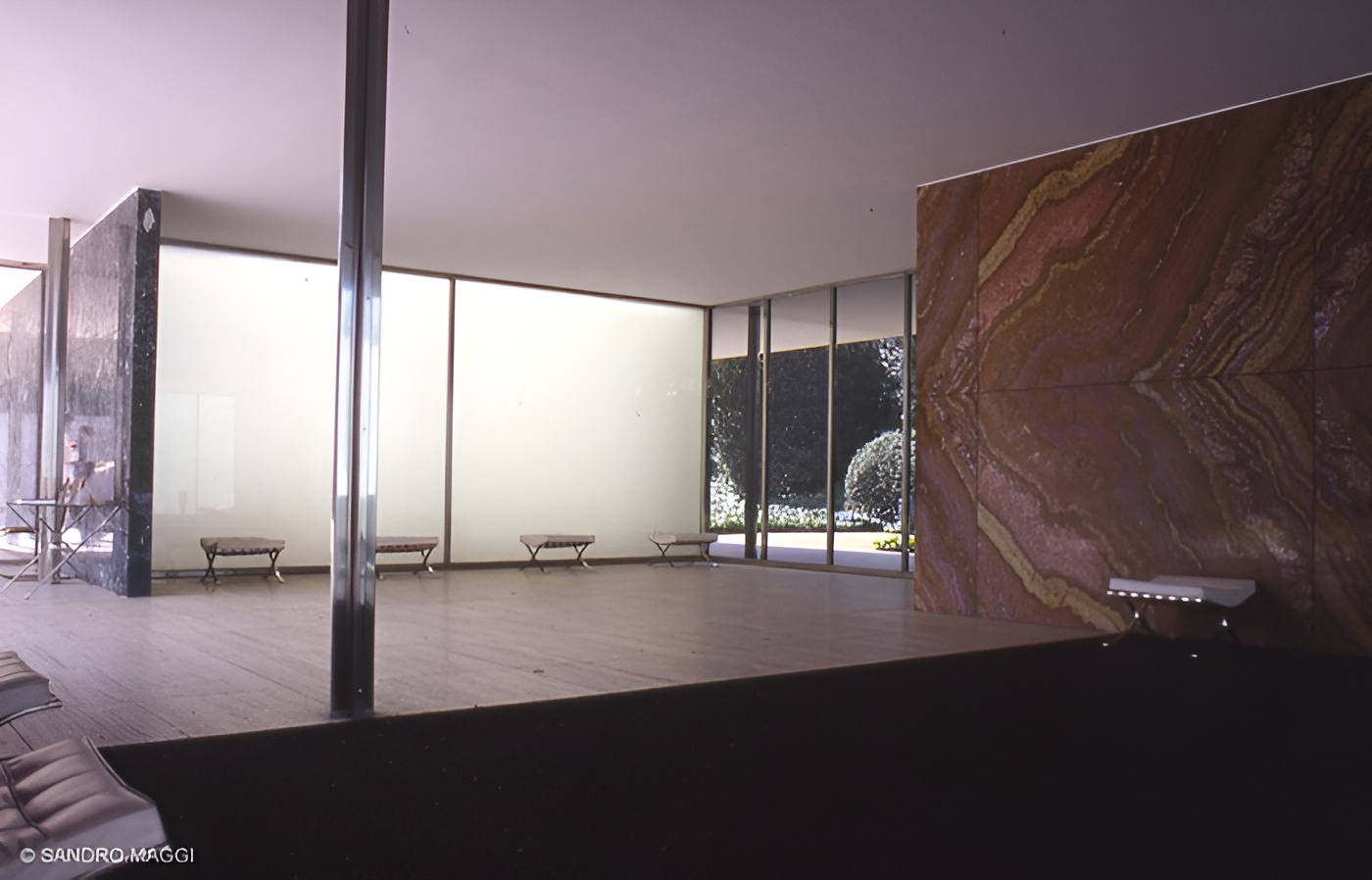
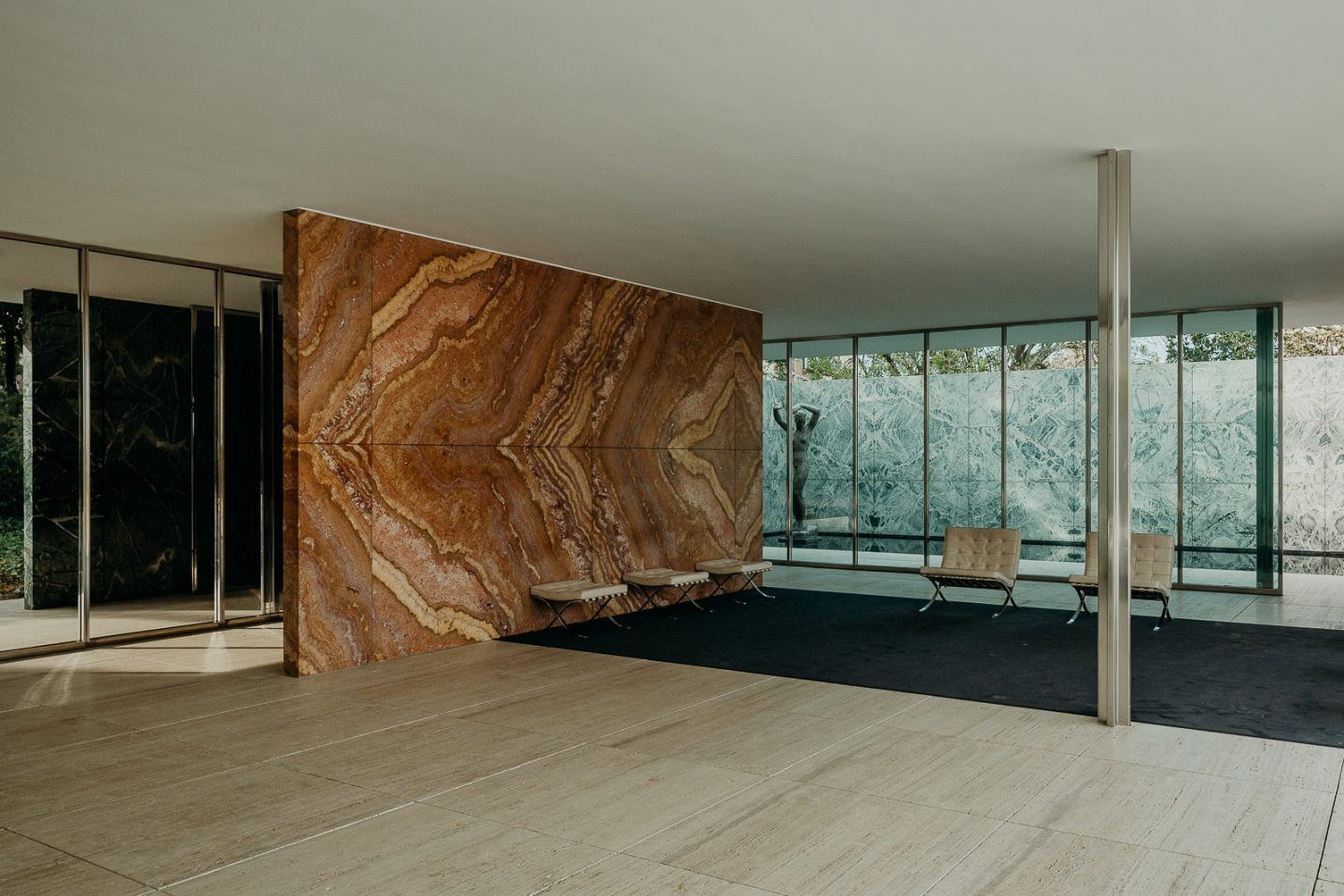
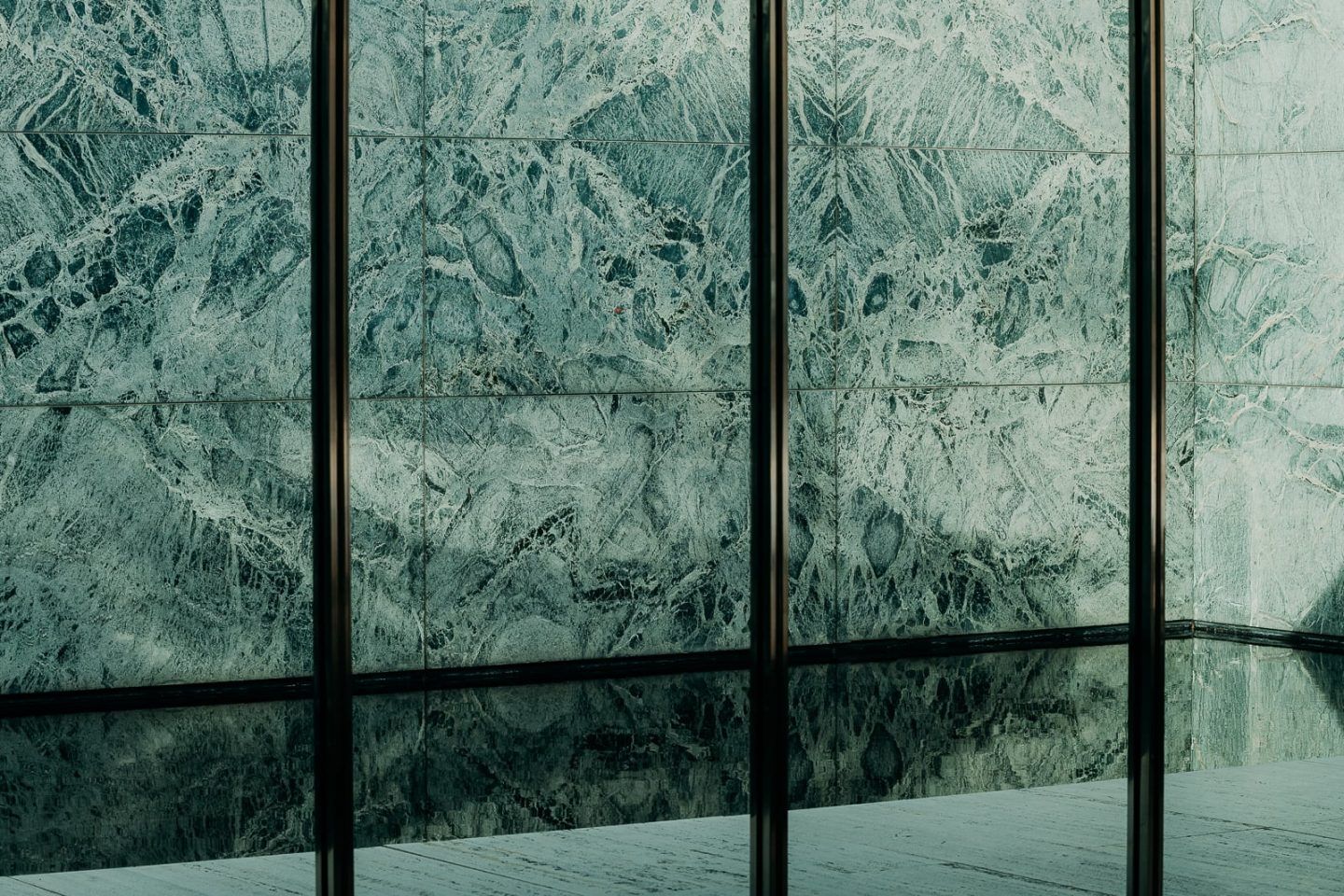
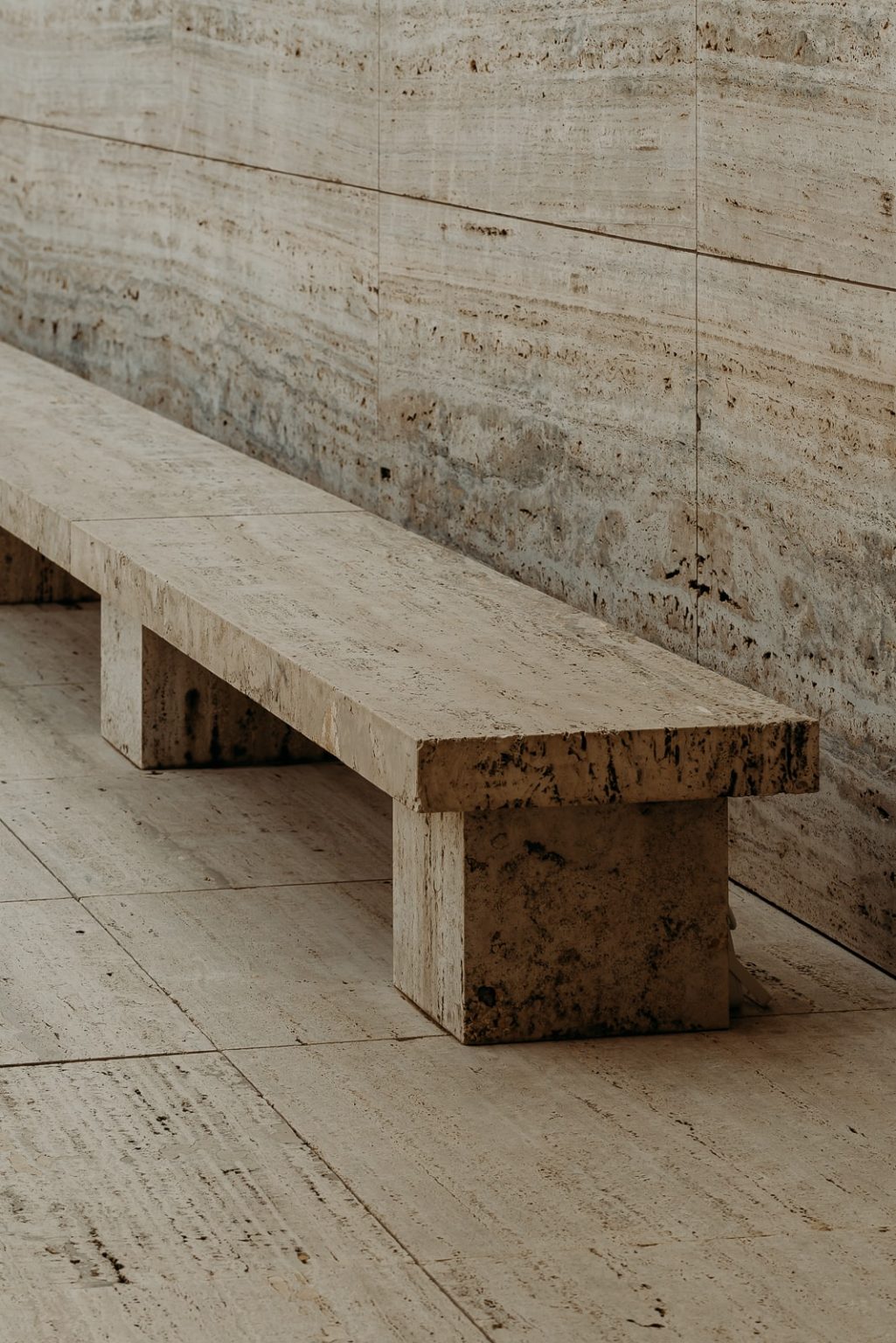
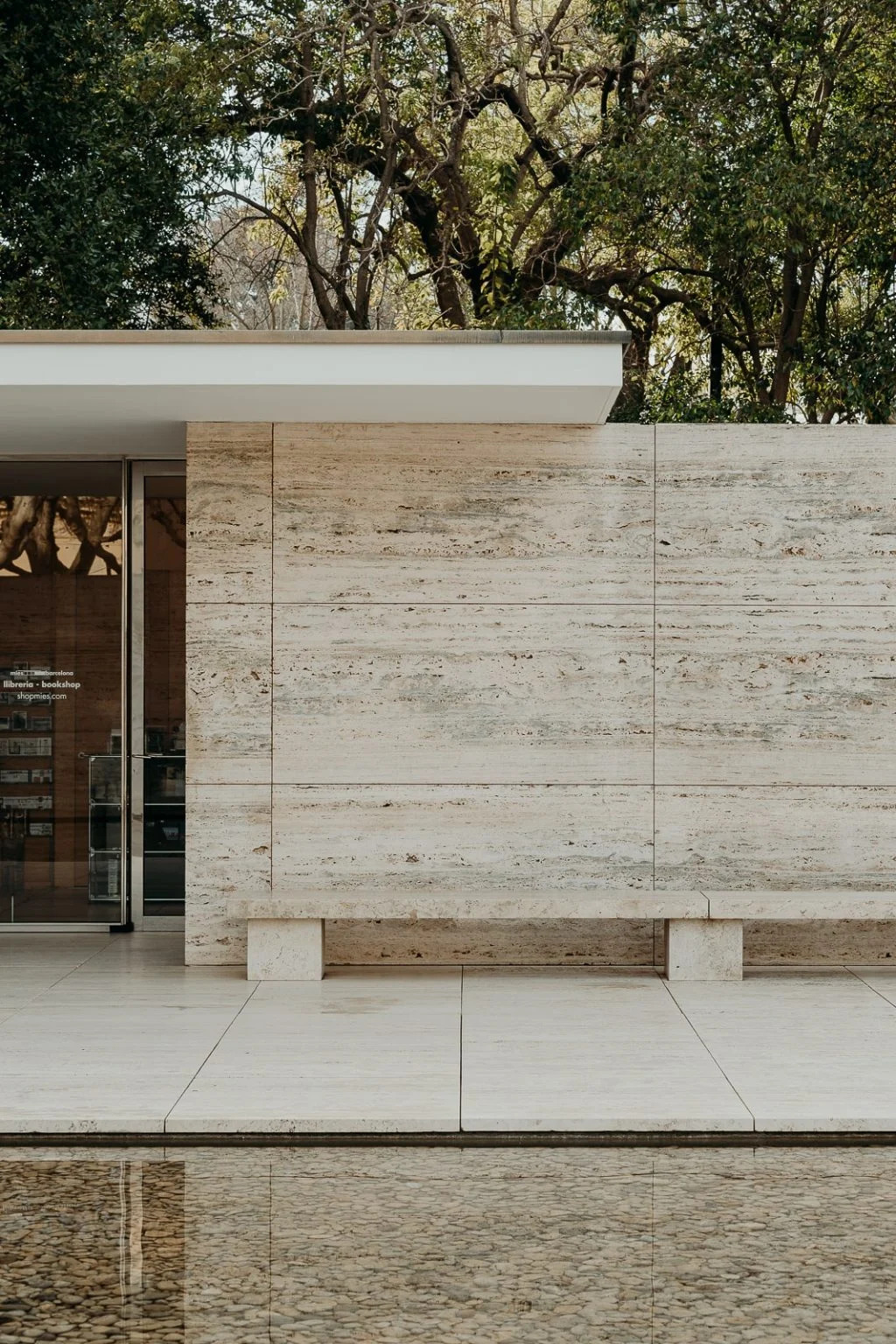
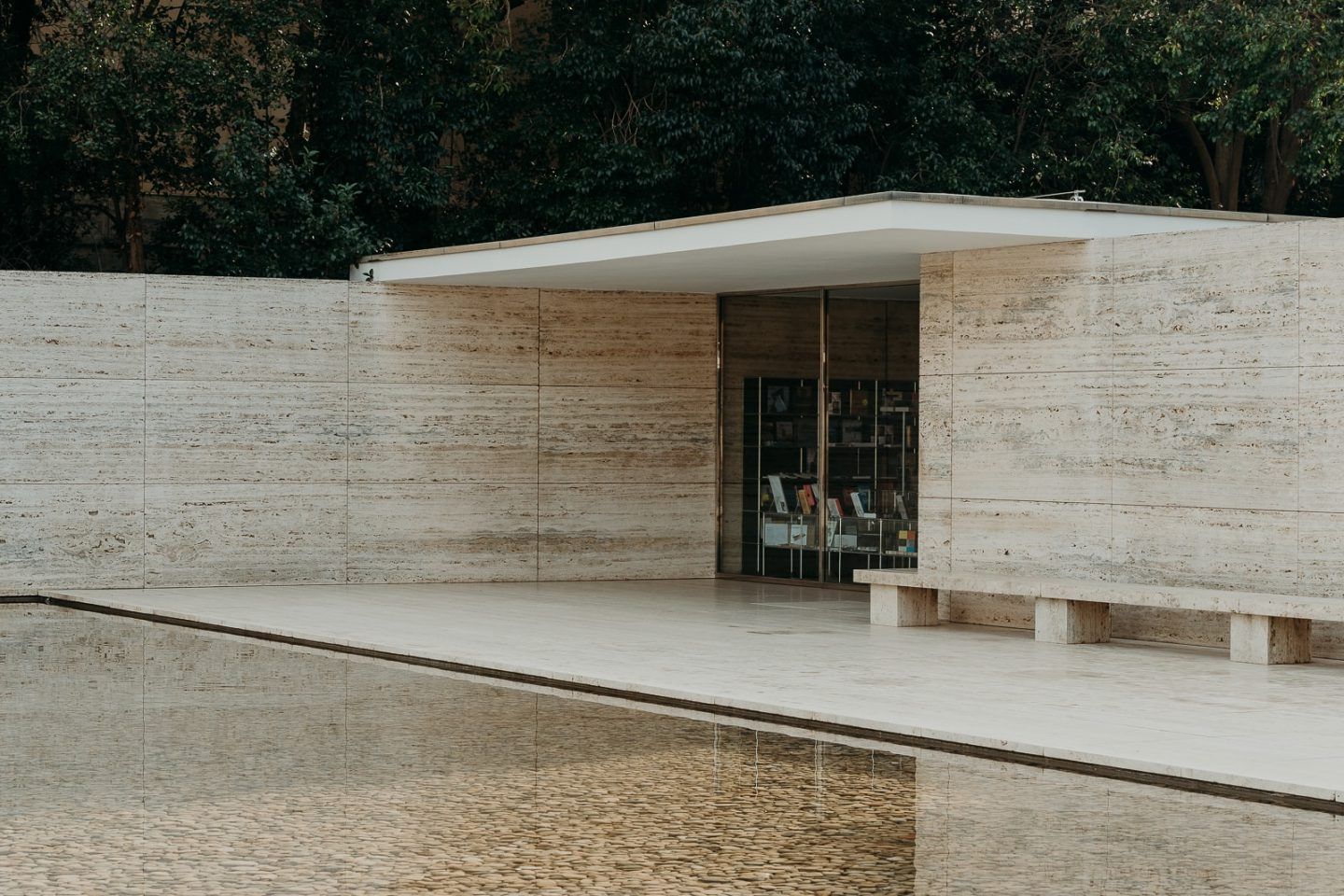
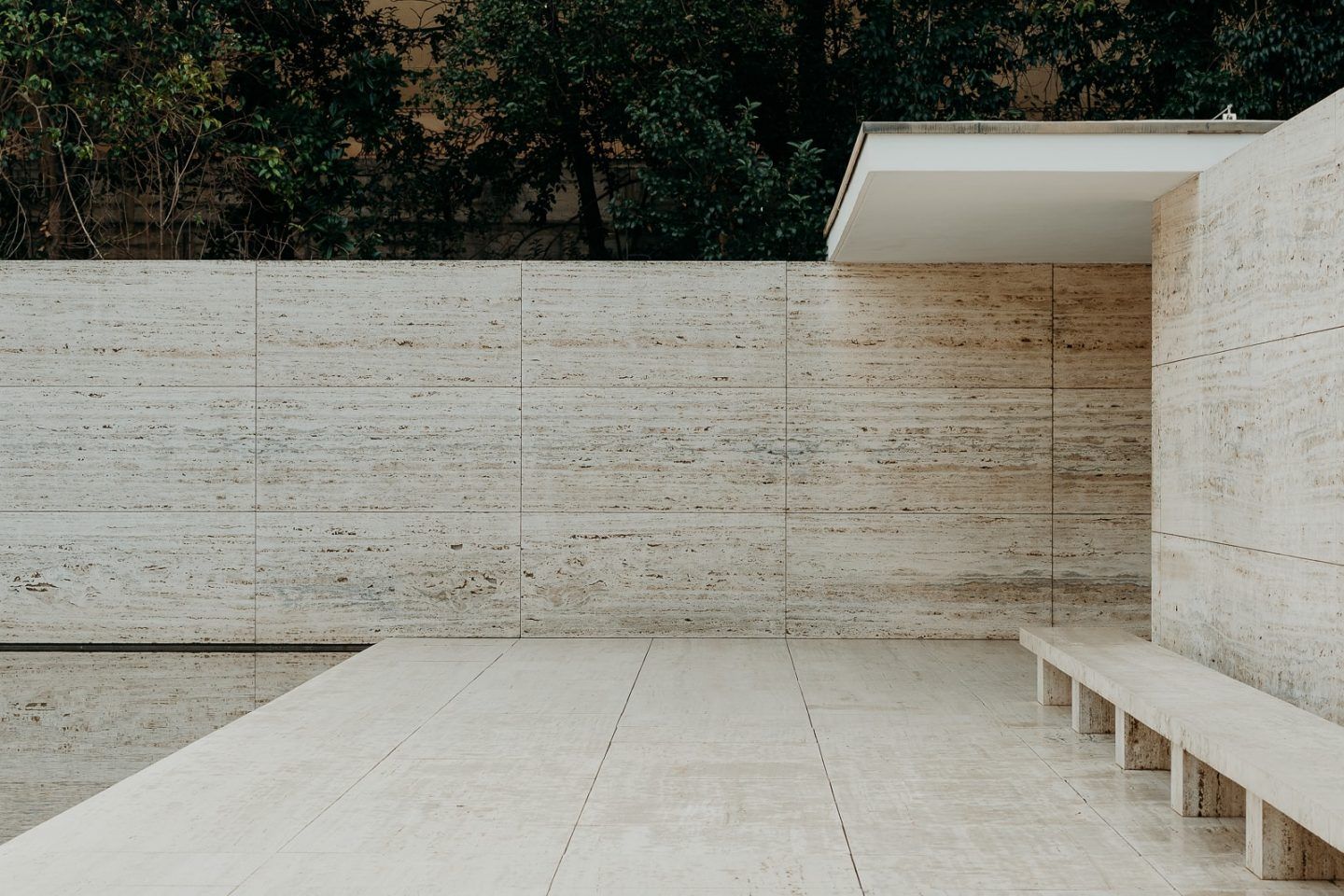
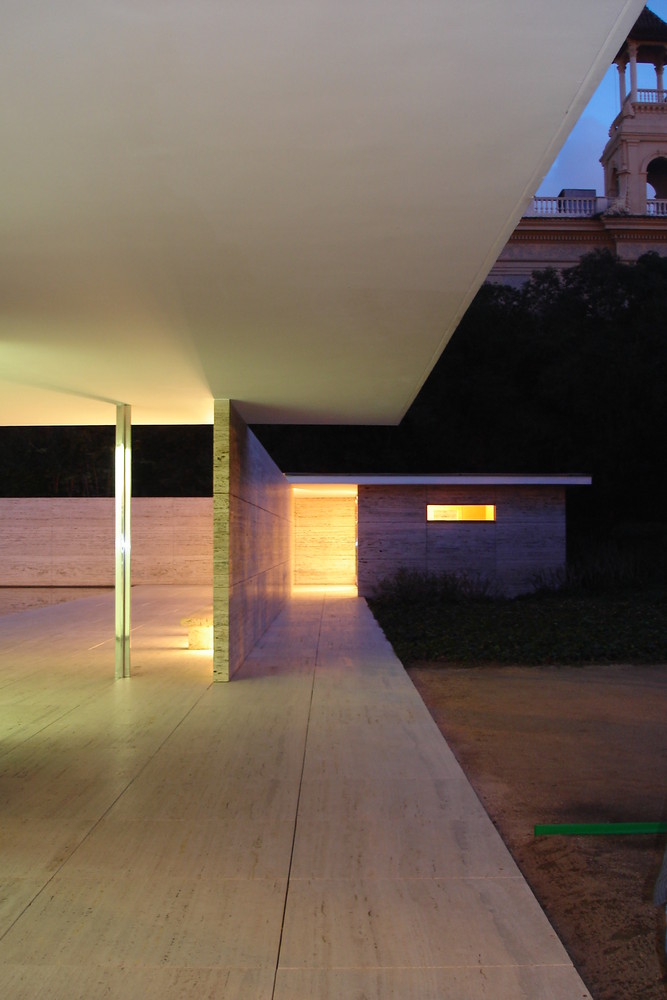
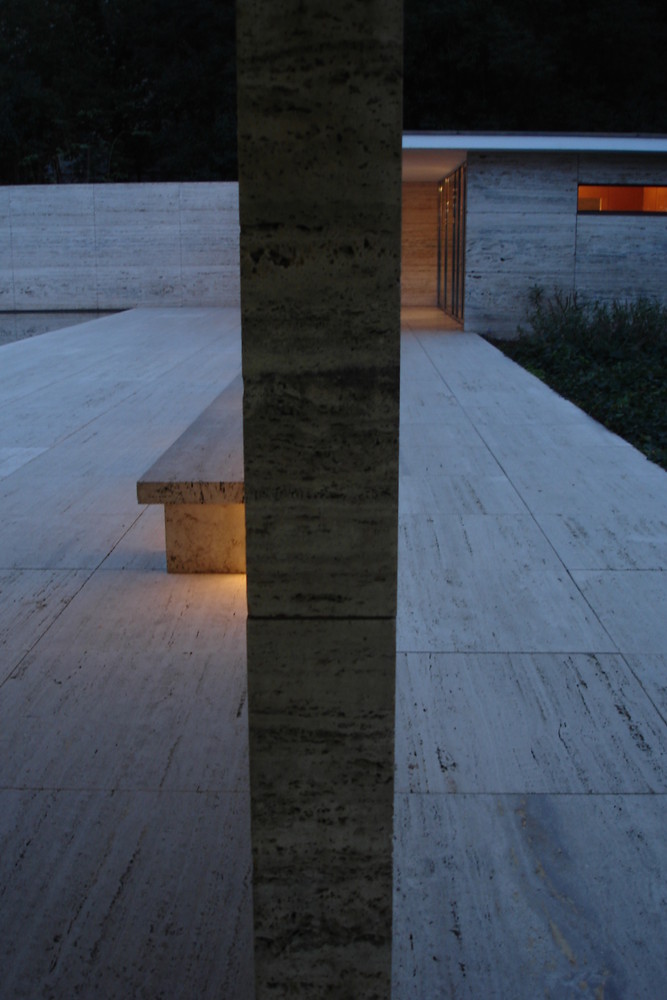
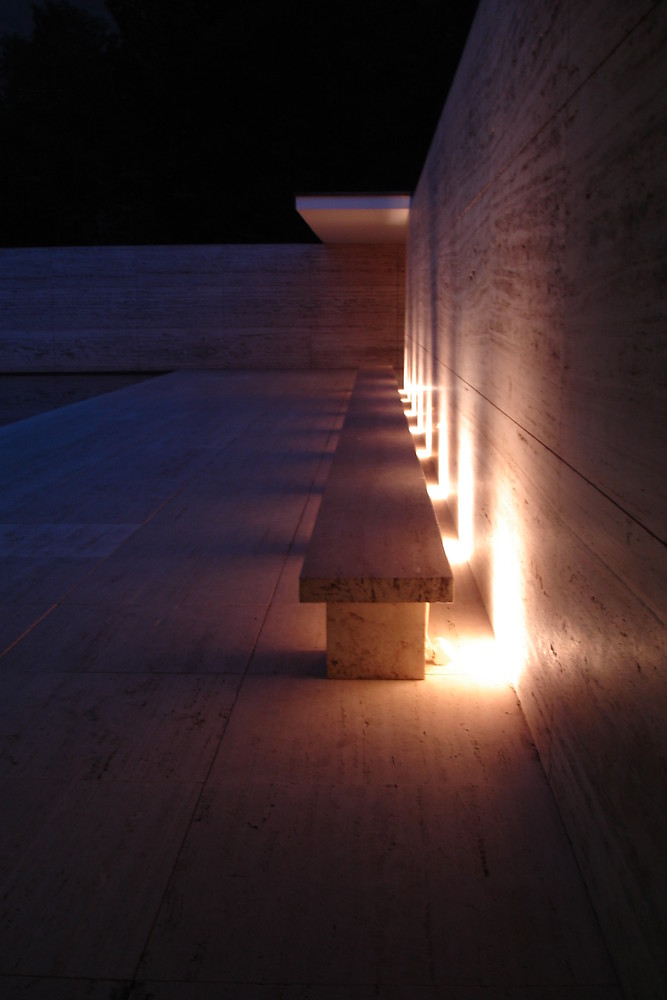
Material selection defines the pavilion’s architectural character. Roman travertine forms the podium and terraces, while green Alpine marble, ancient green marble from Greece, and golden onyx from the Atlas Mountains establish distinct interior planes. Tinted glass in gray, green, and translucent white further articulates space, and polished steel reinforces reflection and precision. Furniture designed specifically for the pavilion by Mies and Reich, including the Barcelona Chair, forms part of the architectural composition rather than independent objects.
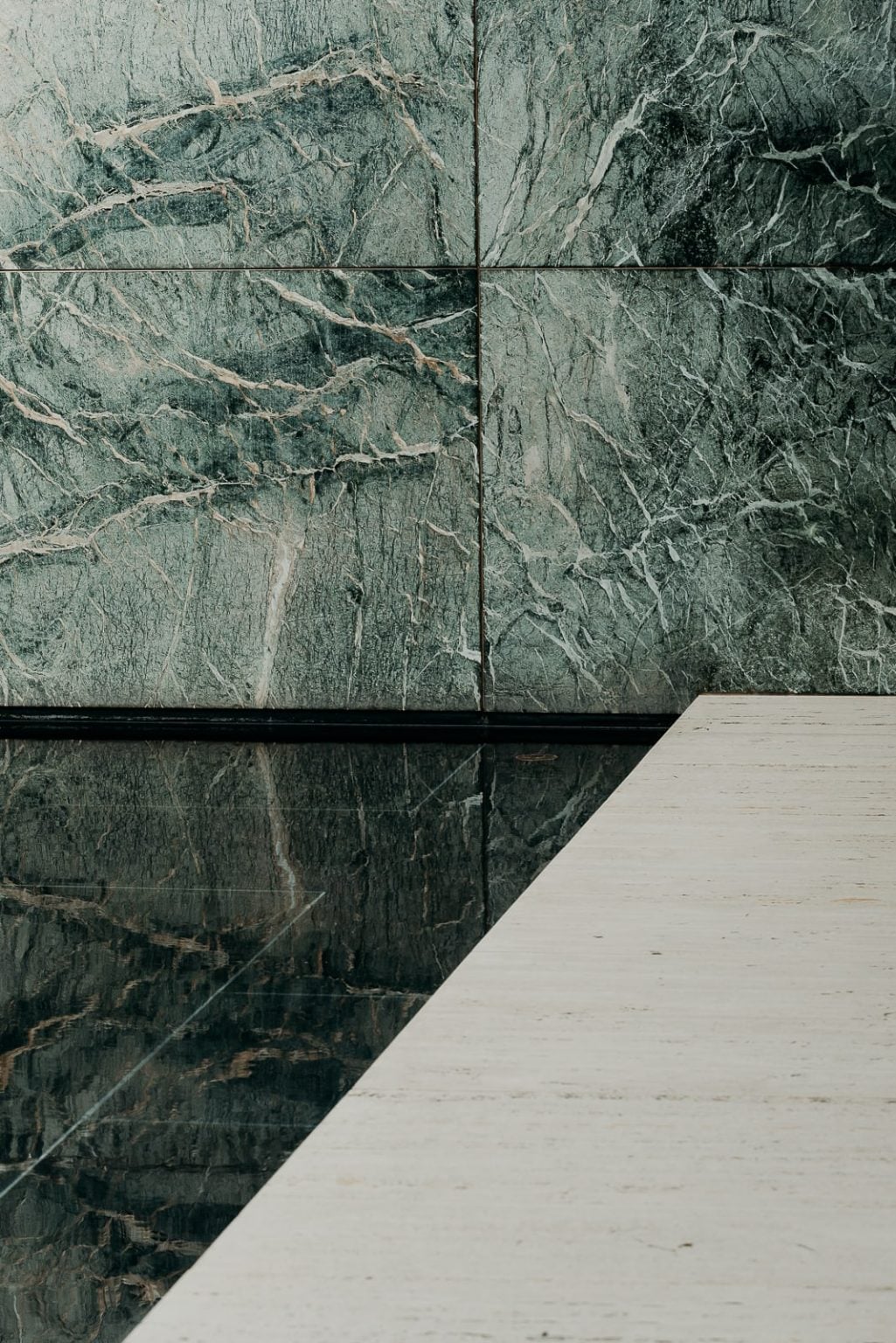

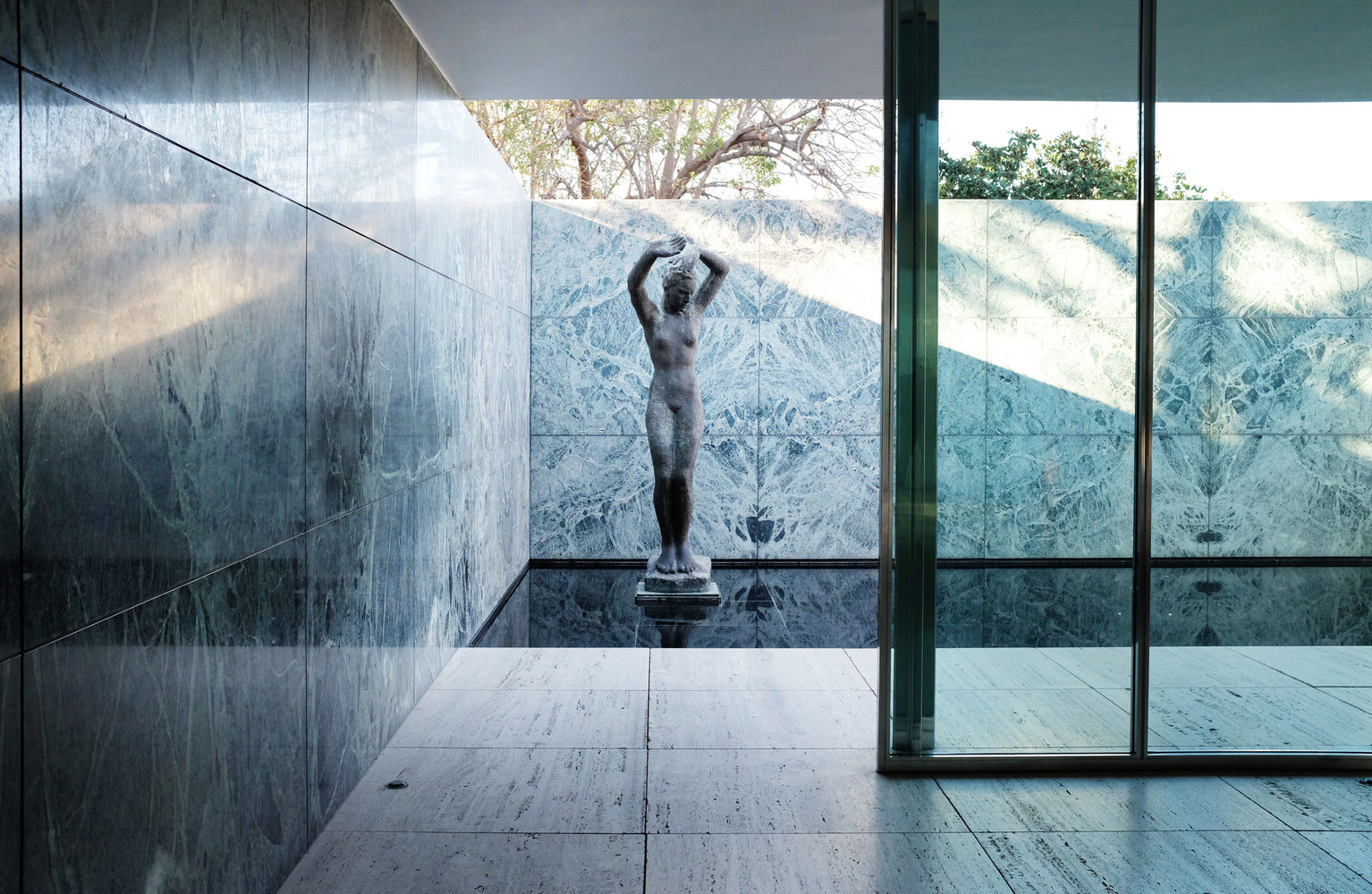
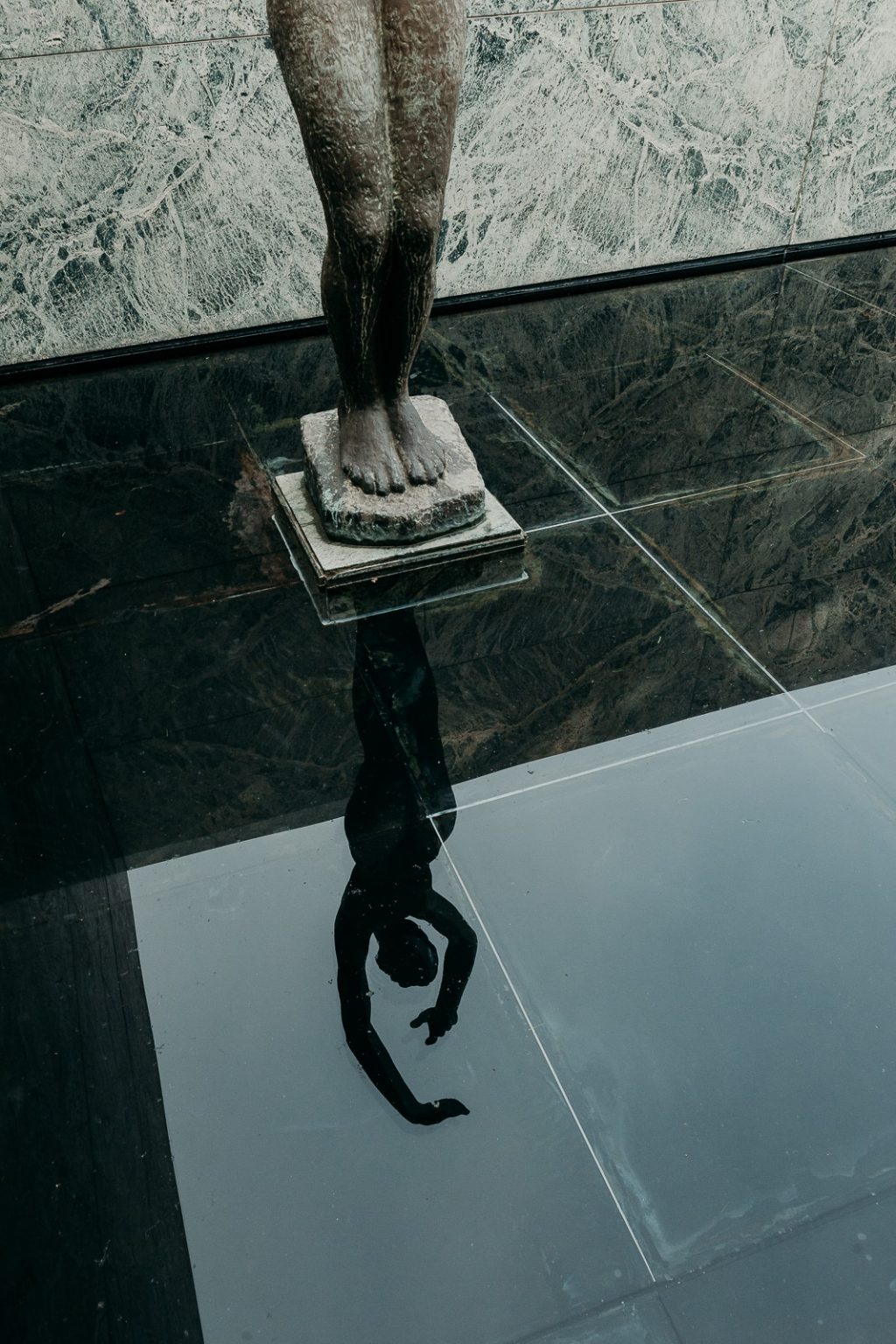
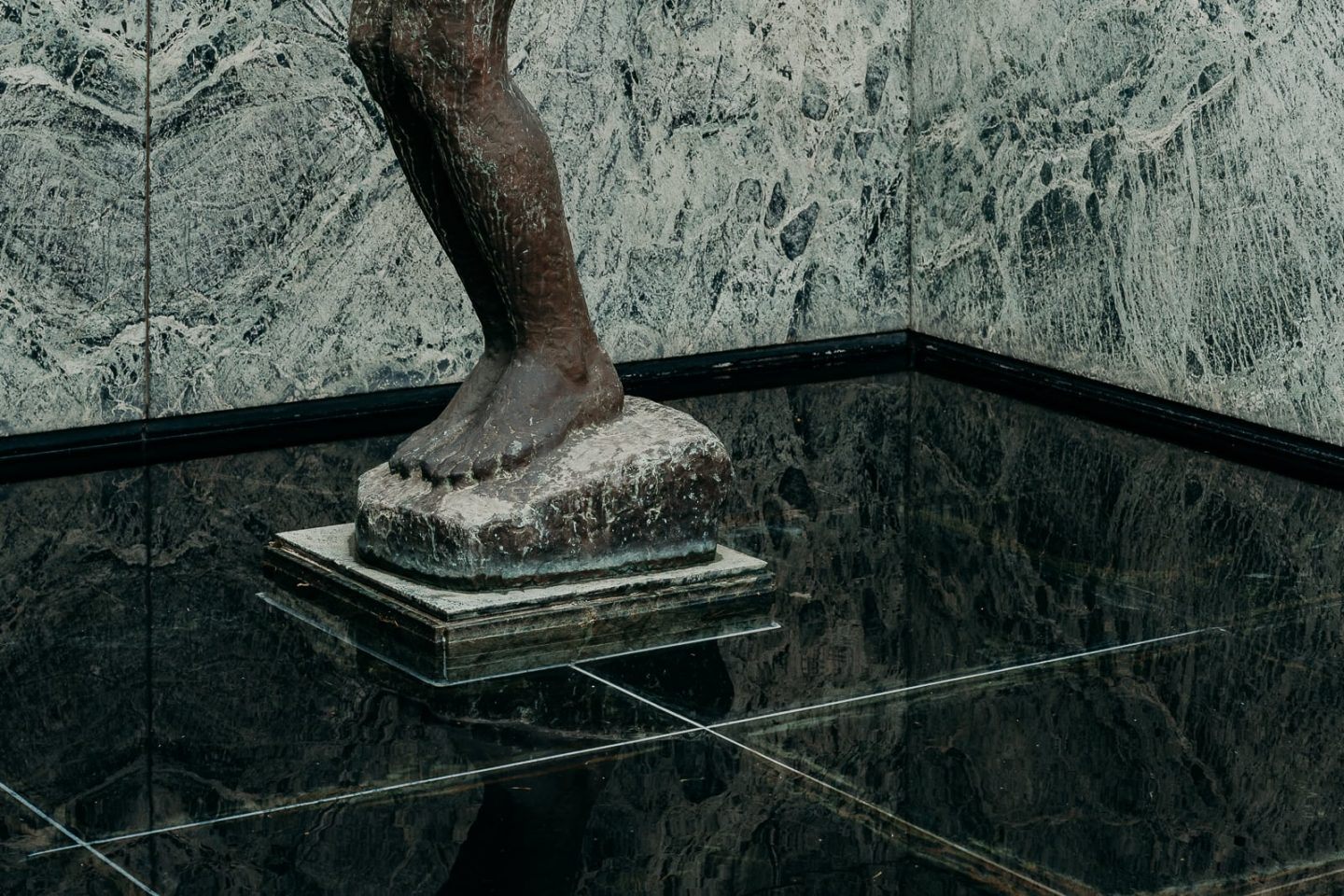
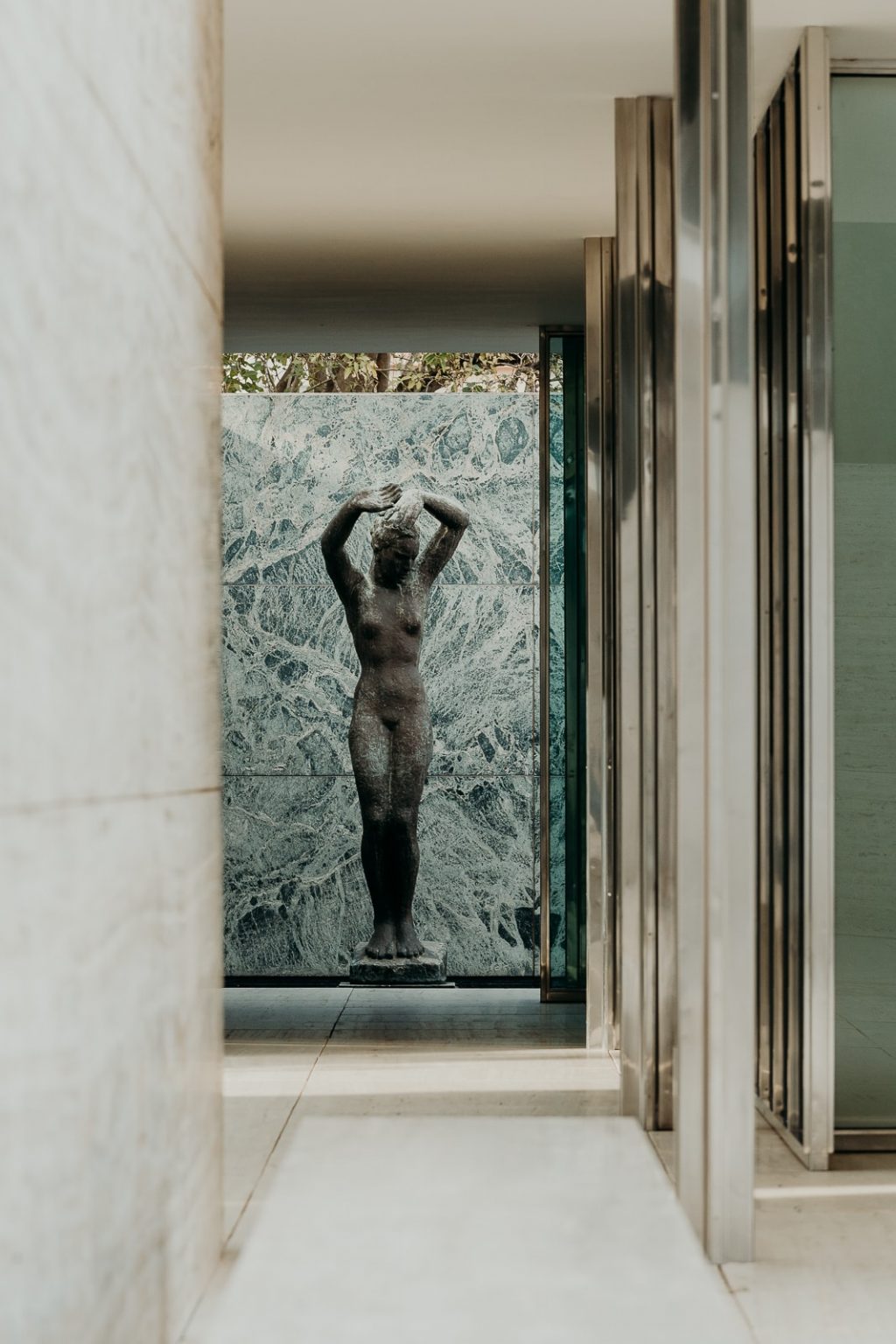
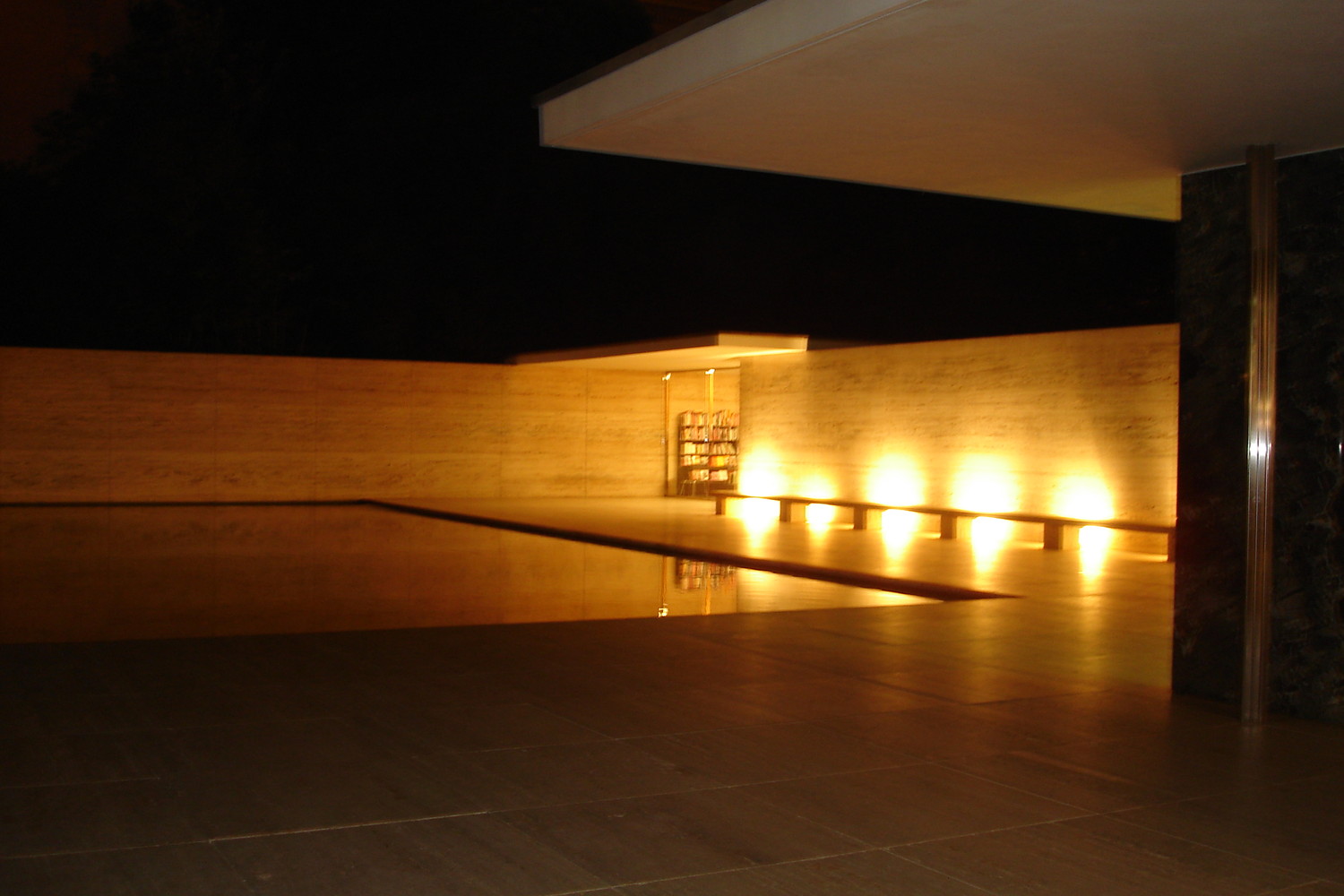
The raised travertine podium extends beyond the enclosed volume to create terraces and water basins. A larger reflecting pool runs parallel to the main axis of the site, while a smaller basin frames Georg Kolbe’s sculpture Alba. The sculpture participates in the spatial order through reflection and alignment with marble and glass surfaces, intensifying visual continuity.
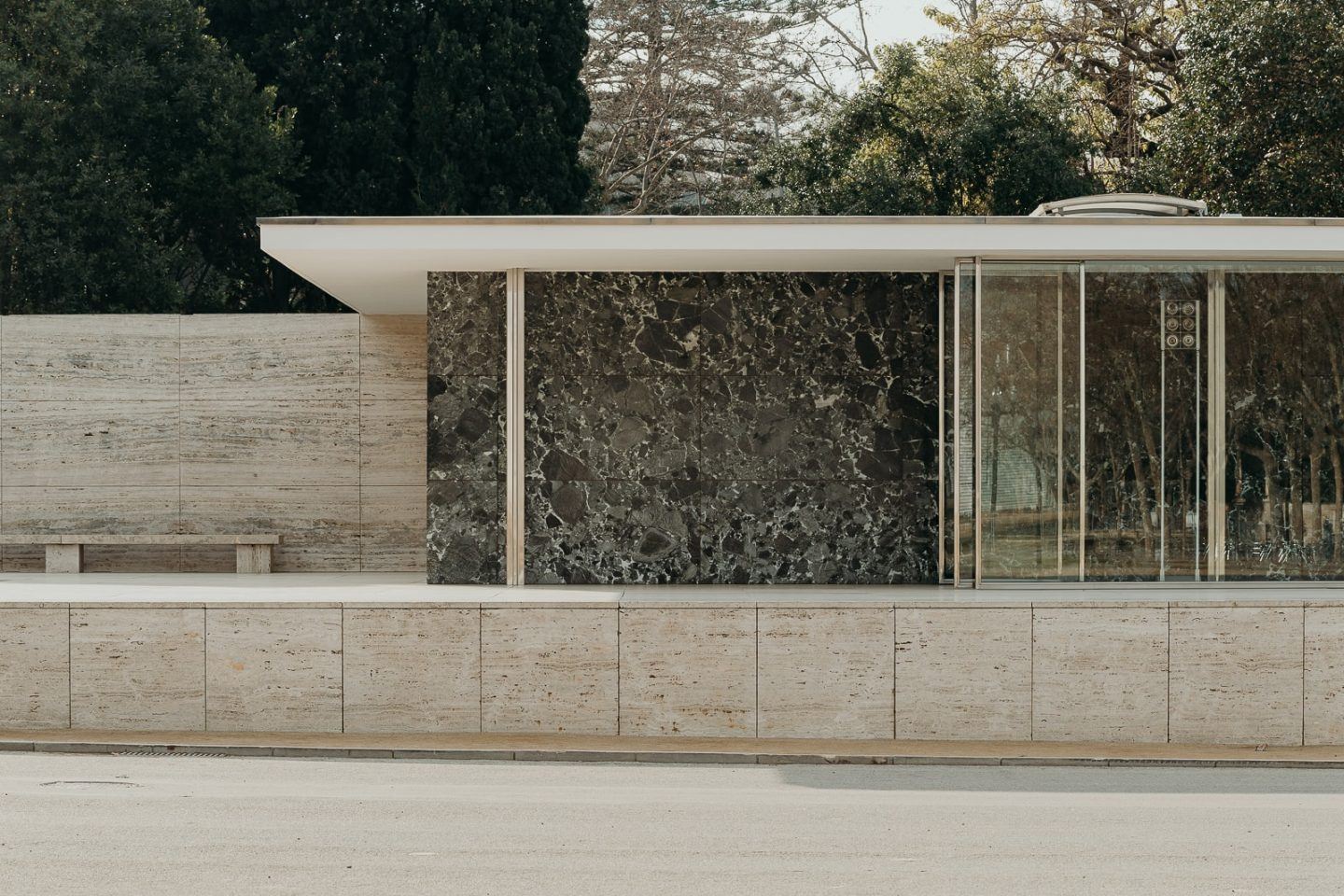
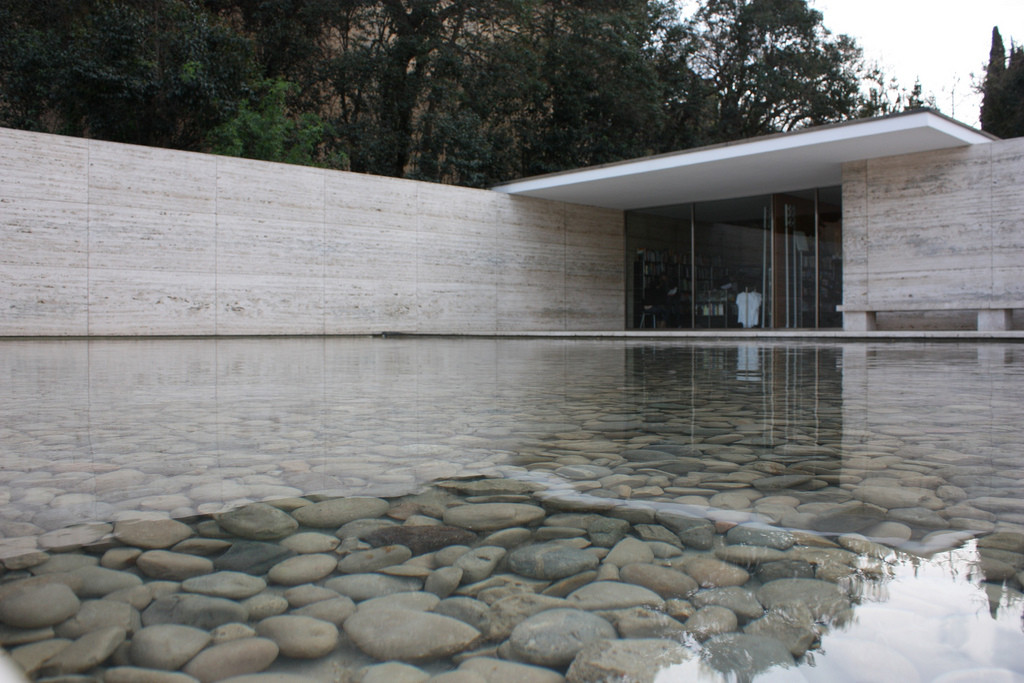
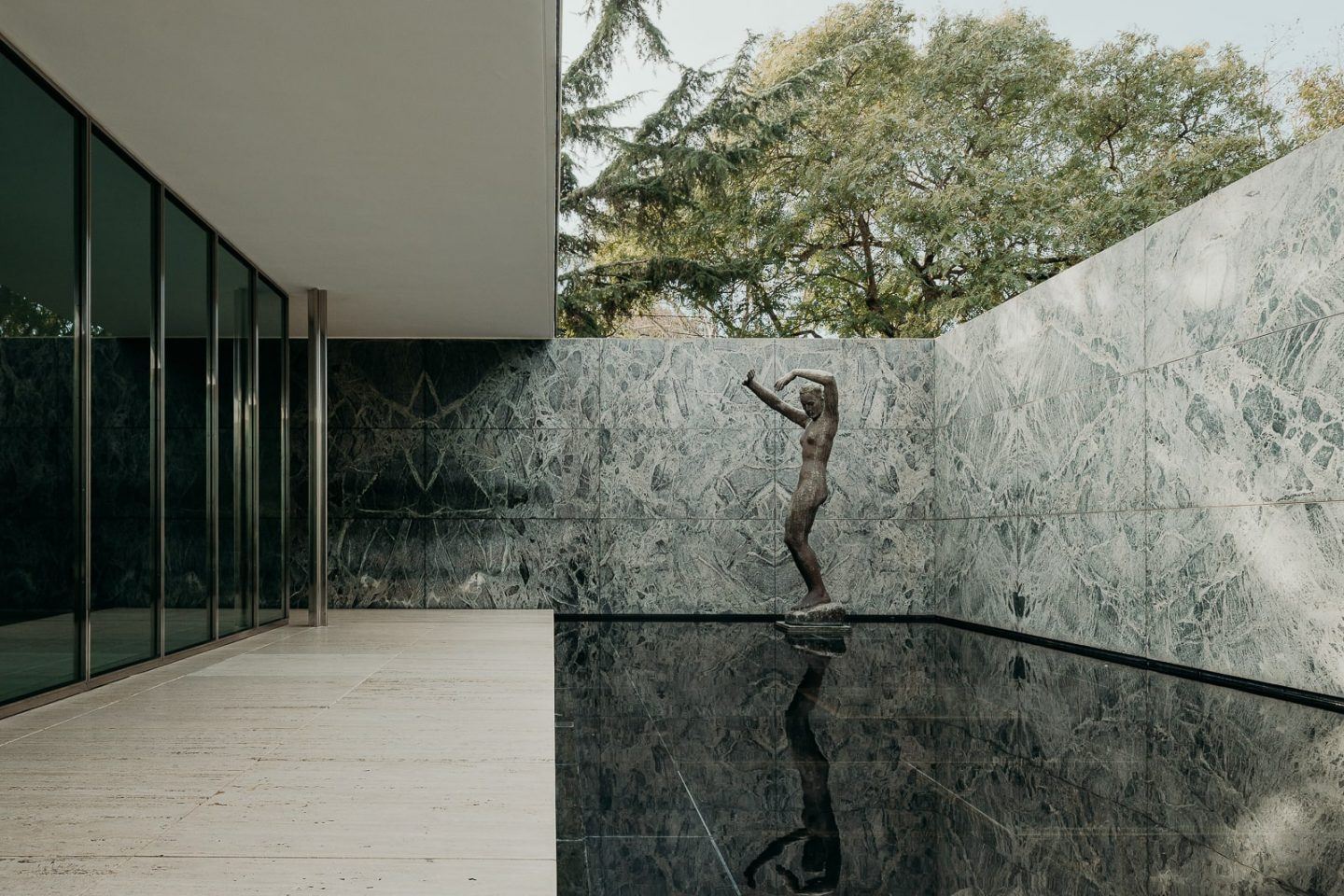
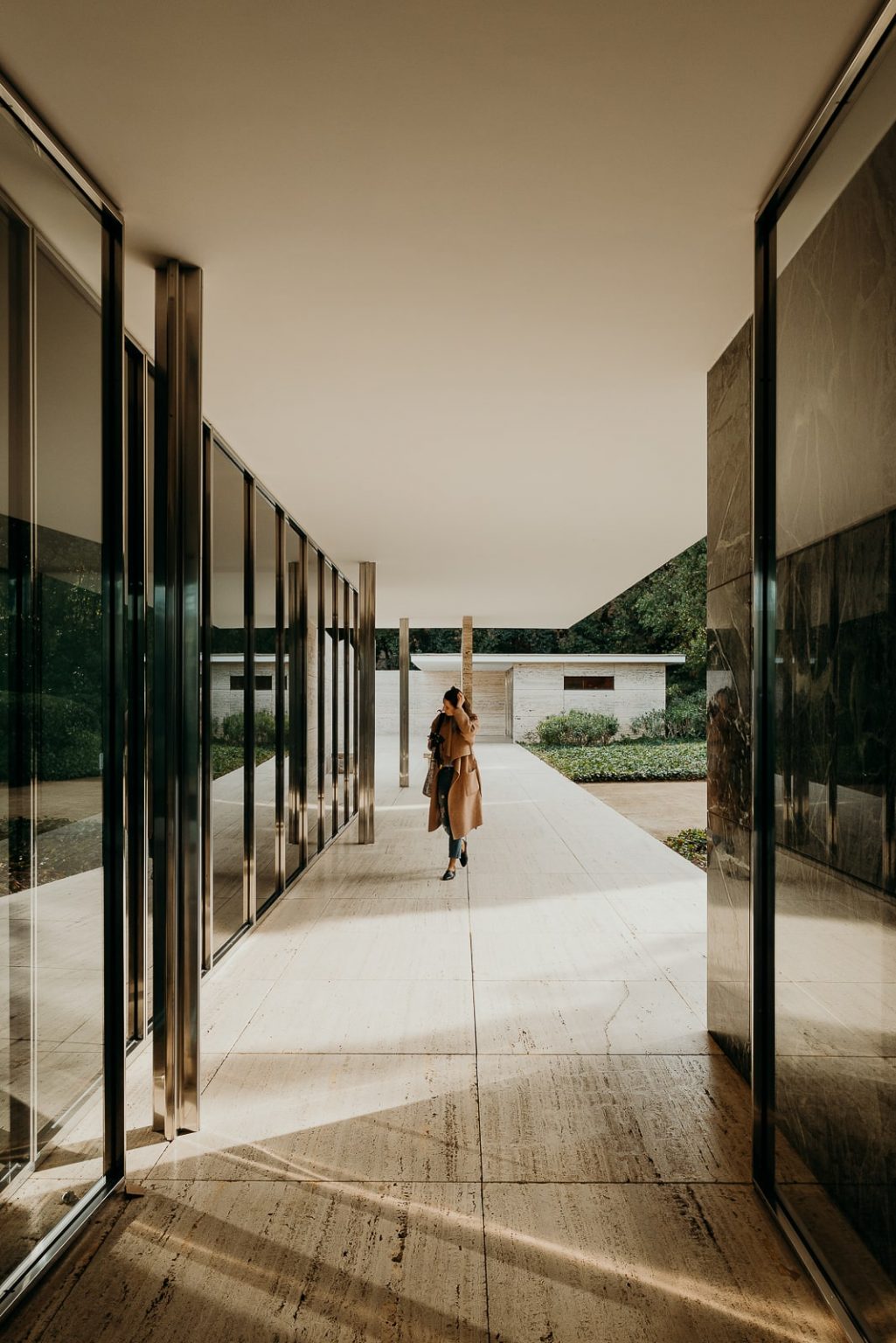
Spatial organization follows the principles of the free plan. Cruciform steel columns establish a regular grid, while marble, onyx, and glass walls shift independently to guide circulation. Roof slabs project beyond the wall planes and reinforce horizontal emphasis. The thin profile of the roof and the reflective finish of the columns generate the perception of a floating plane.
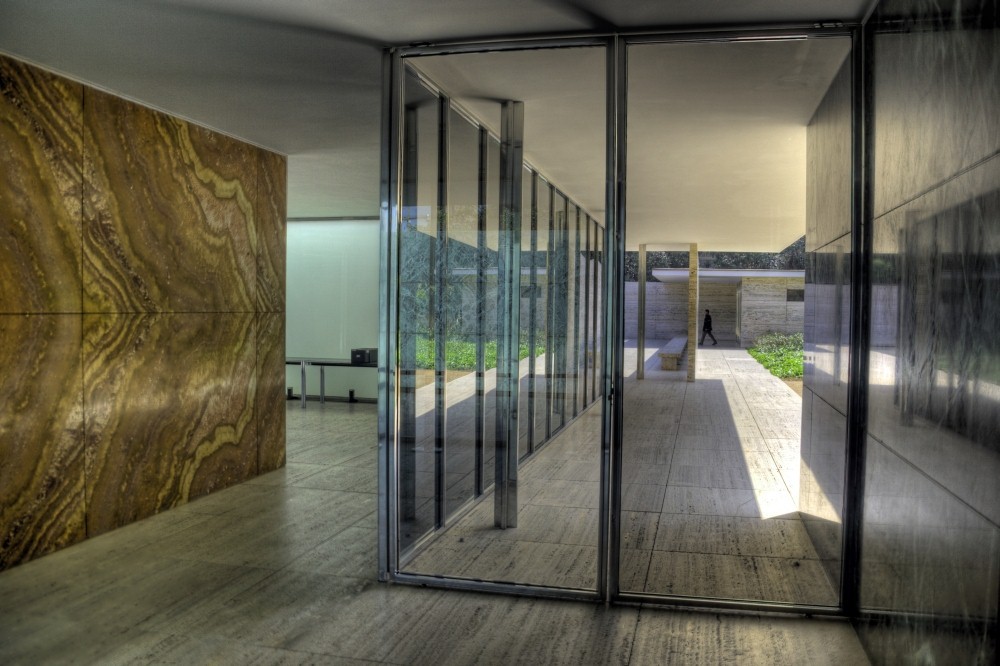

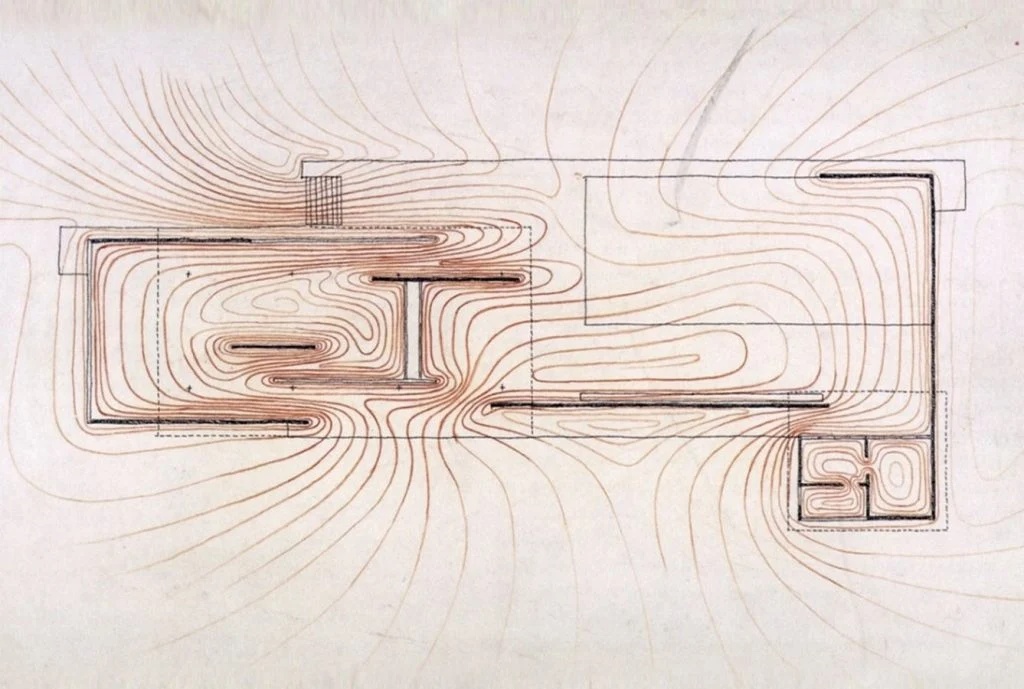
Movement through the pavilion unfolds through offset partitions that alternately compress and release space. Visitors ascend steps onto the podium and follow a non-linear path shaped by overlapping planes. Framed views, layered reflections, and changing alignments structure the experience.
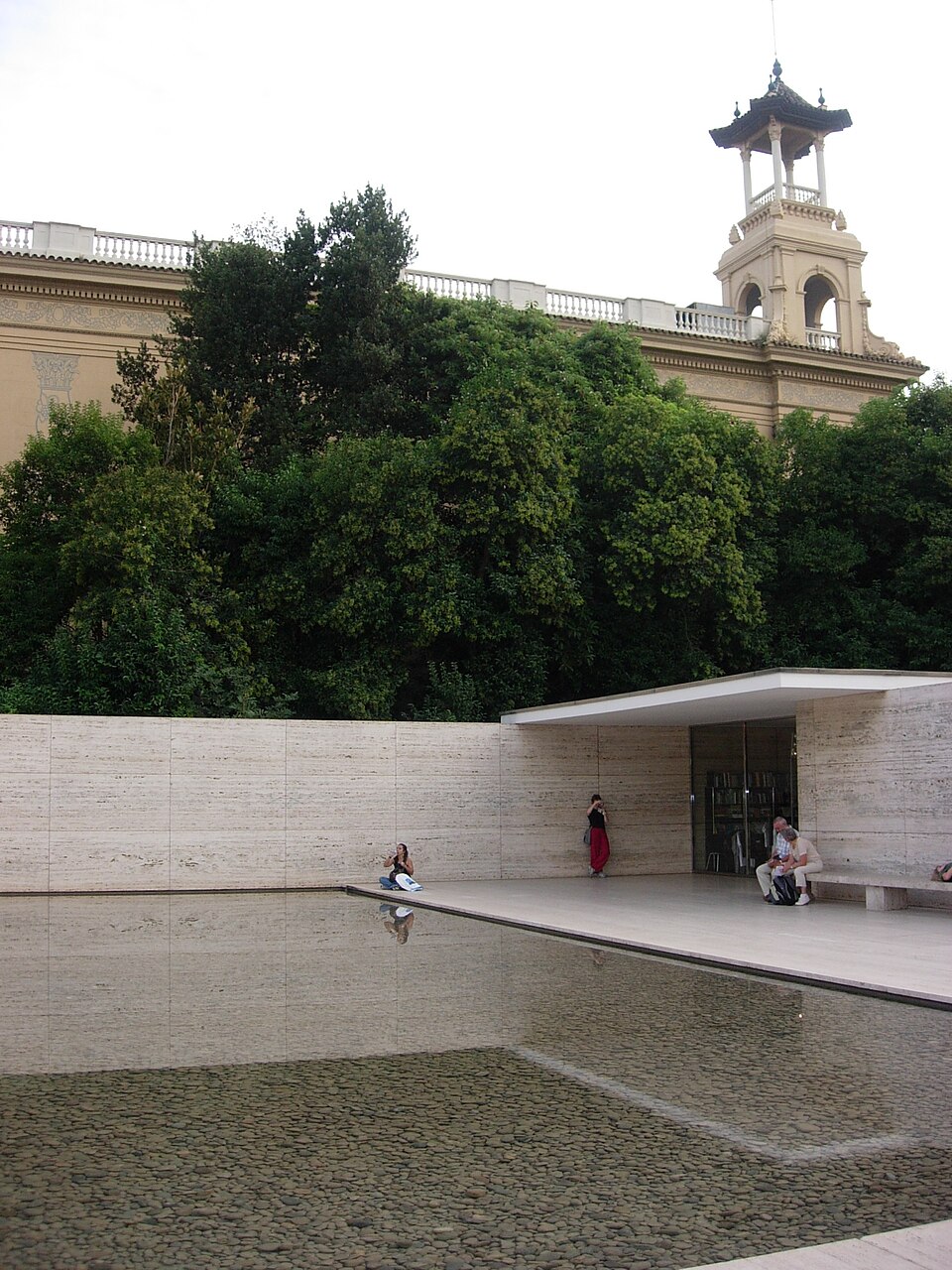
The original pavilion was dismantled in 1930 after the exposition. Between 1983 and 1986, Ignasi de Solà-Morales, Cristian Cirici, and Fernando Ramos reconstructed the building on its original site using archival documentation and documented dimensions. The reconstructed pavilion operates as a permanent architectural reference under the stewardship of the Fundació Mies van der Rohe and continues to host installations and research that engage its spatial and material logic.
Project Gallery

Project Location
Address: 7 Avinguda de Francesc Ferrer i Guàrdia, Sants-Montjuïc, 08038 Barcelona, Catalonia, Spain
Location is for general reference and may represent a city or country, not necessarily a precise address.

