

Architects: Snøhetta
Area: 80,000 m² (861,100 ft²)
Year: 2002
Photography: Snøhetta, Bibliotheca Alexandrina, Gerald Zugmann, Gerald Zugman, Nils Petter Dale, Nigel Shafran, Wikimedia Commons, Azniv Stepanian, Sailko, Shivani Singh04, jrtaylor08, Alaa (علاء), pulse.rs
Collaborator: Hamza Associates
Structural Engineer: Buro Happold
Contractor: Arab Contractors, Balfour Beatty
Client: Arab Republic of Egypt, UNESCO
City: Alexandria
Country: Egypt
Bibliotheca Alexandrina library and cultural center by Snøhetta in Alexandria, Egypt reestablished the city as a major center for knowledge, research, and public culture following its inauguration in 2002. Conceived through an international competition organized by UNESCO and the Egyptian government, the project reinterprets the legacy of the ancient Library of Alexandria through a contemporary architectural language. The circular building measures 160 meters in diameter and rises 32 meters above the Mediterranean waterfront while extending below ground to accommodate extensive archival and storage facilities. The 20,000 m² reading room occupies seven terraced levels beneath a north-facing roof that introduces controlled natural daylight and creates one of the largest open reading environments in the world. The library accommodates four million volumes with capacity for future expansion to eight million books. Granite walls carved with thousands of inscriptions reference the history of writing and human communication. Museums, galleries, conservation laboratories, conference facilities, a planetarium, and educational programs expand the institution beyond the traditional role of a library. Environmental strategies including thermal mass, daylighting, local materials, and natural ventilation contribute to the building’s performance. Bibliotheca Alexandrina established a new cultural landmark for Alexandria and remains a significant example of contemporary library architecture, combining civic space, research facilities, and cultural institutions within a single architectural composition.
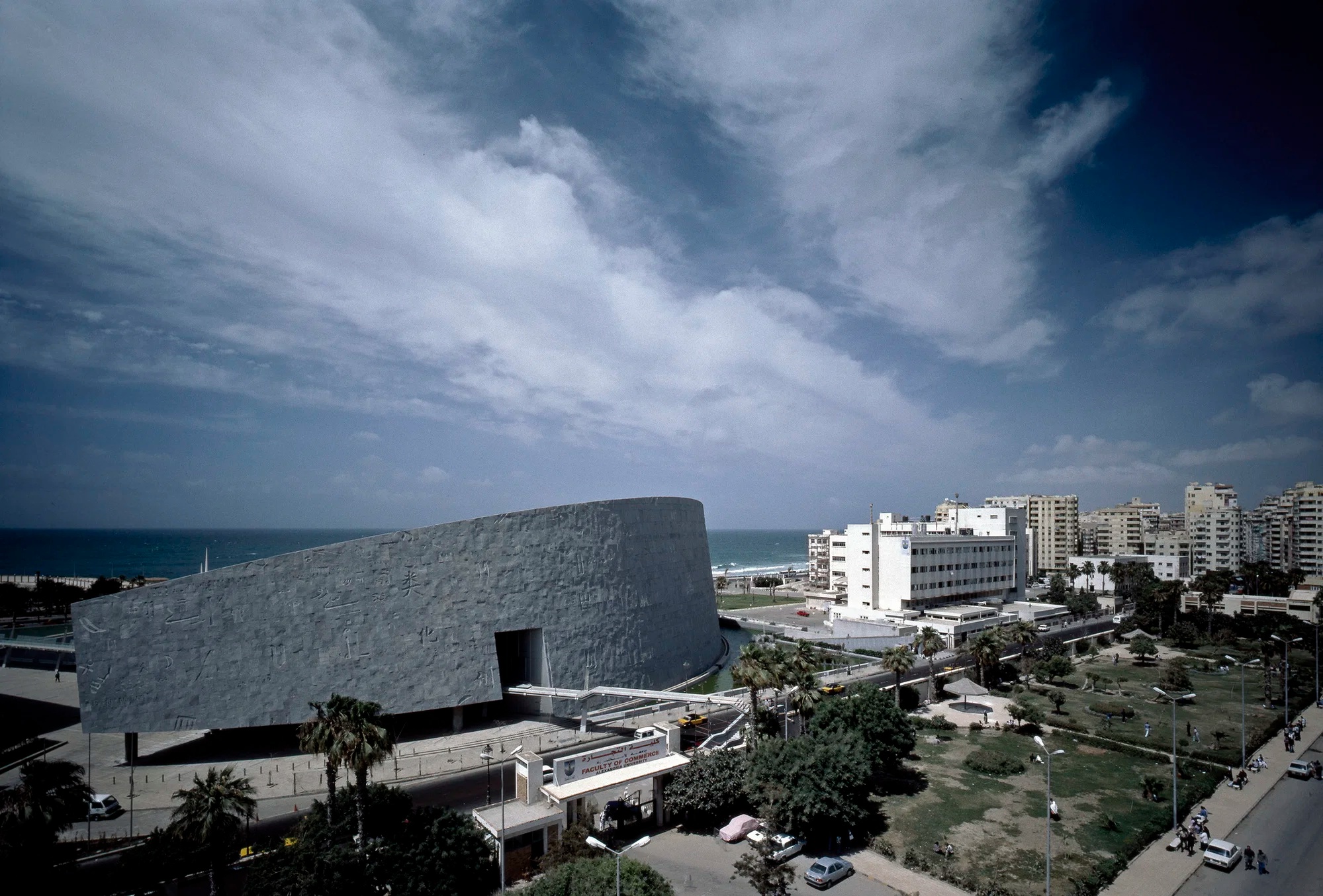
The Bibliotheca Alexandrina was conceived as a contemporary successor to the ancient Library of Alexandria, one of the most influential centers of learning in the ancient world. The project emerged from efforts initiated during the 1970s to establish a new public library near the site traditionally associated with the historical institution. An international architectural competition organized by UNESCO in 1988 attracted 524 entries from architects representing 77 countries. The competition was won by the Norwegian practice Snøhetta, whose proposal combined monumental geometry with a contemporary interpretation of the library as a civic and cultural institution.
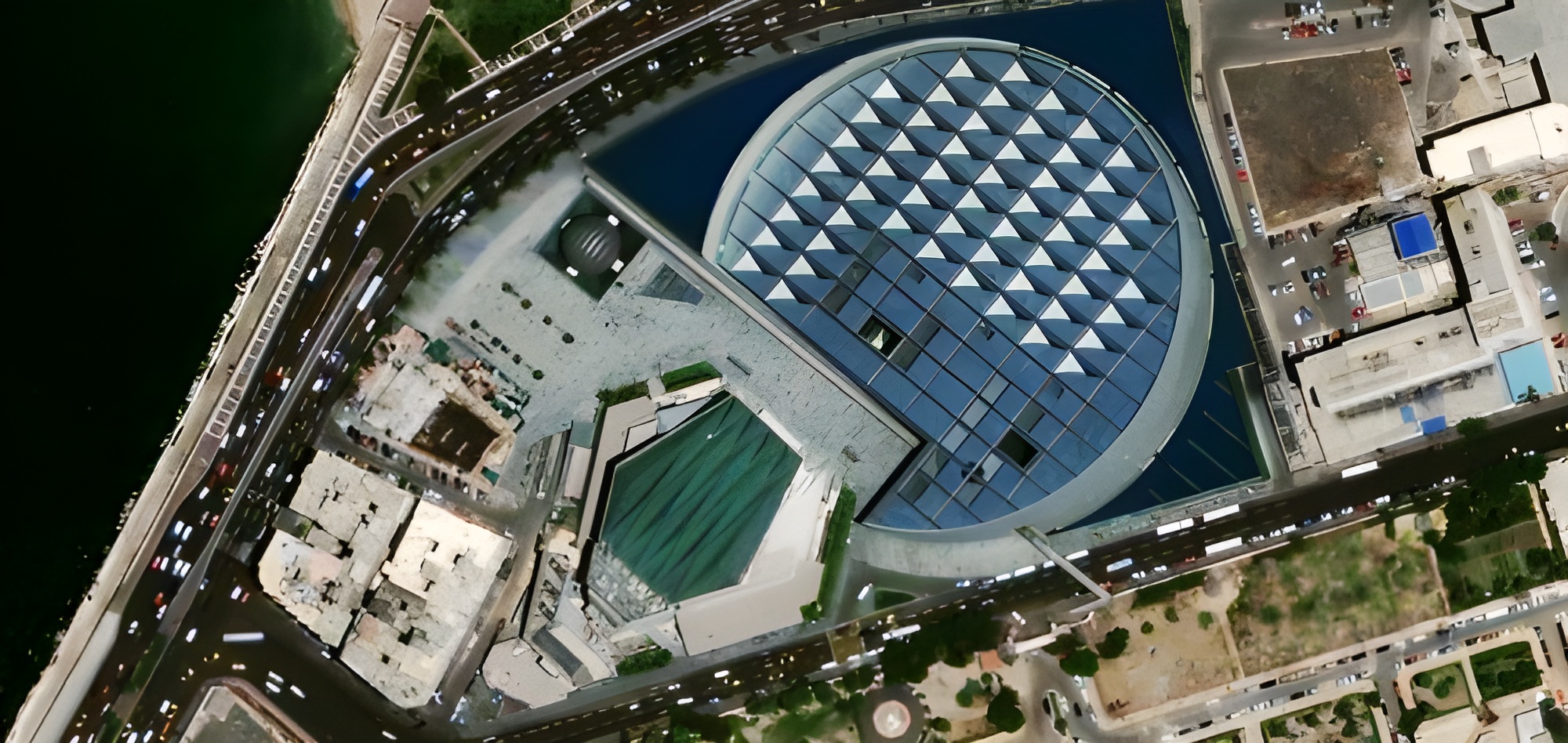
The project developed through cooperation between the Egyptian government, UNESCO, international donors, and local institutions. Construction began during the mid-1990s and the library officially opened in October 2002. The completed complex established a new cultural landmark along Alexandria’s Mediterranean waterfront and became one of the largest library facilities in Africa.
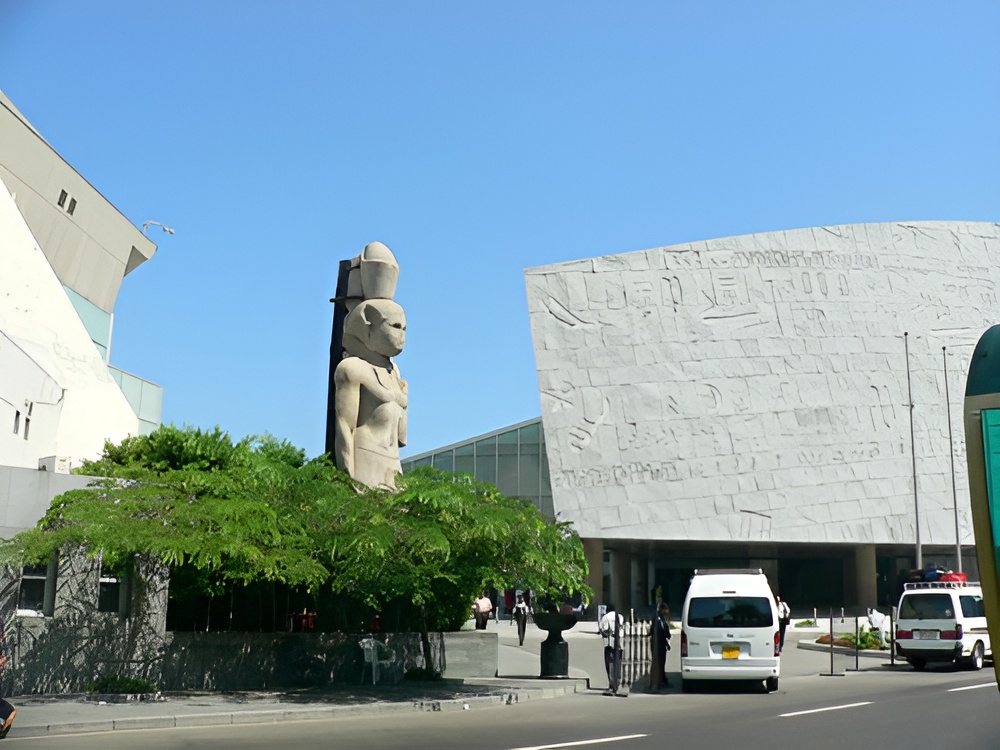
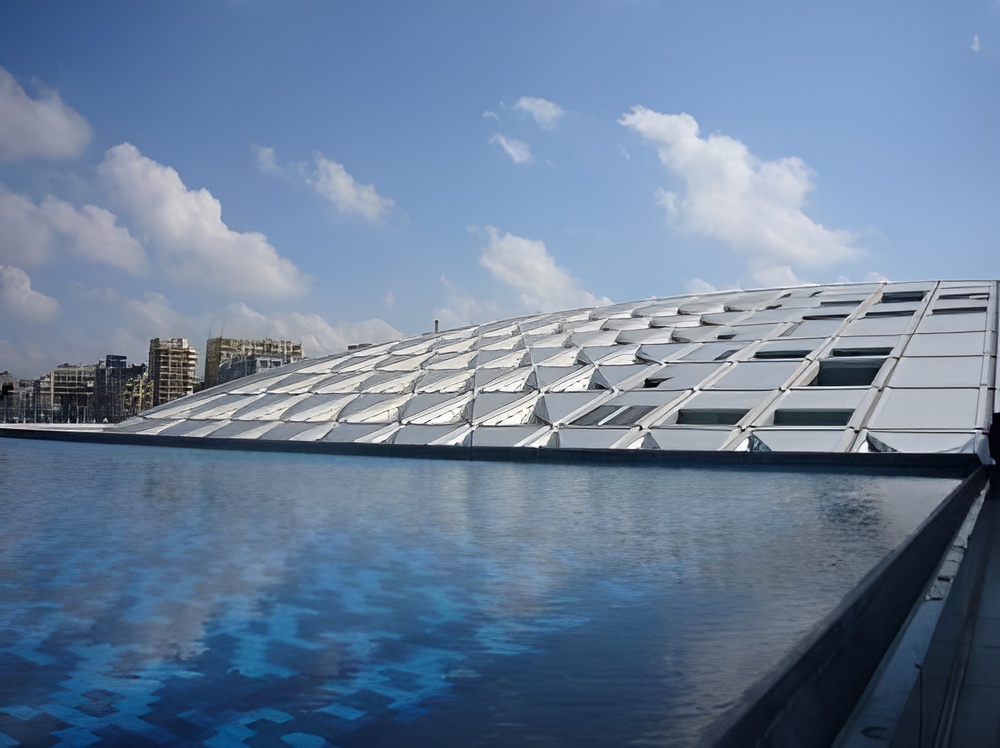
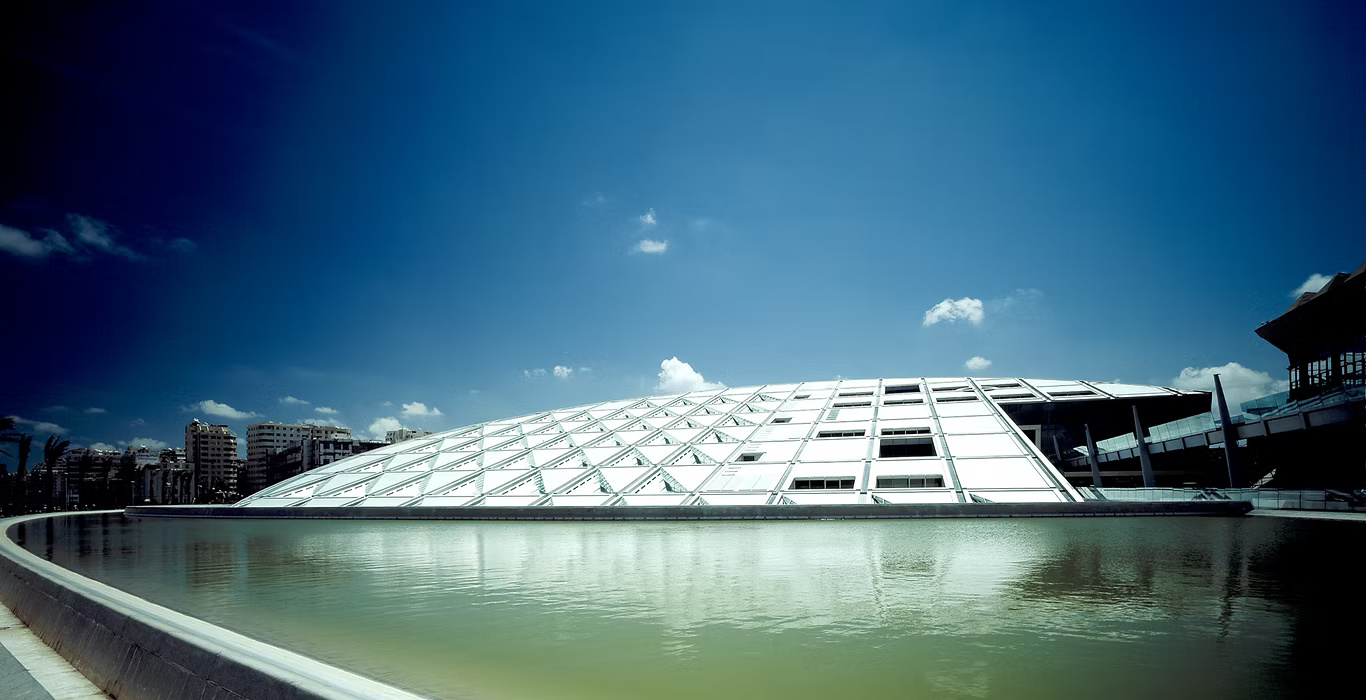
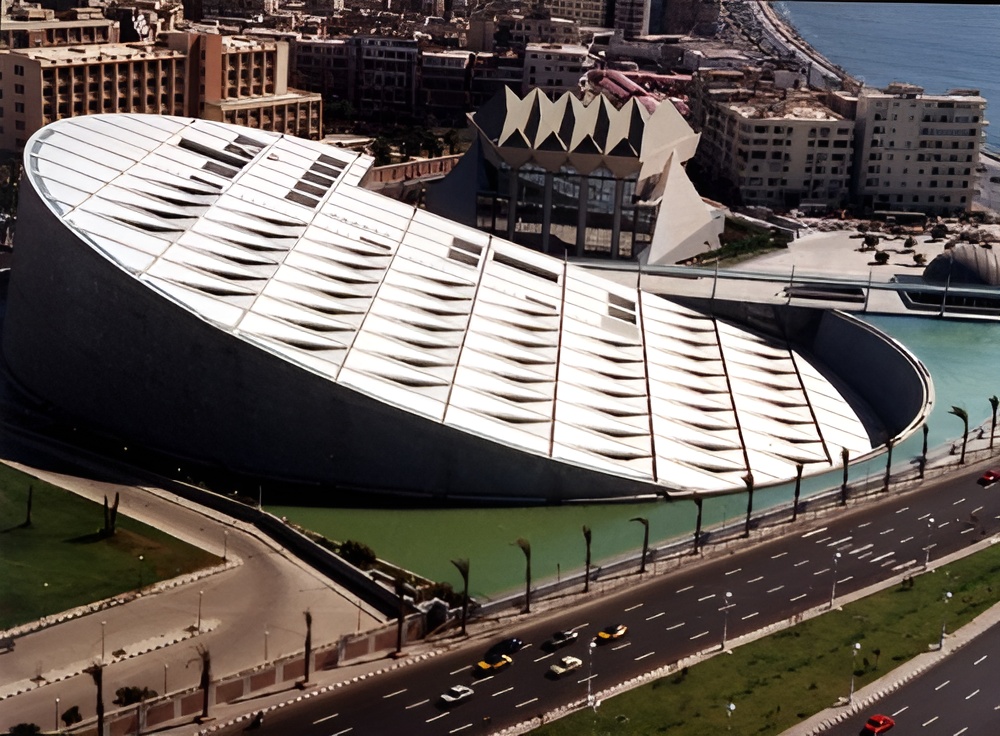
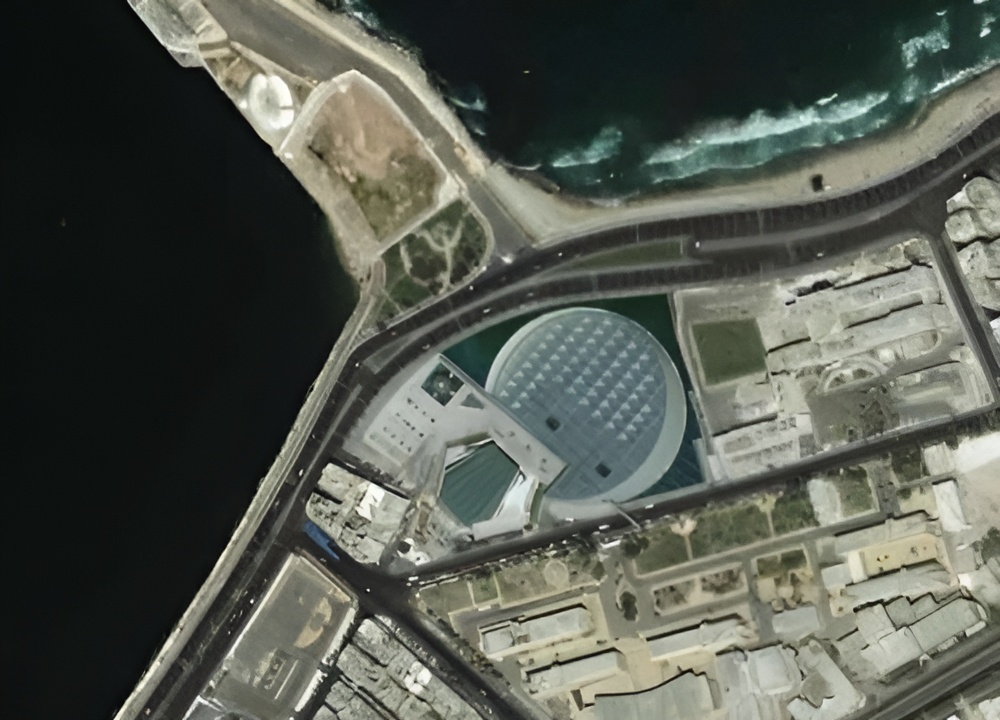
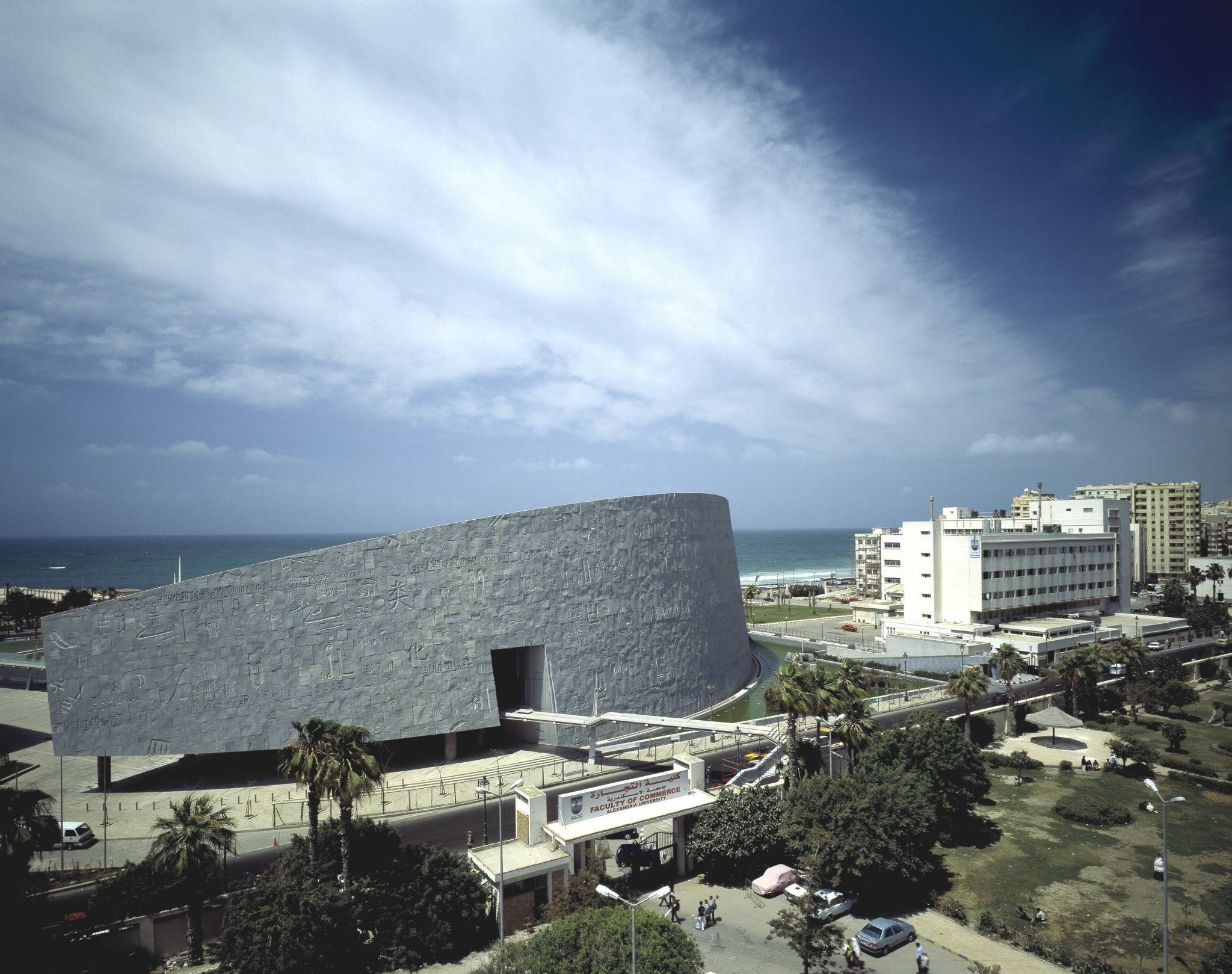
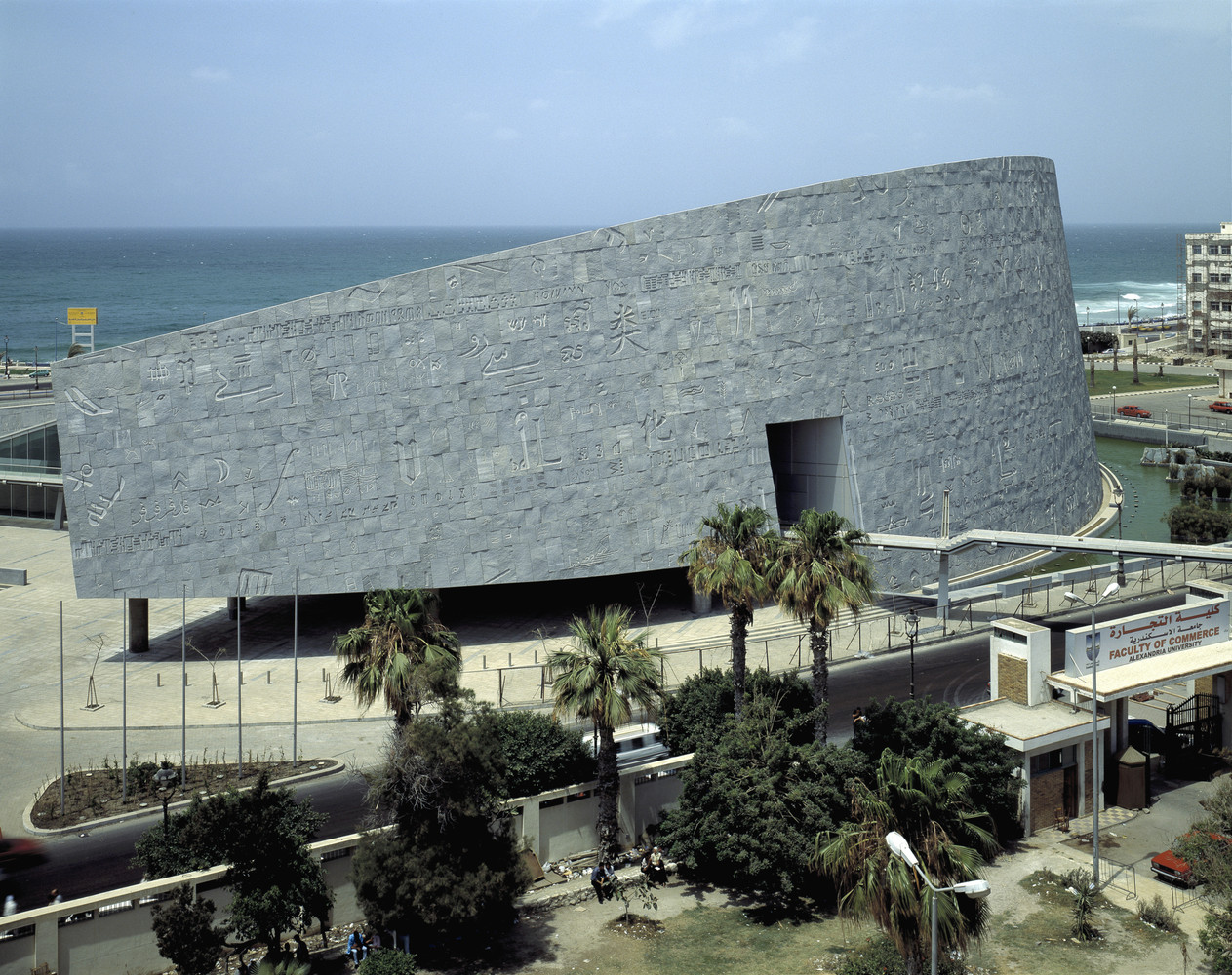
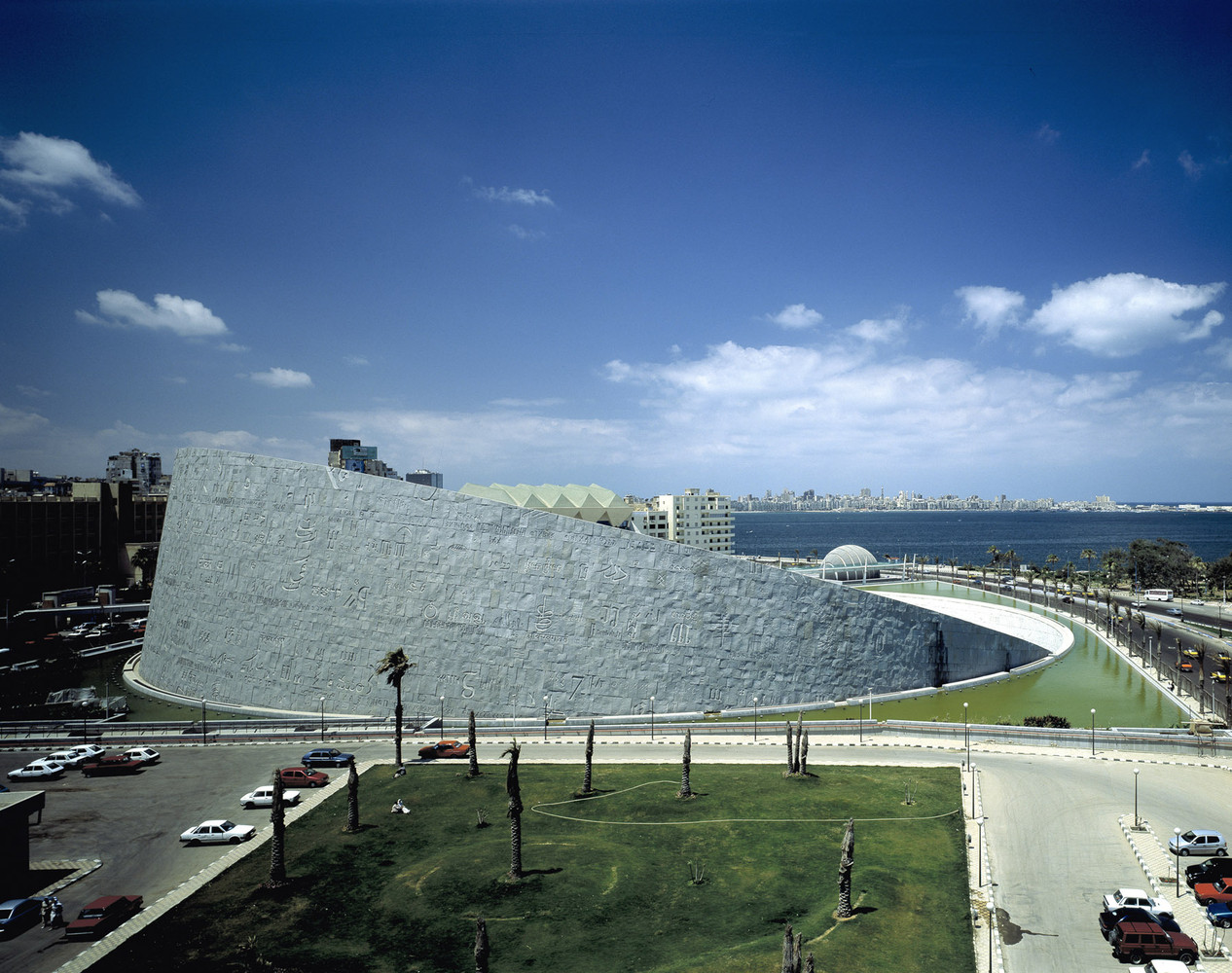
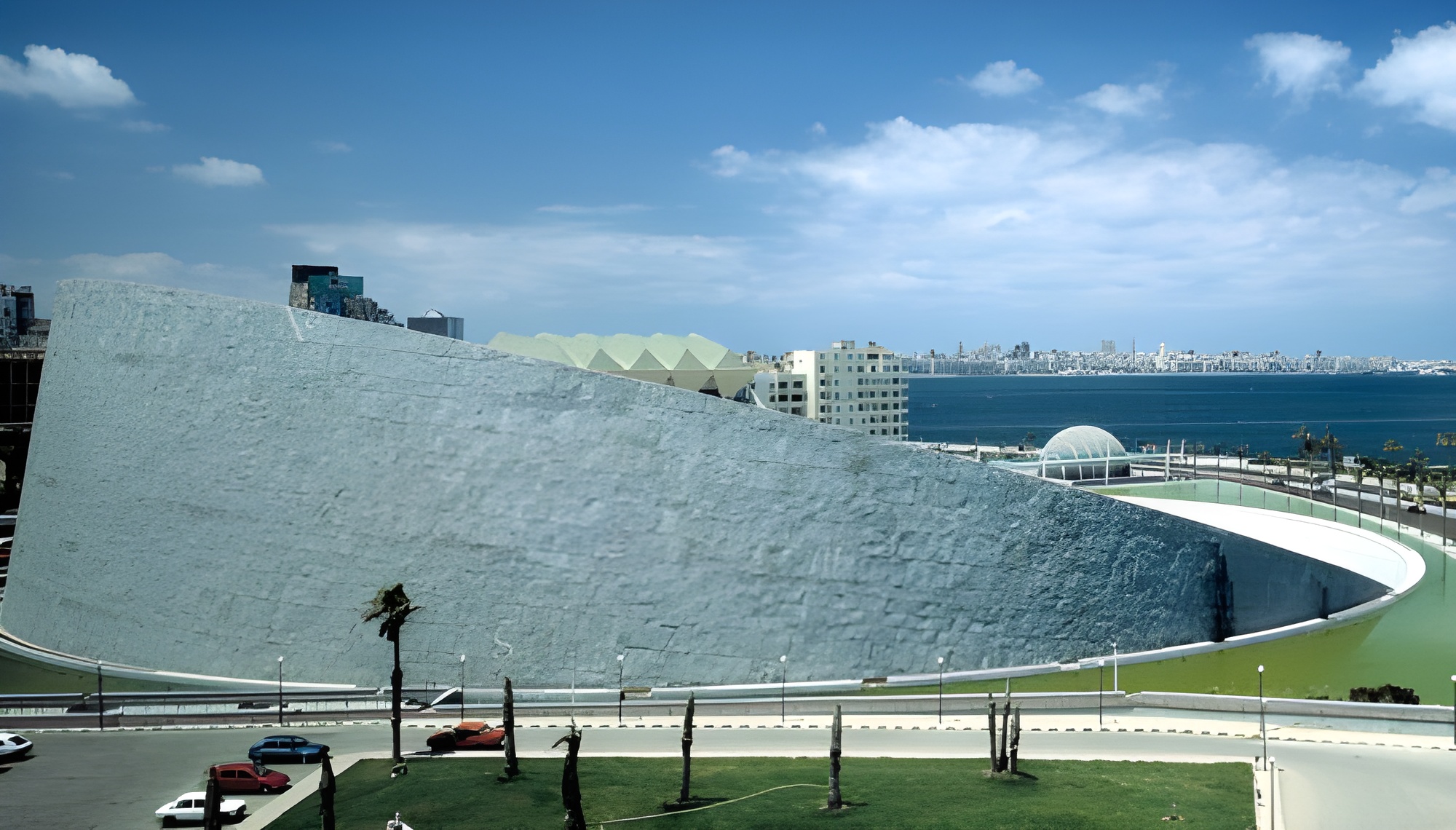
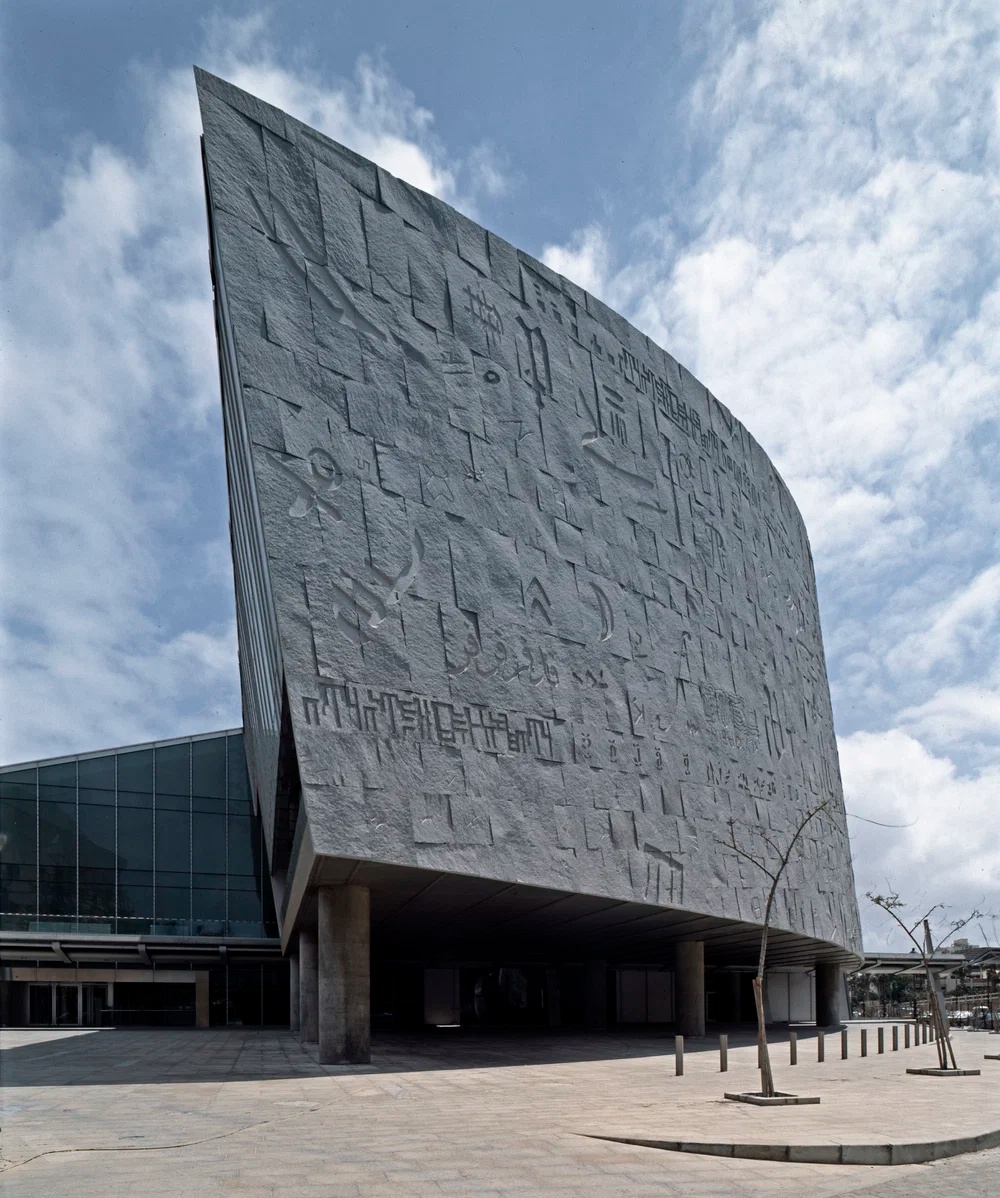
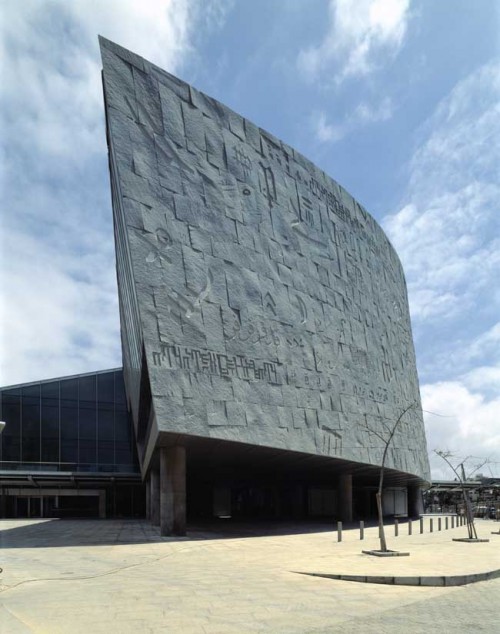
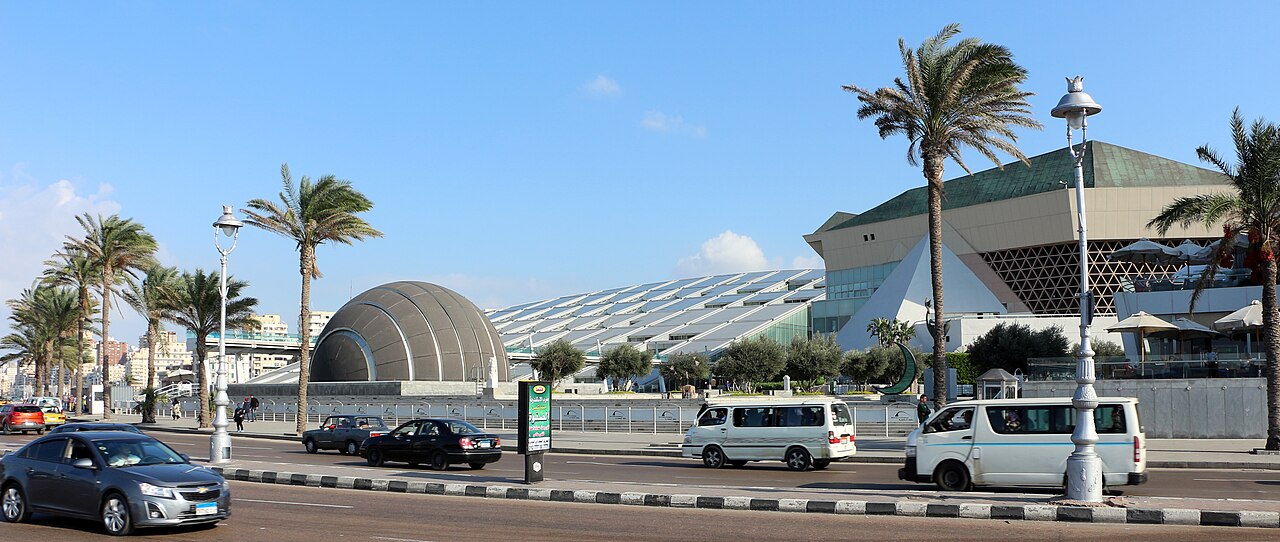
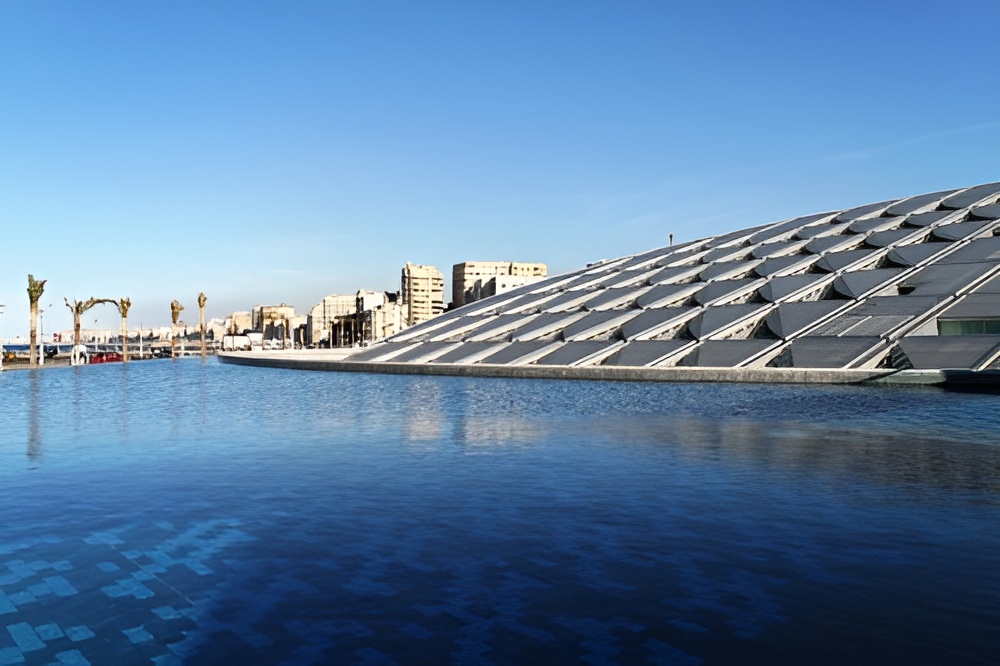
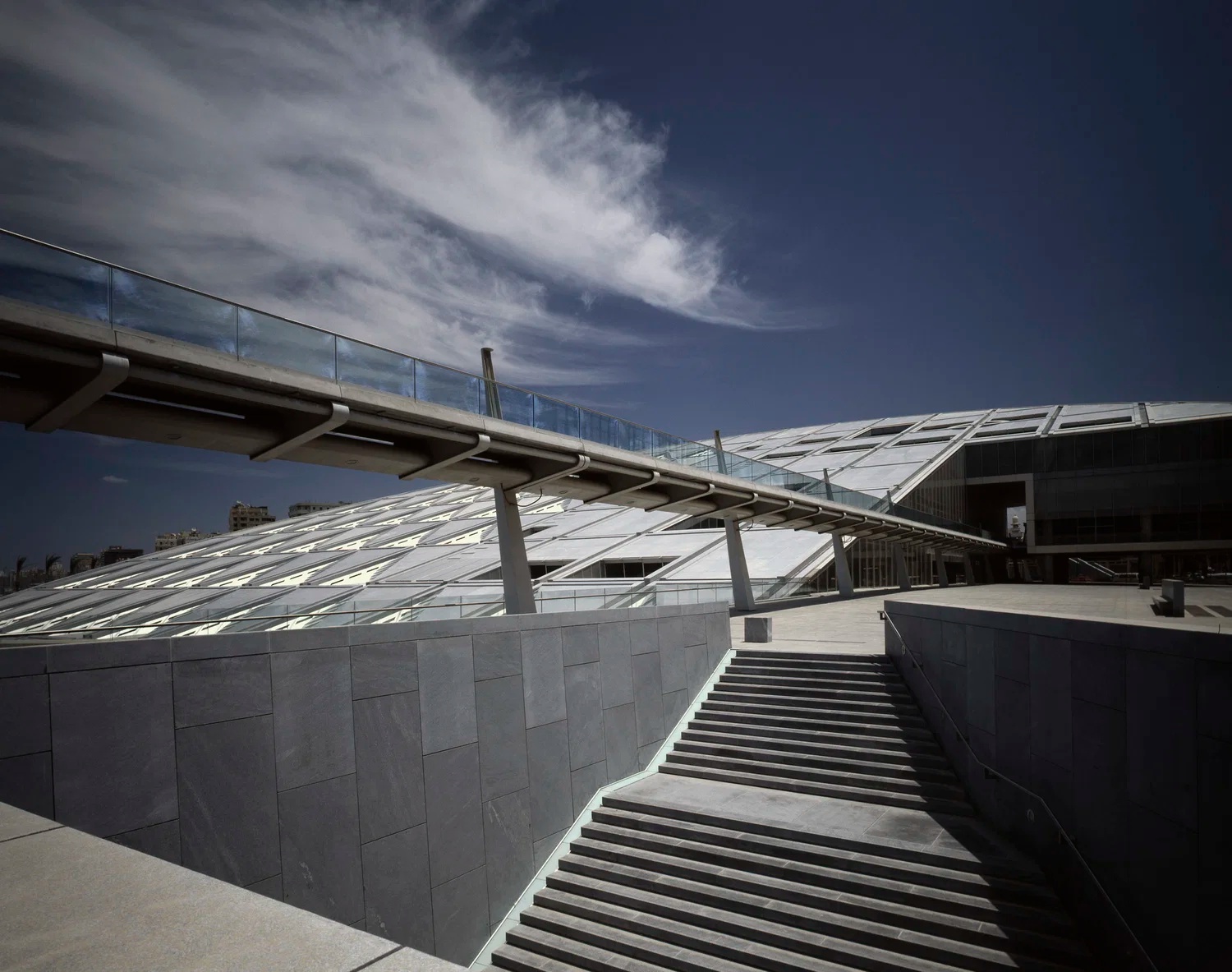
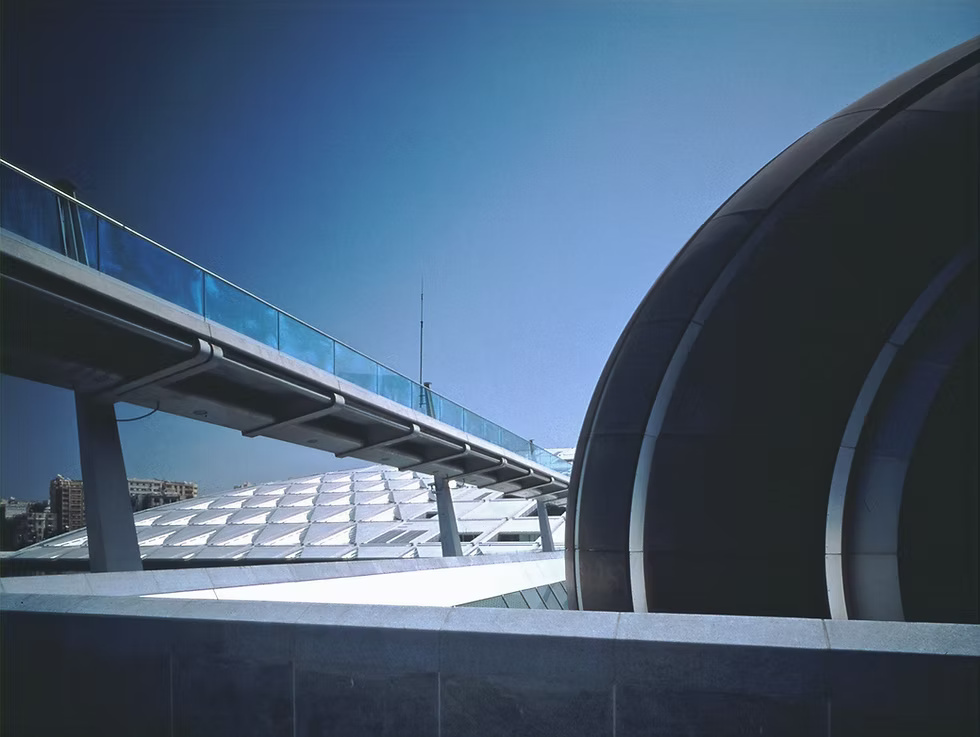
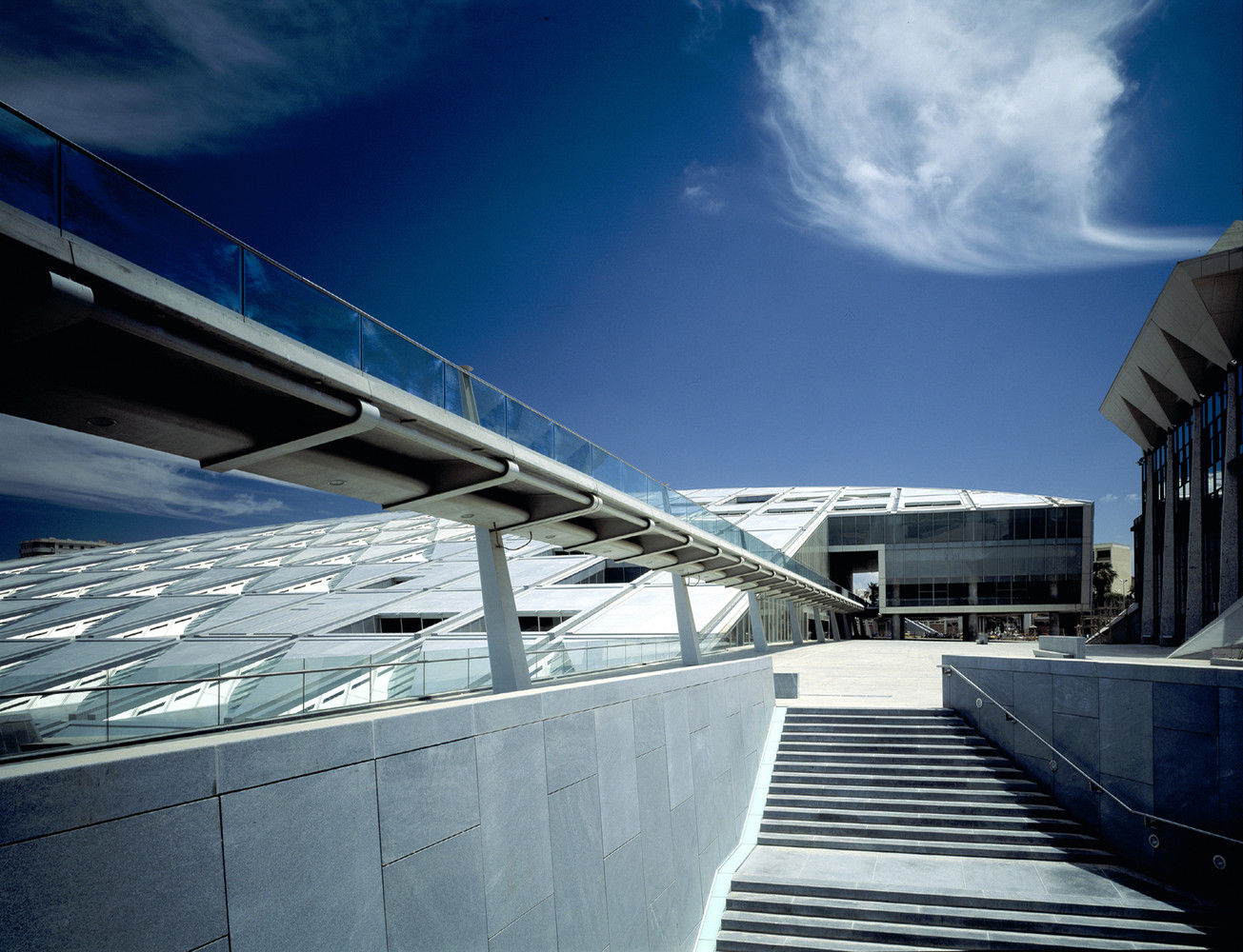
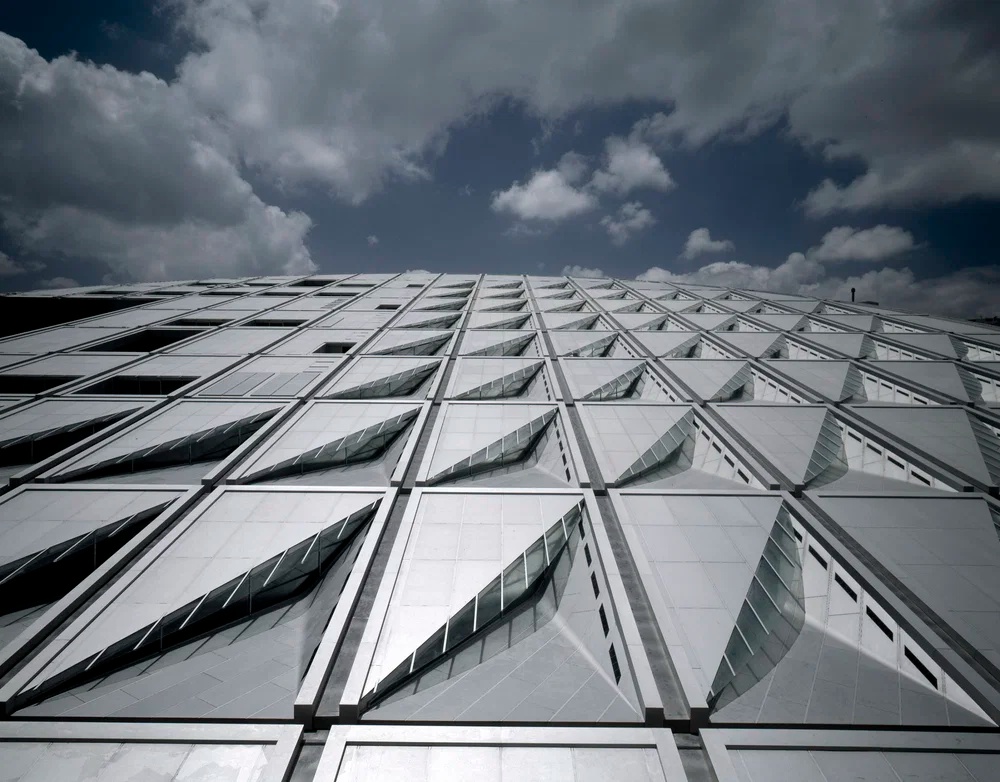
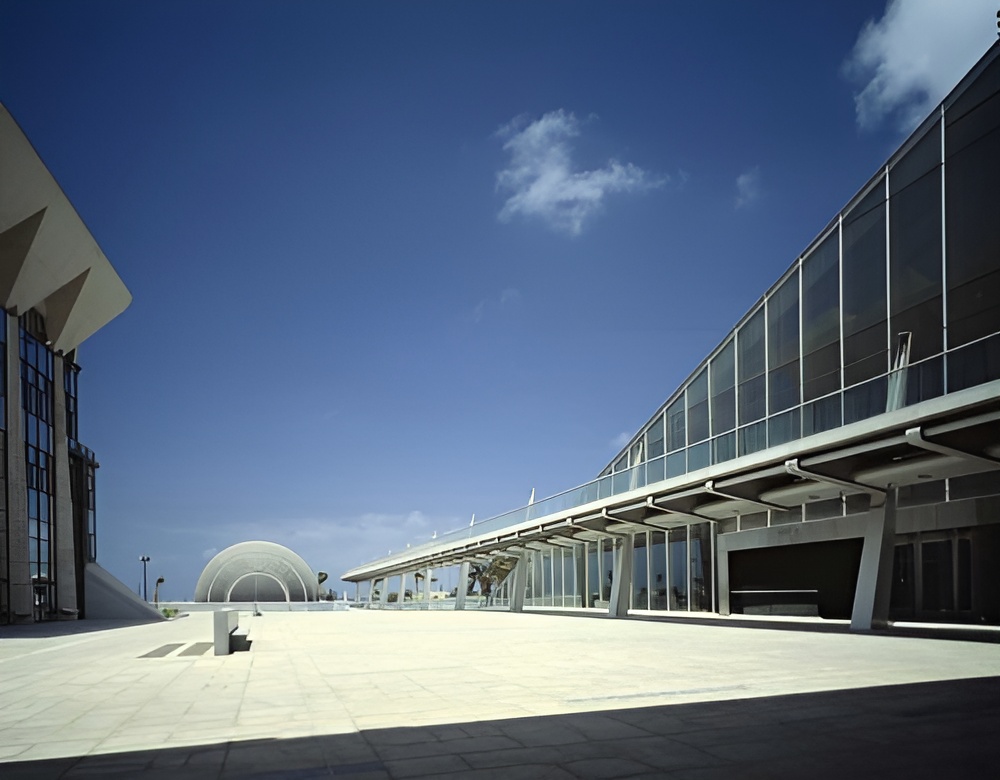
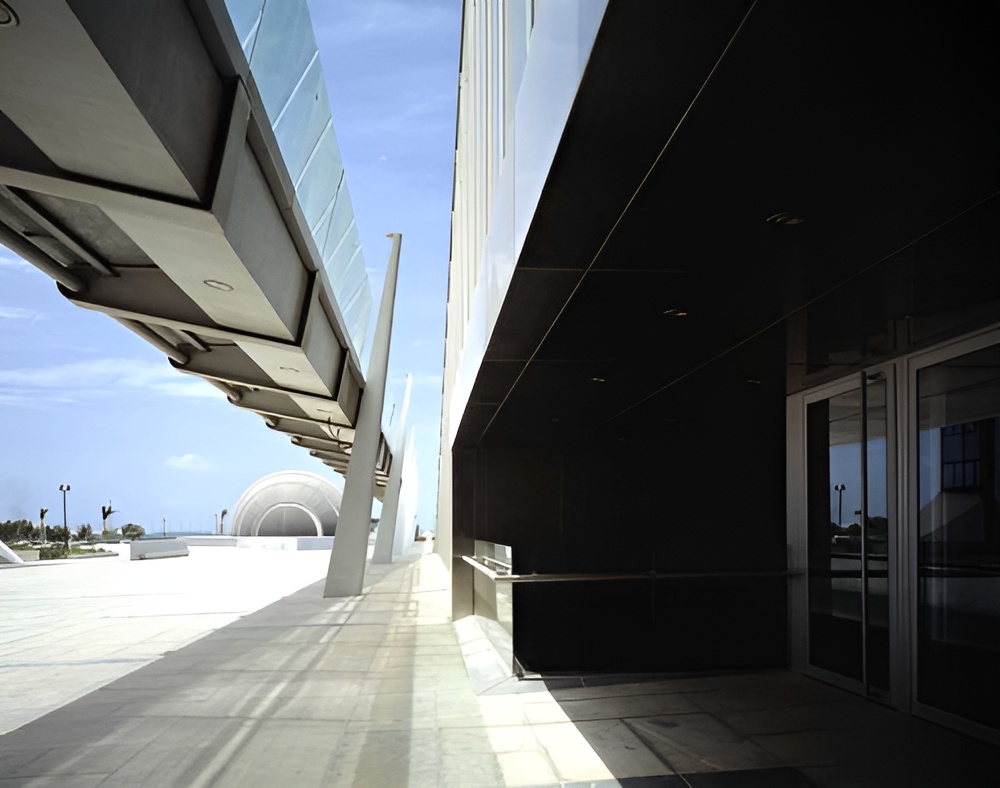
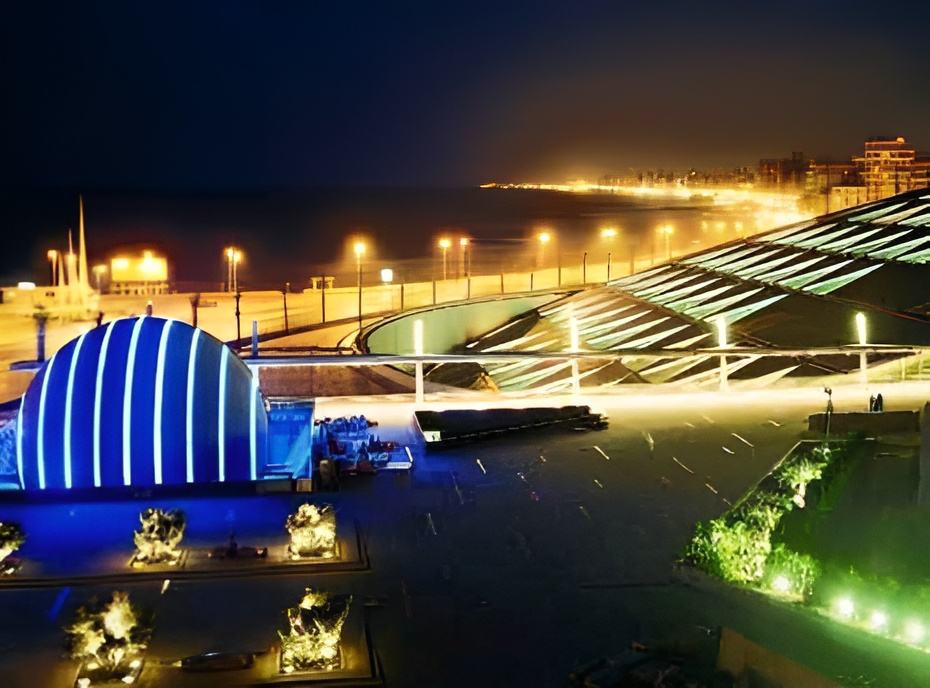
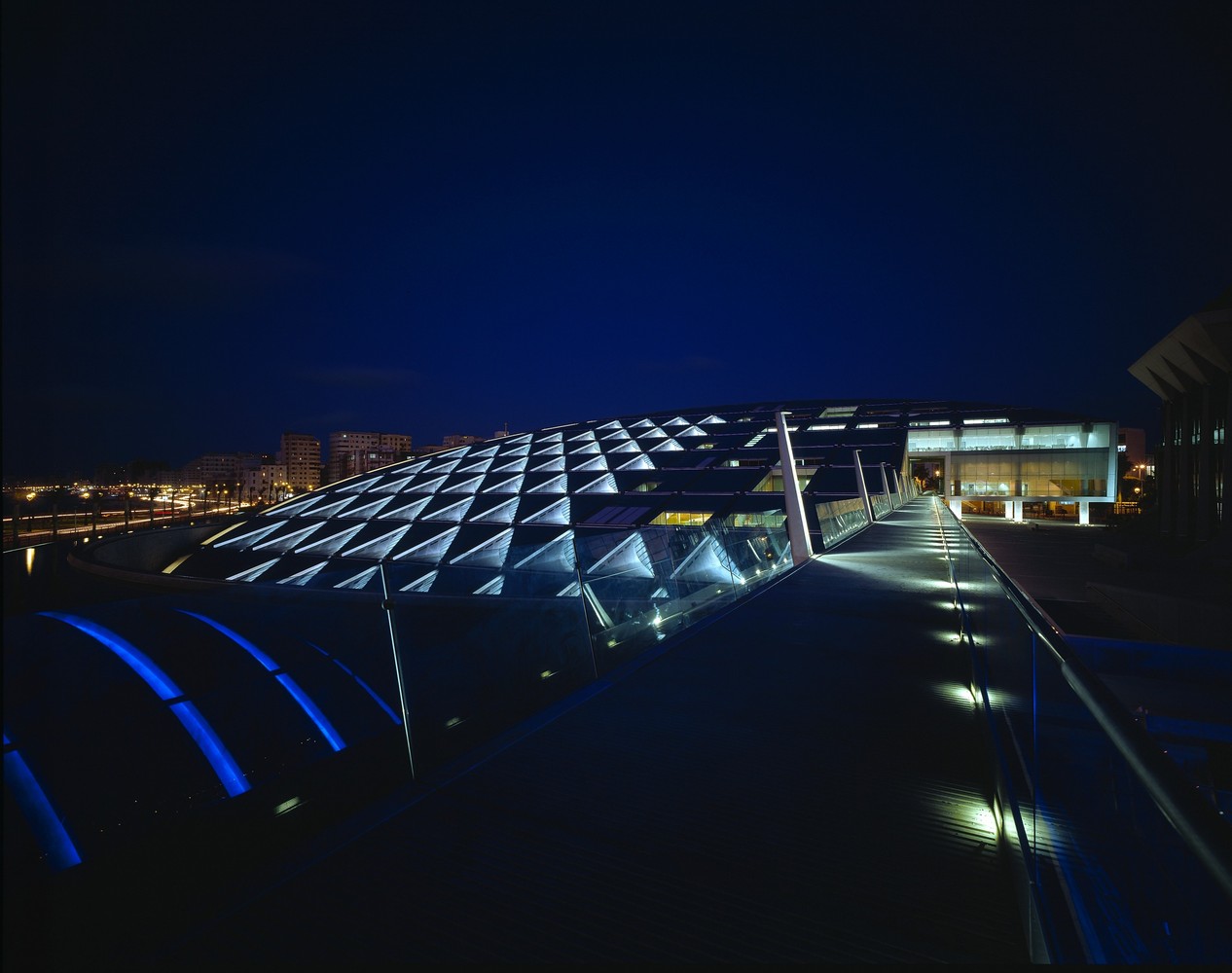
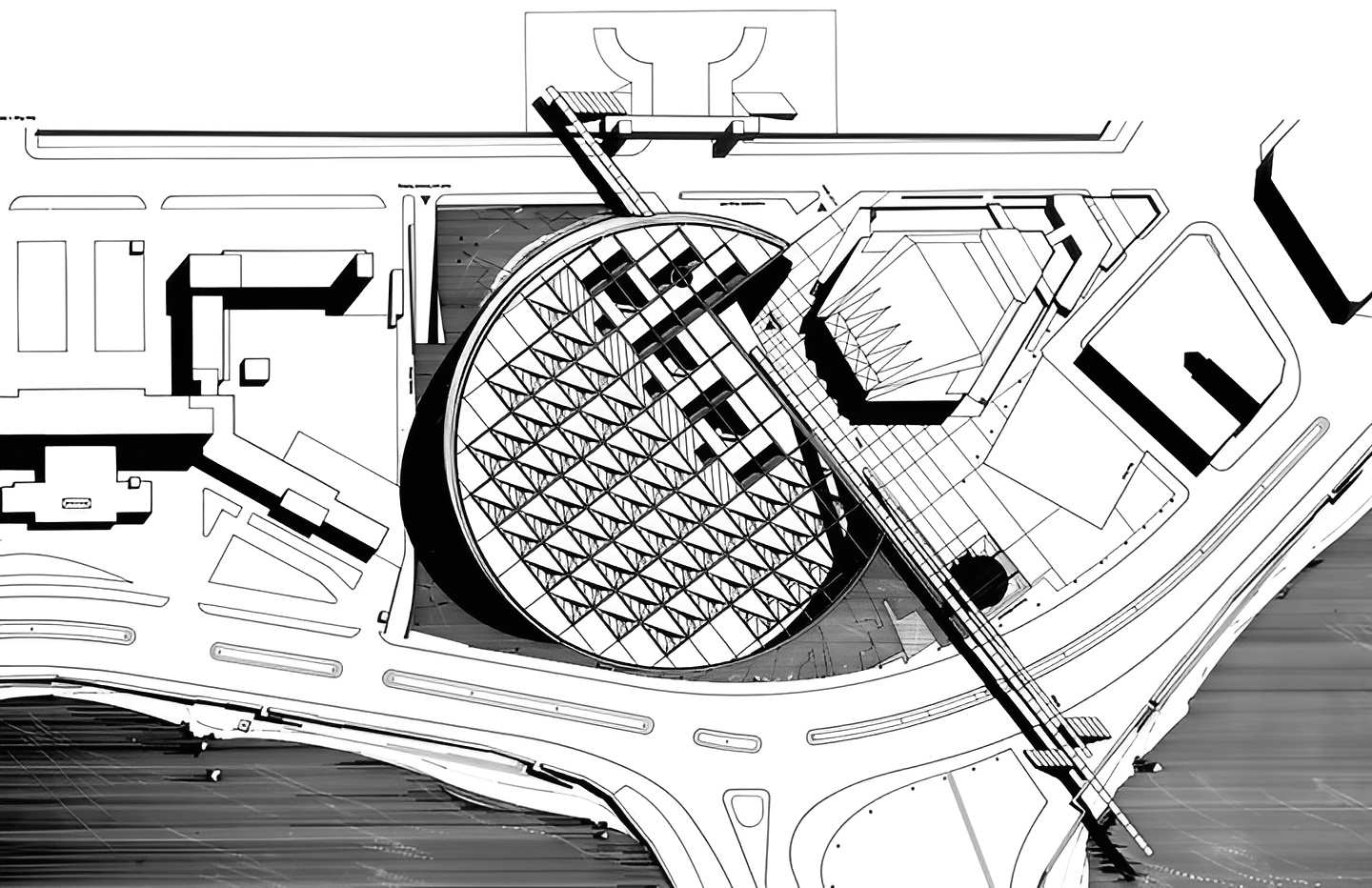
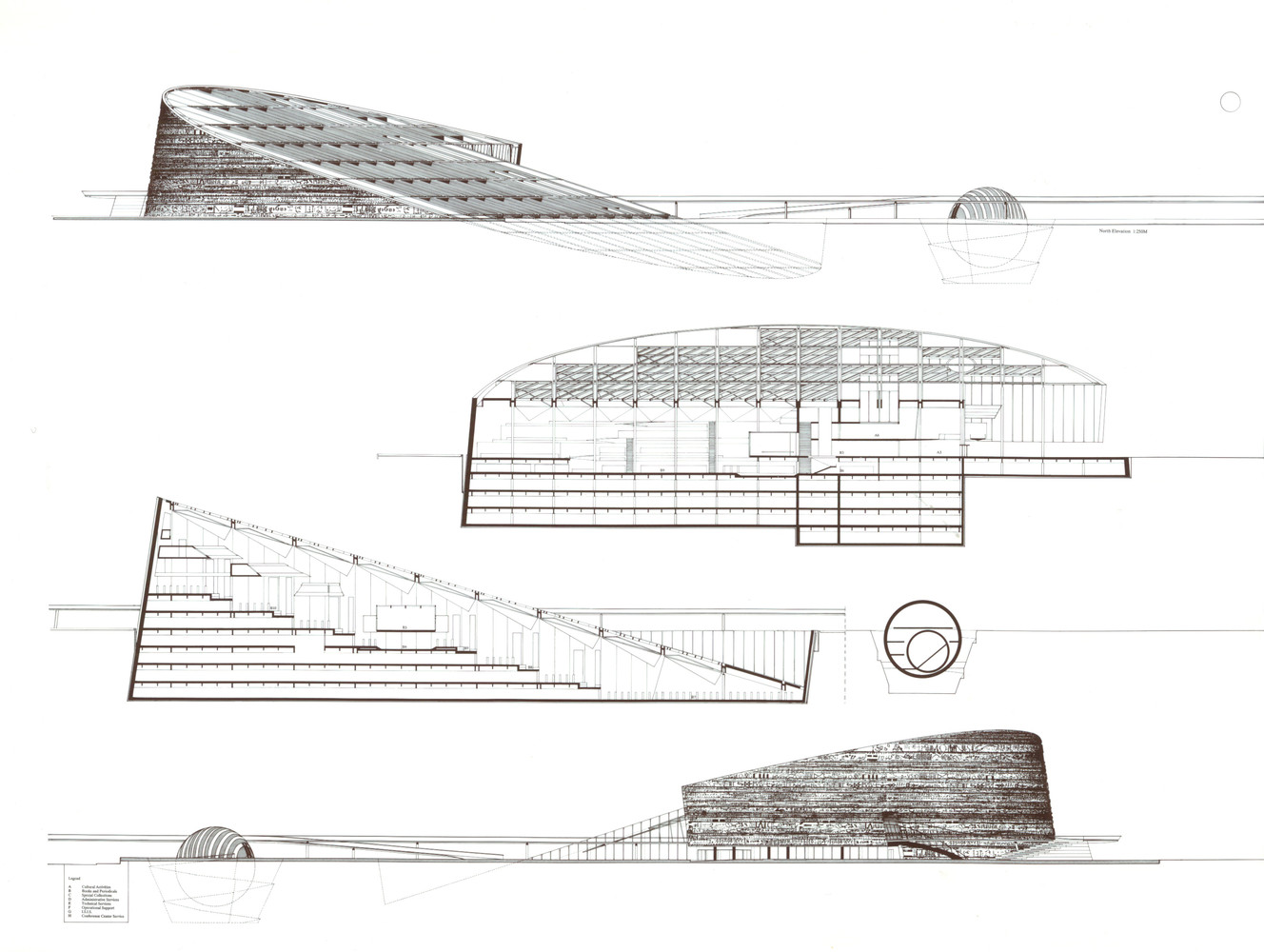
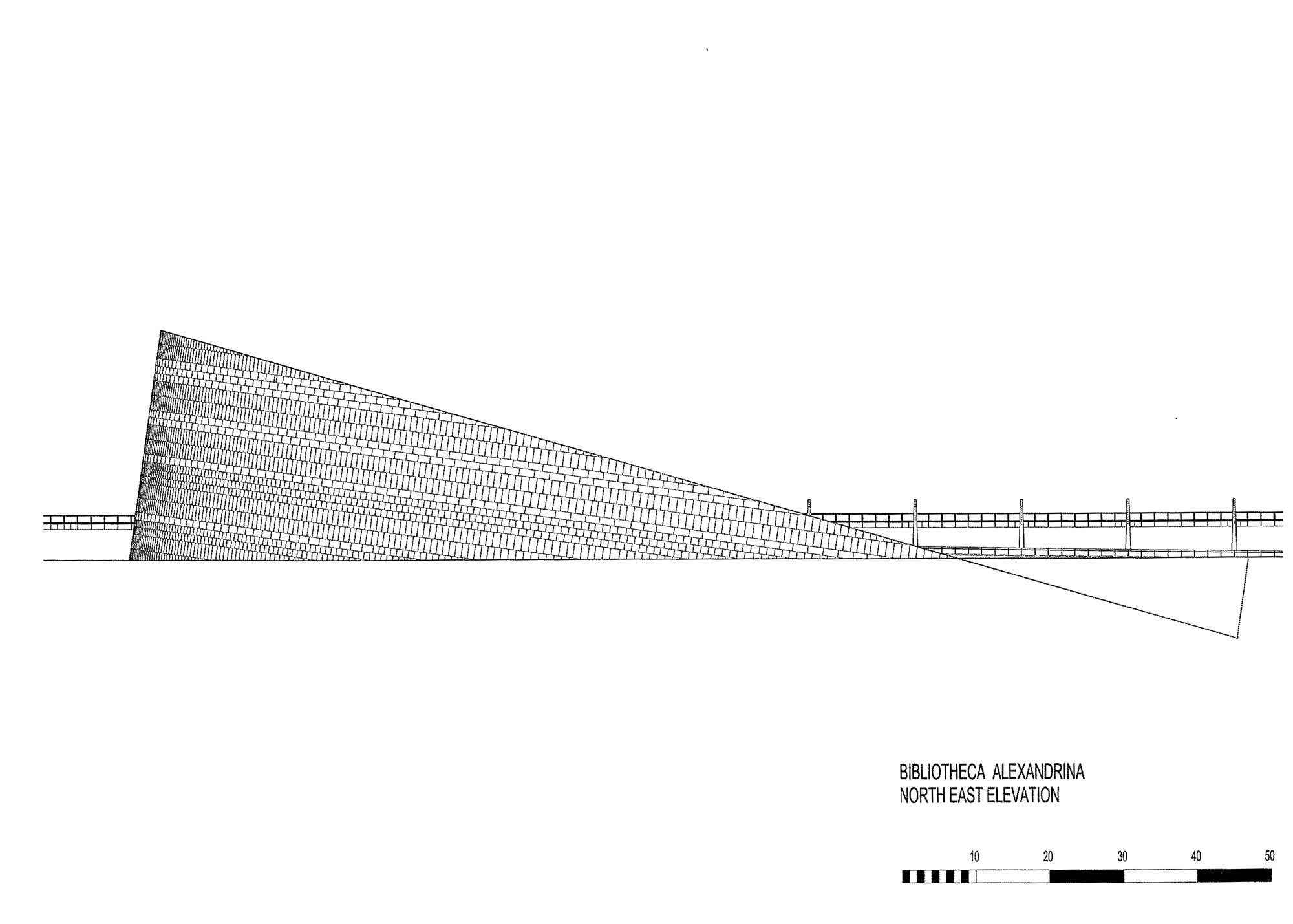
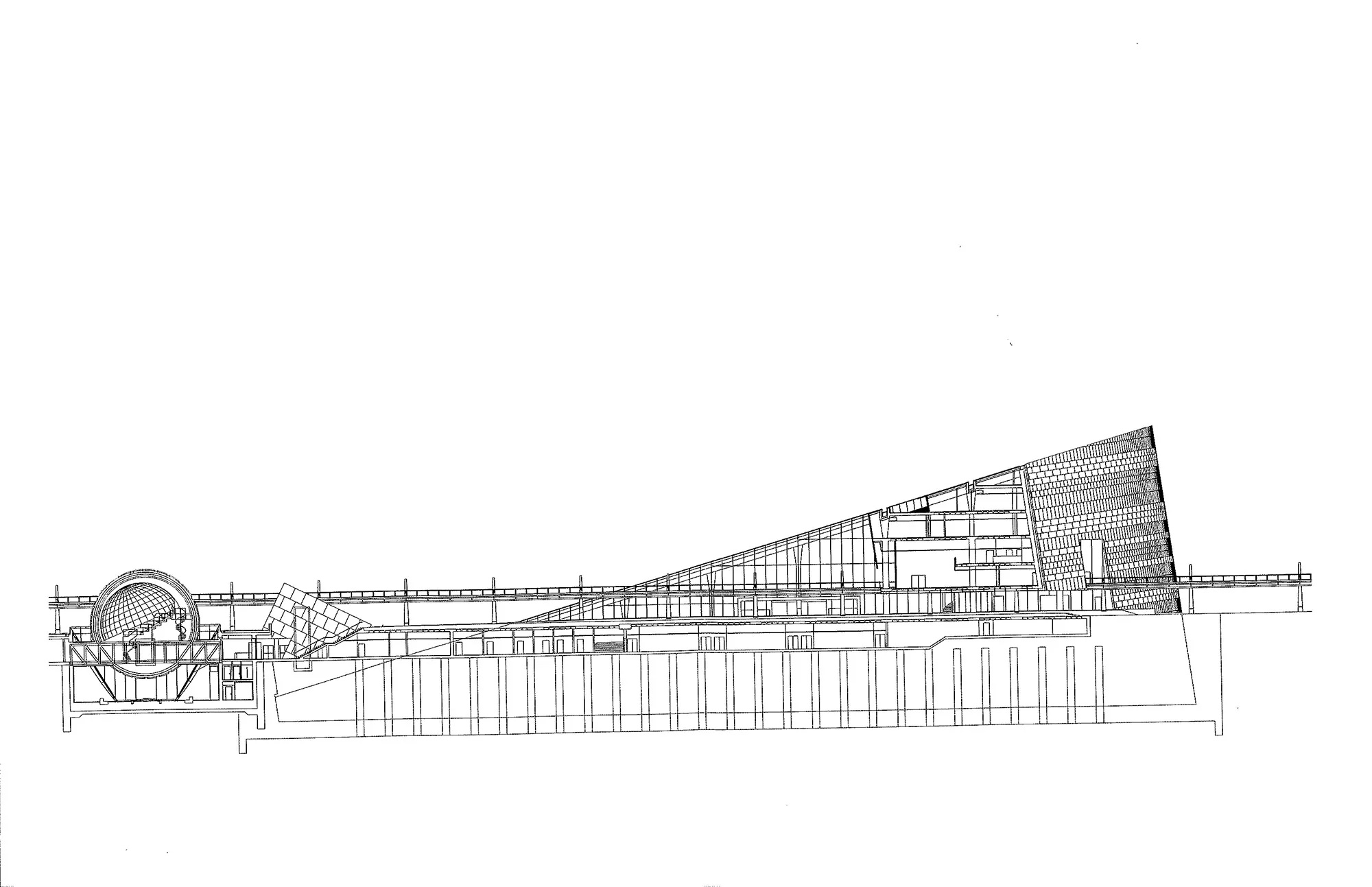
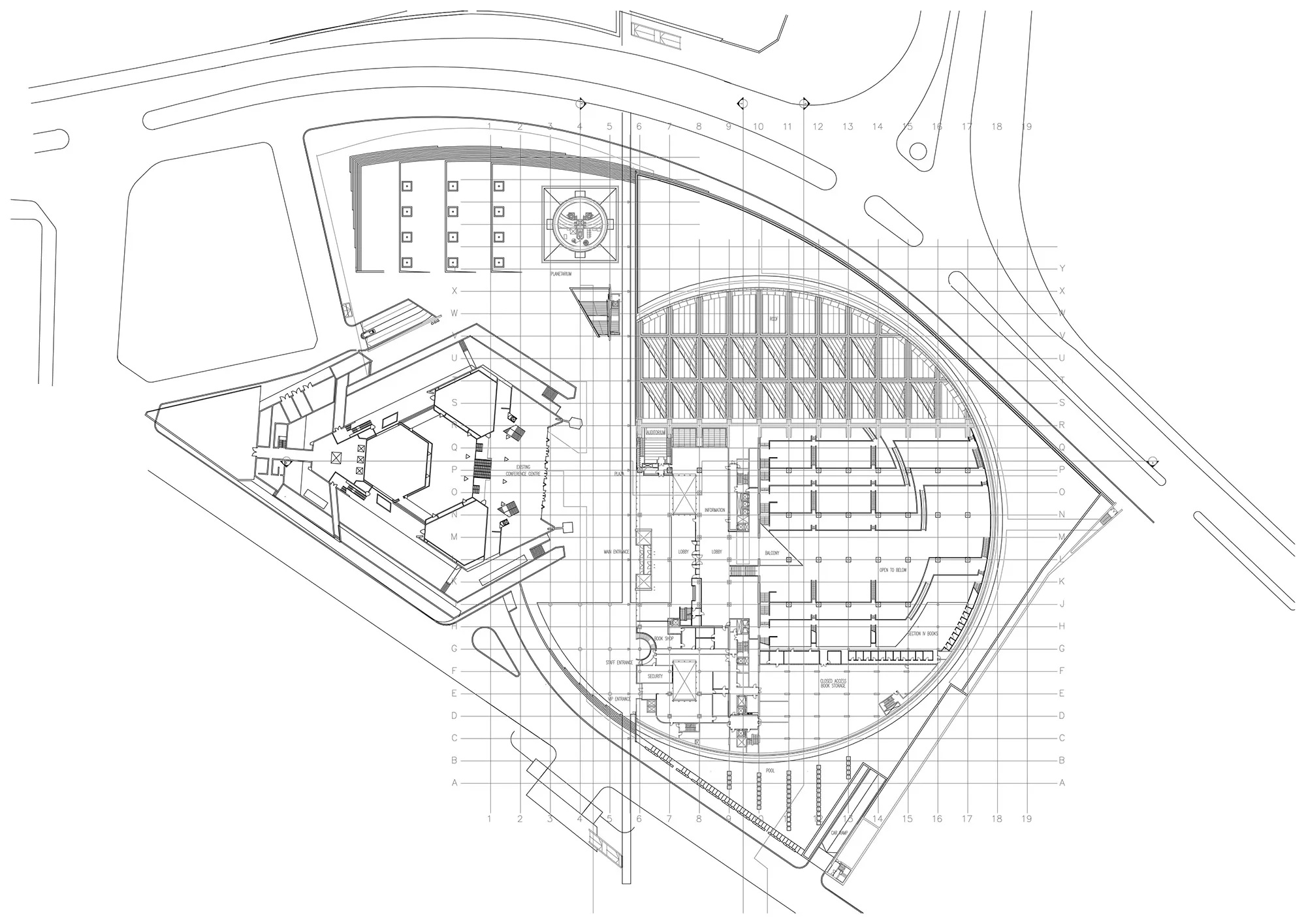
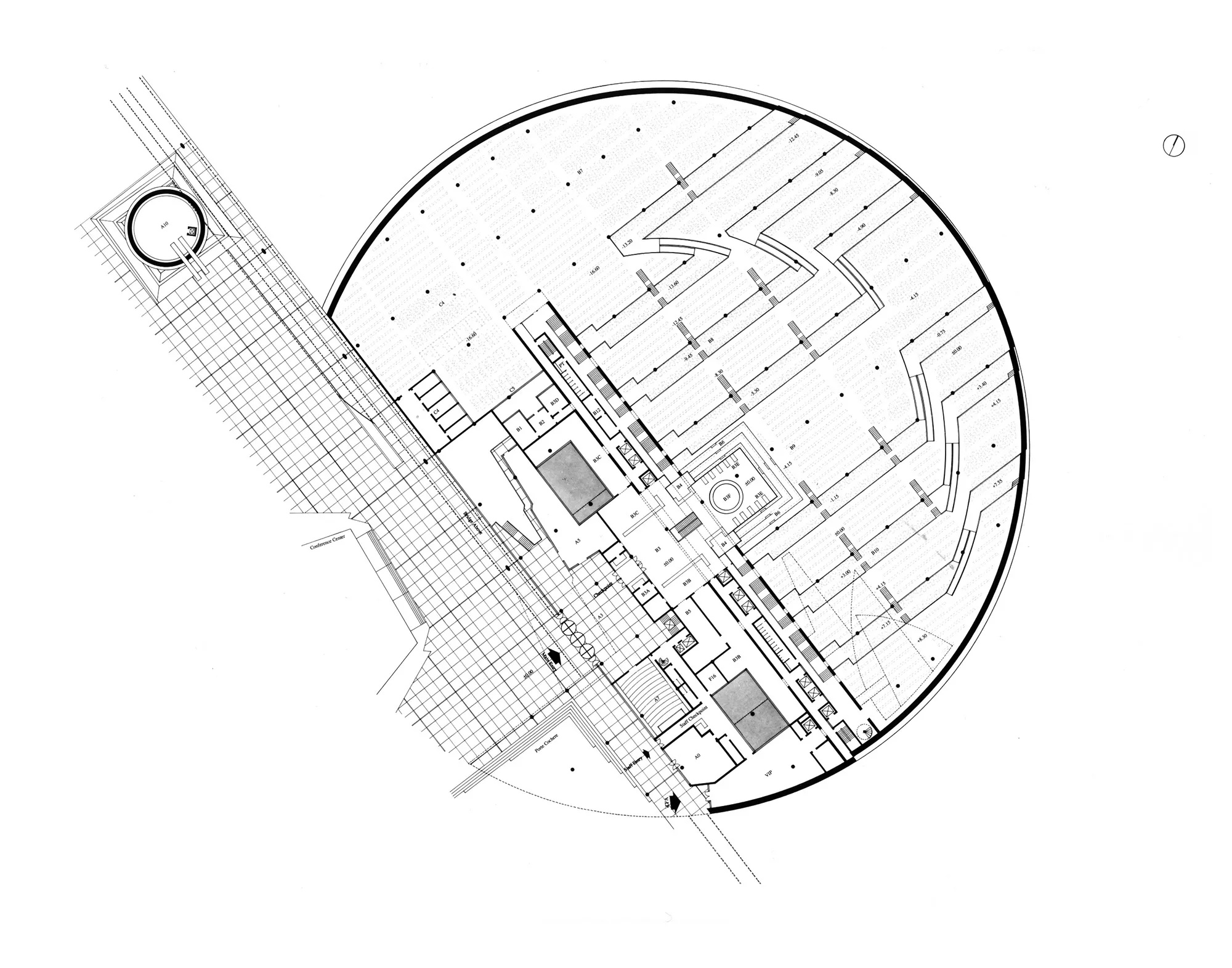
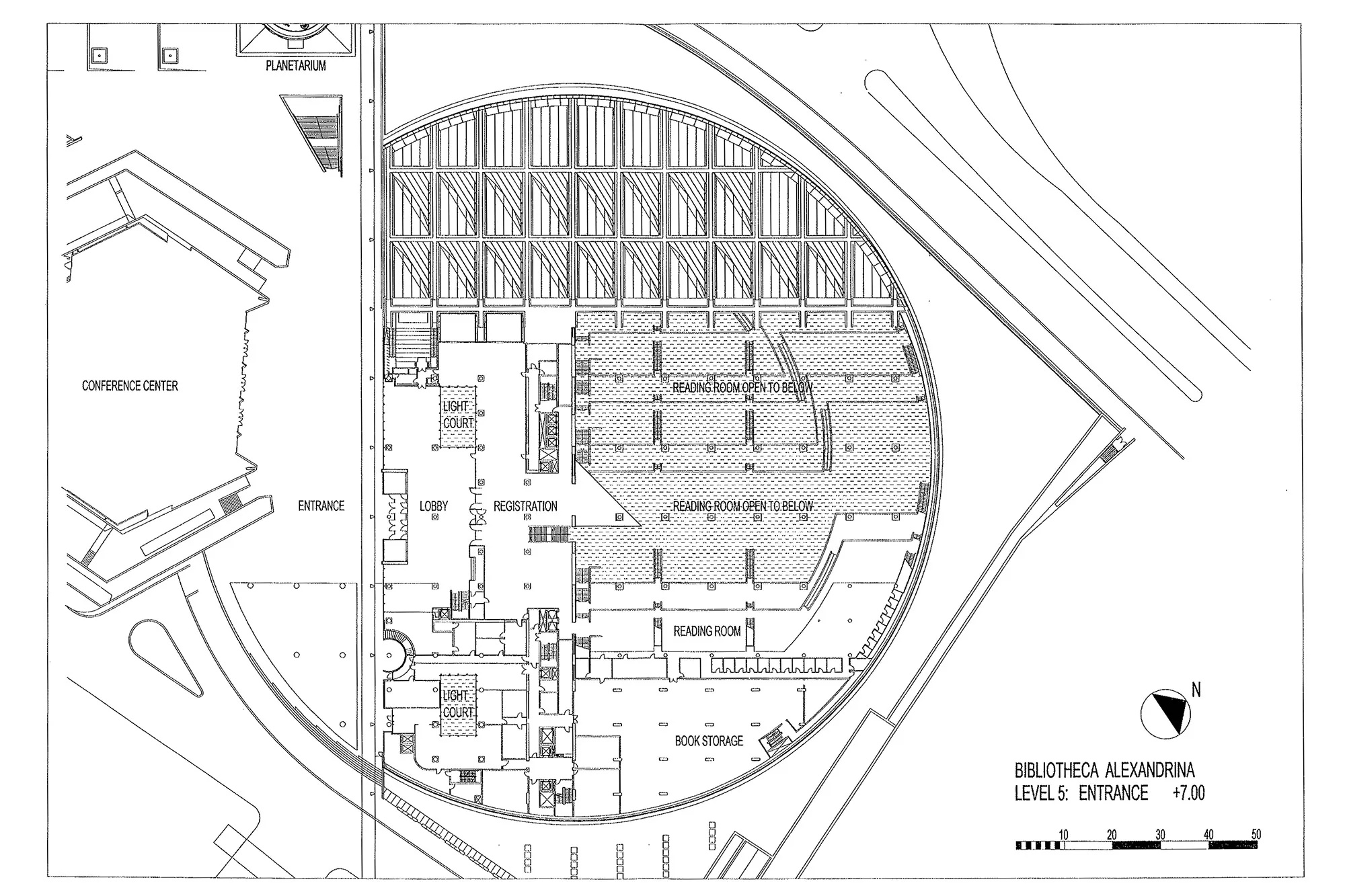
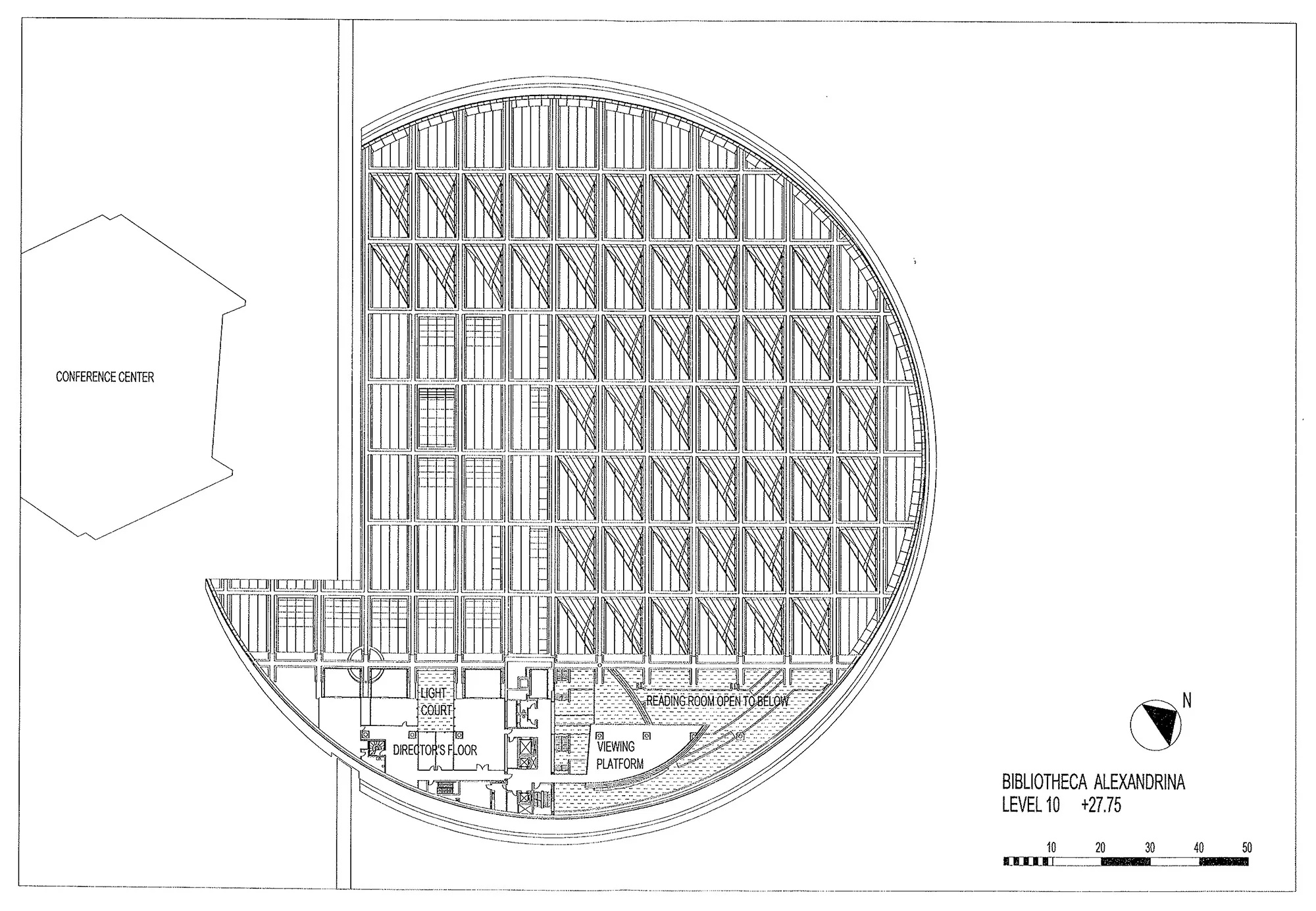
The building occupies a prominent location beside Alexandria’s historic harbor and adjacent to the University of Alexandria. The library is organized as a tilted circular volume measuring approximately 160 meters in diameter. The roof rises toward the south and descends toward the sea, creating the appearance of a large disc emerging from the ground. The inclined geometry recalls the movement of the sun and establishes a strong visual relationship between the building, the harbor, and the surrounding city.
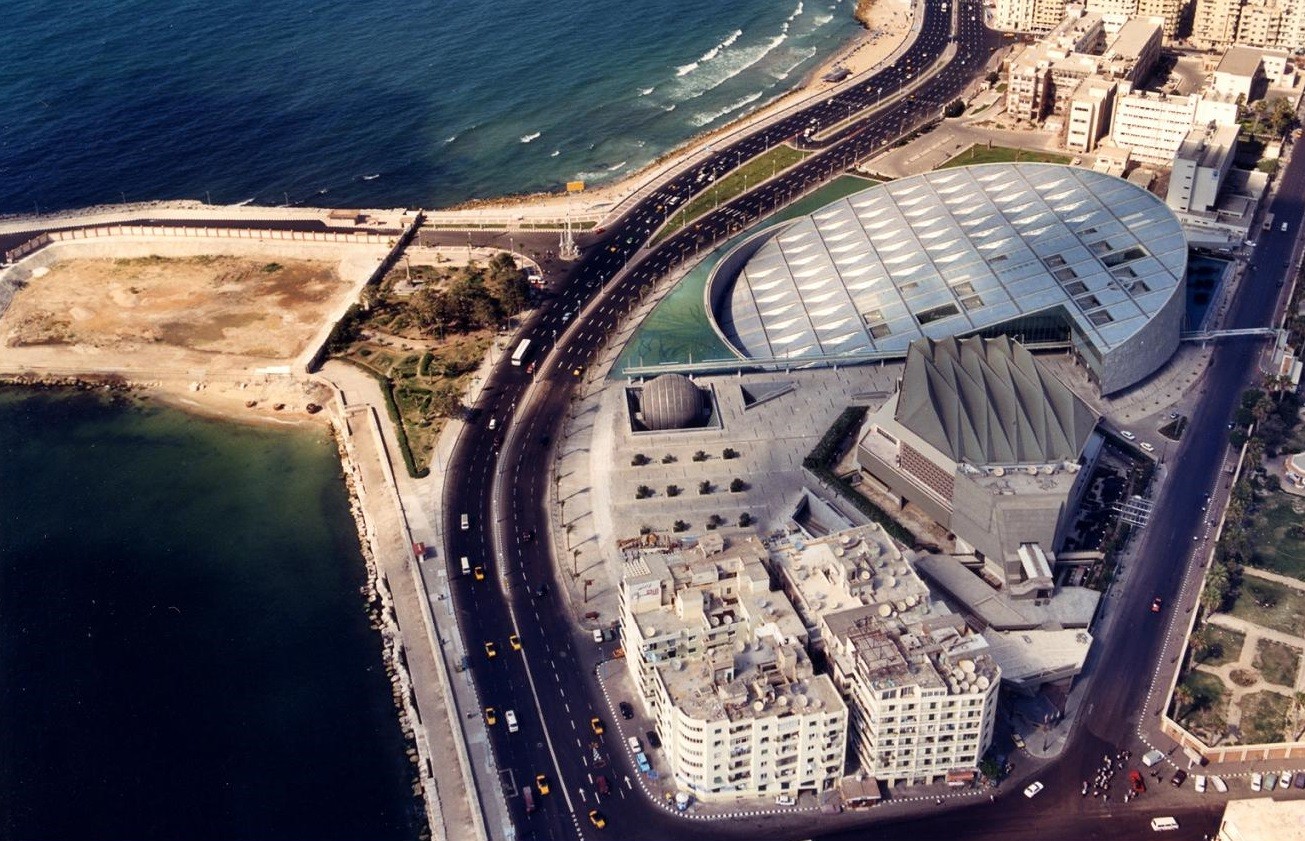
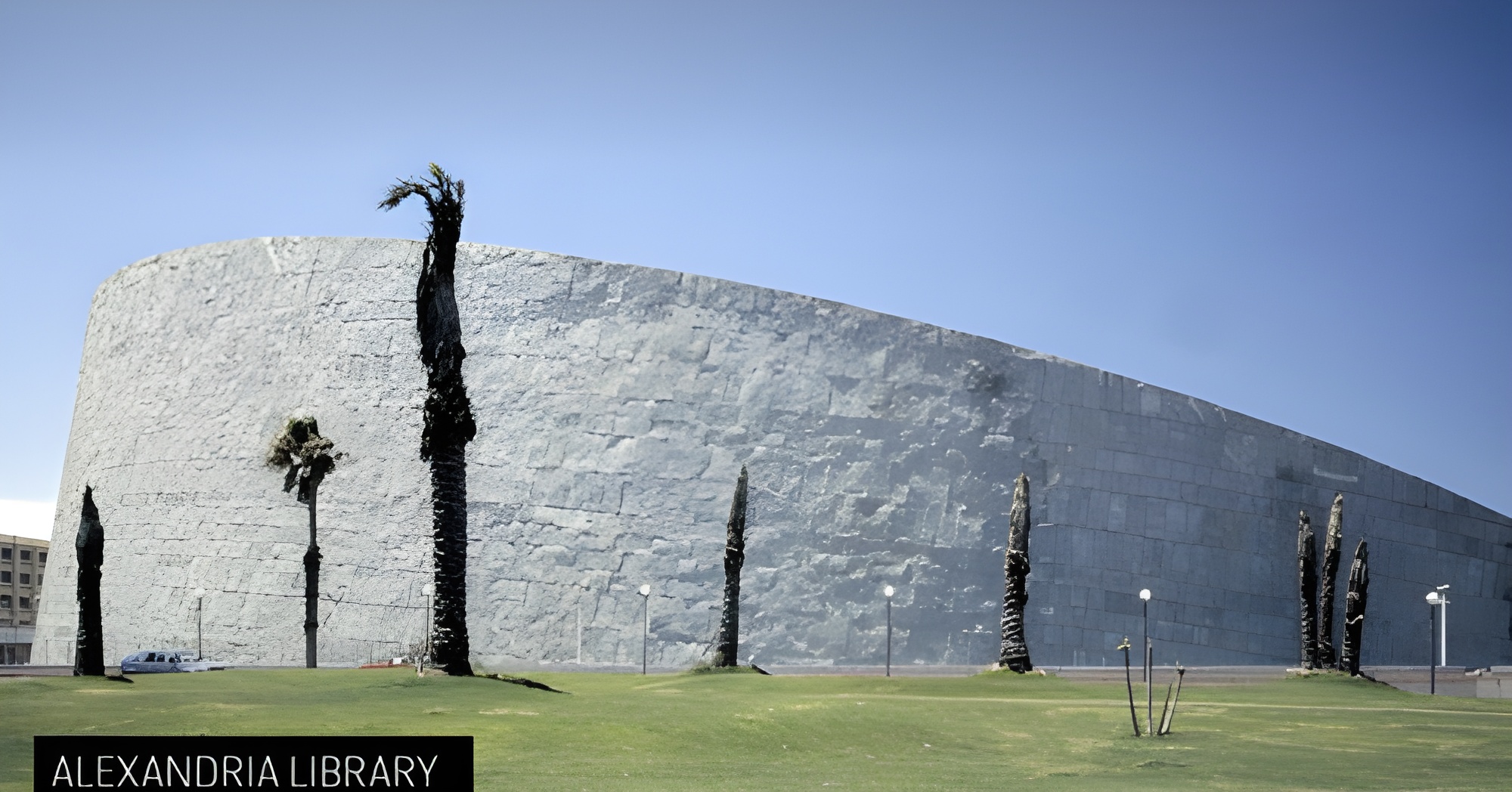
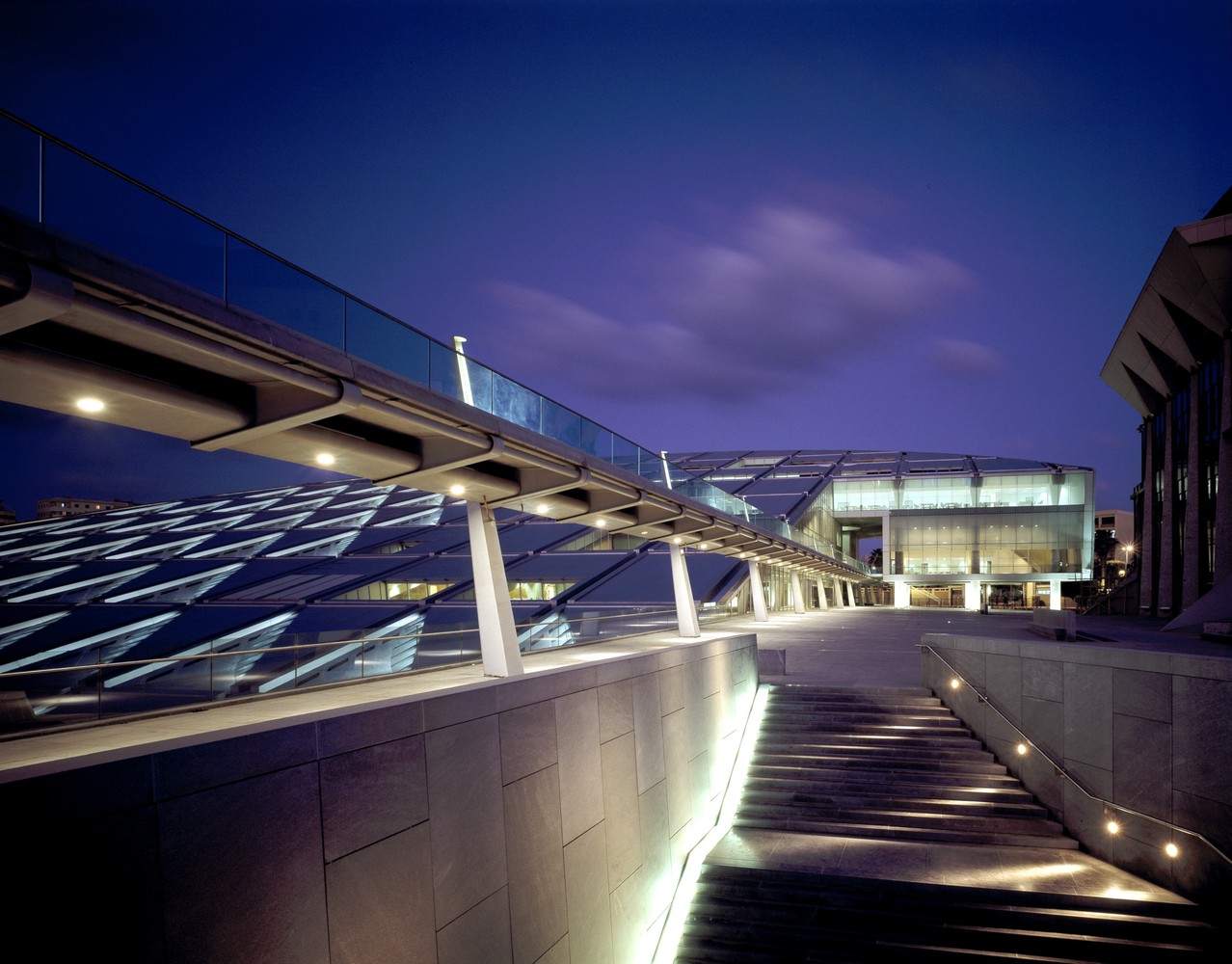
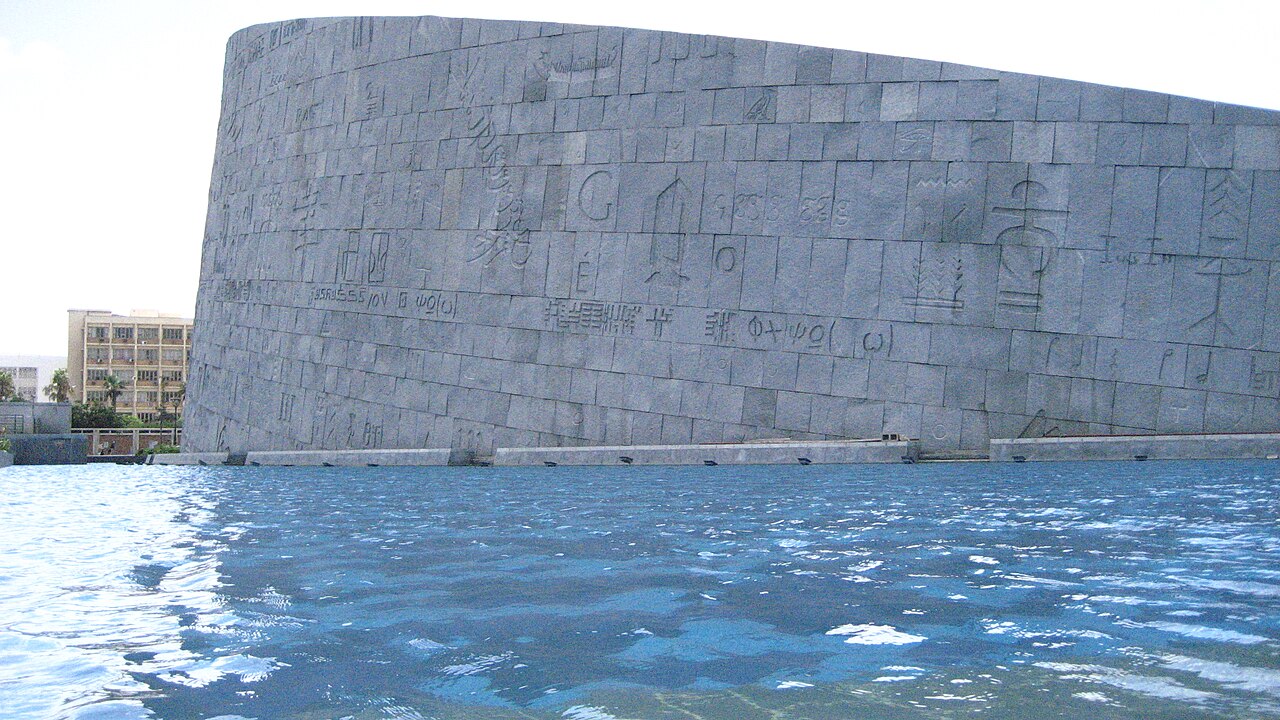
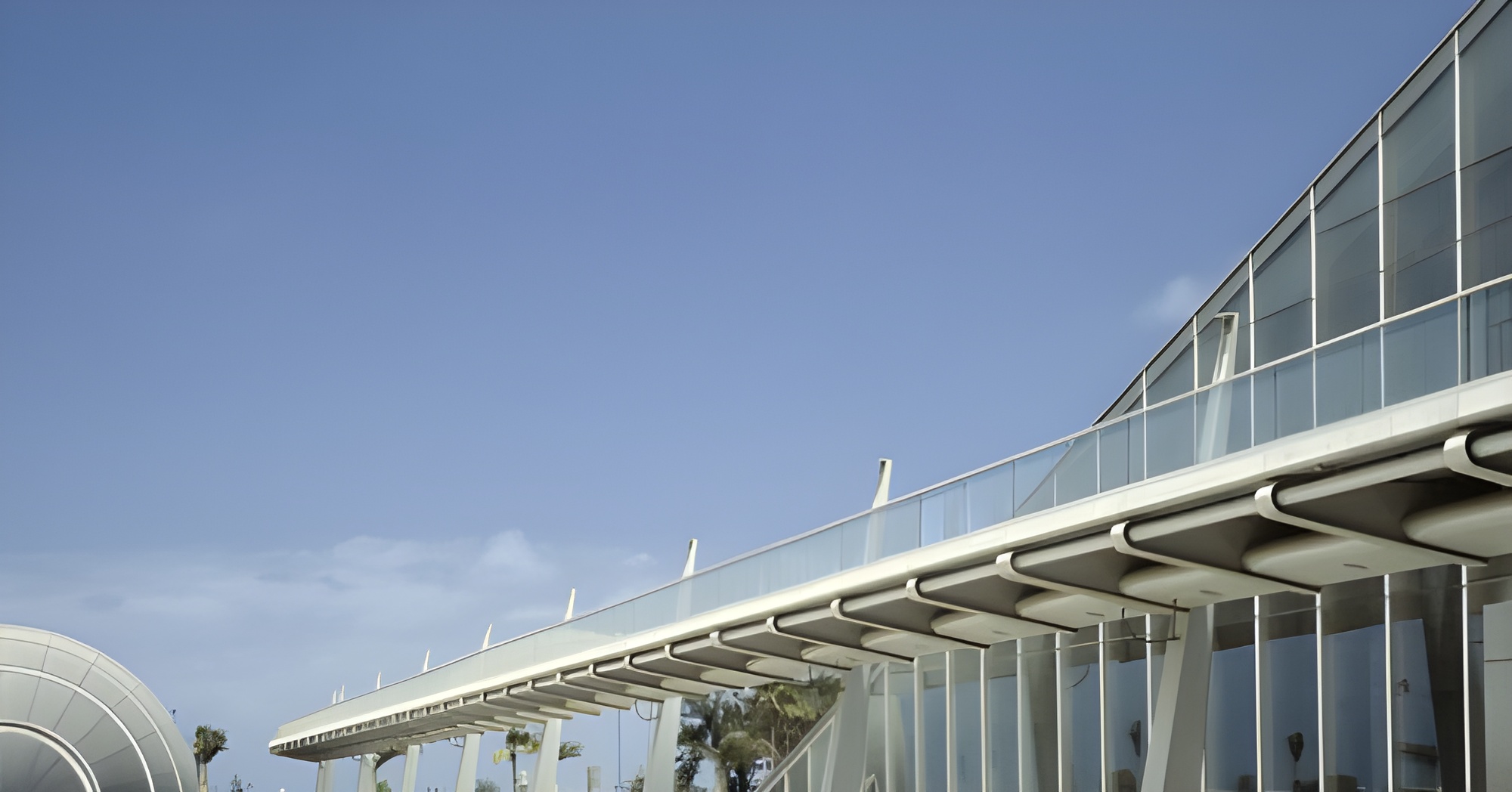
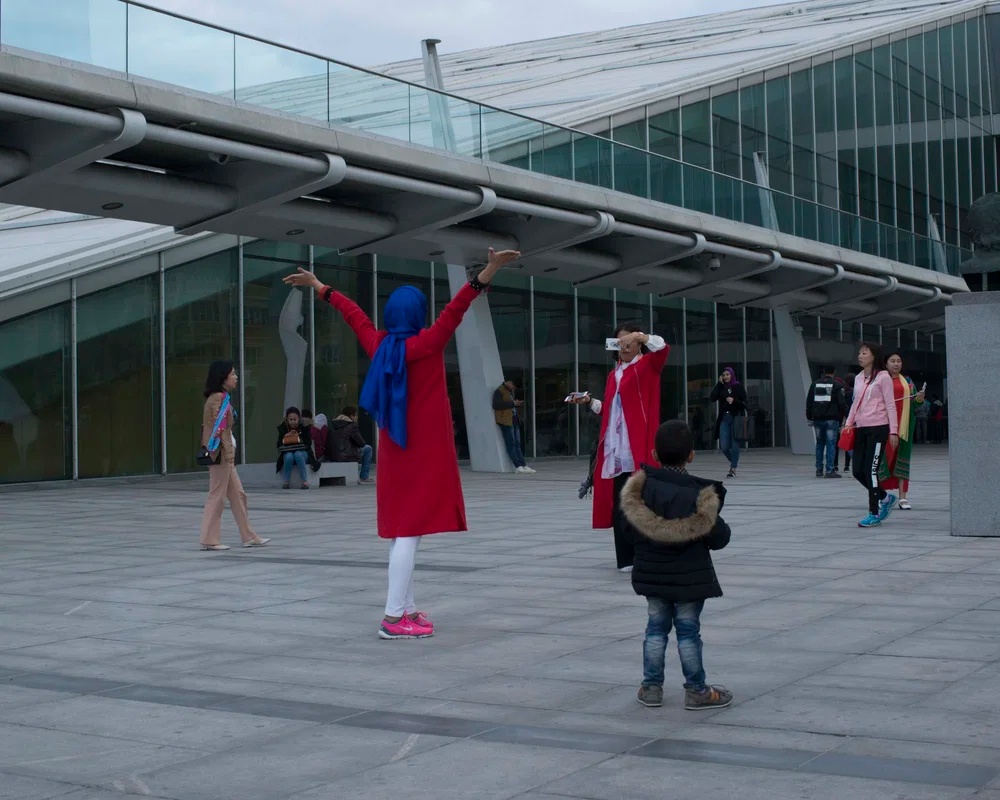
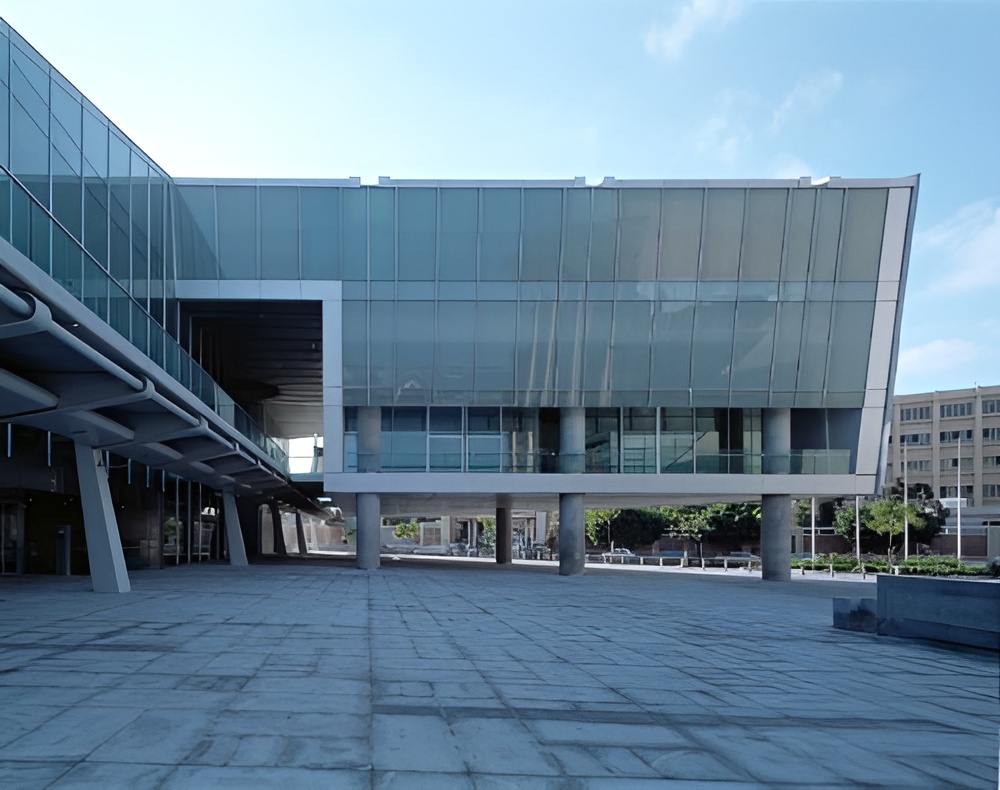
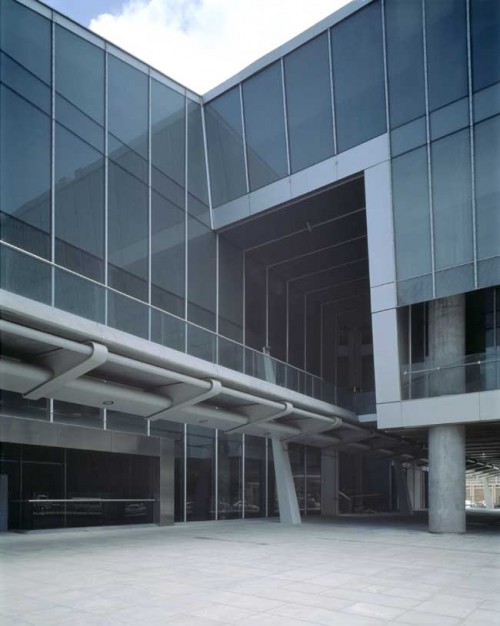
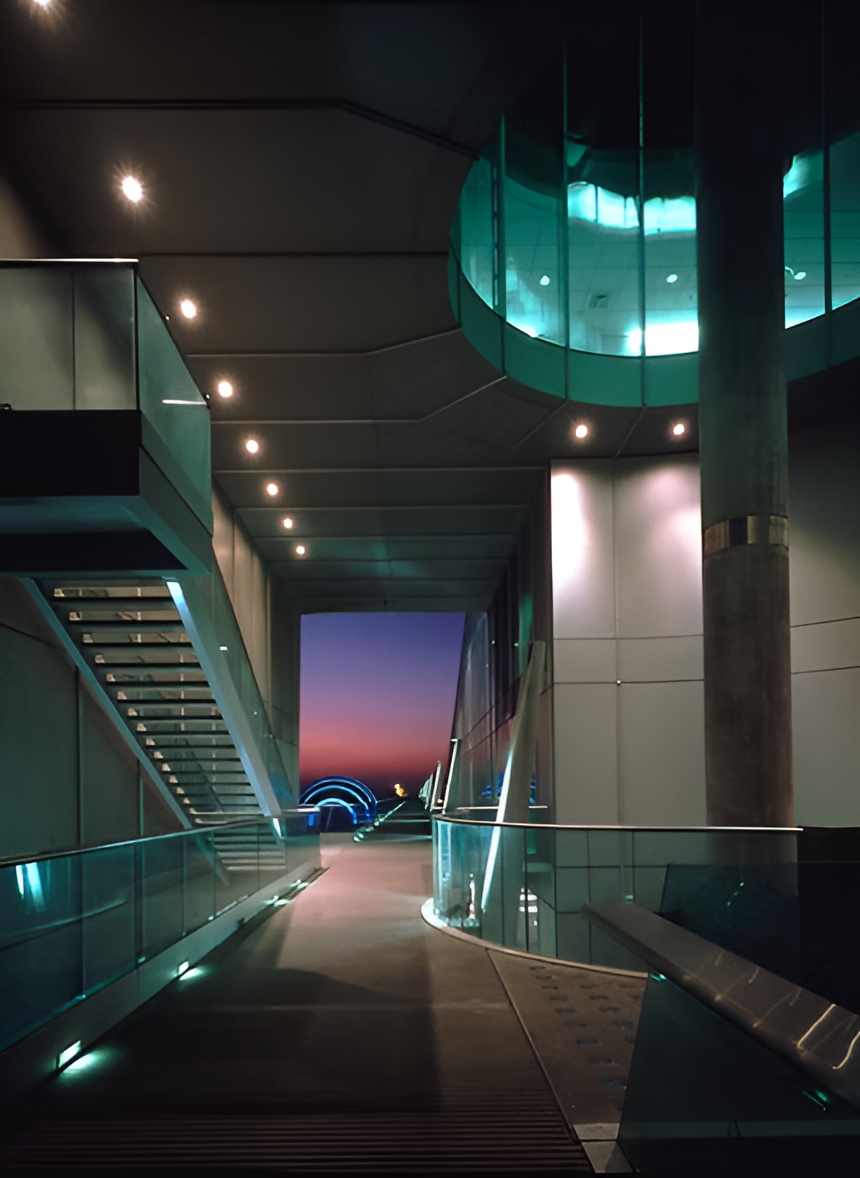
An open plaza and reflecting pools surround the library and separate it from the dense urban fabric of Alexandria. These exterior spaces establish a gradual transition between the city and the institution while emphasizing the monumental scale of the building. Portions of the structure extend below grade, allowing the library to maintain a relatively low profile toward the waterfront while accommodating extensive interior spaces.
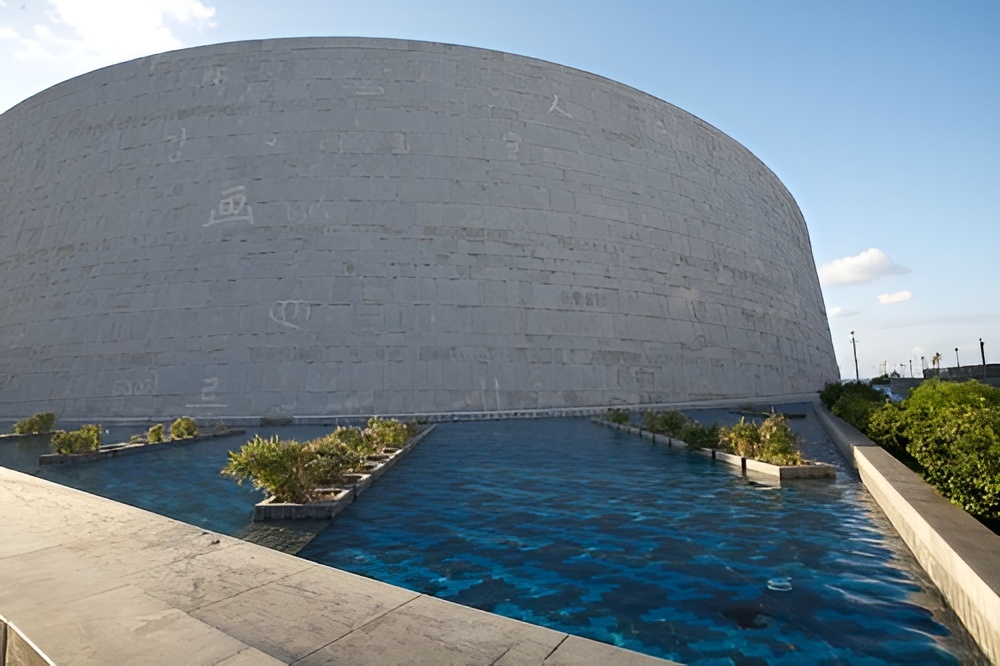
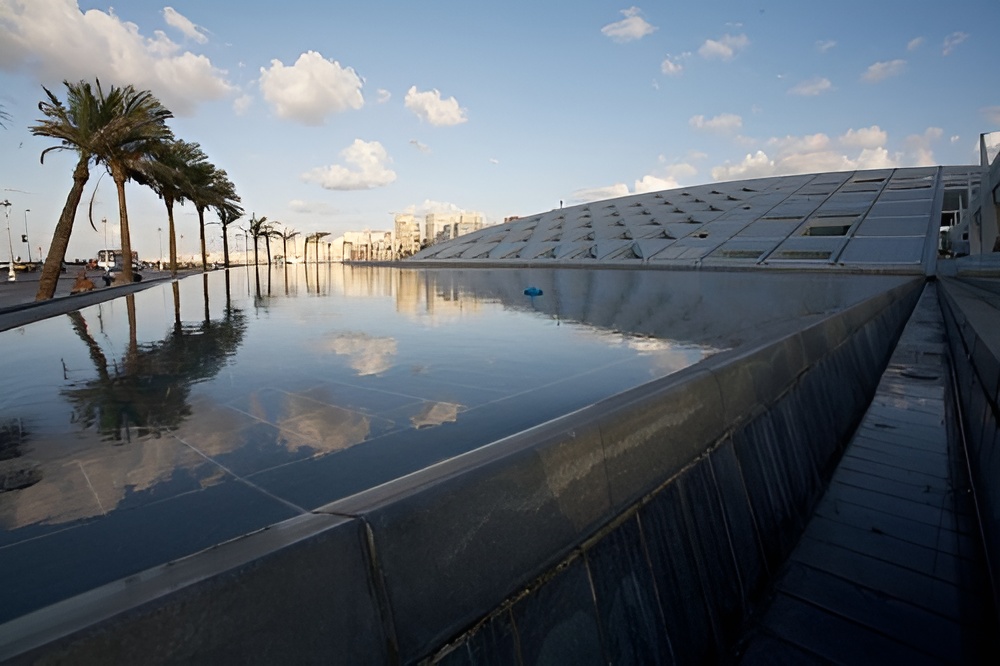
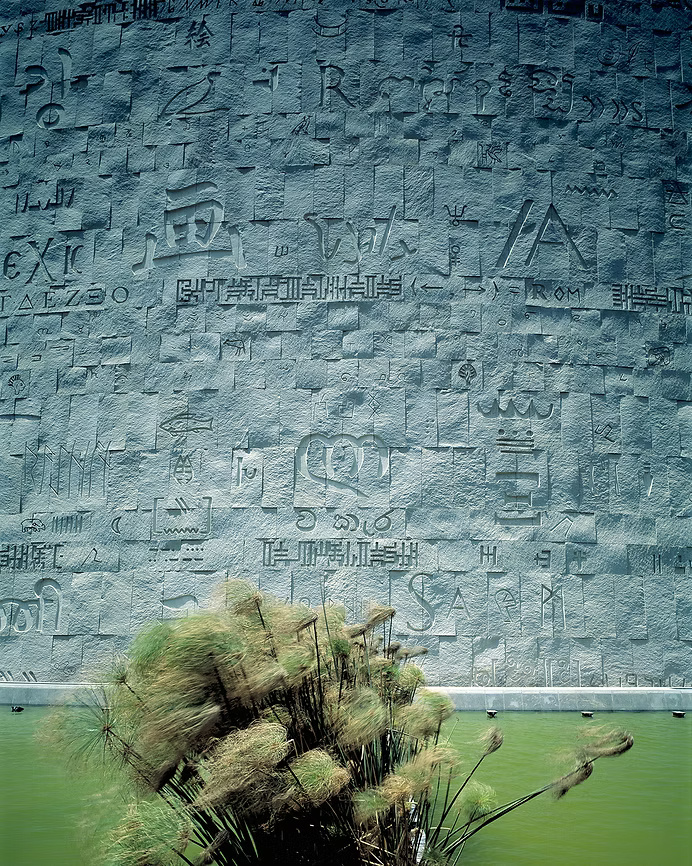
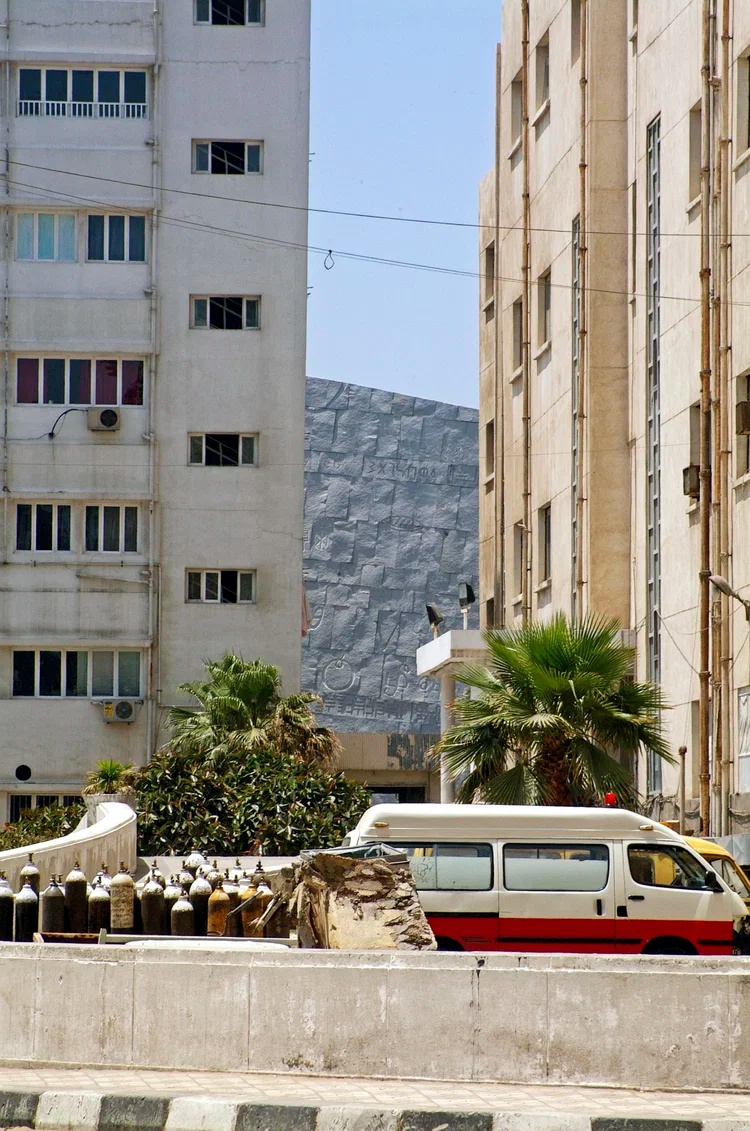
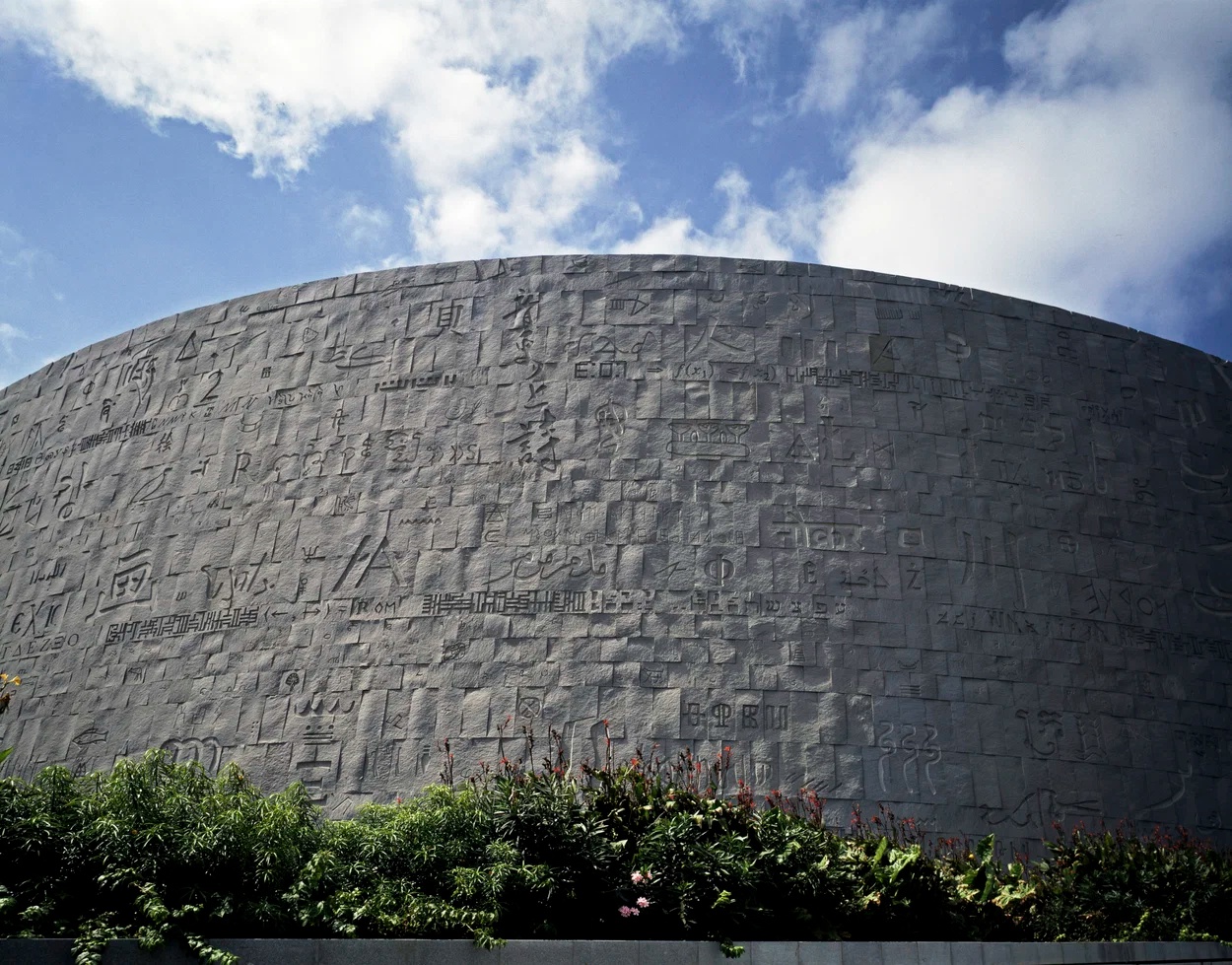
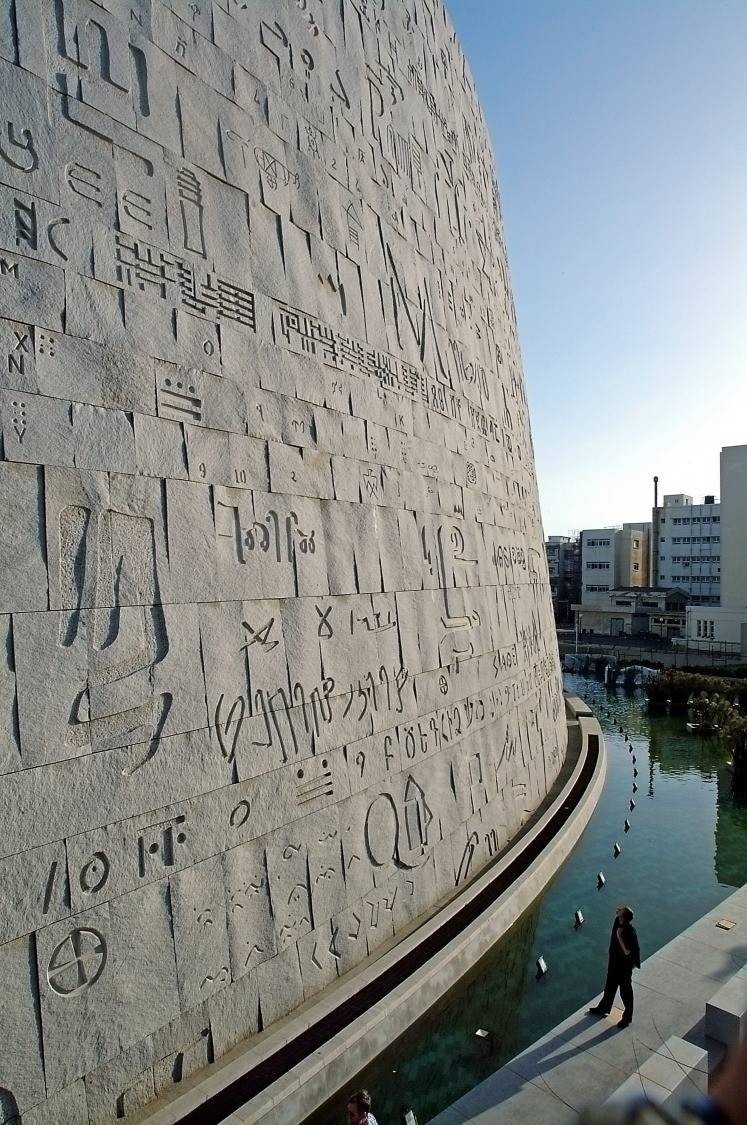
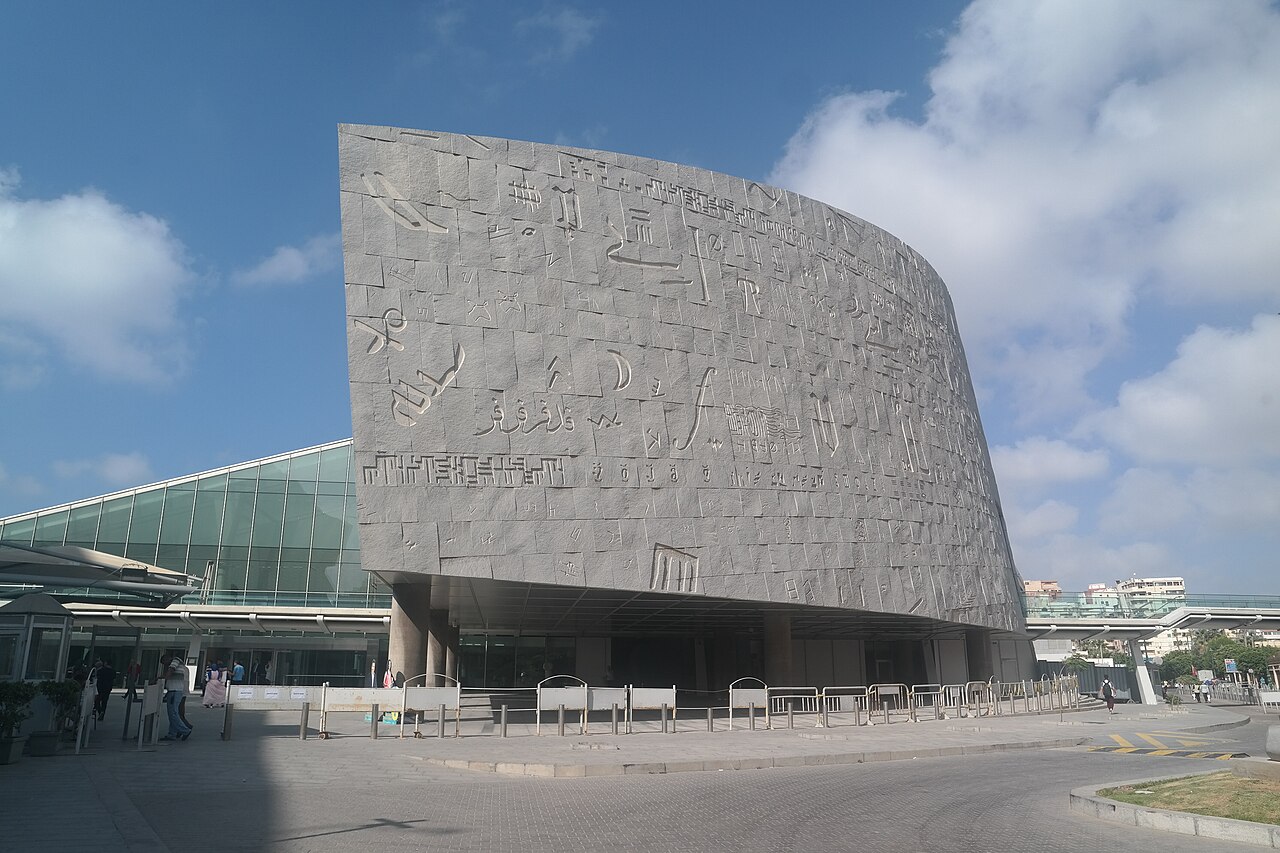
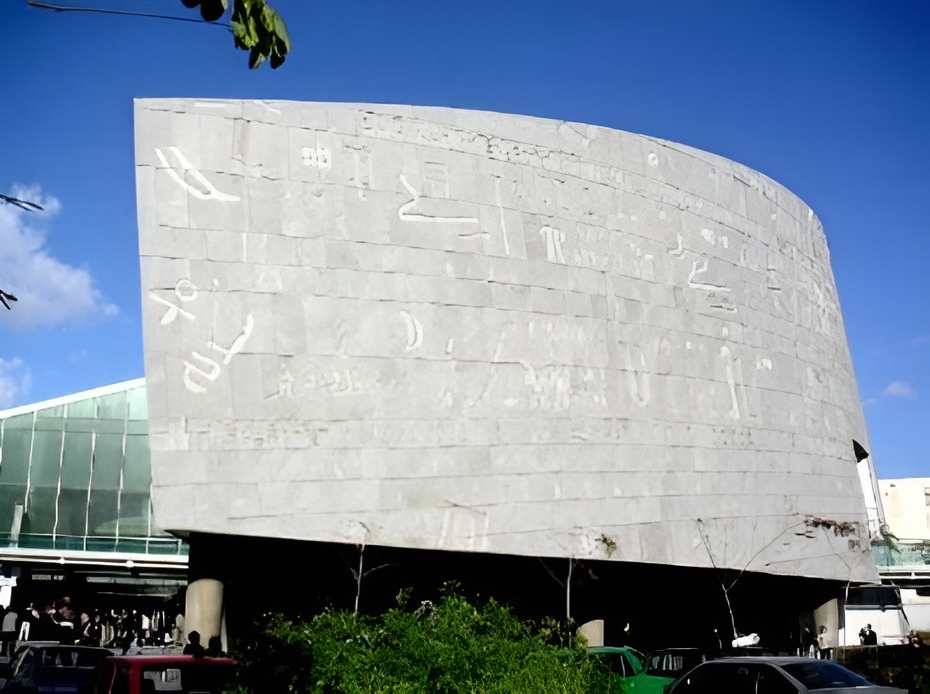
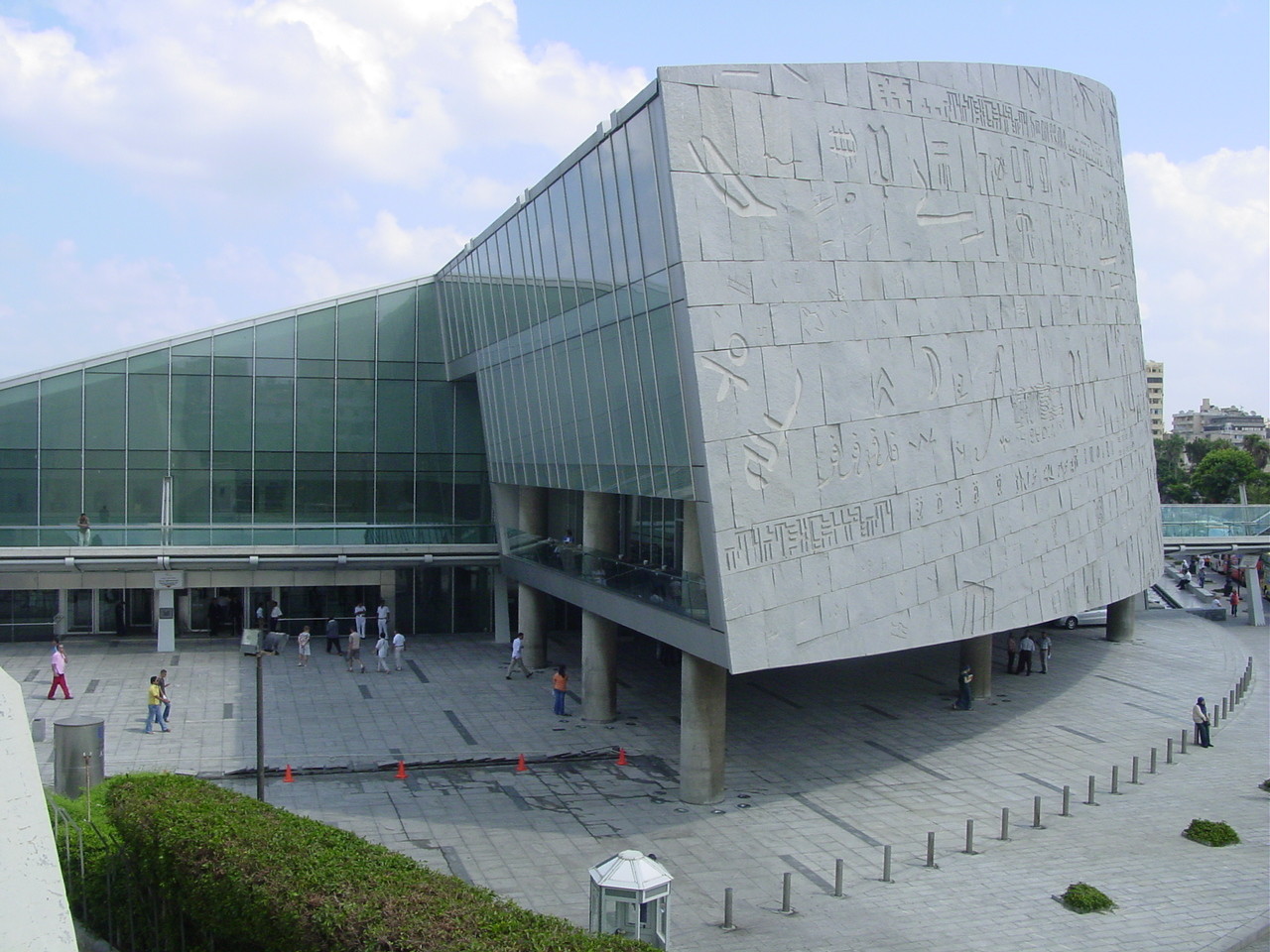
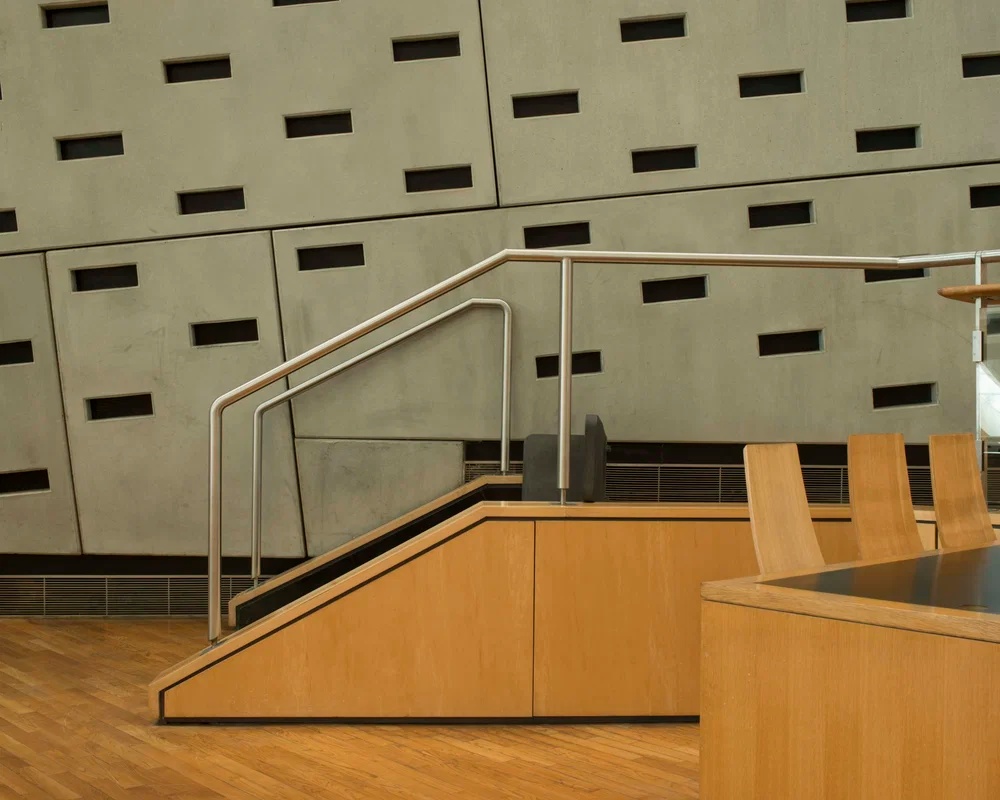
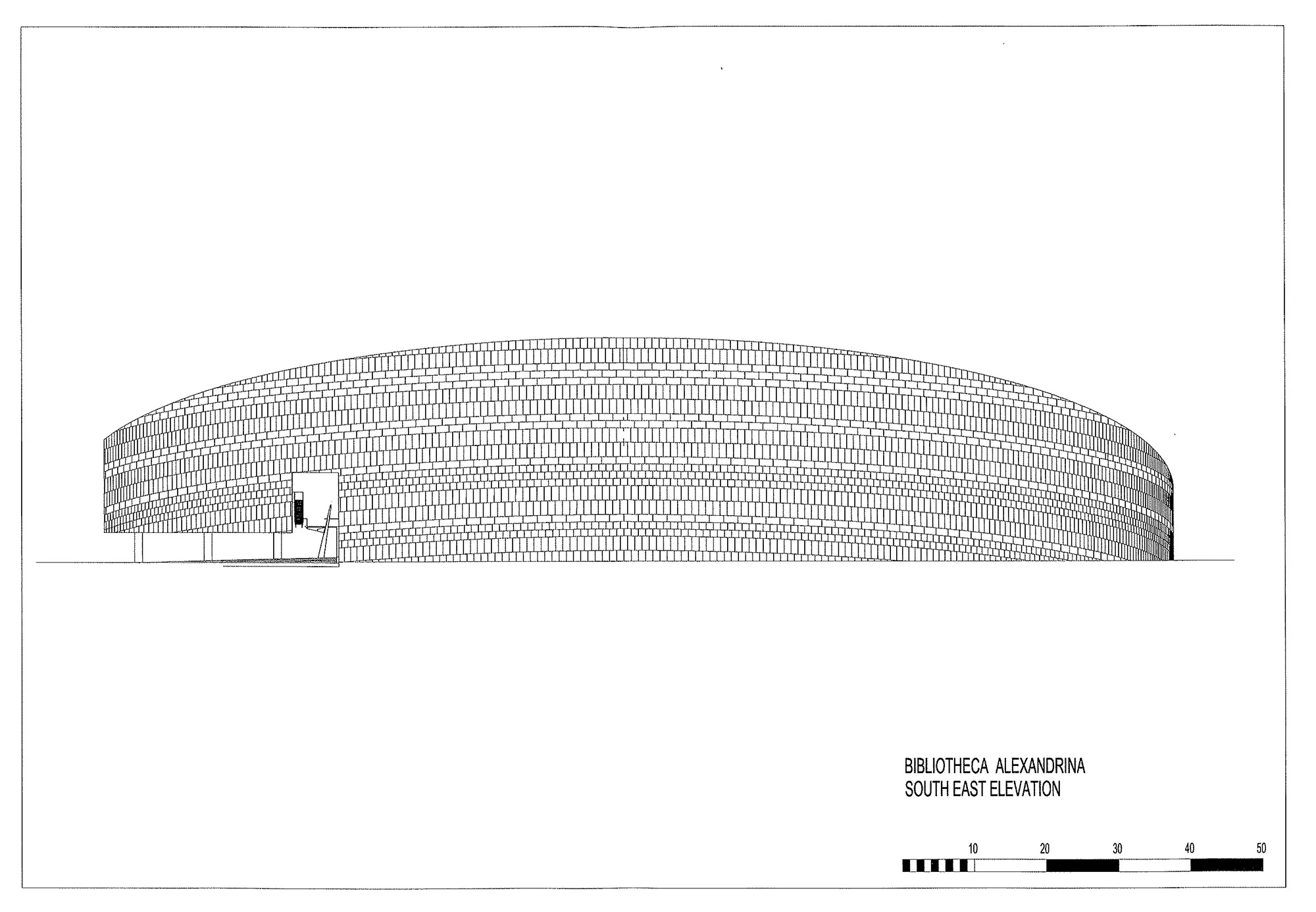
The exterior walls are clad with hand-carved Egyptian granite. The southern retaining wall rises approximately 32 meters above the plaza and contains inscriptions representing thousands of characters, symbols, mathematical notations, musical signs, Braille, and writing systems from different cultures and historical periods. The inscriptions function as an artistic and symbolic reference to the history of language, communication, and knowledge.
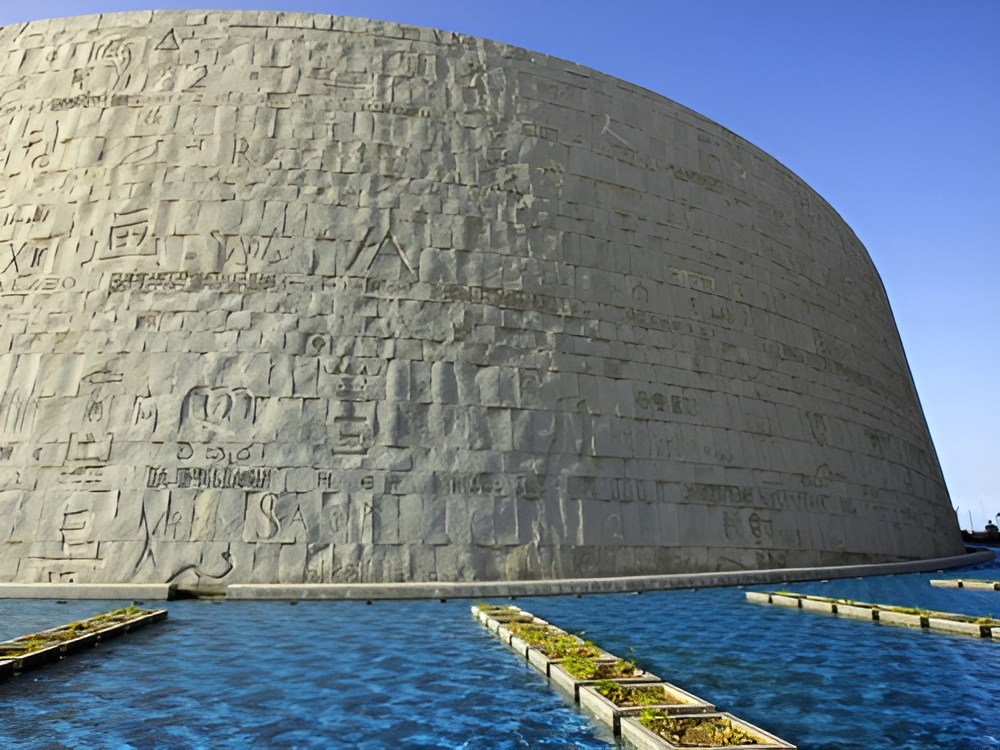
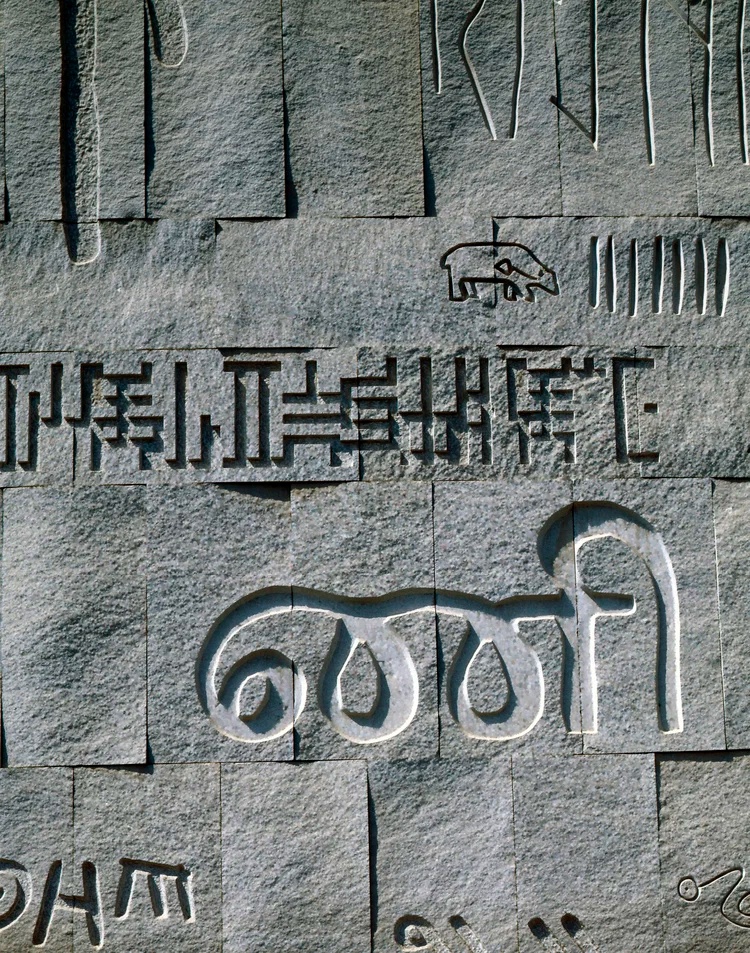
The granite façade consists of large stone panels mounted to the concrete structure through stainless-steel fixing systems. The use of locally quarried stone and Egyptian craftsmanship formed an important component of the construction process. Specialized training programs were established during construction to support traditional stoneworking techniques and the production of the carved panels.
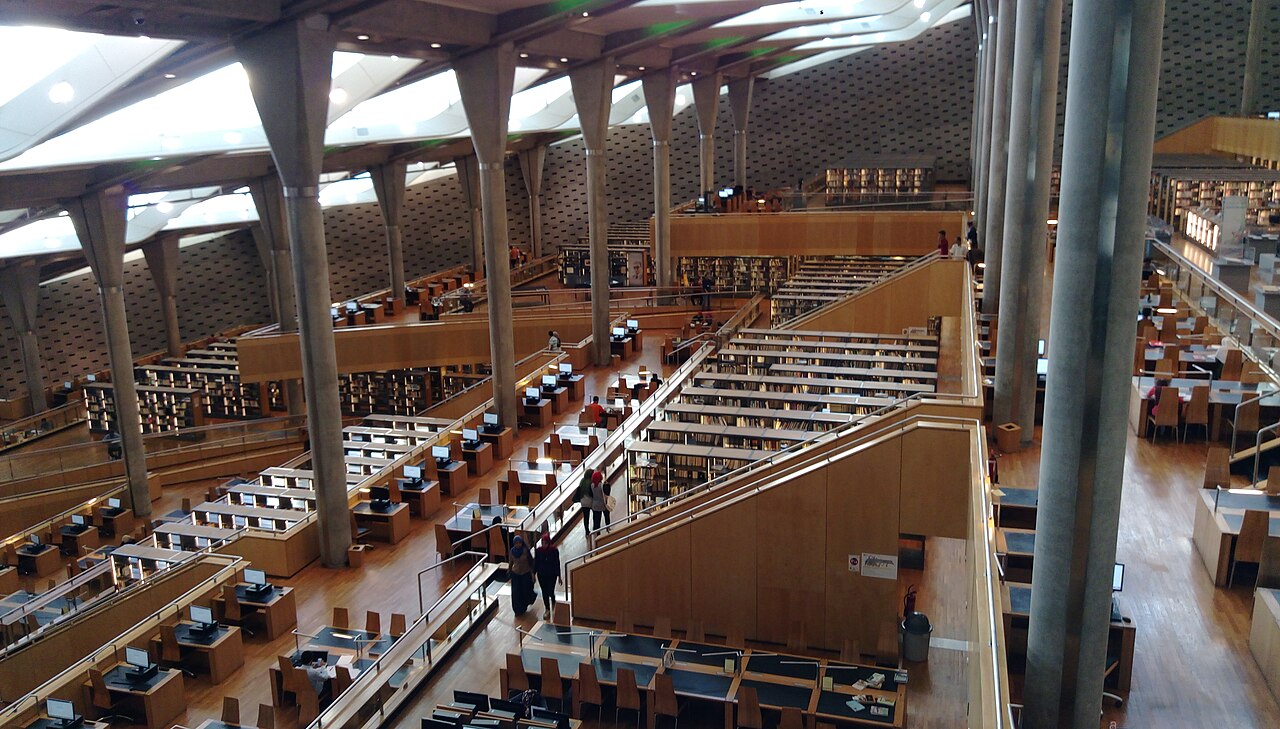
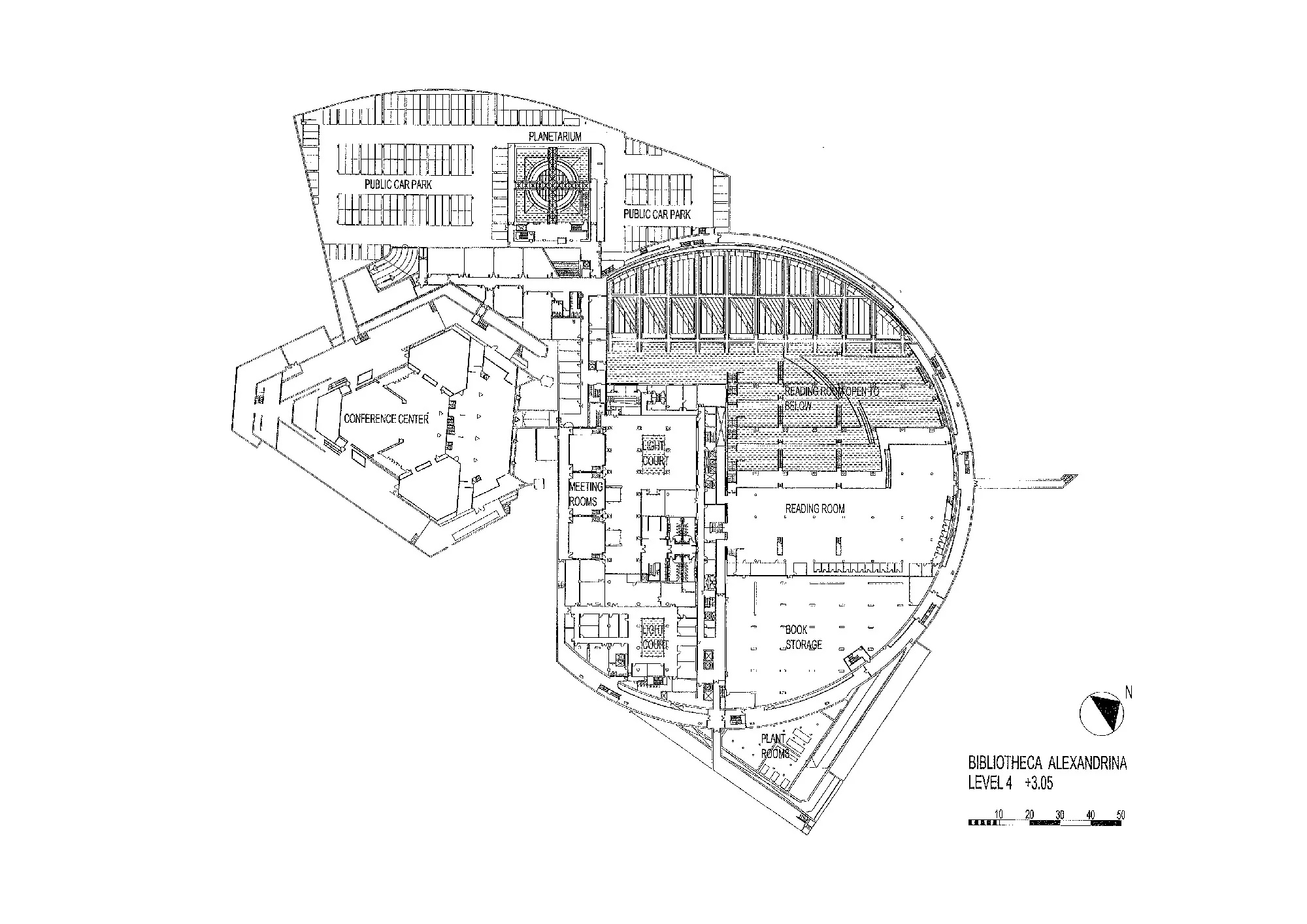
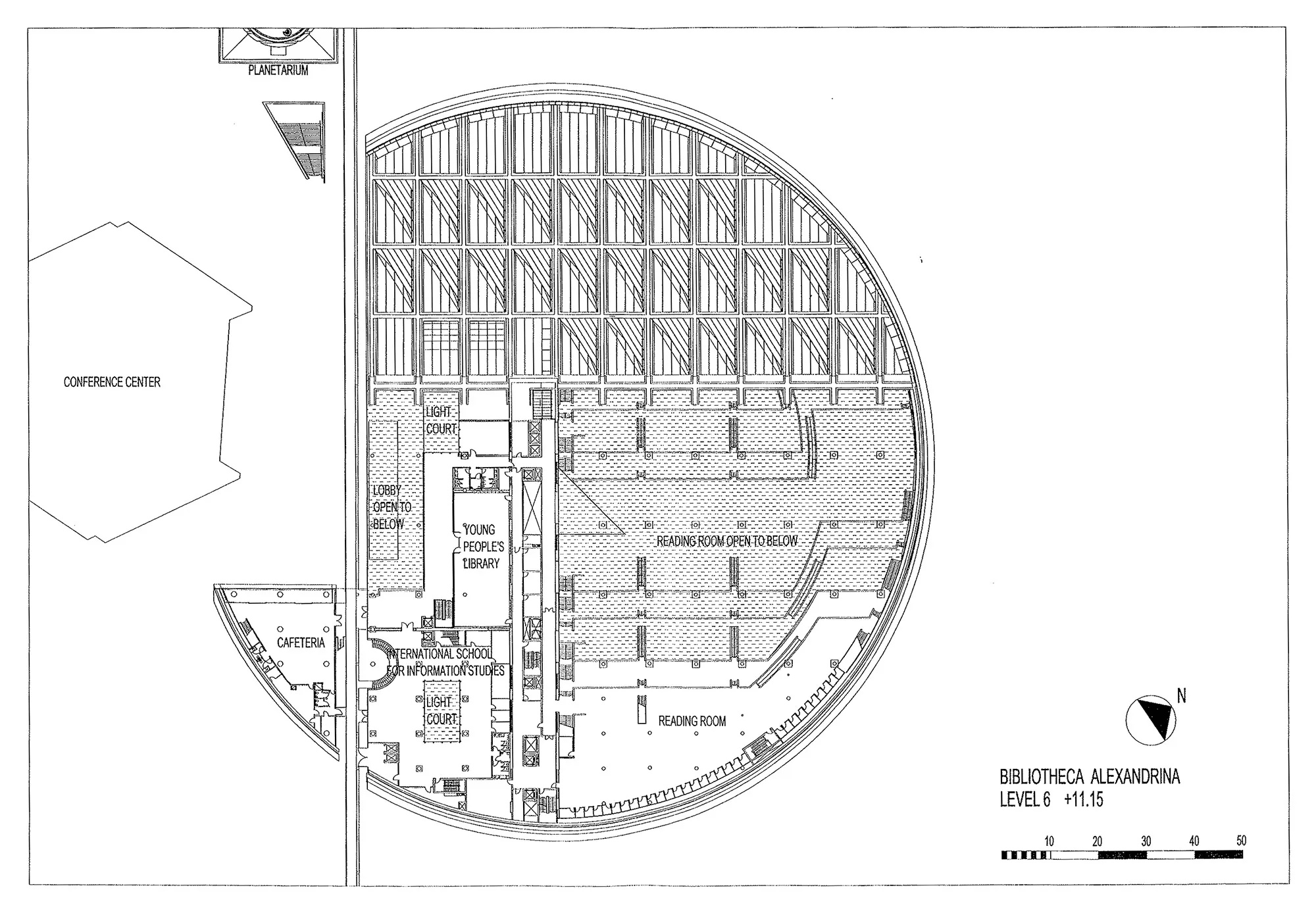
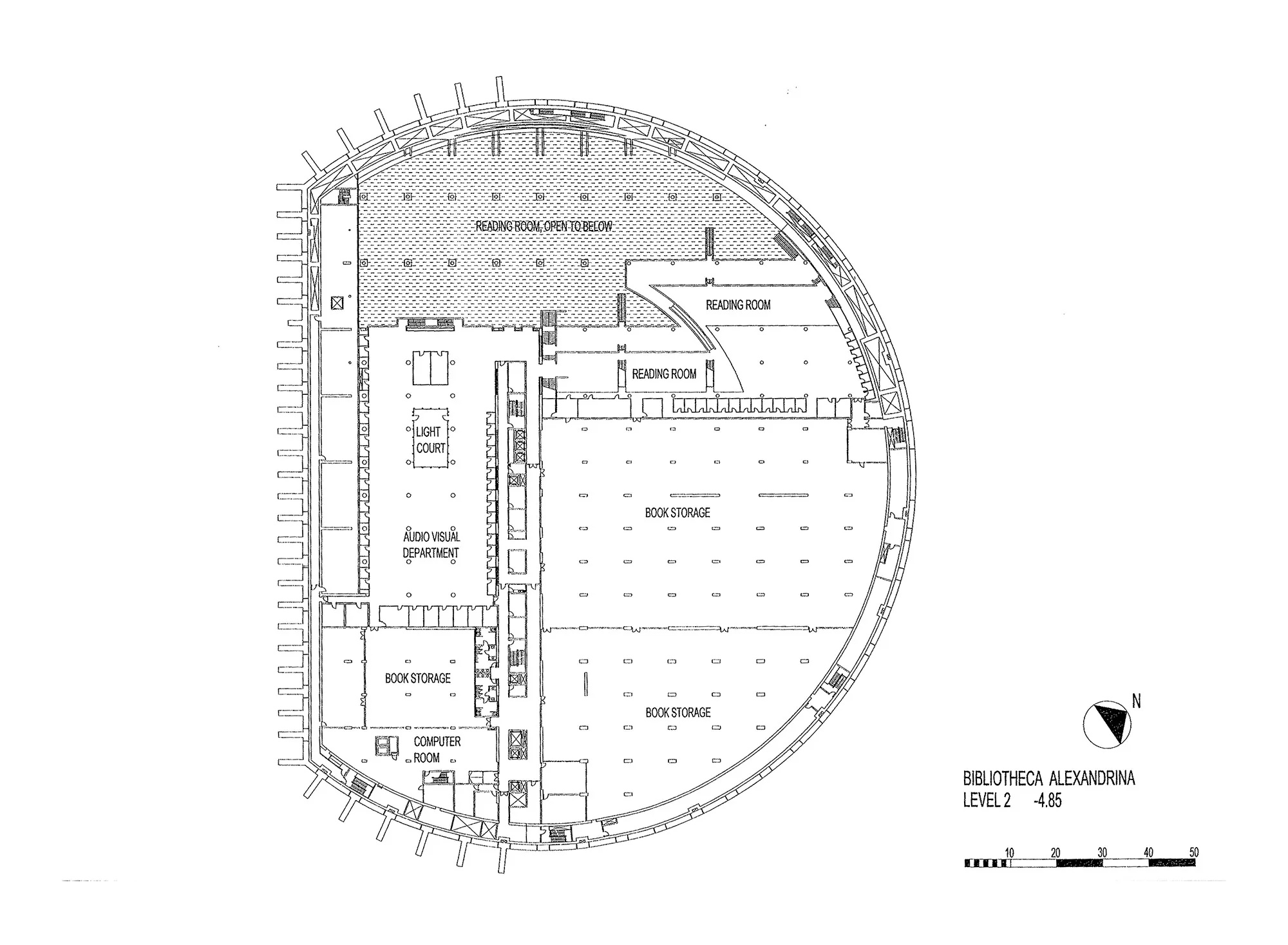
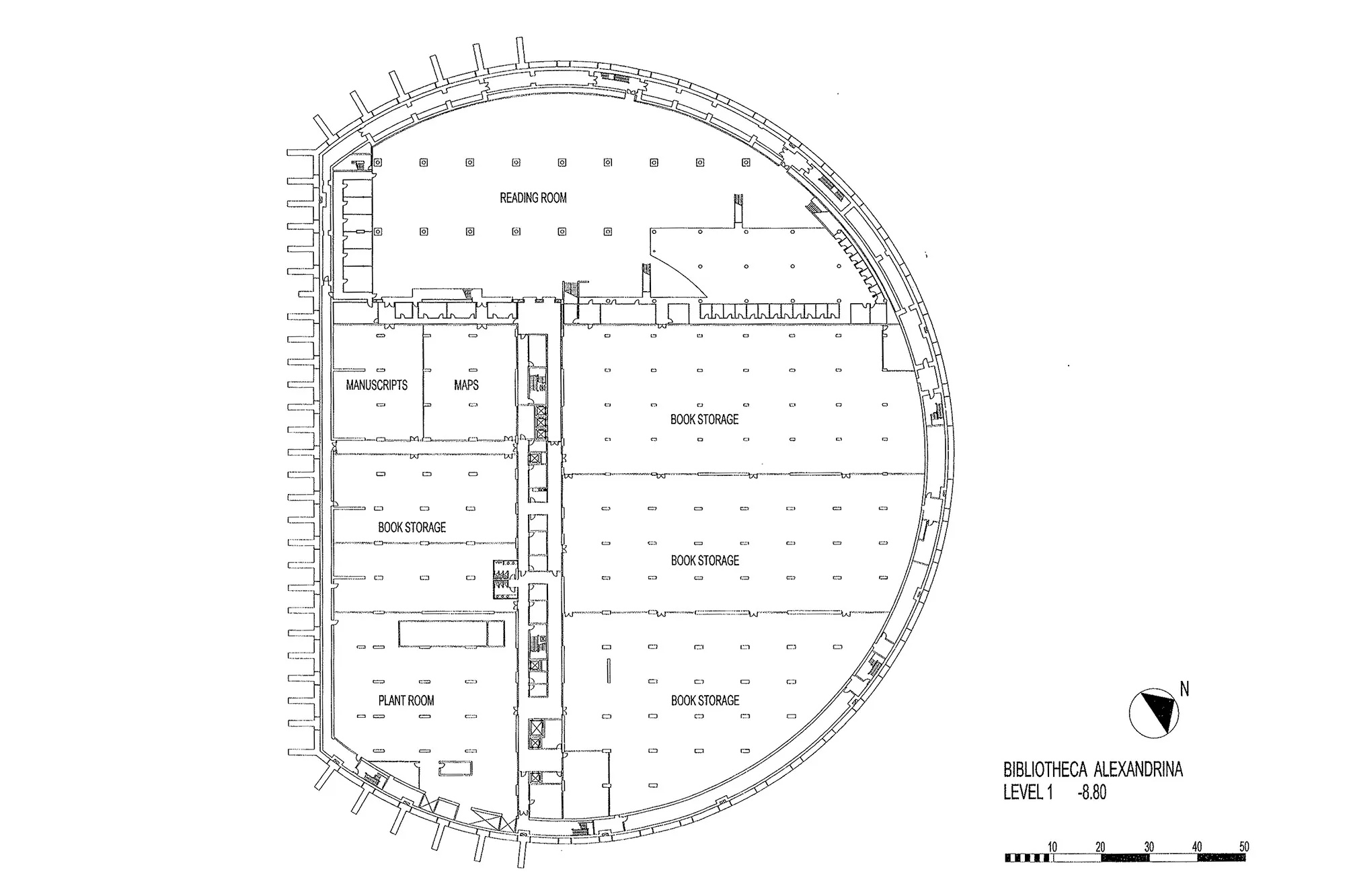
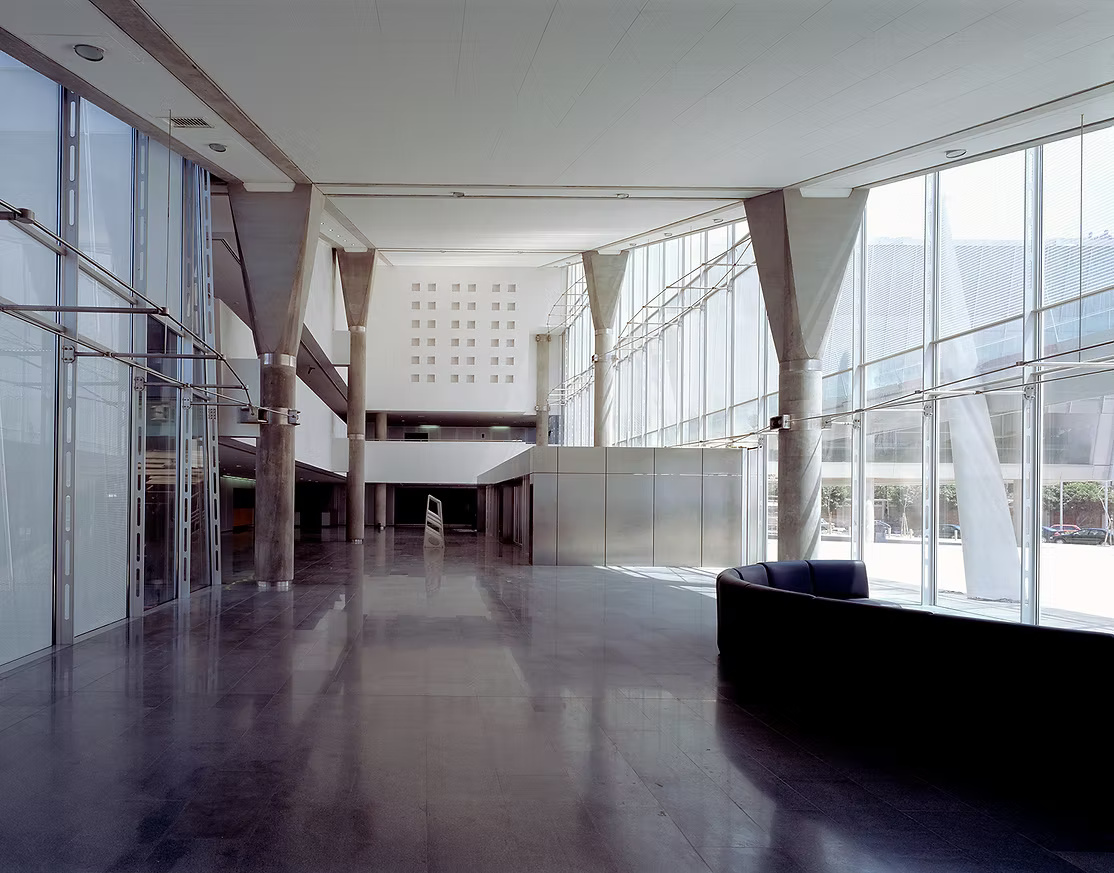
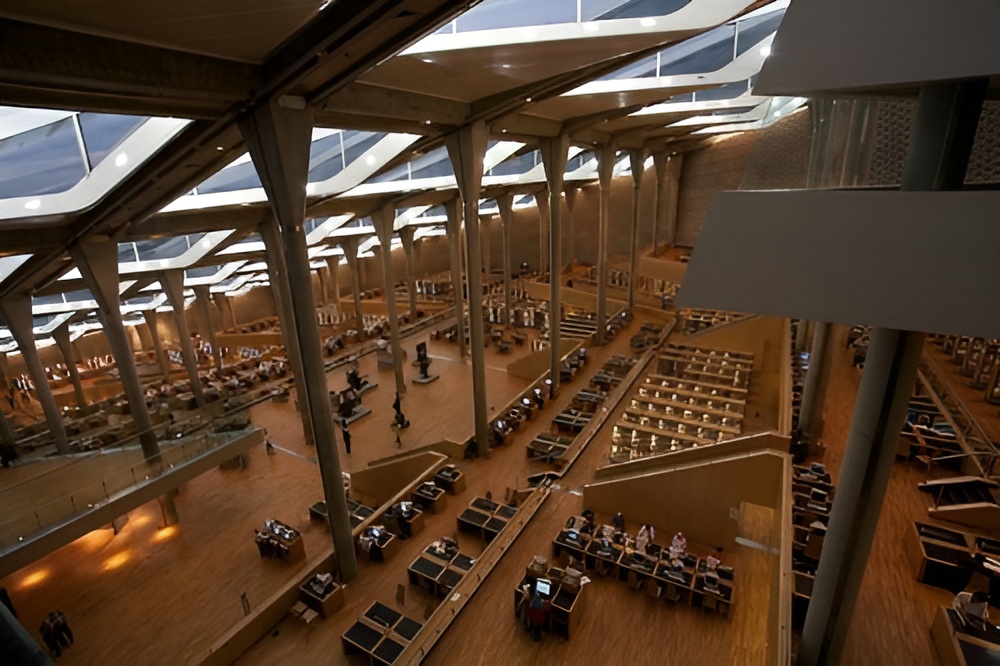
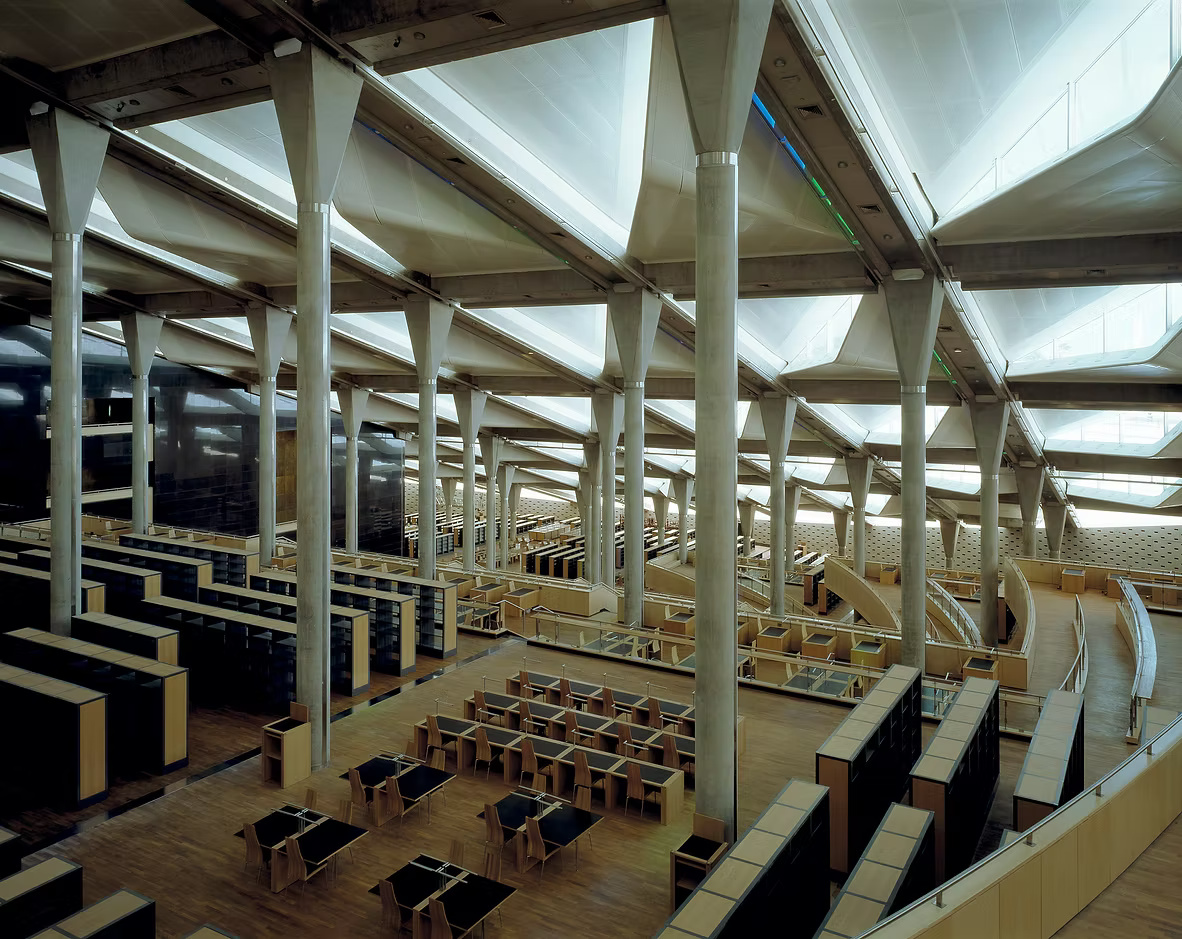
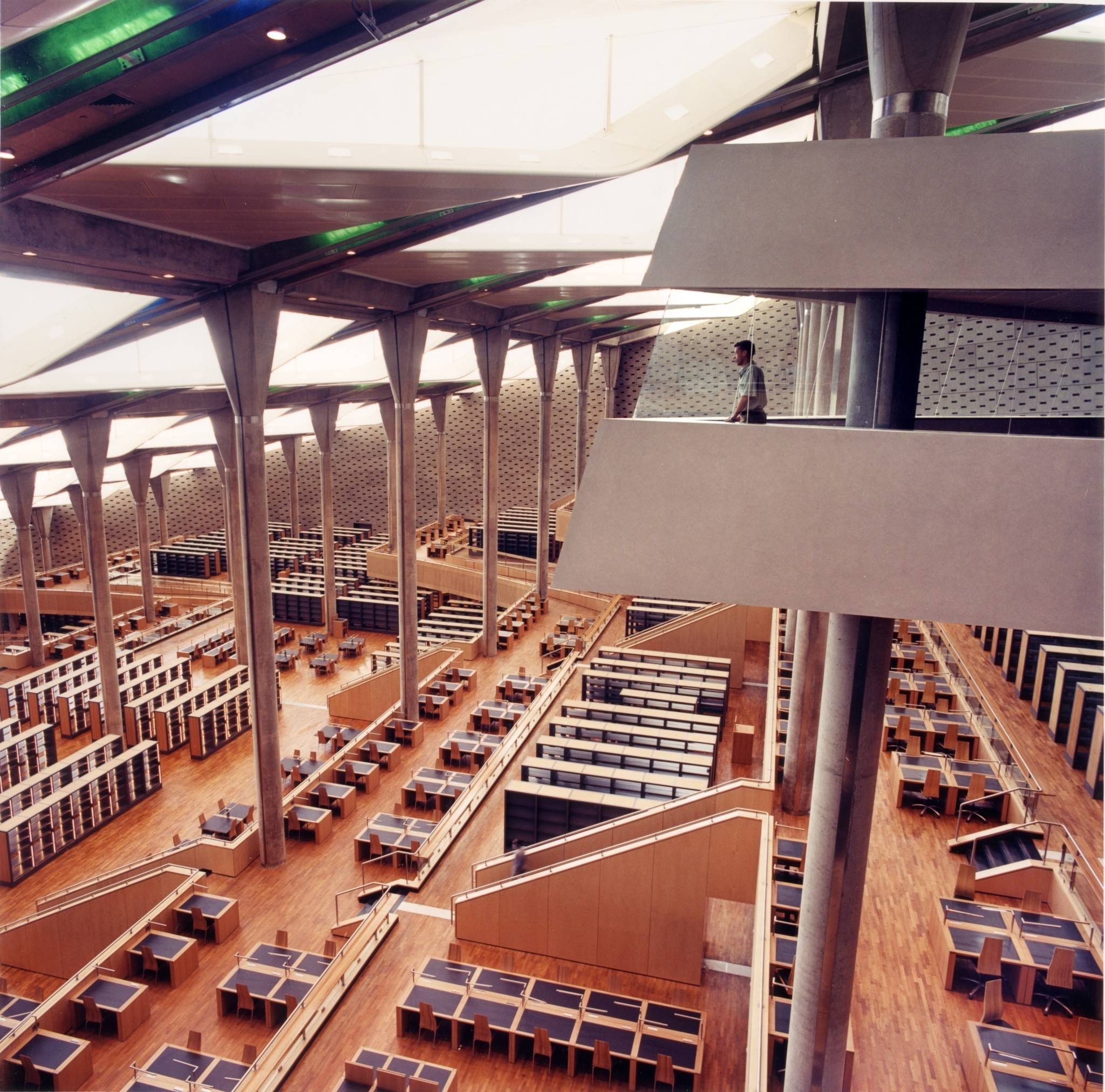
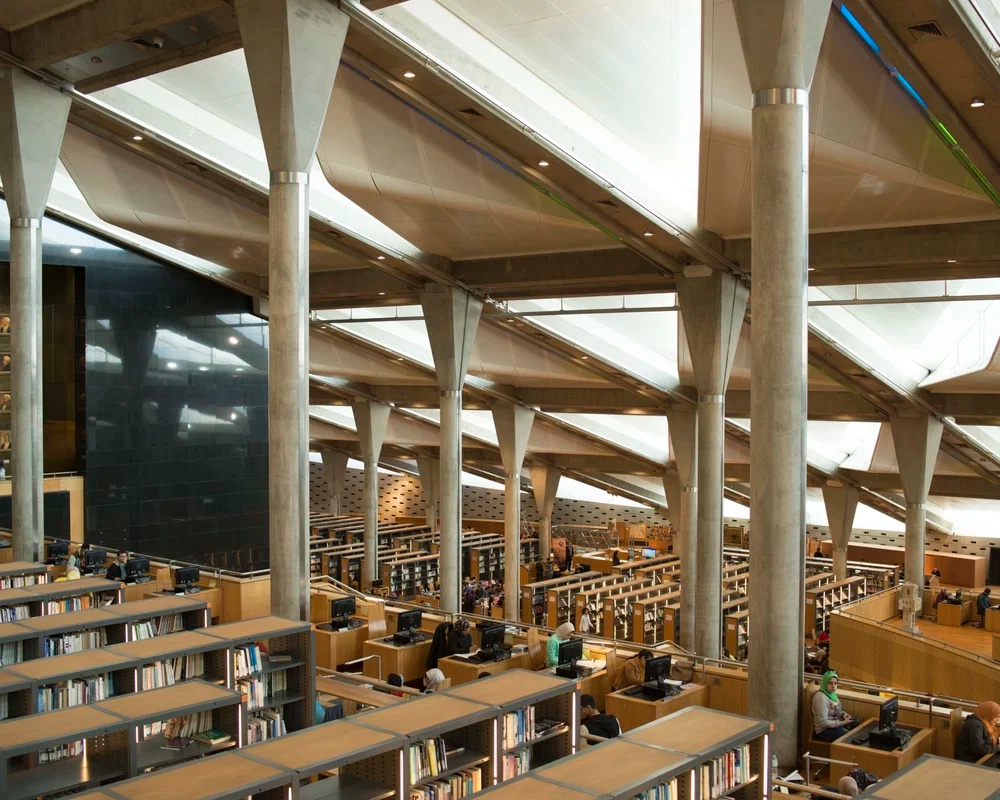
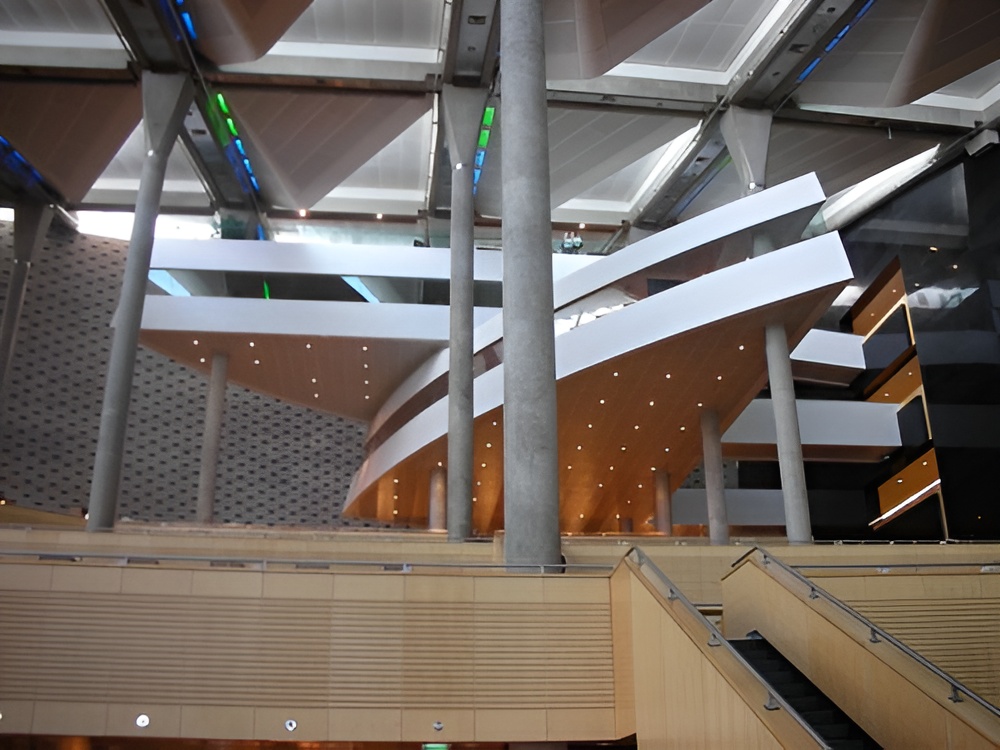
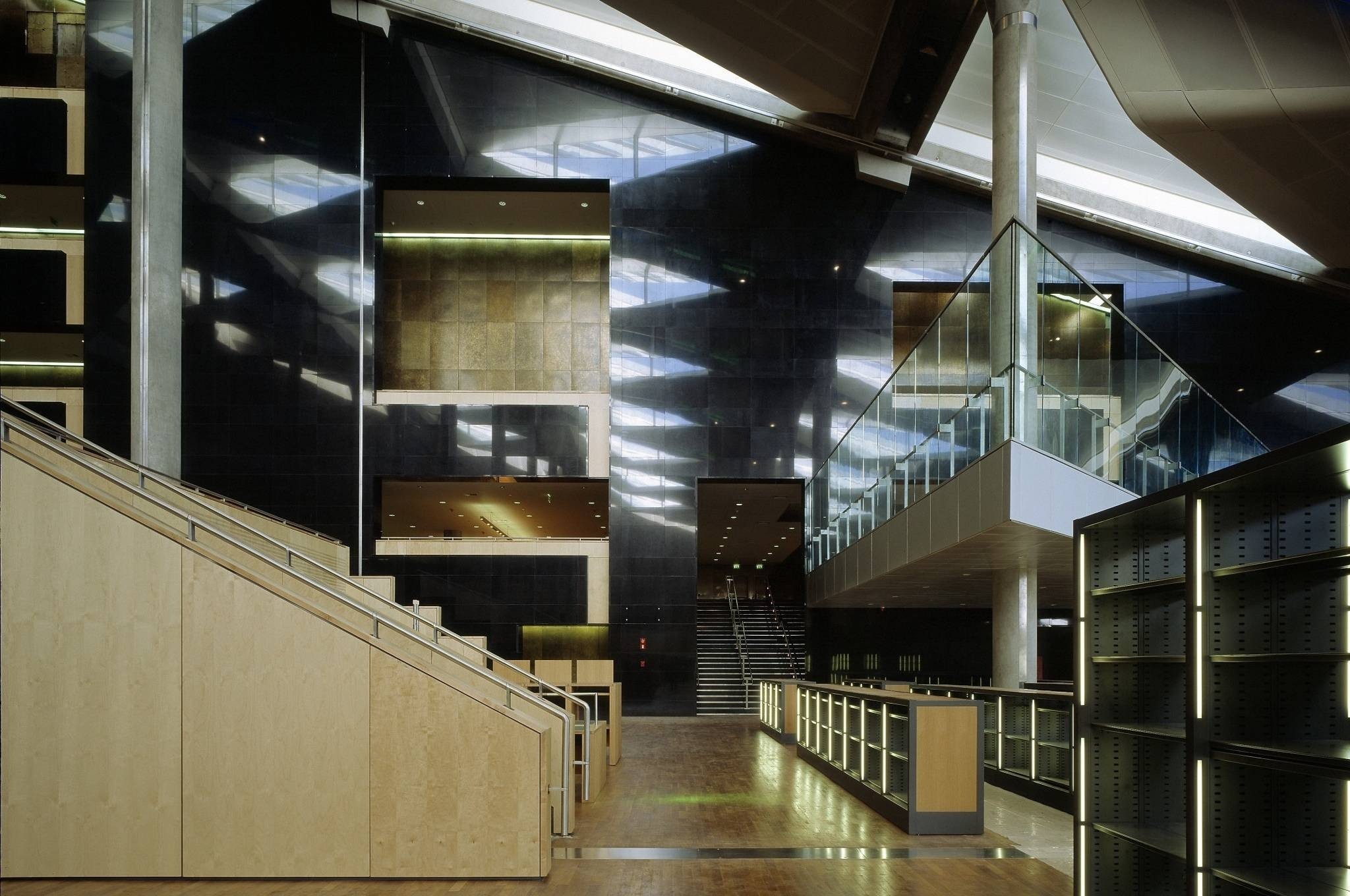
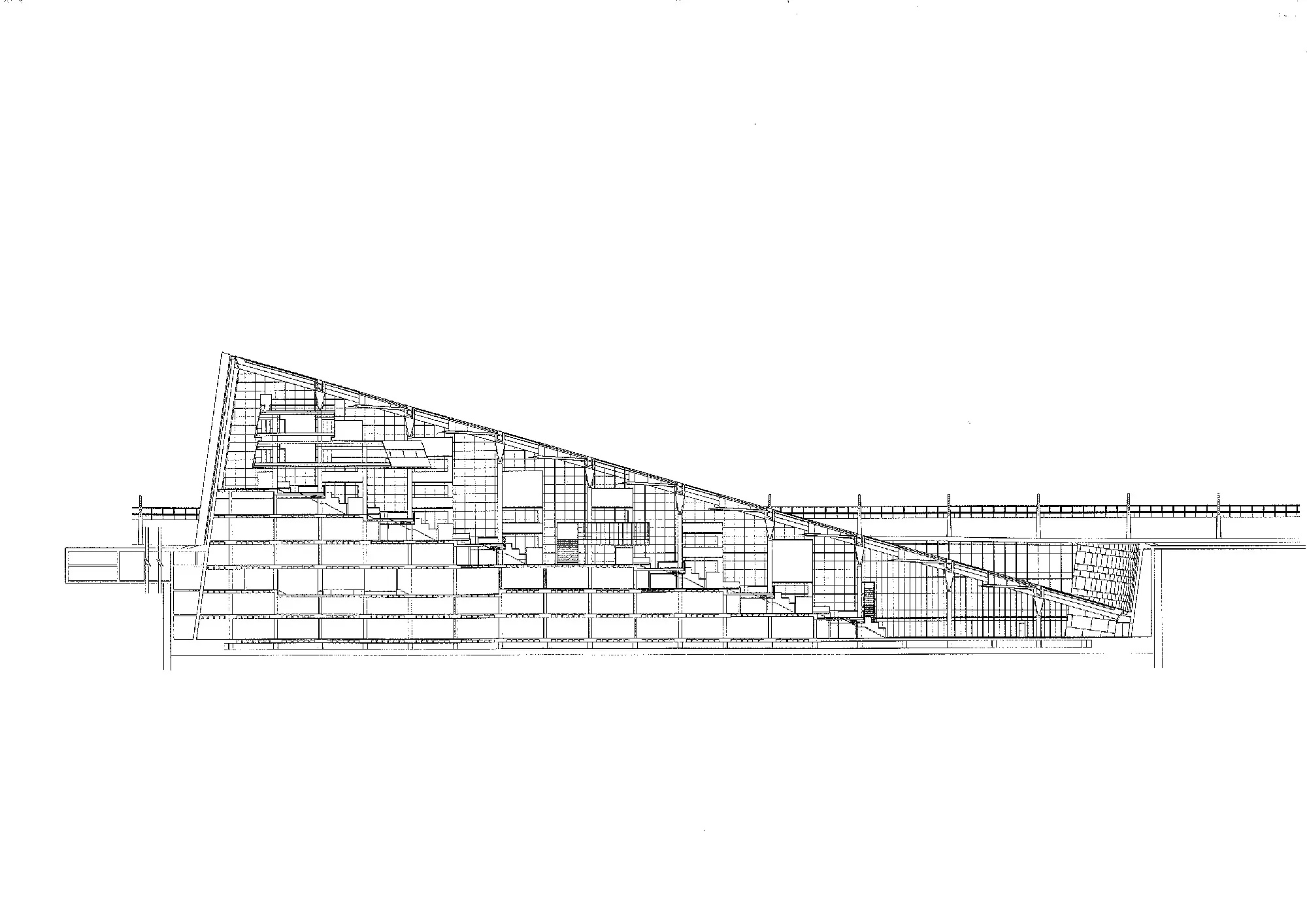
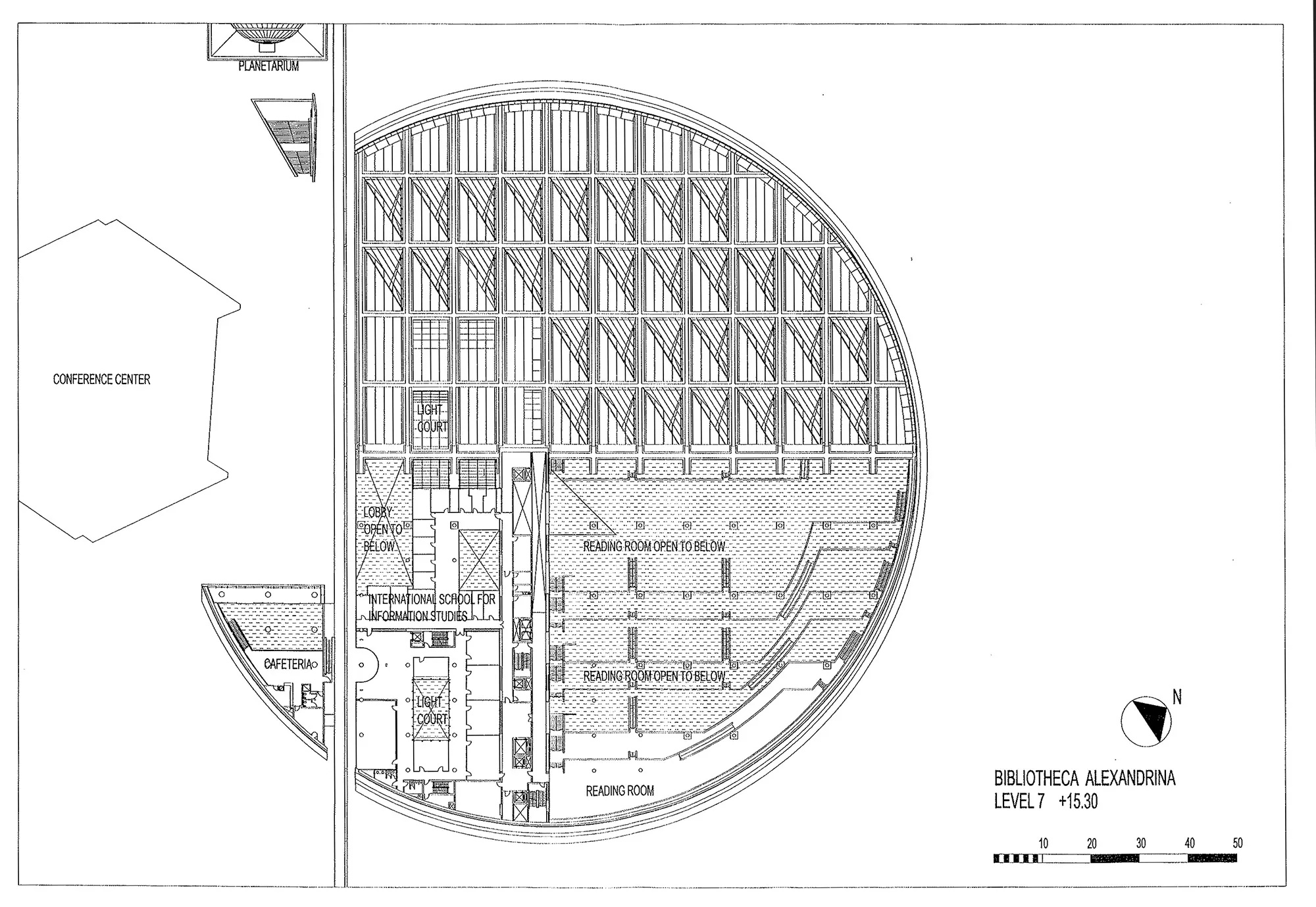
The principal interior space is the reading room, which occupies approximately 20,000 m² beneath the inclined roof. The room is organized across seven terraced levels that descend toward the north-facing glazing system. The stepped arrangement creates visual continuity throughout the space while maintaining close relationships between reading areas and book collections. Accommodating approximately 2,000 readers, the reading room was among the largest open reading rooms in the world at the time of completion. The terraces reduce retrieval distances by placing book stacks beneath each reading level, allowing collections and study areas to remain closely integrated. The organization of the space produces an amphitheater-like interior that combines openness with individual study environments.
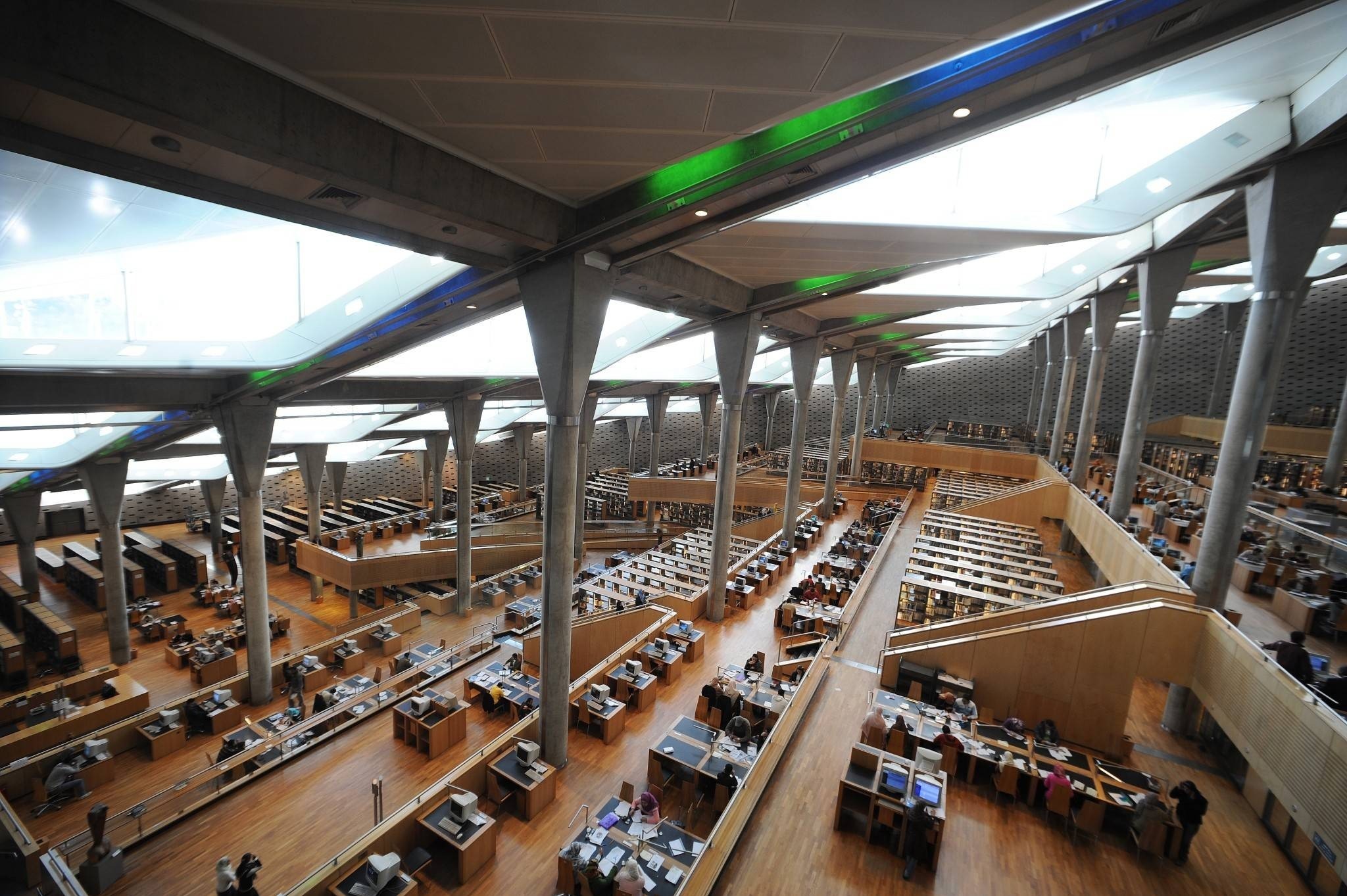
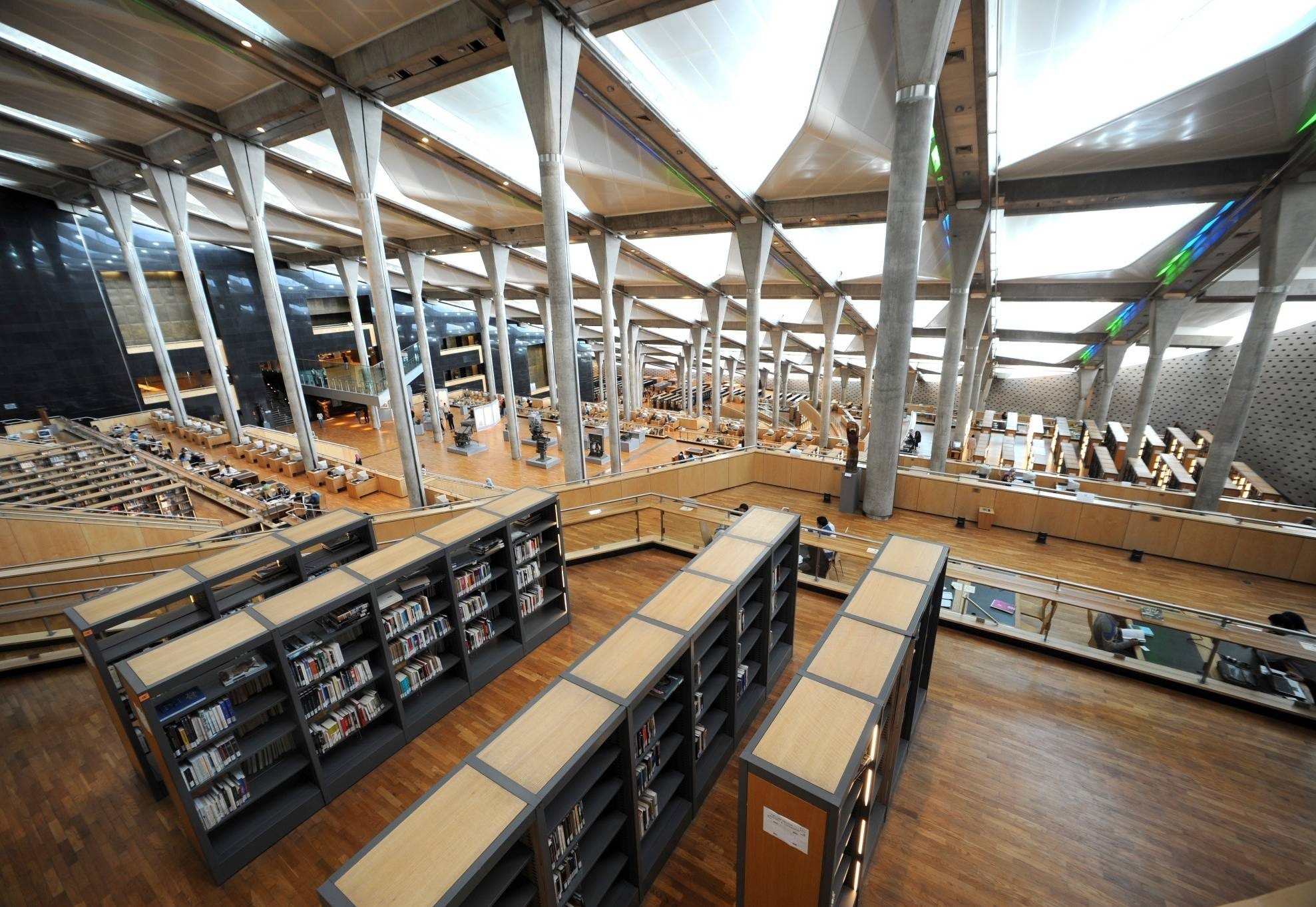
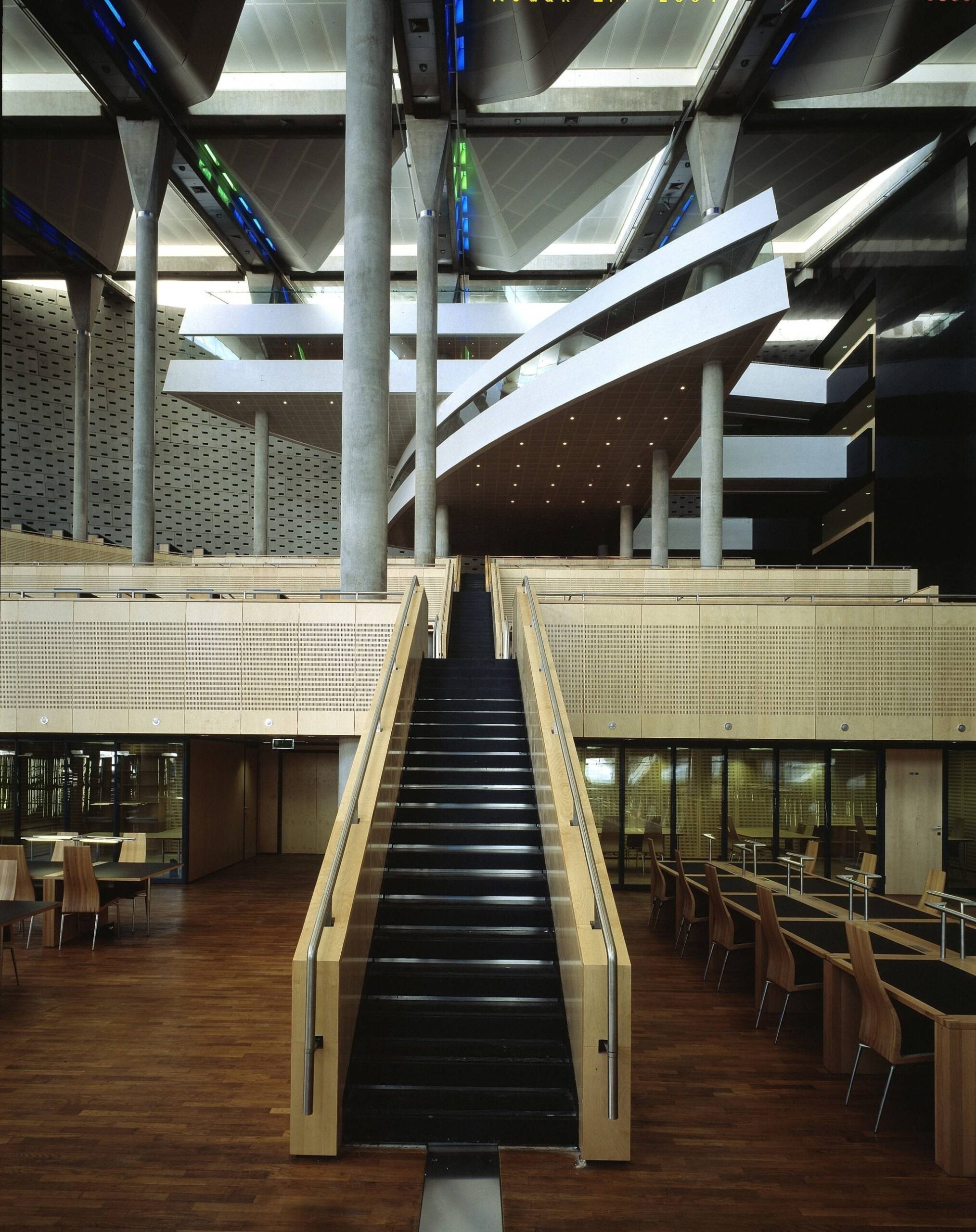
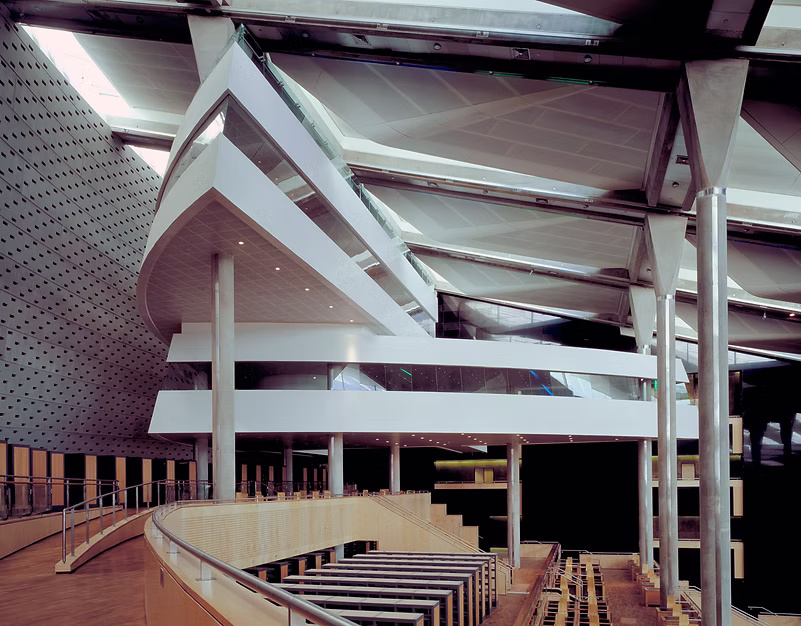
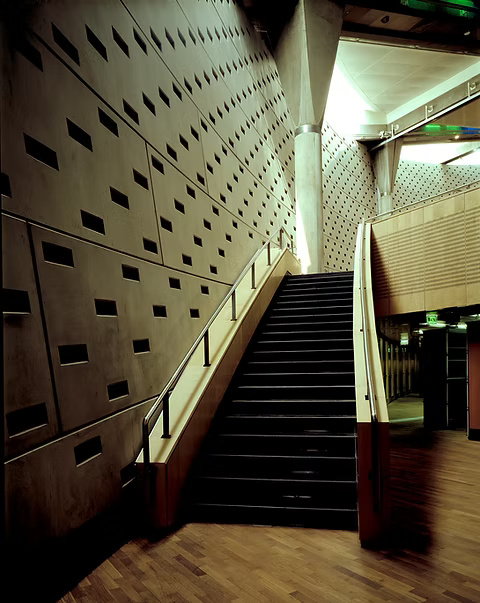
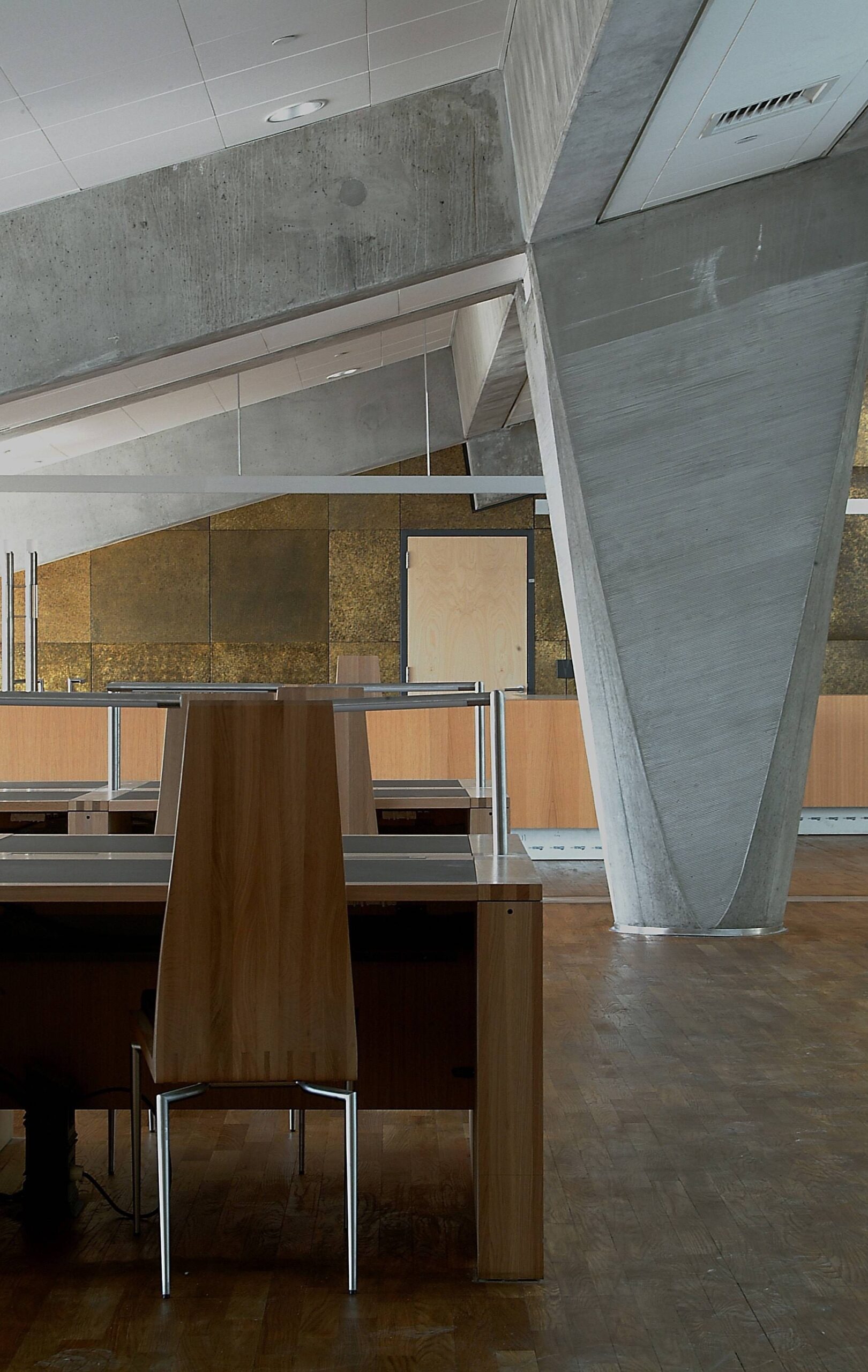
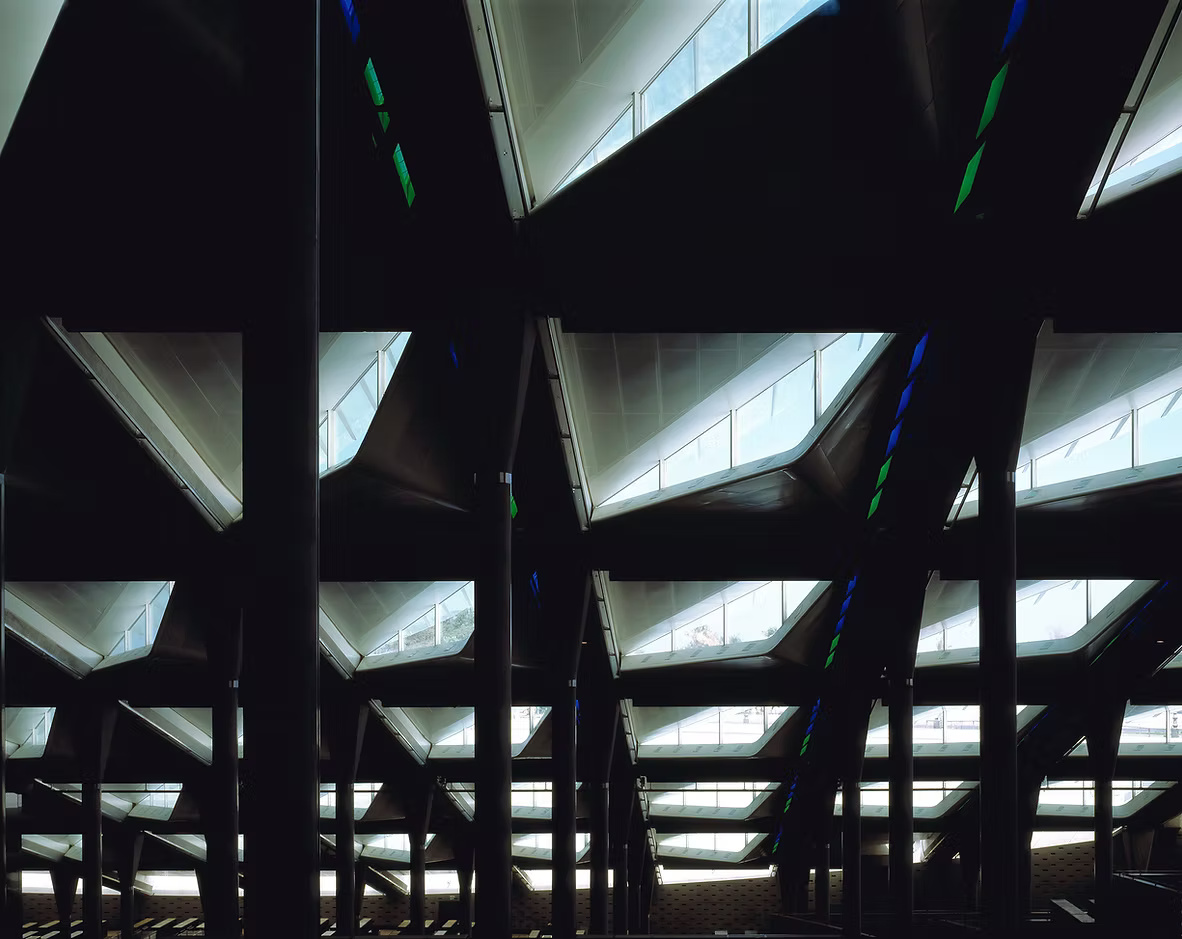
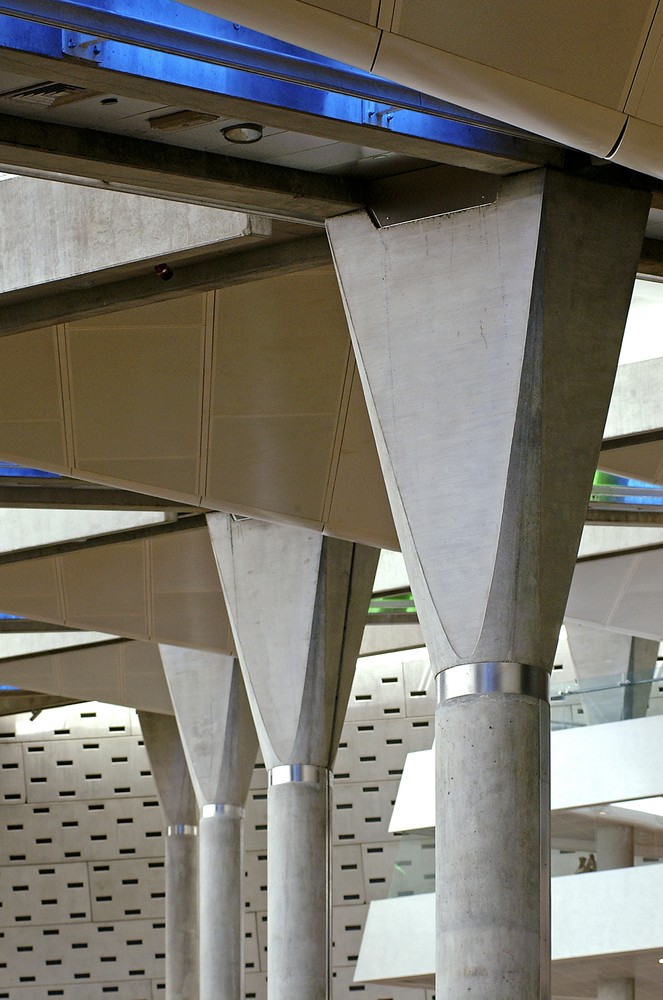
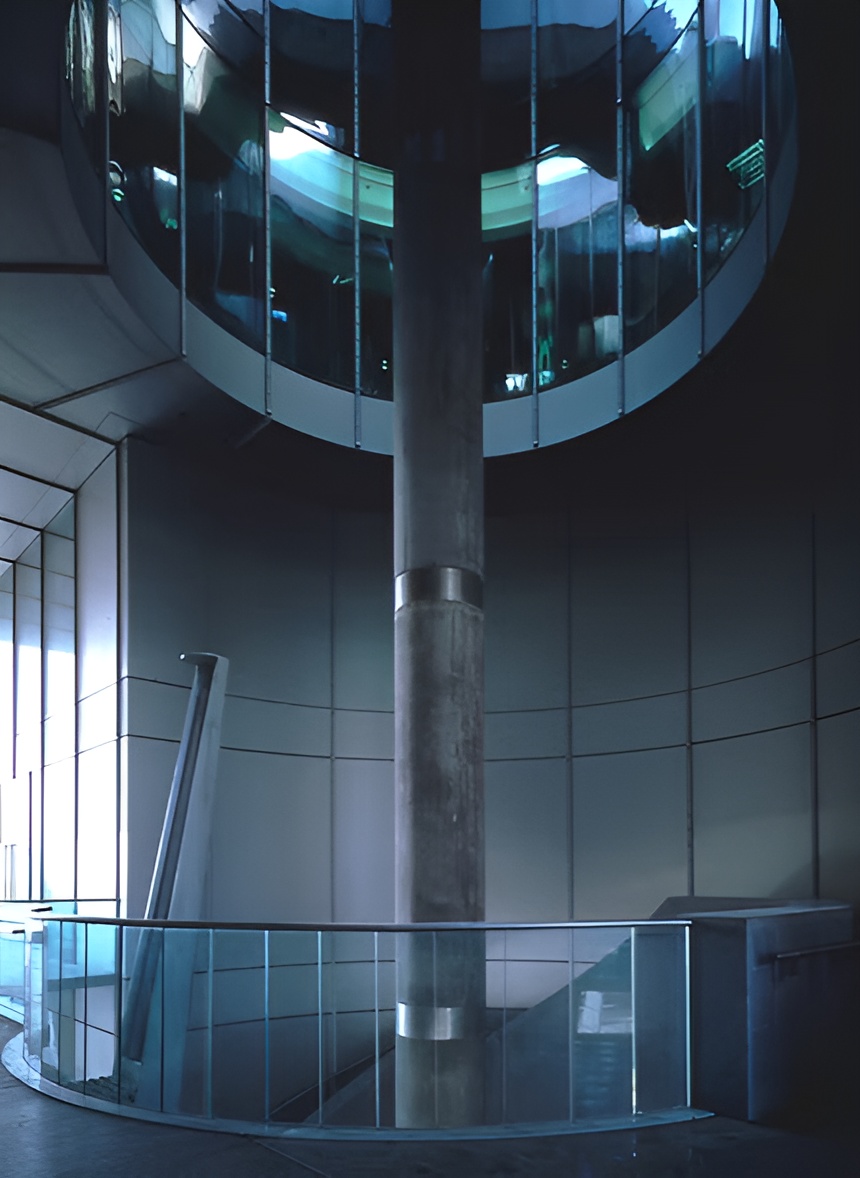
Natural daylight forms a significant component of the architectural experience. North-facing roof monitors admit diffuse daylight while preventing direct solar exposure that could damage books and manuscripts. The controlled lighting conditions reduce glare and provide stable illumination throughout the interior. Structural columns support the roof while establishing a rhythmic sequence across the reading terraces.
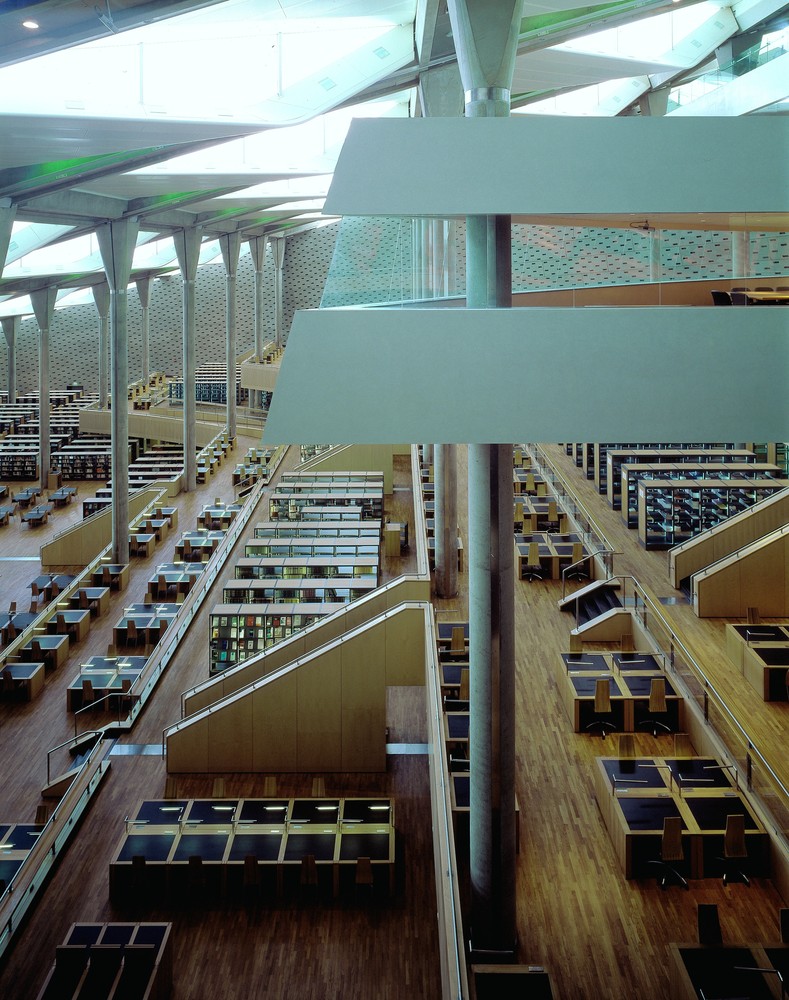
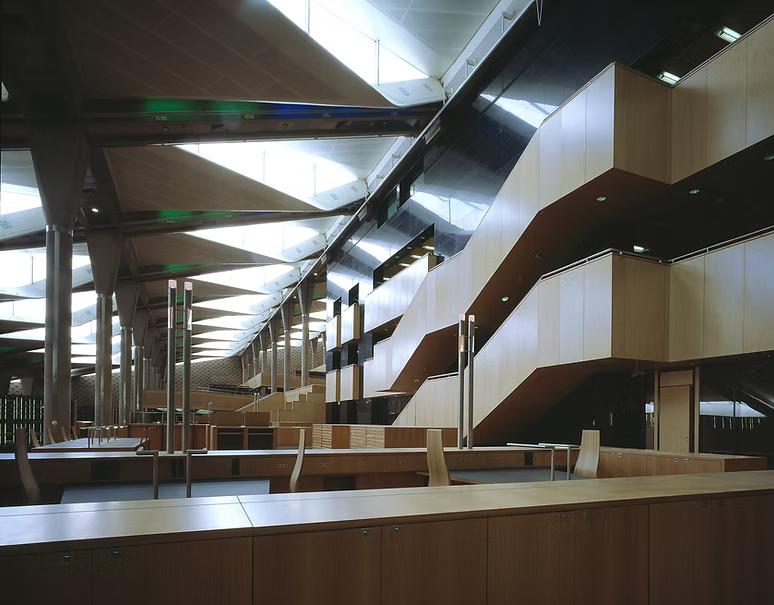
The library was designed to accommodate four million volumes, with future expansion capacity increasing the collection to eight million books through compact storage systems. Repositories and archival facilities occupy lower levels beneath the reading room, where environmental conditions can be carefully controlled.
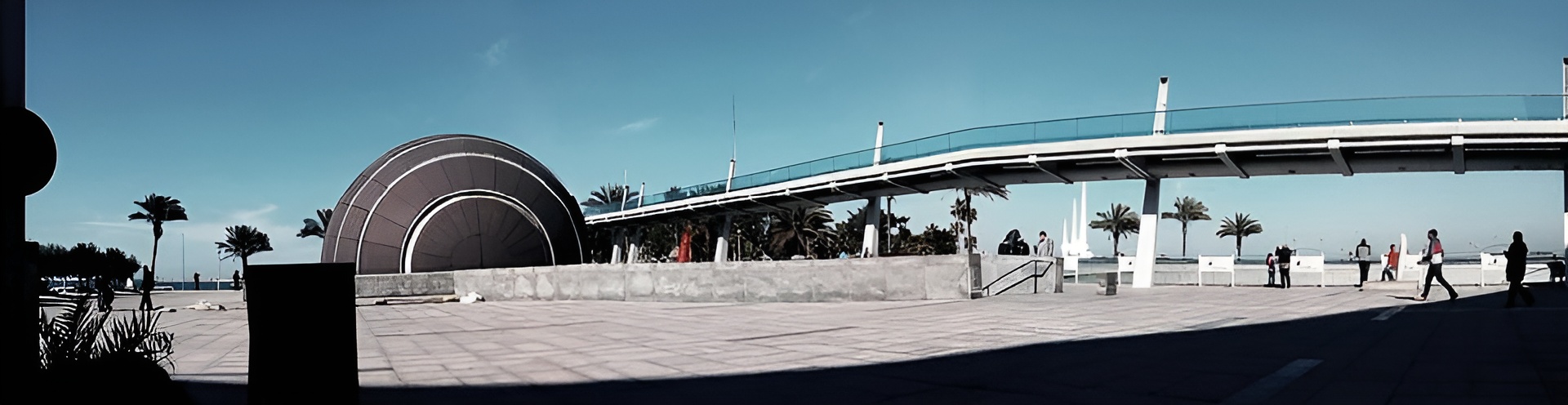
The Bibliotheca Alexandrina functions as more than a library. The complex incorporates museums, exhibition galleries, conference facilities, specialized libraries, conservation laboratories, educational facilities, and a planetarium. The inclusion of these programs transforms the institution into a multidisciplinary cultural center that supports research, education, public events, and cultural activities. Specialized libraries serve children, young adults, visually impaired users, and researchers, while museums within the complex contain collections devoted to manuscripts, antiquities, and modern Egyptian history. Conservation laboratories support the preservation of manuscripts and archival materials, and digital initiatives provide public access to collections and research resources.
Environmental performance formed an important aspect of the design. The granite walls provide substantial thermal mass that contributes to temperature regulation. The extensive use of natural daylight reduces energy demands, while the orientation of the roof and glazing systems minimizes solar heat gain. Local materials account for a large percentage of the building’s construction components, reducing transportation requirements and supporting regional industries.
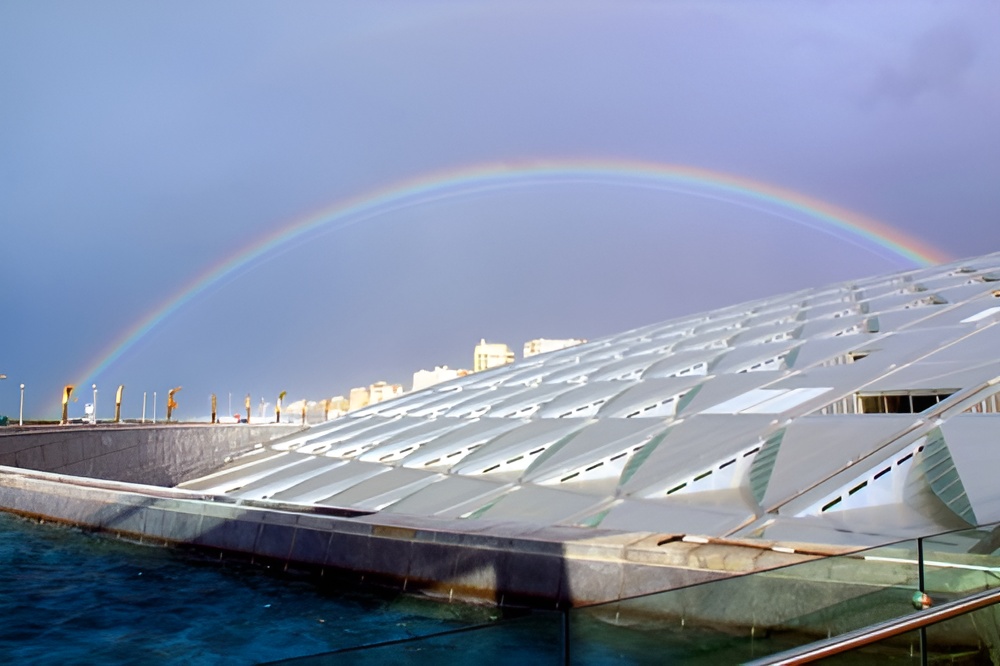
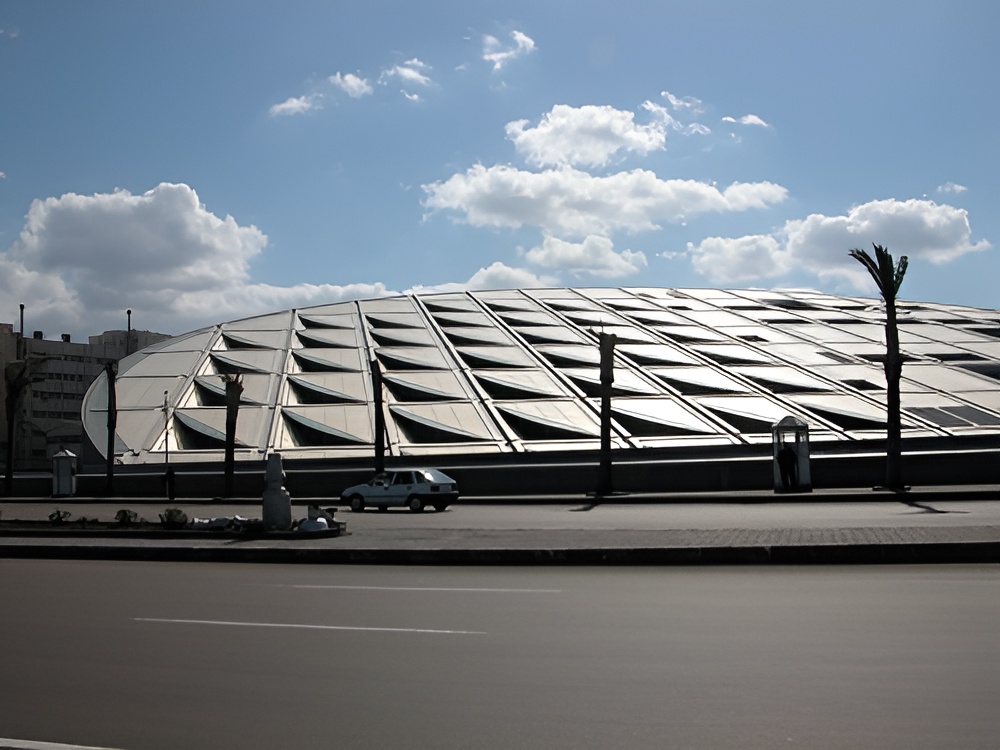
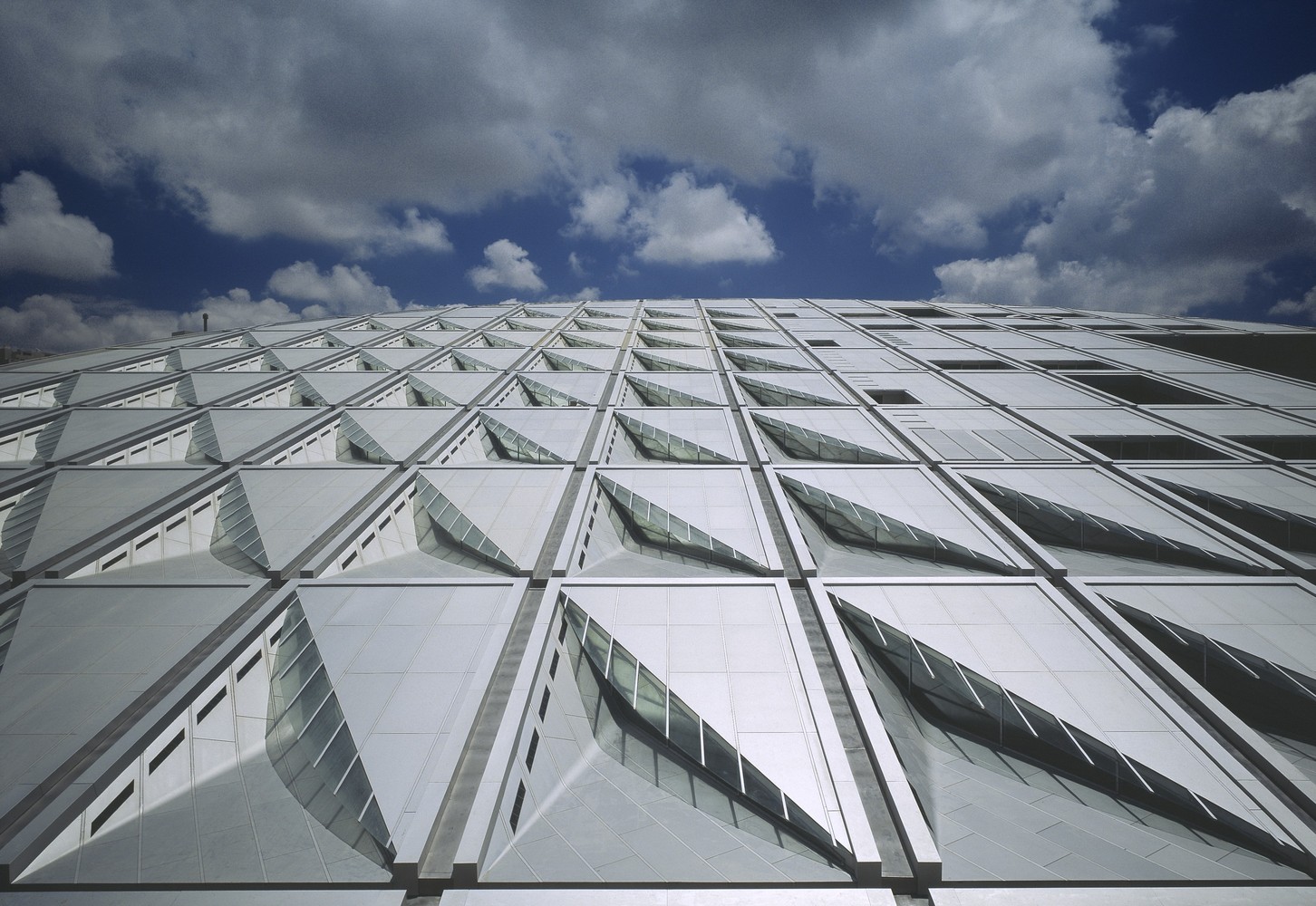
The project received international recognition for both its architectural qualities and its cultural significance. The library received the Aga Khan Award for Architecture in 2004 and the Houen Foundation Award in 2008. Its combination of monumental form, civic space, and cultural programming established an influential precedent for contemporary library design.
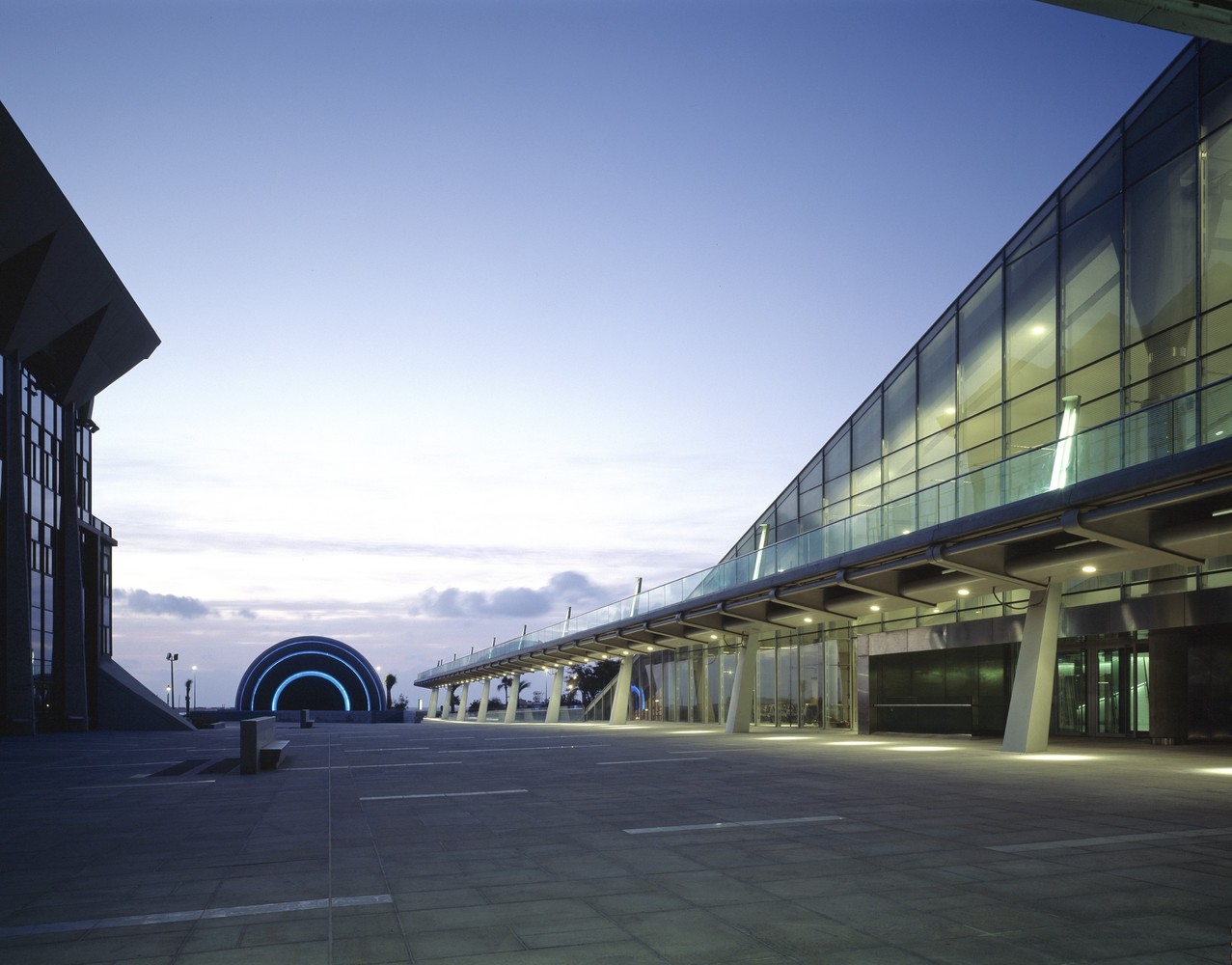
The Bibliotheca Alexandrina demonstrates how a modern library can function simultaneously as a research institution, public space, cultural center, and urban landmark. Through its large reading room, extensive collections, educational facilities, and public programs, the building reconnects Alexandria with its historical association with knowledge and scholarship while establishing a contemporary architectural identity for the city.
Project Gallery

Project Location
Address: El Azareeta and El Shatby, Bab Sharqi, Alexandria Governorate 21526, Egypt
Location is for general reference and may represent a city or country, not necessarily a precise address.

