

Architects: Dayi Design
Area: 2,500 m²
Year: 2024
Photography: Cong Lin
Client: Nanjing Big Red Crayfish
City/Location: Nanjing
Country: China
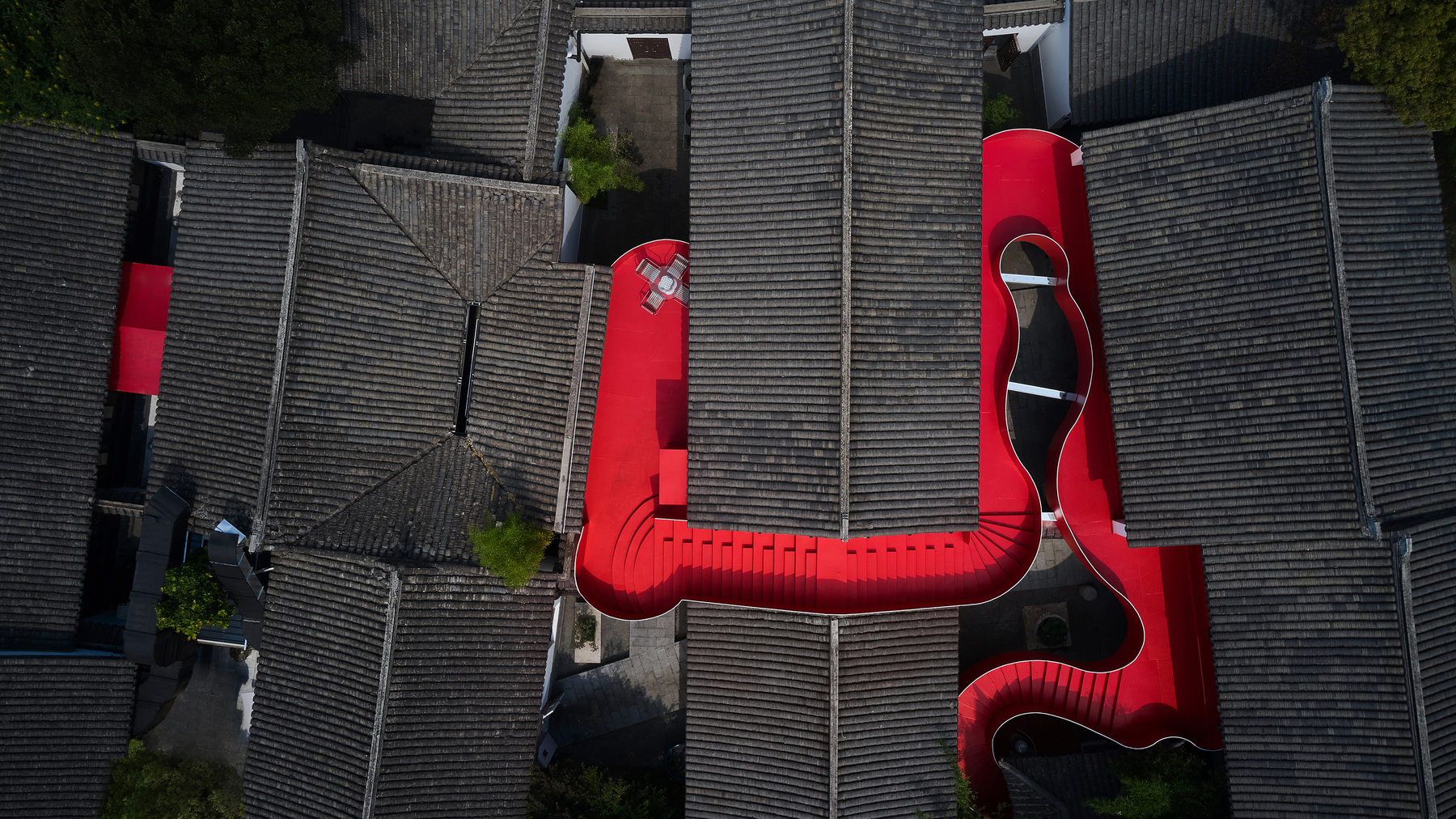
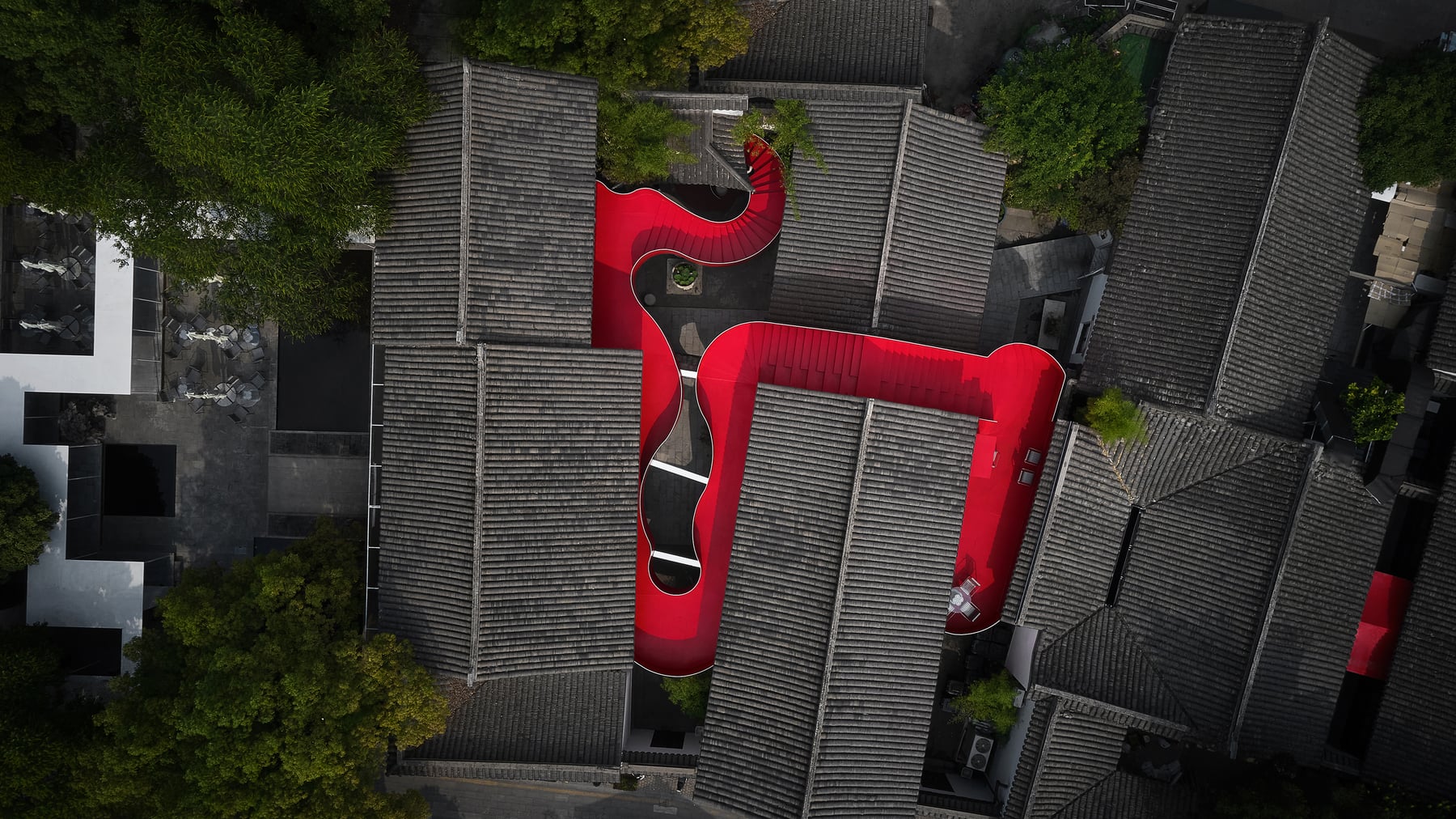
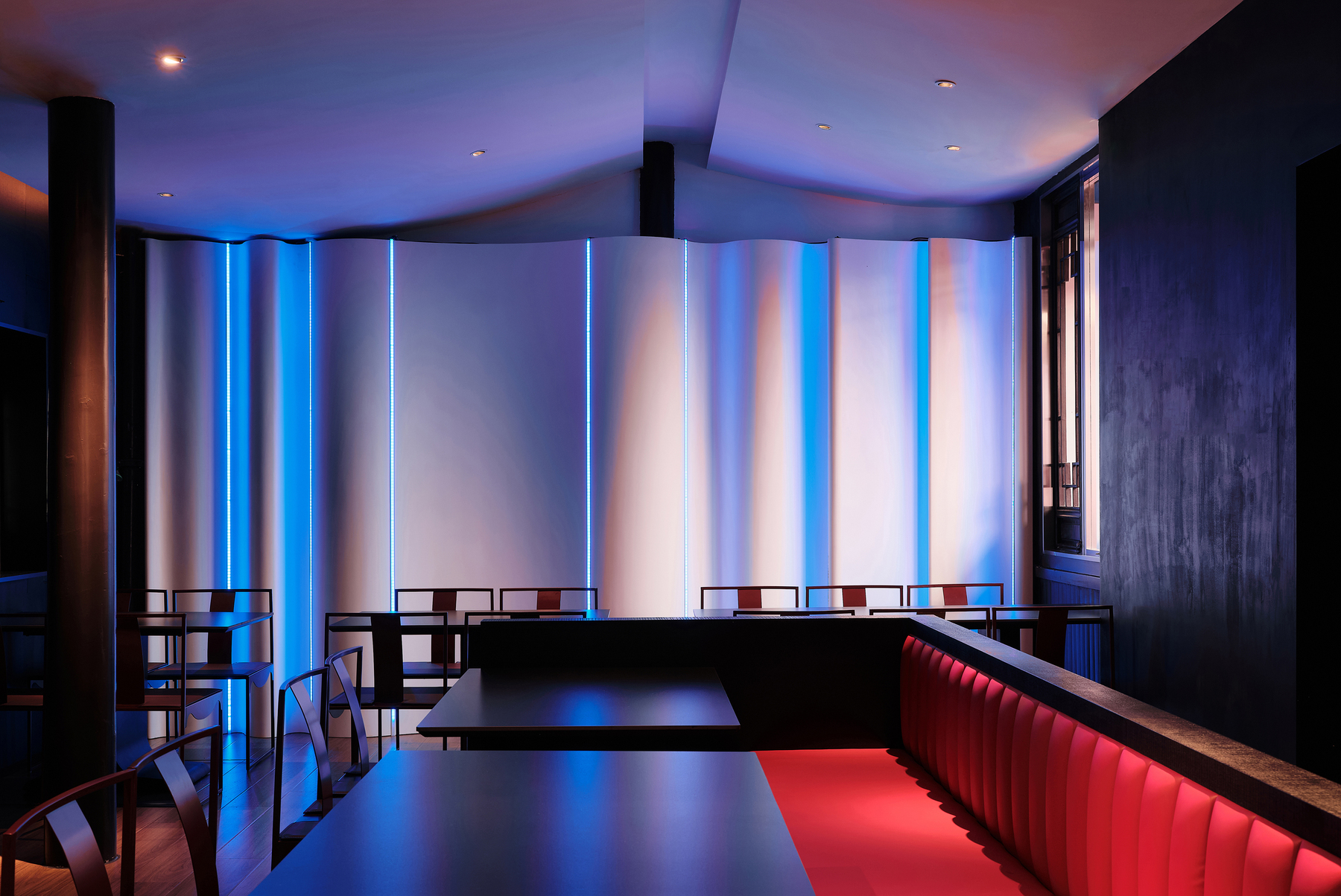
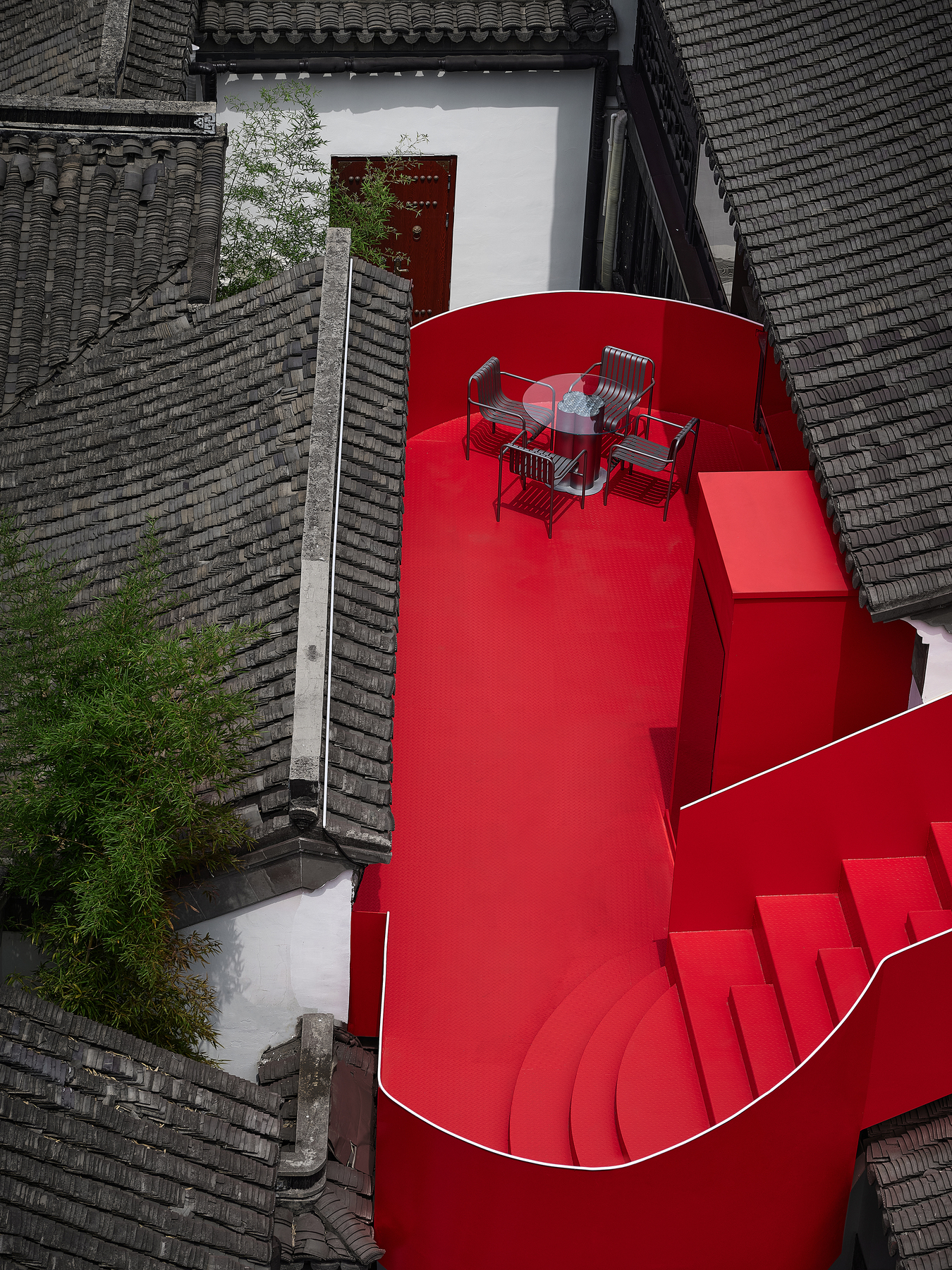
Situated along the Qinhuai River in Nanjing, the Big Red Crayfish project reimagines a historically layered site as a contemporary dining and commercial destination. Designed by Dayi Design, the project occupies a former residence site with roots extending back more than three centuries. The intervention balances adaptive reuse with bold architectural expression, weaving new circulation and public amenities into an ensemble of courtyard buildings. A vivid red steel staircase serves as the project’s primary connective element, linking multiple structures while introducing a strong visual identity tied to the brand. Traditional spatial concepts such as pavilions, terraces, and enclosed courtyards are reinterpreted through modern materials and detailing. The design emphasizes sustainability through material reuse and local sourcing, while enhancing visitor engagement with views toward the surrounding historic landscape. The project ultimately positions architecture as a mediator between cultural memory and contemporary urban life.
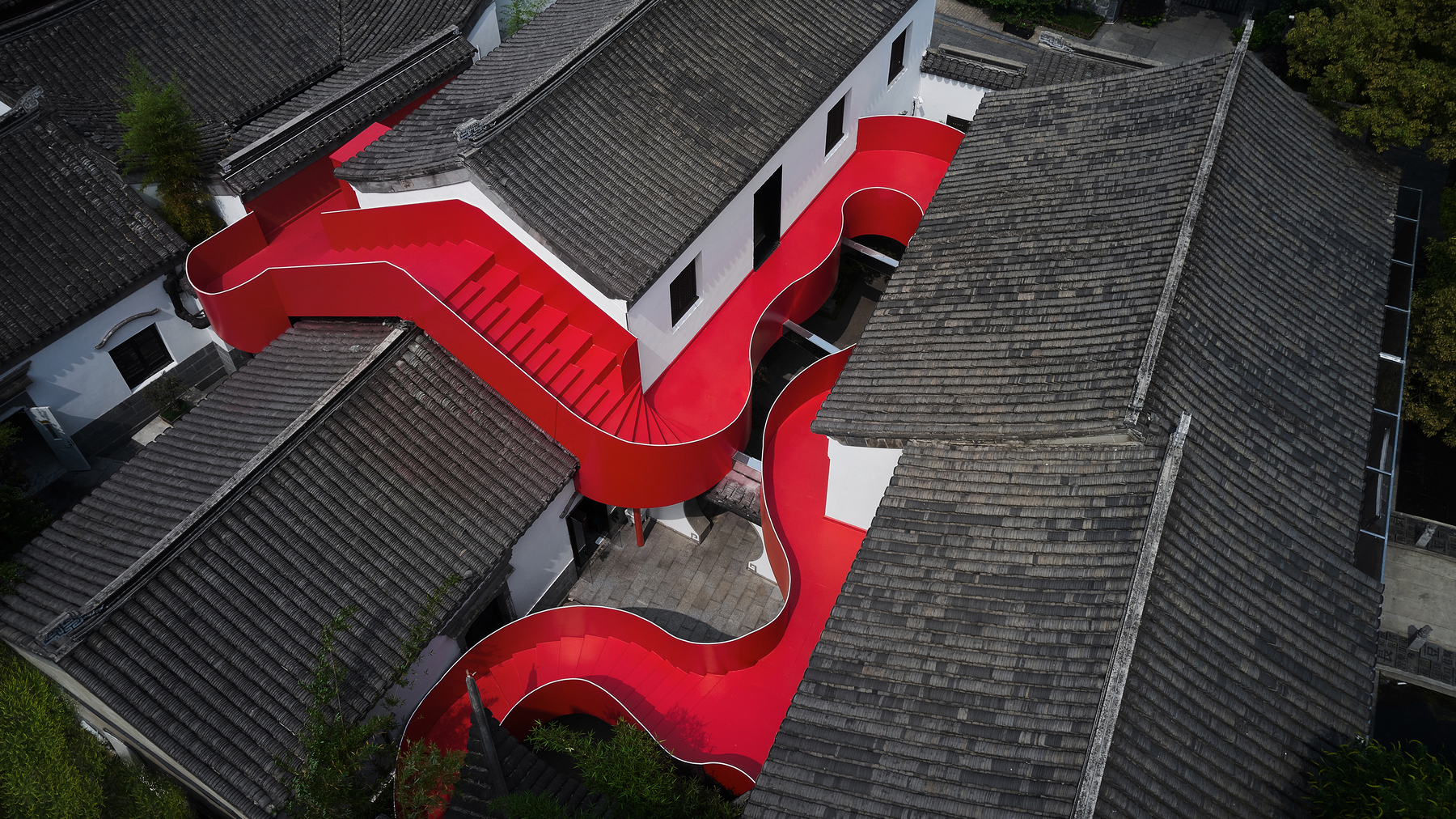
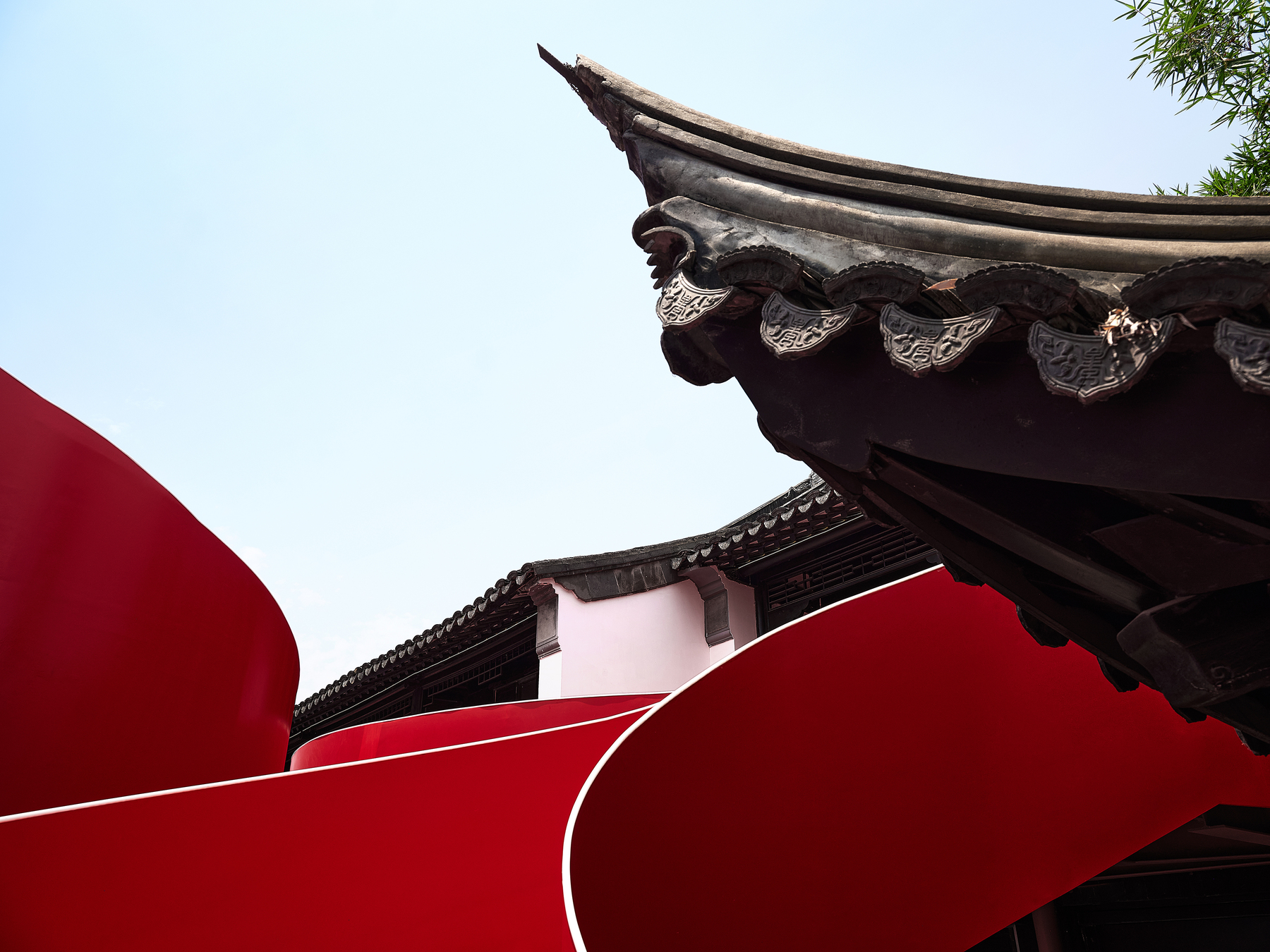
Rather than treating history as a static backdrop, the Big Red Crayfish project approaches heritage as an active participant in daily urban experience. The design establishes a dialogue between permanence and transformation, allowing the site’s accumulated narratives to coexist with a distinctly contemporary program. The architectural language avoids pastiche, instead abstracting traditional Chinese spatial principles into a restrained composition of volumes, surfaces, and movement.

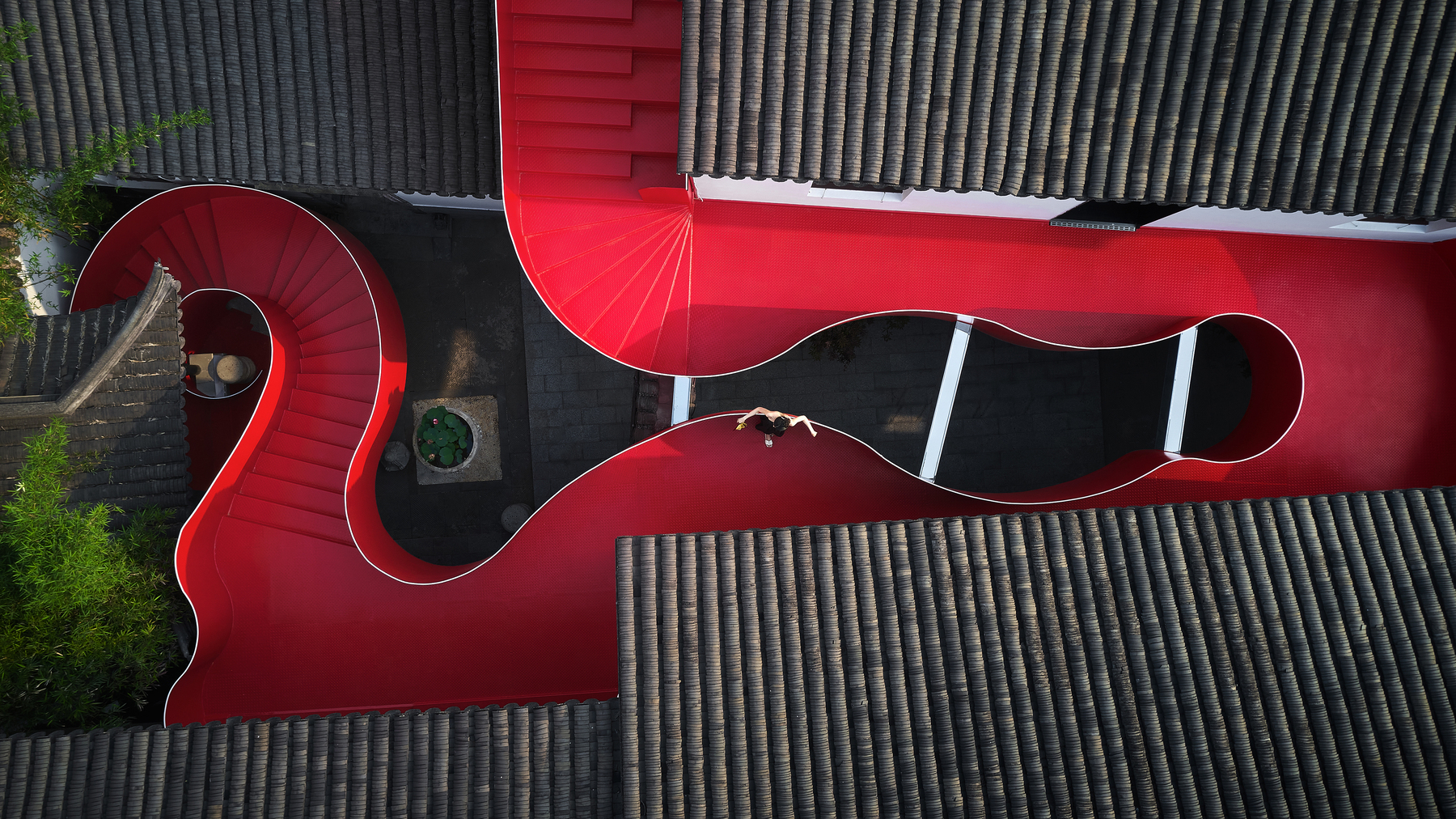
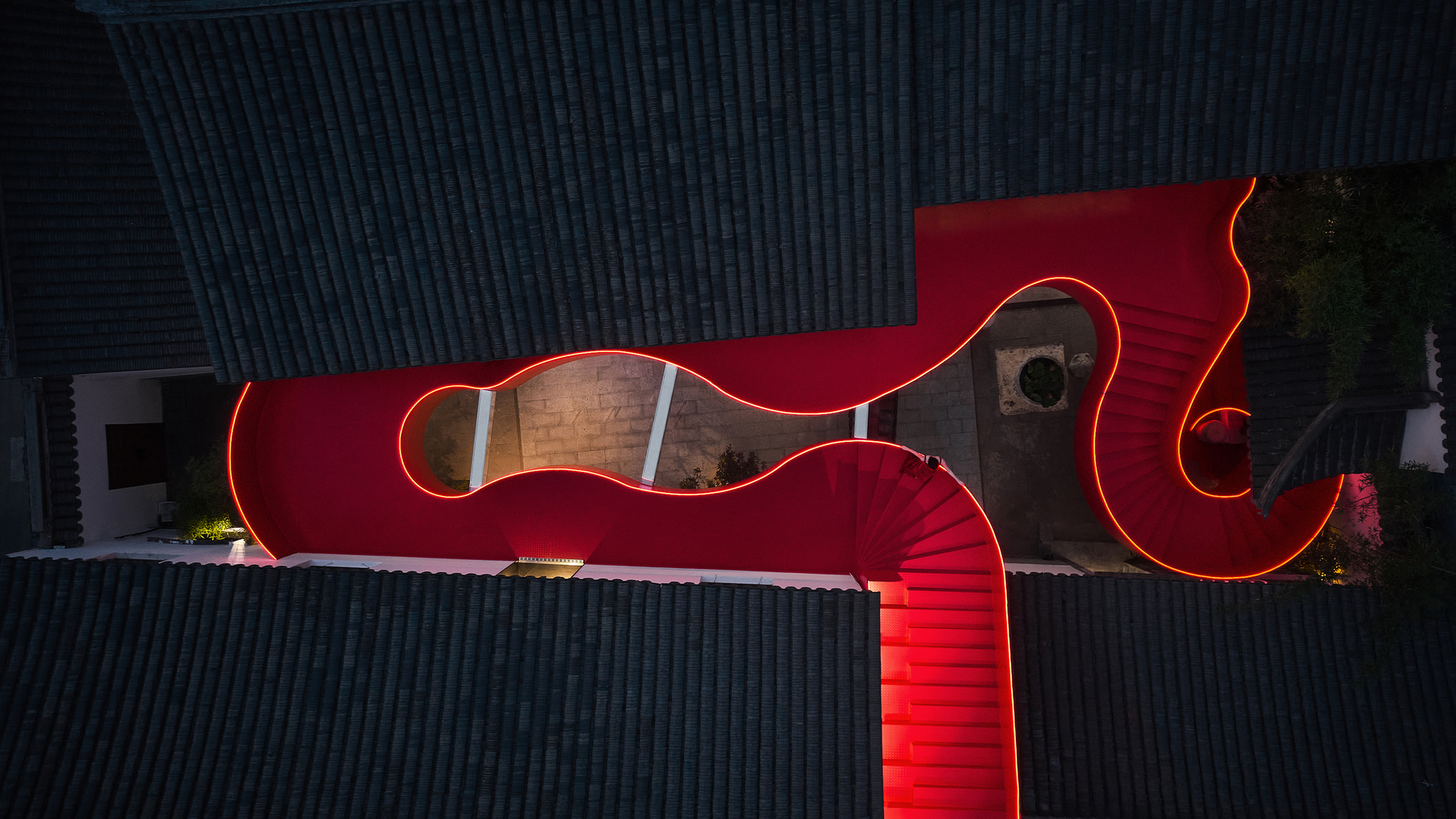
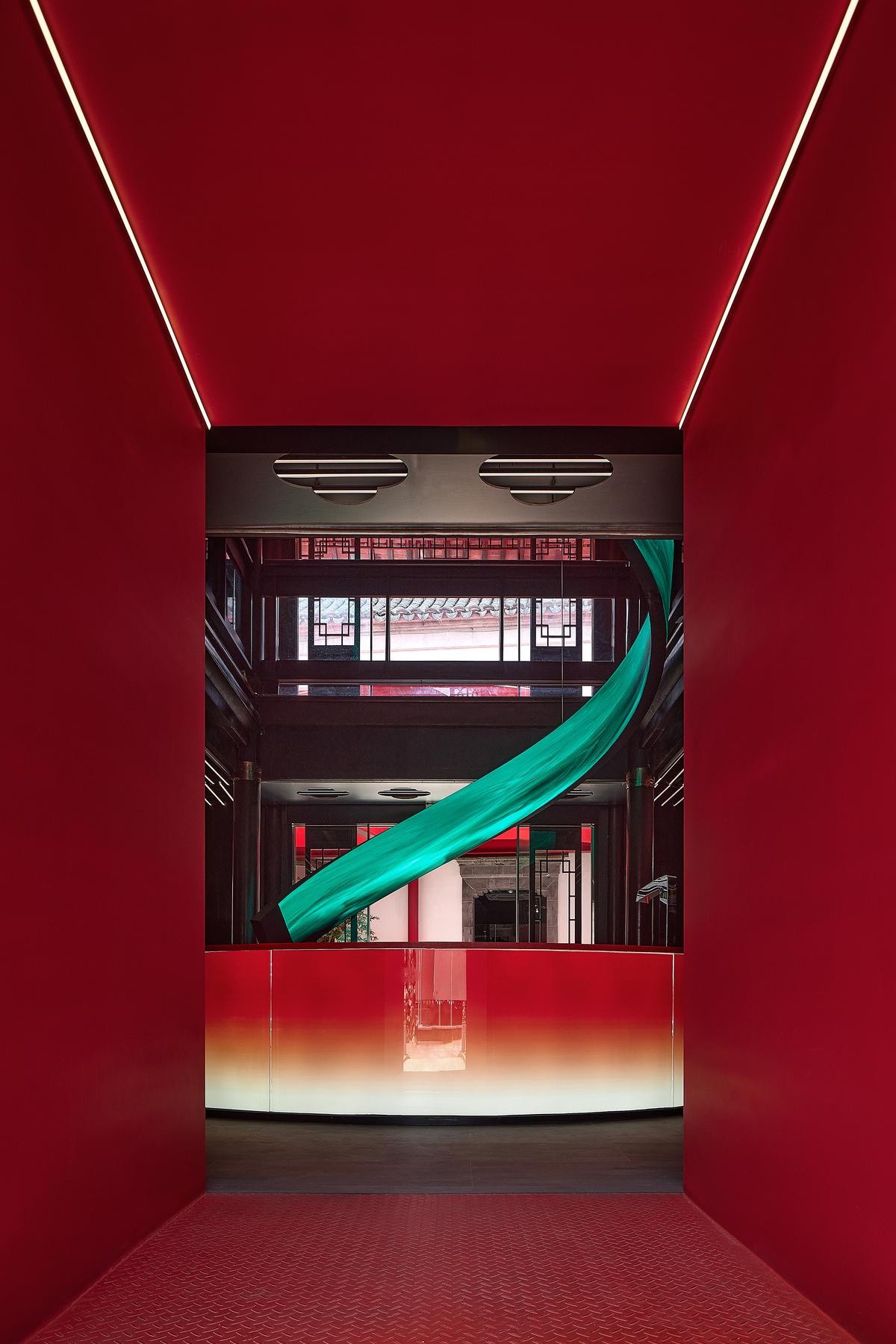
At the heart of the project is a sculptural steel staircase that threads through four courtyard buildings. Conceived as a symbolic guardian dragon, this circulation element is both infrastructural and expressive. Its bright red finish anchors the identity of the project while guiding visitors through varying elevations and framed vistas. From its landings, new perspectives open toward the Qinhuai River and nearby landmarks, including the historic Dabaoen Temple, reinforcing a sense of place beyond the immediate site.
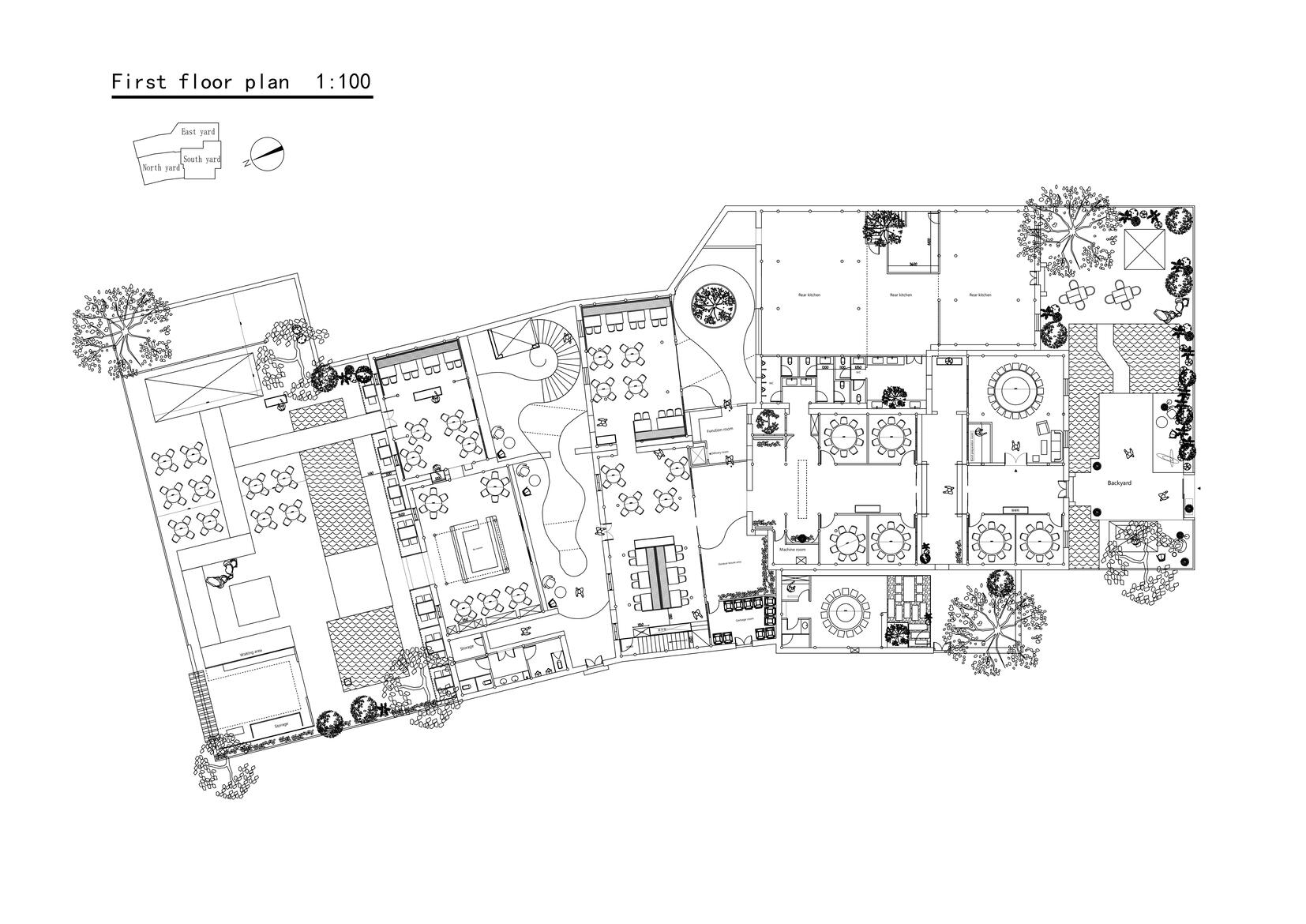

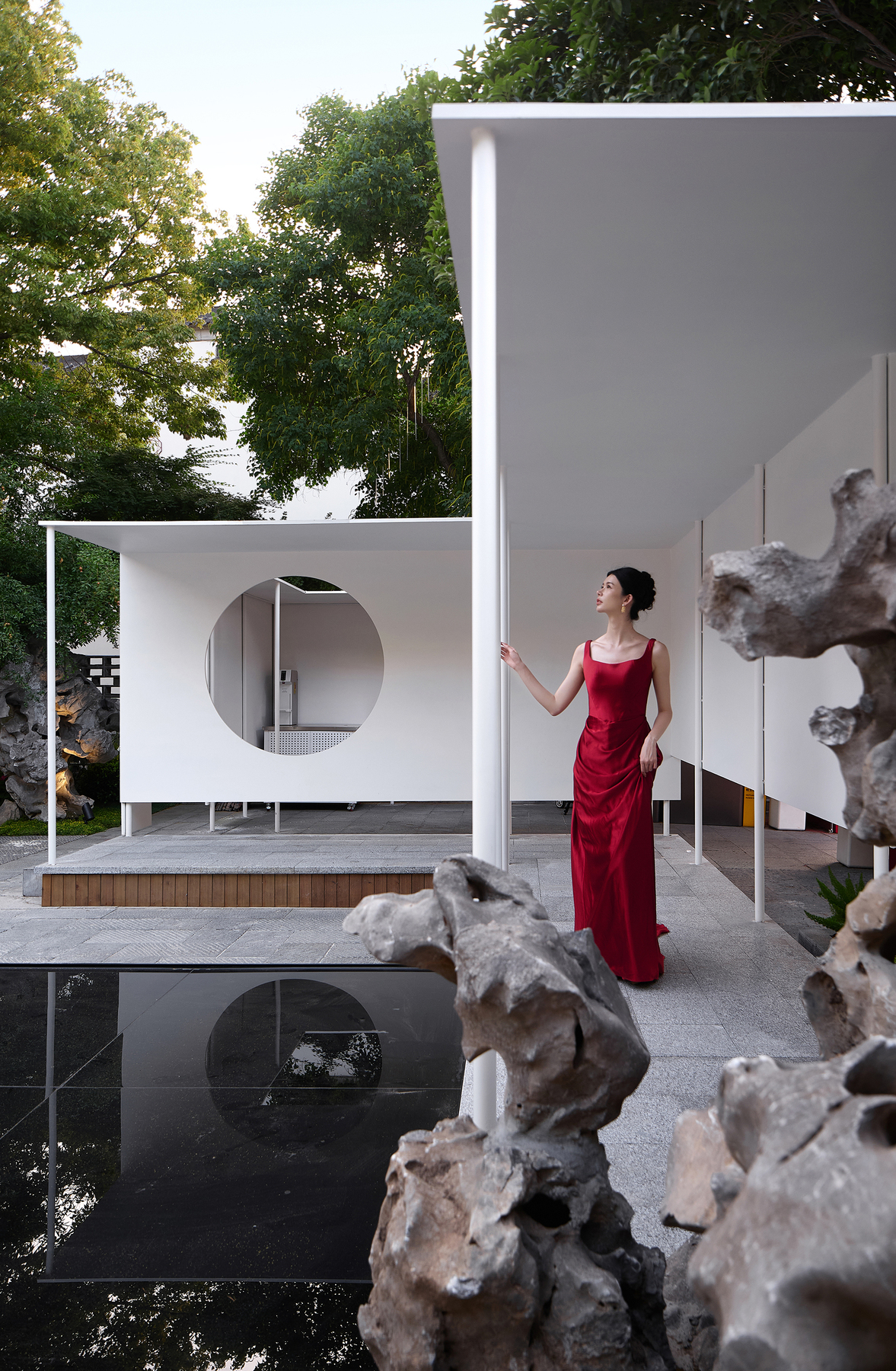
Material reuse plays a central role in shaping the project’s character. Existing doors have been transformed into glass-enclosed partitions, maintaining traces of craftsmanship while accommodating contemporary performance requirements. Taihu stones, traditionally associated with classical gardens, have been reorganized to form landscape features and subtle boundaries, blurring distinctions between architecture and garden. These gestures preserve memory without freezing it, allowing the site to evolve functionally and socially.

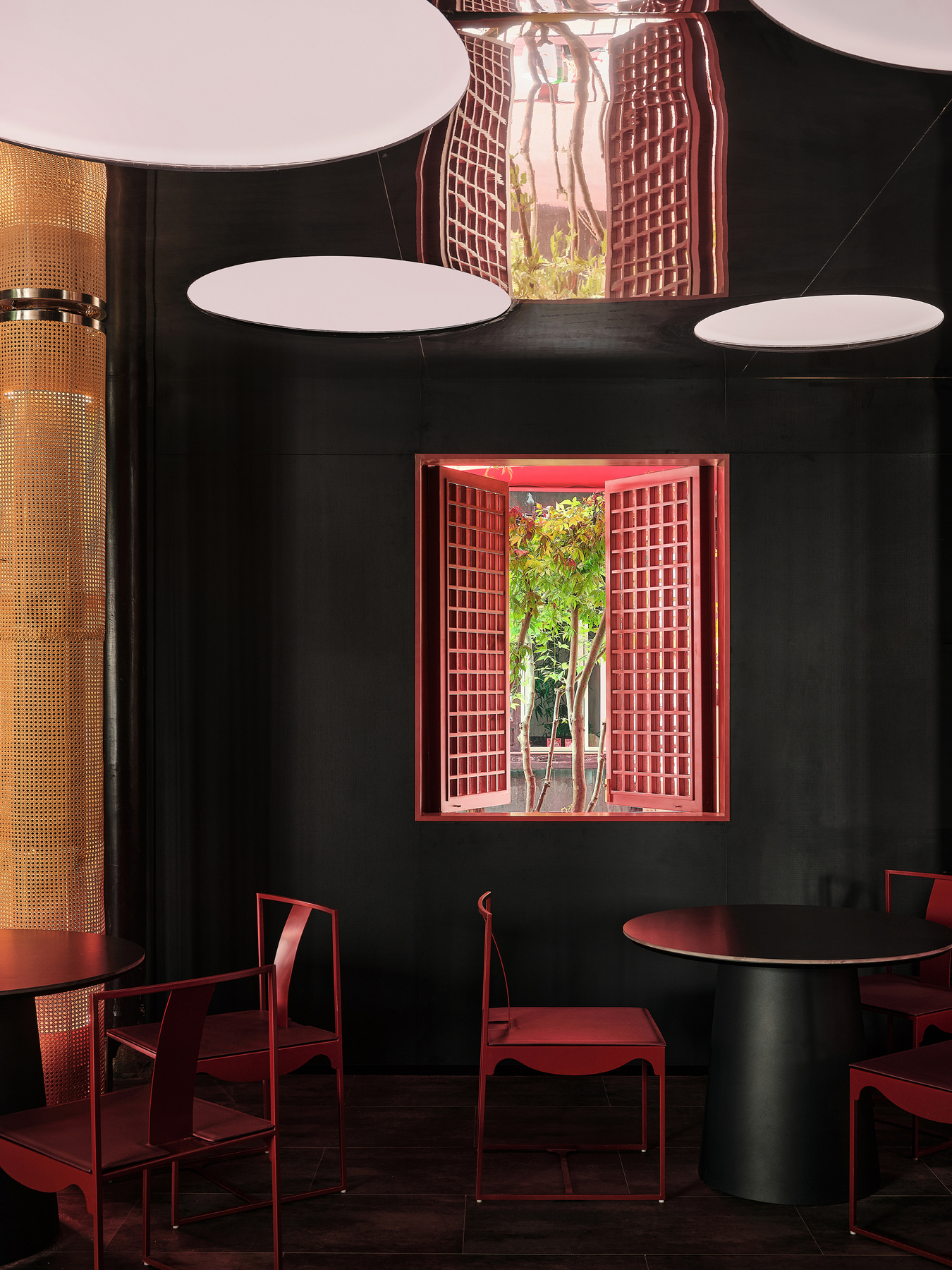
Functionality is integrated seamlessly into the formal expression. The staircase doubles as a fire escape, weather canopy, and service route, demonstrating how regulatory necessities can become design opportunities. Integrated lighting and digital displays introduce a temporal dimension, enabling the architecture to shift character between day and night.

Through its synthesis of adaptive reuse, symbolic form, and pragmatic detailing, the Big Red Crayfish project revitalizes a historic riverside site while contributing to the contemporary life of Nanjing. It stands as an example of how architectural intervention can honor cultural inheritance while supporting economic vitality and sustainable urban renewal.

Project Gallery
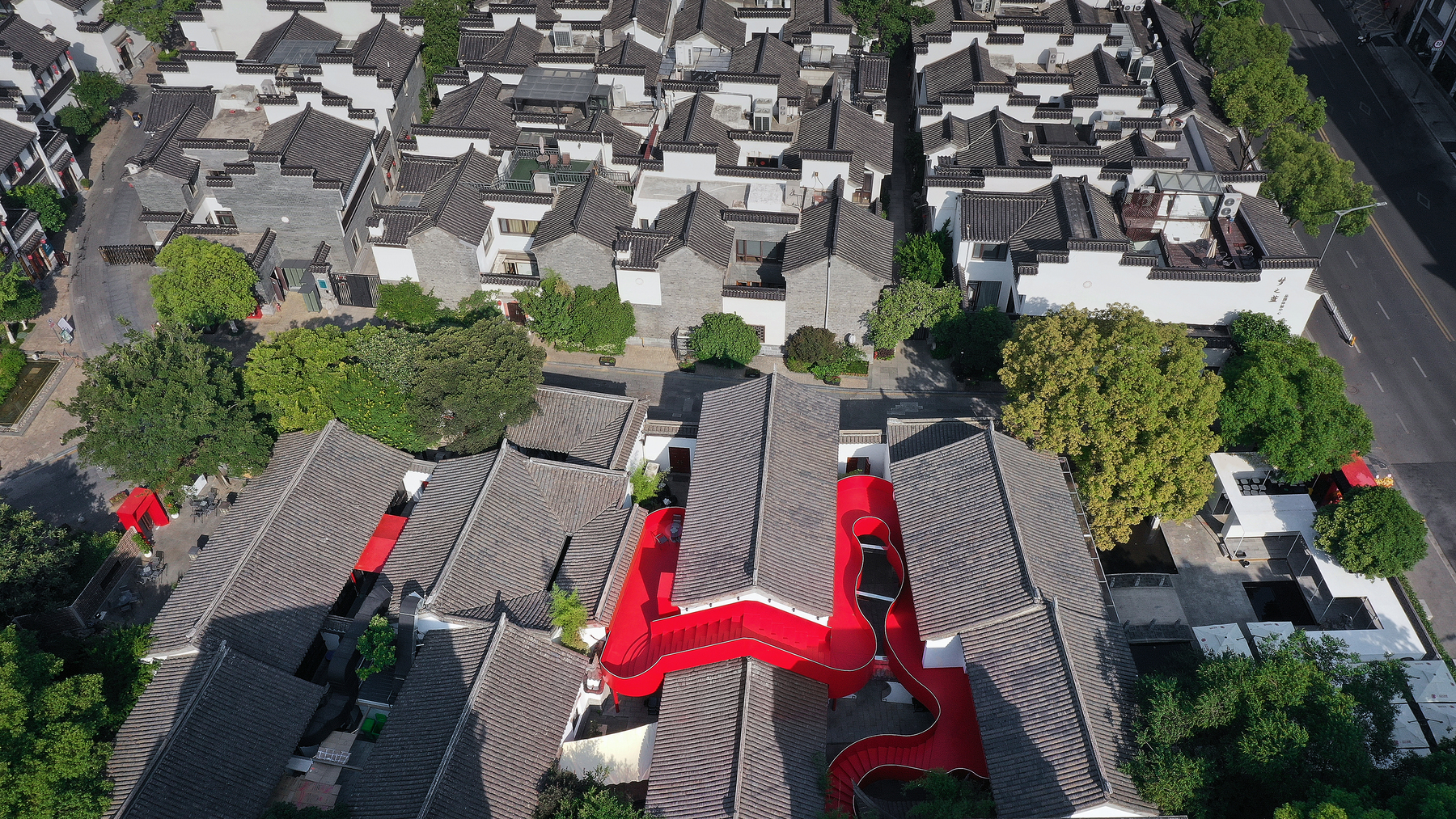
Project Location
Address: Nanjing, Jiangsu, China
The location specified is intended for general reference and may denote a city or country, but it does not identify a precise address.

