

Architects: gon architects
Area: 78 m²
Year: 2026
Photography: Imagen Subliminal (Rocío R. Rivas + Miguel de Guzmán)
Lead Architects: Gonzalo Pardo
Design Team: Carol Linares, María Cecilia Cordero, Sara Mordt, Maria Konstantinidou, Alexandra Marouda
Contractor: REDO Construcción
City: Madrid
Country: Spain
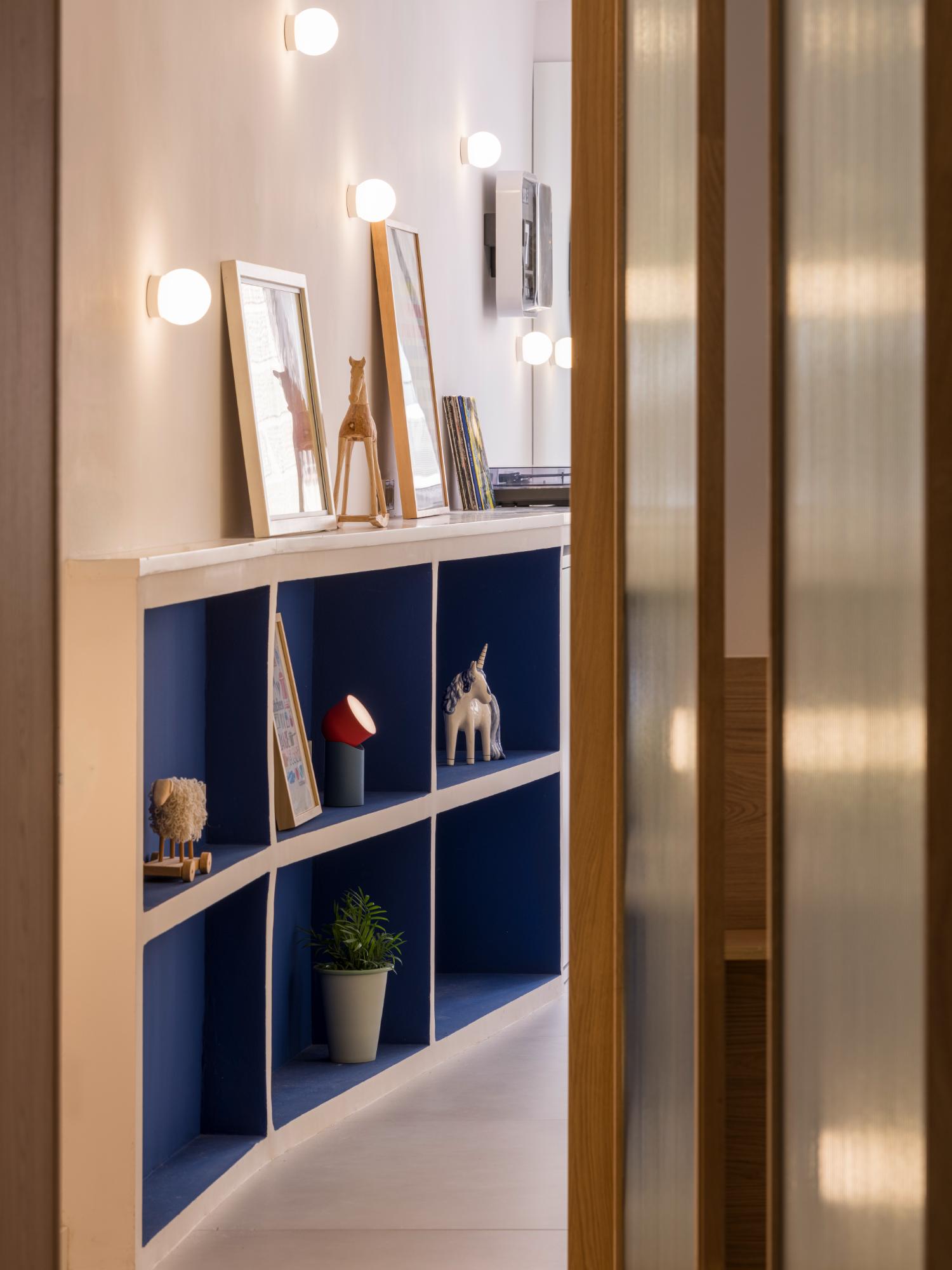
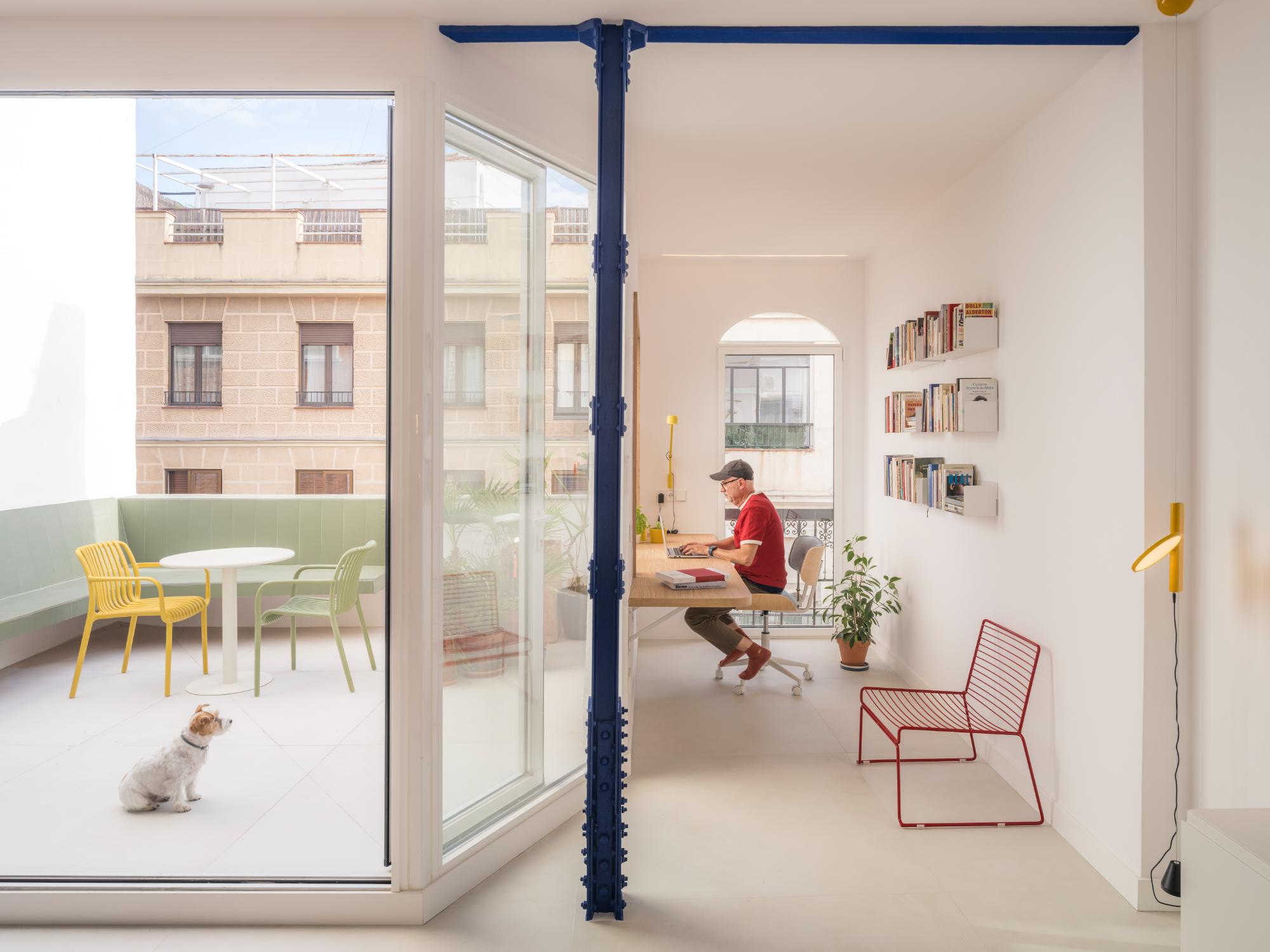
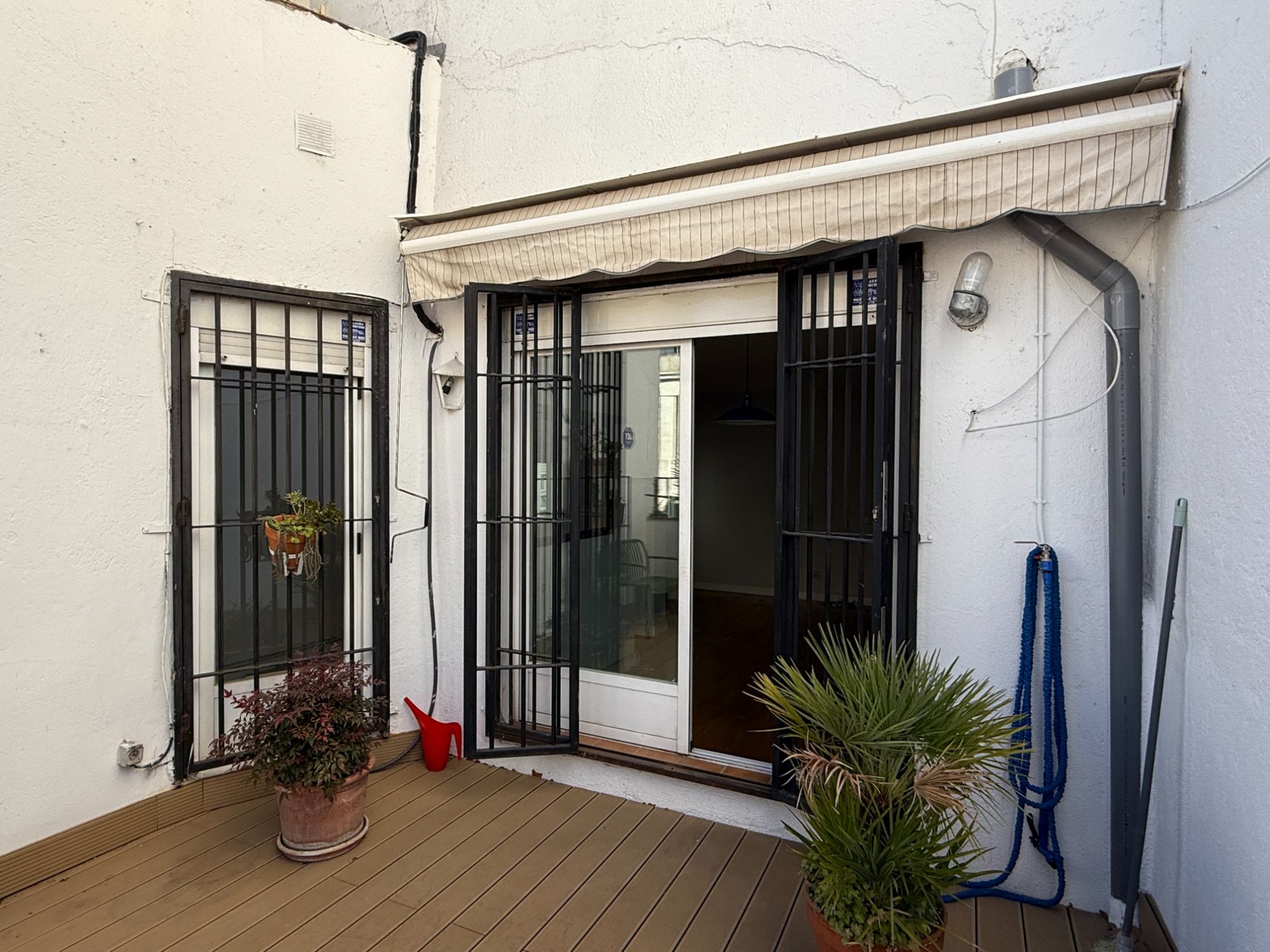
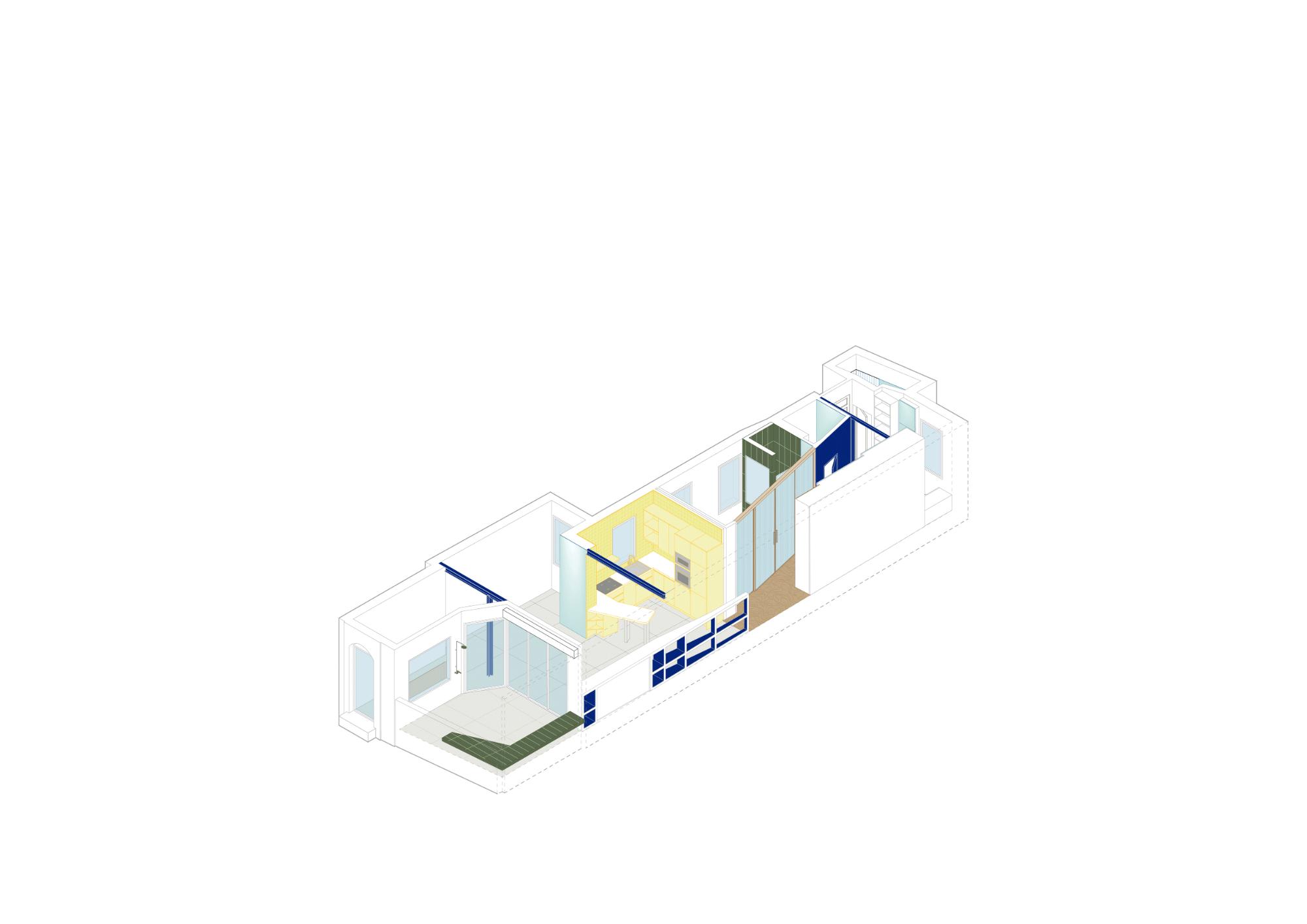
Casa JAM is a 78 m² apartment renovation by gon architects in Madrid’s Argüelles neighborhood, set within the 19th-century urban structure of the Castro Plan. The project reworks a narrow top-floor dwelling with a 12 m² east-facing terrace, transforming a constrained tube-like layout into a flexible domestic environment. Designed for Toni, an aerospace project manager, journalist, and pop culture enthusiast, and his dog Kea, the apartment responds to the ambition “to inhabit the interior of an artwork” while creating a lasting home. The intervention replaces the former corridor-based organization with a diagonal spatial sequence, movable floor-to-ceiling sliding doors, and four chromatic volumes. A Klein blue bathroom, a wooden bedroom and dressing area, a green shower, and a yellow kitchen guide the transition from private rooms to an open living, dining, and work area that extends toward the terrace.
As the writer Spanbauer says, we are the stories we tell ourselves. We are drawn to projects that take risks—but this is only possible when there’s a strong narrative behind them. Every project is a story we first tell ourselves, and then to others. And it had better be a good one, because we’ll be living with it for a long time until it becomes real.
Interview with Gonzalo Pardo of gon architects
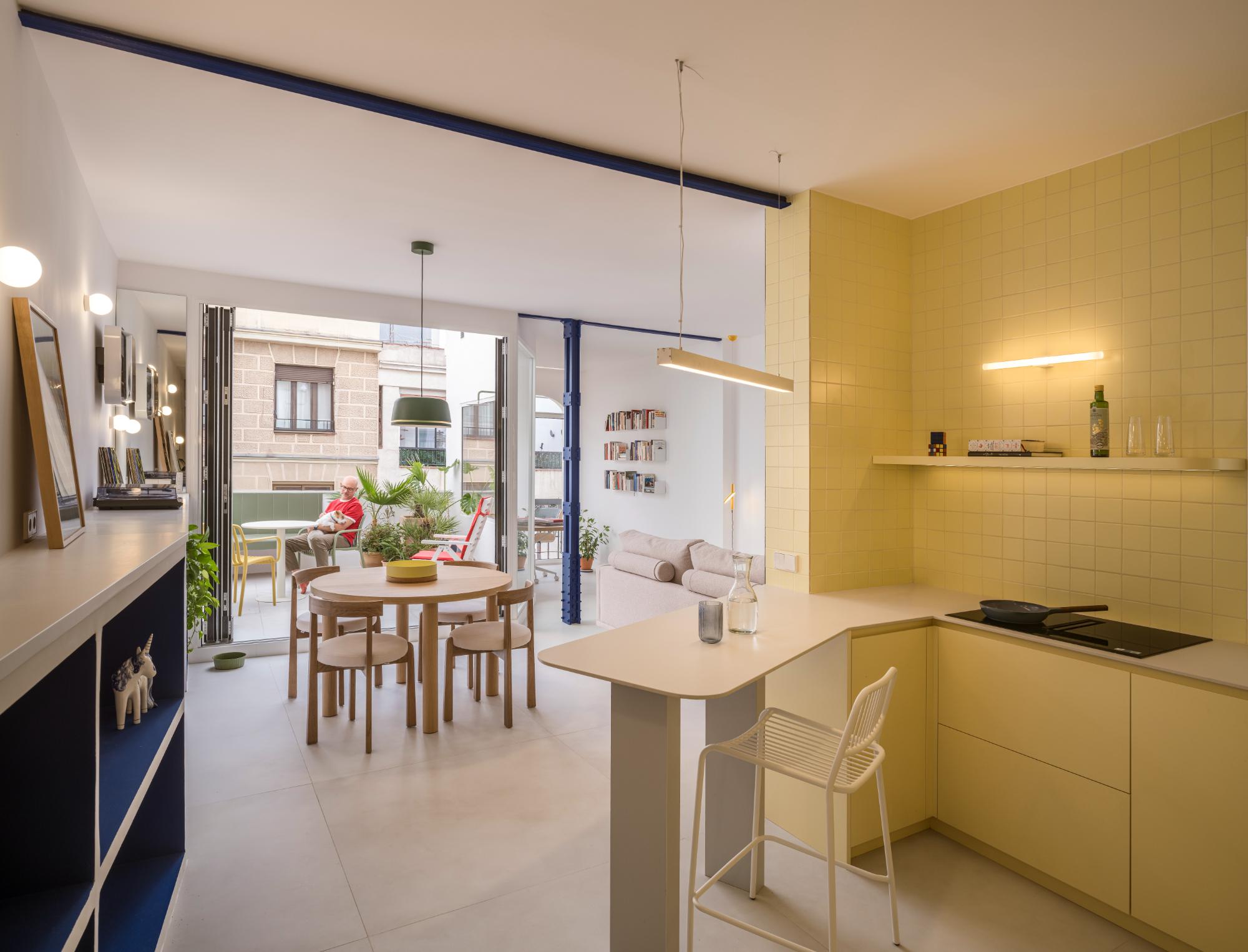
Casa JAM approaches the renovation of a compact Madrid apartment as a reconsideration of domestic thresholds, where circulation becomes an active part of inhabitation rather than a residual passage. Instead of concealing the constraints of the original plan, gon architects uses its elongated geometry to question the historical role of the corridor and to introduce a more ambiguous, adaptable way of living. The project’s personal dimension is central to this transformation, as the residence is shaped around the habits, interests, and rituals of its owner, whose brief combined the desire for a definitive home with the aspiration “to inhabit the interior of an artwork.”
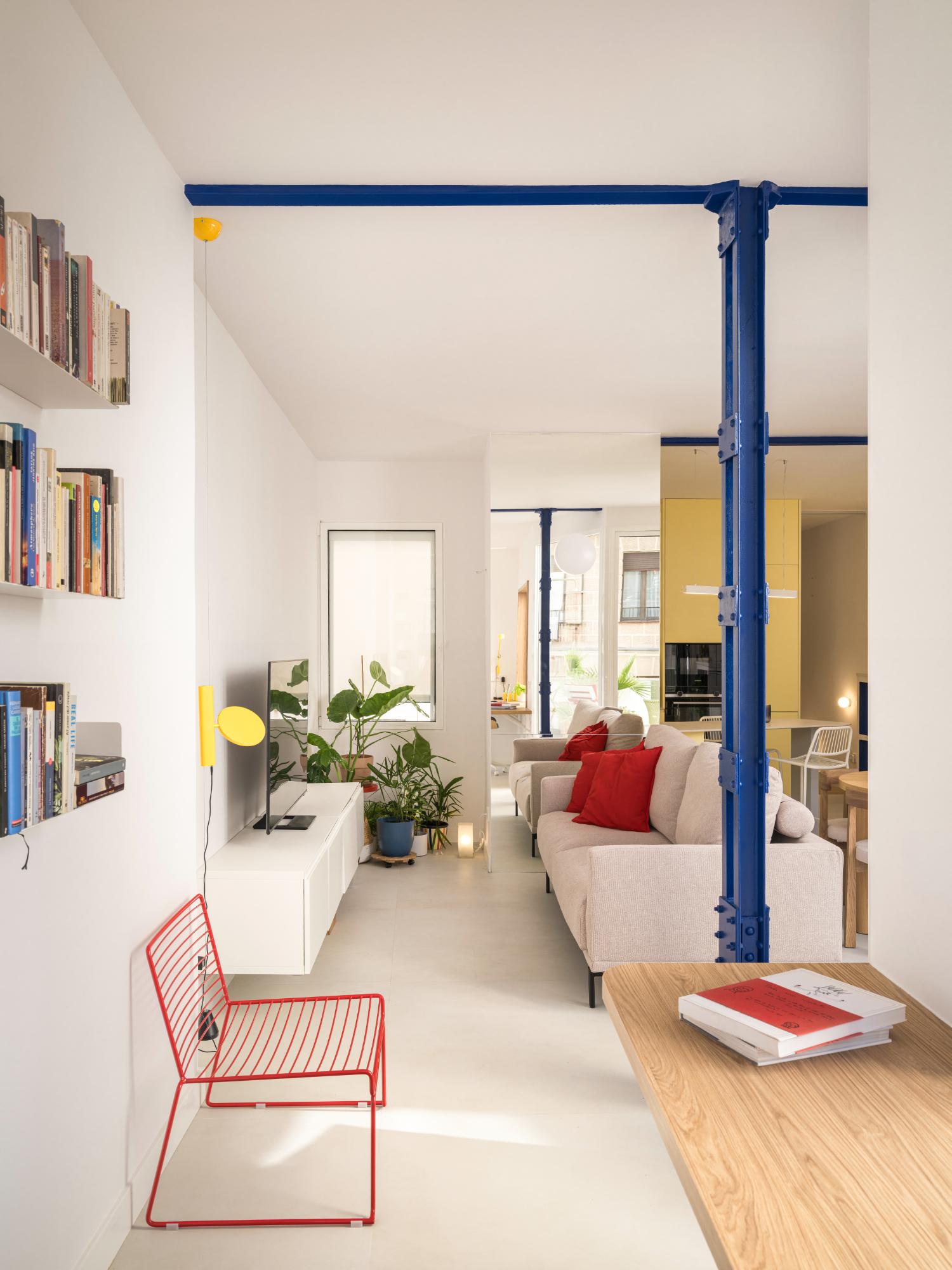
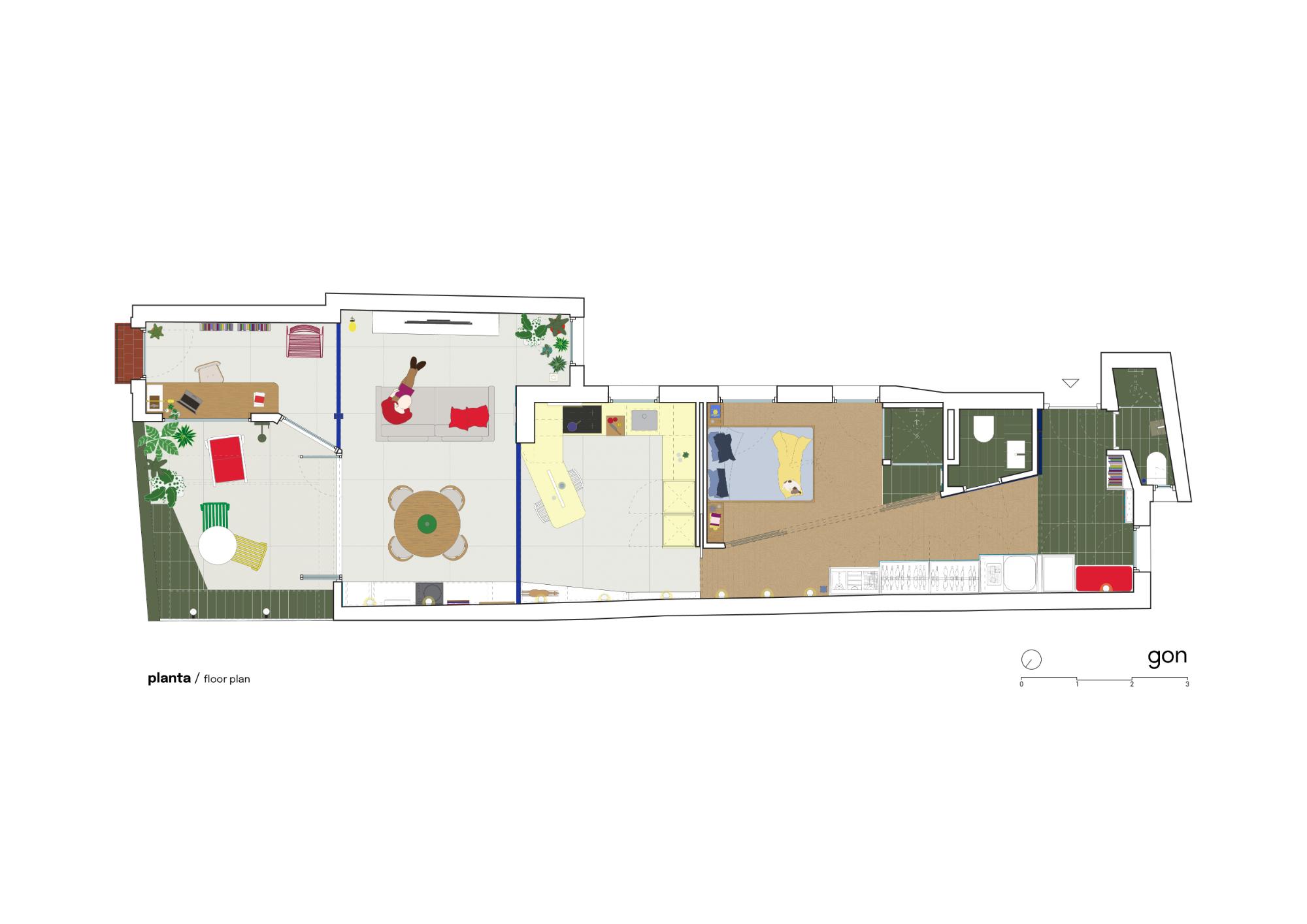
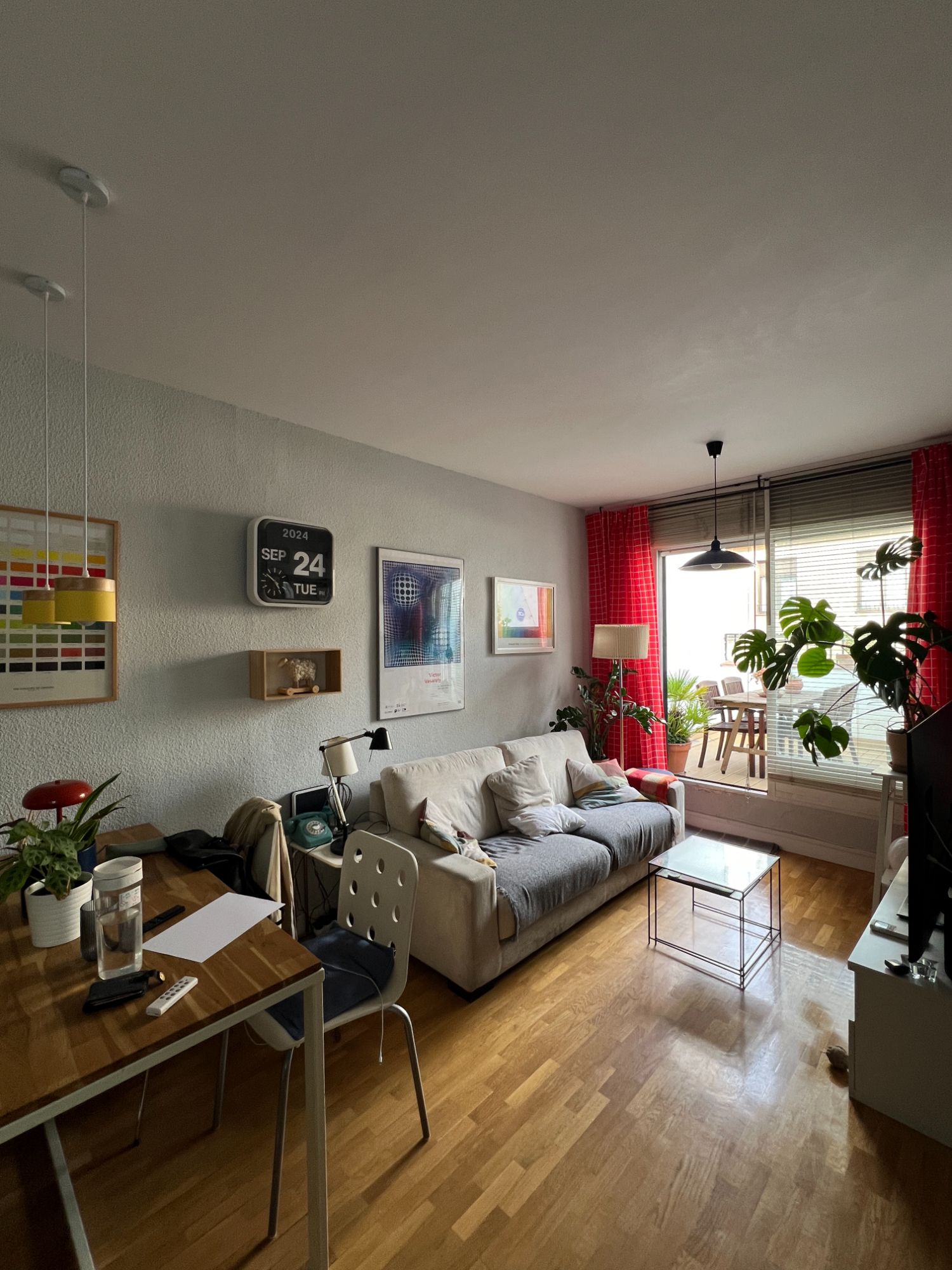
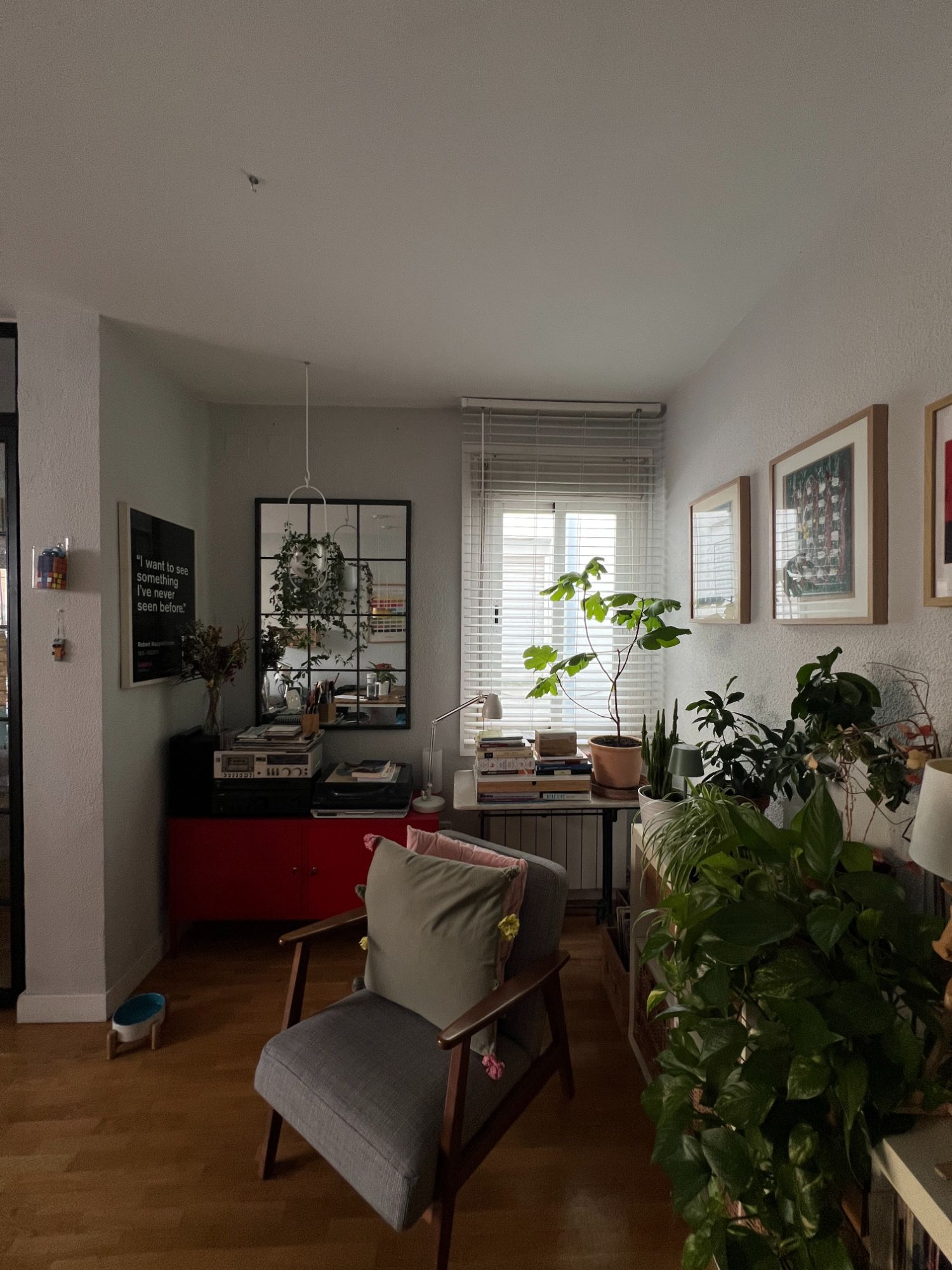
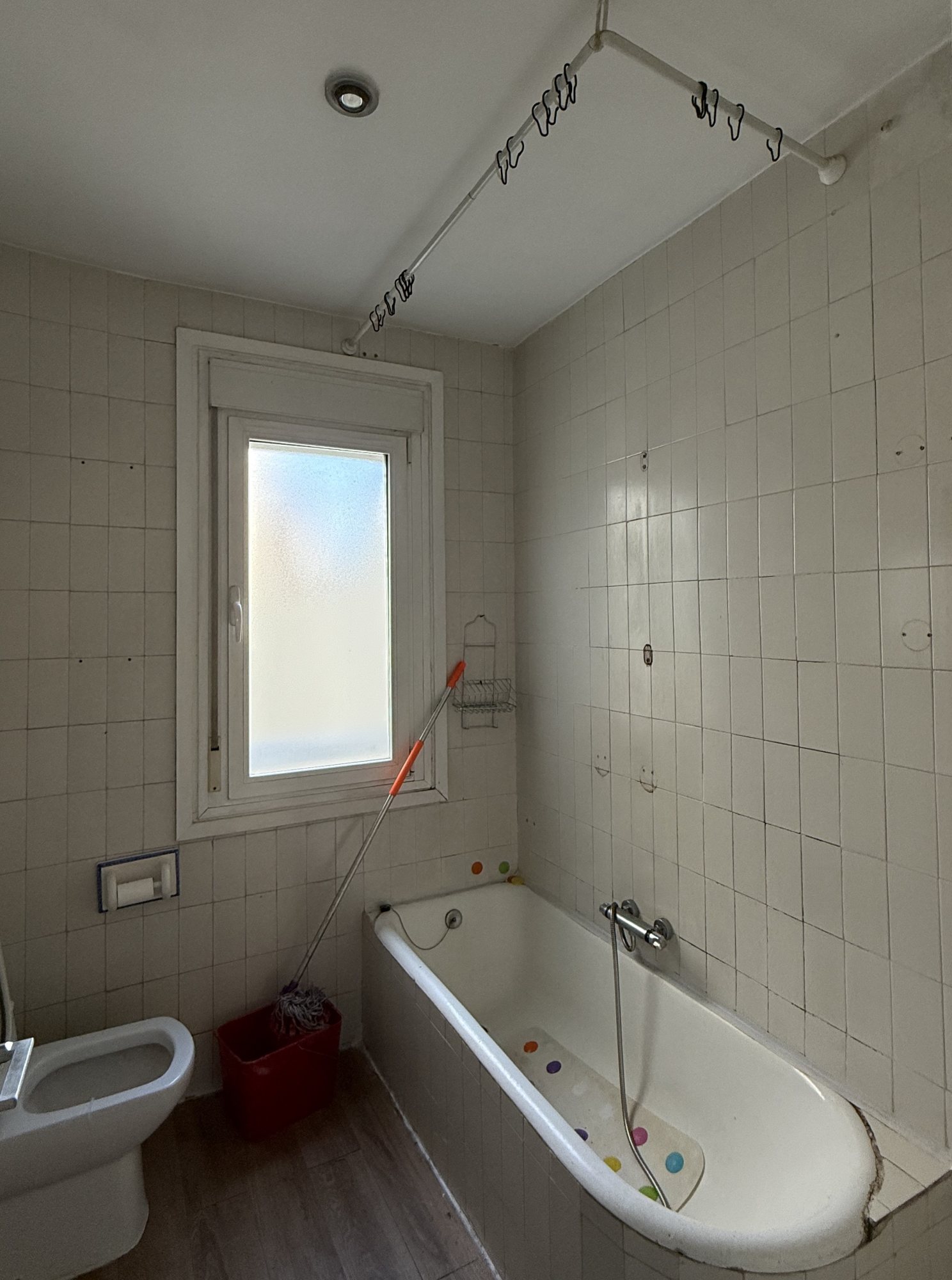
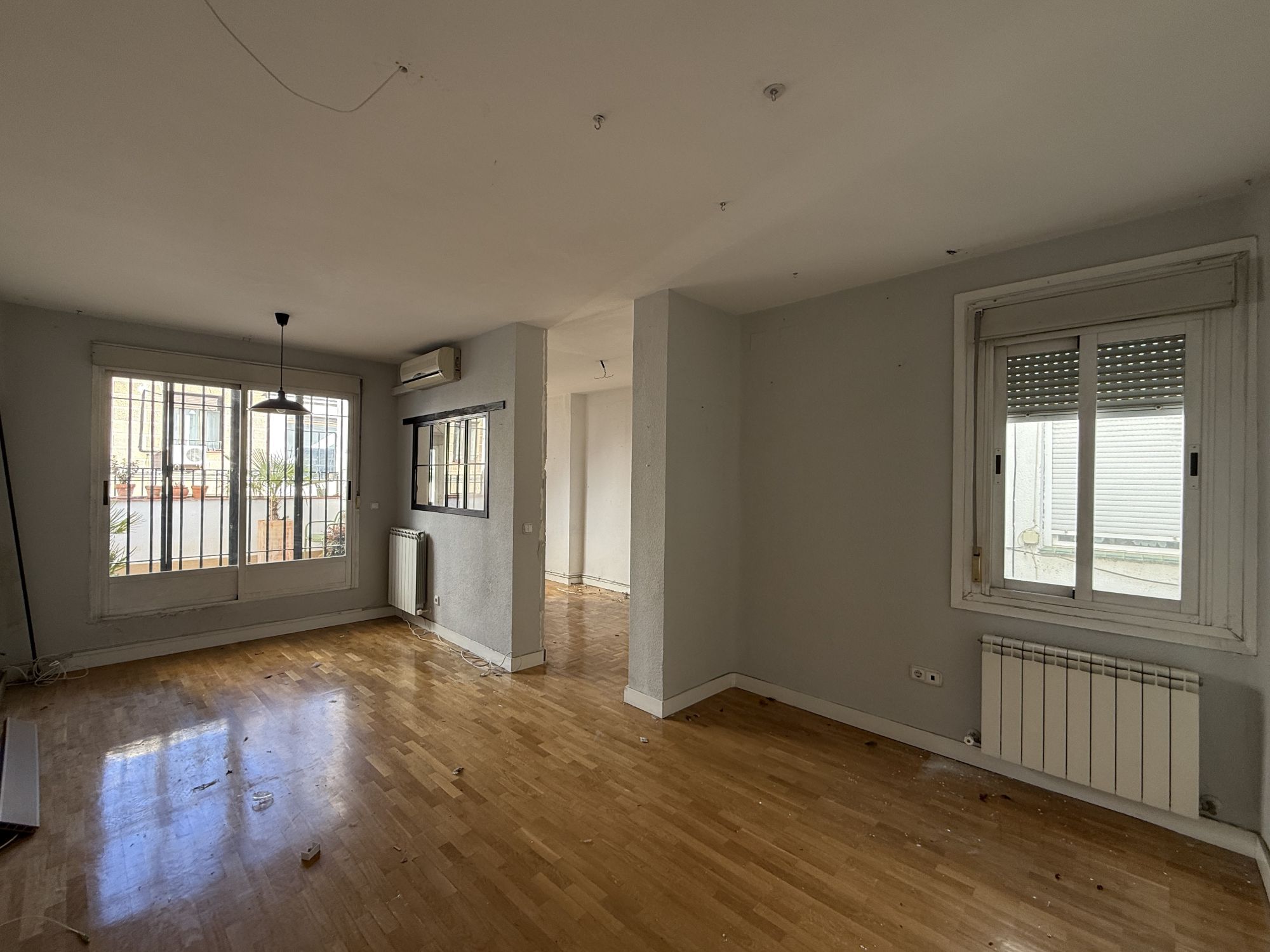
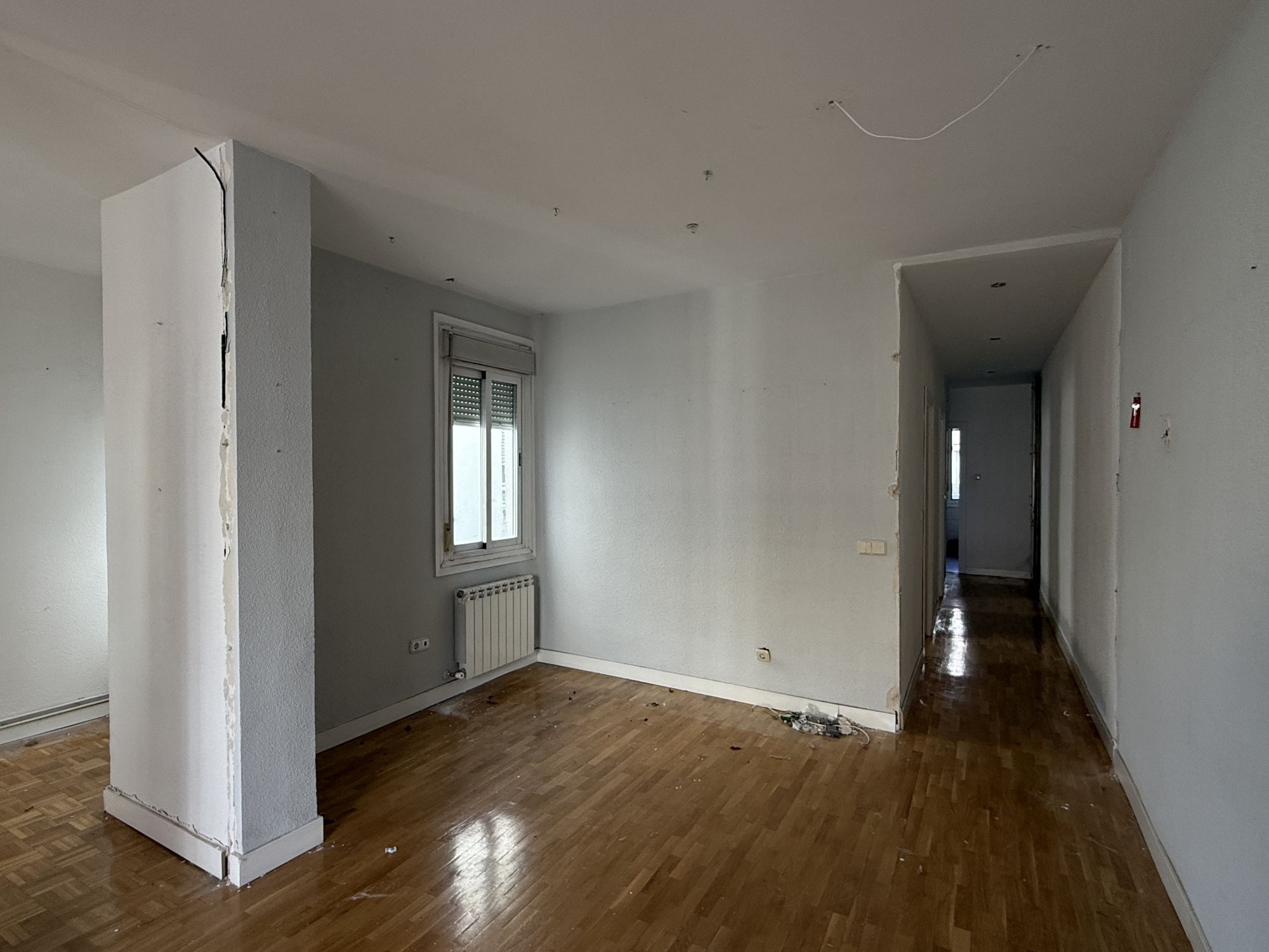
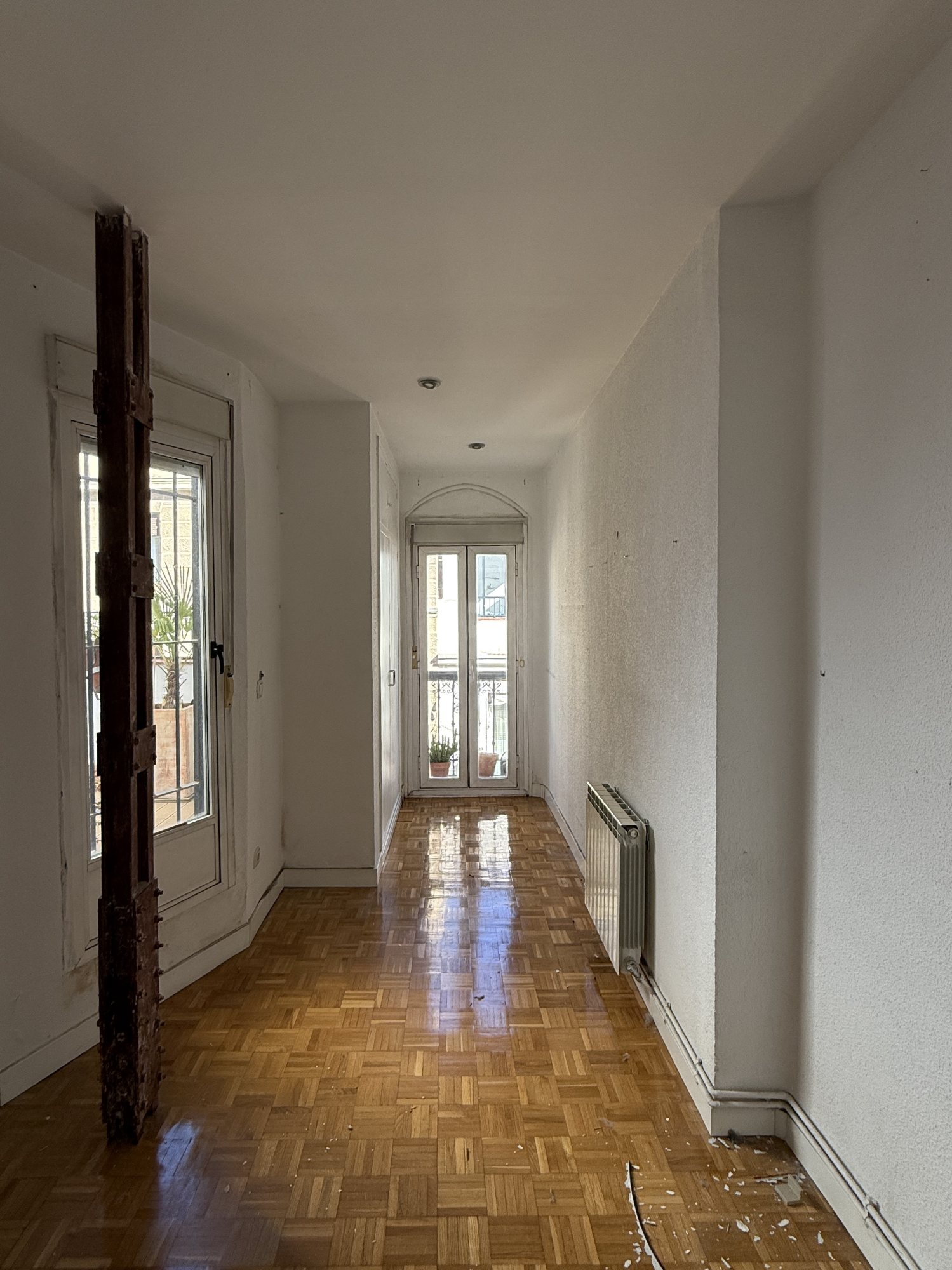
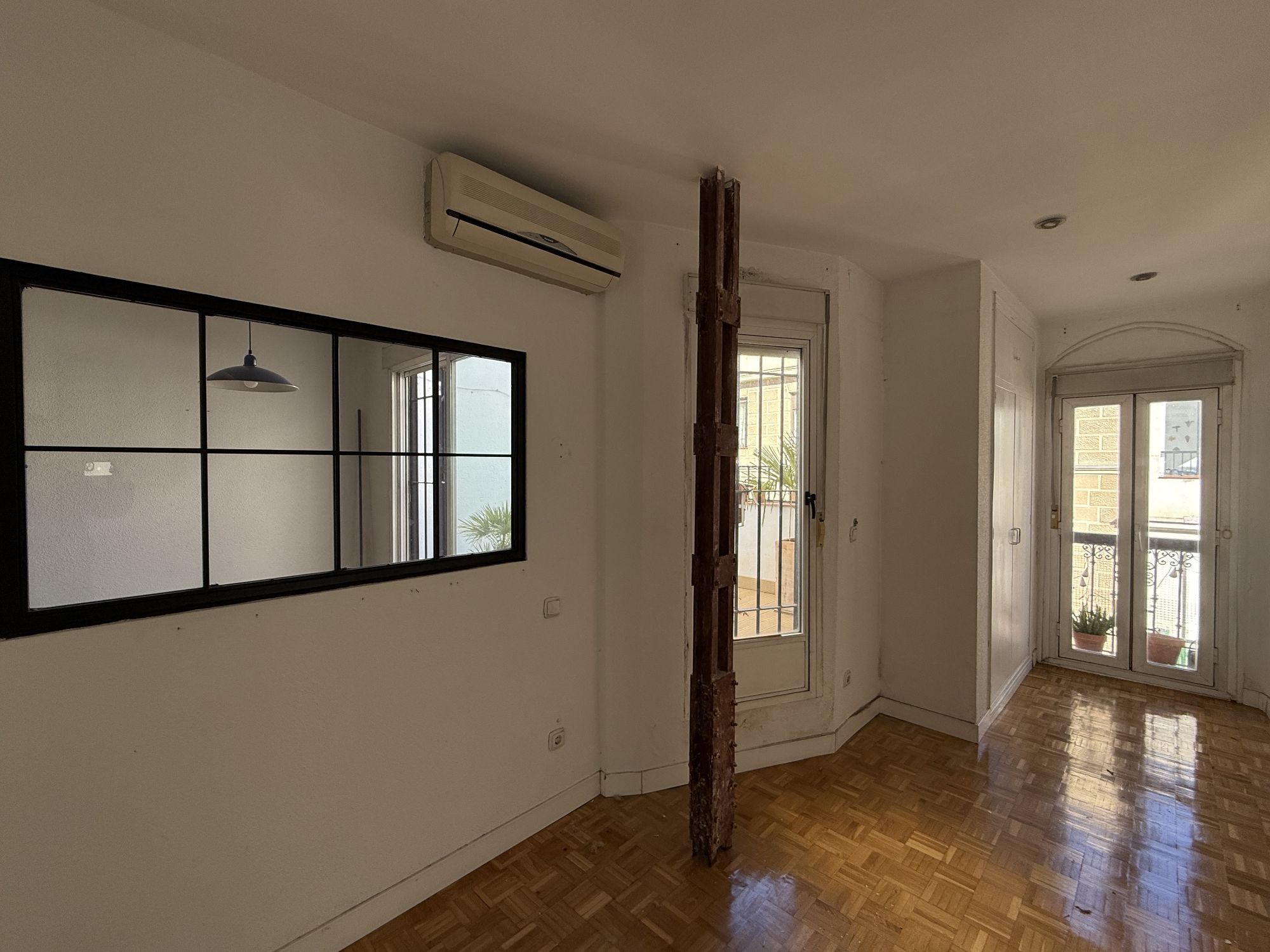
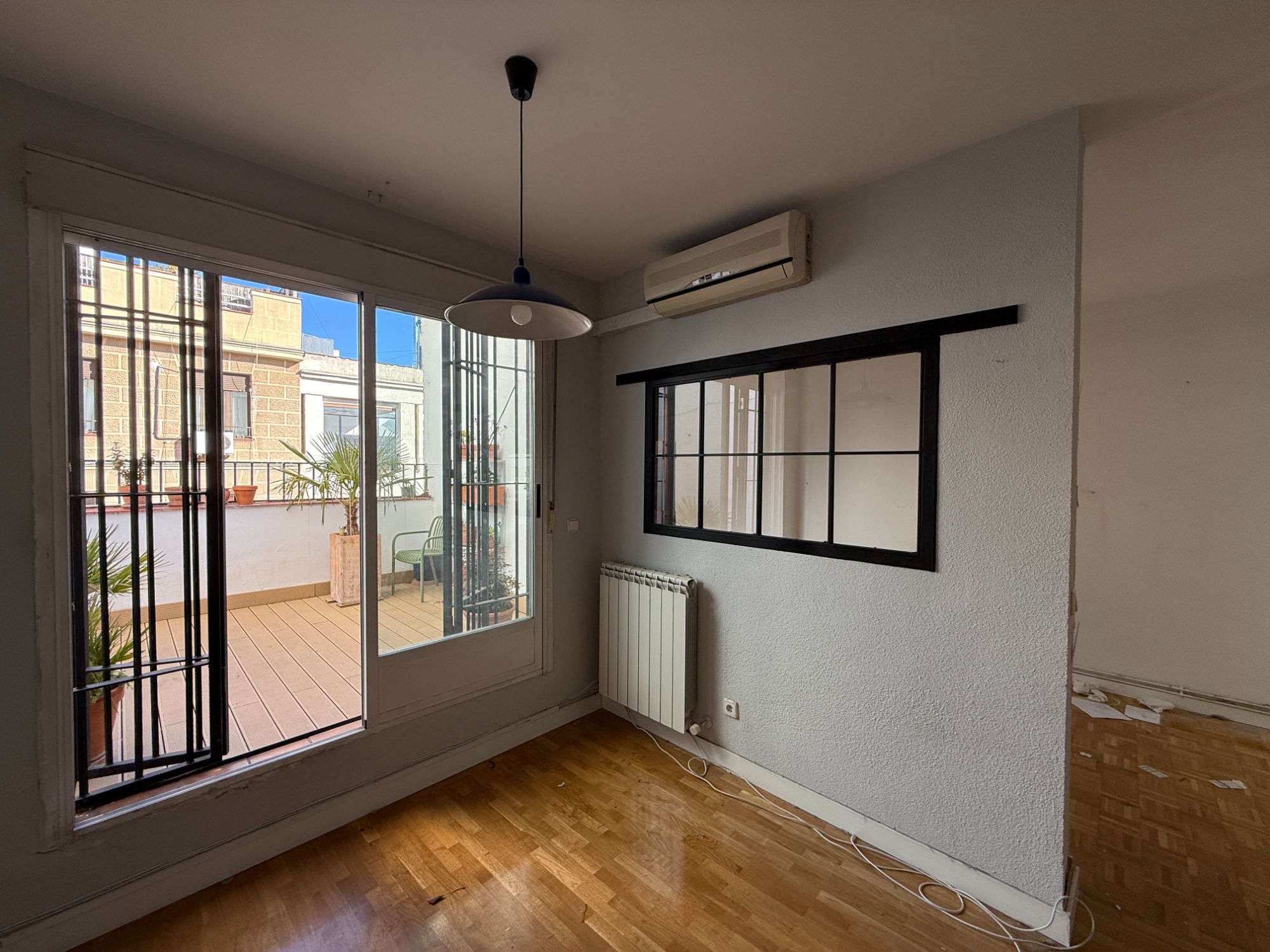
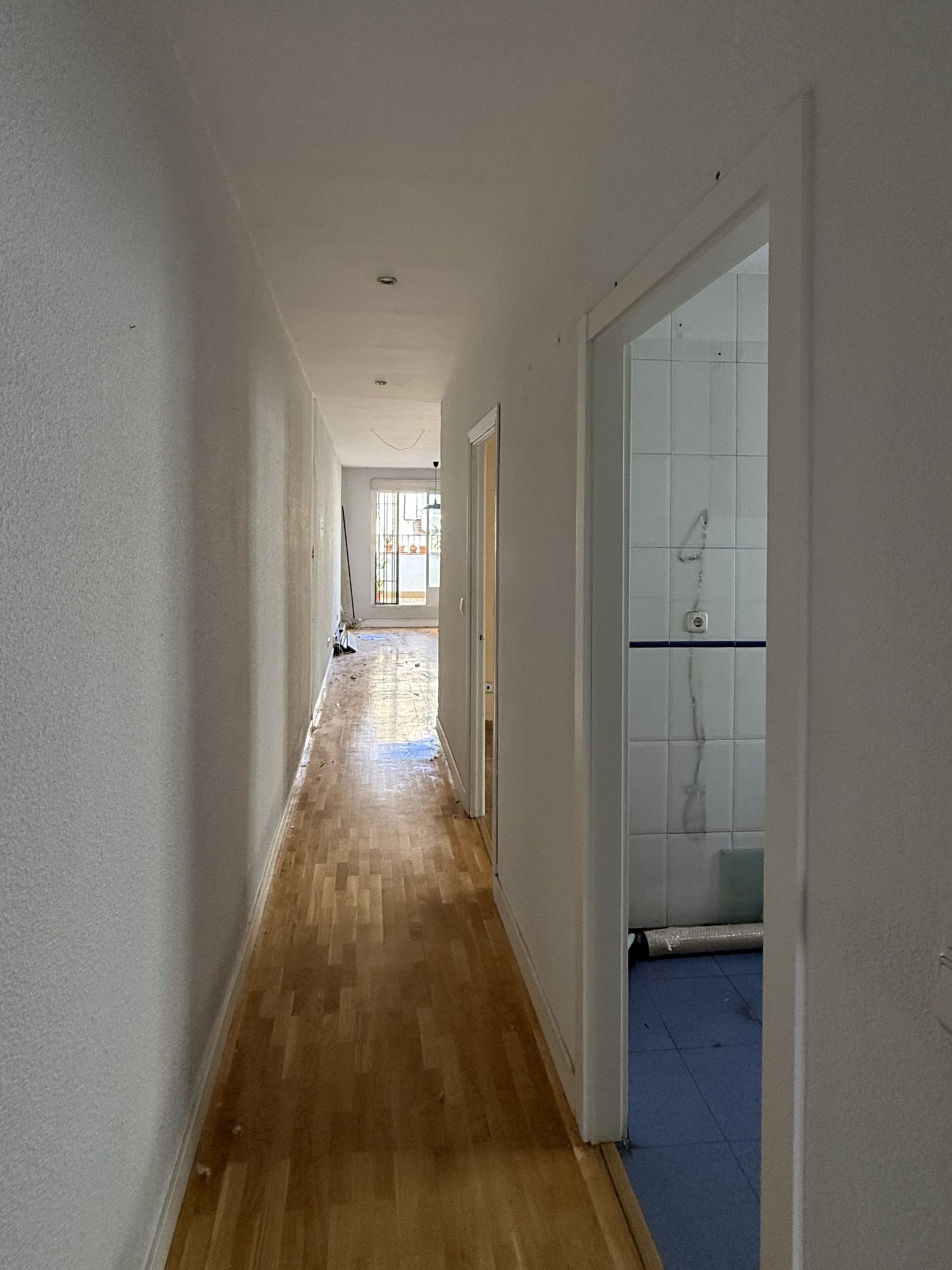
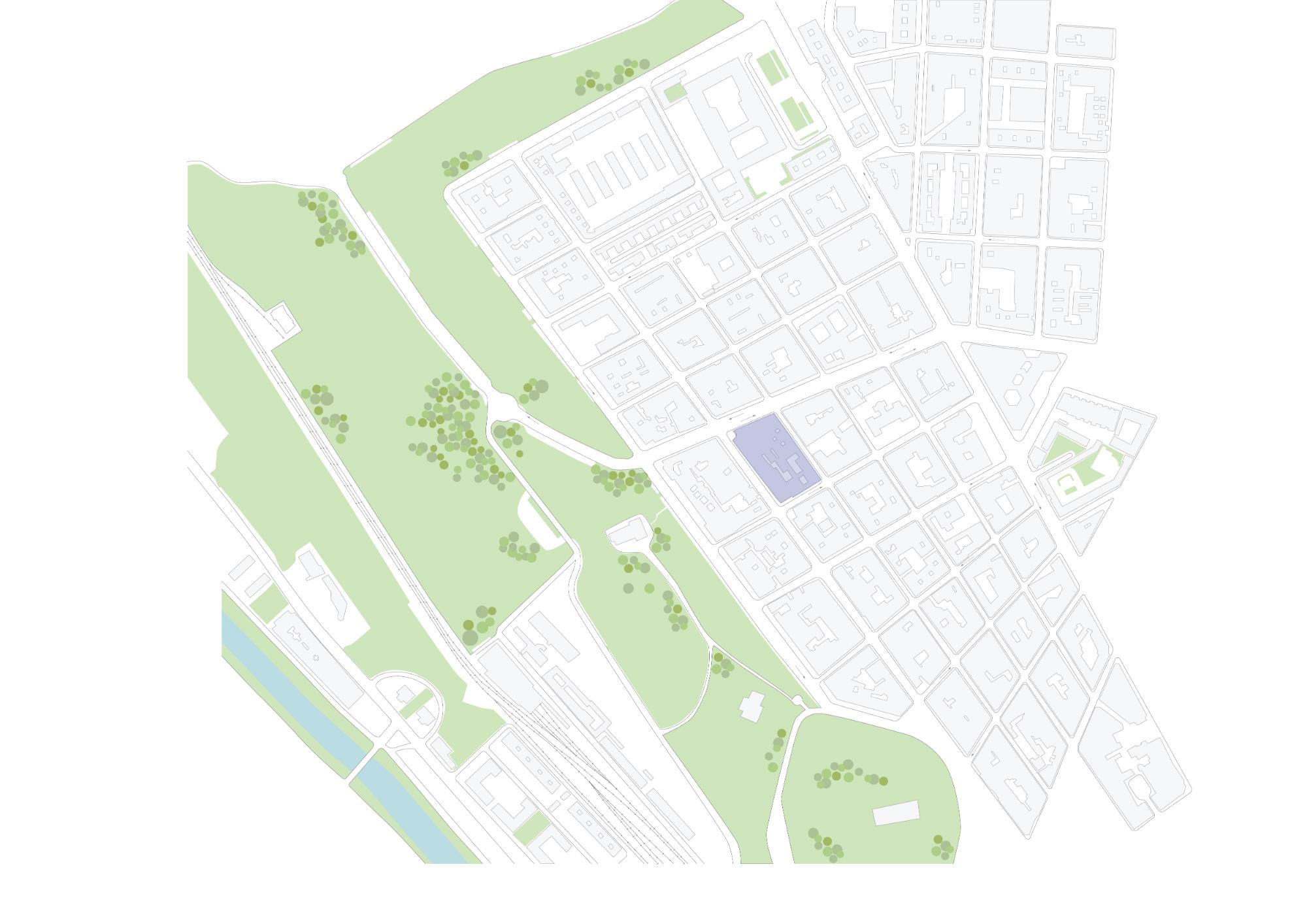
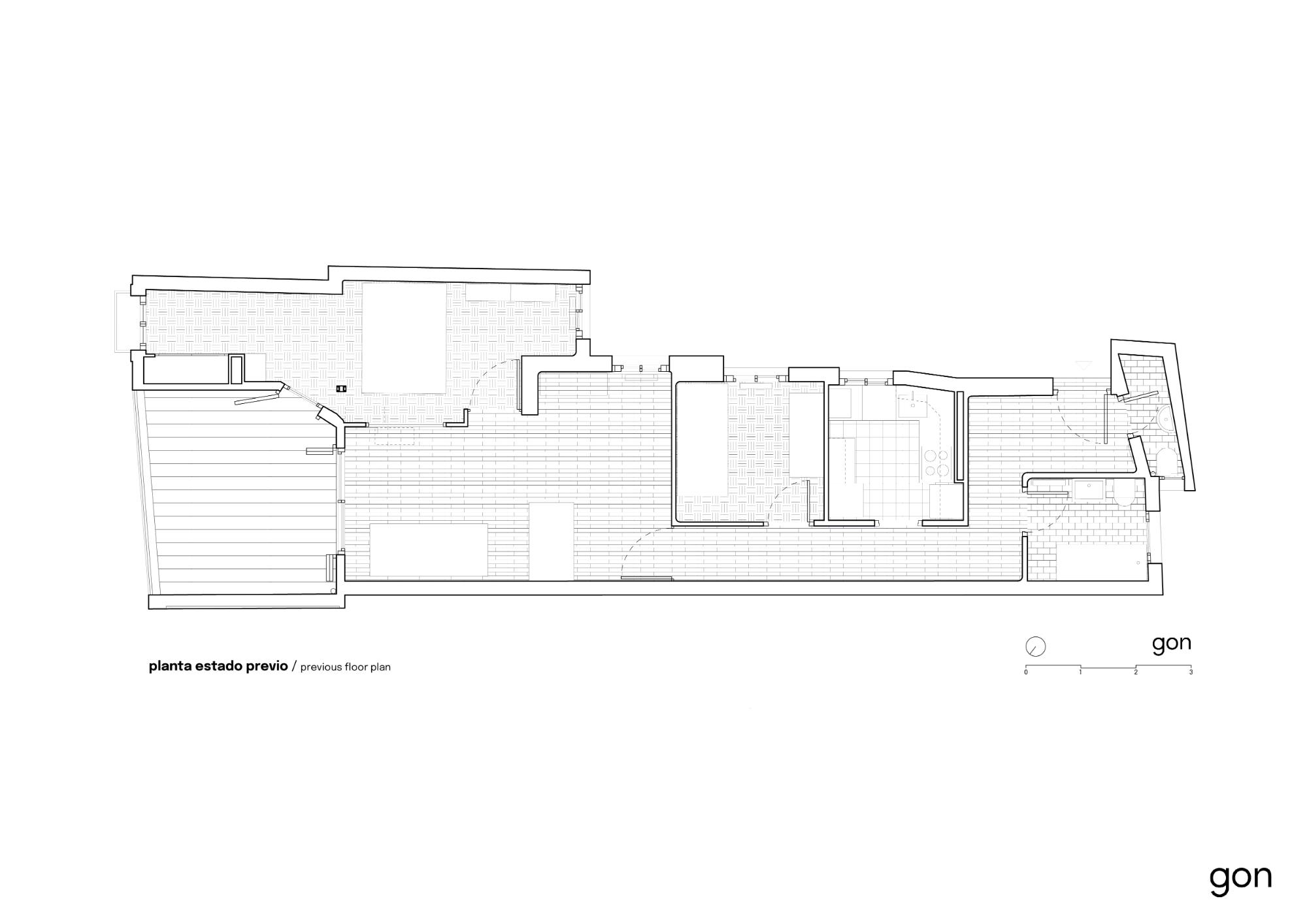
The apartment occupies the top floor of a residential building in Argüelles, a district embedded in Madrid’s 19th-century Castro Plan. This urban context is defined by deep blocks, interior courtyards, high ceilings, and generous domestic proportions, yet the existing dwelling presented a difficult typology. Measuring 18 meters in length and only 3.5 meters at its narrowest point, the apartment followed a conventional arrangement in which a dark corridor ran along the party wall and provided access to a sequence of isolated rooms. This layout reinforced separation, hierarchy, and limited communication between spaces.
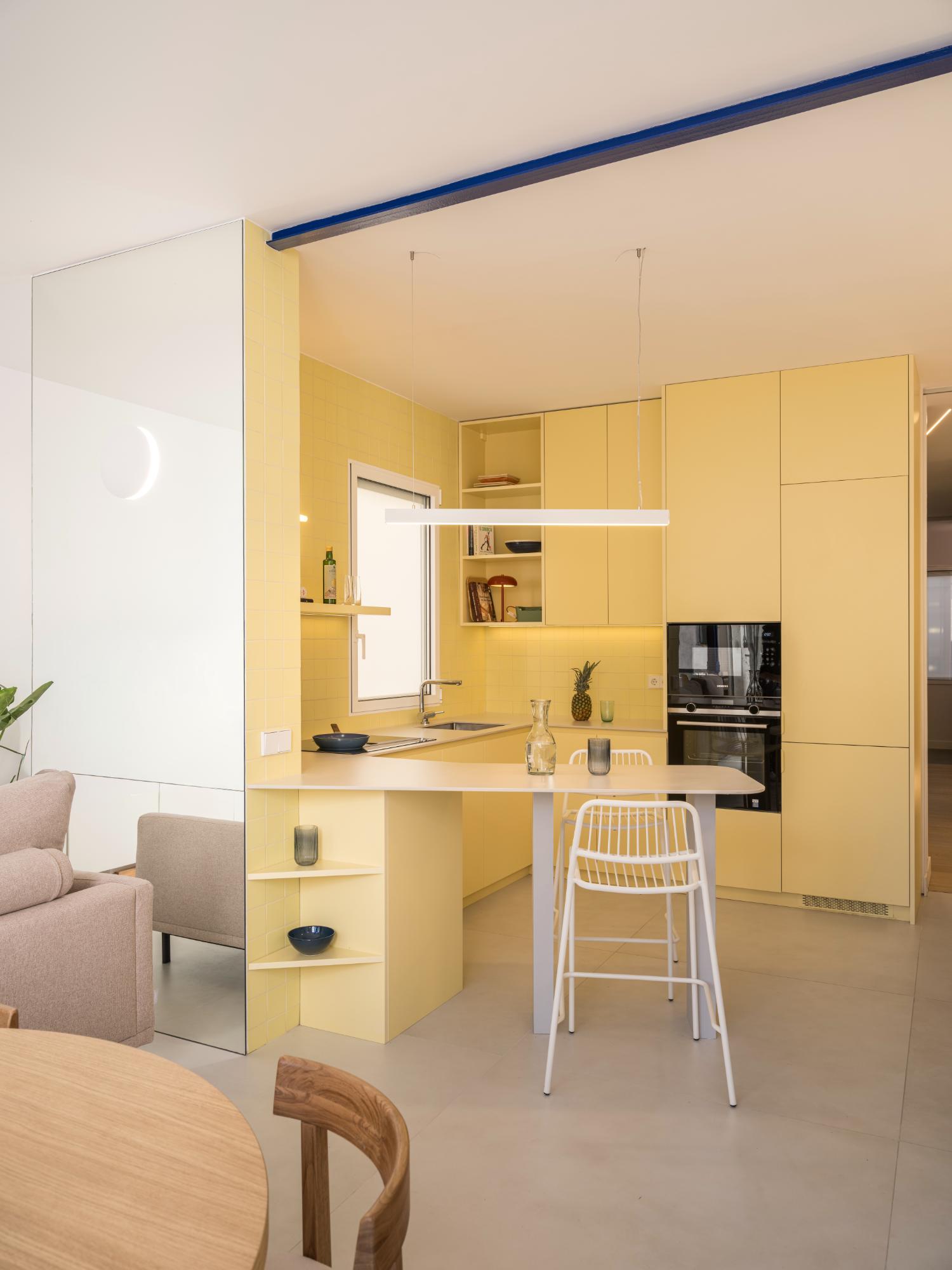
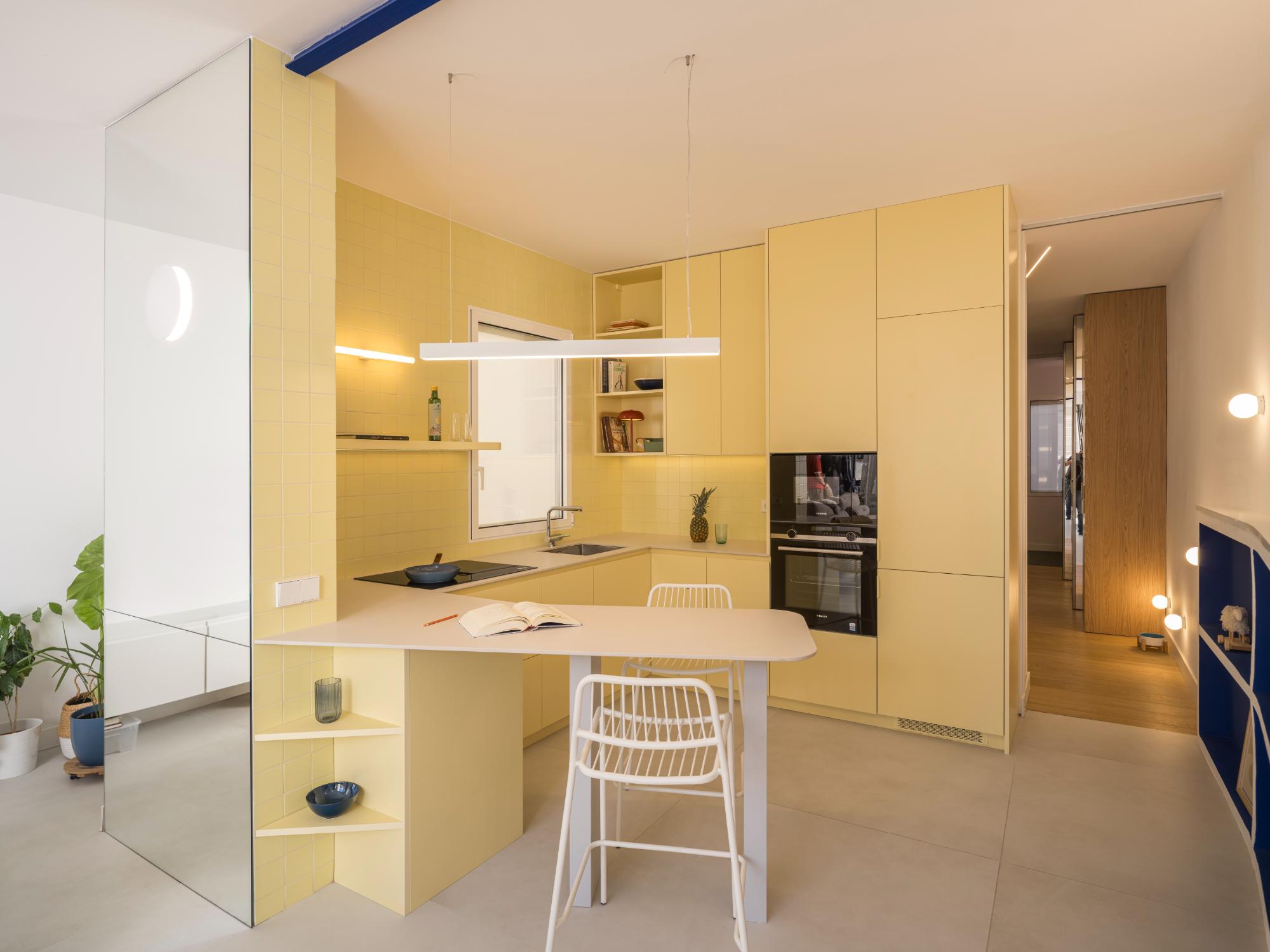
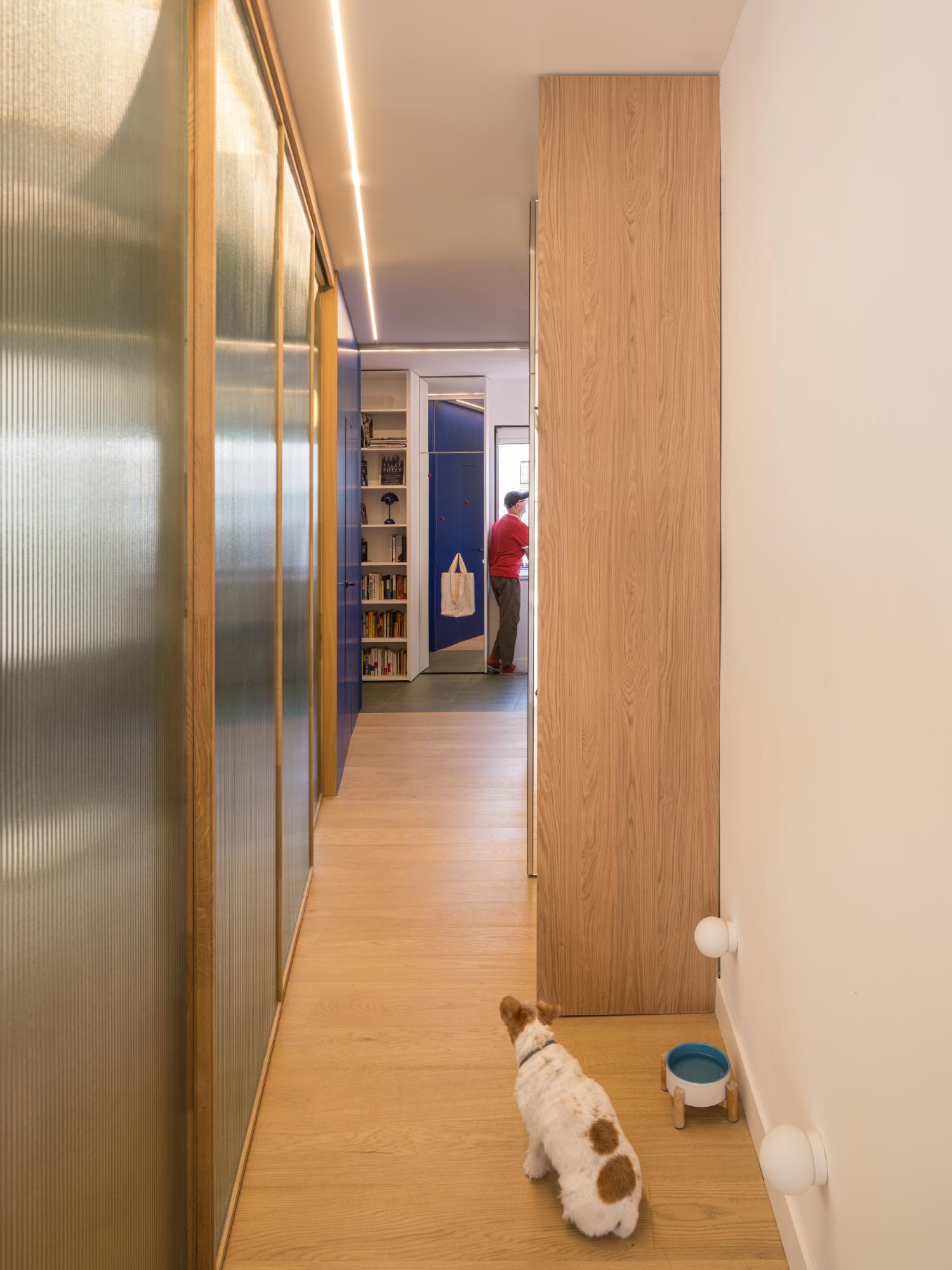
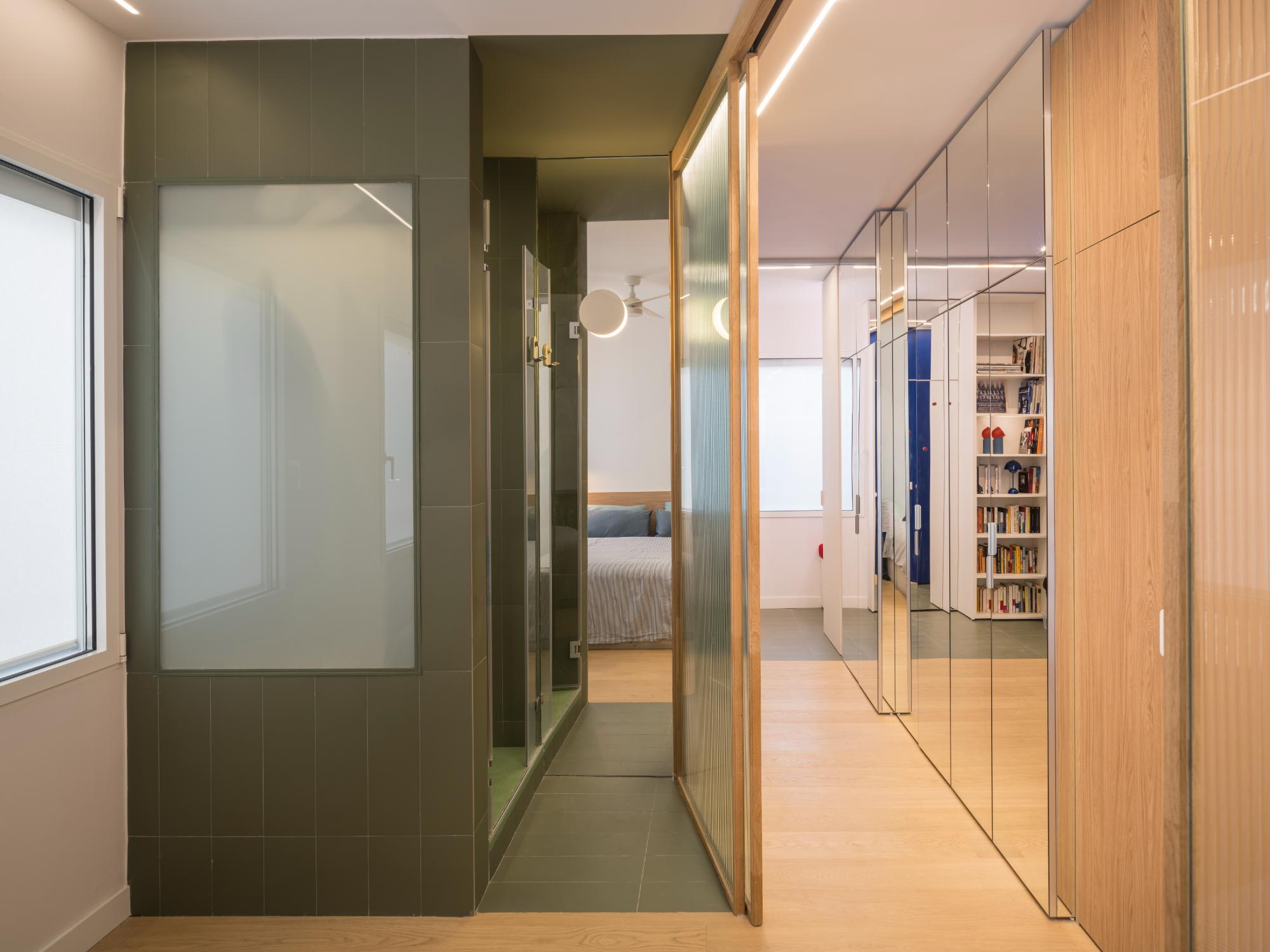
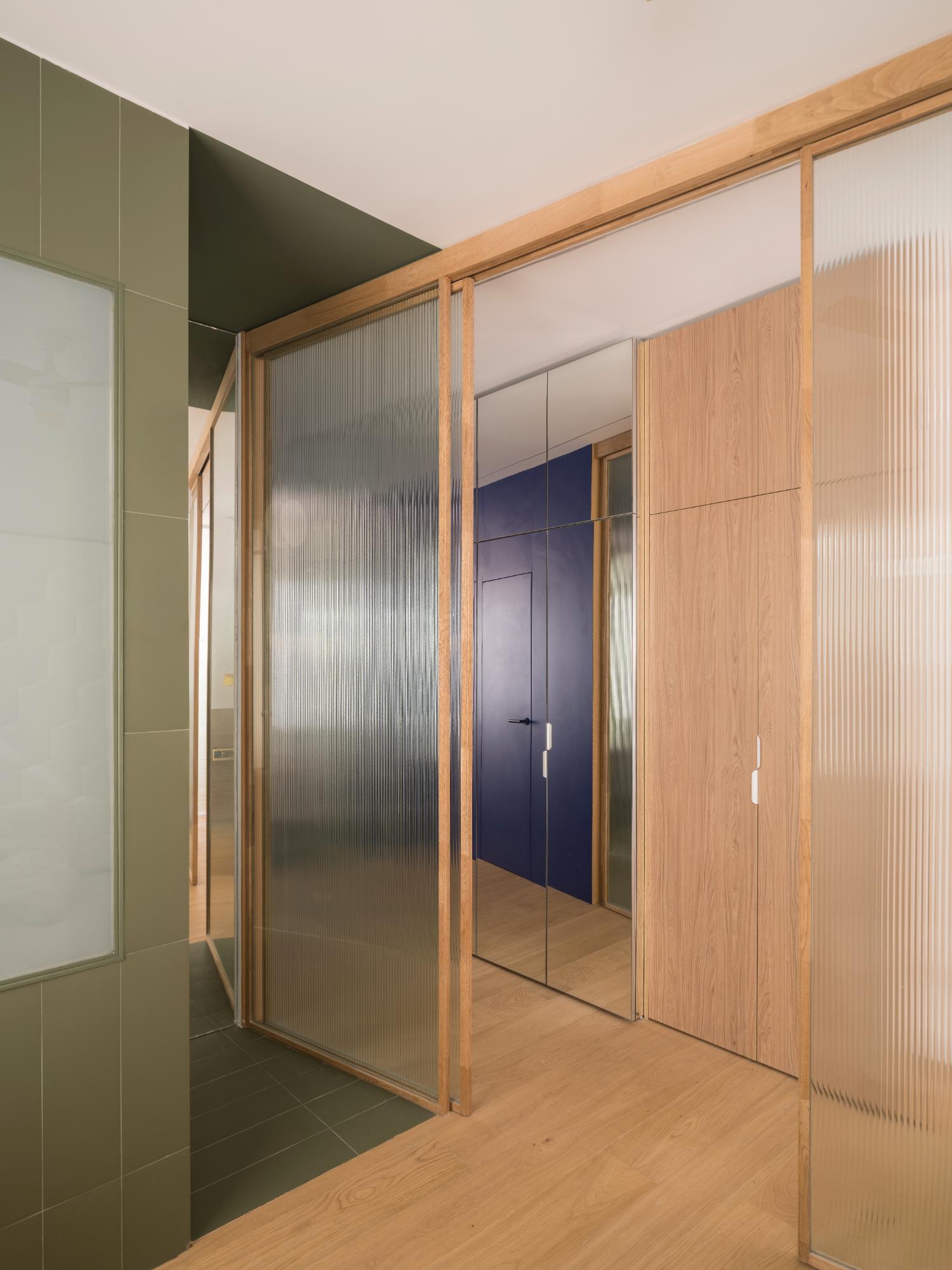
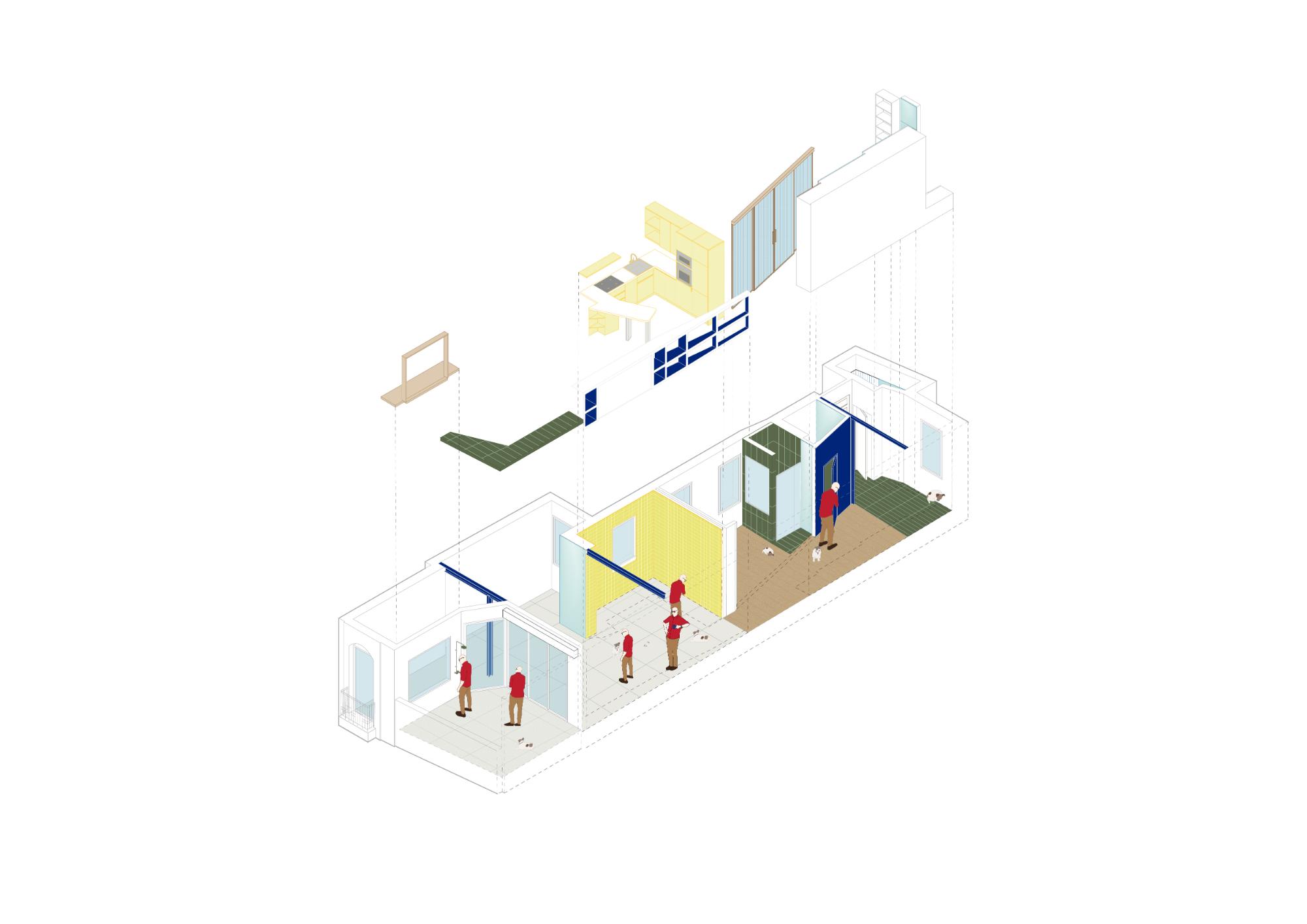
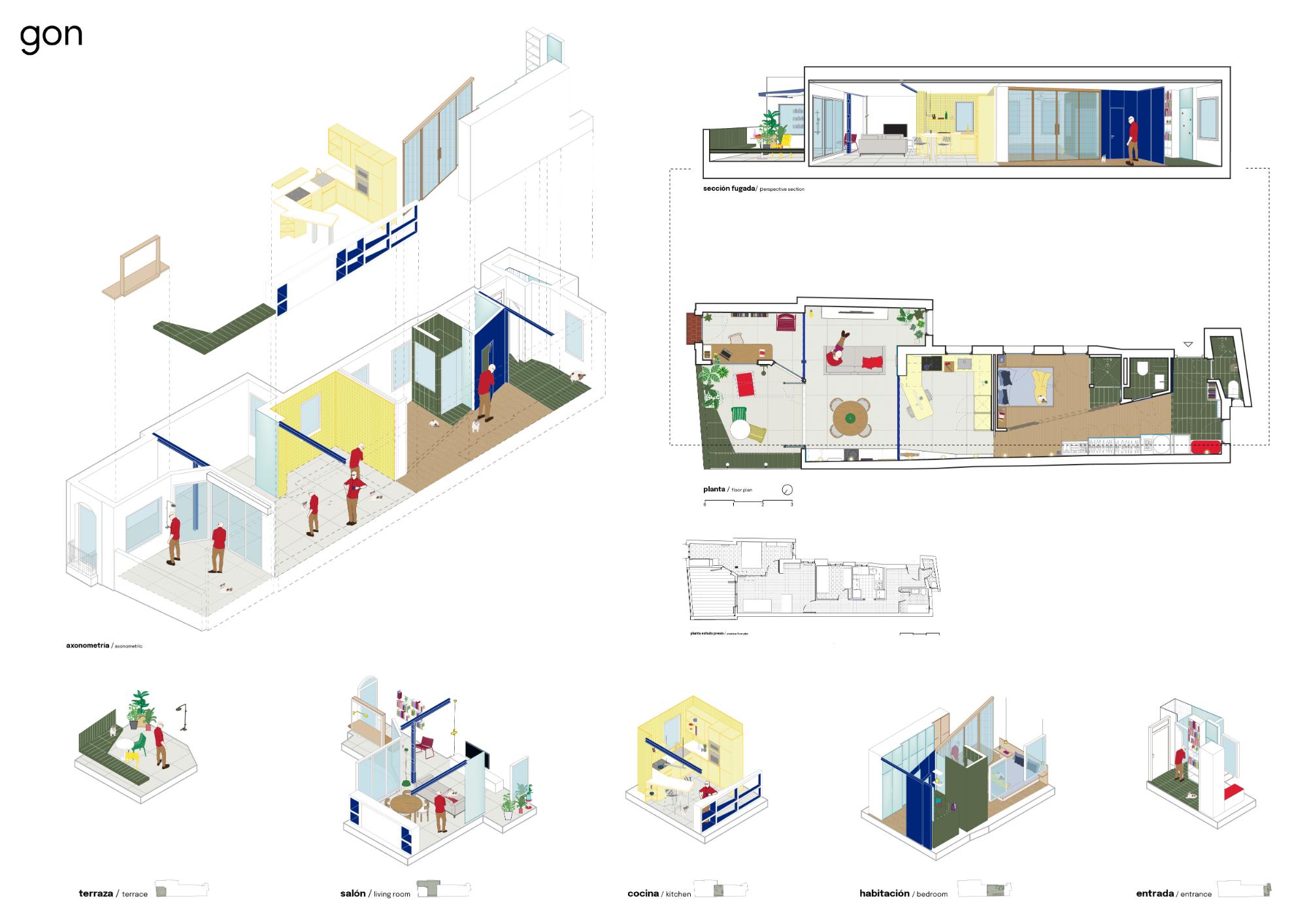
The intervention by gon architects dismantles this inherited organization through a large diagonal gesture that structures the plan. This diagonal reorients movement through the apartment and softens the boundaries between rooms, allowing the interior to operate as a sequence of connected atmospheres rather than a chain of enclosed compartments. Drawing on ideas of domestic connectivity associated with historian Robin Evans, the project treats doors and thresholds not as barriers, but as mediating devices that can frame encounters, modulate privacy, and create spatial uncertainty.
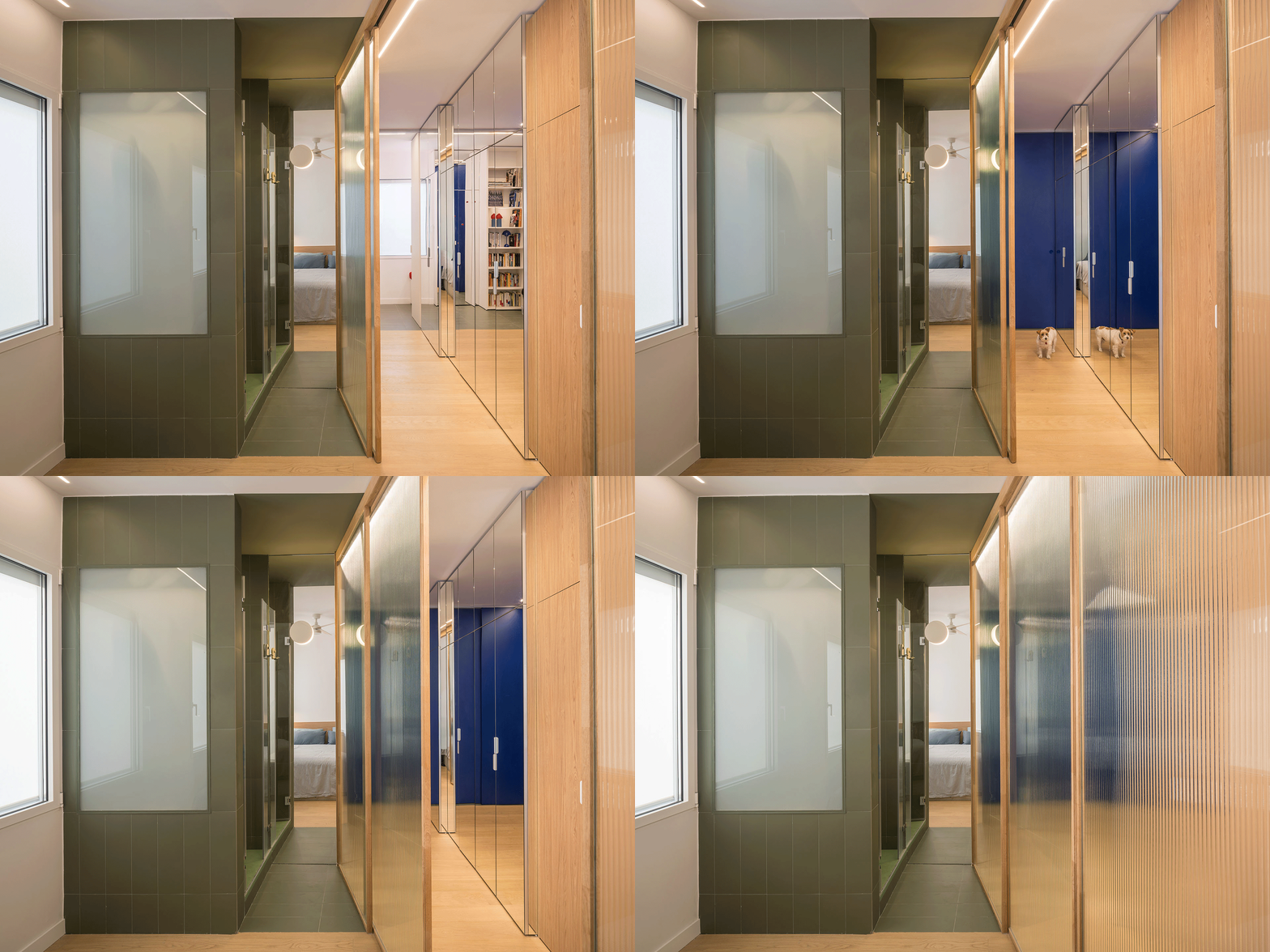
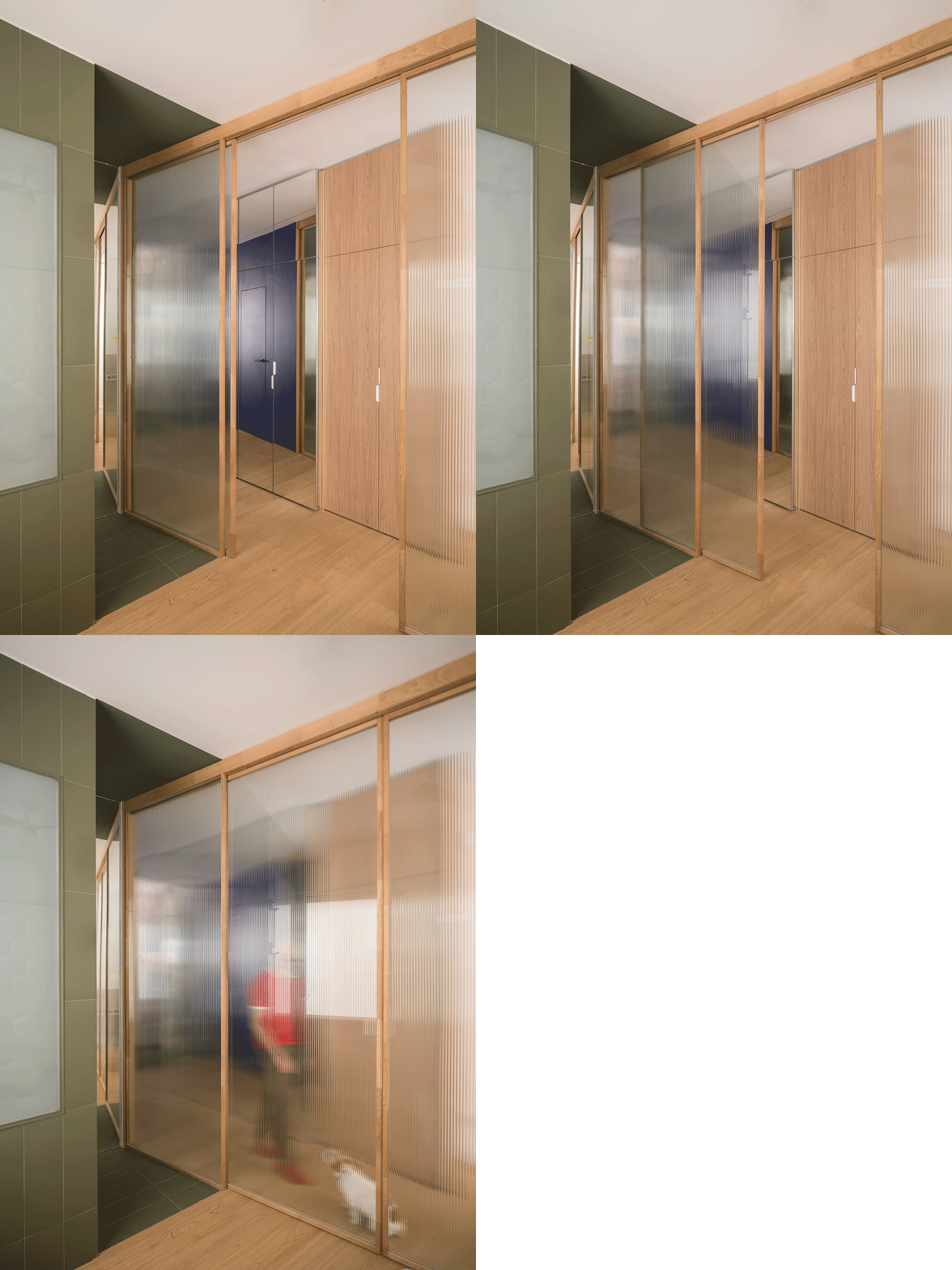
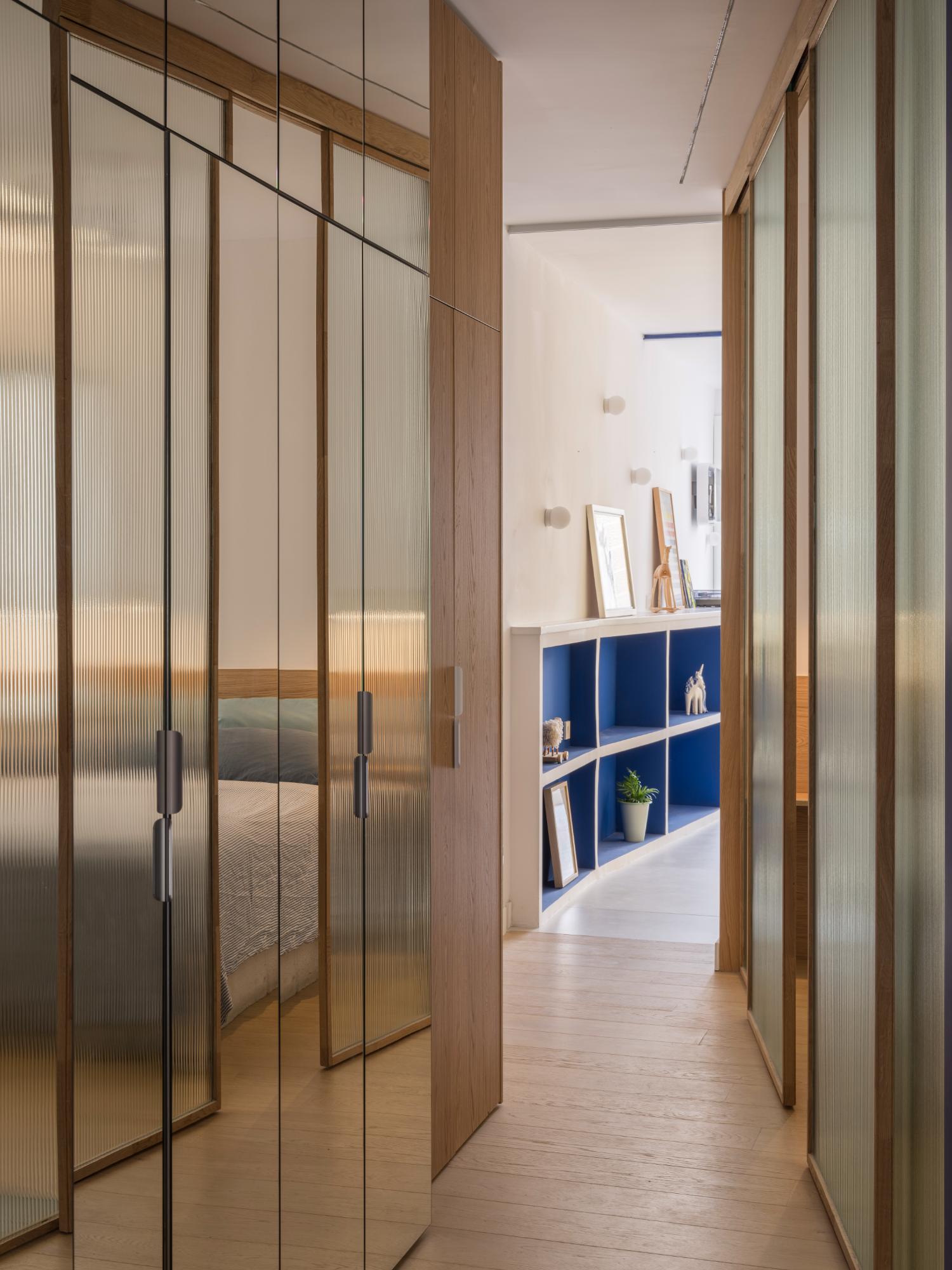
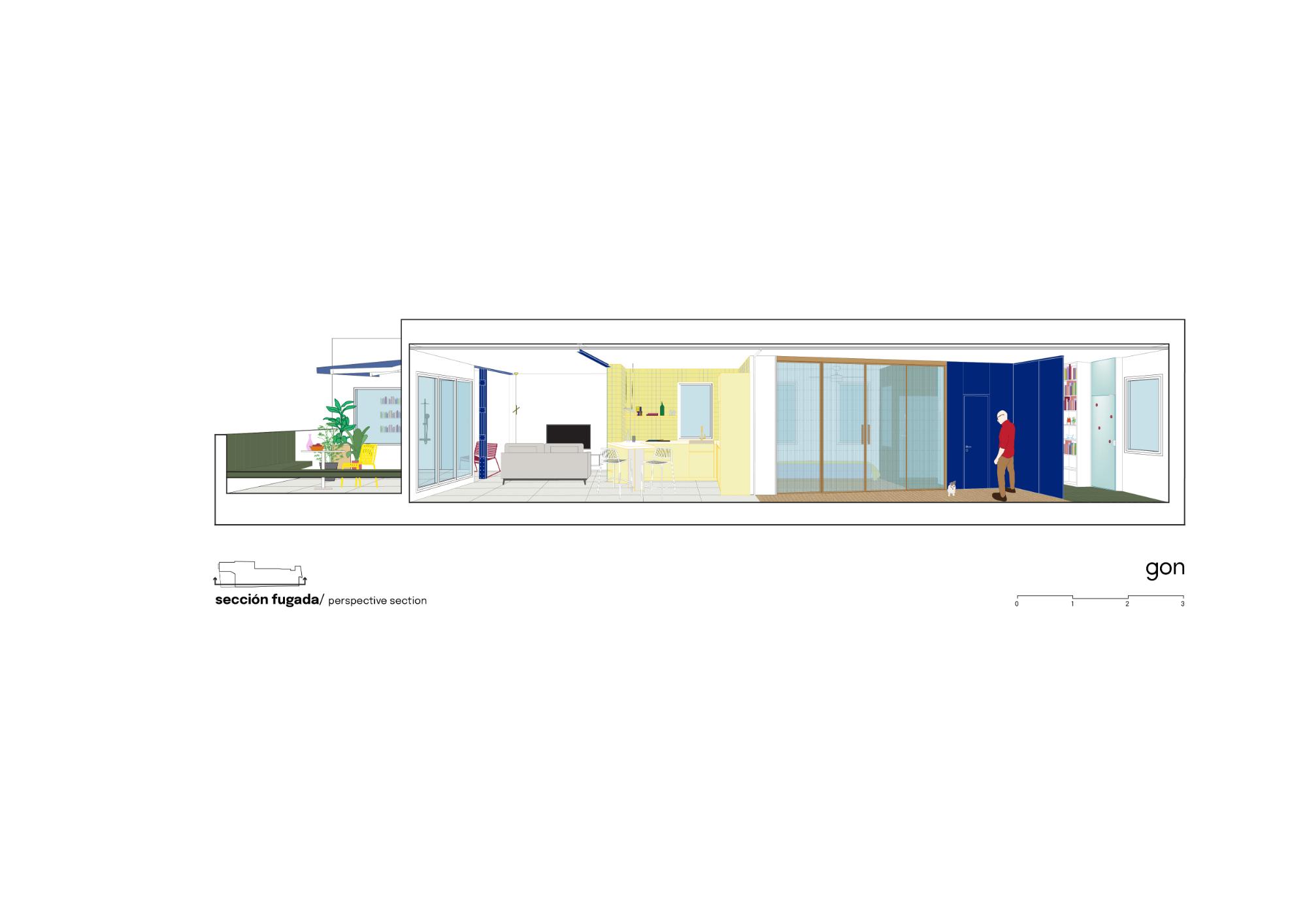
A system of floor-to-ceiling sliding doors gives Casa JAM its mutable character. Executed in different materials, textures, and colors, these movable elements allow the dwelling to expand, contract, open, or close according to daily routines. The former corridor is no longer a narrow passage with a purely functional role. It becomes a flexible spatial field where rooms can connect or separate without losing continuity. This strategy gives the apartment the quality of a living organism, responsive to changing needs and forms of occupation.
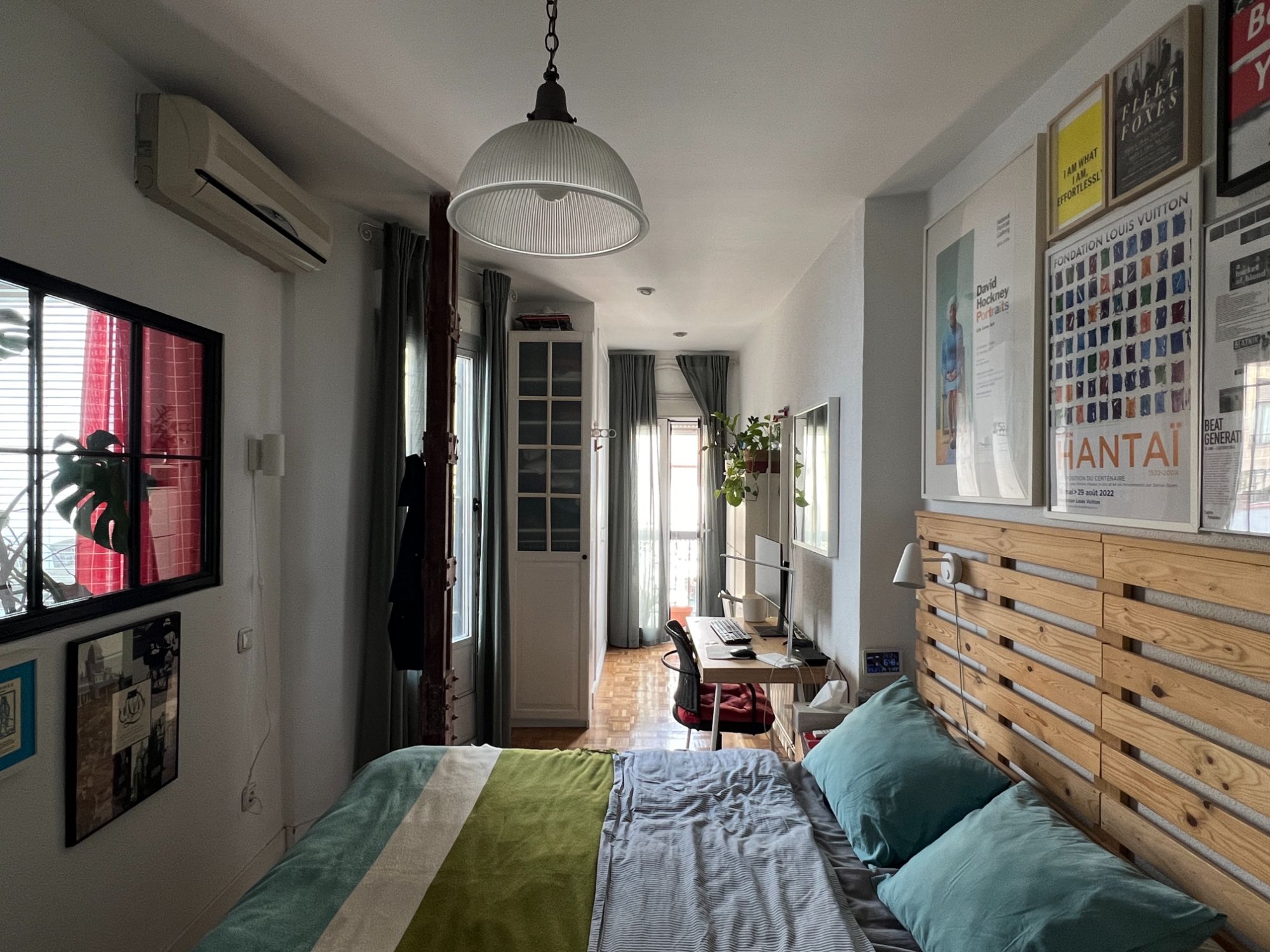
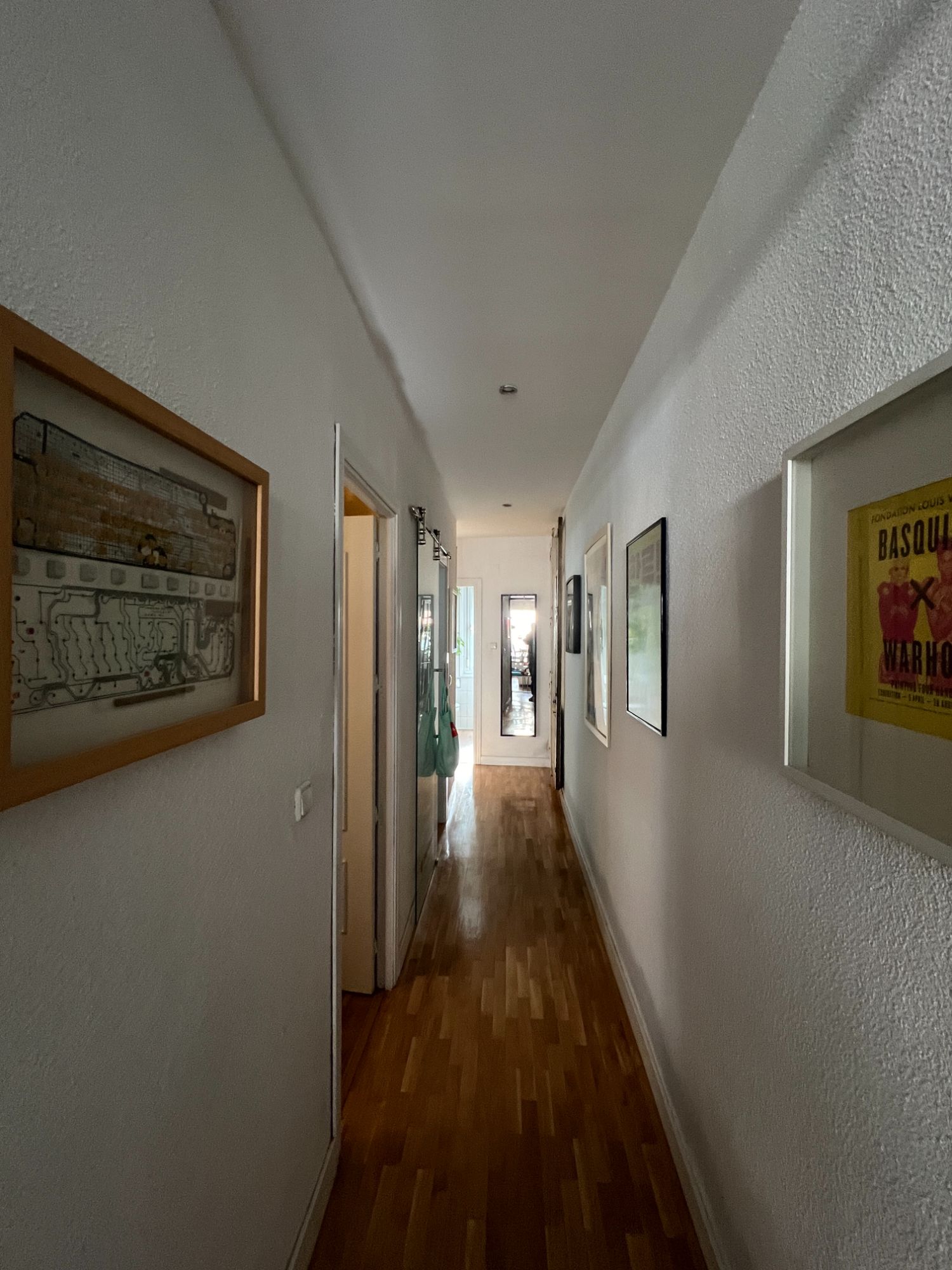
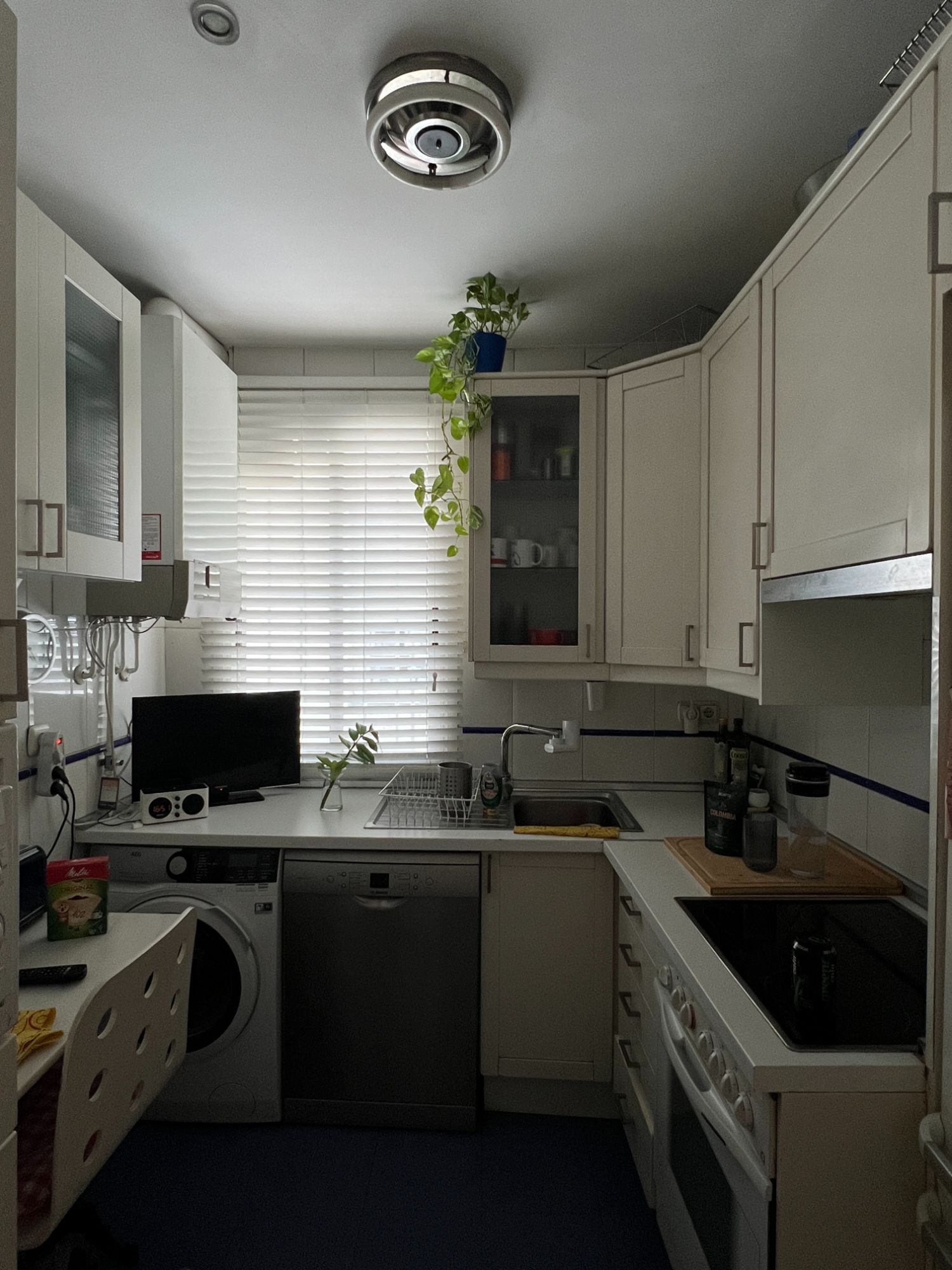
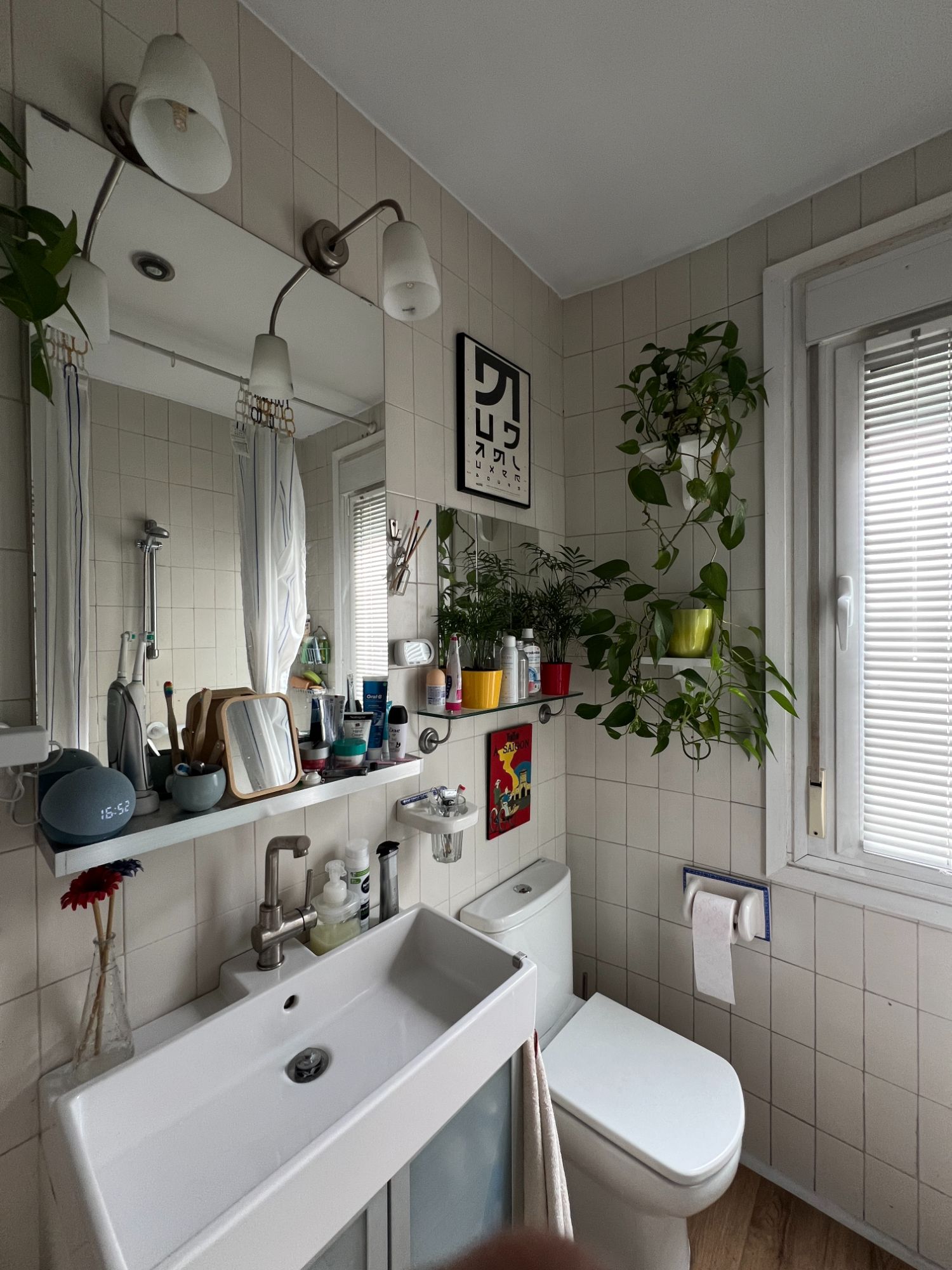
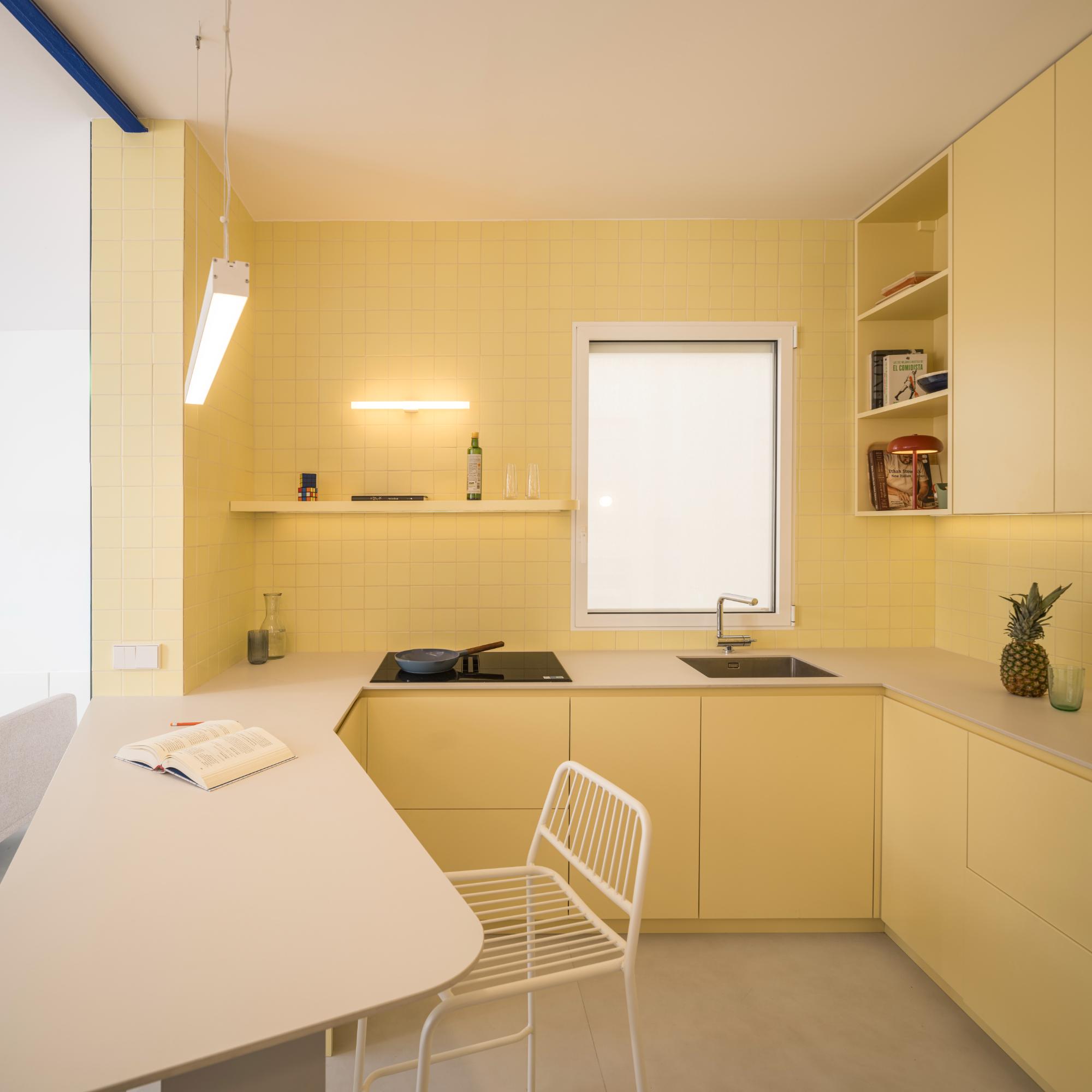
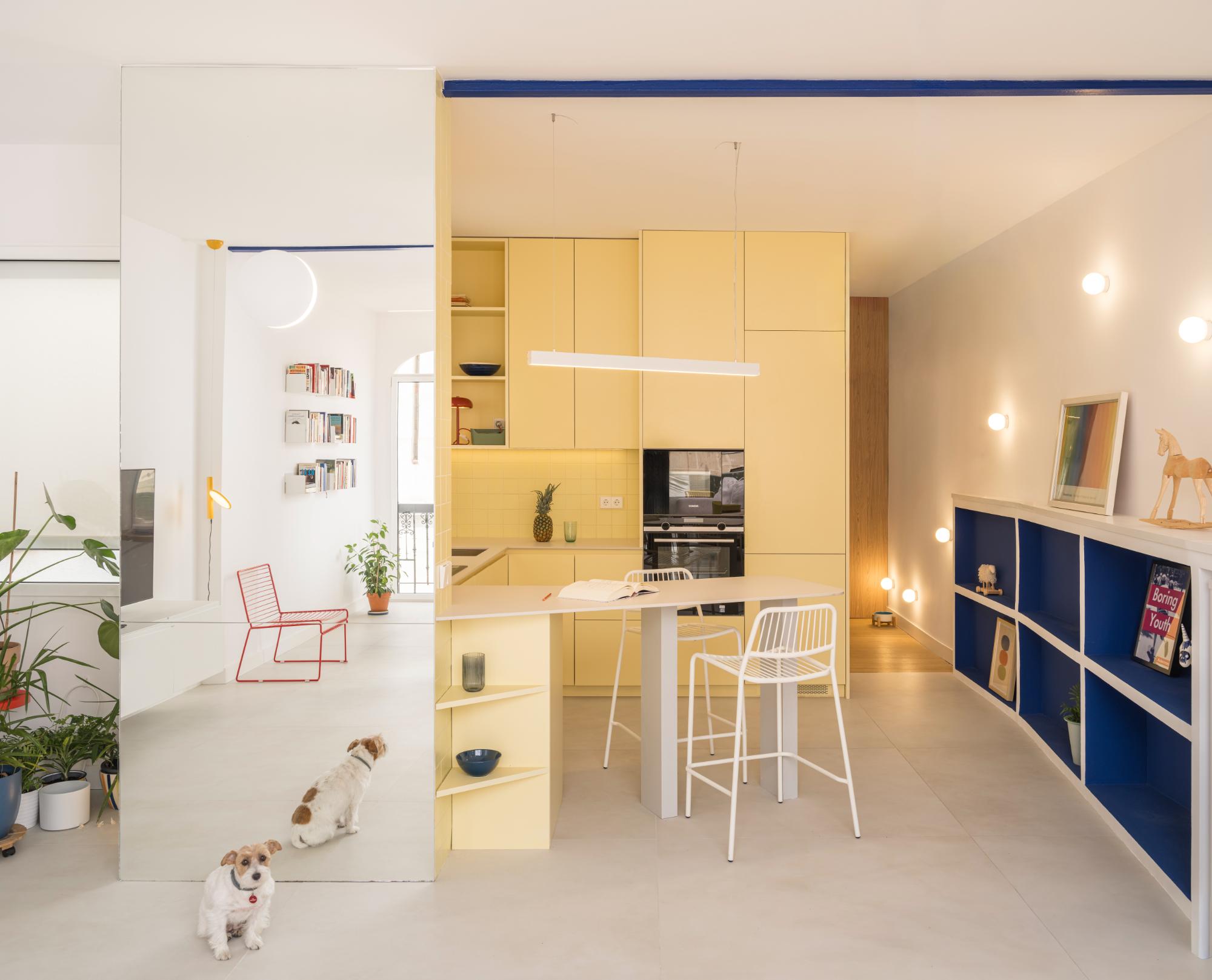
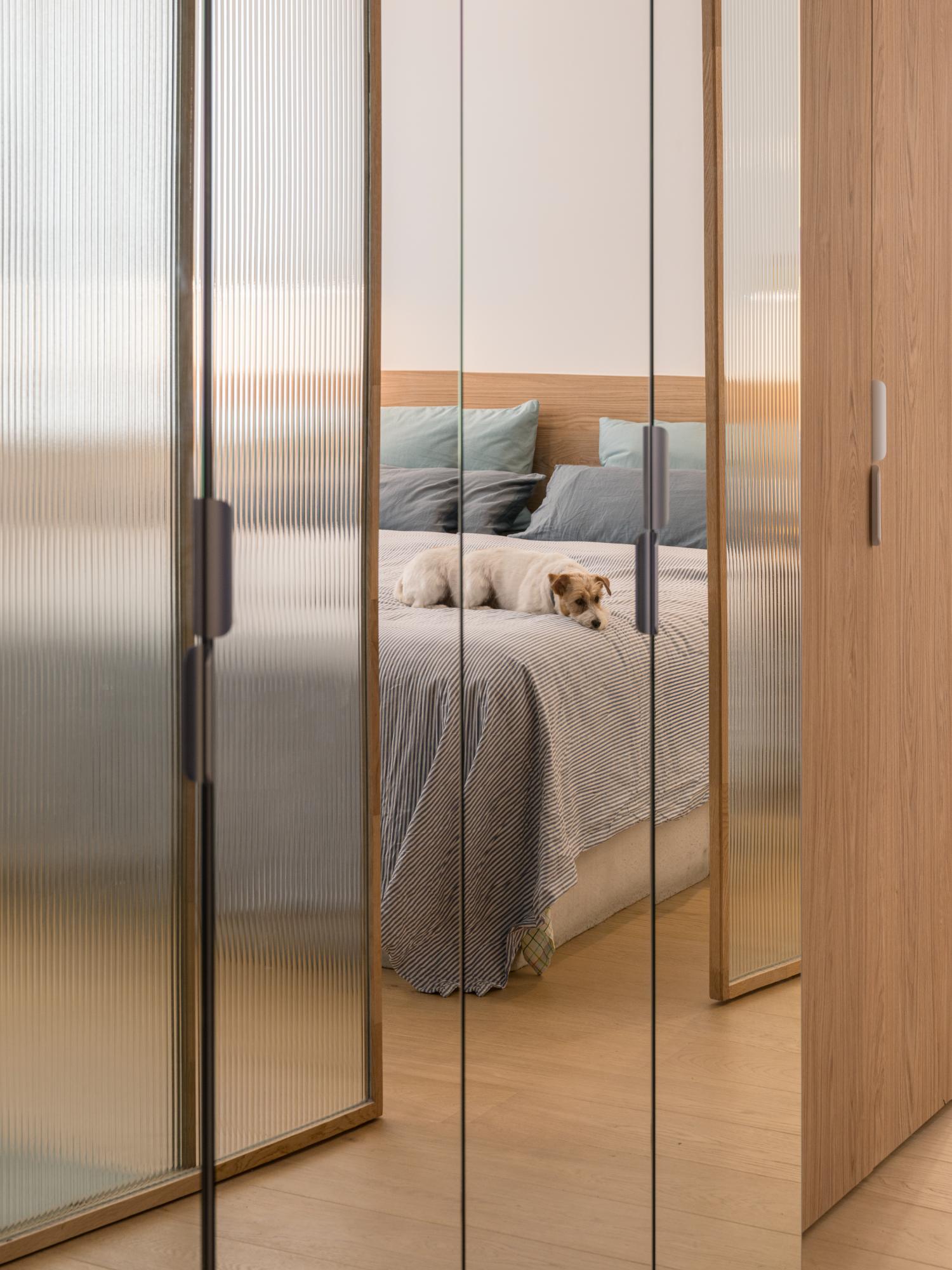
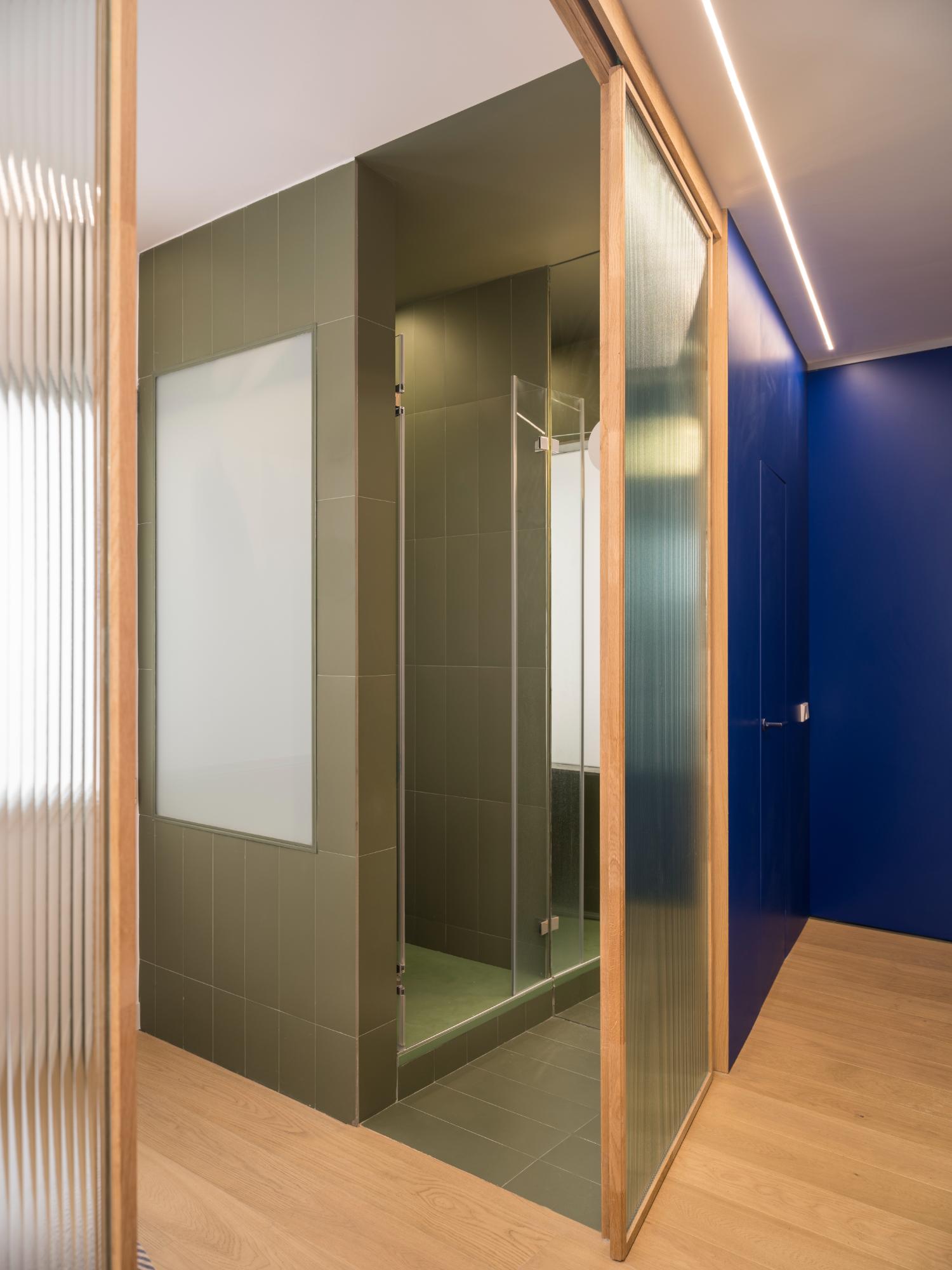
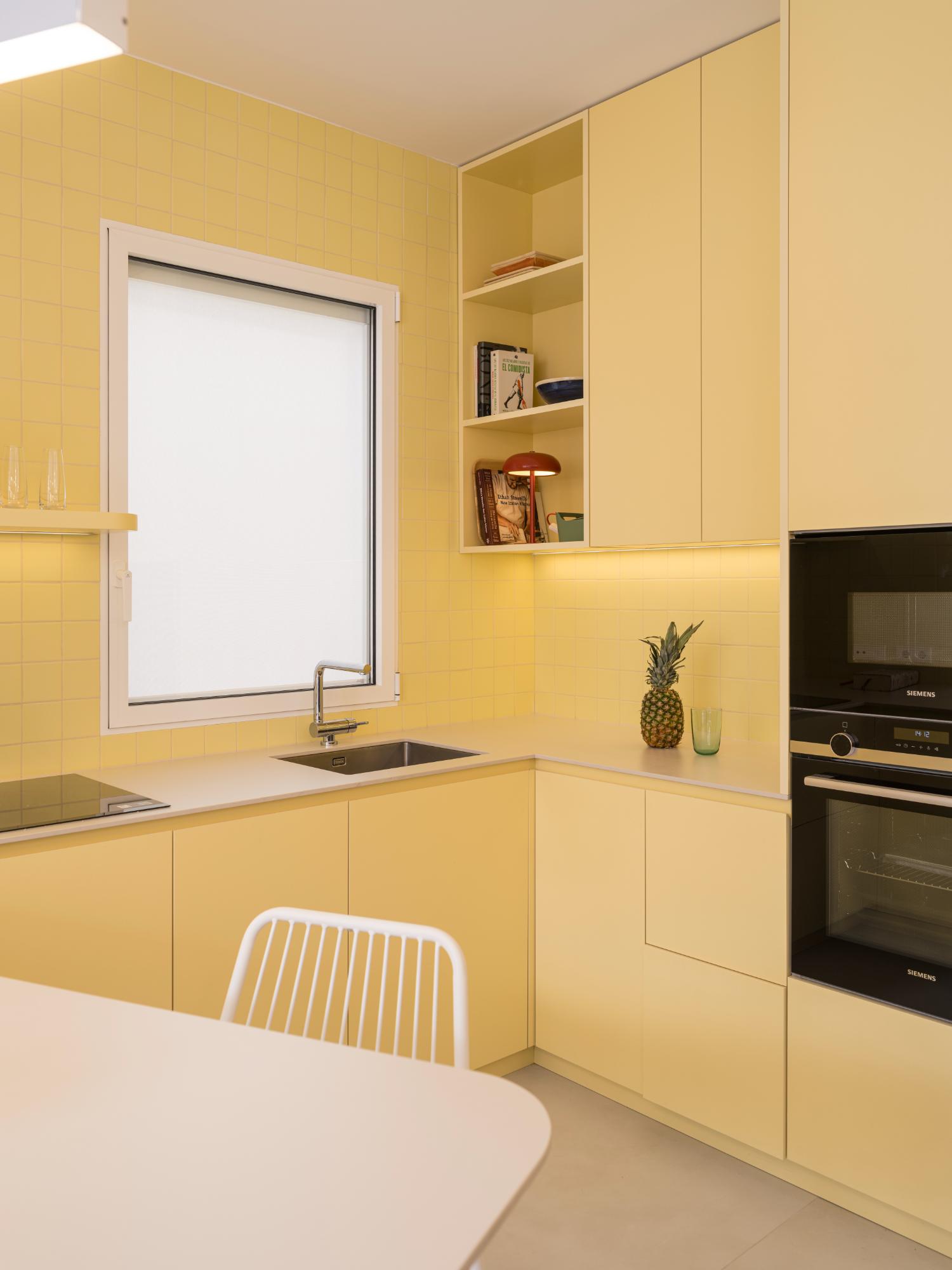
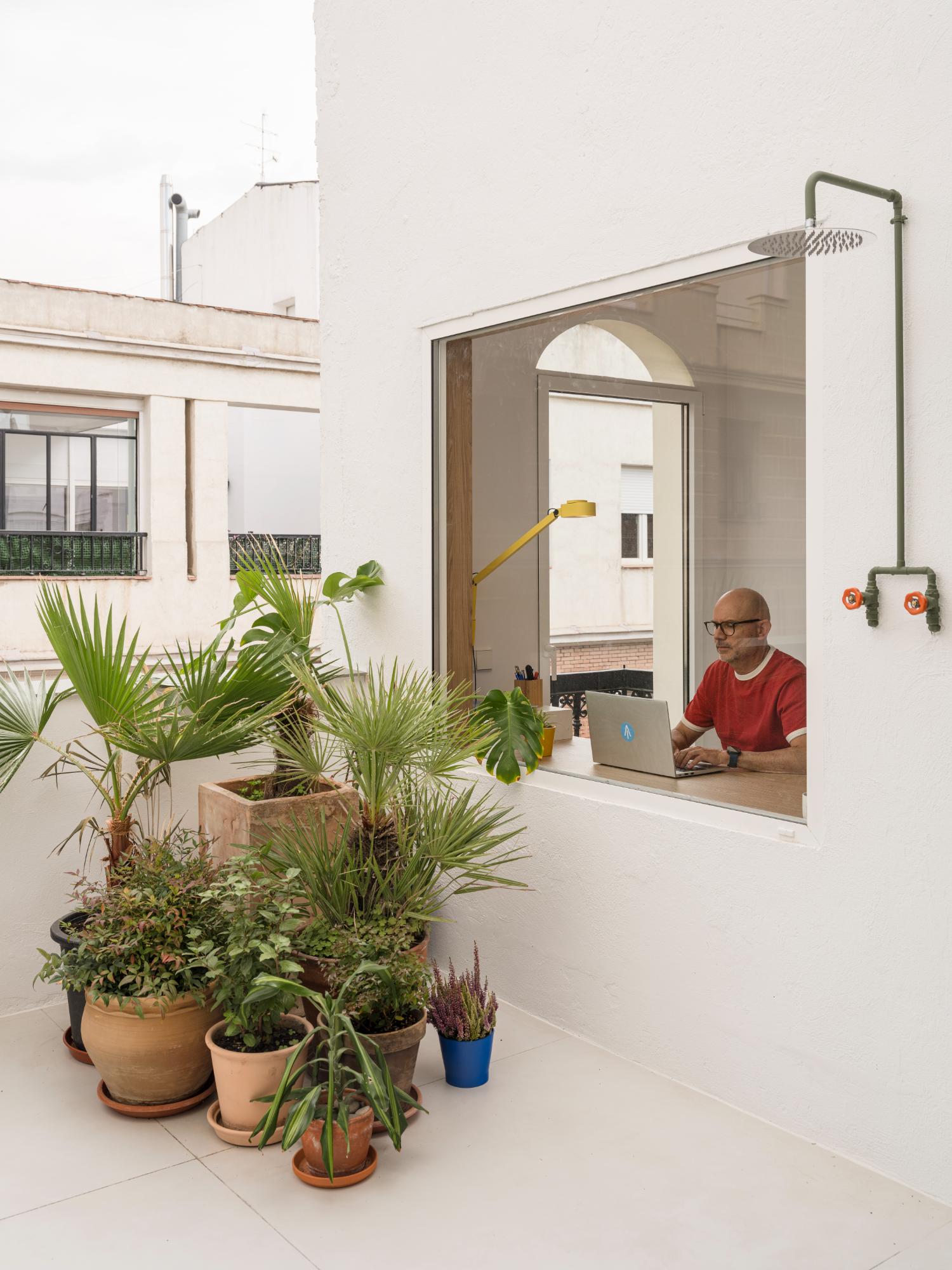
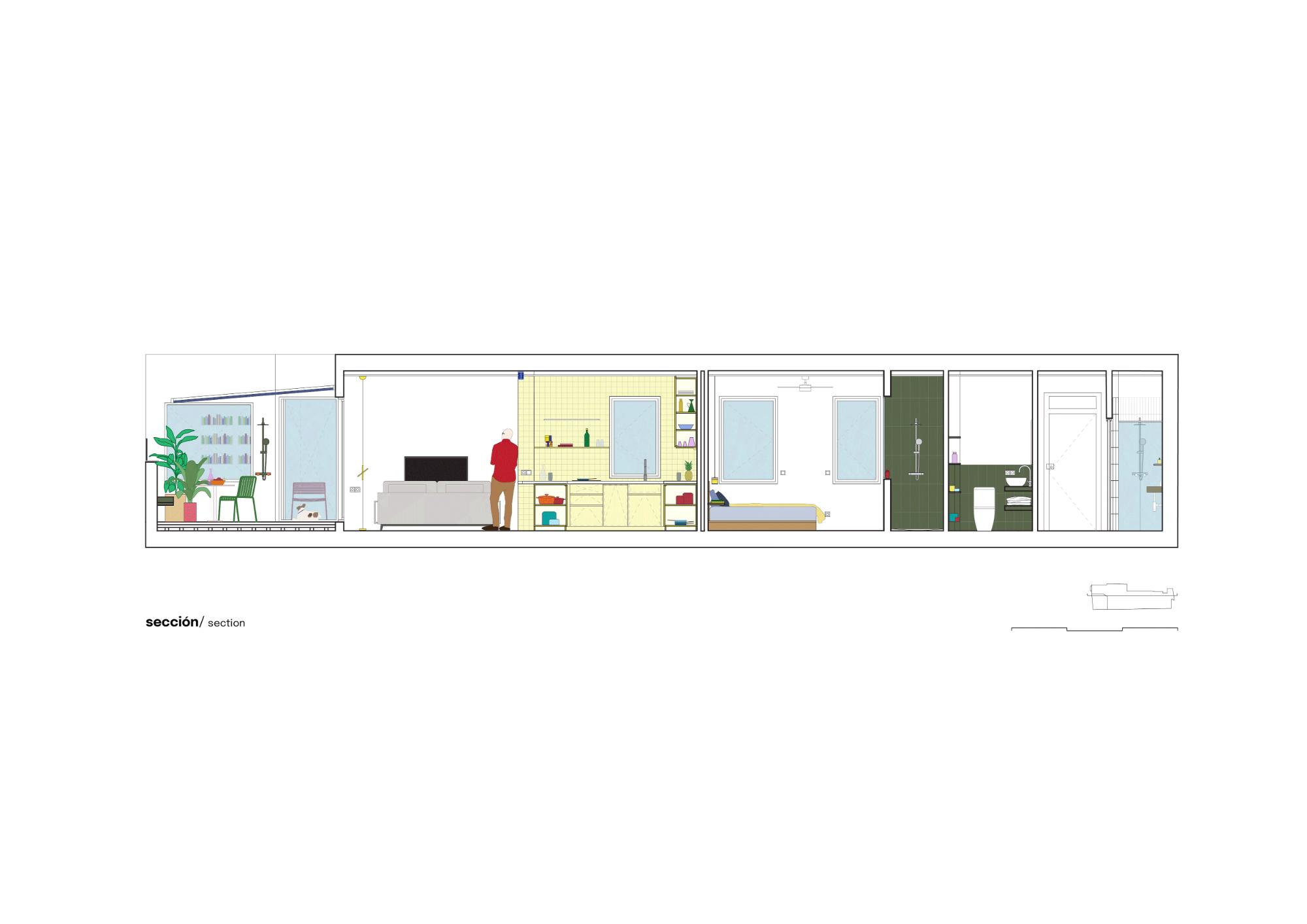
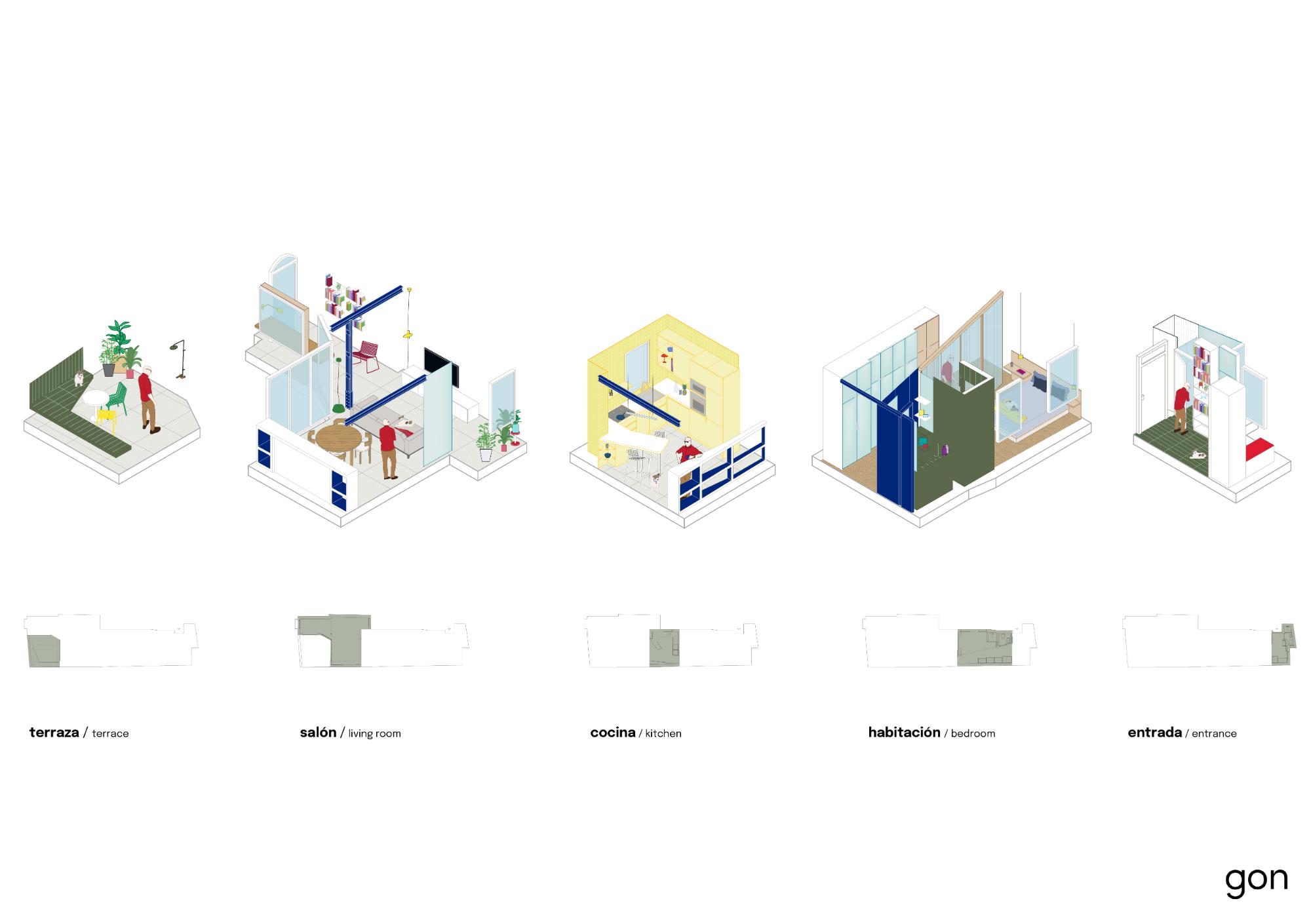
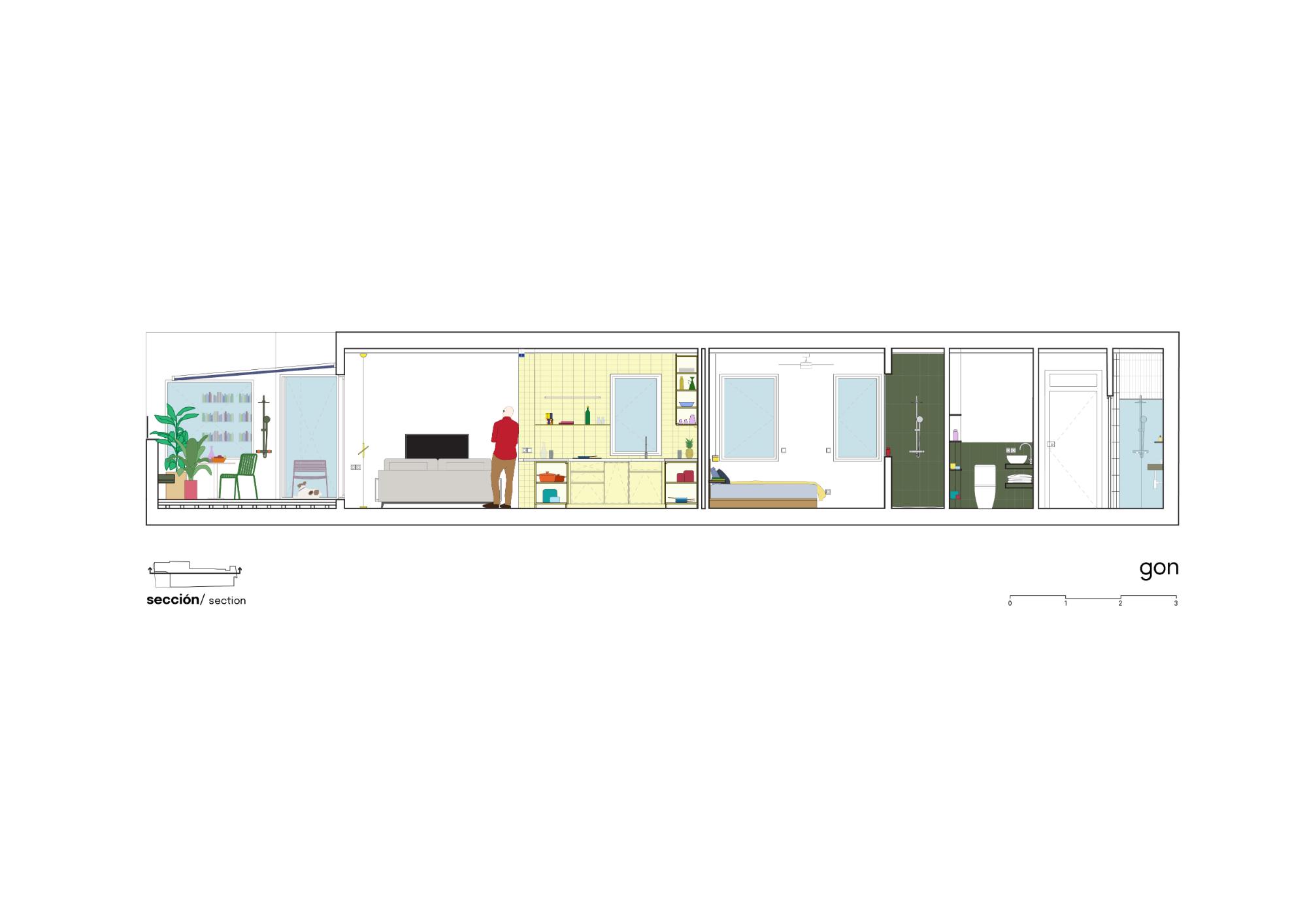
The interior sequence is organized through four concatenated volumes that move from intimate to collective uses. Near the entrance, a Klein blue box contains the bathroom and introduces the apartment’s strong chromatic identity. The bedroom and dressing area follow, enclosed by large wooden frames and ribbed glass that combine warmth with filtered transparency. A green volume contains the shower, adding another layer to the chromatic progression. The final element is the yellow kitchen, which acts as both a practical center and a visual device within the home.
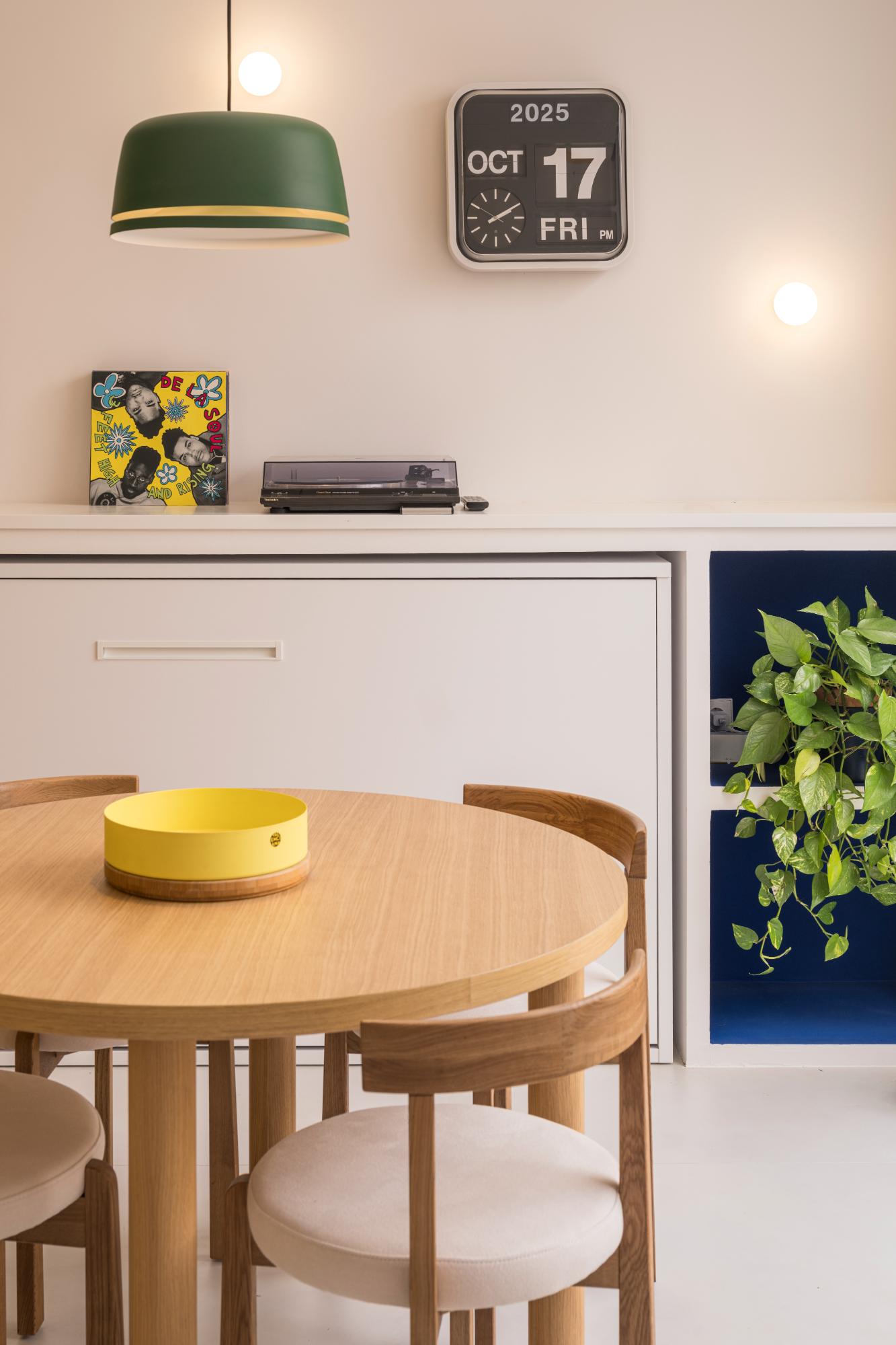
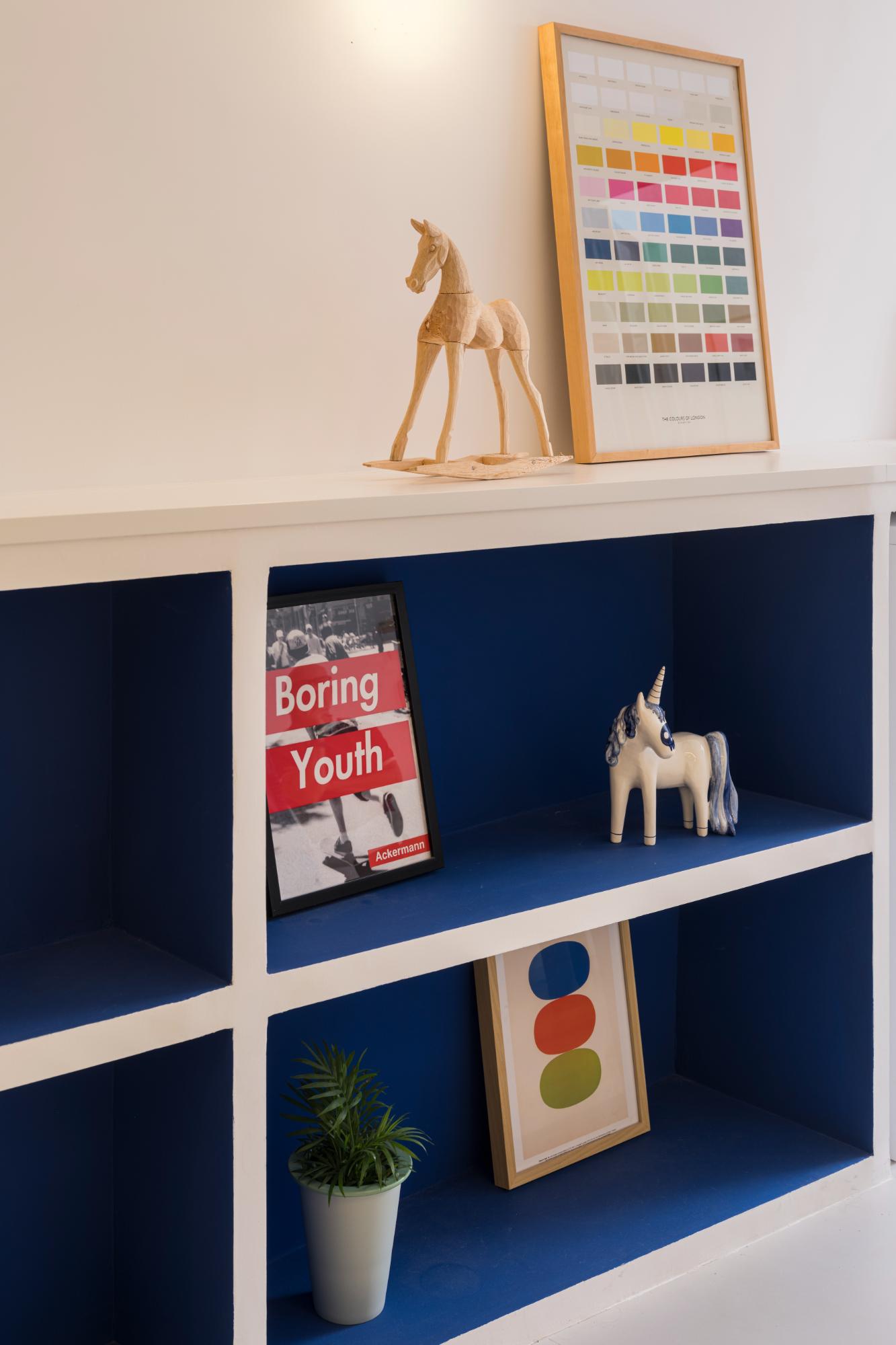
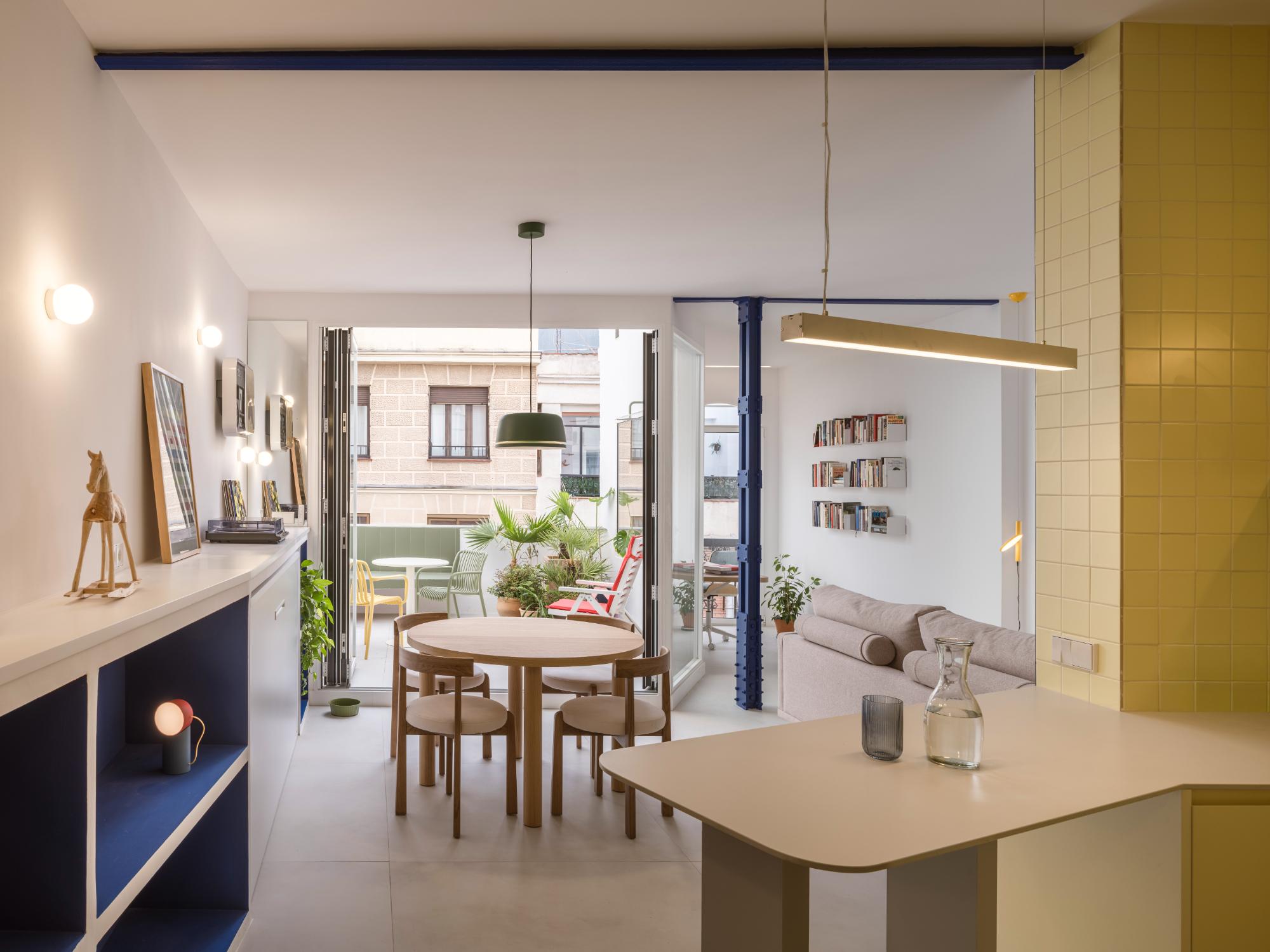
The kitchen plays a decisive role in the apartment’s spatial organization. Conceived as a hub of activity, it also functions as a panoptic point from which the common space can be observed. Its yellow ceramic filter marks the transition toward the shared room beyond, where the dining area, living space, and compact workspace are brought together. Furniture is integrated as architectural infrastructure, reinforcing the clarity of the plan and supporting a sense of continuity across the interior.
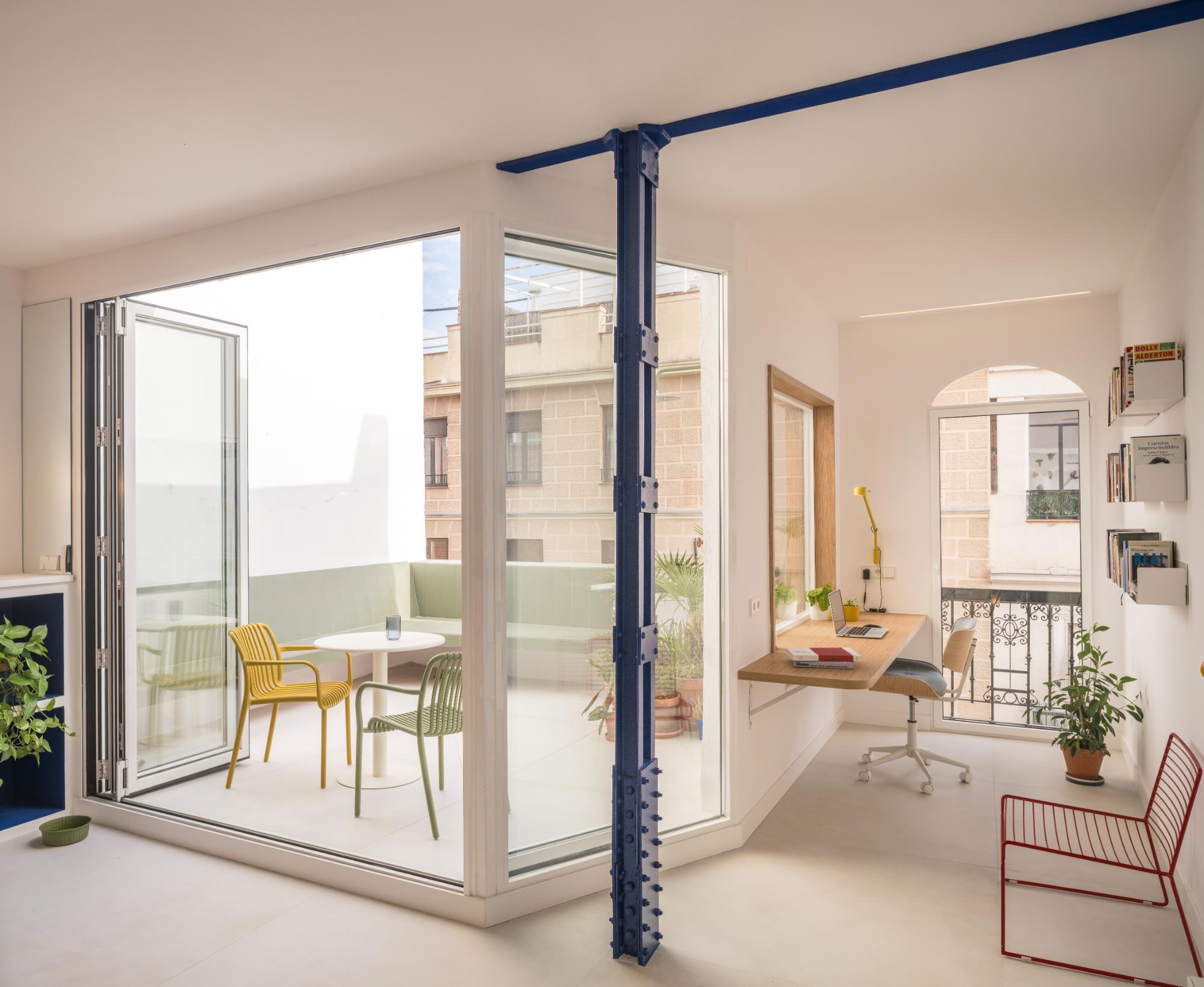
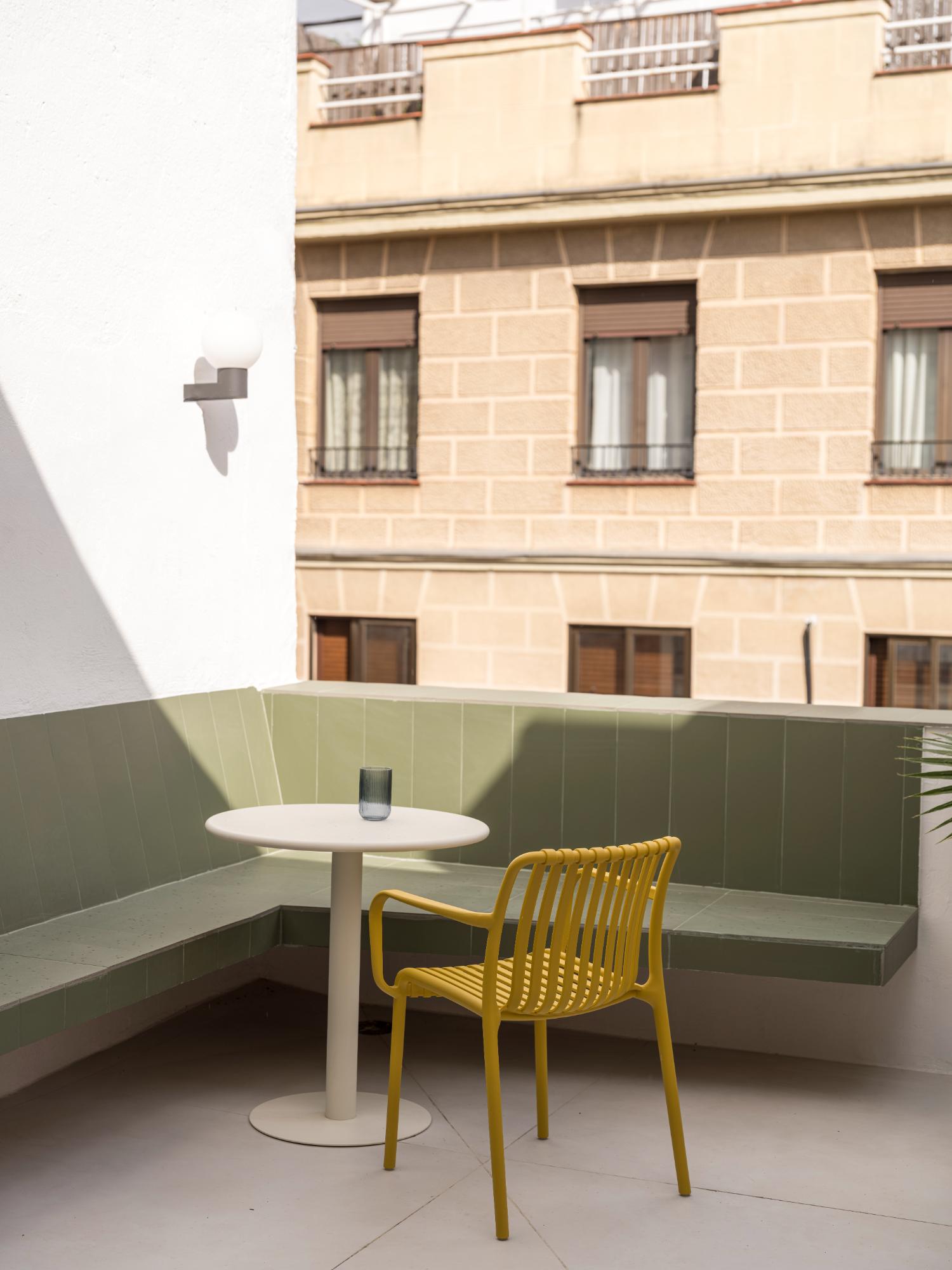
The sequence culminates in the east-facing terrace, conceived as an exterior room open to the Madrid sky. This outdoor space completes the domestic progression and extends the apartment beyond its compact footprint. By dissolving the boundary between interior and exterior, the terrace connects the private world of the apartment with the broader urban landscape.
Casa JAM transforms the rigidity of a historic floor plan into a playful and highly specific domestic environment. Through superimposition, transparency, color, and movement, gon architects create a home that resists fixed definitions of room, corridor, and threshold. The renovation reflects a contemporary understanding of dwelling as something flexible, personal, and layered, where architectural precision supports freedom rather than constraint.
Project Gallery
Project Location
Address: Madrid, Spain
Location is for general reference and may represent a city or country, not necessarily a precise address.

