

Architects: Graal
Area: 400 m²
Year: 2023
Photography: Maxime Verret
Architects Team: Hamac, associate architect, and construction site supervision
Contractor: Domatech, Poulingue, UTB, Plastalu, Sorbat, Dalbergia, Doumer-Decock, Laumax, GSE, Lanef Pro, Watelet
Structural Engineering: Atelier Masse
MEP Engineering: Sunsquare
HQE Consultant: Atelier climatique
Acoustician: SLAM
Materials: Mass-colored concrete, vertical Douglas pine cladding, laminated wood beams, metal roofing, aluminum-framed glass, brushed concrete slab, perforated wood panels, perforated plasterboard
Client: City of Beynes
Budget: €1,550,000 excluding tax
Program: Construction of a community hall with two modular spaces and parking facilities
Location: Beynes
Country: France
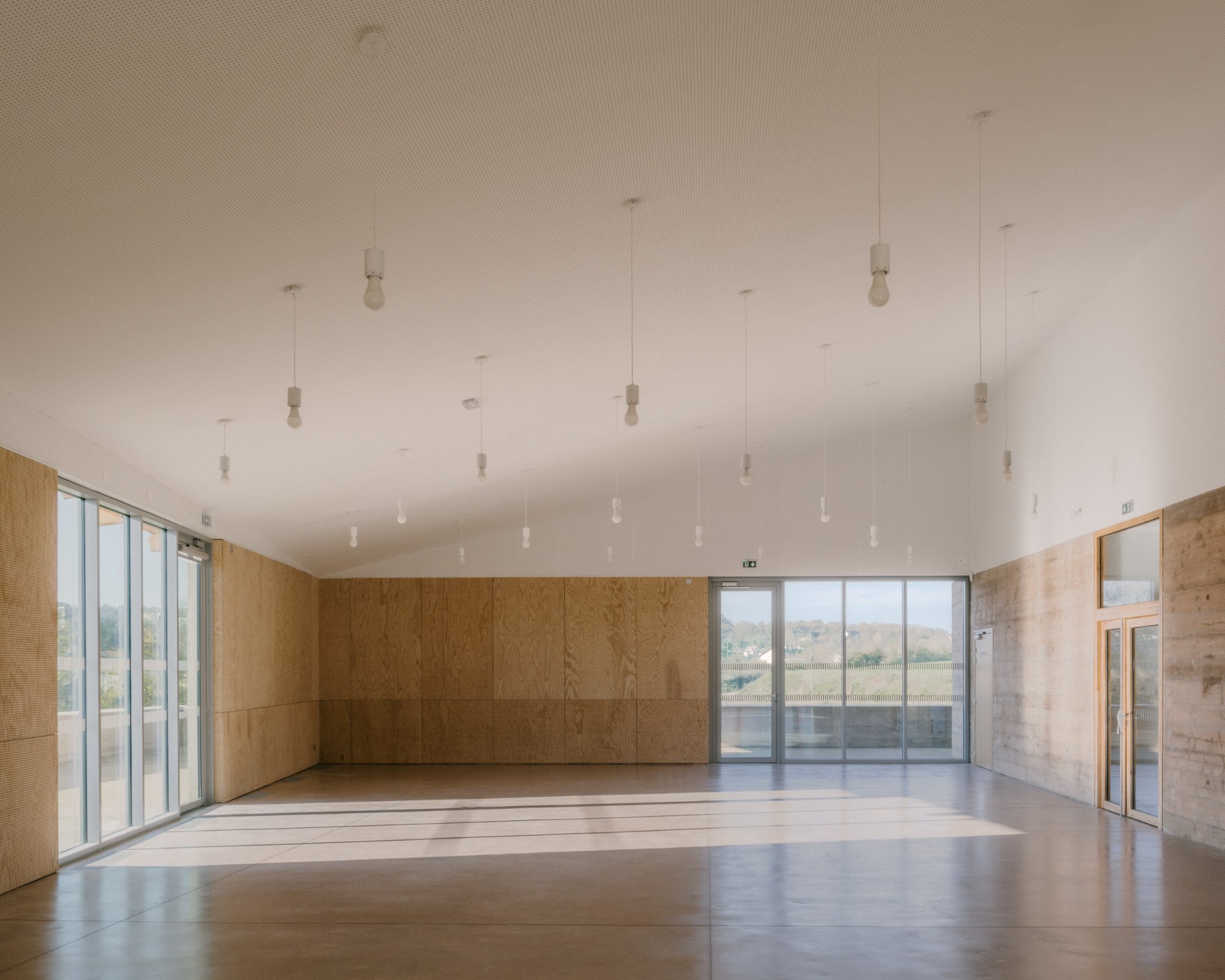
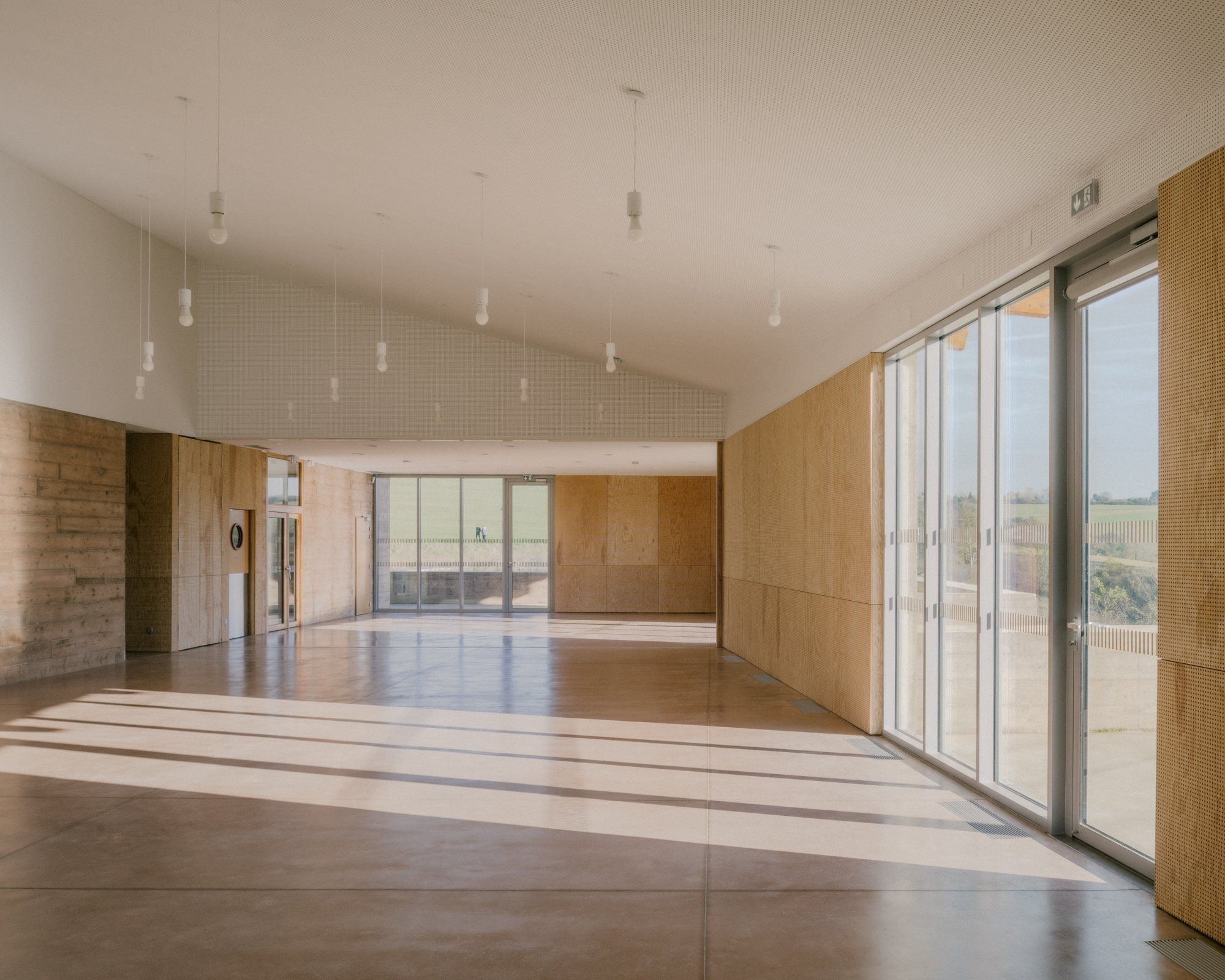
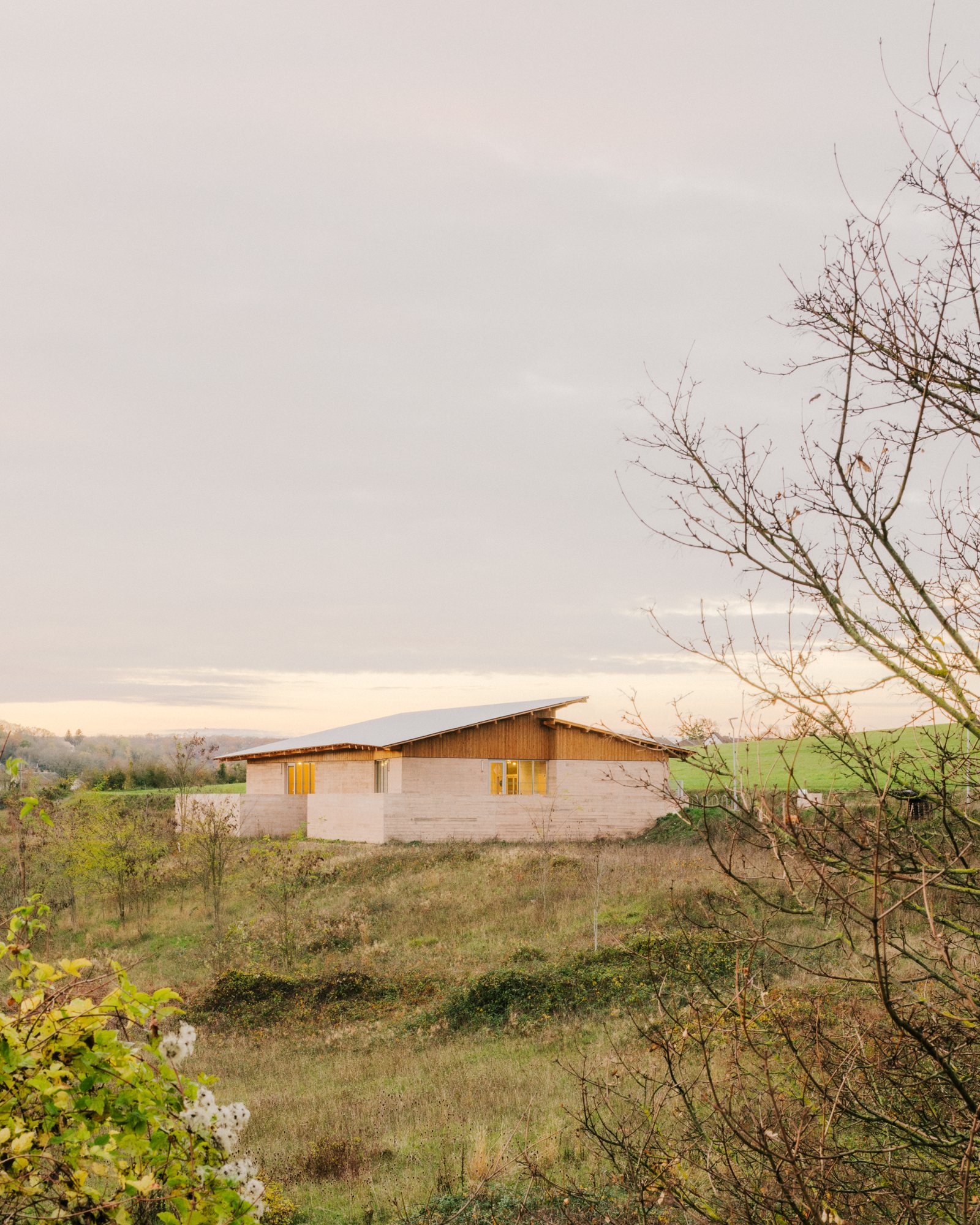
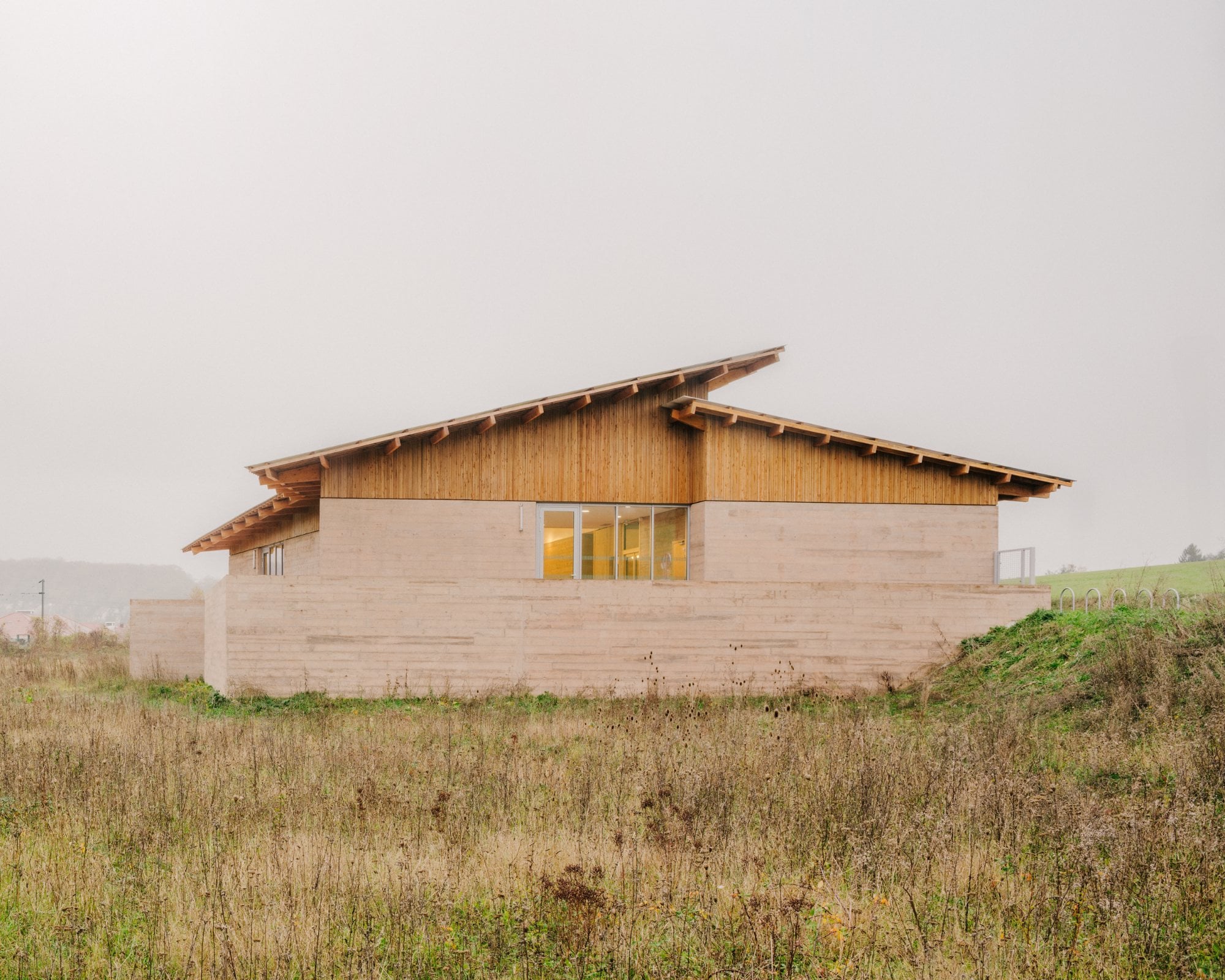
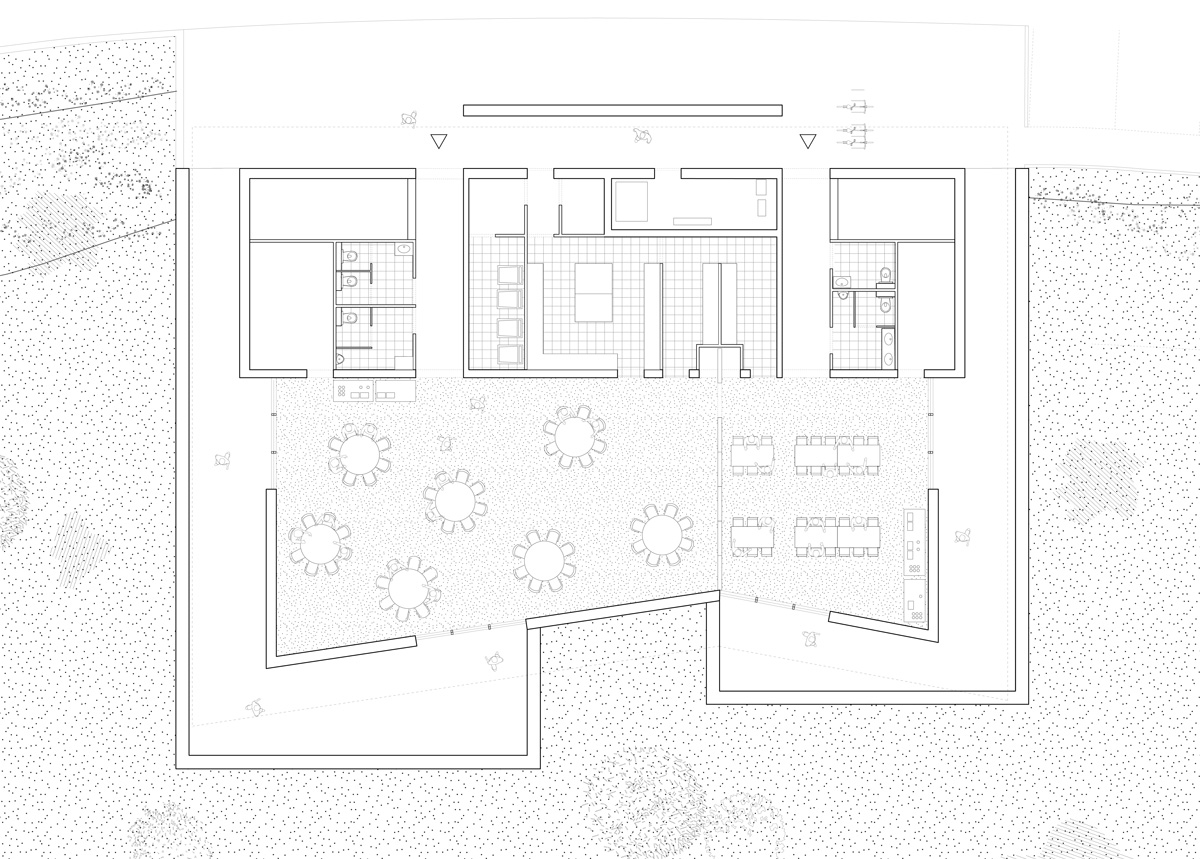
Community Hall, Beynes by Graal provides a civic facility for a dispersed municipality structured by an old town, residential hamlets, a military camp, and a nearby forest. Set at a junction between these neighborhoods, the 400-square-meter project addresses both rural and domestic scales through a compact volume with flexible interior programming. Its main hall can operate as one 230-square-meter space or be divided into two smaller rooms through a movable partition. The building combines a mass-colored concrete plinth, a timber upper structure, and a metal roof, using material changes to clarify its anchoring, enclosure, and relationship to the landscape. Internally, concrete, perforated wood, and acoustic surfaces create a restrained and robust atmosphere suited to public gatherings. The project also integrates bioclimatic strategies, including a Canadian well, thermal mass, and roof overhangs for summer solar protection. Its parking and access strategy minimizes site disturbance while responding to the valley’s topography and hydrology.
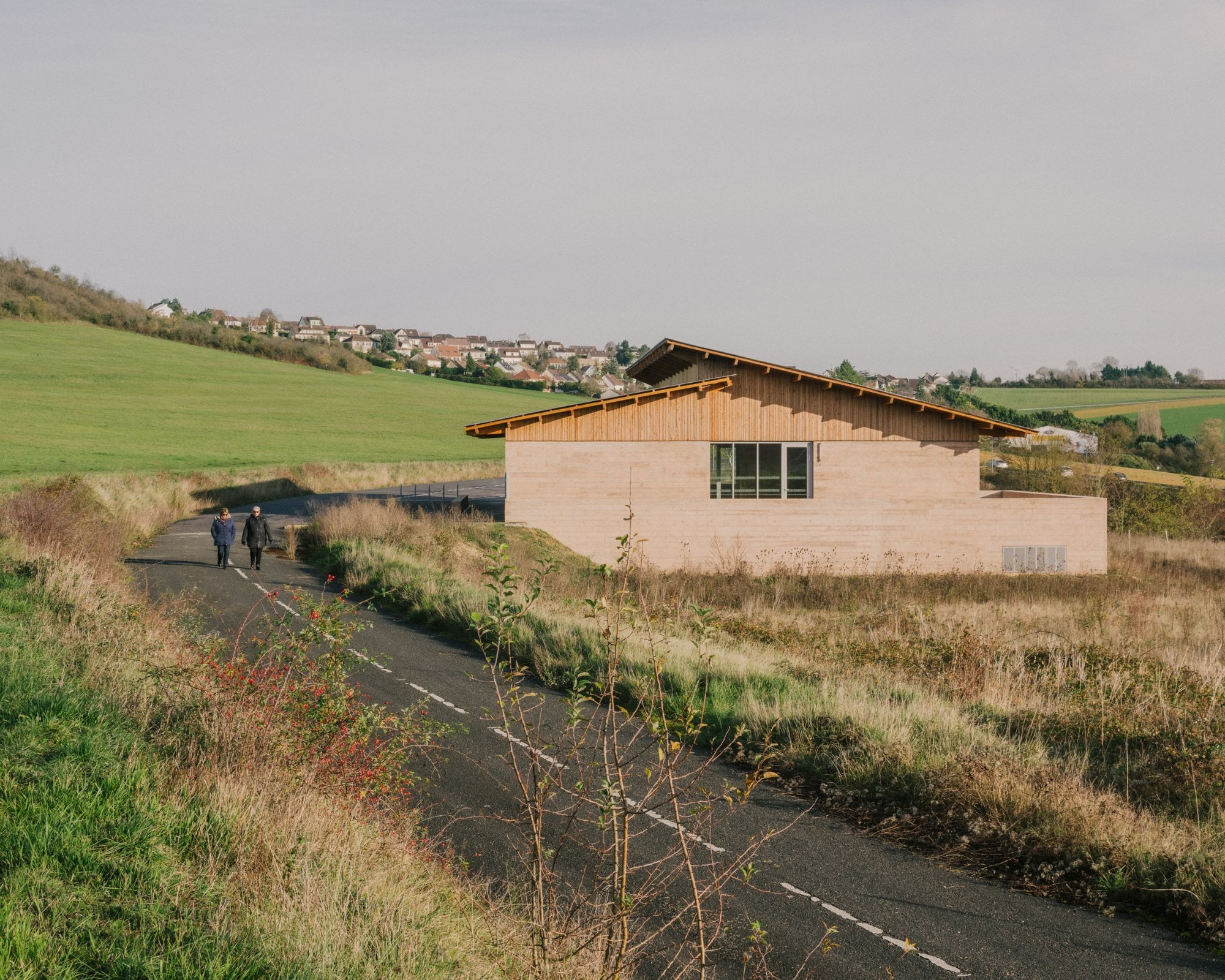
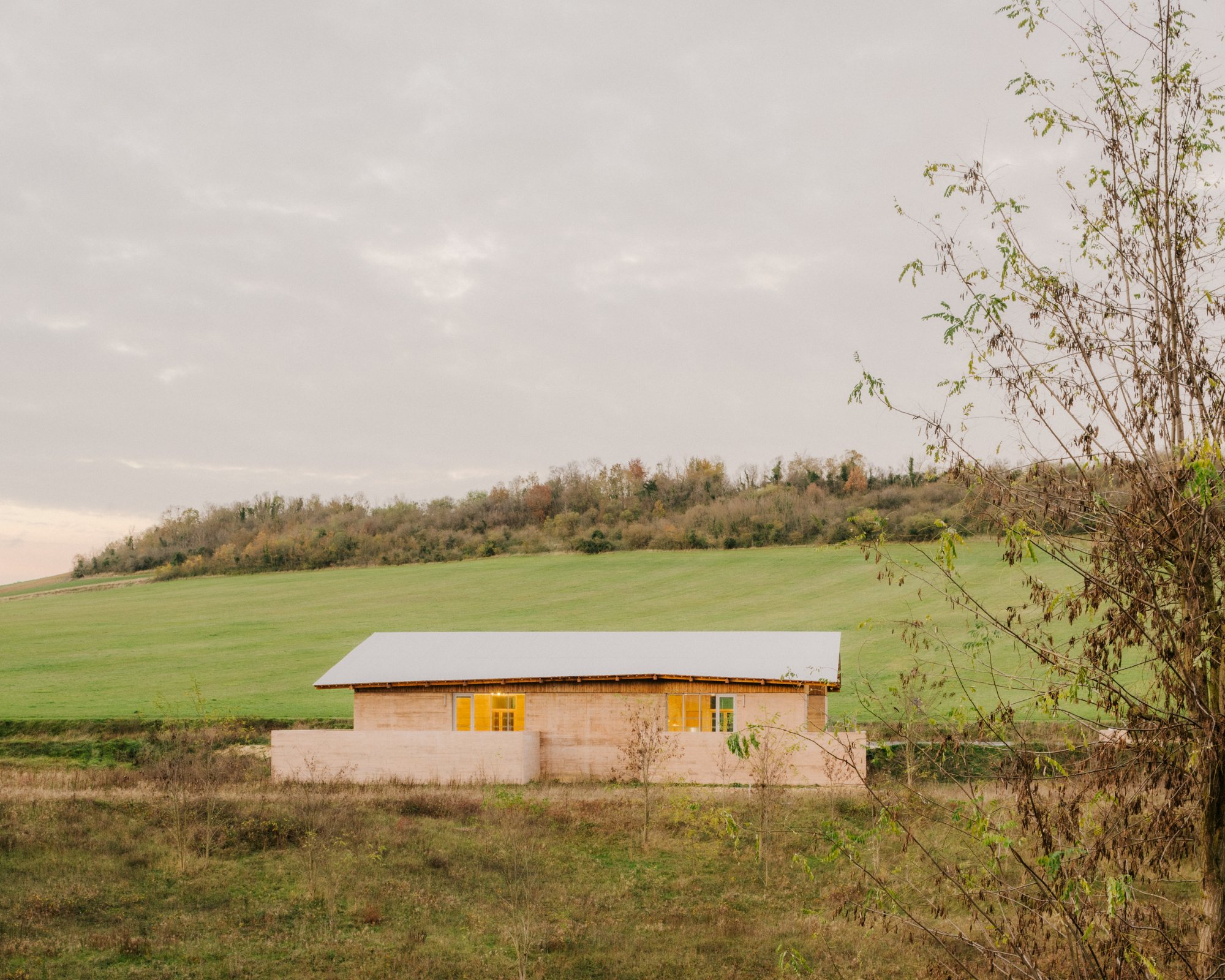
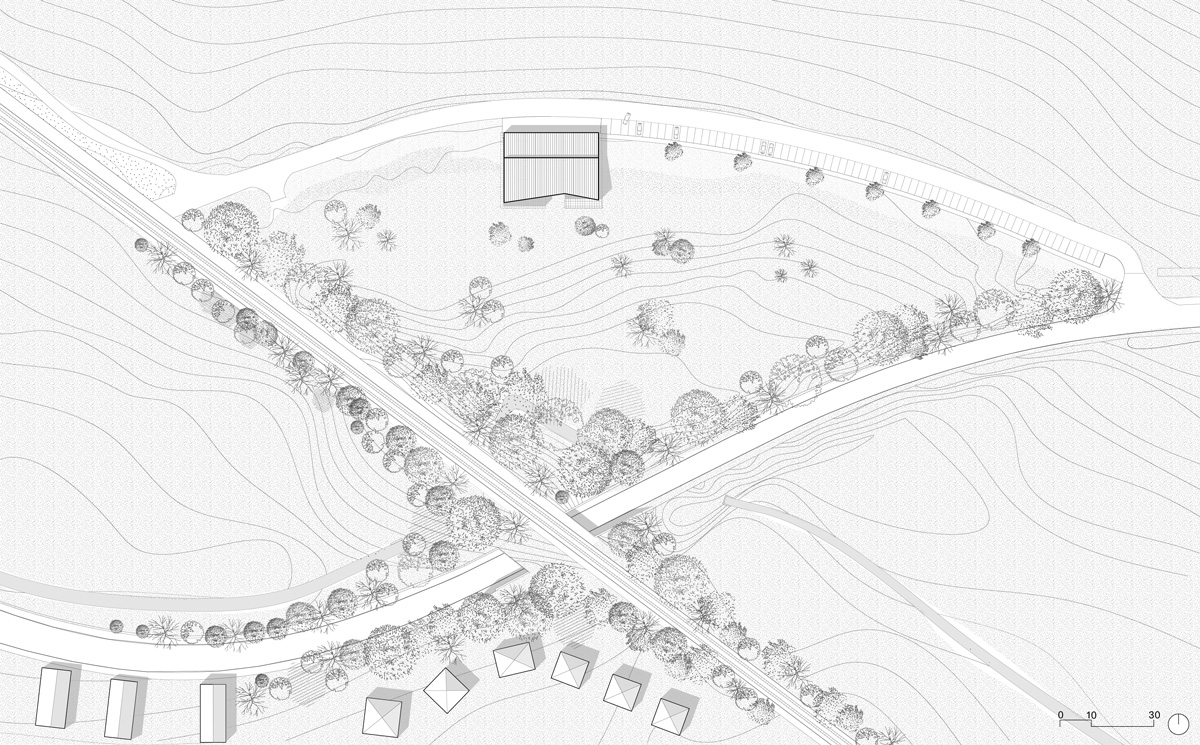
The Community Hall, Beynes by Graal, is conceived as a territorial marker for a municipality whose civic life is distributed across separate settlements rather than concentrated in a dense urban center. The project occupies a threshold condition along Departmental Road 119, where infrastructure, open fields, and suburban housing meet. Its architecture gives this dispersed context a shared point of reference, using a measured rural profile rather than a monumental gesture.
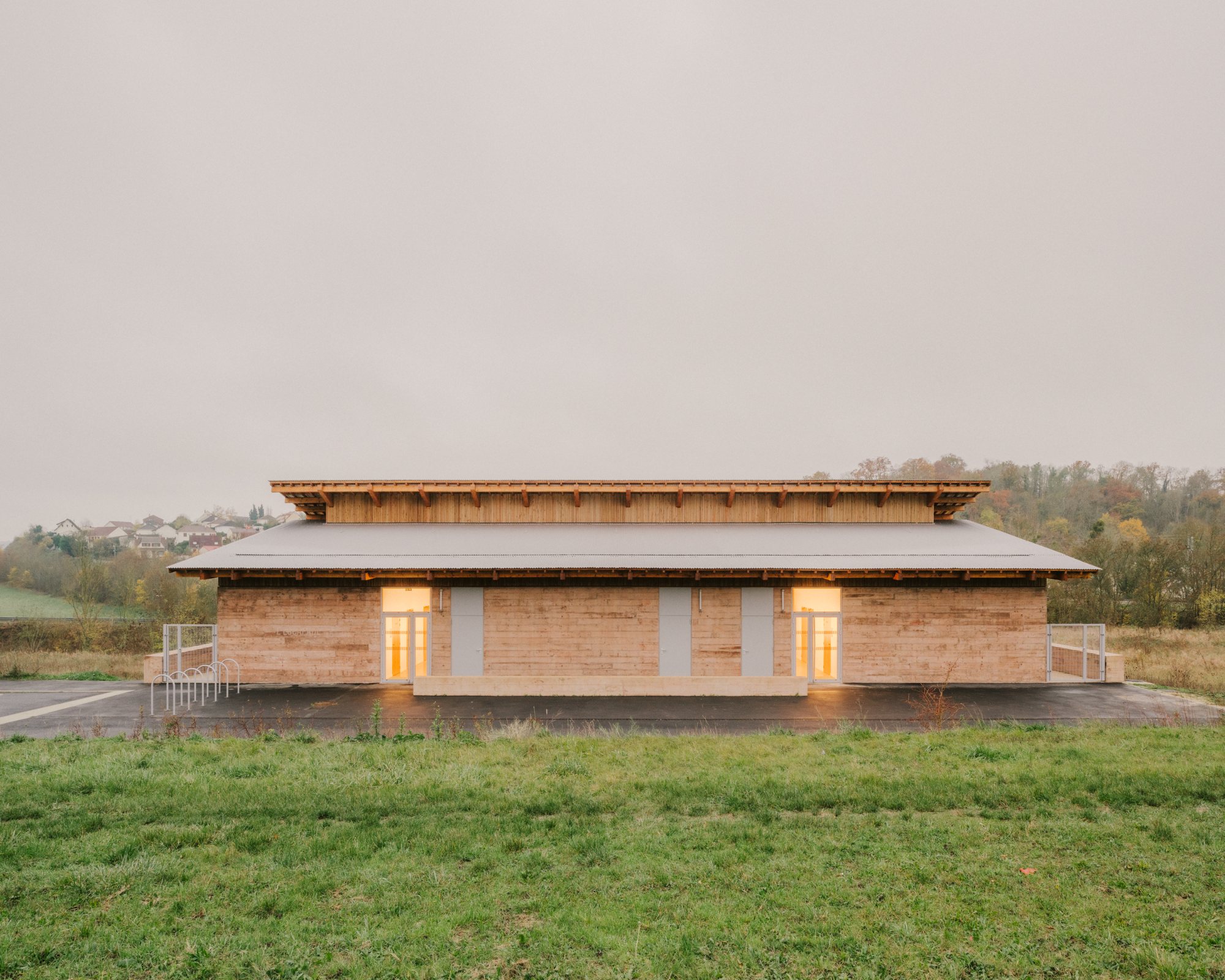
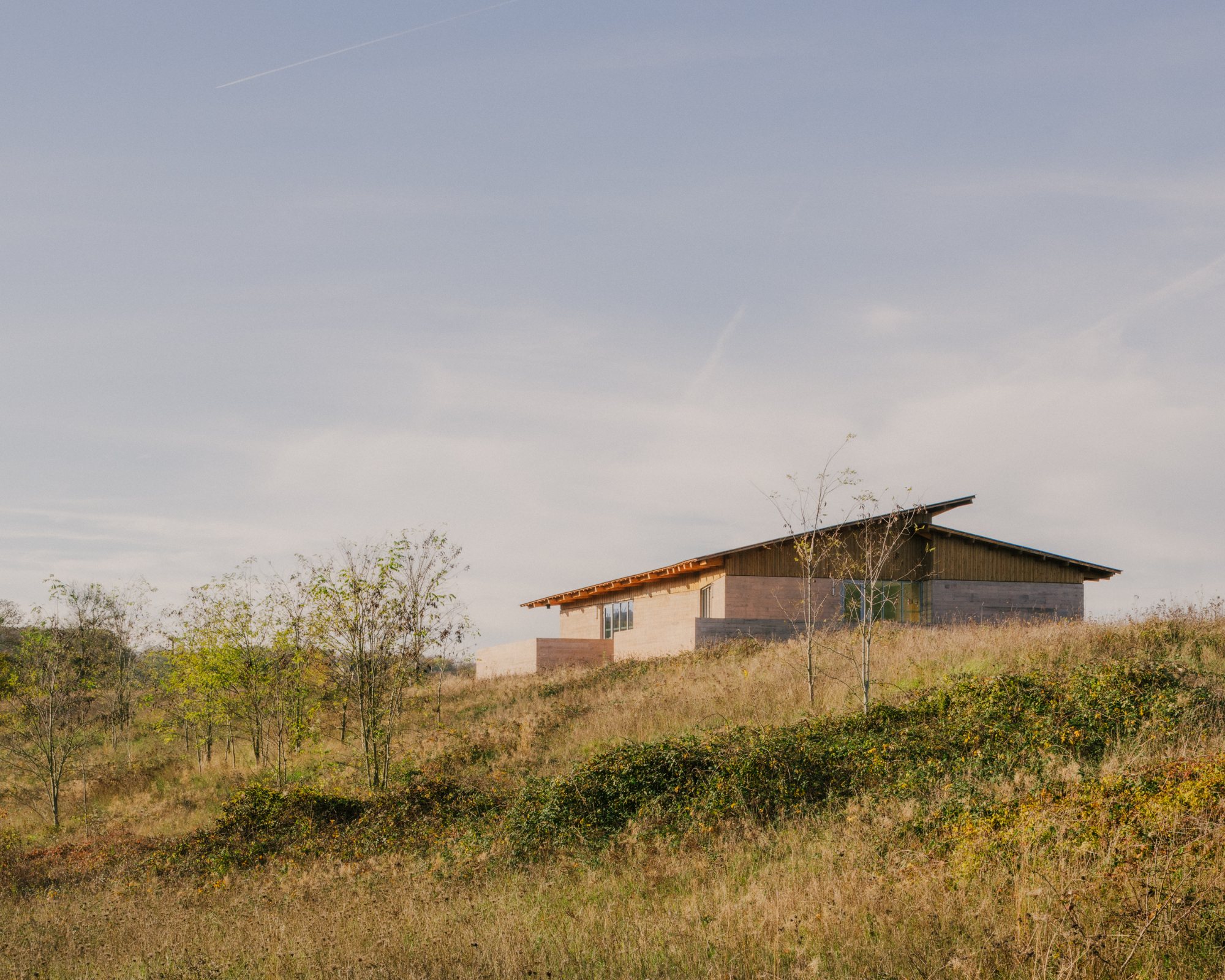
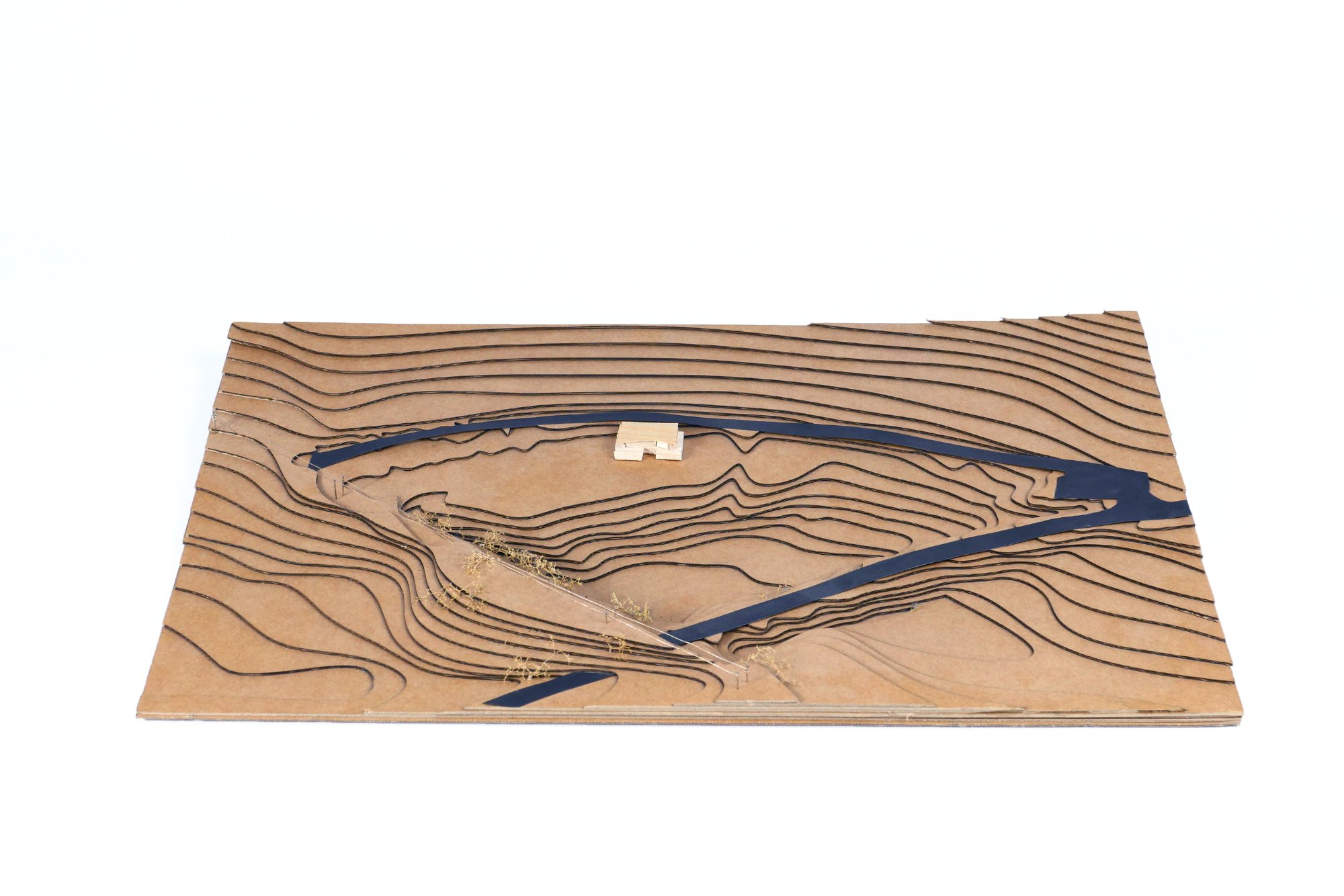
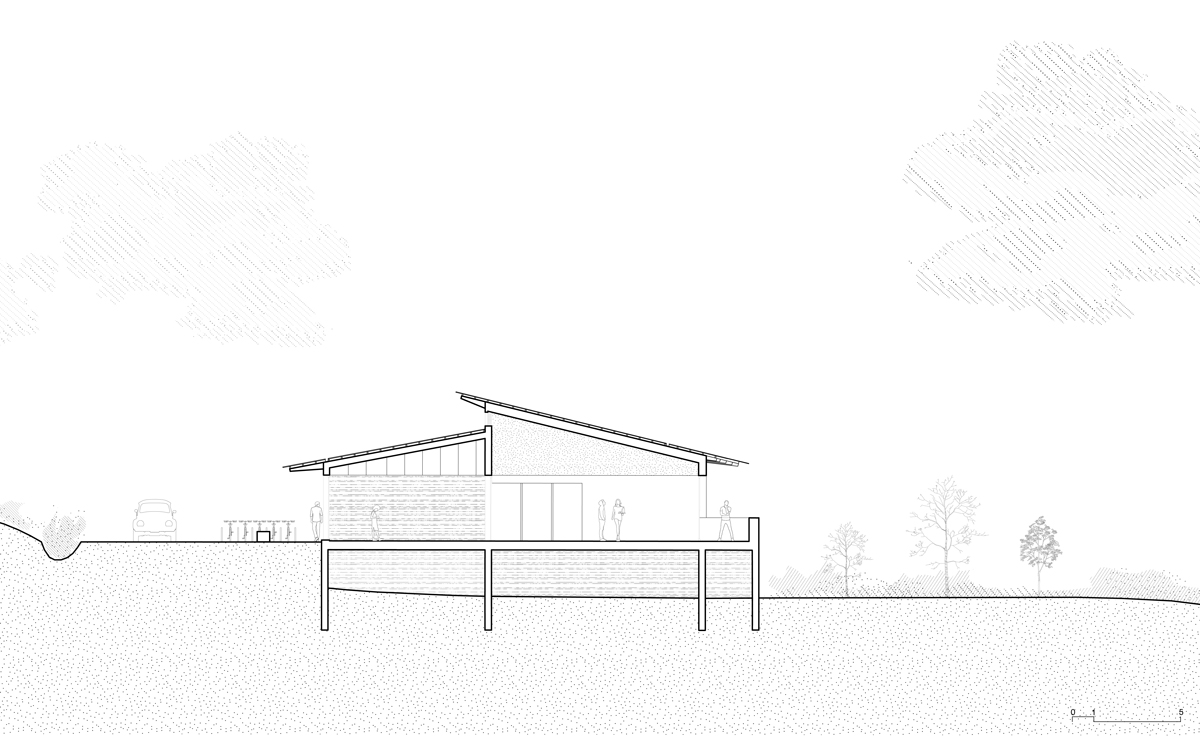
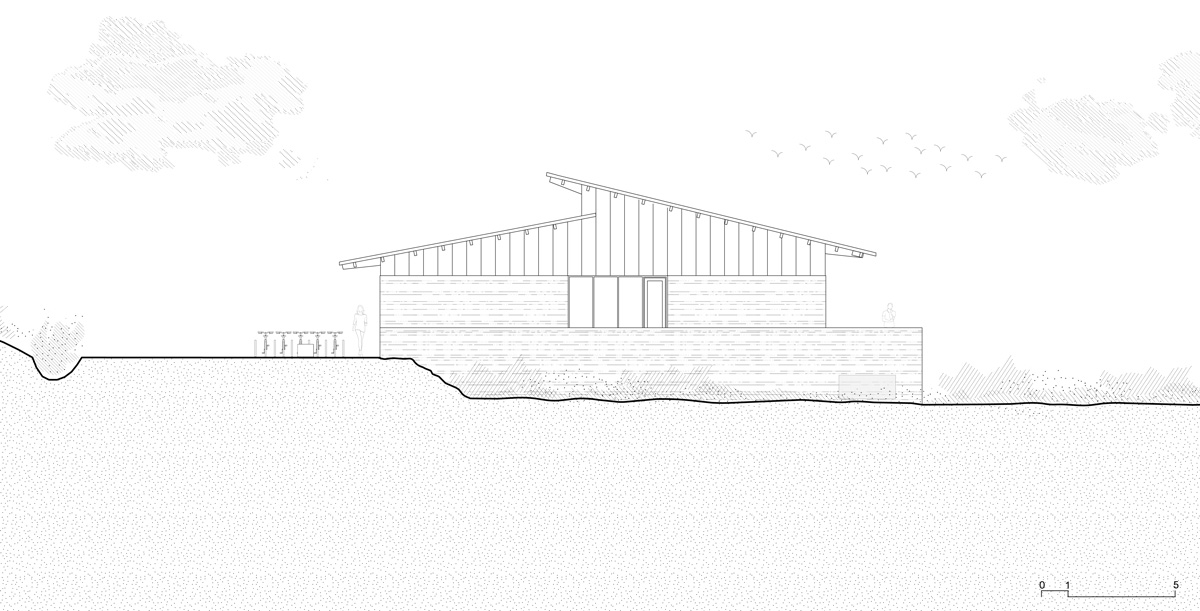
The hall rises from an agricultural site shaped by the road, railway line, and an older local route. This constrained condition informs the building’s relationship to the ground. Its mass-colored concrete plinth extends beyond the enclosed rooms to form retaining edges, terraces, and thresholds, allowing the structure to settle into the slope while framing views across the Mauldre valley. The base is not treated as a simple support, but as an inhabited landscape element.
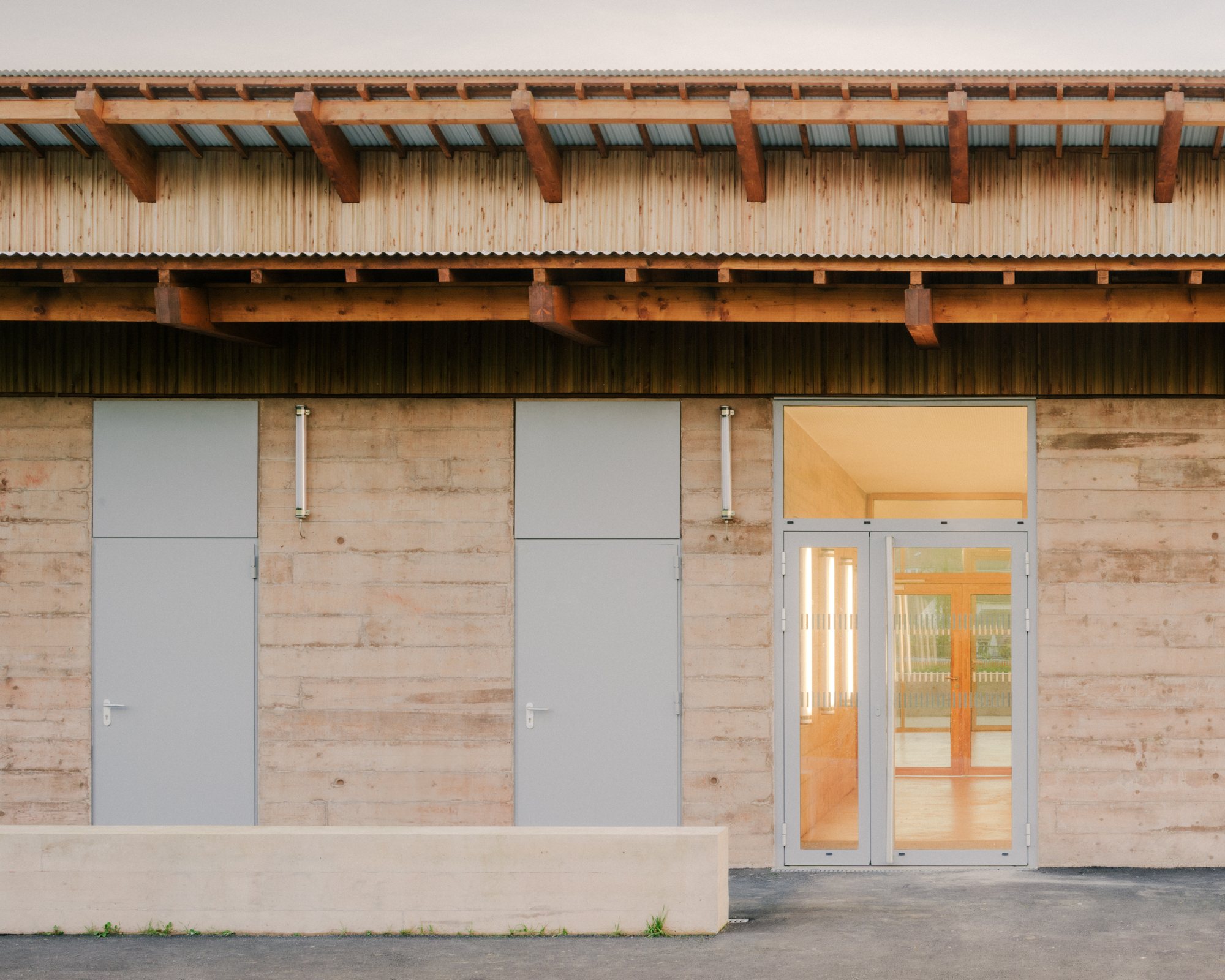
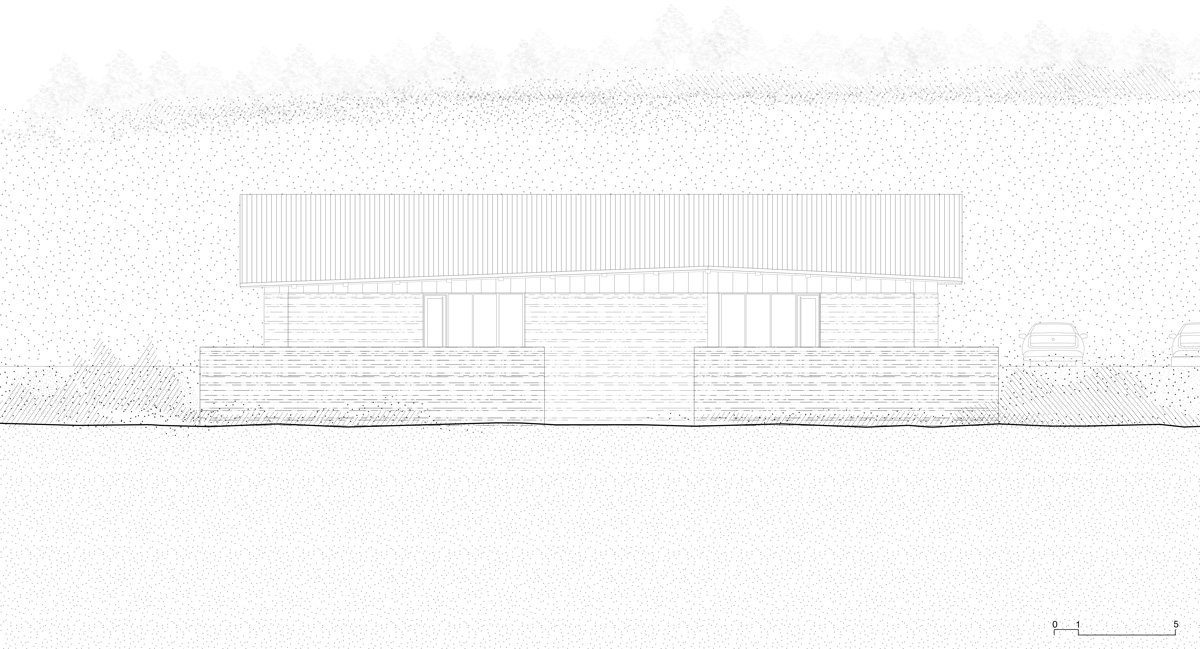
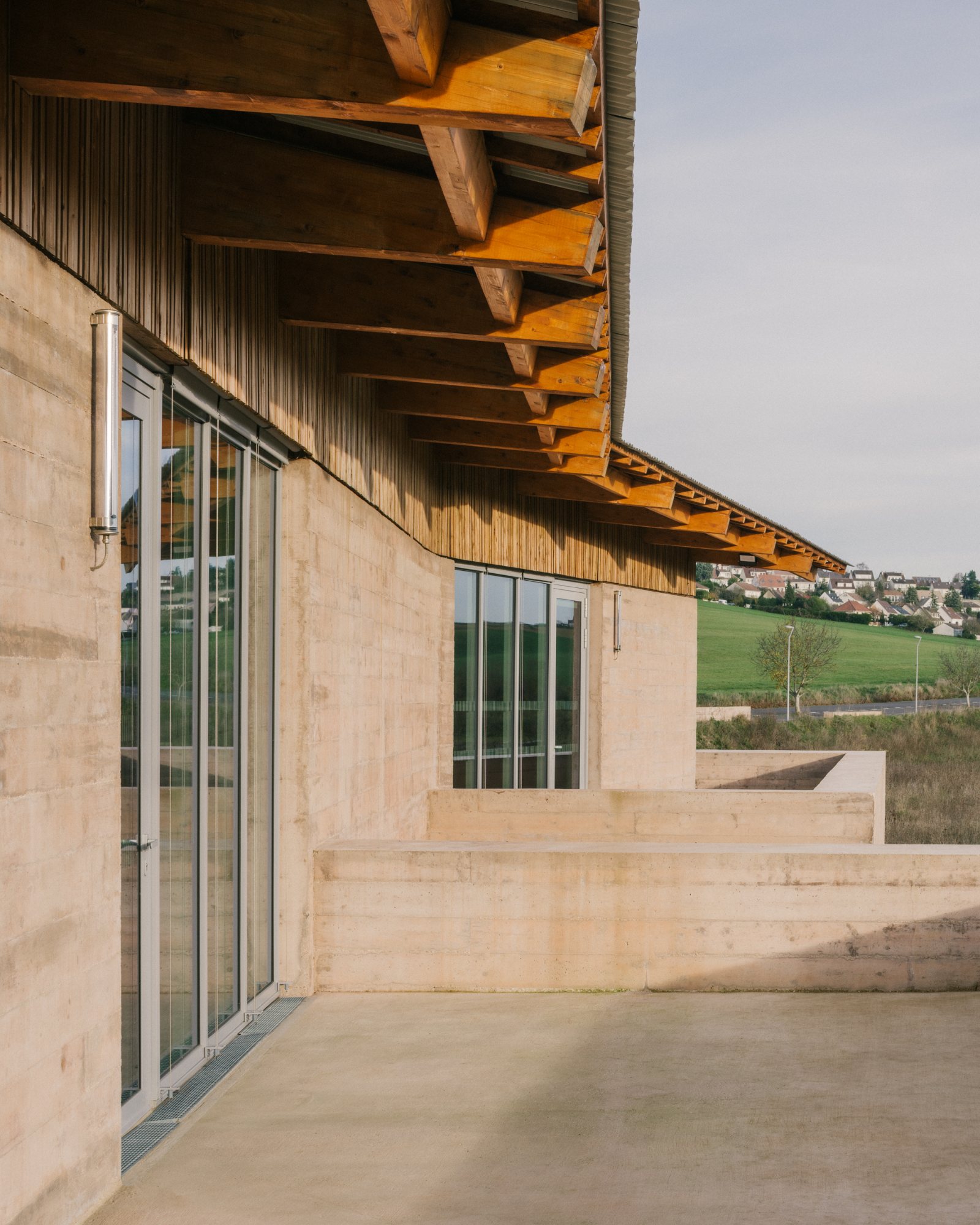
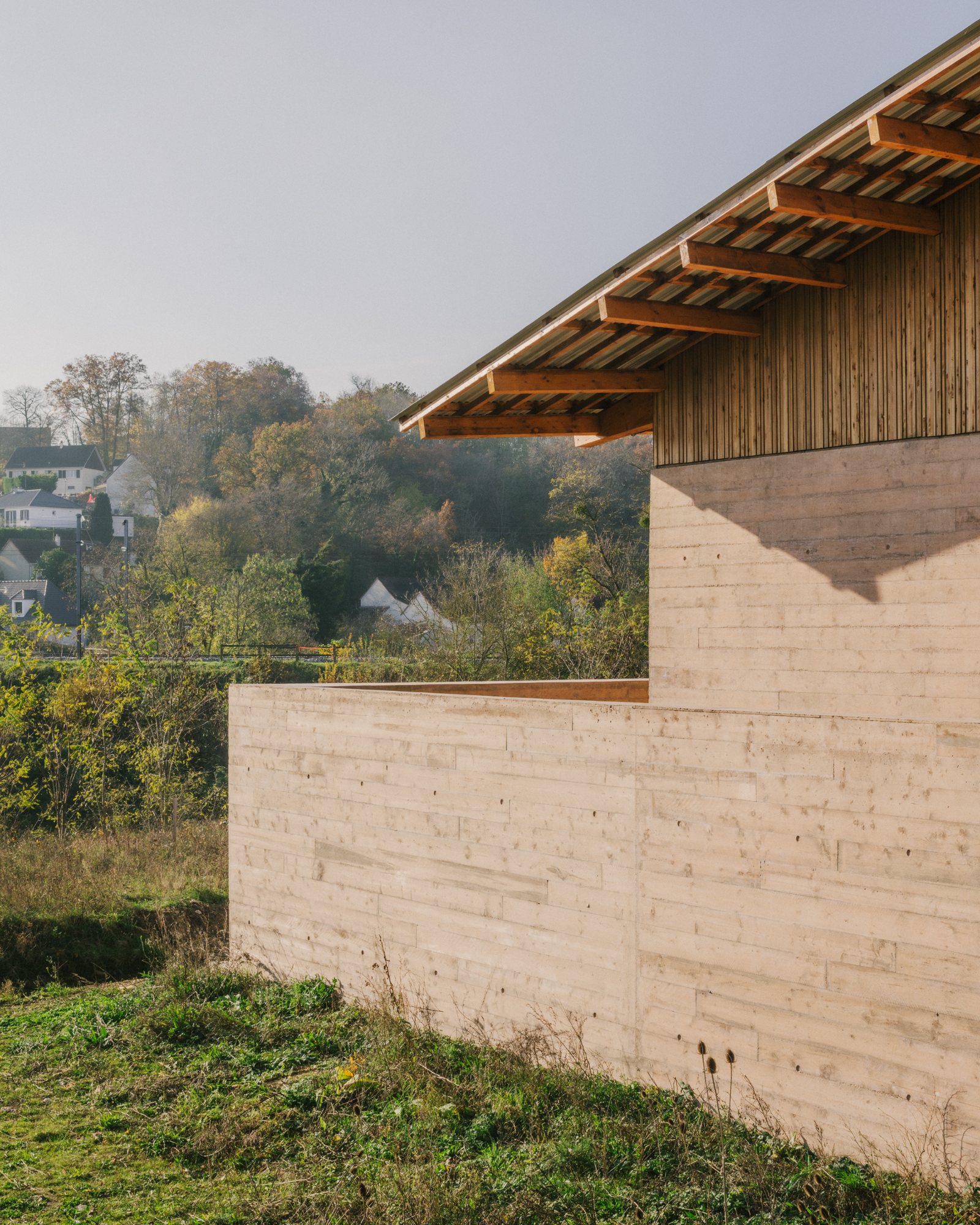
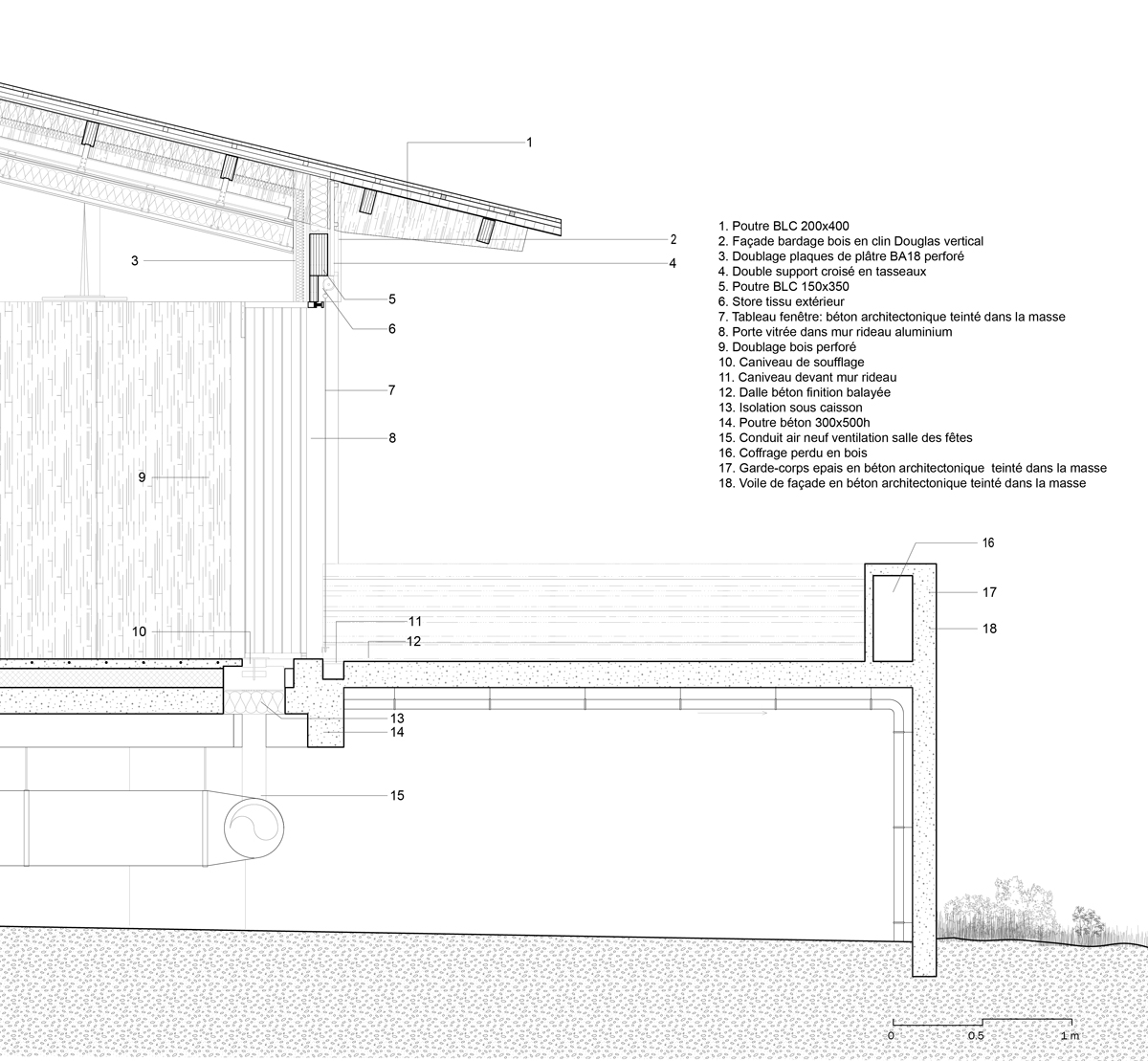
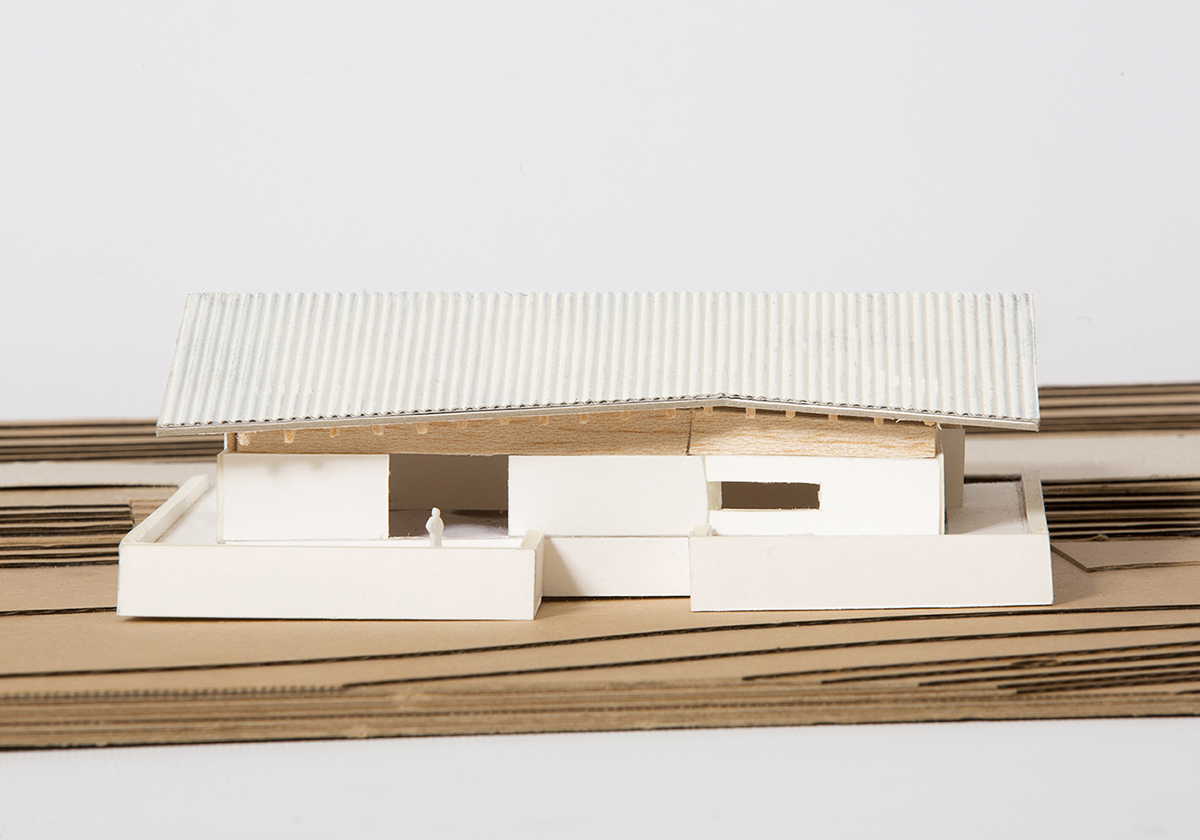
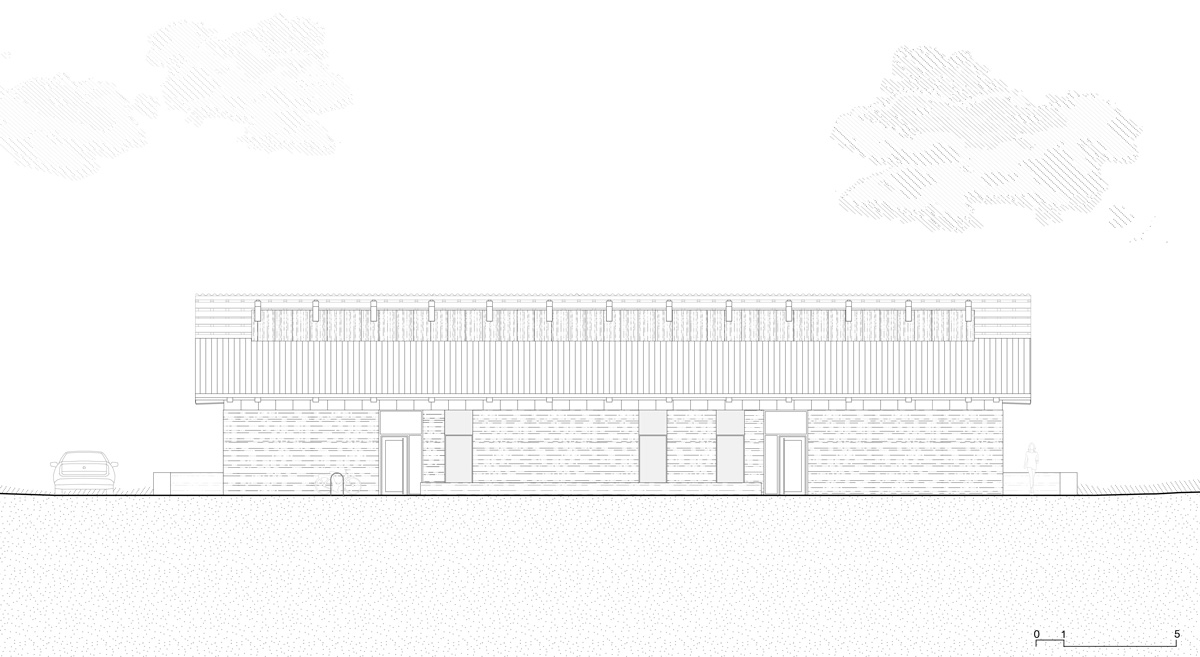
Above this grounded concrete volume, the timber framework and vertical Douglas pine cladding introduce a lighter register. The distinction between the mineral base and the wooden upper layer establishes a clear architectural order, while the two-part metal roof gives the building its most recognizable silhouette. With broad overhangs and a slender gabled profile, the roof mediates between the interior program and the open agricultural surroundings. The plan is deliberately simple, yet refined through a slight fold in the south façade. This adjustment helps organize the main room, orient views, and support the division of the hall into two smaller spaces when required. The movable wall provides the building with operational flexibility, while the folded geometry enables each configuration to retain spatial definition and acoustic legibility.
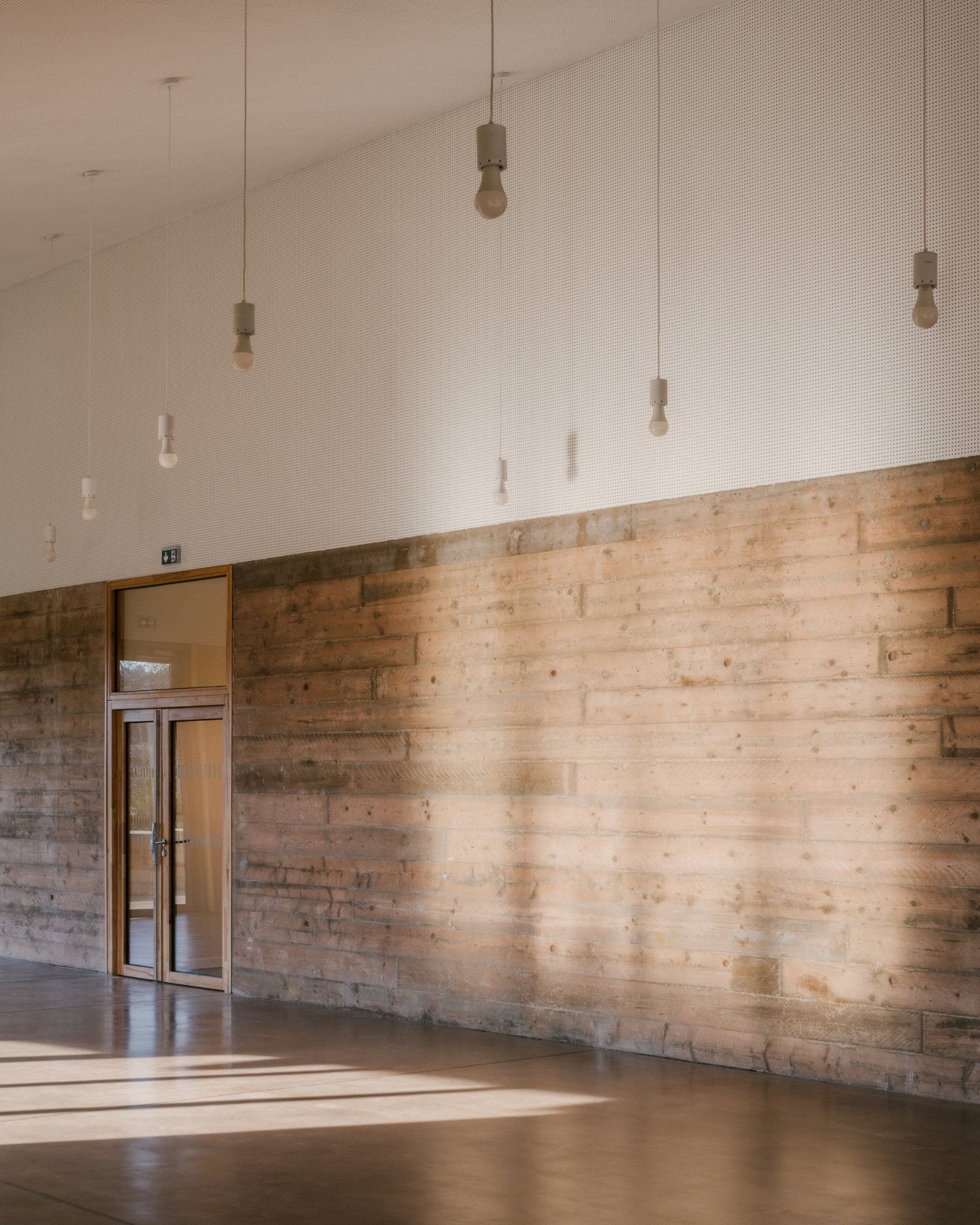
Inside, Graal continues the restrained material logic established outside. The concrete base remains visible along portions of the interior, while insulated peripheral walls are finished with perforated wood panels. Perforated plasterboard contributes to acoustic control above, creating an atmosphere that is robust, tactile, and suited to repeated public use. The interior avoids decorative excess, relying instead on proportion, light, and material continuity.
The environmental strategy follows the same economic approach. A Canadian well tempers incoming air, the mass of the concrete supports thermal inertia, and the roof overhangs reduce direct summer sun. Site planning is similarly restrained: rather than creating a large parking field, the project widens the existing local road to accommodate access, parking, and planting. This approach limits disturbance to local flora and fauna while preserving the open character of the valley. Through its calibrated scale, material clarity, and careful siting, Community Hall, Beynes provides more than a functional gathering space. It translates the geography of a dispersed town into a recognizable civic form, balancing the familiarity of the rural barn with the public role of a contemporary community building.
Project Gallery
Project Location
Address: Le Petit Gland, Route Départementale 119, 78650 Beynes, Yvelines, Île-de-France, France
Location is for general reference and may represent a city or country, not necessarily a precise address.

