

Architects: Faci Leboreiro
Area: 402 m²
Year: 2025
Photography: Rafael Gamo
Lead Architects: Carlos Faci, Marina Leboreiro
Contractor: Gonzalo Rolando
Materials: Exposed concrete, endemic wood, gray gravel, clay, ceramic
Location: Troncones, Guerrero
Country: Mexico
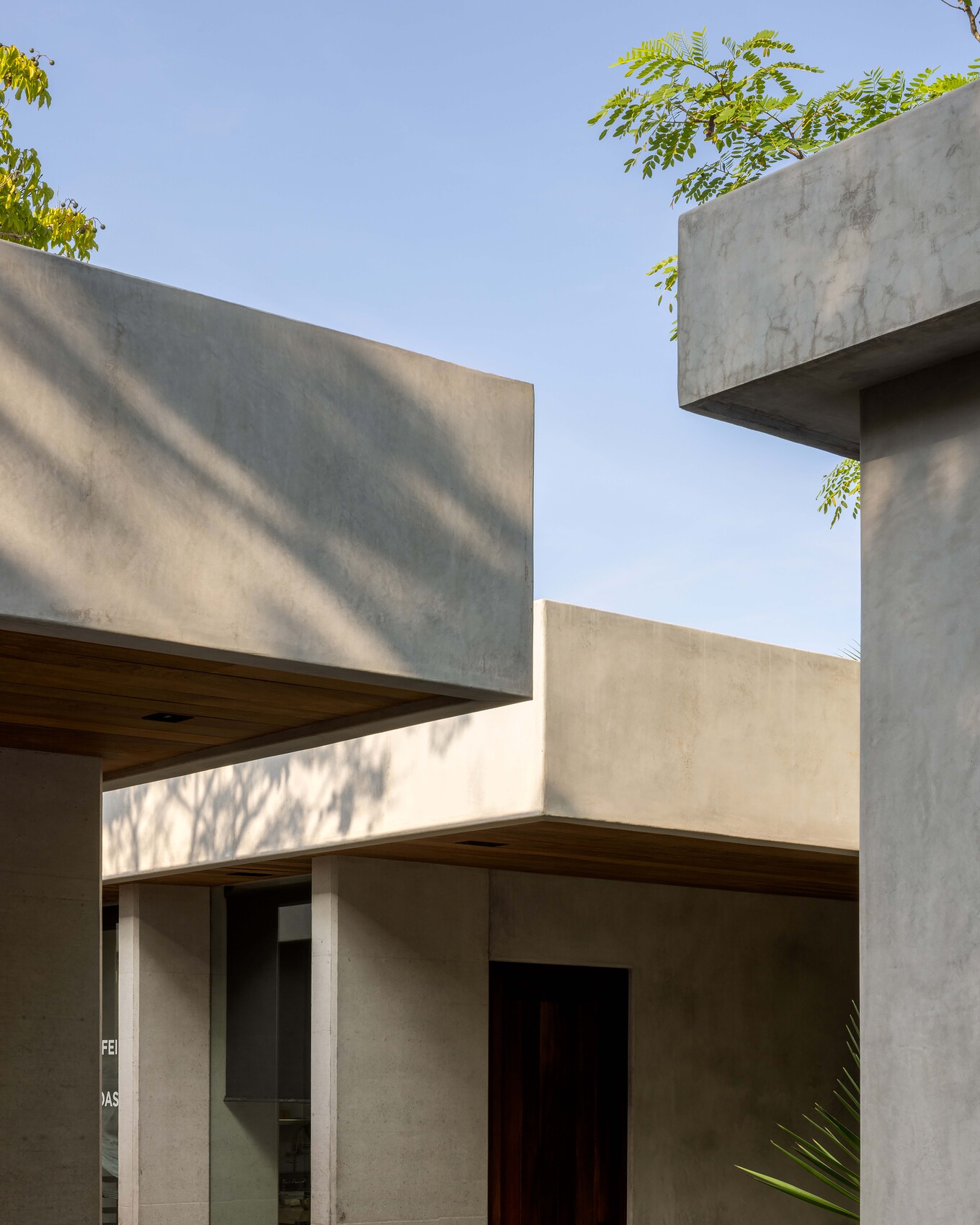
Located in Troncones, Guerrero, Cuattro Casa de Café is a mixed-use hospitality destination designed by Faci Leboreiro that combines a café, restaurant, bakery, artisan retail space, and private office within a cohesive architectural framework. The project responds directly to its coastal setting through climate-conscious design strategies and a strong commitment to preserving existing vegetation. Mature trees were retained and incorporated into the spatial organization, helping define circulation patterns, outdoor areas, and environmental performance. A restrained material palette of exposed concrete, endemic wood, and permeable gravel contributes to thermal efficiency while reinforcing the project’s connection to its surroundings. Locally crafted furnishings, ceramics, and lighting elements enrich the interiors with regional character and support local craftsmanship. Through the integration of architecture, landscape, and passive environmental systems, the project establishes a contemporary yet contextually grounded destination that balances functionality, comfort, and cultural identity.
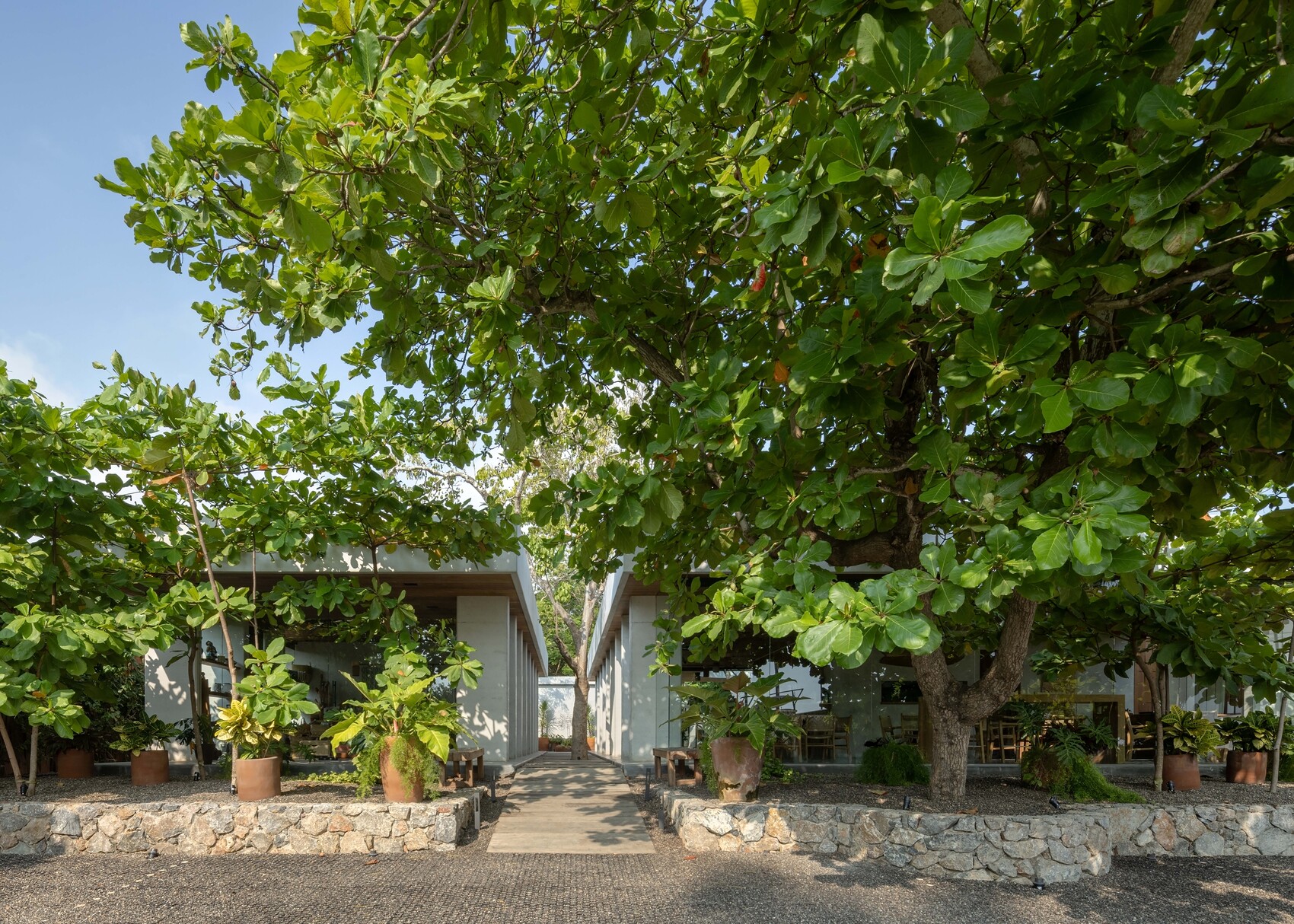
The defining quality of Cuattro Casa de Café is its ability to transform the site’s natural conditions into generators of architectural form. Rather than treating the landscape as a backdrop, the design places existing vegetation at the center of the planning process, allowing the project to emerge from the terrain with minimal disruption. This approach creates a built environment where the boundaries between architecture and nature remain deliberately porous, encouraging a continuous relationship between occupants and the surrounding coastal ecosystem.
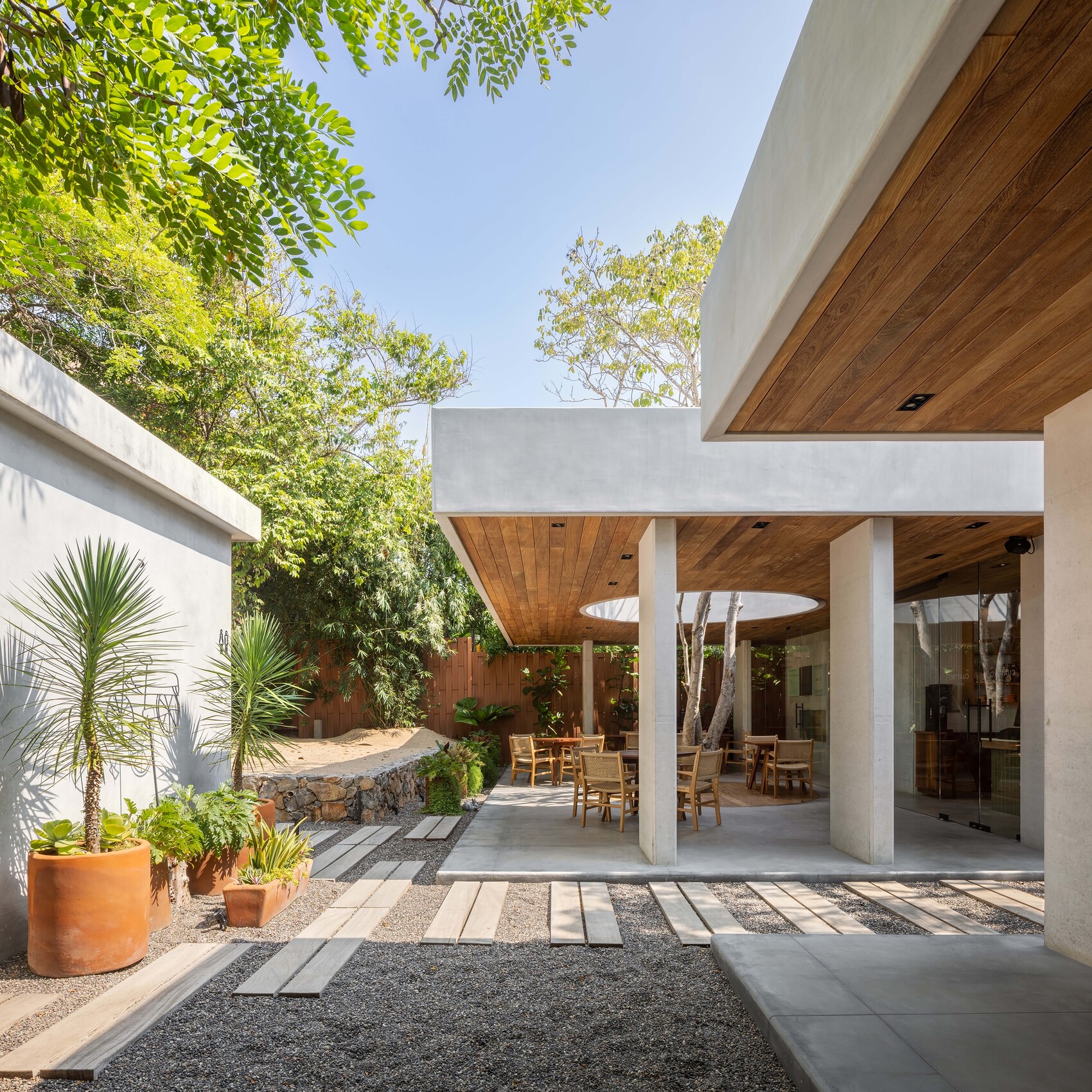
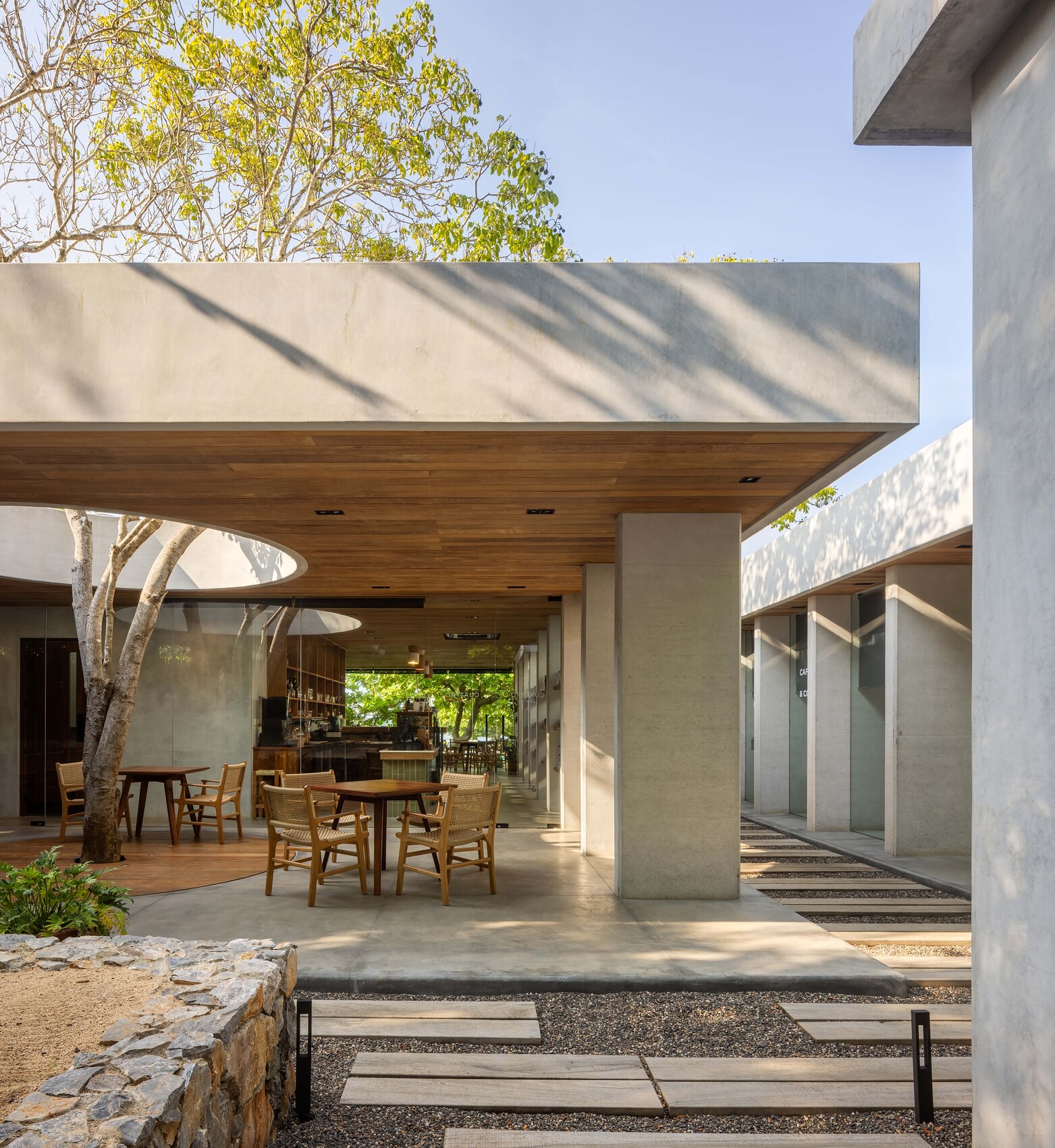
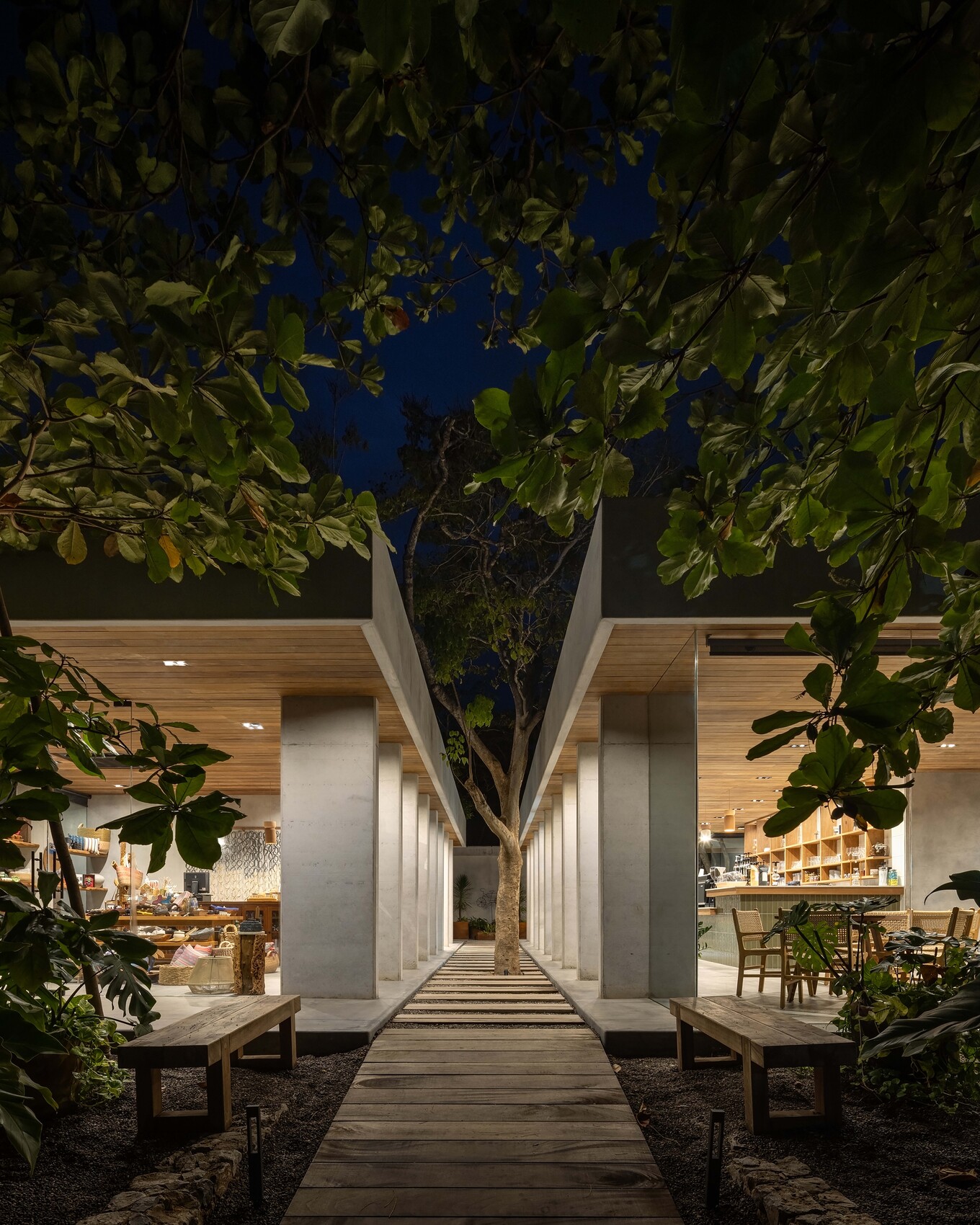
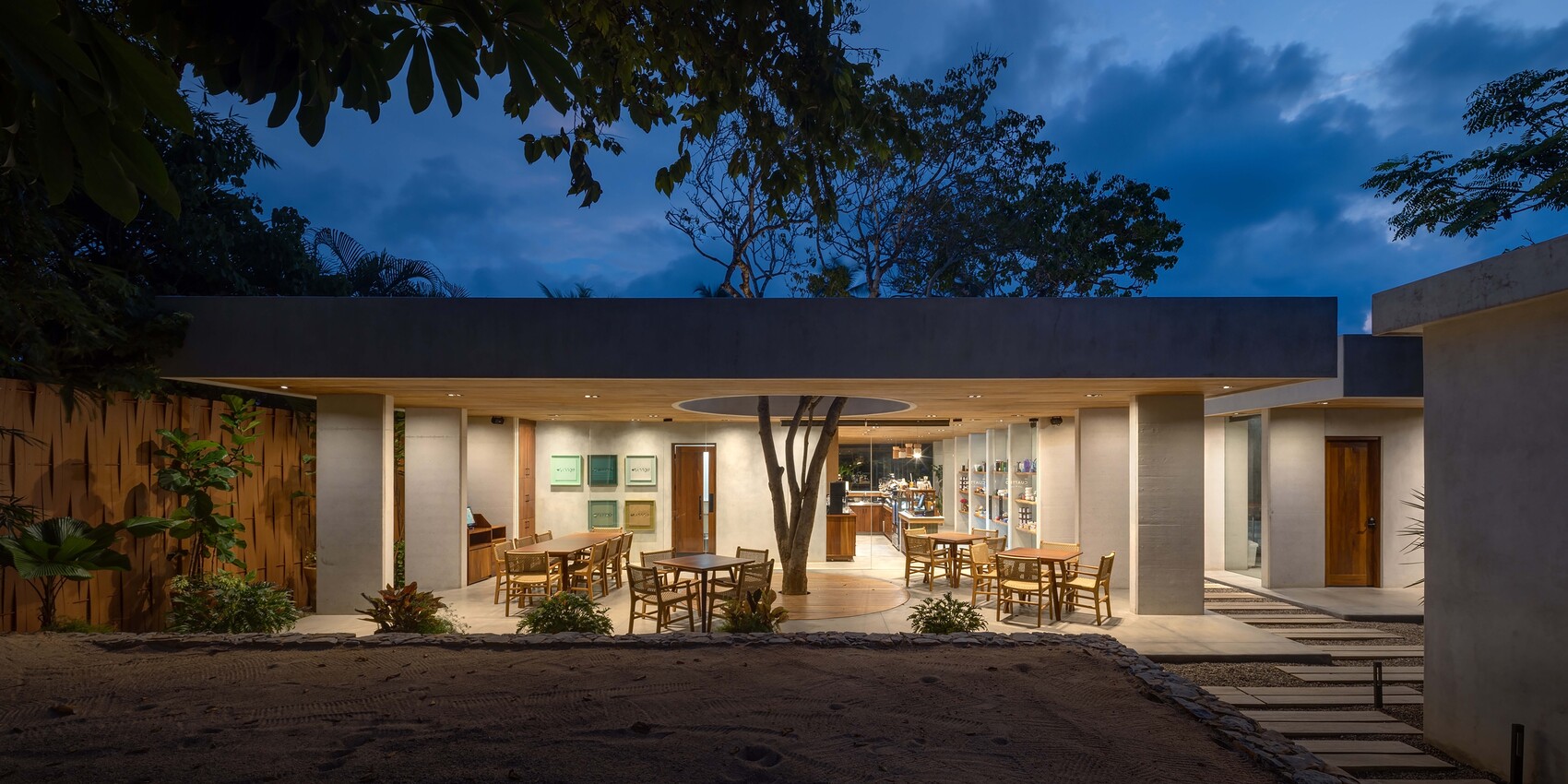
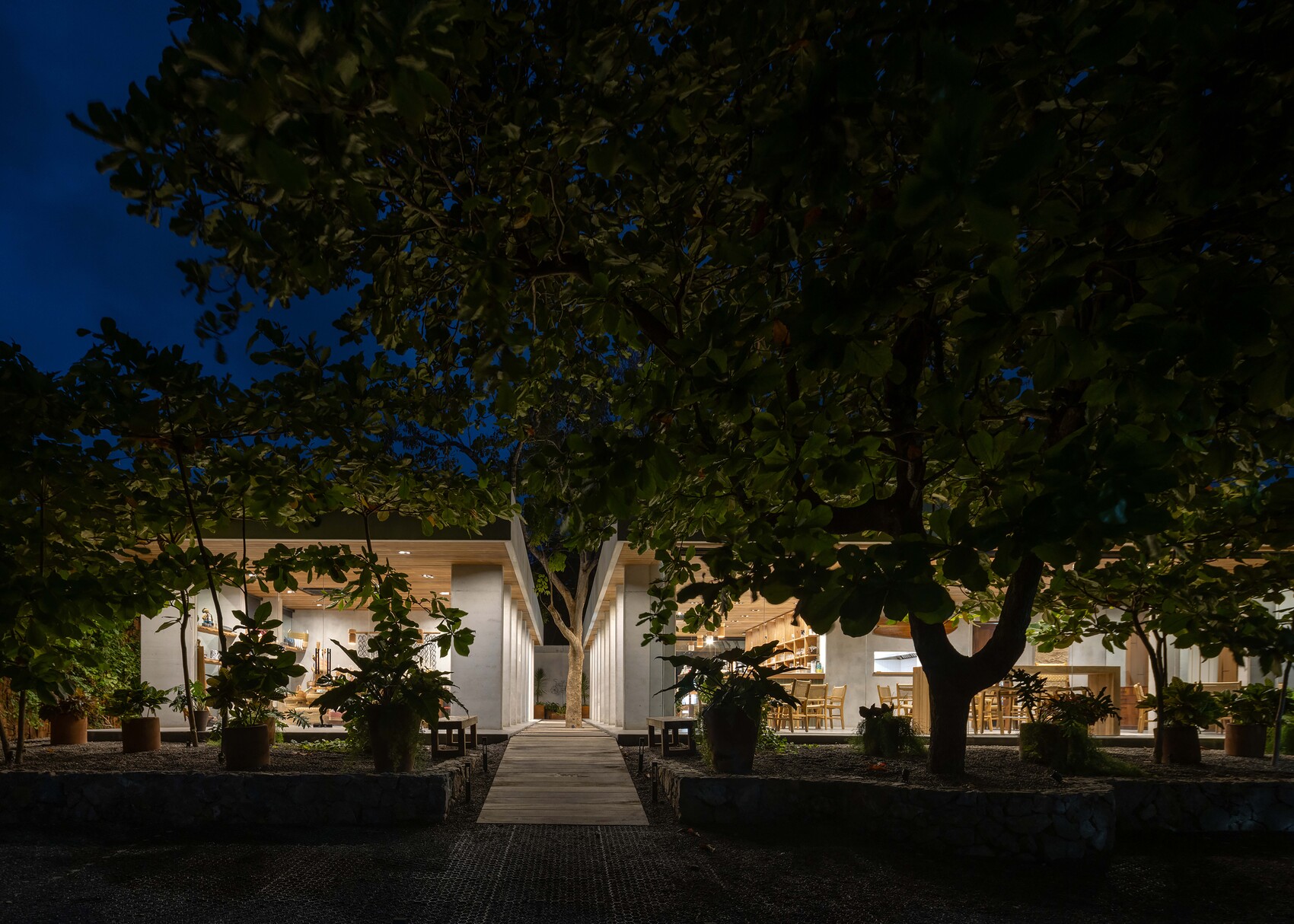
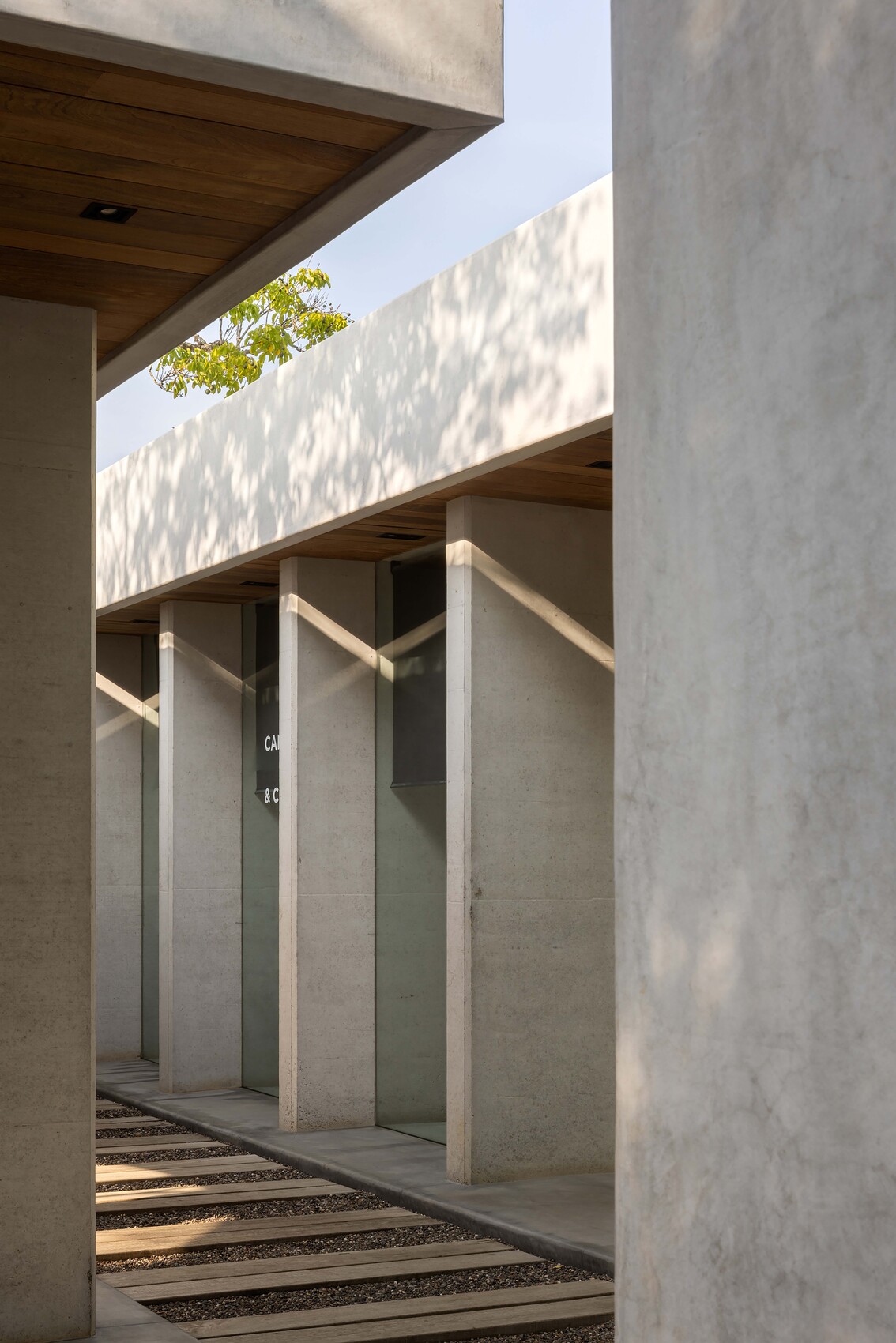
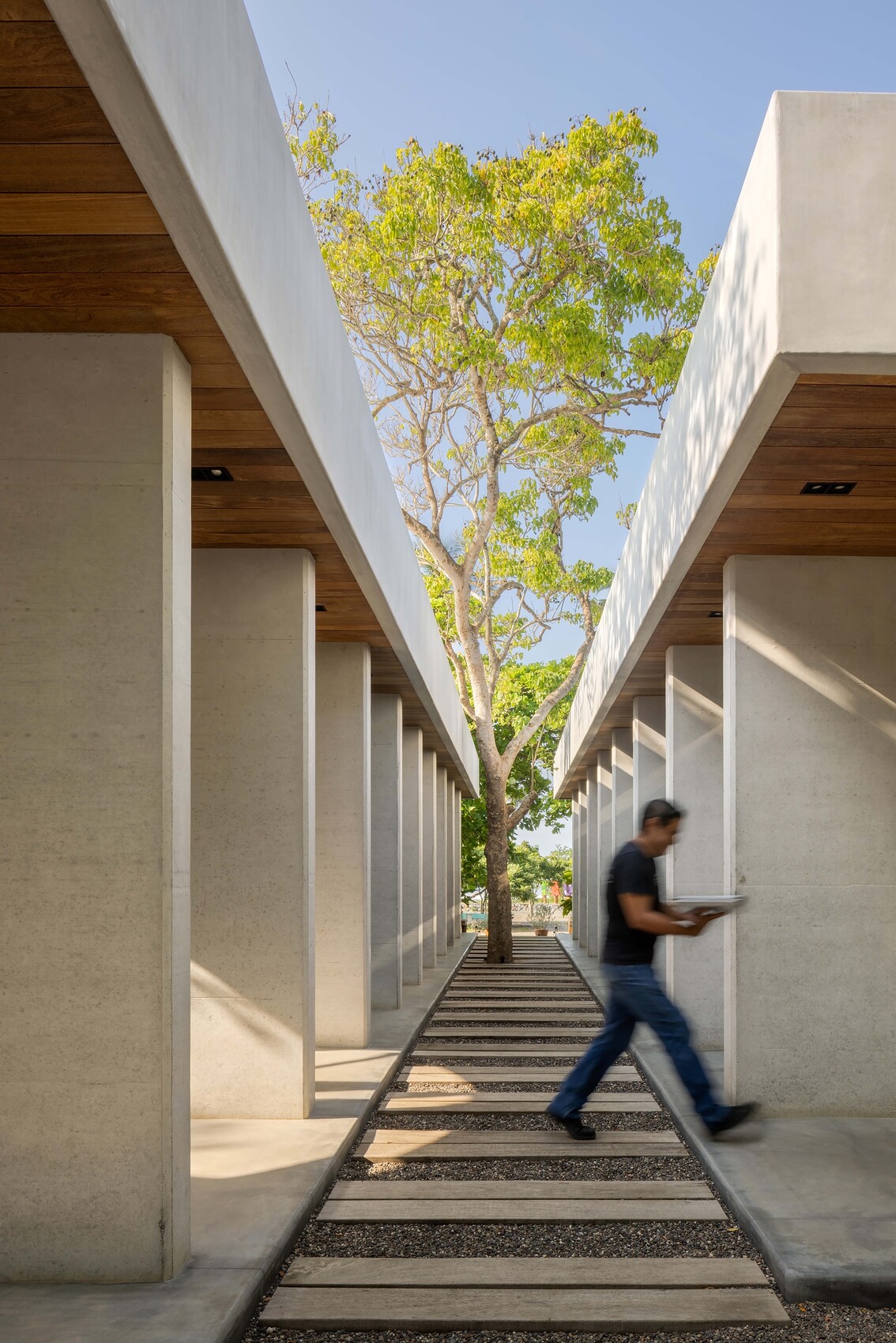
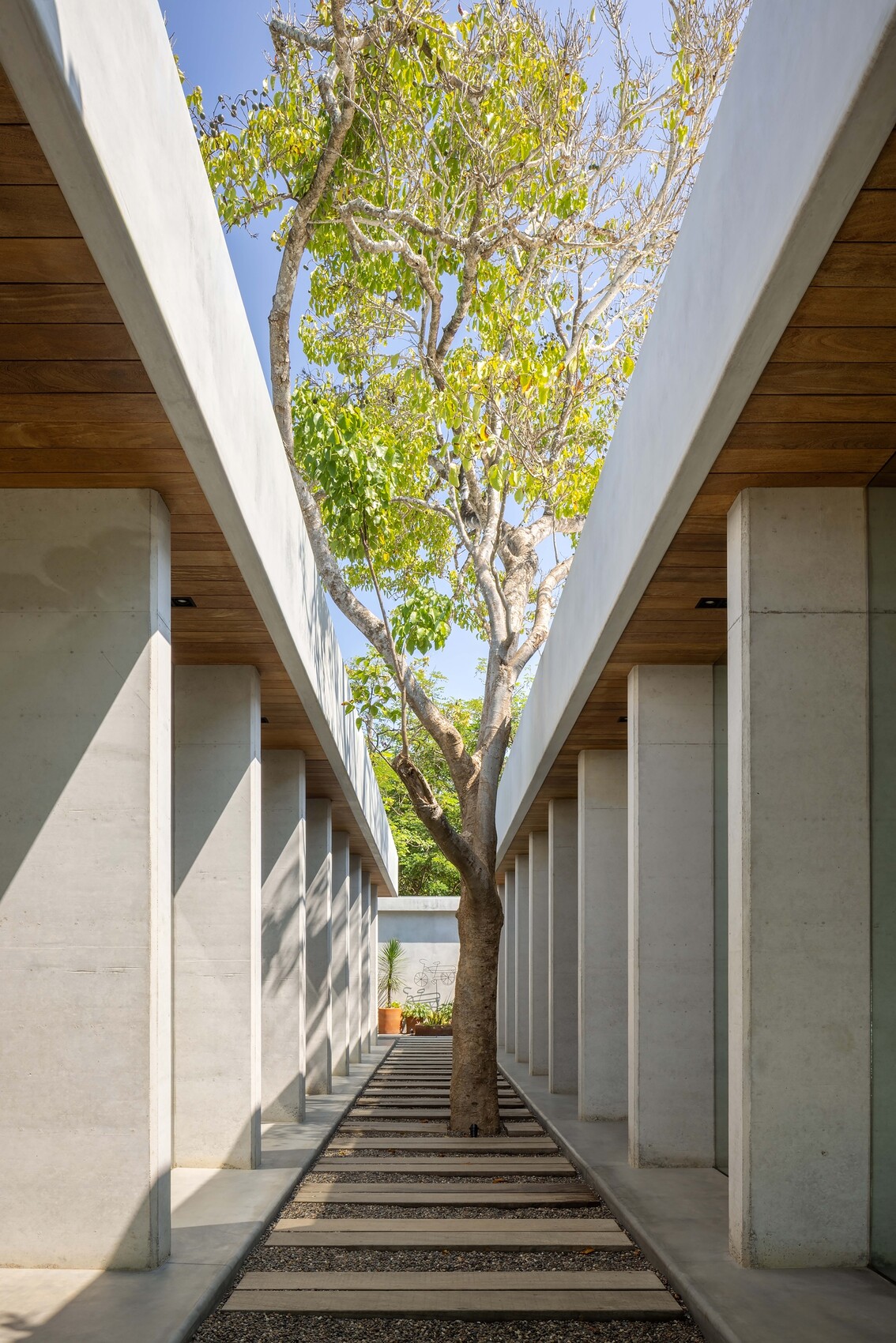
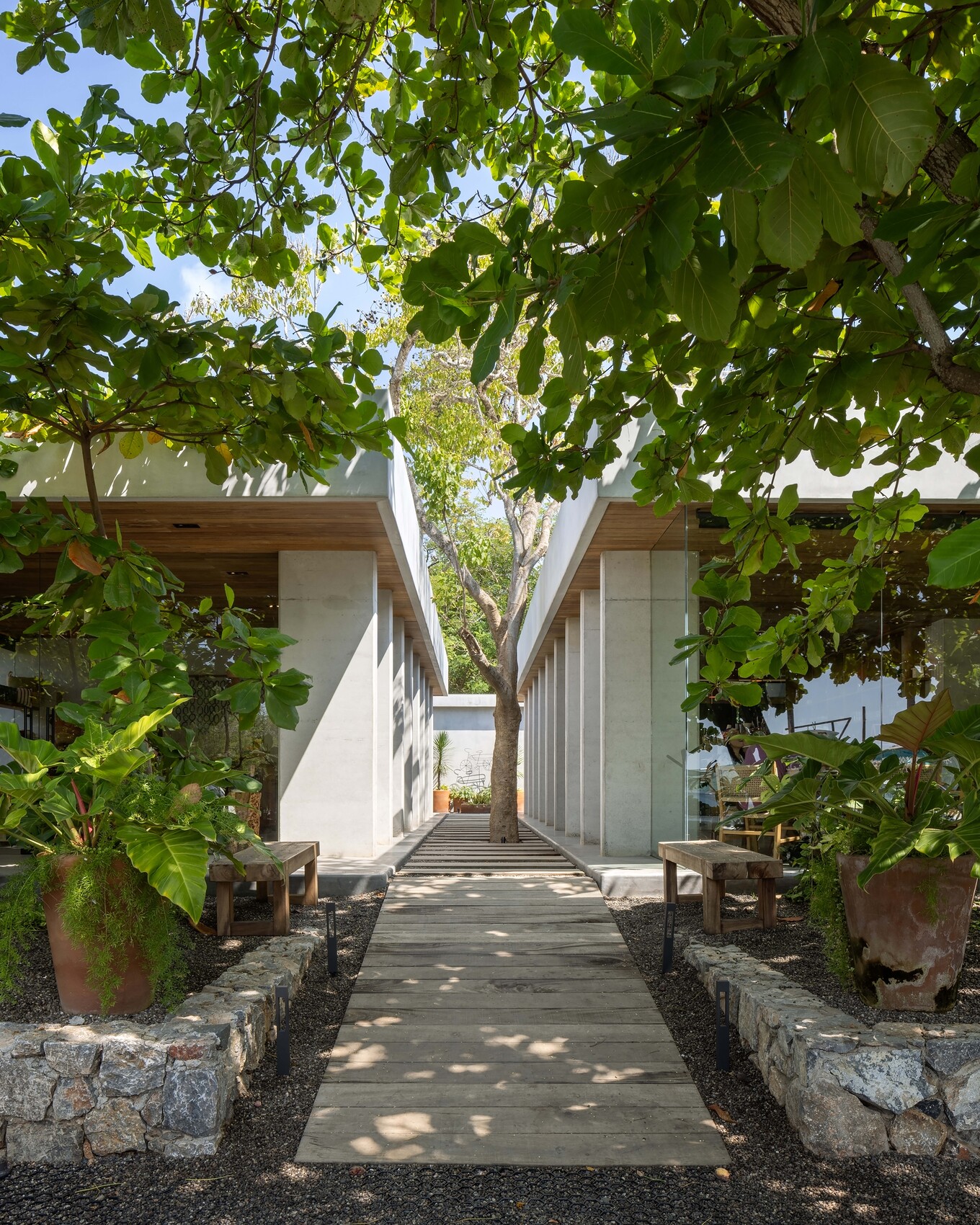
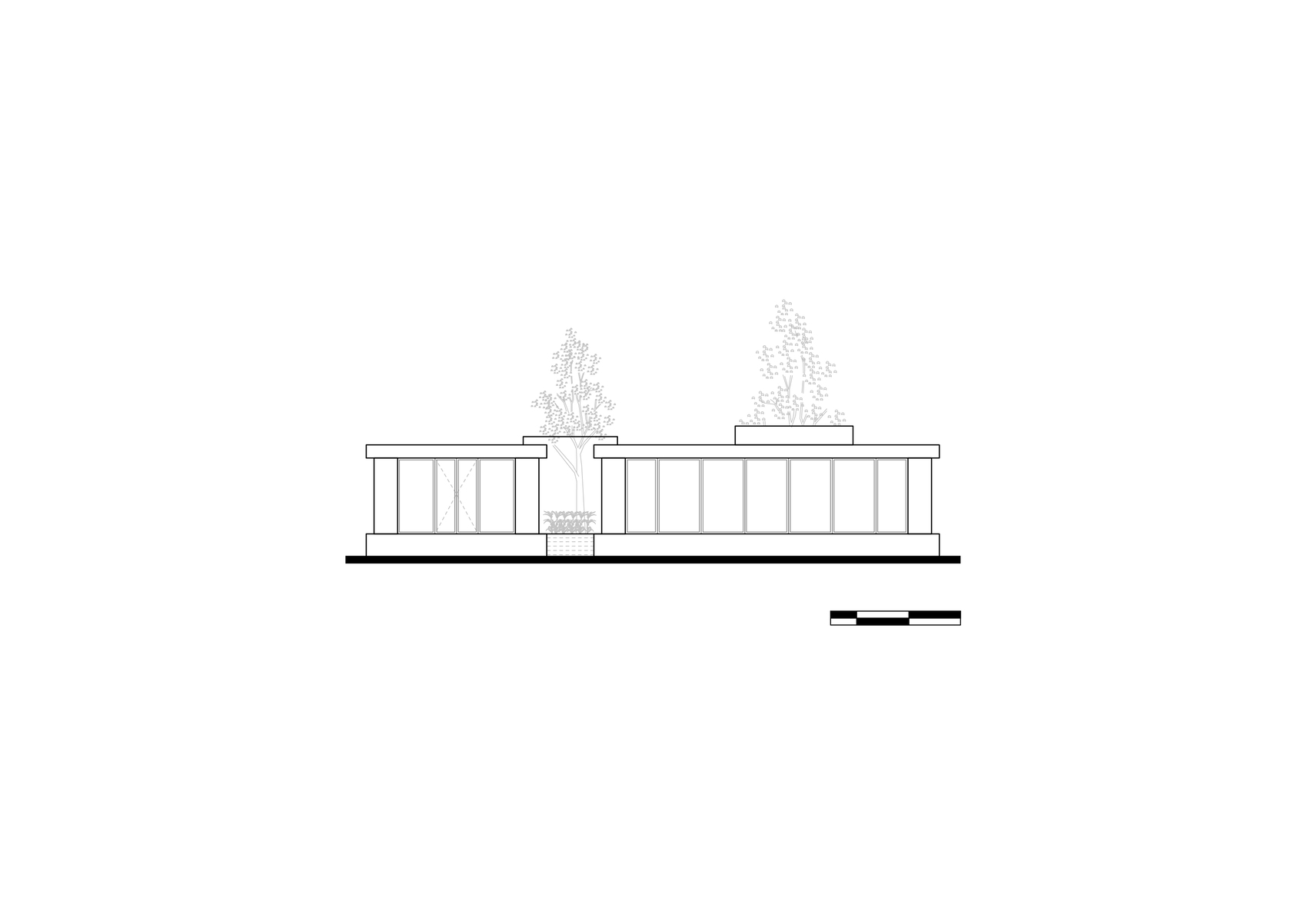
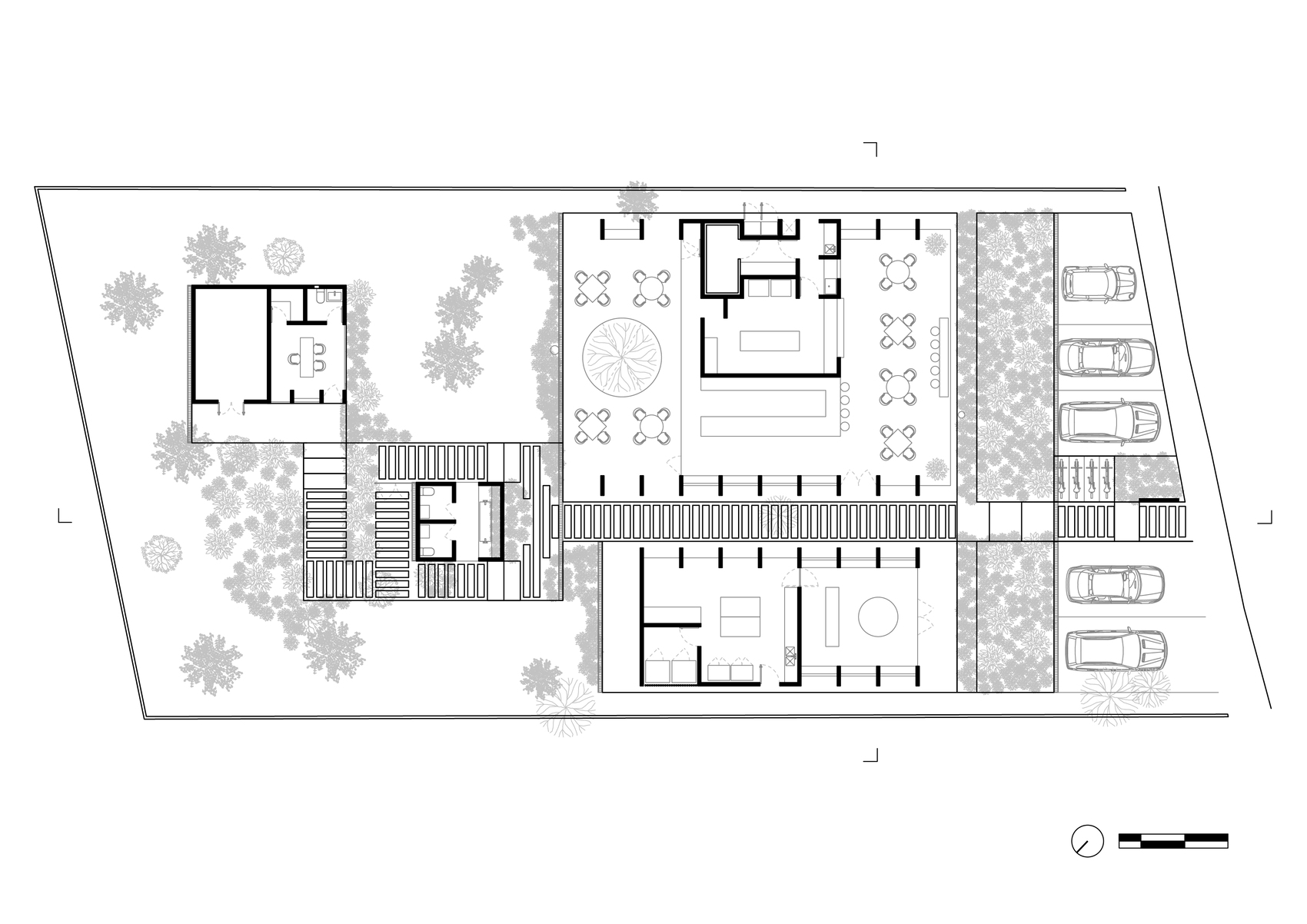
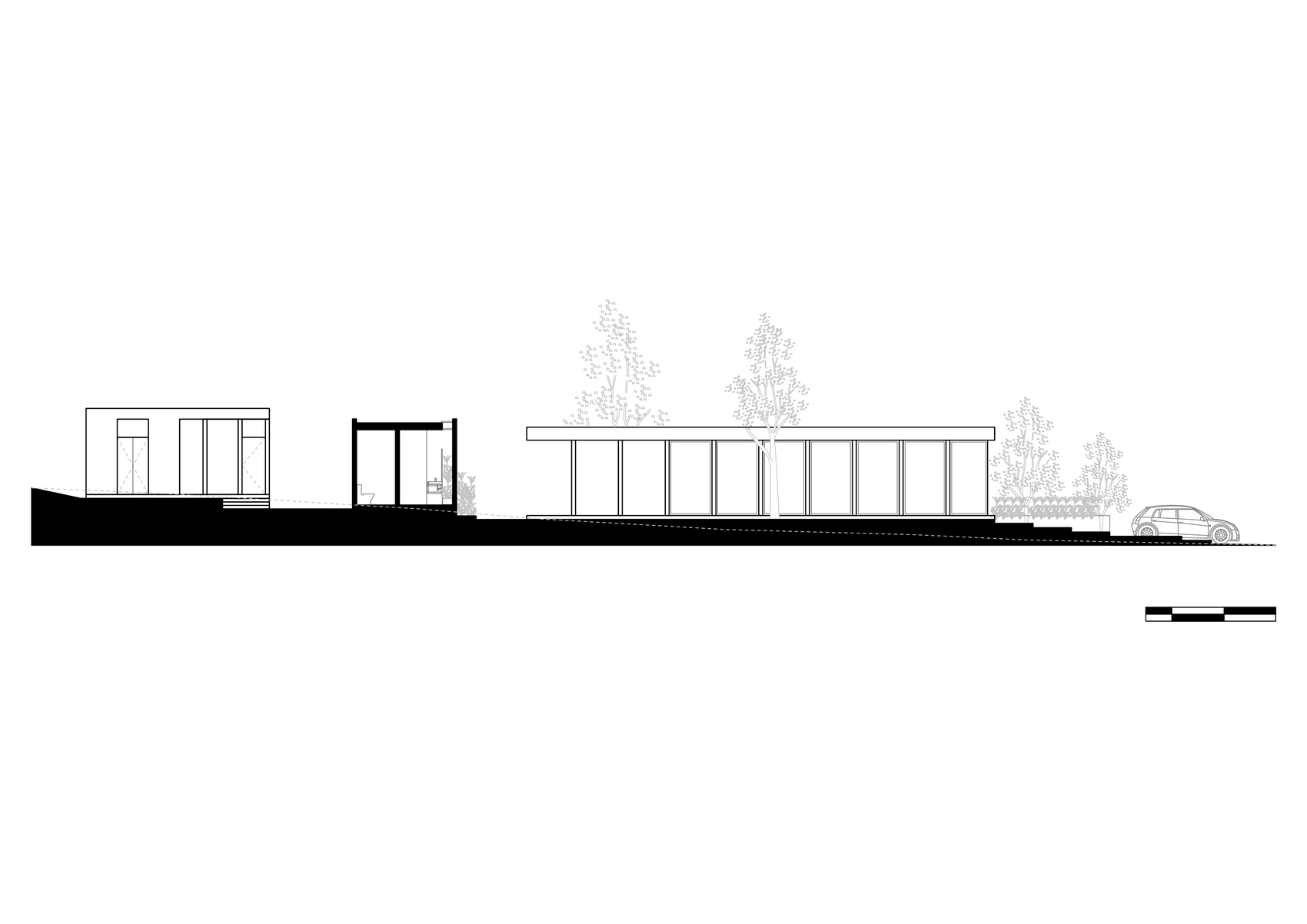
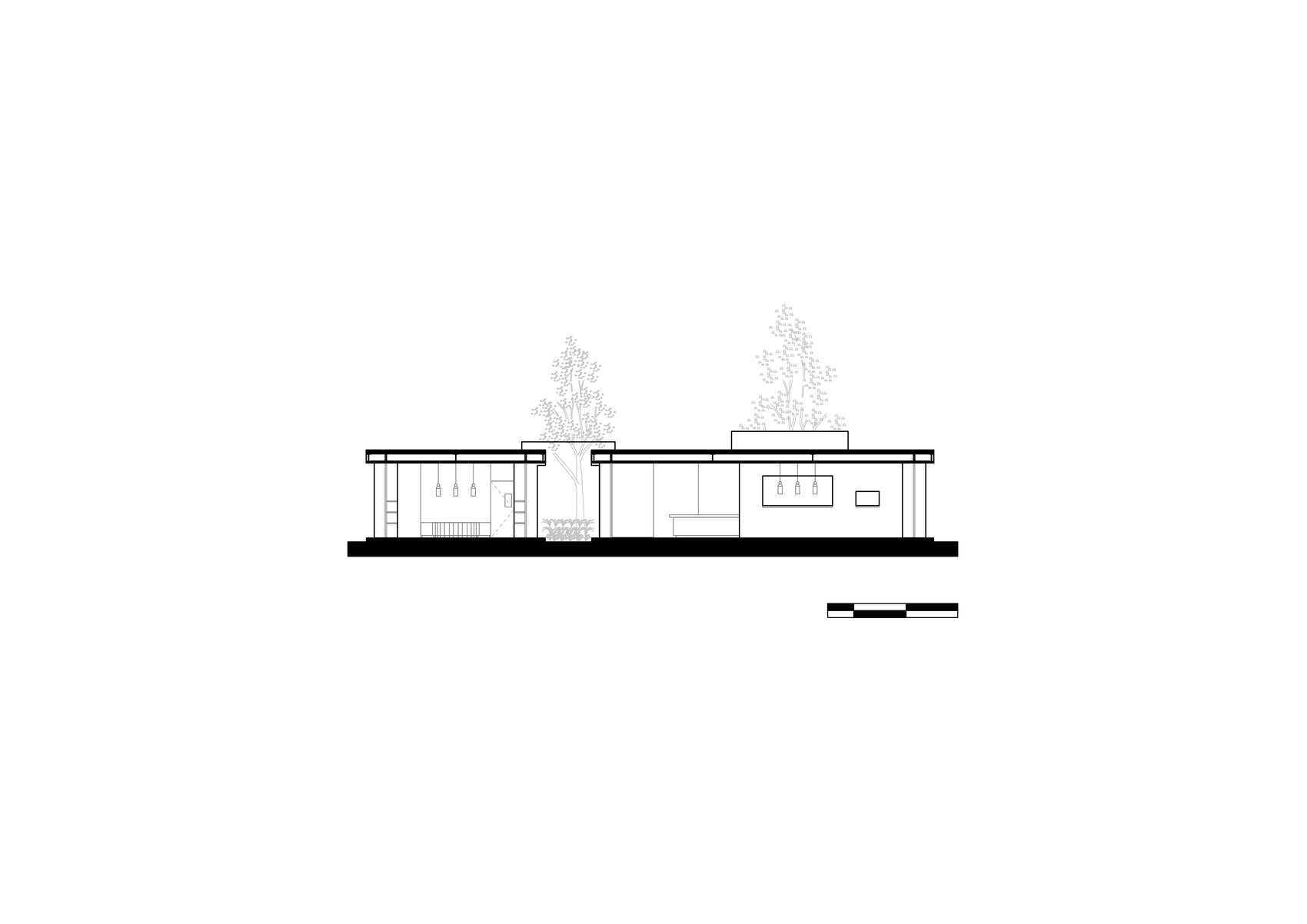
Situated just minutes from the Pacific shoreline, the project is organized as a series of interconnected volumes separated by a central open-air corridor. Preserved trees shape this outdoor passage, establishing a spatial sequence that introduces daylight, frames views, and promotes natural airflow throughout the complex. One of the existing trees extends through an opening in the terrace slab, becoming a focal element that illustrates the project’s commitment to working with, rather than against, the site’s preexisting conditions. The resulting composition feels open and adaptable while maintaining a clear organizational logic.
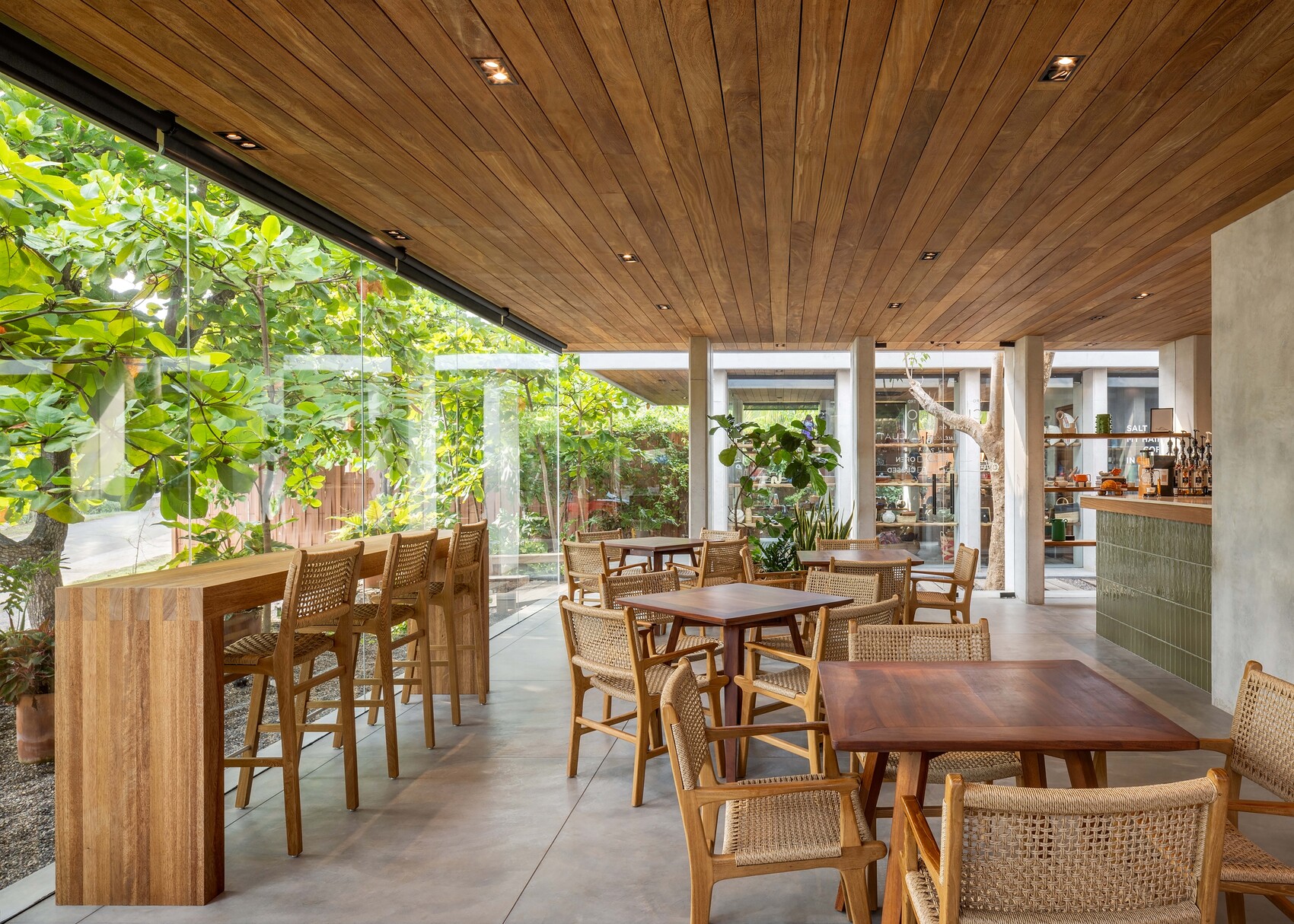
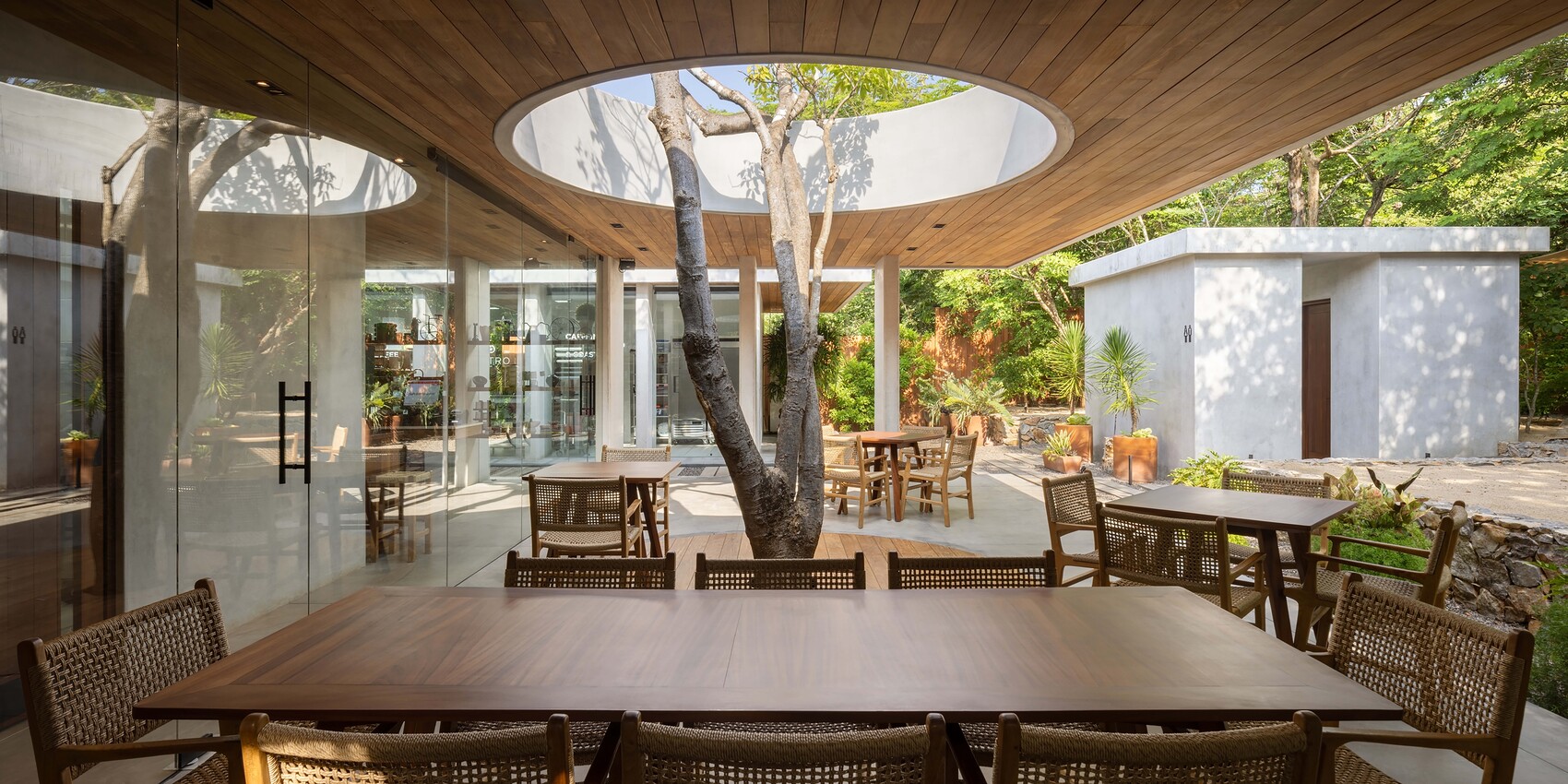
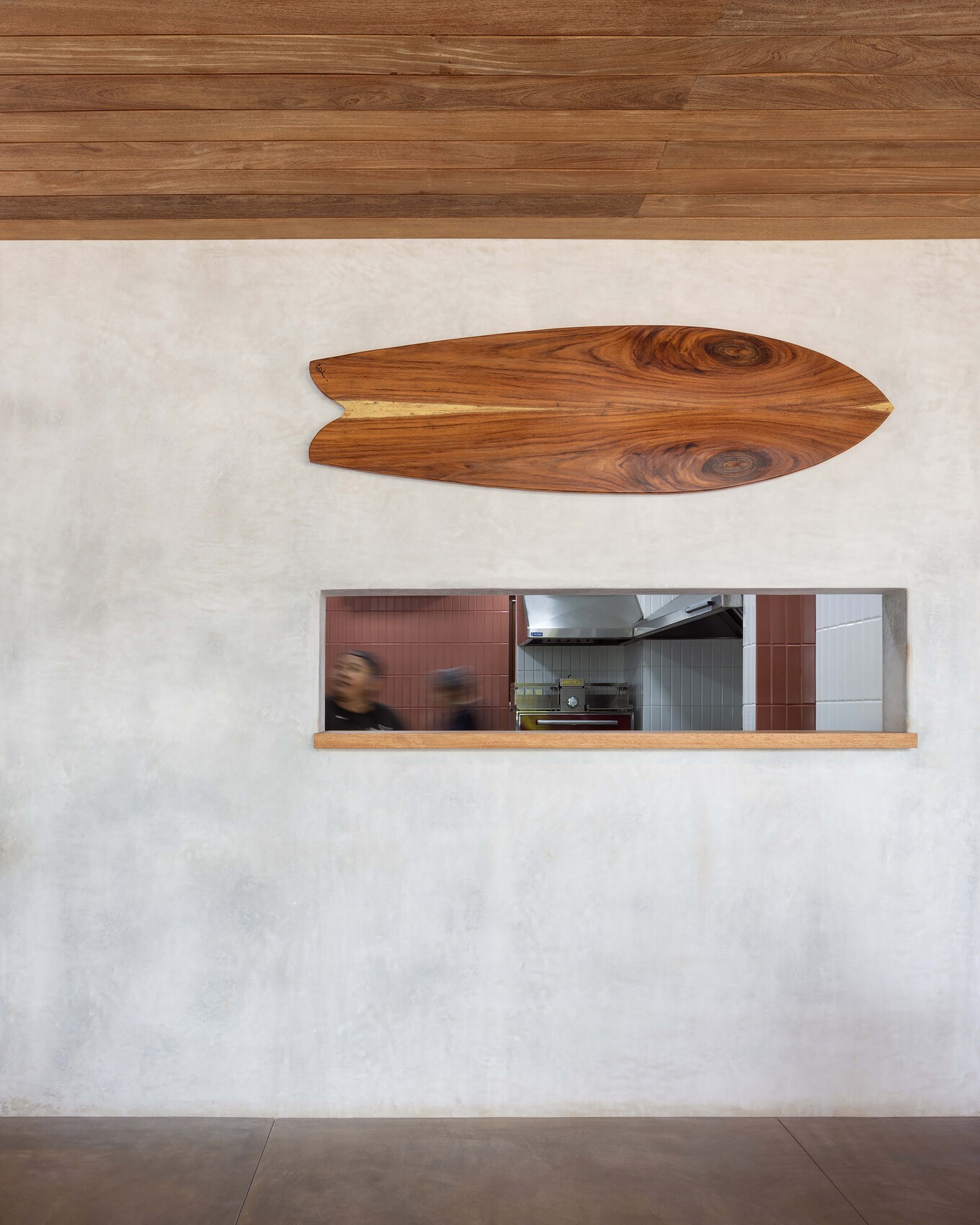
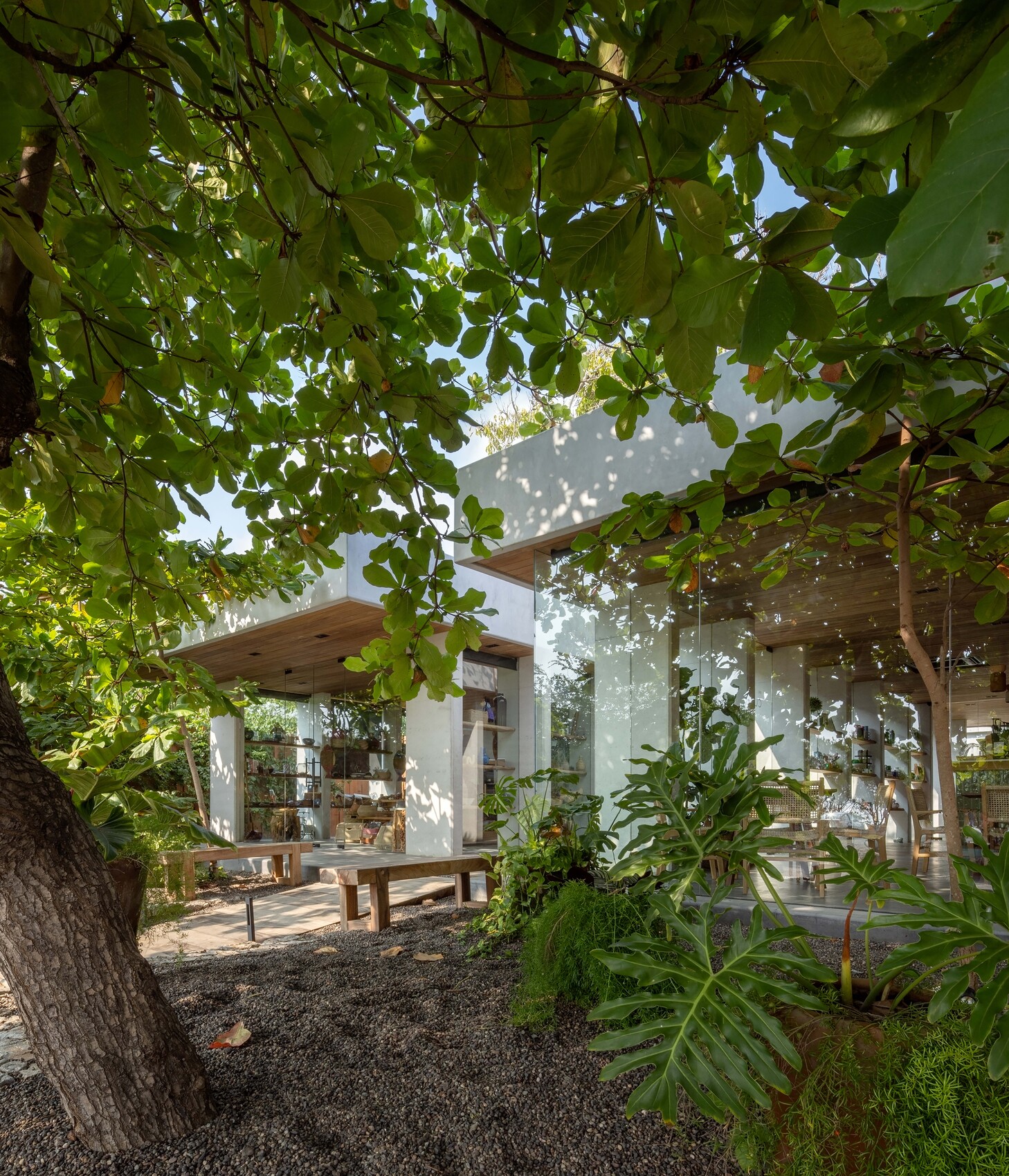
The architectural program accommodates multiple functions within a unified environment. Restaurant seating extends toward the surrounding vegetation, strengthening the connection between interior and exterior spaces. At the same time, the bakery remains visible to visitors, adding an element of transparency and activity to the experience. A retail area dedicated to Mexican handcrafted products complements the hospitality program, and a private office is integrated discreetly within the overall arrangement. Each component is carefully positioned to maintain visual continuity and facilitate intuitive movement across the site.
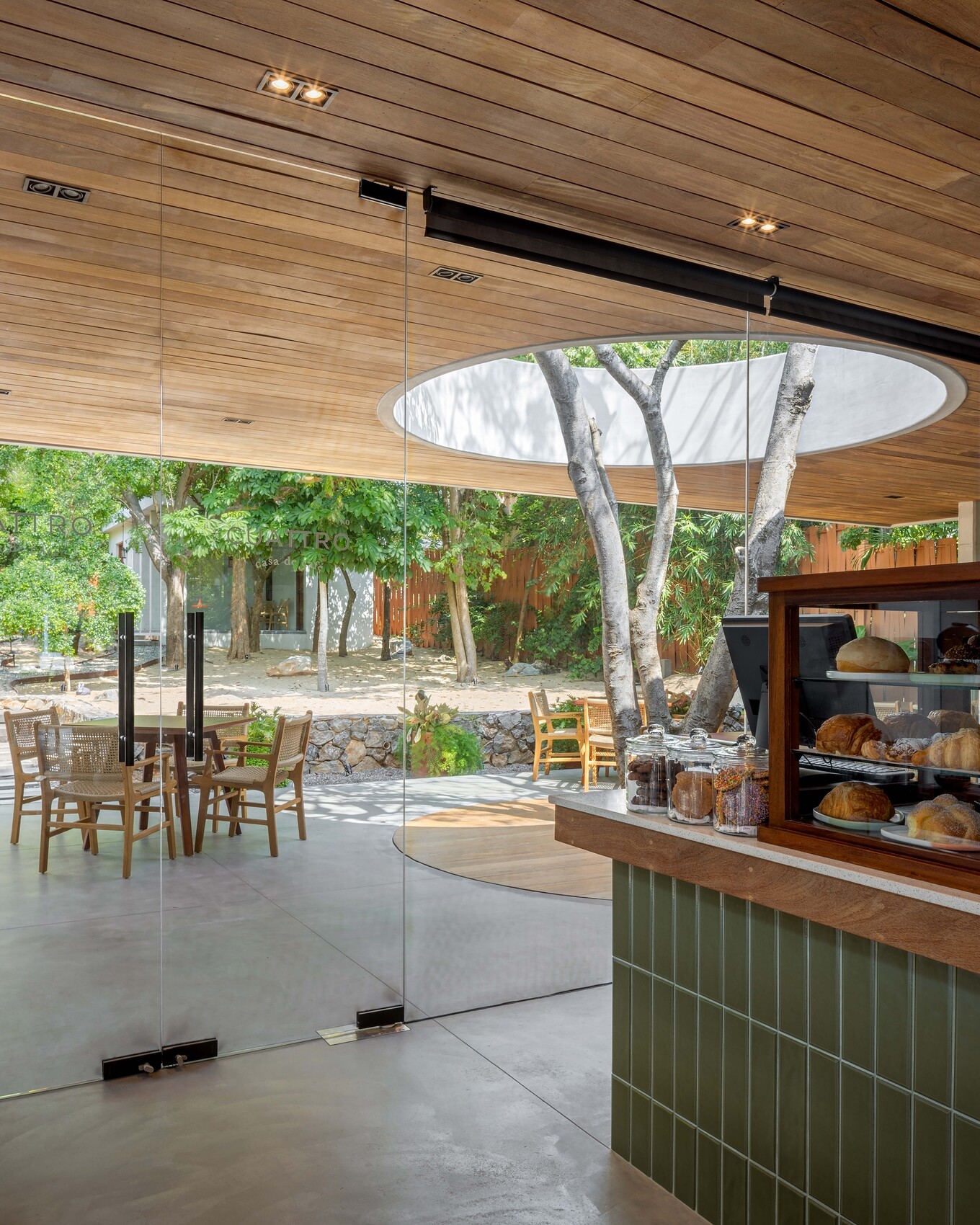
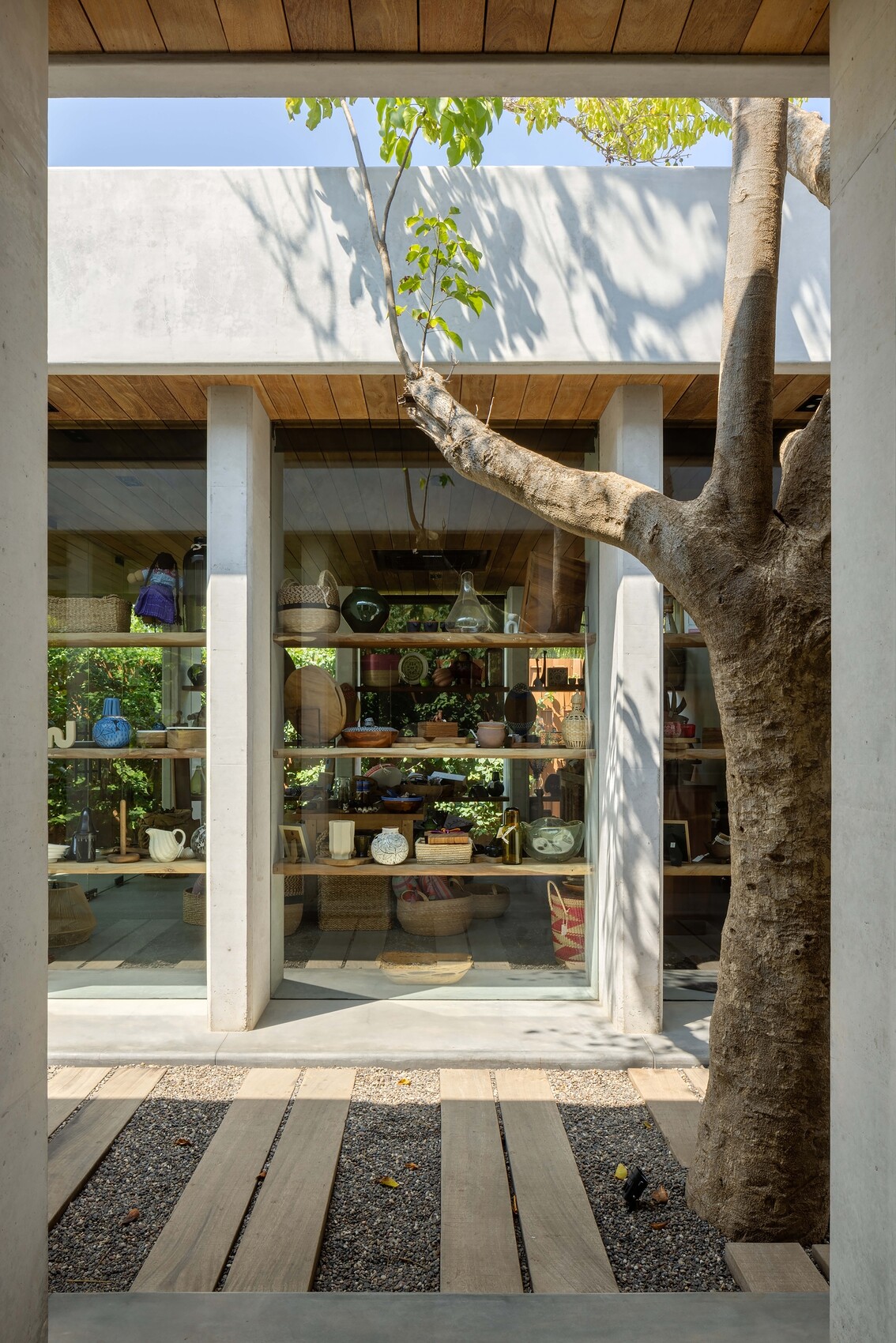
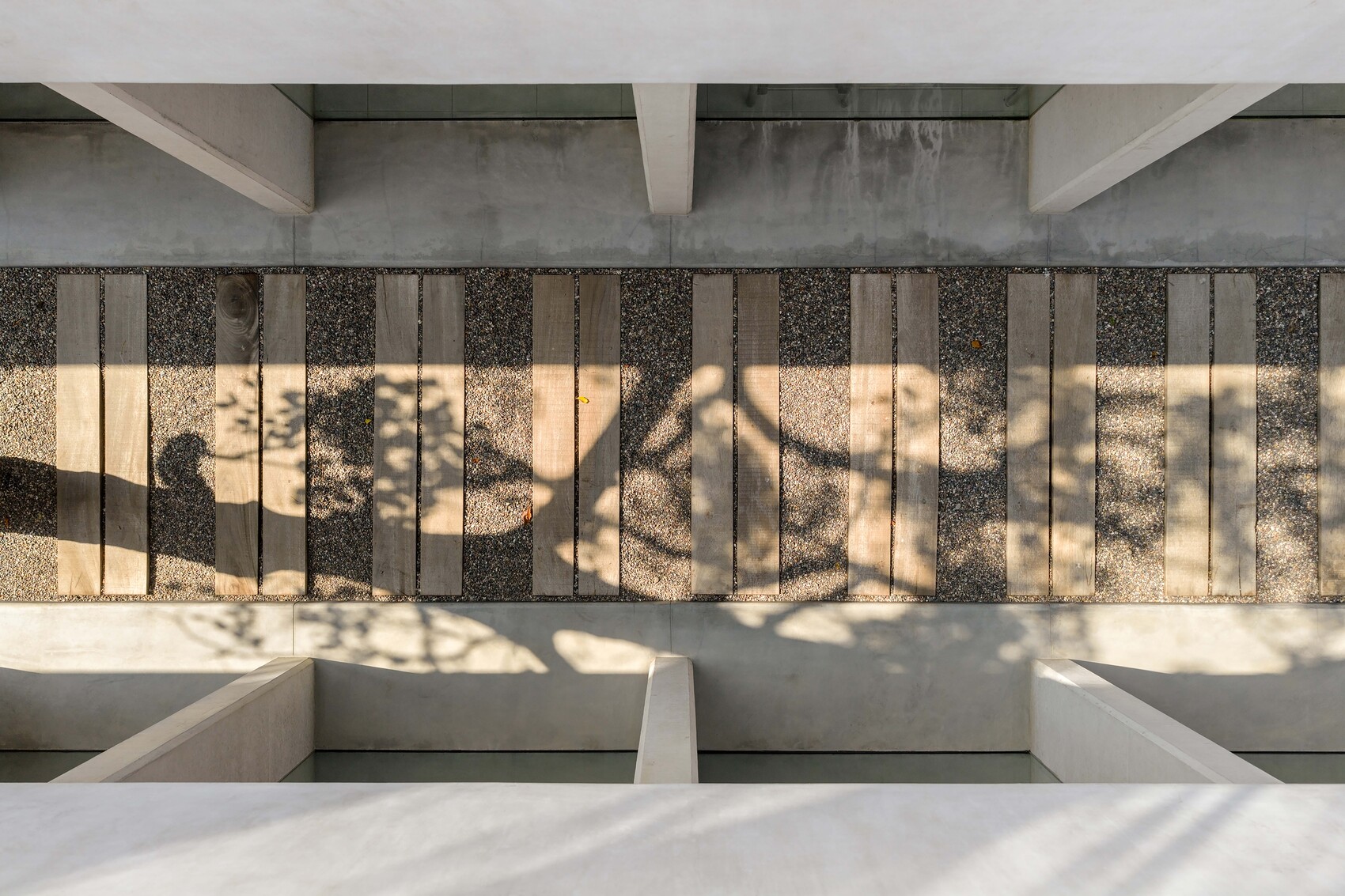
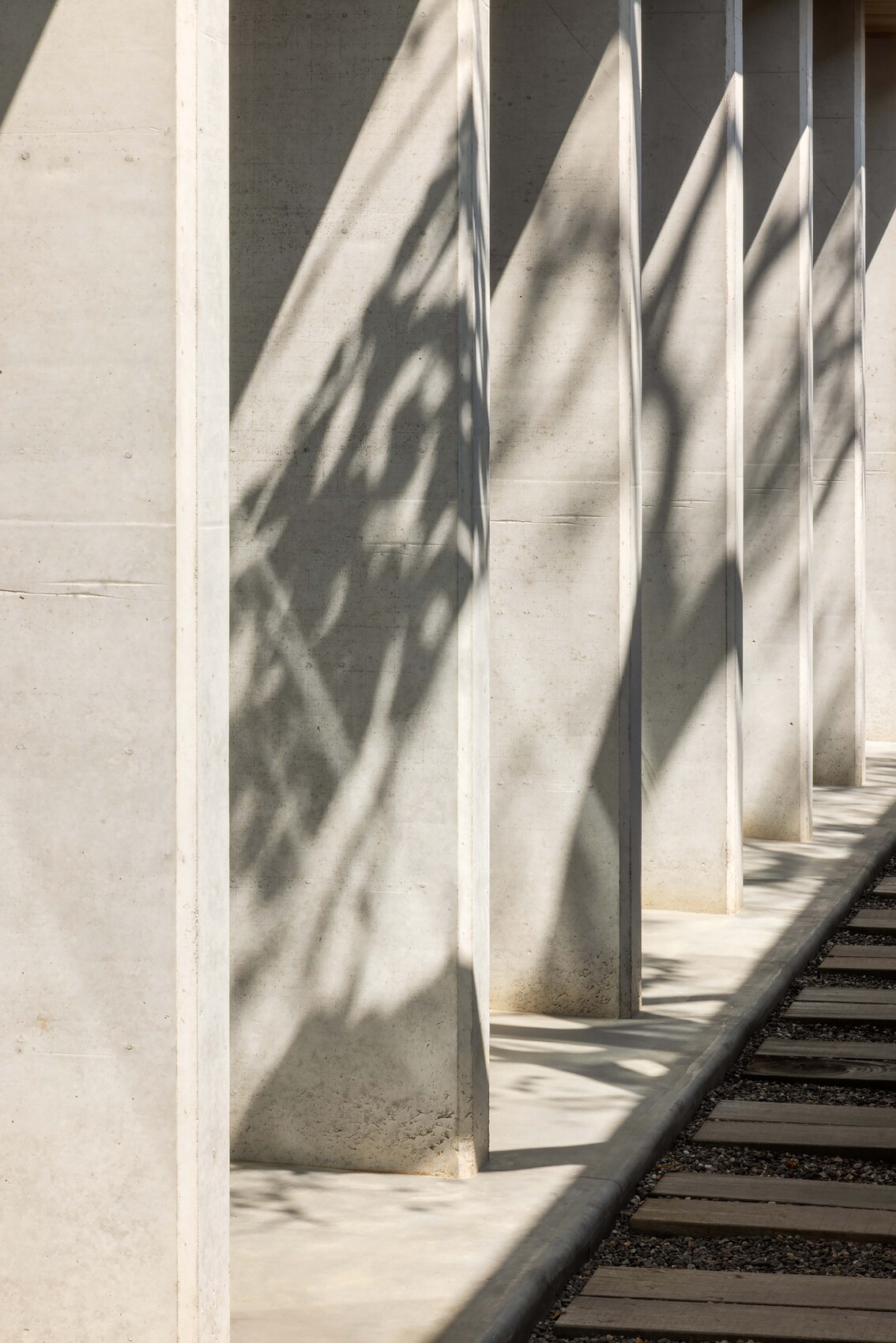
Material selection plays a critical role in both performance and character. Exposed concrete provides durability and thermal stability suited to the region’s warm climate, while endemic wood introduces warmth and a direct connection to local building traditions. Permeable gravel surfaces allow rainwater to filter naturally into the subsoil, reducing environmental impact and preserving the site’s ecological balance. These materials work together to create an architectural language that is restrained, durable, and responsive to local conditions.
Inside, the project is enriched by the inclusion of handcrafted elements produced by local artisans. Clay luminaires, ceramic pieces, wooden furniture, and Mexican-made objects contribute texture and authenticity while maintaining a carefully controlled aesthetic. Combined with passive cooling strategies and the preservation of natural vegetation, these details reinforce an atmosphere of comfort and simplicity. Cuattro Casa de Café ultimately demonstrates how thoughtful planning, contextual sensitivity, and material honesty can produce an architecture that is contemporary in expression while remaining deeply rooted in place.
Project Gallery
Project Location
Address: Supermanzana Carretera, 40807 Troncones, Guerrero, México
The specified location is intended for general reference and may denote a city or country, but it does not identify a specific address.

