

Architects: Eero Saarinen & Associates
Year: 1958
Photography: Eero Saarinen, Yale University Manuscripts, Petr Kratochvíl, Gunnar Klack, Jussi Toivanen, Chris, Corey Seeman, Doctor Casino, Karl, Nicole Bloomfield, Pete Sieger, Wikimedia Commons, Carol M. Highsmith, Quintin Soloviev
Structural Engineer: Fred Severud / Severud Associates
Construction: J. A. Torrence, Inc.
Client: Yale University
Renovation Architects: Kevin Roche and Roche Dinkeloo
City: New Haven
Country: United States
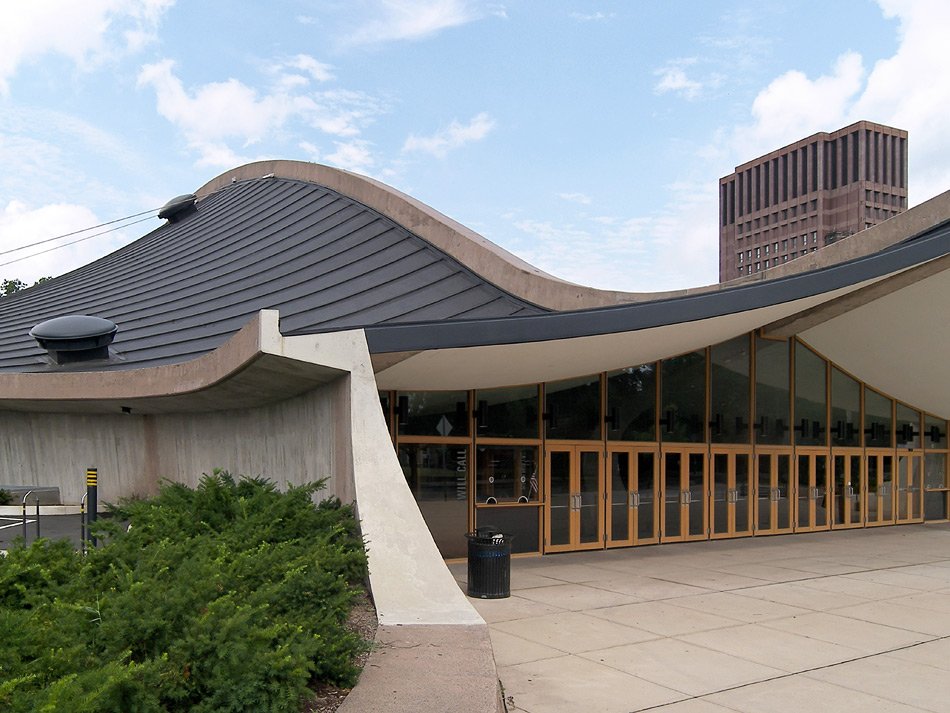
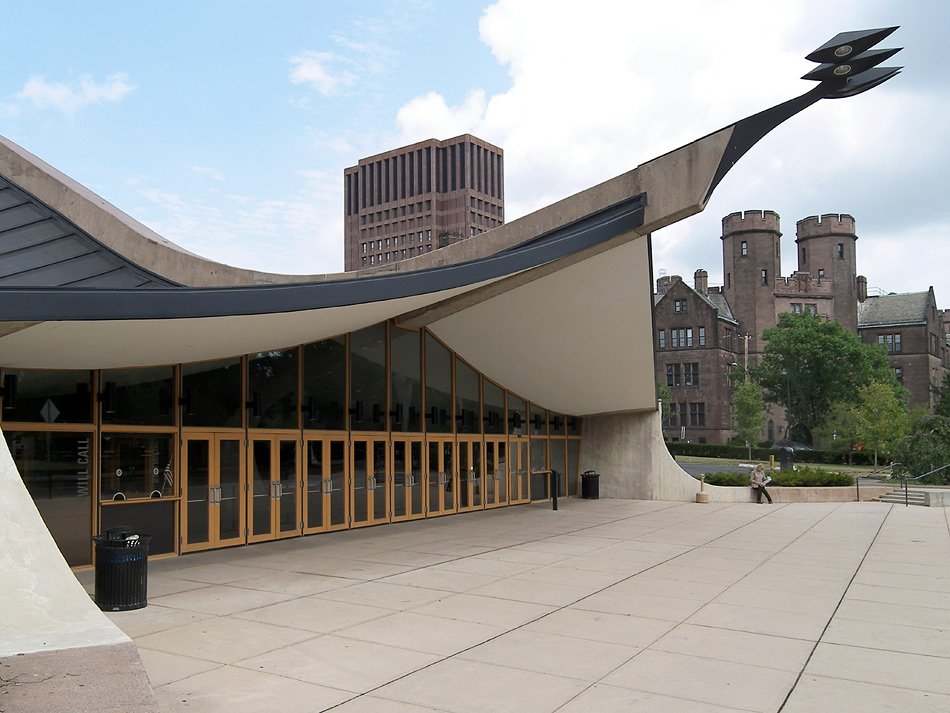
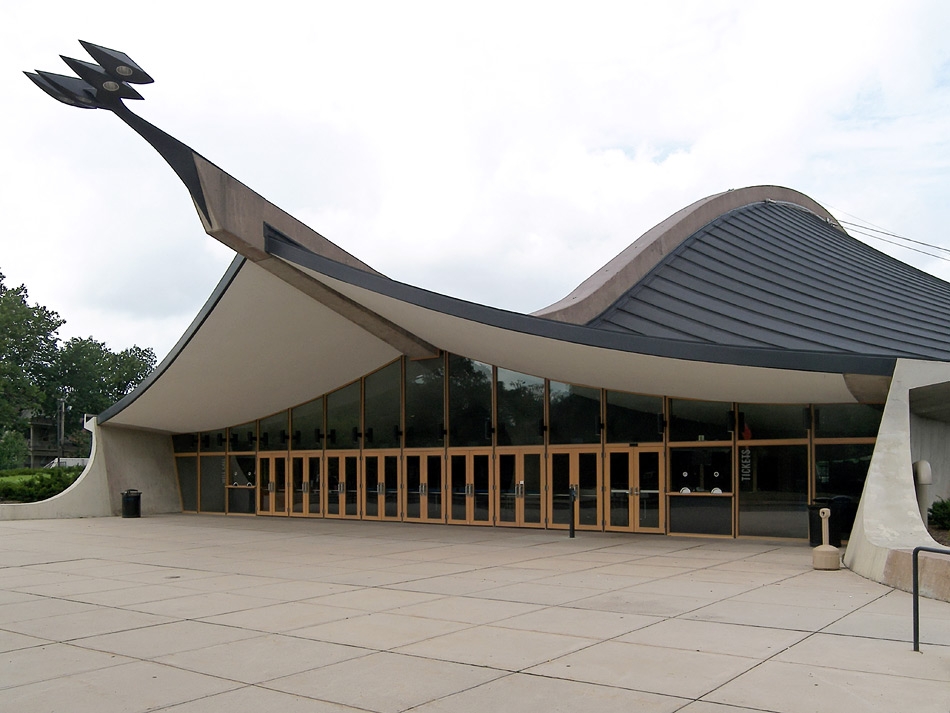
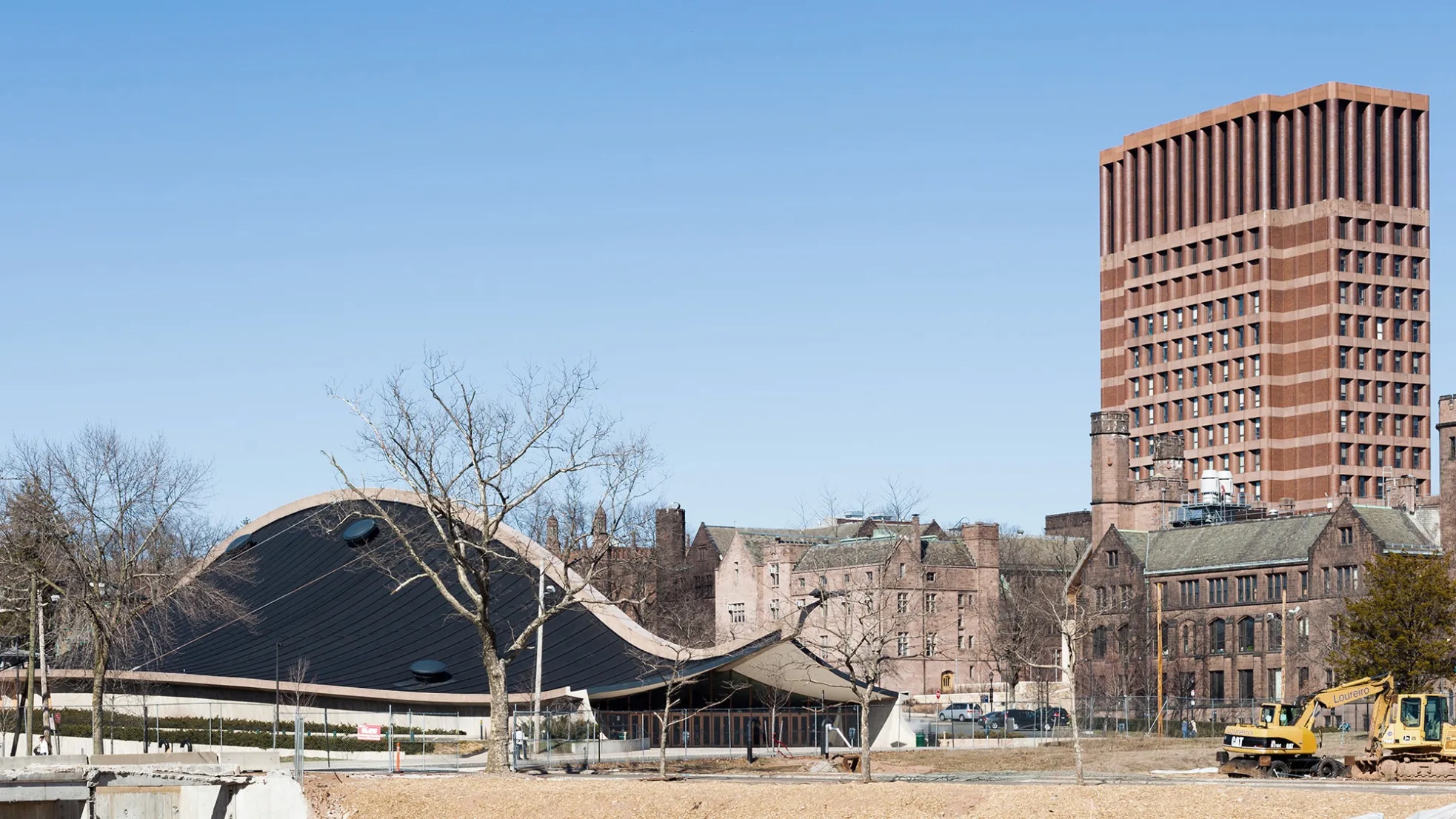
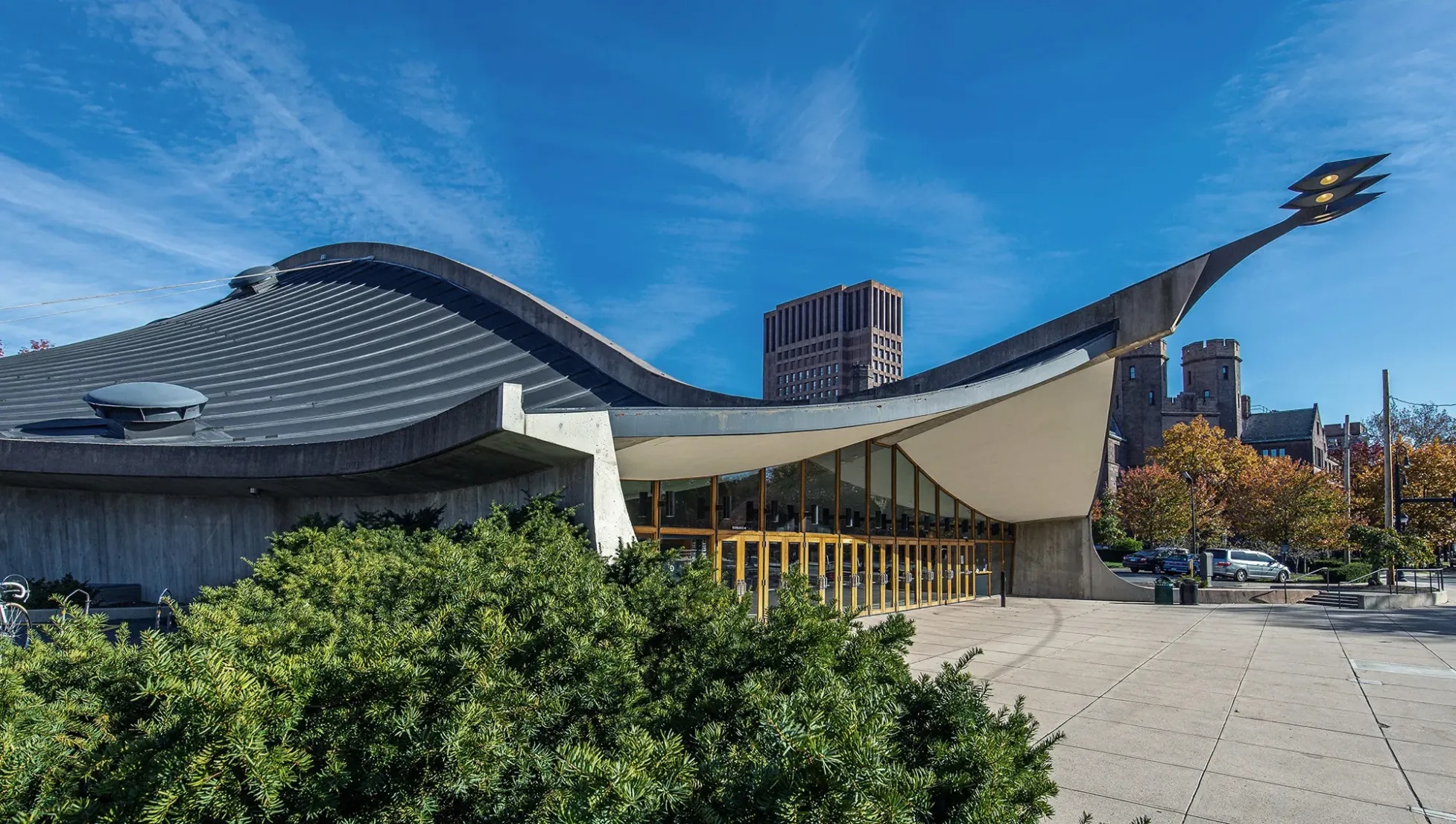
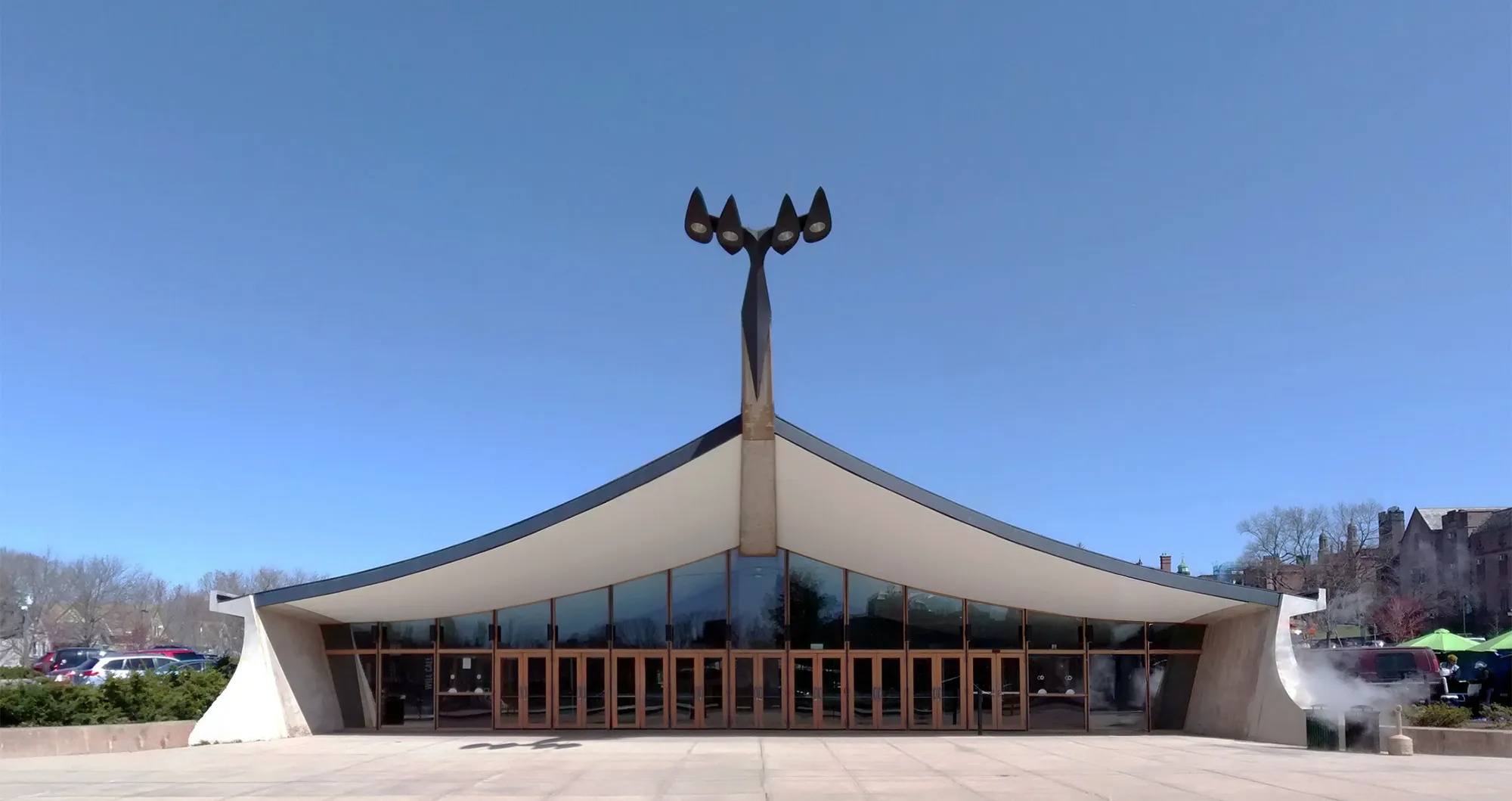
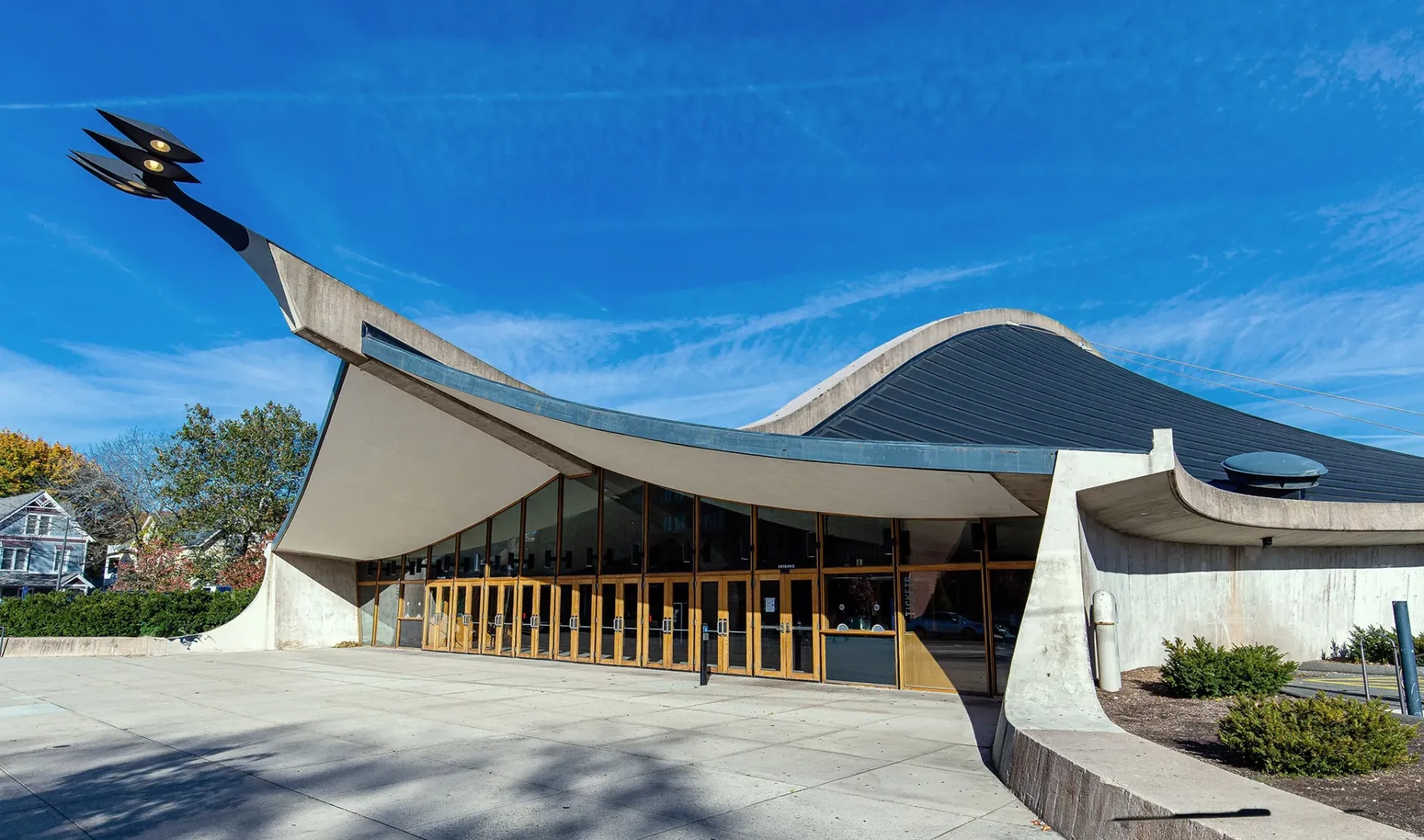
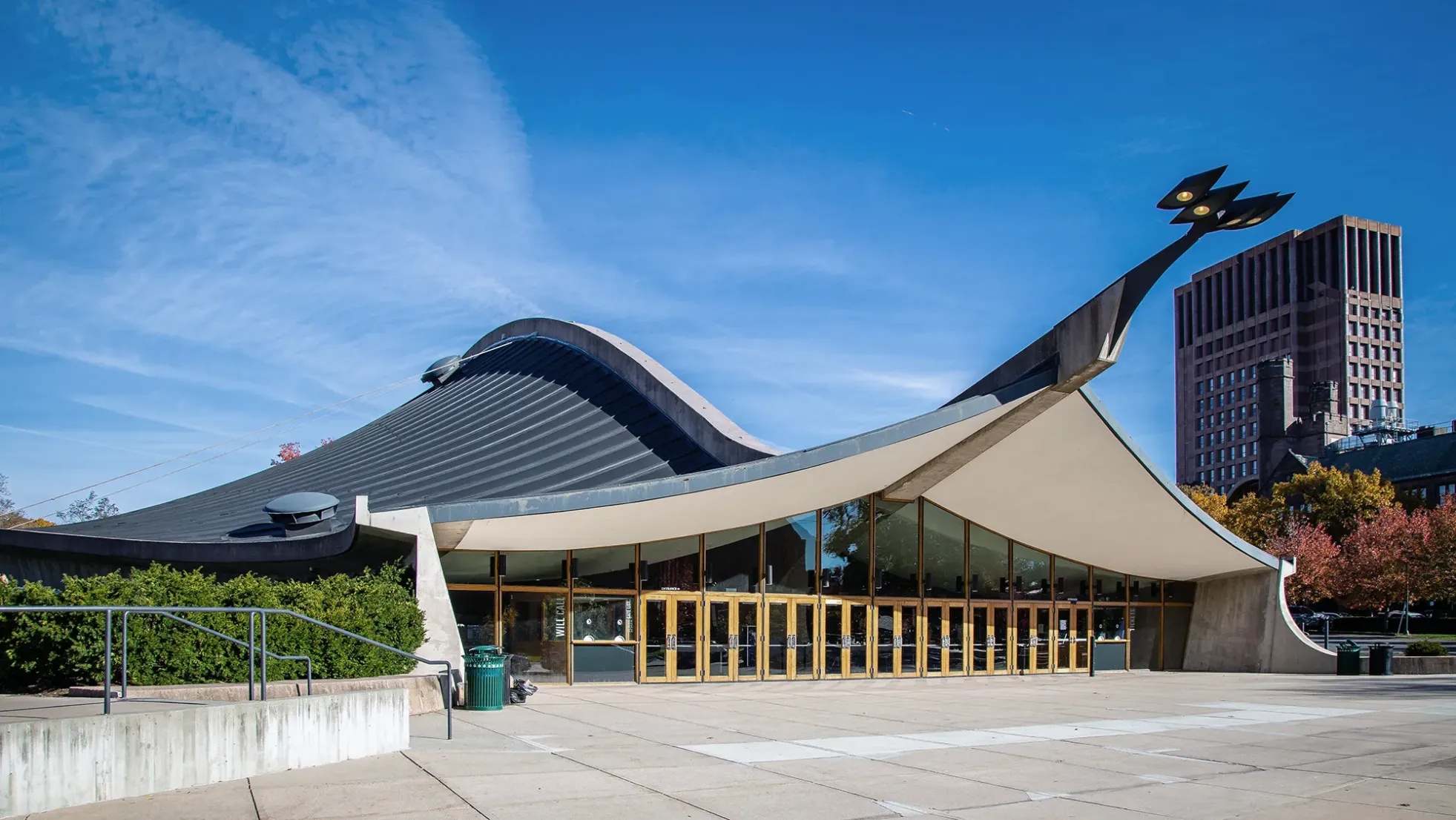
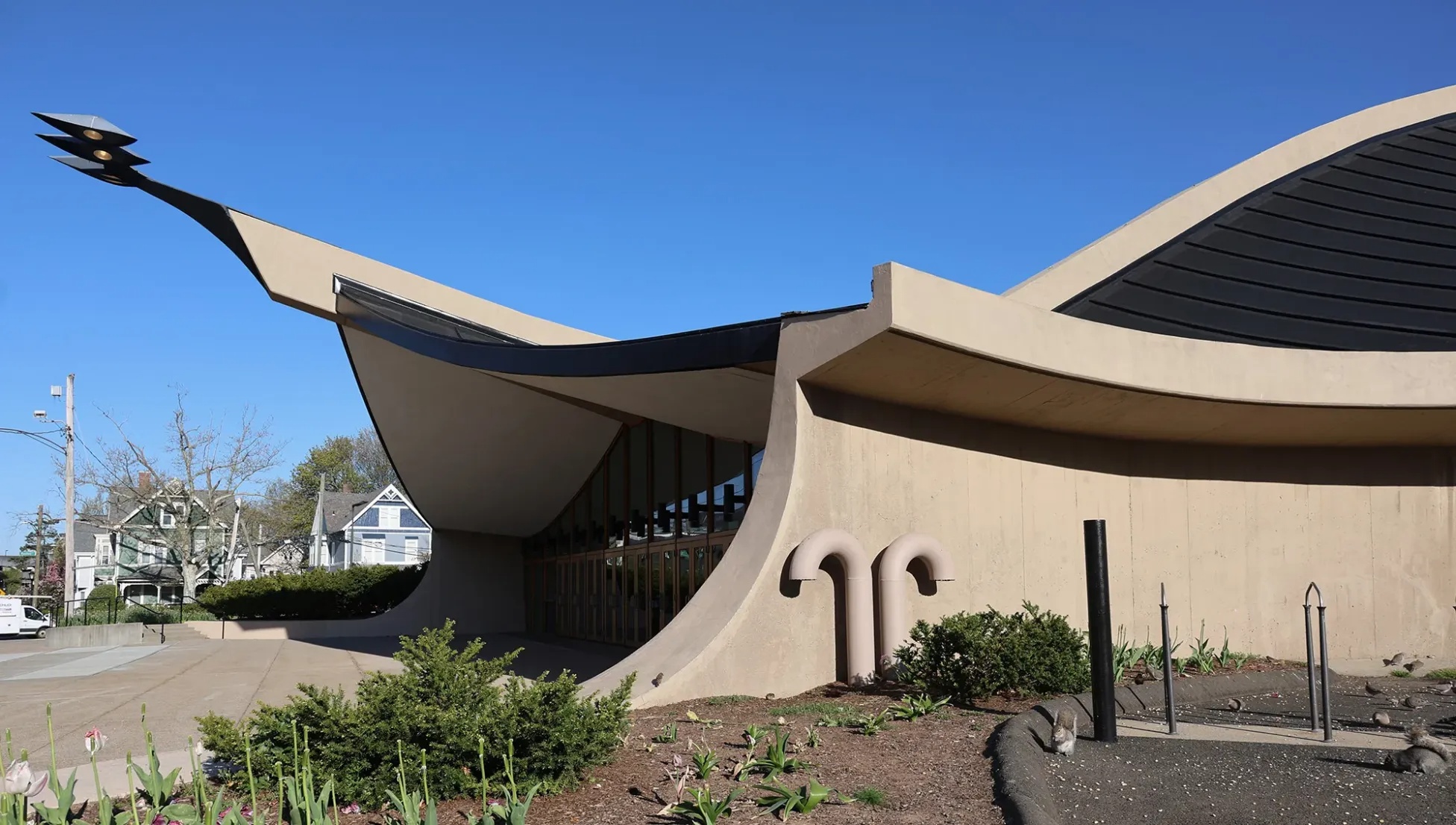
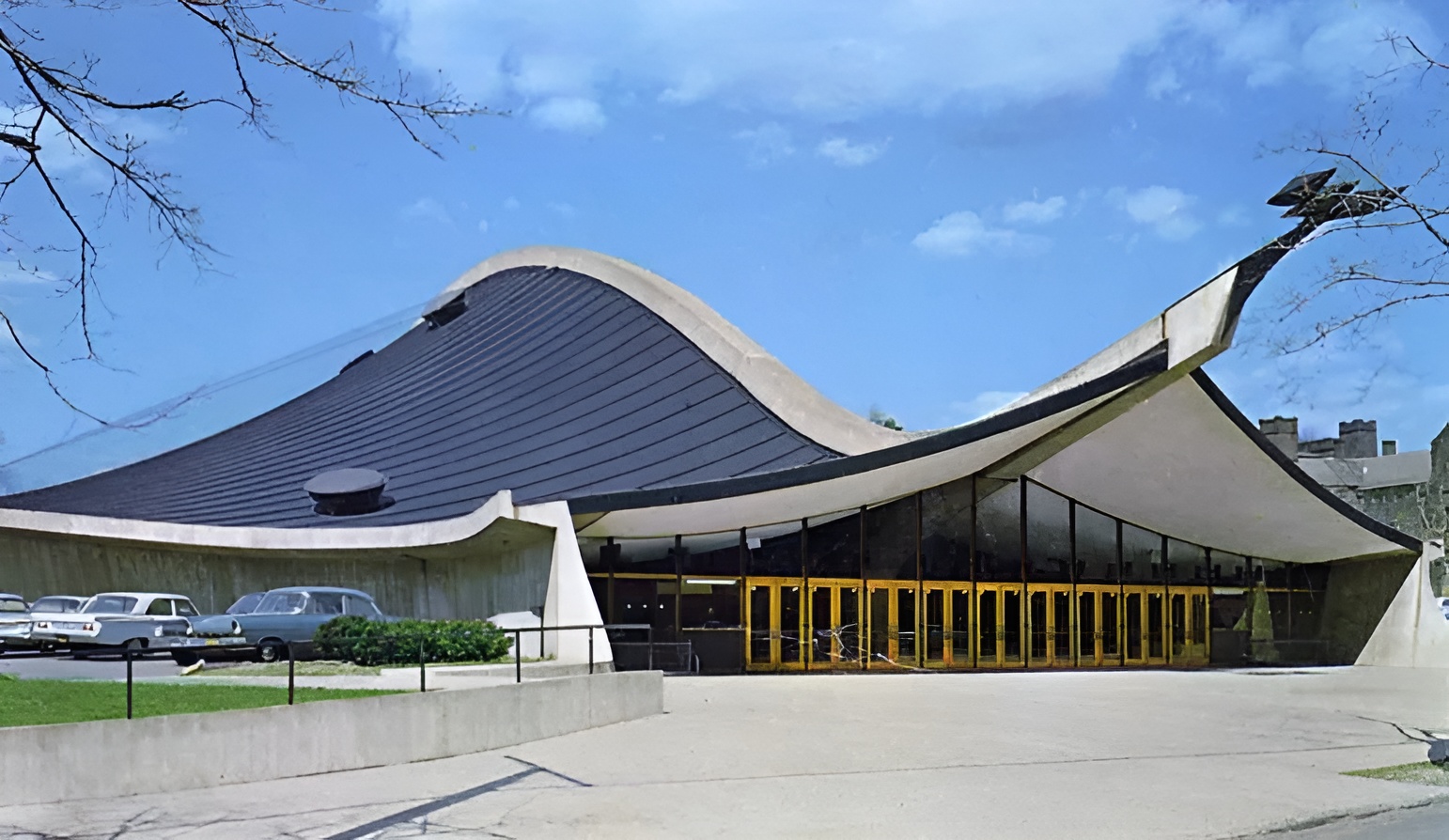
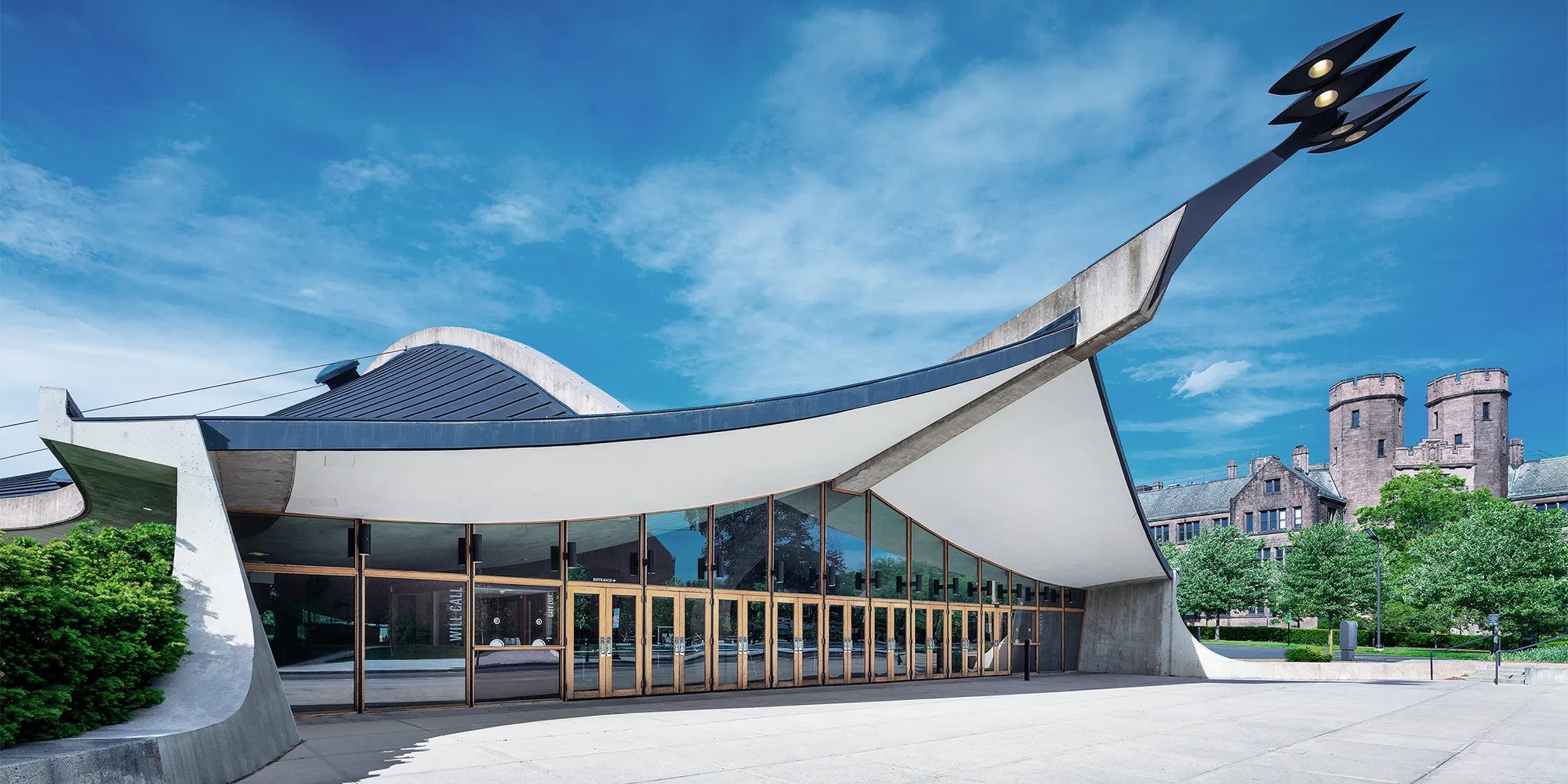
David S. Ingalls Rink sports facility designed by Eero Saarinen & Associates at Yale University in New Haven, Connecticut, introduced a long-span structural system organized around a reinforced-concrete catenary arch and a cable-supported timber roof, creating a column-free ice arena completed in 1958. Commonly known as “The Whale,” the rink translated structural behavior directly into architectural form through a suspended roof system that combined compression and tension to achieve a large uninterrupted interior volume. The building established a distinctive presence within the Yale campus while providing clear sightlines, efficient circulation, and a spatial experience shaped by its exposed structural logic. The project remains one of Eero Saarinen’s most significant explorations of expressive structural design, where engineering, enclosure, and architectural form operate as a unified system. Subsequent renovations preserved the original concept while upgrading the facility for contemporary athletic use, reinforcing the rink’s role as a prominent venue for Yale hockey and an influential work of modern architecture.
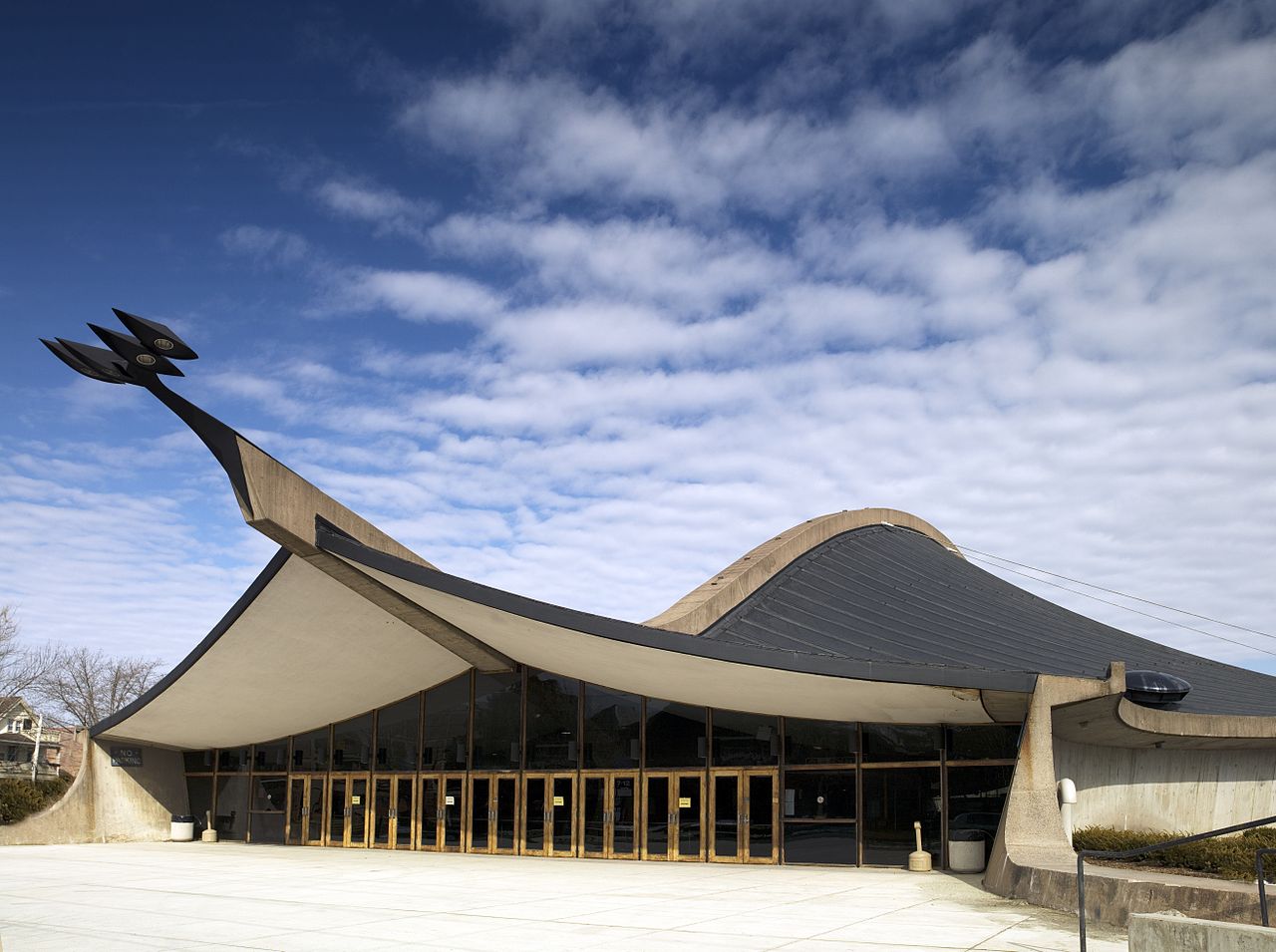
David S. Ingalls Rink was designed by Eero Saarinen for Yale University and completed in 1958. Known as “The Whale” because of its distinctive profile, the building is regarded as one of the most significant examples of structural expression in postwar American architecture. The rink accommodates Yale’s hockey program within a large column-free arena defined by a suspended timber roof and a reinforced-concrete structural spine.
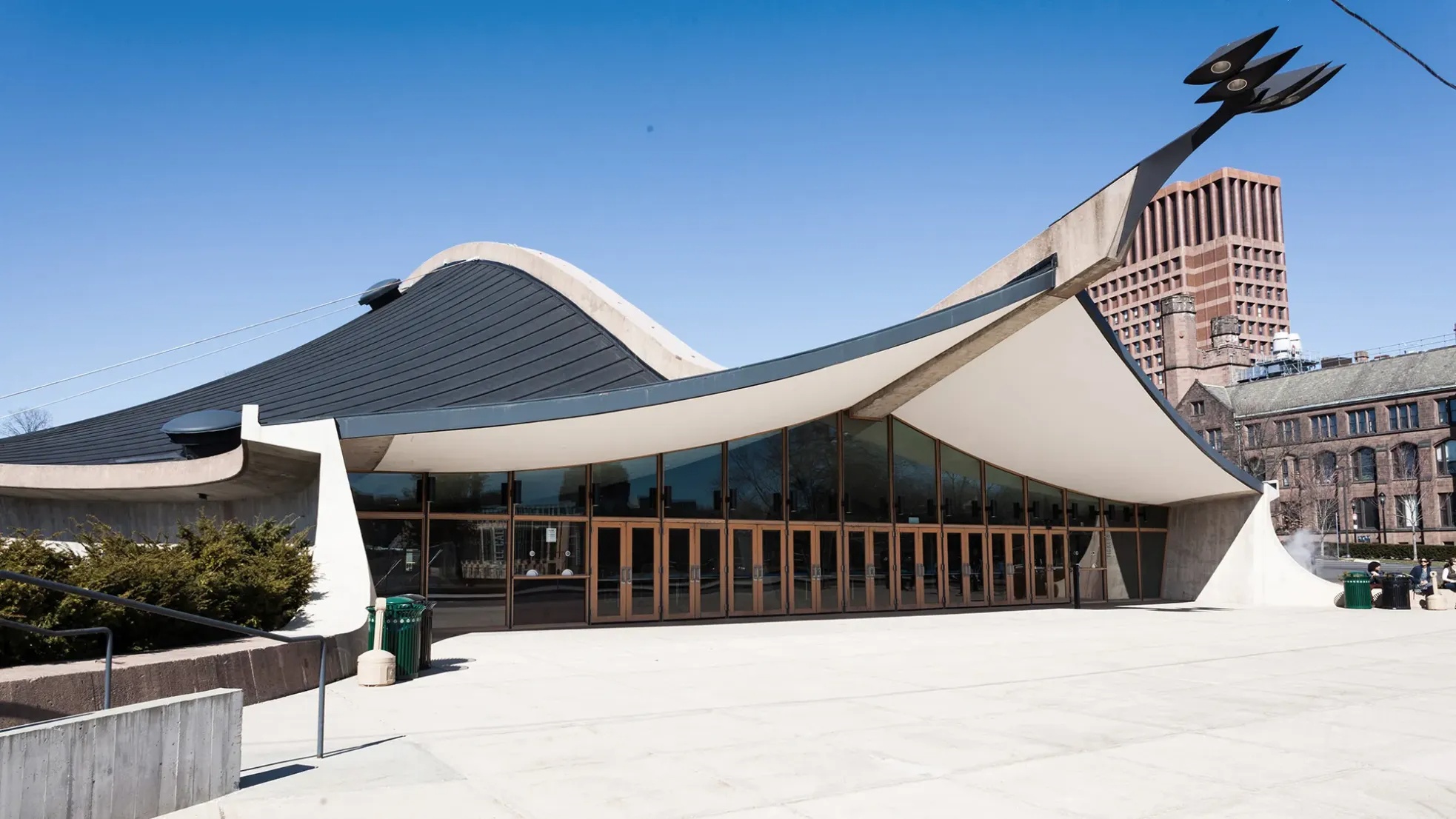
The project was developed between 1953 and 1958 and named after David S. Ingalls, Yale Class of 1920, and David S. Ingalls Jr., Yale Class of 1956, both former Yale hockey captains. Built at a cost of approximately USD 1.5 million, the arena seats approximately 3,500 spectators and rises to a maximum height of 23 meters (75 feet) above the ice surface.
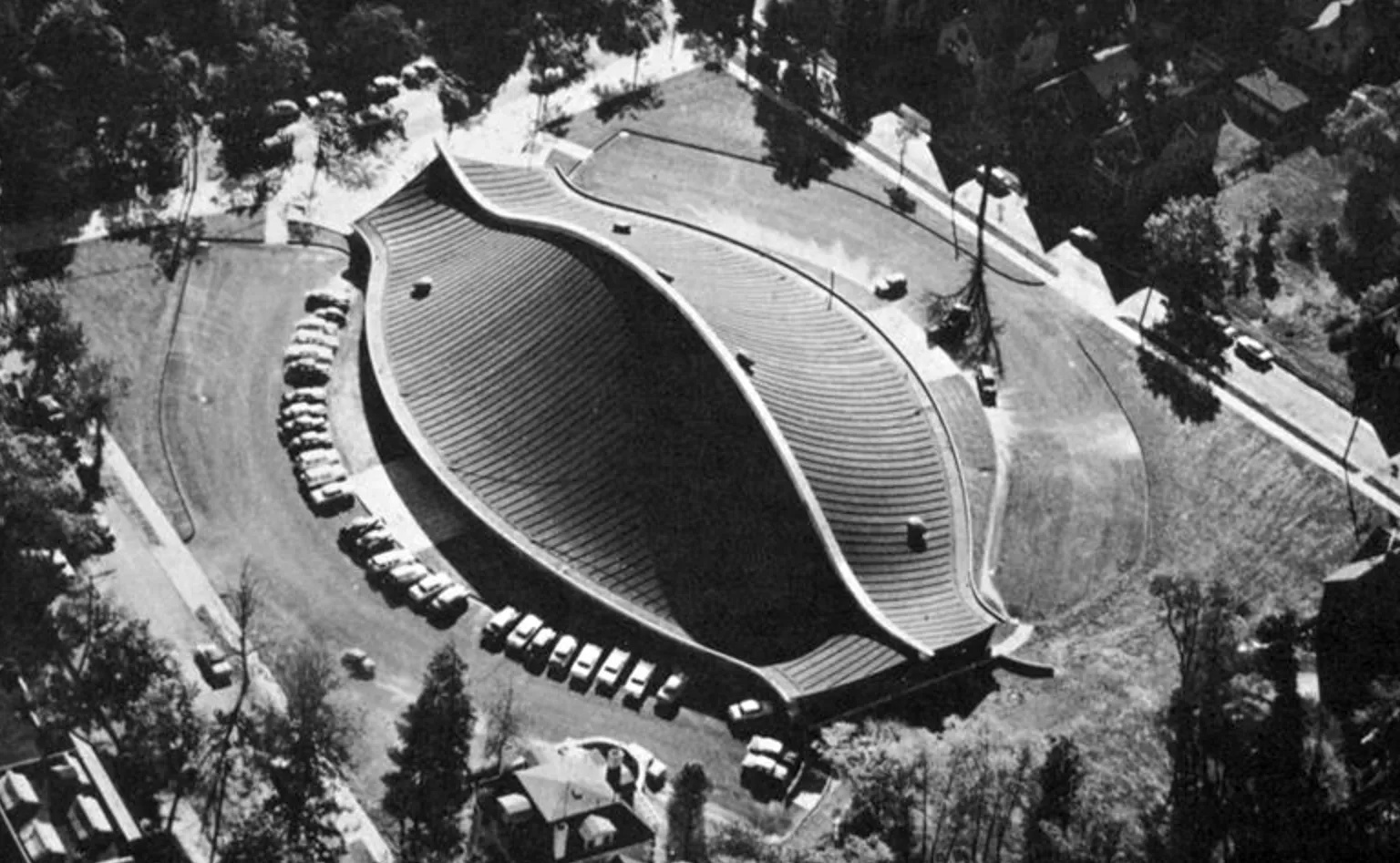
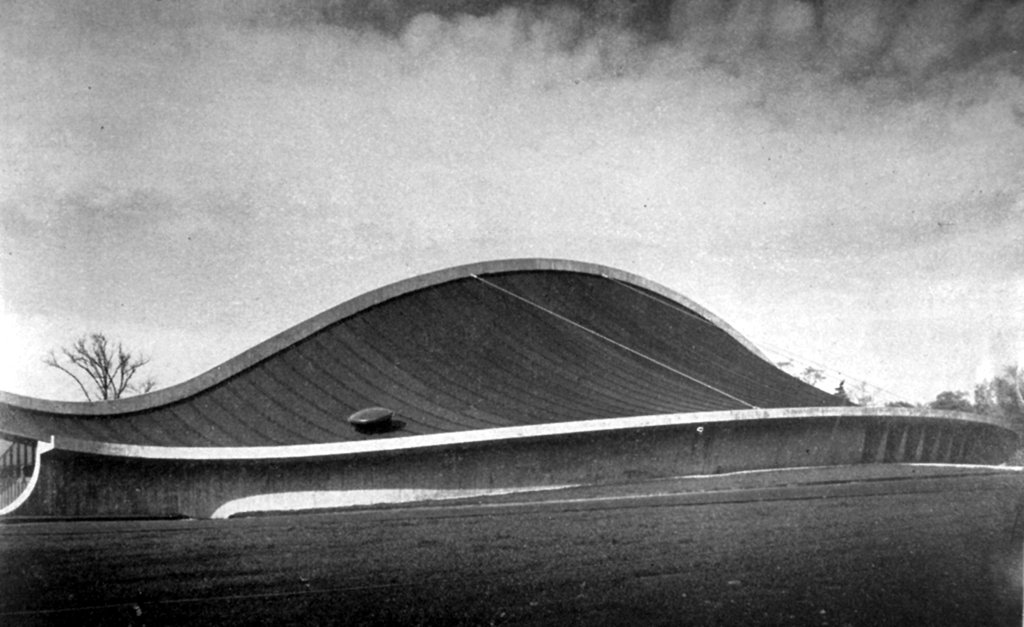
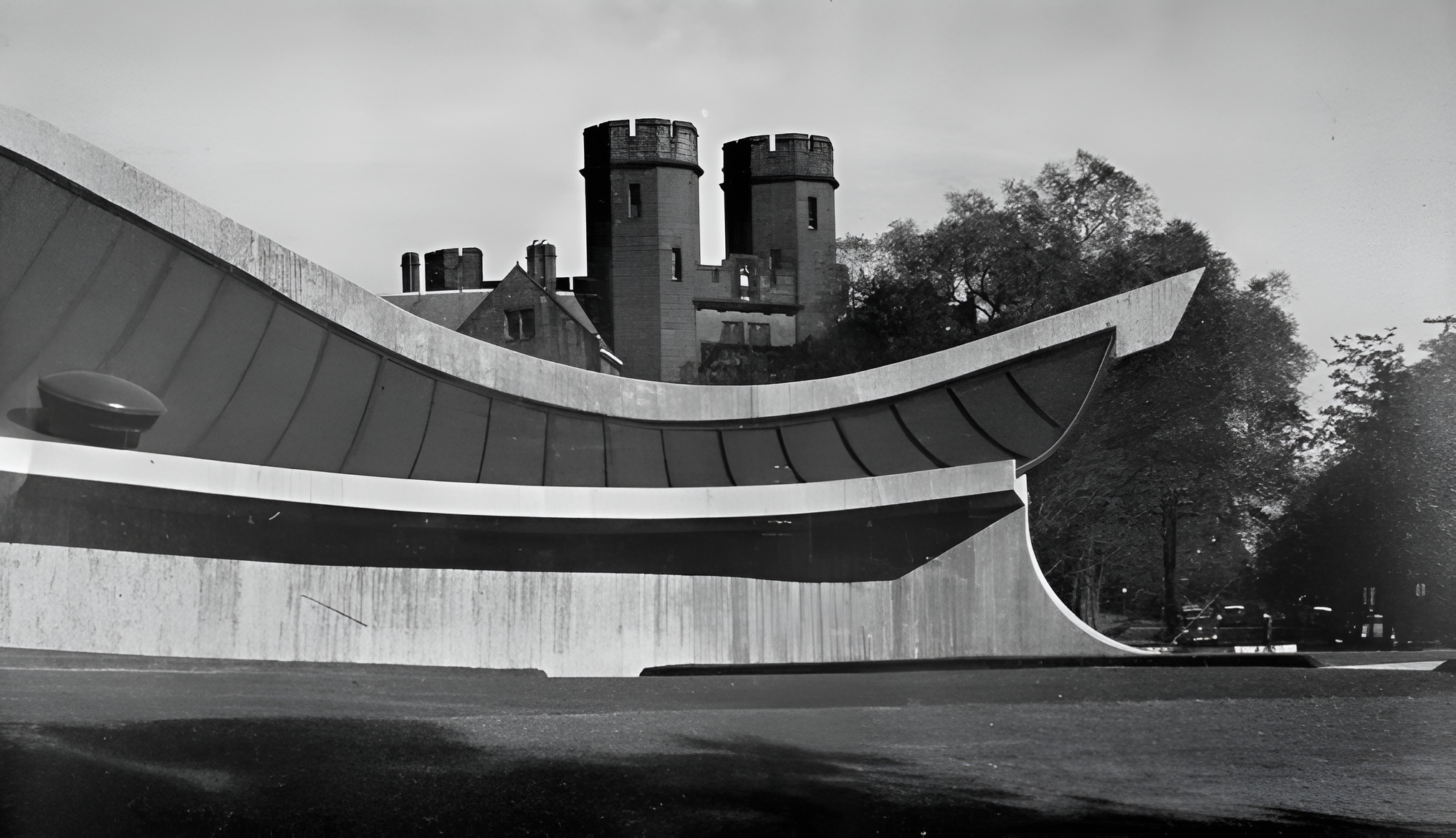
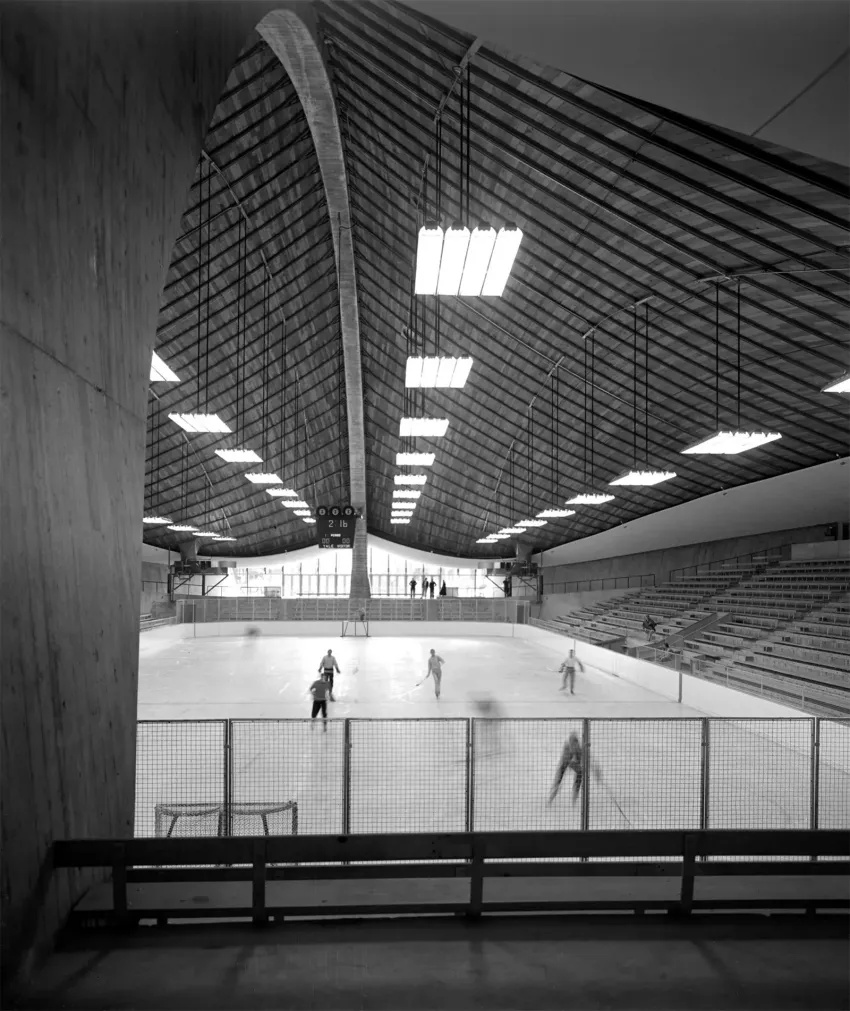
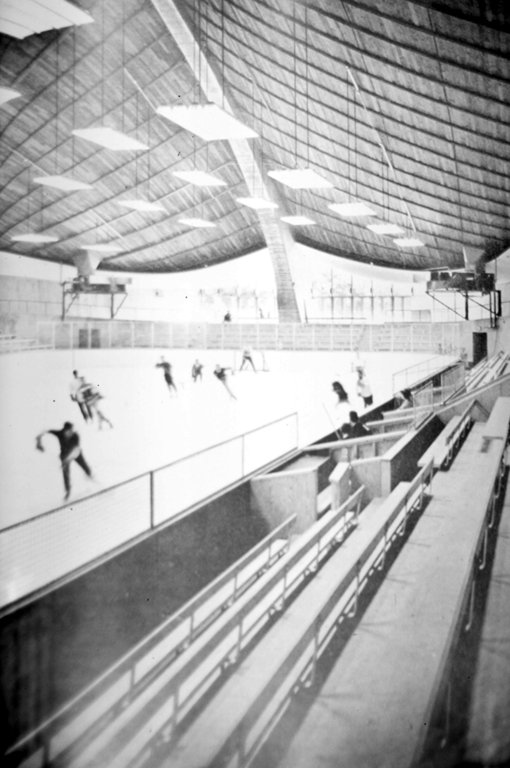
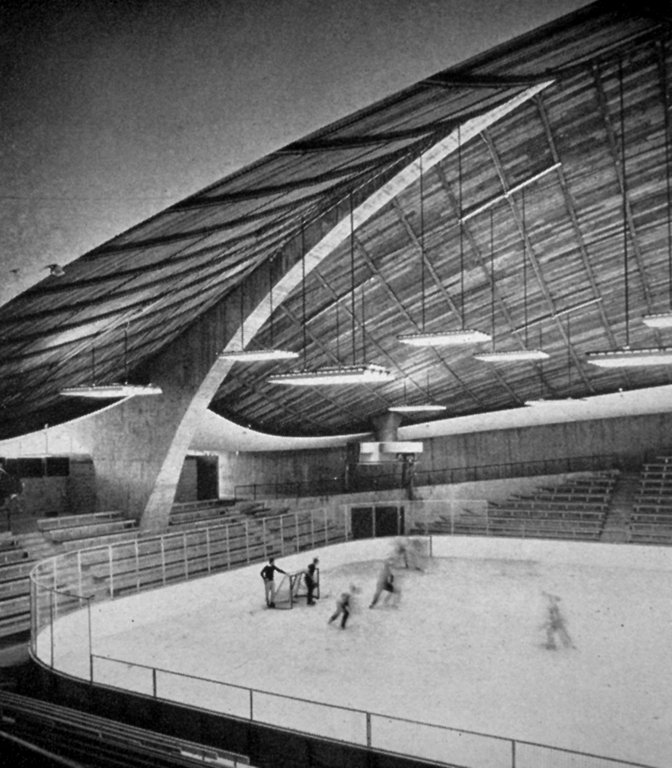
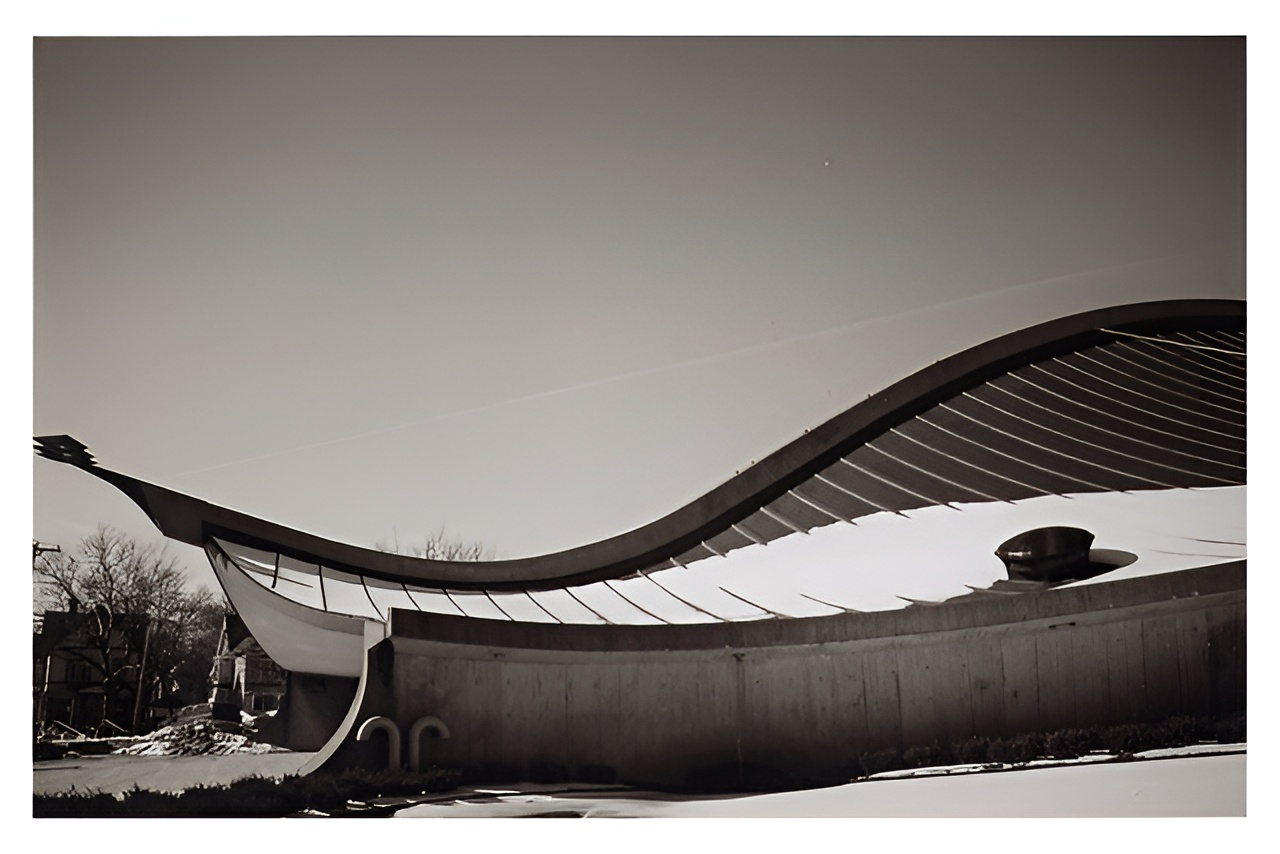
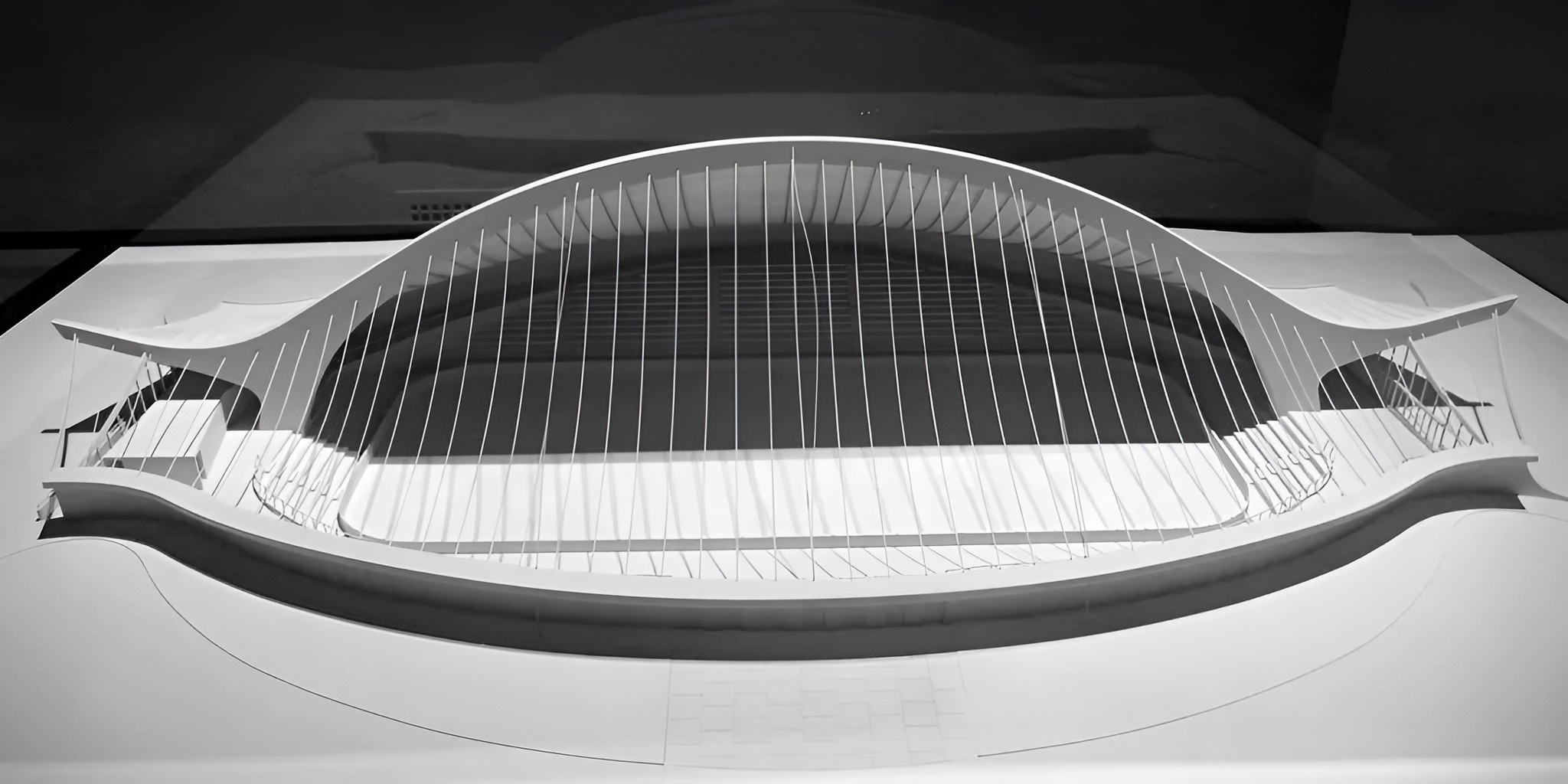
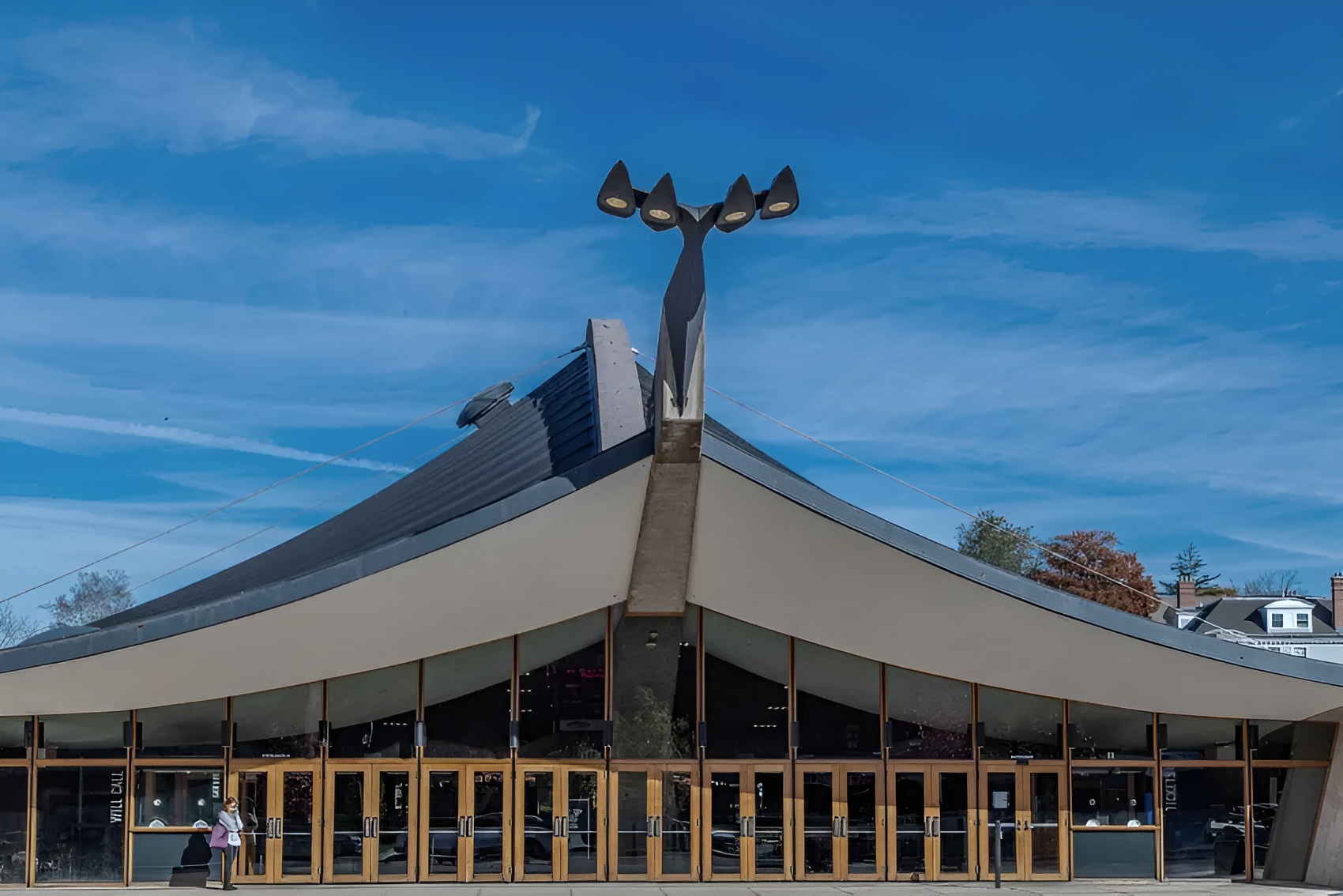
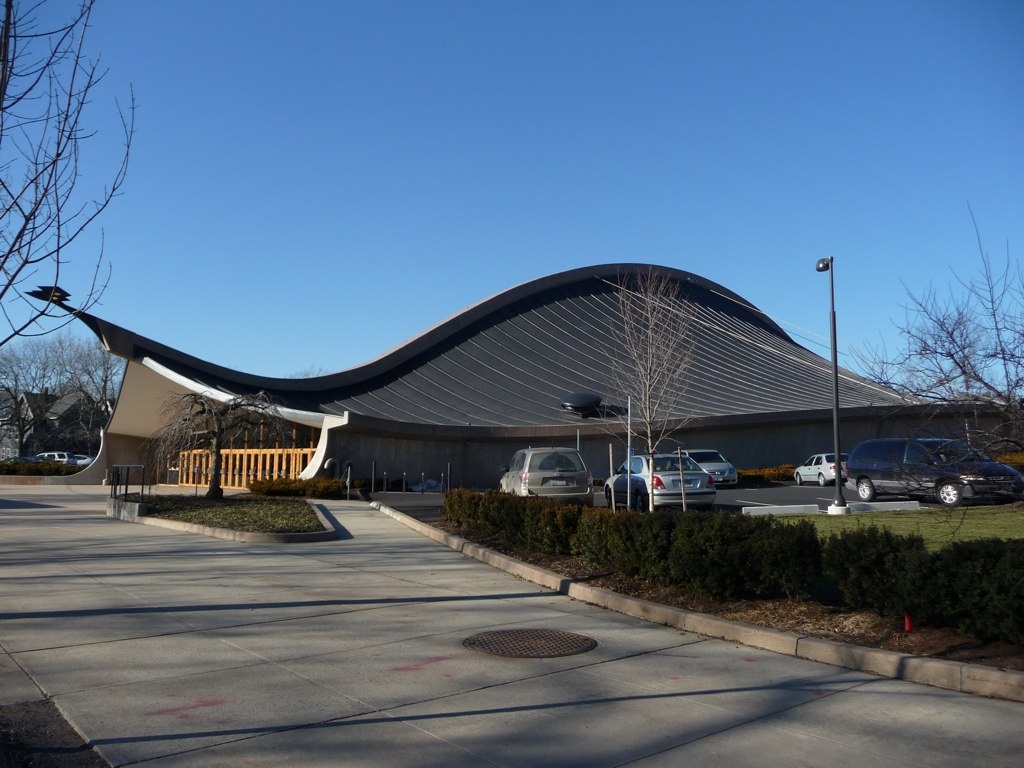
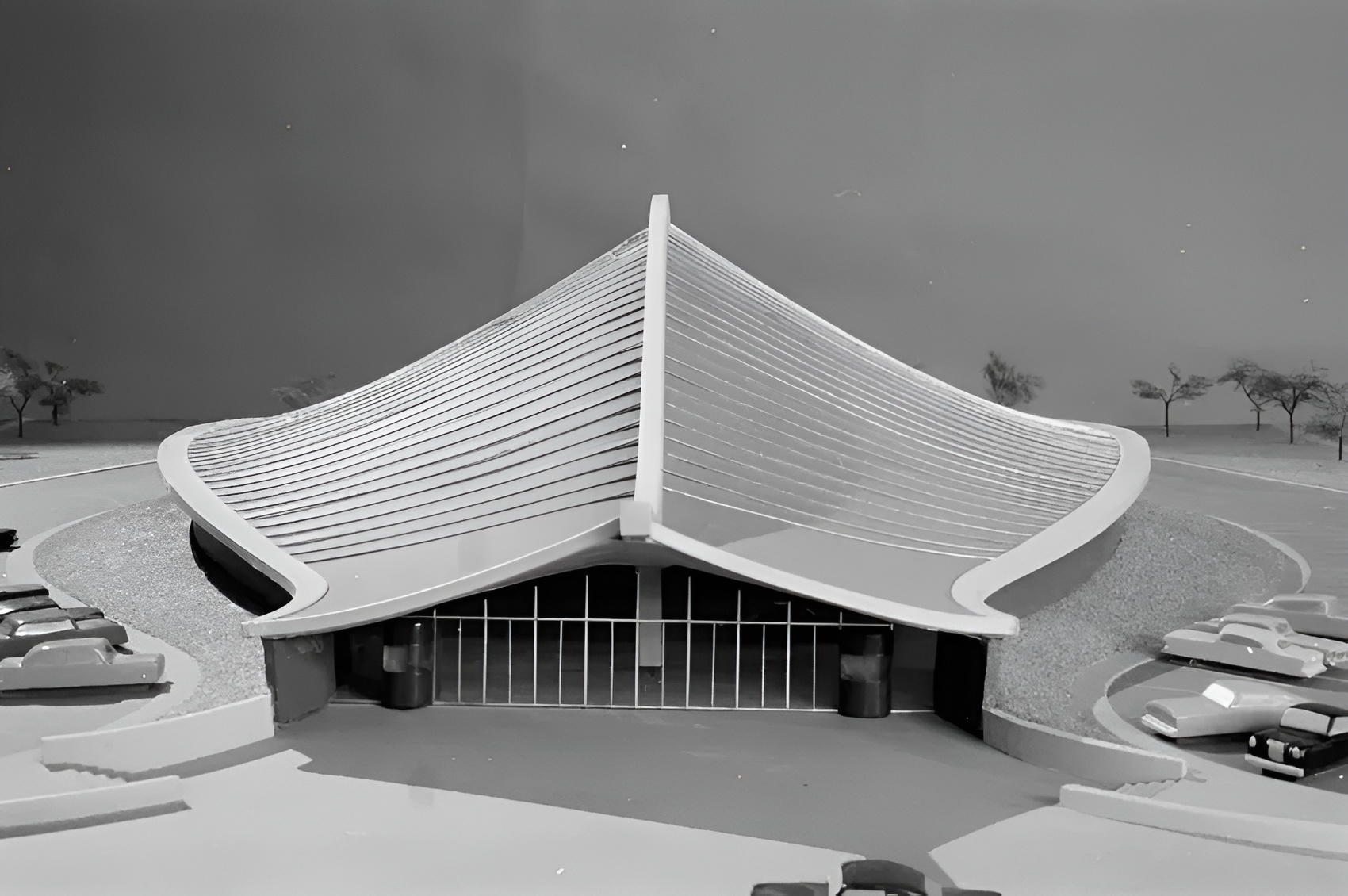
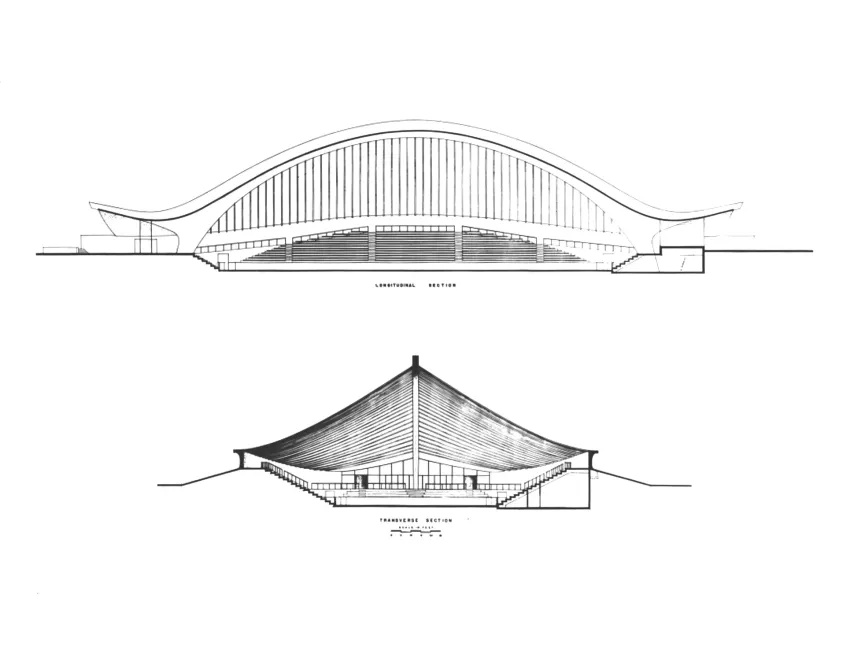
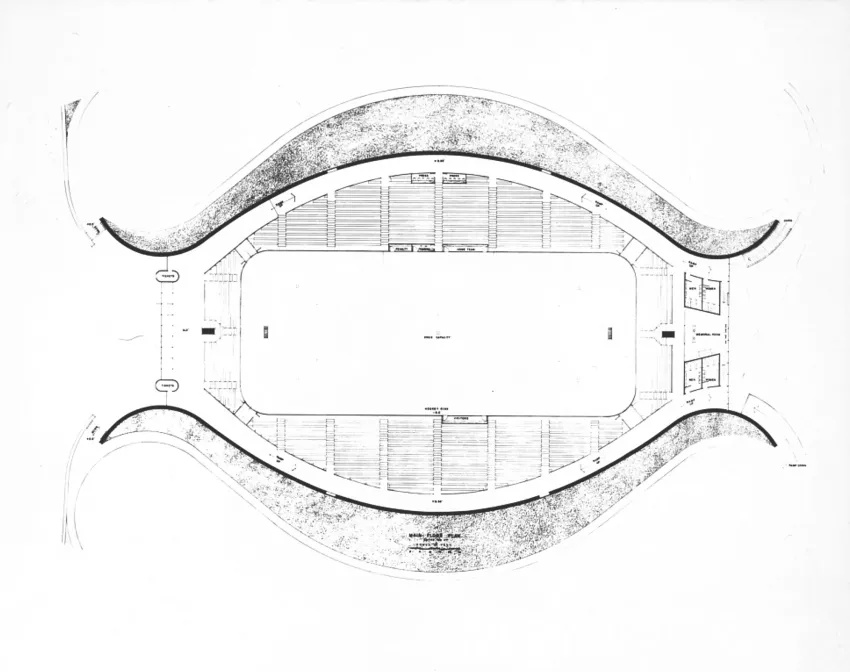
The building is organized around a reinforced-concrete catenary arch extending approximately 91 meters (300 feet) along the length of the rink. This central arch functions as the primary compressive element of the structure. A network of steel cables is suspended from the arch and supports a timber roof deck below. The interaction between compression in the concrete spine and tension within the cable system creates a stable double-curved roof that spans the entire rink without interior supports.
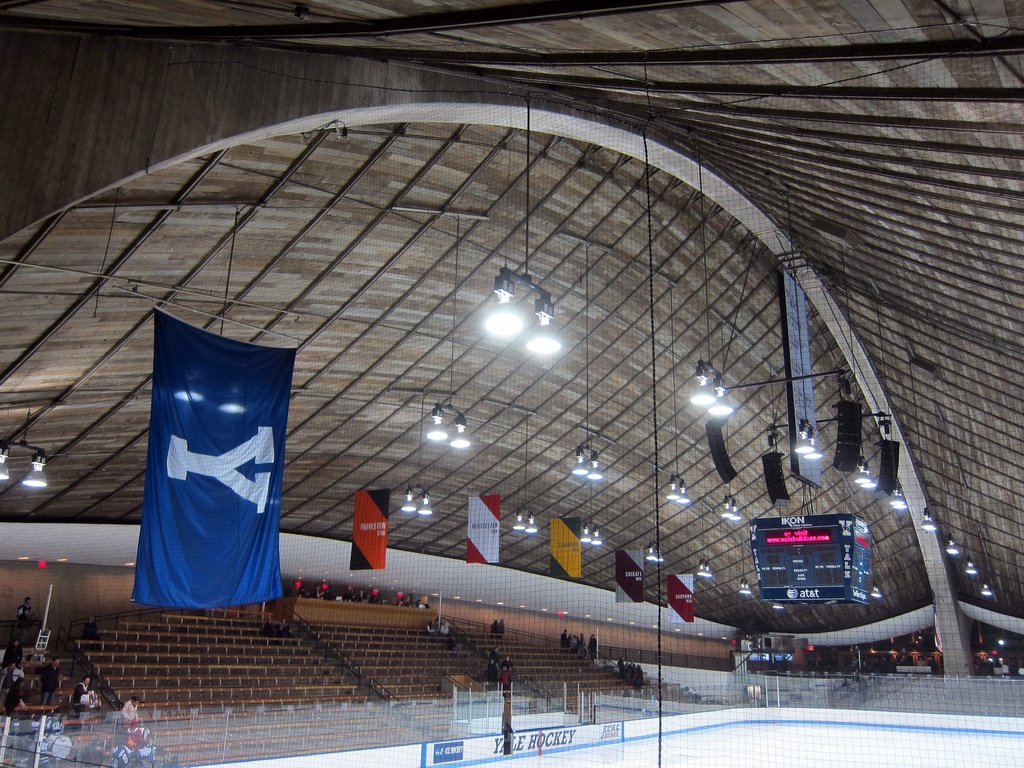
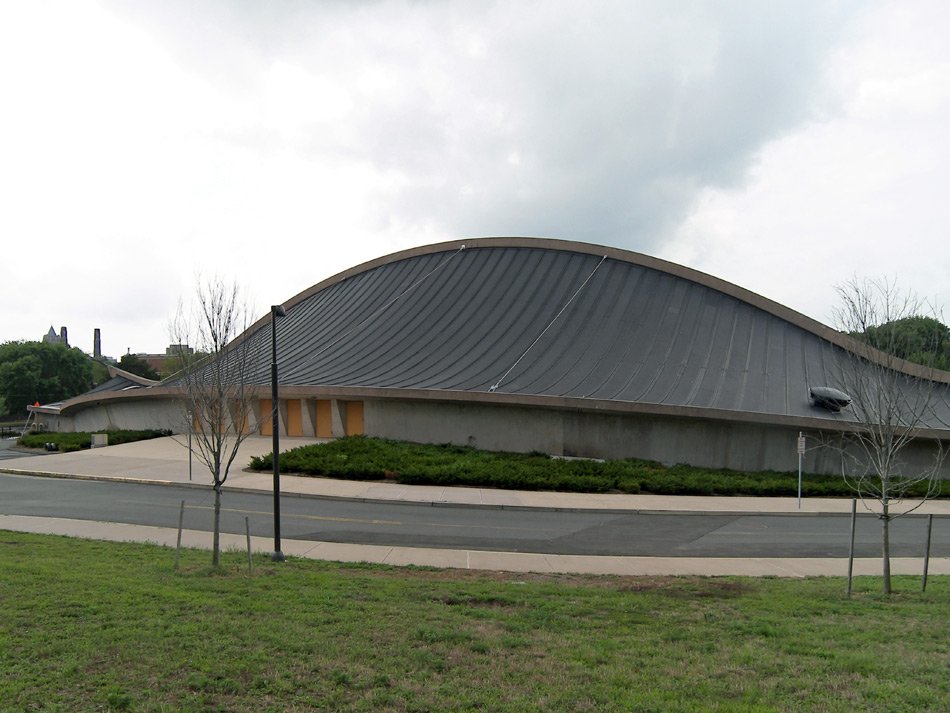
Additional exterior cables connect the central arch to the perimeter of the building. These elements were introduced during the design process to counteract asymmetrical wind forces and improve structural stability. The resulting roof form is not a sculptural gesture applied to the building but a direct expression of its structural behavior.
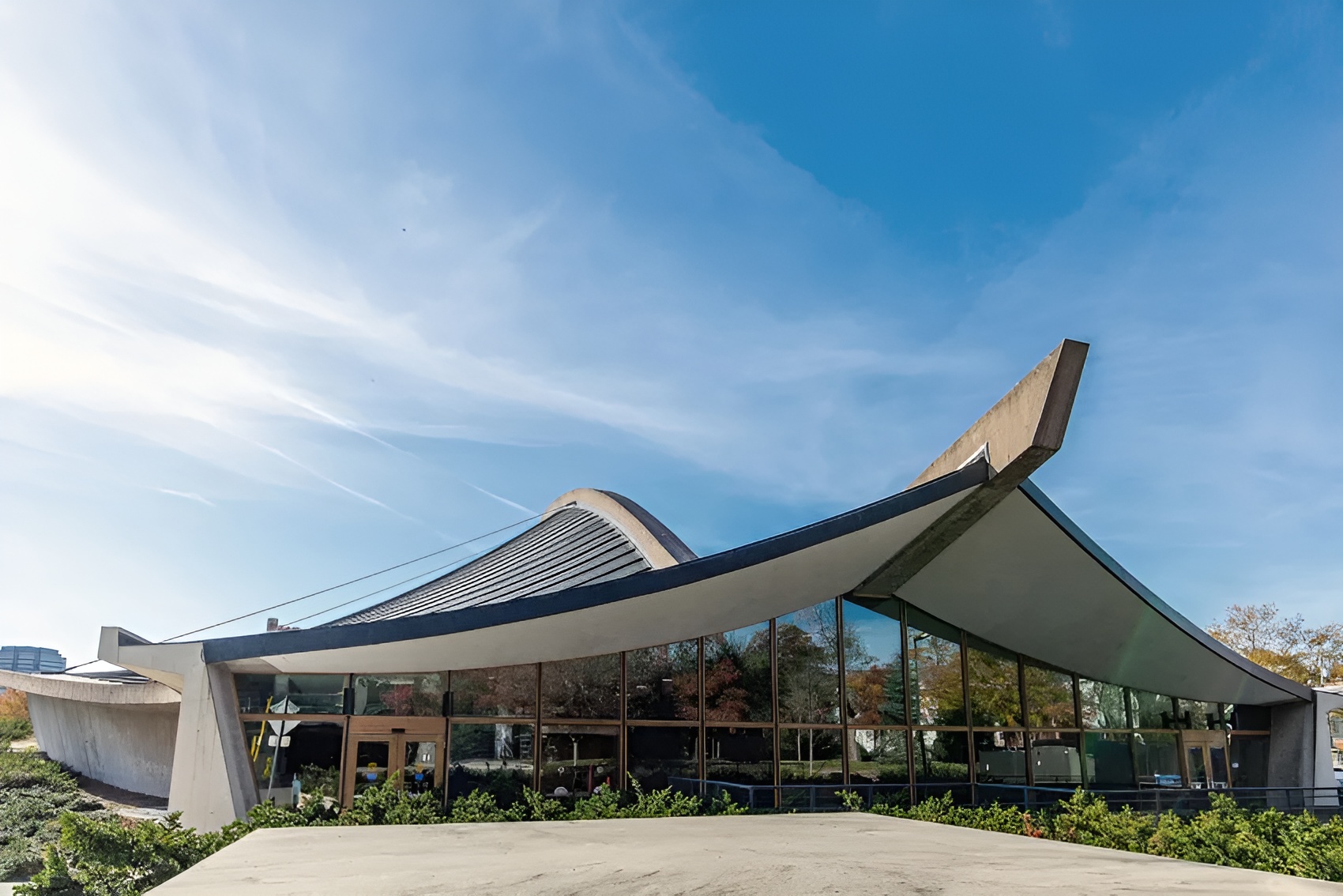
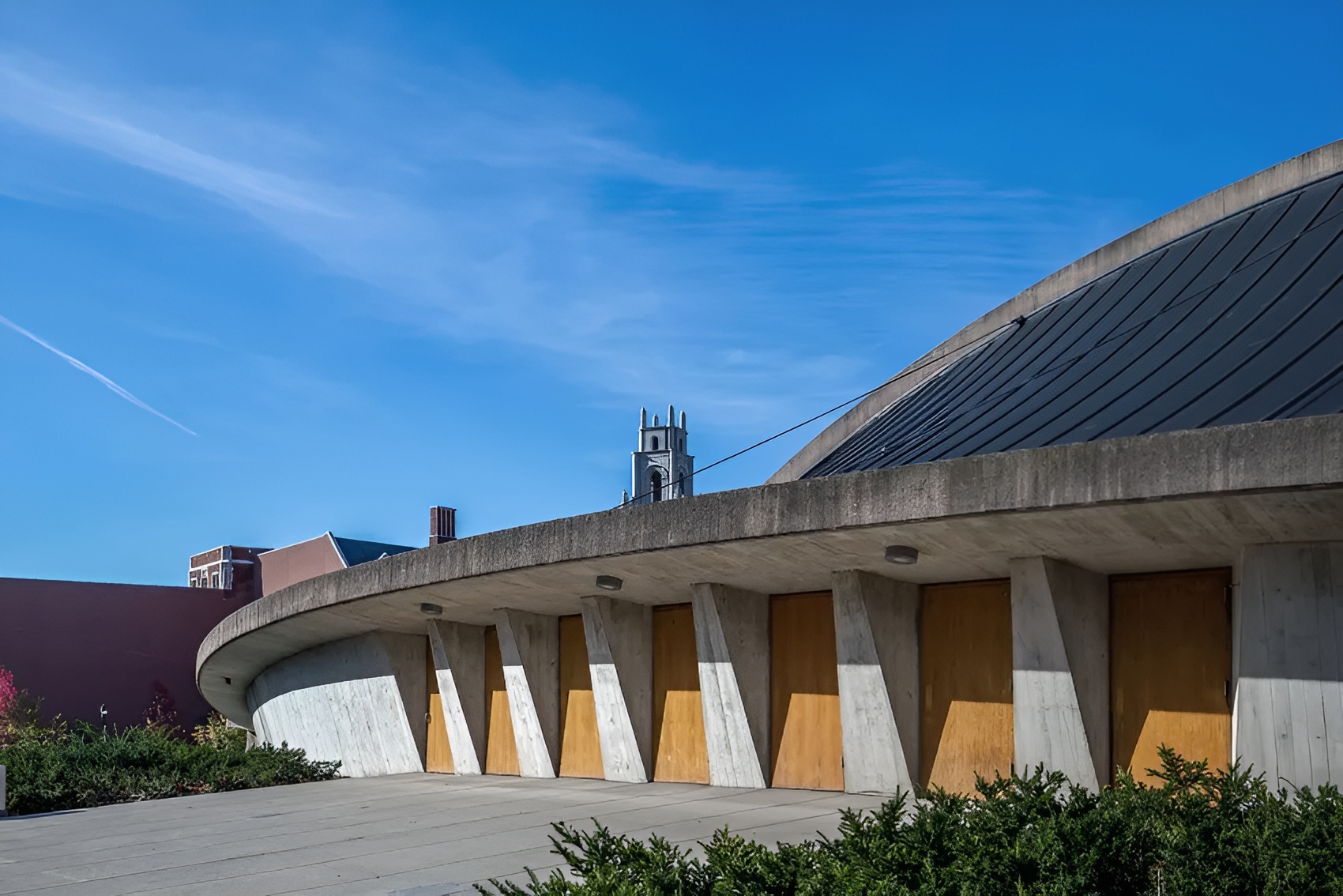
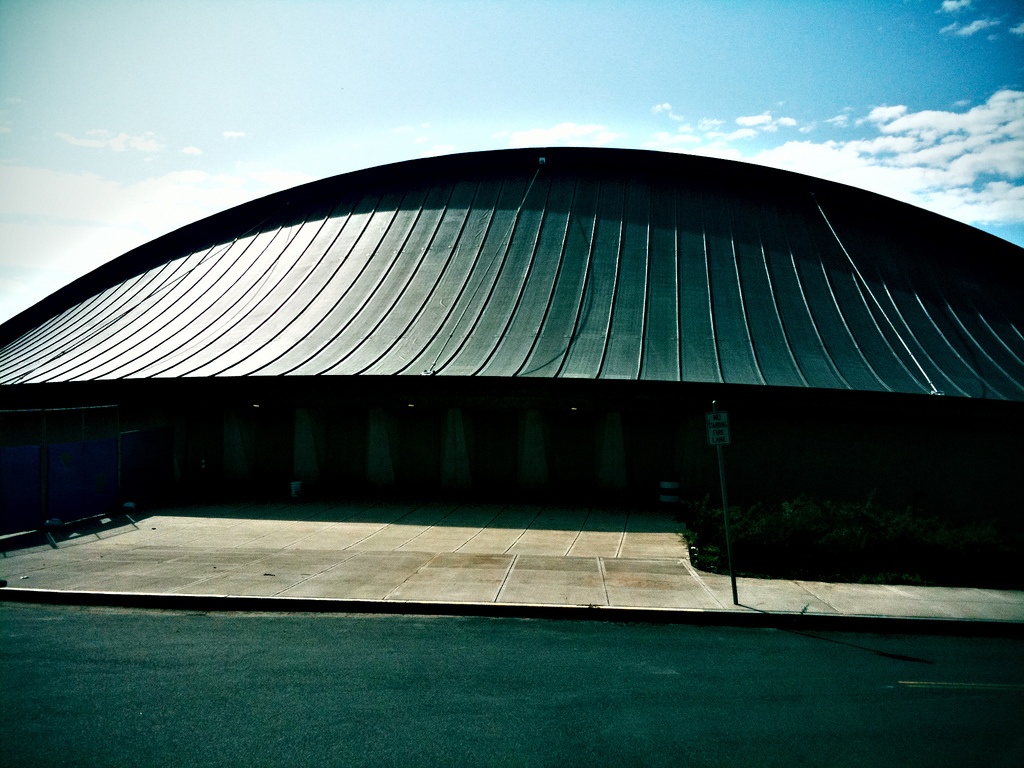
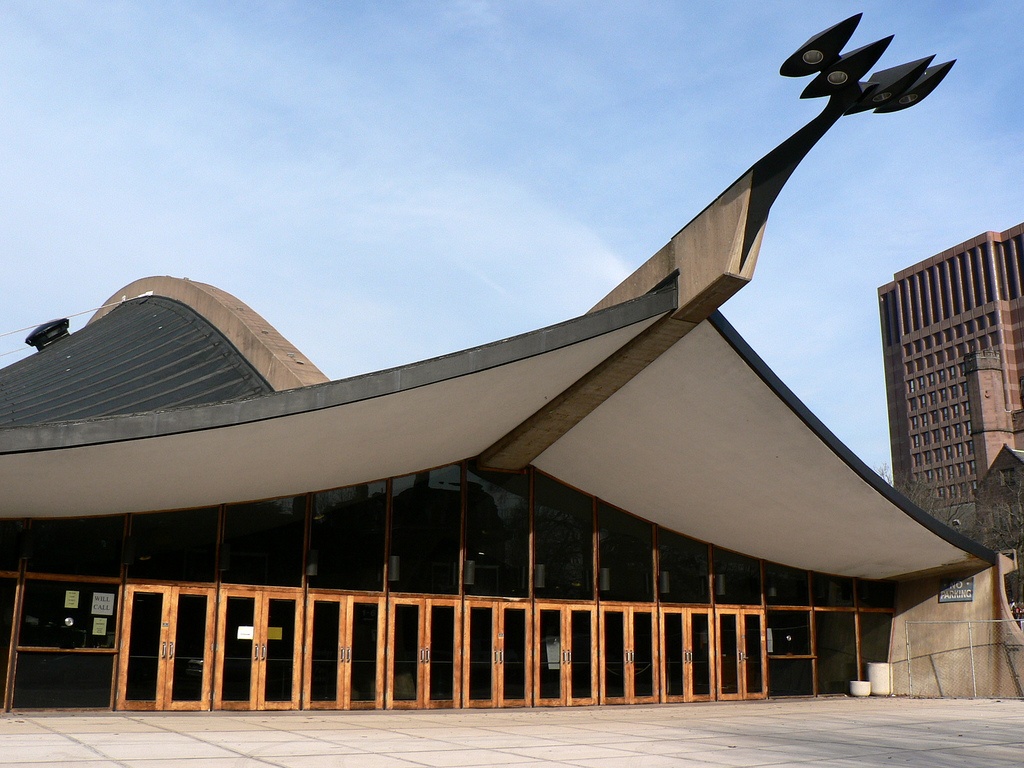
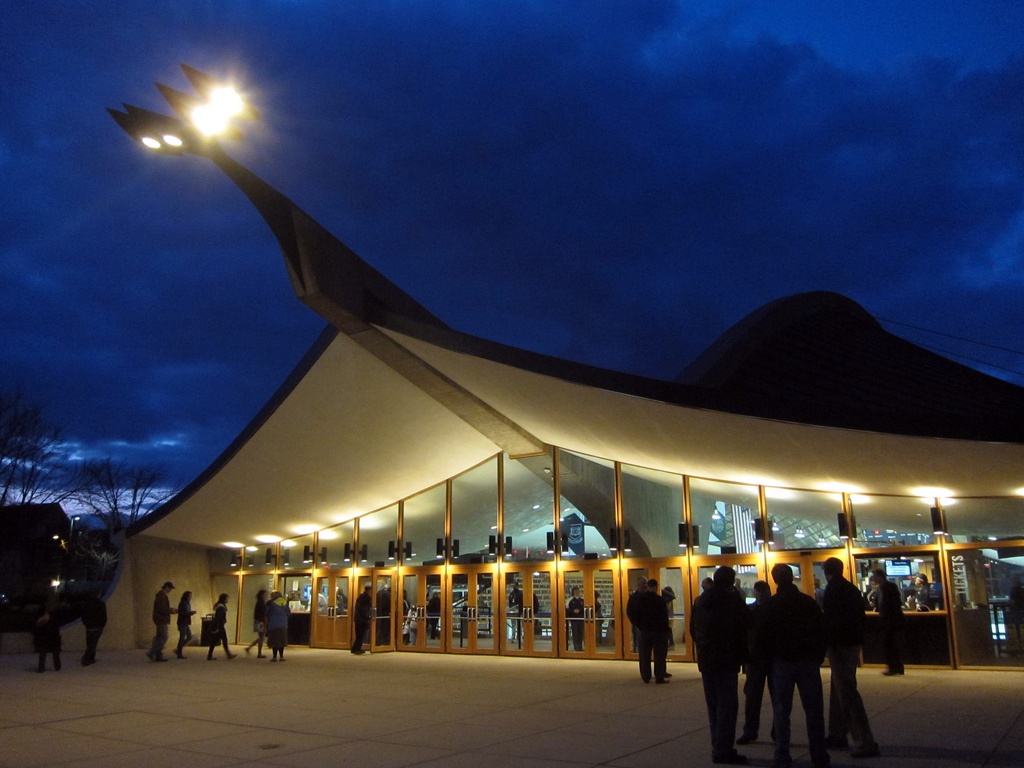
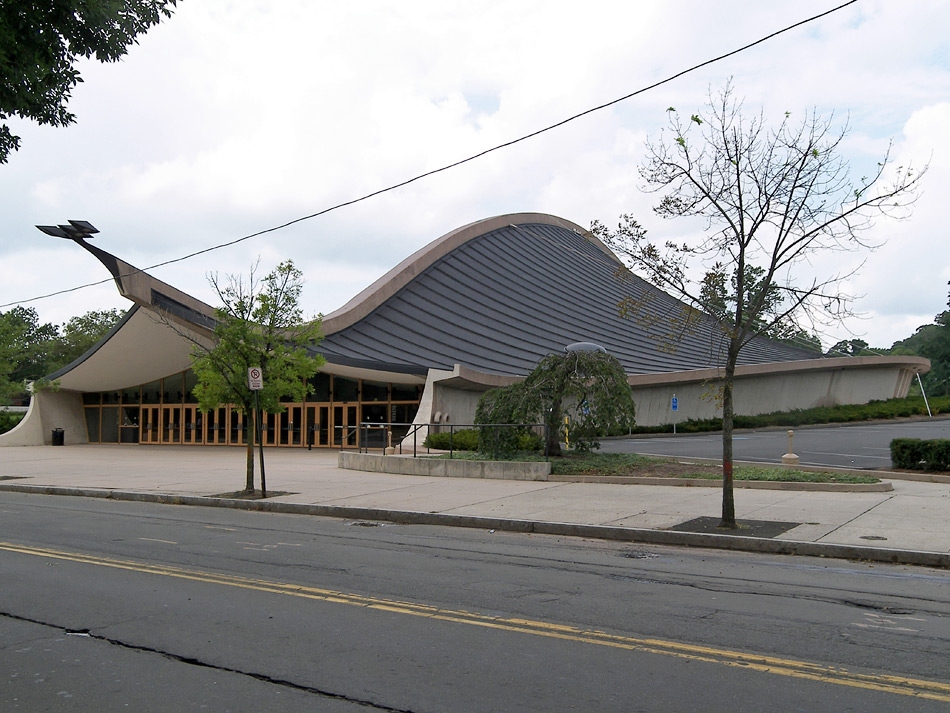
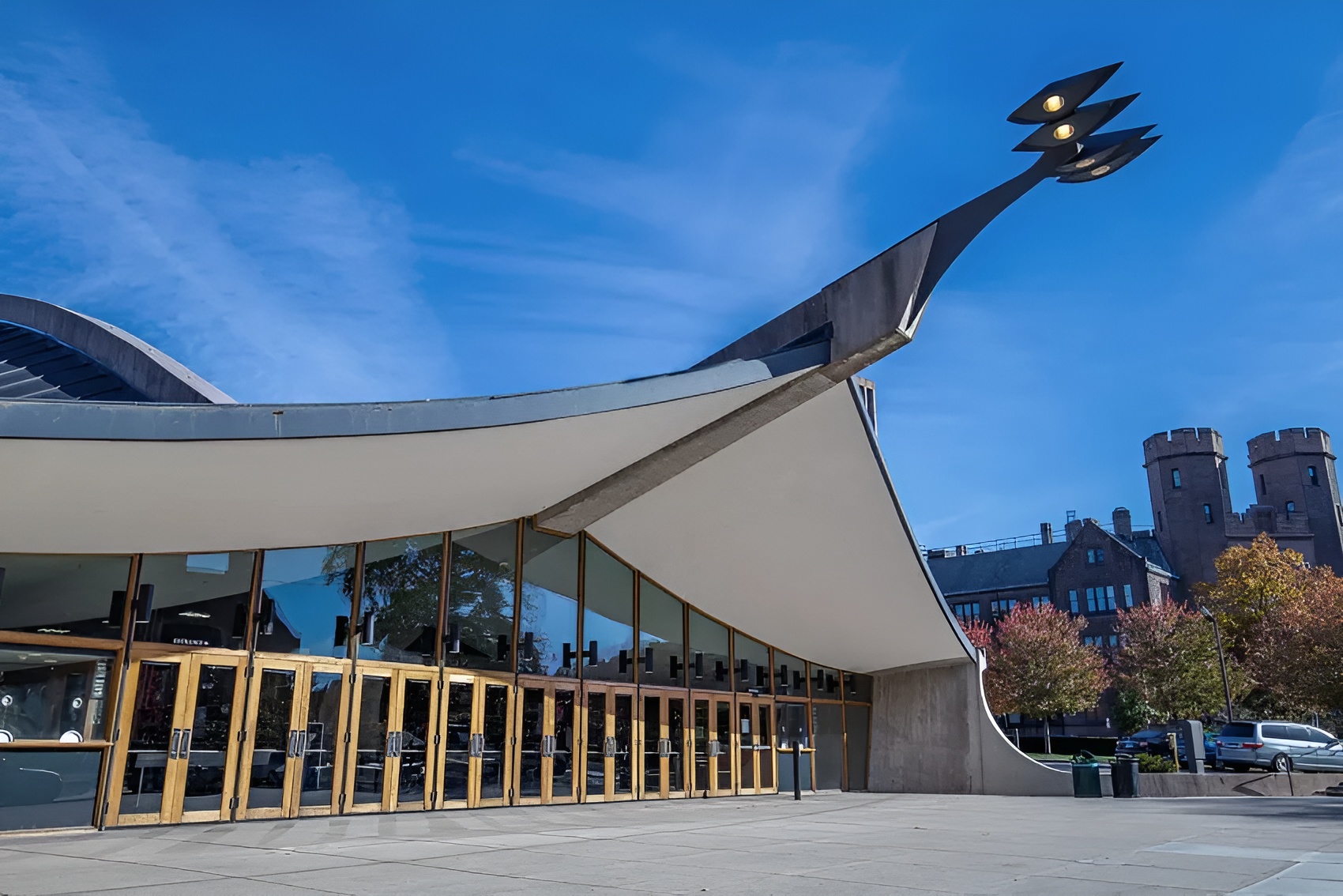
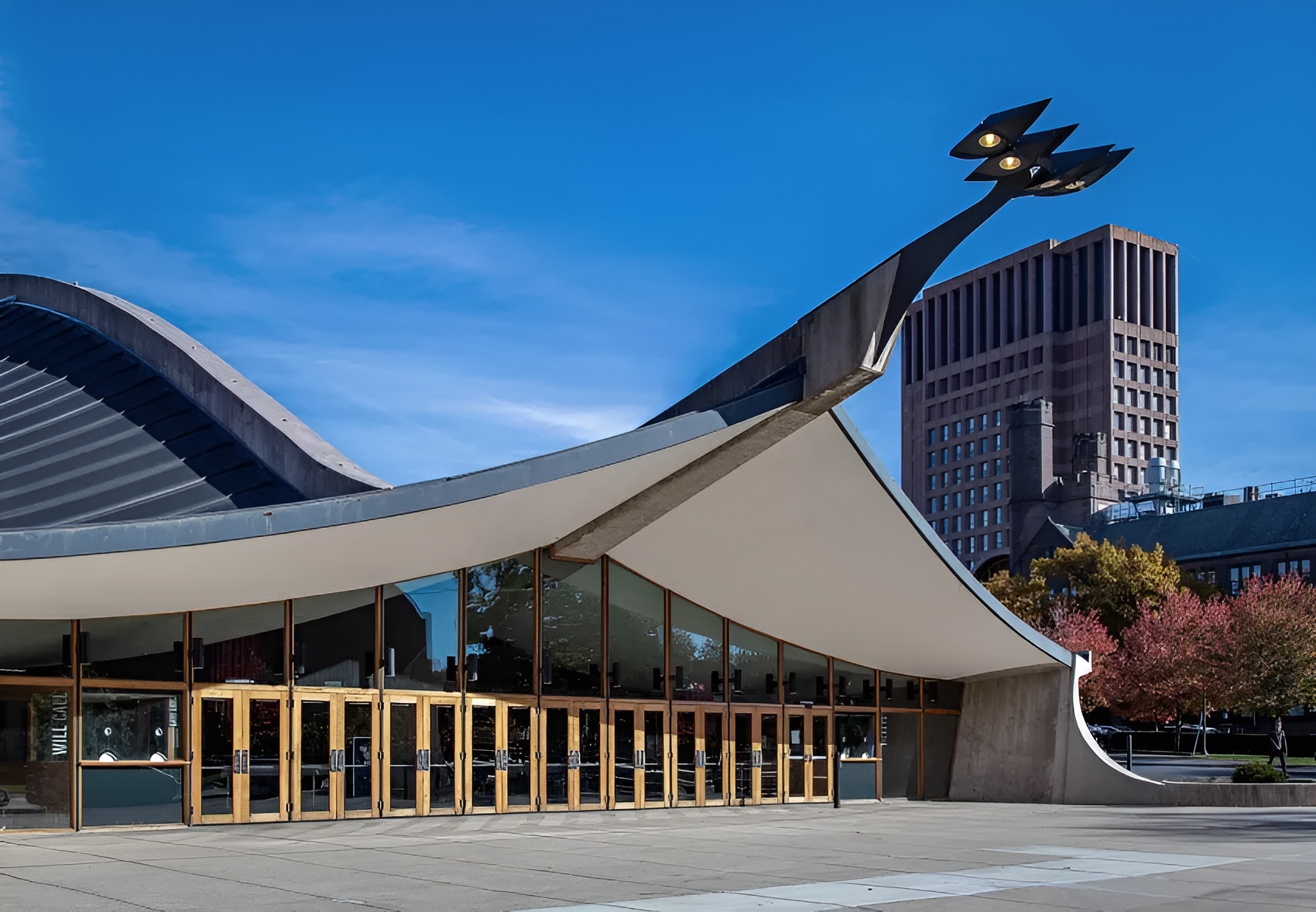
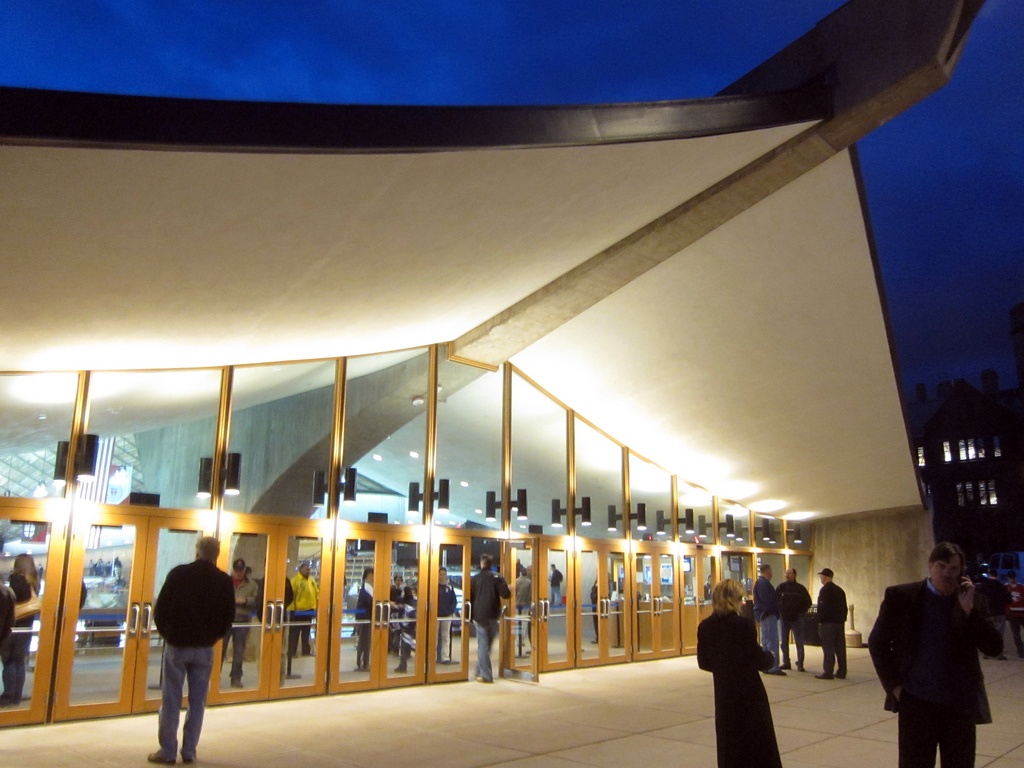
The rink’s profile emerges from this system of forces. The roof descends toward the perimeter and rises toward the center, generating the sweeping silhouette that gave the building its nickname. Low eaves compress the approach to the arena, while the central vault expands dramatically above the ice surface. The contrast between these conditions establishes a clear spatial sequence from entry to seating bowl.
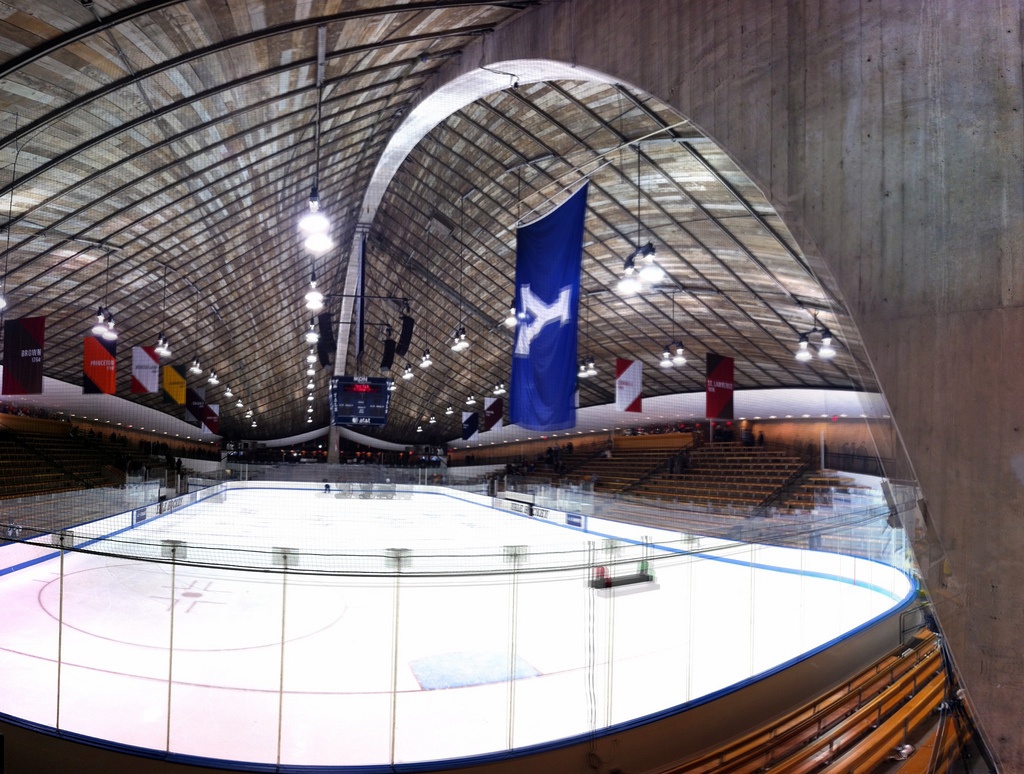
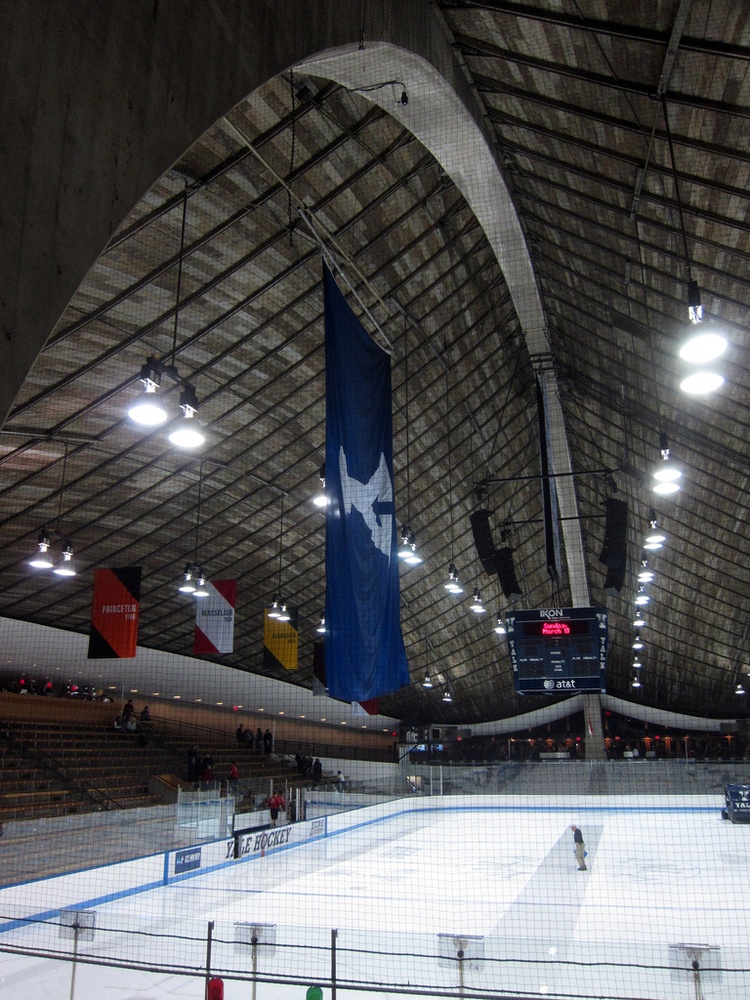
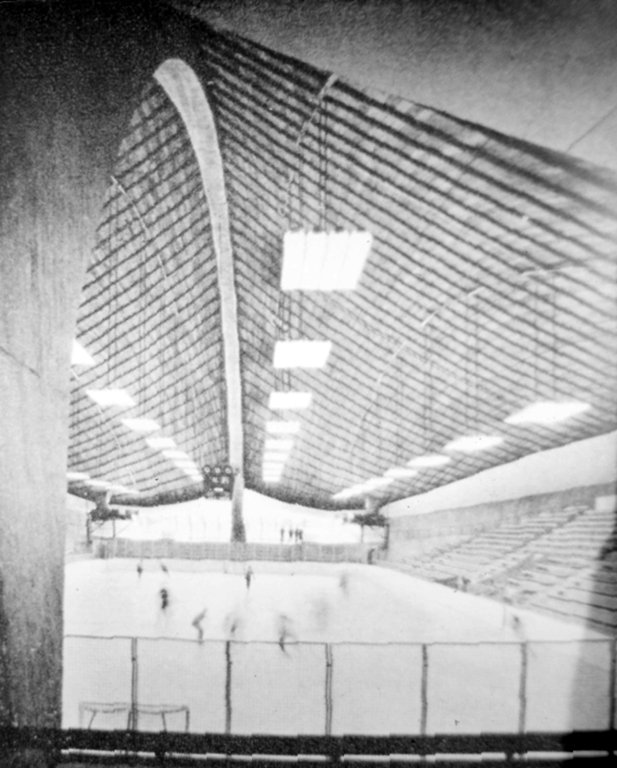
The interior reflects the same structural clarity visible from the exterior. The underside of the timber roof forms a continuous surface whose pattern follows the geometry of the suspended cable network. Oak roof decking introduces warmth and texture against the exposed concrete arch and supports. Lighting, services, and acoustic elements are integrated within the structural framework, reinforcing the relationship between architecture and engineering.
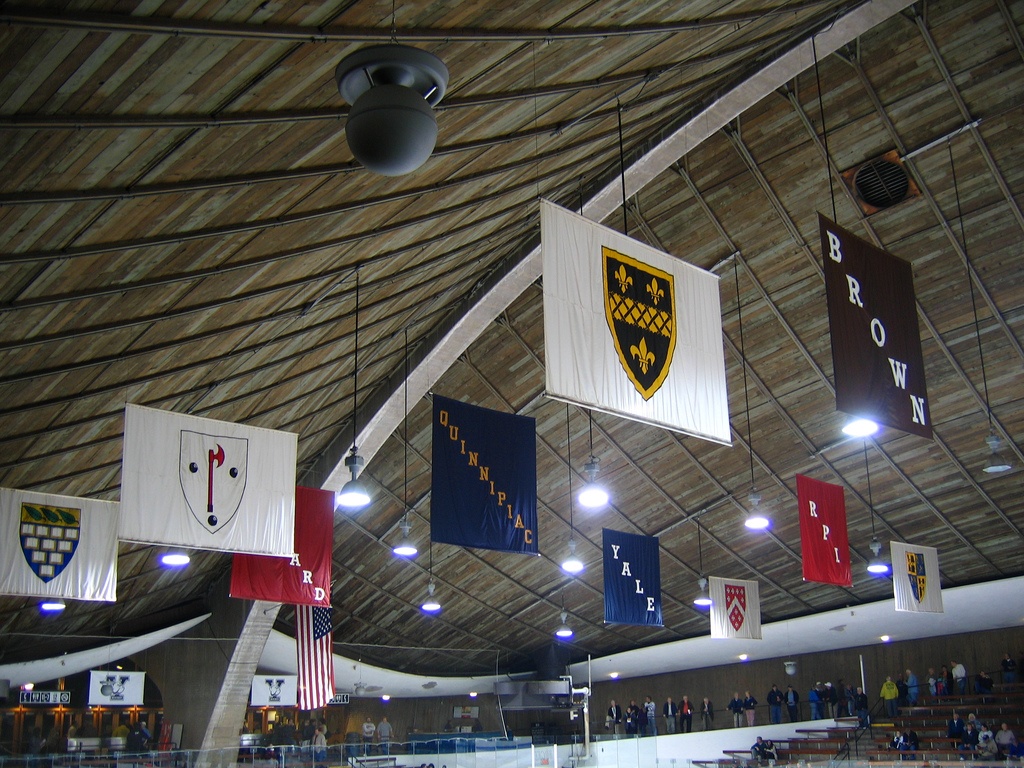
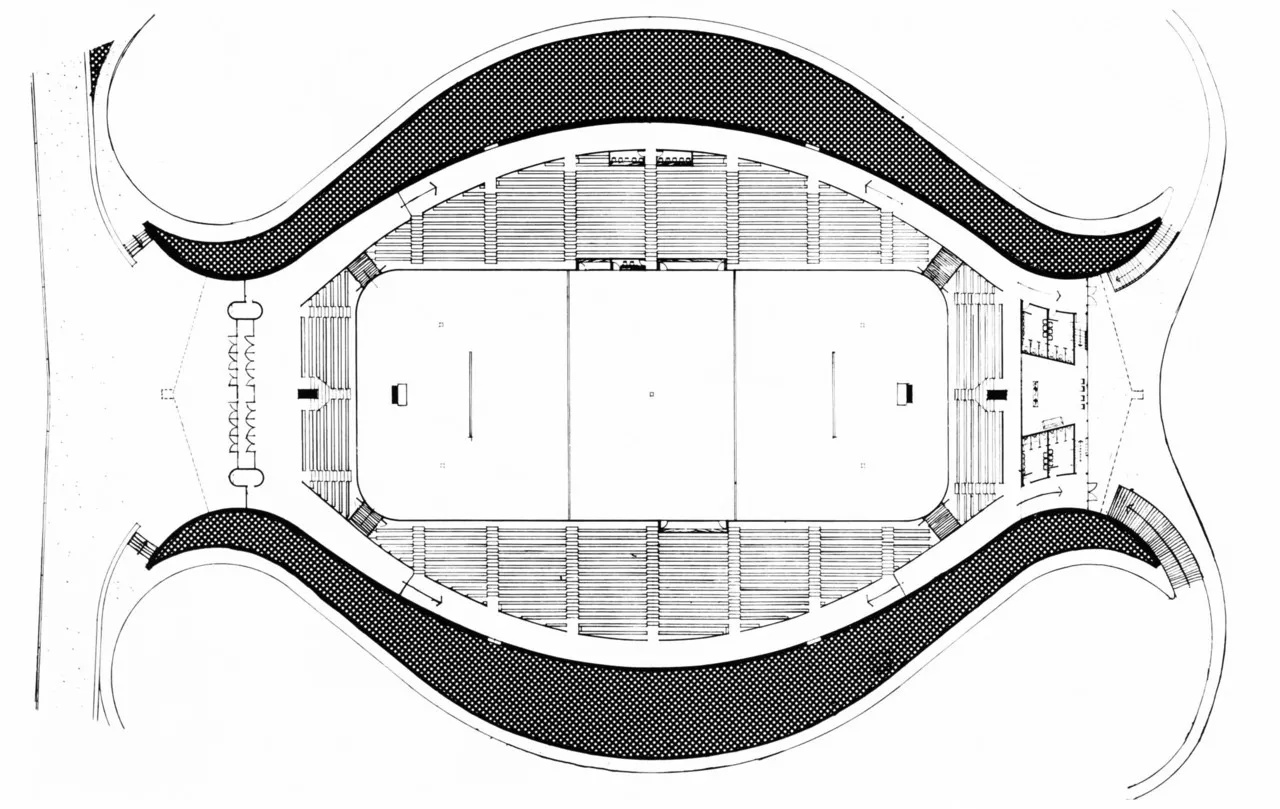
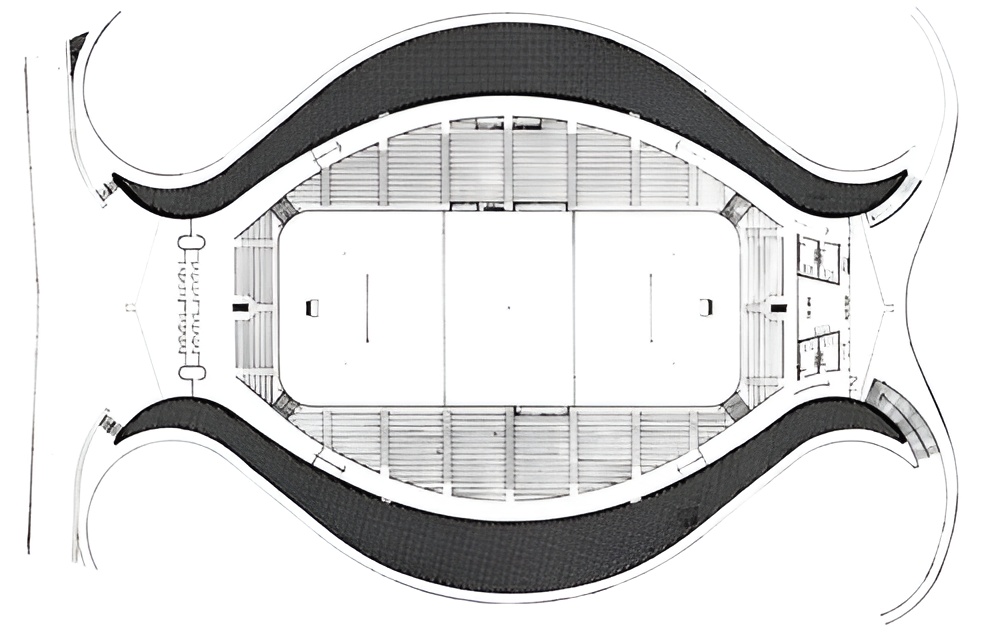
Circulation is organized through perimeter concourses and sloping ramps that trace the geometry of the roof above. The central arch remains visible throughout the building, serving as a constant point of orientation. The absence of columns provides unobstructed views across the ice and allows the structural system itself to define the spectator experience.
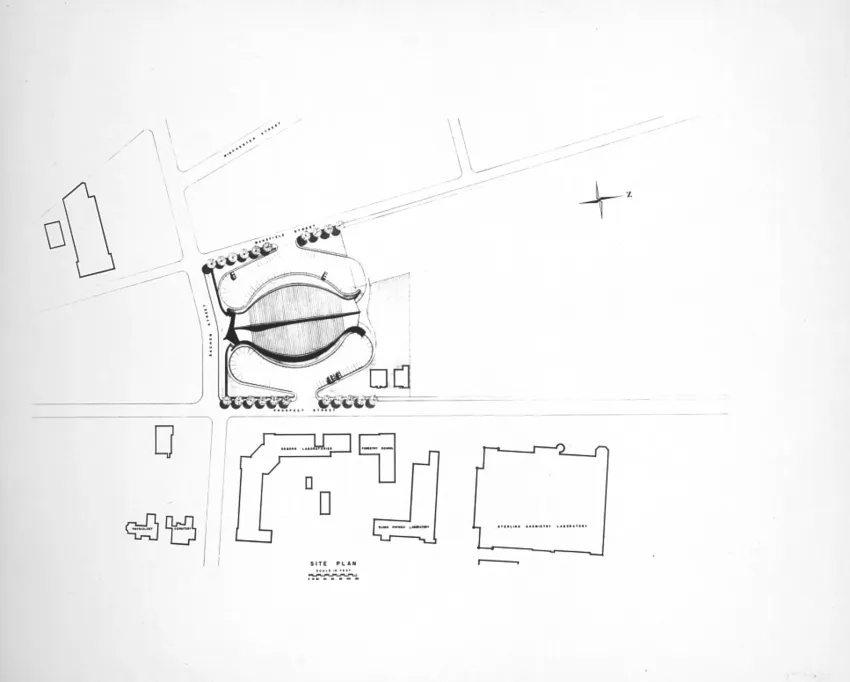
The building’s form mediates between its large span and the scale of the surrounding campus. Transparent perimeter glazing reduces the perceived mass of the arena and establishes visual connections between interior circulation areas and adjacent open spaces. At ground level, the low roofline minimizes the building’s impact on the pedestrian environment, while the elevated central vault marks its civic and athletic significance within Yale University.
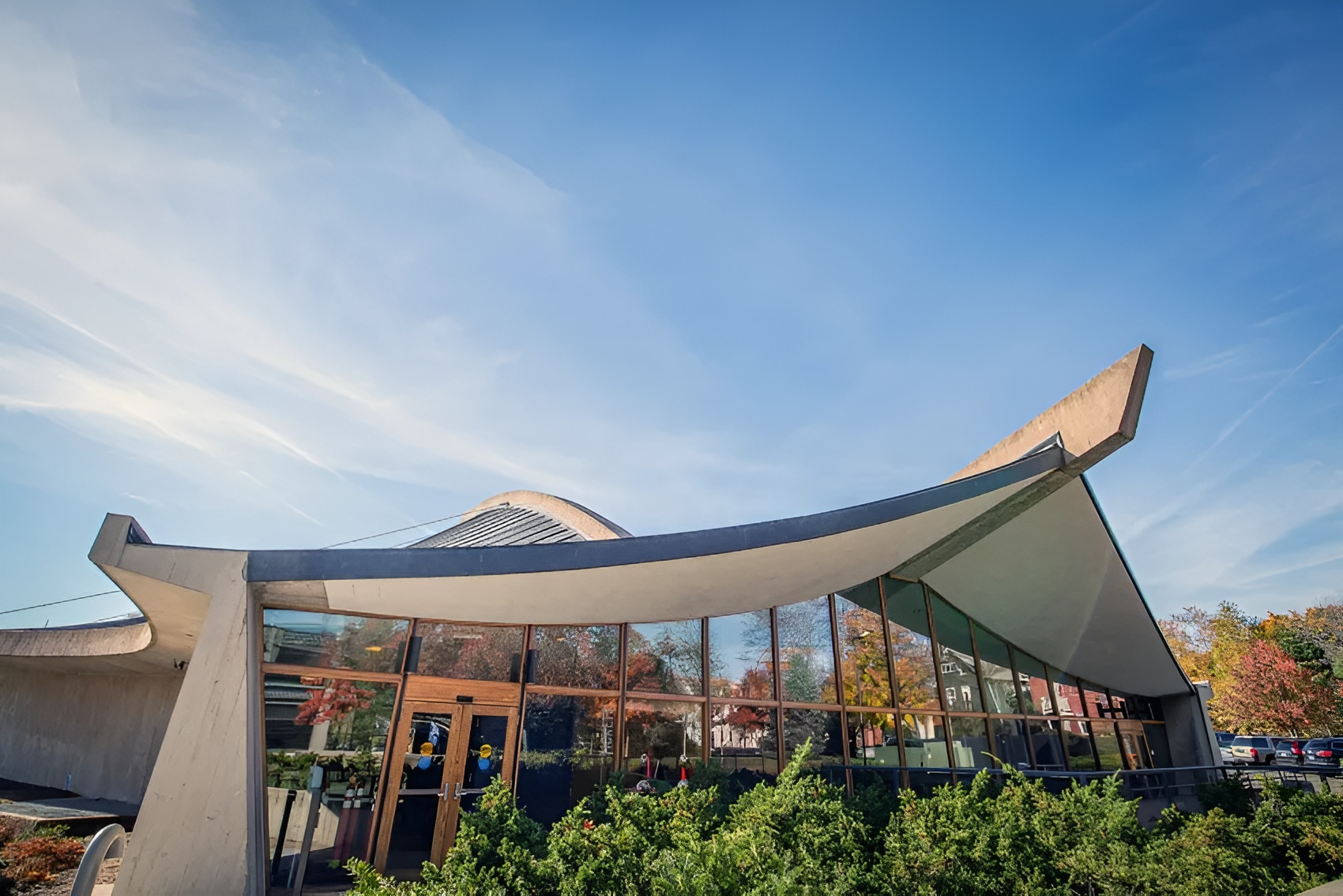
David S. Ingalls Rink has undergone several upgrades while retaining its original architectural character. A new refrigerant slab was installed in 1991. A major renovation completed in 2009 by Kevin Roche and Roche Dinkeloo, successors to Eero Saarinen & Associates, introduced new locker rooms, training facilities, offices, study spaces, improved mechanical systems, and a hockey heritage area while preserving the building’s defining structural features.
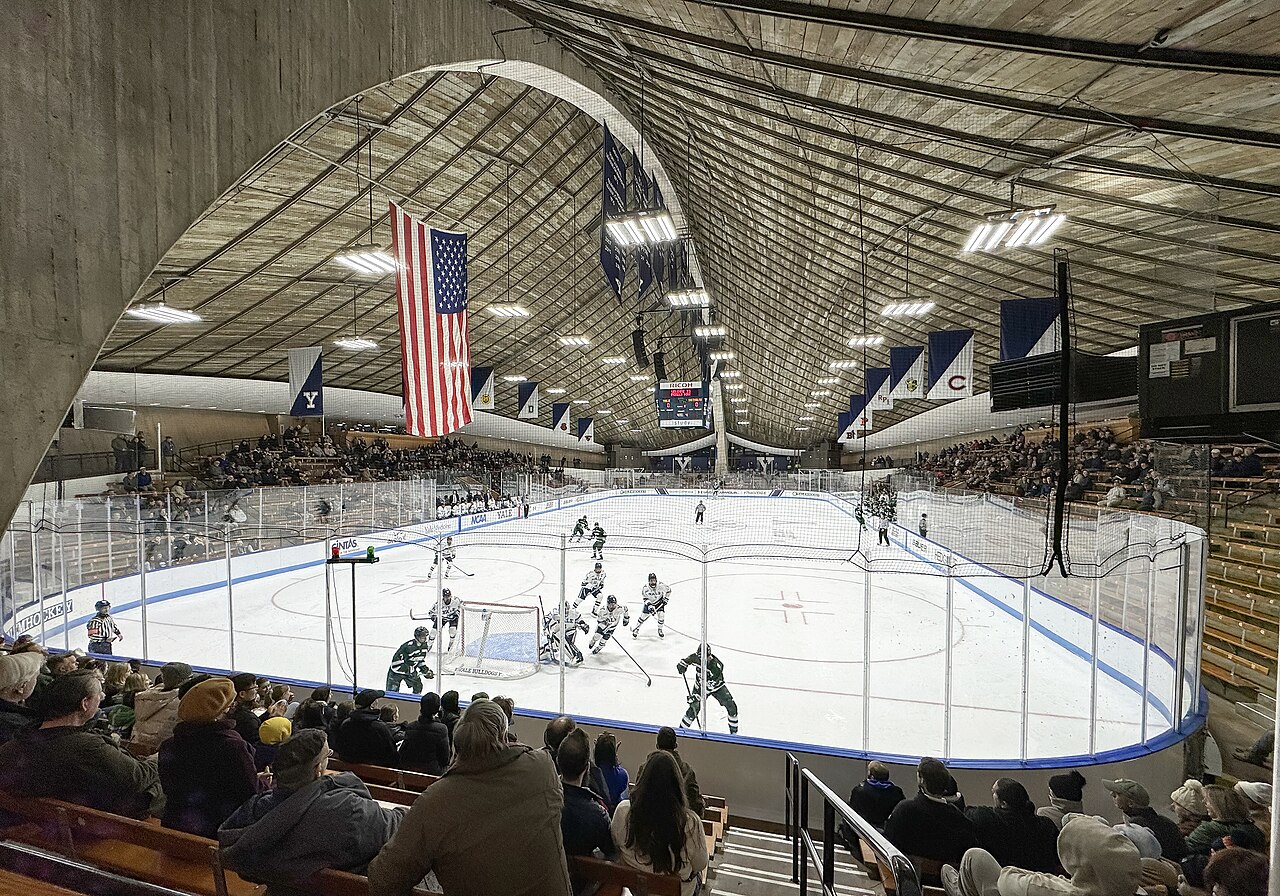
More than six decades after its completion, David S. Ingalls Rink remains a landmark of modern architecture and structural engineering. The building demonstrates Saarinen’s ability to transform structural necessity into architectural form, creating an arena in which construction, space, and experience are inseparable.
Project Gallery


Project Location
Address: 73 Sachem Street, New Haven, Connecticut 06511, United States
Location is for general reference and may represent a city or country, not necessarily a precise address.

