

Architects: Richard Meier & Partners
Year: 1973
Photography: Richard Meier & Partners, AIA, James Haefner, Michigan State Historic Preservation Office, Scott Frances, OTTO, Ezra Stoller, ESTO
Client: James and Jean Douglas
City: Harbor Springs
Country: United States
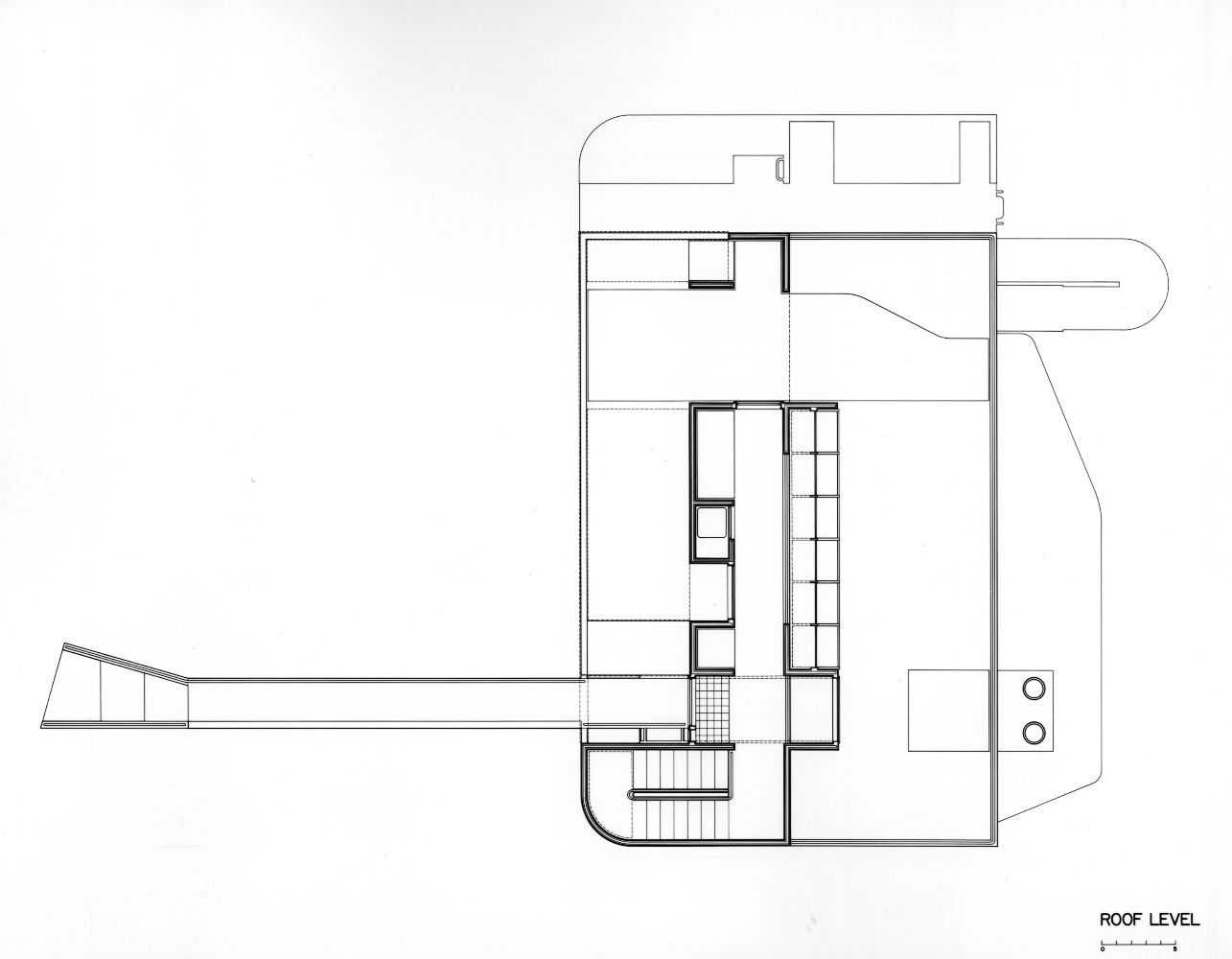
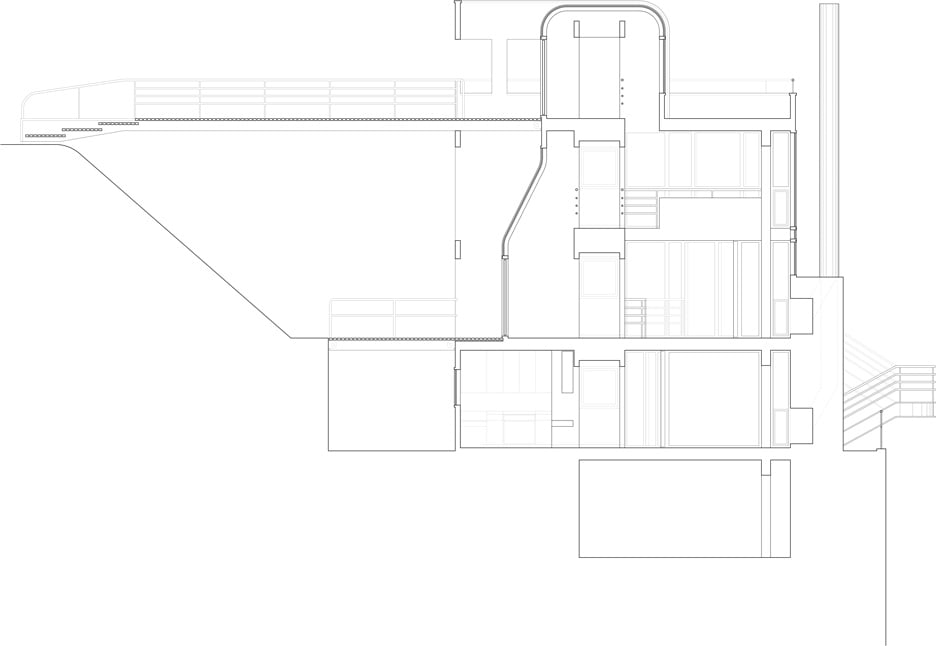
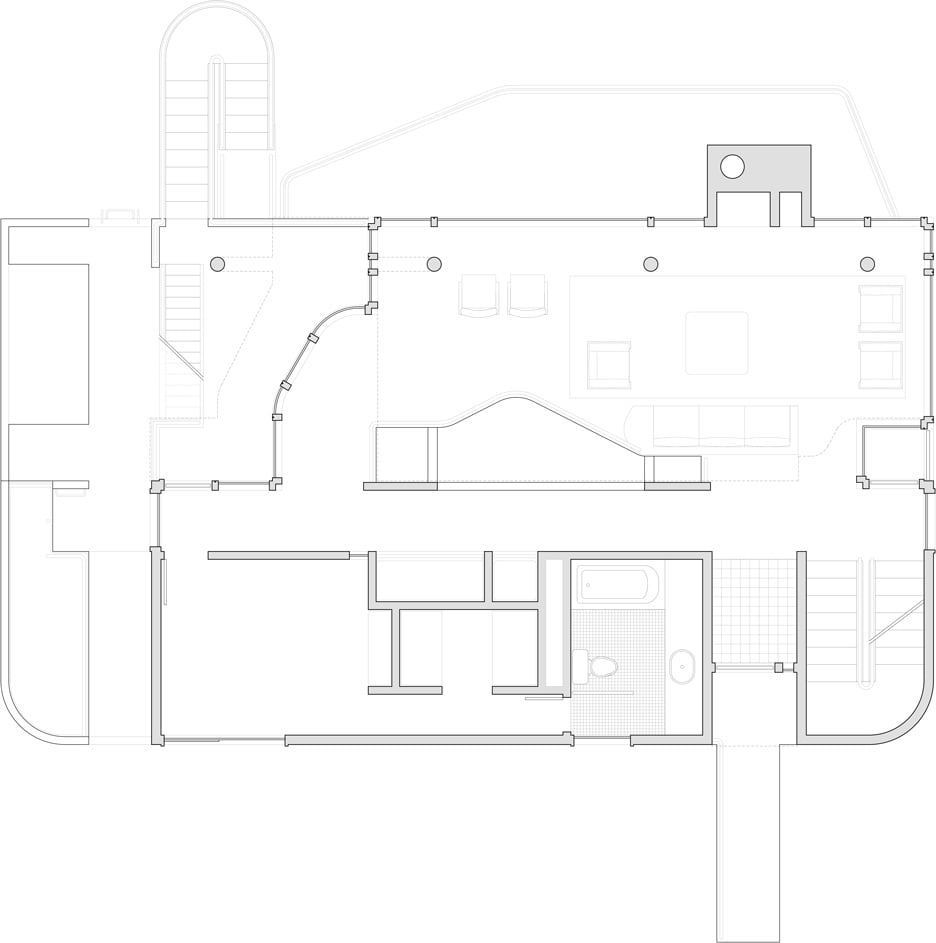
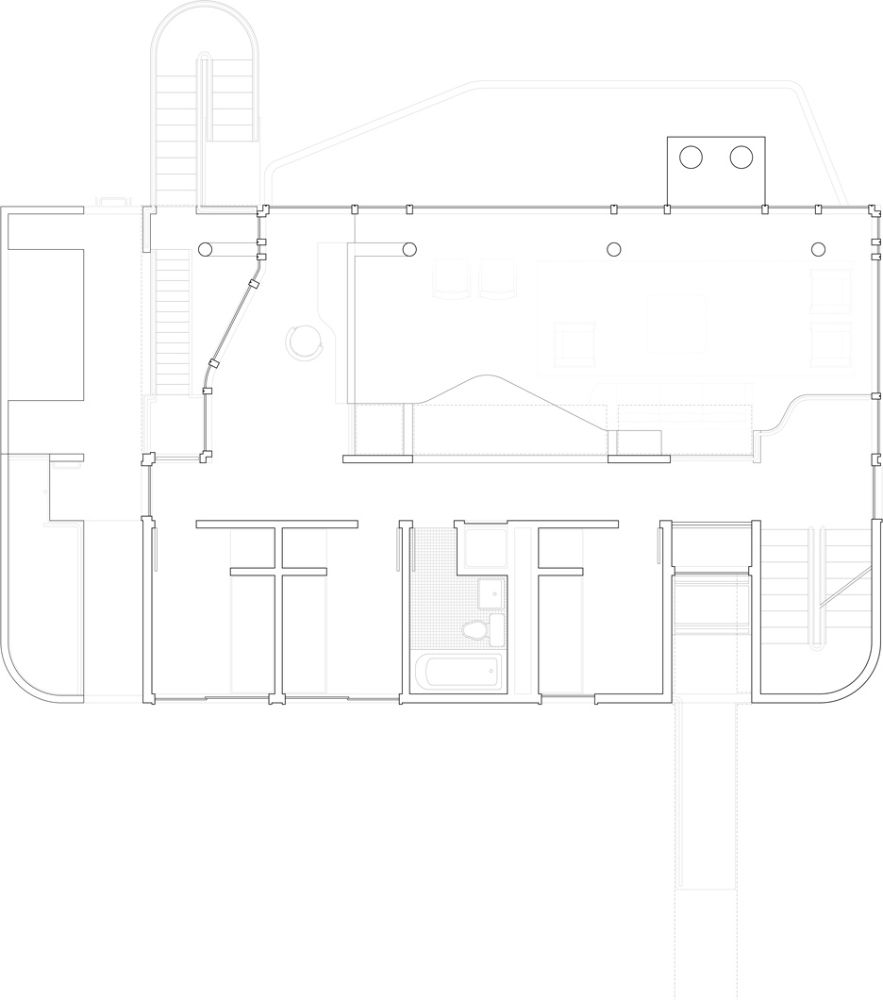
Douglas House residential building, designed by Richard Meier & Partners in Harbor Springs, redefines domestic architecture through the integration of topography, spatial sequencing, and modernist formal language, completed in 1973. The project organizes its program across vertically layered floors embedded into a steep slope overlooking Lake Michigan. The design separates private functions at the entry level from public living spaces oriented toward the water, establishing a clear spatial hierarchy. Circulation is structured through horizontal corridors and corner staircases that preserve uninterrupted views. A restrained white material palette and extensive glazing define contrast with the surrounding landscape while framing long views toward the horizon. The project demonstrates how structure, landscape, and spatial organization operate as a unified residential system.
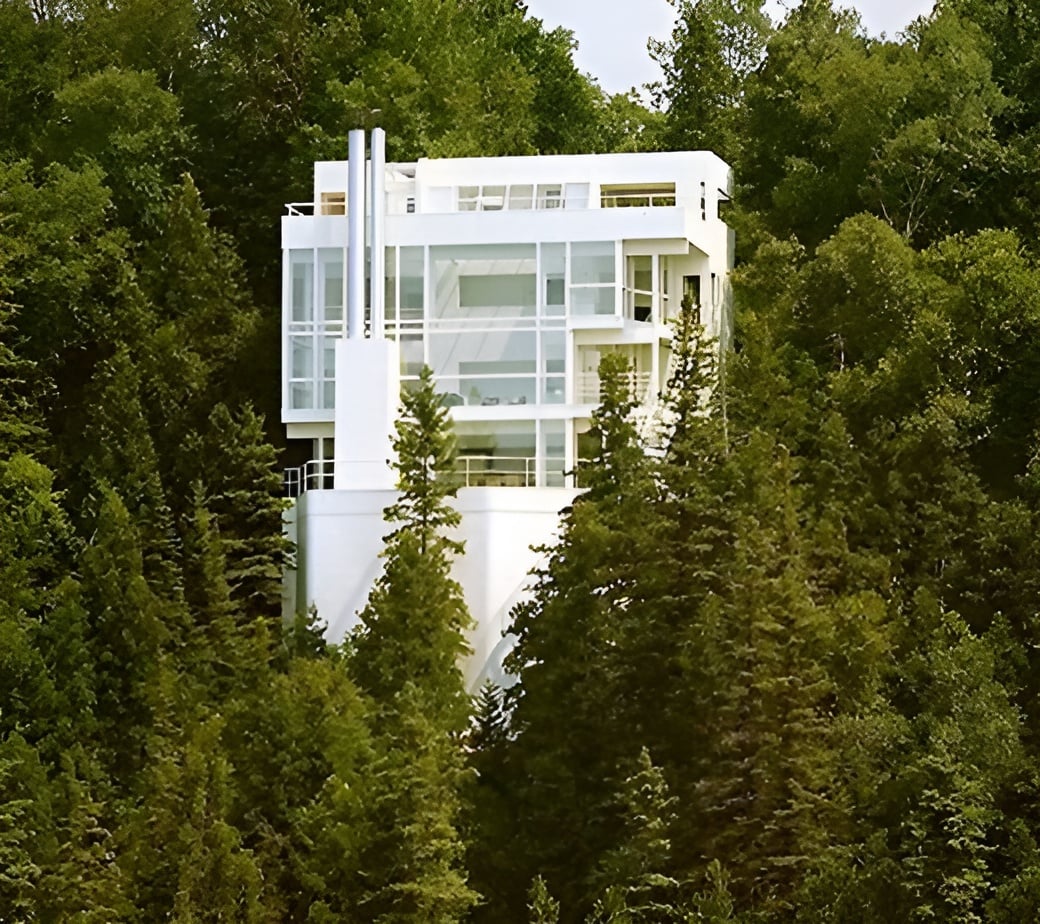
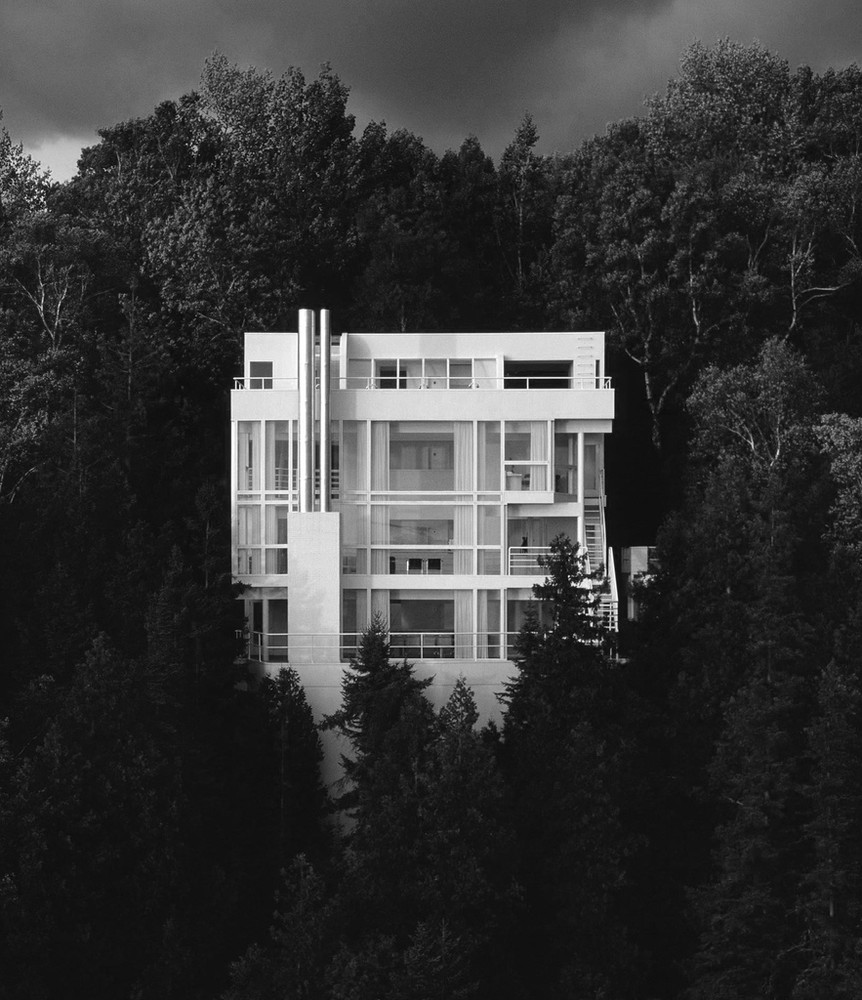
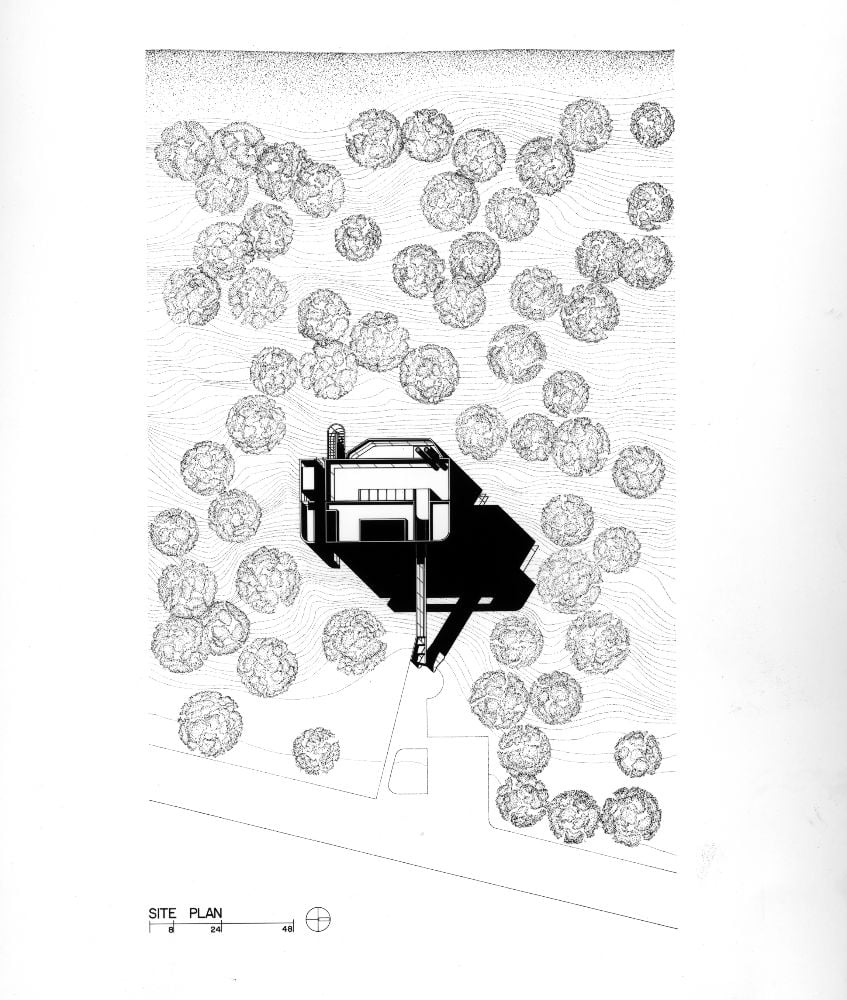
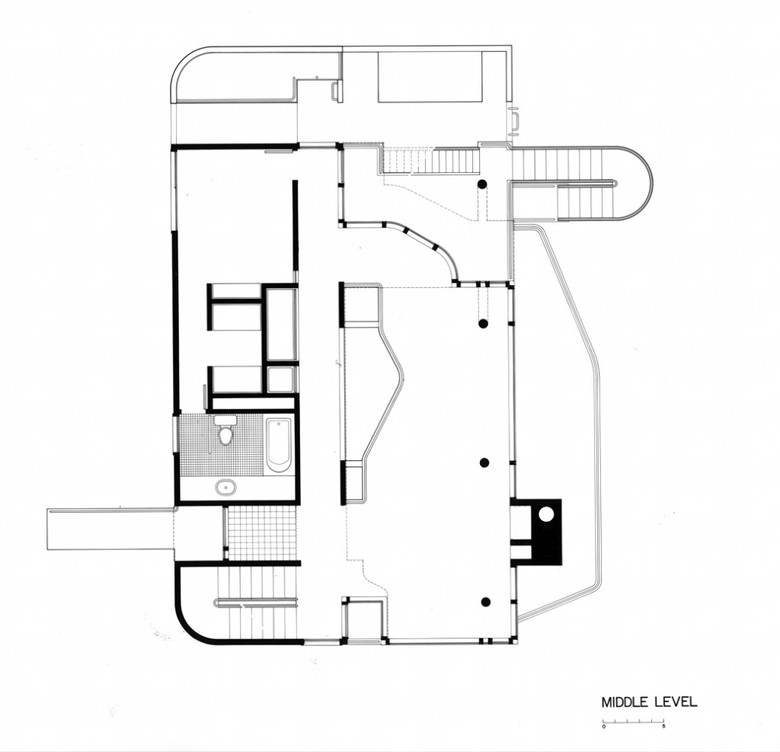
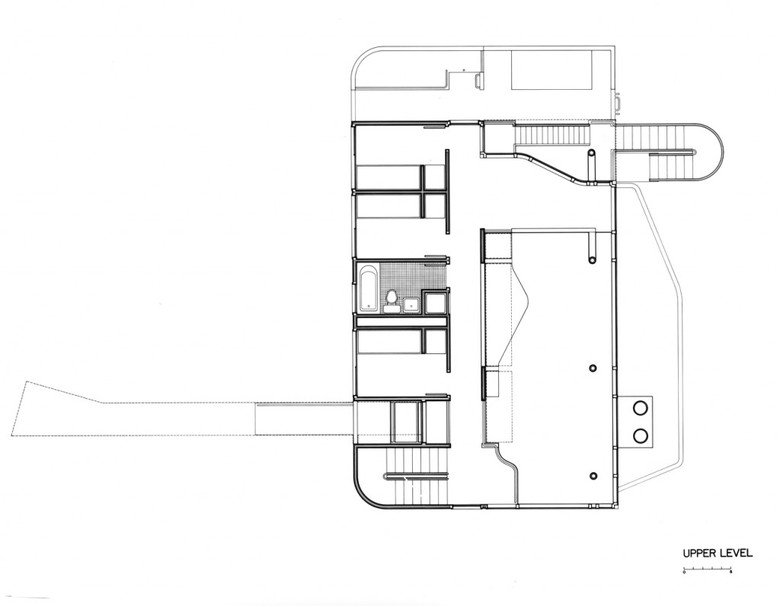
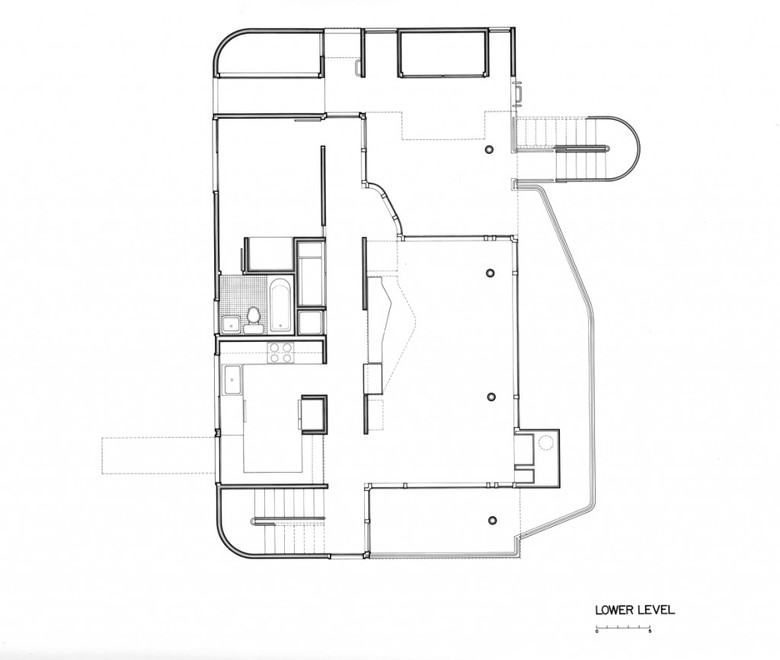
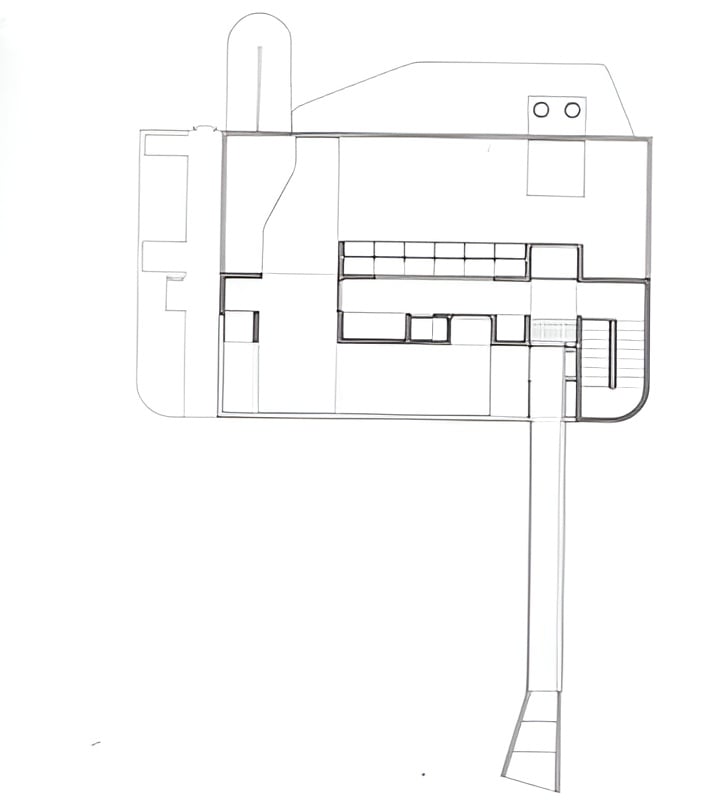
Douglas House stands on a steep wooded site descending toward Lake Michigan, where the terrain determines both access and spatial organization. Entry occurs at the upper level via a bridge connected to the road, defining the arrival sequence as a private zone oriented away from the water.
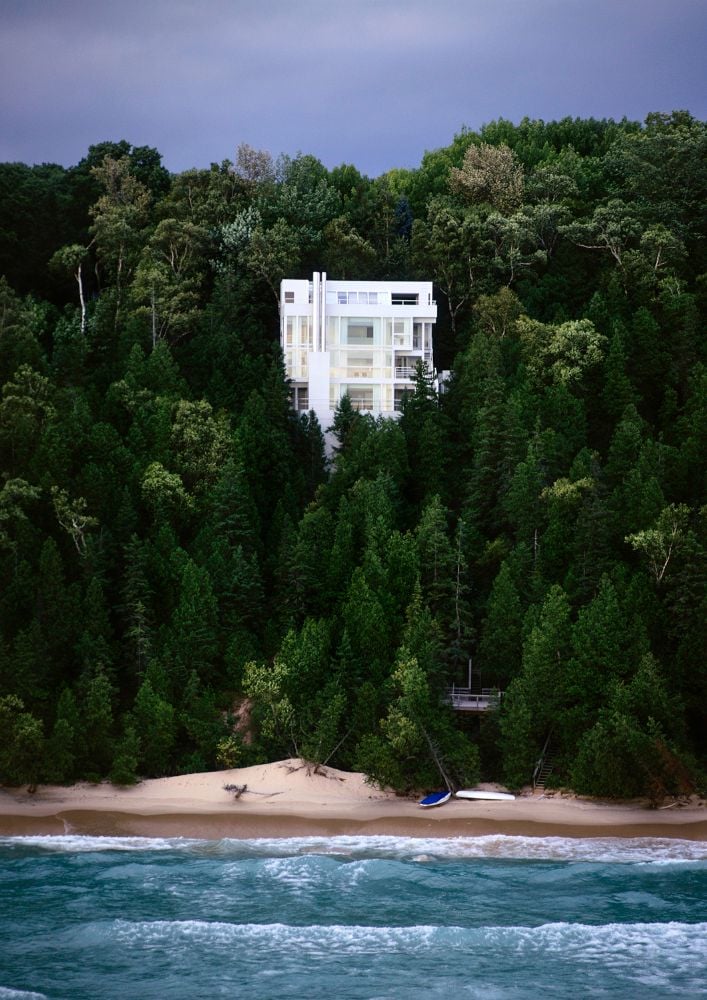
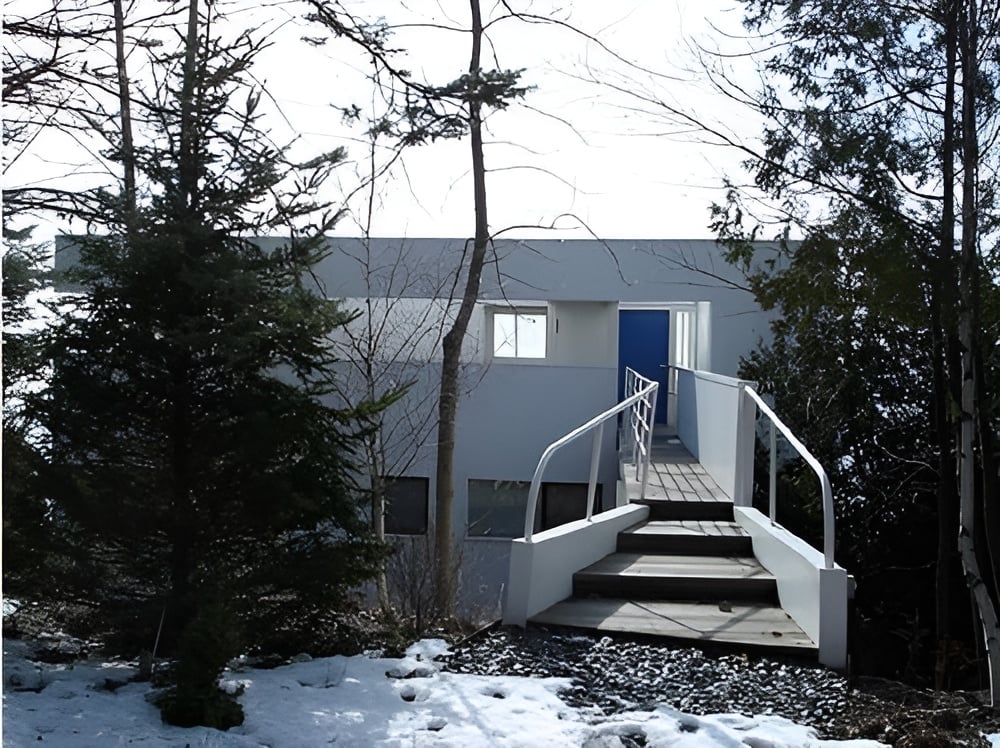
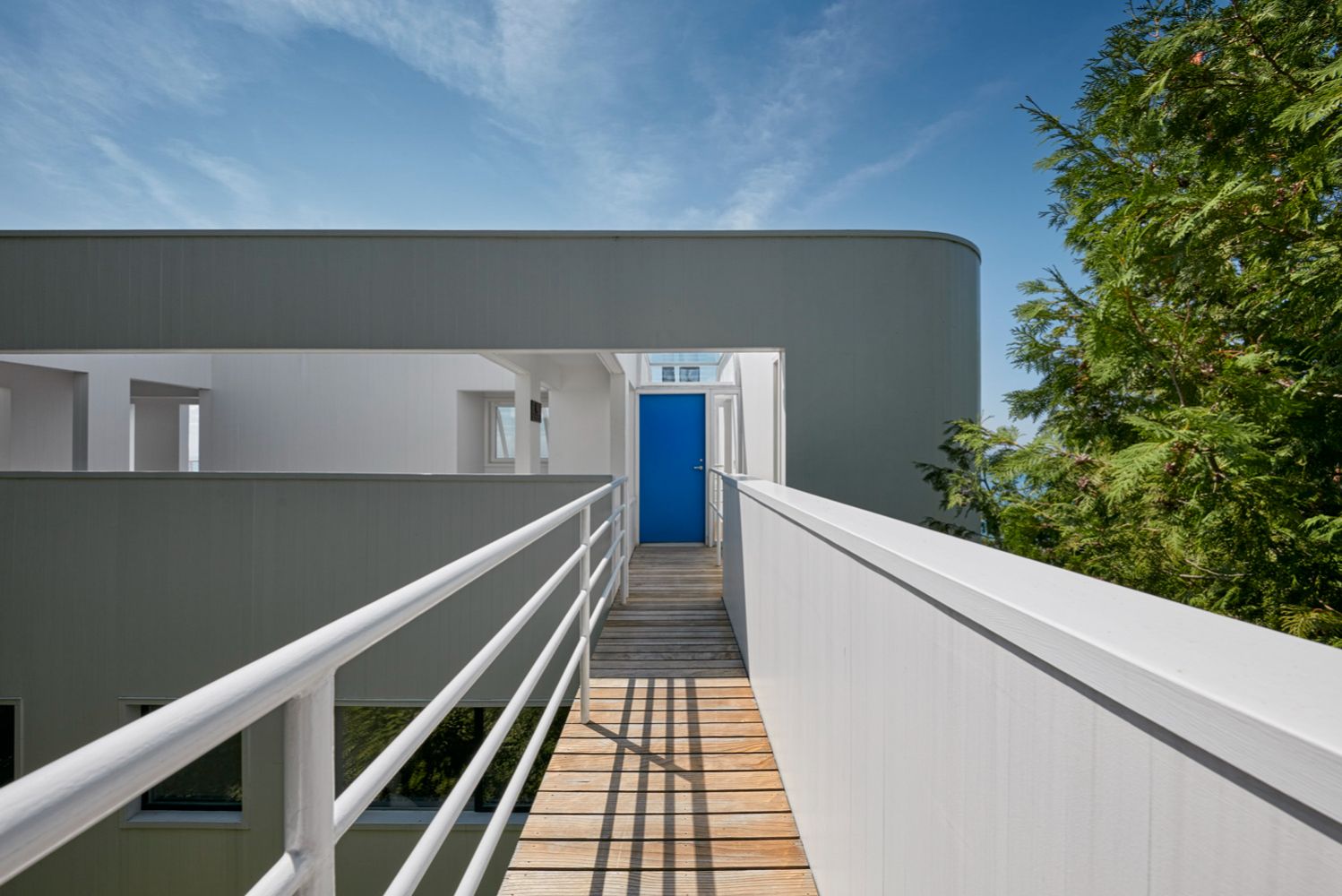
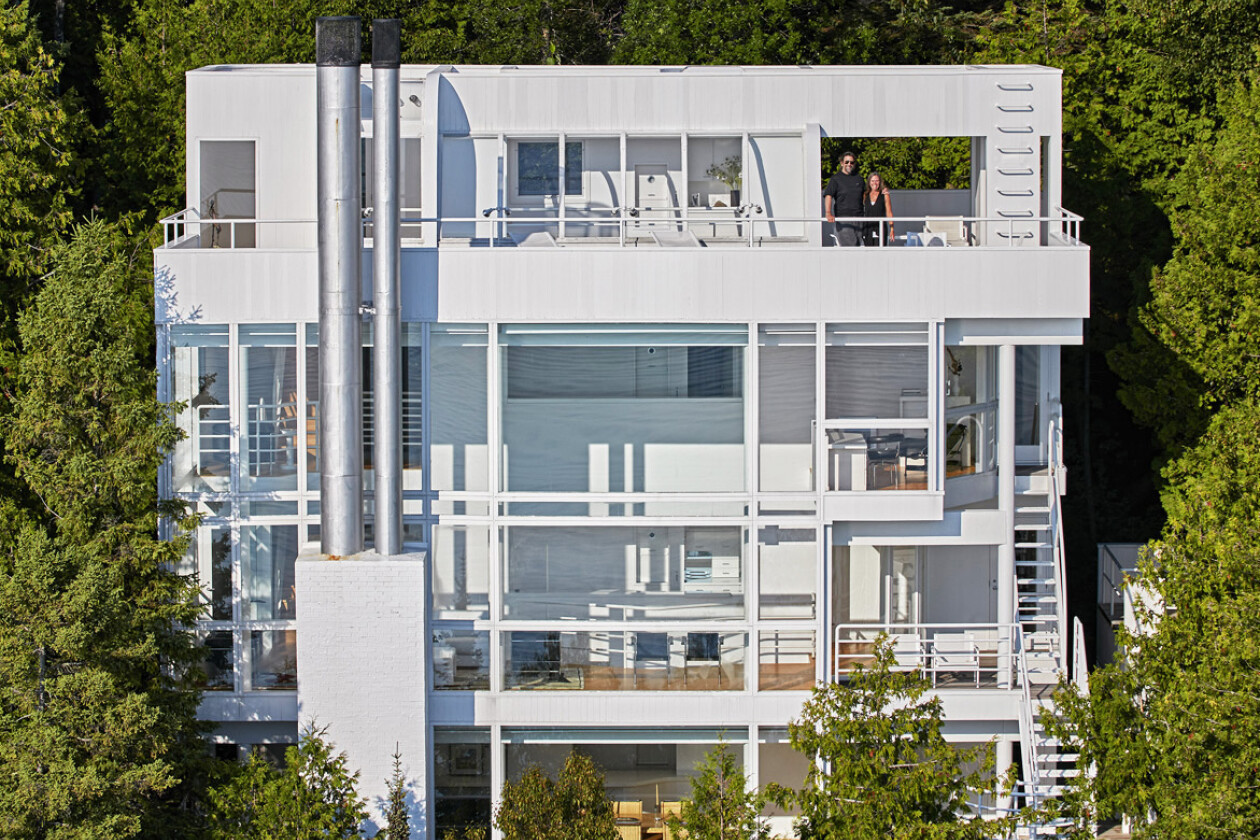
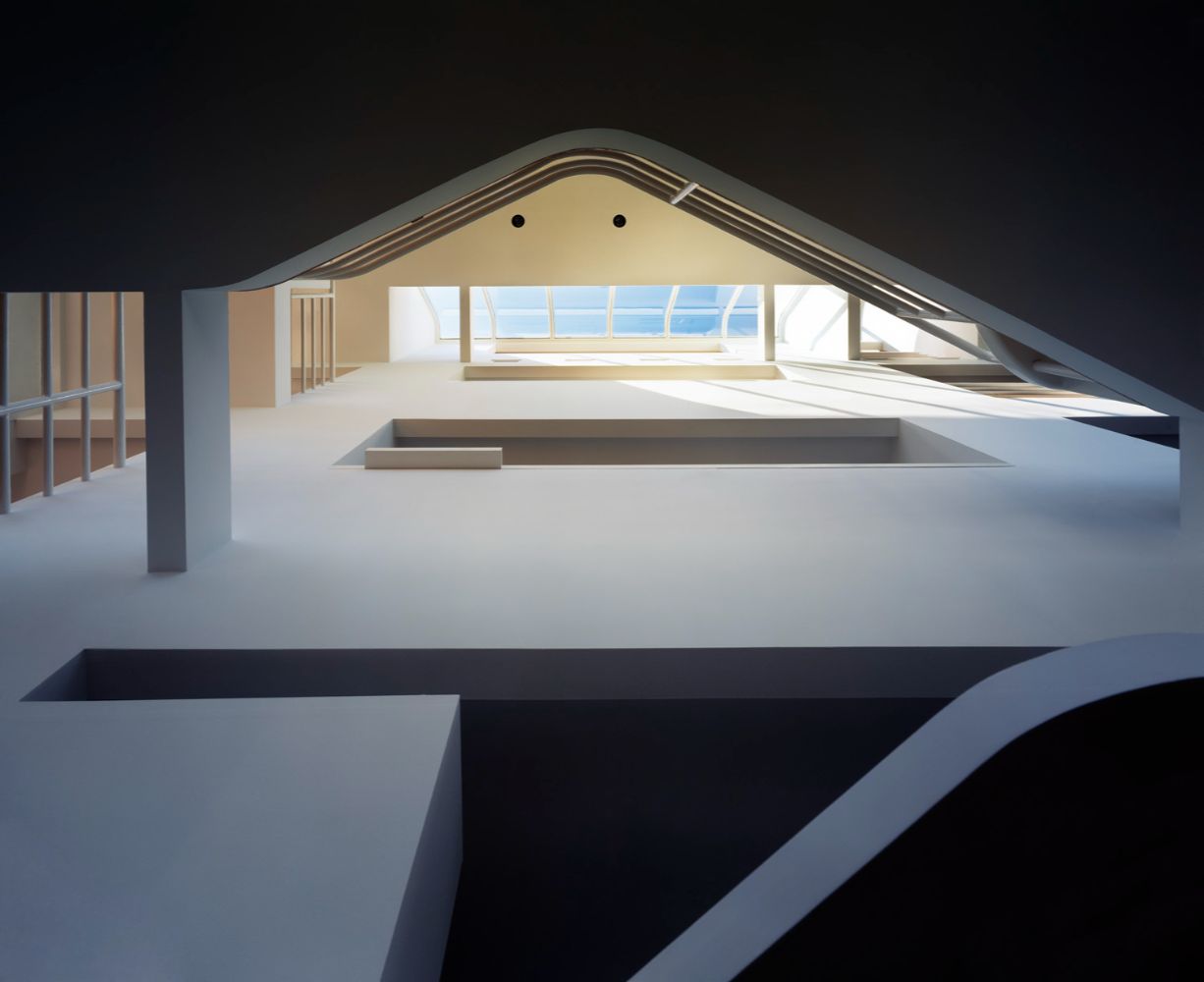
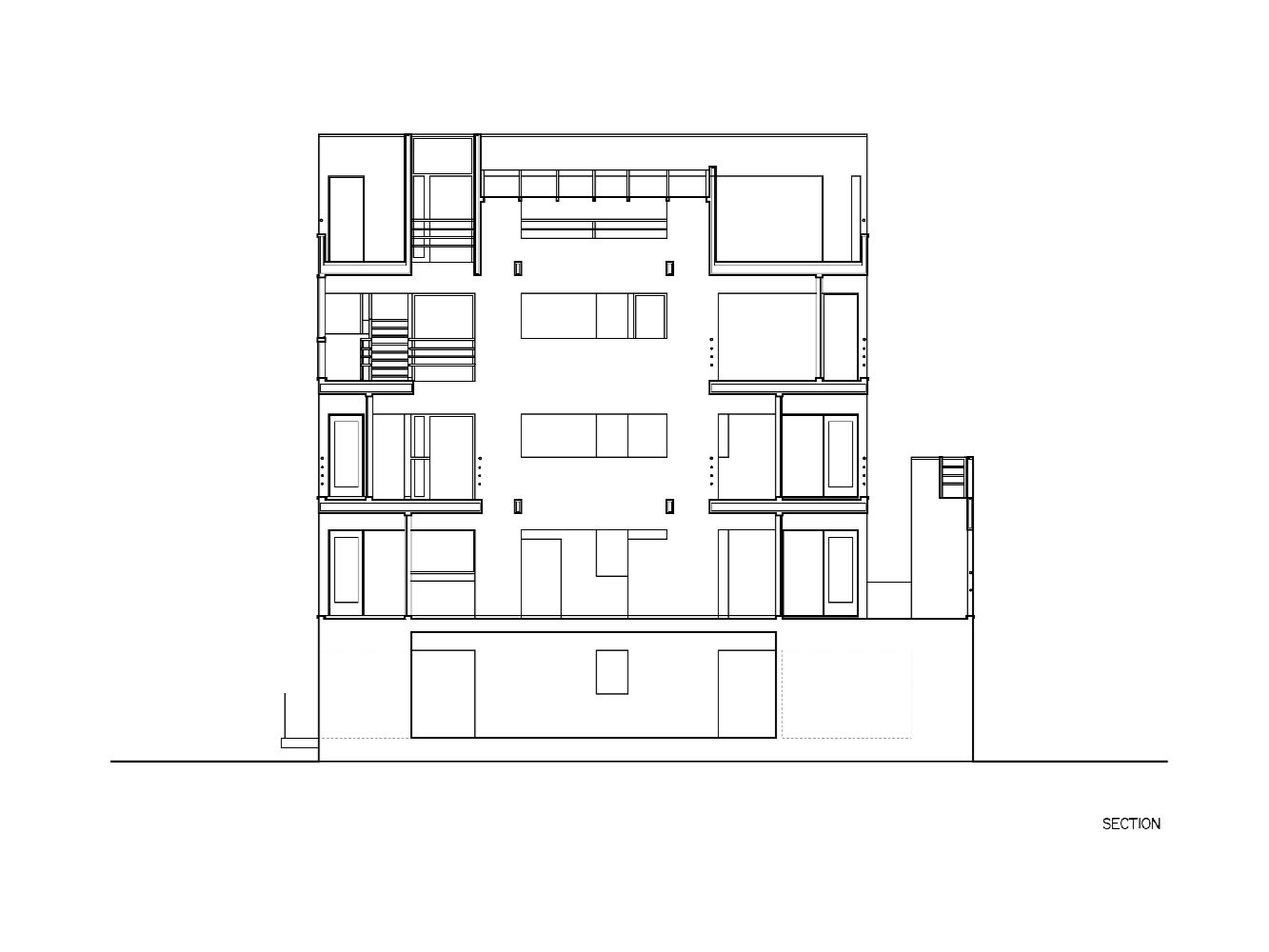
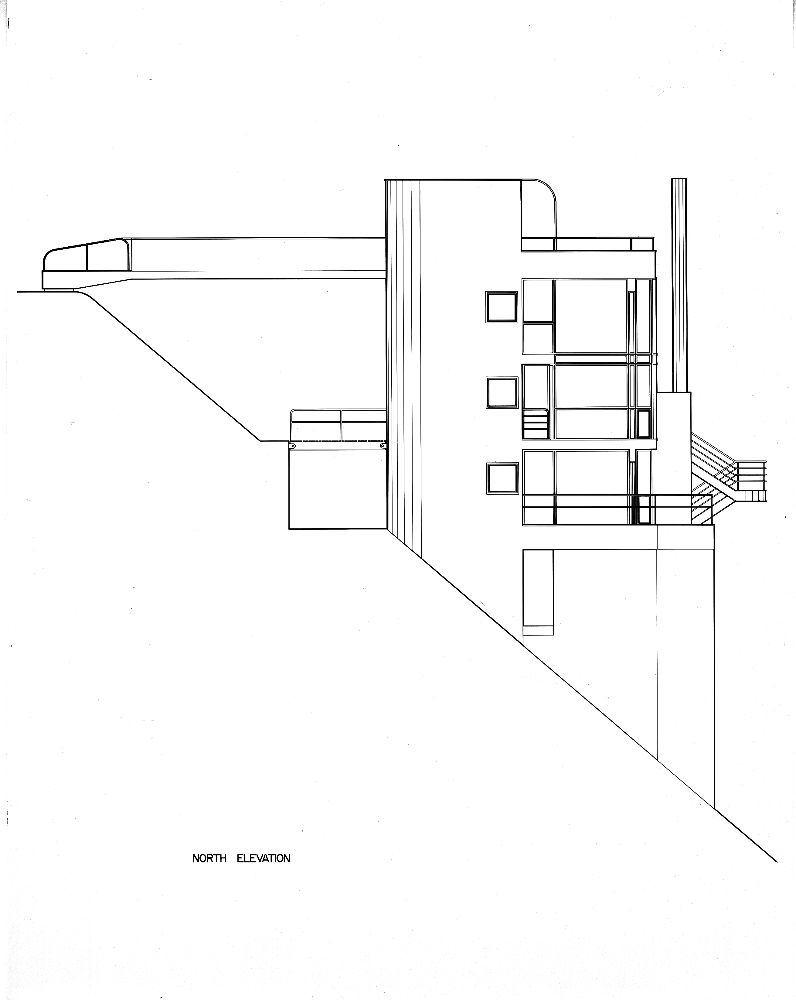
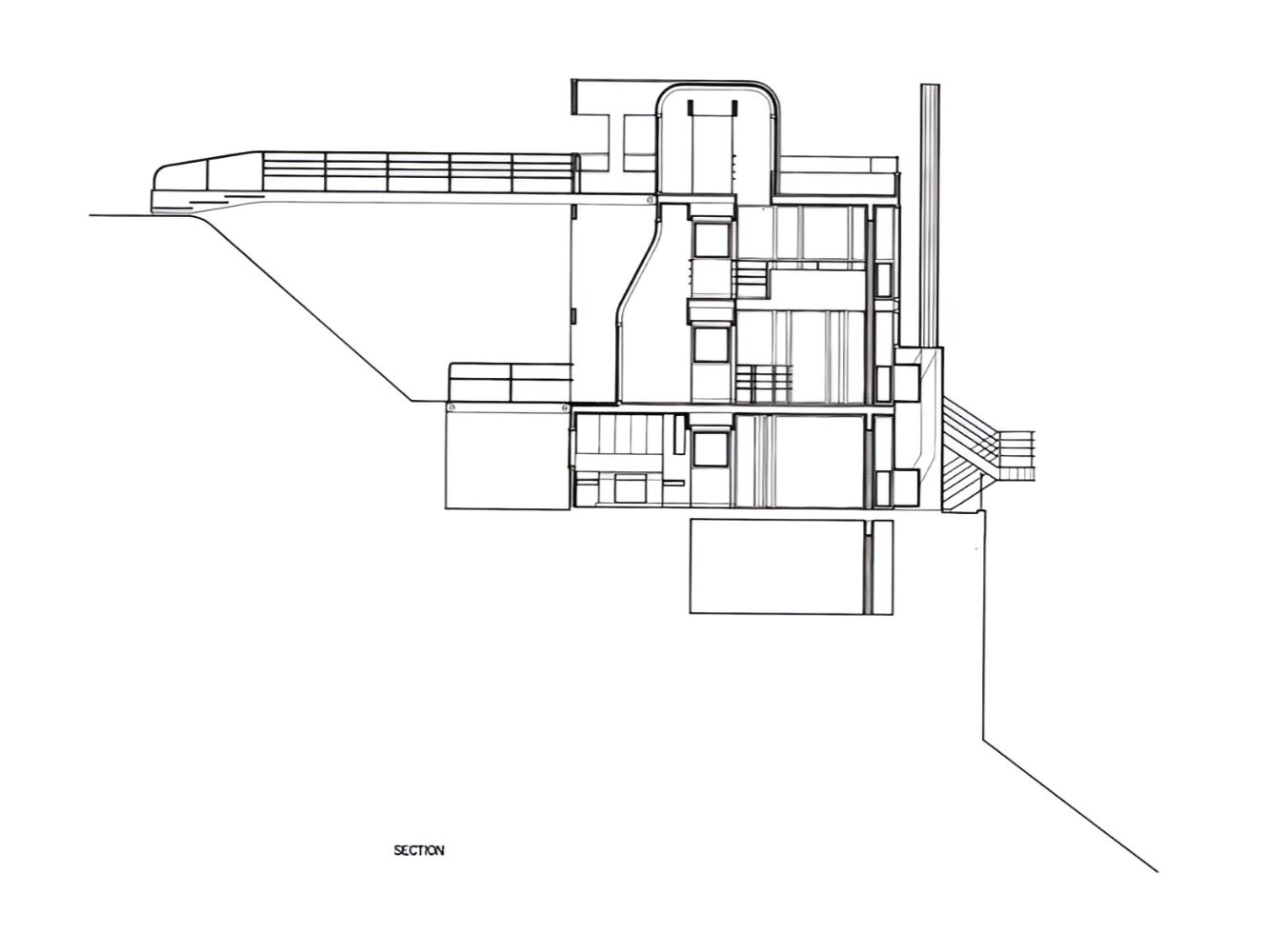
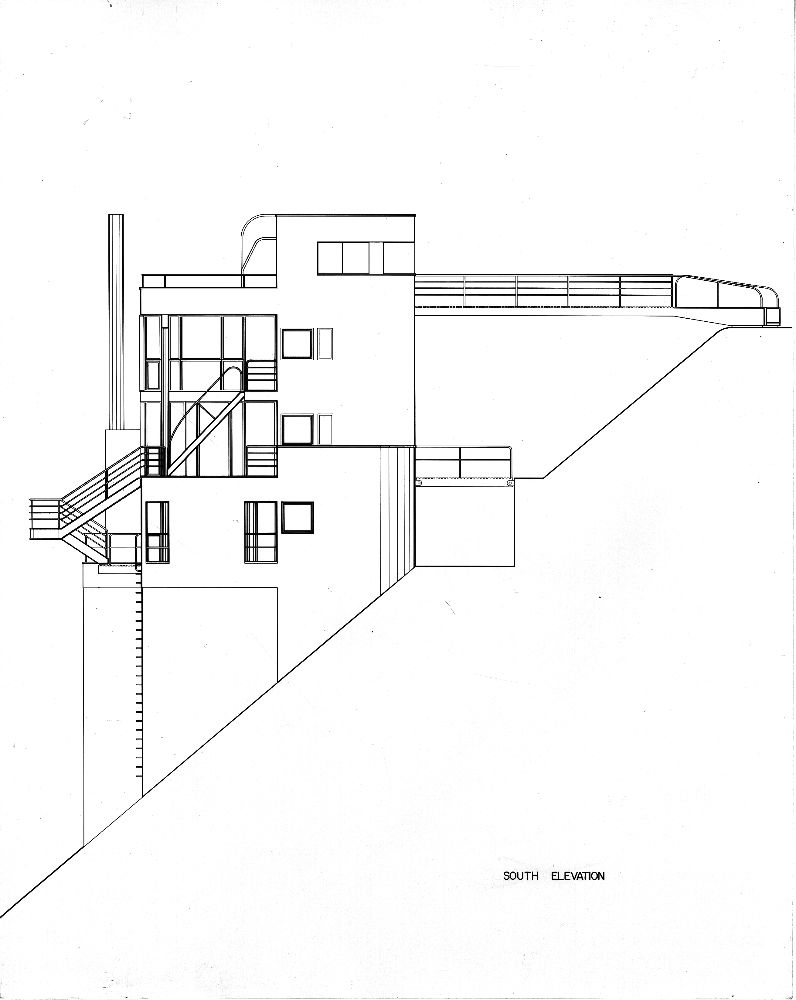
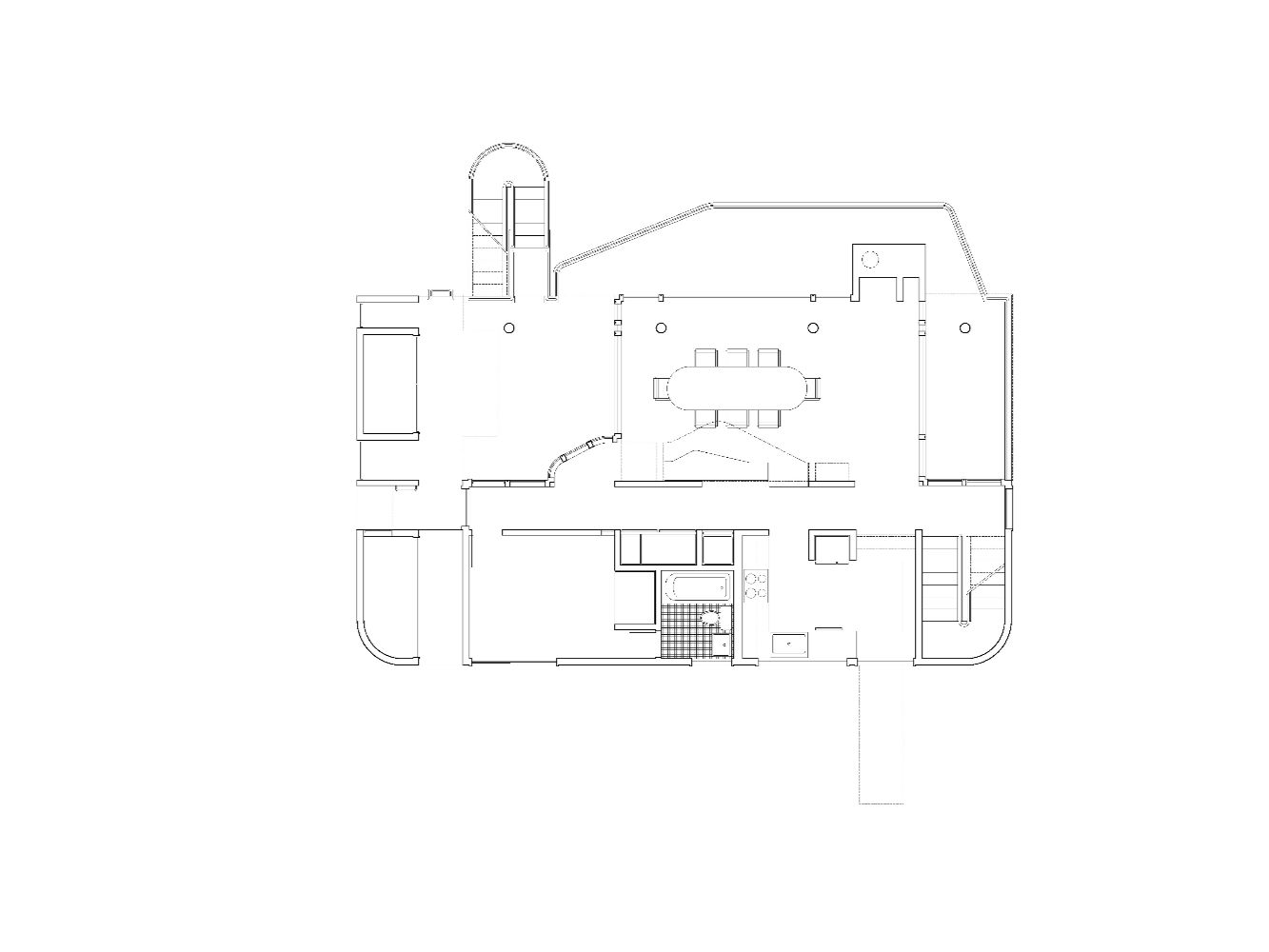
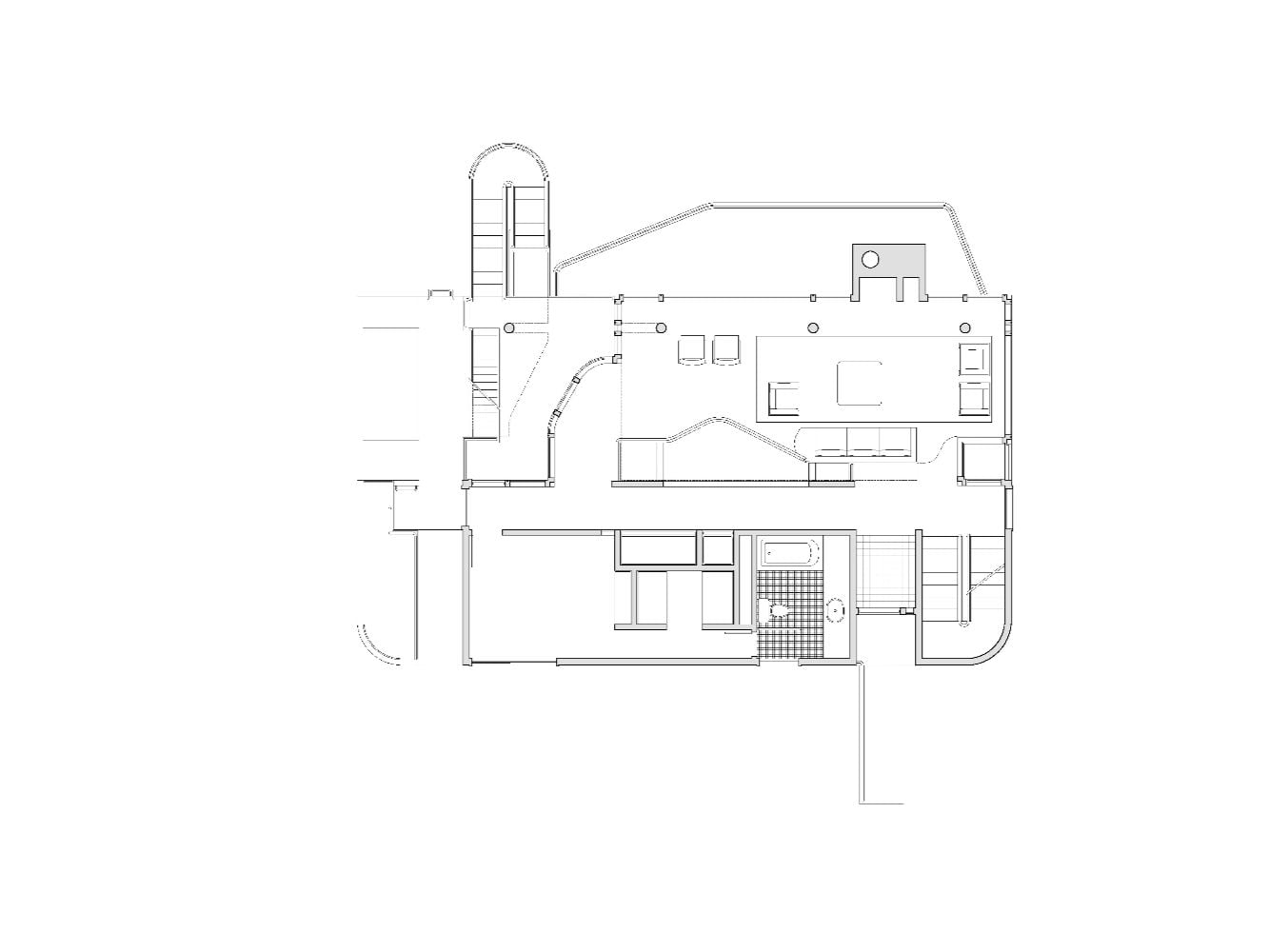
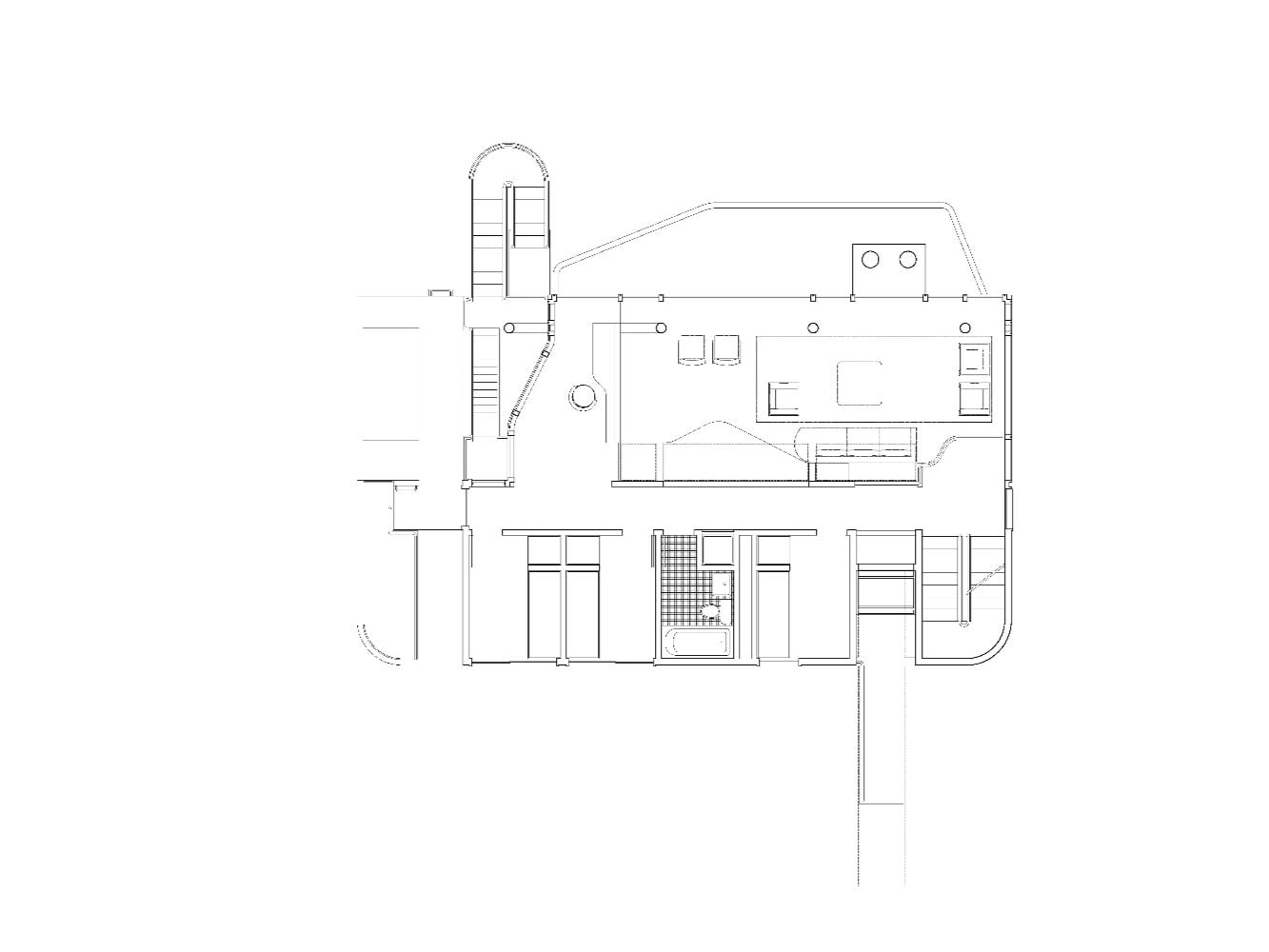
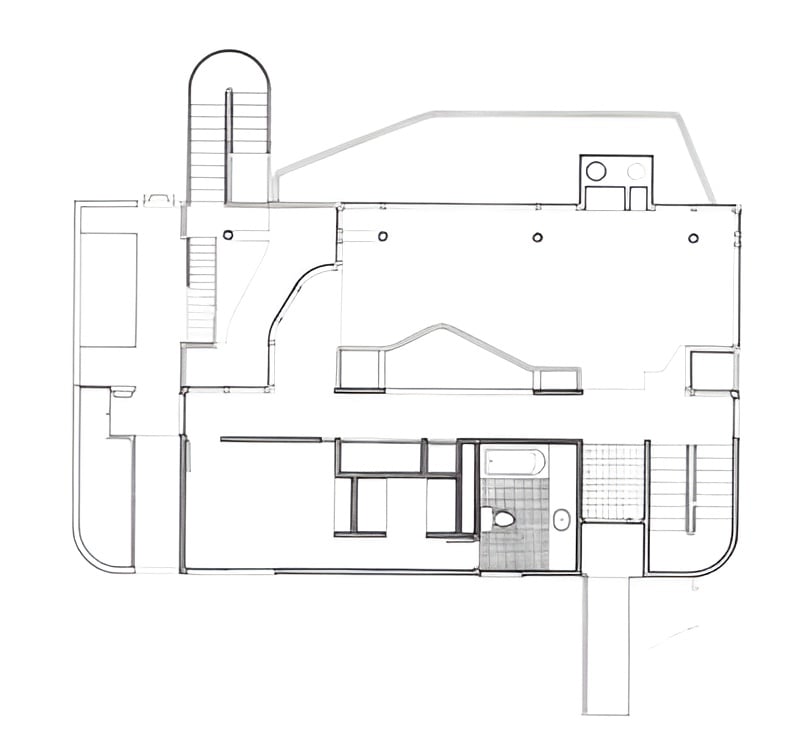
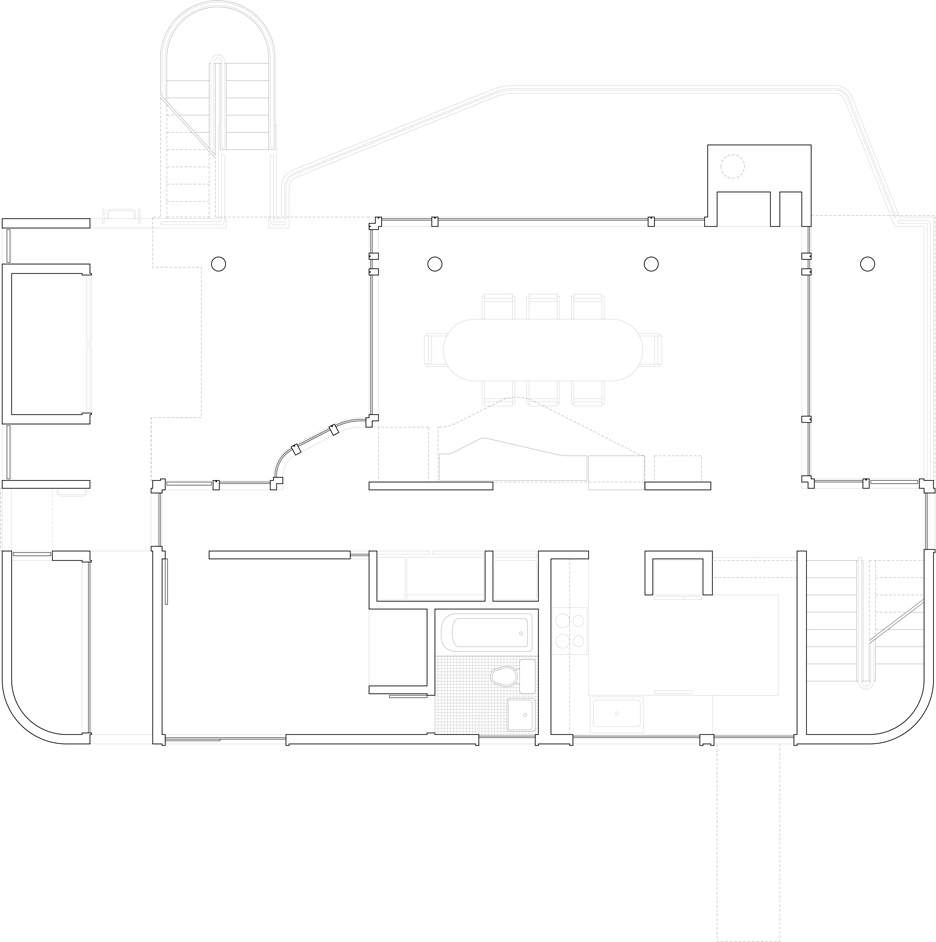
The house is arranged across multiple levels, anchored into the slope. Bedrooms are placed within compact, enclosed volumes on intermediate floors, while the main living and dining spaces occupy the lower levels facing the lake. The fireplace is aligned with the entry axis and positioned two stories below, maintaining a visual connection across the section.
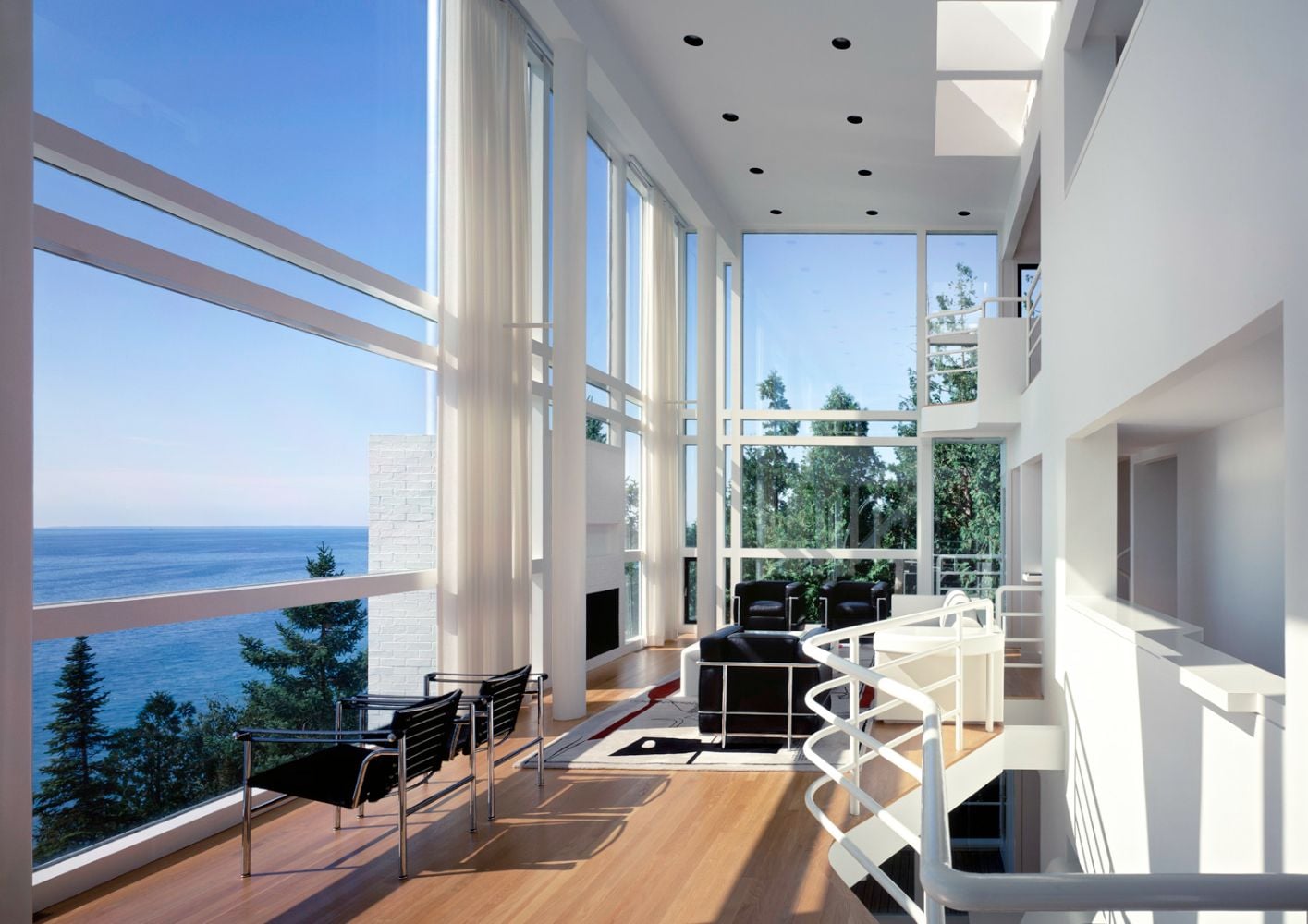
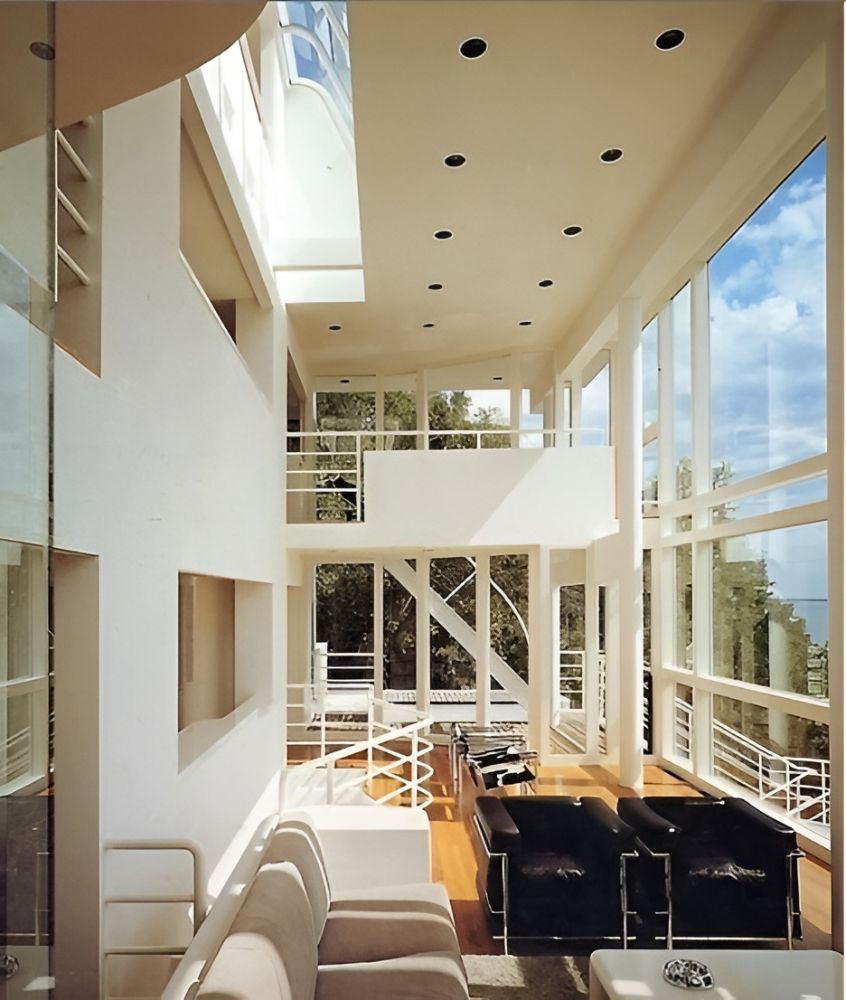
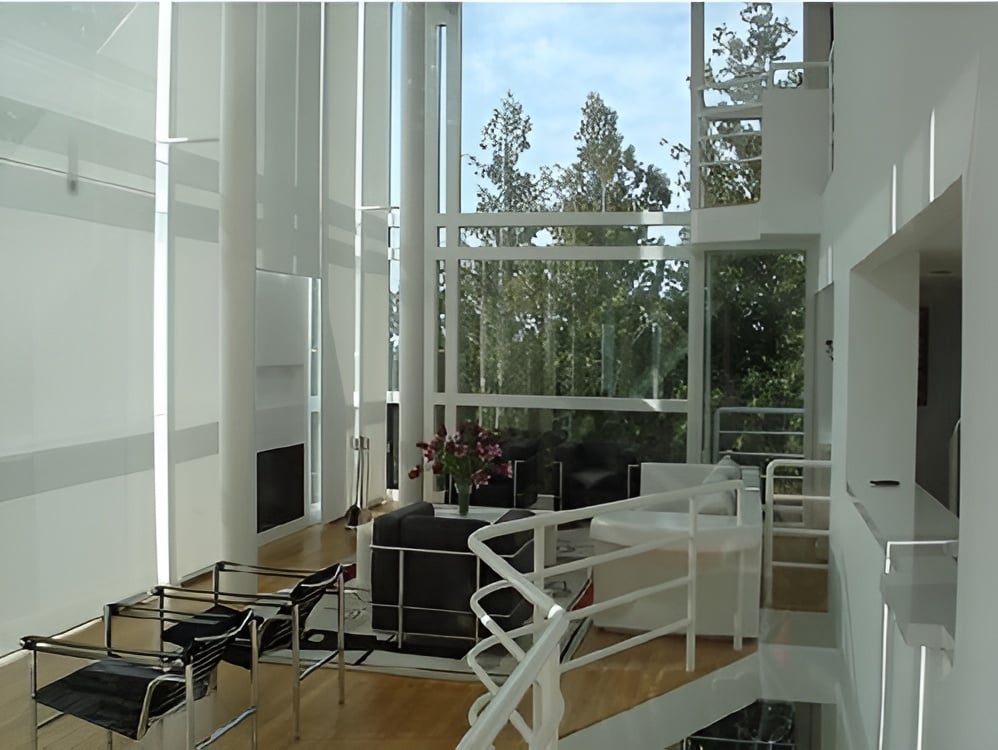
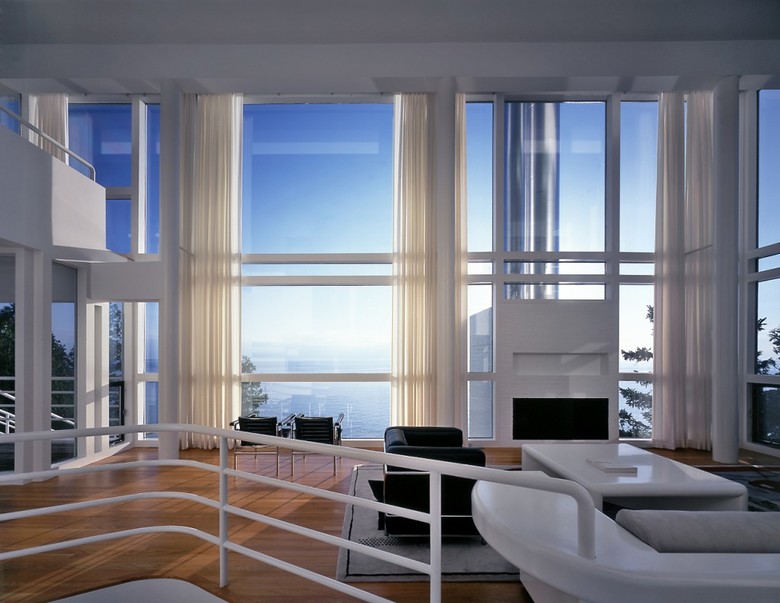
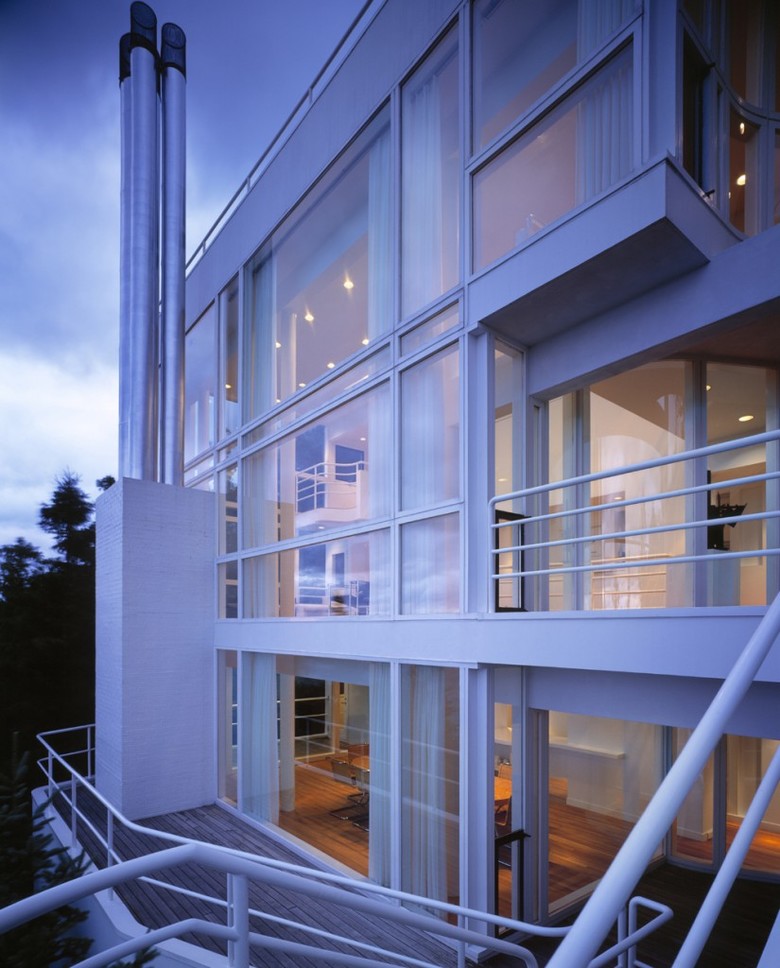
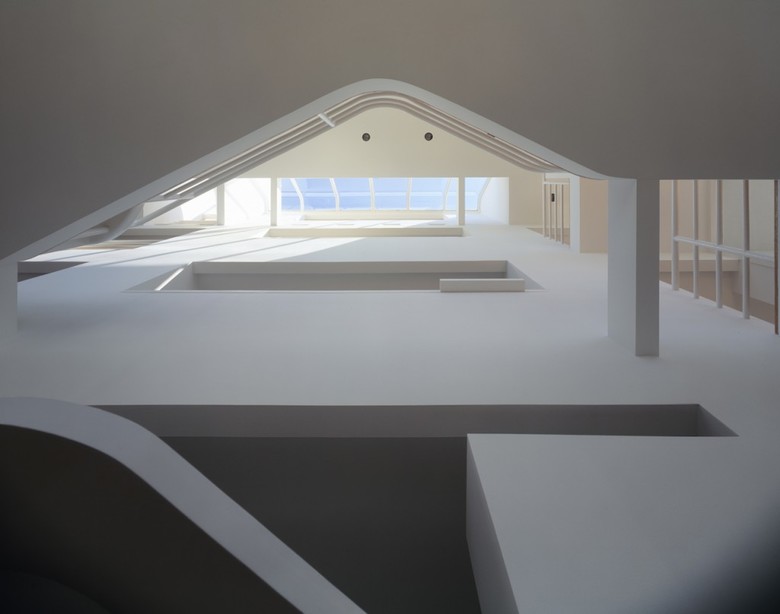
A clear distinction between private and public zones is reinforced through orientation and façade treatment. The east façade, facing the road, is more enclosed with smaller apertures and horizontal strip windows, while the west façade opens through large glazed surfaces toward the landscape. A continuous skylight introduces controlled daylight into the living areas, strengthening this spatial division.
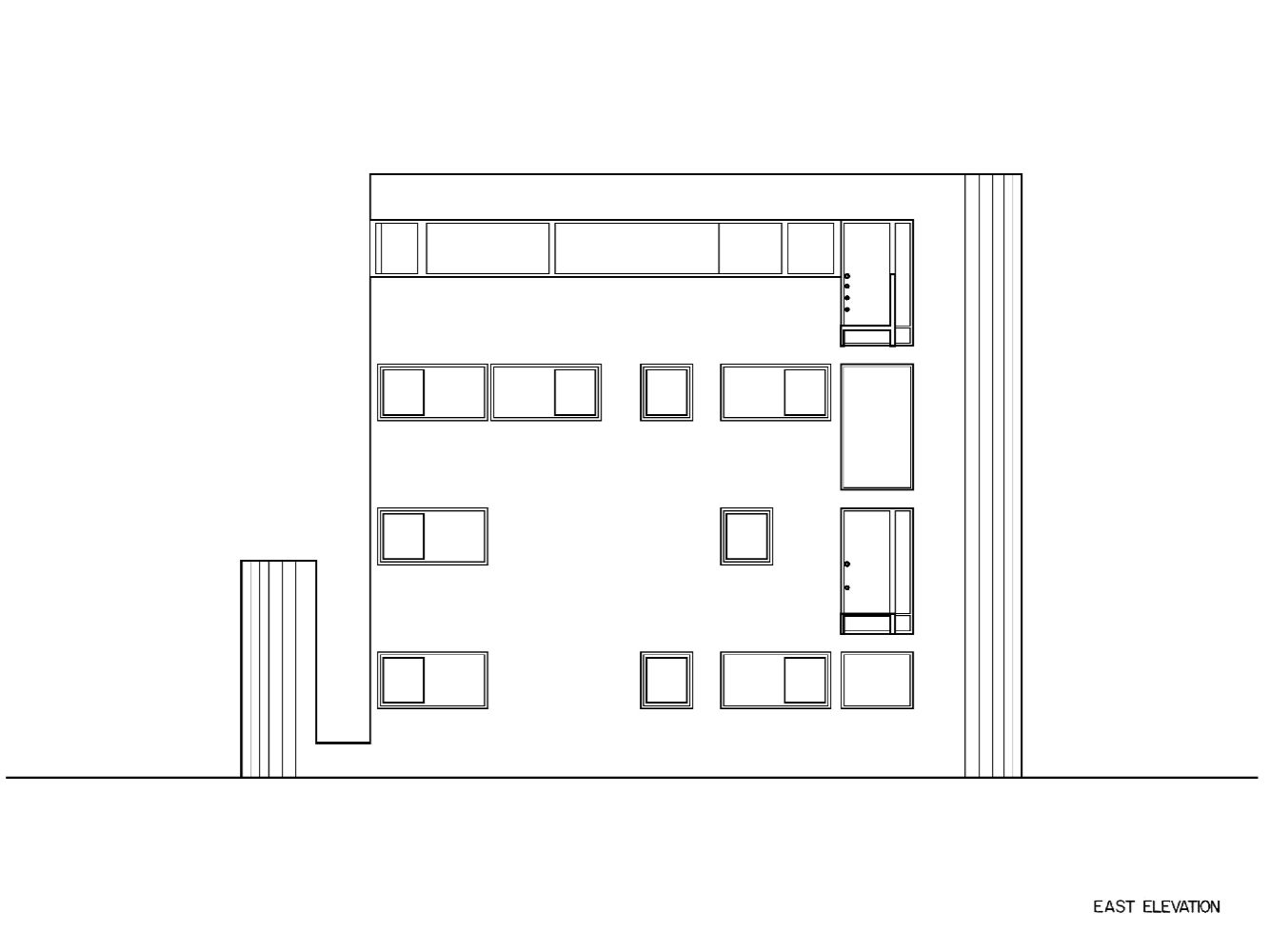
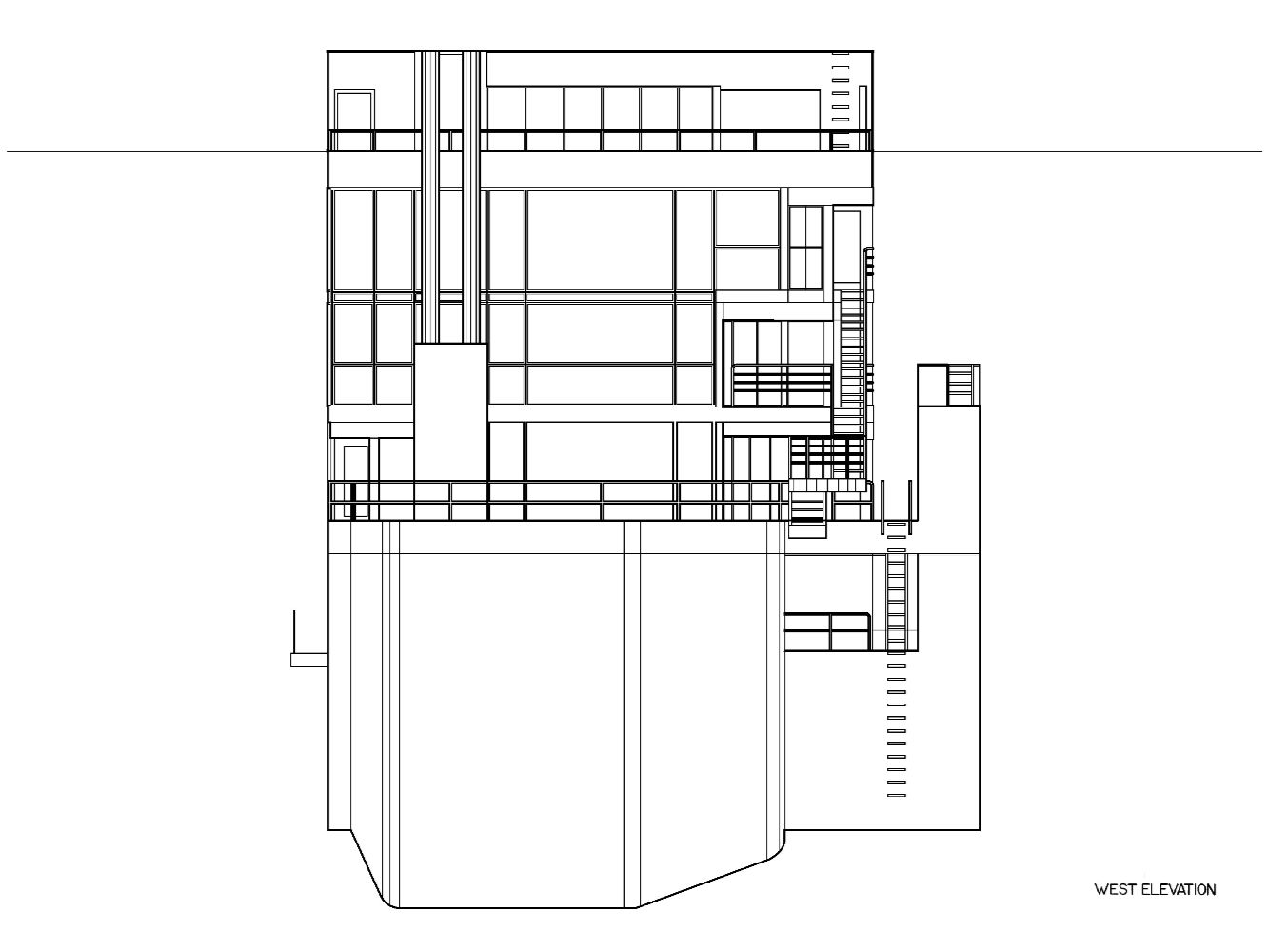
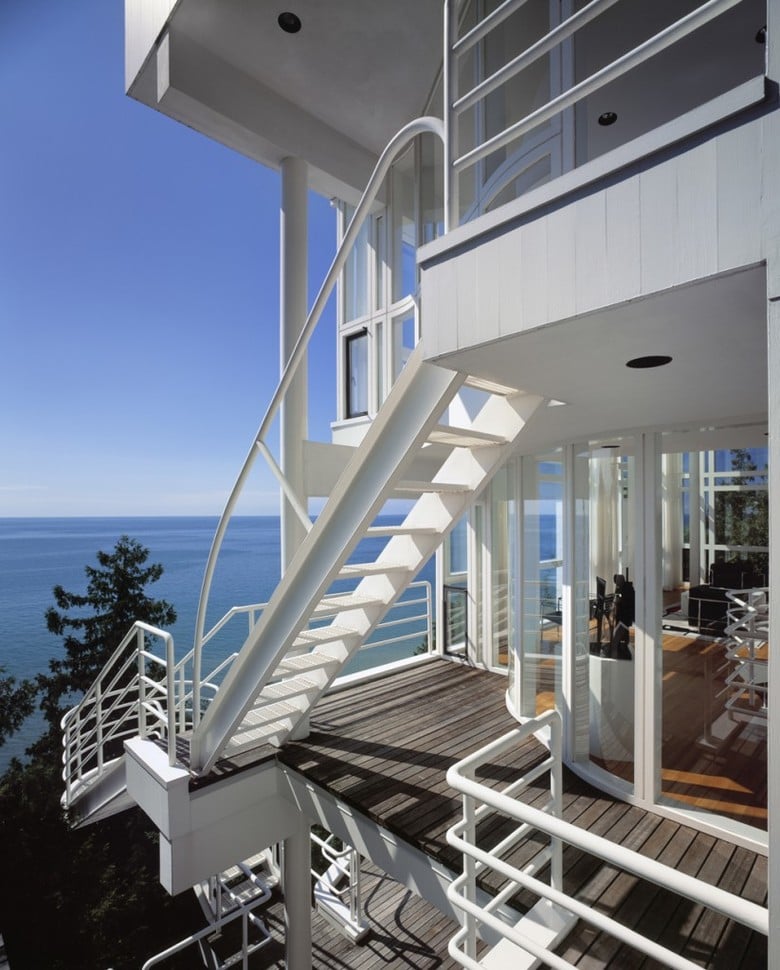
Circulation prioritizes horizontal movement through stacked open corridors, while vertical movement is handled by staircases positioned at the corners to maintain unobstructed sightlines. This organization preserves continuity between interior space and the surrounding environment.
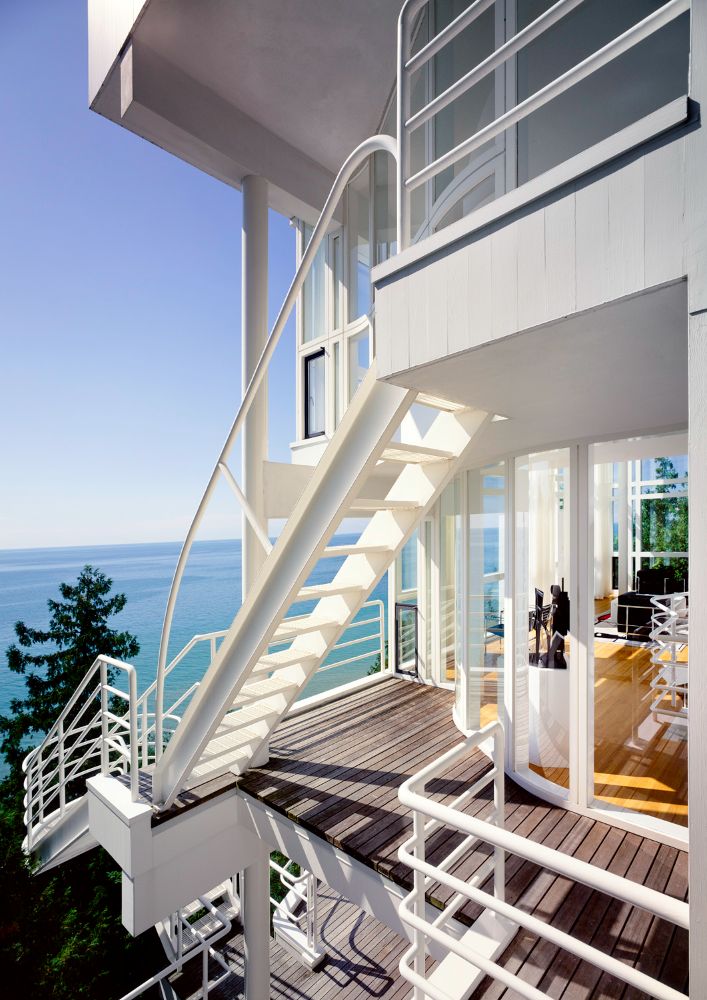
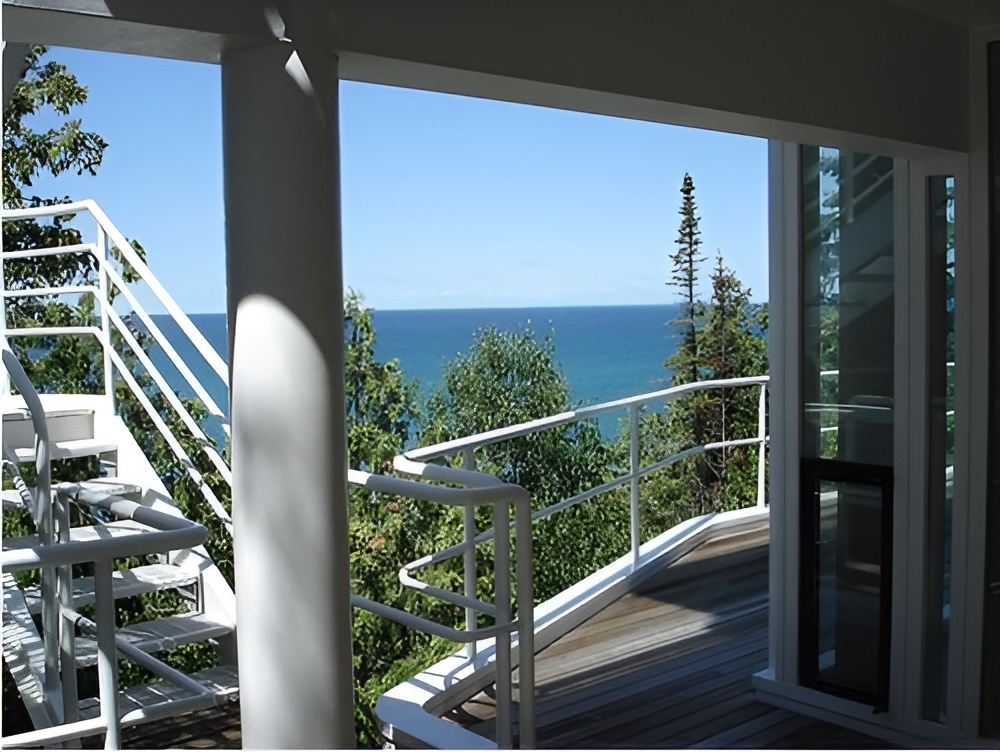
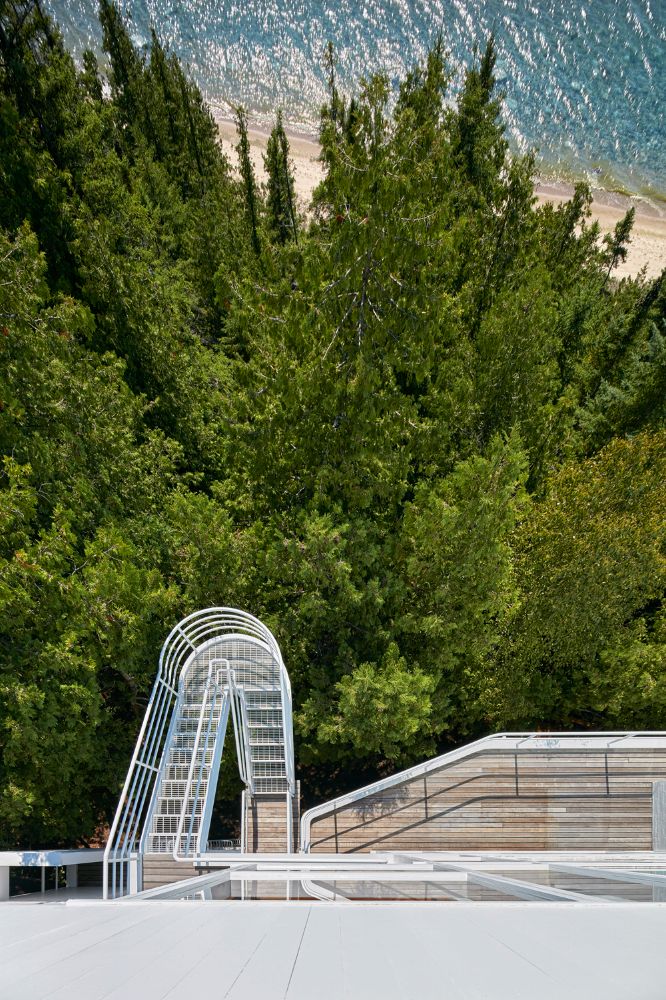
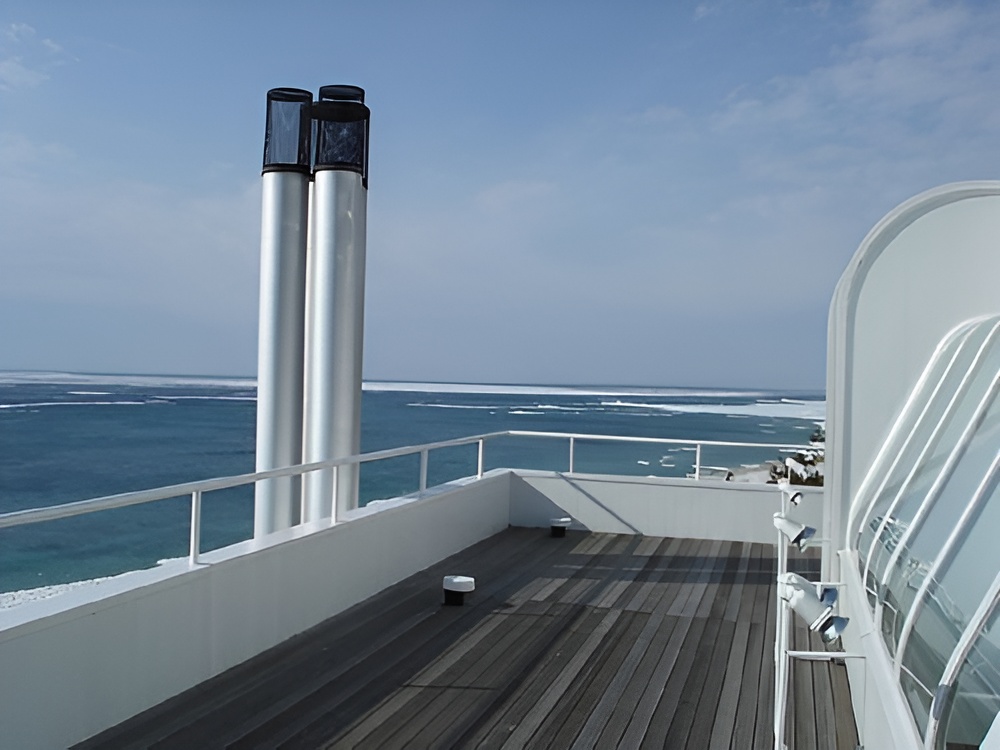
The façade expresses the internal order of the house. Horizontal mullions register floor levels against the horizon, while vertical elements relate to the surrounding trees. Large glazed panels extend interior space outward, reinforcing the visual connection to the lake and landscape.
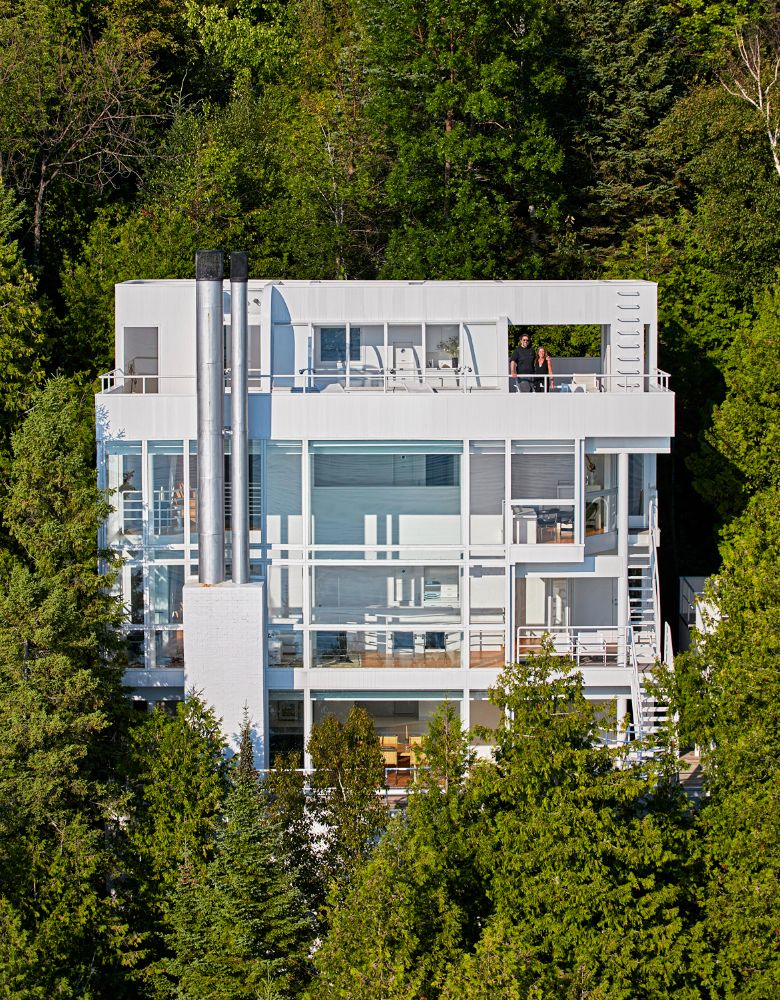
A consistent white exterior establishes the house as a distinct architectural object within its natural setting. Minimal site intervention preserves existing vegetation, allowing the structure to integrate with the terrain while maintaining a clear formal identity.
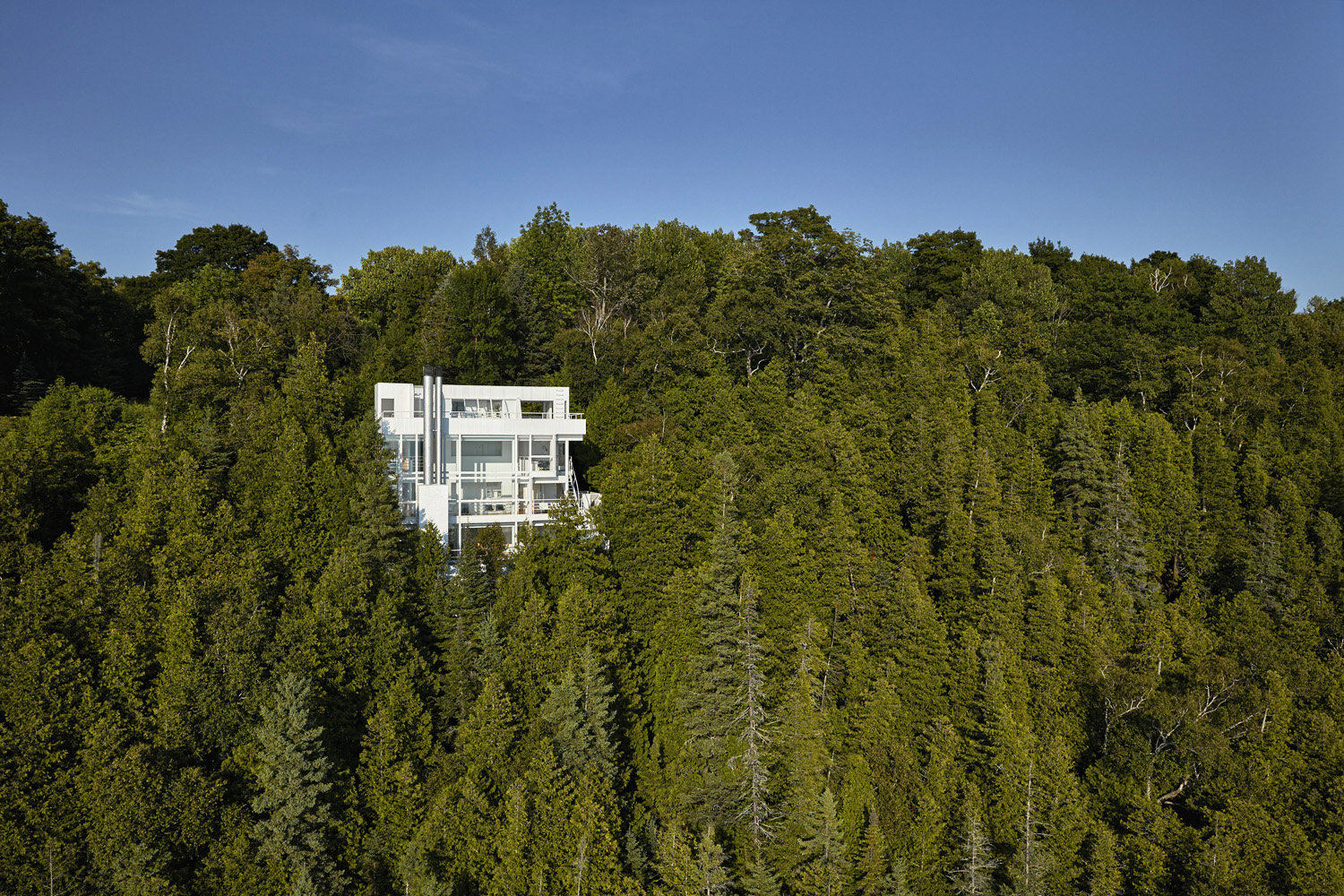
The house’s later recognition reinforces its architectural significance. Douglas House was added to the U.S. National Register of Historic Places in 2016, acknowledging its importance within American modernist residential architecture. The building remains largely unchanged, preserving its original spatial organization, material expression, and relationship to the site.
Project Gallery
Project Location
Address: 3490 South Lake Shore Drive, Friendship Township, Harbor Springs, Michigan 49740, United States
Location is for general reference and may represent a city or country, not necessarily a precise address.

