

Architects: SHED Architecture
Area: 4,546 ft²
Photography: Rafael Soldi
Contractor: Joe Gates Construction
Structural Engineering: Todd Perbix
Energy Modeling: Positive Energy
Mechanical Engineering: Positive Energy
Interior Design: SHED Architecture
Location: Silverdale, Washington
Country: United States
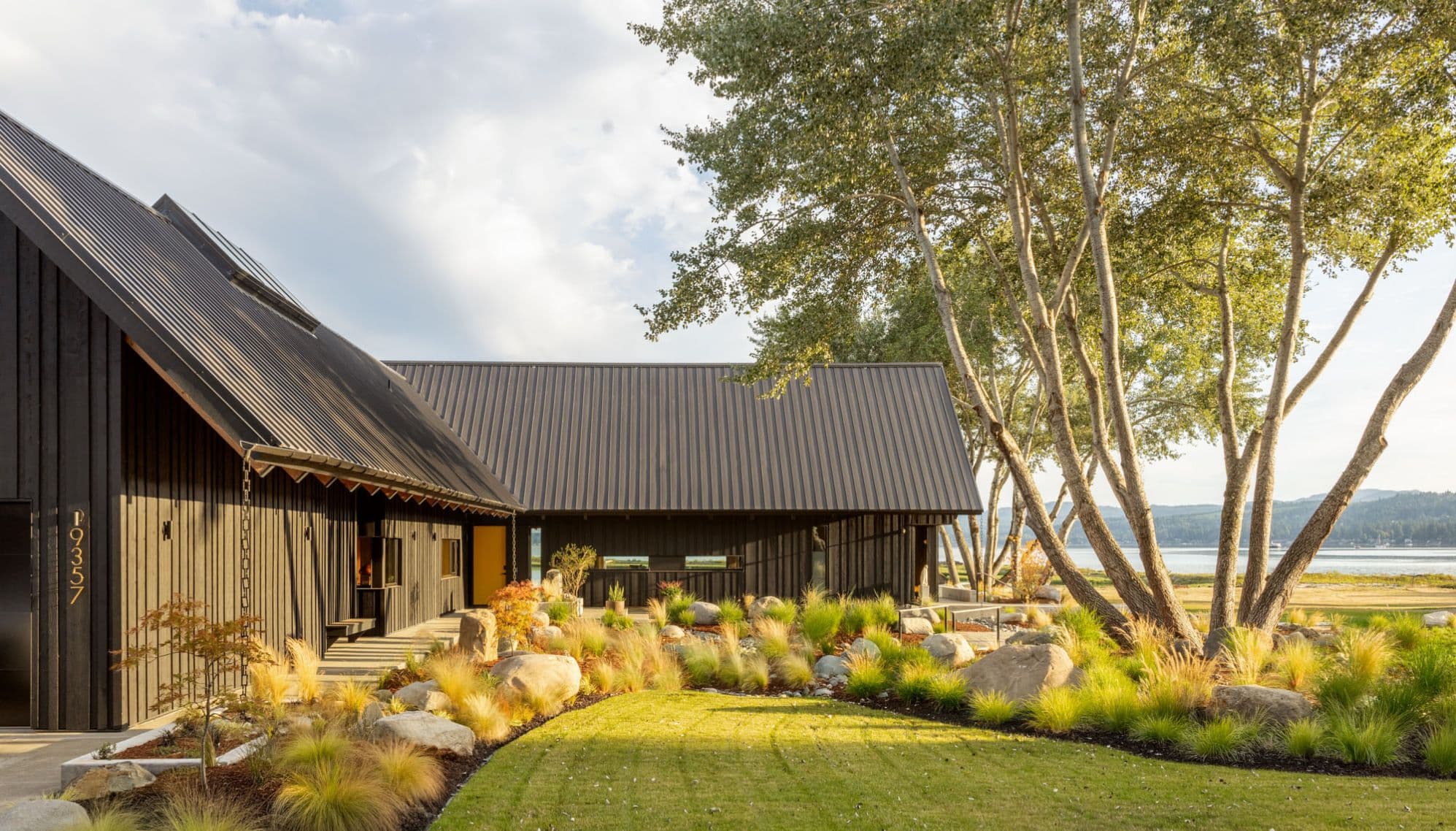
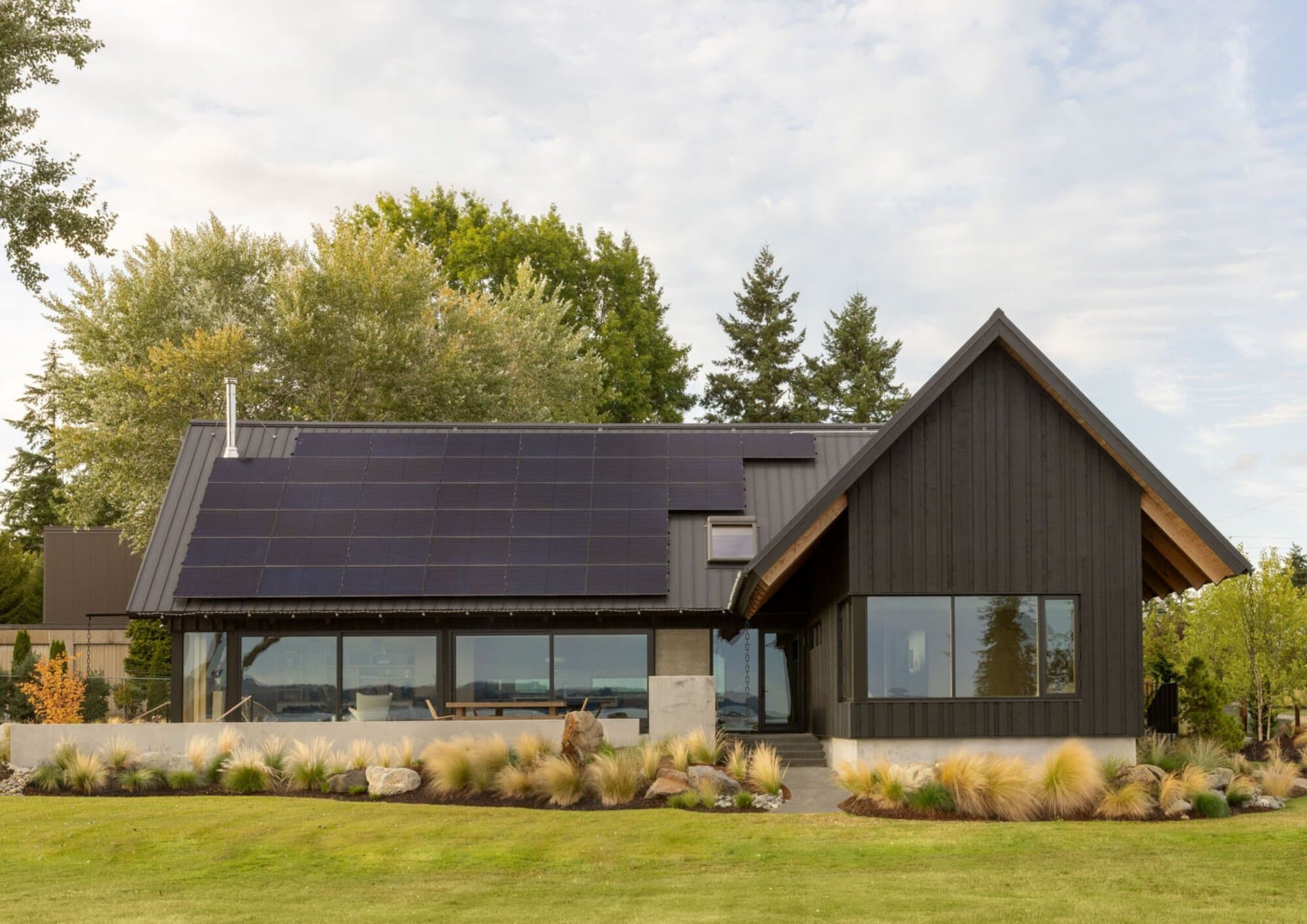
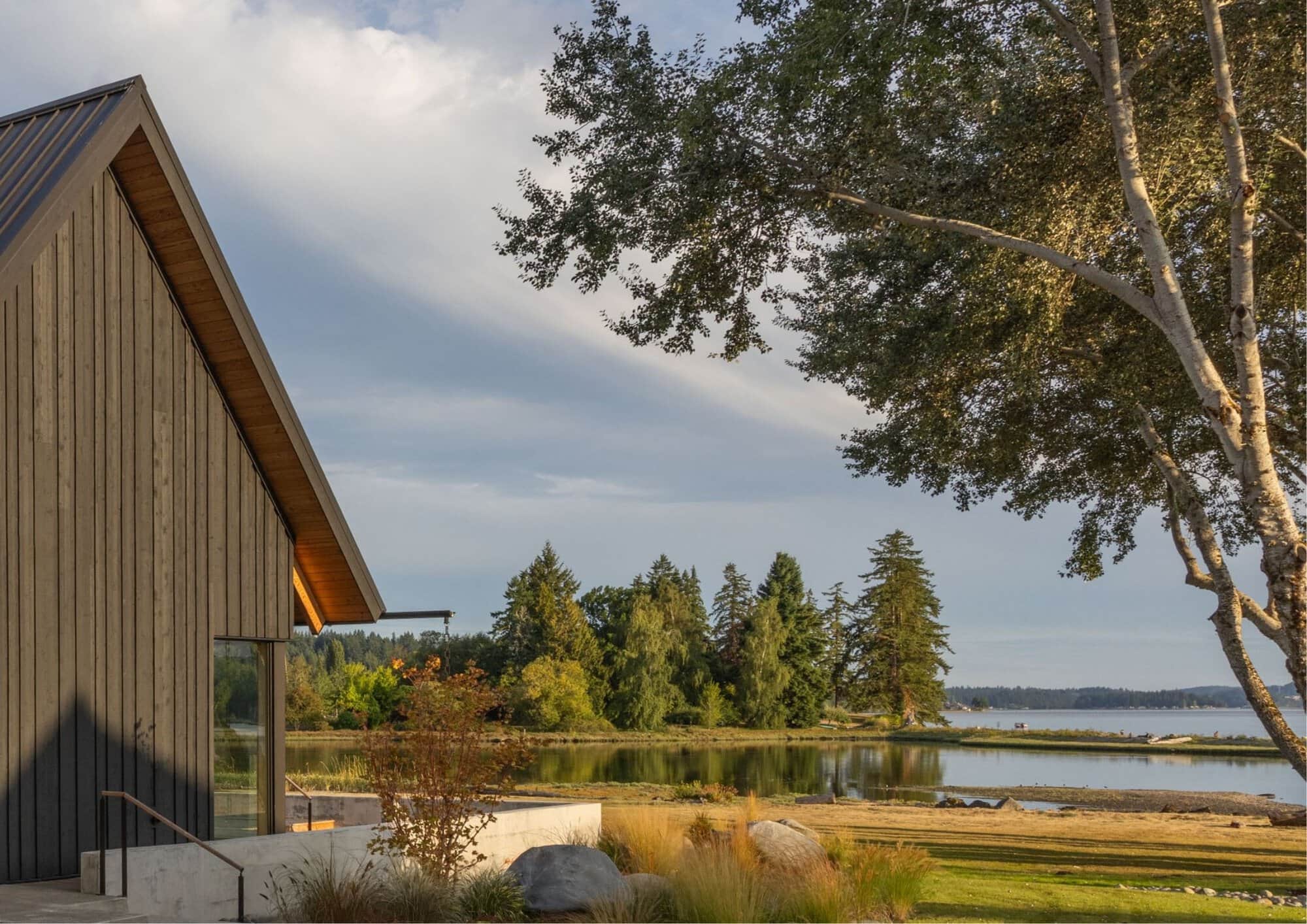
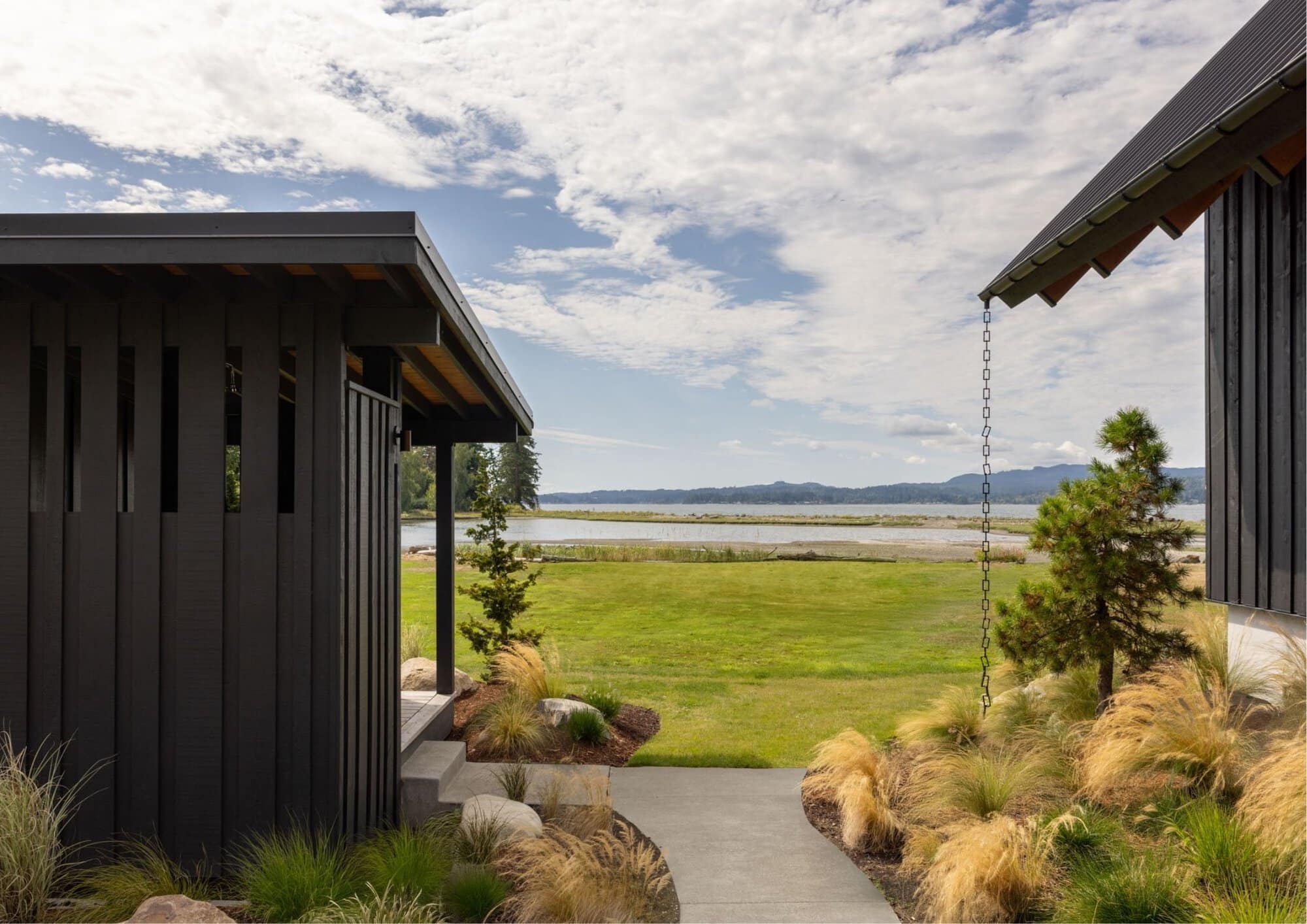
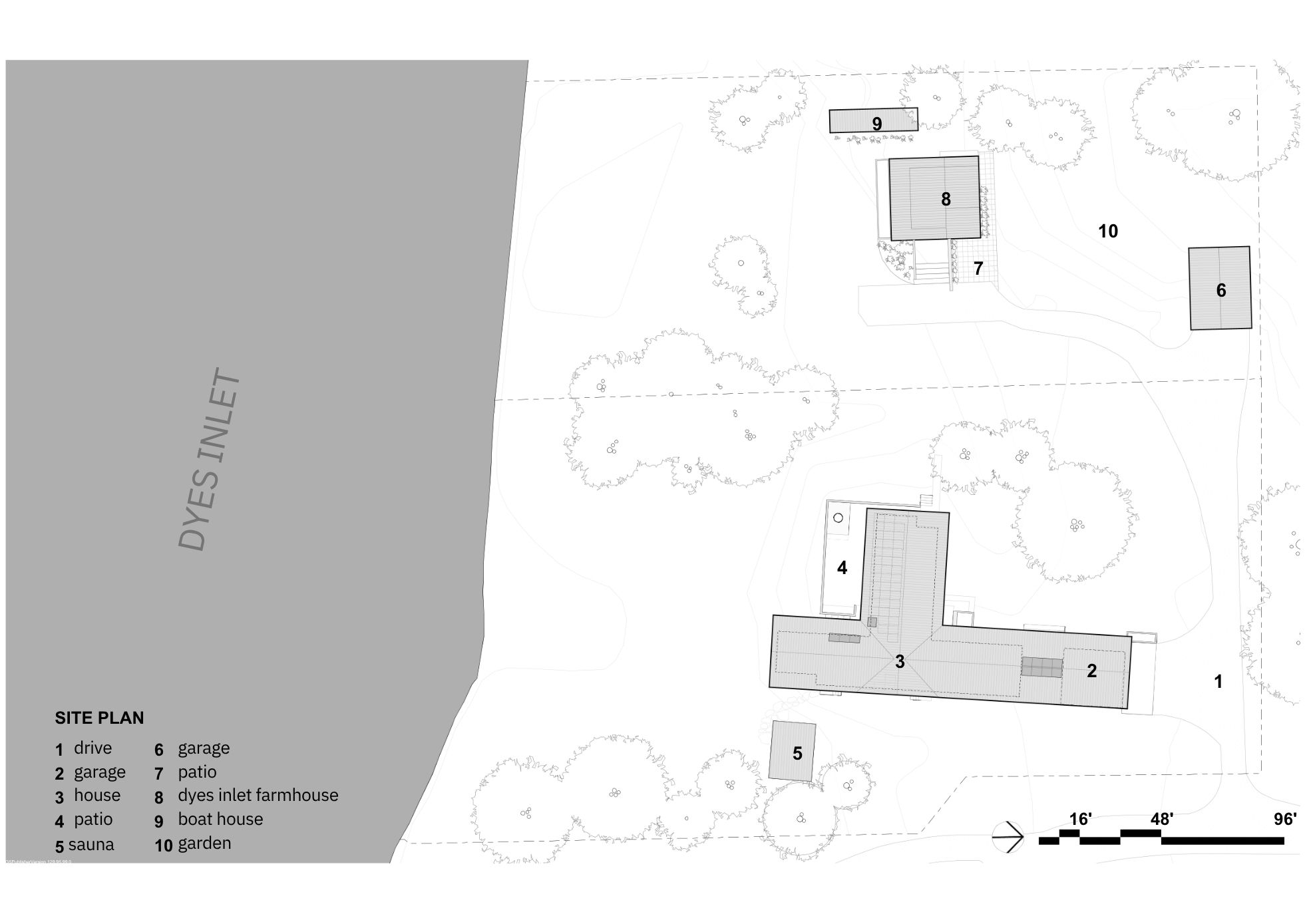
Dyes Inlet House is a new primary residence with a nearby guest house on Washington’s Kitsap Peninsula, designed as part of a family compound overlooking the waterfront. The 3-bedroom, 2.5-bath home supports single-level living, extended family gatherings, and long-term use through an aging-in-place approach. Its organization draws from Scandinavian farmhouse precedents, using two intersecting gabled volumes to form a T-shaped plan, an entry courtyard to the north, and a patio oriented toward Dyes Inlet to the south. Shared living spaces are positioned along the east-west wing to capture water views, while the private rooms occupy the north-south wing. High-performance strategies, including Passive House principles, triple-pane windows, continuous insulation, heat recovery ventilation, and a 17.2 kW photovoltaic system, support comfort and energy efficiency while reinforcing the home’s close relationship with its coastal setting.
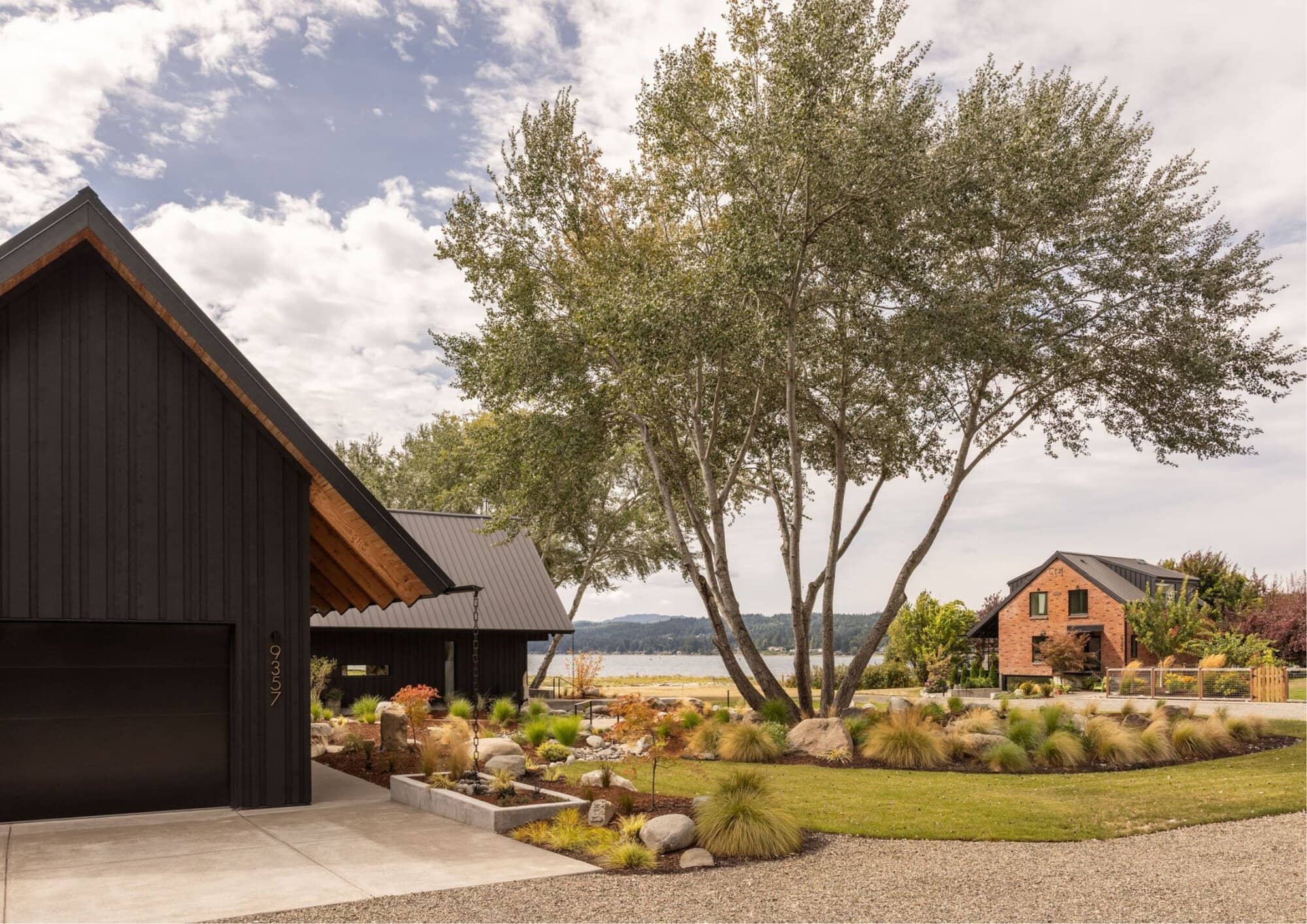
Dyes Inlet House is shaped less as a standalone object than as the center of a renewed domestic landscape, where architecture, family life, and the waterfront are carefully aligned. Set within a larger parcel reorganized into a compound, the residence works in dialogue with a renovated guest house, allowing the property to accommodate multiple generations while preserving clear zones for privacy, gathering, and retreat.
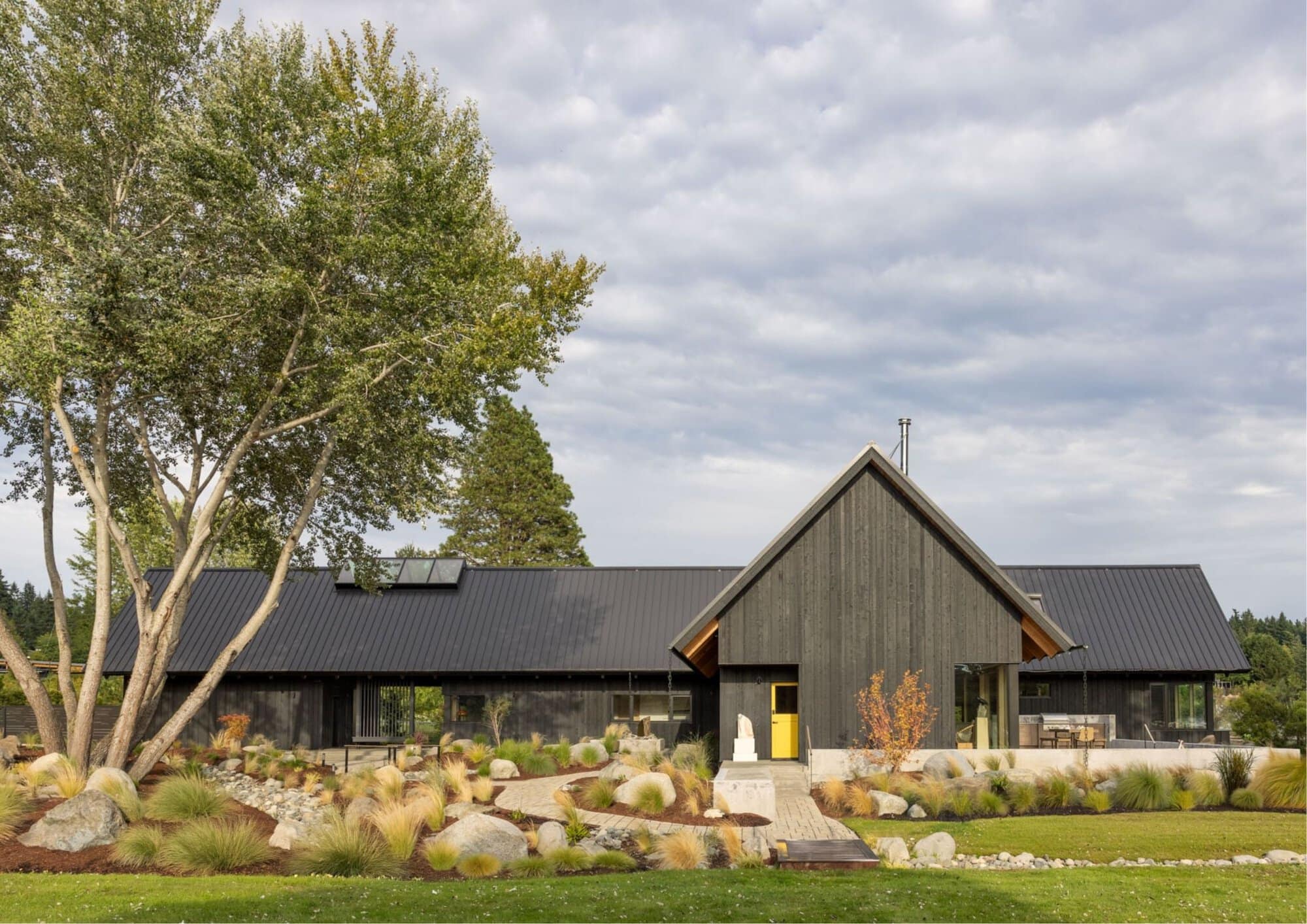
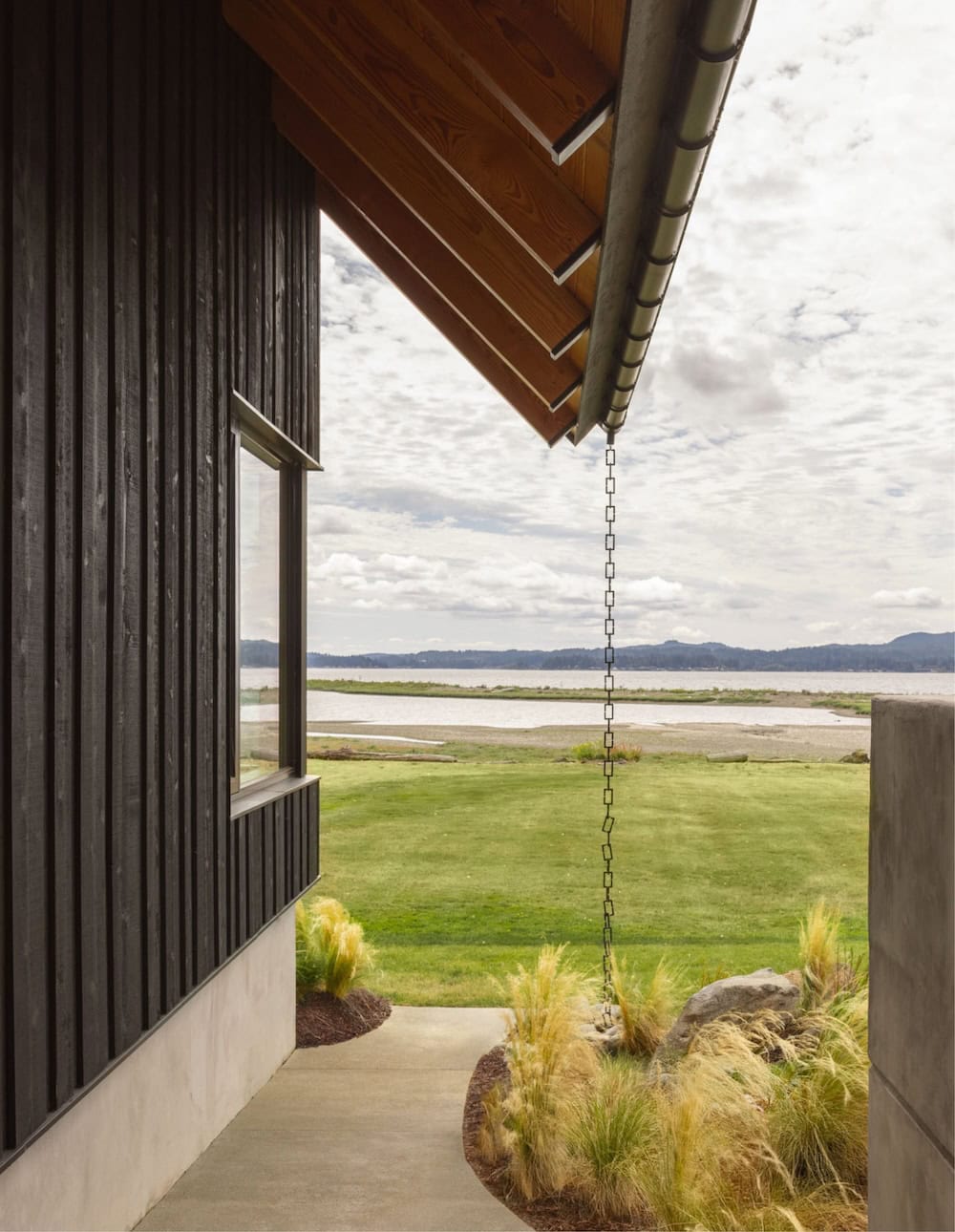
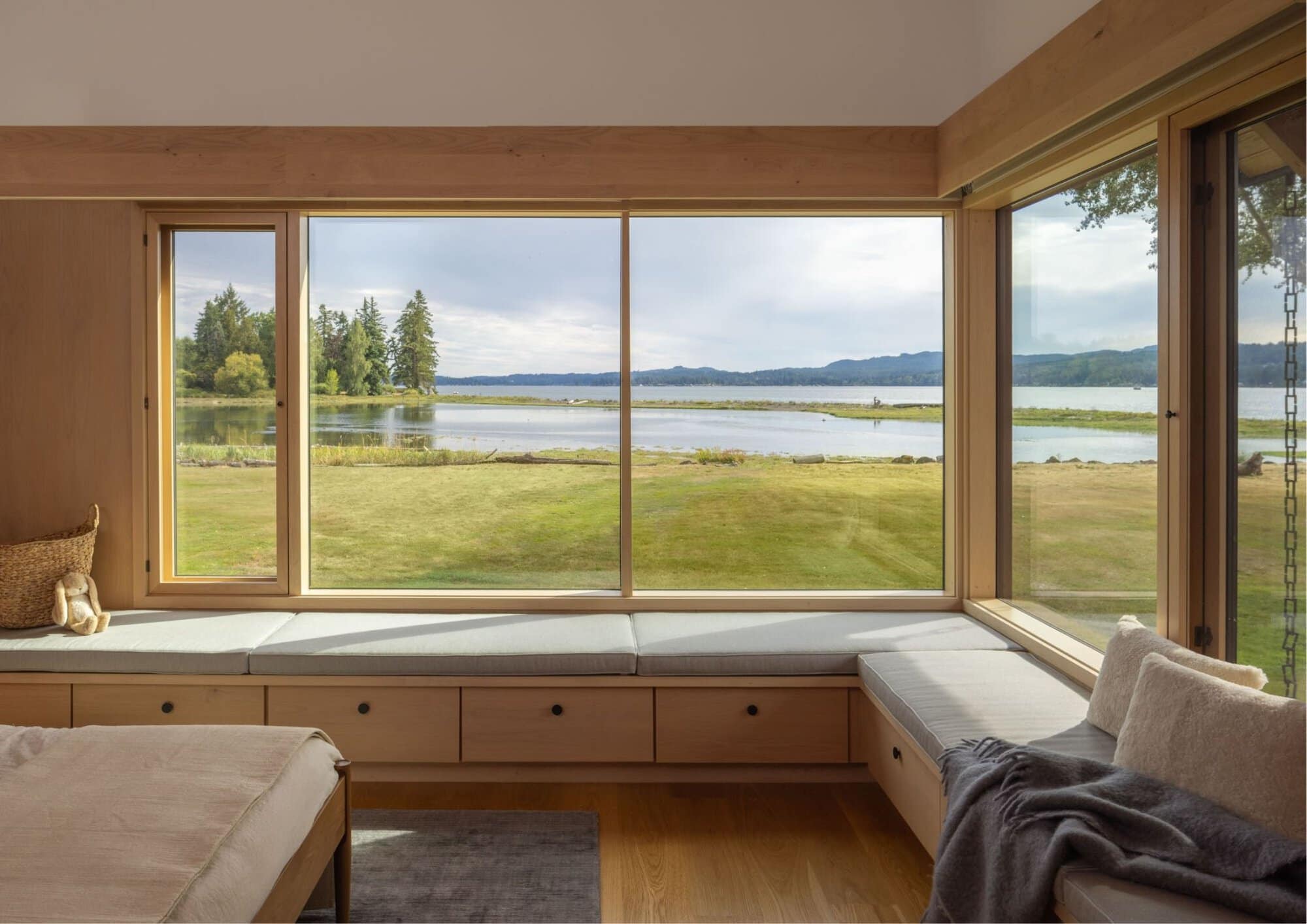
The site strategy responds to two opposing conditions. To the north, planting and landscape buffers reduce the presence of surrounding development and create a sheltered arrival sequence. To the south, the house opens toward broad views of Dyes Inlet, using its long patio and glazed living areas to establish a direct relationship with the shoreline. This contrast gives the home a quiet inward-facing presence at entry and a more expansive orientation toward the water.
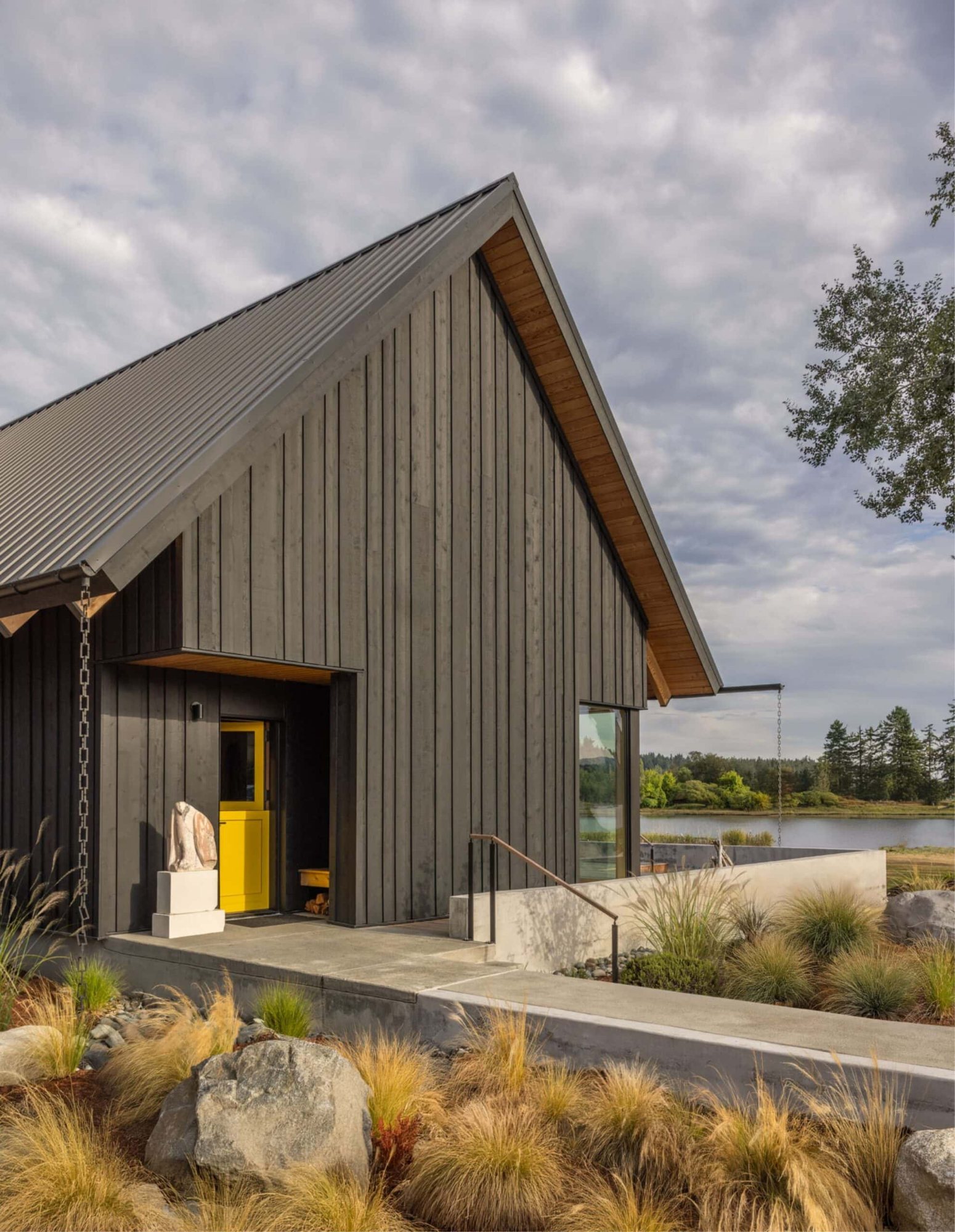
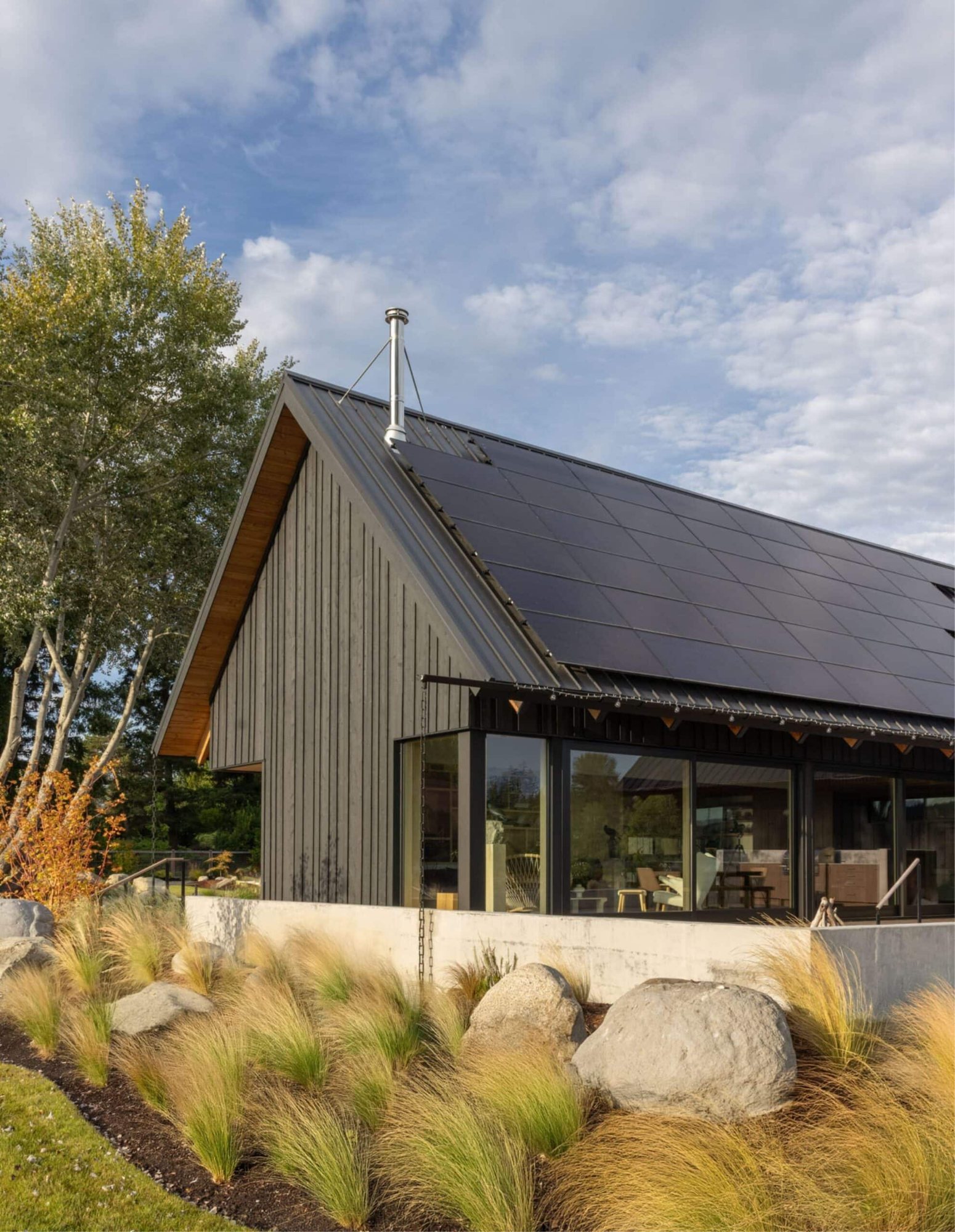
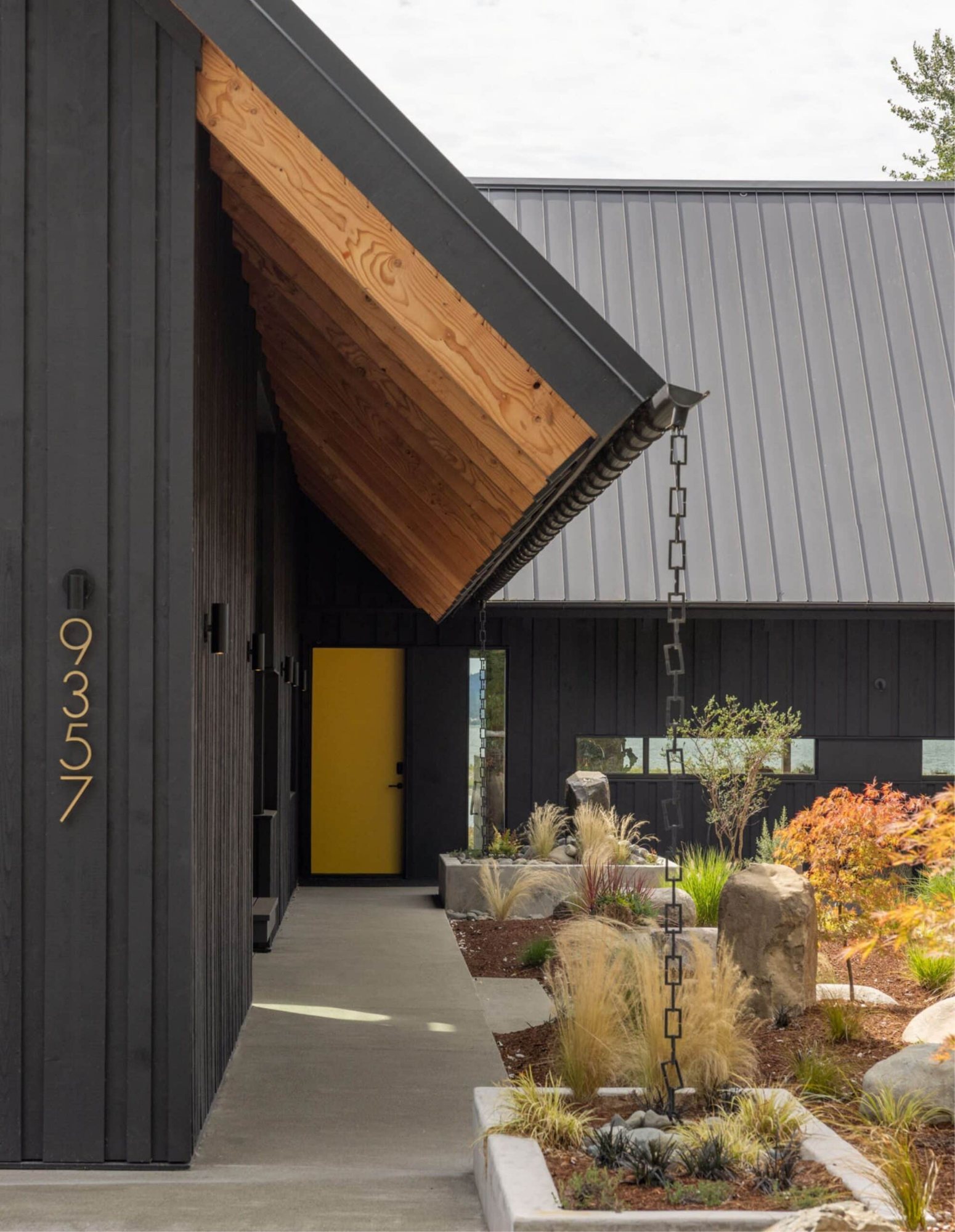
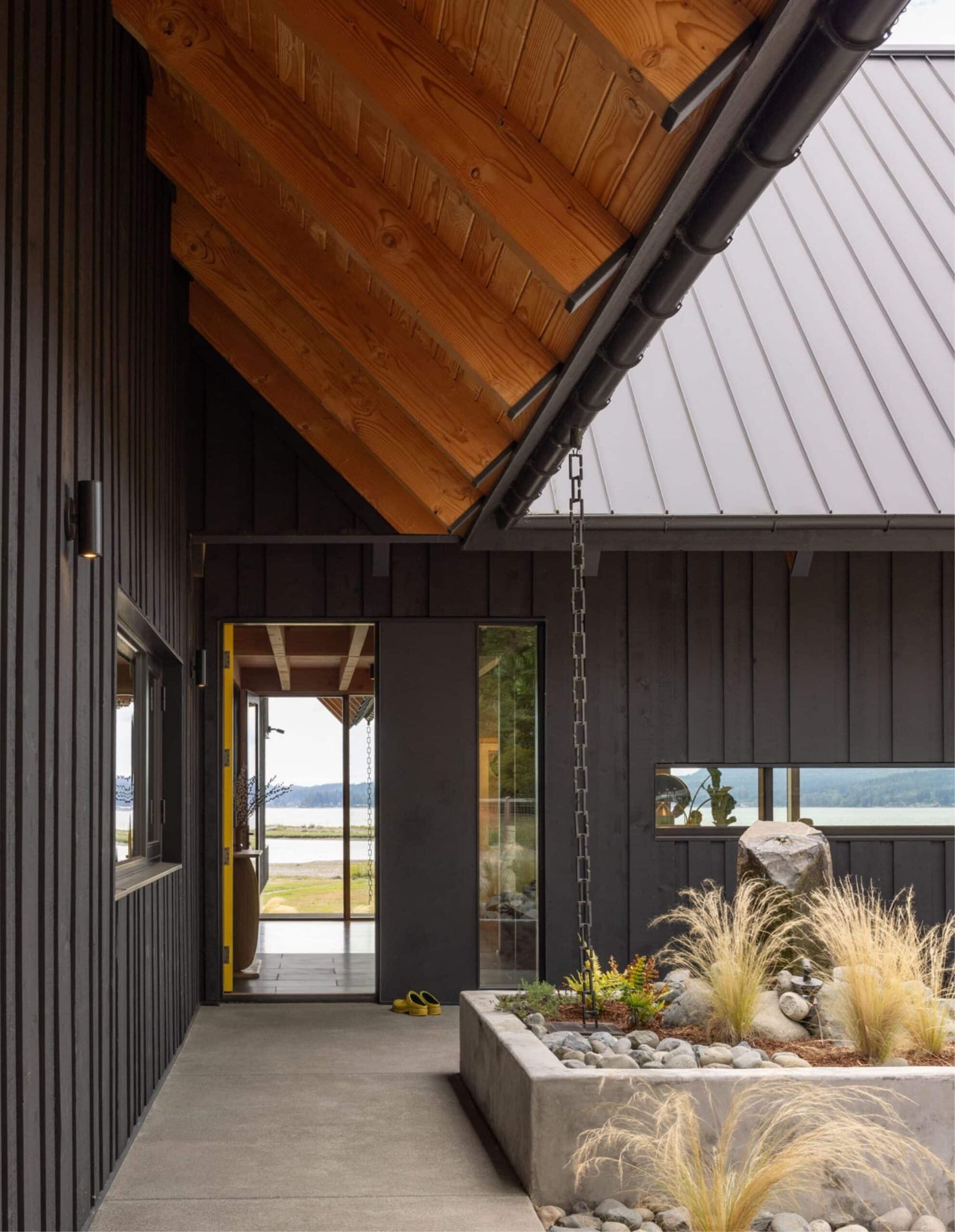
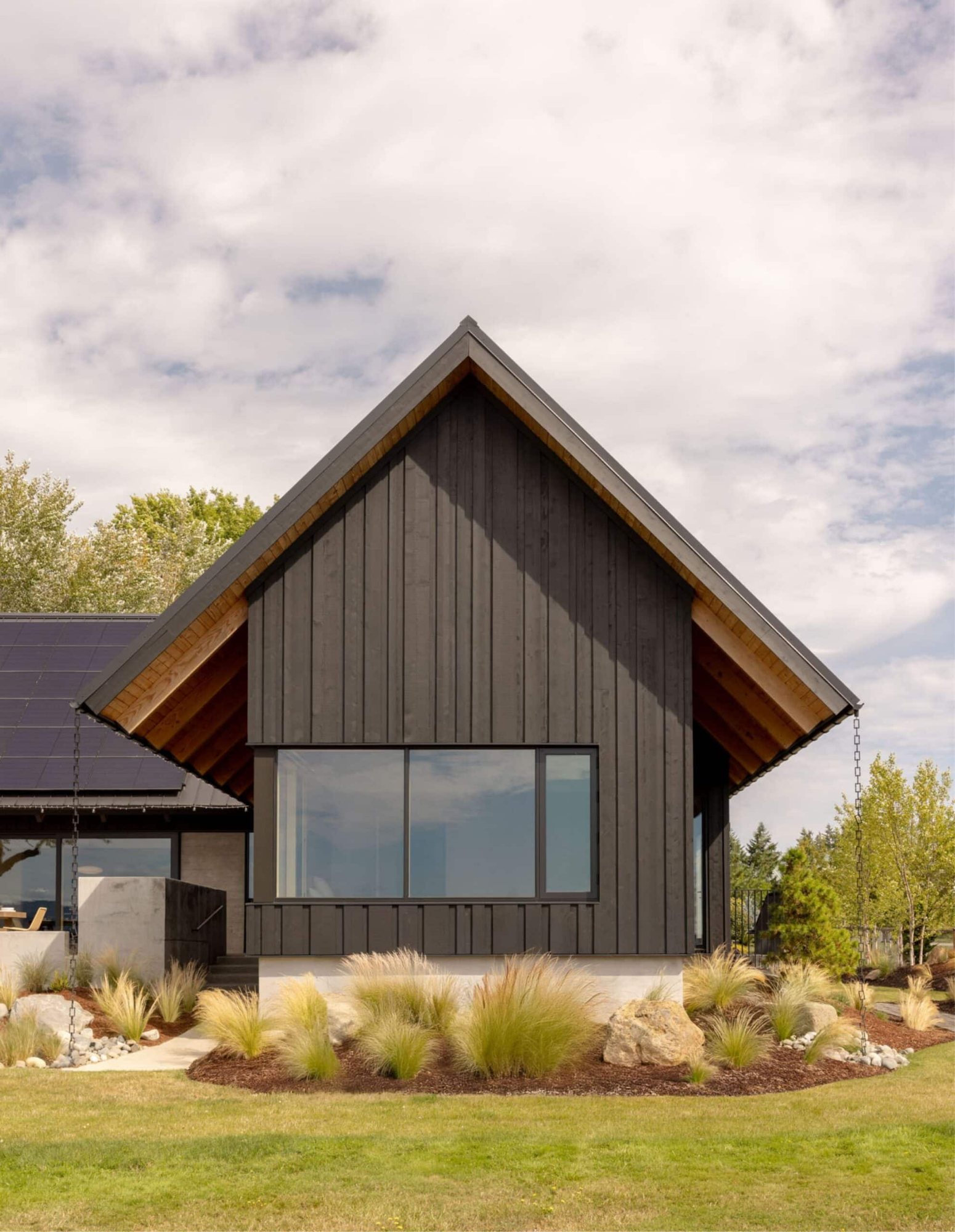
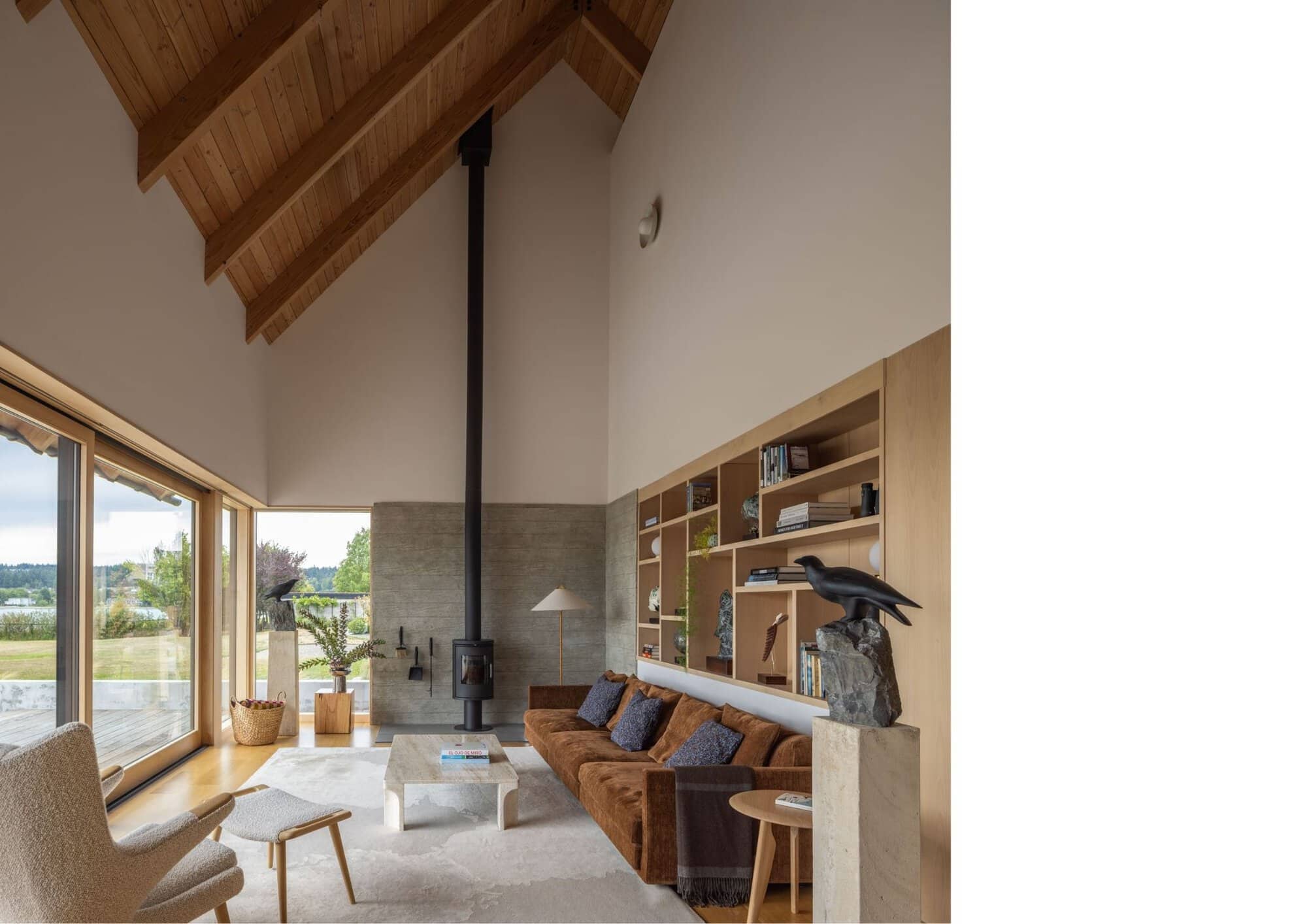
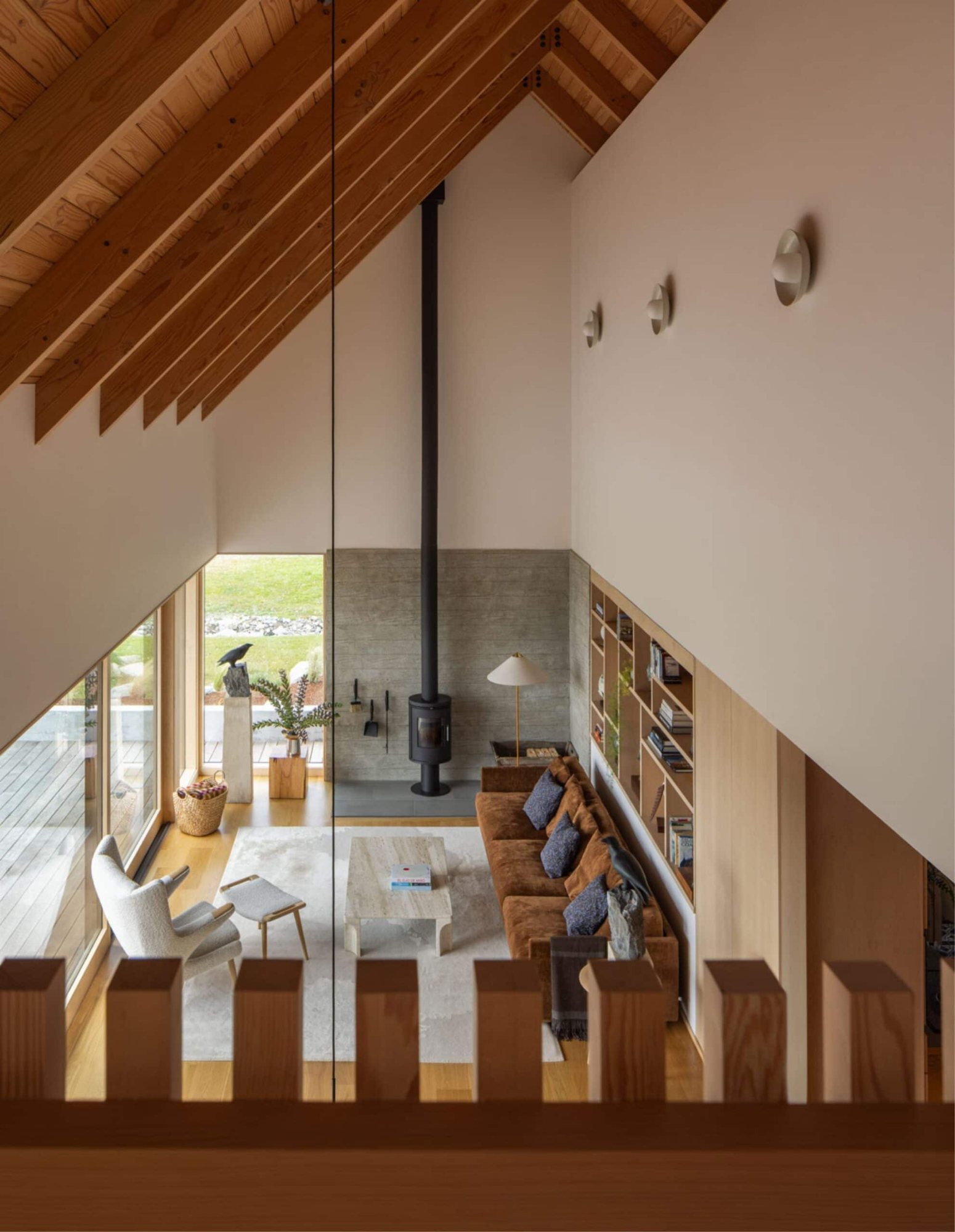
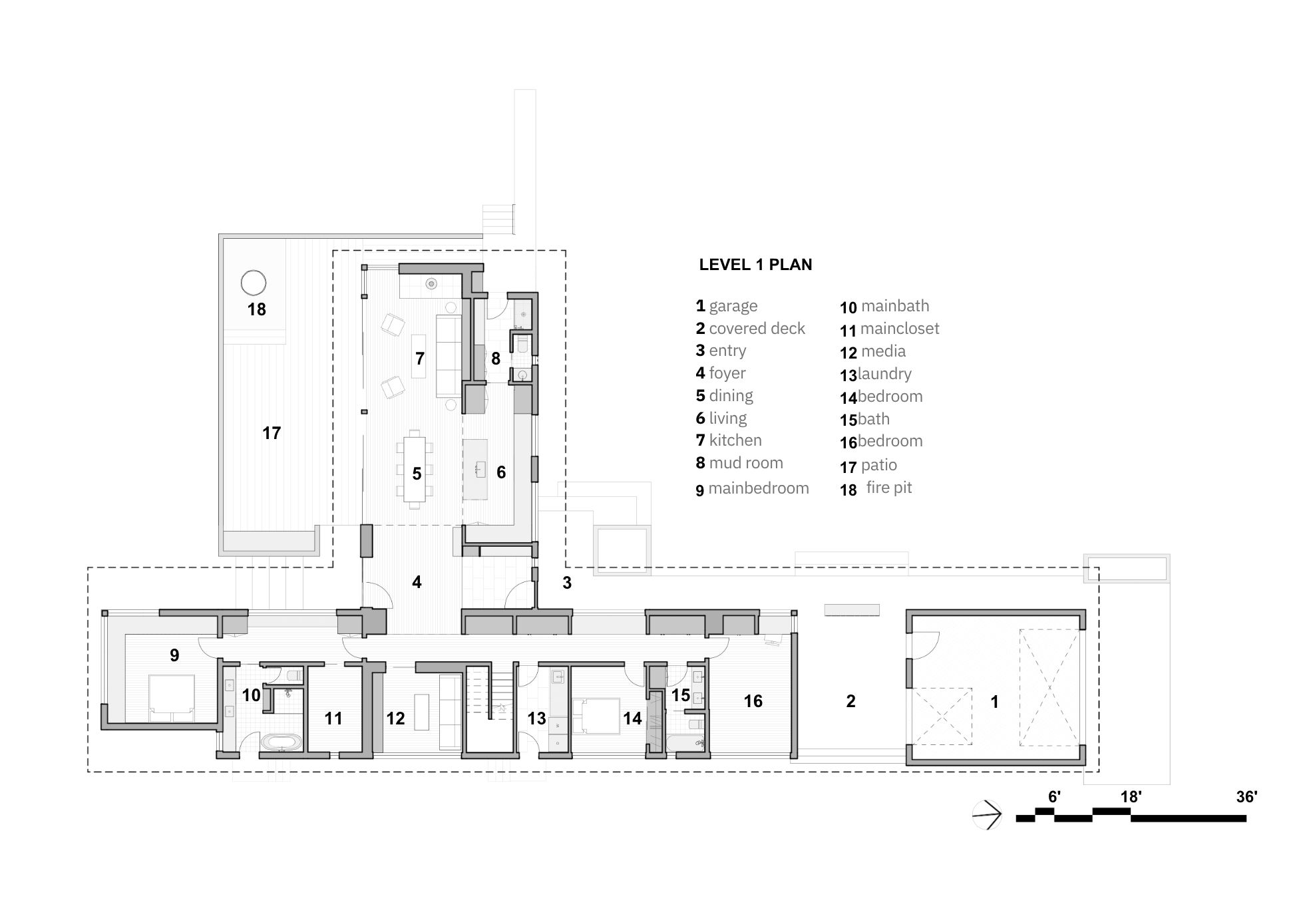
The plan is based on two crossing gabled forms, a composition that recalls Swedish seaside farm complexes while adapting the type to a contemporary Pacific Northwest setting. Their intersection creates the entry point and establishes the spatial logic of the house. From there, circulation moves between compressed lower areas and taller vaulted rooms, producing a measured sequence of intimacy and openness. Each wing culminates in a double-height volume, allowing the house to feel generous without losing the sense of separation required for family members and guests.
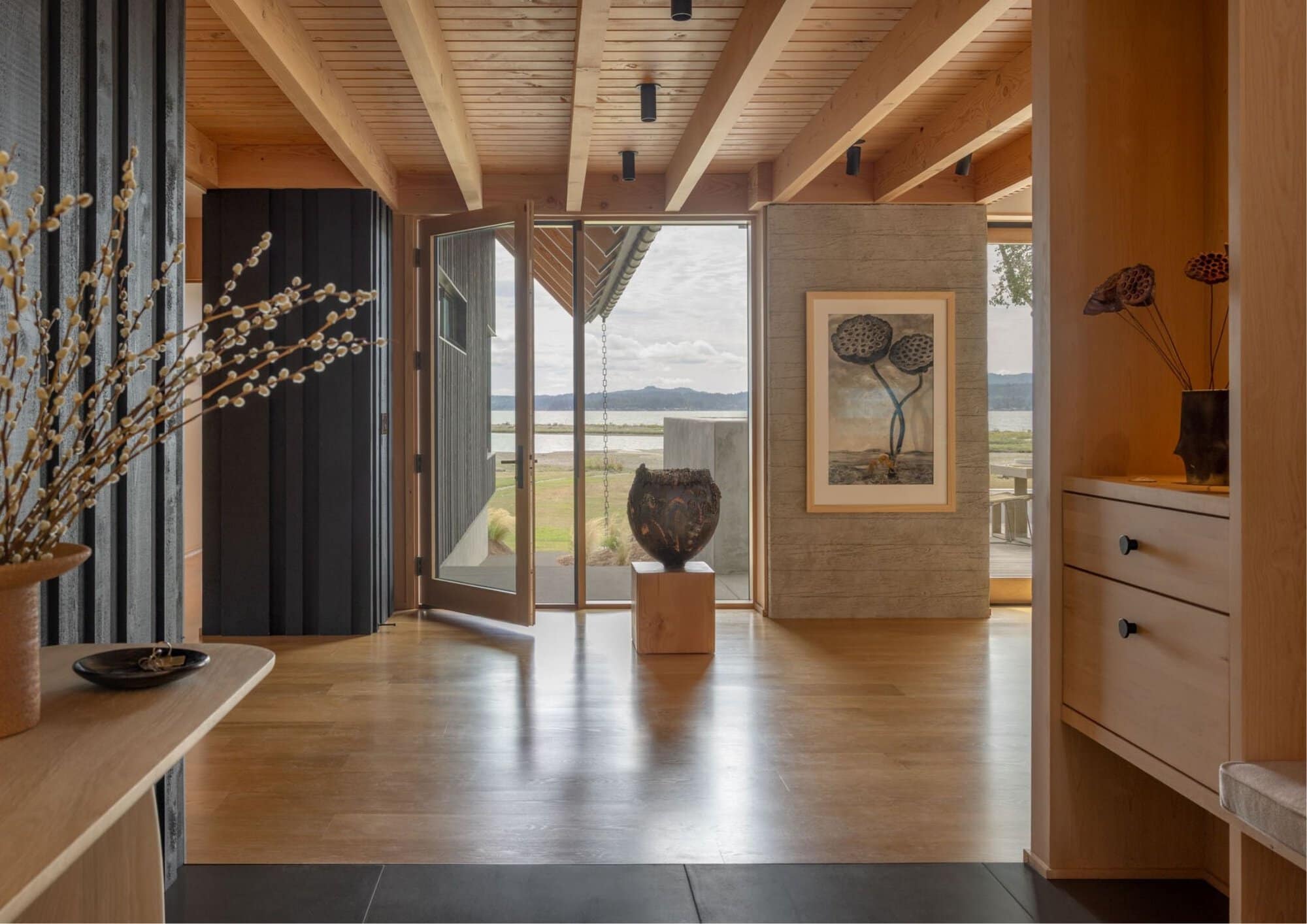
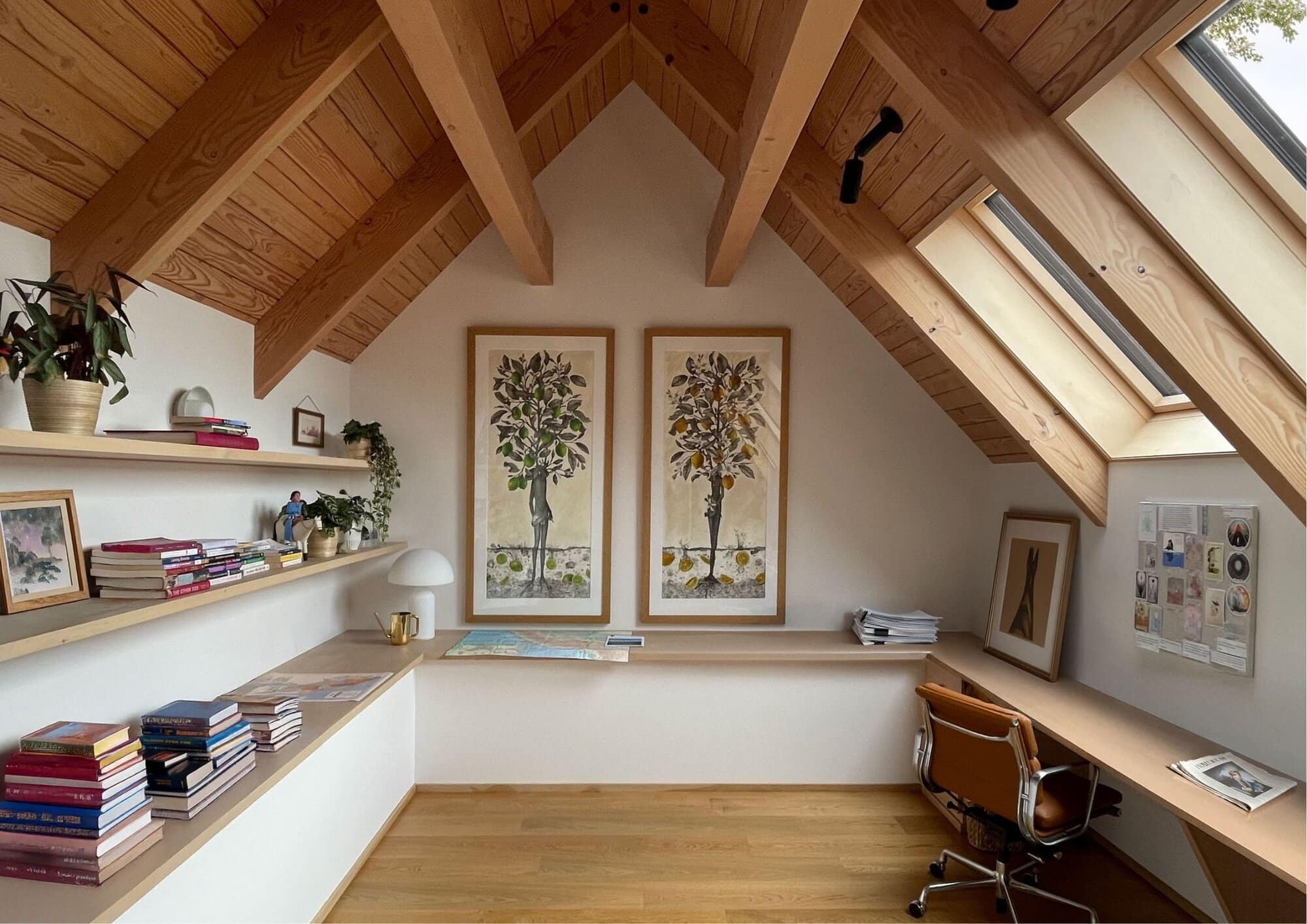
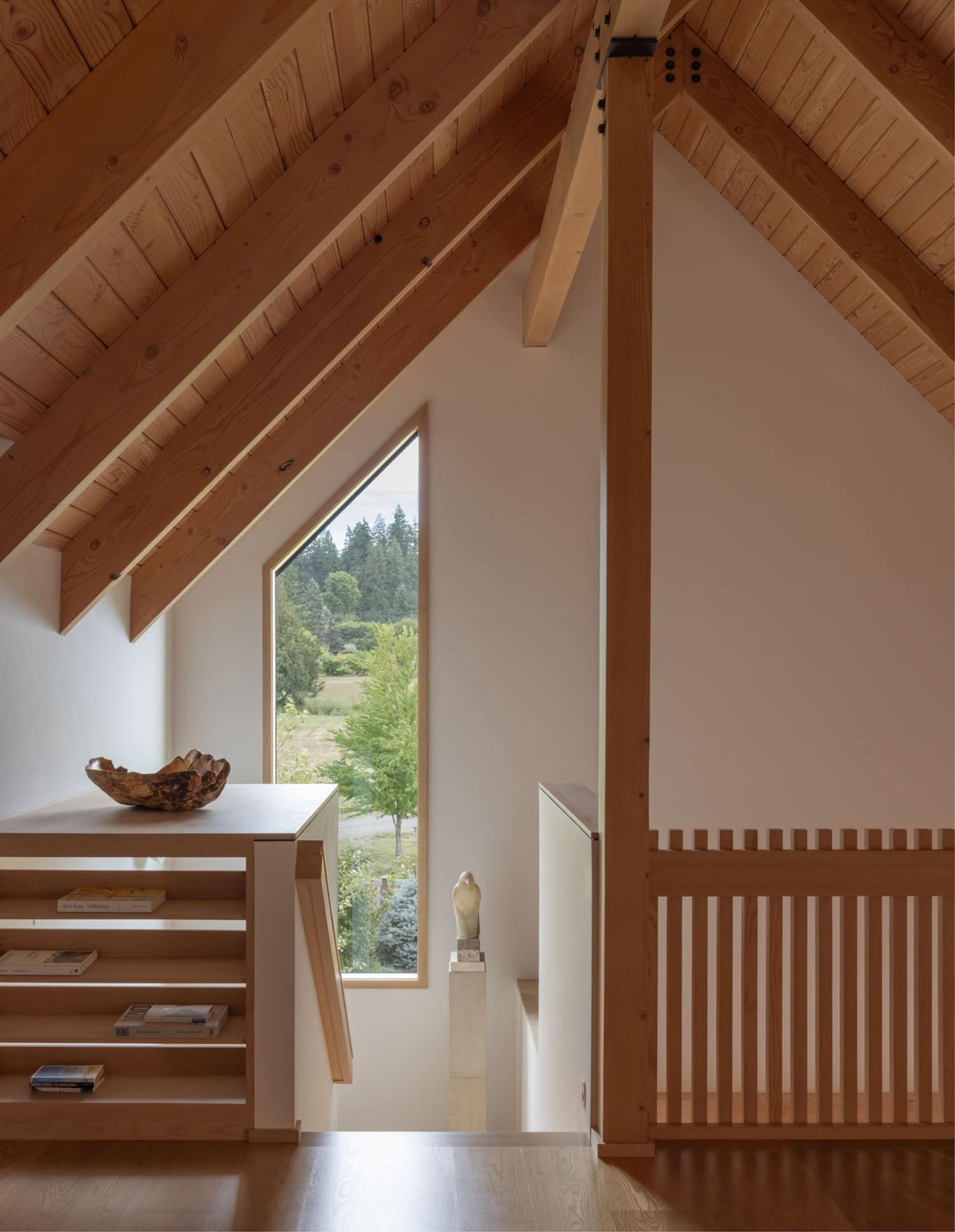
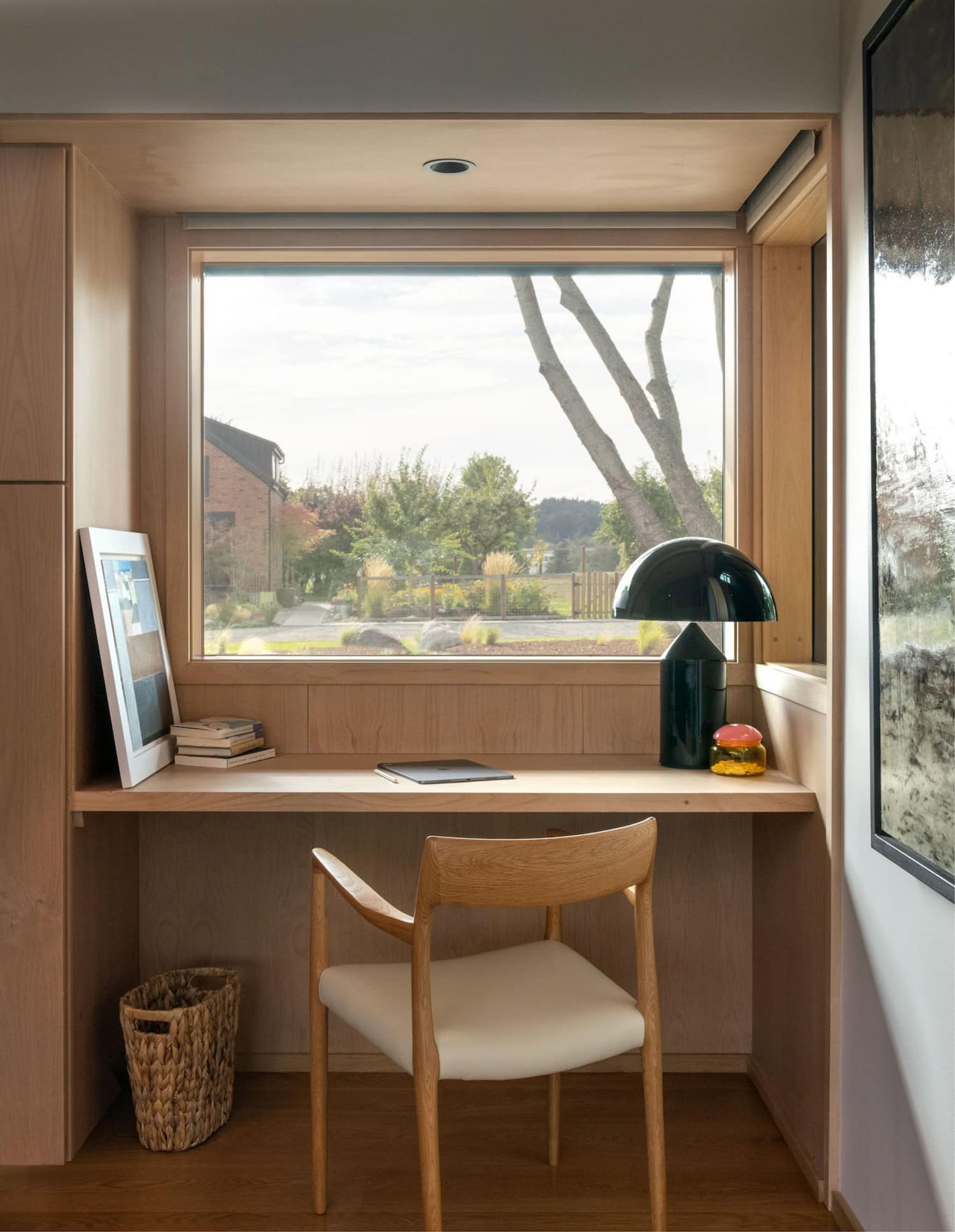
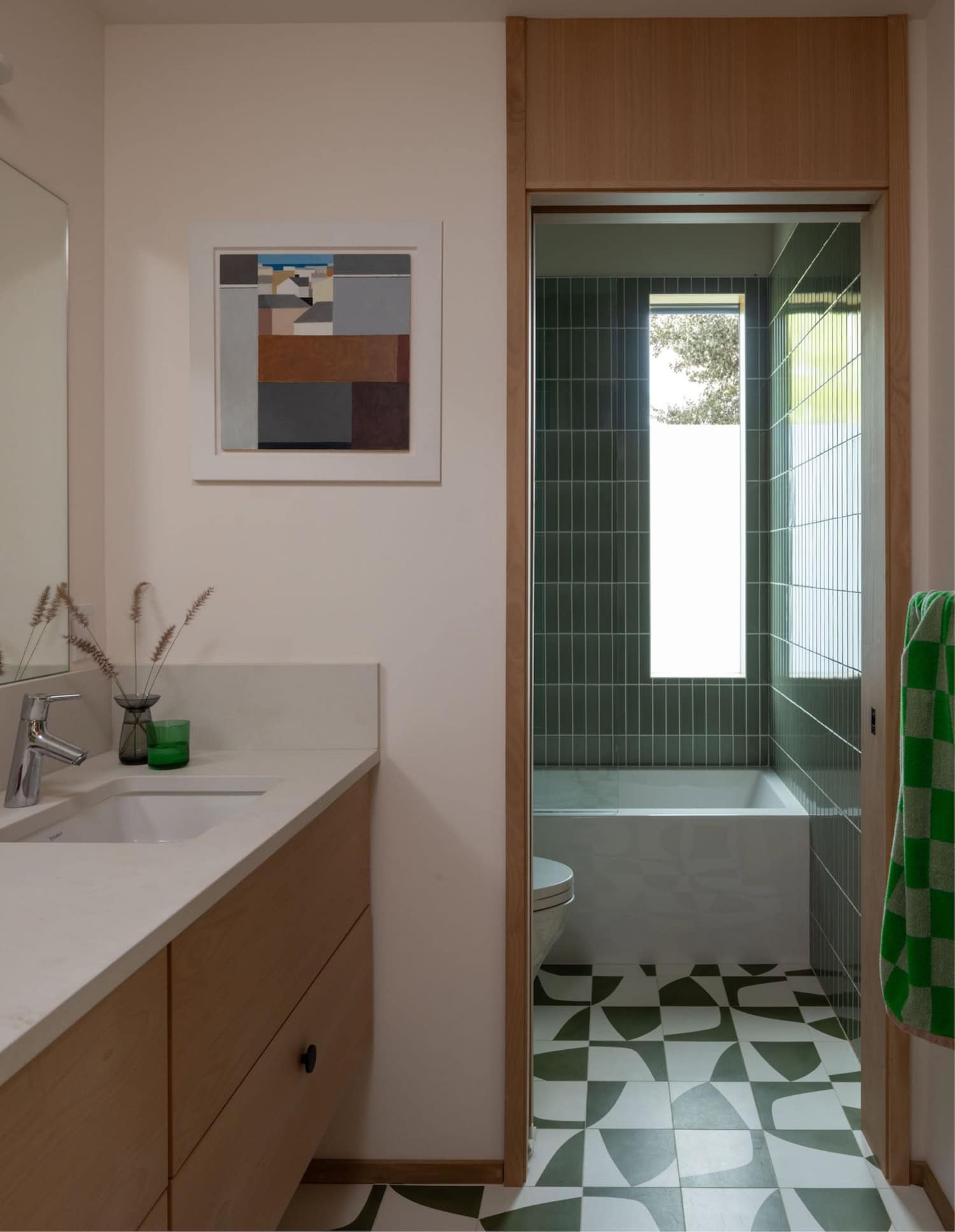
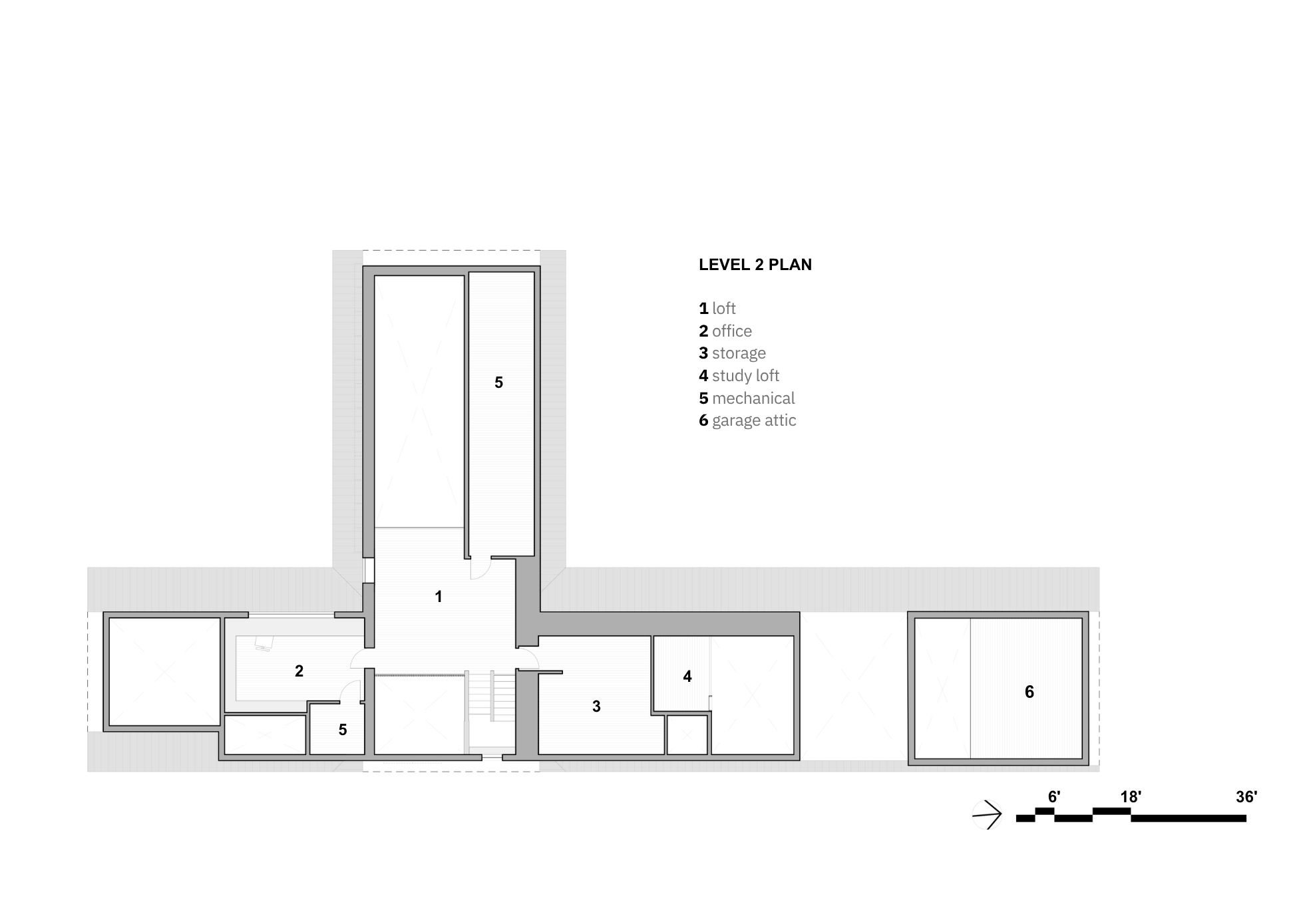
The east-west wing contains the shared living, kitchen, and dining areas, all directed toward the inlet and the outdoor patio. The north-south wing is quieter and more private, with the primary suite located at the southern end and two guest bedrooms sharing a bath. Above the foyer, an attic loft provides flexible space for work and storage, adding utility without interrupting the clarity of the single-level living arrangement below.
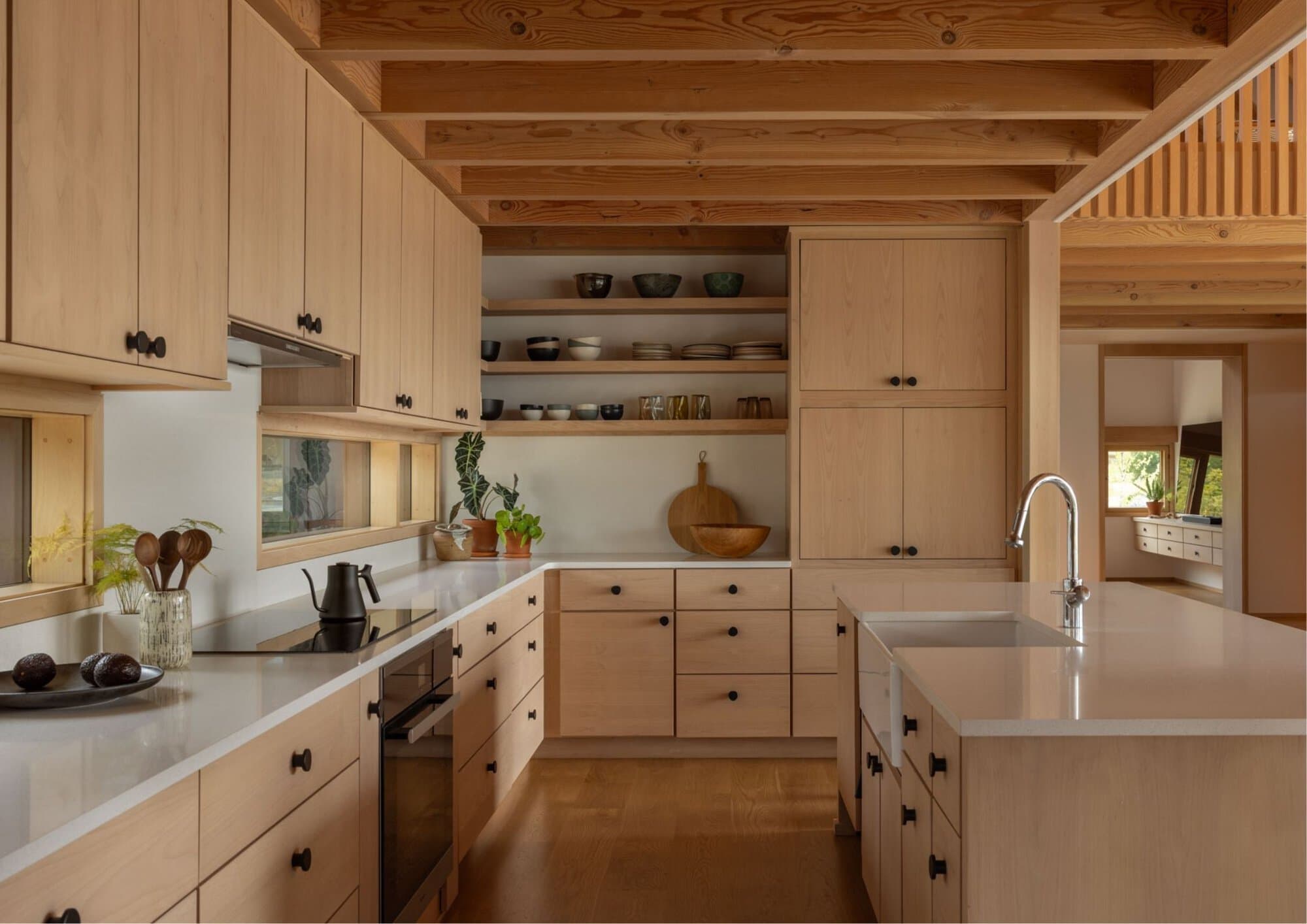
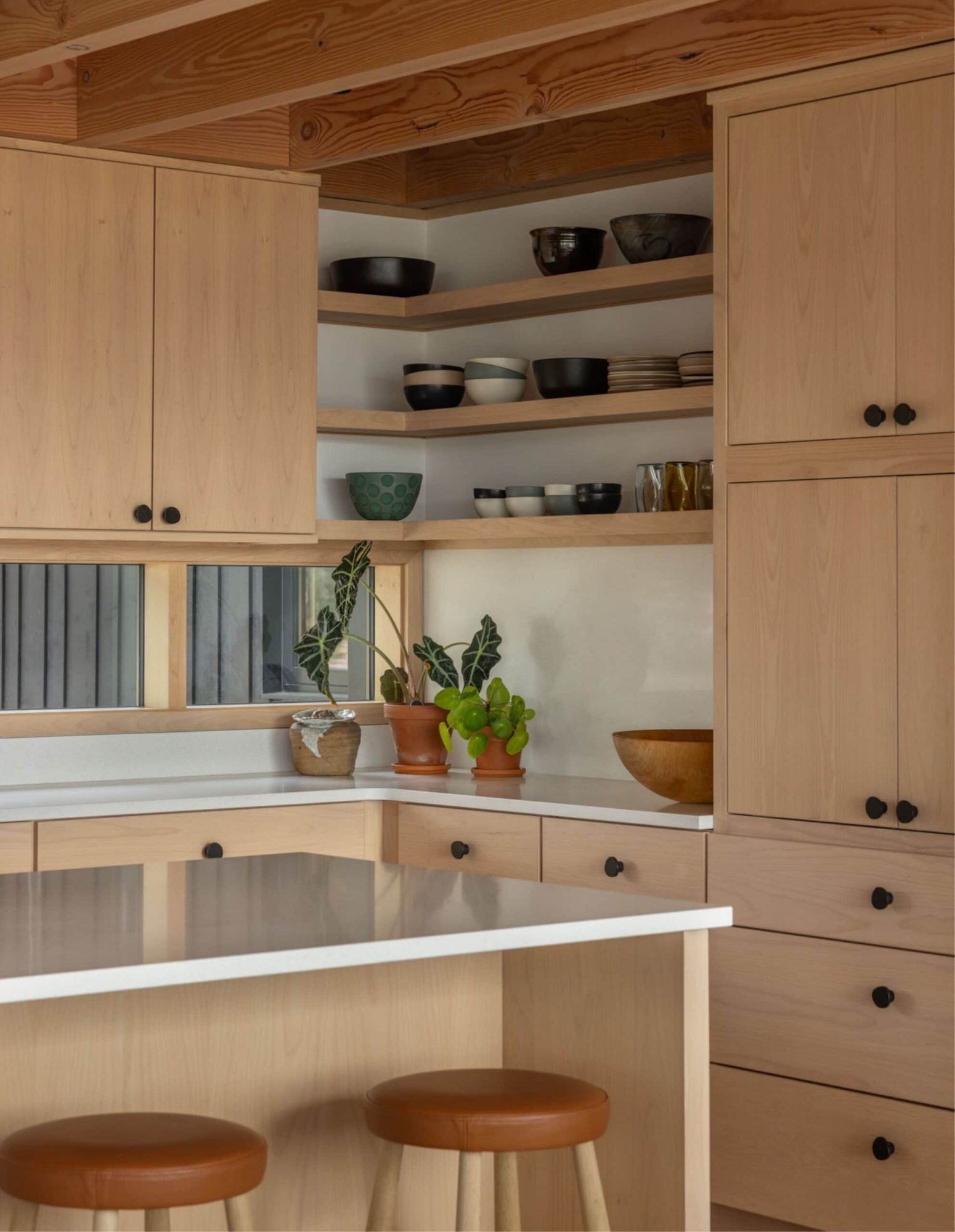
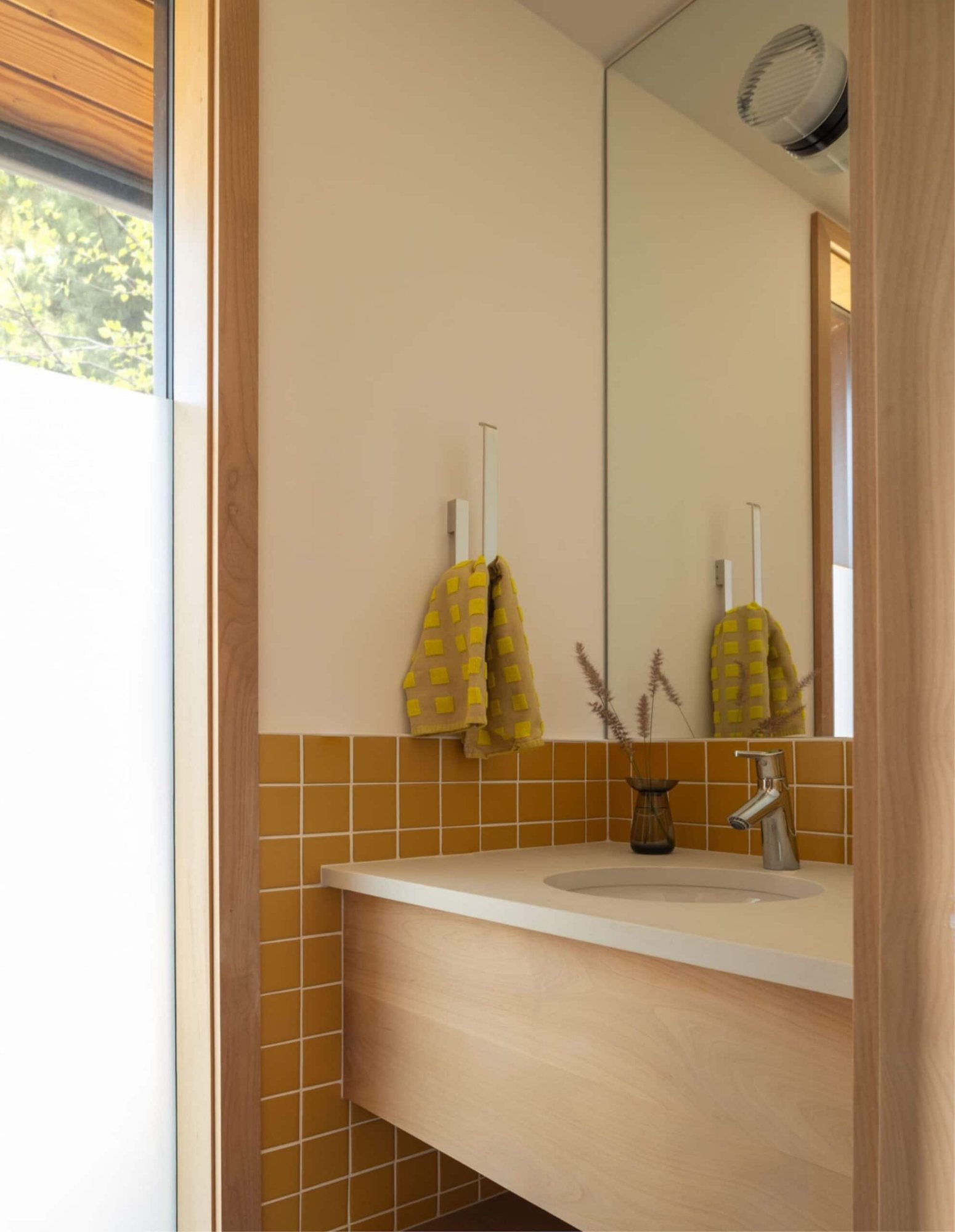
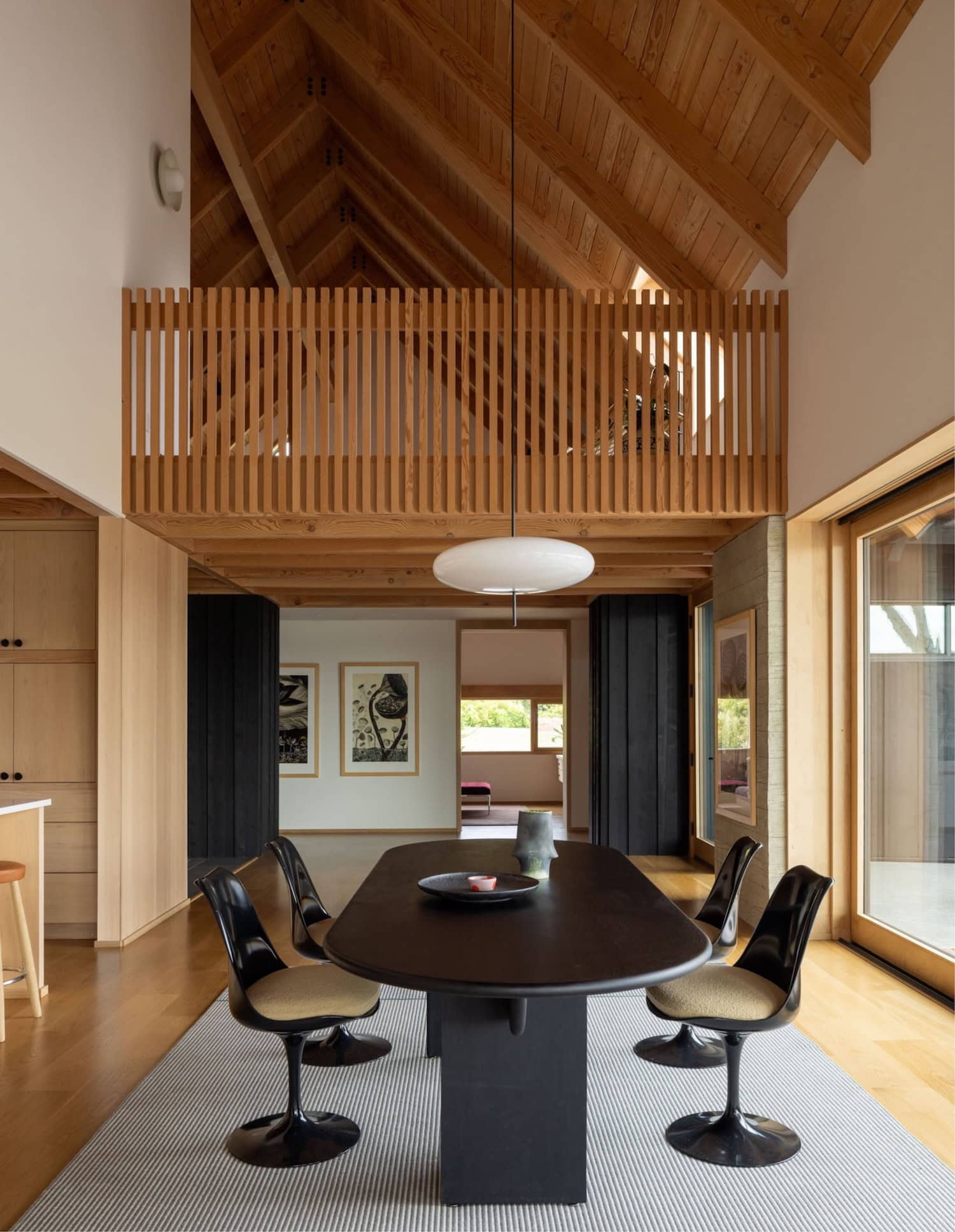
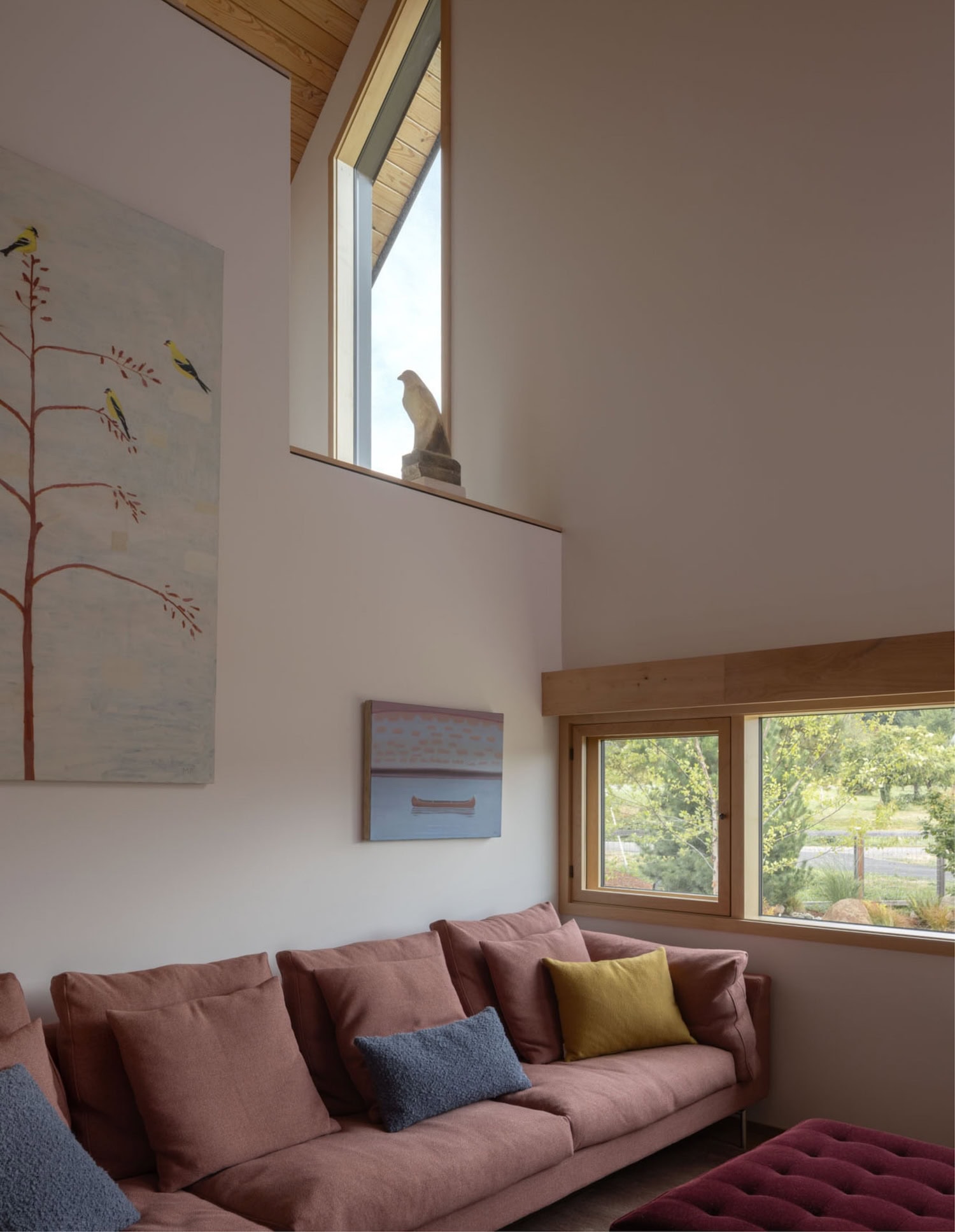
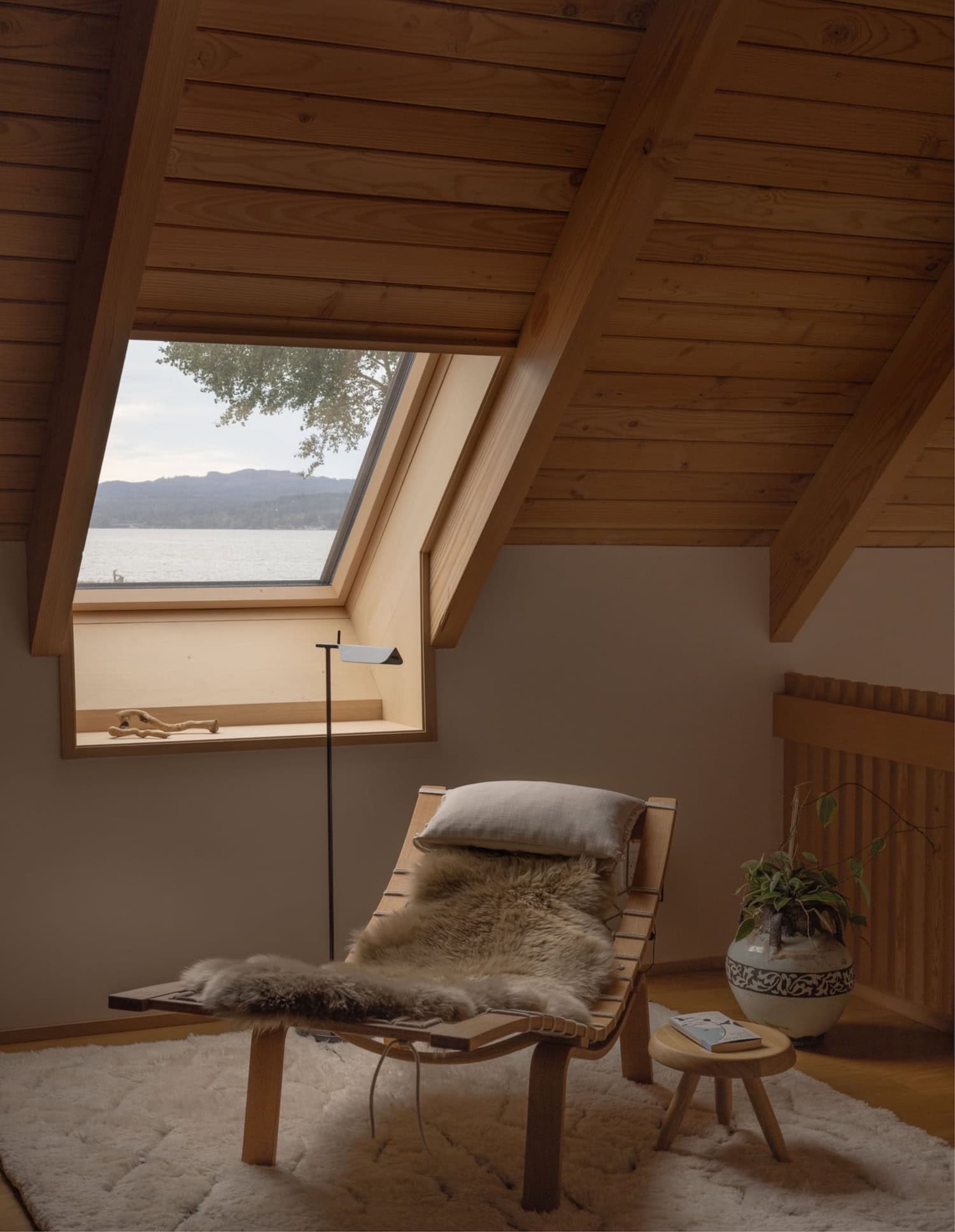
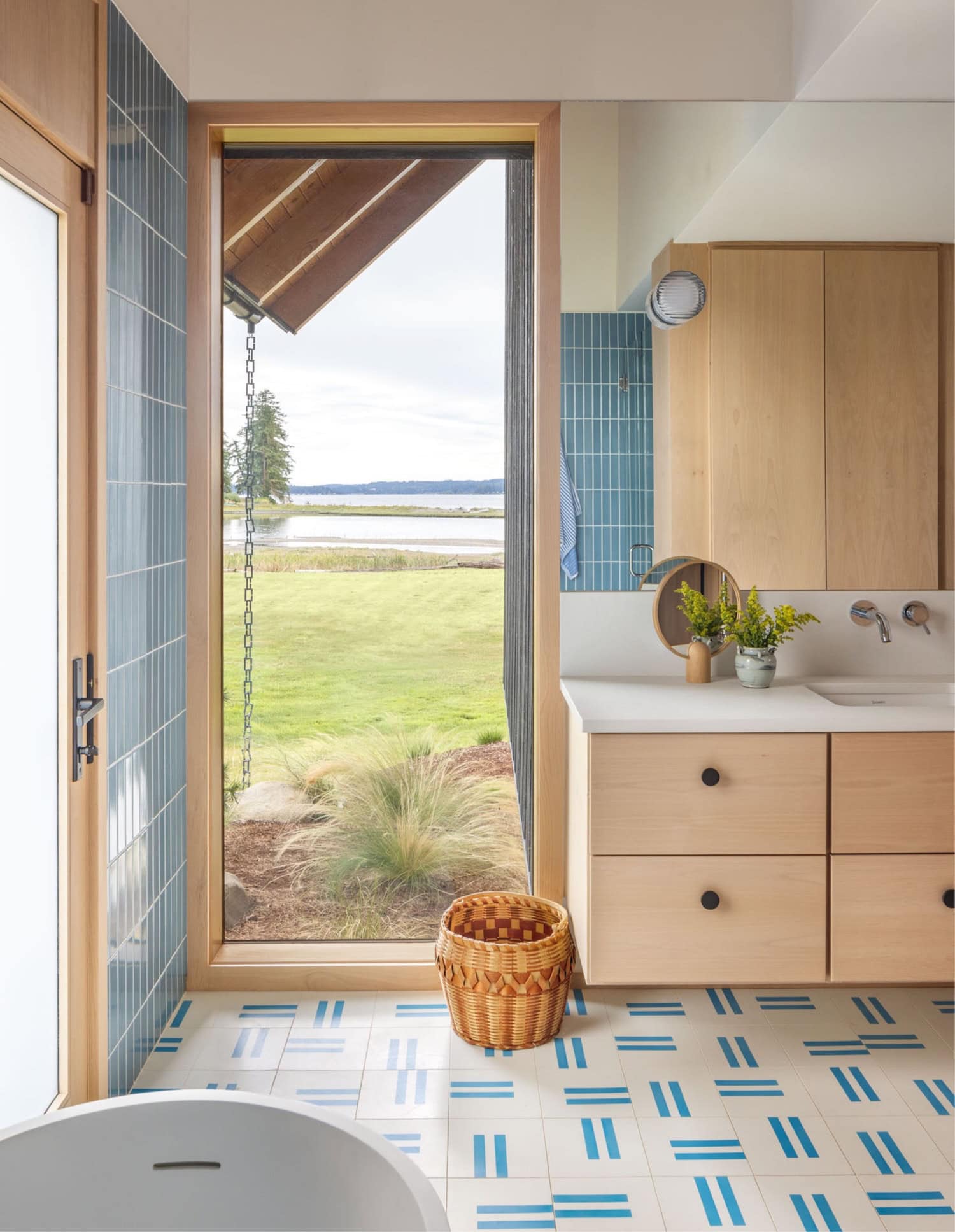
Material choices reinforce the project’s restrained character. Wood, concrete, glass, and alder plywood create a grounded interior palette informed by regional associations with the Pacific Northwest and Alaska. Material changes clarify transitions between lower and taller spaces, while extensive glazing keeps the horizon present throughout the home. Rather than relying on ornament, the design uses proportion, volume, and texture to create warmth and continuity.
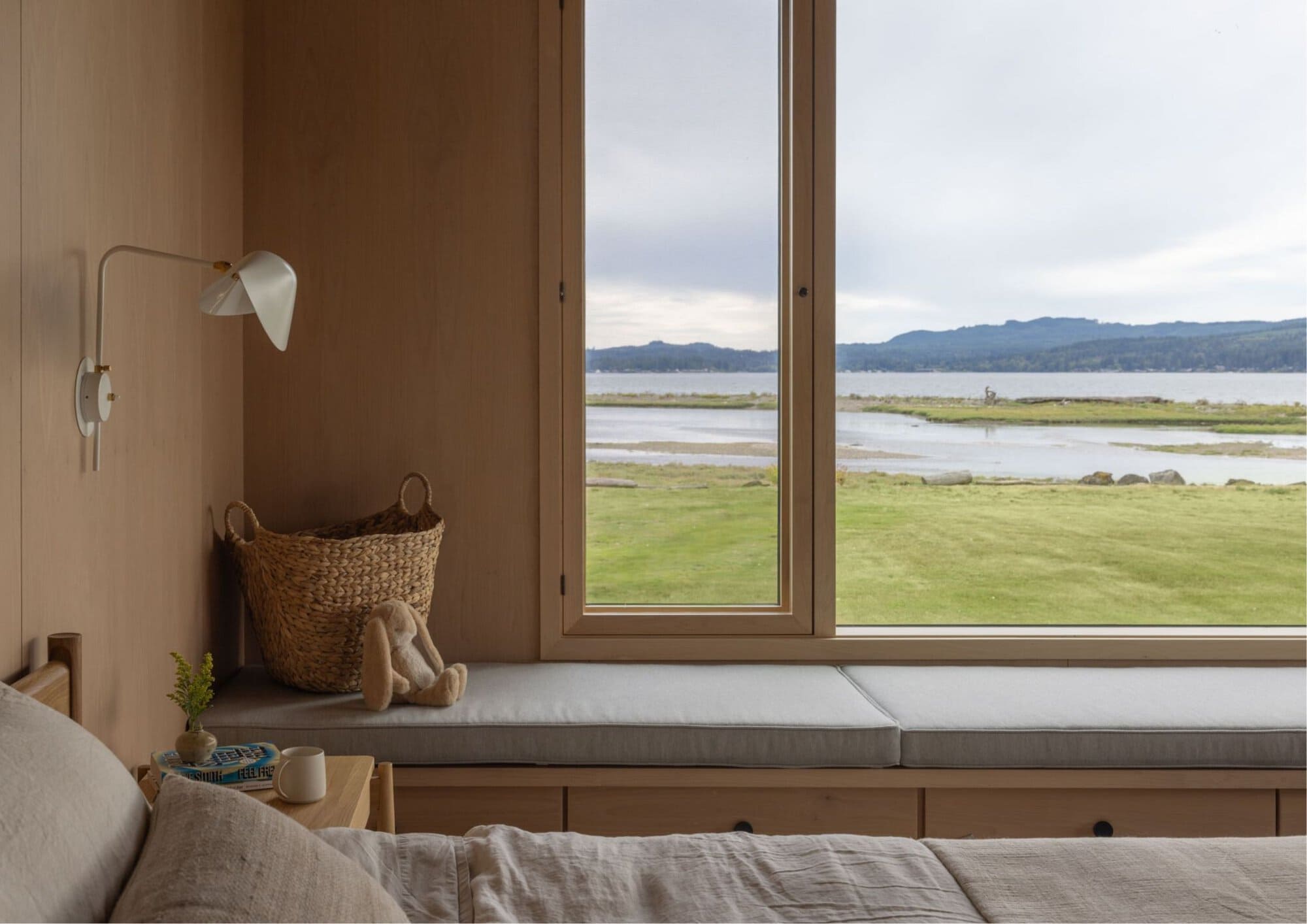
Performance is integrated as a central architectural concern. The house is designed with Passive House principles, triple-pane high-performance windows, beyond-code wall, roof, and floor assemblies with 2 inches of continuous insulation, a high-efficiency ducted heat pump HVAC system, balanced ventilation with heat recovery, a high-efficiency heat pump water heater, and WaterSense-certified fixtures. A 17.2 kW photovoltaic system is designed to offset approximately 75 percent of annual power use, aligning the home’s long-term operation with its durable, family-oriented purpose.
Project Gallery
Project Location
Address: Silverdale, Washington, United States
Location is for general reference and may represent a city or country, not necessarily a precise address.

