

Architects: AACM – Atelier Architettura Chinello Morandi
Area: 50 m²
Year: 2025
Photography: Marco Lumini
Lead Architects: Arch. Nicolò Chinello, Arch. Ing. Rodolfo Morandi
Design Team: Arch. Ing. Rodolfo Morandi, Arch. Francesco Deiro, Mattia Pordenon
Wooden Works: Bottega dell’Arte Snc
Flooring: GoBuild
Plaster and False Ceiling: Effeerre
Wall Finish and Textile: Paint Up
Tatami and Pillows: Teacood
Drawings: AACM
Model: Mattia Pordenon
Client: Ekadea Studio
City: Milan
Country: Italy
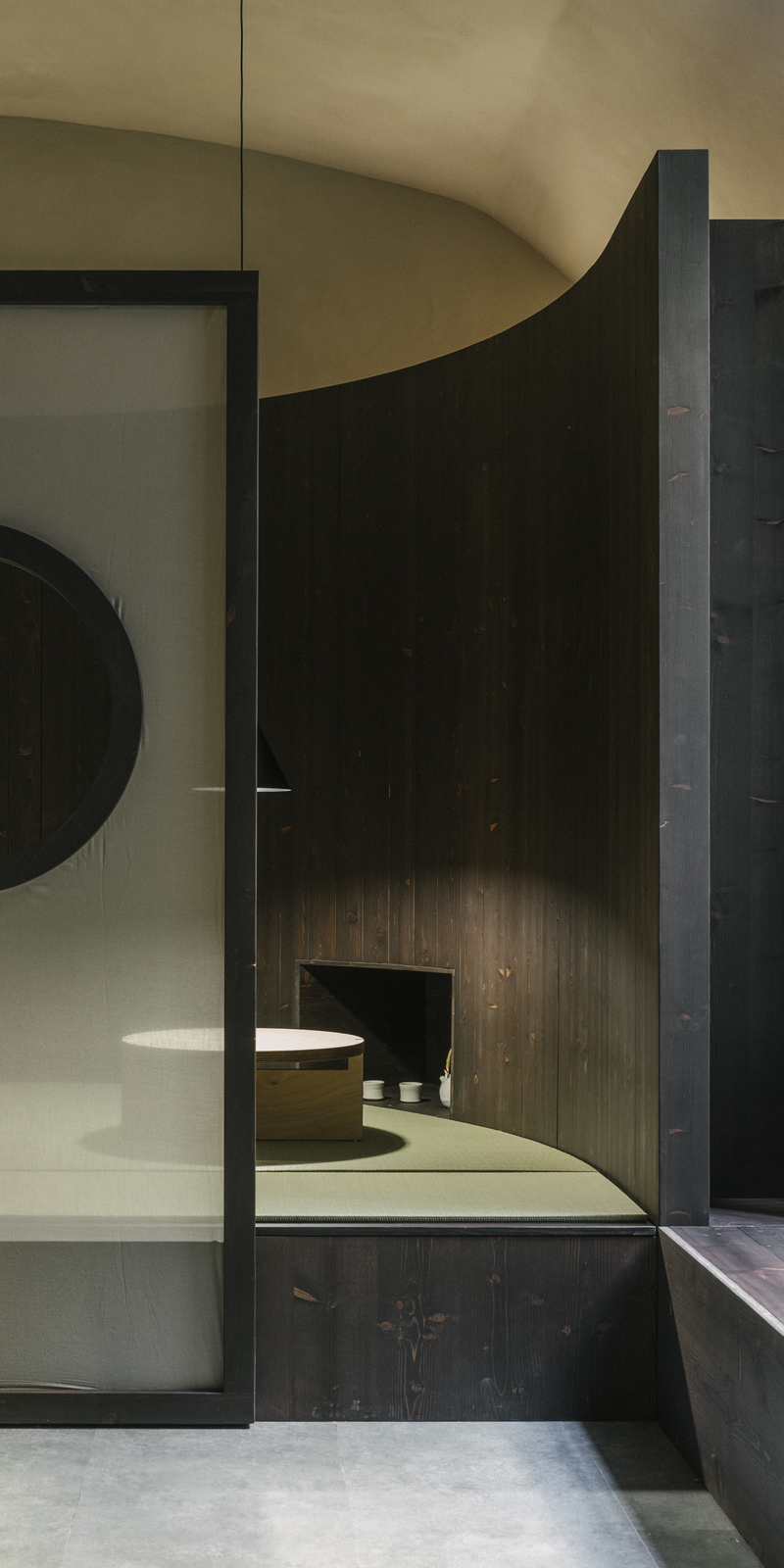
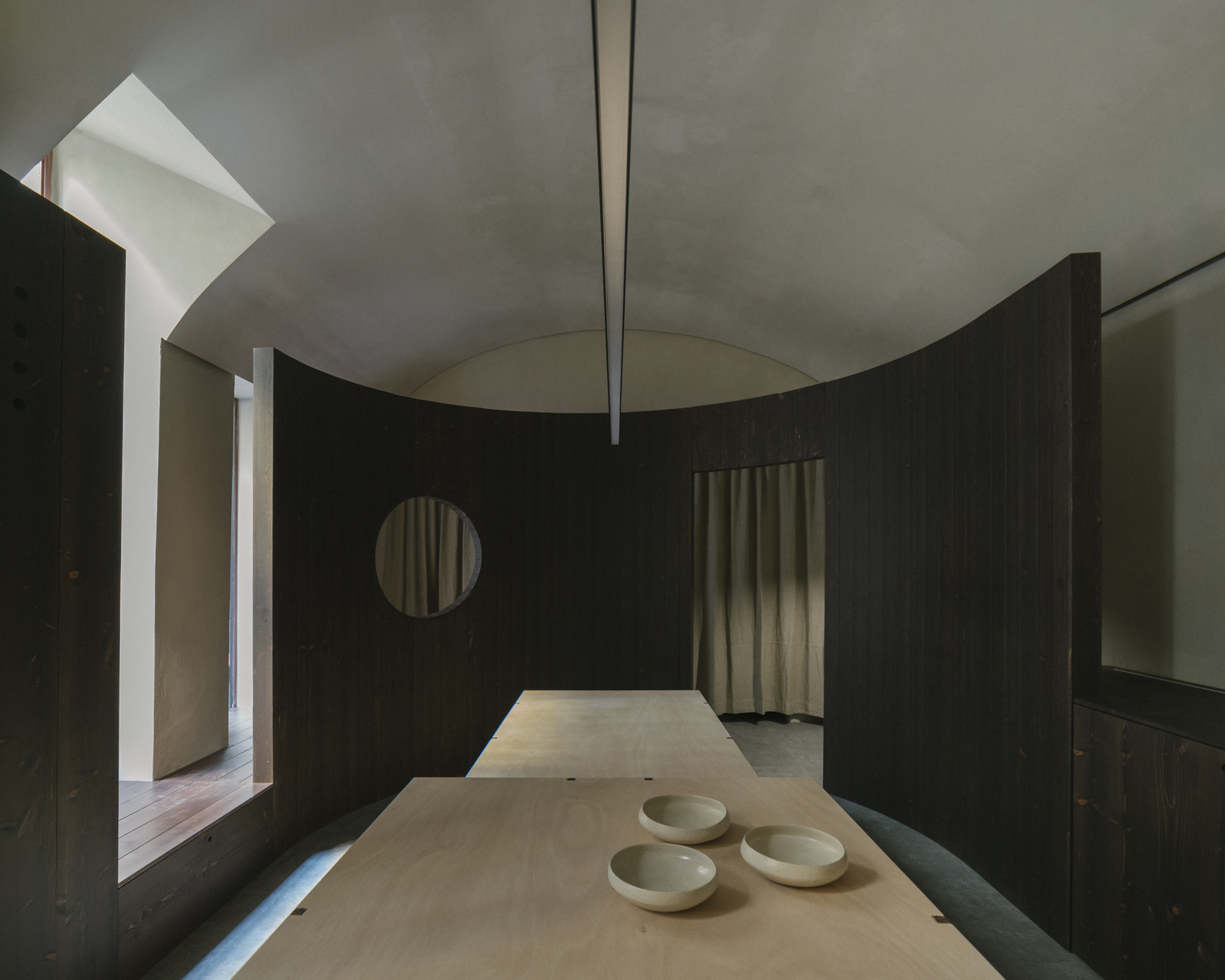
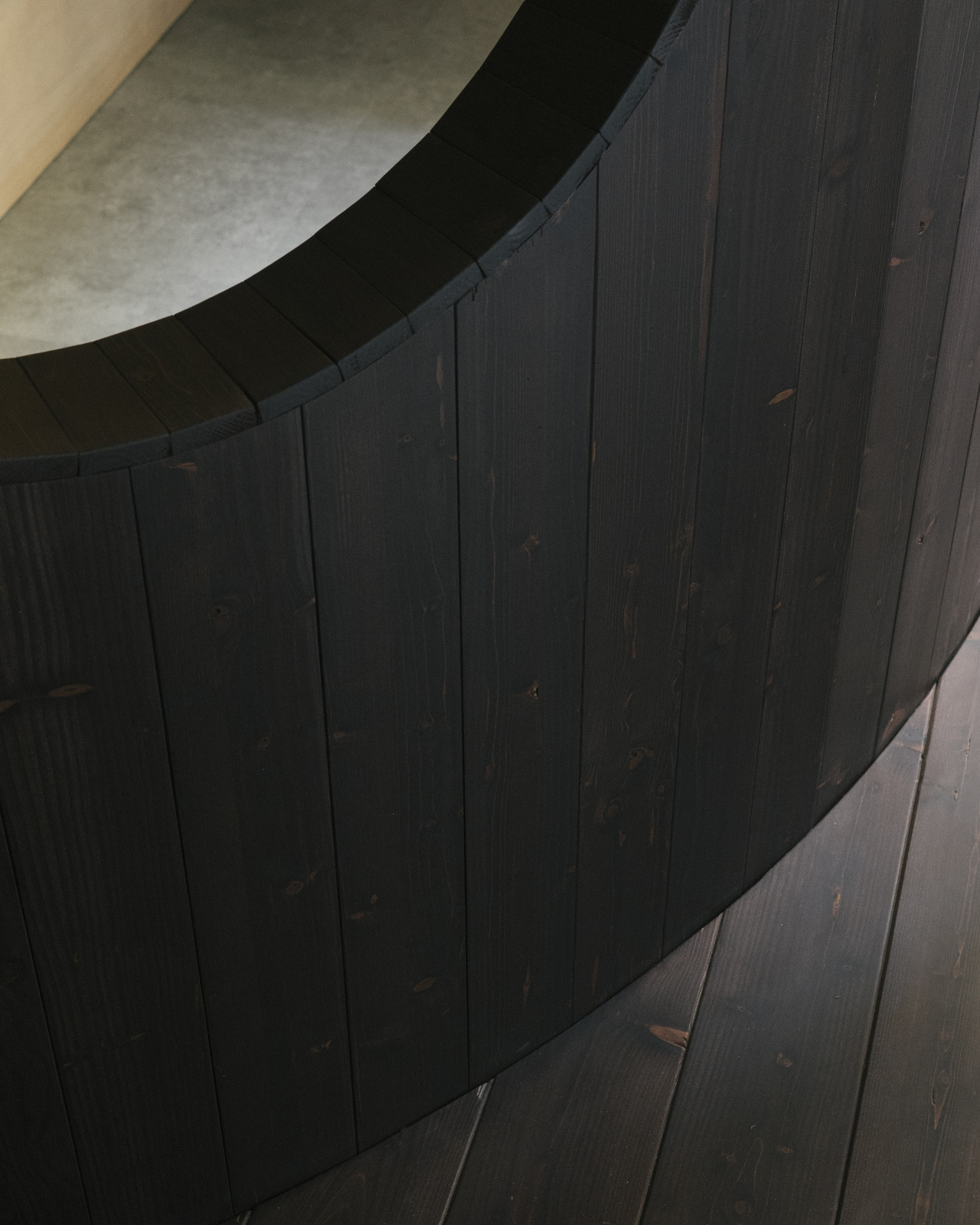
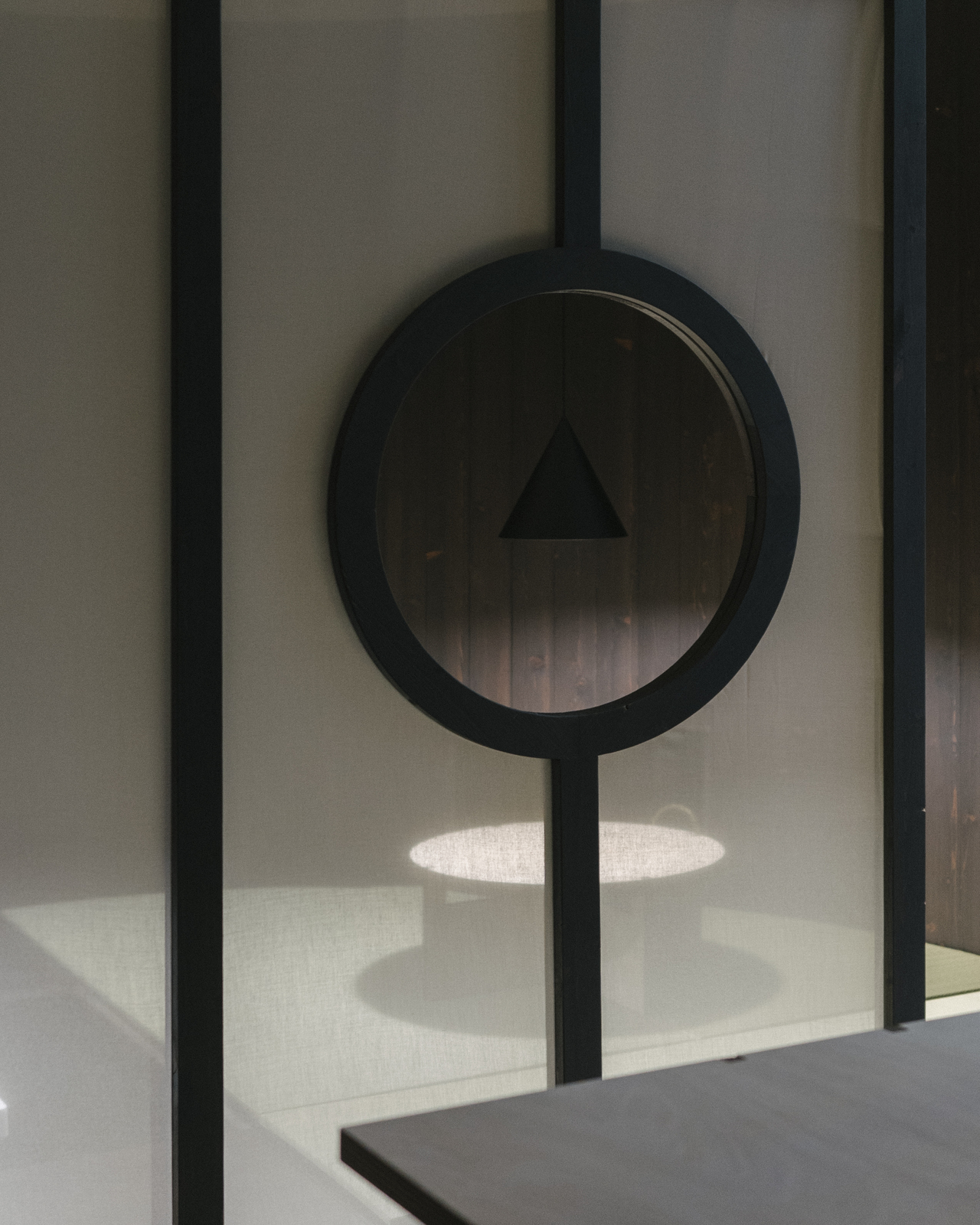
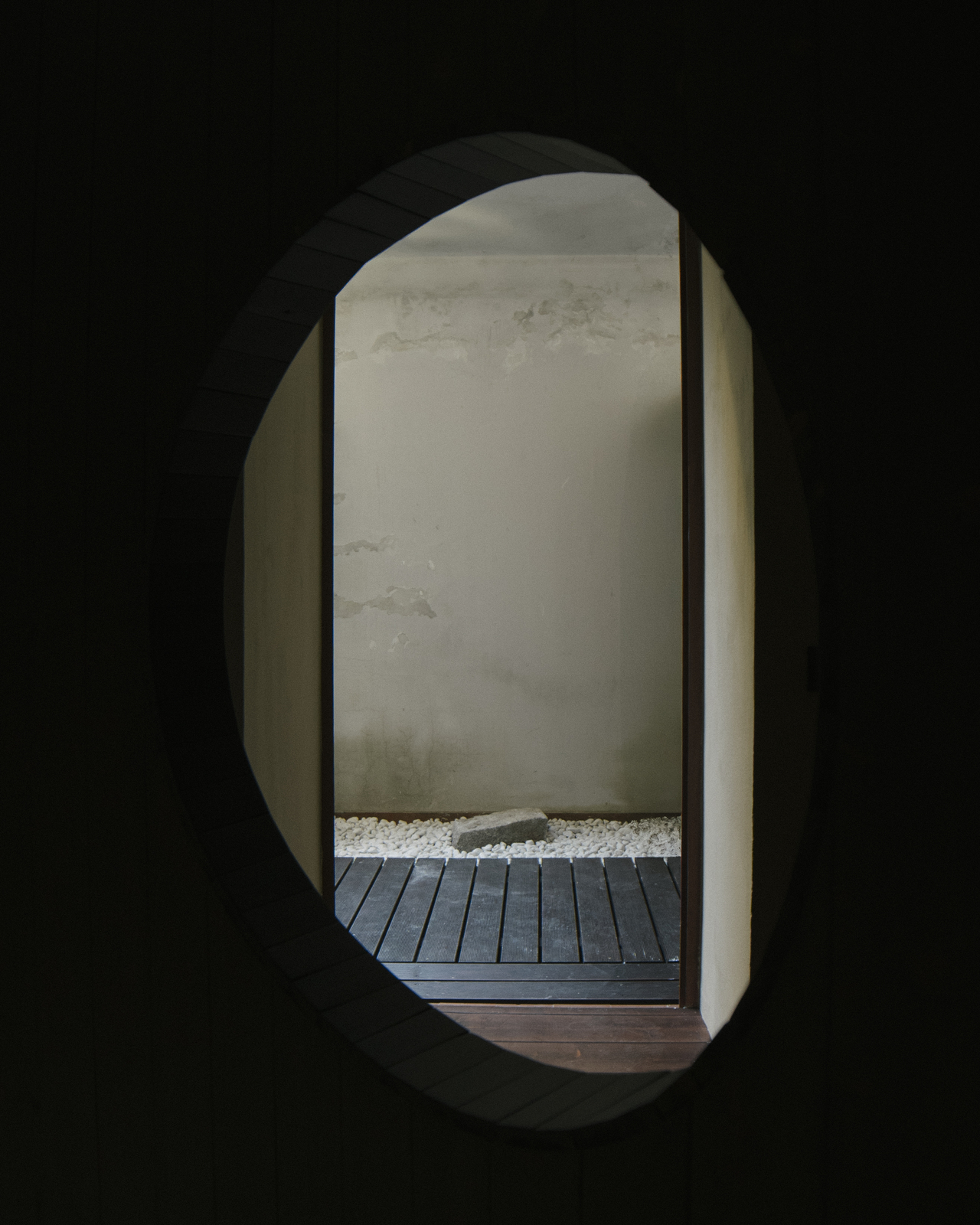
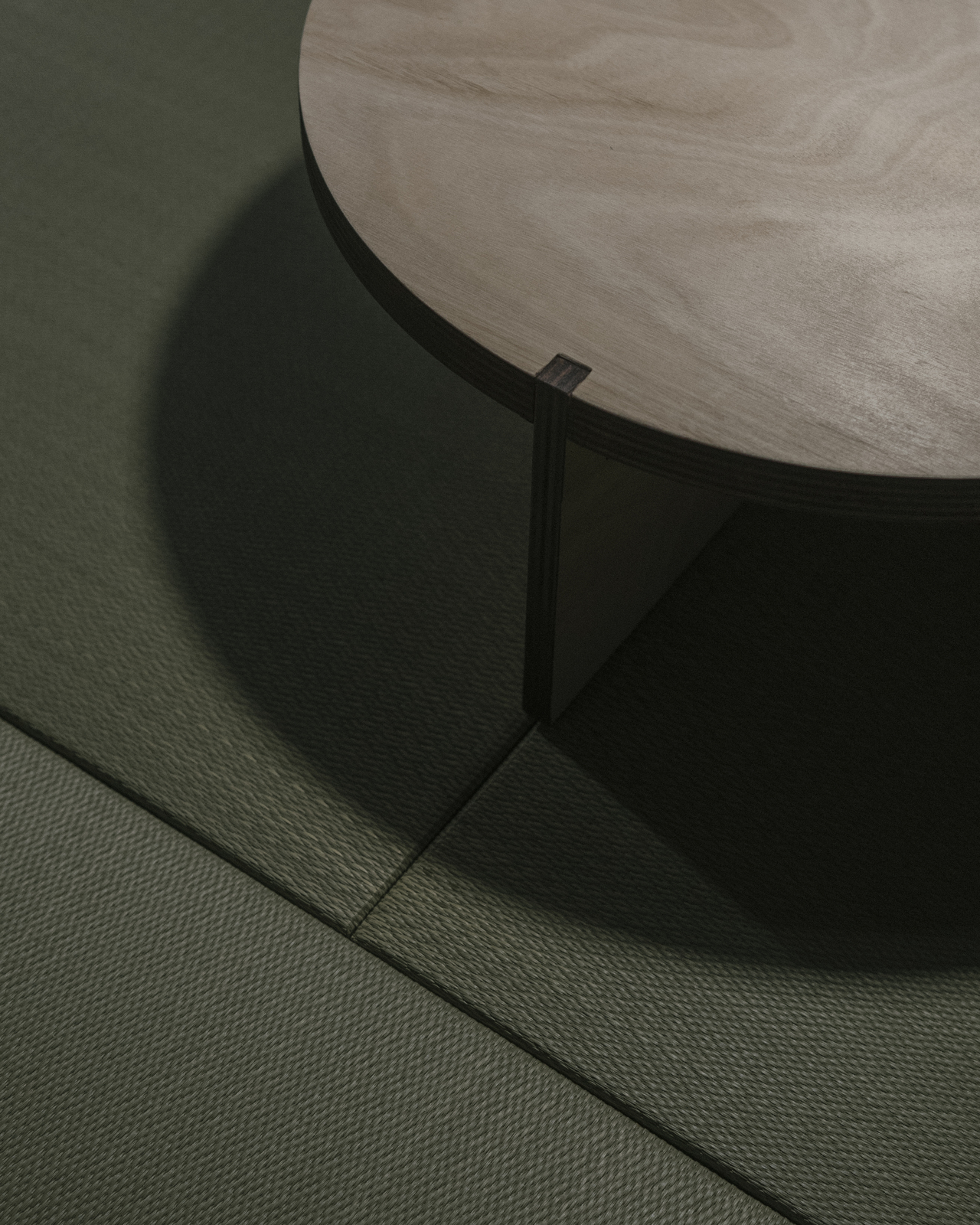
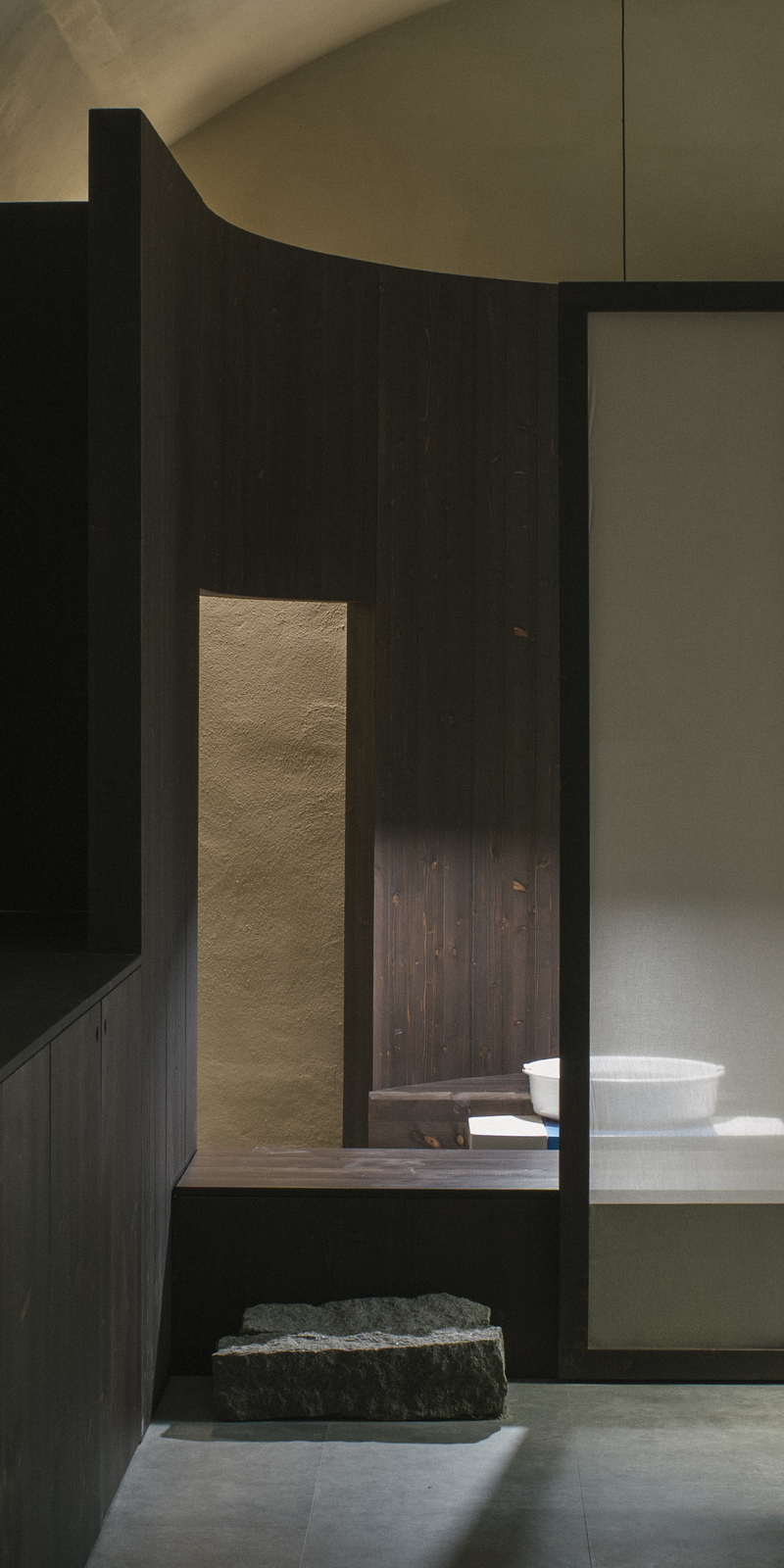
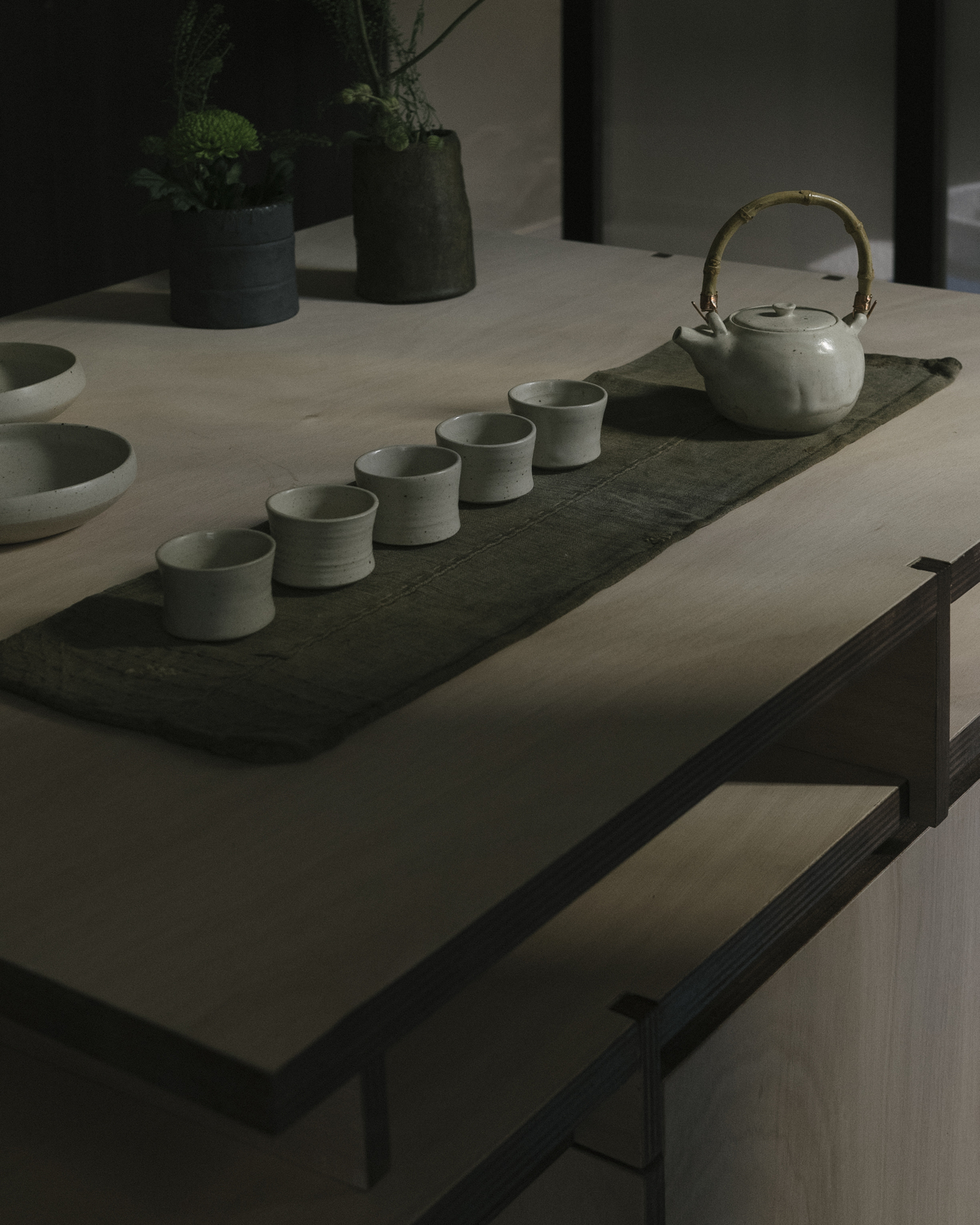
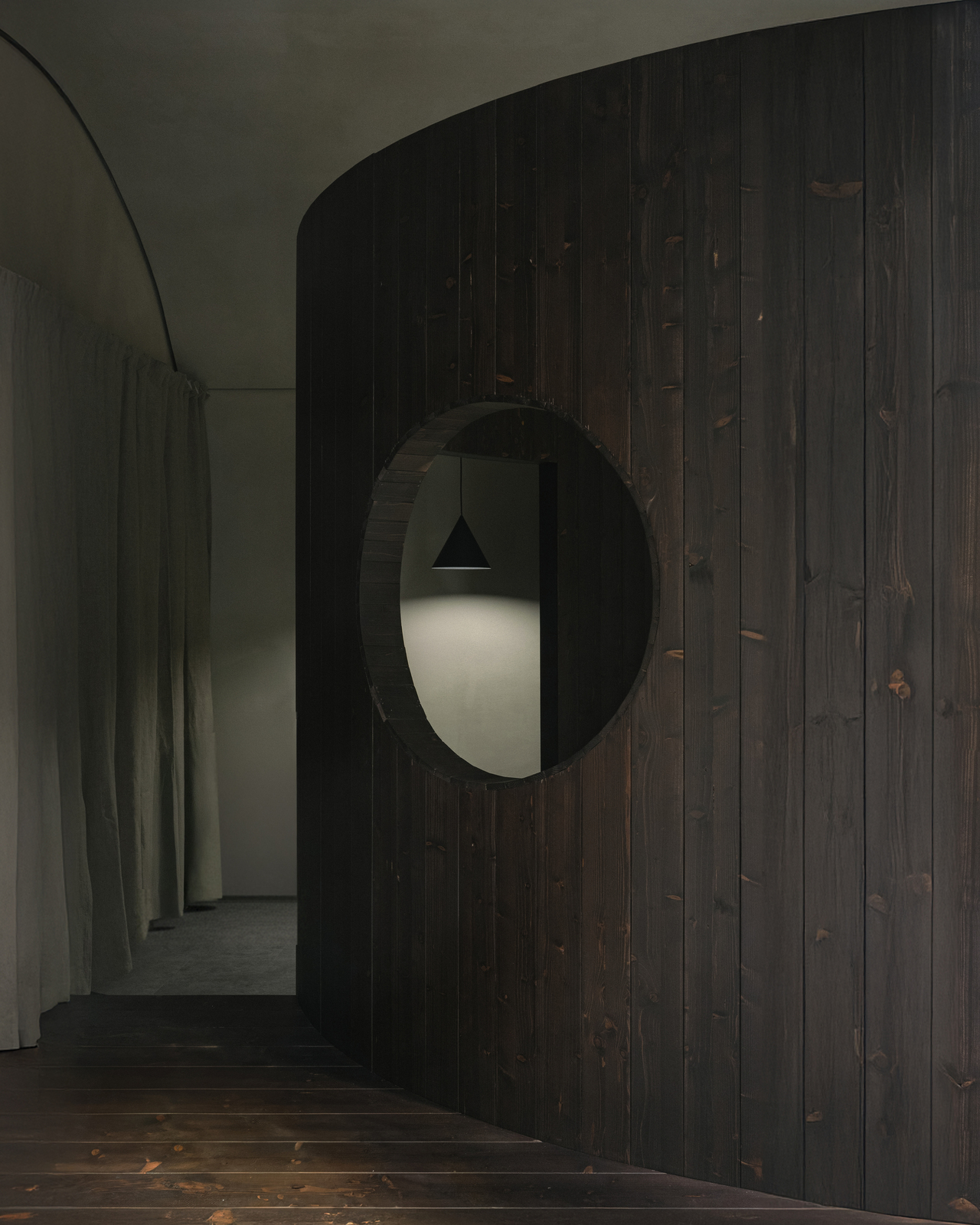
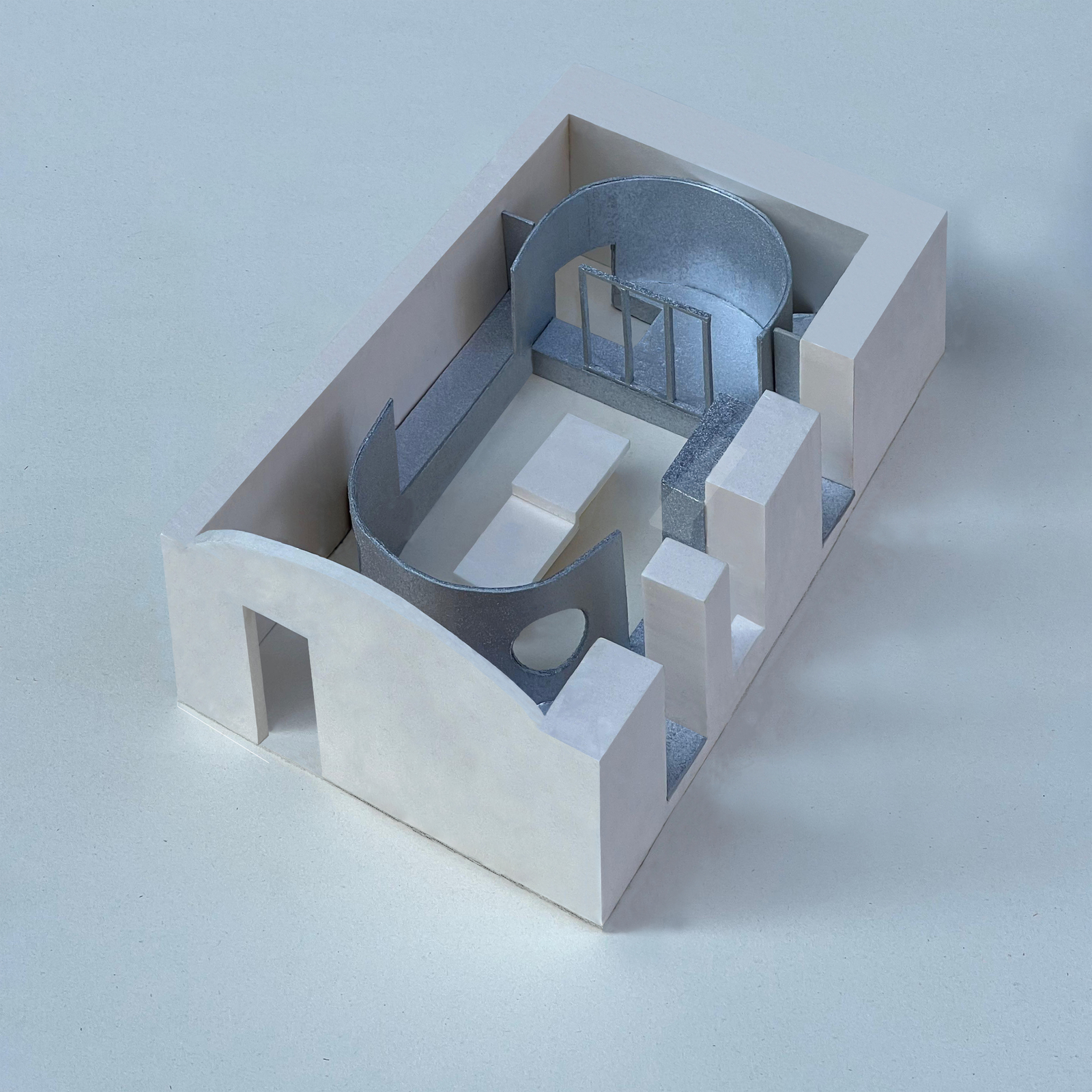
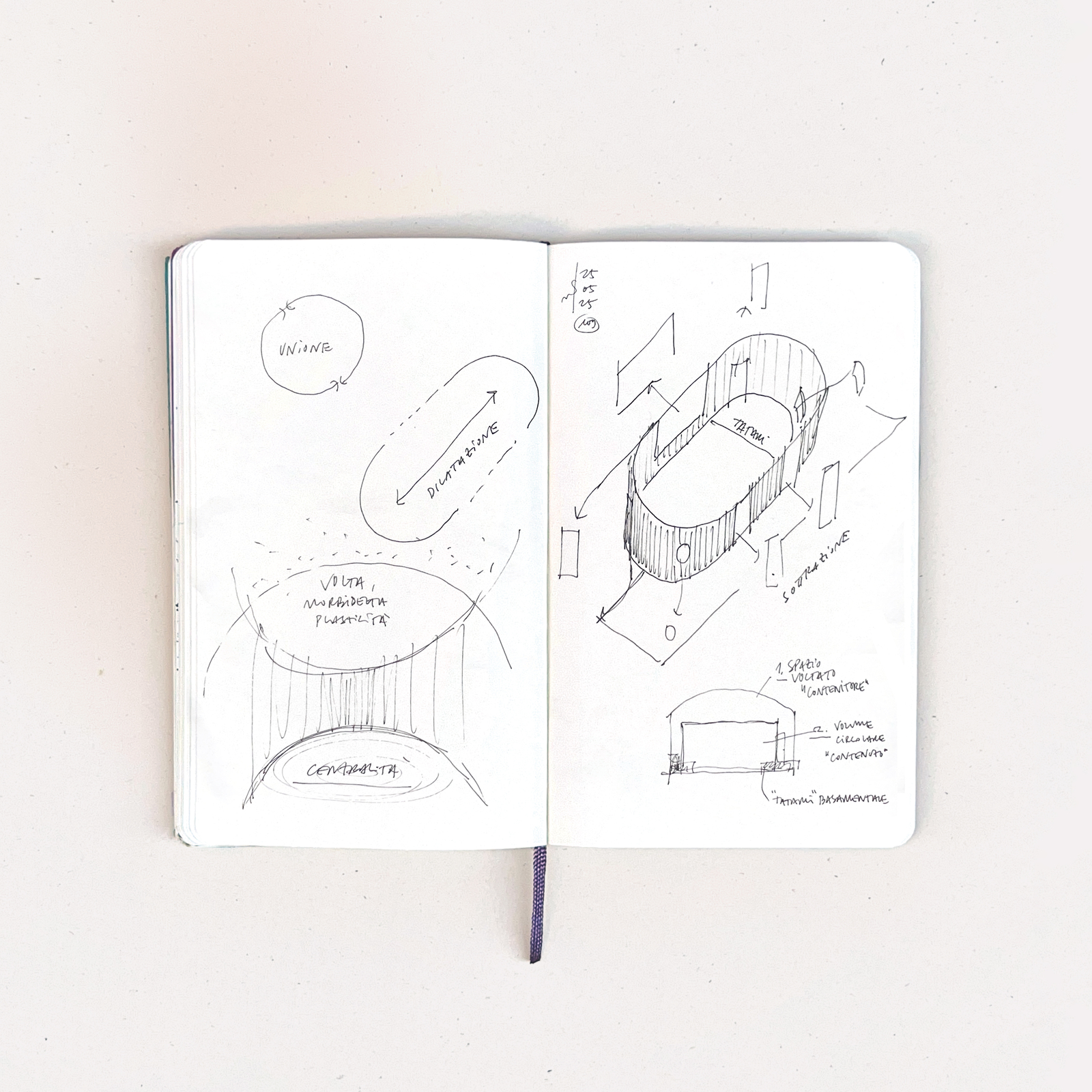
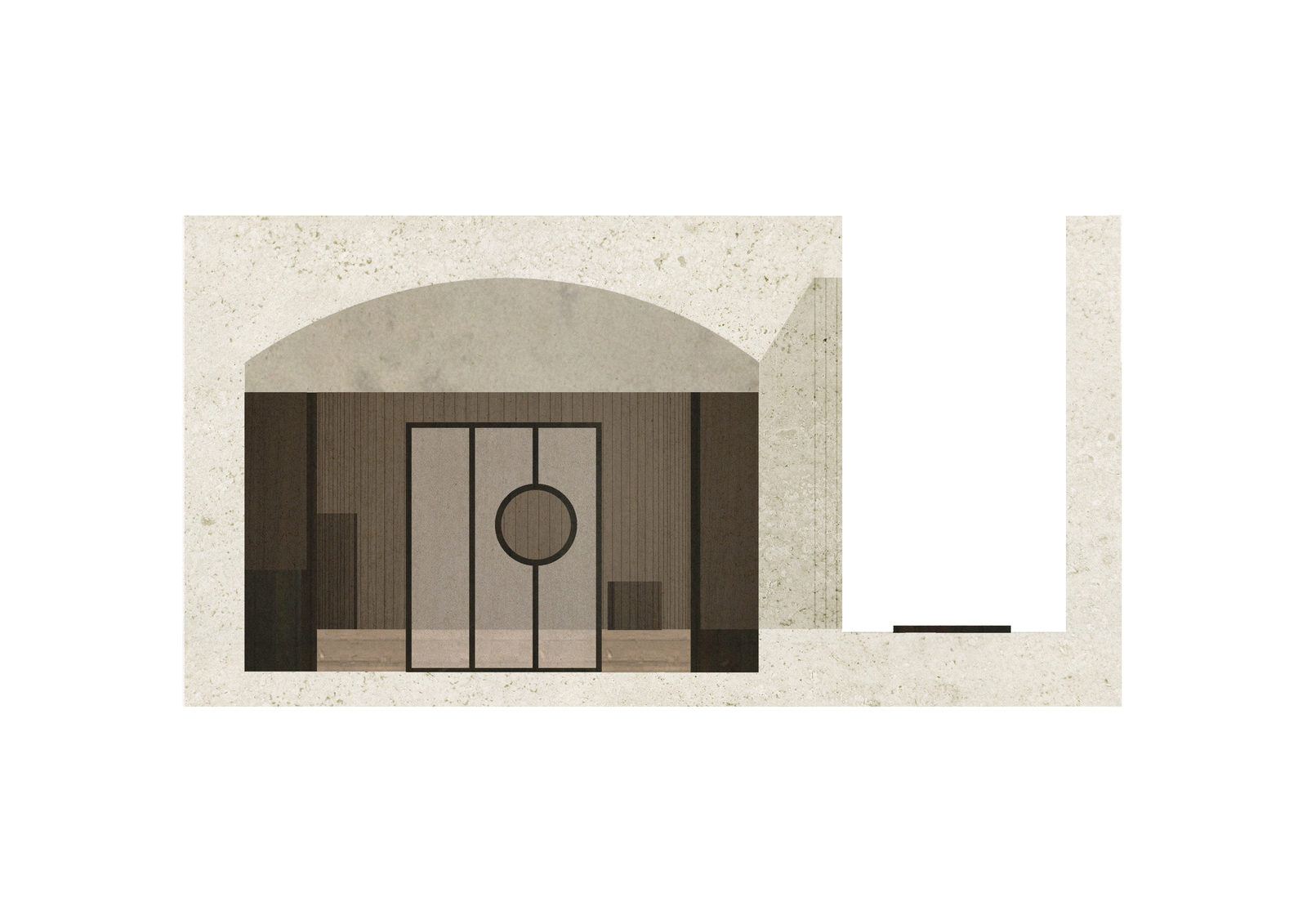
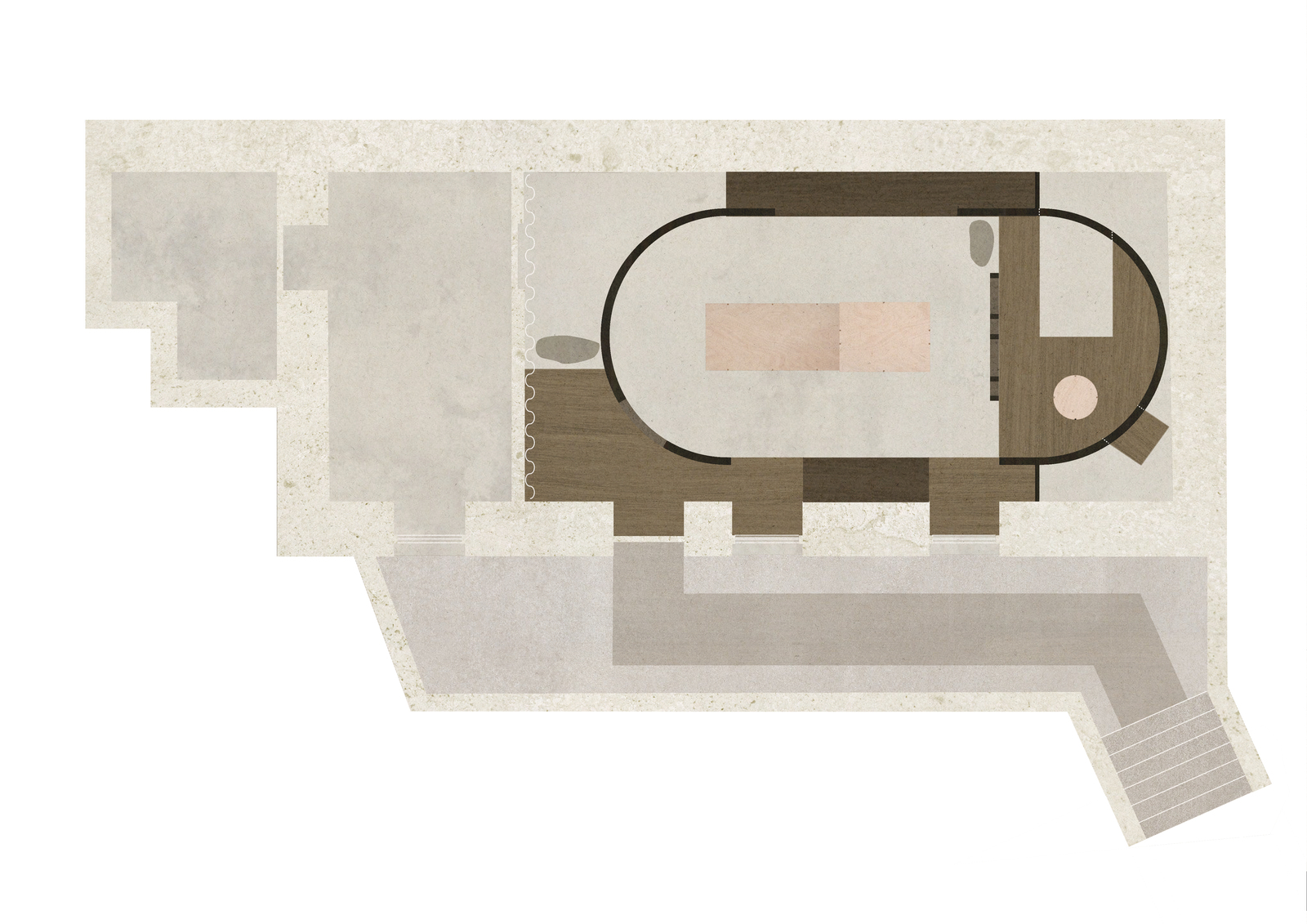
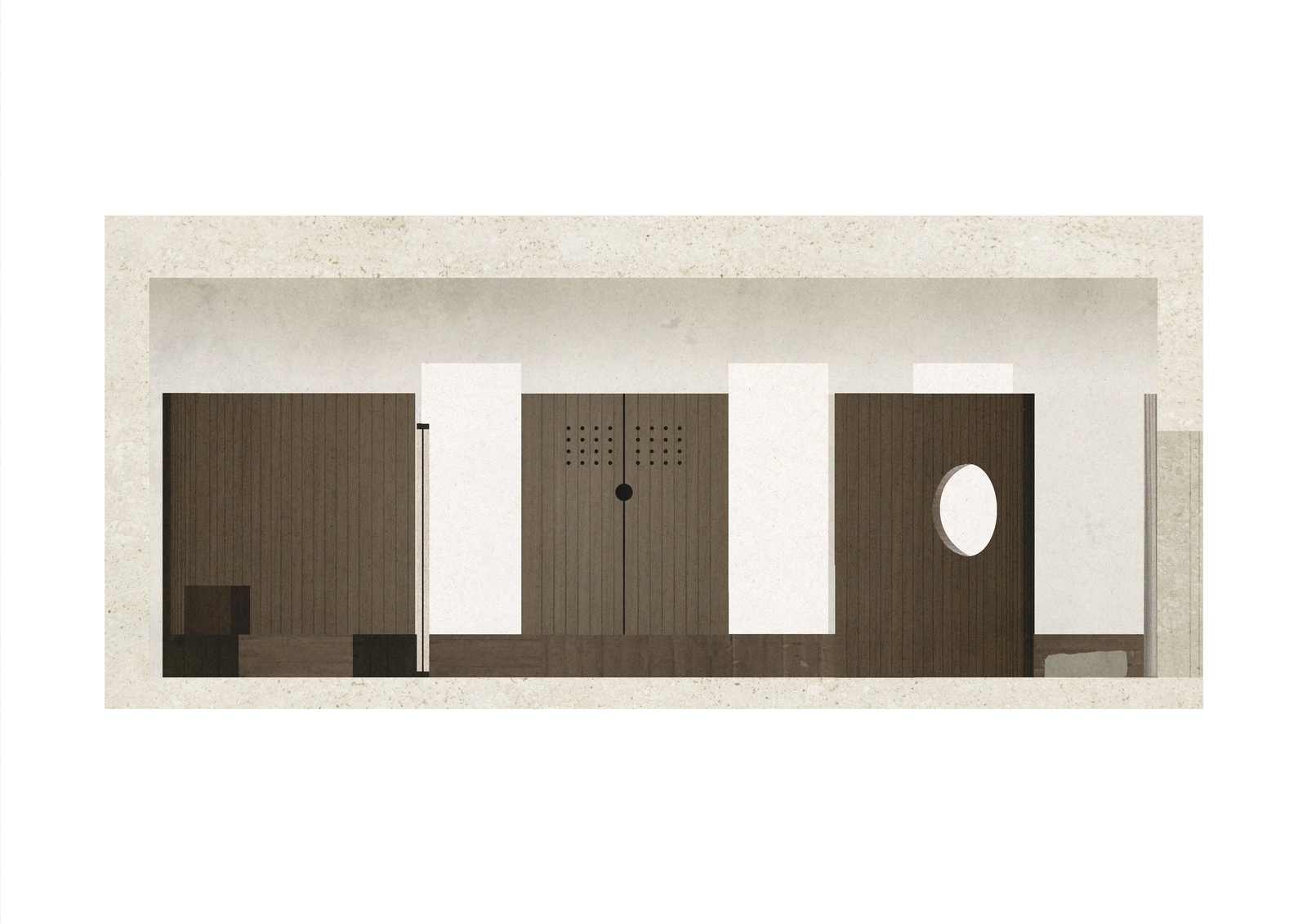
Ekadea Studio is a 50-square-meter ceramic workshop and exhibition space in Milan designed by AACM – Atelier Architettura Chinello Morandi. Conceived as a retreat from the city’s accelerated rhythm, the project organizes its compact plan through curved walls that rise from a continuous base, shaping circulation and functional zones into a fluid sequence. A wooden framework, alternately perforated and solid, establishes thresholds while framing selective views. Soft, filtered light enhances the tactile qualities of wood, plaster, and clay, while a vaulted ceiling moderates contrast and deepens spatial atmosphere. At the center, an okumè plywood table anchors the workspace, and a shōji screen discreetly separates areas dedicated to the tea ceremony and pottery wheel, which rest on a tatami-clad platform. Through careful orchestration of material, light, and proportion, the studio creates an intimate environment that supports both artisanal production and contemplative gathering.
As architects, we draw inspiration from the environment, the atmosphere, and archetypal materials and forms that are closely tied to the local context. Our vision is rooted in a curiosity to explore space and to create spaces that invite exploration.
Interview with Rodolfo Morandi and Nicolò Chinello of AACM – Atelier Architettura Chinello Morandi
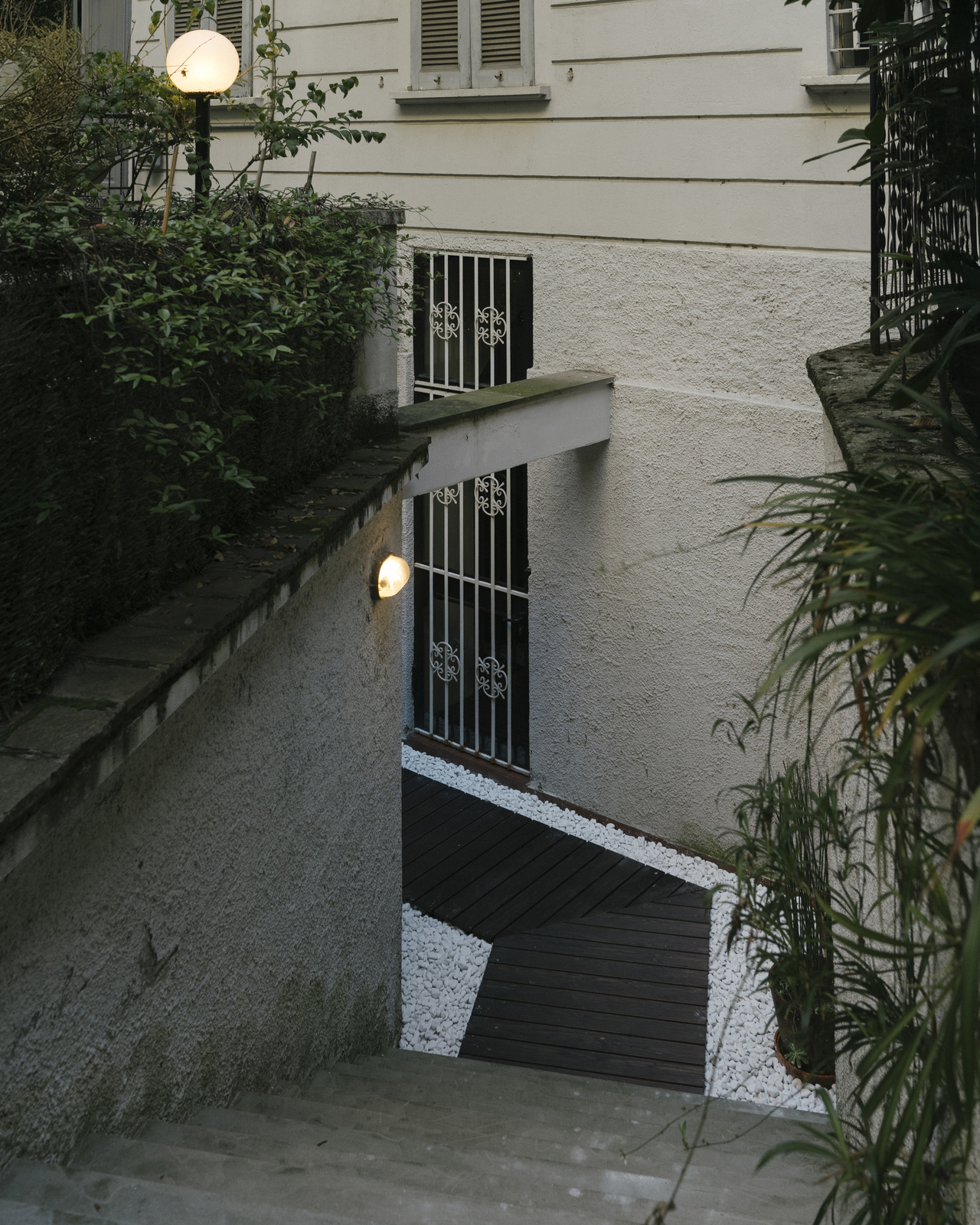
Within Milan’s dense urban fabric, Ekadea Studio proposes an interior architecture grounded in restraint rather than spectacle. AACM approaches the small commercial space as an immersive environment shaped by gradations of shadow and curvature, allowing atmosphere to become the primary architectural medium. The project positions craft not only as a program but as a spatial ethos, embedding the act of making into the geometry and material logic of the room.
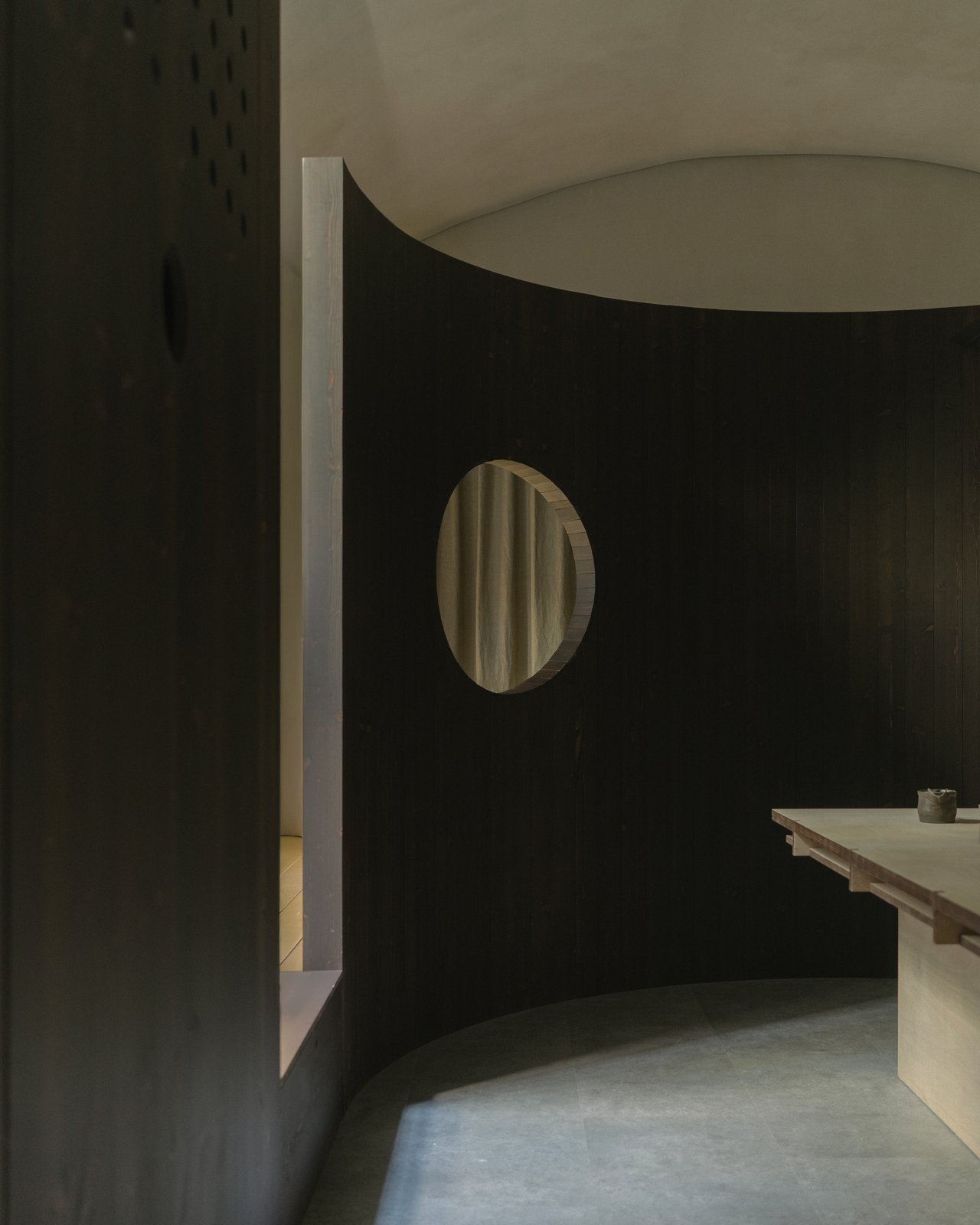
The plan unfolds as a continuous landscape defined by curved partitions that emerge from a shared base. These surfaces guide movement without abrupt divisions, subtly organizing the workshop, exhibition, and ancillary functions. The wooden structure, integrated into walls and thresholds, alternates between permeability and solidity, framing oblique views while absorbing storage within its thickness. This interplay between openness and enclosure ensures both visual continuity and calibrated privacy.
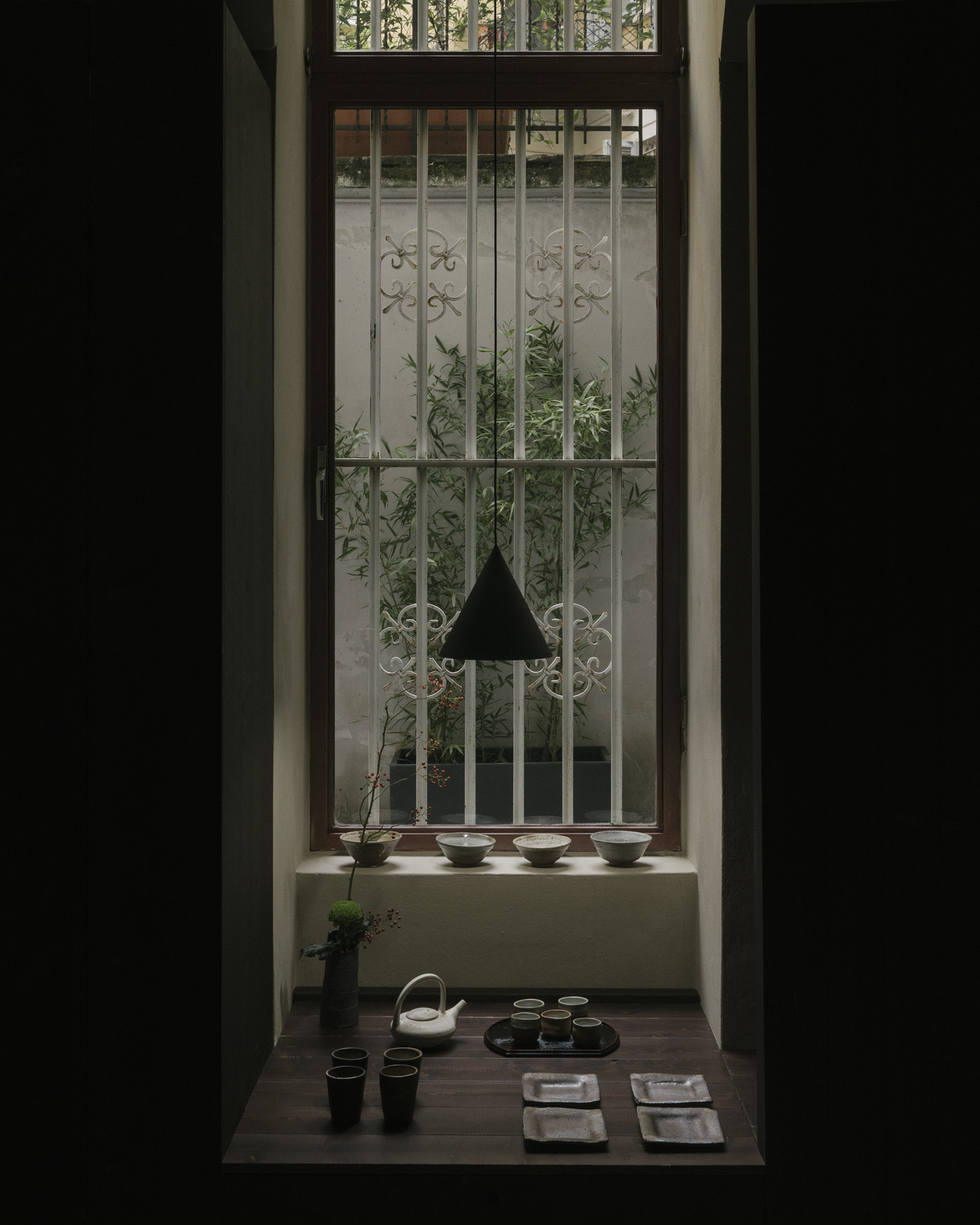
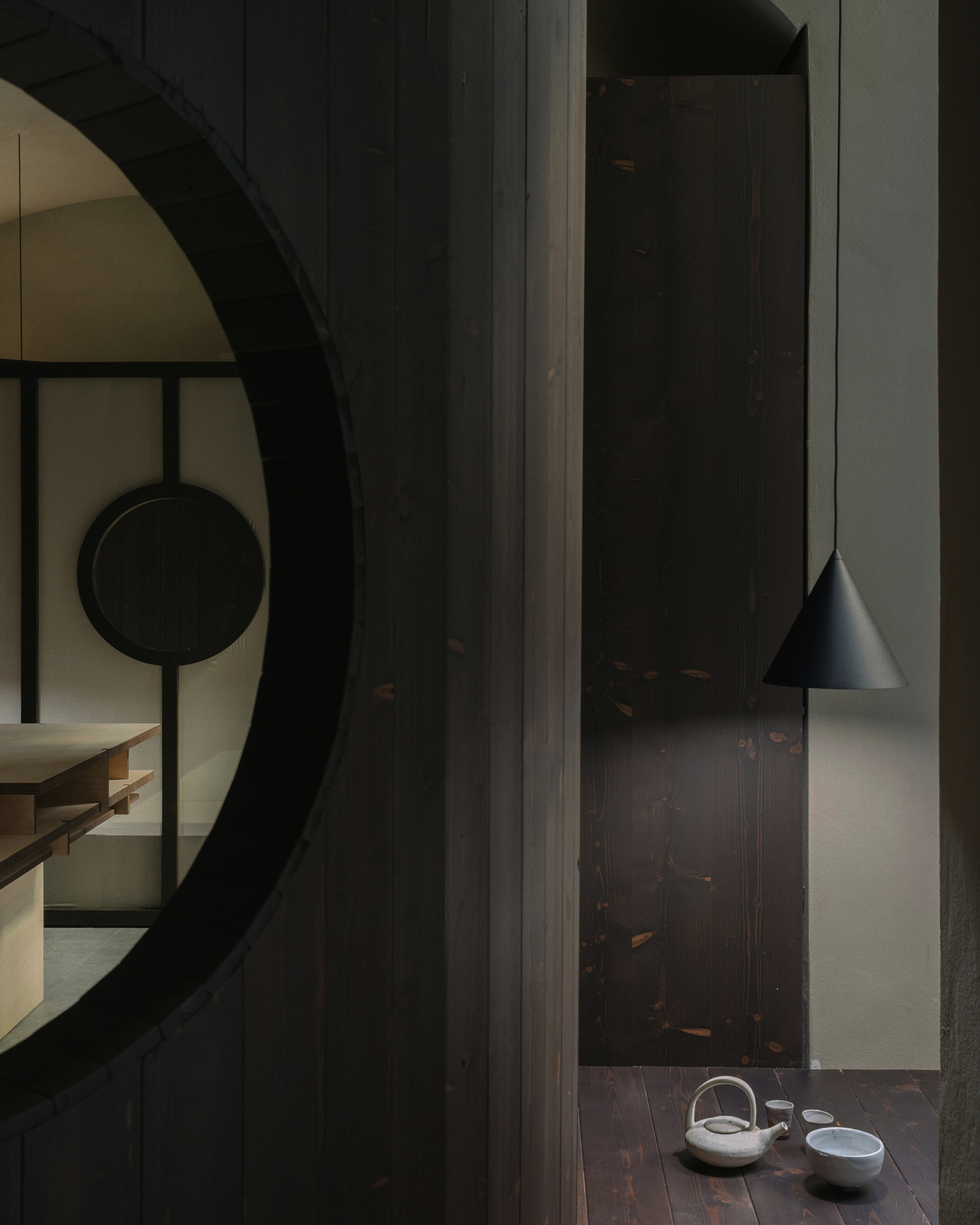
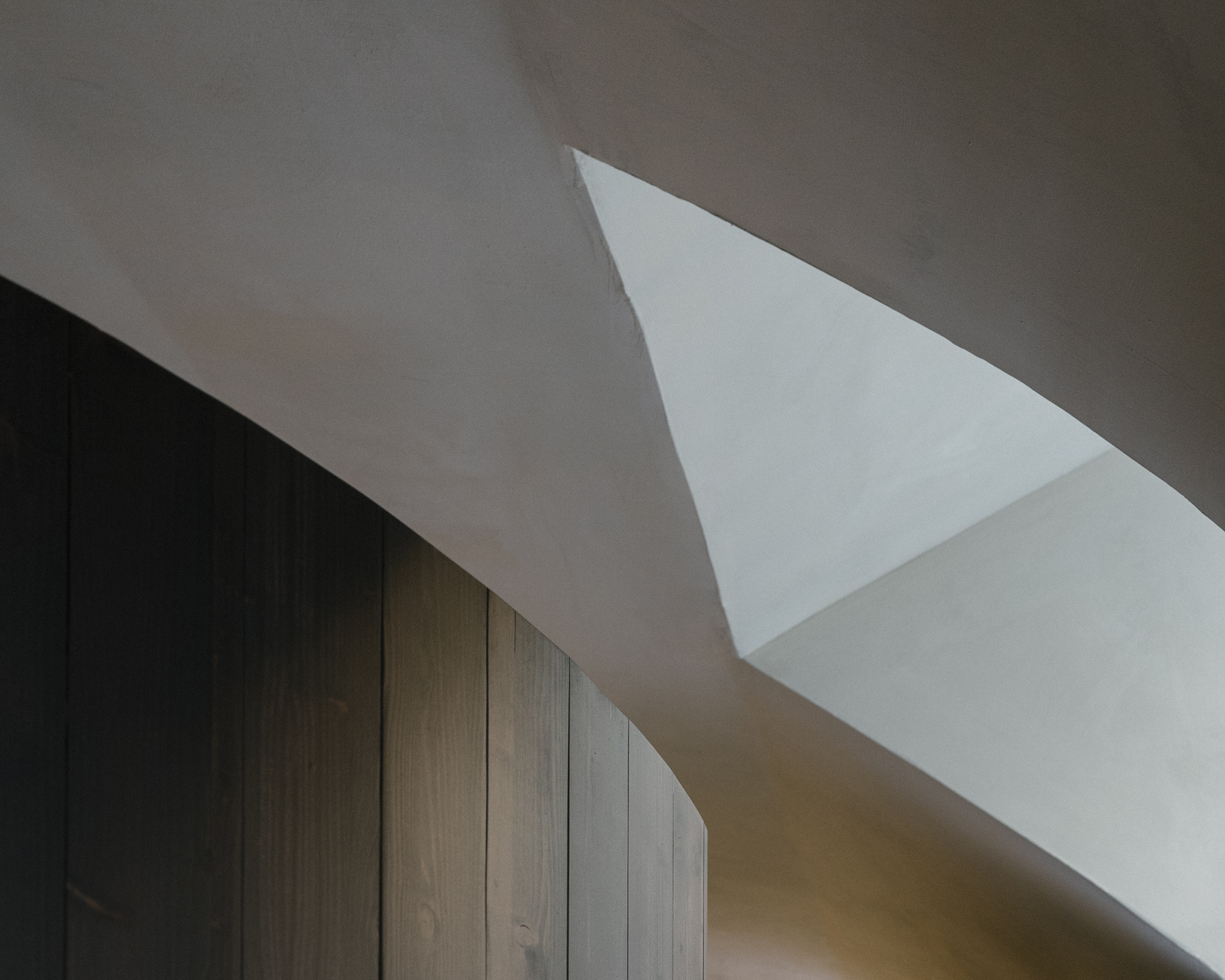
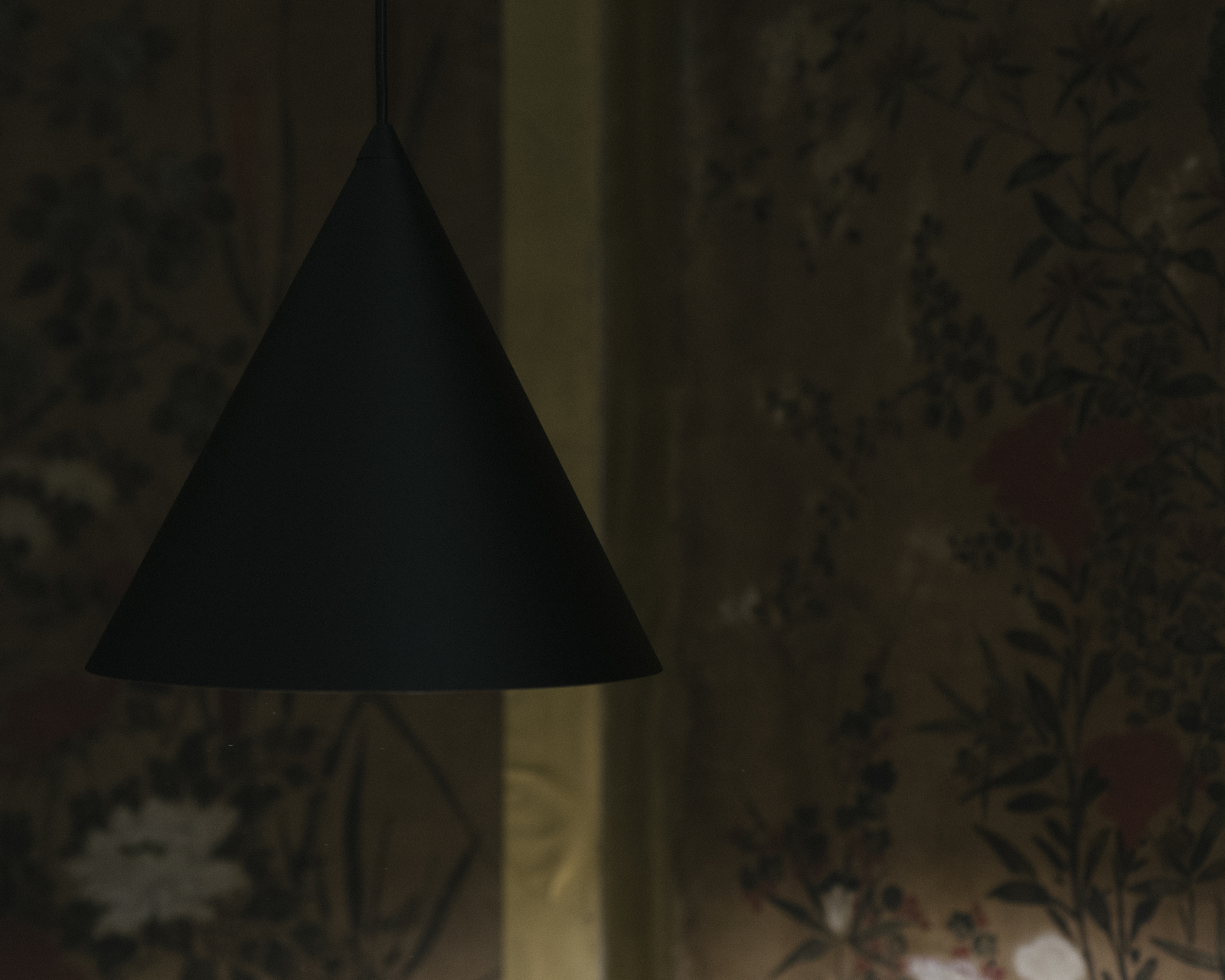
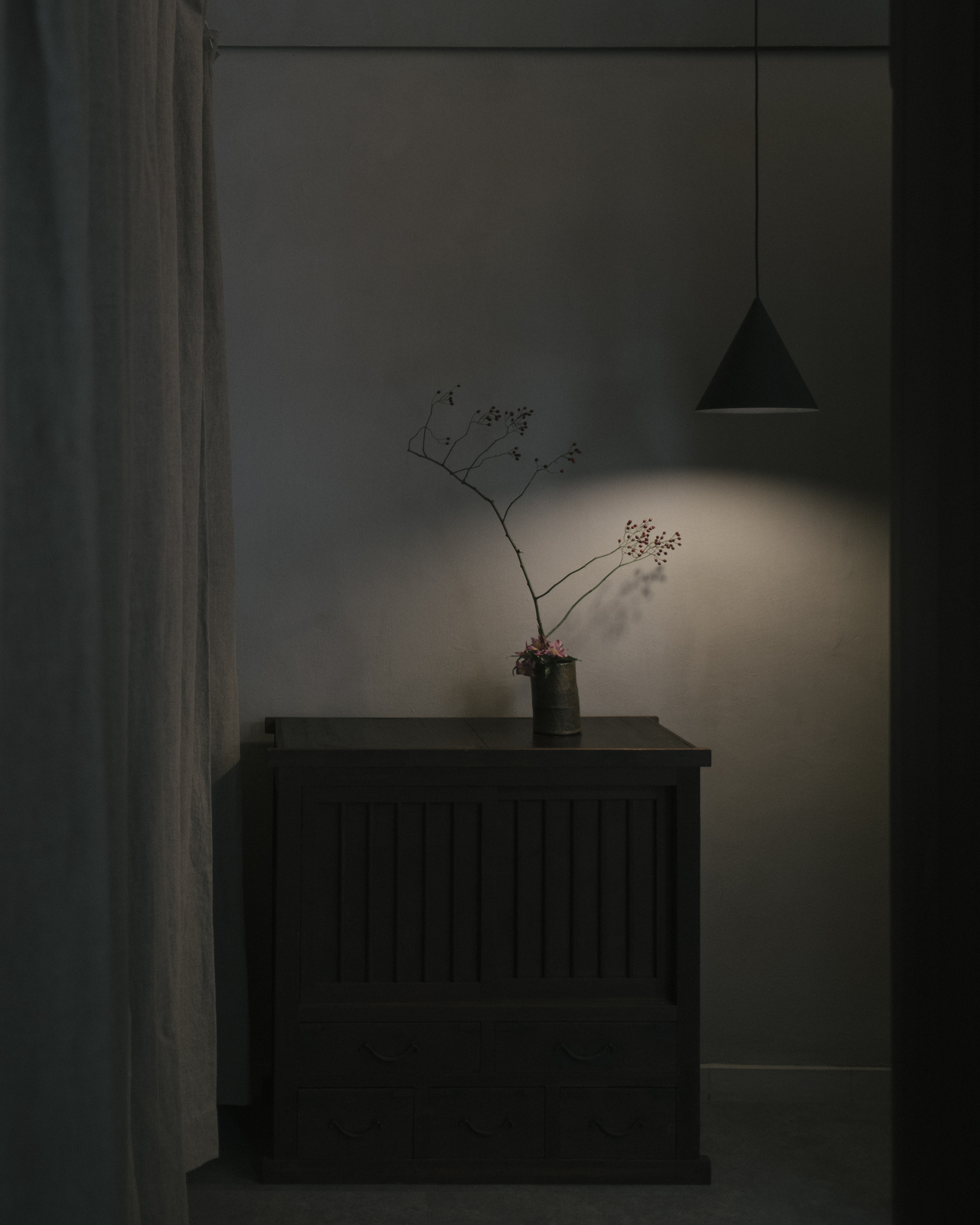
Light is treated as a constructive element. Rather than flooding the interior, illumination is filtered and diffused, settling across plaster and timber surfaces in soft tonal gradients. The vaulted ceiling tempers contrast, generating a chiaroscuro effect that accentuates the grain of wood and the irregular textures of handcrafted materials. In this subdued atmosphere, shadow becomes a spatial presence that enhances depth and perception.
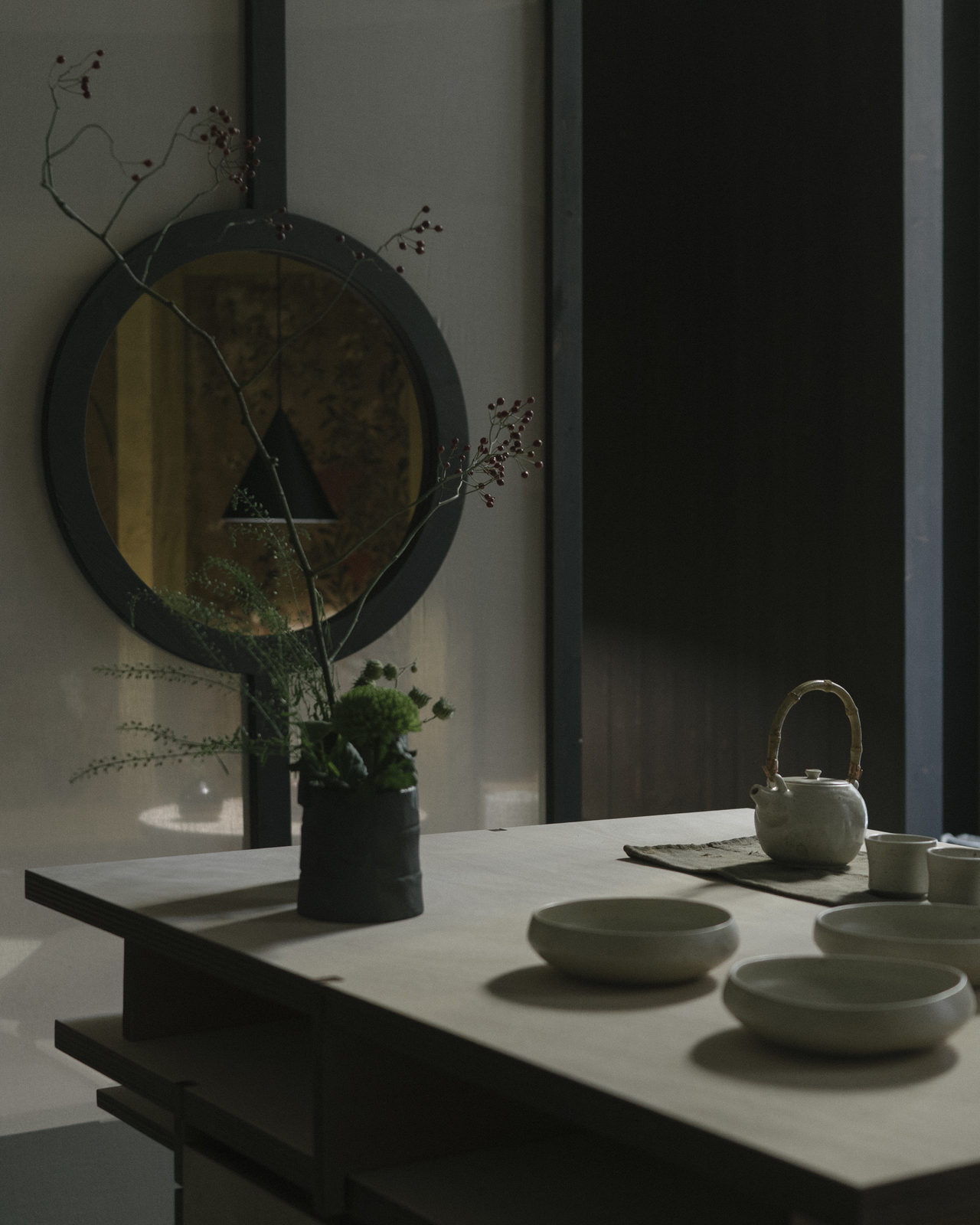
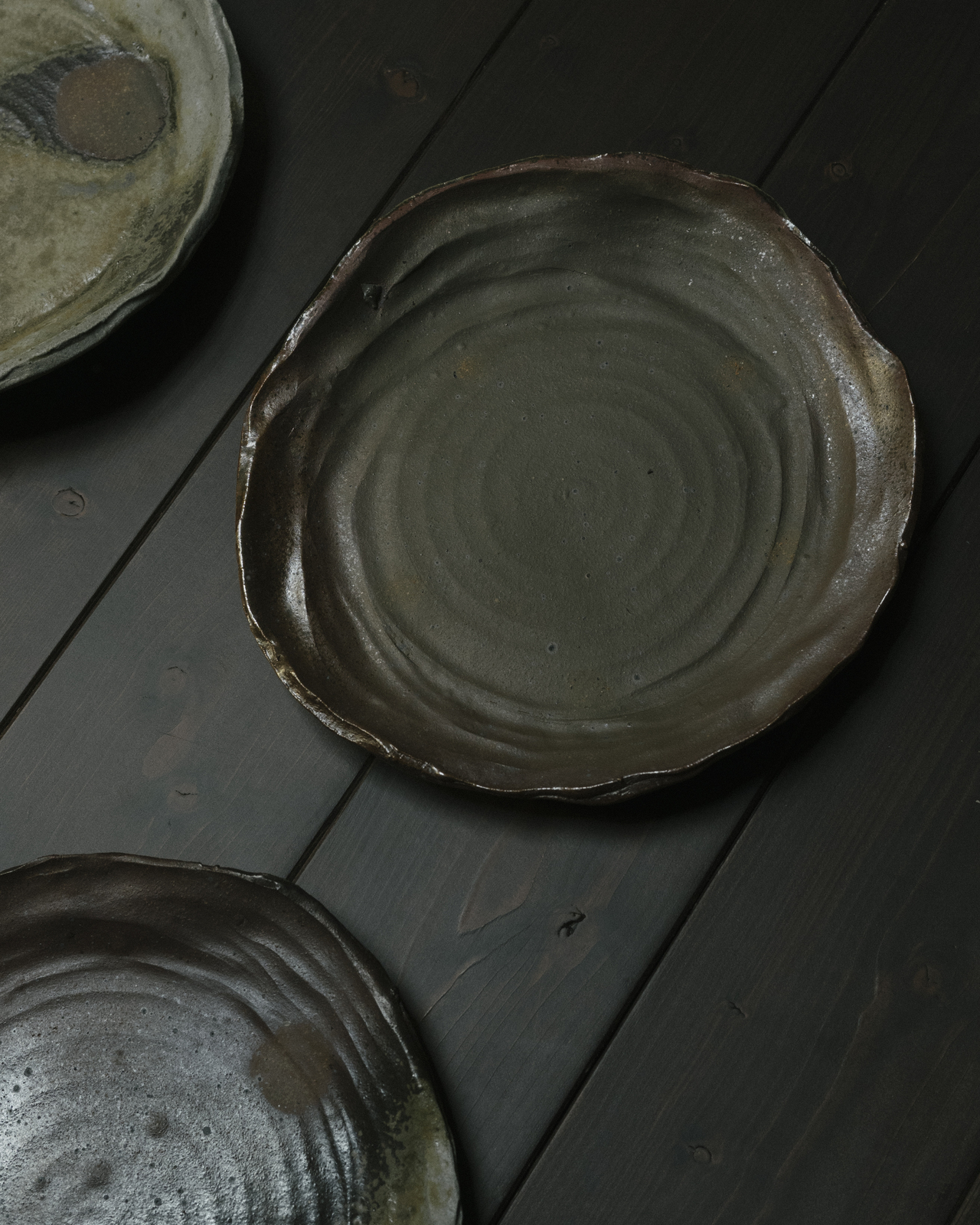
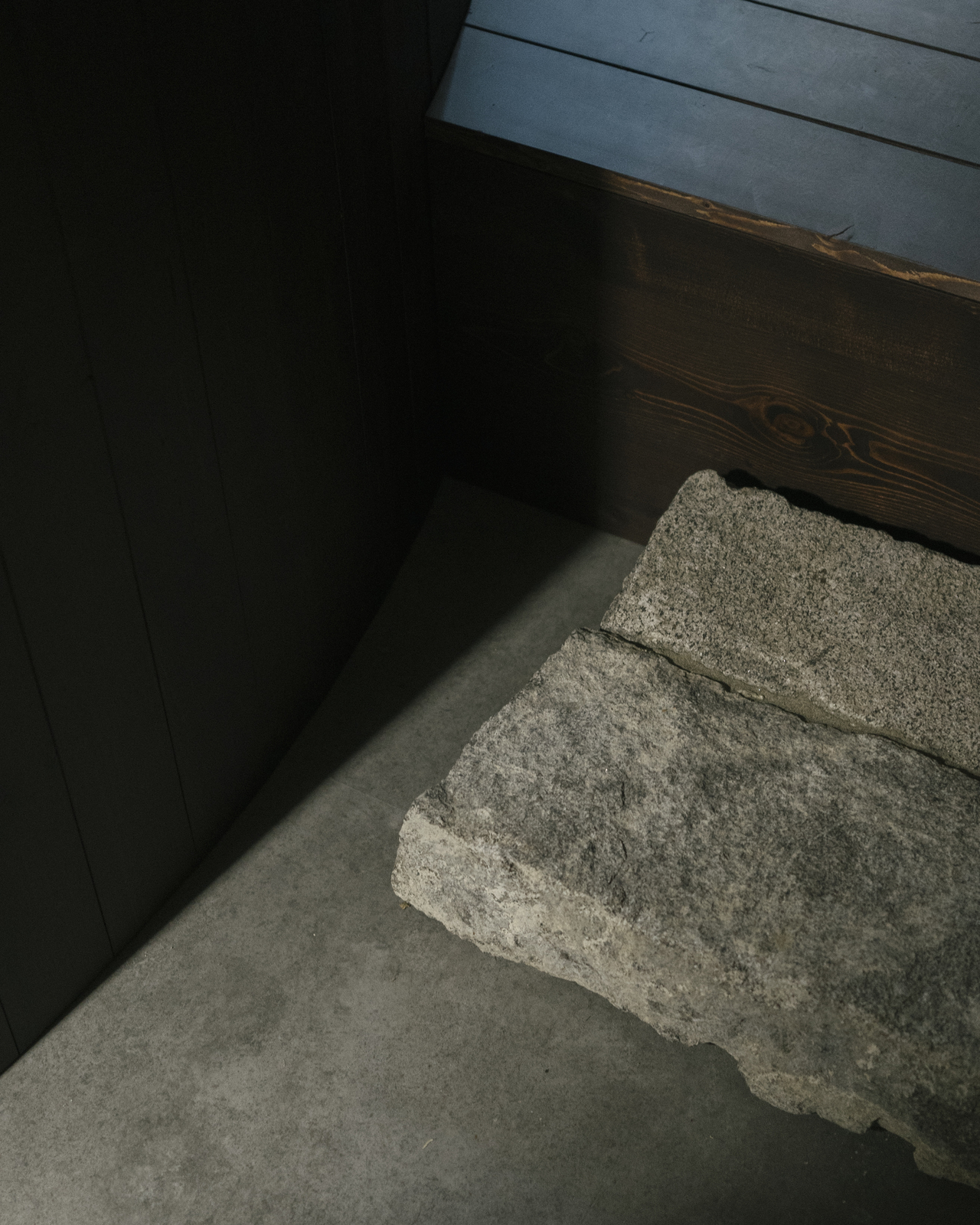
The entrance sequence signals a deliberate deceleration from the city outside. A stone step mediates the transition into the central space, marking a shift in scale and tempo. At the heart of the studio, the okumè plywood worktable functions as both operational core and communal anchor. Nearby, a shōji screen partially conceals the tea ceremony and pottery wheel, set upon a rice-straw tatami platform that establishes a subtle ritual boundary within the open plan.
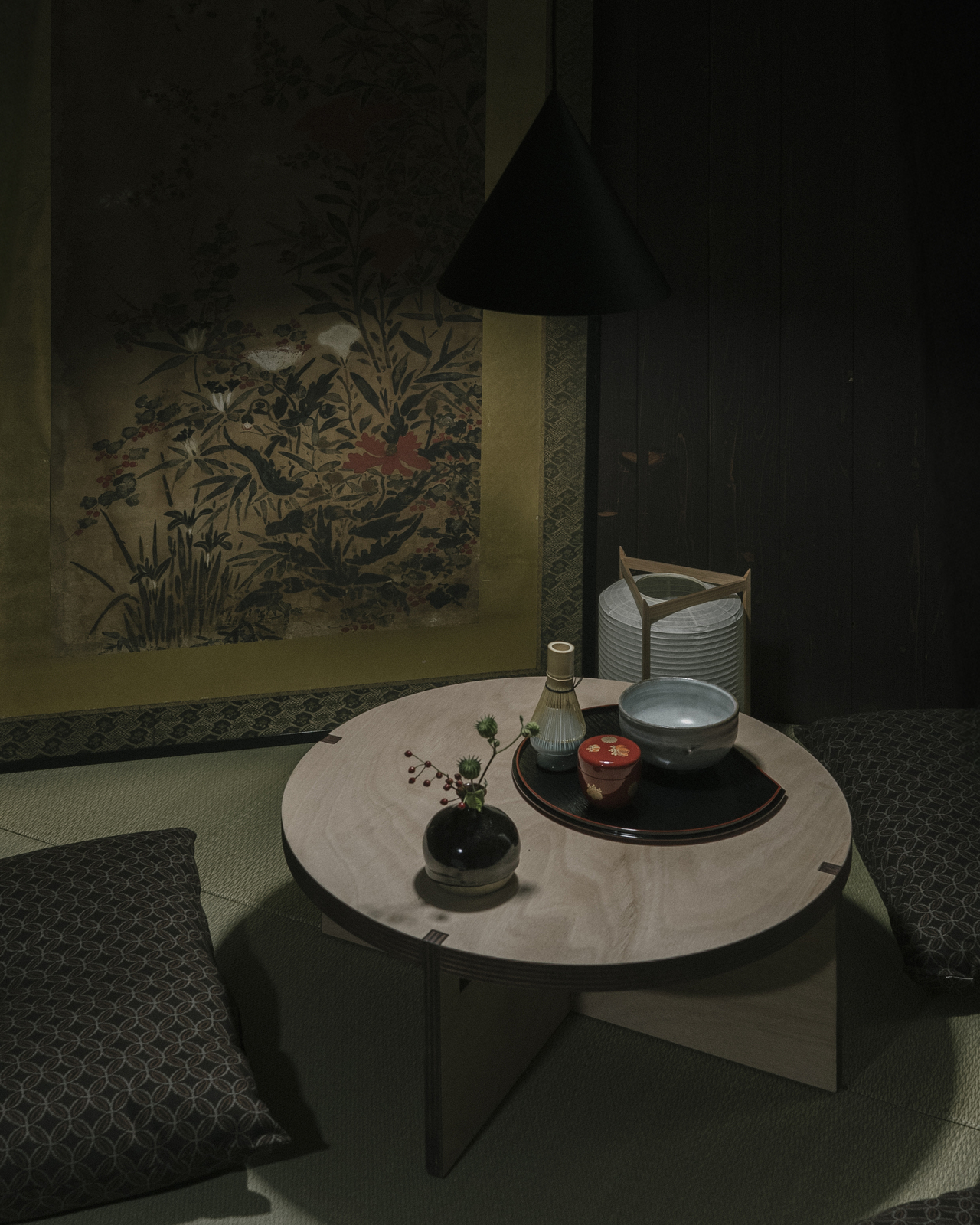
Niches carved into the curved walls accommodate tools and small objects, reinforcing functional order without disrupting spatial coherence. Through a careful balance of tradition and contemporaneity, enclosure and permeability, AACM transforms a limited footprint into a measured interior where time appears to slow, and material presence comes to the fore.
Project Gallery


Project Location
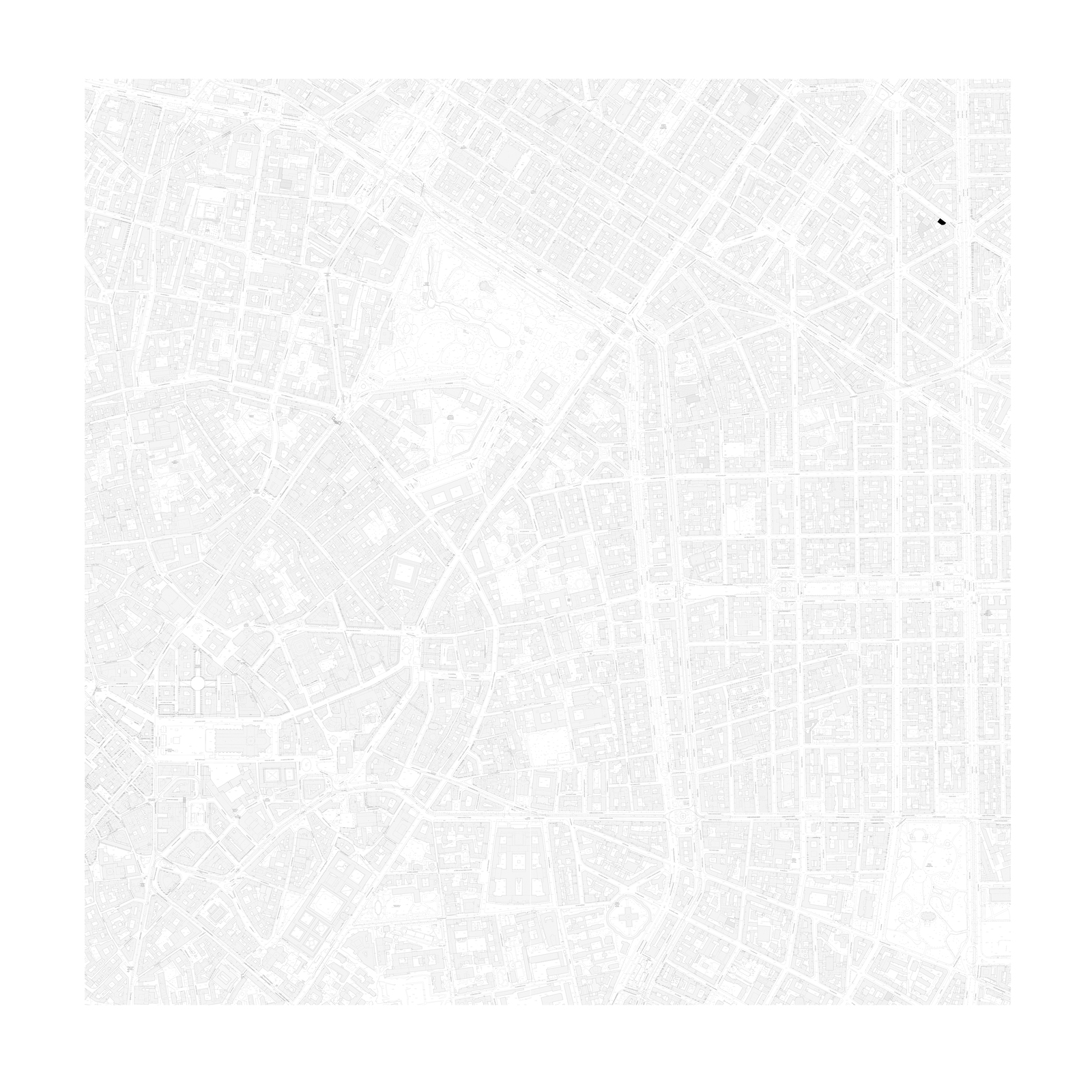
Address: Via Plinio 42, 20129 Milan, Lombardy, Italy
The location specified is intended for general reference and may denote a city or country, but it does not identify a precise address.

