

Architects: Studio Arthur Casas
Area: 1,800 m²
Year: 2025
Photography: César Béjar
Lead Architects: Arthur Casas
Architects Team: Eduardo Mikowski, Gabriel Contreira, Amanda Tamburus, Augusto Godoy, Natalia Lorenzoni
Contractor: TNC Construções
Materials: Stone, plaster, wood, metal
Landscape Design: OM Studio
Collaborators: Rodrigo Oliveira, Benedictis, Zamaro, LogiProject, Noise, Florense, Akkerman
City: São Paulo
Country: Brazil
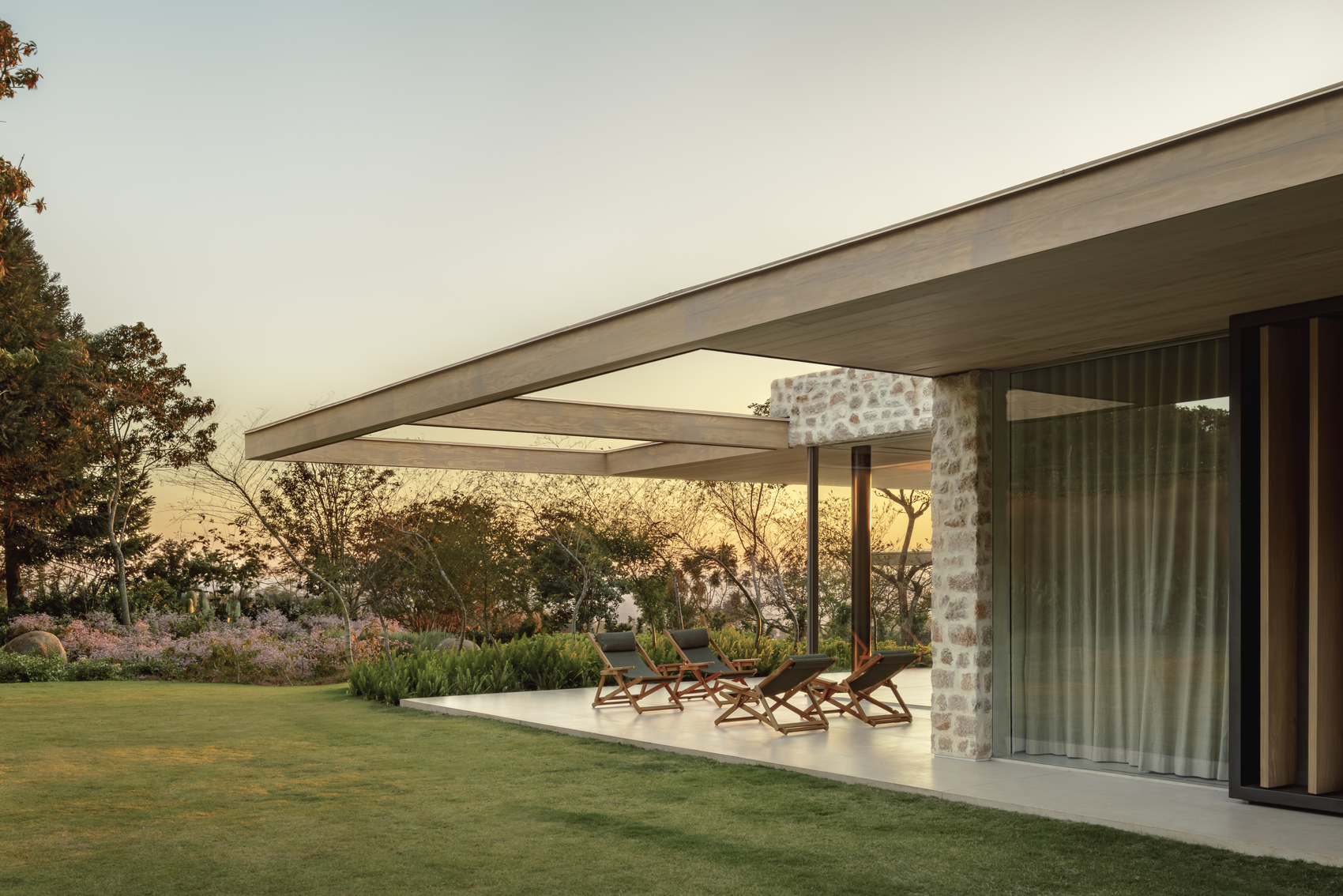
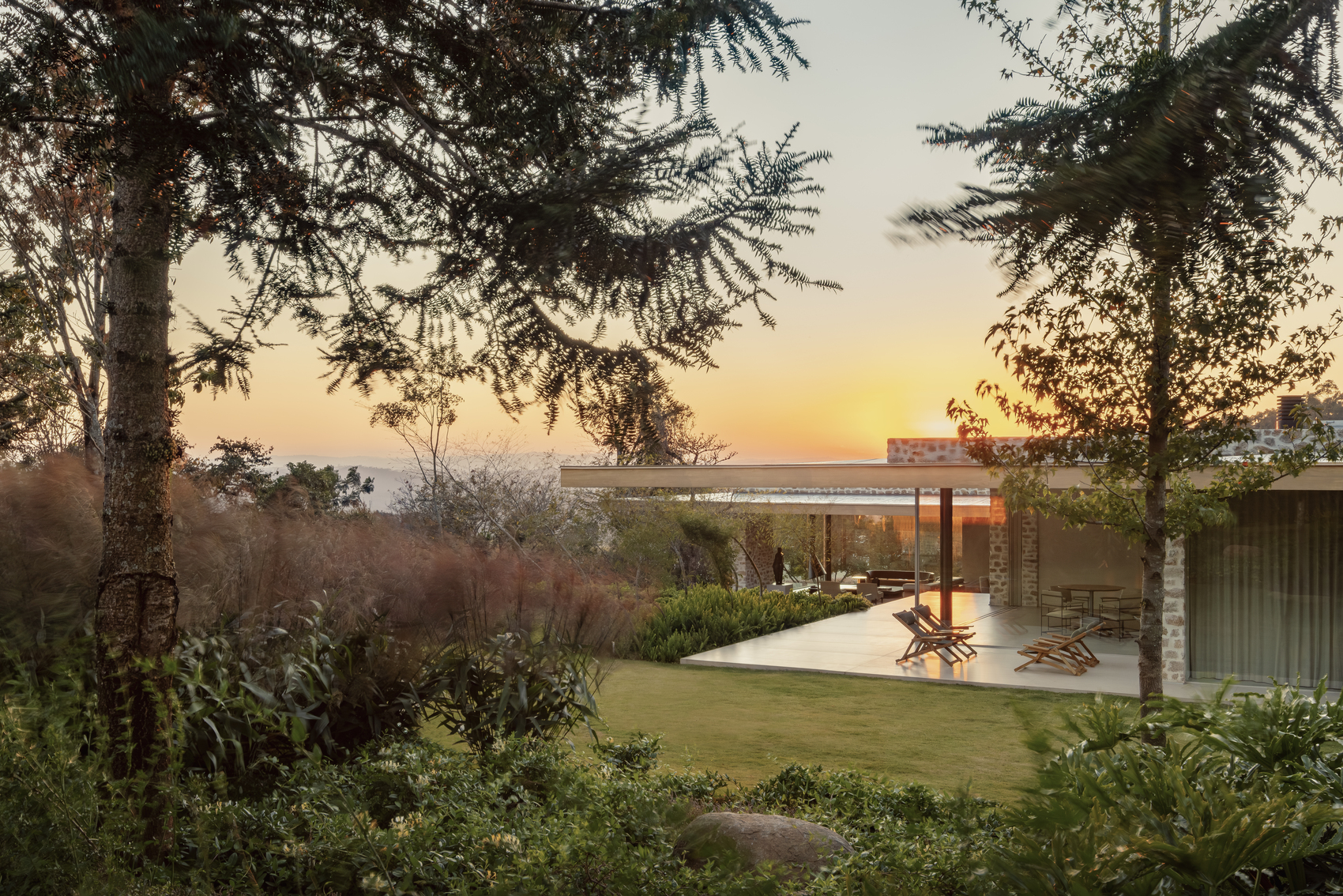
Grama House is designed for a family of five within the Fazenda da Grama residential community in Itupeva, São Paulo, and explores the relationship between architecture, landscape, and environmental performance through a composition shaped by the site’s gentle topography. Studio Arthur Casas organized the residence across interconnected split levels that maximize natural ventilation, daylight penetration, and visual continuity with the outdoors. The project combines social, recreational, and private functions within a fluid spatial arrangement that encourages constant interaction with exterior areas. A restrained palette of stone, plaster, wood, and metal creates material coherence throughout the architecture and interiors, while passive comfort strategies are reinforced by motorized solar-control systems, lighting automation, and photovoltaic energy generation. The landscape design preserves the site’s natural characteristics and integrates circulation and leisure spaces into a unified spatial experience. Through the careful coordination of structure, materiality, and technology, Grama House presents a contemporary residential environment that balances technical precision with a strong connection to its surroundings.
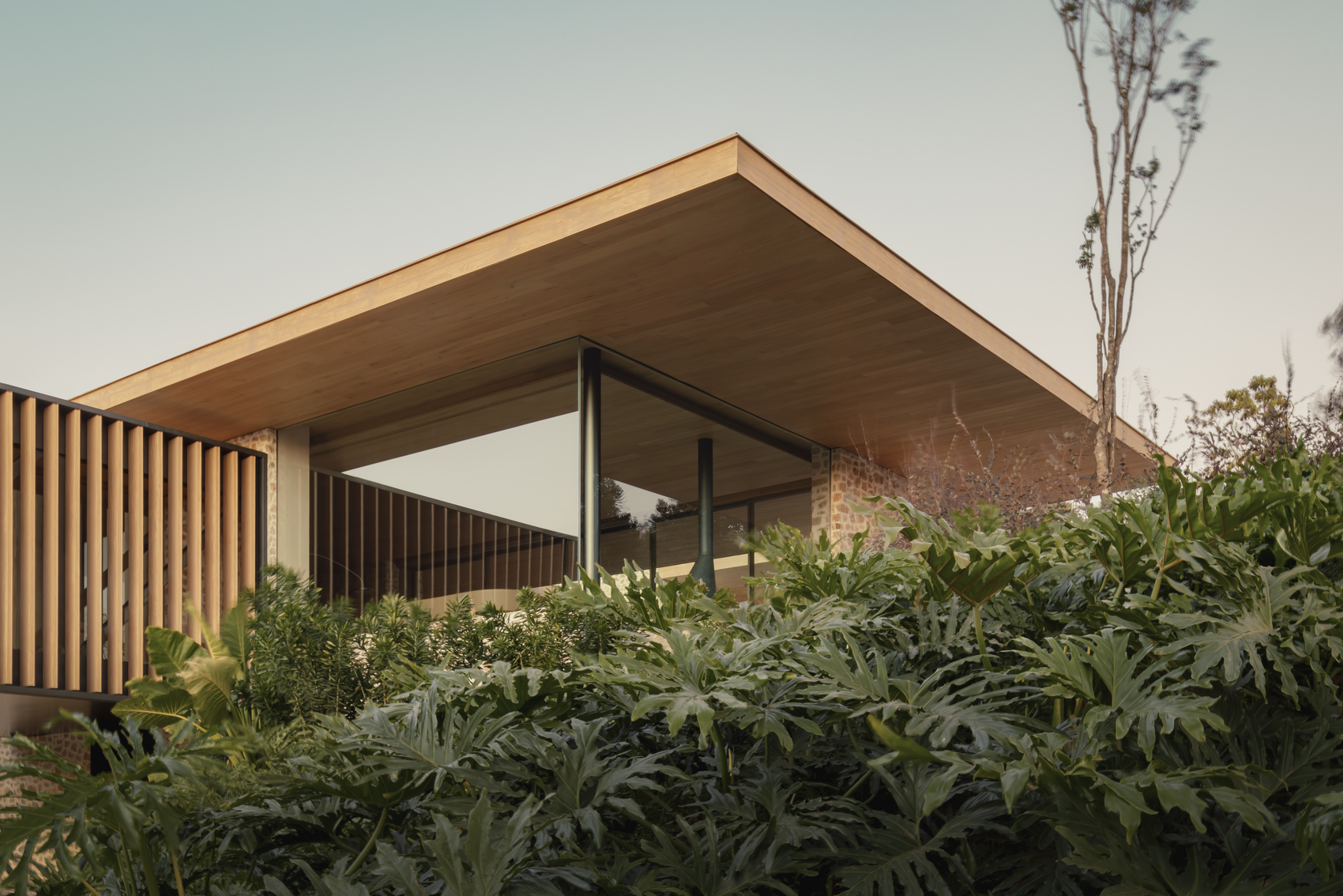
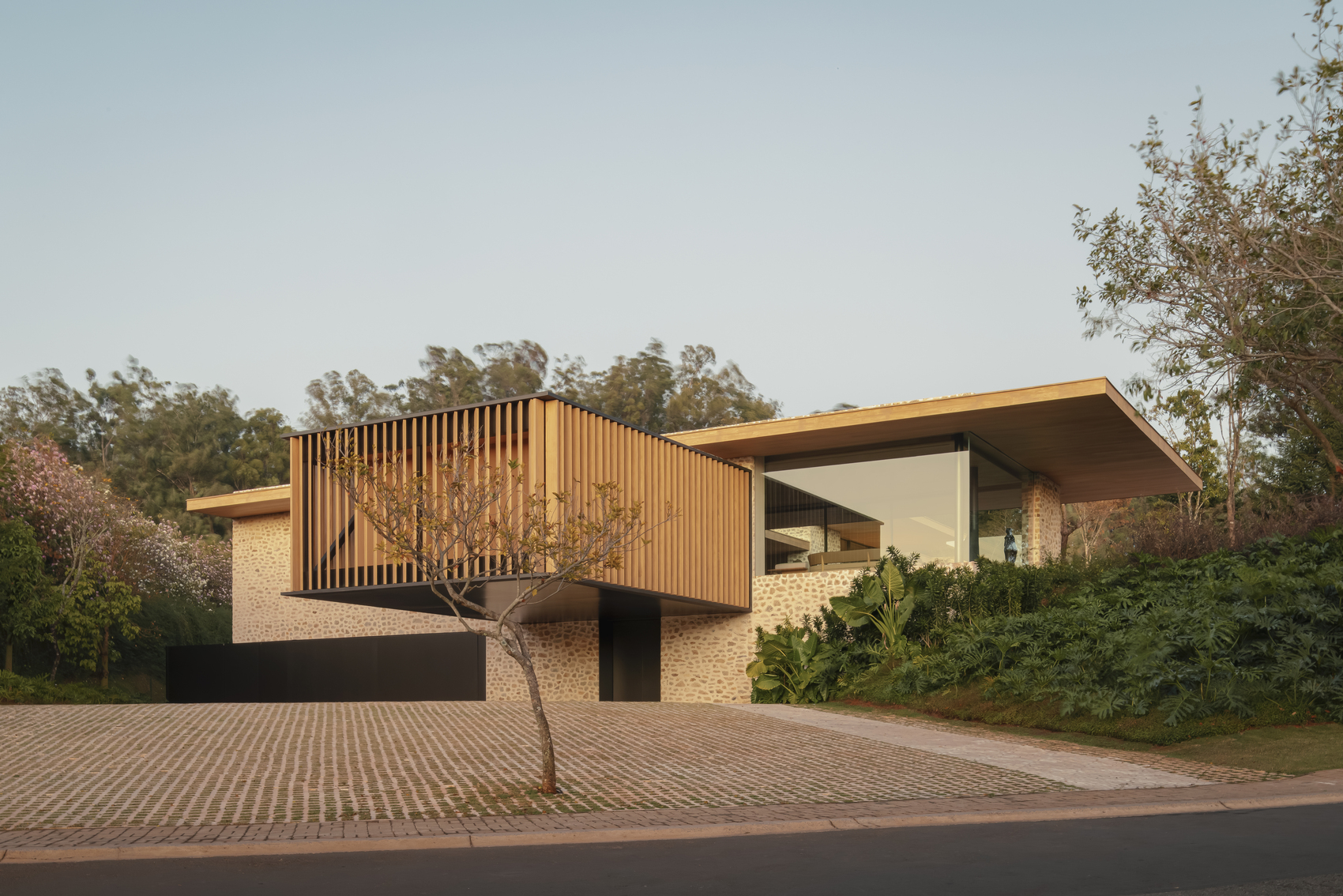
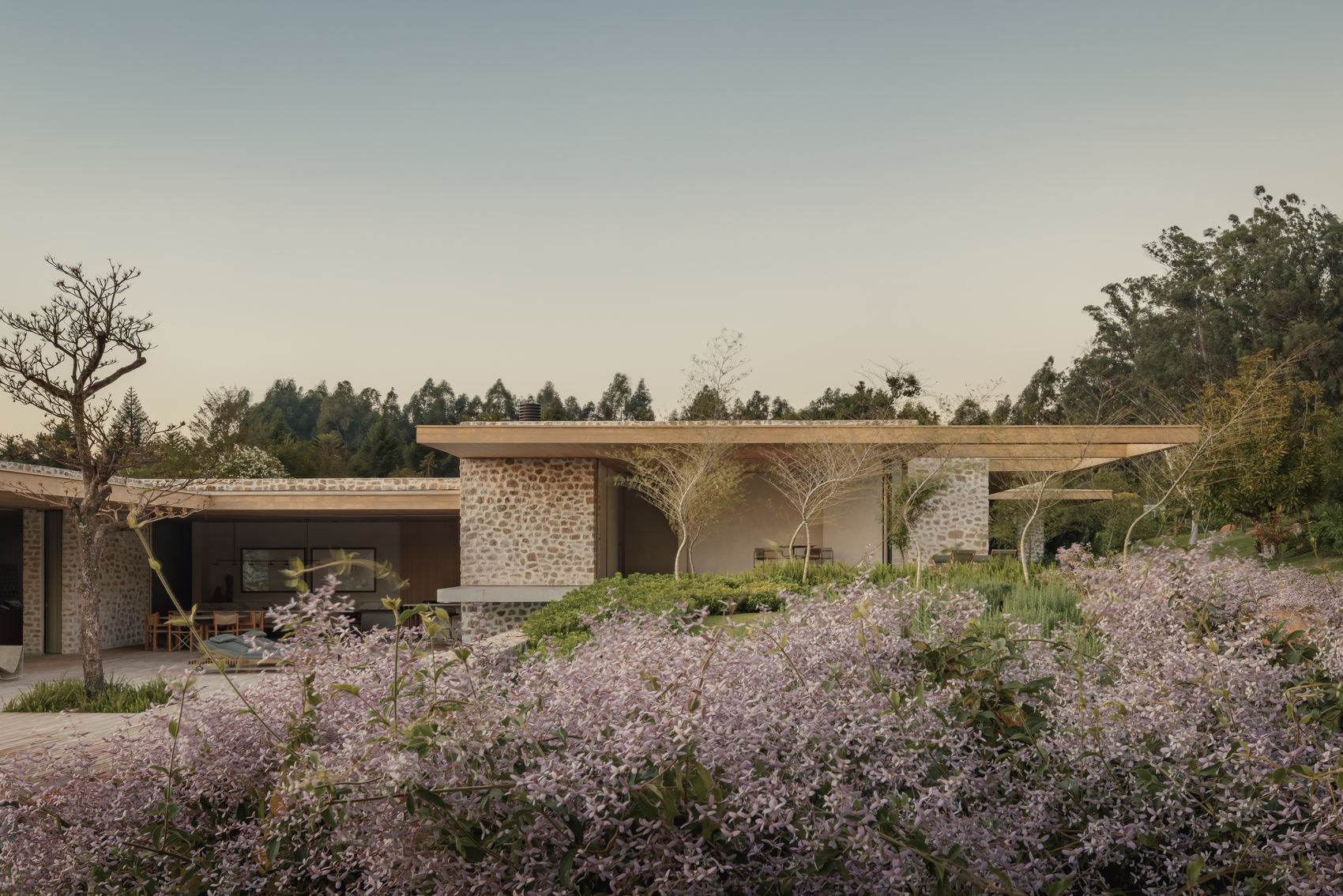
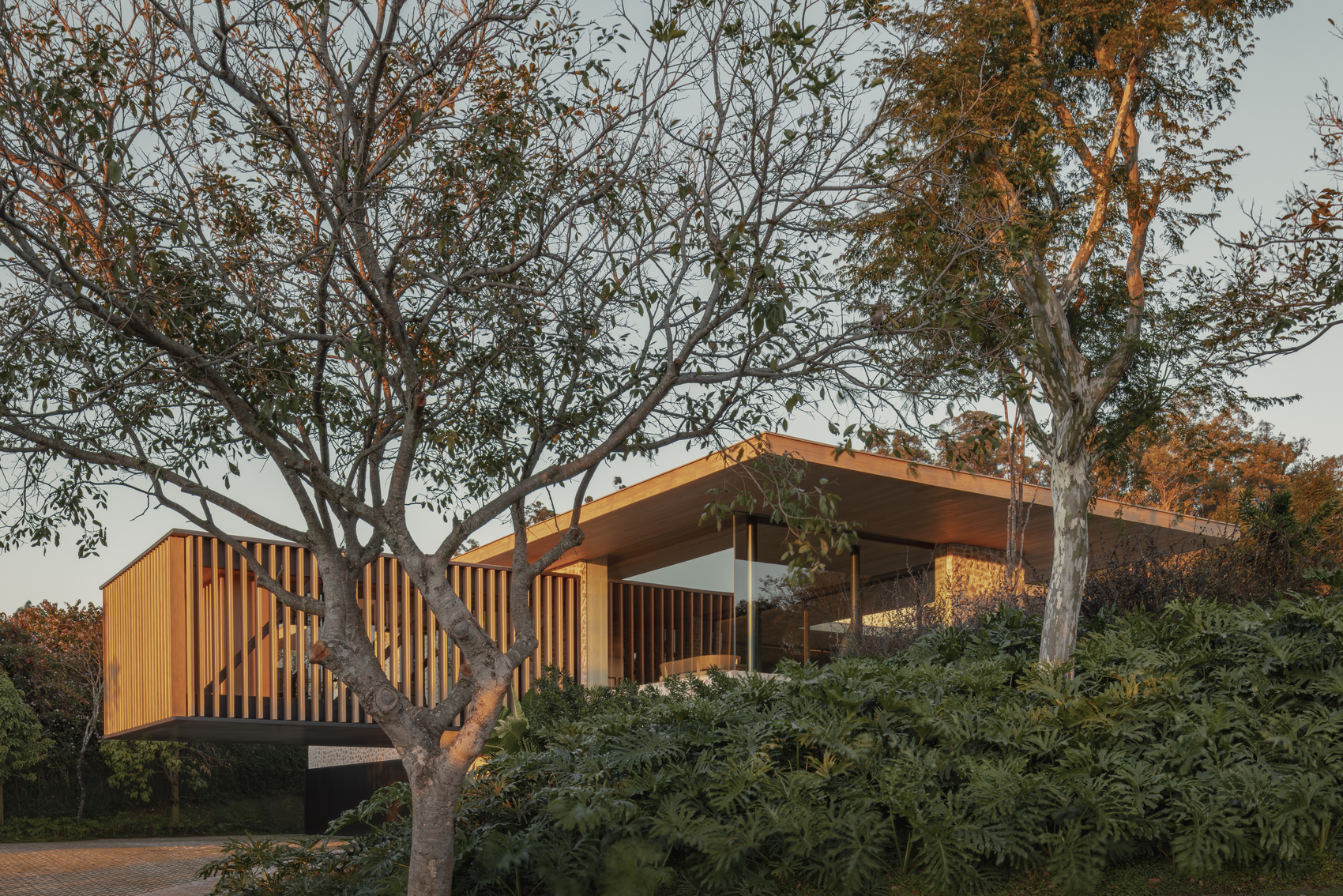
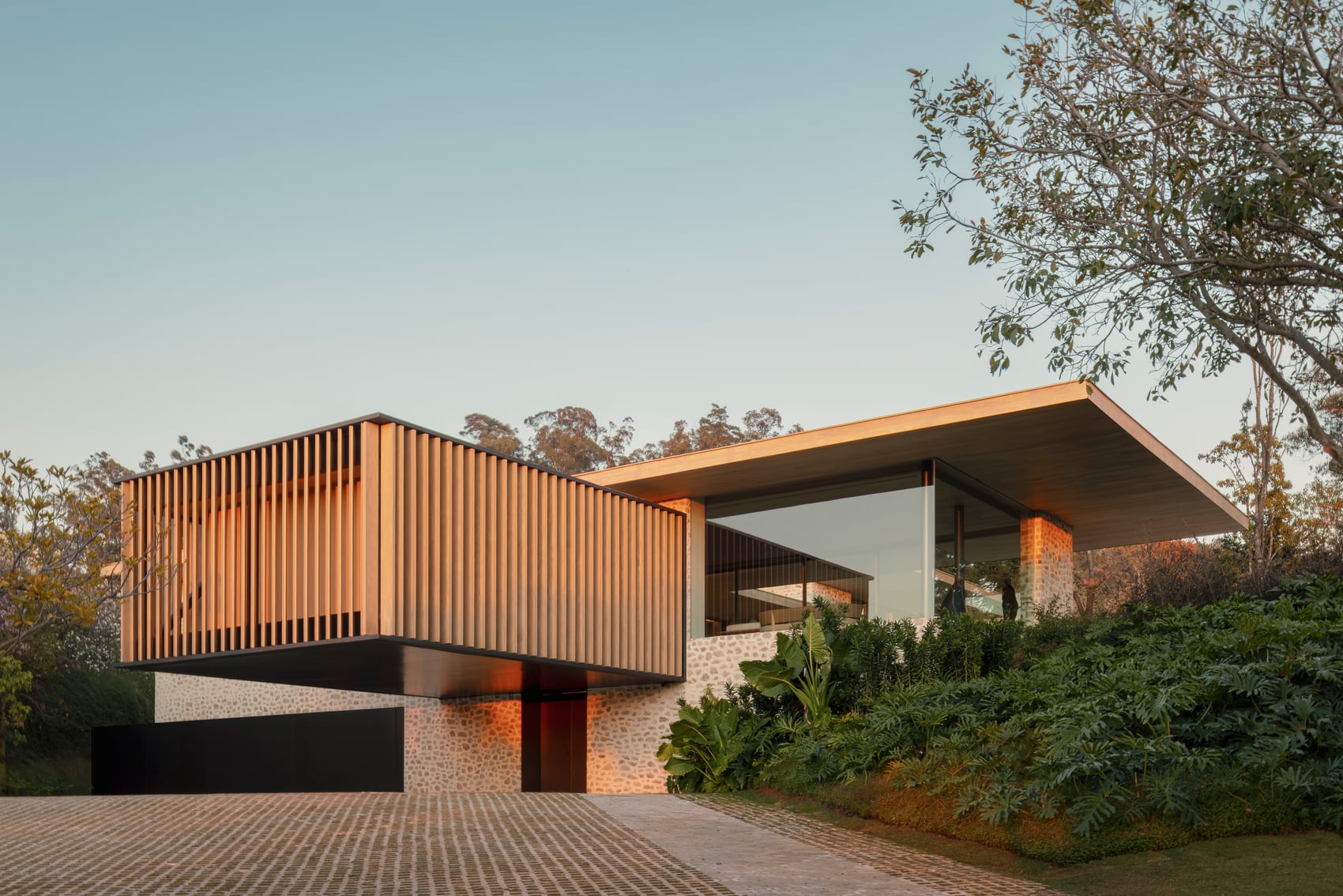
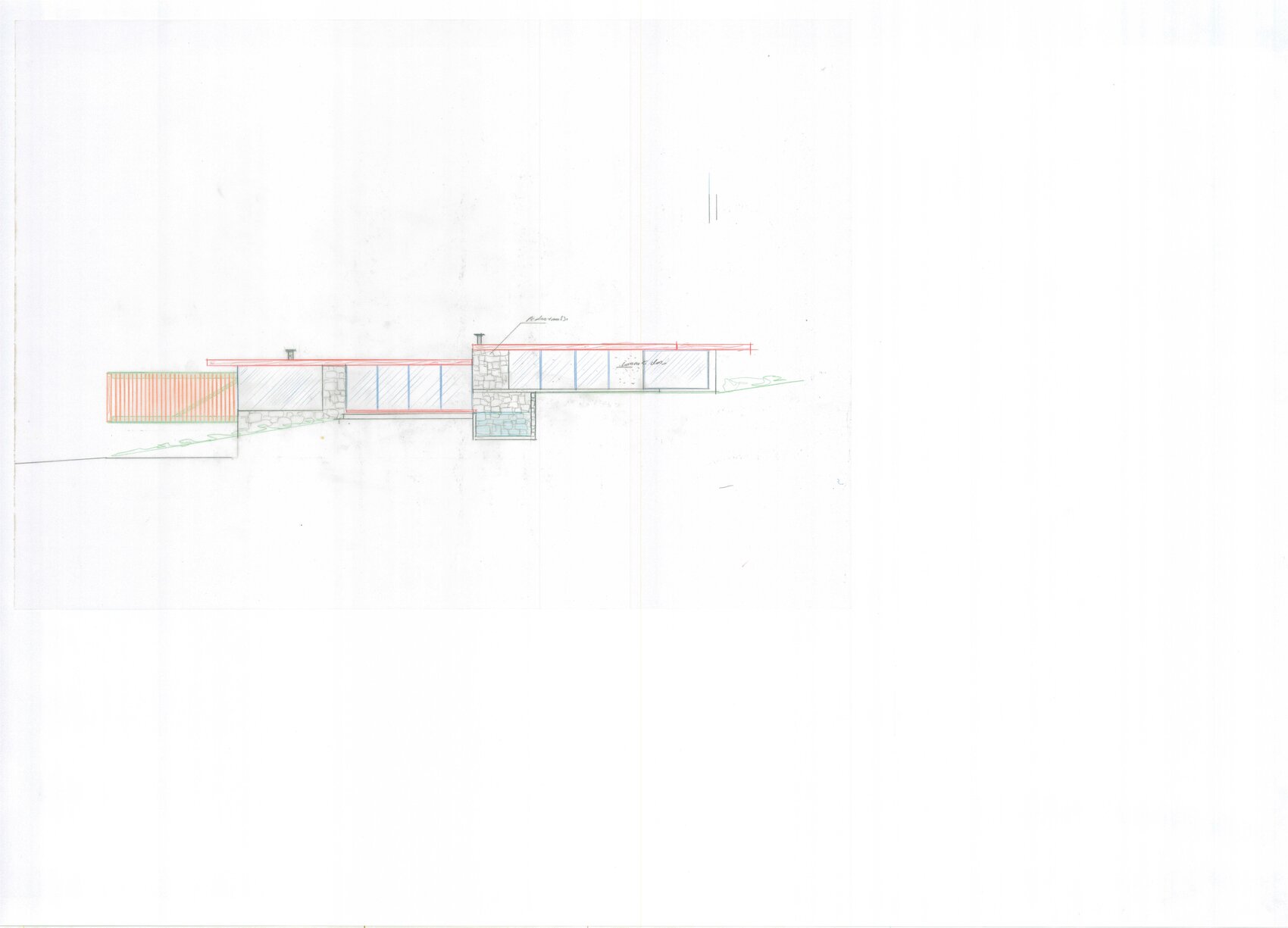
Grama House is defined by an 11-meter cantilevered volume that projects over the arrival sequence, creating a dramatic entrance while serving as the residence’s office. More than a formal statement, the element demonstrates the project’s structural ambition, requiring steel trusses anchored to substantial columns and precise engineering solutions to accommodate significant loads concentrated at its outer edge. The gesture establishes a clear architectural identity while introducing visitors to a house where technical rigor and spatial expression operate in tandem.
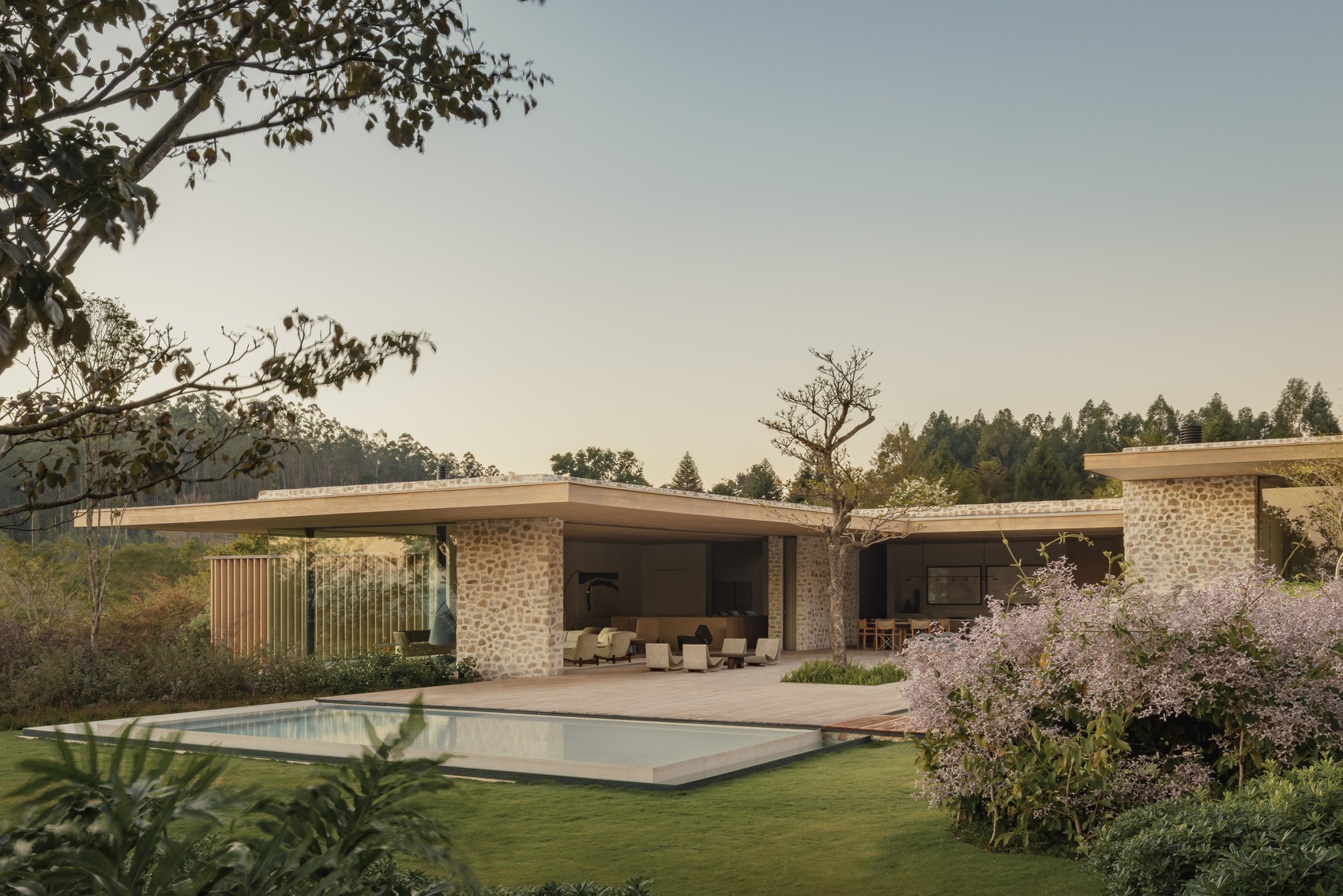
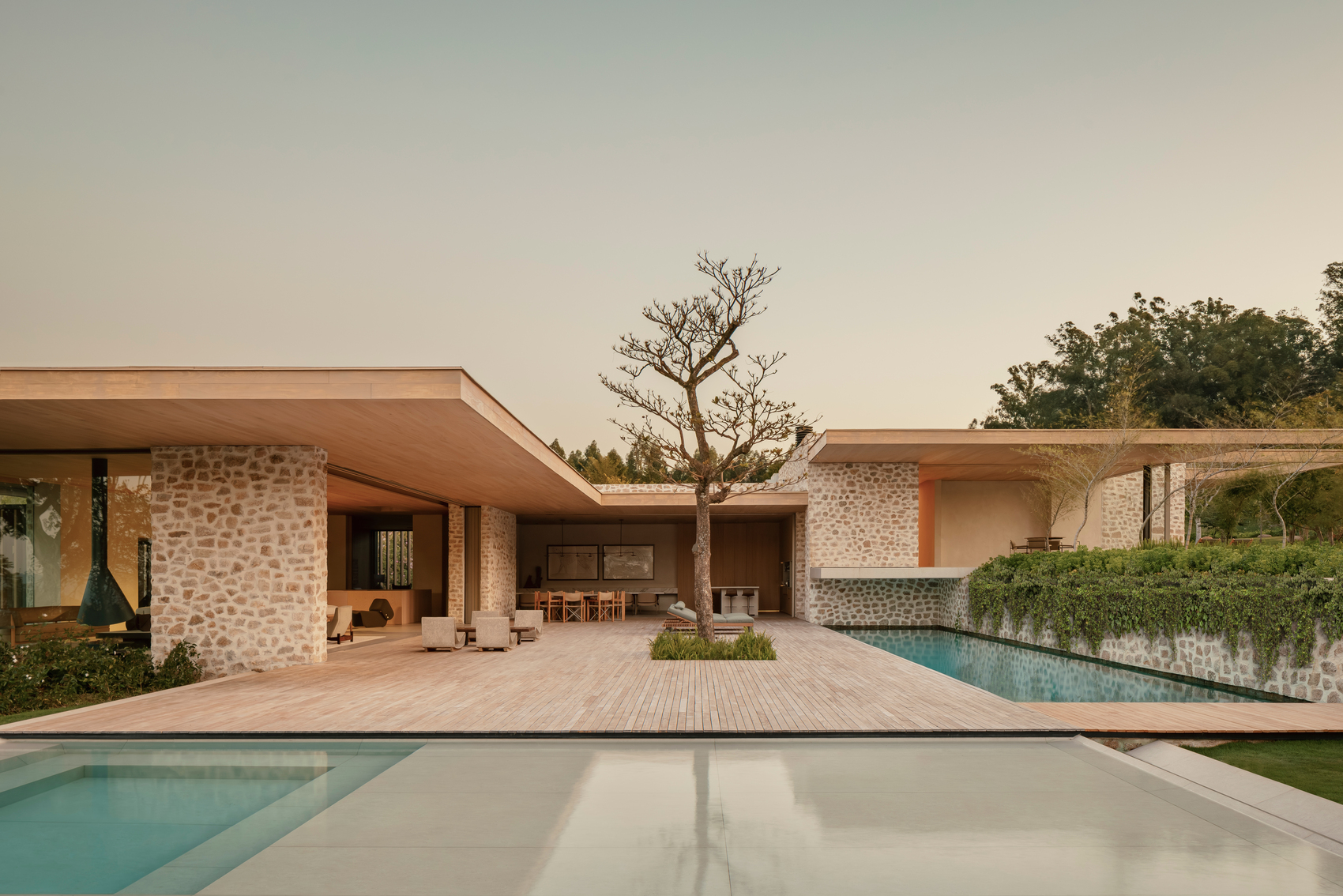
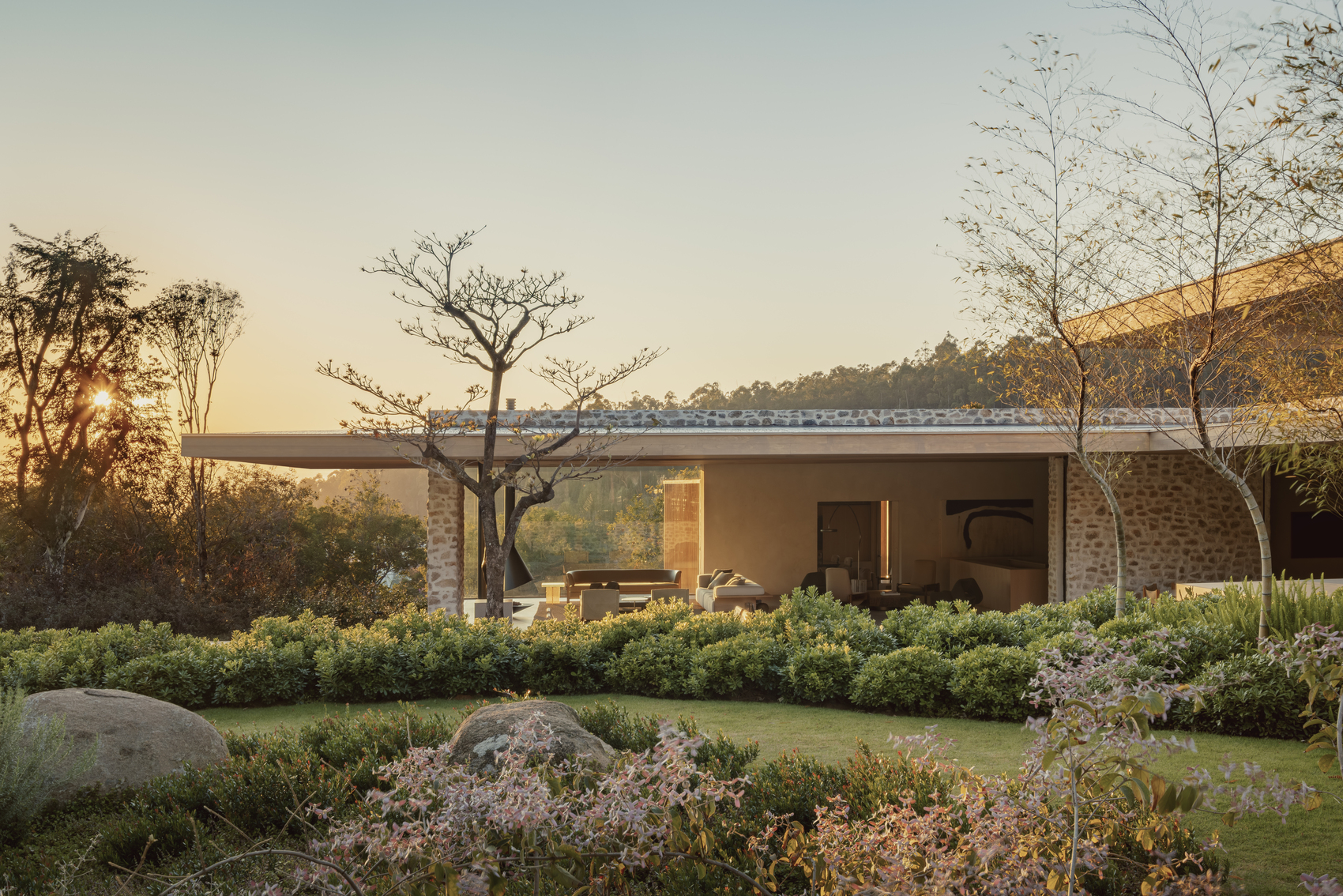
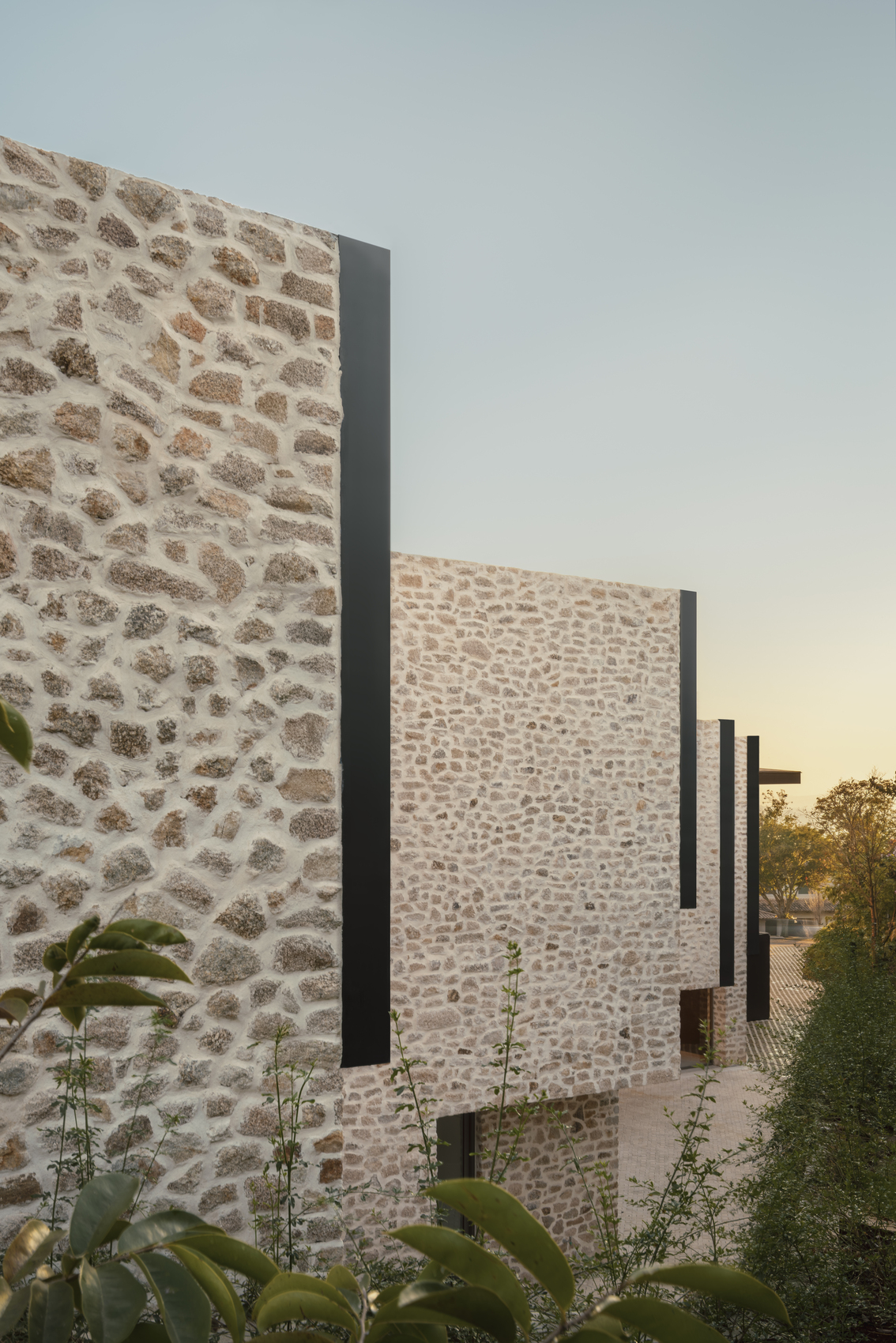
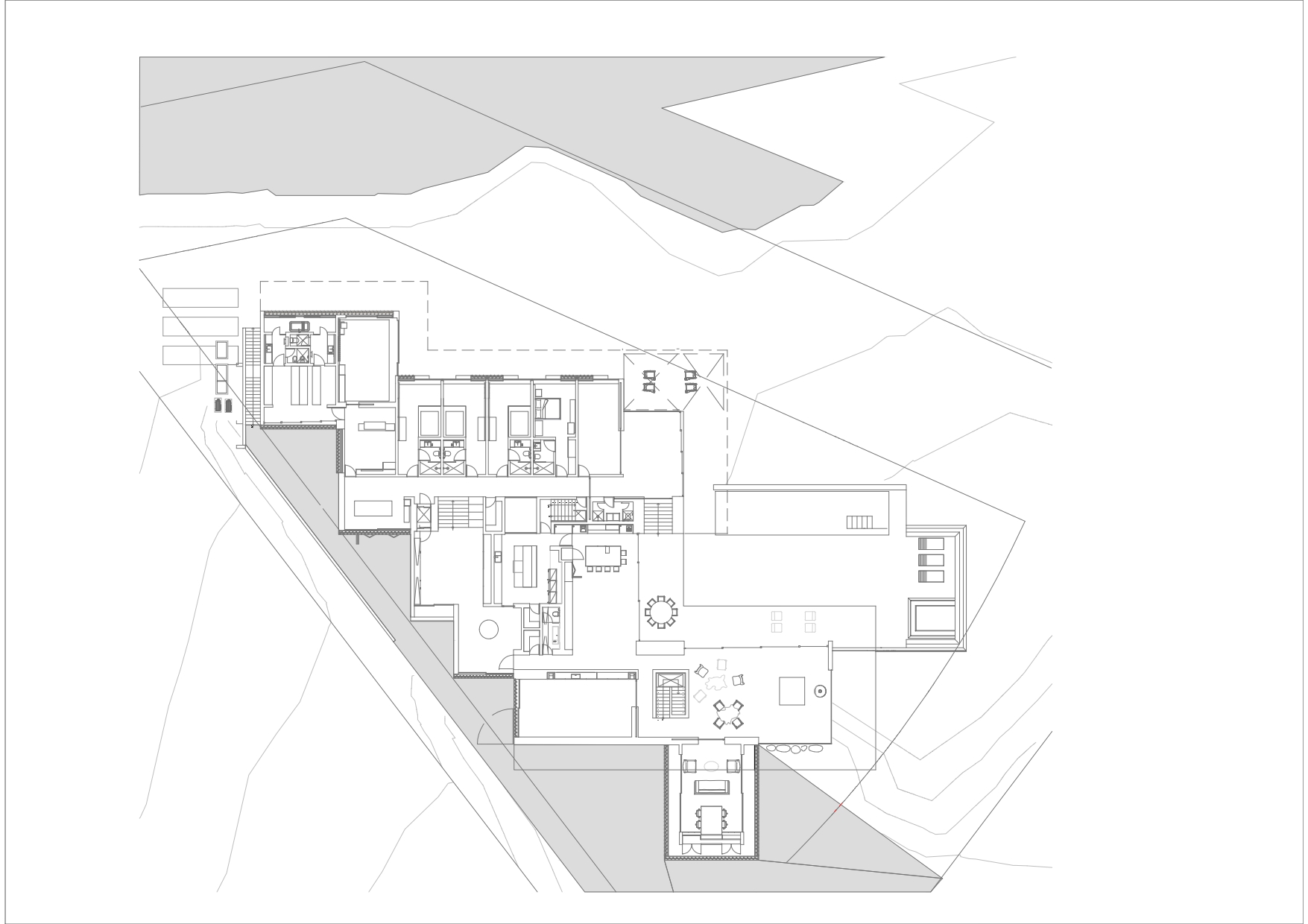
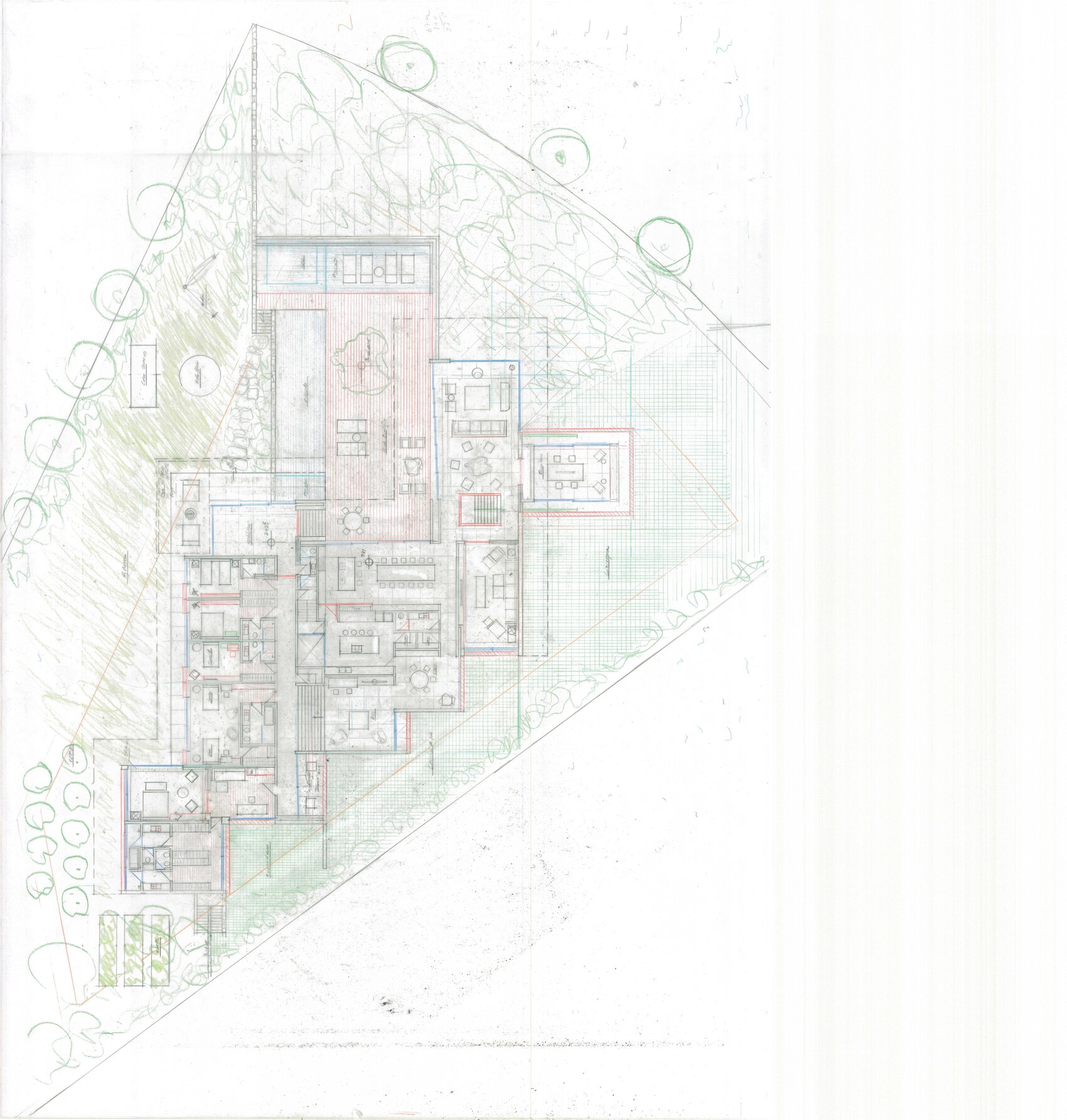
Set on a corner lot free from immediate visual interference, the residence takes advantage of its privileged position to establish broad connections with the surrounding landscape. Rather than imposing a singular object onto the site, the architecture unfolds horizontally across the terrain through a sequence of split levels that follow the natural slope. This strategy reduces the visual impact of the built mass while creating varied relationships between indoor spaces, outdoor terraces, and distant views. The result is a house that appears embedded within its setting rather than placed upon it.
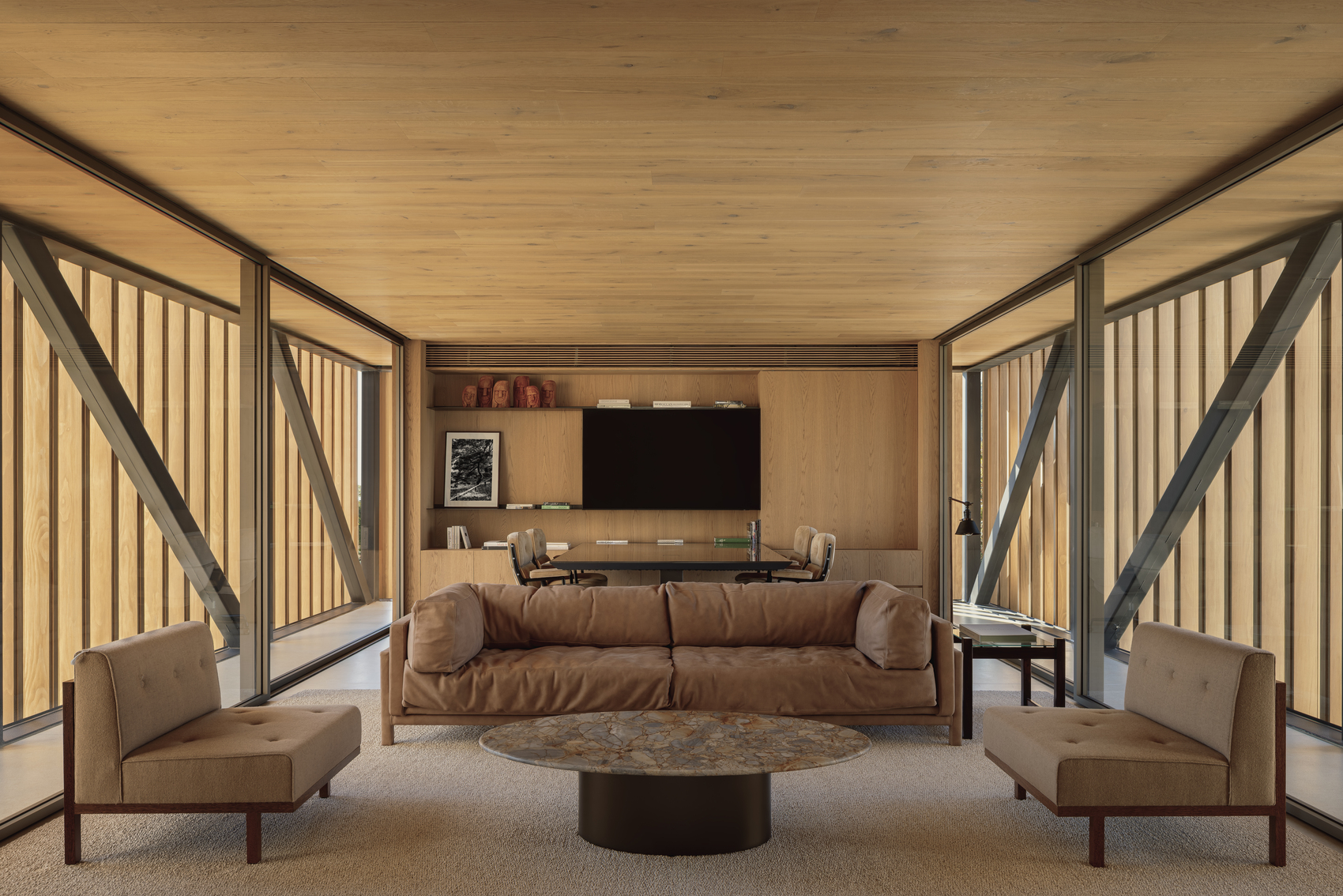
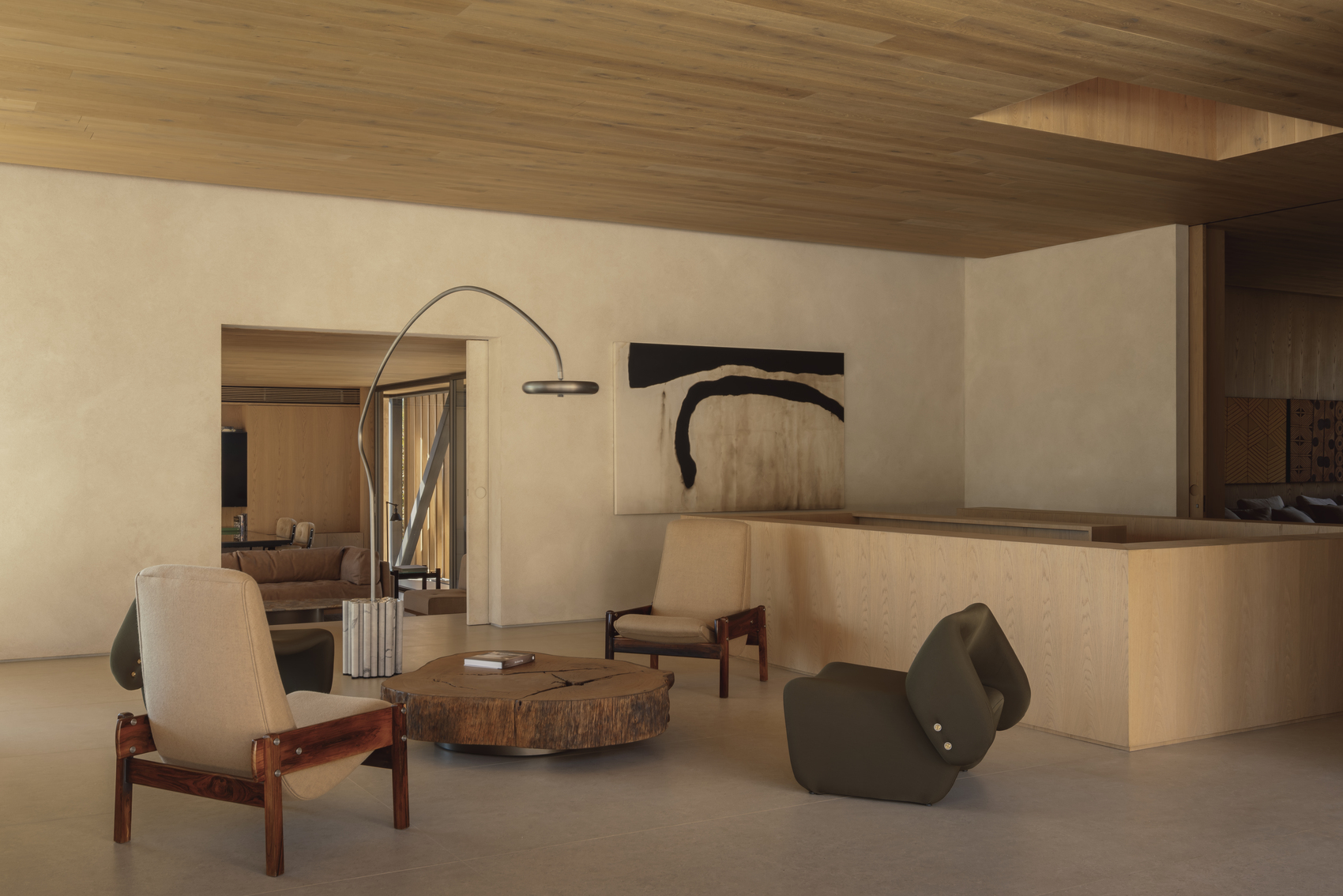
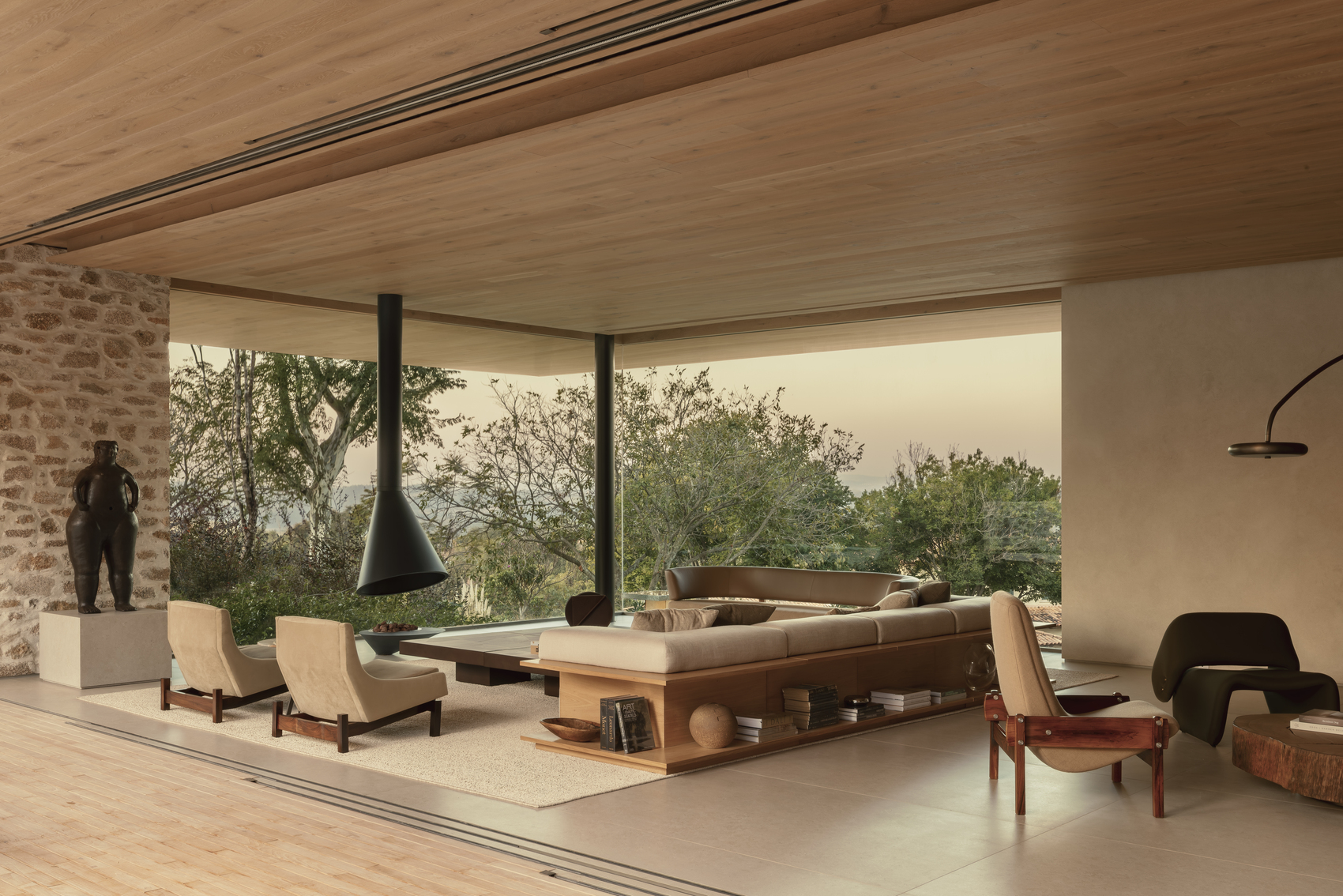
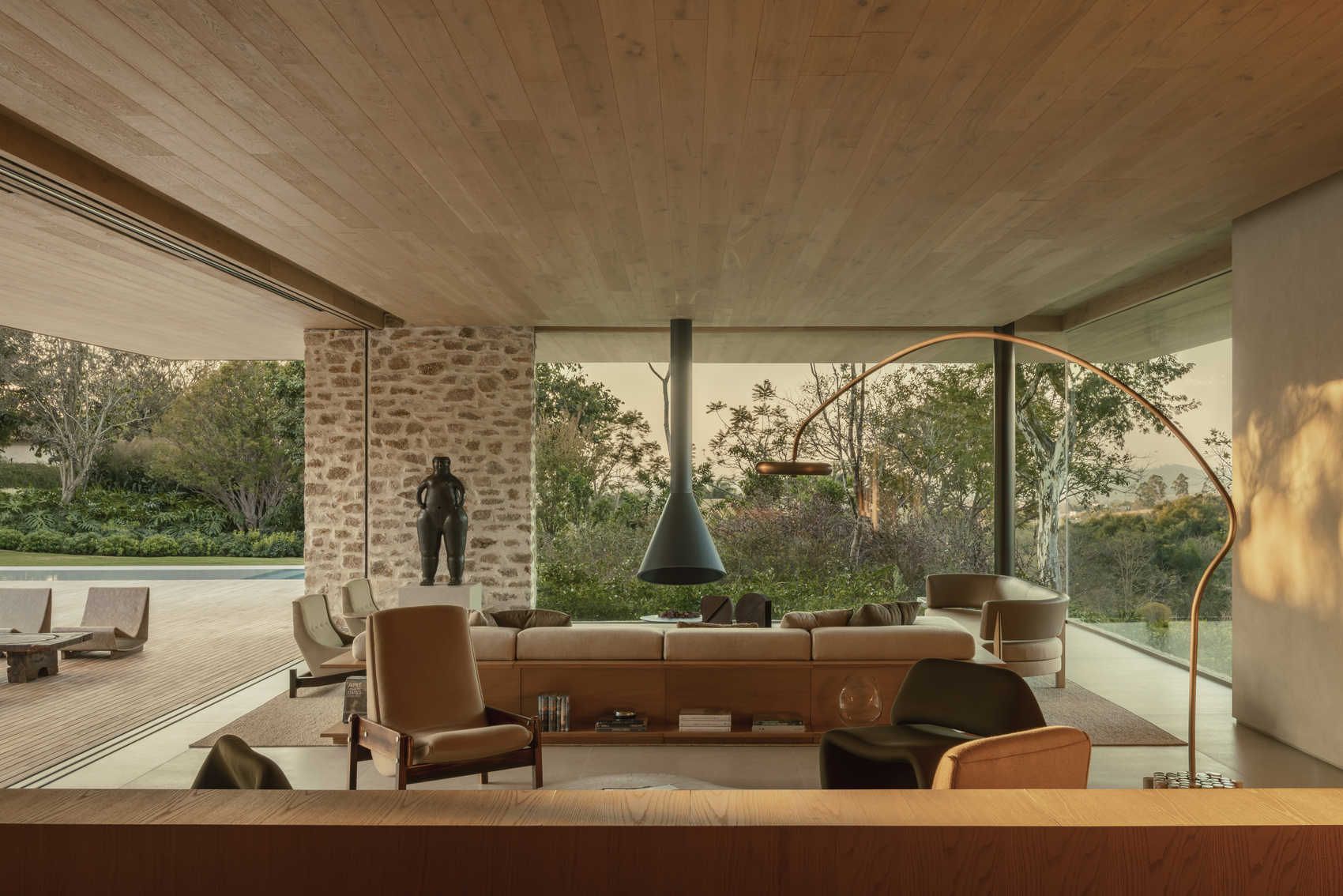
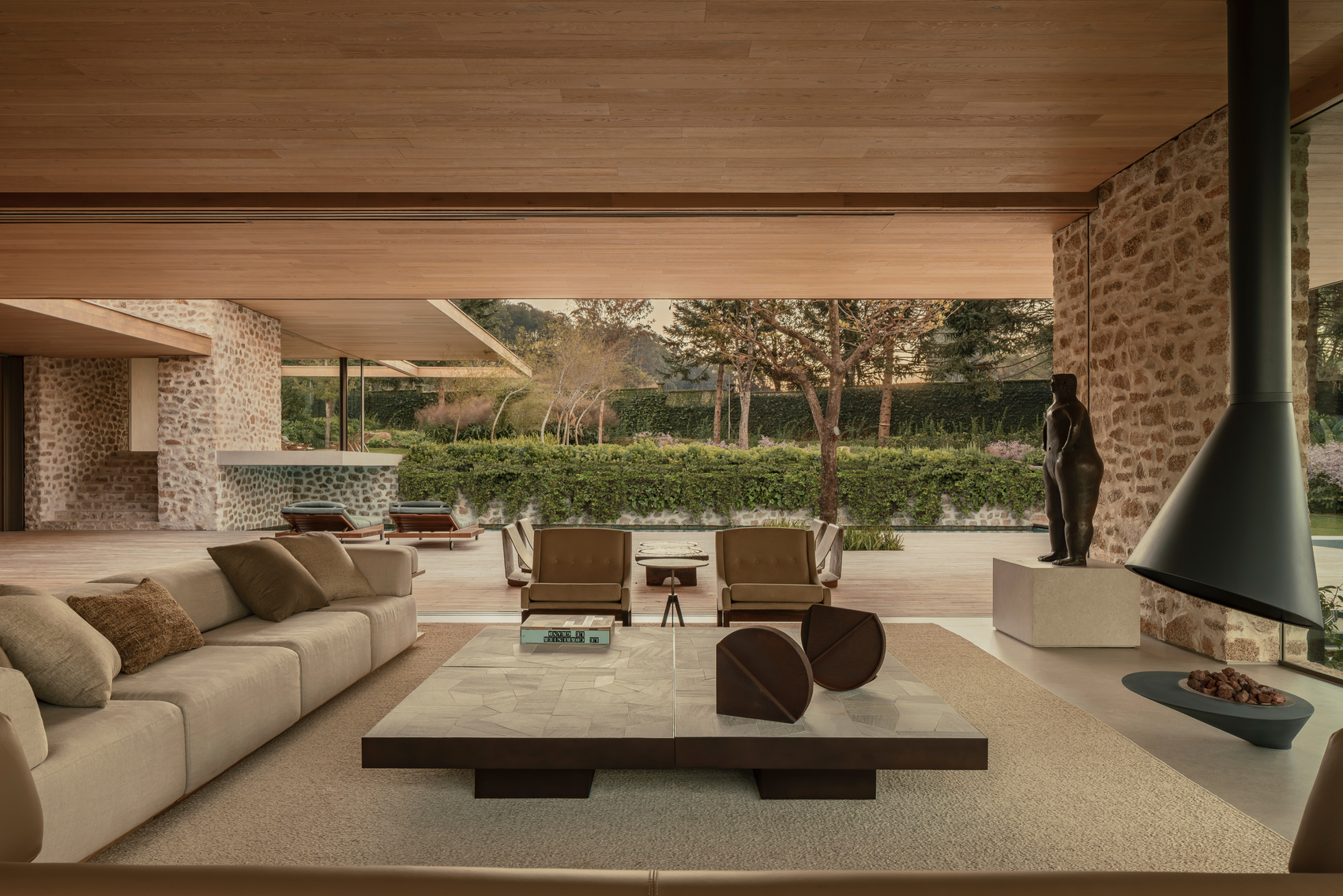
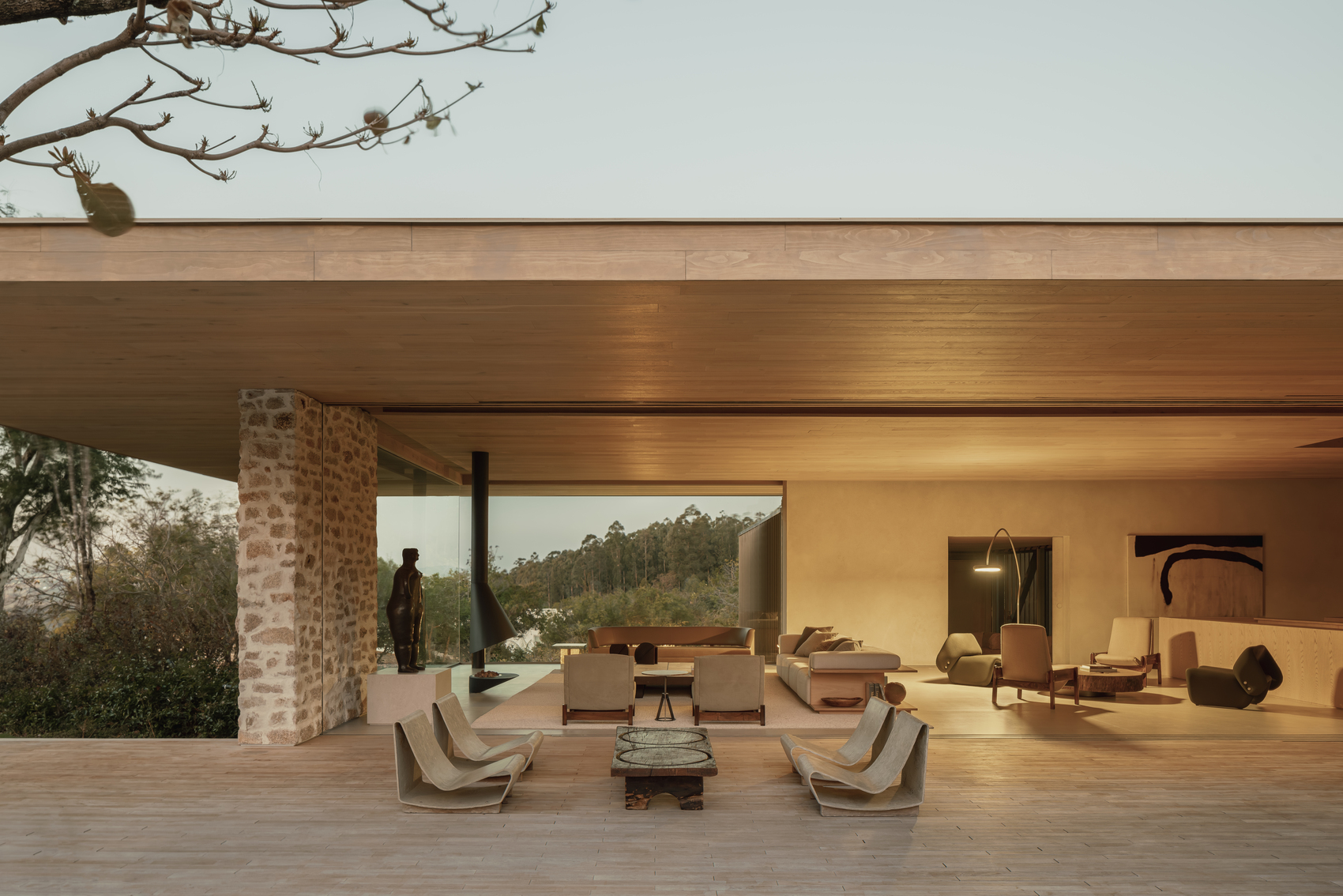
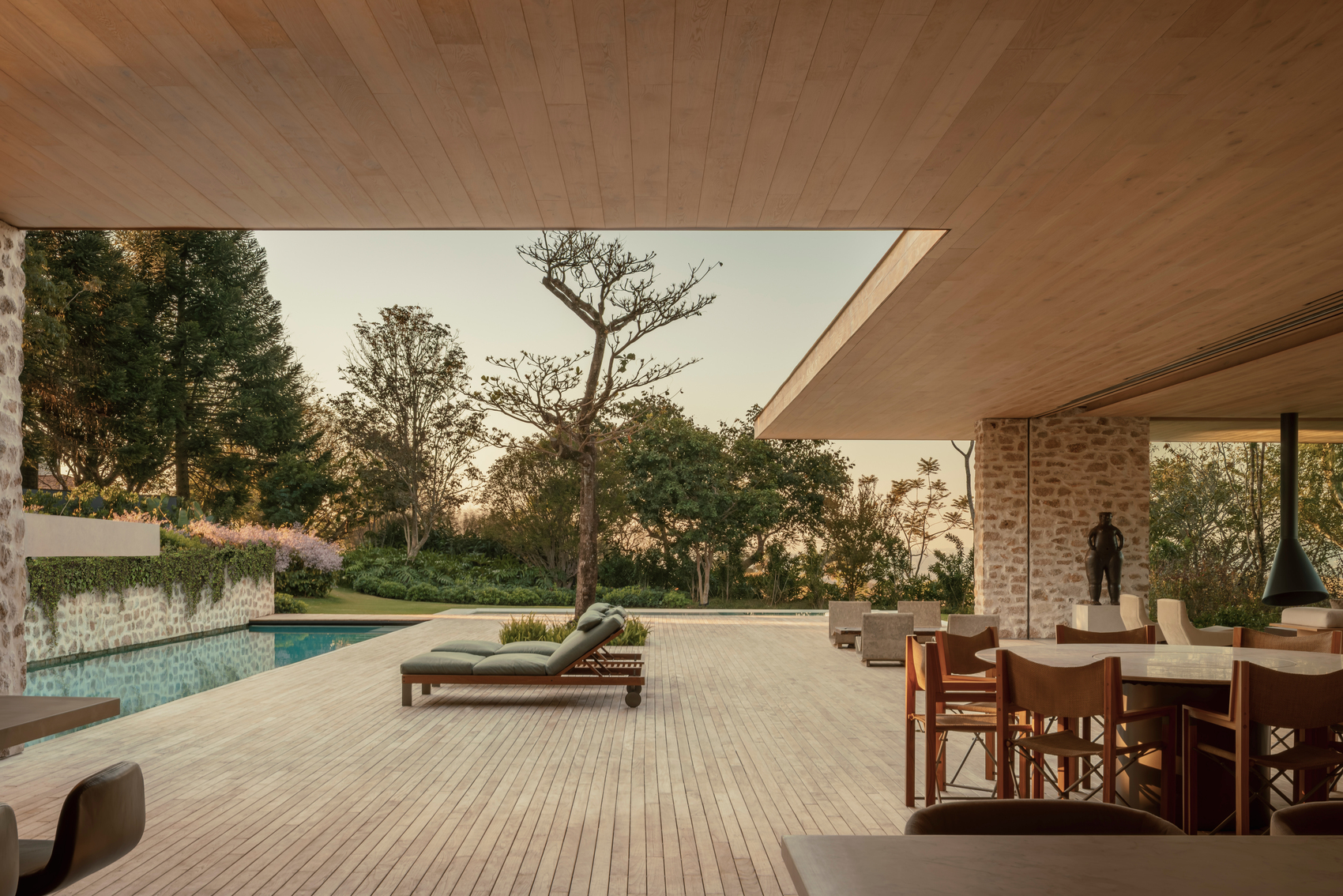
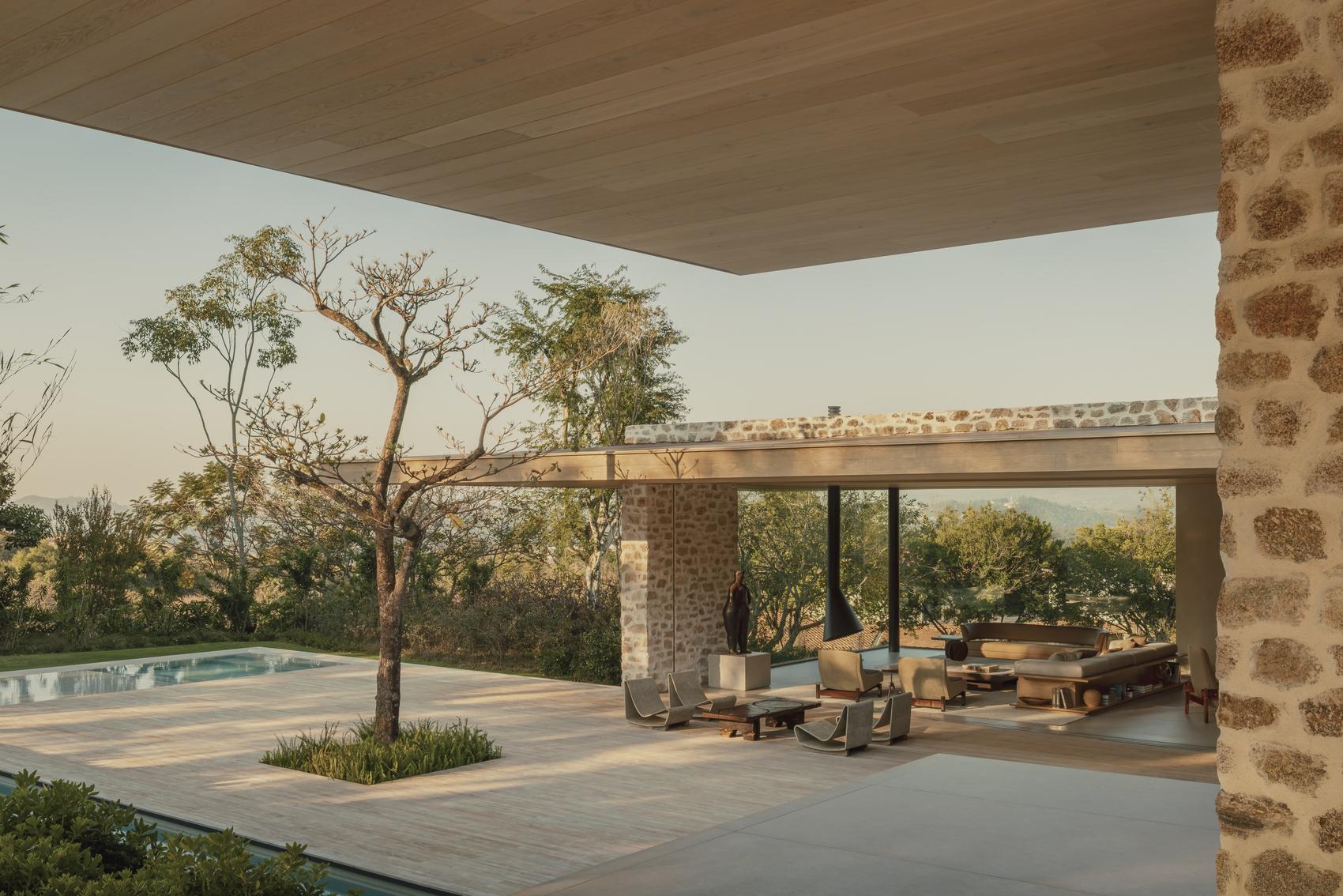
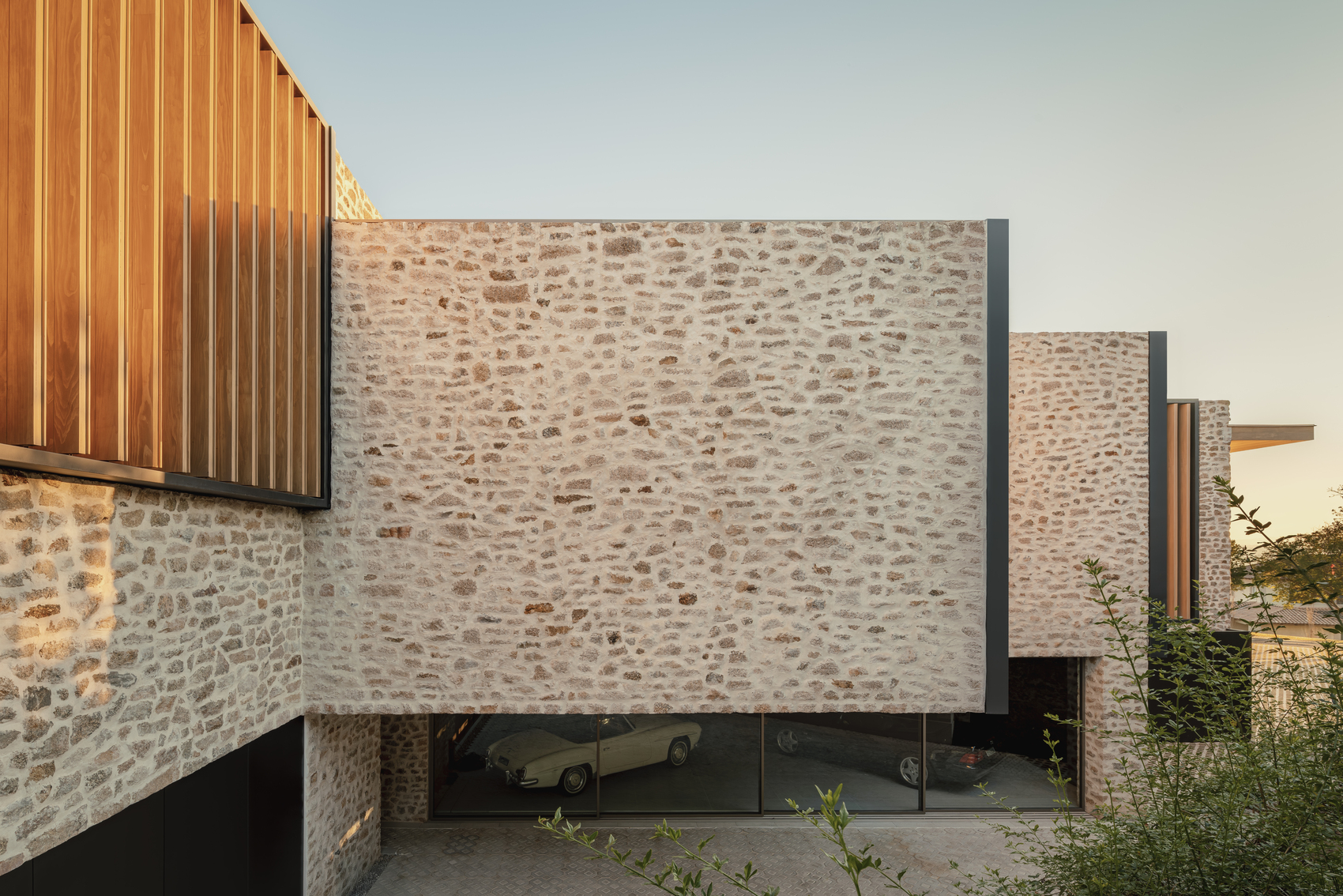
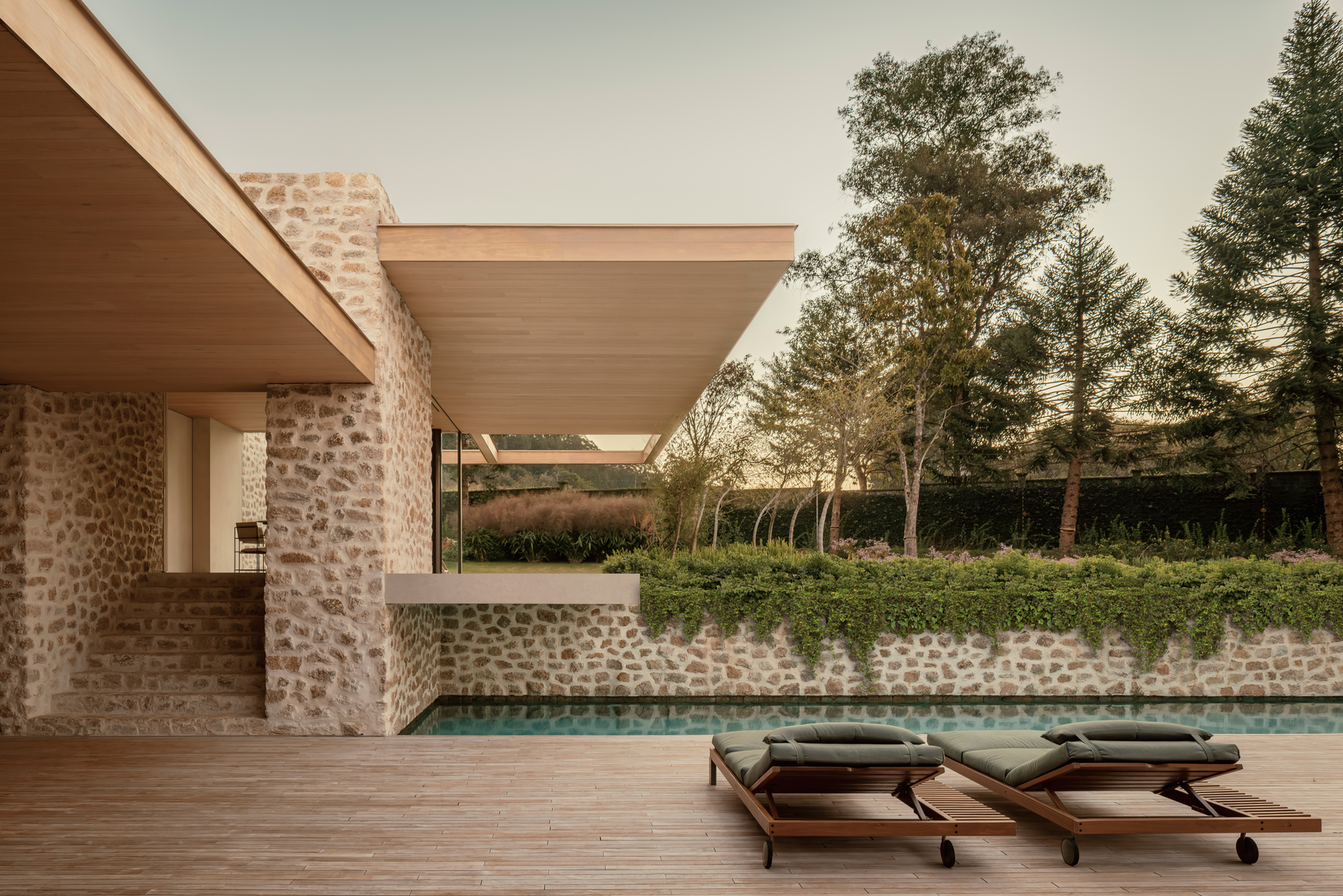
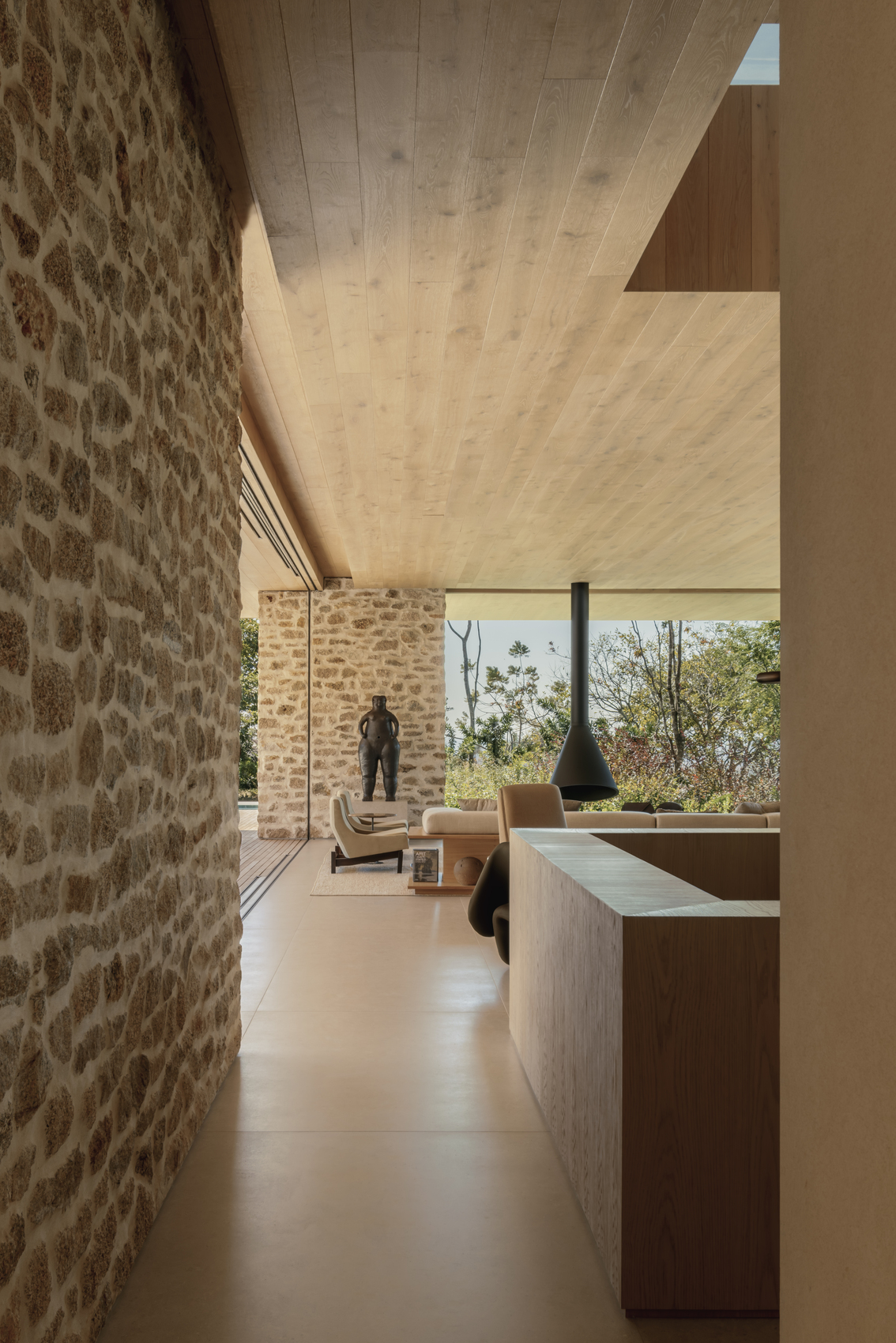
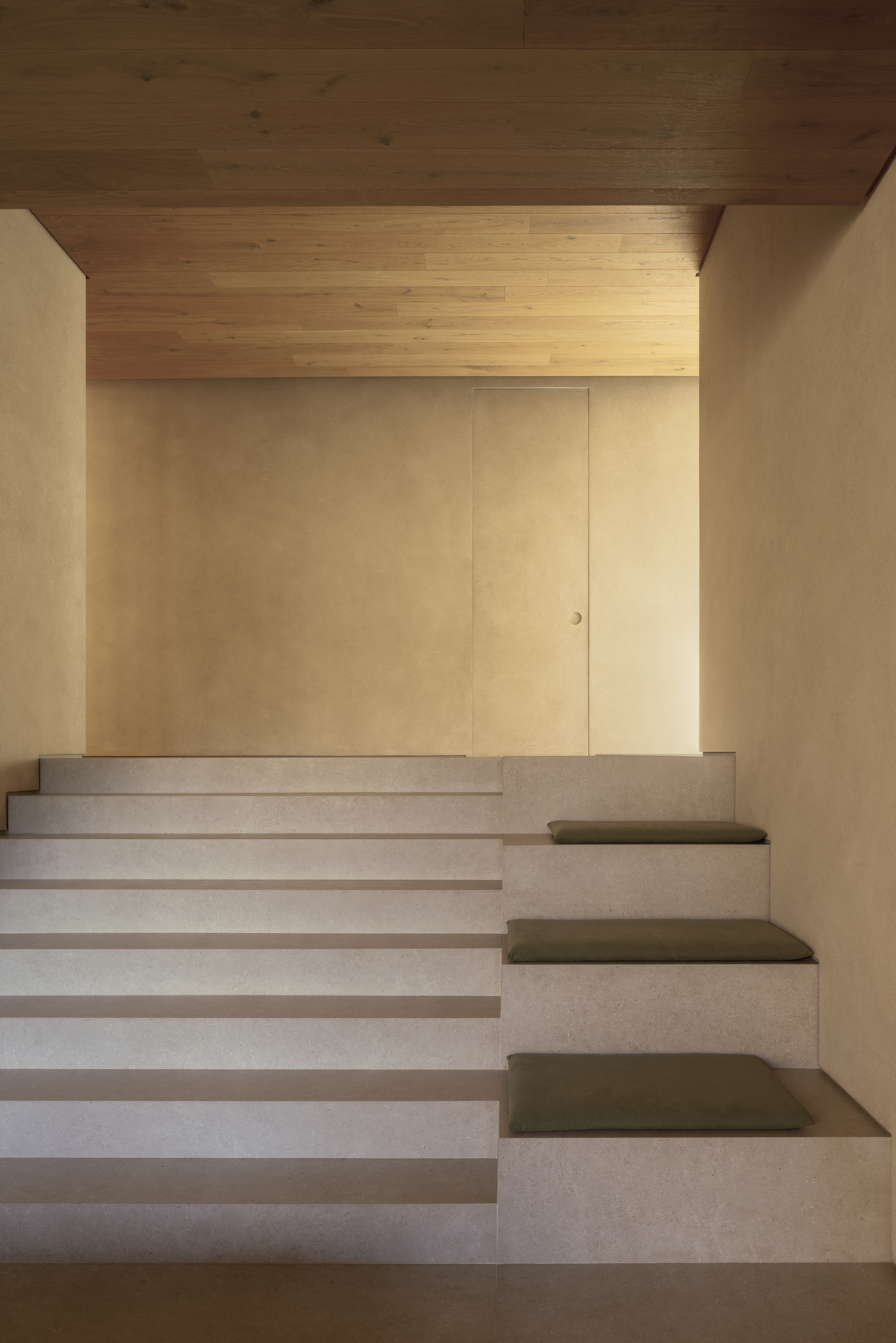
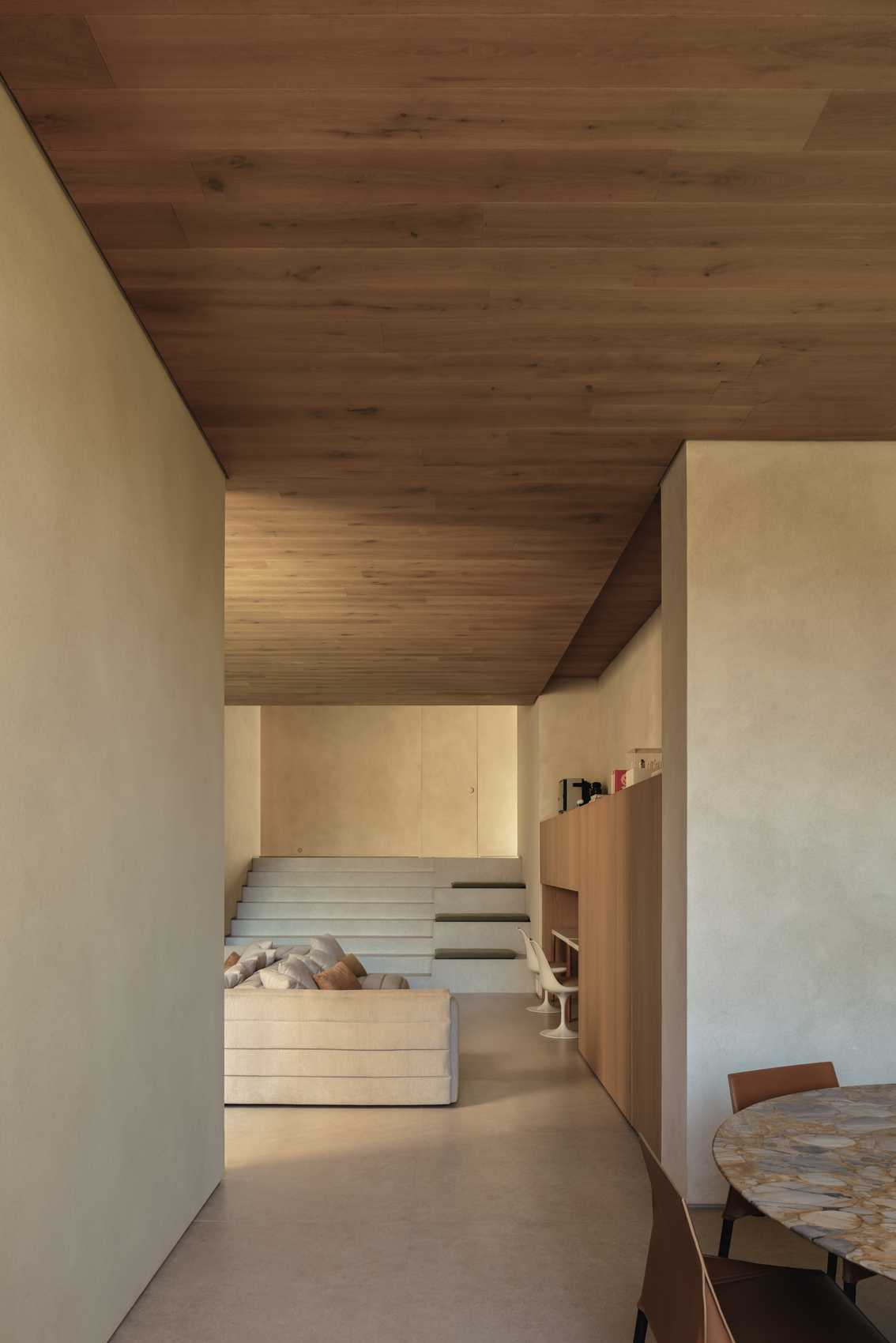
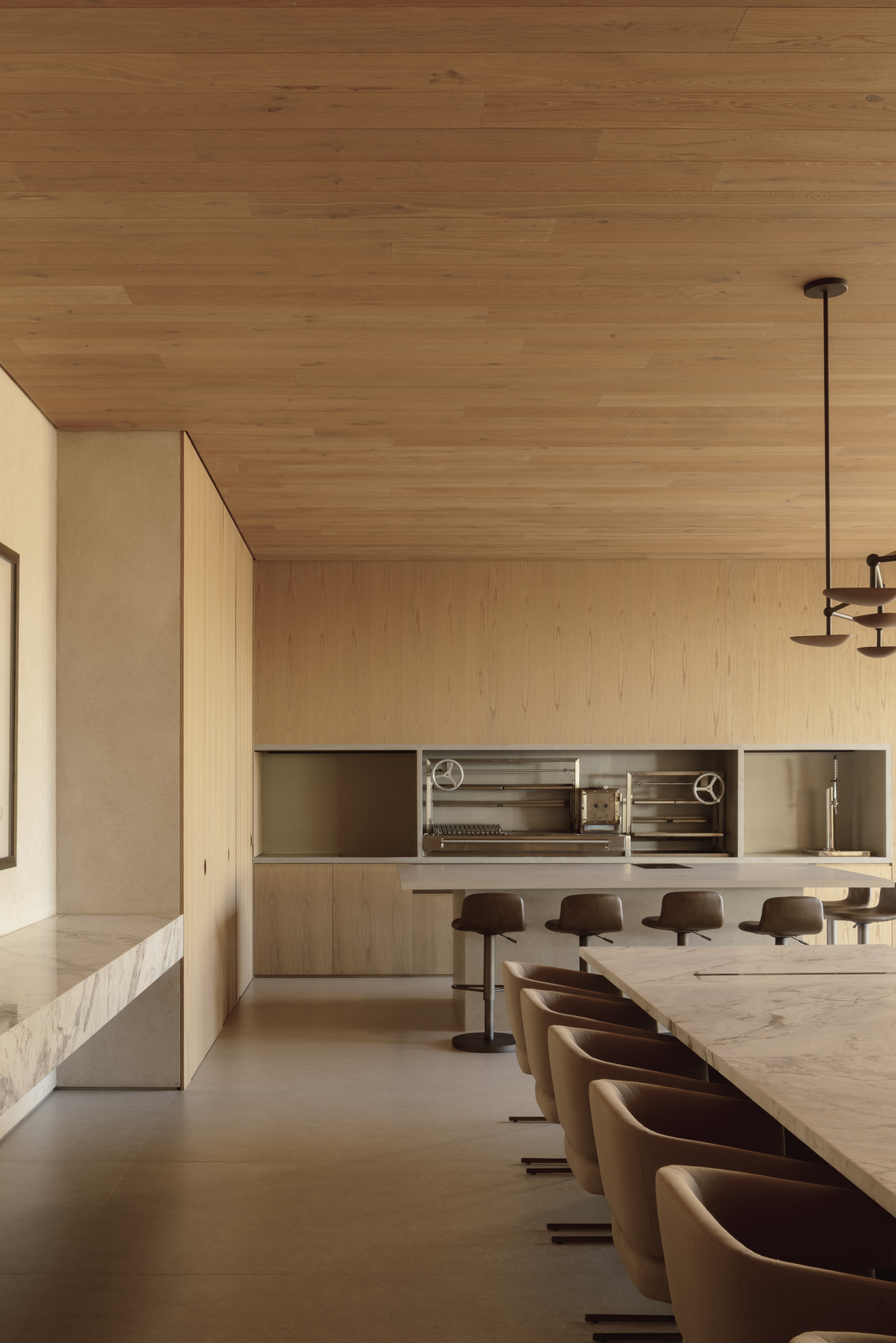
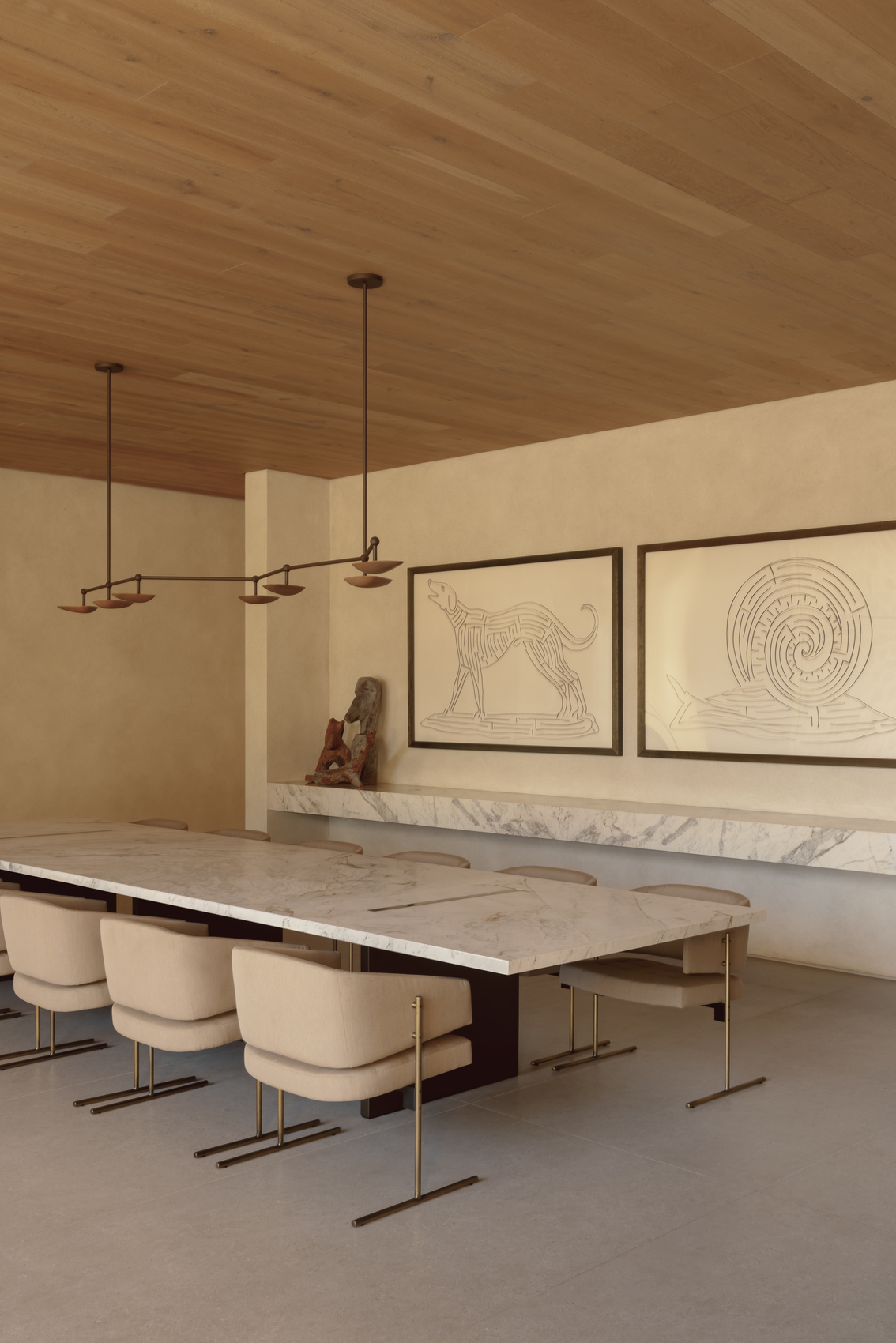
The internal organization reinforces this sense of continuity. The lower level accommodates access points, service functions, and garages, including a dedicated space for the owners’ vehicle collection. Above, the principal living spaces are arranged as an interconnected social platform comprising the living room, dining room, kitchen, gourmet area, and swimming pool. Private functions occupy a higher tier within the composition, where the bedroom suites and wellness spaces benefit from greater privacy while maintaining visual links to the landscape. Movement through the house becomes a gradual progression shaped by subtle level changes rather than abrupt separations.
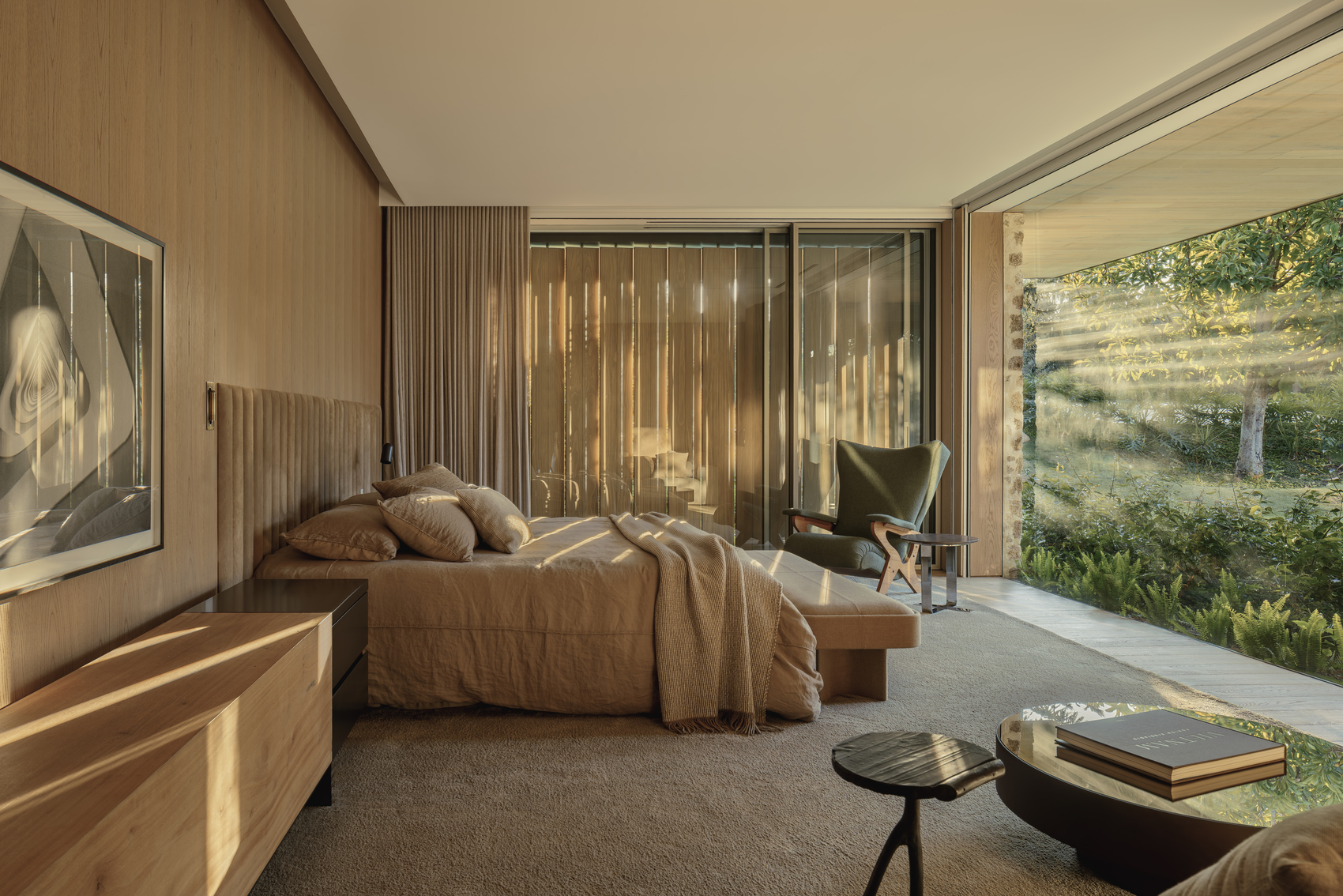
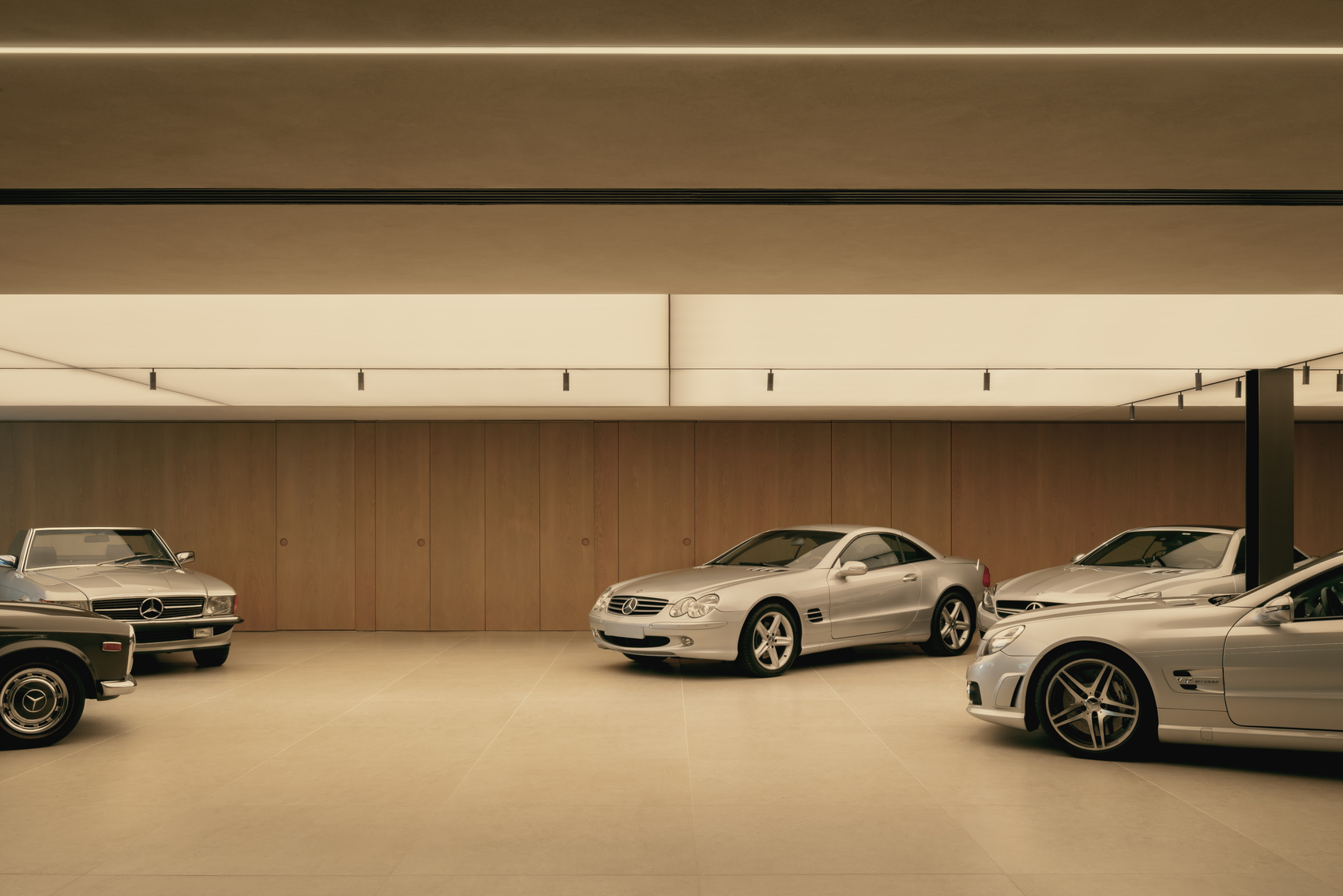
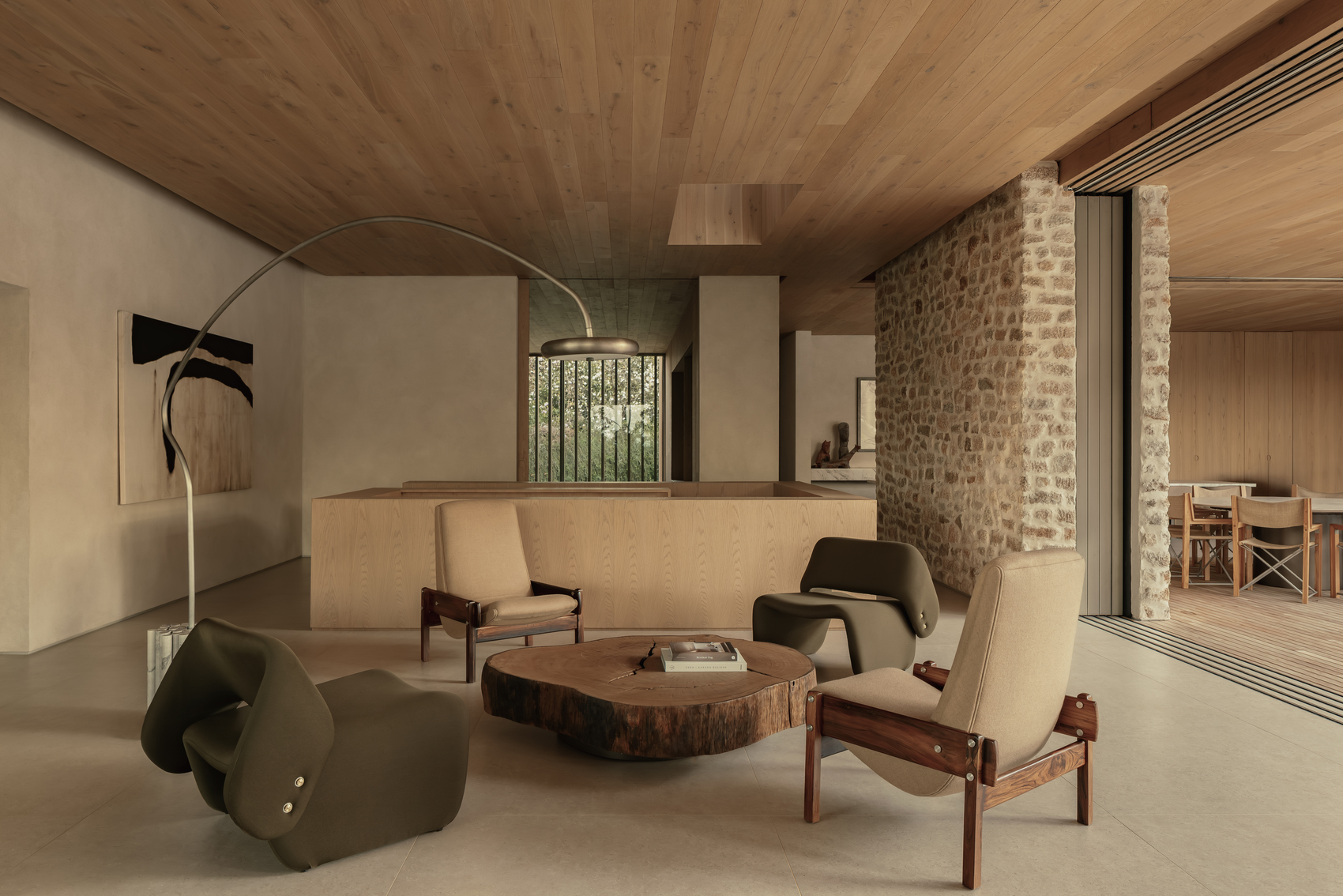
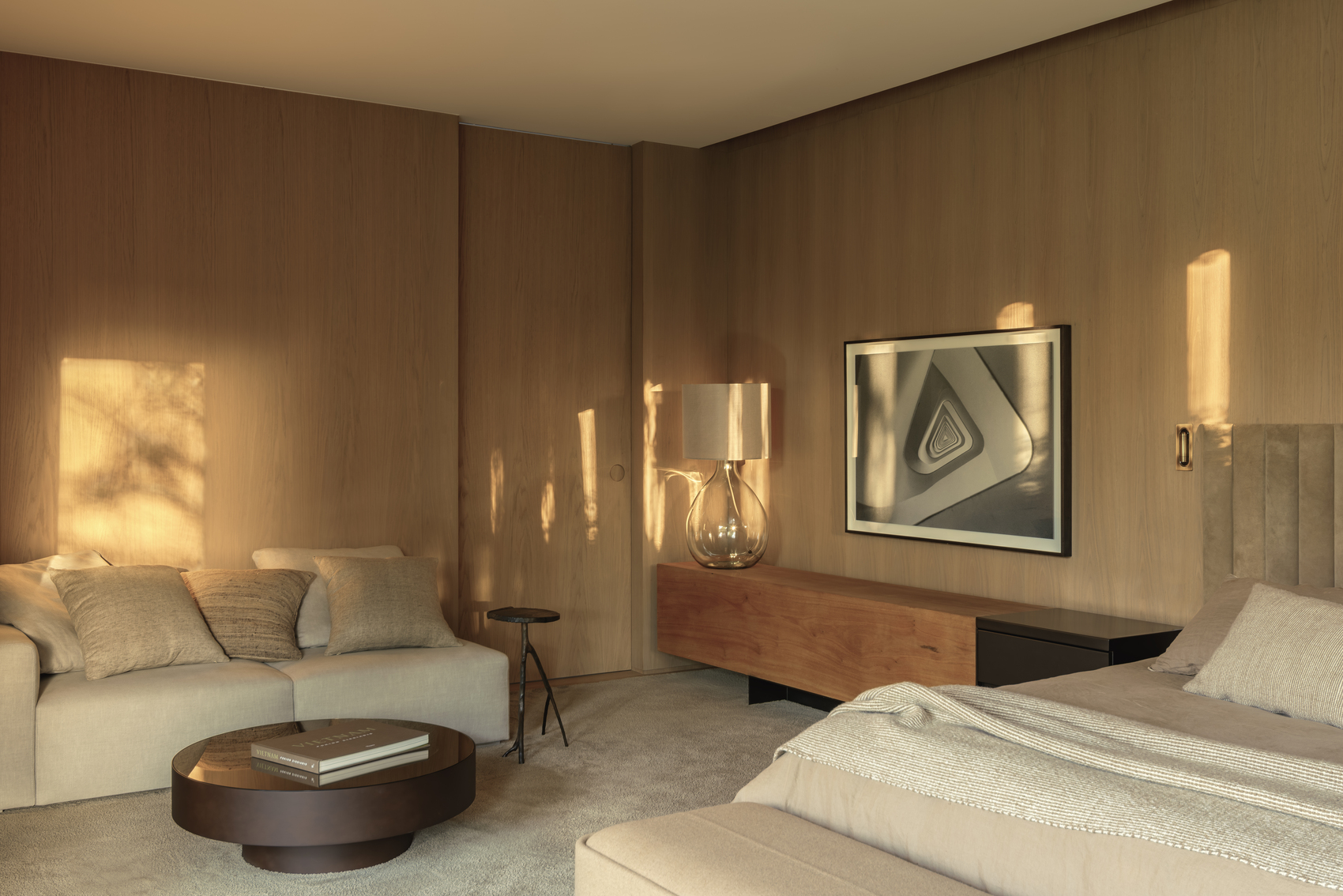
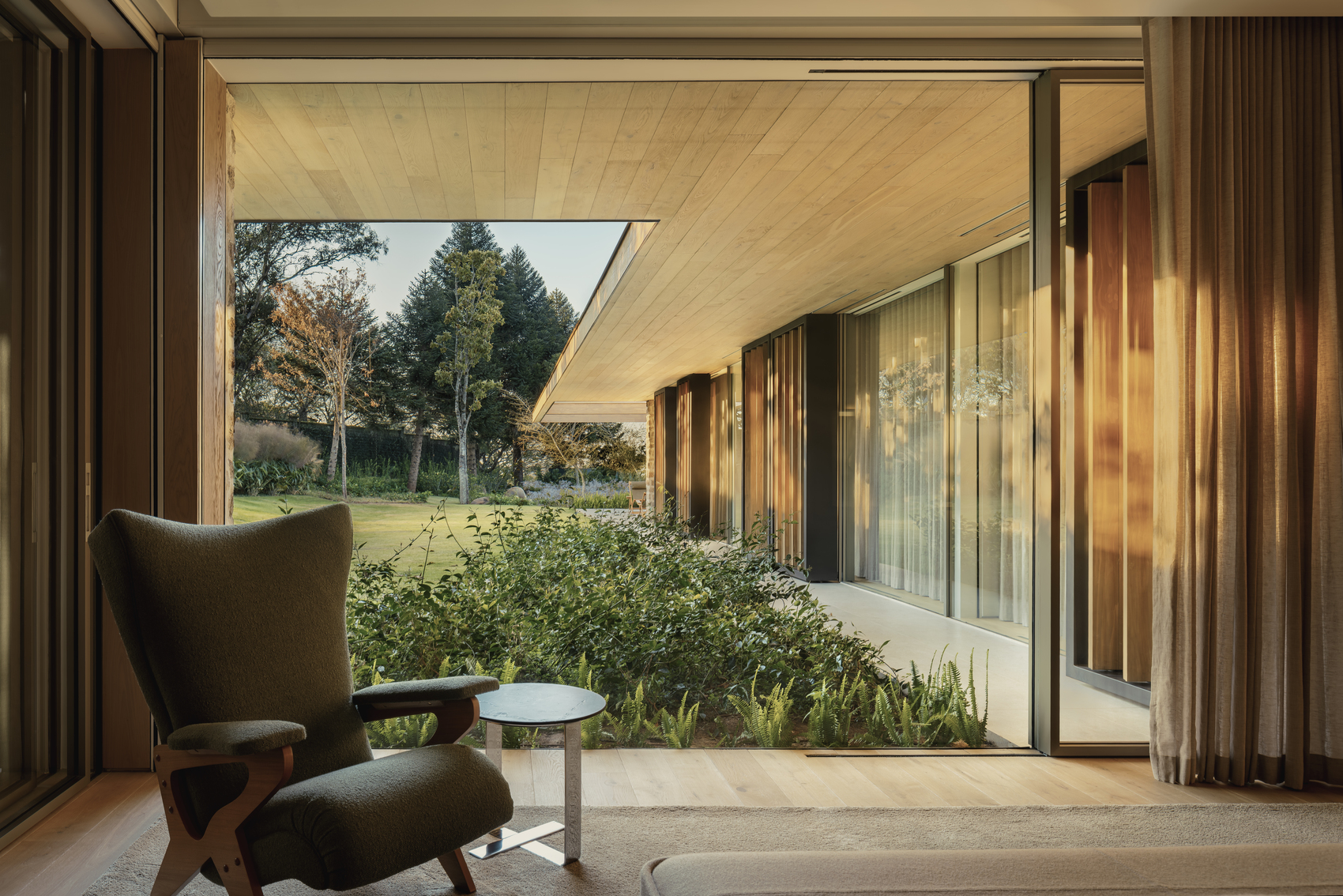
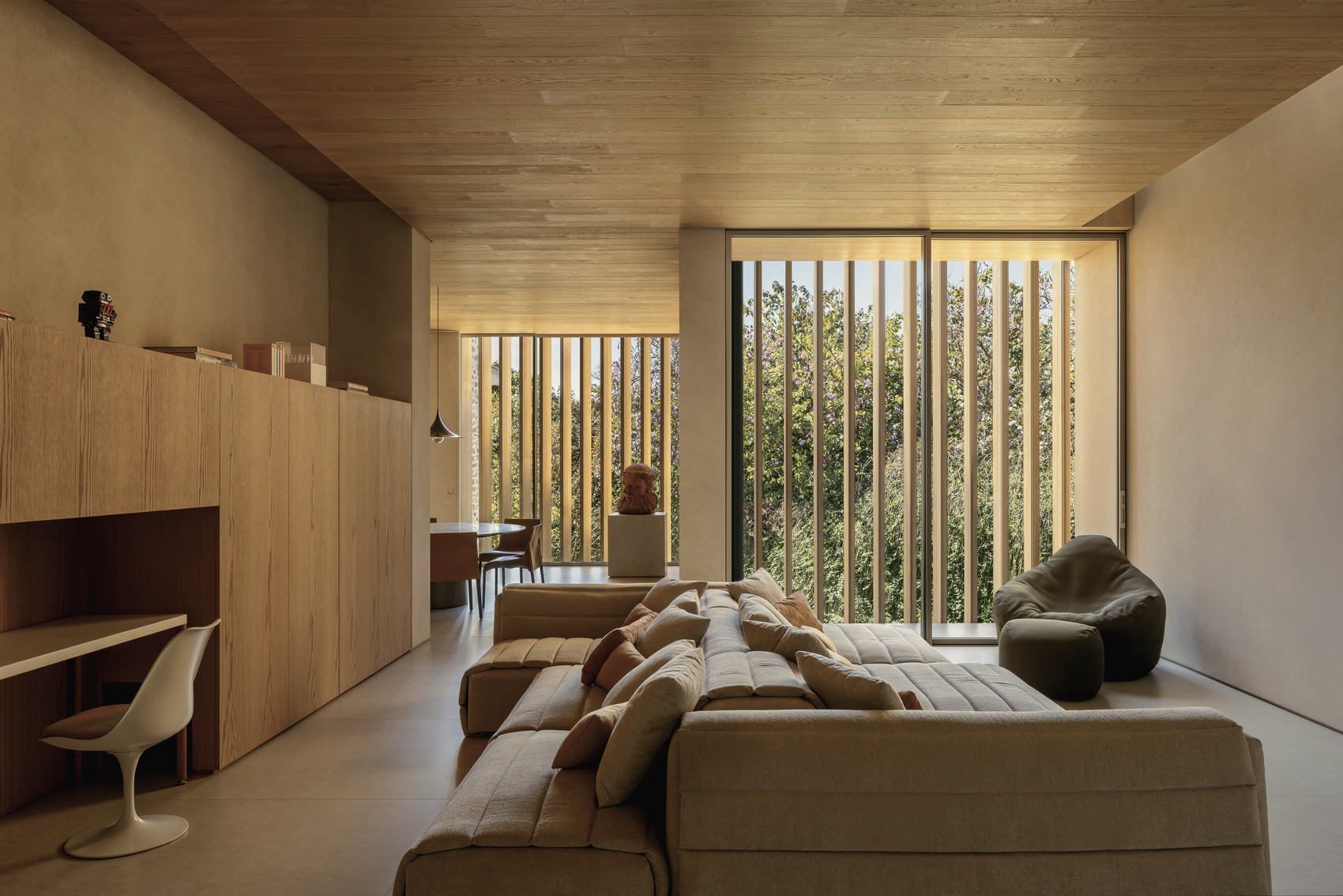
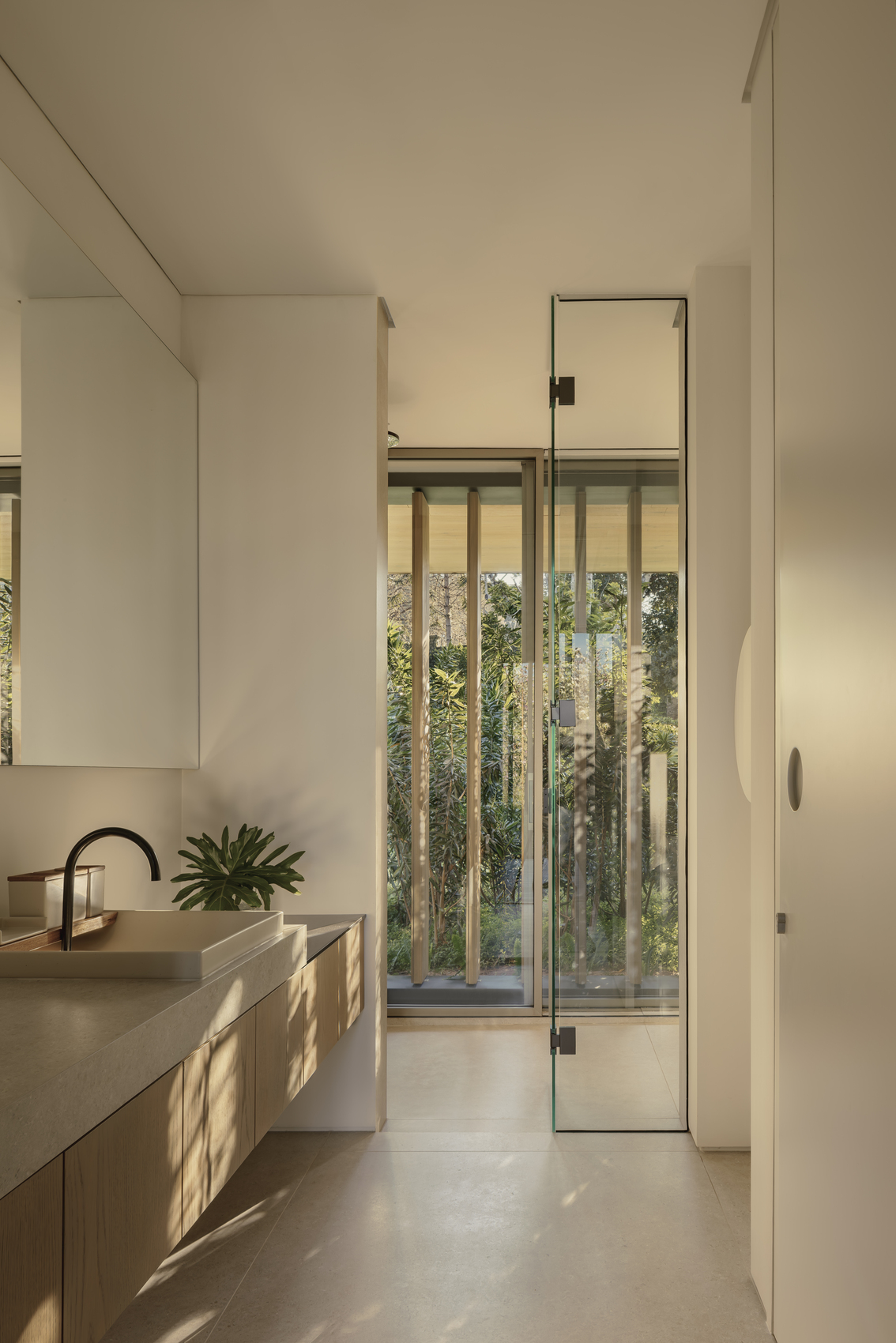
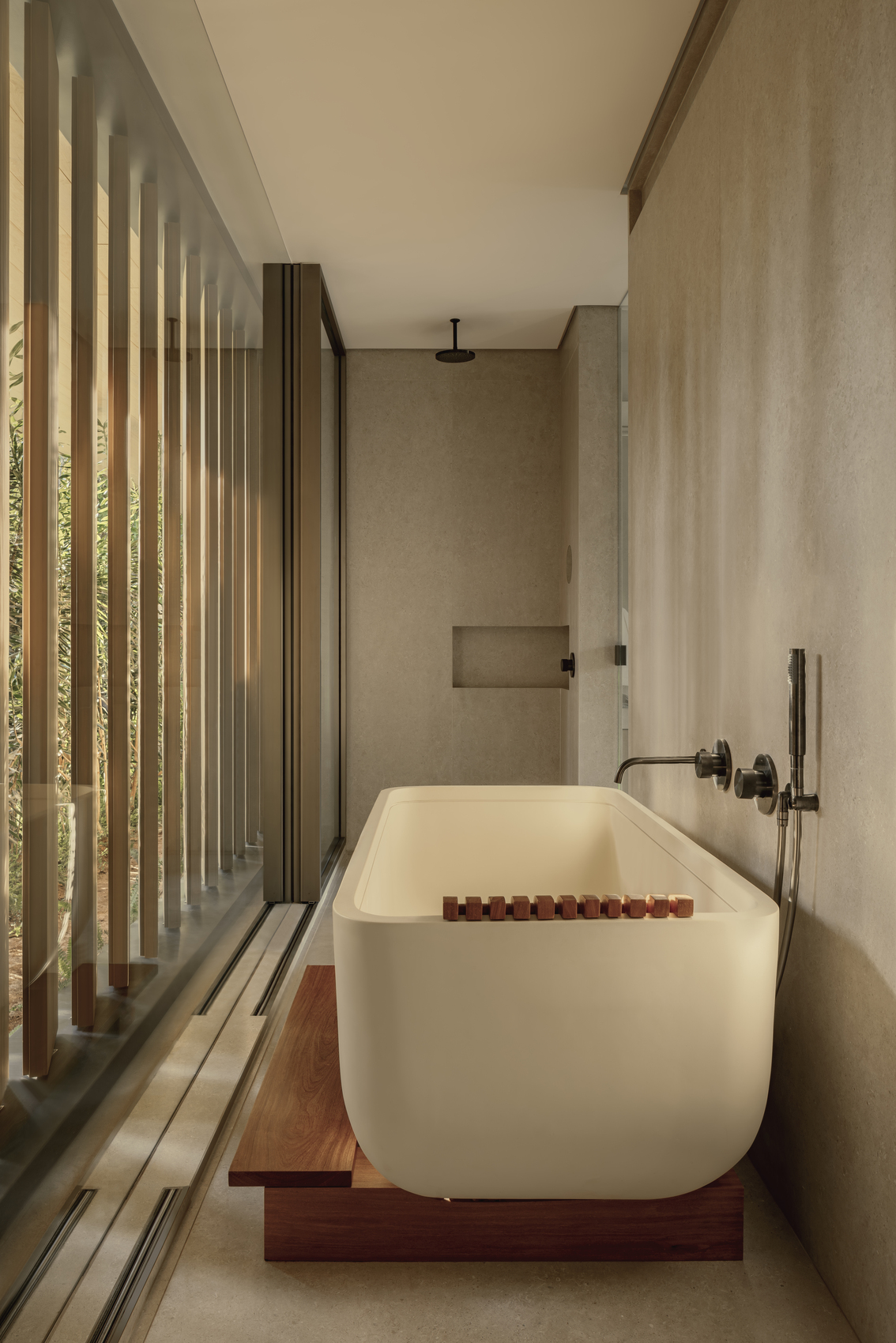
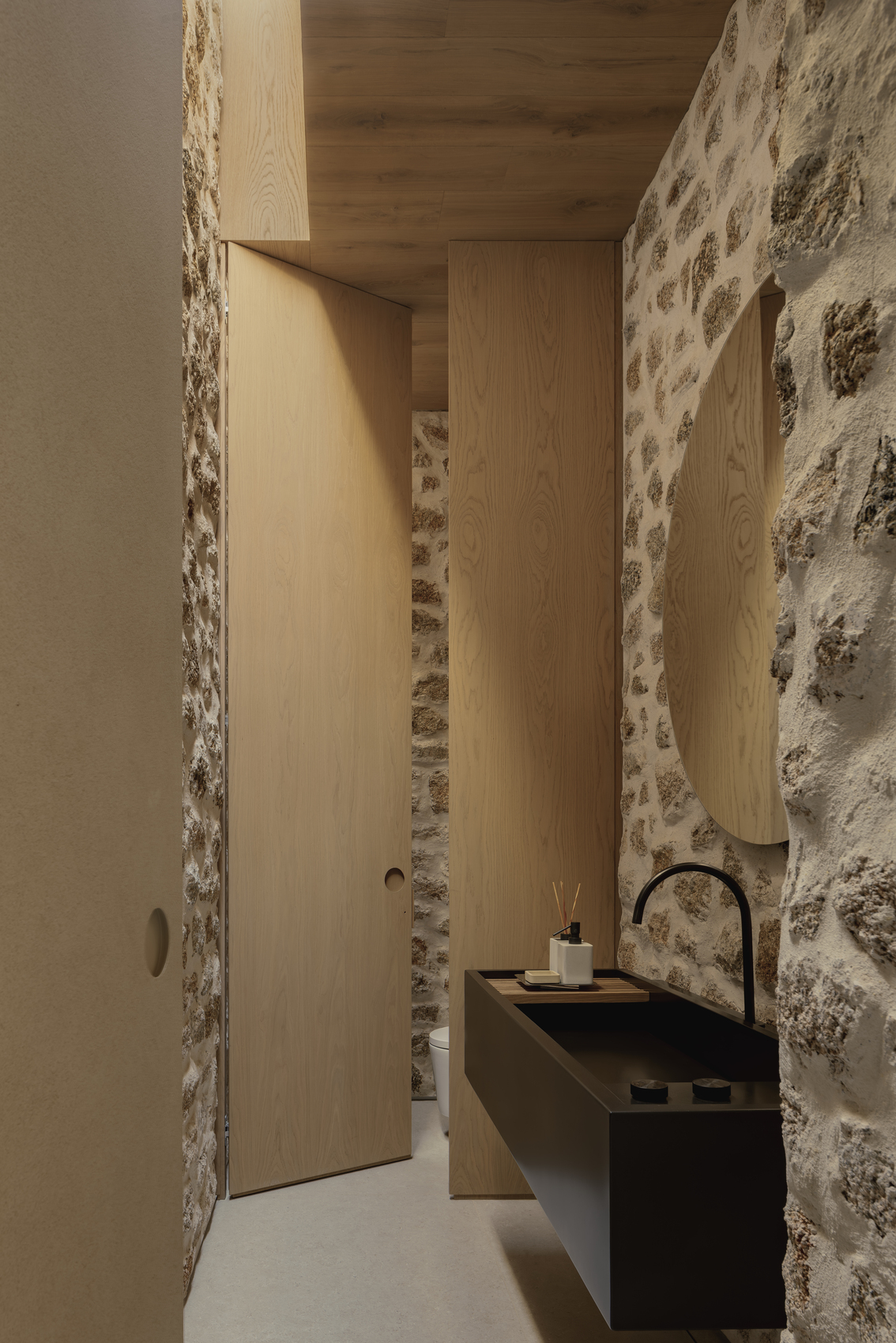
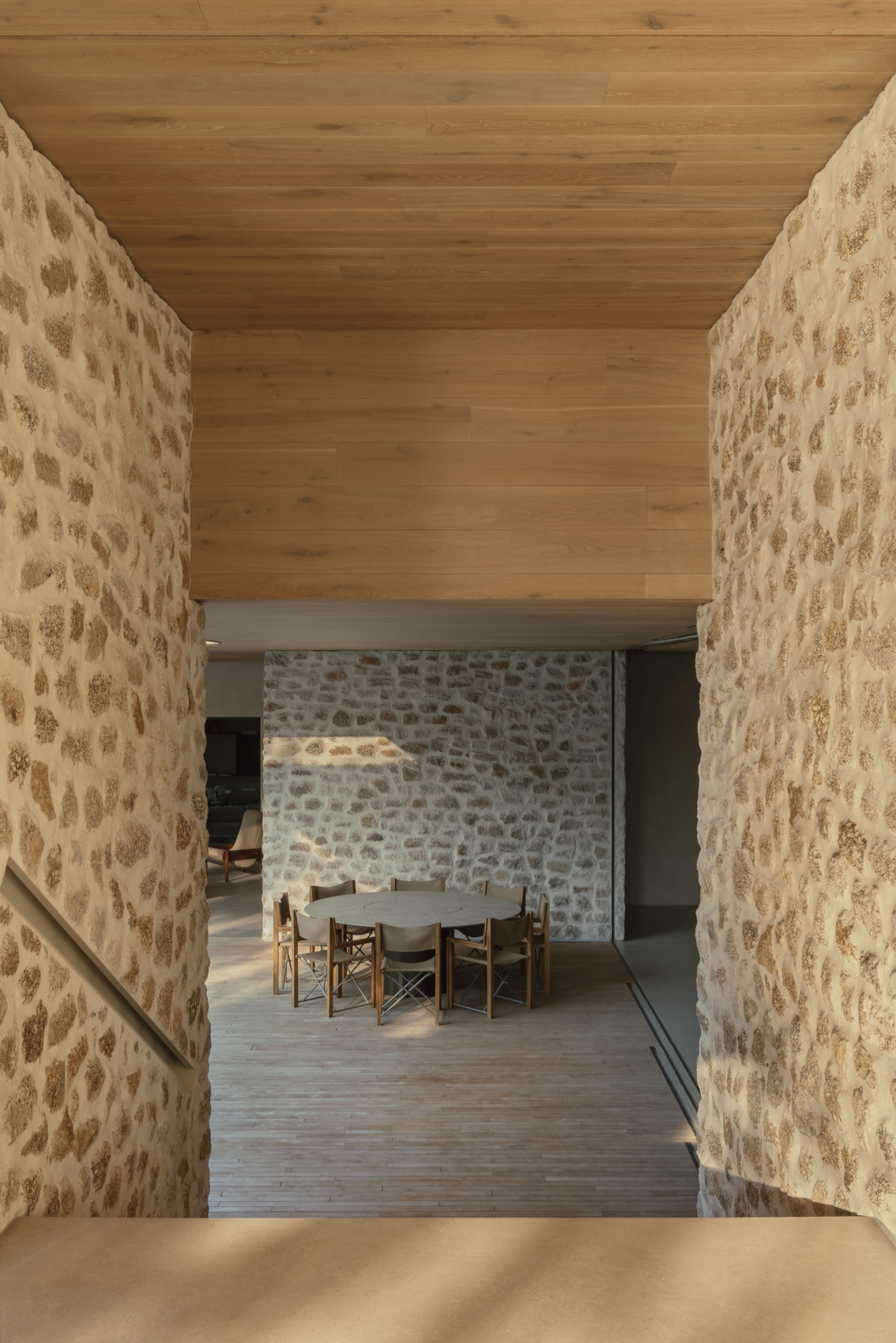
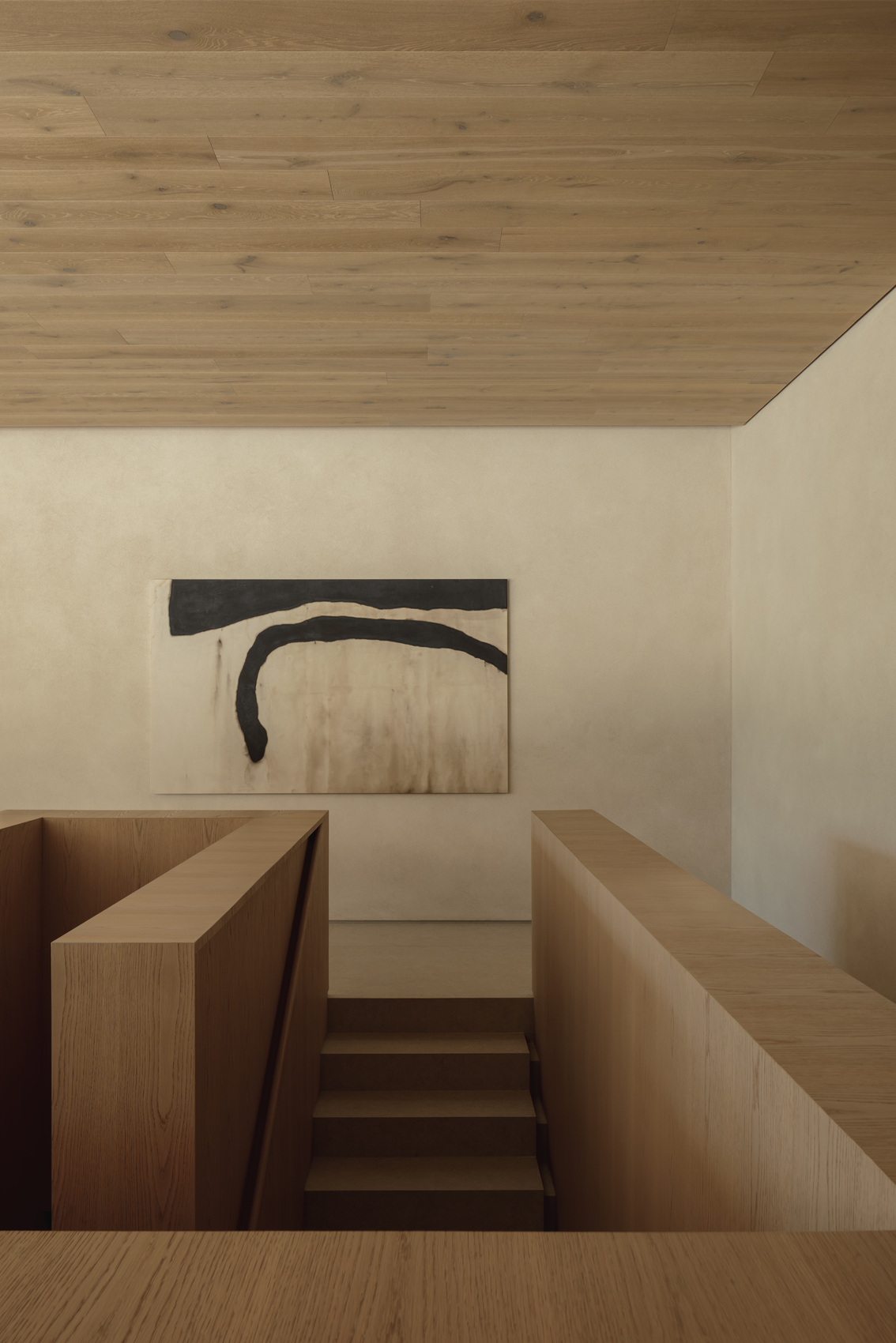
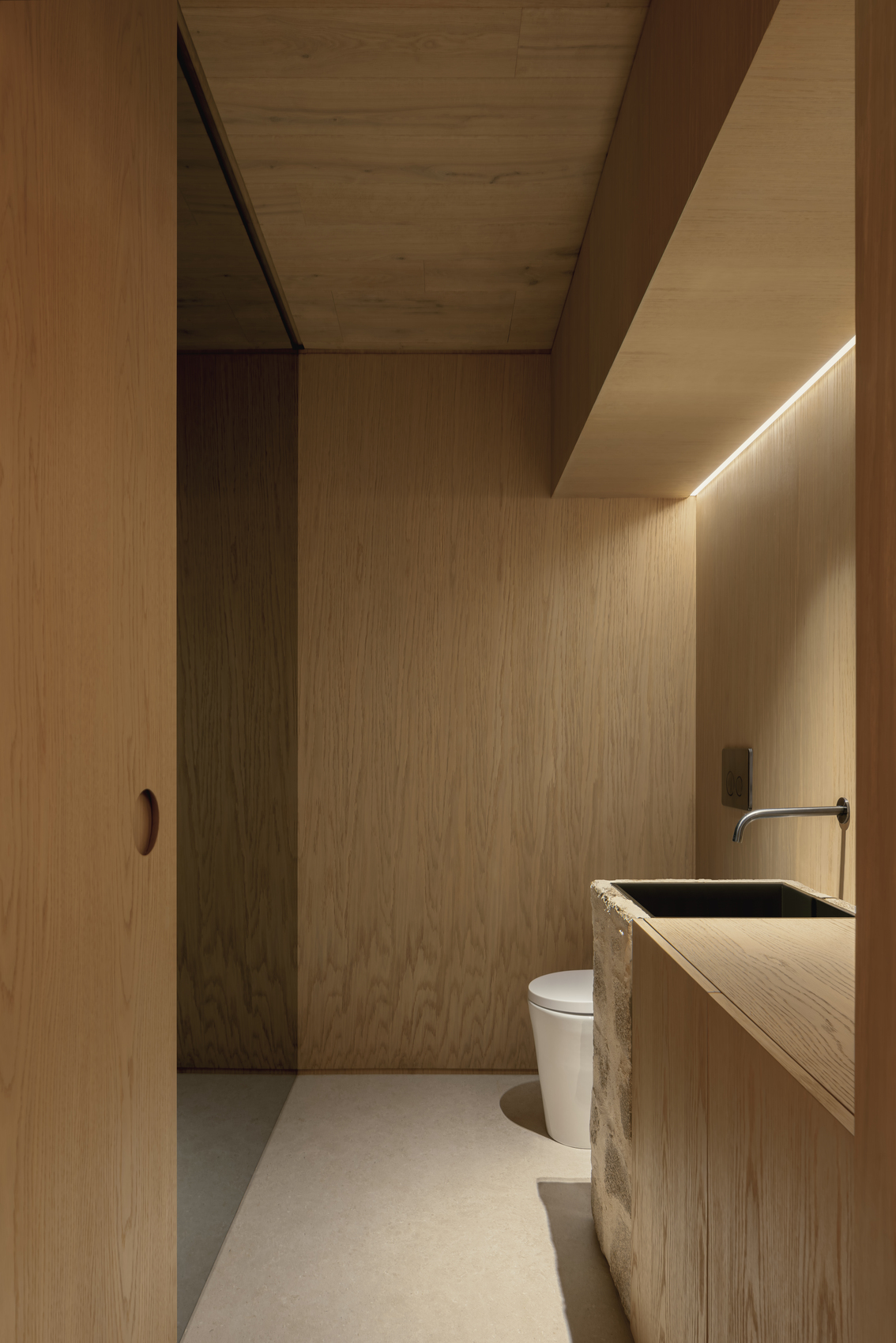
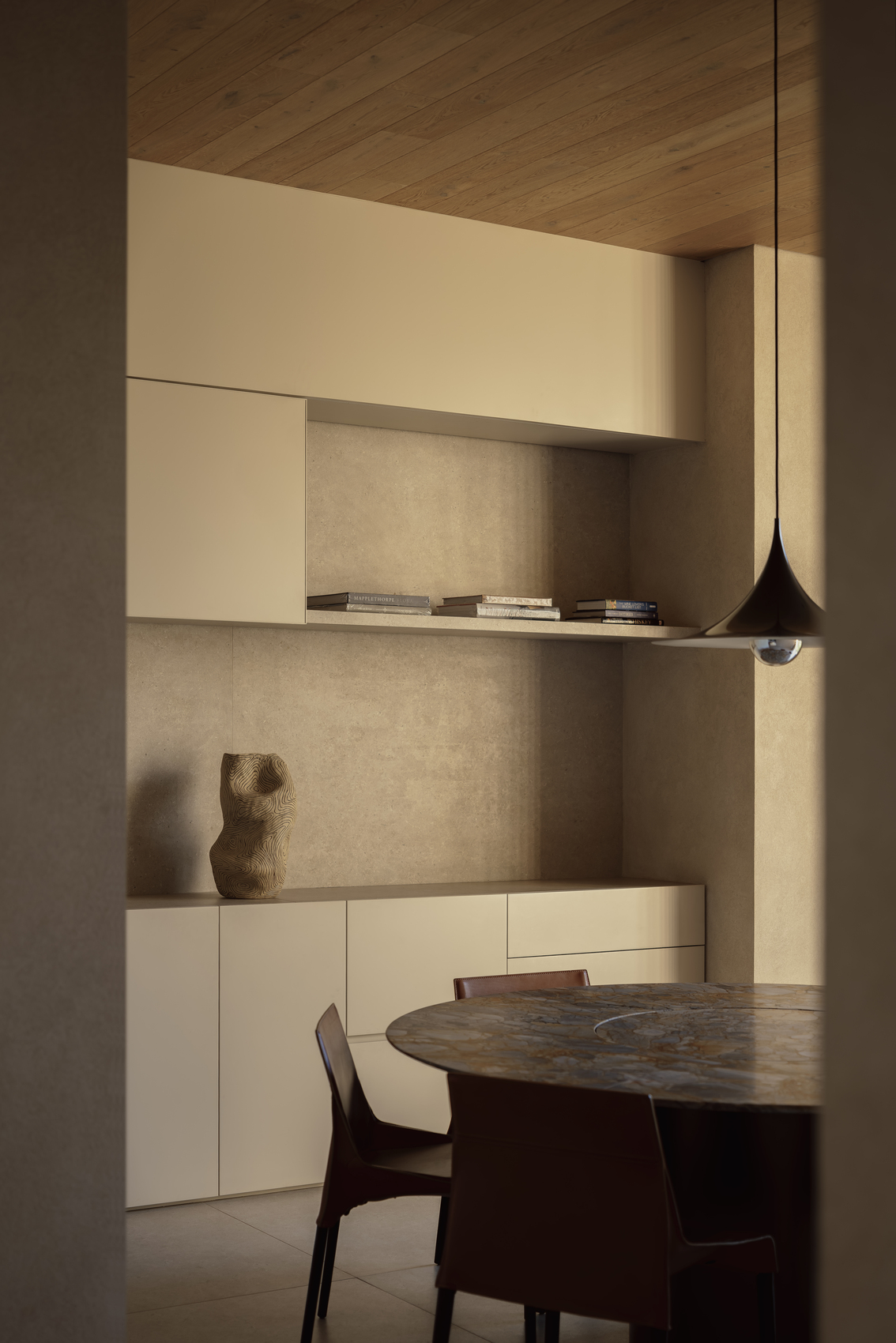
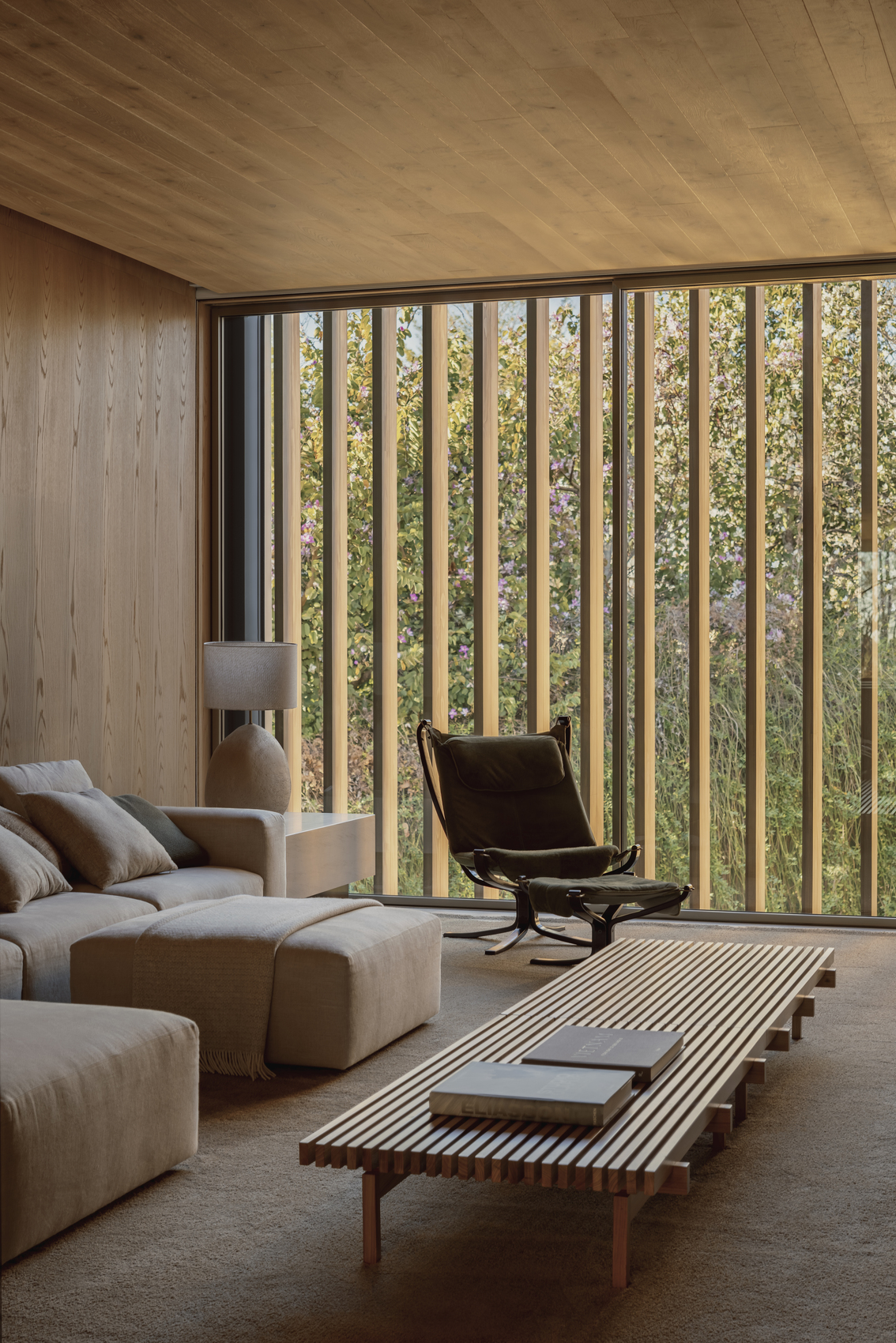
Material consistency plays a significant role in establishing the project’s atmosphere. Rough stone, plaster, wood, and metal are employed throughout the exterior architecture and carried into the interiors, creating a seamless transition between enclosed and open environments. Wood paneling and textured finishes add warmth to the spaces, while carefully curated furnishings and artworks contribute layers of cultural and tactile richness. The restrained palette allows the architecture itself to remain the primary focus, emphasizing proportion, light, and material texture over decorative excess.
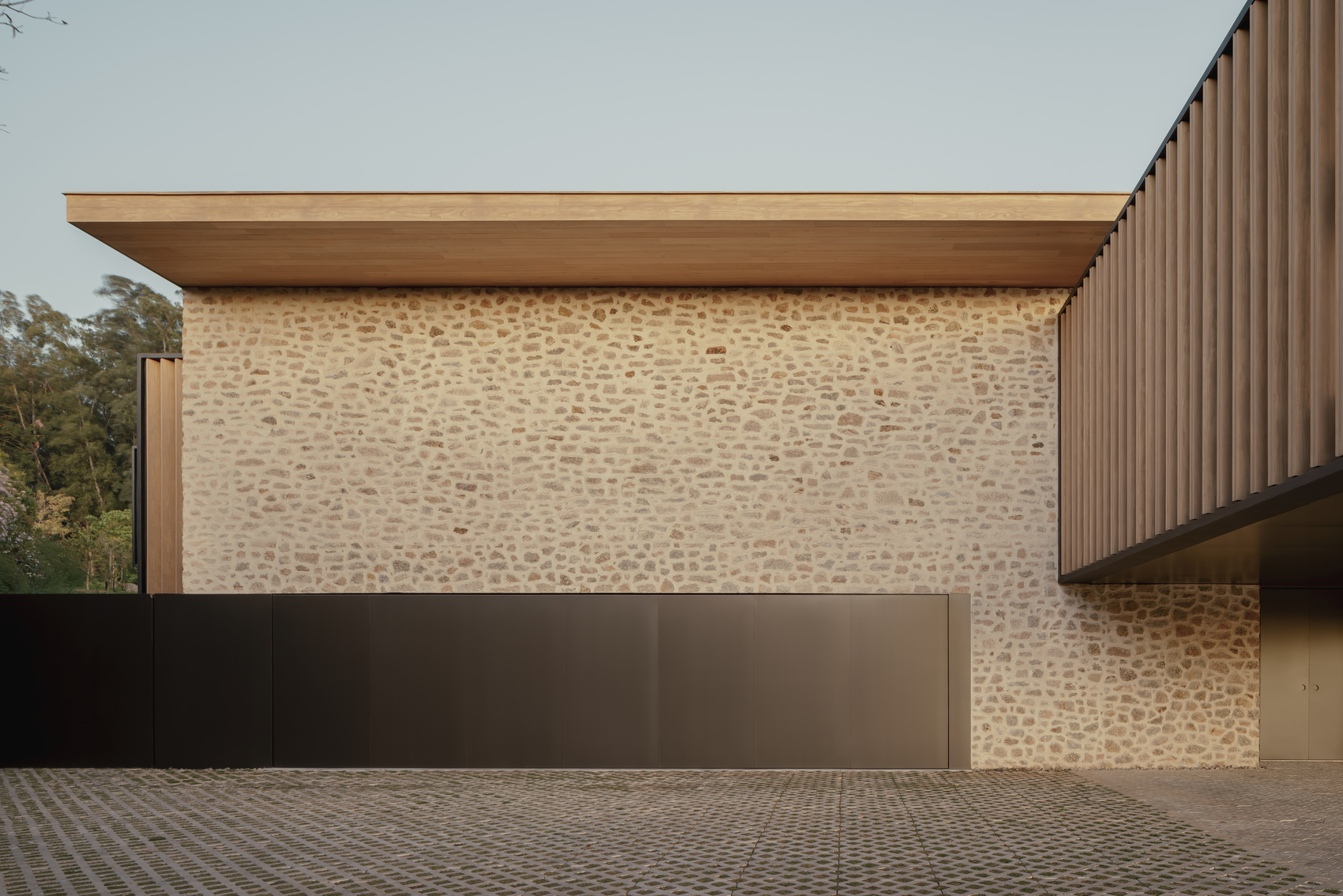
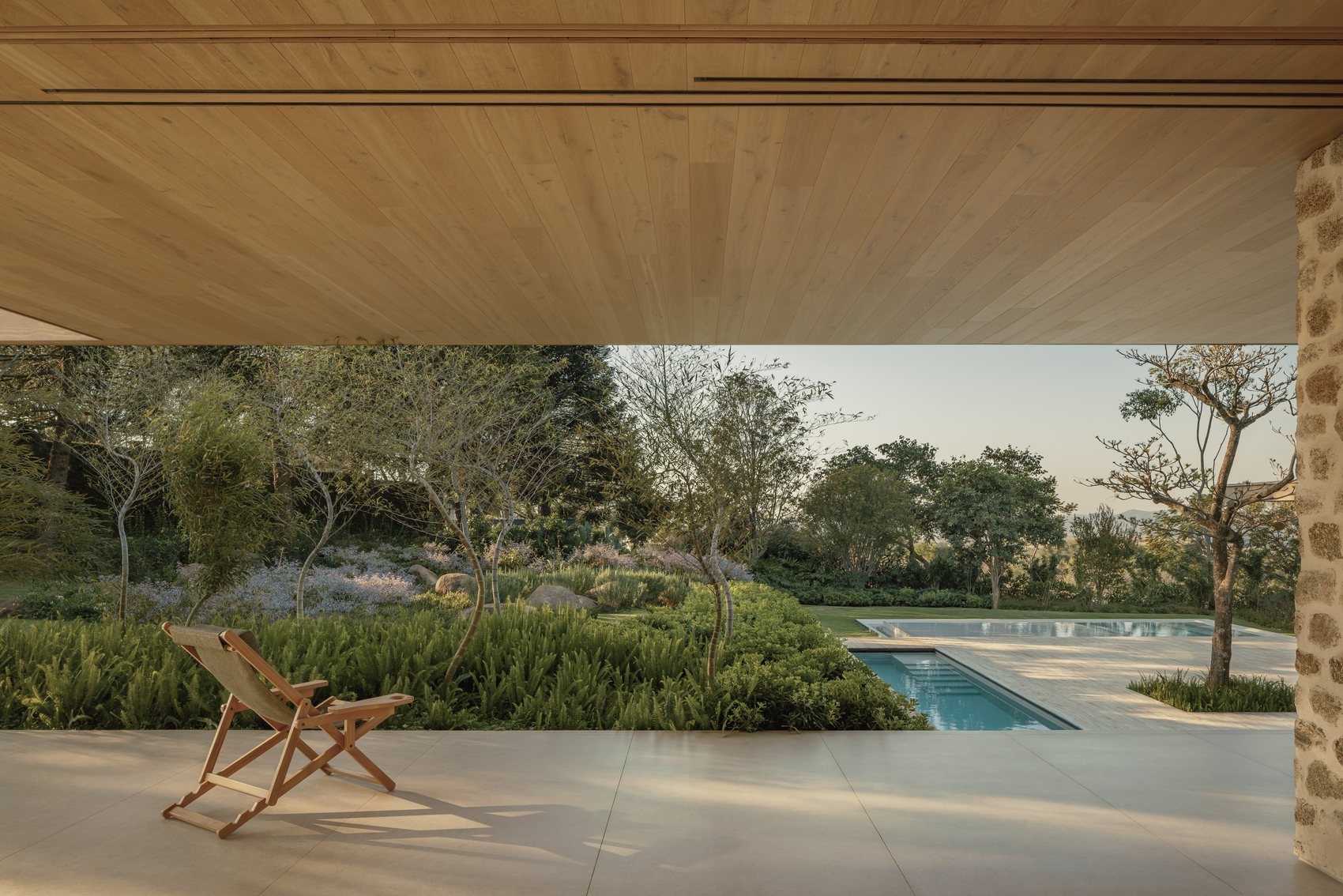
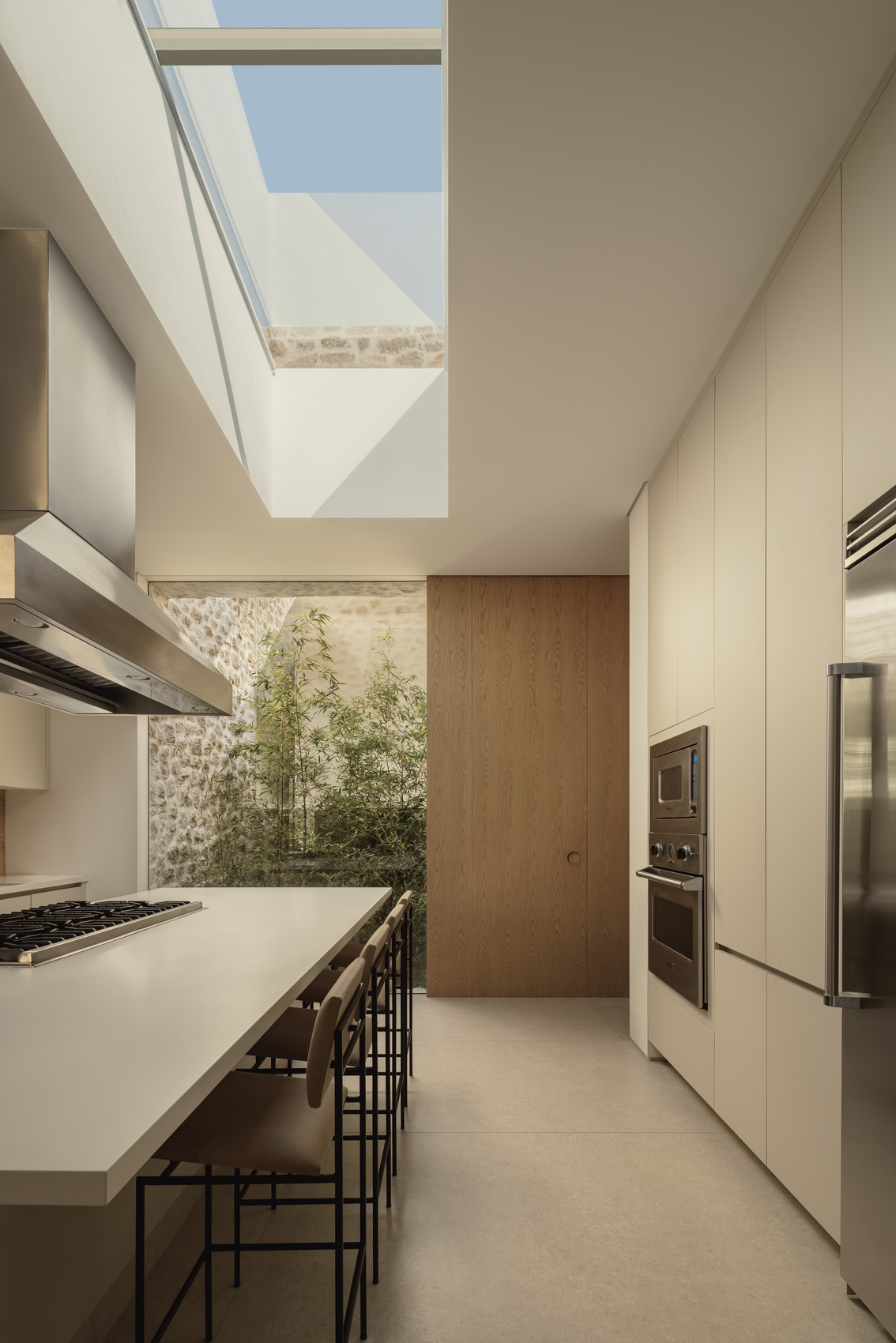
Environmental responsiveness informs many aspects of the design. Large openings promote cross ventilation and natural illumination, while motorized brise-soleils regulate solar gain and privacy. Technological systems, including automated lighting controls and photovoltaic panels, complement passive performance strategies without dominating the architectural experience. The landscape design further strengthens the project’s environmental agenda by respecting existing topography and vegetation, transforming the surrounding greenery into an active participant in the spatial organization of the residence. Through this integration of architecture, engineering, and landscape, Grama House demonstrates a refined approach to contemporary residential design that prioritizes comfort, efficiency, and a meaningful connection to place.
Project Gallery
Project Location
Address: Fazenda da Grama, Itupeva, São Paulo, Brazil
The location specified is intended for general reference and may denote a city or country, but it does not identify a precise address.

