

Architects: MoDusArchitects
Area: 1,465 m²
Year: 2023
Photography: Simone Bossi; Marco Cappelletti
Lead Architects: Sandy Attia, Matteo Scagnol
Architects Team: Filippo Pesavento
Contractor: Edilflaim srl
Structural Engineering: Ing. Alessandro Svaldi, Unitec Group s.r.l.
Civil Engineering: Geo. Giorgio Ferrari, Studio Ferrari, Revò, Novella, Trentino
Mechanical Engineering: Ing. Roberto Svaldi, Unitec Group s.r.l.
Electrical Engineering and Energy Consultant: Ing. Andrea Zanetti, Unitec Group s.r.l.
Geological Consultant: Geol. Lino Berti
Lighting Consultant: P.I. Werner Graber
Materials: Porphyry stone, larch wood, pinewood, concrete
Location: Trentino
Country: Italy
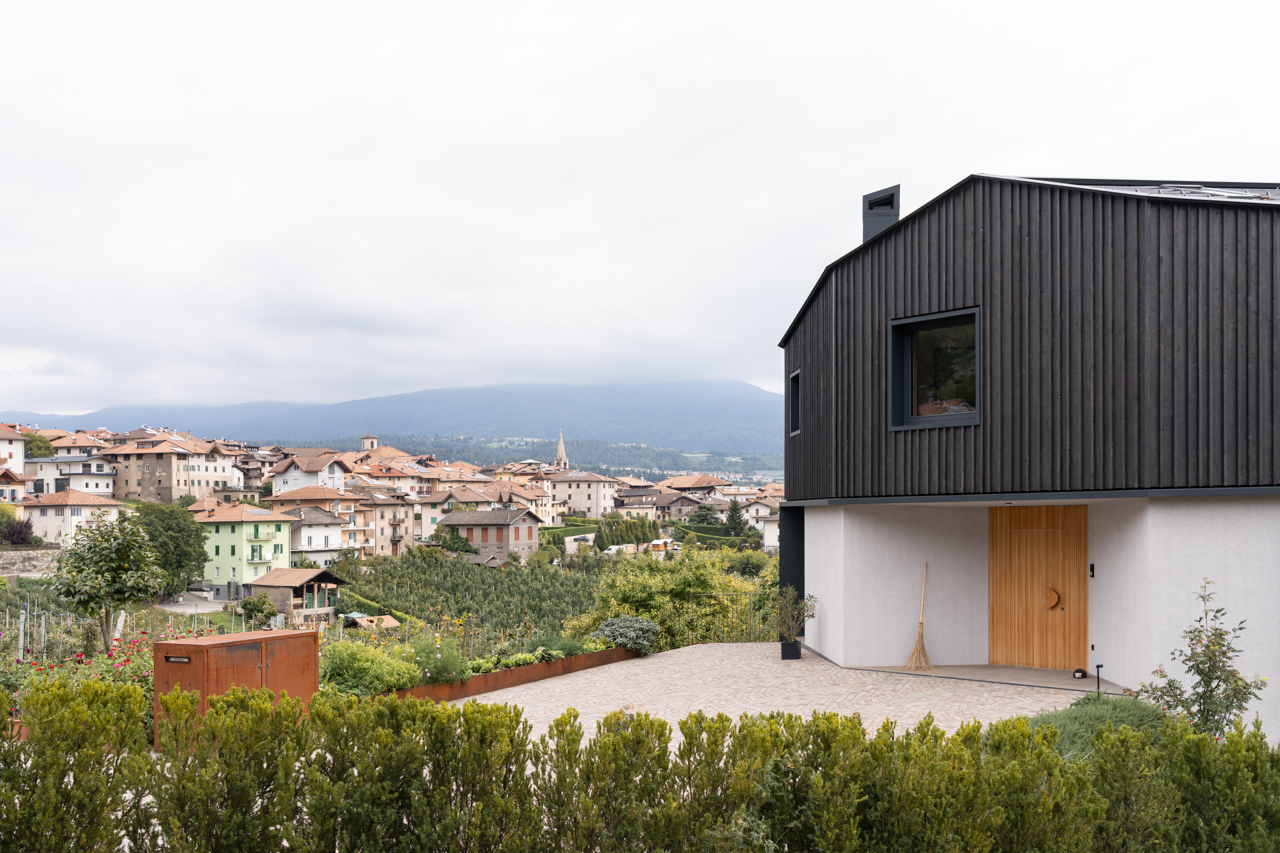
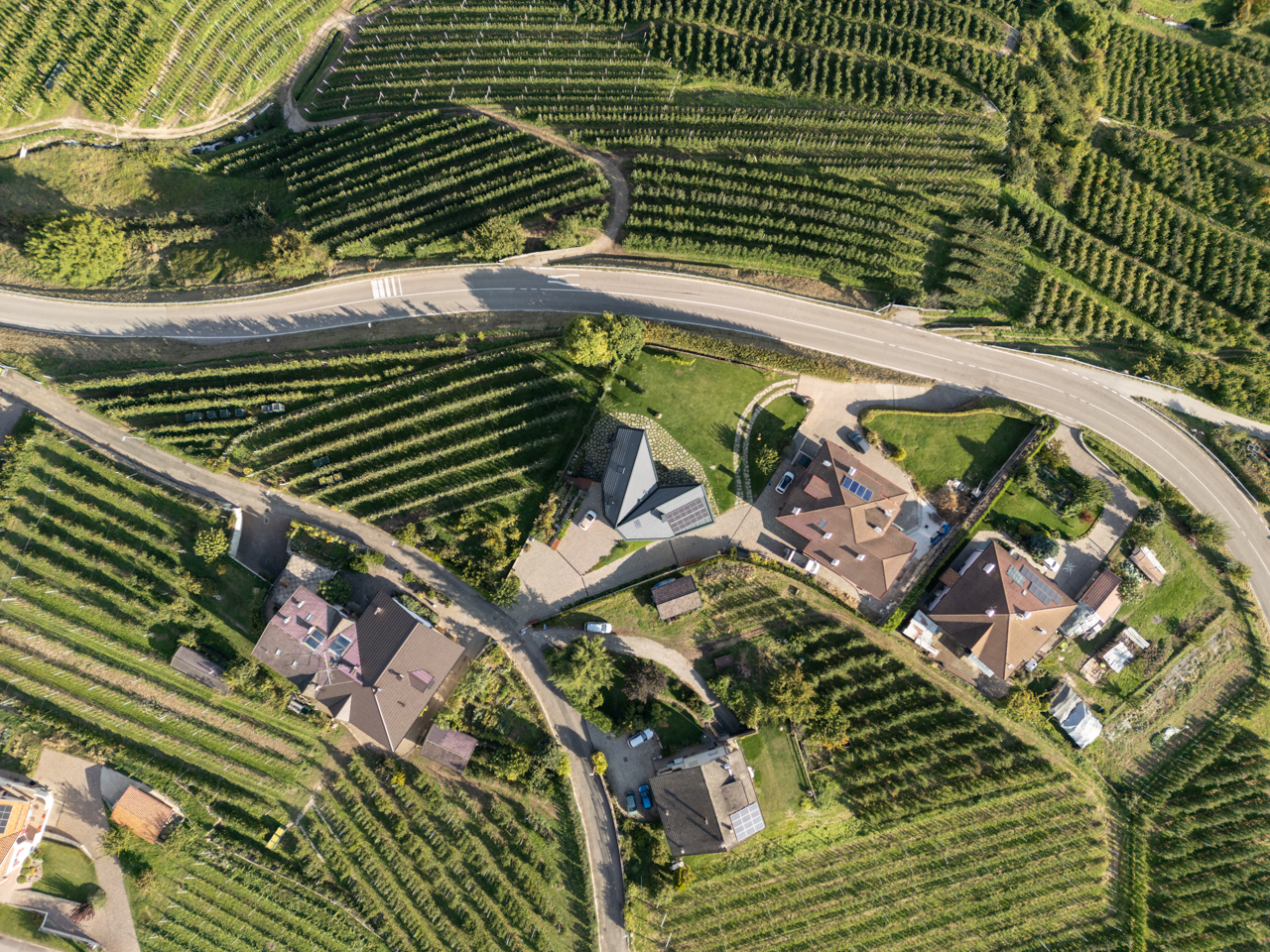
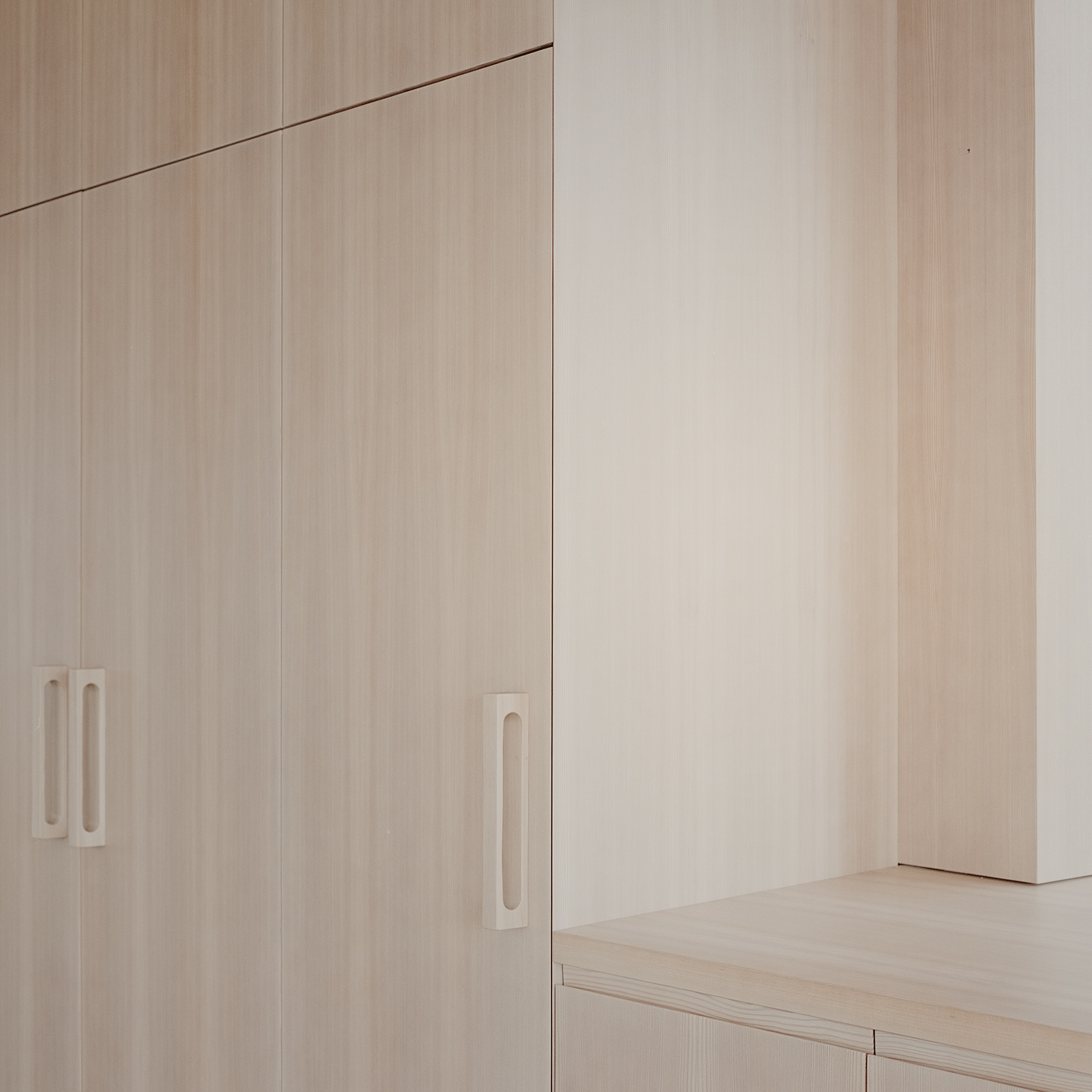
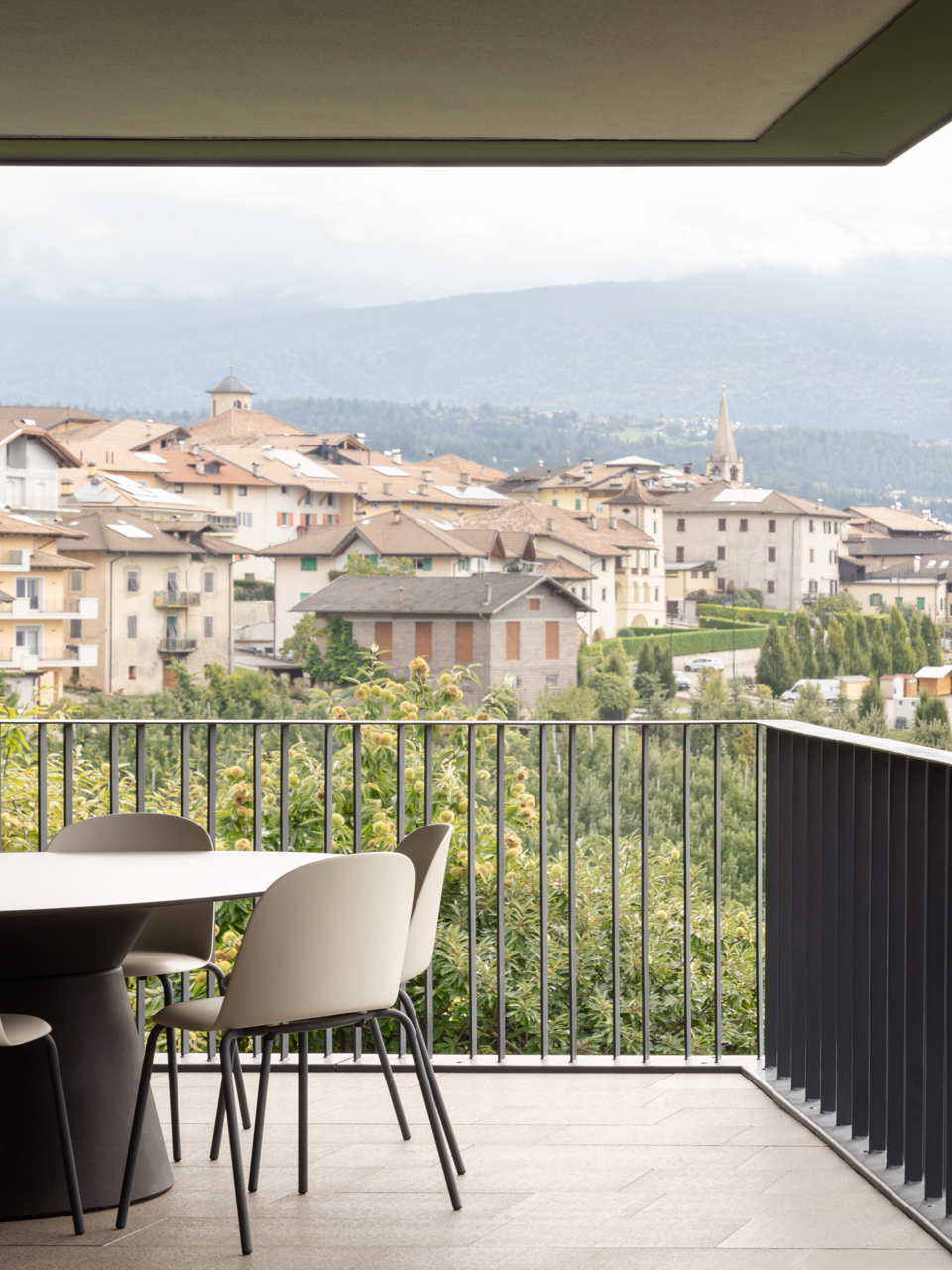
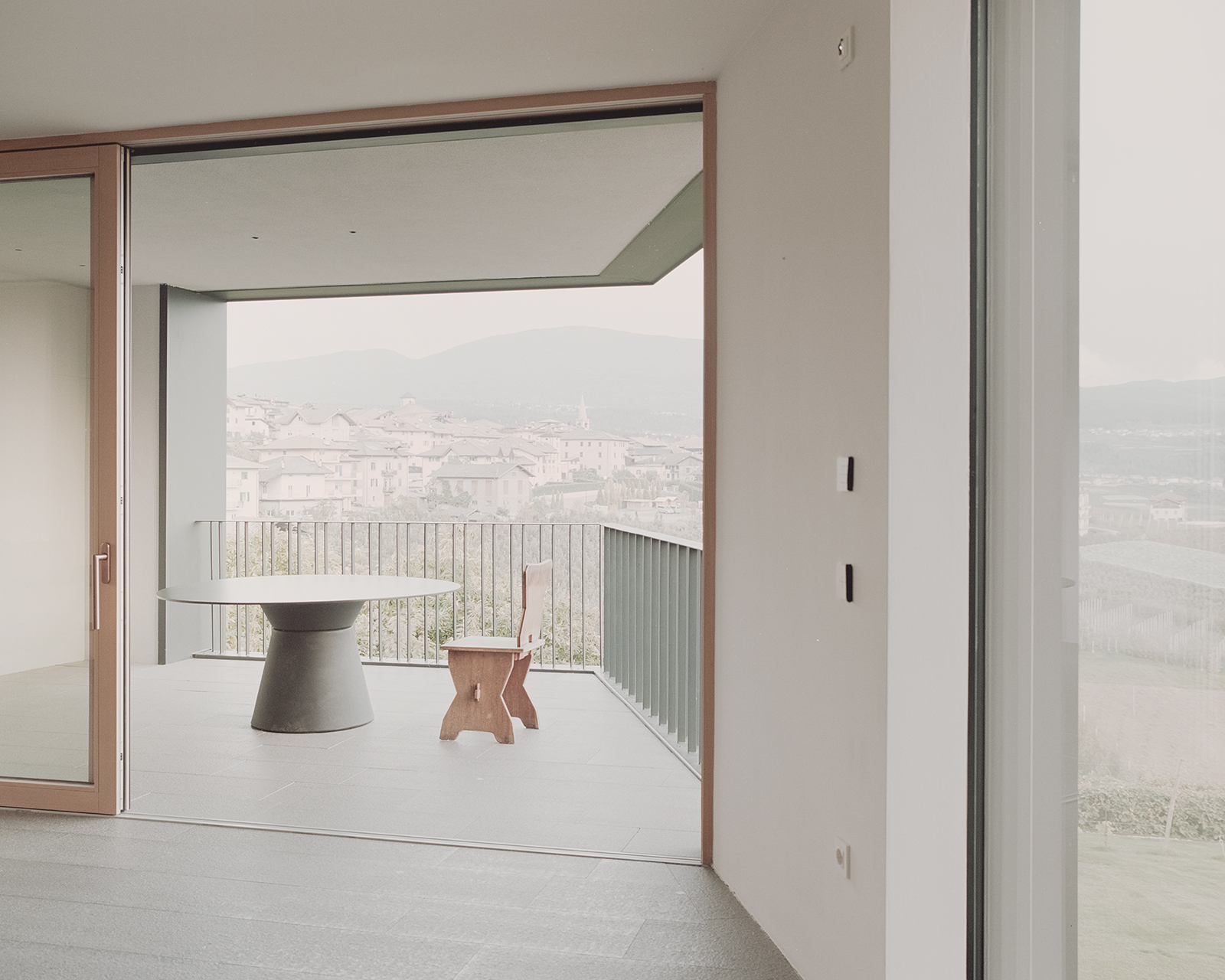
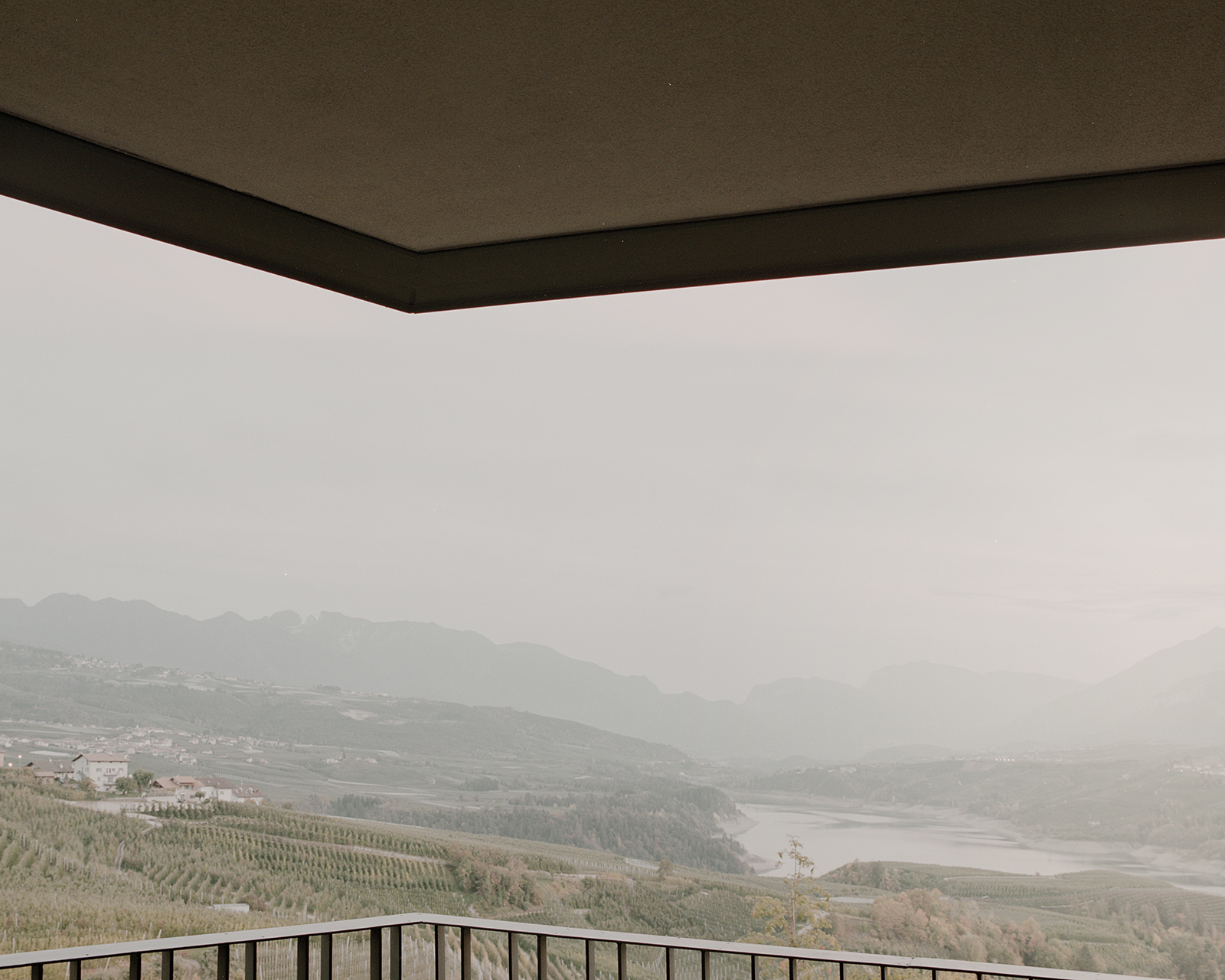
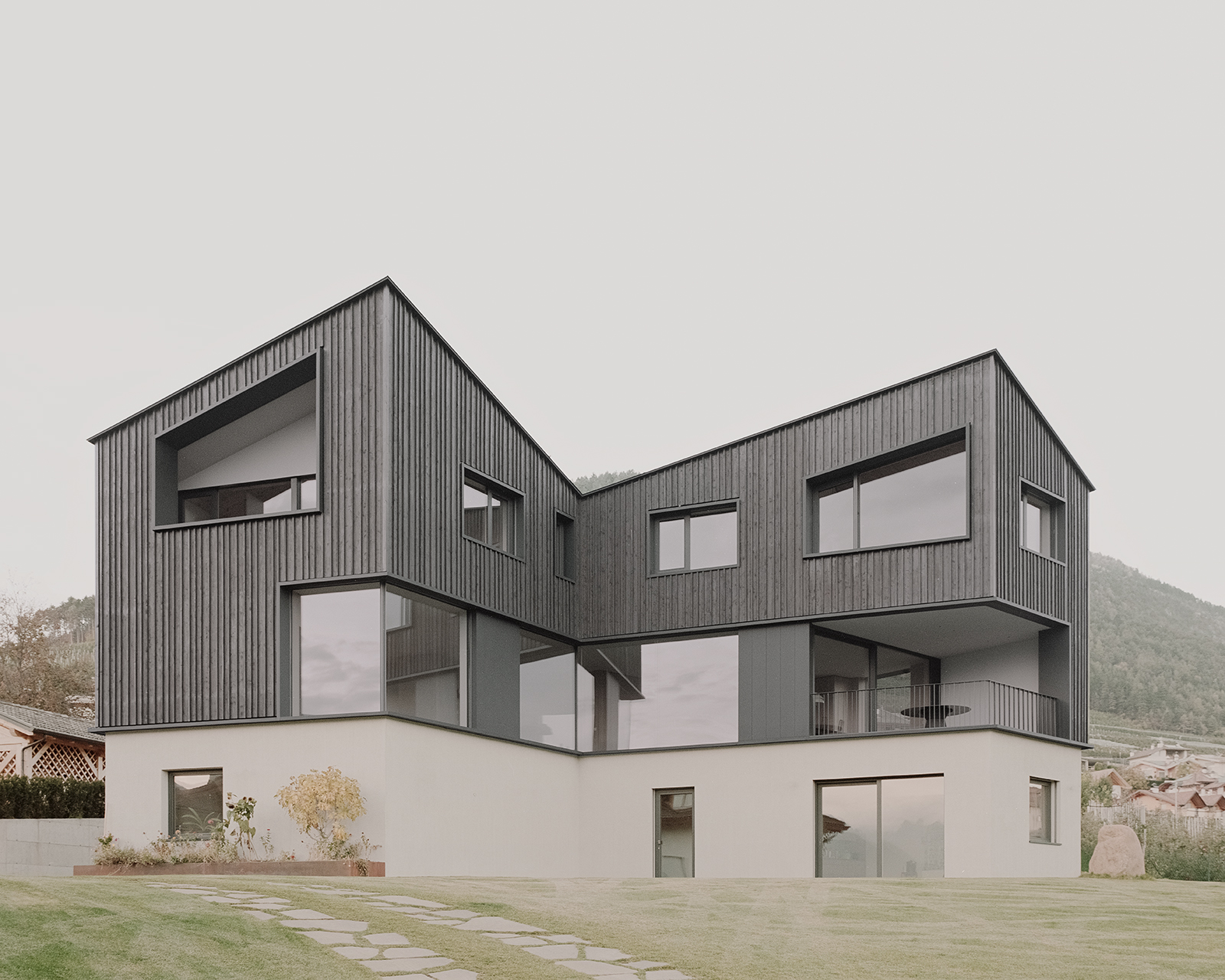
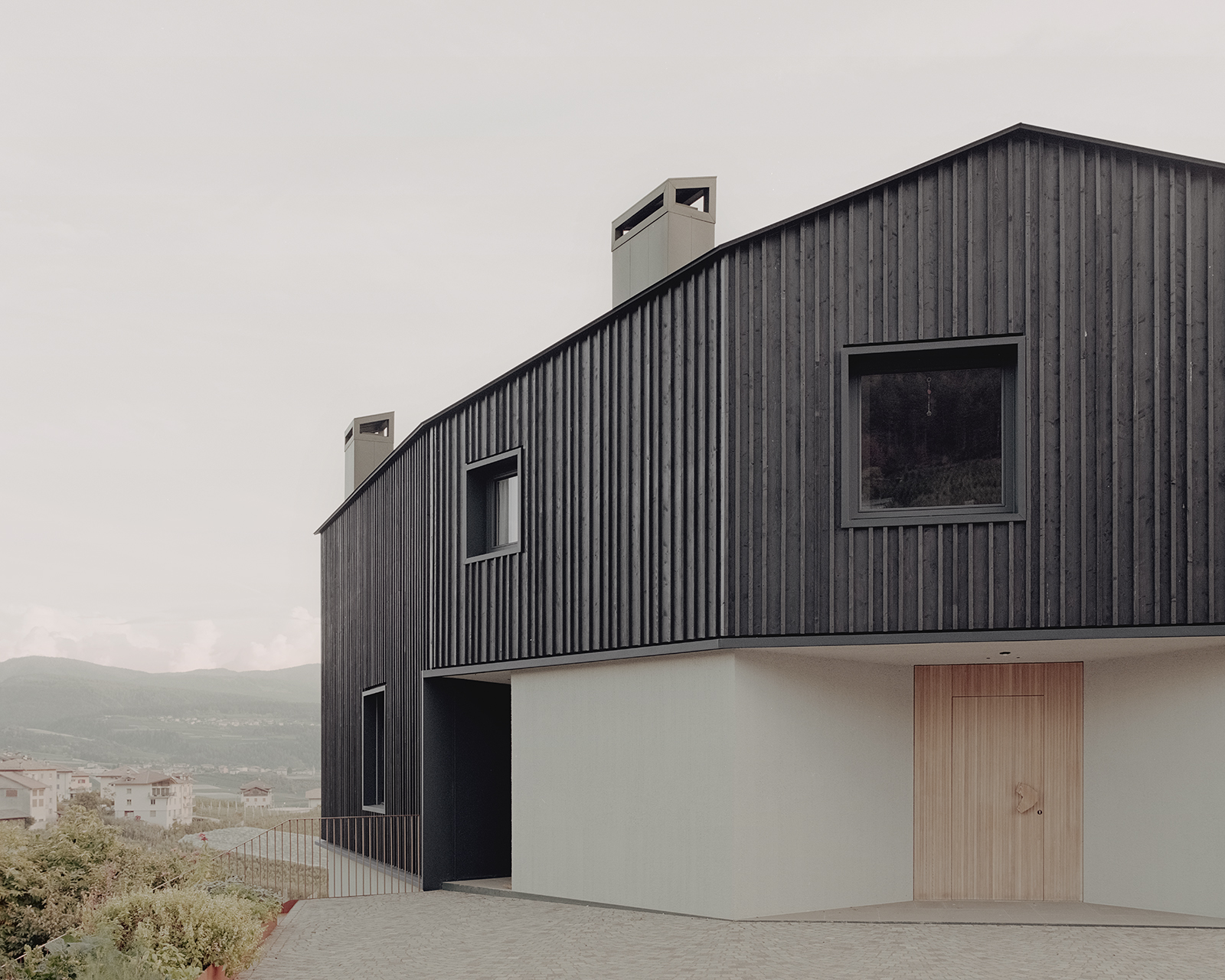
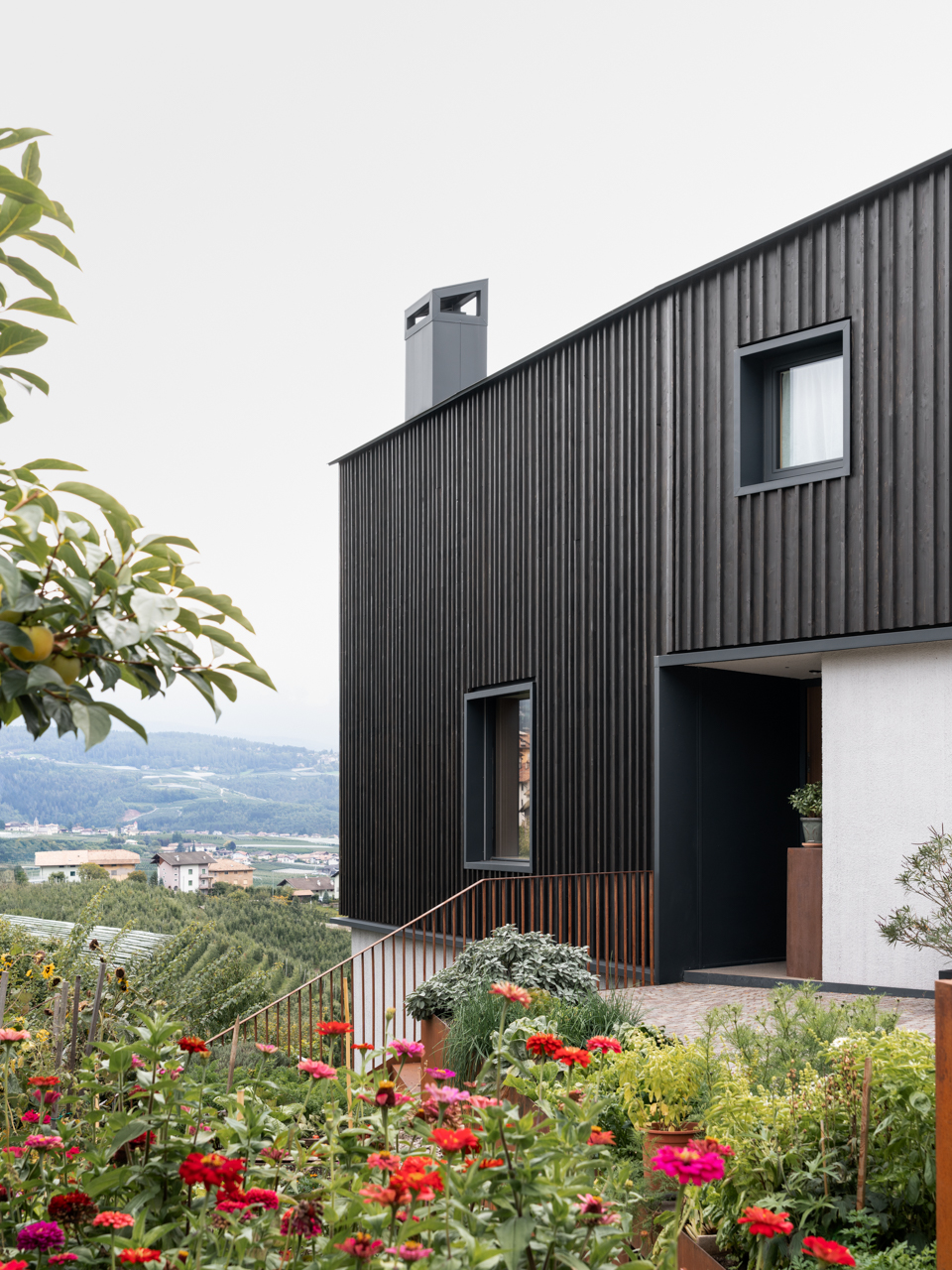
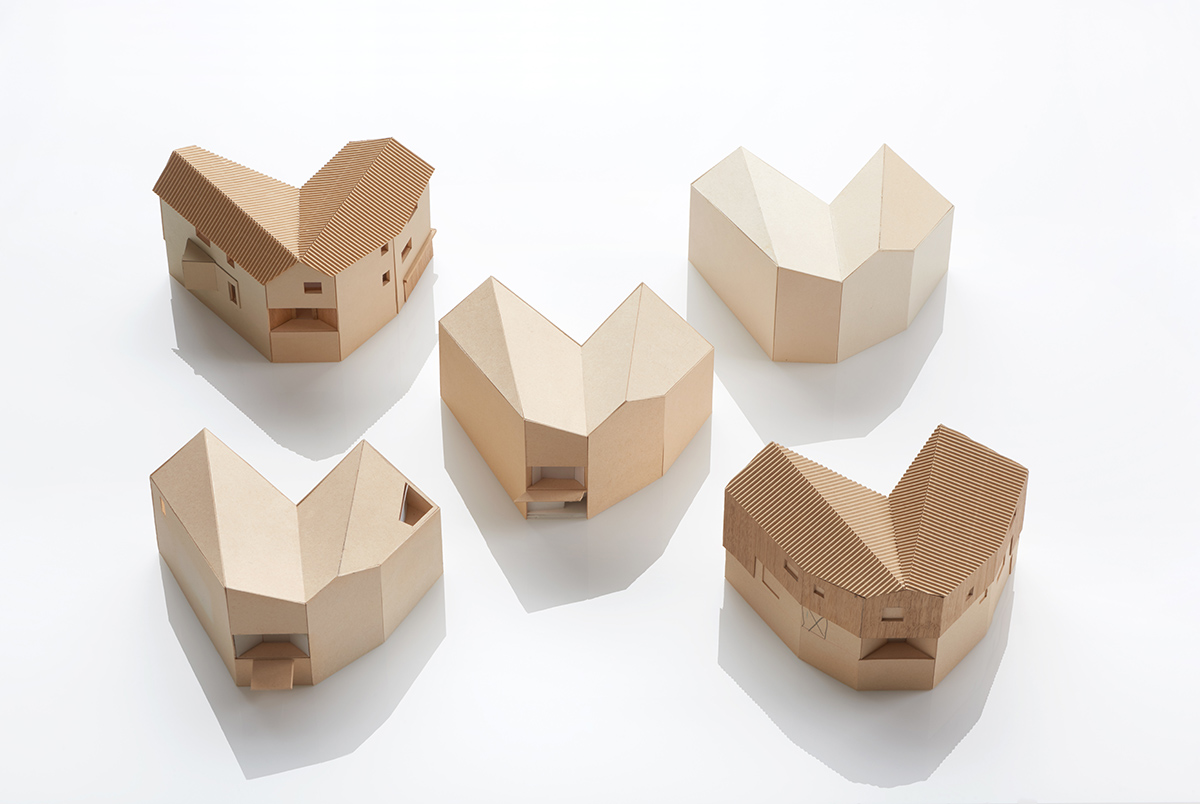
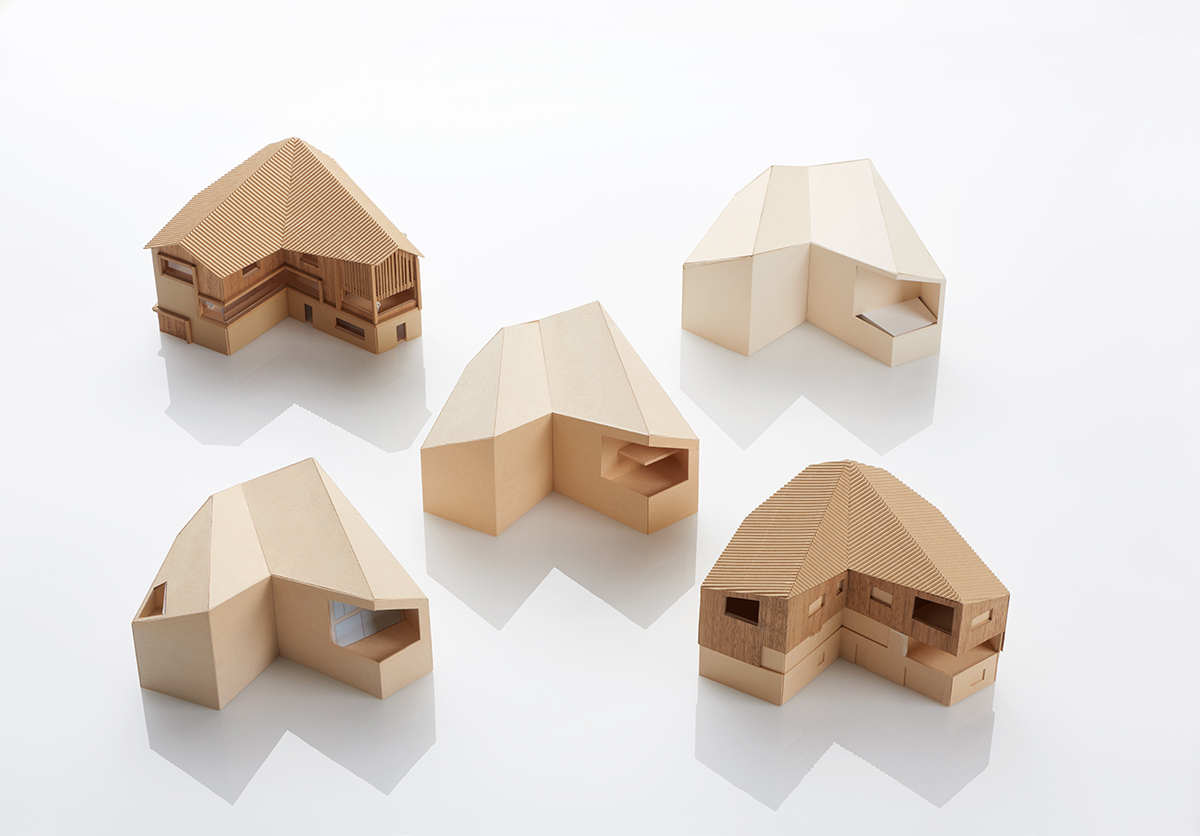
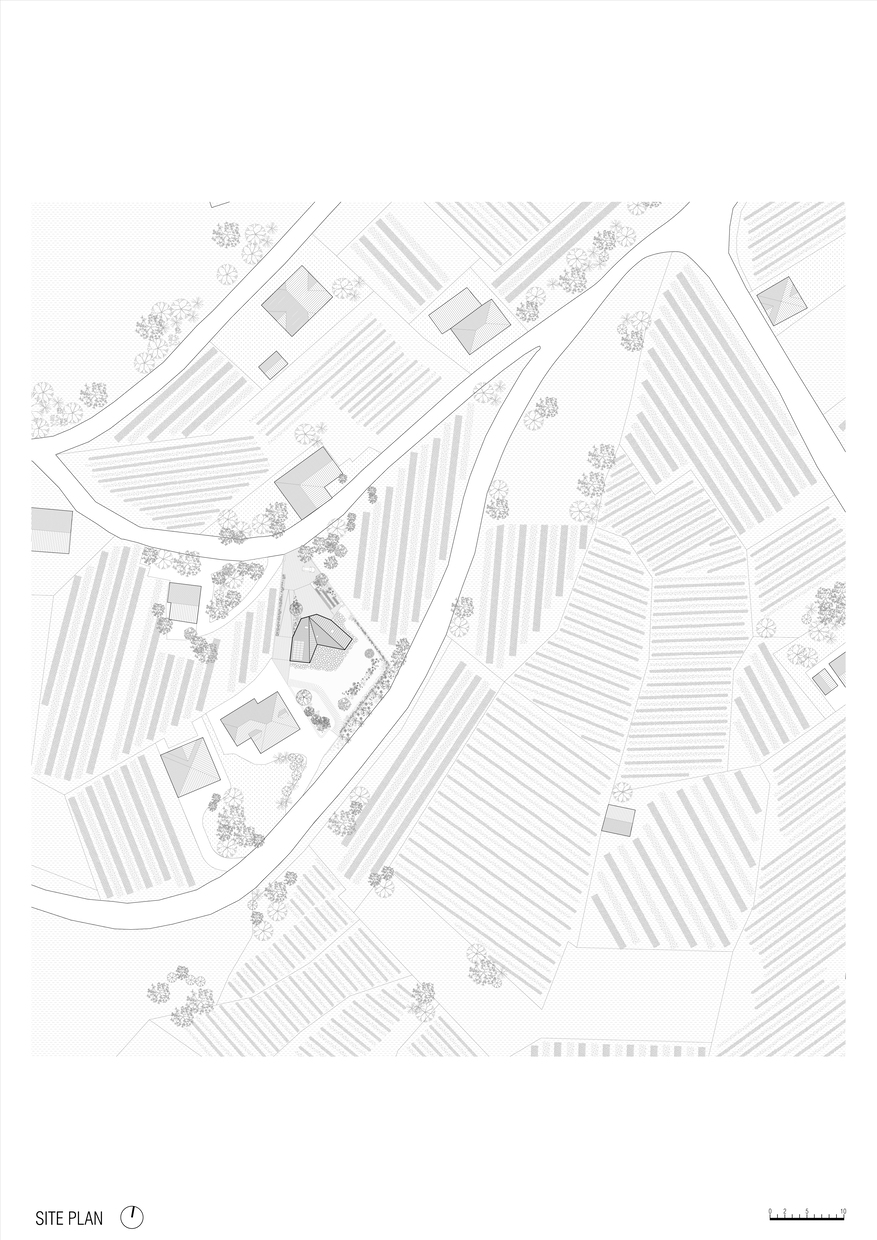
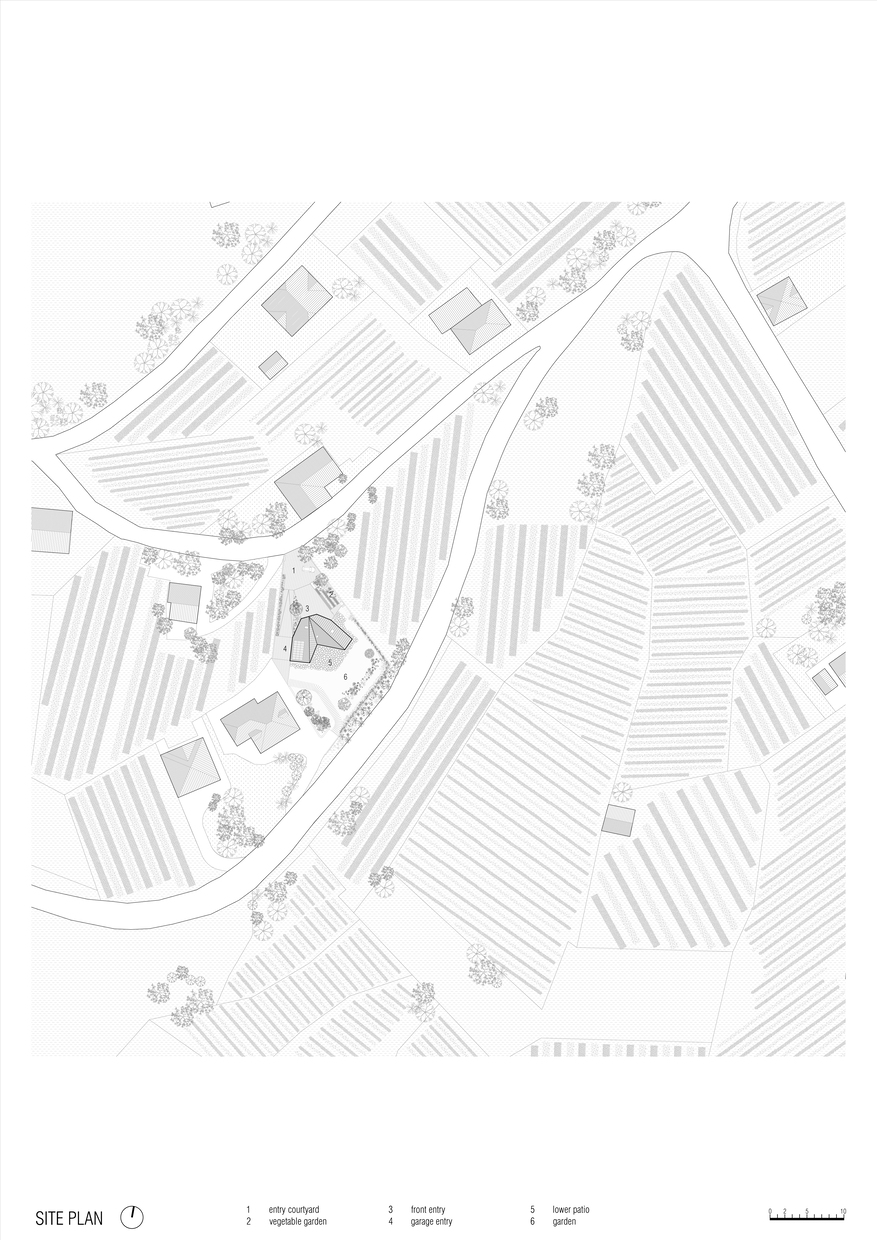
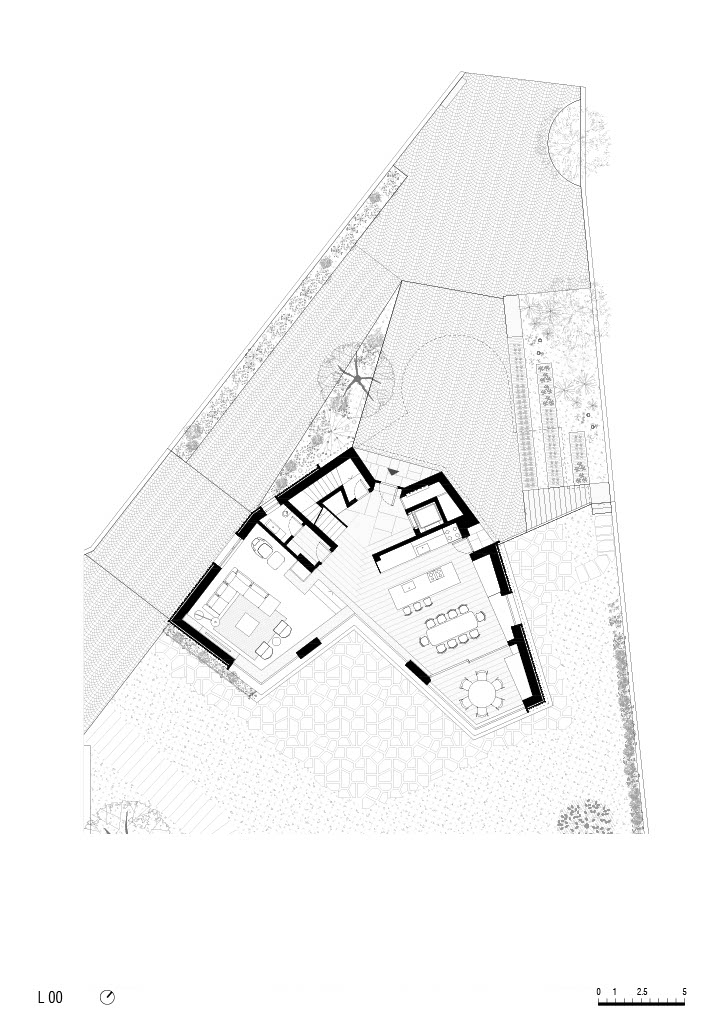
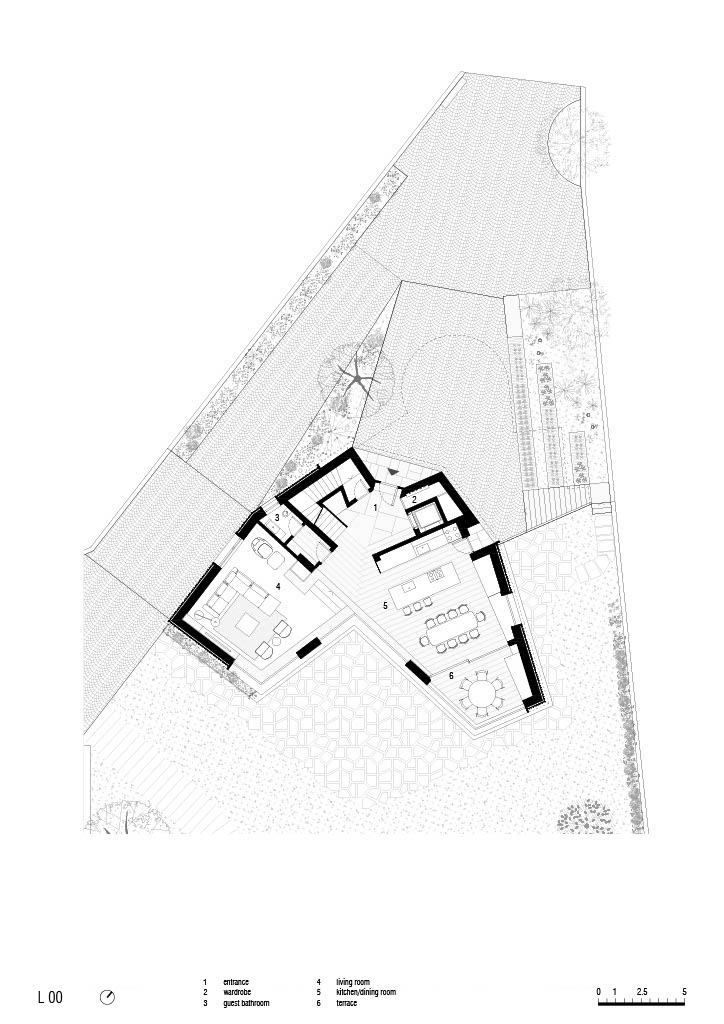
Hometown House is a private residence designed by MoDusArchitects in Val di Non, a rural Alpine valley in northern Italy known for its apple orchards and expansive landscapes. Conceived as a second home, the project reinterprets local building traditions through a contemporary architectural language rooted in material restraint and spatial clarity. The house is composed of two single-pitched volumes arranged in a V-shaped plan that opens toward the southern valley and Lake Santa Giustina, maximizing daylight and views. A reduced palette of porphyry stone, larch, and pinewood establishes continuity between interior and exterior while referencing regional construction practices. Interior spaces prioritize hospitality and shared living, with generous communal areas connected to outdoor terraces and gardens. Crafted in collaboration with local builders and artisans, the project integrates custom details and traditional elements that reinforce its connection to place, memory, and landscape, offering a restrained yet expressive response to its rural context.
The project is grounded in the idea of return, both physical and emotional. Commissioned by a client who spent decades living abroad, Hometown House occupies the site of a former family residence, transforming personal memory into architectural form. Rather than replicating vernacular typologies, MoDusArchitects pursued an abstracted interpretation of rural architecture, allowing proportion, materiality, and craft to convey continuity with the past while asserting a distinctly contemporary identity.
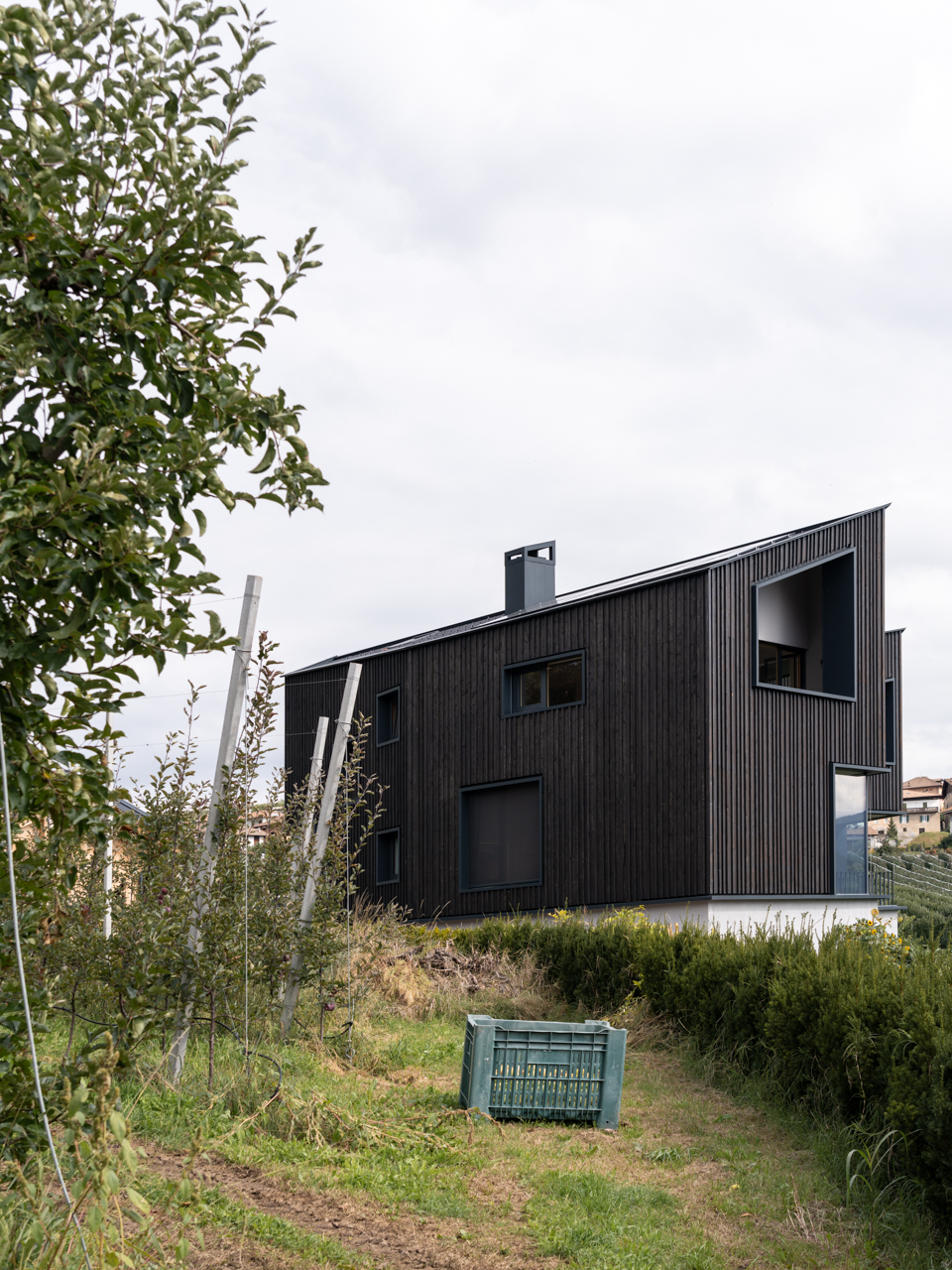
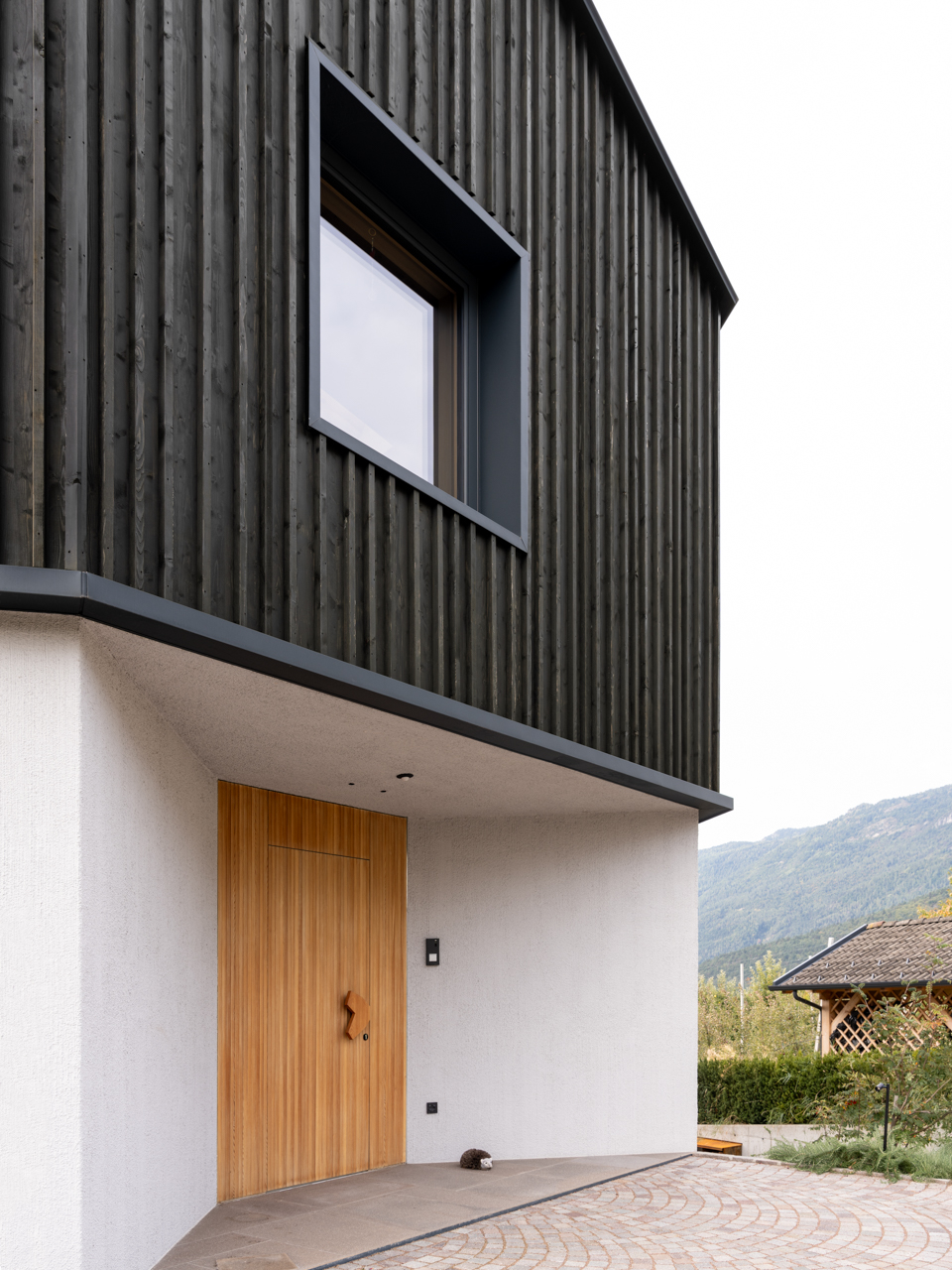
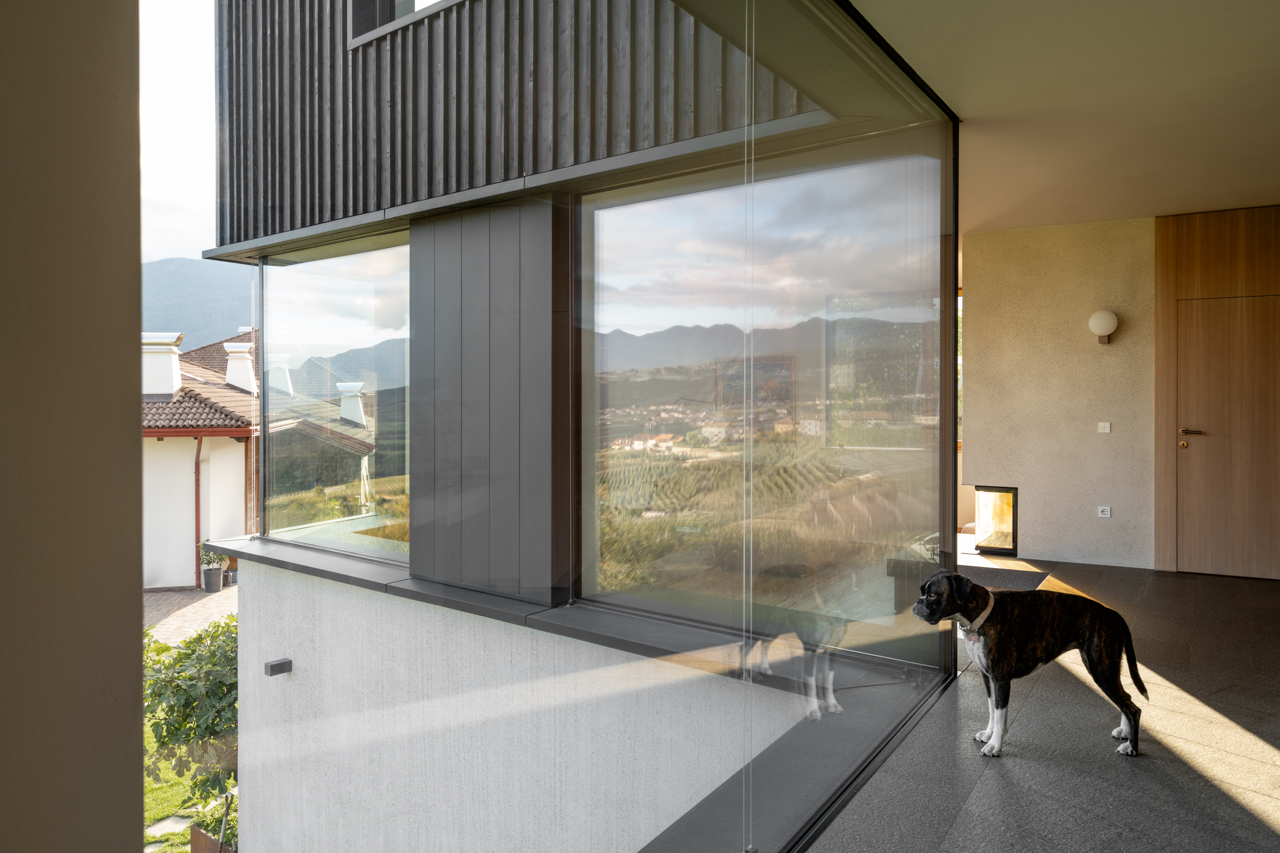
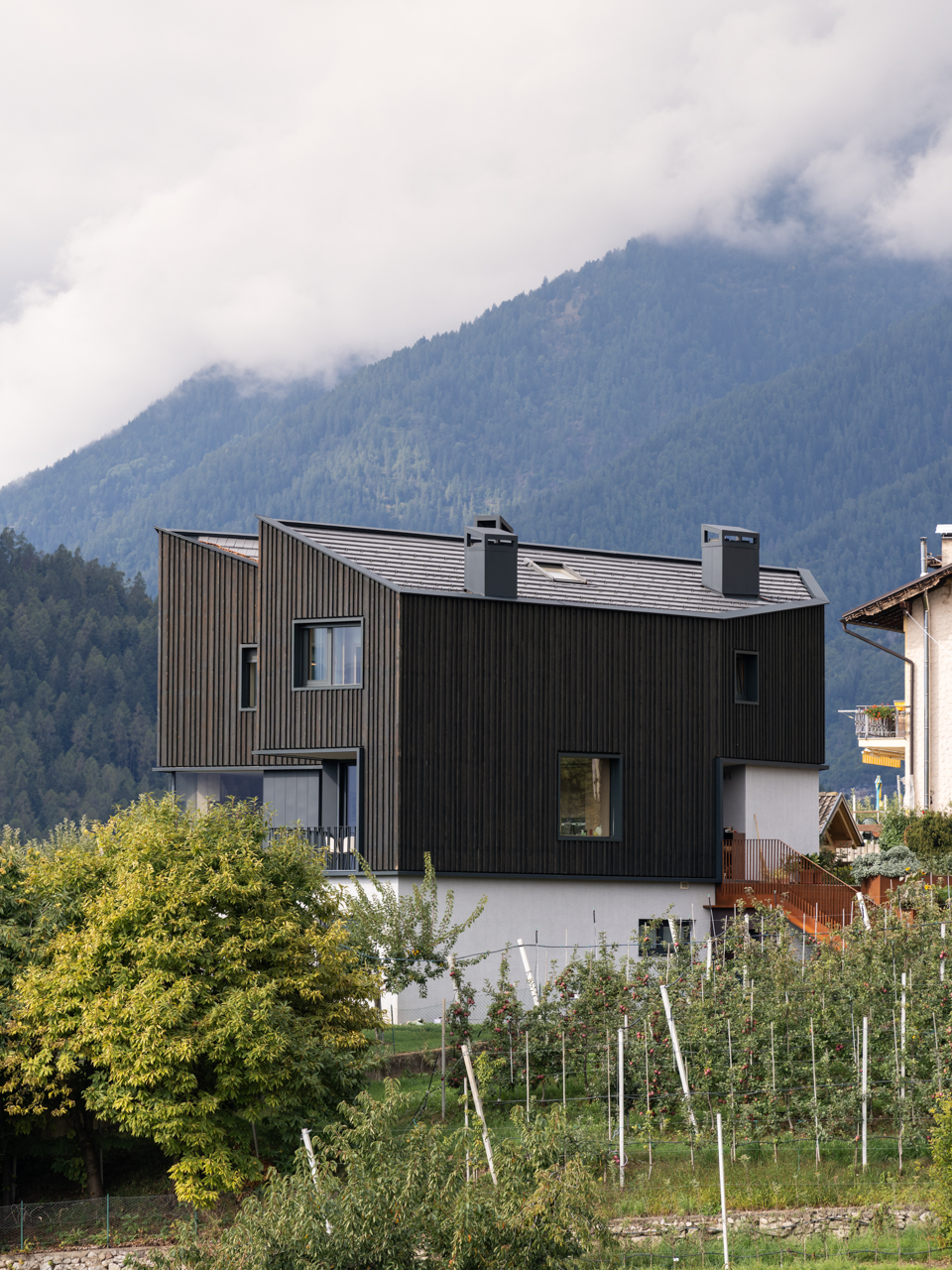
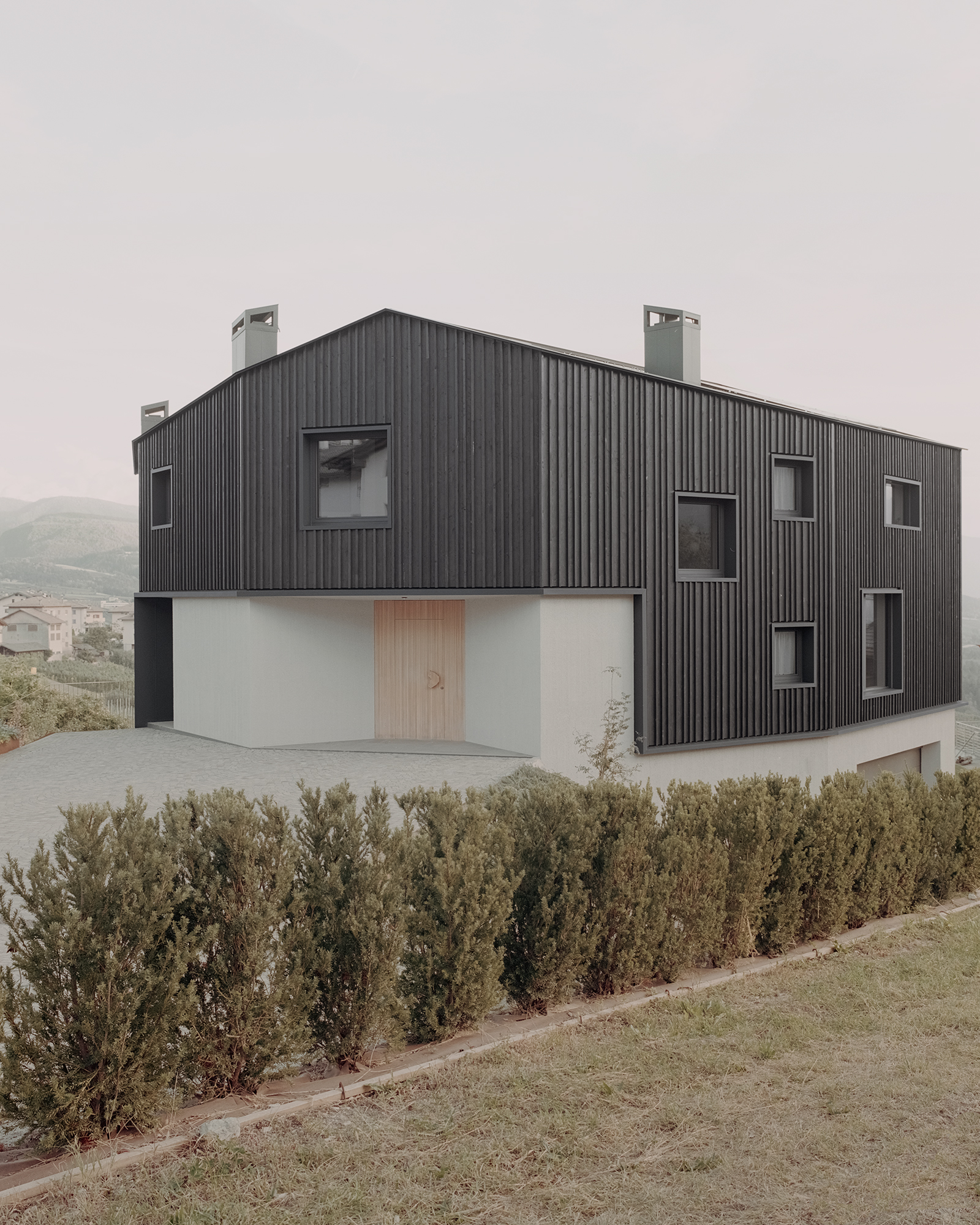
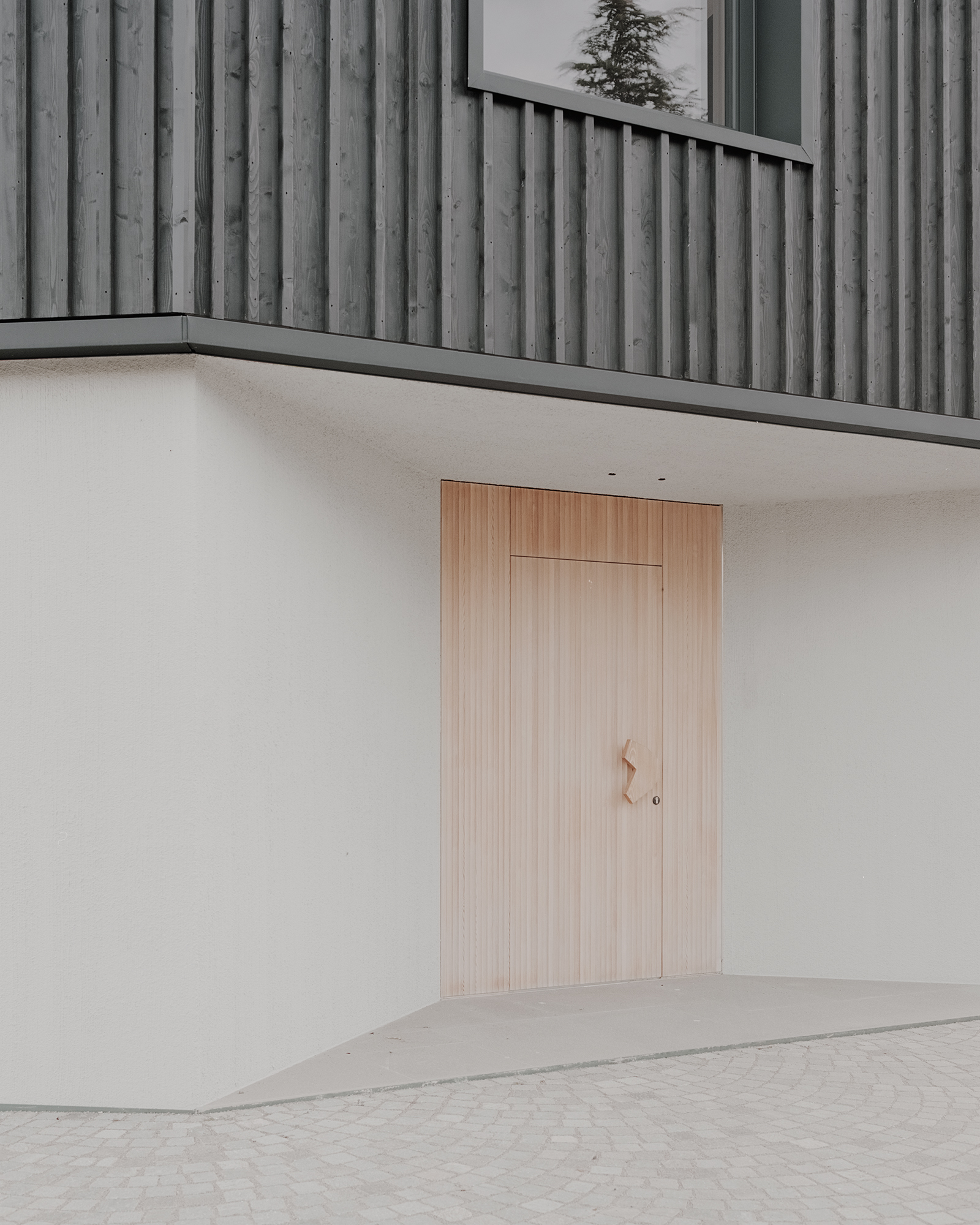
From the approach road at the edge of the village, the house emerges gradually from the sloping terrain. A driveway paved in locally sourced porphyry cobblestones leads to a forecourt that functions as both arrival space and viewing platform over the surrounding orchards and gardens. The exterior is defined by a water-treated black larch facade composed of vertical boards and slender profiles, interrupted only by carefully placed openings and the oblique geometry of the volumes. This dark, tactile envelope contrasts with neighboring white-plastered houses while remaining anchored in regional material traditions.
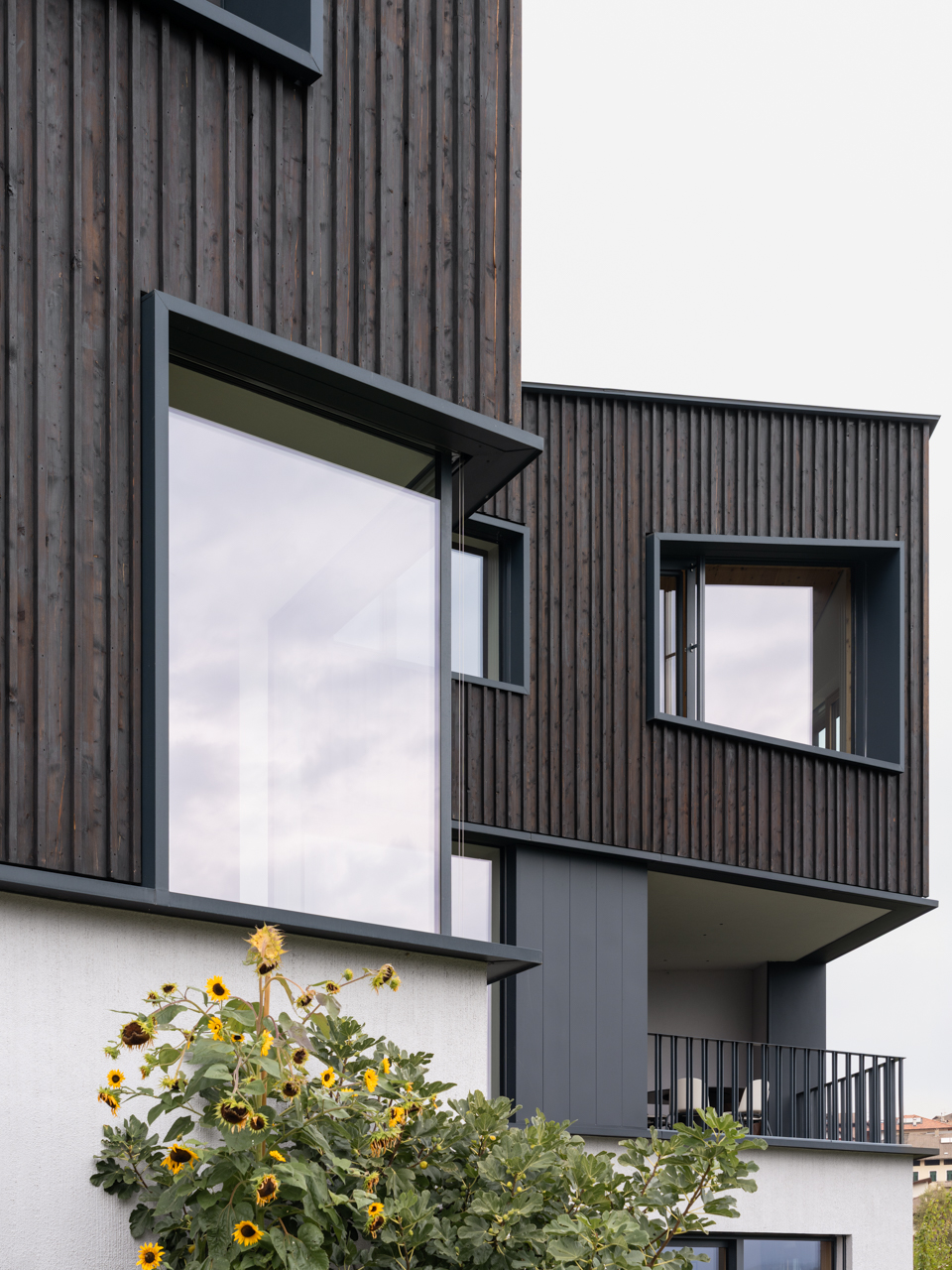
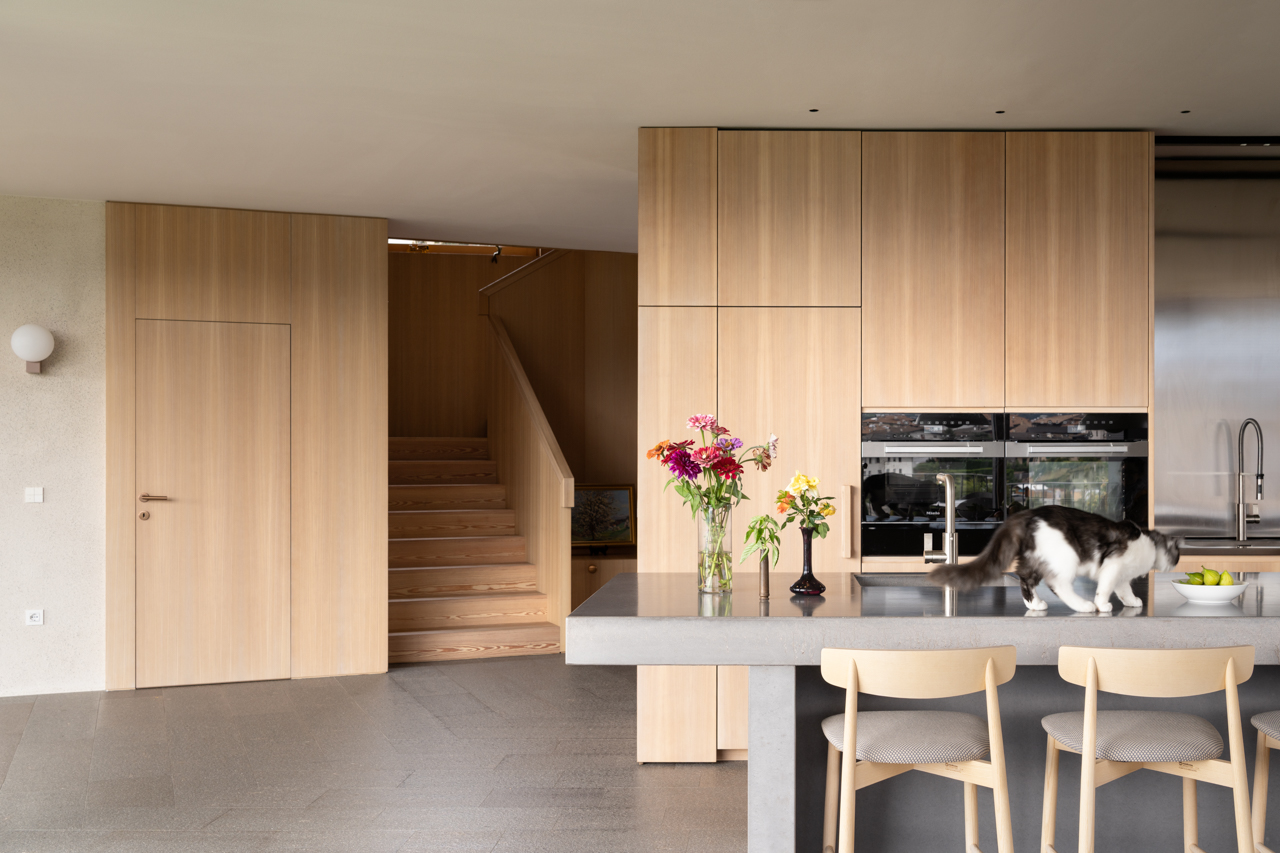
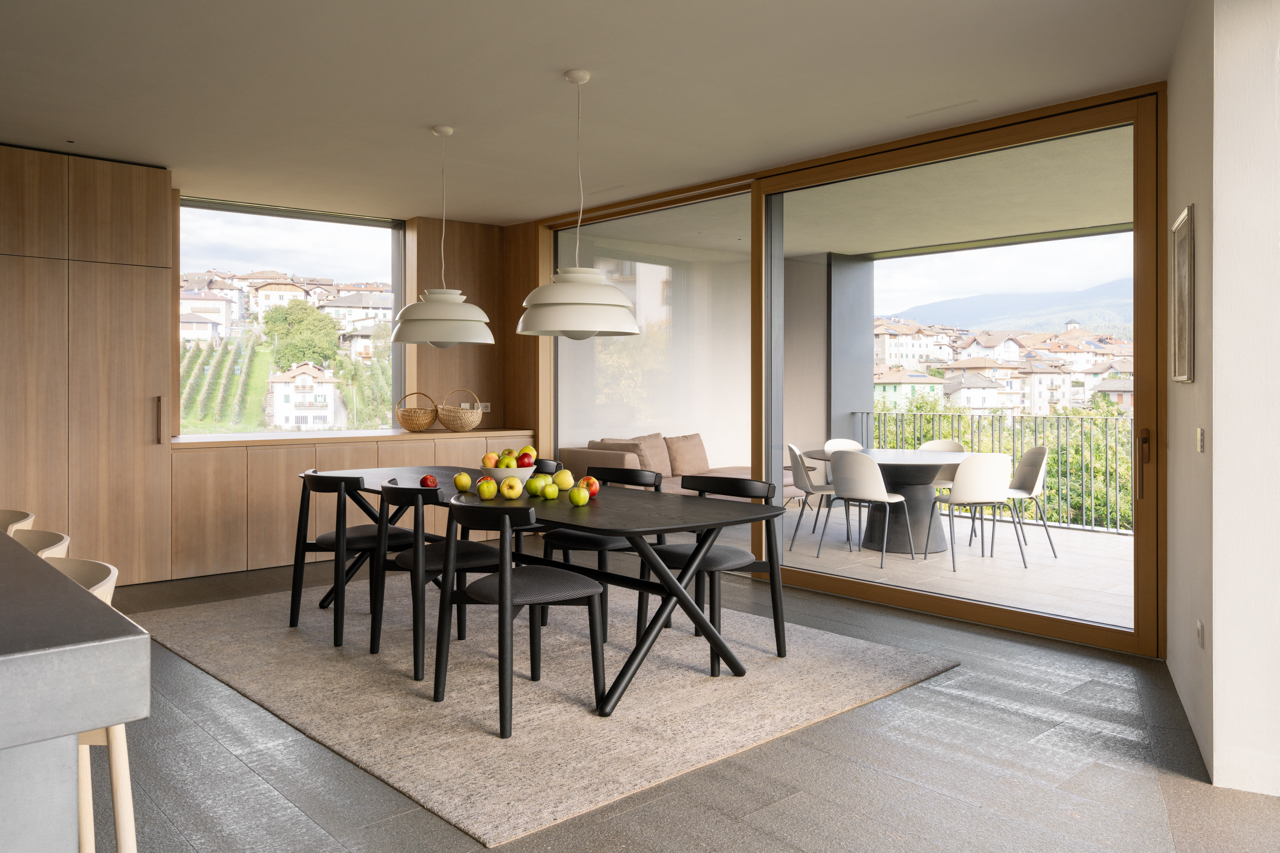
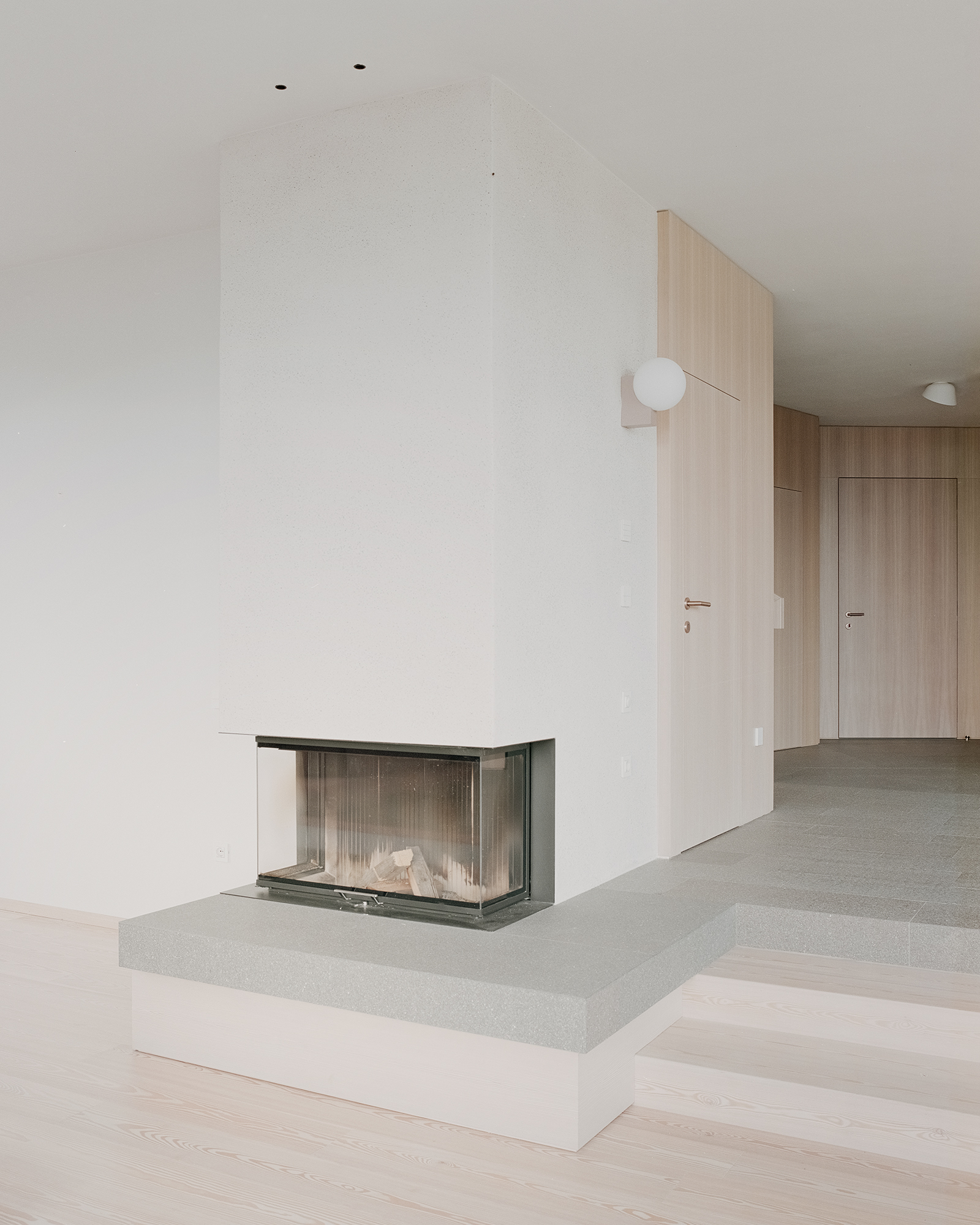
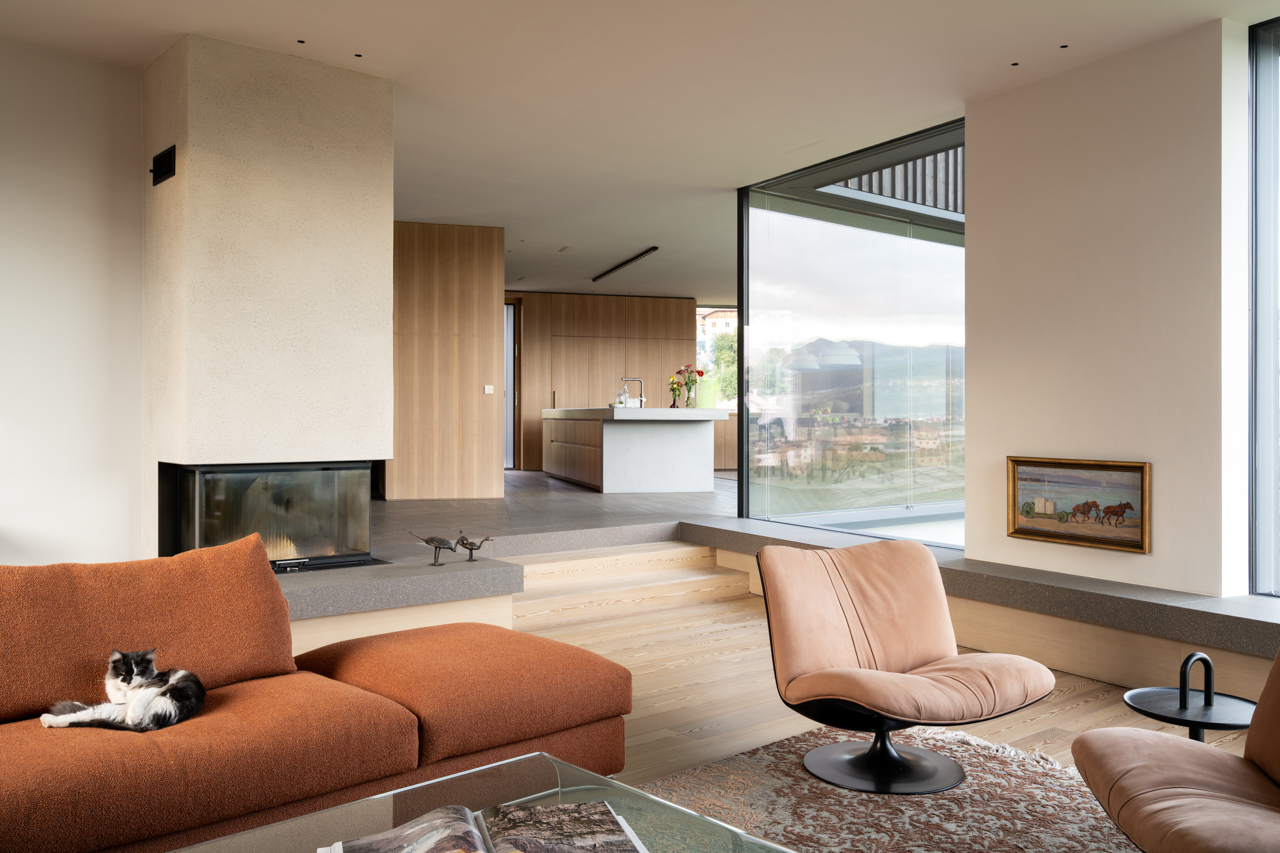
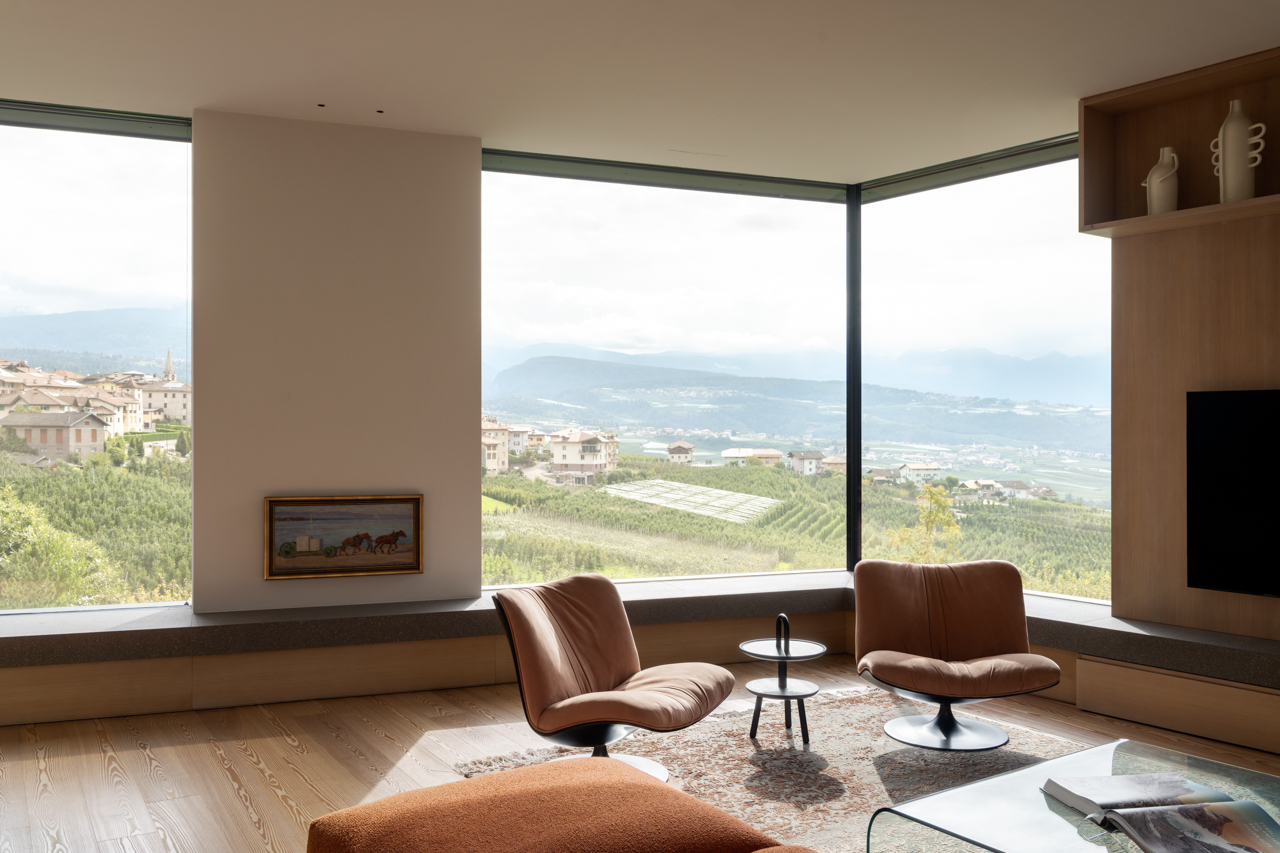
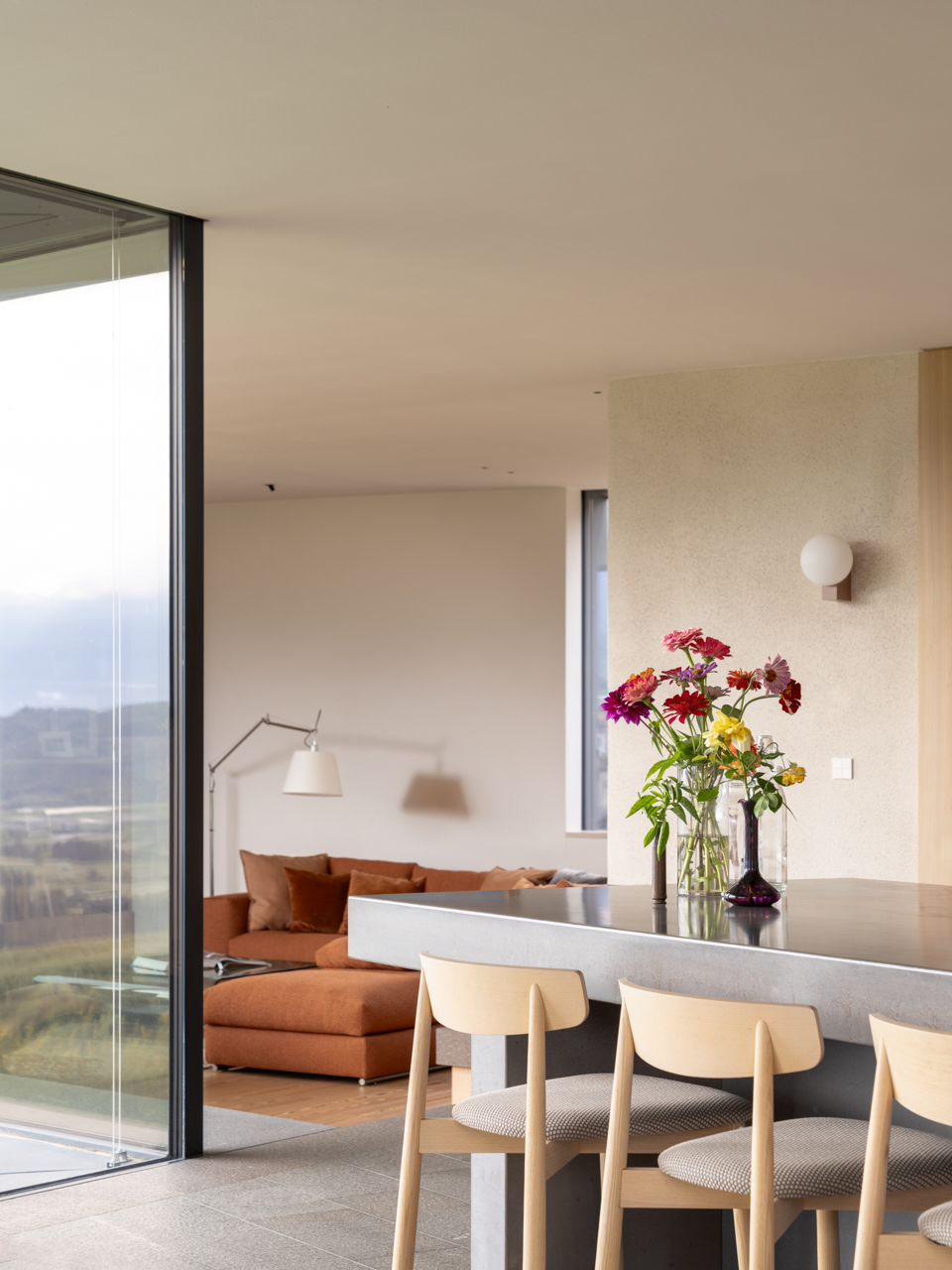
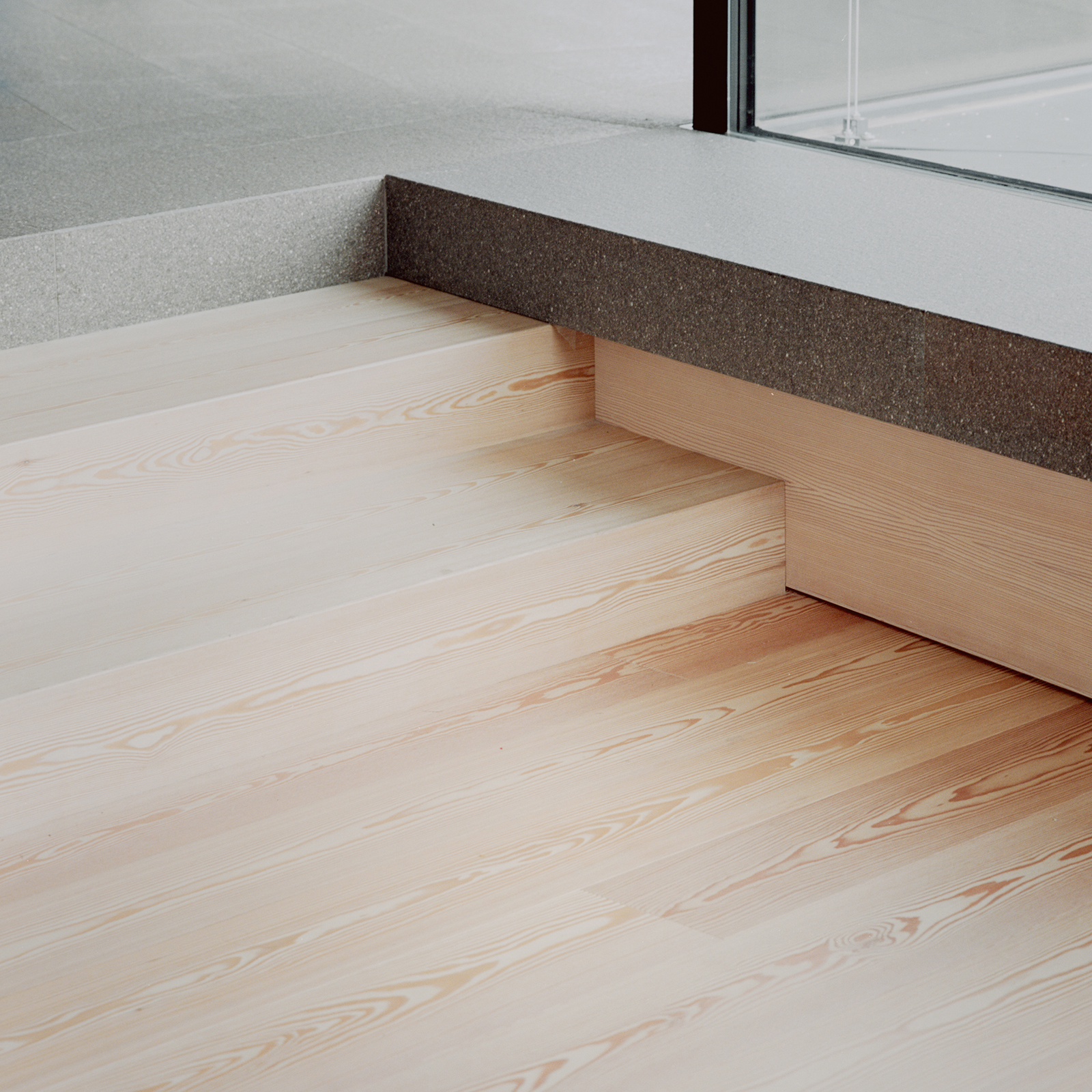
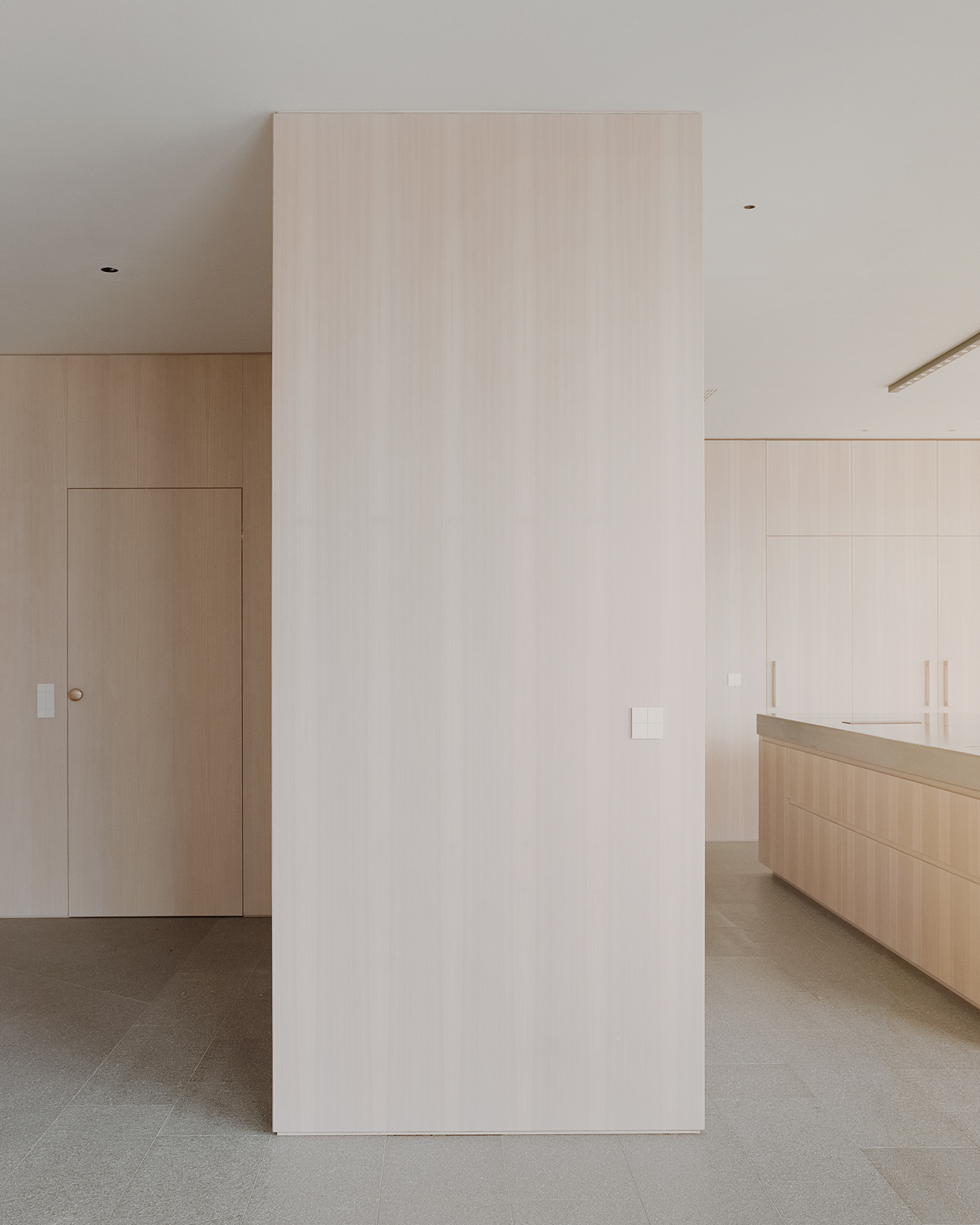
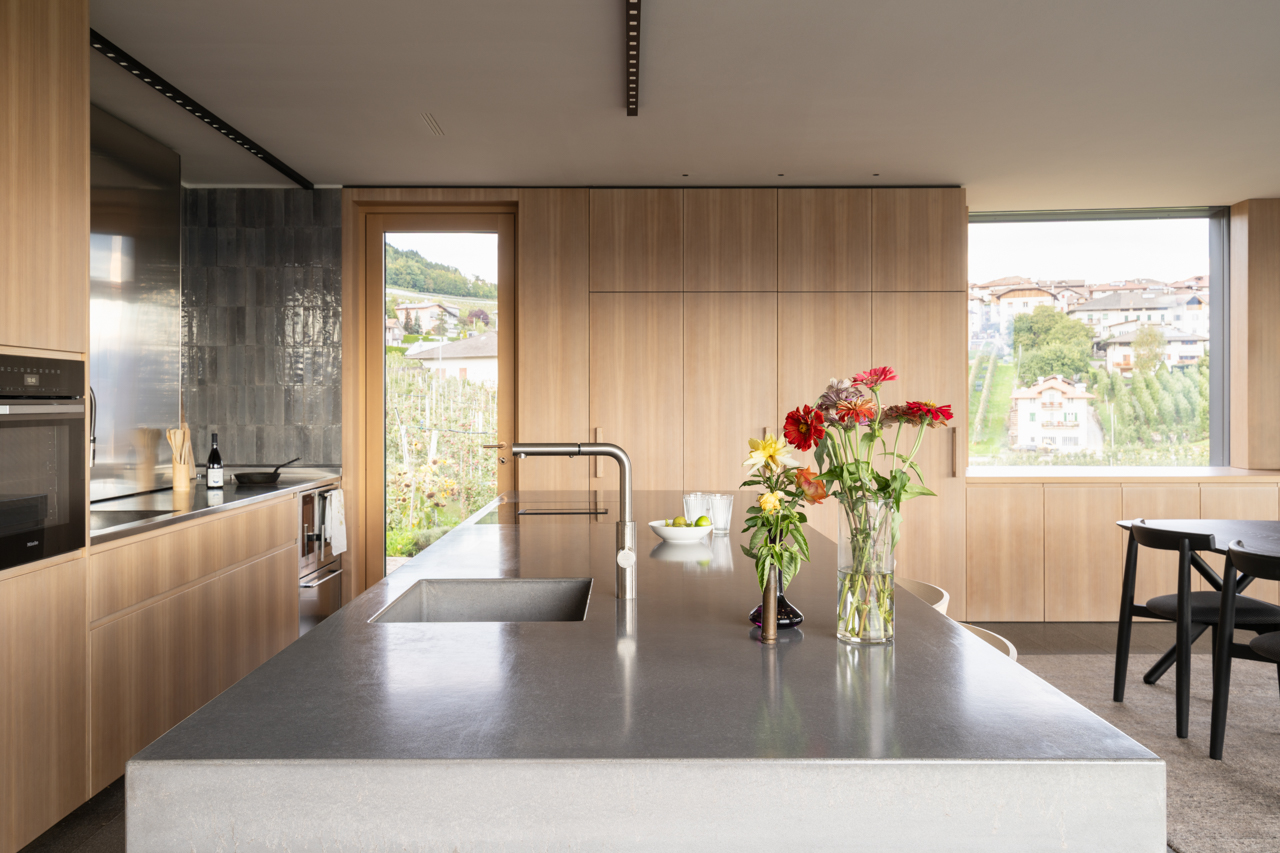
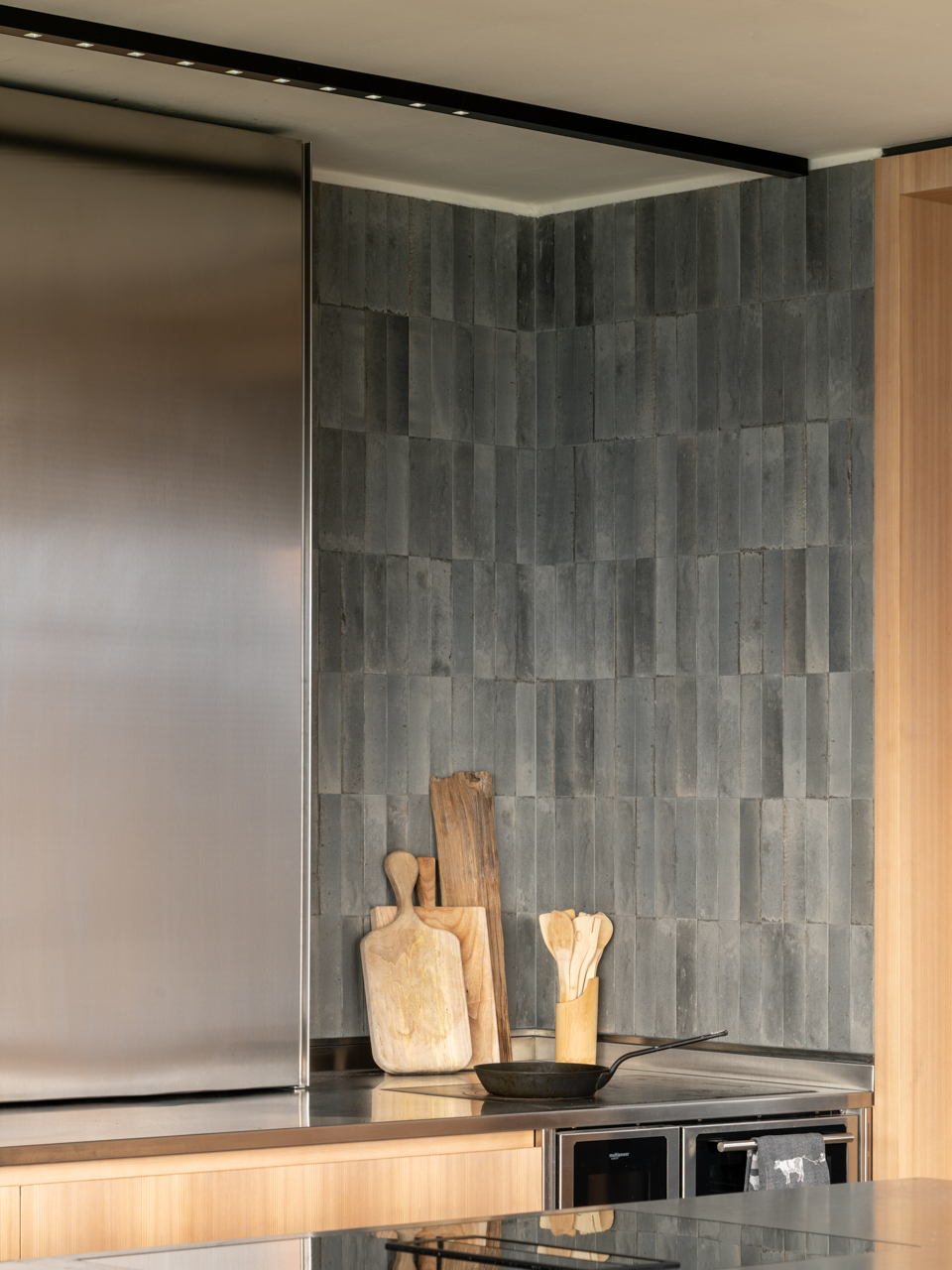
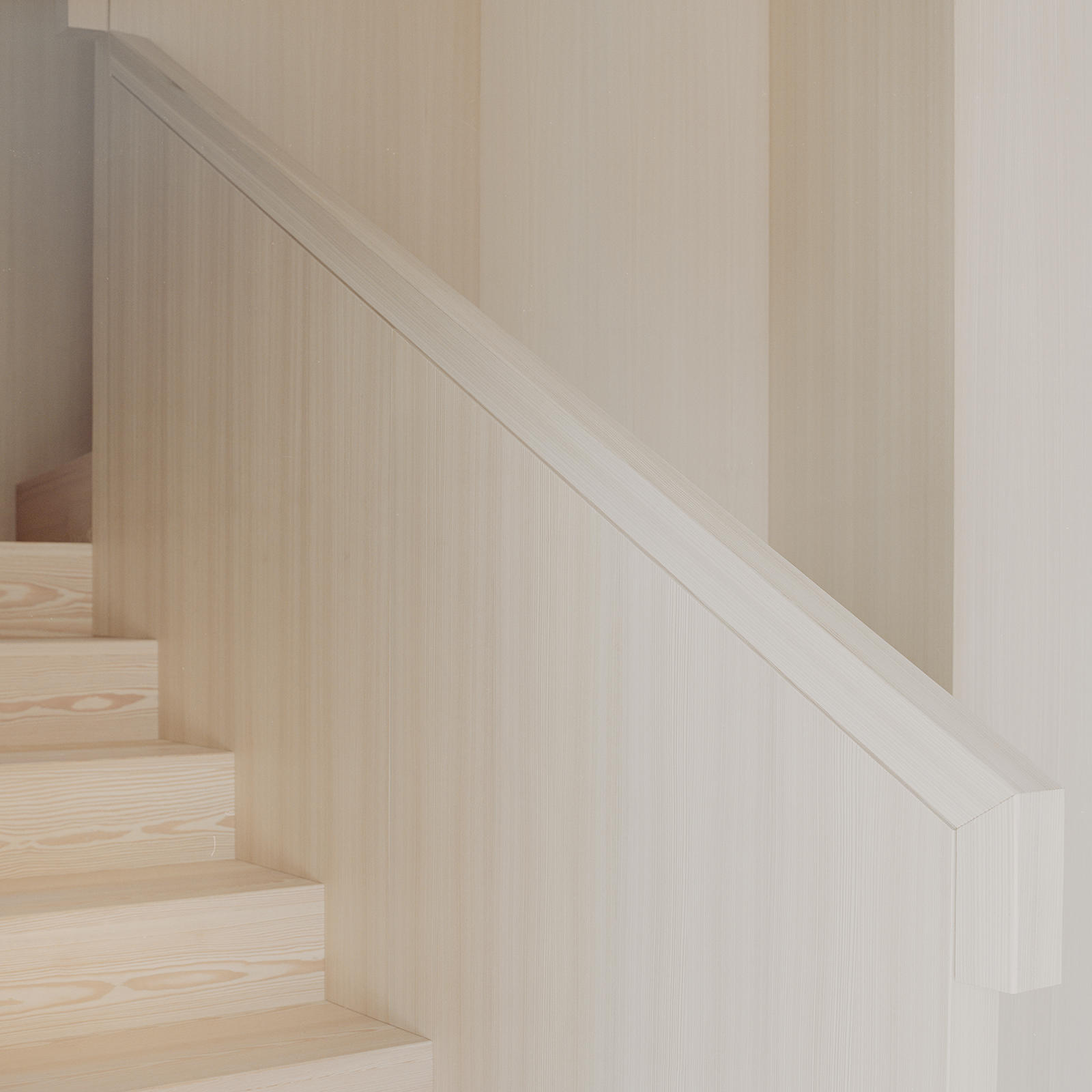
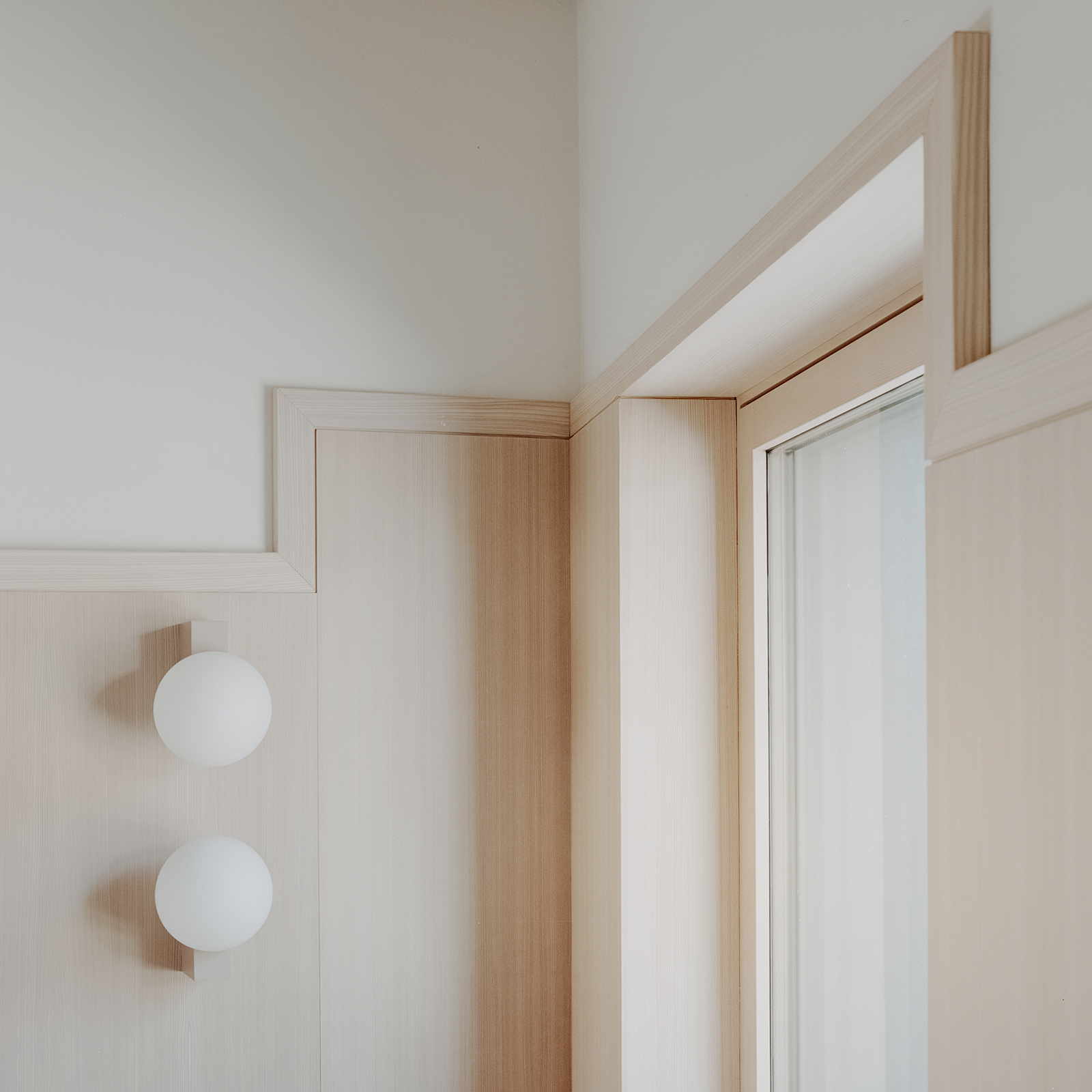
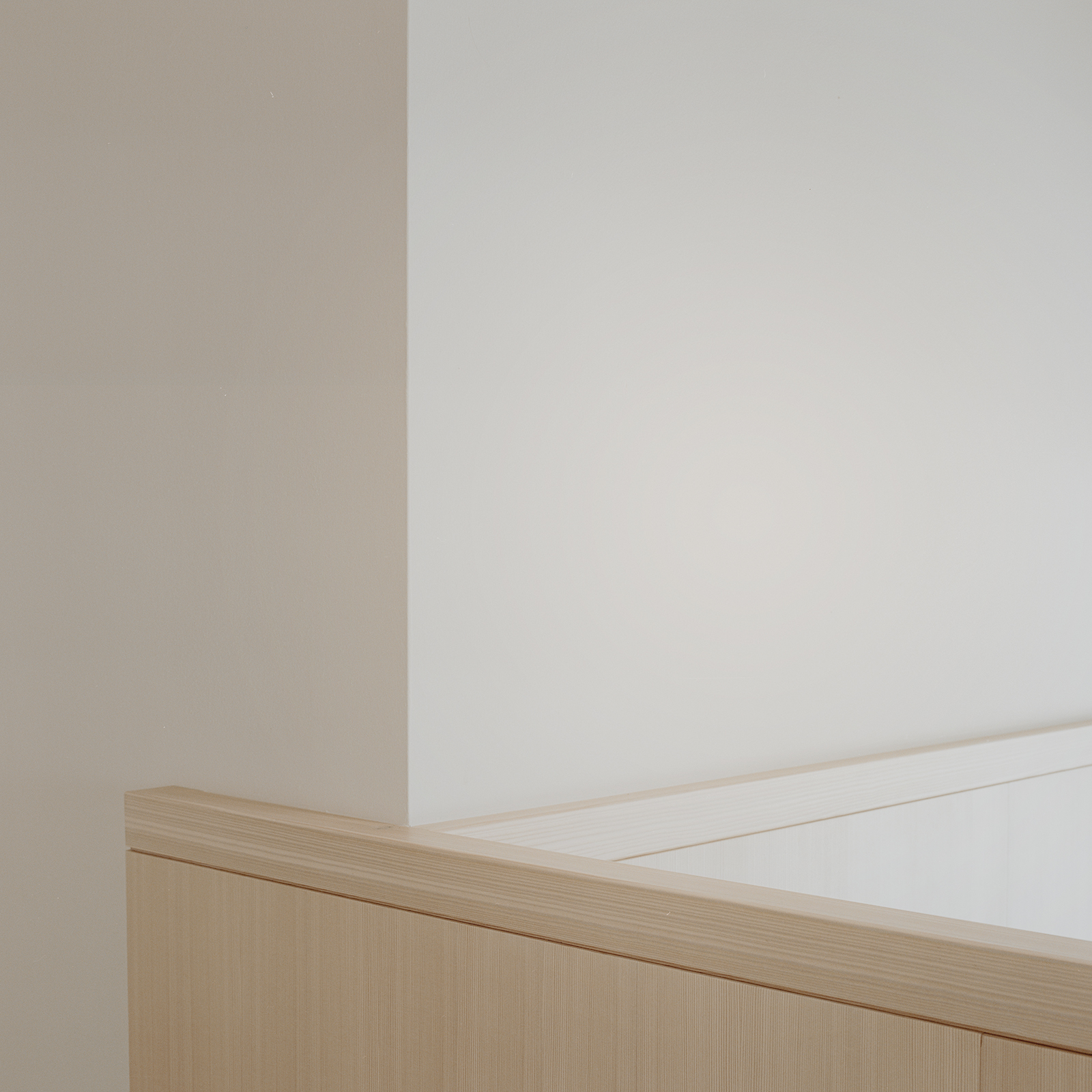
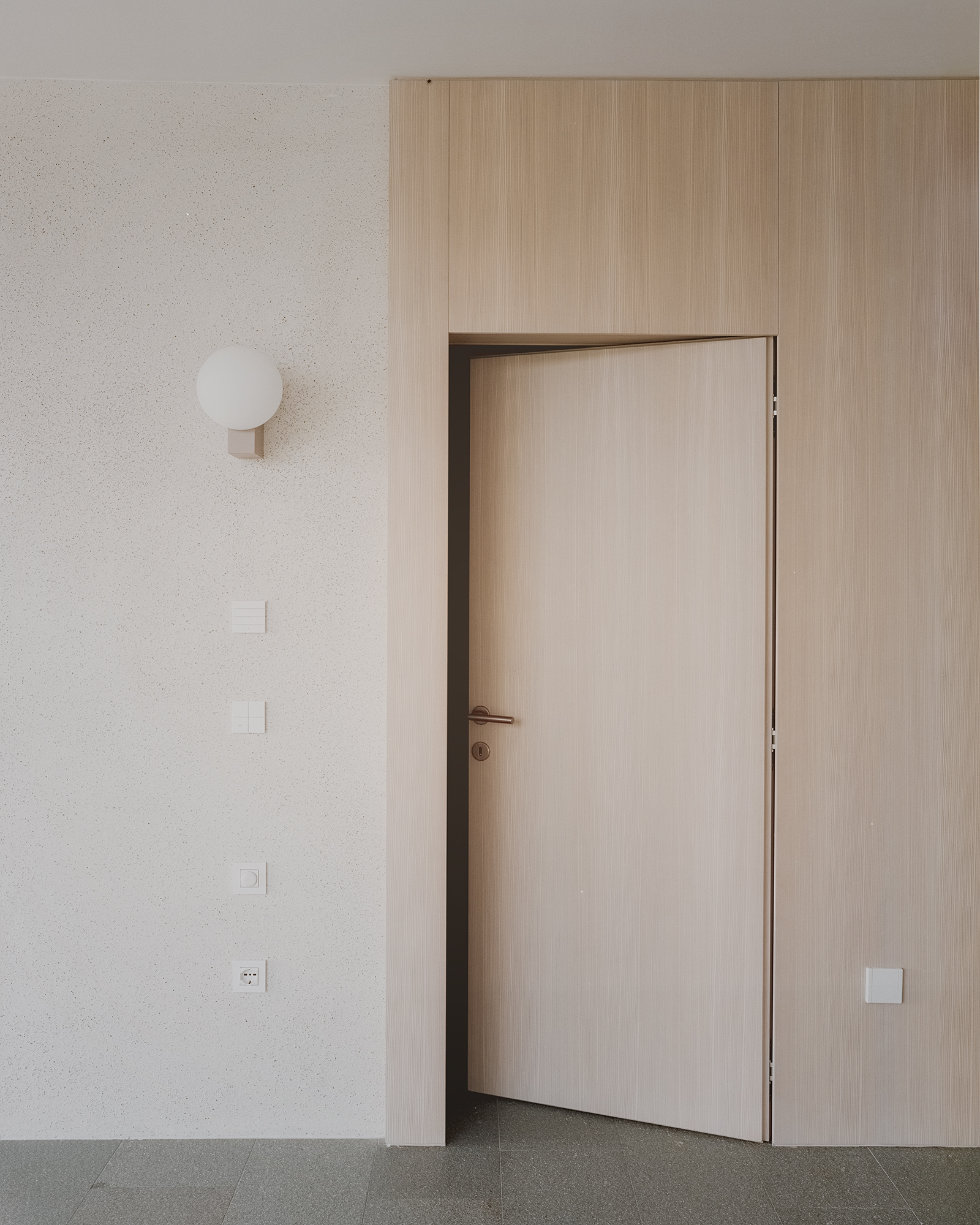
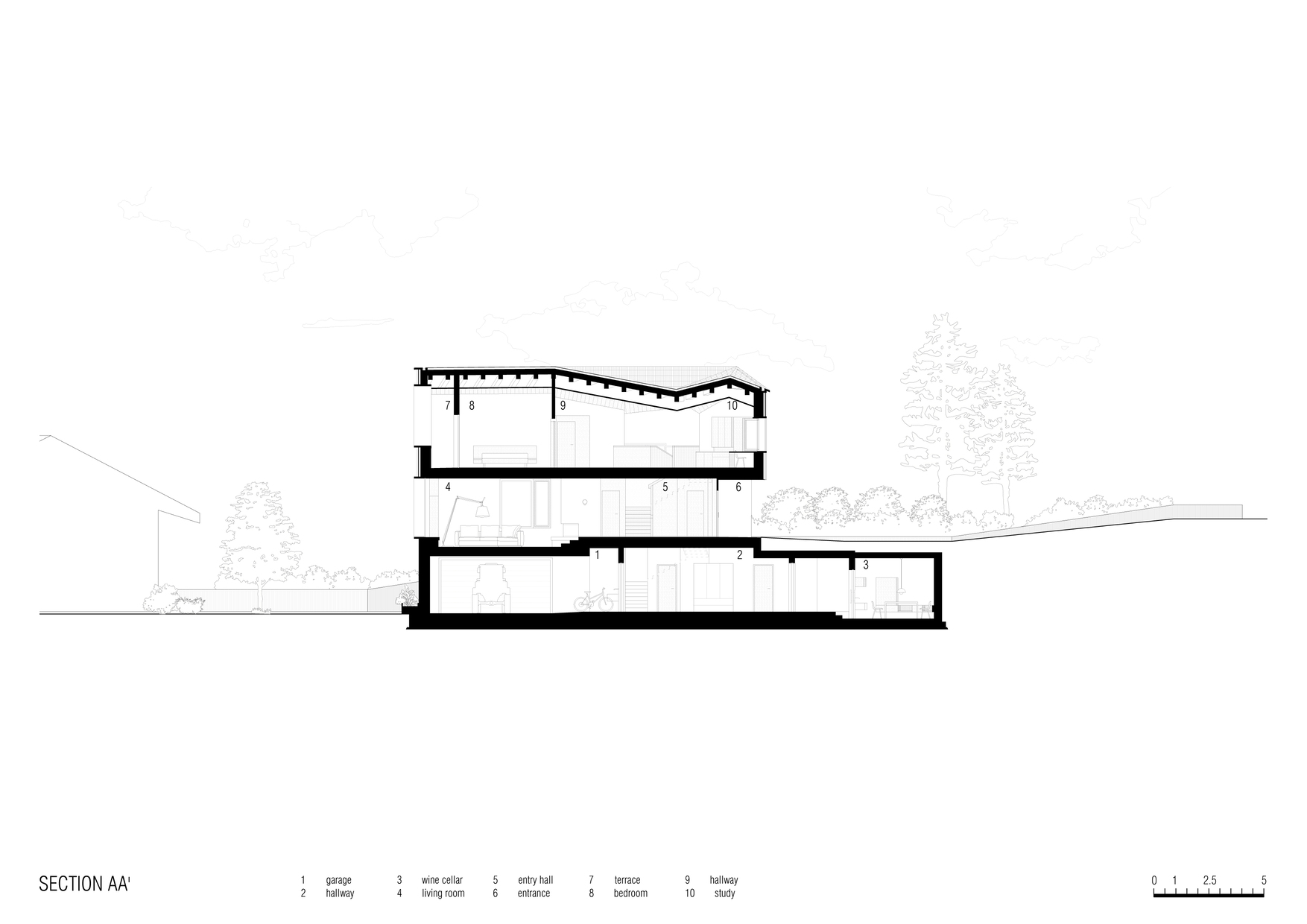
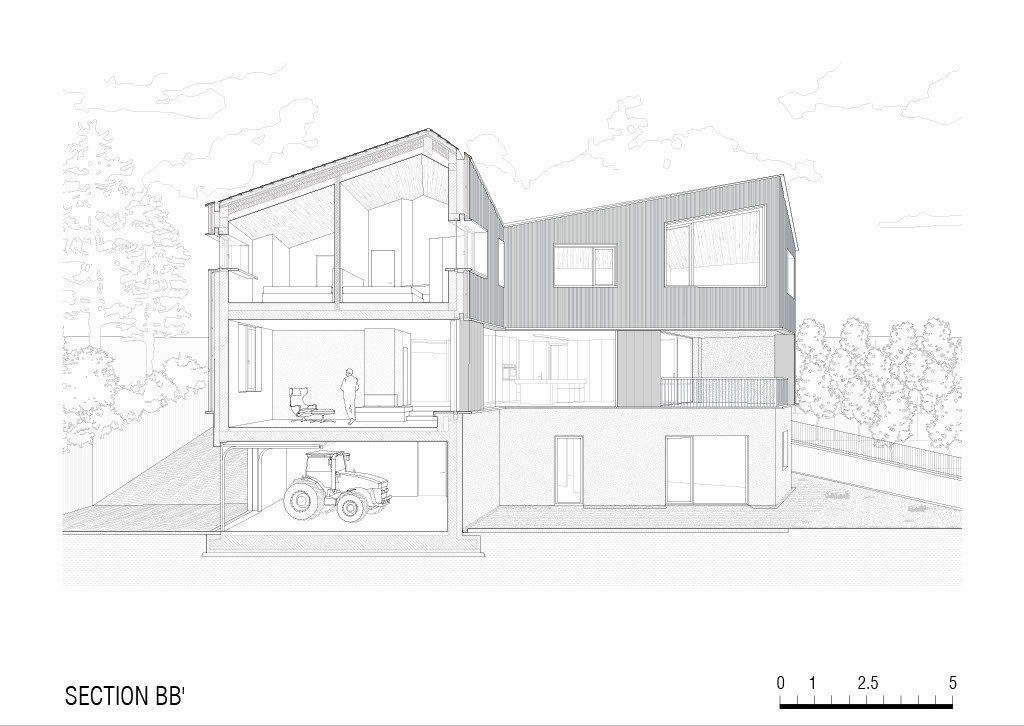
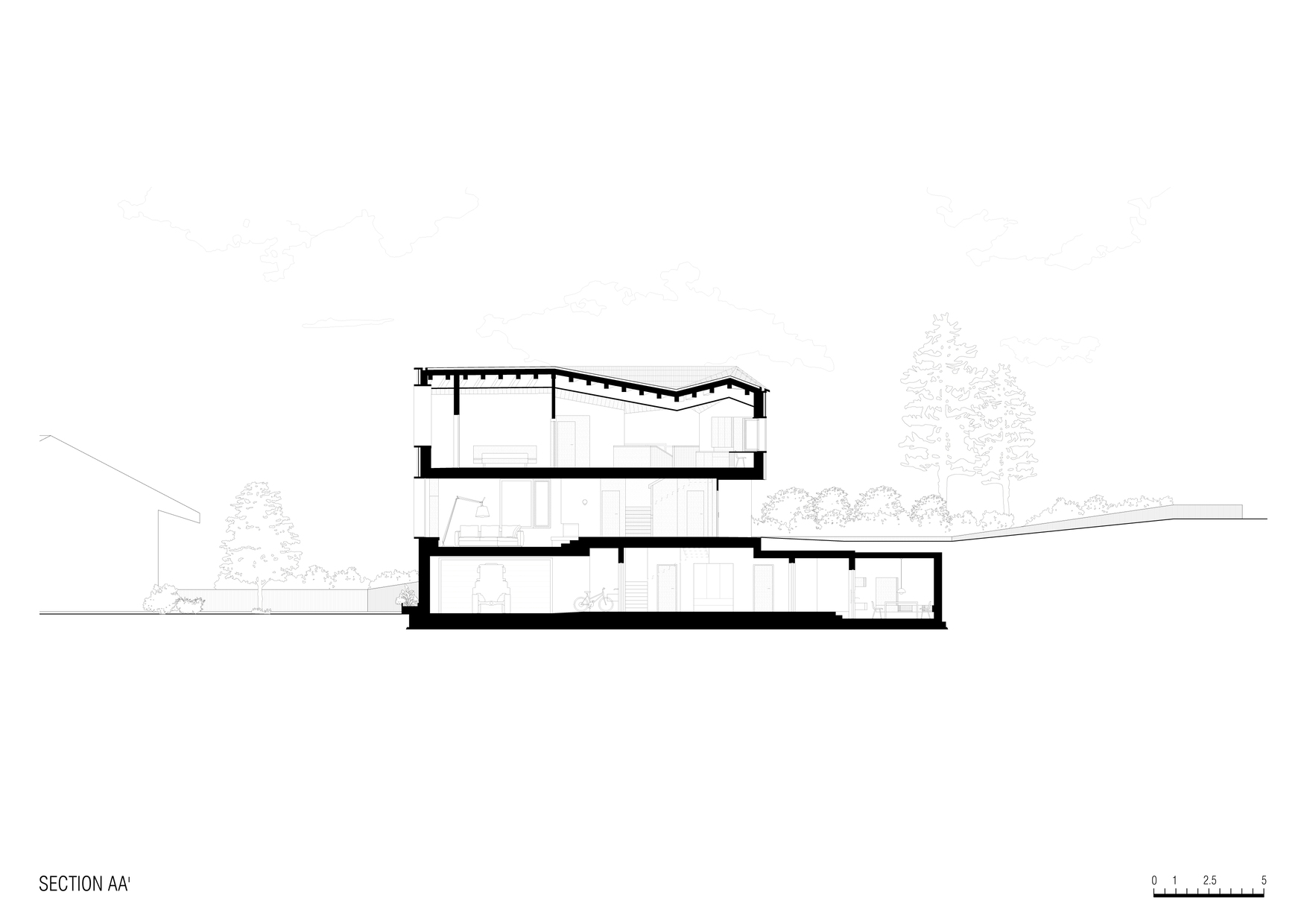
The interior organization reinforces the house’s role as a place of gathering. At ground level, expansive living, dining, and kitchen areas unfold toward the landscape through large glazed openings. Porphyry stone floors guide movement from the entry vestibule into the heart of the house, while wood-clad surfaces and built-in furnishings establish visual continuity. Subtle level changes articulate spaces without enclosing them, as seen in the sunken living room framed by a continuous stone windowsill that doubles as seating.
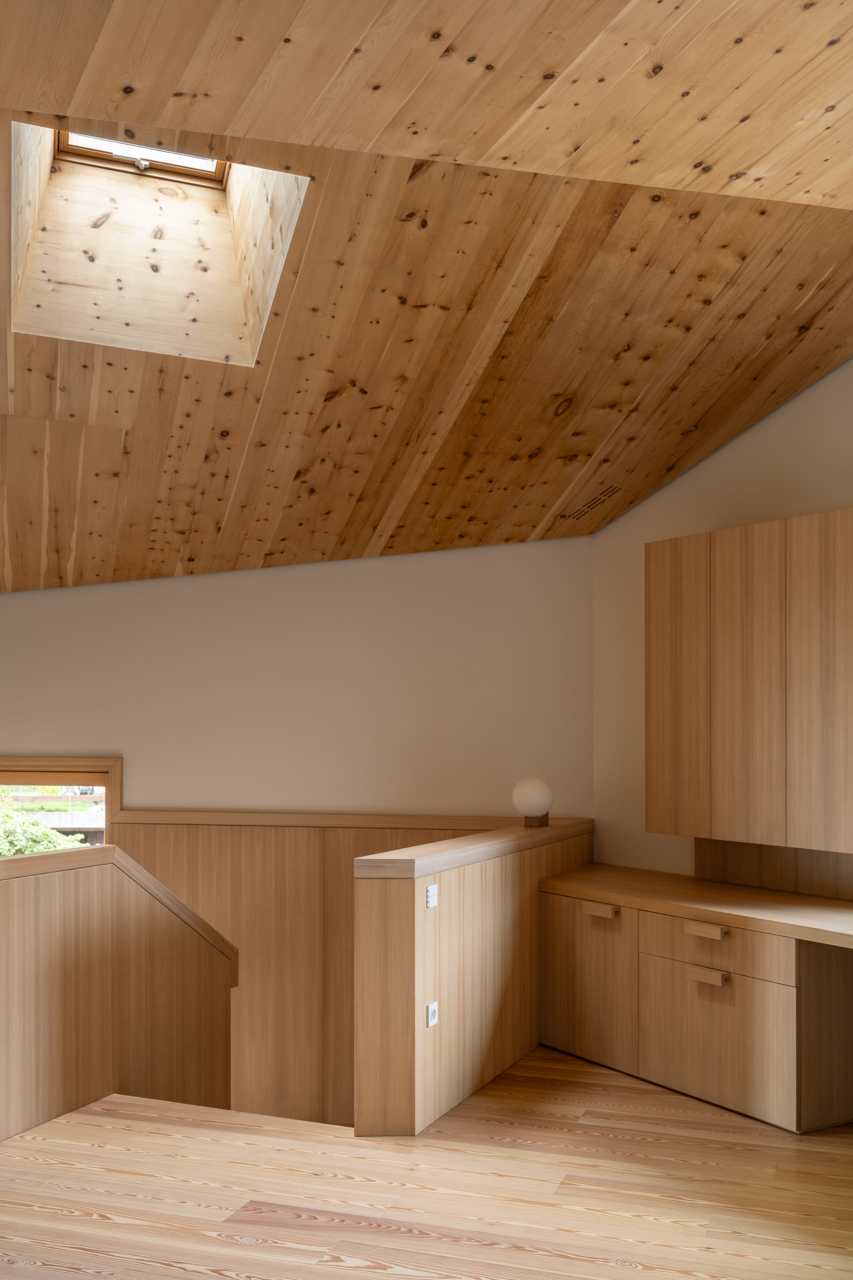
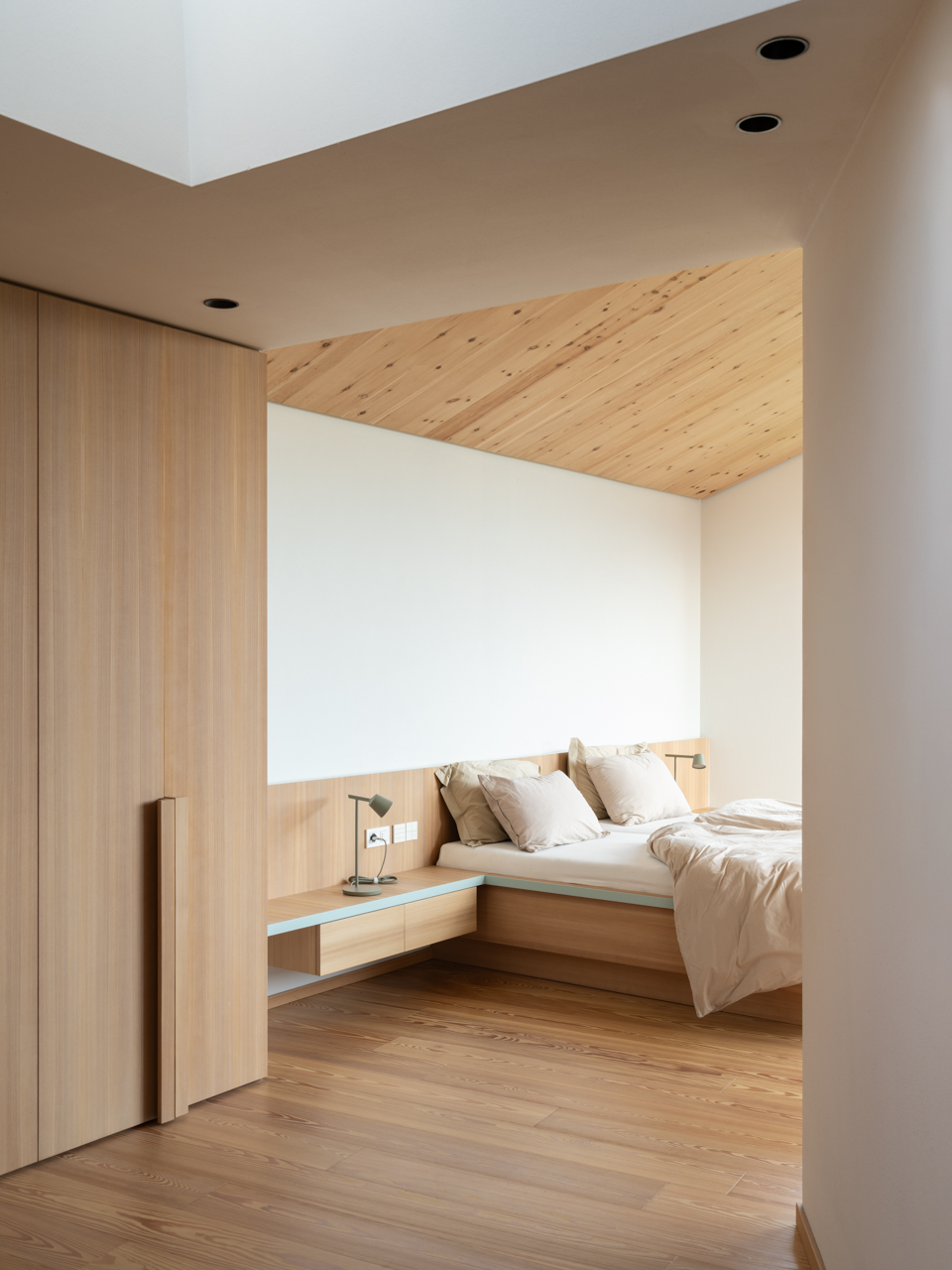
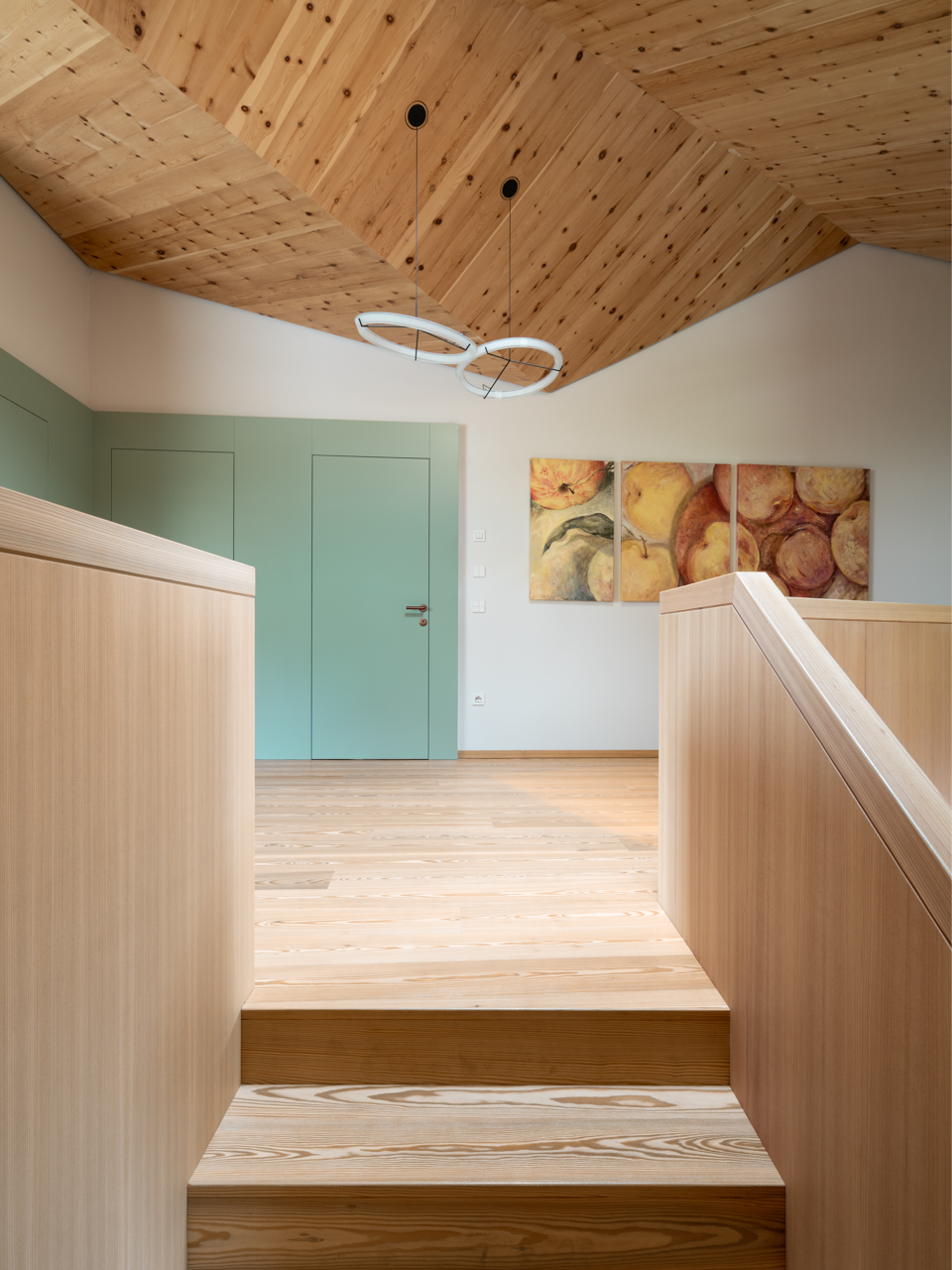
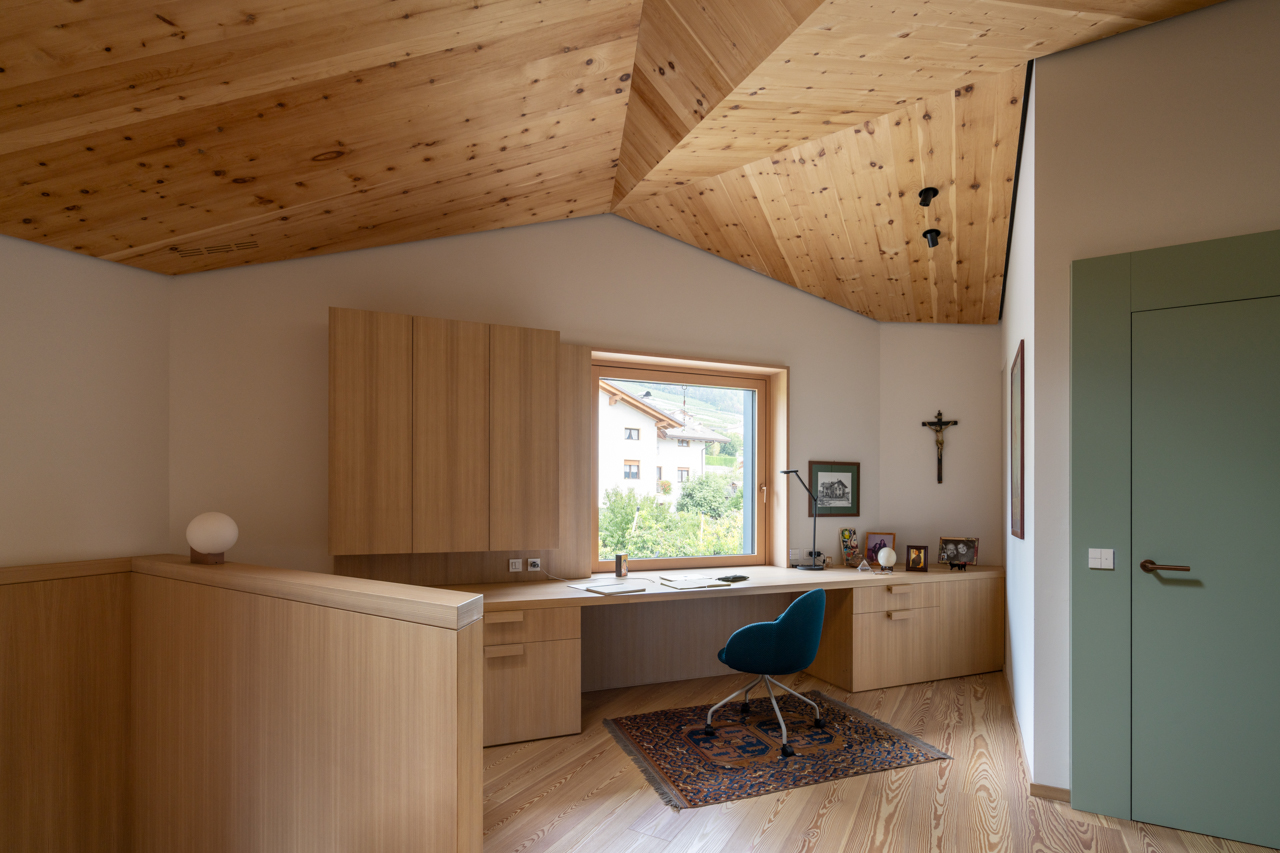
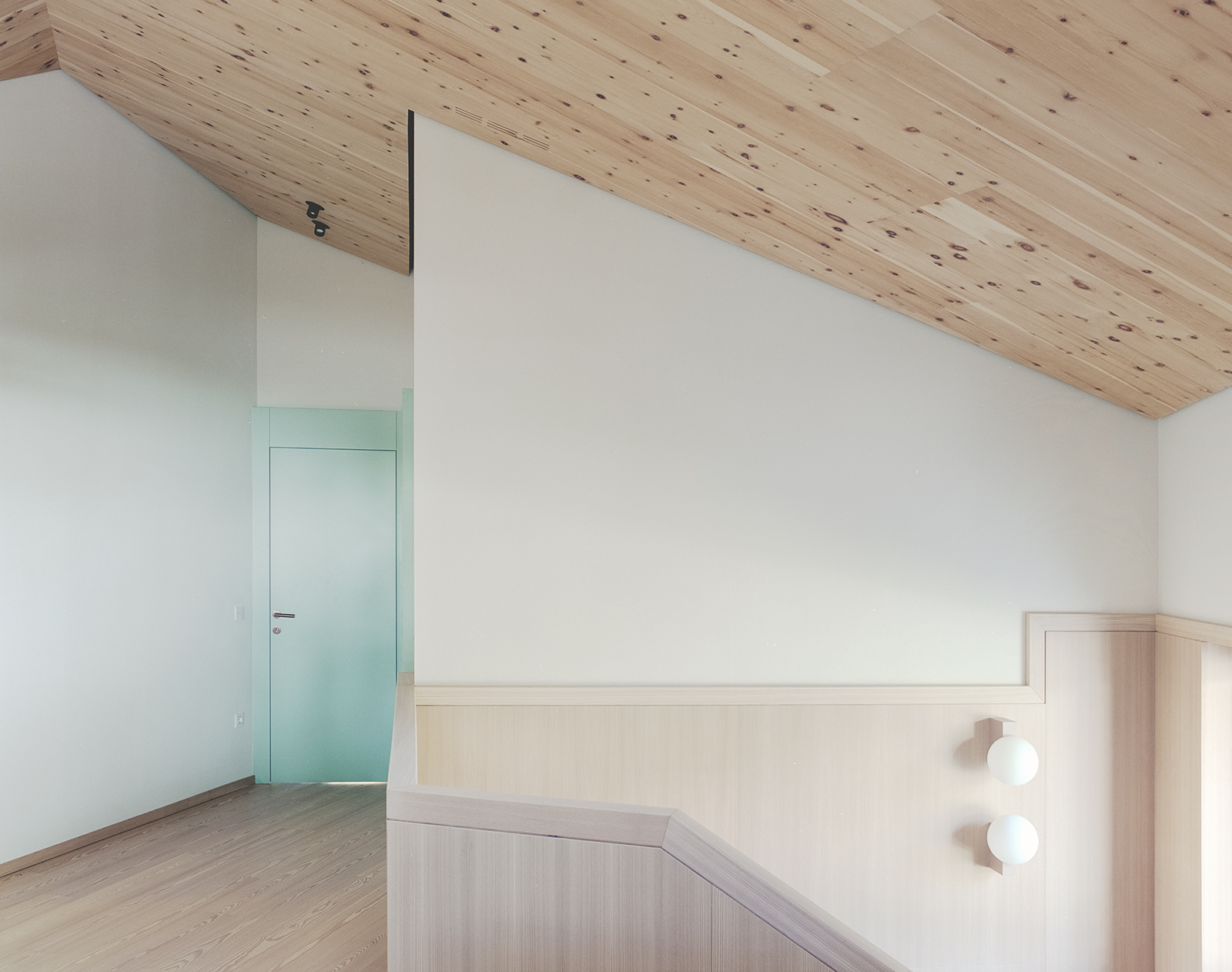
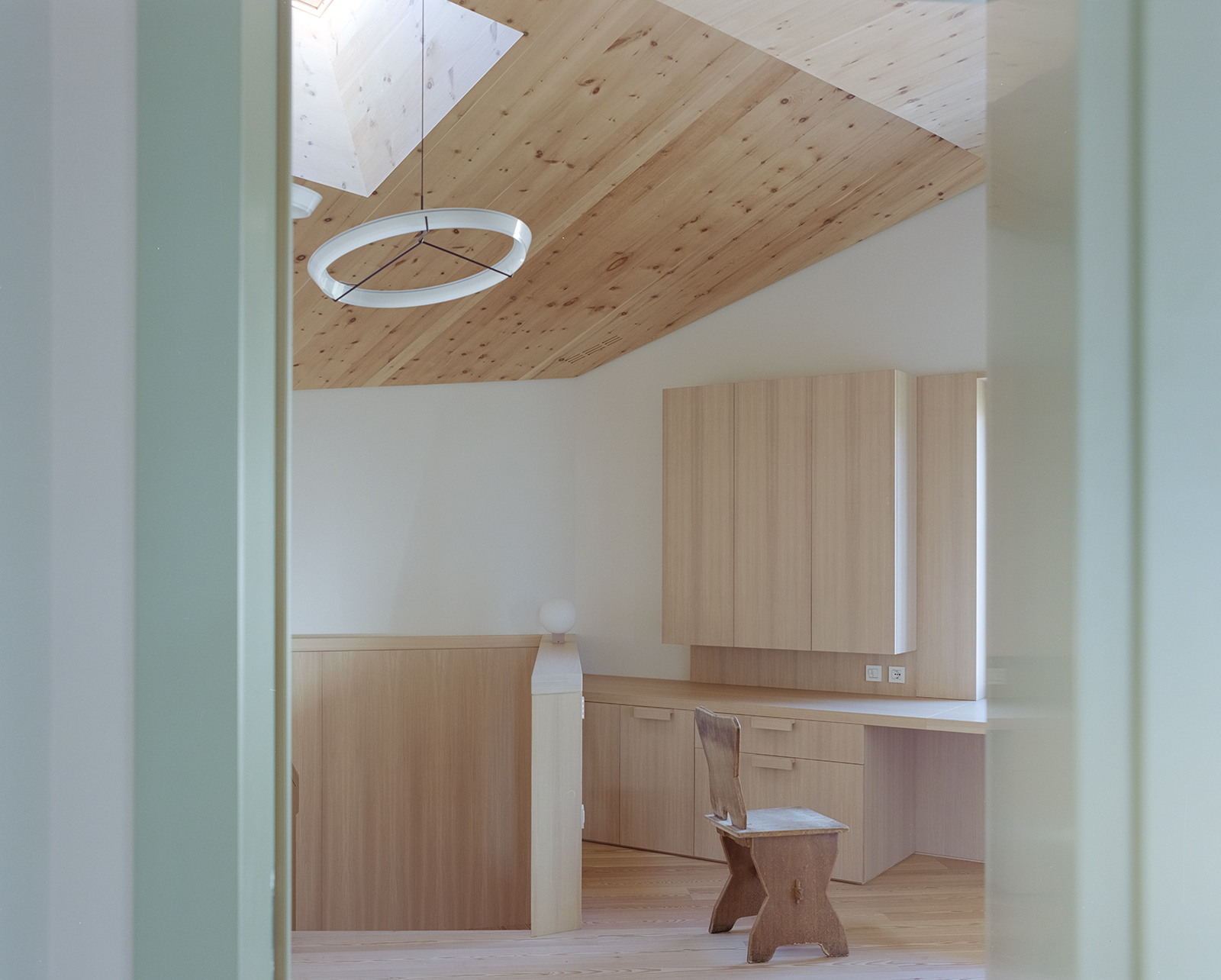
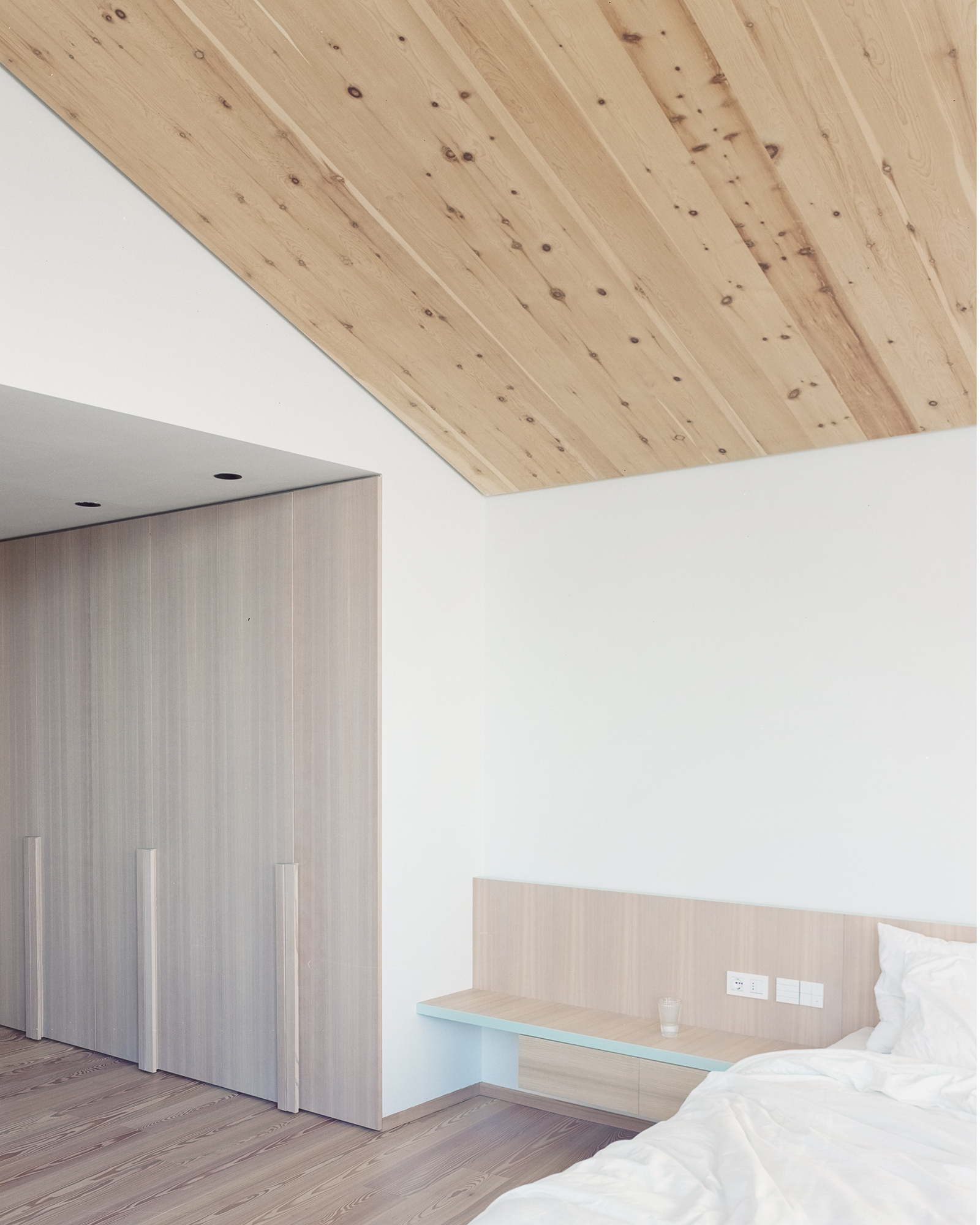
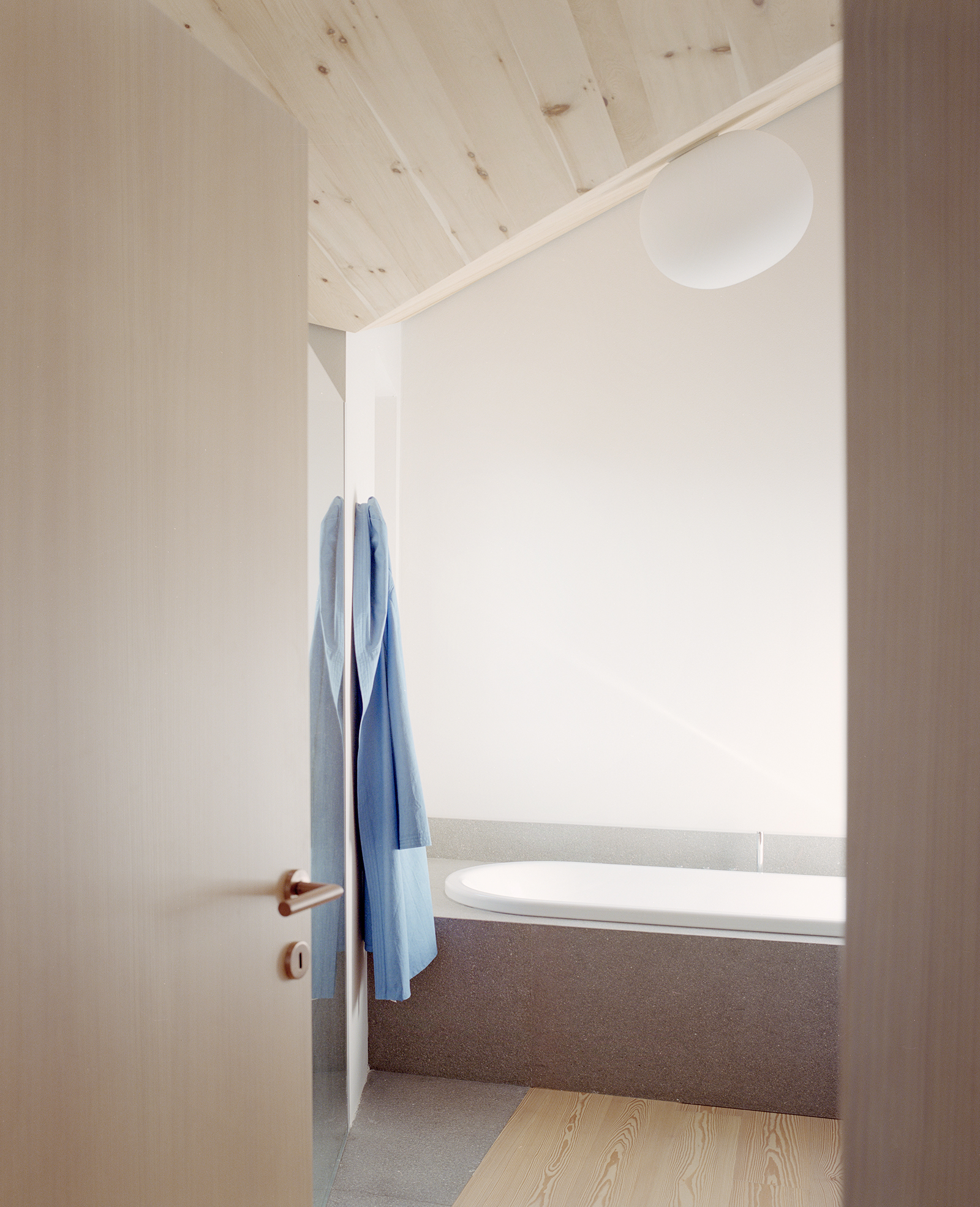
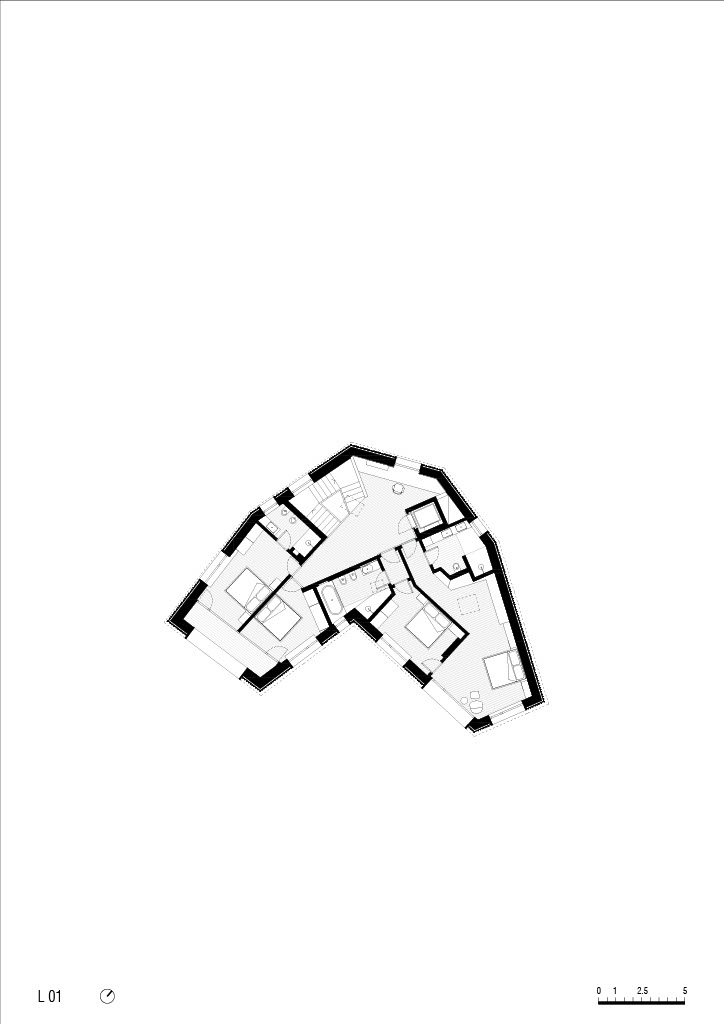
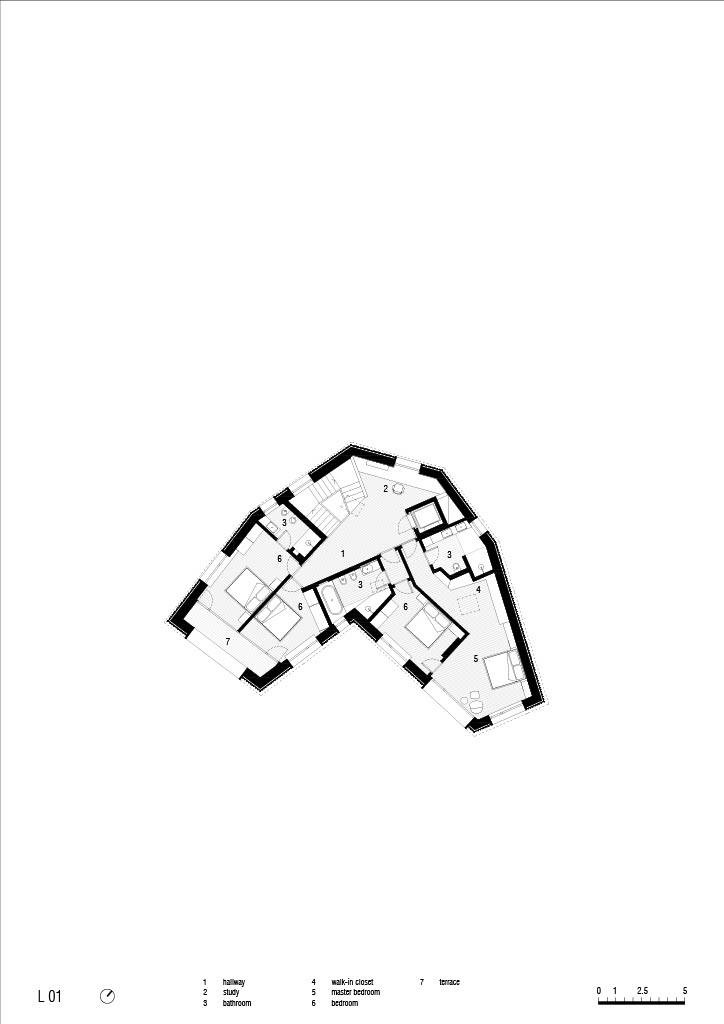
Upstairs, the sleeping quarters are arranged around a shared vestibule that also functions as a study, illuminated from above and lined with cedarwood ceilings. The material introduces a sensory dimension, recalling the scents and textures of traditional Alpine interiors. Bedrooms are modest in expression yet carefully detailed, with skylights, integrated storage, and porphyry-lined bathrooms reinforcing the project’s disciplined palette.
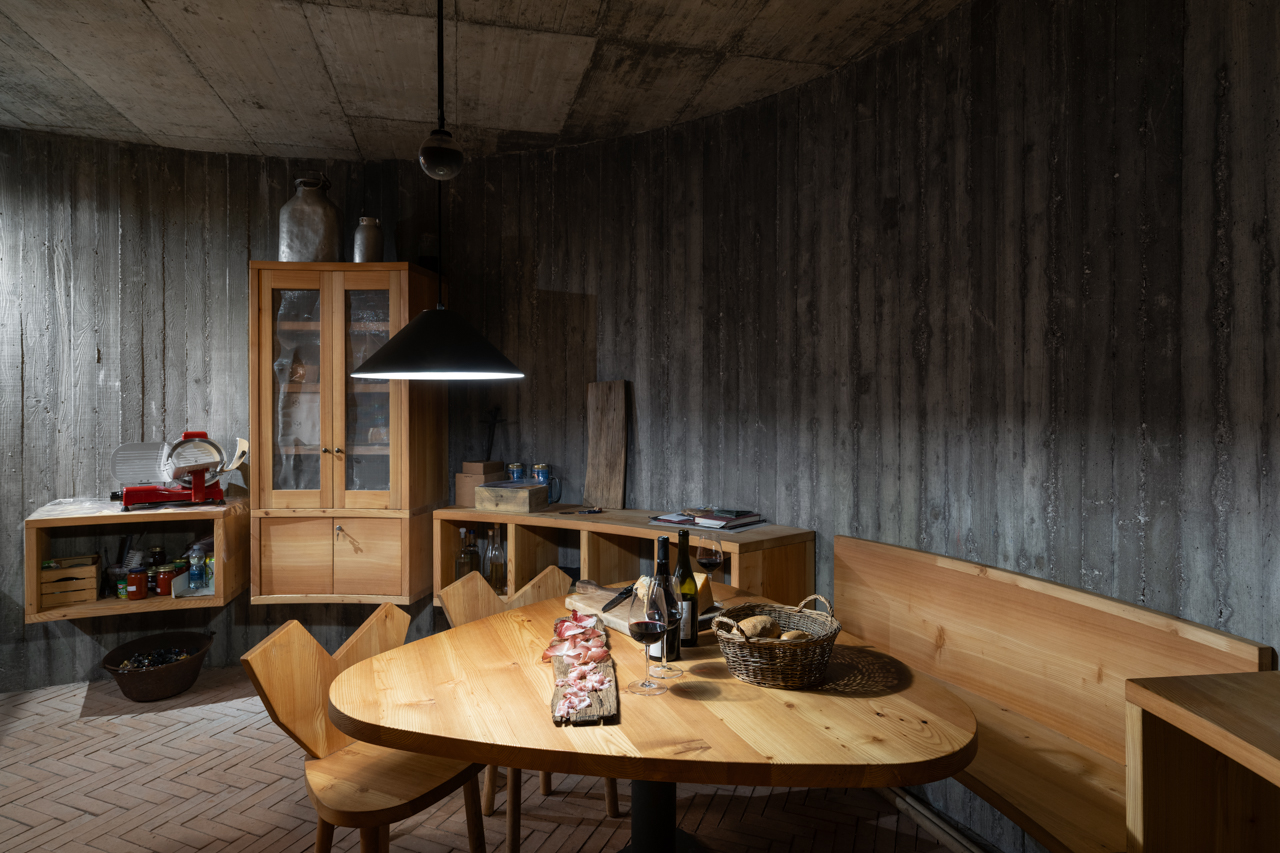
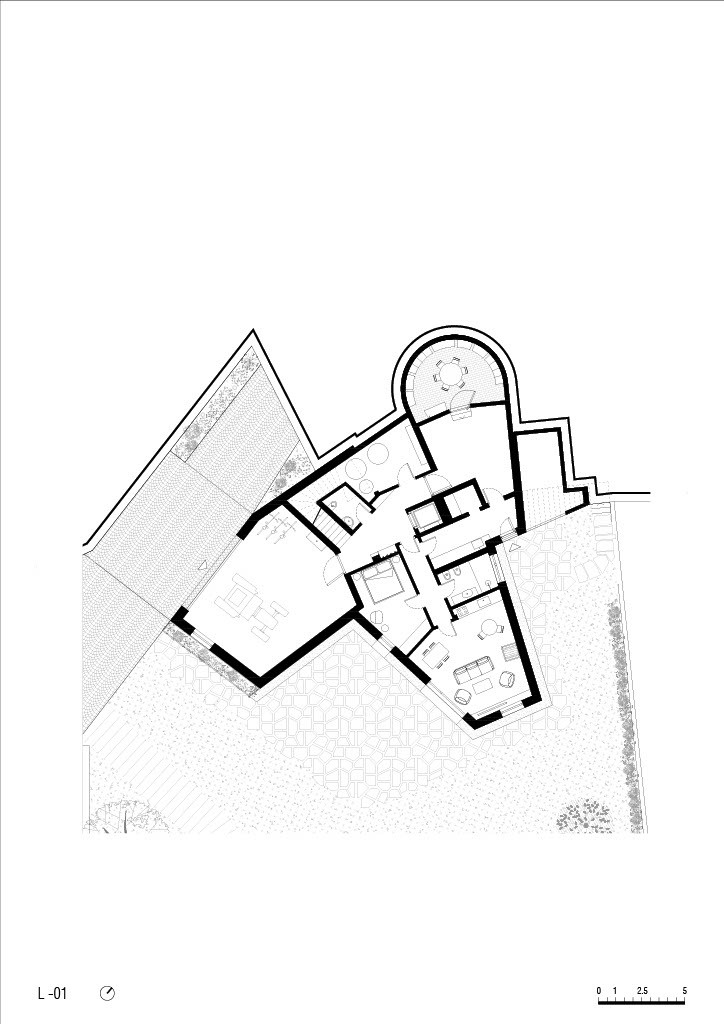
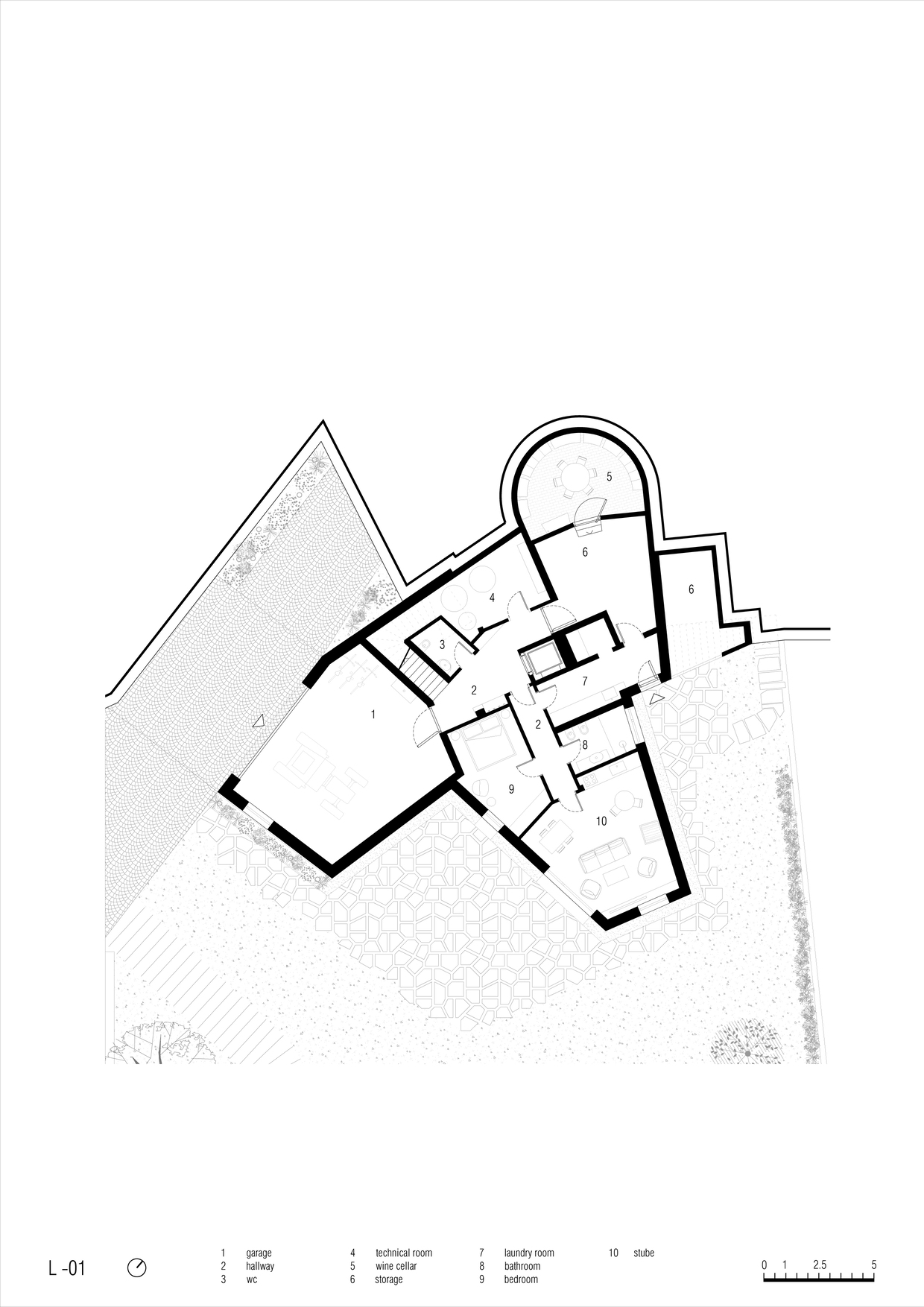
Below ground, ancillary spaces and a wine cellar extend the house into the terrain. The cellar’s curved concrete wall, brick flooring, and solid wood elements anchor the building physically and symbolically to the land, emphasizing the client’s renewed connection to local agricultural culture. Throughout the project, traditional furnishings and bespoke elements coexist, reinforcing a dialogue between inherited customs and contemporary living.
Hometown House ultimately distinguishes itself through restraint rather than spectacle. By relying on local materials, craftsmanship, and a clear spatial concept, MoDusArchitects delivers a residence that stands apart within the hillside landscape while remaining deeply attuned to its cultural and environmental context, offering a nuanced interpretation of homecoming in architectural form.
Project Gallery
Project Location
Address: Val di Non, Trentino, Italy
The location specified is intended for general reference and may denote a city or country, but it does not identify a precise address.

