

Architects: Taranti Arq Studio
Area: 200 m²
Year: 2024
Photography: Fernando Schapochnik
Lead Architects: Lautaro Taranti, Danilo Taranti
City: Buenos Aires
Country: Argentina
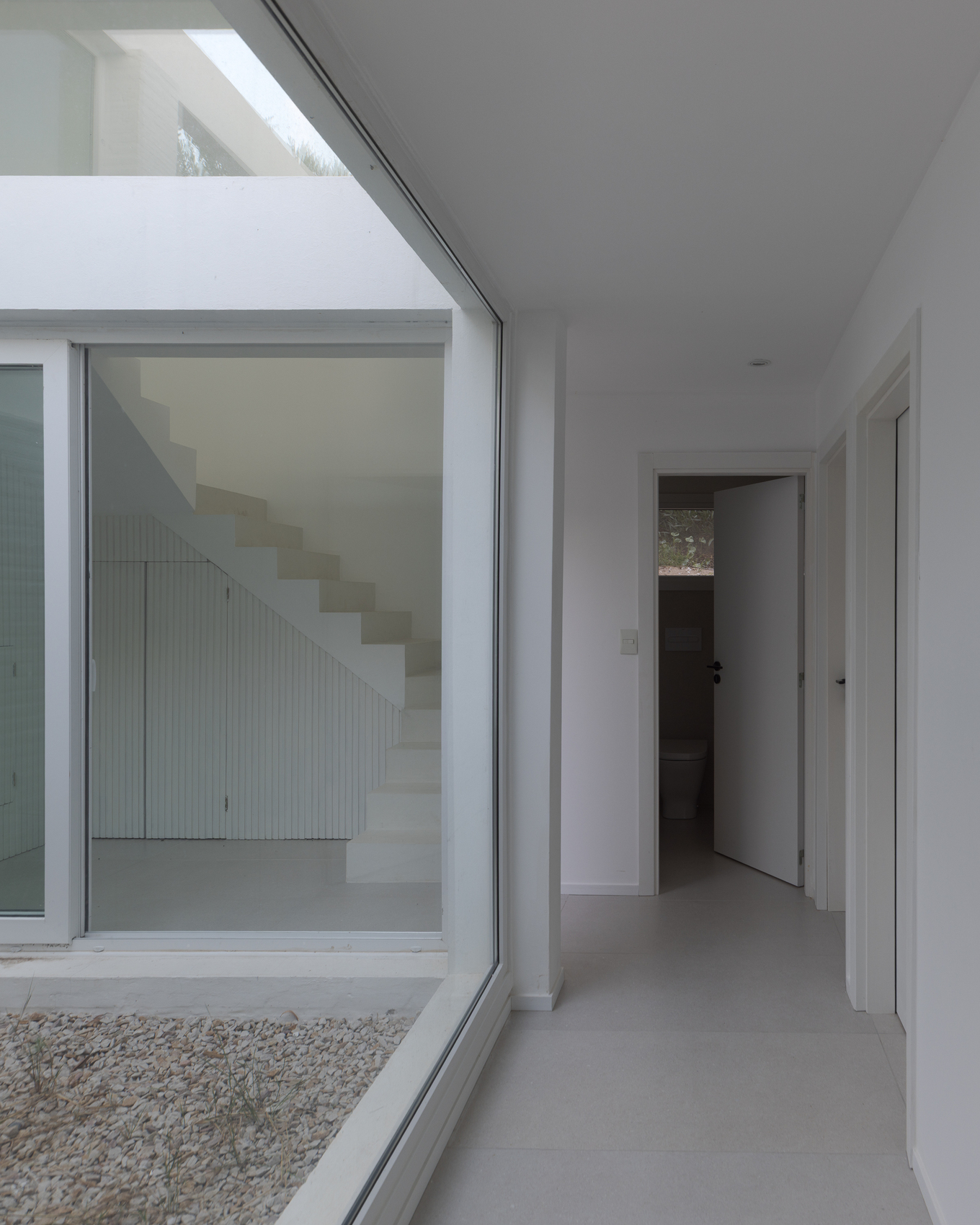
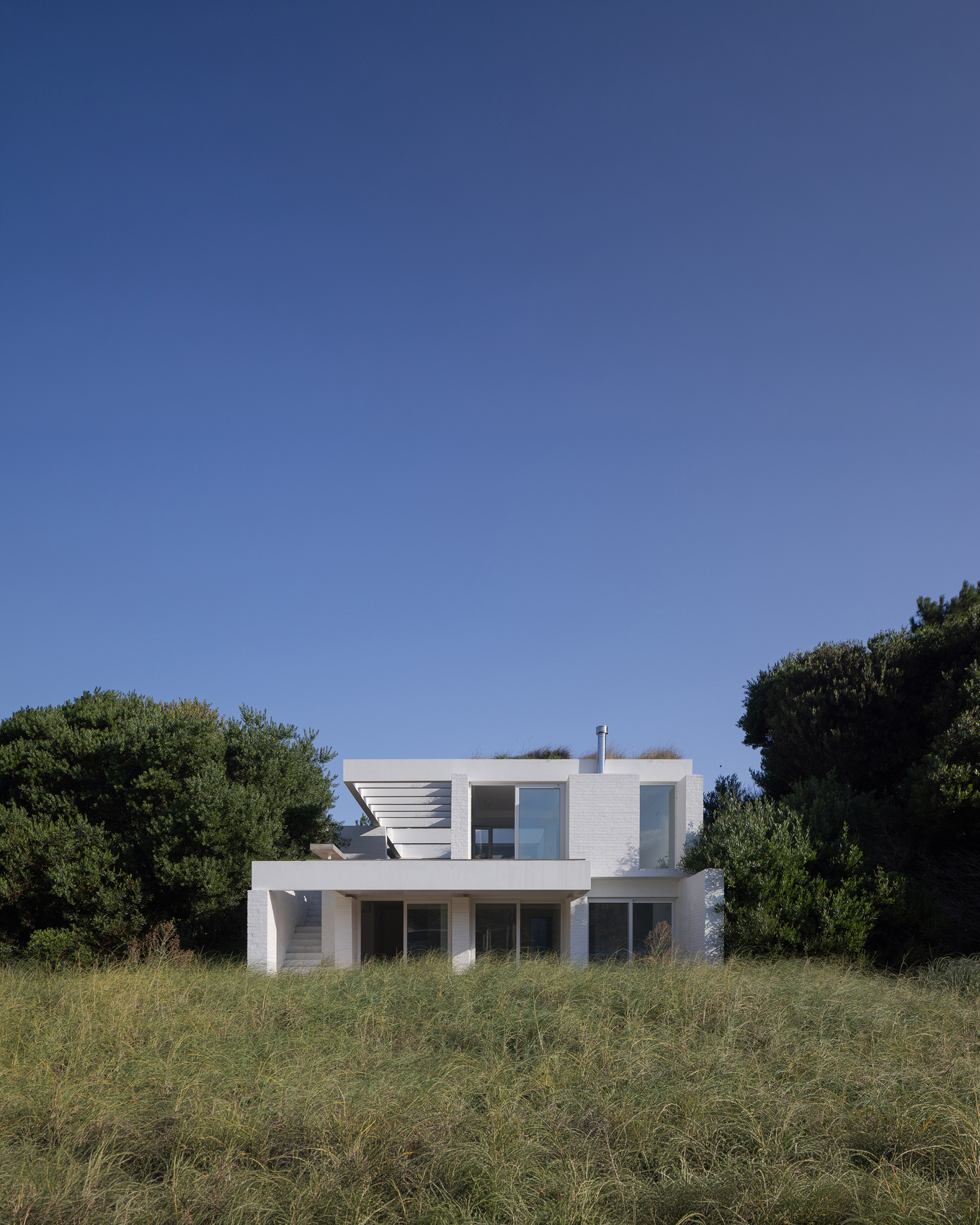
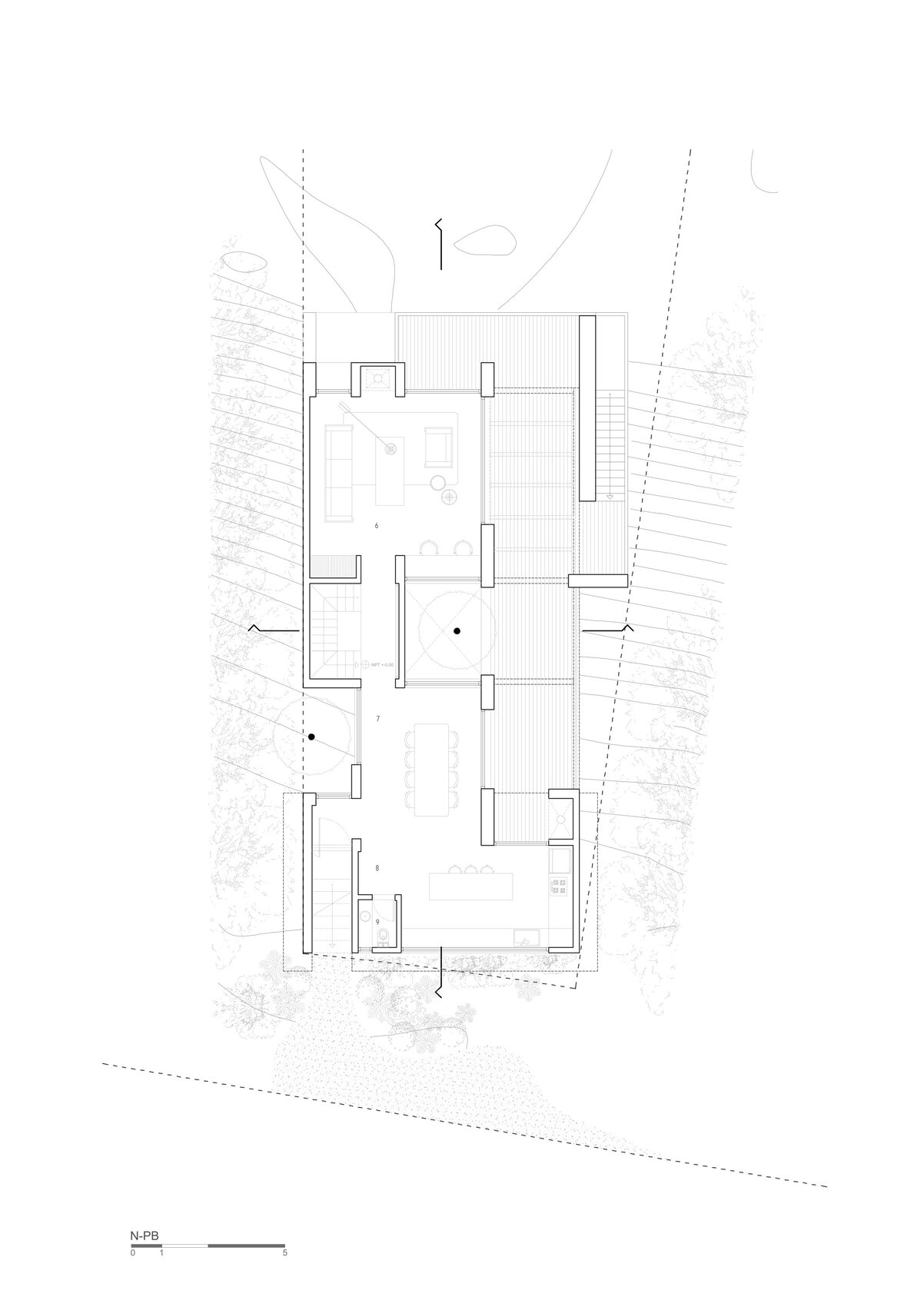
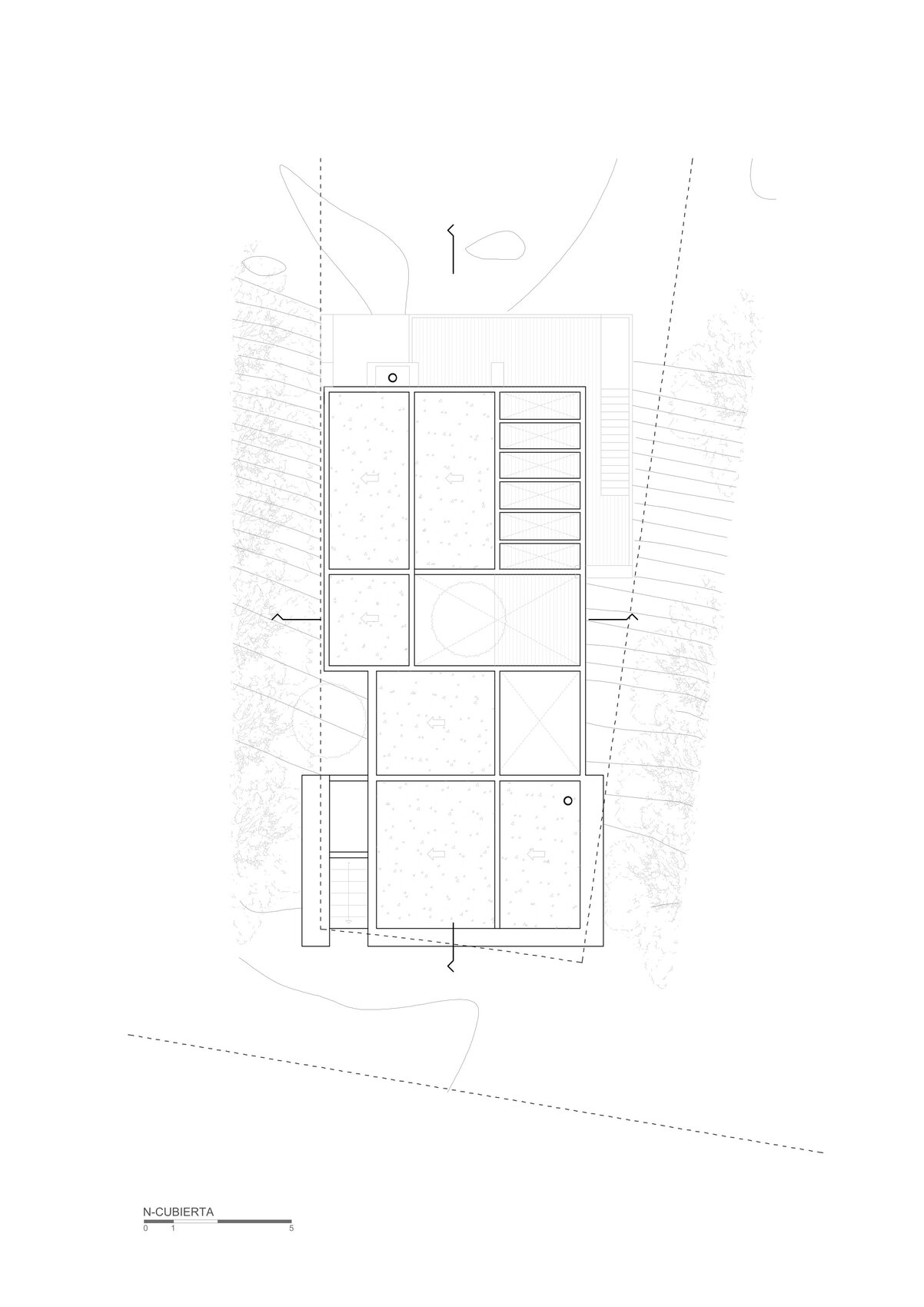
House H6 is located on the coastal dunes of La Costa, Argentina, a 200-square-meter residence by Taranti Arq Studio shaped by environmental responsiveness and topographic sensitivity. Developed with minimal intervention to the natural terrain, the project uses the existing slope to establish a terraced arrangement that enhances orientation, passive climate control, and integration with the landscape. The dwelling is organized through an inverted layout that places social functions on the upper level and private spaces below, taking advantage of the dune’s thermal properties to improve year-round comfort. A central courtyard introduces natural light and ventilation throughout the interior, while thick masonry walls and a vegetated roof contribute to thermal stability and durability. Constructed using common brick and locally familiar building techniques, the house combines environmental performance with material restraint. Through its careful adaptation to site conditions, House H6 demonstrates an approach in which architecture is informed by climate, topography, and construction logic rather than formal expression.
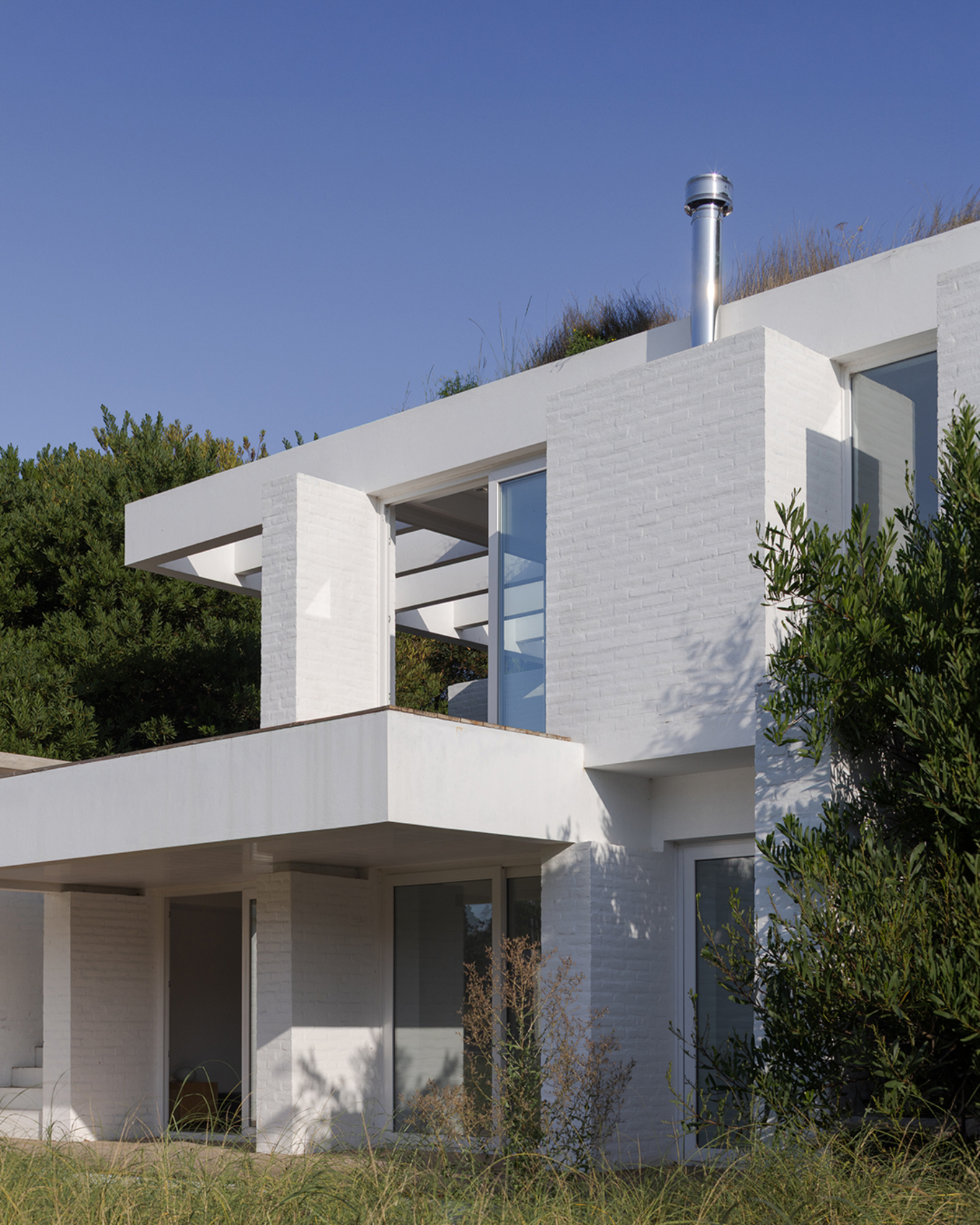
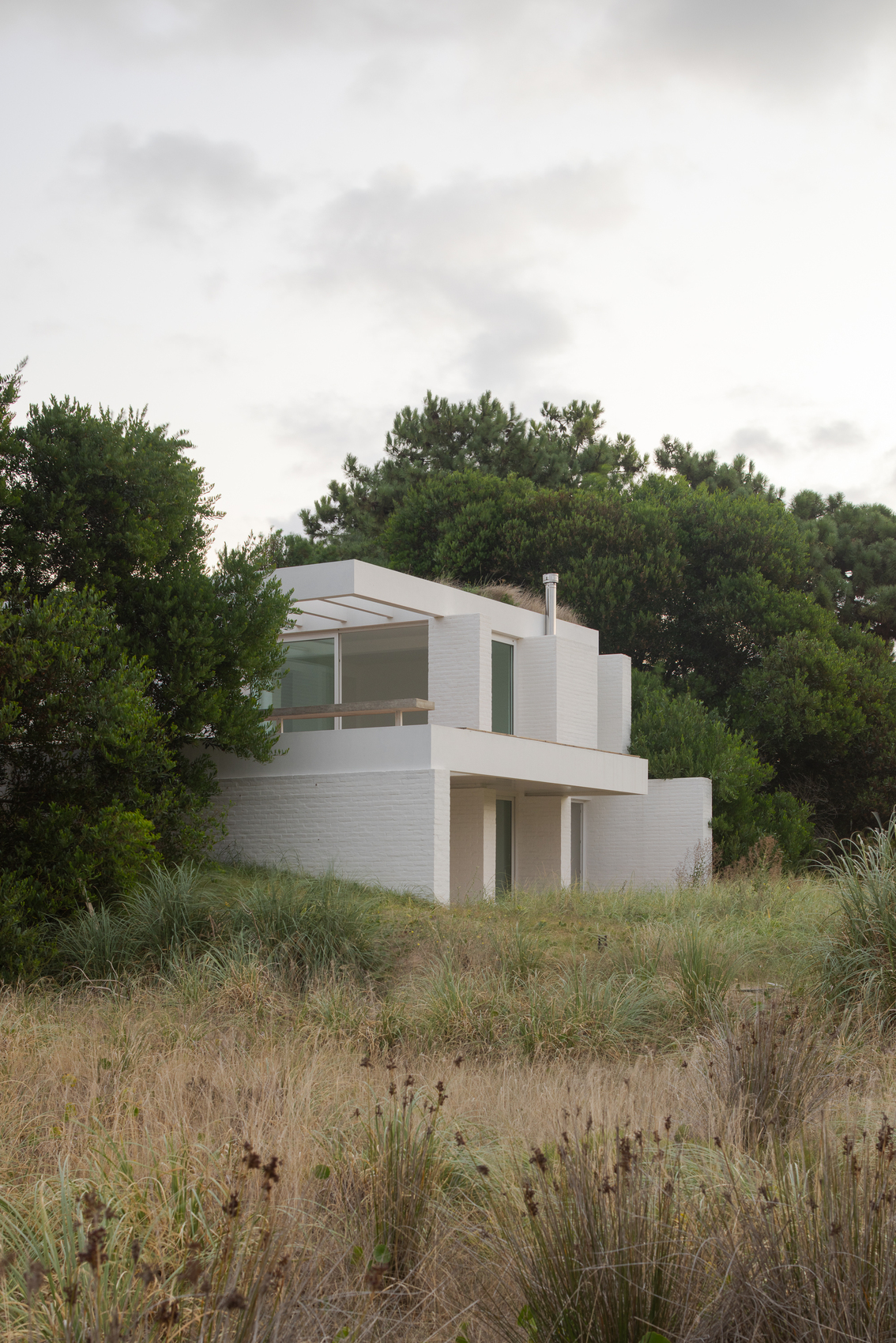
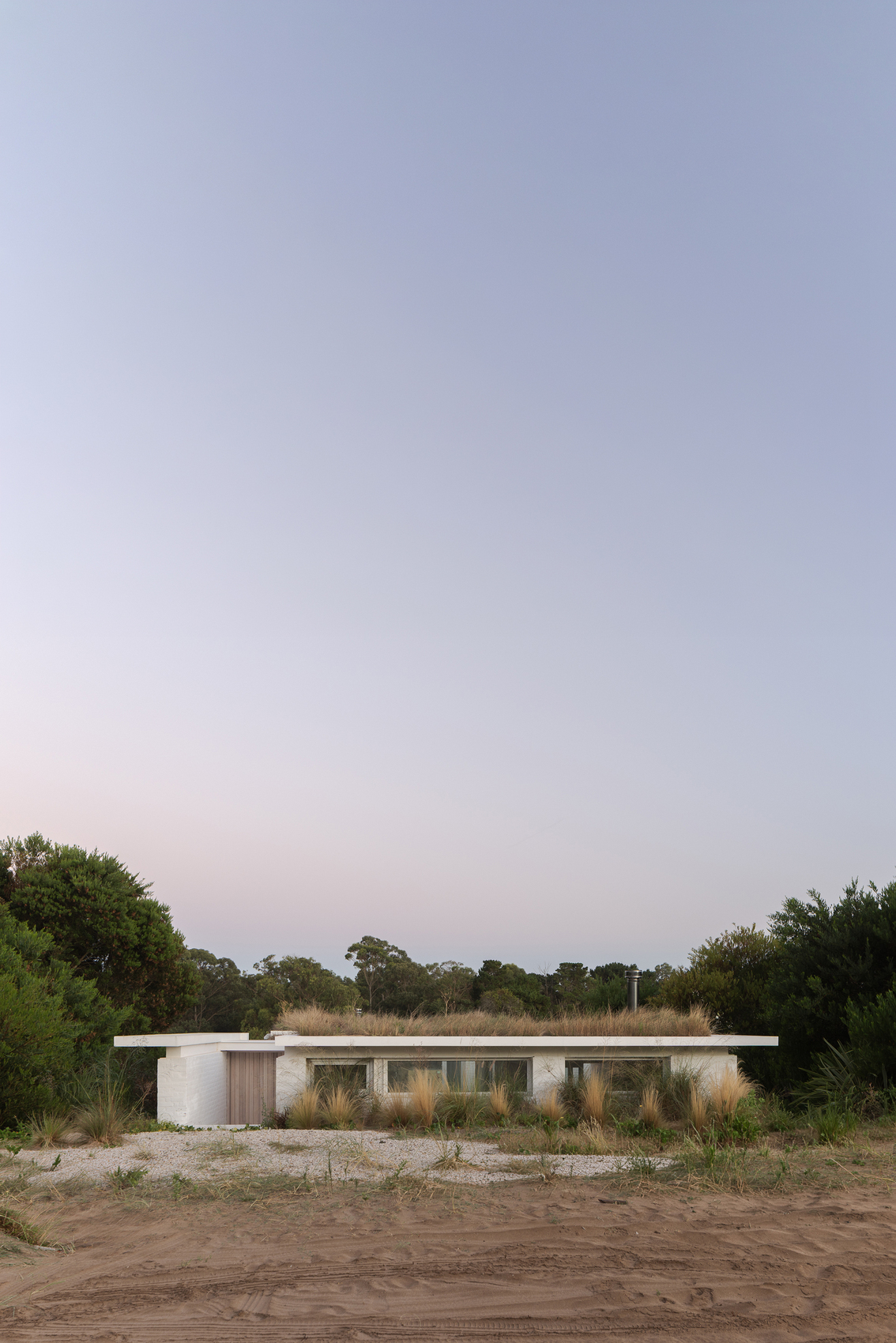
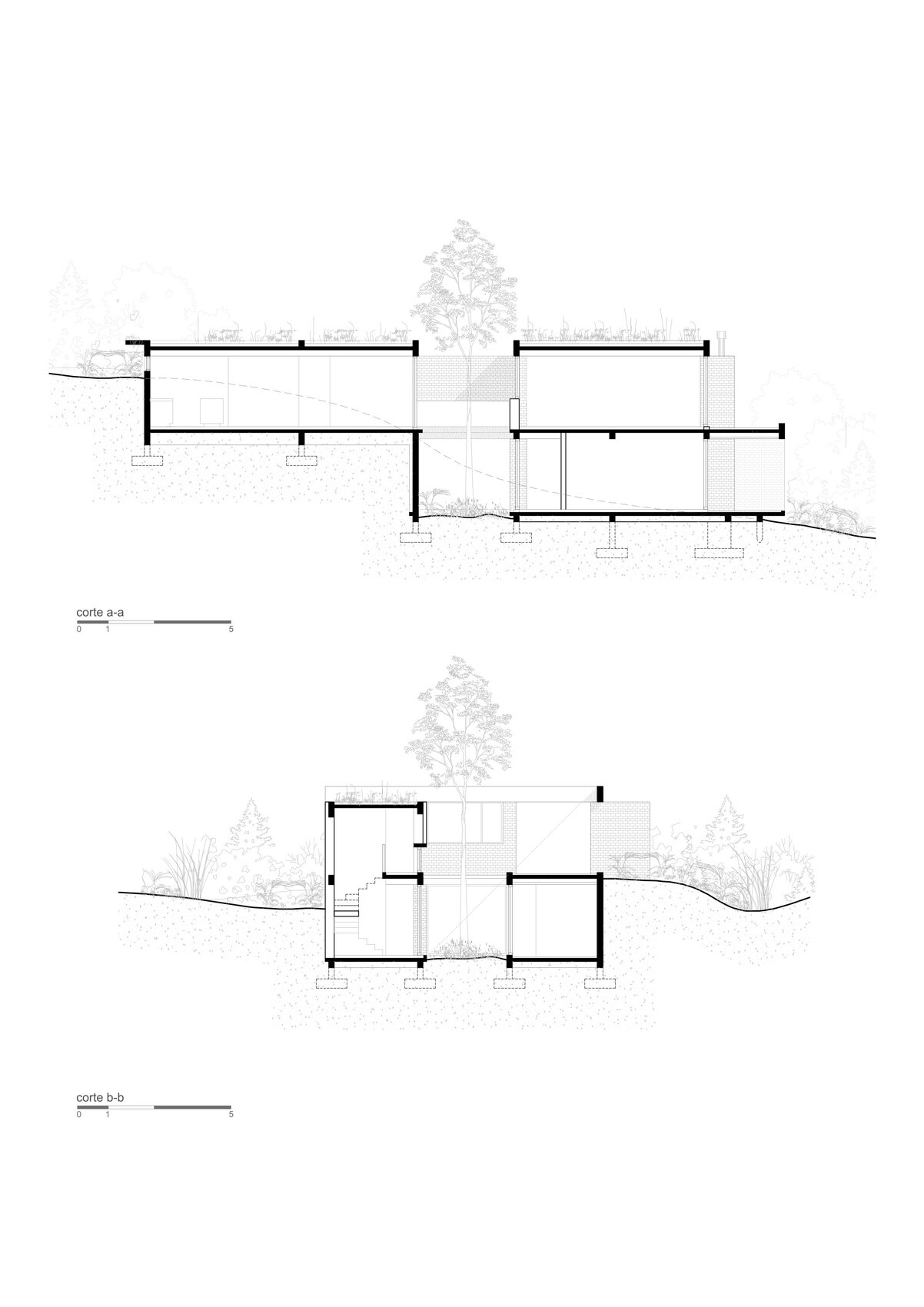
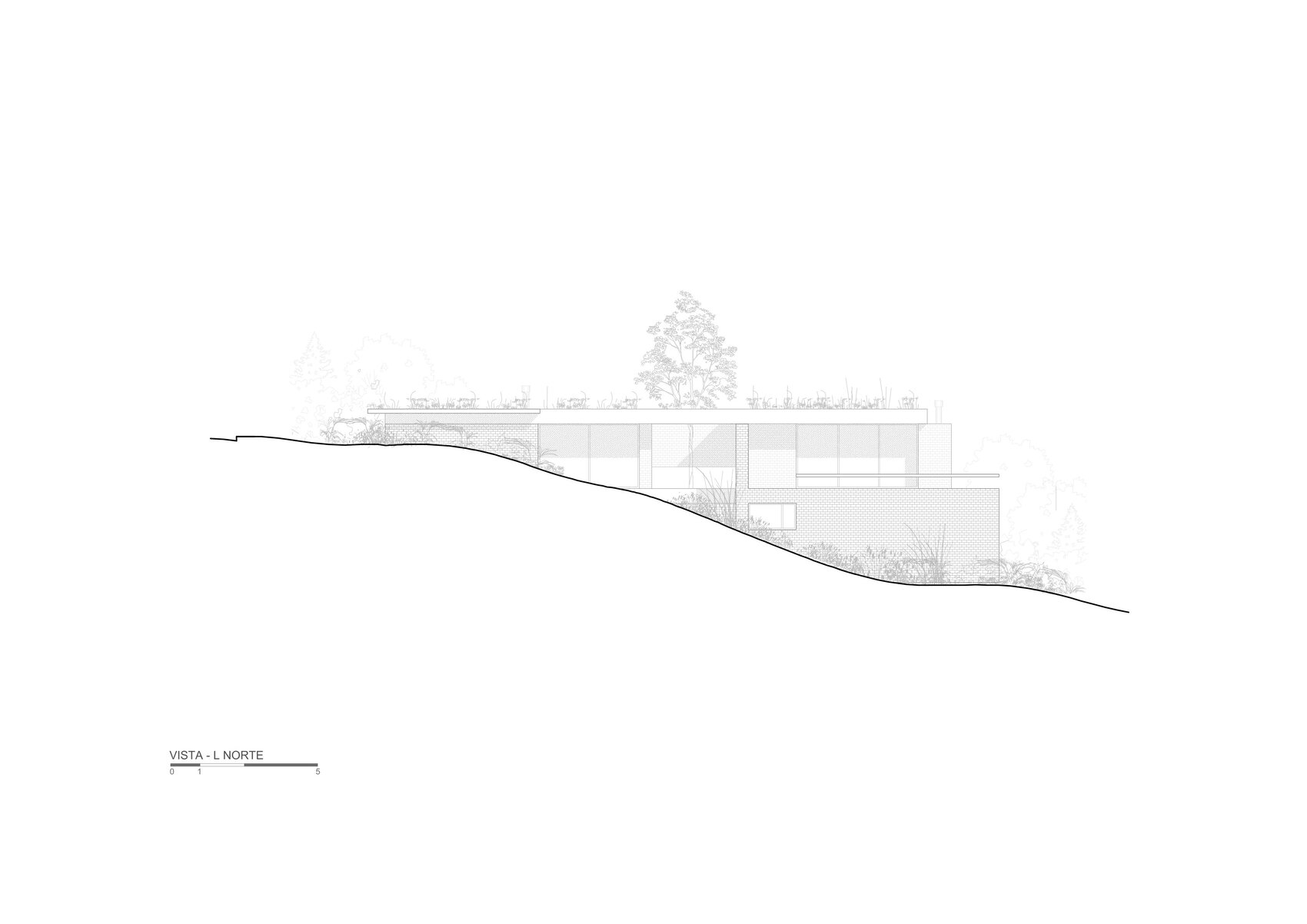
House H6 forms its central premise through the relationship between architecture and landscape. Situated on a northwest-facing dune overlooking the Argentine coast, the project avoids extensive earthworks and instead follows the natural contours of the terrain. This strategy allows the building to settle into the site with a reduced visual impact while establishing a series of platforms that mediate between interior spaces and the surrounding environment. Rather than treating the dune as an obstacle to construction, the design incorporates it as an active component of the architectural response.
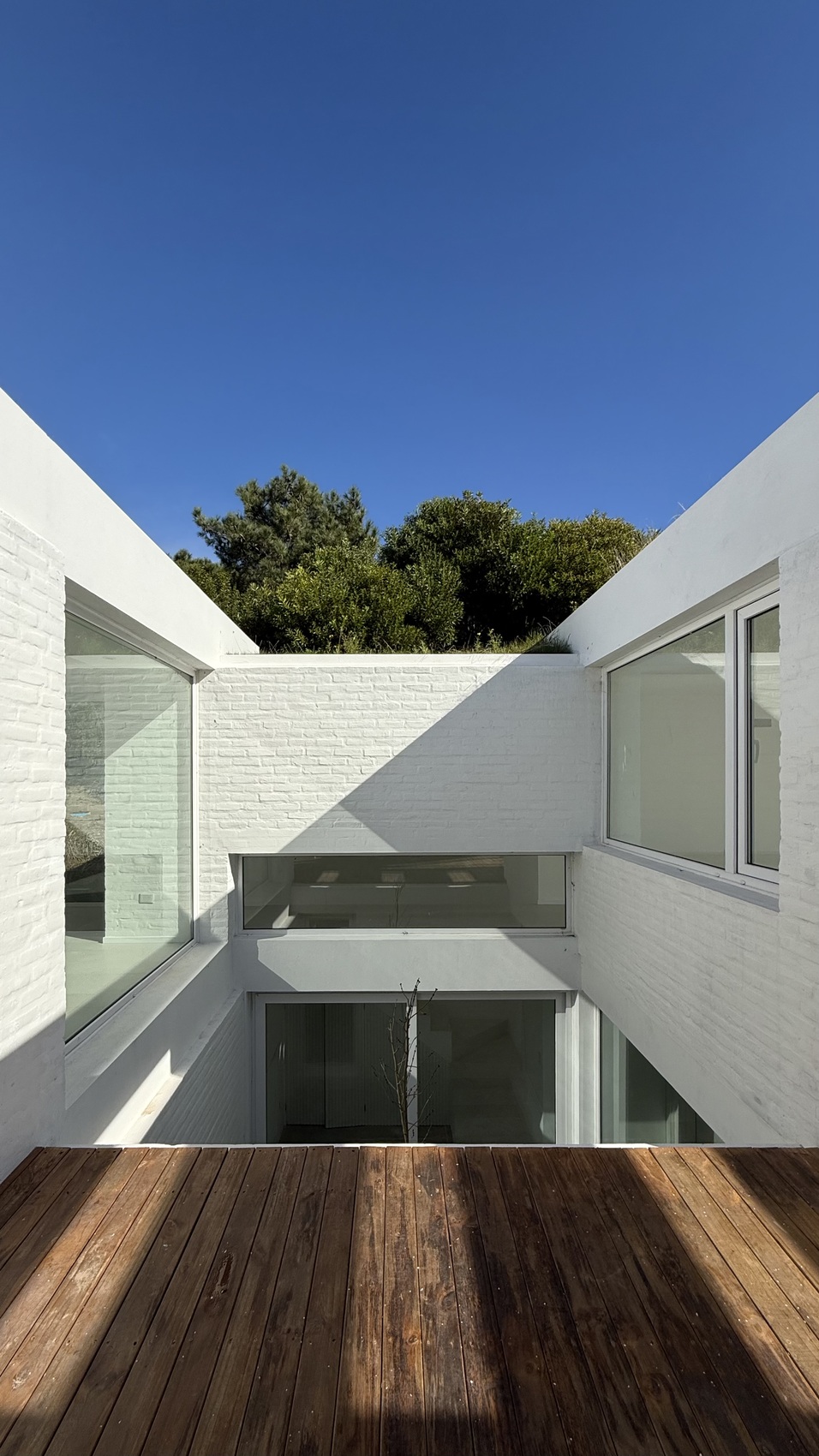
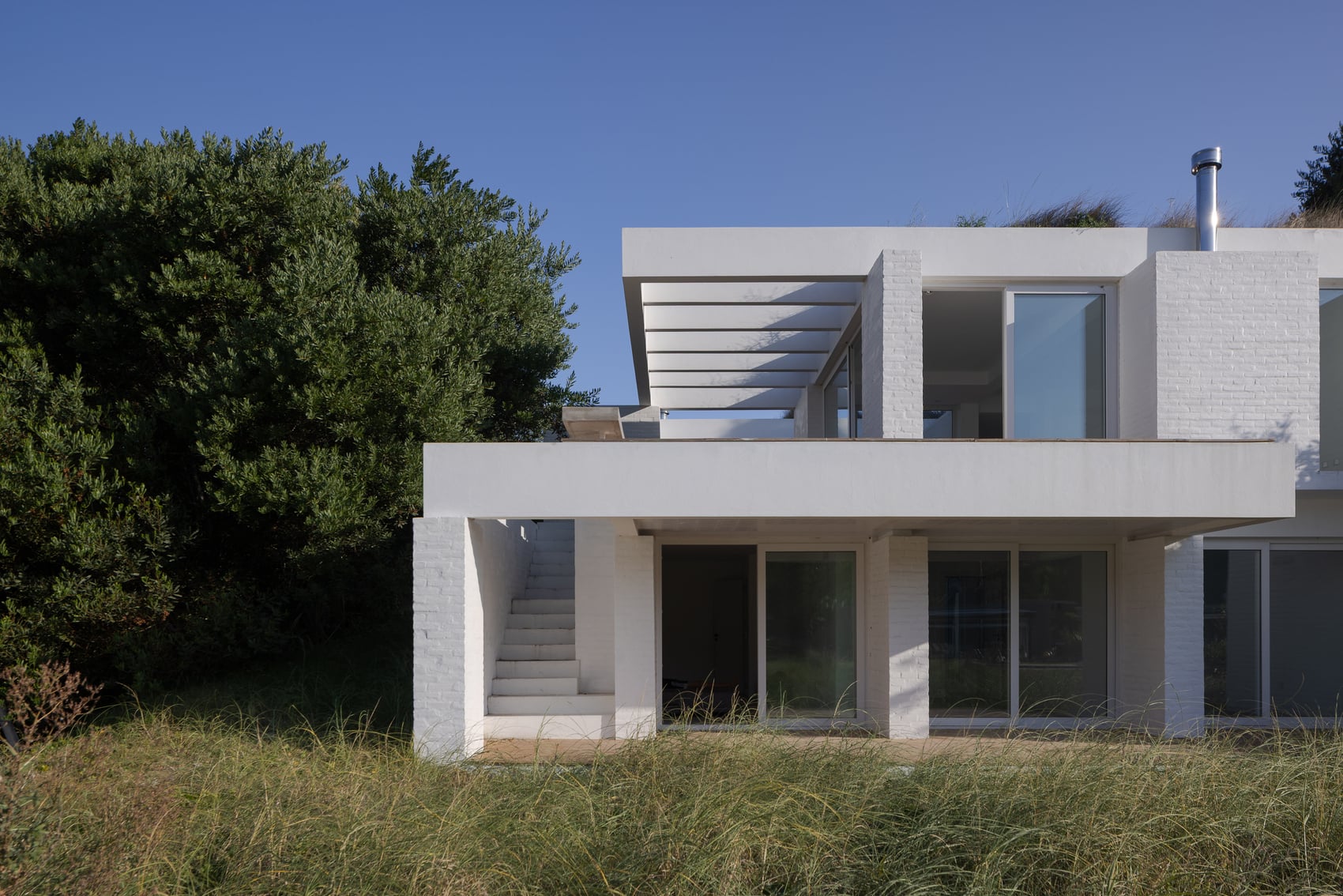
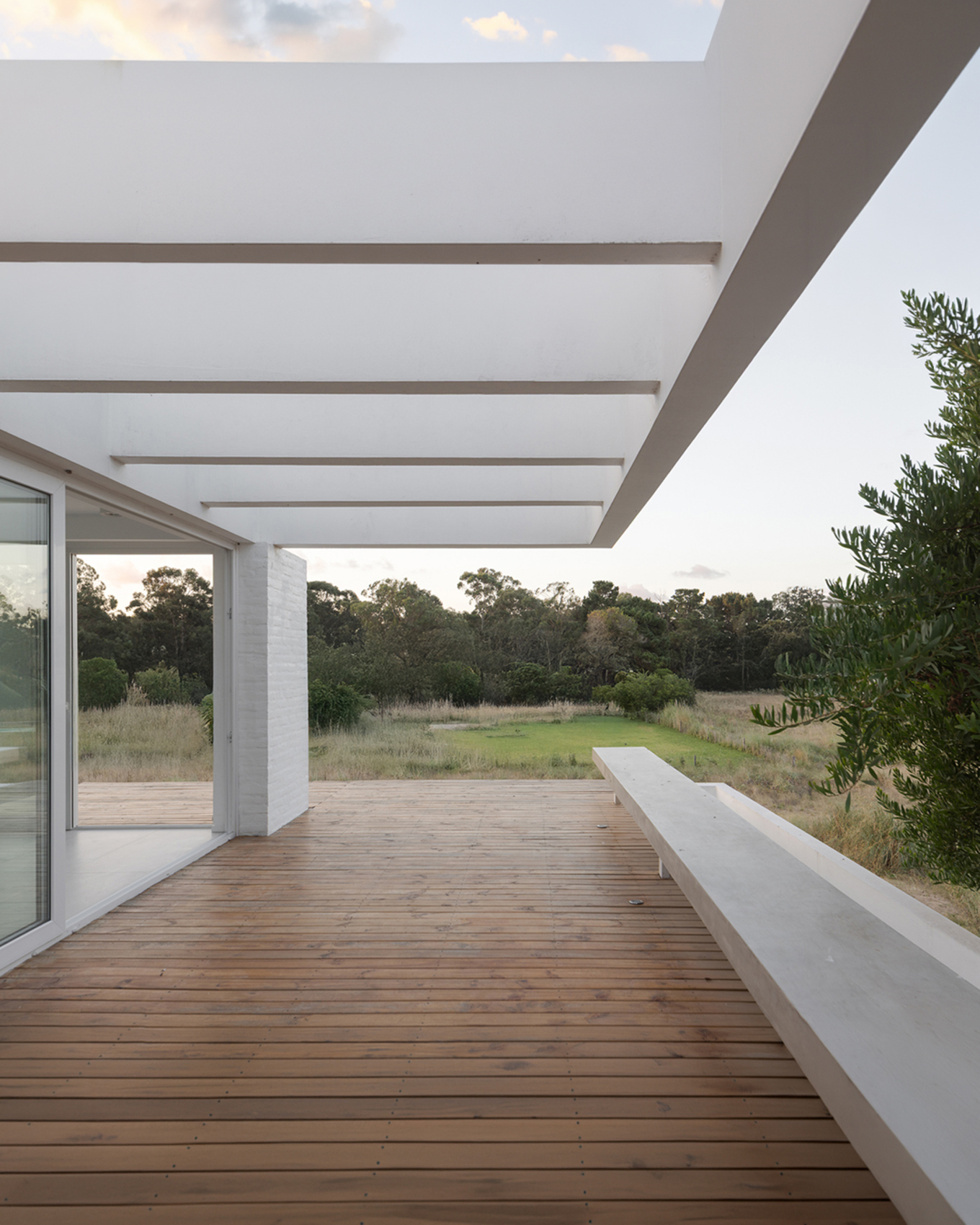
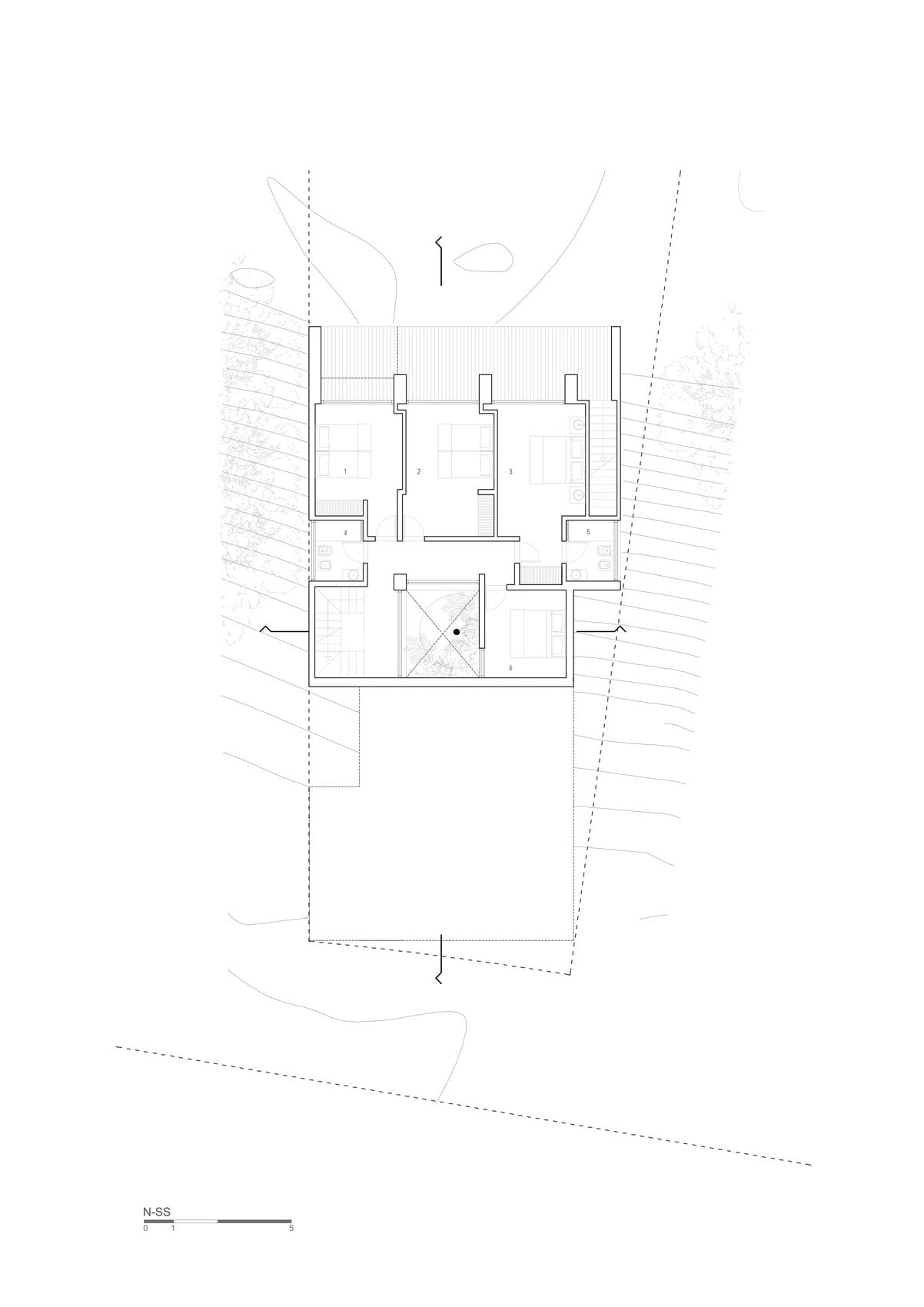
The house’s spatial organization is defined by an unconventional inversion of the typical residential plan. Access occurs from the street at the upper level, where visitors enter directly into the main living areas and outdoor expansions. This arrangement prioritizes views, sunlight, and social interaction at the point of arrival. The private bedrooms are positioned on the lower floor, embedded within the dune itself, where the surrounding earth provides natural insulation and contributes to a more stable indoor environment throughout changing seasonal conditions.
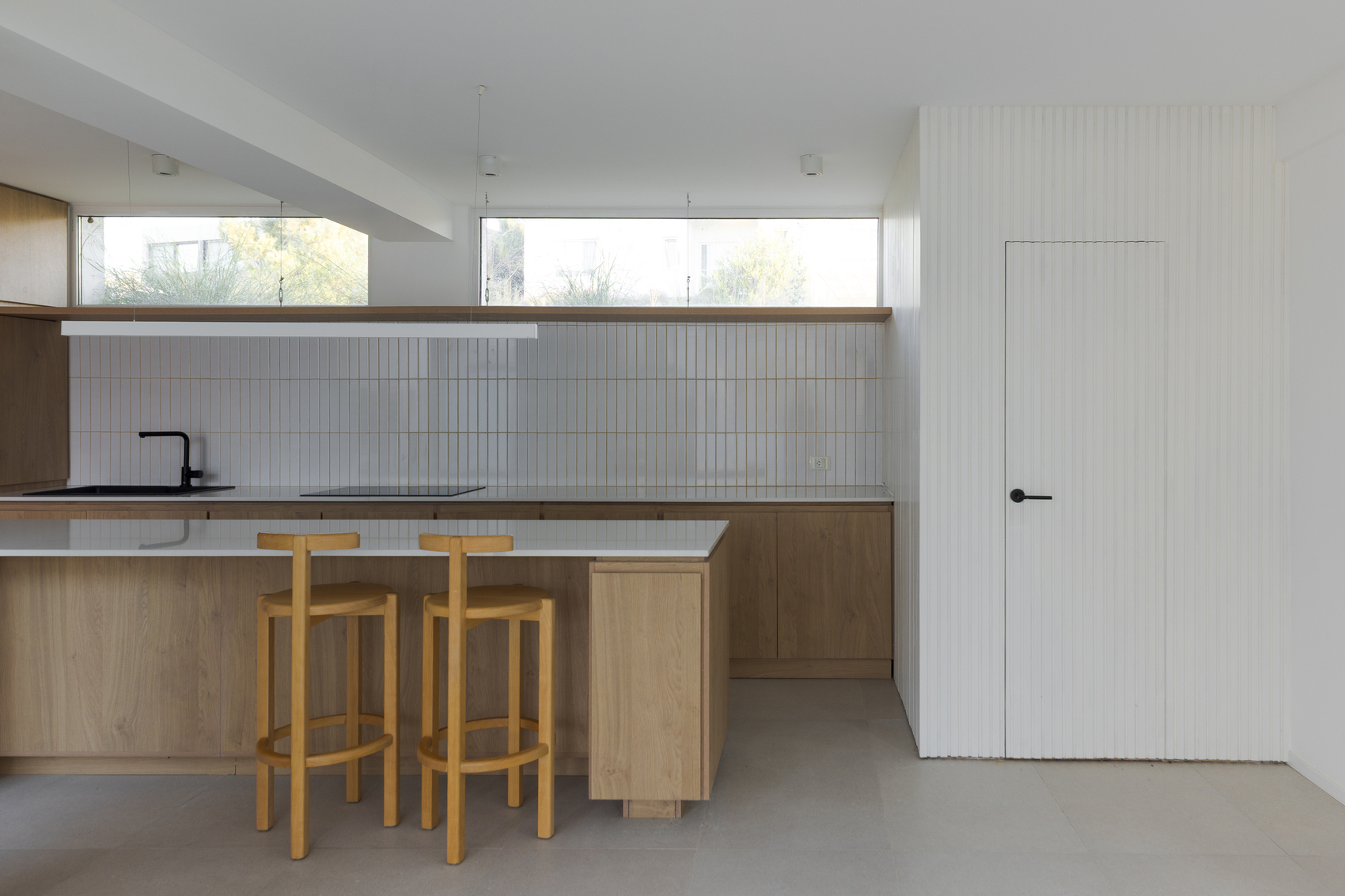
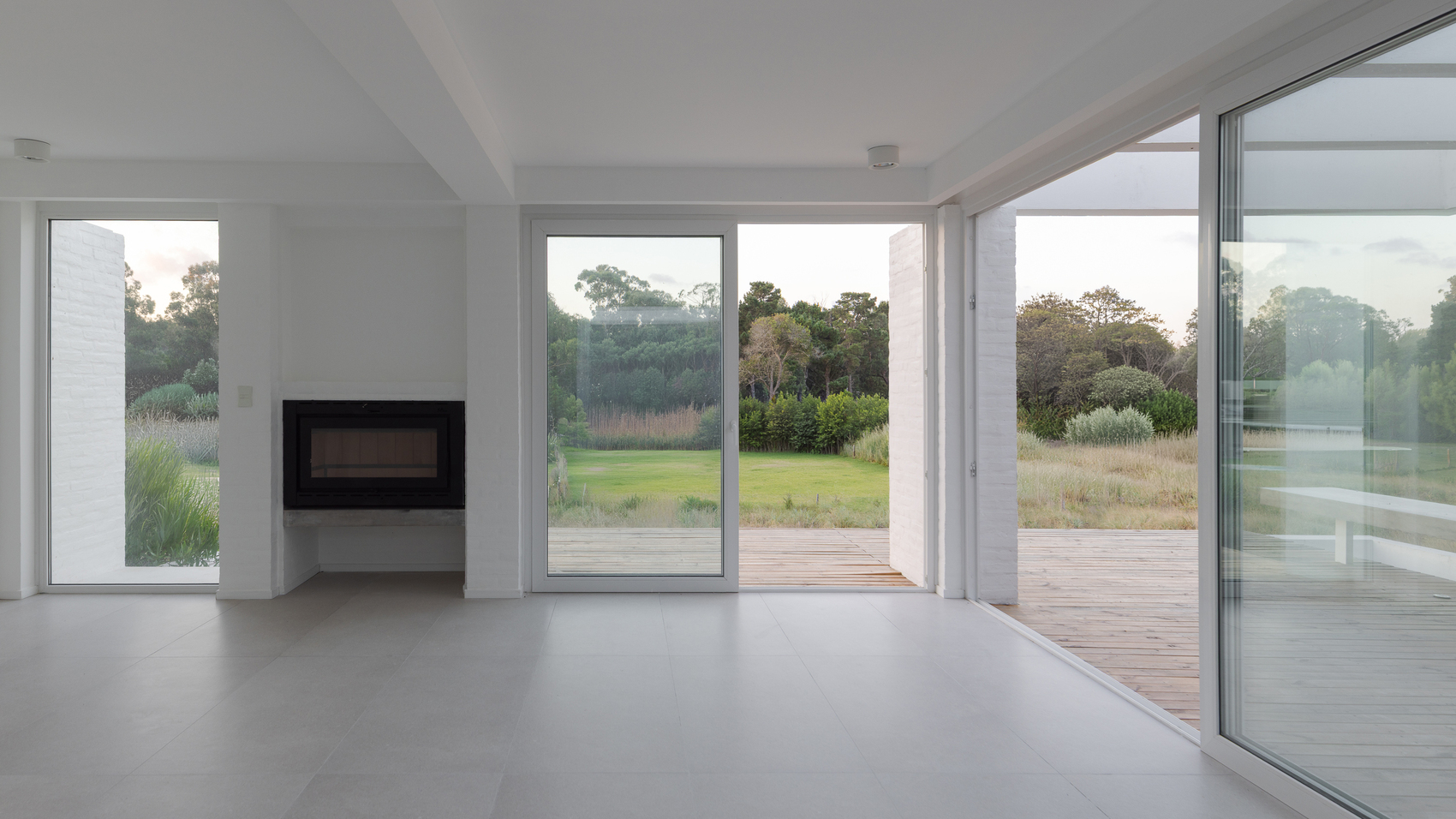
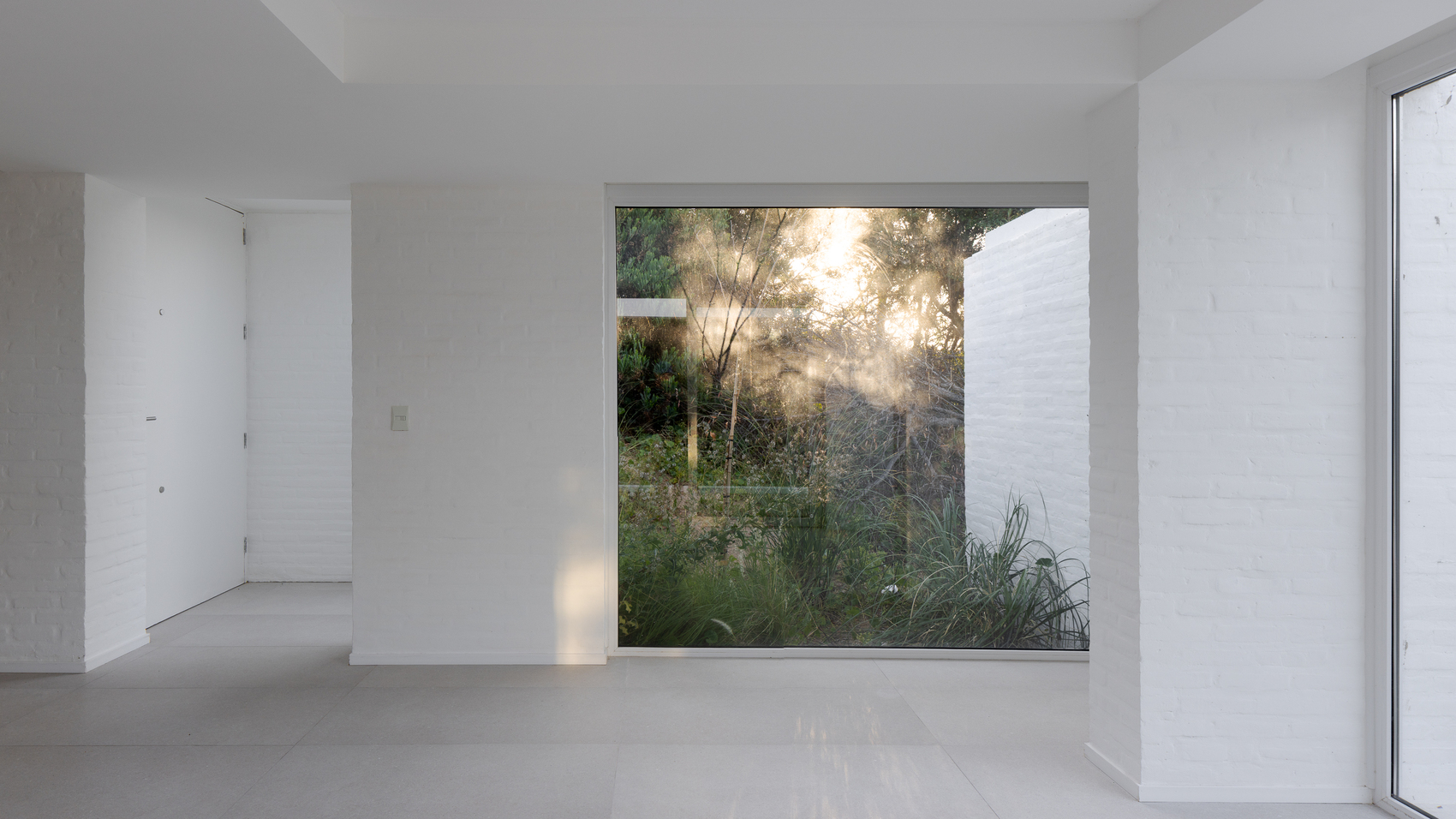
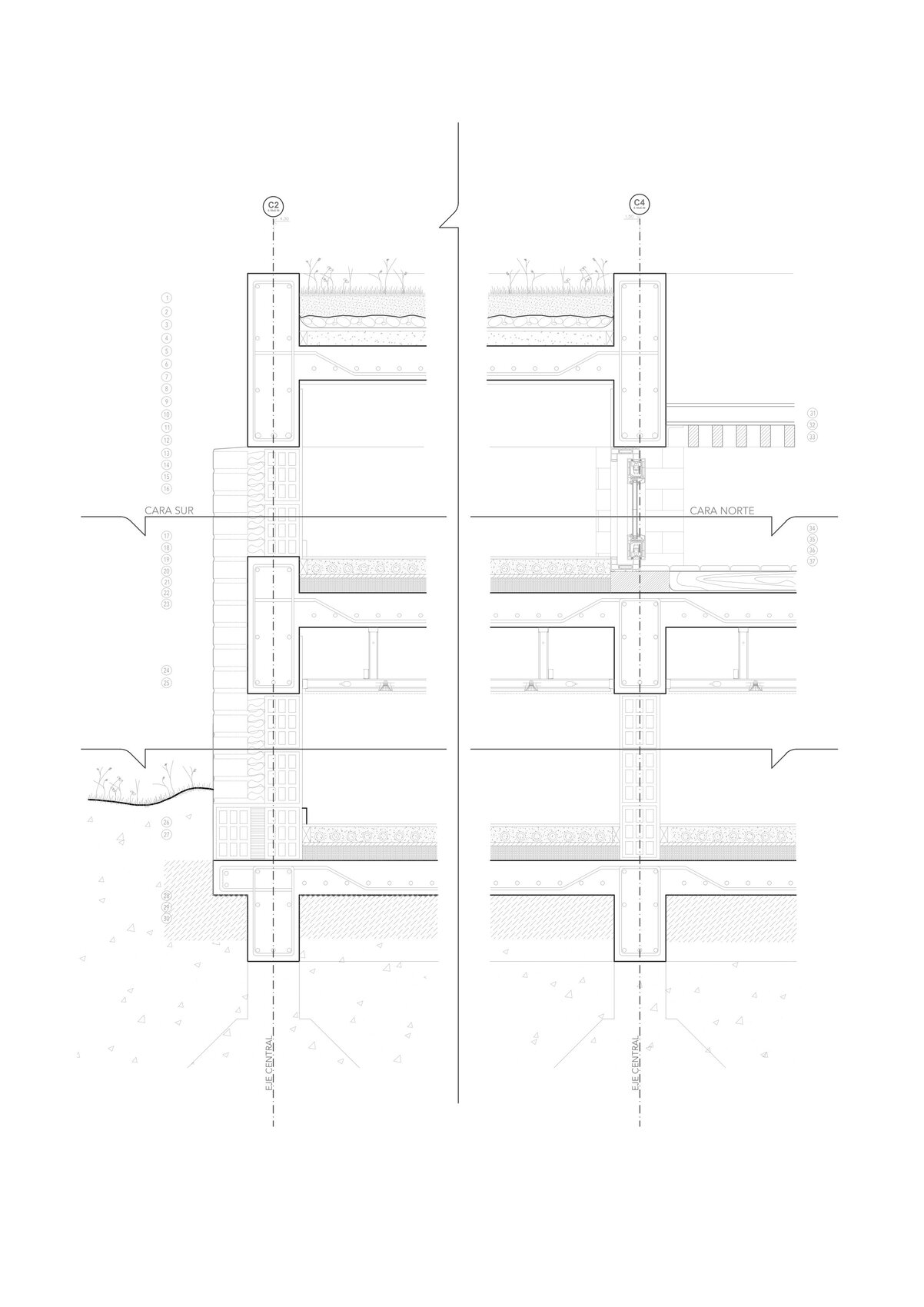
Environmental performance is further reinforced through a series of passive design measures. Semi-covered outdoor spaces regulate solar exposure on the northwest façade, limiting heat gain during summer while allowing beneficial sunlight during winter months. At the center of the house, a double-height courtyard functions as a climatic moderator, facilitating natural ventilation and distributing daylight across multiple levels. Combined with a suspended ceiling system that incorporates a 30-centimeter air cavity, these elements reduce dependence on mechanical conditioning systems and support a more energy-efficient mode of habitation.
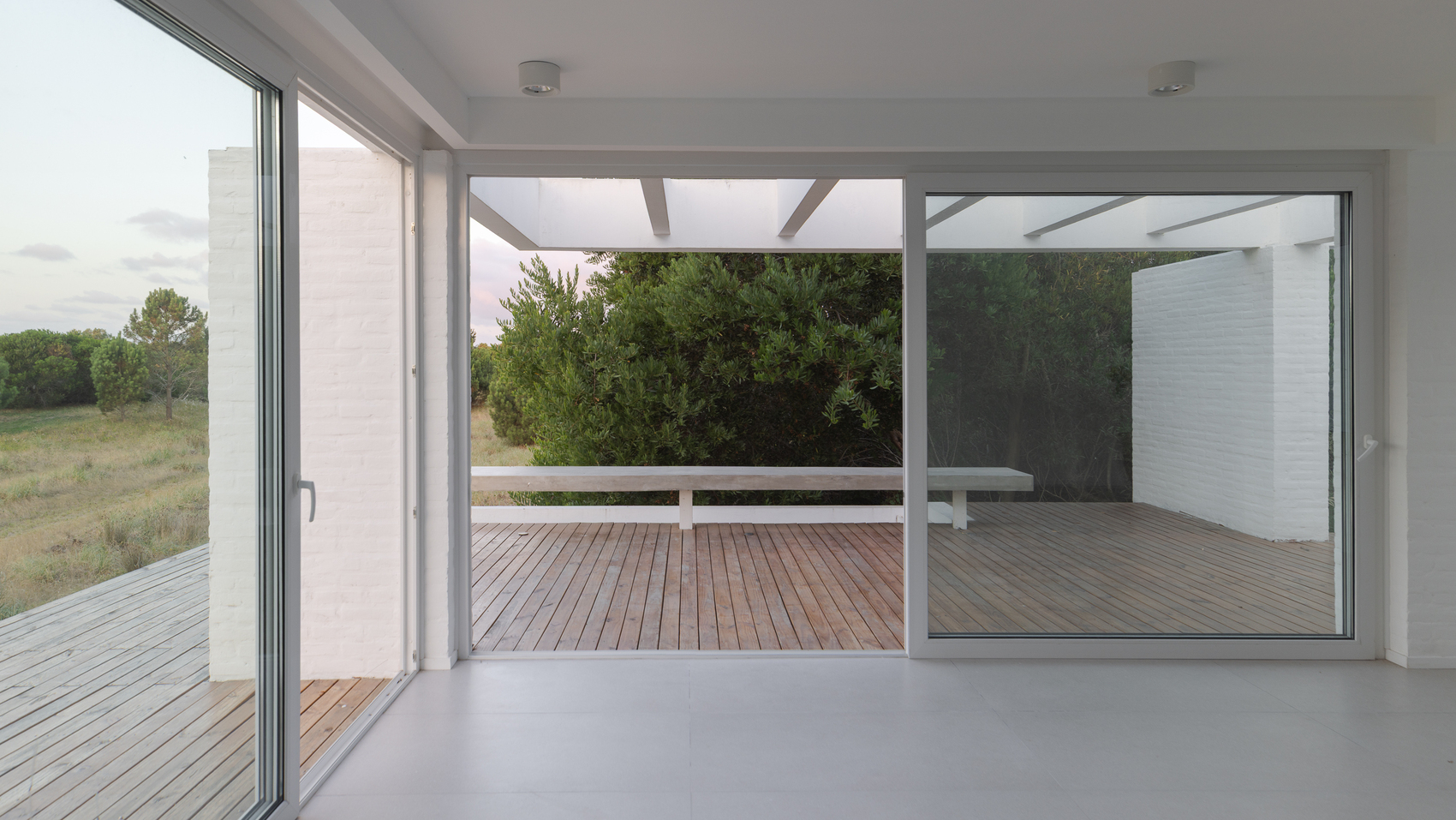
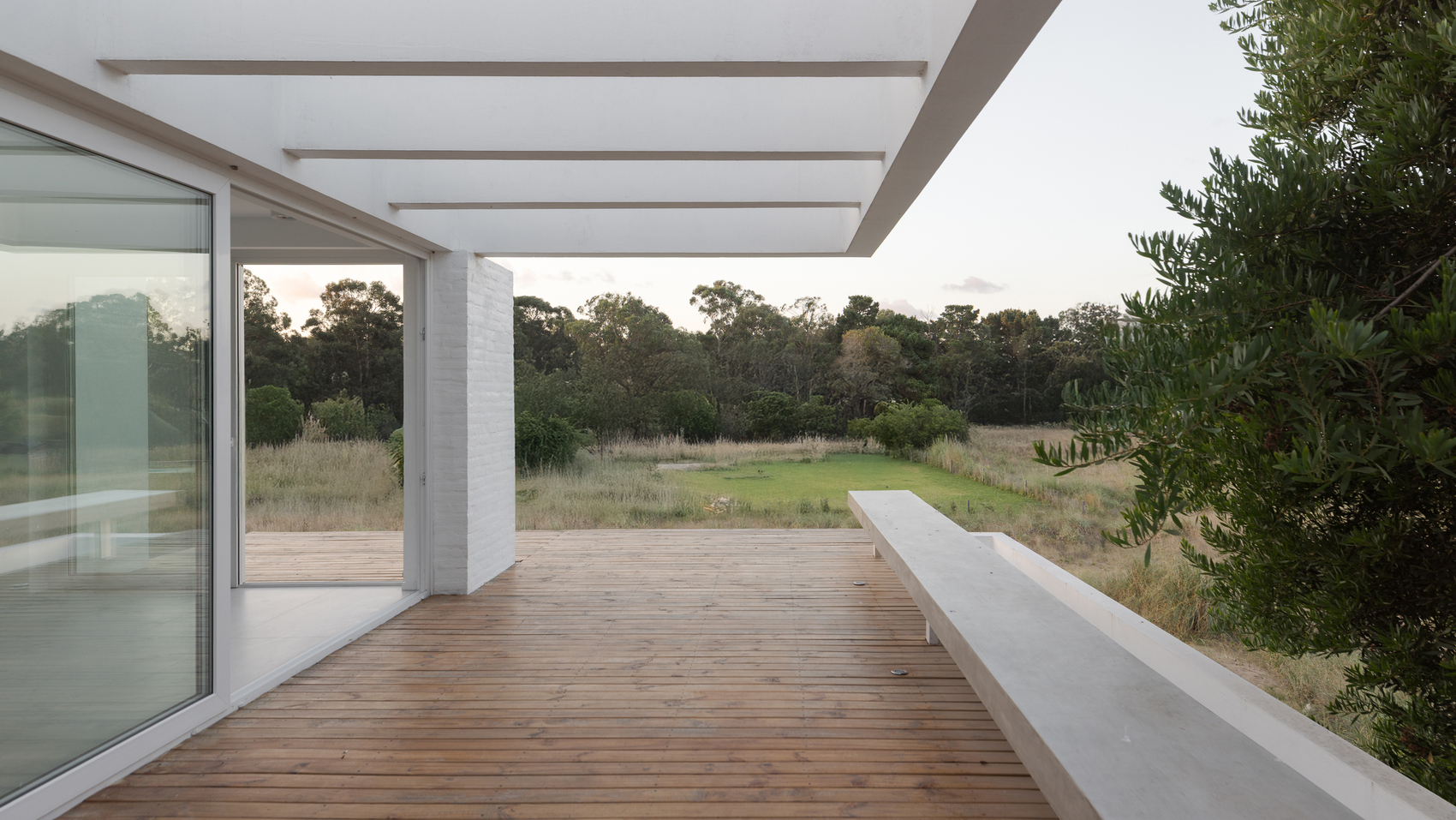
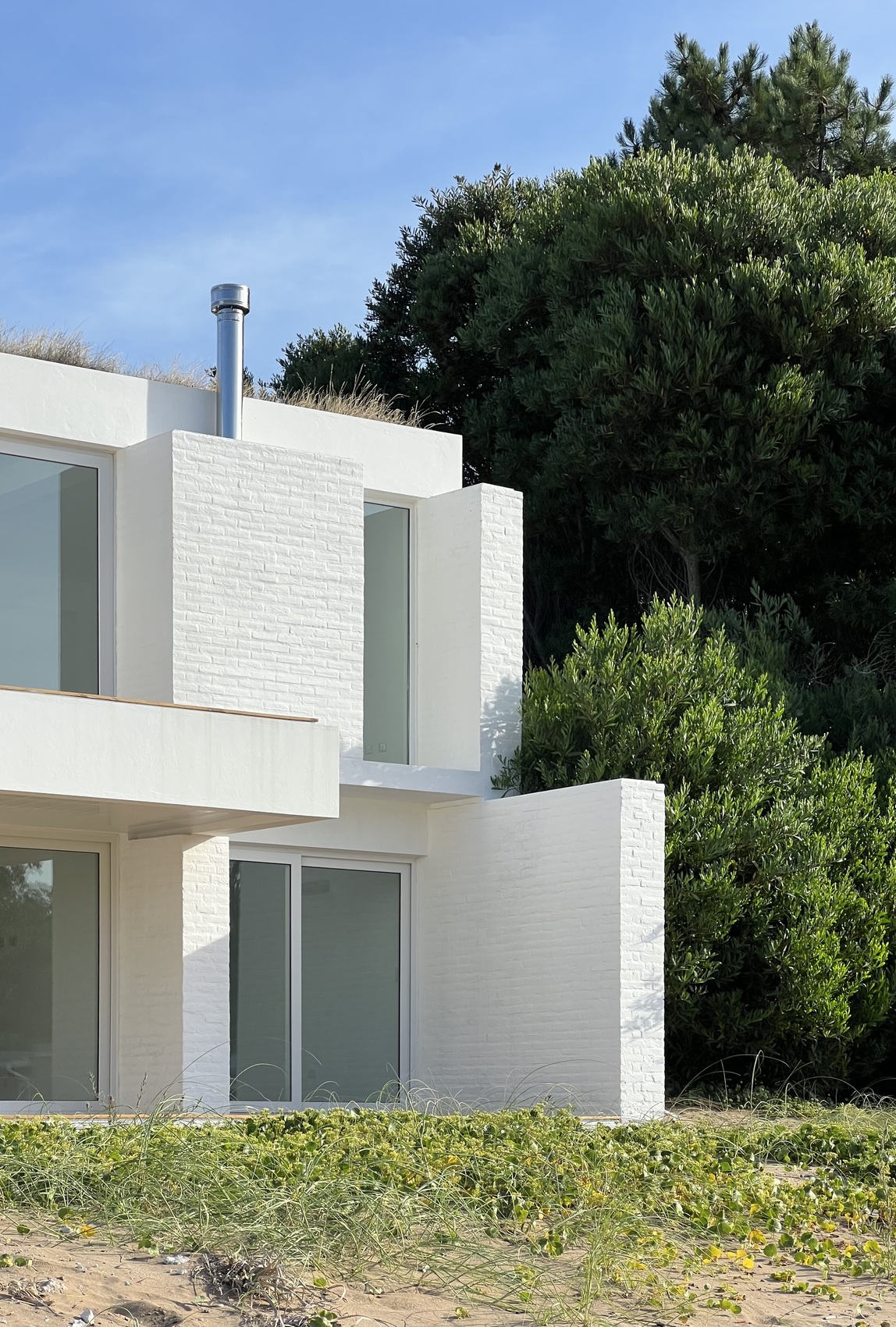
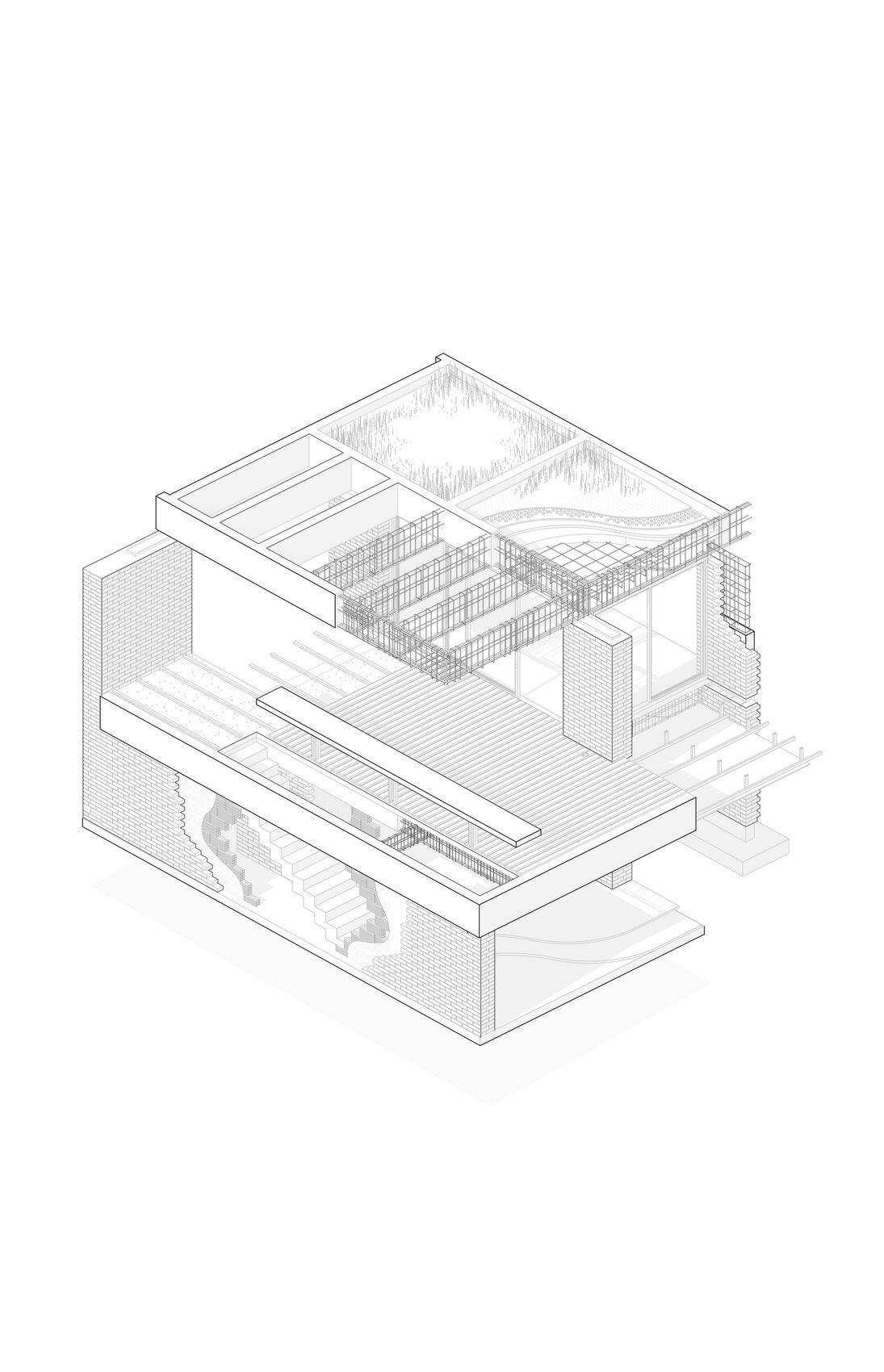
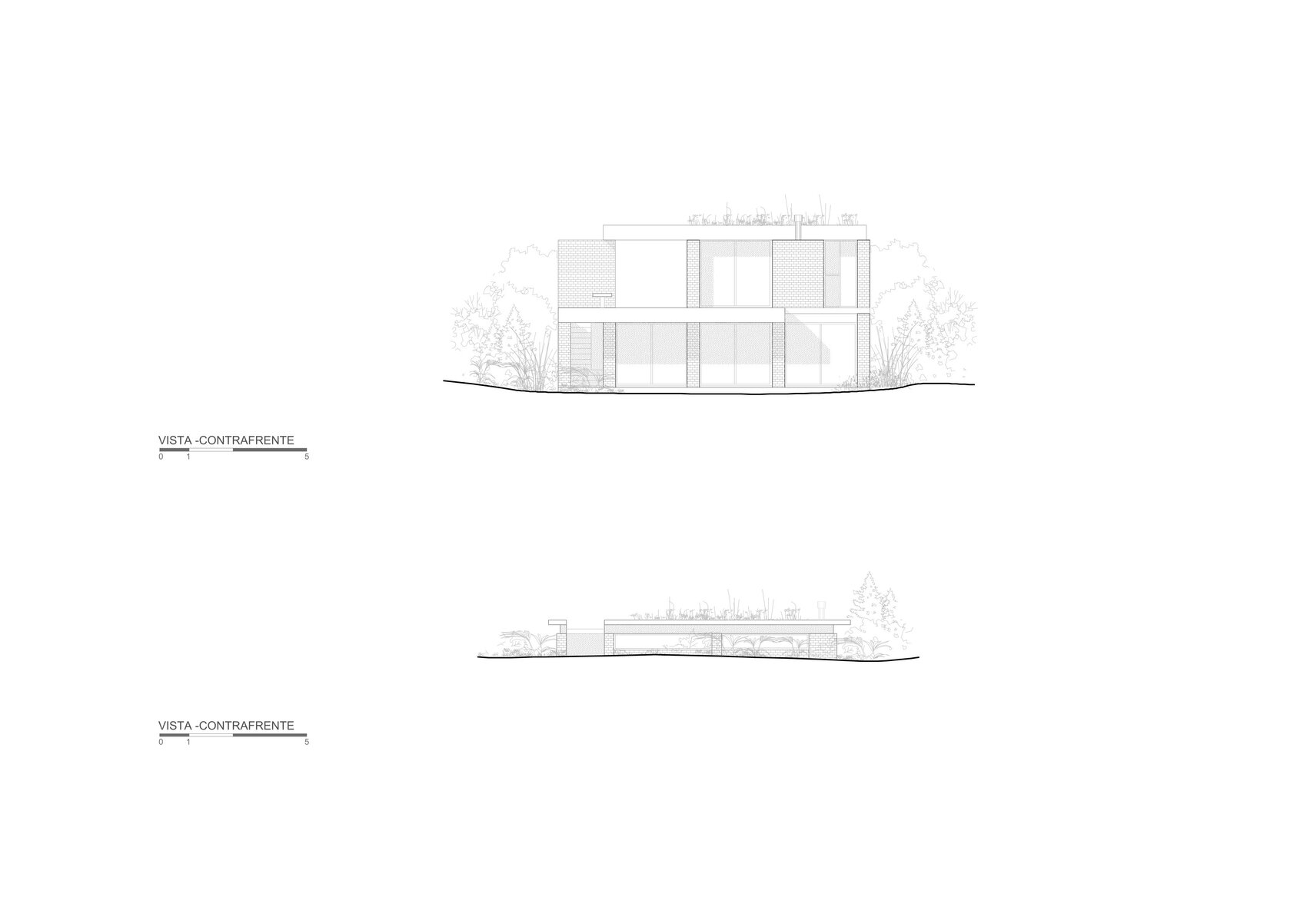
Material and structural decisions were developed in direct response to the demands of the coastal setting. With little natural vegetation available to provide shade or protection, the building envelope assumes a critical role in defending against exposure to wind, moisture, and solar radiation. Thick 40-centimeter masonry walls increase thermal mass while enhancing durability, and a green roof provides additional insulation while restoring an area of native vegetation displaced by construction. Together, these interventions transform the building envelope into a performative environmental system.
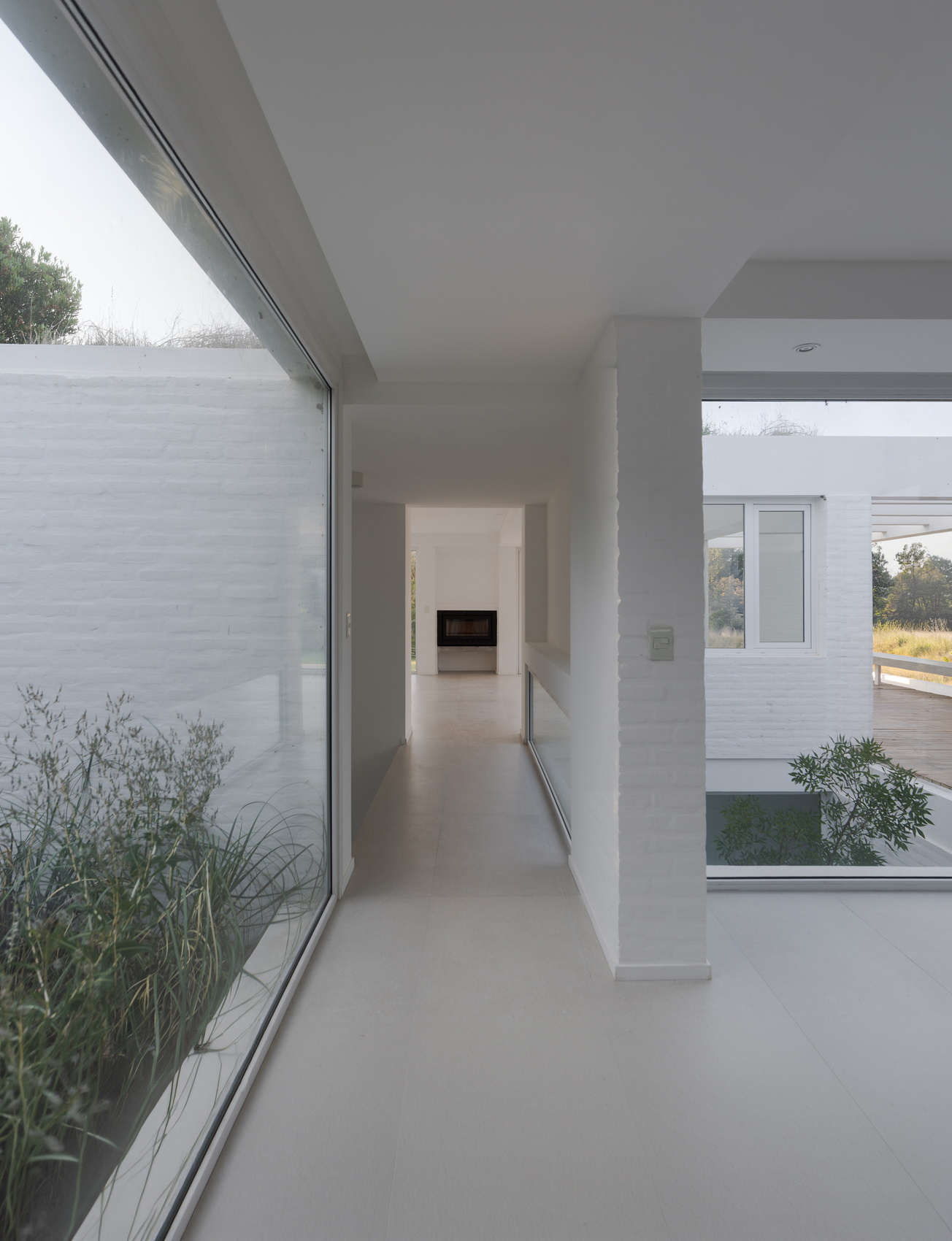
The project’s architectural language emerges from a commitment to material honesty and constructional clarity. Common brick laid with flush mortar joints becomes both the primary structural material and the principal aesthetic expression of the house. By relying on techniques familiar to local builders, Taranti Arq Studio explores the potential of ordinary construction methods to address climatic challenges while producing a coherent architectural identity. House H6 ultimately presents a restrained and site-driven architecture, one in which mass, shadow, and terrain become the defining elements of a design deeply connected to its place.
Project Gallery
Project Location
Address: Buenos Aires, La Costa, Argentina
The location specified is intended for general reference and may denote a city or country, but it does not identify a precise address.

