

Architects: Daymark Design Incorporated
Area: 2,515 ft²
Year: 2020–2025
Photography: Adrian Ozimek
Lead Architects: Adrian Worton
Structural Engineering: Tacoma Engineers Inc.
Mechanical Engineering: McCallum HVAC Design Inc.
Civil Engineering: Mer-Tech Inc.
City: Ontario
Country: Canada
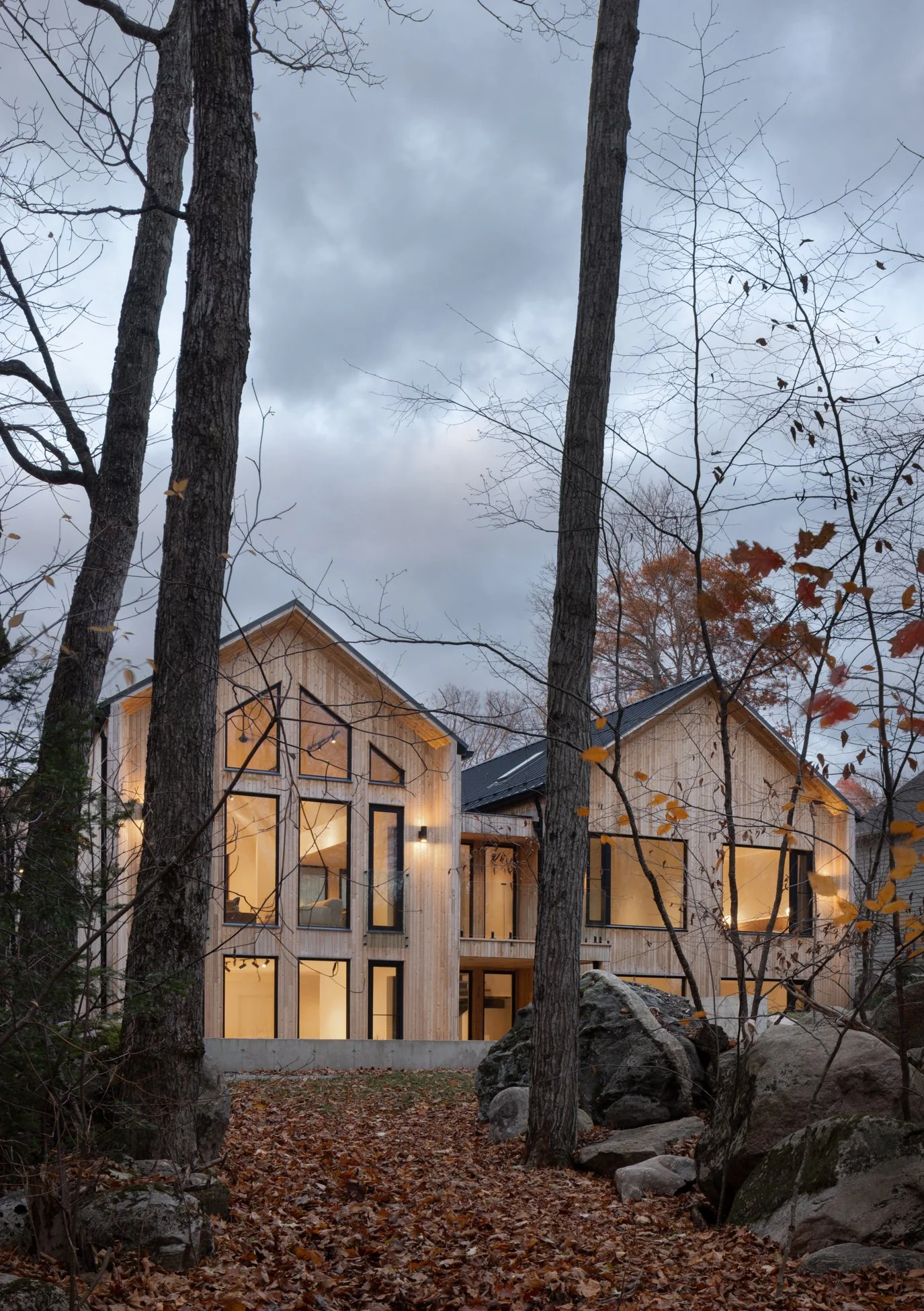
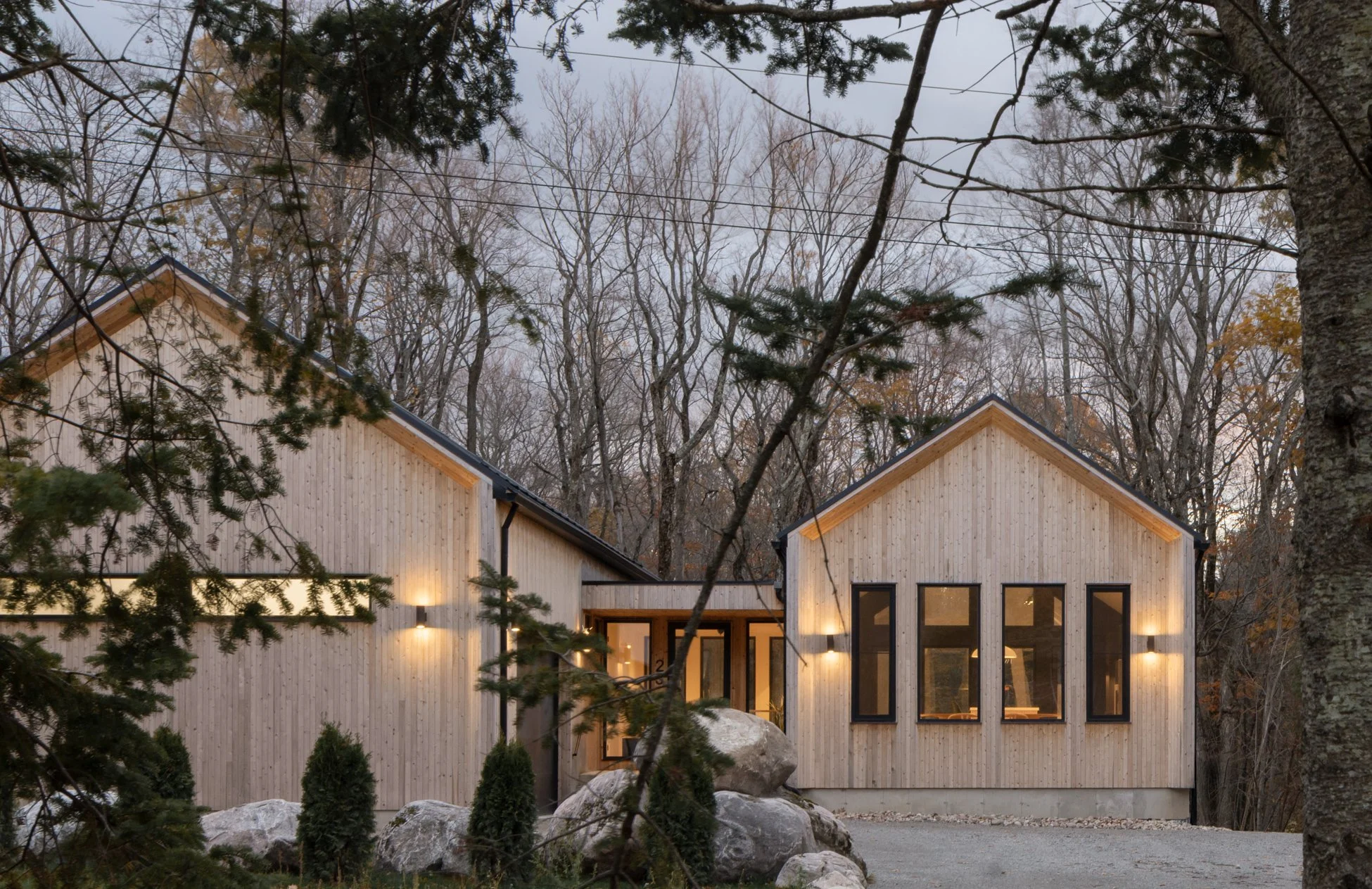
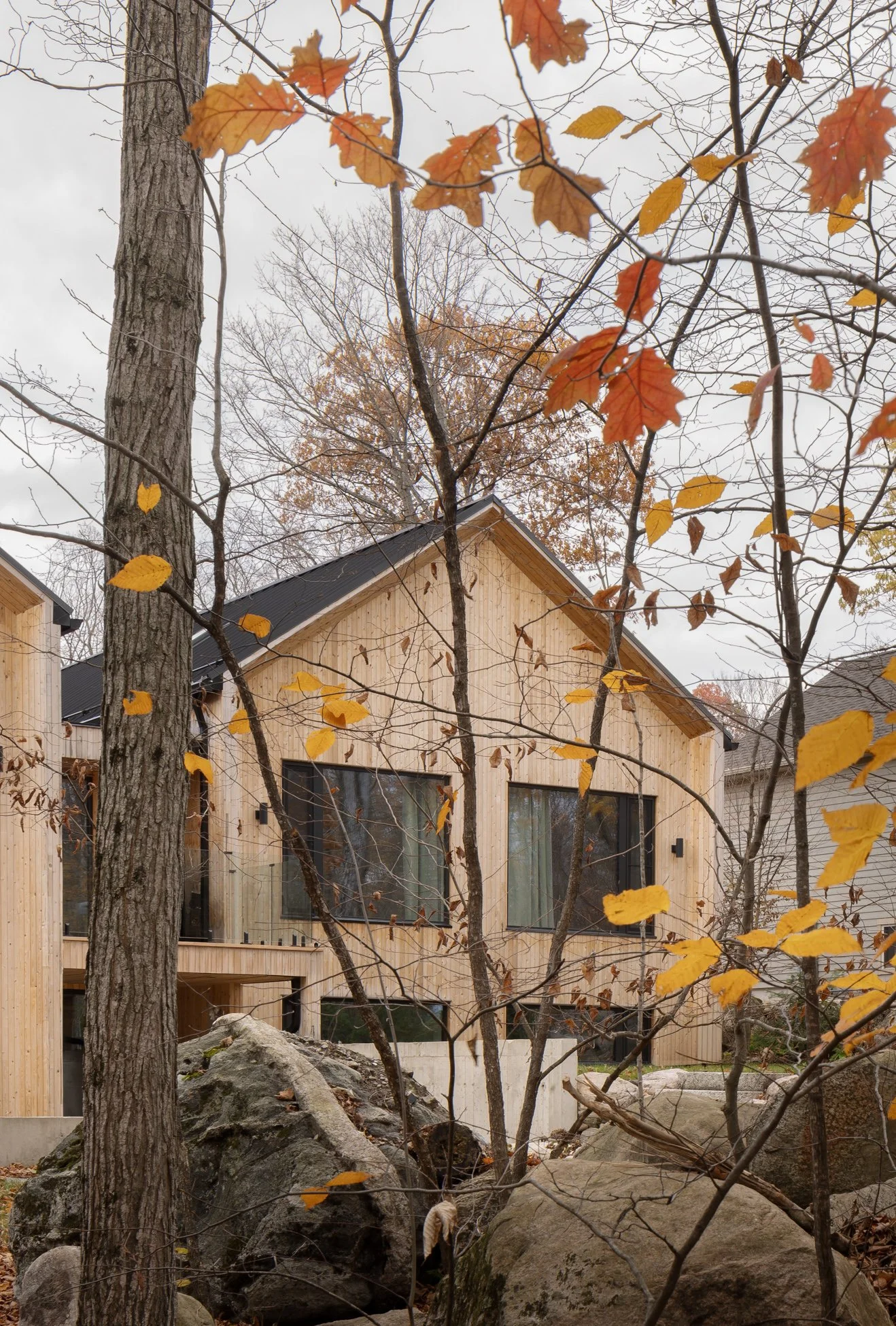
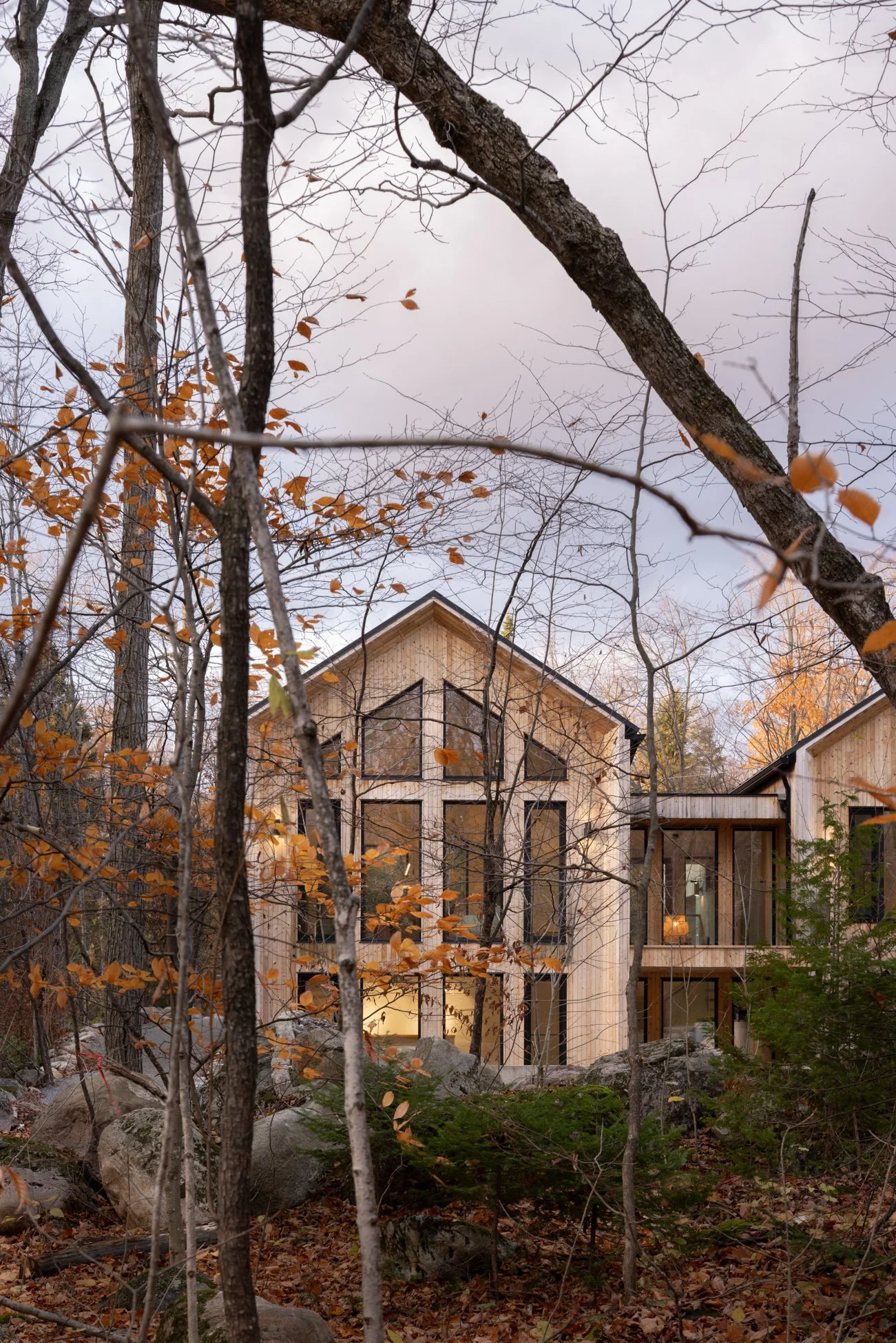
House Two is a contemporary residence by Daymark Design Incorporated, located within a wooded setting near Georgian Bay in Ontario. The project reinterprets the traditional cottage through a disciplined architectural language focused on clarity, durability, and long-term relevance. Organized as two gabled volumes connected by a low breezeway, the house establishes a clear distinction between public and private spaces while maintaining visual continuity across the site. An exterior of untreated western red cedar allows the building to weather naturally, reinforcing a quiet relationship with the surrounding landscape. Inside, a restrained material palette and deliberate spatial sequencing create an interior atmosphere defined by light, proportion, and material integrity. At a modest scale, the project demonstrates how thoughtful design decisions can generate architectural generosity without excess, reflecting Daymark’s commitment to contextually grounded and enduring residential architecture.
My favorite detail is a modest yet powerful form—simple rooflines and massing. This approach, evident in several Daymark projects, demonstrates a clear architectural expression and a method consistently applied across various projects and scales.
Interview with Adrian Worton of Daymark
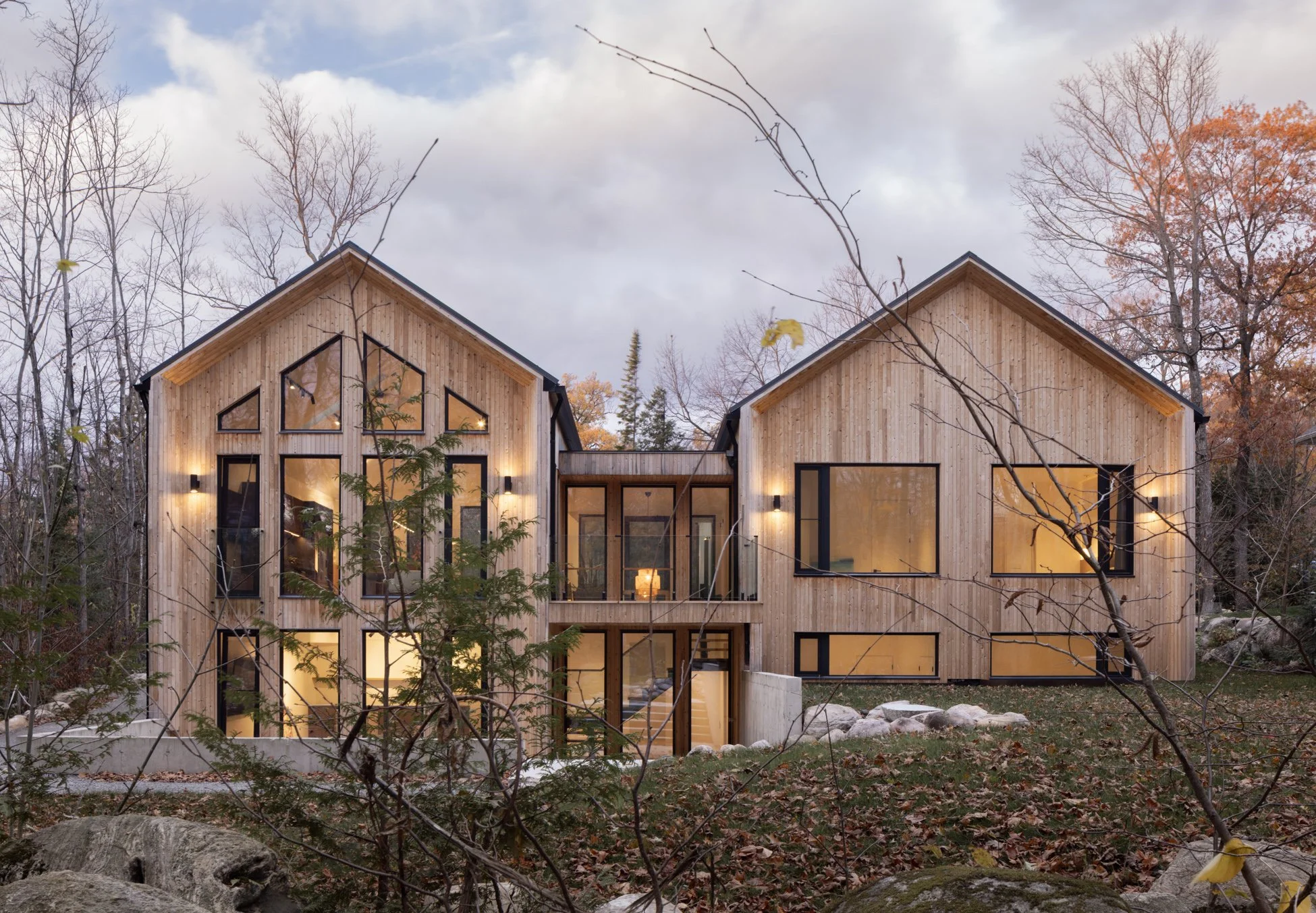
Rather than pursuing a visually assertive statement, House Two is shaped by restraint and careful consideration of everyday domestic life. Daymark Design Incorporated approached the project as an opportunity to explore how familiar residential forms could be refined to support contemporary living while remaining firmly rooted in place. The wooded site near Georgian Bay played a formative role, encouraging an architectural response that privileges calm, continuity, and long-term adaptability over novelty.
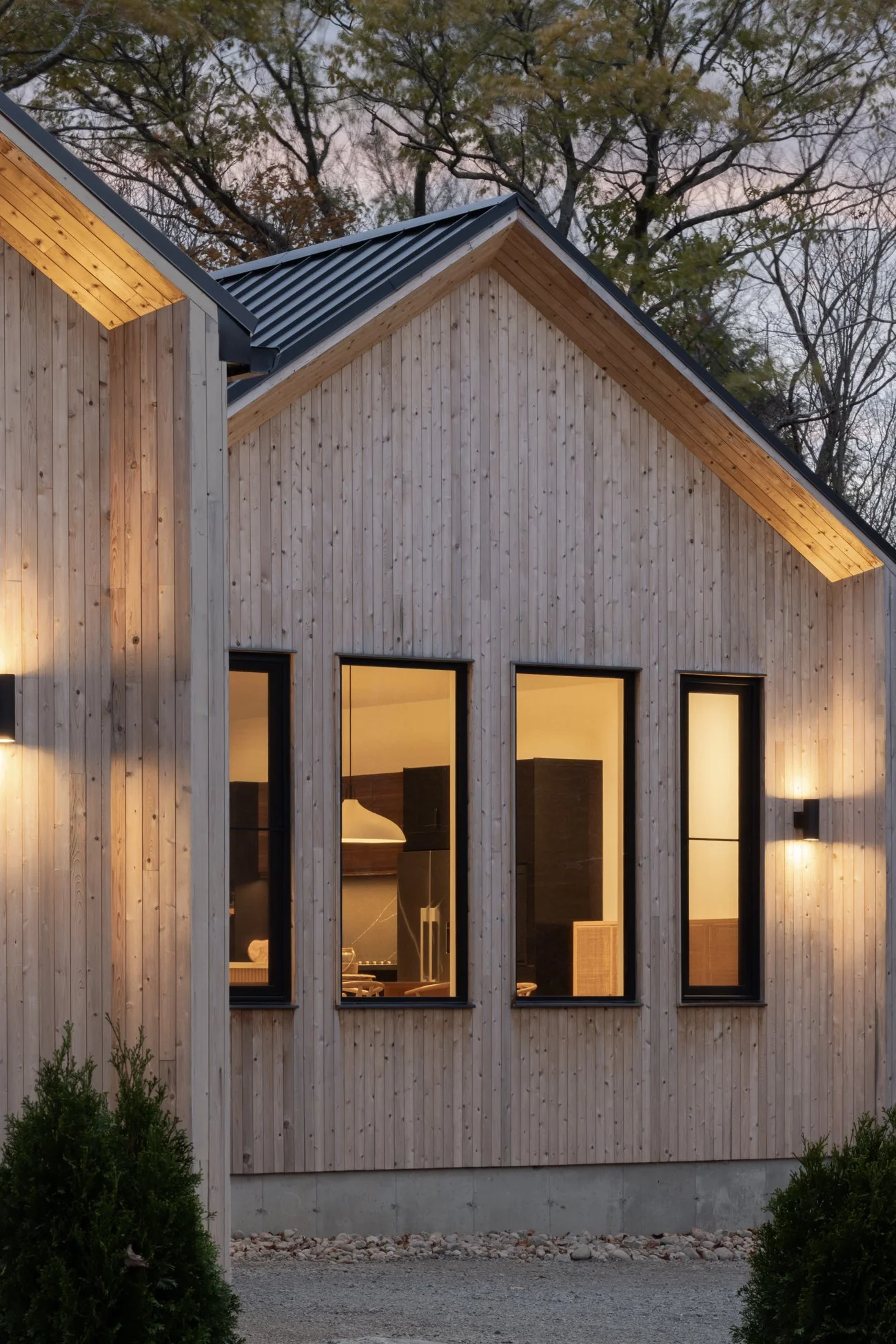
The overall massing is composed of two simple gabled forms, a gesture that recalls vernacular precedents without resorting to imitation. These volumes are connected by a flat-roofed breezeway that acts as both a spatial threshold and an organizational spine. This connector mediates movement through the house, compressing space before opening into larger interior volumes and framing measured views of the surrounding trees, reinforcing a dialogue between architecture and landscape.
Material decisions reinforce the project’s emphasis on longevity and material honesty. The exterior is clad in untreated western red cedar, selected for its ability to weather naturally and soften over time. As the material ages, the house gradually recedes into its environment, strengthening its relationship to the site. This approach reflects a broader commitment to architecture that evolves gracefully rather than maintaining a fixed, pristine appearance.
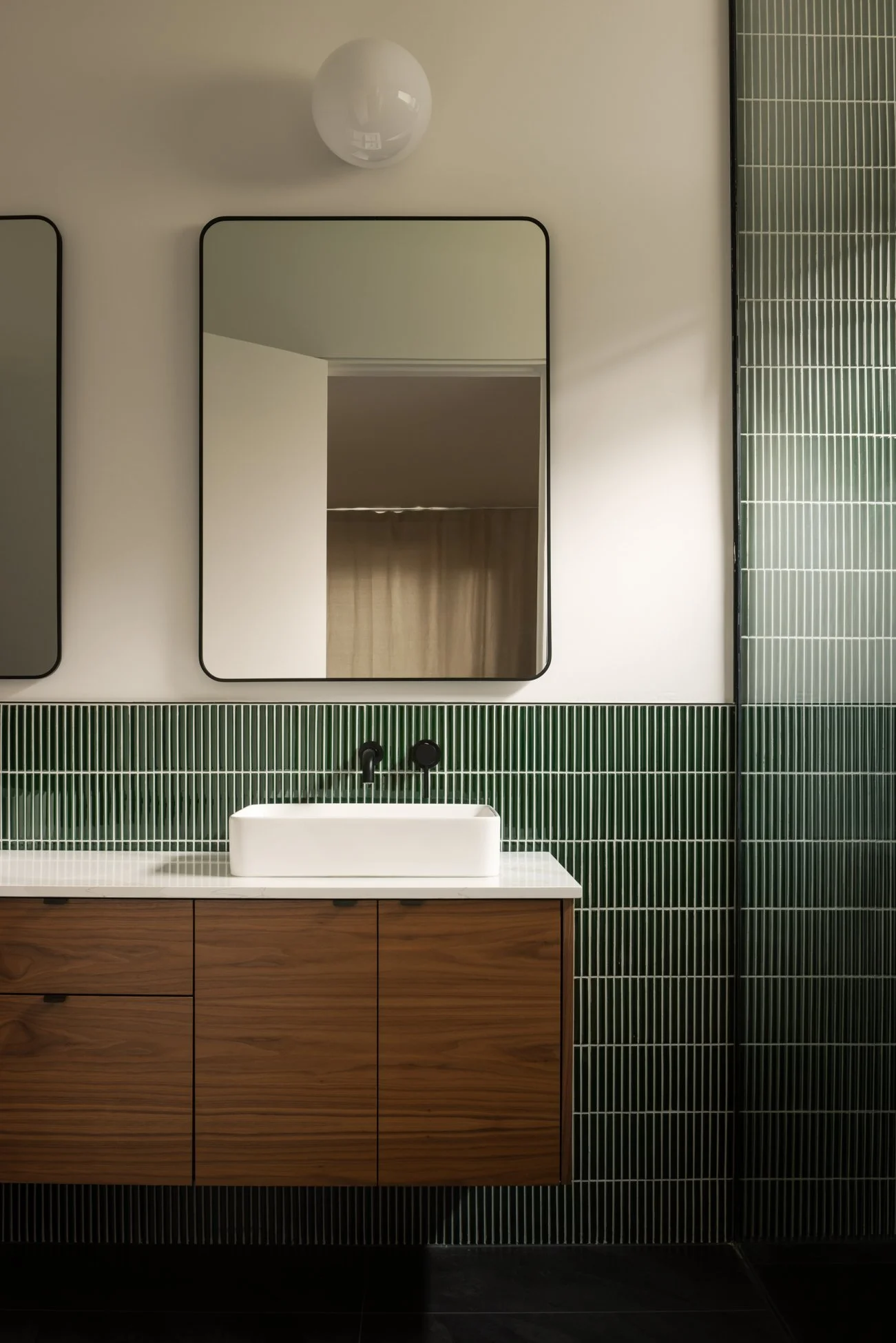
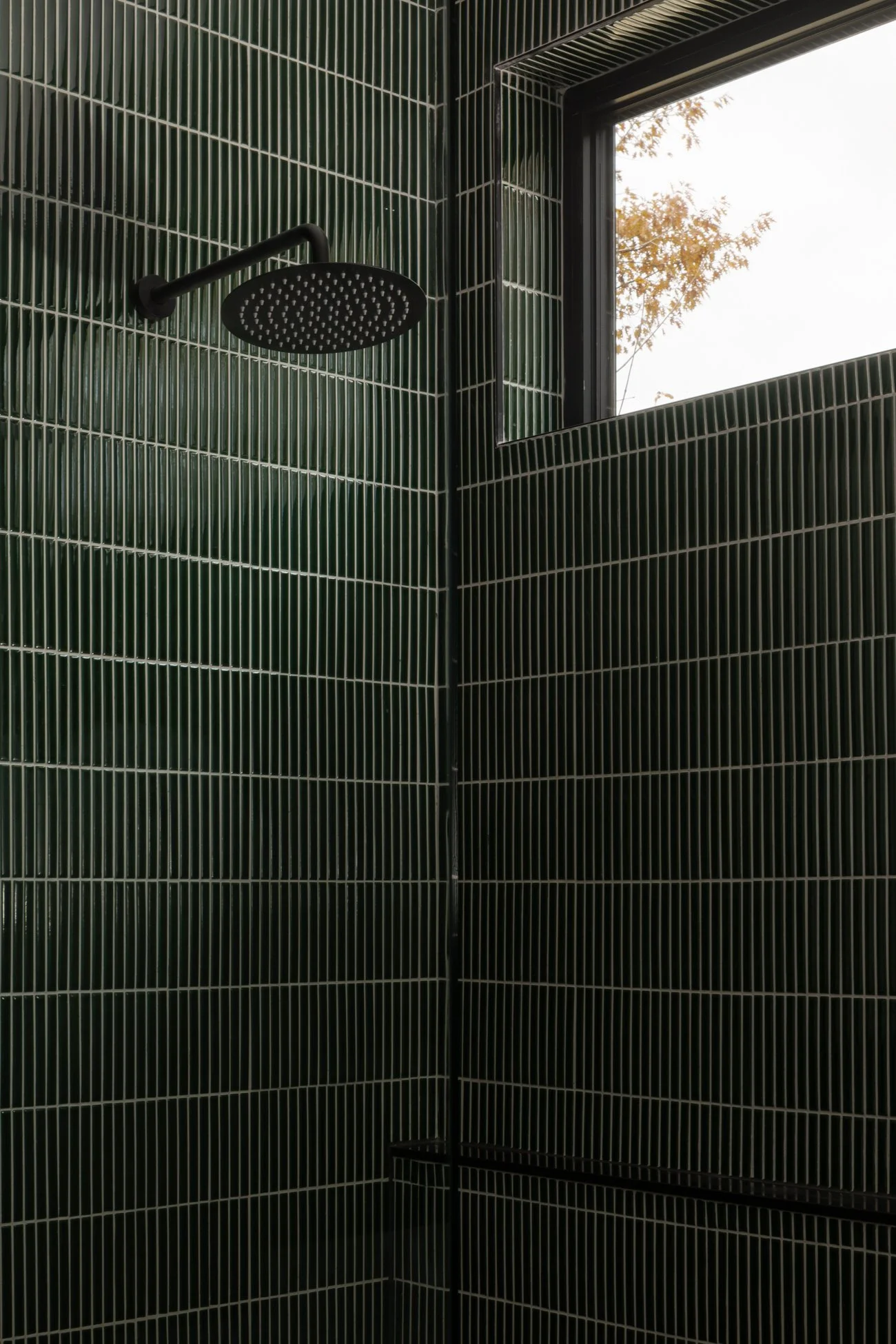
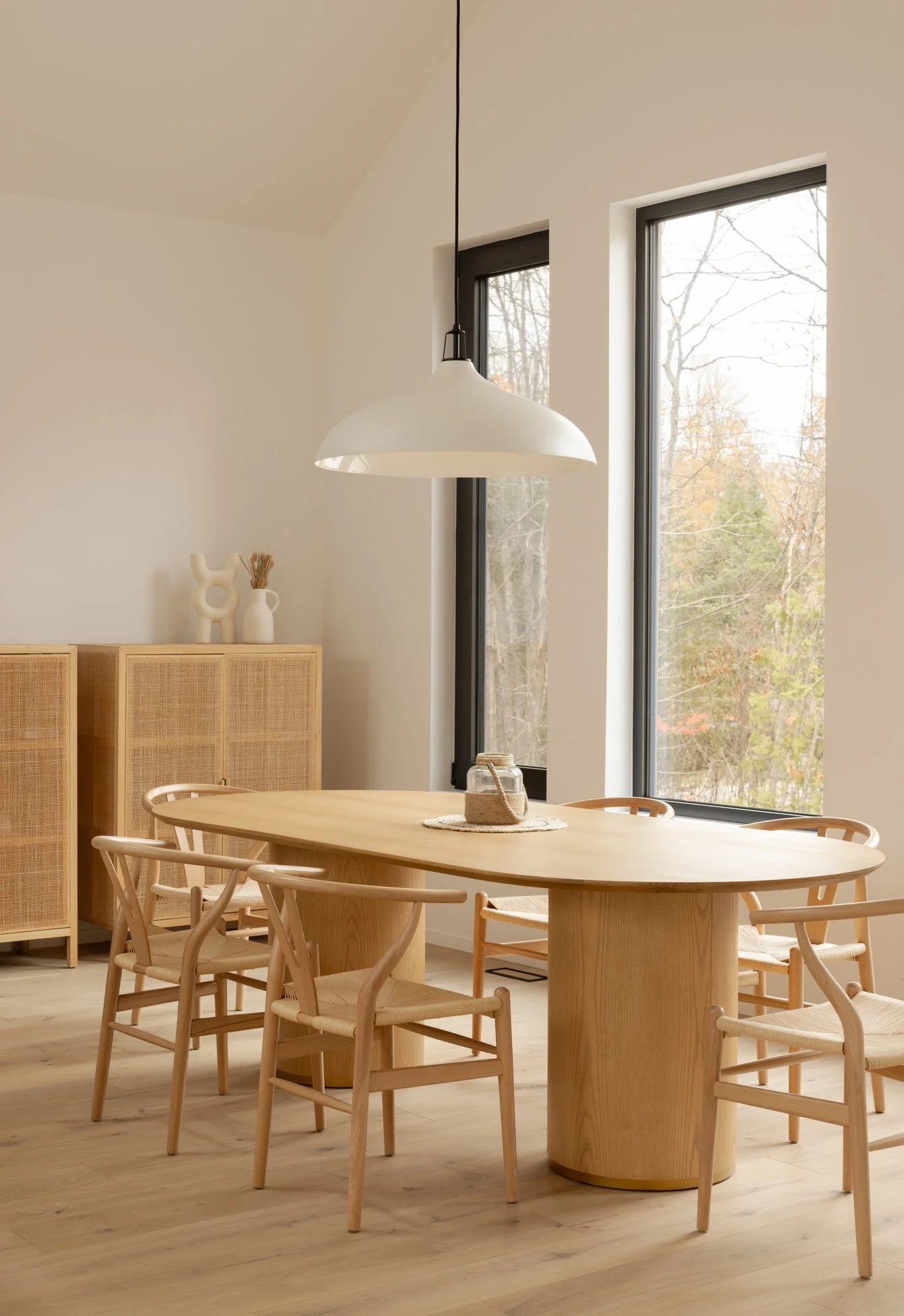
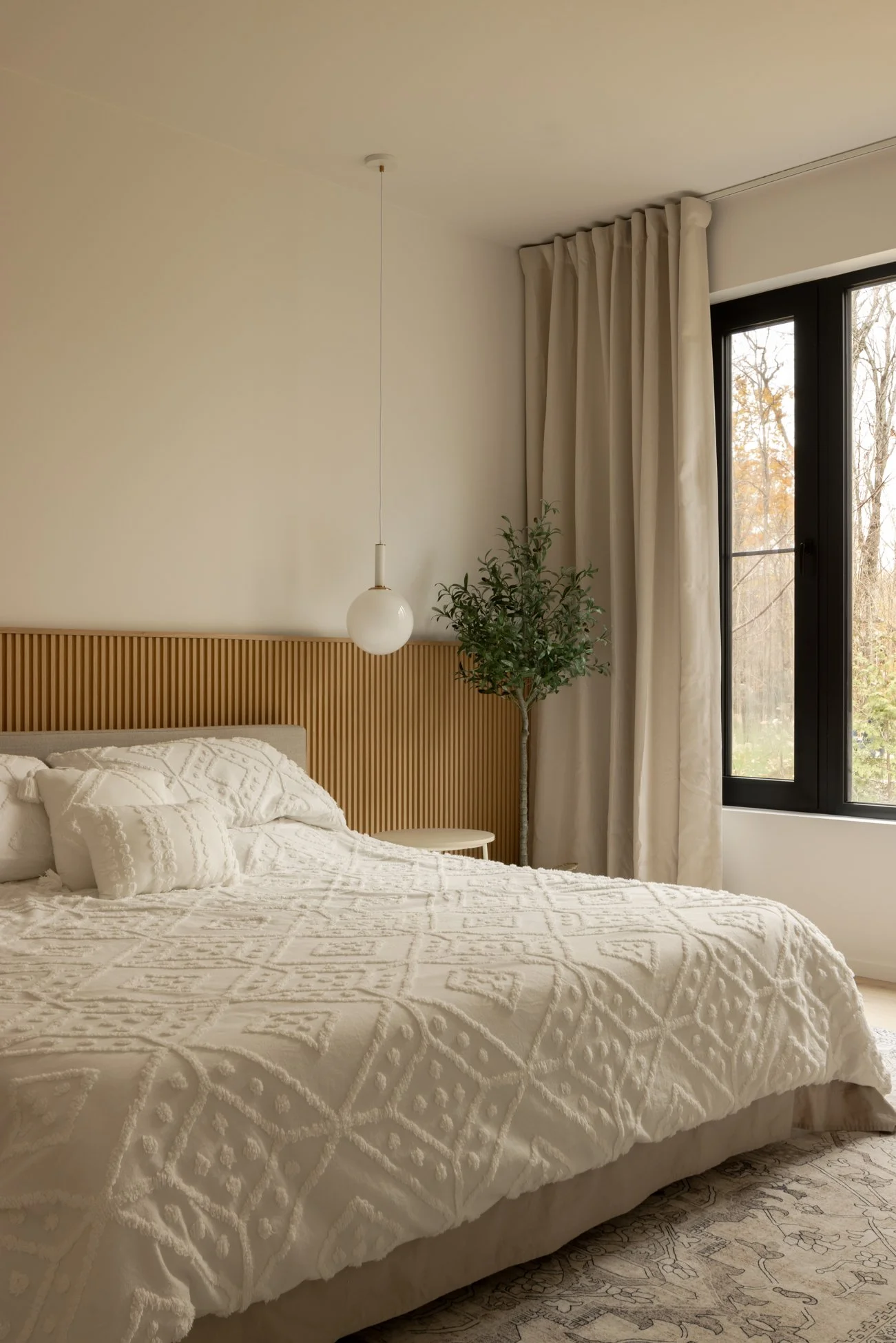
Inside, the material palette is intentionally restrained, allowing spatial qualities to take precedence. White oak flooring and warm wood millwork introduce texture and warmth, while whites and subtle black accents provide contrast without visual distraction. The absence of overt ornamentation places focus on proportion, daylight, and the precision of detailing, resulting in interiors that feel both refined and welcoming.
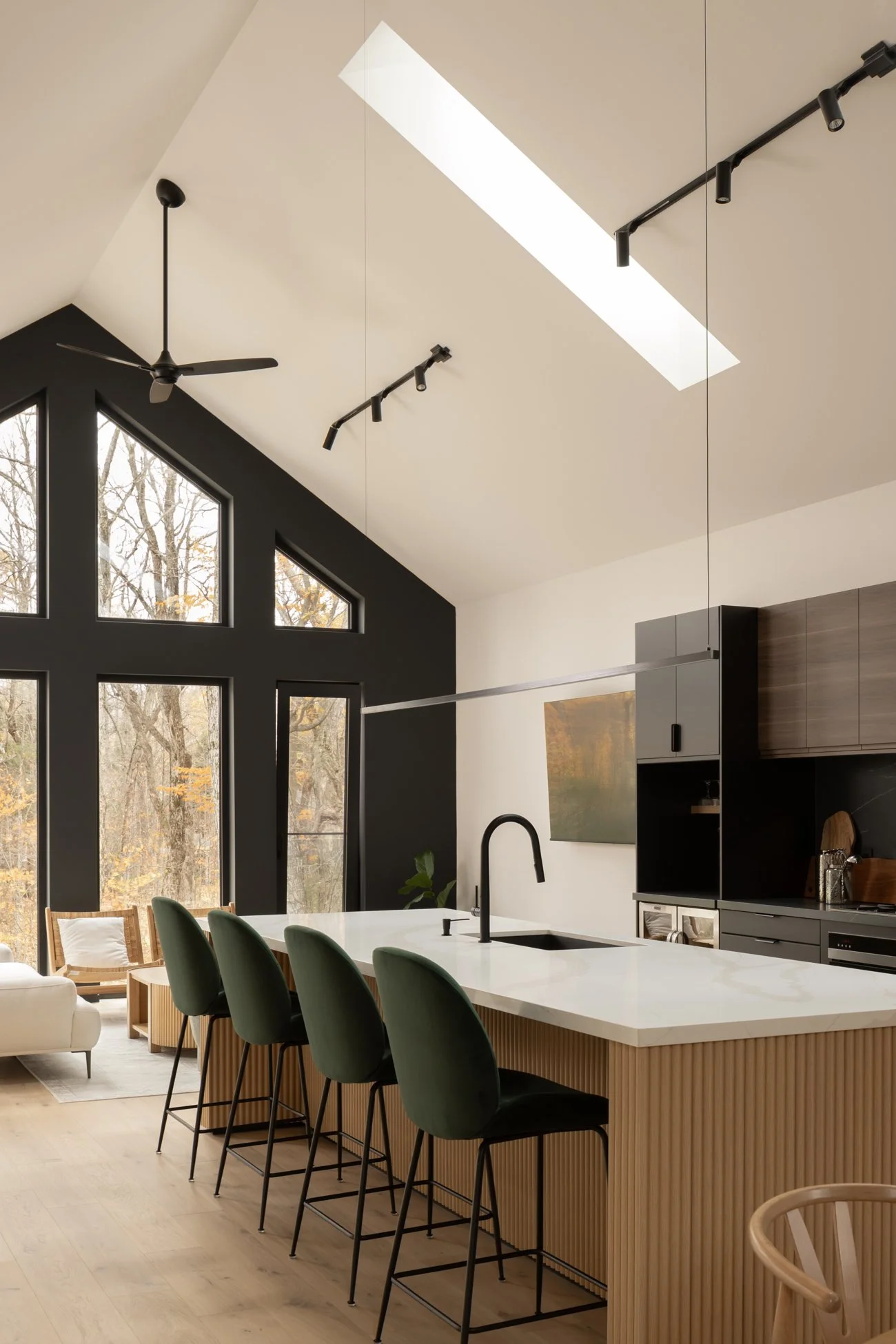
The plan carefully balances collective and private spaces. Living, dining, and kitchen areas are oriented toward outward views, reinforcing a connection to the landscape and supporting daily social life. Bedrooms and bathrooms are conceived as quieter, more introspective zones, offering retreat while maintaining material and spatial continuity throughout the home. In this way, House Two demonstrates that architectural generosity is defined not by scale, but by clarity, intention, and a disciplined response to context.

Project Gallery

Project Location
Address: The Township of Tiny, Ontario, Canada
The location specified is intended for general reference and may denote a city or country, but it does not identify a precise address.

