

The architectural render has always been a negotiated fiction—a photoreal promise issued before a single footing is poured. For three decades that fiction was costly to manufacture, demanding a chain of specialists, licensed software, and machines that ran through the night. What artificial intelligence has changed is not the fiction itself but its economics, its authorship, and the speed at which it can be conjured. The render is now cheap to make and harder than ever to trust. Understanding why requires separating what these tools genuinely do from what their vendors claim they do.
The speed of that reordering is itself the surprising part. When the visualization community was first surveyed on artificial intelligence in 2023, the dominant register was anxiety: roughly three-quarters of professionals named ethics among their leading concerns. By late 2025, six in ten architecture firms reported folding AI into their daily workflows—a rise of nearly 40% in adoption across that span—and the share citing ethical worry had collapsed from 74% to 26%. The clearest signal of the turn is fiscal. For the first time, practices ranked AI-generated imagery above traditional photorealism as their top visualization investment priority, by a narrow 36% to 33%. A discipline that met these tools with suspicion has, in under three years, begun to bankroll them—and roughly 86% of those using them now report measurable time savings, a third of them describing the acceleration as significant. Those numbers are the reason this piece is worth your attention; the rest of it is an argument about what they do and do not mean.
The short version, for the impatient:
- Where it helps — the front of the process: concept ideation, mood and atmosphere, rapid variation, and client communication, where speed matters more than dimensional precision. This is where the measured time savings are real.
- What it still can’t build — anything construction-credible. General models hallucinate geometry, cannot hold a design consistent across views, and produce no specification, section, or detail a contractor could use.
- How to use it now — a hybrid pipeline: AI for early concept (ideally geometry-conditioned through ControlNet or a BIM-bound tool such as Veras), and controllable engines like V-Ray, Corona, or D5 for the final deliverable, with standardized exports and a human validating every image before it leaves the office.
The case for each of those claims follows.

The Pipeline Before the Prompt
Until very recently, an architectural visualization was a piece of slow craft. The model originated in a CAD or BIM environment—Revit, ArchiCAD, Rhino, SketchUp, 3ds Max—and was then imported into a rendering engine where the real labor began: assigning materials, building lighting rigs, populating the scene with entourage, setting cameras, and finally surrendering the frame to an offline solver that calculated how light bounced through it. For most of the industry the production substrate was 3ds Max paired with V-Ray or Corona; community surveys through 2020 placed V-Ray as the dominant engine for roughly two-thirds of archviz professionals, with Unreal Engine the rising challenger and Blender’s Cycles steadily colonizing the small-studio and solo market on the strength of its zero licensing cost.
The defining constraint was time. A single high-resolution still typically took 30 to 90 minutes to resolve on a capable workstation; a complex exterior thick with vegetation, glazing, and caustics could occupy a machine for several hours, and pathological scenes ran toward 14. Animation multiplied this misery by the frame. The industry’s answer was the render farm—hundreds of CPU or GPU nodes billed by the GHz-hour or GPU-hour, with a single high-end GPU server renting for somewhere between $9 and $50 an hour depending on configuration. This was infrastructure, with the overhead infrastructure implies.
The downstream economics followed from that labor. Outsourced photoreal stills settled into broad bands that have held remarkably steady: roughly $250 to $2,500 for an interior, $400 to $4,000 for an exterior, with most commissioned work landing between $800 and $1,500 a frame. Animation was quoted by the second—$50 to $200 of it—and a polished marketing minute could run past $12,000. Turnaround stretched from three days for a simple interior to three weeks for a complex sequence. Visualization, in other words, was a discrete and expensive phase of practice, outsourced as often as not, and structurally separated from the act of designing. That separation is precisely what has begun to collapse.
The Hinge Year and the Control Problem
The diffusion models arrived in a cluster. DALL·E 2 opened in 2022; Midjourney entered open beta that July; Stable Diffusion was released as open source weeks later, and Adobe Firefly followed commercially in 2023. The uptake was immediate and enormous—Firefly alone generated more than two billion images during its beta—but for architecture these tools were intoxicating and nearly useless in the same breath. They produced an atmosphere of startling quality and geometry of startling unreliability. A text prompt is a probability nudge, not a specification—it cannot be told that a window is 1.2 meters wide or that an angle must hold at 90 degrees.
The genuine hinge was not a render tool at all but a method. In February 2023, researchers at Stanford published ControlNet, a technique for adding spatial conditioning to Stable Diffusion. By feeding the model a depth map, a segmentation mask, or—most consequentially for architects—the straight-line and edge data extracted from a CAD export or a hand sketch, ControlNet let designers constrain the building’s geometry while the prompt governed only its style and atmosphere. This is the quiet pivot on which everything practical has turned. It converted the diffusion model from a slot machine into something approaching an instrument, and made sketch-to-render and geometry-preserving image-to-image workflows genuinely feasible rather than merely lucky.
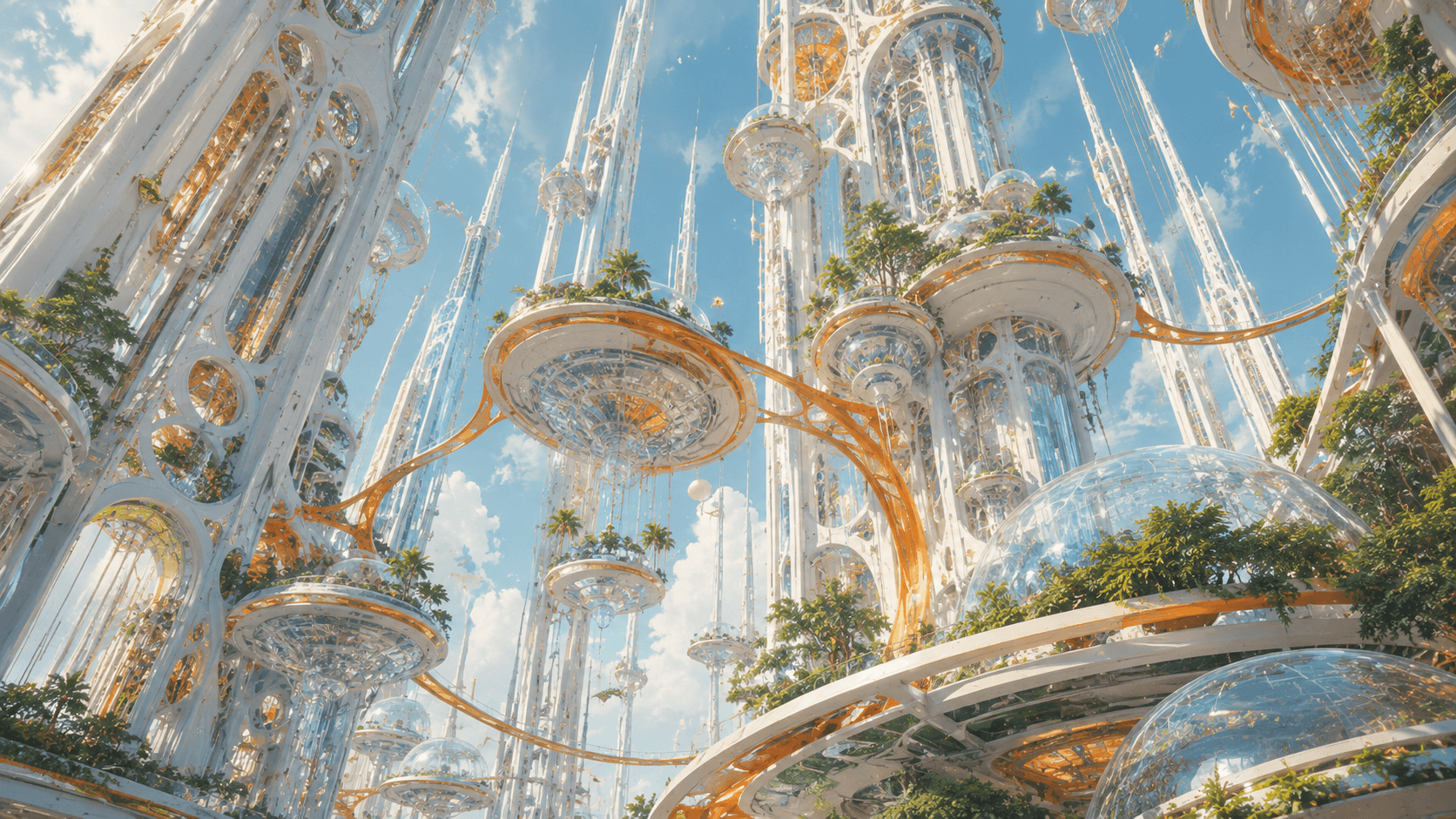
A second category of tools built directly on this insight by binding generation to the model rather than to the prompt. Veras, developed by EvolveLAB and since absorbed into Chaos, was among the first to treat BIM geometry as the substrate for AI image generation, plugging into Revit, Rhino, SketchUp, Archicad, and Vectorworks so that the architect’s actual model—not a textual approximation of it—conditioned the output. It added the features the discipline kept asking for: a geometry override slider, generation from a fixed seed for repeatability, and a design-lock function meant to hold intent across multiple views. One architect’s assessment, that Midjourney crawls where Veras runs, captures the gap between a general image model and one tethered to real geometry. Around it has grown a dense field—LookX, PromeAI, Vizcom, Arko, and others—each negotiating the same tension between expressive freedom and dimensional control.
AI Inside the Old Engines
The public conversation fixates on text-to-image because it is visible and strange. The more consequential change for production has been nearly invisible, because it happened inside the engines architects already used. NVIDIA’s OptiX AI-accelerated denoiser—a neural network trained on tens of thousands of images to reconstruct a clean frame from a noisy, under-sampled one—has for years been embedded in V-Ray, Arnold, Redshift, and Cycles, letting an artist pull a near-final preview from a fraction of the usual ray count. Intel’s Open Image Denoise offers the same on the CPU side. This is AI doing unglamorous, indispensable work: not inventing the image, but accelerating the honest calculation of it.
The same logic now drives real-time rendering. D5 Render’s integration of NVIDIA’s DLSS 3.5, with its neural upscaling and ray reconstruction, lifted viewport performance by roughly 2.5× on capable hardware, and the tool layers further AI features for atmosphere, upscaling, and style. Enscape introduced its Chaos AI Enhancer to improve the realism of vegetation, entourage, and large surfaces. The significance here is structural: the slow, separable render phase is being absorbed into the design loop itself. Visualization is becoming continuous feedback rather than a final, outsourced deliverable—a shift with deeper consequences for how practices are organized than any single image generator.
Where It Genuinely Earns Its Place
The honest case for AI in rendering is strongest at the front of the process and weakest at the back. In early ideation, the value is real and measurable. A concept image that once consumed hours of modeling and post-production now resolves in under two minutes, which means a designer can interrogate a dozen atmospheric directions in the time it formerly took to build one. Surveys of the visualization community bear this out without much ambiguity: by 2025, around 44% of professionals reported actively experimenting with these tools and another quarter were exploring how to formalize them, with concept imagery and rapid variation cited as the dominant uses. A large majority of AI users report tangible time savings.
The named cases are more persuasive than the statistics. Zaha Hadid Architects has been unusually candid: Patrik Schumacher has said the practice now runs early ideation on most projects through Midjourney, Stable Diffusion, and DALL·E, carrying perhaps 10 to 15% of that output forward into 3D modeling and locating authorship in the curation rather than the generation. Tim Fu, formerly of that office, has pushed further with the Lake Bled Estate in Slovenia, claimed as a substantially AI-driven project and set to become his first built work. At Kohn Pedersen Fox, the applied-technology team uses Runway to animate static renders in-house; by the firm’s own account, a minute of footage that once took two weeks and thousands of dollars now resolves in hours for the cost of the credits consumed. And the conceptual artist Hassan Ragab has demonstrated, across more than 20,000 Midjourney images produced in a single three-month stretch, an entire mode of speculative tectonic invention that simply did not exist as a practice three years ago.
Underwriting all of this is a quieter democratization. The combination of open-source Stable Diffusion, ControlNet, and a thicket of inexpensive subscription tools has handed the solo practitioner and the three-person studio capabilities that previously required a dedicated visualization team and access to a render farm. The high wall around persuasive imagery has been substantially lowered.
Where It Fails, and Why the Failures Are Structural
The failures are not teething problems; they follow from how the technology works. A general diffusion model holds no internal three-dimensional model and no building data, so it hallucinates geometry as a matter of course. Ask for five floors and you may receive seven. The model cannot maintain consistency across views, because each generation is a fresh act of invention—you cannot render a north elevation and then request the same building from the south and expect the same building. Proportions drift; a generated open-plan interior will cheerfully place a 1.5-meter table beneath a 4-meter ceiling. Independent surveys find roughly three-quarters of architects struggling with inconsistent results from general image generators, and an academic study of Midjourney’s handling of heritage architecture confirmed the pattern: it managed simple primitive forms but failed at complex ornament, calligraphy, and any geometry requiring precision.
This is the dividing line the discipline must hold. These tools are not buildable. They do not understand construction, cannot produce a junction detail or a sectional, and have no concept of a material specification or a load path. The satisfaction data tracks this exactly—high approval in the conceptual phase, falling sharply through design development—and architects report overwhelmingly that AI output reflects design intent only “somewhat well” and demands supervision. Roughly half cite unreliable results as the central barrier. The seductive image and the buildable object remain distinct categories, and the professional risk lies in confusing them, or in allowing a client who arrives clutching their own AI references to confuse them on the practice’s behalf.

The Legal Shadow
There is also an unresolved question of provenance that no render quality can paper over. The major models were trained on enormous datasets scraped from the open web—Stable Diffusion on the five-billion-image LAION-5B corpus—largely without the consent of the artists whose work it contained. The resulting litigation, principally Andersen v. Stability AI, has been grinding through the courts since early 2023; an amended complaint survived to discovery in 2024 and the matter is set for trial in late 2026, with the foundational fair-use question still open. The practical consequence for a working studio is that the copyright status of a commercially deployed AI image is not yet settled law. This is why provenance-aware positioning has become a selling point—Adobe markets Firefly as commercially safer and indemnified, though reporting that its training set included AI-generated stock has complicated even that claim—and why content-credential standards are spreading. A practice should treat the legal exposure as real and current, not theoretical.
Composing the Hybrid Pipeline
The workable synthesis is no longer in serious dispute among practitioners, even if the tools shift underneath it every few months. AI belongs at the beginning—for ideation, mood, atmospheric studies, rapid variation, and client communication—where its generative looseness is an asset rather than a liability. Where dimensional fidelity begins to matter, that looseness must be disciplined: ControlNet conditioning, depth and edge maps, or a BIM-bound tool such as Veras to keep the geometry honest. And the final deliverable still belongs to the controllable, geometry-accurate engines—V-Ray, Corona, D5, Enscape, Unreal and Twinmotion—now themselves quietly accelerated by neural denoising and real-time AI upscaling. The intelligent move is not to choose between the diffusion model and the render engine but to route work between them according to how much precision the task demands. For many practices that routing still terminates, for the highest-stakes deliverables, at a specialist 3D rendering service; what has changed is the brief. AI now absorbs the early exploratory work that such studios once billed for, so the outside team is commissioned for final fidelity and construction-credible accuracy rather than for generating options—a narrower, more demanding engagement than the one that prevailed three years ago.
Two organizational habits separate practices that benefit from those that flail. The first is standardization: templated export views from Revit, Rhino, or SketchUp, and maintained prompt libraries, so that AI output is reproducible rather than serendipitous. The second is validation. Given that a majority of AI users have had no formal training and the field resets on roughly annual cycles, the discipline of having a qualified human interrogate every AI image before it leaves the office matters more than fluency with any particular tool. Process is the durable asset; the tools are disposable.

What Is Arriving Next
The frontier is moving on several fronts at once, and a design-literate reader should track them without being credulous about timelines. Real-time AI rendering is converging toward near-instant photorealism as neural denoising and ray reconstruction mature. Neural radiance fields and 3D Gaussian splatting are making it feasible to capture an existing site or building from ordinary photographs and move through it as a navigable scene—genuinely useful for renovation, adaptive reuse, and context studies, though the research is clear that for accurate geometric documentation, traditional photogrammetry remains the more reliable instrument. Video diffusion, via Runway, Sora, Veo, and their successors, is beginning to animate stills into walkthroughs, with physical consistency still imperfect and provenance watermarking arriving alongside. And the tightest integrations—tools that reconstruct editable BIM geometry back out of a generated image—point toward a future in which the boundary between drawing and rendering grows usefully blurred.
The Render as Argument
What artificial intelligence has not changed is the underlying nature of the architectural image: it remains an argument about a building that does not yet exist, and its persuasive force is independent of its truth. AI has made that argument vastly cheaper to mount and considerably harder to verify, which raises the professional stakes rather than lowering them. The practices that will be served well are those that treat these tools as instruments of inquiry at the front of the process and never as evidence of constructibility at the back—that keep, in other words, a clear and defended line between the seductive image and the buildable object. The render was always a fiction. The discipline’s task, now as before, is to make sure it is a fiction the building can eventually be held to.
Resources
- AEC Magazine — coverage of Veras and BIM-integrated AI rendering; EvolveLAB profile; Hassan Ragab profile.
- Architizer Journal — State of Architectural Visualization (2024–2025); reporting on Chaos AI workflows.
- Chaos — 2025 State of Archviz Report; “The role of artificial intelligence in architectural visualization”; “The new archviz workflow”; “Introducing Chaos AI Enhancer”; 2026 archviz survey findings; Veras documentation.
- Dezeen — “Zaha Hadid Architects developing ‘most’ projects using AI images” (2023); “Tim Fu uses AI as ‘design collaborator'” (2025); earlier Tim Fu and 2026 AI-survey coverage.
- Building Design — Patrik Schumacher on AI and ZHA.
- Construction Management — independent reporting on KPF’s use of AI tools.
- NVIDIA Developer / NVIDIA Blog — OptiX AI-Accelerated Denoiser; OptiX SDK technical notes; “DLSS 3.5 Integration in D5 Render.”
- D5 Render — DLSS 3.5 integration; feature documentation; Bjarke Ingels Group case study (vendor).
- Zhang, Rao & Agrawala — “Adding Conditional Control to Text-to-Image Diffusion Models” (ControlNet), arXiv 2302.05543 / ICCV 2023.
- Adobe Newsroom — Firefly commercial release; Bloomberg (via Yahoo Finance) on Firefly training data.
- Copyright Alliance; NYU Journal of Intellectual Property & Entertainment Law; Mesh IP Law; Lexology — Andersen v. Stability AI case analysis.
- Archgyan; Educasium; MDPI / Buildings — Midjourney architectural limitations and the Islamic-heritage evaluation study.
- CGarchitect — Rendering Engine Survey (engine market share).
- render3dquick; NoTriangle Studio; RealSpace3D; MyArchitectAI; SuperRenders; RadarRender; iRender — archviz pricing and render-farm cost references.
- Mildenhall et al. (NeRF, 2020); Kerbl et al. (3D Gaussian Splatting, 2023); ISPRS comparative study (2024) — radiance-field and documentation-accuracy research.
- OpenAI (Sora); Runway (KPF customer story) — video-diffusion references.
- The Business Research Company; Dimension Market Research; MarketResearch.biz — generative-AI-in-architecture market sizing (directional; figures vary widely).

