

Solid polycarbonate sheets moved beyond their early association with industrial cladding and temporary structures into a refined component of energy-efficient architecture. Architectural practices, including Herzog & de Meuron, OMA, Shigeru Ban, and Sauerbruch Hutton, demonstrated how translucent polycarbonate envelopes support daylight optimisation, adaptive reuse, lightweight construction, and low-energy facade strategies across cultural buildings, housing, exhibition pavilions, and retrofit projects. Buildings such as Laban Dance Centre, Garage Museum of Contemporary Art, and Naked House helped establish polycarbonate as more than a visual effect. Polycarbonate diffuses daylight deep into interiors, lowers structural demand through reduced weight, and extends the service life of existing buildings through ventilated secondary skins and demountable envelope systems. Contemporary assemblies combine solid and multiwall polycarbonate sheets with aerogel insulation, low-emissivity coatings, protected ultraviolet layers, and ventilated cavities to improve thermal performance while reducing electrical demand and embodied carbon. Architects increasingly specify polycarbonate where daylight replaces artificial lighting, where retrofit strategies avoid demolition, and where lightweight facade systems reduce material consumption across the structure. Polycarbonate still requires precise detailing around fire performance, acoustic control, thermal movement, and long-term weathering, yet the material continues to gain traction through careful specification, layered assemblies, and a growing focus on low-carbon construction.
A Skin That Glows
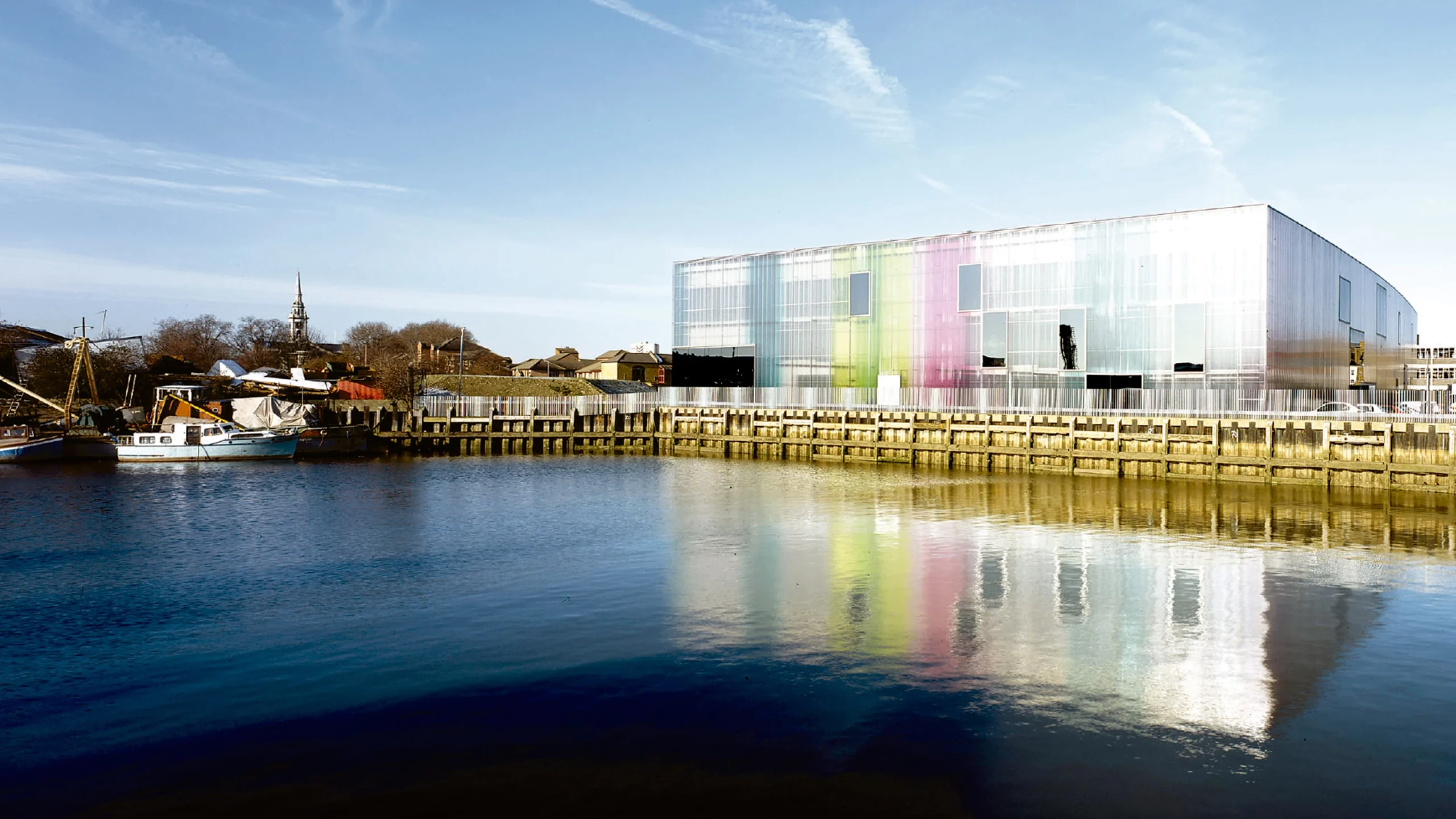
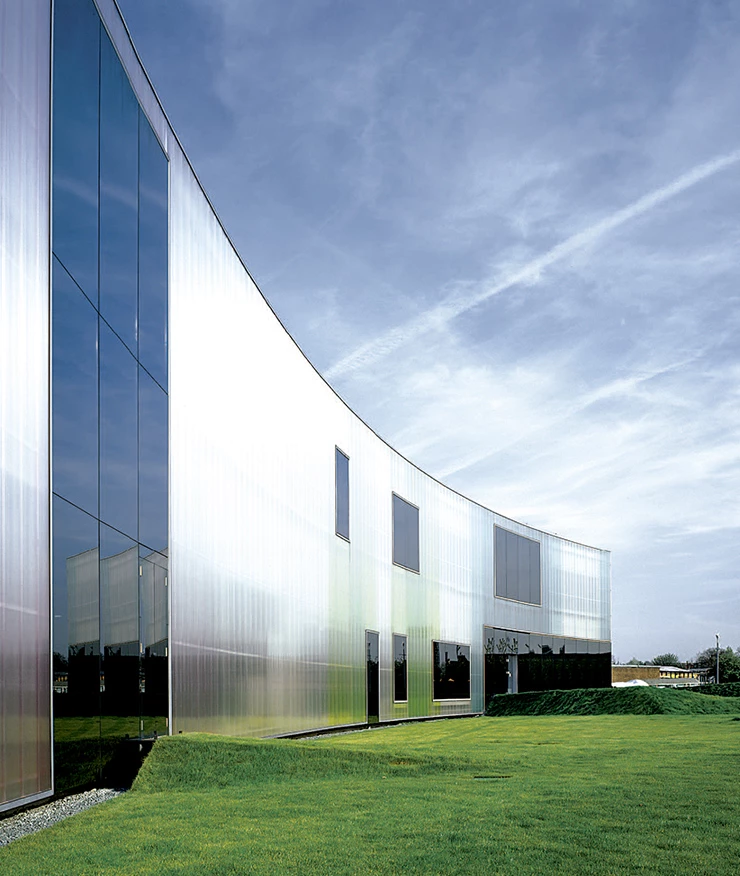
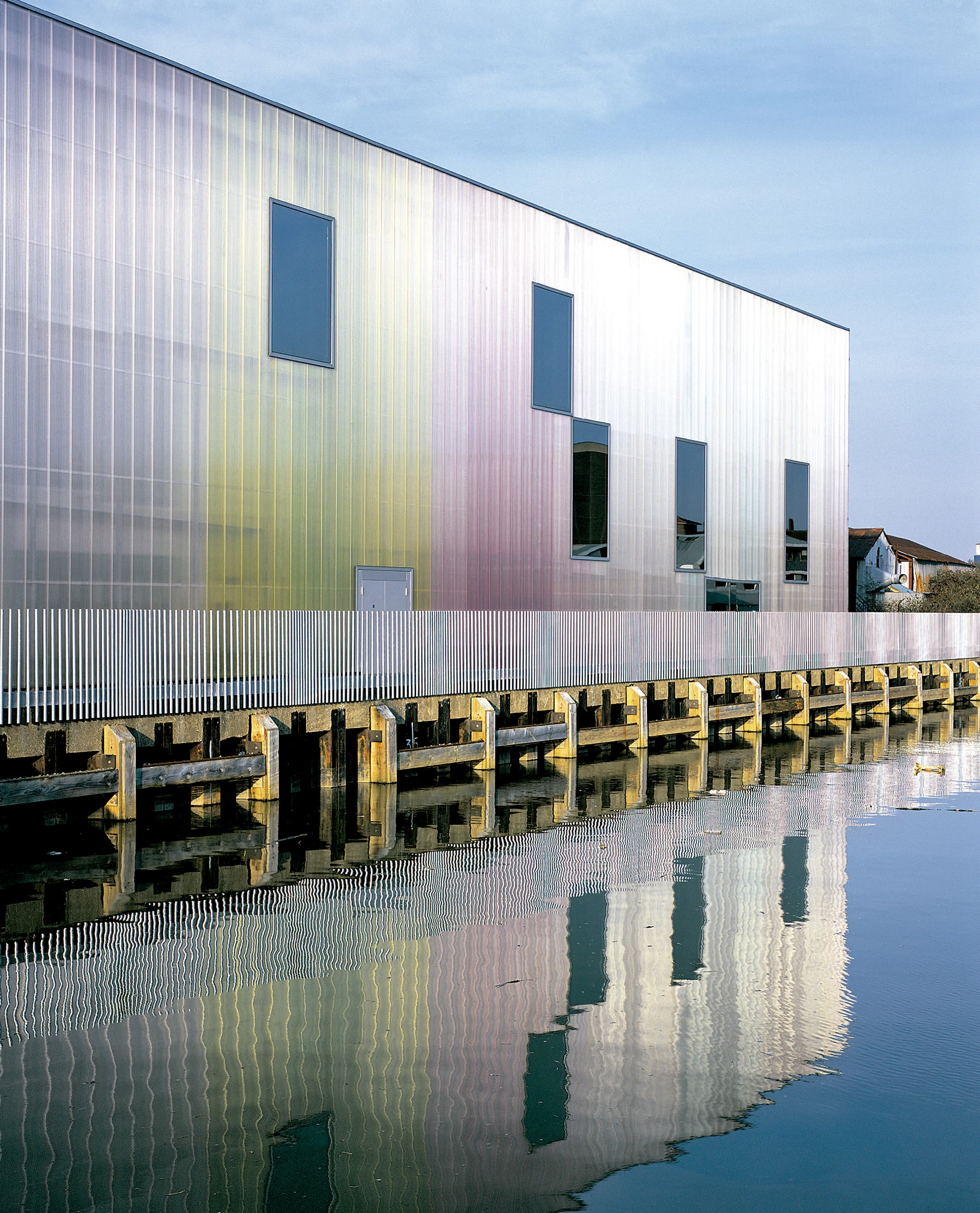
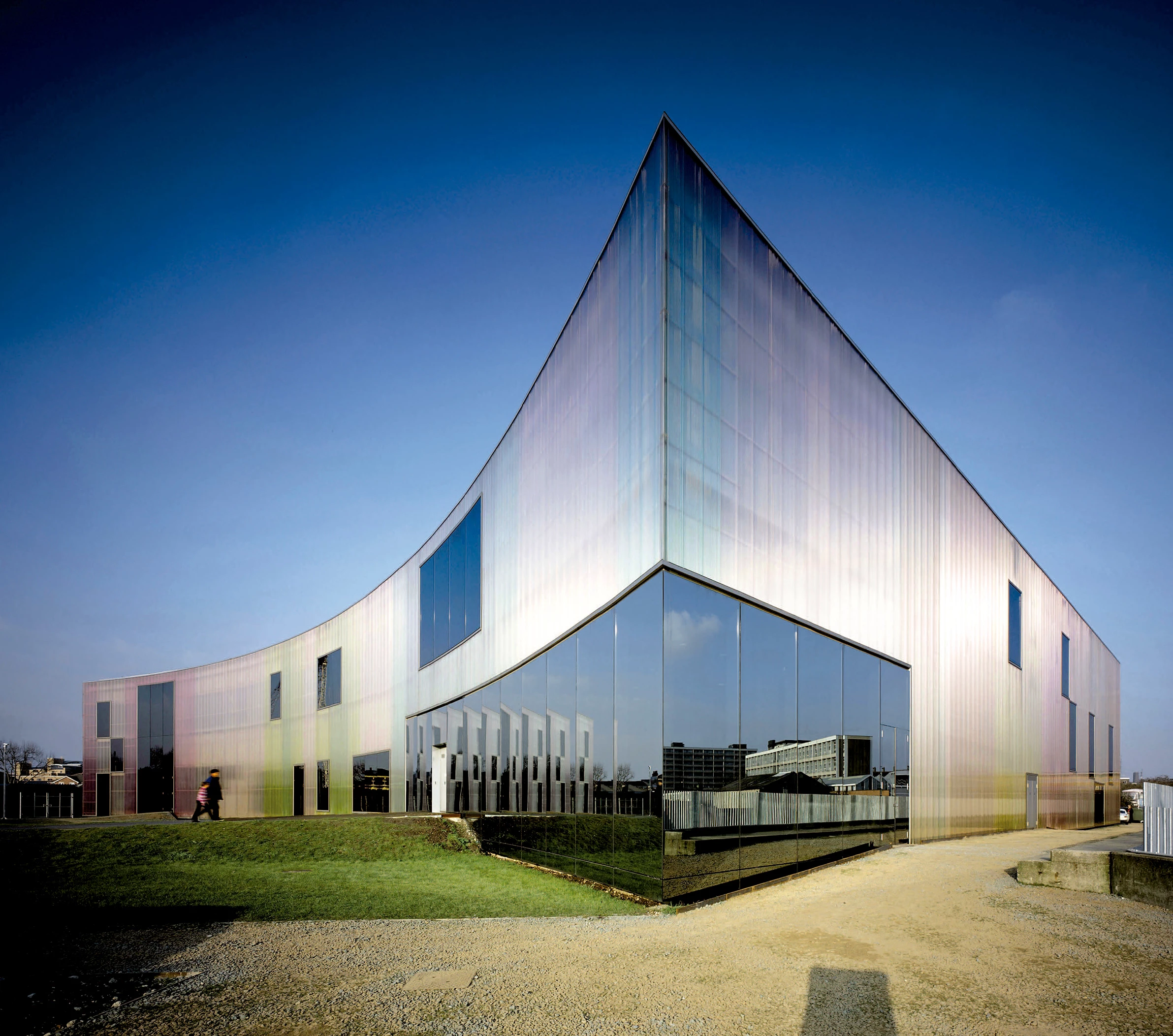
Solid polycarbonate sheet wraps the Laban Dance Centre in Deptford, London. Herzog & de Meuron clad the curving elevations in lime, turquoise and magenta polycarbonate panels. Polycarbonate sheeting gathers thin London light and holds it, so the building reads as a soft body rather than a wall with cut openings. Herzog & de Meuron completed Laban in 2003, and the RIBA Stirling Prize followed the same year. Polycarbonate is the material most architects picture two decades later when the word arises.
That image is a gift and a burden. Laban proved at the highest level of practice that polycarbonate carries architectural ambition, not warehouse shelter alone. A single photogenic facade, though, flattens a complex material into one picture and hides the harder question. Polycarbonate beauty is settled; polycarbonate value inside a low-energy building is the real test.
The Misunderstanding
Solid polycarbonate sheet entered architecture with a sales pitch, and the pitch hurt it. Trade literature repeats three claims: polycarbonate insulates well, polycarbonate weighs half as much as glass, and polycarbonate resists impact. Each claim holds up alone. One sentence stitching them together misleads.
One fact corrects the pitch. A single solid polycarbonate sheet insulates poorly by itself. Polycarbonate conducts heat slowly, slower than glass, yet a 3-millimetre or 6-millimetre sheet stays too thin to block heat. A single polycarbonate pane performs like single glazing in U-value terms. Polycarbonate rewards architects who grasp its real behaviour and punishes architects who treat it as cheap glass.
Light, Weight, and the Assembly
Solid polycarbonate sheet earns its first credit through daylight. Buildings consume close to 40% of global energy, and electric lighting draws a large share of world electricity. Polycarbonate transmits close to 90% of visible light and spreads it into an even glow. Polycarbonate glazing floods the courts at the Sports Ireland National Indoor Arena in Dublin, and the hall needs no electric light through the day. Polycarbonate cuts electrical load across buildings with large volumes and long operating hours.
A solid polycarbonate sheet weighs about half as much as an equivalent glass. Polycarbonate lightness lowers the load on framing, connections, steel and foundations. Each reduction strips embodied carbon that never gets quarried, smelted or poured. Polycarbonate sheets lift and cut on site without heavy plant, and more envelopes travel per truck. Polycarbonate holds shape across a service range from −40 ℃ (−40 ℉) to 120 ℃ (248 ℉).
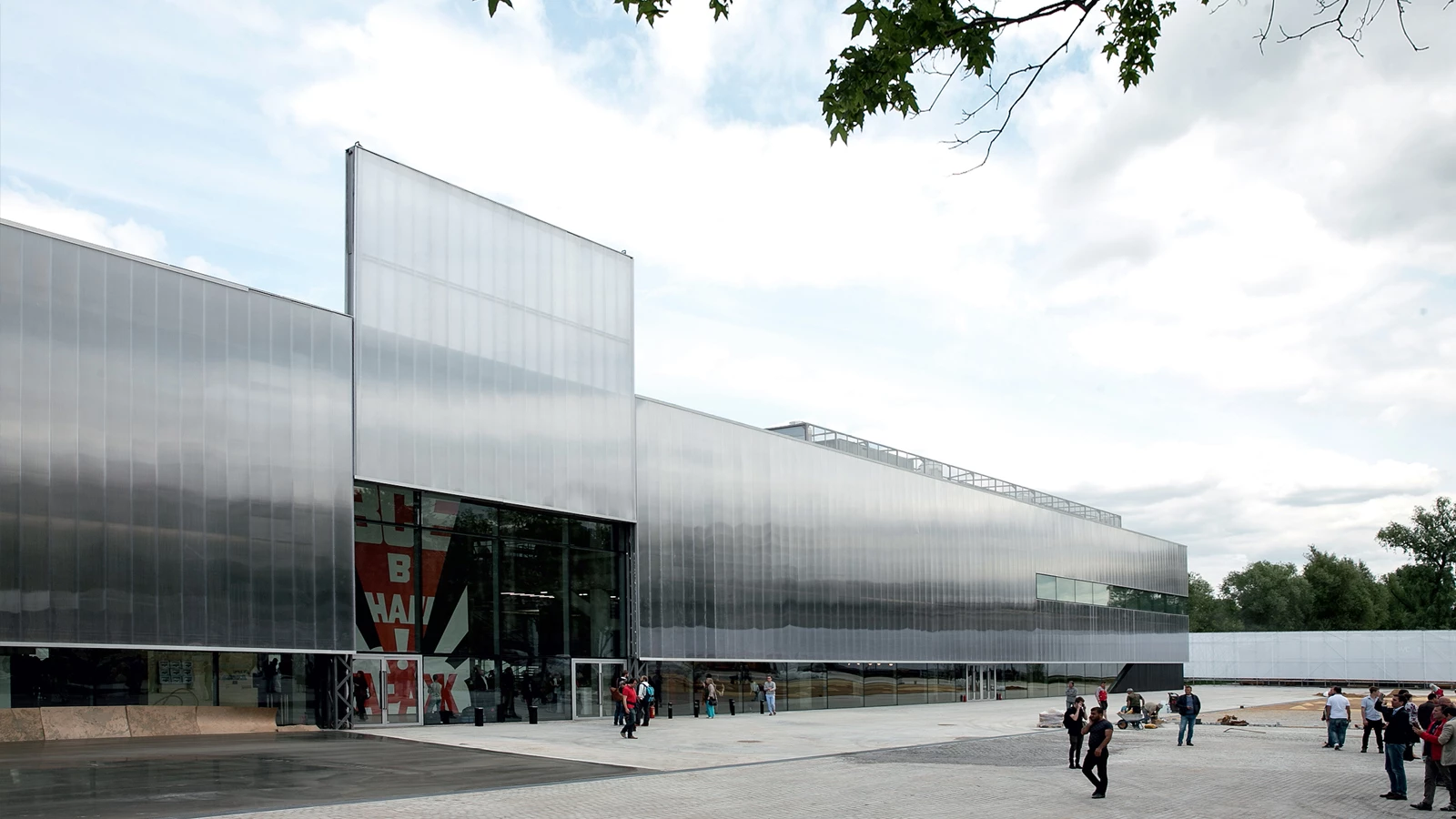
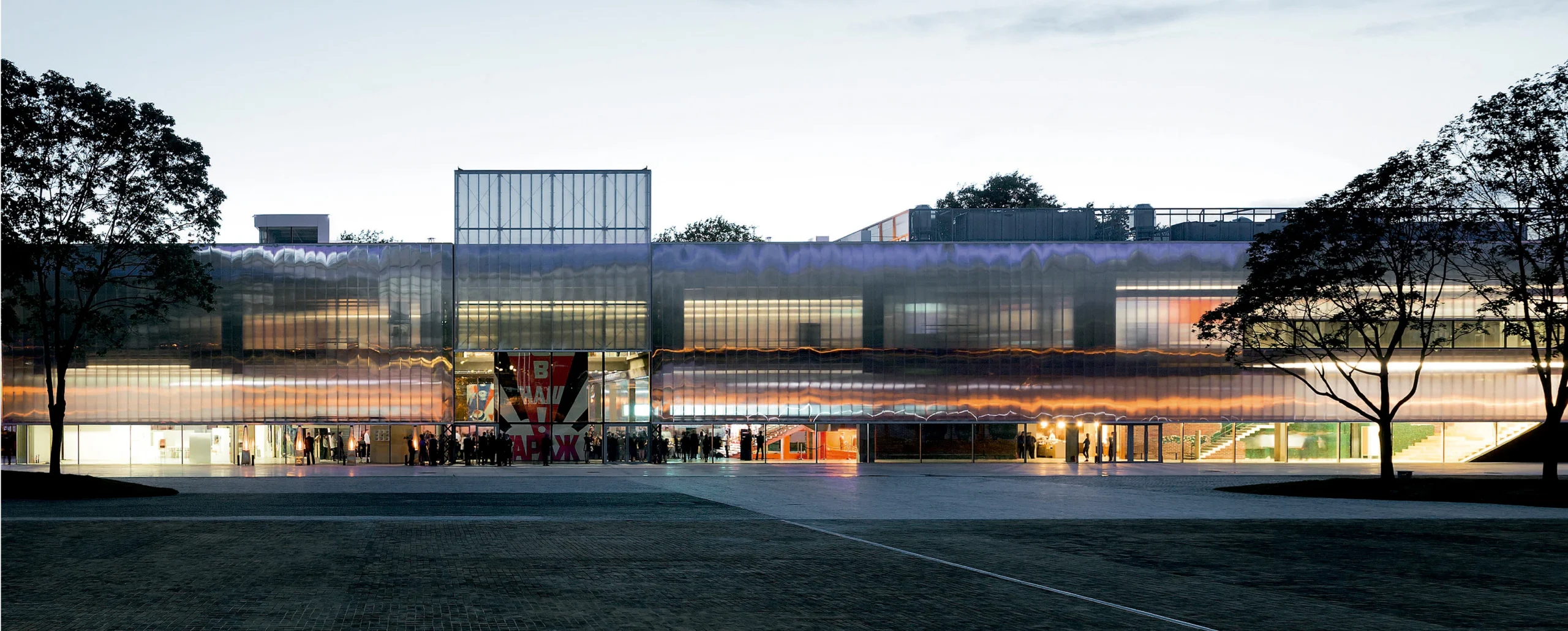
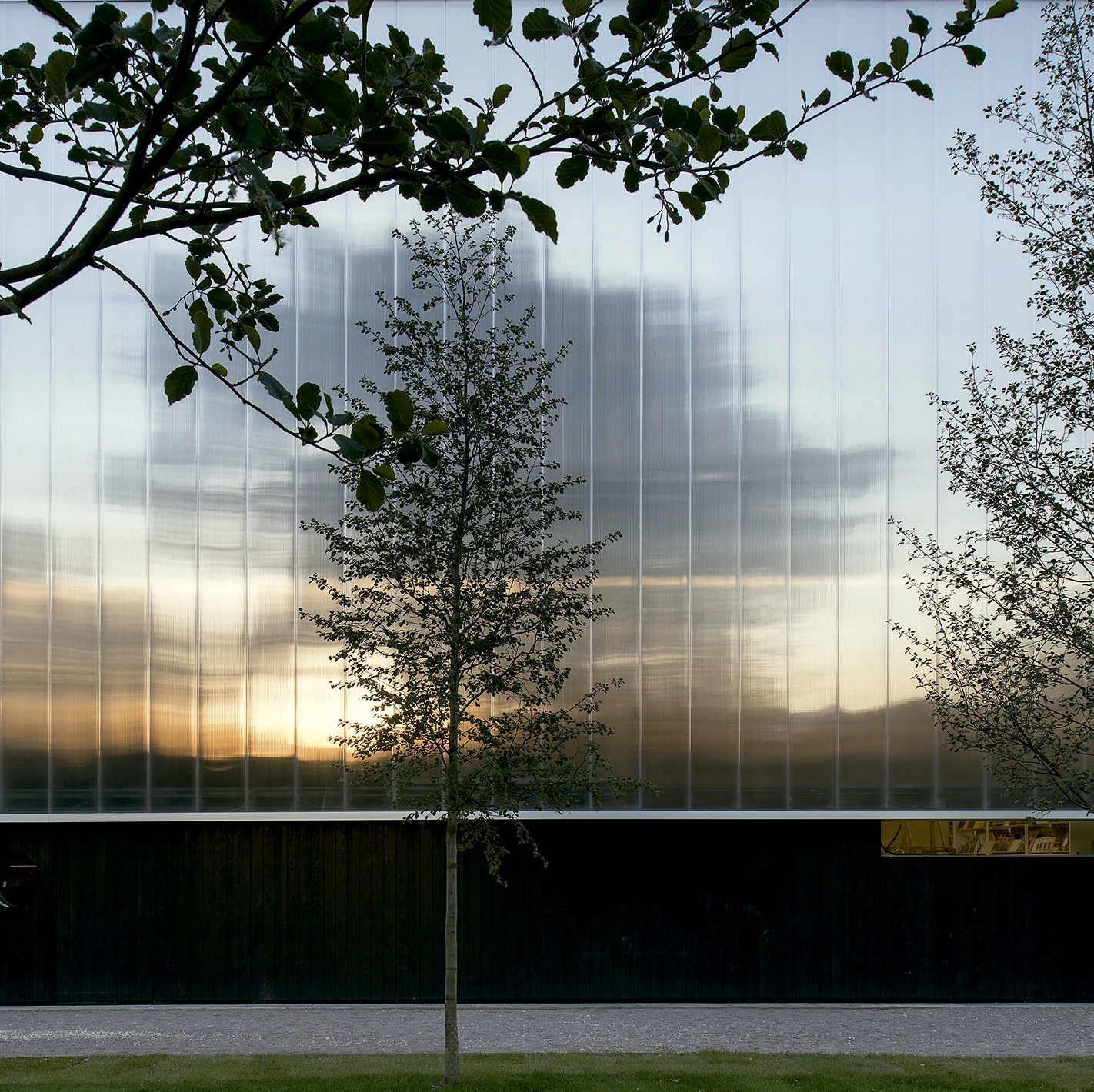
Solid polycarbonate sheet performs best as a layer, not a standalone pane. Architects who place polycarbonate inside an assembly reach strong results. Herzog & de Meuron built a double skin at Laban: an outer polycarbonate layer, an inner glass layer, and a ventilated cavity, approximately 60 centimetres deep. Polycarbonate panels there shield the interior against solar gain, glare and heat radiation. OMA wrapped the Garage Museum of Contemporary Art in Moscow in a translucent polycarbonate facade. Polycarbonate cladding lifted clear of the ground, modernised a 1960s restaurant and absorbed the building services.
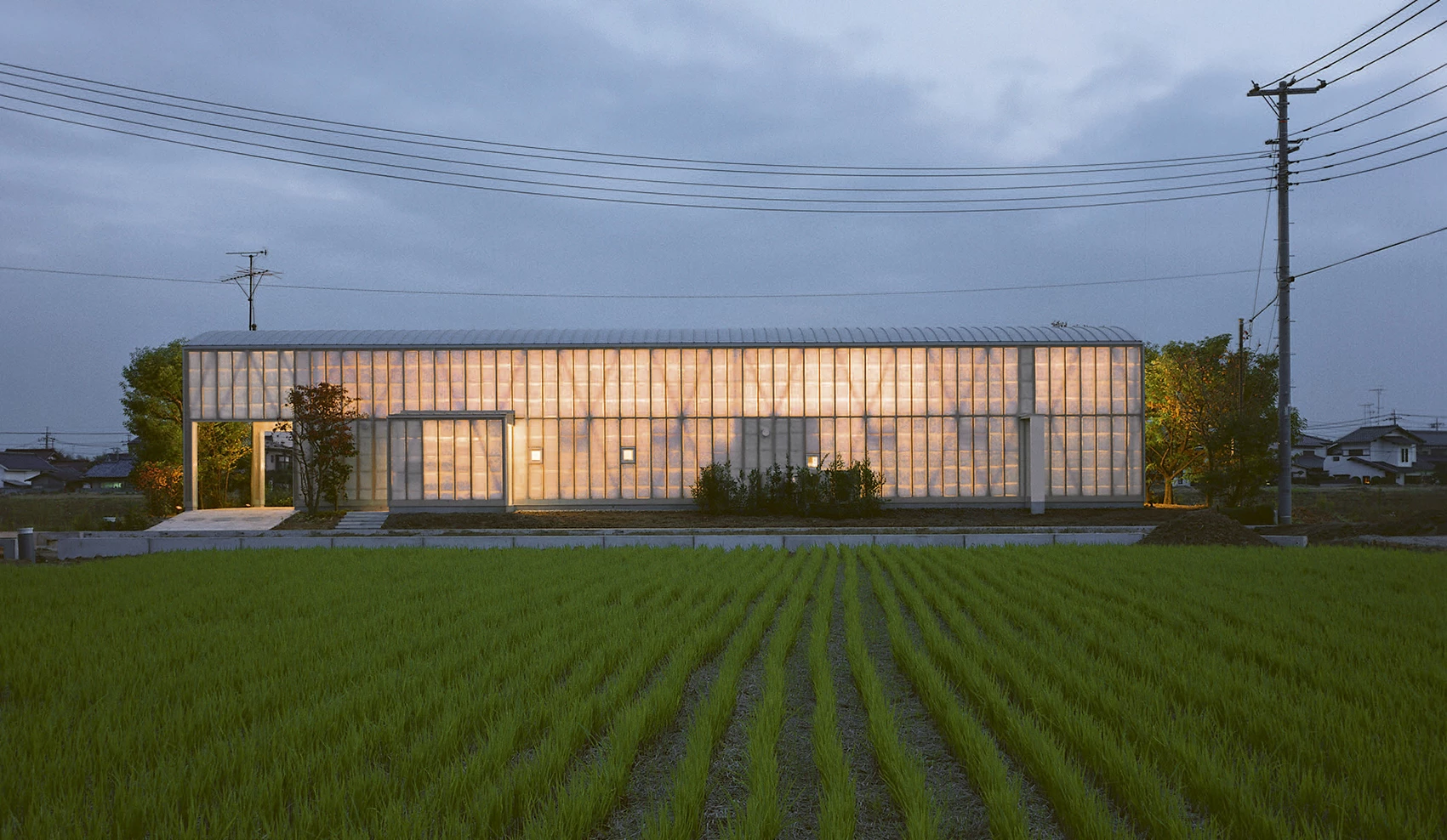
Shigeru Ban clad the Naked House in translucent corrugated plastic and washed the interior in soft light. Shigeru Ban set a double polycarbonate layer insulated with granular foam at the PC Pile House. Sauerbruch Hutton specified demountable polycarbonate panels for exhibition pavilions, since the panels unbolt and reassemble at another site.
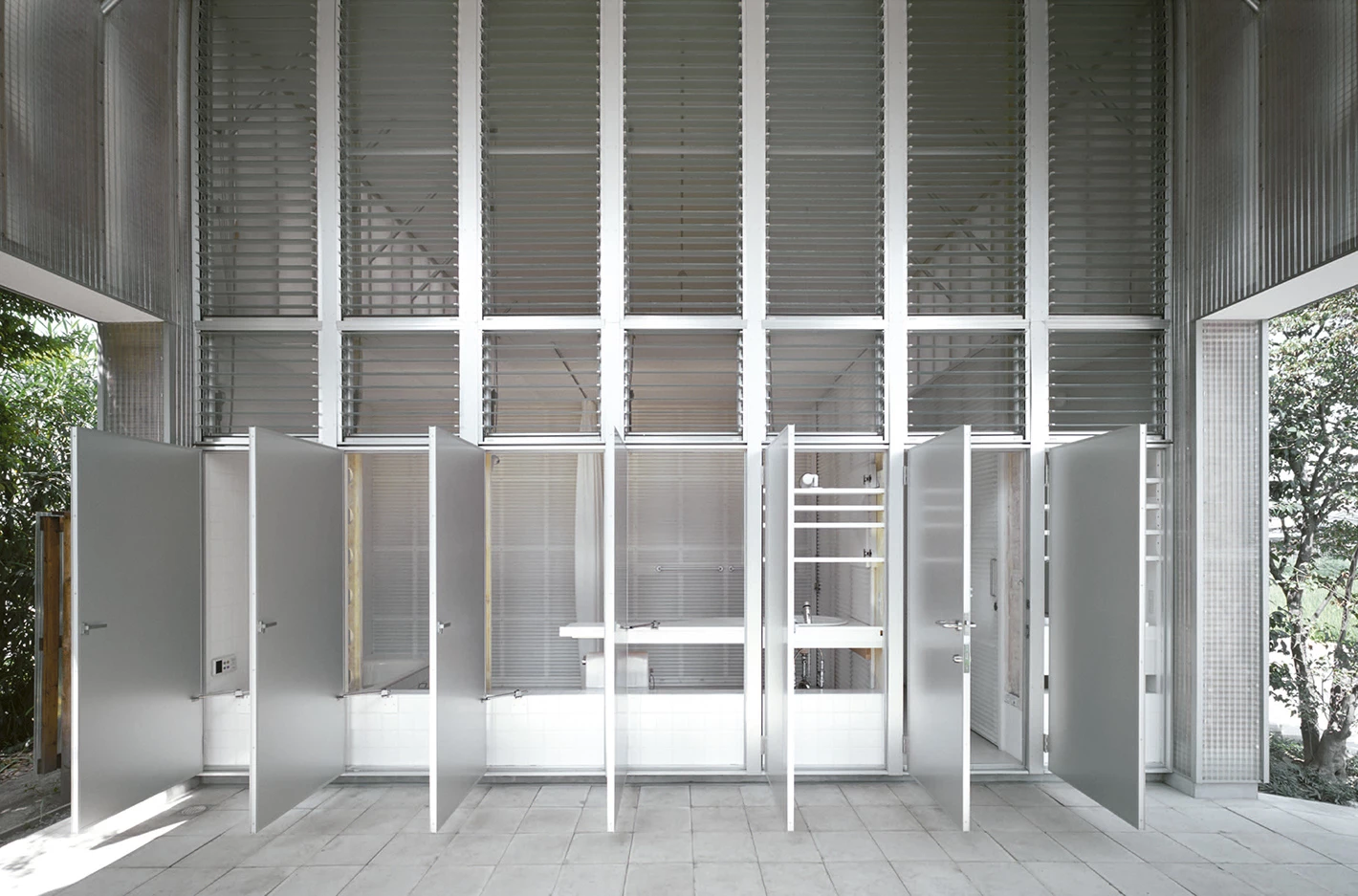
Polycarbonate manufacturers extended the same logic to the product. Multiwall polycarbonate traps still air inside internal ribs and lifts insulation above a single pane. Polycarbonate systems filled with translucent aerogel push thermal performance further. Polycarbonate now accepts air-stable low-emissivity coatings applied directly onto a monolithic sheet. Polycarbonate turns into a low-energy material through engineered assemblies, layer by layer.
“Polycarbonate turns into a low-energy material through engineered assemblies, layer by layer.”
The Honest Ledger
Solid polycarbonate sheet carries real liabilities, and architects who ignore them build failures. Polycarbonate burns. The thermoplastic self-extinguishes in small-flame tests, yet a developed fire softens, melts and drips the material. Specifiers treat combustible facade components seriously after Grenfell. Polycarbonate differs from the polyethene-cored panels that spread the Grenfell Tower fire, yet polycarbonate still needs the correct reaction-to-fire classification, proper cavity barriers, and placement clear of unrated situations.
Polycarbonate holds almost no thermal mass. A polycarbonate-walled classroom study in Madrid recorded almost no lag between outdoor and indoor temperature swings. Polycarbonate envelopes follow the weather, so the design answers comfort through mass, shading and ventilation. Polycarbonate expands and contracts with temperature, so details must allow the sheets to move. Polycarbonate blocks sound weakly. Polycarbonate carries a reputational scar, since early unprotected sheets yellowed and turned brittle under ultraviolet light. Polycarbonate with co-extruded ultraviolet layers resists yellowing for decades, so specifiers select the protected grade.
Laban itself shows the gap between ambition and operation. The Laban heating and ventilation proved difficult through the early years, according to the building director. Storm Eunice tore polycarbonate panels from the Laban elevations in 2022, a reminder that a translucent envelope stays an exposed envelope. A material performs only as well as the rigour of the hands that detail it.
The Carbon Question
Solid polycarbonate sheet long carried a verdict: plastic, therefore unsustainable. Polycarbonate manufacturers now produce resin from bio-circular feedstocks, including used cooking oil and similar waste streams. Bio-circular polycarbonate replaces fossil raw material through an audited mass-balance system. One UK producer extrudes polycarbonate facade glazing with on-site renewable energy and reports embodied-carbon cuts above 80 per cent. Polycarbonate recycles as a thermoplastic, and a long service life means fewer replacement cycles.
Polycarbonate suits a carbon-effective move: wrapping and upgrading an existing building instead of demolition. OMA’s Garage Museum demonstrates the approach. The Karoline Goldhofer daycare centre demonstrates it again. Builders retained close to four-fifths of the existing structure’s materials and added a recyclable polycarbonate envelope. Polycarbonate re-tuned the building’s energy performance through solar gain and daylight. Polycarbonate remains a petrochemical-derived polymer with a real footprint, yet polycarbonate stays light, durable, recyclable and increasingly bio-sourced.
Why the Traction Stays Slow
The solid polycarbonate sheet advanced slowly, and the slow pace signals success rather than failure. Polycarbonate spent two decades under correct, gradual understanding. The early sales story — lighter glass, instant insulation, indestructible — set polycarbonate up to disappoint, and polycarbonate disappointed where architects trusted that story. Architect literacy changed, not the polymer.
Architects learned to place polycarbonate where diffused daylight pays for itself. Architects learned to build polycarbonate into double skins and coated assemblies, to detail for movement, to respect fire behaviour, and to specify protected and bio-based grades. Polycarbonate matched real strengths to real work, year by year and practice by practice.
A solid polycarbonate sheet does not deliver an energy-efficient building alone. Polycarbonate delivers in the hands of an architect who reads the offer correctly: daylight instead of electricity, lightness instead of embodied carbon, a considered layer inside an assembly, a route that keeps an old building standing. Architects who specify a solid polycarbonate sheet for a low-energy envelope select the protected, bio-based grade and detail the panel as one layer within the assembly.
RESOURCES
- Herzog & de Meuron – “Laban Dance Centre, London” (project documentation, 2003)
- Building – “Herzog & de Meuron’s RIBA Prize-Winner Laban Suffers for Its Art” (2007)
- Apollo Magazine – “Hands Off the Best Herzog & de Meuron Building in London” (2022)
- Architizer Journal – “Fantastic Façades: How OMA Pushes the Building Envelope” (2022)
- The Pritzker Architecture Prize – “Shigeru Ban: 2014 Laureate Citation” (2014)
- Shigeru Ban Architects – “PC Pile House” (project documentation)
- ArchDaily – “A 100% Recyclable Polycarbonate Envelope for a Bright and Sustainable Building” (2024)
- ArchDaily – “Polycarbonate in Architecture: 10 Translucent Solutions” (María Francisca González, 2024)
- Building Design – “CPD 08 2024: Polycarbonate Façades for Sustainability” (2024)
- Energy Efficiency (Springer) – “Thermal, Lighting and Energy Performances of Buildings Constructed with Polycarbonate Panels: A Classroom in Madrid” (2023)
- Architect Magazine – “Sustainable Building Materials for Low Embodied Carbon” (2025)

