

Ethan Streicher is a Brooklyn-based designer and the founder of Streicher Goods, a studio dedicated to crafting handmade ceramics and functional homewares. Originally from Raleigh, North Carolina, Streicher shifted from a career in graphic design to ceramics, where he focused on creating sculptural lighting pieces that blend art with everyday utility. His designs are known for their playful, minimalist forms and the use of translucent porcelain, giving his lighting a signature warm glow.
Streicher has contributed custom lighting designs for hospitality projects, including his mushroom and checkered table lamps for The Ashbrooke, a hotel where his pieces are featured throughout the bar and guest rooms. His latest collection, Deep Reflections, pushes the boundaries of his typical aesthetic by experimenting with darker tones and new textures.
In this interview, Ethan discusses his creative evolution, his design approach, and how he balances innovation with functionality in his work at Streicher Goods.

Hi! I’m Ethan Streicher, the founder and creative behind Streicher Goods, a design company based in Brooklyn, New York, actually in Greenpoint if you are a local. I focus on ceramic functional homewares mostly with a focus on lighting, but now I’m getting into ceramic furnishings, so that will be an exciting new endeavor—making big stuff, or at least as big as my kiln can go.
What inspired you to become a designer?
I fell into design through graphic design in college. I wanted to go to school for studio art initially but was a little afraid of what would follow after college, being a studio artist. So randomly, I kinda fell into graphic design, took some classes, I loved it, and then I did that for a decade.
Ceramics was on the side, sort of a hobby, and now, I switched. I quit my job, and now ceramics is the full-time thing. I think I’ve been interested in creating homewares and functional wares because I like the idea of people using them in their everyday lives. I think having nicely designed objects in your house is a great way to show your personality. Also, it just seems cool to have handmade stuff that other people have made, like your friends, or people whose work you love. That’s the thing that drives me to design functional wares.
How would you describe your design philosophy?
I think the way I approach my ceramic works is that I like things to be simple and geometric. In the beginning, I had to let go of my tendency to be a perfectionist because, with ceramics, while you can be pretty perfect with it, there is also some kind of hand-done nature, which I’ve come to appreciate. As perfect as it can be is what I strive for. The way I design things is from a very geometric, architectural standpoint where I like simple shapes or simple textures. I like things to not be so chaotic, so I feel like my design philosophy is: if the form is complicated, the glaze should be simple so you focus on the form. If the form is simple, then I think the glaze could be a bit more out there because I want the focus to be on the thing that is the most prominent. If it’s the form, I want you to walk away and say: the silhouette is beautiful. I want the glaze to harmonize with that and not be a distraction.
What is your favorite project?
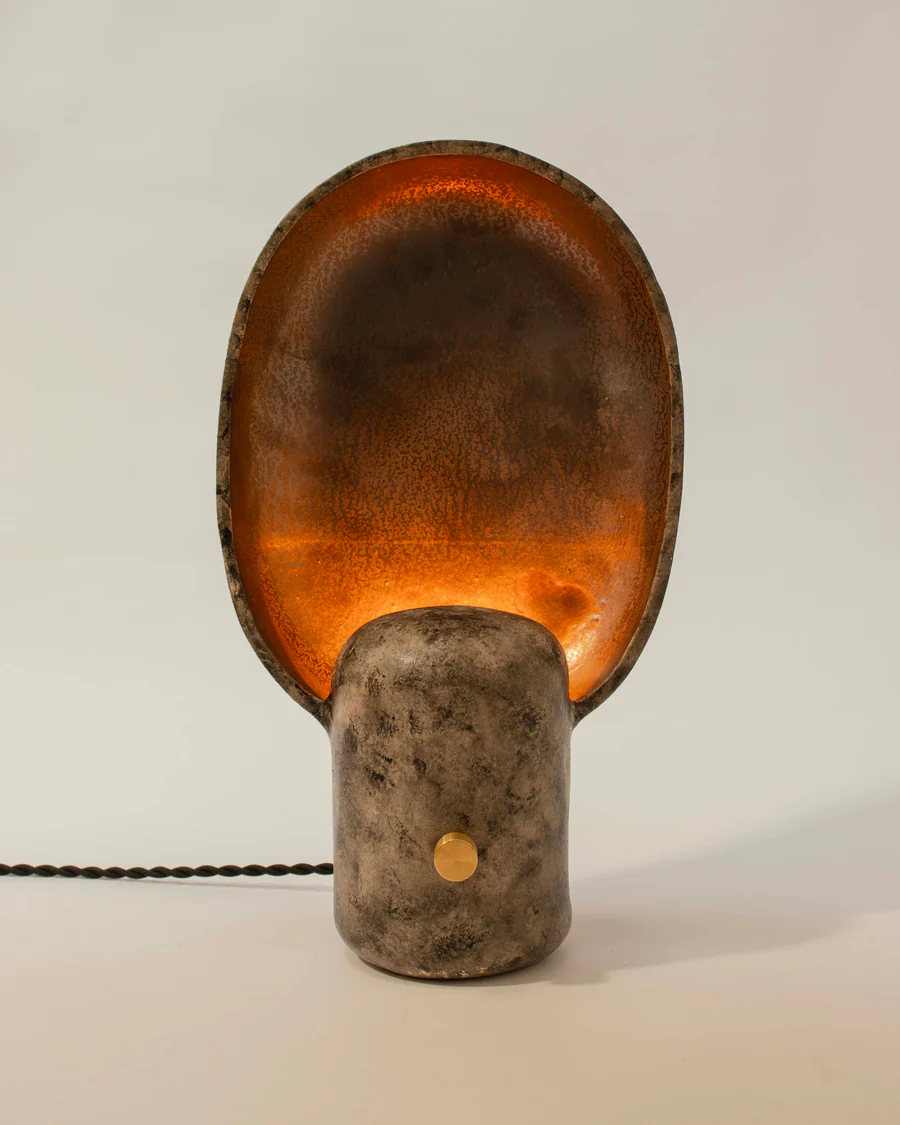
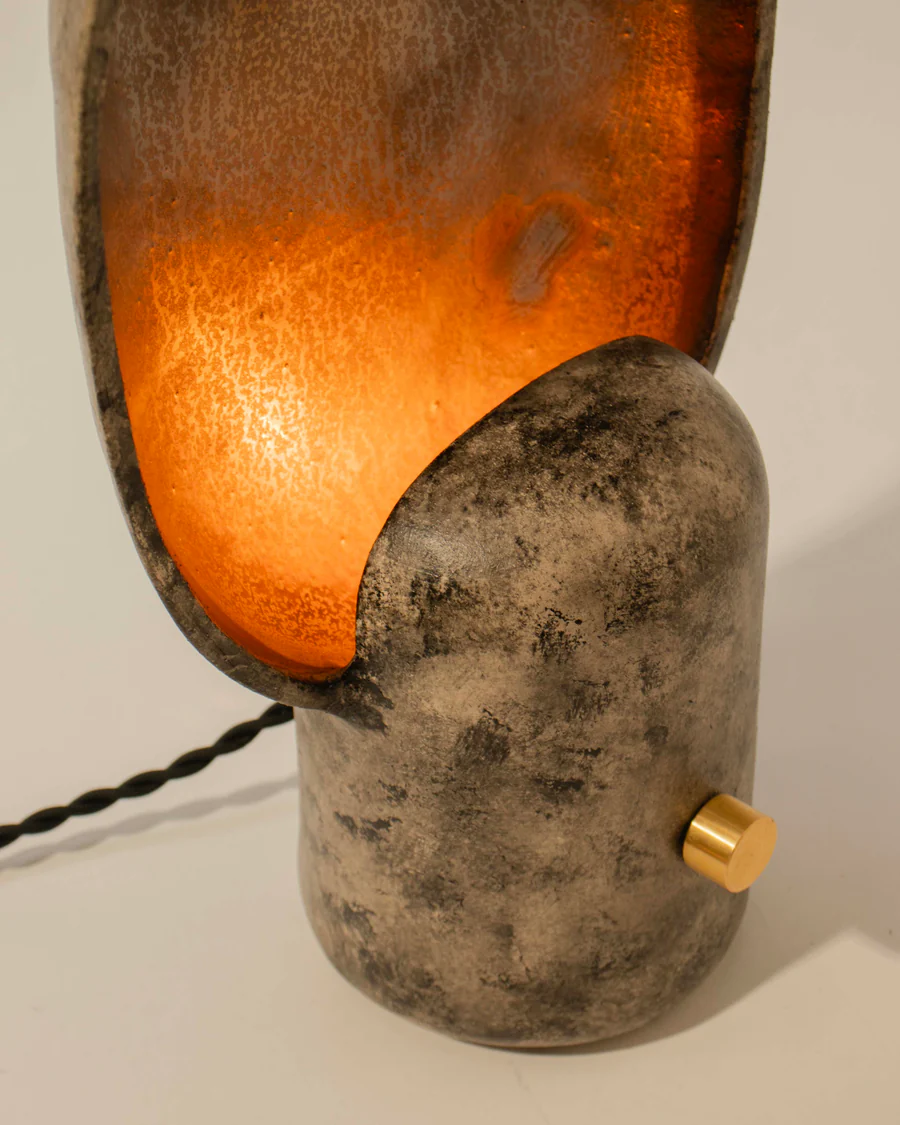
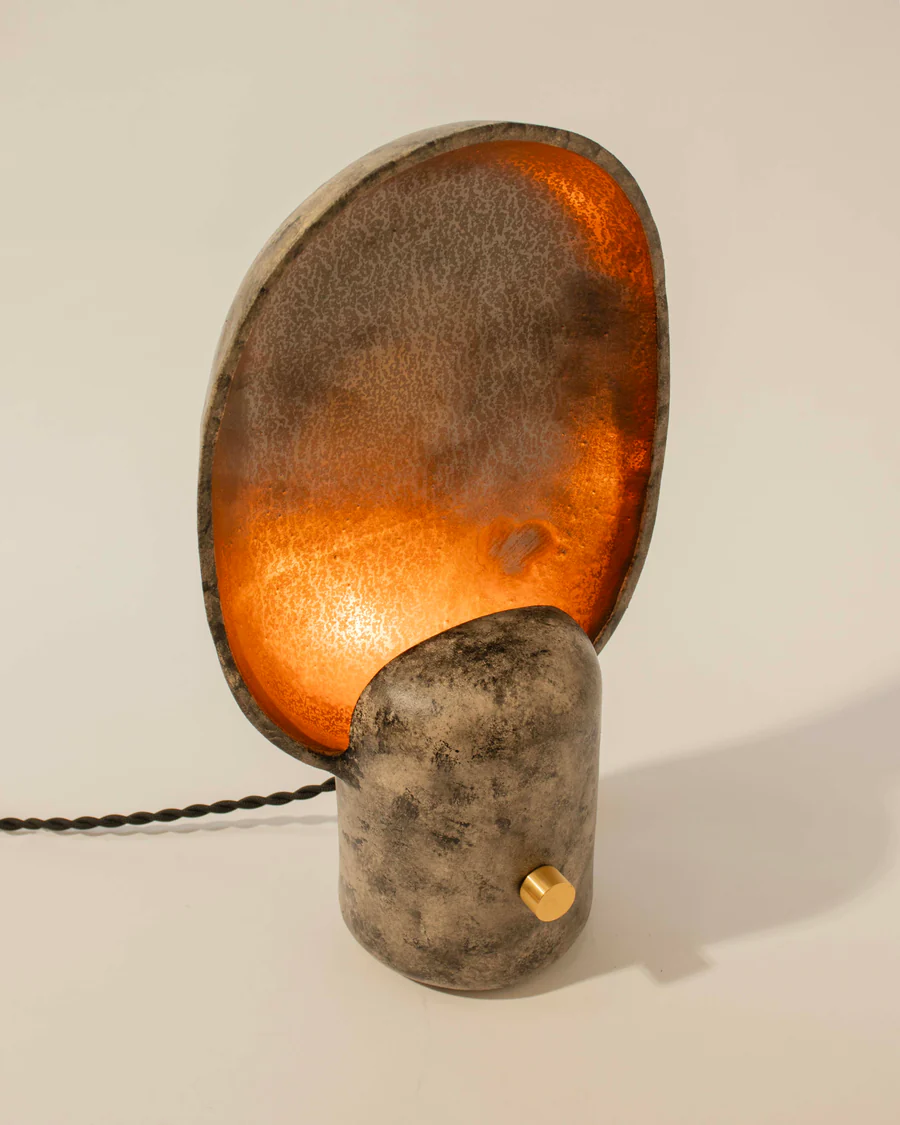
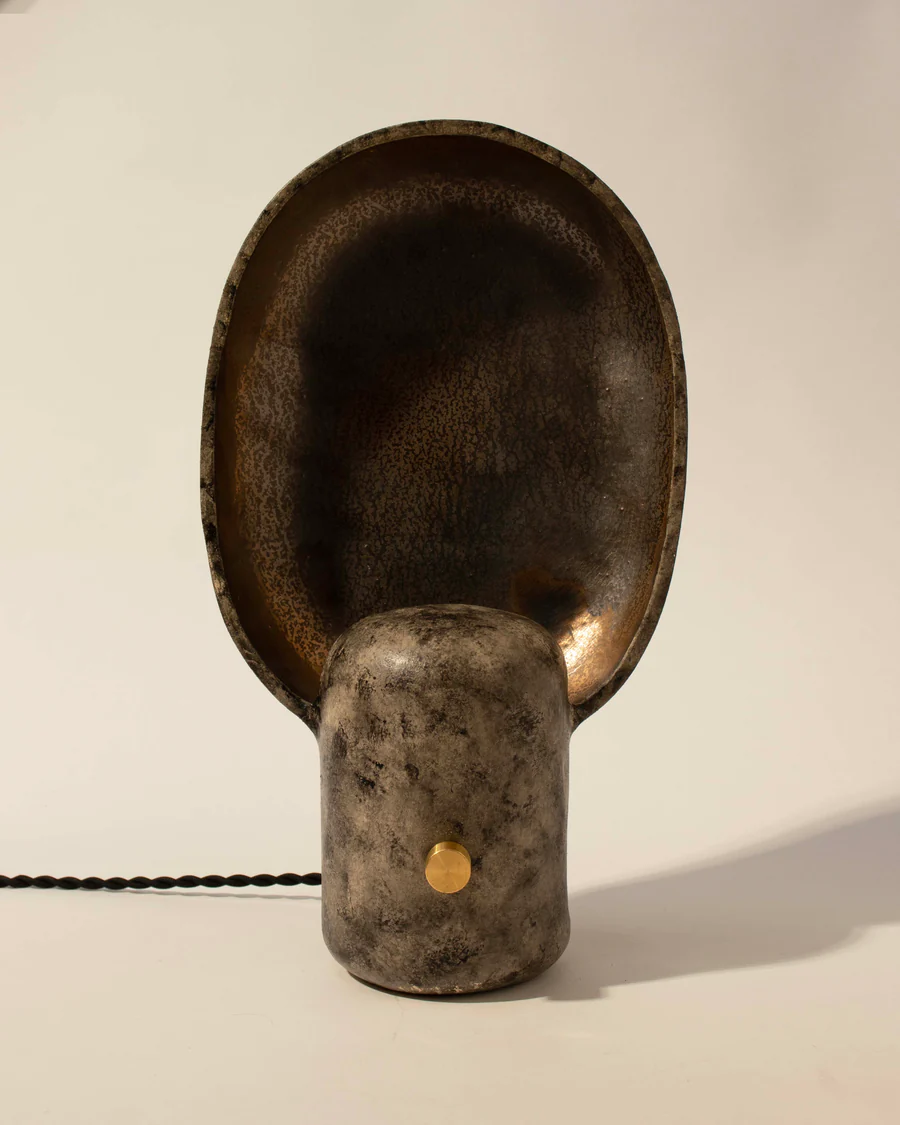
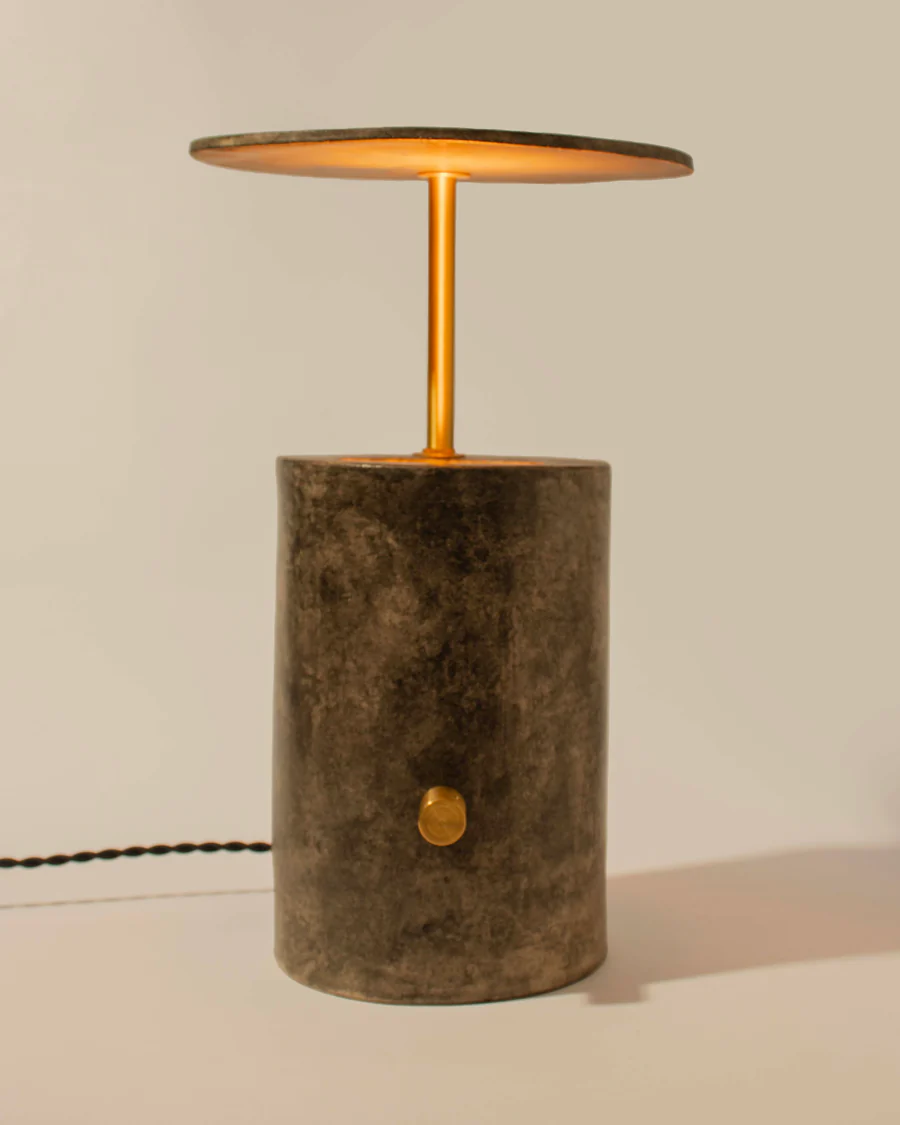
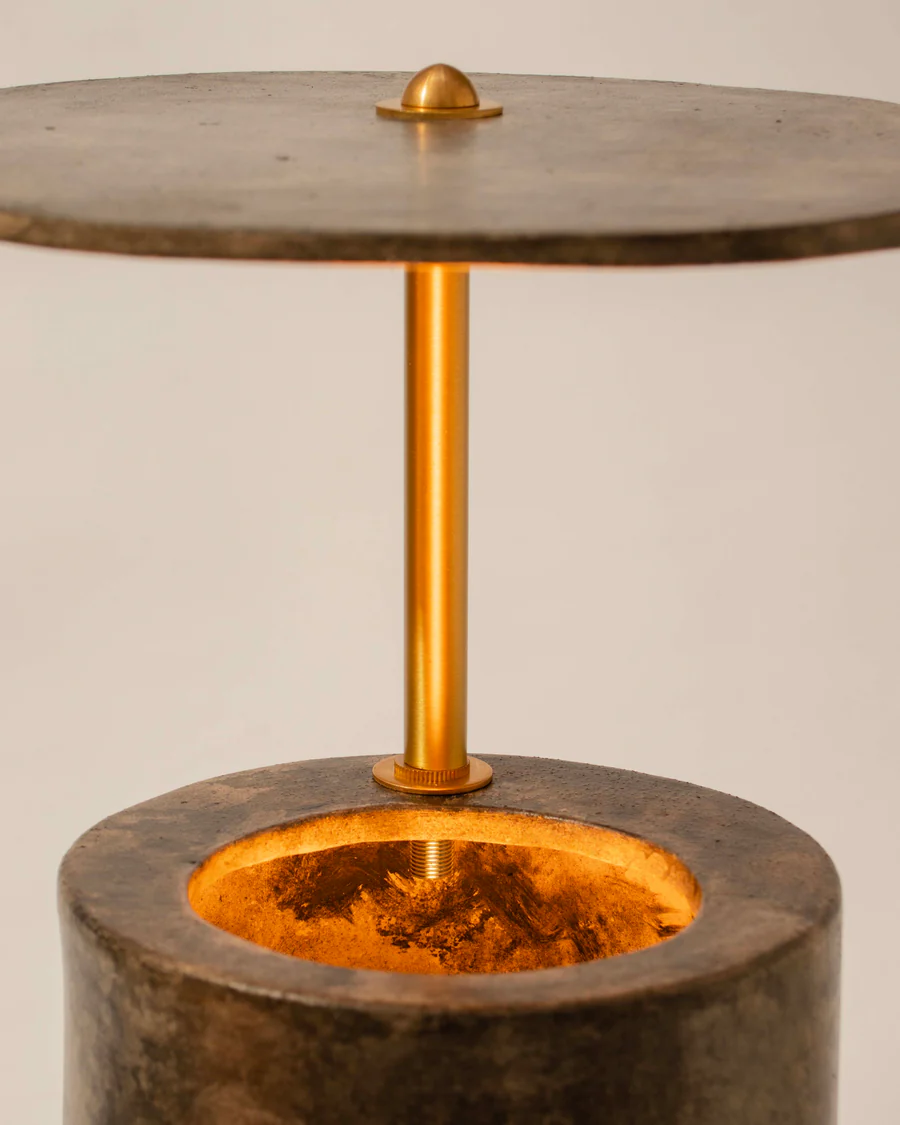
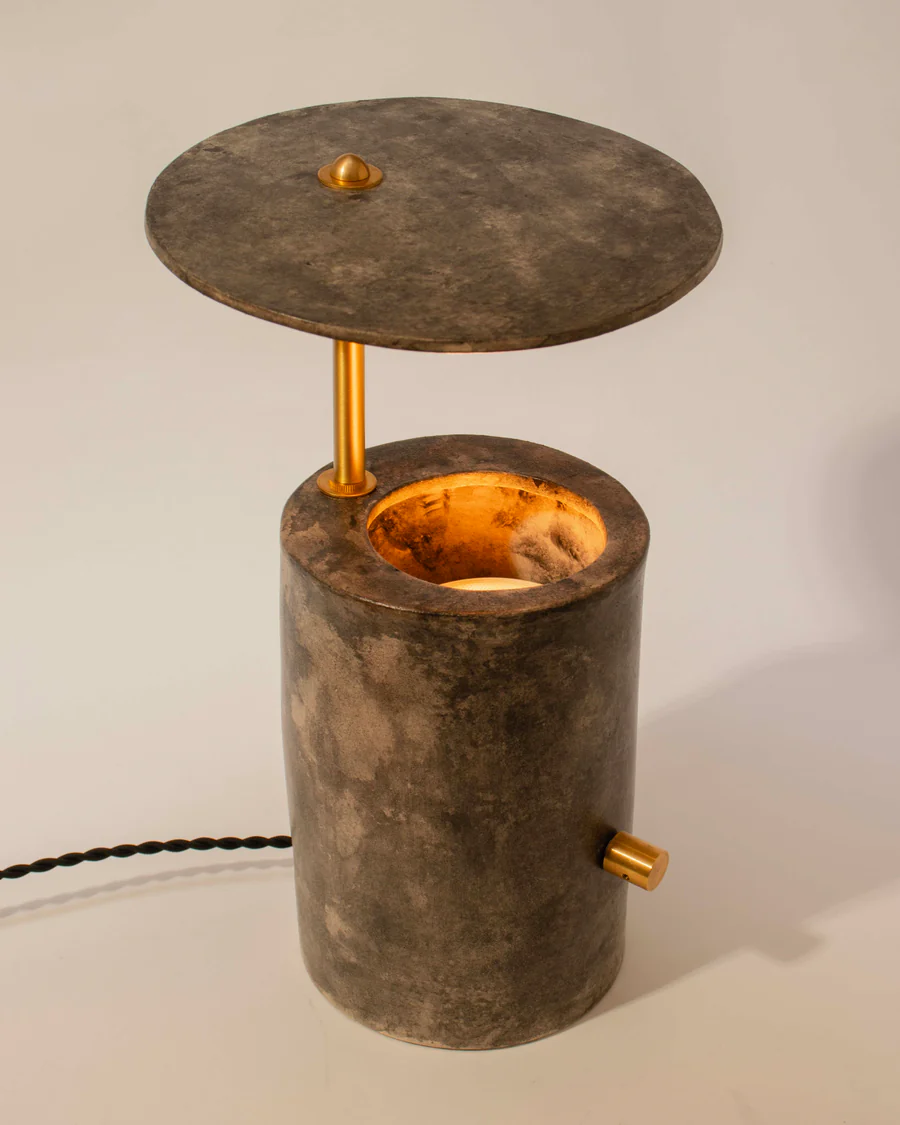
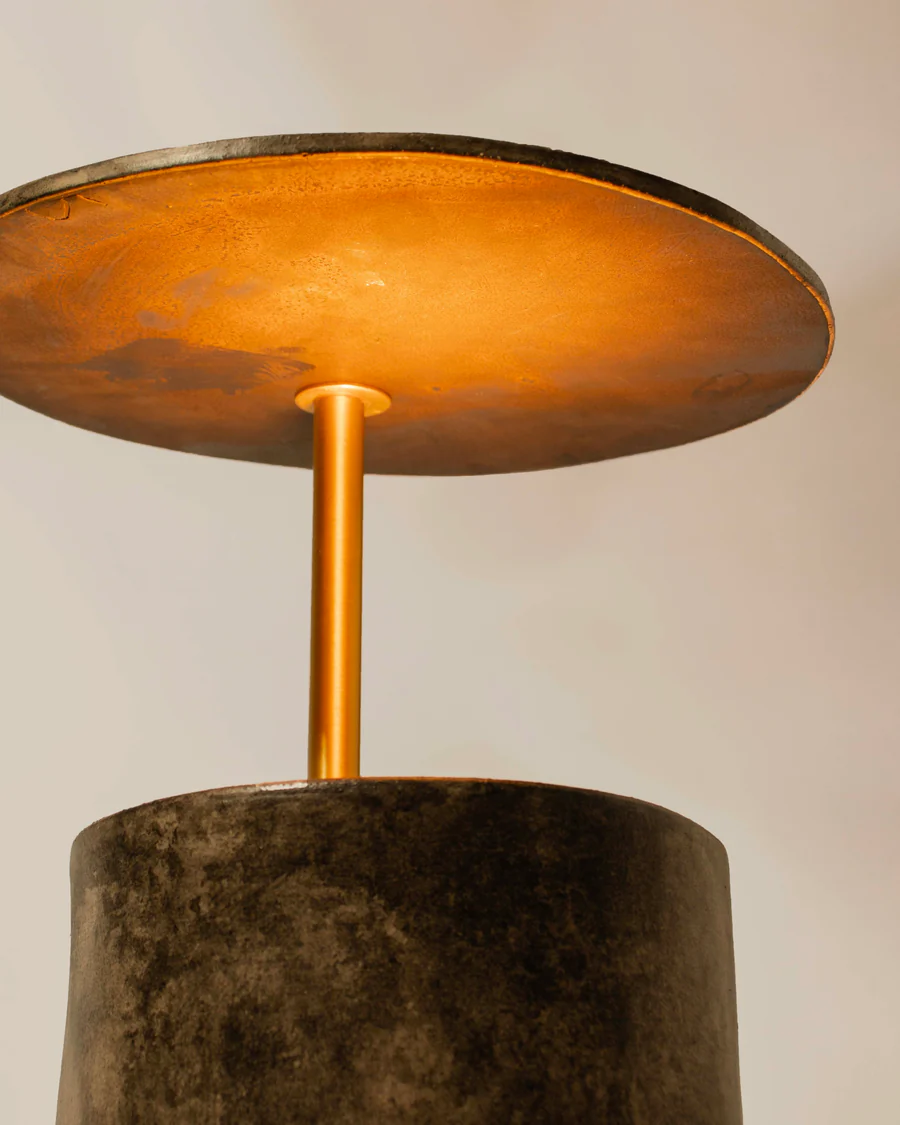
My favorite project, as of right now, is my previous collection, my most recent collection: Deep Reflections. I think what makes it my favorite is the fact of questioning the material and the end result. While they look ceramic, they could read as stone. I liked that interplay—you could bring someone in and see them question the pieces. As a collection and as a whole, I liked how all the forms were different but unified.
What is your favorite detail?
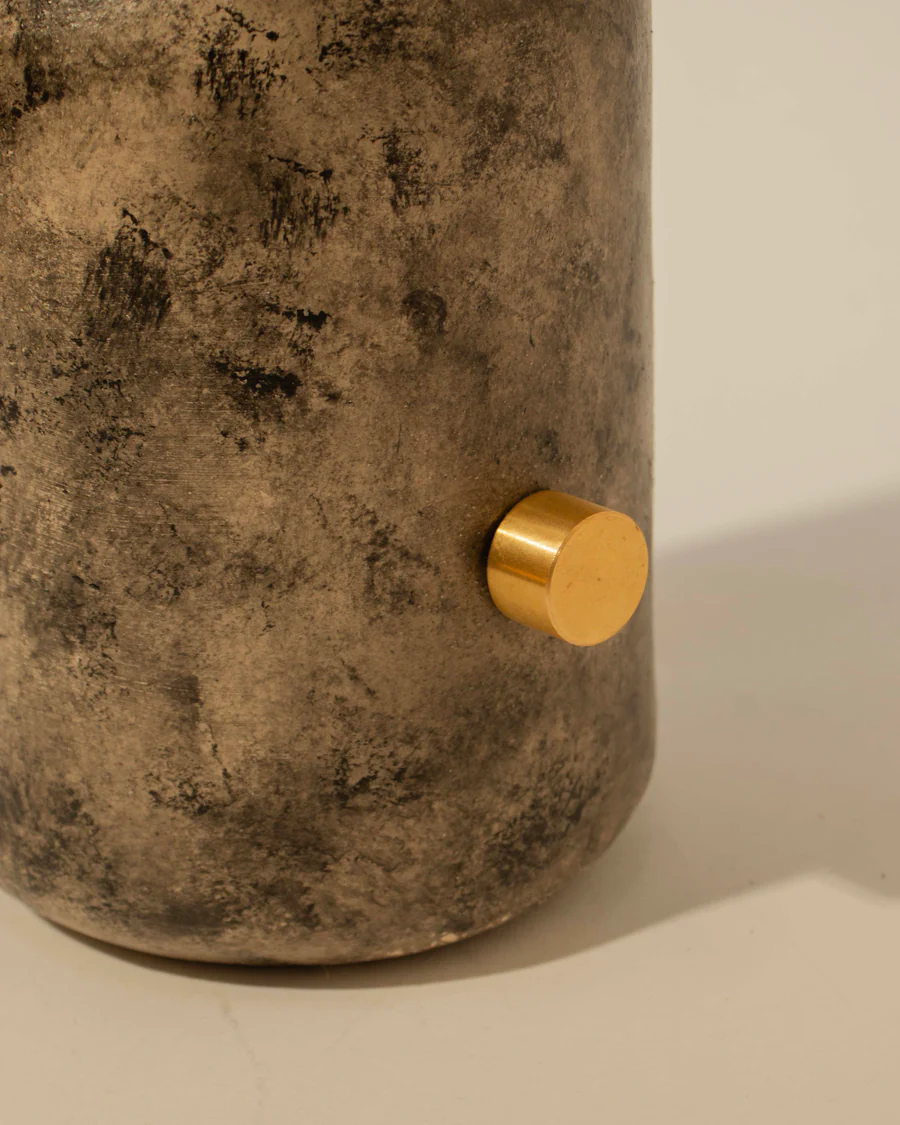
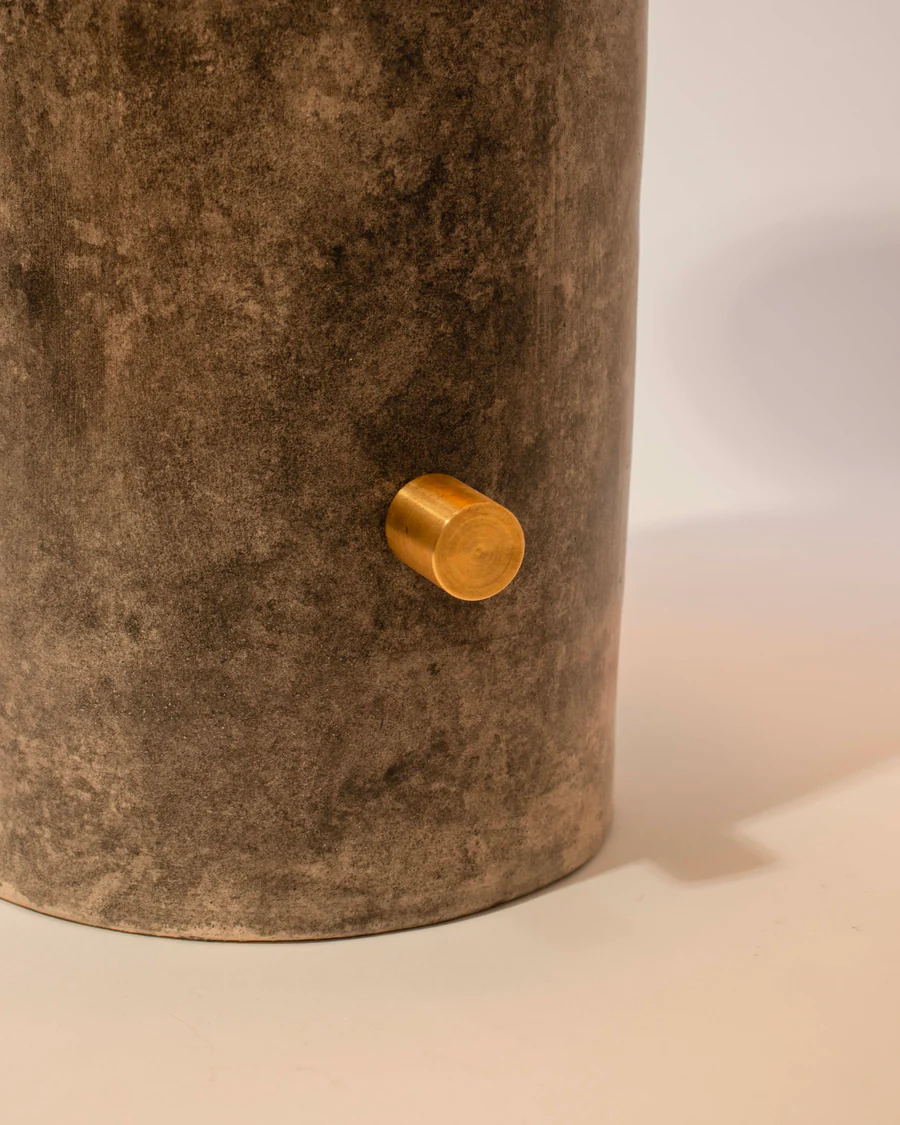
My favorite design detail of Deep Reflections was certainly the finish. I think recently my favorite design detail has been making ceramic knobs for my lamps just because I think it’s the thing you’re touching, which is kinda cool. You’re interacting with the piece, with its material, and touching this thing that blends into the piece. In general, I’ll start doing that a lot more going forward because it feels nice, it feels good.
Do you have a favorite material?
Yes, ceramic.
I do like blending materials. Right now, the thing behind me is a bench end, so that will have a wooden bench seat that goes across it, two ends that hug it. I’ve been more interested in blending materials. My old collection blended PLA and other kinds of plastics from manufacturing or 3D printing, mixed with ceramic, so I’m searching for a cool blend between materials. Ceramics and other natural materials can find a good harmony, and that is something I want to do more of going forward. As of right now, my favorite material is ceramic.
What is your process for starting a new project?
My process for starting a new project usually begins with rough sketching. I tried drawing on an iPad, but it feels so distracting, and I get really into the weeds with the project being perfect versus being a crude little linear sketch. So my notebook is basically just full of little linear sketches that are pretty small, little thumbnails. I mostly just start there to get an idea of what the silhouette is going to look like, the form, proportions, that kind of thing. Once I figure out a sketch that I like, I put a star next to it, and then I will further that sketch into something more complete—where does the bulb go, how am I going to project light? I start to think through the design or the function of the piece, and from there, sometimes I just go for it. But depending on how complicated the piece is, I’ll draw a 2D version of it in Illustrator, and that just helps me key in on exact proportions. So if I need to know a base dimension or proportion, from that drawing I’ll see how the piece will look, how I want it to look, instead of just my sketch. It’s a way to get into the weeds, and if I need specific hardware to fit, like a sconce or certain things that mount onto something, I’ll draw the hardware in with all the measurements and then make sure that the stuff I’m buying and all the stuff I’m making is going to fit together. Those 2D drawings are usually done with the shrinkage in mind for clay, depending on the clay I’m using, I’ll draw it differently. That’s my process. From there, I just start building, and I think once you have those drawings it makes building a lot easier. I’m kind of building against a proof of concept, so it’s a bit easier versus me just going for it and hoping it works in the end.
How do you balance creativity and practicality in your designs?
I think I balance creativity and practicality in my designs by the practical part being that it works, that it plugs in and lights up, and that’s probably as practical as it should be. The creativity side is how you explore different ways to cast that light, how you explore forms, how you make a lamp that someone else hasn’t made, and how you build on an idea and evolve it. I think the way that I bring creativity is in the way that I sketch, focusing on form, and then figuring out the function. Form comes first, function comes later, and sometimes the form and the function don’t work together, so I ditch the idea. That’s how I generally try to make sure that the practicality and creativity sides of the piece work.
These sides are not equal, let’s say the piece is more creative than practical, right?
You could just plug the bulb into the wall, but no one likes that. They want something cool, they want something nice, they want something to hang on their wall, present to their friends, and display their taste.
What role do surroundings play in your work?
I think my surroundings probably play a role by being in New York. Seeing a lot of really good work, seeing a lot of people hustling and getting things done—that’s a big part of it. That motivates me. I constantly see good stuff, it pushes me to want to make cool stuff, and it’s healthy competition. I want to make things as good as the ones that I see, or better. I think the surroundings are good for motivating me, but I feel like being around really good work, being around all the galleries, being surrounded by architecturally amazing things, and being in the city definitely helps my drive to do better work and probably inspires me more subliminally than obviously, at least the actual environment. Seeing work and being impacted by it is much more immediate than biking and looking at cool buildings.
How do you approach working with clients?
The way that I approach clients is very similar to graphic design. It’s client relations, open communications, being really clear, being very transparent. I’m very transparent when things are going well and when they’re going wrong. I think it is really helpful for clients just to have a window into what’s going on. As far as approaching working with them, I work with them pretty similarly to the way I create for myself. I think if they have an idea that they want me to build against, or if they come to me with a slight idea and ask me what I think, then I start with sketches. I send them sketches, some general descriptions of the product, and some glazes I’m thinking of unless the project requires something specific. I then do the 2D sketches and get them approved for sizing. Sometimes those aren’t needed, but a lot of it is about being open, being communicative, getting approval on things, and making sure that we’re aligned and in line throughout the whole project.l
What trends or movements do you find inspiring?
I don’t know if this is a really specific trend, but I think as technology progresses, it’s pretty cool to see what people can do with lights. When I go to furniture shows, seeing how people are able to pack light and do crazy stuff—I nerd out and try to figure it out. I don’t think that is a design trend, but it’s a technological advancement, and that’s the thing I nerd out about. I’m wondering how it works; I stare at it like a fly.
As far as movements go, I grew up with my parents liking mid-century stuff, and I think that had the biggest impact on me, just from a silhouette standpoint and the details of mid-century designs. But the newer series of it was very brutalism-inspired. The pieces were kind of cold when they were not illuminated, they looked stone-like with gray satin glazes, but when you illuminated them, they became bronzy, warm, golden, and inviting. Brutalist buildings I like, but I don’t think I’d like to live in them because I like big windows, I like letting the outside in. I feel like my stuff kinda has a mid-century look to it, maybe my new things are not as much, but I feel that influence the most. Especially when I pick up magazines, the homes that I gravitate towards are definitely the ones that are mid-century.
What advice would you give to aspiring creatives?
I would say that sometimes you think you’re going to do one thing, and you end up doing the complete opposite. Go with your gut, for many reasons. One big reason is that you might think you want to do one thing, you go to school for it, you do all this stuff, and then you just change it up. I think it’s good to change. Maybe that’s the inspiring thing: change is good, don’t be afraid of change. Evolve, keep learning, come up with new things. I never thought I’d be a ceramicist, I never thought I’d quit my job to do this. I just found myself happier and more driven doing this than working on client work. I still do work for clients, but it’s different. I’m able to have a little bit more of my own voice in it than in some of my graphic design projects. I feel like that would be my advice: go with your gut and don’t be afraid of change. You never know, maybe I’ll not be a ceramicist in 10 years, maybe I will be.

