

Samuel Gonçalves is a Portuguese architect and the founder of SUMMARY, a Porto-based architecture practice established in 2015. His work focuses on industrialized construction, prefabrication, and modular systems, investigating how tectonic logic and fabrication processes can directly inform architectural form. Gonçalves developed the GOMOS System, a prefabricated concrete housing prototype presented in Venice in 2016, which marked a significant step in SUMMARY’s research into scalable and adaptable construction methods. Built projects such as the 4 Modular Kindergartens in Lisbon and 1000m² Prefabricated Housing further articulate this commitment to system-based architecture, where structure, assembly, and efficiency shape spatial outcomes. Across his practice, architecture is treated as a construction-driven discipline in which technical constraints generate formal clarity.


What inspires you?
Mainly functional objects and machinery. I appreciate the utility and the reason behind each decision in design. And you can often find it in very ordinary objects.
What inspired you to become an architect?
The fact that architecture is present in everything and involves very different disciplines: from design to engineering, from urbanism to sociology.
How would you describe your design philosophy?
It is a pursuit for the balance between pragmatism and experimentalism, aiming to make construction an increasingly simpler act, through the optimization of time, labour, and physical resources.
I believe the relevance of this commitment is reinforced by the need to find quick and affordable housing solutions for an ever-expanding urban population.
What is your favorite project?
It is always the next project, the one you are just starting. At the very beginning, all projects are perfect. Then reality hits – the coordination with all the technical and regulatory constraints, the impositions from the clients, and the unpredictability of the building site. At the end of the day, after navigating through all of this, the final result isn’t perfect anymore. And that’s OK. Our profession is far too complex to be flawless.
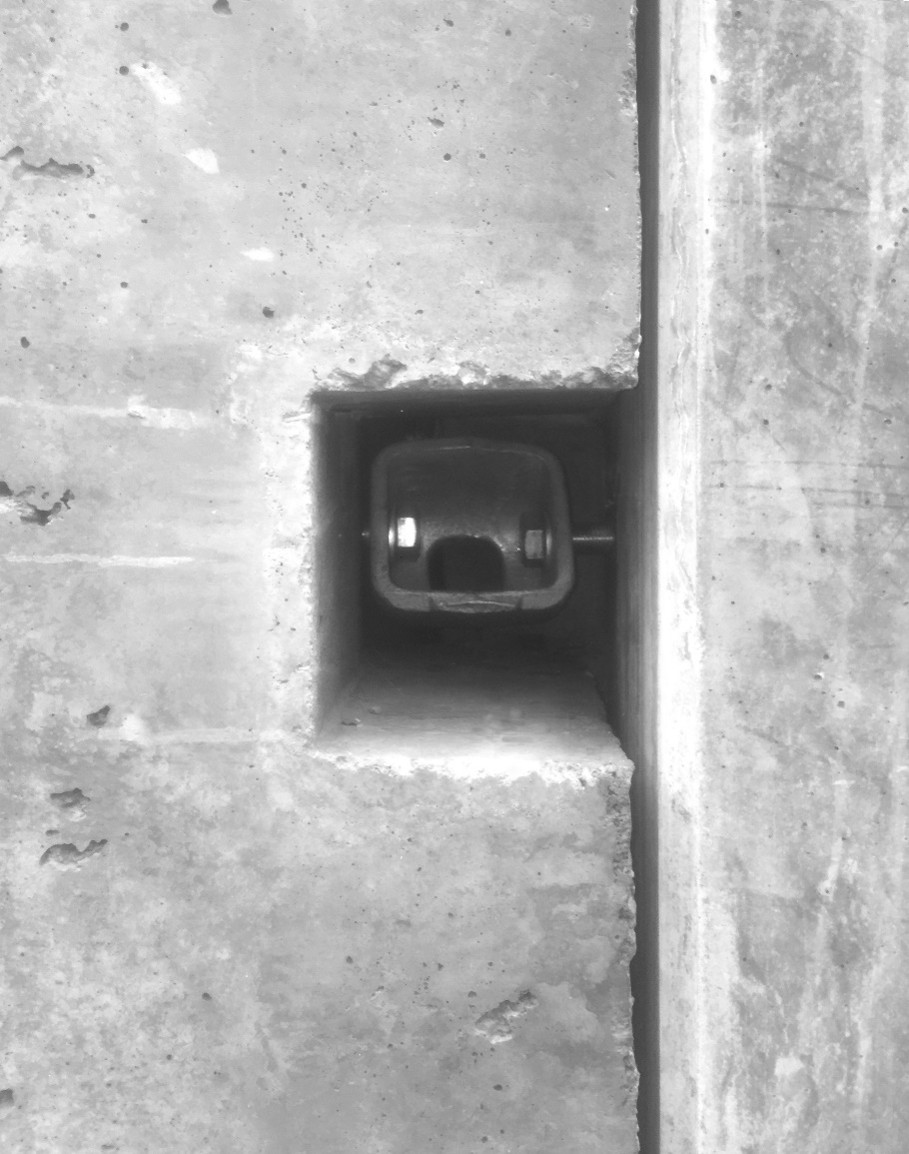
What is your favorite detail?
The mechanical connector between two precast concrete elements is a very simple element that solves many problems at once. It works as a central ring with two screws. Each screw goes to the corresponding module. The more we tighten the screws, the more we pull the modules together. Inside this joint, there’s an asphaltic rope, so when we tighten the screws, this asphalt gets compressed, and the joint gets completely watertight.
In the future, we can simply remove these screws and move these pieces somewhere else.
Do you have a favorite material?
No. The material choice results from the needs of each project, rather than a preference.
What is your process for starting a new project?
It is always addressed on a case-by-case basis. But generally, it starts from the construction or tectonic constraints. As we work mainly with industrialized methods, we must first understand the construction system — how the elements are fabricated, transported, and assembled — before we can turn our attention to the final form of the building.
Our architecture doesn’t determine the construction system. It is rather the inverse: the construction system that determines or at least strongly influences the final form.
What inspired 4 Modular Kindergartens in Lisbon?
In this project, the studio explored for the first time a three-dimensional prefabricated and modular system based on U-shaped reinforced concrete pieces, which are grouped and overlapped according to the program’s needs. This system allowed for a significant acceleration of the construction process: in just 13 months, these 4 kindergartens were simultaneously built in different locations across the city of Lisbon.
This project comes after a series of previous experiments with concrete modules – the GOMOS#11, the 11 cabins, the VDC project, and the installation we presented in Venice in 2016 – but with a whole new set of circumstances that posed new challenges and brought new questions to our practice.


The buildings emerged in response to a public initiative project for the construction of kindergartens in various areas in Lisbon, through a competition launched by the Municipality. The starting point was a standardized solution that allowed for economic intervention, quick execution, and the creation of an identifiable image, making these facilities recognizable throughout the city. These were the main driving forces of design for this project.
All the structural components of these buildings, including the foundations, were prefabricated in a factory under controlled conditions. They were then assembled on-site within a few days. These prefabricated components not only form the structure of the building but also define the facades, floors, and interior compartments. This approach allowed for a faster and more controlled construction process, avoiding on-site concreting, thus reducing waste, noise, and dust. The goal was to increase the city’s network of public kindergartens without disrupting the surrounding neighborhood during construction.
Both the process and the result were equally important in achieving this goal.
How did materiality shape 1000m2 Prefabricated Housing?
The requirements for this project were boldly defined from the beginning: the construction should be fast, cost-effective, and changeable over time, which prompted the studio to use prefabricated elements and to leave parts of the project undefined, assuming the speed, flexibility, and optimization of resources as core themes. The materiality of the building was, in fact, shaped by this request. In the whole building, the structural material – precast concrete – is directly exposed, without any additional finishing. This reduces the labour involved in the construction process and, consequently, has a direct effect on its acceleration. All the components are fully prepared in a factory and quickly assembled in situ, performing at once as structure, insulation, and cladding.


What advice would you give to young architects?
To be aware that there are no private projects. Every project, even when working with private clients, has an impact on the public space and the collective environment. So, our job is to balance particular interests with the public good. Work with this in mind.

