

Vineet Vora and Prach Parekh are Indian architects and co-founders of UF+O, an architecture and design studio based in India that operates across architecture, interiors, and object design. Educated in architecture and shaped by a practice grounded in inquiry and making, Vora and Parekh established UF+O as a platform for context-driven work that responds carefully to climate, materiality, craft, and cultural conditions. Their practice treats each project as a site-specific investigation, resulting in works such as Facets, House of Voids, and a growing body of architectural objects developed under the +Objects initiative, where small-scale making informs spatial and formal thinking. Rooted in an interest in traditional Indian architecture while remaining engaged with contemporary global discourse, UF+O’s work emphasises form-making as a process of dialogue—between place and program, material and technique, memory and new use—producing architecture with a strong sense of identity, restraint, and permanence.
What inspires you?
Over time, our work has been shaped by a wide range of influences — from the structural clarity of Richard Rogers to the restrained modernism of Charles Correa. We have also recently seen and been inspired by the works of Sanaa and Neri&Hu. Yet it is the understated wisdom of traditional Indian architecture that continues to ground us most. Whether in the intimacy of domestic spaces or the monumental presence of stepwells and sacred precincts, these environments reveal a timeless conversation between climate, culture, and craft — a world where sustainability is woven naturally into everyday life rather than pursued as an ideal.
What inspired you to become an architect?
Growing up, I had a neighbour who was studying architecture. I would watch her build models and prepare drawings, completely fascinated by the process. That early exposure sparked something in me — a curiosity for this field that so seamlessly blended art and science, and it’s a fascination that’s stayed with me ever since.
How would you describe your design philosophy?
Our design approach treats every project as a fresh investigation shaped by its own context, constraints, and latent possibilities. Each scheme becomes a dialogue with these conditions, inviting us to respond with care to the intricacies of function, climate, materiality, aesthetics, and budget. While form-making is a constant thread in our practice, we allow the design process for each project to unfold on its own terms. This approach reveals spaces that carry their own distinct identity and a strong, rooted sense of place.
What is your favourite project?
It is difficult to pick one, but two of my favourite projects are Facets and House of Voids. Both felt challenging in terms of dealing with very different typologies and cultural contexts, and I am proud of how we were able to translate our interpretation of the brief into built form.
What is your favourite detail?
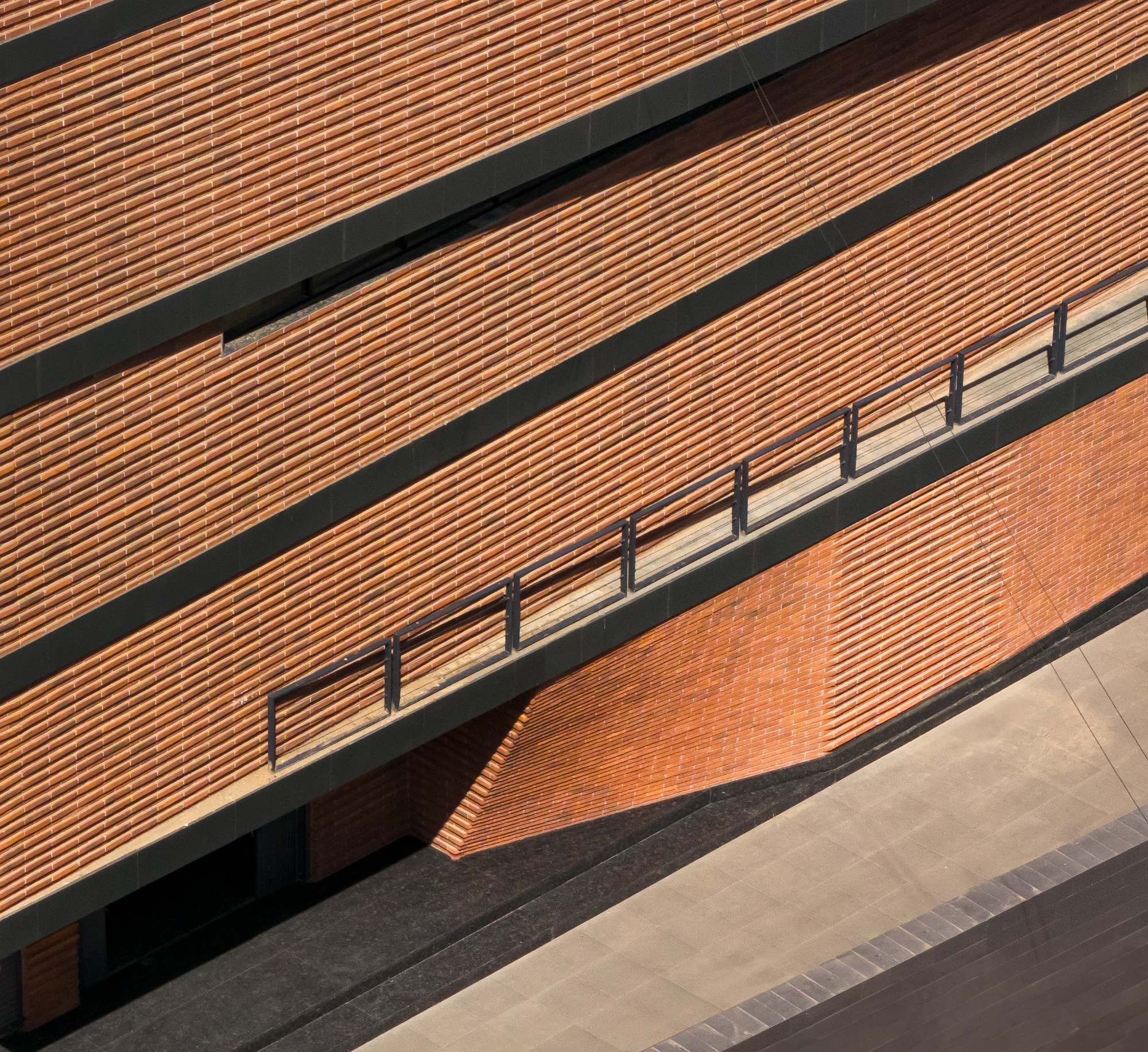
In House of Voids, I’m especially drawn to the stepped terraces and the way they overlook one another, creating a quiet choreography of spaces. In Facets, it’s the articulation of the brick façade that continues to intrigue me. We explored the possibility of forming doubly curved surfaces at the ground level using wire-cut bricks — an experiment that proved both challenging and deeply rewarding.


Do you have a favourite material?
We are currently quite taken by metals. We are exploring using it in different forms – cast metals and sheet metals to create objects and details.


What is your process for starting a new project?
Our process begins with inquiry — a thoughtful, almost academic exploration shaped through open conversations with clients and collaborators. These early dialogues help us understand not just the functional needs of a project, but the intentions, emotions, and aspirations connected with the project. From this exchange emerges the design brief, which we see less as a list of requirements and more as a framework of questions — prompts that guide us through the journey from concept to completion.
The initial stages of design are deliberately fluid. We move between sketches, models, renders, and research, allowing each medium to reveal different possibilities. This is a period of iterations, where ideas are tested and refined, and where the design of built form and spaces emerges simultaneously.
How do you fuel your creativity?
Much of my inspiration comes from travel and reading. Experiencing architecture and design across different countries — whether firsthand or through books — continually fuels my curiosity. On a recent trip to Japan, I found myself captivated by the smallest elements: the sidewalks, landscape details, and the quiet precision in how public spaces are crafted. We documented these carefully throughout our journey, and that practice has pushed me to look more closely at how our own buildings meet the ground and engage with their surroundings.
What inspired + Objects?
Vineet and I have always drawn inspiration from design at every scale — from product design to large-scale architecture and everything in between. When we were shaping the name and philosophy of our studio, it felt important that this curiosity for small-scale making remained at its core. The joy of creating objects continues to inform our approach to form-finding and material exploration, and over time, we’ve realised that these objects have influenced our architectural work just as much as our architecture has inspired them.


What advice would you give to young architects?
For young designers, the most important journey is discovering a voice that’s genuinely your own. It emerges slowly — through making, questioning, and staying curious. In a world shaped by social media, it helps to step back and listen to what truly resonates with you rather than what simply circulates. When your work grows from that honest place, it finds a depth beyond trends.
Learning, however, never really ends. Each new material, detail, or typology opens another door. Some of our most meaningful ideas have come from admitting what we don’t yet know and working through it with collaborators, contractors, and clients. In those shared moments of exploration, where curiosity and dialogue meet, your design language naturally evolves and strengthens.

