

Architects: Skidmore, Owings & Merrill (SOM)
Area: 260,128 m² (2,800,000 ft²)
Year: 1970
Photographs: SOM, Ezra Stoller, Esto, Jon Miller, Hedrich Blessing, Timothy Hursley, Ben Schumin, Dave Burk, Scutter Hohn, Kim Eriksson, Michael Davis Photography, The Man On Five, hanneorla, theta_sigma, Creative Commons, Golbez, Bernt Rostad, OmidGul, Knutaril, Basil D Soufi, Cacophony, Dori, Wikimedia Commons, Kent Wang, Balthazar Korab, Dan Gaken, quinntheislander, Chris Rycroft, Abi Skipp, David Wilson, TonyTheTiger, Joe+Jeanette Archie, Adam Jones, Olivier Bruchez, XTRAICE Synthetic Ice Rinks, R Boed, Dom Pates, sookie, Jan Pěček, Mike Steele, Roman Boed, hibino, Chris Rycroft, Richie Diesterheft, Banalities, Steven Miller, jai Mansson, Brent Payne, Ken Lund, erikccooper, Joe Ravi, Stephen Hogan
Structural Engineer: Fazlur Rahman Khan
City: Chicago
Country: United States
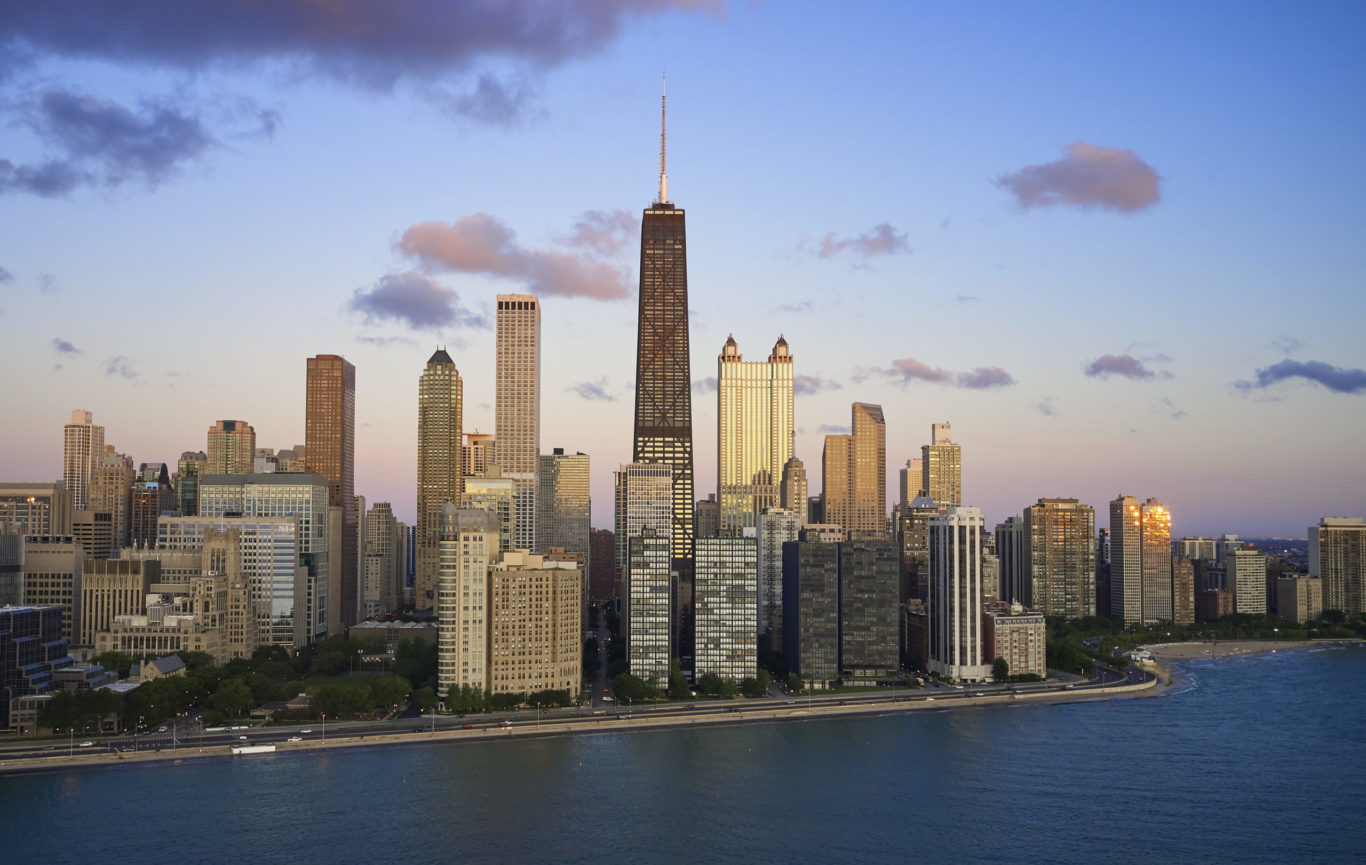
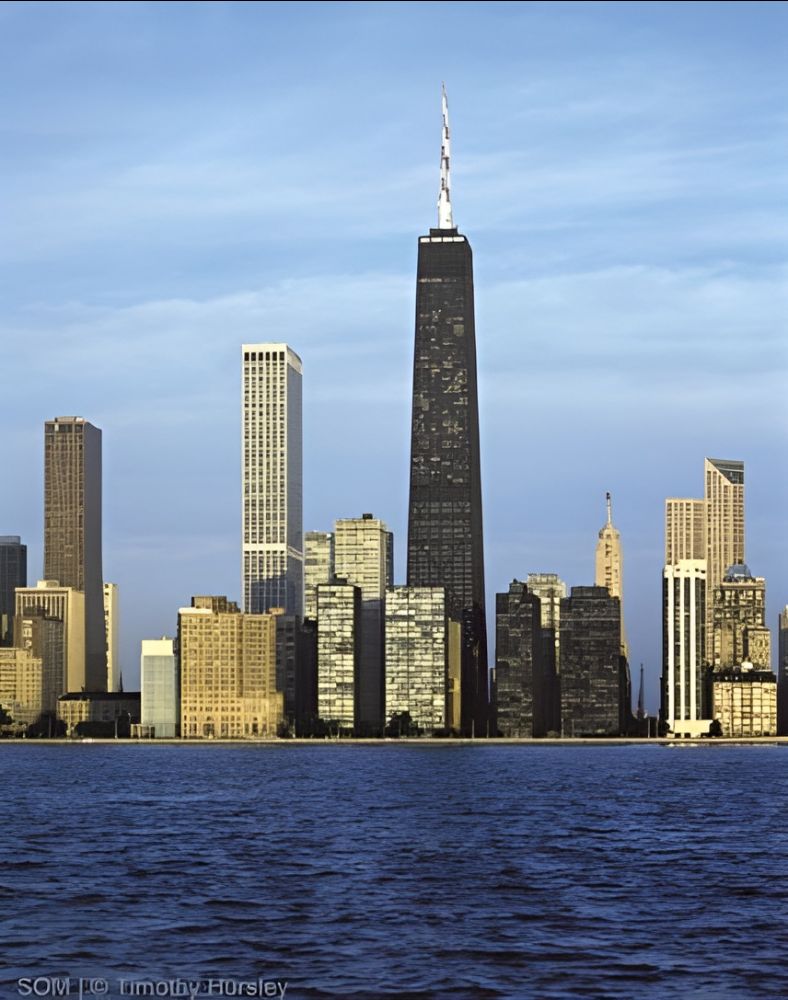
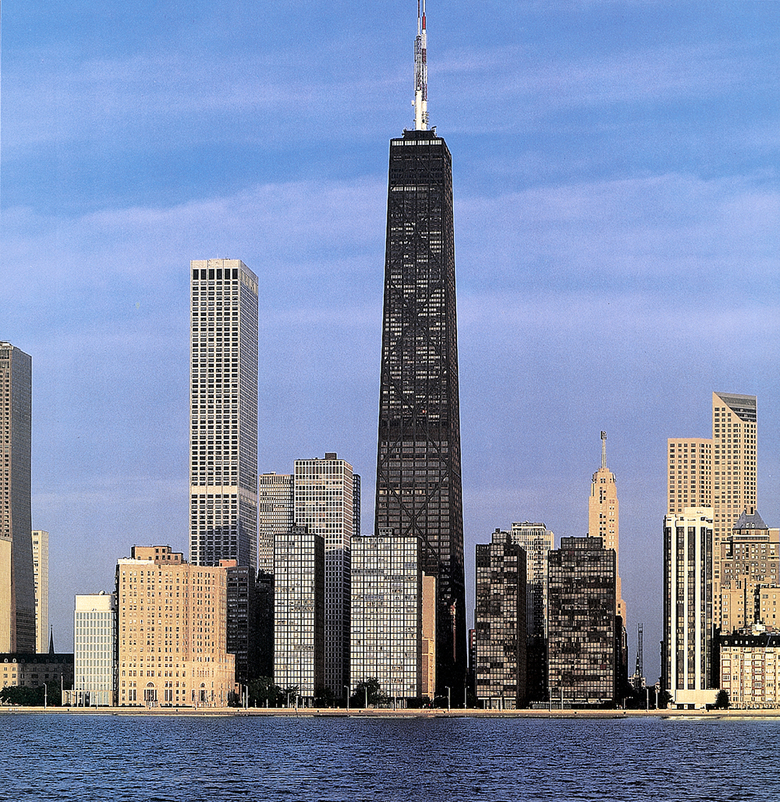
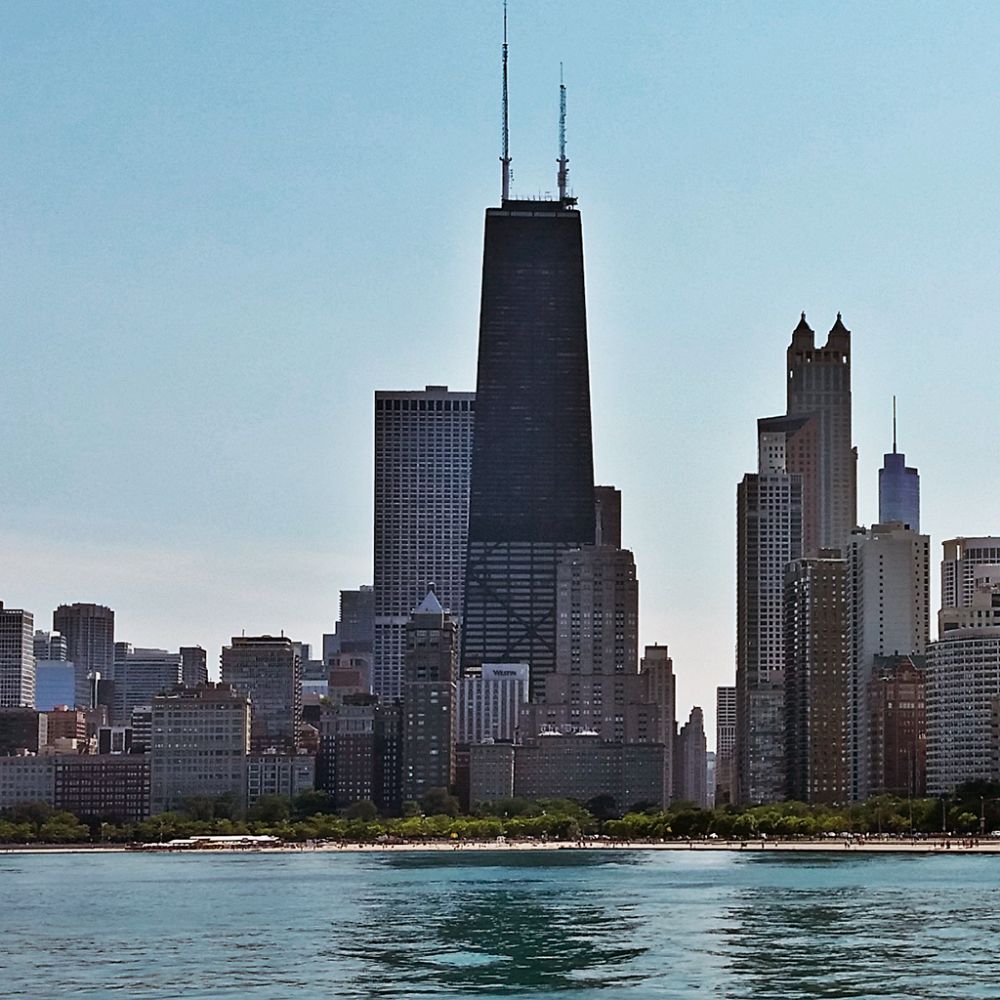
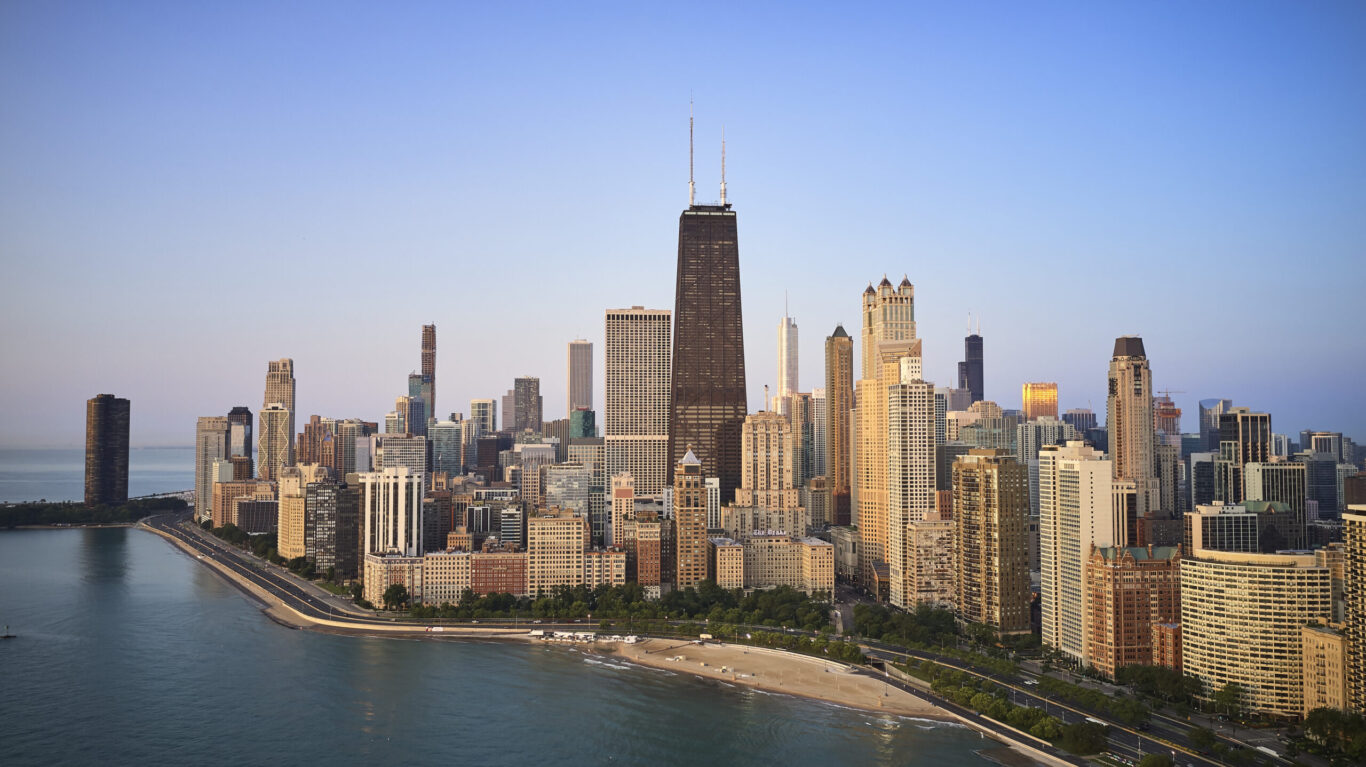
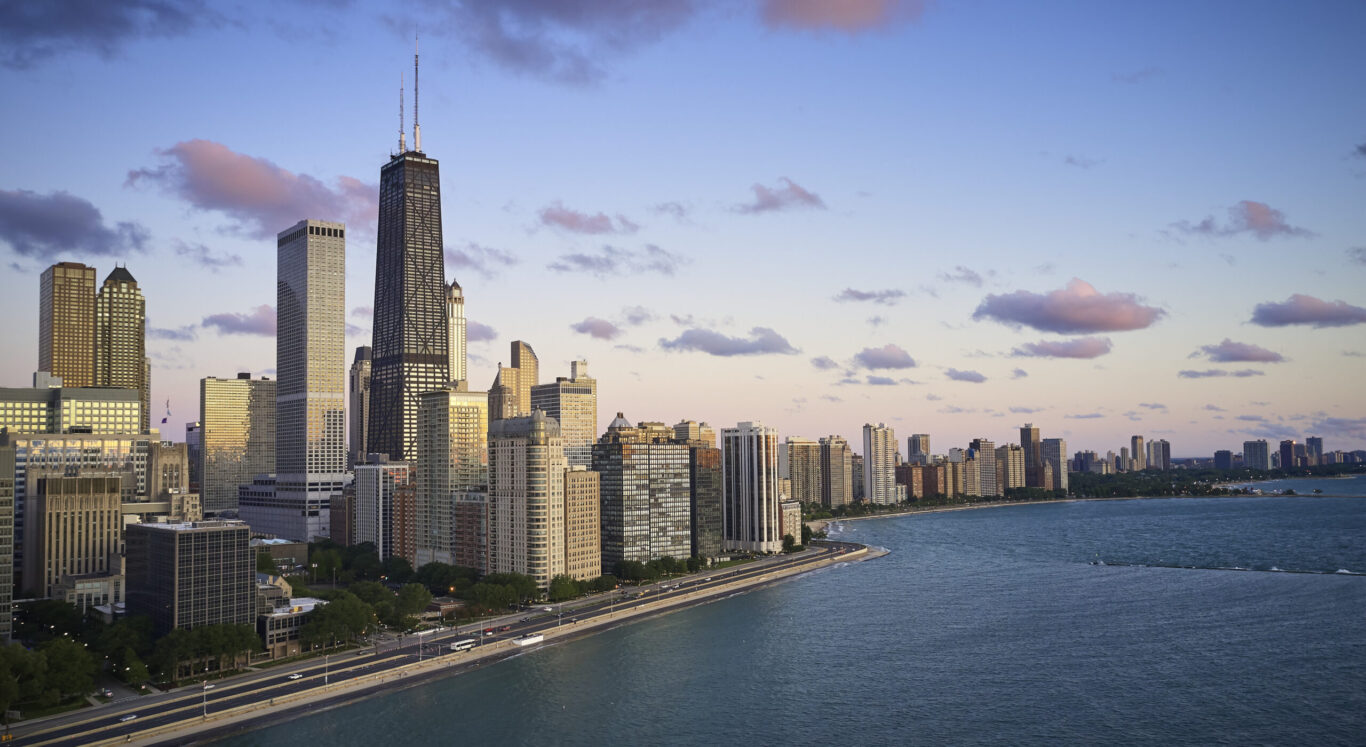
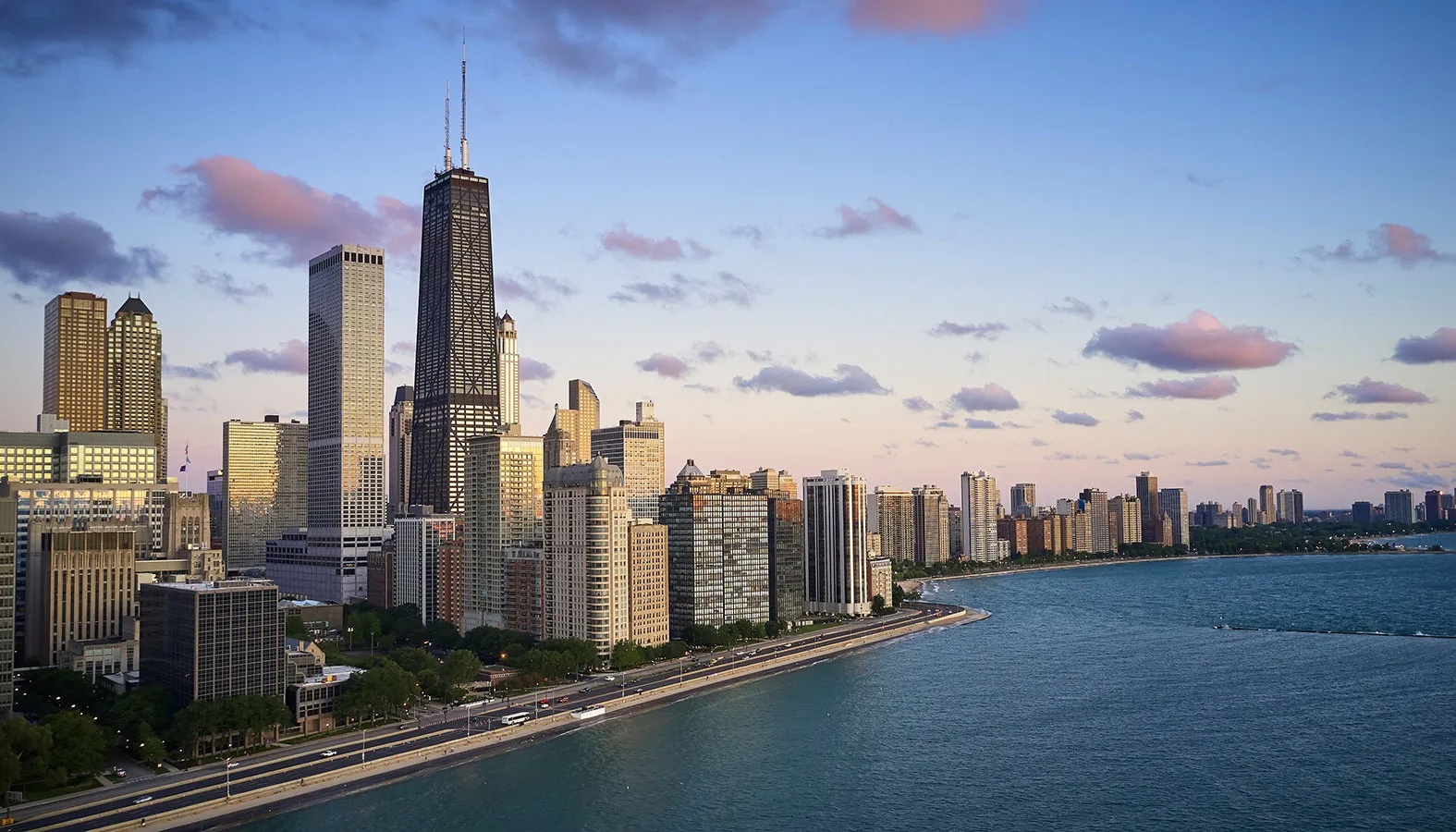
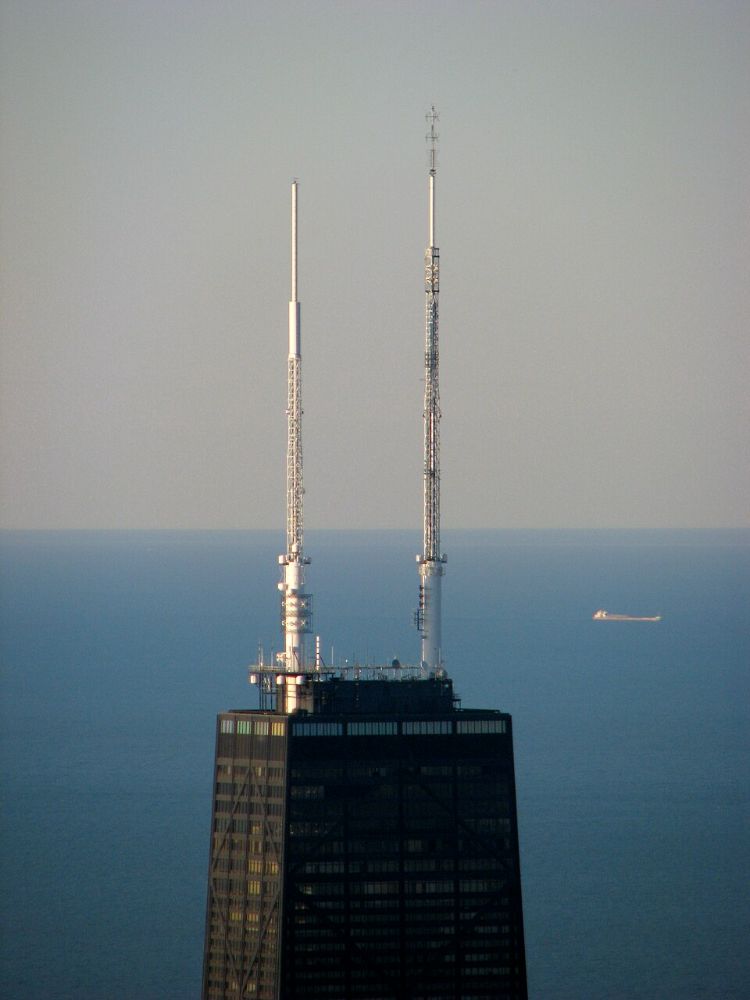
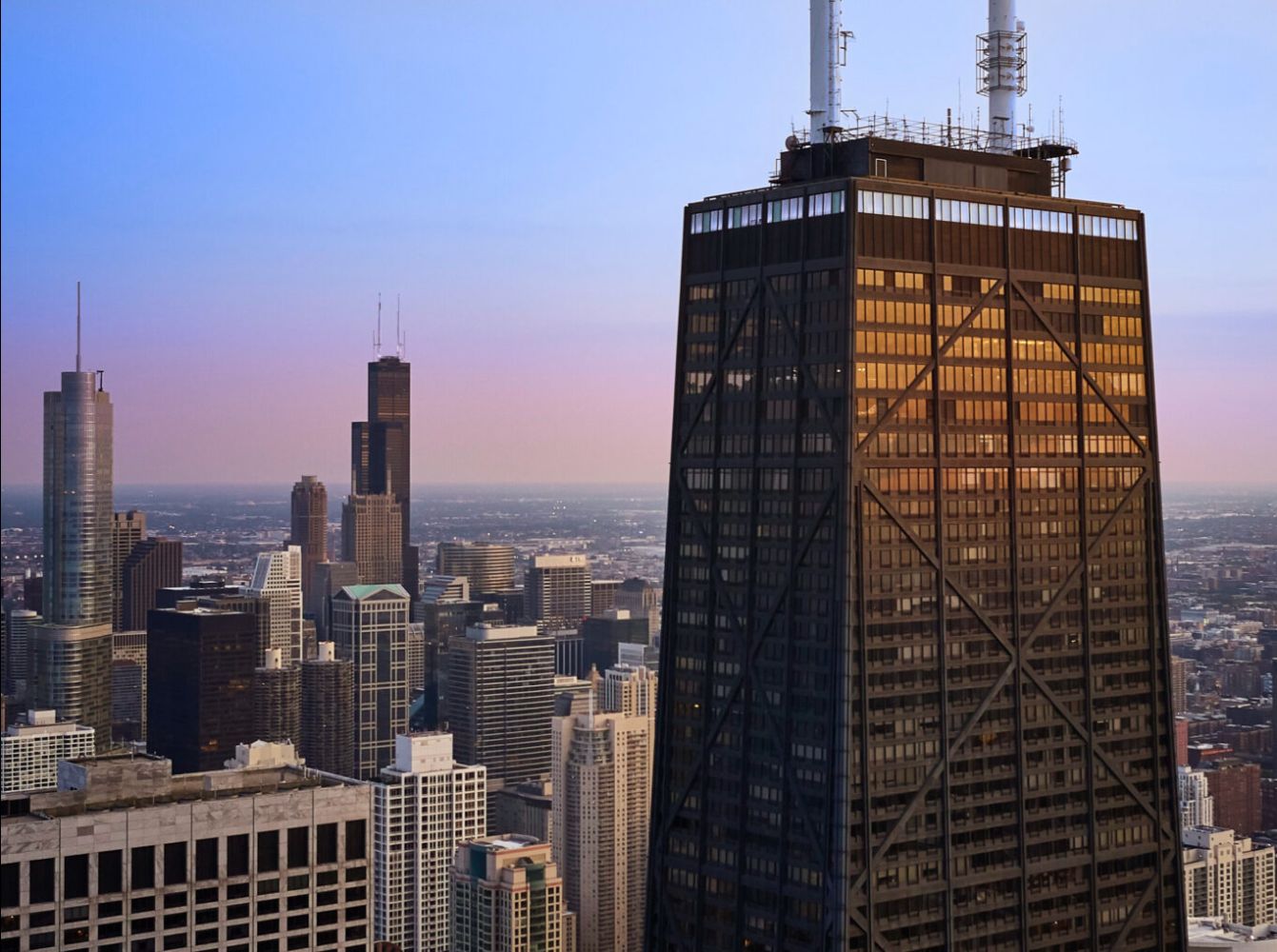
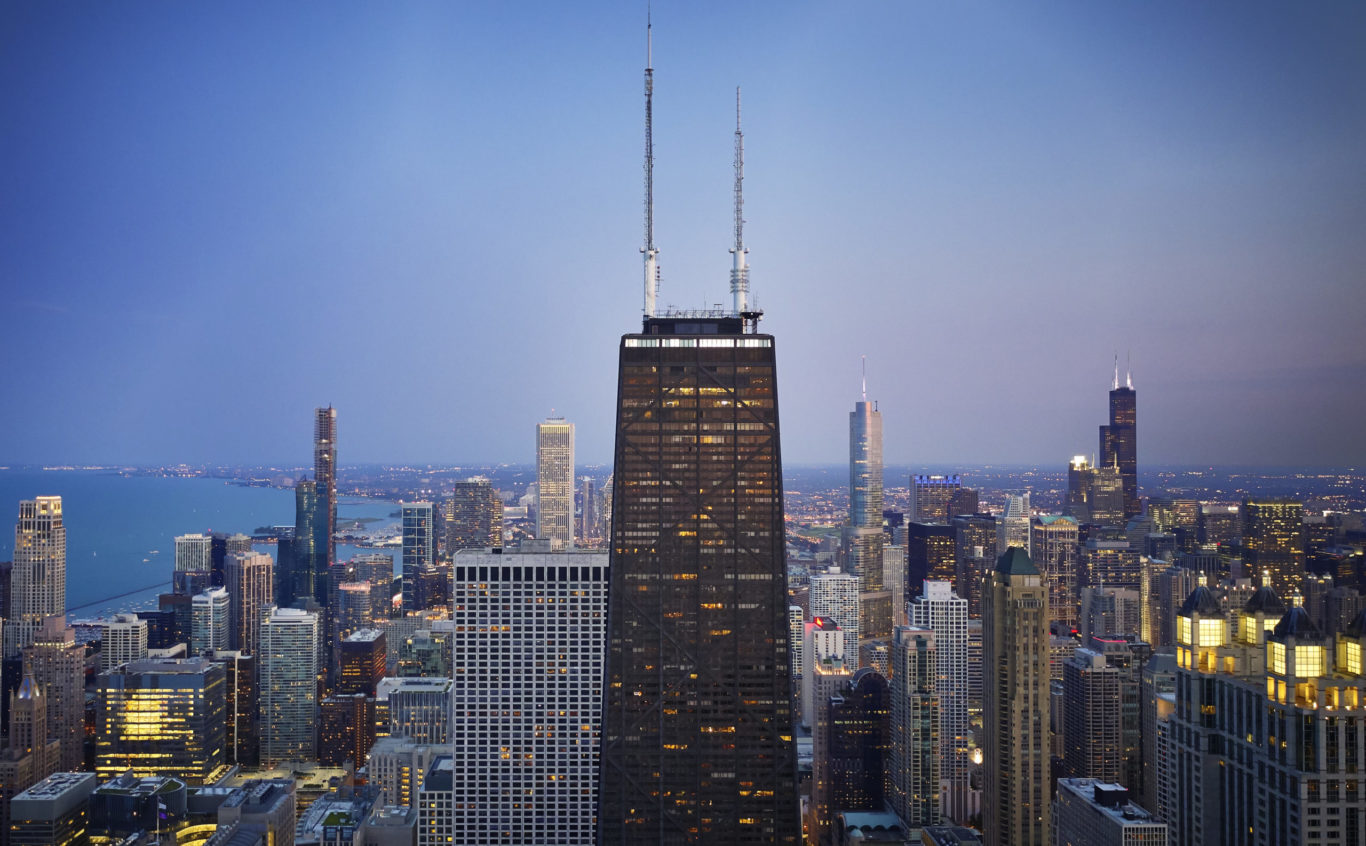
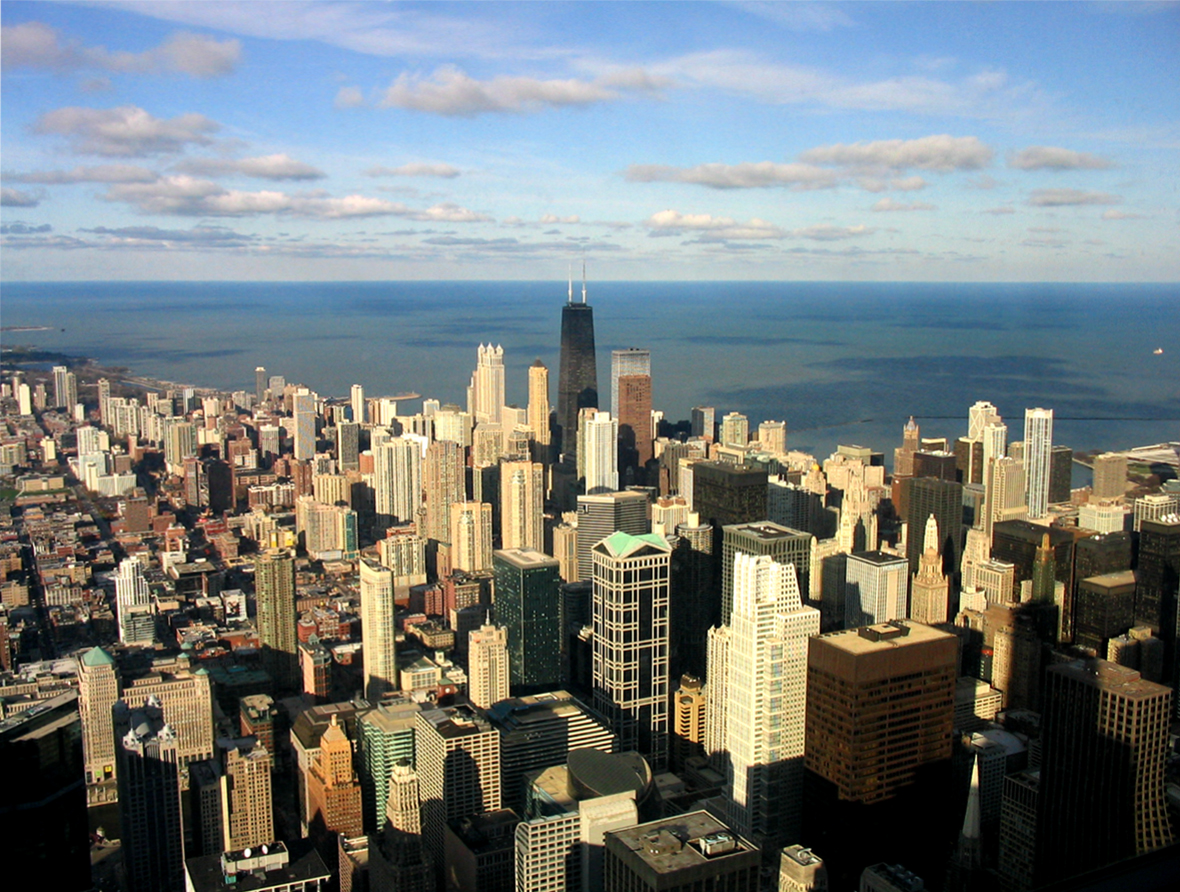
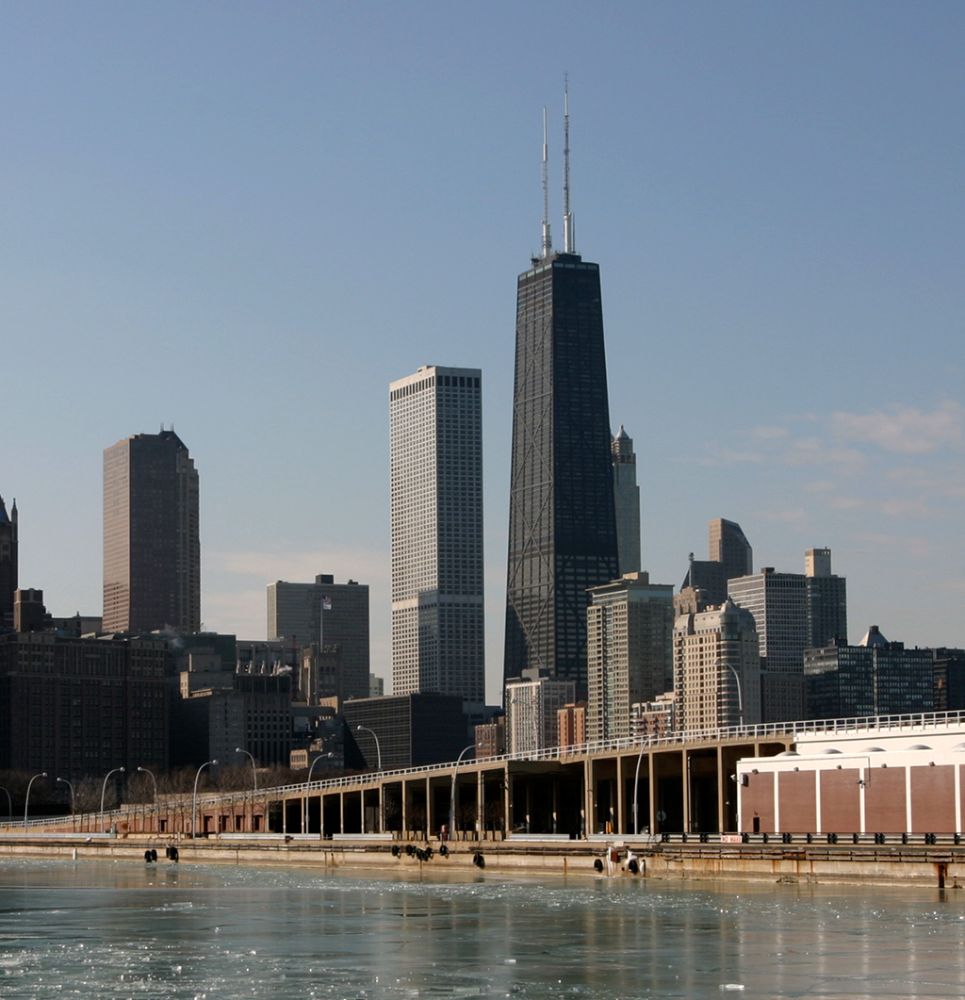
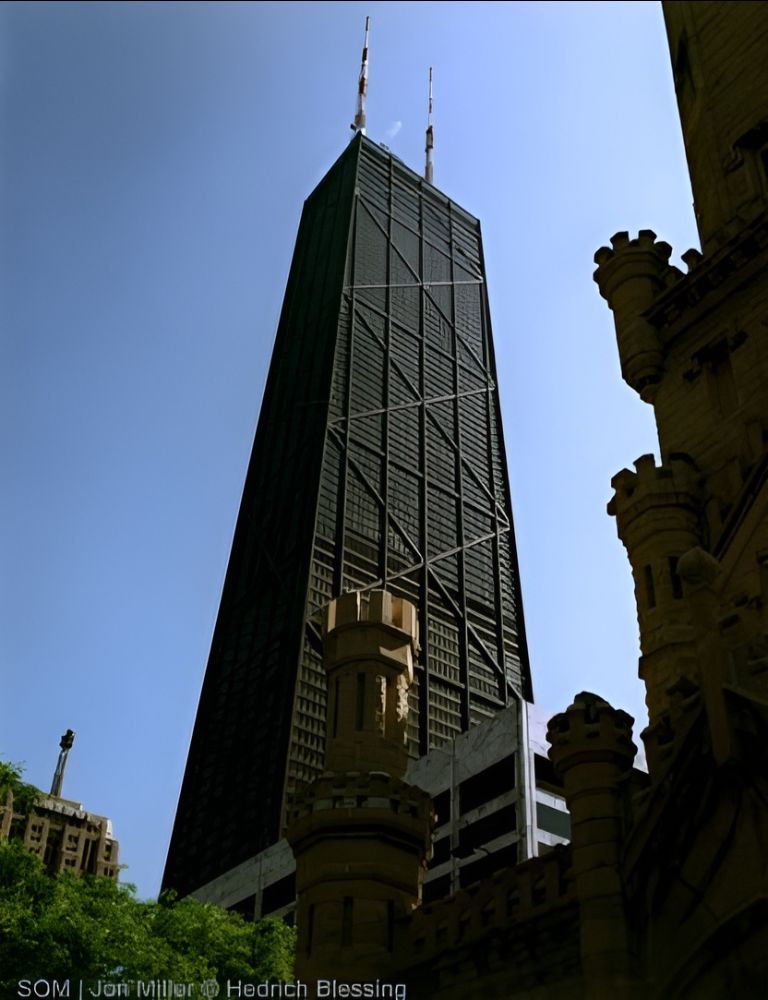
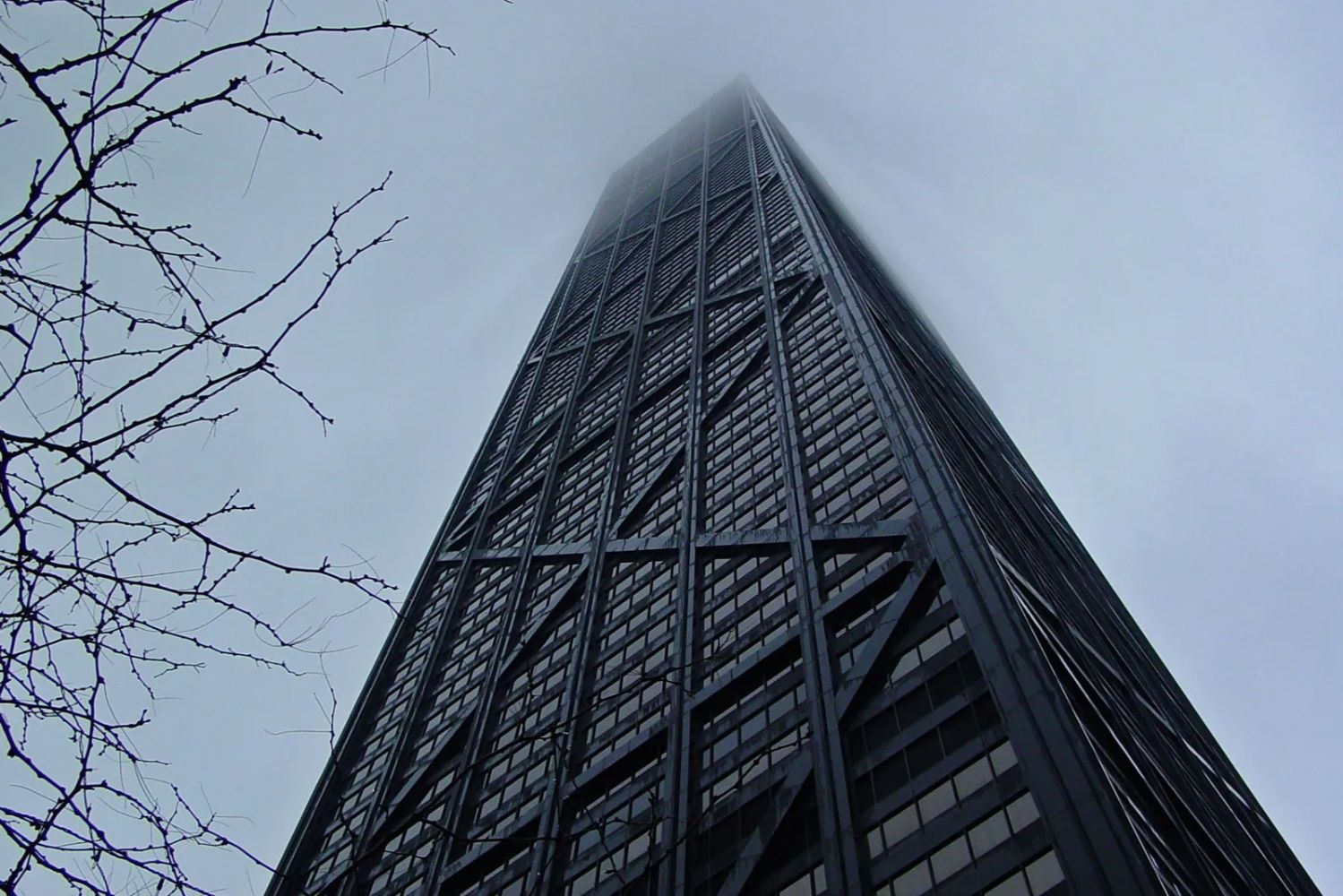
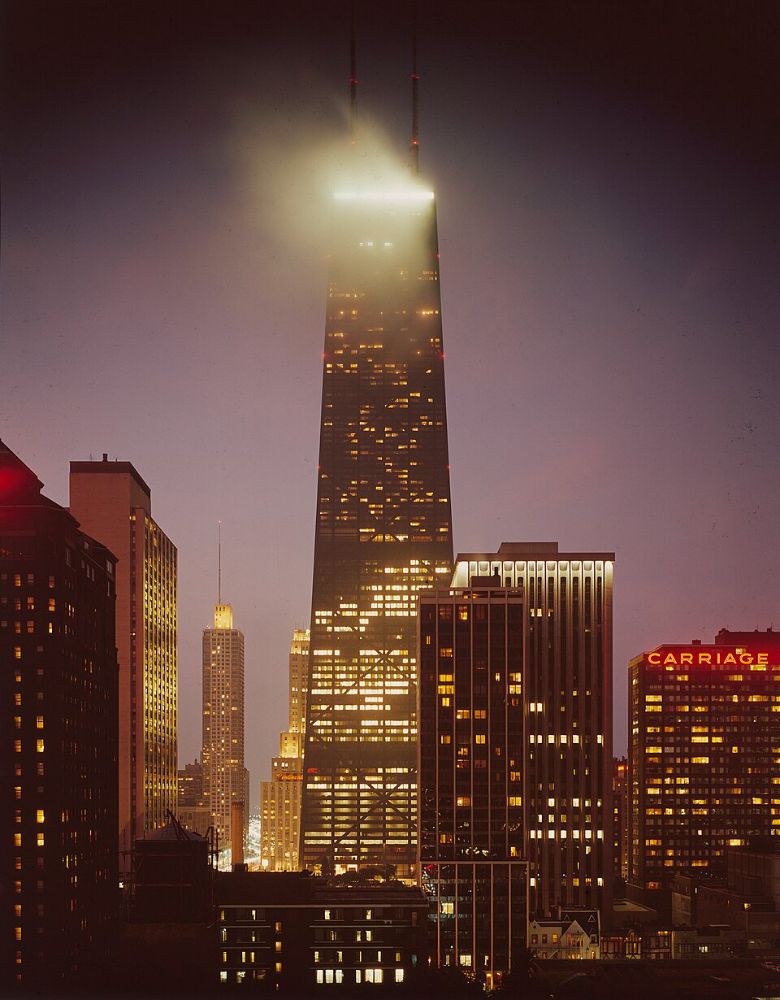
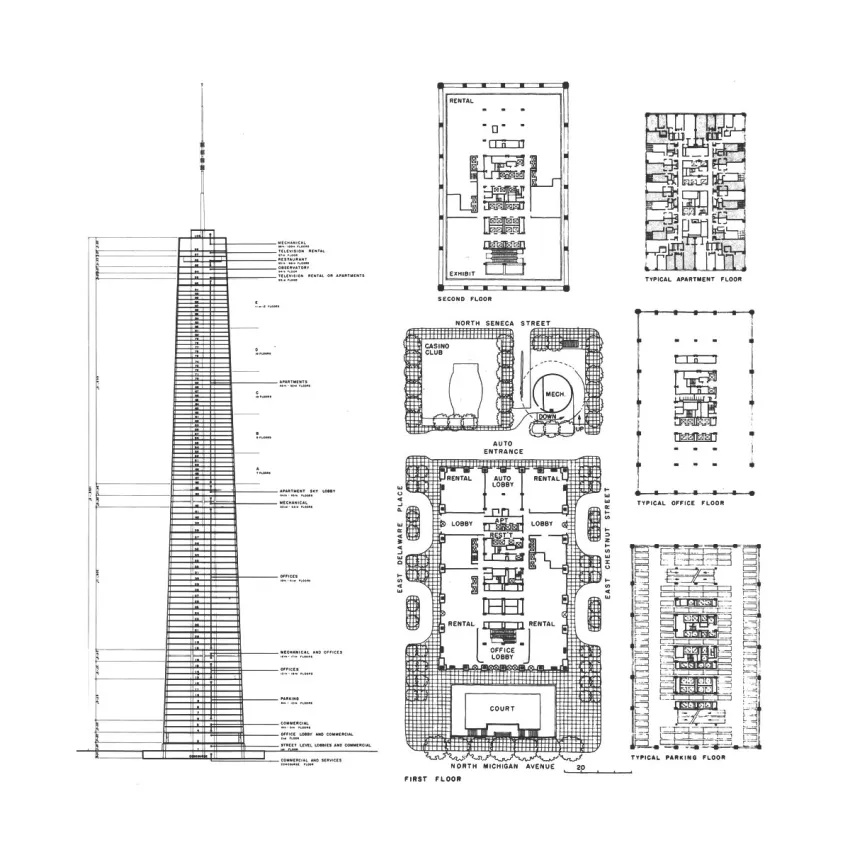
John Hancock Center mixed-use skyscraper designed by Skidmore, Owings & Merrill in Chicago has reshaped high-rise living by integrating residential, commercial, and public functions within a single vertical structure, completed in 1970. Now officially known as 875 North Michigan Avenue, the tower consolidates offices, retail, amenities, and nearly 700 dwellings into a compact system that responds to urban density. Its exterior diagonalized tube structure, defined by X-bracing, resists wind forces while allowing more open floor plates and efficient material use. The tapered form follows both structural and programmatic demands, with larger floor areas at the base and more compact residential layouts toward the top. Circulation is organized through a sky lobby at the 44th floor, separating office and residential zones while supporting shared amenities such as the elevated pool and services. Public access extends into the upper levels through observation spaces and facilities, reinforcing the building’s role within the city. Exposed steel bracing on the façade links construction and architectural expression. This integration of structure, form, and program has influenced structural expressionism and tall-building design, establishing a model for tubular systems and mixed-use vertical urbanism.
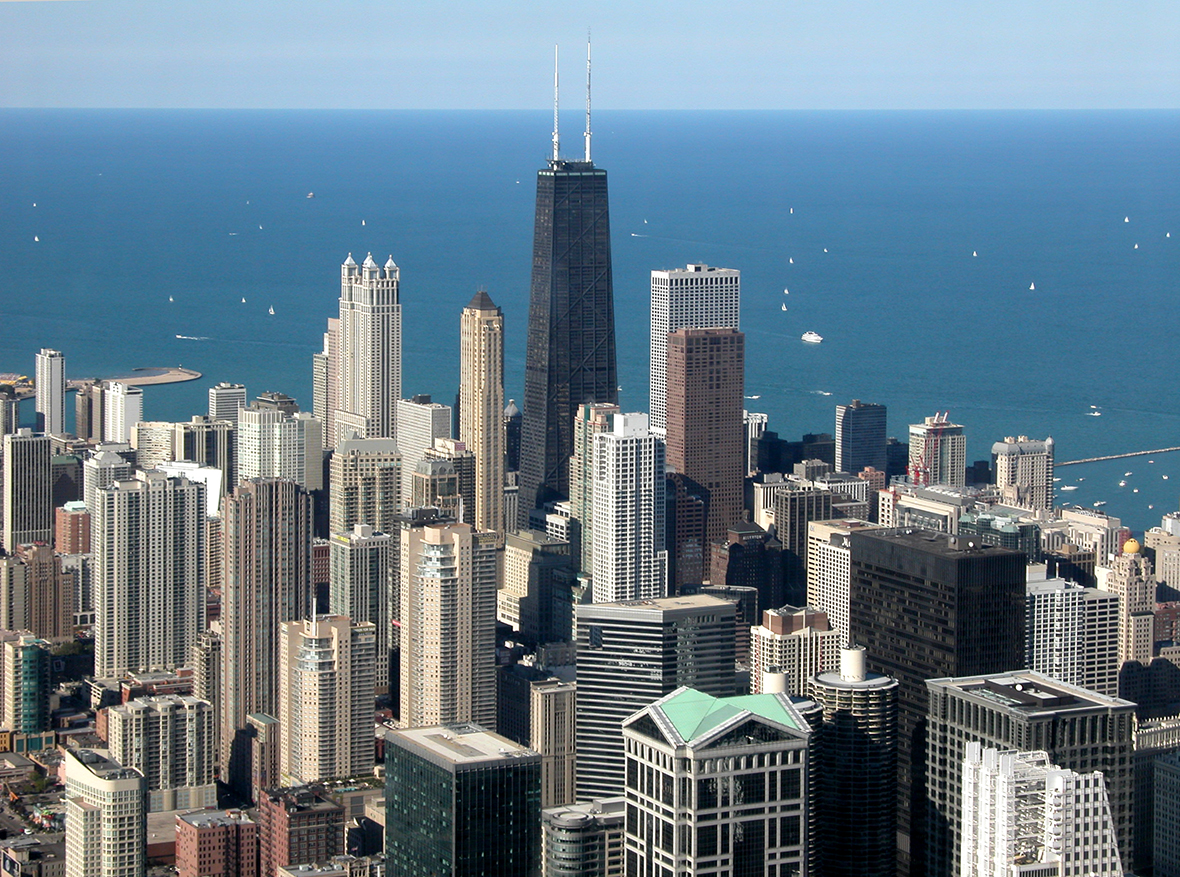
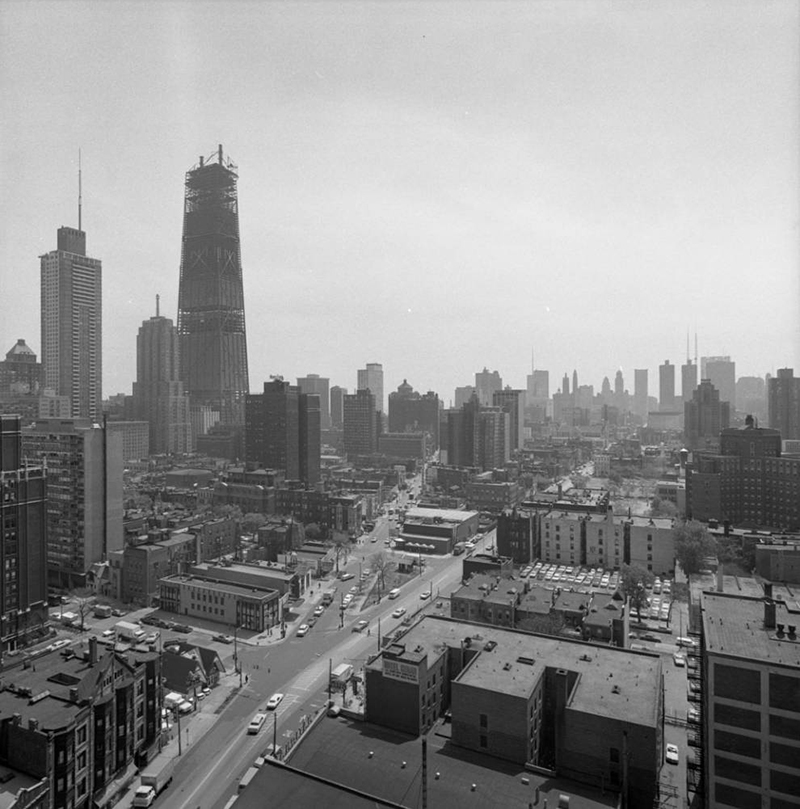
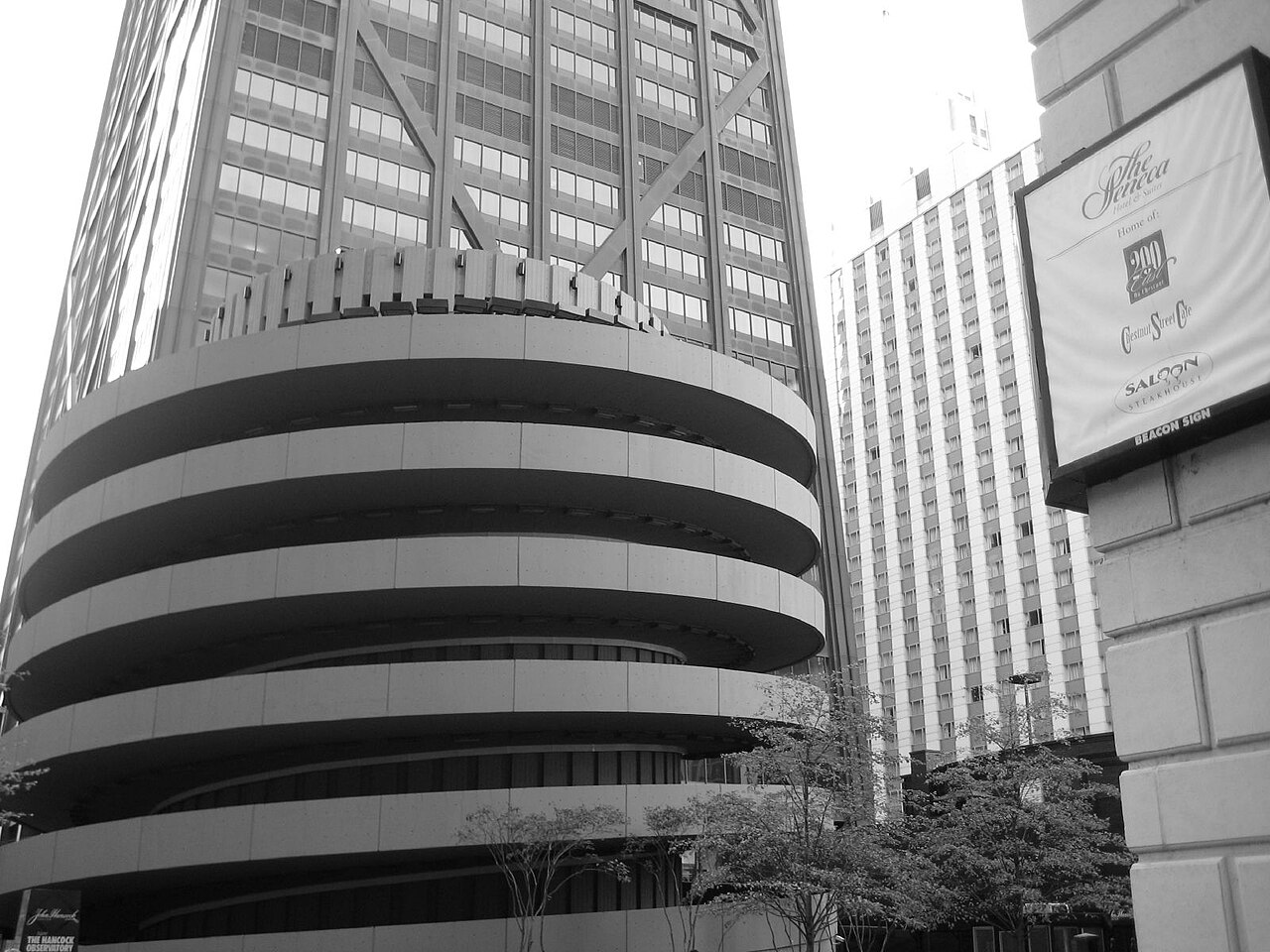
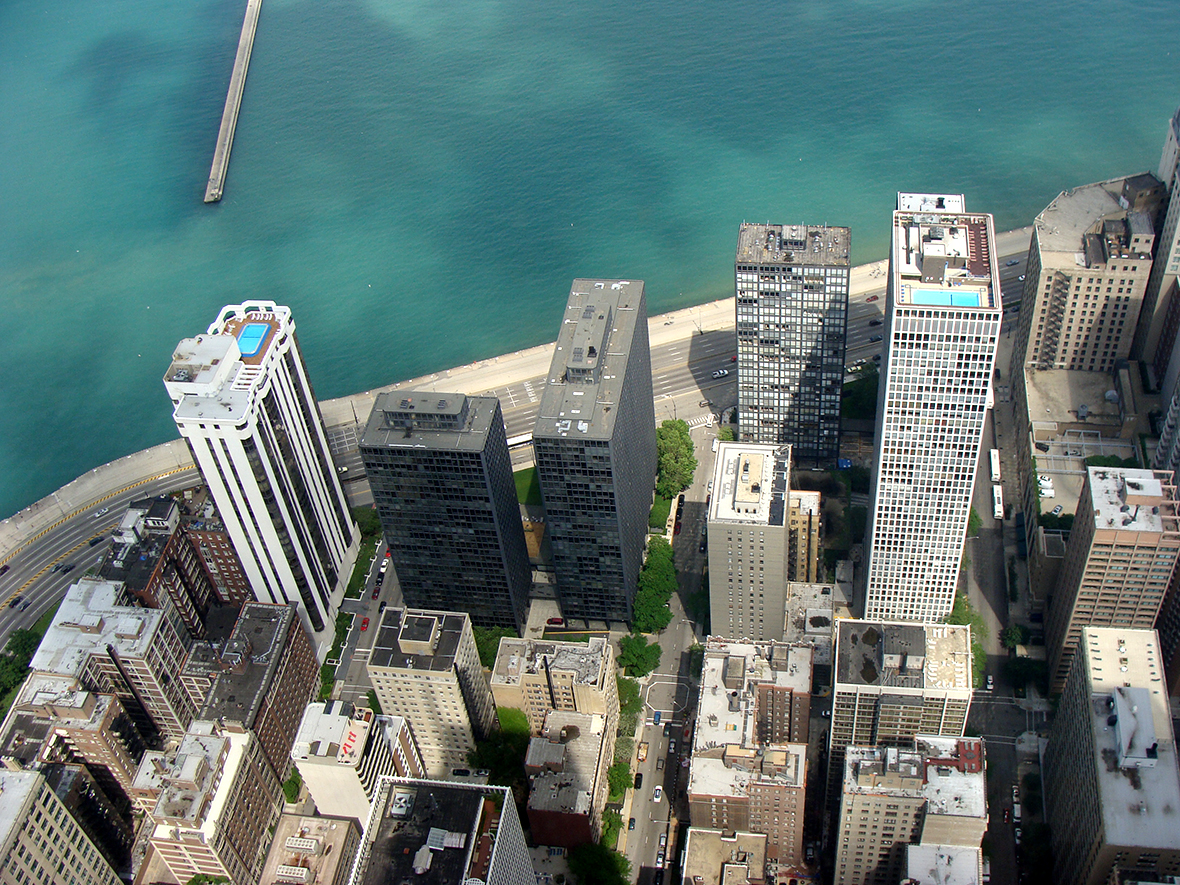
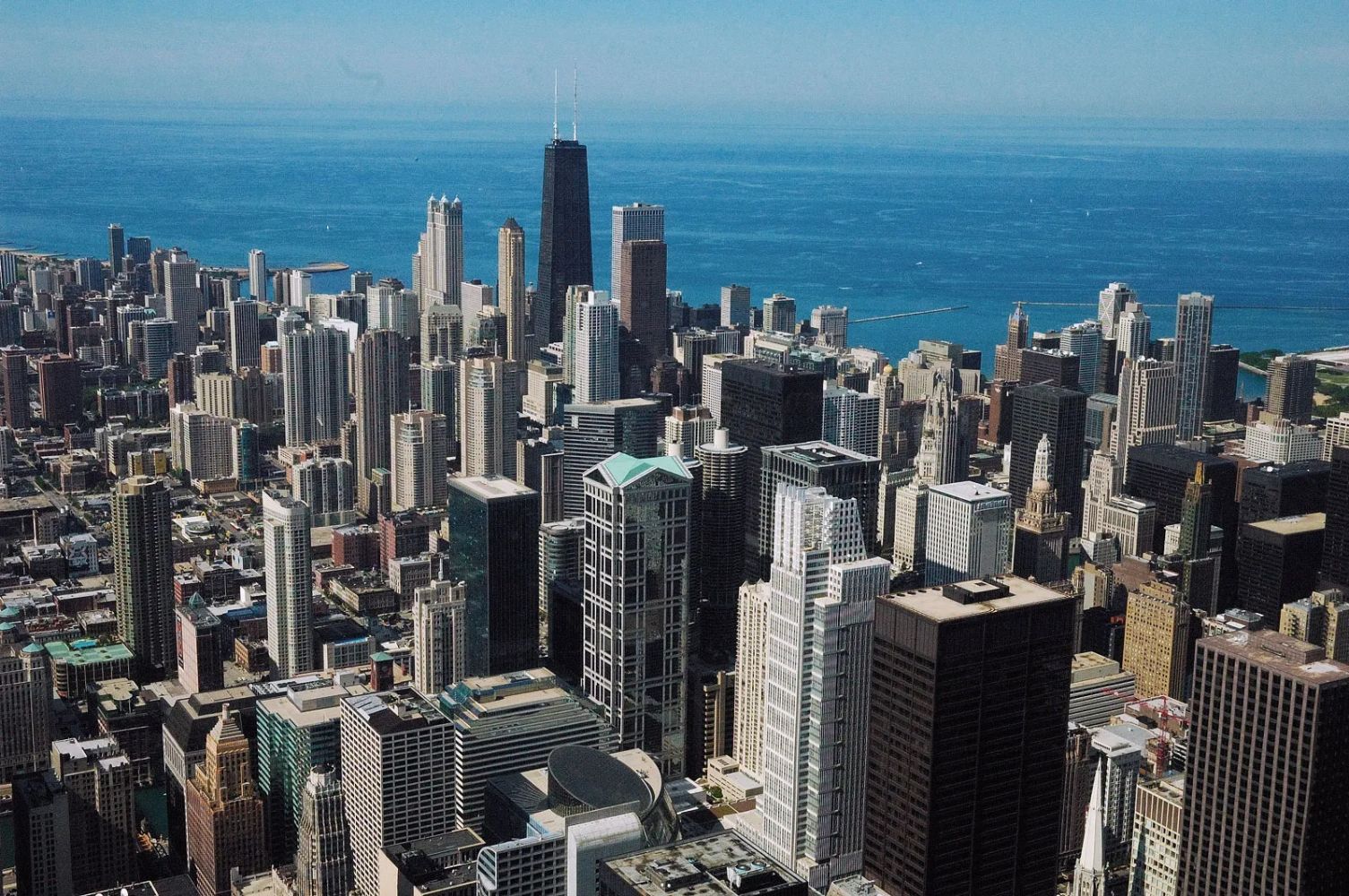
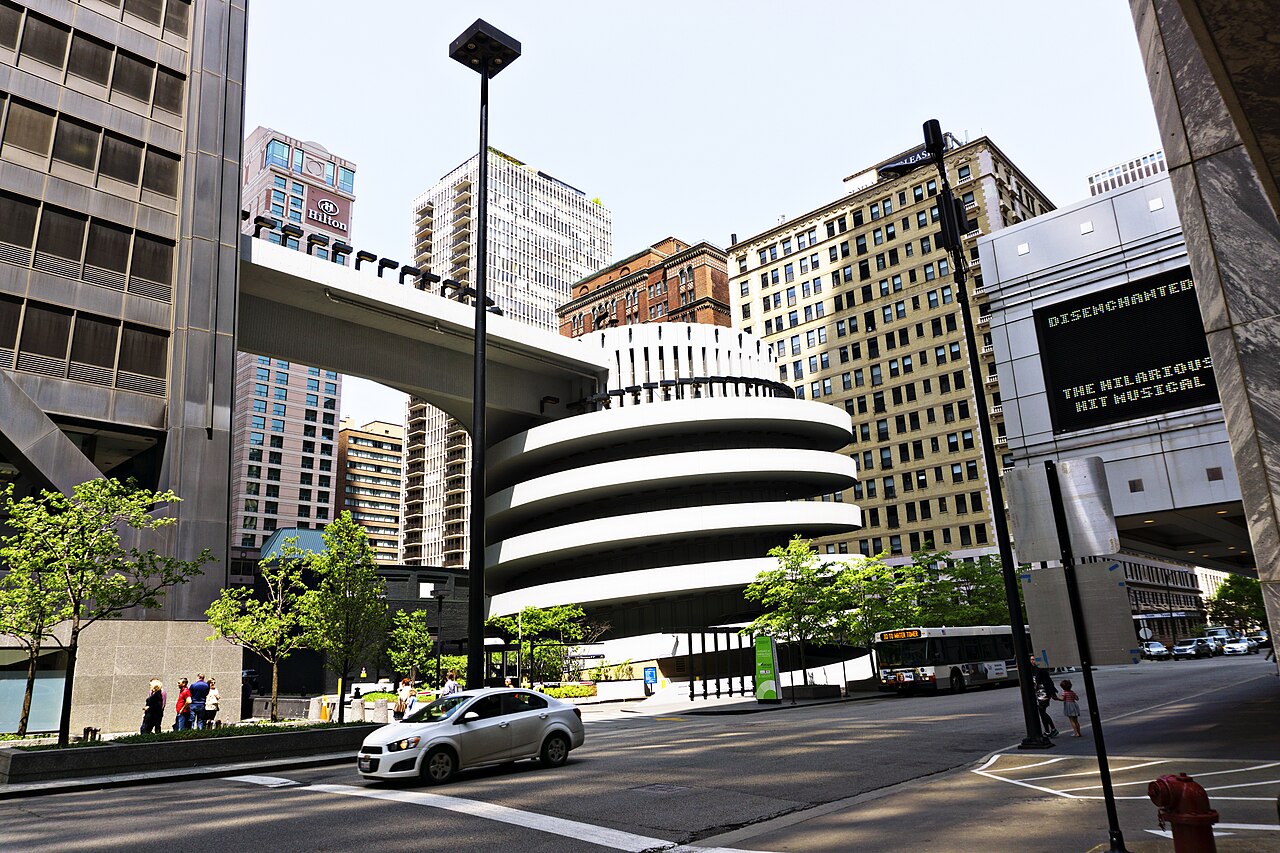
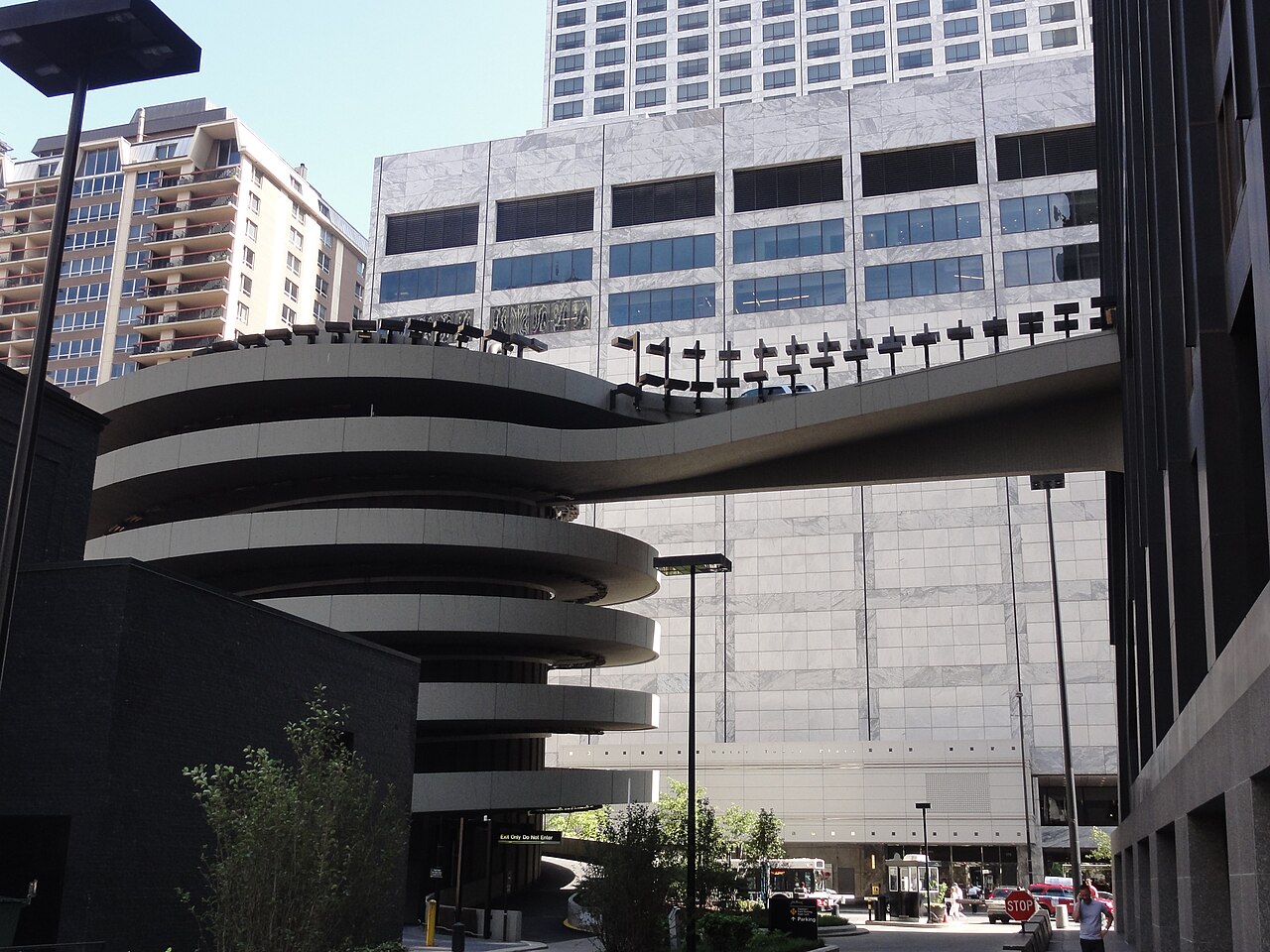
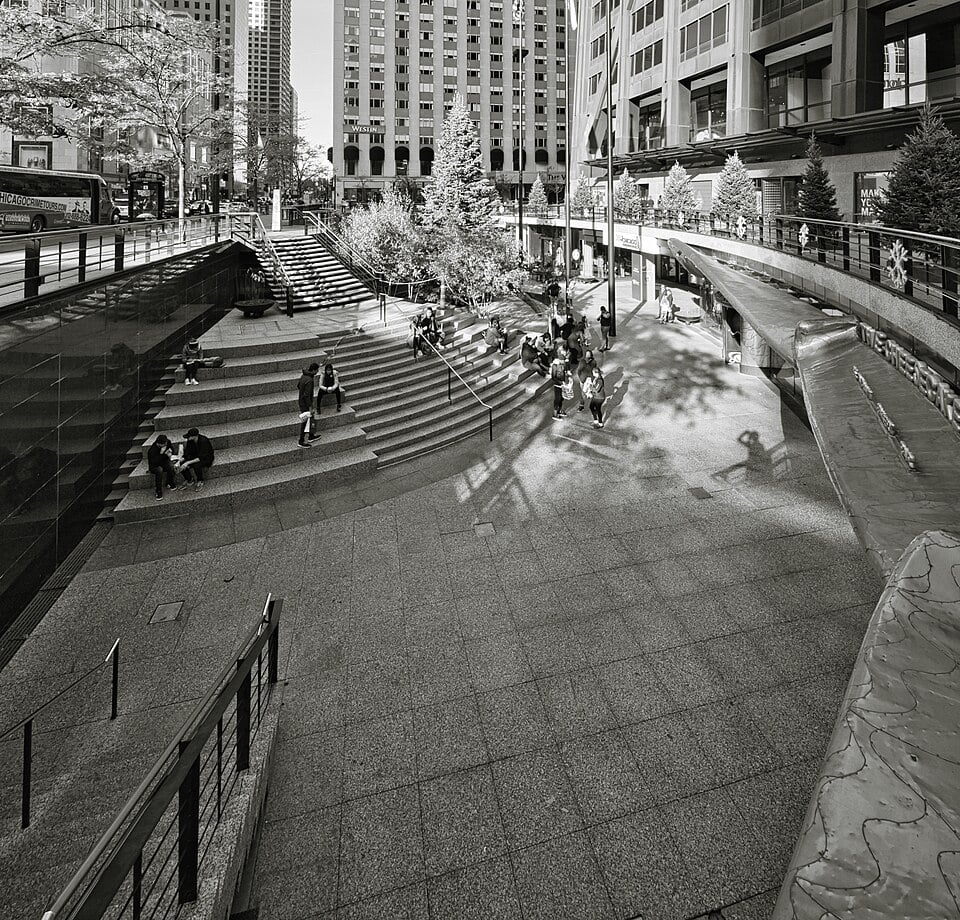
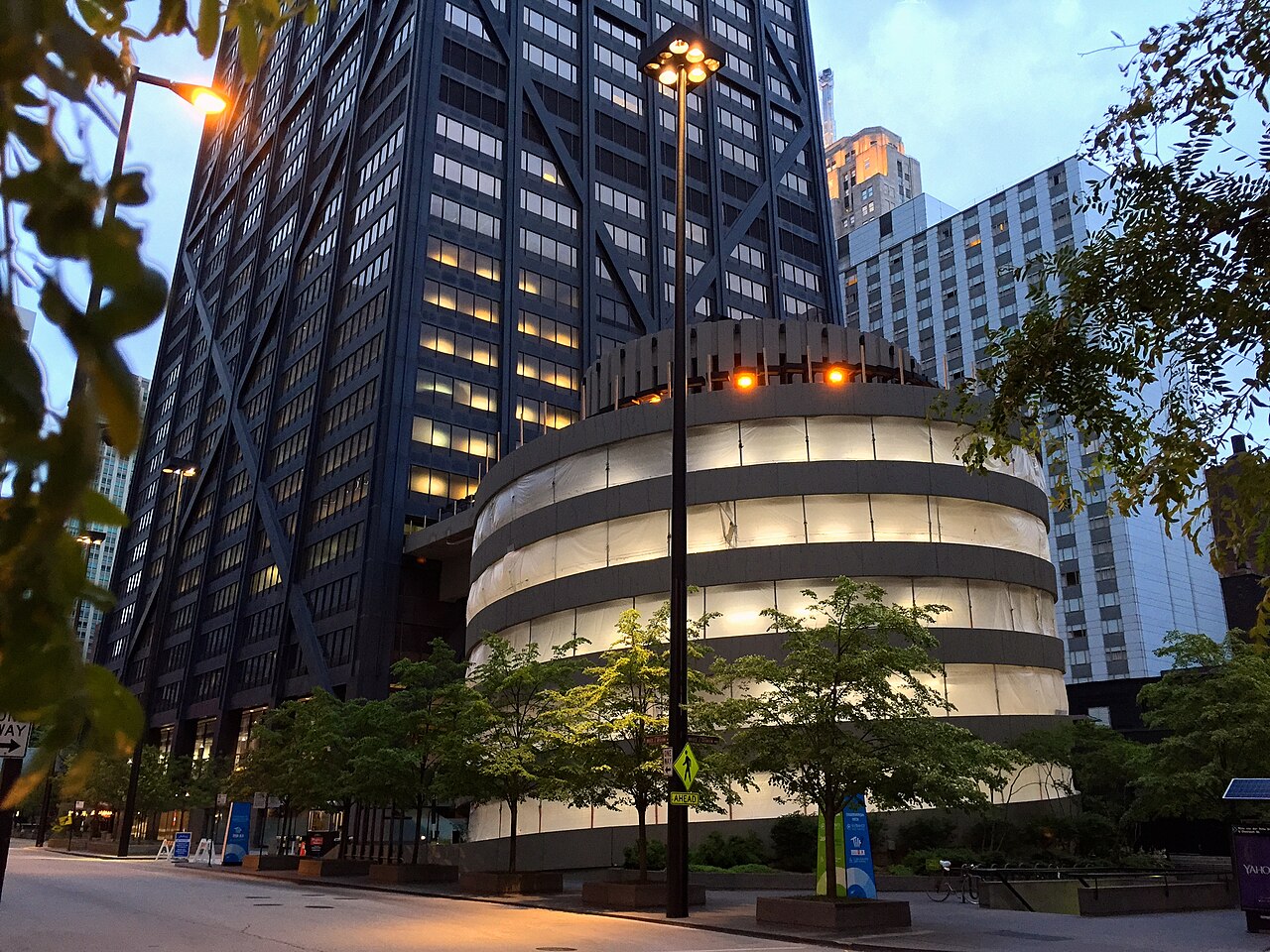
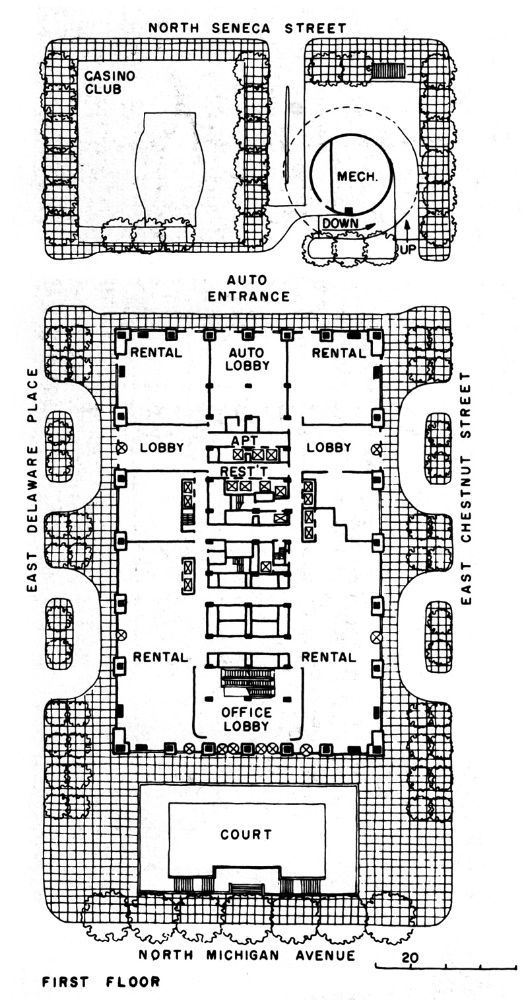
John Hancock Center occupies a site along North Michigan Avenue in Chicago, where its tapered profile responds to both urban presence and internal organization. Officially renamed 875 North Michigan Avenue, it remains widely referred to by its original name. The project consolidates functions that were initially planned as separate towers, preserving access to light, views, and open space at ground level. An elliptical plaza extends the public realm, stepping down toward entrances and integrating landscape elements within the dense urban context.
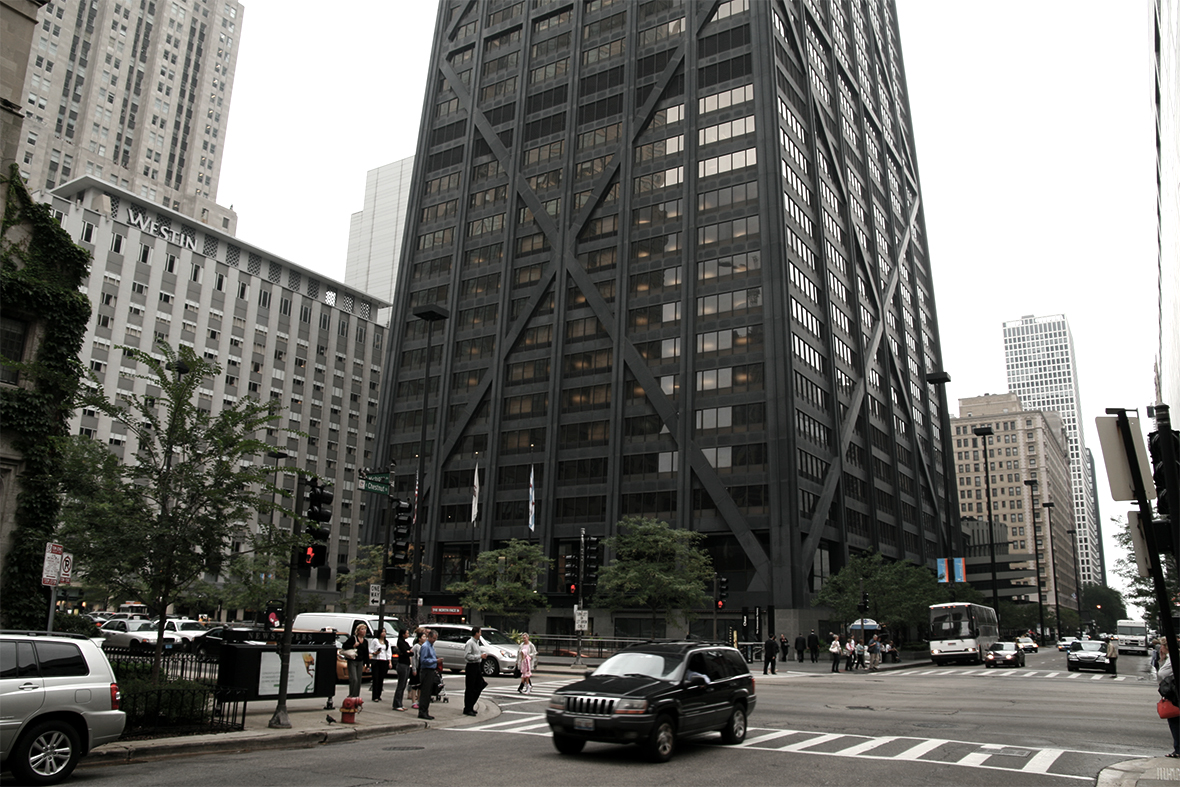
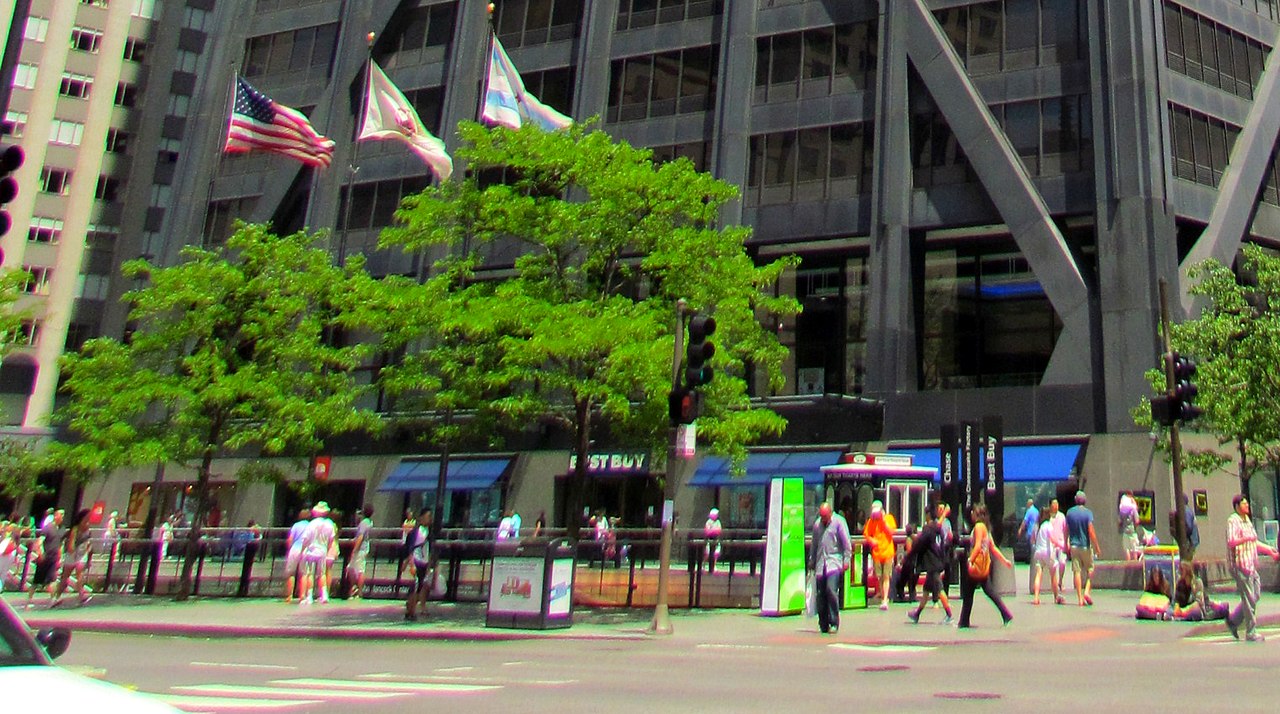
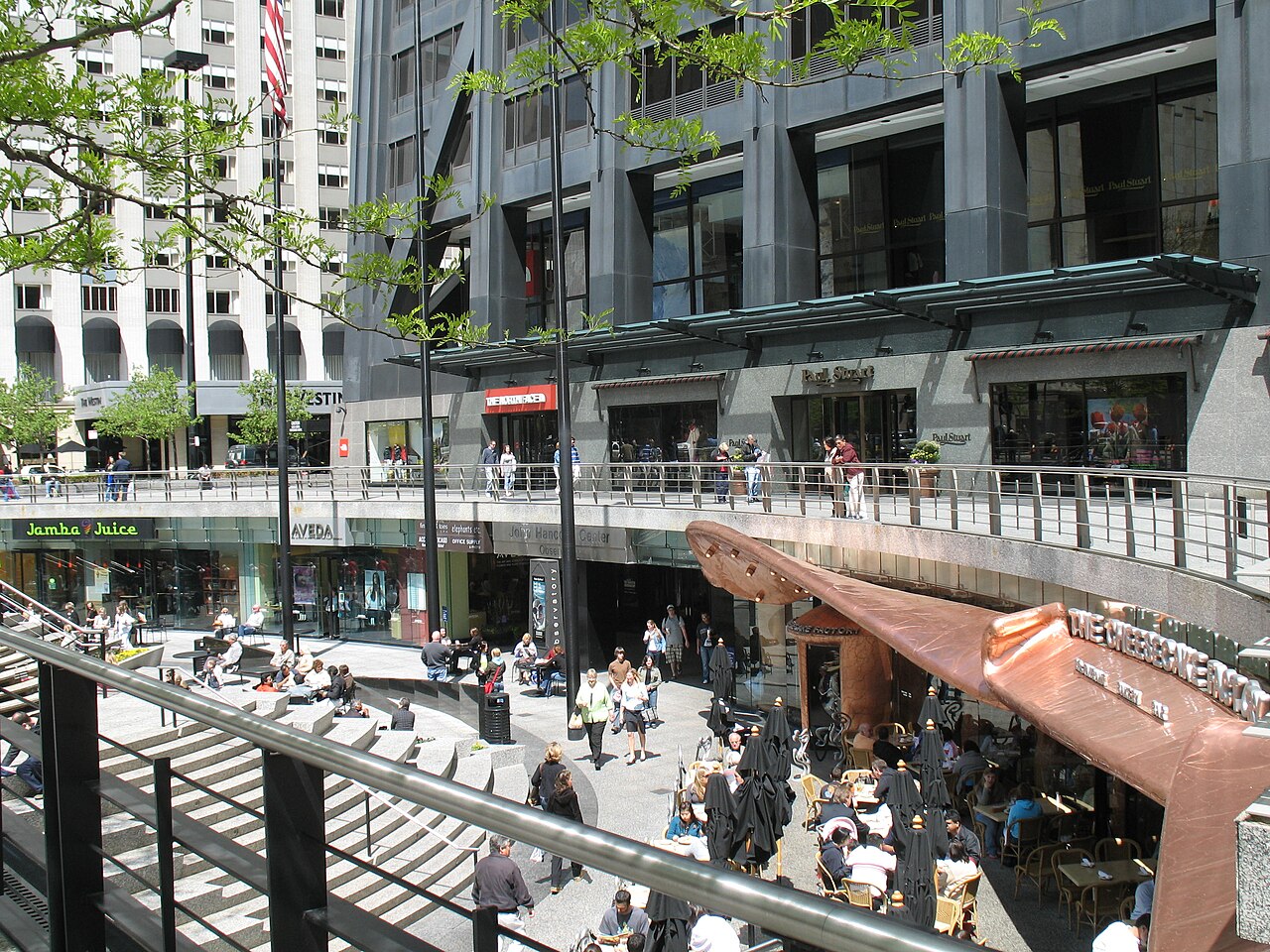
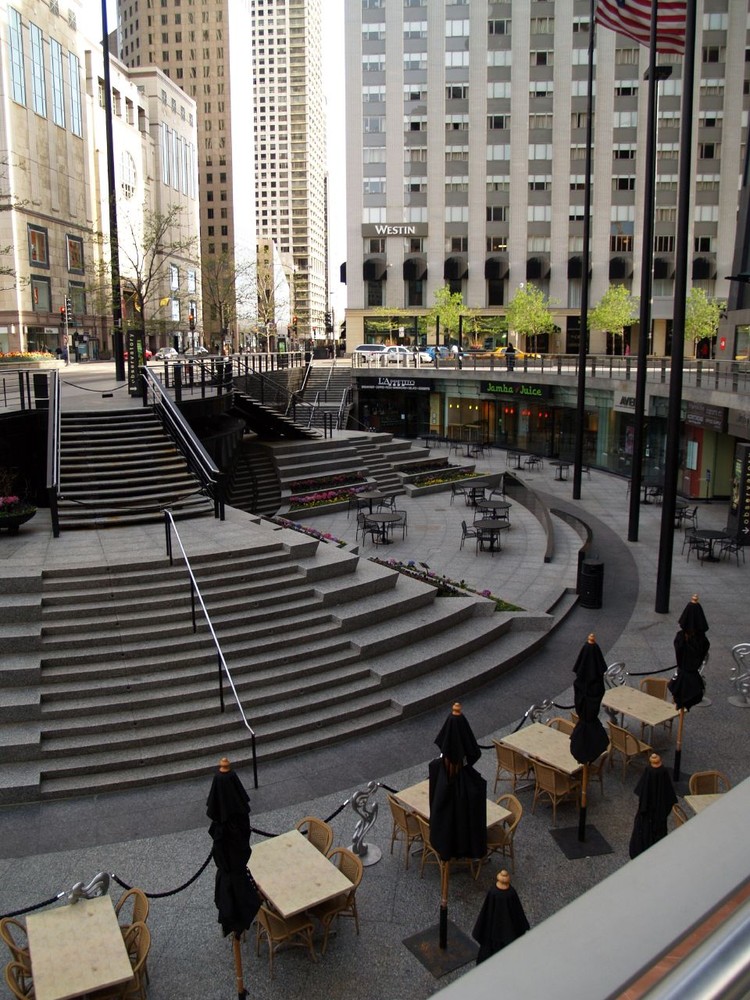
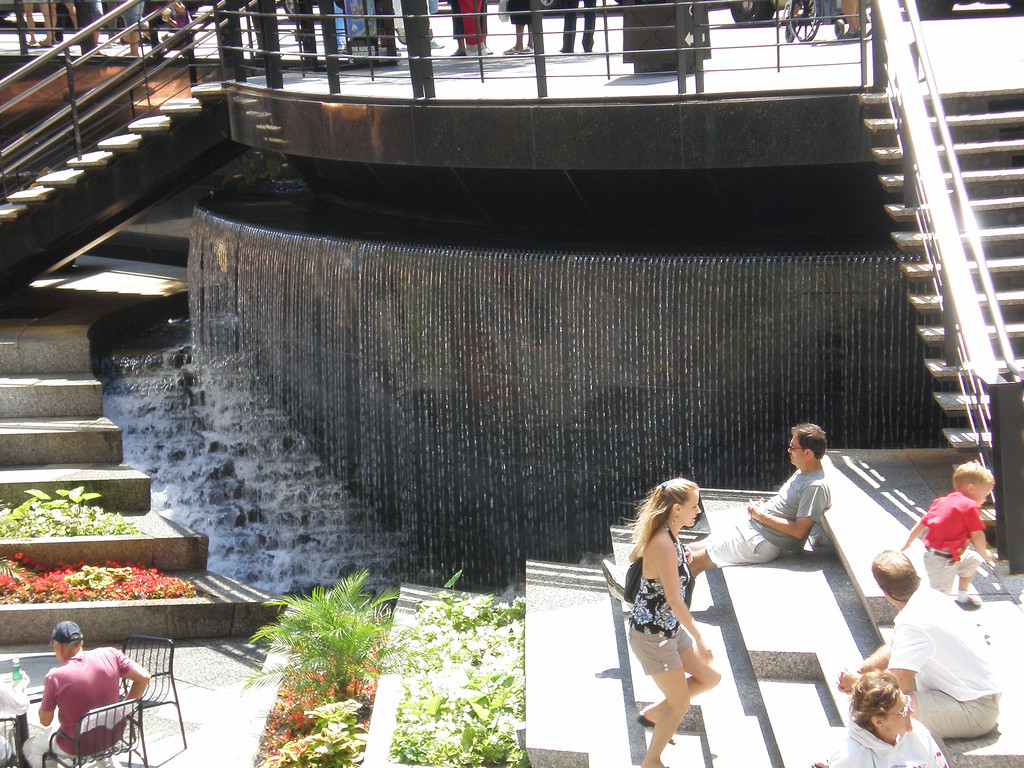
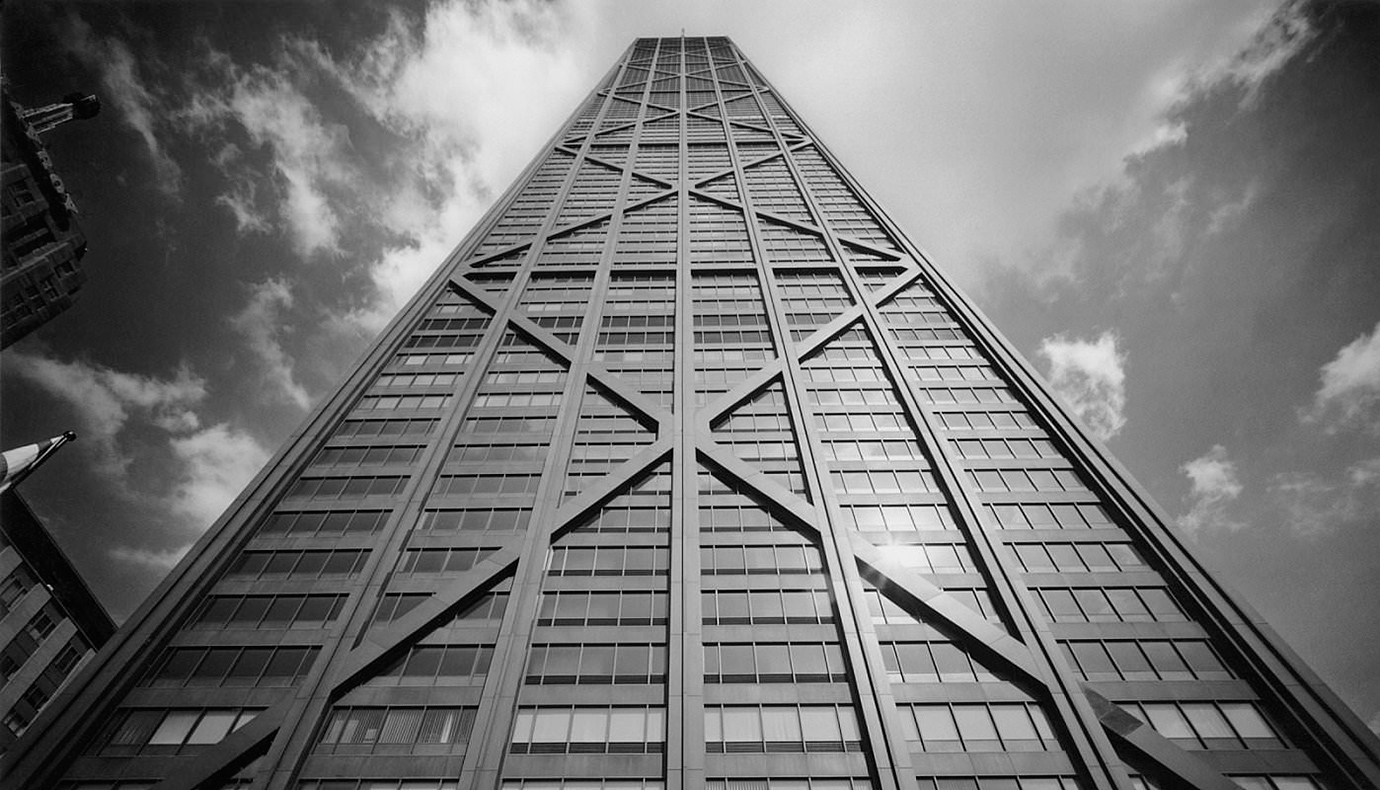
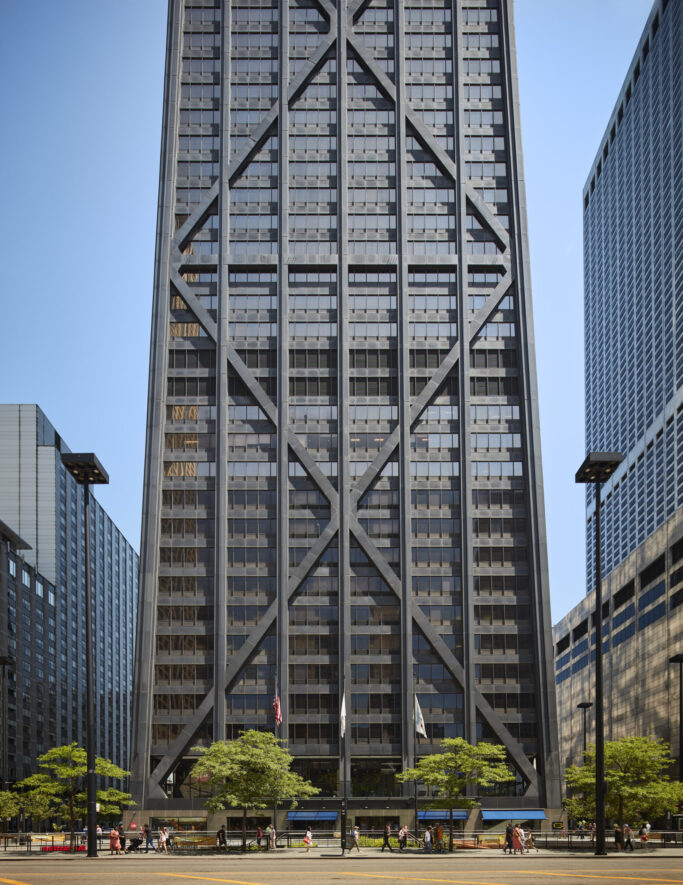
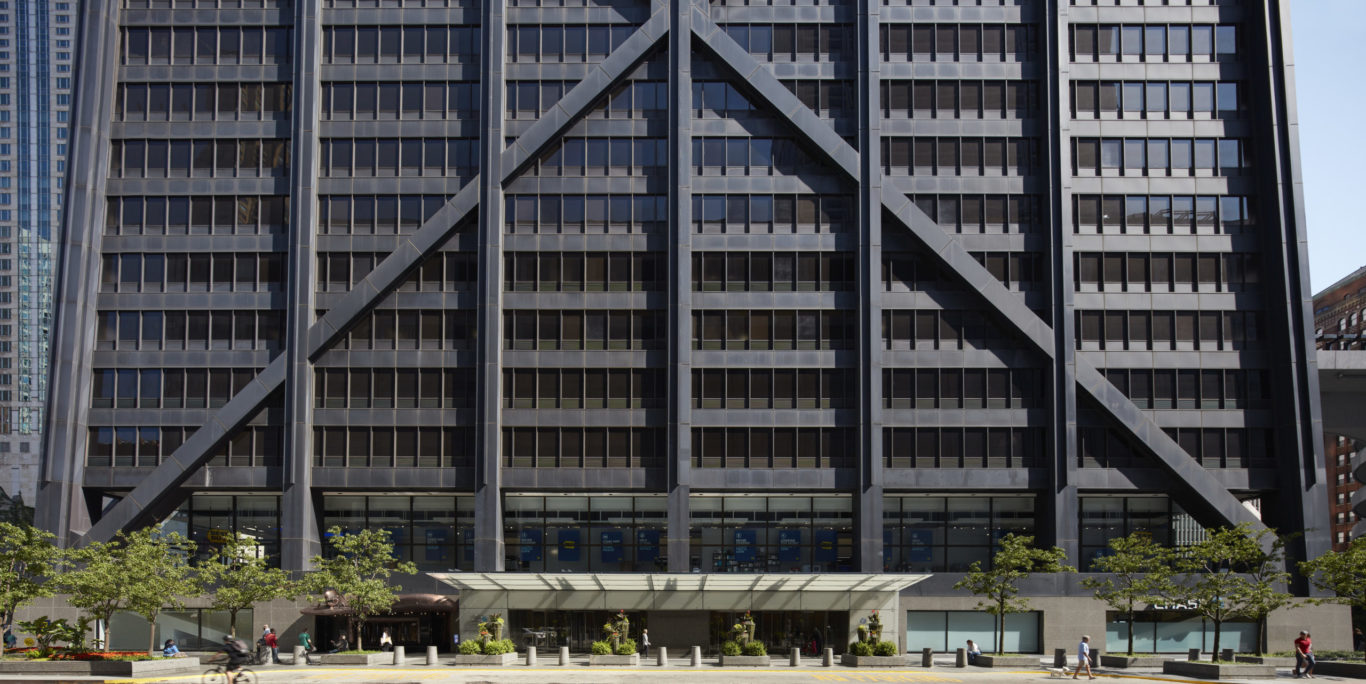
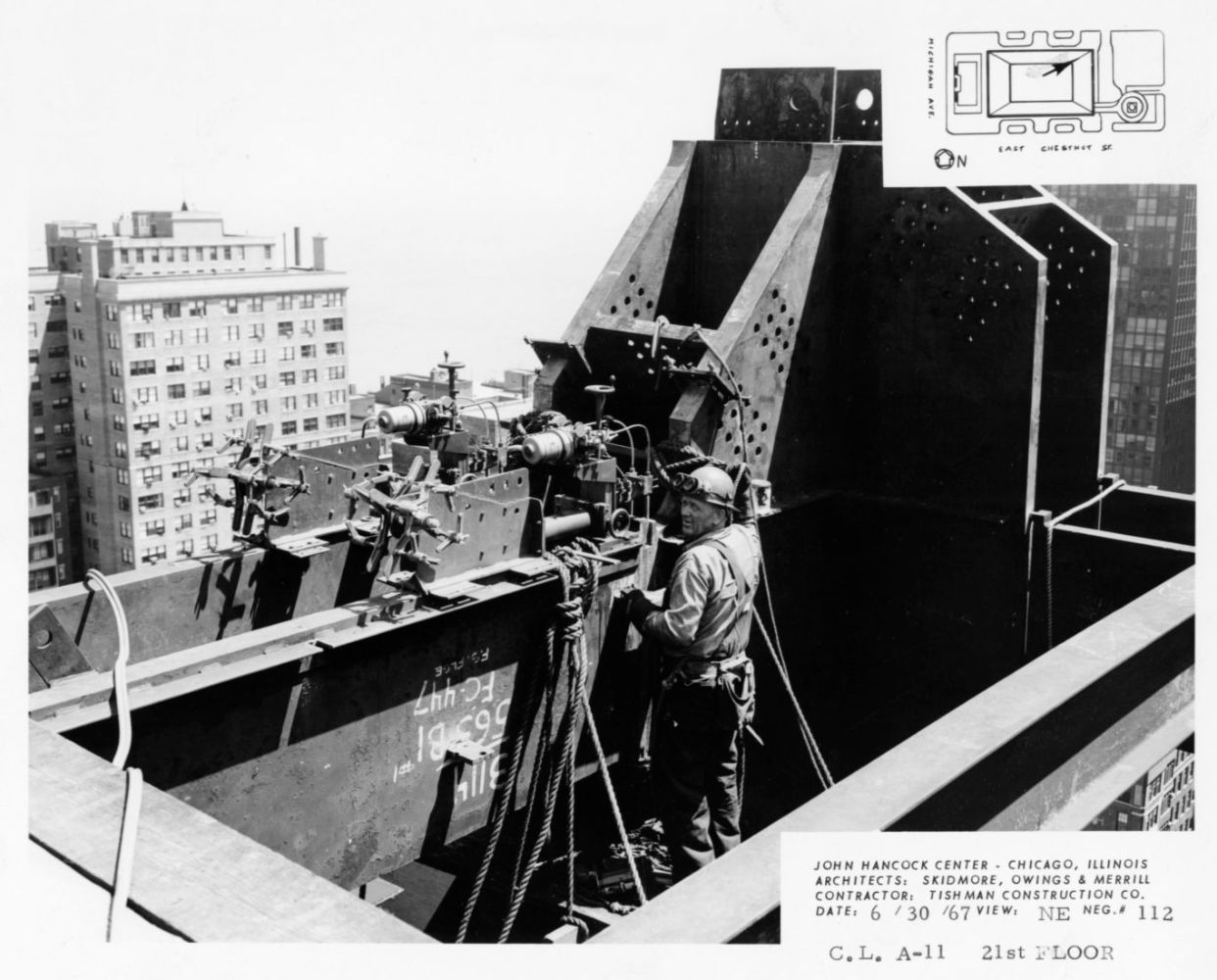
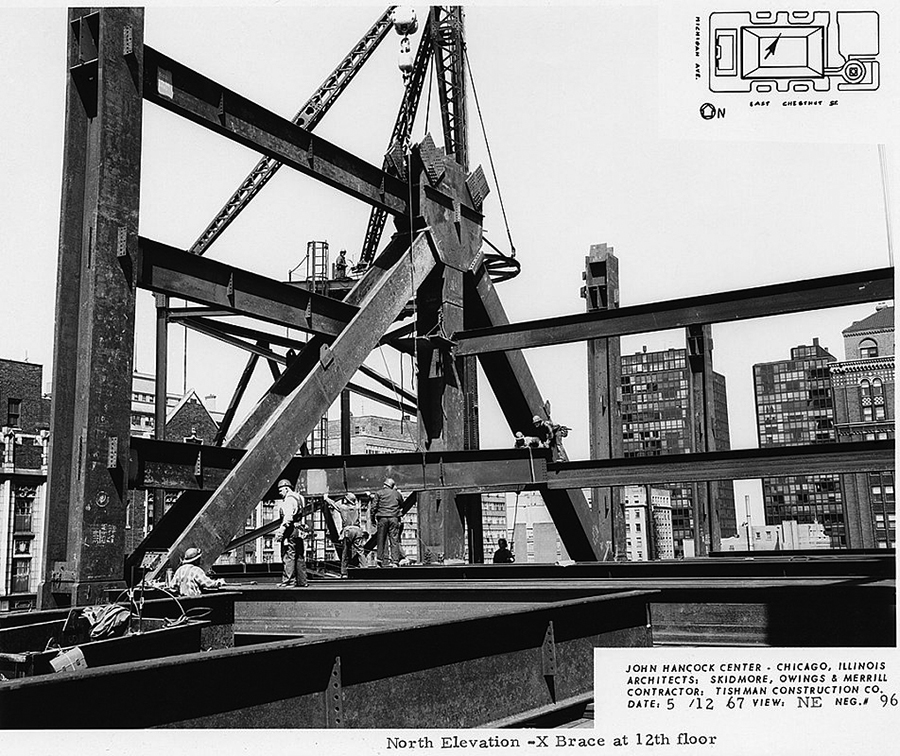
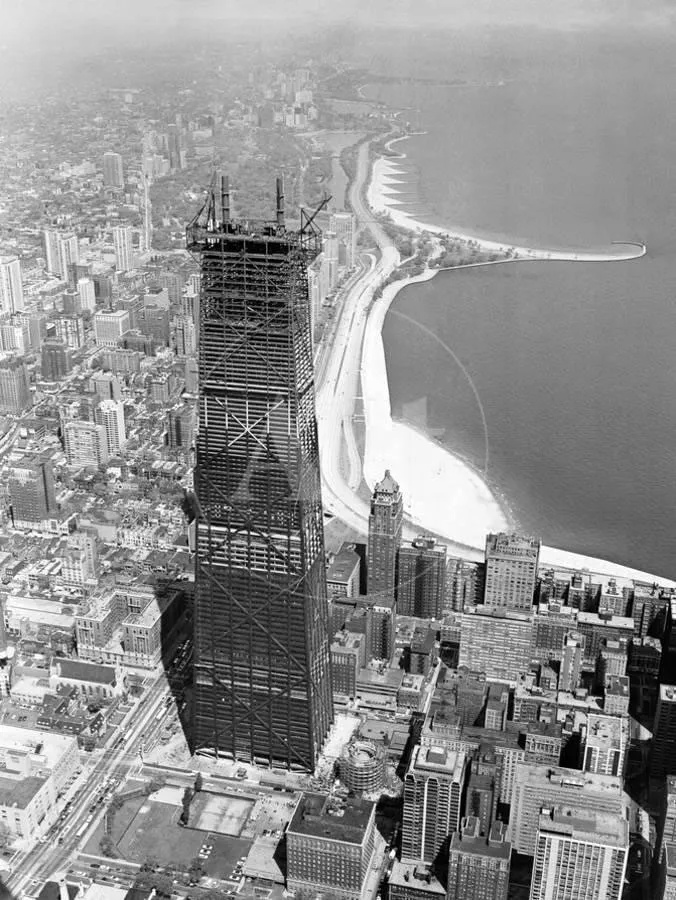
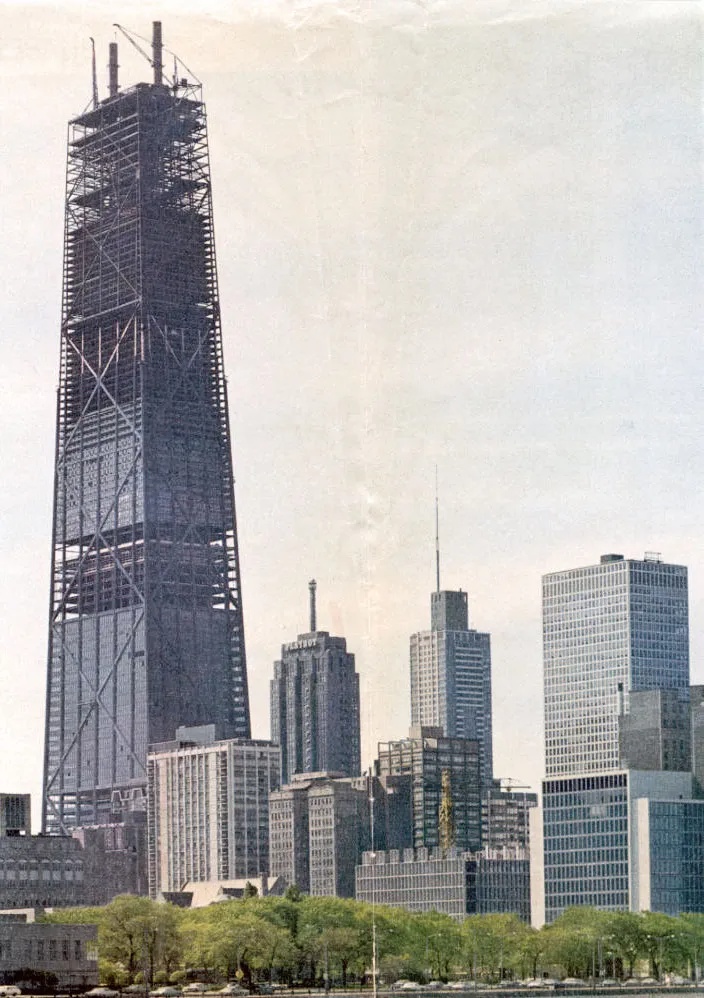
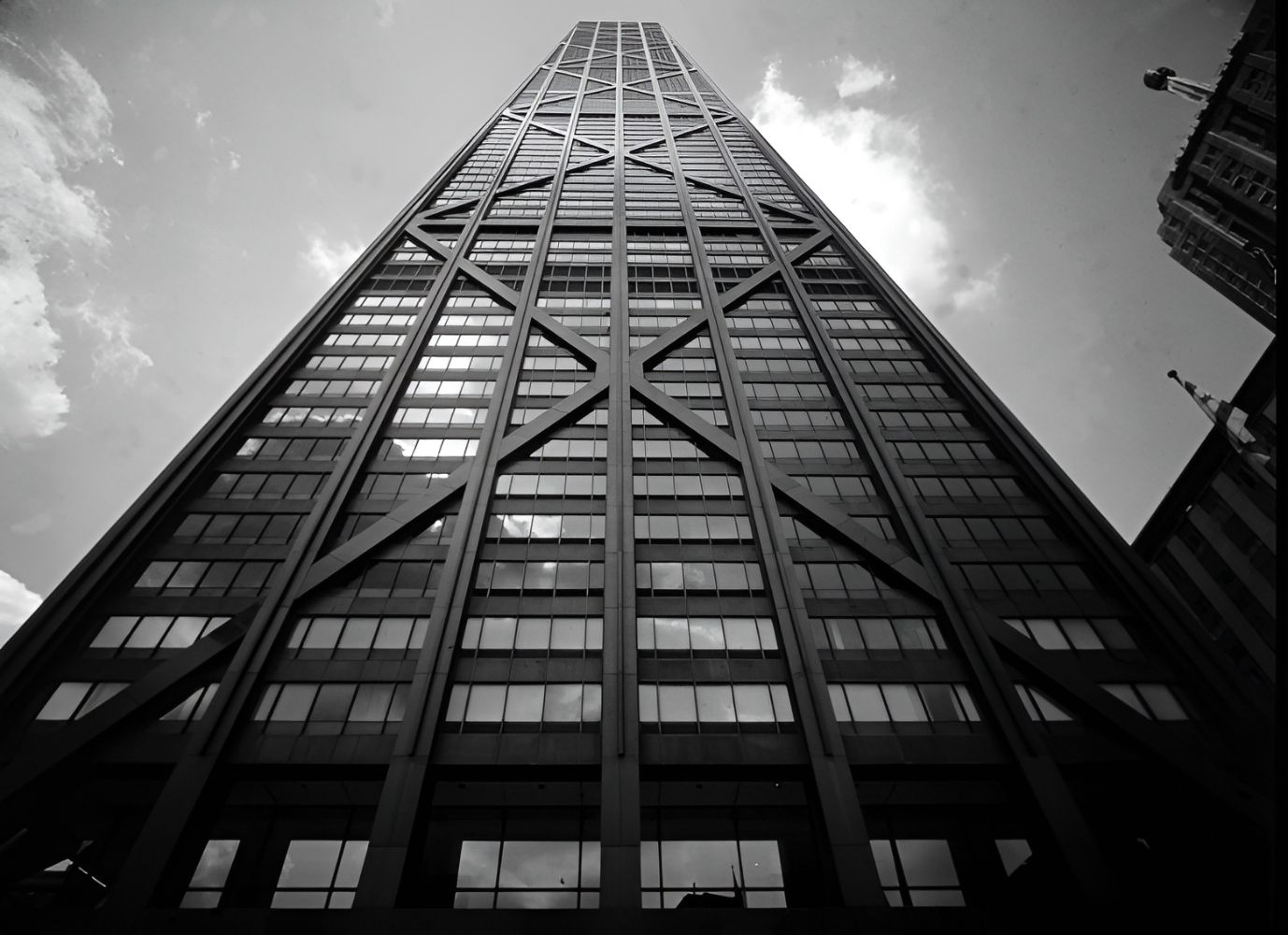
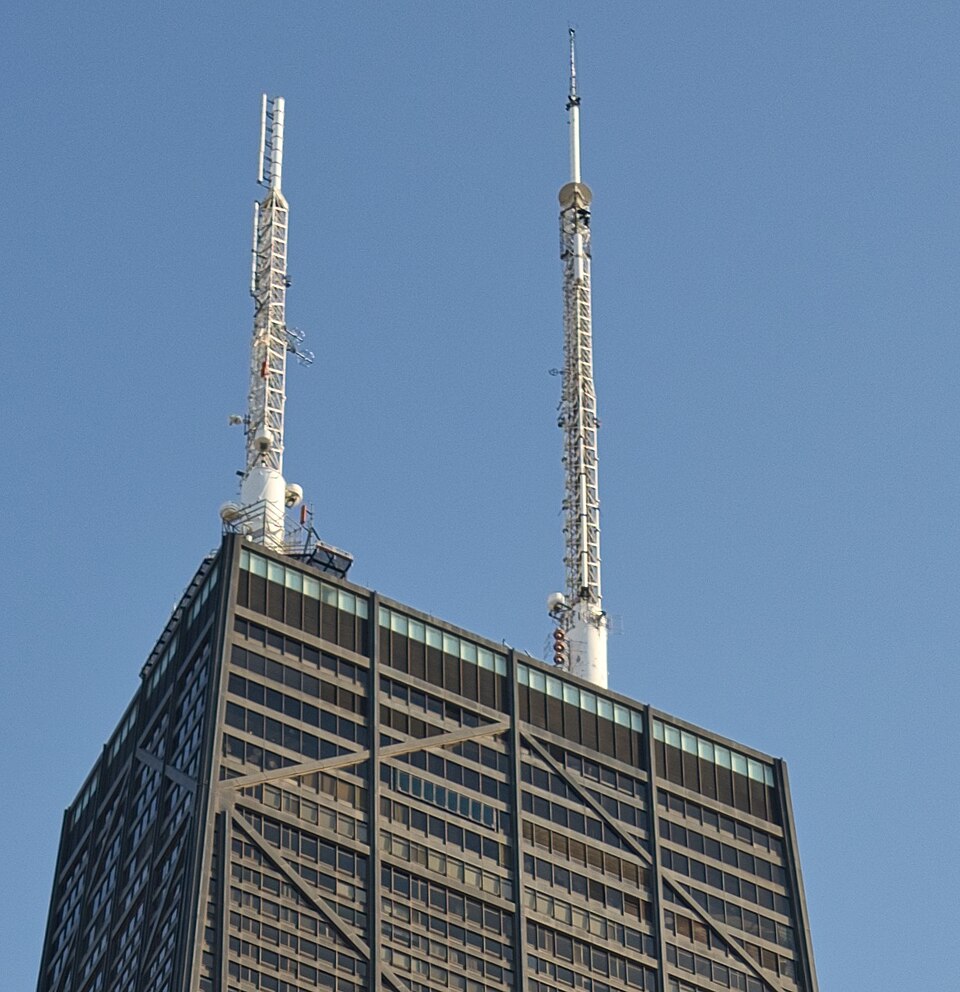
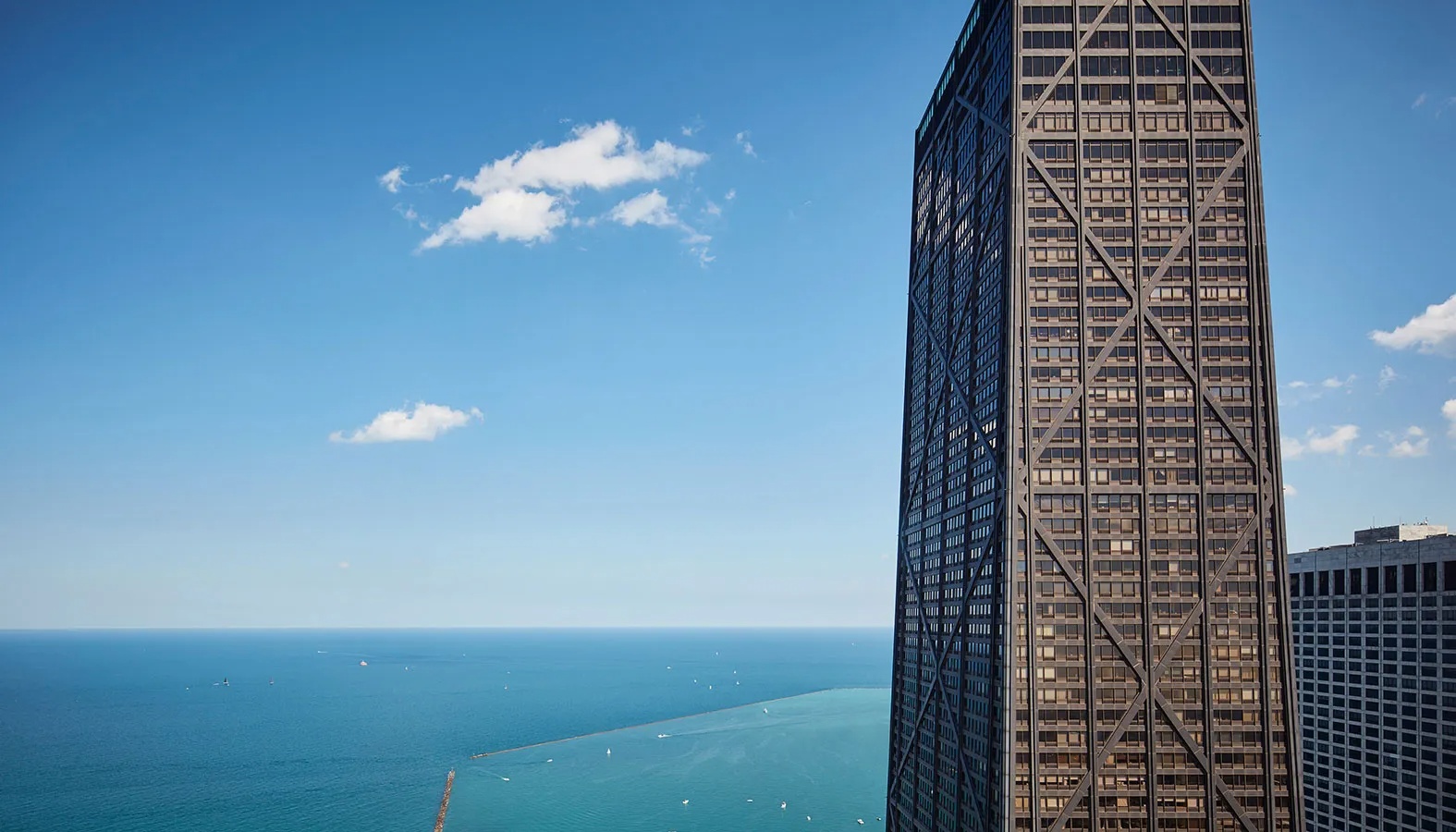
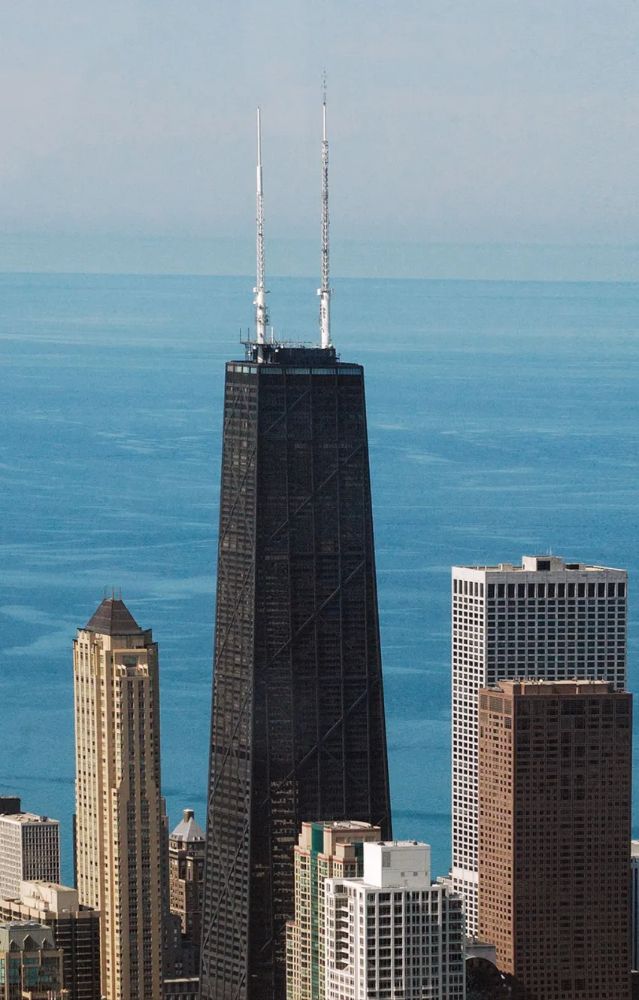
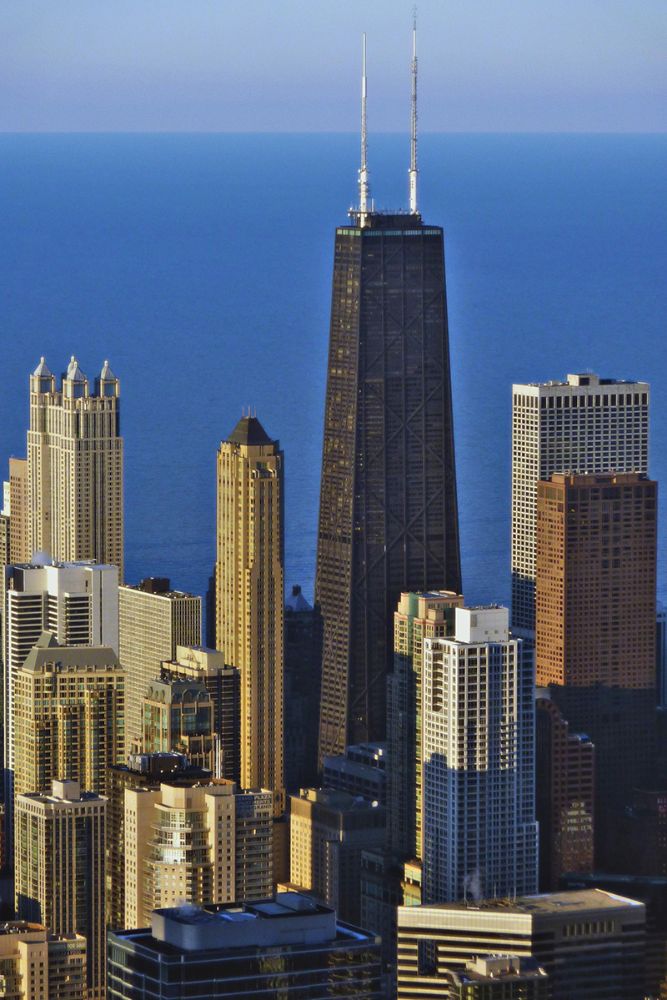
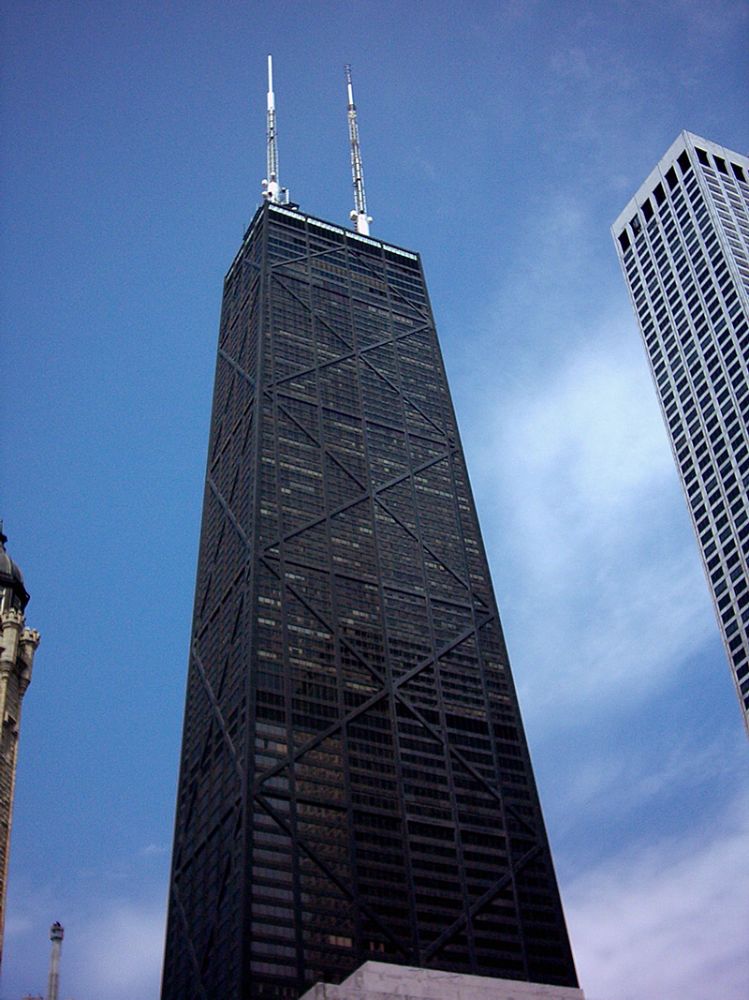
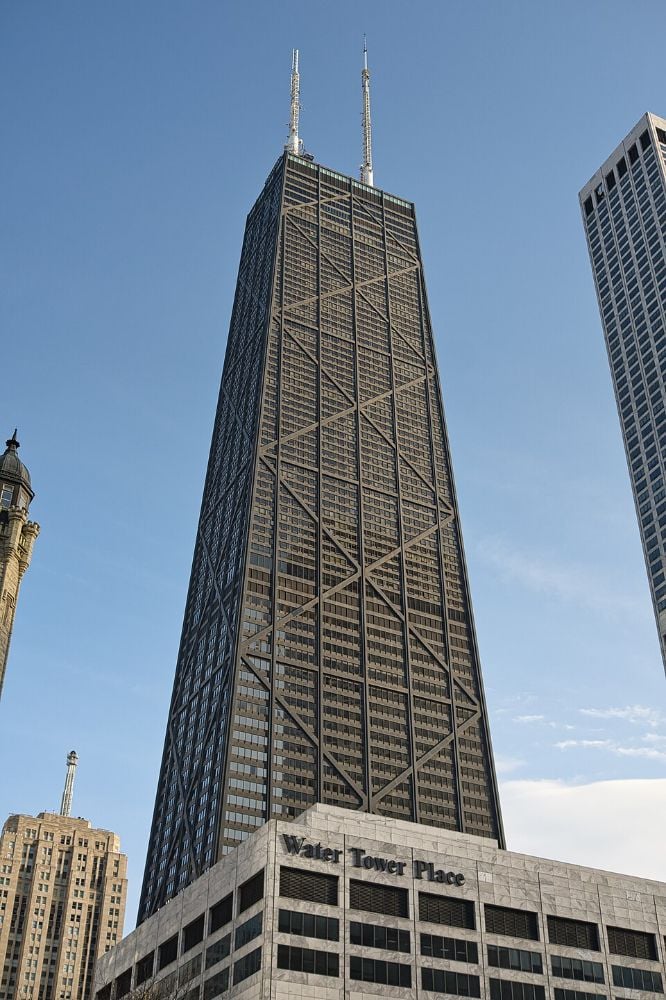
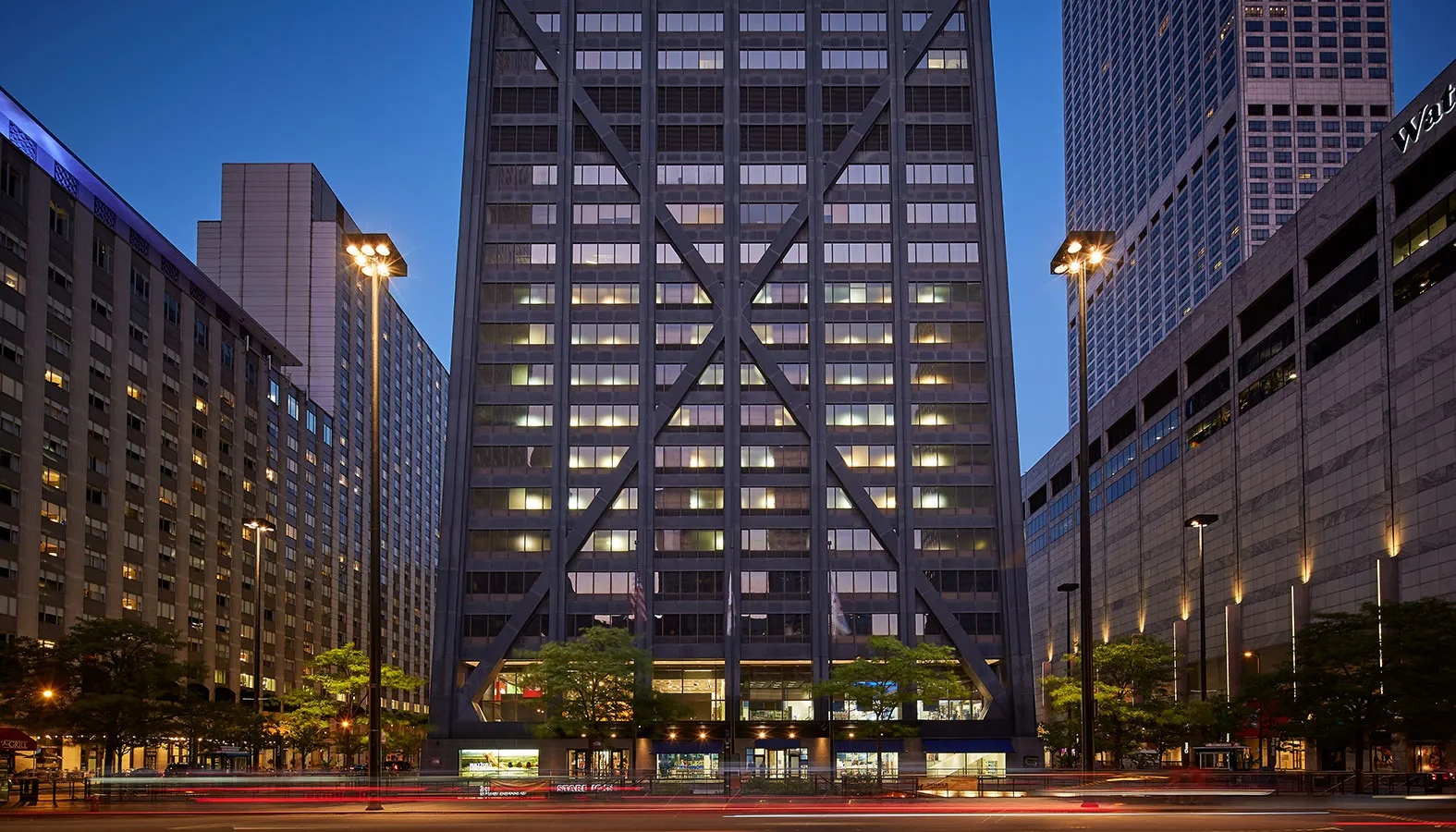
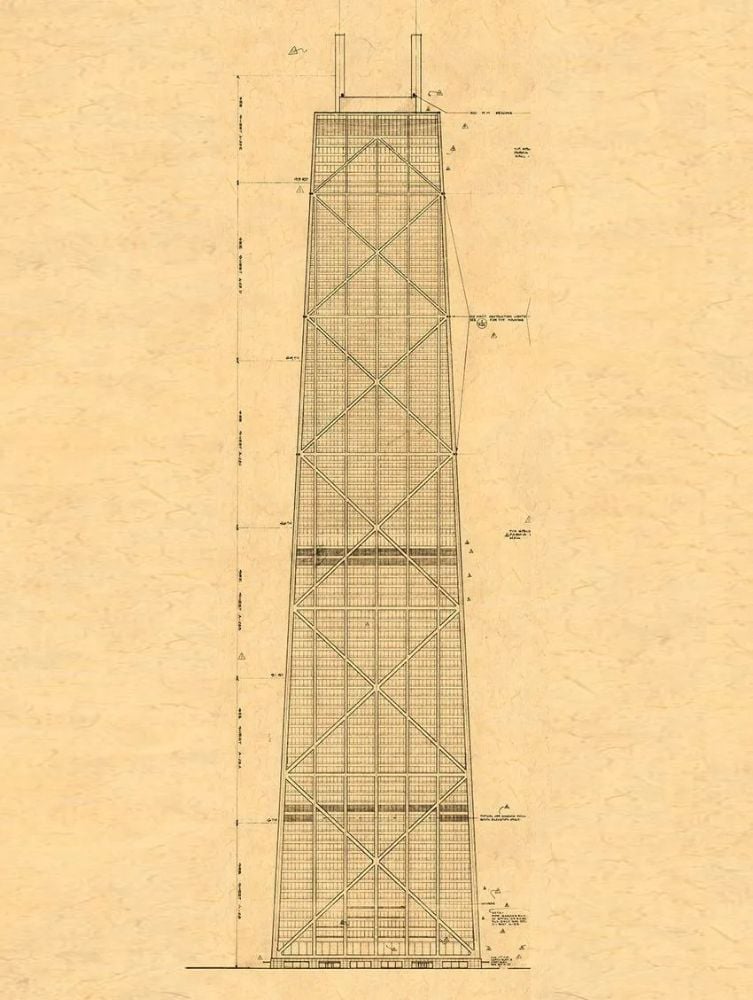
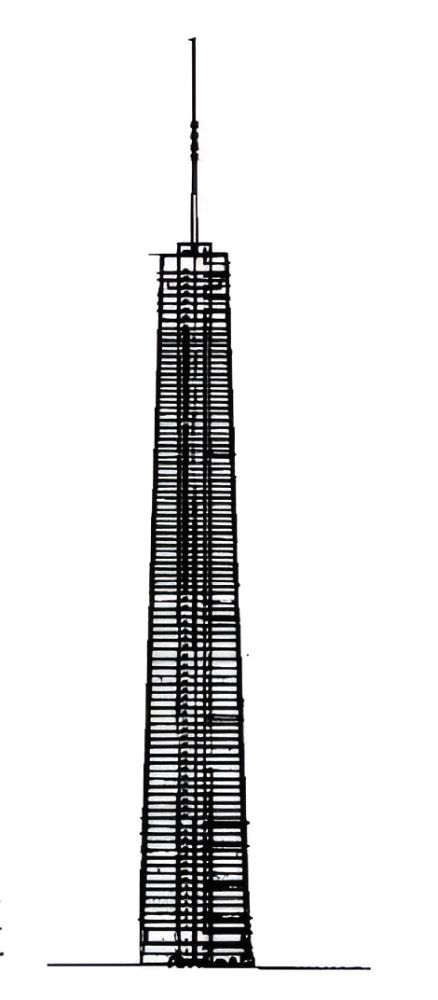
A tubular structural system developed by Fazlur Khan defines the building’s engineering logic, where perimeter columns and diagonal bracing act as a unified load-bearing frame. The X-bracing spans multiple floors and resists lateral forces caused by wind. This approach reduces the need for interior columns, allowing flexible floor plans while maintaining structural stability.
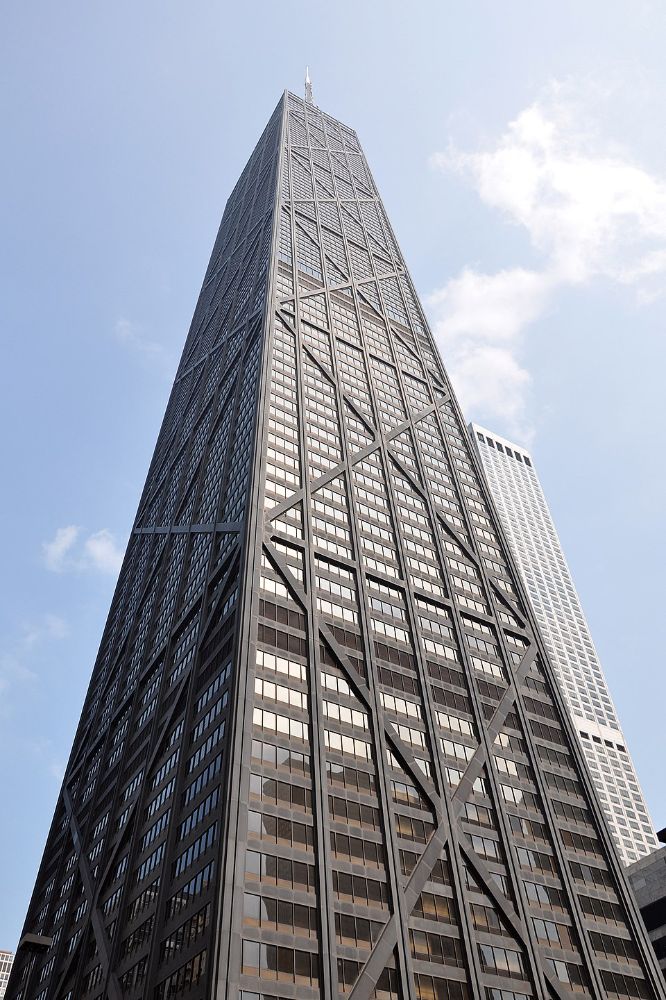
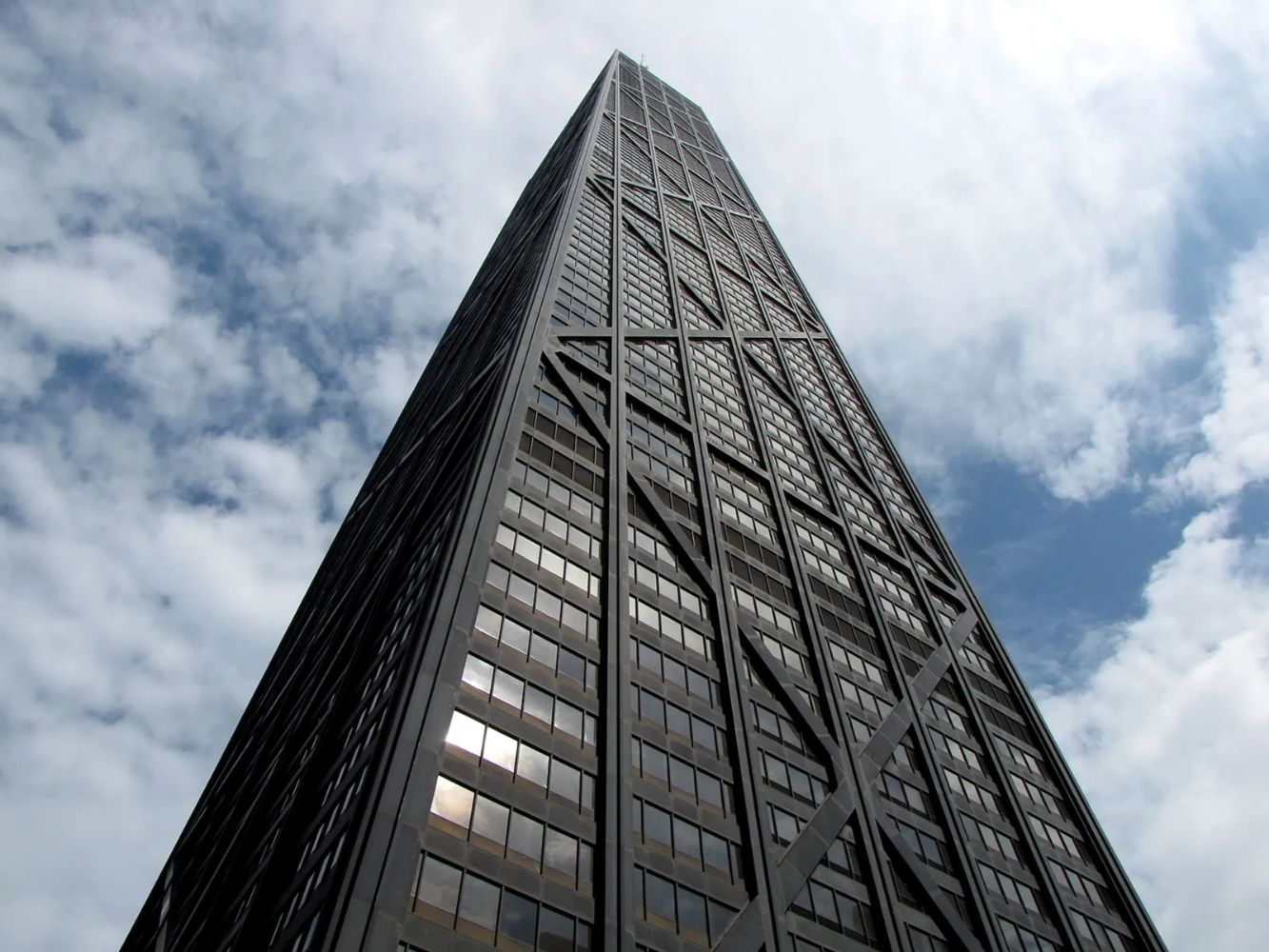
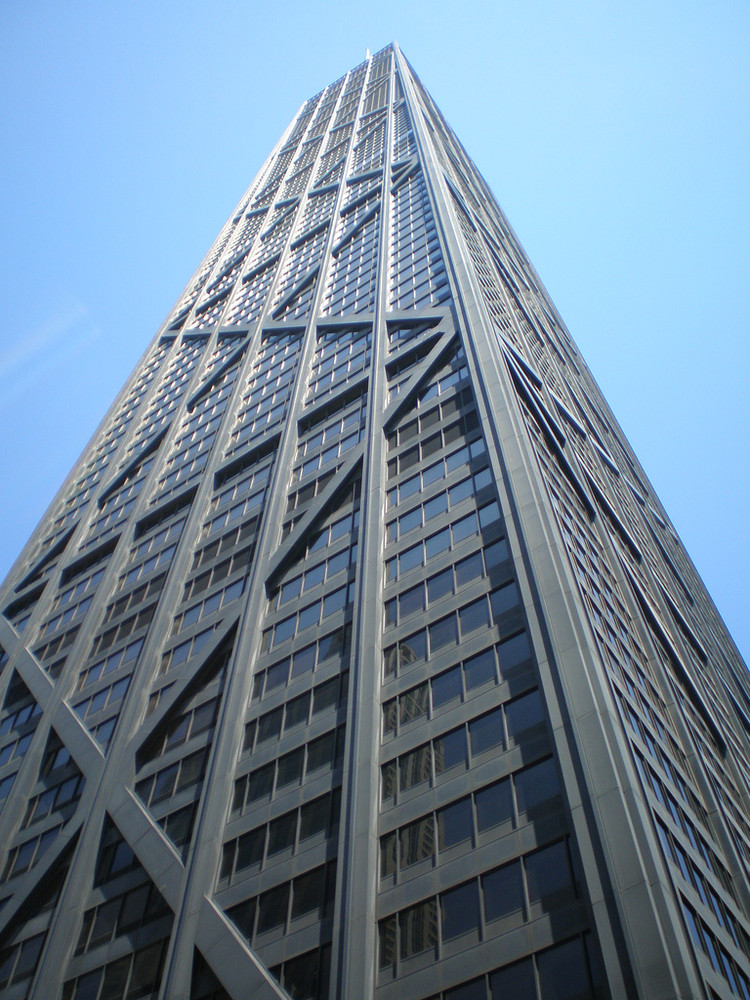
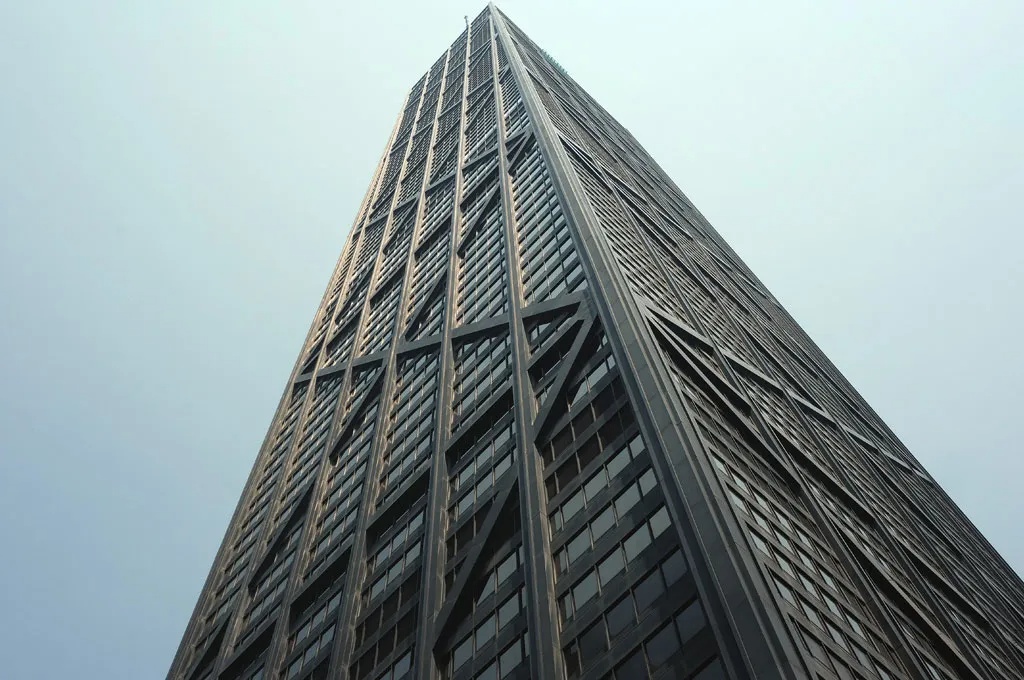
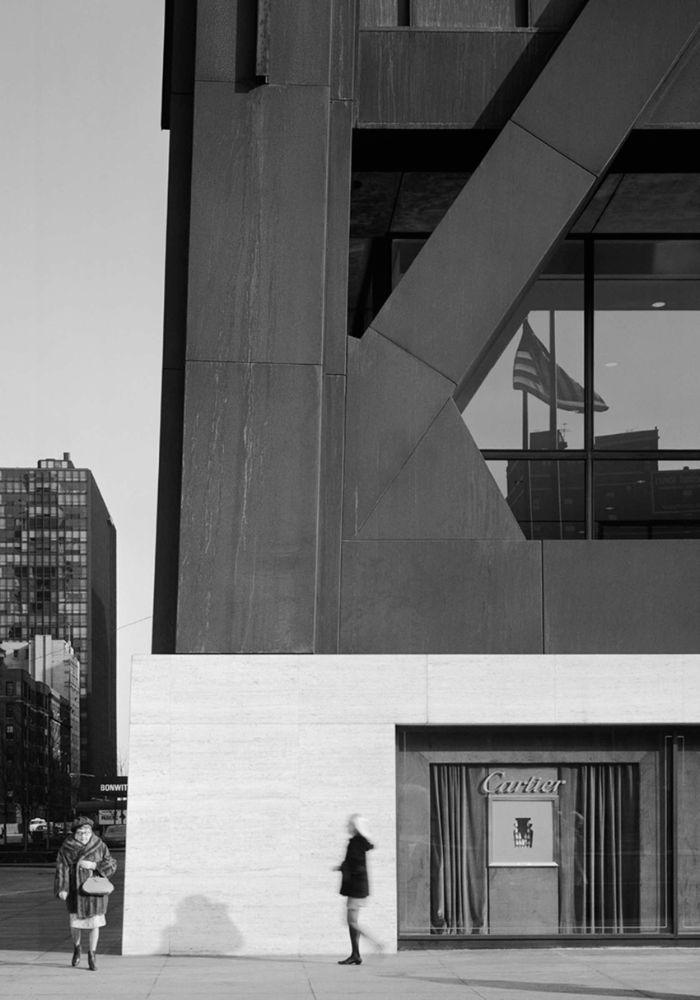
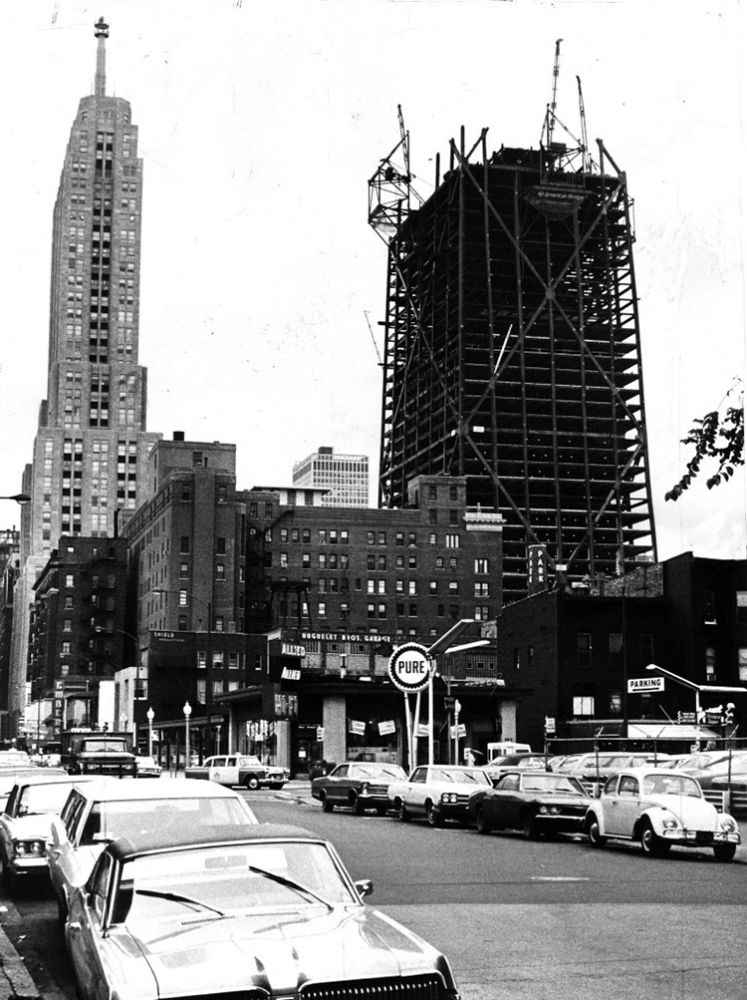
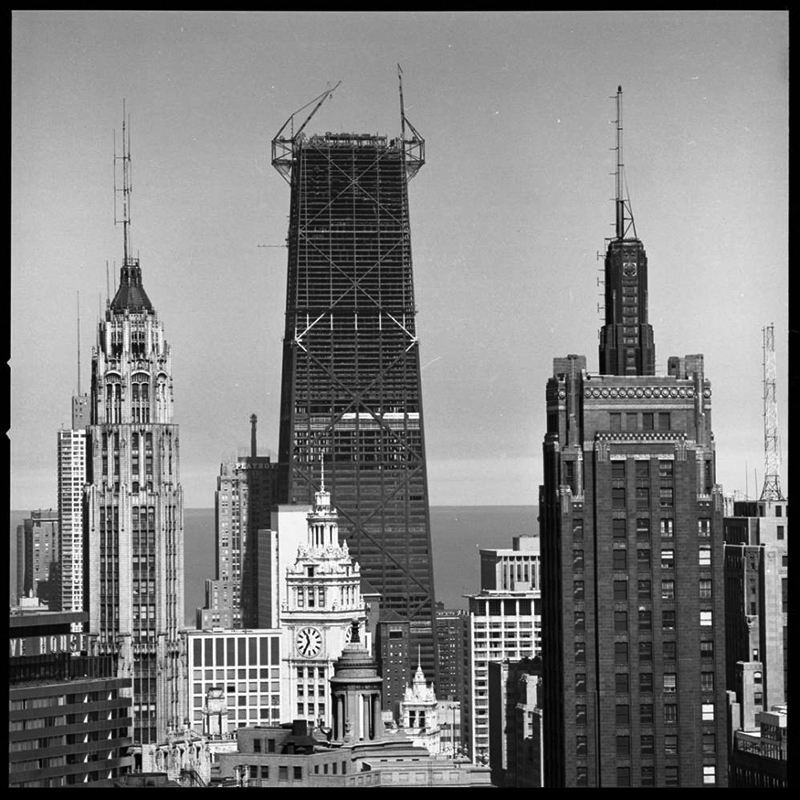
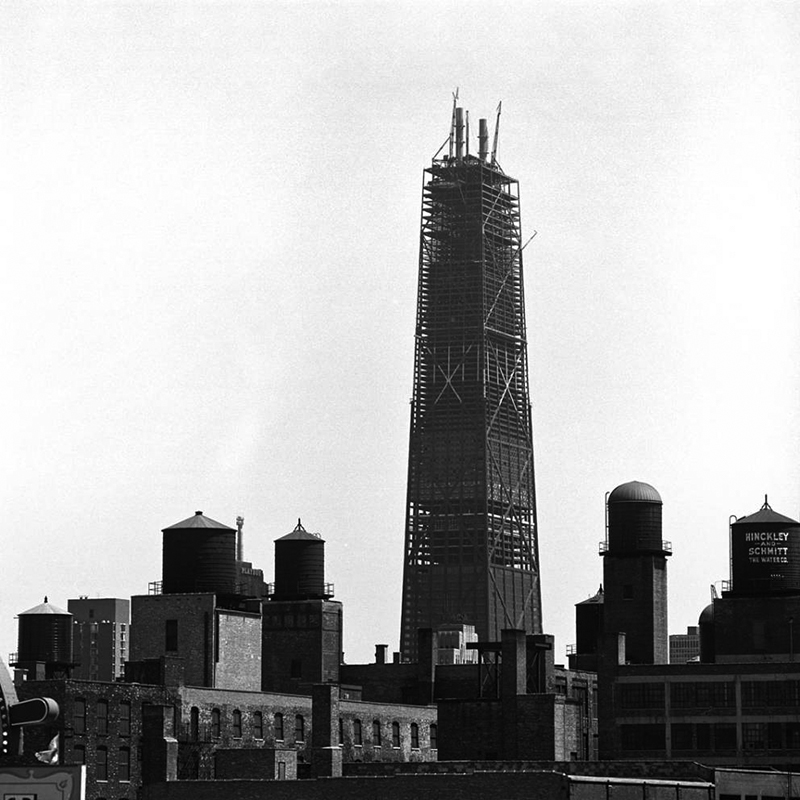
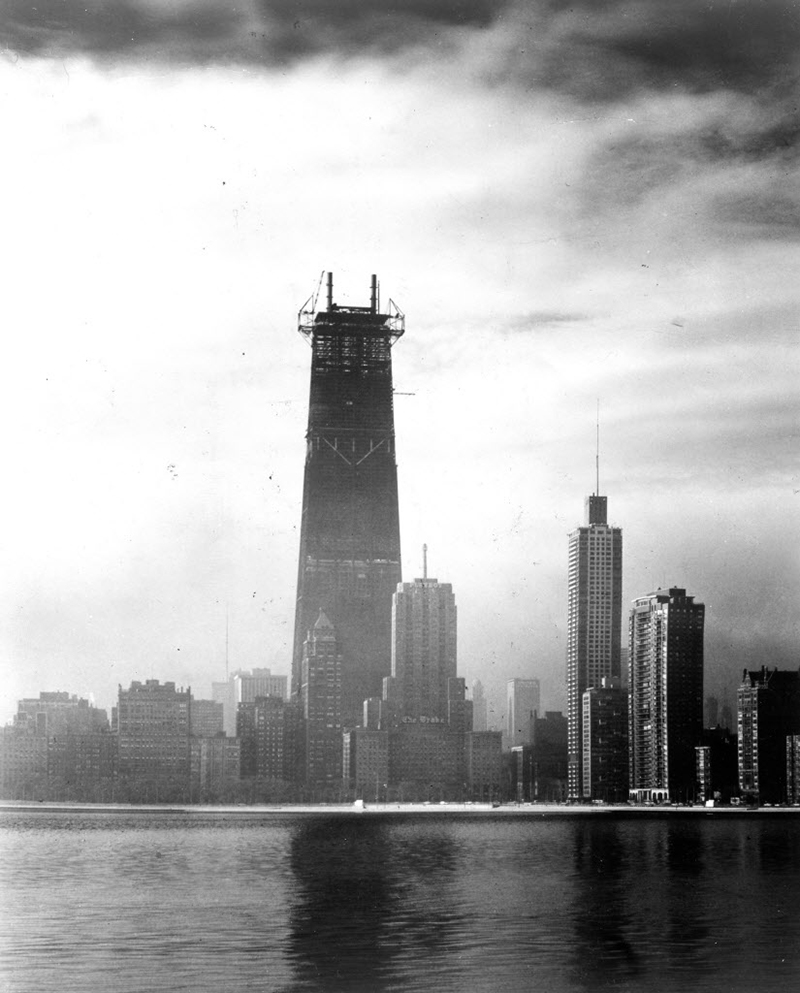
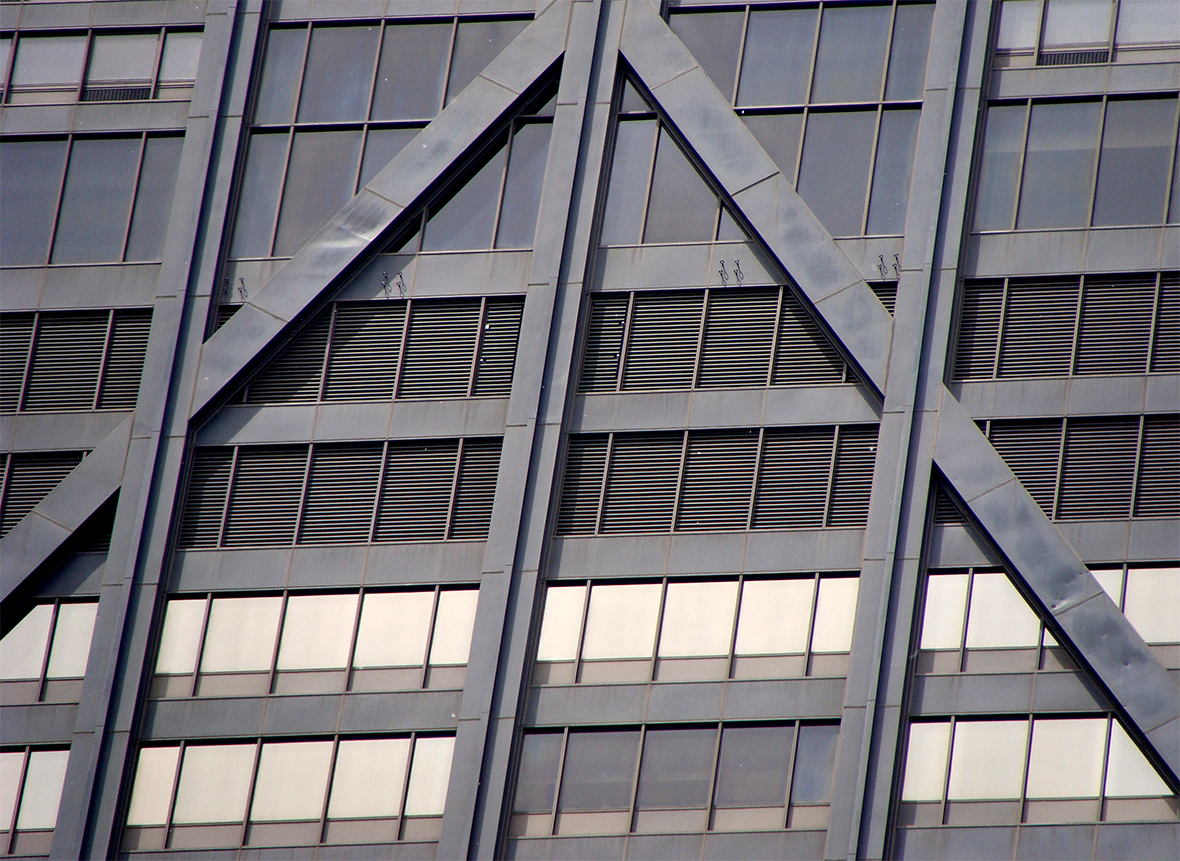
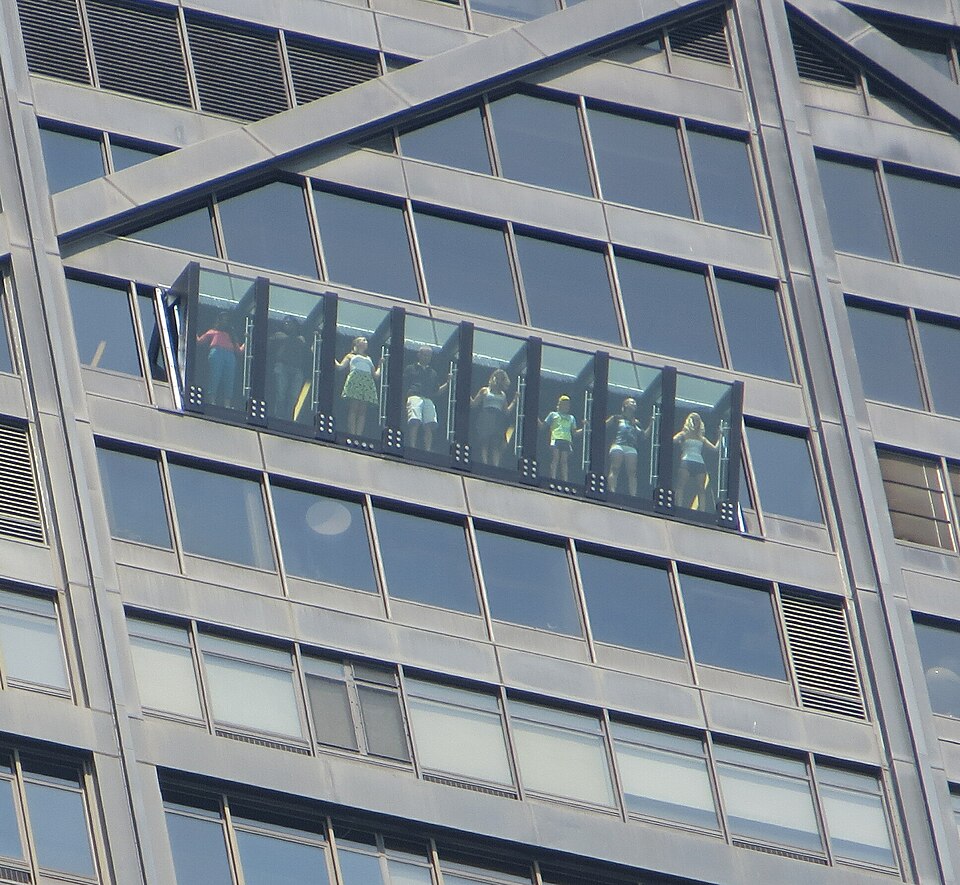
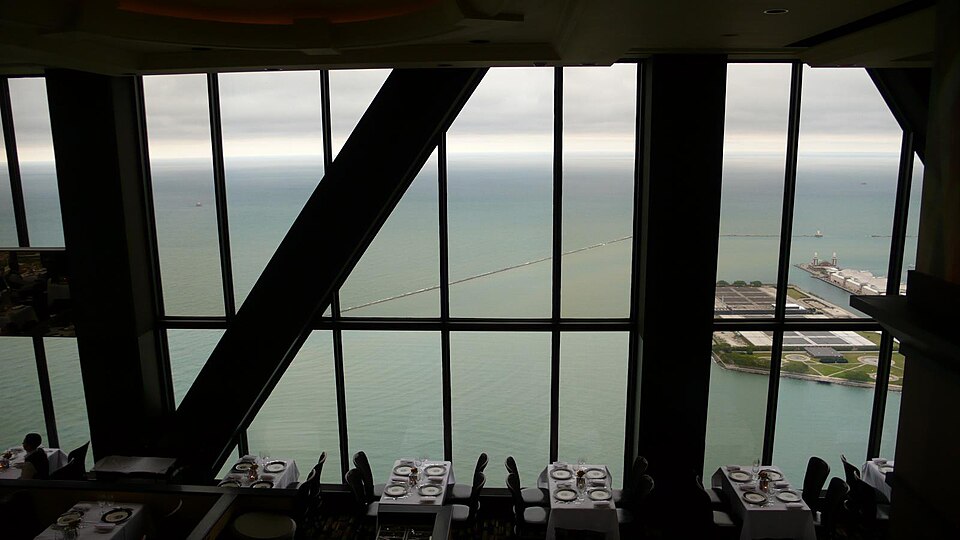
Structural expression is carried directly onto the façade through exposed steel cross-bracing. The diagonal members establish a consistent pattern across the elevations, reinforcing both vertical and lateral forces while defining the tower’s identity within the skyline. This strategy aligns structural performance with architectural clarity.
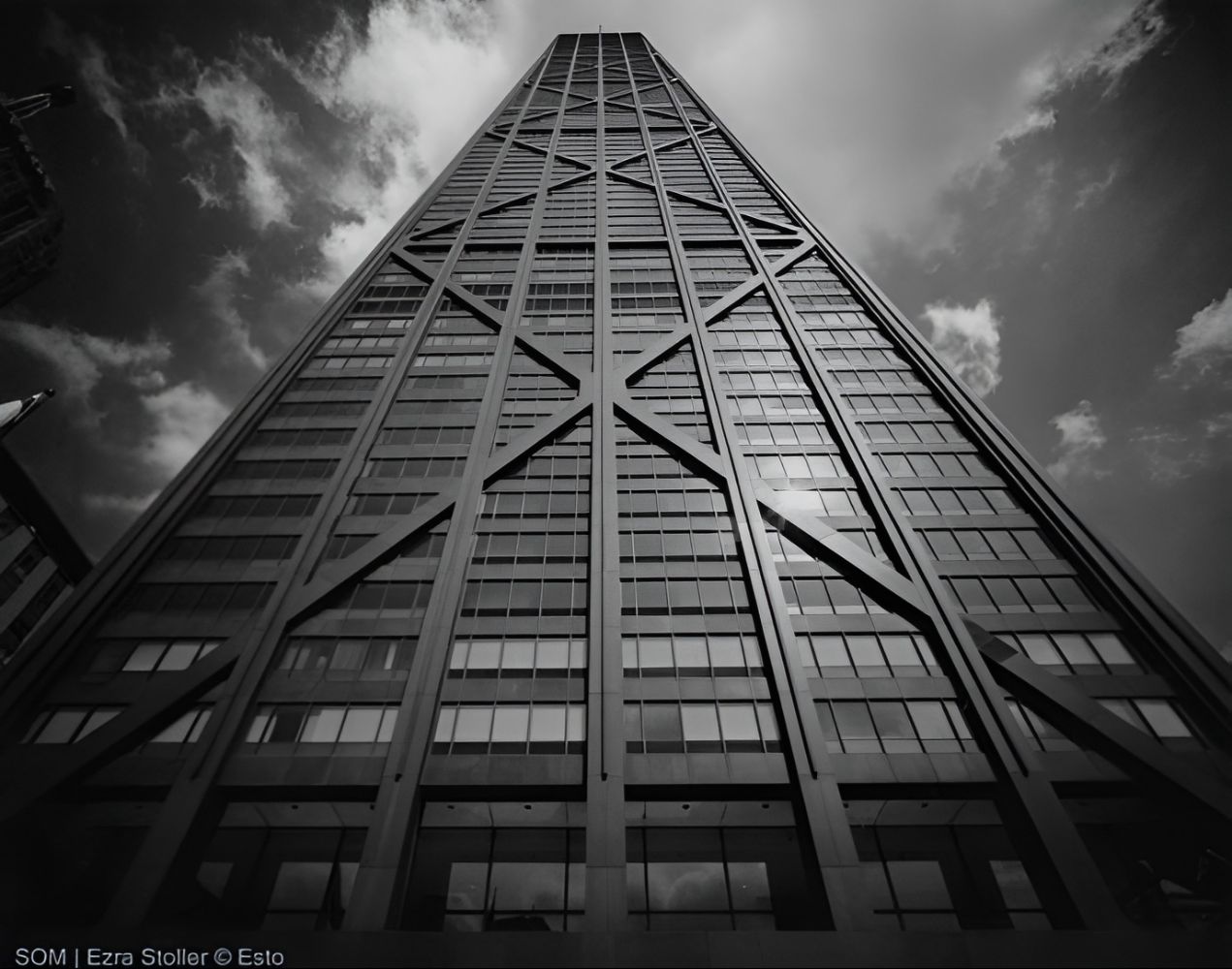
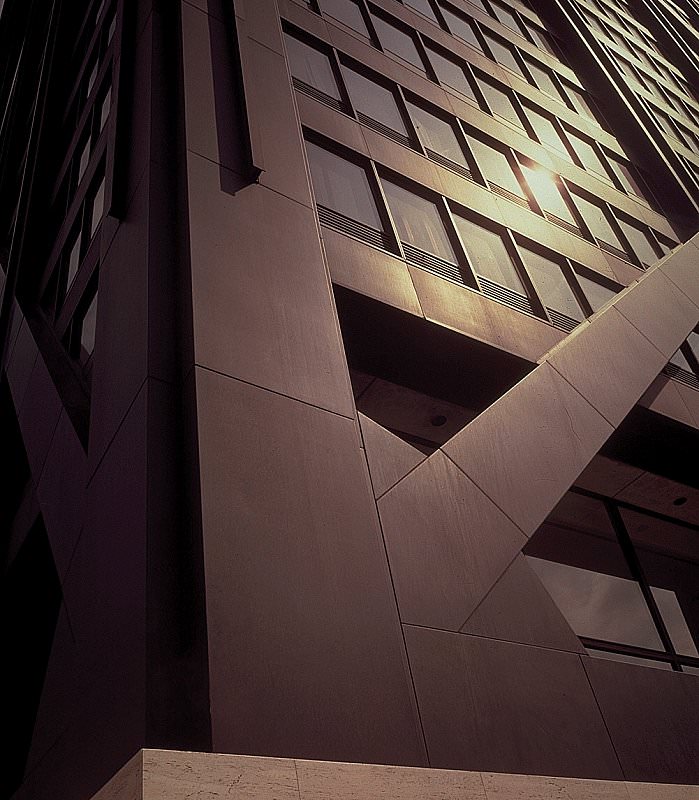
Prefabrication and modular construction methods support the assembly of façade and structural components. The system achieves material efficiency, using approximately 30 pounds of steel per square foot. This reduction results from the integration of structure and enclosure within a single framework.
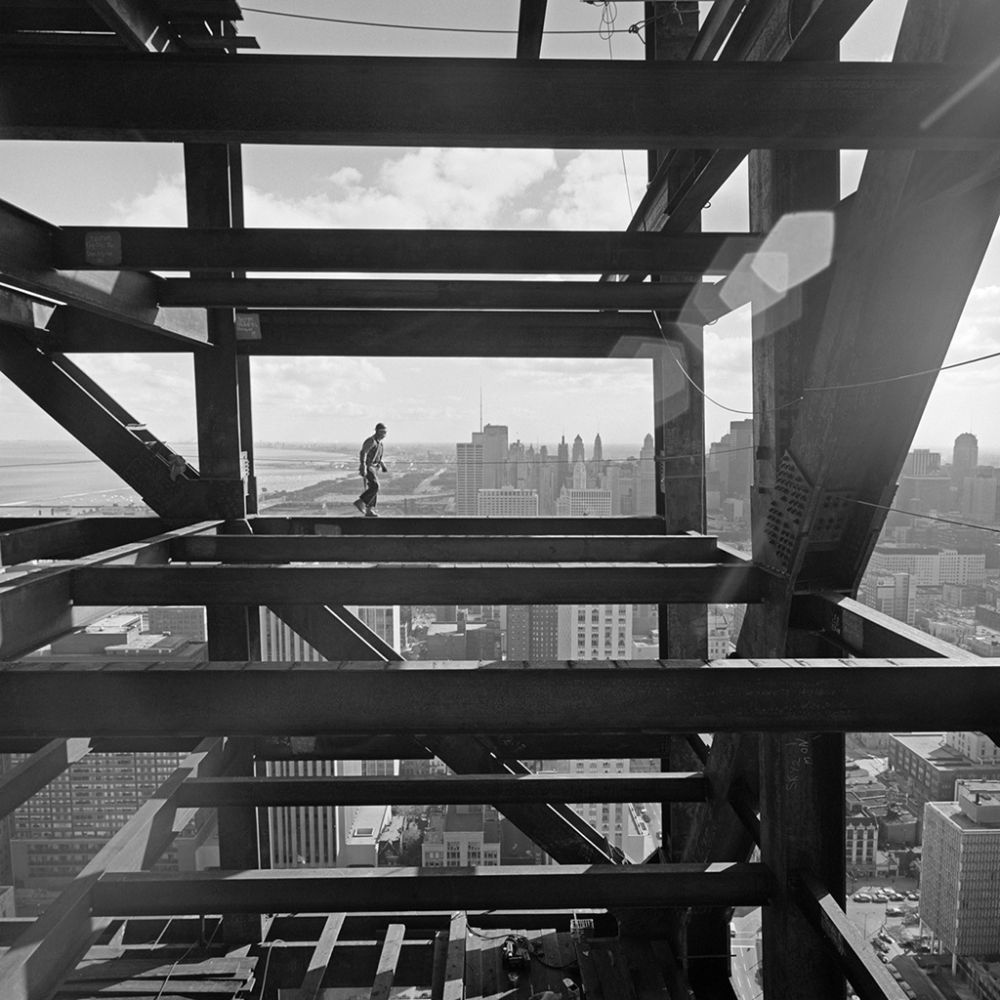
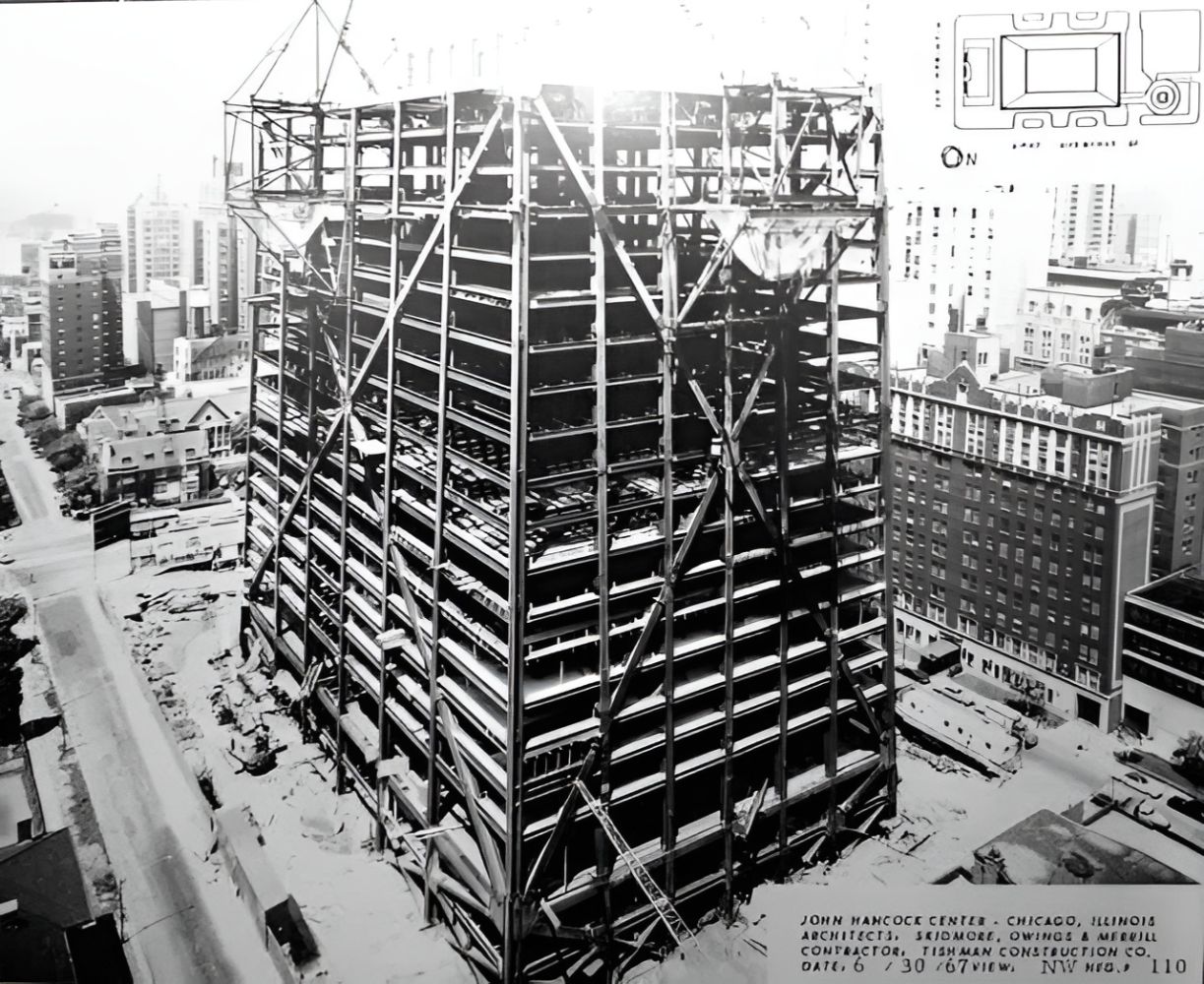
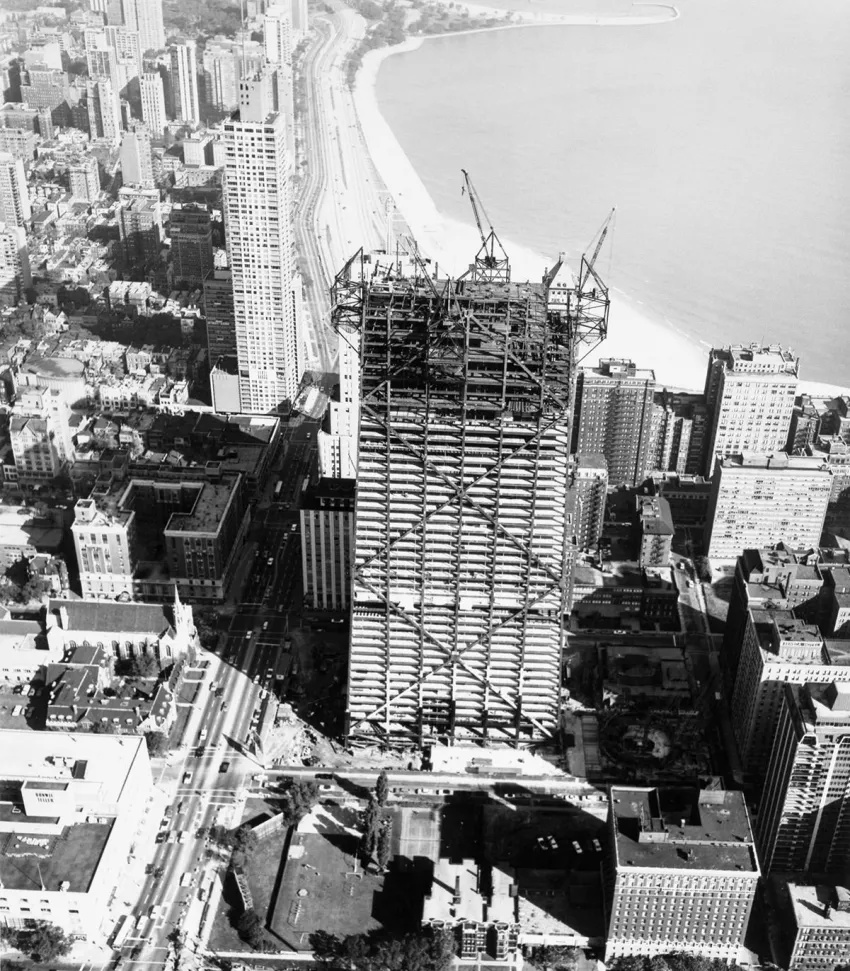
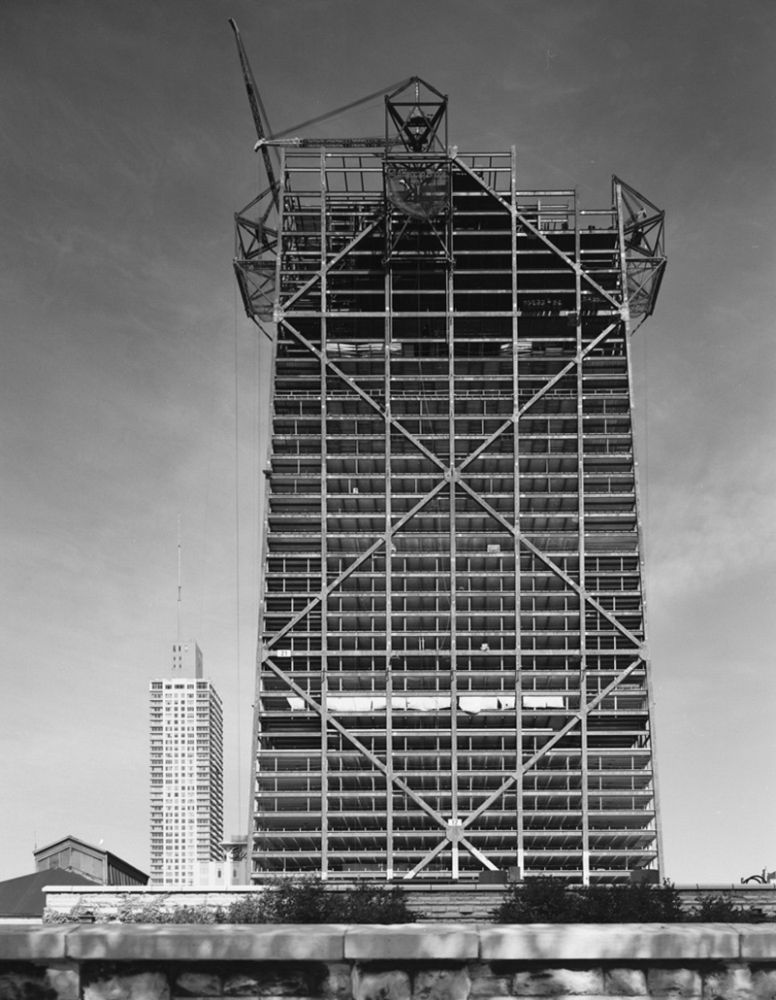
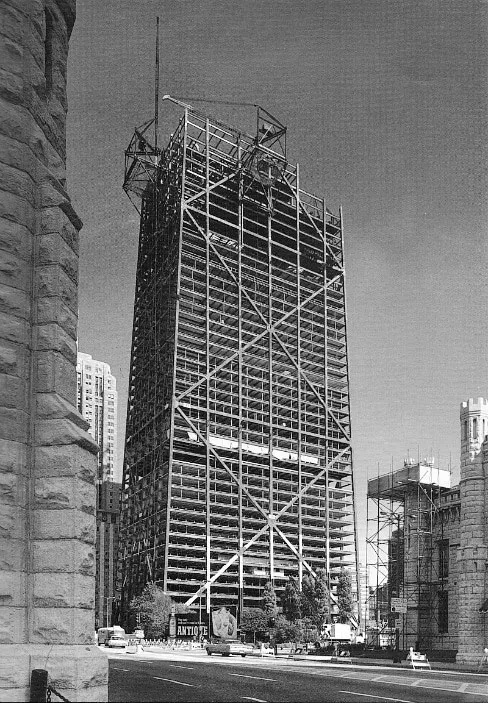
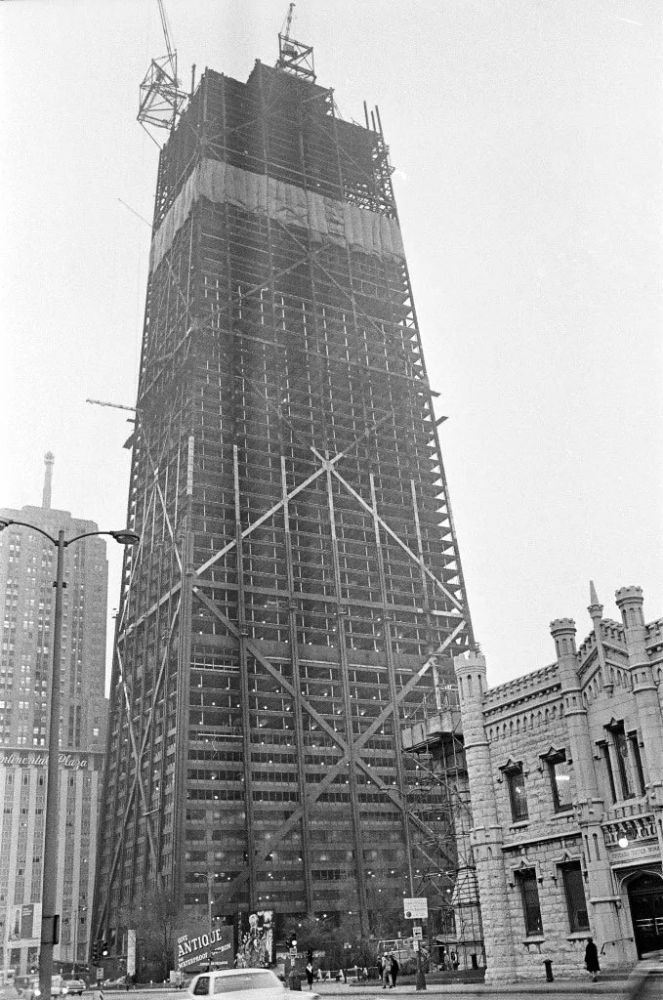
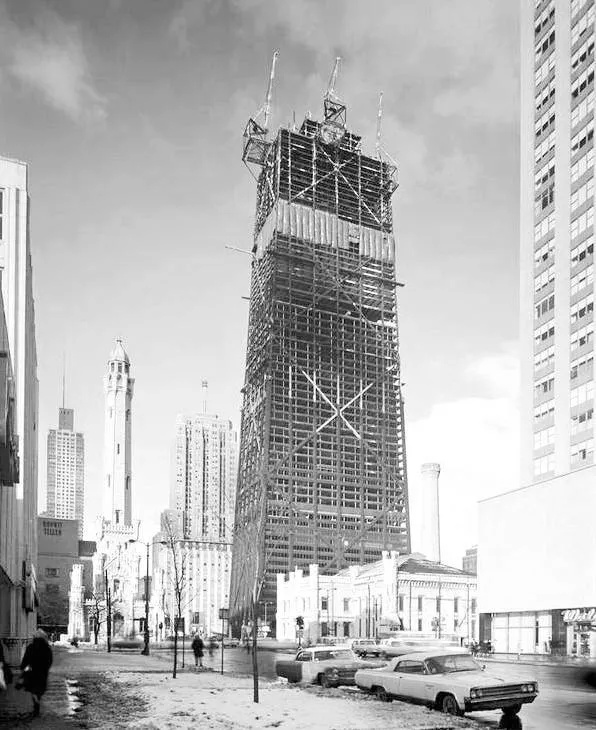
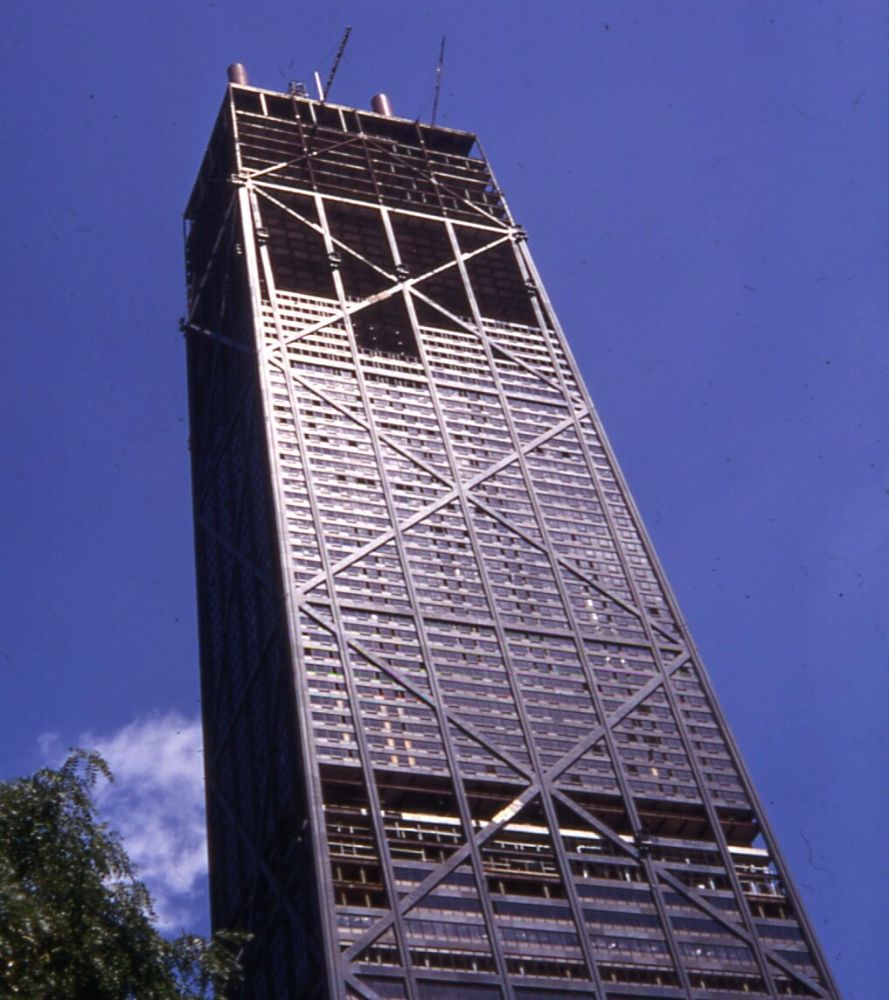
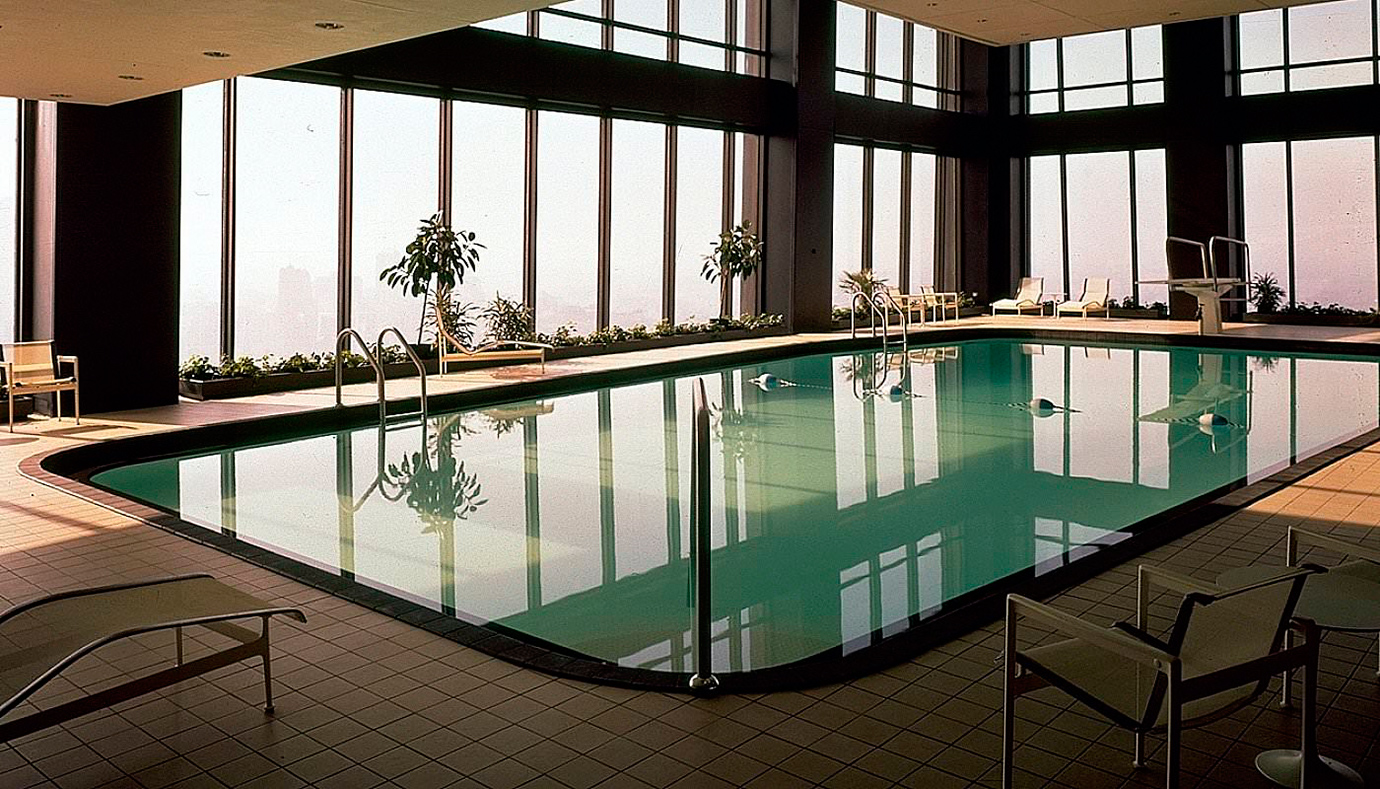
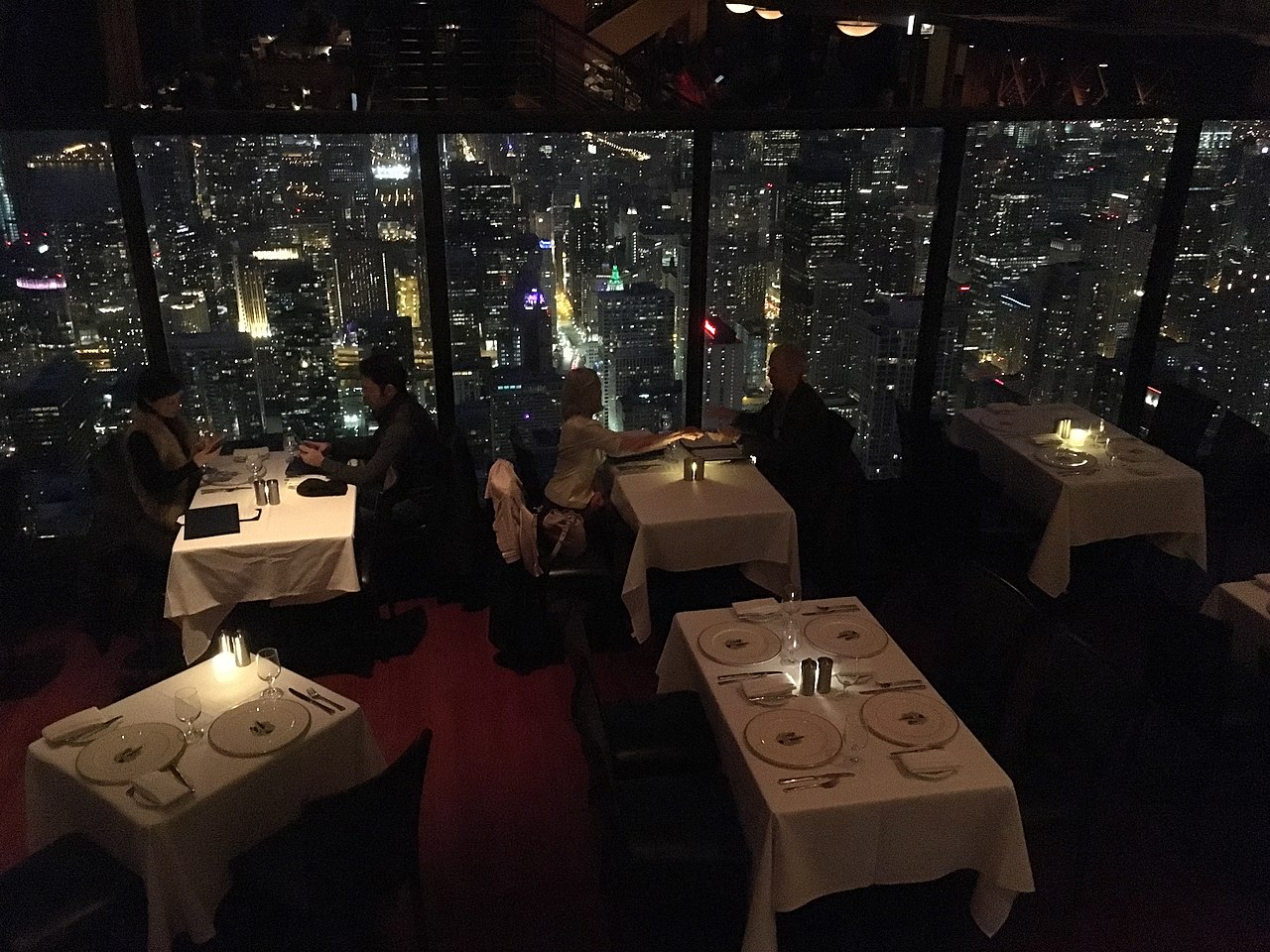
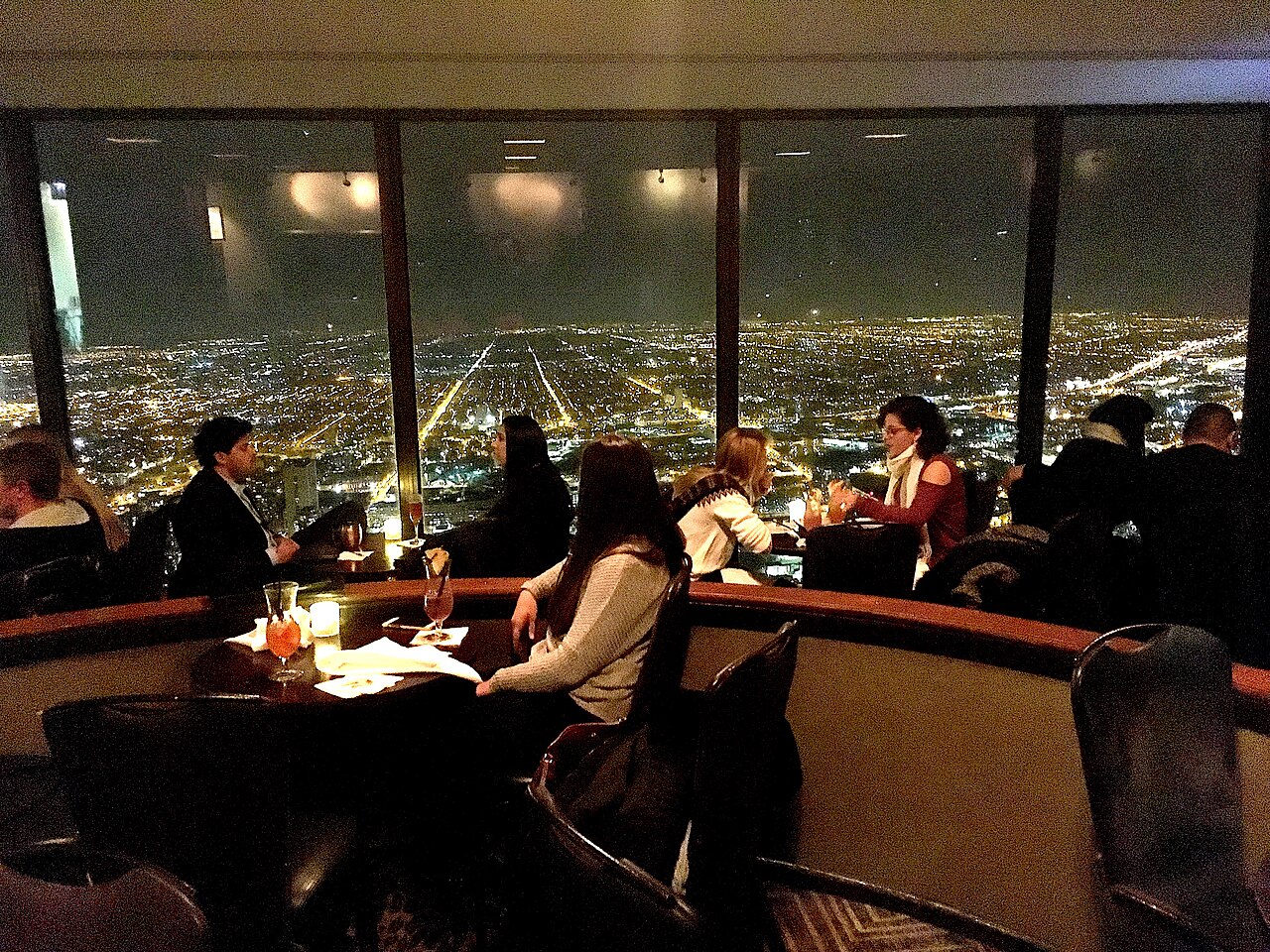
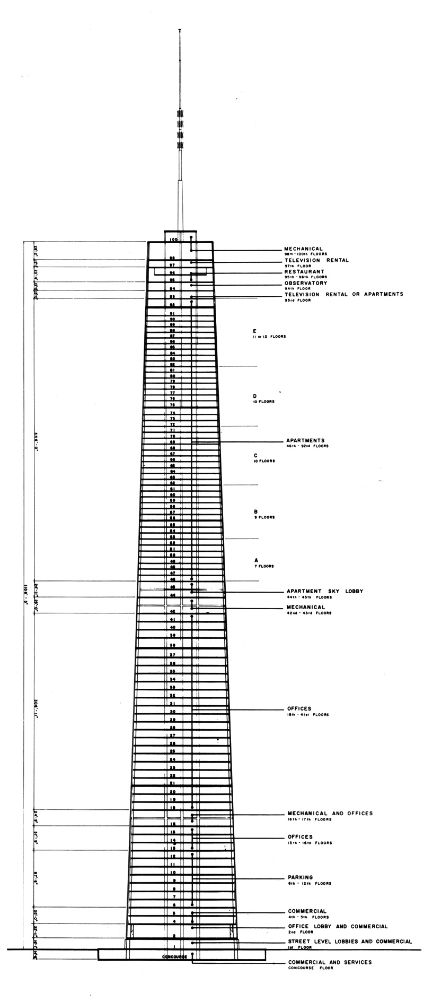
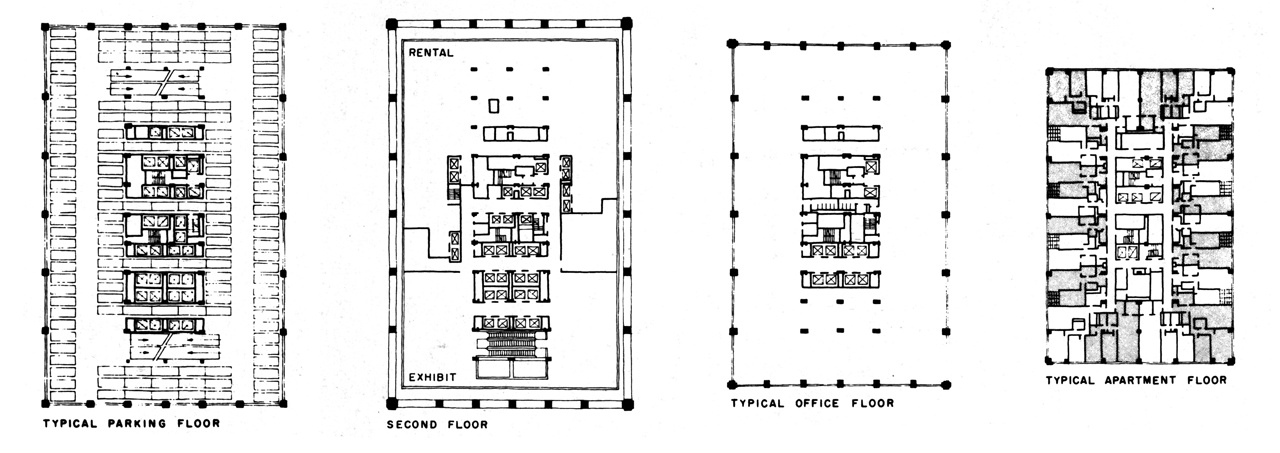
Interior organization relies on a central core, while open floor plates are enabled by the perimeter structure. The 44th-floor sky lobby marks the transition between office and residential zones and accommodates shared amenities, including a swimming pool. Residential units occupy the upper levels, gaining privacy and extended views over the city and Lake Michigan.

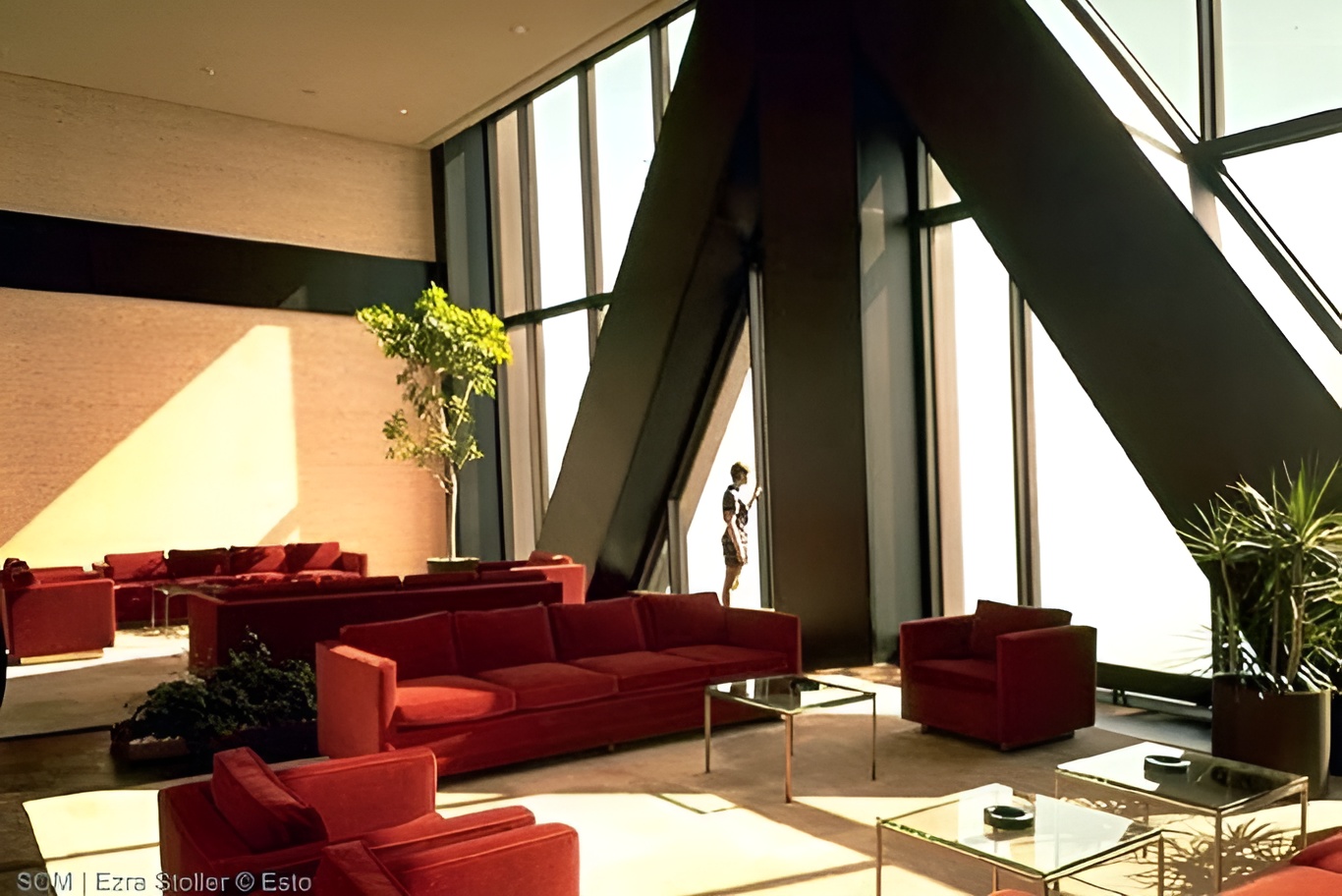
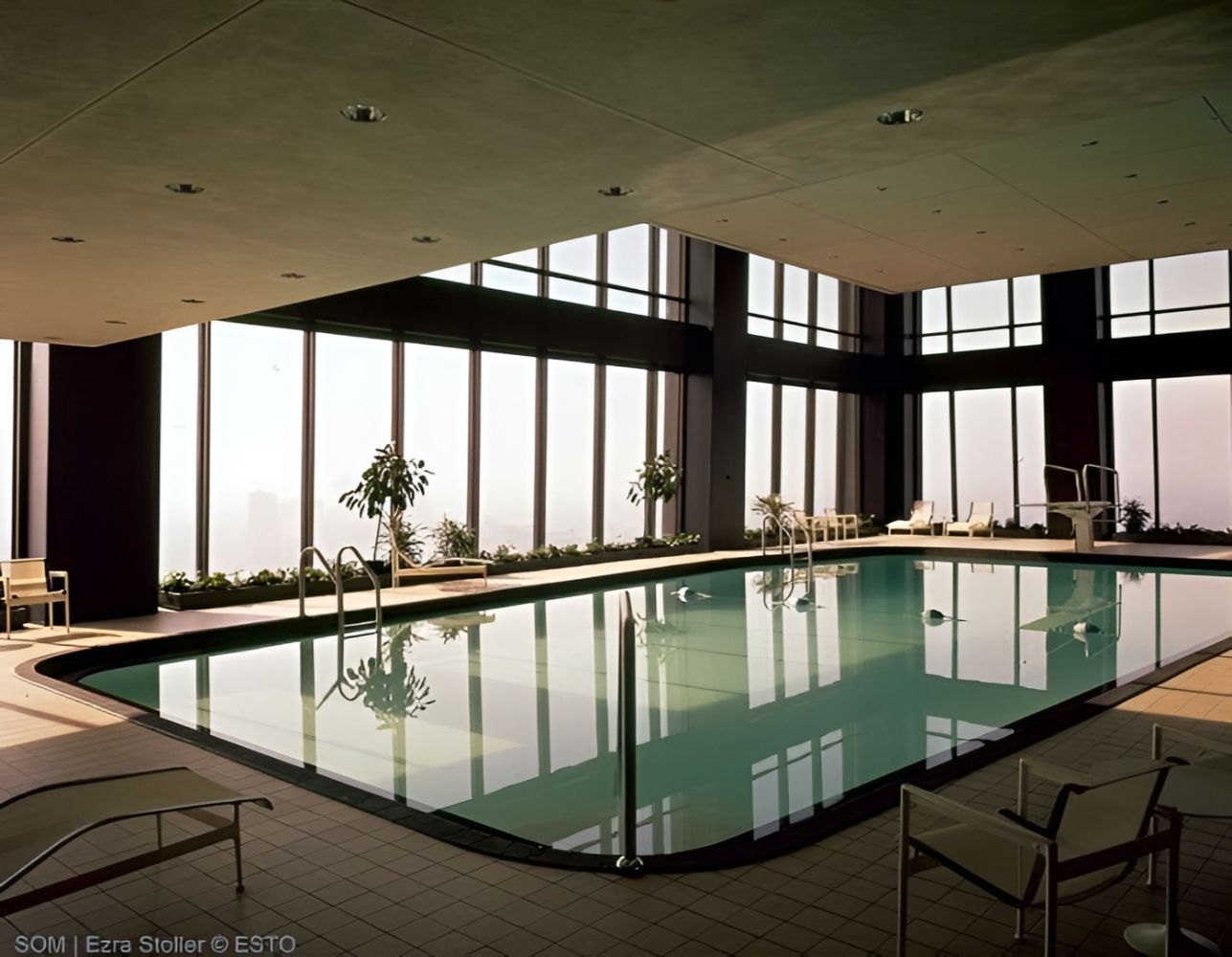
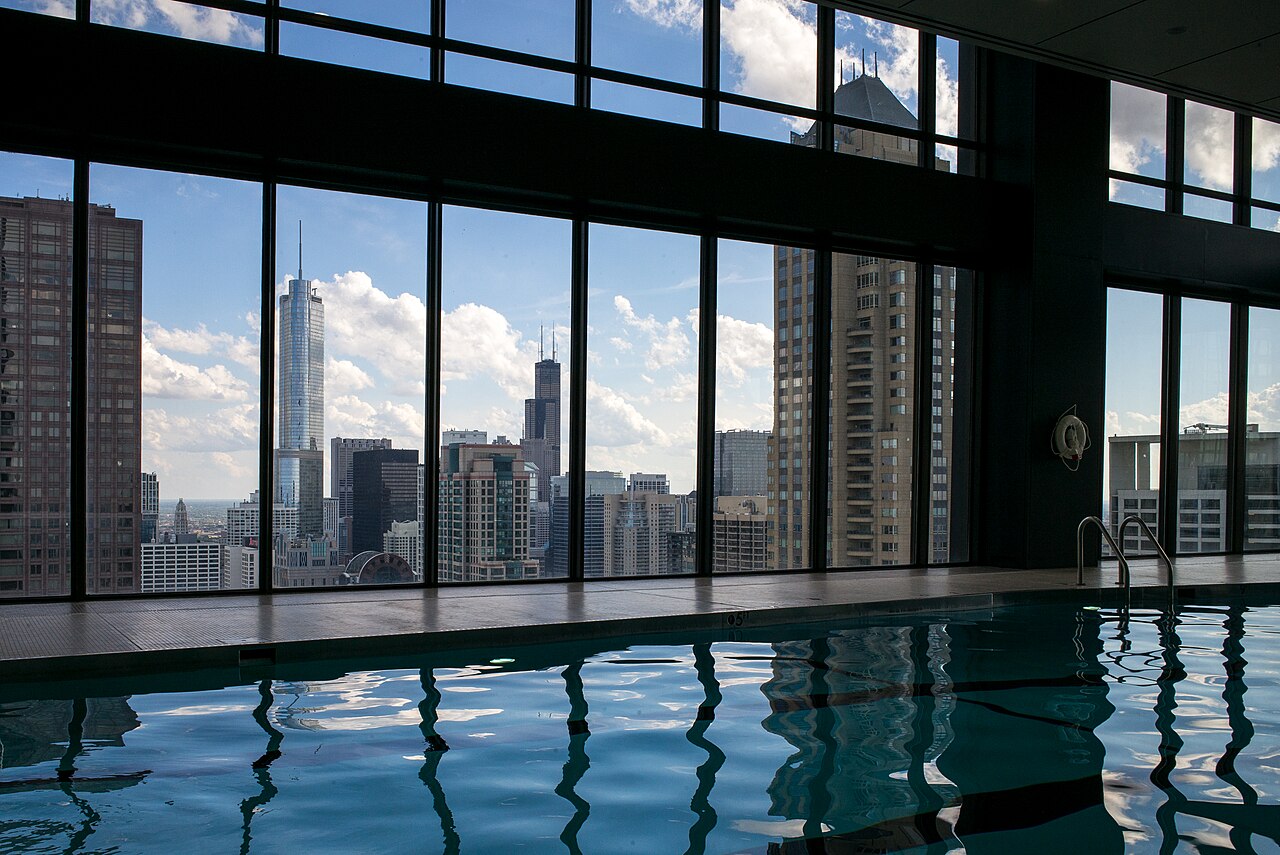
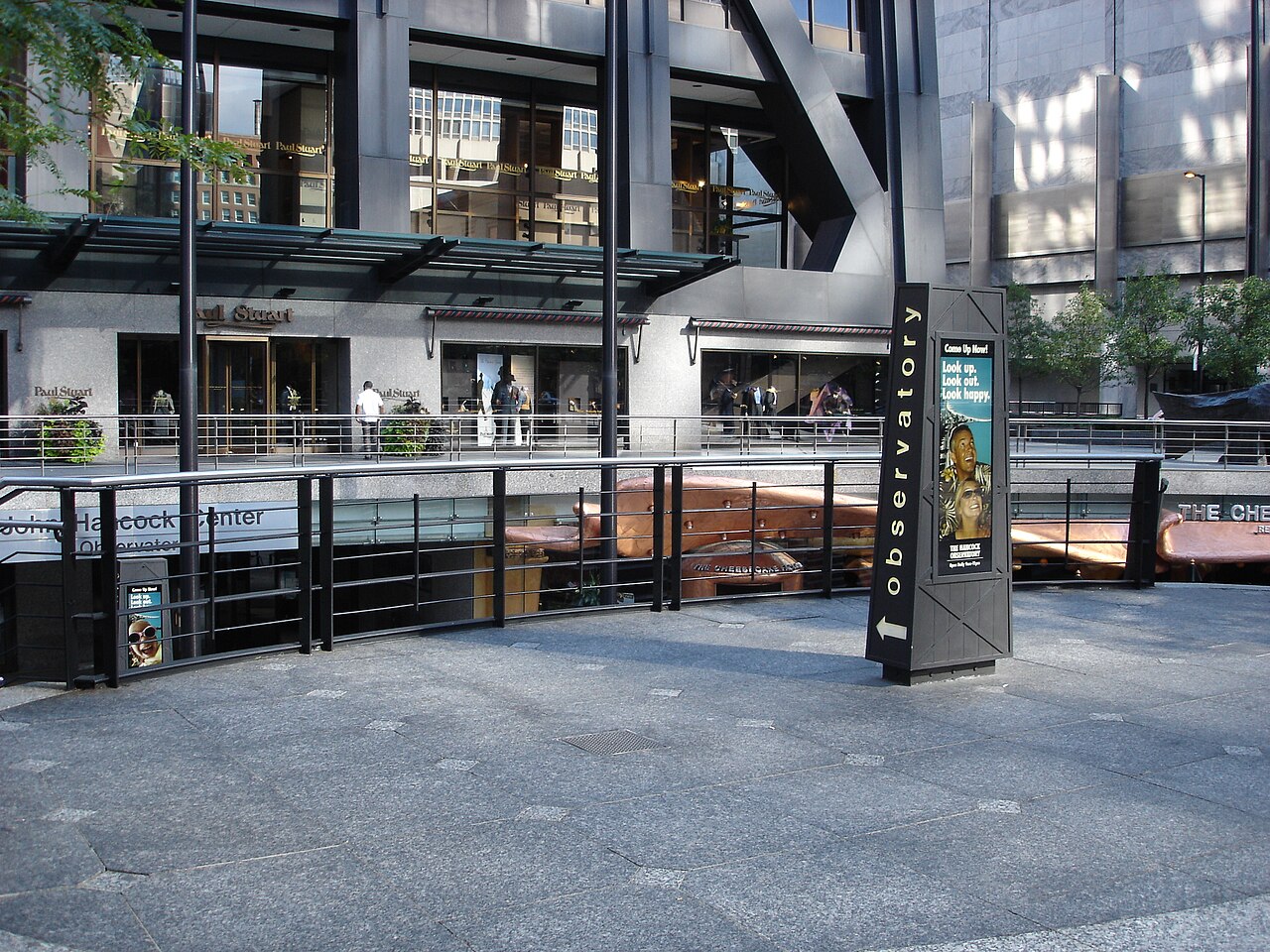
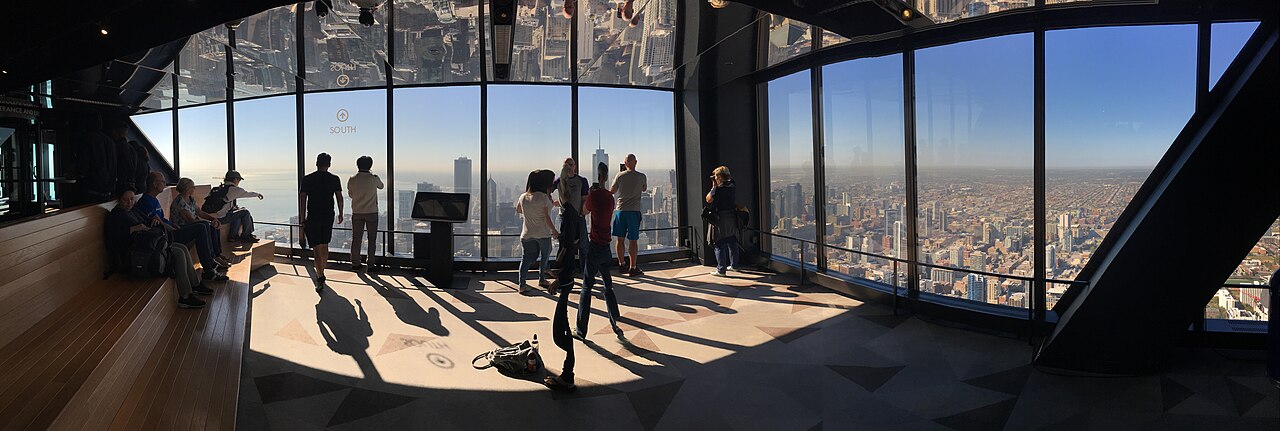
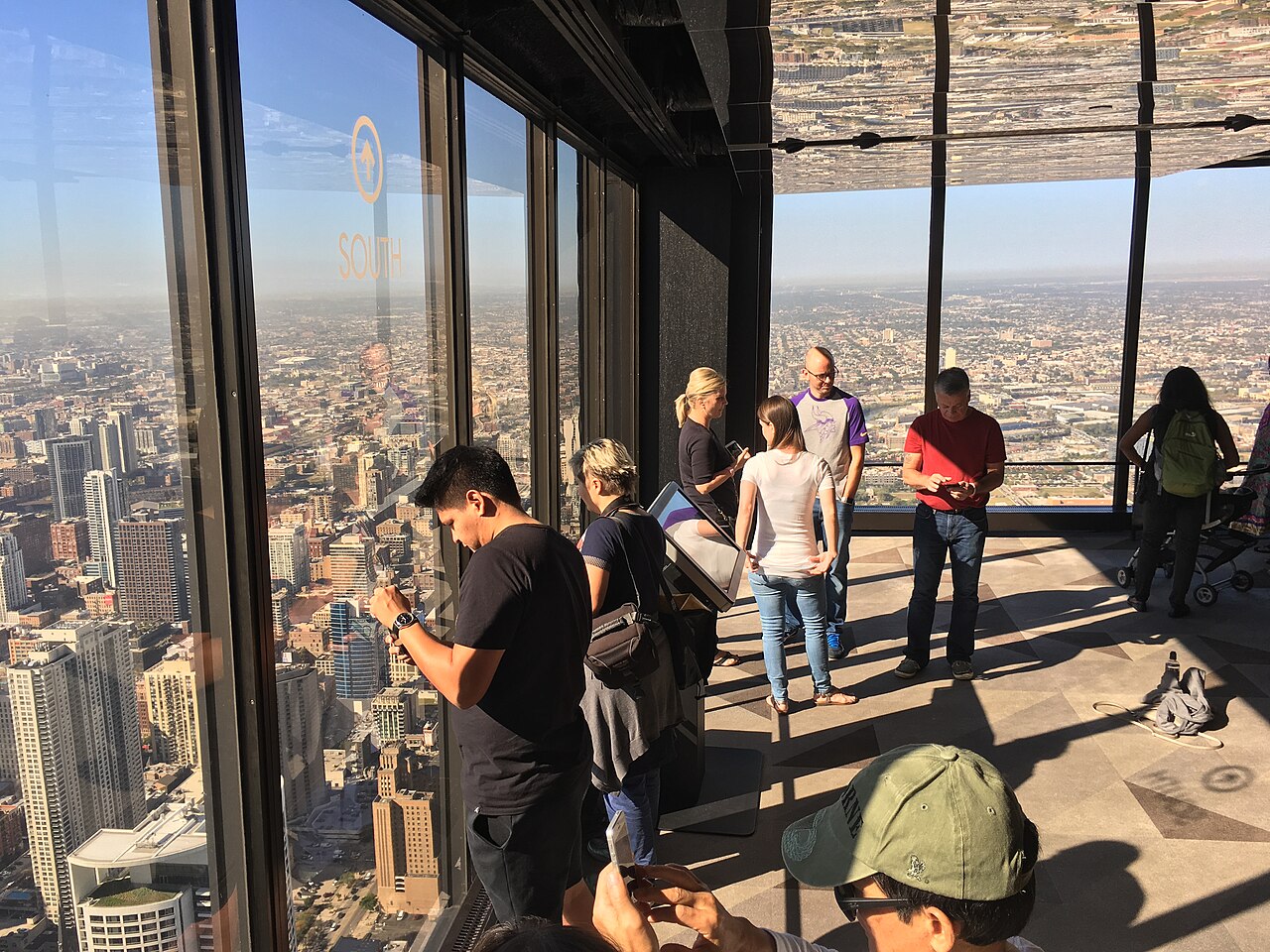
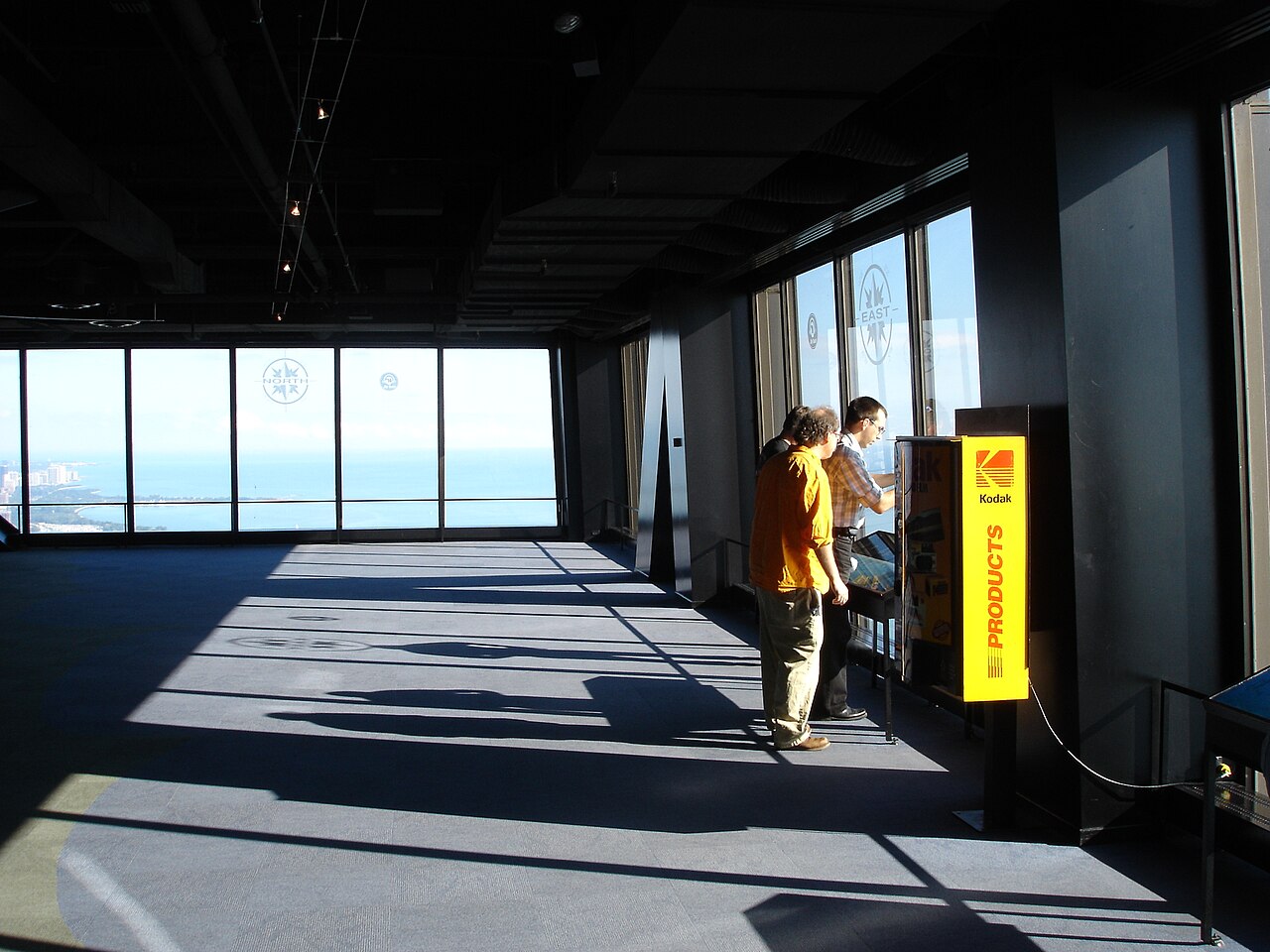
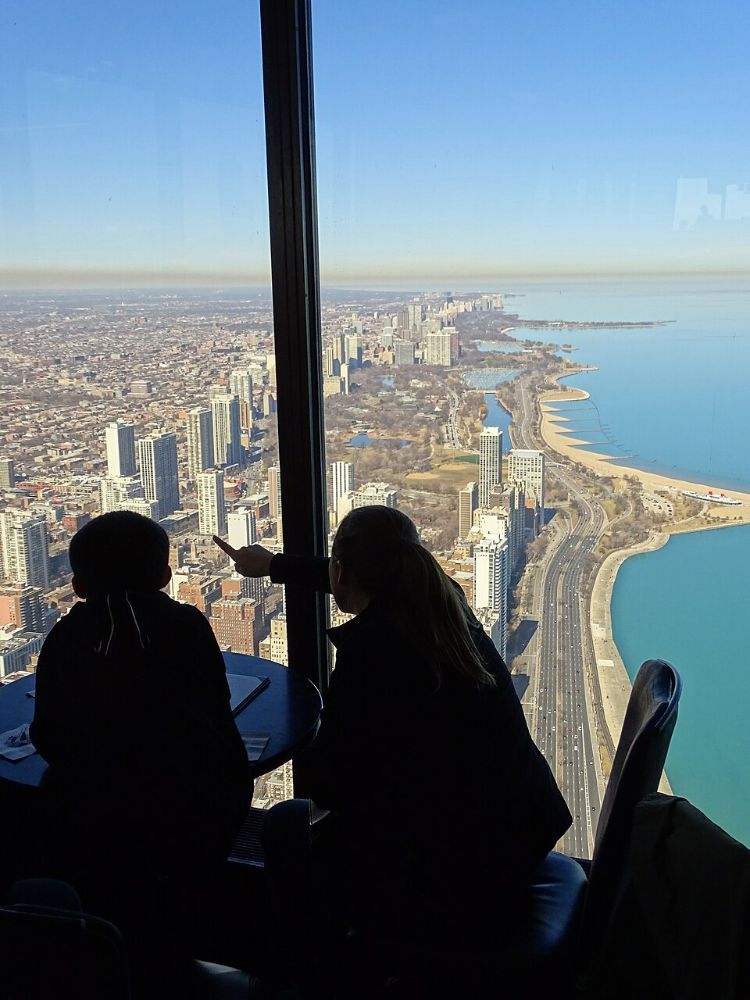
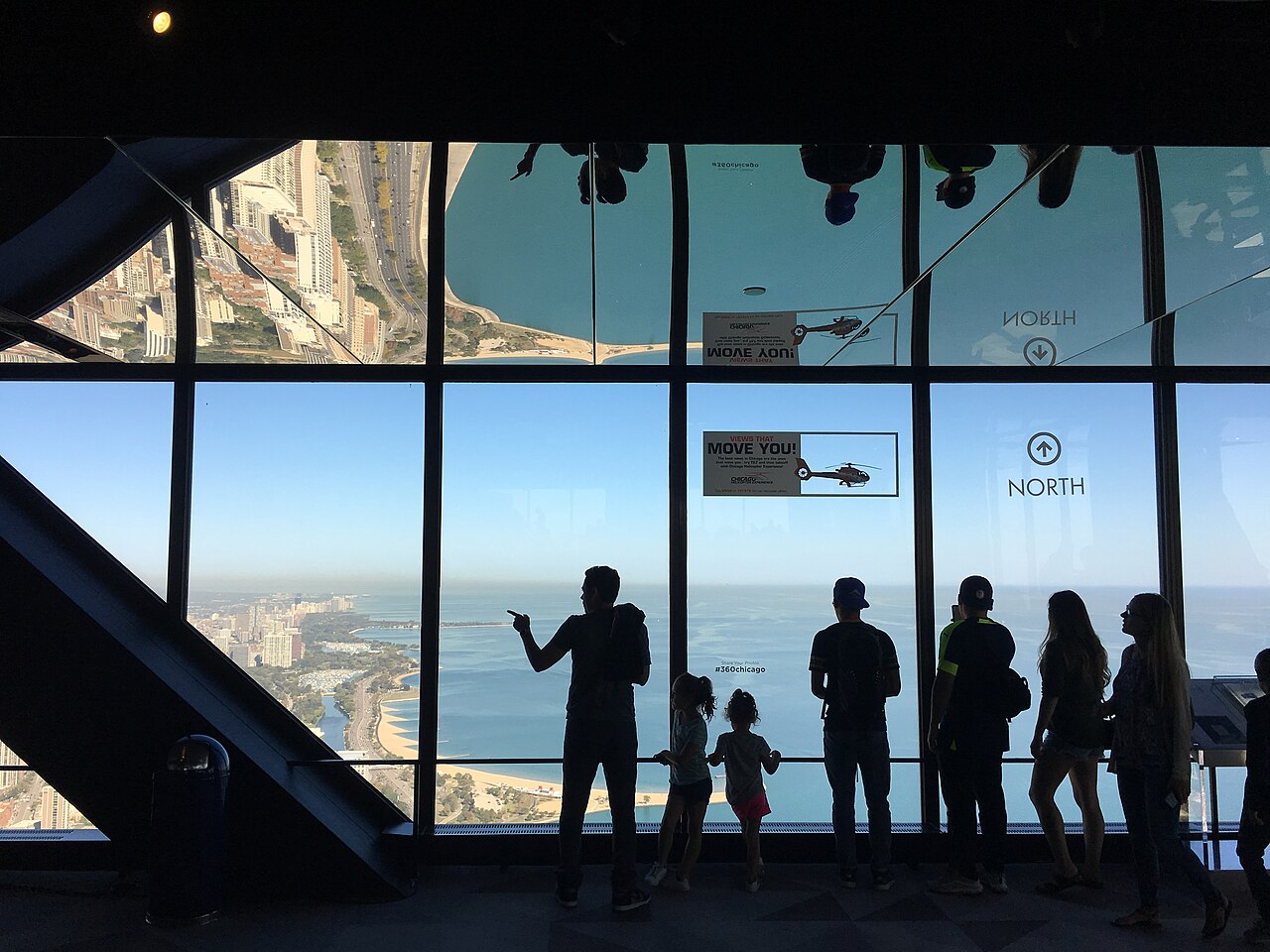
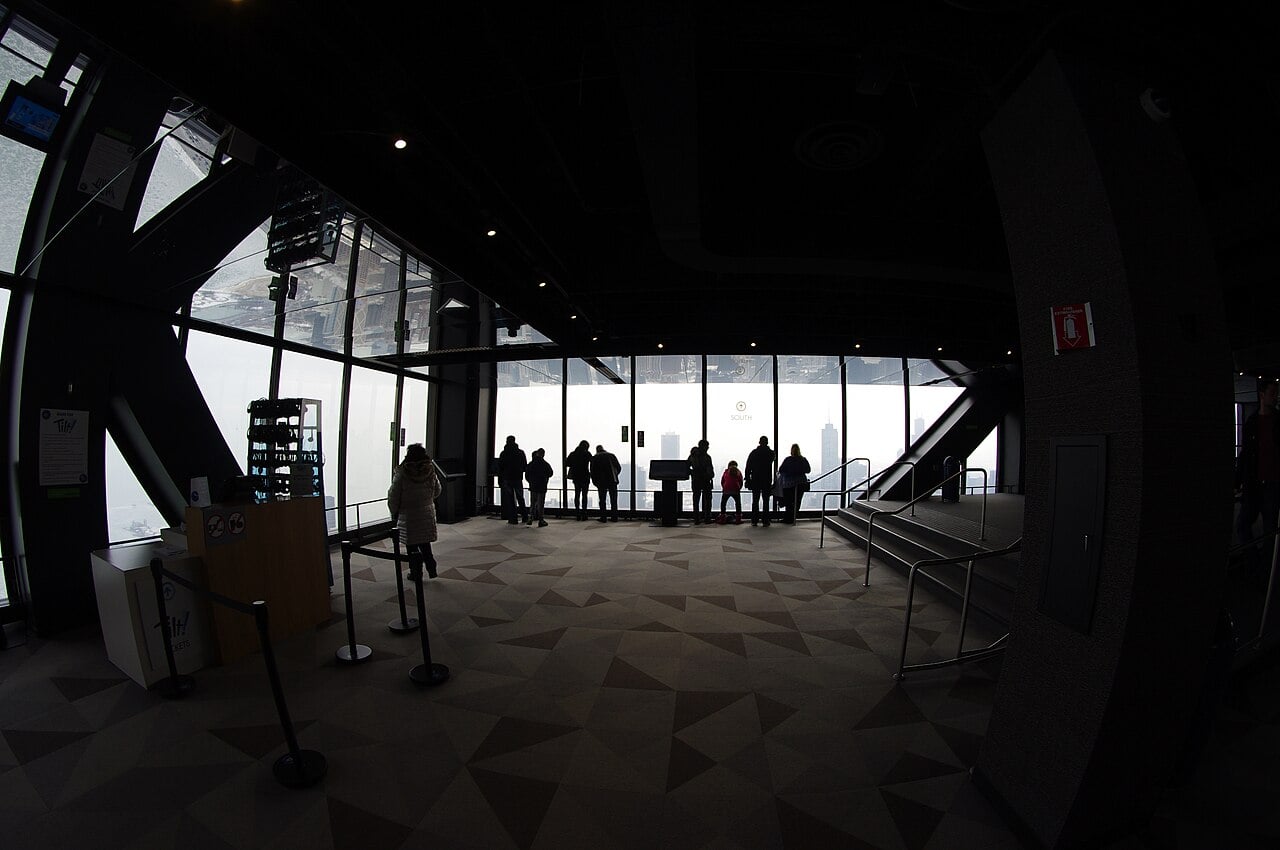
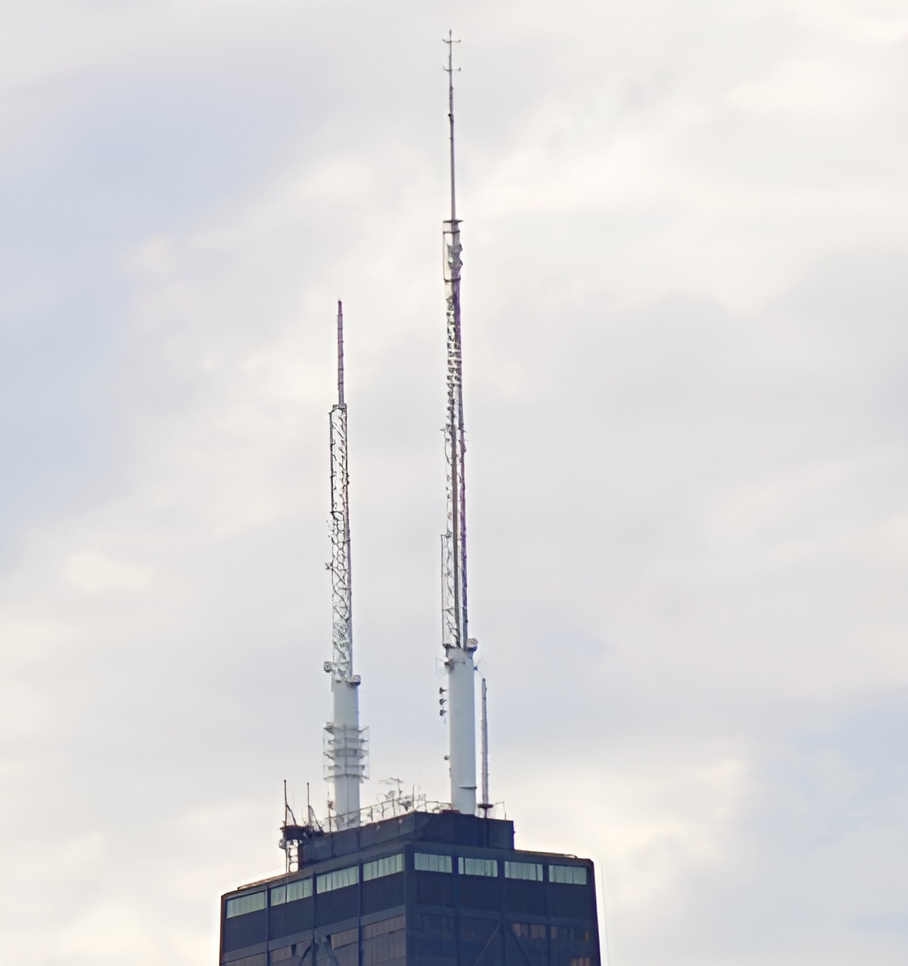
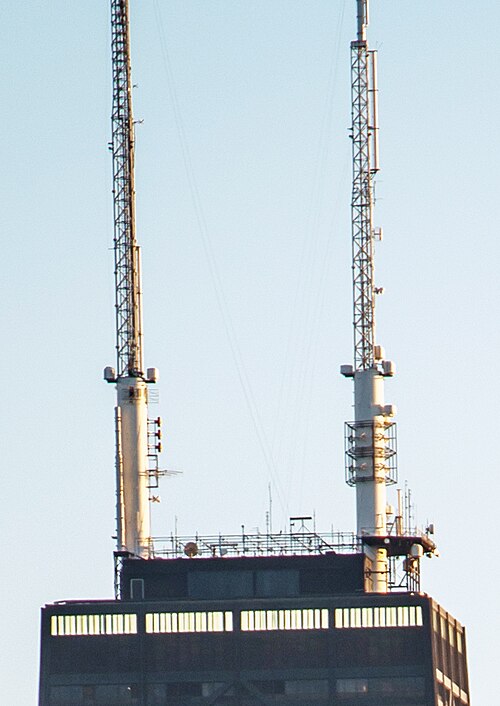
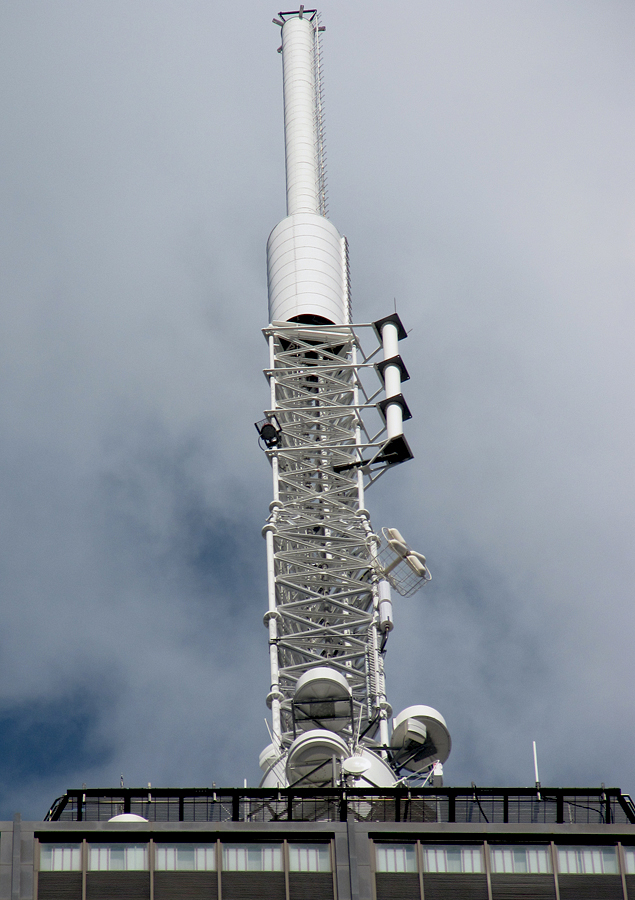
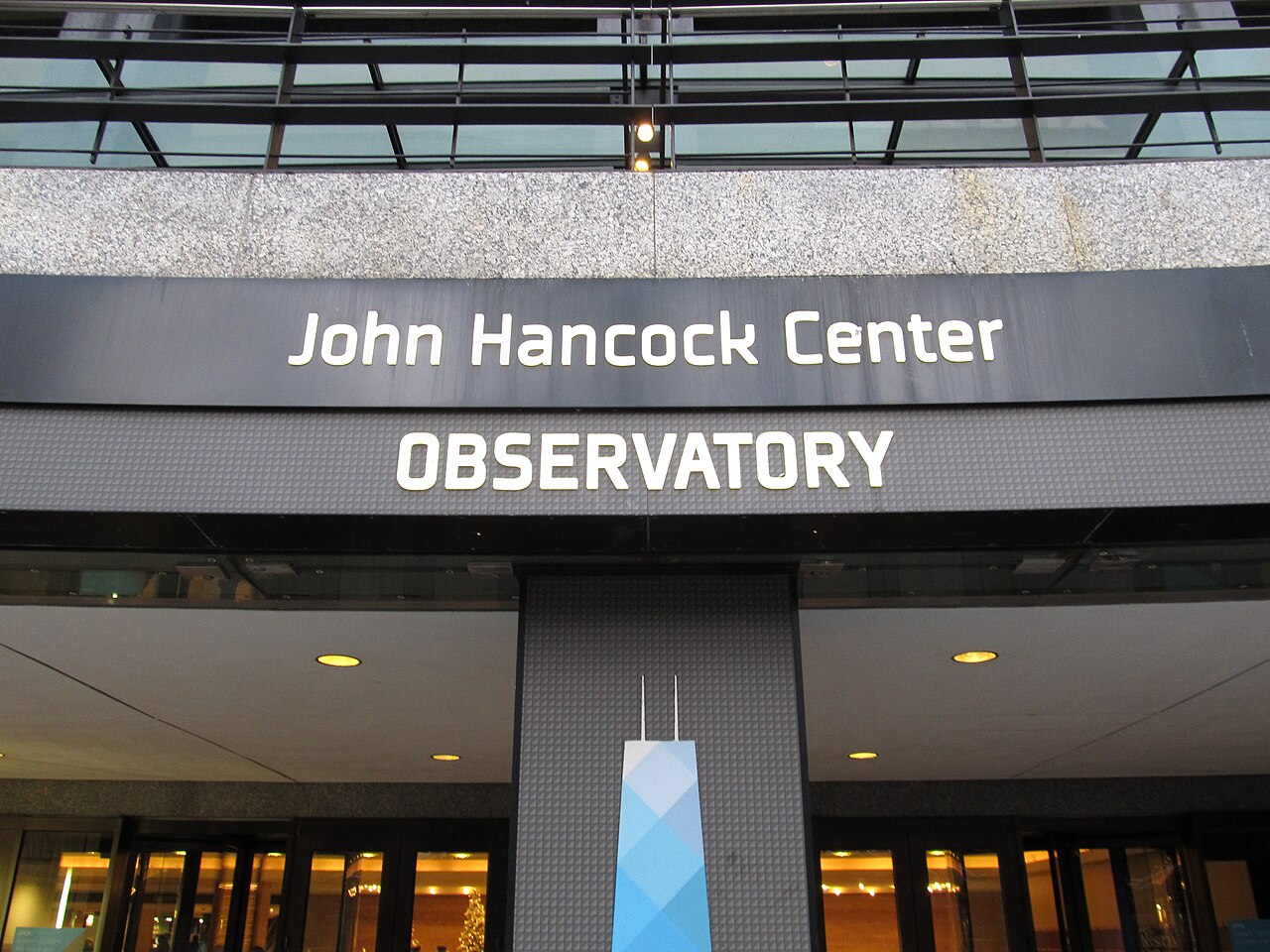
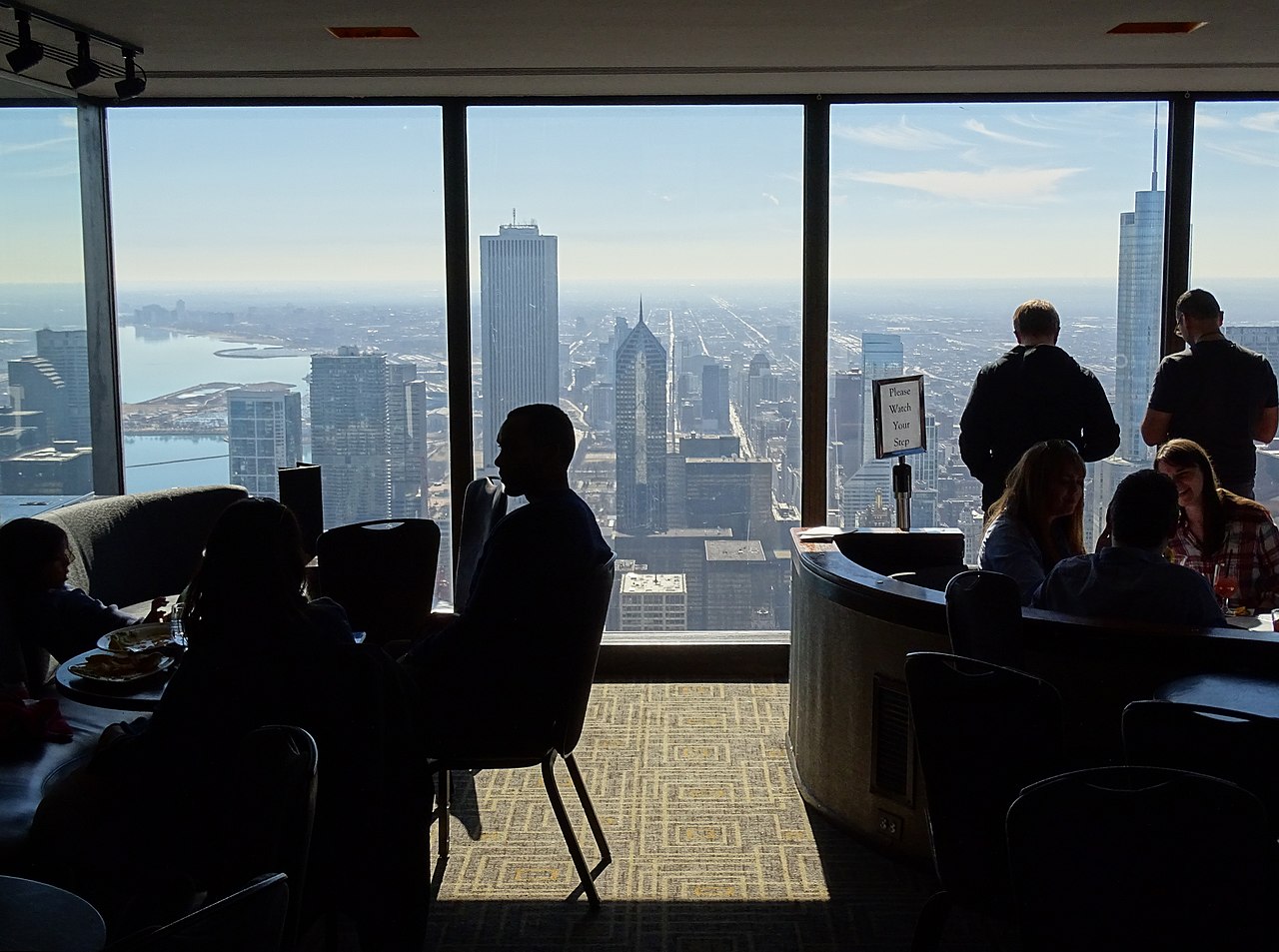
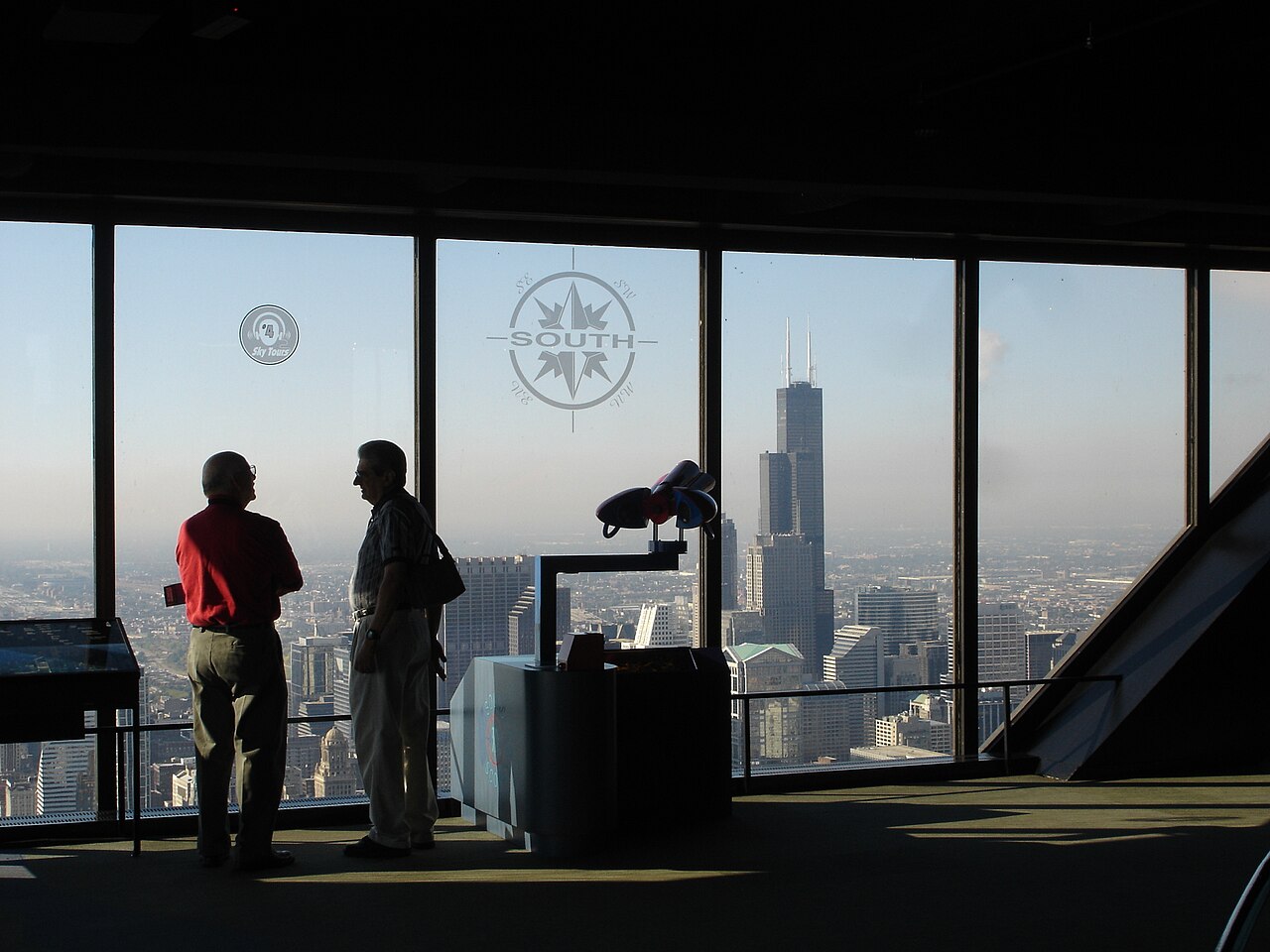
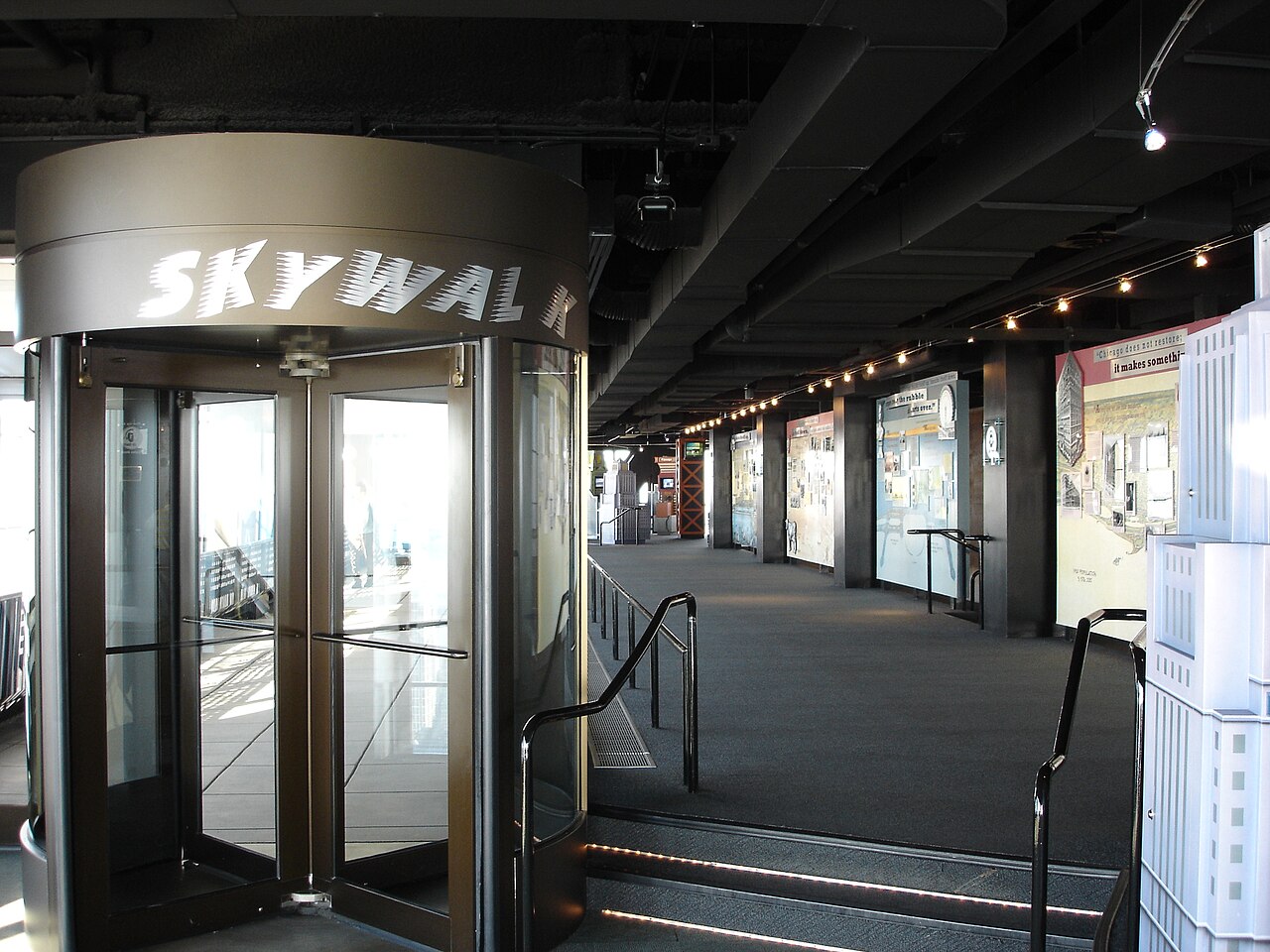
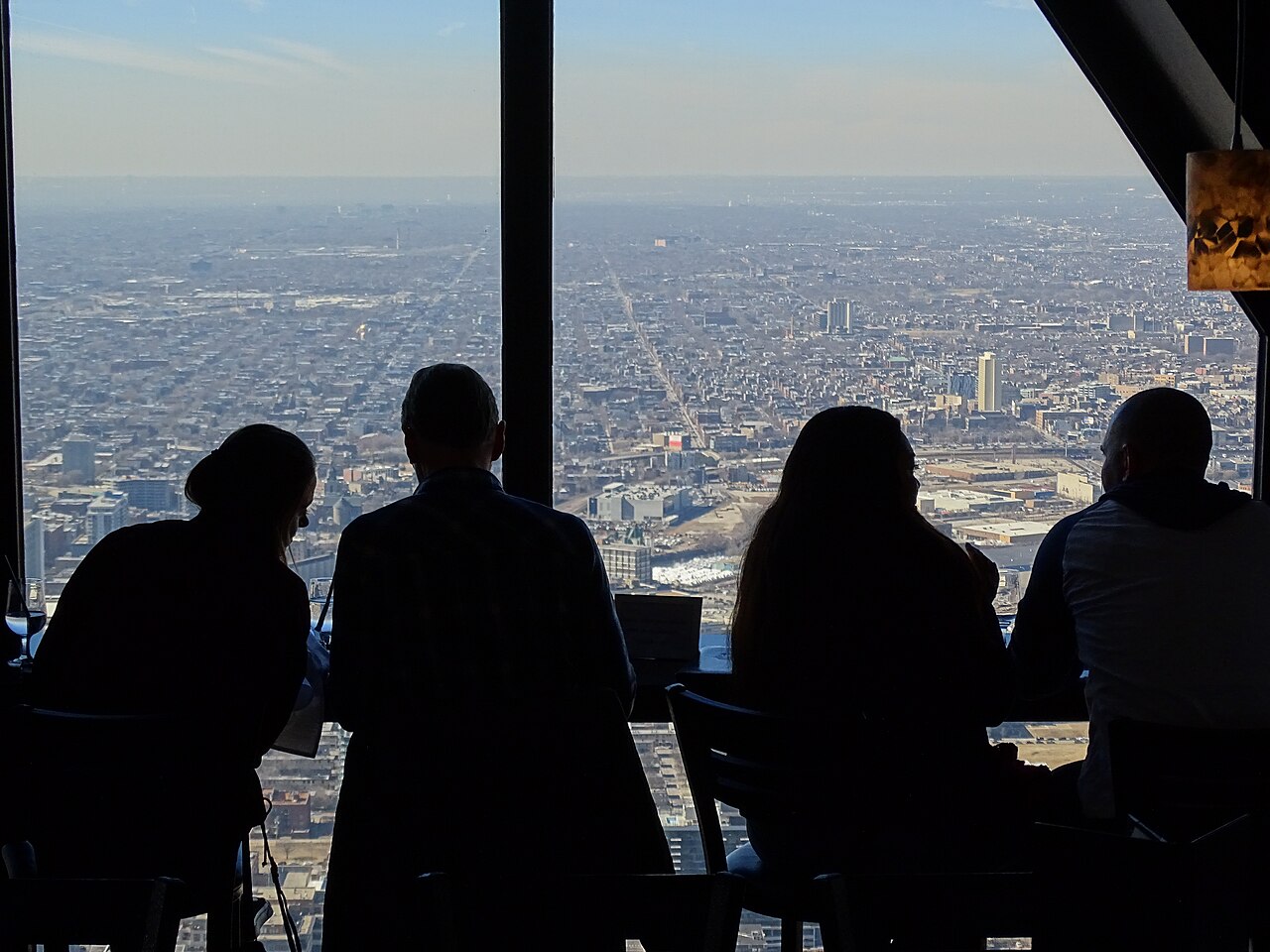
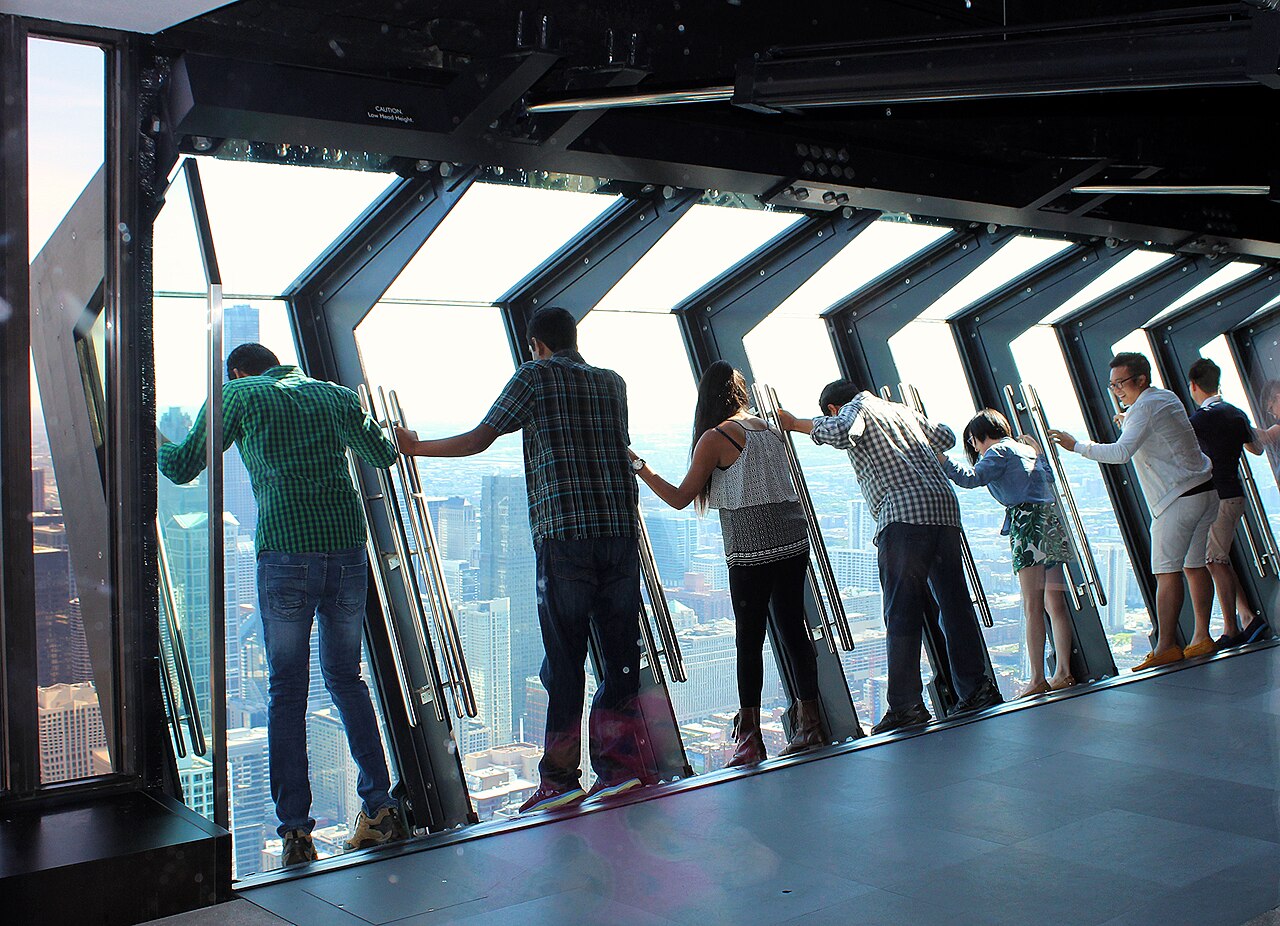
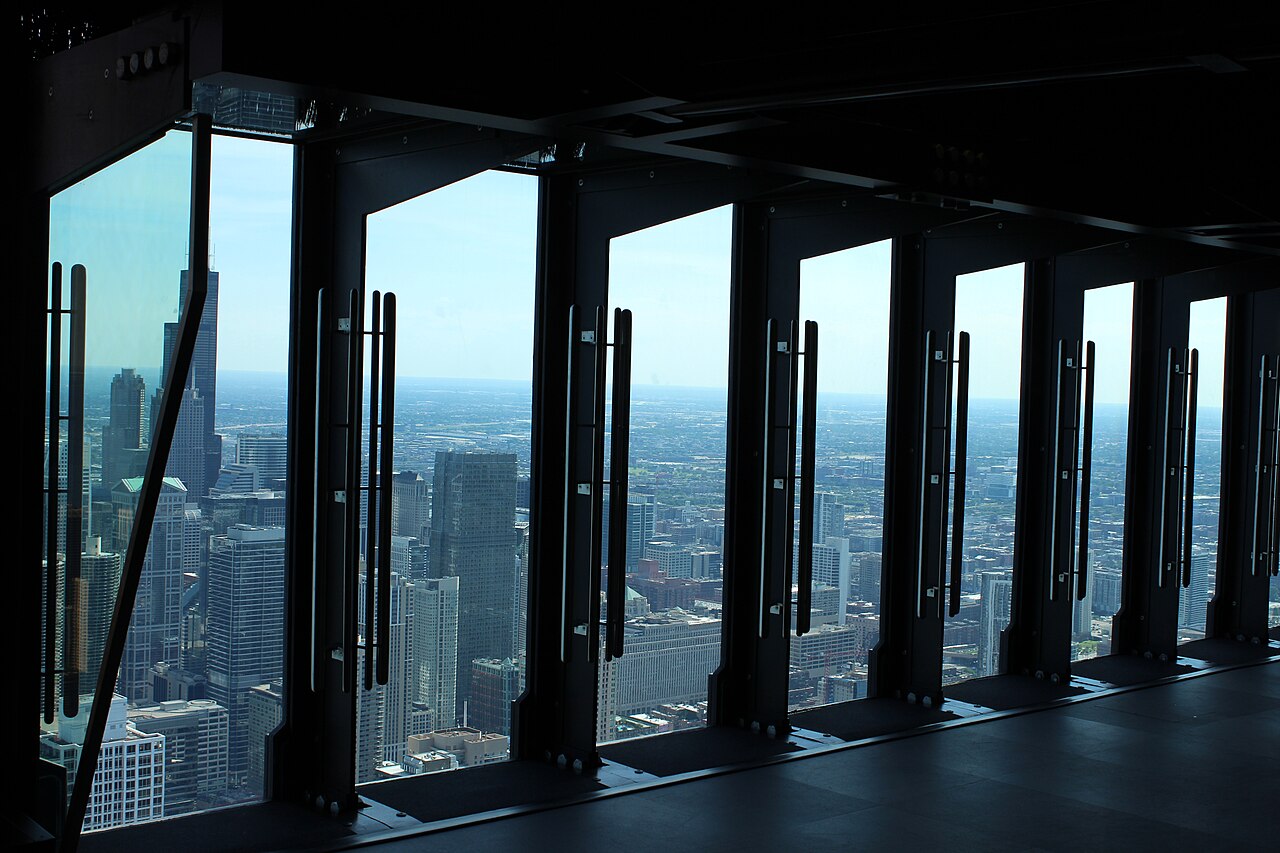
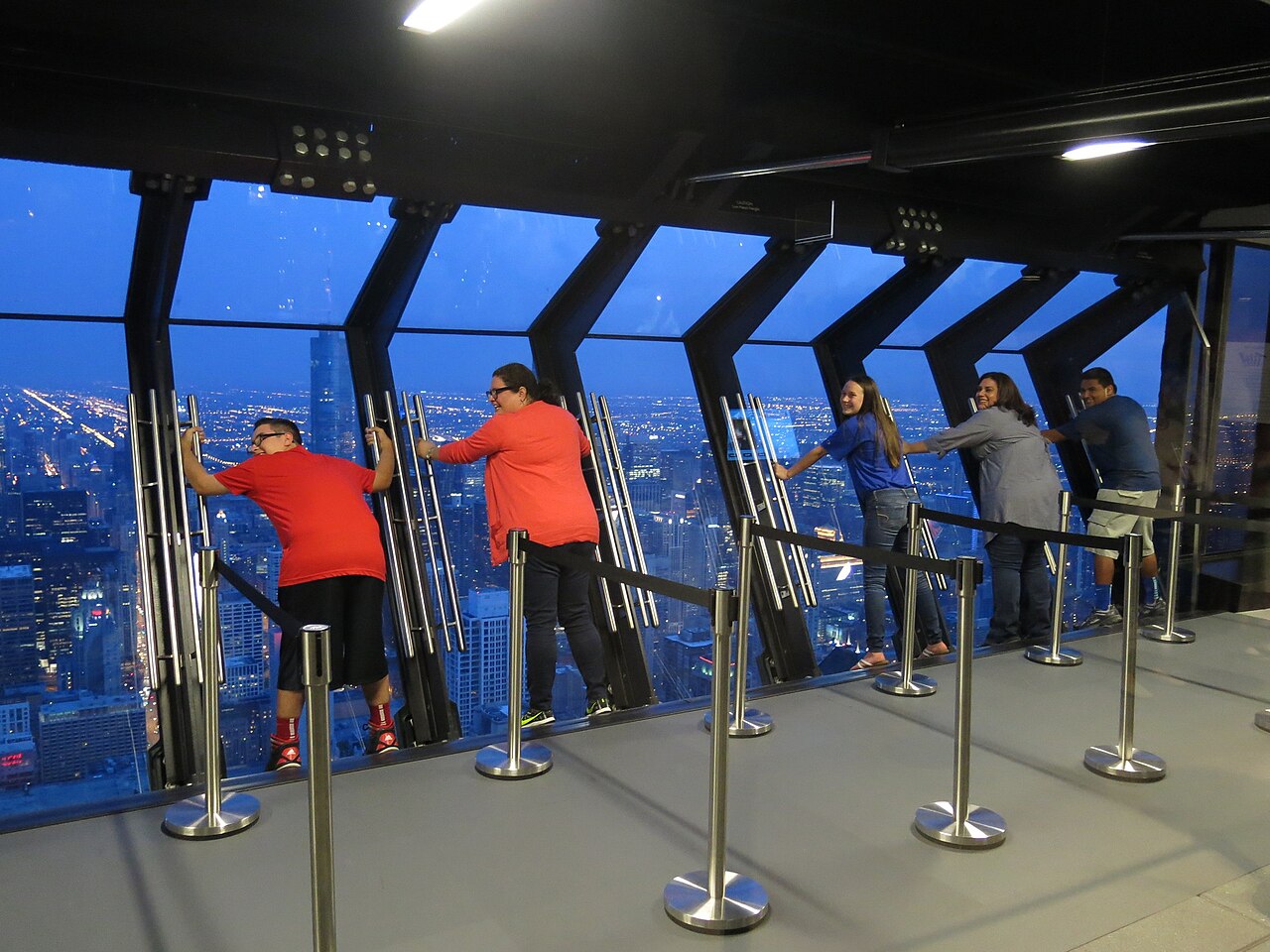
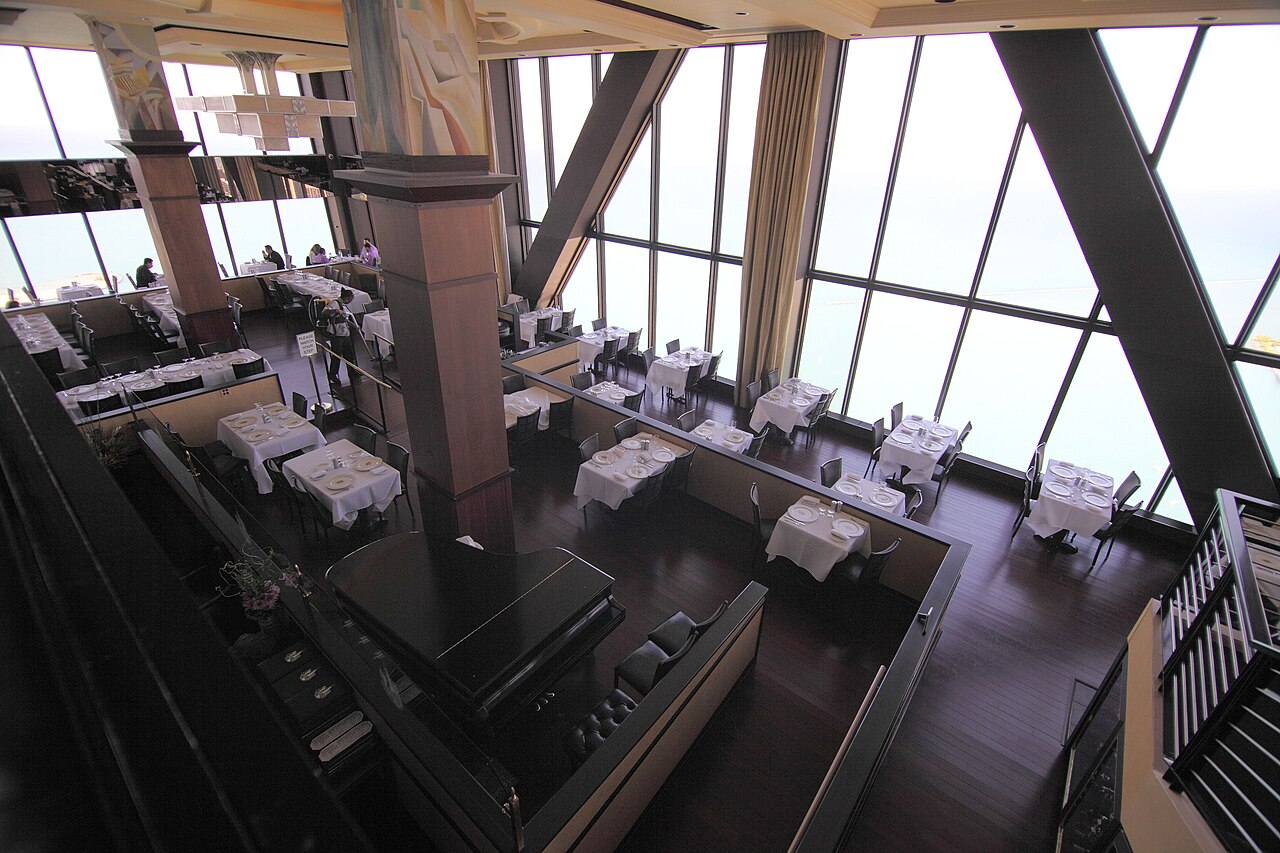
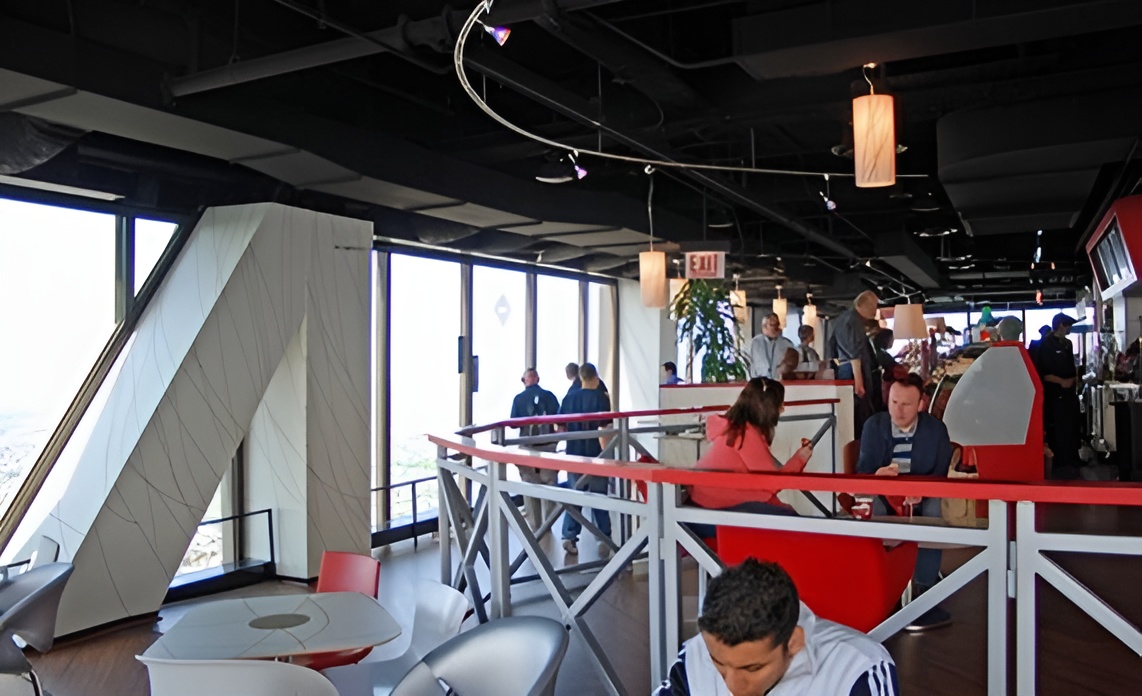
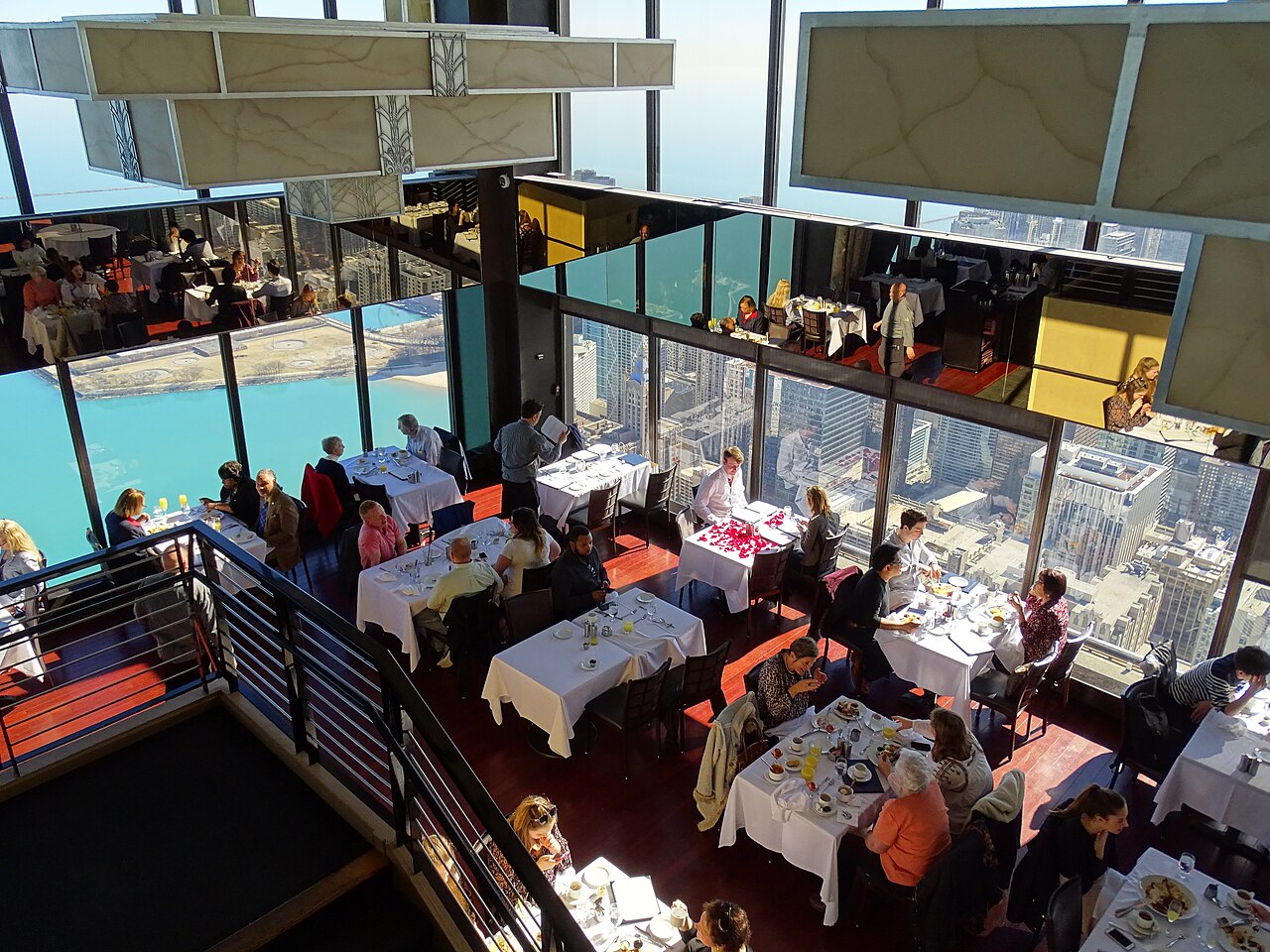
Public access reaches the upper portion of the tower through observation spaces, including the 94th-floor deck. These elements extend the building’s role beyond private occupation, reinforcing the idea of a vertical urban system where multiple functions coexist.
Influence extends beyond Chicago, as the project established the diagonalized tube as a model for tall buildings. The integration of structure, form, and program informed later developments in structural expressionism and high-rise design.
Project Gallery





Project Location
Address: 875 North Michigan Avenue, Chicago, Illinois 60611, United States
Location is for general reference and may represent a city or country, not necessarily a precise address.

