

The SOFTLAB at Penn State’s Stuckerman Center for Design Computing, led by Felecia Davis, investigates how responsive textiles redefine traditional architectural structures and forms. The exhibition “Patterning with Heat and Water: Knitted Responsive Tension Structures” showcases Davis’s research, alongside textile designer Delia Dumitrescu, on textiles that respond dynamically to environmental changes.
The exhibition will be held at Woskob Family Gallery from September to December 2024, featuring an opening reception on October 4 from 5 to 8 PM. As part of the event, an artist talk by Felecia Davis will take place at 6:30 PM, followed by a musical performance titled Music of the Circles I, composed by Gabriel L. Newvine, scheduled for 7 PM. The exhibition design team also includes input from the Woskob Family Gallery’s curator, Ann Tarantino, and technical support from Christopher Markowsky, ensuring the installation’s intricate responsiveness and aesthetic appeal.

Responsive textiles are advanced materials capable of transforming through sensors, microcontrollers, or the natural properties of their fibers. In architecture, such textiles open new avenues in design, allowing spaces to adapt to environmental cues, from temporary enclosures to permanent installations.
Davis and Dumitrescu’s work examines how these materials, particularly in lightweight textile forms, can be integrated into responsive architectural designs. The research benefits from collaborative input, with Dumitrescu contributing expertise from the Smart Textiles Lab at the University of Borås in Sweden, while Davis leads material experimentation and prototyping at SOFTLAB.
Their research explores two primary techniques to alter patterns in knitted textile tubes under tension. The first method leverages human interaction with a microcontroller that adjusts electrical currents, enabling a transformation of the textile’s pattern. In the second method, water-soluble yarns dissolve under specific conditions, providing a way for textiles to respond visually to environmental changes.

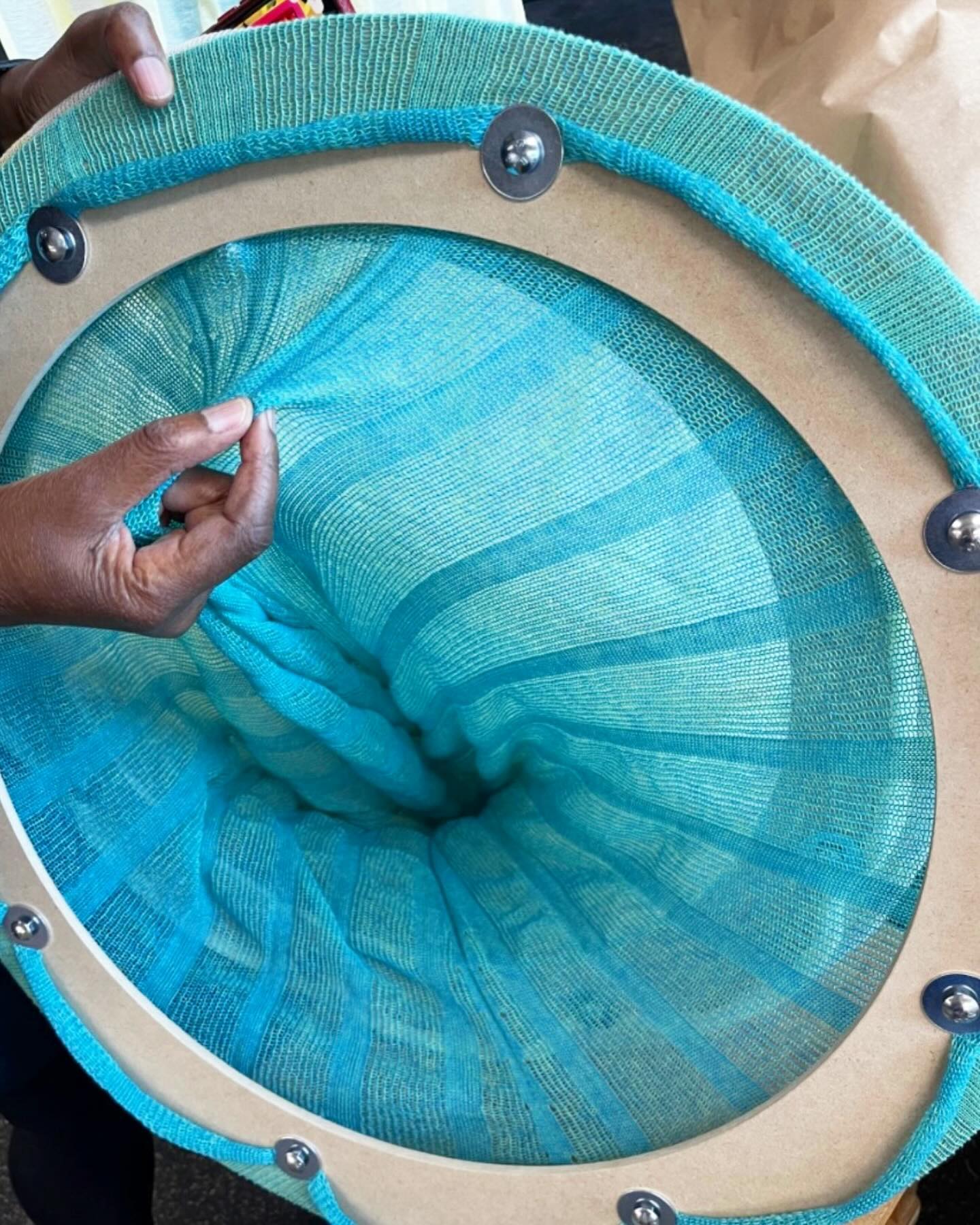
Davis’s work in SOFTLAB centers on creating textiles that challenge conventional architectural frameworks, while Dumitrescu, from the Smart Textiles Lab at the University of Borås in Sweden, focuses on expressive textile functionalities that redefine how textiles are perceived as both artistic and practical elements. Together, they examine the structural and functional possibilities of textiles, exploring their responsiveness and application potential.


The first textile iteration in this project, represented by white knitted tubes, incorporates a pixelated pattern formed with heat-sensitive yarn that melts under electrical current, creating a “writing” effect as certain areas of the fabric open. This method leverages design consultation from the technical team, led by Christopher Markowsky, ensuring precision in the interaction between electrical currents and yarn transformation.
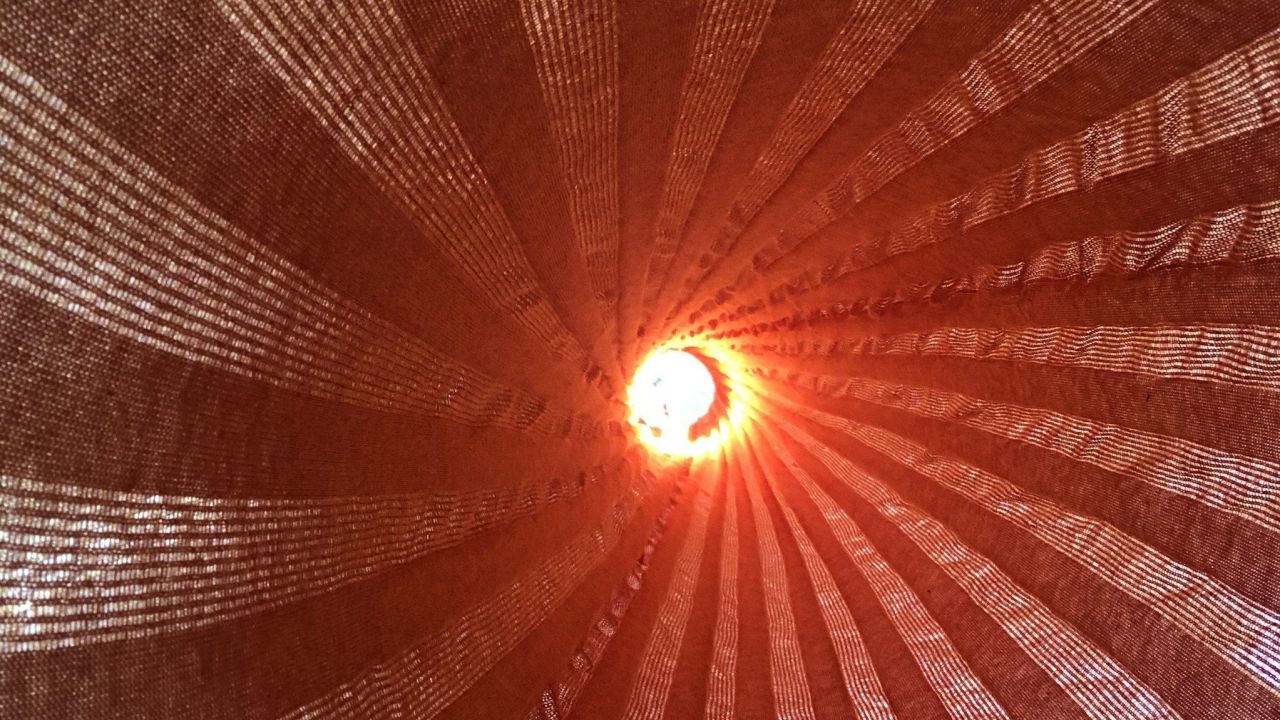
A second textile type, created with colorful tubes, employs water to induce changes. Water, applied by spray or brush, activates yellow yarn that dissolves to reveal the color beneath. These textiles demonstrate how dissolvable materials can form temporary architectural elements that fade when unnecessary or adapt to interior spaces as customizable partitions. Textile dyeing and preparation for this installation were supported by Ann Tarantino’s curatorial input, emphasizing the role of color dynamics in creating an engaging spatial experience.
Gallery
Location
Address: 146 S Allen St, State College, PA 16801, United States
Location is for general reference and may represent a city or country, not necessarily a precise address.

