

Architects: Fariborz Sahba
Year: 1986
Photography: Fariborz Sahba, Arpan Das, Arpan Bhatia, Adib Roy, Futo-Tussauds, Wikimedia Commons, Wiki-uk, nomo, michael hoefner, Dinudey Baidya, Rohan singh rawat, Vinayaraj, Nikkul, Jools Asher, Kleidan’s world, Ben Tubby, iamshobhit, viewfinderview, clindstedt, pexels.com, templedairy.in
Structural Engineer: Flint & Neill
Construction: ECC Construction Group (Larsen & Toubro Limited)
Location: Bahapur, Kalkaji, New Delhi, Delhi 110019, India
Client: Baháʼí Faith Community
City: New Delhi
Country: India
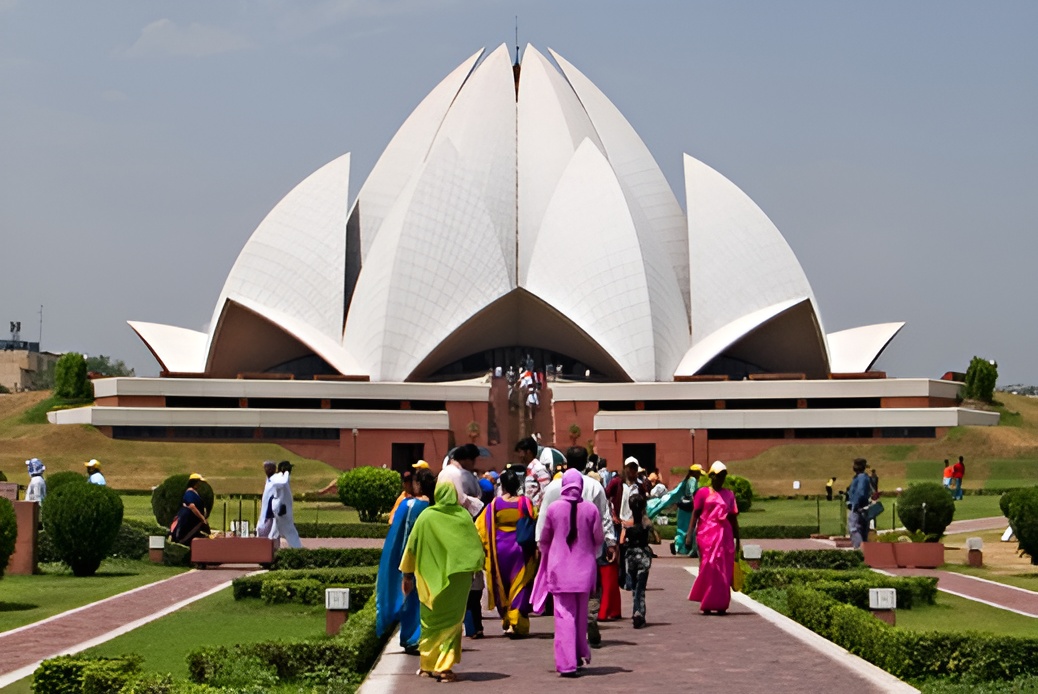
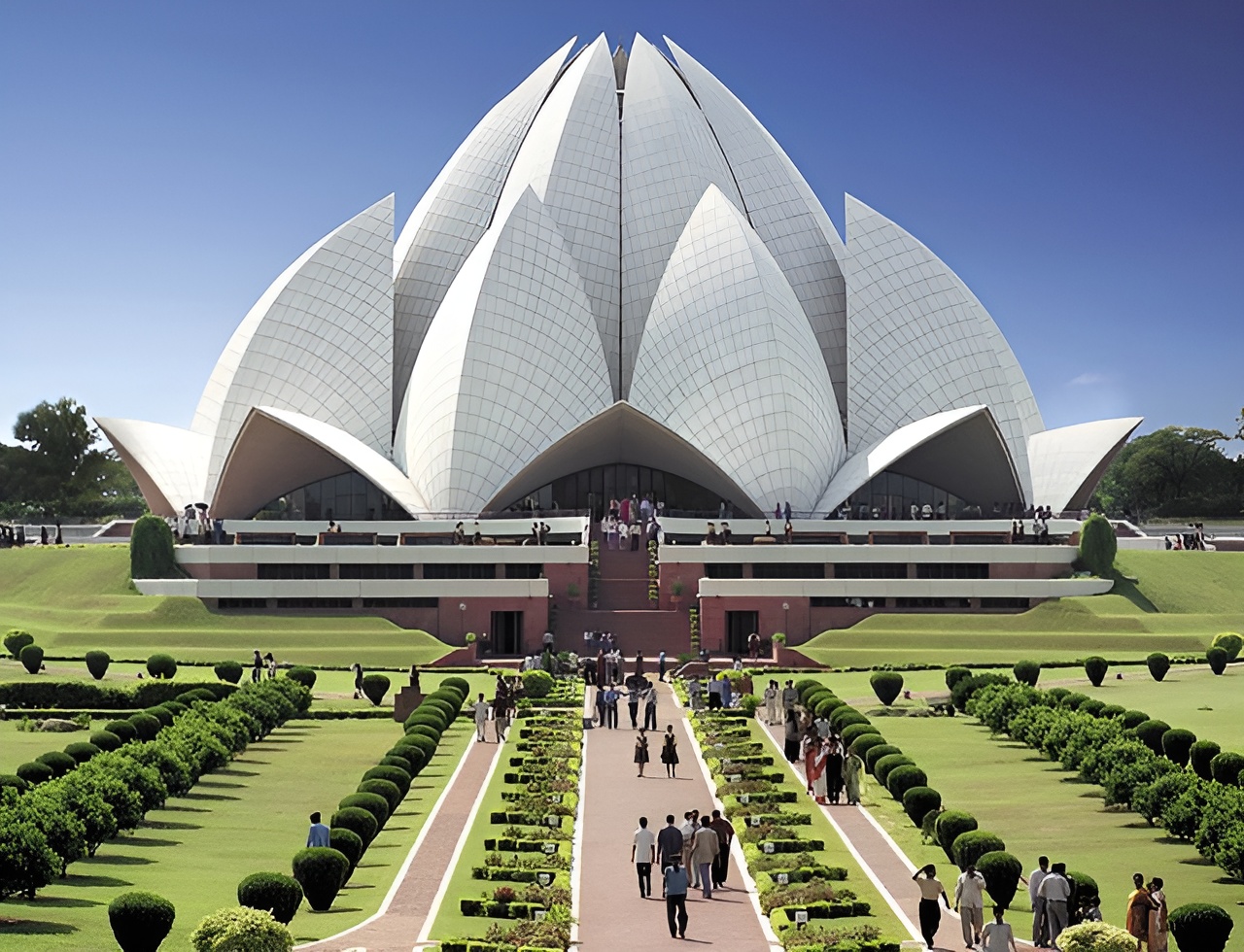
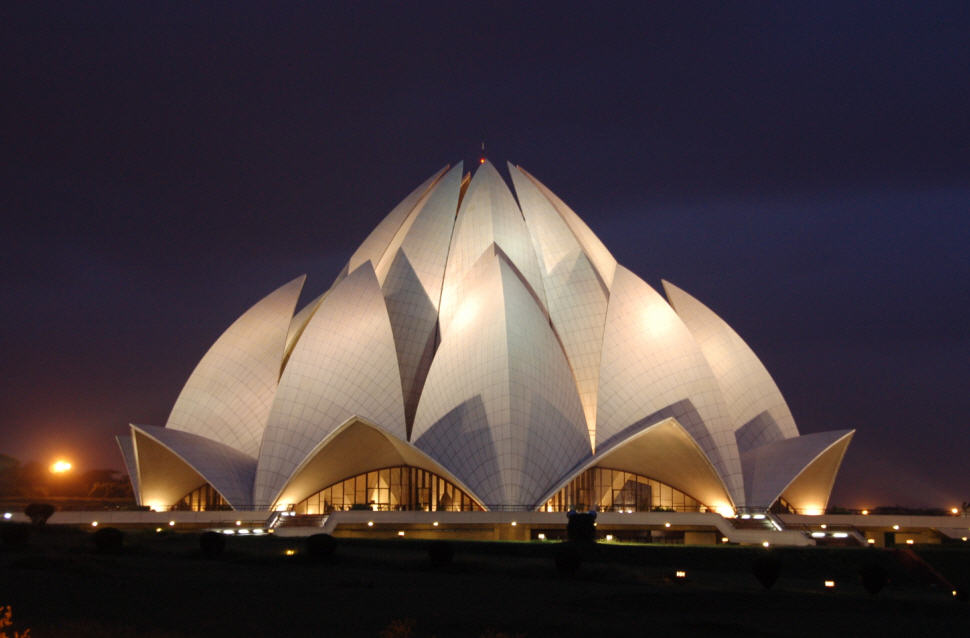
Lotus Temple religious building designed by Fariborz Sahba in New Delhi, India, established a landmark of contemporary religious architecture through a synthesis of biomimetic form, structural innovation, and the Baháʼí principle of universal worship, completed in 1986. Officially known as the Baháʼí House of Worship in New Delhi, the temple serves the Indian subcontinent and functions as a gathering place open to people of all religions and backgrounds. Inspired by the lotus flower, a symbol associated with purity, spirituality, and knowledge across many Indian traditions, the structure is composed of twenty-seven marble-clad concrete petals arranged in groups of three to form nine sides. The design follows the symbolic significance of the number nine within the Baháʼí Faith, creating a circular composition organized around a central prayer hall. Rising more than 34 meters in height, the worship space accommodates approximately 1,300 seated visitors and up to 2,500 people in total. White marble from Penteli, Greece, gives the building its distinctive appearance, while exposed concrete ribs define much of the interior character. The temple stands within a 26-acre landscape that includes gardens and nine surrounding pools, which contribute to the site’s environmental performance and visual identity. Since opening to the public in 1987, the Lotus Temple has become one of the most visited religious and architectural destinations in the world, attracting more than one hundred million visitors. Its combination of engineering, symbolism, and spatial clarity has earned international recognition and numerous architectural awards, establishing the project as one of the most significant religious buildings of the late twentieth century.
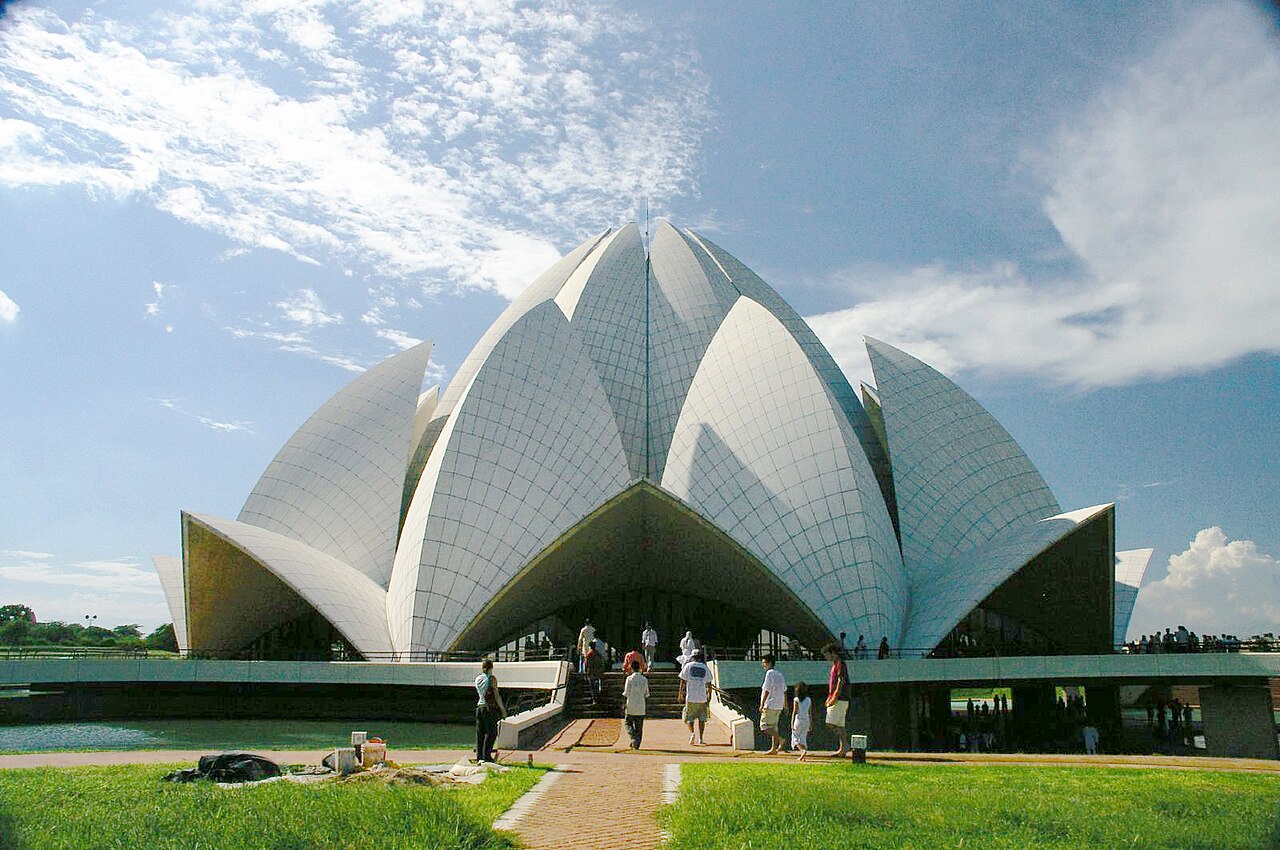
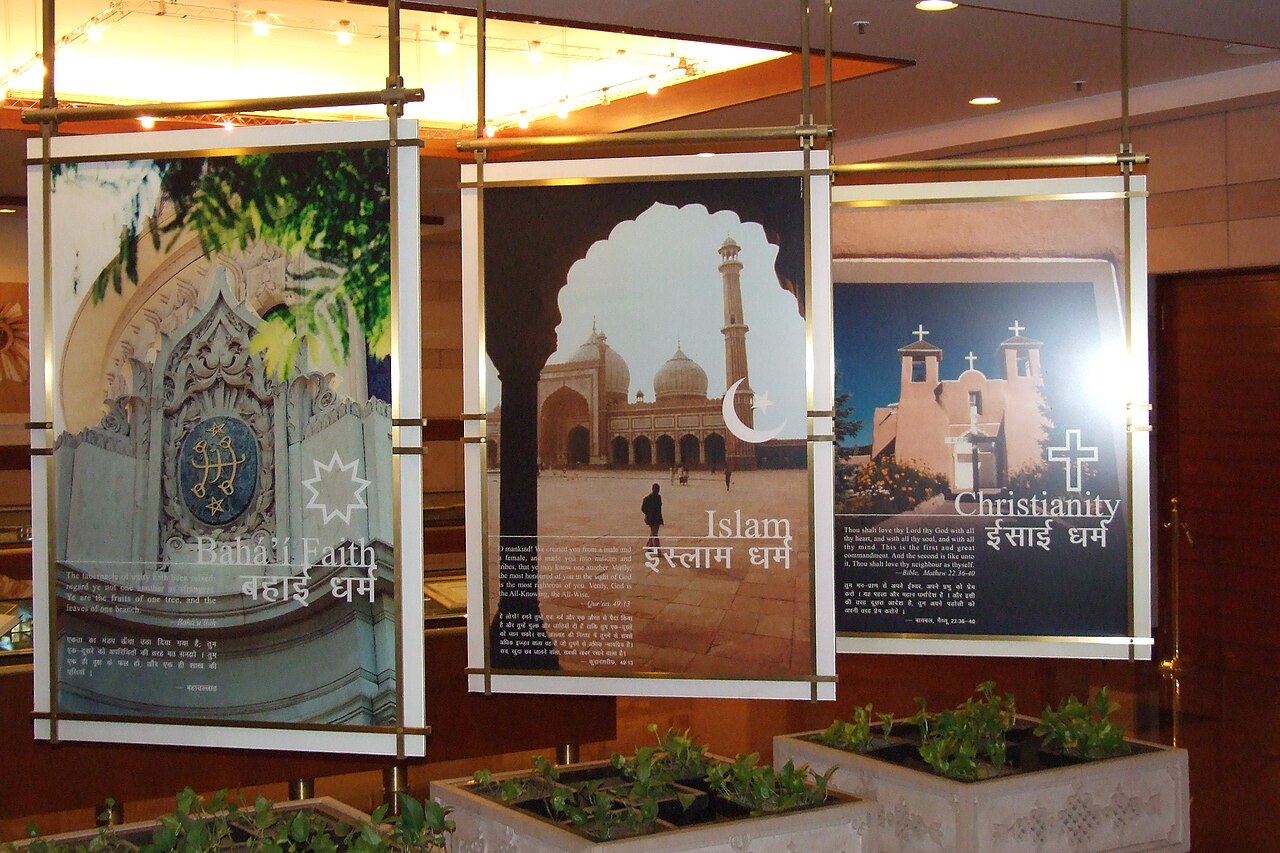
Popularly known as the Lotus Temple, the Baháʼí House of Worship in New Delhi was designed by Iranian architect Fariborz Sahba and completed in 1986. The project is one of the Baháʼí Houses of Worship established around the world and serves the Indian subcontinent. Open to all people regardless of religious affiliation, the temple functions as a place for reflection, prayer, and contemplation.
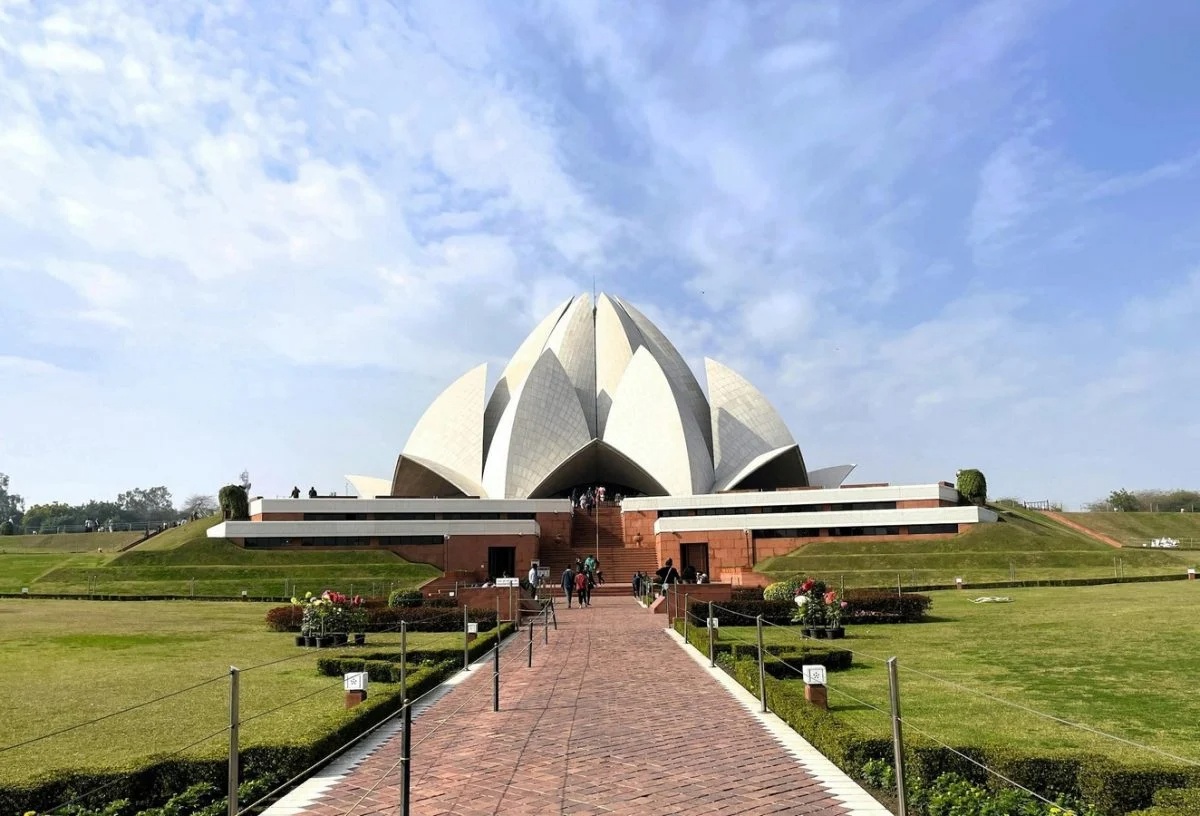
The project emerged after Sahba was commissioned in 1976 to design a house of worship that would embody the Baháʼí principles of unity, inclusiveness, and spiritual gathering. Construction began following the laying of the foundation stone in 1977, and the building was dedicated in December 1986 before opening to the public on January 1, 1987.
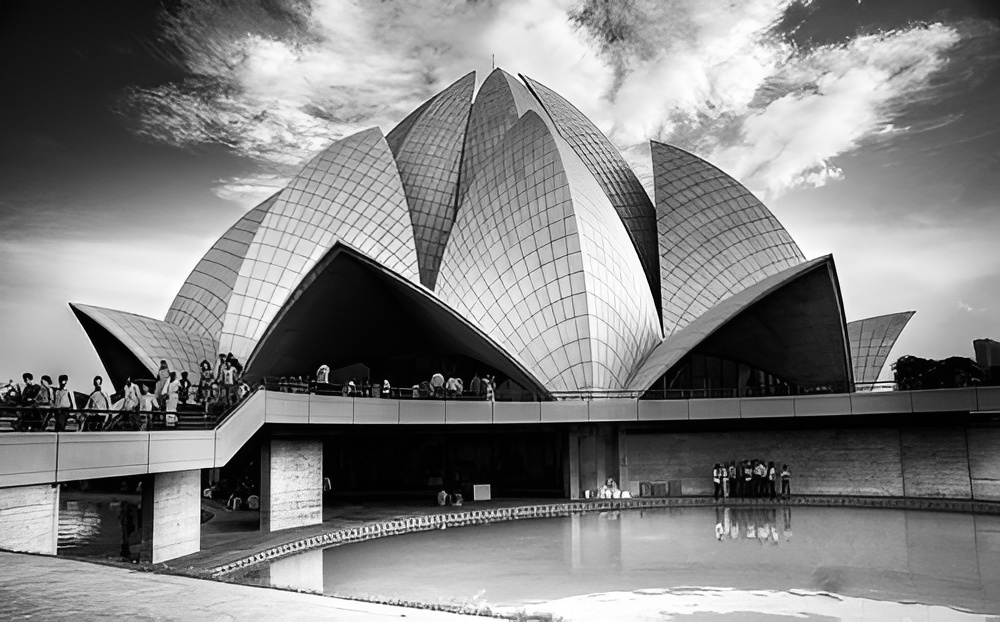
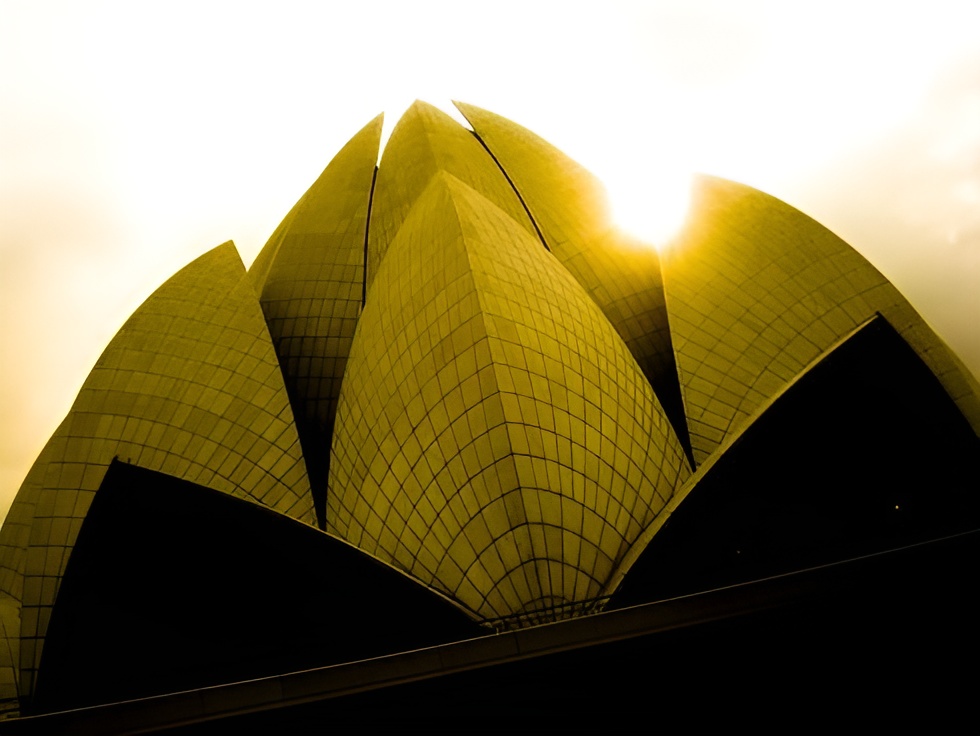
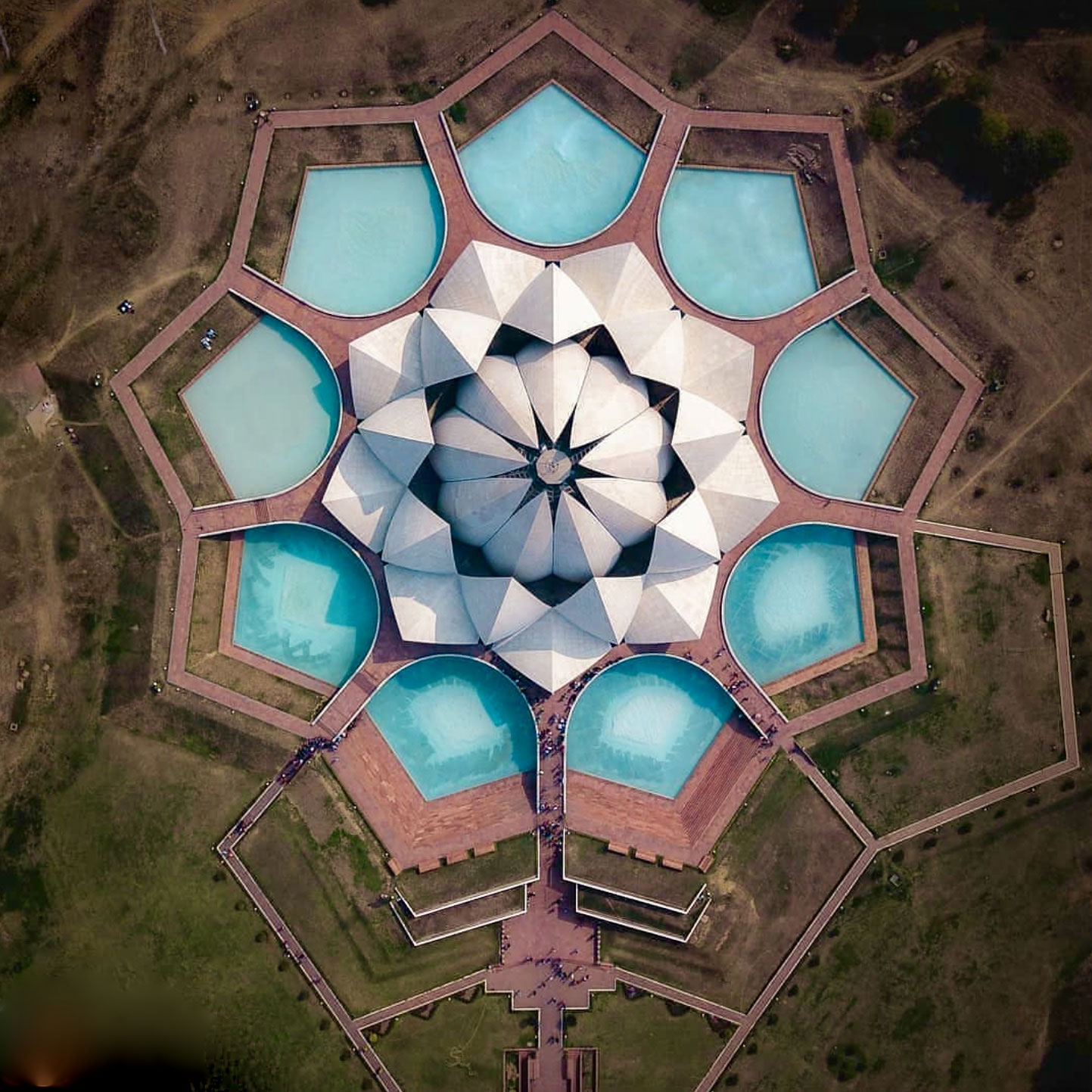
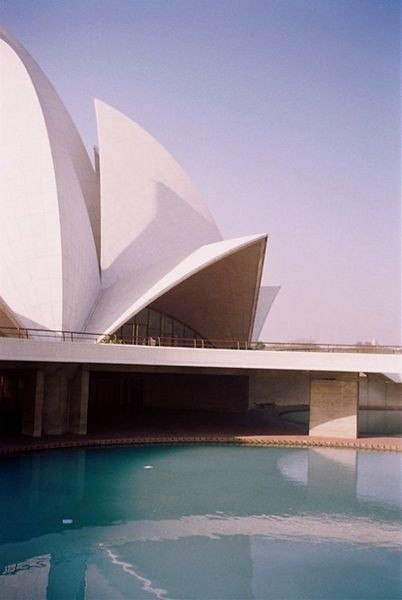
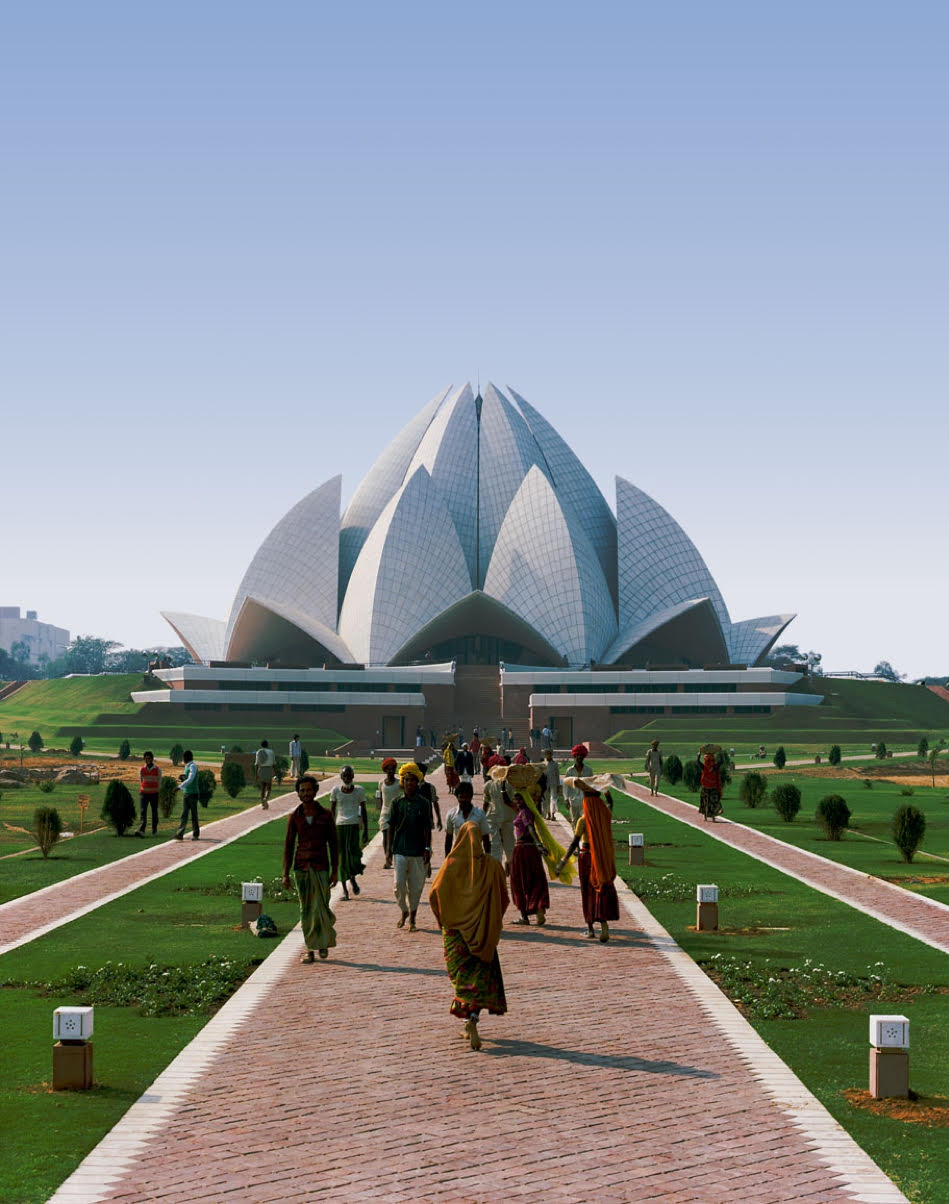
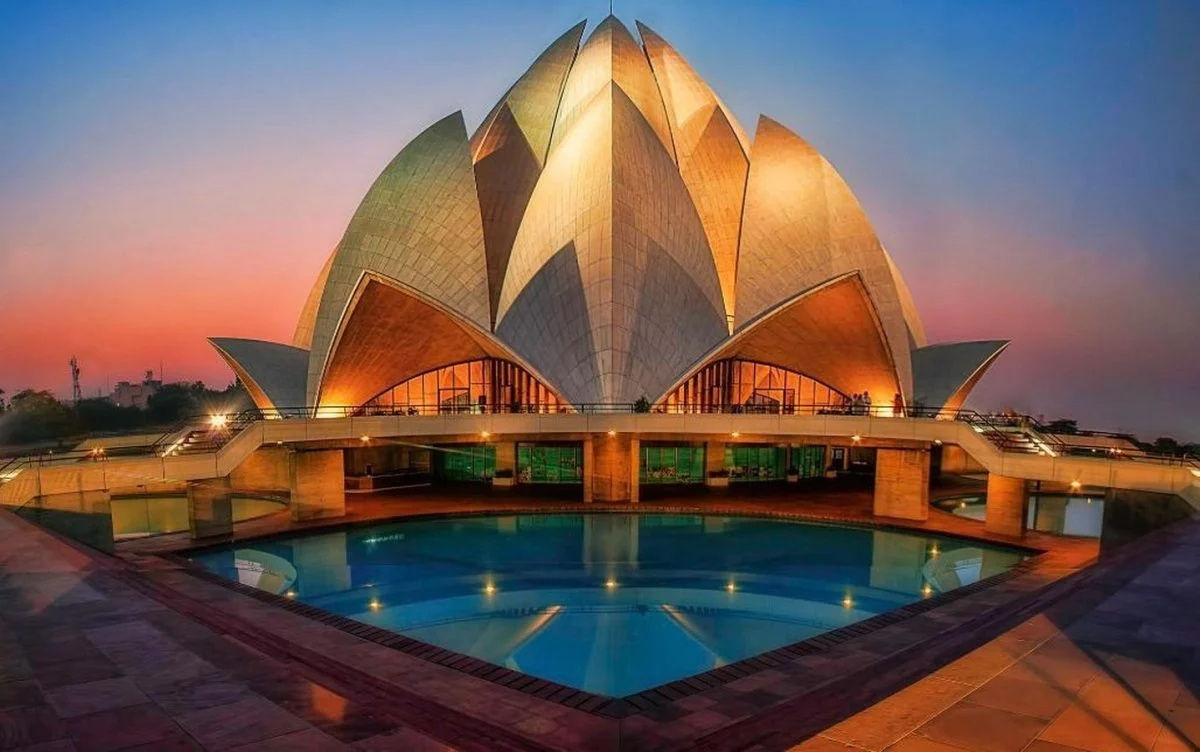
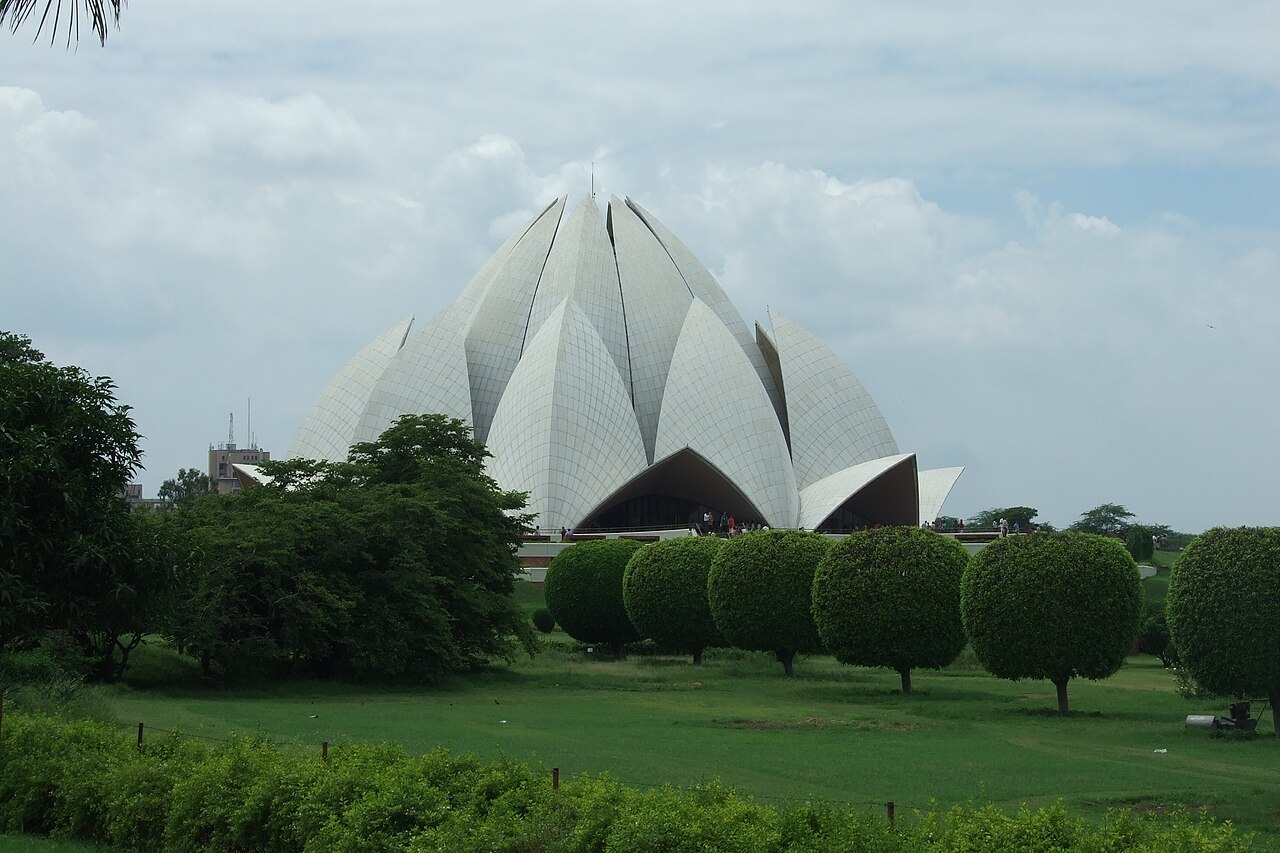
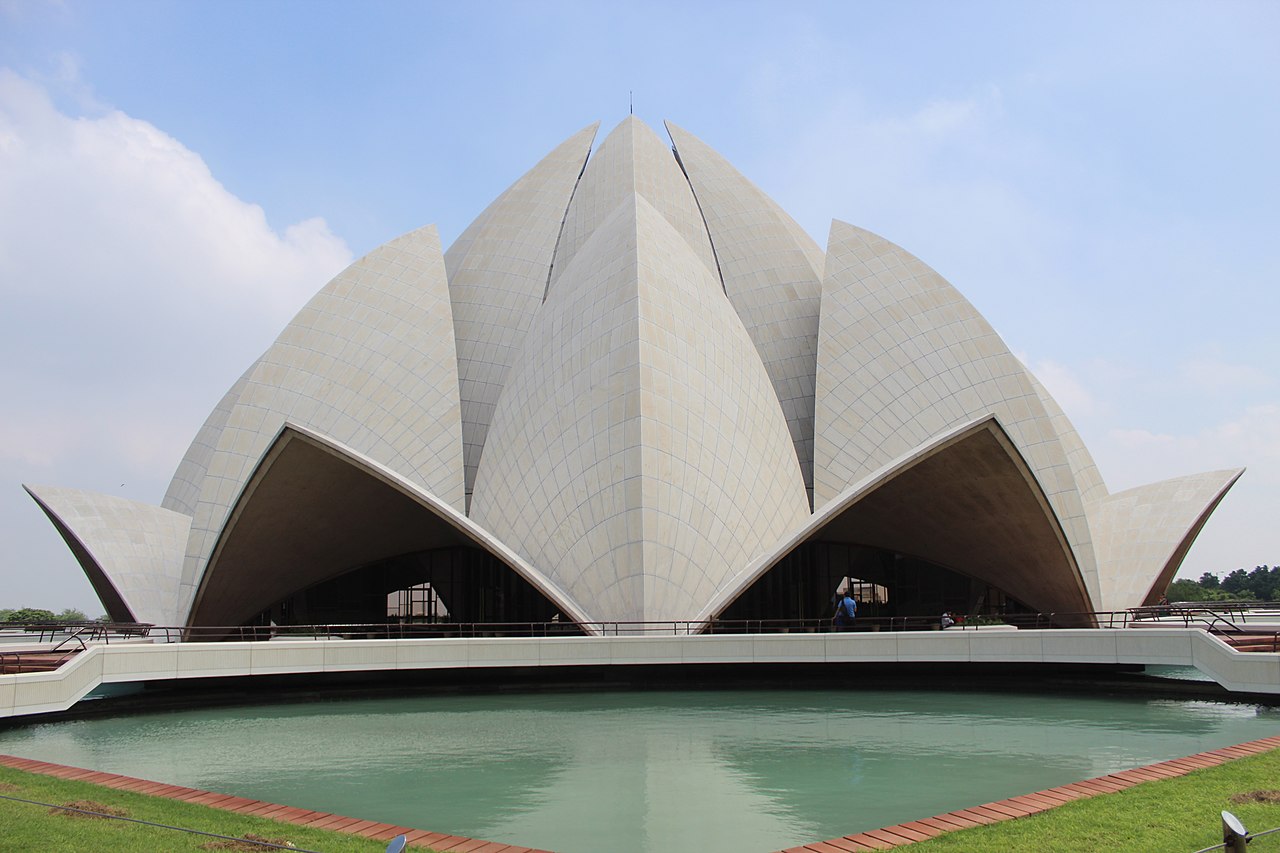
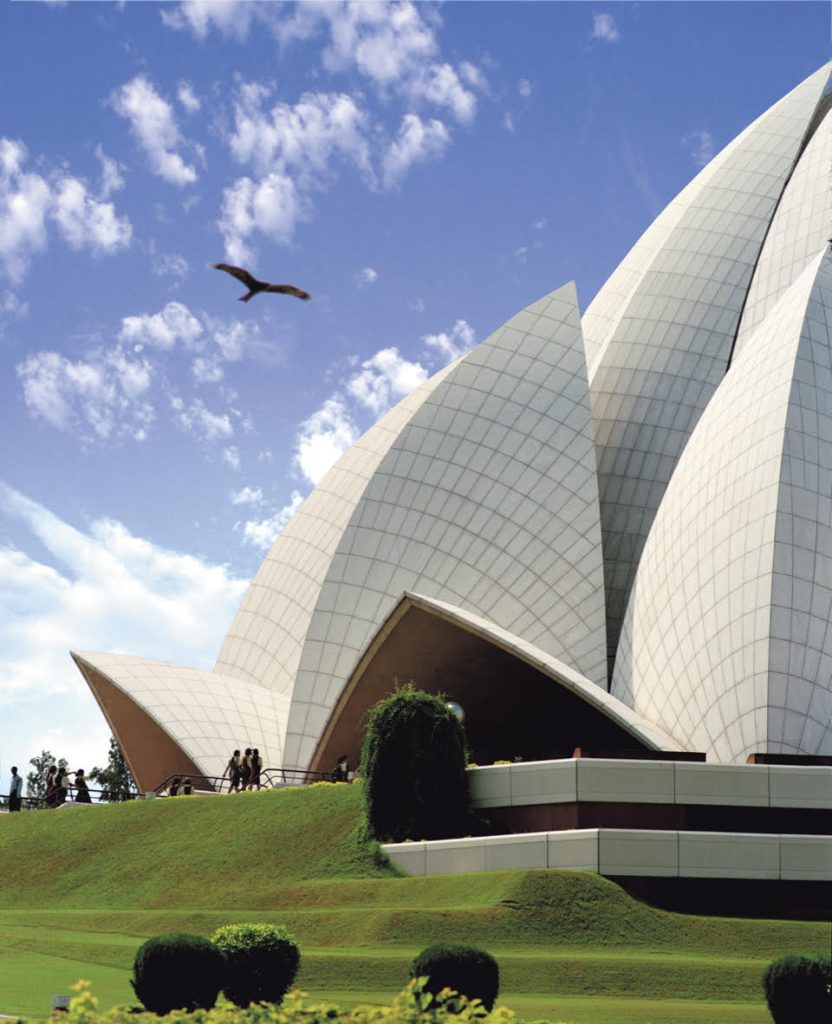
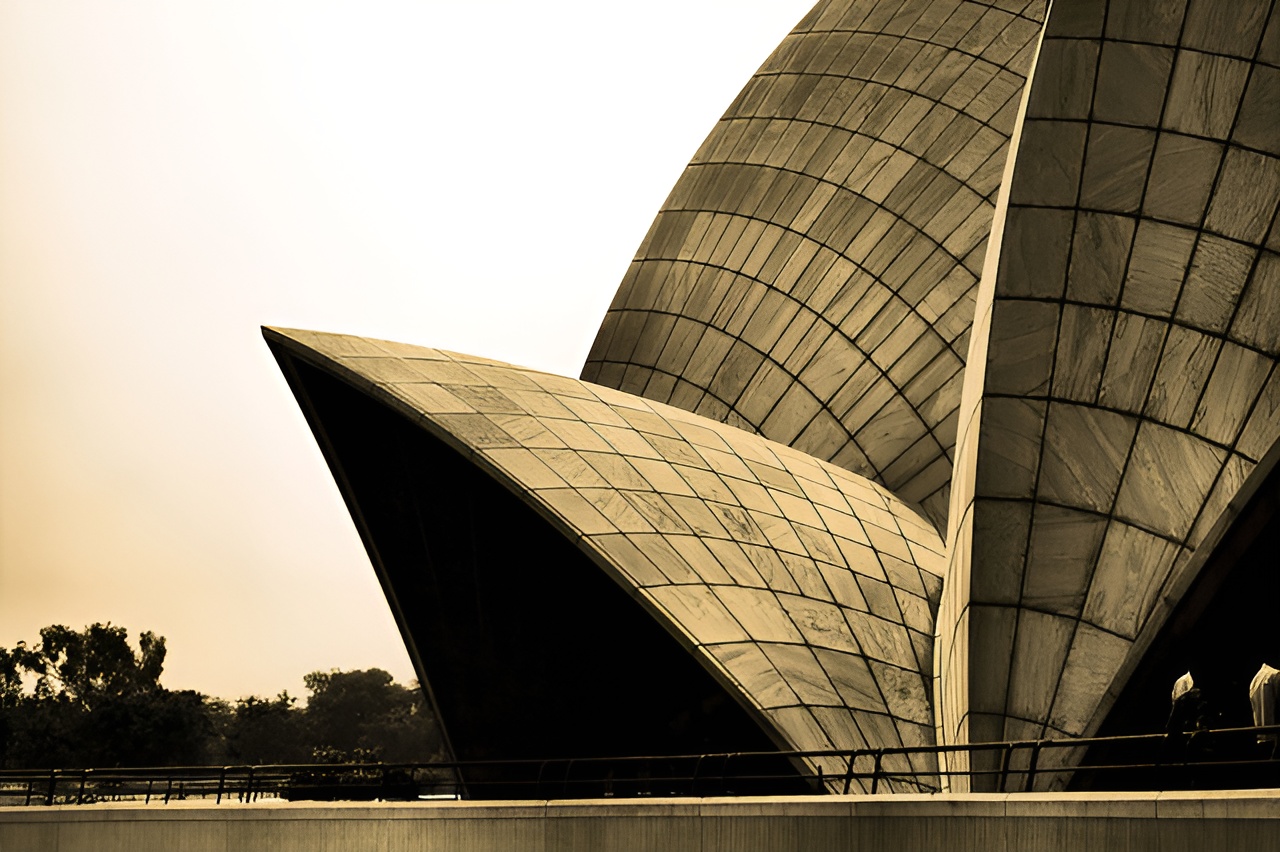
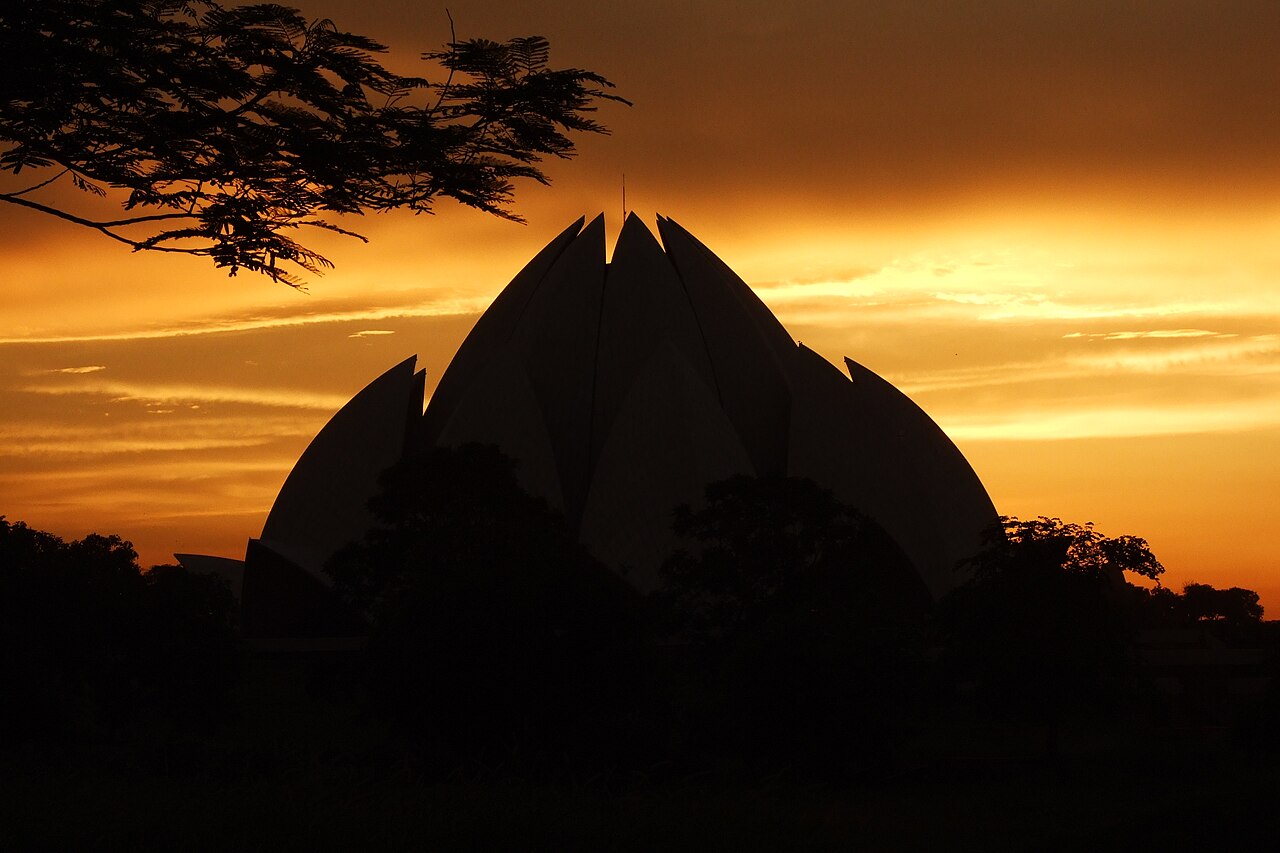
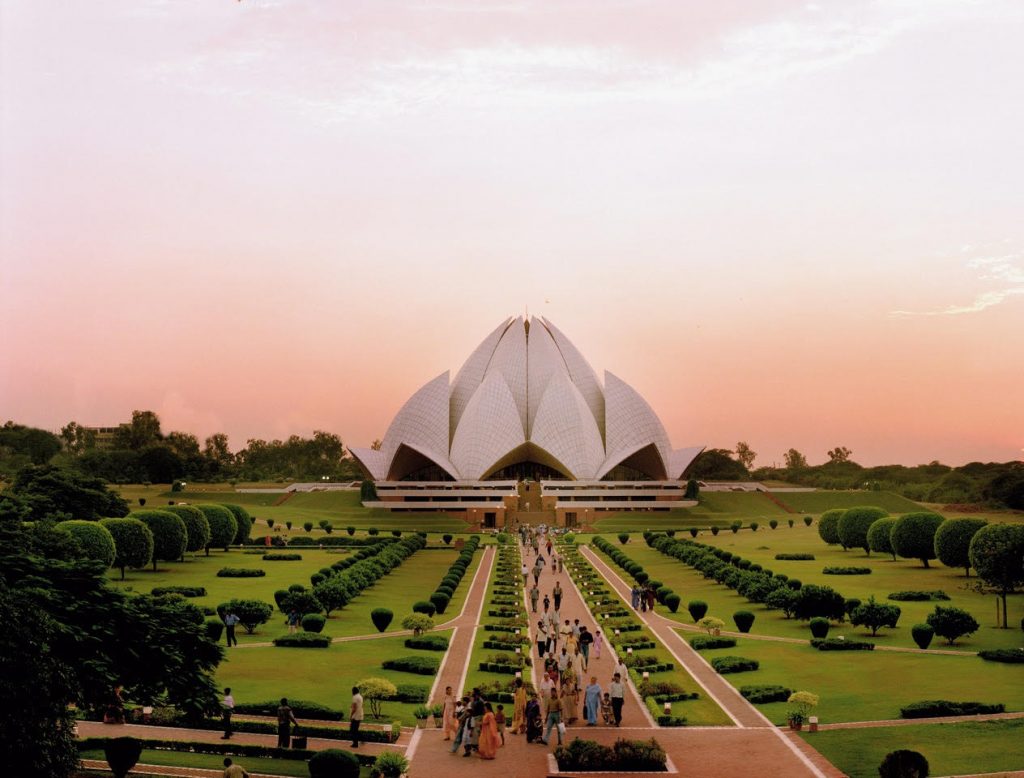
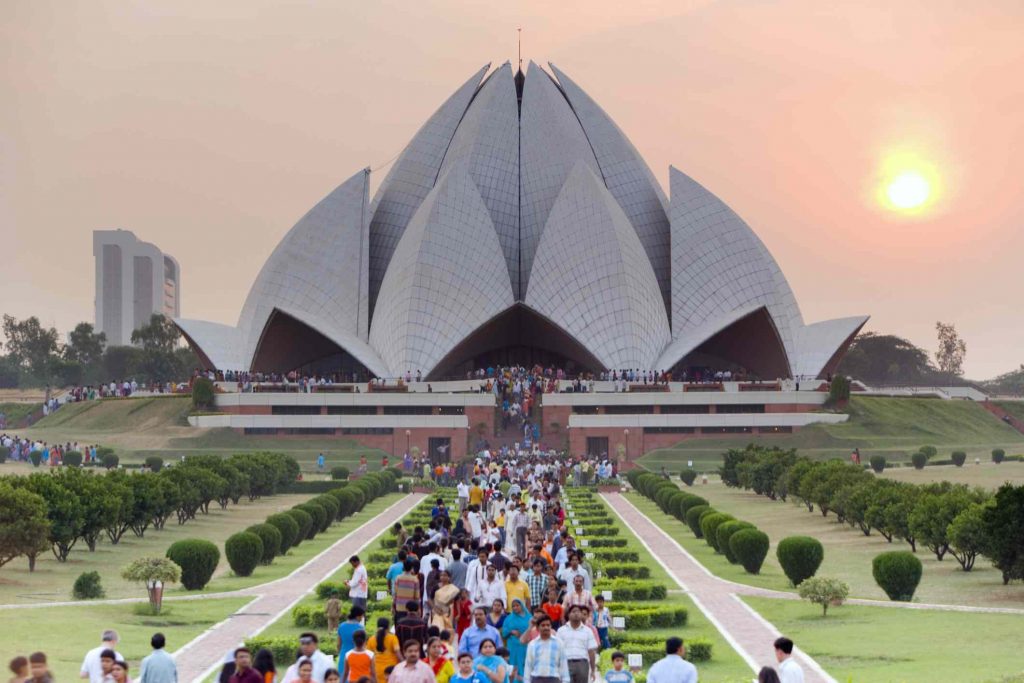
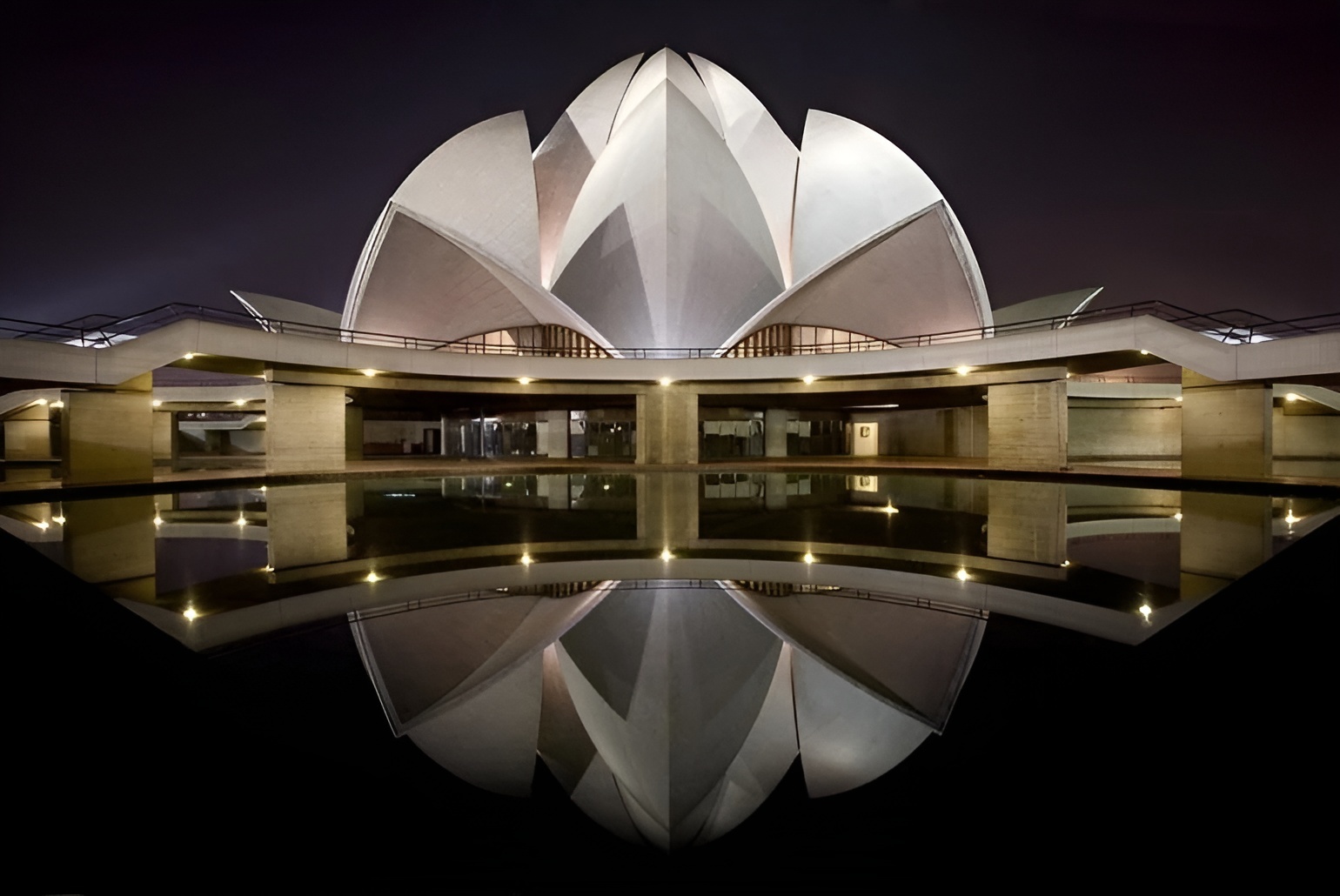
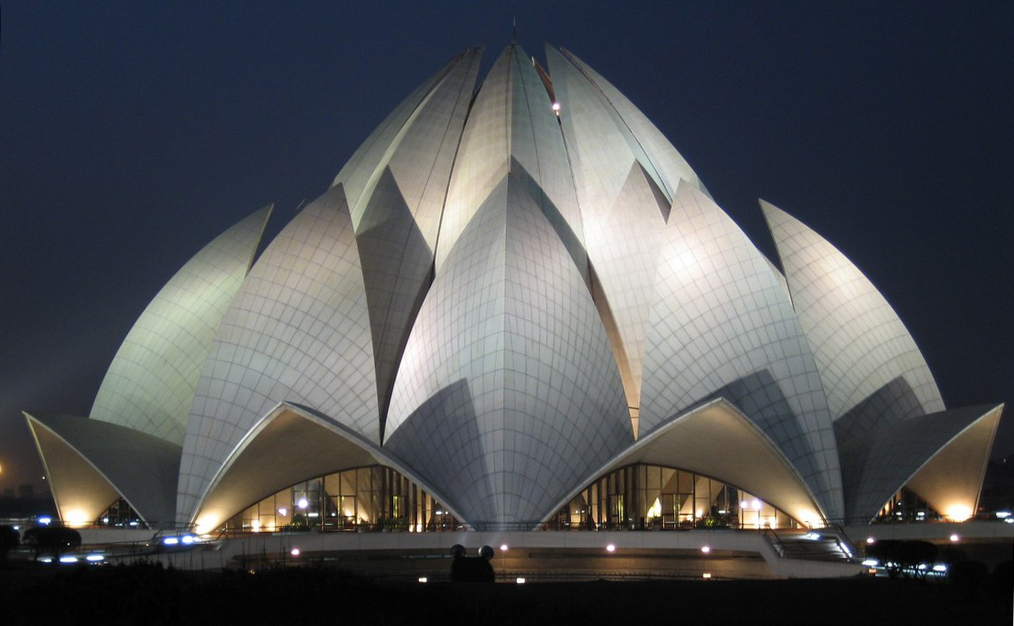
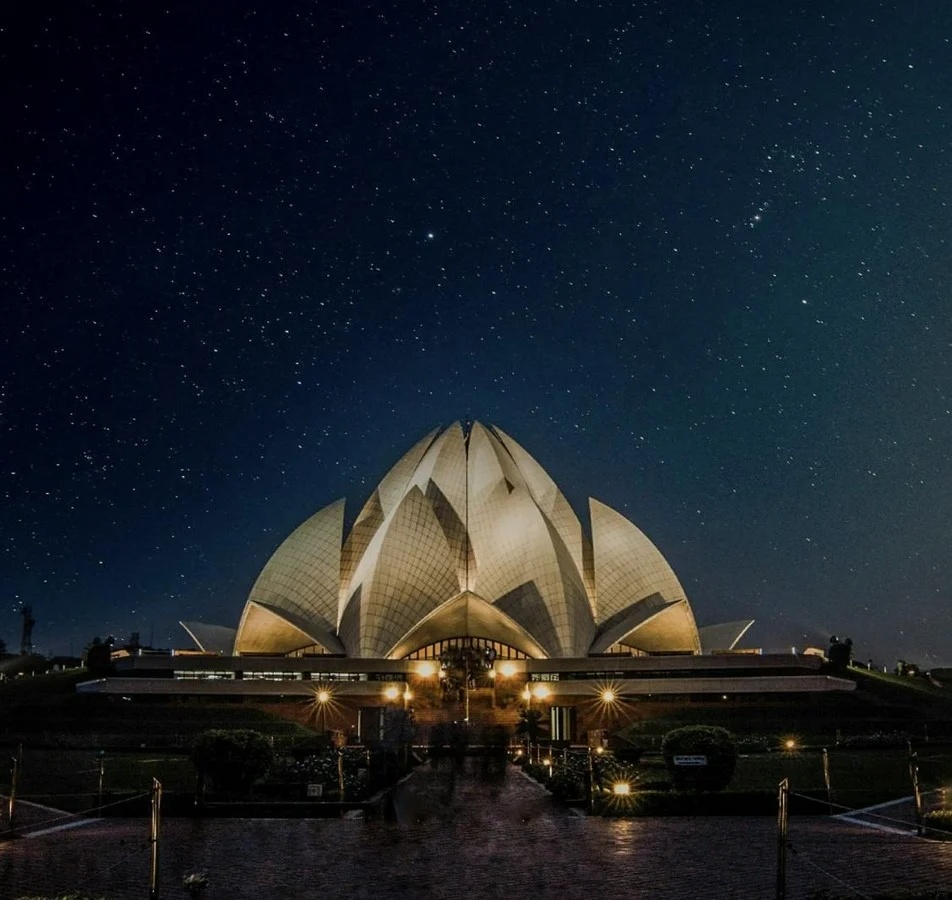
The design draws inspiration from the lotus flower, a symbol widely associated with purity, spirituality, and knowledge throughout India. This reference informed the building’s overall form and spatial organization. The temple is composed of twenty-seven free-standing marble-clad concrete petals arranged in clusters of three, creating nine sides around a central worship hall. The number nine holds particular significance within the Baháʼí Faith and forms the basis of the building’s geometry.
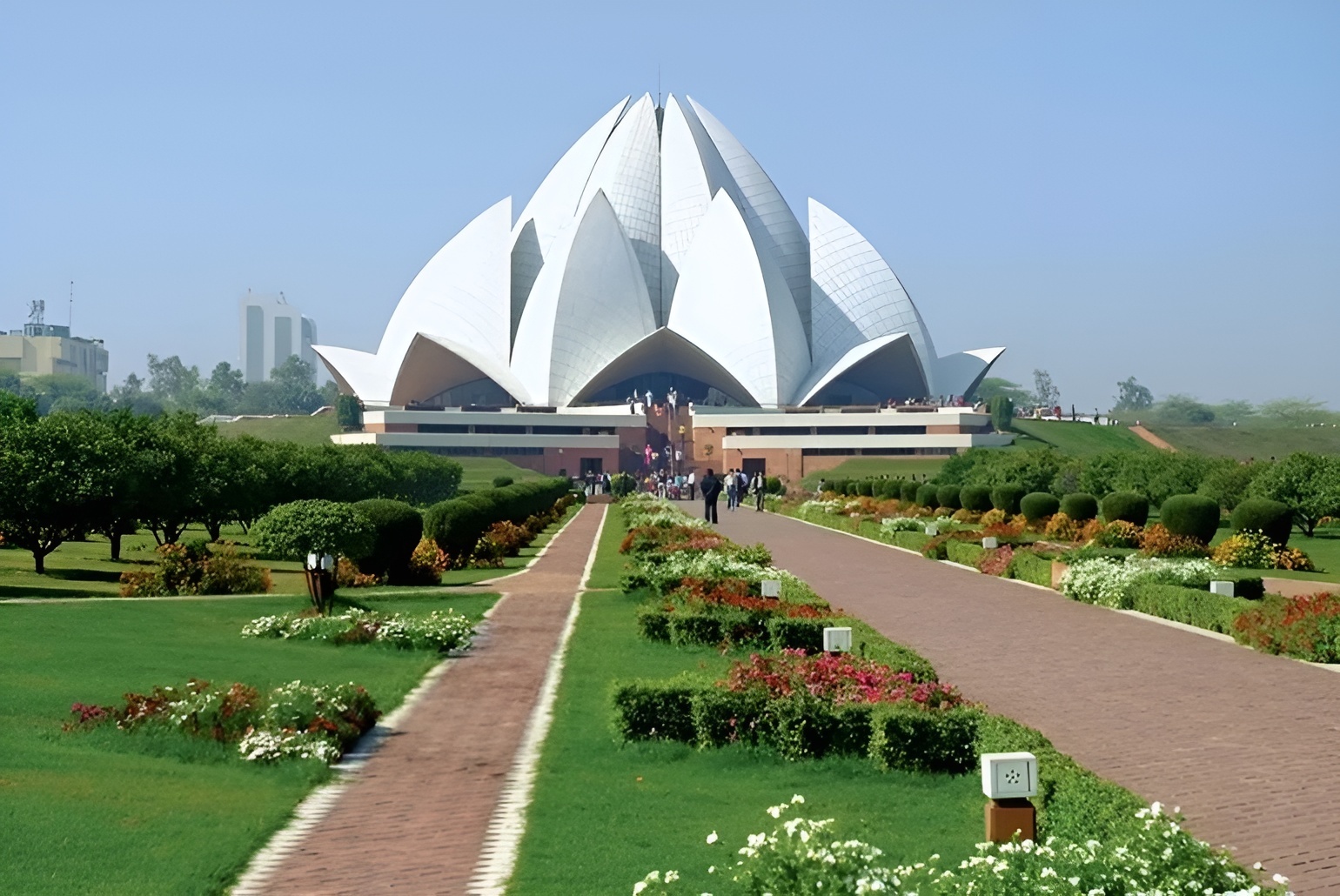
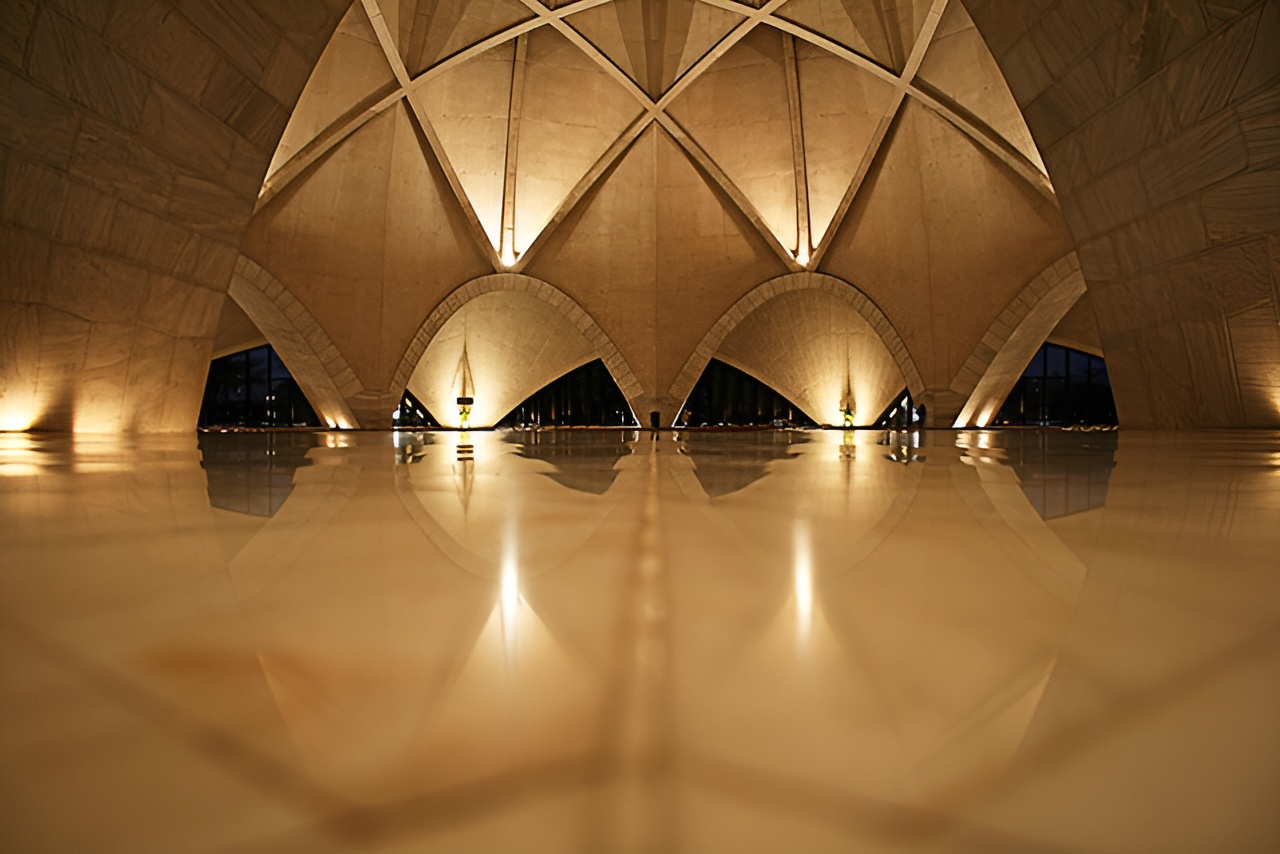
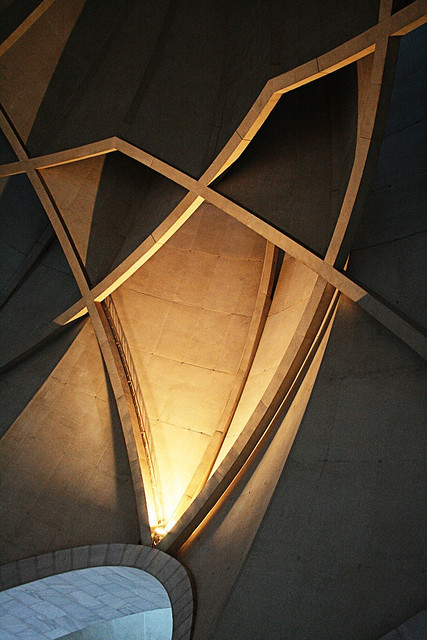
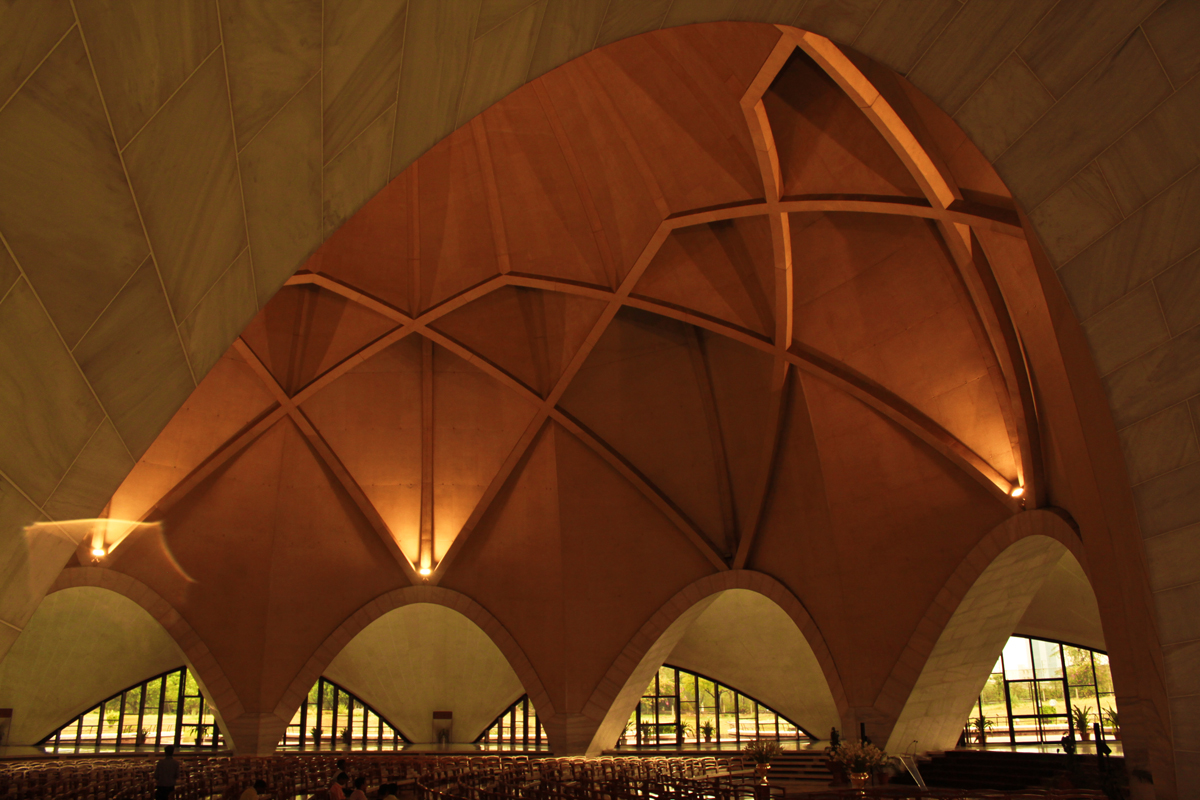
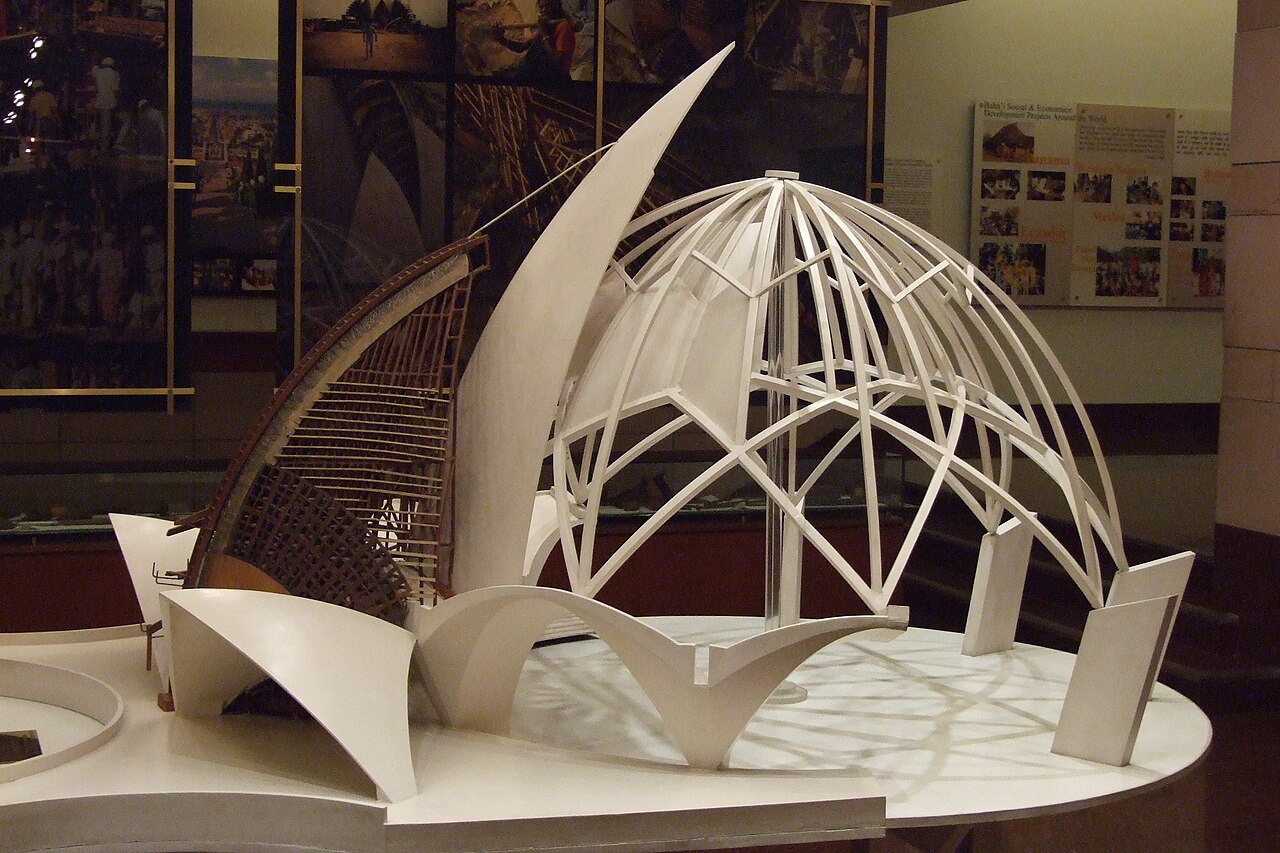
The twenty-seven petals are organized into three groups: entrance petals, outer petals, and inner petals. Nine entrance petals define the primary points of access to the building. The outer petals shelter the ancillary spaces surrounding the central hall, while the inner petals rise upward to shape the main worship space. These inner elements approach one another near the top of the structure without fully meeting, allowing a steel-and-glass skylight to introduce daylight into the interior.
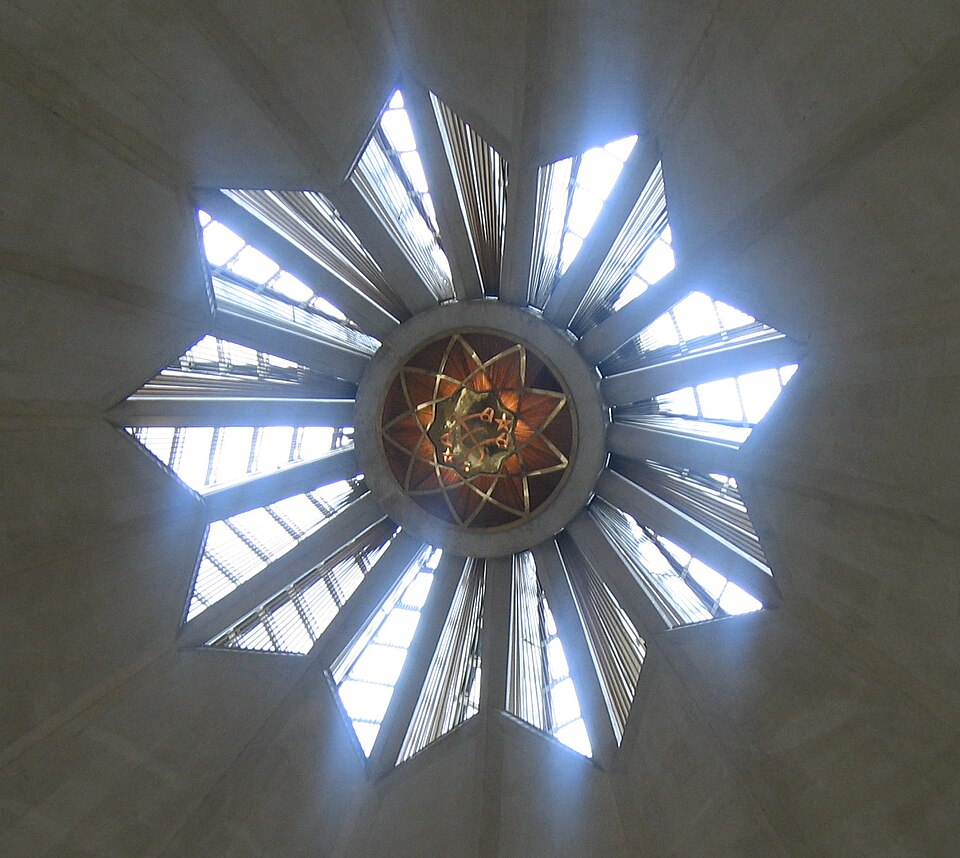
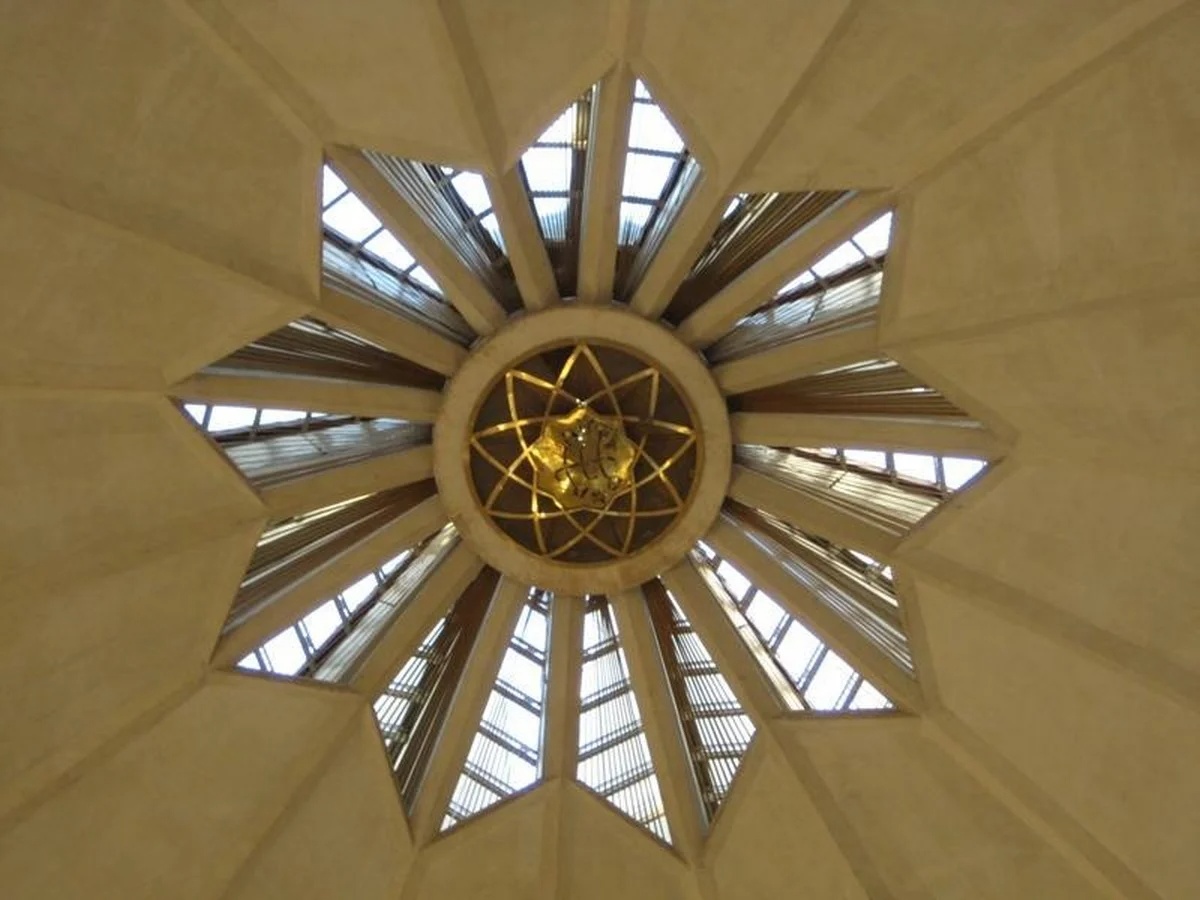
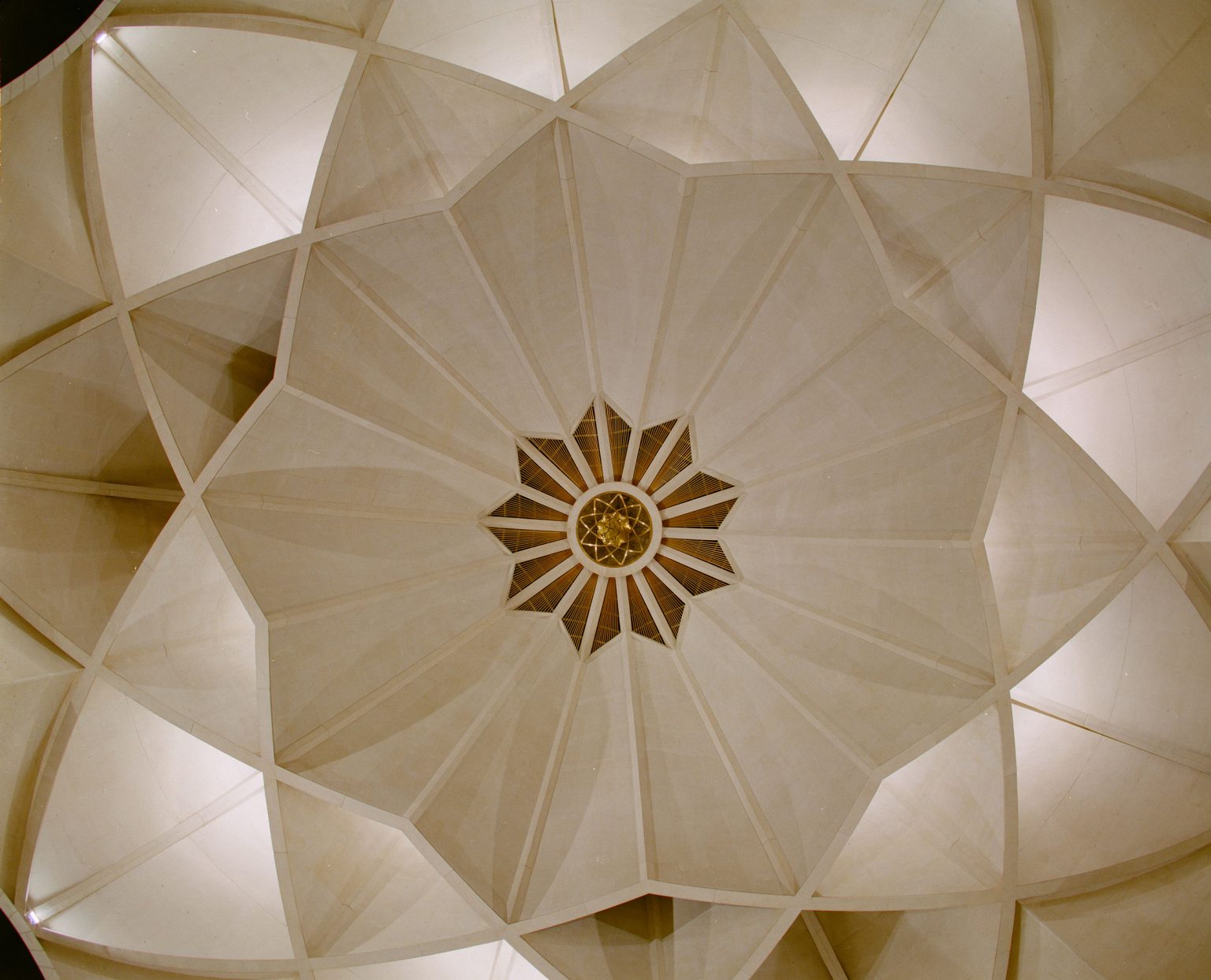
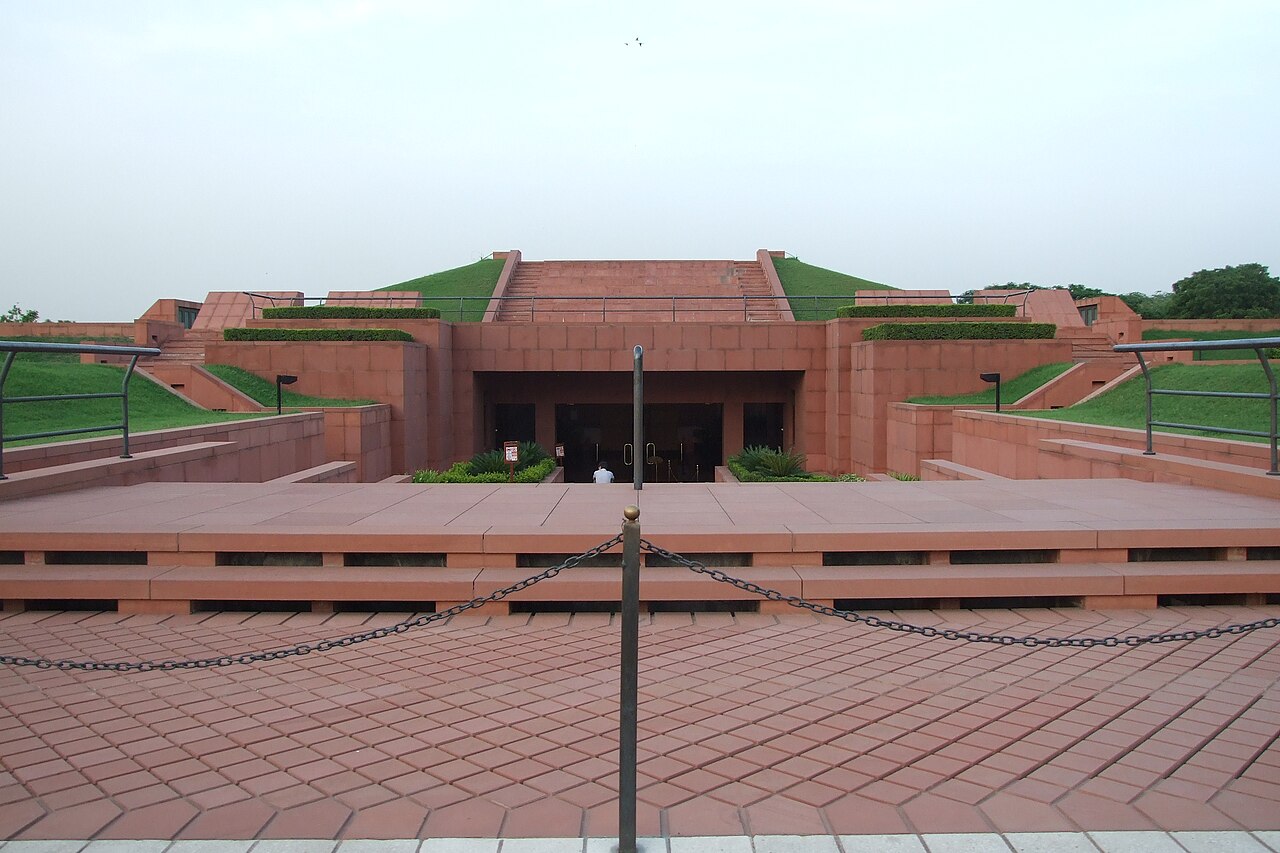
The central hall rises to a height of approximately 34.3 meters and accommodates around 1,300 seated visitors, with a total capacity of approximately 2,500 people. Nine entrances connect the hall to the surrounding landscape, reinforcing the building’s openness and accessibility. In accordance with Baháʼí principles, the interior contains no altars, pulpits, statues, or religious imagery.
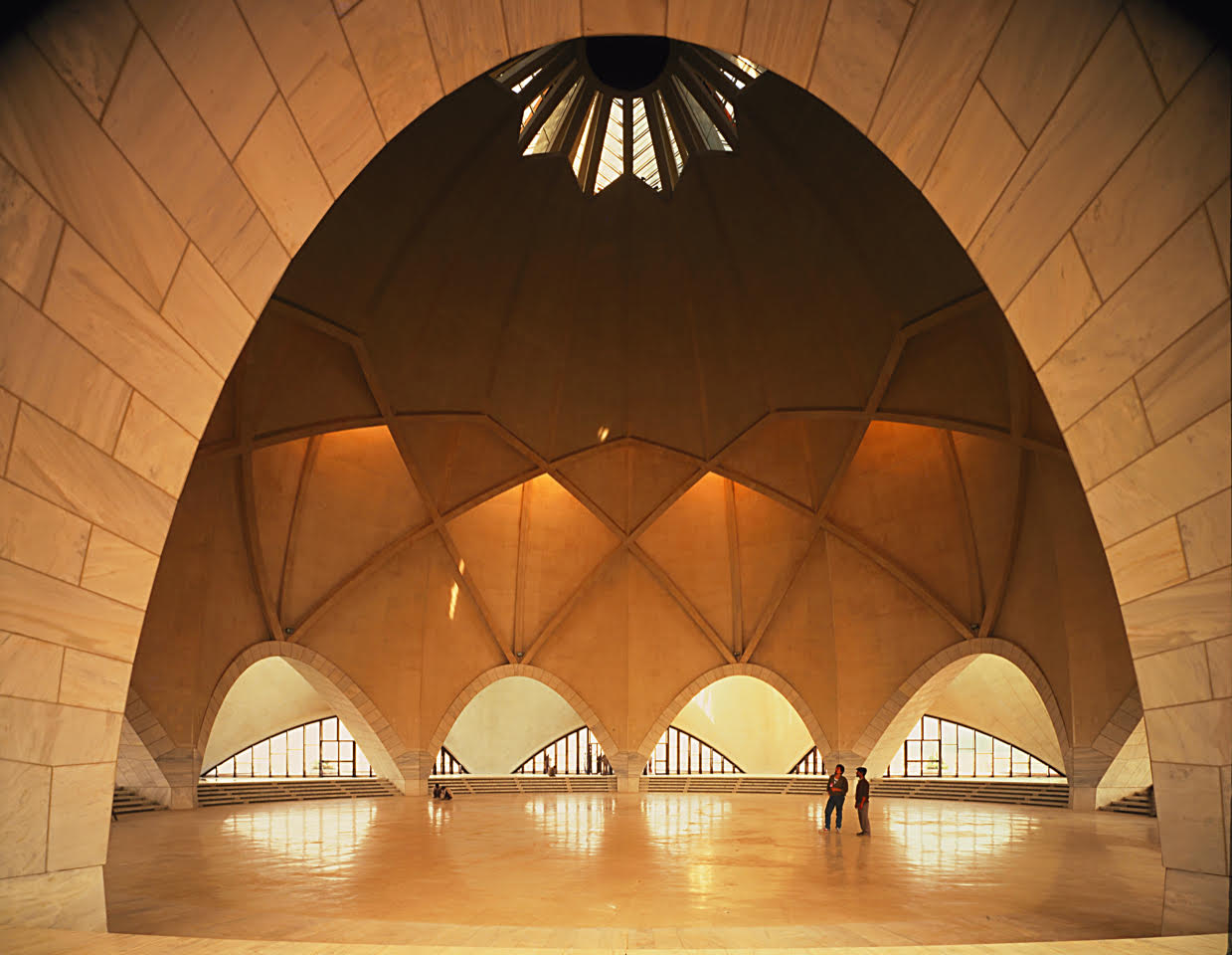
The Lotus Temple is constructed primarily of reinforced concrete and clad in white marble sourced from Penteli in Greece, the same region that supplied marble for several classical monuments, including the Parthenon. The exterior presents a unified sculptural form, while the interior reveals the structural system through exposed concrete ribs that emphasize the geometry of the petals and the scale of the worship space.
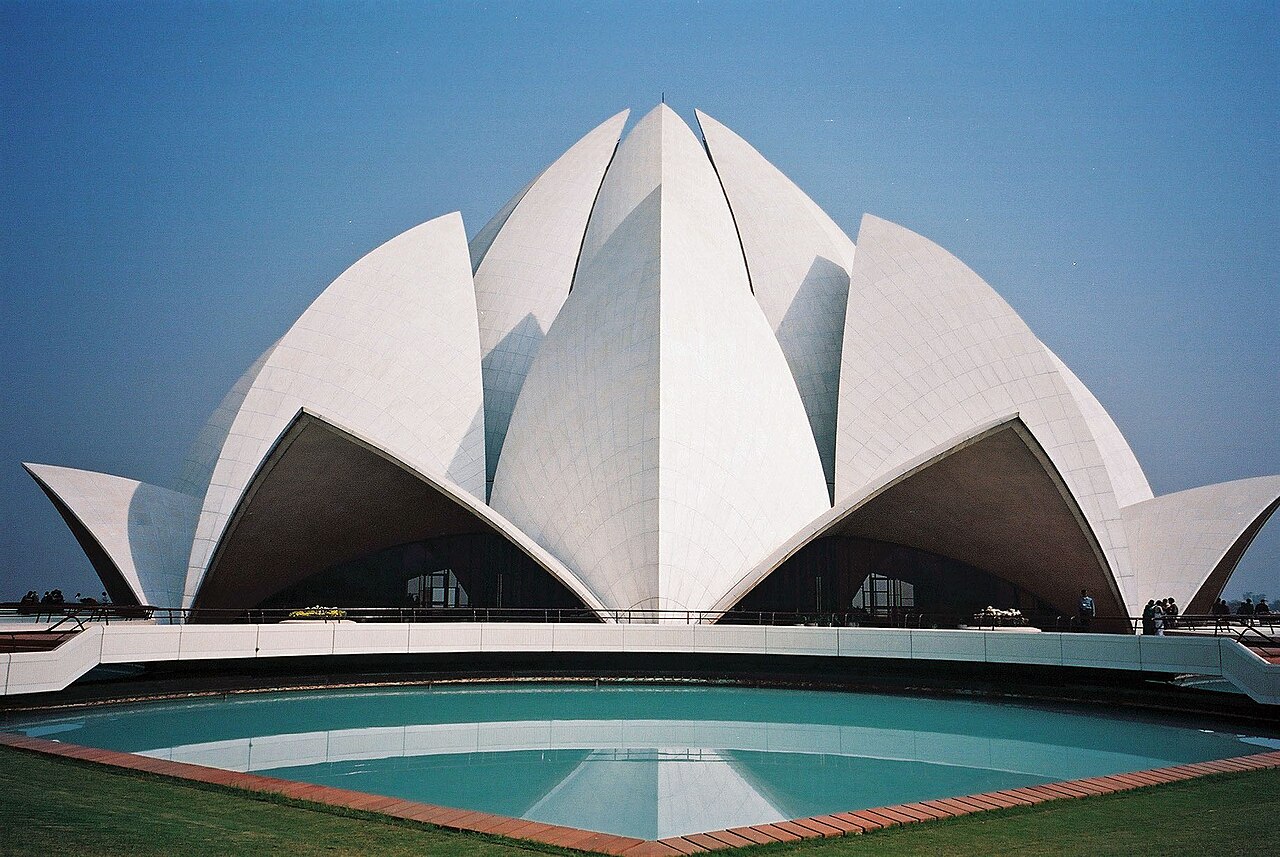
Structural engineering for the project was developed by the British firm Flint & Neill. The complex geometry of the curved petals required extensive engineering coordination and the use of thin-shell concrete construction. The building remains one of the most recognized examples of biomimetic architecture, translating a natural form into a monumental religious structure.
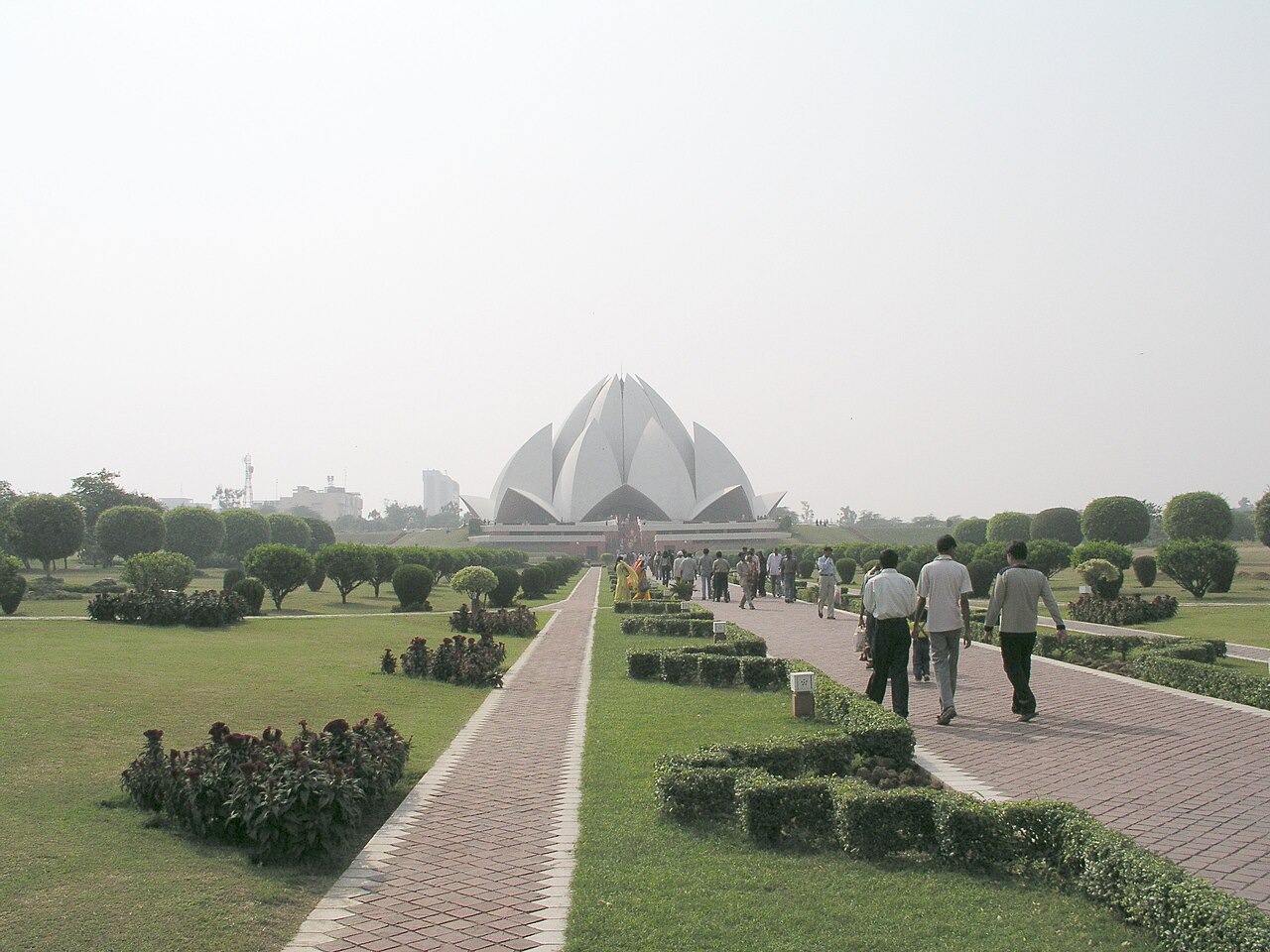
The temple stands within a 26-acre site that includes landscaped gardens and nine reflecting pools surrounding the building. Beyond their symbolic association with a lotus floating on water, the pools contribute to the environmental performance of the complex by assisting with evaporative cooling and supporting the moderation of temperatures around the prayer hall.
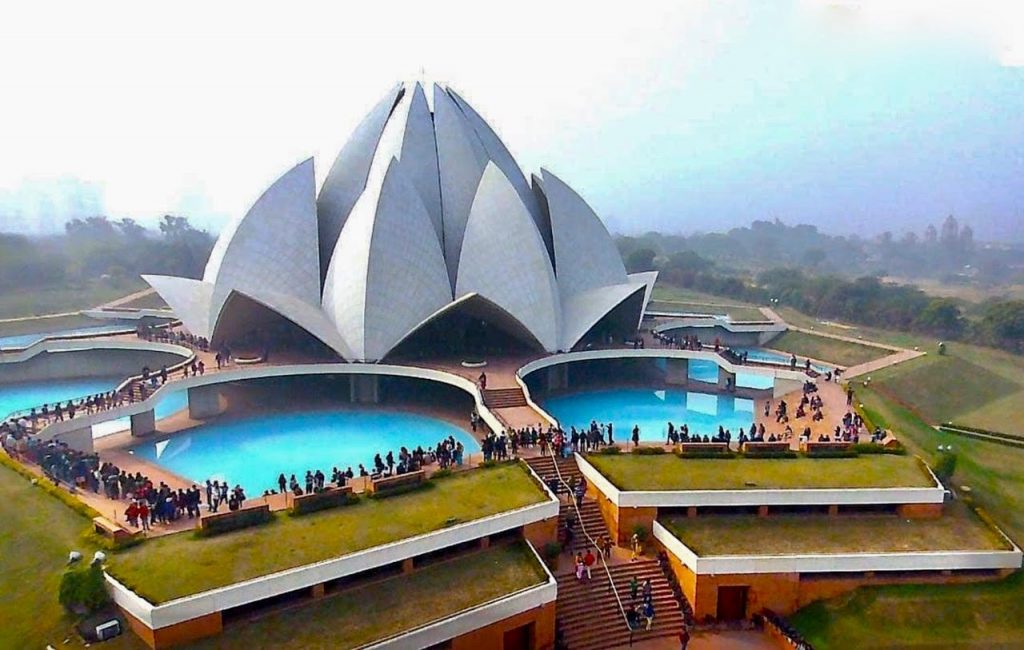
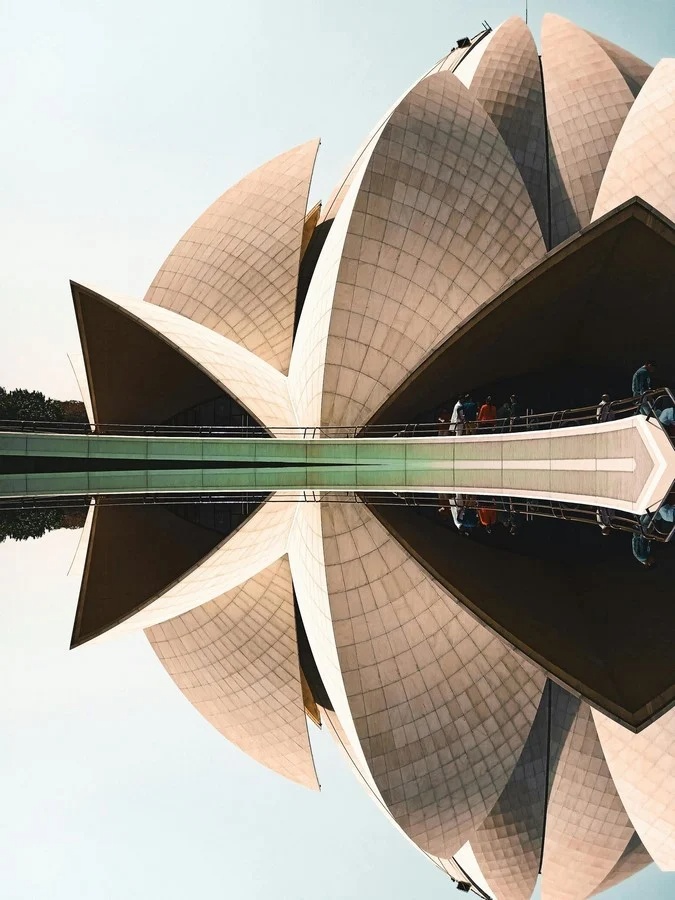
Since its opening, the Lotus Temple has become one of the most visited architectural landmarks in the world. Visitor estimates place cumulative attendance in excess of one hundred million people since its opening. The temple attracts people from diverse religious and cultural backgrounds, reflecting the inclusive mission of the Baháʼí Faith.
The project has received significant international recognition. Awards include the Institution of Structural Engineers Award for Excellence in Religious Art and Architecture in 1987, recognition from the Interfaith Forum on Religion, Art and Architecture in the same year, the Illuminating Engineering Society of North America Paul Waterbury Special Citation in 1988, and inclusion among one hundred canonical works of twentieth-century architecture by the Architectural Society of China in 2000. The project was further recognized by the GlobArt Academy in Vienna in 2000.
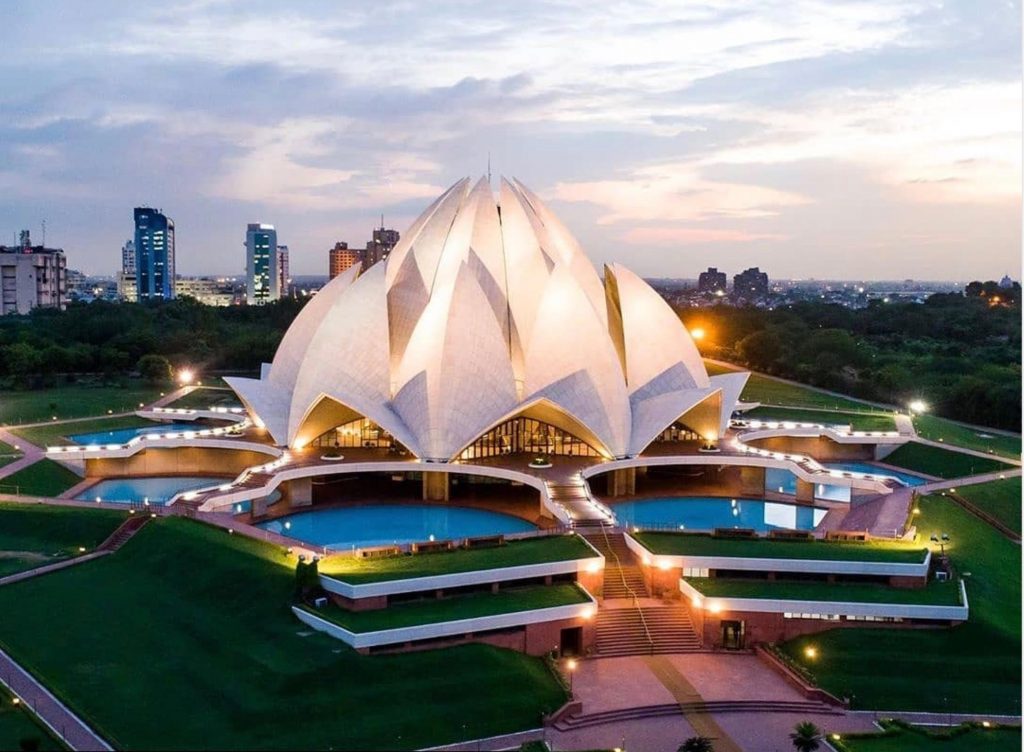
The Lotus Temple remains one of the defining works of late twentieth-century religious architecture. Through its integration of symbolism, engineering, landscape, and public accessibility, the building continues to serve as a place of worship and as a widely recognized architectural landmark.
Project Gallery
Project Location
Address: Bahapur, Shambhu Dayal Bagh, Kalkaji, New Delhi, Delhi 110019, India
Location is for general reference and may represent a city or country, not necessarily a precise address.

