

Architects: Shatotto
Area: 16,500 ft²
Year: 2018
Photography: Mike Kelley, Will Scott
Lead Architects: Rafiq Azam
Design Team: Ikramoon Nisa, Mohammad Akter Hossen, Mohiminul Islam
Engineering: Mustafizur Rahman
Landscape: Rafiq Azam
Consultants: Shatotto Architecture for Green Living
Materials: BSRM, Mirpur Ceramic, Nasir Glass, RAK, Supercreat
Client: Dhaka South City Corporation
City: Dhaka
Country: Bangladesh
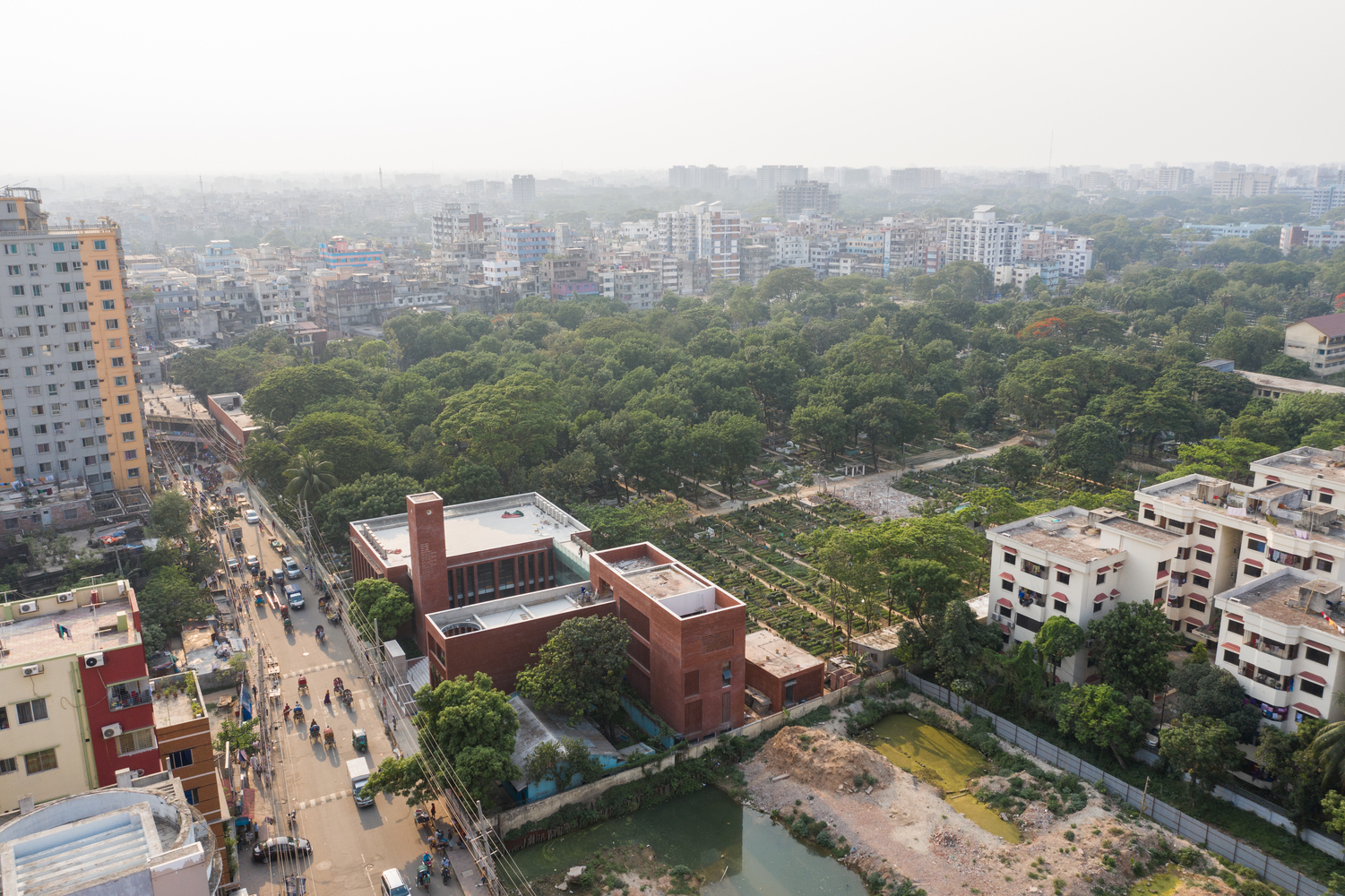
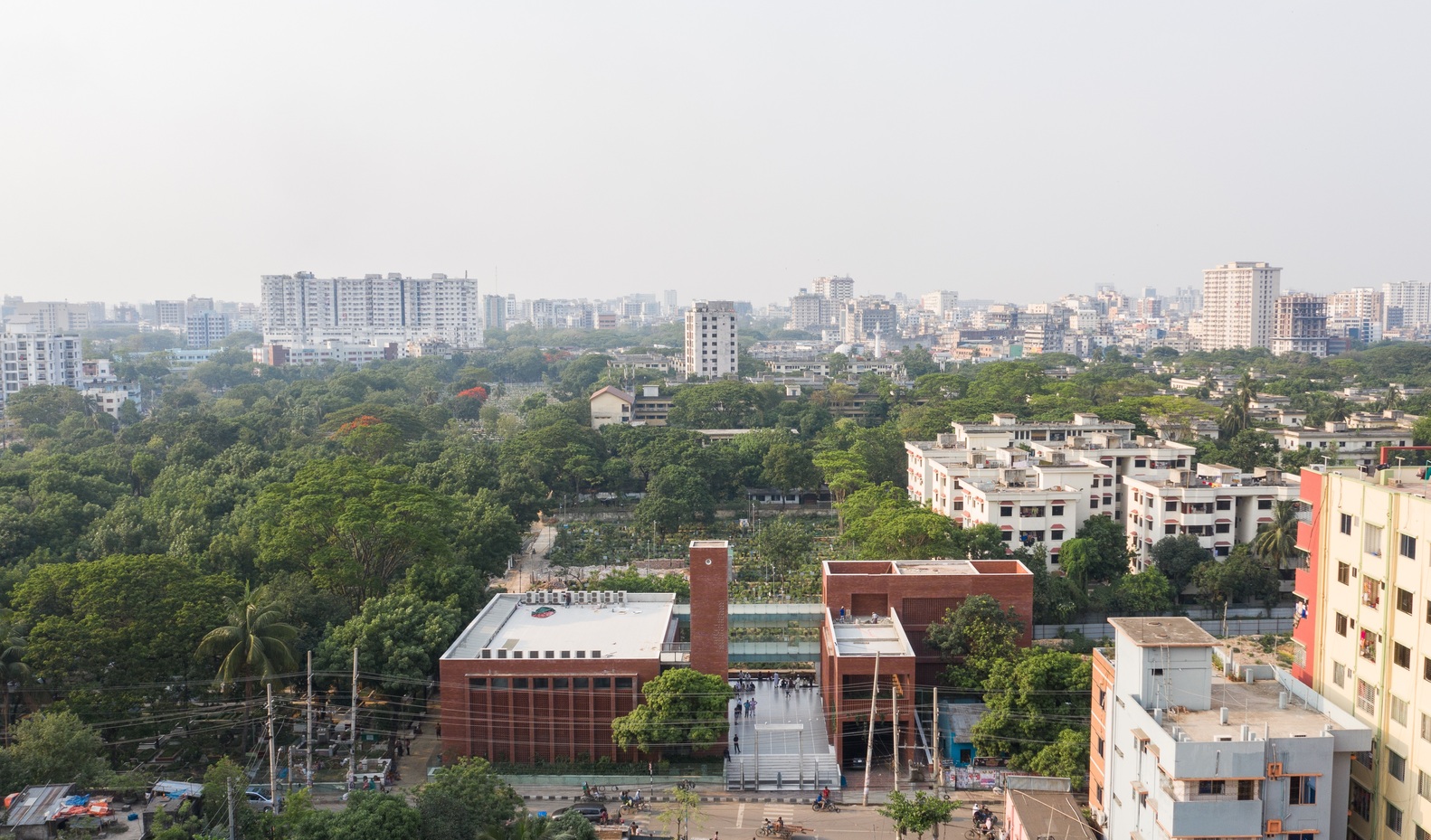
Mayor Mohammad Hanif Jame Mosque by Shatotto is a 16,500-square-foot religious and civic project in Dhaka, completed in 2018 for the Dhaka South City Corporation. Set beside the Azimpur graveyard in Lalbagh, the mosque reinterprets historical Islamic spatial ideas through a contemporary architectural language. Its design draws from Mughal precedents, particularly the Azam Shah Mosque at Lalbagh Fort, while moving beyond conventional mosque typologies. The project organizes prayer, gathering, movement, ablution, accessibility, and contemplation into a layered sequence that connects the street, the cemetery, and the spiritual life of the community. A generous entrance terrace, an open prayer hall, a glass bridge, dedicated women’s facilities, and a reconfigured minaret expand the mosque’s role beyond ritual worship. Through filtered daylight, symbolic materials, and spatial transitions, the building frames faith as both an individual and collective experience within Dhaka’s dense urban fabric.
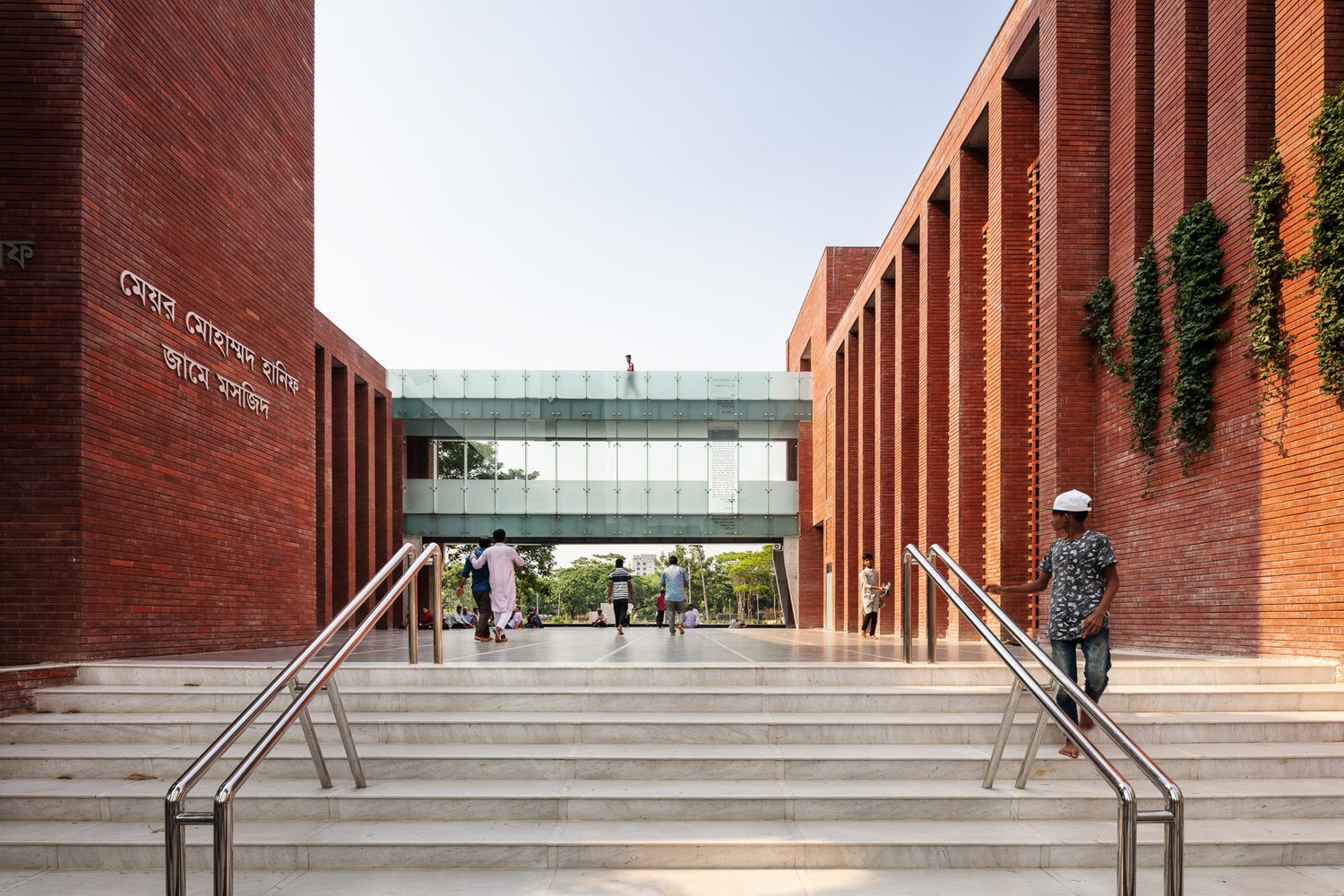
The Mayor Mohammad Hanif Jame Mosque positions ritual as a civic condition rather than an isolated act of worship. Located between one of Dhaka’s historic neighborhoods and a landscape of burial, the building negotiates daily movement, collective memory, and religious practice through architecture that is porous, solemn, and socially engaged. Rather than relying on historic quotation, Shatotto uses inherited spatial elements as prompts for renewal, allowing tradition to remain present without becoming static.
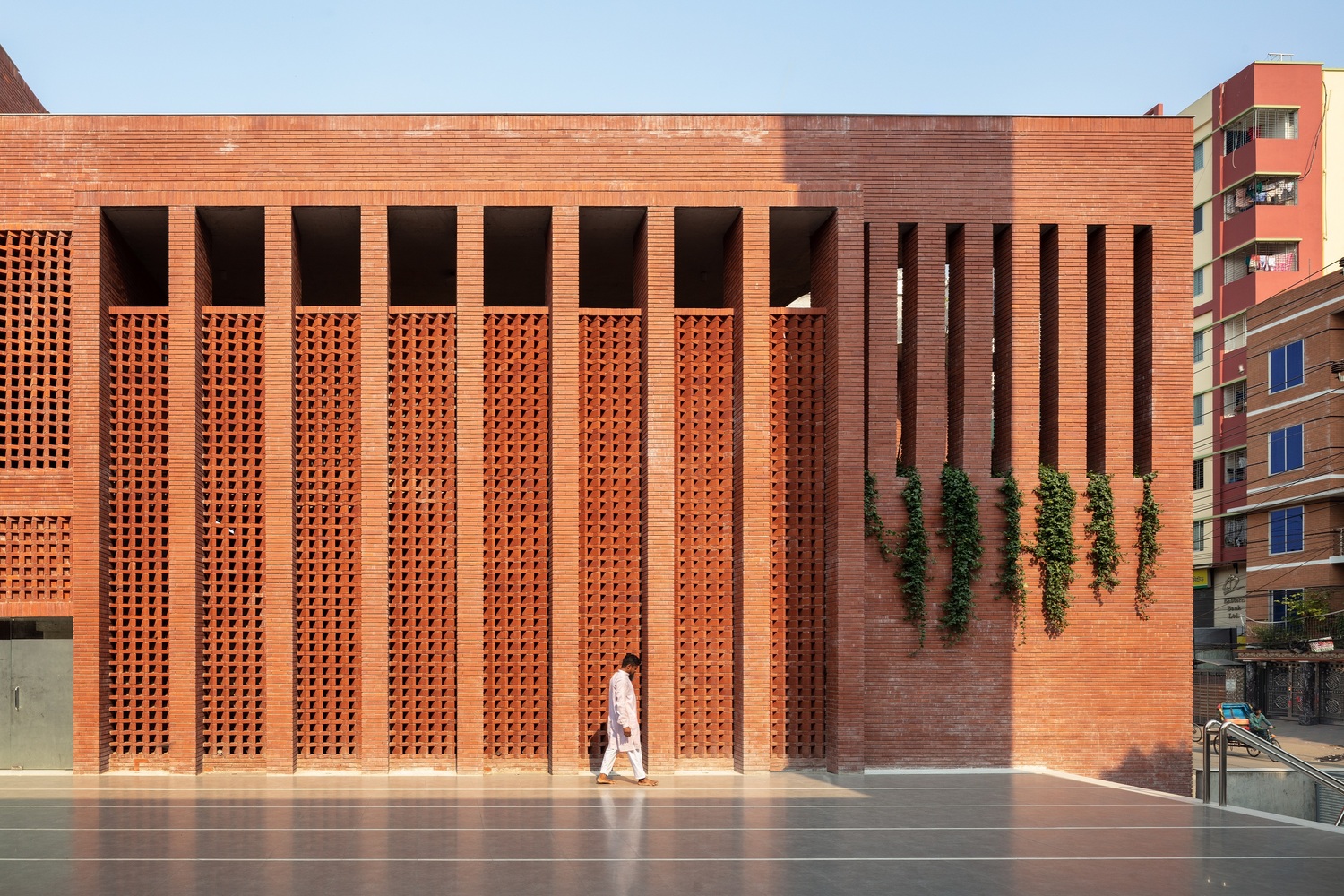
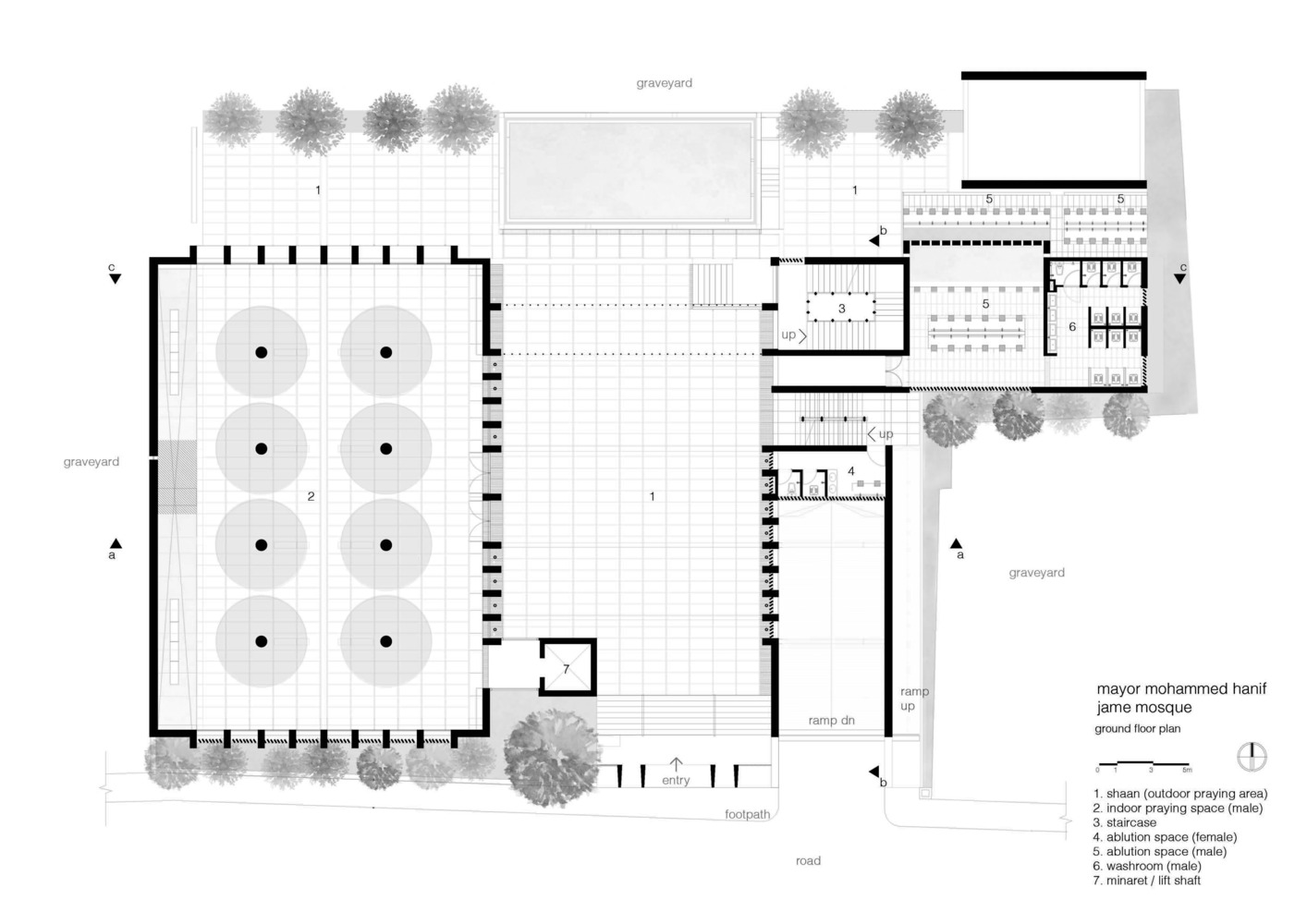
The project is located beside Azimpur graveyard in Lalbagh, where its proximity to death gives the mosque a heightened sense of passage. The design responds to this condition by forming a threshold between the terrestrial and celestial, with the “Shaan” serving as a significant mediating space. Derived from Mughal mosque architecture, the “Shaan” extends from the entrance of the main prayer hall and accommodates overflow during congregational prayer. Outside prayer times, it becomes a communal platform, supporting informal gathering and strengthening the mosque’s everyday civic role.
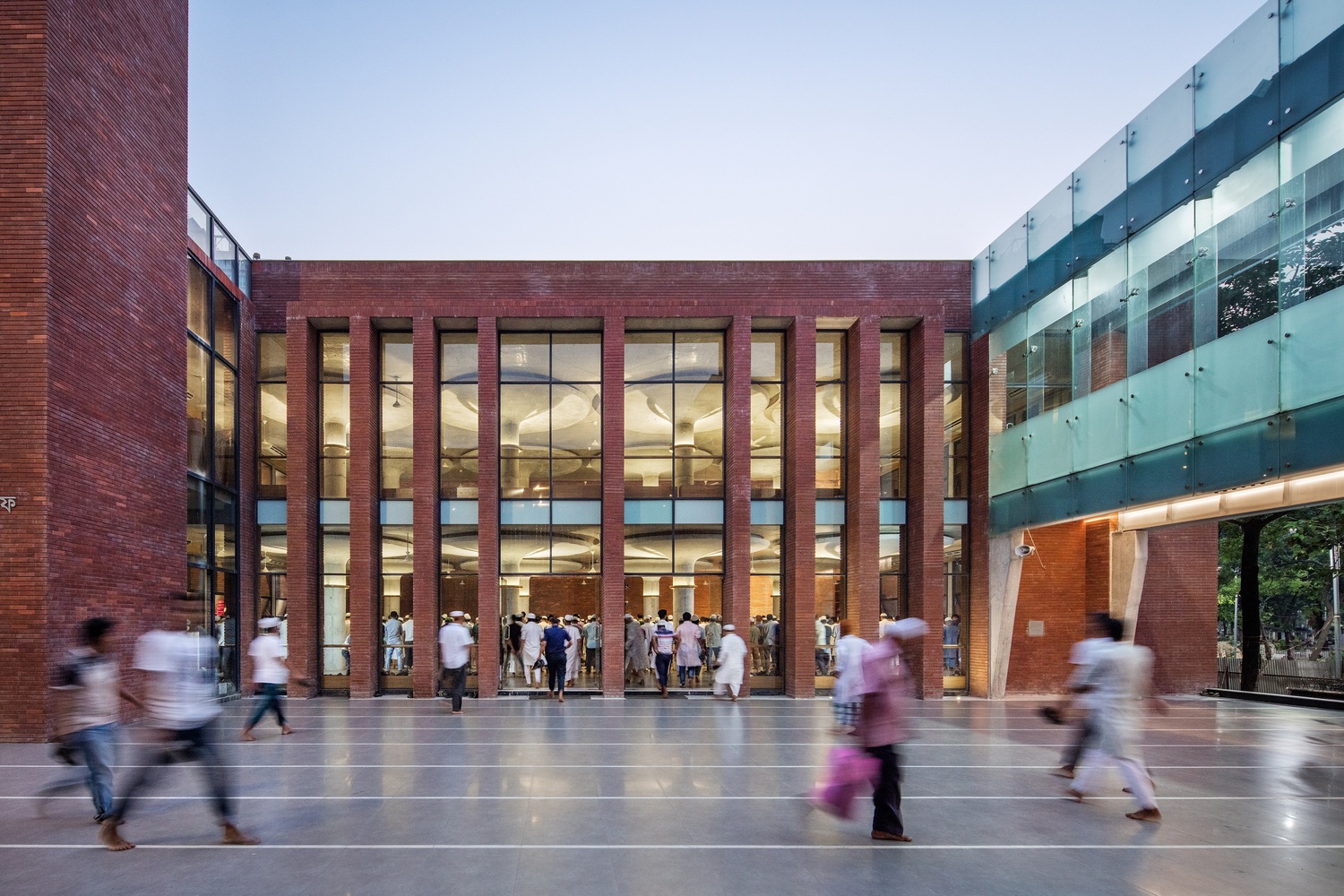
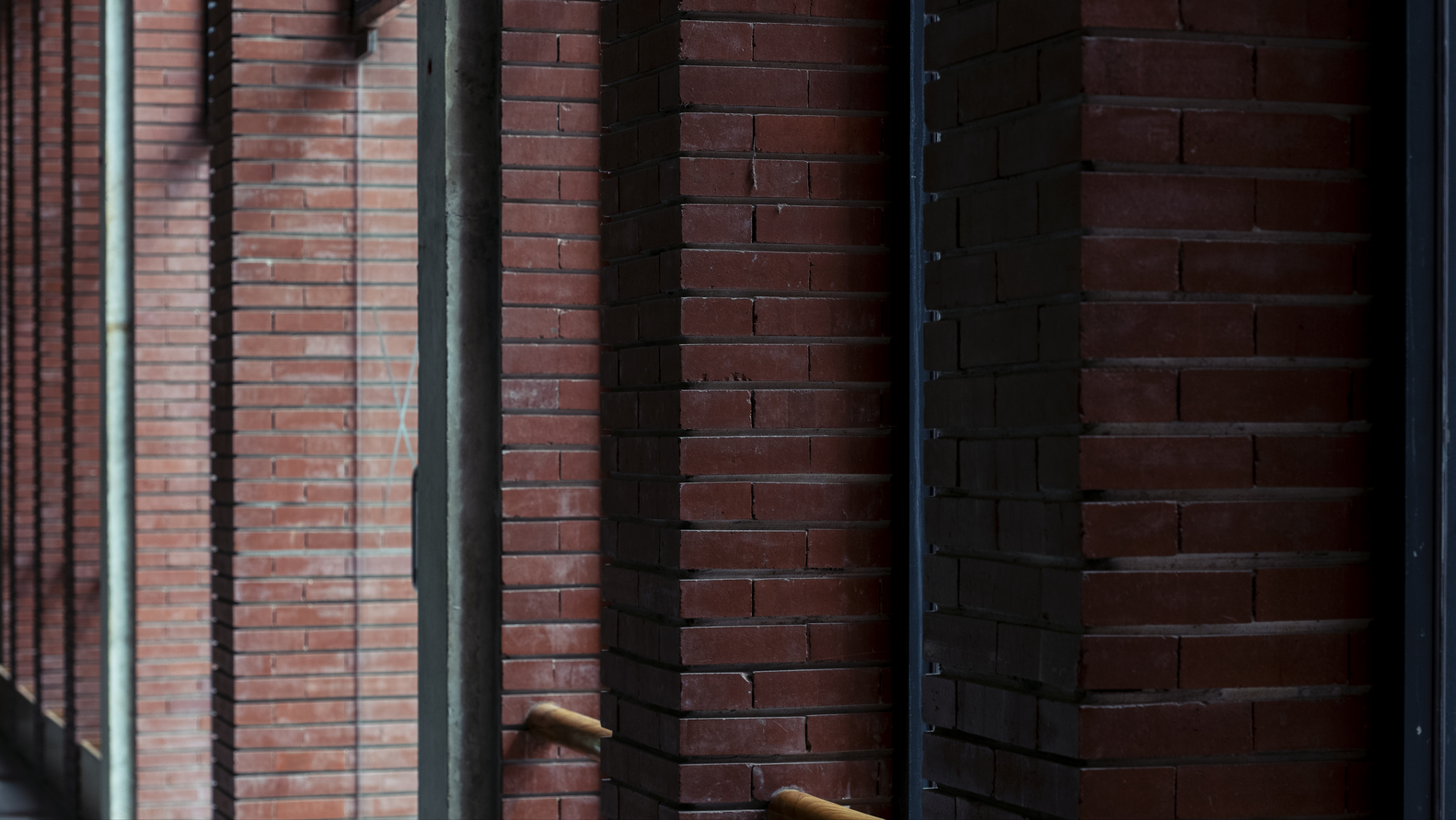
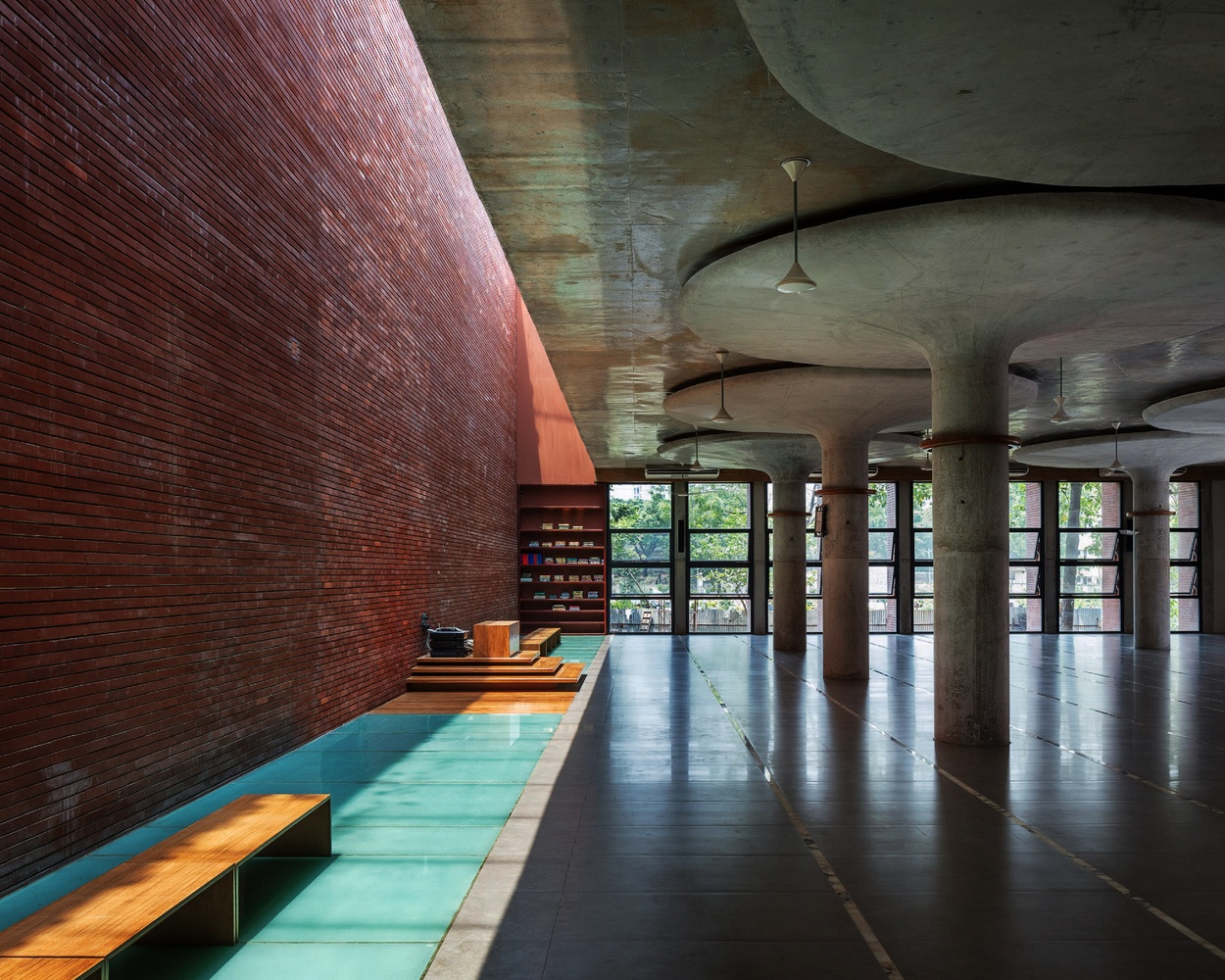
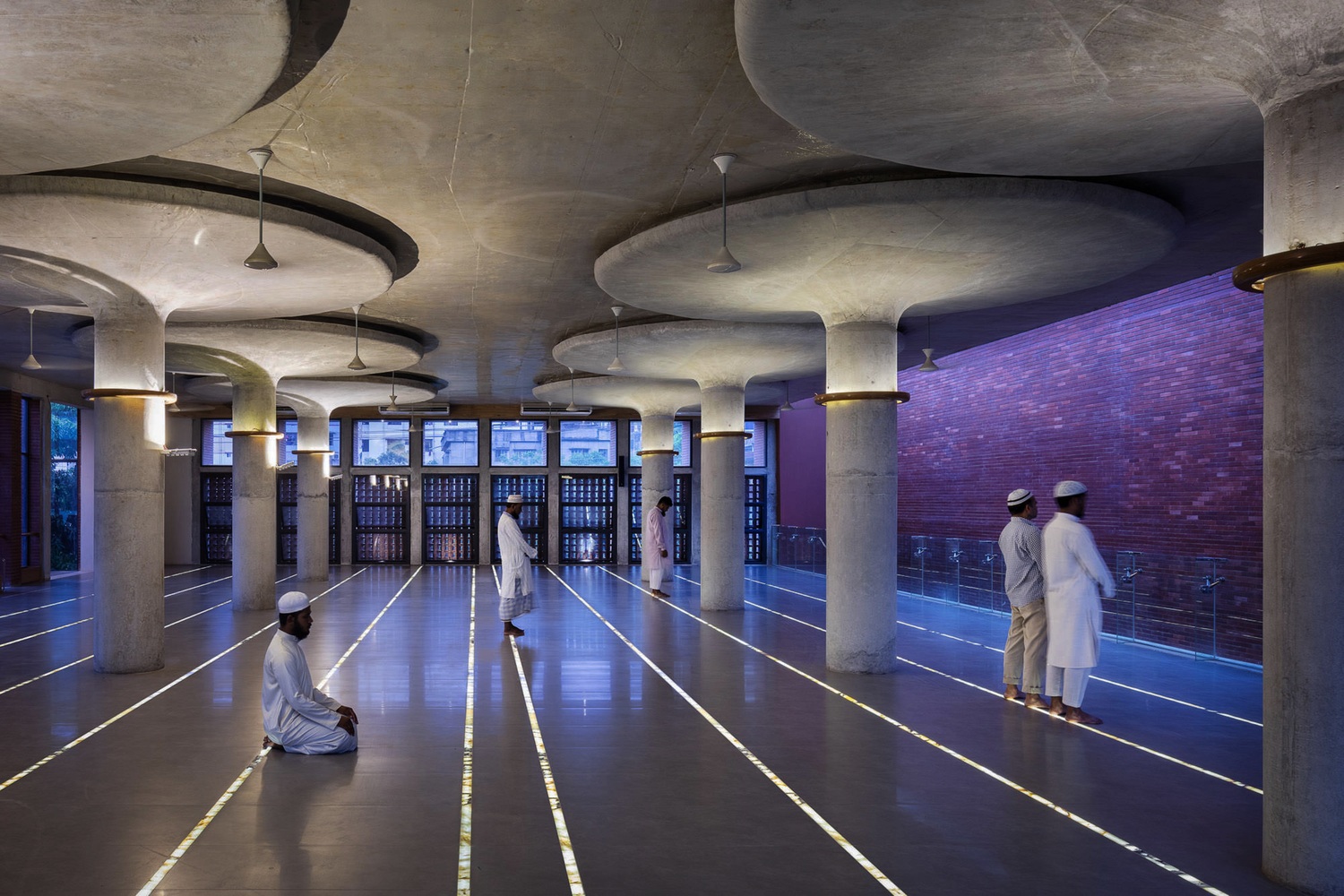
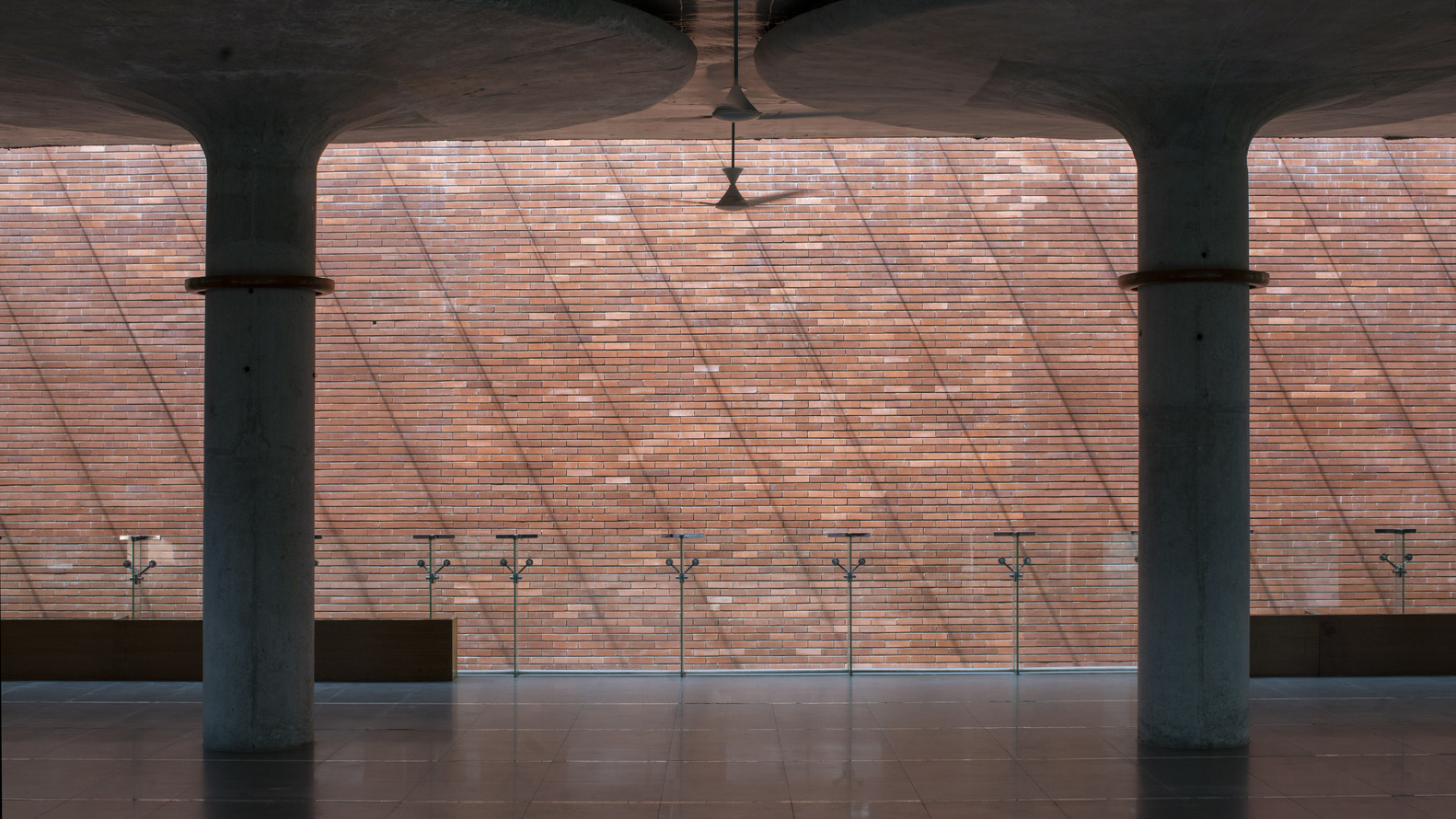
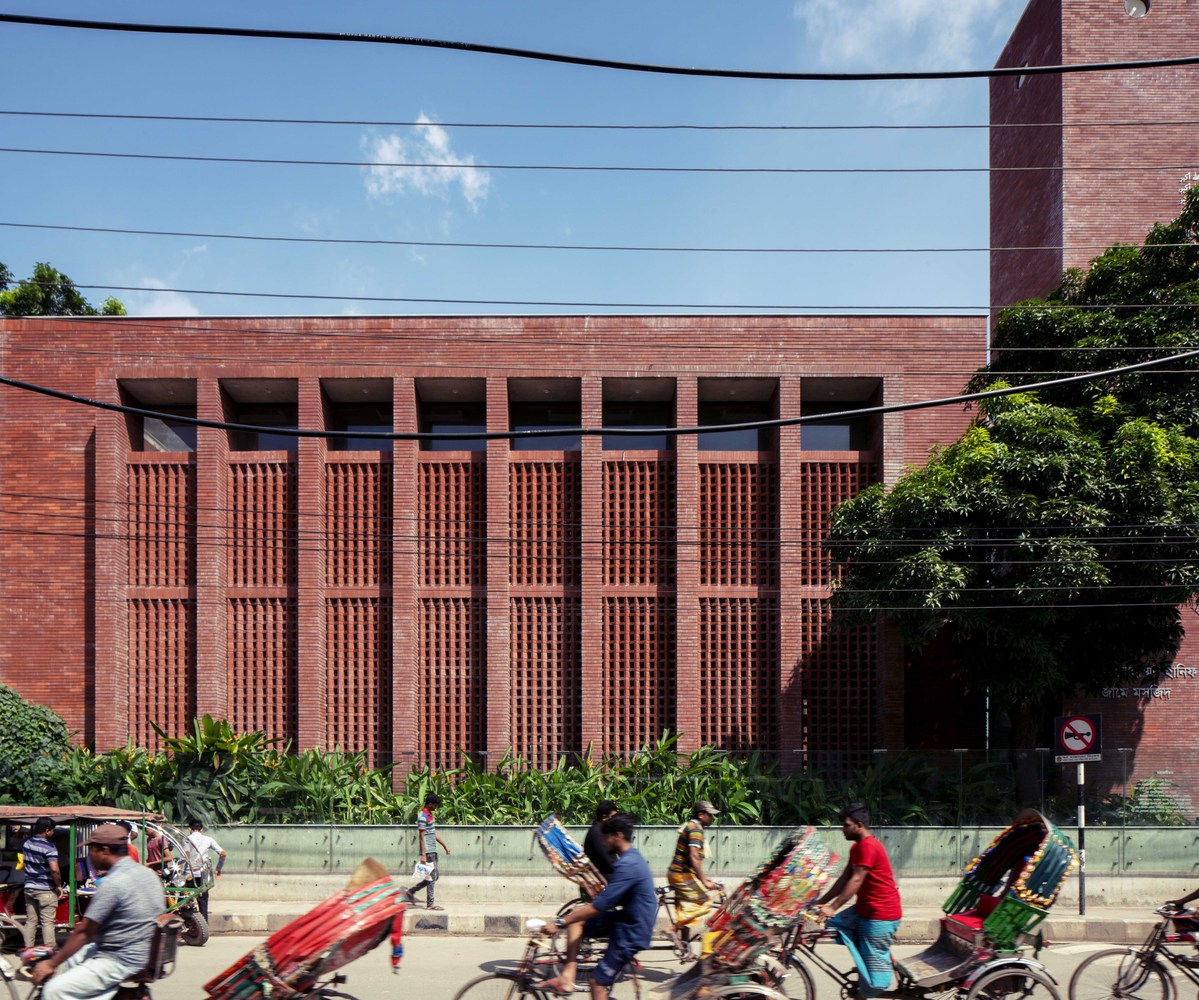
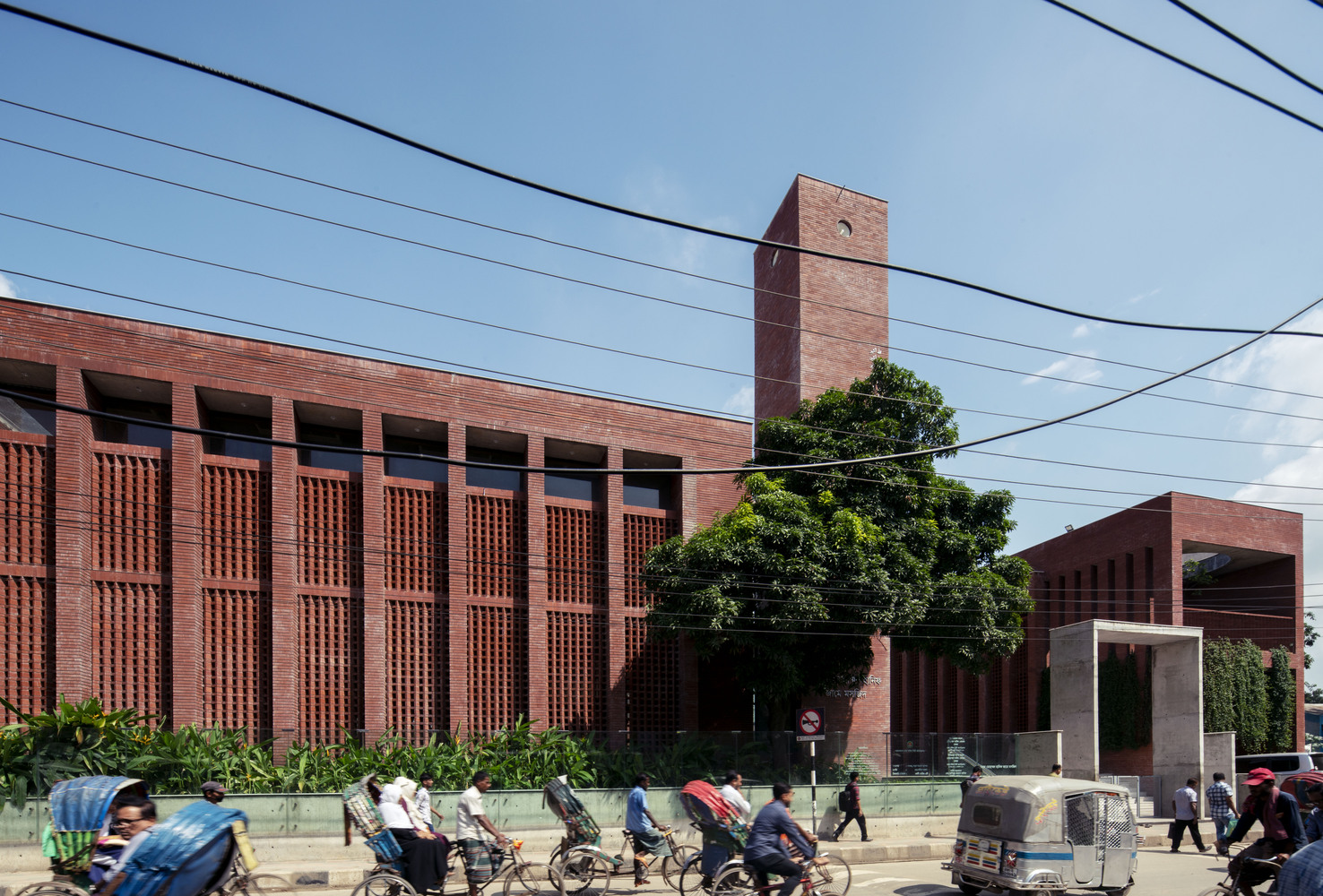
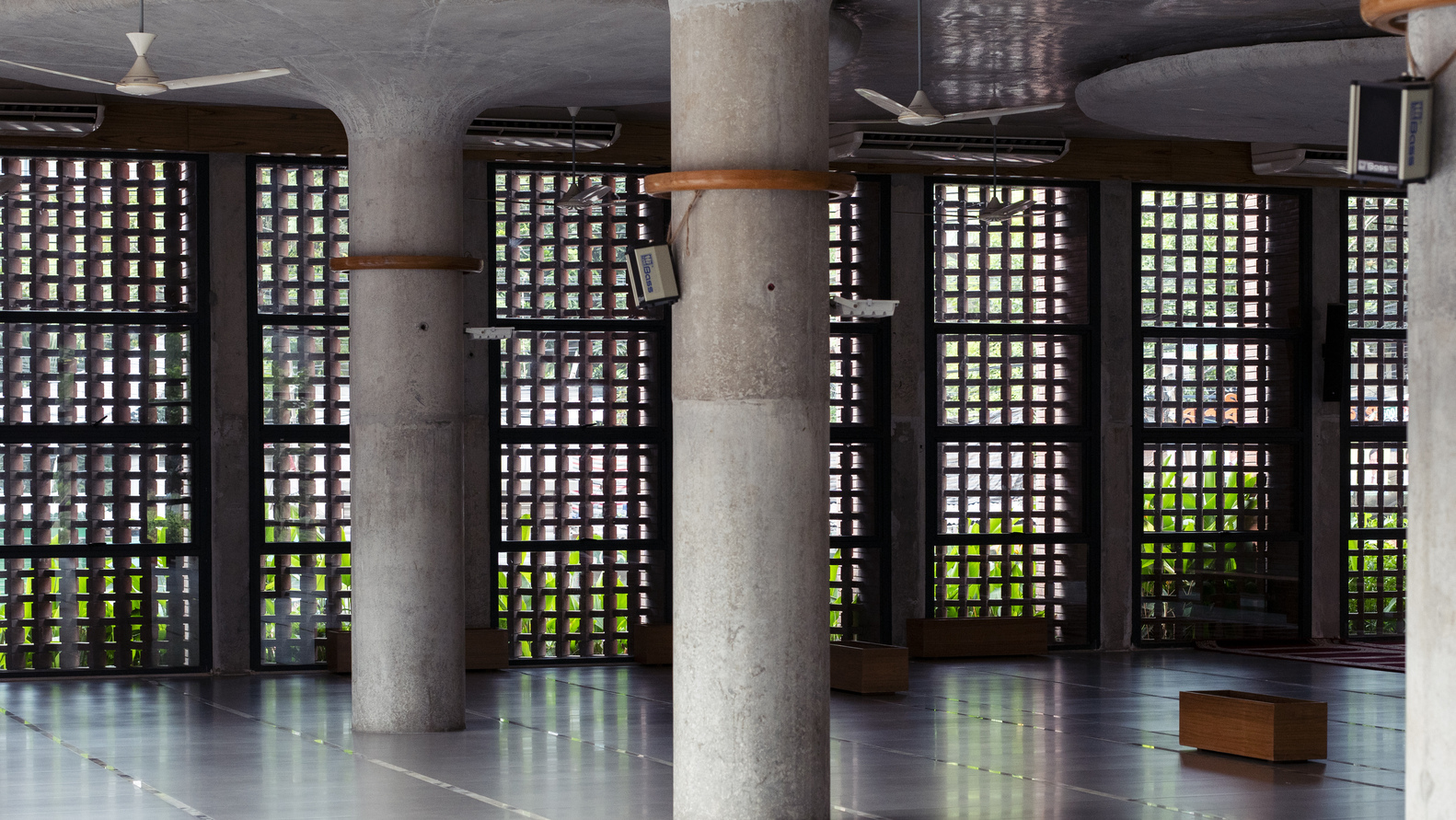
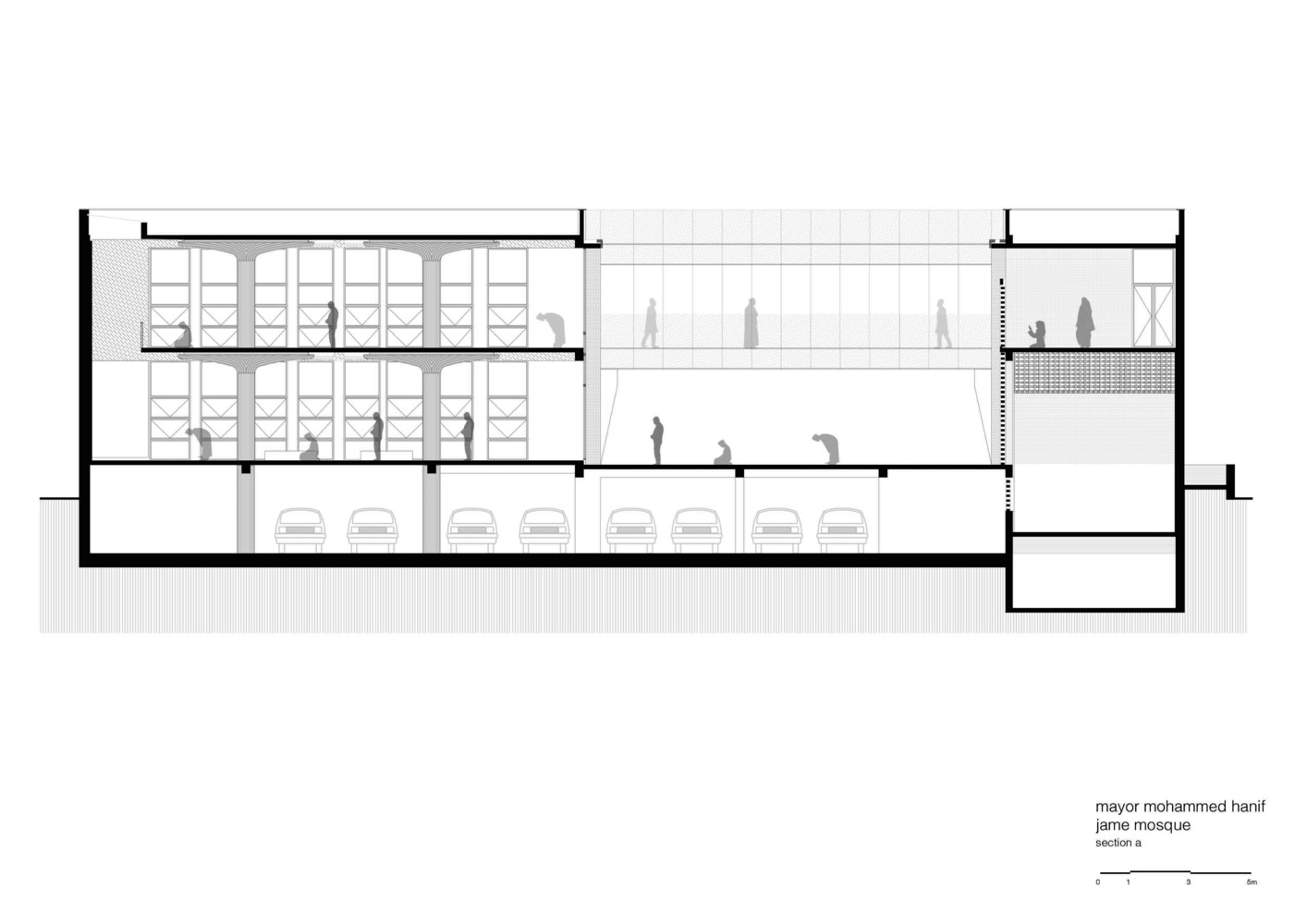
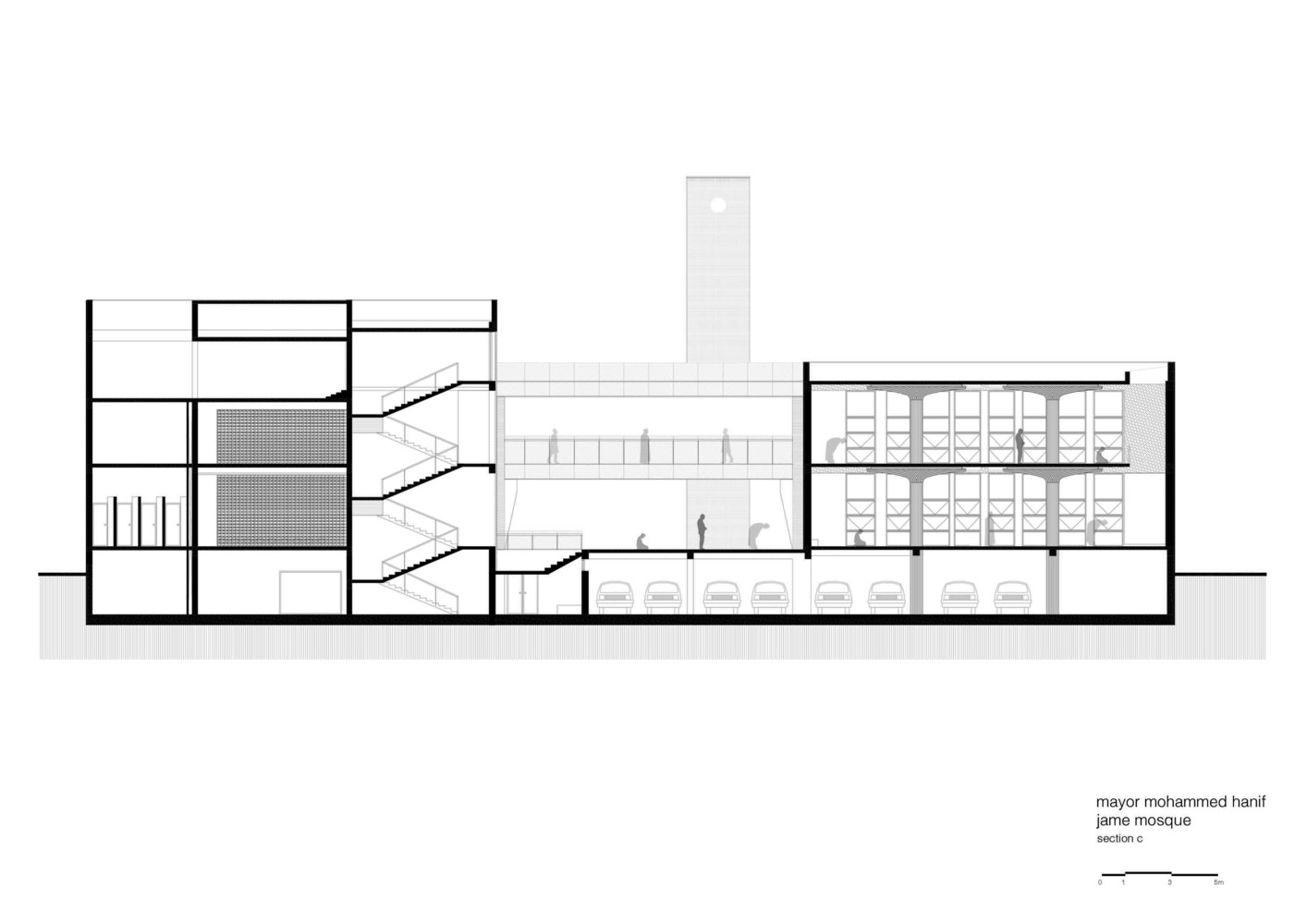
Inside the main hall, Shatotto departs from the enclosed solemnity often associated with conventional mosque interiors. Cement columns rise like trunks before widening into canopy-like forms that support the slabs above, creating the atmosphere of an indoor forest. This structural image gives the space a quiet naturalism while preserving openness for worship. Daylight enters through windows along the north and east walls, while a perforated brick wall to the south moderates glare, sound, and movement from Azimpur Road. The result is a calibrated interior, protected from the city yet still aware of it.
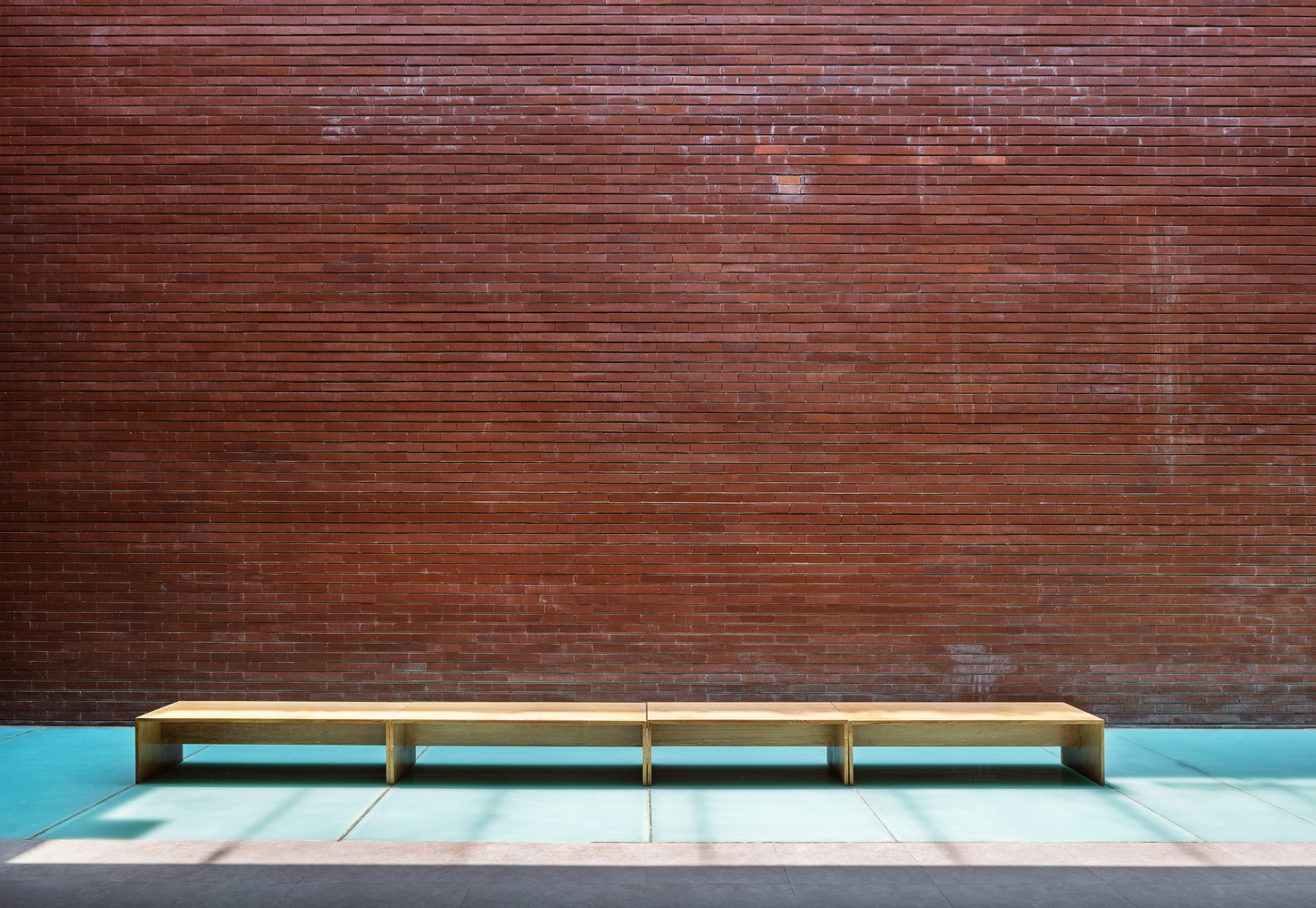
The western wall introduces one of the mosque’s most significant symbolic gestures. Instead of a conventional “Mehrab,” the design uses glass at the ceiling and frosted glass at the floor to define the imam’s position. A central mimbar occupies this area, transforming the entire glass surface into a symbolic field of leadership and presence. Beyond formal prayer, the zone remains accessible through benches and books placed beneath the skylight, allowing the sacred focal point to become a place for reflection and reading.
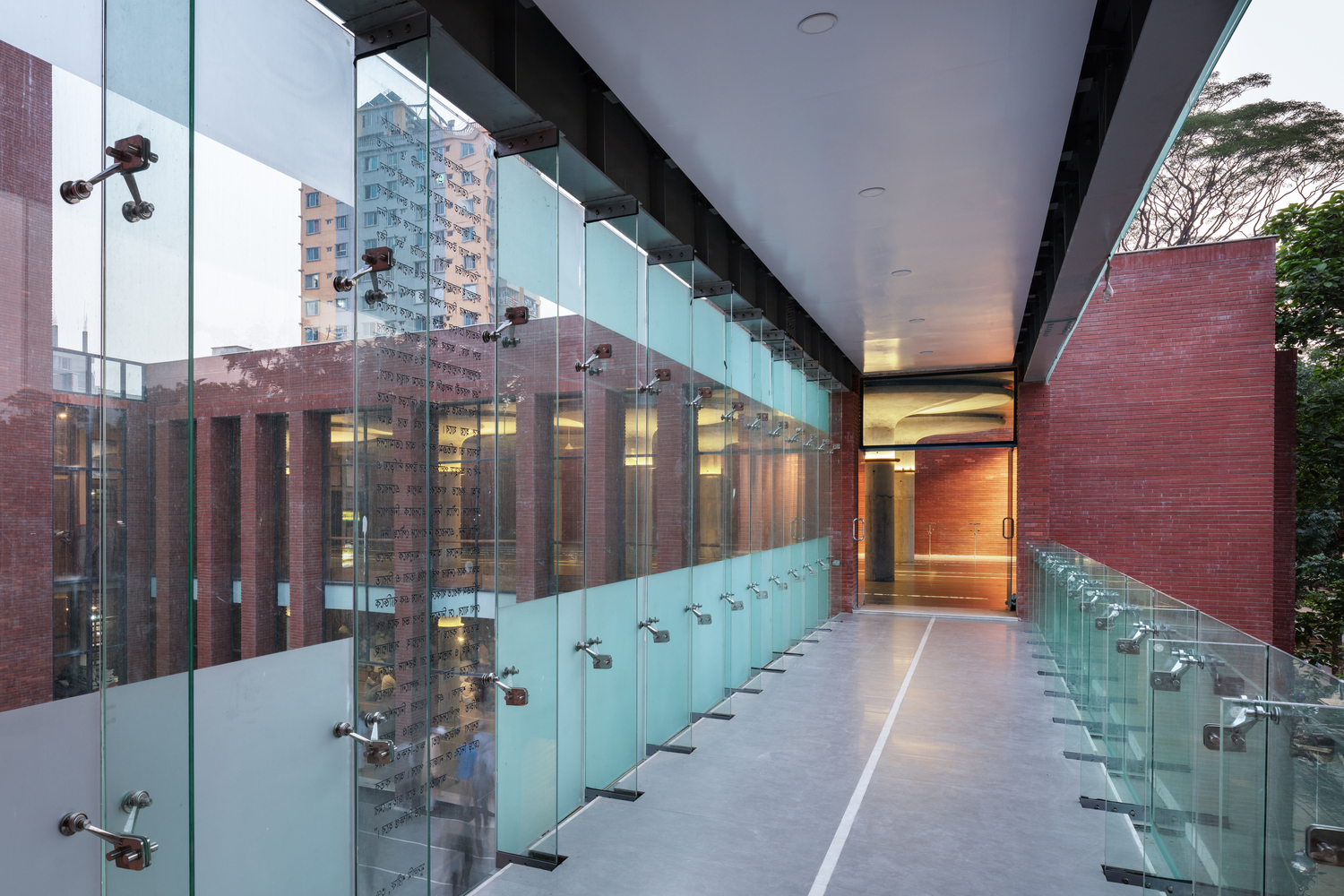
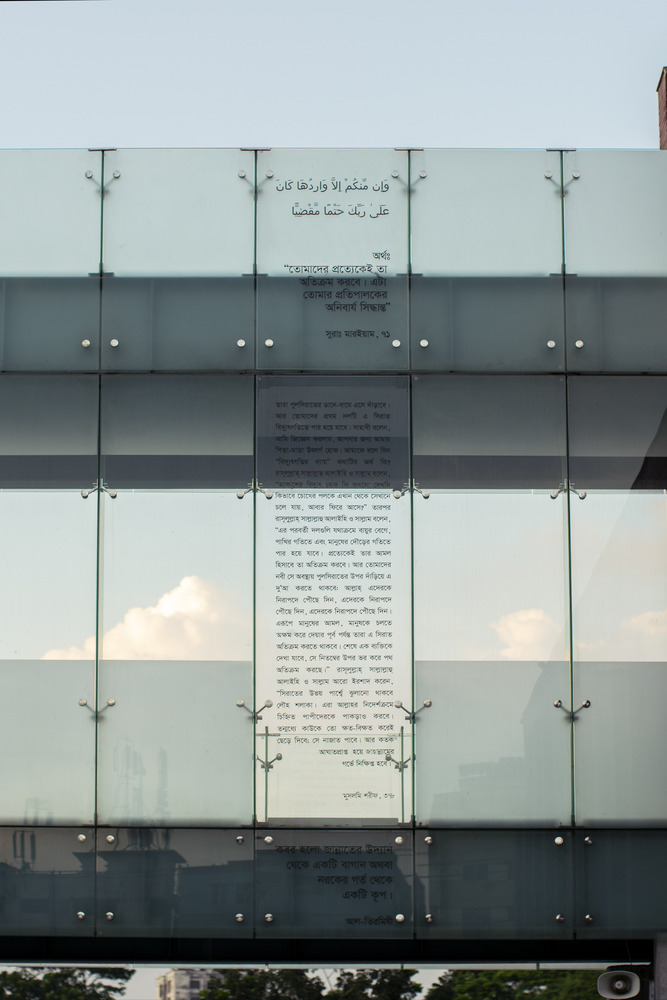
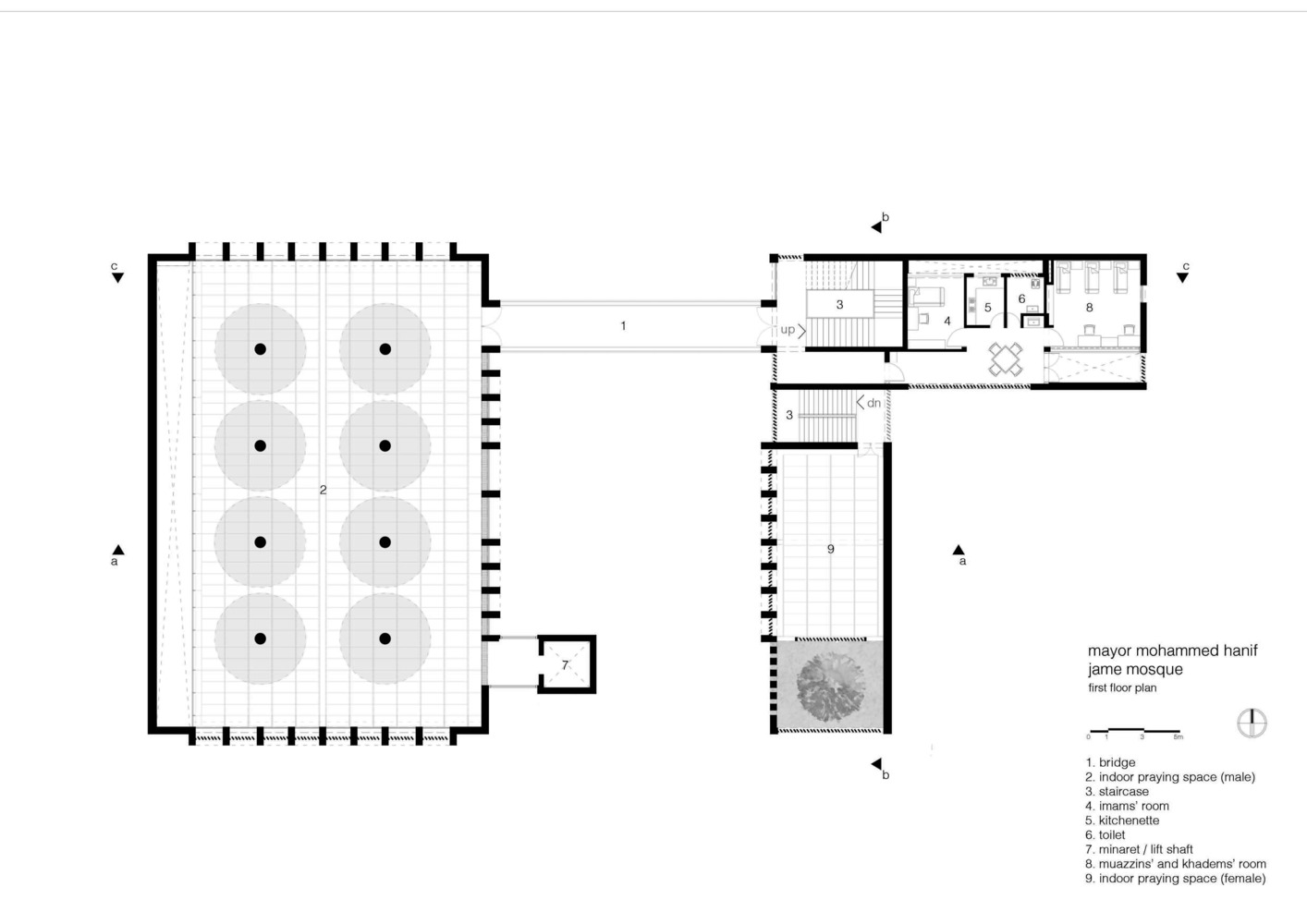
Movement through the mosque is also shaped as an act of contemplation. A bridge along the northern side connects the upper levels while running parallel to the graveyard. Its composition frames views of the cemetery, placing daily circulation in direct dialogue with remembrance. On the southern side, partly frosted glass carries a written “Surah,” while the northern edge remains visually open. The crossing becomes more than a practical connector; it turns passage into a spiritual pause, aligning bodily movement with meditation on mortality and faith.
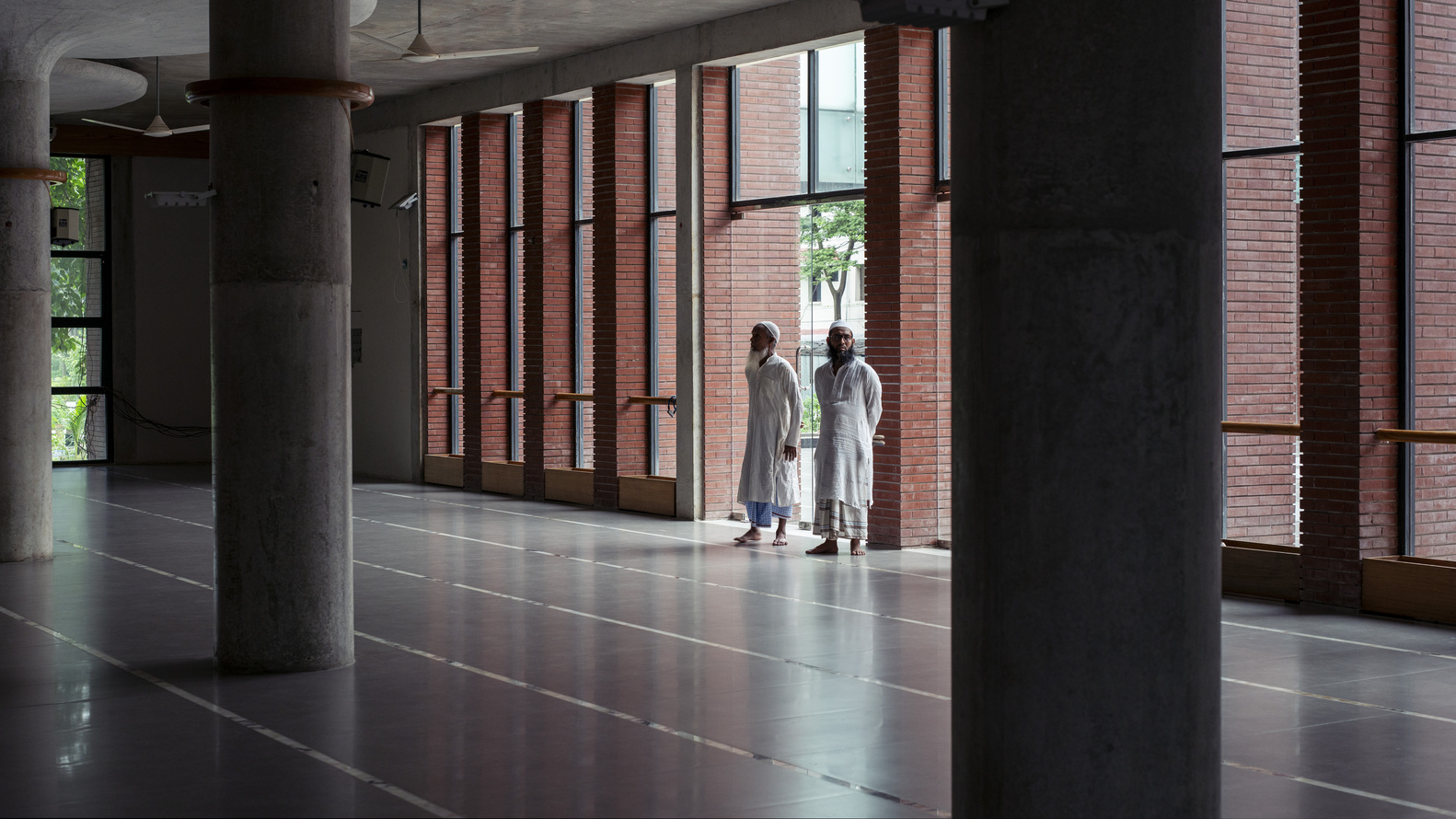
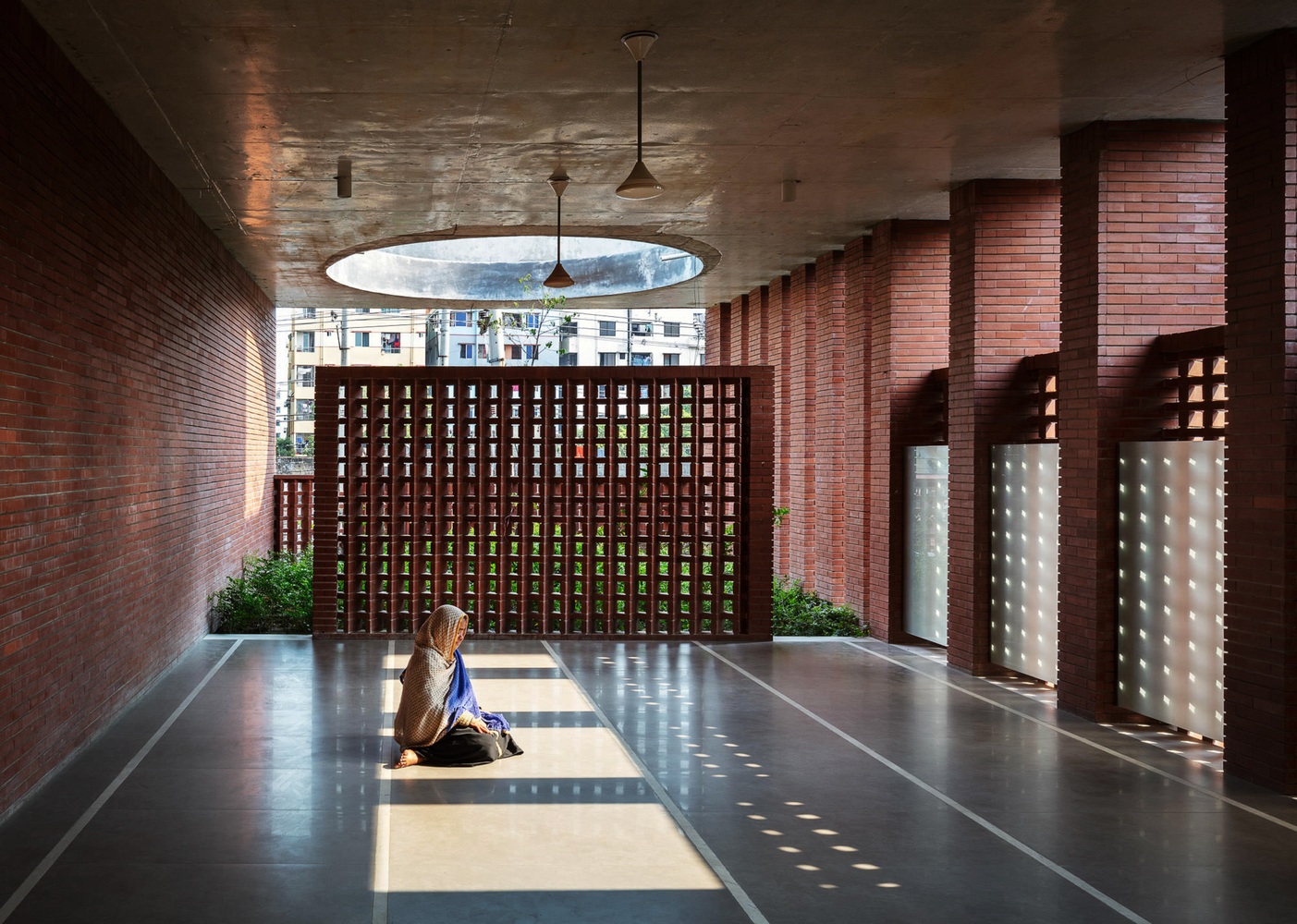
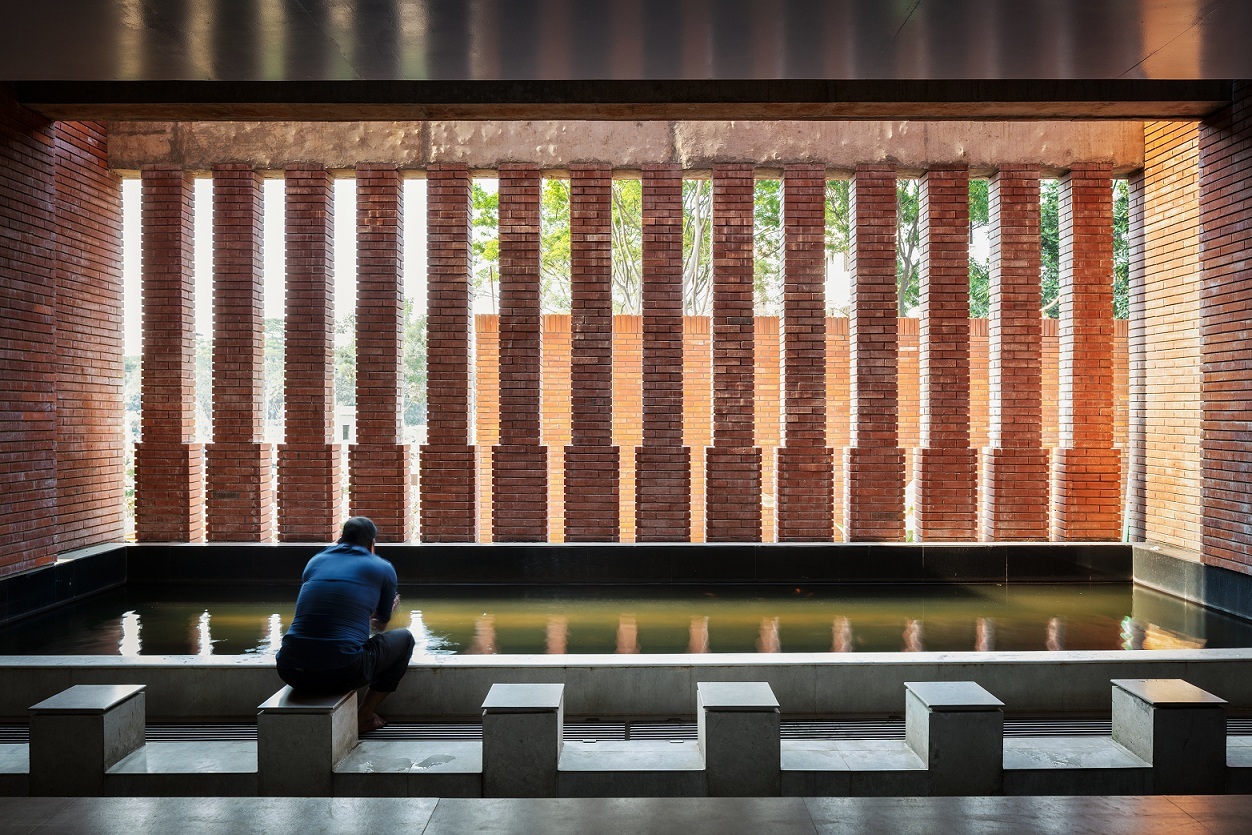
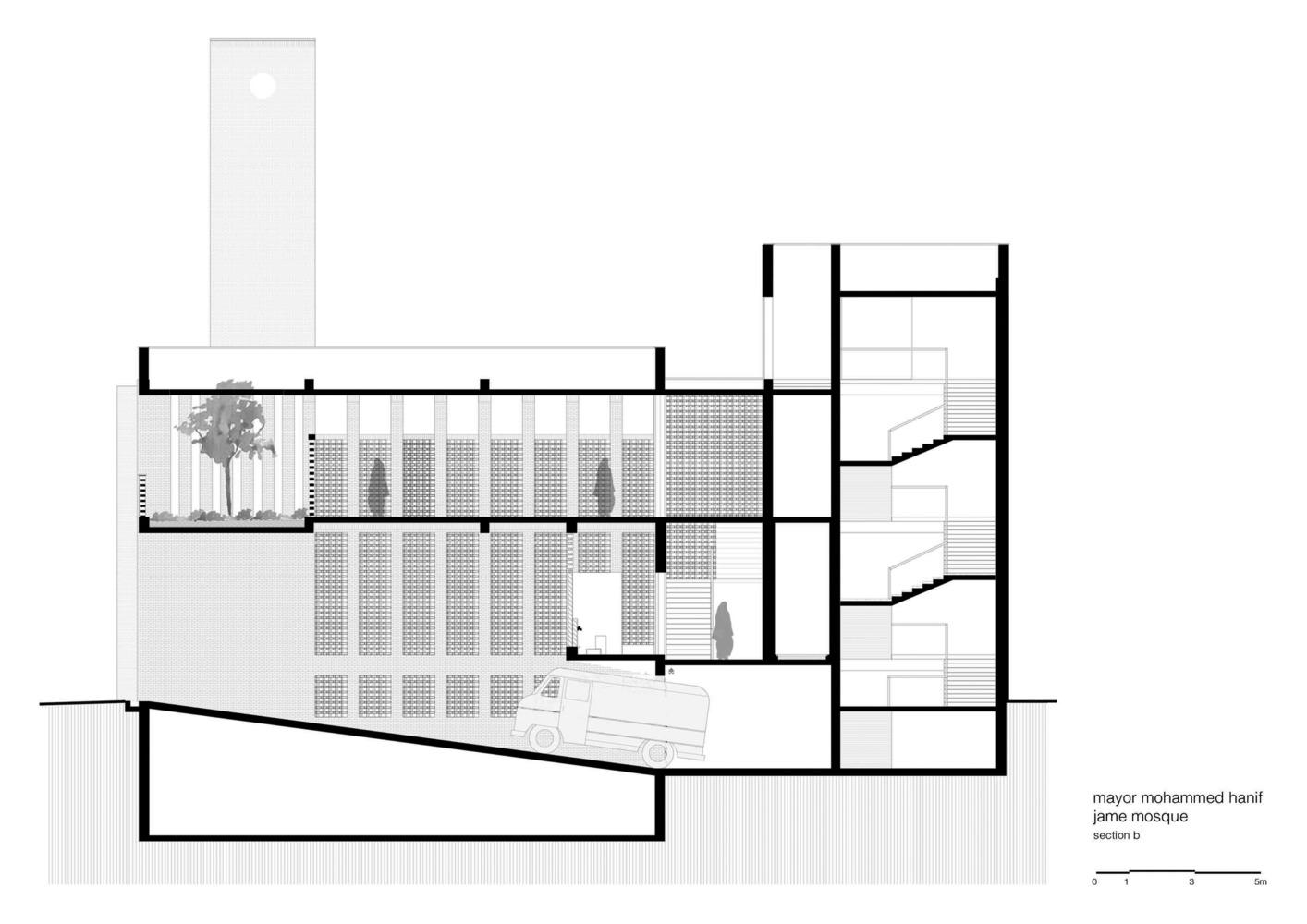
The eastern volume accommodates the women’s prayer space and the management team’s quarters above, with ablution facilities at ground level. Here, the project reconciles contemporary convenience with older forms of ritual washing. Faucets are provided alongside a small pool of water, offering worshippers both practical and traditional modes of cleansing. An opening in the ceiling above the pool admits light and air, reinforcing the connection between water, rain, sky, and purification.
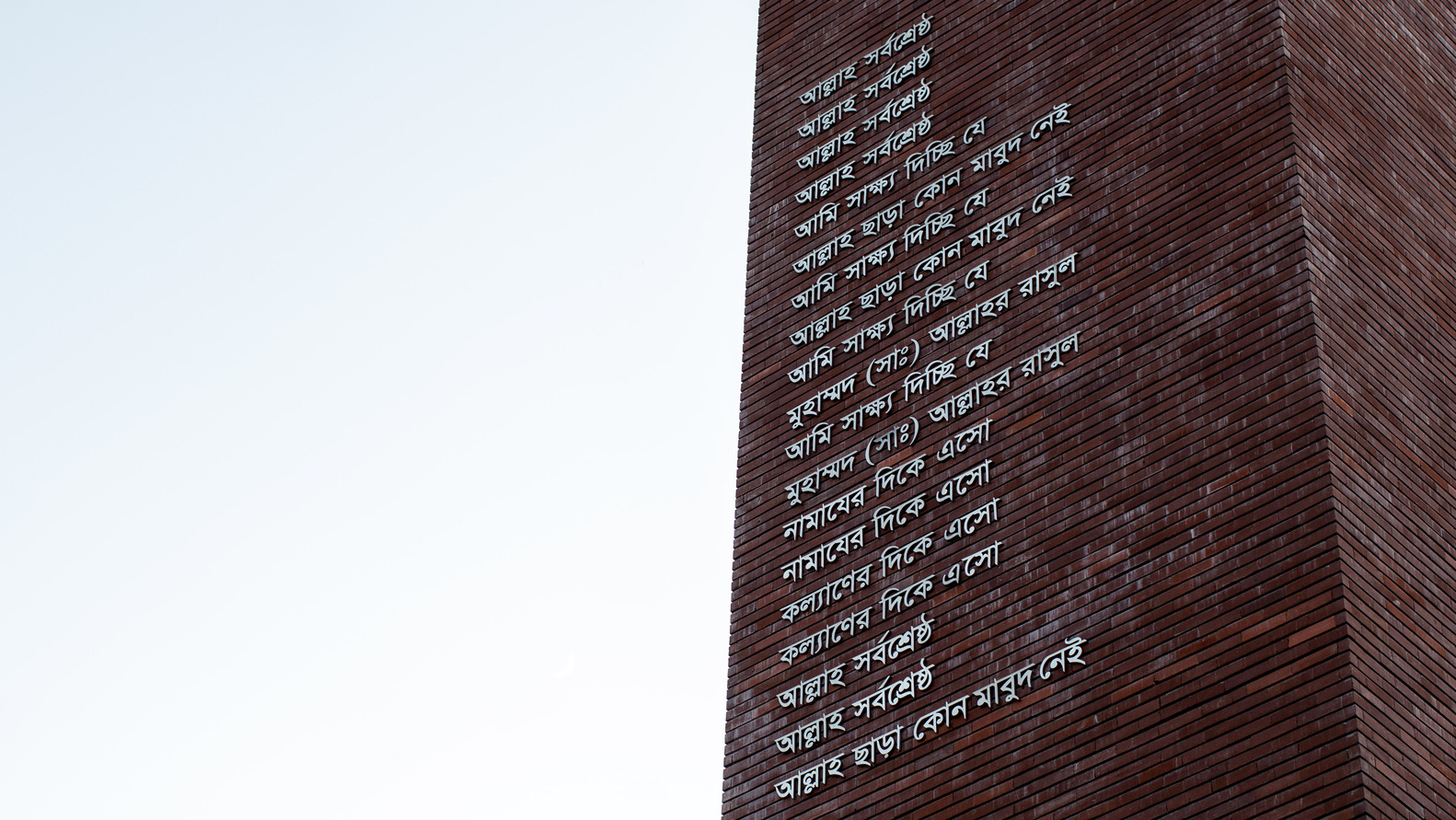
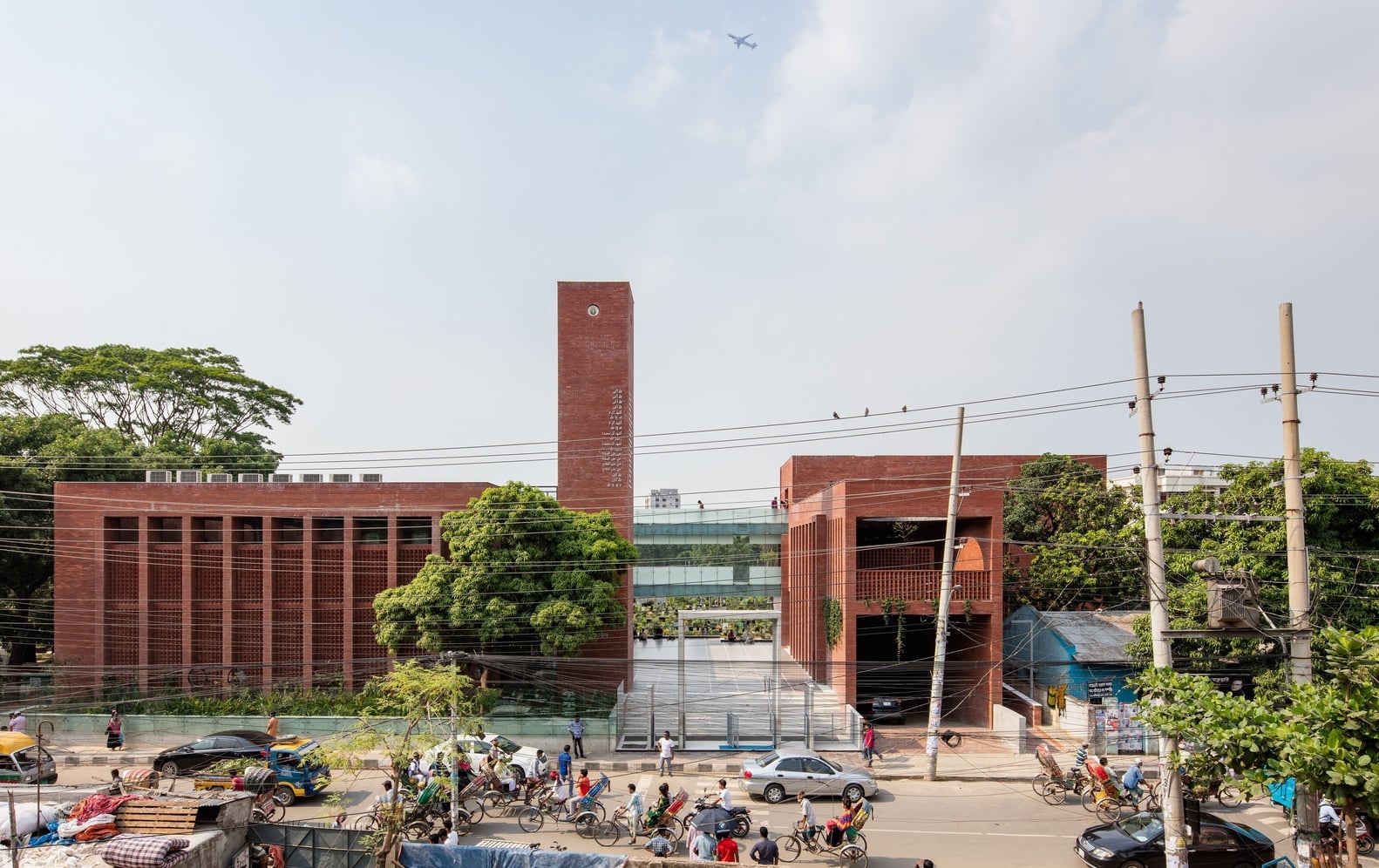
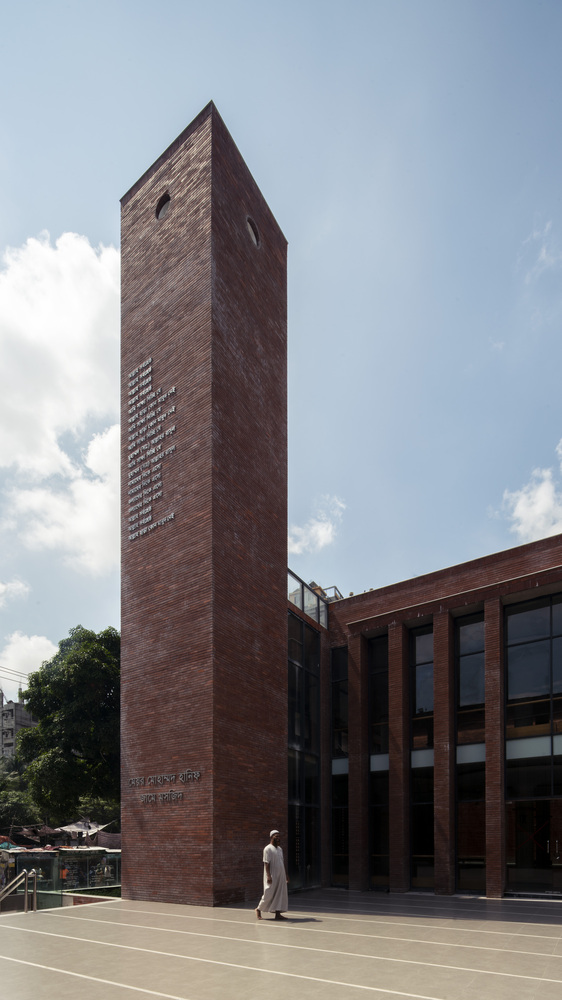
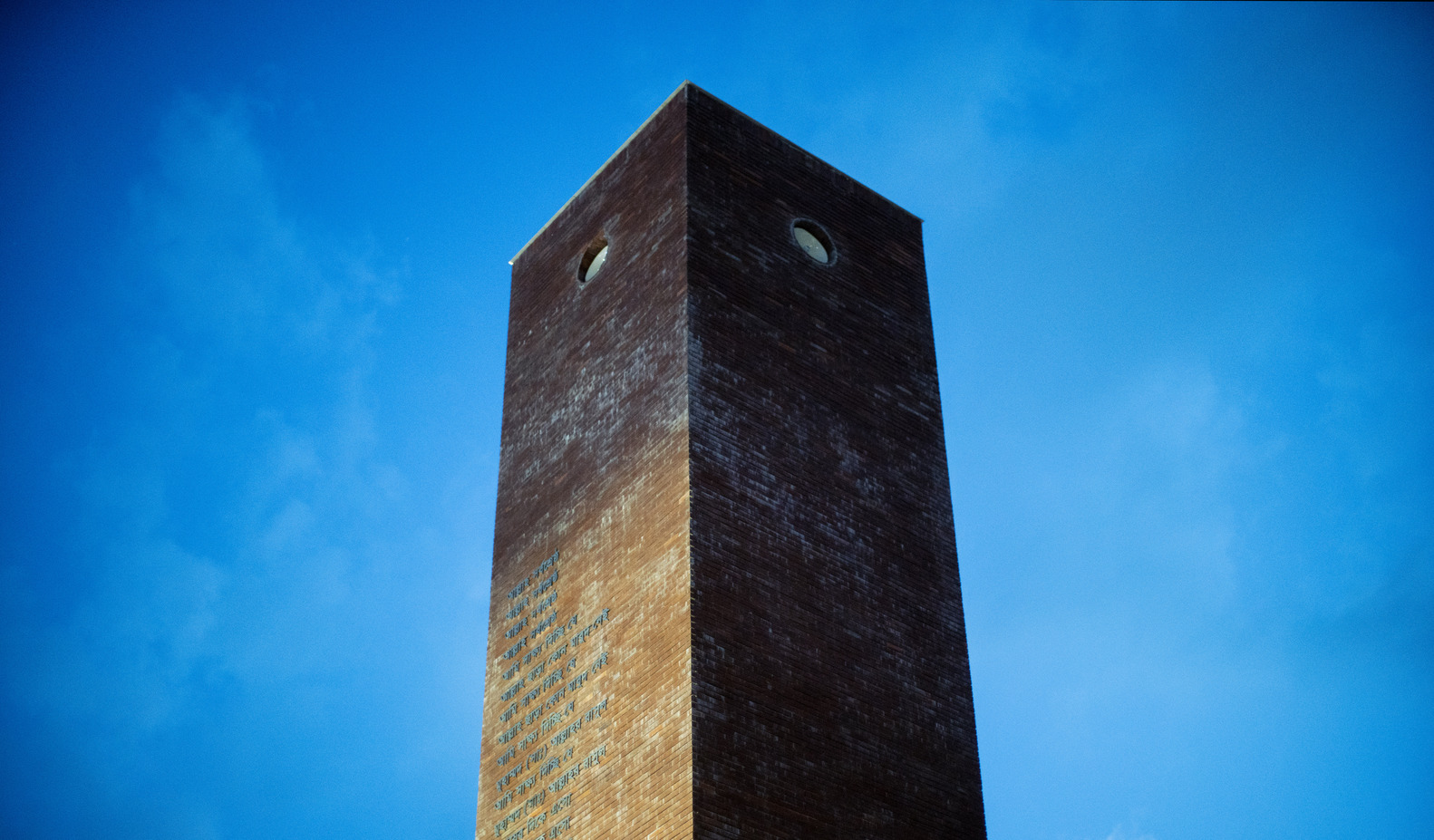
At the southwest corner, the “Minaret” is similarly reconsidered. While it retains its role as the marker of the call to prayer, contemporary sound technology removes the need for a “Muezzin” to ascend the tower. Shatotto uses this freed internal volume to accommodate an elevator, integrating accessibility into a traditional architectural element without diminishing its symbolic presence. In doing so, the mosque demonstrates how inherited forms can be adapted to contemporary social needs.
Mayor Mohammad Hanif Jame Mosque ultimately presents a nuanced model for religious architecture in a dense urban context. It does not reject tradition, nor does it reproduce it literally. Instead, it works through memory, material, light, and movement to create a mosque that serves worshippers, passersby, and the surrounding community. Through its spatial generosity and symbolic clarity, the project positions faith as an active part of civic life in Dhaka.
Project Gallery
Project Location
Address: Azimpur Road, Dhaka, Bangladesh

