

Architects: Samir Alaoui Architectes Sàrl
Area: 1,600 m²
Year: 2025
Photography: Rasmus Norlander
Lead Architects: Samir Alaoui
Architects Team: Basile Immer, Nicolas Sternheim, Manon Kivel, Aurora Oset
Civil Engineering: Synaxis SA
Programme: Light Industrial Units (Ground Floor–First Floor), Residential Units (Second Floor)
Structural System: Precast and In-situ Concrete Structure (Ground Floor–First Floor), Prefabricated Timber Frame Structure (Second Floor)
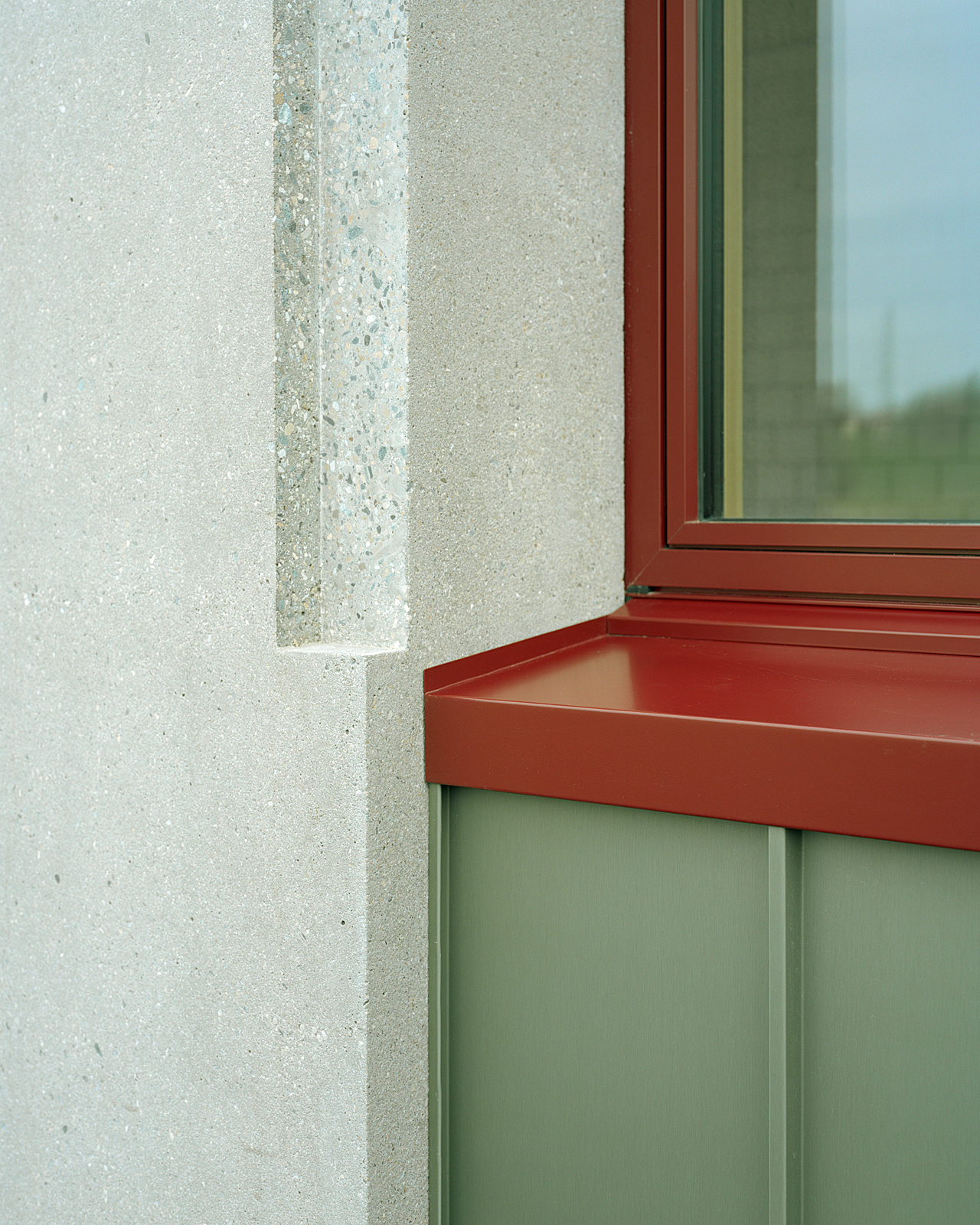
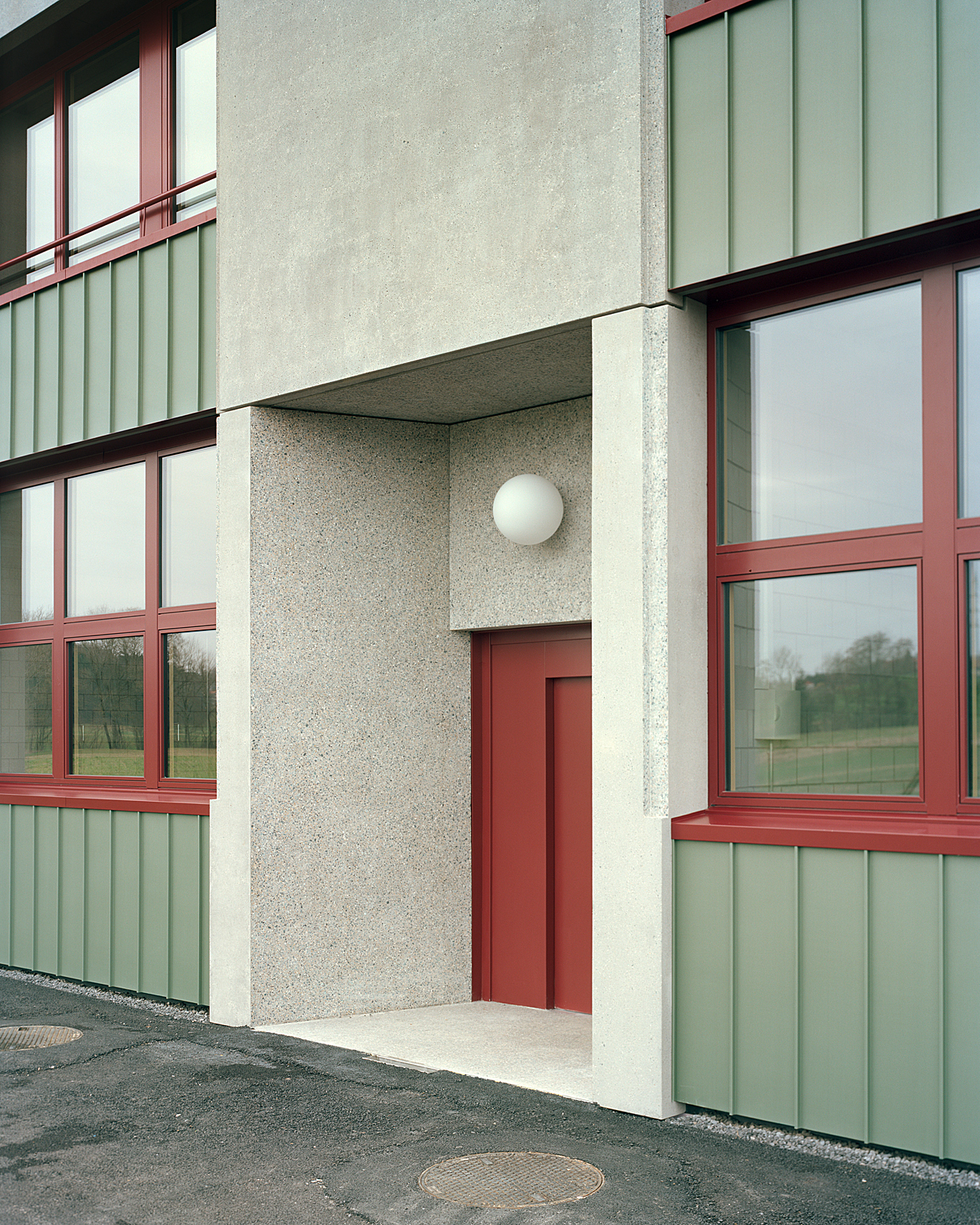
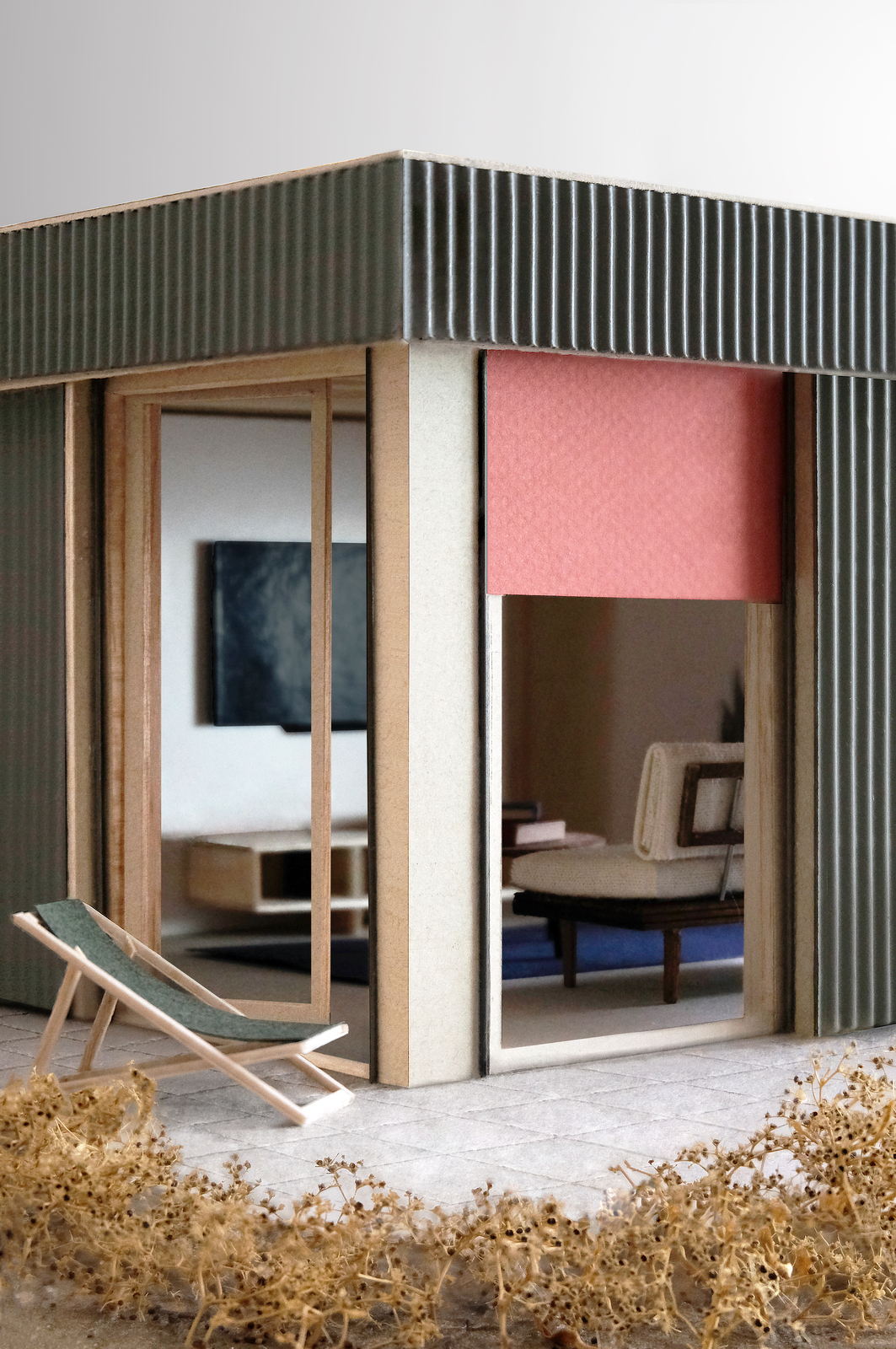
Façade: Corrugated Metal Cladding; Prefabricated Concrete Elements
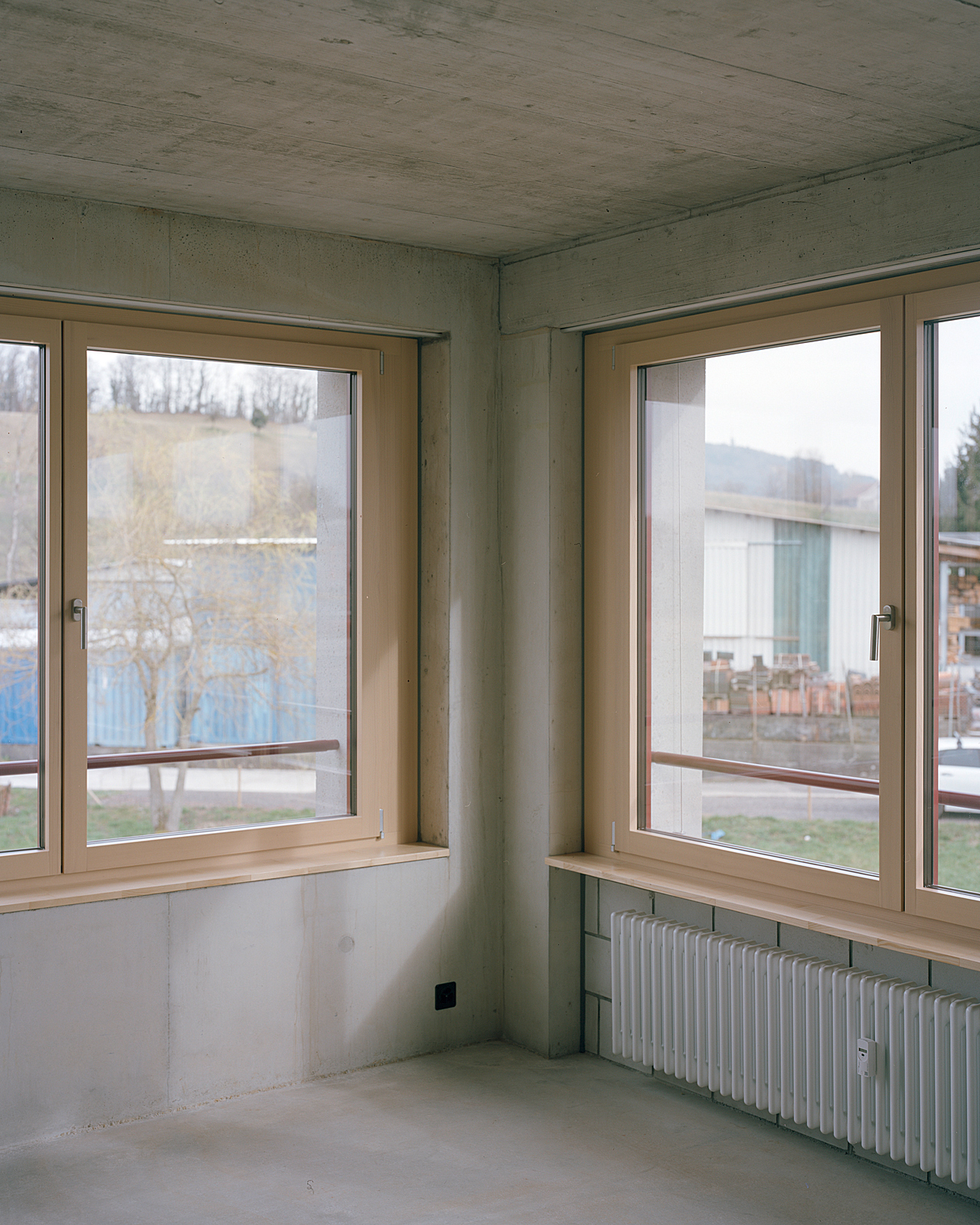
Interior Finishes: Fair-faced Concrete, Sand-lime Brick, Pine Wood, Terrazzo, Timber Flooring, Ceramic Tiles
City: Forel (Lavaux)
Country: Switzerland
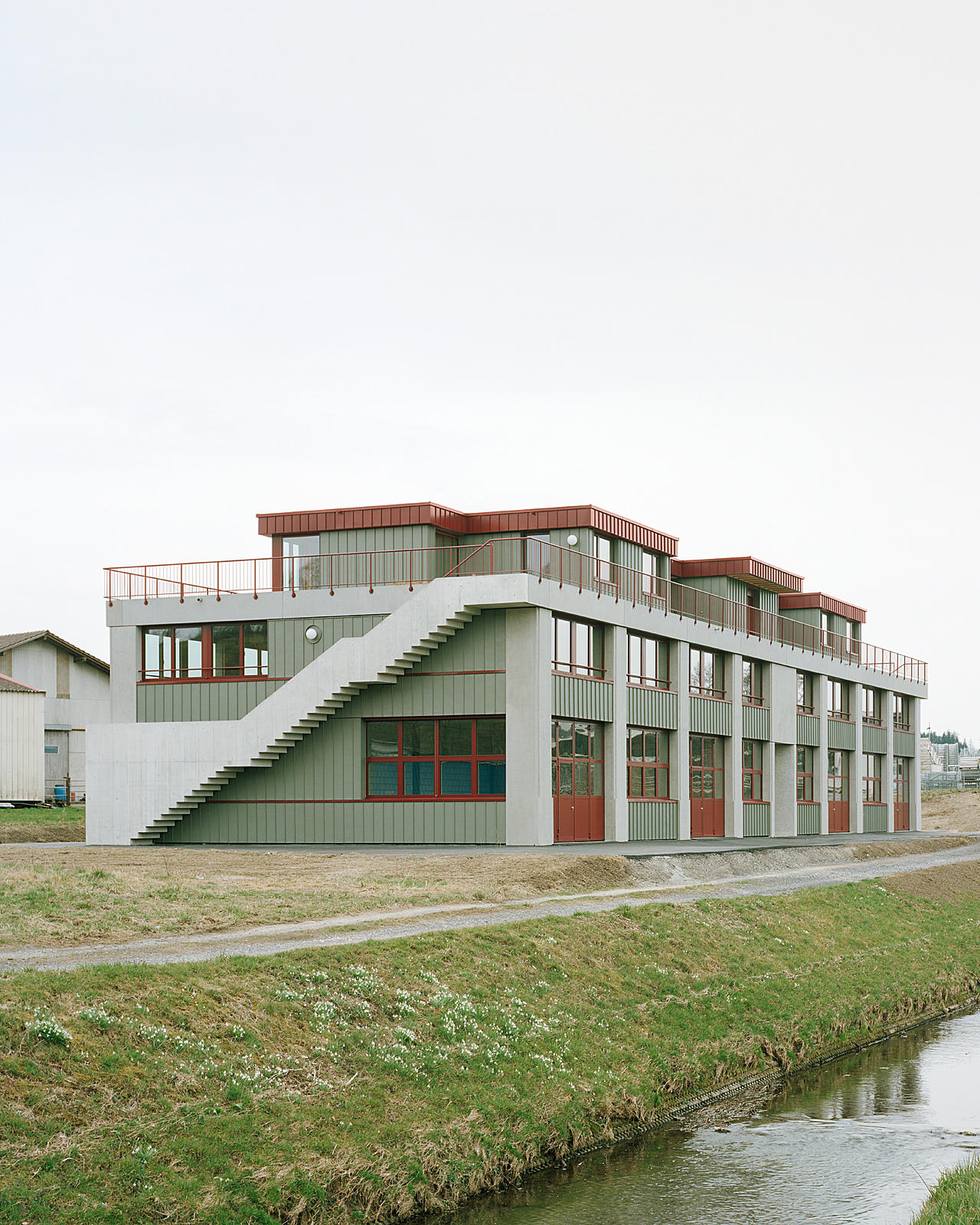
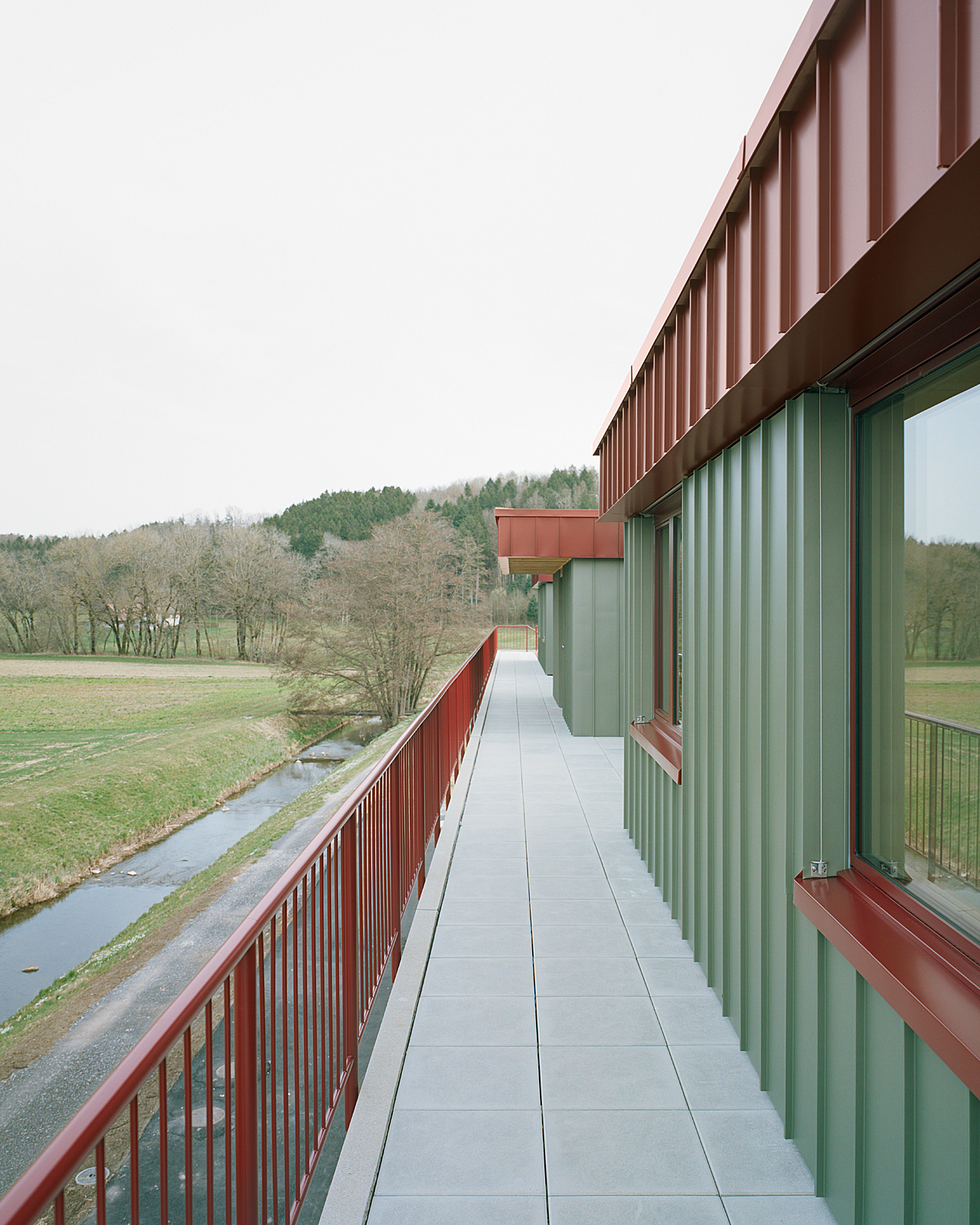
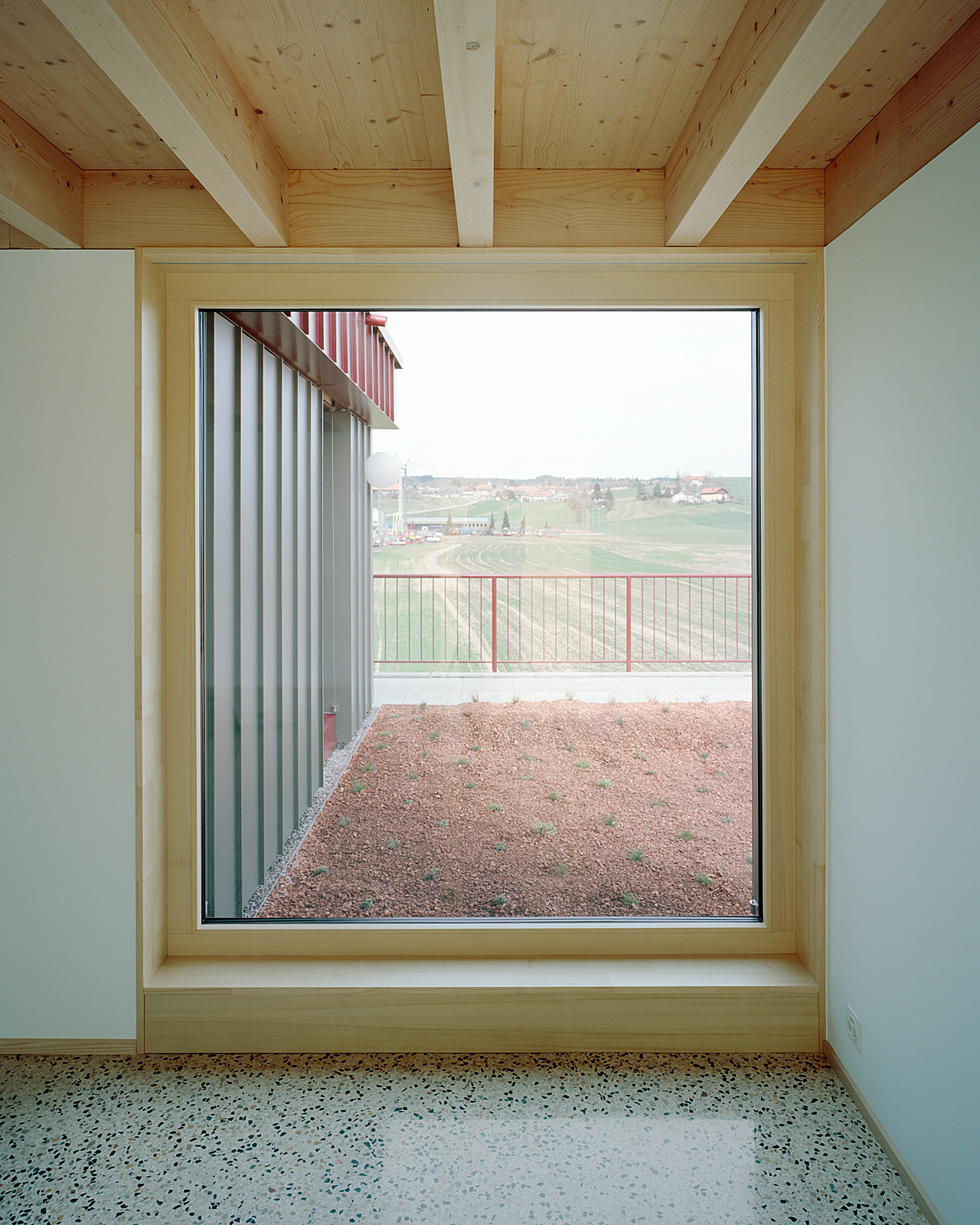
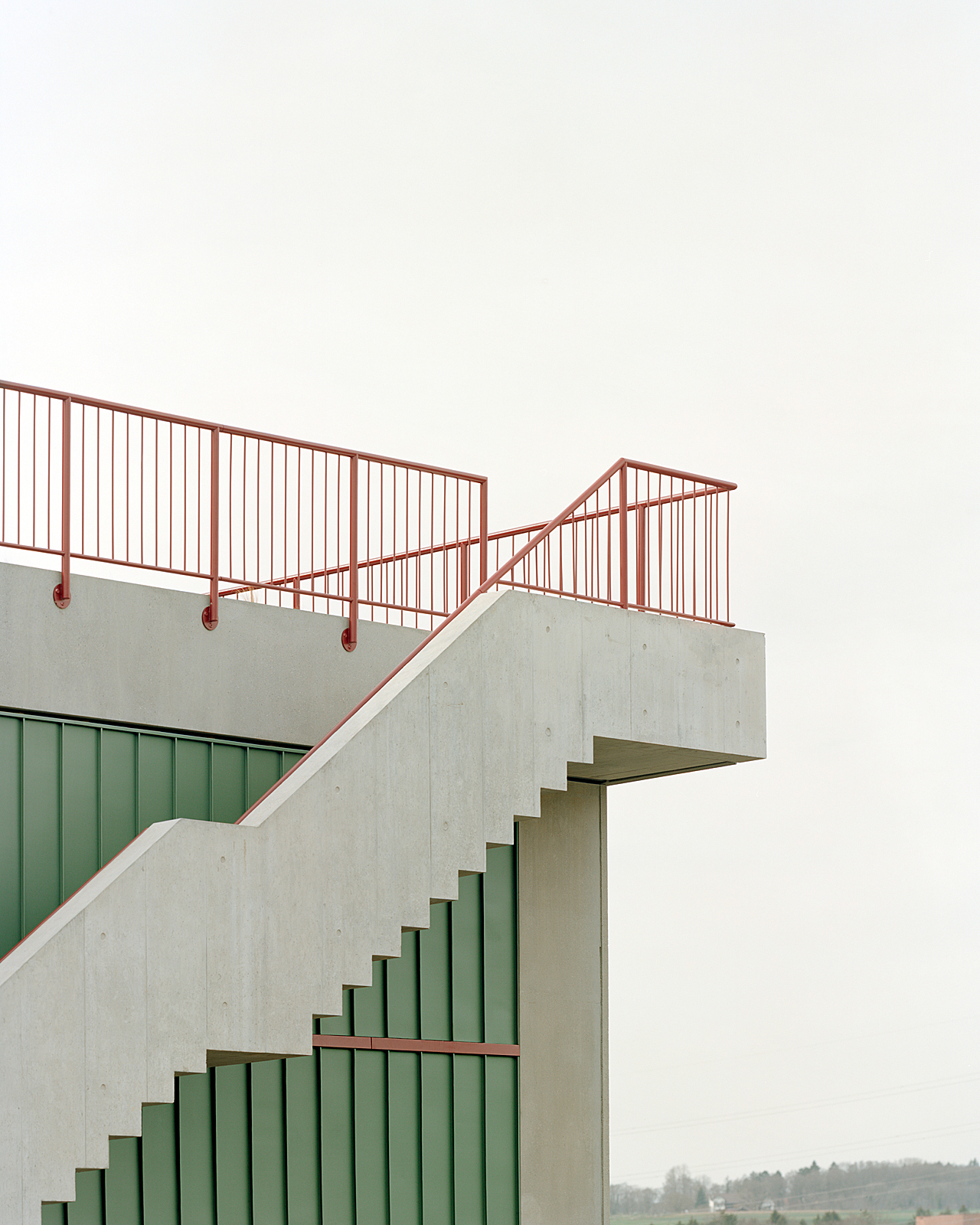
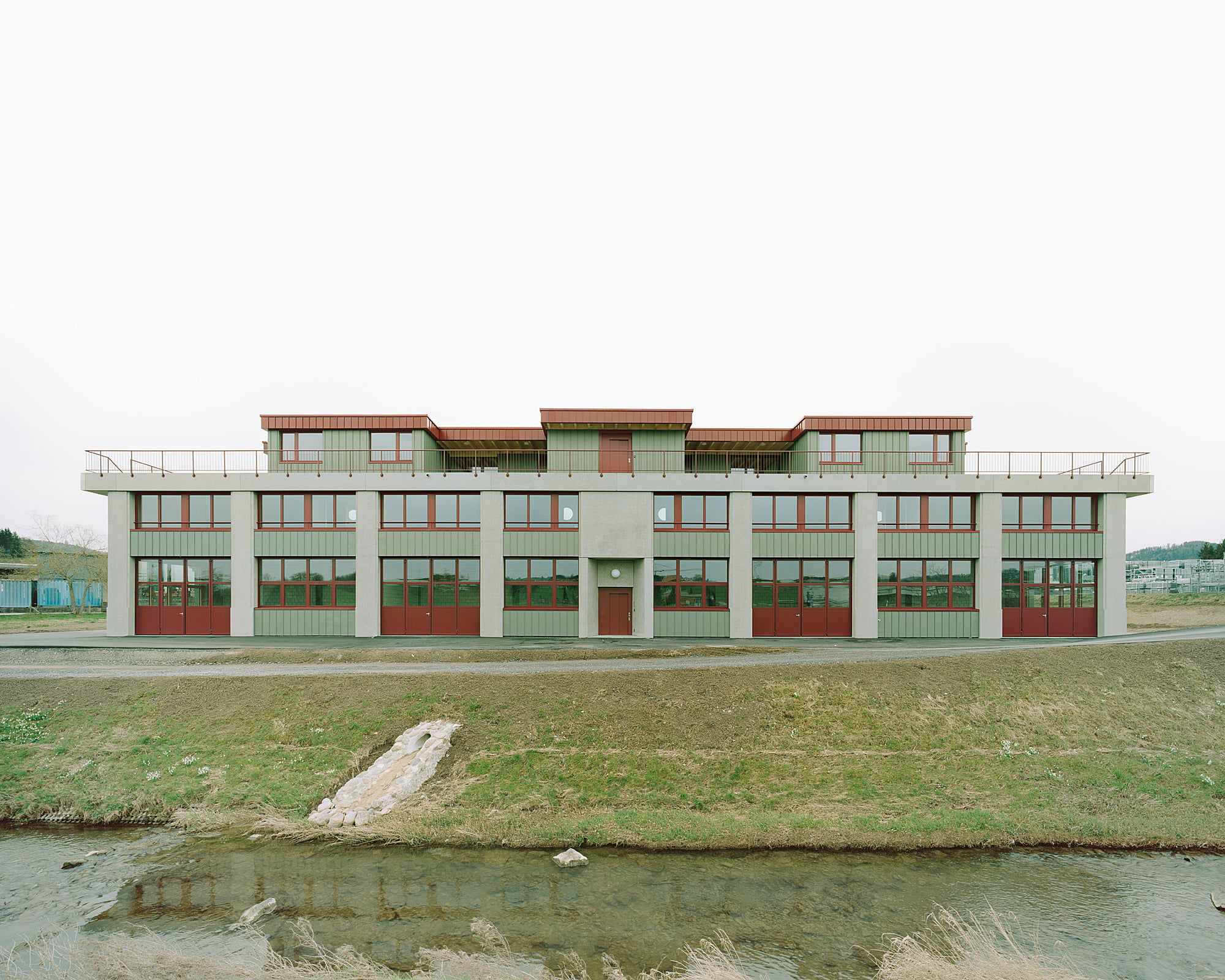
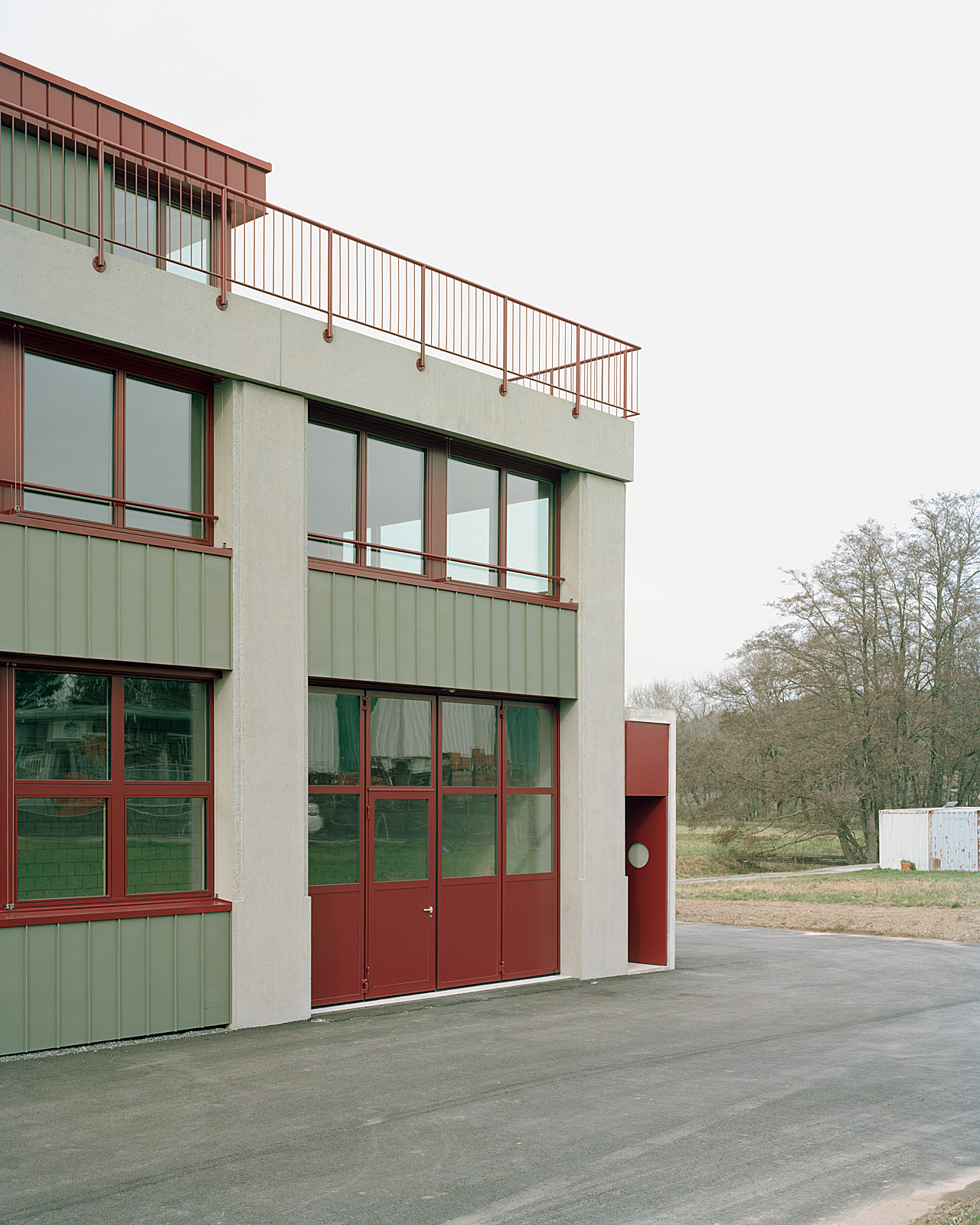
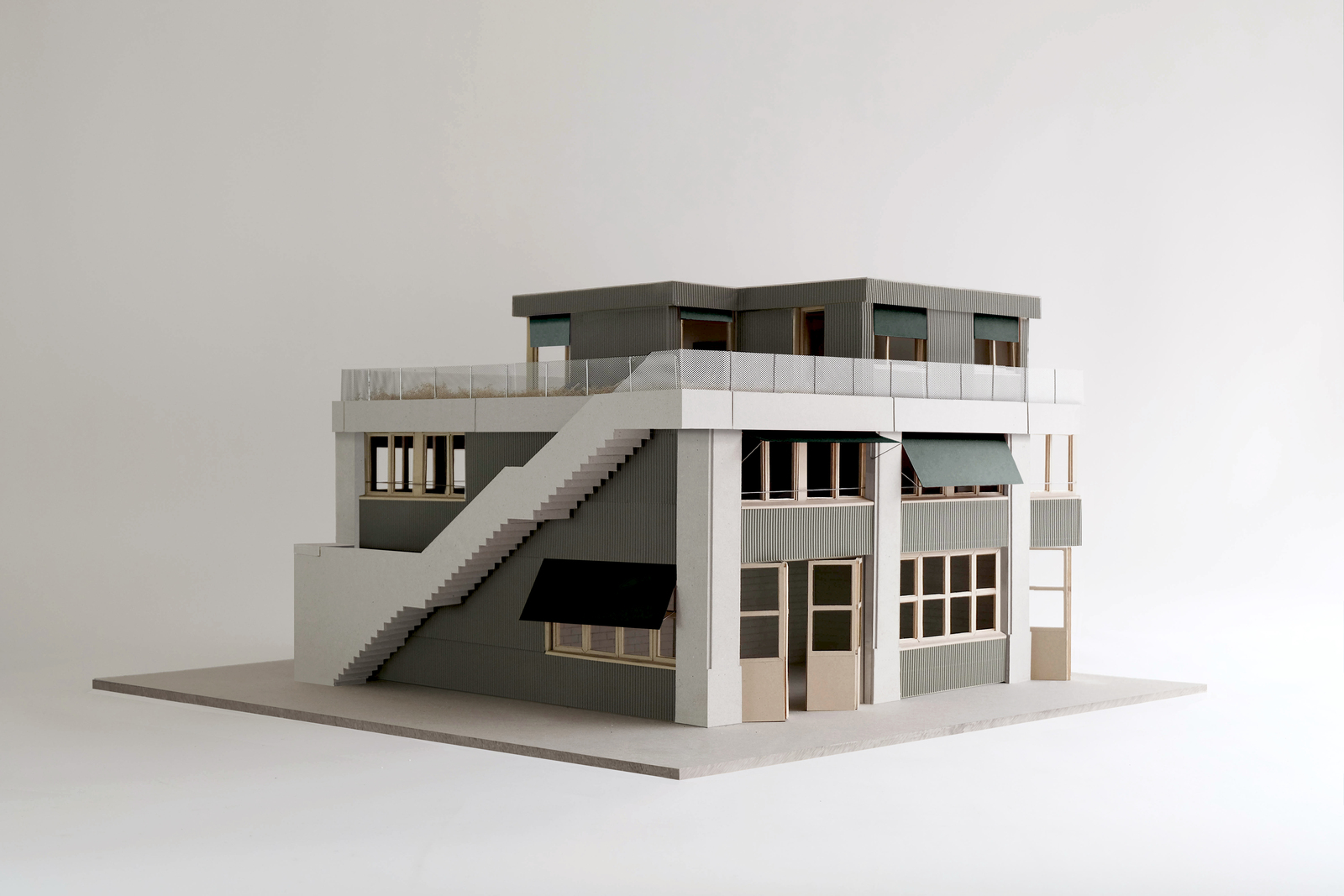
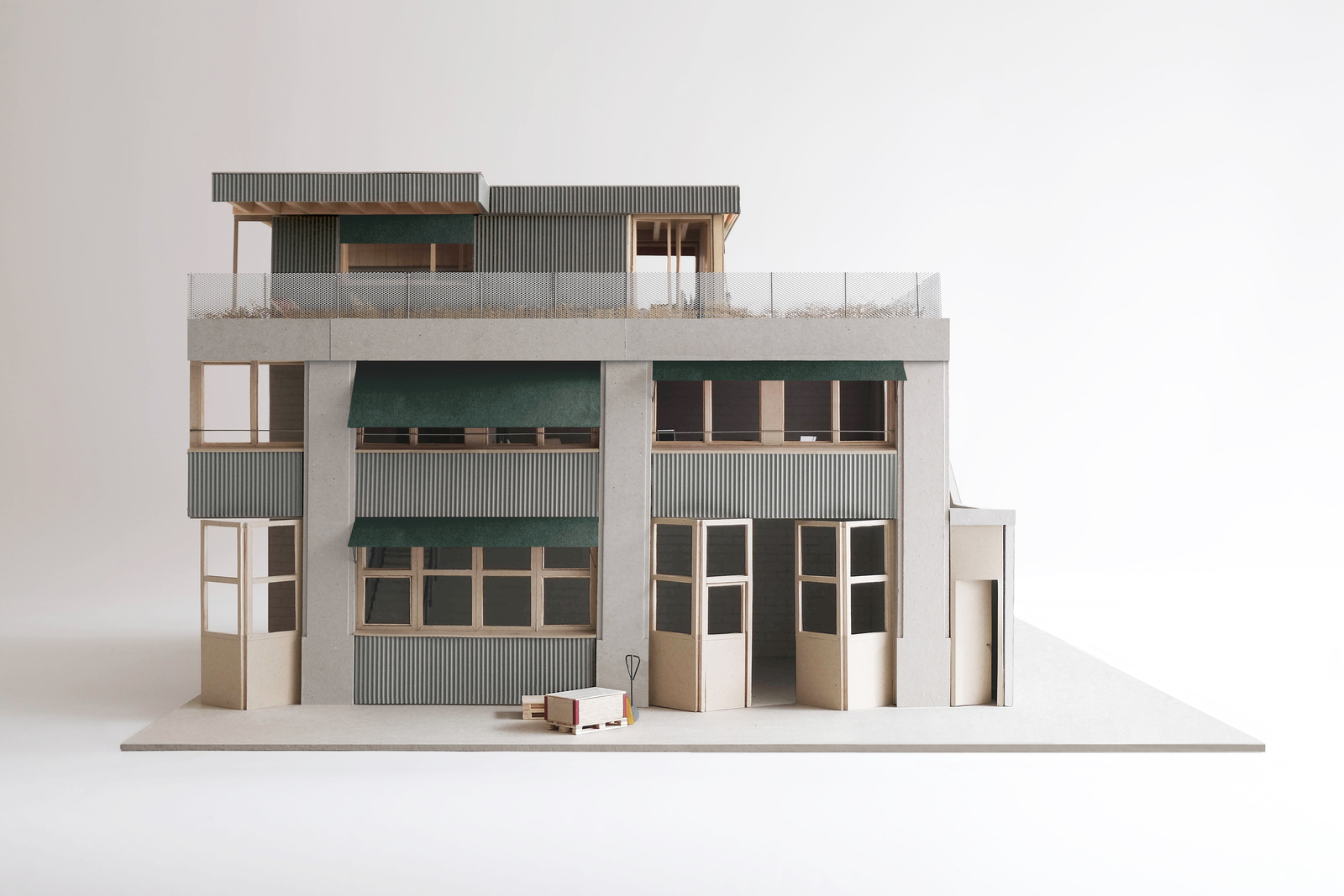
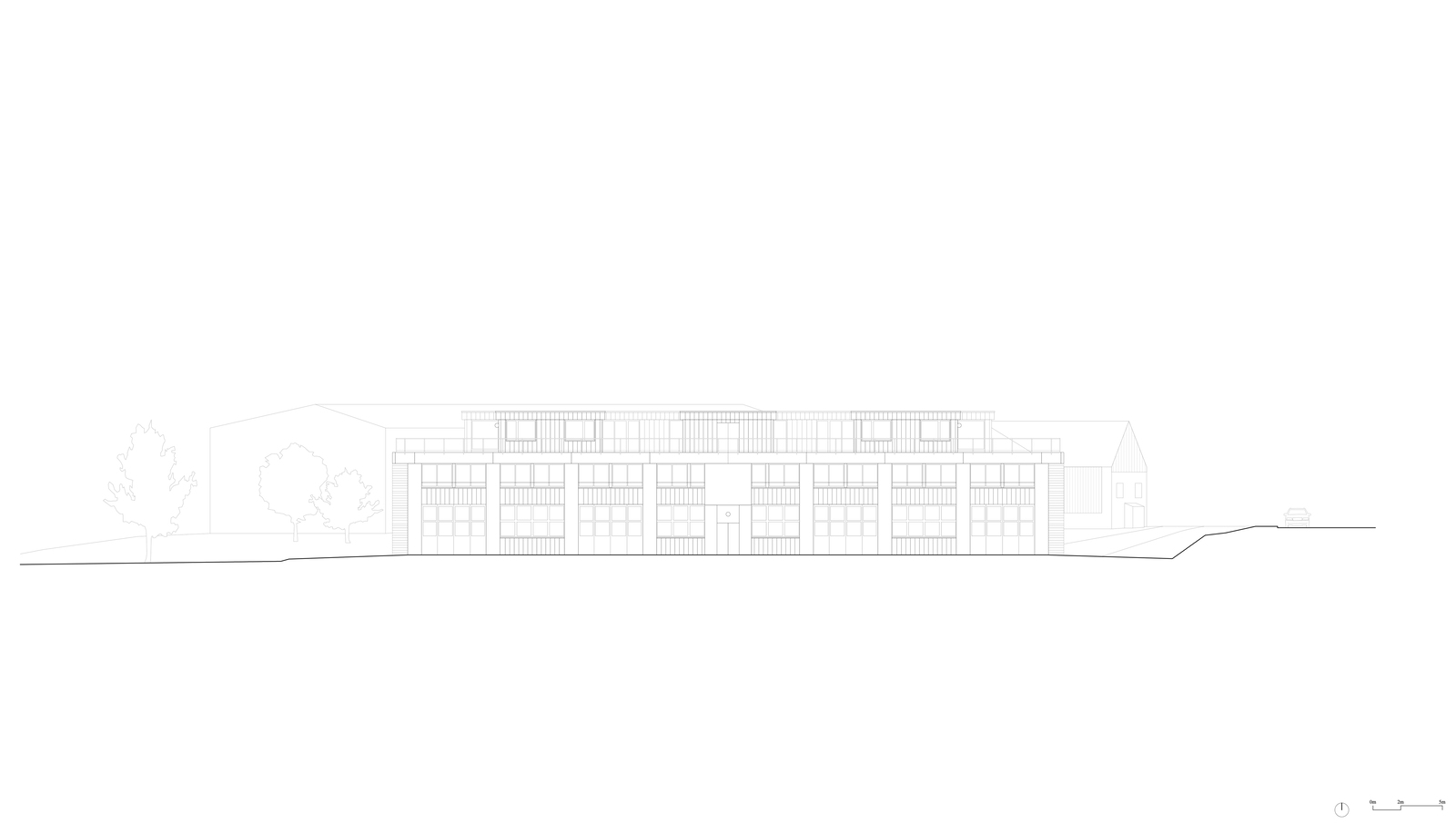
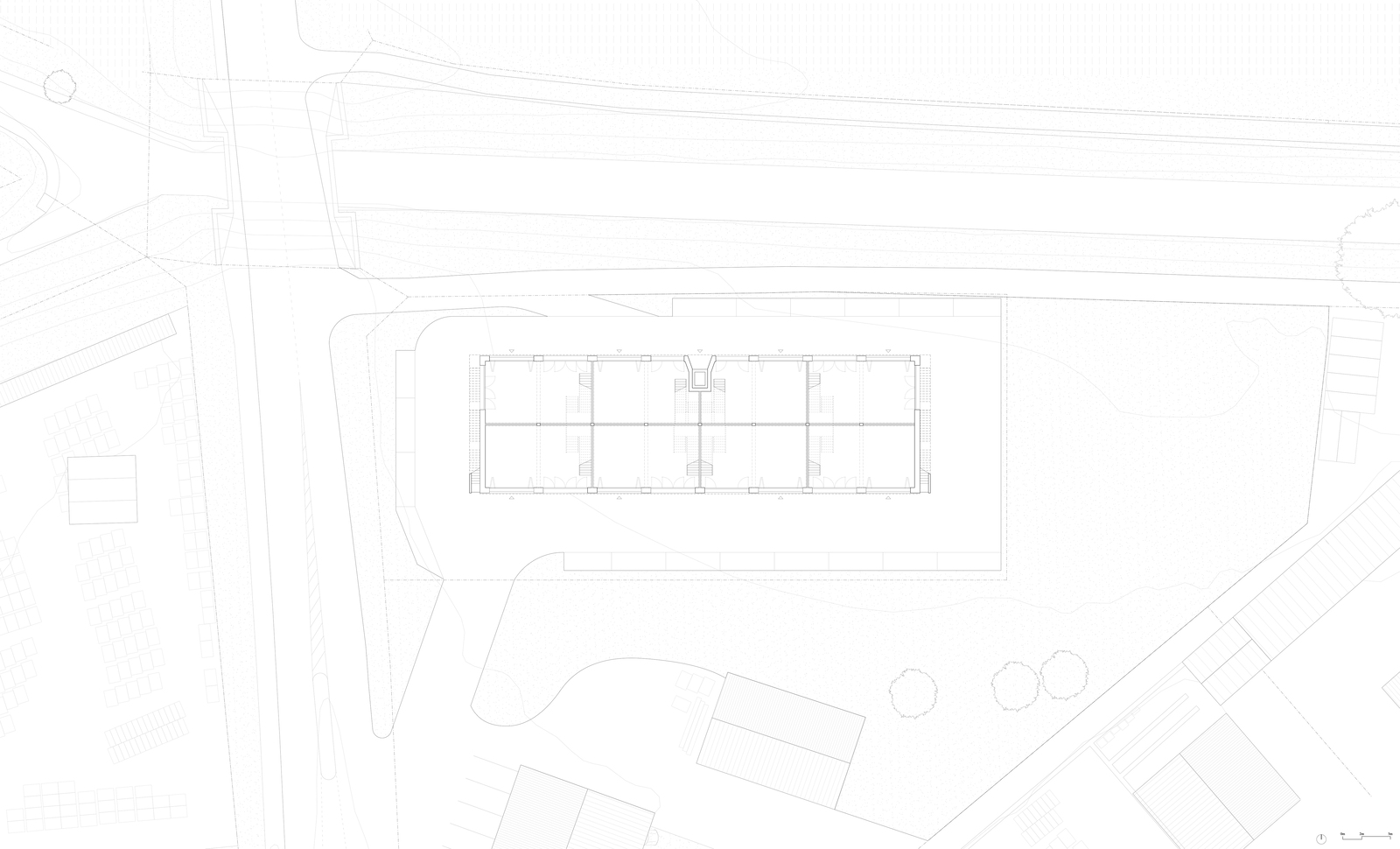
Located at the threshold between an activity zone and agricultural land in Forel, this mixed-use building combines light industrial facilities with residential units in a compact vertical arrangement. The ground and first floors accommodate adaptable industrial spaces designed for flexibility, while two penthouse apartments occupy the upper level. A structural strategy differentiates the program: robust concrete construction for the lower levels supports a lightweight prefabricated timber frame above. The façade employs corrugated metal cladding and prefabricated concrete elements, expressing the building’s industrial character while maintaining a measured architectural presence. Circulation is carefully considered, with direct external access to a shared elevator serving the apartments and private exterior staircases at either end. Inside, material selections such as fair-faced concrete, sand-lime brick, pine wood, terrazzo, and timber flooring reinforce a restrained yet tactile aesthetic, aligning industrial pragmatism with domestic comfort.
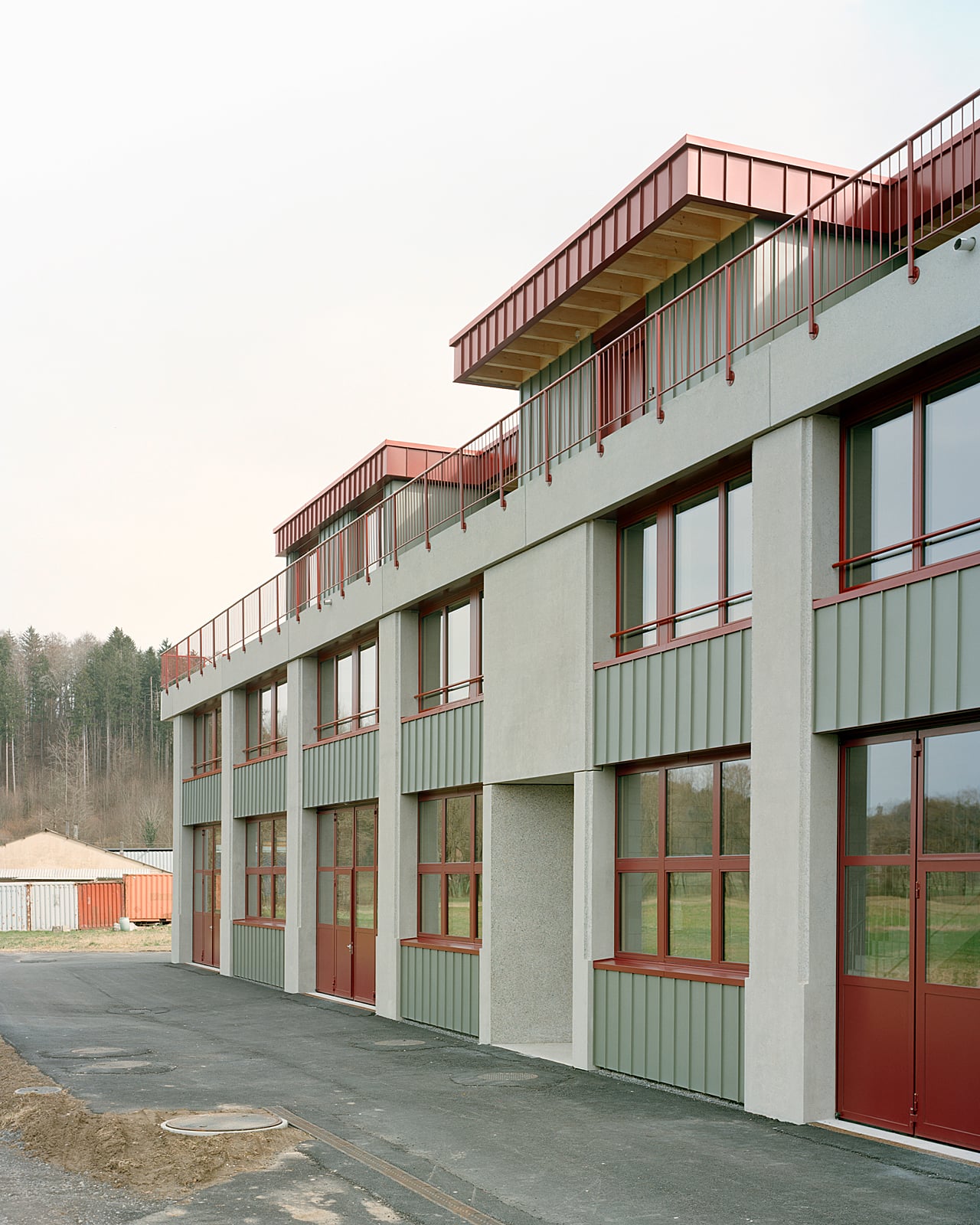
The project by Samir Alaoui Architectes Sàrl engages a transitional landscape where productive territory meets open fields, addressing both the operational logic of light industry and the spatial expectations of contemporary housing. Rather than separating these functions horizontally across a site, the architects stack them vertically, consolidating the footprint and preserving surrounding land. This approach acknowledges the economic realities of activity zones while introducing a nuanced architectural response to edge conditions.
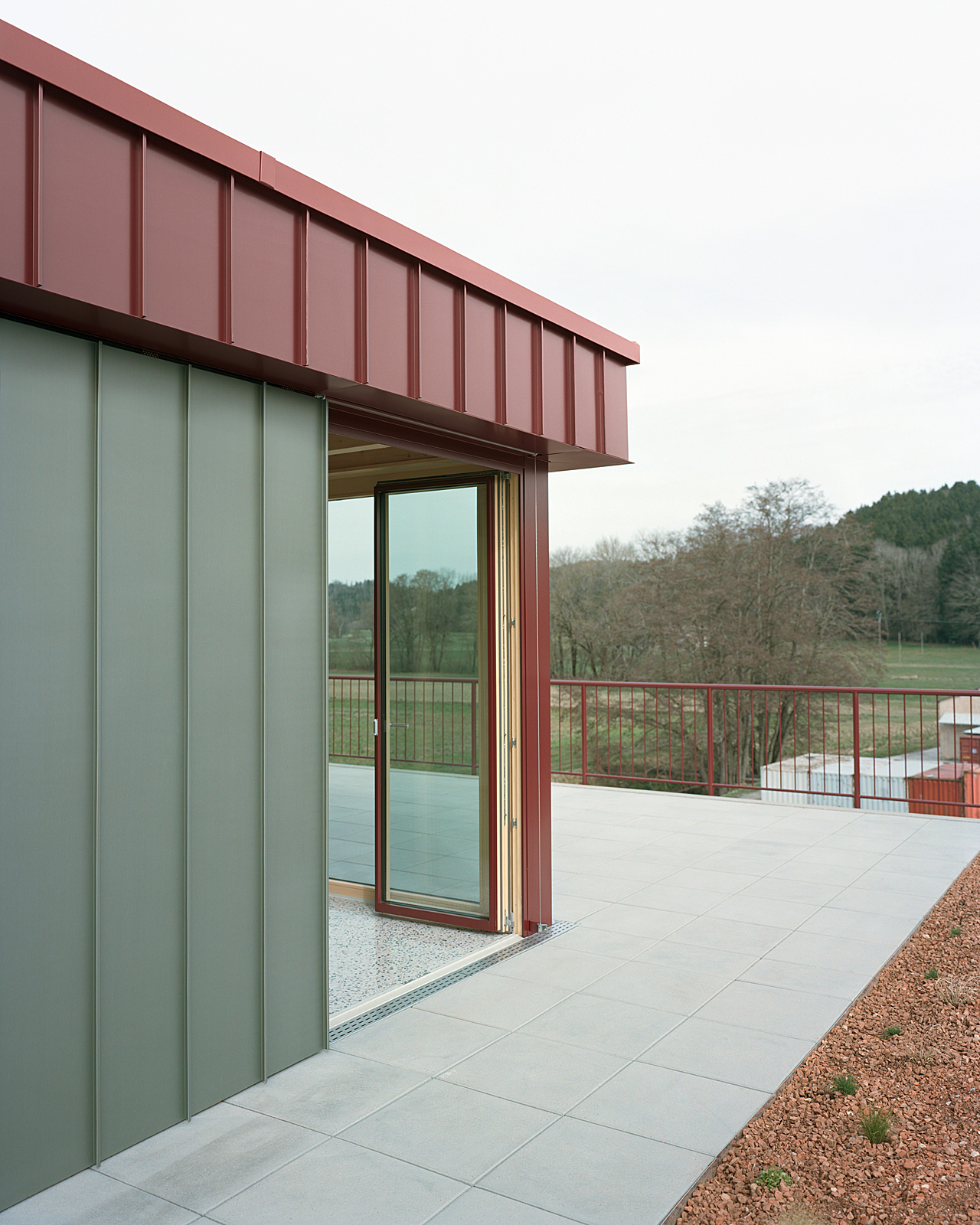
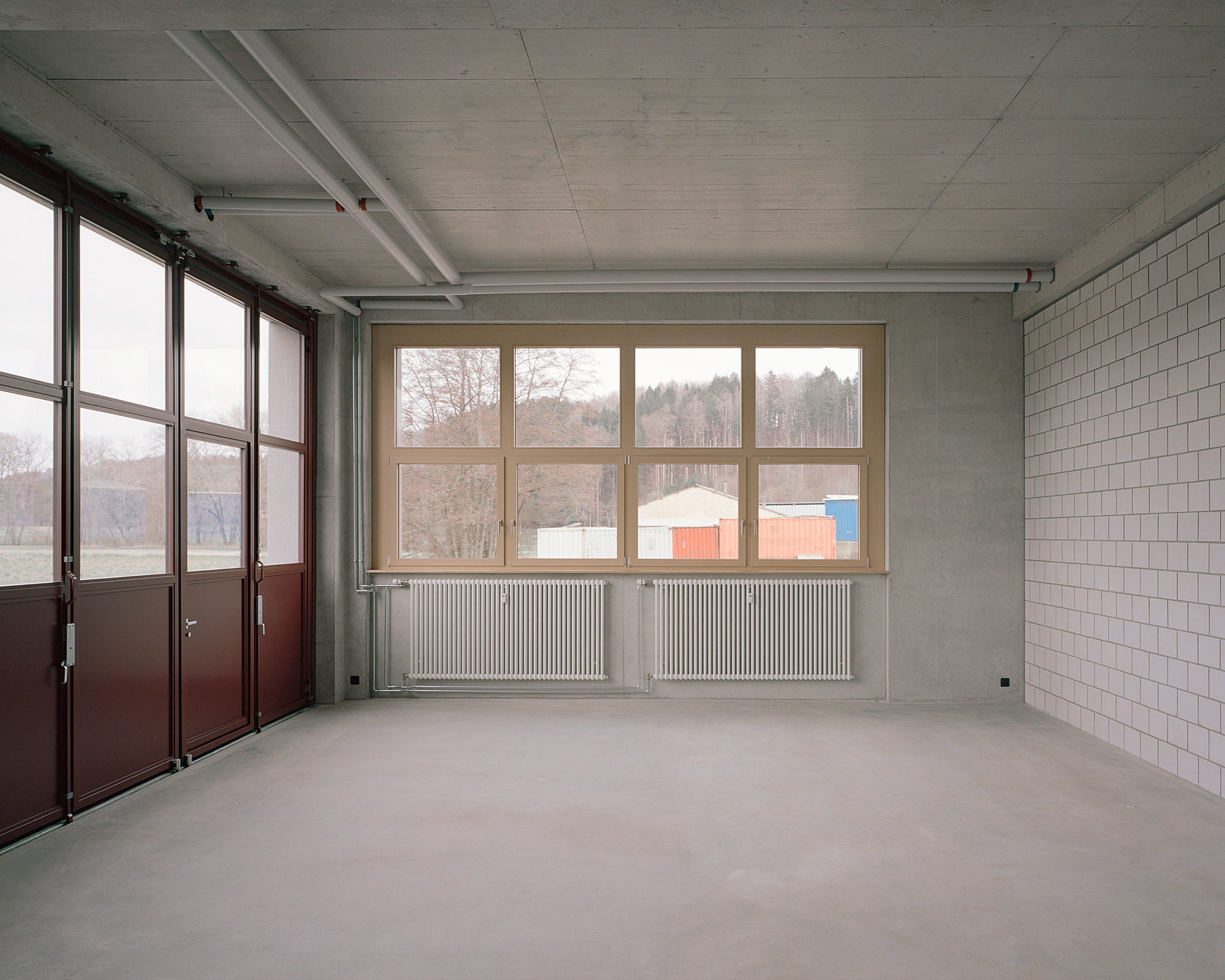
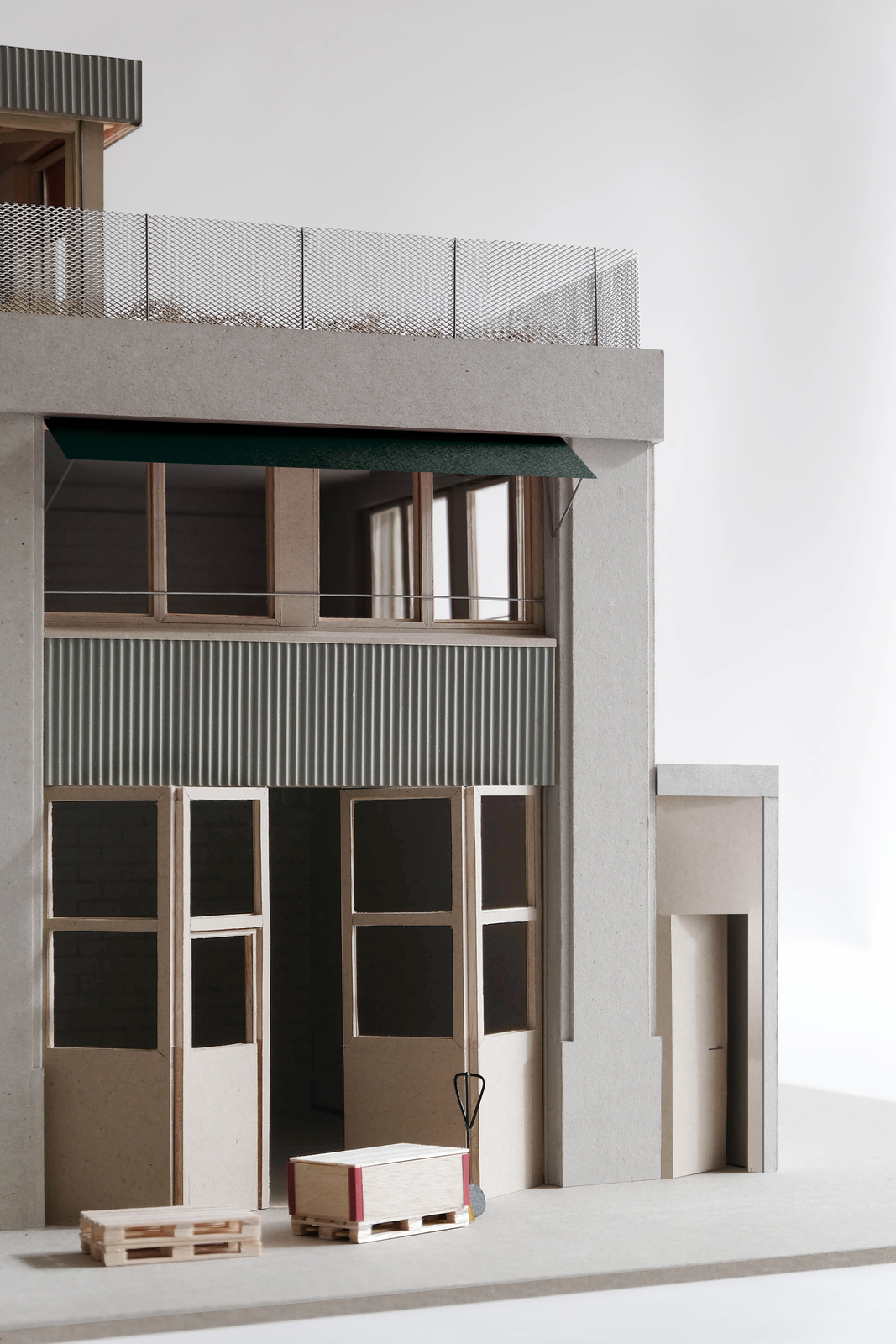
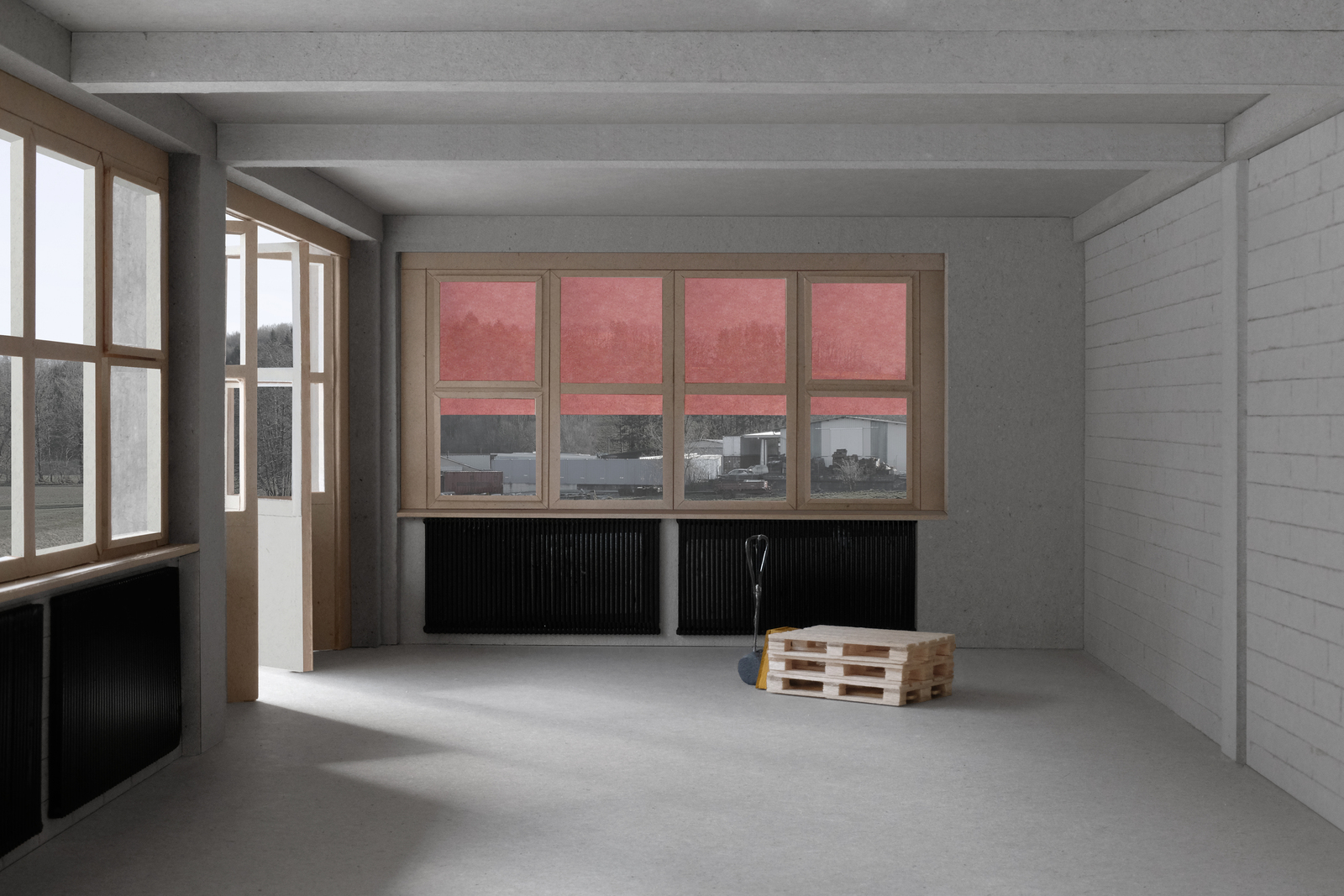
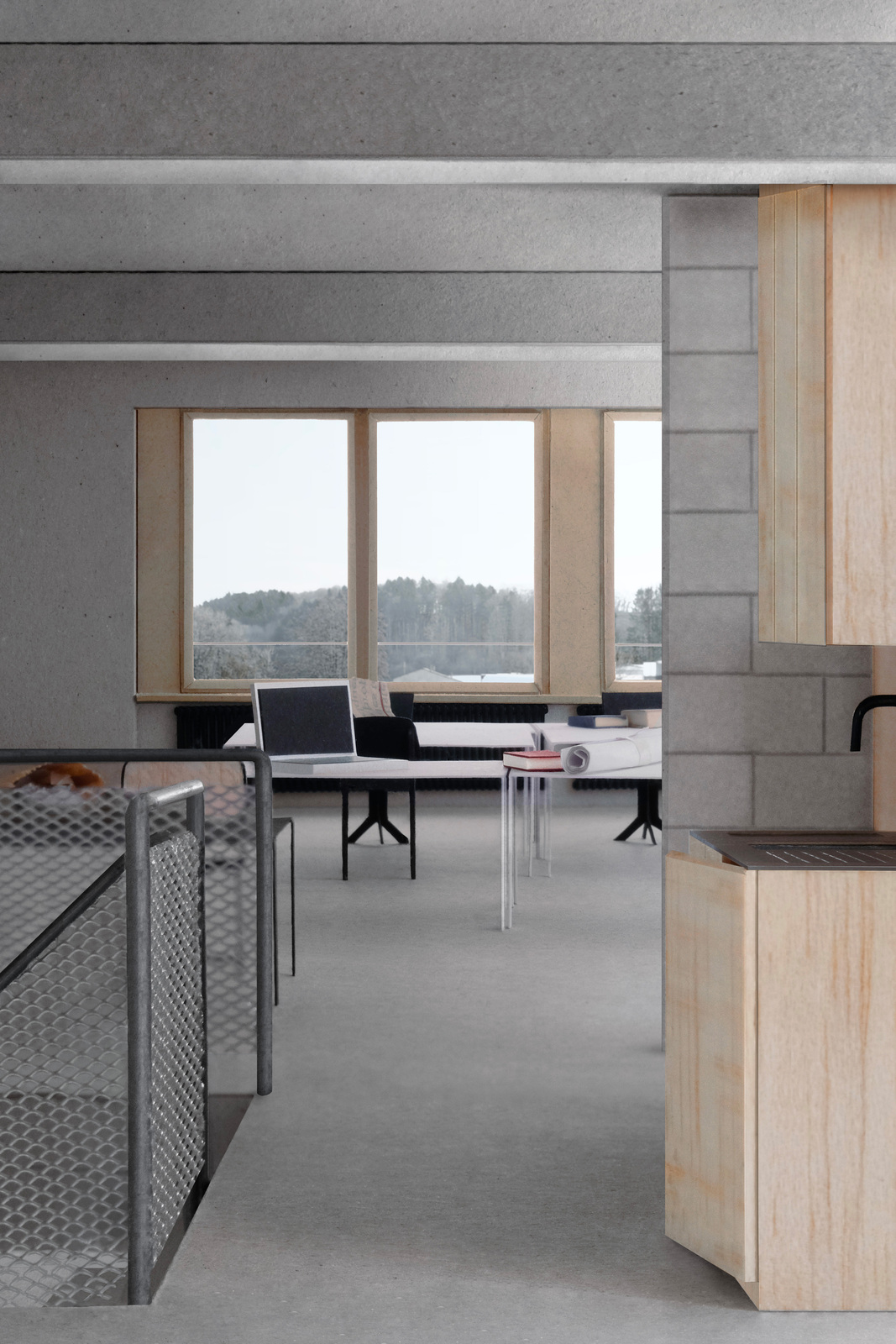
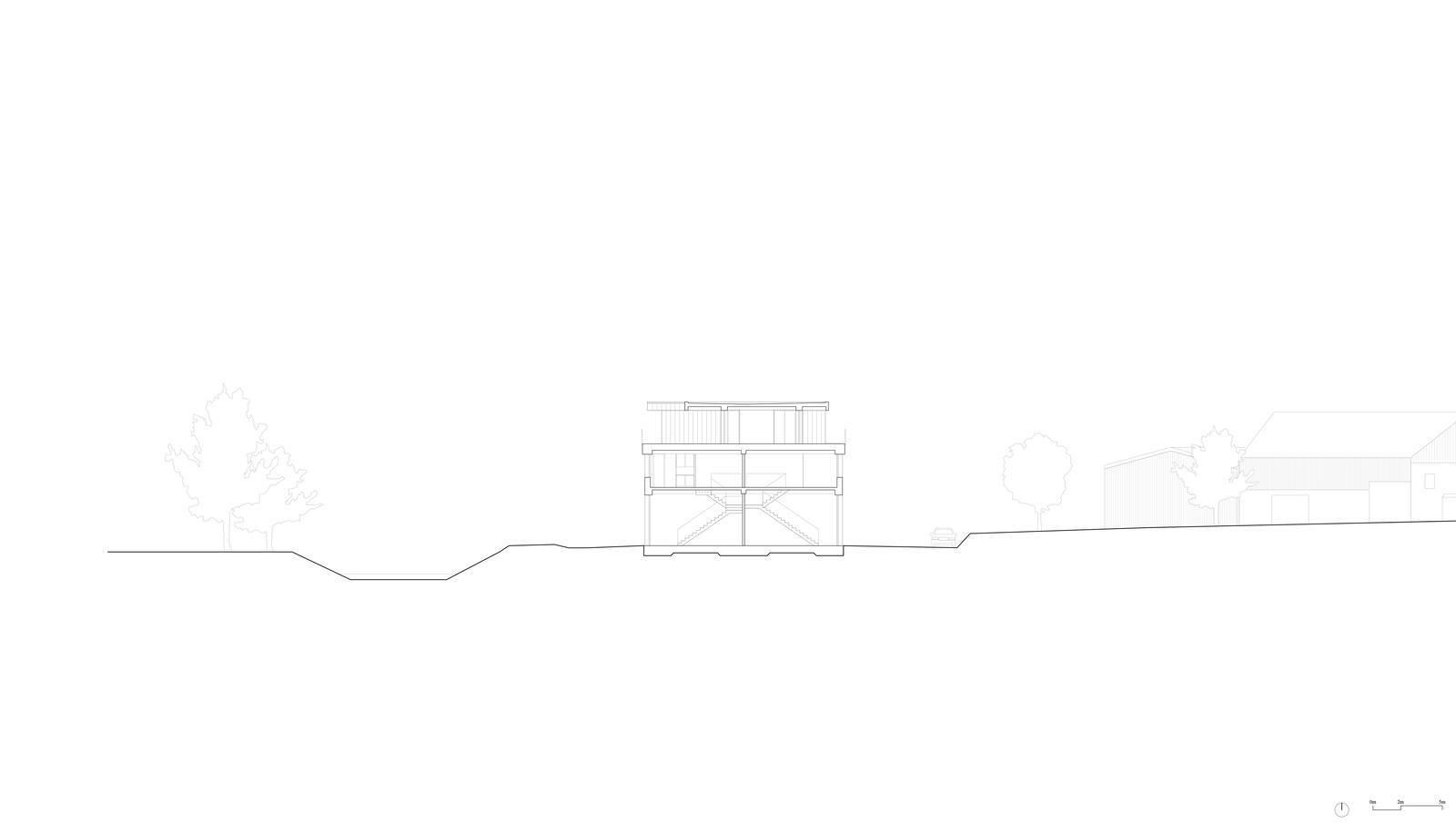
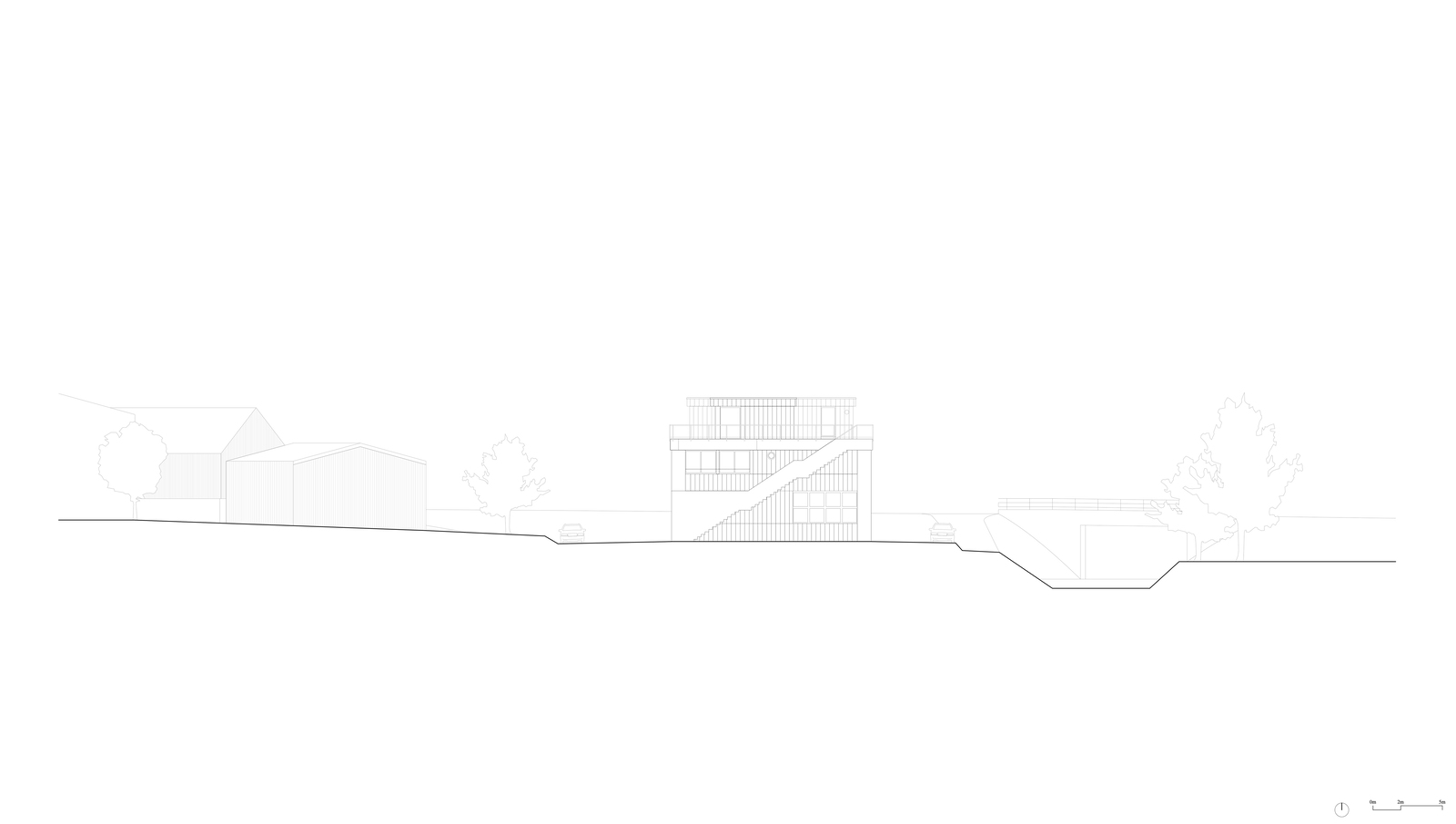
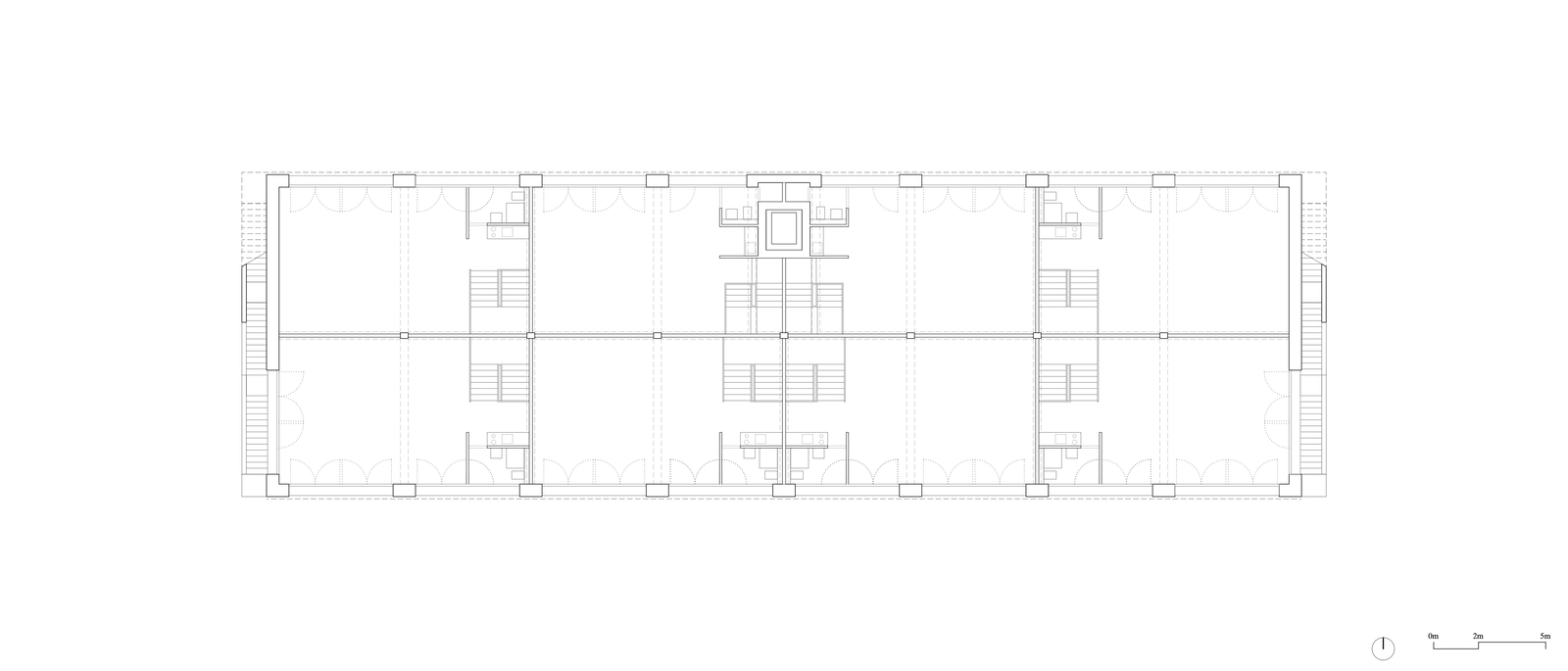
The lower two floors are conceived as open, reconfigurable platforms. Their concrete structure allows tenants to adapt and combine units as needs evolve, supporting varied forms of light industrial occupation. To maintain uninterrupted floor plates, the building omits a conventional internal stairwell for the residential units. Instead, a shared elevator accessed directly from the exterior leads to the upper level, while private external staircases positioned at each end of the volume provide additional access. This strategy preserves spatial continuity below while granting the apartments a degree of autonomy.
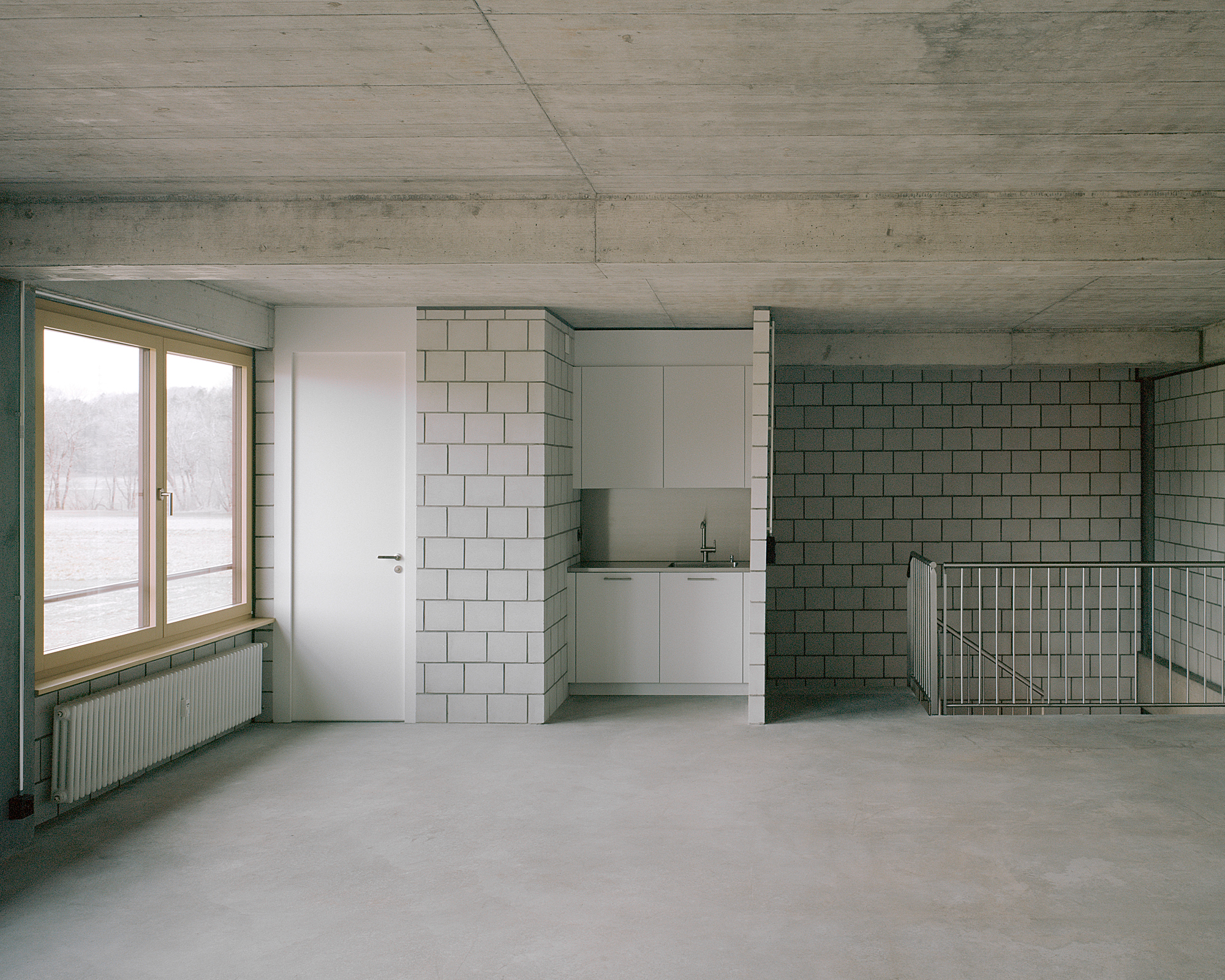
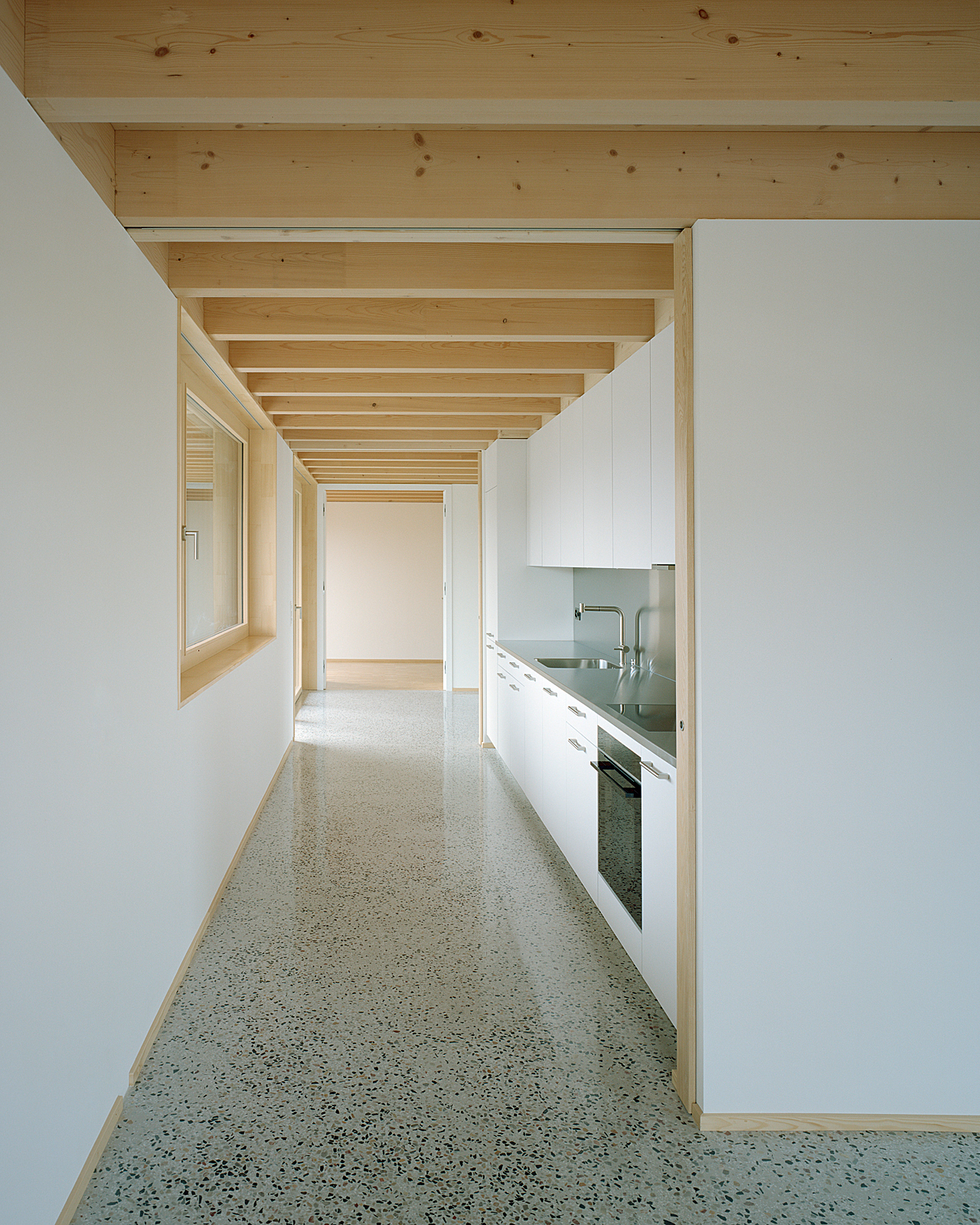
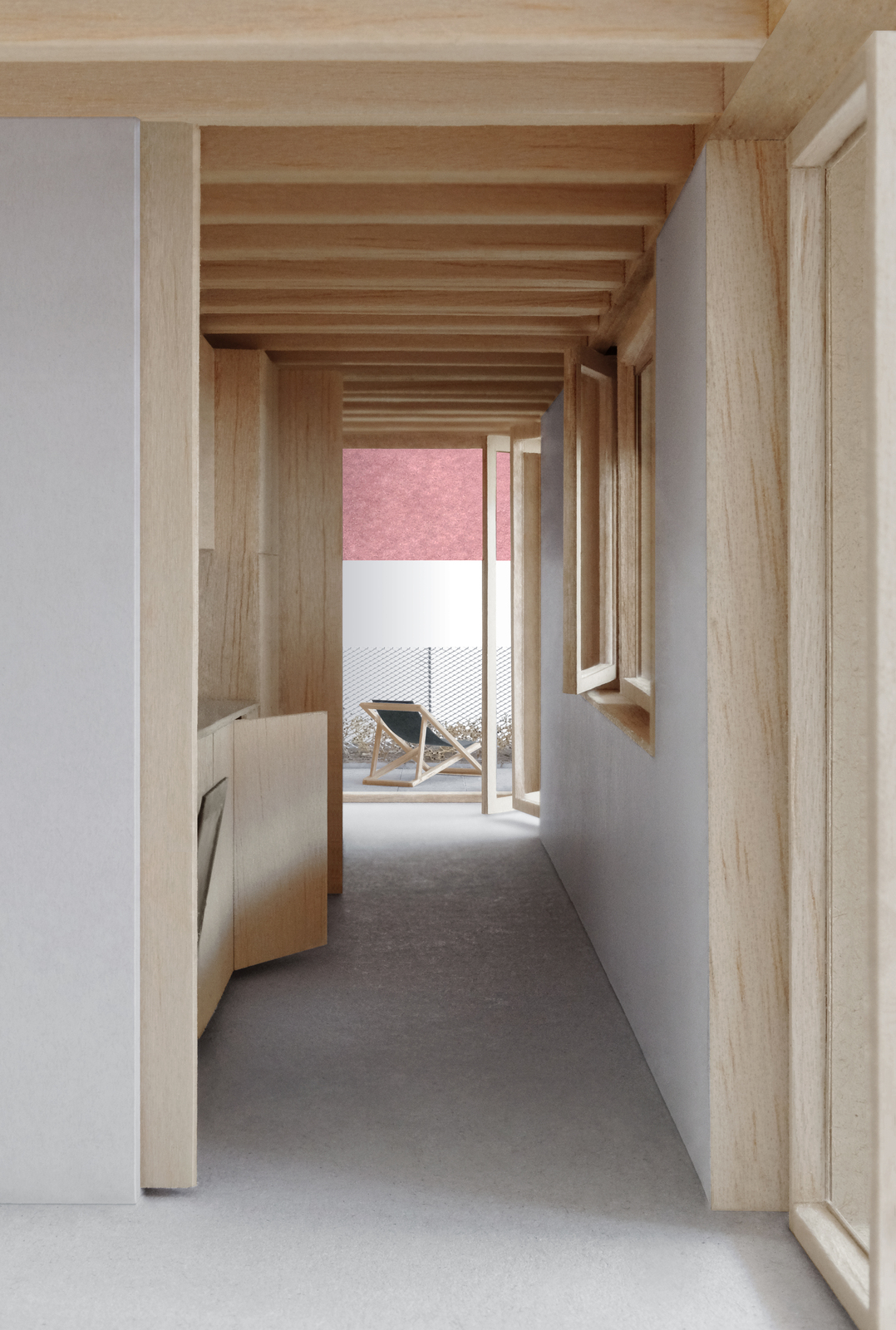
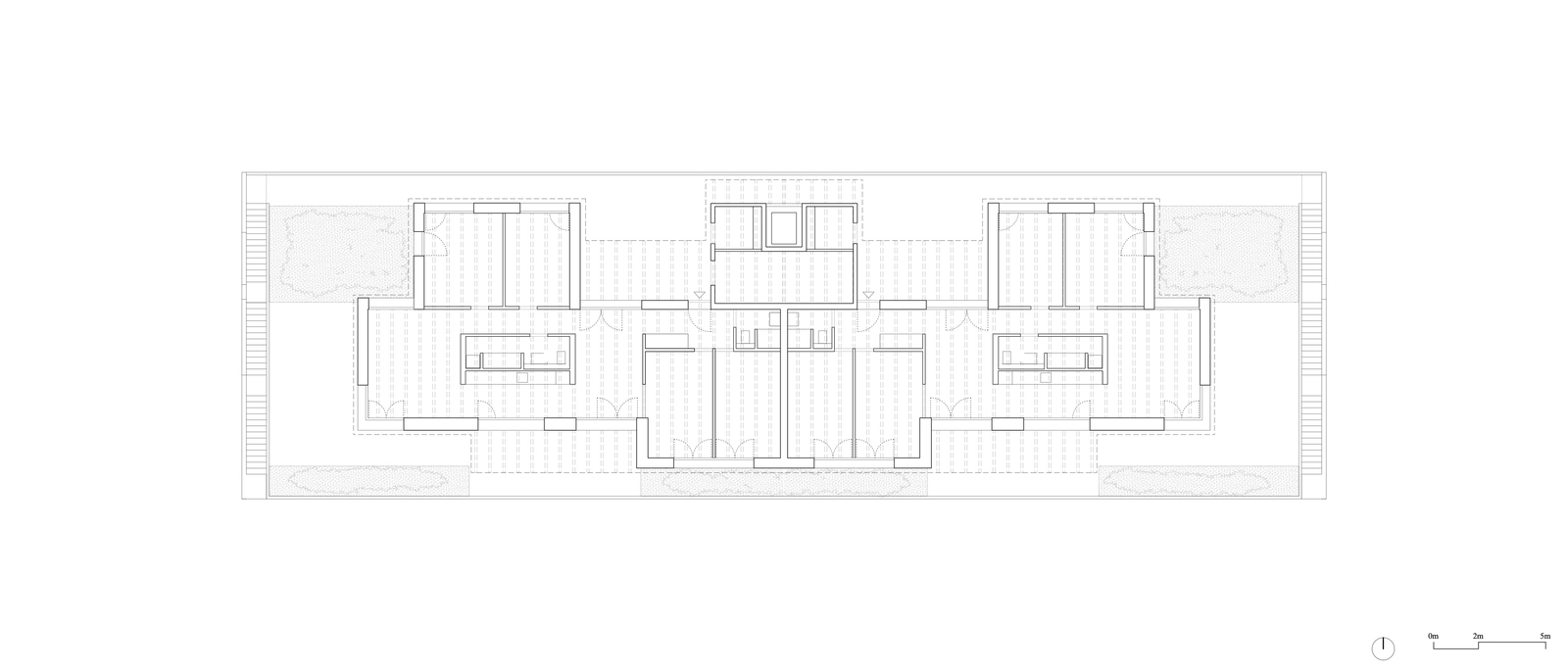
Above, the residential level shifts in both construction and atmosphere. The prefabricated timber frame introduces a lighter structural language, signaling the transition from industrial to domestic use. The two penthouse apartments are organized around central service cores that consolidate kitchens and shared bathrooms. Circulation unfolds along two parallel paths: a northern corridor linking private rooms and a southern sequence of living spaces where the kitchen acts as a pivot between dining and lounge areas. This dual orientation encourages fluid movement and varied spatial experiences within a compact plan.
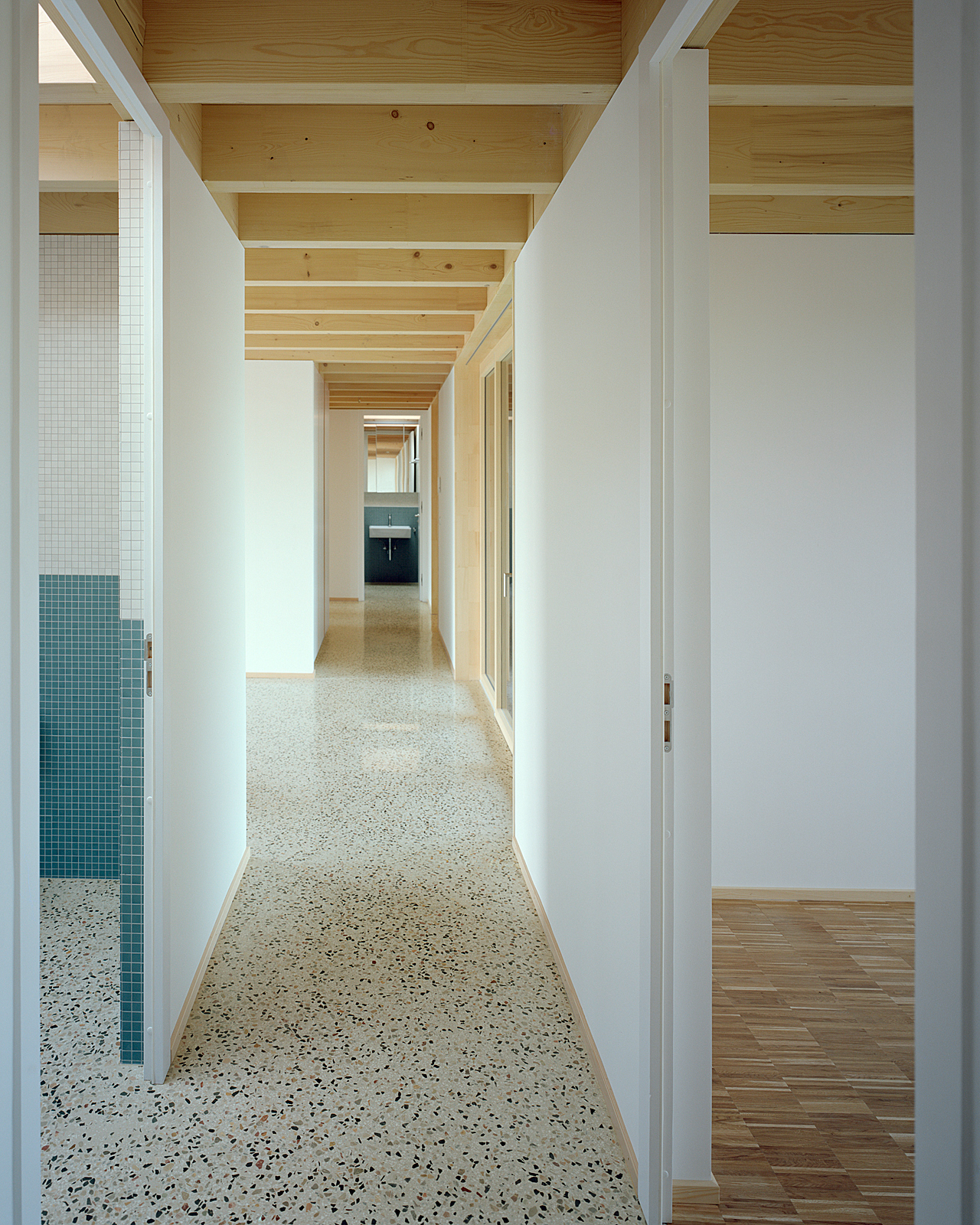
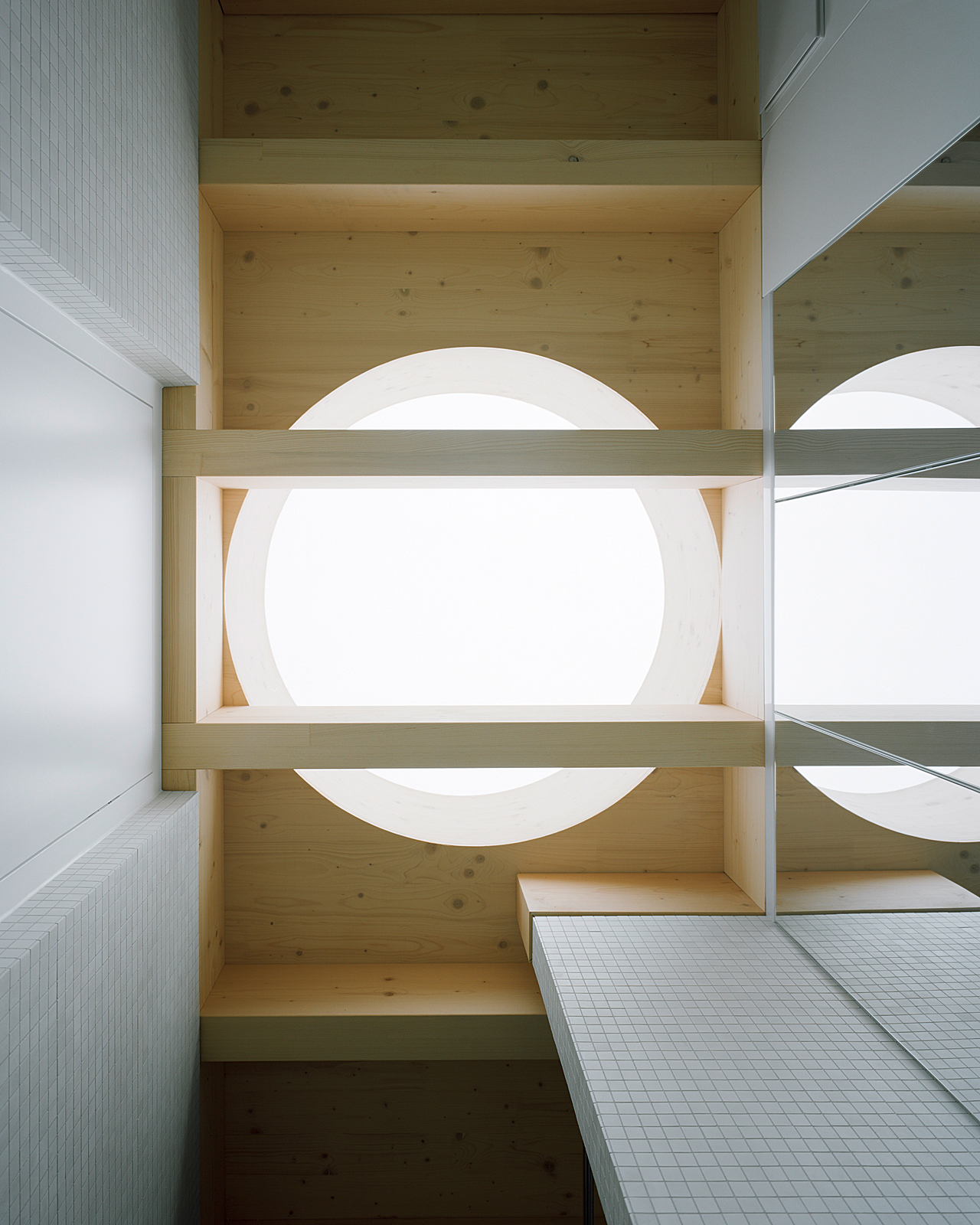
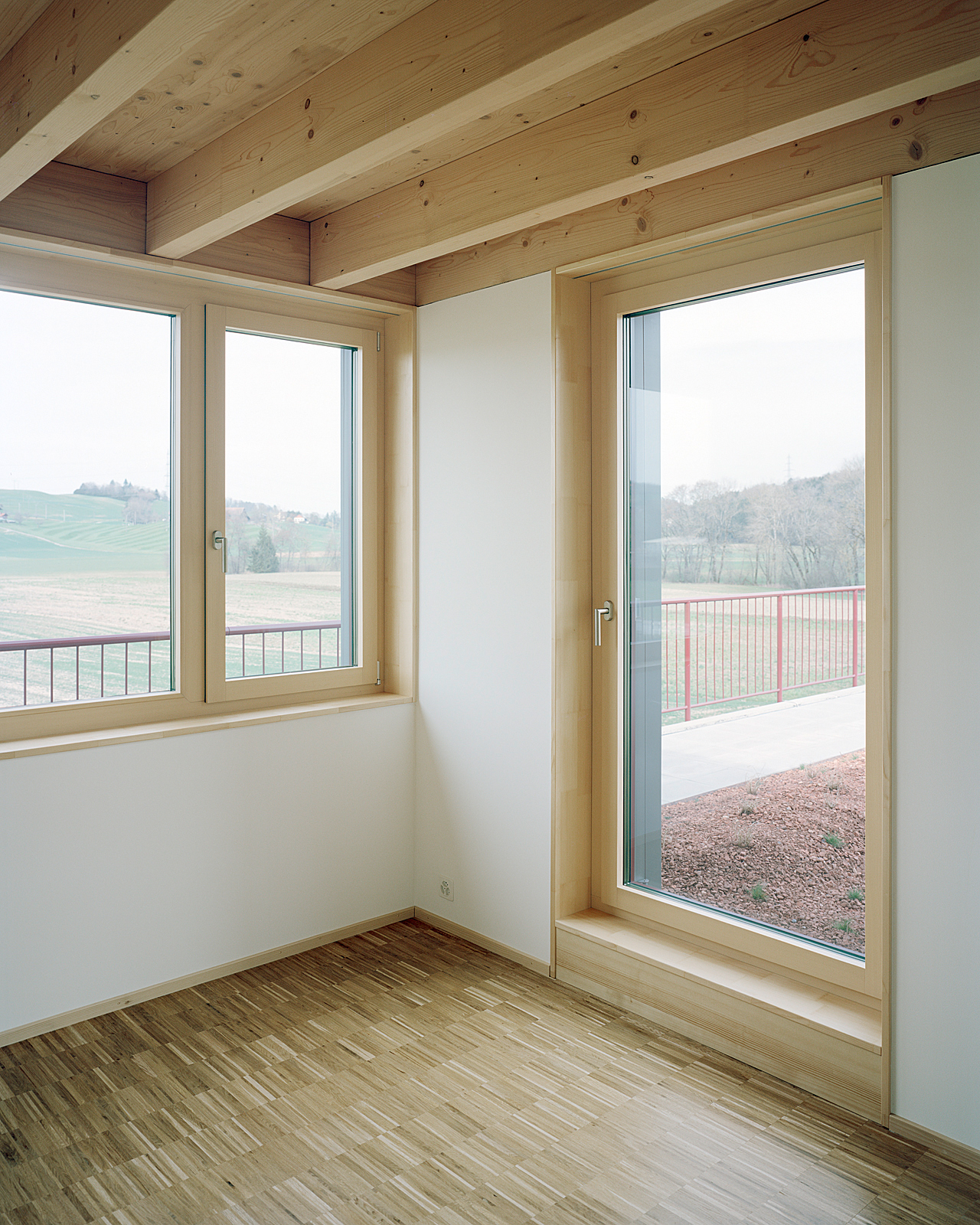
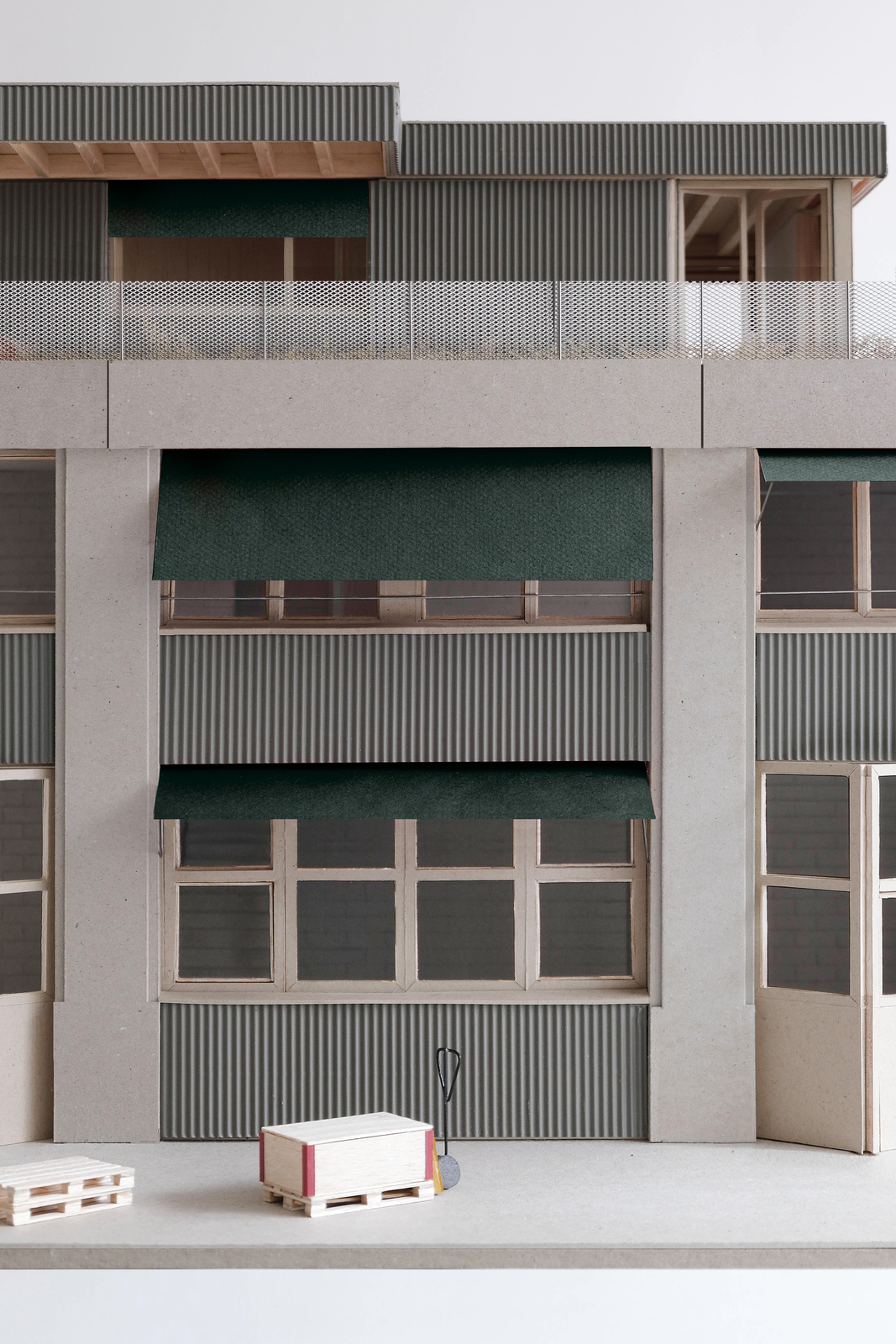
Material articulation reinforces the building’s layered identity. Externally, corrugated metal cladding and precast concrete elements convey durability and functional clarity. Internally, fair-faced concrete and sand-lime brick maintain a robust character in the industrial zones, while pine wood, terrazzo, timber flooring, and ceramic tiles lend warmth and tactility to the residential interiors. The result is a carefully calibrated synthesis of structural logic, programmatic flexibility, and material restraint, positioning the building as a considered model for mixed-use development at the urban-rural interface.
Project Gallery
Project Location
Address: Forel, Switzerland
The location specified is intended for general reference and may denote a city or country, but it does not identify a precise address.

