

Architects: Louis Kahn
Area: 840,000 m² (9,041,685 ft²)
Year: 1982
Photography: Louis Kahn, Cemal Emden, Trevor Patt, Grischa Rüschendorf, abrinsky, Wikimedia Commons, Shariful Islam (Masum), Shazid Ahsan, Saiful Aopu, Nahid Sultan, Pinu Rahman, Micah Parker, Rossi101, Government of Pakistan, parametric-architecture.com
Local Architects: Muzharul Islam, Alam Syed Zahoor
City: Dhaka
Country: Bangladesh
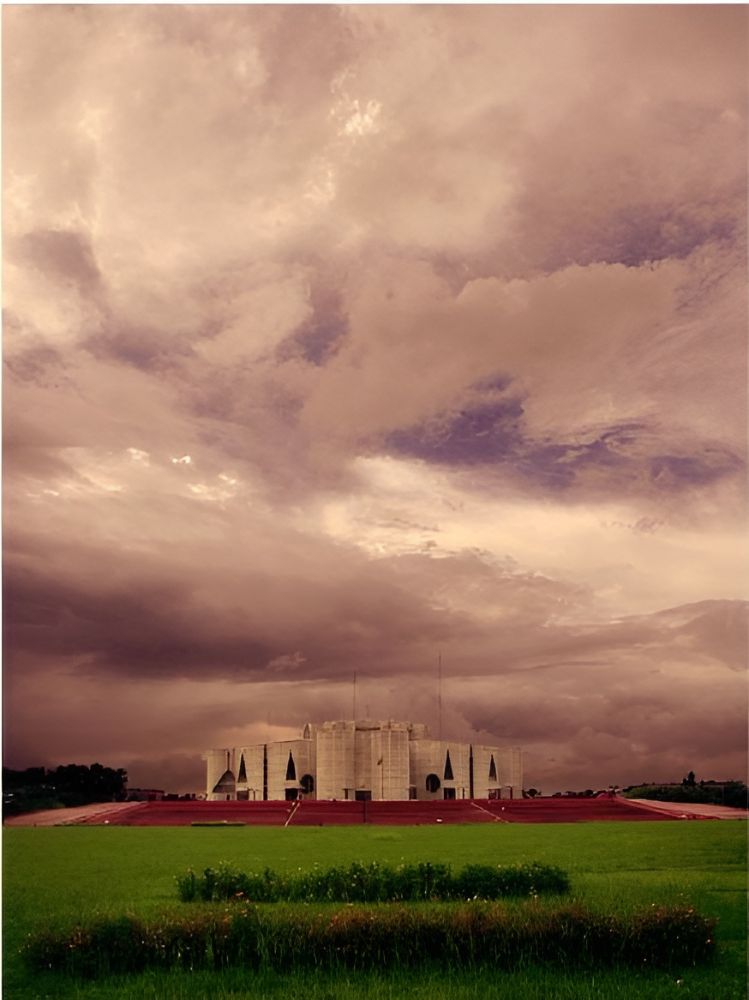
The National Assembly Building of Bangladesh, a civic complex designed by Louis Kahn in Dhaka, has redefined the relationship among monumentality, light, and national identity through its legislative architecture, completed in 1982. Also known as Jatiya Sangsad Bhaban, the project organizes the parliament chamber at the center of a monumental concrete composition surrounded by peripheral blocks, water, plazas, and supporting facilities. The building emerged from a commission initiated when Bangladesh was still part of Pakistan, yet its completion transformed it into a symbol of independence and democratic identity. Its geometry, material mass, and artificial lake work together as spatial, environmental, and symbolic devices. The complex uses exposed concrete, inlaid white marble, and deep geometric openings to regulate light, frame voids, and mediate climate. A strong sectional and axial order guides movement from plaza to chamber, while the central legislative space is shaped by Kahn’s idea of light as a maker of space. The National Assembly Building of Bangladesh remains one of the most significant works of modern architecture in South Asia, in which structure, landscape, and civic meaning are brought into a singular architectural form.
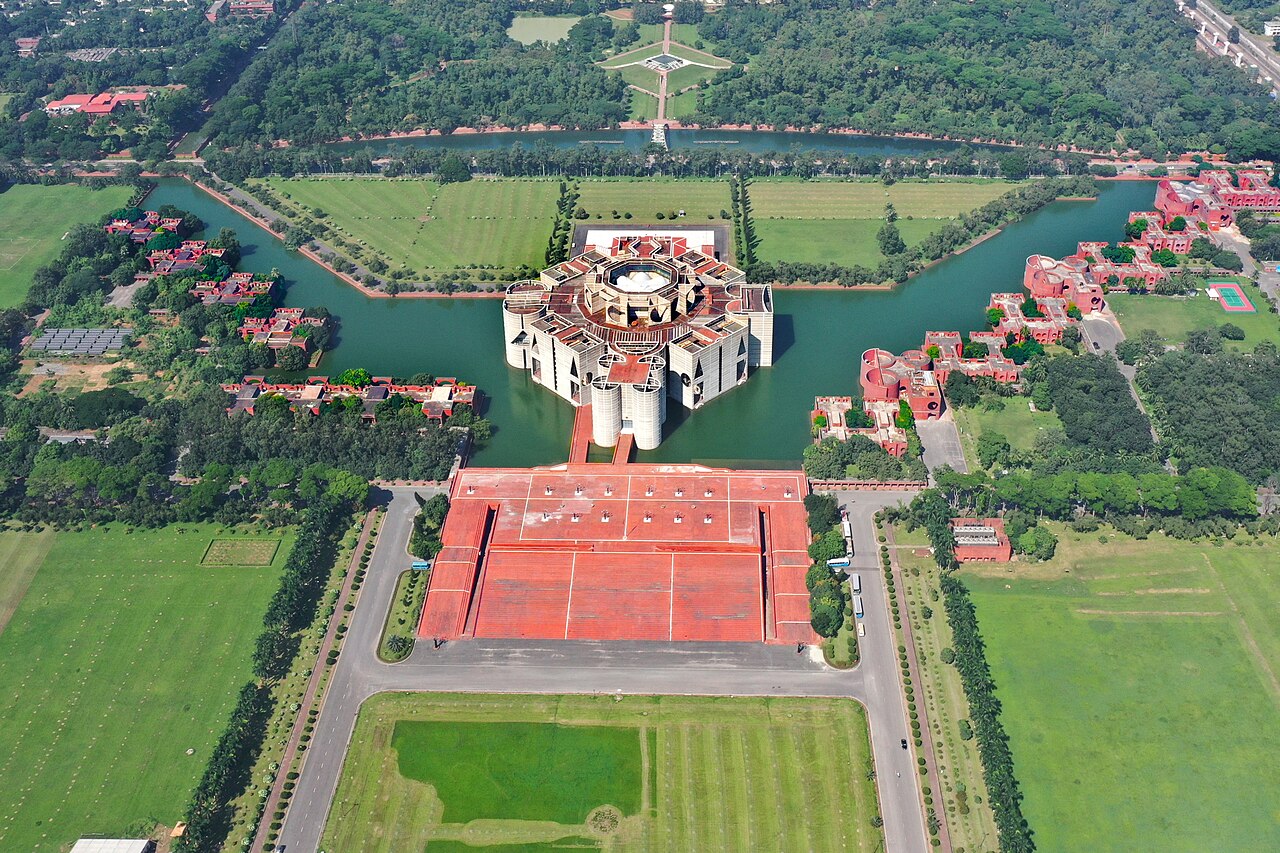
National Assembly Building of Bangladesh stands in Sher-e-Bangla Nagar, Dhaka, as the parliament house of Bangladesh and one of Louis Kahn’s defining works. The project originated in 1959, when the government of Pakistan sought a legislative complex in Dhaka, then the second capital of the country. Muzharul Islam played a decisive early role in bringing Kahn into the commission, and the architect began shaping the scheme in the early 1960s. Construction started in 1964, stopped during the 1971 war, and resumed after independence without abandoning the original design. The building was completed in 1982, after Kahn’s death, under the continuation of his office.
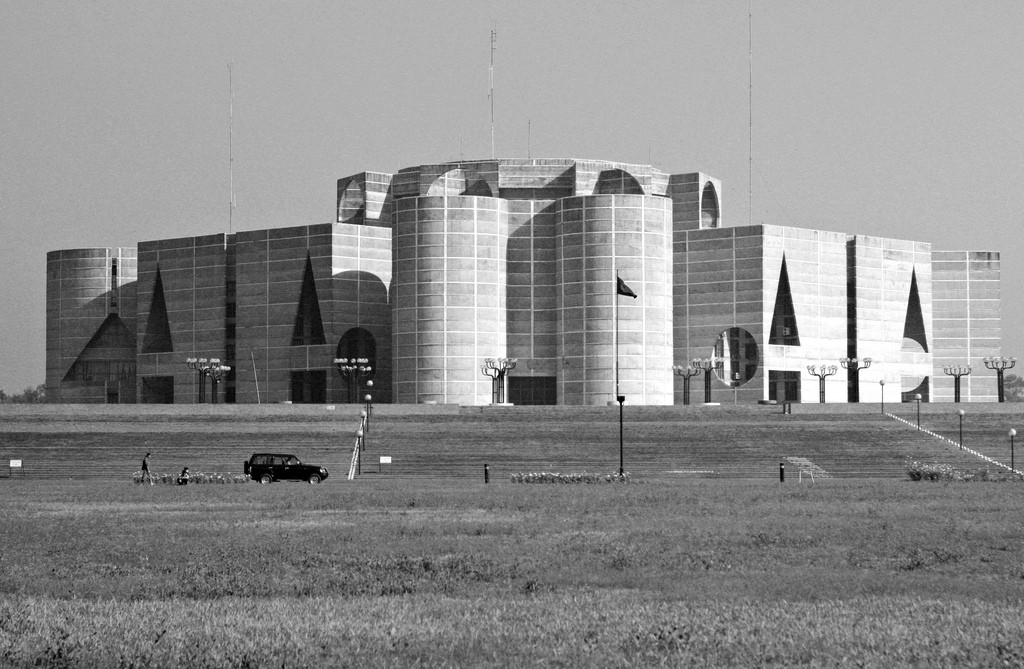
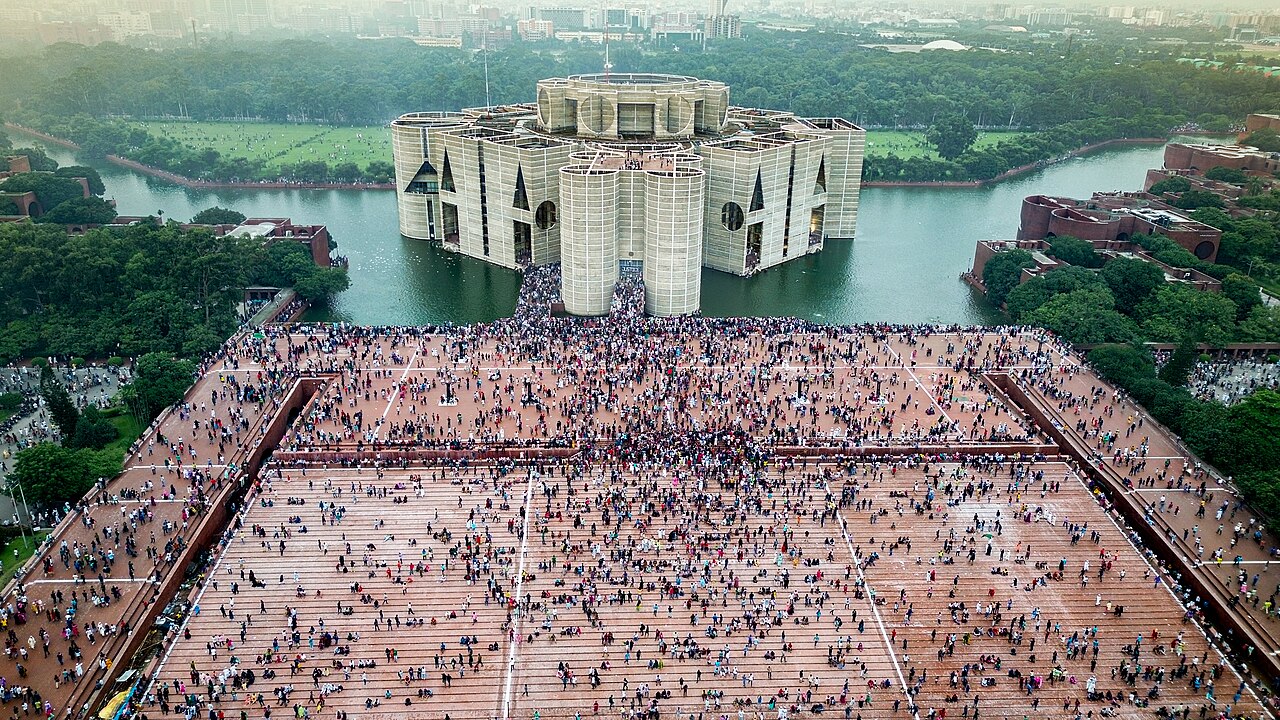
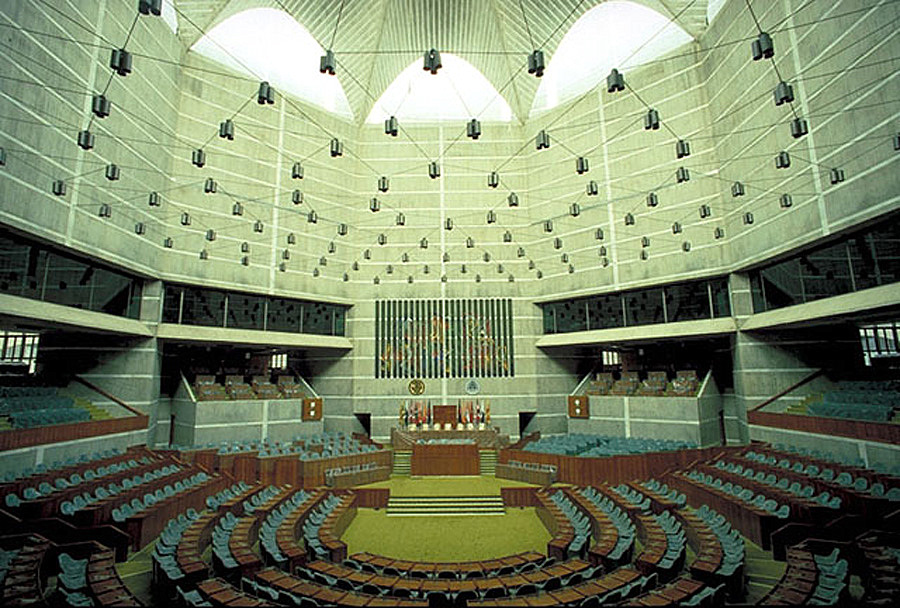
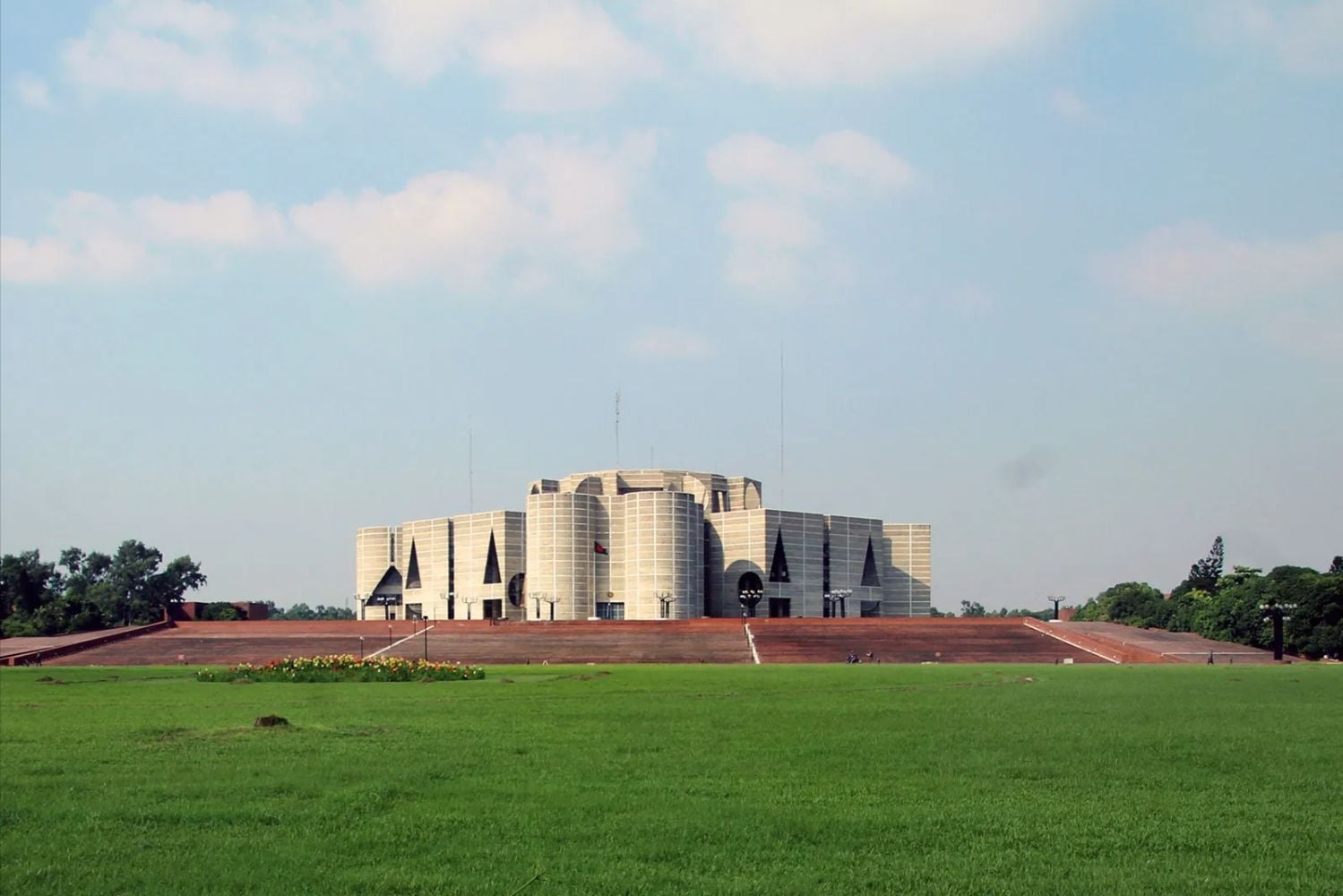
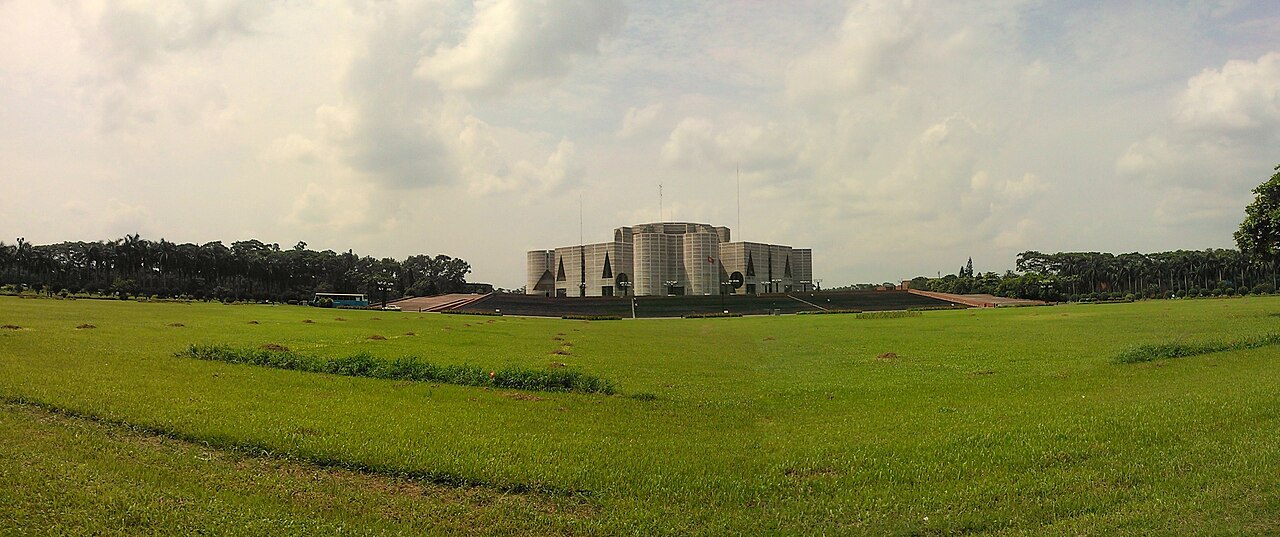
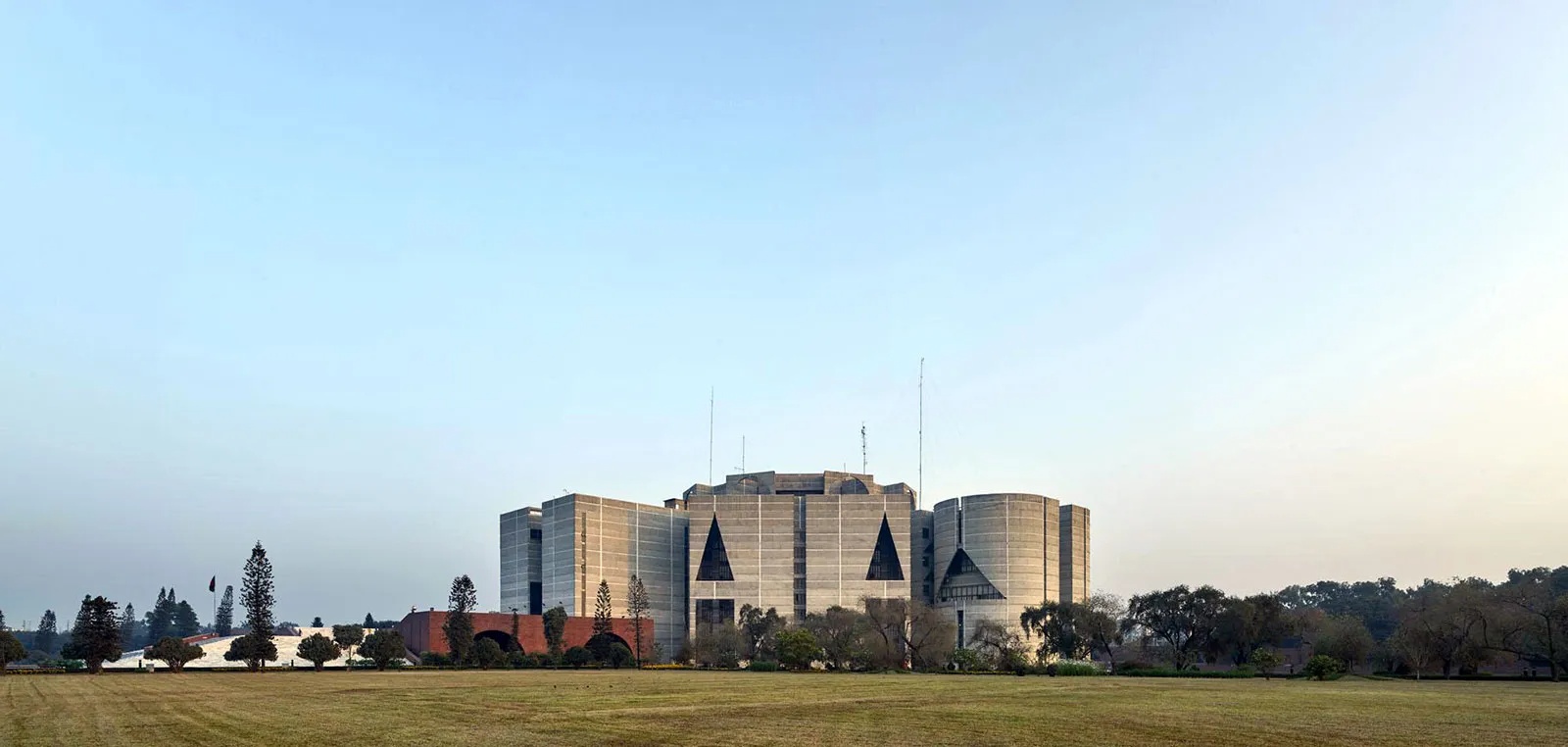
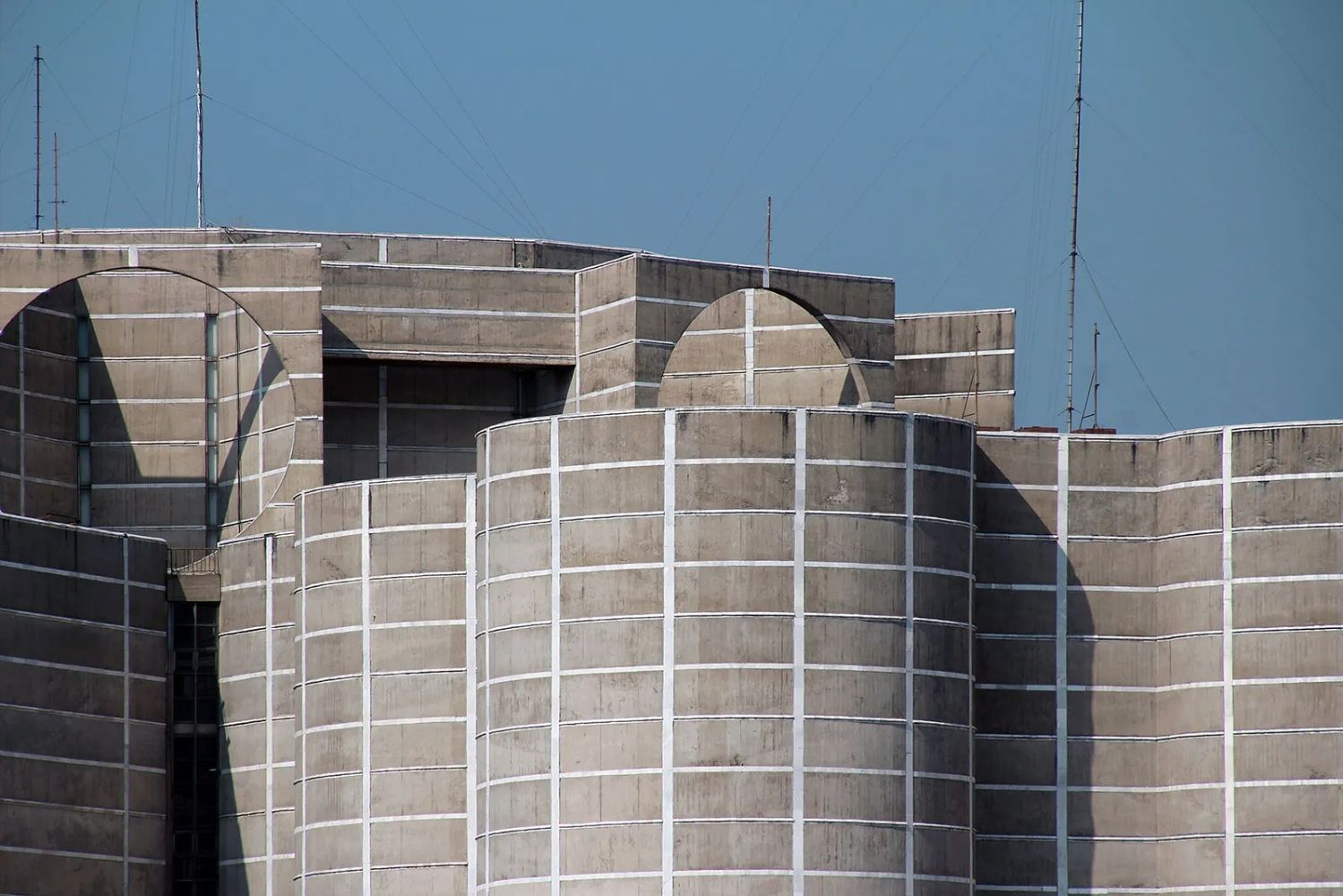
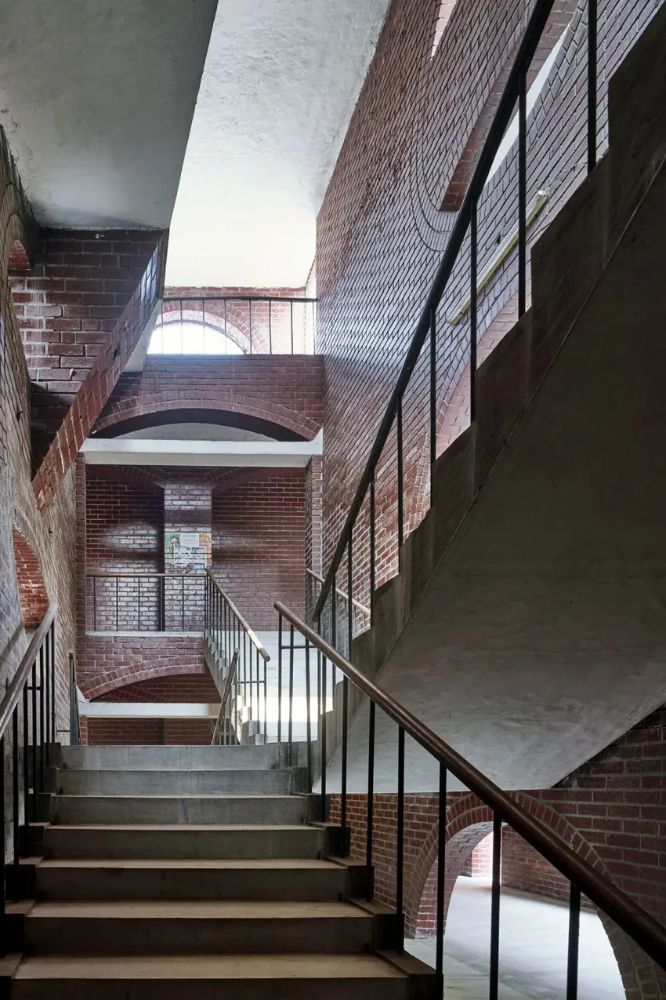
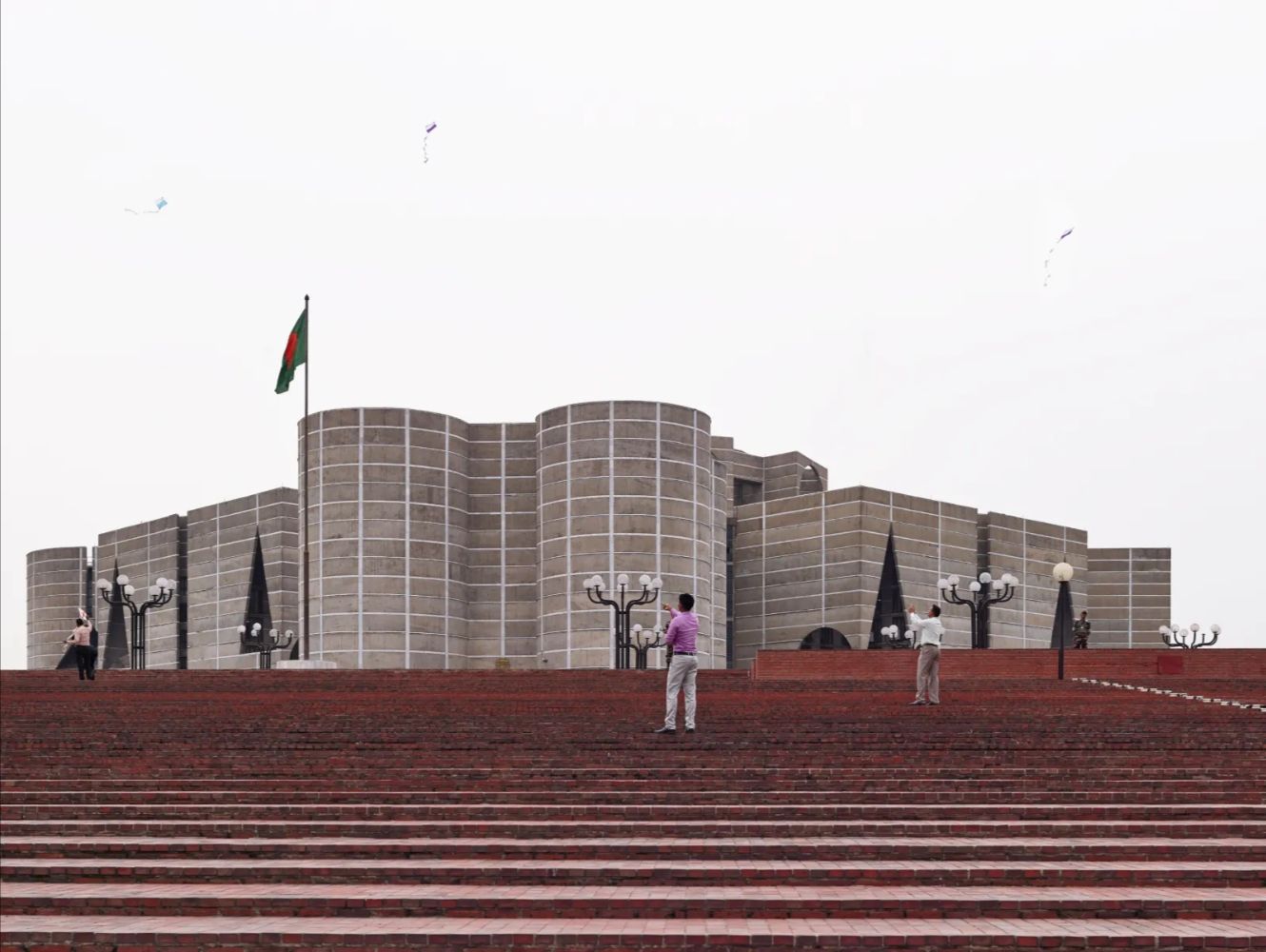
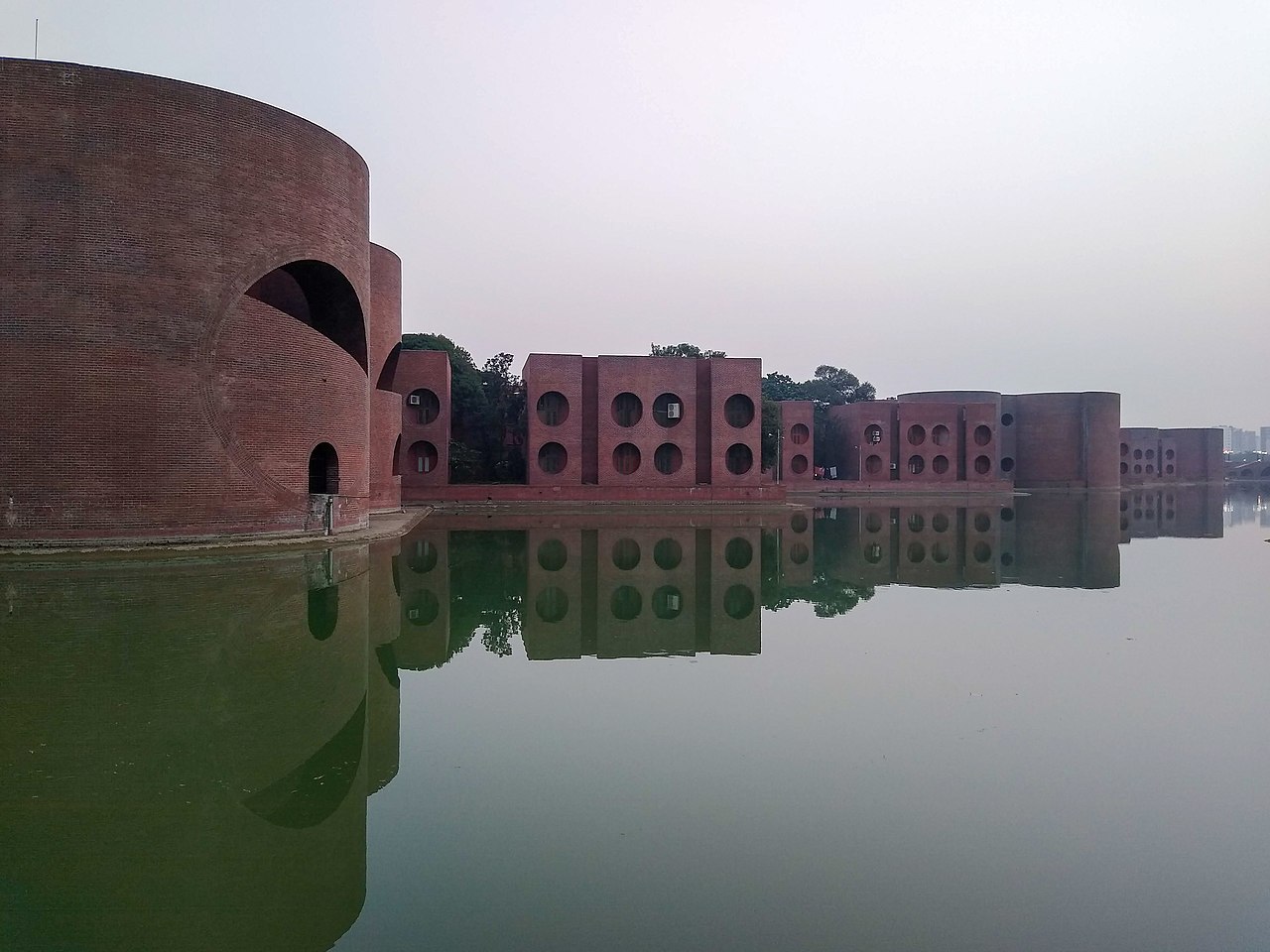
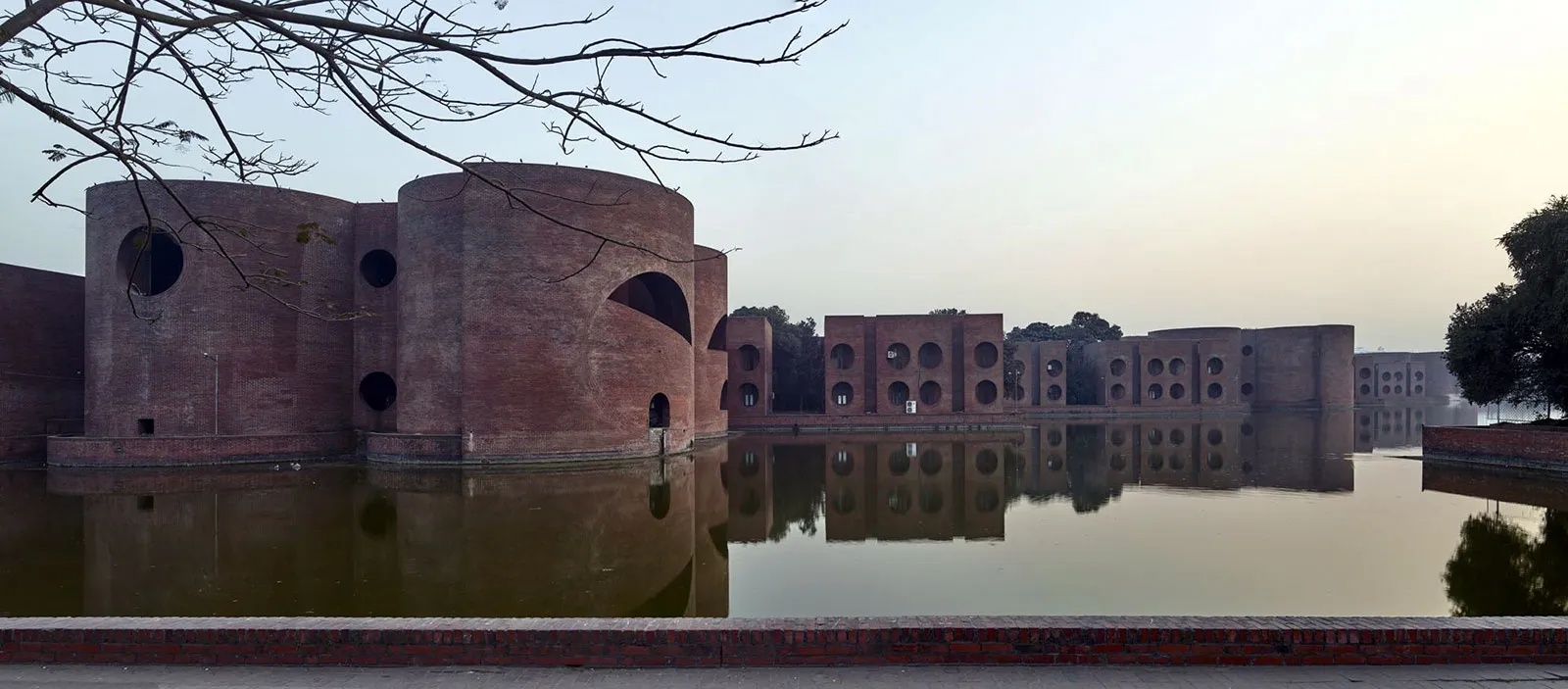
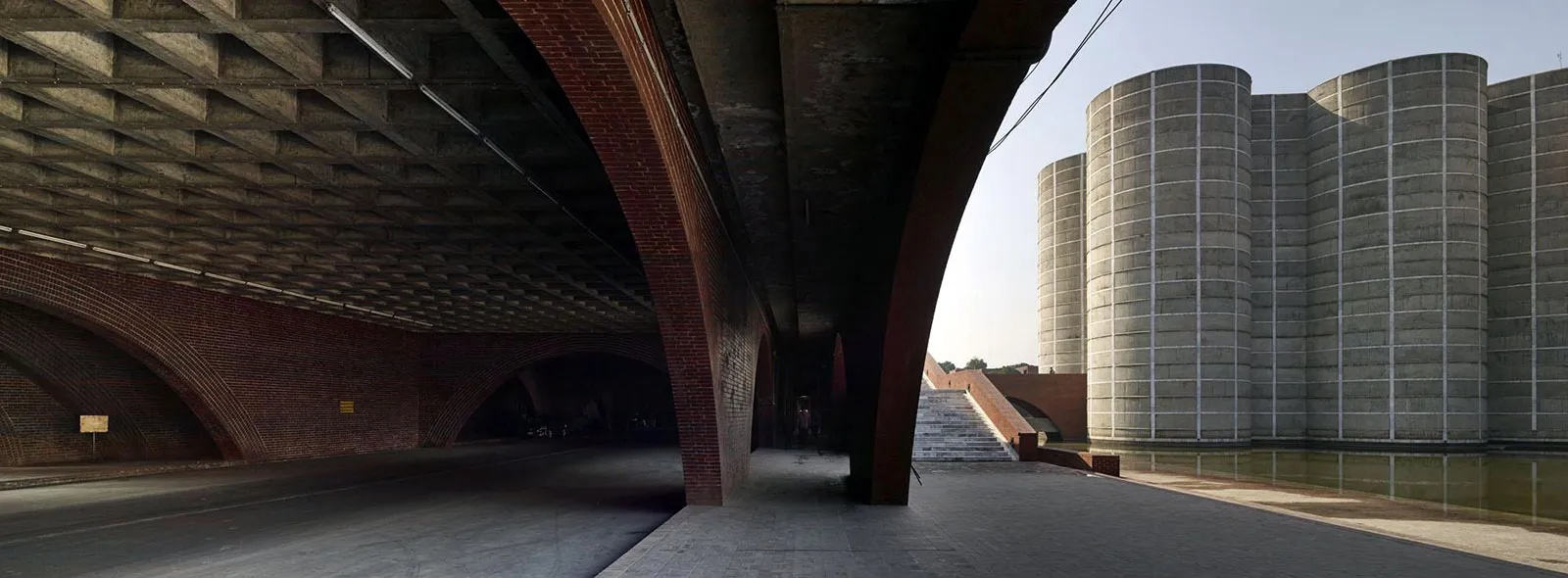
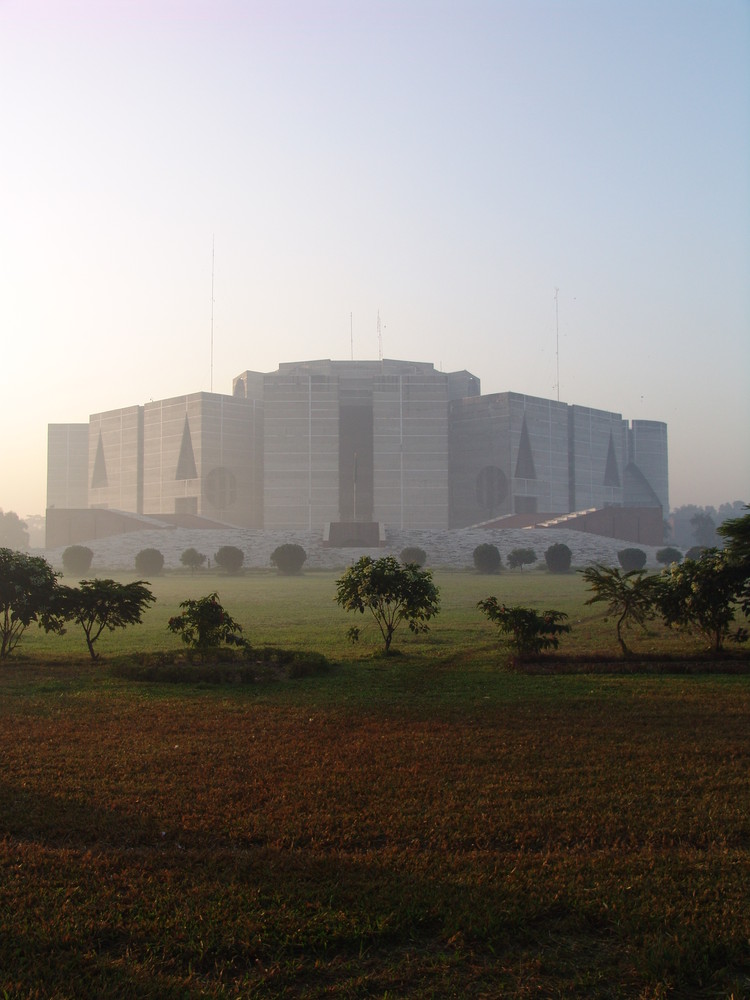
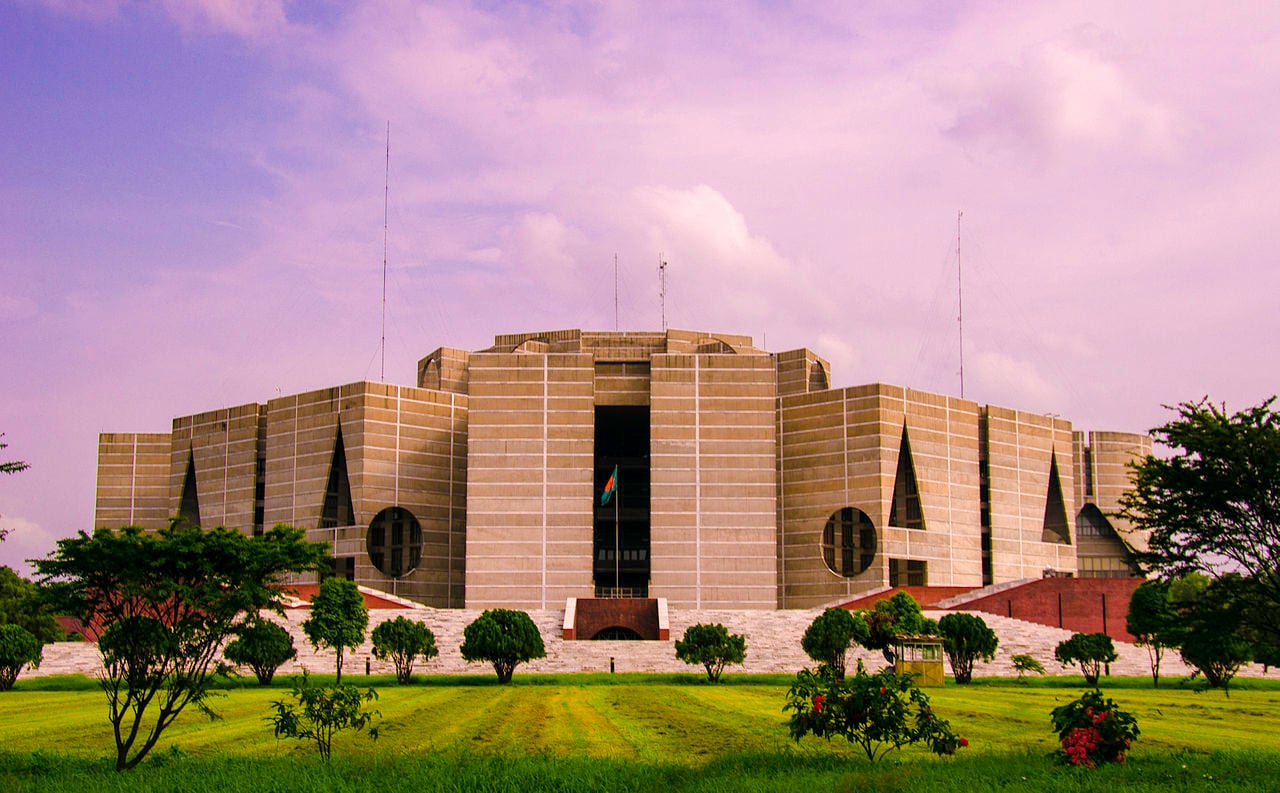
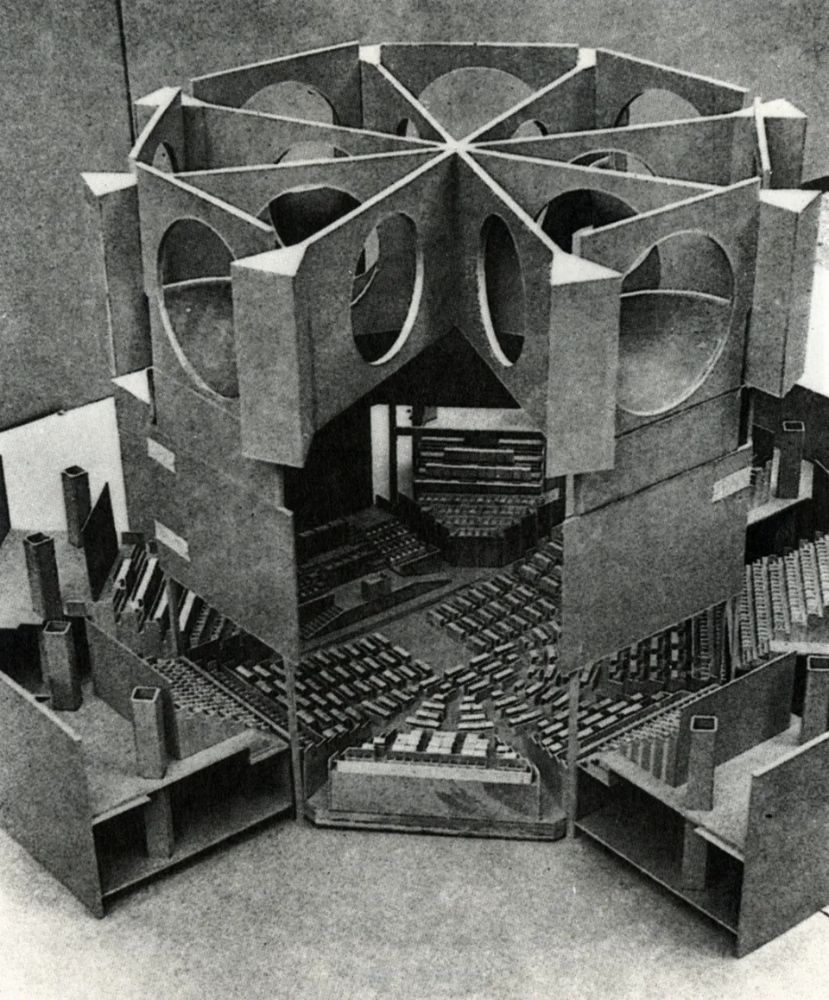
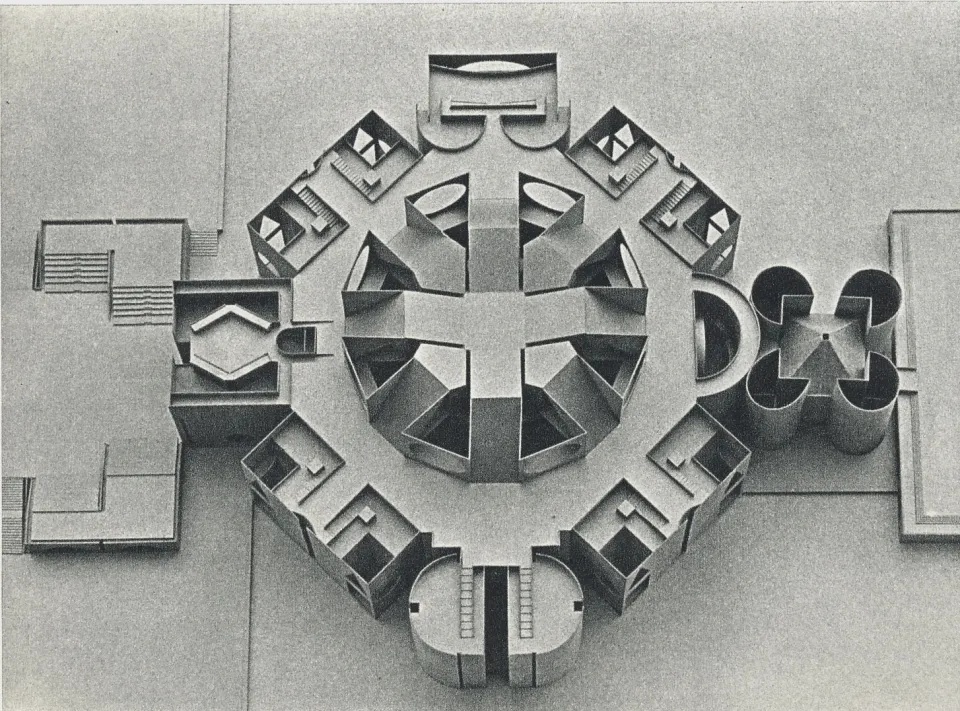
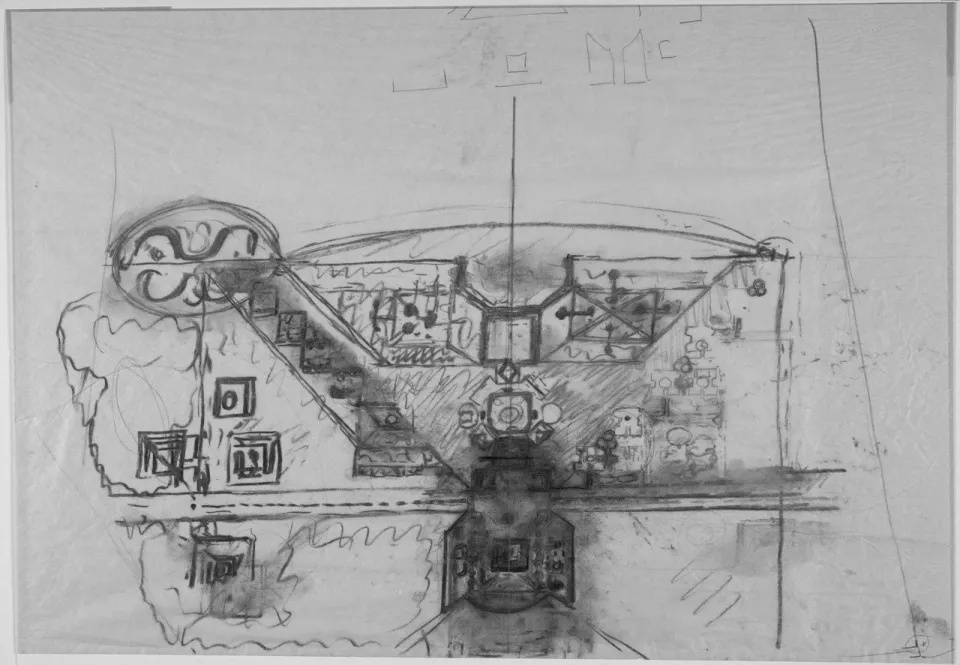
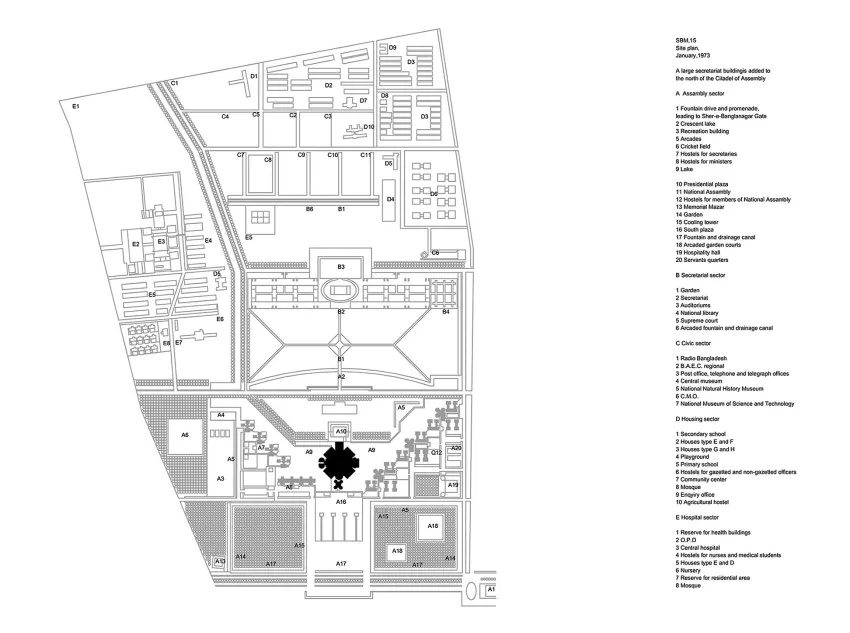
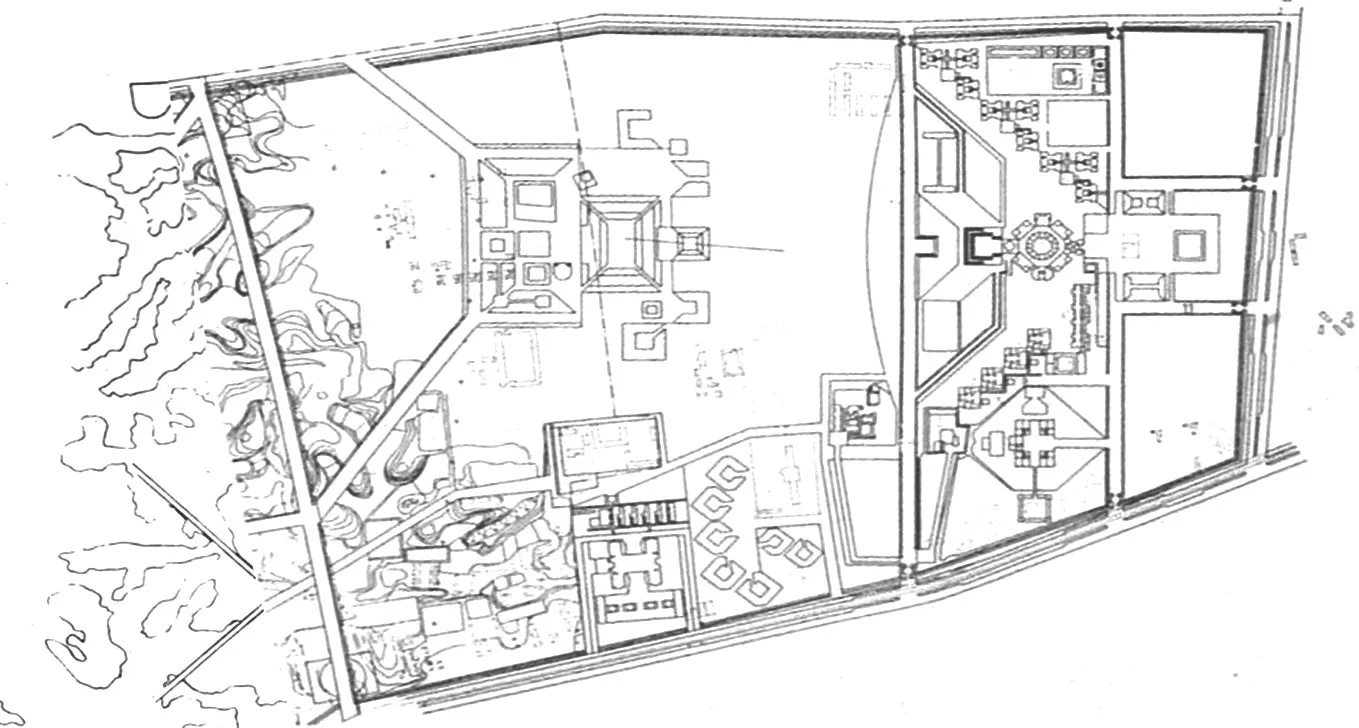
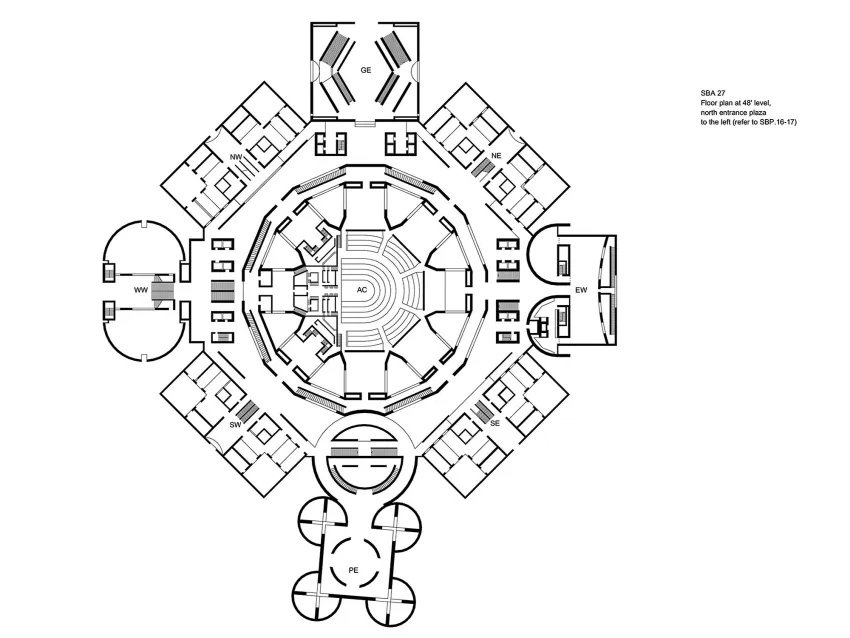
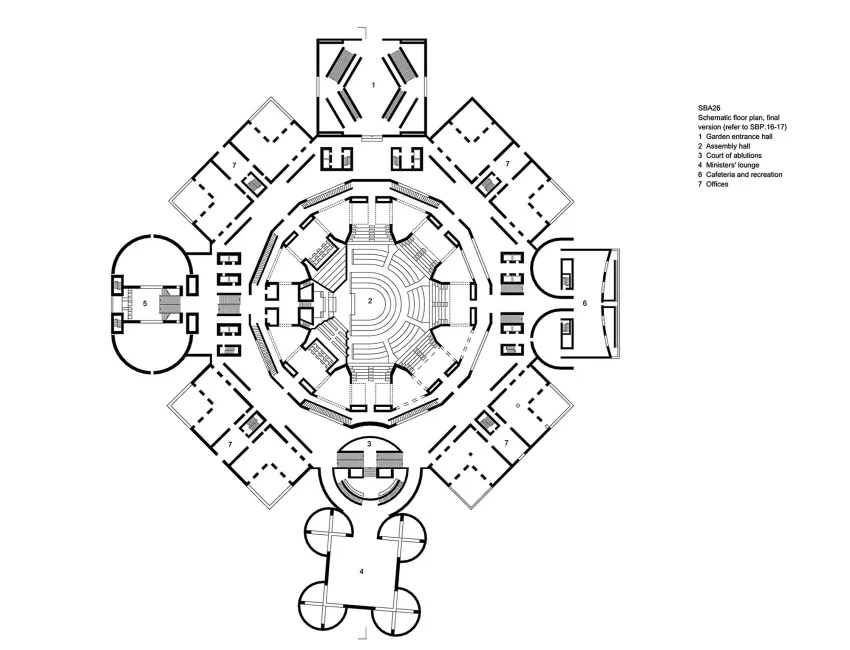
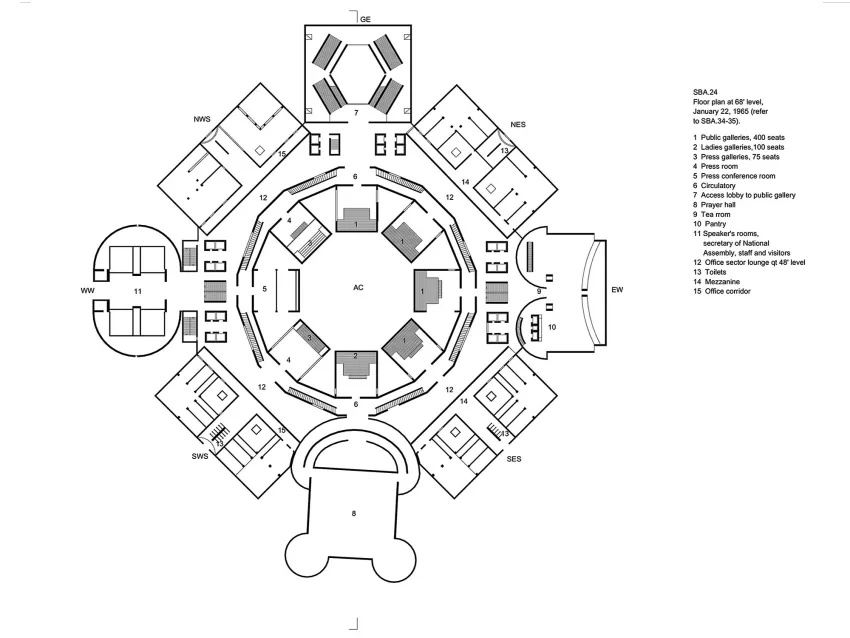
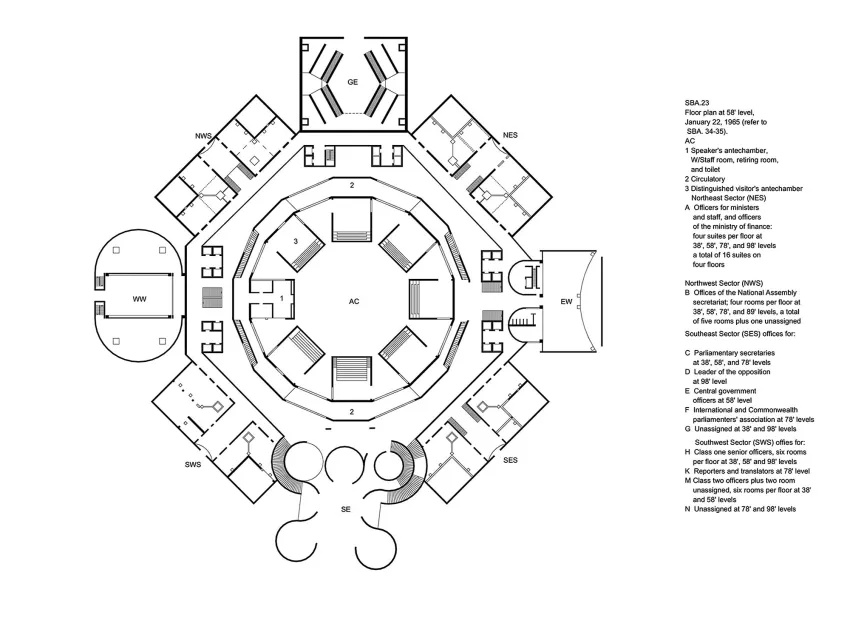
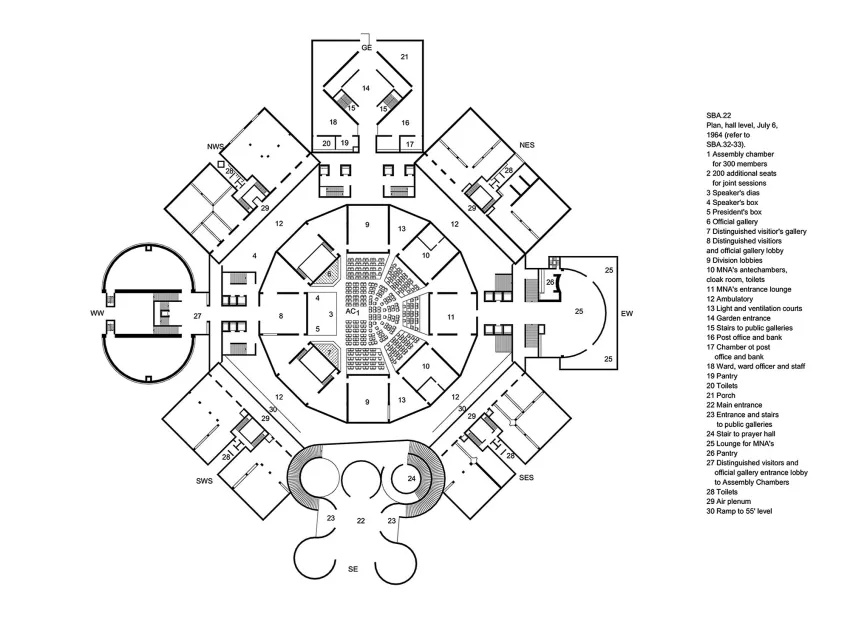
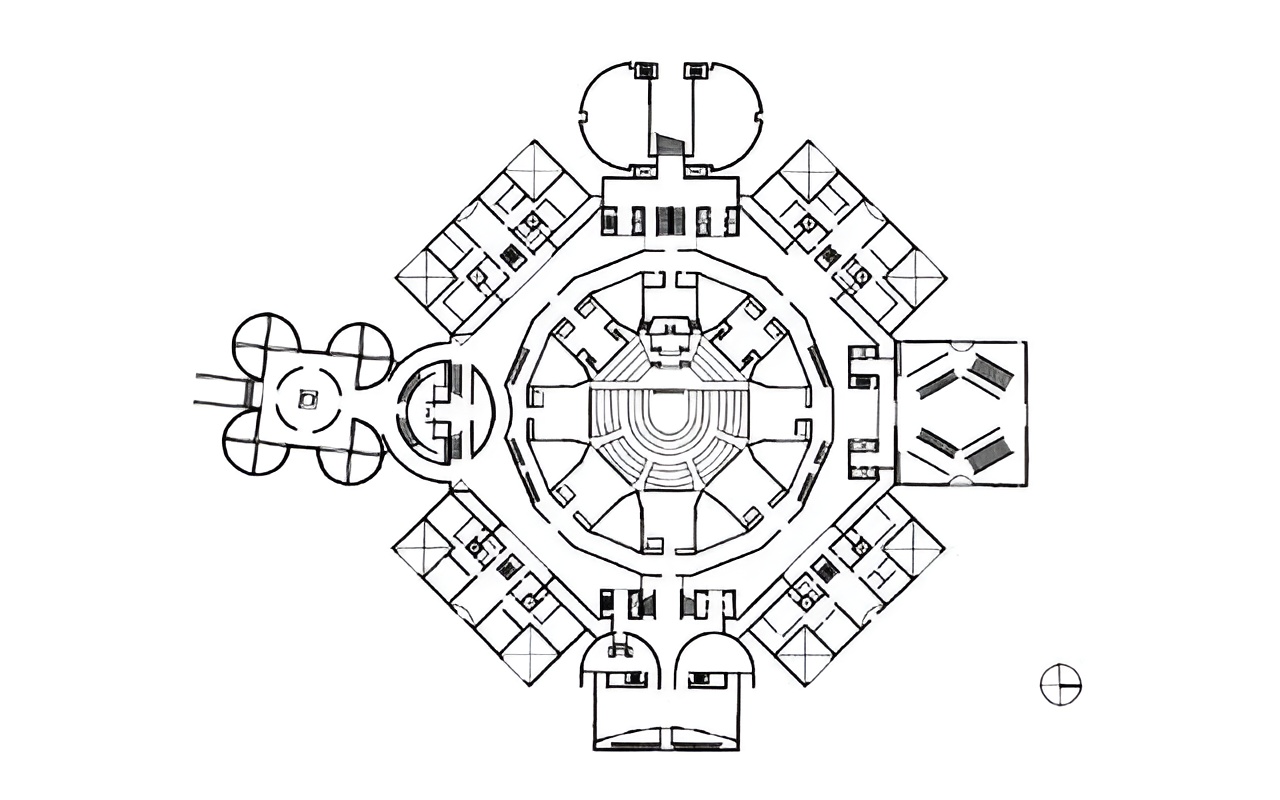
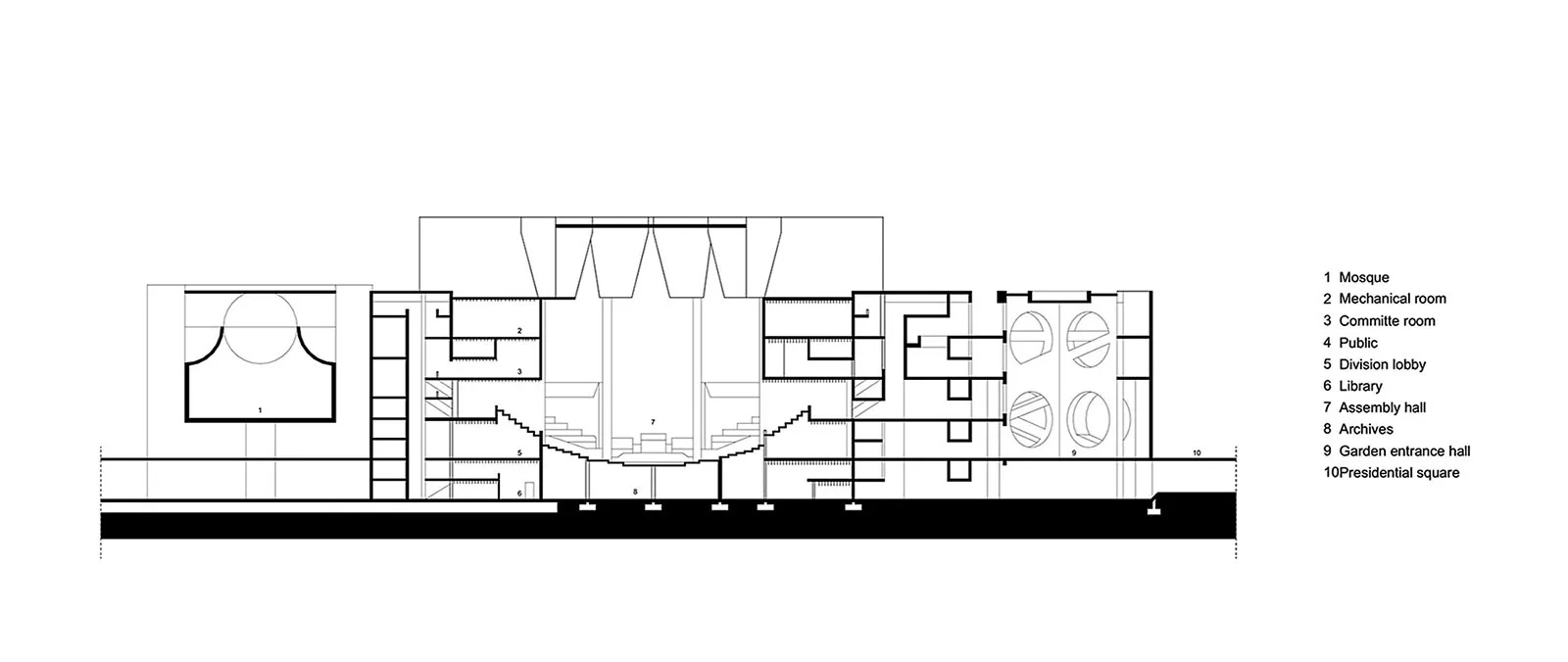
The complex is organized around the main assembly building, or Bhaban, which anchors a broader composition of water, plazas, lawns, and residential facilities for members of parliament. Kahn arranged the main volume as a central chamber surrounded by eight peripheral blocks, creating a hierarchy in which legislative power is placed physically and symbolically at the center. Offices, committee rooms, lounges, circulation spaces, and support functions occupy the surrounding volumes, while the chamber remains the primary civic focus.
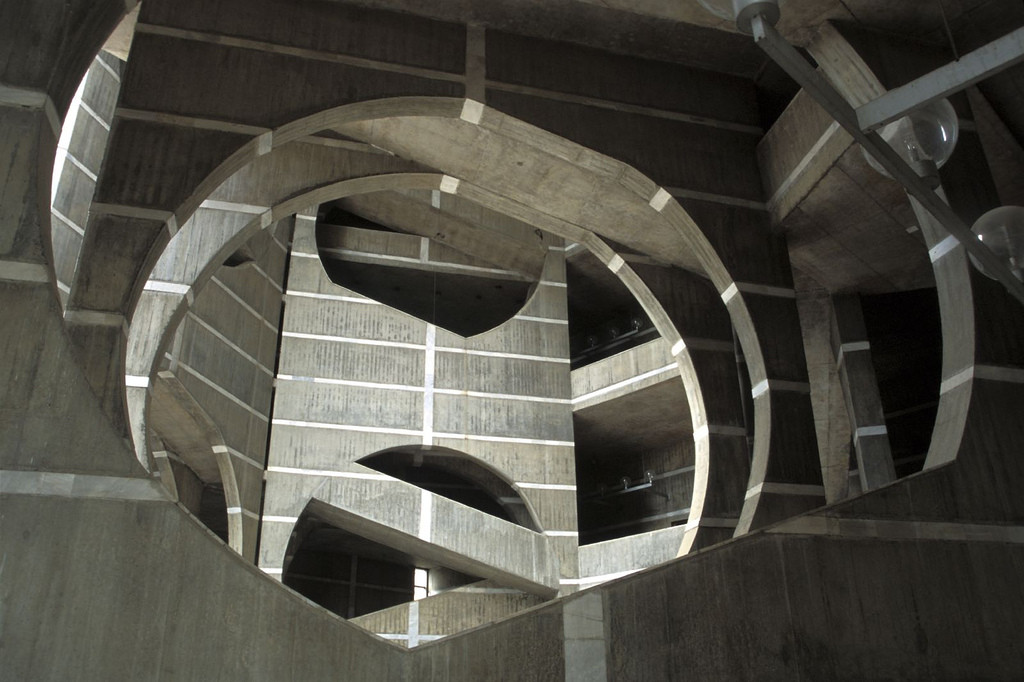
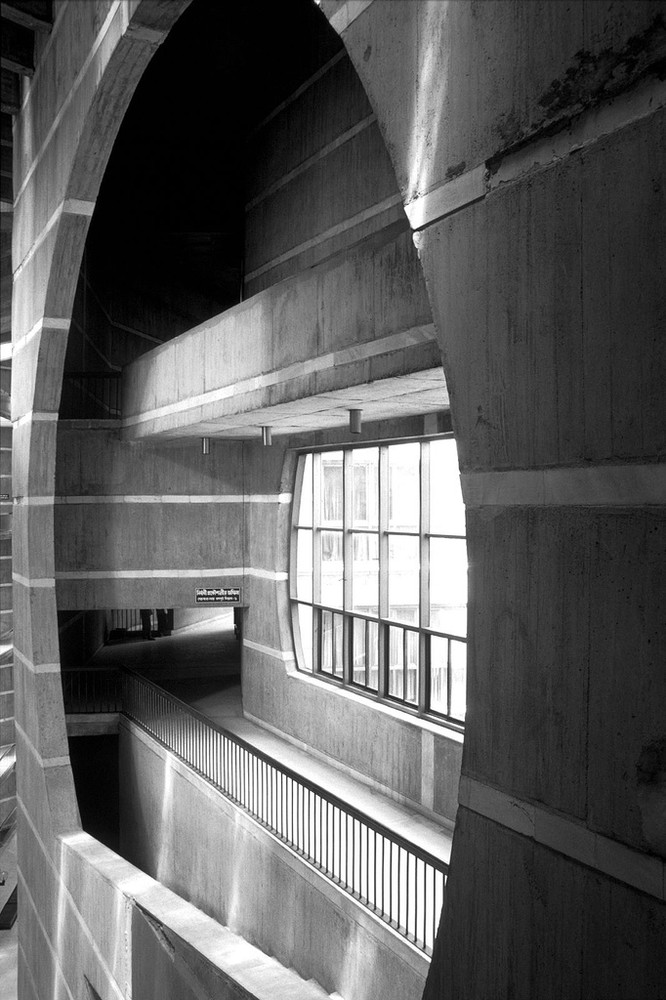
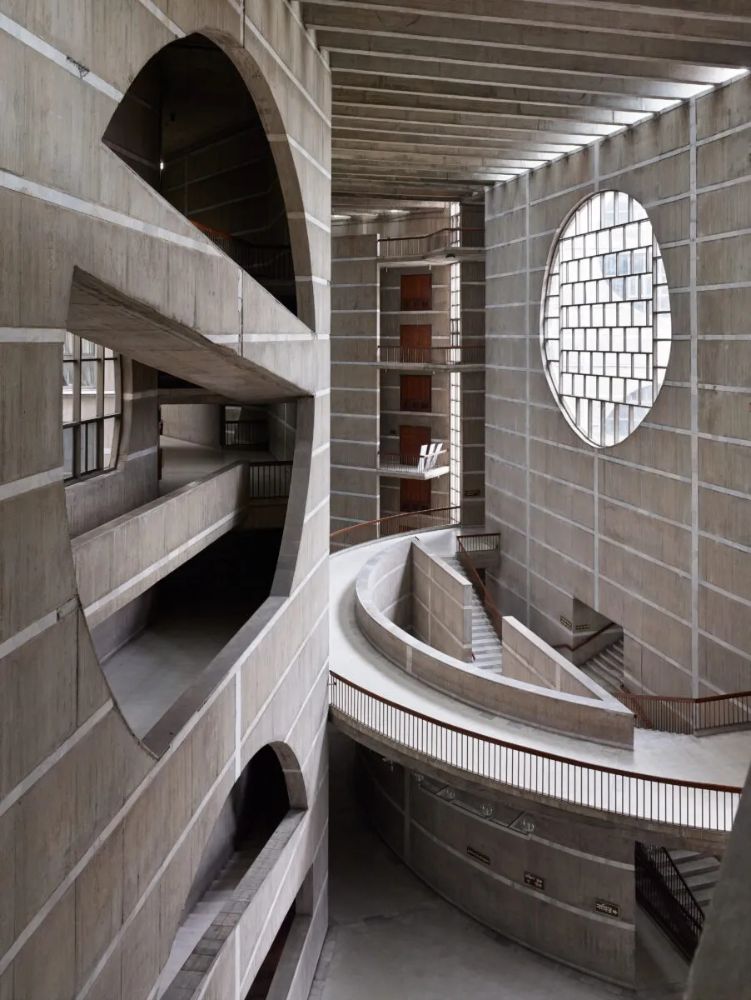
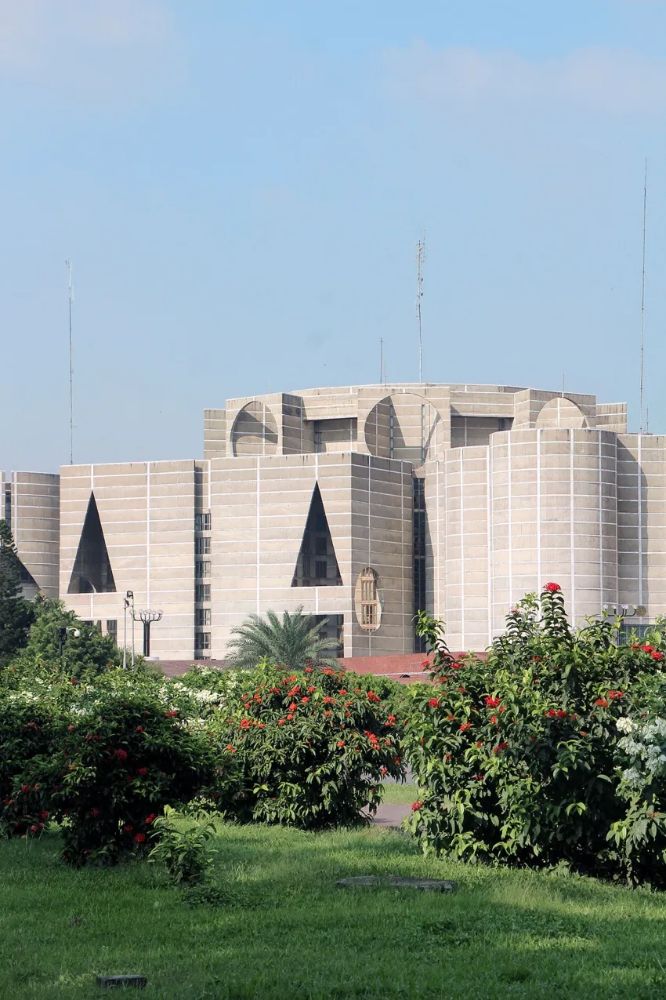
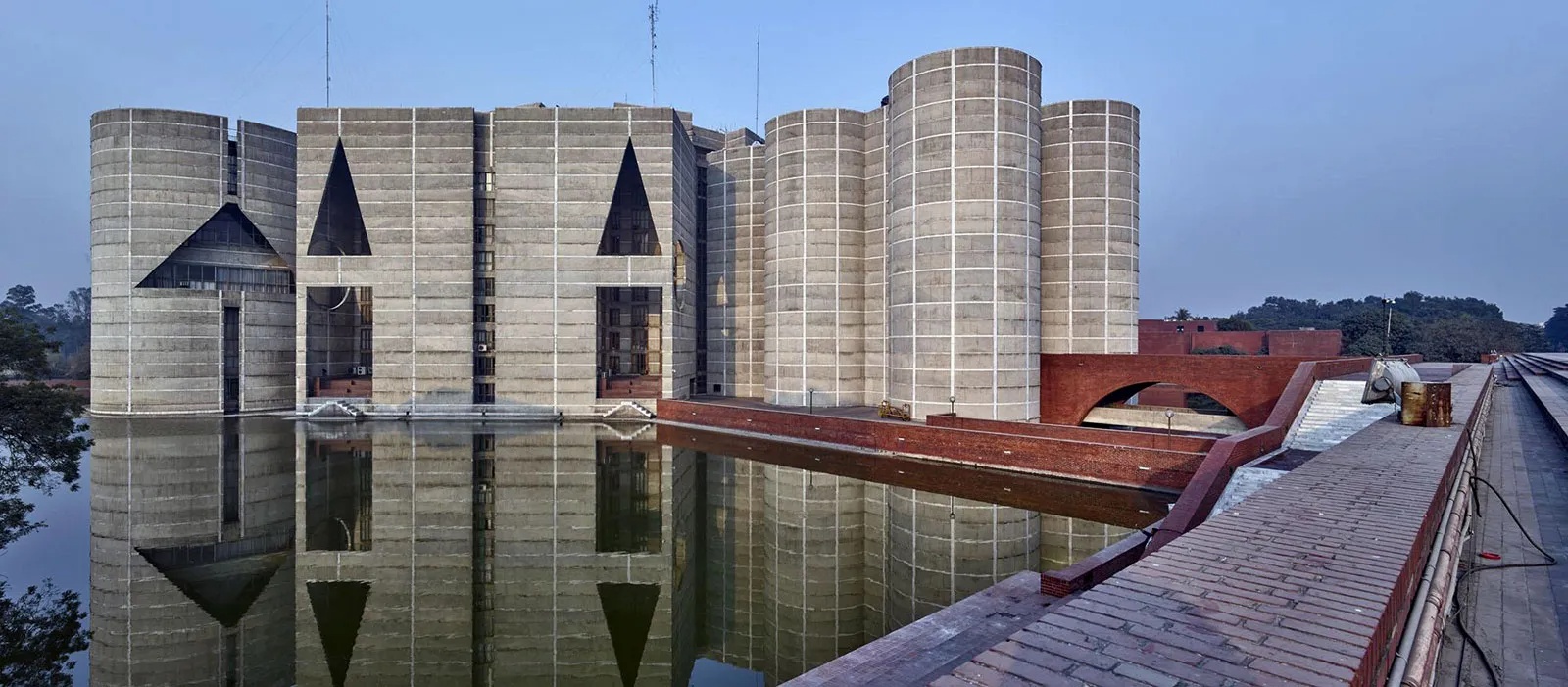
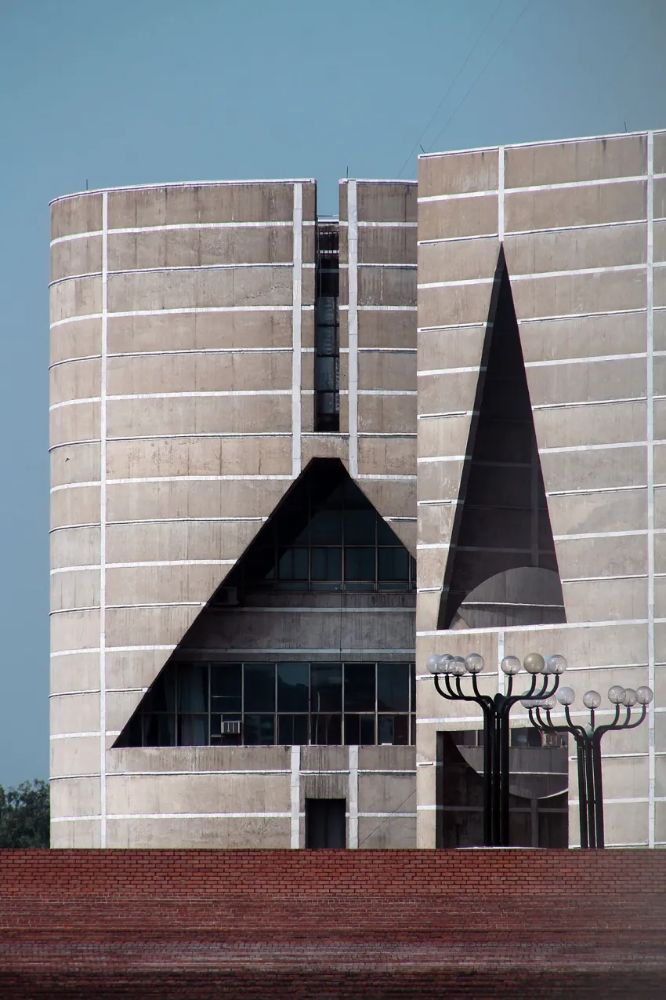
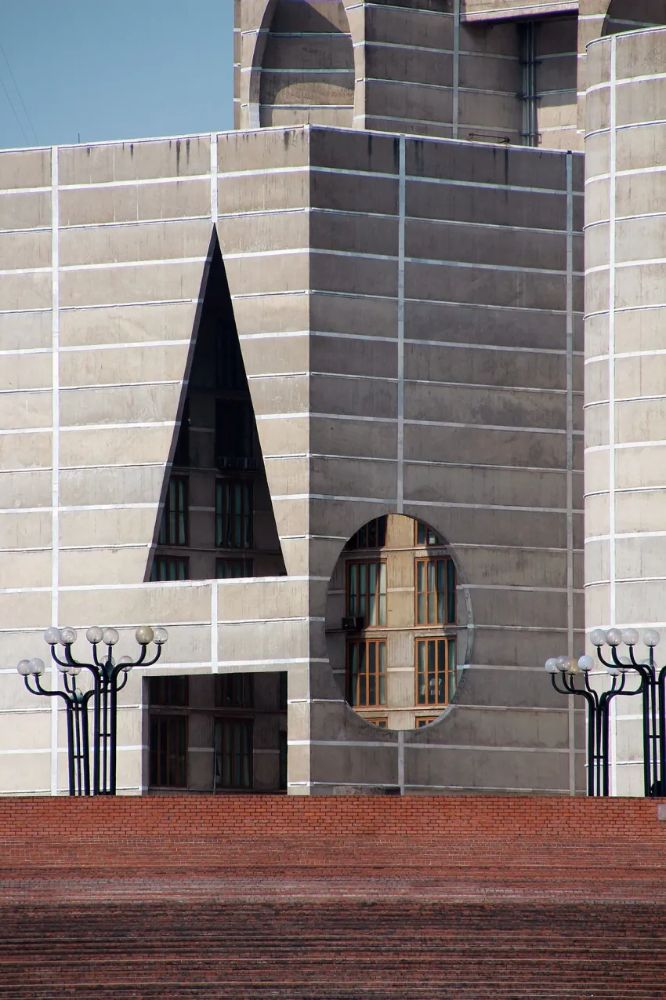
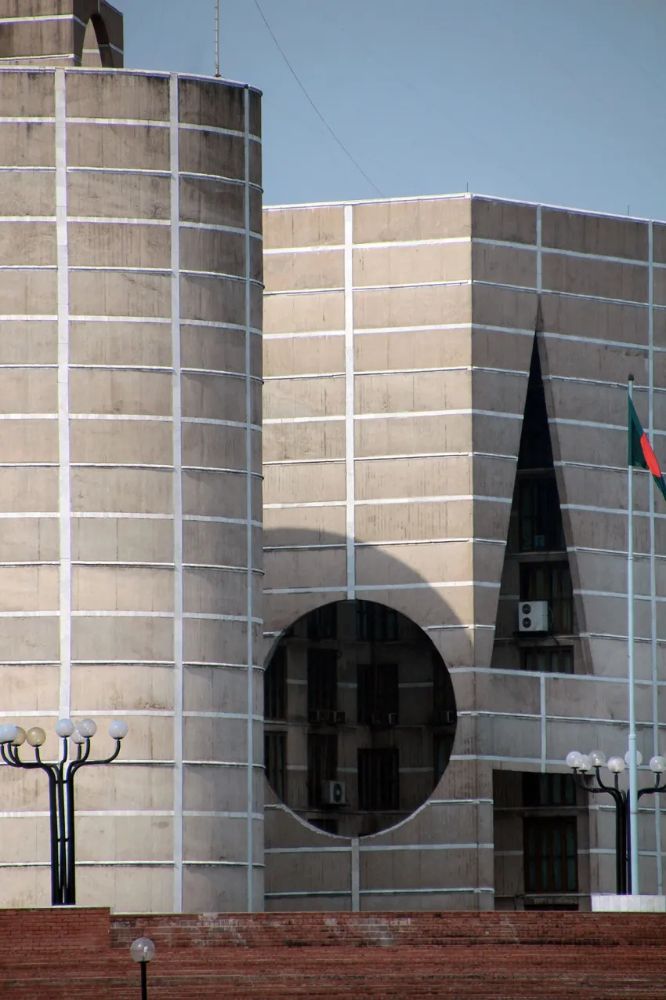
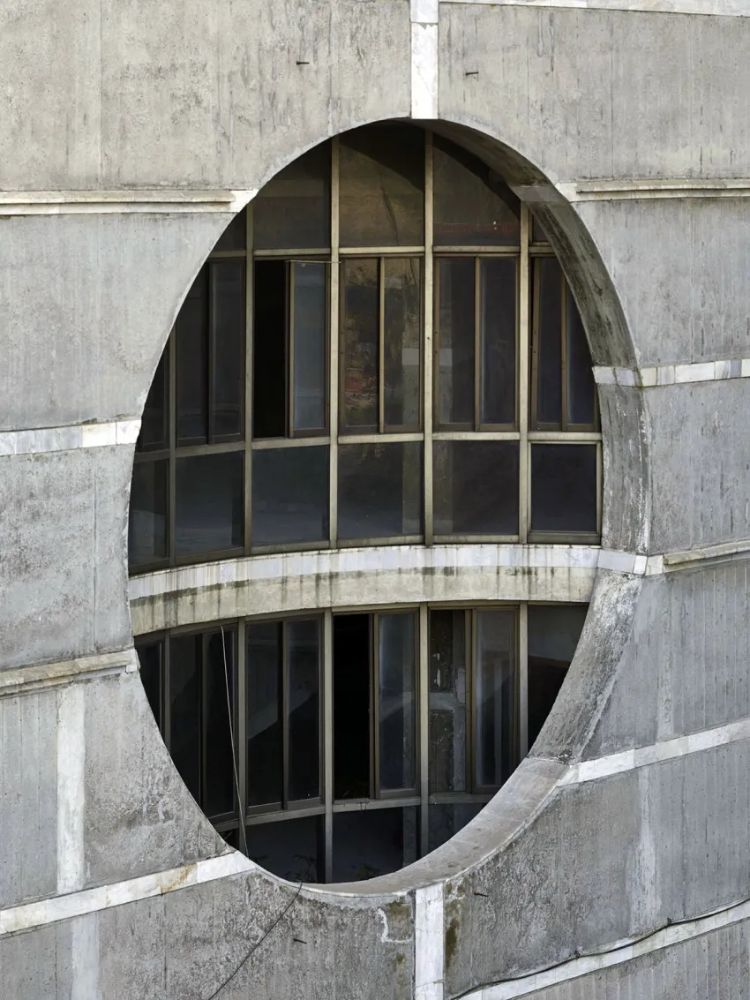
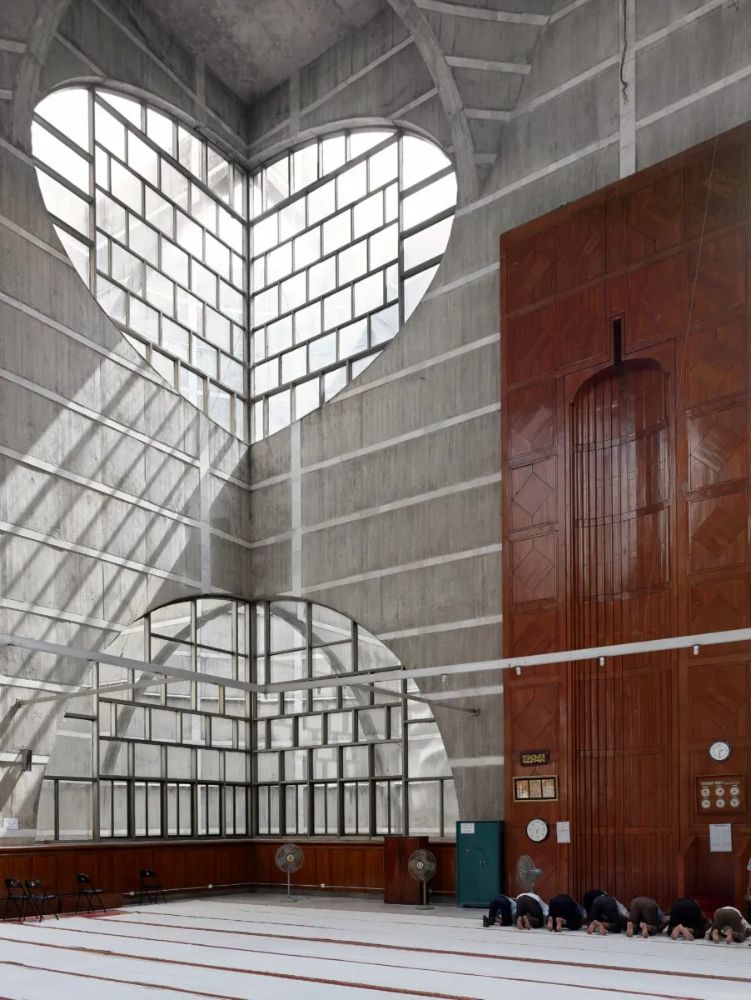
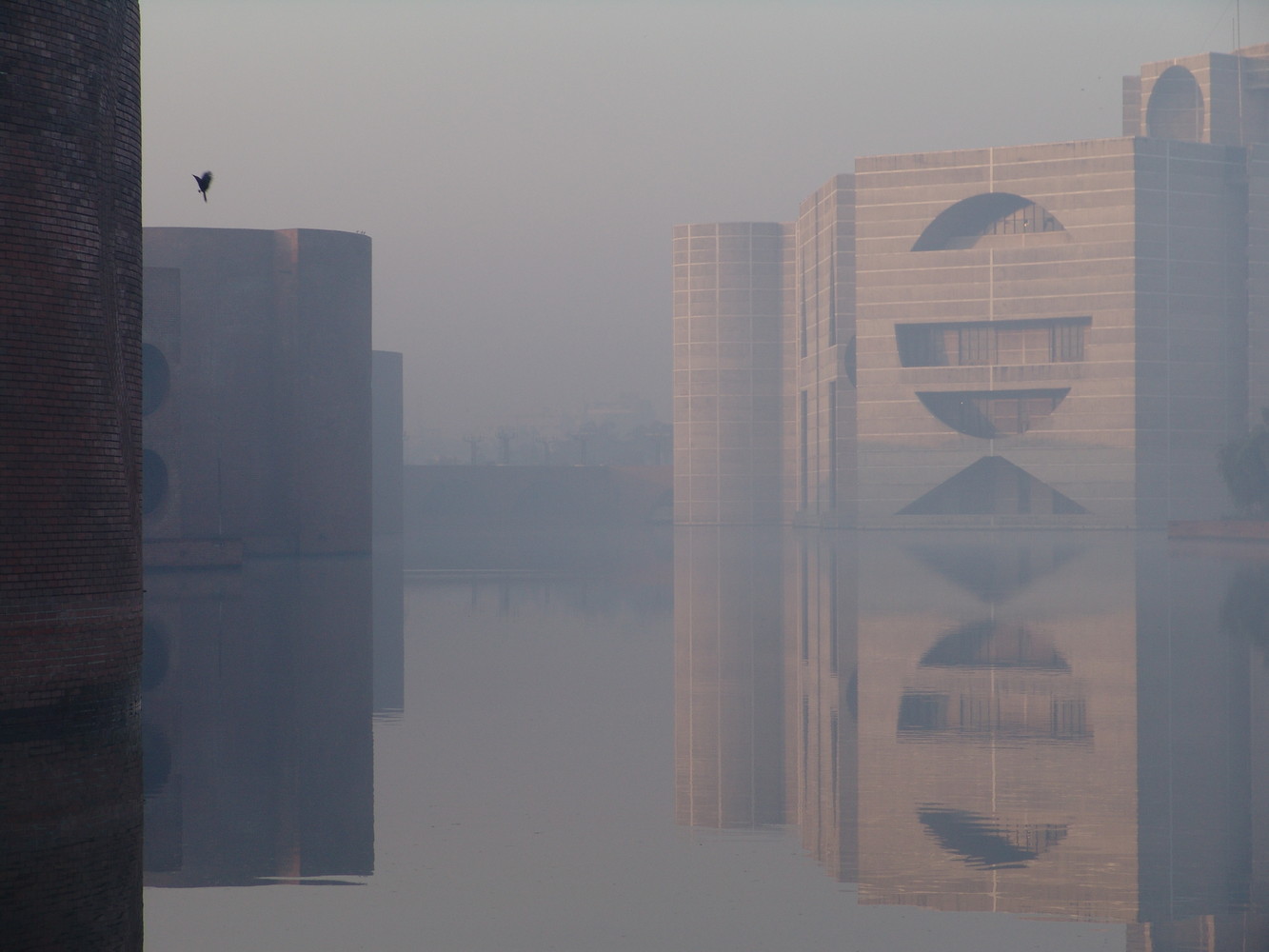
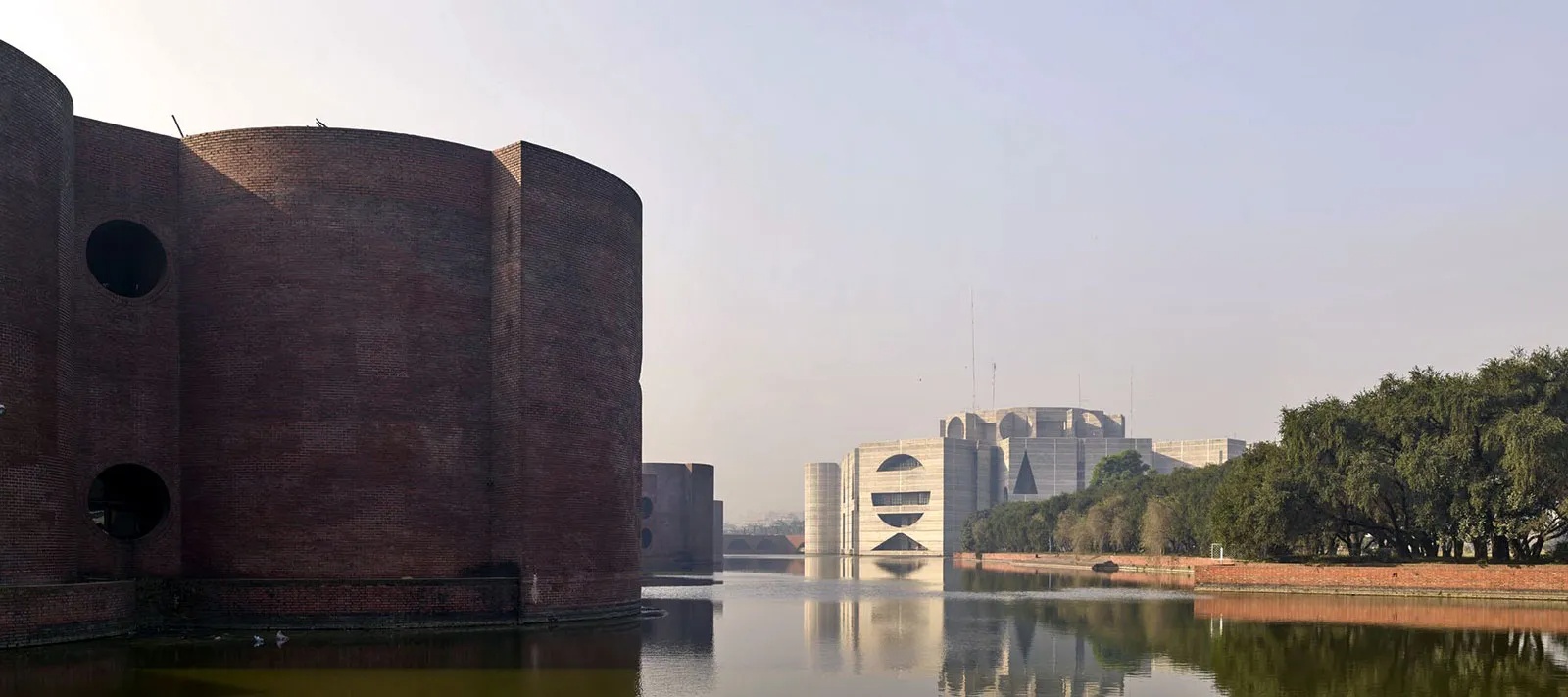
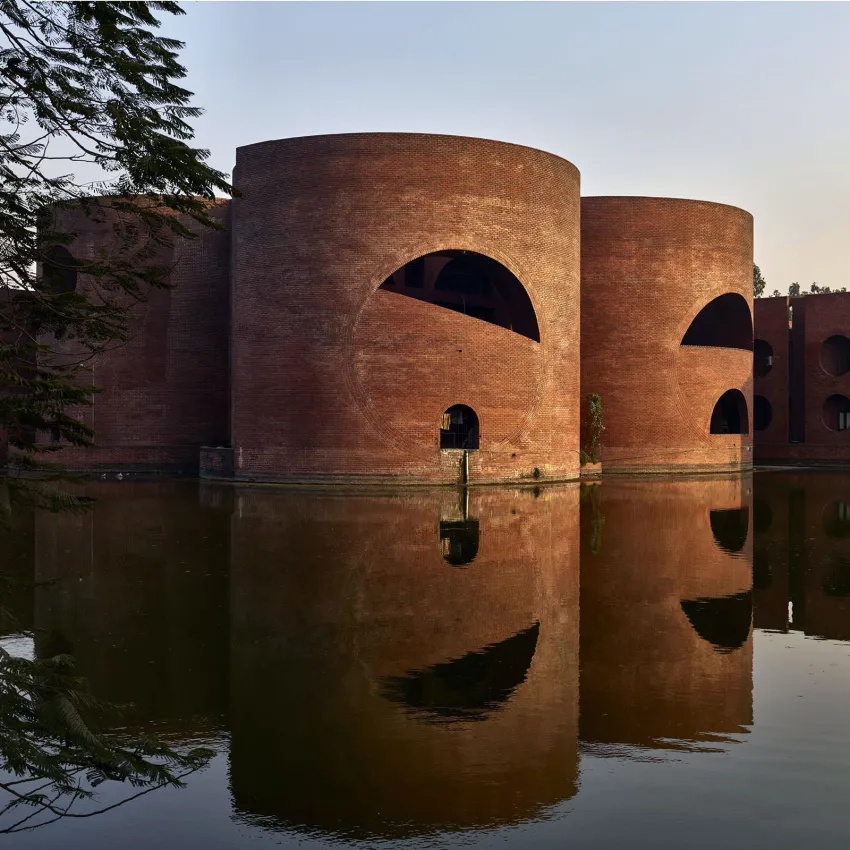
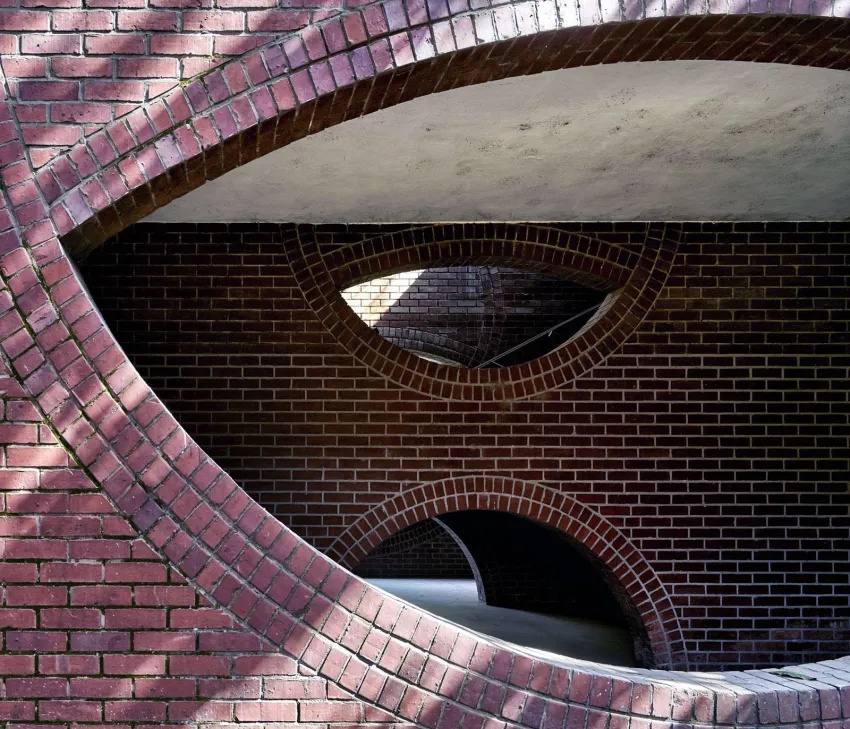
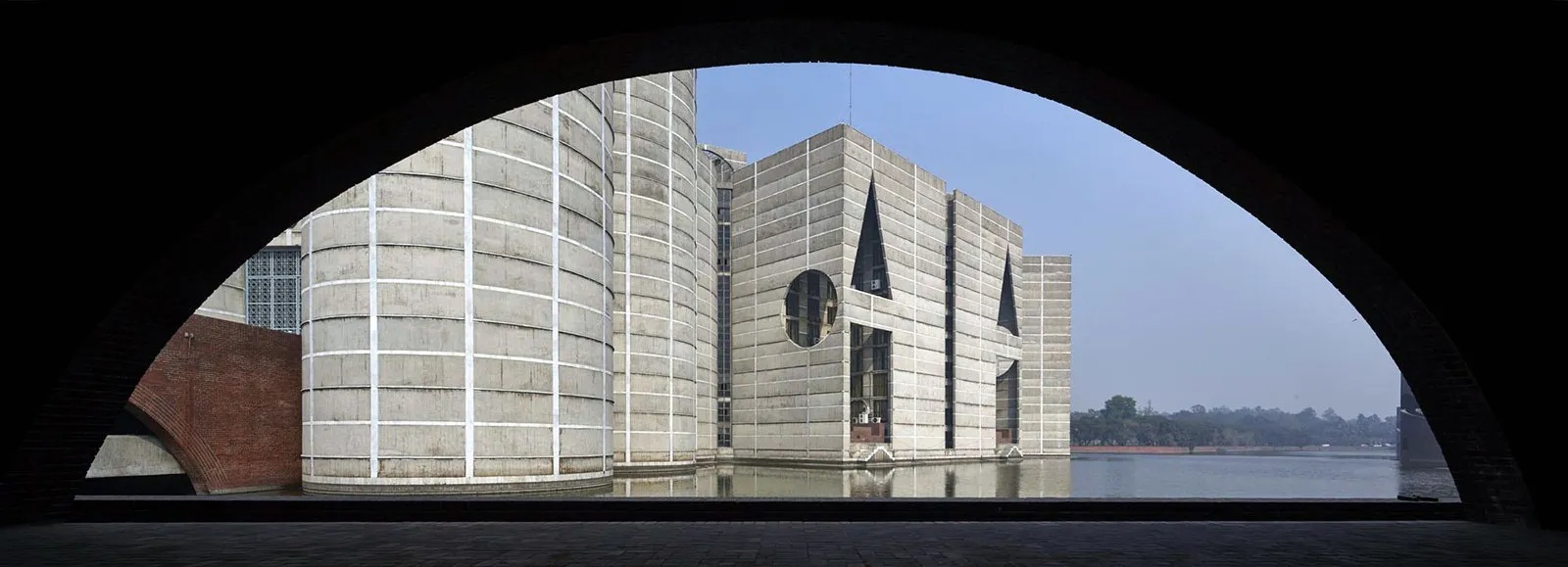
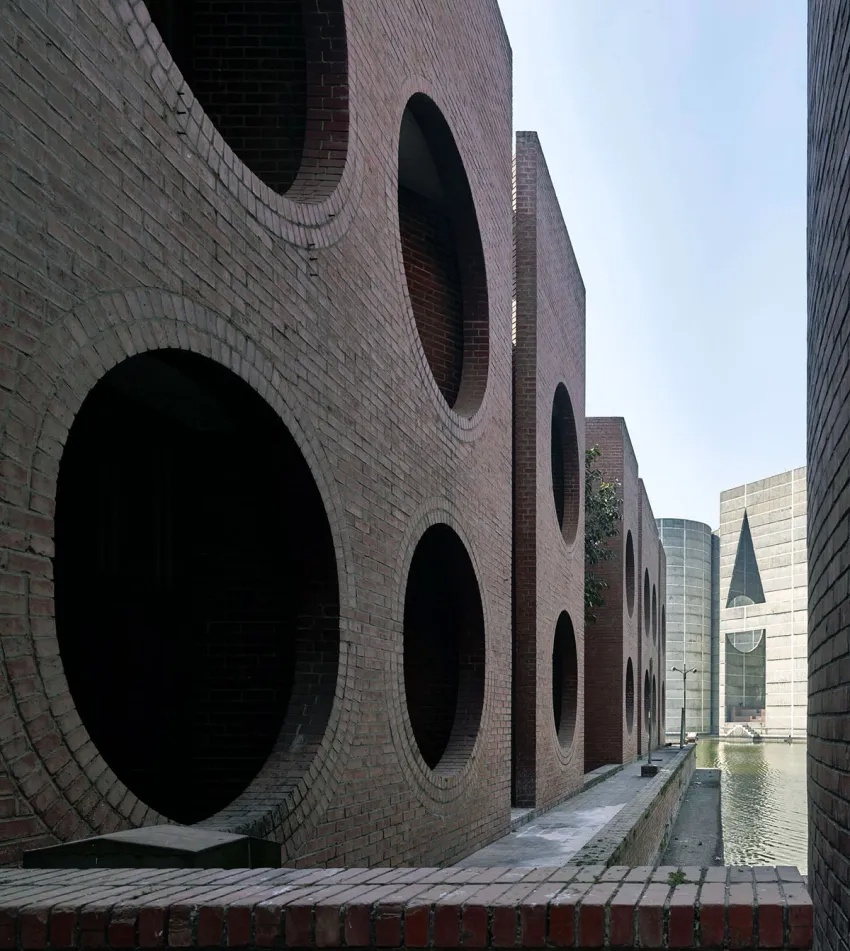
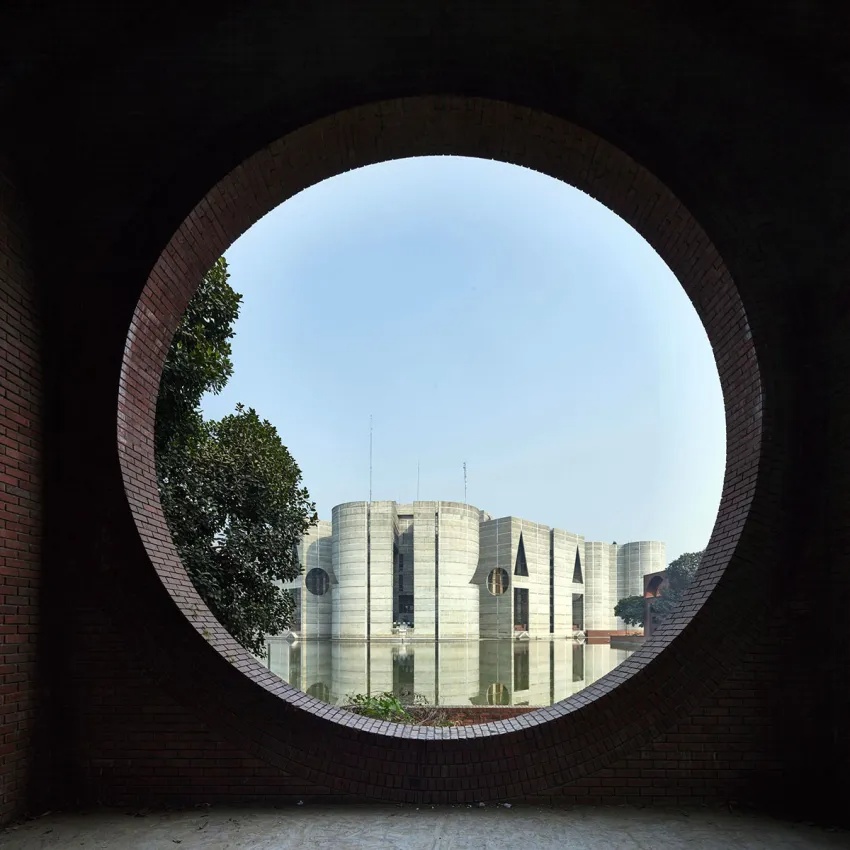
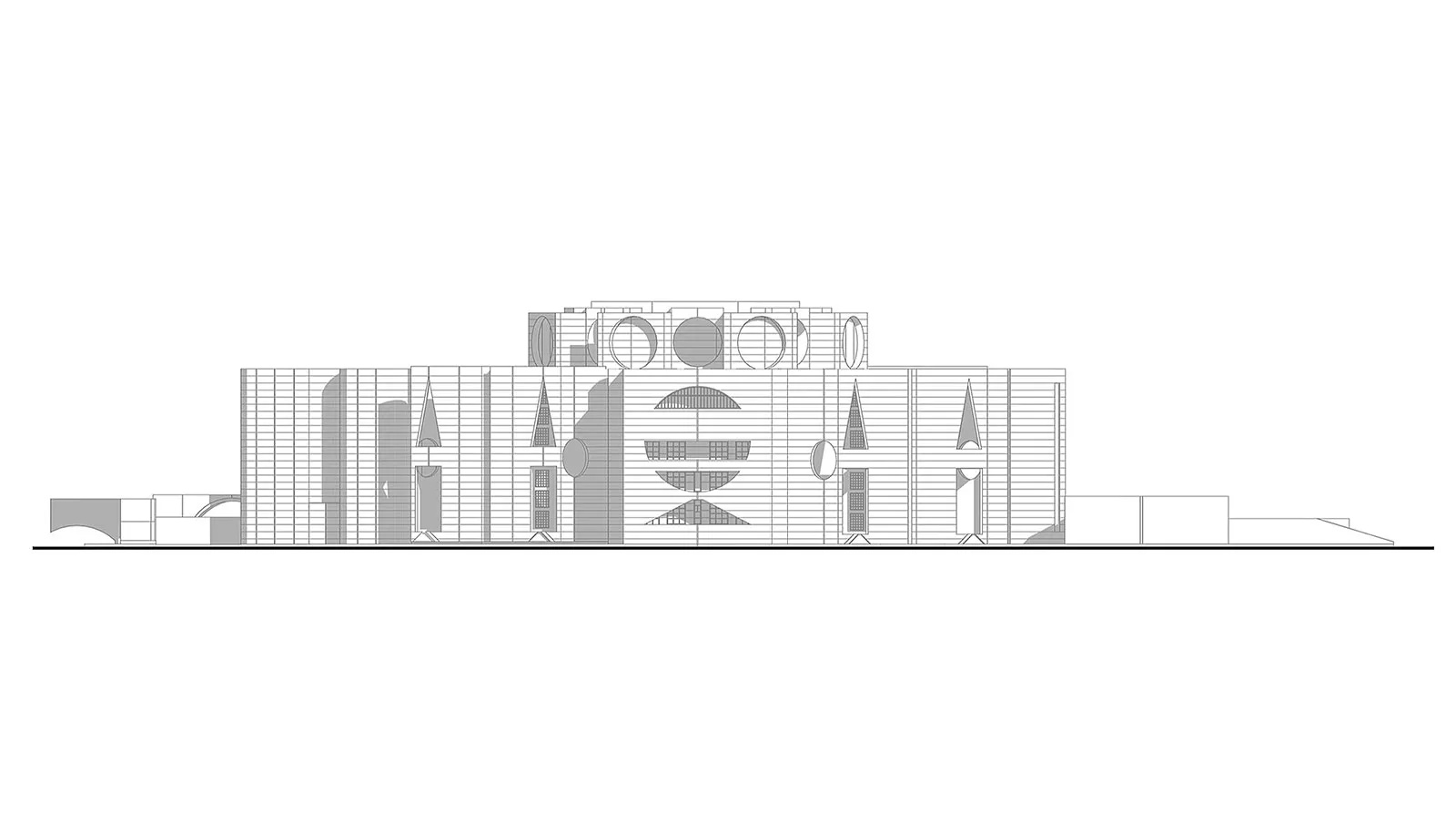
The formal language depends on mass and void. Large circles, triangles, and other geometric cuts are set into deep concrete walls, giving the exterior its measured abstraction. These openings are not decorative devices. They admit light, register the thickness of the structure, and reinforce the monumental scale of the building. The complex is built primarily of poured-in-place concrete with inlaid white marble, a combination that gives the surfaces weight, clarity, and a distinct material identity.
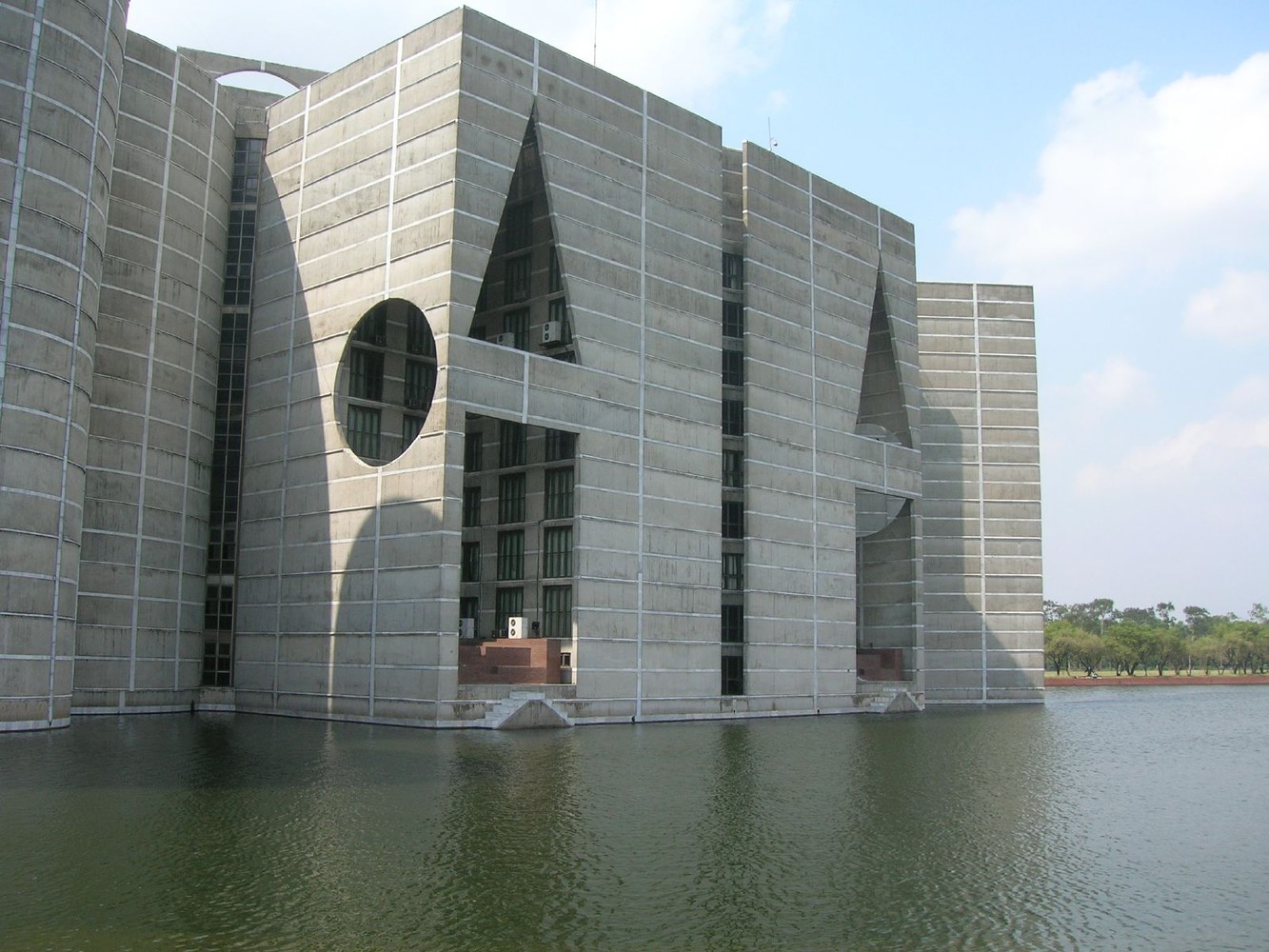
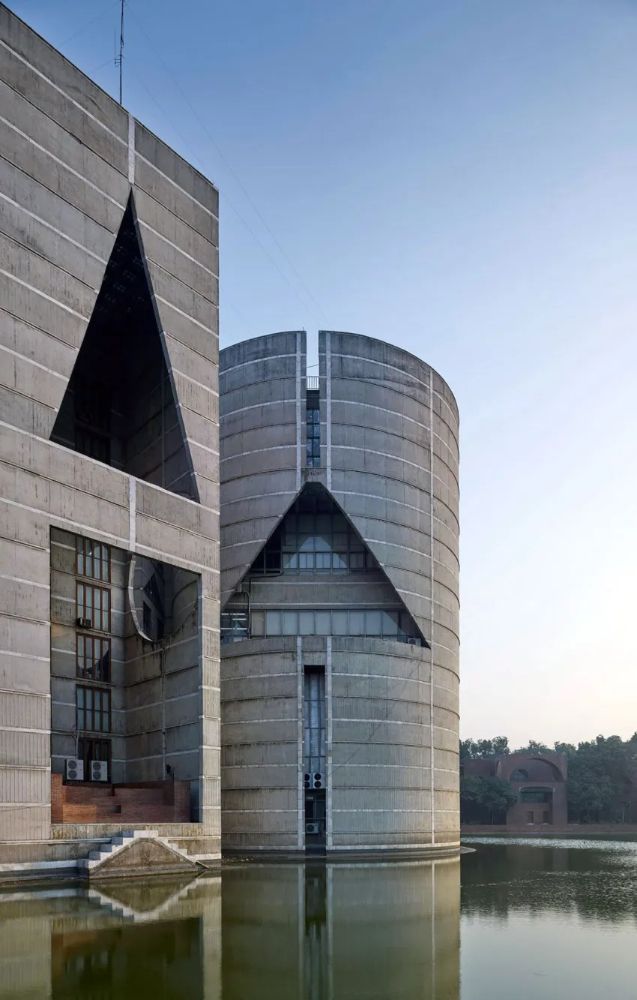
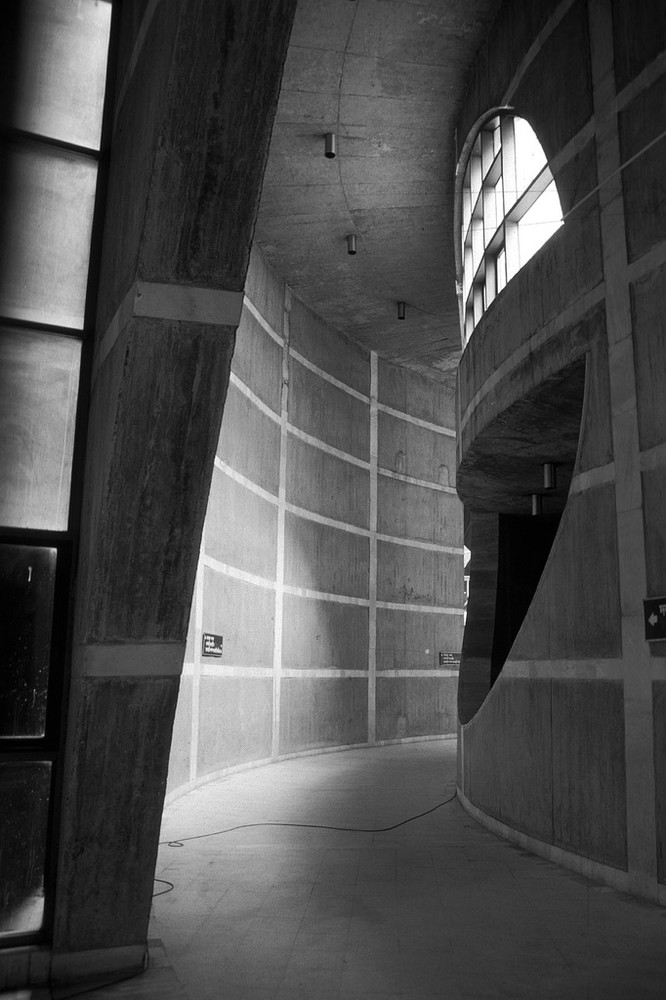
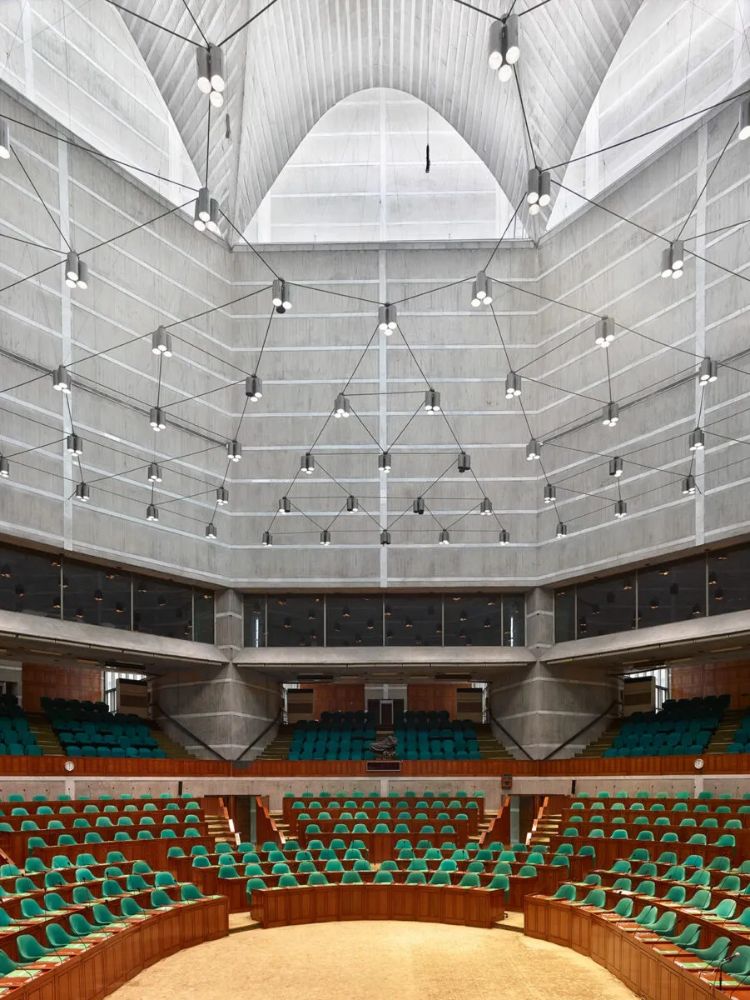
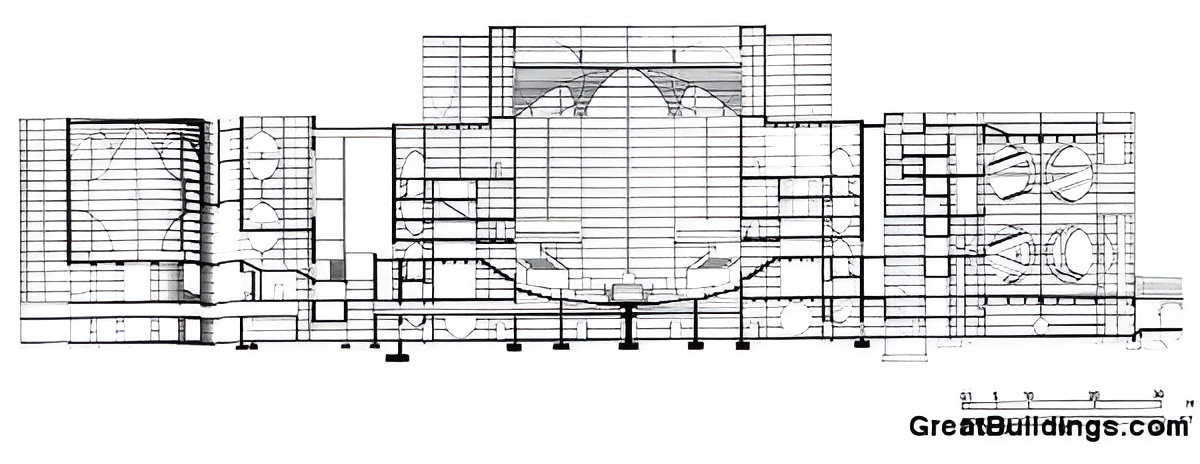
Light is central to the project’s architecture. Kahn treated it not as a secondary effect but as the element that defines room, form, and civic presence. The assembly chamber, set beneath a parabolic shell roof, receives filtered daylight through carefully controlled openings and surrounding surfaces. Across the complex, recessed openings, light courts, and thickened walls produce a sequence of shadows and illuminated voids that shape the experience of movement and occupation. In this sense, the building’s geometry operates as an environmental and spatial system as much as a visual one.
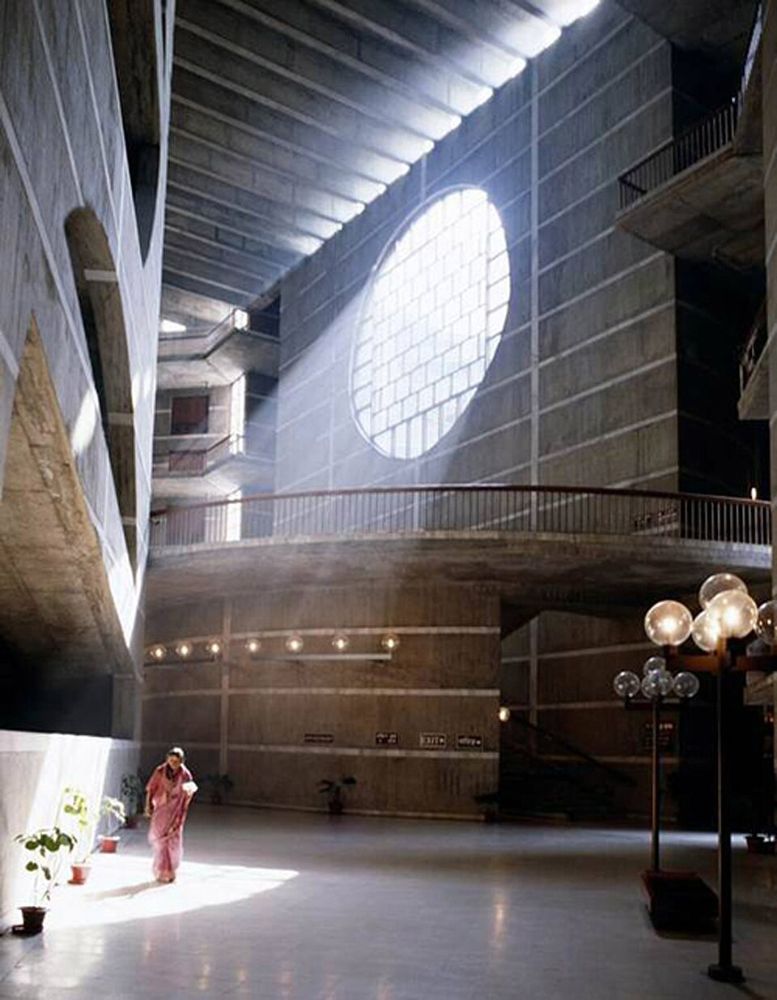
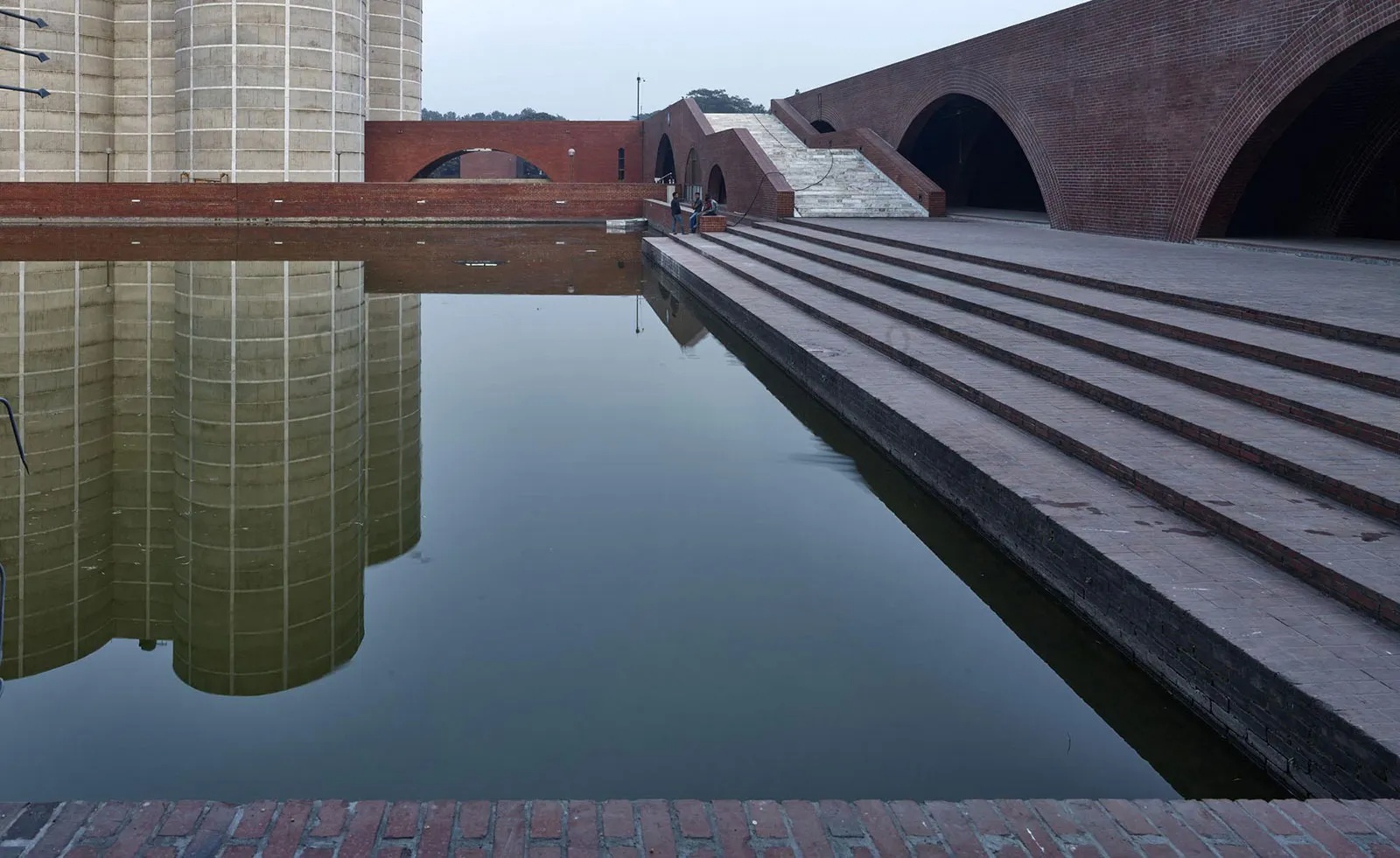
Water extends that logic to the scale of the site. An artificial lake surrounds three sides of the main building, reinforcing the monument’s isolation while responding to the riverine landscape of Bangladesh. The water body contributes to cooling, amplifies reflections, and strengthens the transition between the massive concrete form and its broader setting. The plazas further structure entry and ceremonial movement, particularly the South Plaza and Presidential Plaza, which frame different approaches to the complex.
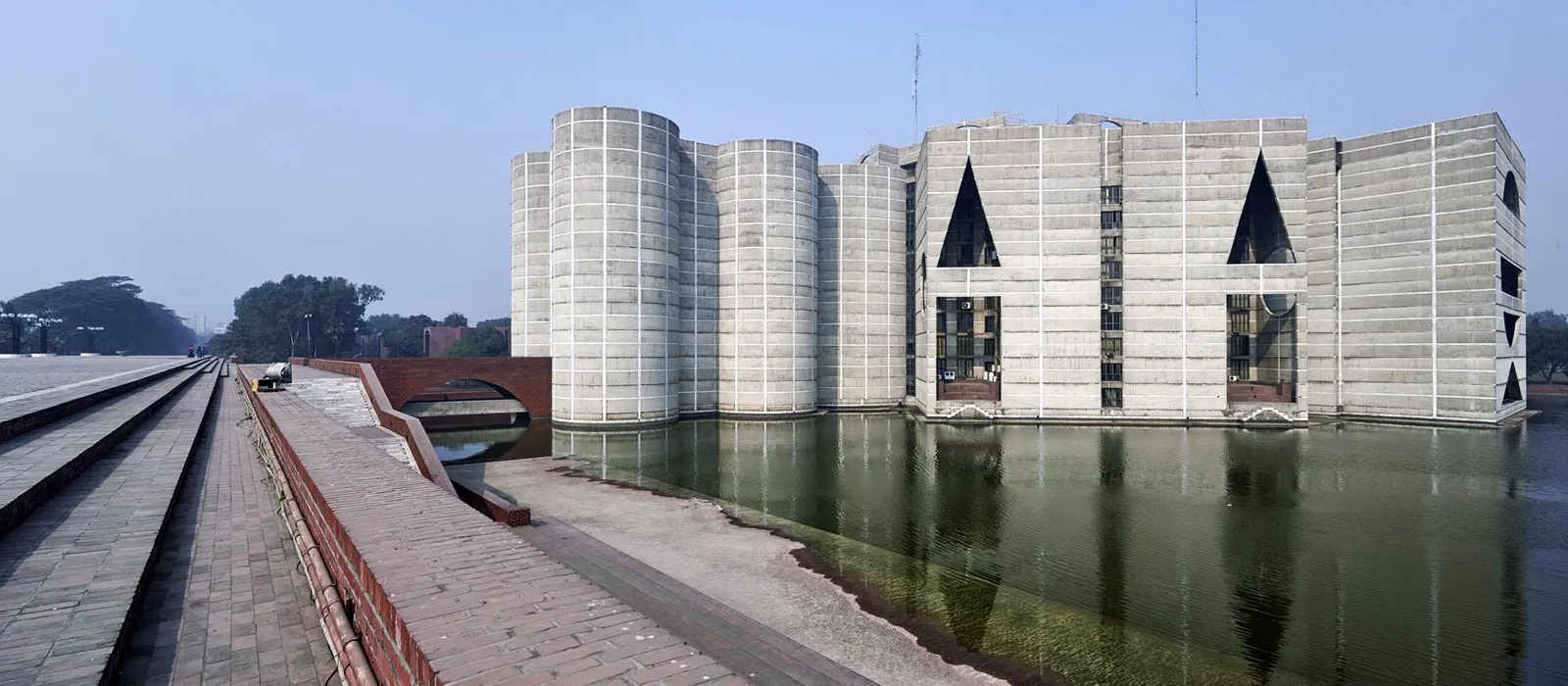
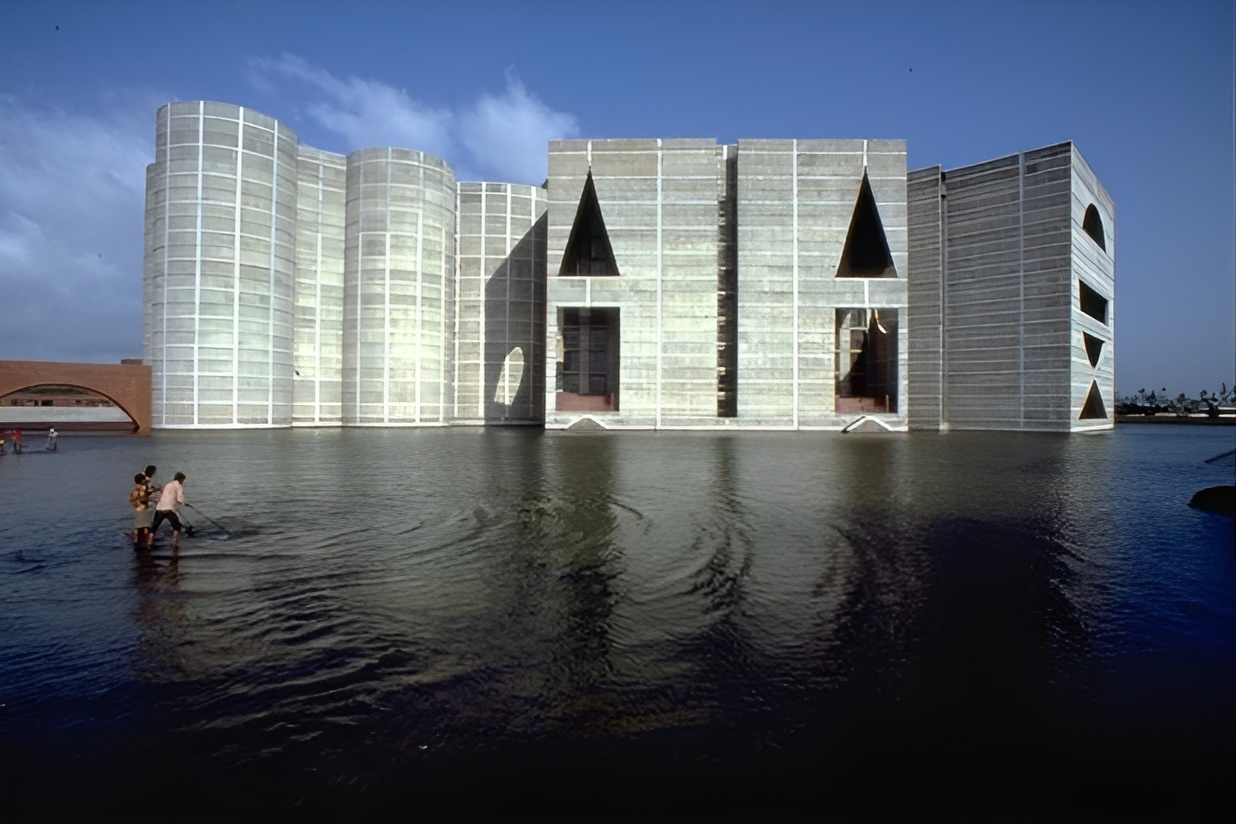
The National Assembly Building of Bangladesh is often read as a modernist work, yet its significance lies in how it resists placelessness. The building translates abstract geometry and monumental construction into a civic architecture tied to Bengali culture, climate, and landscape. Its scale, silence, and restraint give the institution a symbolic permanence, while its handling of light and water connects that permanence to lived environmental conditions.
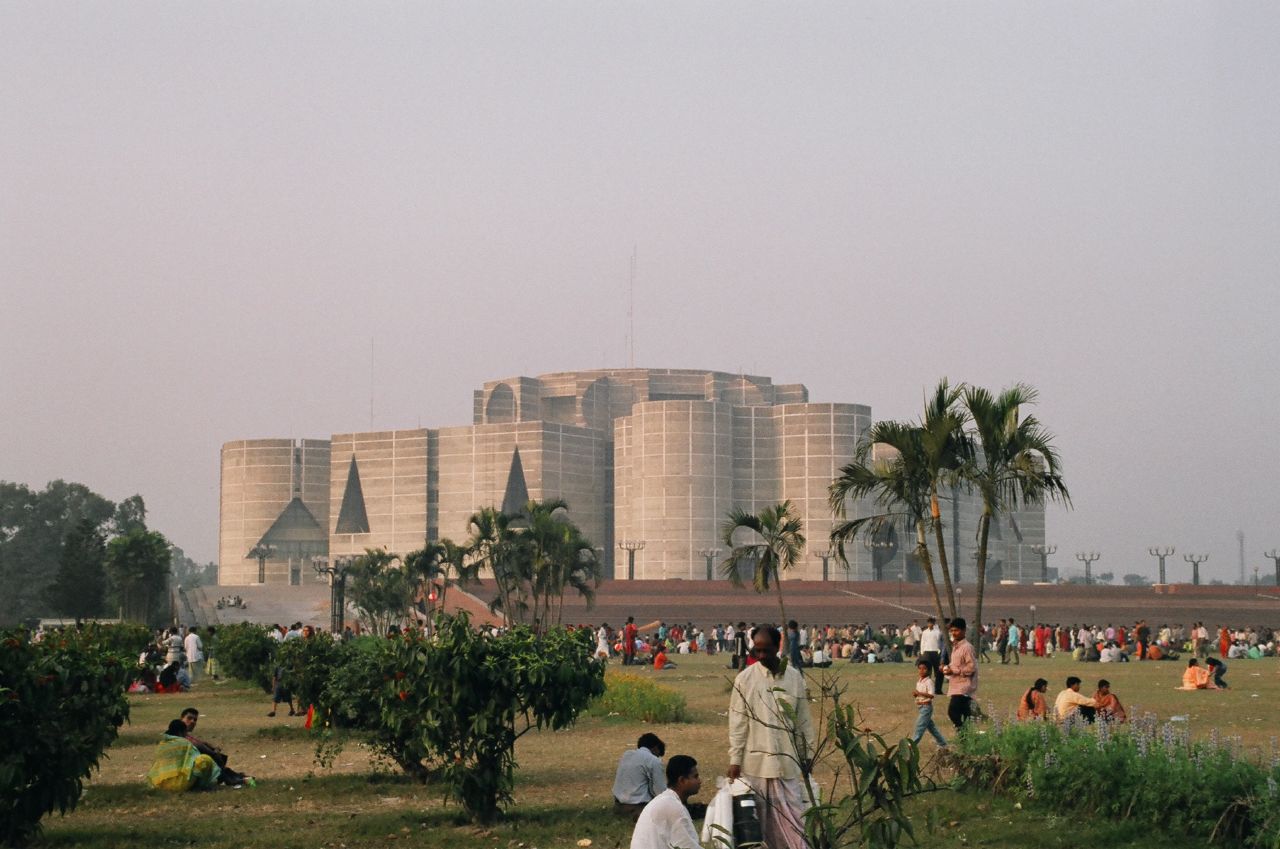
The National Assembly Building of Bangladesh remains a landmark in the history of twentieth-century architecture. Its importance lies not only in its status as a parliament building, but in the precision with which Kahn joined democratic symbolism, environmental control, and formal order into a single architectural system.
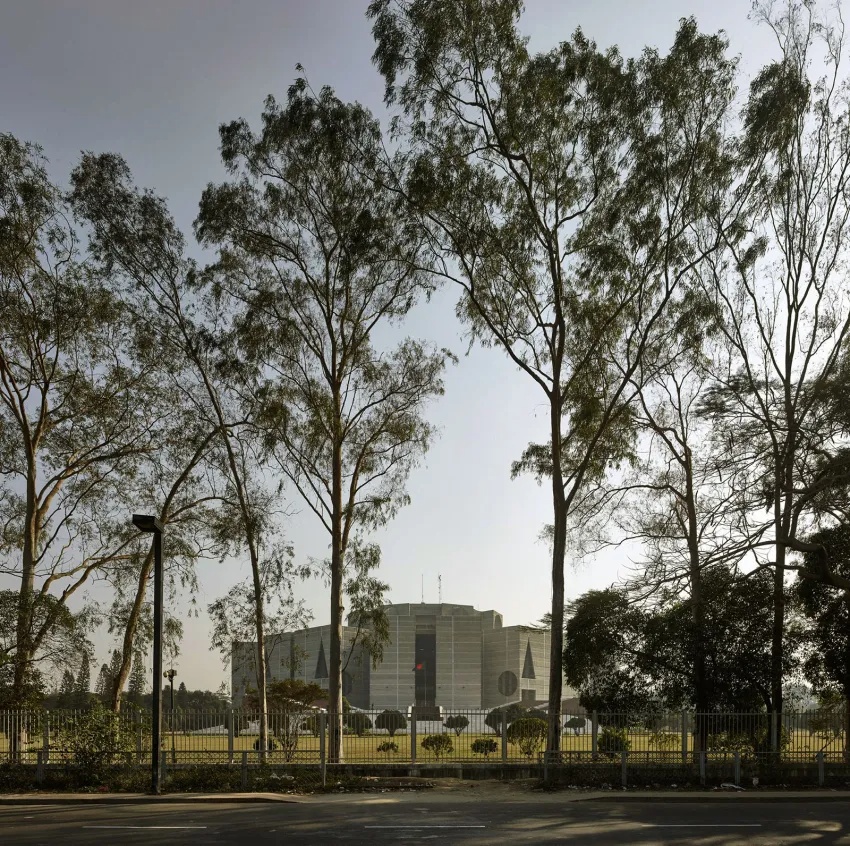
Project Gallery
Project Location
Address: Sher-e-Bangla Nagar, Dhaka 1207, Dhaka District, Bangladesh
Location is for general reference and may represent a city or country, not necessarily a precise address.

