

Architects: Nordic Office of Architecture
Area: 154,000 m²
Year: 2026
Photography: Hufton + Crow Photography
Lead Architects: Nordic Office of Architecture
Architects Team: Haptic Architects; Scenario; I-d. Interiørarkitektur & Design
Design Consortium: Team Urbis: Nordic Office of Architecture; COWI; Rambøll; Aas-Jakobsen; Asplan Viak; Bjørbekk & Lindheim; SLA
Planning & Urban Design: Nordic Office of Architecture; Aas-Jakobsen; Asplan Viak
Engineering (Structure / Services / Security): COWI; Rambøll; Aas-Jakobsen; Asplan Viak
Heritage & Specialist Design: NIKU; Scenario; Per Rasmussen
Landscape: SLA; Bjørbekk & Lindheim
Public Art: KORO
Client: Statsbygg
Owner: Ministry of Digitalisation and Public Administration (DFD), Norway
City: Oslo
Country: Norway
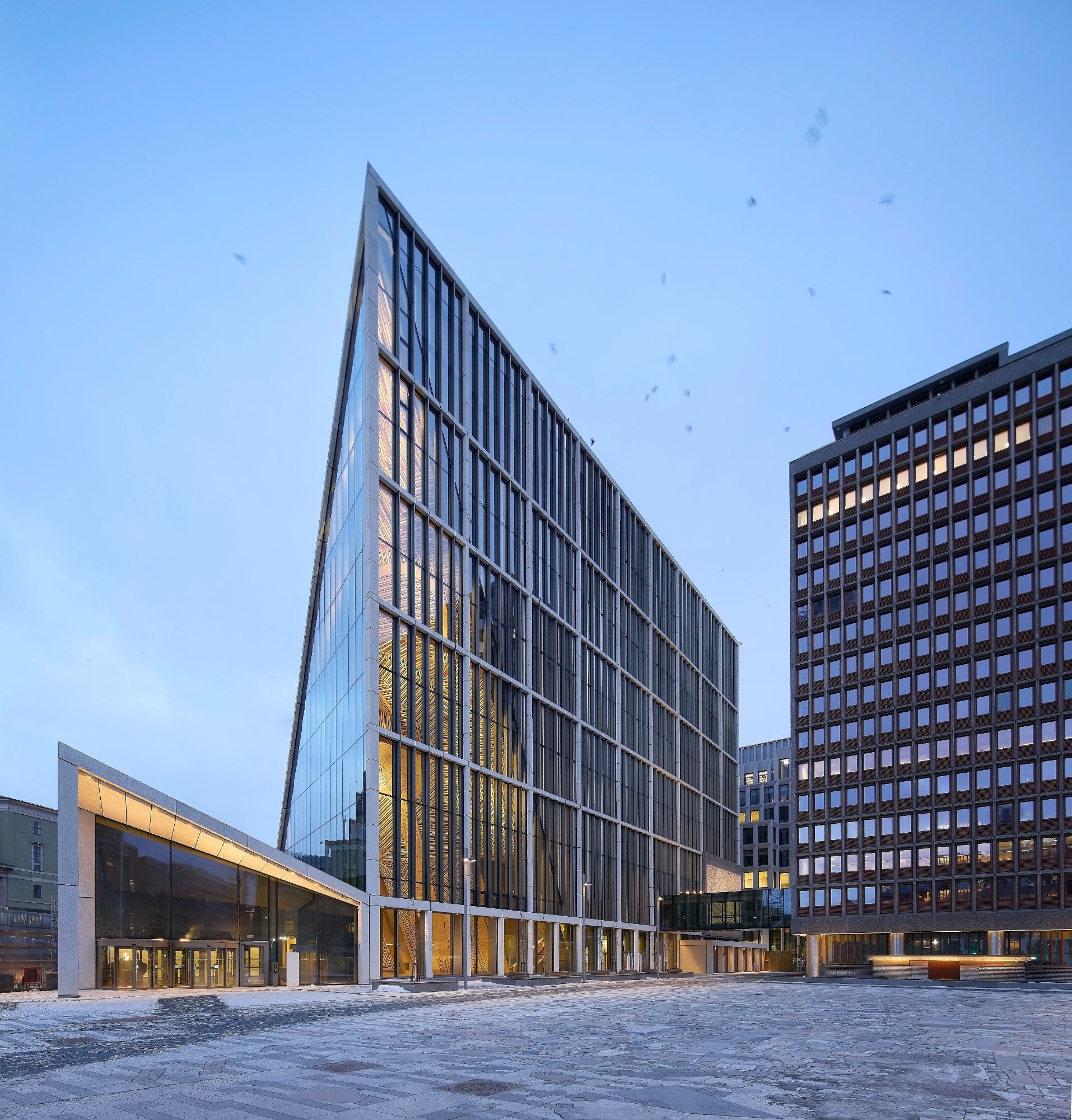
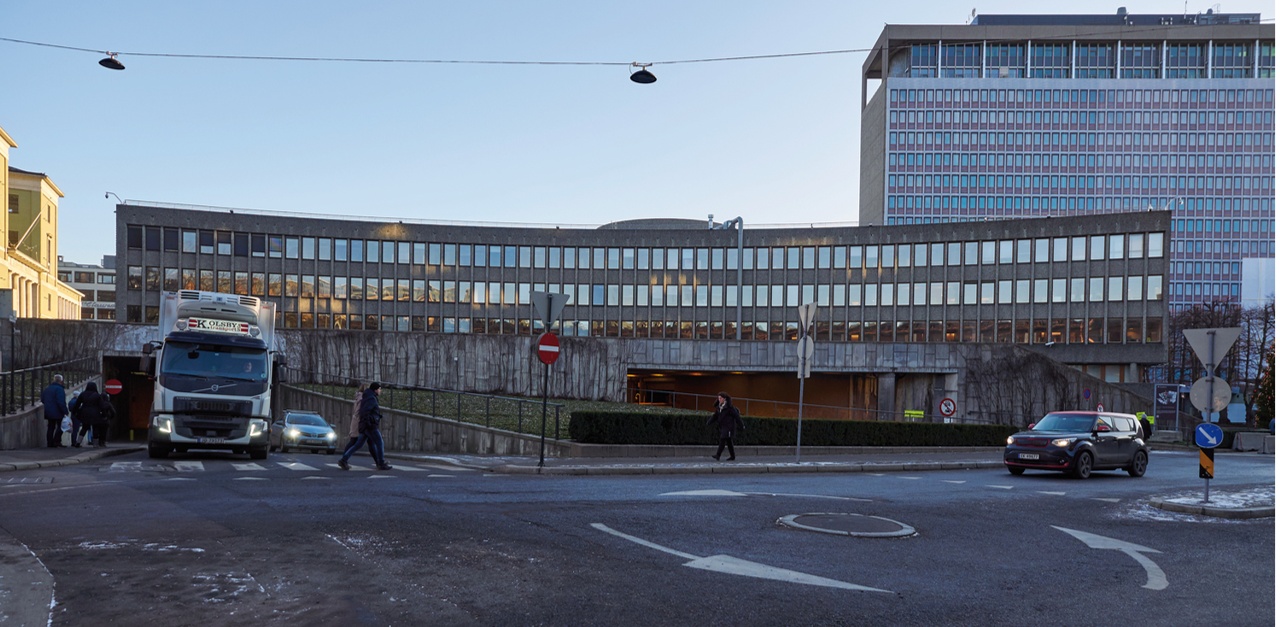
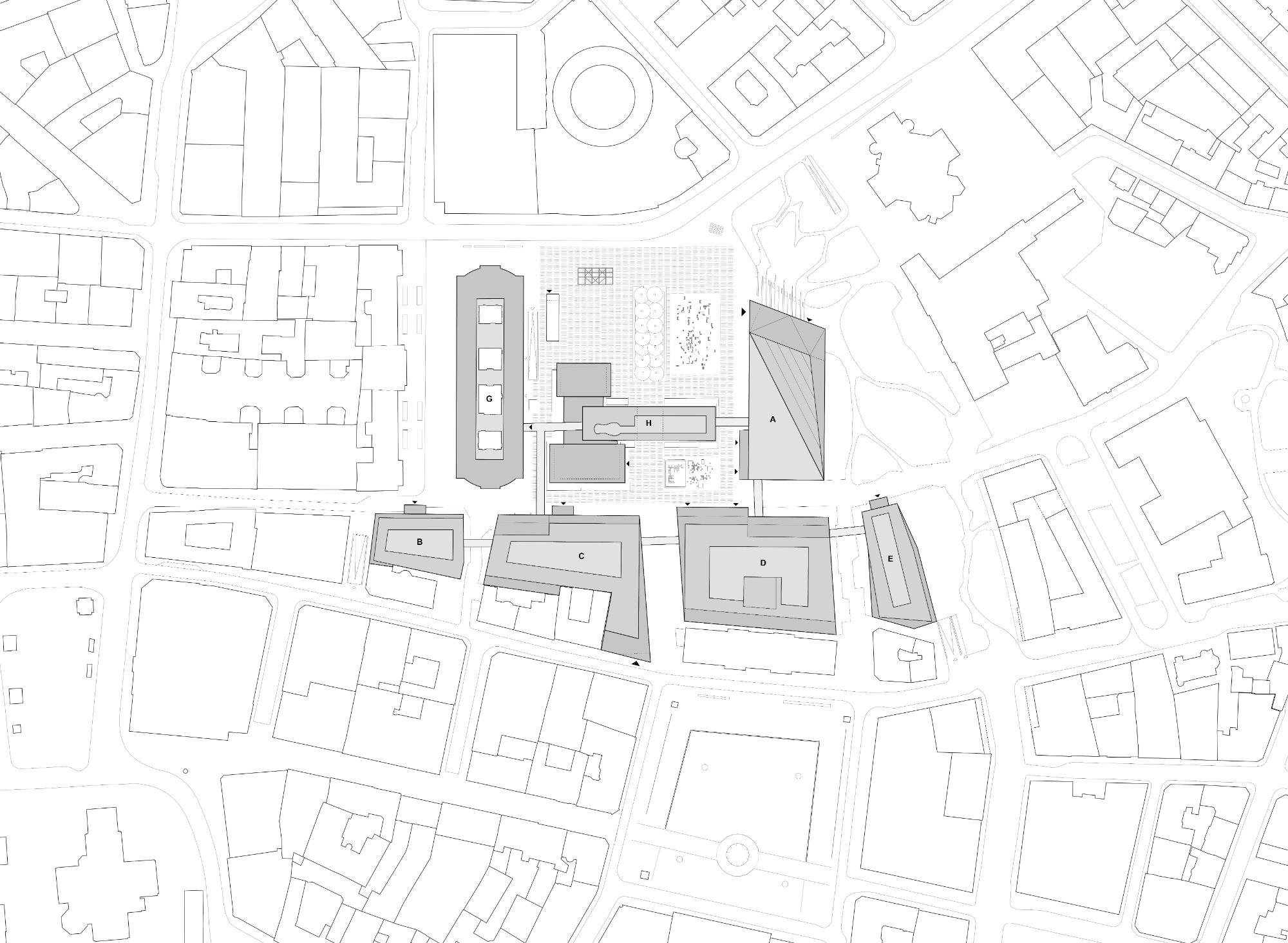
The first phase of the New Government Quarter in Oslo has been completed on the site of the 22 July 2011 terrorist attack. Led by the Nordic Office of Architecture with a multidisciplinary consortium, the project consolidates nearly all Norwegian ministries into a unified campus for approximately 4,100 employees. Phase 1 includes the restored Høyblokken, new A- and D-blocks, upgraded public plazas, Regjeringsparken, and the 22 July Centre. Subsequent phases will introduce additional buildings through 2030, subject to parliamentary approval. The masterplan balances security requirements with civic openness, reopening streets and reconnecting the district to Oslo’s urban fabric. Approximately 300 artworks, commissioned and curated by KORO, are integrated throughout the buildings and public spaces, forming Norway’s largest public art program. Designed to meet BREEAM-NOR Excellent standards, the development incorporates seawater-based heating and cooling, low-carbon concrete, and significant reuse of furnishings. Phase 1 was delivered within the parliamentary budget of NOK 24.7 billion and is expected to exceed this ceiling by more than NOK 2 billion.
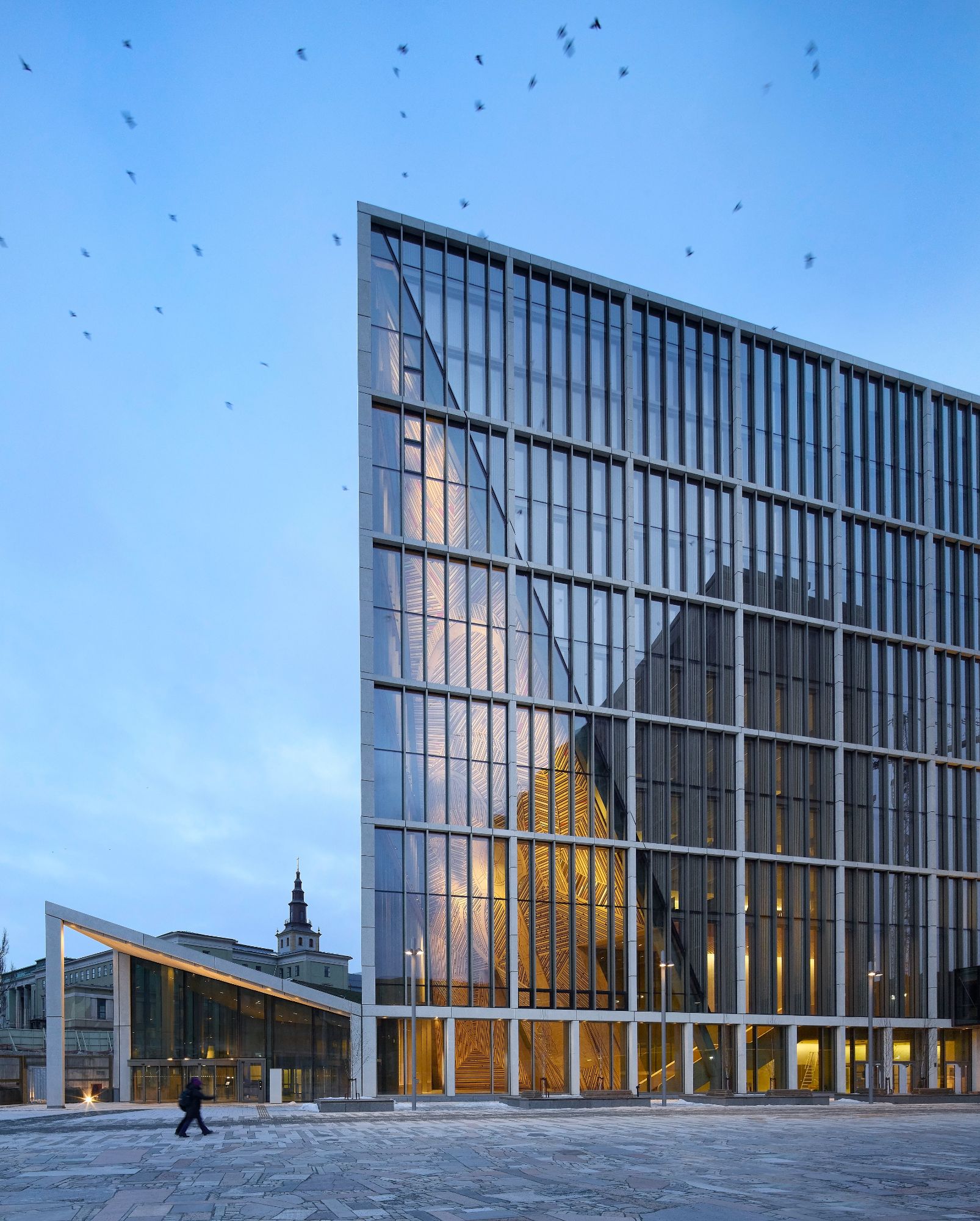
The completion of Phase 1 of the New Government Quarter marks a pivotal moment in Norway’s architectural and civic history. On a site defined by the events of 22 July 2011, the project repositions the country’s political center as an open, interconnected urban district rather than a closed administrative enclave.
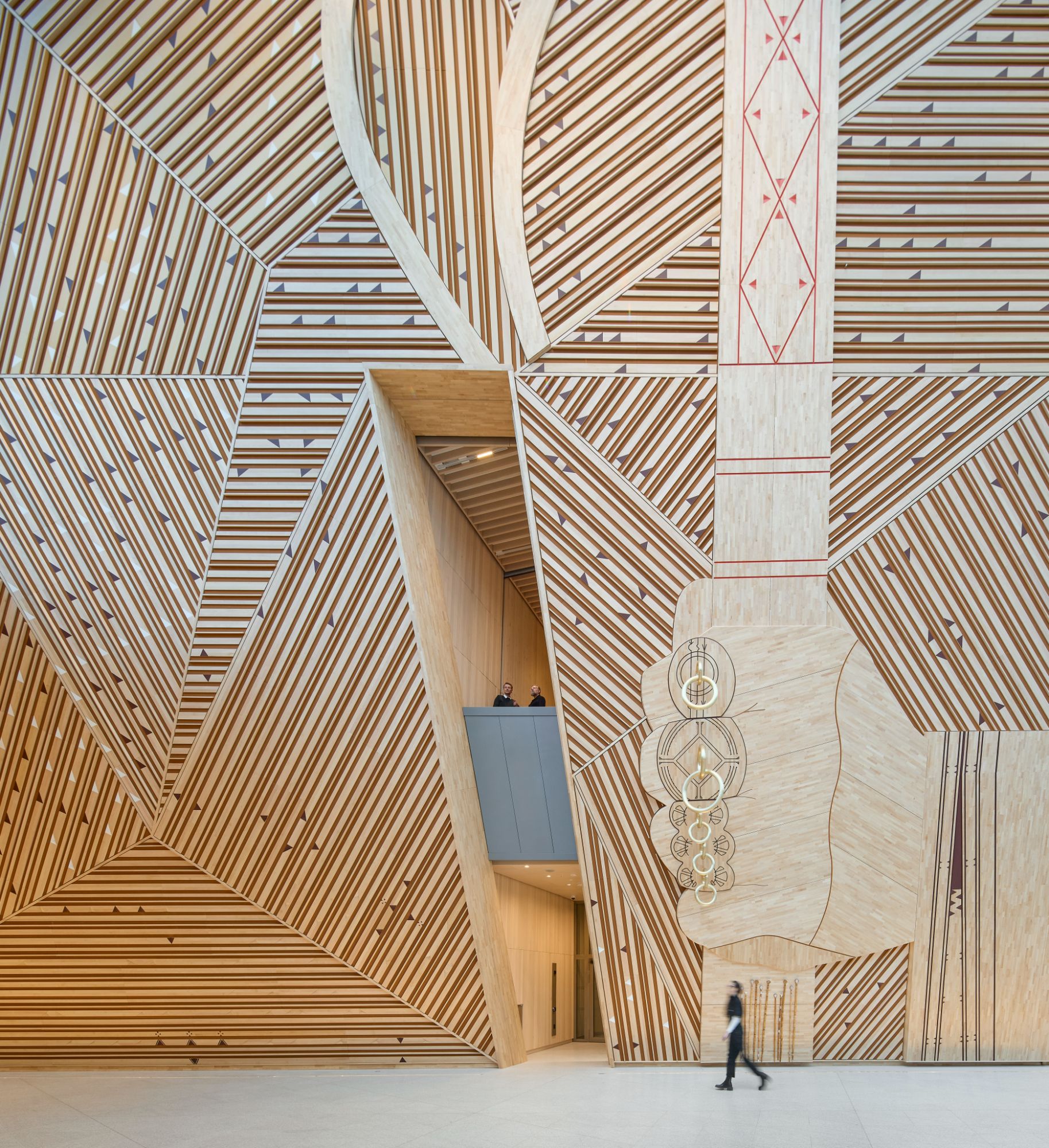
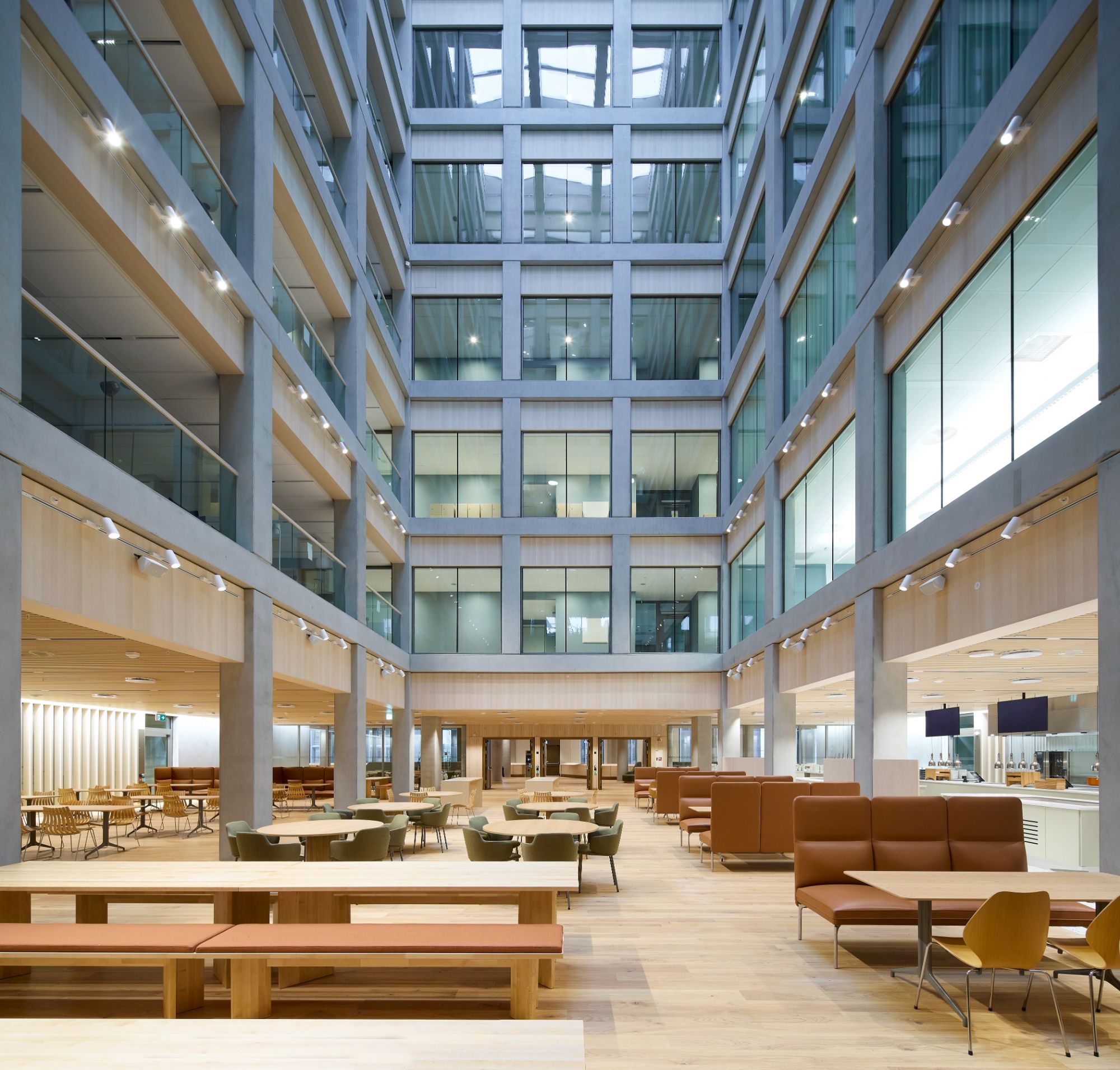
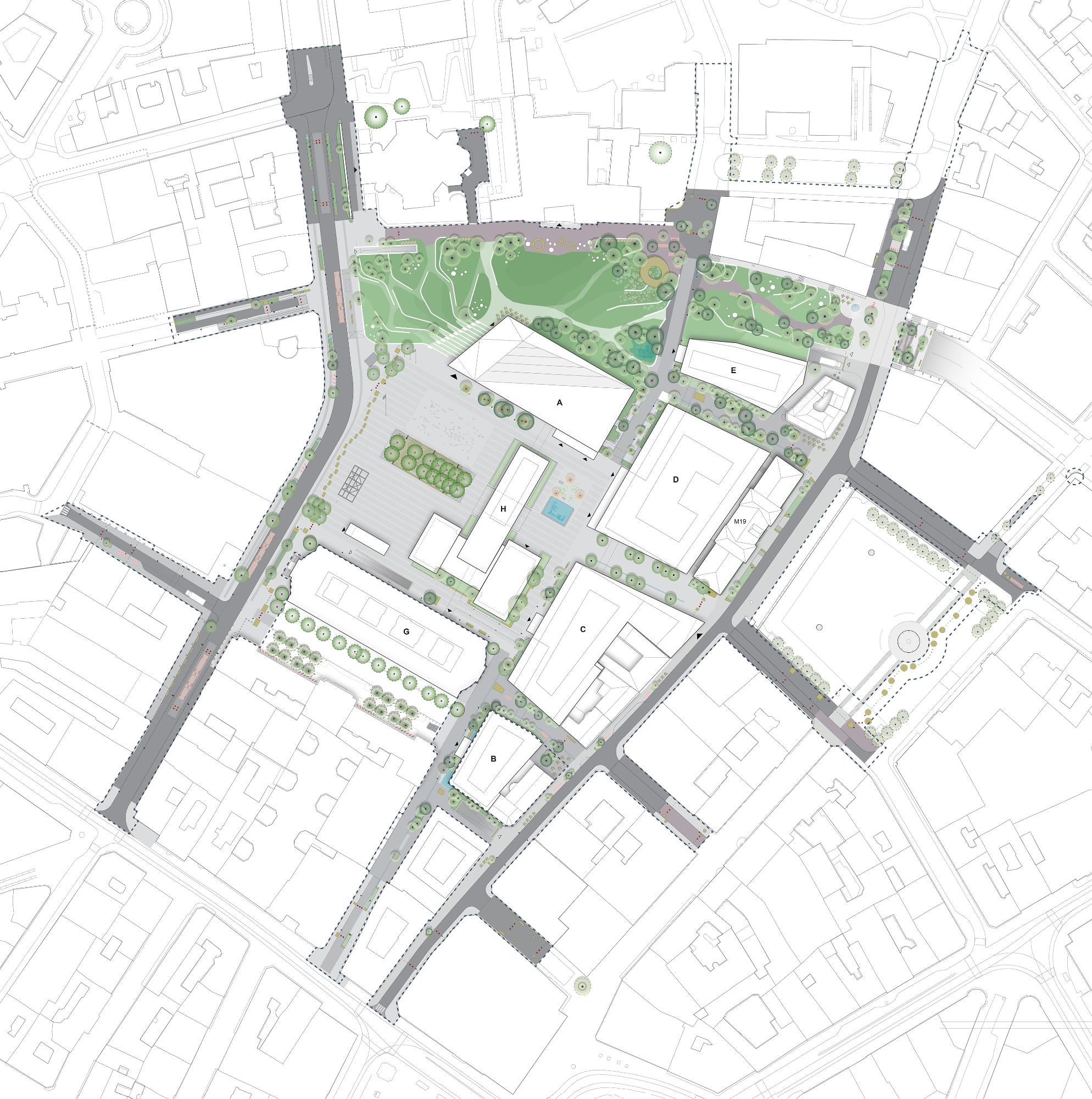
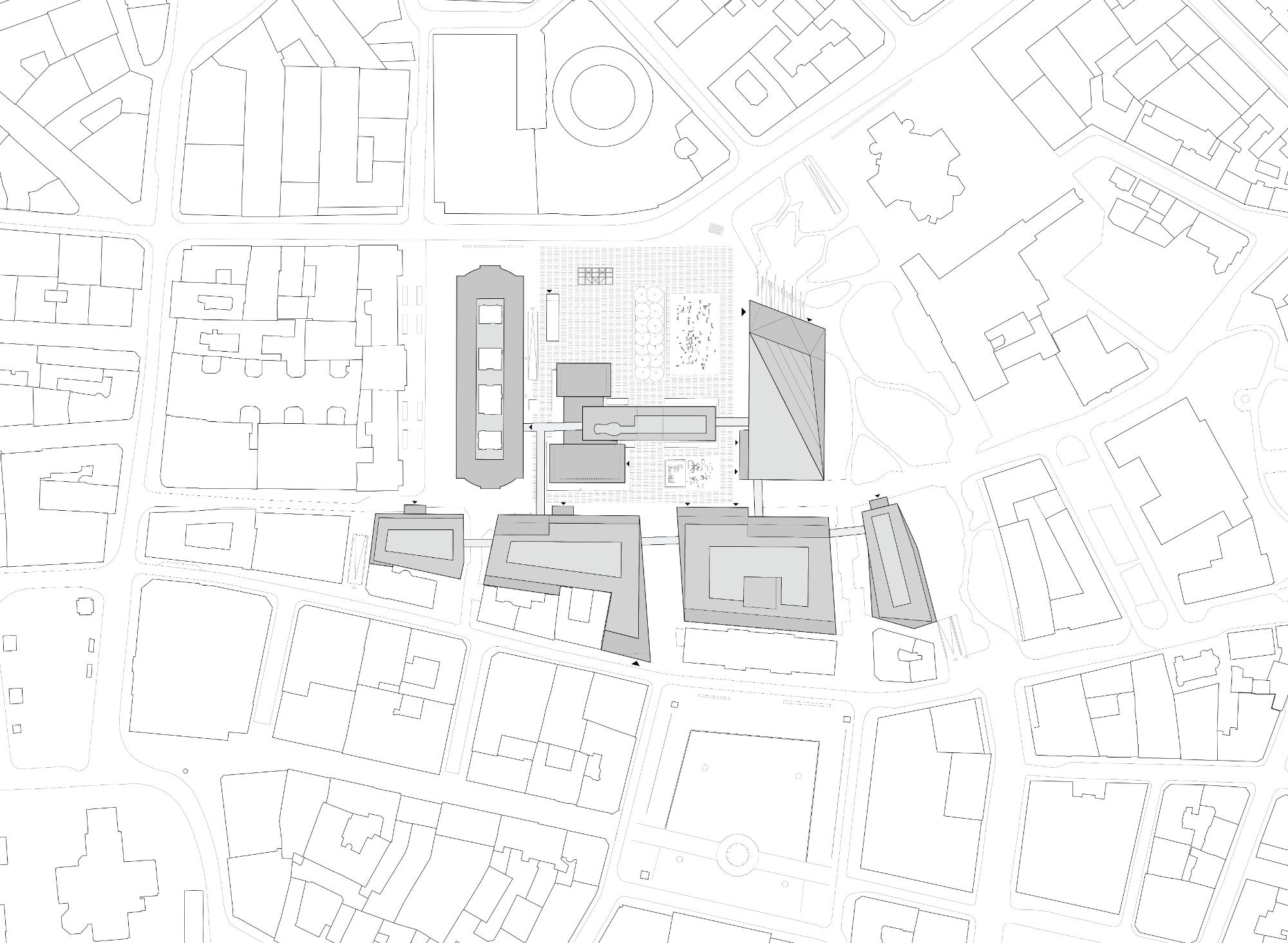
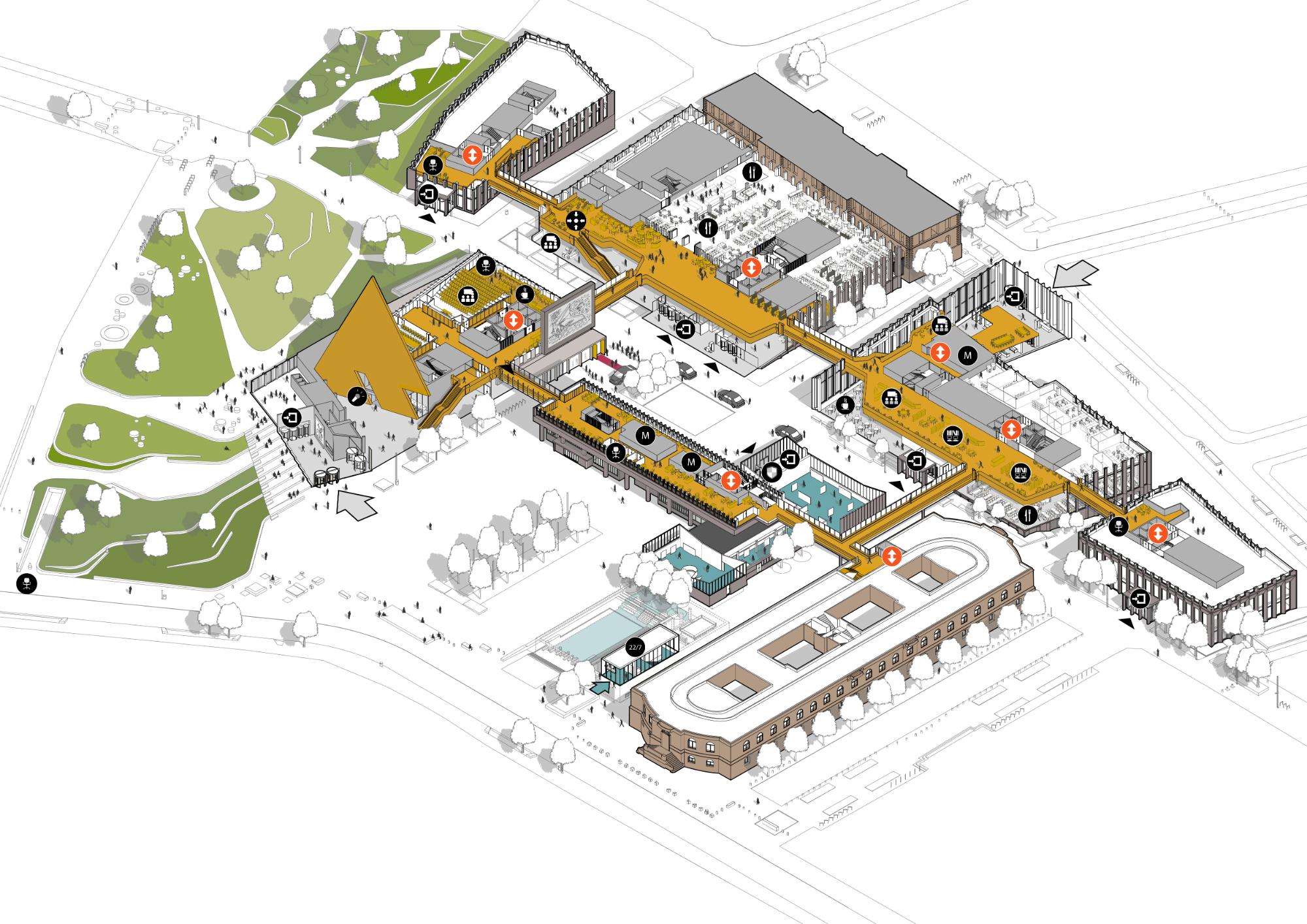
Led by the Nordic Office of Architecture, the masterplan organizes five new buildings and two restored structures in a ring that frames interconnected public spaces. Phase 1 comprises the restored Høyblokken and the new A- and D-blocks, establishing a public-facing edge toward the city. Bridges, atria, and shared social zones form what the team describes as a Collaboration District, linking ministries on the first floor and facilitating daily exchange across departments.
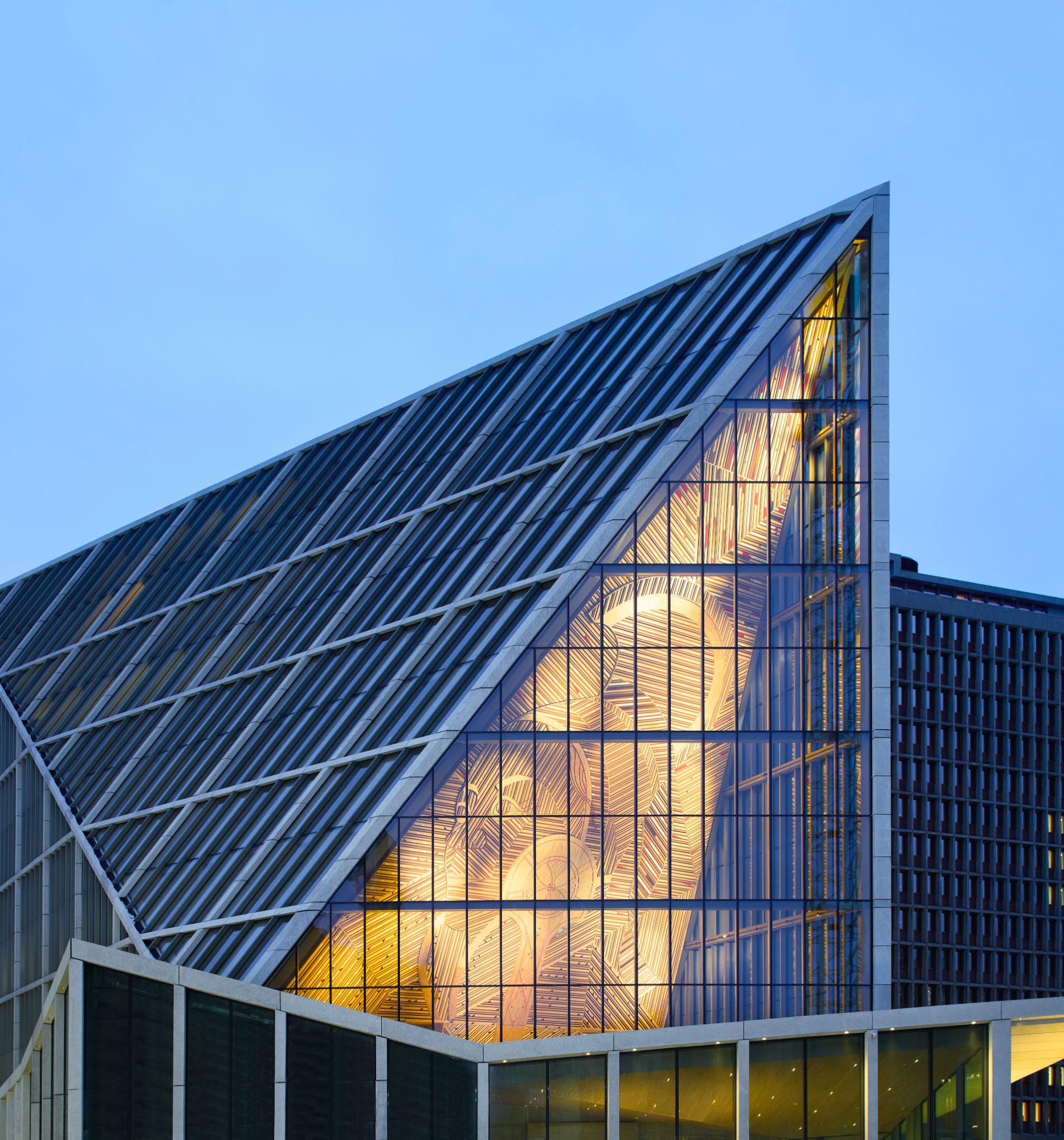
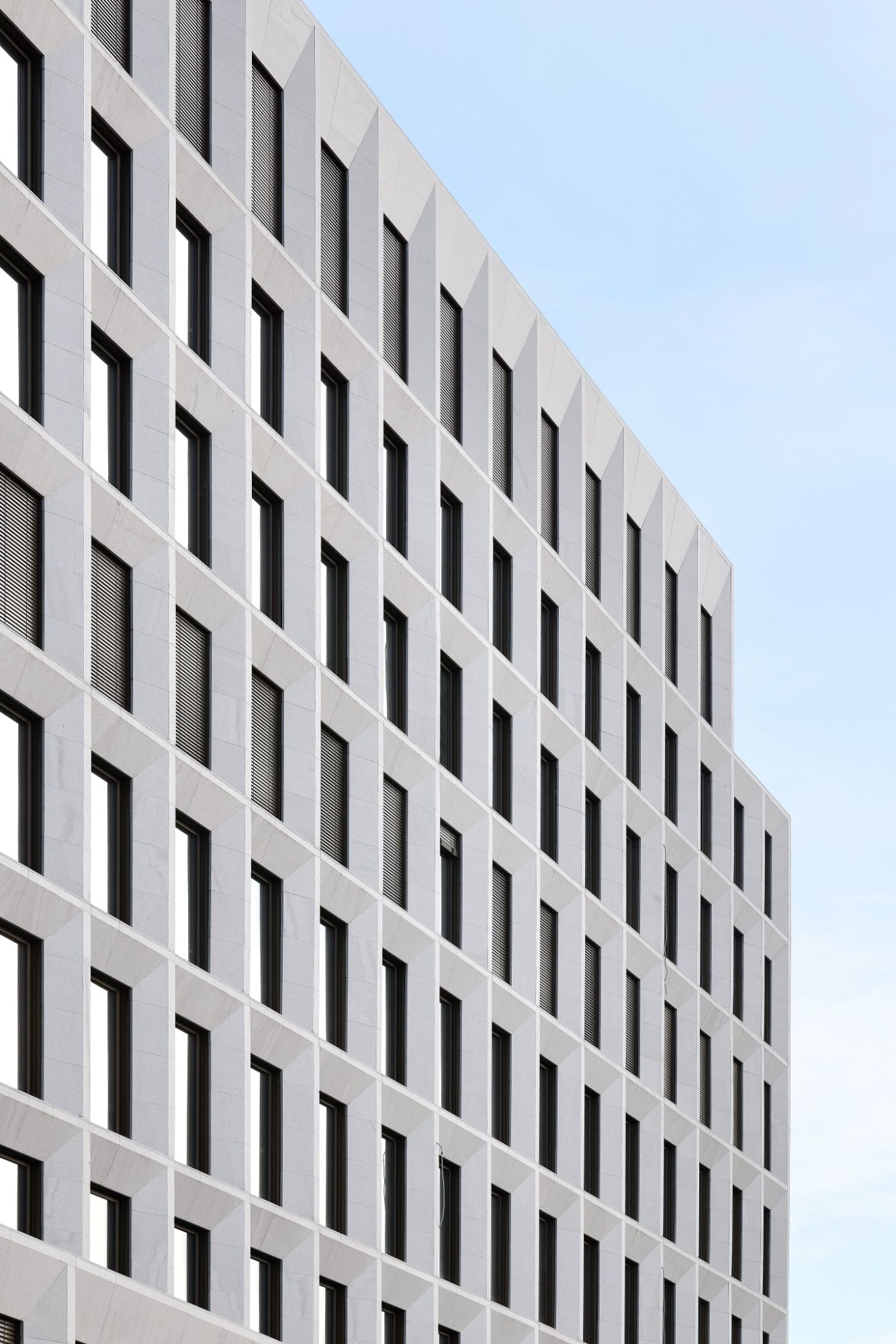
Gudmund Stokke, Founding Partner and Head of Design at Nordic Office of Architecture, states: “From day one, the question was how to create a place that symbolises Norwegian democracy and identity. We were asked to design a secure government district, but also a place where people feel welcome to walk, sit, protest, and remember a government quarter that belongs to the whole of Norway.”
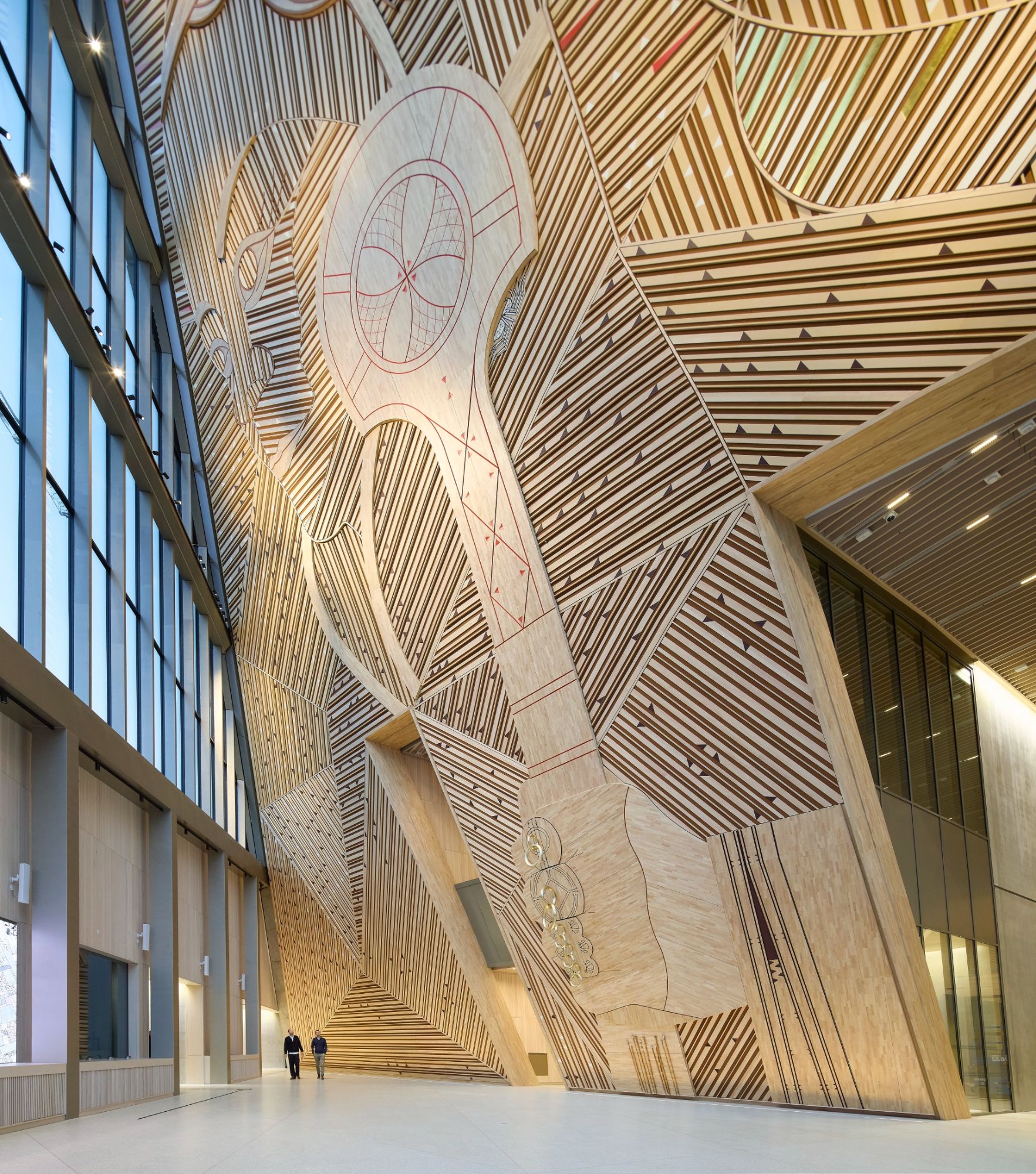
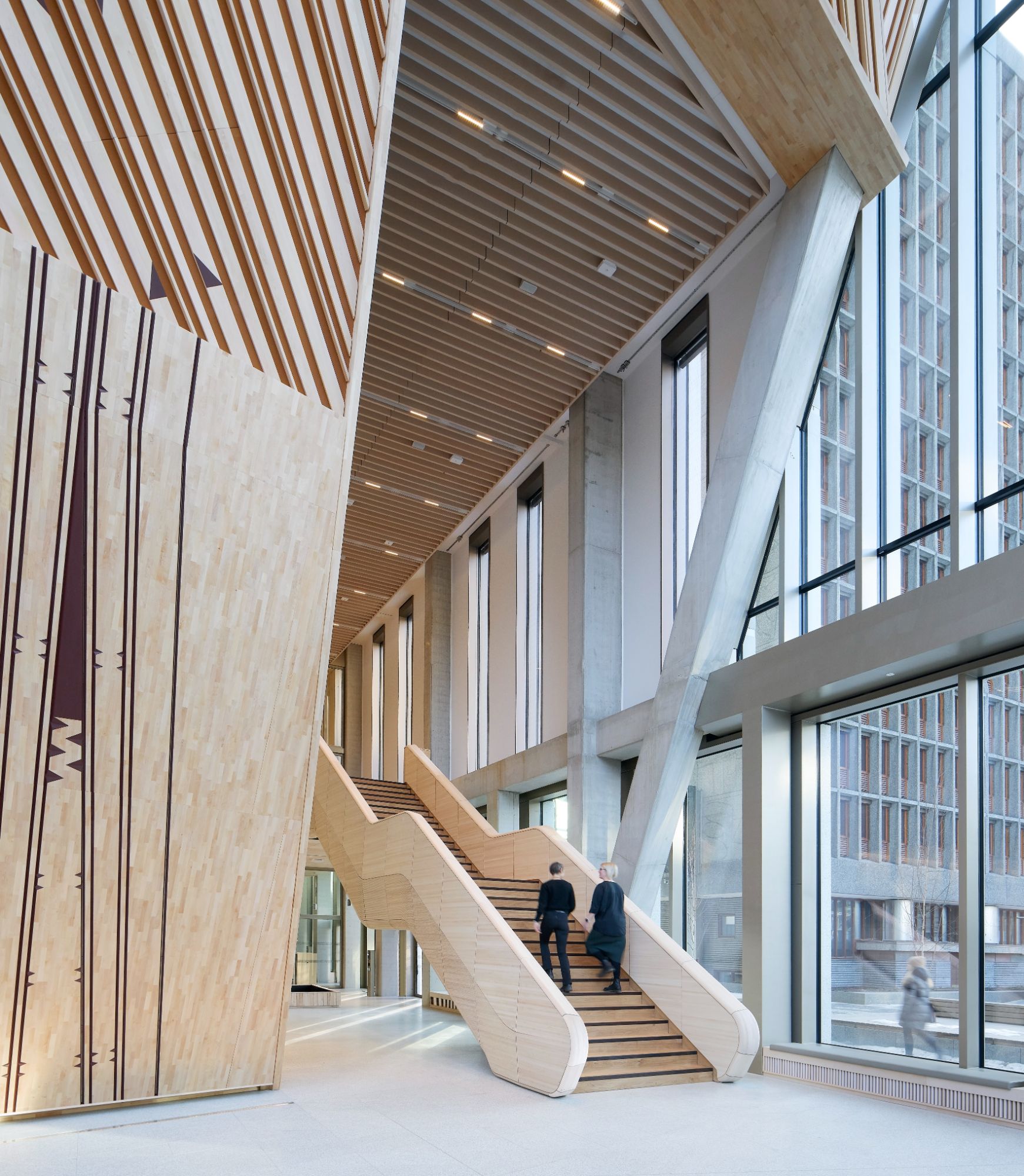
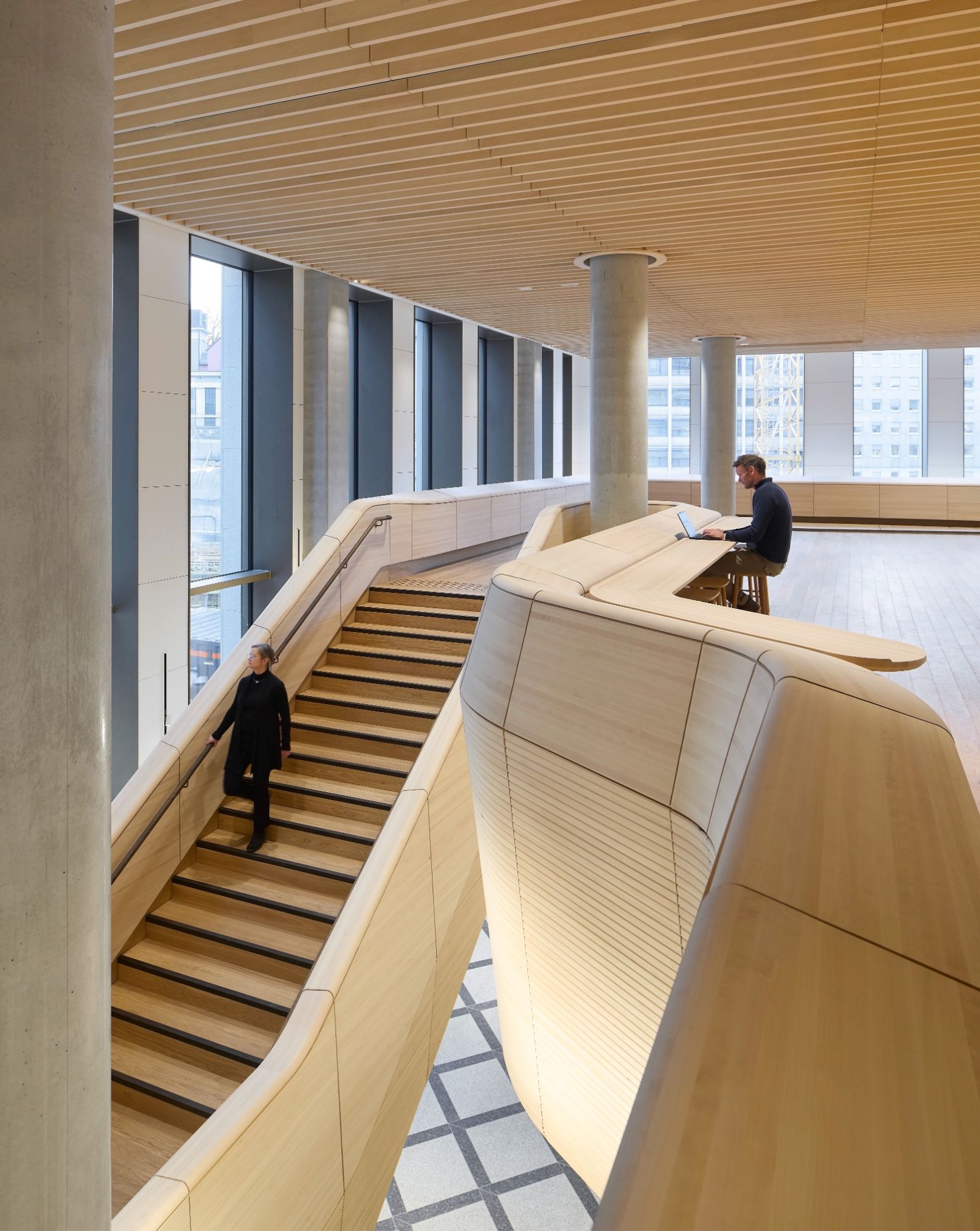
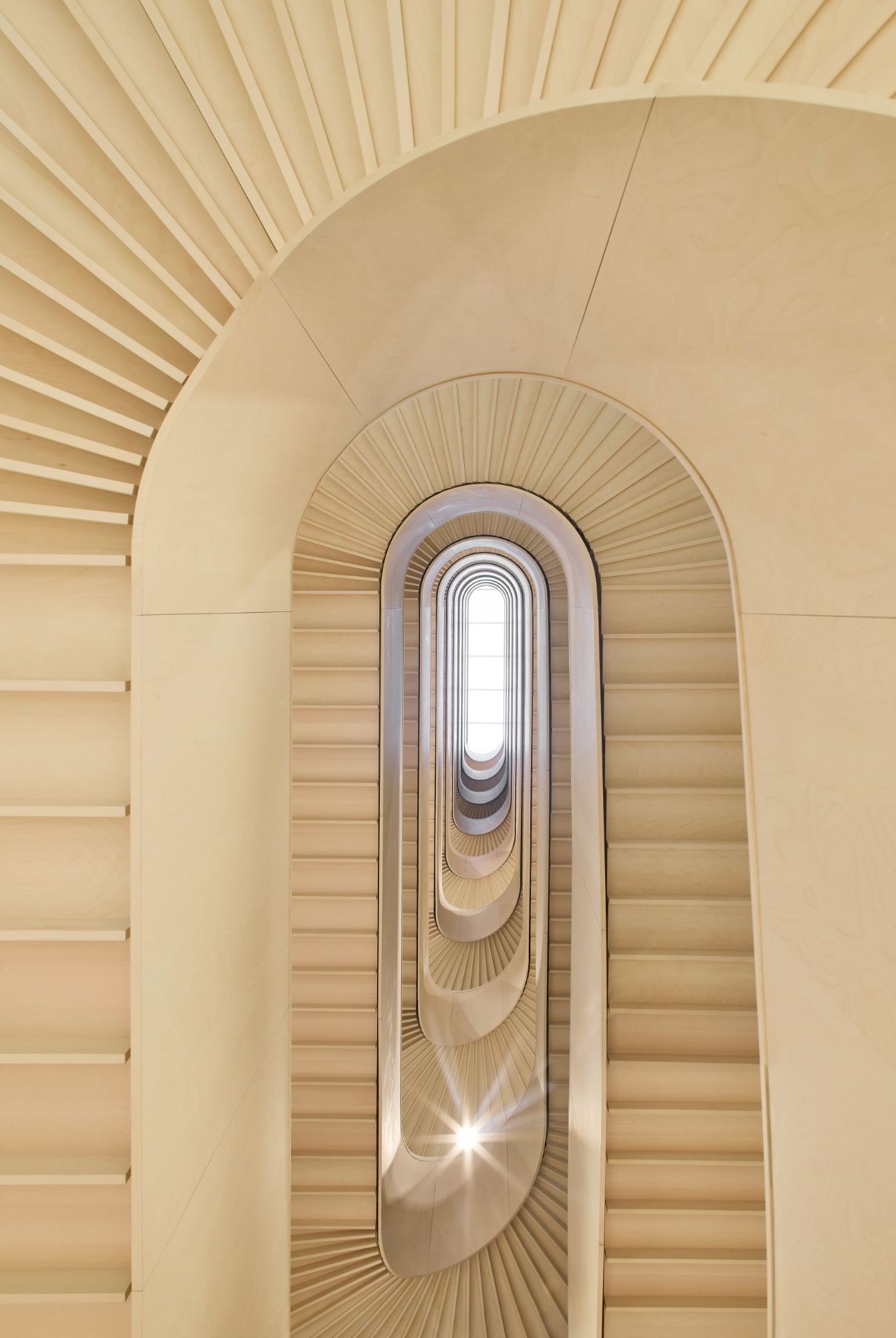
Urban reconnection has been central to the strategy. Refreshed plazas at Johan Nygaardsvolds plass and Einar Gerhardsens plass re-establish pedestrian and cycling links between Hammersborg, the city center, and the fjord. Regjeringsparken, designed with SLA and Bjørbekk & Lindheim, introduces open lawns, native planting, and clear sightlines that integrate security measures into the landscape.
Knut Hovland, Partner and Head of Design at Nordic Office of Architecture, explains: “When designing the New Government Quarter, it was evident to us that restitching the city fabric would be just as important as the individual buildings. By reopening and creating new routes through the area, reducing underground traffic, and bringing life back to the ground plane, people can once again use this area as part of their daily lives. The New Government Quarter is now part of Oslo’s everyday life rather than an isolated enclave.”
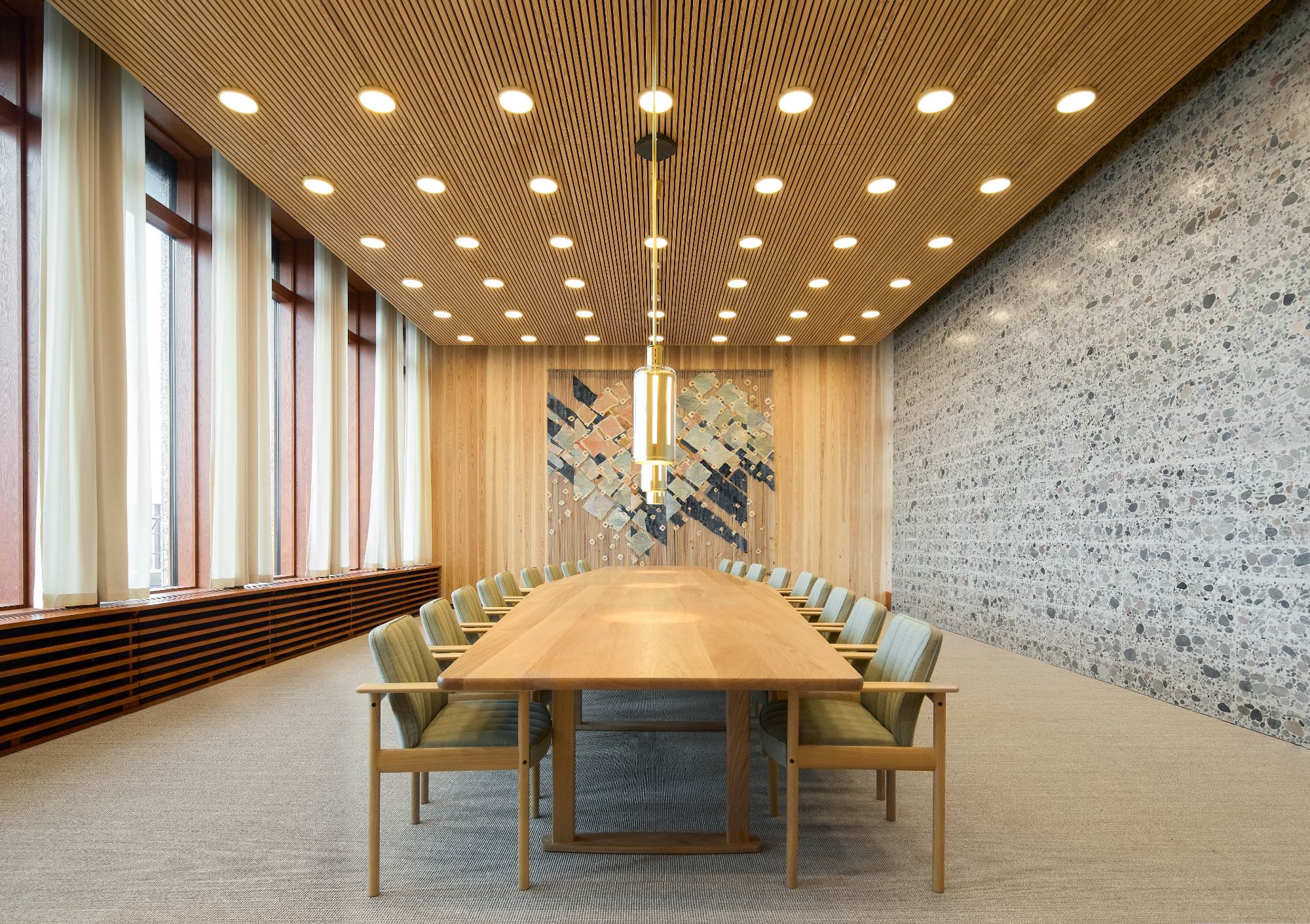
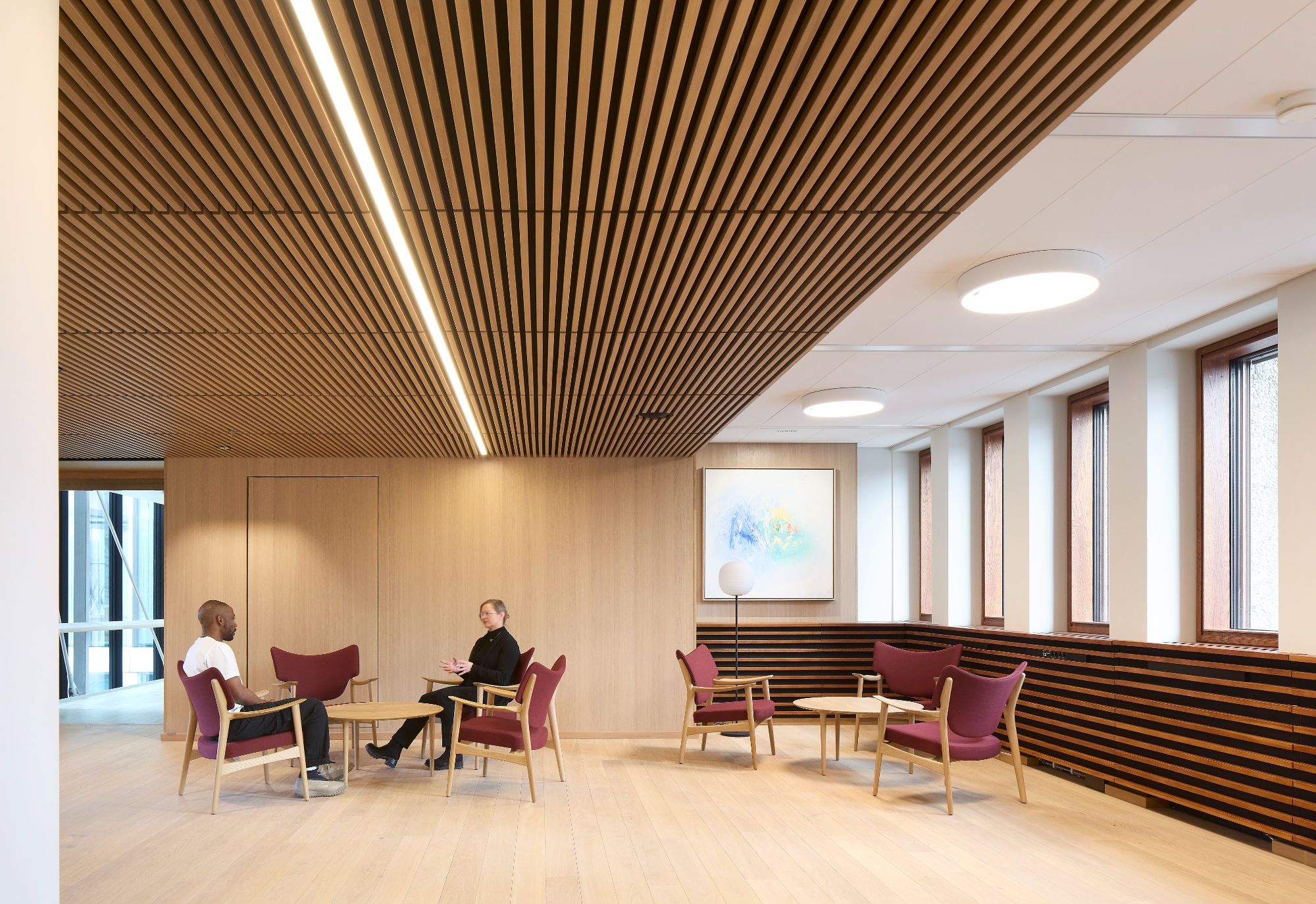
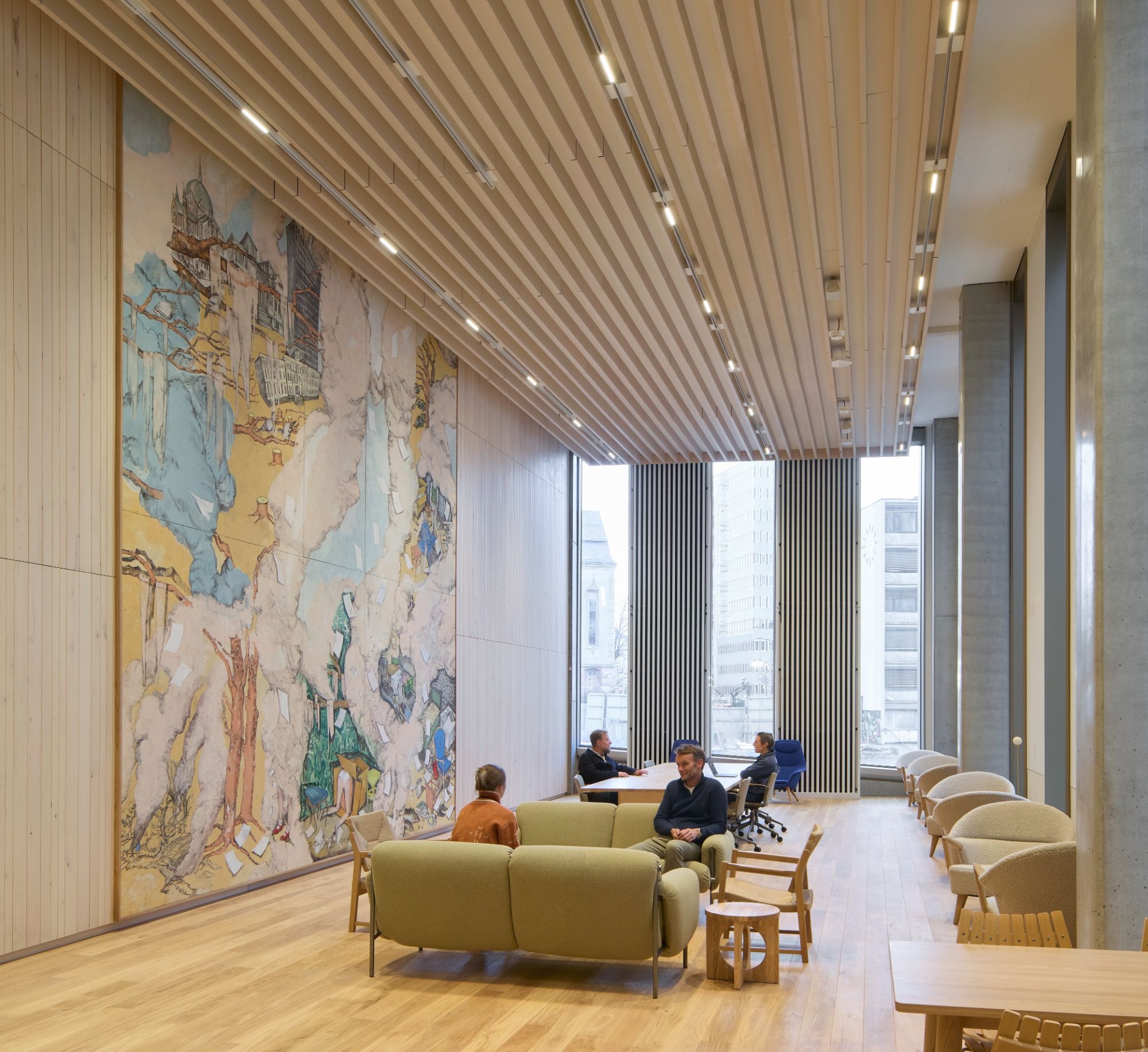
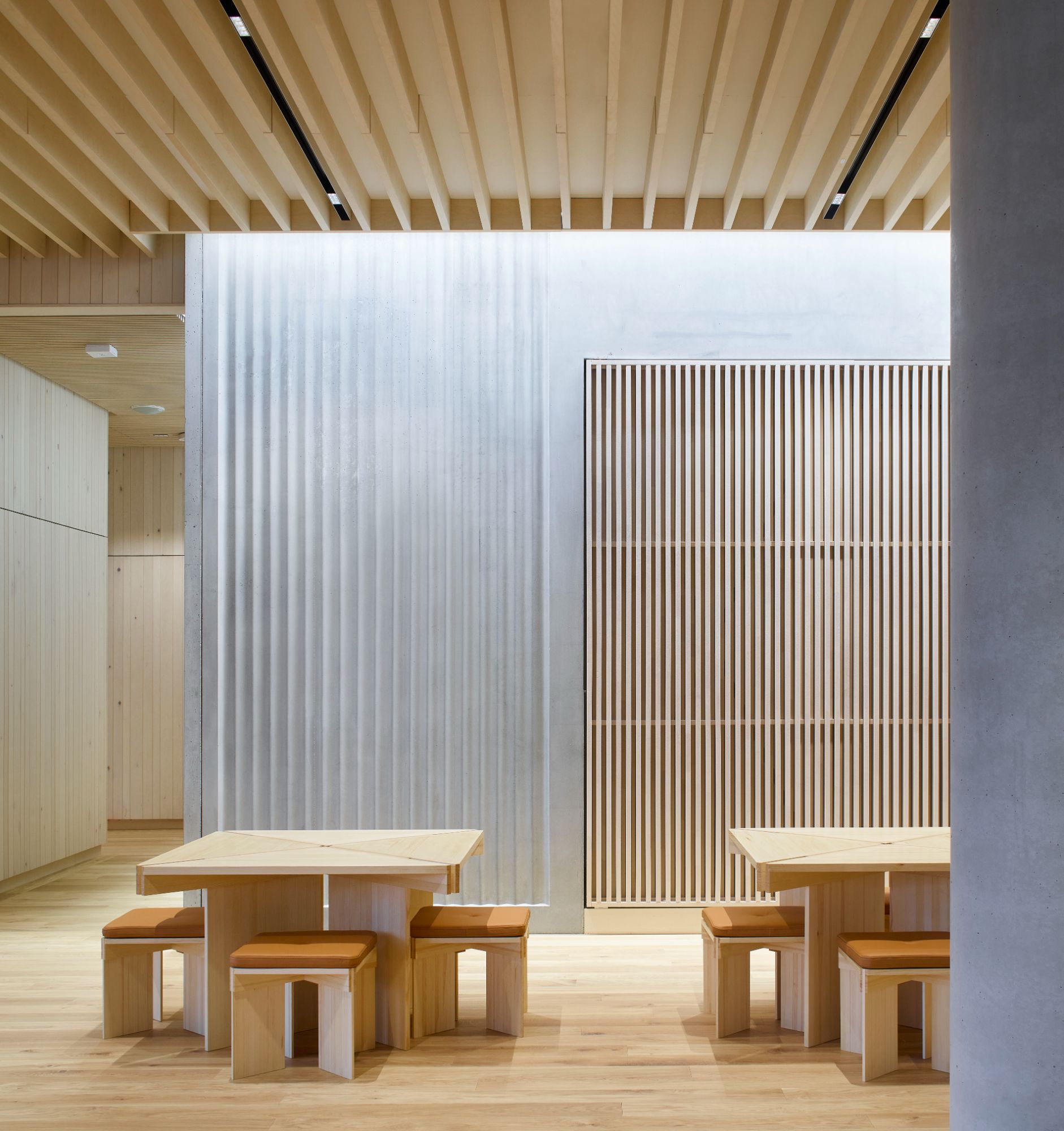
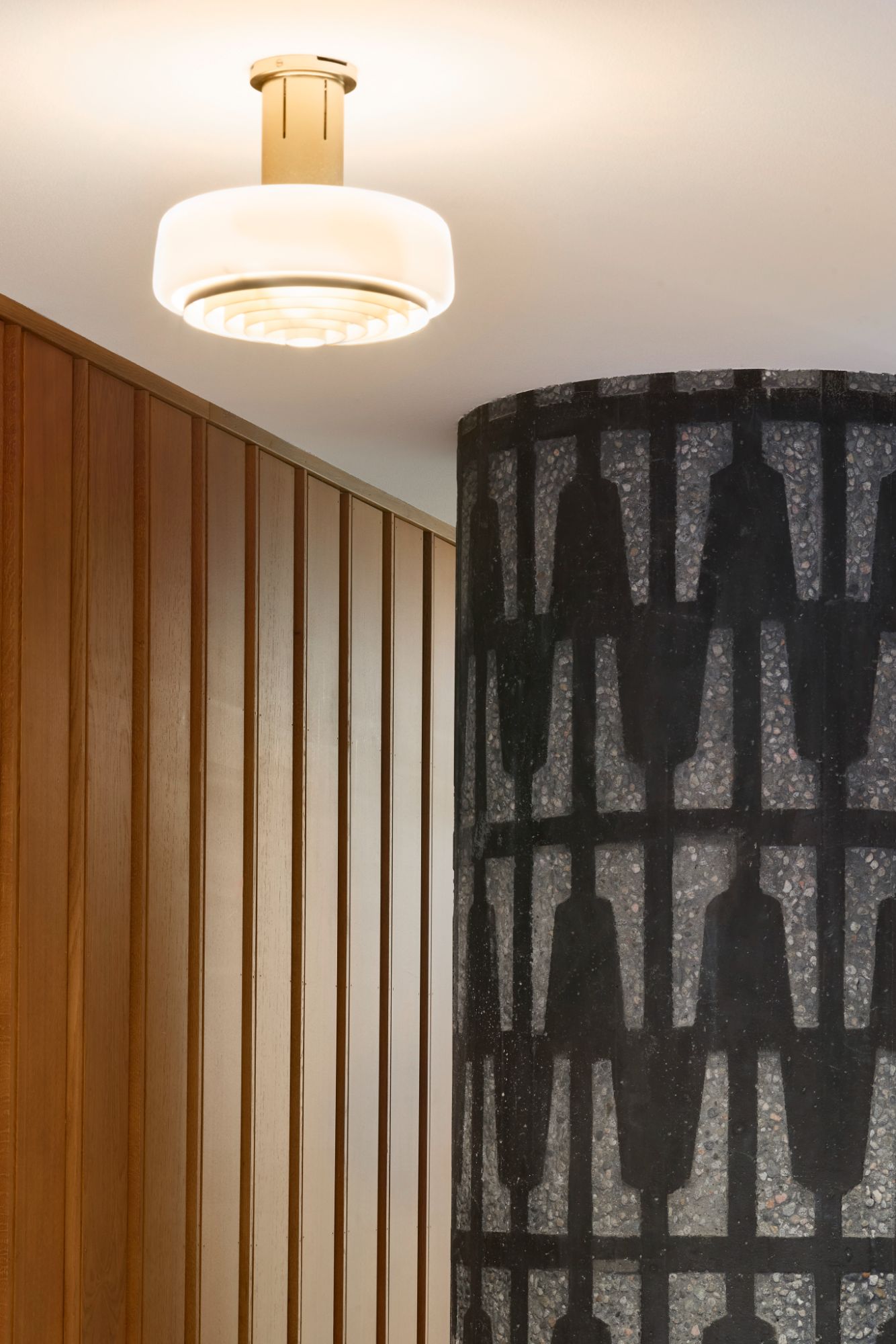
Material choices draw on Norwegian resources and craft traditions. Larvikite stone defines façades and public surfaces, while locally sourced timber shapes interior environments. The buildings are furnished entirely with Norwegian design, combining historic pieces with contemporary works. Around 20 percent of approximately 15,800 furniture items in Phase 1 are reused from previous government buildings. The project is designed to meet BREEAM-NOR Excellent standards, incorporating seawater-based heating and cooling and low-carbon concrete.
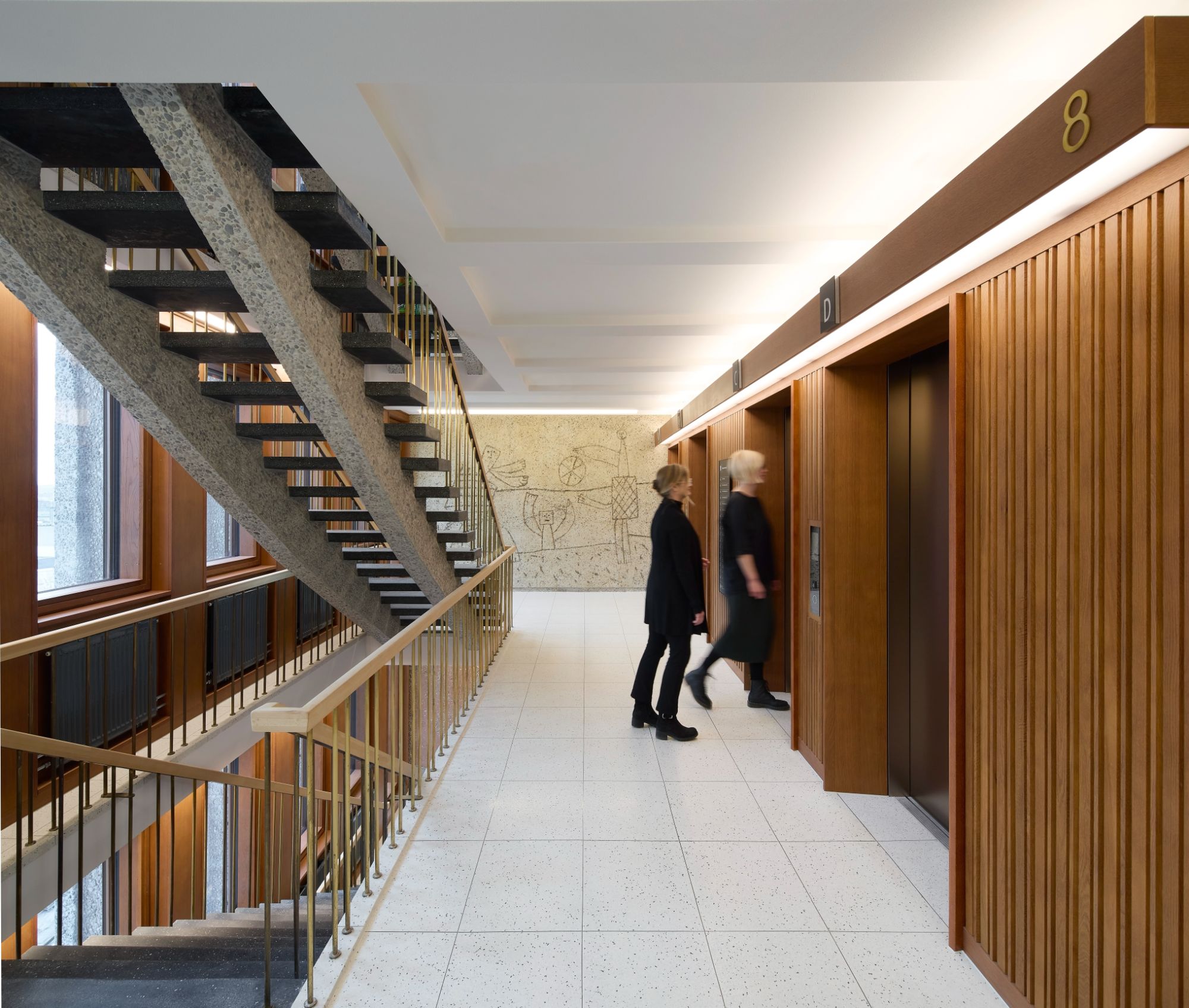
Art is integral to the quarter’s identity. Commissioned by KORO, the program includes approximately 300 works. Conserved murals by Pablo Picasso have been relocated, while new installations by artists including Do Ho Suh, Jumana Manna, Outi Pieski, and Matias Faldbakken extend the site’s commemorative and cultural dimensions. Faldbakken’s memorial proposal, Upholding, is scheduled for unveiling in summer 2026 to mark 15 years since the attacks.
Eskild Andersen, CEO and Partner at Nordic Office of Architecture, states: “The New Government Quarter is a once-in-a-generation commission that demonstrates how architecture, landscape, engineering, and art can come together on one of the most sensitive sites in Norway. It transforms a closed government district into an open civic heart for Oslo and the country, where everyday government and everyday life converge. For Nordic, it is a defining project that brings out the very best of our practice – from long-term collaboration with our partners to our commitment to designing environments that strengthen democracy and public trust.”
Project Gallery
Project Location
Address: Akersgata 42, 0180 Oslo, Norway
Location is for general reference and may represent a city or country, not necessarily a precise address.

