Architects: Walter Gropius, Pietro Belluschi, Richard Roth Area: 263,985 mยฒ Year: 1963 General Contractor: Diesel Construction Company Site Planning and Landscape Architect: Hideo Sasaki MEP Engineers: Jaros, Baum & Bolles Structural Engineer: James Ruderman City: New York Country: United States
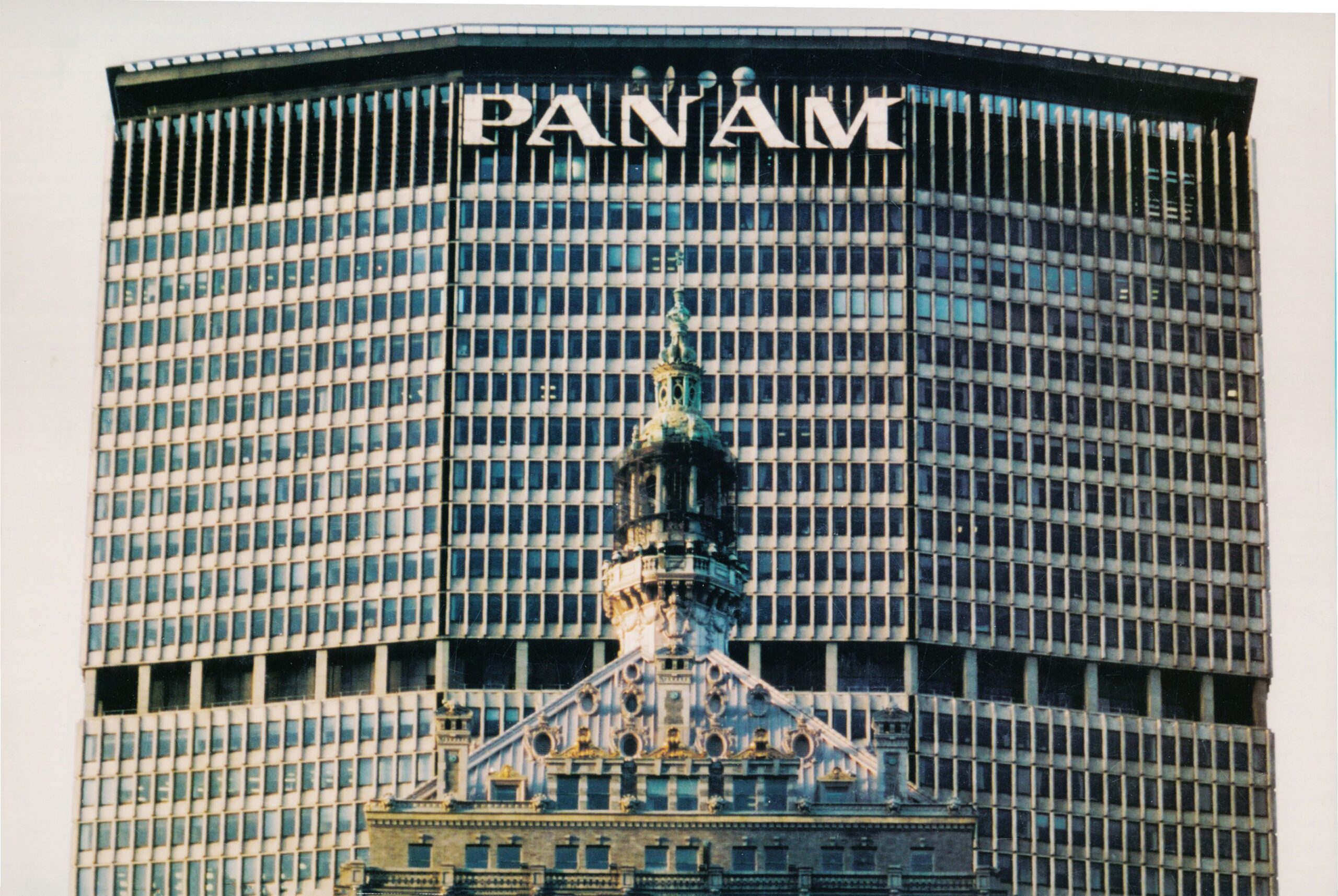
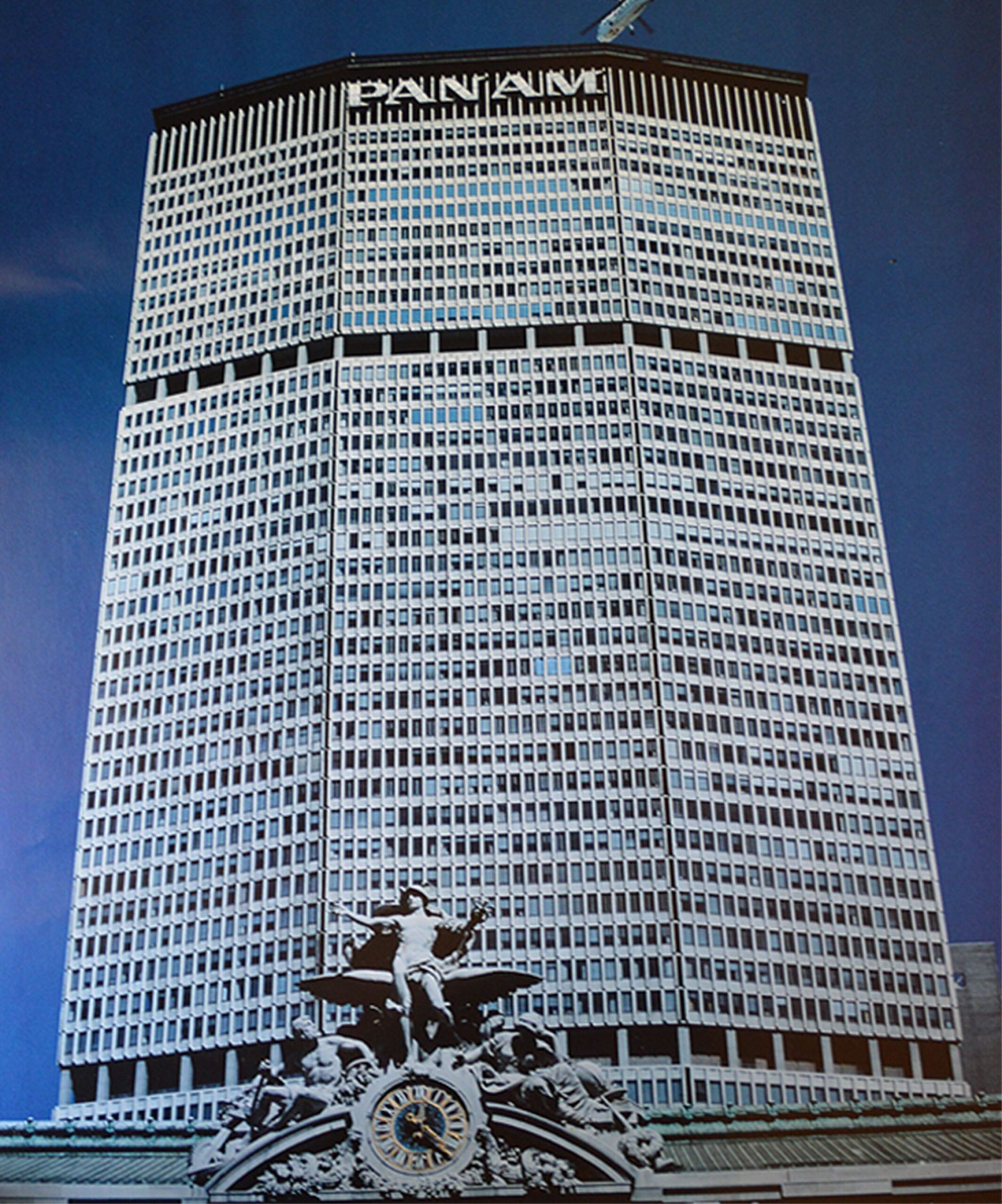
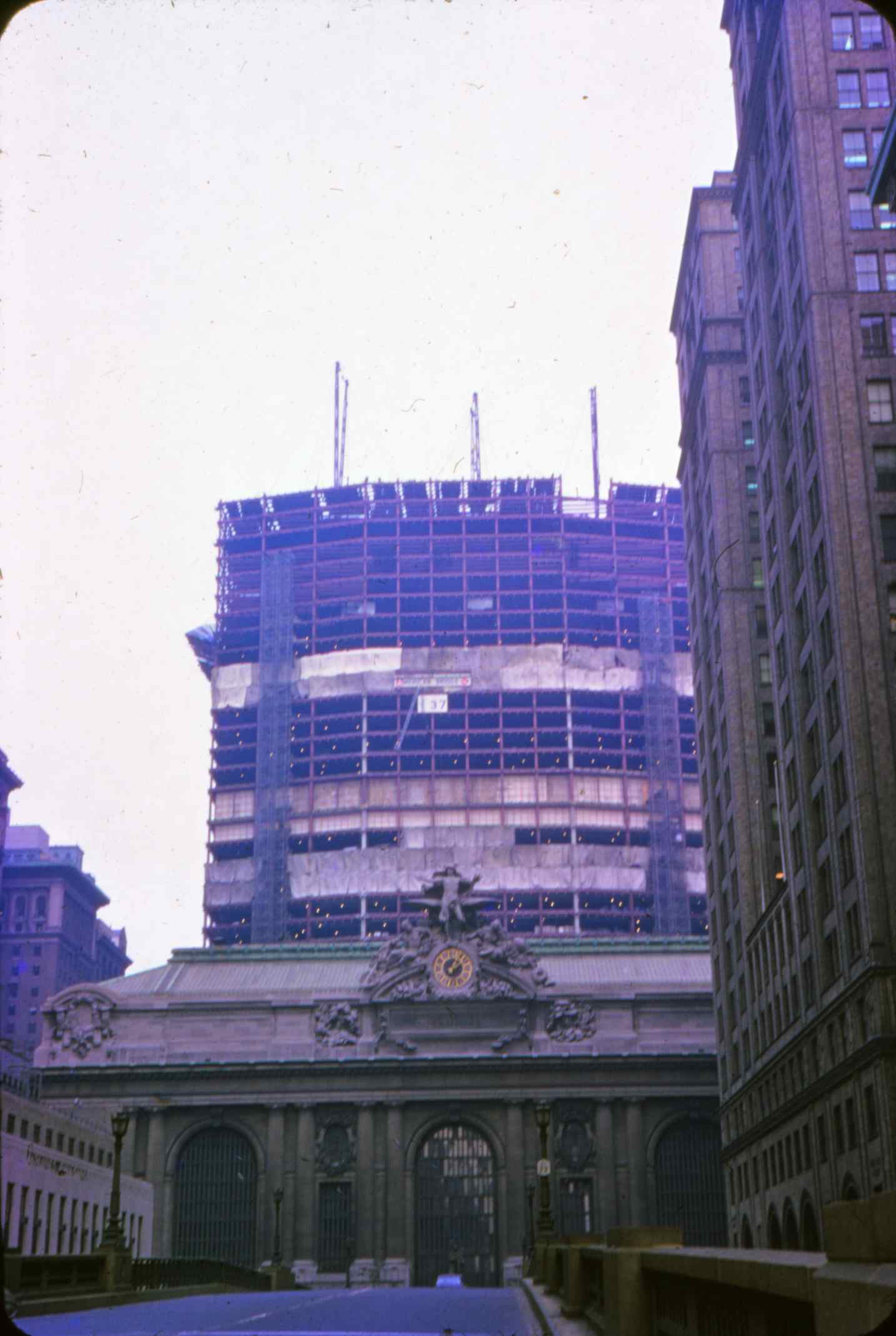
The Pan Am Building, now known as the MetLife Building, is a 246-meter skyscraper at 200 Park Avenue in Midtown Manhattan, designed by Walter Gropius, Pietro Belluschi, and Richard Roth. Opened on March 7, 1963, as the headquarters of Pan American Airways, it exemplifies the International Style with a distinctive nine-story base and an octagonal tower. The buildingโs exterior introduced innovative Mo-Sai precast concrete panels, marking a first for New York skyscrapers. Originally equipped with a rooftop heliport offering quick flights to JFK, the service ended in 1977 after a tragic accident. The Pan Am Building was sold to MetLife in 1981 and renamed the MetLife Building in 1992.
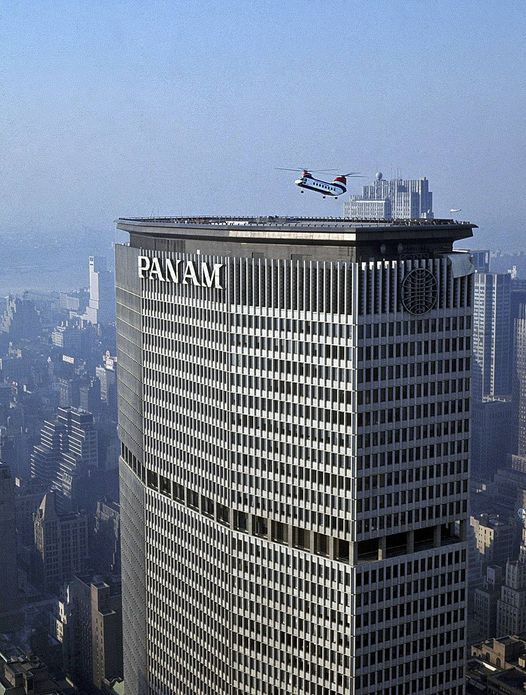
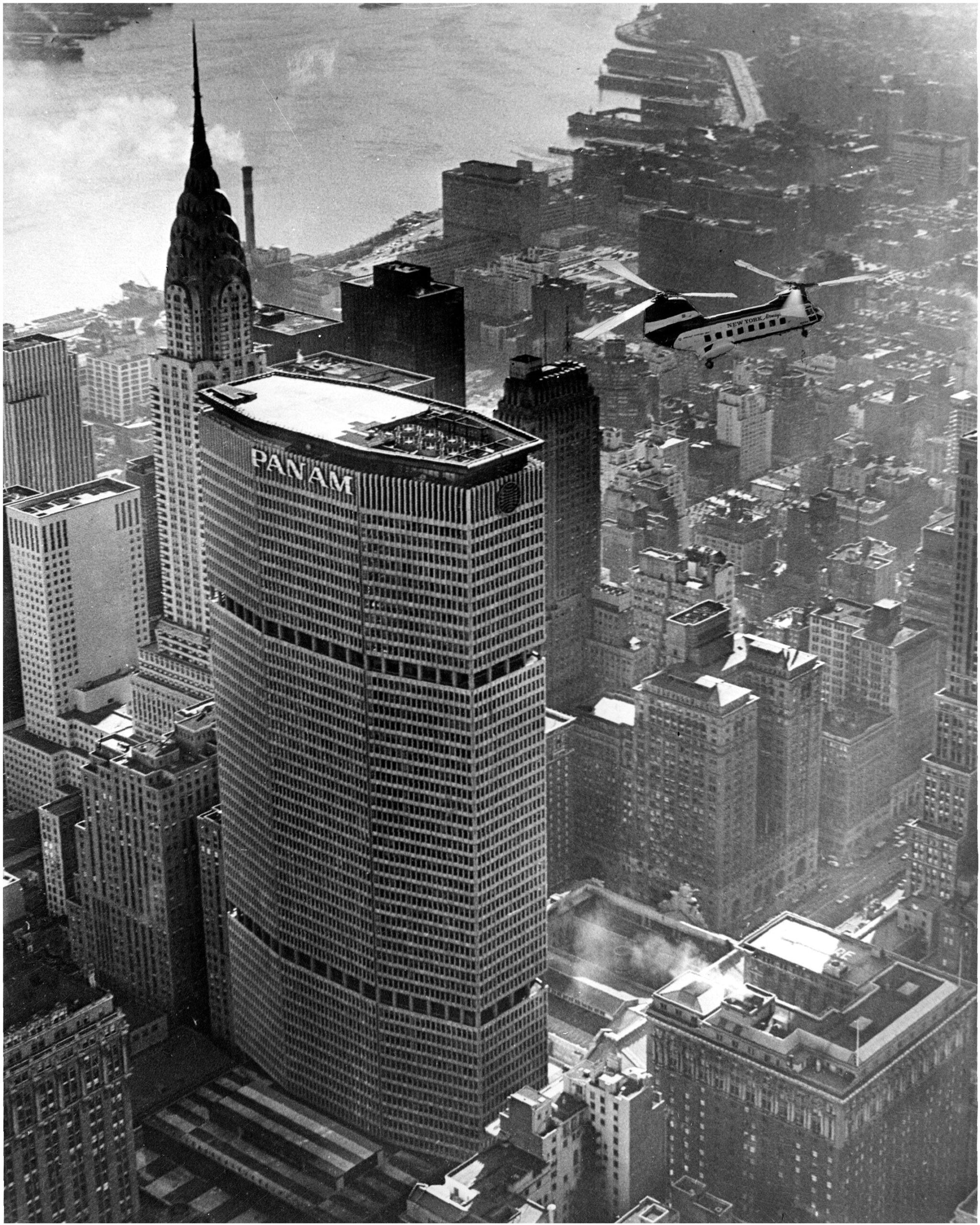
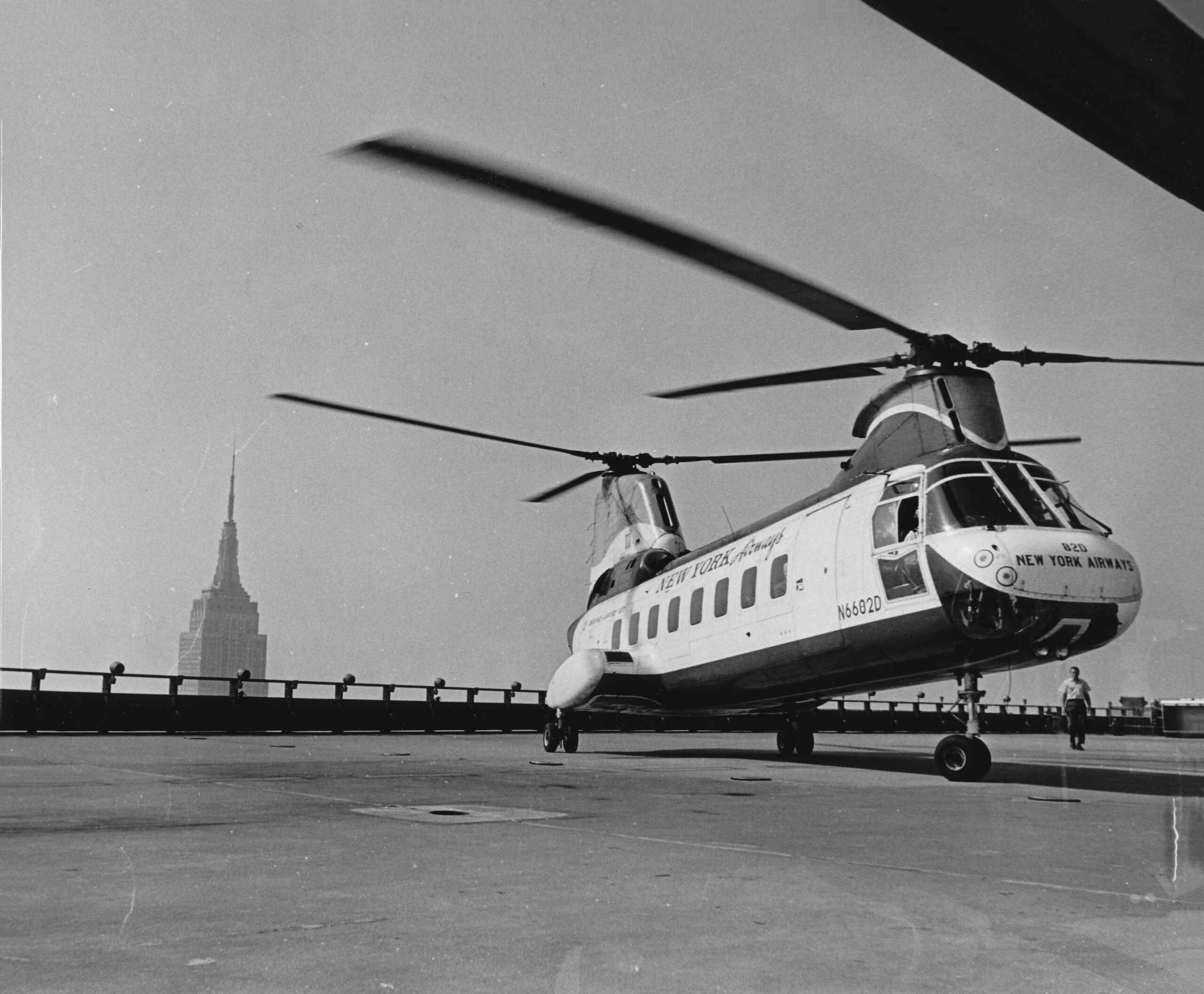
During the mid-1960s, New York’s Pan Am Building featured a helipad on its roof, offering helicopter service to JFK Airport multiple times a day. The 59-story skyscraper was completed in 1963, designed by architects Richard Roth, Pietro Belluschi, and Bauhaus founder Walter Gropius. ยฉ F. Roy Kemp, circa 1966
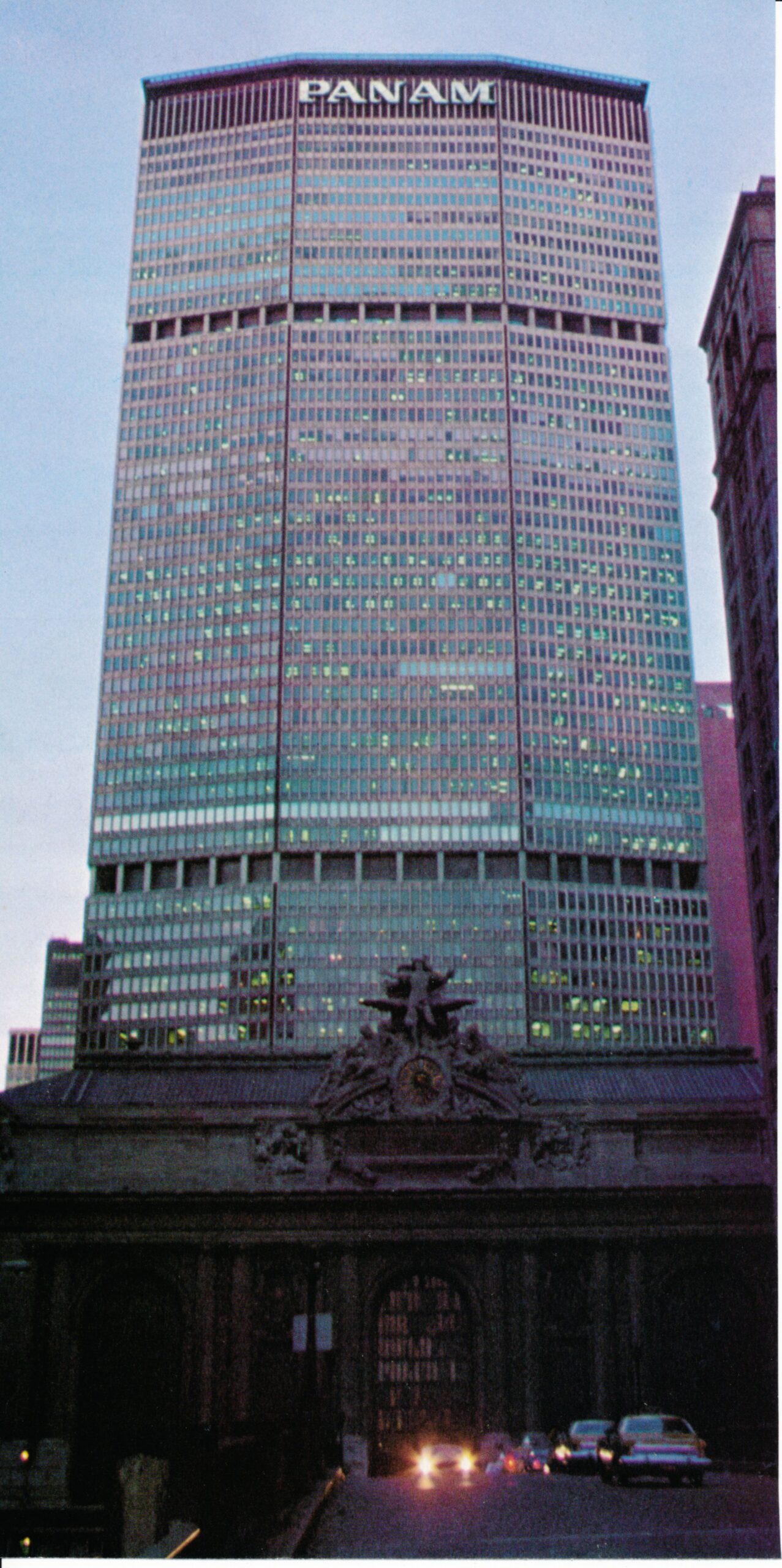
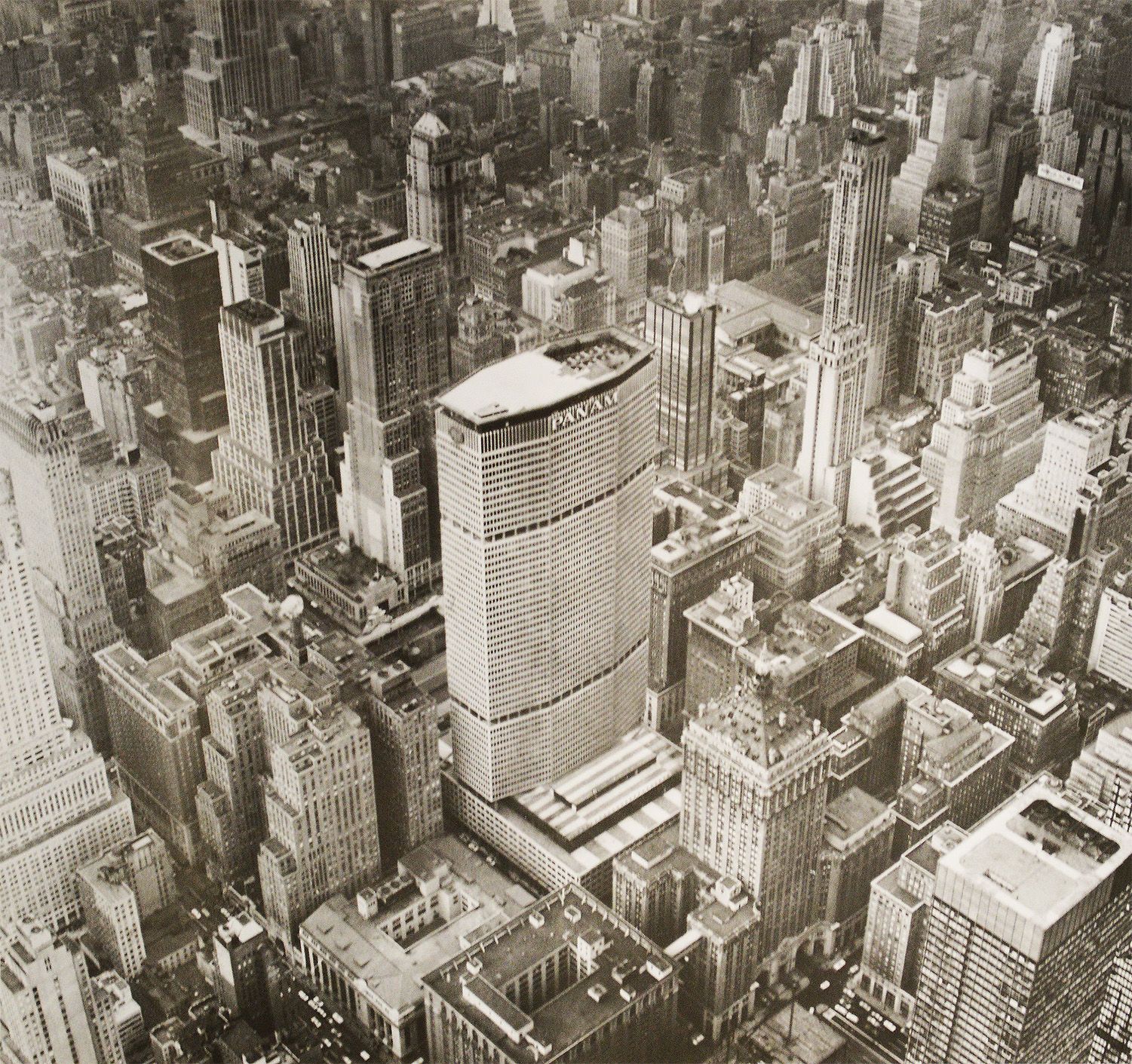
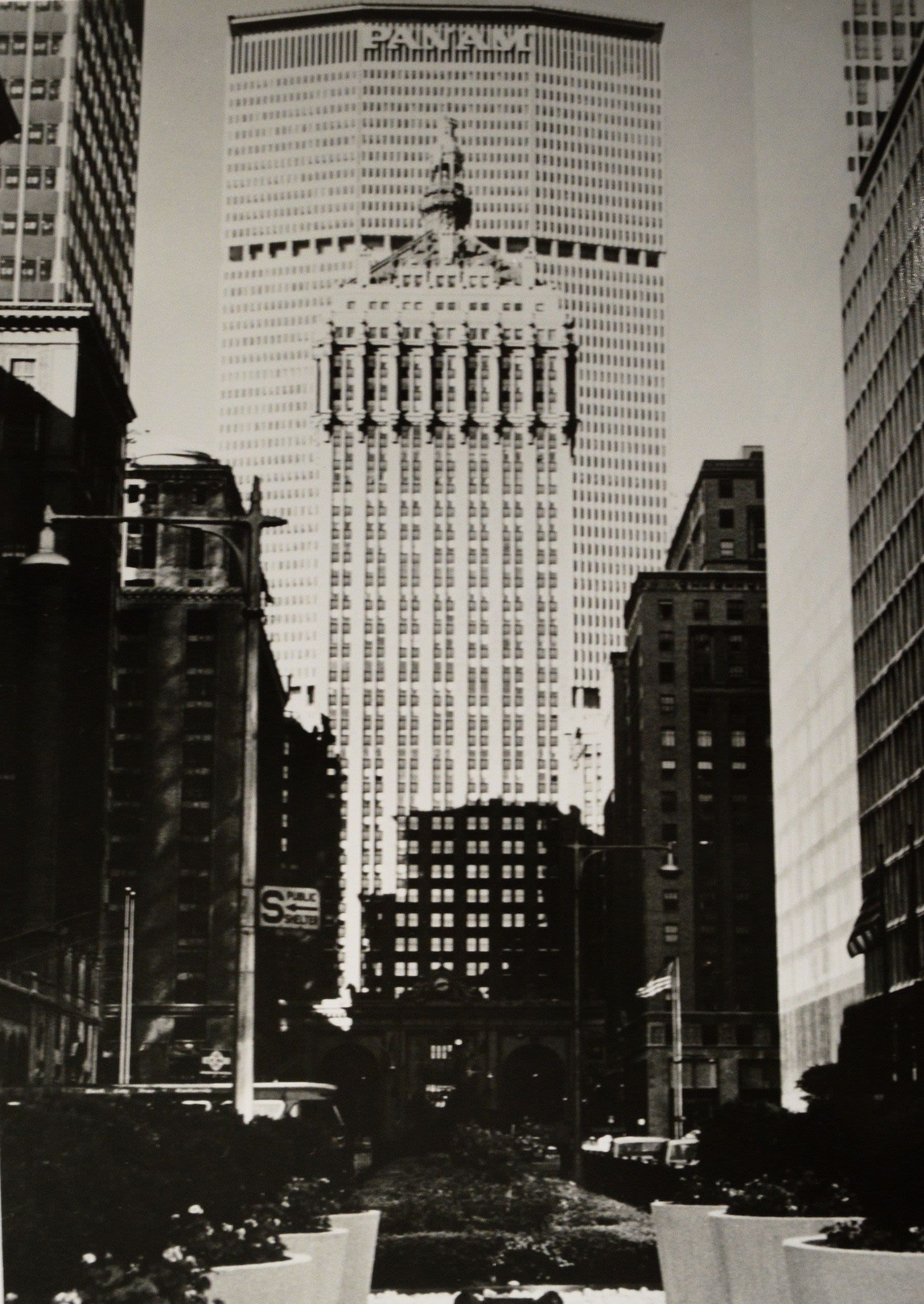
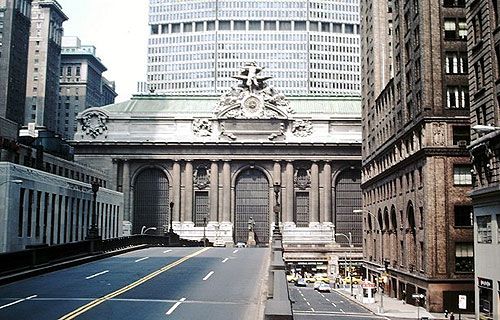
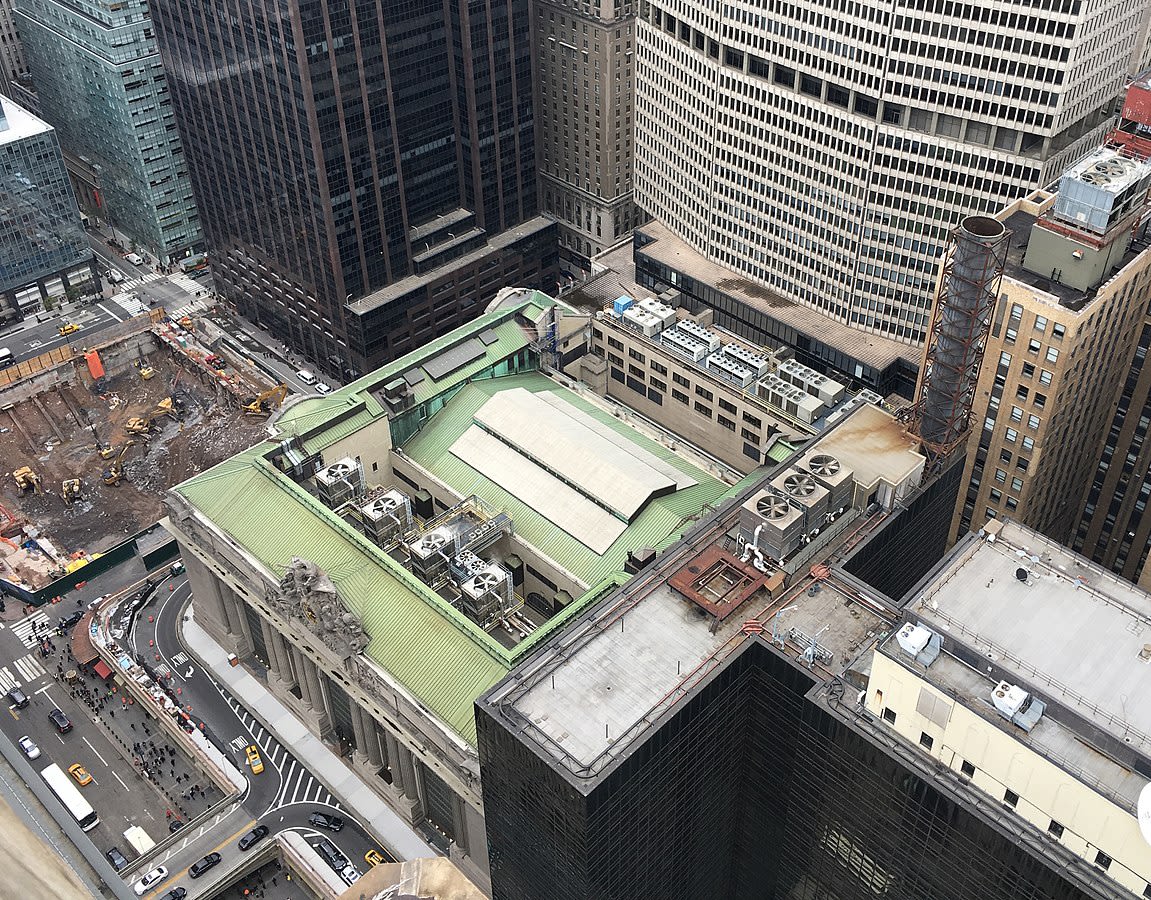
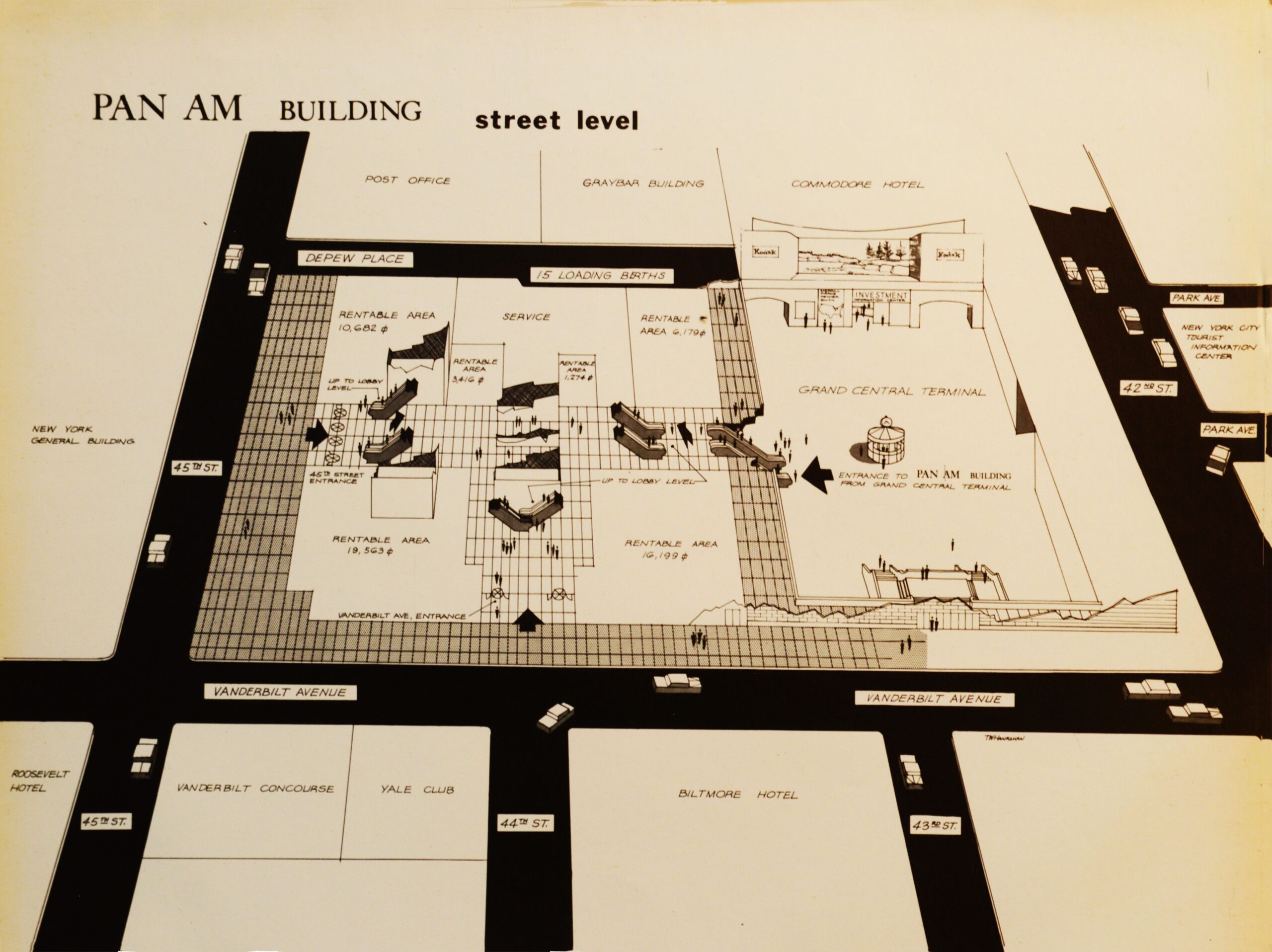
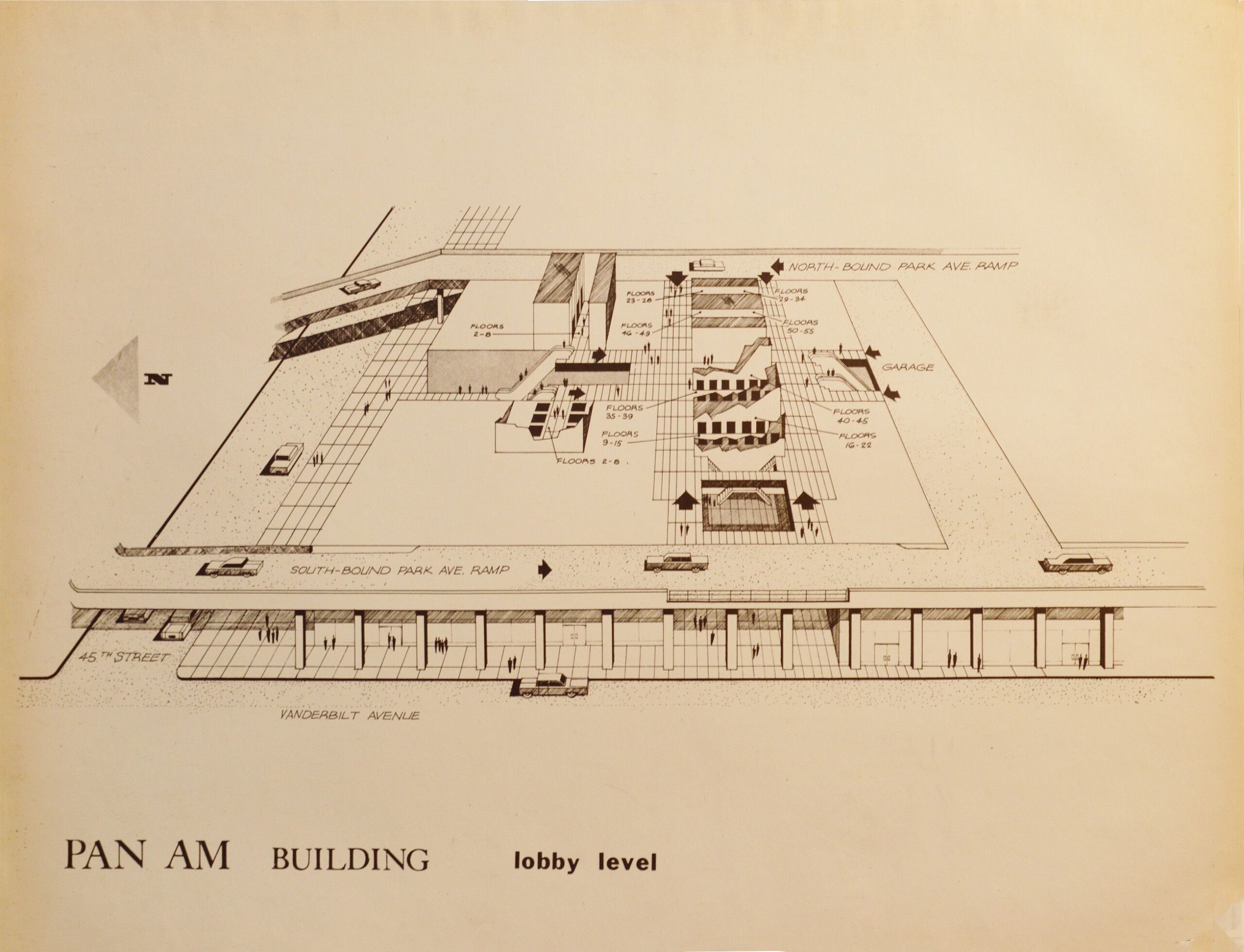
Developed by Erwin S. Wolfson, the building was designed as a Midtown landmark, linking the Park Avenue Viaduct between the Helmsley Building to the north and Grand Central Terminal to the south. At its dedication, Pan Amโs president Juan Trippe highlighted the buildingโs significance as both a corporate hub and a monument to innovation, symbolizing human progress and global unity. Although the Pan Am brand ceased operations in 1991, the MetLife Building remains an enduring architectural icon, representing the mid-century expansion of corporate presence in New York City.
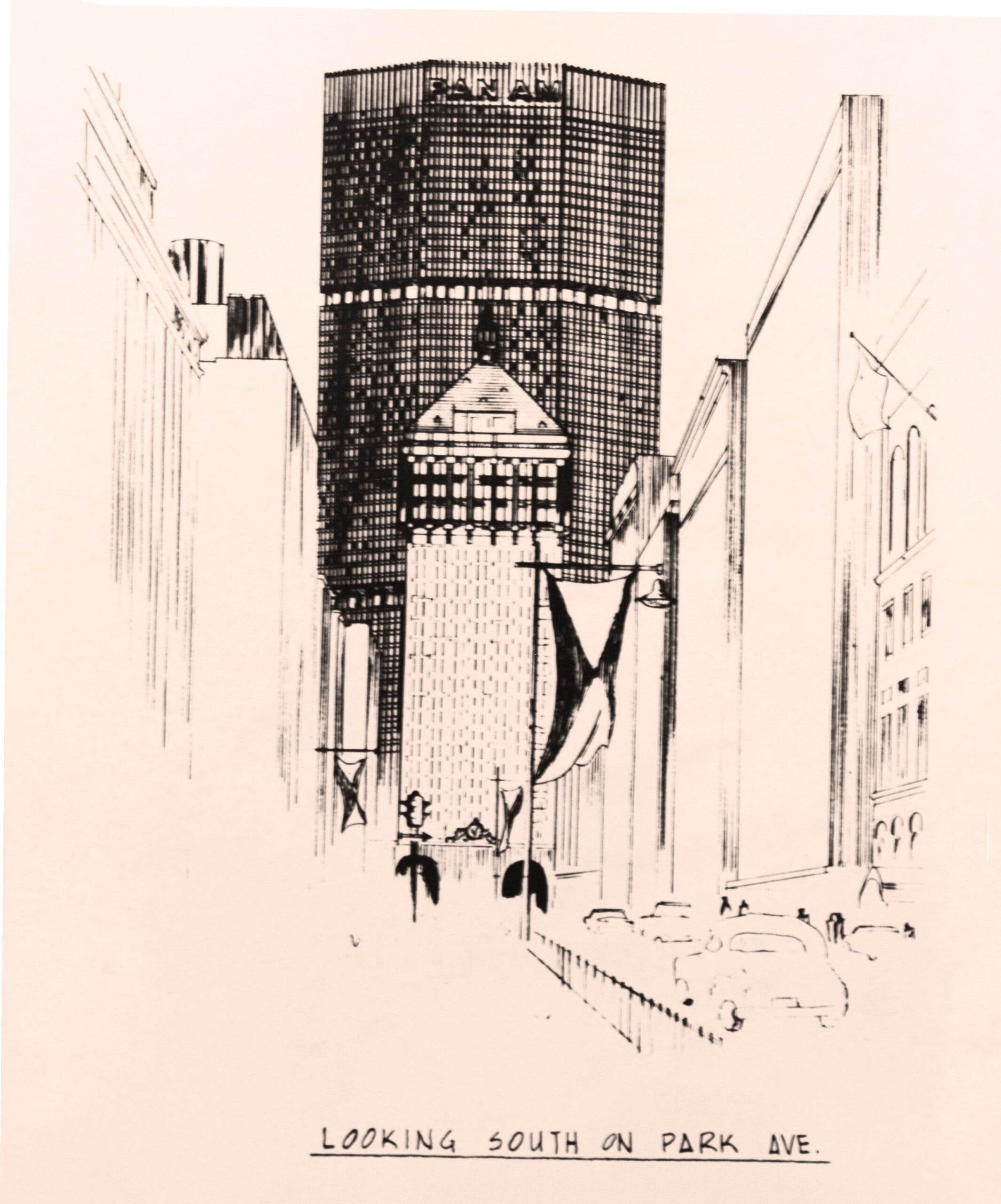
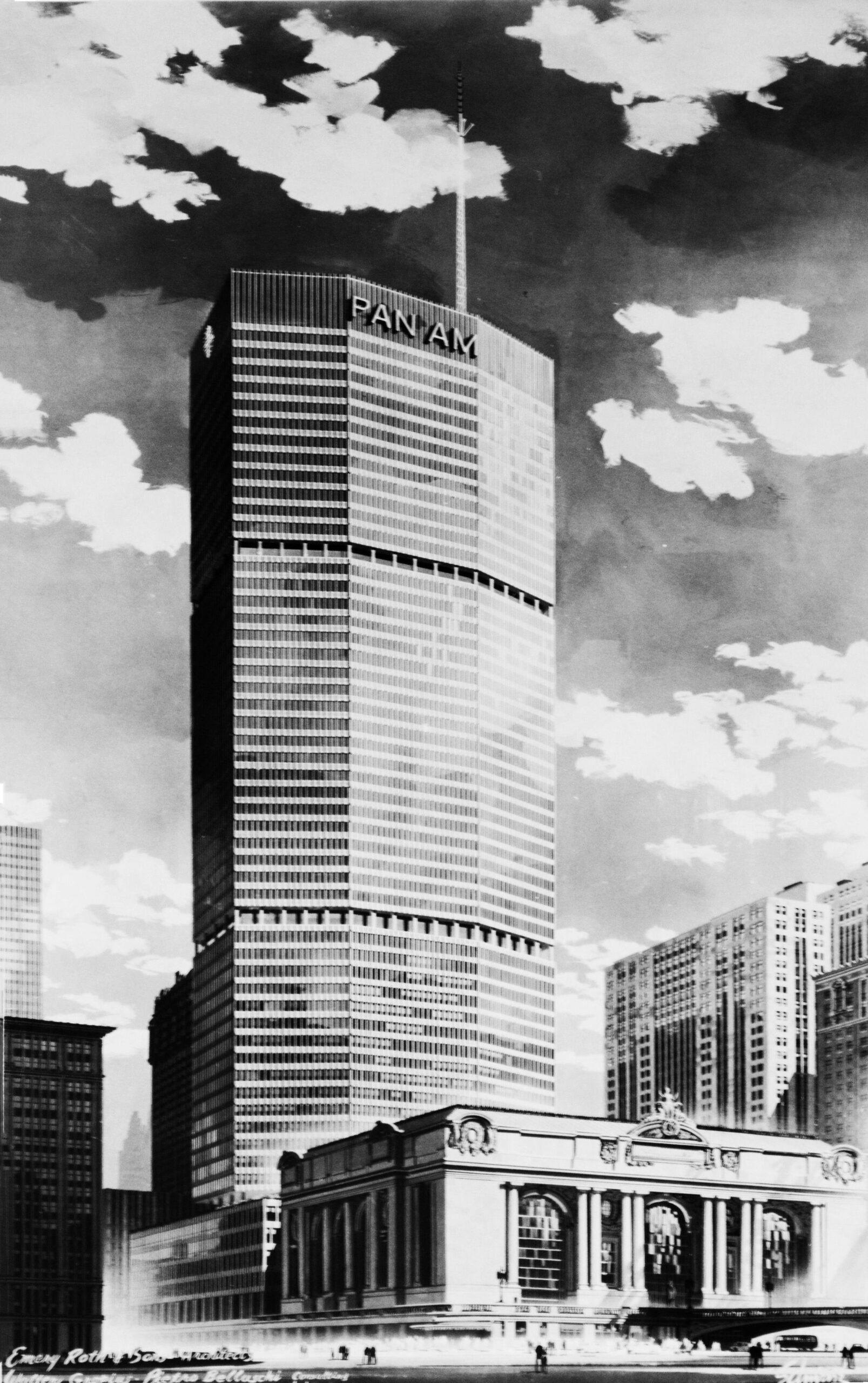
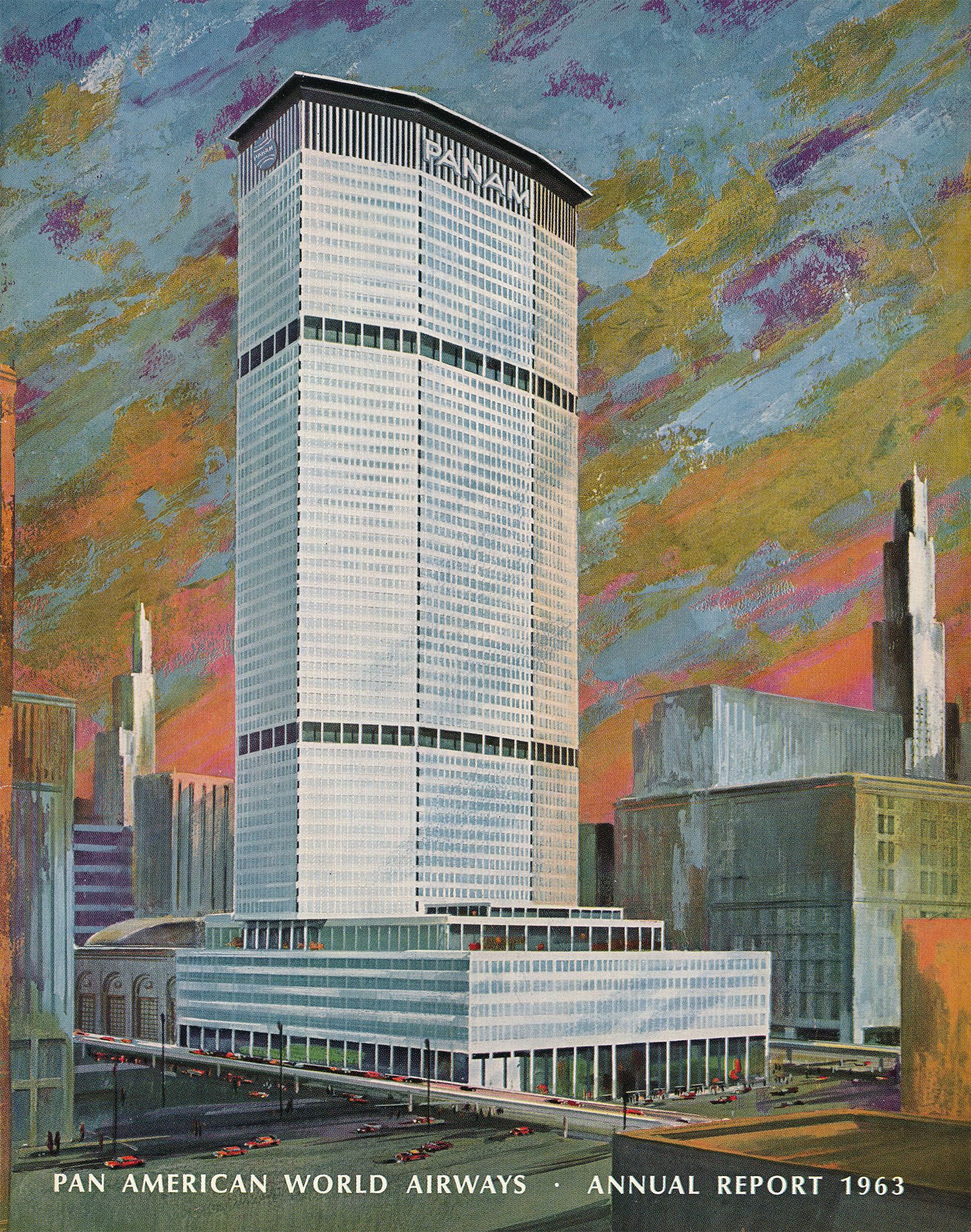
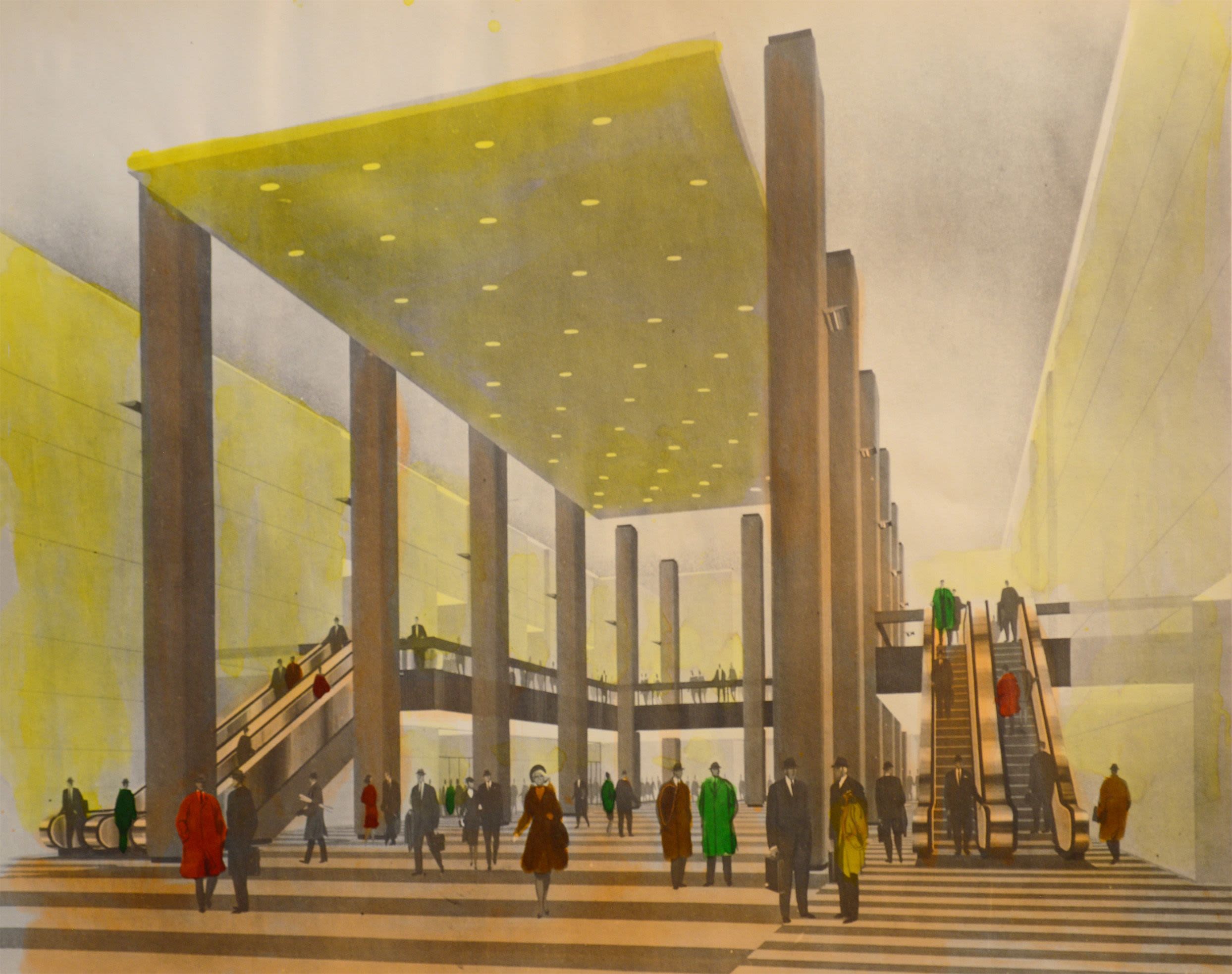
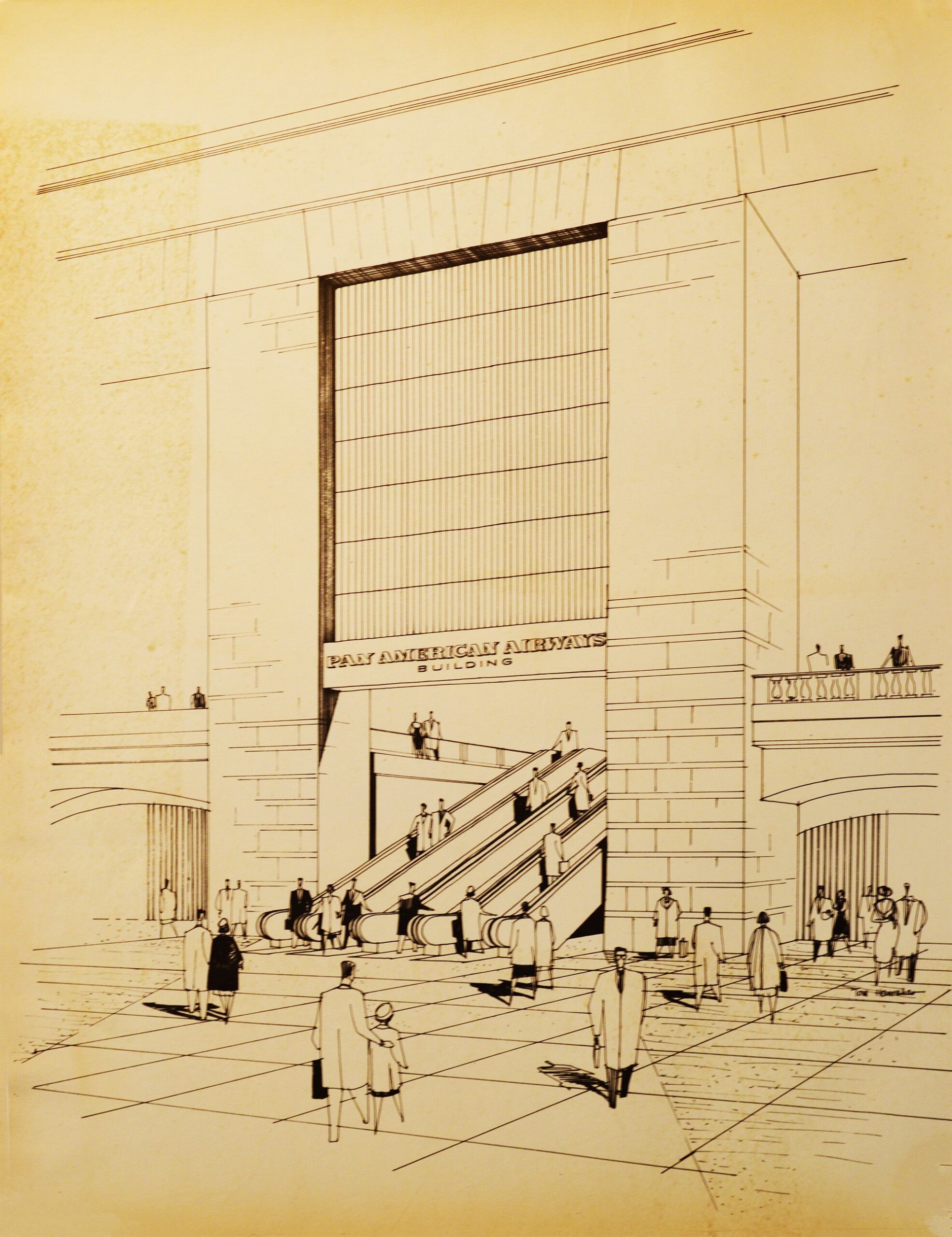
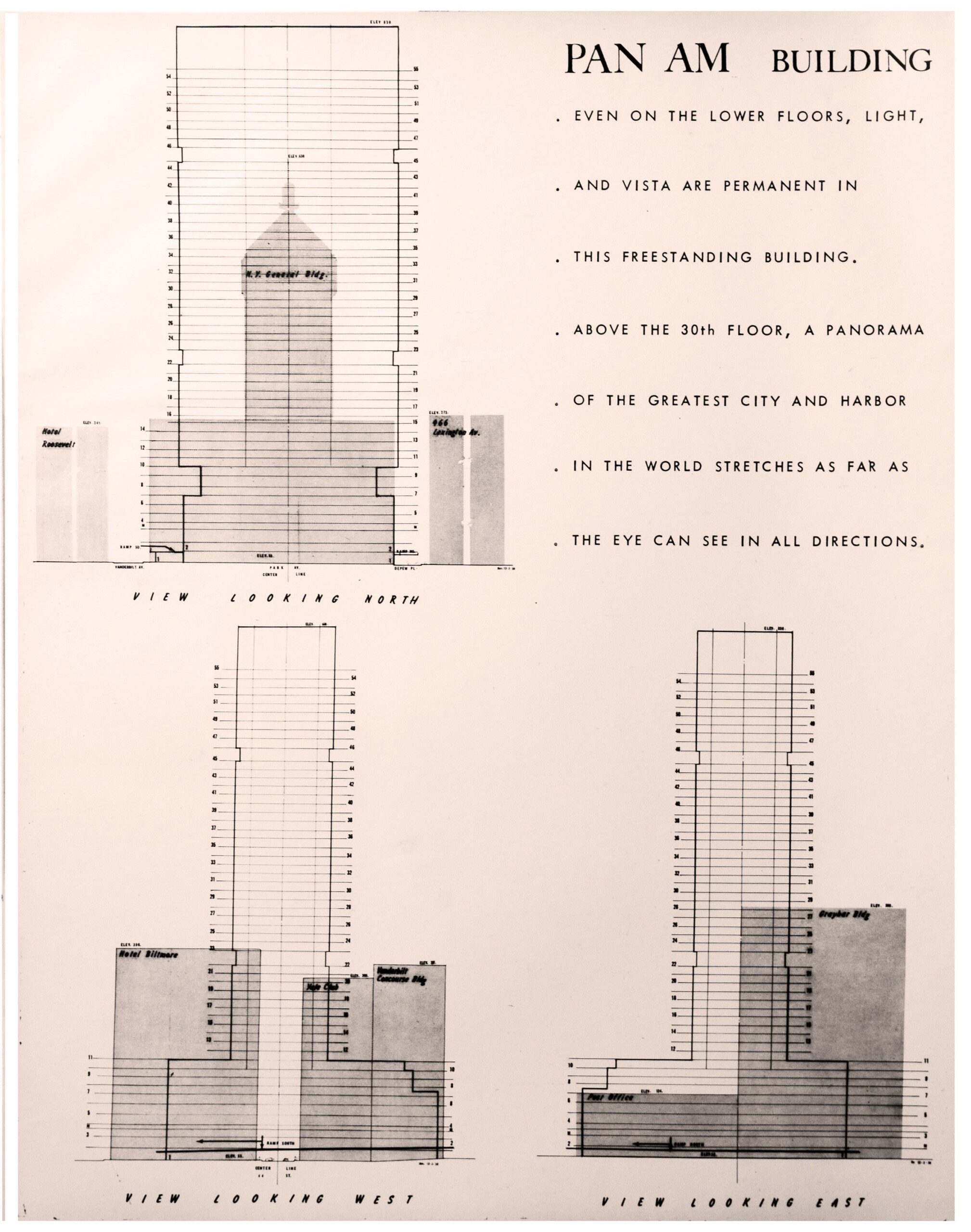
Drawing of the Pan Am Building, circa 1960, with a view looking on south Park Avenue. ยฉ Pan Am Historical Foundation
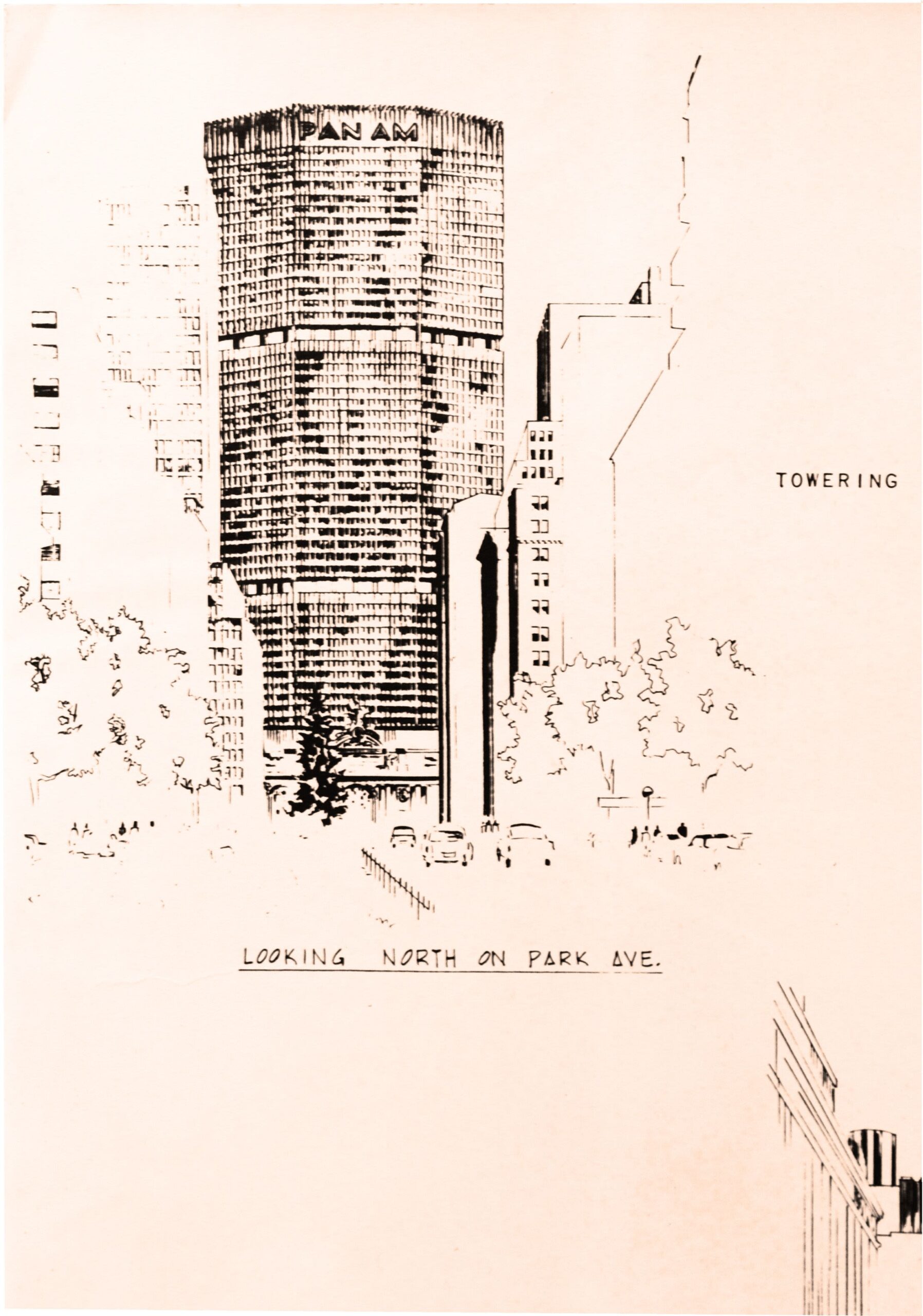
Drawing of the Pan Am Building, circa 1960, with a view looking on north Park Avenue. ยฉ Pan Am Historical Foundation
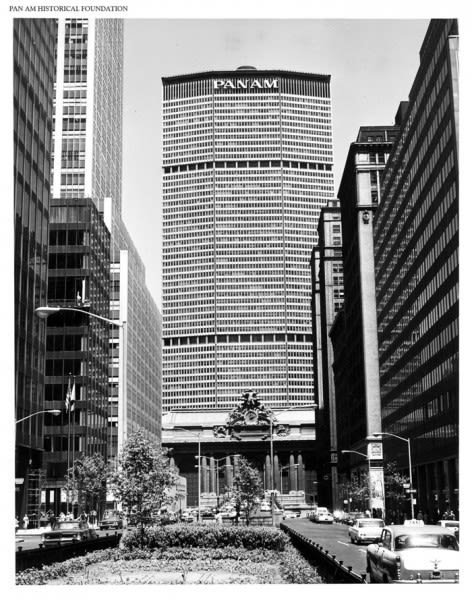
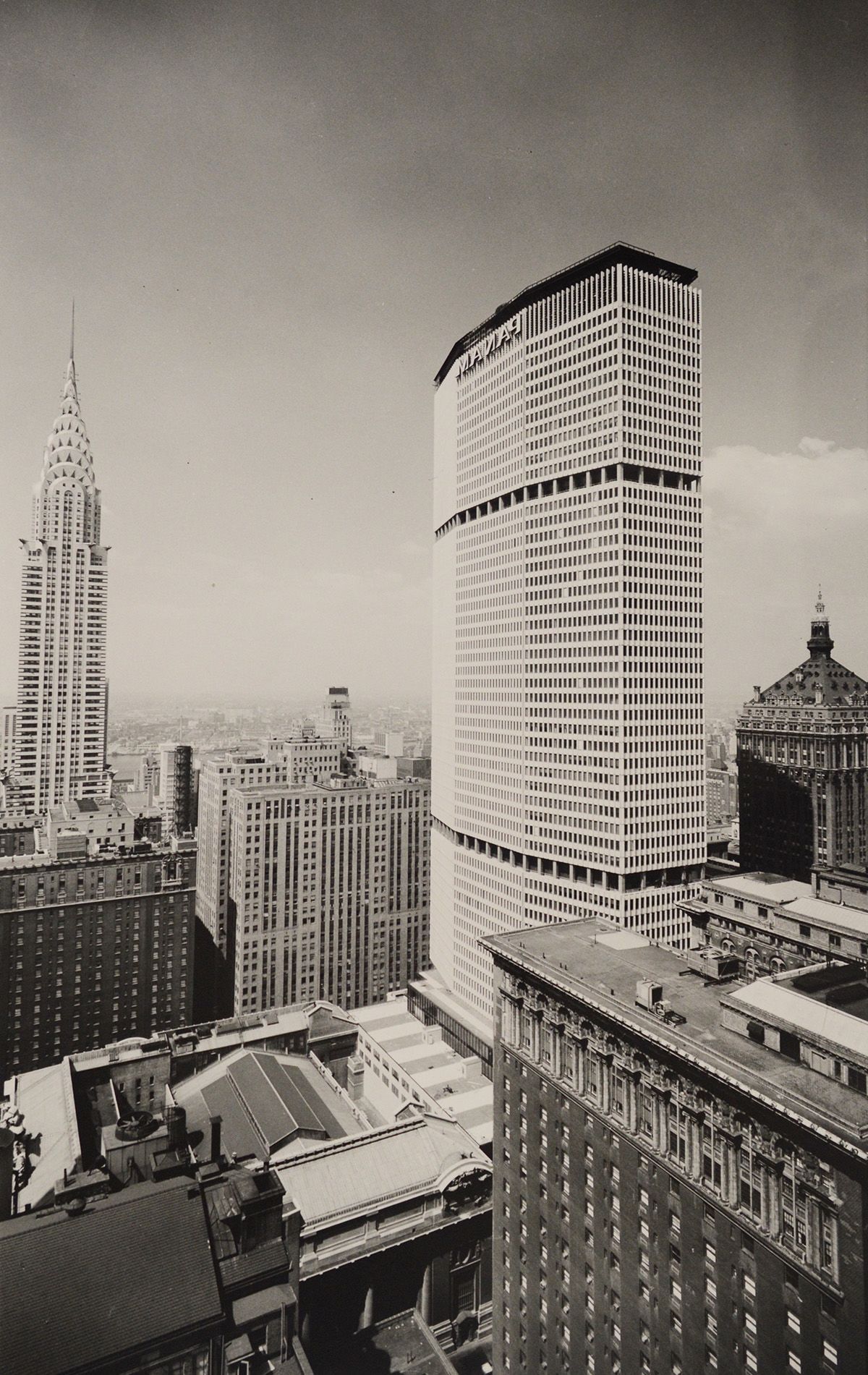
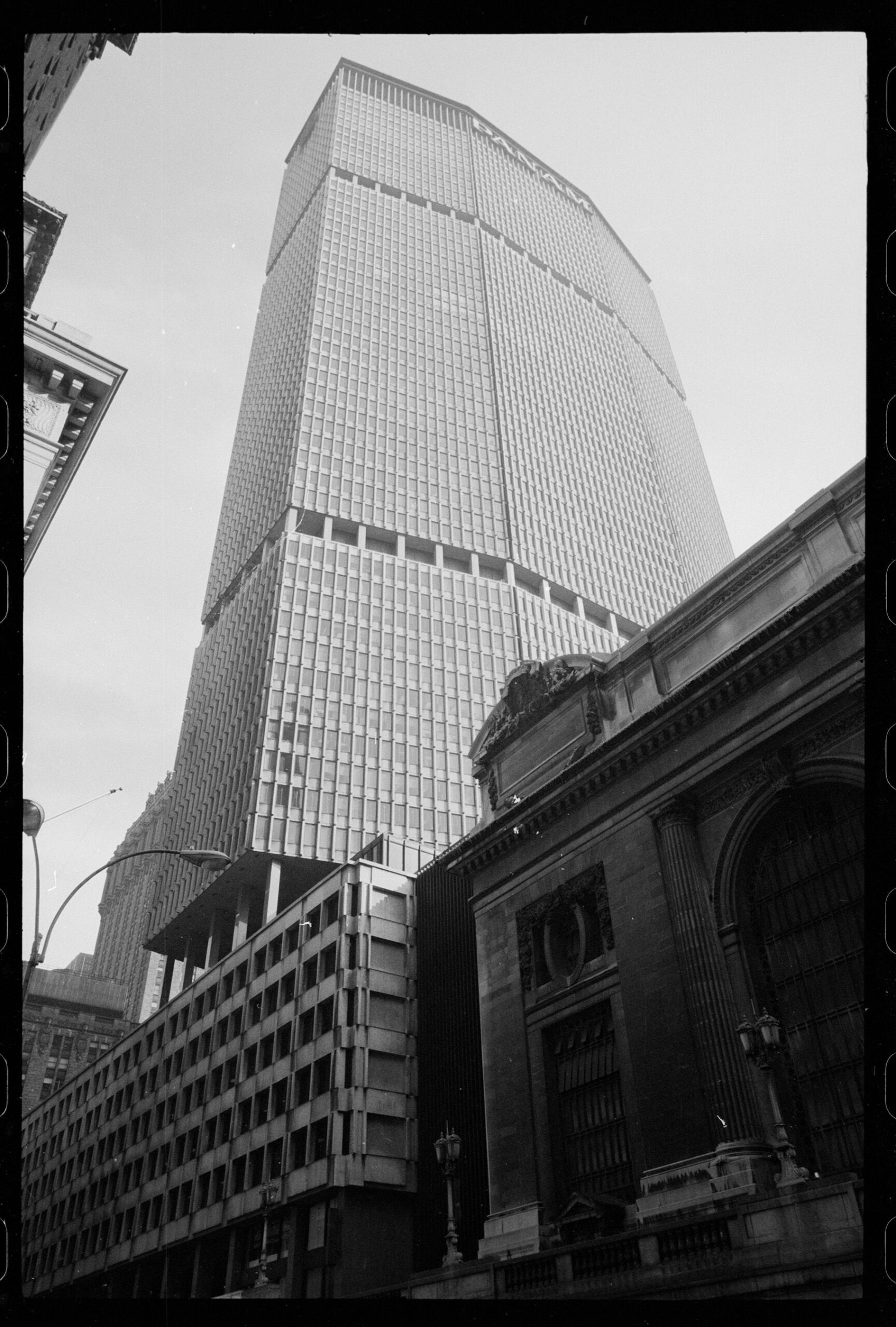
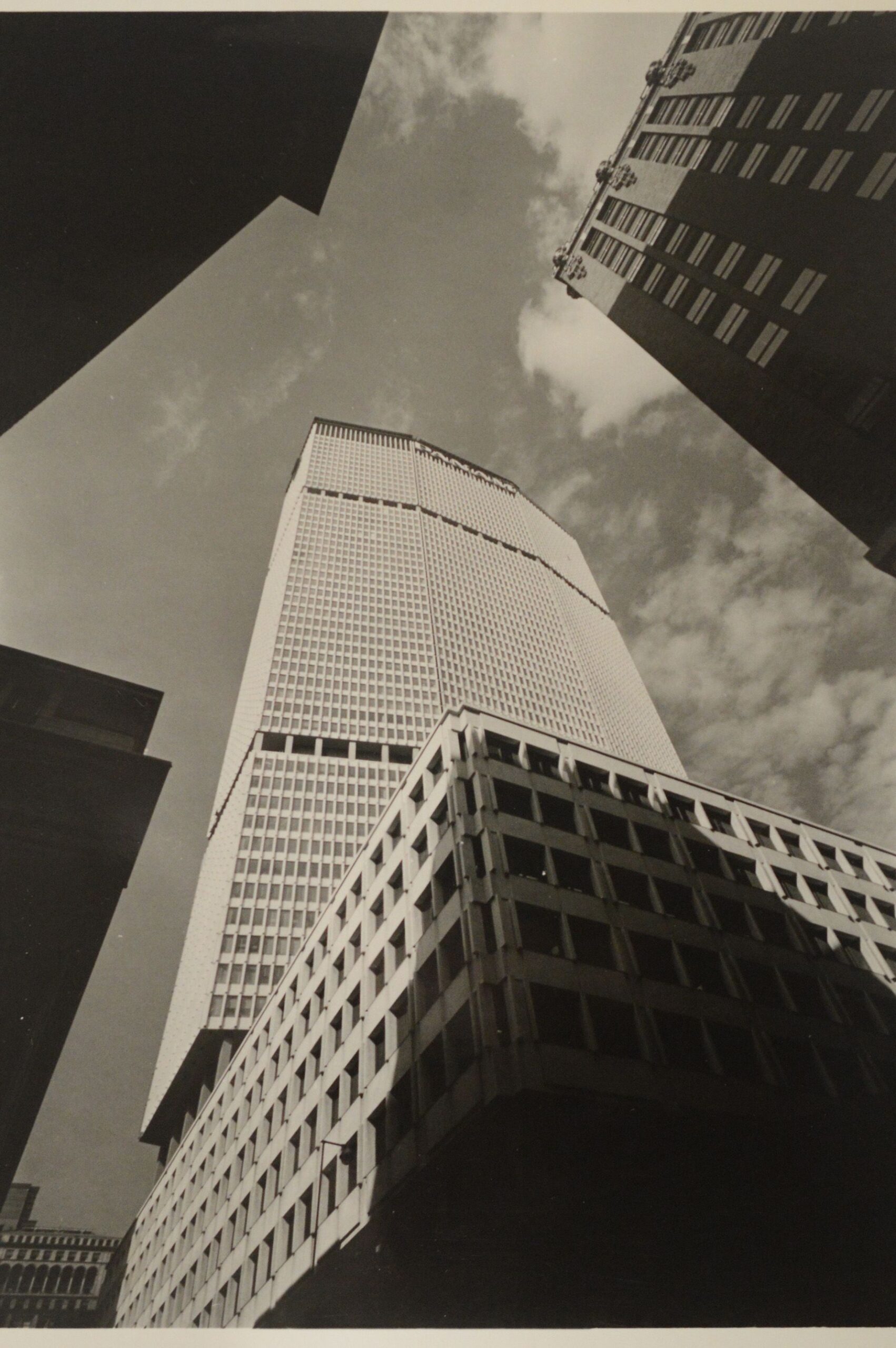
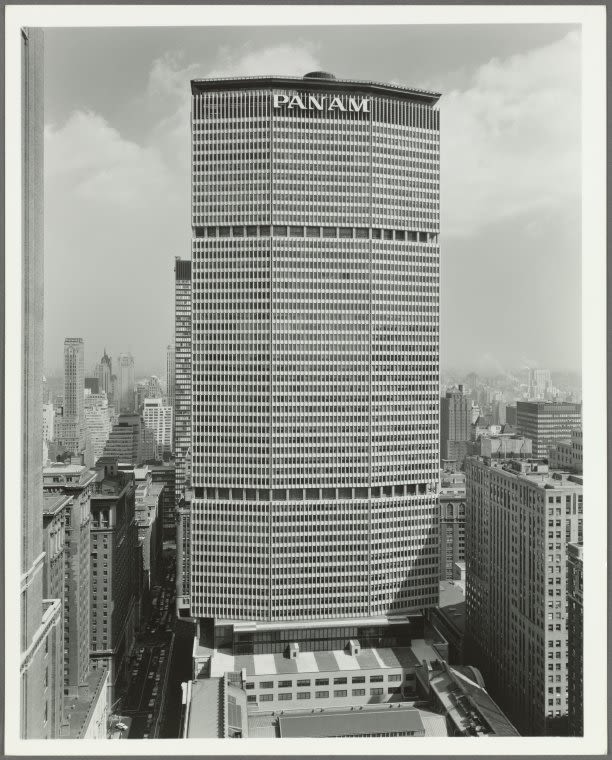
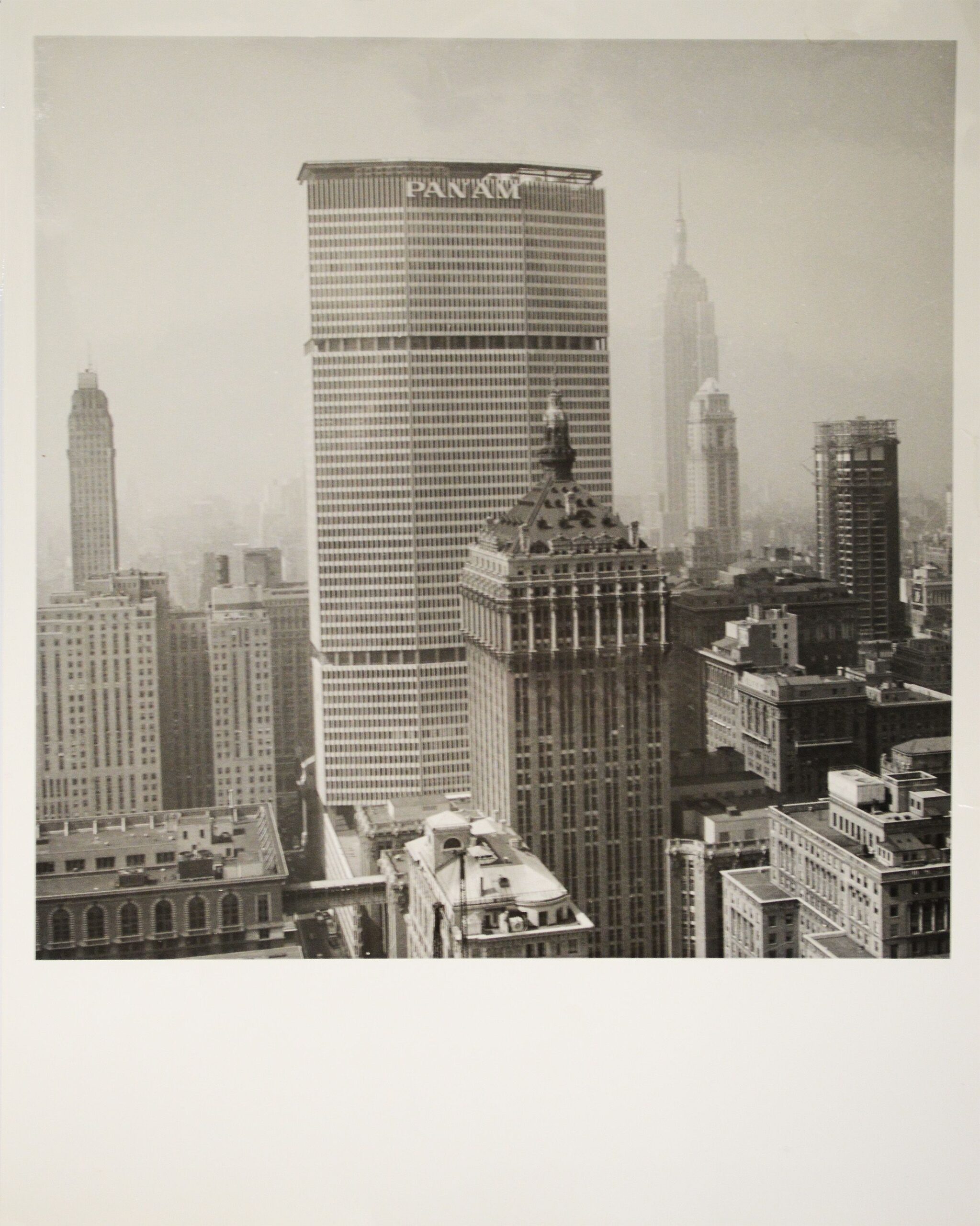
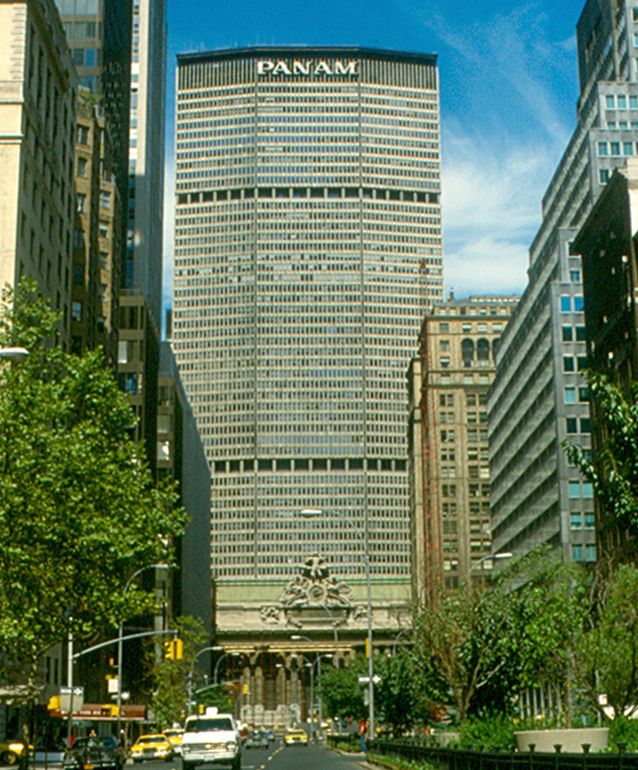
The buildingโs International Style design is distinguished by a nine-story base supporting an octagonal tower, whose floor plates are oriented parallel to 45th Street. Its north and south facades are divided into three broad segments, with the east and west facades comprising single segments, giving it balanced proportions.
Helicopter aloft above the Pan Am Building. 1964. ยฉ Columbia University Libraries
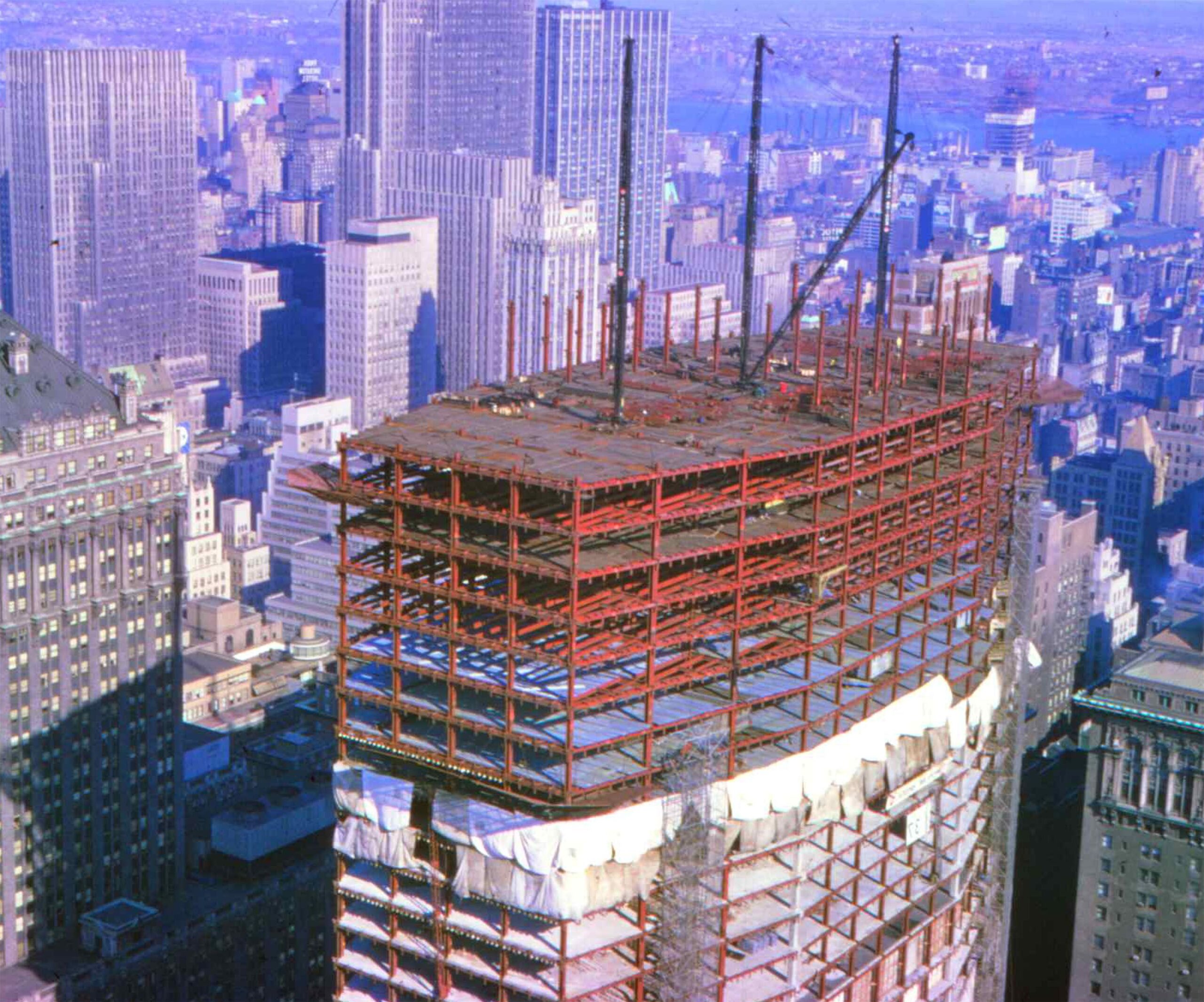
The lower levels feature a combination of granite, aluminum, marble, and stainless steel cladding, with granite exclusively on the third through seventh floors, and aluminum-clad eighth and ninth floors. Above the ninth floor, floors 10 through 59 are clad in approximately 9,000 light-tan Mo-Sai precast concrete panelsโa pioneering use of this material in New York. The facade has recessed sections on the 21st and 46th floors, marking mechanical spaces framed by colonnades of columns spaced 4.9 meters apart. These structural recesses add depth and shadow, enhancing the buildingโs profile.
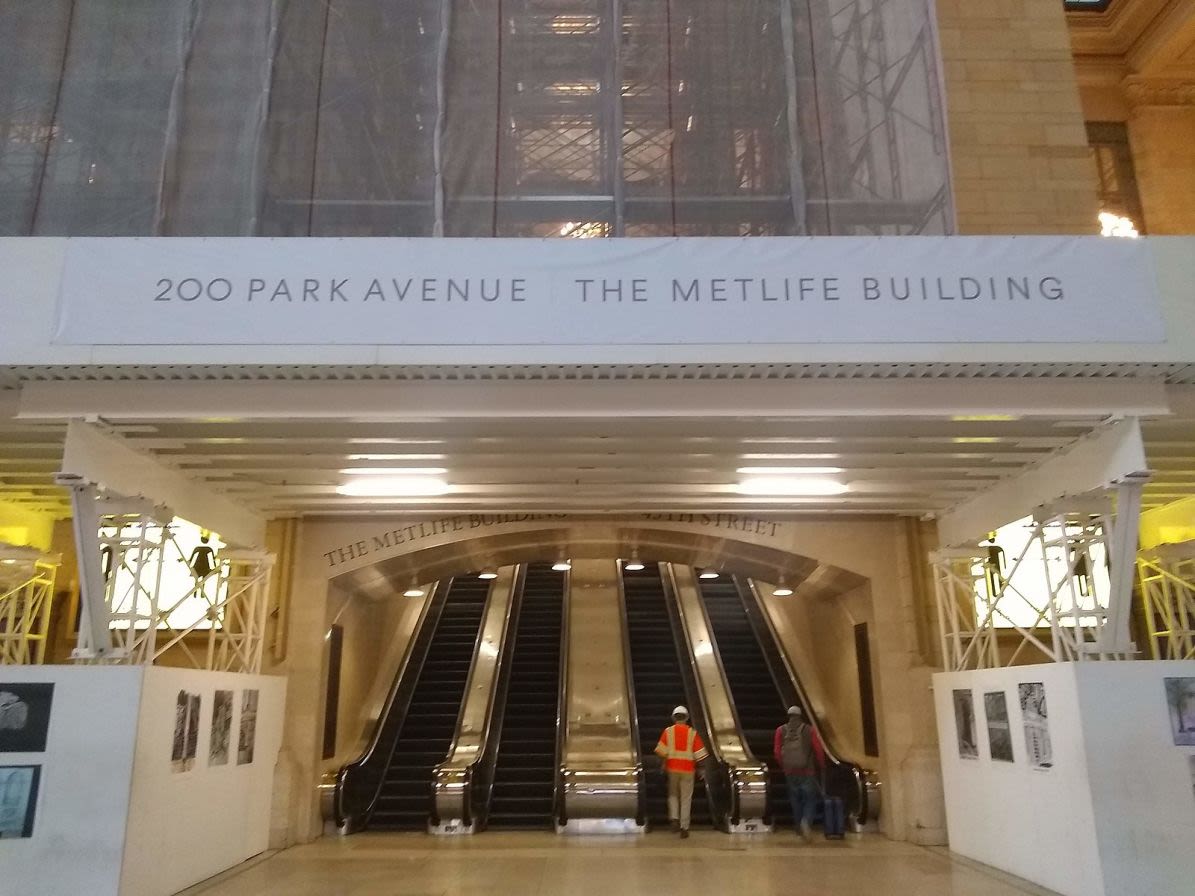
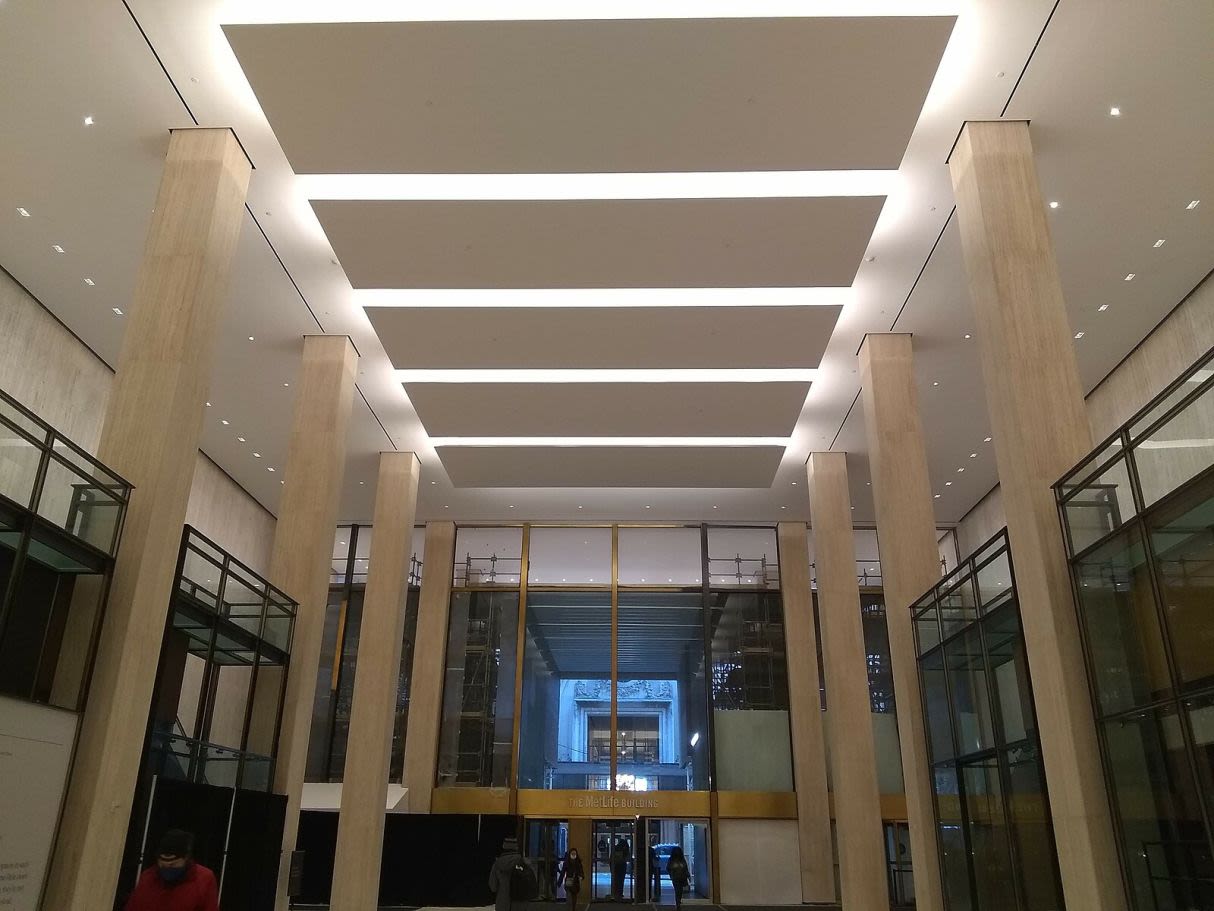
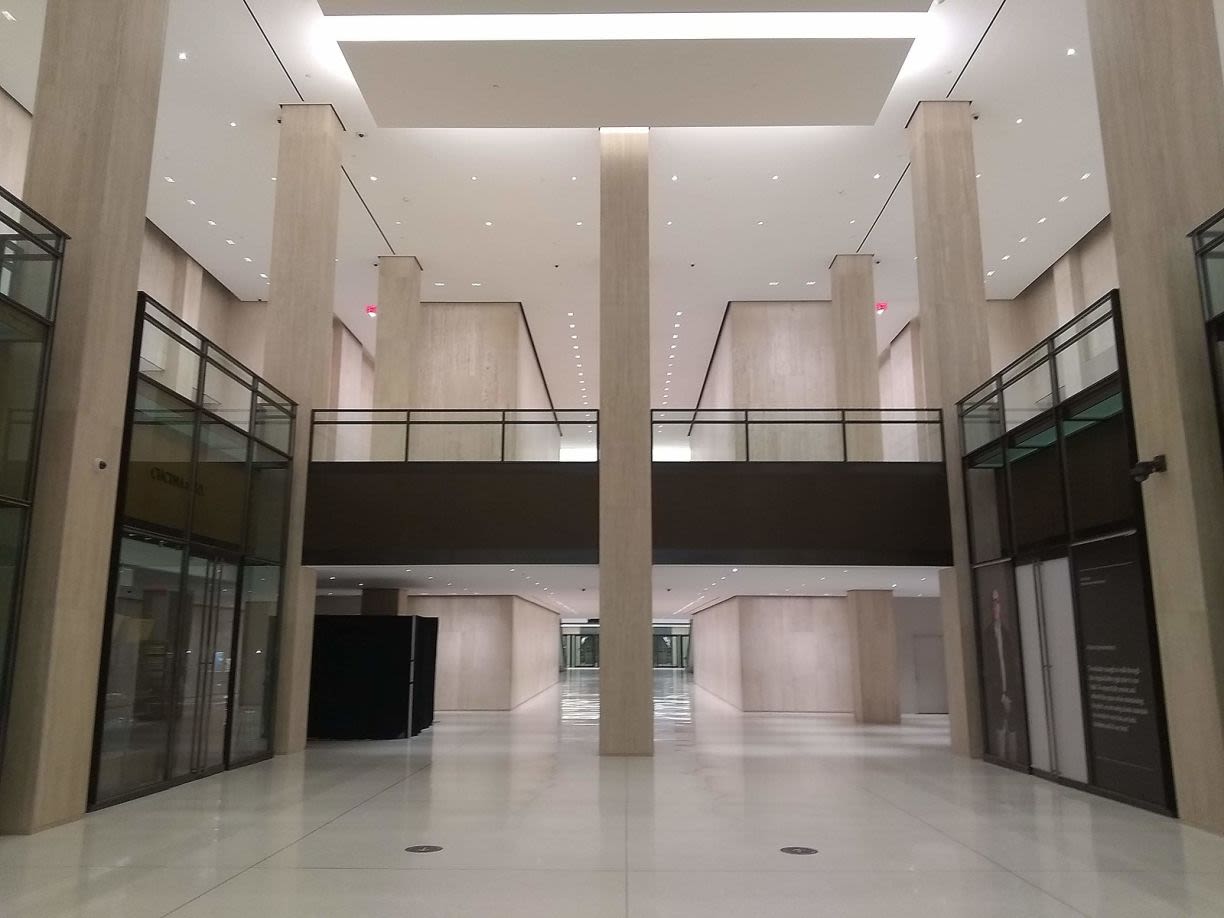
Lobby of the MetLife Building in Manhattan, New York, seen in March 2021. ยฉ Ryan Ng, Epicgenius
The building was developed in partnership between American and British investors, creating one of the largest office structures in the world at the time. Although developer Wolfson passed away in 1962 before the opening, a statue in his honor was unveiled in the lobby by his wife, Rose.
Dignitaries assembled for ribbon cutting which opened Pan Am Building are, left to right: Jack Cotton, chairman of City Centre Properties, co-owners of building; Mrs. Erwin S. Wolfson, widow of the buildingโs originator and builder; Governor Nelson A. Rockefeller of New York State; Mayor Robert F. Wagner of New York City; and Pan American President Juan T. Trippe. ยฉ University of Miami Special Collections, Pan American Airways, Inc. records.
The ribbon-cutting ceremony was attended by notable figures, including New York Governor Nelson A. Rockefeller and New York City Mayor Robert F. Wagner. Following its opening, the building became fully leased within months, with Commercial Union Insurance Group, among others, establishing extensive data processing facilities in line with the buildingโs advanced telecommunications infrastructure.
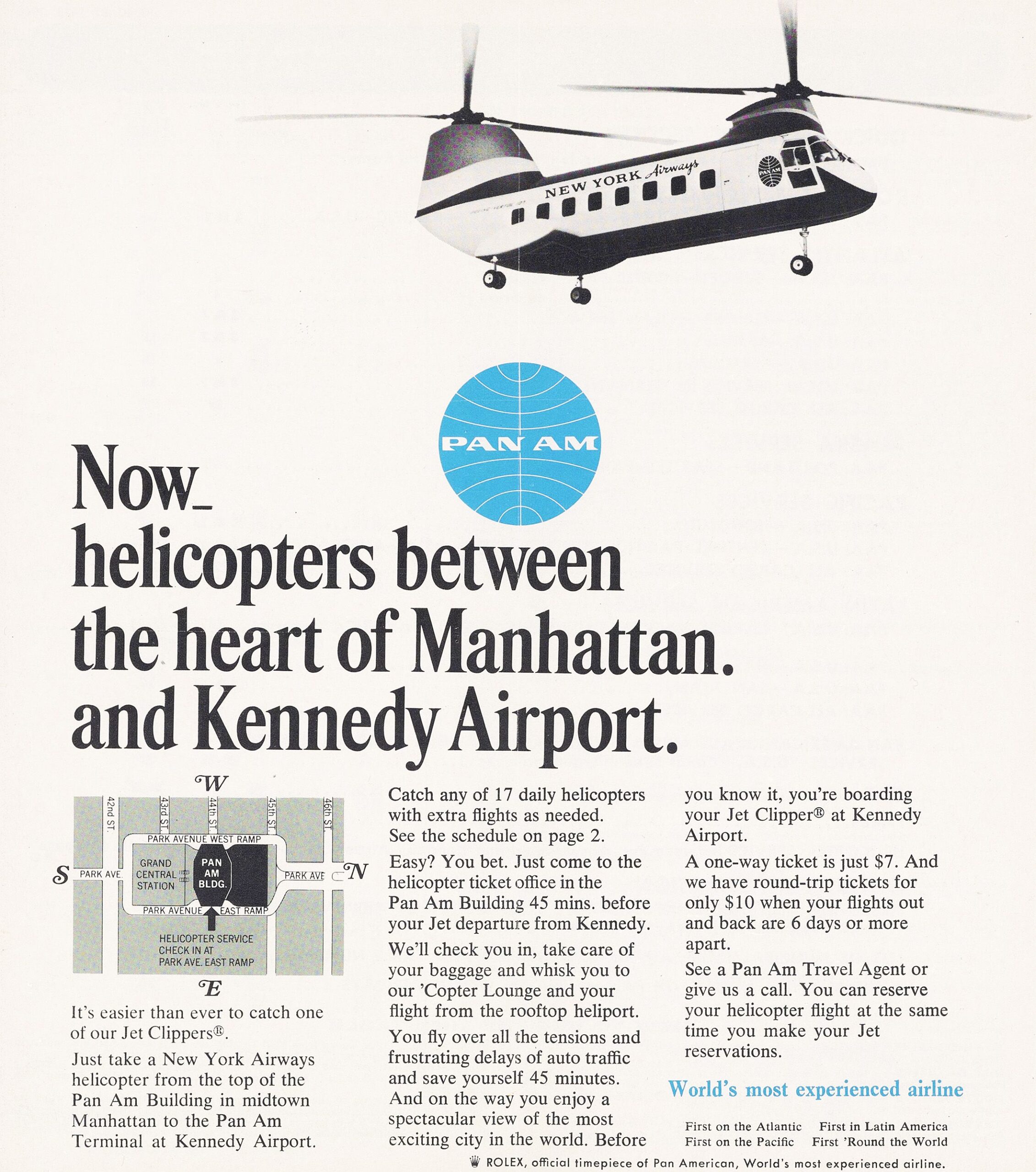
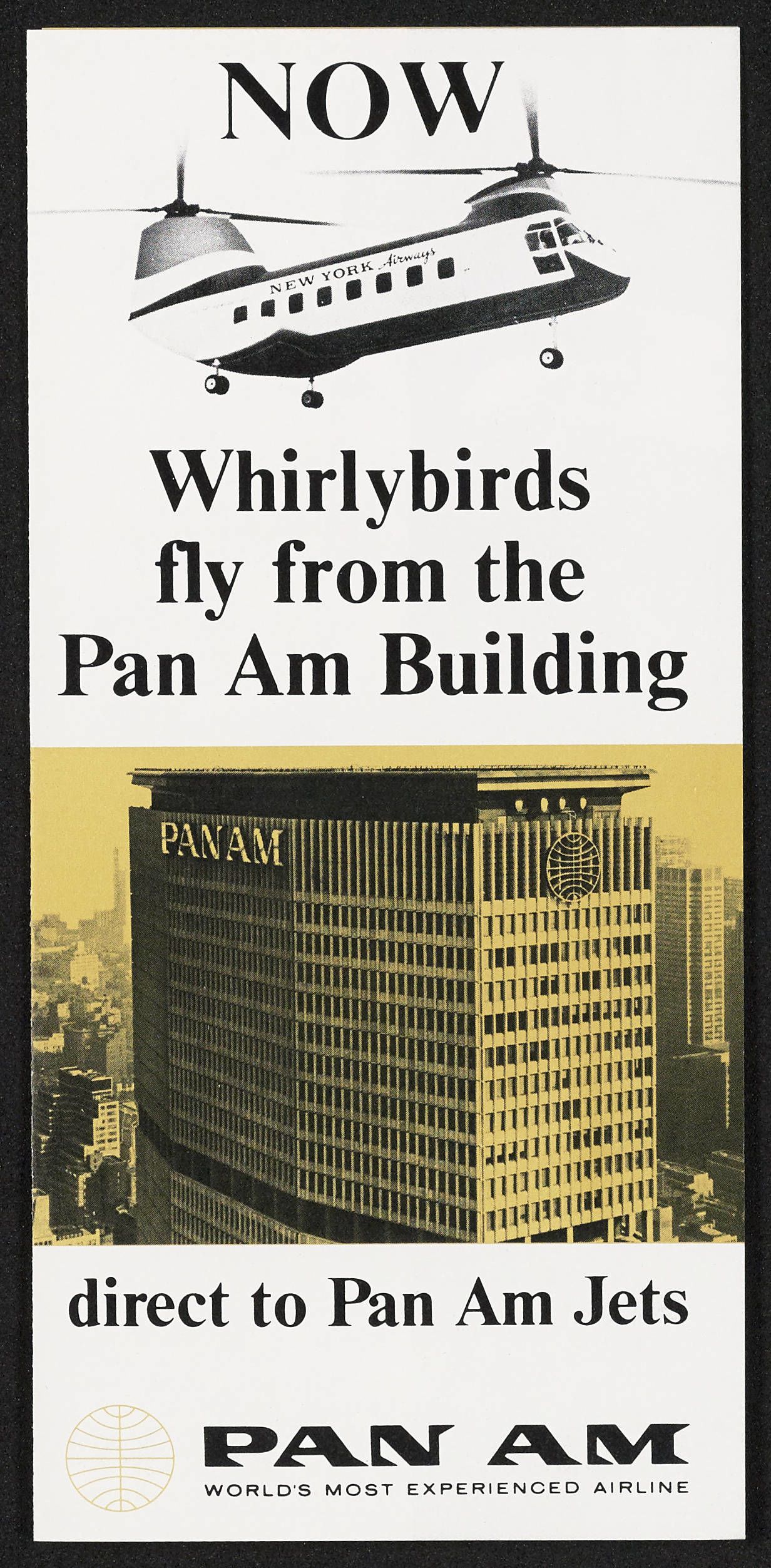
Helicopter advertised in February 1-28, 1966 Pan Am Timetable. ยฉ University of Miami Special Collections, Pan American Airways, Inc. records. 1966.
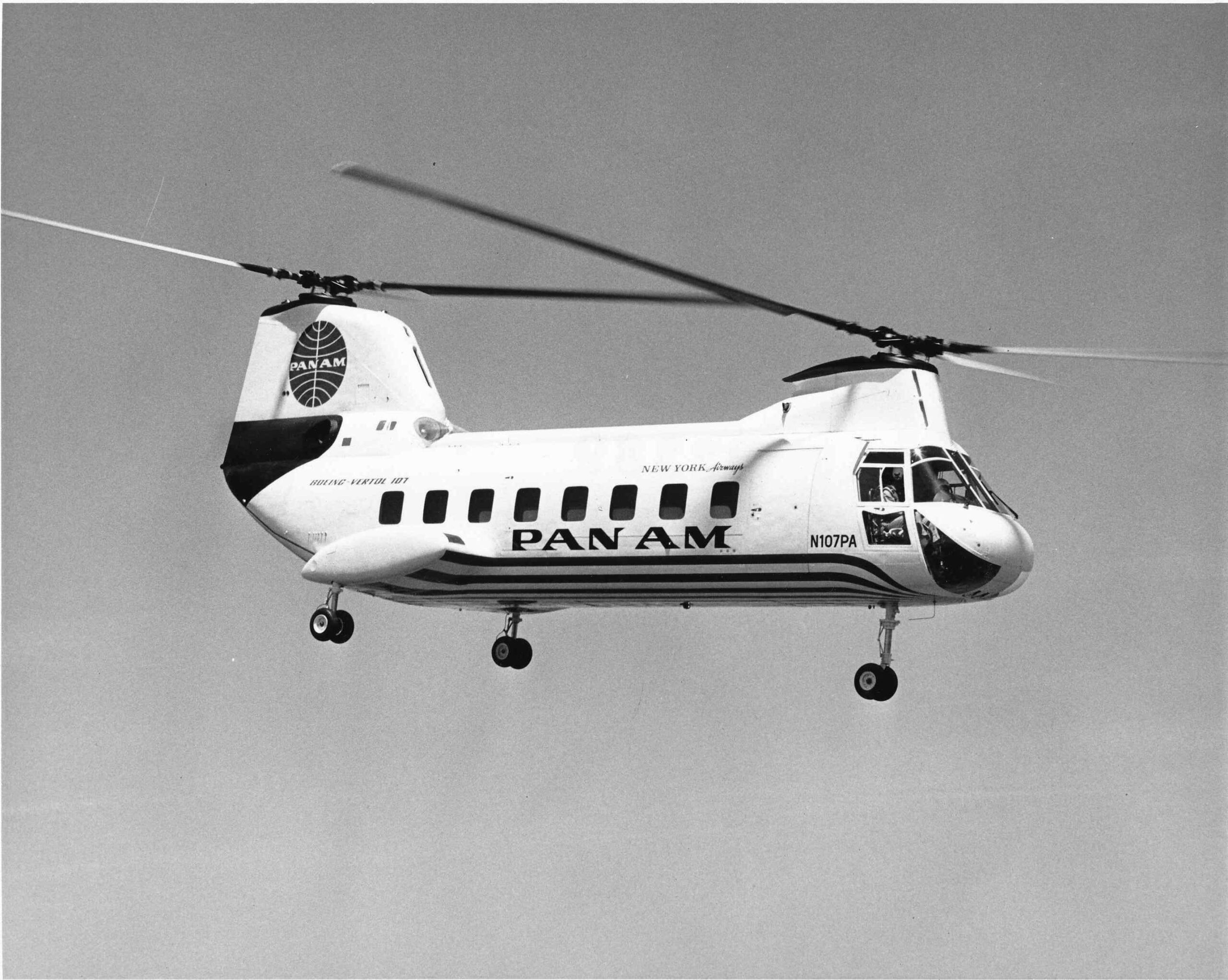
New York Airways helicopter aloft. ยฉ Pan Am Historical Foundation
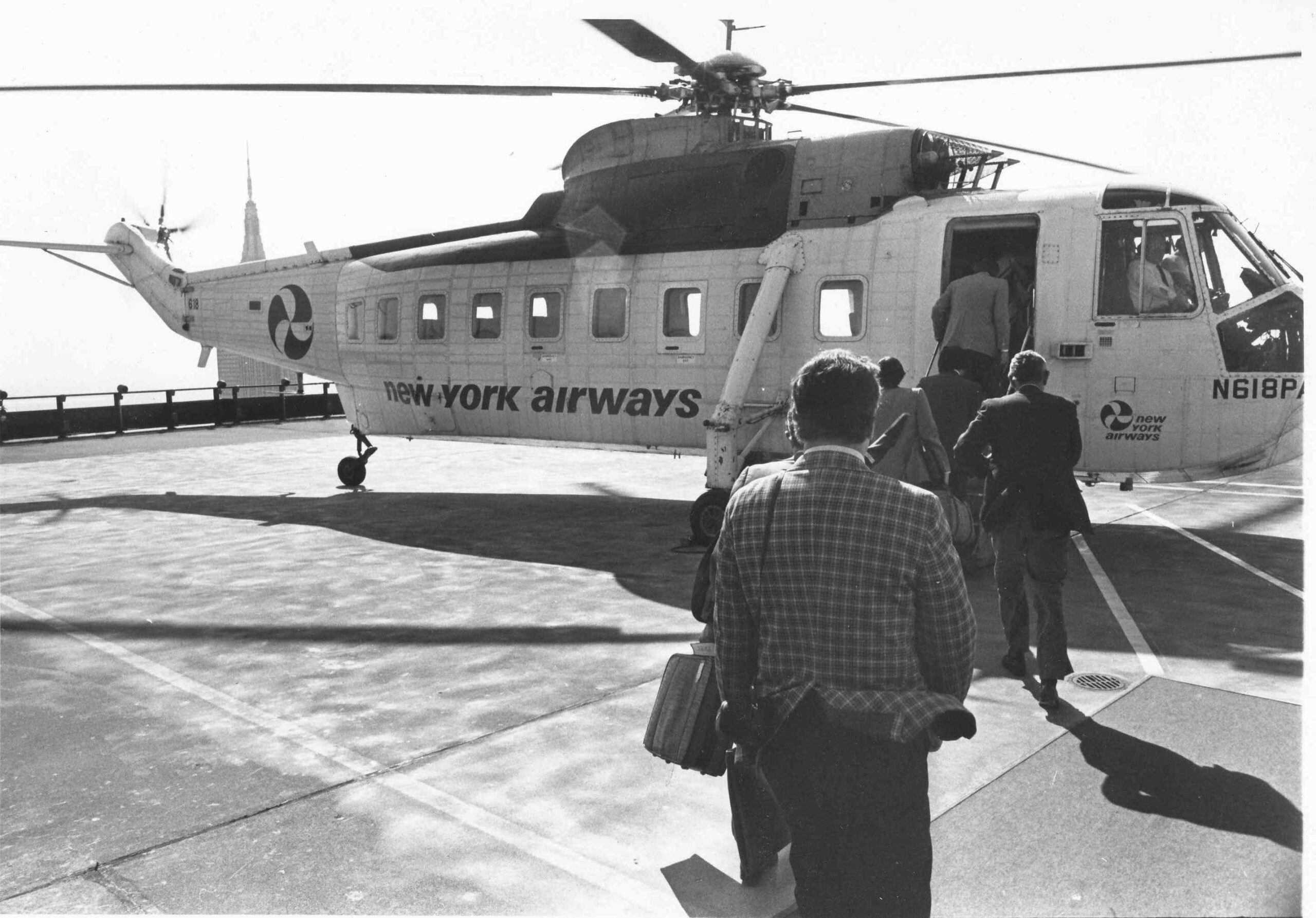
Passengers board a helicopter on the Pan Am Building roof. ยฉ Pan Am Historical Foundation
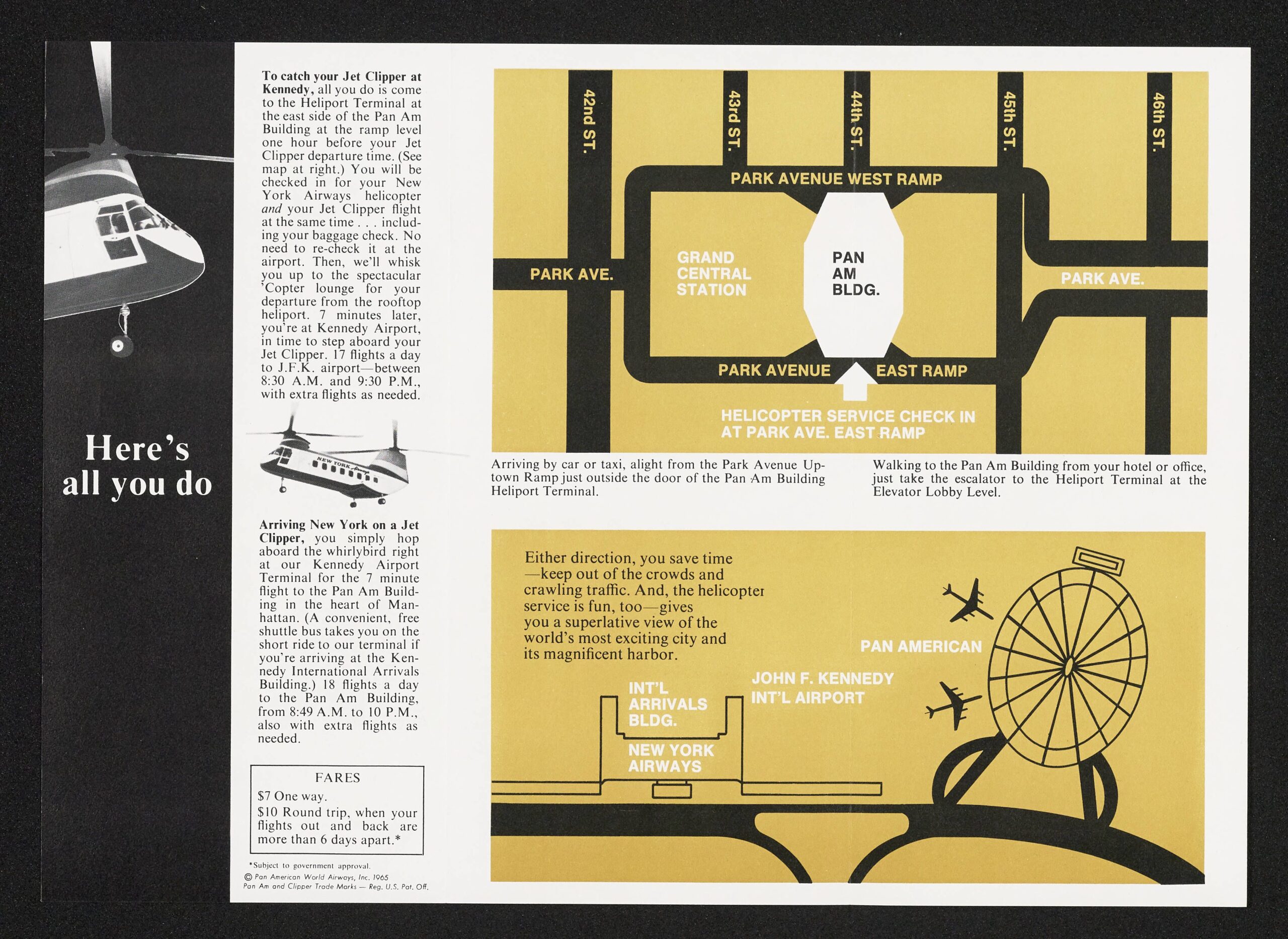
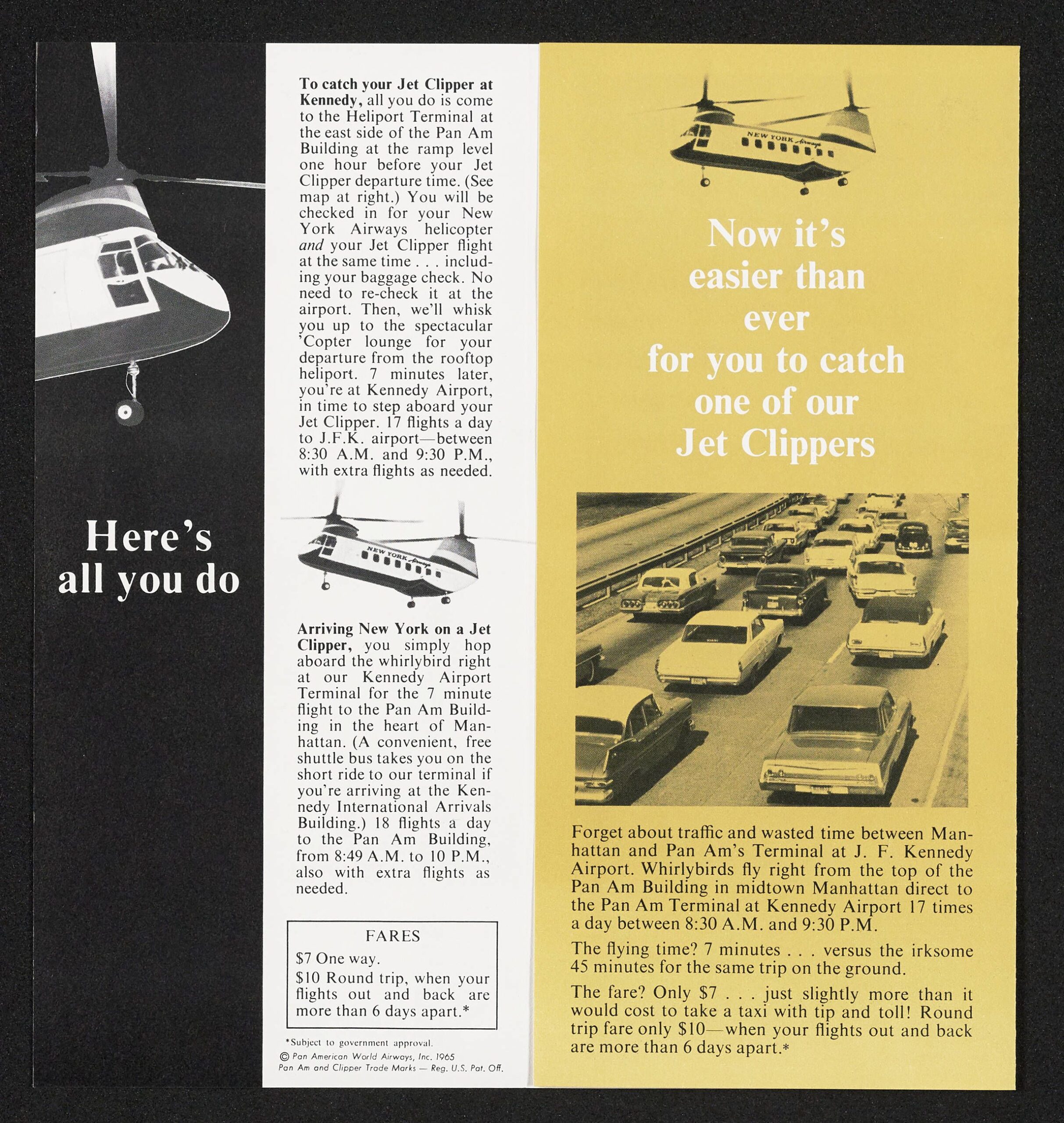
One of the most innovative features was a rooftop heliport that opened in December 1965, connecting passengers to JFK Airport in seven minutes via twin-rotor Boeing Vertol 107 helicopters operated by New York Airways. This service, supported by Pan Am subsidies, was an ambitious attempt at urban aerial transport.
However, noise and safety concerns, along with a fatal accident in 1977, led to the heliport’s permanent closure. A brief resurgence in 1977 used quieter Sikorsky S-61 helicopters, but tragedy struck when a rotor malfunction led to multiple fatalities. As a result, skyscraper-based helicopter service in New York City effectively ended.
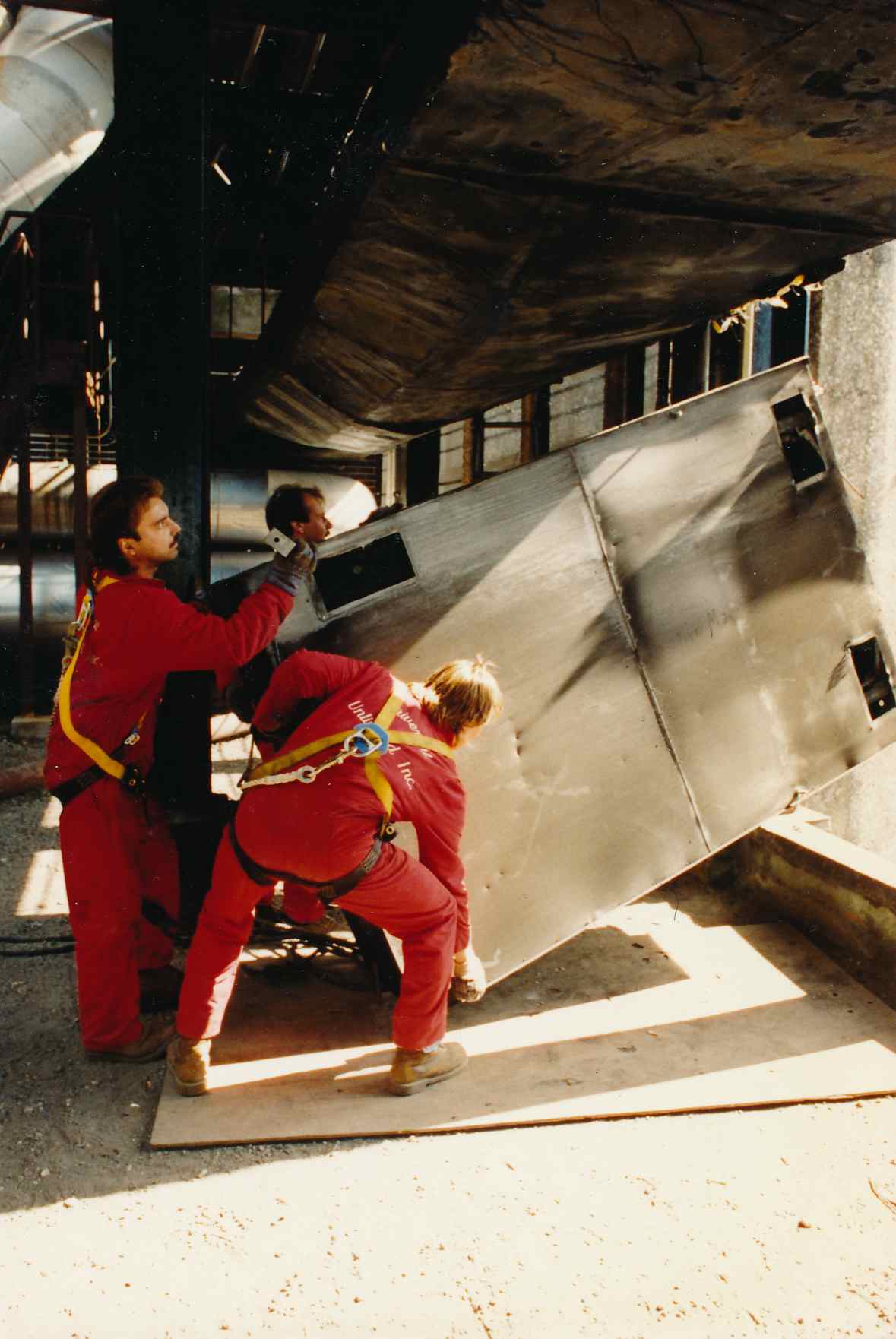
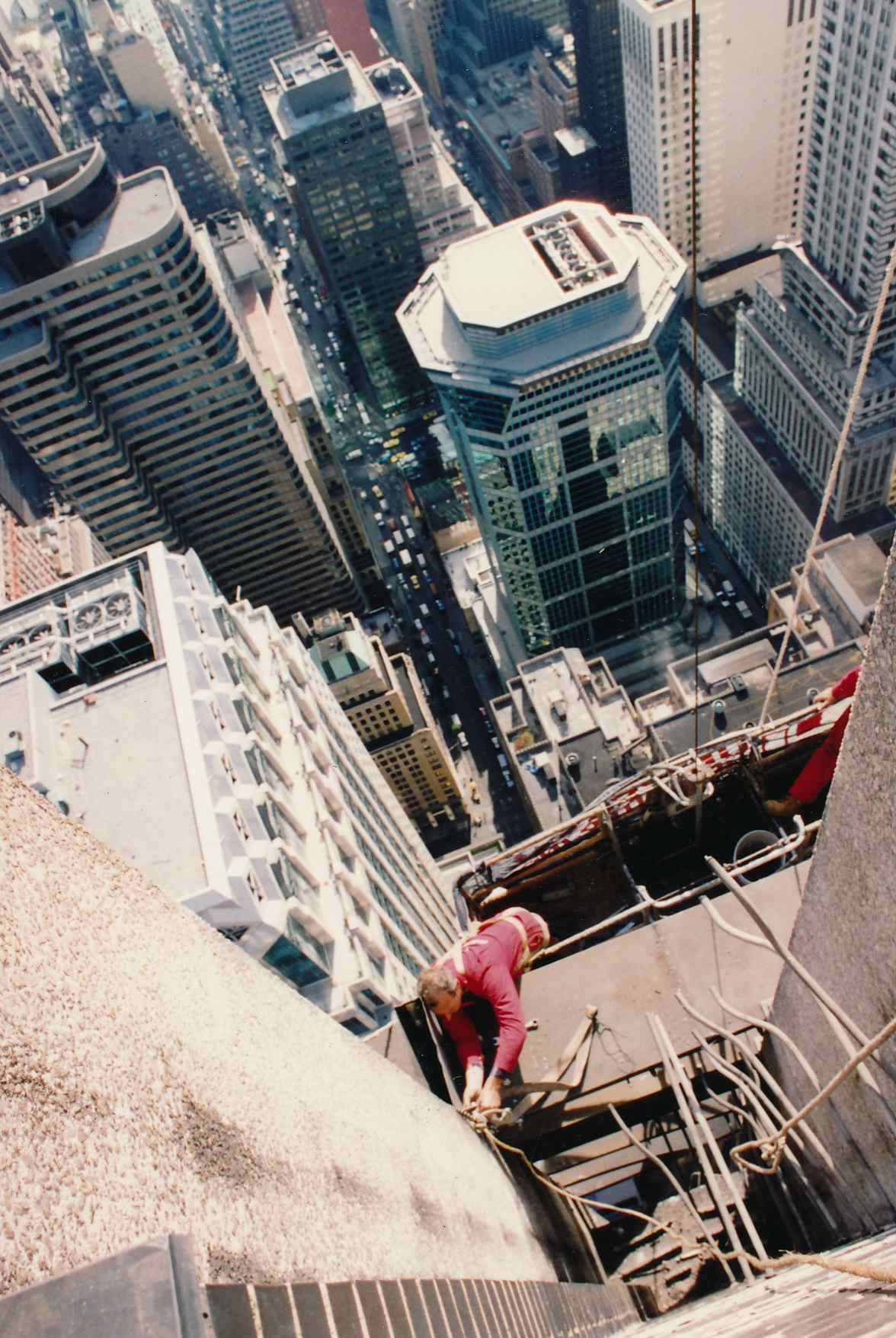
ยฉ Gordon Bevan. 1987
Ownership of the building evolved through legal and financial battles. Pan Am initially held a 10% equity stake while Wolfson and British partner Jack Cotton owned the remainder. By 1978, Pan Am gained full ownership by purchasing the Wolfson estateโs shares. In 1981, facing financial strains, Pan Am sold the building to MetLife for $400 million, then a record sum for a single building sale. Although Pan Am continued as a tenant, by 1991, the airline ceased operations. In 1992, MetLife replaced the Pan Am signage, giving the building its current name.
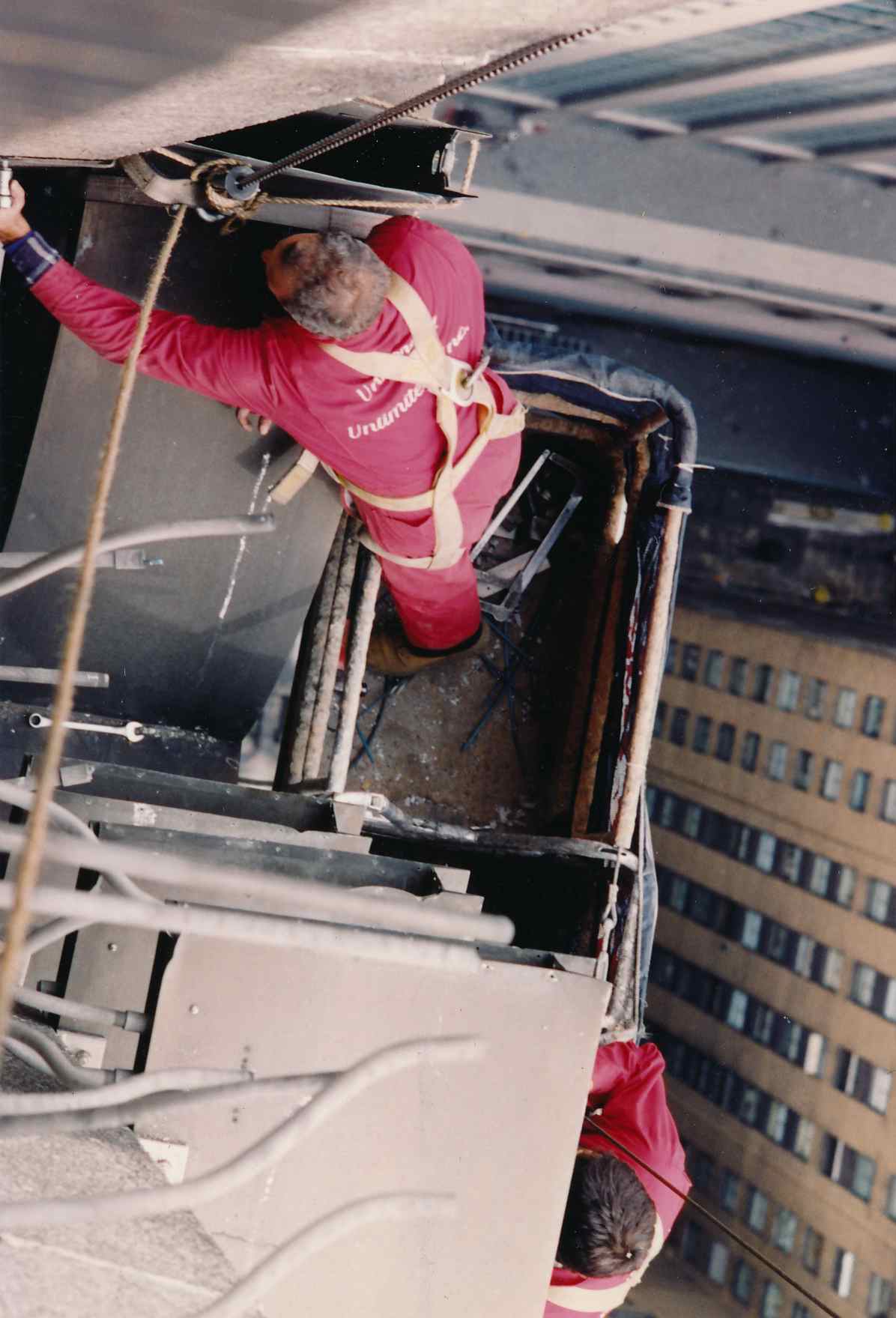
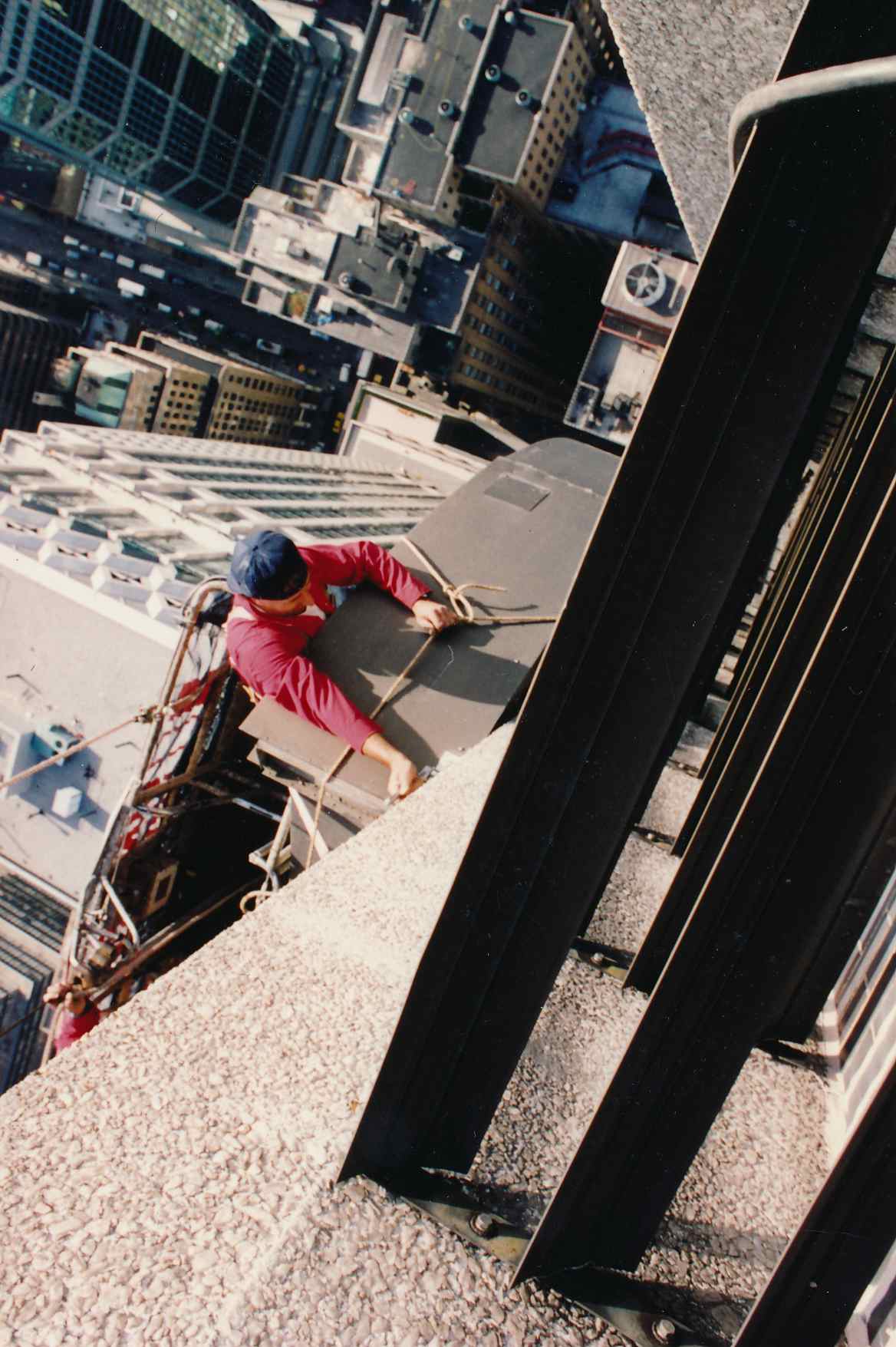
ยฉ Akiyoshi Yonehara. 1992
The MetLife Building, with its layered facade and recessed floors, remains a hallmark of post-war architectural ambition in Midtown Manhattan, symbolizing both the mid-century rise of corporate aviation and the transformation of the New York skyline. Its continued presence speaks to the architectural legacy and foresight of its creators, even as the Pan Am name and brand have become a part of aviation history.
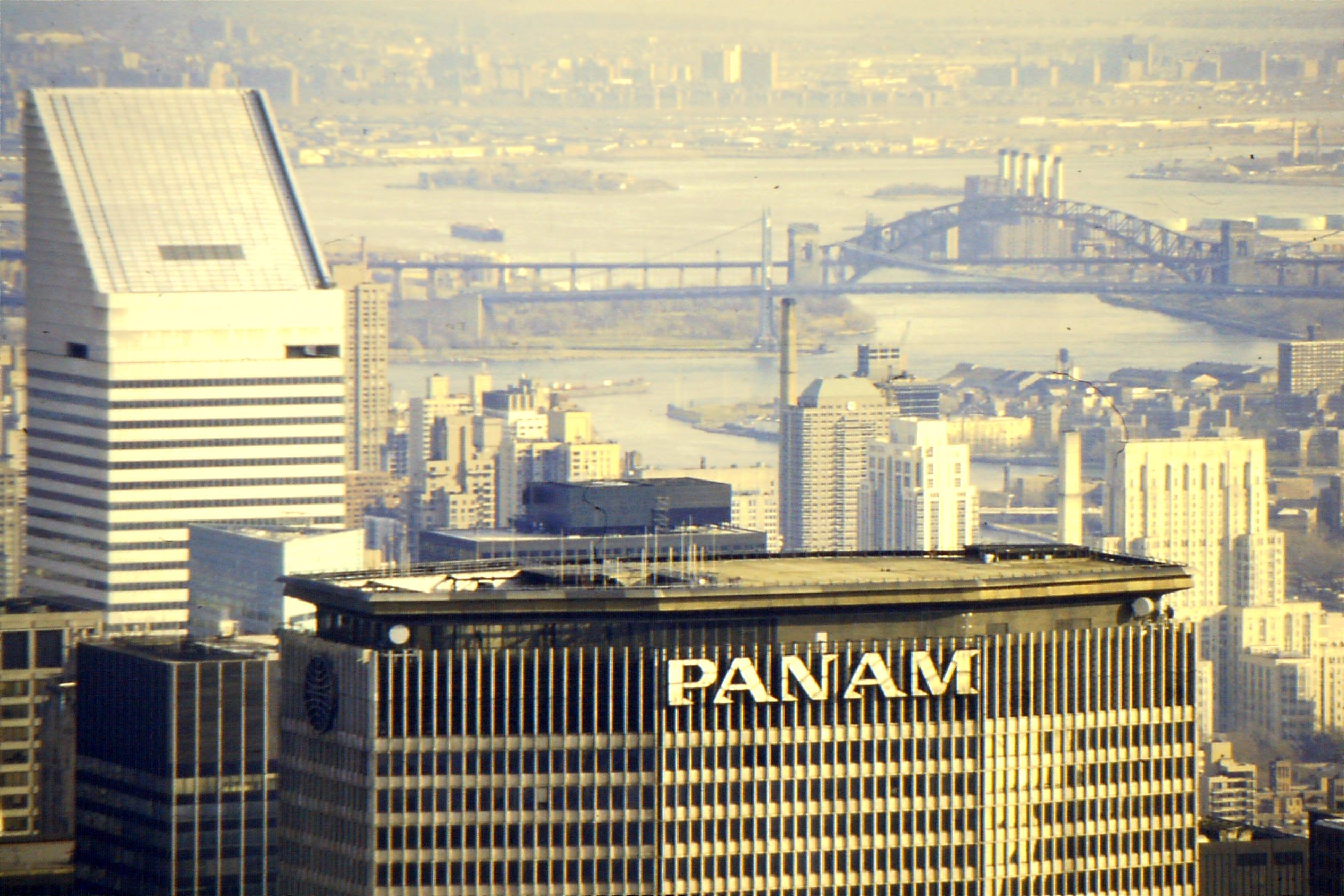
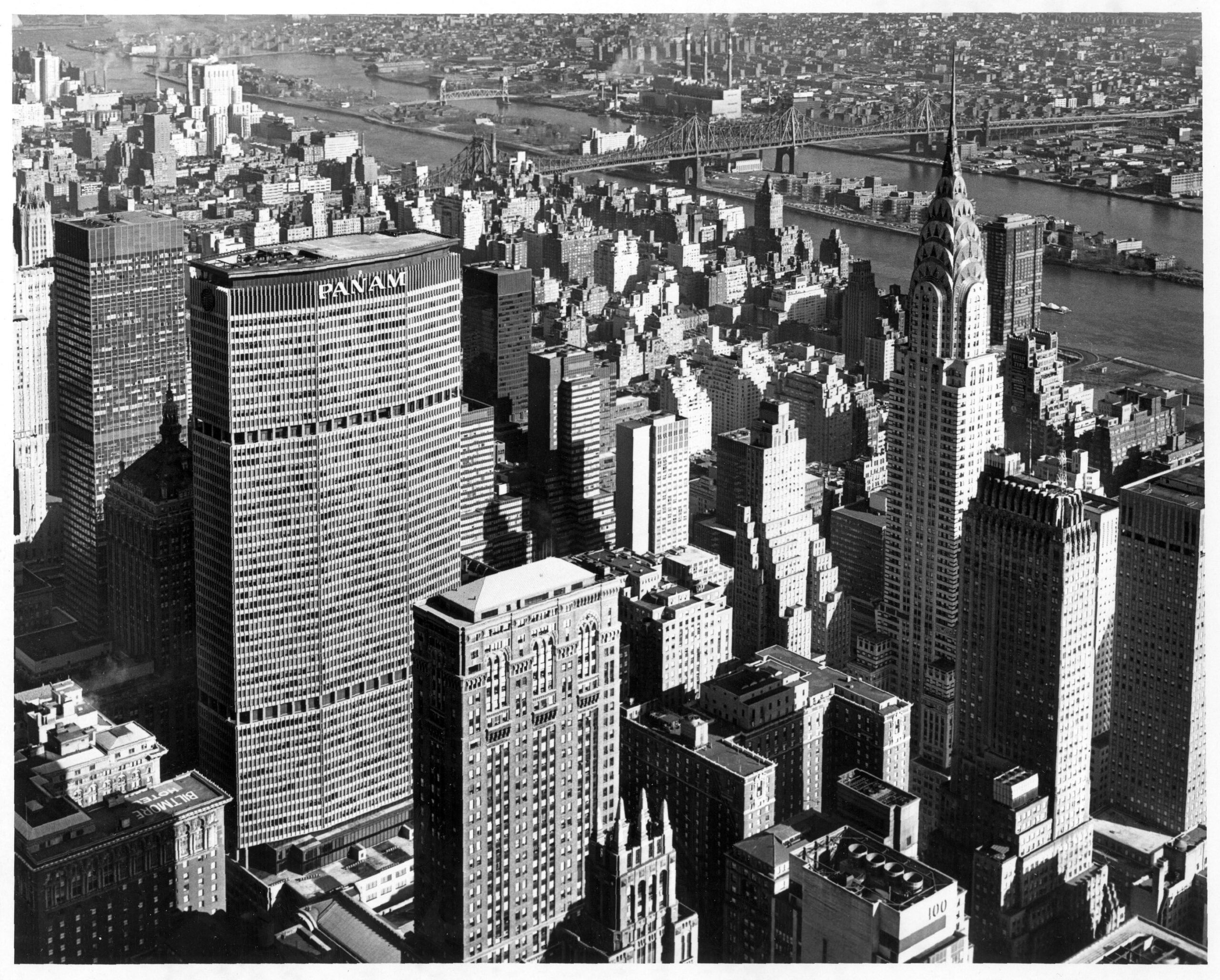
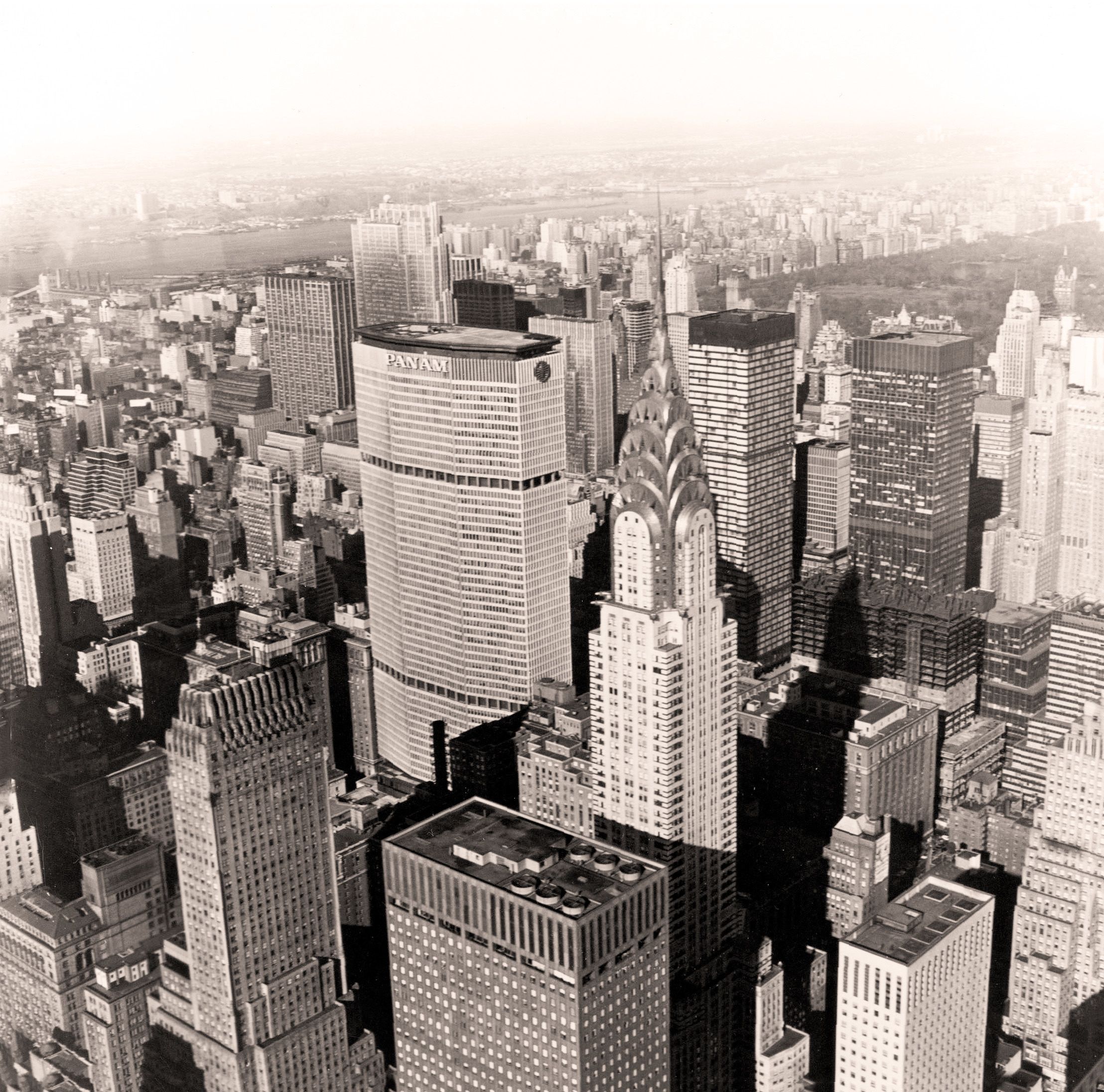
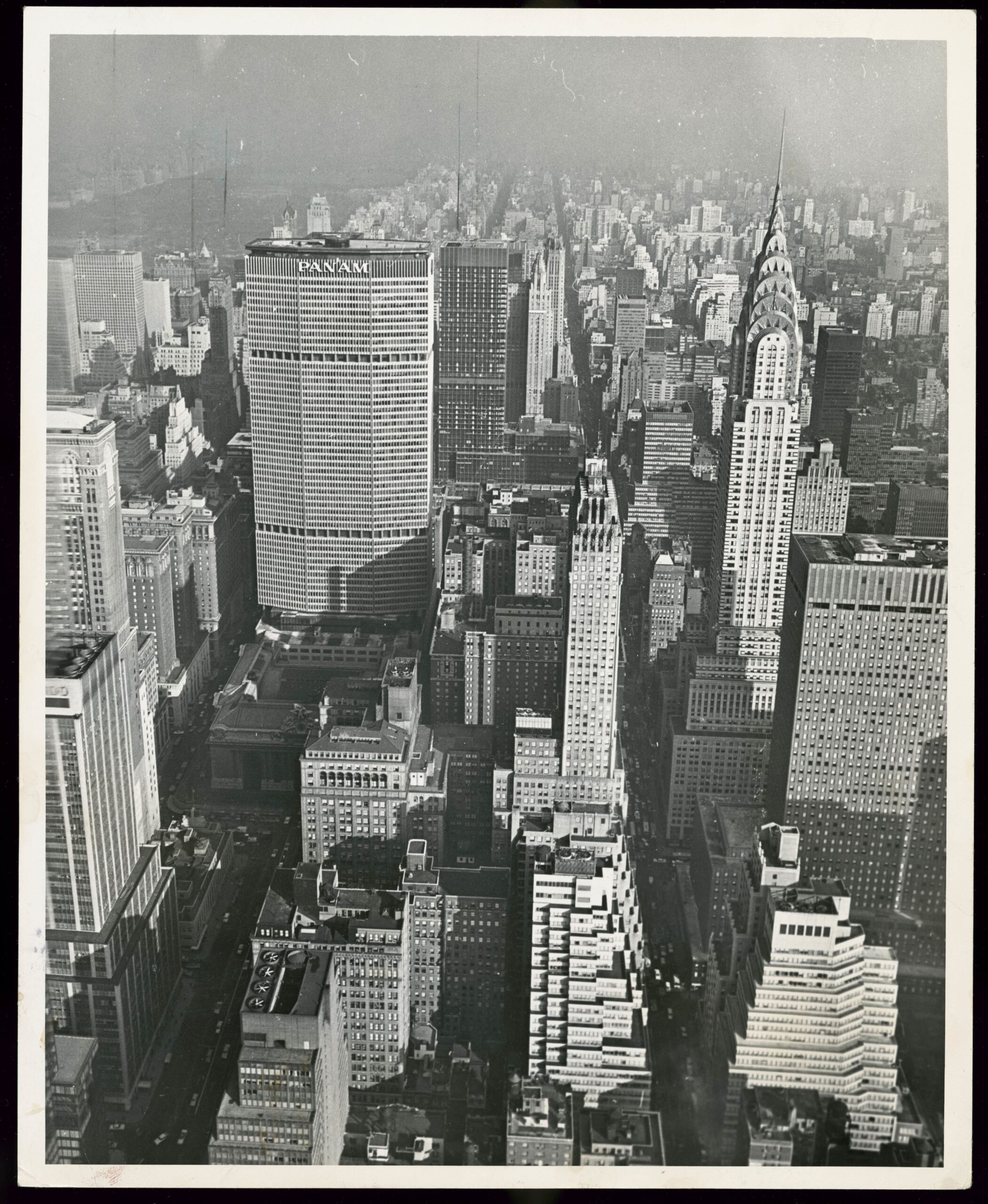
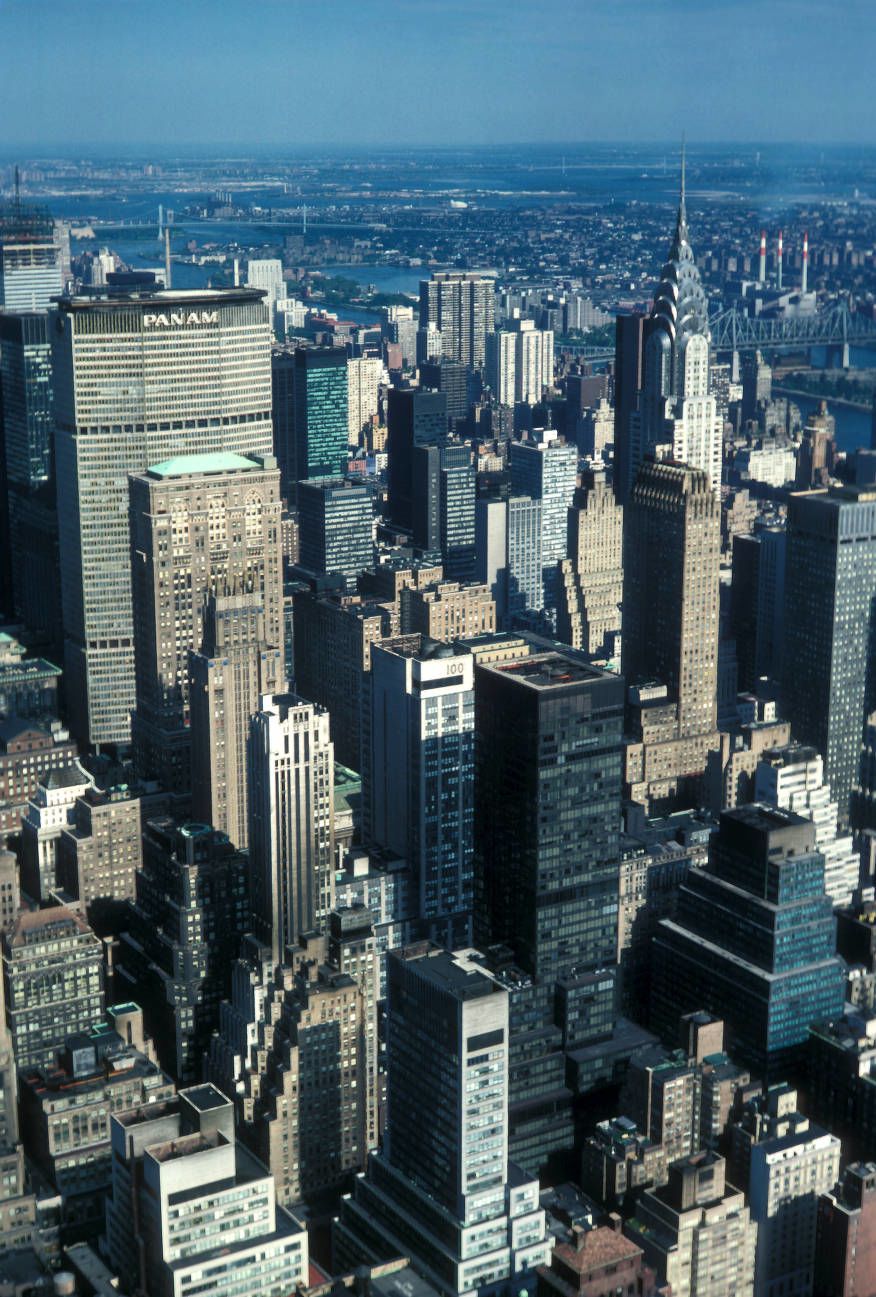
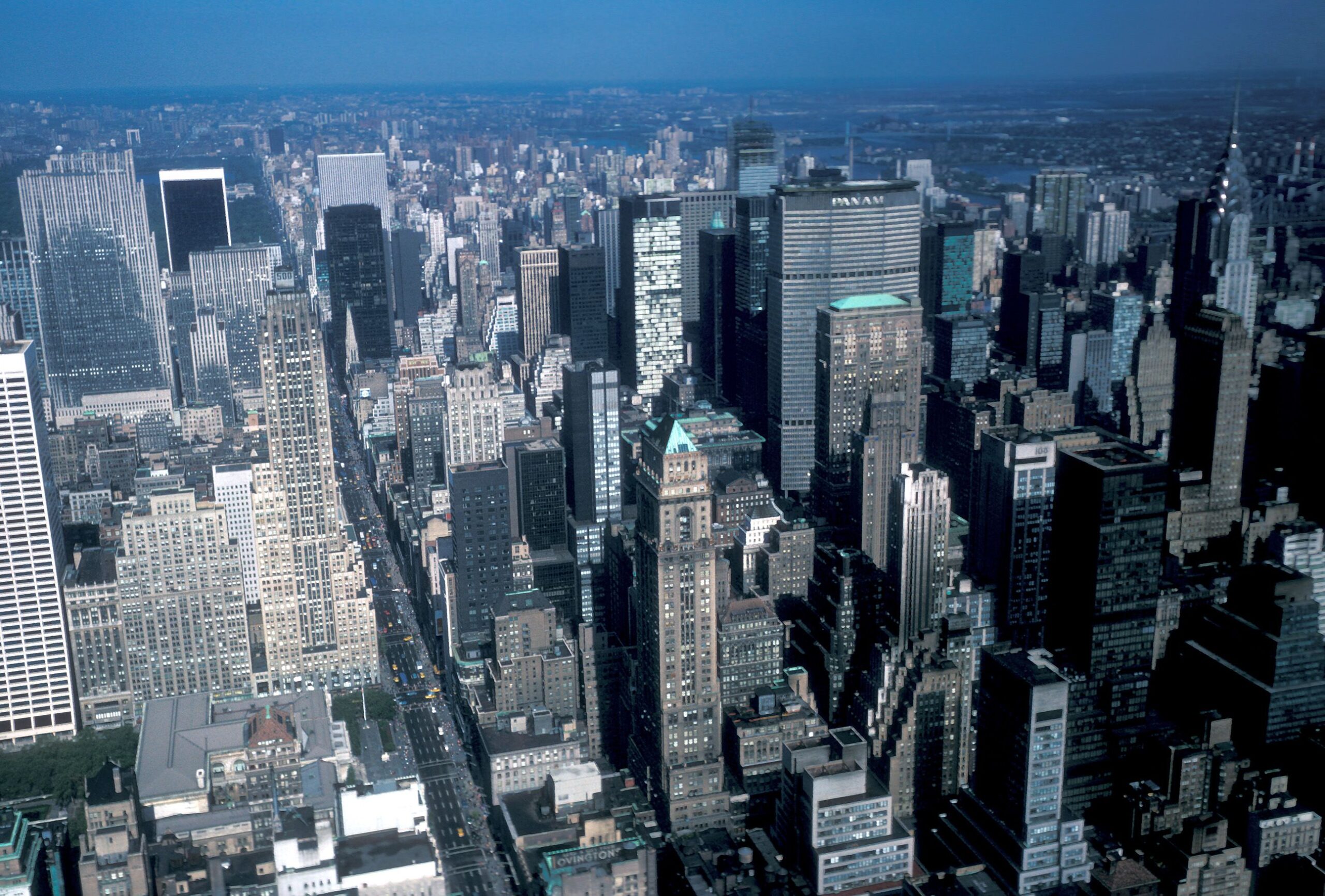
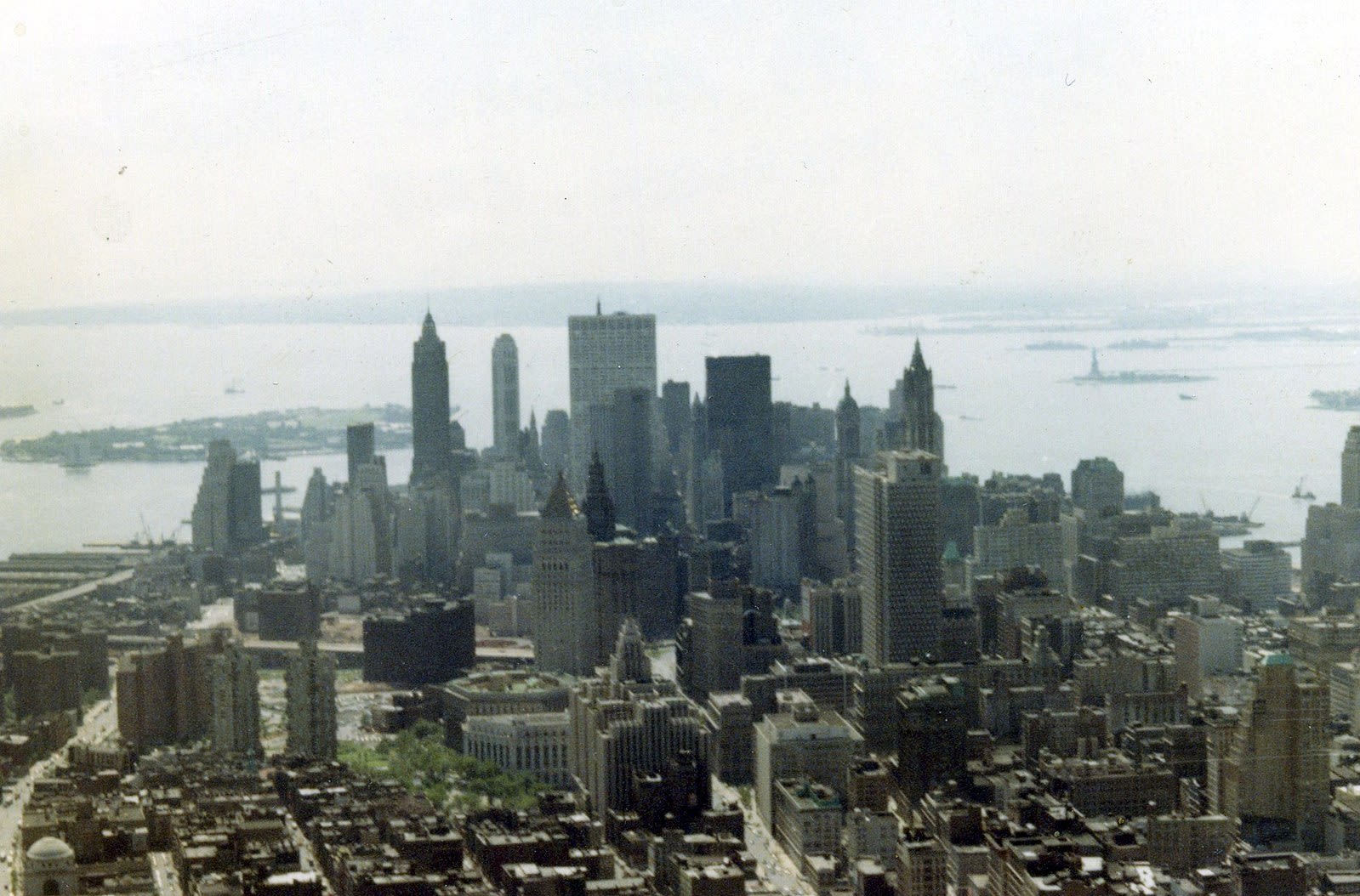
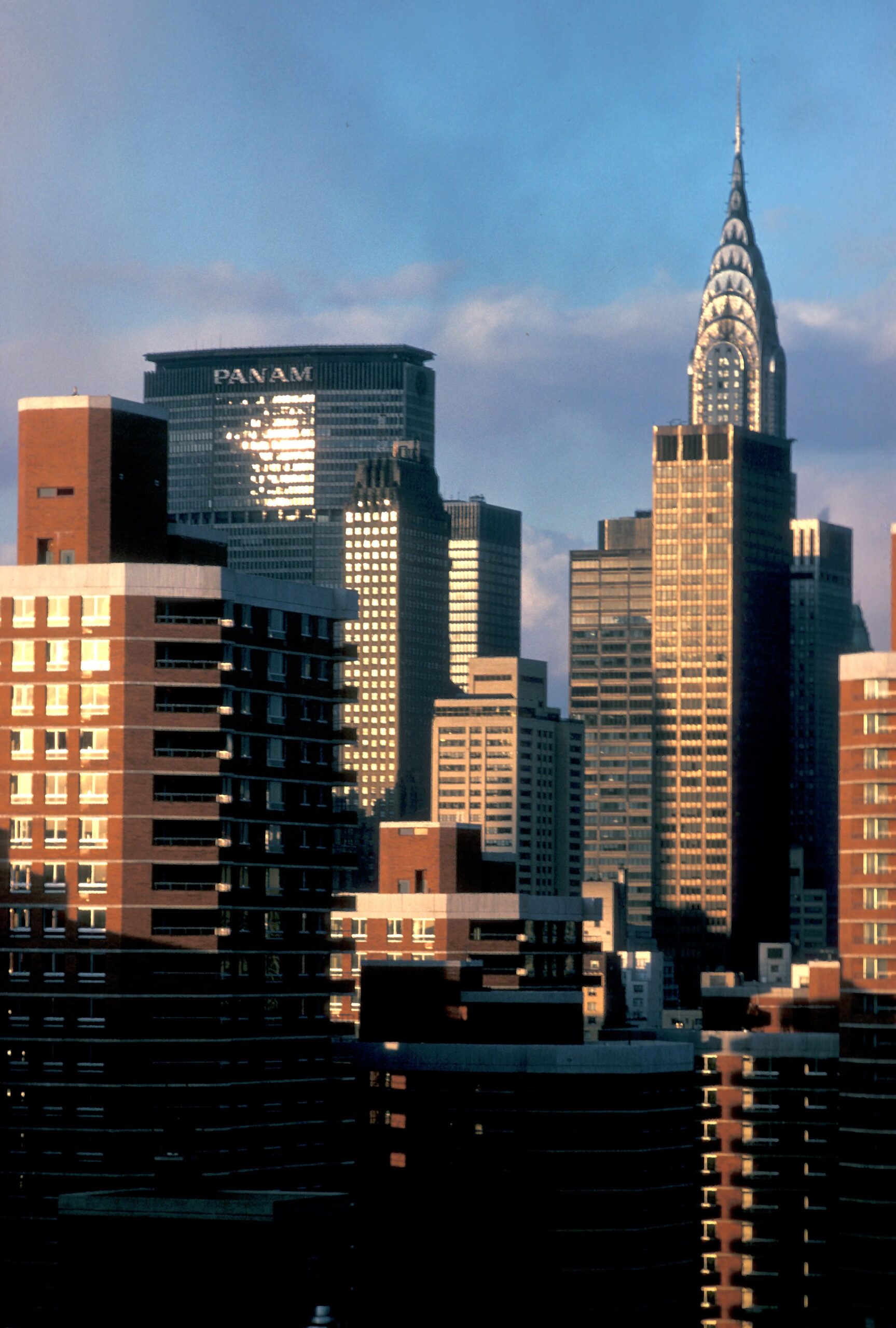
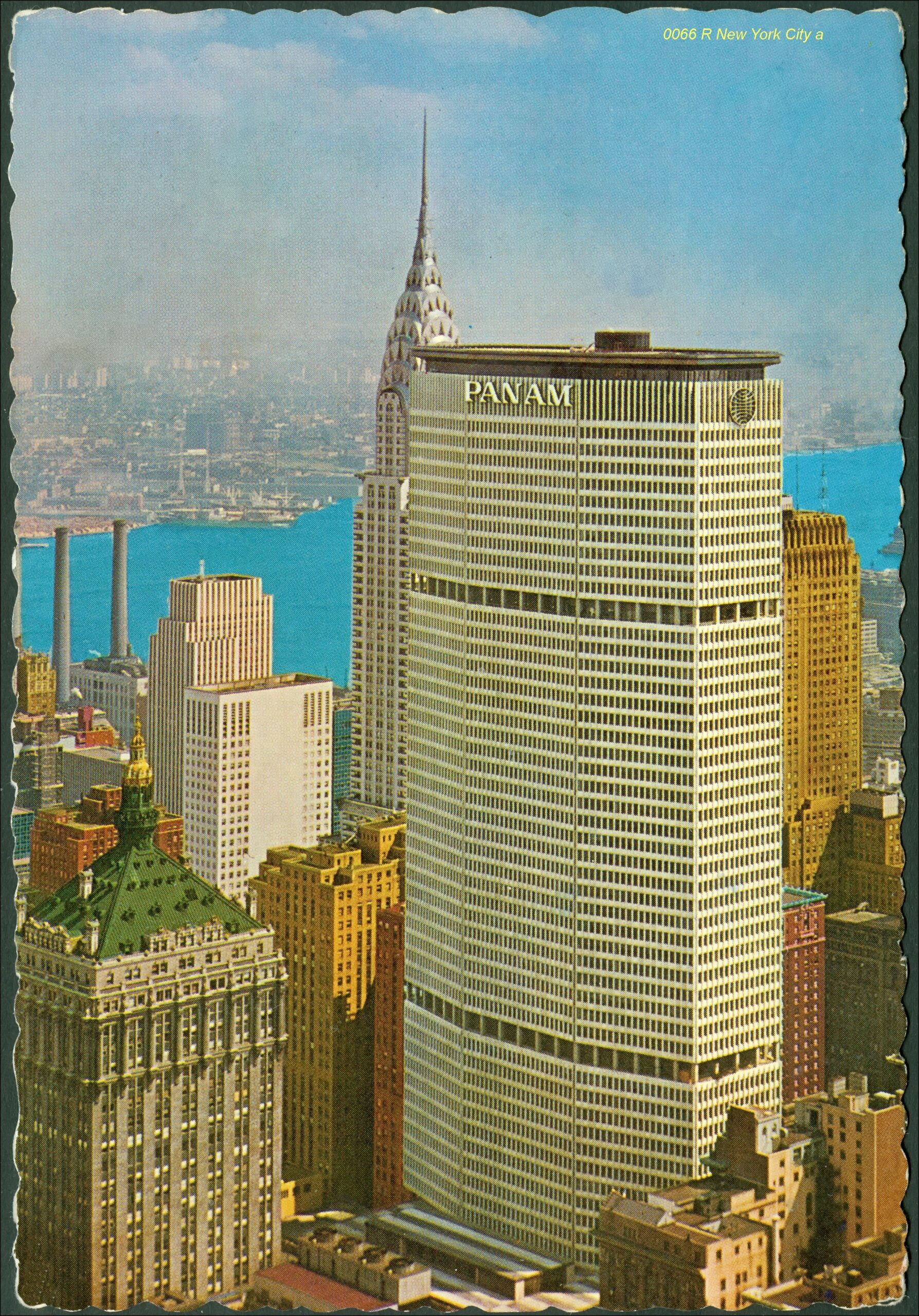
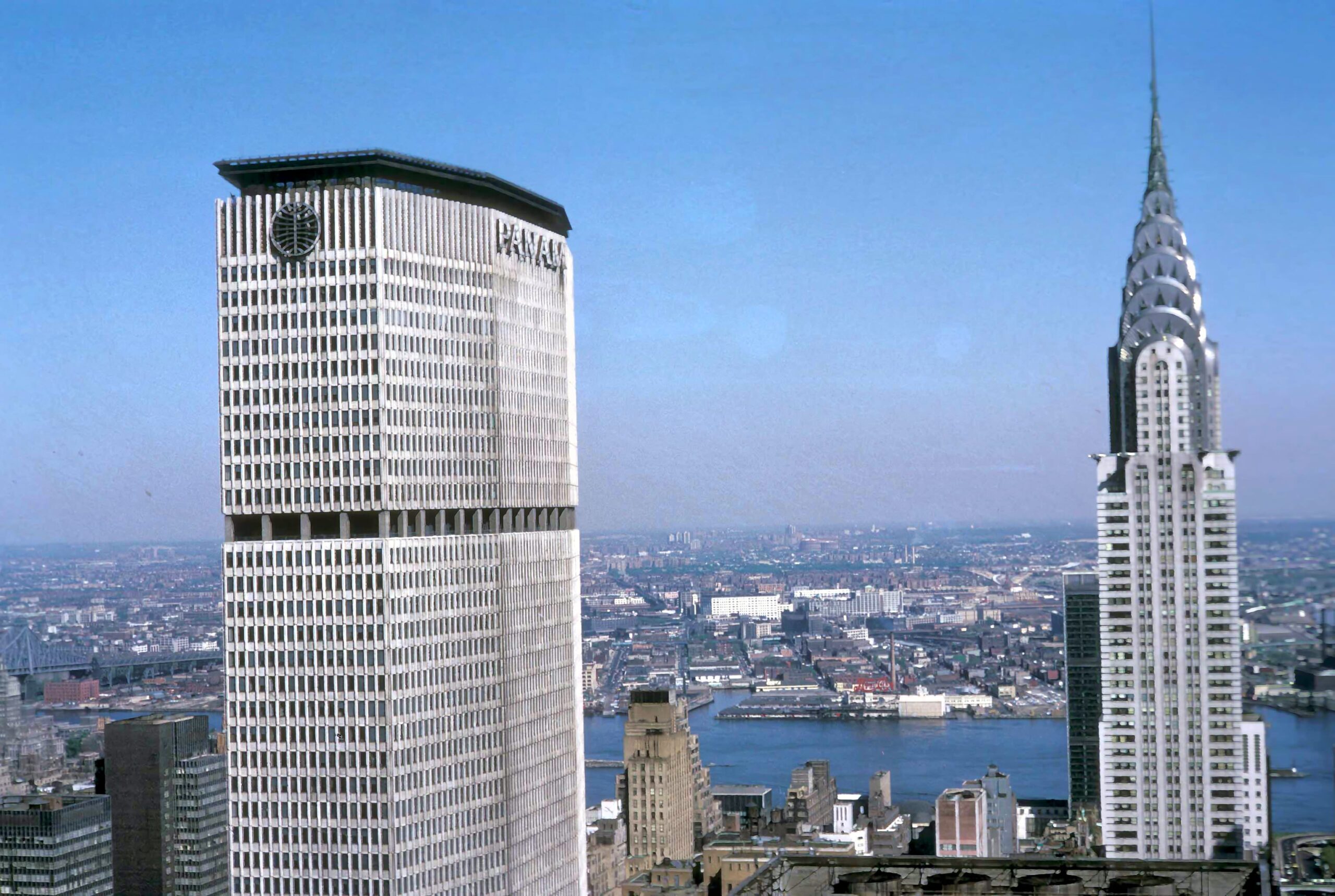
Aerial view of midtown Manhattan, including the Chrysler Building and the Pan Am Building, later known as the MetLife Building. ยฉ Pan Am Historical Foundation
Project Gallery
During the mid-1960s, New York’s Pan Am Building featured a helipad on its roof, offering helicopter service to JFK Airport multiple times a day. The 59-story skyscraper was completed in 1963, designed by architects Richard Roth, Pietro Belluschi, and Bauhaus founder Walter Gropius. ยฉ F. Roy Kemp, circa 1966ยฉ Paul Friend. 1963Southeast view of the Pan Am Building with the Chrysler Building nearby. ยฉ Pan Am Historical FoundationView of Pan Am Building from Park Avenue South. ยฉ Pan Am Historical FoundationThe Pan Am Building and Grand Central Terminal aerial view. ยฉ Pan Am Historical FoundationThe Pan Am Building looking south on Park Avenue. ยฉ Pan Am Historical FoundationPan Am Building from the northeast, showing Chrysler and Helmsley buildings. ยฉ Pan Am Historical Foundationยฉ Columbia University Libraries. 1964.Richard Roth, Walter Gropius, & Pietro Belluschi, architects unveiled a new design showing the Pan Am Building sitting on an east-west axis, behind Grand Central Terminal. ยฉ Pan Am Historical Foundationยฉ Pan Am Historical FoundationPromotional image of the Pan Am Building from the ground up. Pan American Airways. ยฉ Thomas O’Halloran. 1974ยฉ University of Miami Special Collections, Pan American Airways, Inc. records.200 Park Avenue – East 45th Street.” The Pan Am Building overlooking Grand Central Terminal in 1963. ยฉ New York Public Libraryยฉ Pan Am Historical Foundationยฉ Herman Hiller. 1964Midtown Manhattan showing Pan Am Building & Chrysler Building. ยฉ Harrison Foremanยฉ Harrison Foremanยฉ Pan Am Historical Foundationยฉ University of Miami Special Collections, Pan American Airways, Inc. records.ยฉ Akiyoshi Yonehara. 1992ยฉ John Atherton. 1967ยฉ Gordon Bevan. 1987.Pan Am Building concept on the cover of the Pan American World Airways 1963 Annual Report. ยฉ Pan Am Historical Foundationยฉ Pan Am Historical Foundationยฉ Michelle Young1965 Brochure: “NOW Whirlybirds fly from the Pan Am Building direct to Pan Am Jets” featuring New York Airways helicopter service. ยฉ University of Miami Special Collections, Pan American Airways, Inc. records. 1965.1965 Brochure: “NOW Whirlybirds fly from the Pan Am Building direct to Pan Am Jets” featuring New York Airways helicopter service. ยฉ University of Miami Special Collections, Pan American Airways, Inc. records. 1965.1965 Brochure: “NOW Whirlybirds fly from the Pan Am Building direct to Pan Am Jets” featuring New York Airways helicopter service. ยฉ University of Miami Special Collections, Pan American Airways, Inc. records. 1965.New York Airways helicopter aloft. ยฉ Pan Am Historical FoundationHelicopter advertised in February 1-28, 1966 Pan Am Timetable. ยฉ University of Miami Special Collections, Pan American Airways, Inc. records. 1966.Passengers board a helicopter on the Pan Am Building roof. ยฉ Pan Am Historical FoundationPan Am Building postcard. ยฉ Morton1905New York, Manhattan, Pan Am Building (left) and Chrysler Building (right). 1969. ยฉ Harrison Foremanยฉ Pan Am Historical FoundationDignitaries assembled for ribbon cutting which opened Pan Am Building are, left to right: Jack Cotton, chairman of City Centre Properties, co-owners of building; Mrs. Erwin S. Wolfson, widow of the buildingโs originator and builder; Governor Nelson A. Rockefeller of New York State; Mayor Robert F. Wagner of New York City; and Pan American President Juan T. Trippe. ยฉ University of Miami Special Collections, Pan American Airways, Inc. records.Drawing of the Pan Am Building, circa 1960, with a view looking on north Park Avenue. ยฉ Pan Am Historical FoundationDrawing of the Pan Am Building, circa 1960, with a view looking on south Park Avenue. ยฉ Pan Am Historical Foundationยฉ Pan Am Historical FoundationPan Am Building escalators from Grand Central Terminal. ยฉ Pan Am Historical FoundationPan Am Building street level. ยฉ Pan Am Historical FoundationPan Am Building lobby level. ยฉ Pan Am Historical FoundationEven on the lower floors, light and vista are permanent in this freestanding building. Above the 30th floor, a panorama of the greatest city and harbor in the world stretches as far as the eye can see in all directions. ยฉ Pan Am Historical FoundationNew York, Manhattan, view of Chrysler and Pan Am Buildings. ยฉ Harold Mayer. 1975.The Pan Am Building, seen from Park Avenue in 1980. ยฉ Roger Wollstadtยฉ Pan Am Historical Foundationยฉ Pan Am Historical Foundationยฉ Pan Am Historical FoundationSign removal from Pan Am Building. 1992. ยฉ Pan Am Historical FoundationSign removal from Pan Am Building. 1992. ยฉ Pan Am Historical FoundationSign removal from Pan Am Building. 1992. ยฉ Pan Am Historical FoundationSign removal from Pan Am Building. 1992. ยฉ Pan Am Historical FoundationLobby of the MetLife Building in Manhattan, New York, seen in March 2021. ยฉ Ryan Ng, EpicgeniusLobby of the MetLife Building in Manhattan, New York, seen in March 2021. ยฉ Ryan Ng, EpicgeniusLobby of the MetLife Building in Manhattan, New York, seen in March 2021. ยฉ Ryan Ng, Epicgenius
Project Location
Address: 200 Park Ave, New York, NY 10166, United States
Location is for general reference and may represent a city or country, not necessarily a precise address.
Architect
Anton Giuroiu
Anton is a RIBA accredited architect, when he's offline, he spends his time with the sculpta.ba architecture practice or in the MKR.S crafting studio, laser engraving and laser cutting architecture models. In his free time he geeks over taking care of his pencil and mechanical pencil collection.
Expertises: Architecture, Interior design, Home improvement, Drawing, Laser machining