

Architects: Sert, Jackson & Gourley
Area: 60,000 m² (650,000 ft²)
Year: 1964
Photography: Jannis Werner, Michelle Miller, Alexandru Culiuc, David Kurtis, eileansiar, aidaneus, WikiArquitectura, Wikimedia Commons, Daderot, Antony-22
Renovation Architects: Bruner/Cott Architects
City: Cambridge
Country: United States
Peabody Terrace residential complex designed by Sert, Jackson & Gourley in Cambridge has redefined graduate housing by integrating density, community space, and modernist urban principles within a riverfront setting, completed in 1964. The project accommodates nearly 1,500 residents across approximately 500 units through a composition of low-rise blocks and three 22-story towers, balancing campus expansion with surrounding neighborhood scale. Circulation is organized through pedestrian pathways and a network of shared courtyards, replacing vehicular streets with collective open space. A modular system and skip-stop elevator strategy improve efficiency while enabling cross-ventilated units with dual orientation. The complex incorporates social infrastructure including nurseries, laundries, meeting spaces, and recreational areas, forming a self-sufficient residential environment. Material expression relies on exposed concrete, prefabricated elements, and a layered façade of balconies and colored panels. The project remains a key reference in postwar housing, linking urban planning, collective living, and architectural form.
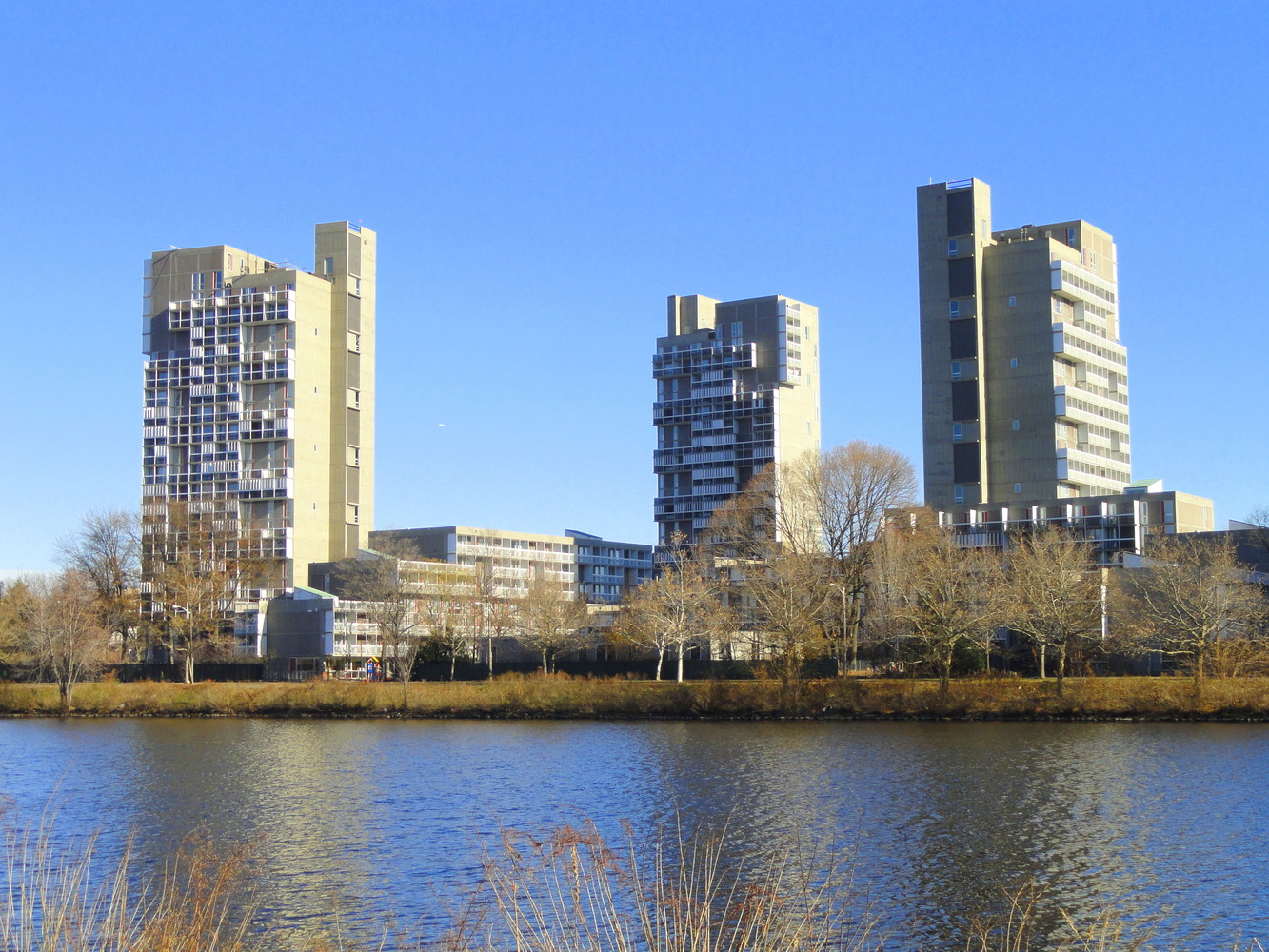
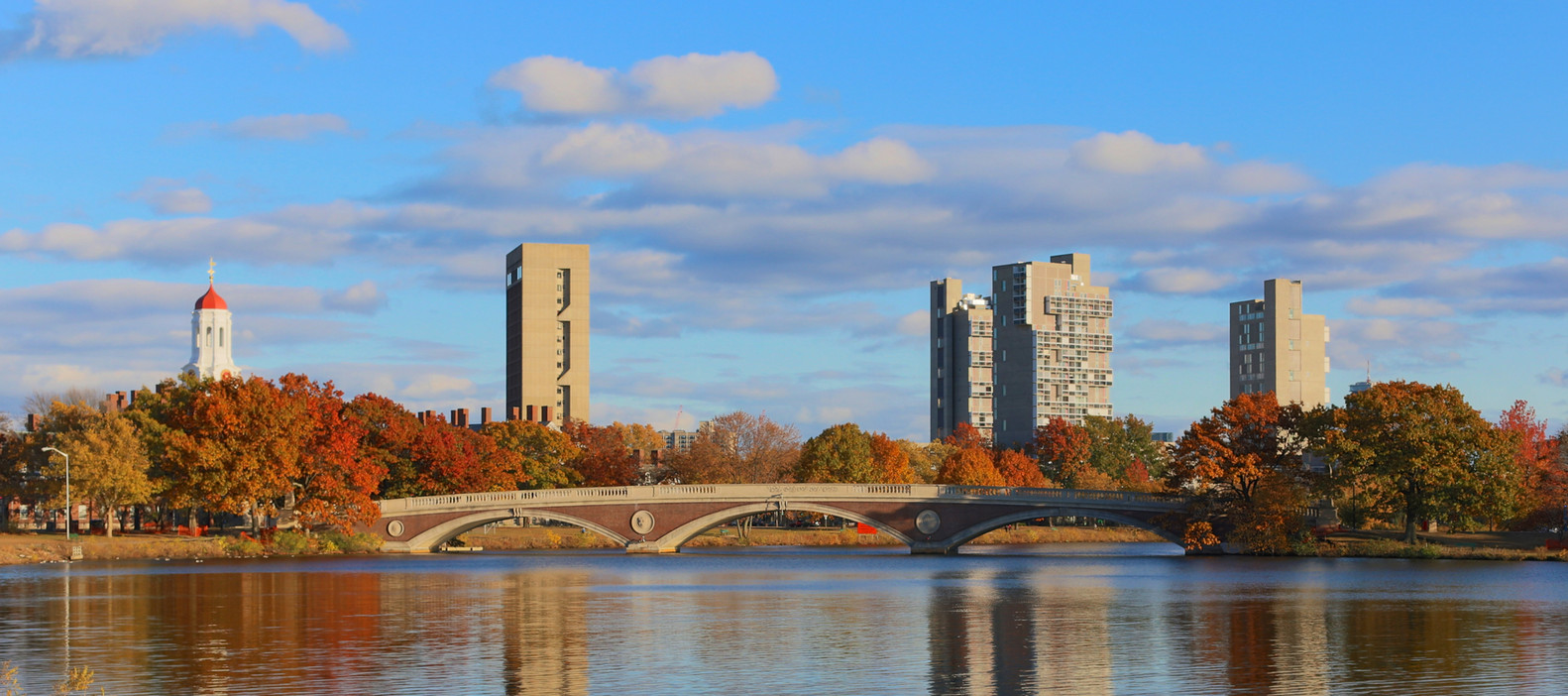
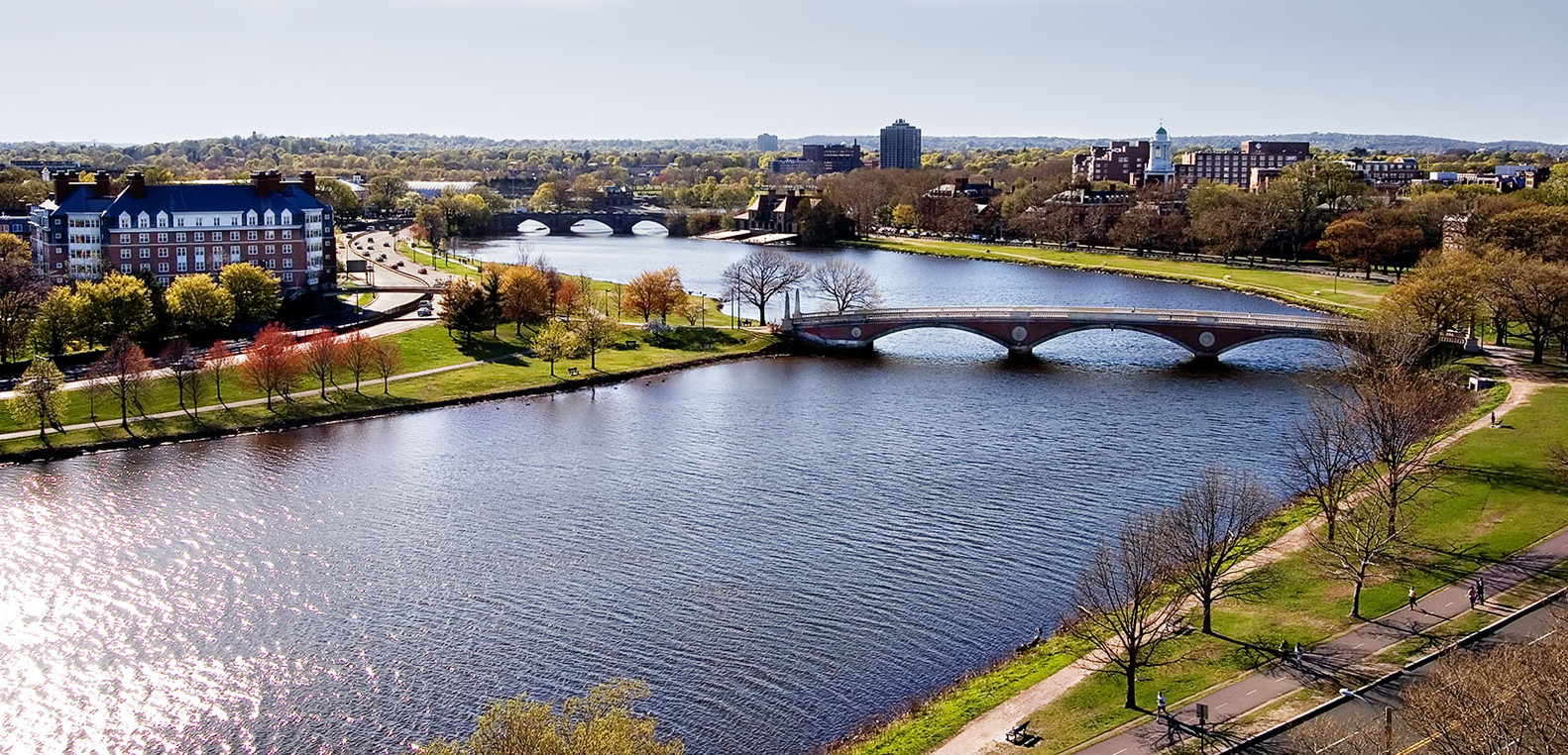
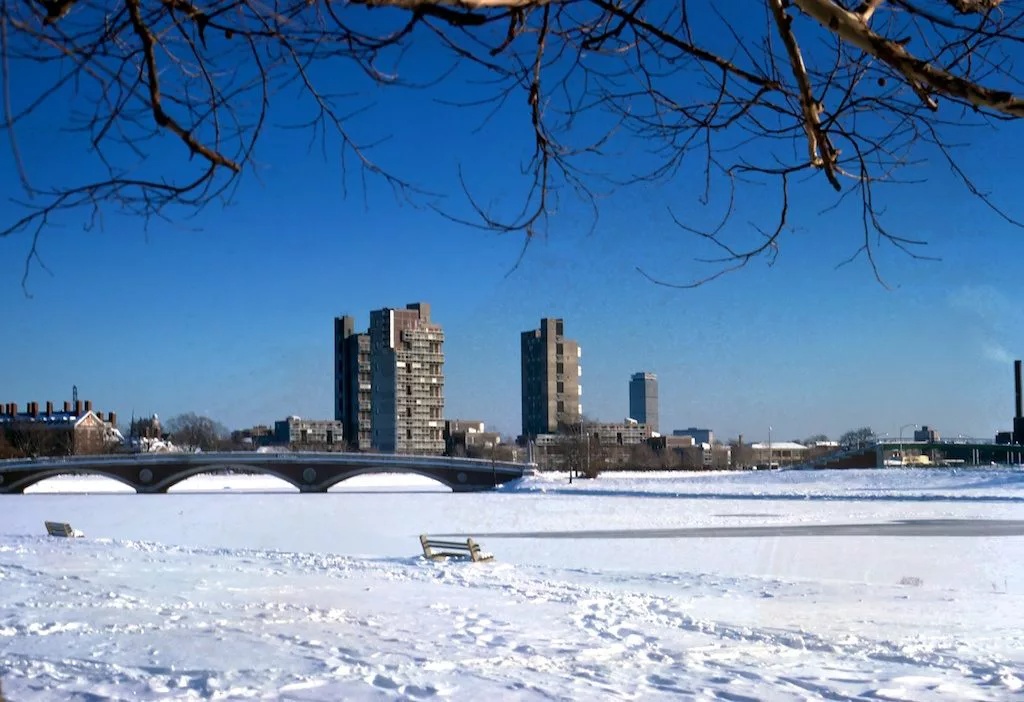
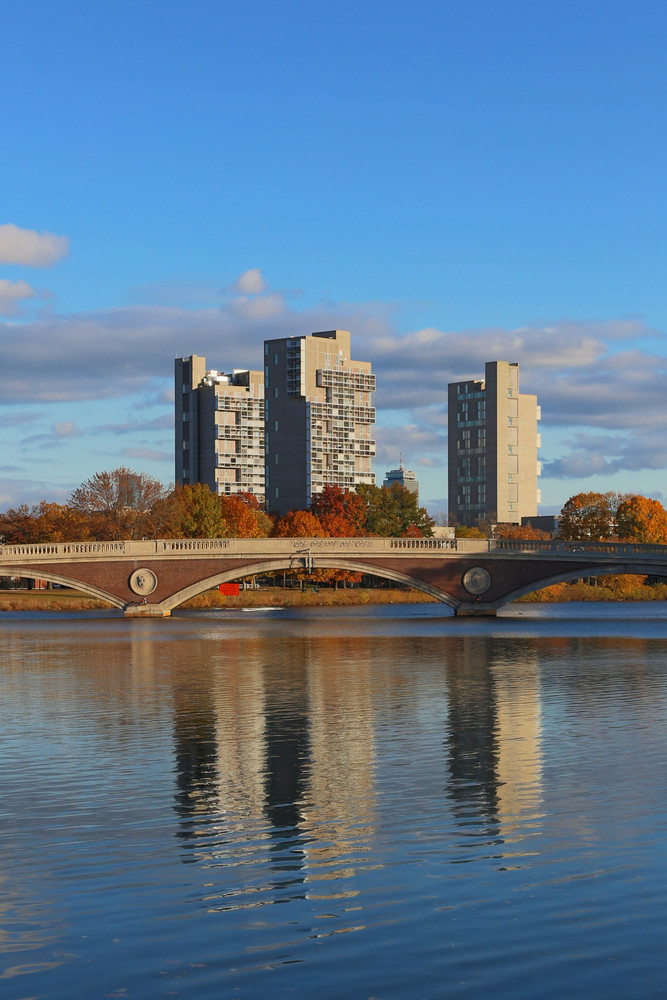
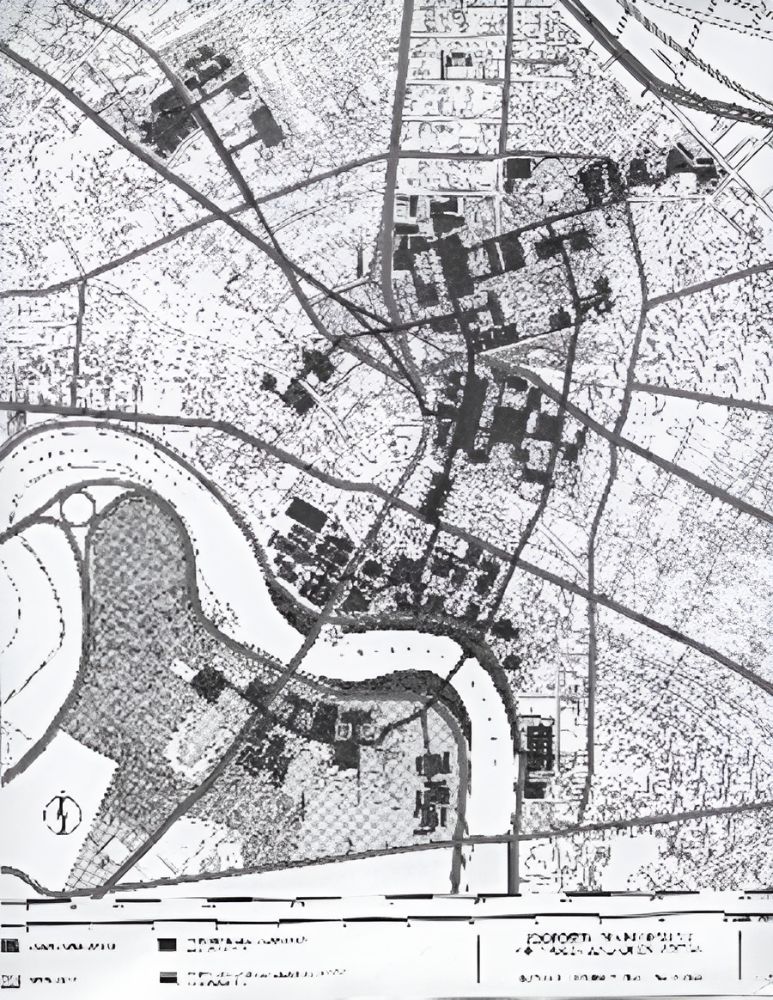
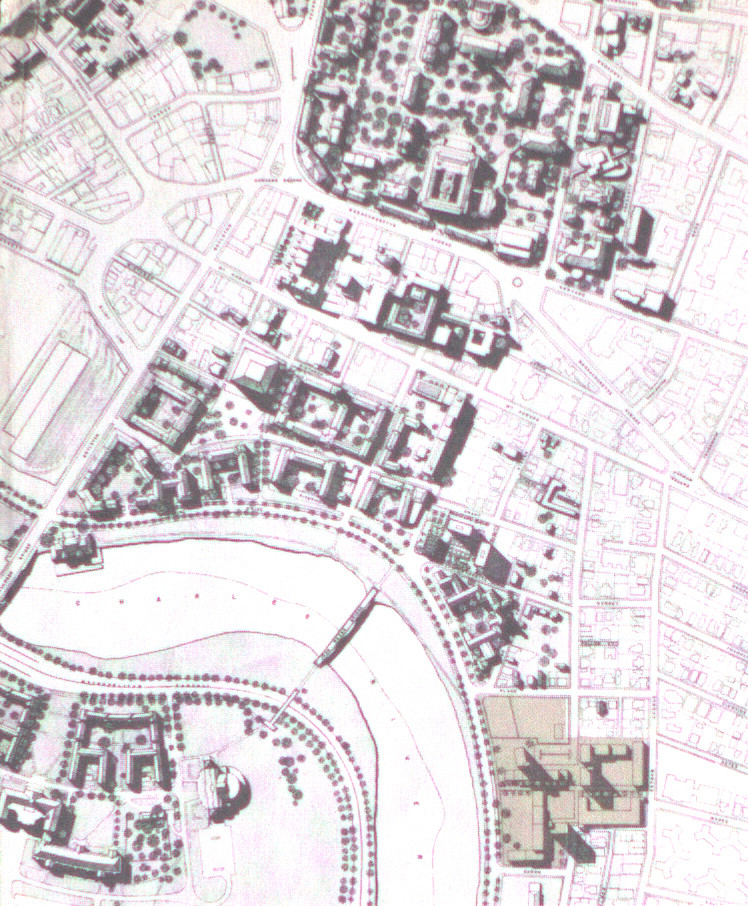
Peabody Terrace is positioned along the Charles River in Cambridge as part of a broader vision for Harvard’s expansion under Josep Lluís Sert. The development forms part of a larger campus strategy that introduced modern architecture into a predominantly traditional context. The site connects the university to the Riverside neighborhood while maintaining direct access to the riverfront.
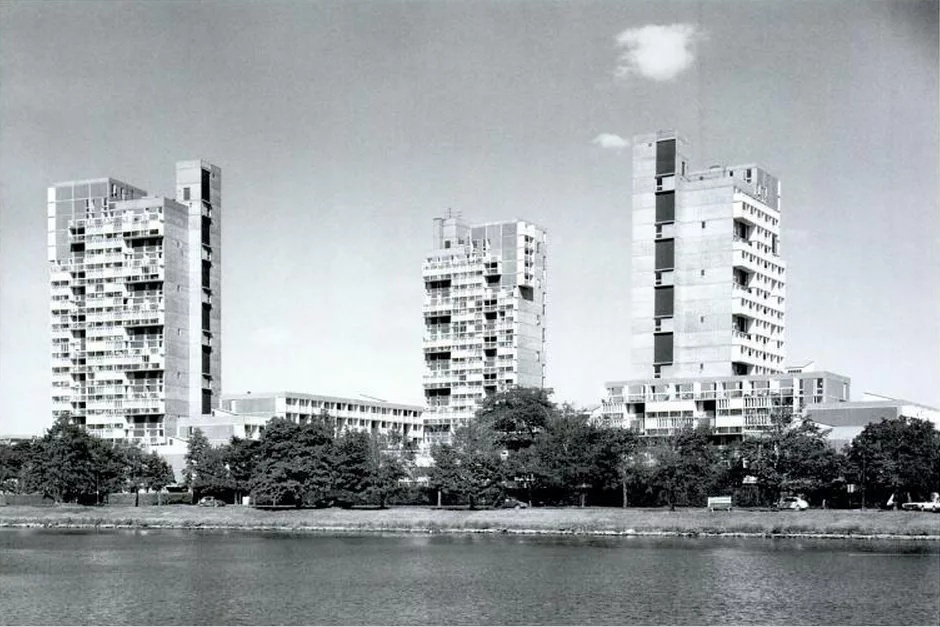
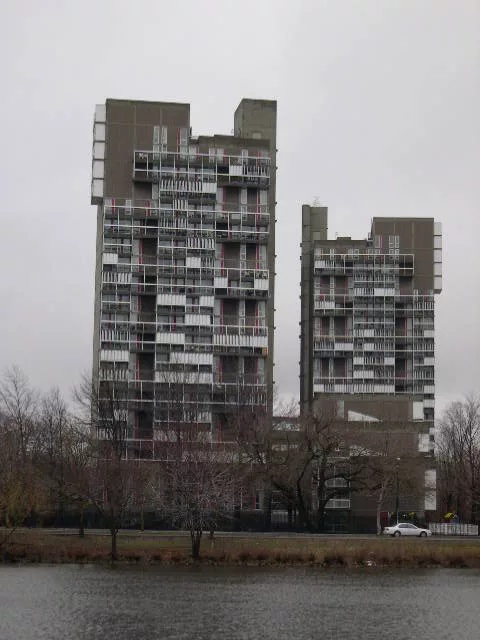
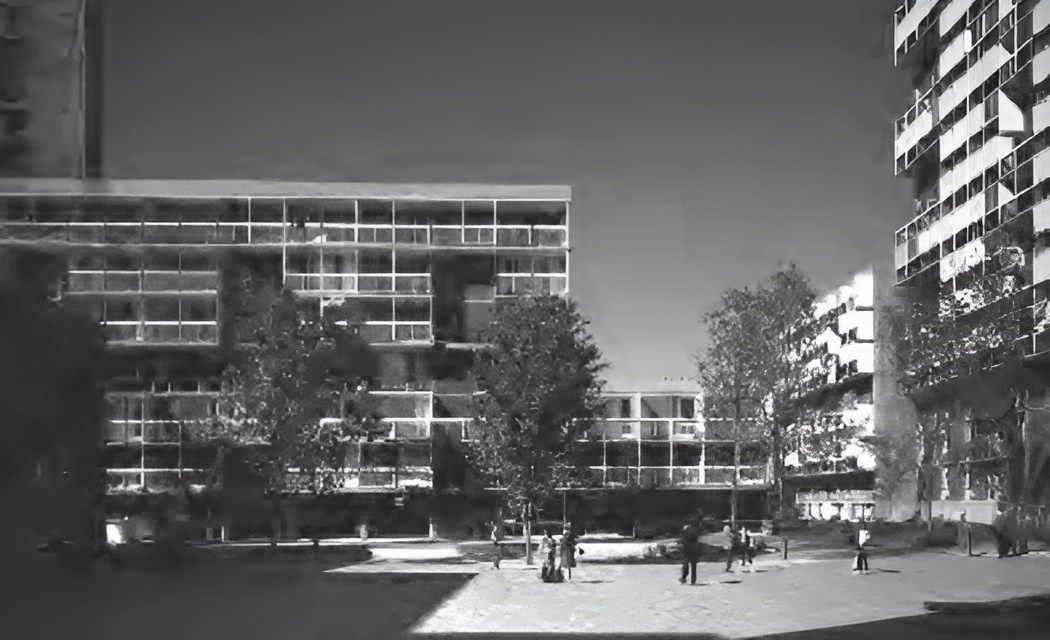
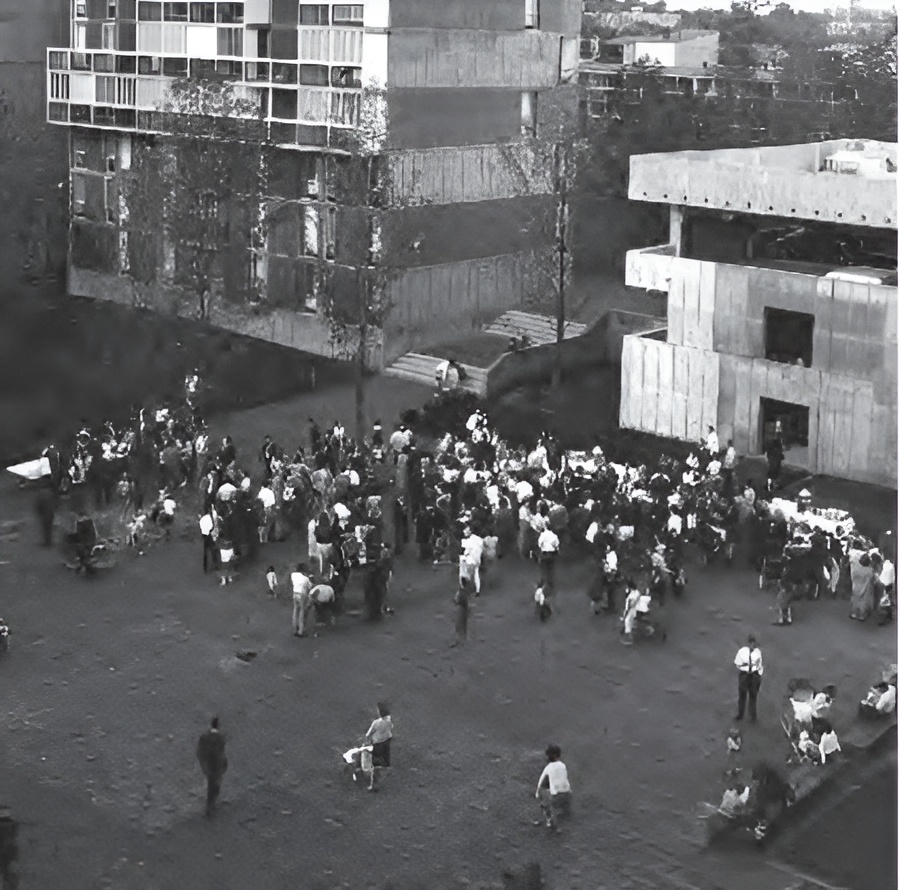
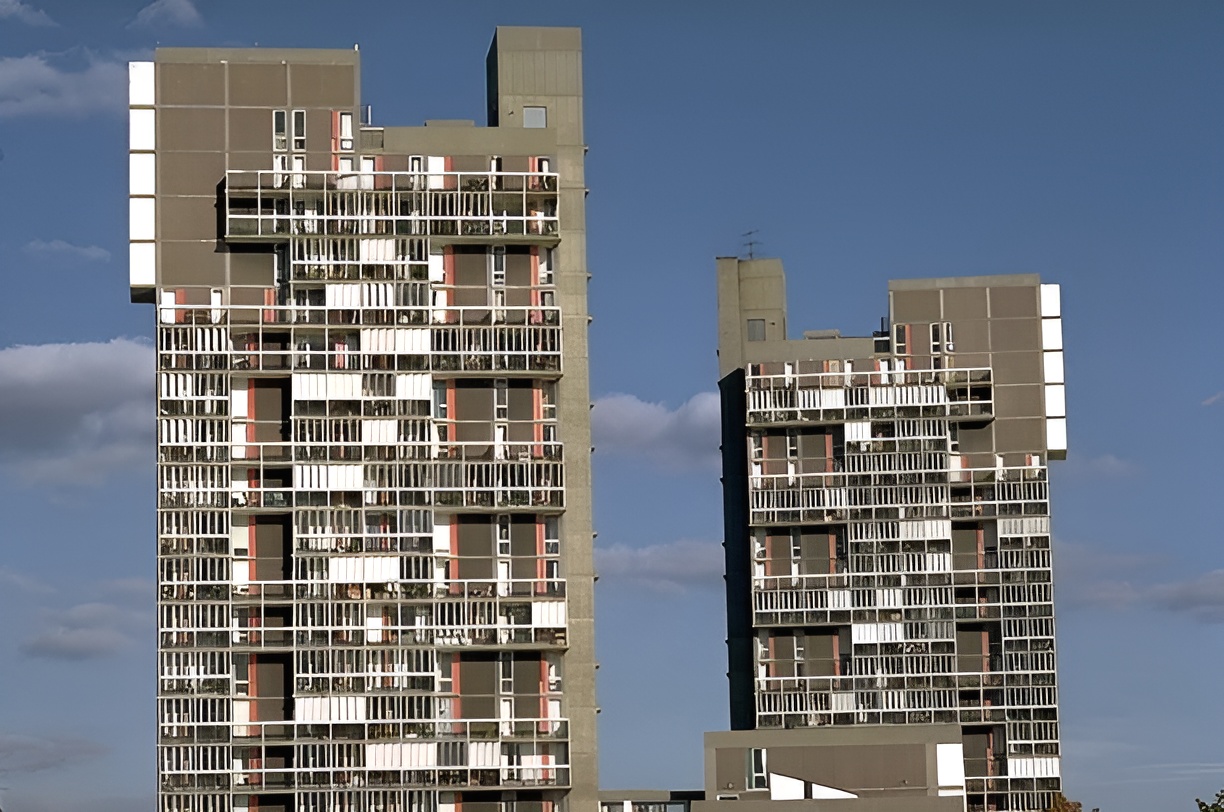
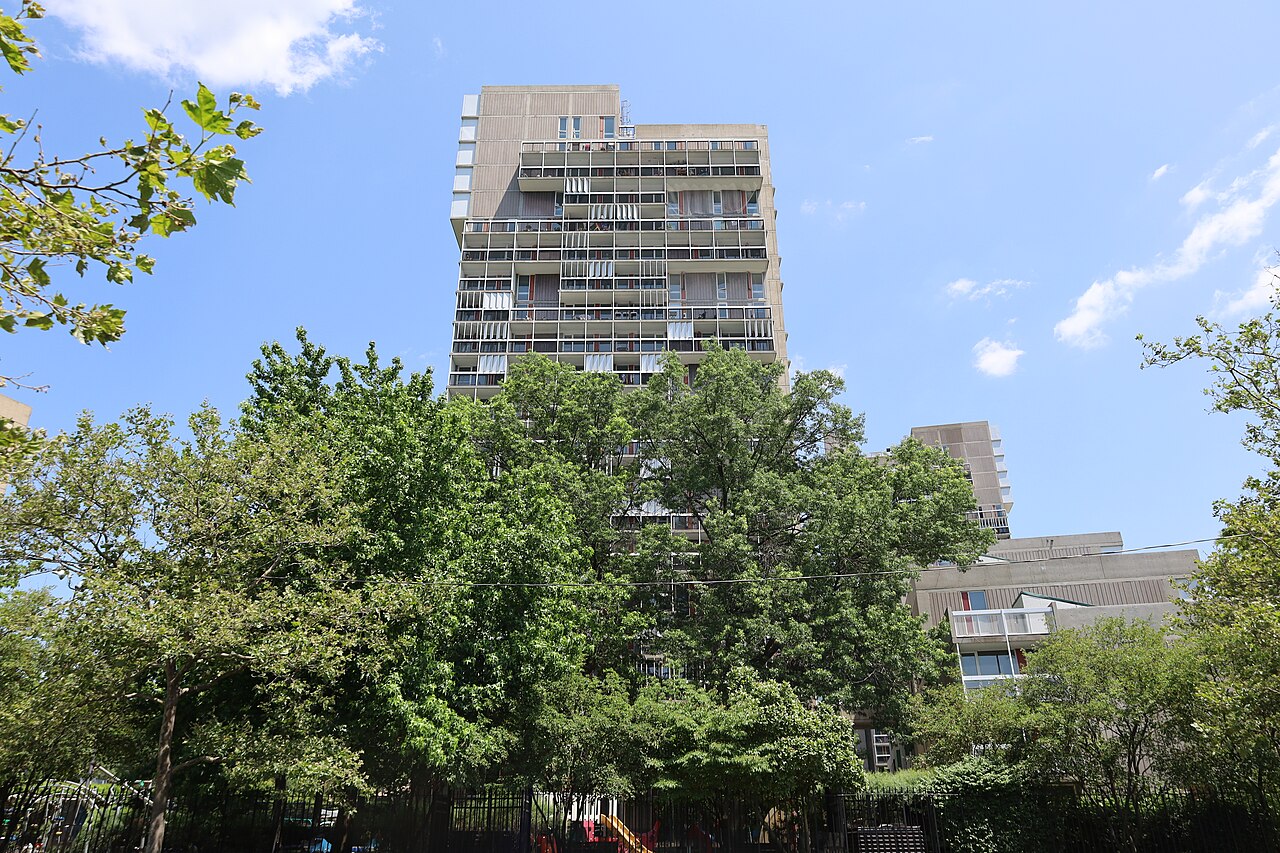
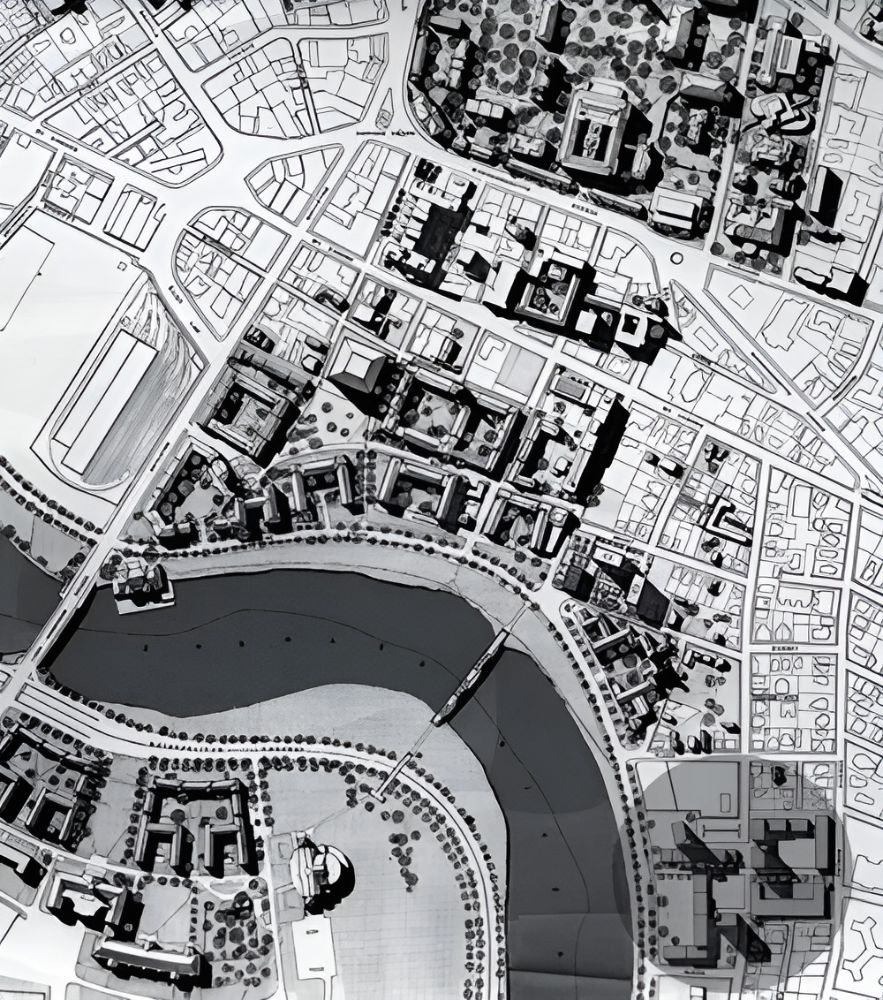
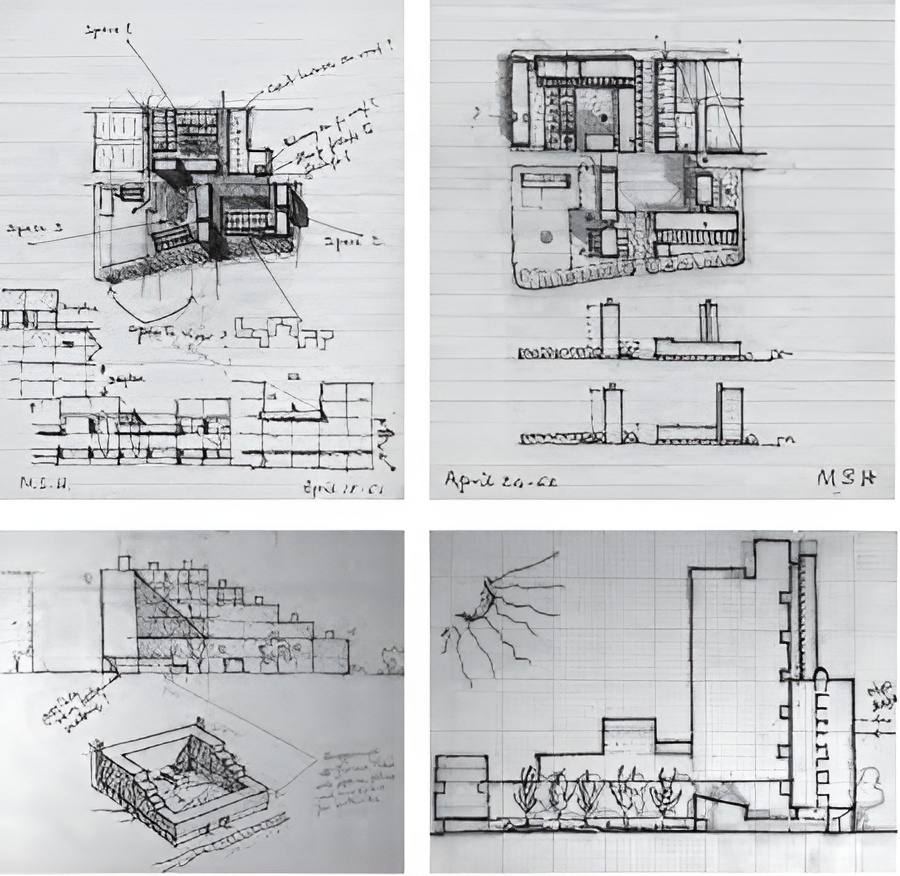
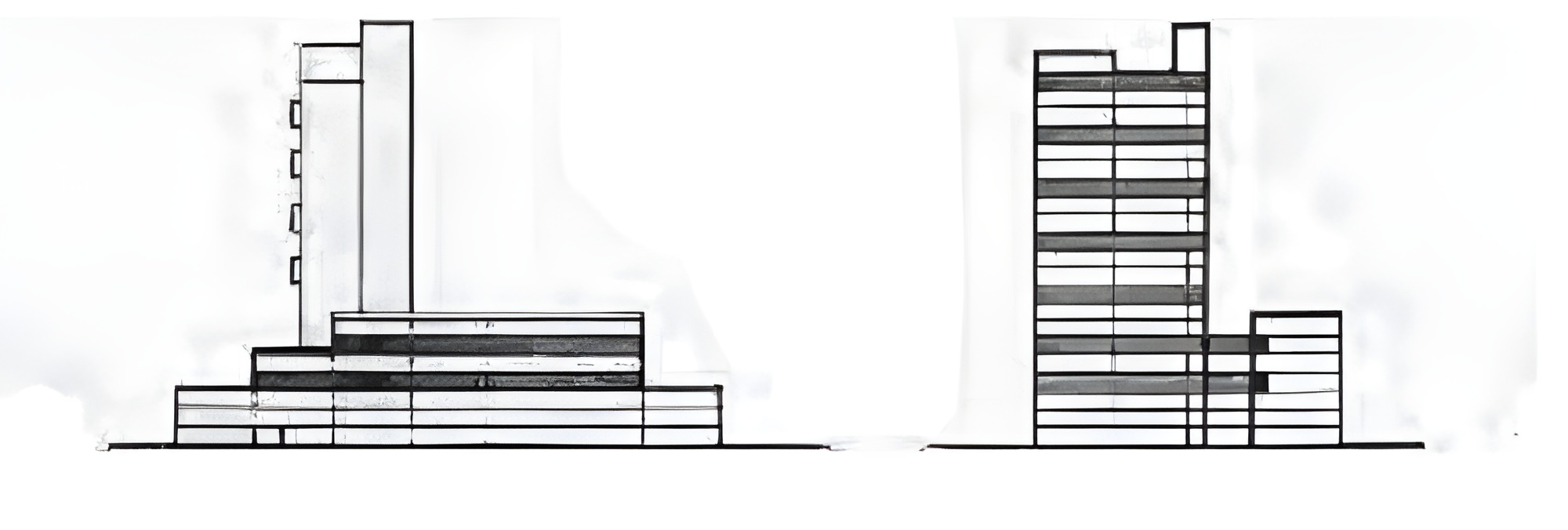
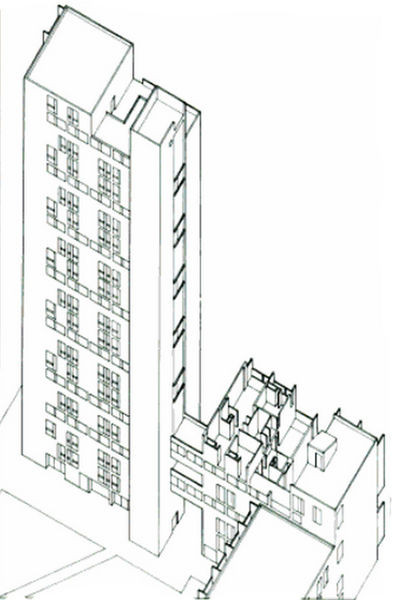
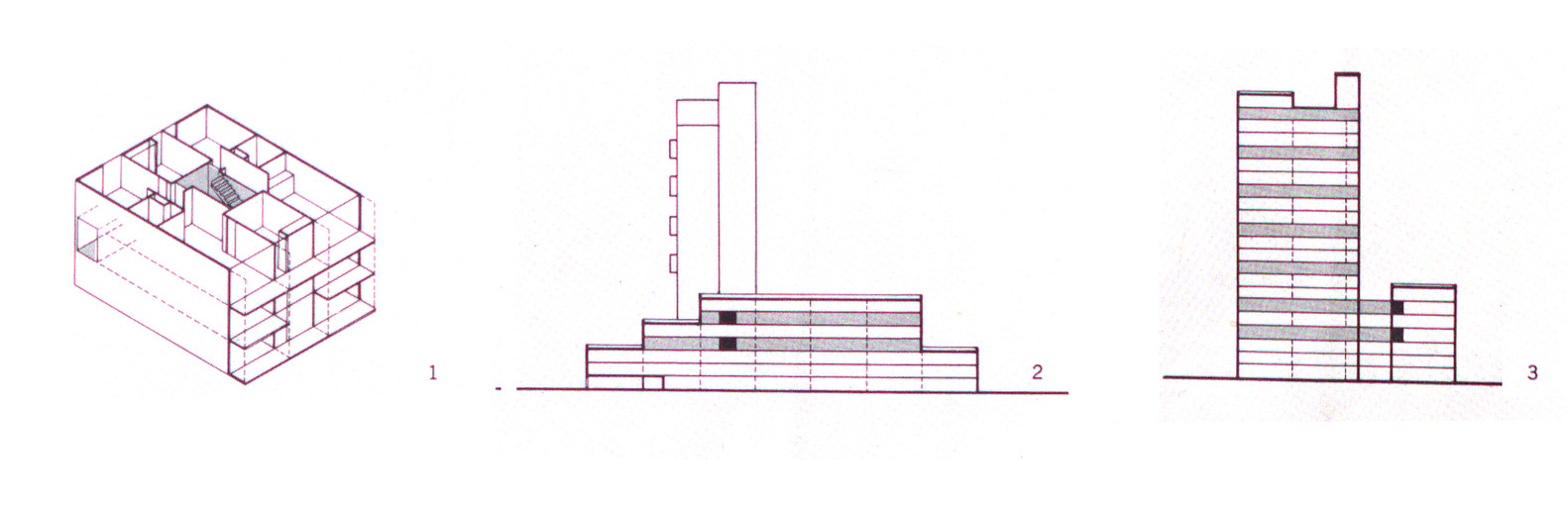
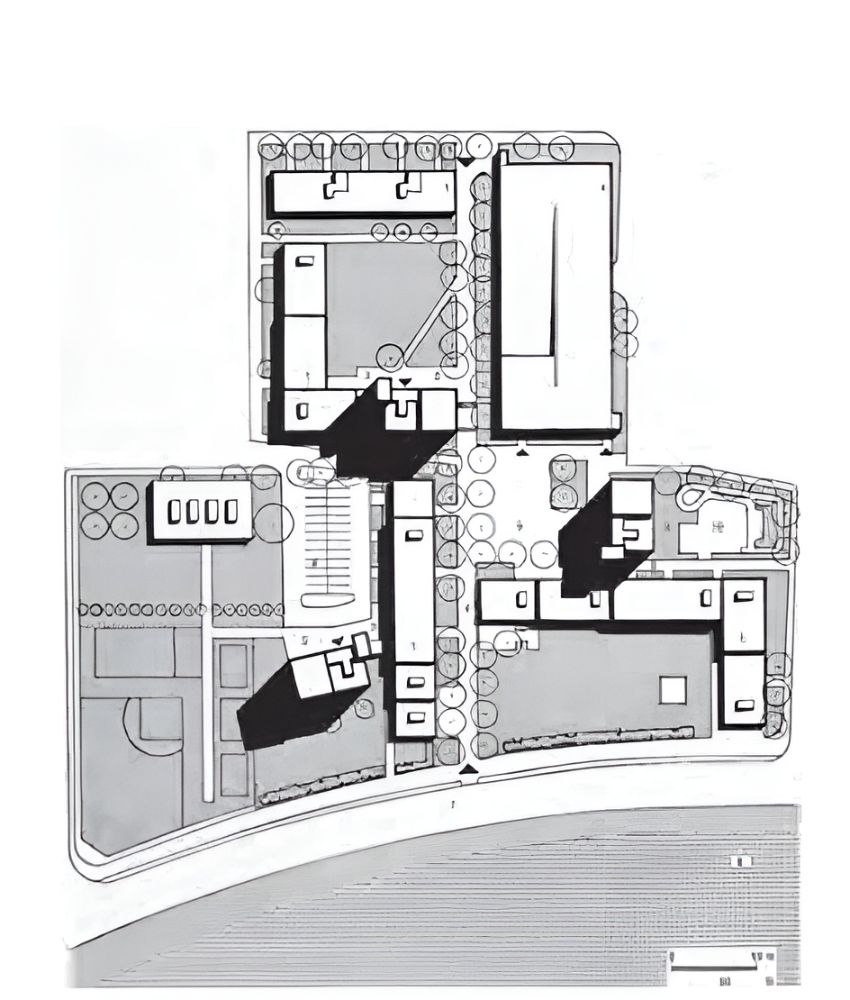
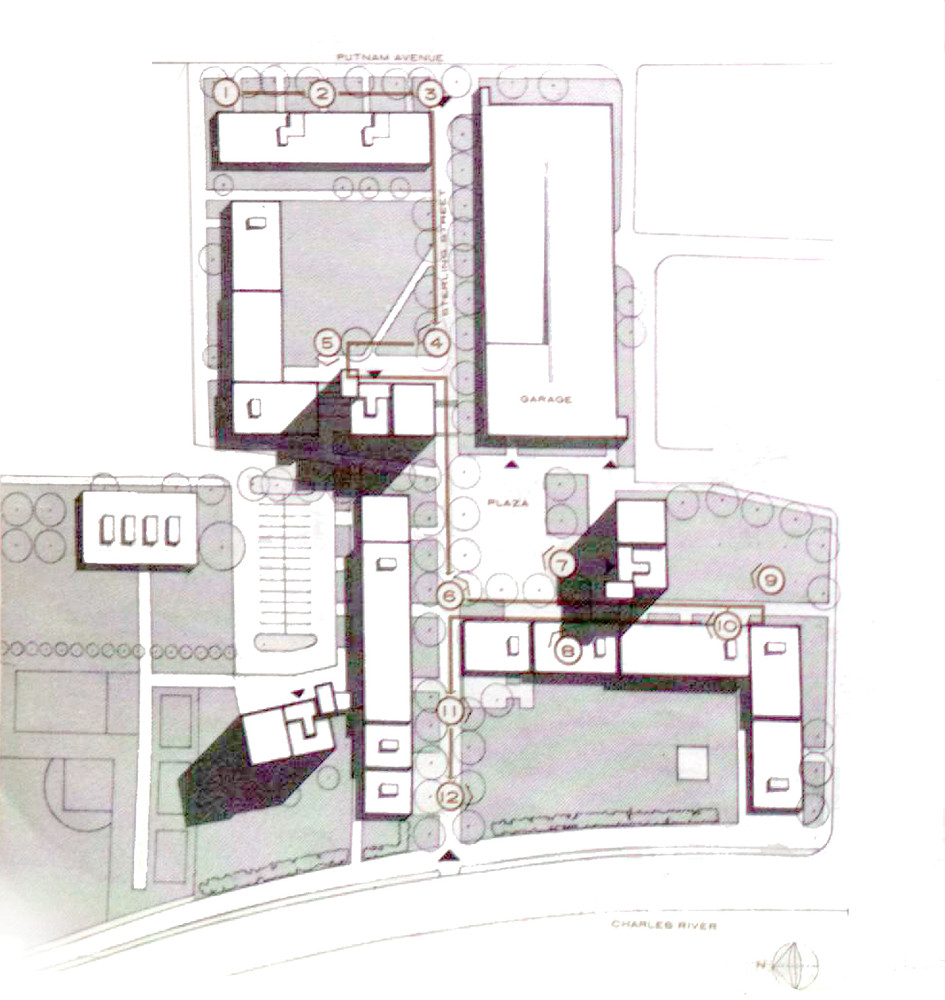
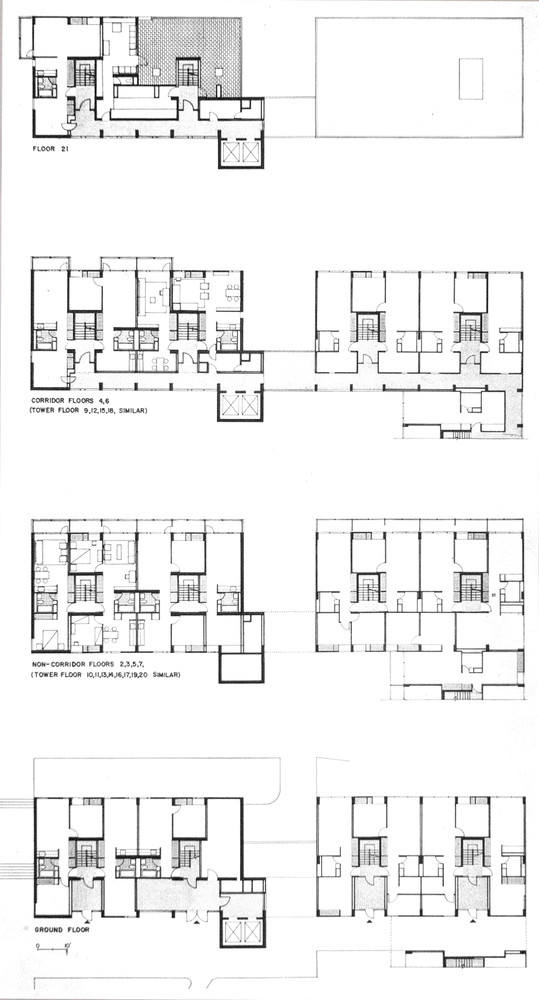
The composition arranges three-story perimeter buildings that rise to five and seven stories, culminating in three 22-story towers positioned within the interior. This gradation in height mediates between the surrounding low-rise residential fabric and the higher density required by the university. Slender housing bars divide the site into a sequence of courtyards, establishing a network of shared outdoor spaces that echo the spatial order of Harvard’s existing campus while departing from its Georgian language.
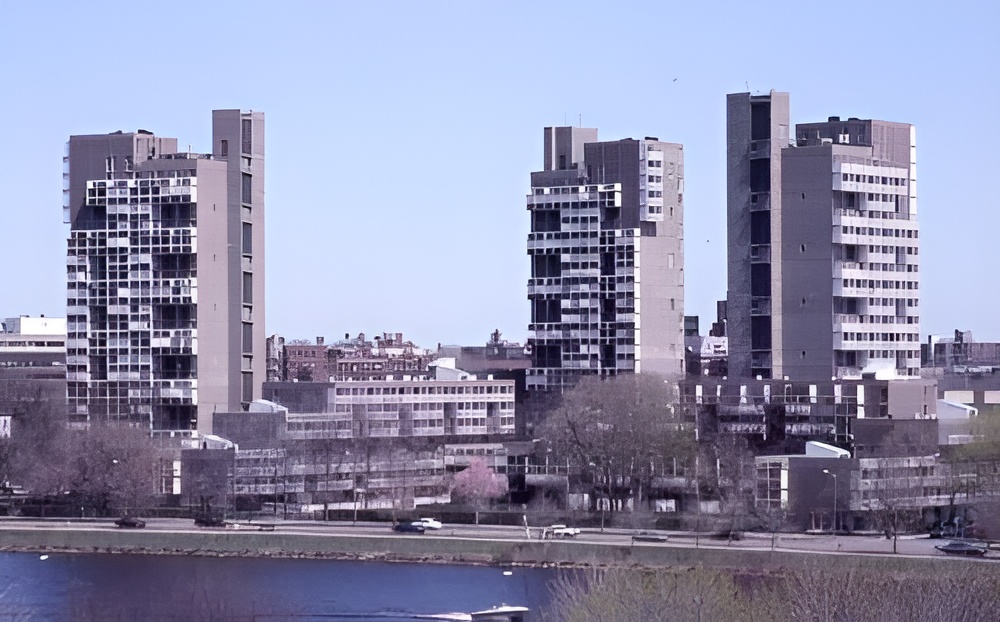
Circulation prioritizes pedestrians. Existing streets were transformed into walkways, allowing the site to remain permeable and connected to adjacent neighborhoods. Courtyards and open spaces frame views toward the Charles River and structure movement through the complex, reinforcing a transition from public to semi-private to residential domains.
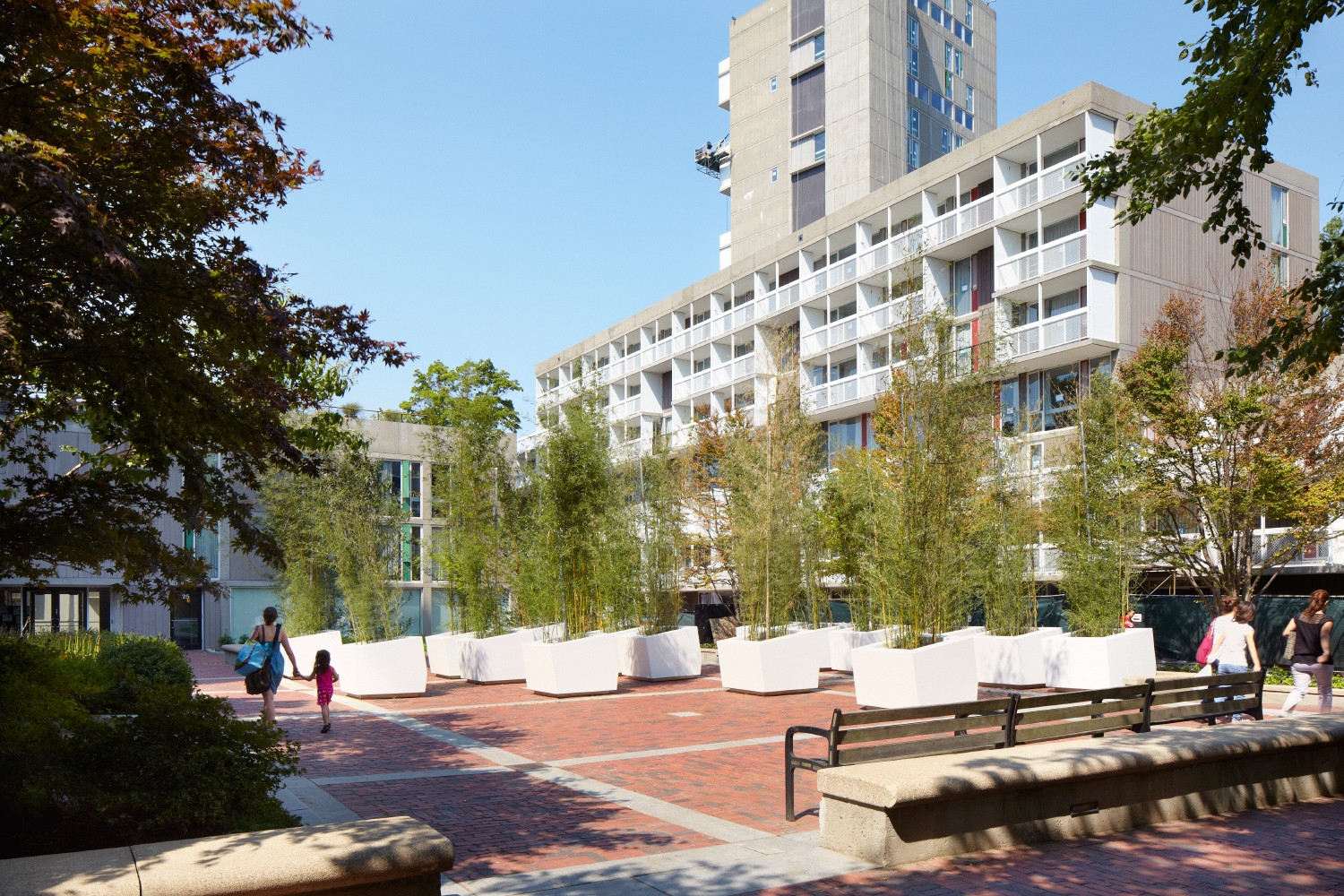
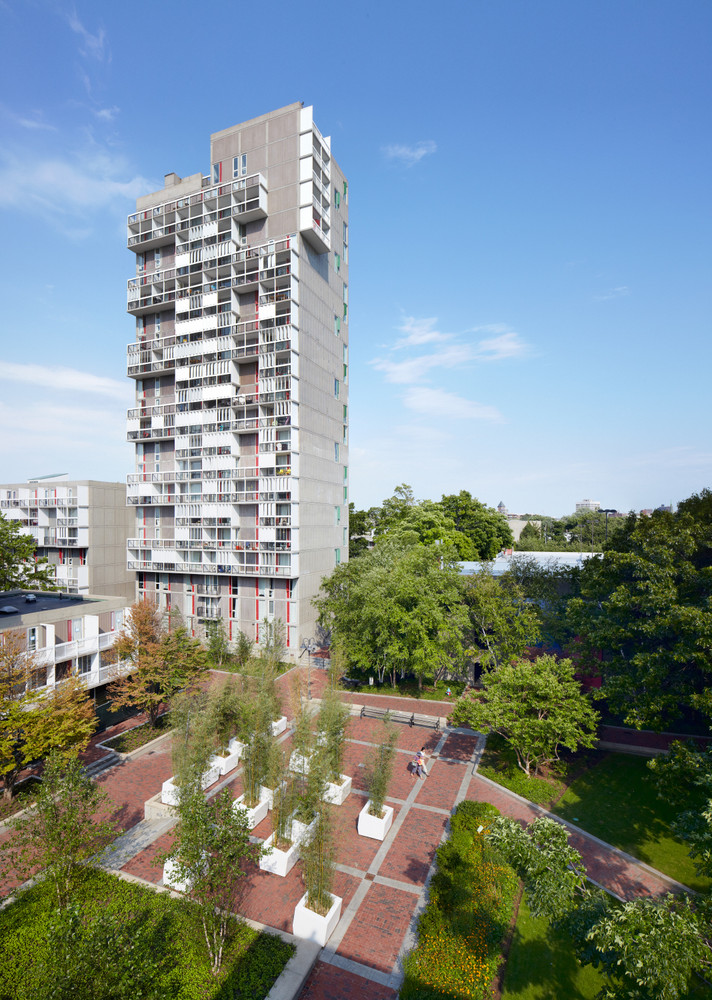
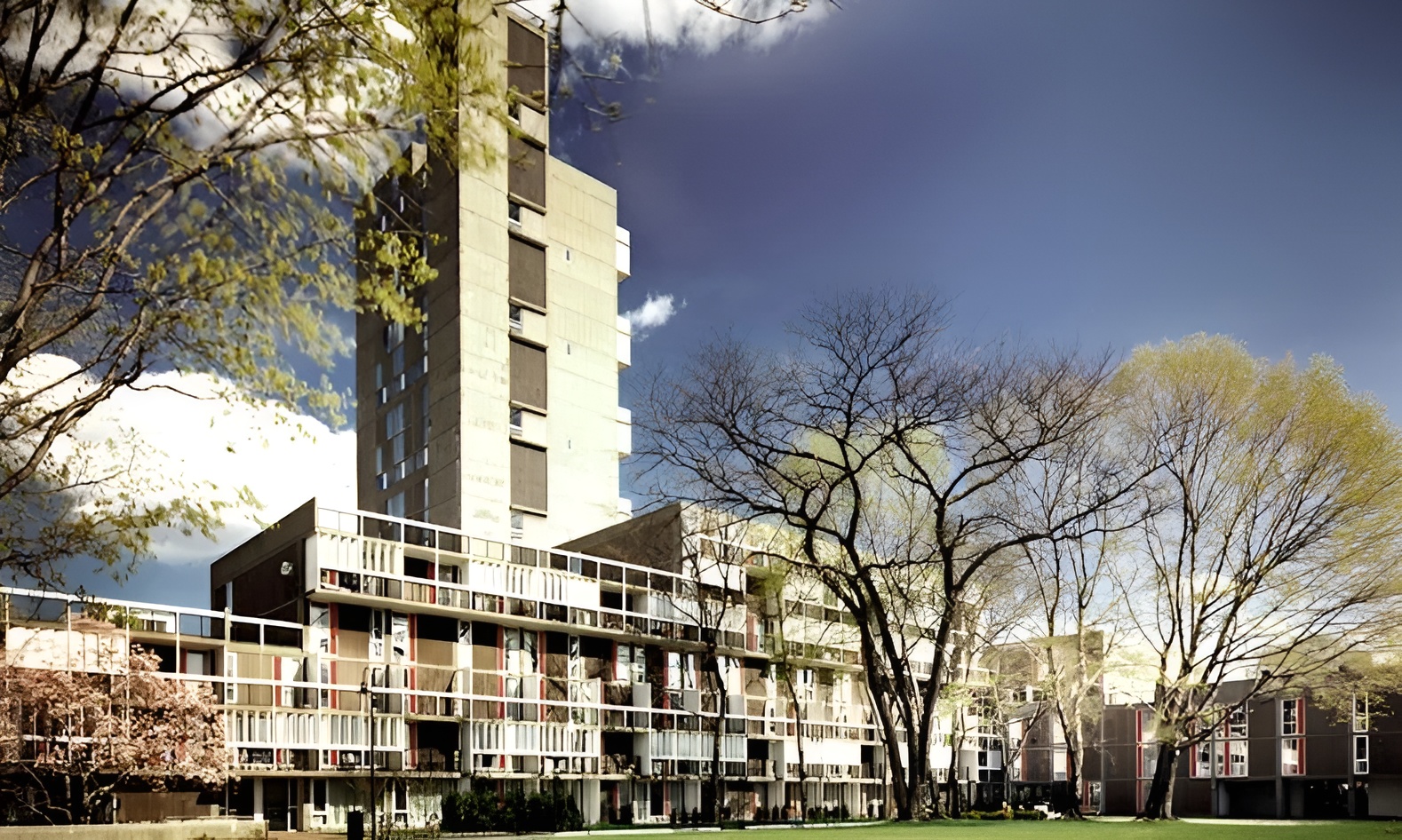
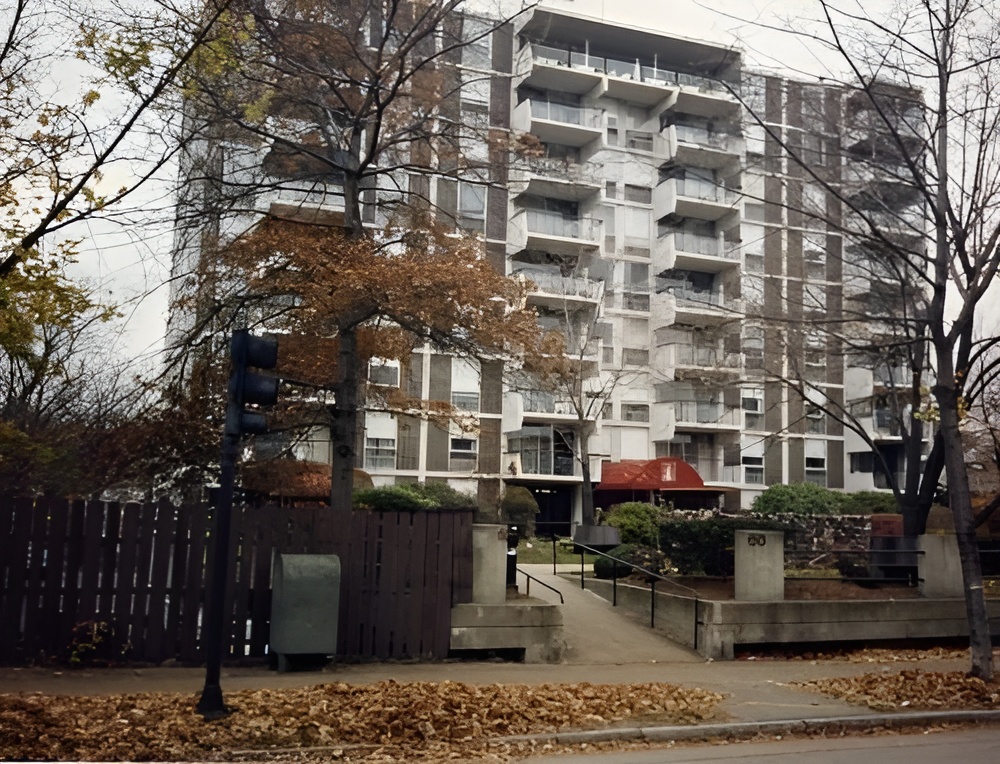
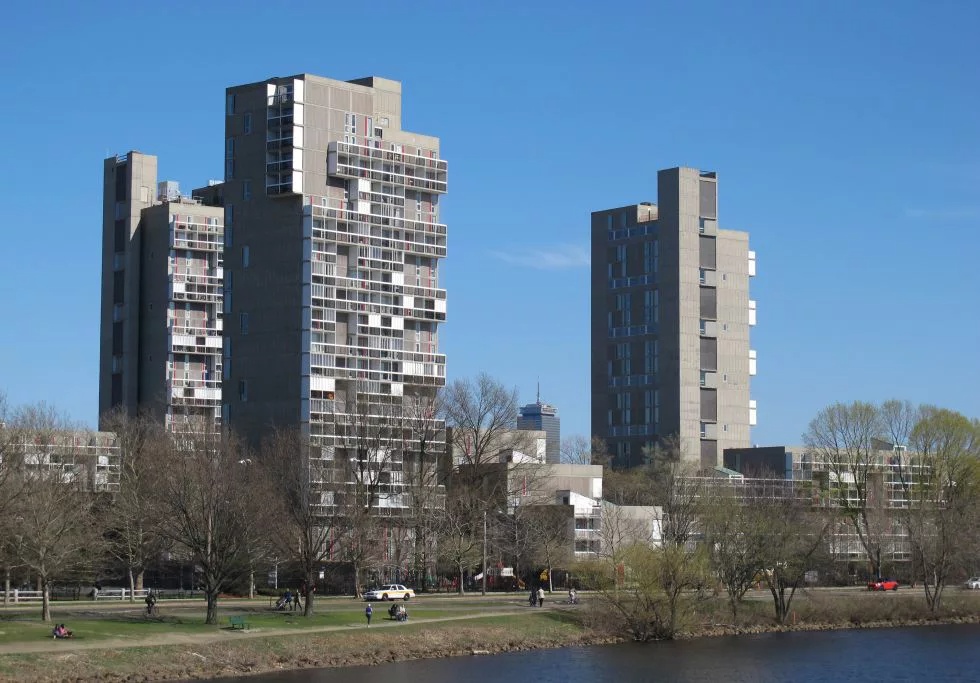
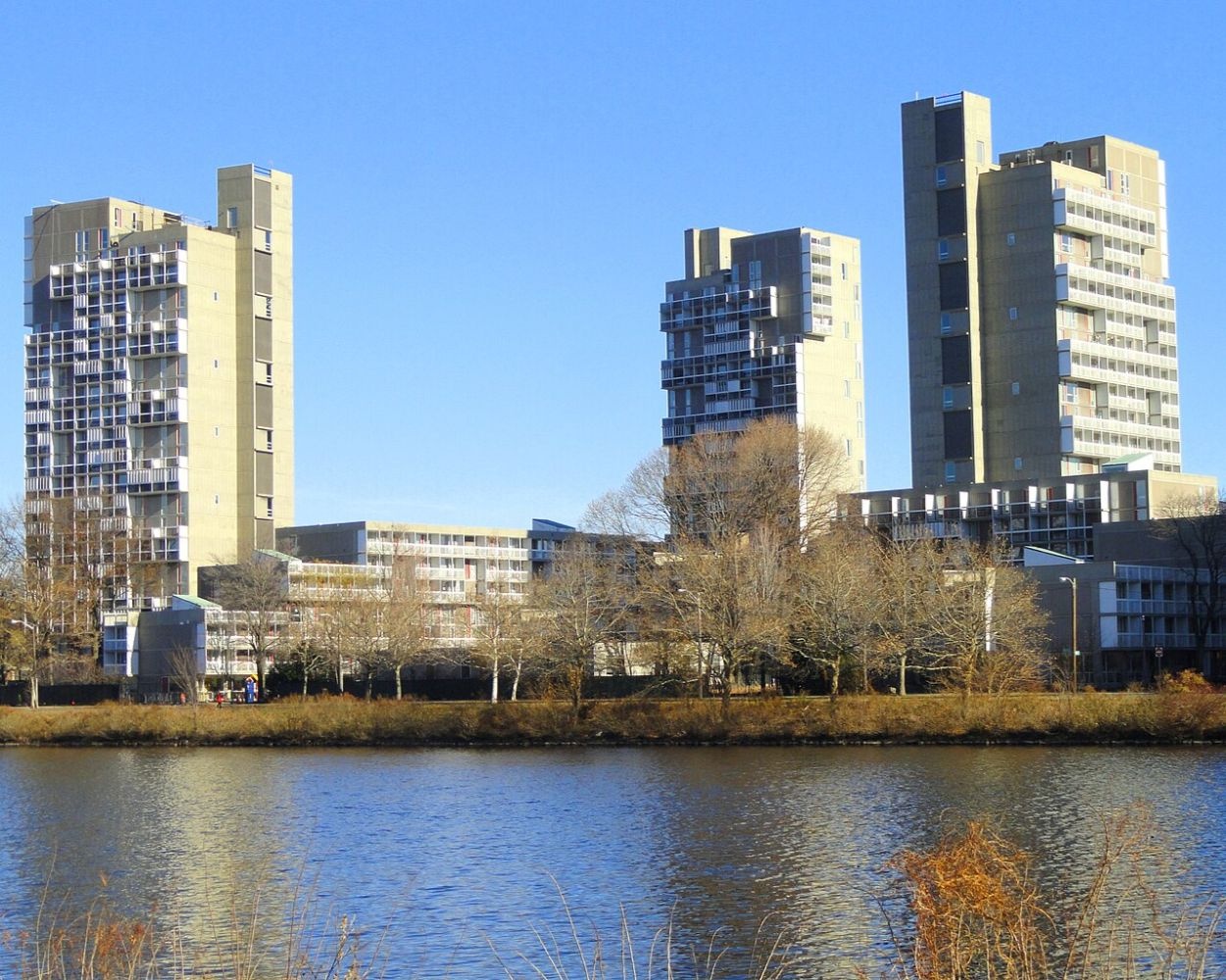
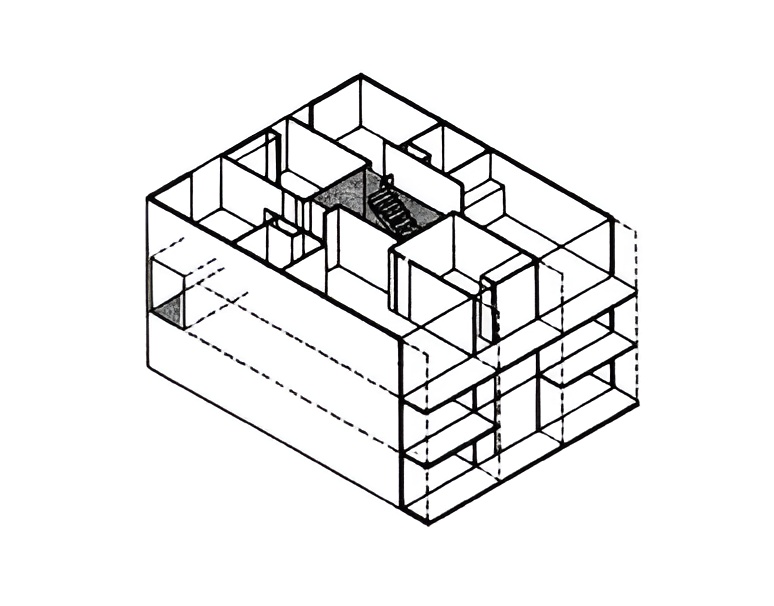
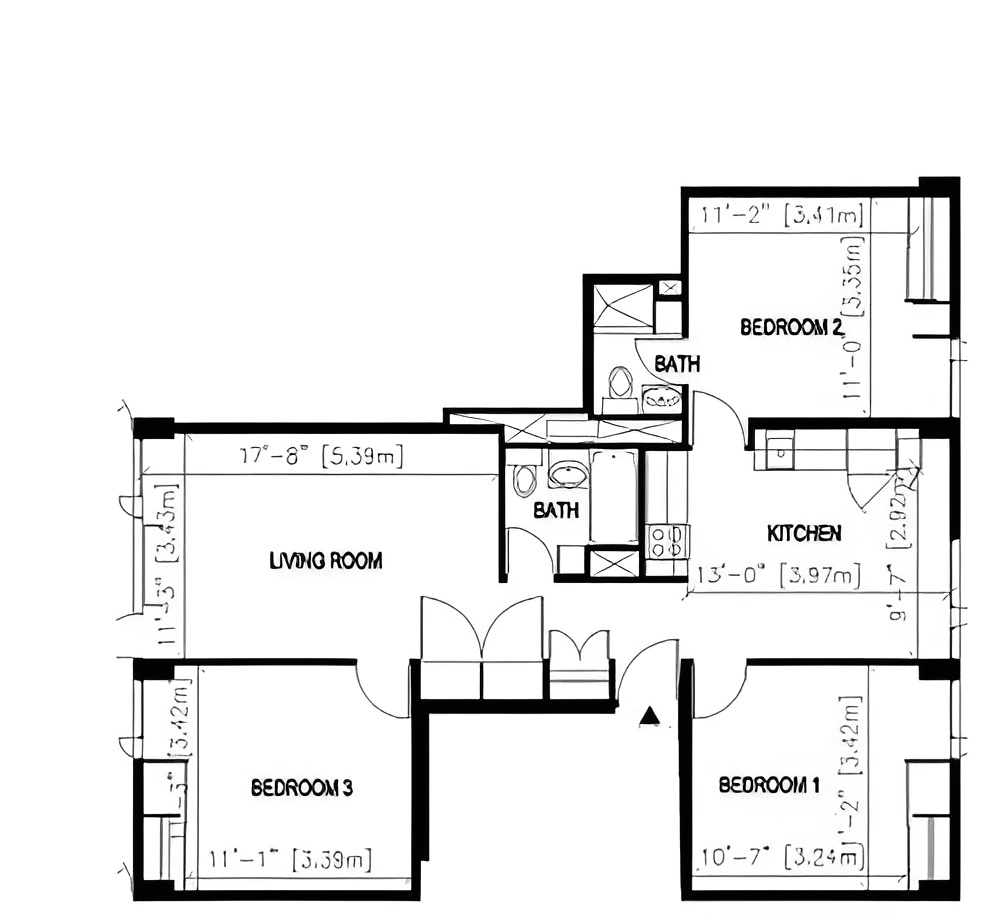
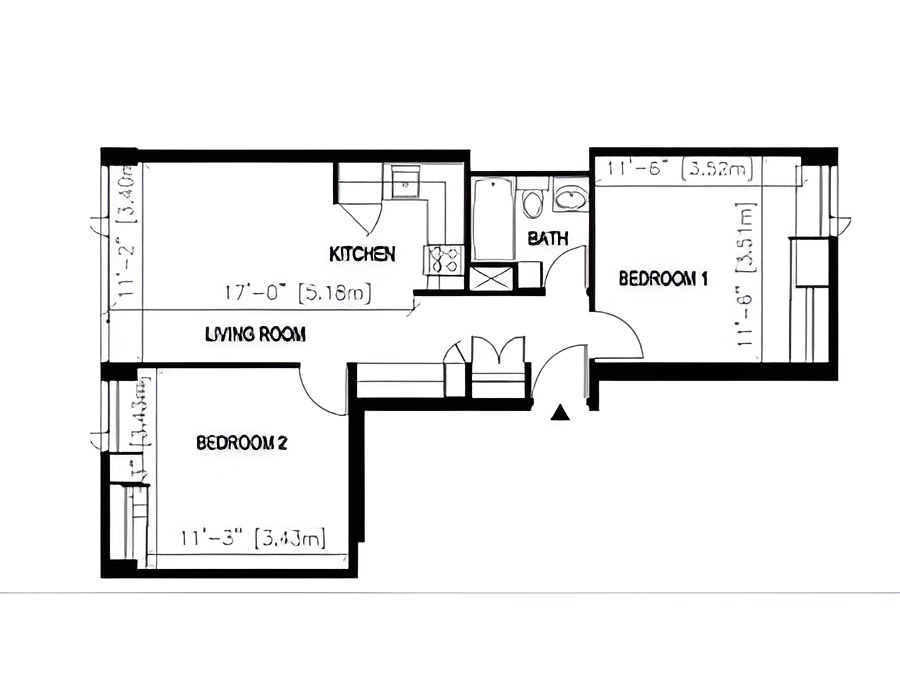
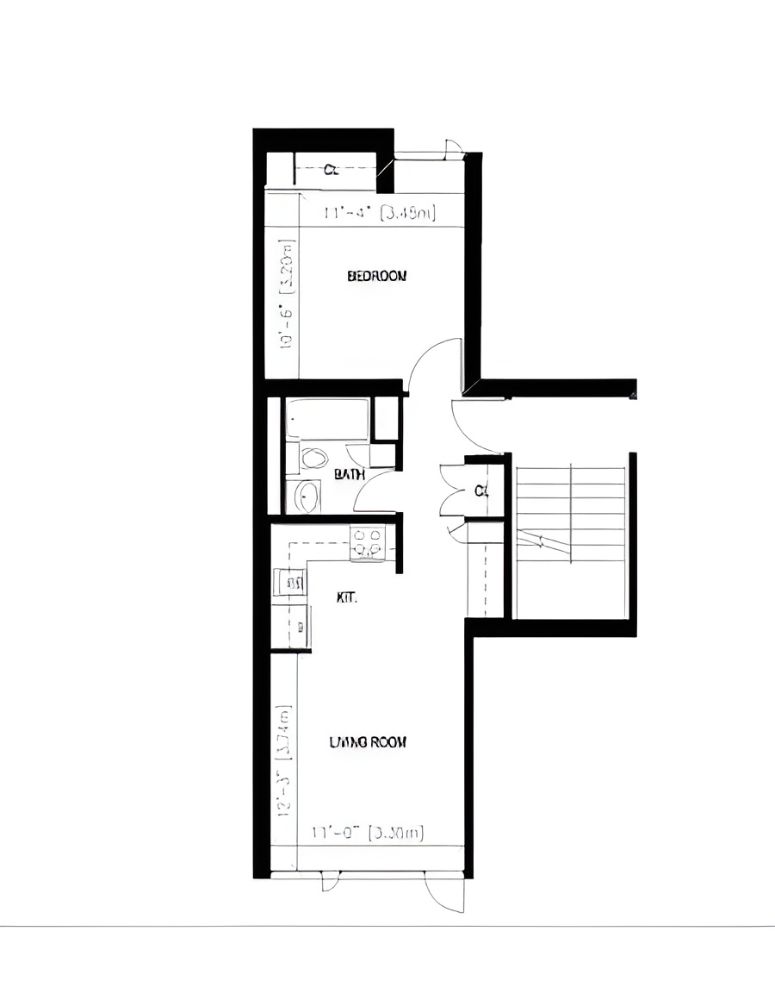
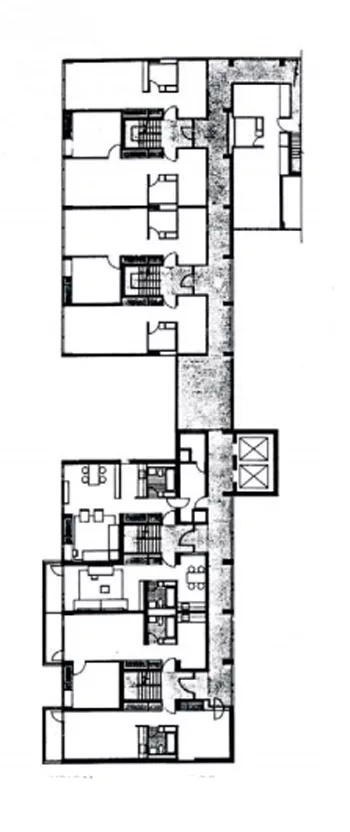
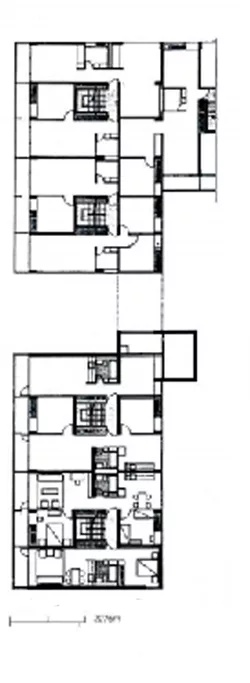
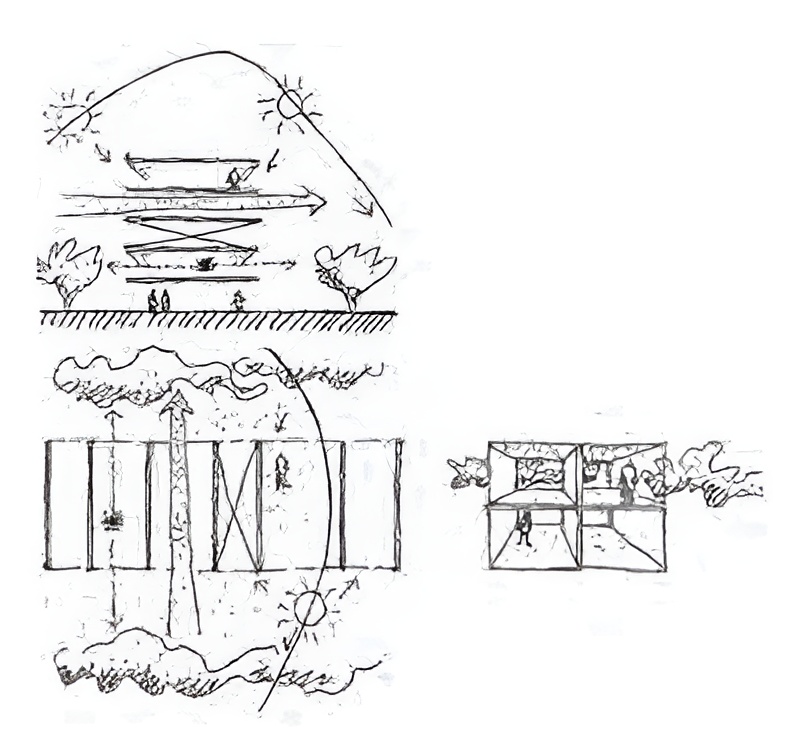
The structural and organizational system relies on a regular grid of concrete columns and flat slab construction. Residential units are arranged in three-story modules linked by internal stairs, while skip-stop elevators serve every third floor. This system, influenced by Le Corbusier’s Unité d’Habitation, allows many units to extend across the depth of the building, providing cross ventilation and dual orientation.
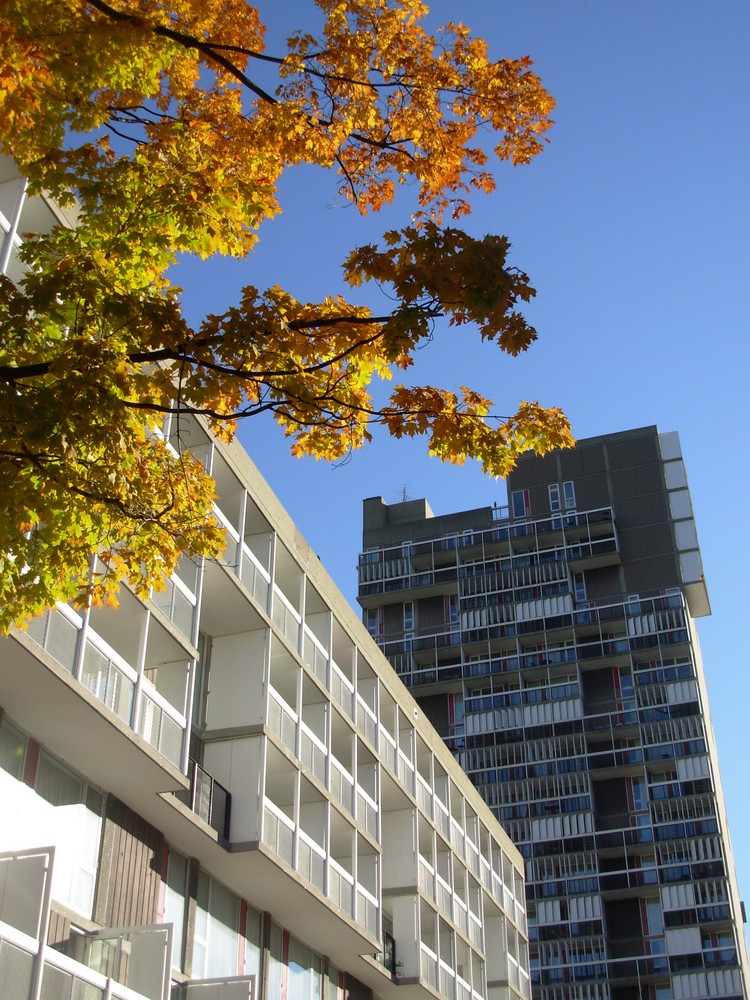
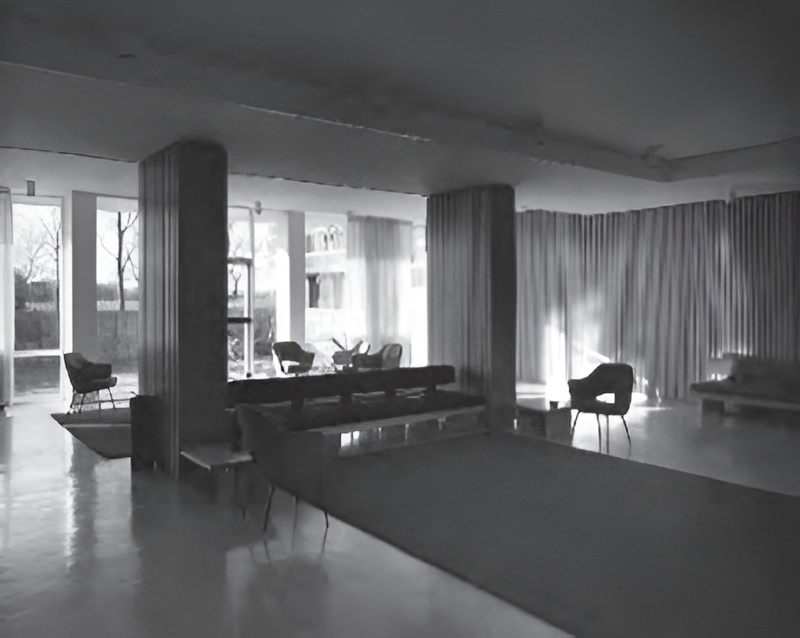
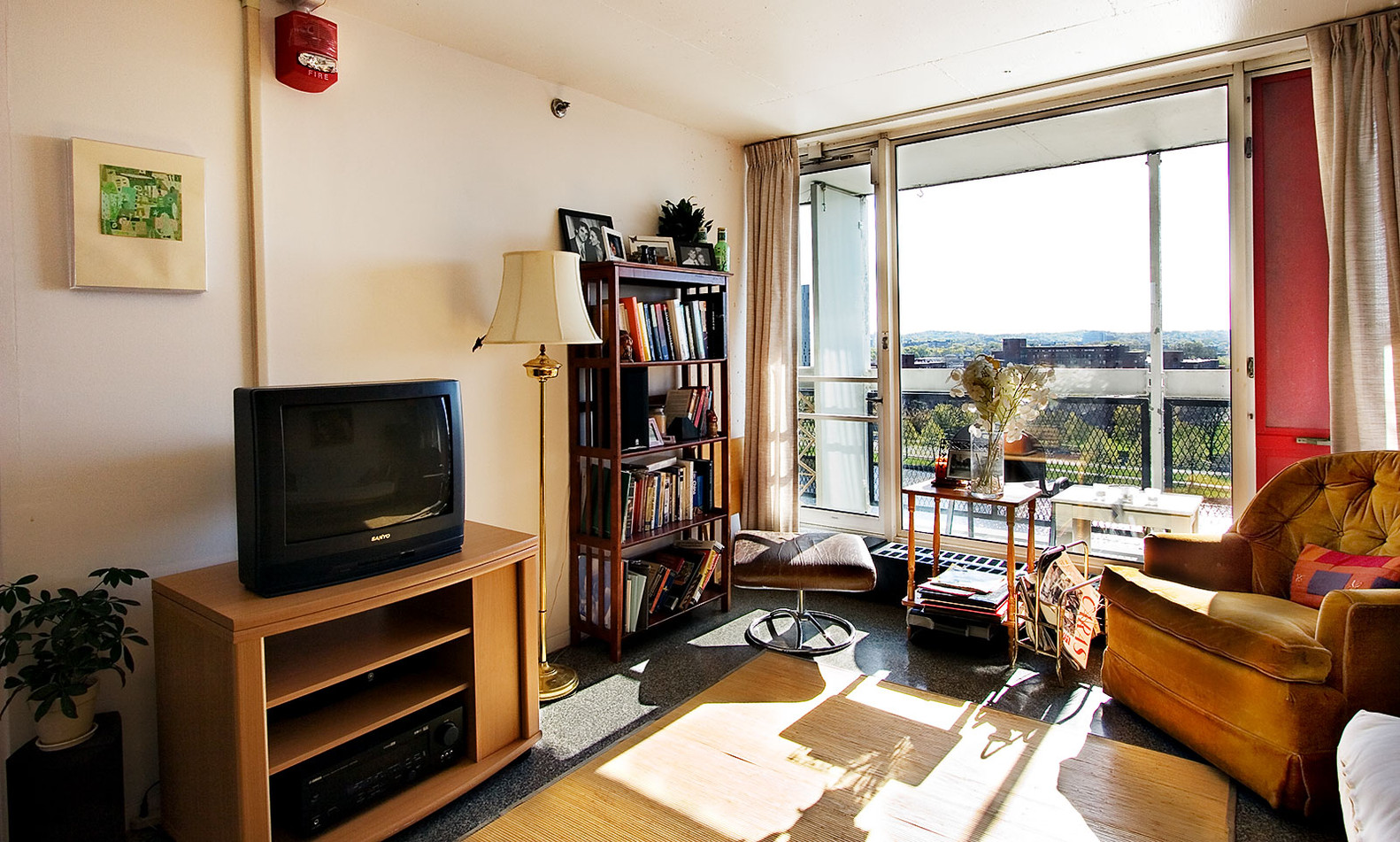
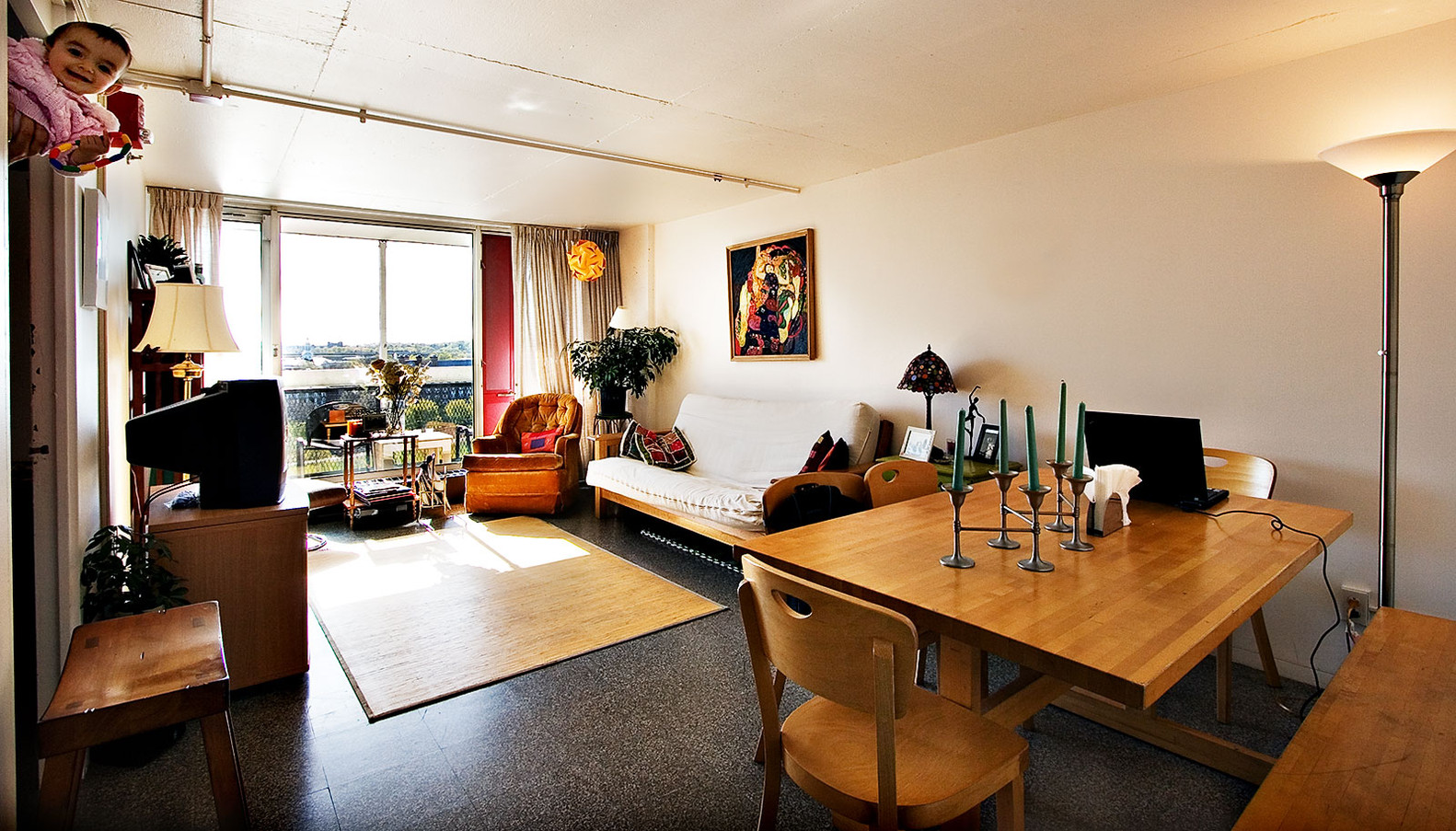
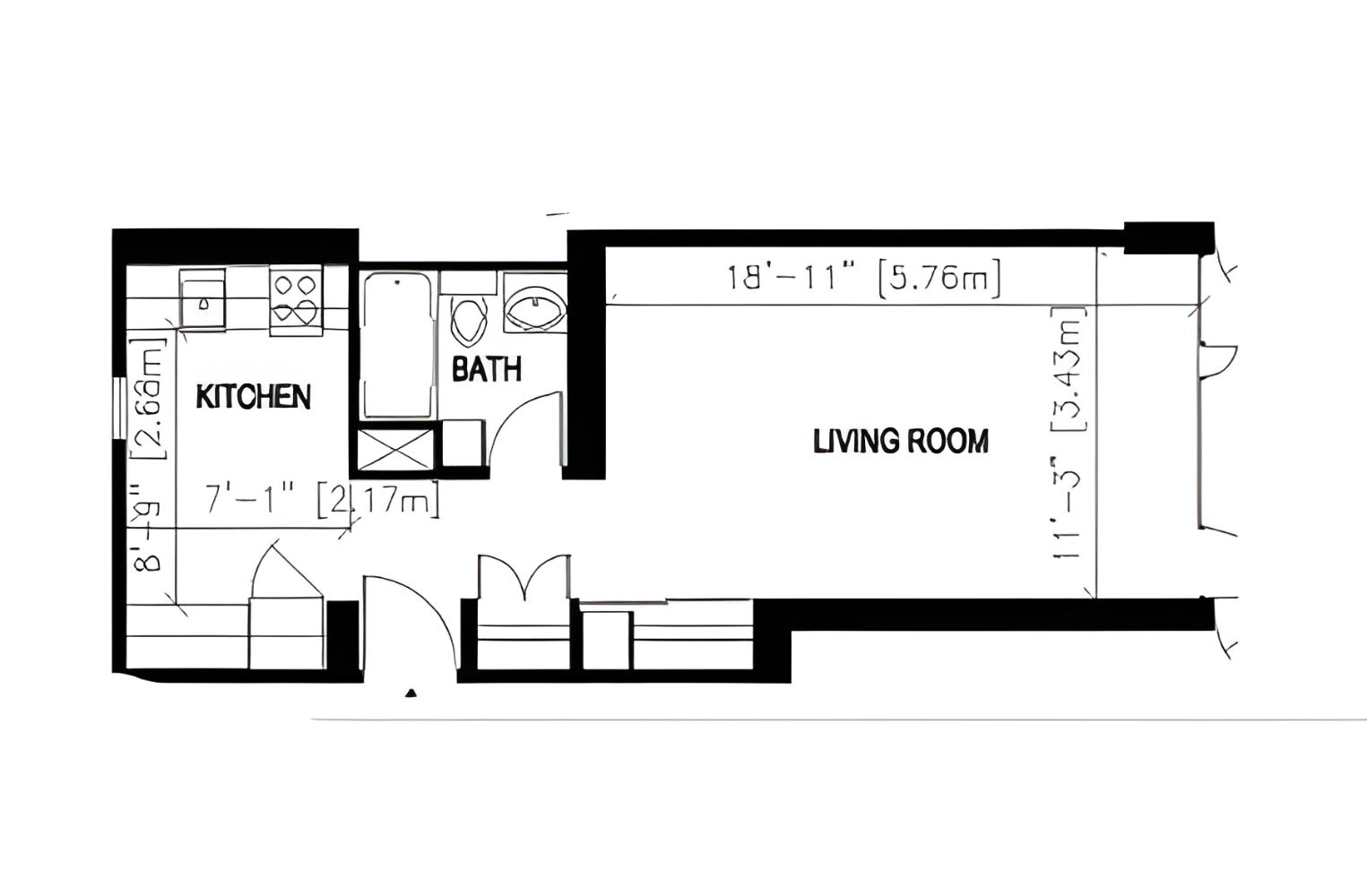
Residential units are compact and standardized, ranging from efficiencies to three-bedroom apartments. The integration of built-in furniture and deep window recesses reflects an emphasis on efficiency and spatial economy. The complex incorporates extensive amenities, including nurseries, laundries, meeting rooms, roof terraces, and a large parking facility, supporting daily life within the development.
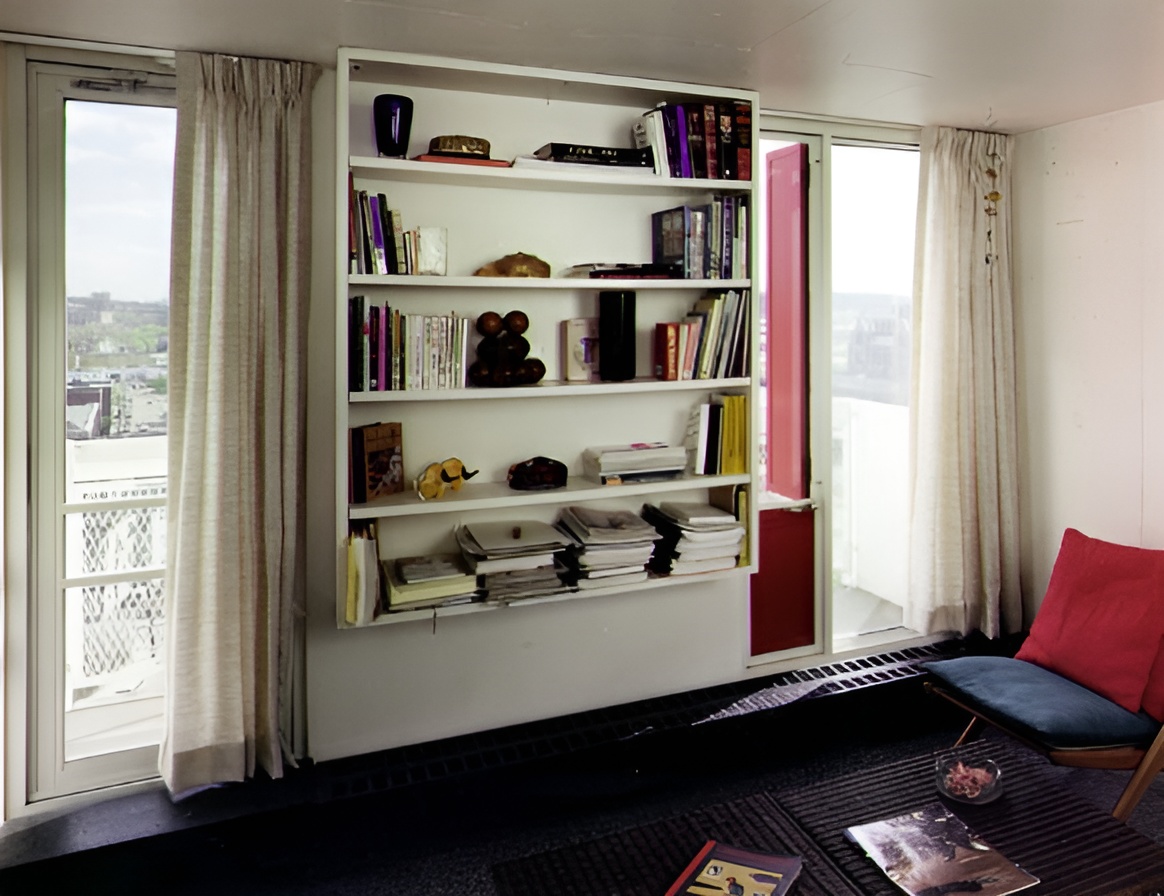
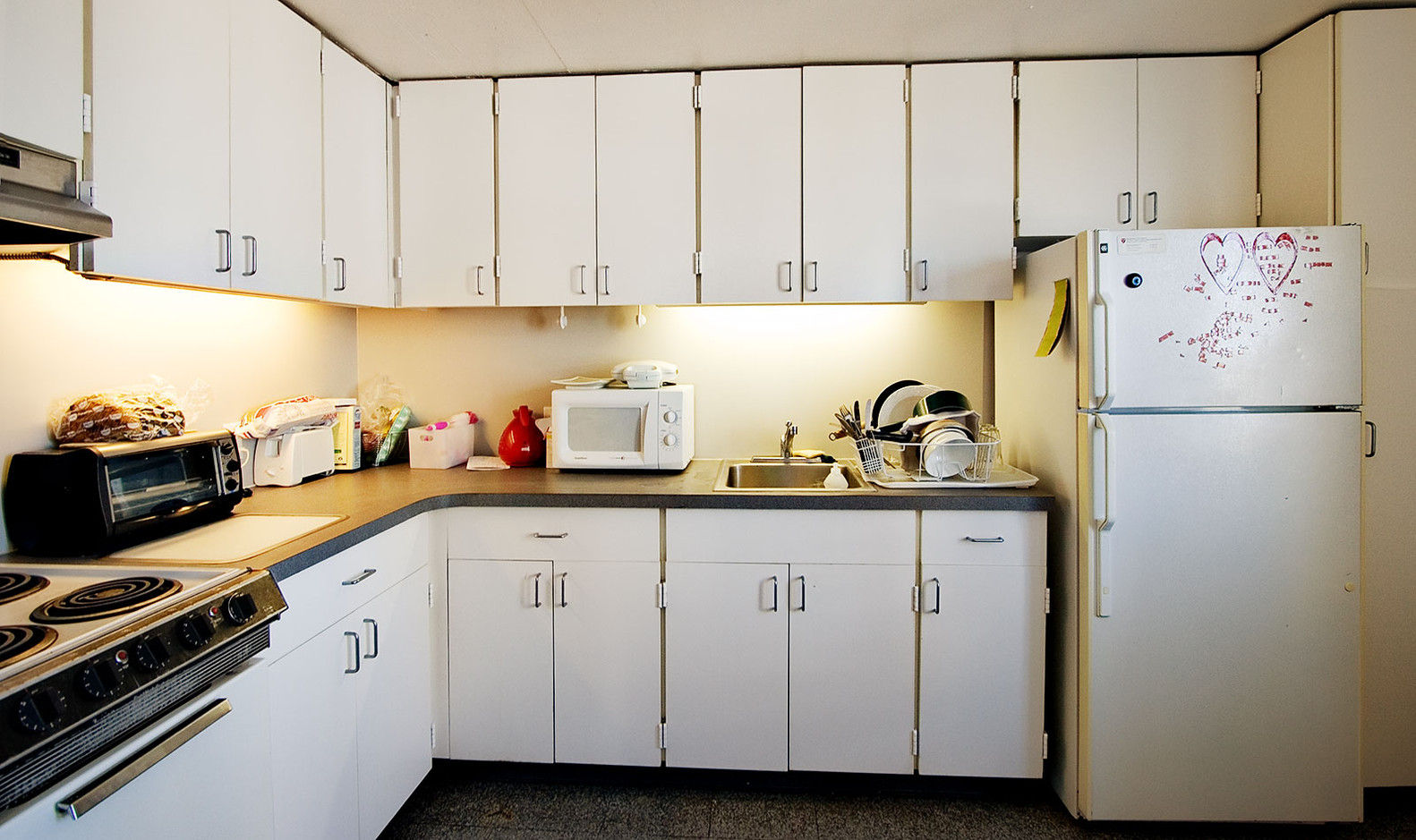
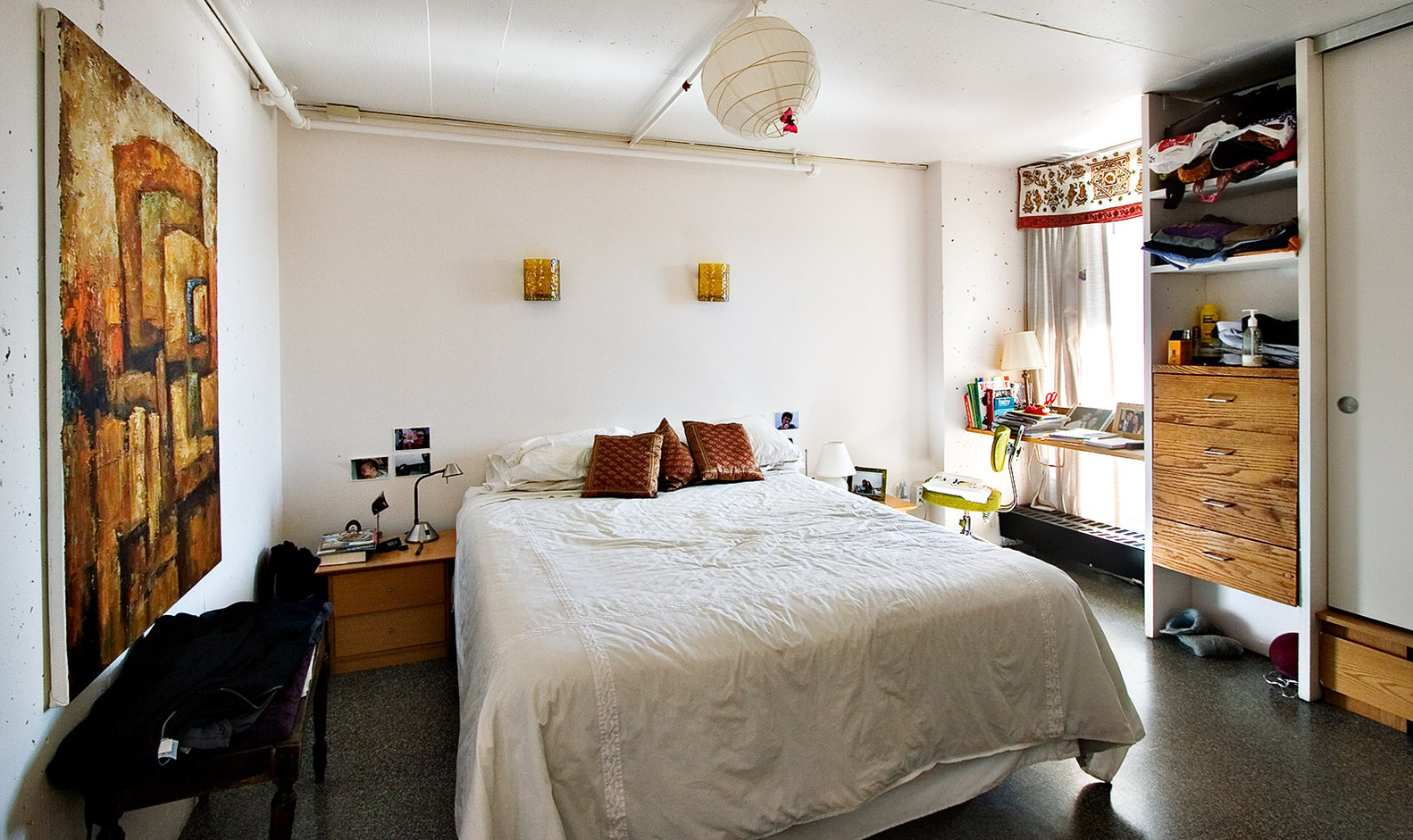
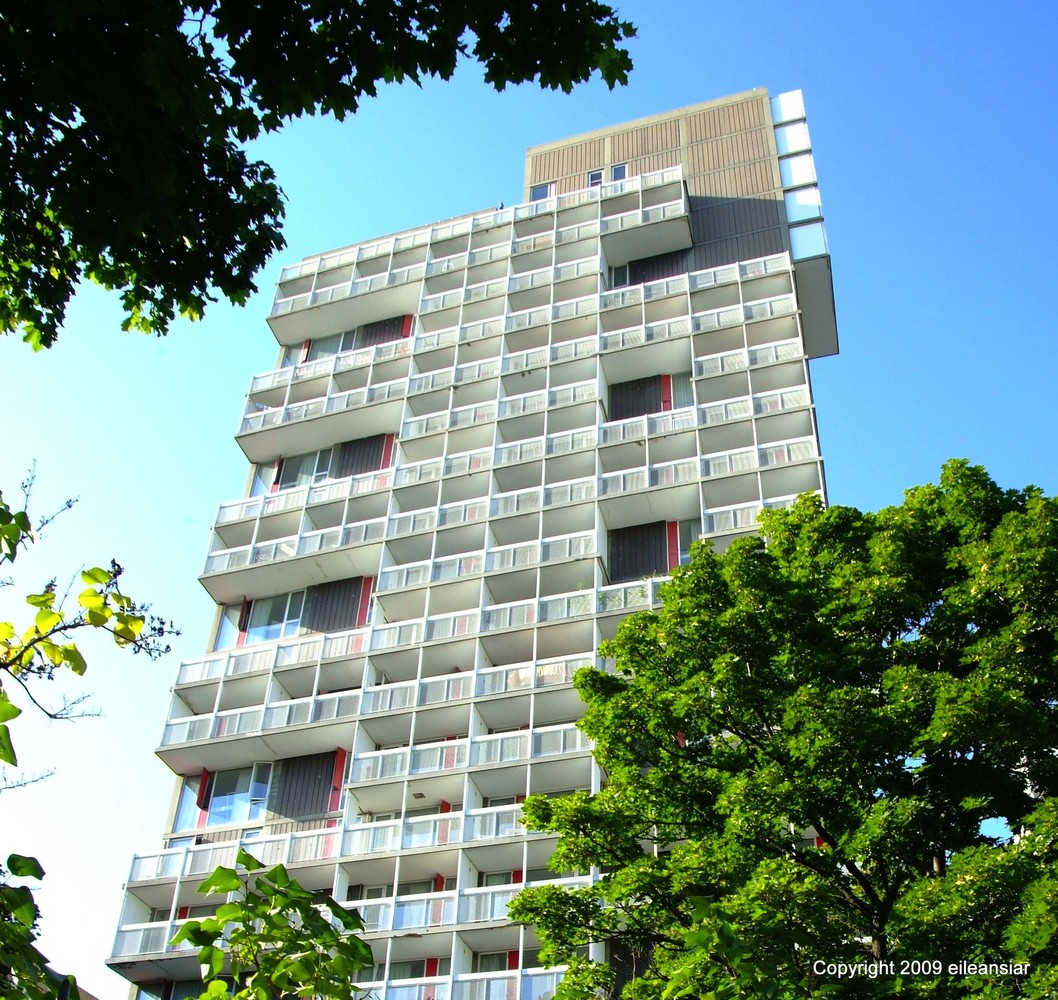
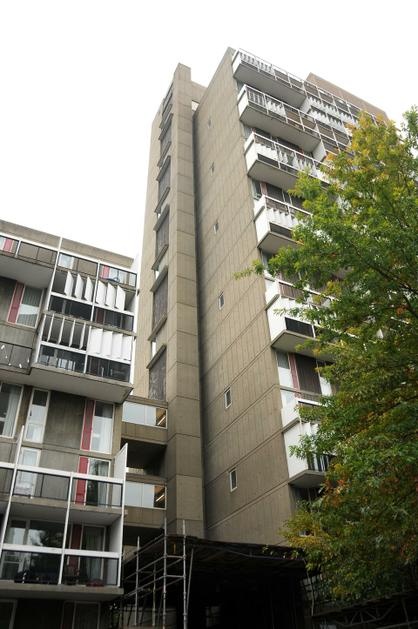
Material expression is defined by exposed concrete combined with precast panels and glazing. Shear walls form solid planes, while balconies are layered as a secondary system across the façades. These balconies, arranged in a staggered pattern, provide outdoor space and articulate the variation of interior units. Brightly colored panels and louvers introduce contrast against the concrete surfaces, reflecting Sert’s intention to bring a Mediterranean sensibility into a northern context.
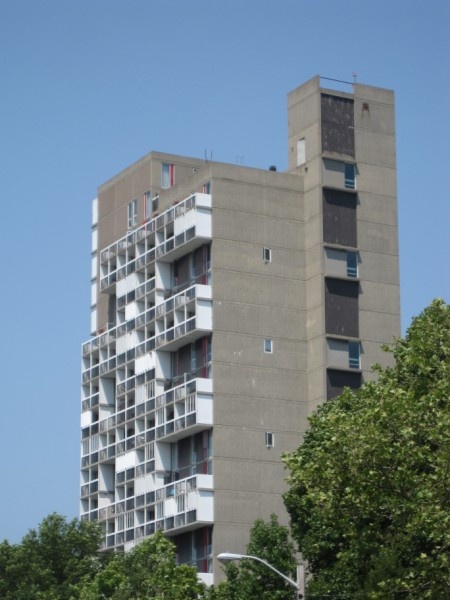
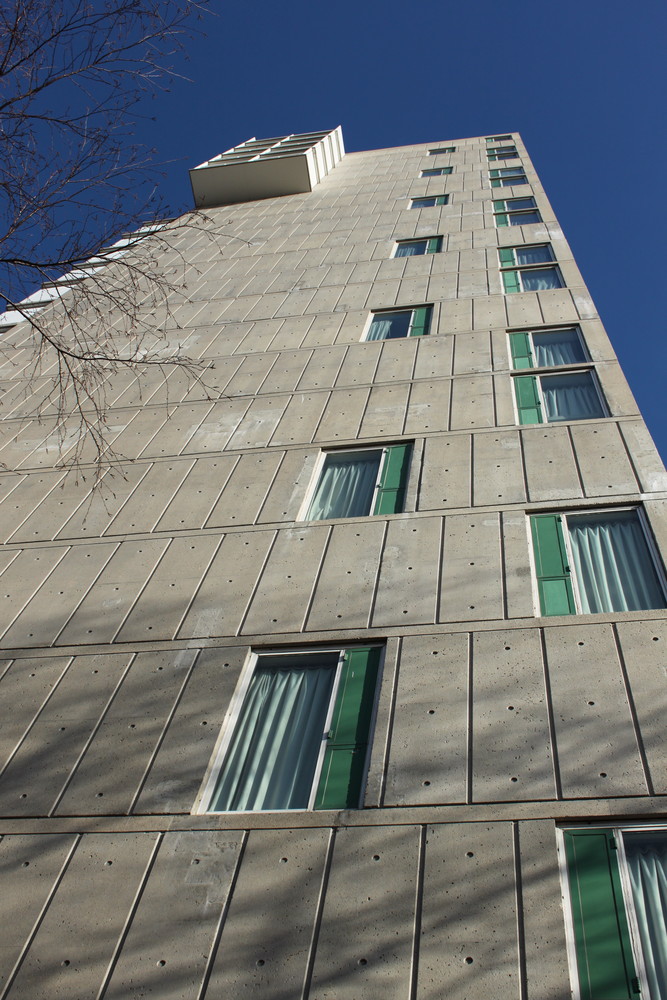
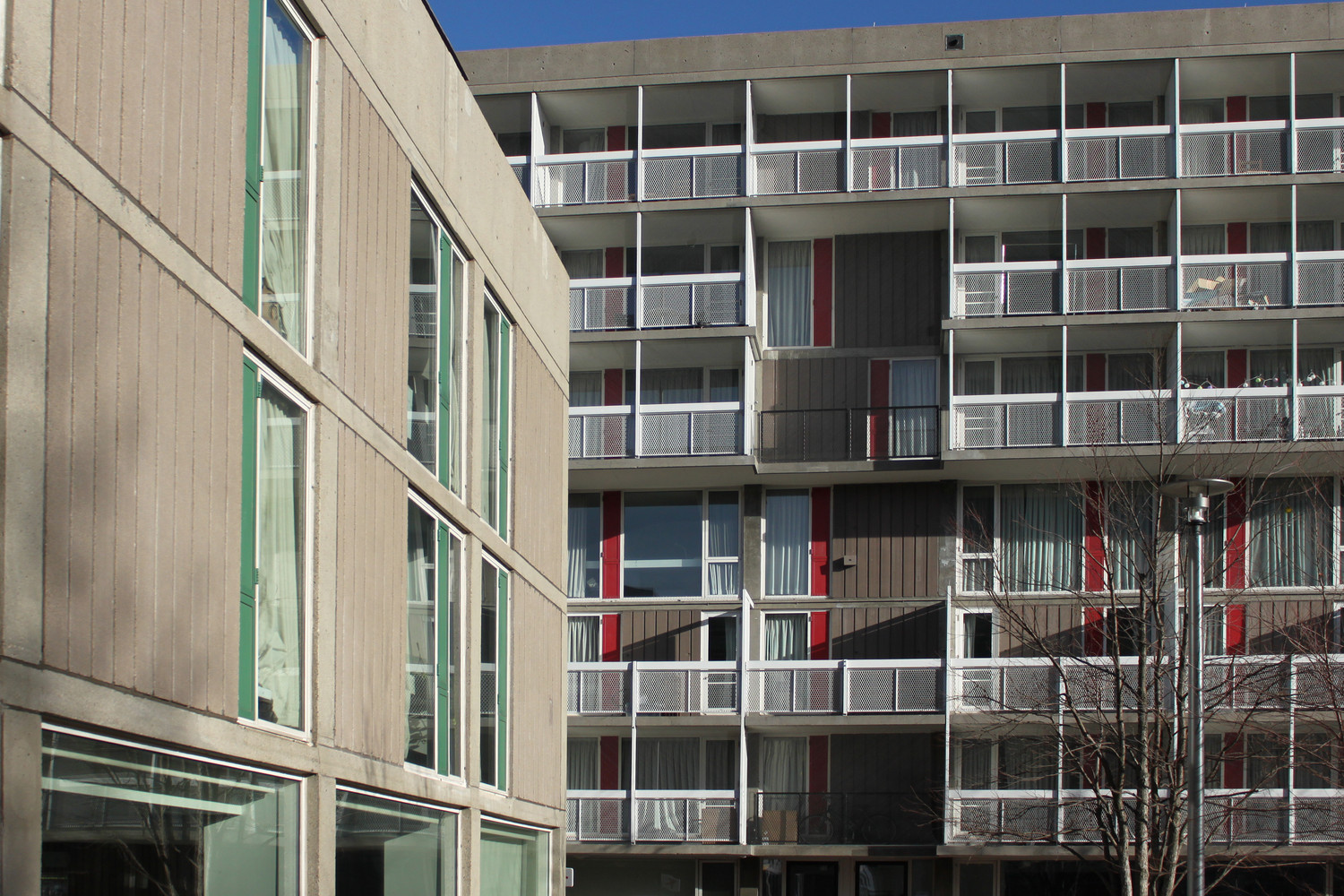
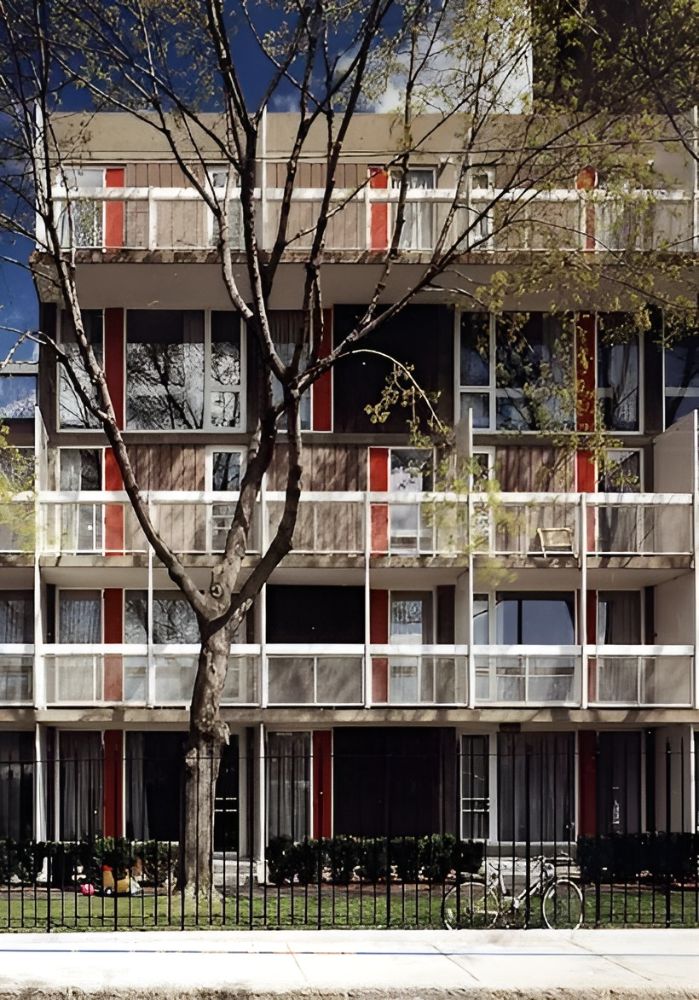
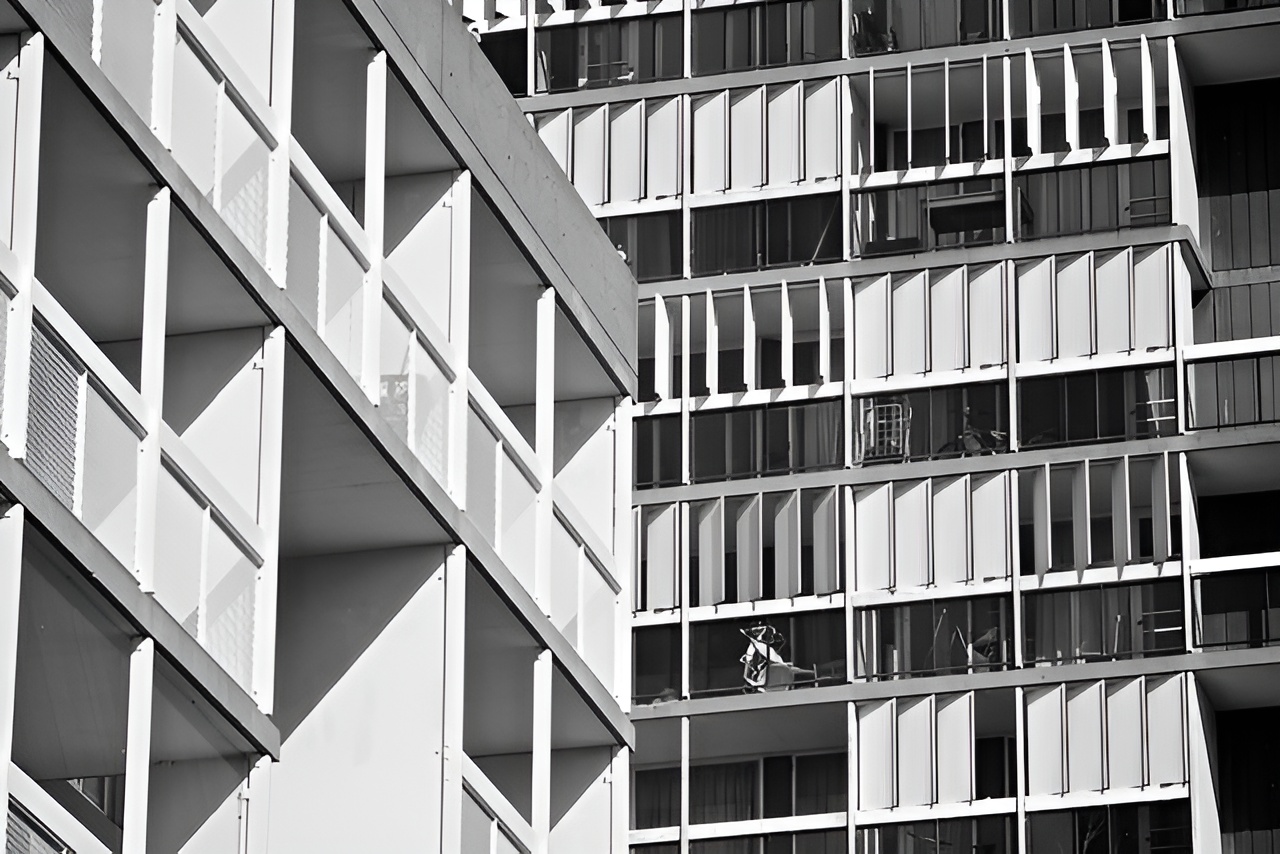
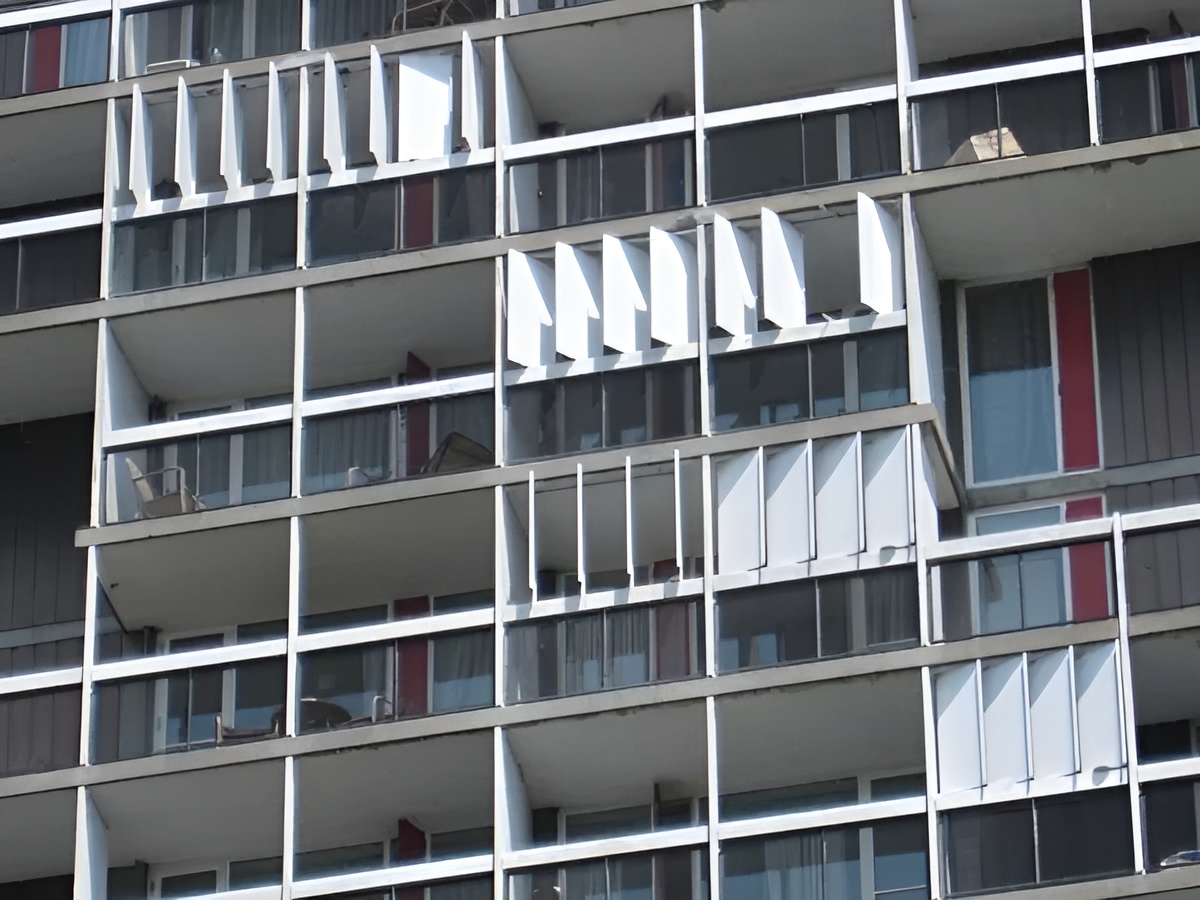
Reception of Peabody Terrace has remained divided. Architectural circles have recognized the project for its urban ambition and formal clarity, while public opinion has often criticized its scale and appearance. Despite this, the project received major awards, including the Harleston Parker Medal, and has continued to be studied as a model of high-density housing.
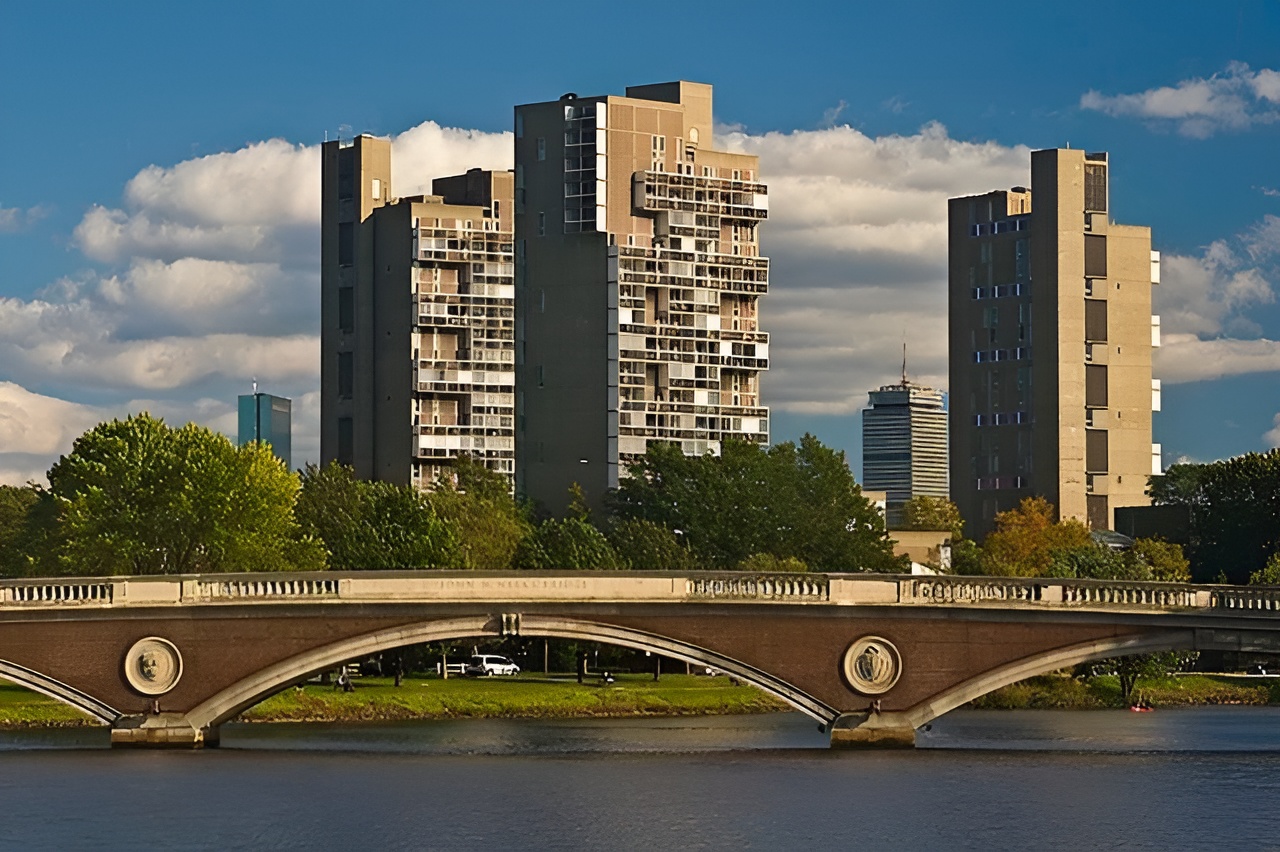
Renovations in the 1990s by Bruner/Cott addressed material deterioration and updated building systems while preserving the original design framework. Later interventions focused on common spaces and landscape improvements, reinforcing the project’s continued use and relevance within Harvard’s housing system.
Project Gallery

Project Location
Address: 900 Memorial Drive, Cambridge, Massachusetts 02139, United States
Location is for general reference and may represent a city or country, not necessarily a precise address.

