

Architects: John Burgee Architects, Philip Johnson
Area: 145,850 m² (1.57 million ft²)
Year: 1984
Photography: PPG Place, Michael Padwee, Joey Gannon, Jason Pratt, Paul Provencher, Cbaile19, Edge2edge media, Rawpixel, Ron Cogswell, Matt Gardner, Highwoods Properties 2014, SWA Group, esherman, inner spirit, nooccar, jovare, Wikimedia Commons, Dllu, Derek Jensen (Tysto), Warren LeMay, John Marino, Michael Righi, Allie Caulfield, David J Laporte, Perry Quan, architurist.blogspot.com
Client: PPG Industries
City: Pittsburgh
Country: United States
PPG Place office complex designed by John Burgee Architects with Philip Johnson in Pittsburgh, Pennsylvania, redefined the corporate headquarters typology through the integration of postmodern design, neo-Gothic references, and advanced curtain wall technology, completed in 1984. Developed as the headquarters for PPG Industries, the project occupies a 5.5-acre site in downtown Pittsburgh and formed part of a broader urban revitalization effort during the city’s transition from a steel-based economy. The complex consists of six buildings organized around a central public plaza, including a 40-story office tower, a 14-story building, four six-story structures, retail spaces, restaurants, and a publicly accessible Wintergarden. PPG Place established a distinct architectural identity through the use of more than one million square feet of Solarban 550 reflective glass and 231 glass spires that reference both historic Gothic architecture and Pittsburgh’s architectural heritage. The project reinterprets the curtain wall as a sculptural element through pleated glass surfaces, articulated mullions, and faceted façades that produce shifting reflections throughout the day. Structural steel framing and reinforced concrete floor systems support large, flexible office floors, while the reflective glazing improves energy performance by reducing solar heat gain and retaining interior heat. A central plaza, Wintergarden, retail arcades, and public amenities extend the project beyond its corporate function, reinforcing its role within the city. PPG Place remains one of Pittsburgh’s most recognizable landmarks and a significant example of postmodern architecture that combines historical references, technological innovation, and civic space within a unified urban development.
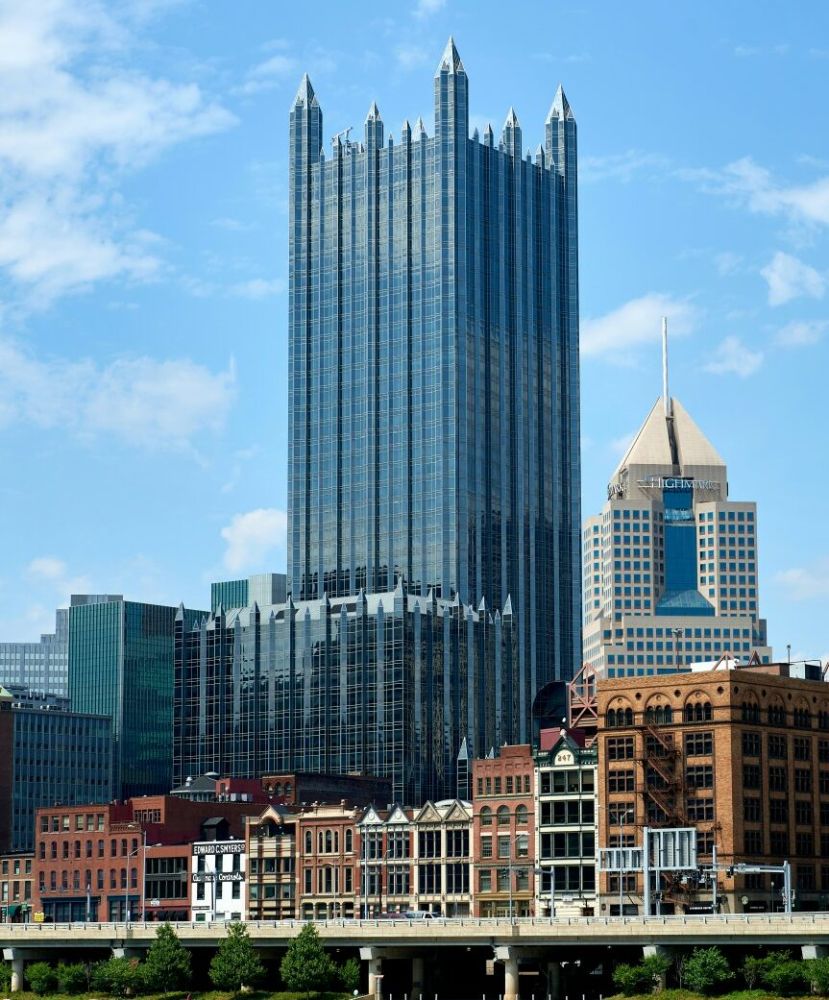
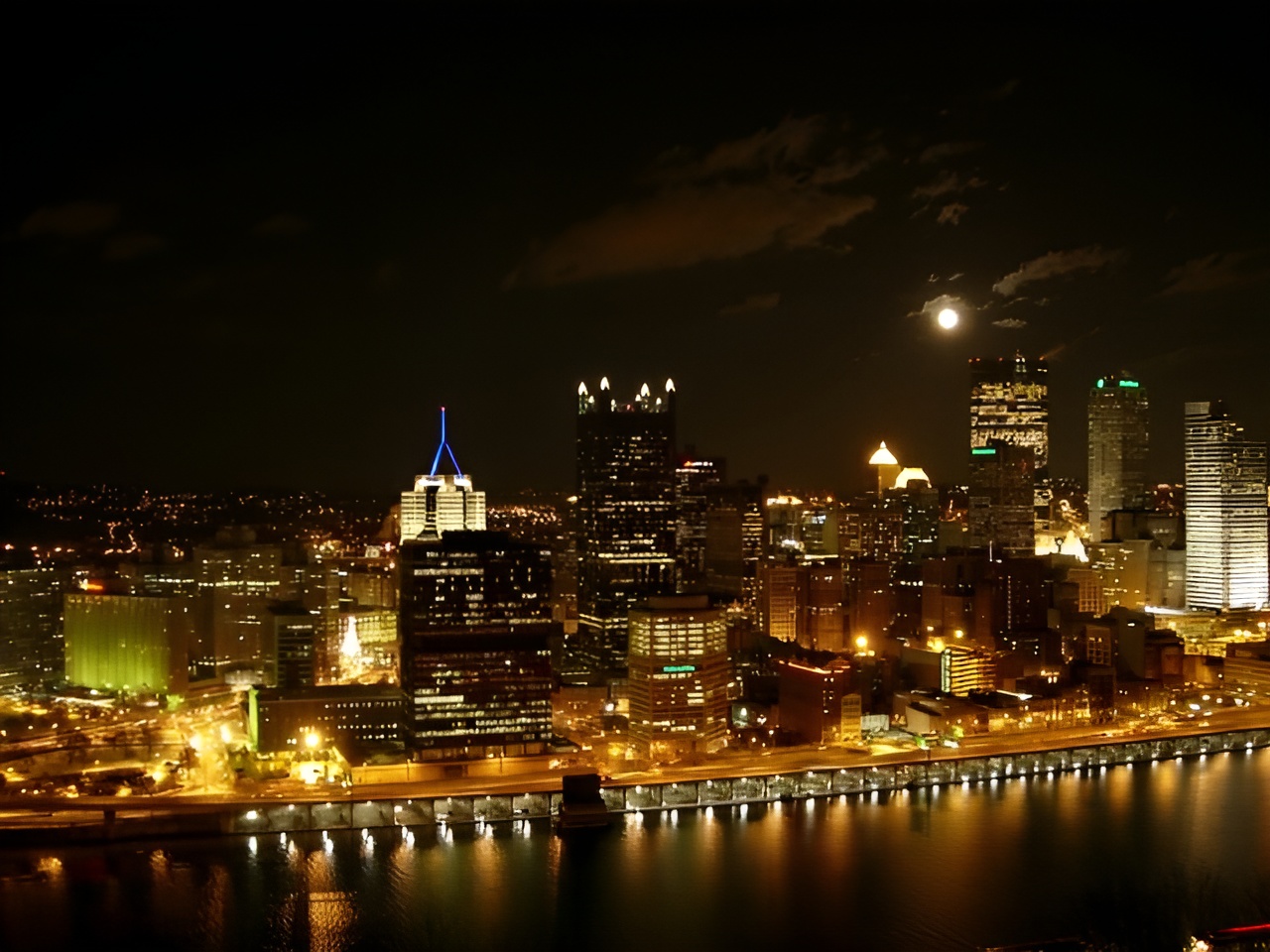
PPG Place is a six-building office and mixed-use complex in downtown Pittsburgh, Pennsylvania, designed by John Burgee Architects with Philip Johnson and completed between 1983 and 1984. Developed as the headquarters for PPG Industries, formerly the Pittsburgh Plate Glass Company, the project occupies a 5.5-acre site in the city’s central business district and became a prominent symbol of Pittsburgh’s economic transformation during the late twentieth century.
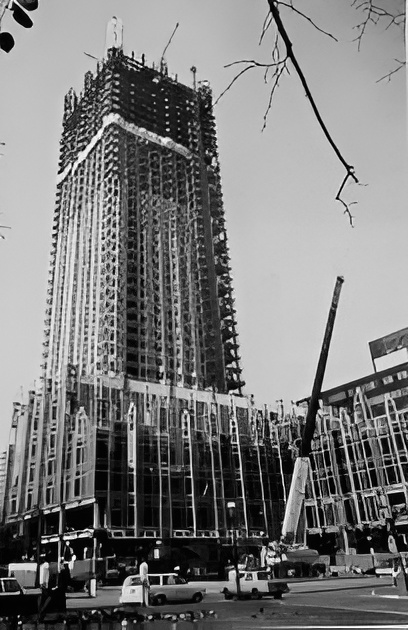
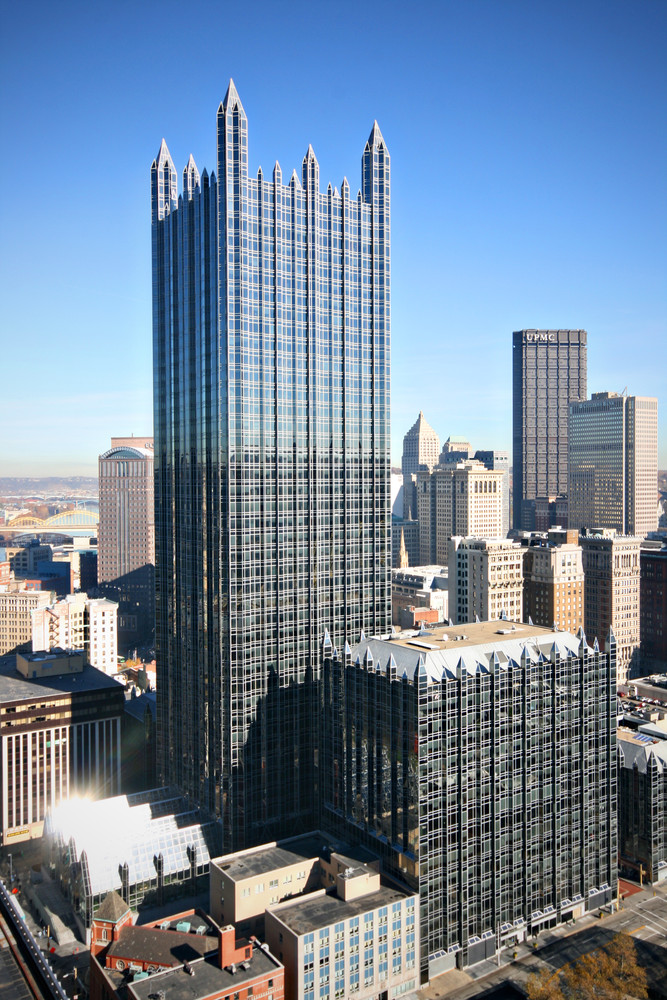
The complex was conceived during a period of urban renewal as Pittsburgh adapted to the decline of the steel industry. PPG Industries sought a new headquarters that would reflect both the company’s identity as a glass manufacturer and the city’s ambitions for redevelopment. The result was a large corporate complex that combined office space, retail functions, public amenities, and open urban space within a unified architectural composition.
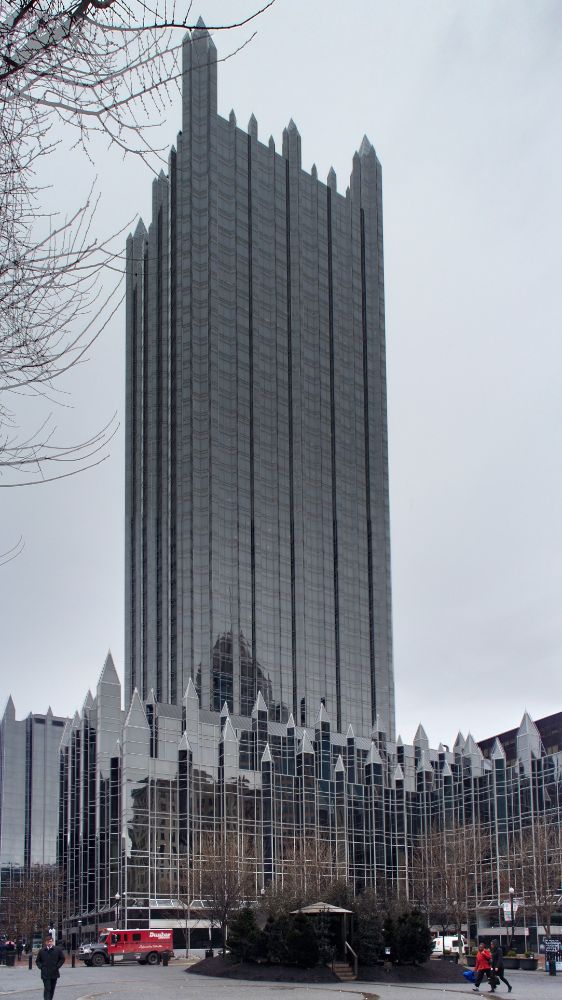
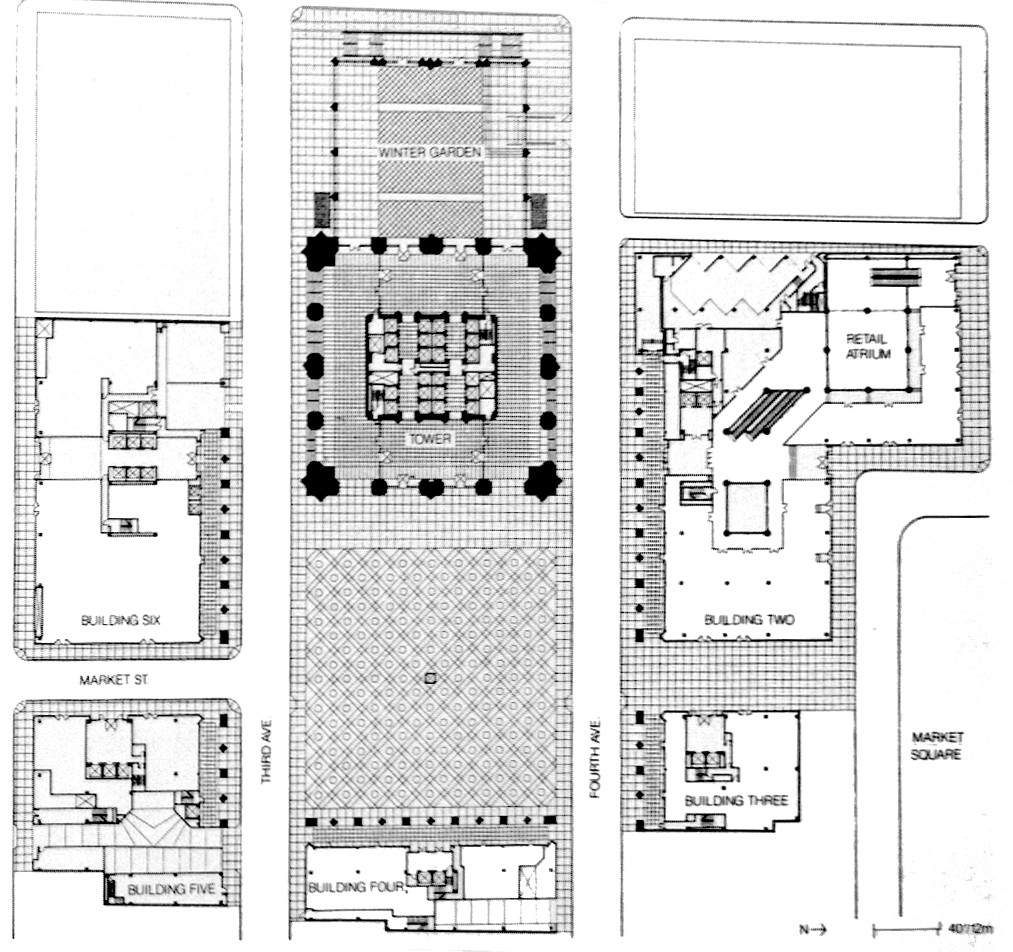
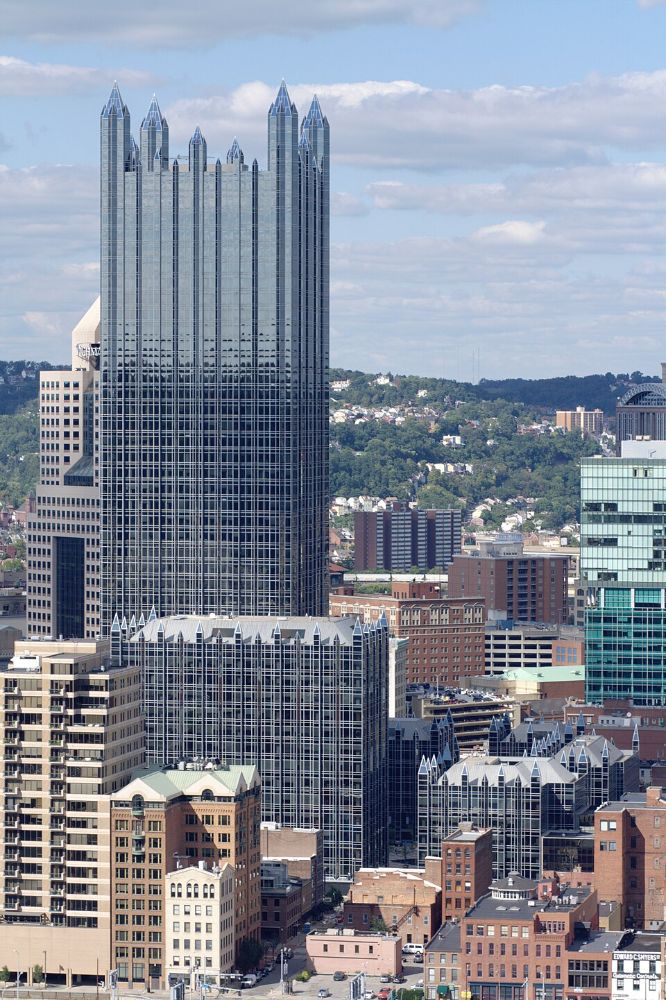
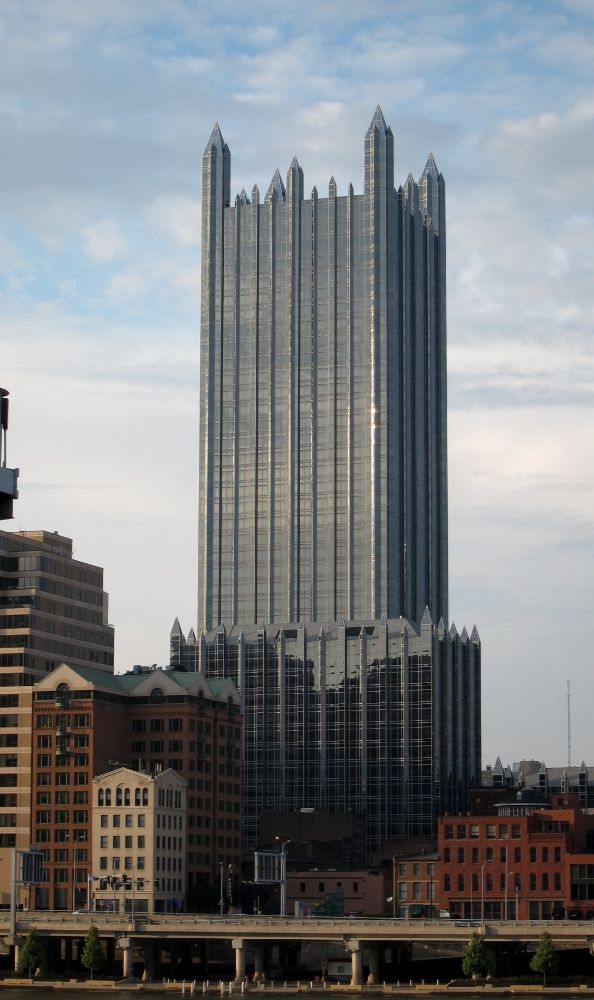
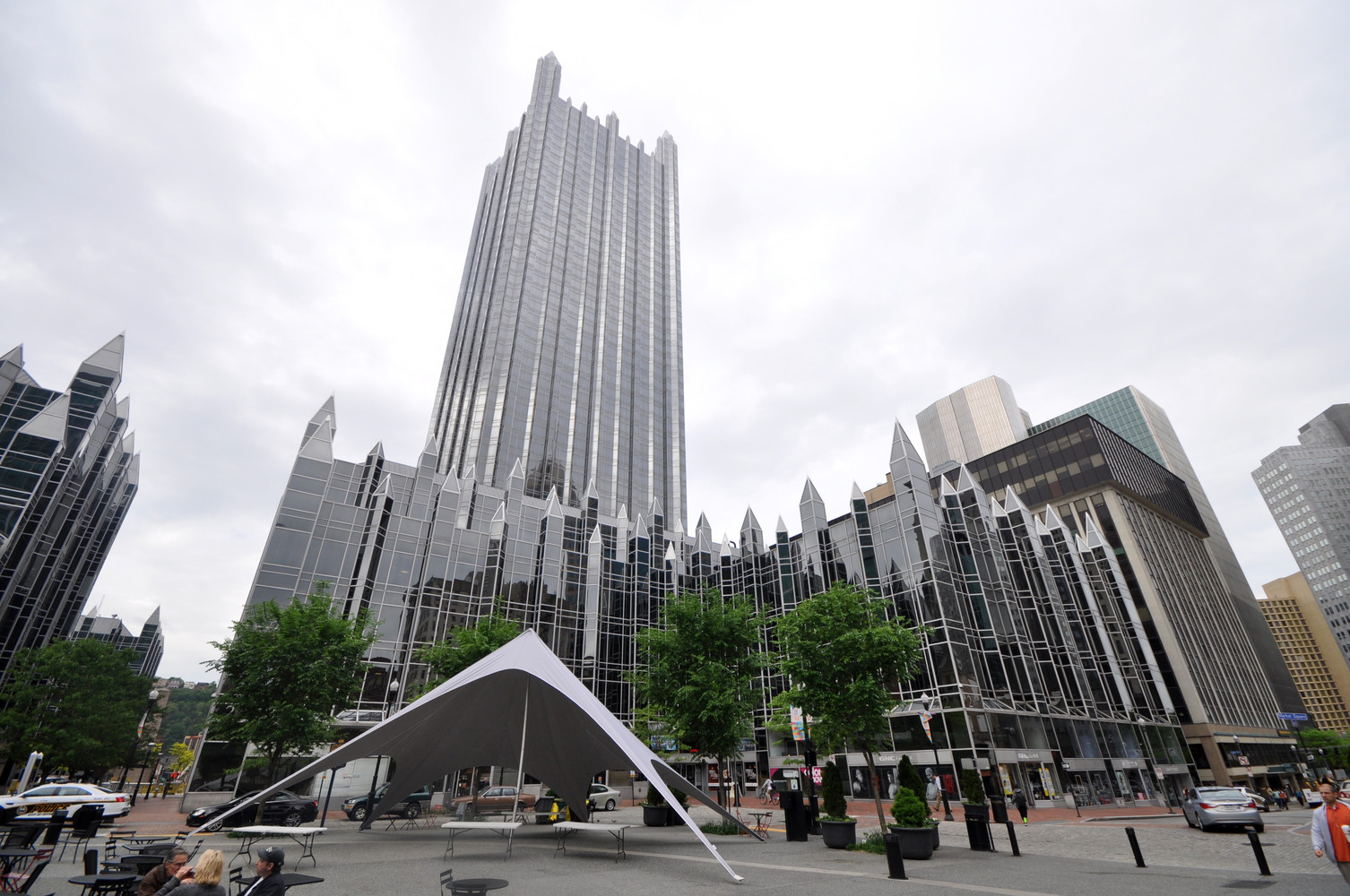
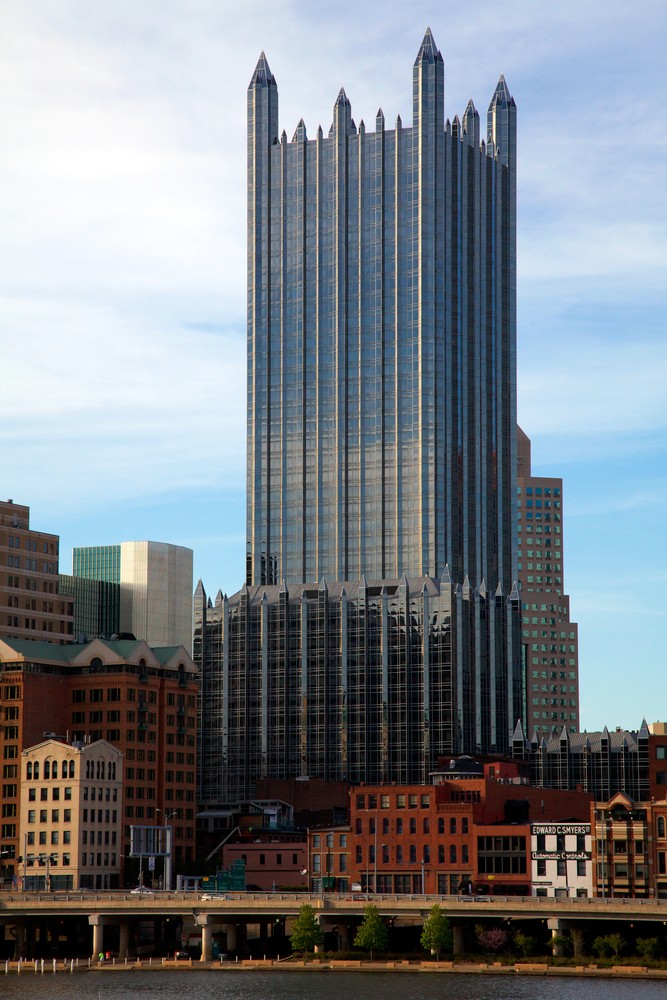
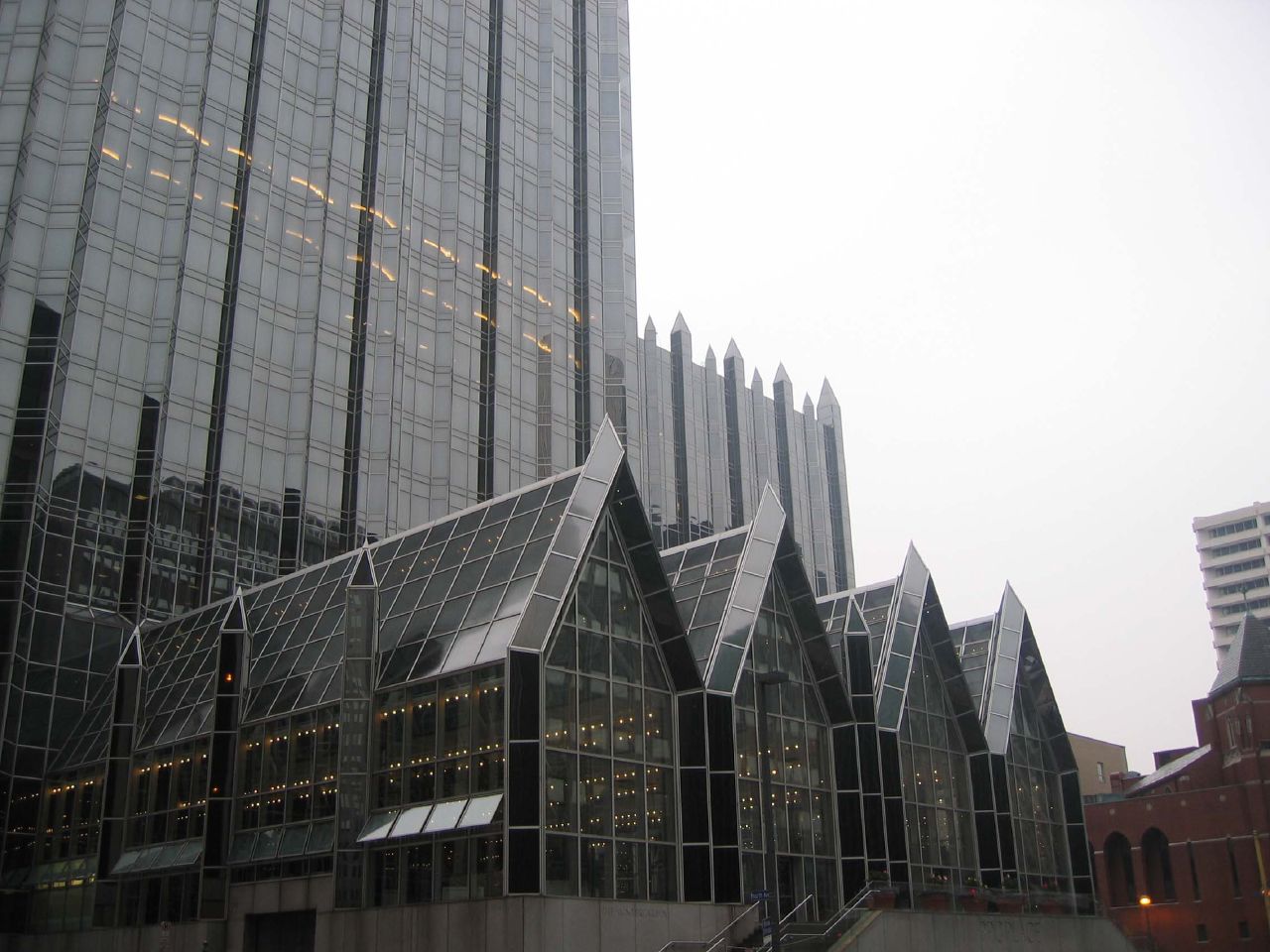
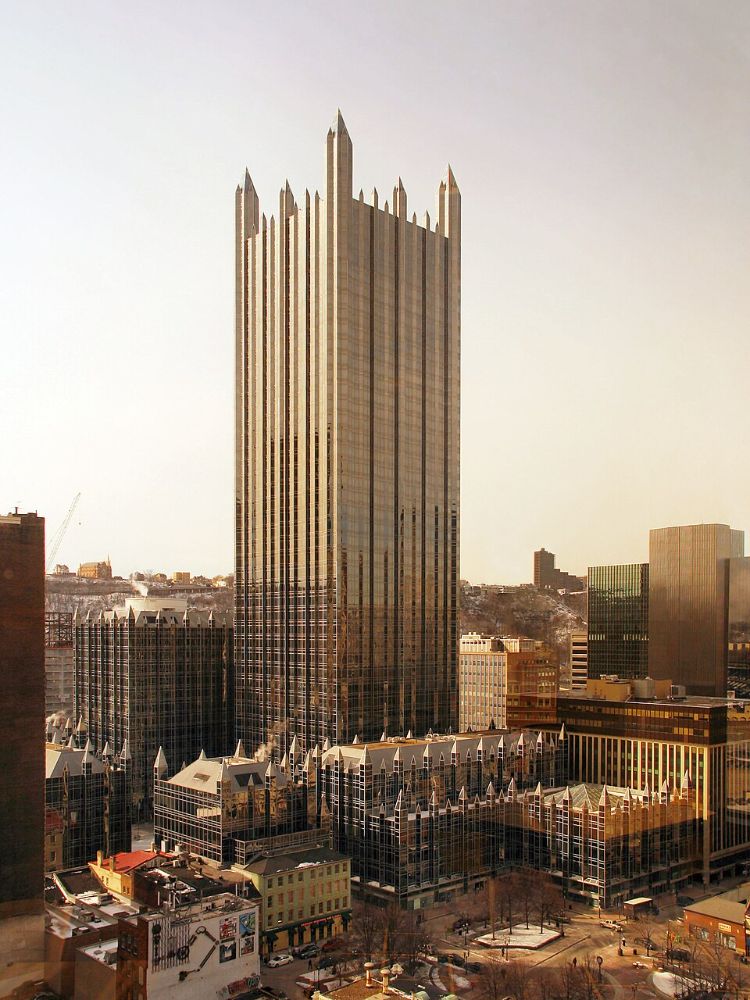
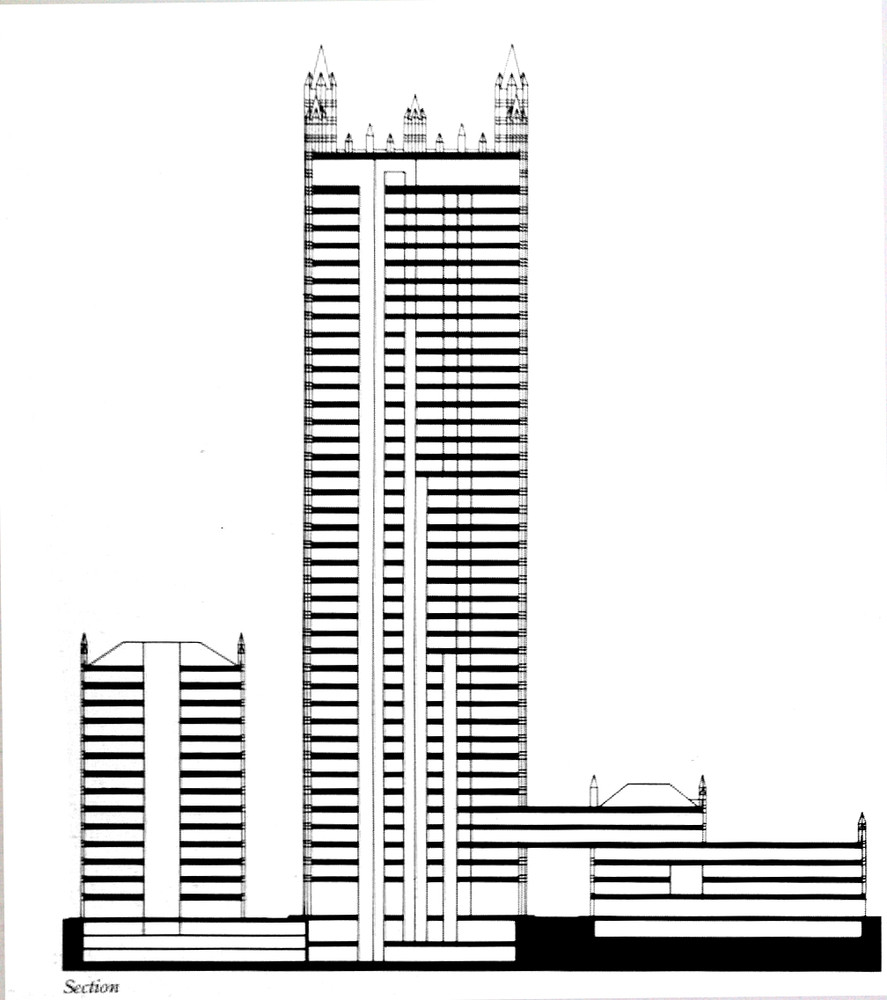
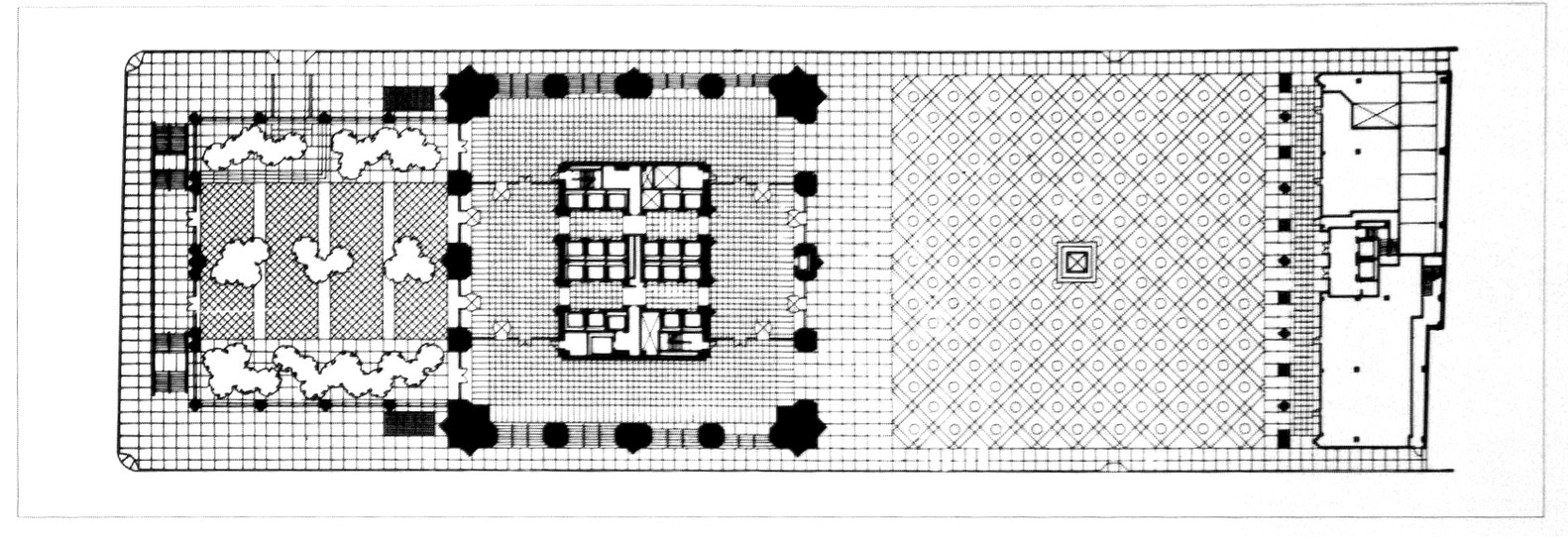
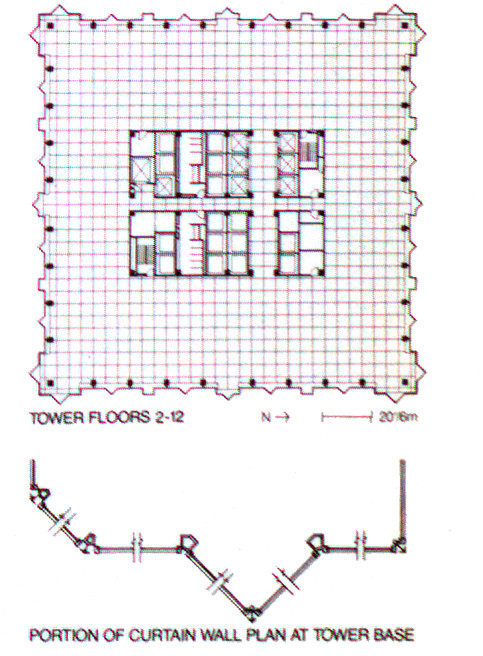
PPG Place consists of six buildings arranged around a central plaza. The composition includes One PPG Place, a 40-story tower rising to 194 meters, a 14-story building, and four six-story structures. Together, the buildings provide approximately 1.57 million square feet of office, retail, and commercial space while maintaining a cohesive architectural language defined by reflective glass façades and vertical spires.
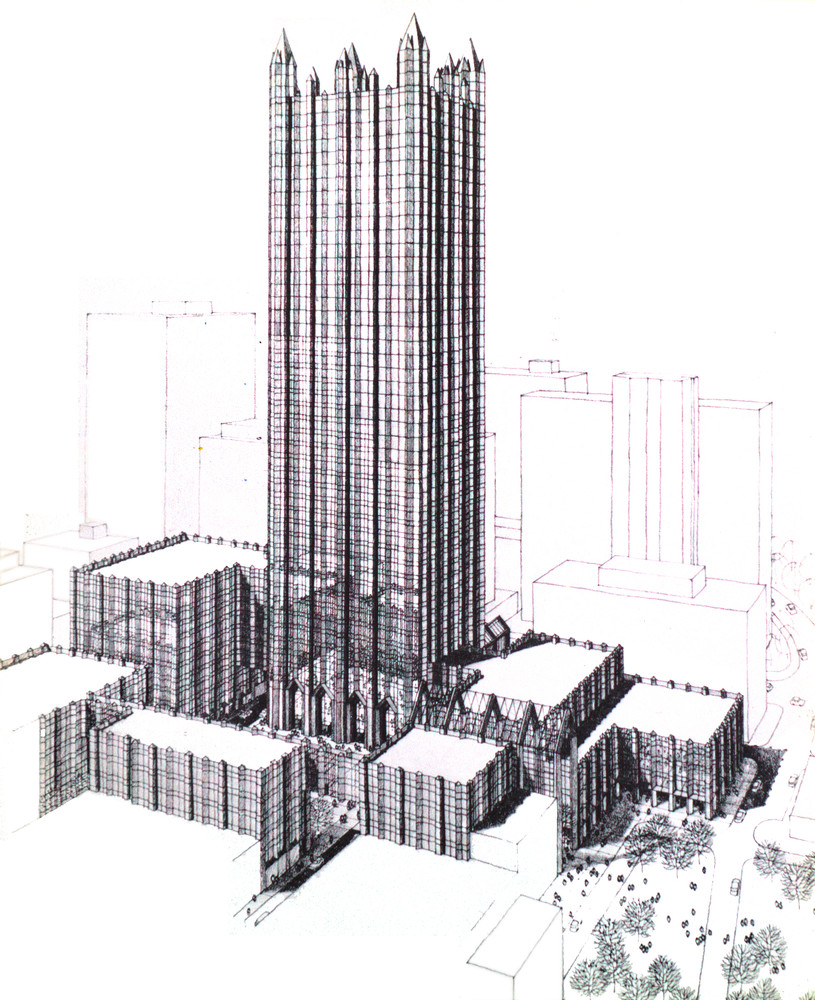
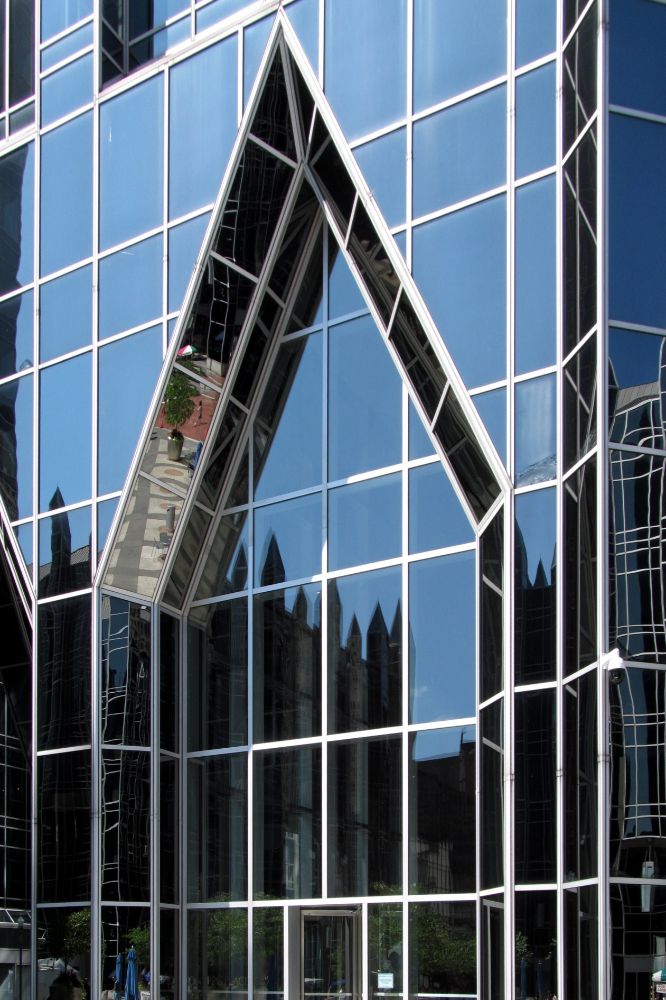
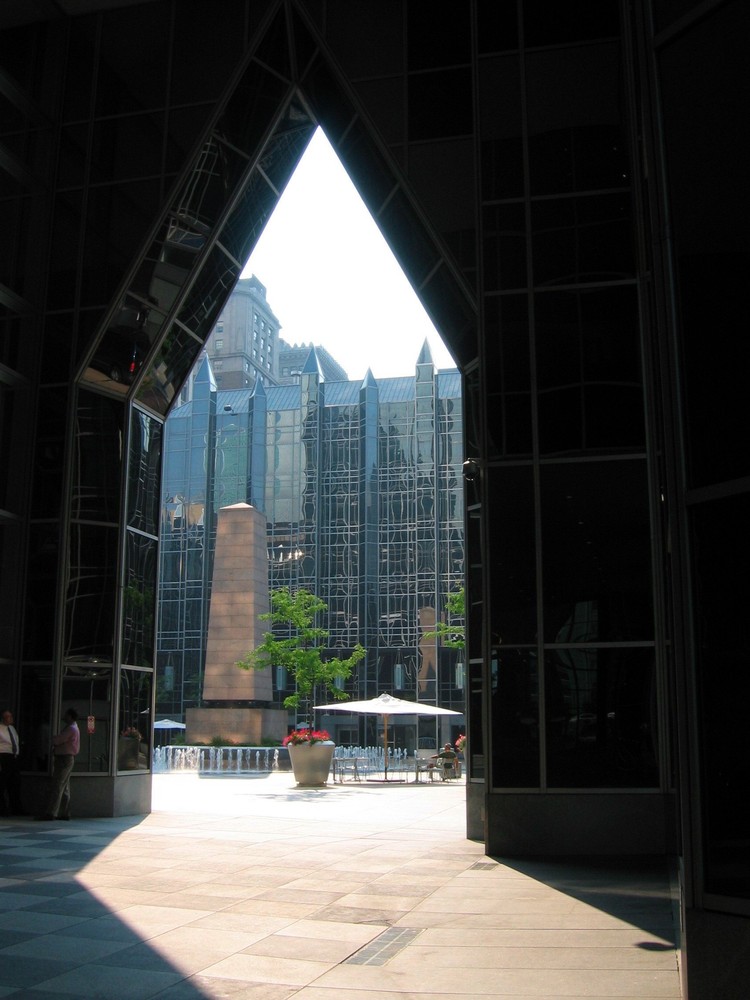
The design is widely associated with Postmodern architecture and incorporates neo-Gothic references drawn from both local and international precedents. The architects cited influences including the Victoria Tower at the Palace of Westminster in London, H. H. Richardson’s Allegheny County Courthouse, and Charles Klauder’s Cathedral of Learning in Pittsburgh. These references are expressed through pointed forms, pinnacles, crenellated profiles, and a strong vertical emphasis.
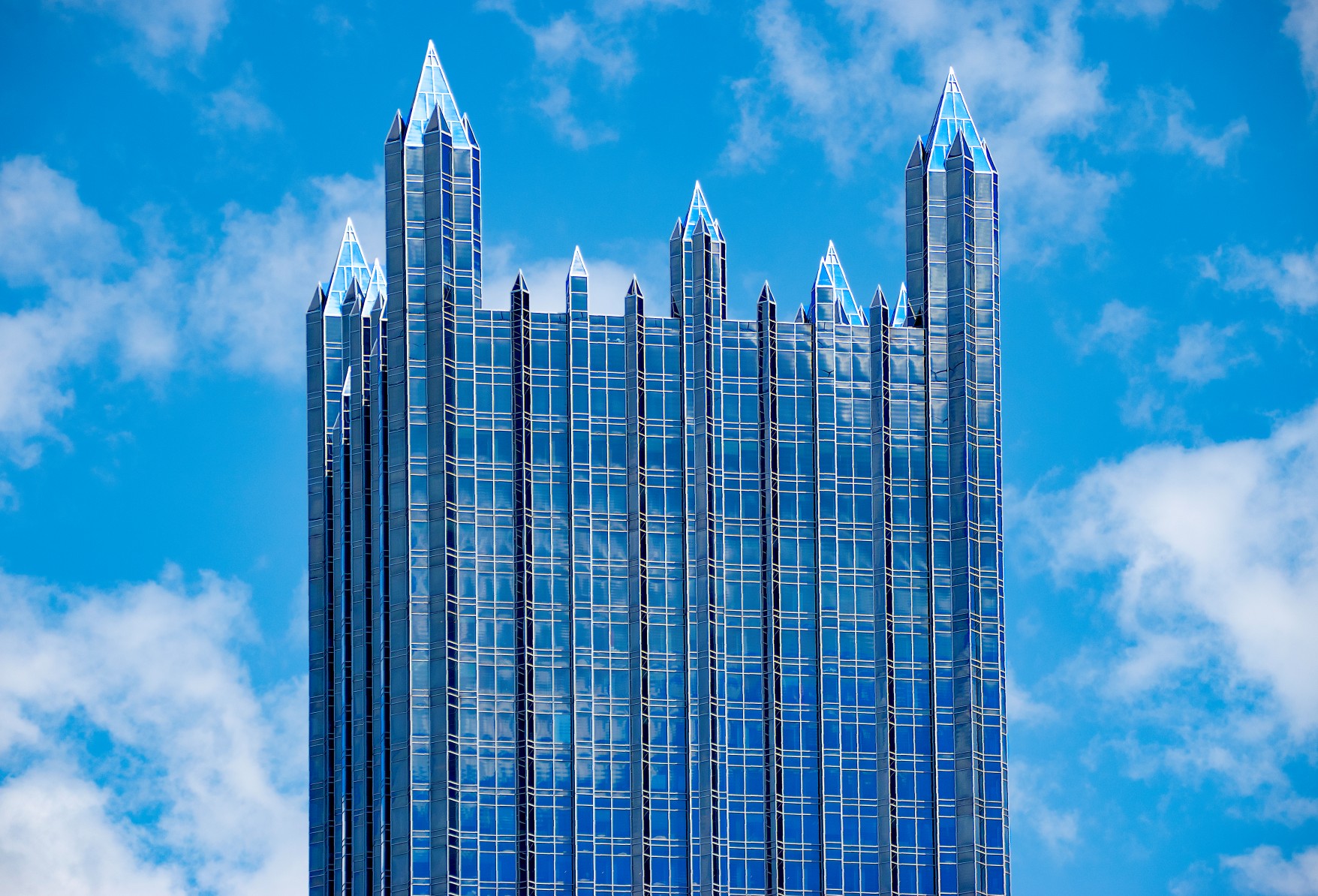
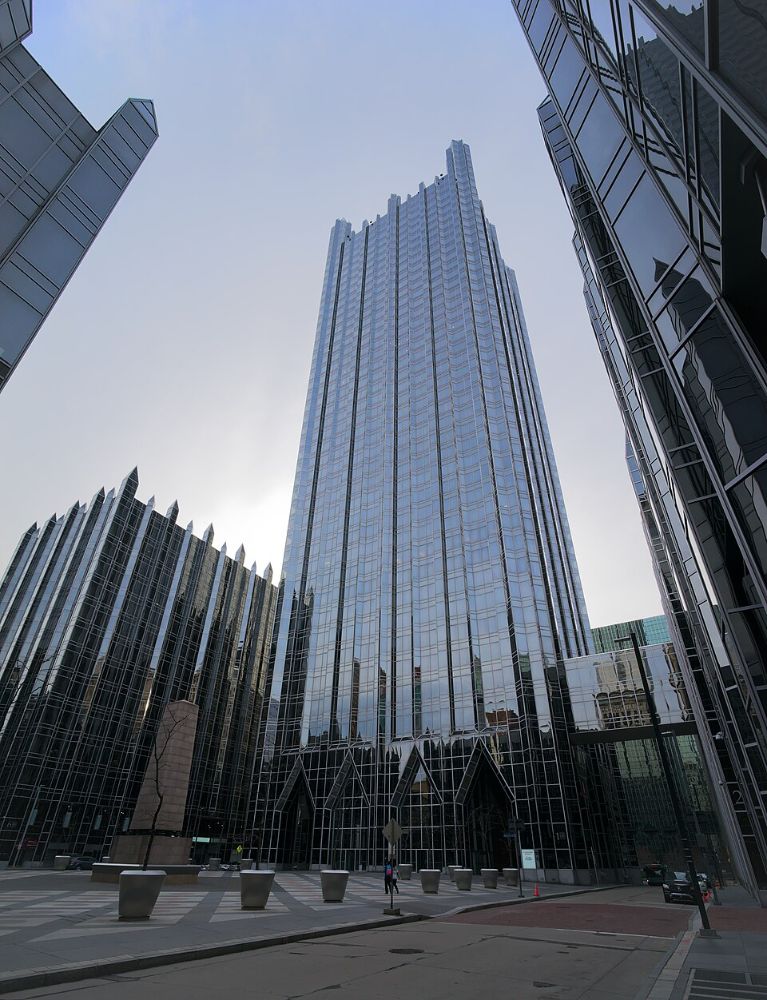
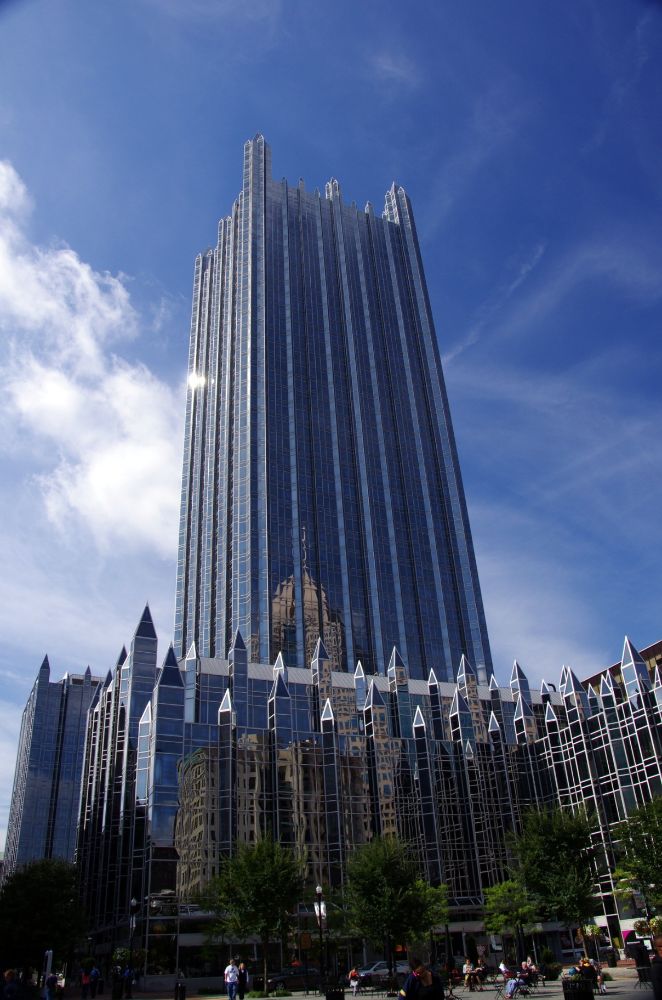
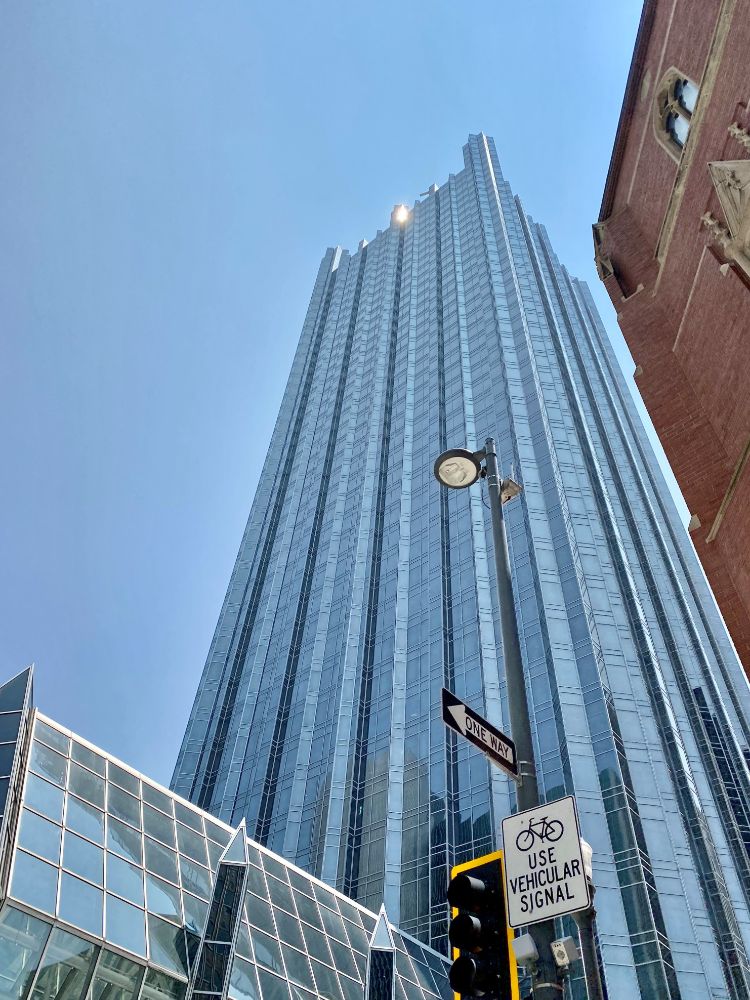
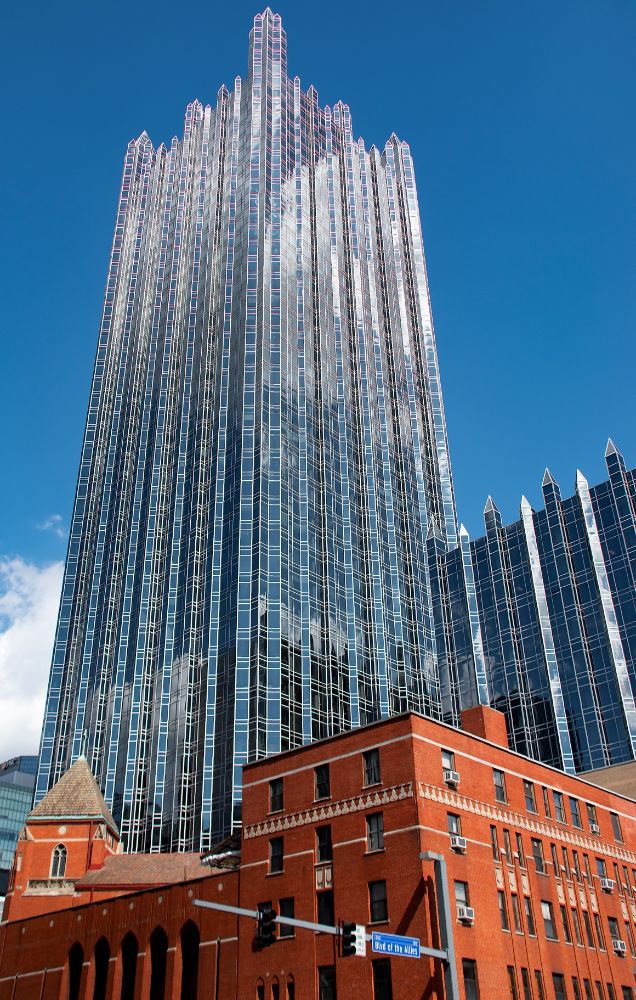
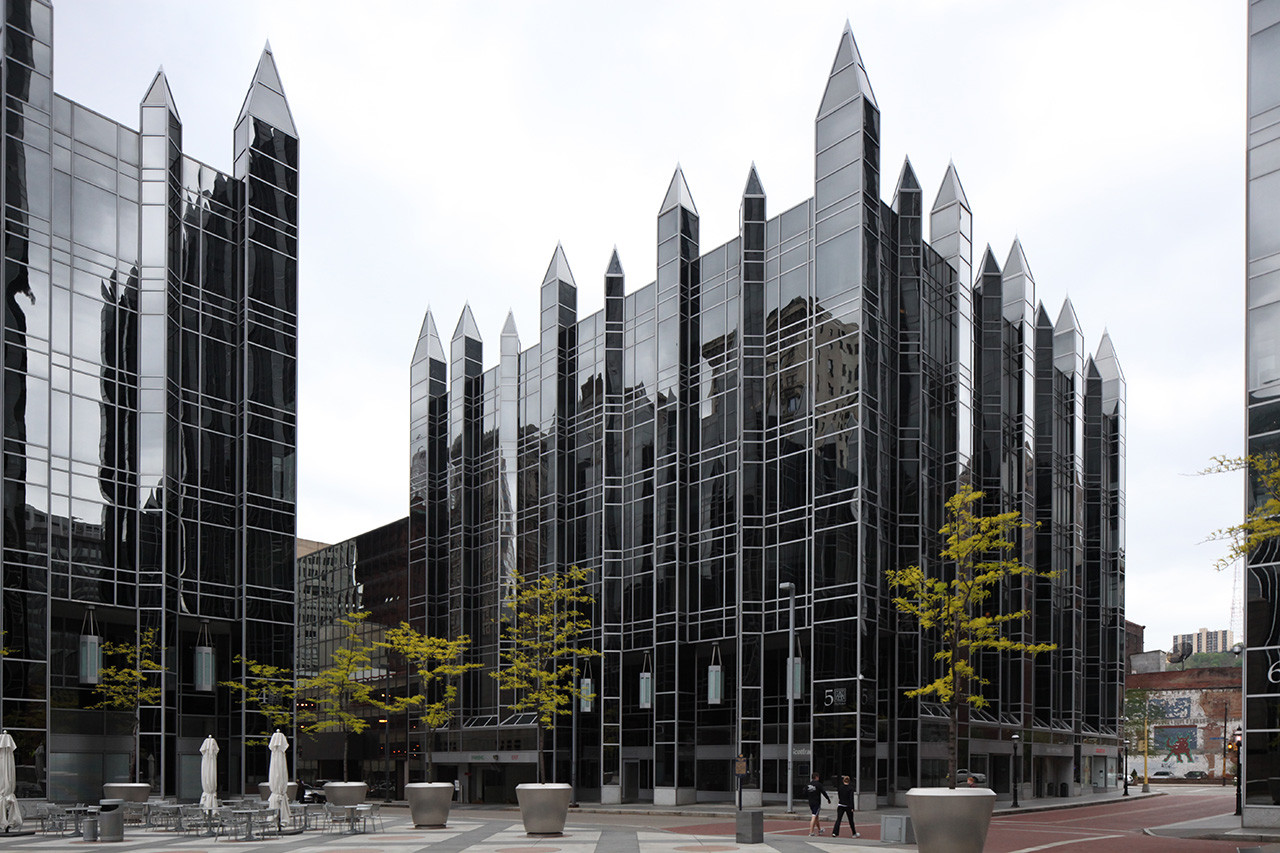
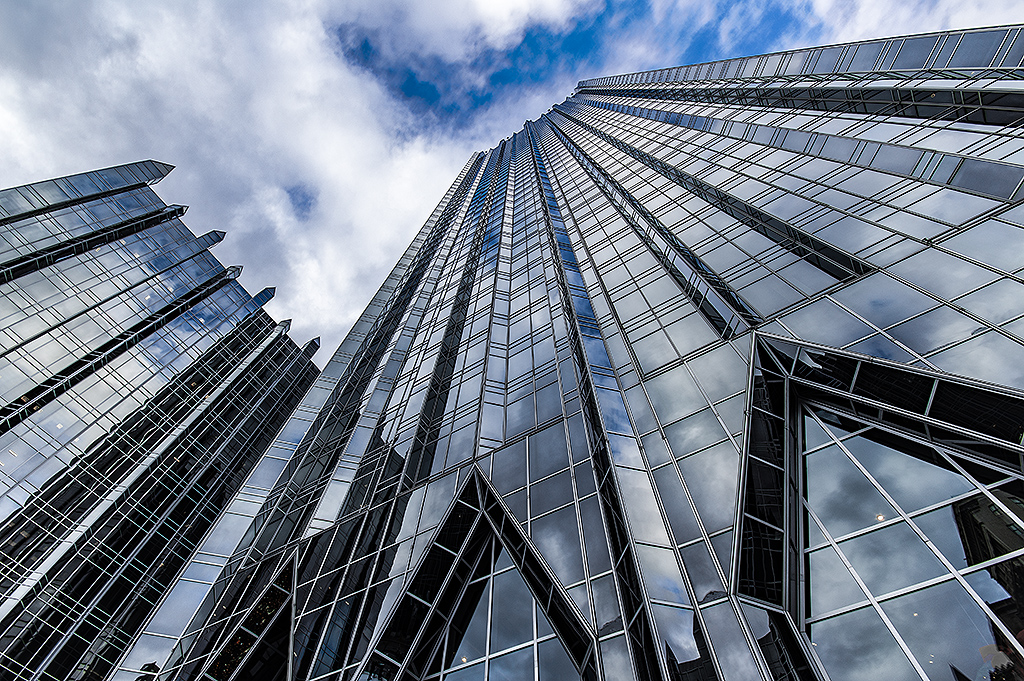
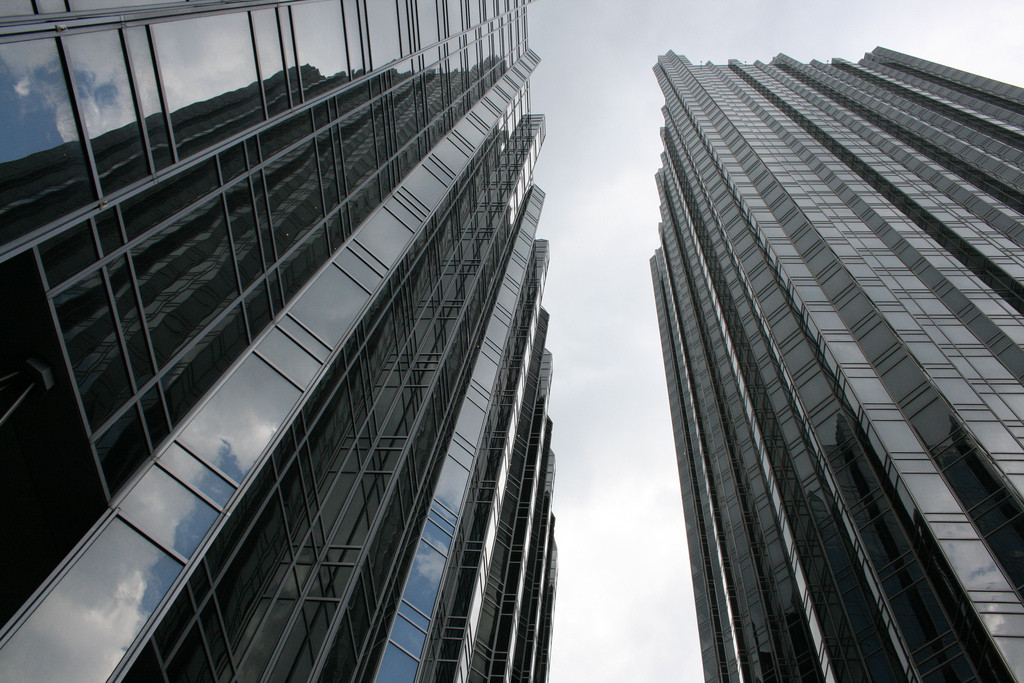
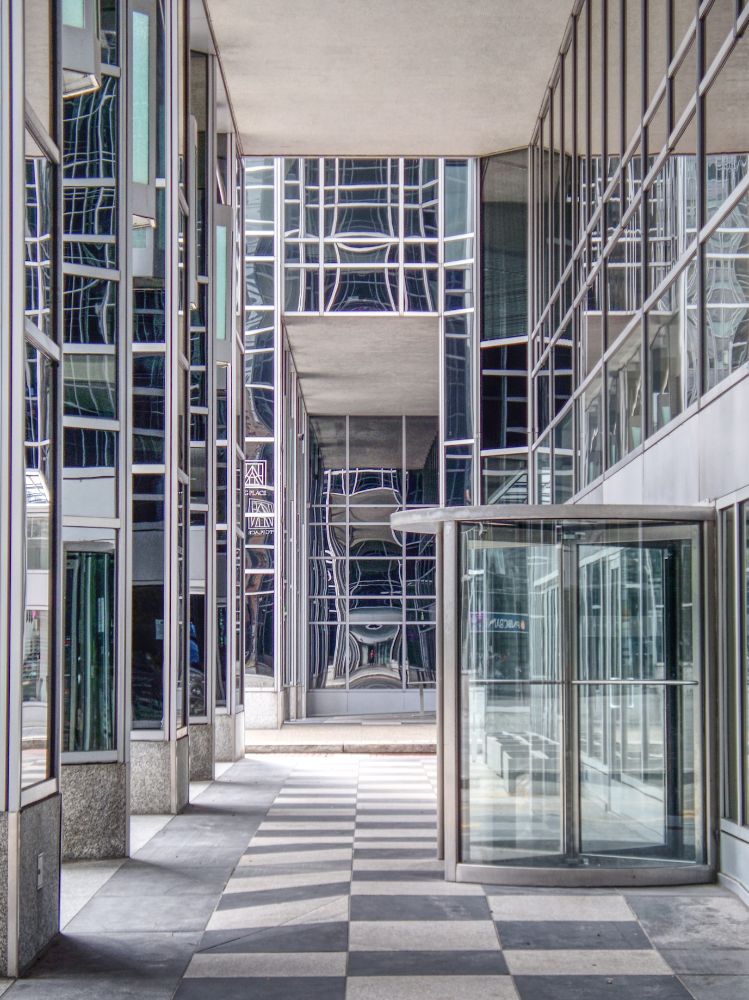
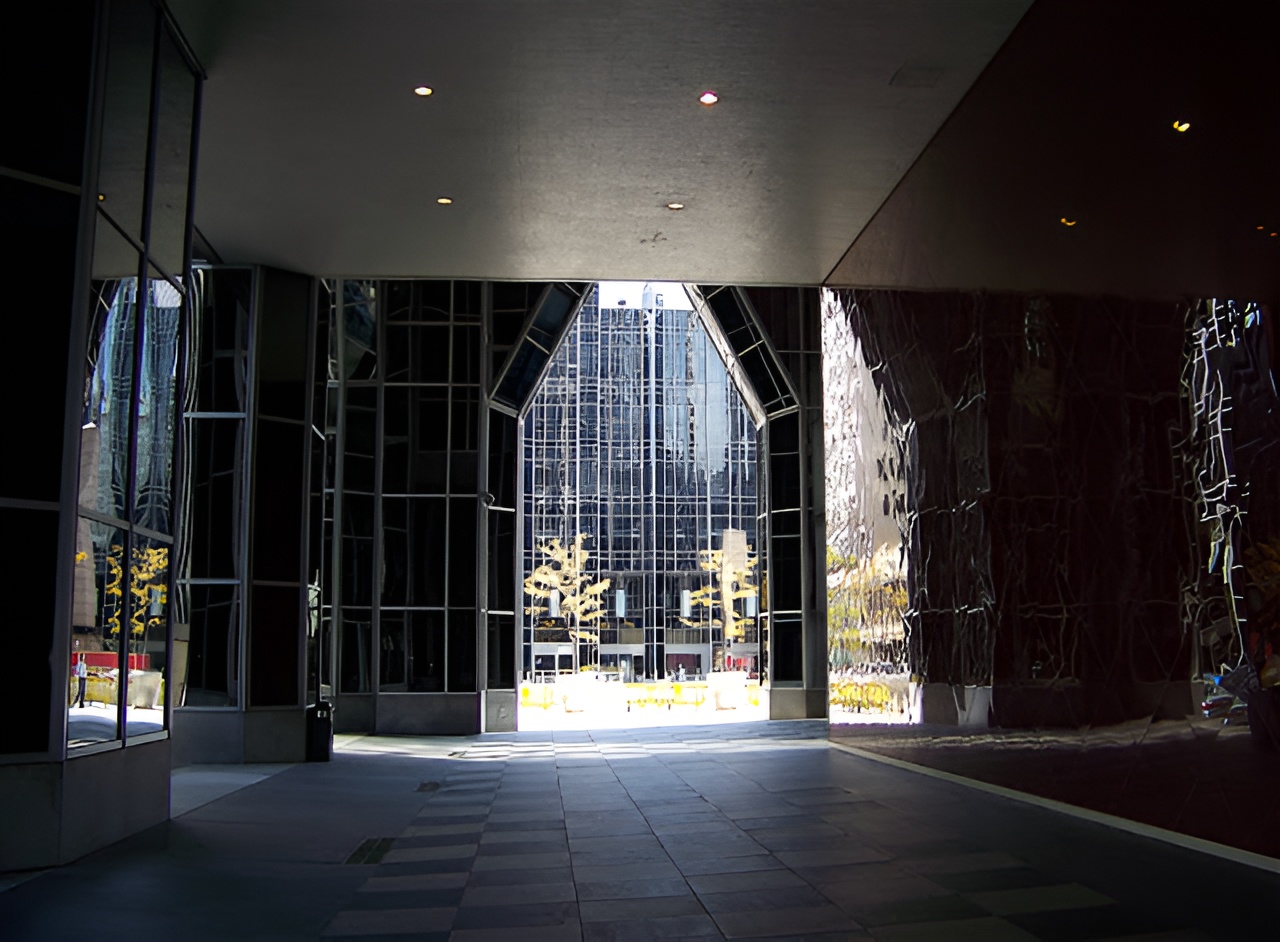
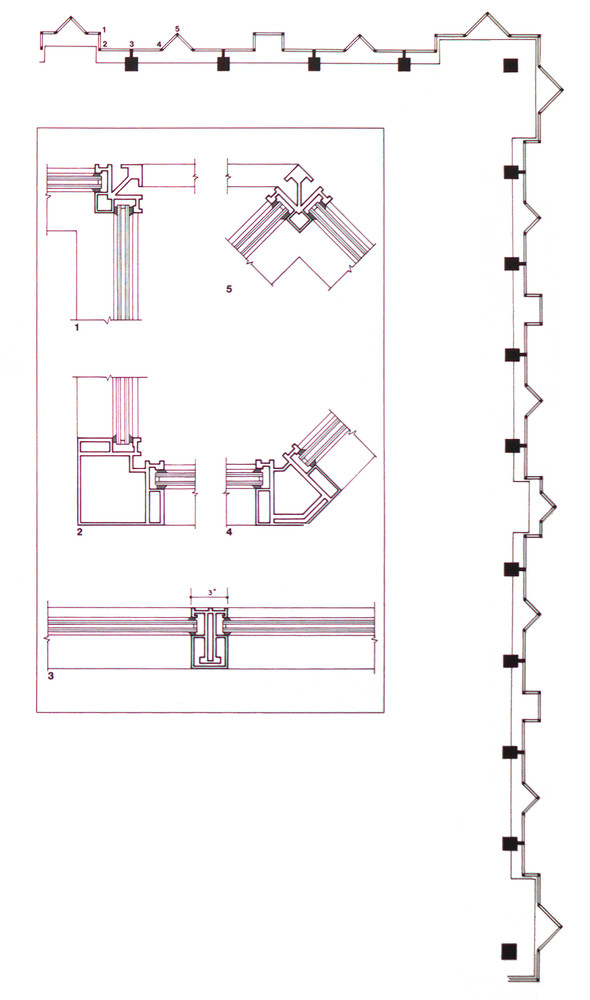
The most recognizable feature of the complex is its extensive use of glass. More than one million square feet of PPG Solarban 550 reflective glass were used across the development, comprising approximately 19,750 individual glass panels. The façades are articulated through pleated surfaces and closely spaced vertical elements that create changing reflections throughout the day. Rather than emphasizing transparency, the design explores the reflective and sculptural qualities of glass, producing a surface that responds continuously to light, weather, and surrounding buildings.
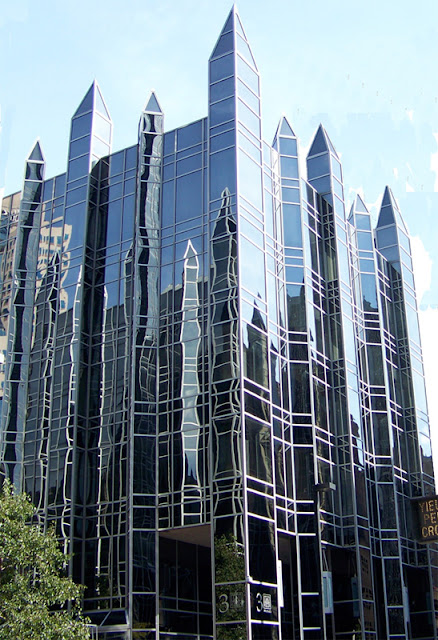
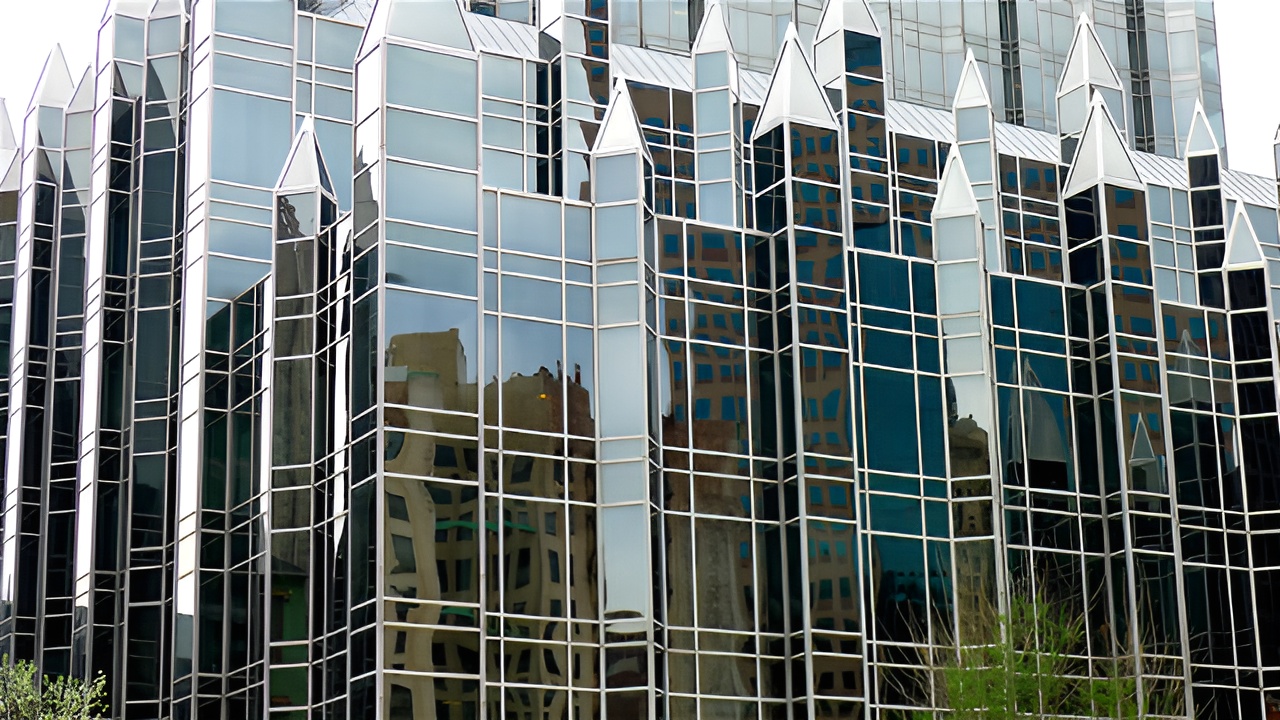
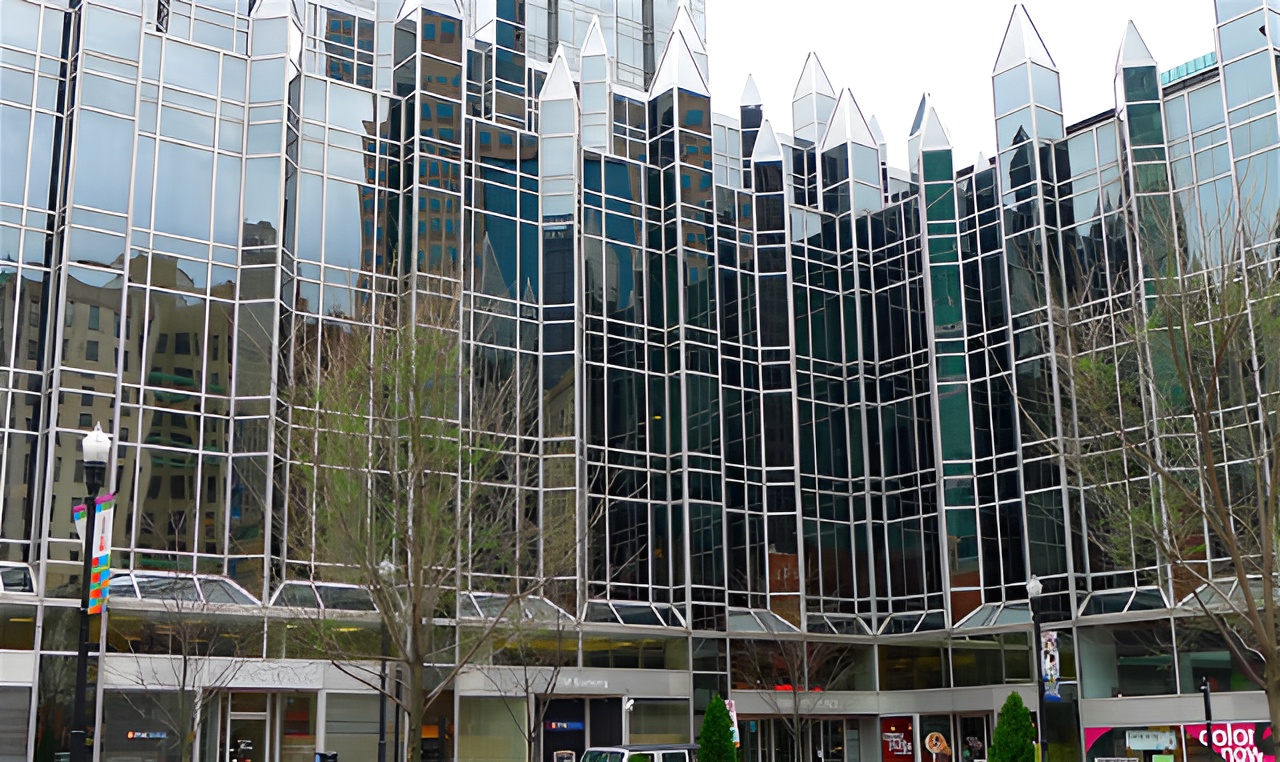
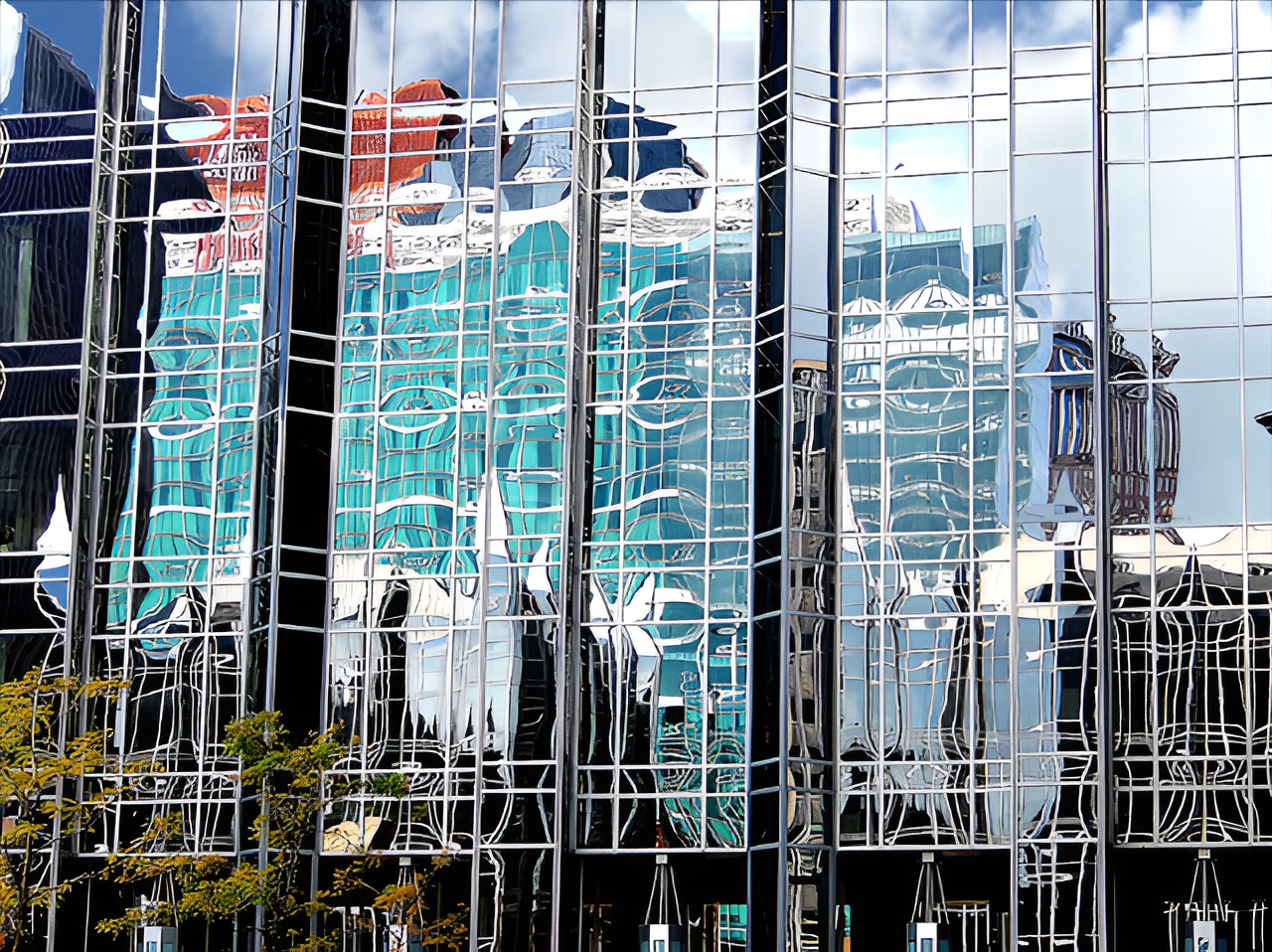
The complex is distinguished by 231 glass spires, with the tallest reaching approximately 25 meters. These elements reinforce the project’s vertical character and contribute to its skyline presence. The reflective glazing is paired with aluminum mullions that define the geometry of the façades and accentuate their faceted surfaces.
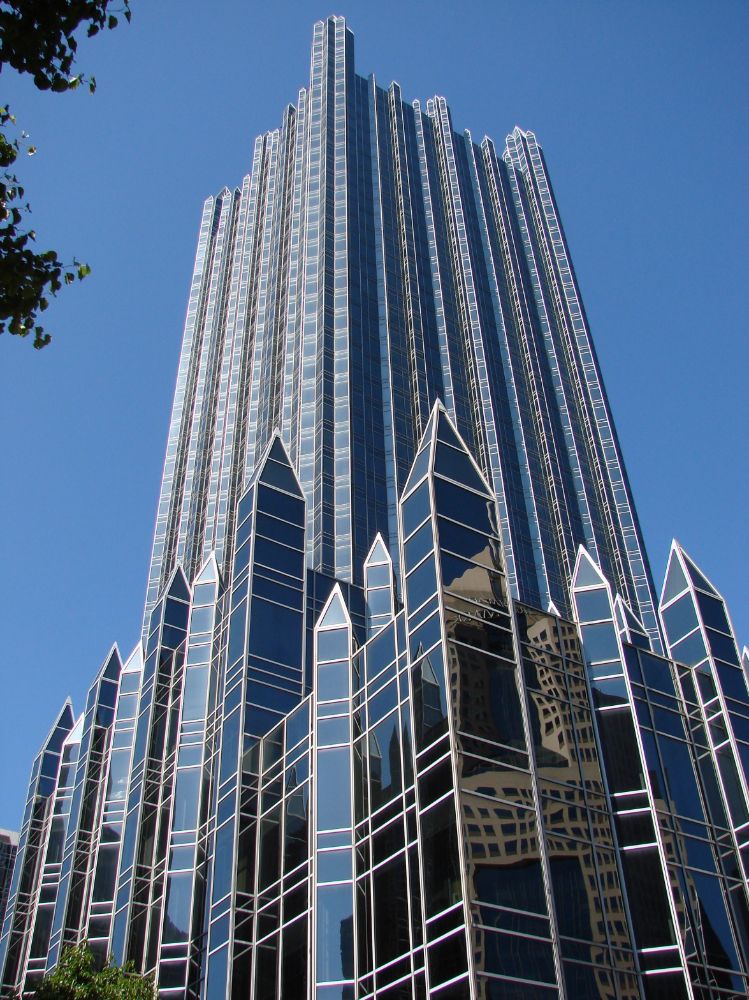
The structural system combines steel framing with reinforced concrete floor slabs. Construction progressed with structural work advancing several floors ahead of the curtain wall installation. Because PPG Industries manufactured, fabricated, and installed the glazing system, quality control was closely integrated throughout the construction process.
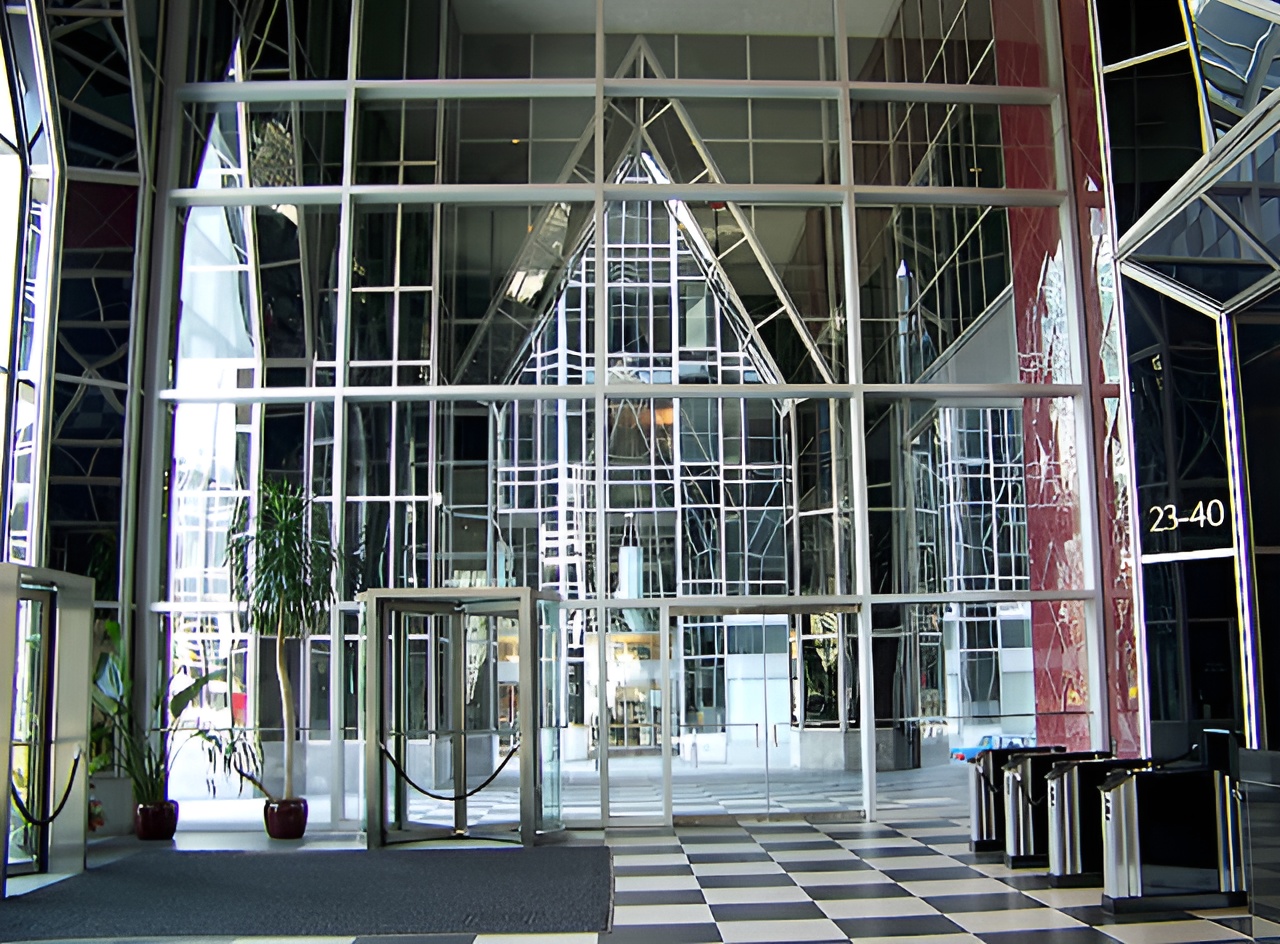
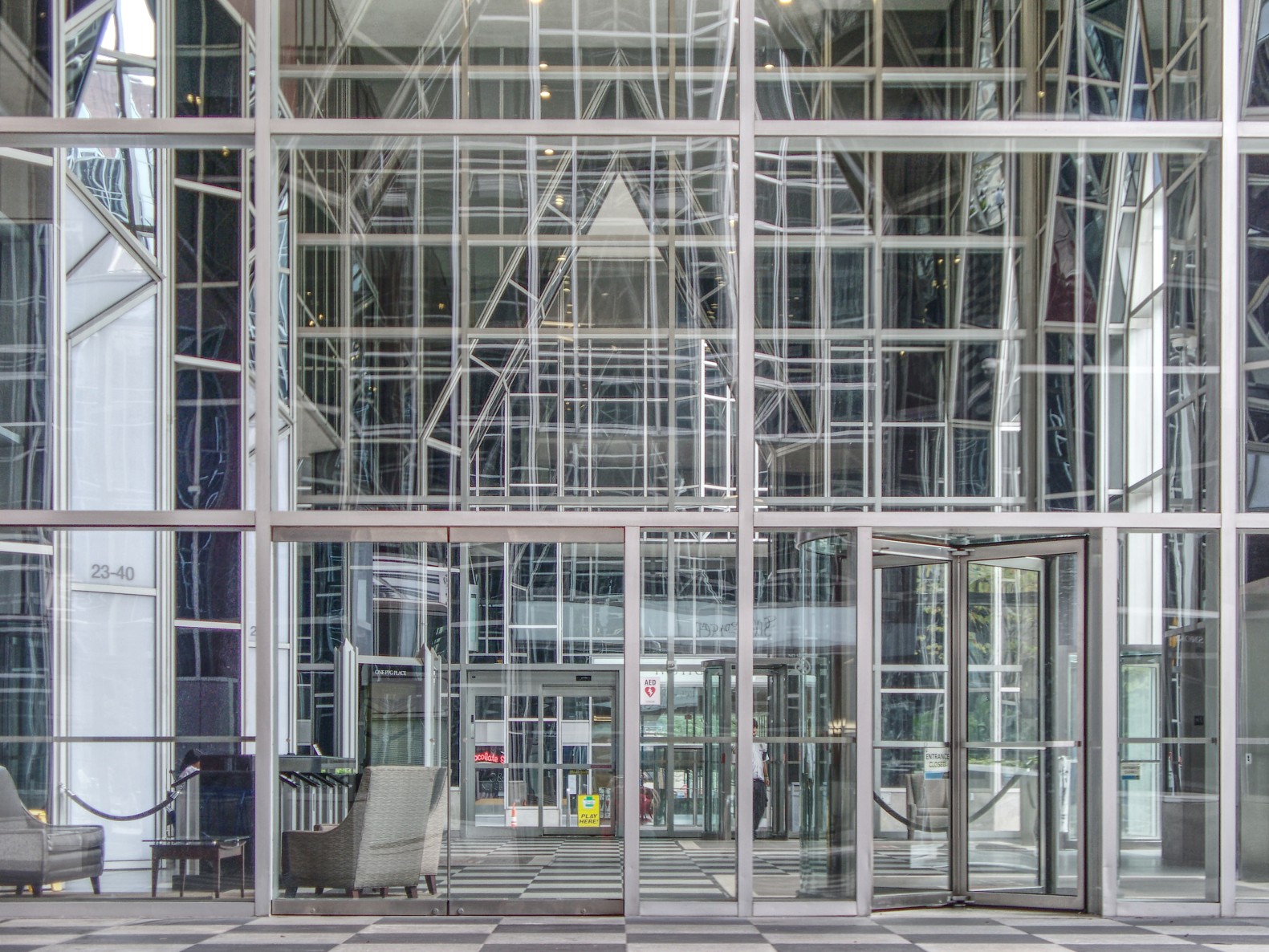
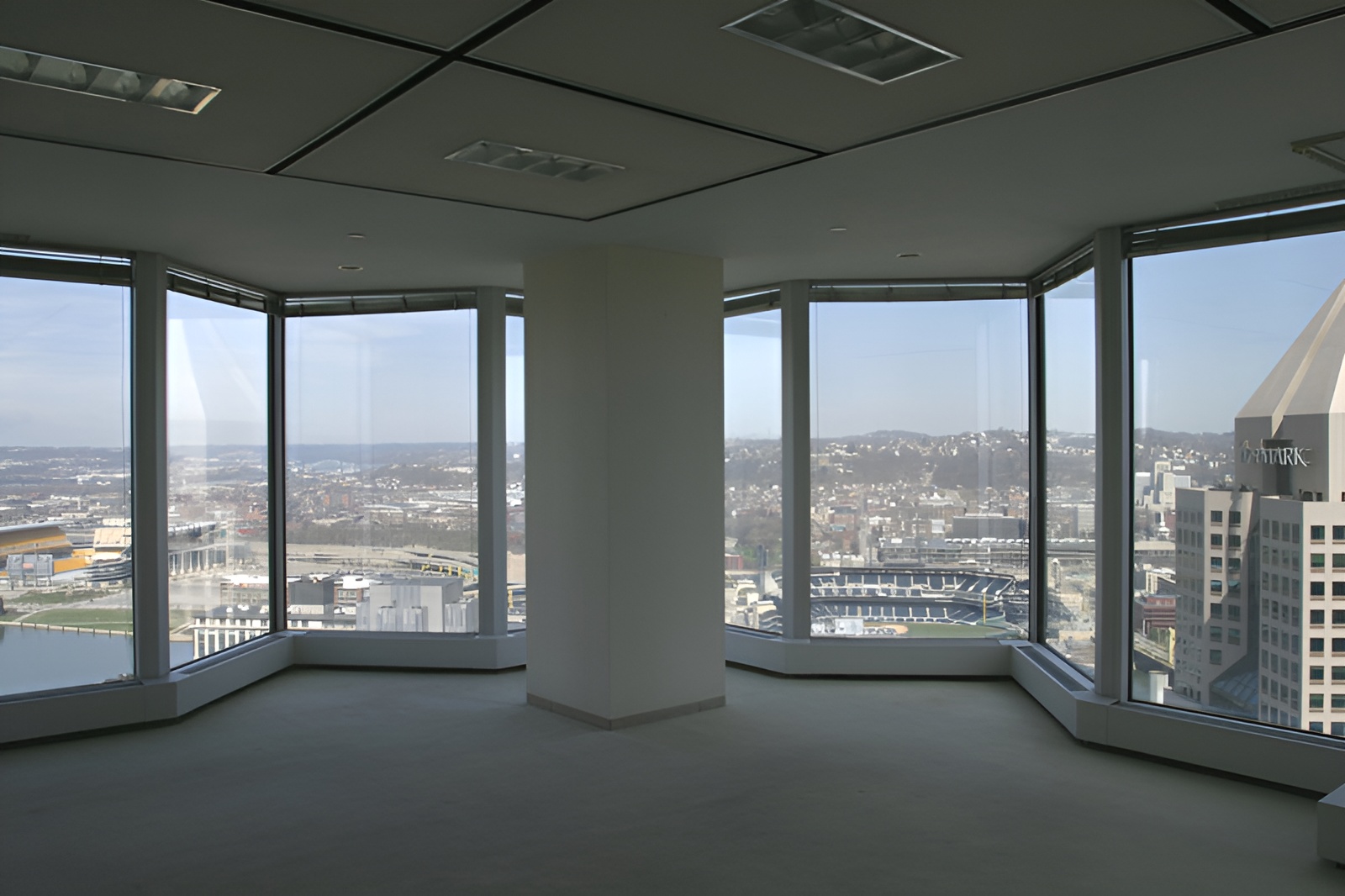
The development introduced significant energy-performance improvements compared to the company’s previous headquarters. The reflective glazing reduces solar heat gain during warmer months while helping retain interior heat during winter. Additional building systems recycle heat generated by equipment and contribute to the overall efficiency of the complex.

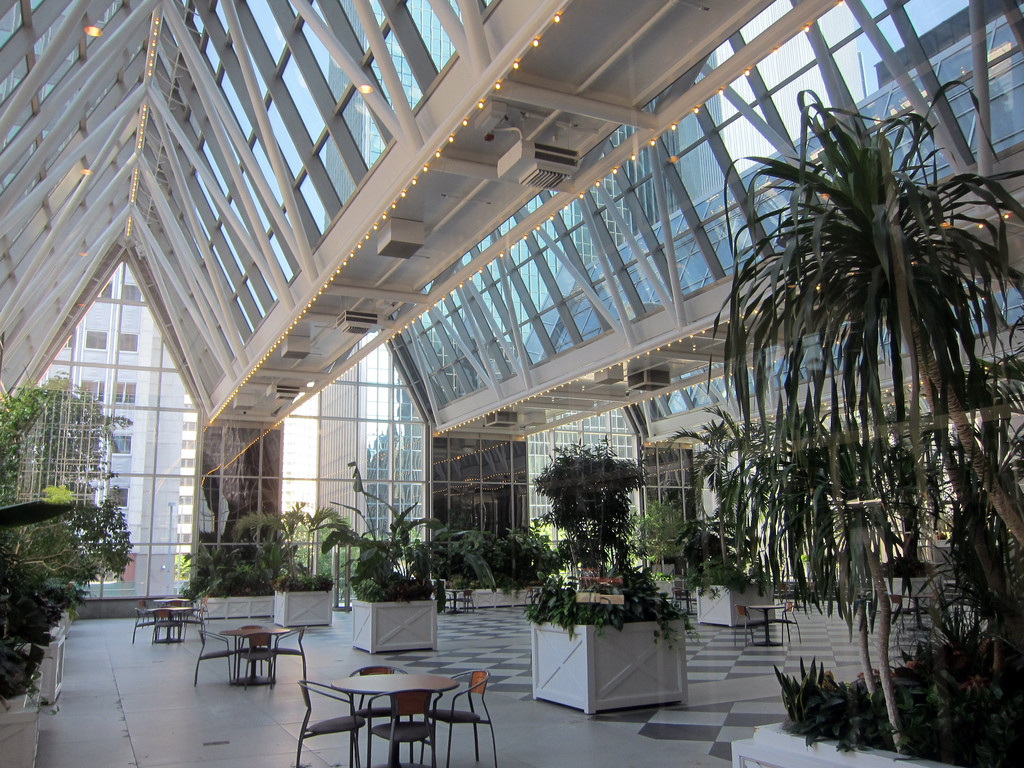
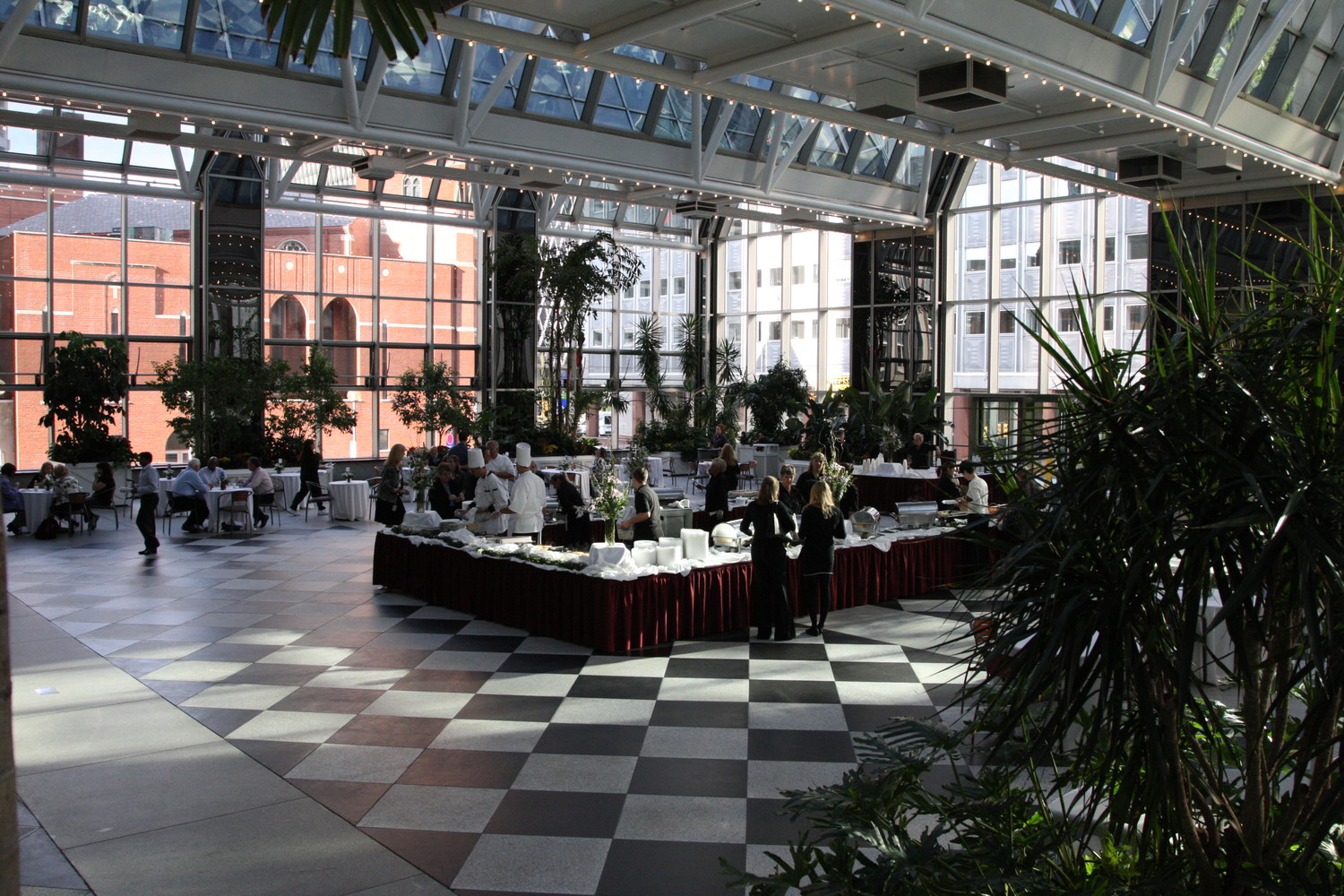
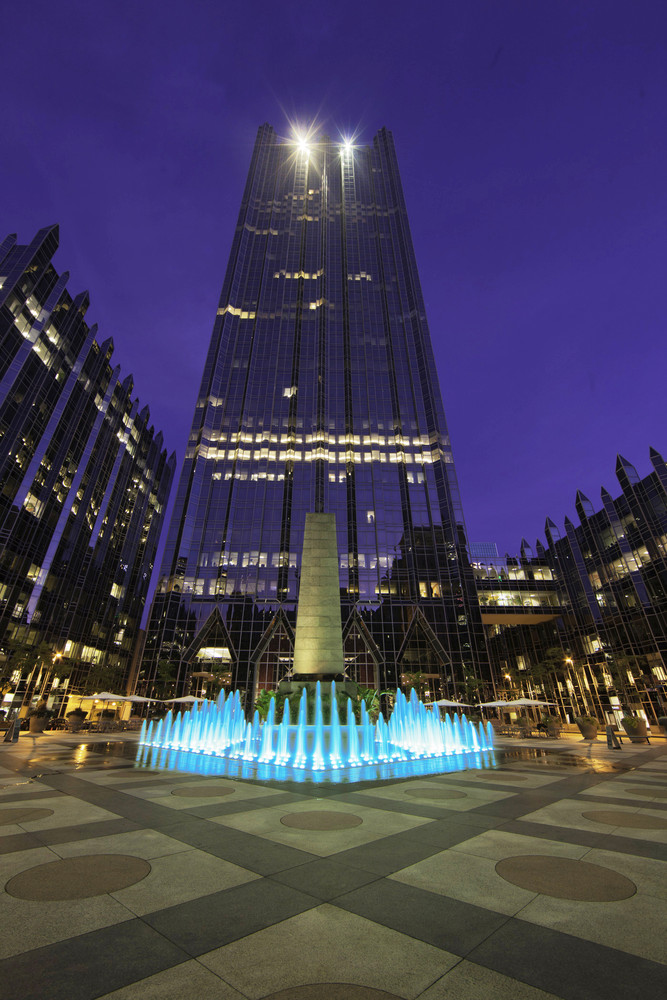
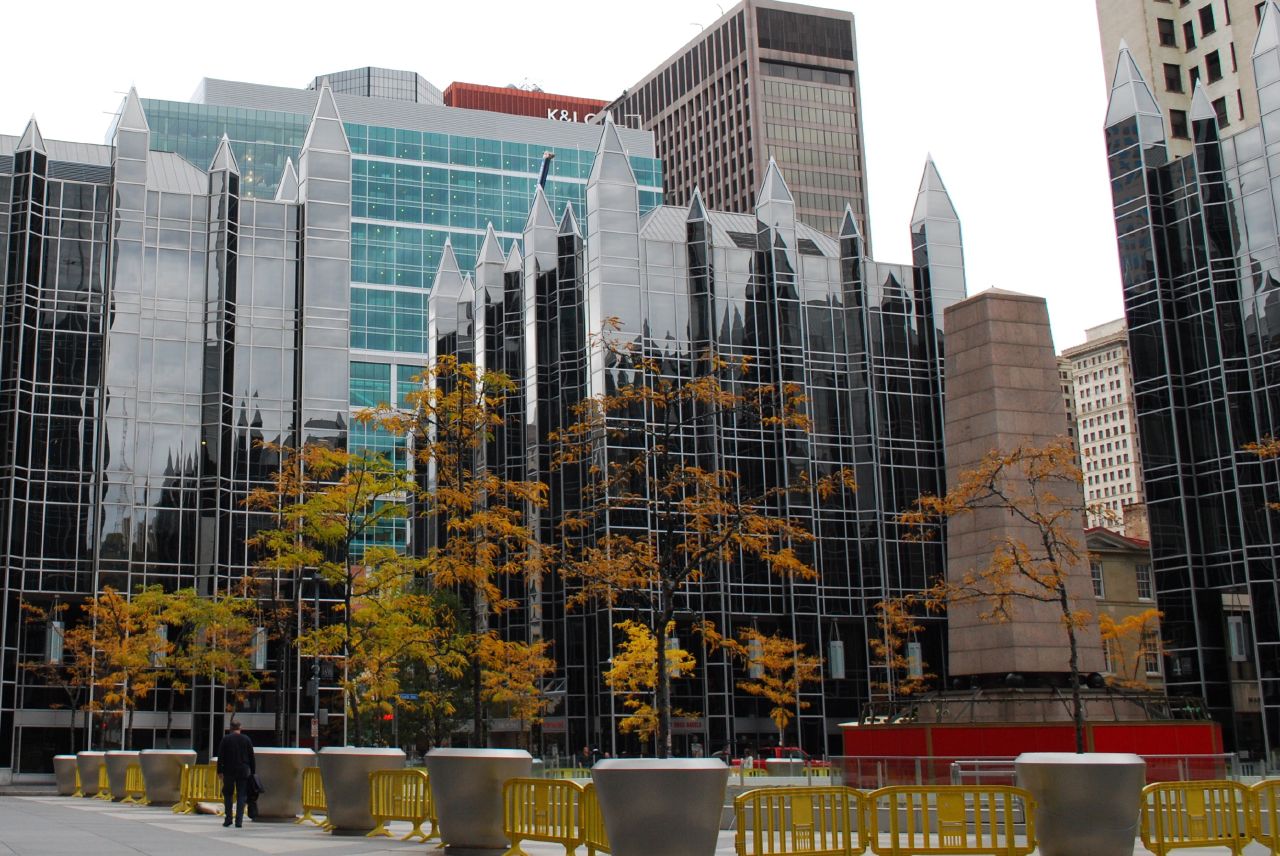
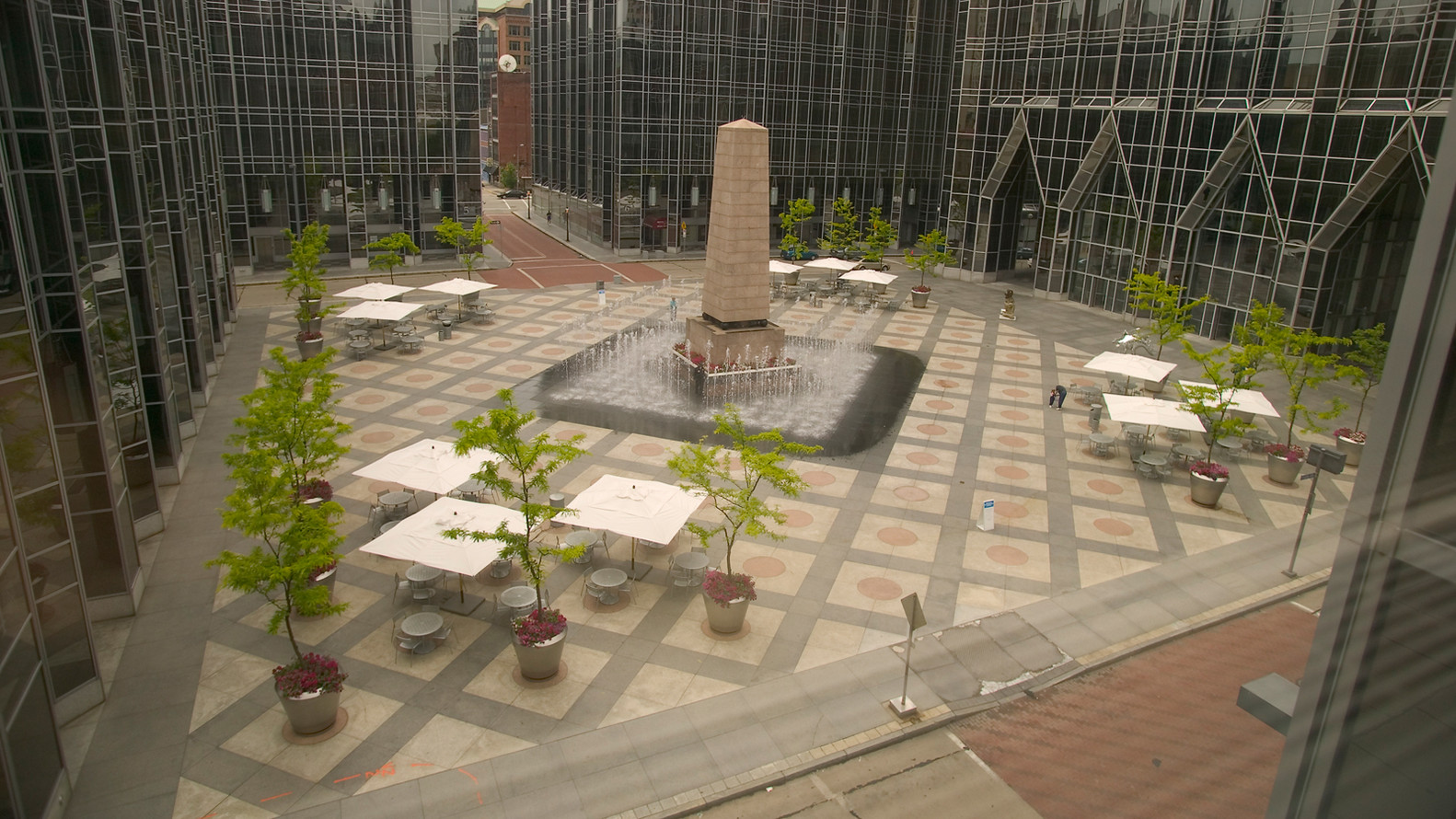
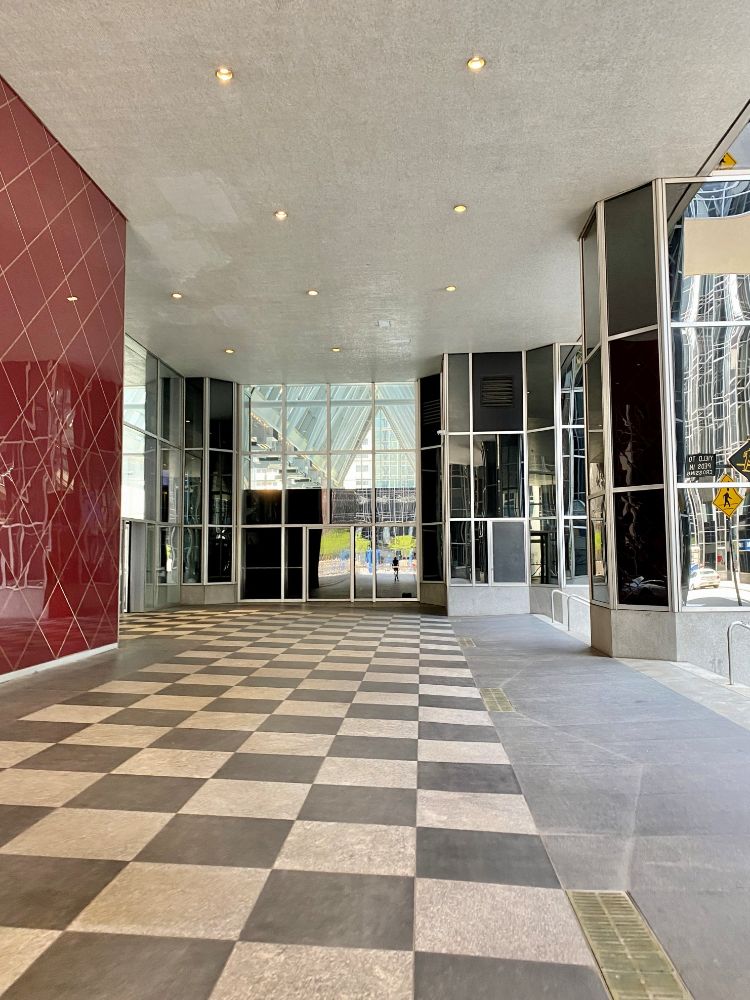
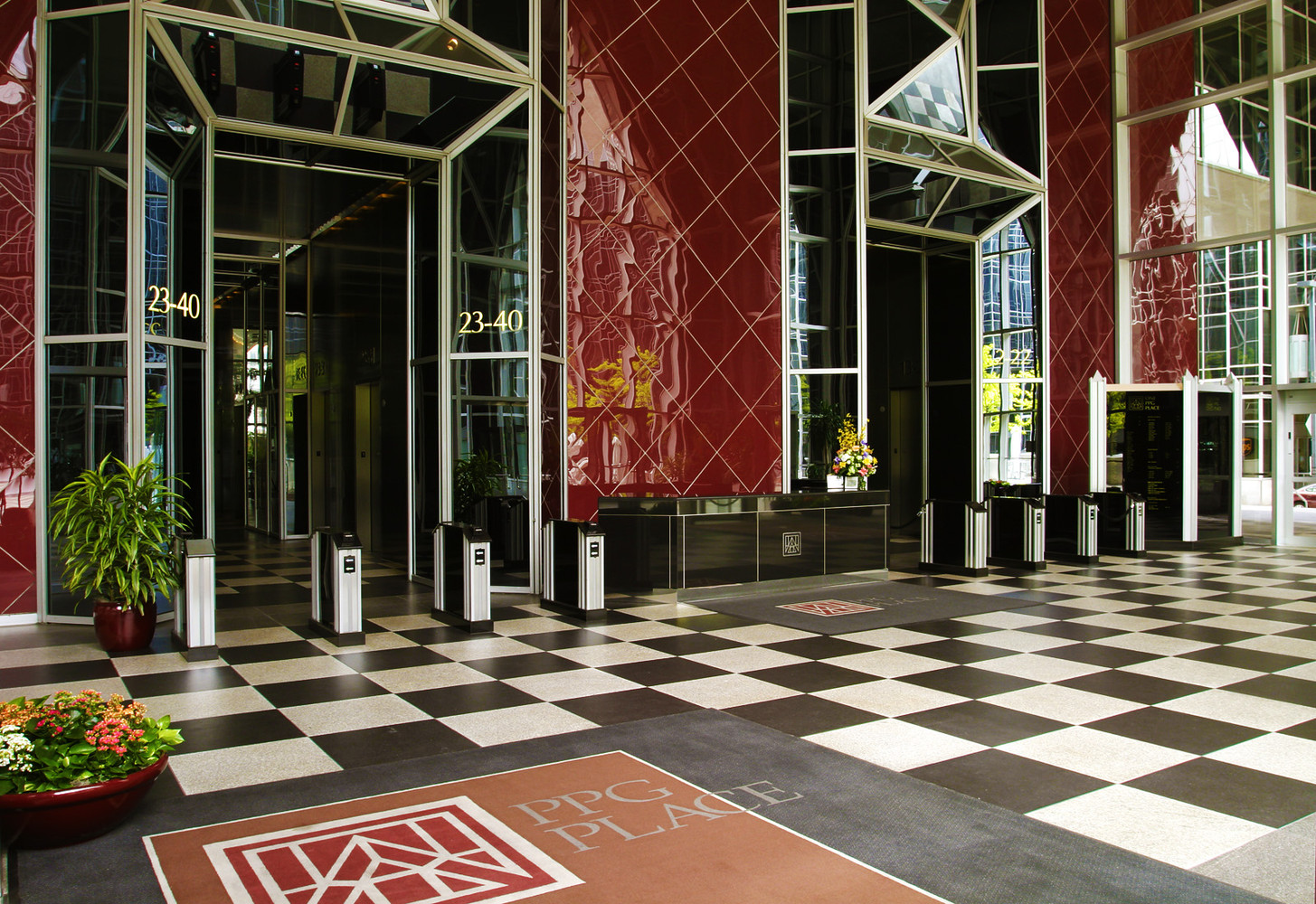
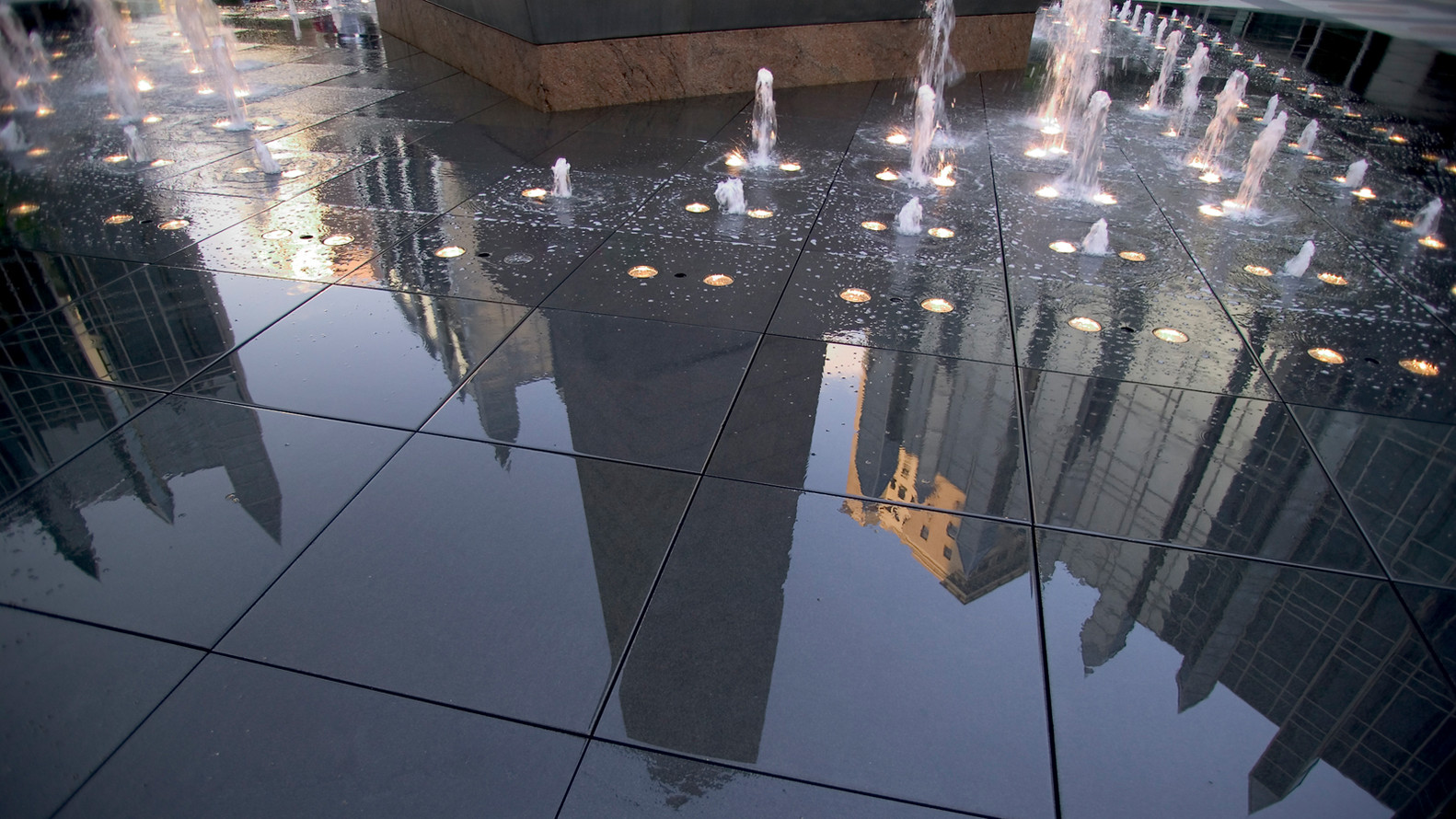
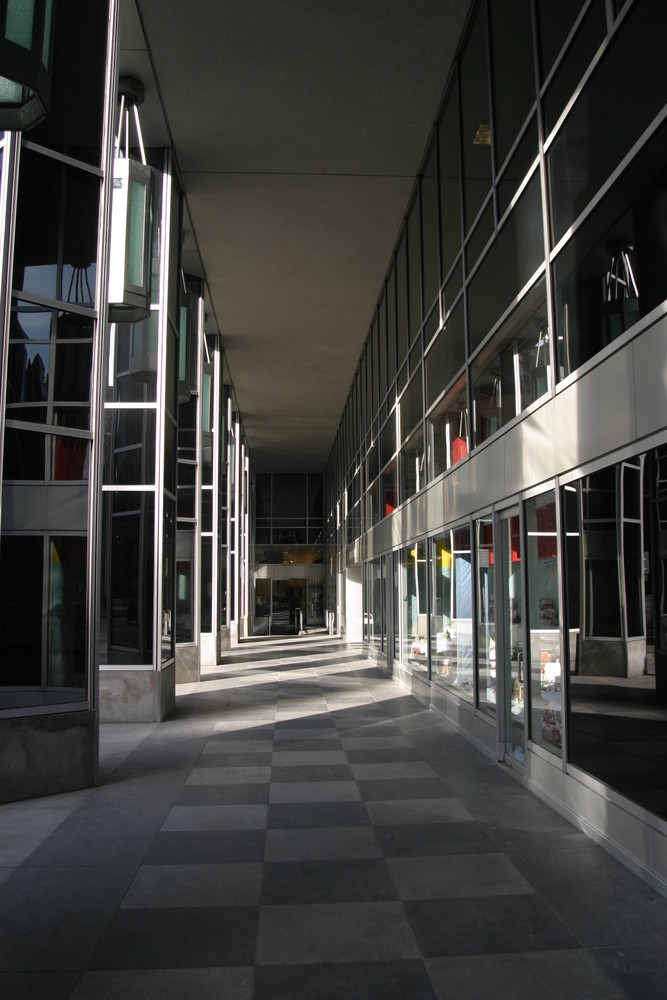
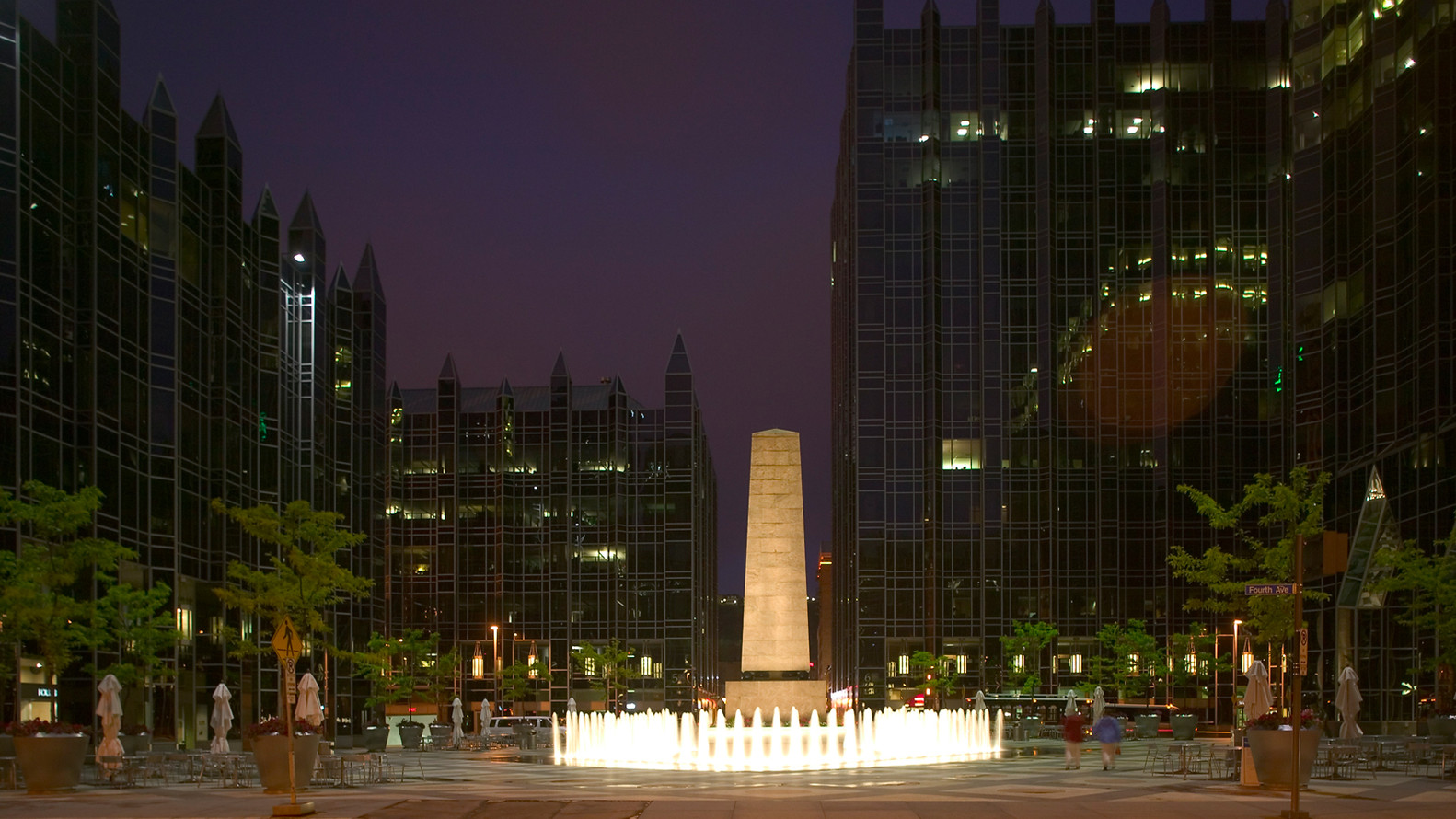
At the center of the development is a large public plaza paved with granite and organized around a pink granite obelisk. Arcades containing shops and restaurants line portions of the plaza, extending activity beyond the office environment. A 13,000-square-foot Wintergarden attached to the main tower provides a publicly accessible interior gathering space and serves as a venue for events throughout the year.
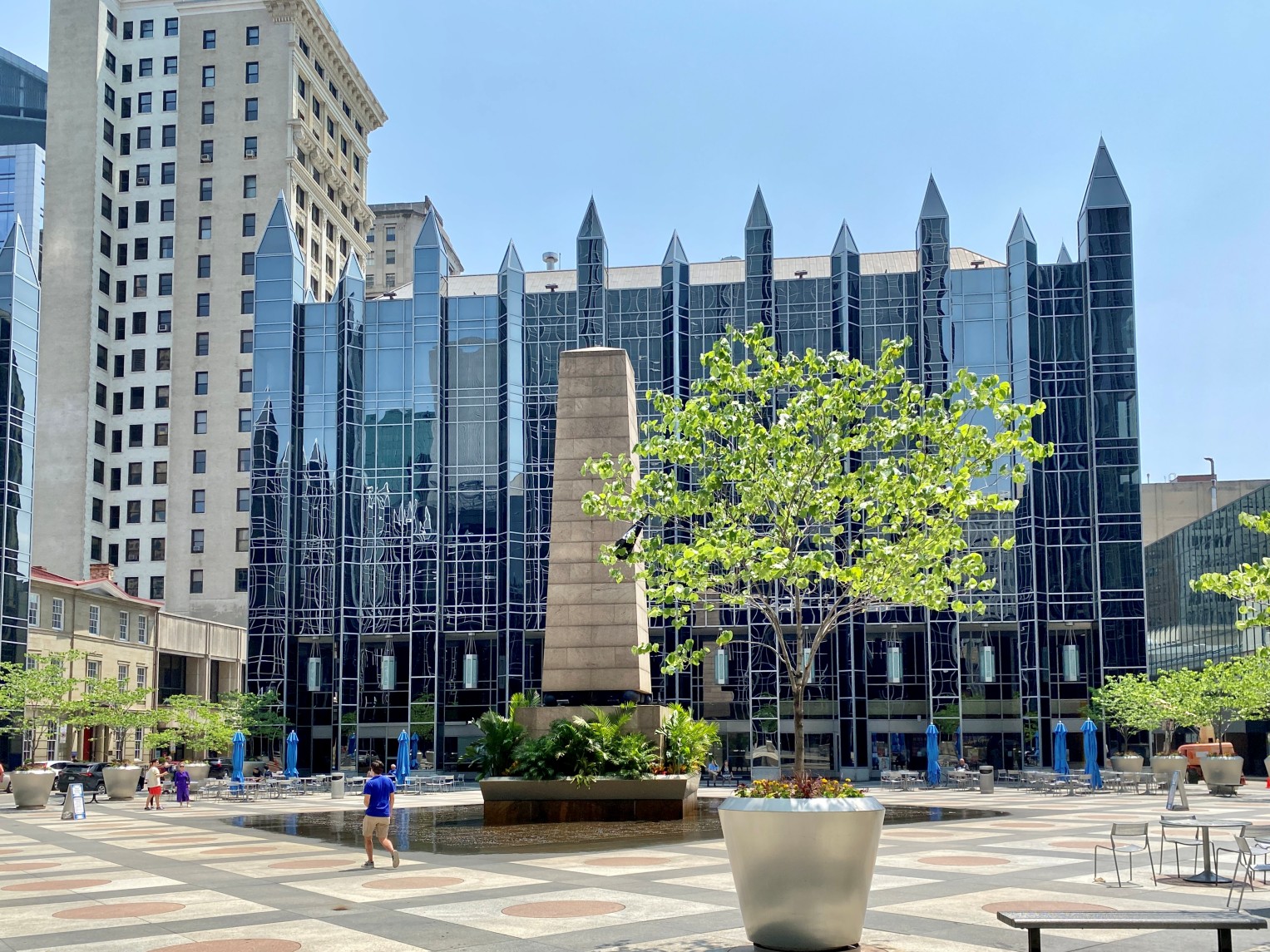
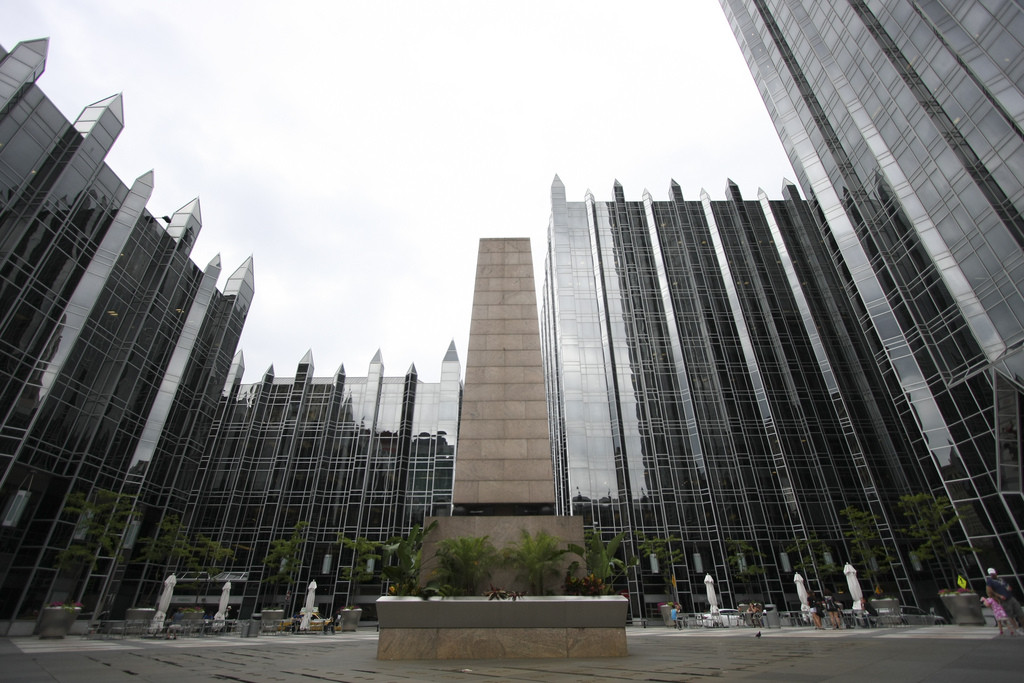
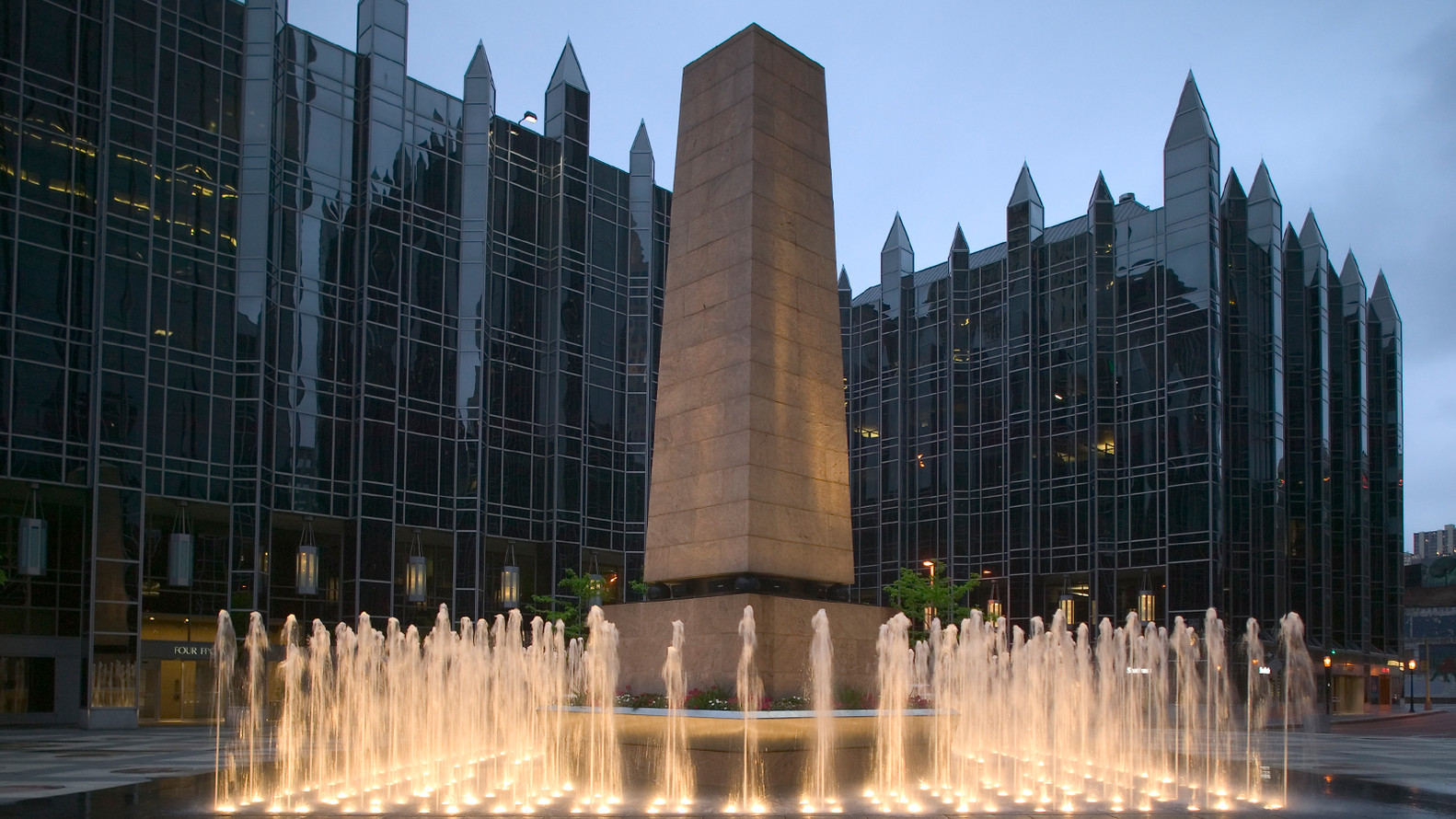
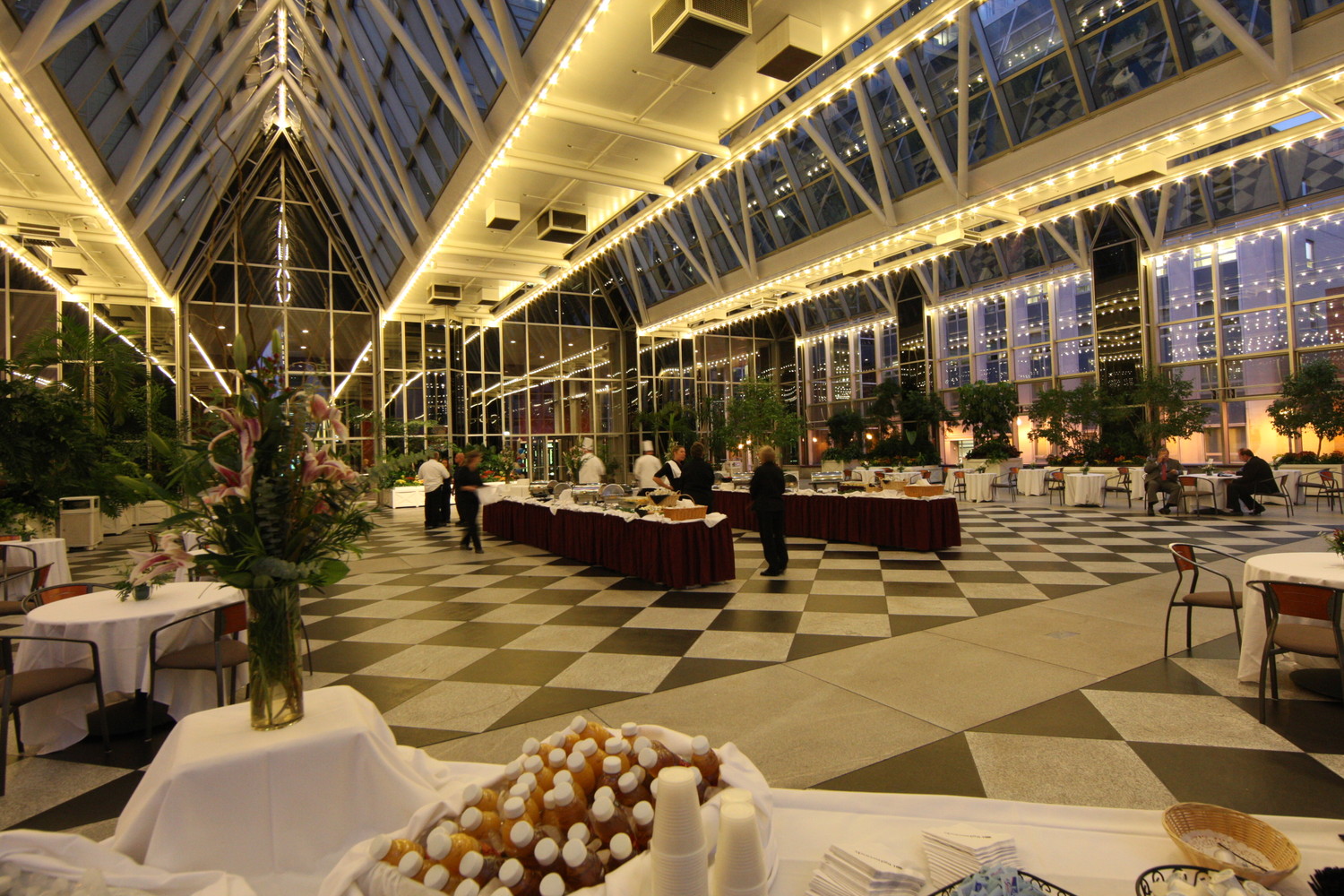
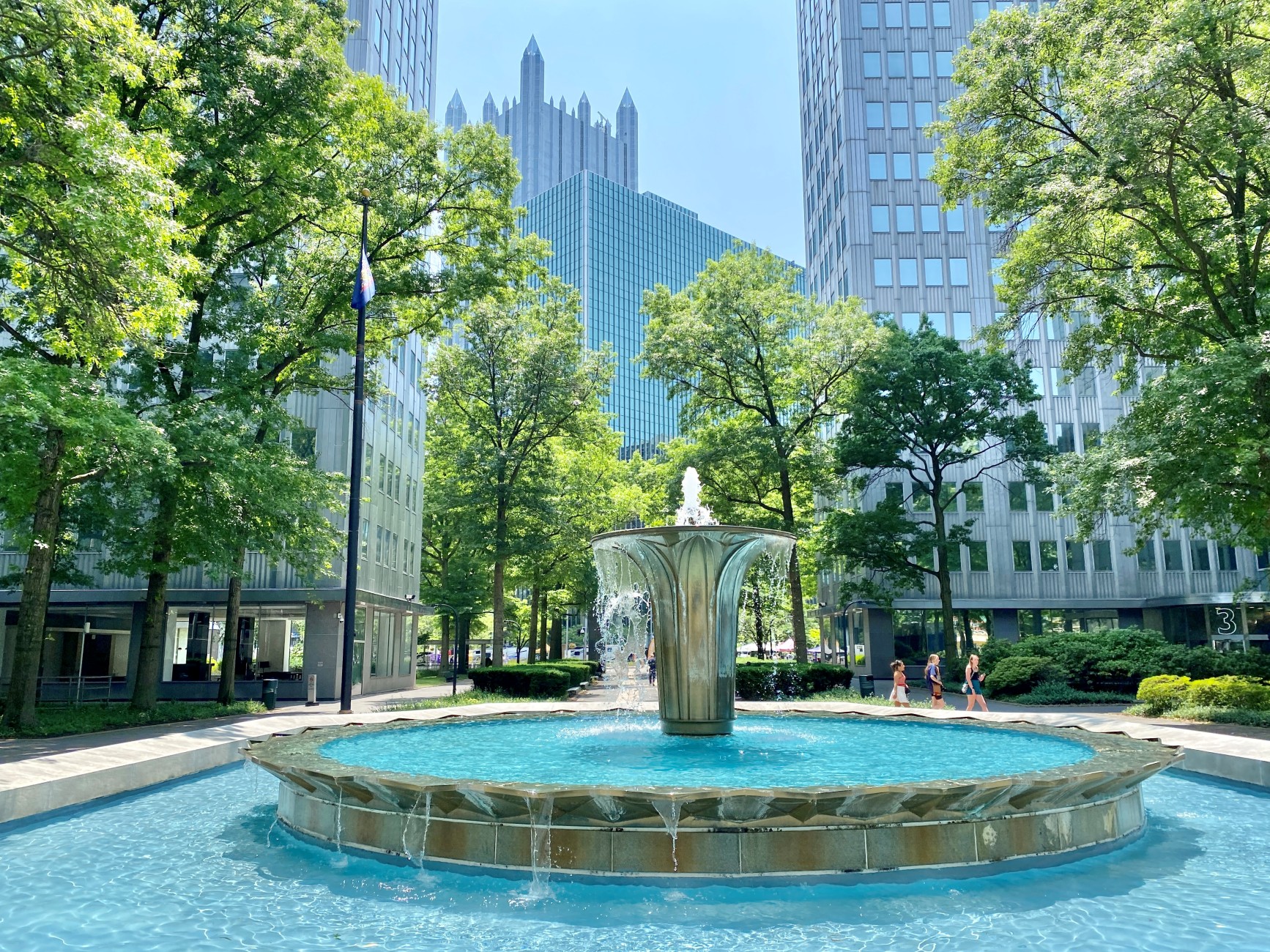
Although the plaza was intended as an active civic space, early criticism focused on its perceived scale and limited street-level activity. In response, a redesign completed in 2003 introduced a fountain, movable seating, landscape elements, and a seasonal ice-skating rink. These additions strengthened public use of the plaza and increased its role as a year-round destination within downtown Pittsburgh.
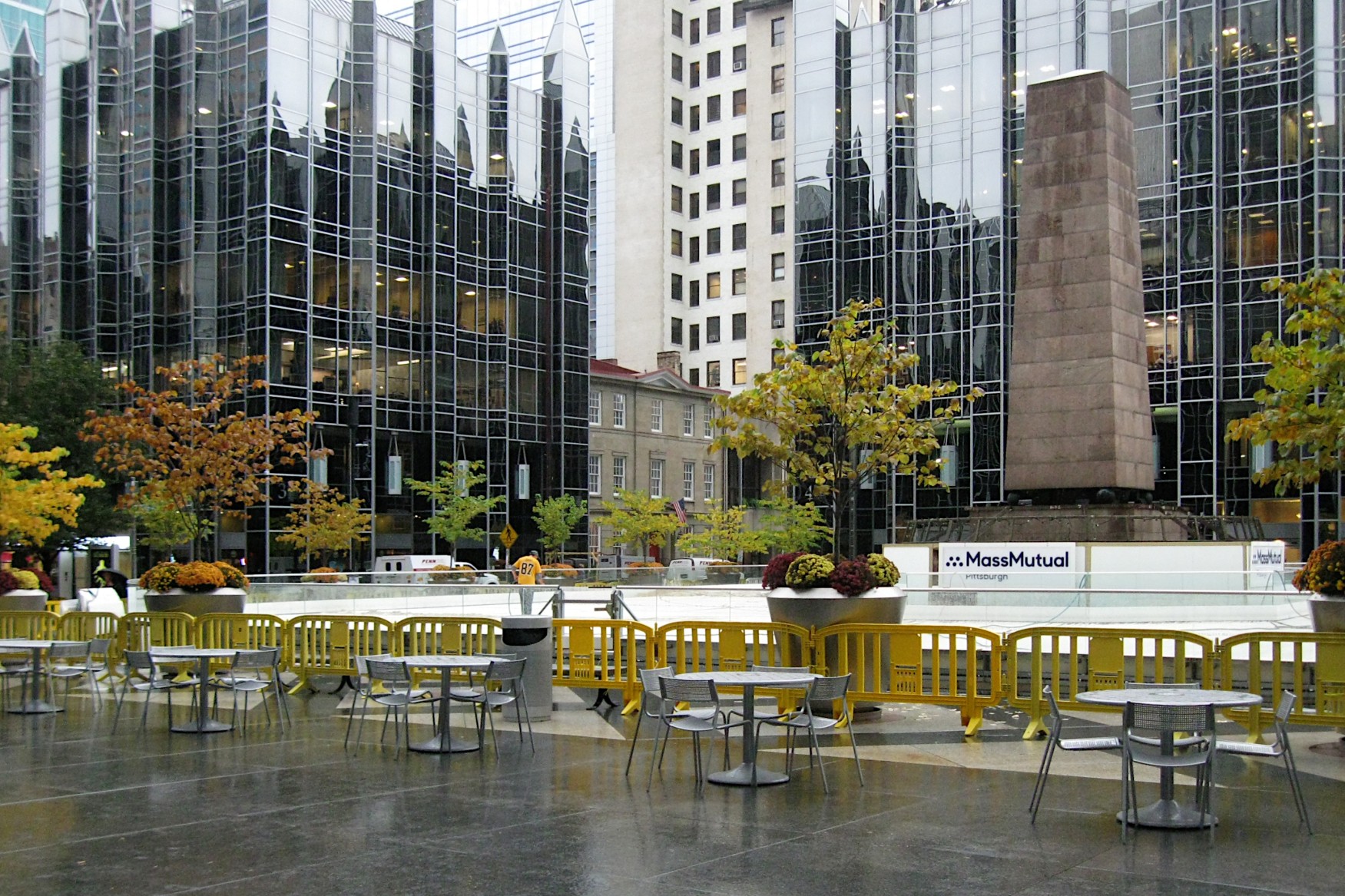
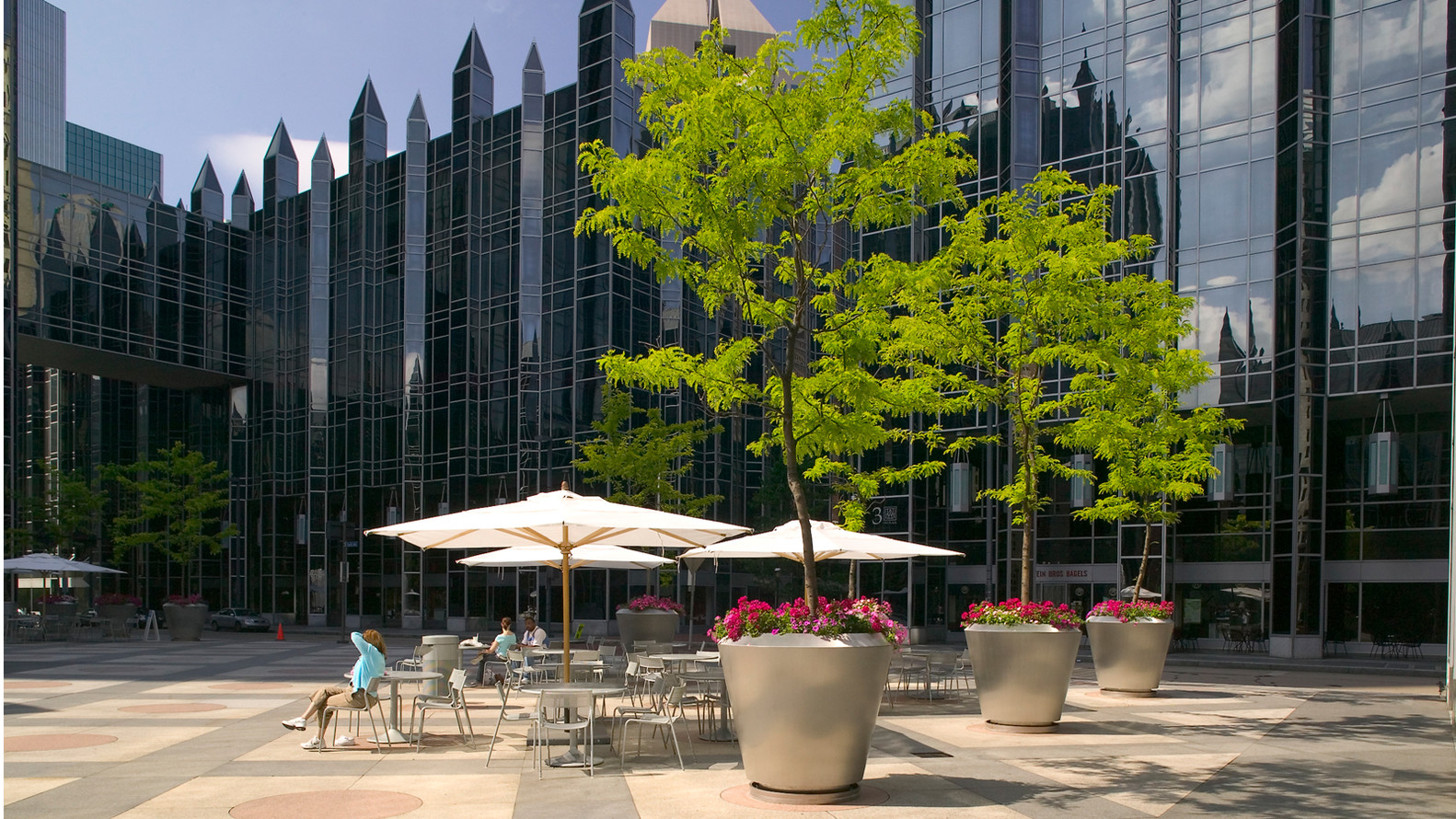
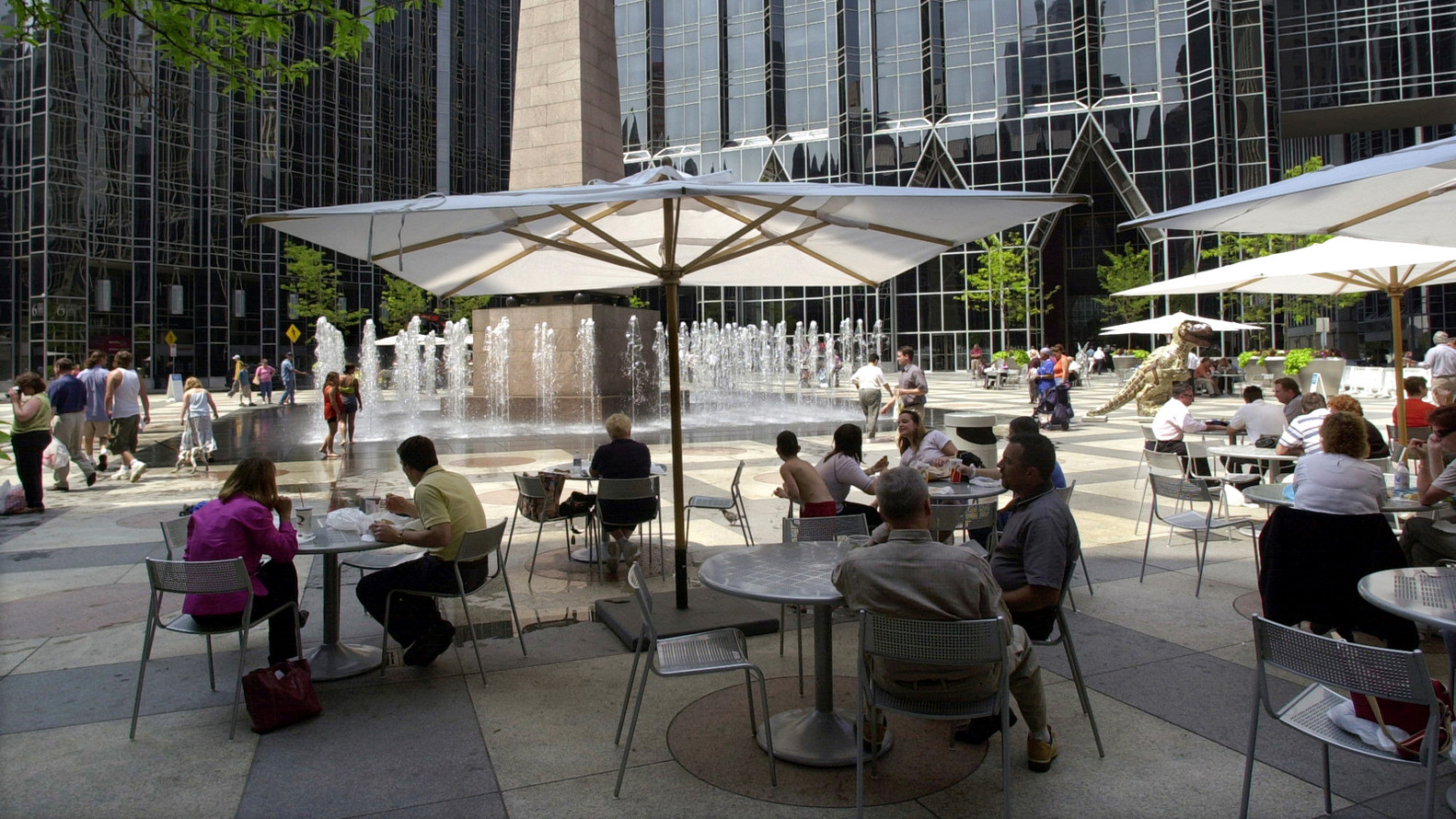
Since its completion, PPG Place has remained one of the most recognizable buildings in Pittsburgh and a significant example of Postmodern architecture. The project demonstrates how historical references, advanced façade technology, and public space can be combined within a large corporate development while contributing to the identity and revitalization of the surrounding city.
Project Gallery




Project Location
Address: 1 Third Avenue, Pittsburgh, Pennsylvania 15222, United States
Location is for general reference and may represent a city or country, not necessarily a precise address.

