

Architects: Louis I. Kahn
Area: 38,237 m² (411,580 ft²)
Year: 1965
Photography: Liao Yusheng, Iwan Baan, Thomas Nemeskeri, Naquib Hossain, Codera23, Sam Felder, J W, Beyond My Ken
Supervising Architect (Kahn Office): Jack MacAllister
Structural Engineer: August Komendant
Client: Jonas Salk
Founding Consultants: Jacob Bronowski, Francis Crick
Plaza Design Influence: Luis Barragán
Structural System: Pre-stressed concrete Vierendeel trusses with post-tensioned columns
Initial Funding: National Foundation for Infantile Paralysis (March of Dimes)
Later Expansion: Anshen & Allen (1990s), East Building 1995
Teak Restoration (2017): Getty Conservation Institute, Wiss, Janney, Elstner Associates, Inc.
City: San Diego
Country: United States
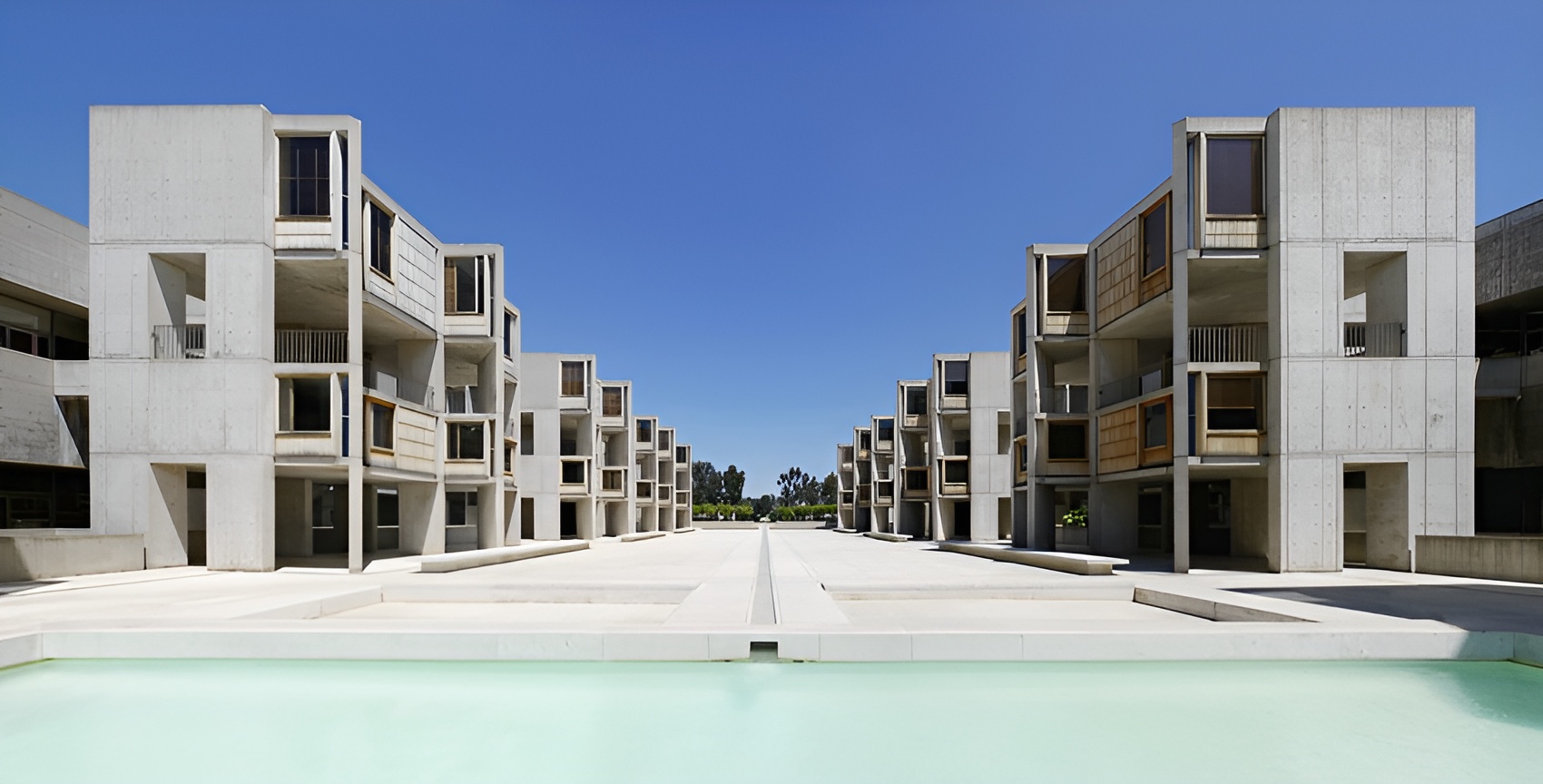
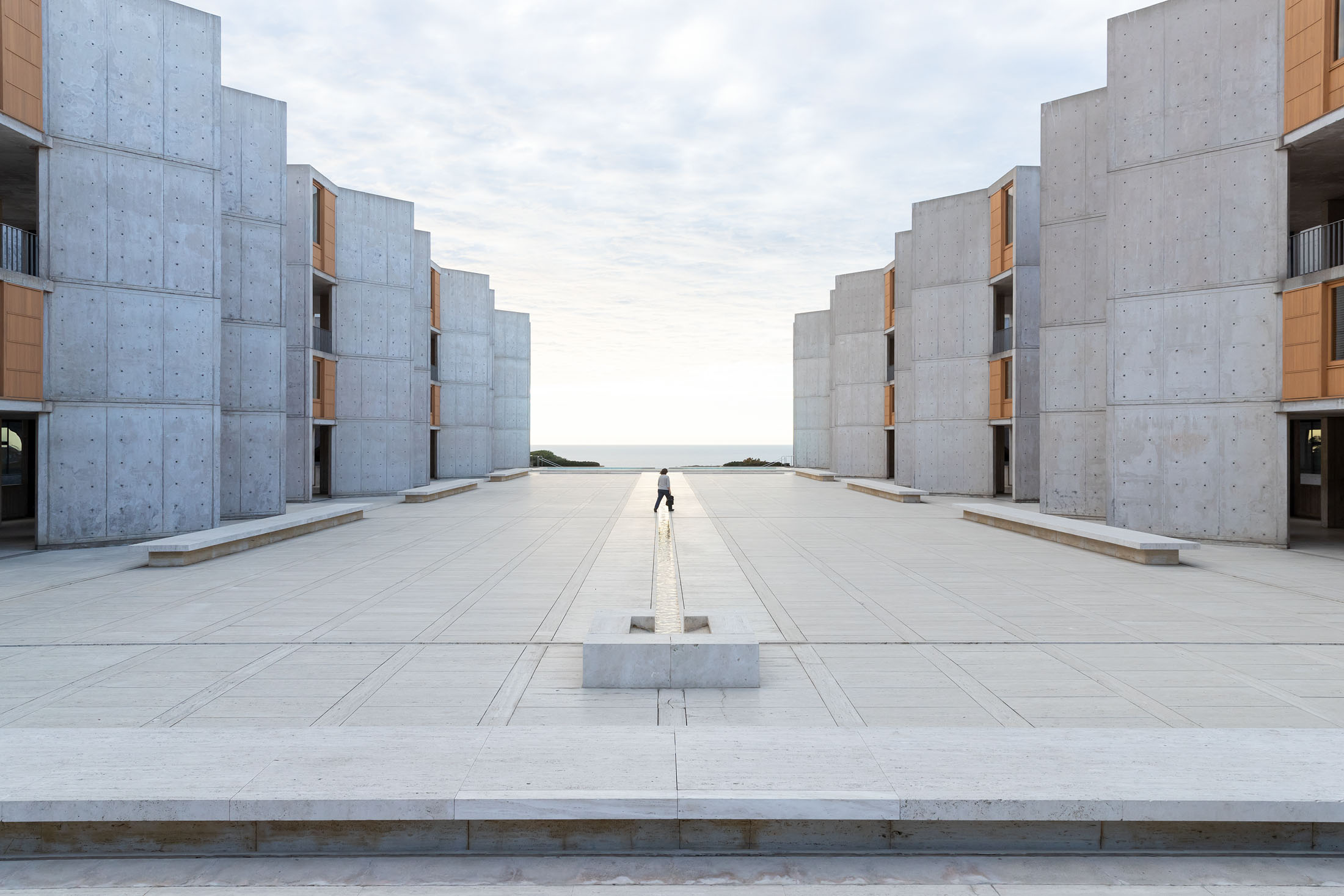
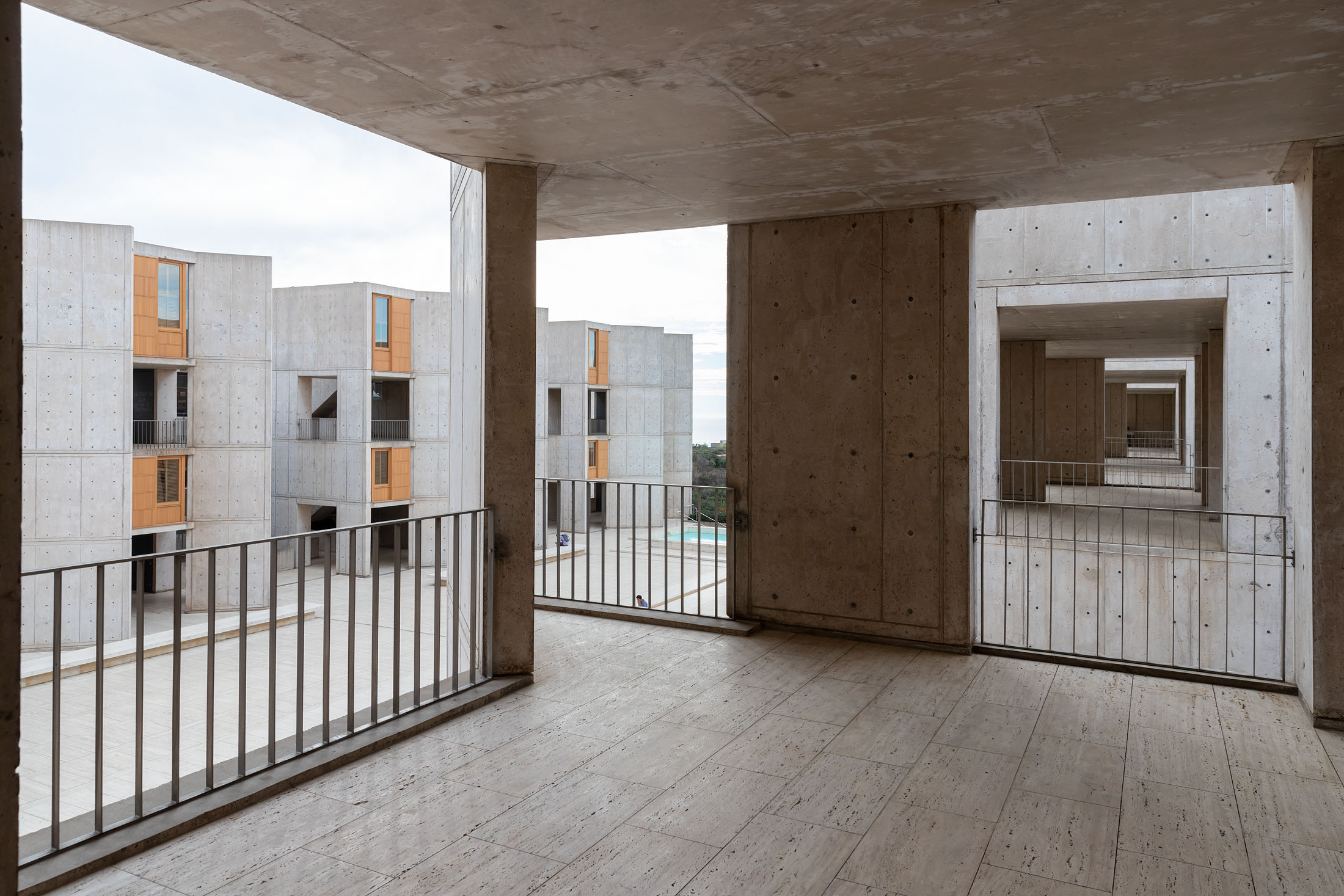
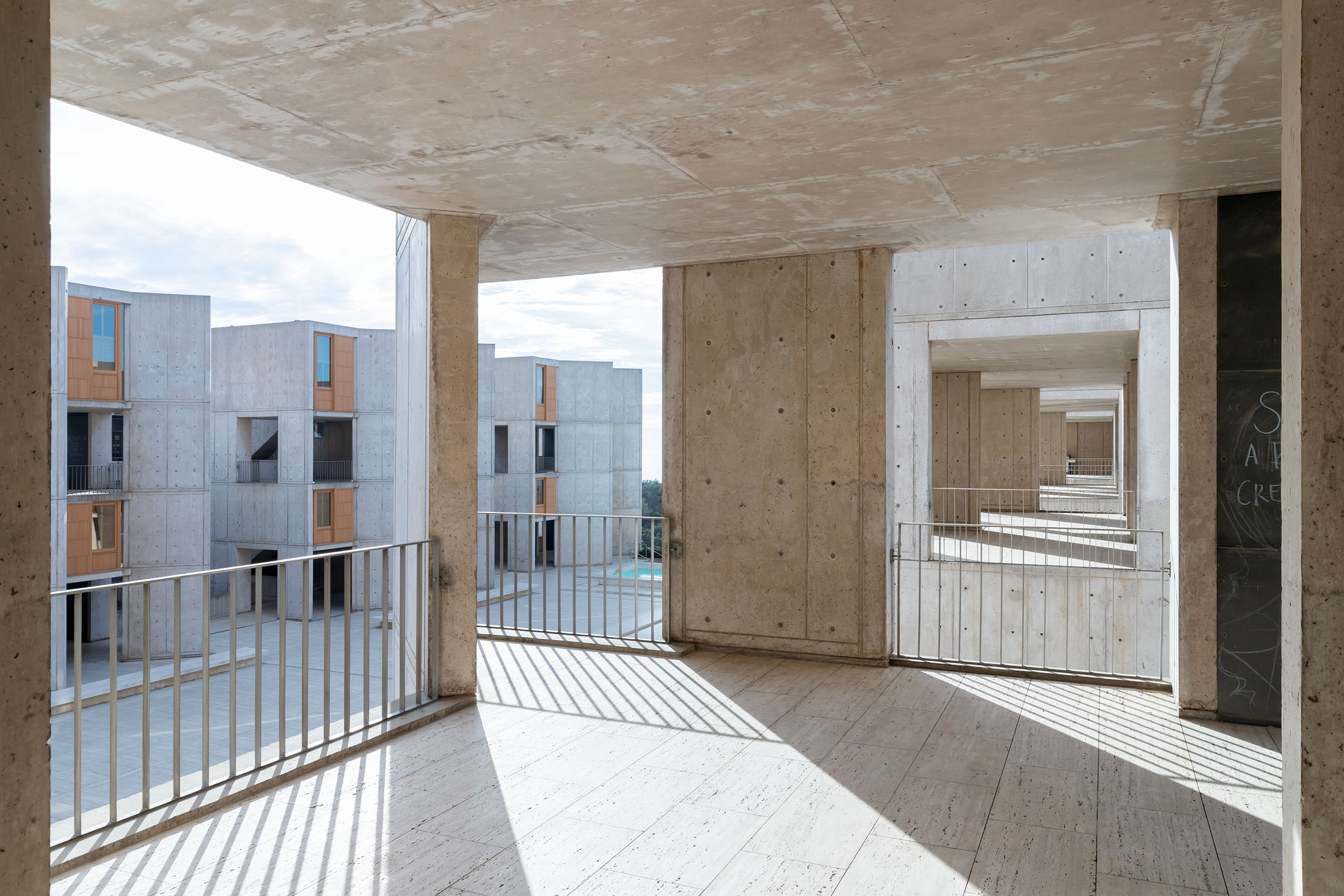
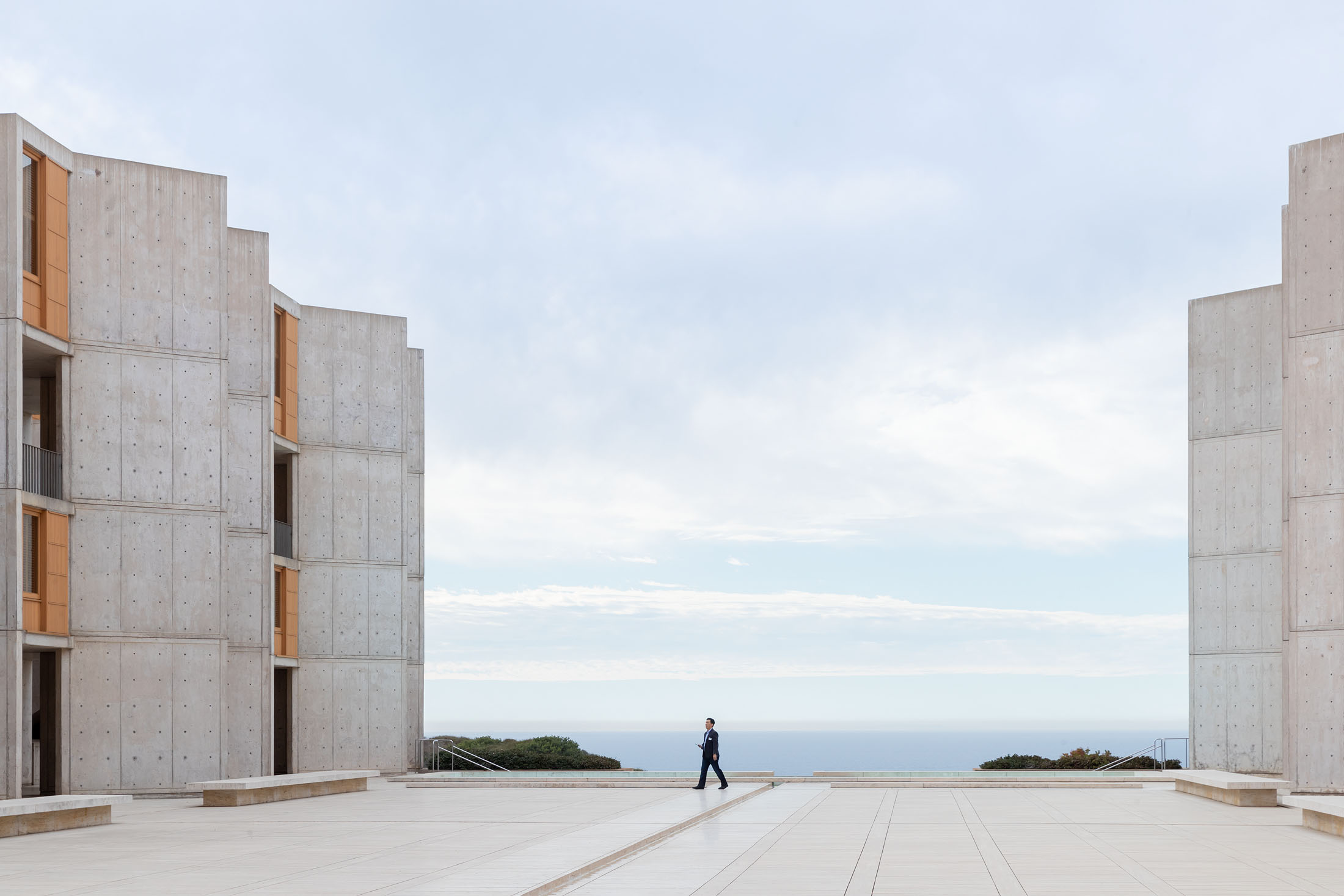
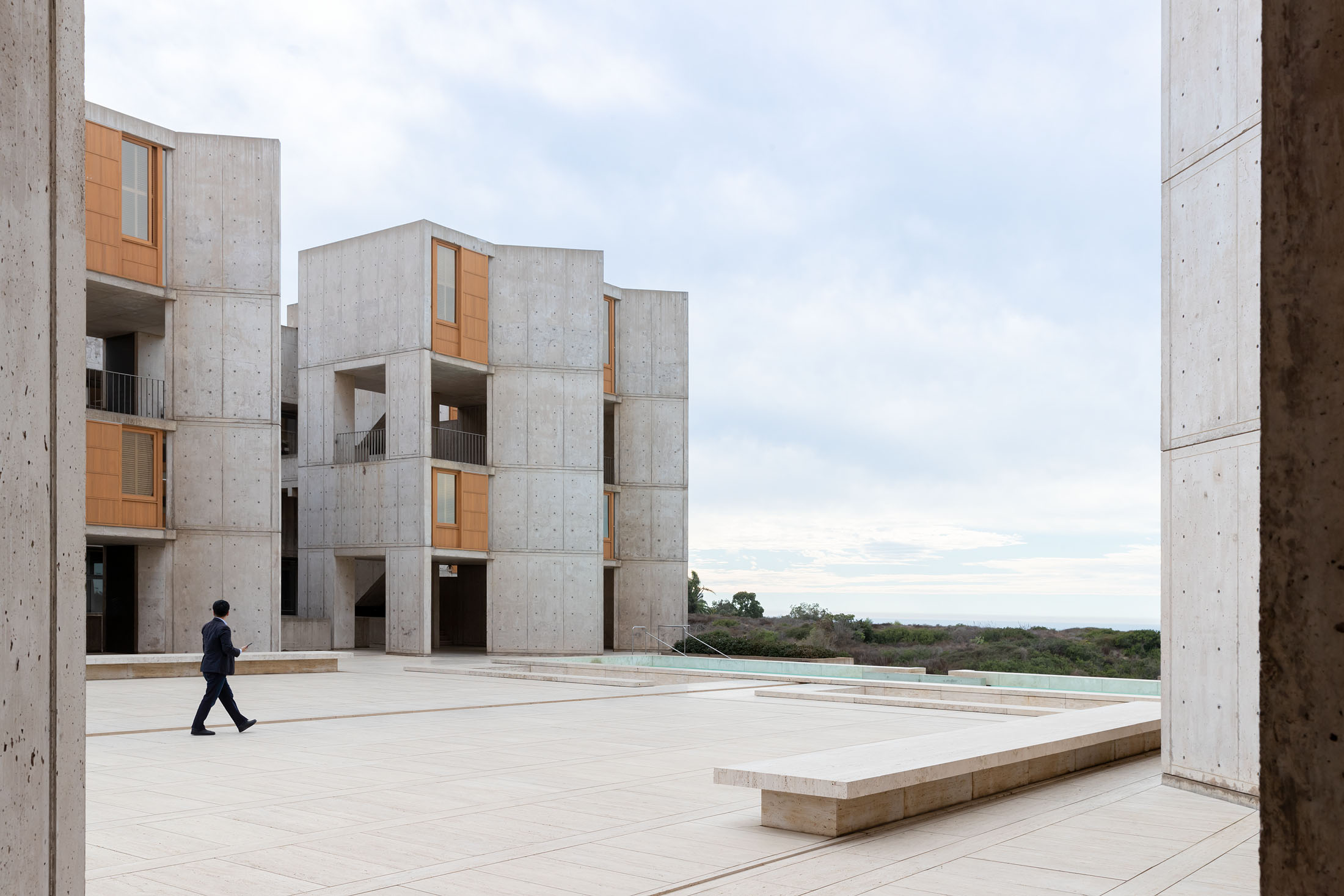
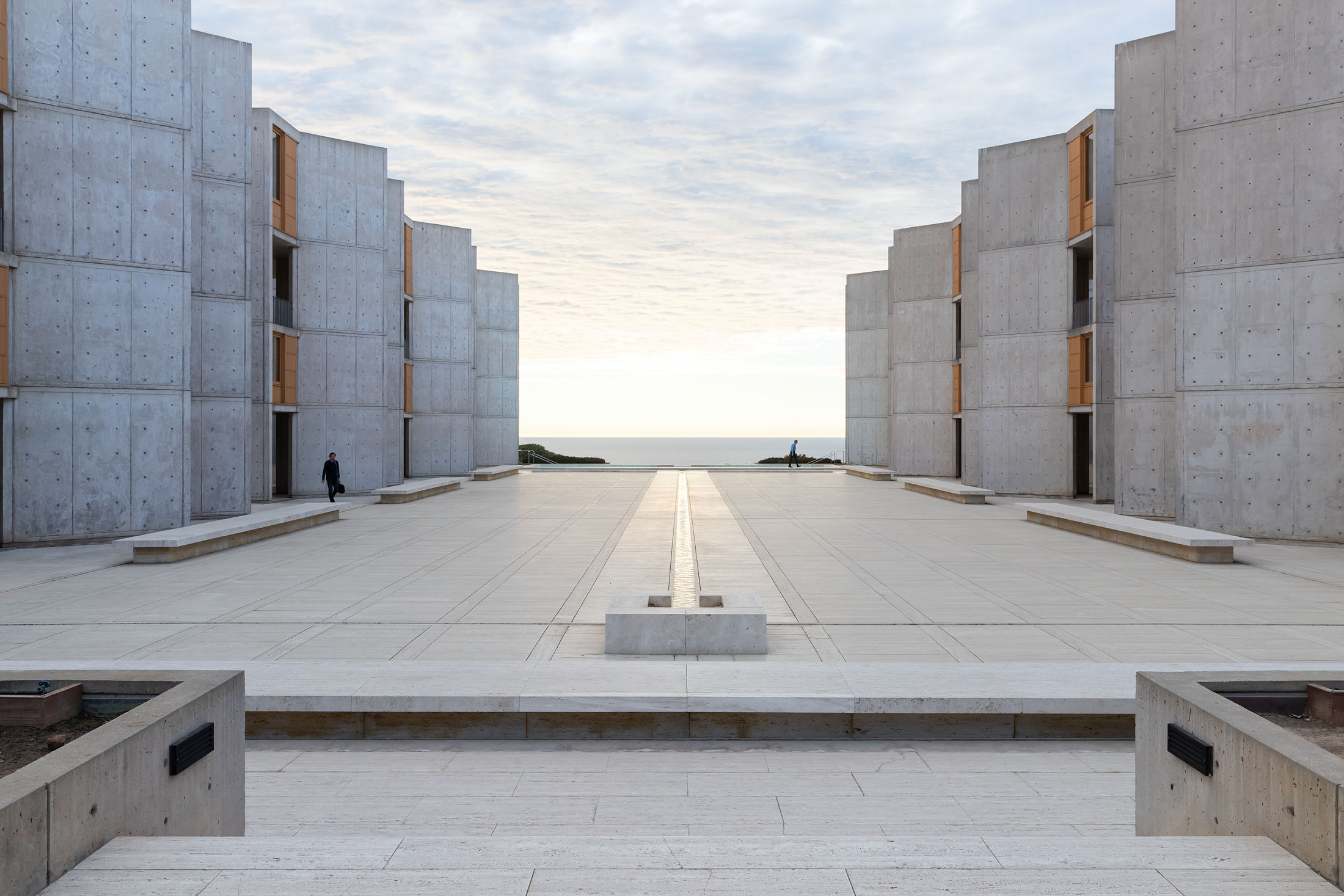
Salk Institute for Biological Studies research institute designed by Louis I. Kahn in La Jolla, California, redefined scientific laboratory architecture upon its completion in 1965. Founded in 1960 by Jonas Salk on land granted by the City of San Diego, with initial funding from the National Foundation for Infantile Paralysis, the Institute emerged from a collaboration seeking open, flexible, and durable laboratories capable of adapting to evolving research. The realized complex comprises two symmetrical six-story laboratory blocks framing a travertine plaza bisected by a linear water rill aligned with the Pacific horizon. Planned Meeting and Living components were eliminated due to financial constraints, consolidating the campus around the laboratory core. Luis Barragán’s recommendation to define the court as a plaza established the central void as a precise spatial instrument. Study towers along the inner façades contain thirty-six faculty studies, while western office levels extend views toward the coastline. Alternating laboratory floors and interstitial service levels apply Kahn’s served and servant principle. Pre-stressed concrete Vierendeel trusses engineered by August Komendant span approximately 62 feet, creating 65-foot-wide by 245-foot-long column-free research floors with seismic accommodation. Exposed pozzolanic concrete, teak panels, travertine paving, removable glazing, and light wells reinforce structural clarity and environmental control. The 27-acre campus includes 29 structures totaling 411,580 square feet and was expanded in the 1990s by Anshen & Allen with the 110,000-square-foot East Building. Today, more than 850 researchers work across molecular biology, genetics, neurosciences, and plant biology. Preservation efforts, including the 2017 teak restoration with the Getty Conservation Institute, alongside landmark designation in 1991 and the AIA Twenty-five Year Award in 1992, sustain its architectural and institutional legacy.
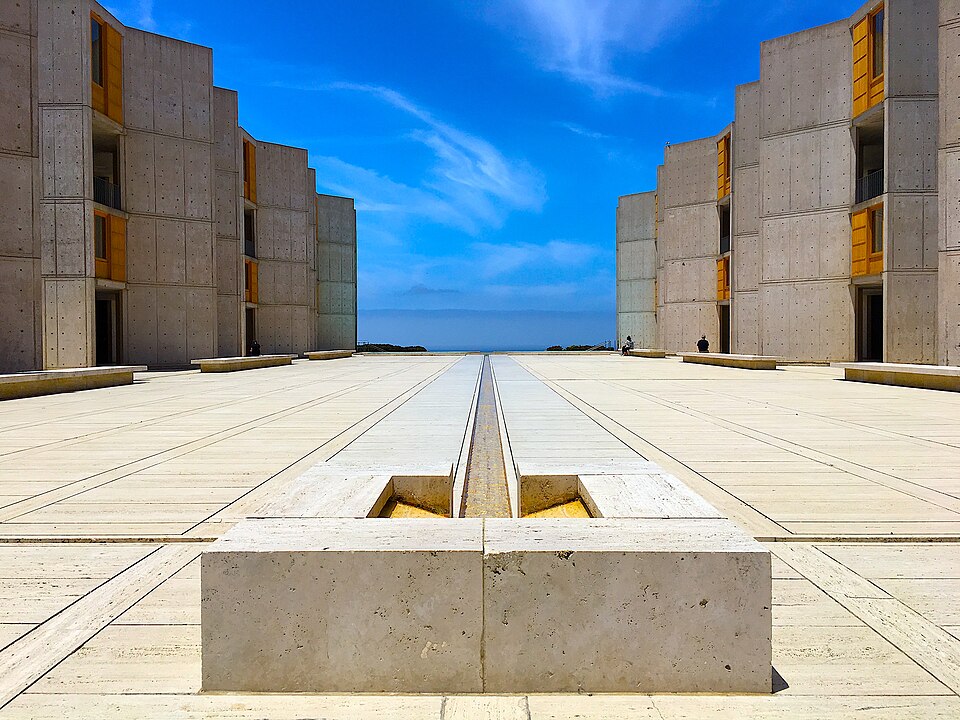
Salk Institute for Biological Studies was founded in 1960 as an independent, non-profit institution dedicated to advanced research in the life sciences. Land on the Torrey Pines Mesa was granted by the City of San Diego following a public referendum. Initial funding was provided by the National Foundation for Infantile Paralysis, now known as March of Dimes. Construction began in 1962, and the first laboratories were occupied in 1963.
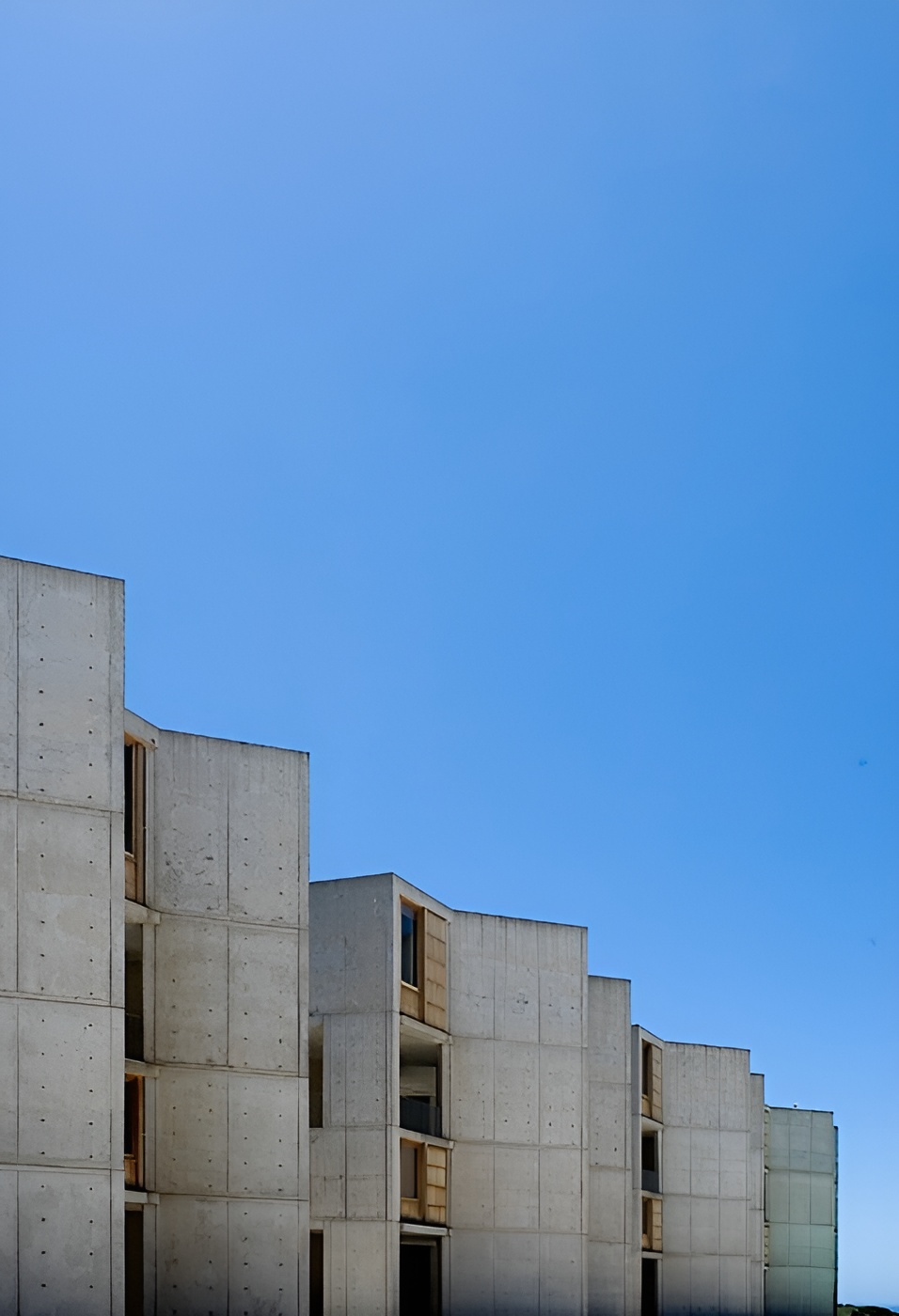
The architectural conception was developed through collaboration between Jonas Salk and Louis I. Kahn. Salk requested open, flexible laboratories capable of adapting to scientific change while remaining durable and simple in construction. He sought a setting that would dignify scientific work and attract leading researchers. Kahn translated this ambition into a disciplined architectural order oriented toward the Pacific horizon.
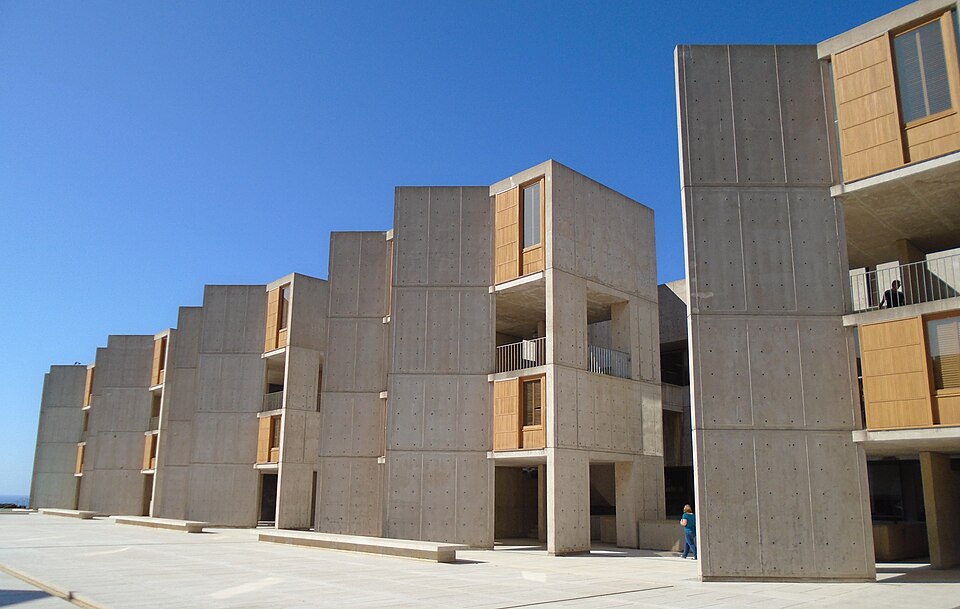
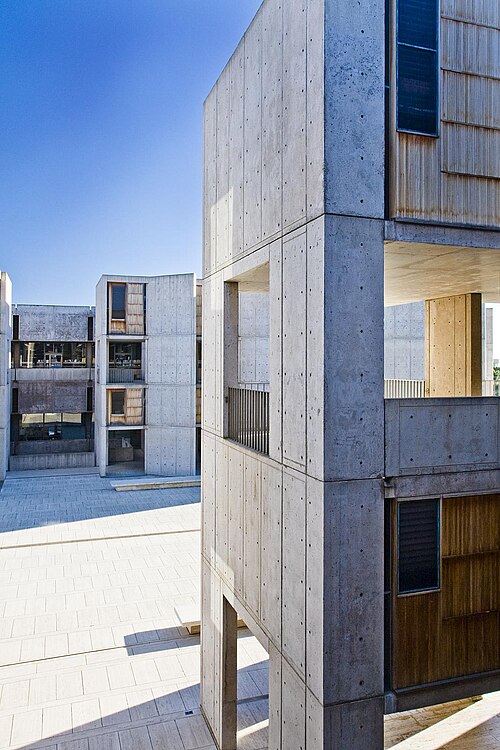
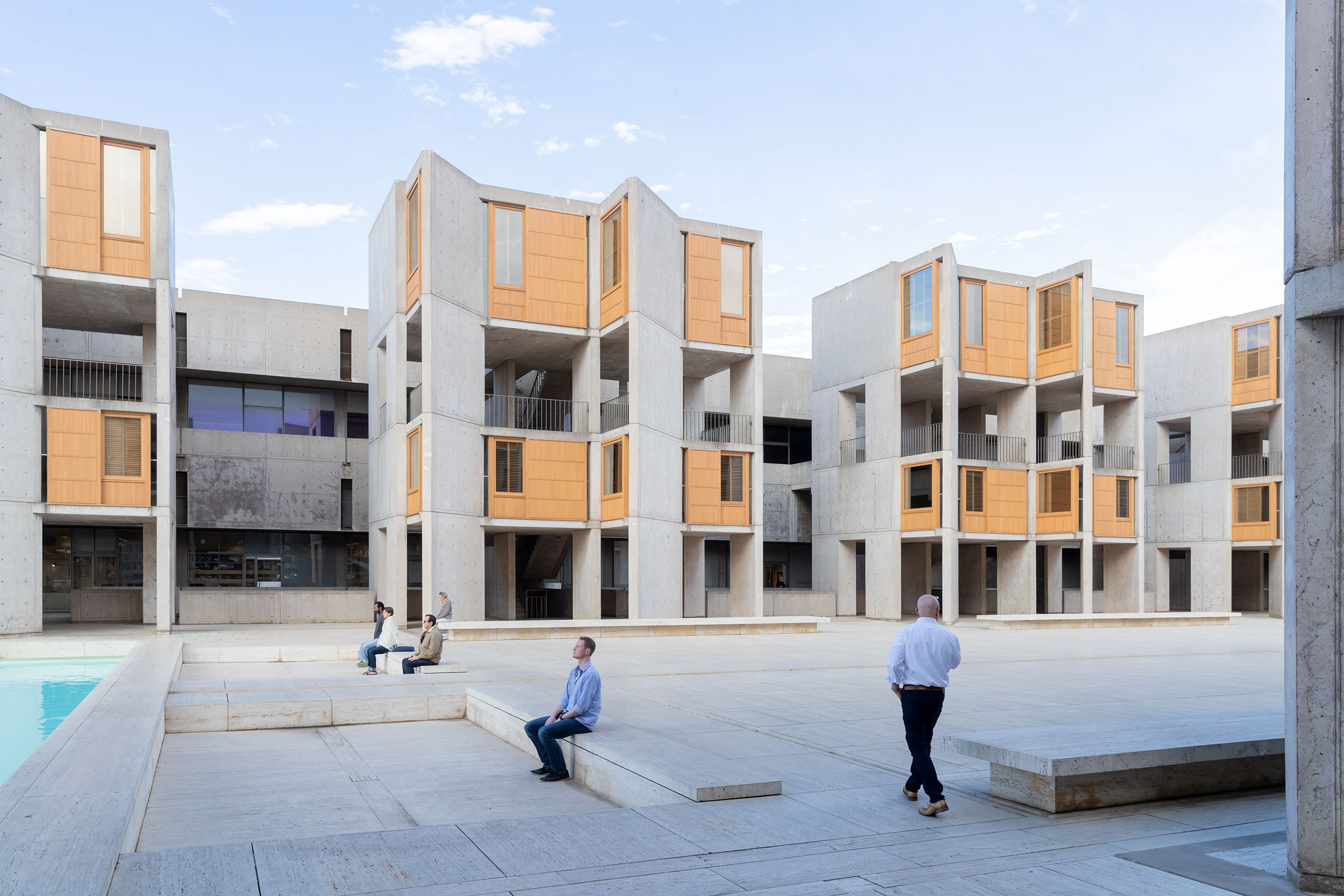
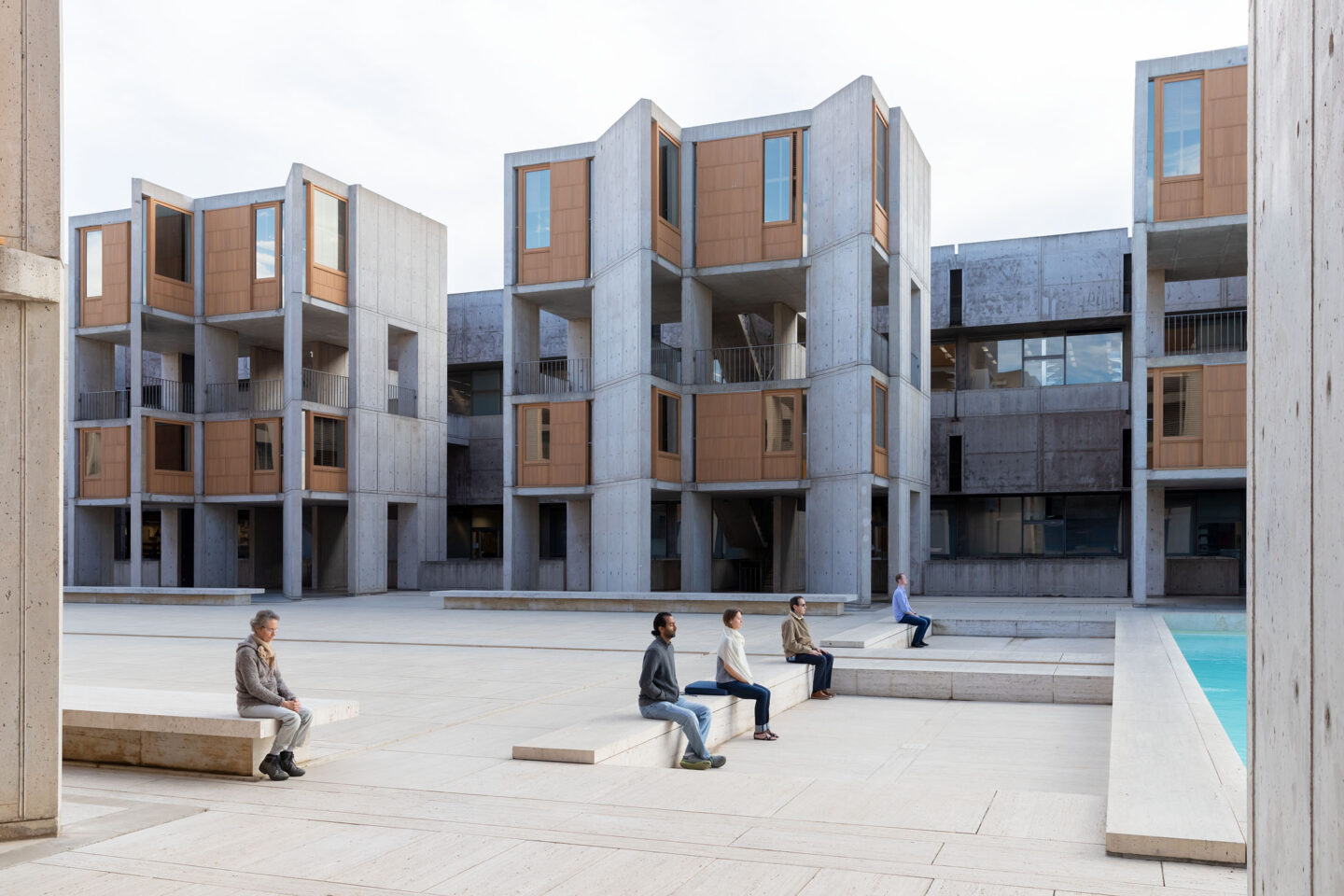
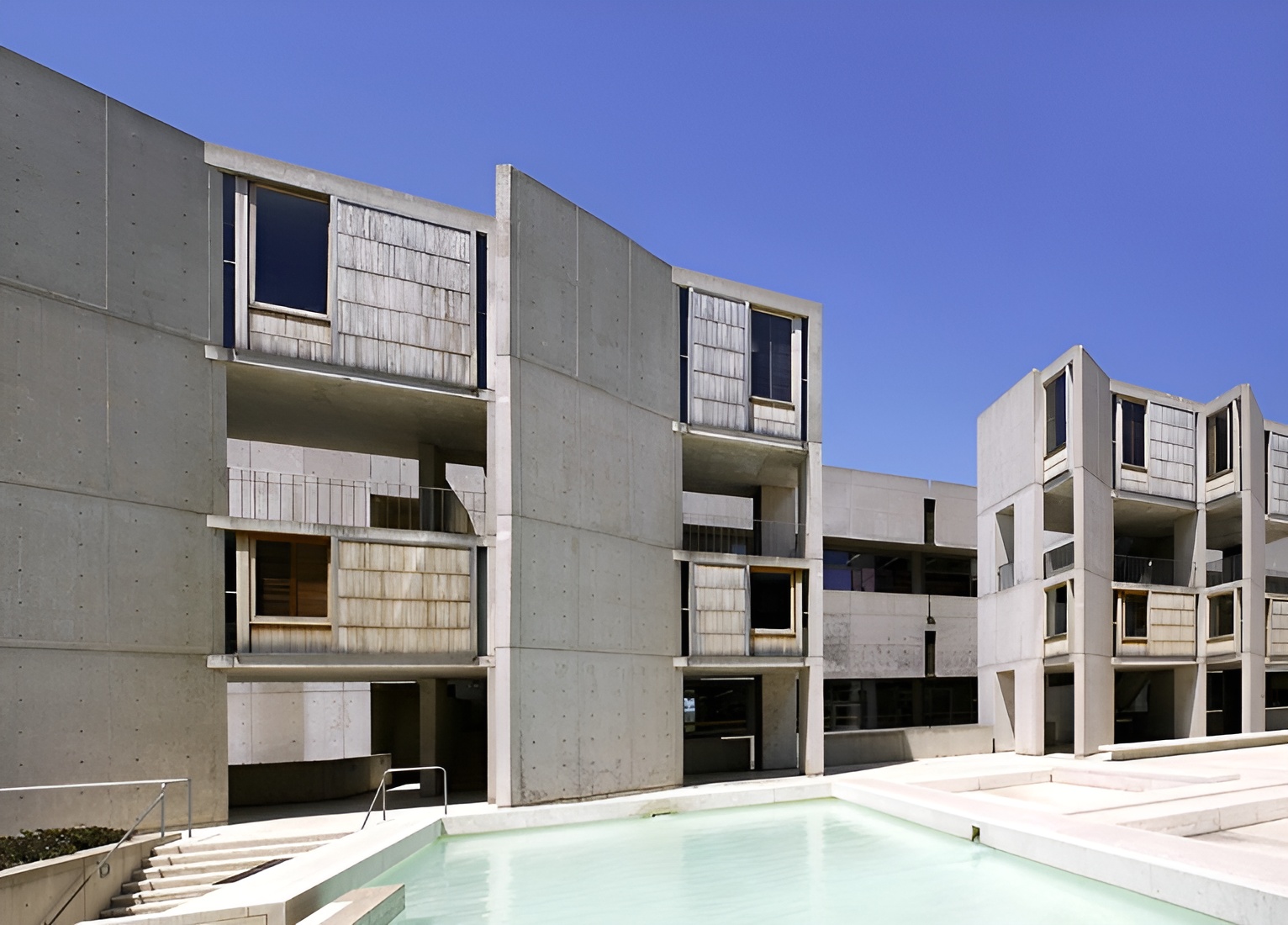
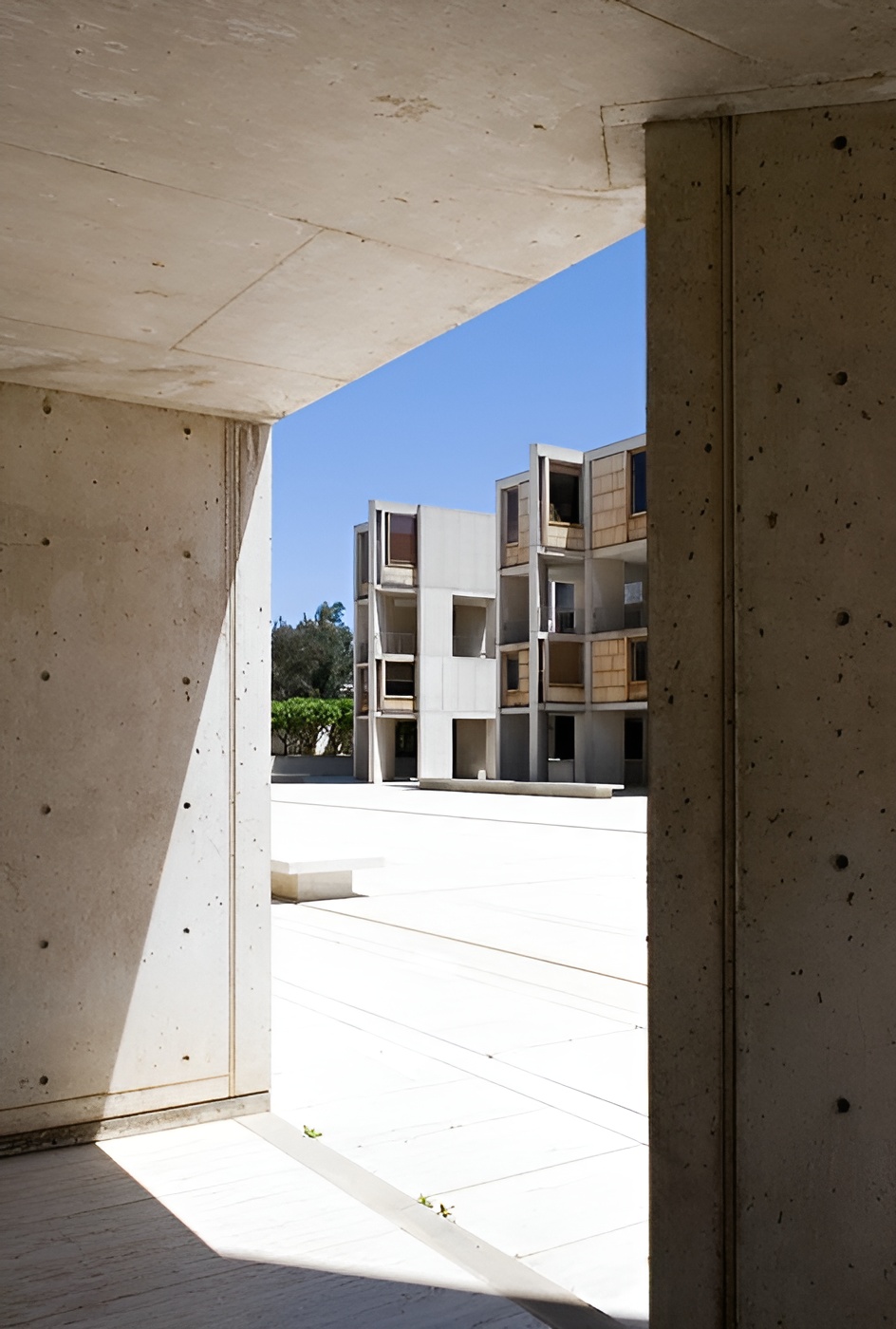
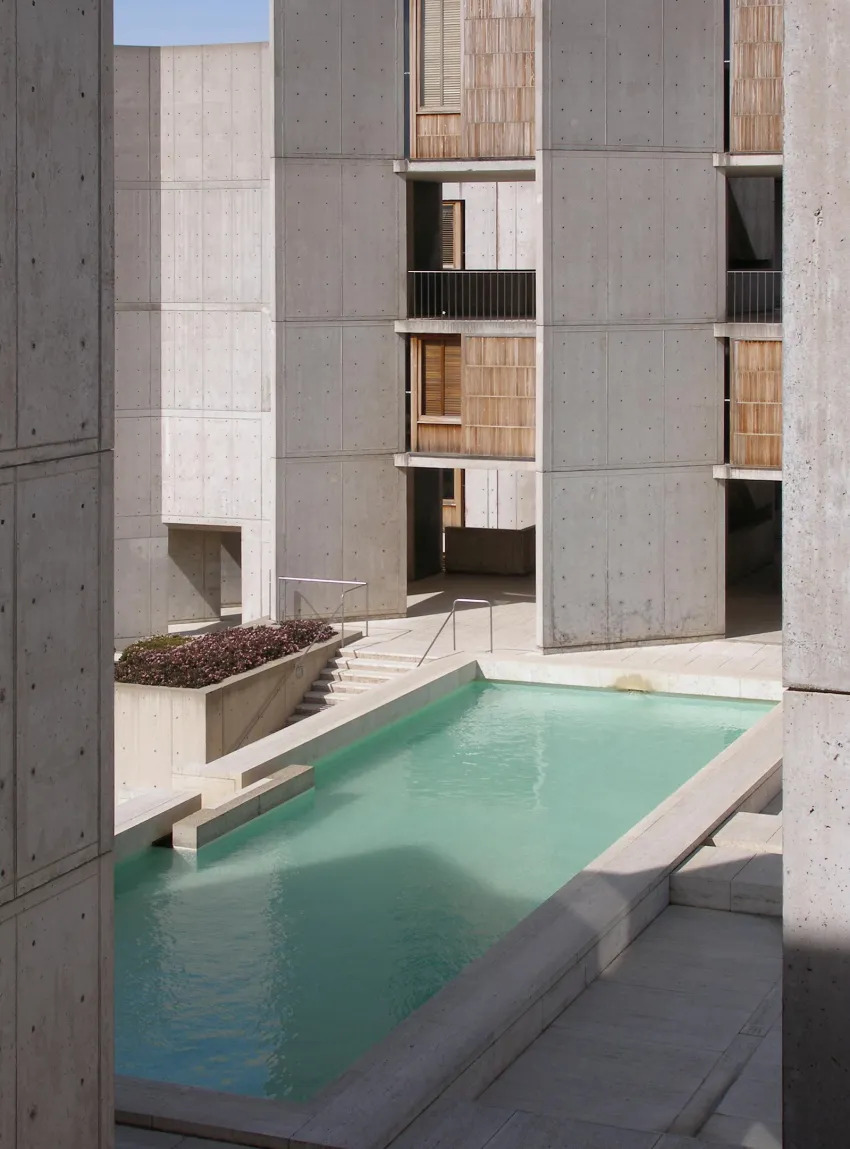
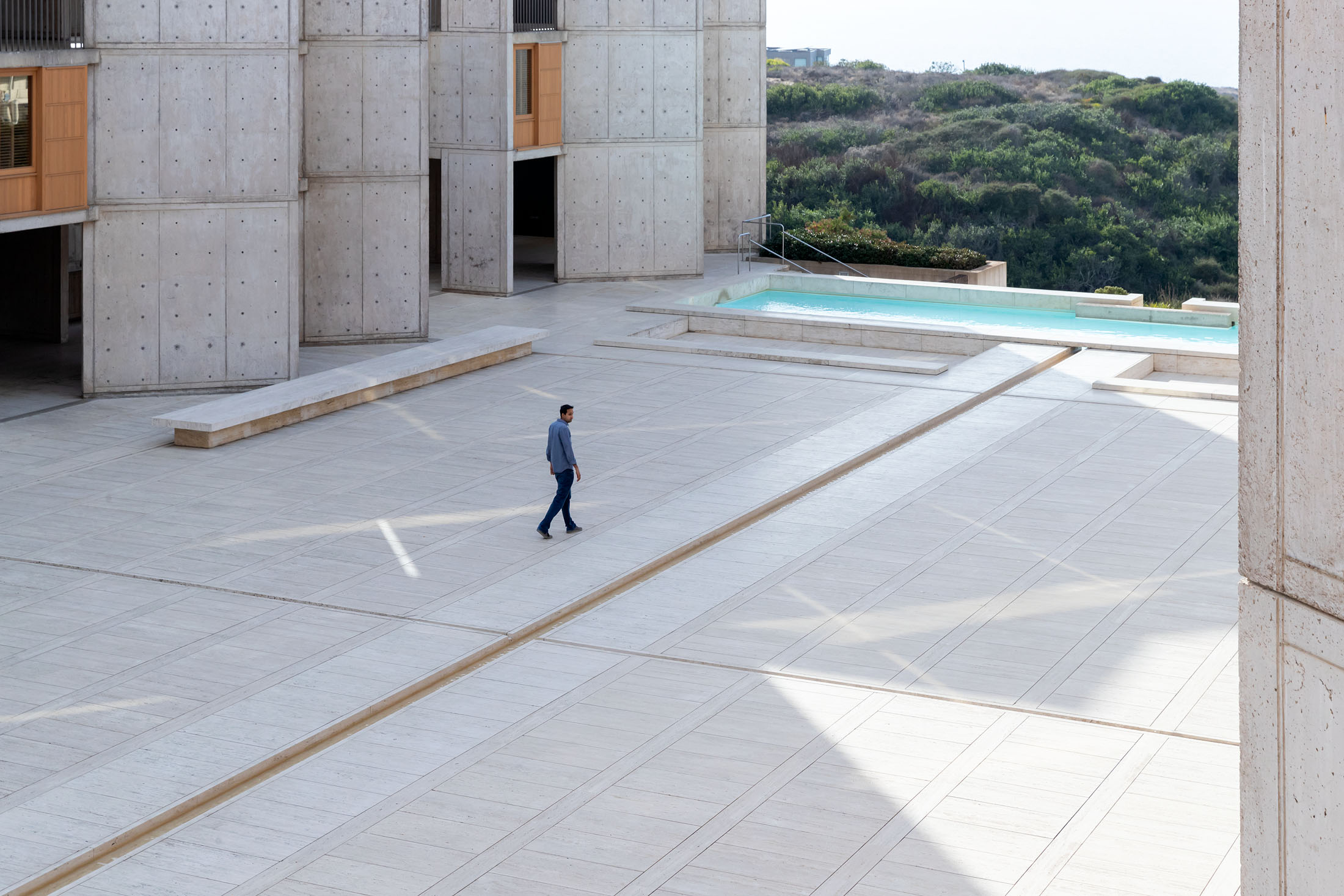
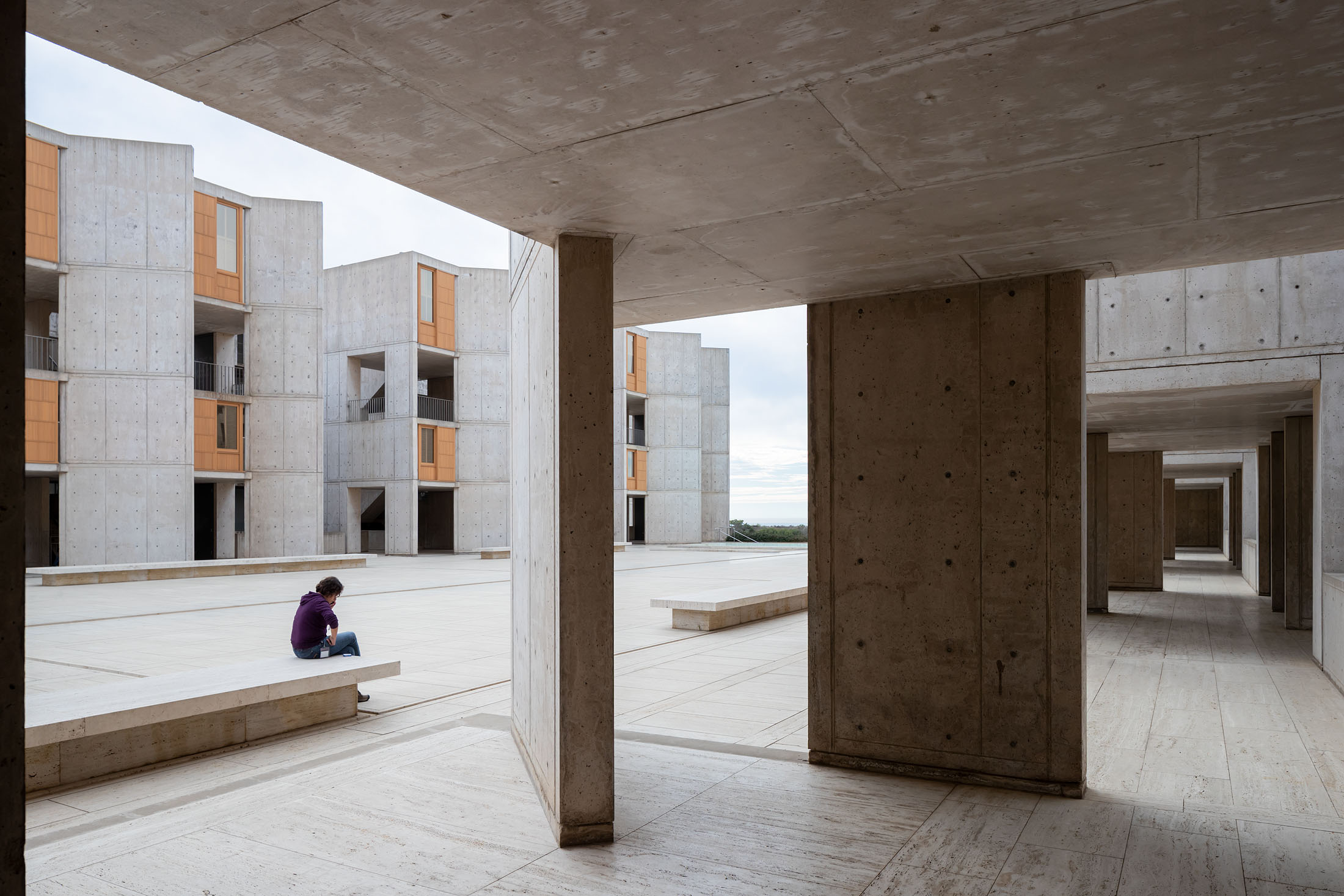
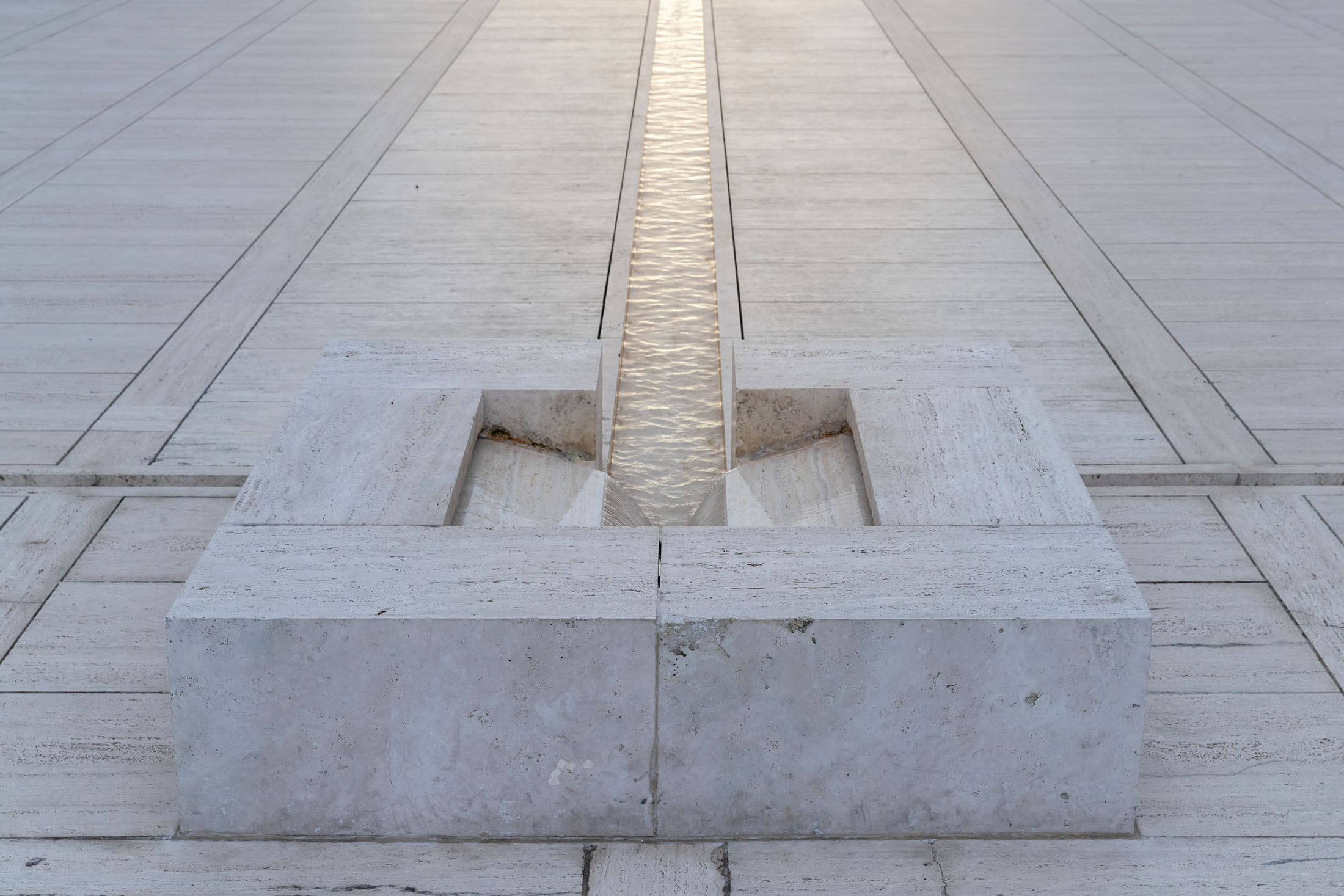
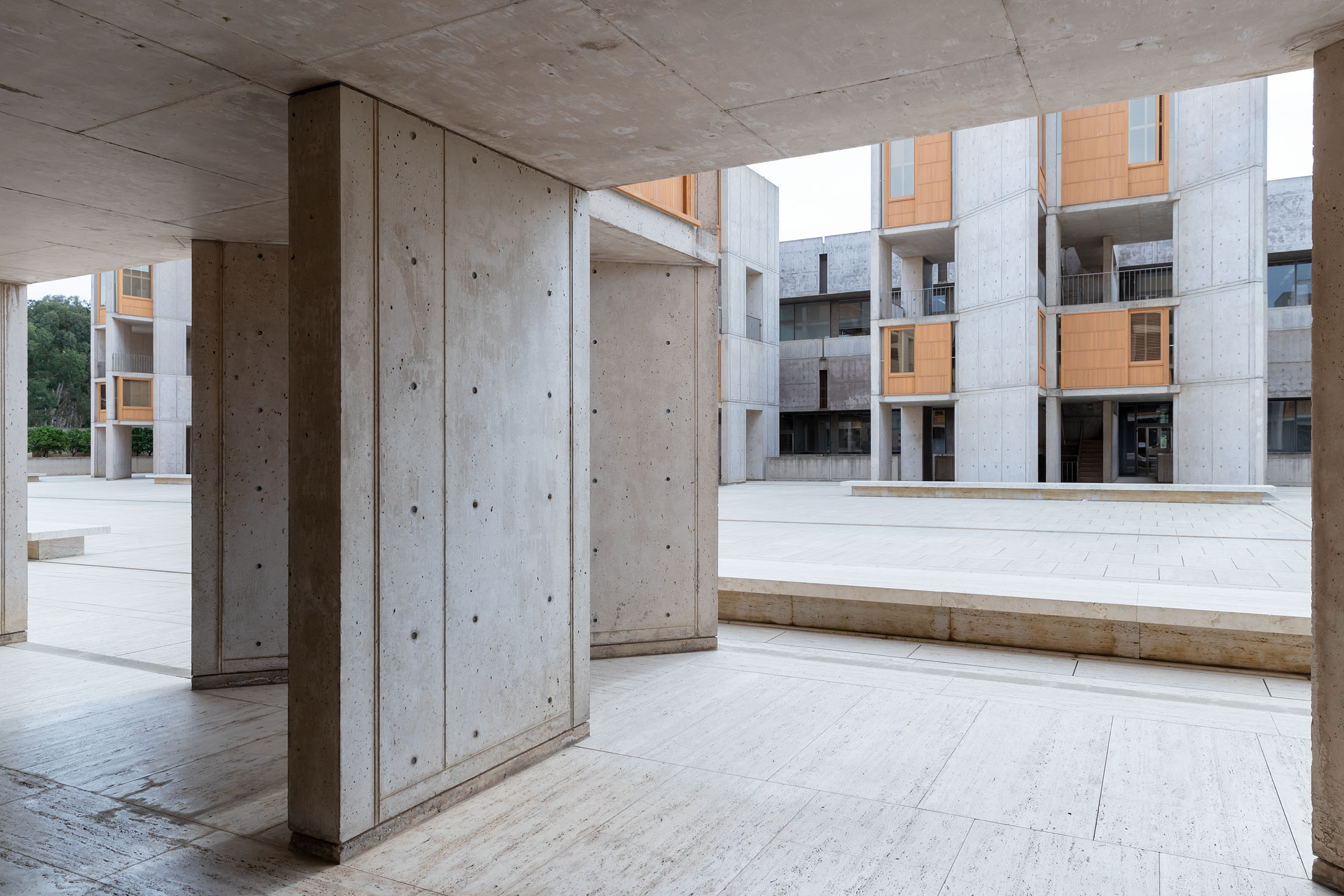
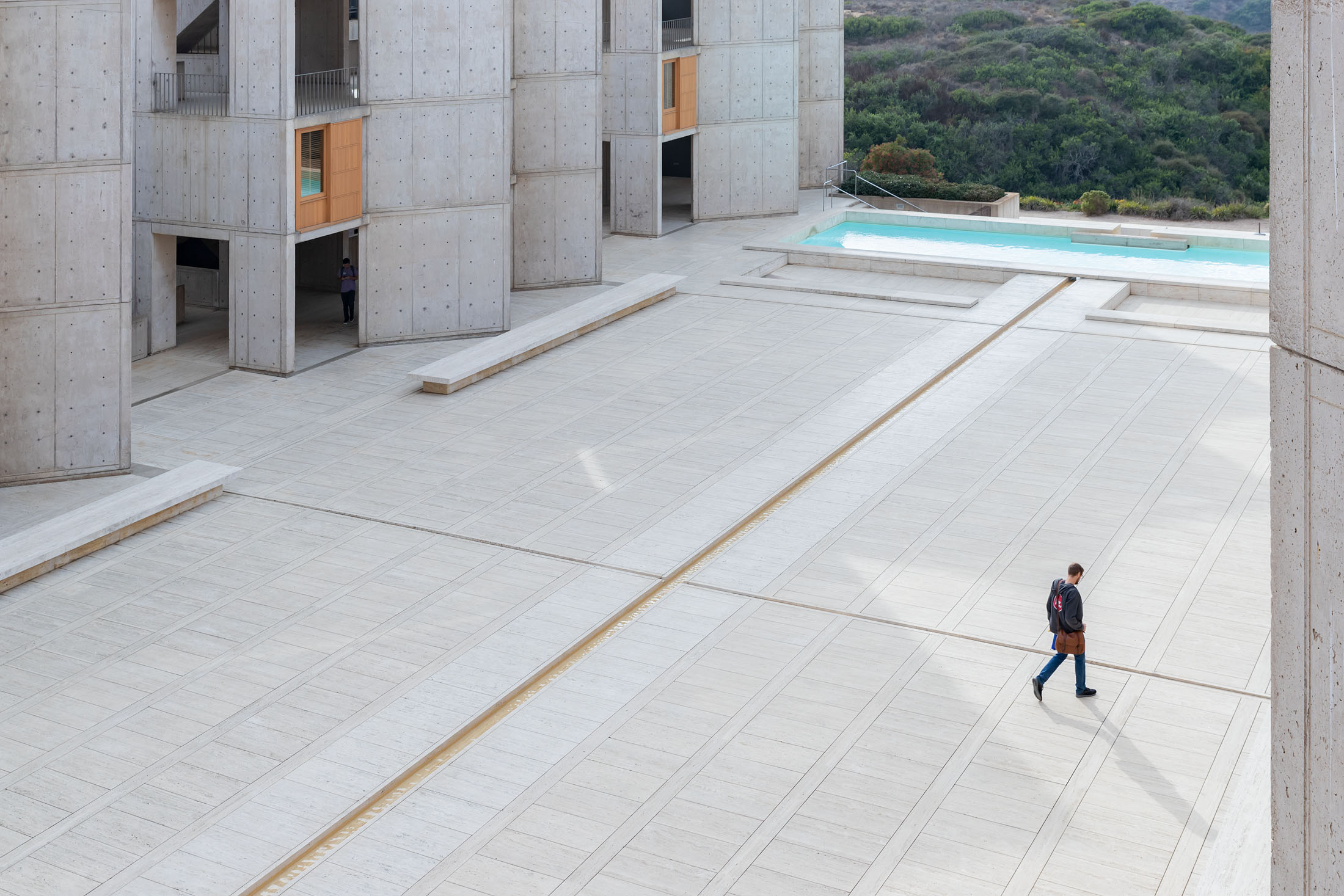
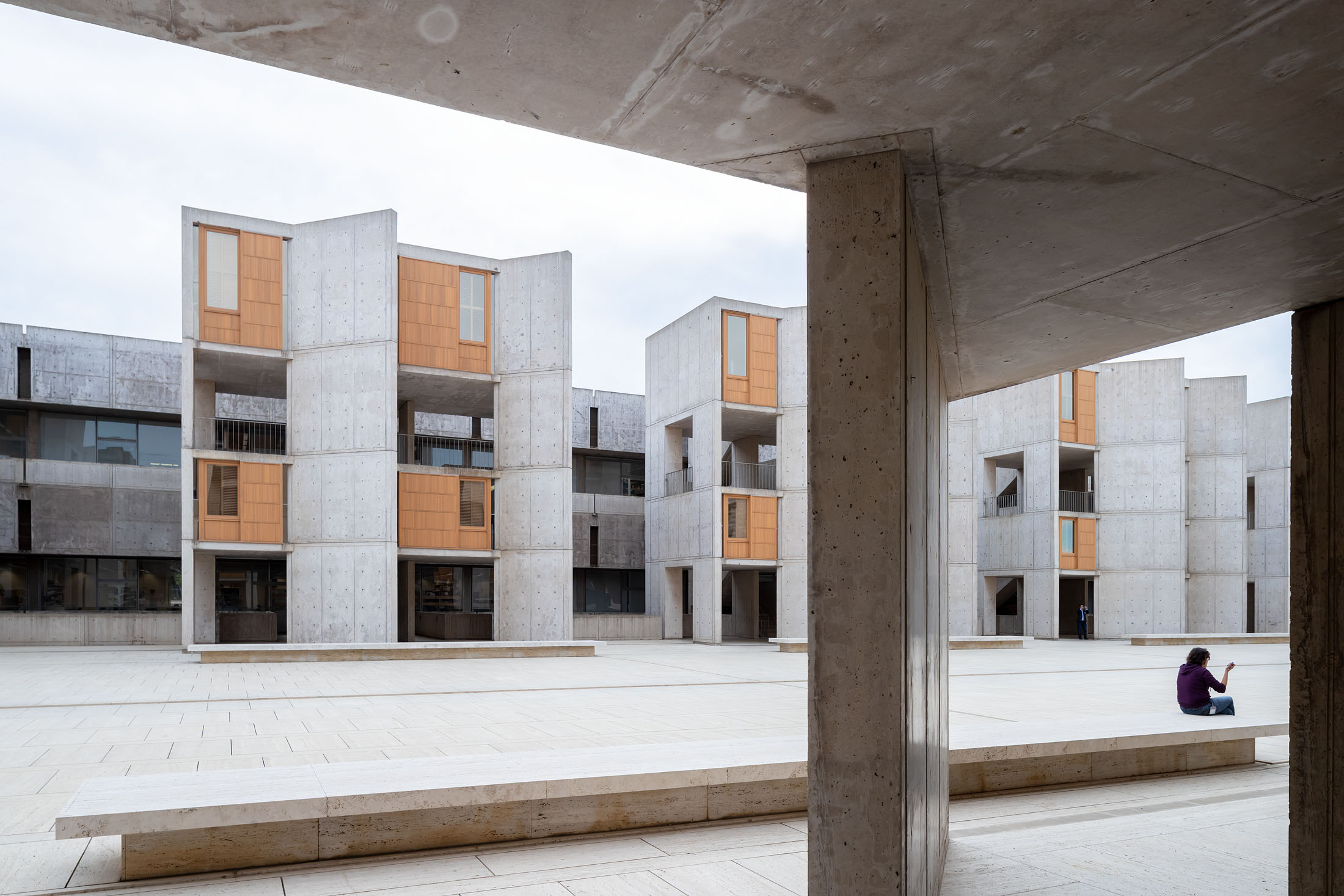
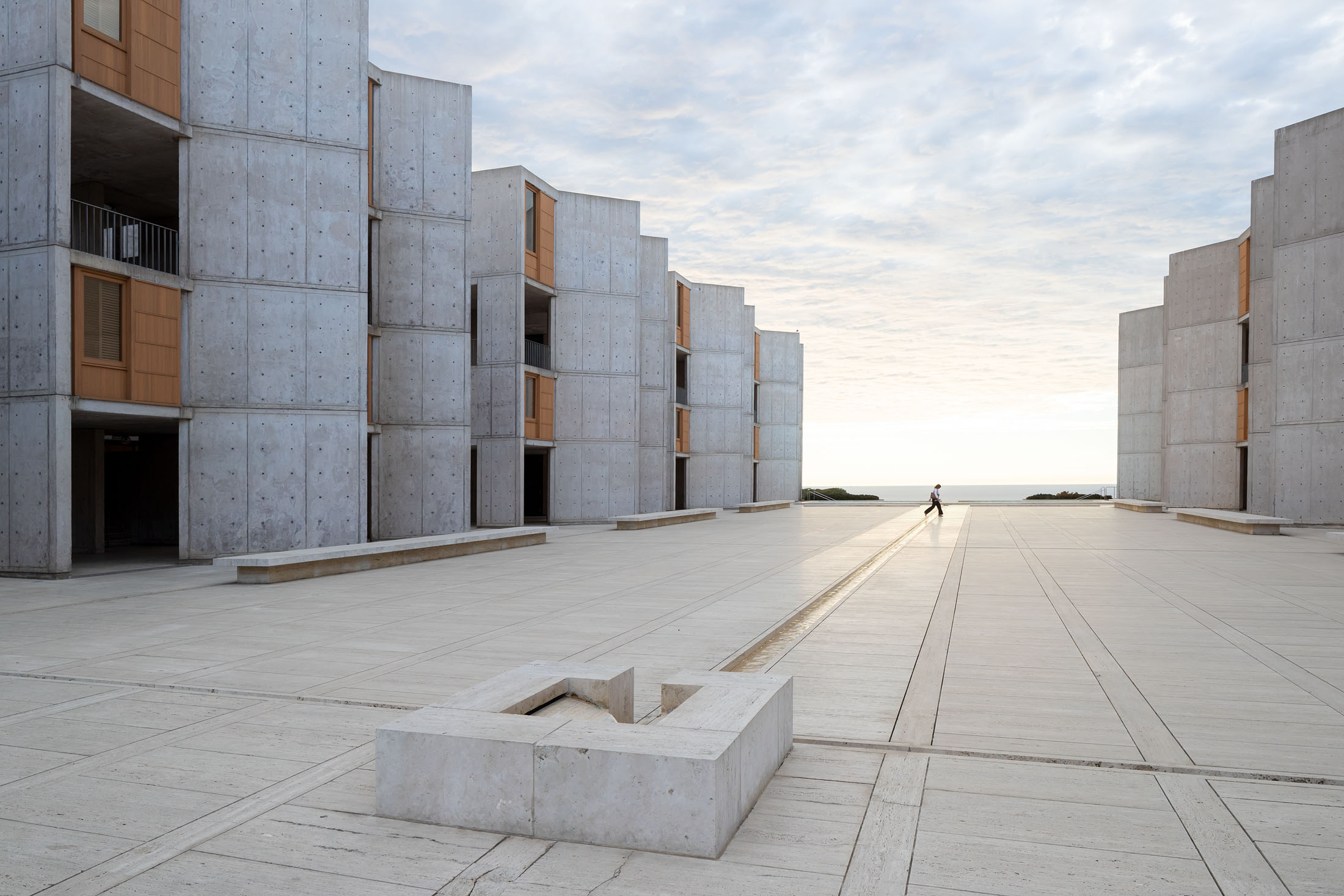
The original master plan included a Meeting Place and Living Place in addition to laboratories. Financial constraints eliminated these components, leaving the laboratory complex as the realized core. Two symmetrical six-story blocks frame a central travertine plaza bisected by a narrow water rill. The linear channel extends toward the ocean, establishing a precise axial relationship between built mass and distant horizon. Luis Barragán advised Kahn to remove the planned garden and define the court as a plaza with a single water element, describing it as “a facade to the sky.” The resulting void intensifies the tension between concrete mass and open sky.
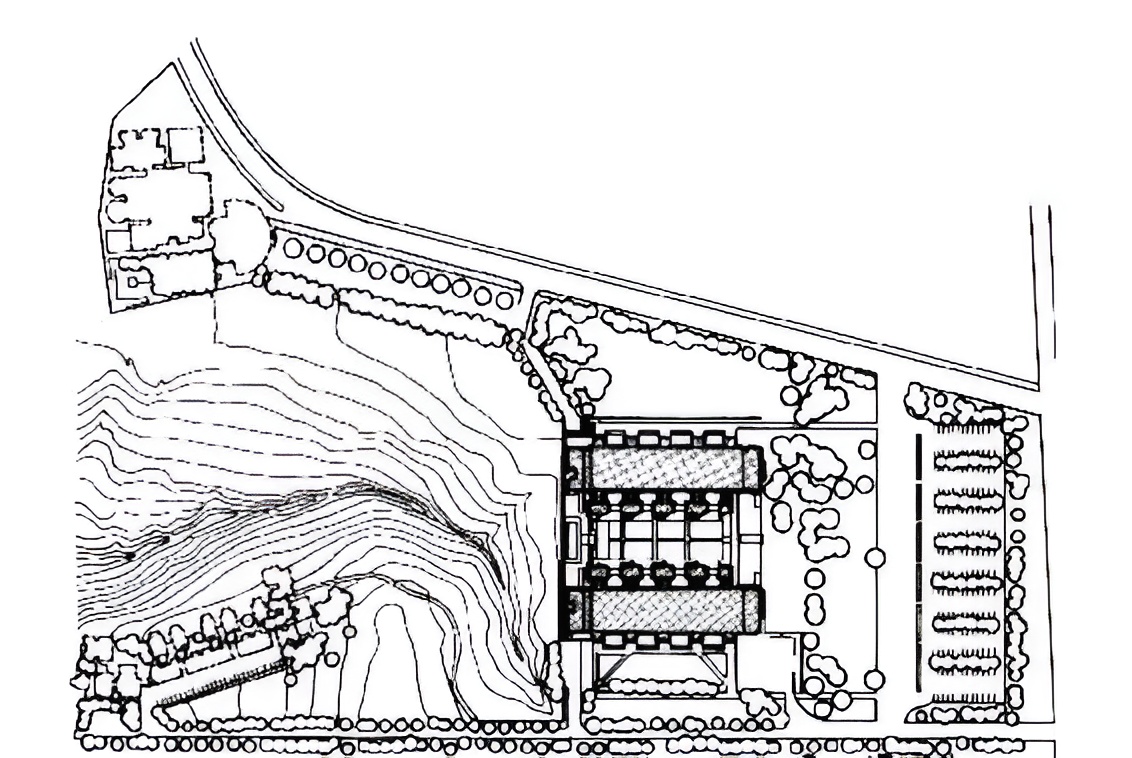
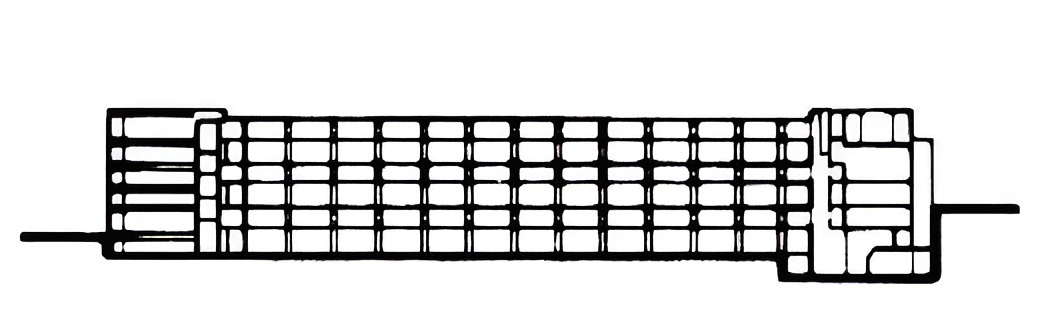
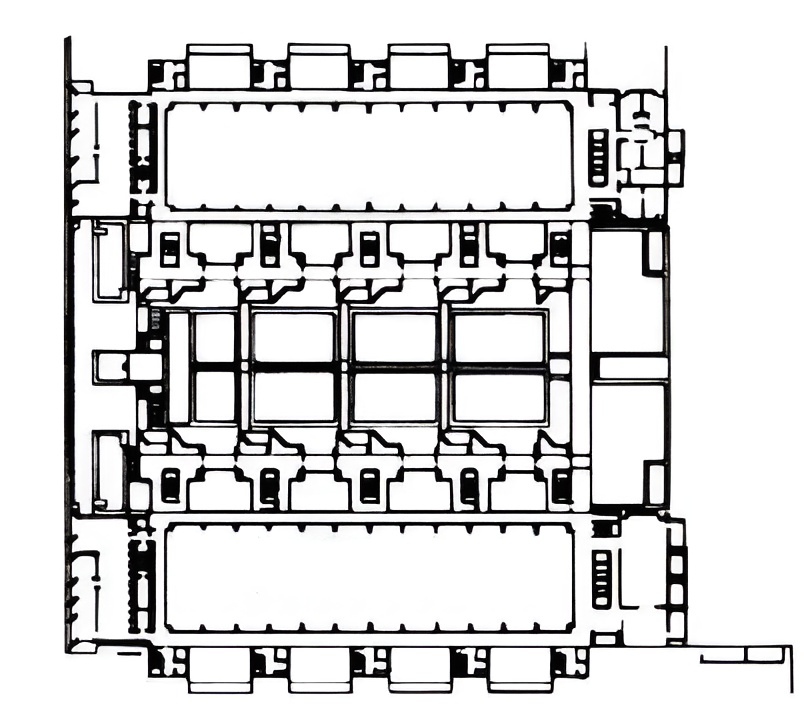
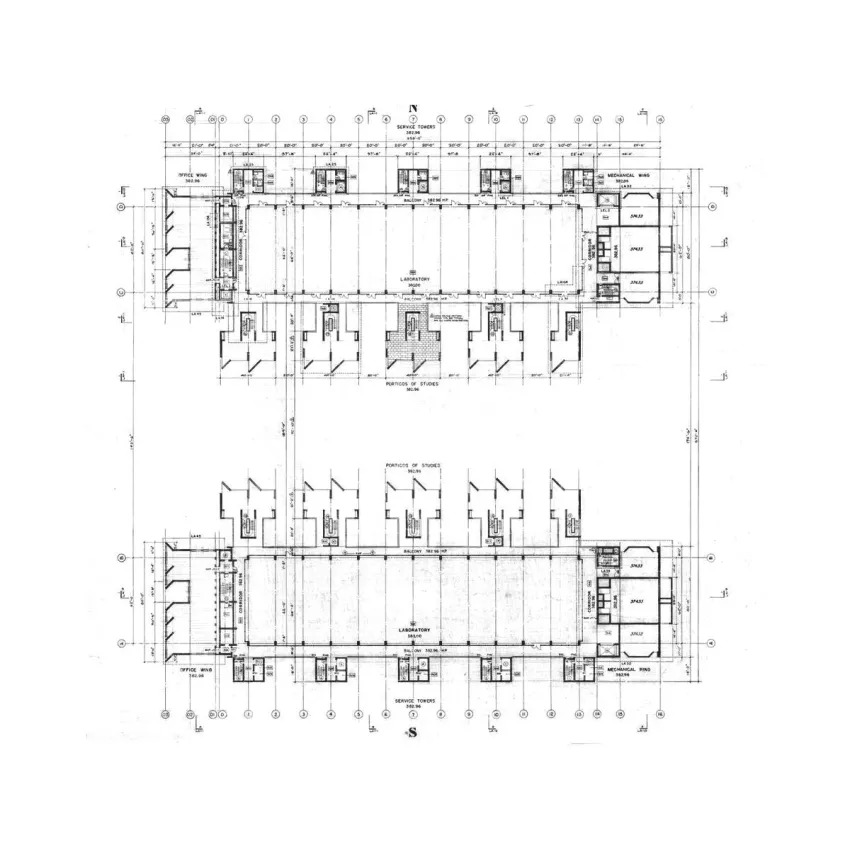
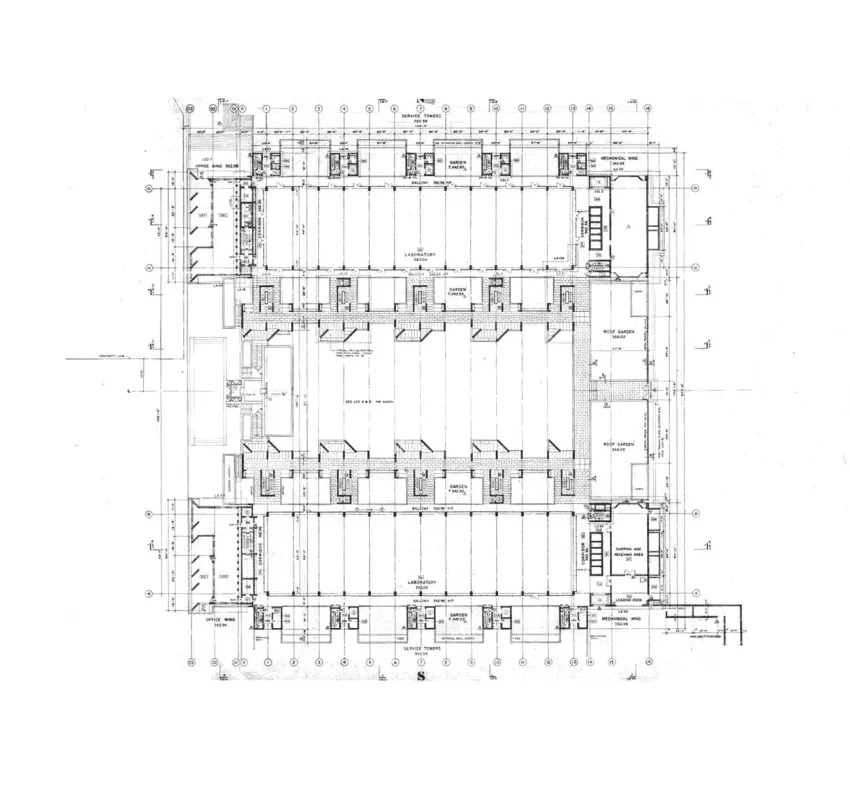
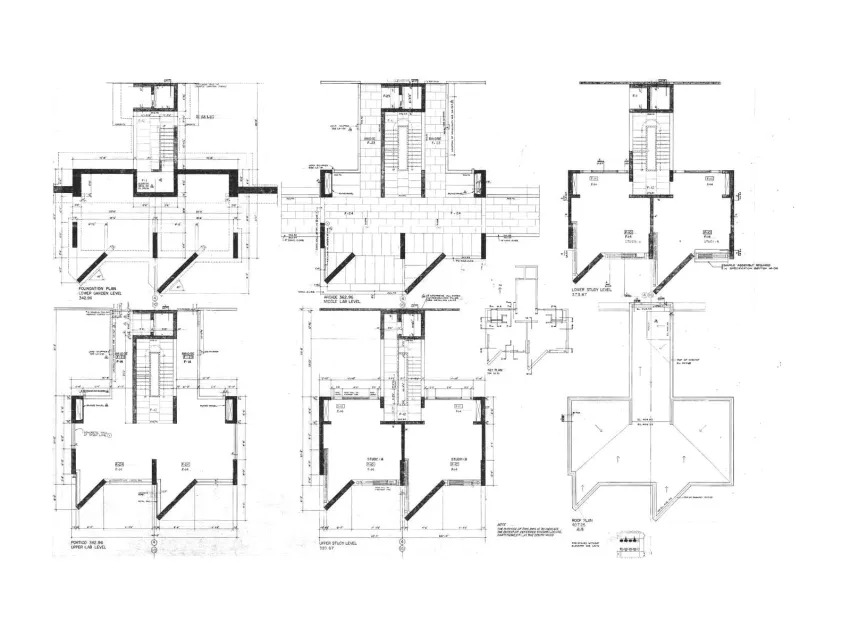
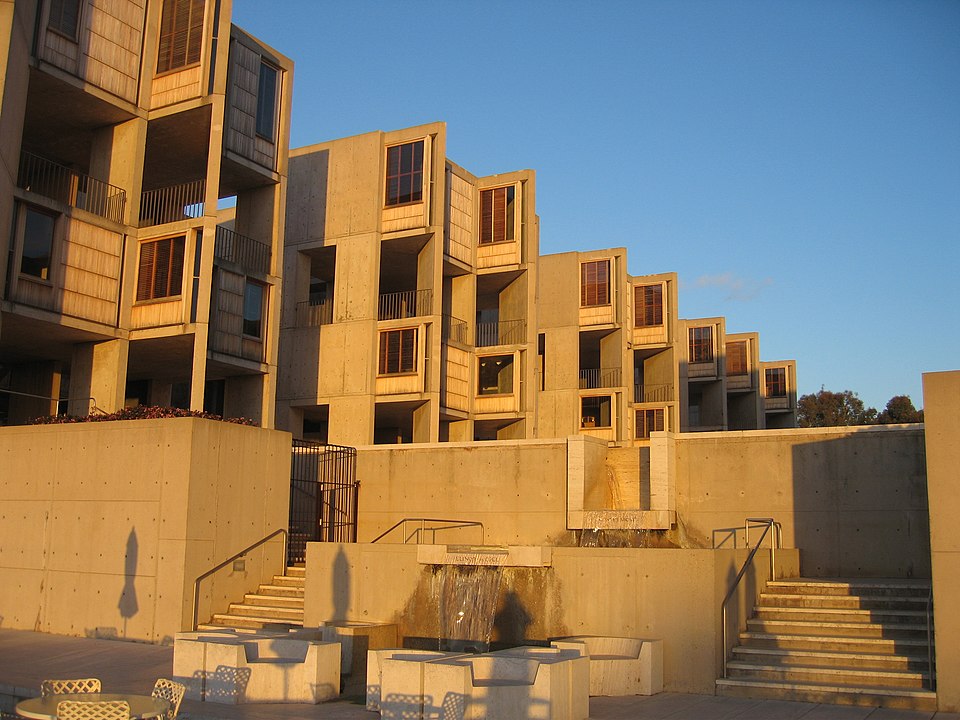
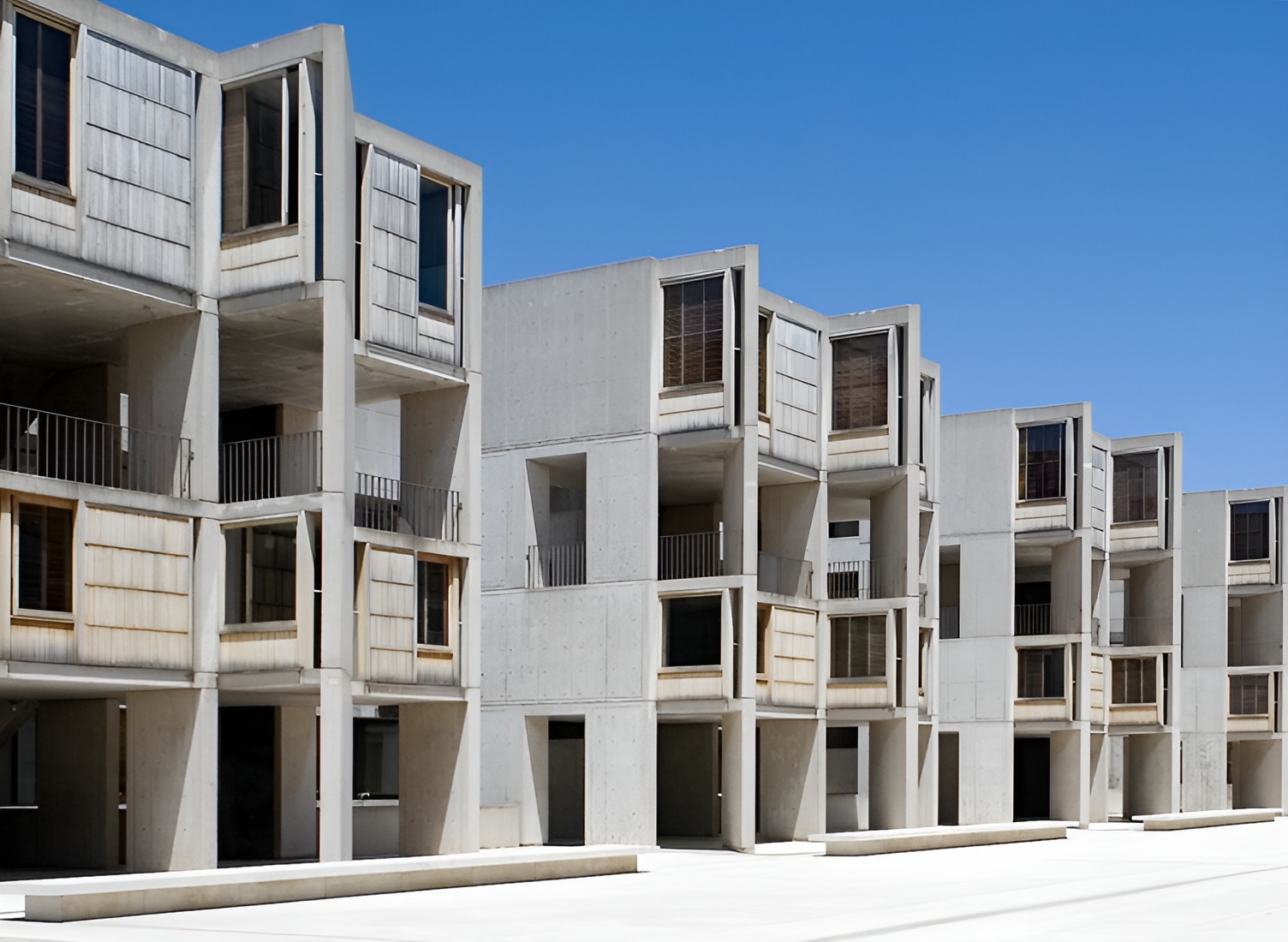
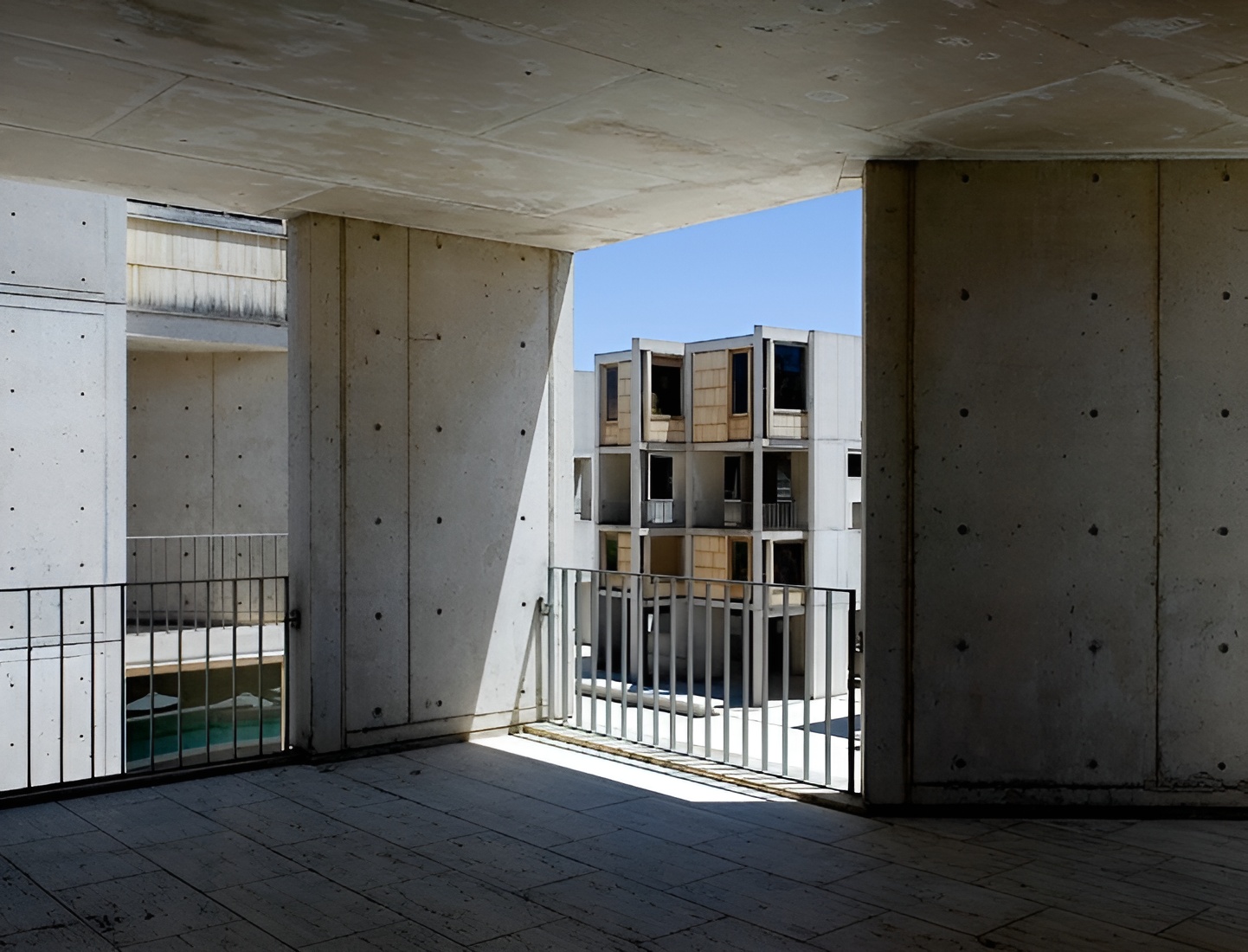
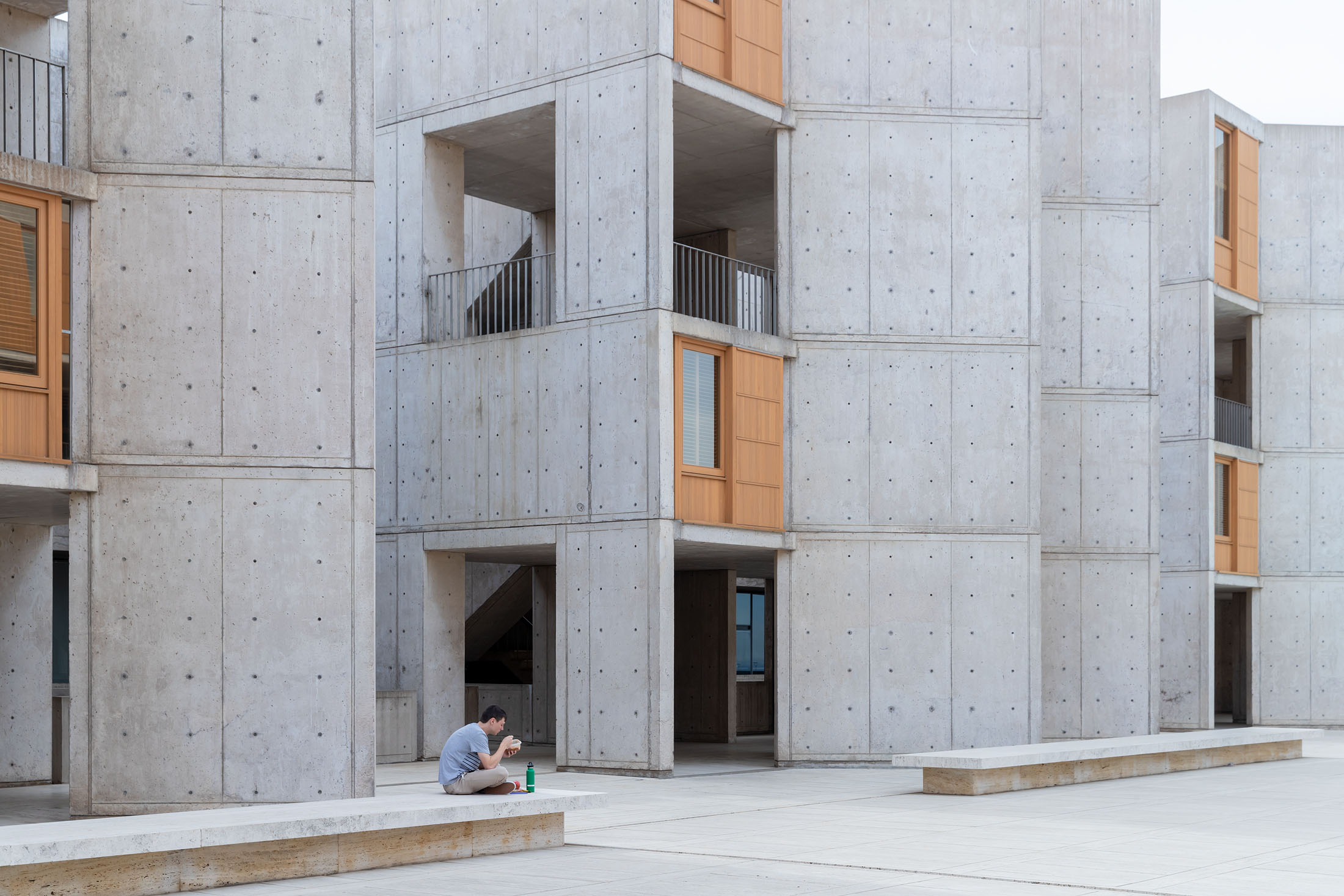
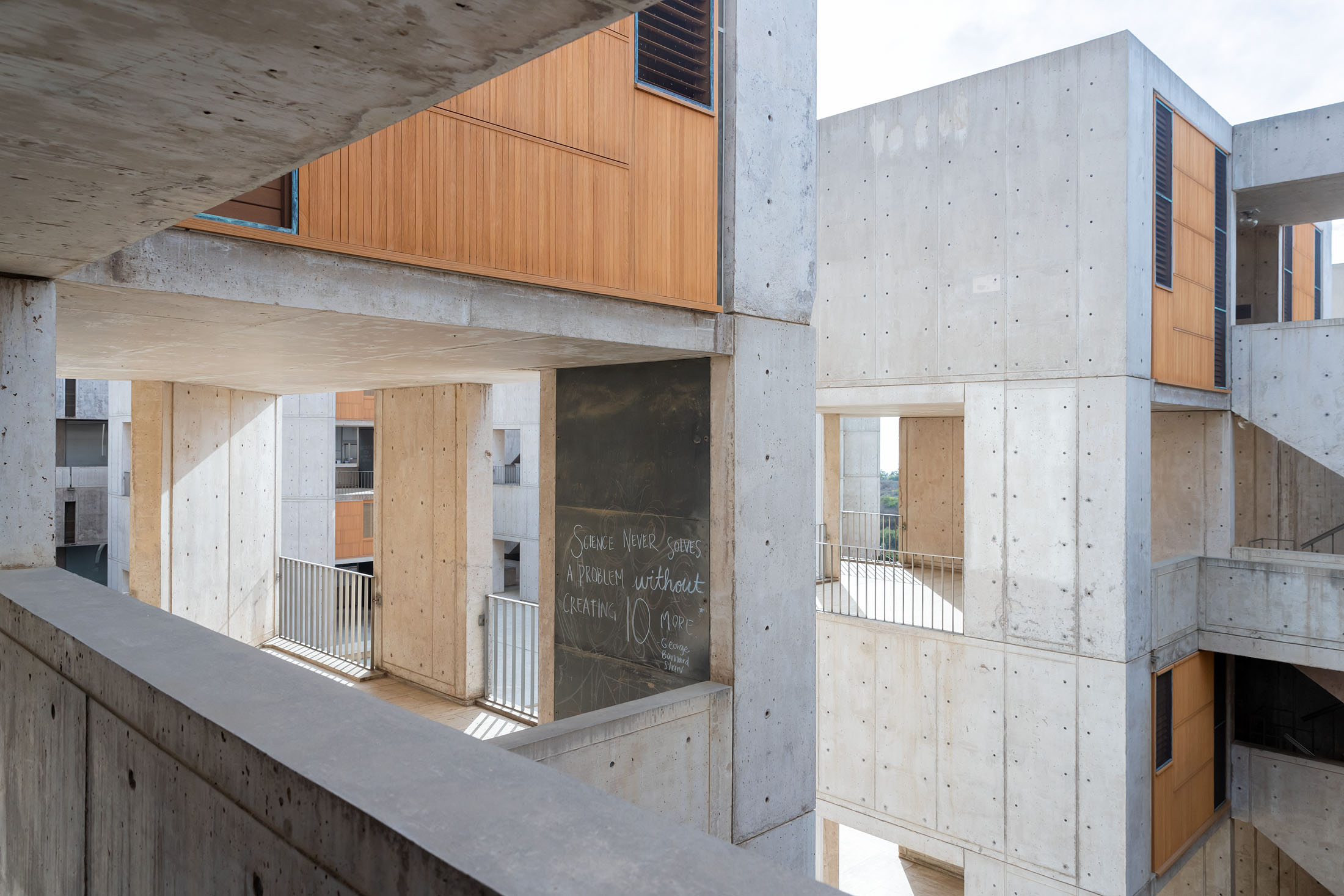
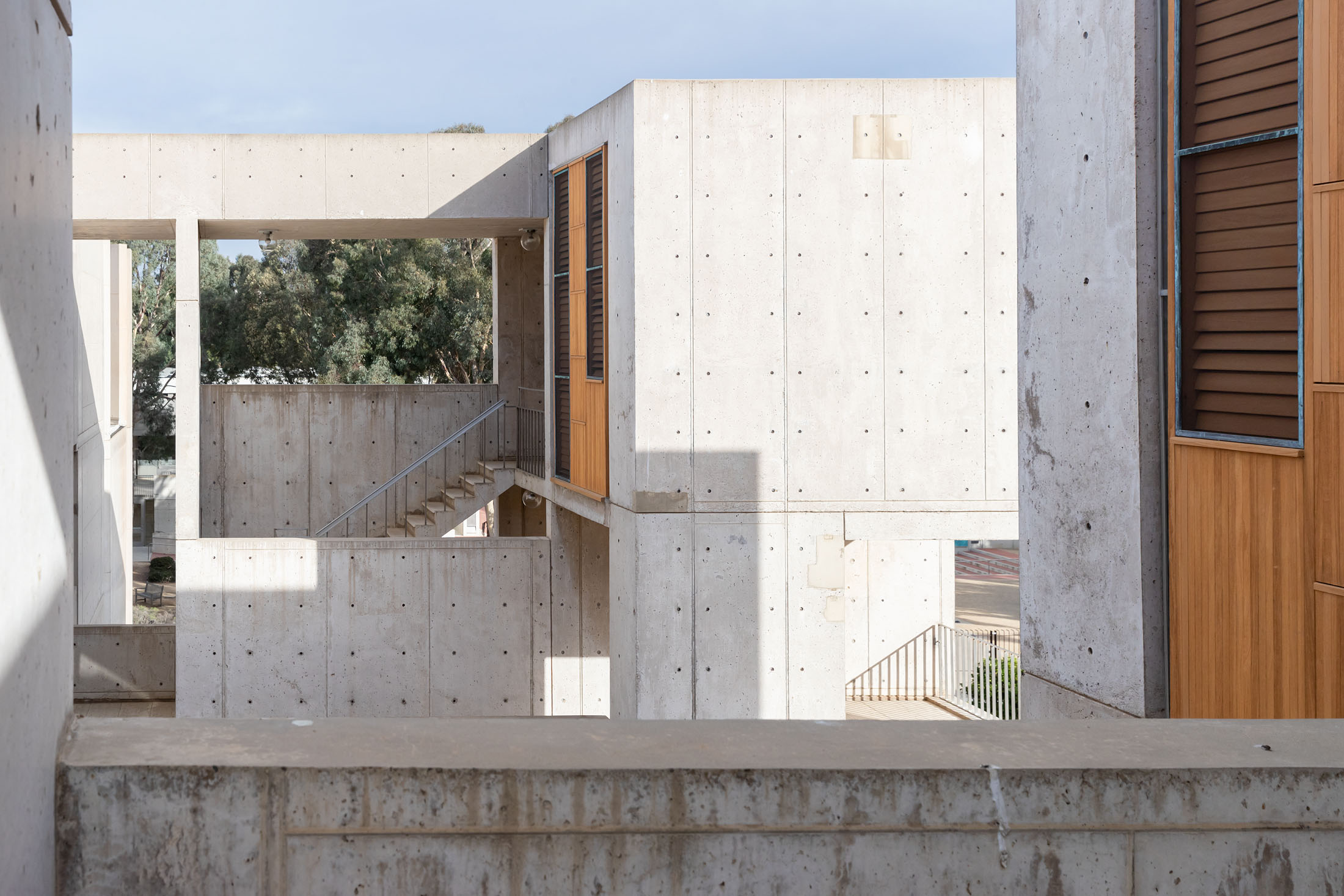
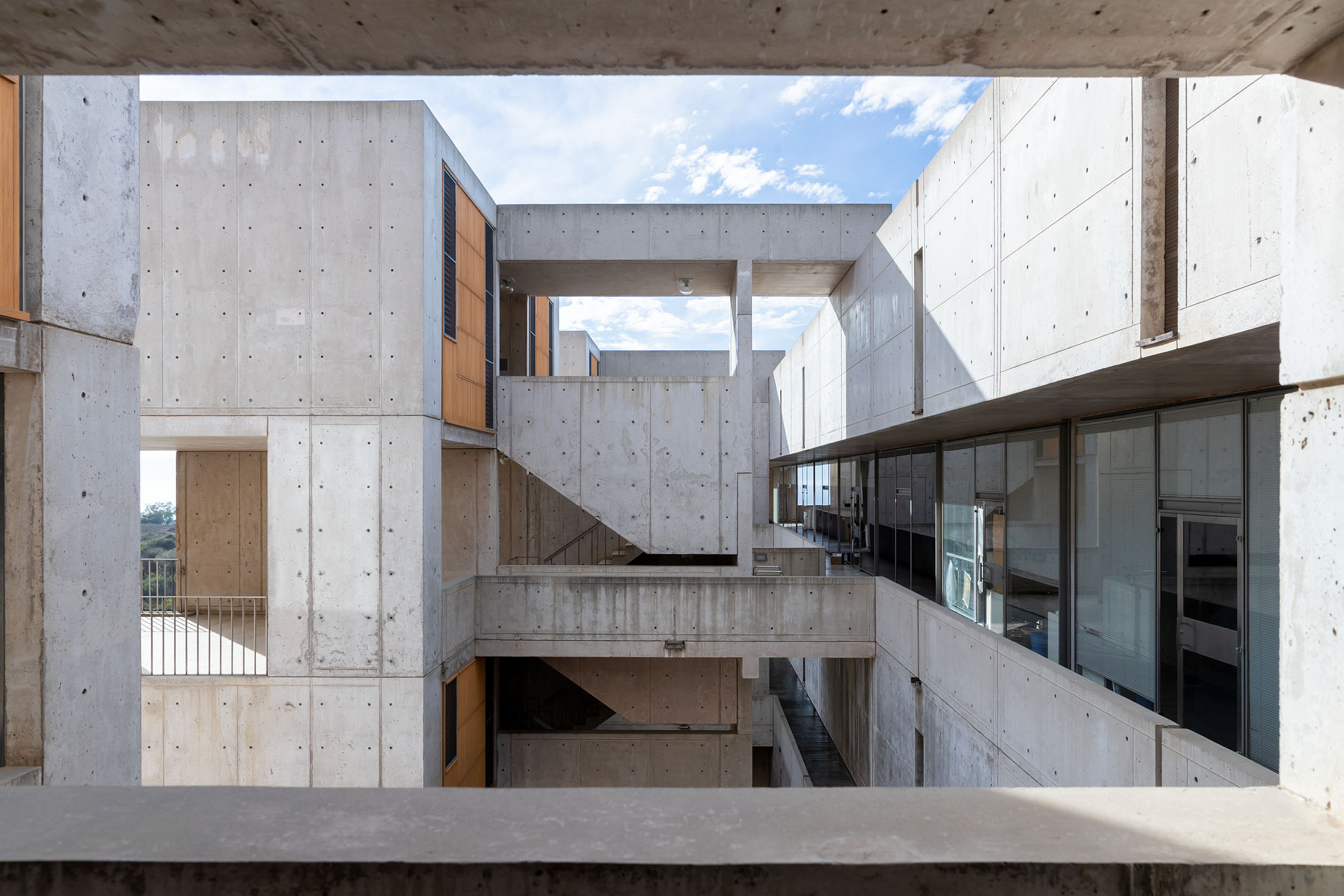
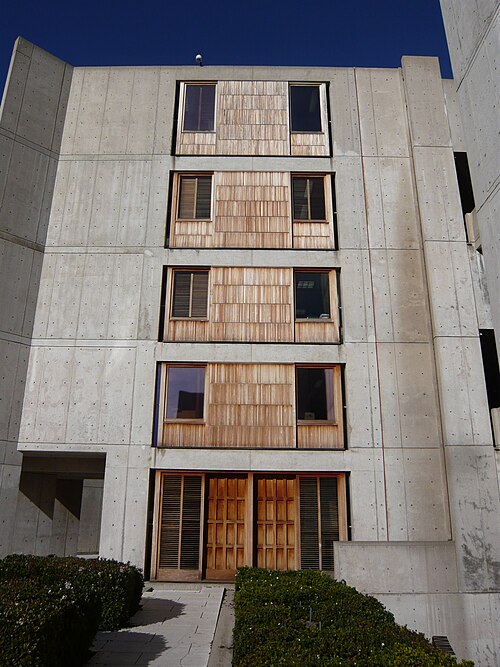
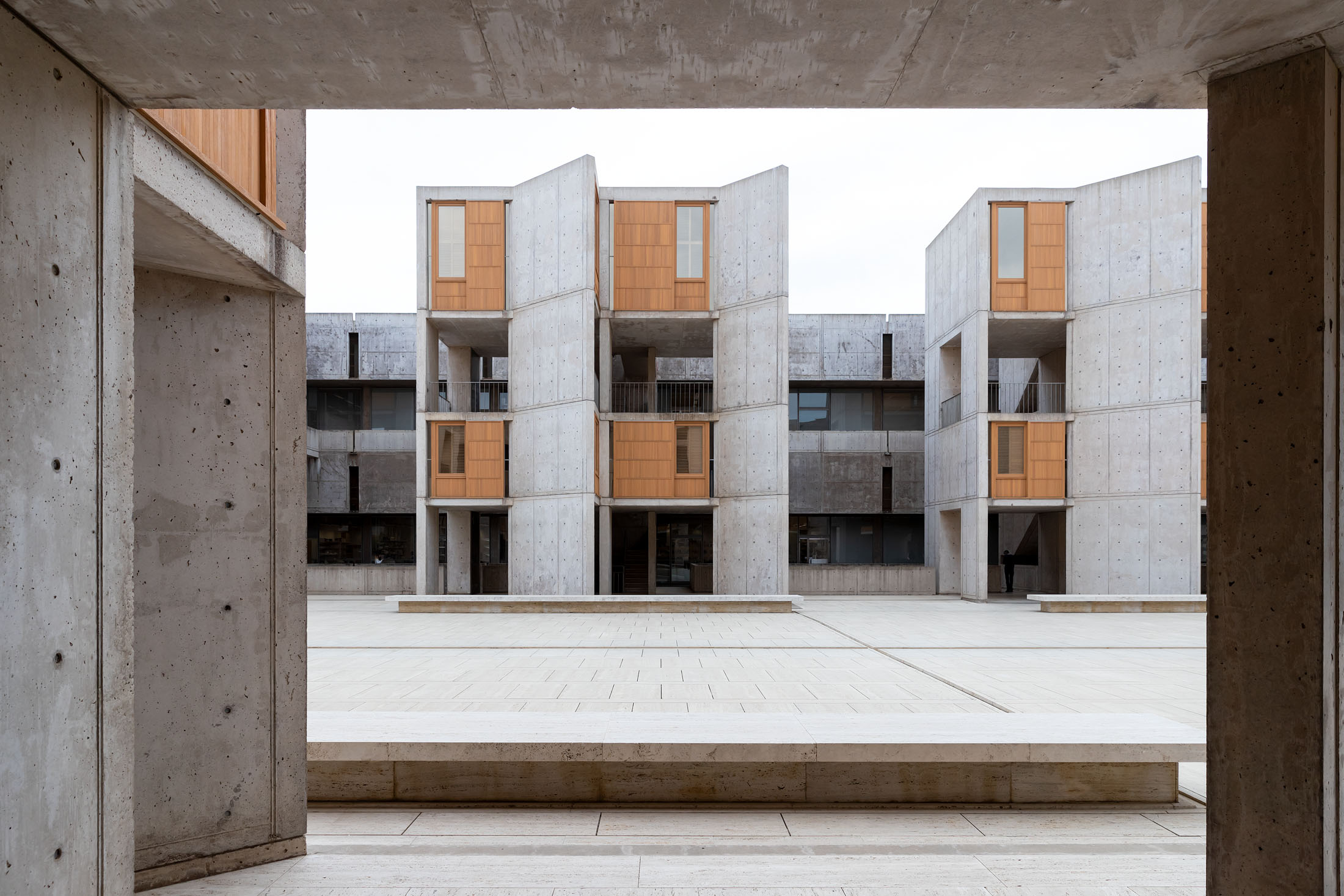
Spatial organization reflects monastic precedents. The plaza operates as a cloister, and detached study towers line the inner façades of each laboratory block. Five towers per block contain a total of thirty-six faculty studies. Diagonal walls within each study orient views toward both the courtyard and the ocean. Six levels of offices occupy the western ends of the buildings, extending the visual connection to the coastline.
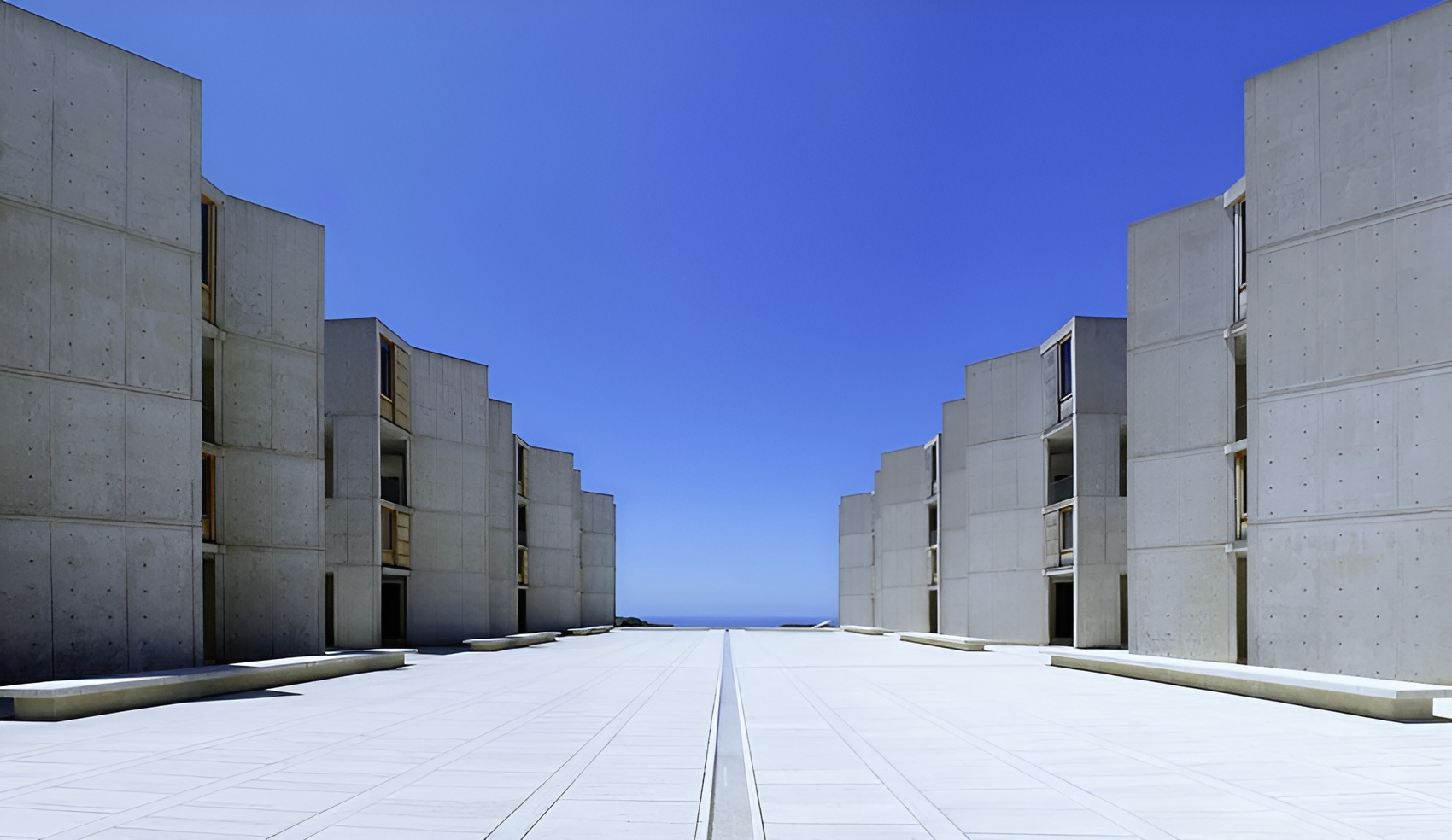
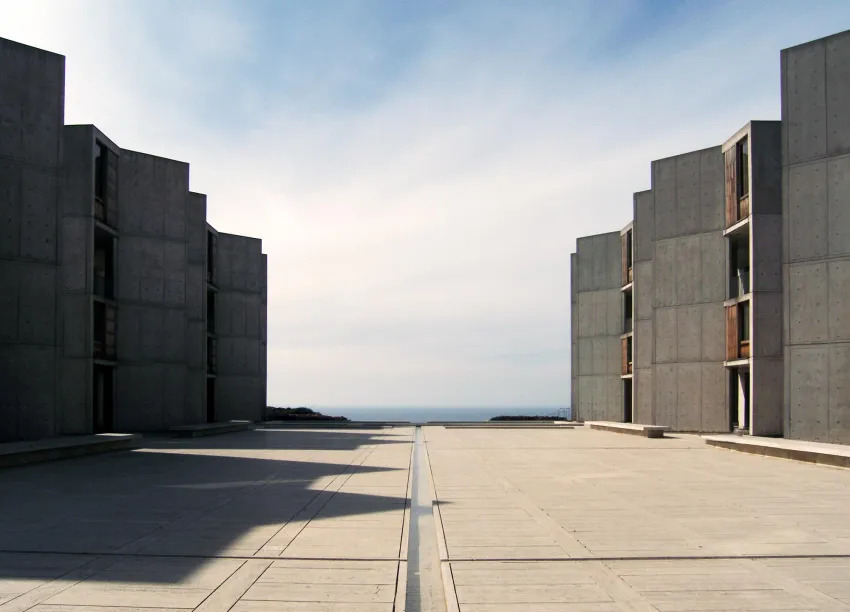
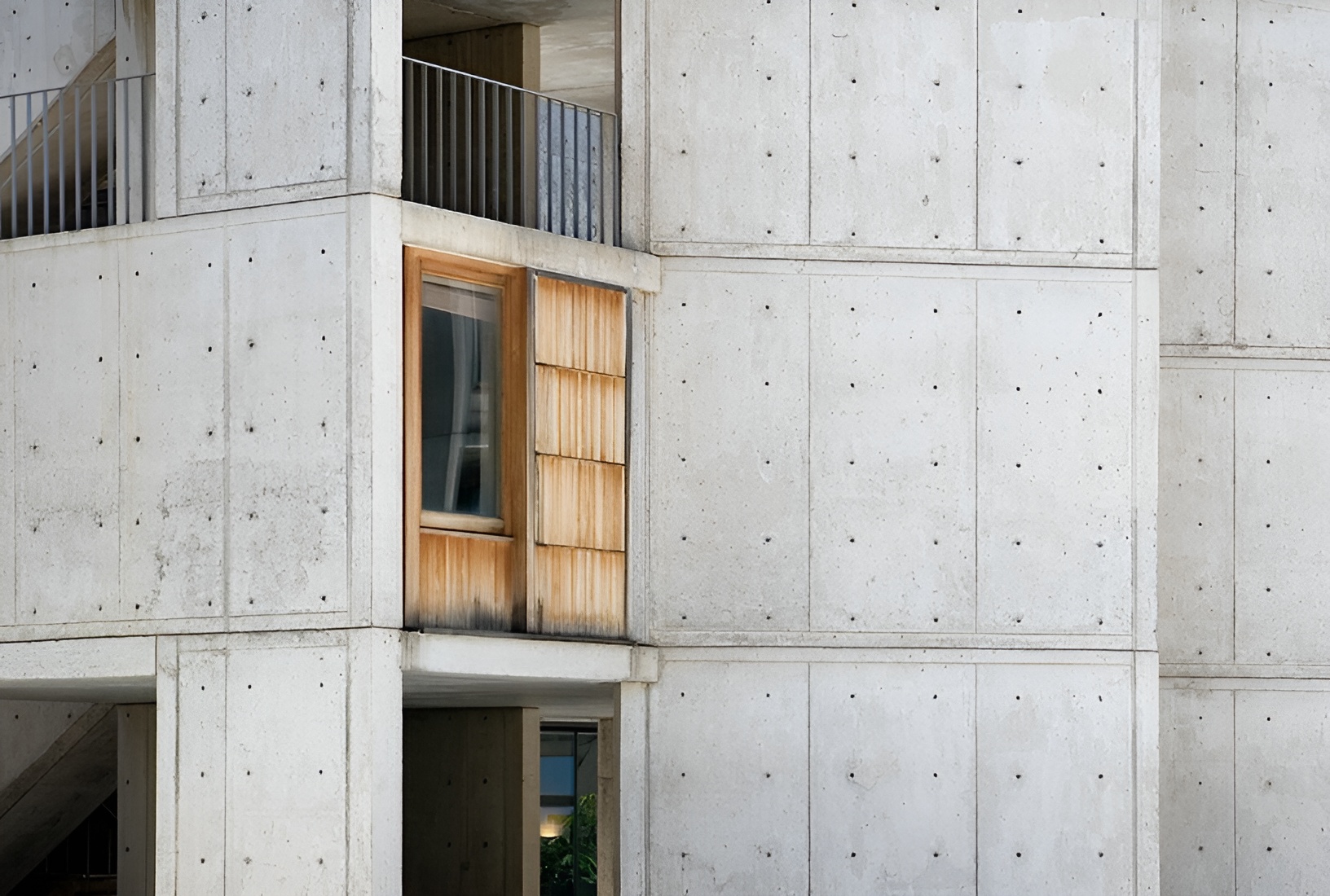
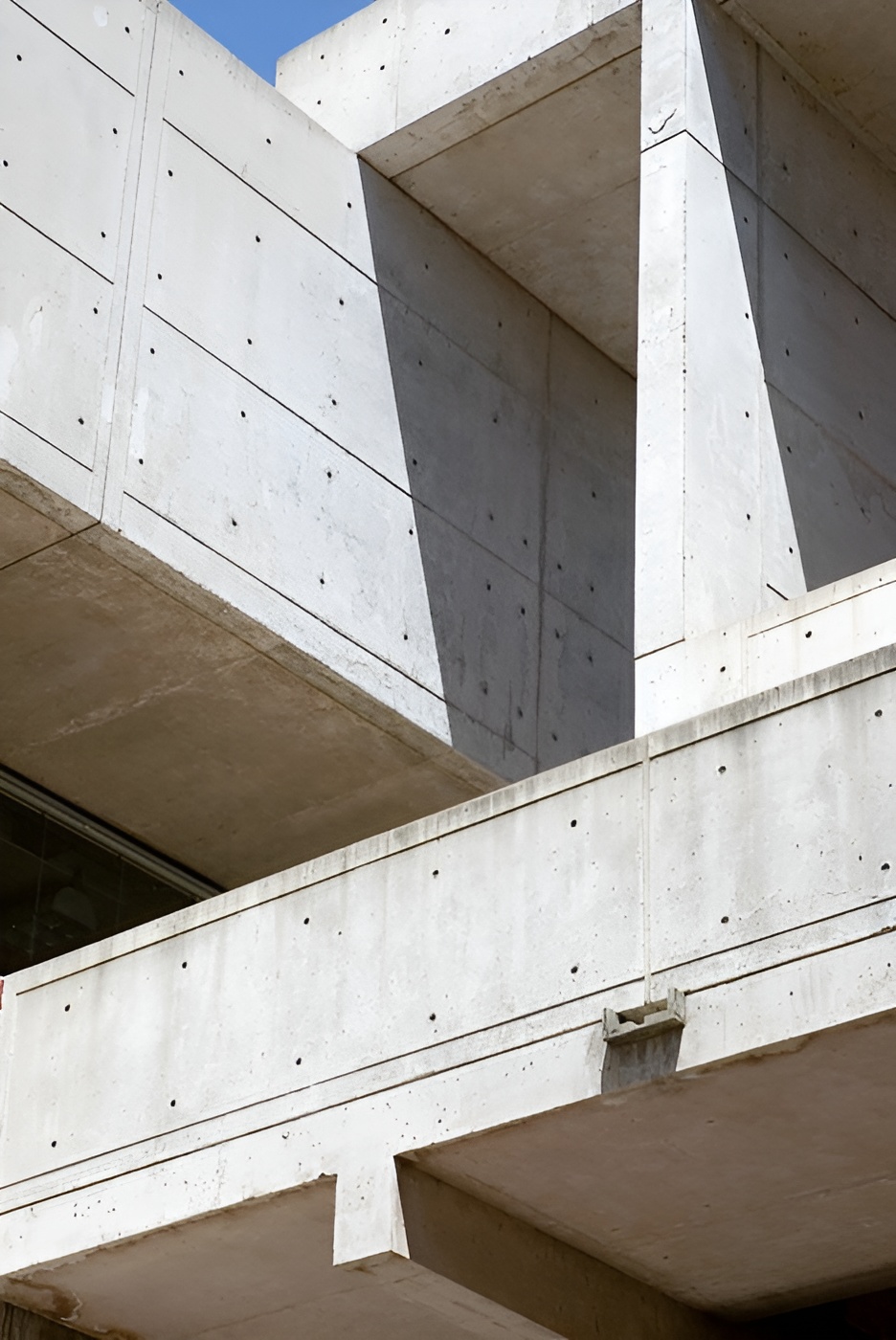
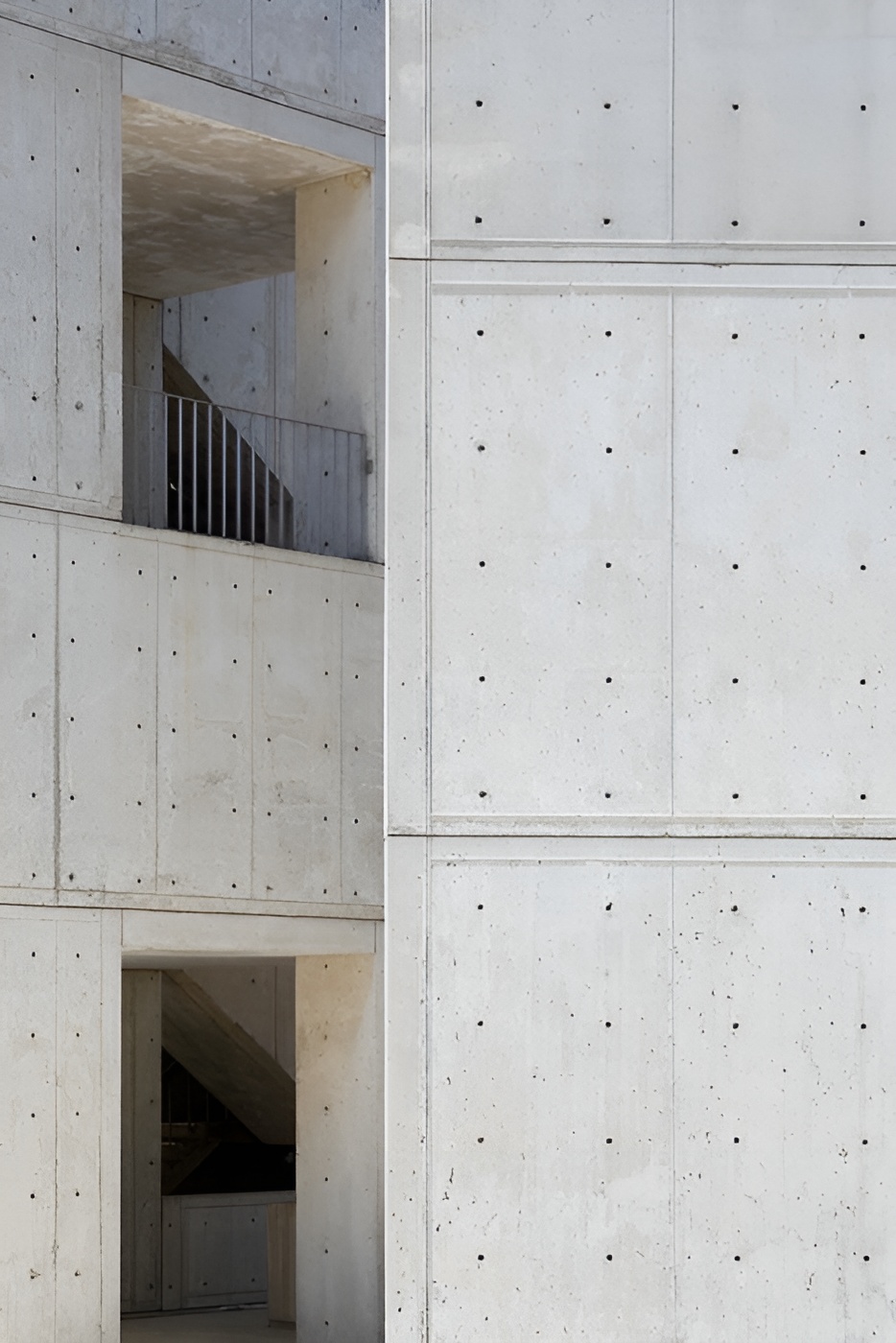
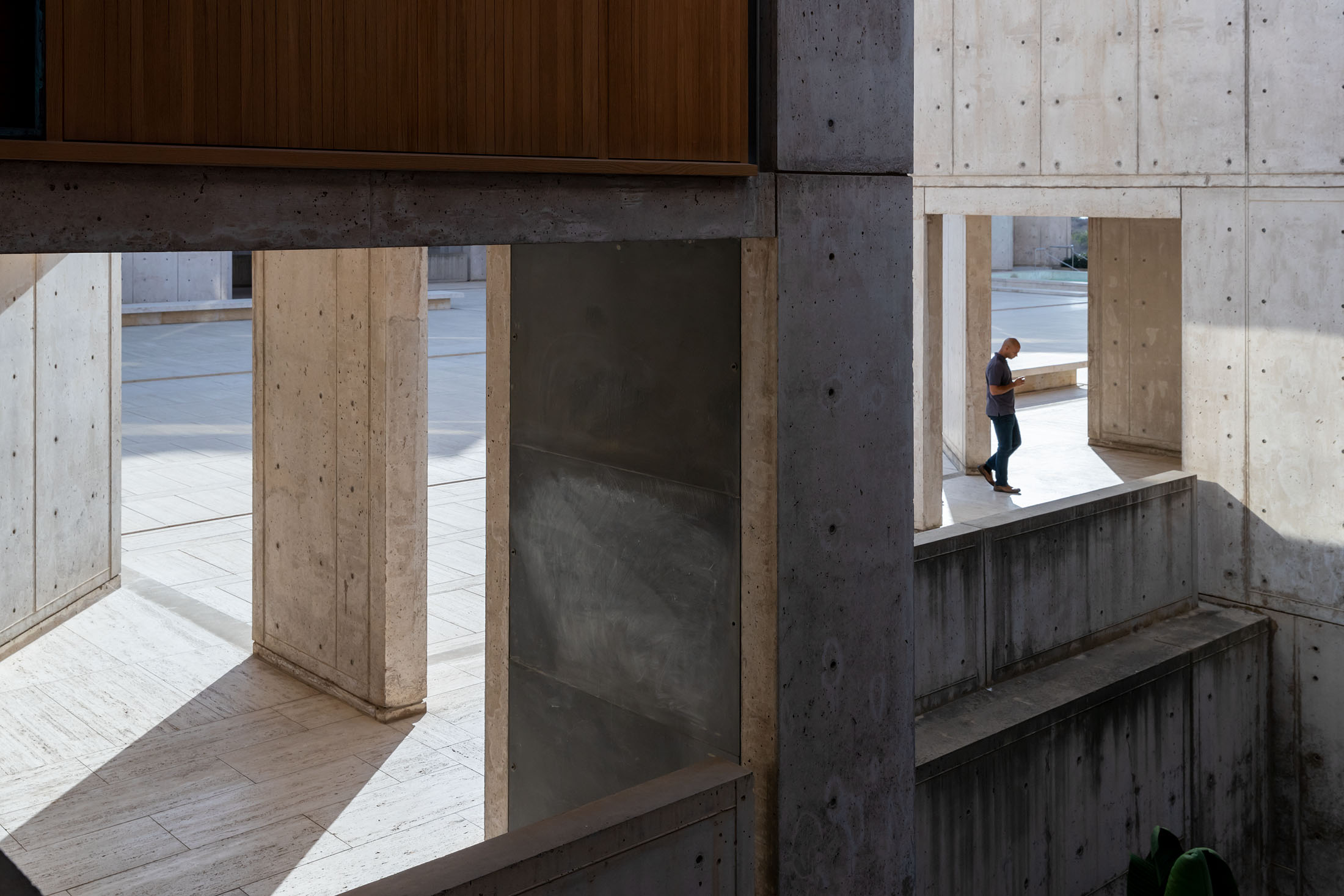
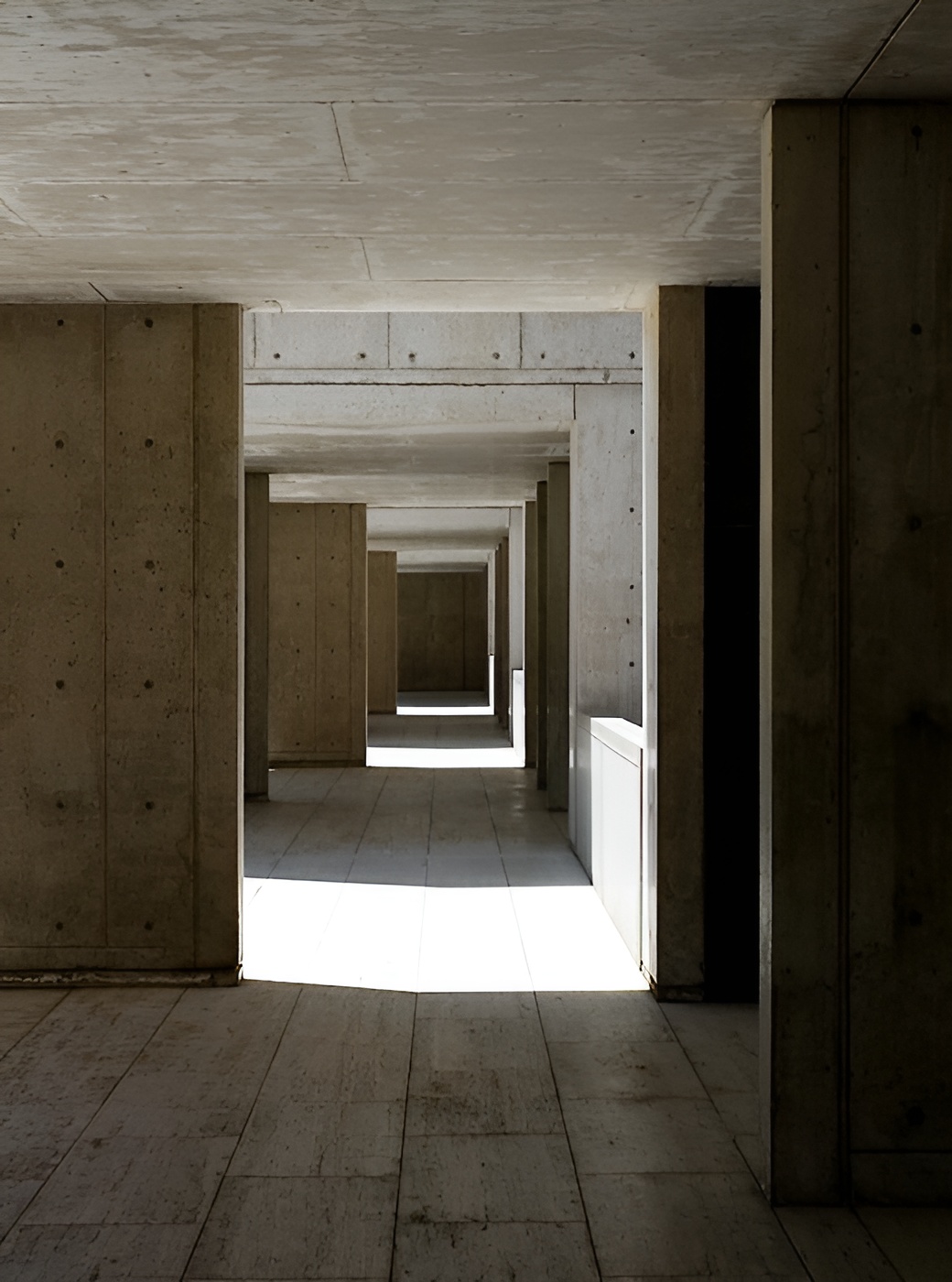
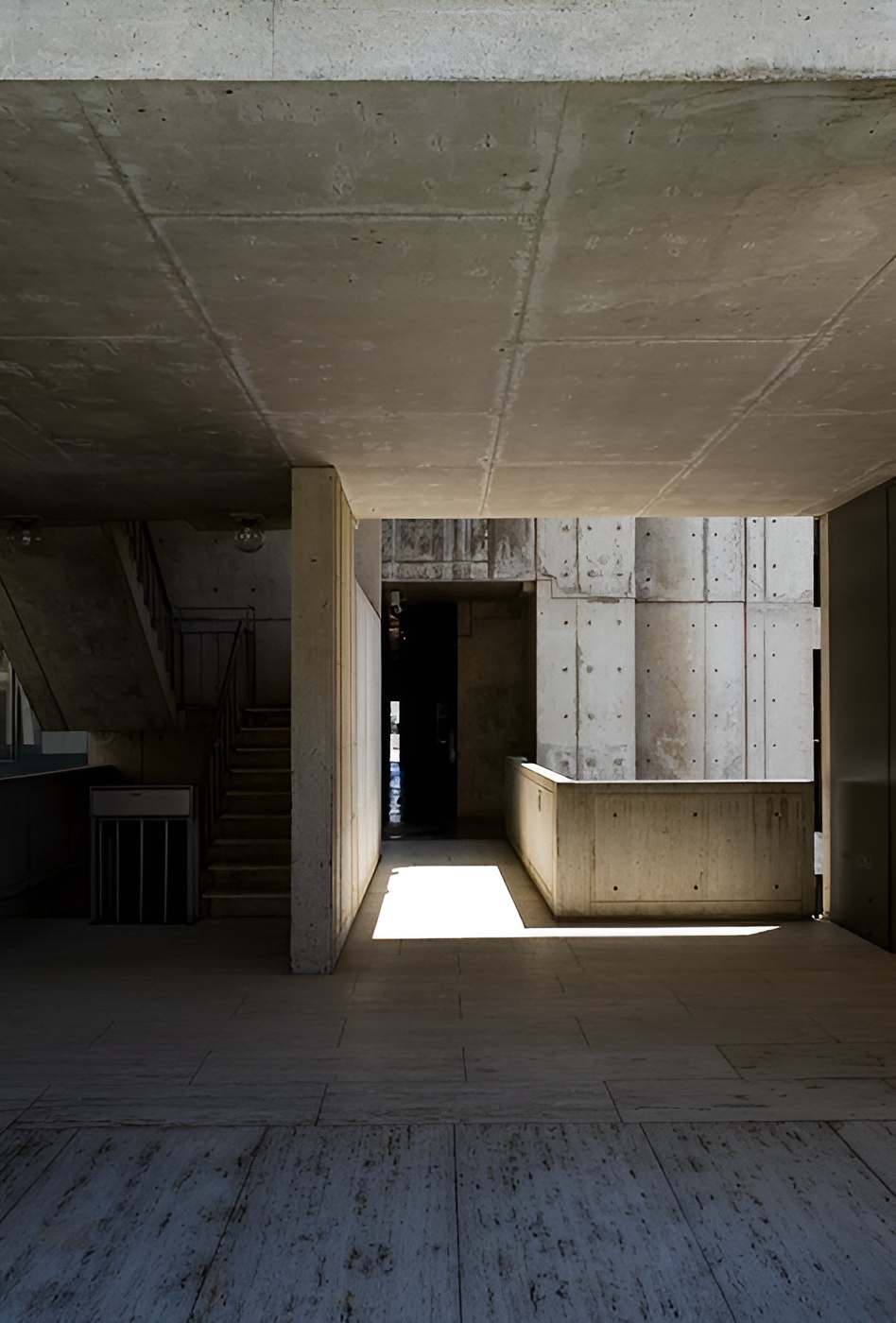
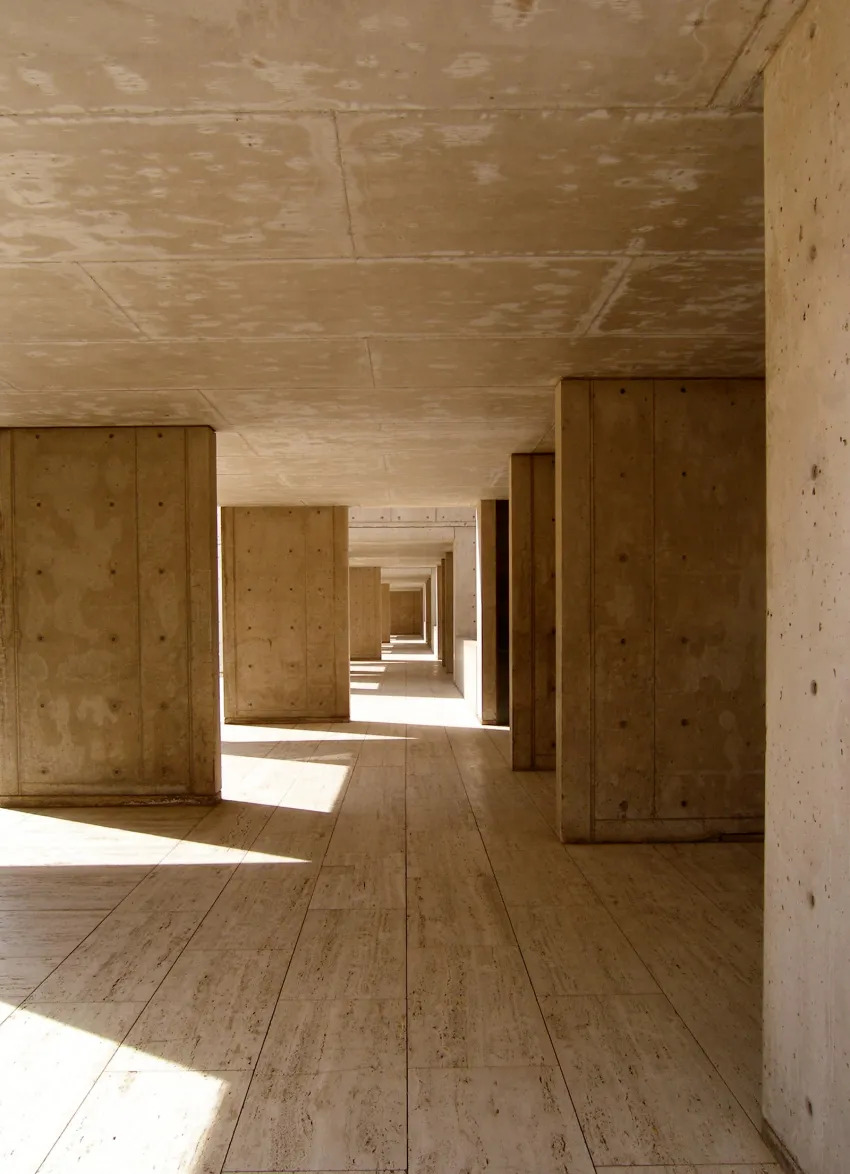
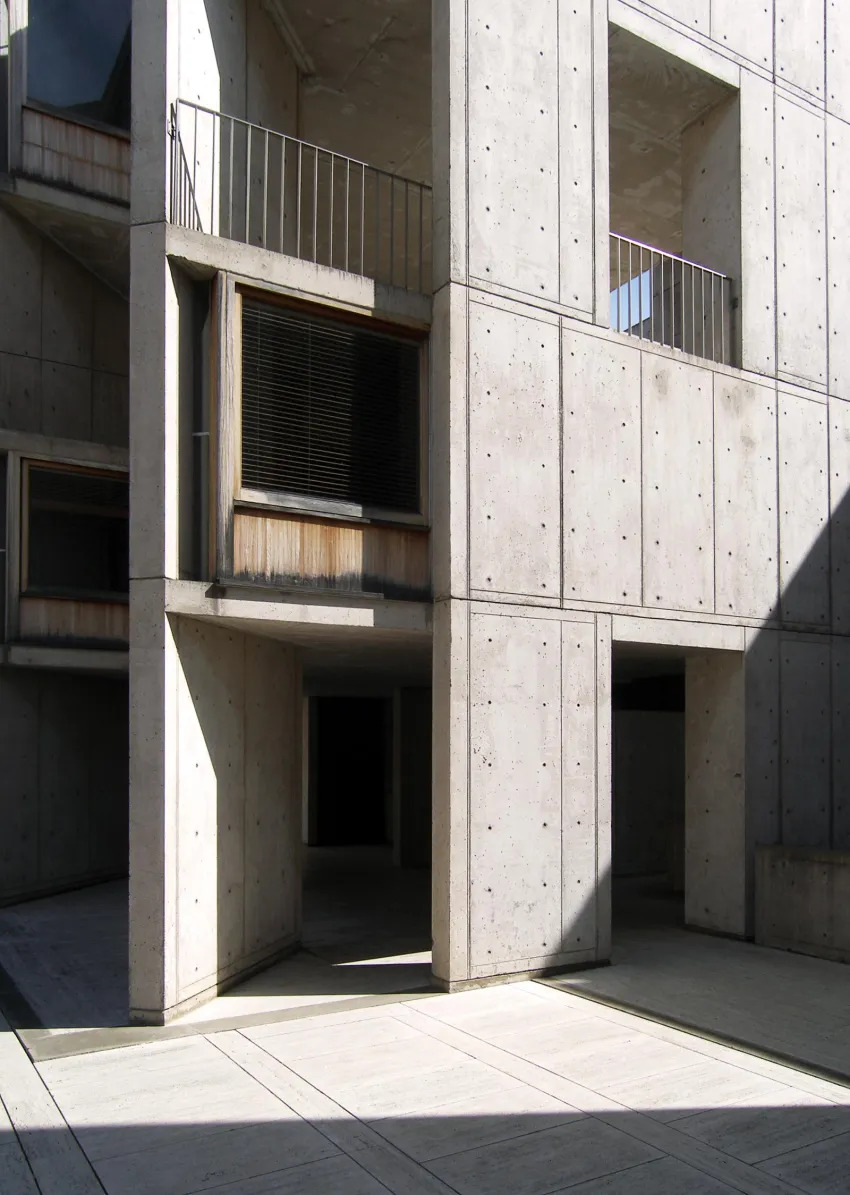
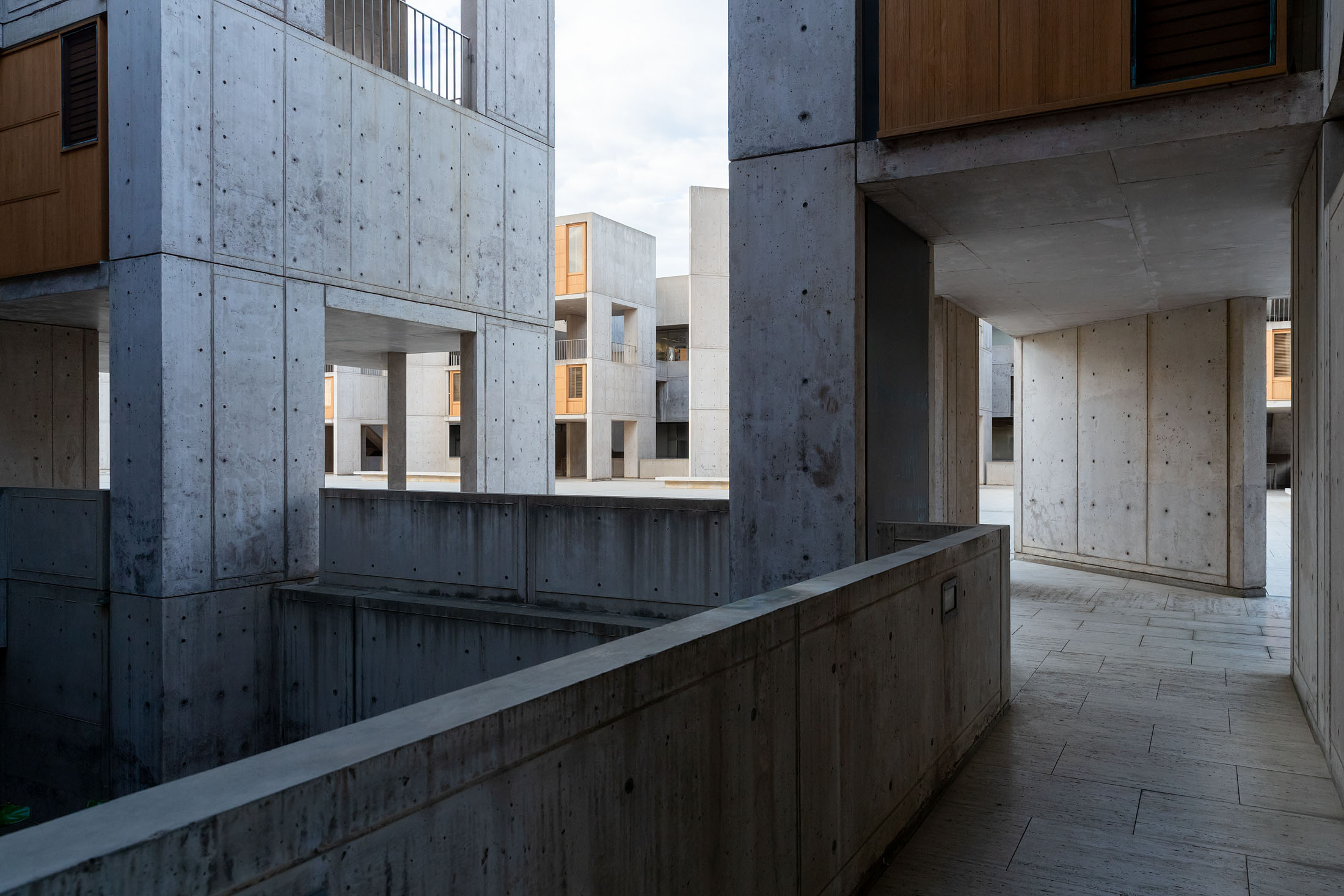
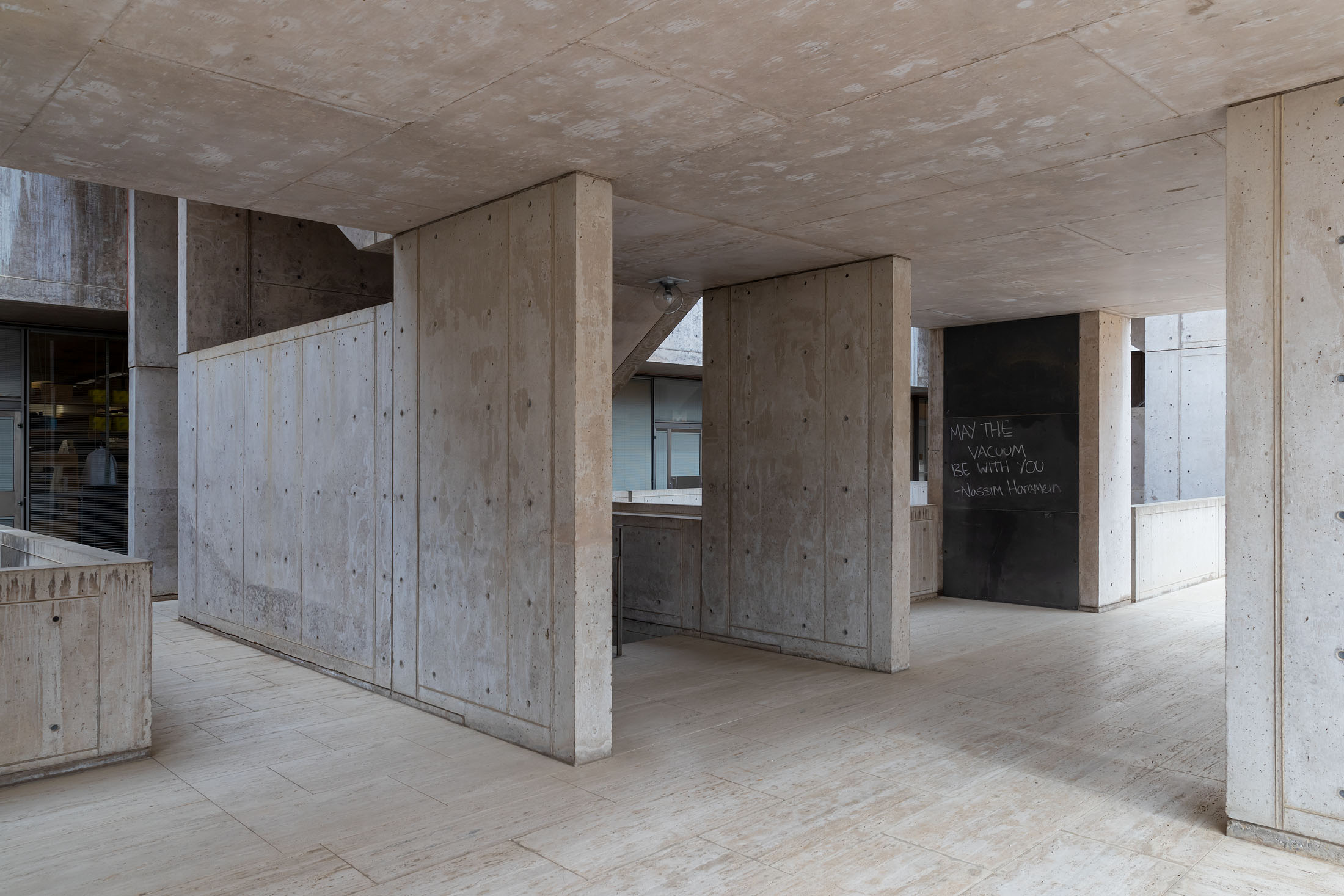
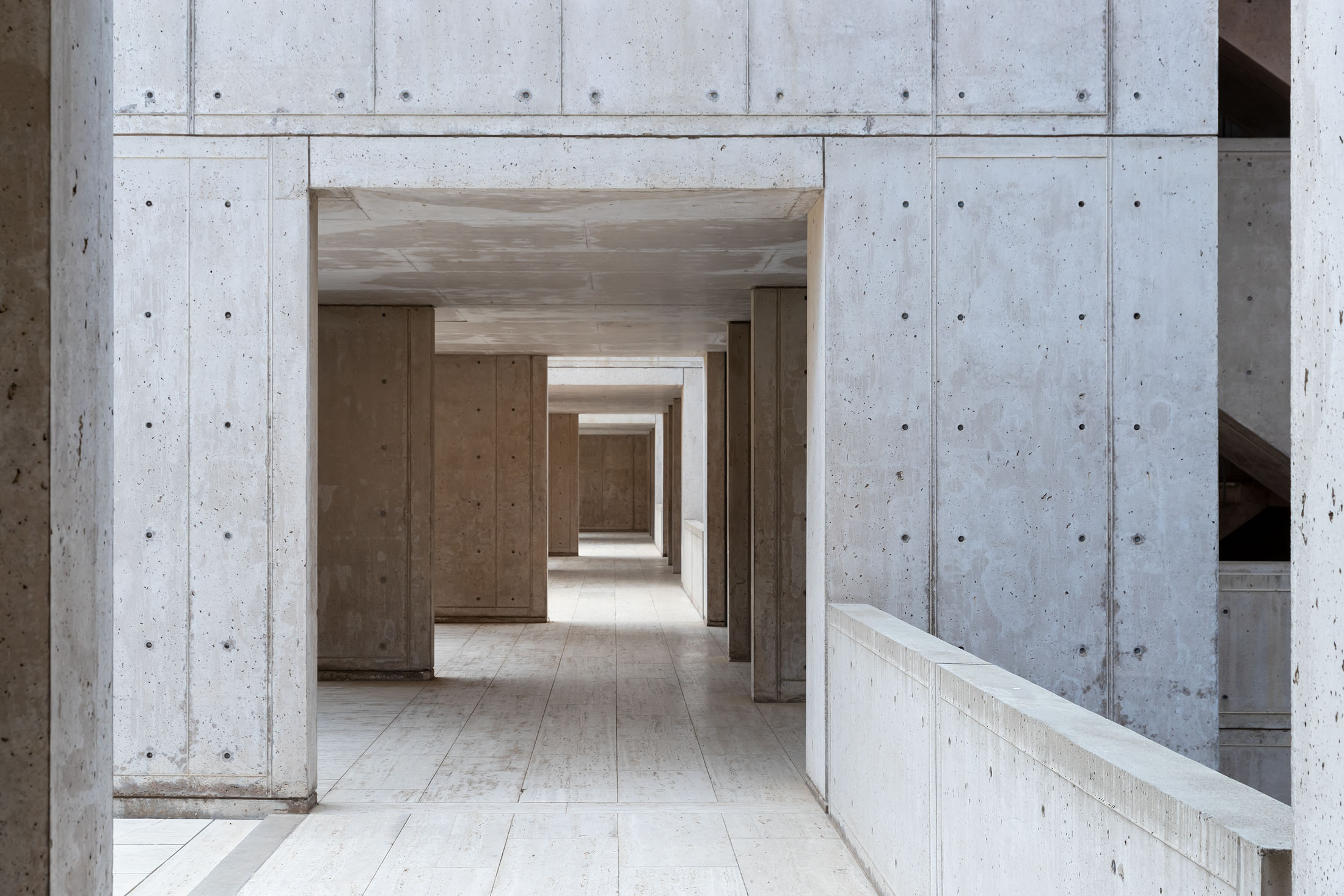
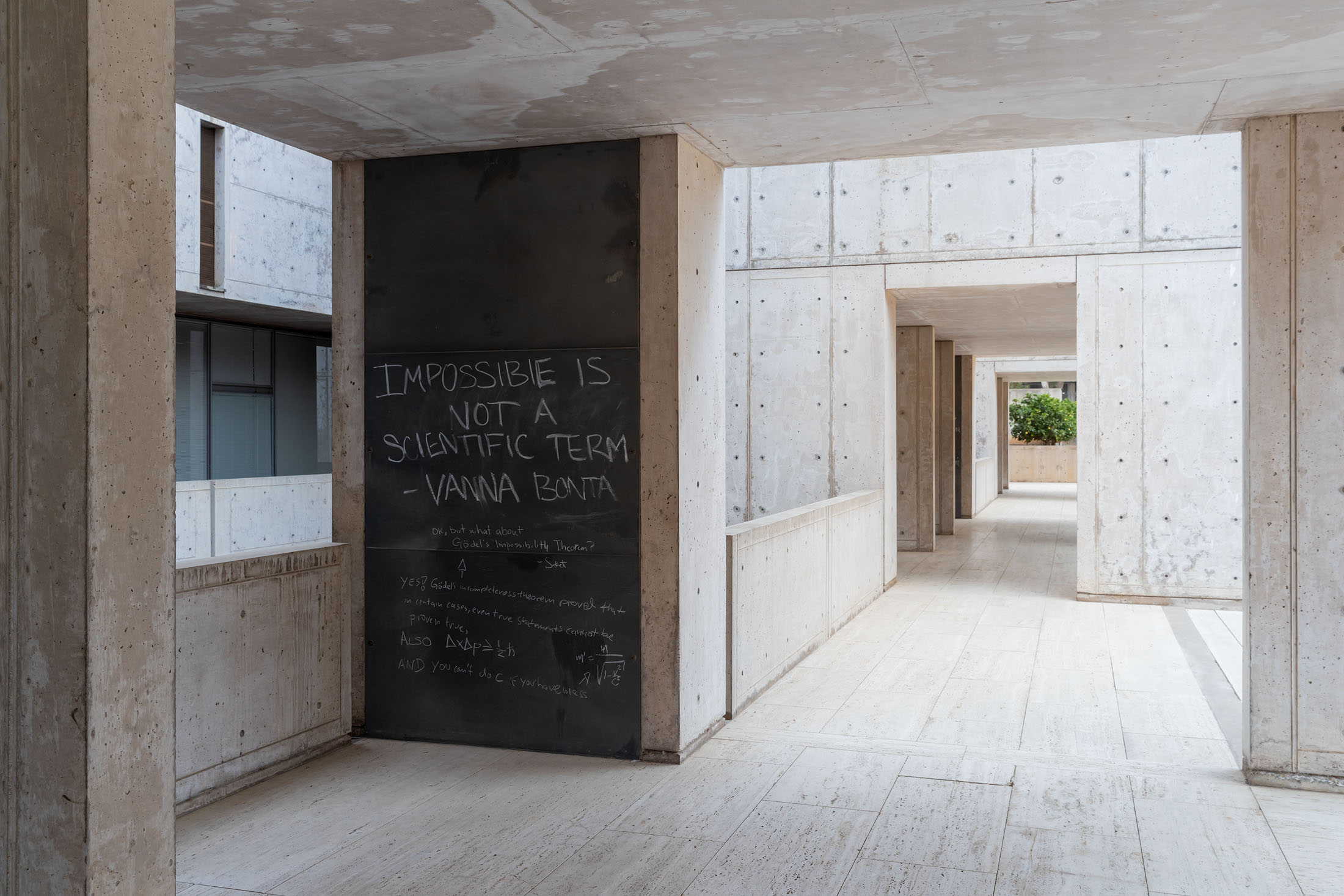
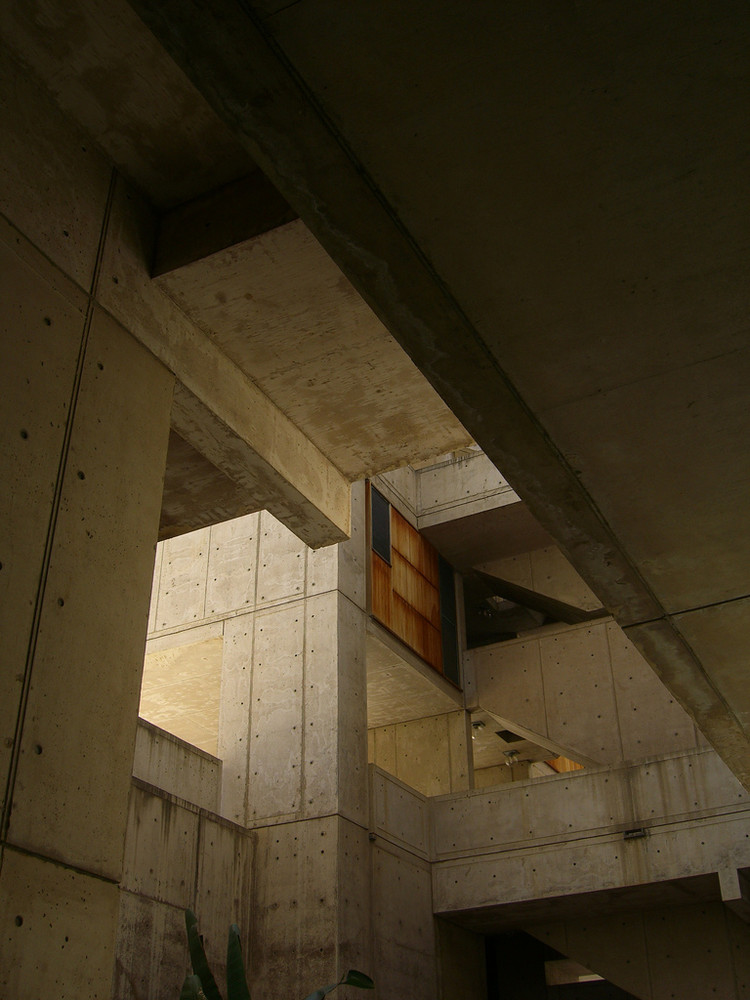
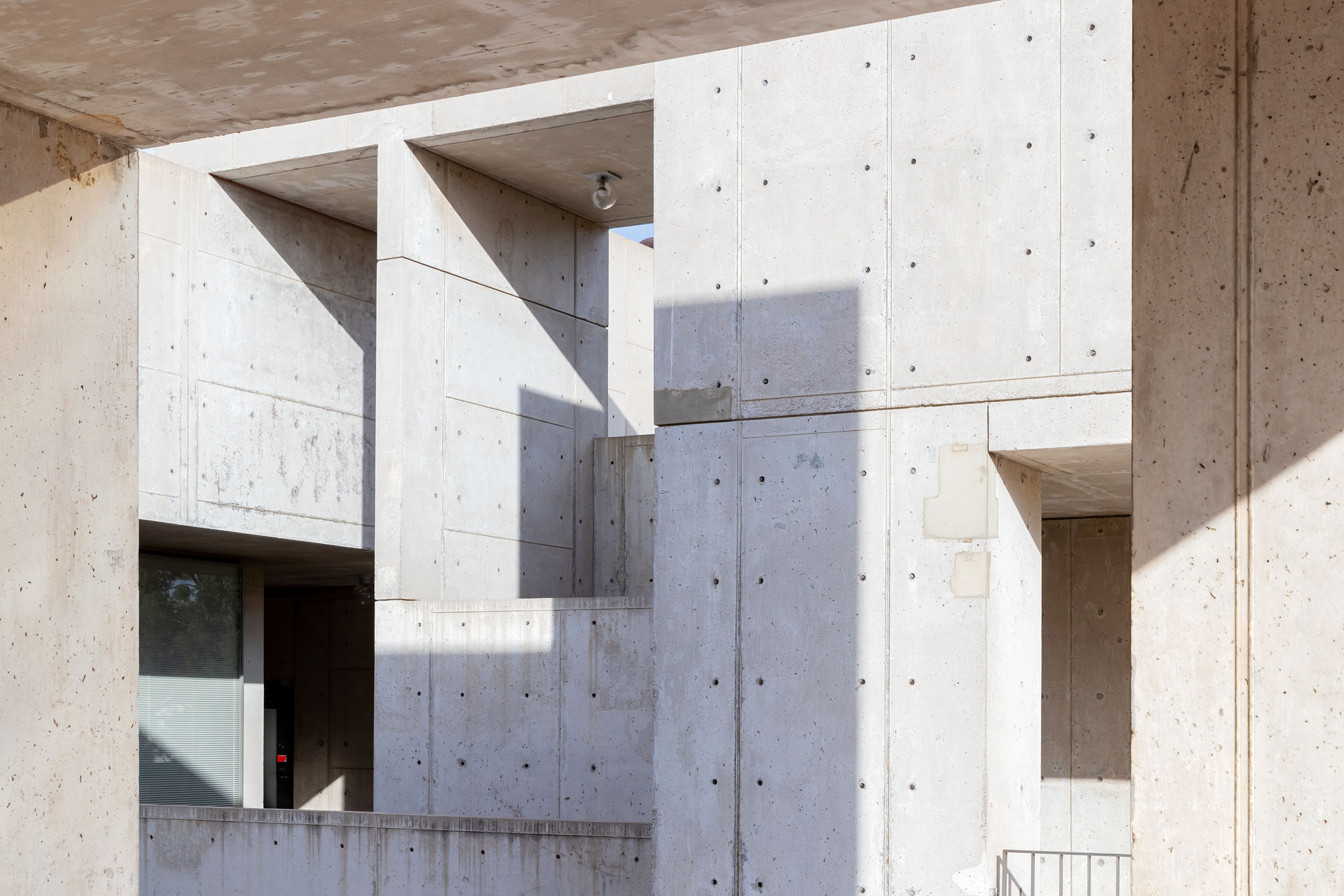
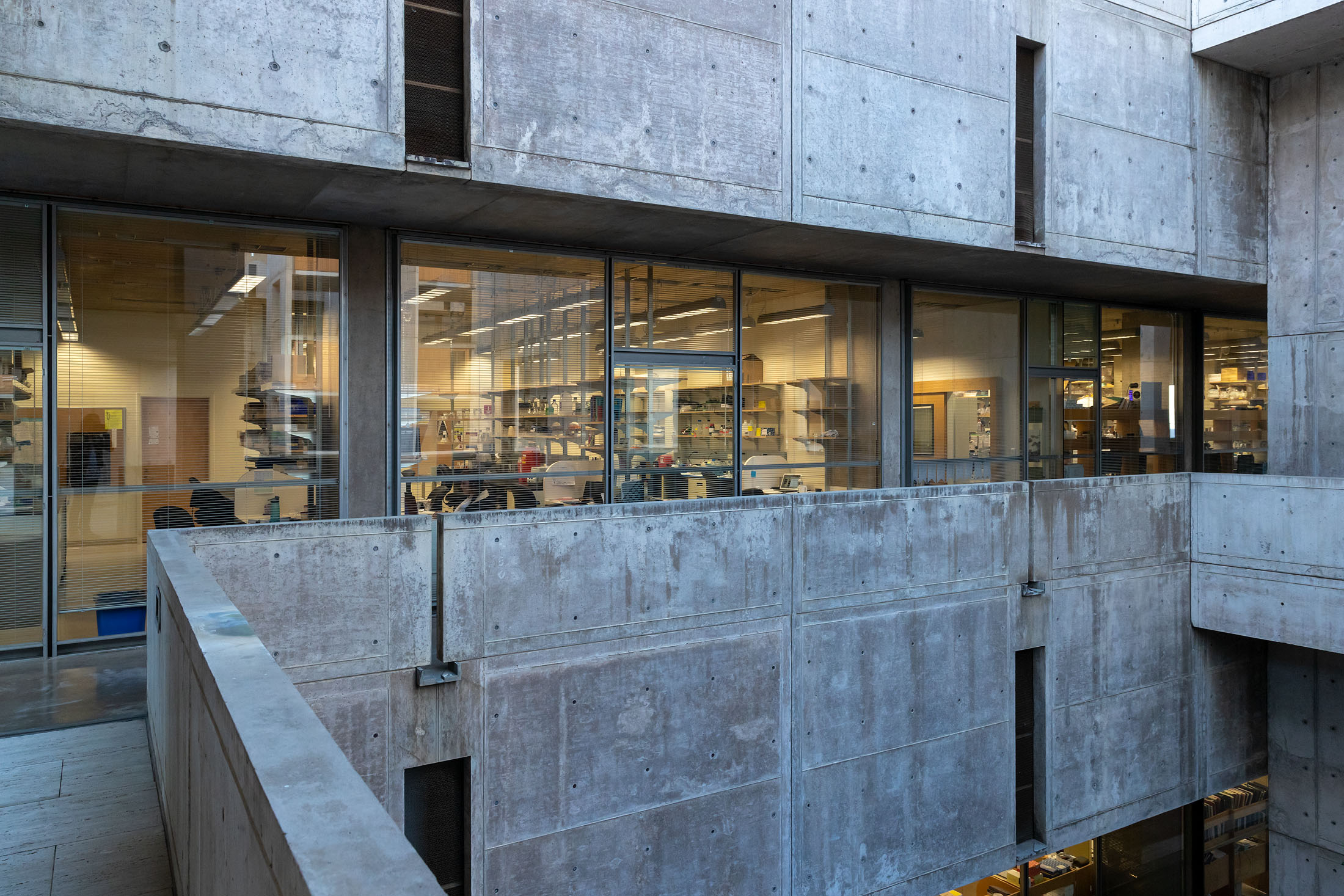
Laboratory floors alternate with full interstitial service levels. Mechanical systems, ducts, and piping occupy these servant floors, allowing maintenance without interrupting research activity. This separation applies Kahn’s served and servant principle at a building scale. Vierendeel trusses spanning approximately 62 feet carry vertical loads to post-tensioned columns. Slip plates and tension cables permit controlled movement during seismic events. The structural system eliminates internal columns, enabling laboratories to remain fully reconfigurable. Flexibility extends to construction details. Perimeter structural supports free the interior from fixed constraints. Mechanical systems are concealed behind accessible block walls rather than sealed concrete. Laboratory windows are removable to facilitate equipment replacement. Light wells, approximately 40 feet long and 25 feet wide, introduce daylight into the lower levels, compensating for zoning restrictions that required partially submerged floors. Material expression reinforces structural logic. Poured-in-place pozzolanic concrete incorporates volcanic ash to improve water resistance and produce a warm tonal quality. Concrete surfaces were left unfinished, without grinding or painting. Teak panels frame study and office windows, and were installed without sealers or stains. Travertine paving defines the plaza as a continuous horizontal plane. Material restraint strengthens tectonic clarity and emphasizes proportion rather than ornament.
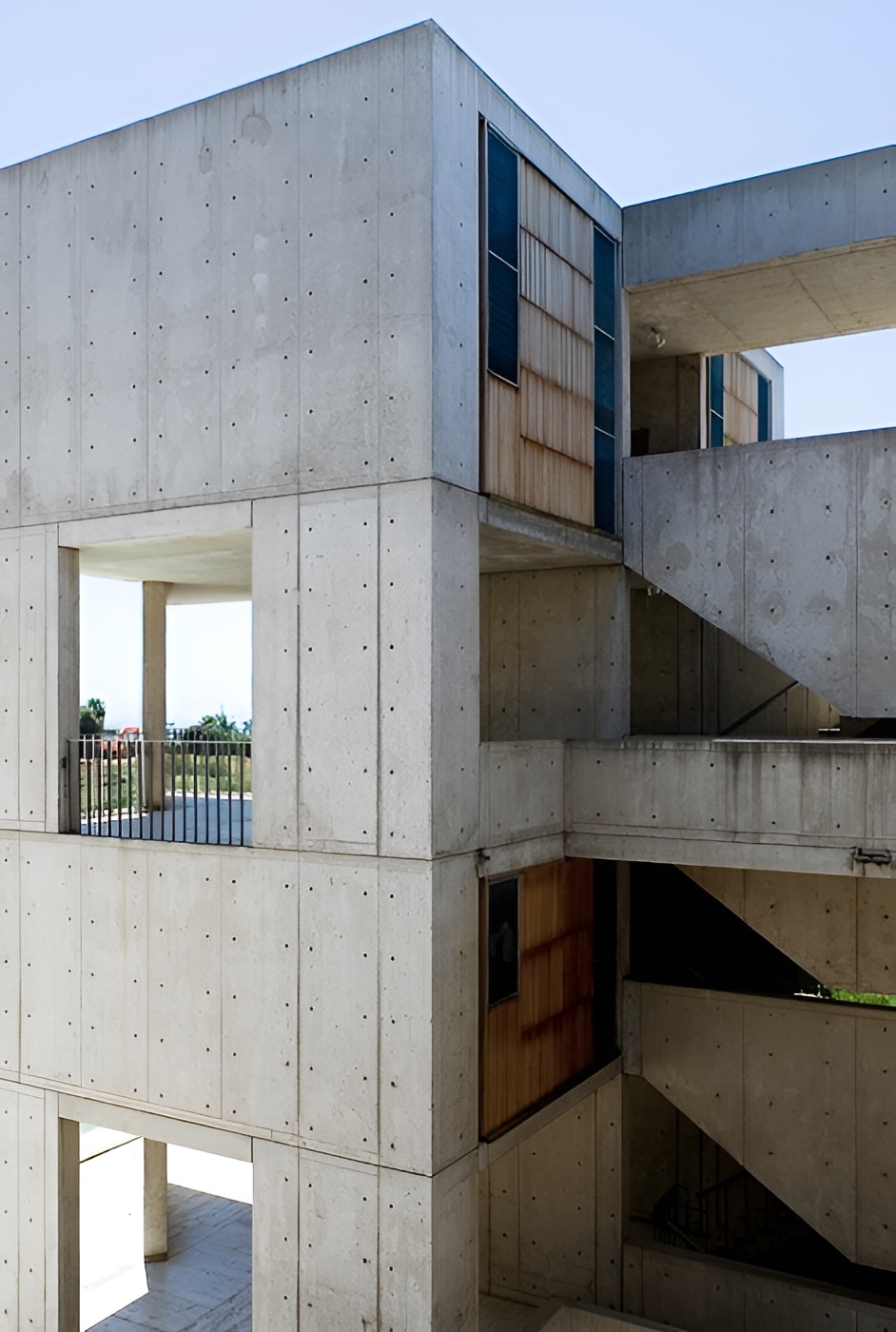
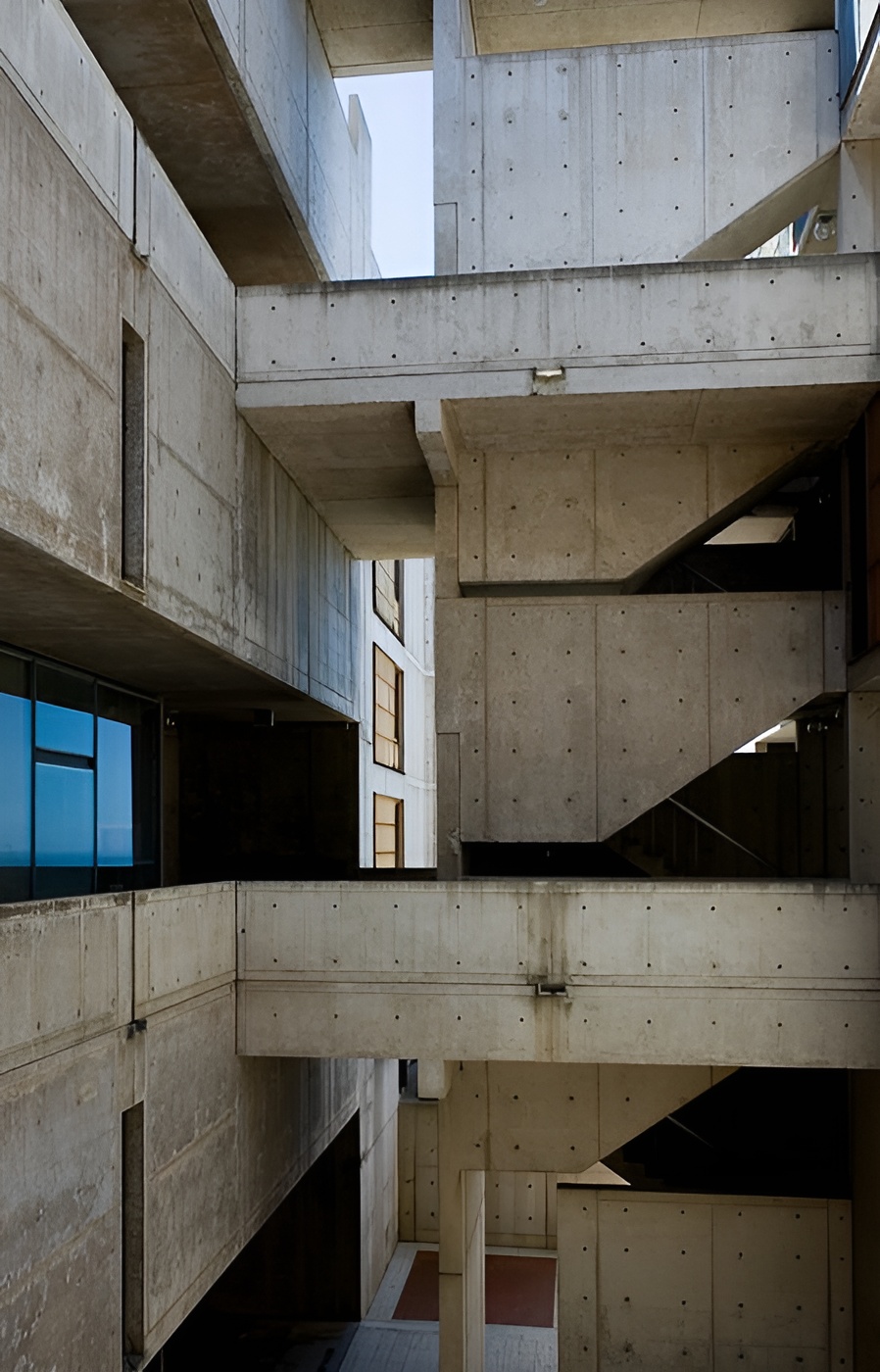
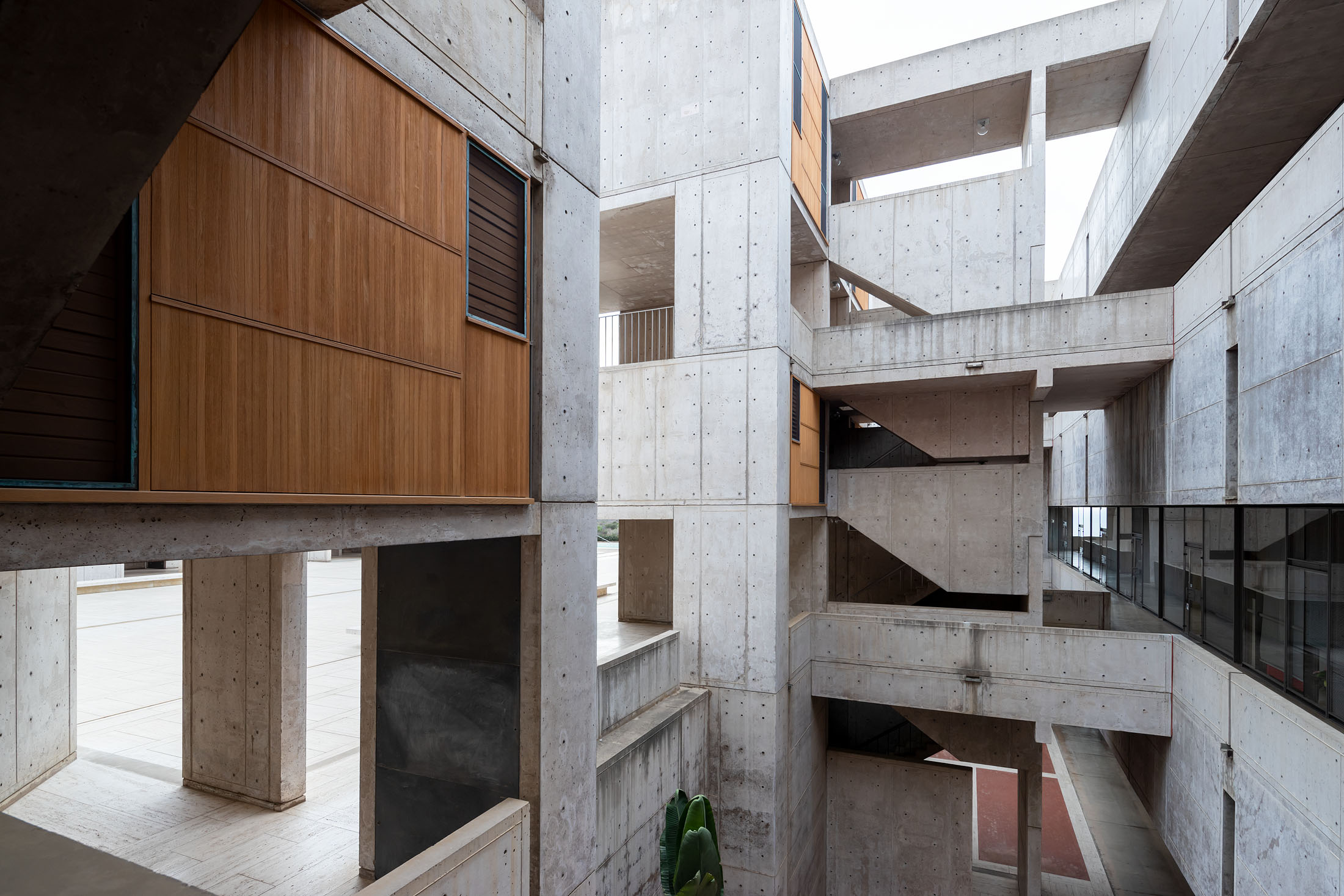
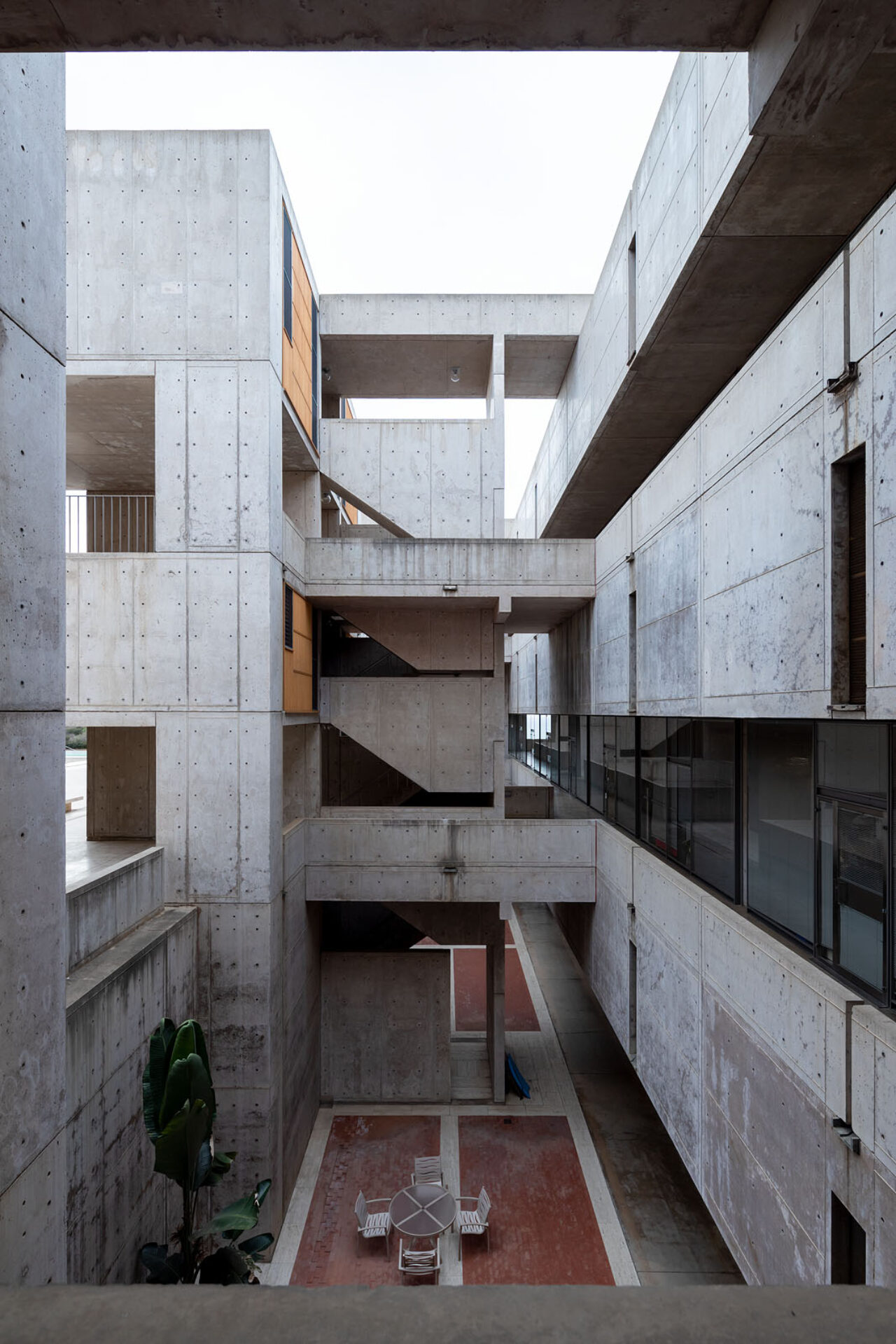
The campus extends across 27 acres and includes 29 structures totaling 411,580 square feet. Additions in the 1990s by Anshen & Allen expanded research capacity. East Building, completed in 1995, introduced 110,000 square feet of laboratories, offices, and the 300-seat Conrad T. Prebys Auditorium, establishing a public entry sequence to the original complex. Research activities focus on molecular biology and genetics, neurosciences, and plant biology. More than 850 researchers work within approximately 60 research groups. Faculty membership includes scientists affiliated with the National Academy of Sciences and the Howard Hughes Medical Institute. Nobel laureates associated with the Institute have included Francis Crick and Elizabeth Blackburn. Research initiatives address aging, cancer, neurobiology, regenerative medicine, and plant-based carbon sequestration.
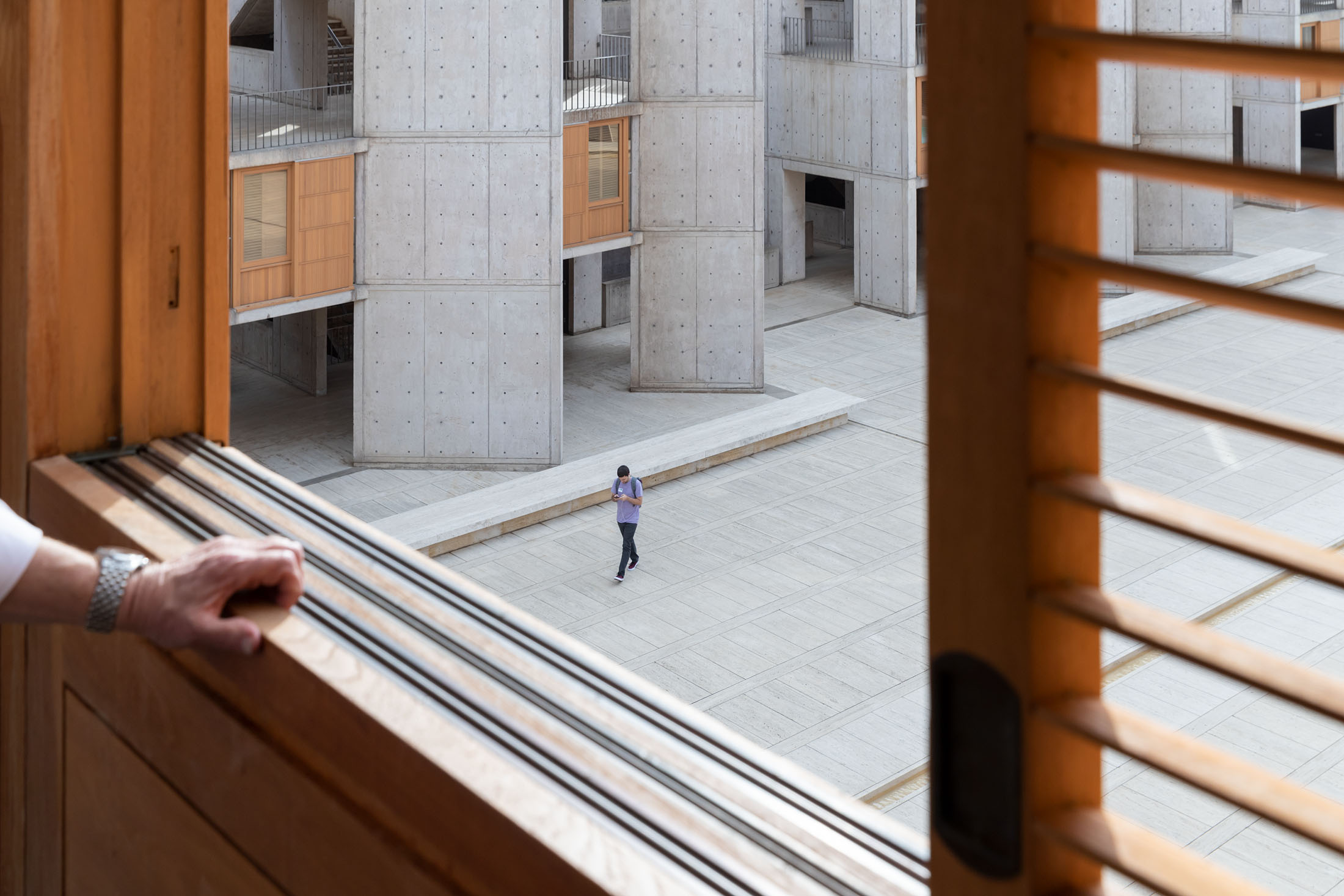
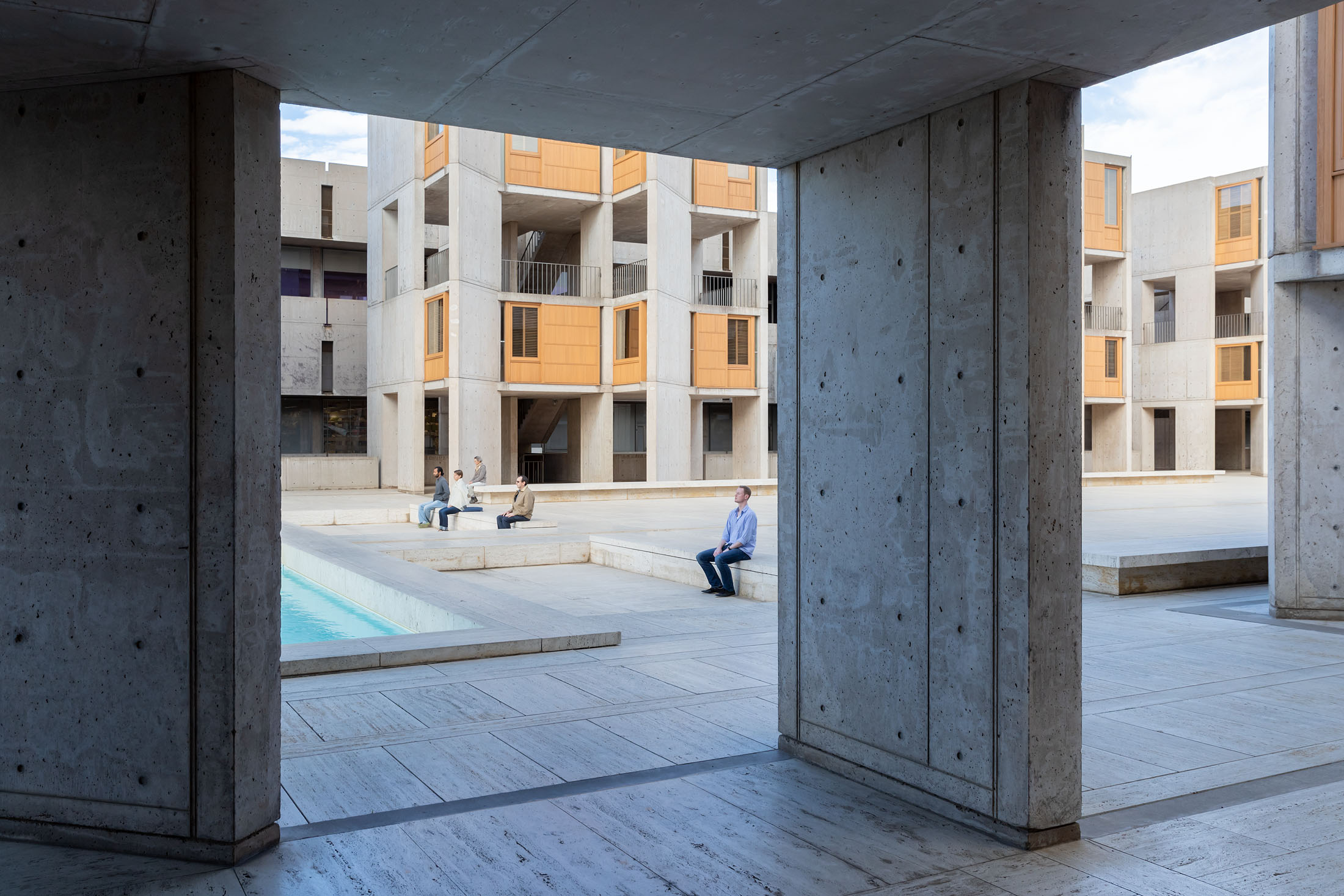
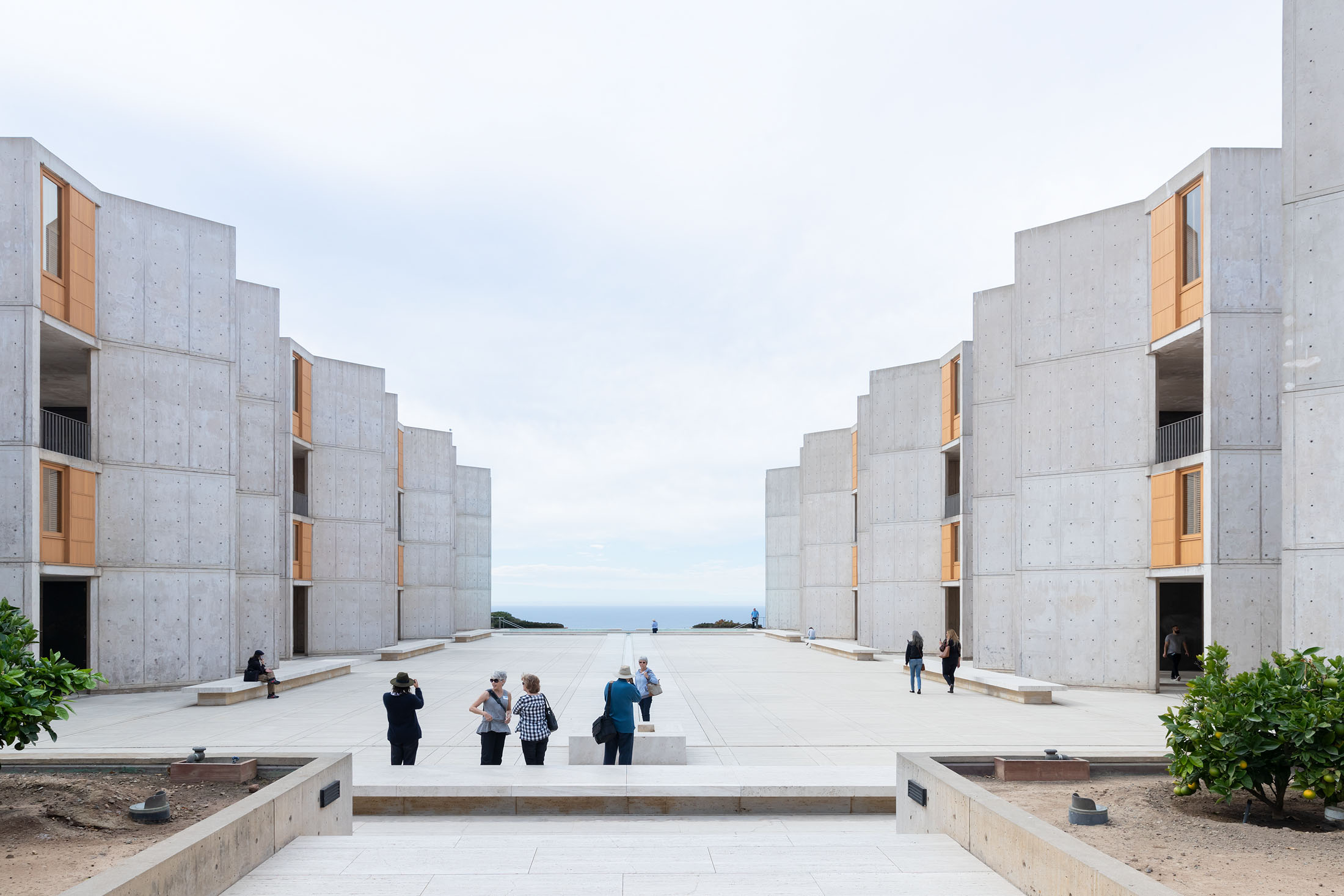
Preservation programs address exposure to the coastal environment. Teak window systems deteriorated after decades of marine exposure and fungal damage. A restoration campaign completed in 2017, conducted with the Getty Conservation Institute, cost $9.8 million (€8.9M, £7.6M) and preserved approximately seventy percent of the original material. Ongoing conservation efforts include concrete repair to ensure long-term structural durability.
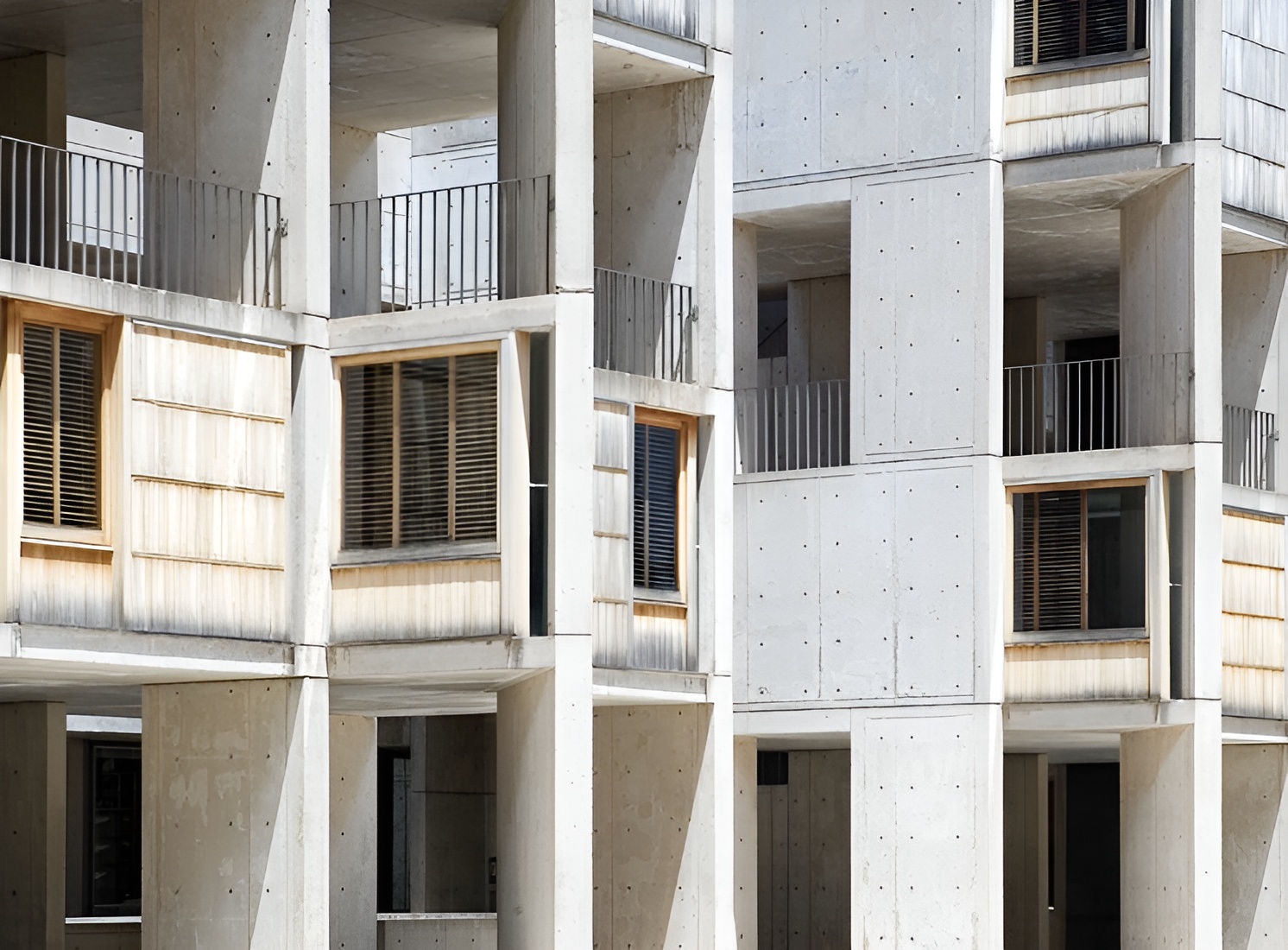
The original laboratory buildings were designated a historical landmark in 1991. The American Institute of Architects awarded the complex the Twenty-five Year Award in 1992. The Institute remains a reference point in modern architecture through its integration of structural innovation, spatial discipline, and scientific purpose.
Project Gallery
Project Location
Address: 10010 North Torrey Pines Road, La Jolla, San Diego, California, United States
Location is for general reference and may represent a city or country, not necessarily a precise address.

