

Architects: Picharchitects/Pich-Aguilera & 2BMFG Arquitectes, Felipe Pich-Aguilera, Teresa Batlle, Jordi París, Jordi Camps (Picharchitects/Pich-Aguilera); Carles Buxadé, Carles Gelpí, Àgata Buxadé, Ramon Ferrando (2BMFG Arquitectes)
Area: 9.705 m² (floor)
Year: 2018
Photographs: Aldo Amoretti
Consultants: 2BMFG (structures), Picharchitects/Pich-Aguilera (sustainability), JG Ingenieros (mechanical engineering installations), Tècnics G3, Font-Grau (technical architect quantity surveyor), Àlex Figuera, Dídac Xifreu (project management), Elvira Altadill (health and safety)
Contractors: Dragados (foundations and retaining structures), Ferrovial Agroman (building construction), UTE Sogesa-Elecnor (mechanical engineering installations)
Ceramic Facade: Faveker
Brand: Dragados, Ferrovial
Client: Santa Creu & Sant Pau Hospital
City: Barcelona
Country: Spain
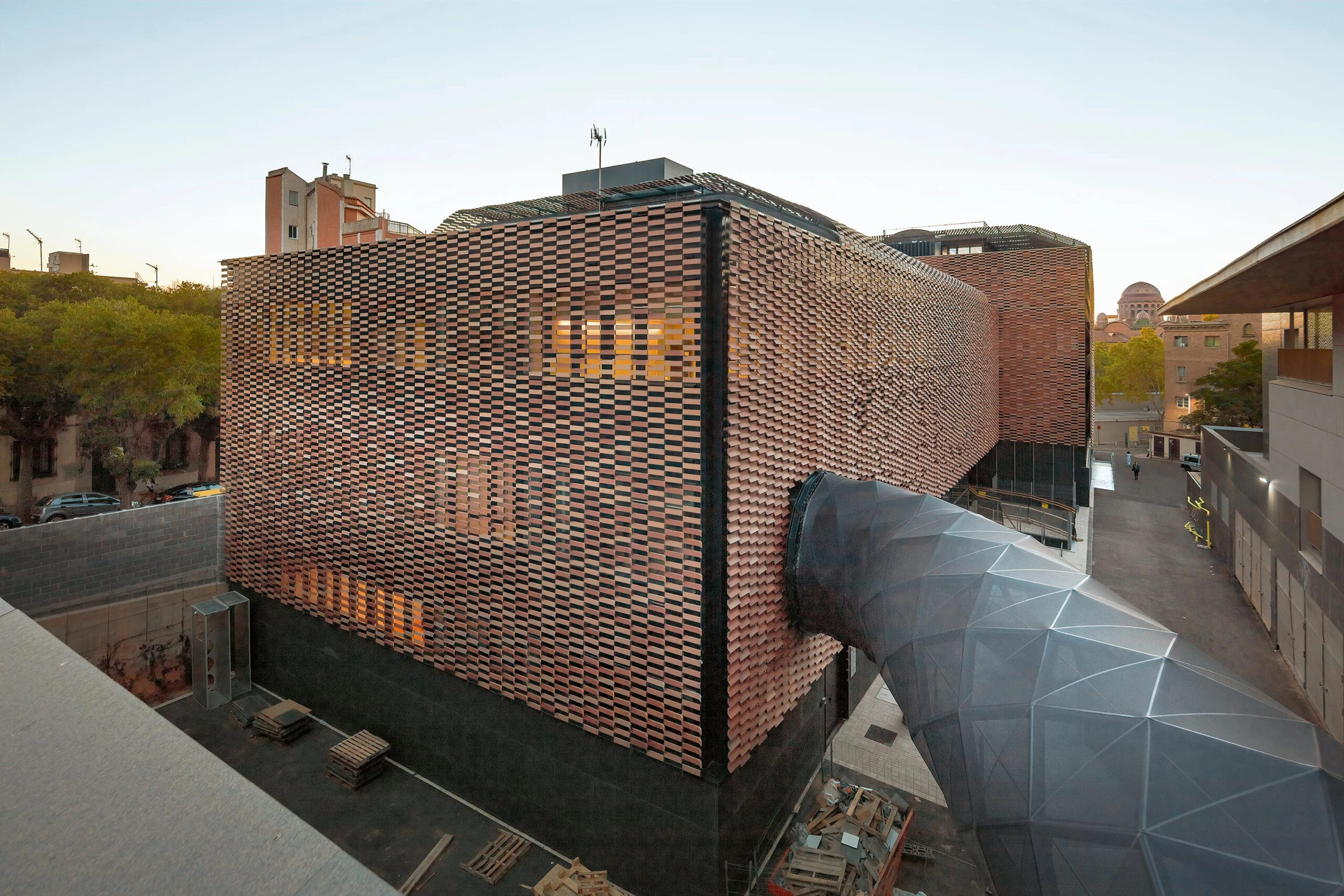
The Sant Pau Research Institute, by Pich Aguilera Arquitectes with 2BMFG Arquitectos, unites the dispersed research facilities of the Santa Creu & Sant Pau Hospital into a centralized, modern facility. Positioned between the historic Casa de la Convalescència and the modern hospital, the building features a ceramic façade of 45,000 custom slats by Faveker, combining solar control, energy efficiency, and harmony with Modernist architecture. Terracotta tones and multicolor glazes evoke the historic domes while enhancing thermal performance. Achieving LEED Gold and an “A” energy rating, the project incorporates sustainable systems like a roof-well for water reuse and a recyclable façade. Flexible, column-free spaces and a connecting footbridge optimize functionality, reducing energy use and CO2 emissions by 62%. This institute seamlessly merges advanced design, sustainability, and heritage sensitivity.
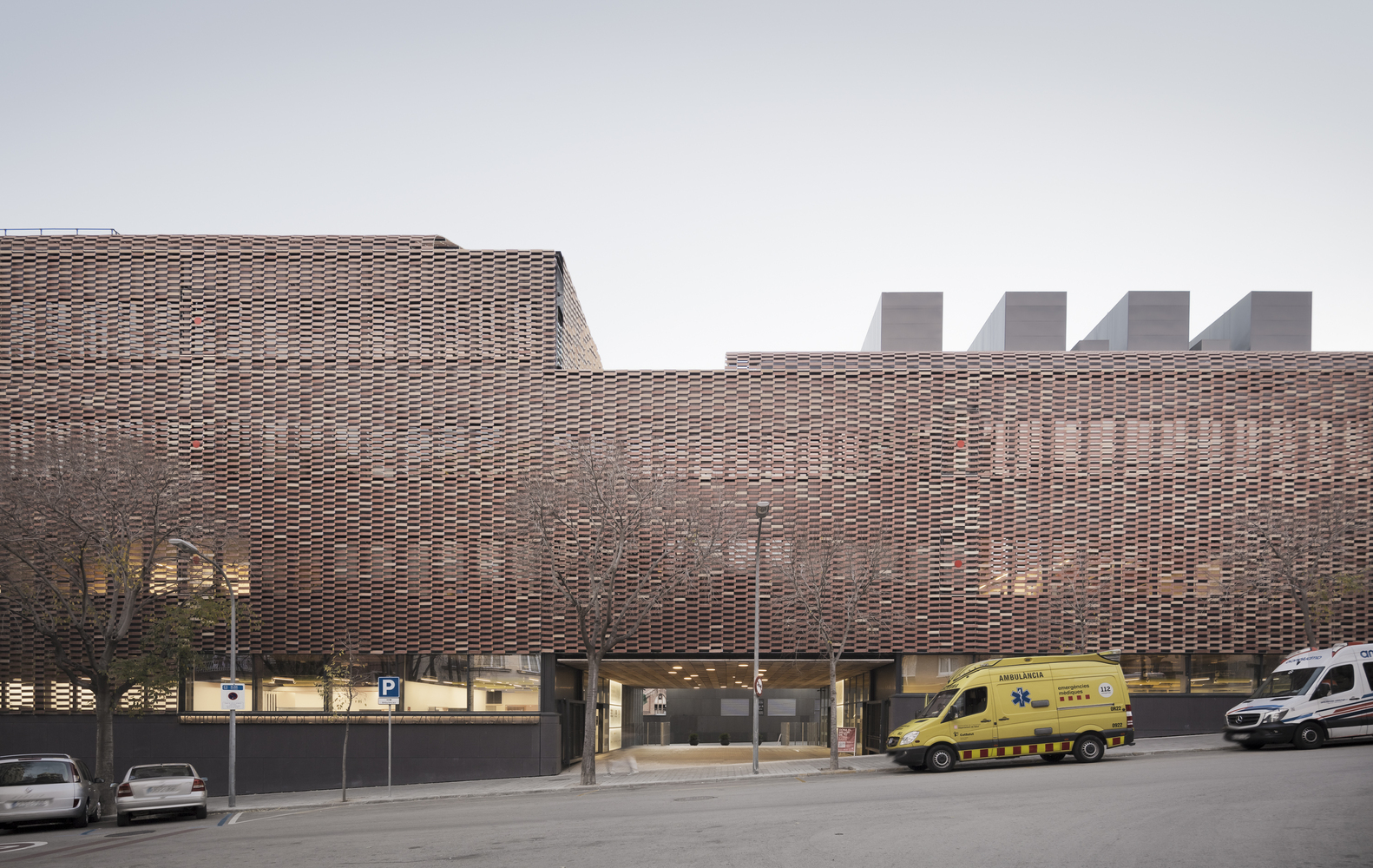
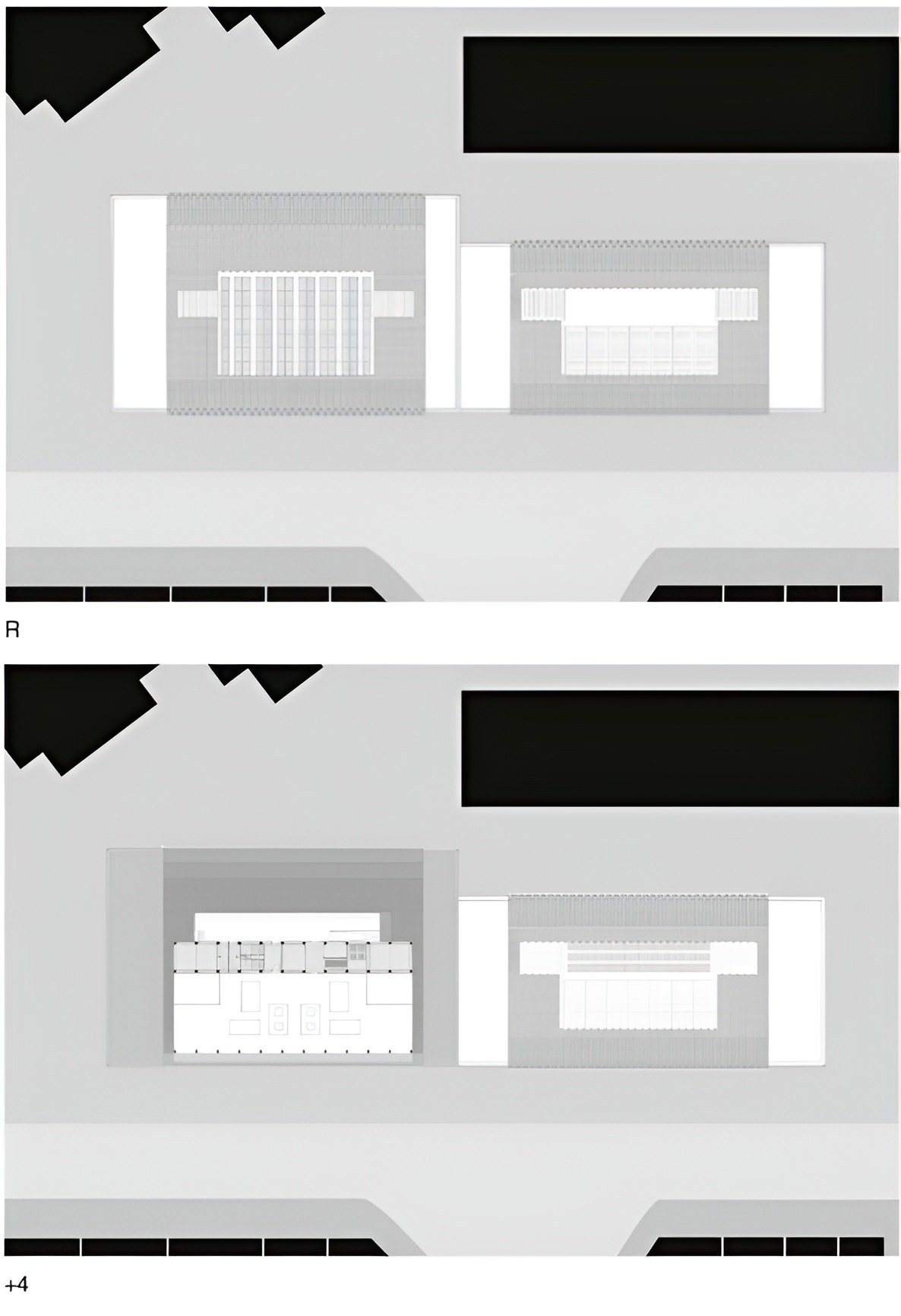
The Sant Pau Research Institute, designed by Pich Aguilera Arquitectes in collaboration with 2BMFG Arquitectos, consolidates the research activities of the Santa Creu & Sant Pau Hospital, previously dispersed across its campus. The institute occupies a strategic position within the UNESCO World Heritage-listed Sant Pau Hospital complex in Barcelona, one of the largest Modernist architectural ensembles. It is located at the northeast corner of the site, between the historic Casa de la Convalescència and the modern hospital building, with general access provided via a porch aligned with Sant Quintí Street.
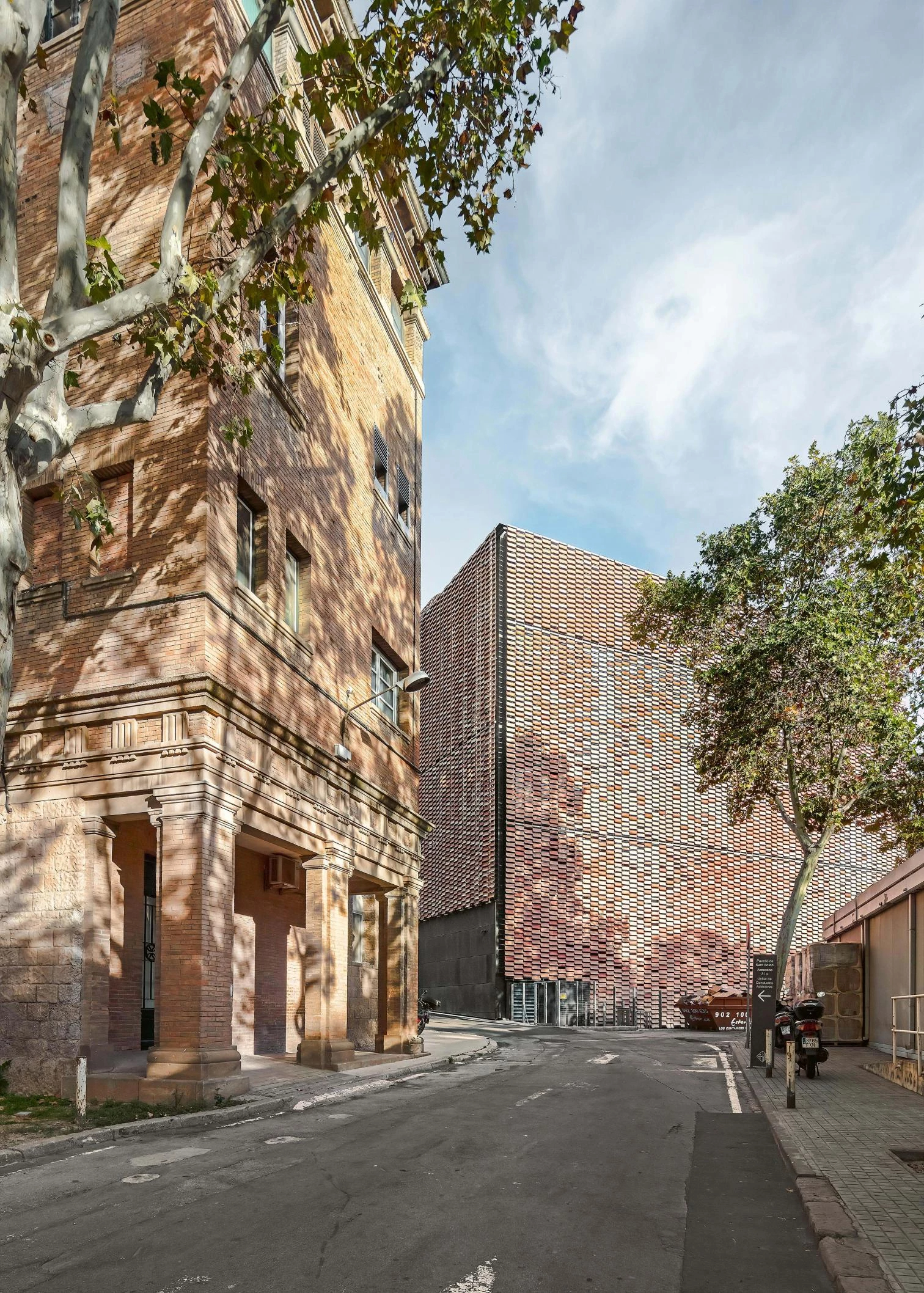
The Sant Pau Hospital Research Institute had to be inserted into a historic complex that had been overshadowed by the construction of the “modern wing” of the new hospital years earlier. We believed it was necessary to dissolve this contrast between modern and historic by extending the intense atmosphere of the historic complex. Therefore, we deployed the repertoire of its materials and colors in a contemporary way.
Interview with Felipe Pich-Aguilera and Teresa Batlle Picharchitects

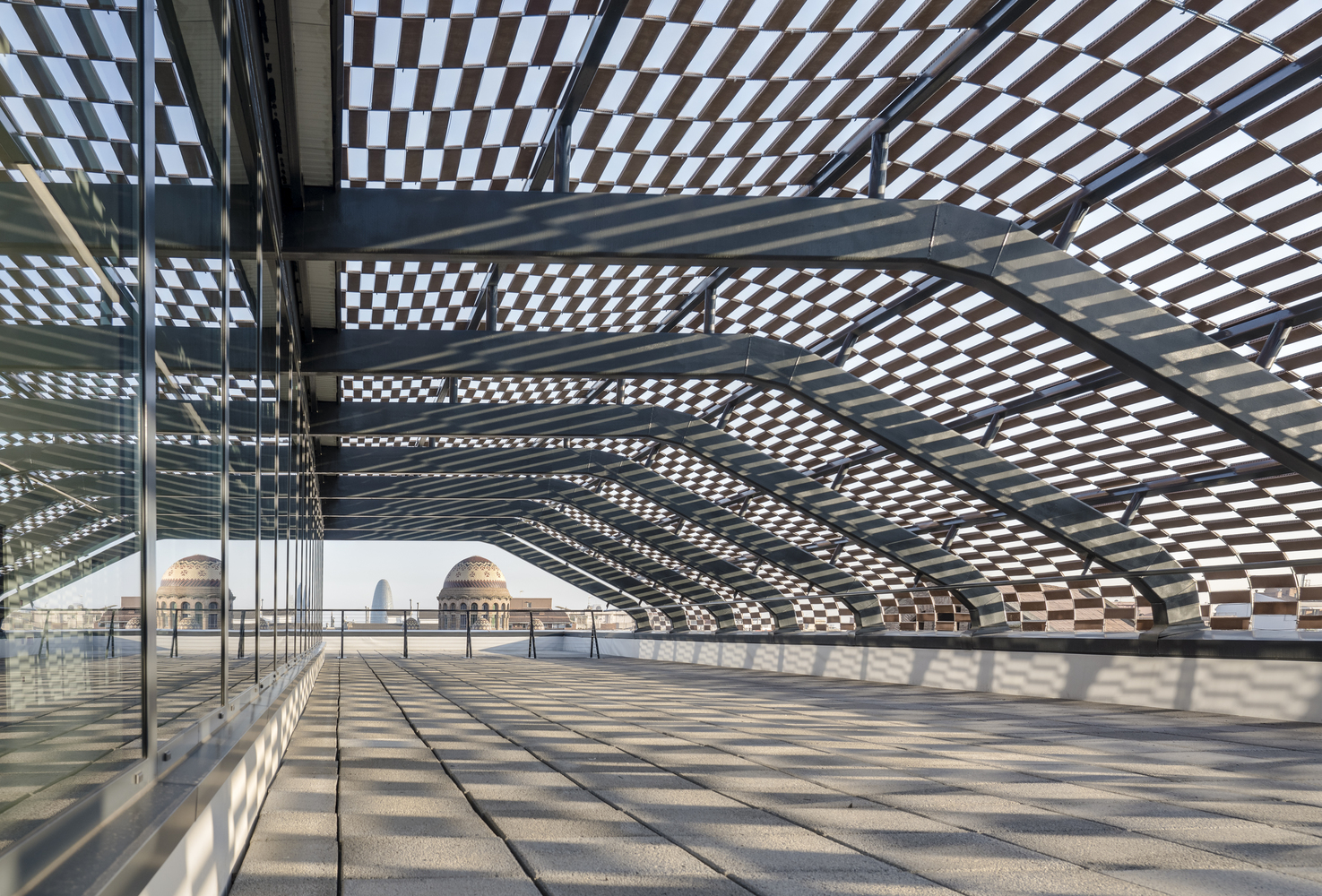
A Ceramic Façade as an Architectural and Functional Core
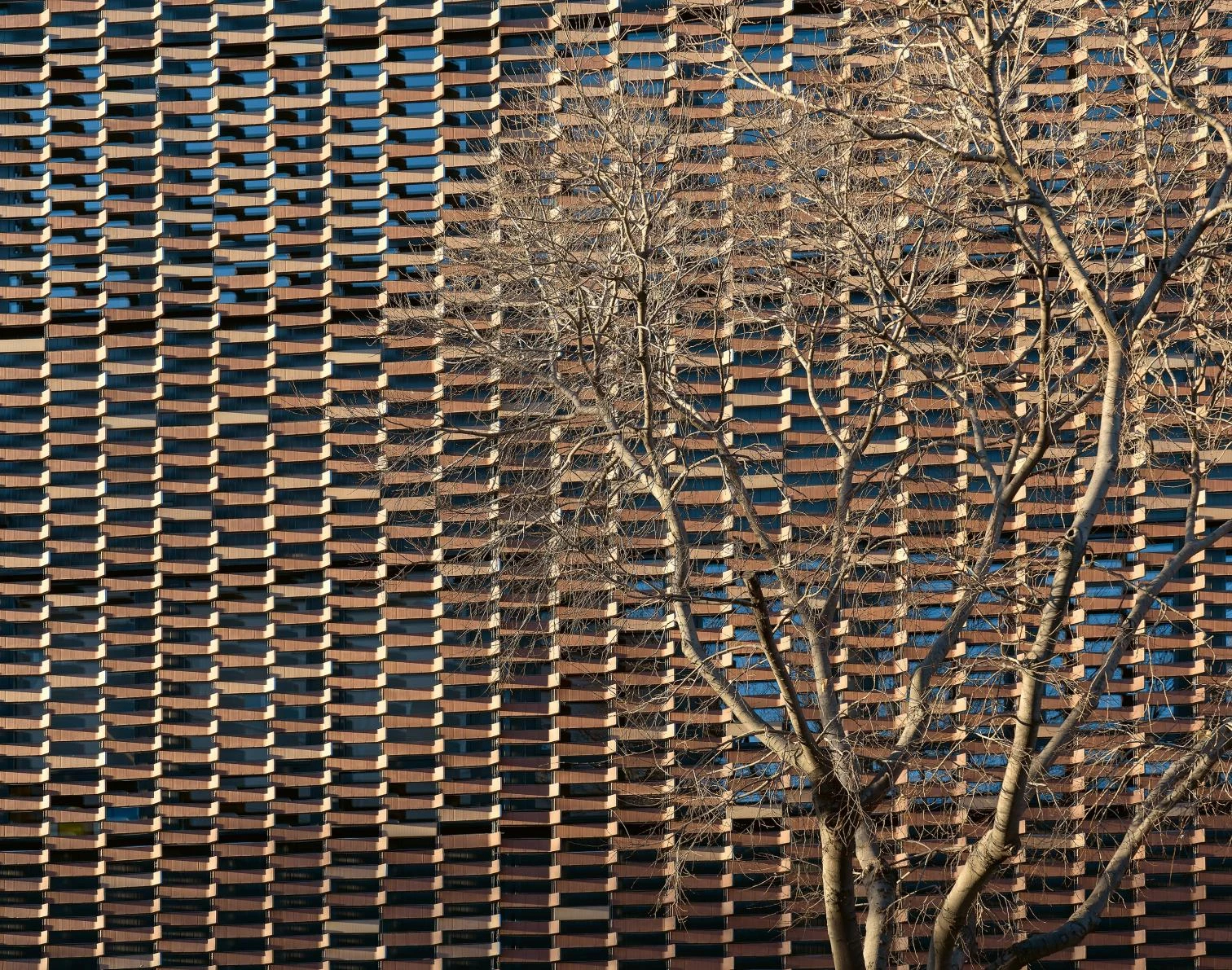
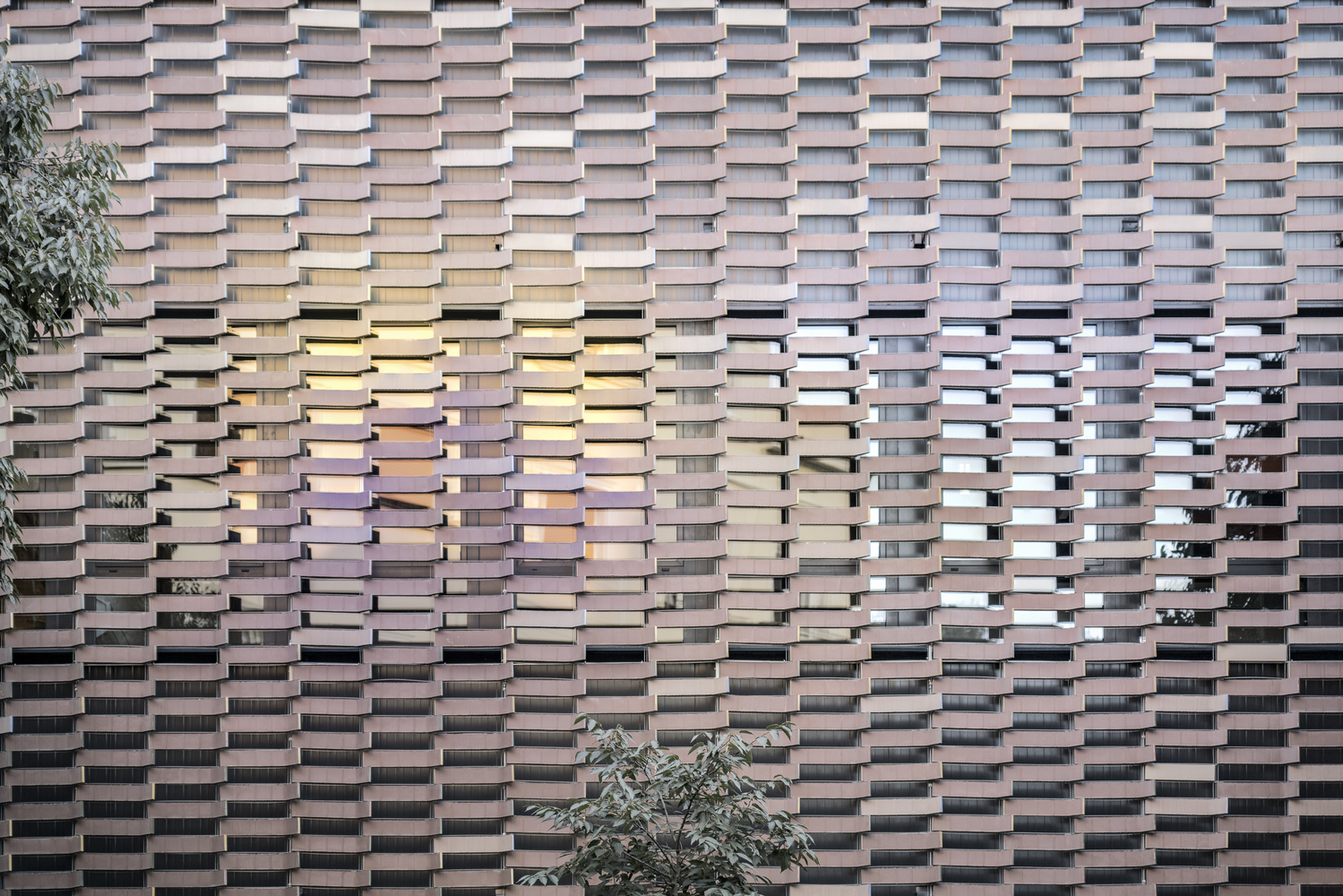
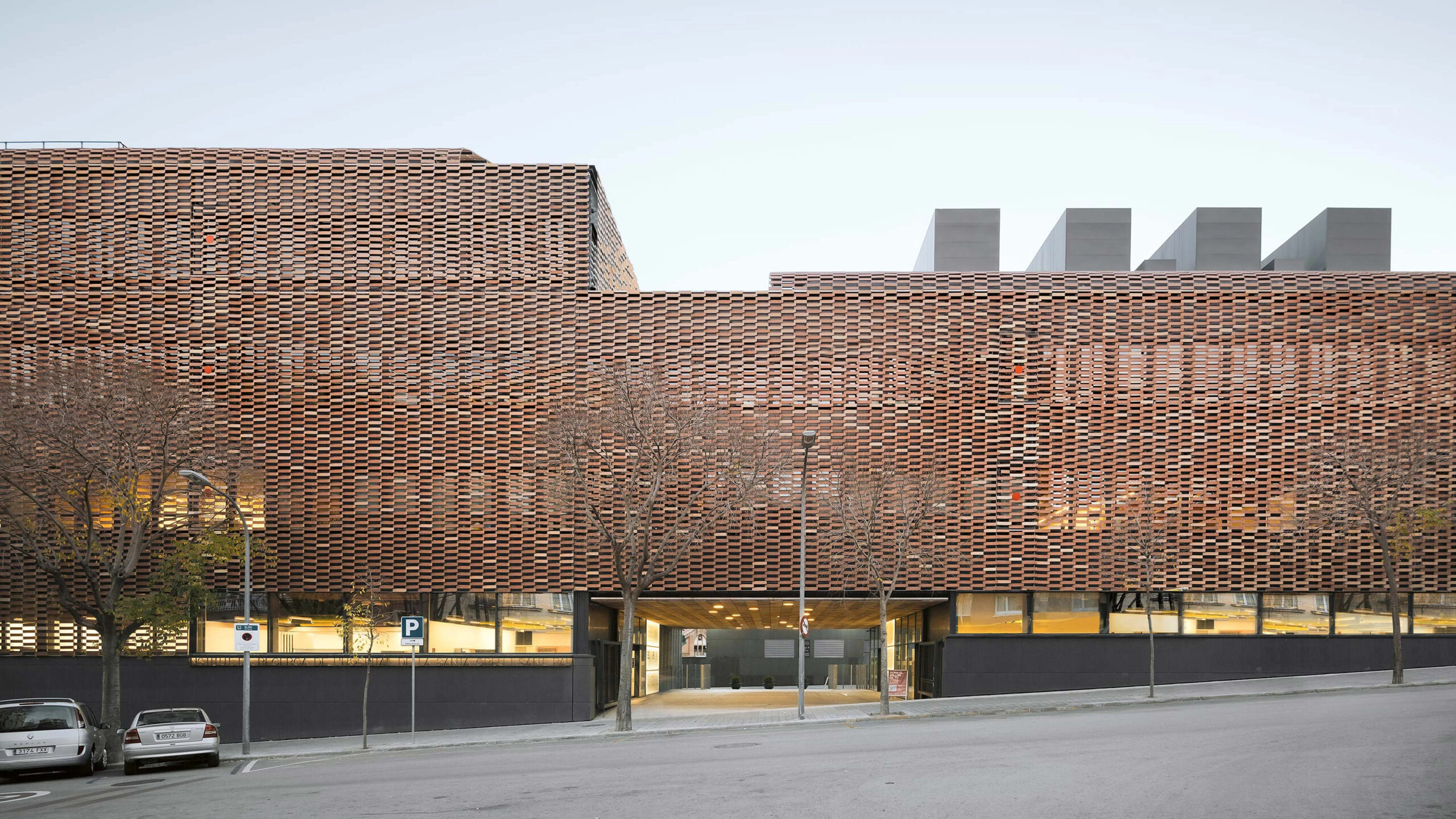
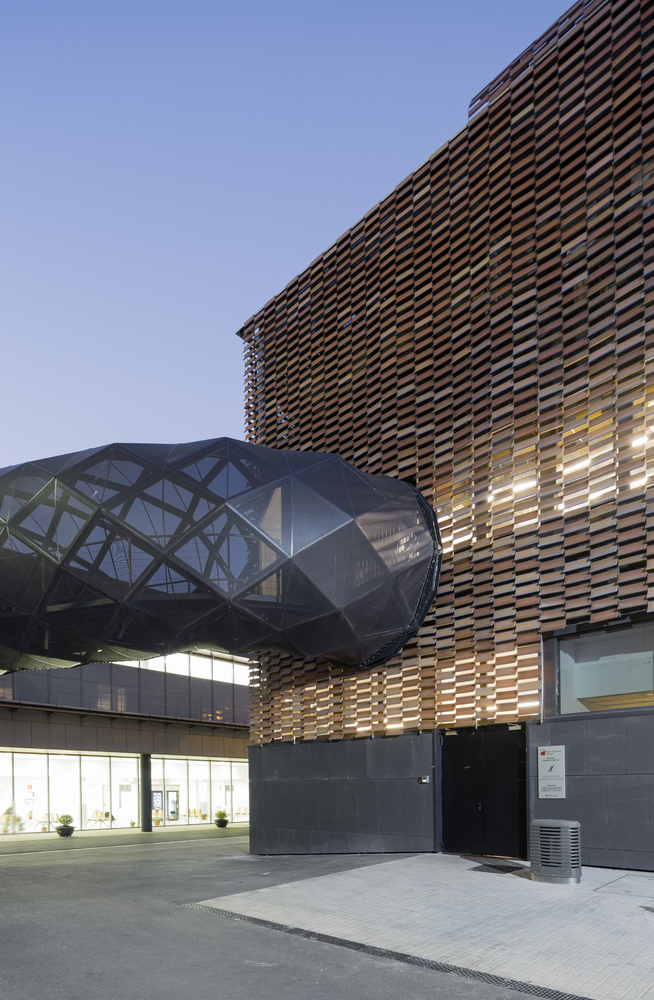
The institute’s defining feature is its high-tech ceramic façade, which balances aesthetic integration with surrounding Modernist buildings and high energy efficiency and environmental sustainability performance. Designed as a permeable latticework of prefabricated modular slats, Faveker, a specialist in advanced façade technologies, custom-manufactured this system. The ceramic skin’s design helps manage sunlight, enhance thermal performance, and minimize energy consumption, while visually harmonizing with the nearby historic architecture.
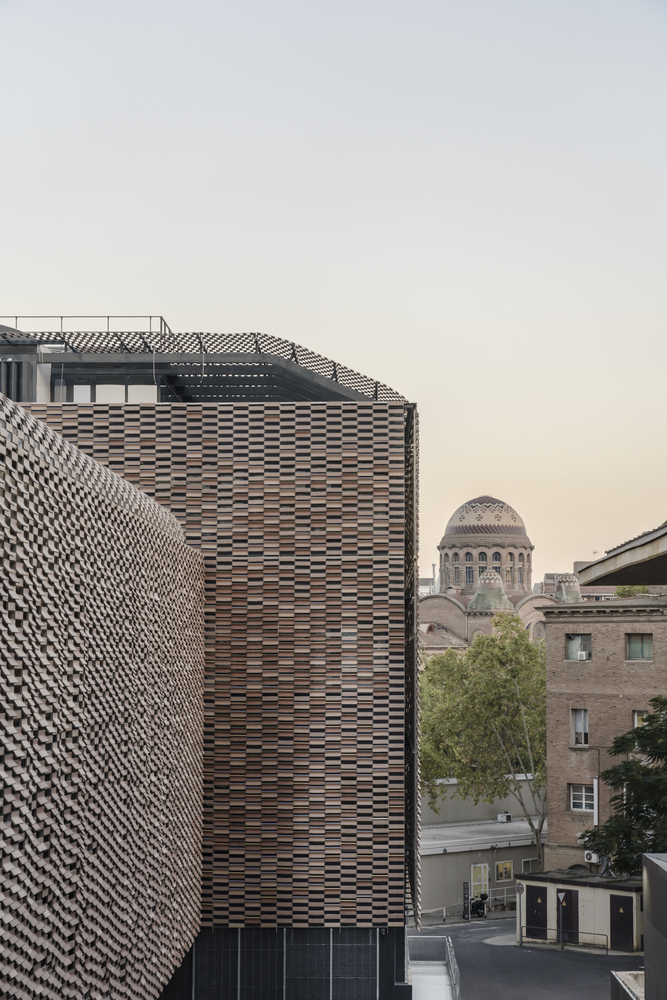
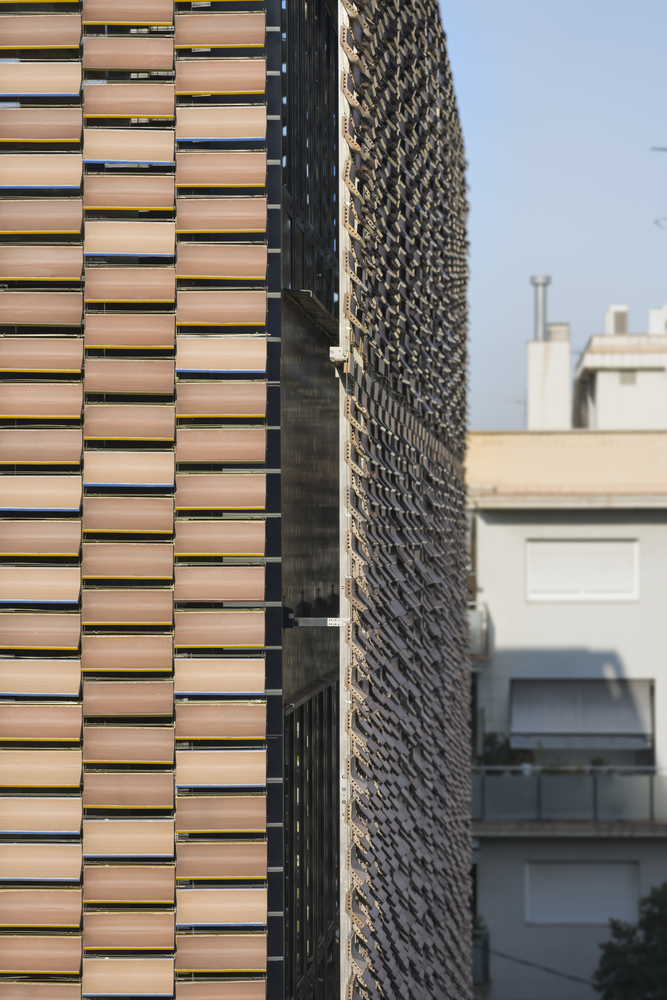
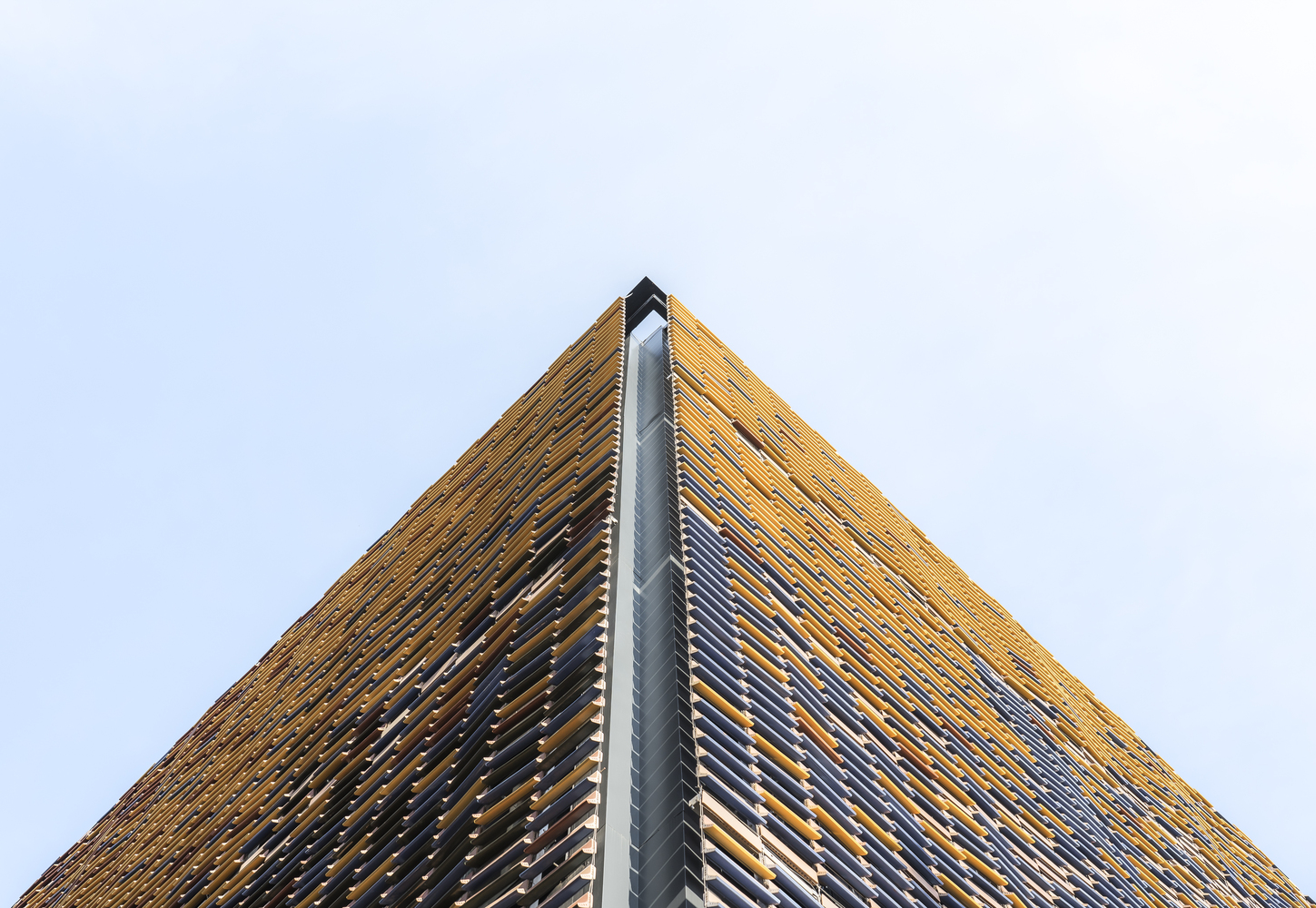
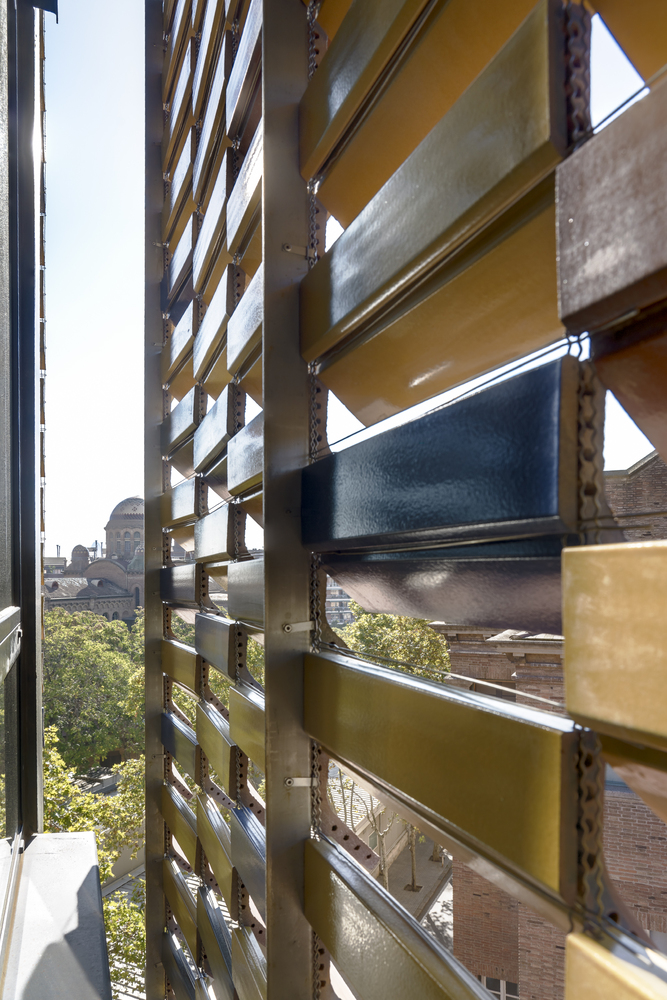
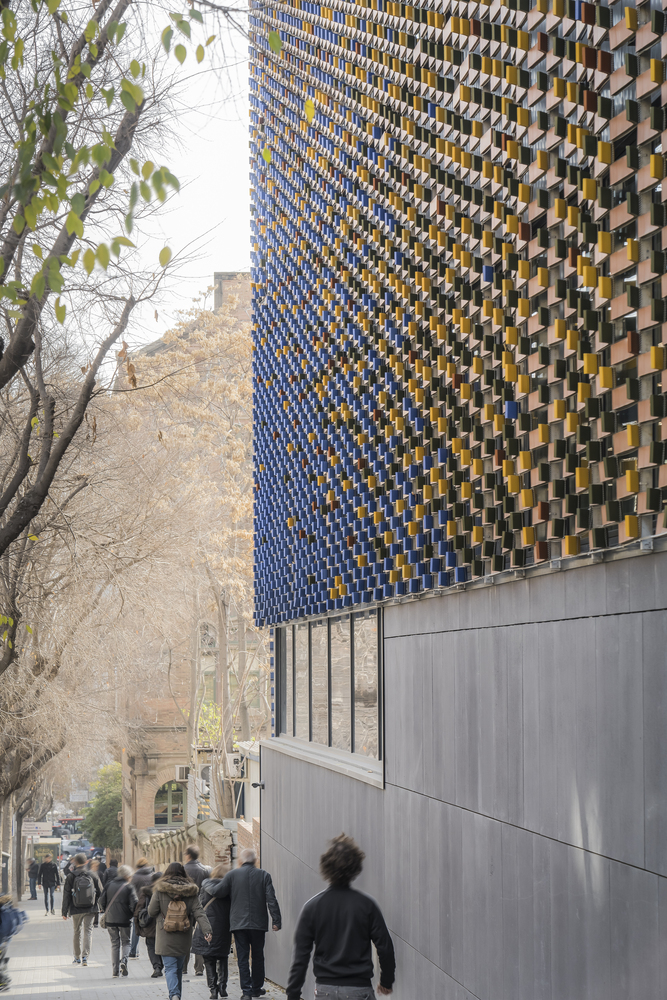
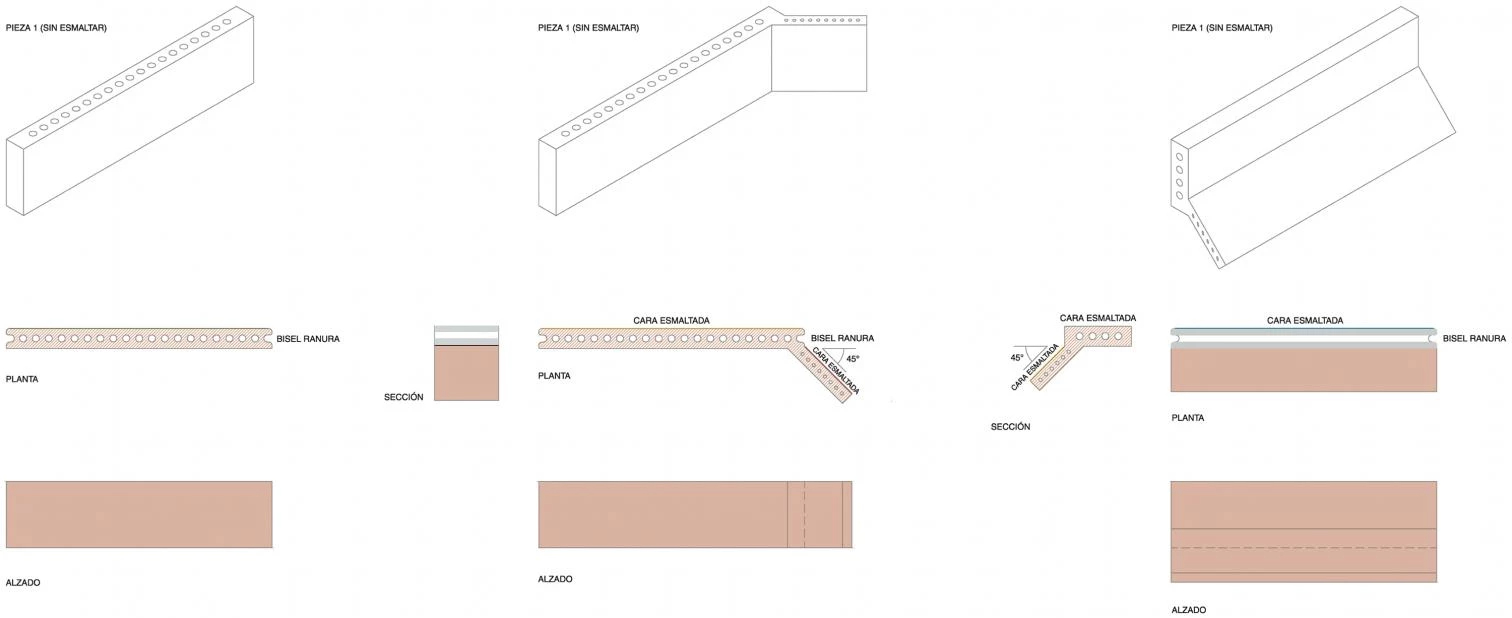
In total, approximately 45,000 ceramic slats were manufactured through extrusion, each measuring 42 cm wide and 10 cm high. These slats are affixed using a braided steel mesh, forming an adhesive-free prefabricated assembly. The slats’ exterior side features shades of terracotta that match the nearby bricks, while their interior side is finished with a glazed multicolor surface that evokes the polychrome tiles of the hospital’s historic domes. The façade rhythm changes with sunlight, producing a dynamic play of light and shadow while enhancing privacy for interior spaces.
On the building’s south-facing façades, slats are designed with horizontal folds to provide sun protection, whereas lateral folds are used on less exposed sides. These folds not only filter natural light but also allow glimpses of the vibrant interior from outside, adding depth and movement to the building’s appearance. The ceramic latticework continues to the roof, integrating seamlessly with the structure while forming the ceiling of the entrance floor.
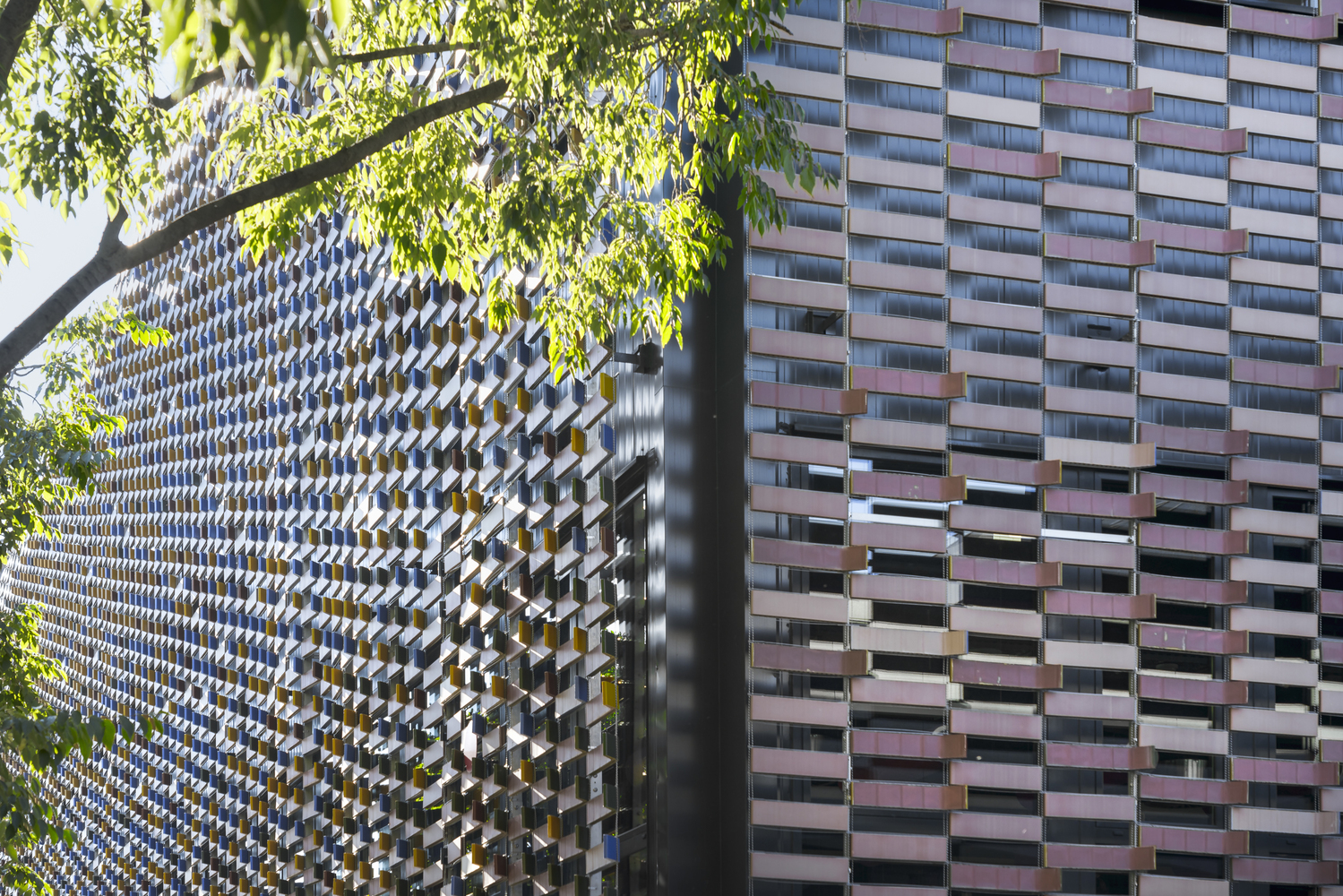
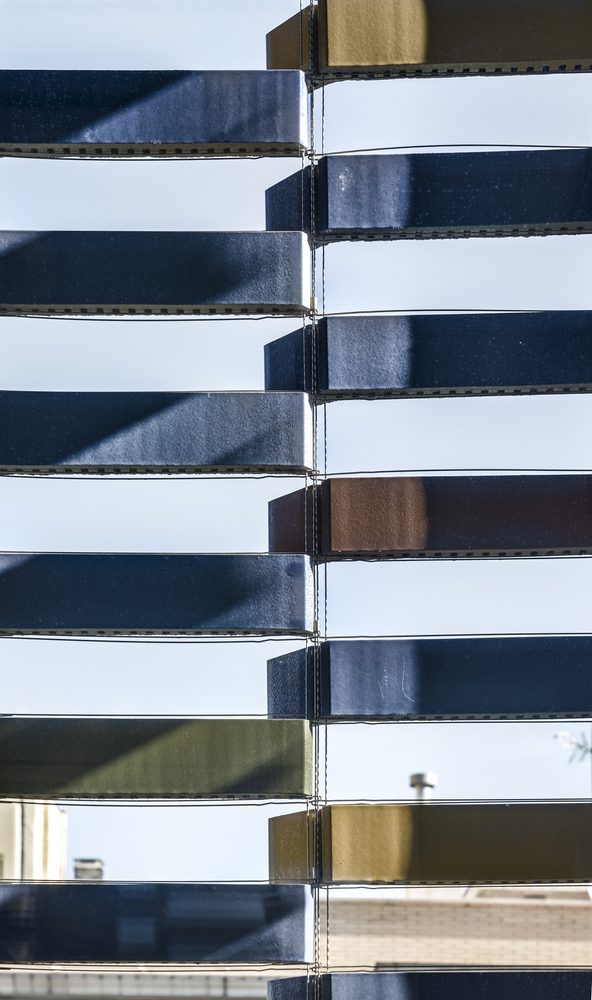
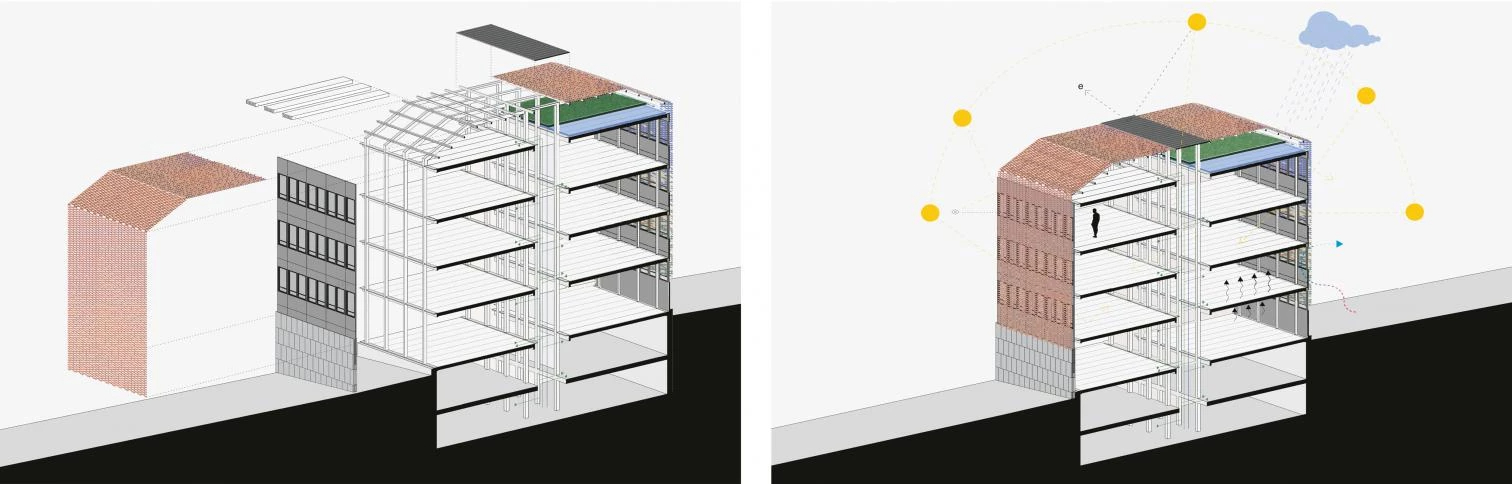
The project adheres to strict bioclimatic criteria, combining solar radiation control with advanced thermal insulation to achieve significant energy savings. It has achieved an “A” energy rating and LEED Gold certification, demonstrating its minimal environmental impact and alignment with circular economy principles. The façade’s modular design is dismantlable and recyclable, ensuring adaptability and future reuse.
Additional sustainable features include a roof-well system, with a depth of 40 cm, that collects water for irrigation and toilet flushing. The exterior plinth is treated with a photocatalytic finish, which helps decompose pollutants from vehicle emissions, improving air quality in the urban environment. Materials were selected for their low environmental impact, including minimal volatile organic compounds, and were designed for cost-effective maintenance.
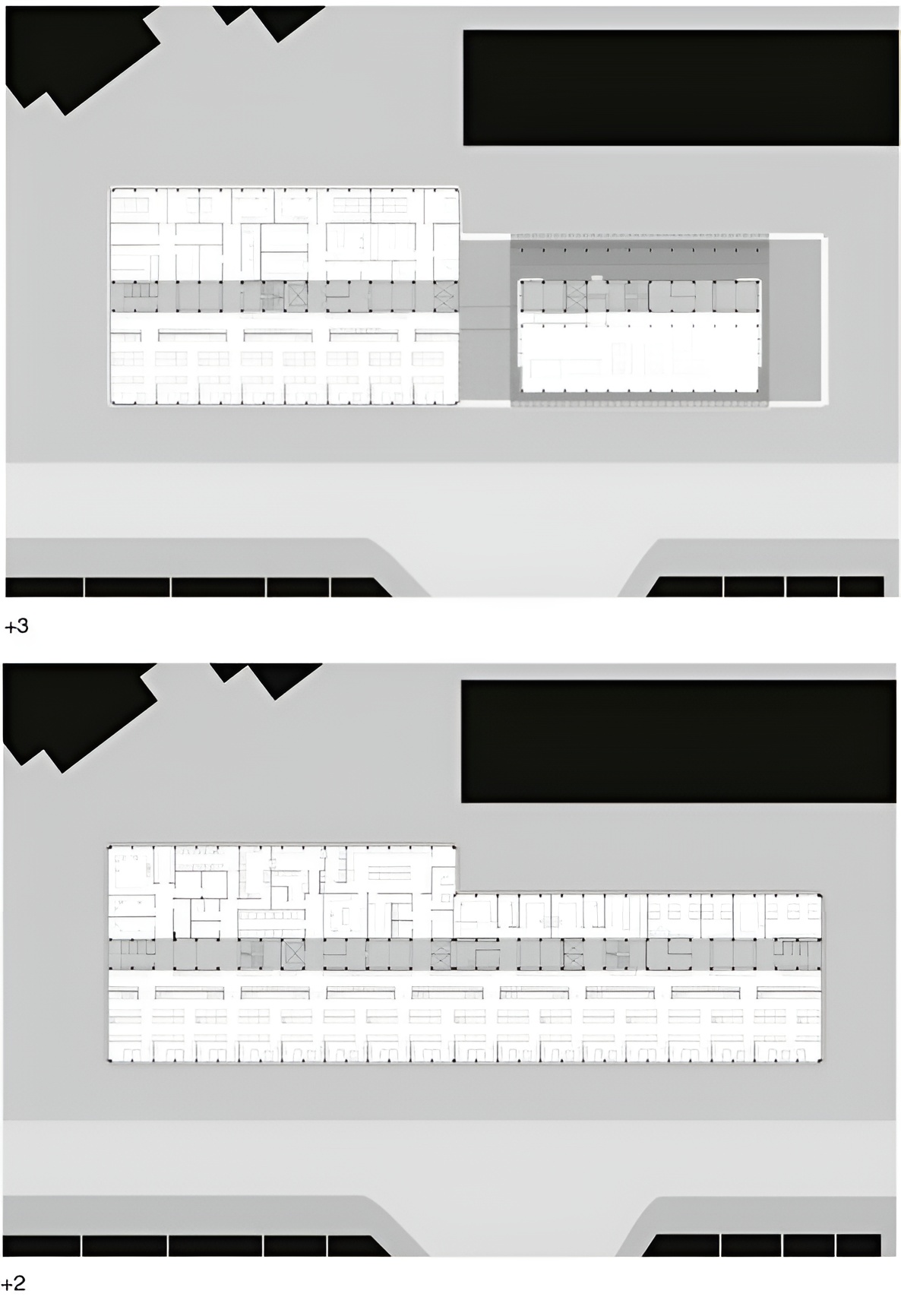
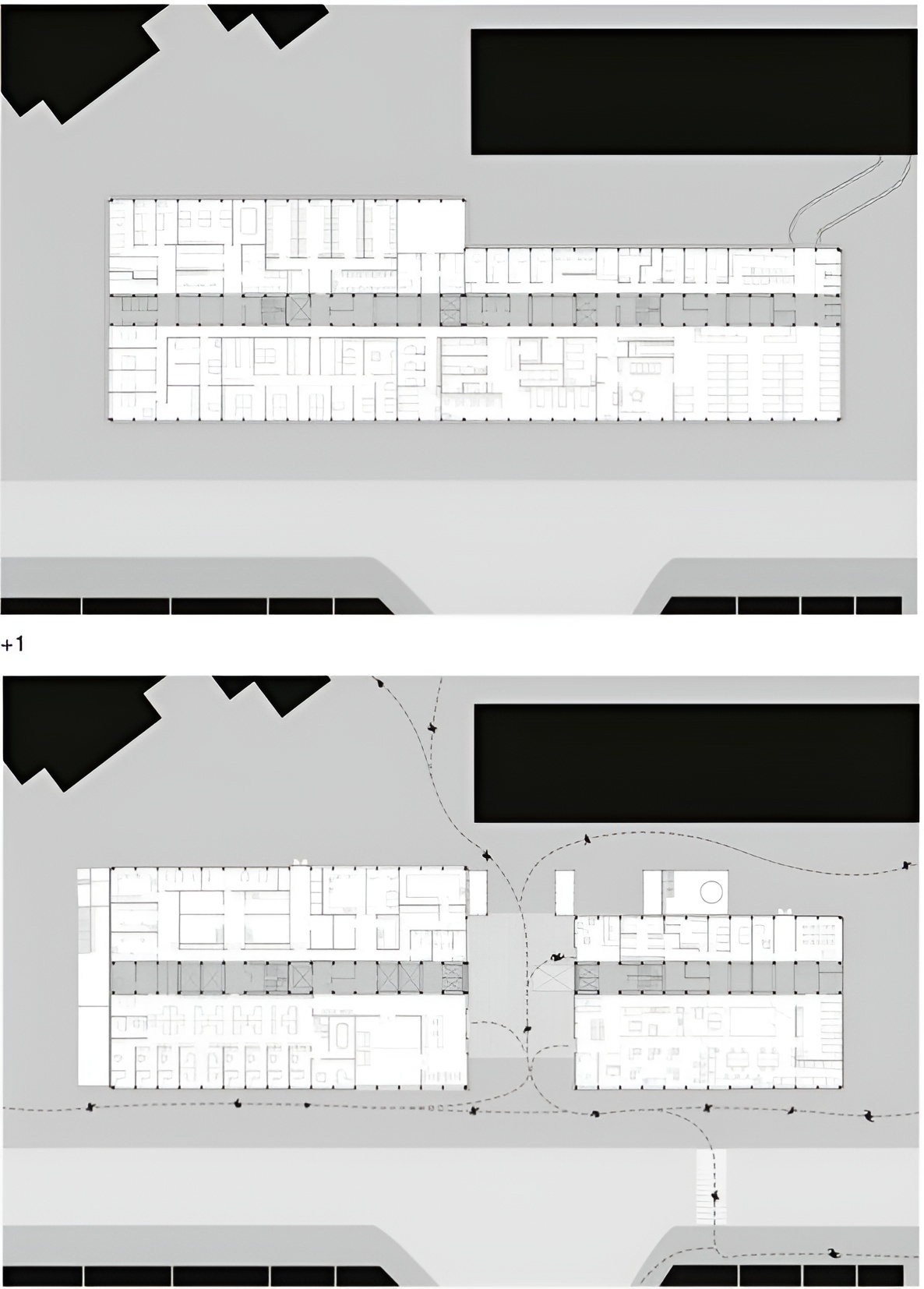
The building is structured around a central communication and service band, which separates two flexible strips of space, each measuring 80 x 11 meters. These column-free, adaptable spaces are designed with partition walls and screens, allowing them to be reconfigured to meet evolving research needs. The careful programmatic layout optimizes navigation distances and segregates incompatible uses, resulting in light-filled communal spaces that foster collaboration.
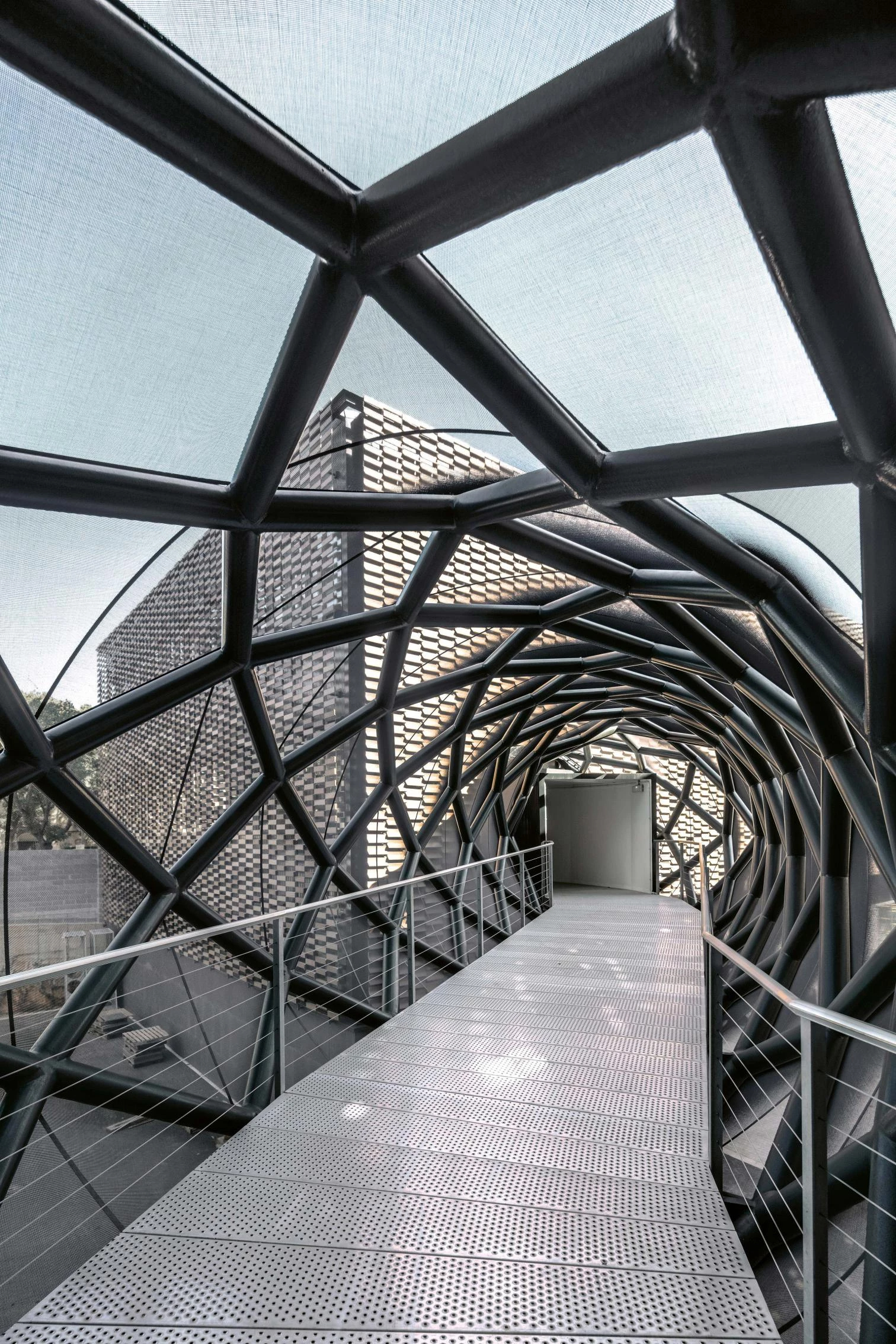
The institute is directly integrated into the operations of the adjacent hospital via a sculptural, textile-clad footbridge made of steel. This elevated connection facilitates efficient workflows and underscores the seamless relationship between the research and medical functions.
The institute sets a benchmark in energy and environmental performance, achieving 62% savings in energy consumption (48.5 kWh/m²/year) and a 62% reduction in CO2 emissions (31.5 kg CO2/year) compared to conventional buildings. The ceramic façade’s thermal inertia and solar control capabilities contribute to these impressive results, ensuring comfortable interior conditions while minimizing resource use.
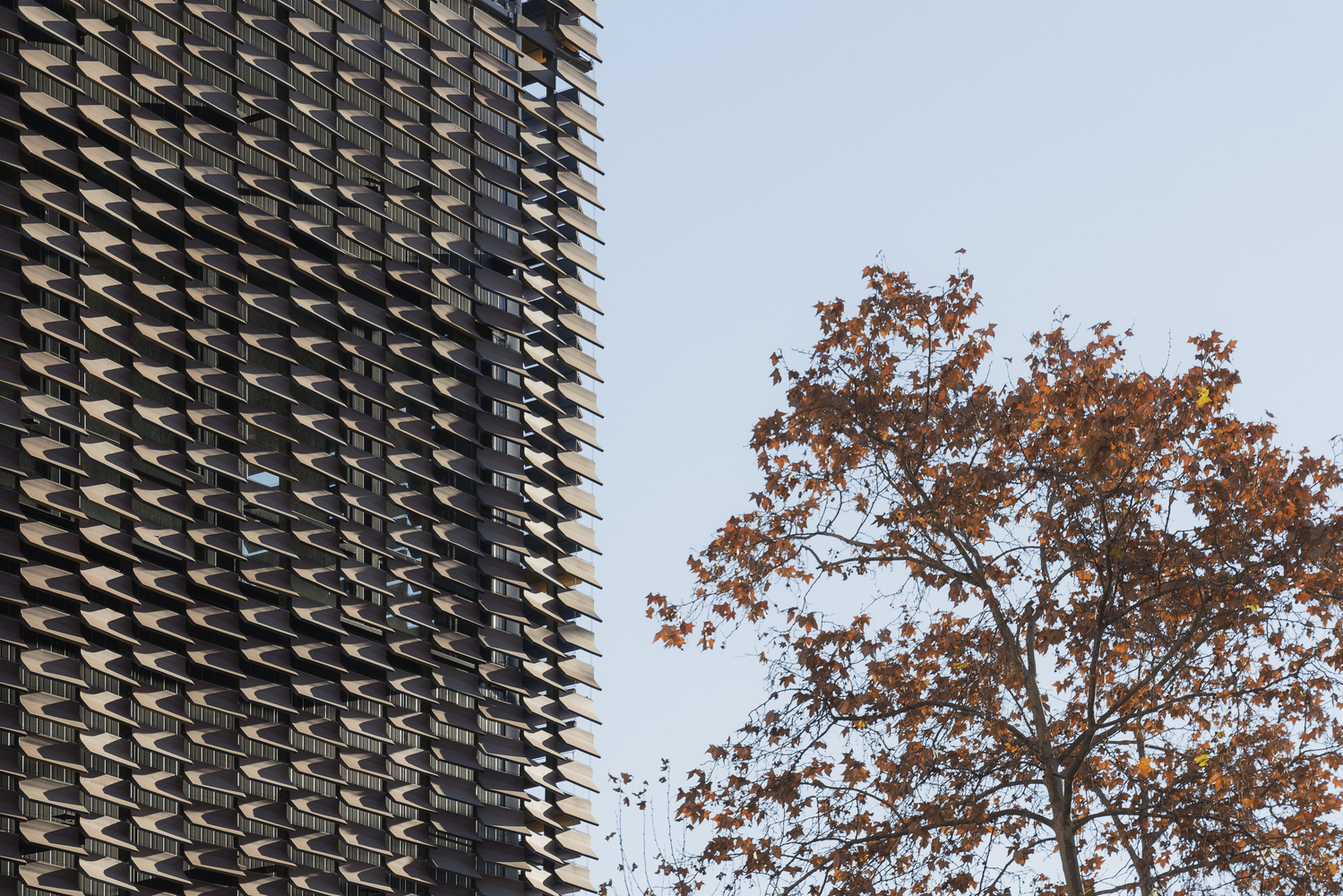
The Sant Pau Research Institute exemplifies the integration of heritage-sensitive design, advanced technology, and sustainable practices, reinforcing its role as both a functional research facility and an architectural homage to its historic surroundings.
Project Gallery
Project Location
Address: Carrer de Sant Quintí, 77, Horta-Guinardó, 08041 Barcelona, Spain
Location is for general reference and may represent a city or country, not necessarily a precise address.

