

Architects: Matos Gameiro Arquitectos, atelier Bugio
Year: 2025
Photography: Gonçalo Matos
Lead Architects: Pedro Matos Gameiro, João Favila Menezes
Collaborators: Miguel Moreira, Ana Loureiro, Fernando Amado, Francesco Mariani, Ana Amado, Mariana Bacelar, Miguel Antunes, José Pinto, Maria Gameiro, Bruno Esteves, Diogo Rodrigues, Miguel Feijoó, Teresa Carrilho Mateus
City: Lisbon
Country: Portugal
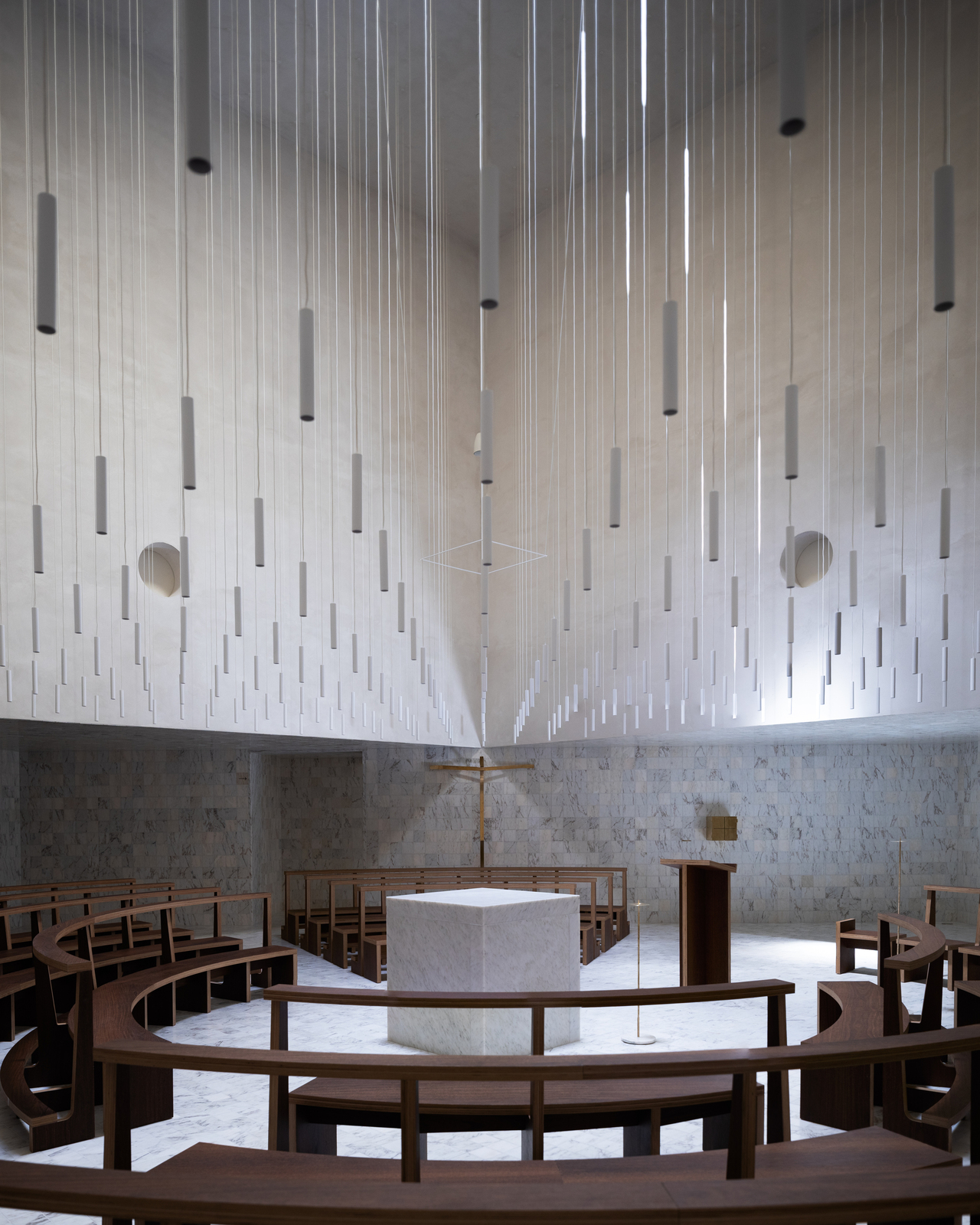
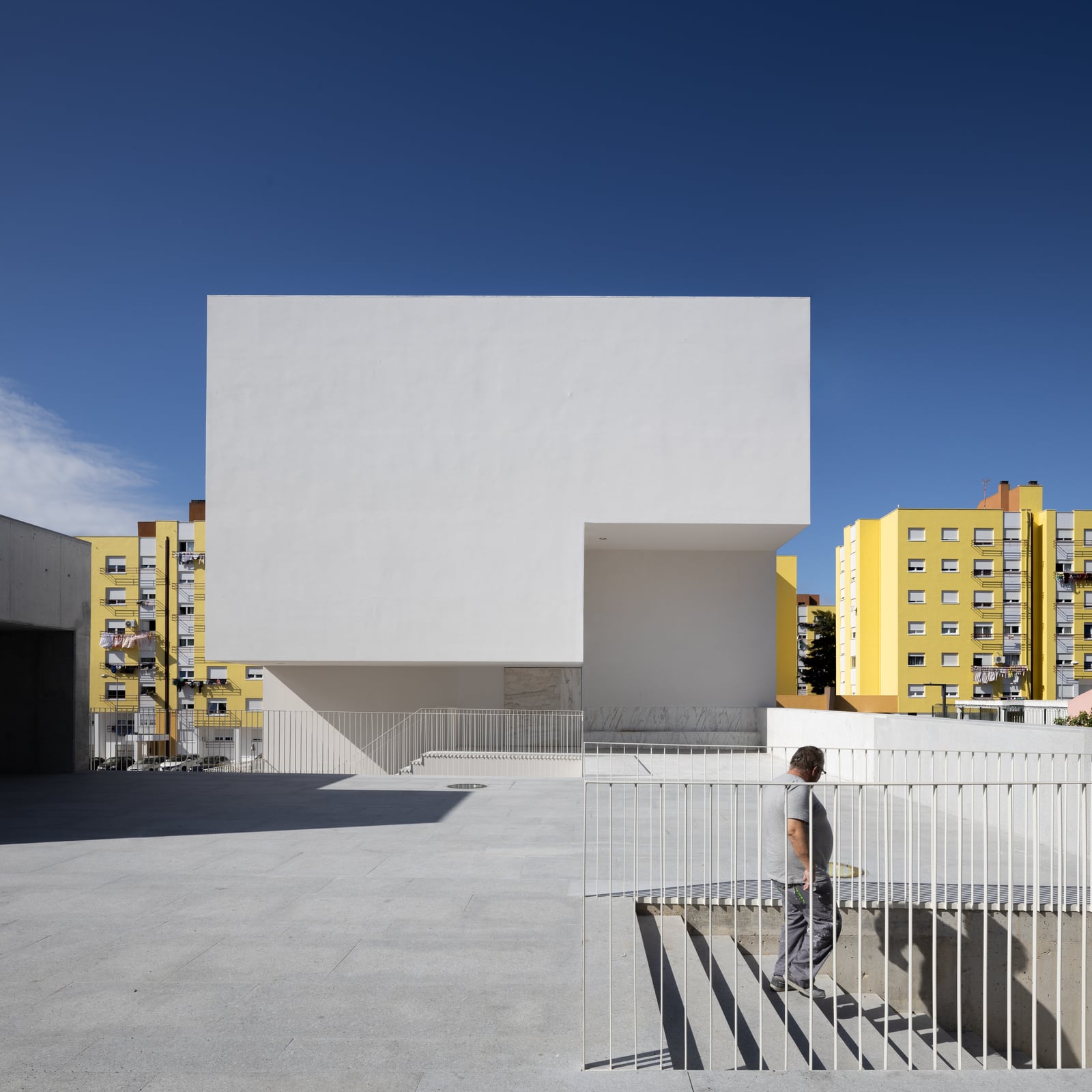
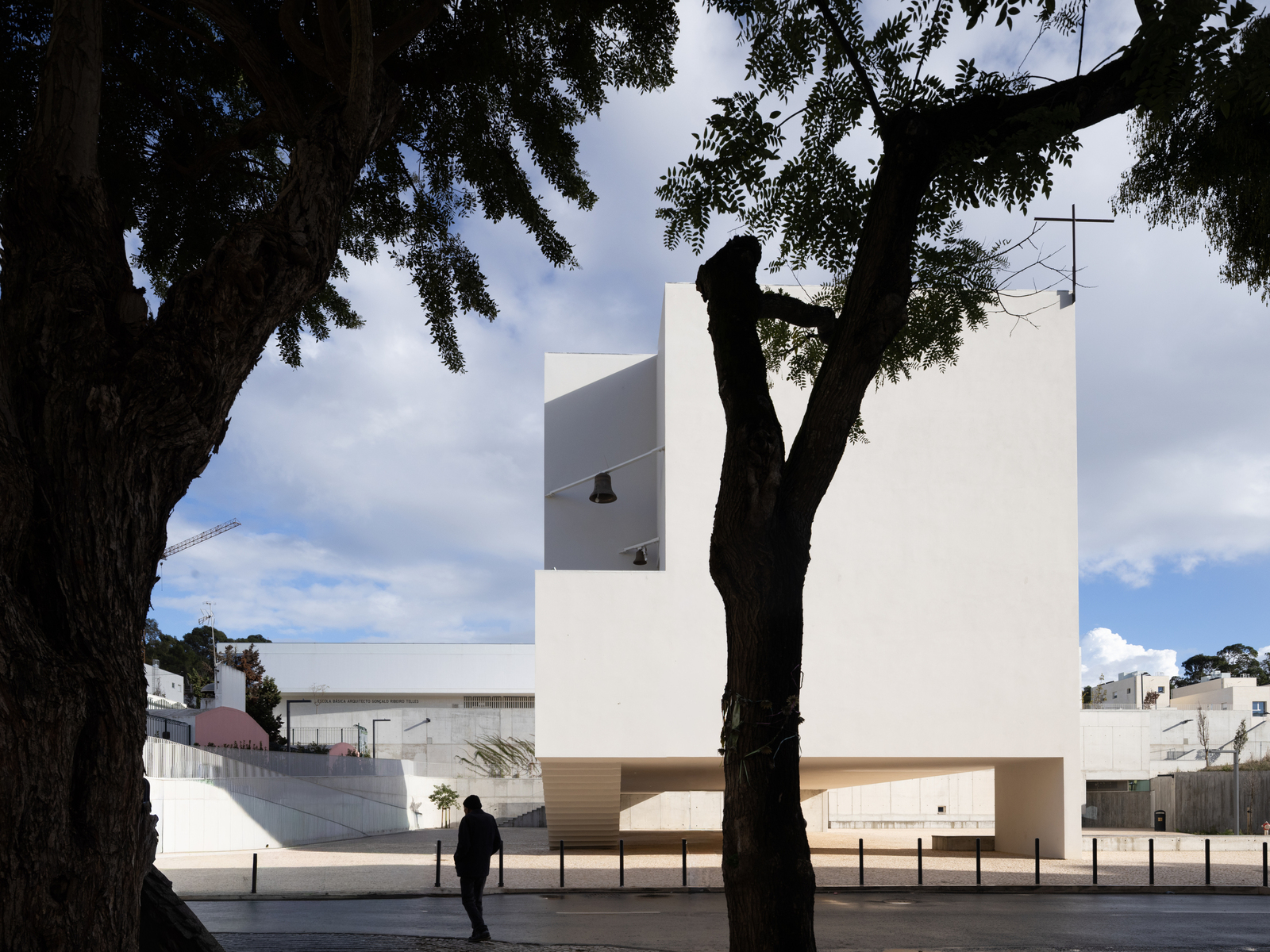
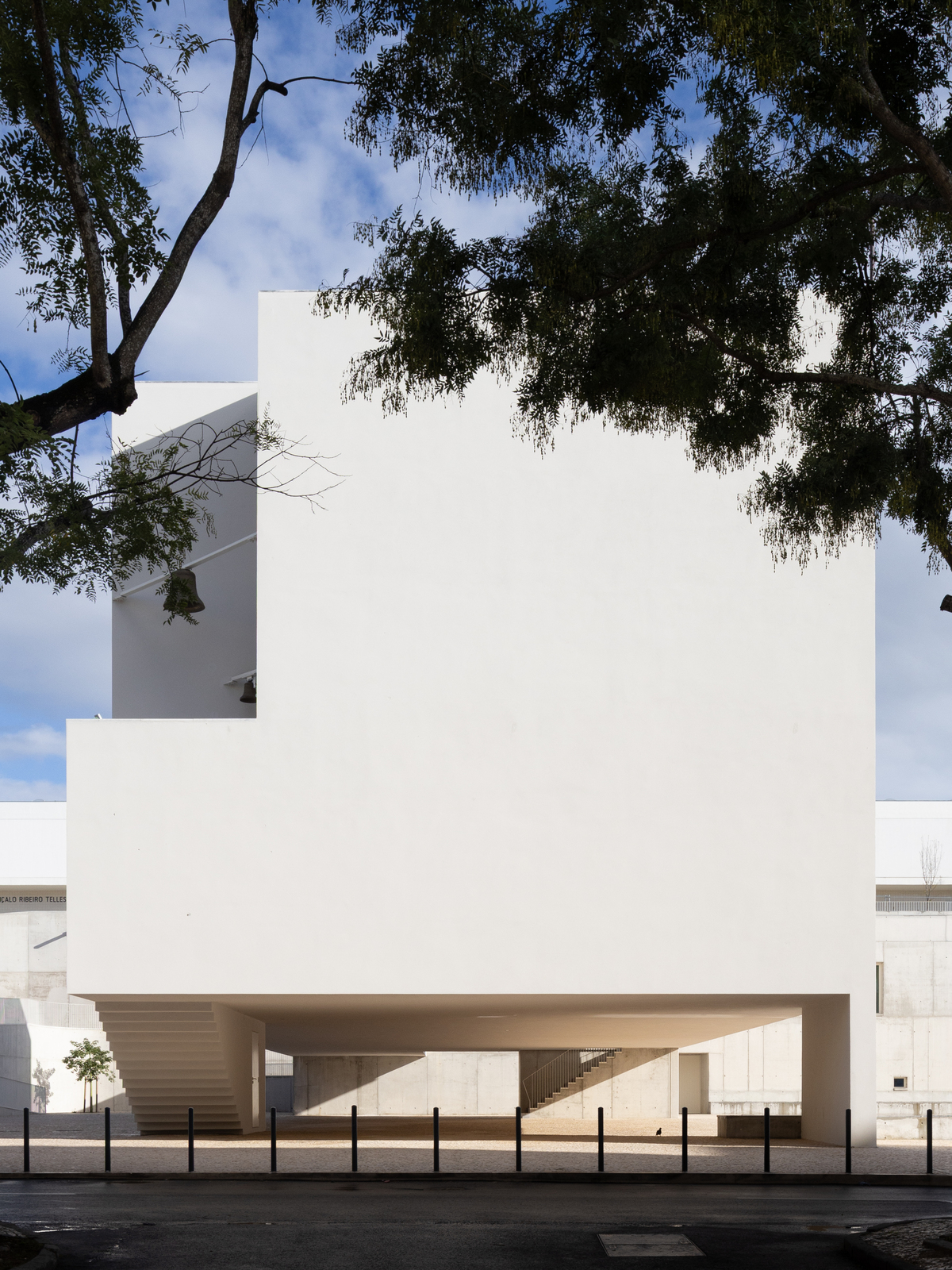
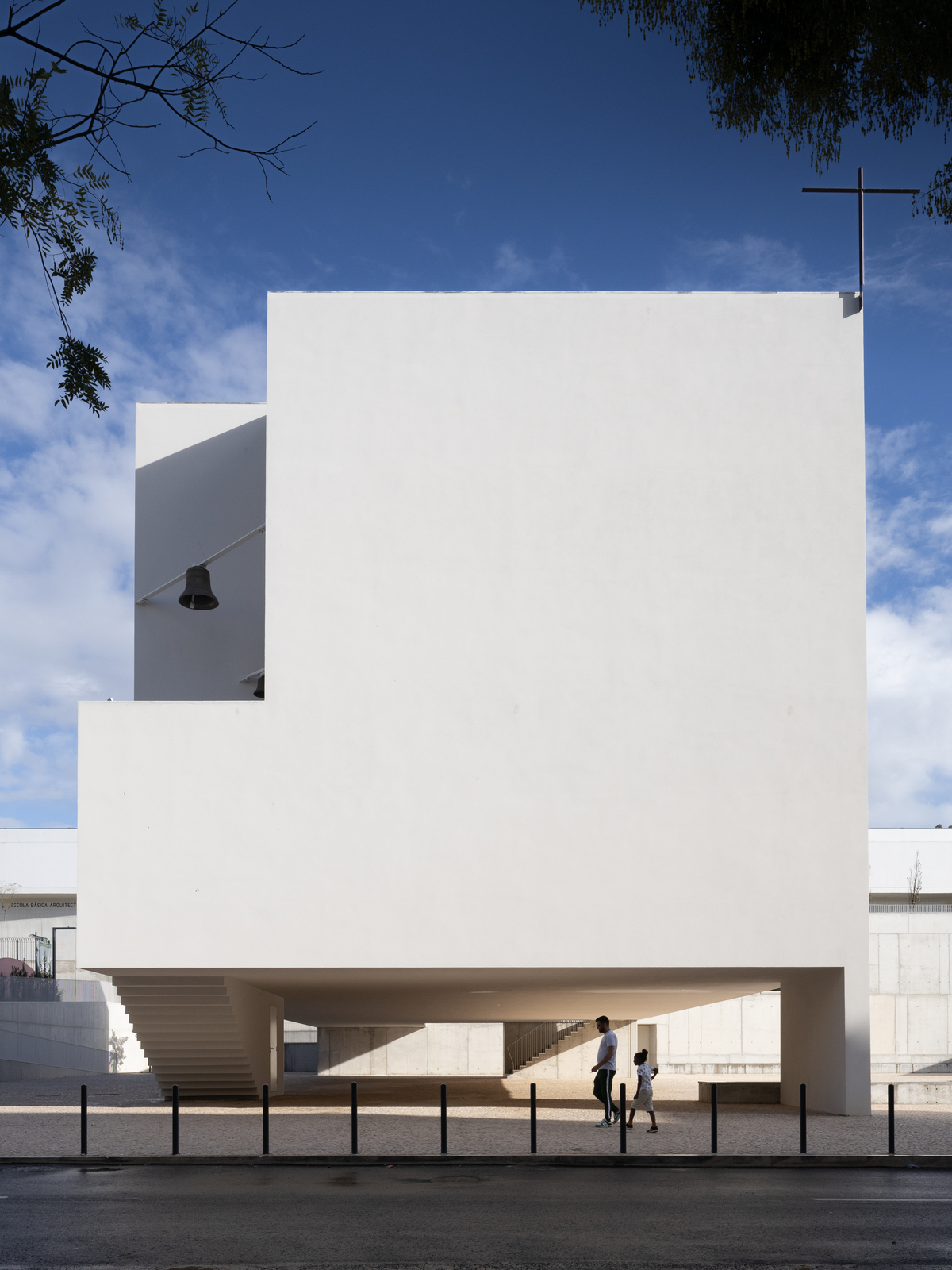
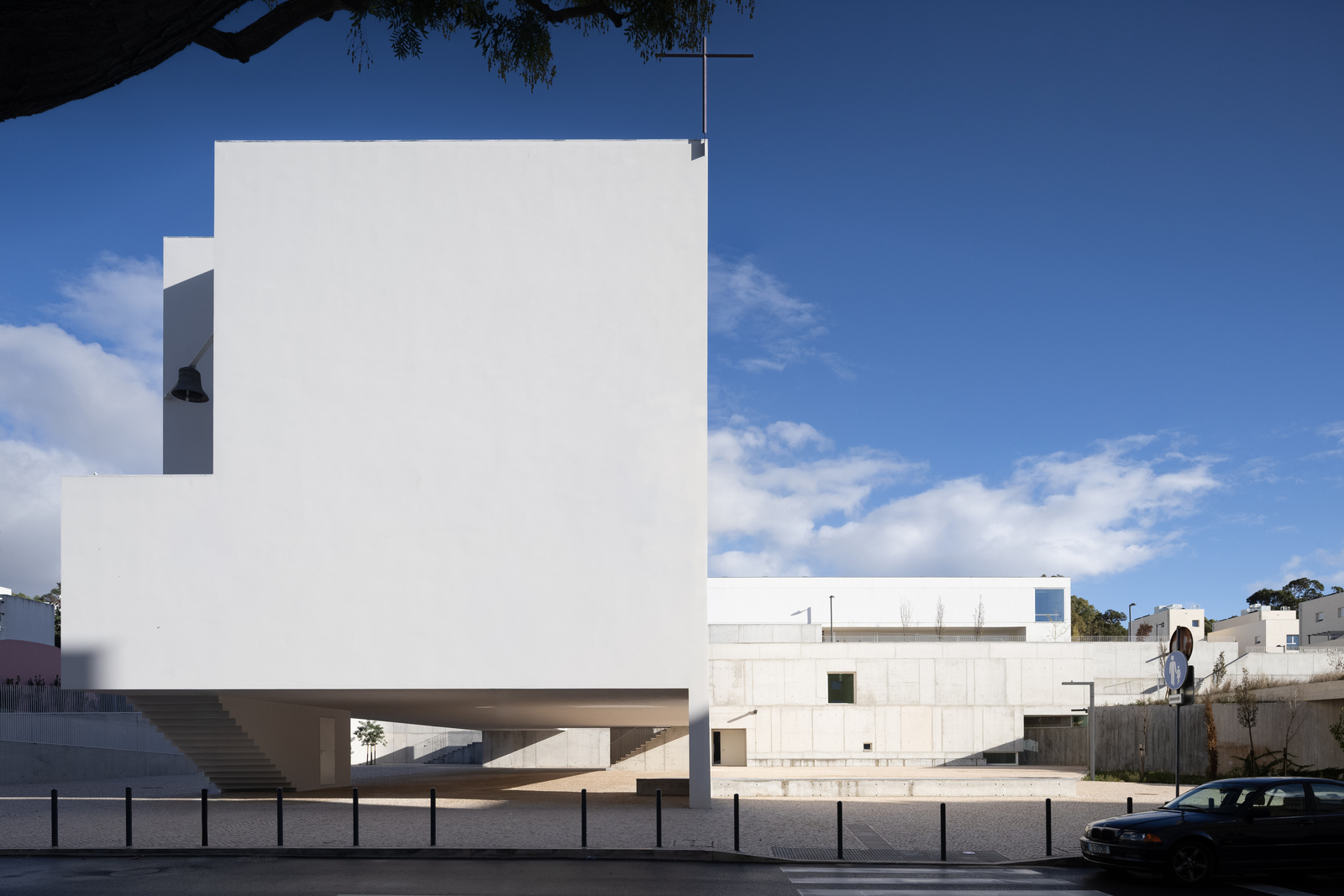
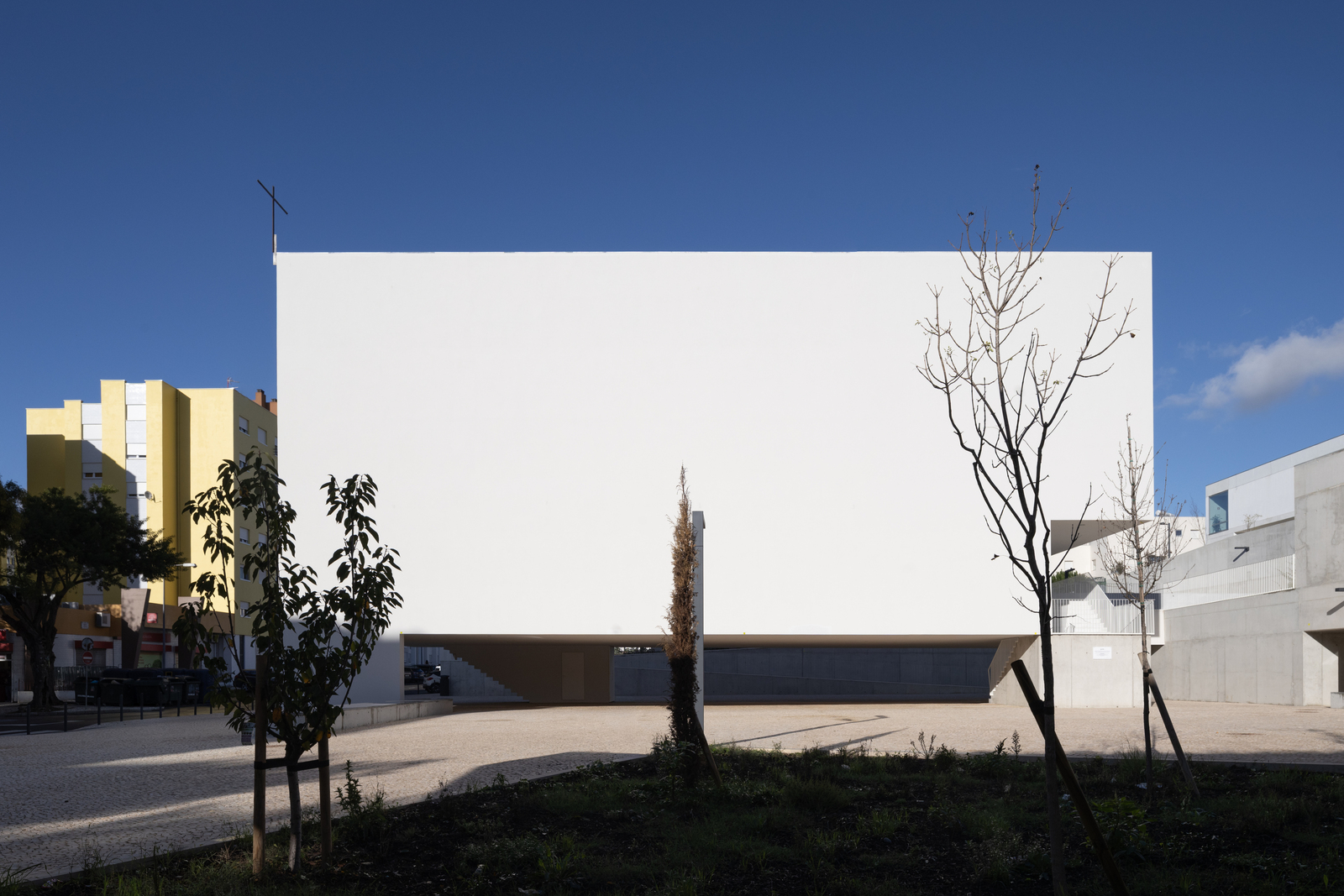
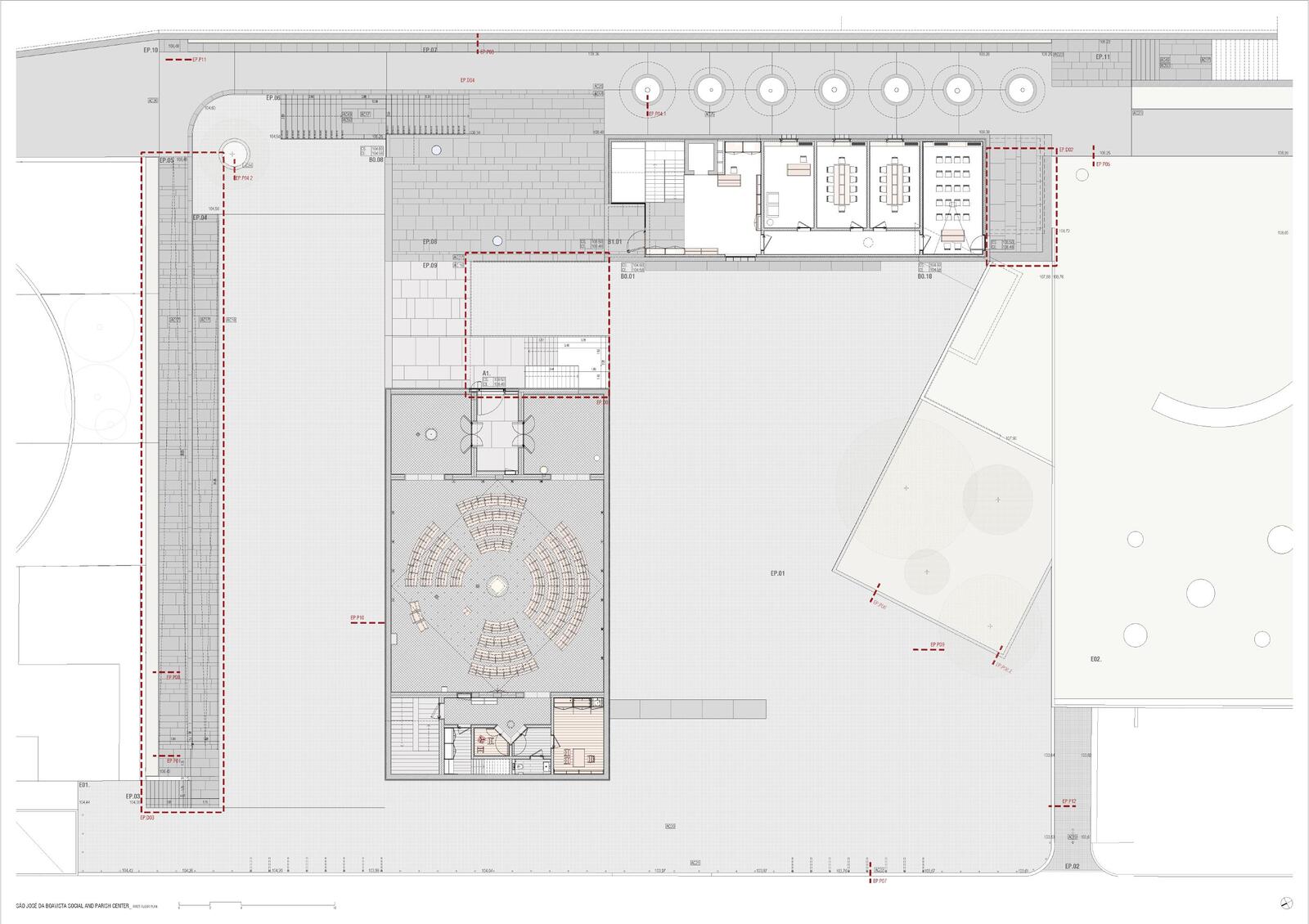
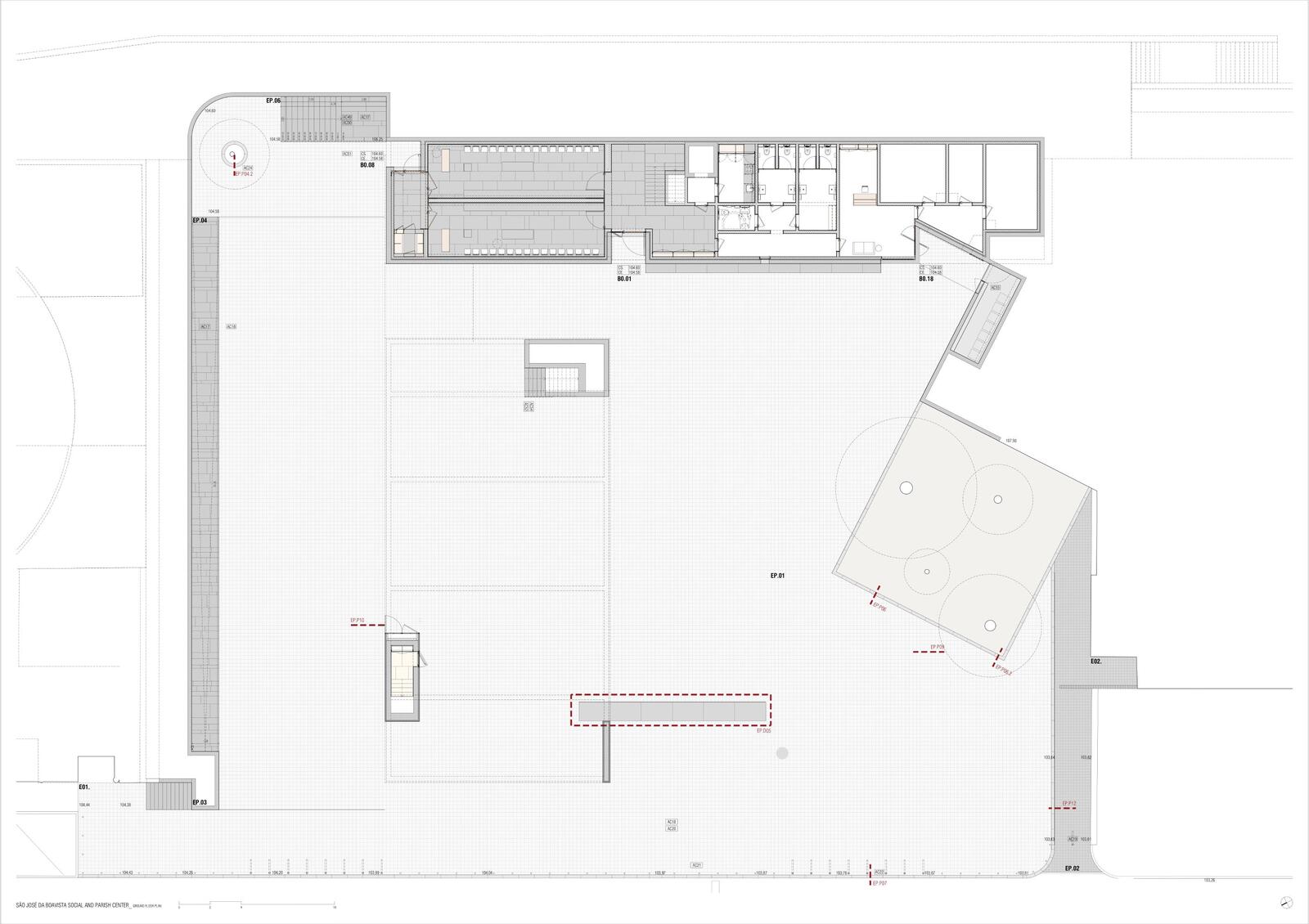
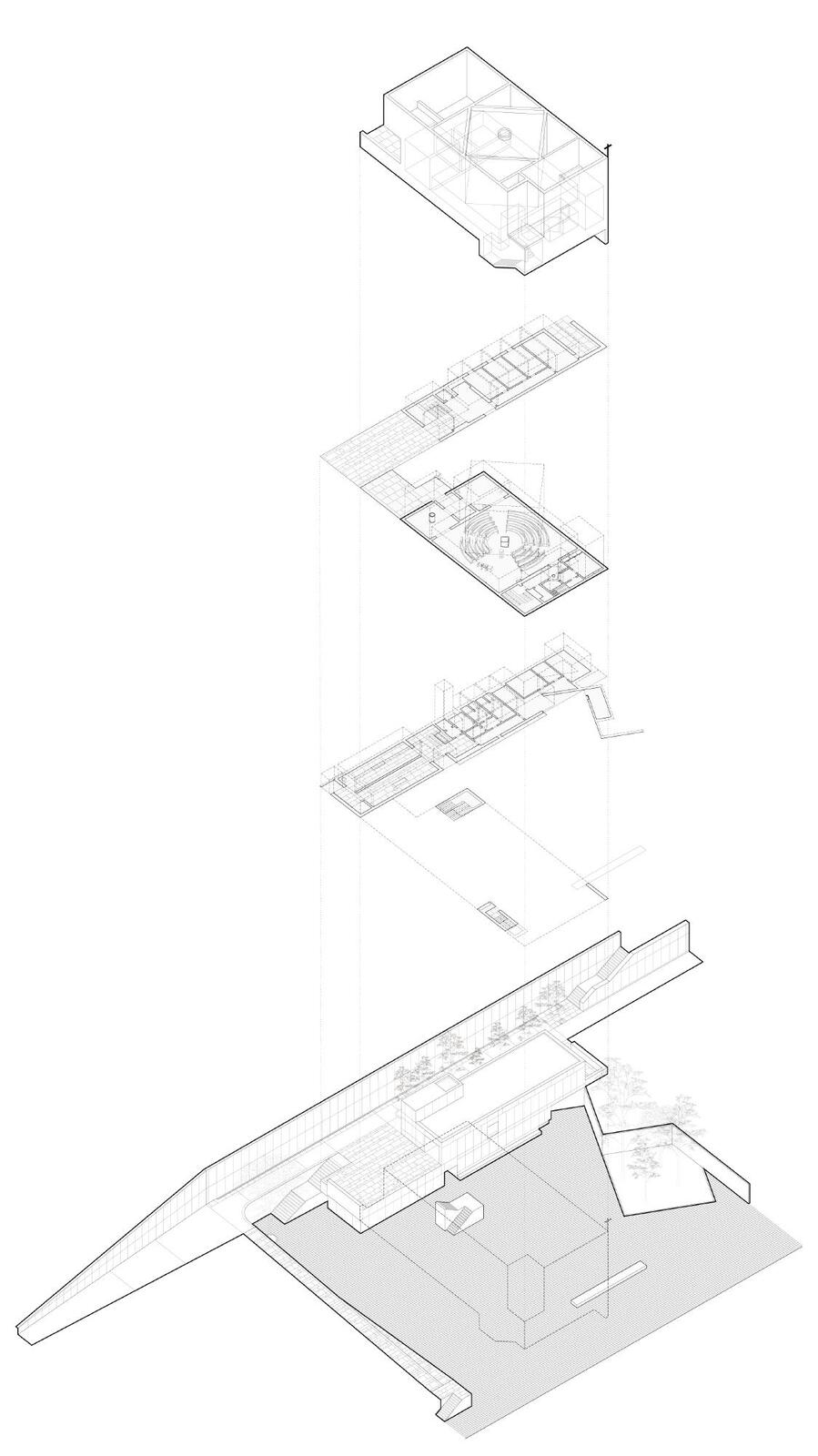
Completed in 2025, São José Da Boavista Church and Parish Center in Lisbon establishes a new civic and spiritual landmark through the creation of a public square defined by a continuous architectural wall. Designed by Pedro Matos Gameiro and João Favila Menezes, the project negotiates the site’s uneven topography with integrated ramps and stairs that structure both circulation and program. At the center of the square, the church volume rises in an elevated position, detached from the ground to form a sheltered gathering space beneath. Adjacent to it, the parish center and an intermediate churchyard terrace organize a sequence of transitional spaces between city and sanctuary. The church interior reinterprets the traditional single nave in accordance with post-Vatican II liturgical principles, ensuring continuity between assembly and presbytery while reinforcing spatial hierarchy and verticality.

The project positions sacred architecture as an instrument of urban continuity rather than isolation, framing communal life within a carefully articulated spatial system. Instead of occupying the site as a solitary object, the church and parish center consolidate their presence through the deliberate construction of a square that becomes both forecourt and civic room. This gesture reinforces the aggregating vocation of the place, establishing a shared ground for parish and neighborhood alike.
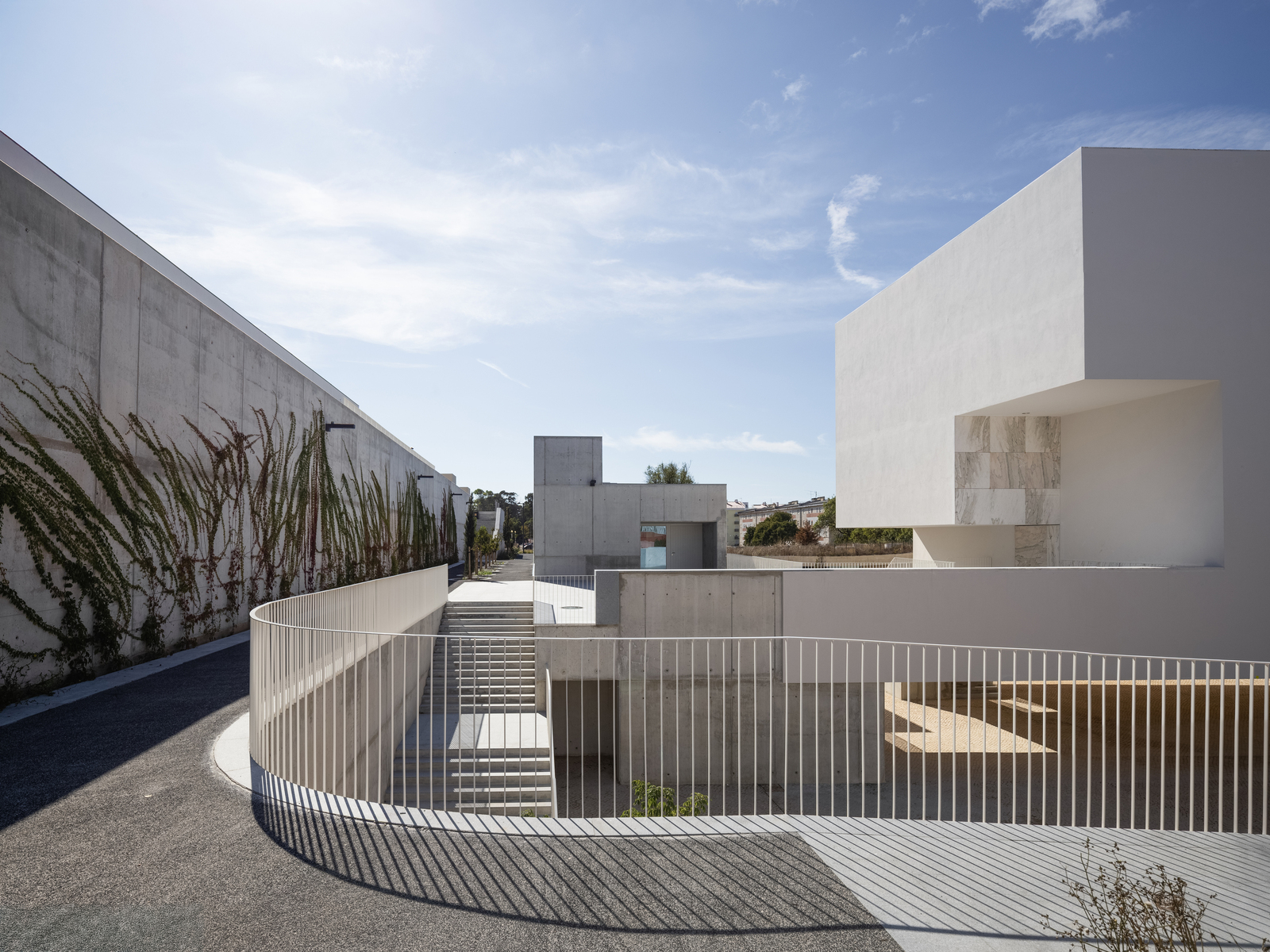
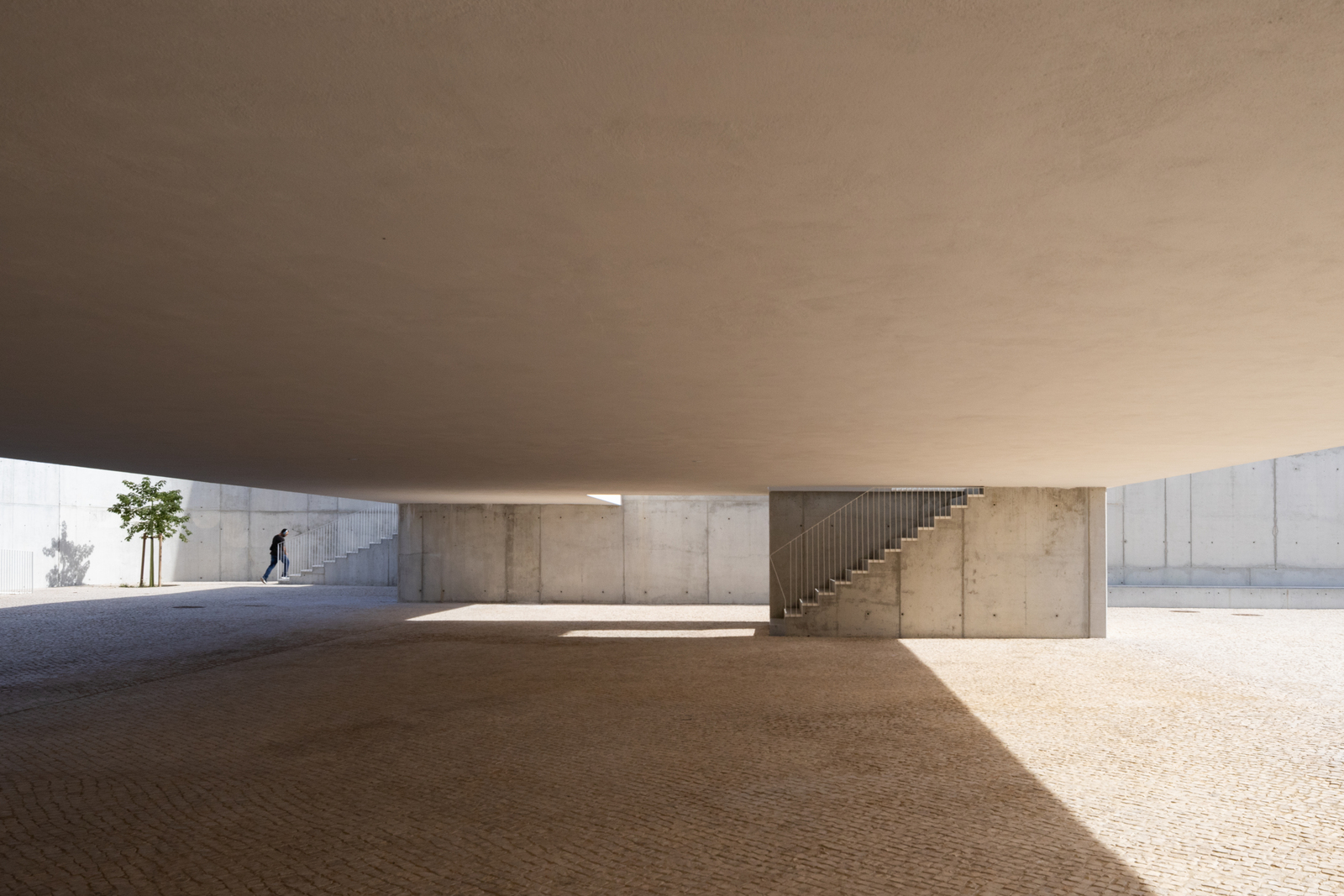
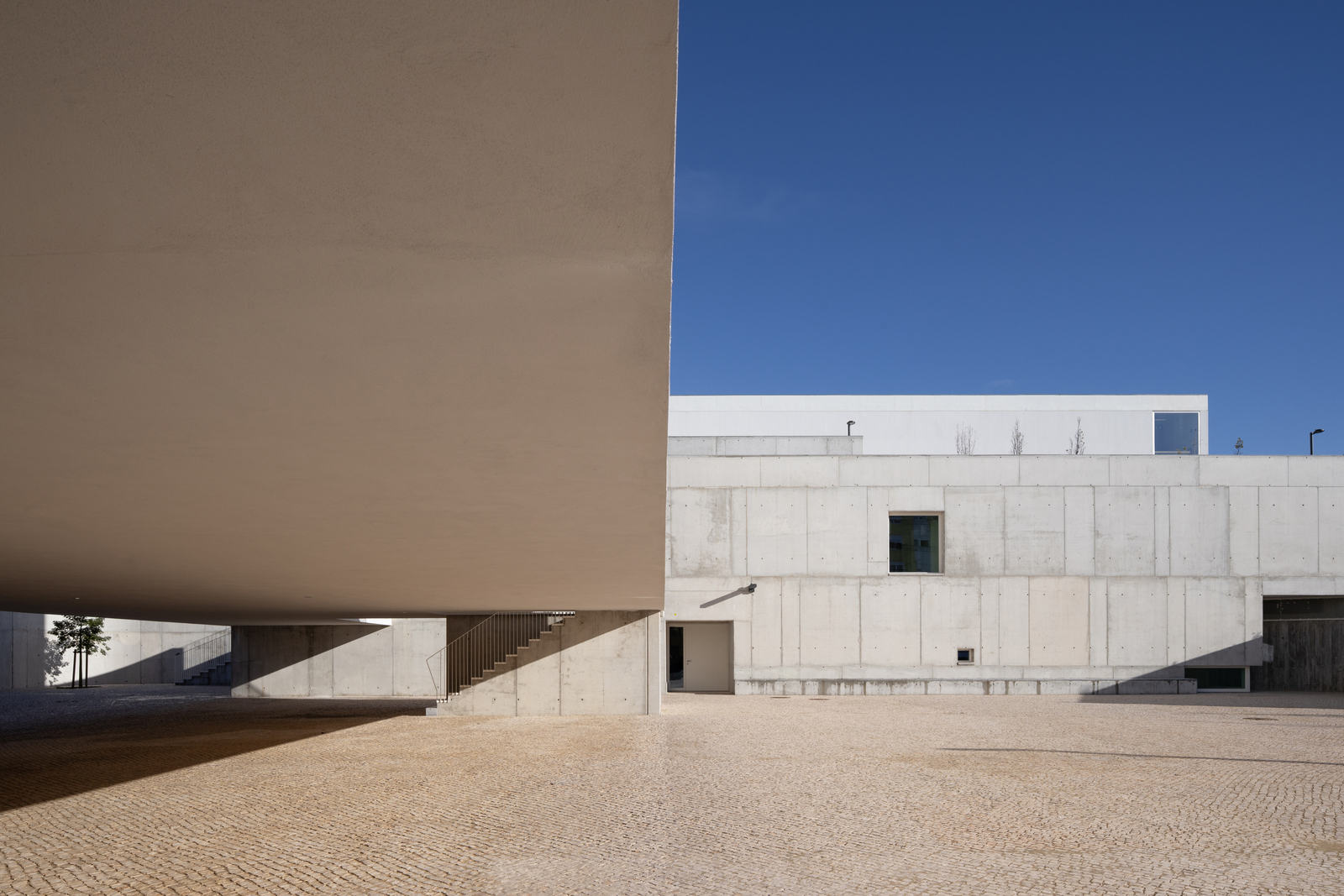
A single, continuous wall-building extends eastward to define the limits of the new square, responding precisely to variations in the terrain. Through recesses and projections, the structure incorporates stairs and ramps that resolve changes in elevation while closing the northern edge of the site. This architectural device not only establishes the square at street level but also orders elevated programmatic spaces within its thickness, transforming infrastructure into inhabitable form.
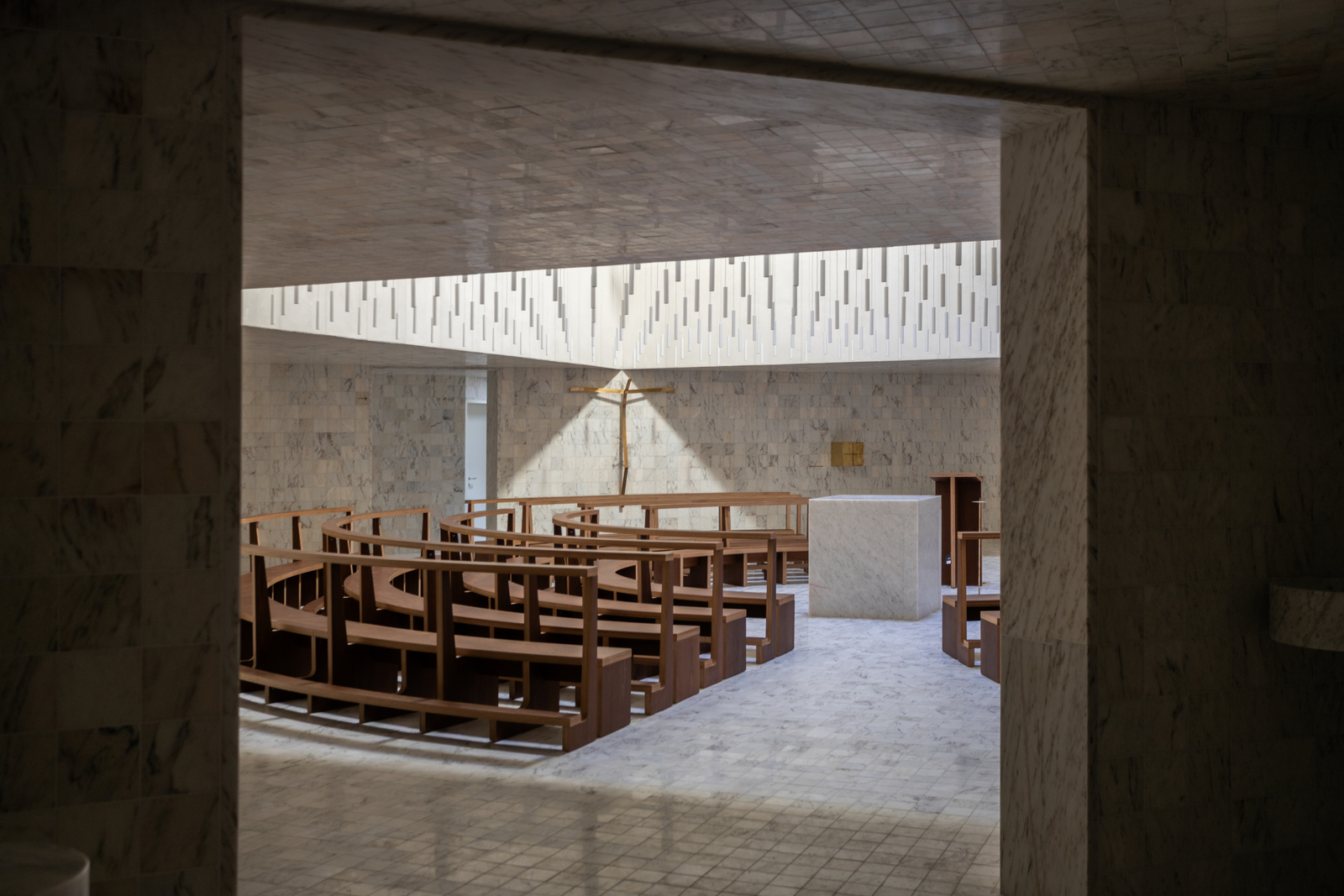
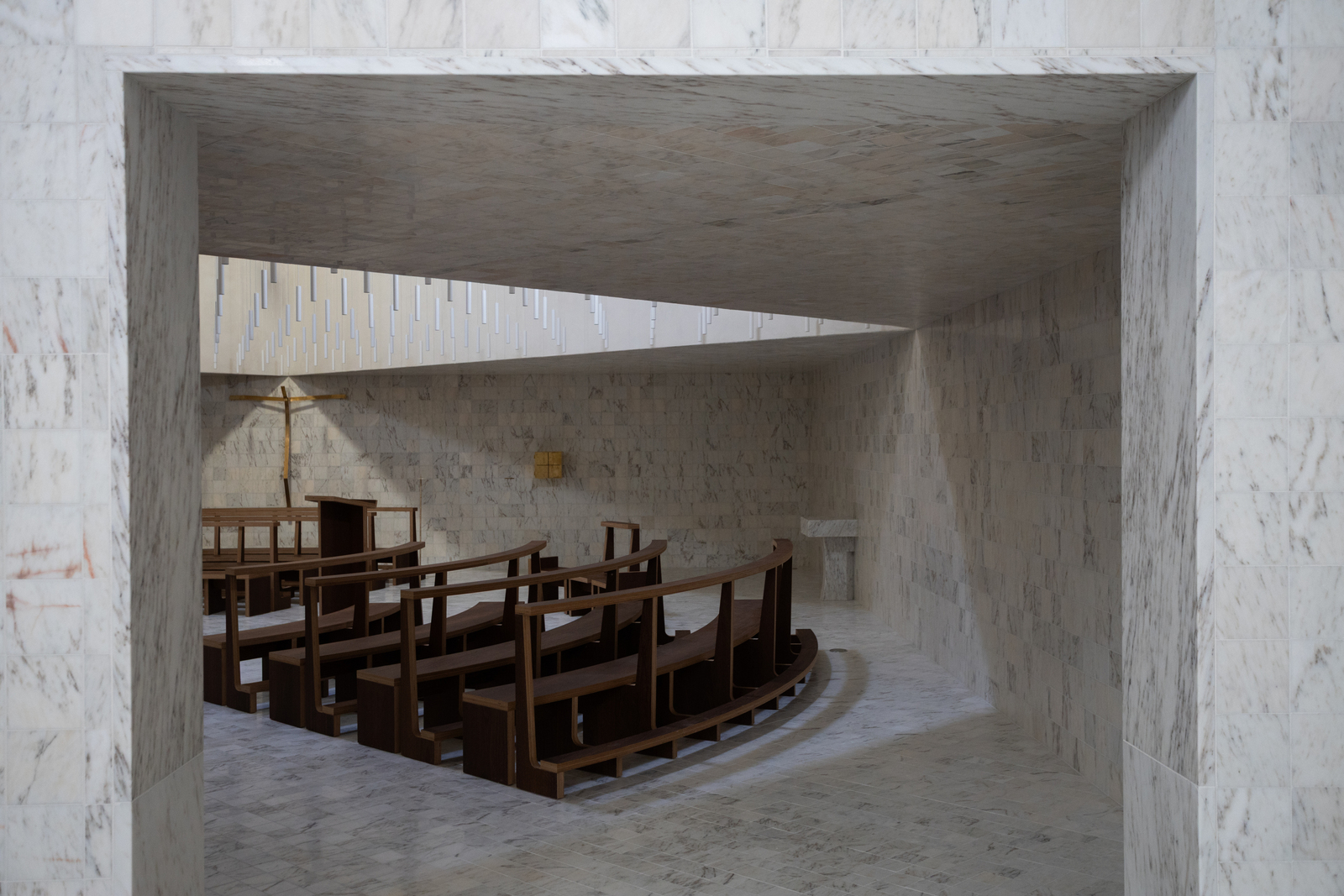
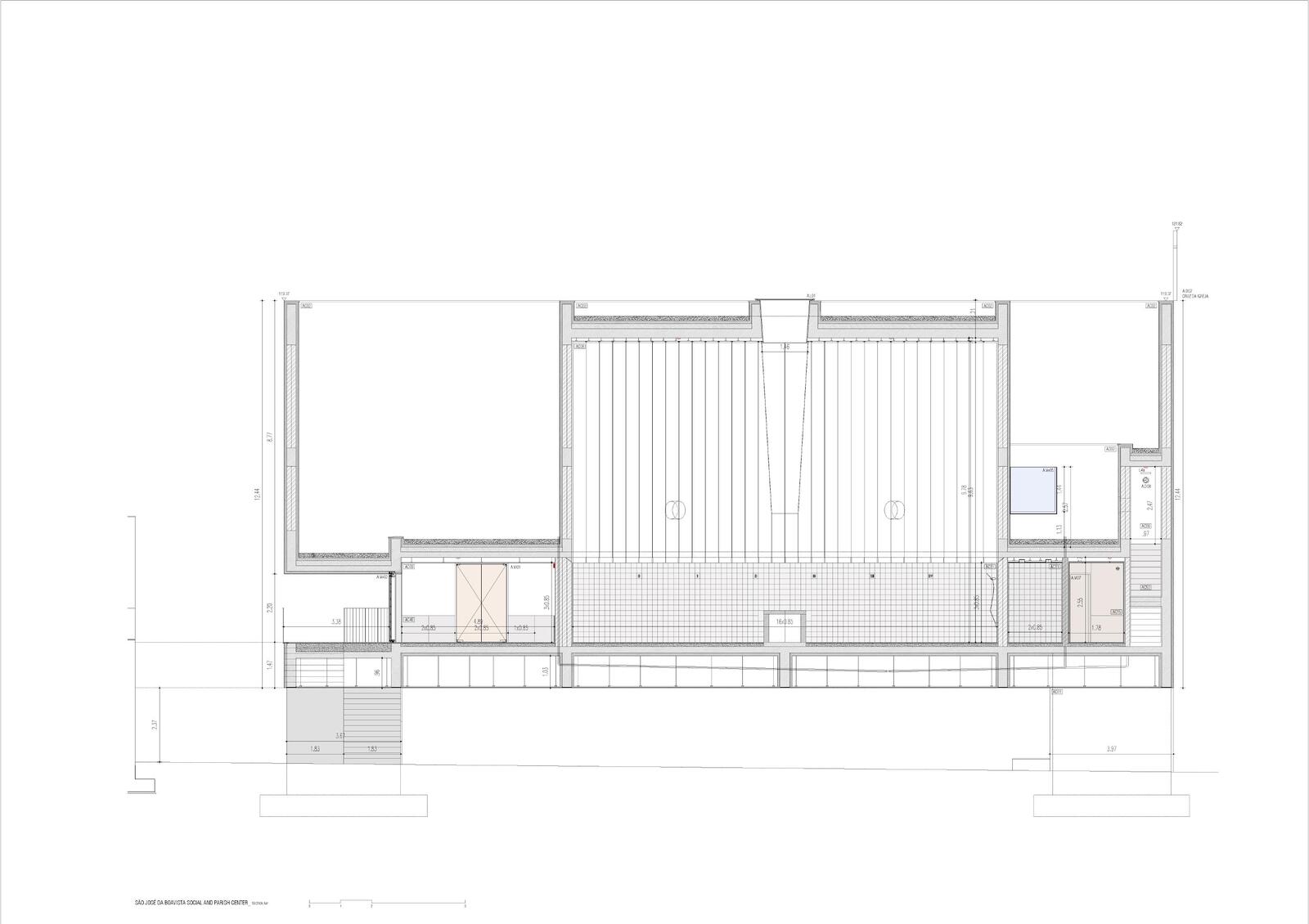
At the center of this composition, the church volume assumes an elevated stance, set apart from the ground plane and positioned symbolically between earth and sky. The lifted mass generates a covered square beneath, offering protection from excessive sun and seasonal rain while functioning as a threshold of welcome and gathering. This shaded undercroft reinforces the building’s civic dimension, blurring the boundary between sacred and public space.
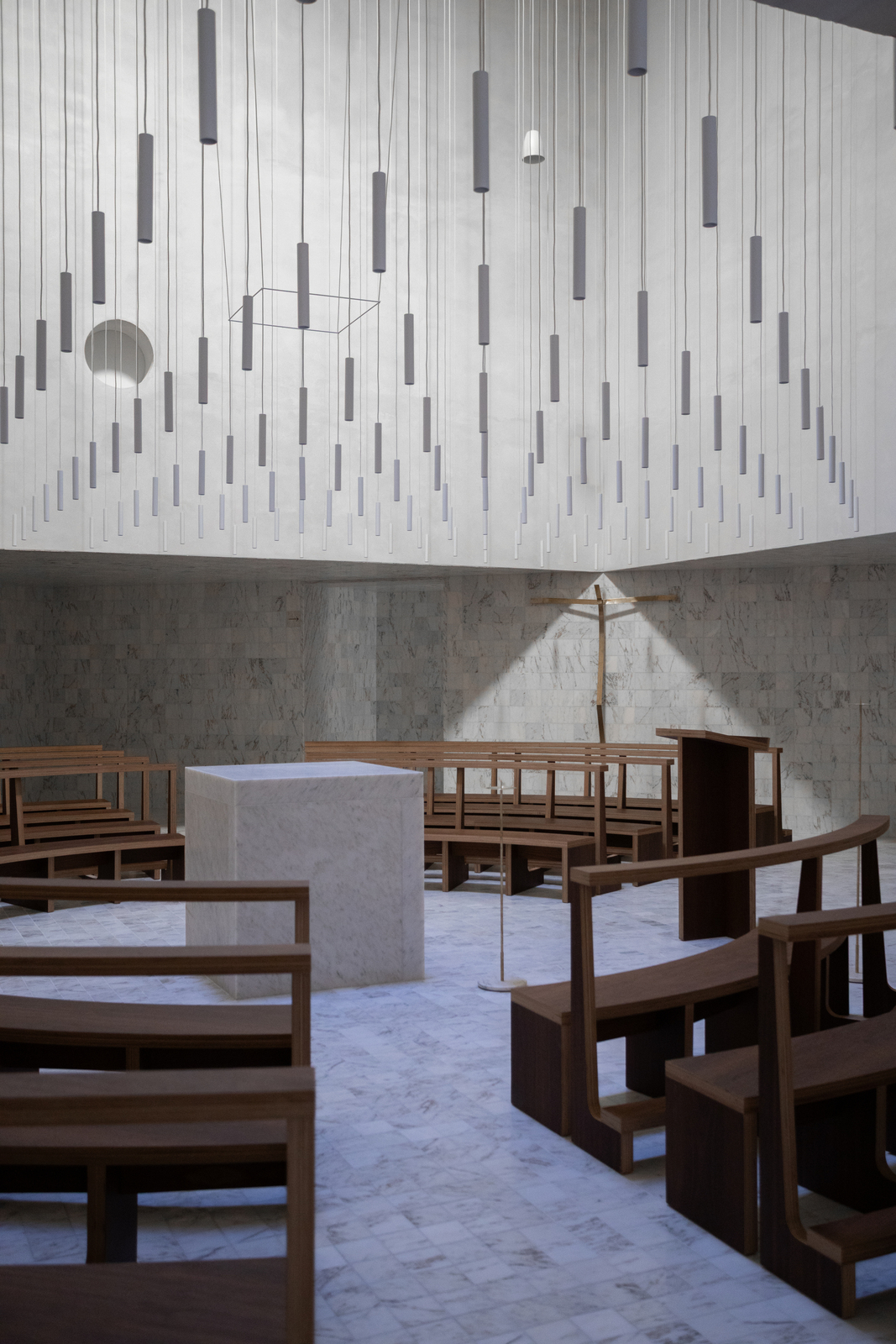
Beside the square, the parish center volume asserts its presence, while the churchyard forms an intermediate terrace that mediates access to the sanctuary. This layered progression orchestrates a gradual transition from open civic space to liturgical interior, reinforcing the building’s ceremonial approach. The churchyard becomes a reserved yet accessible platform, defining a proper and protected setting for worship.
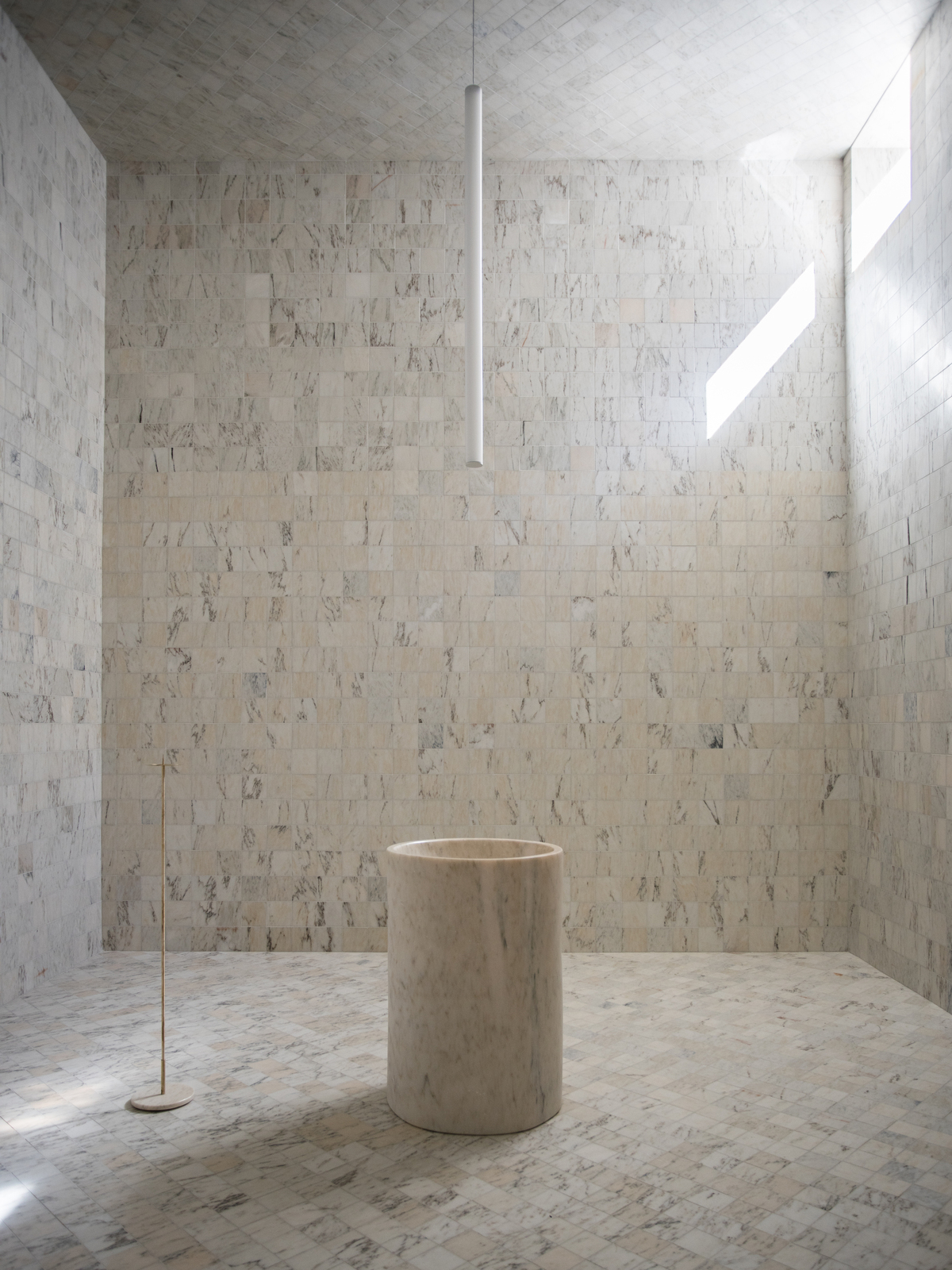
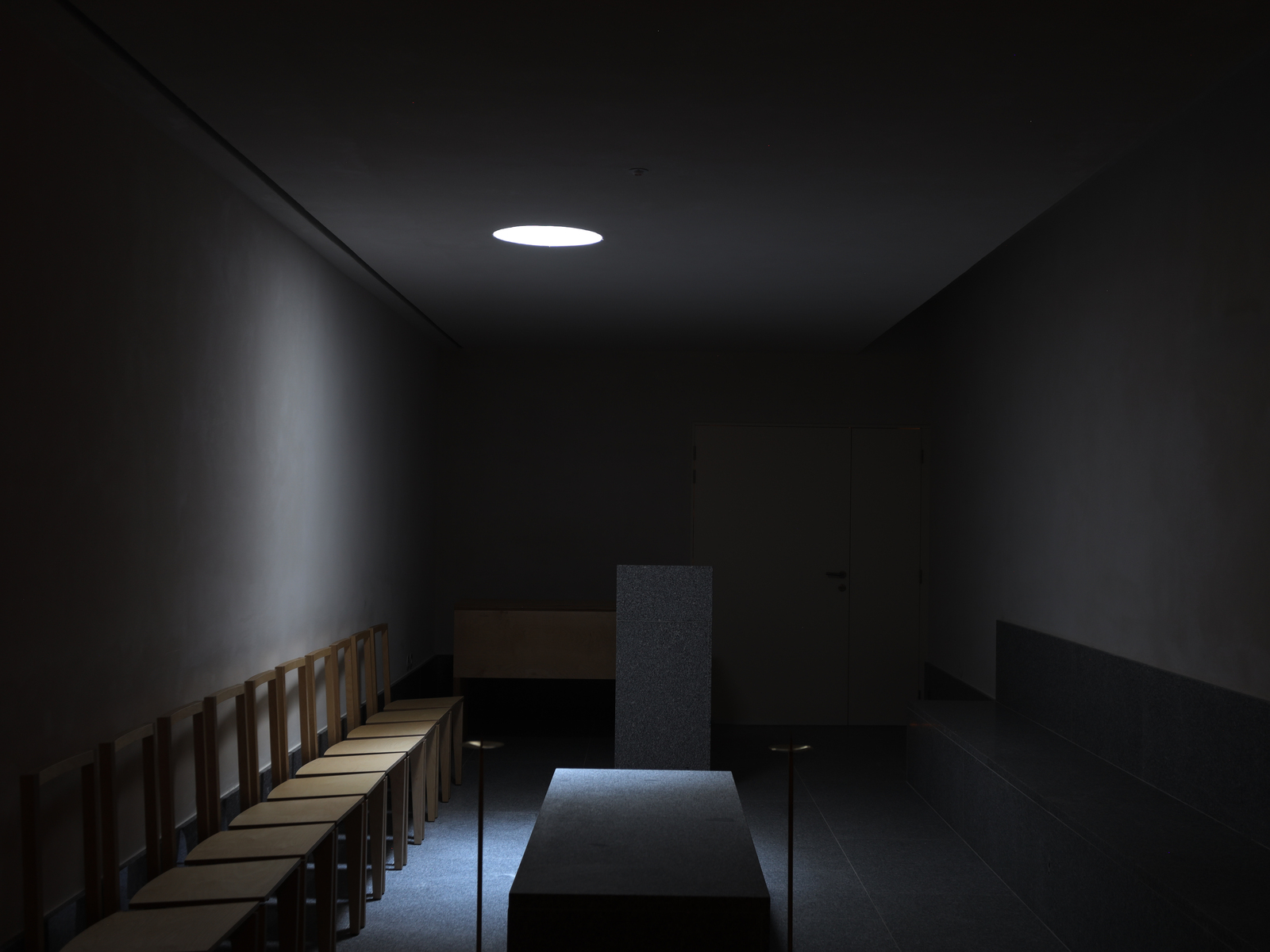
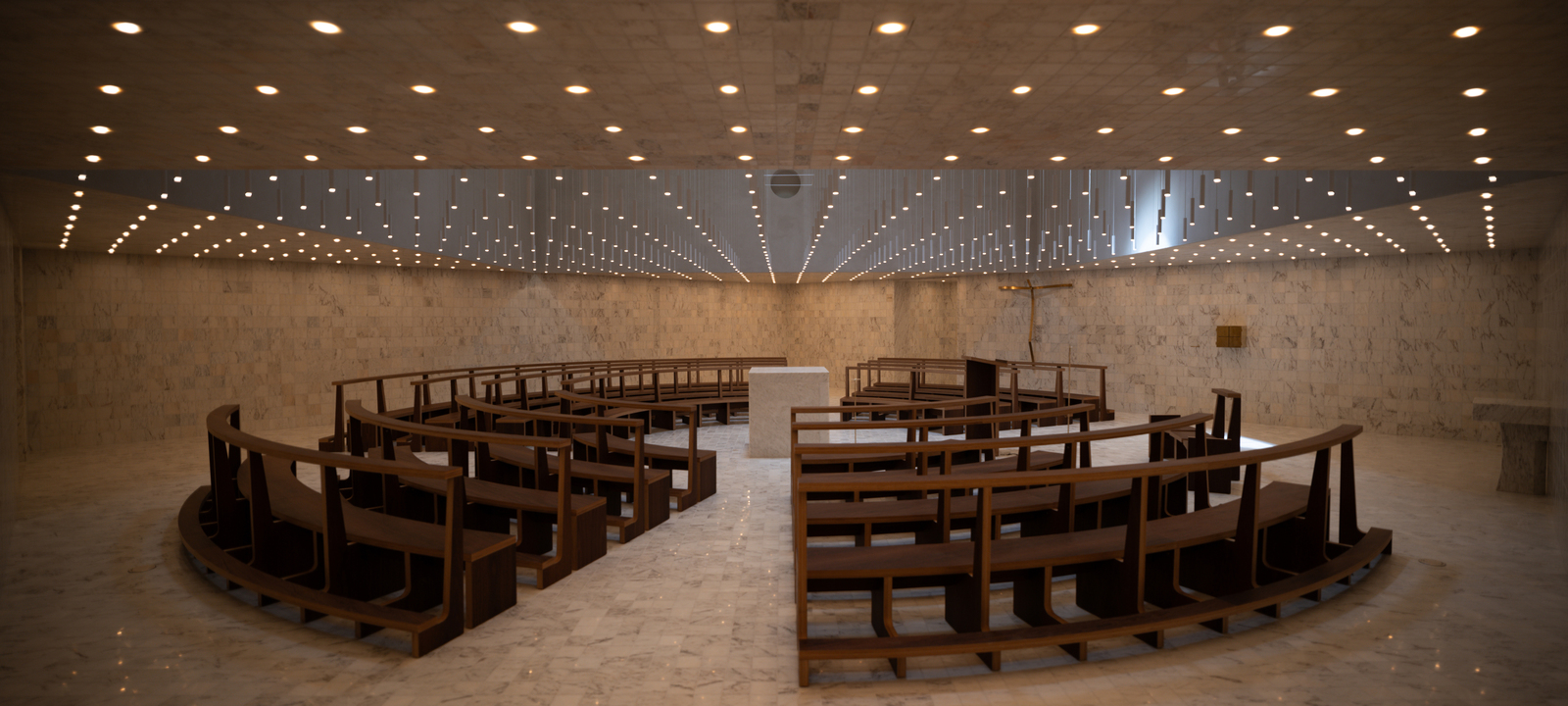
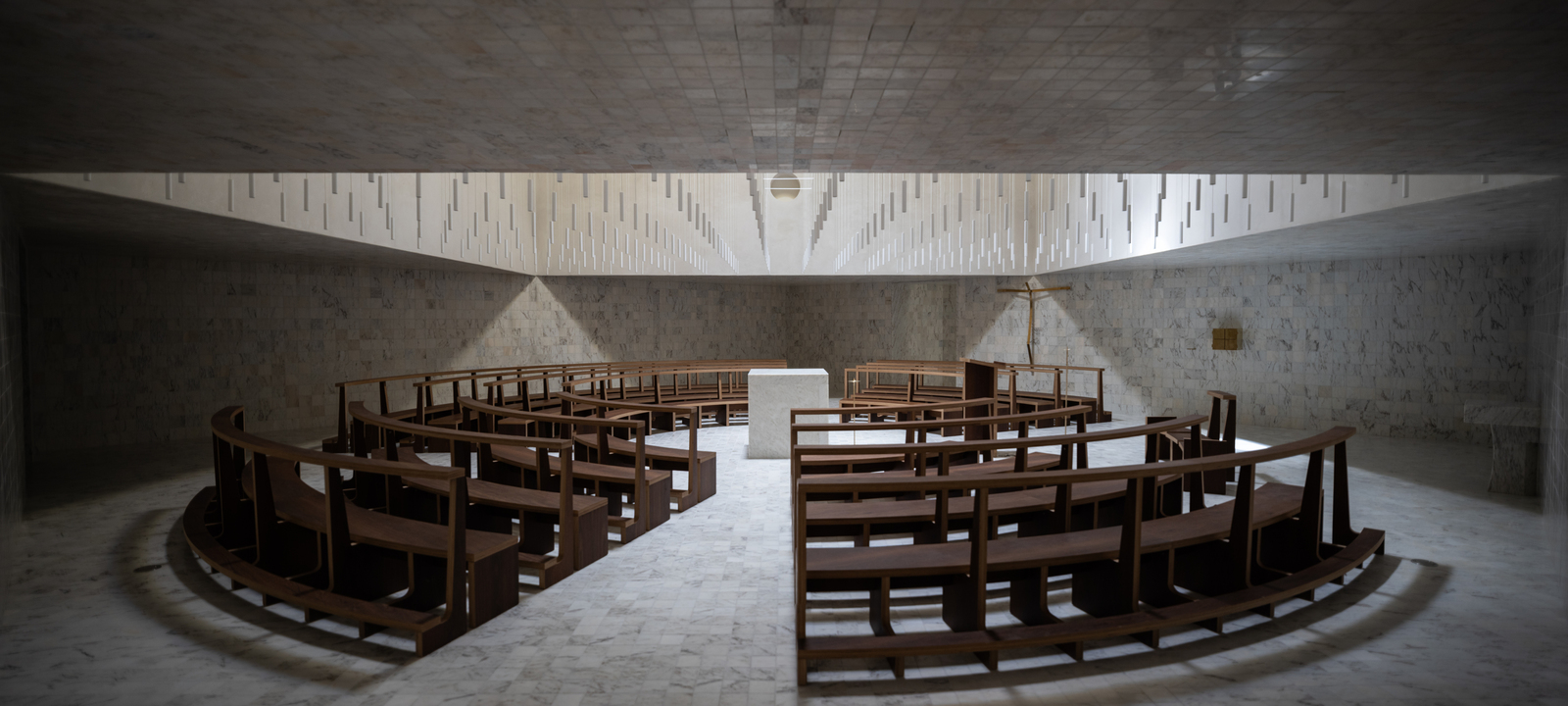
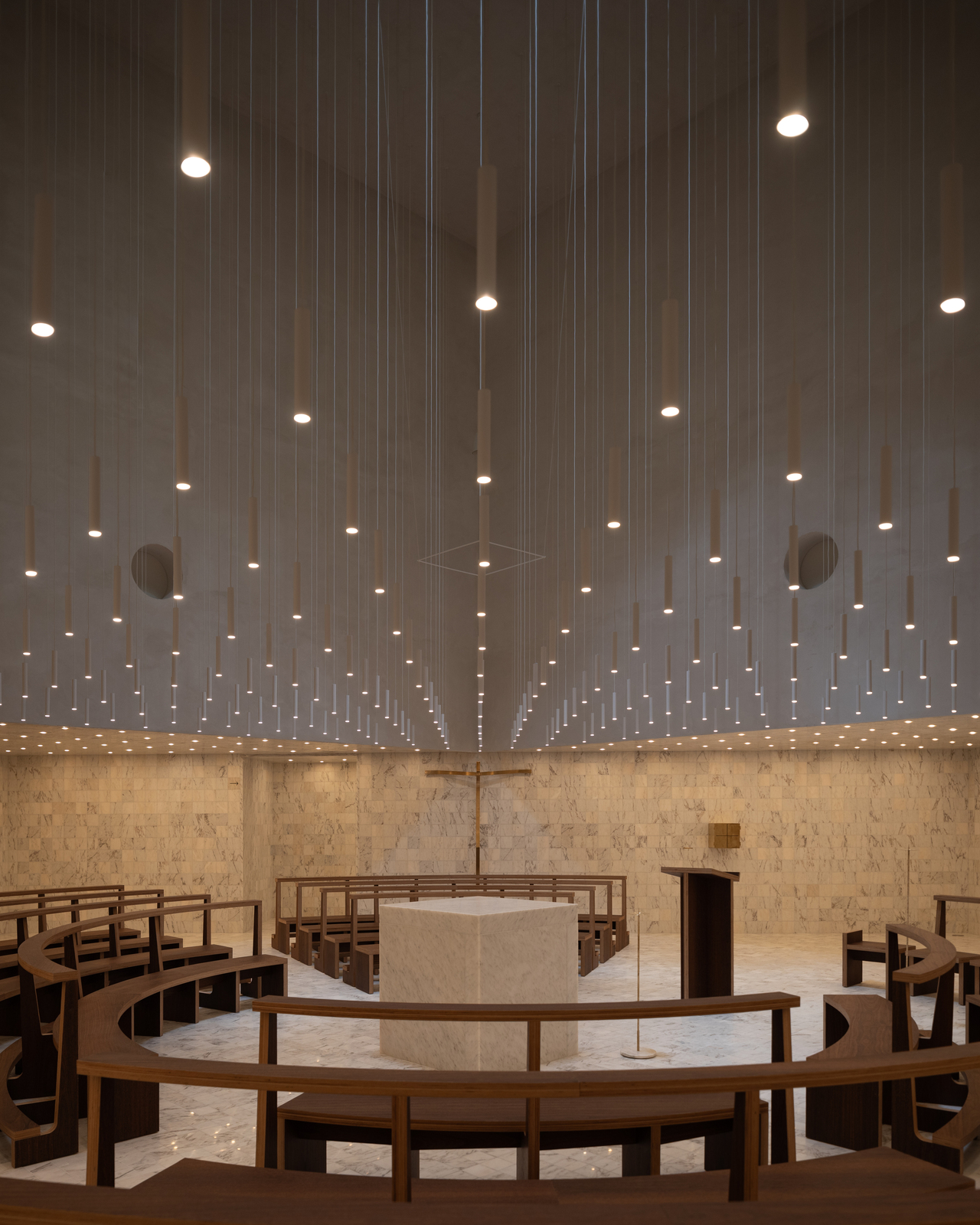
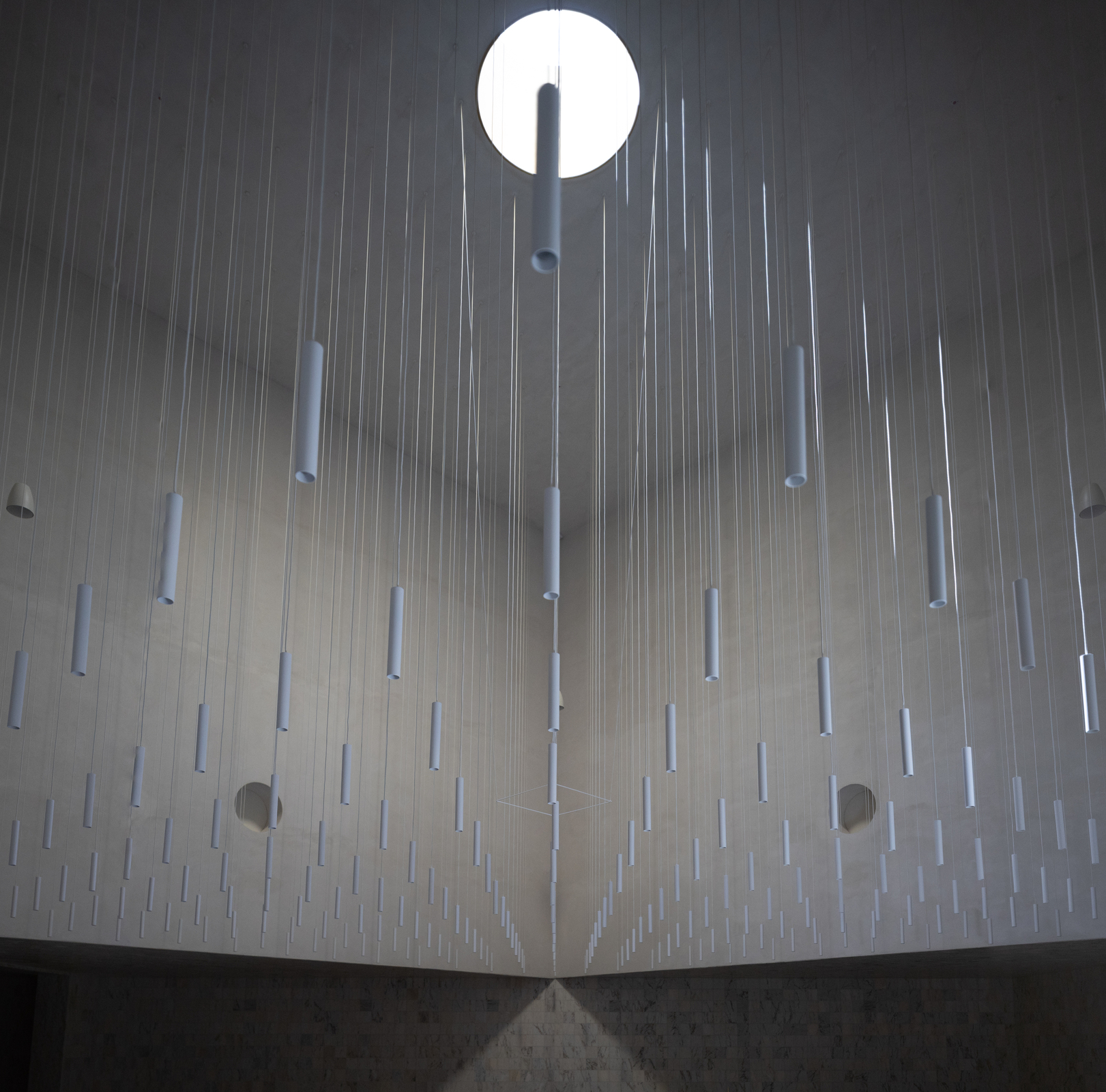
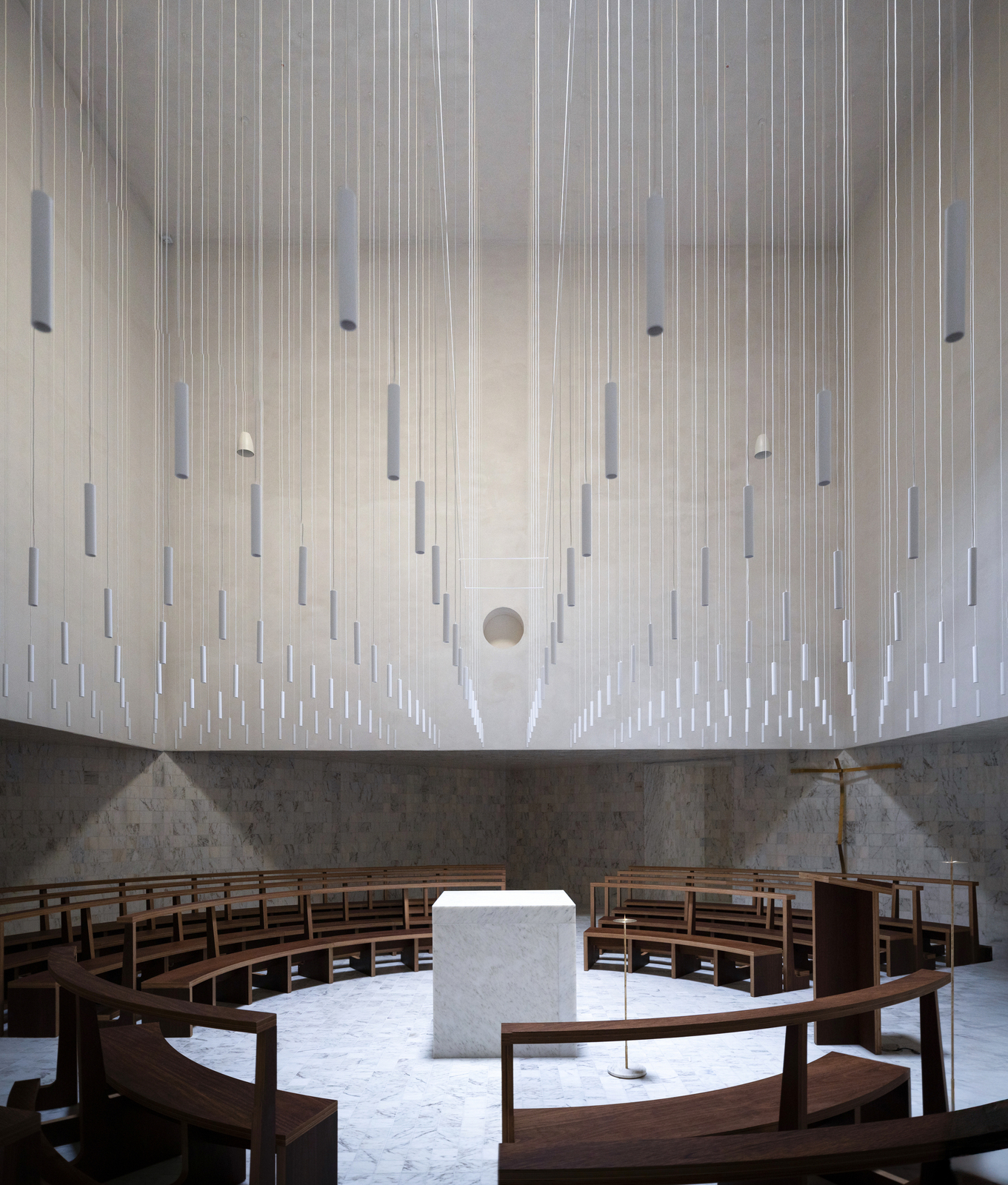
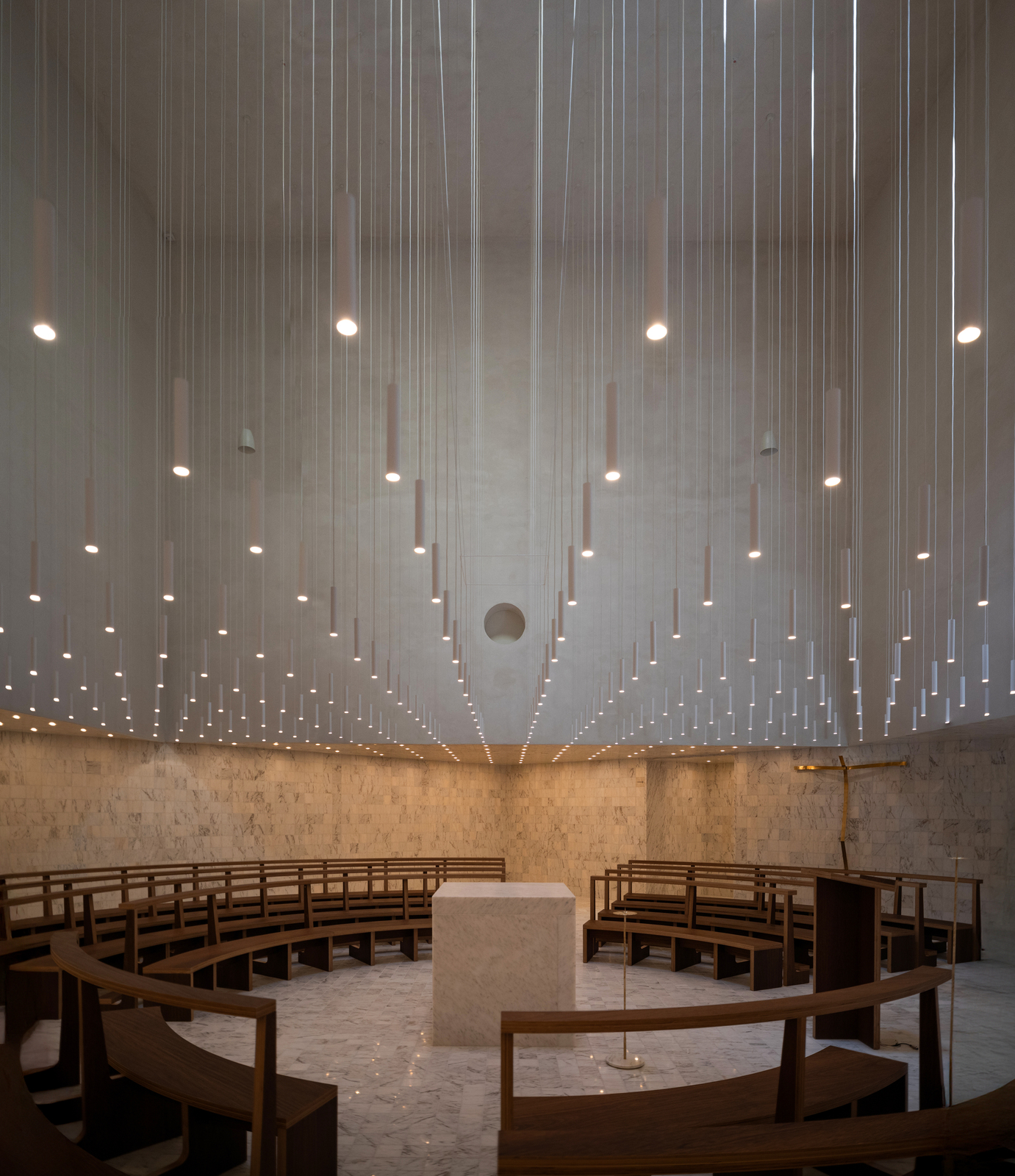
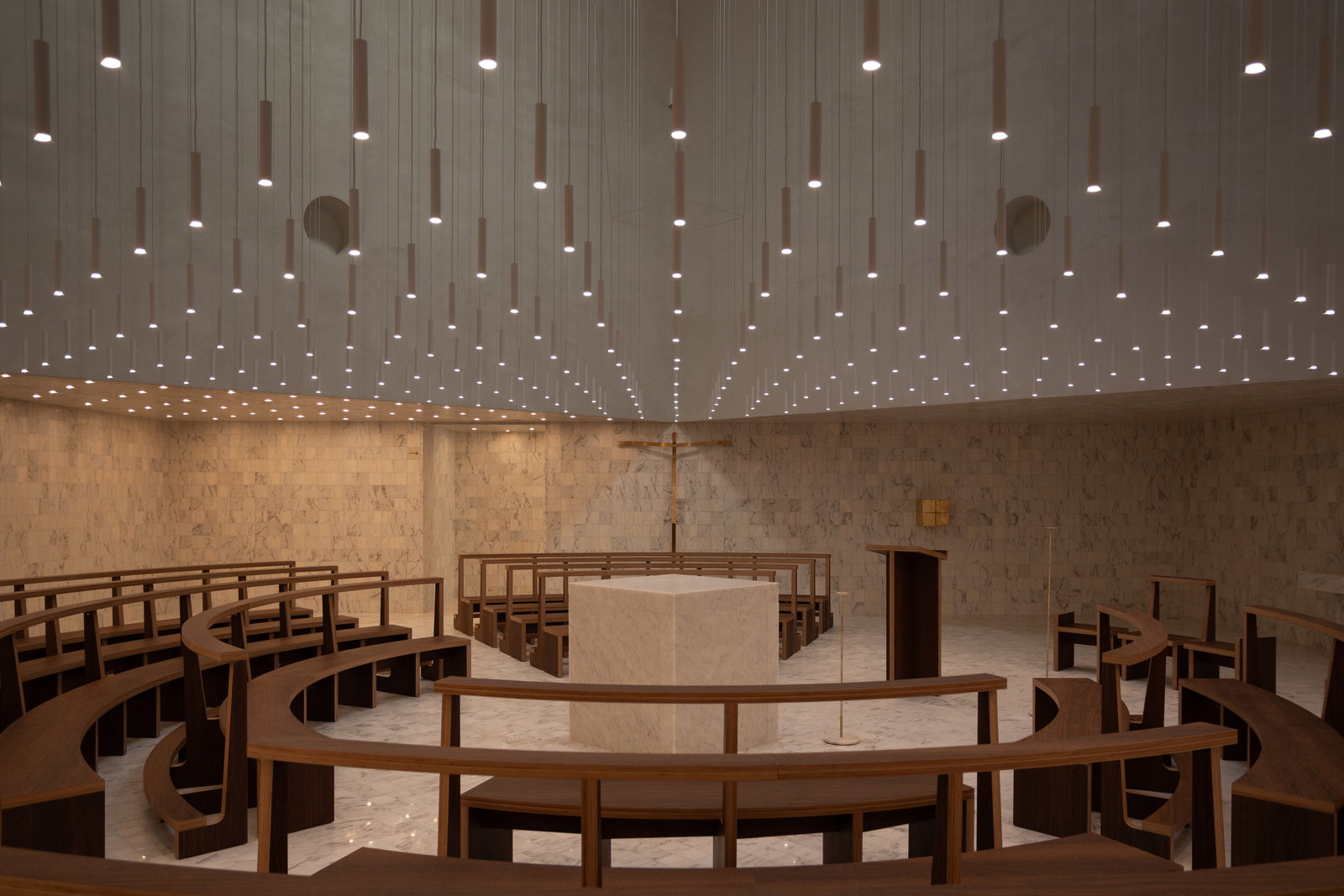
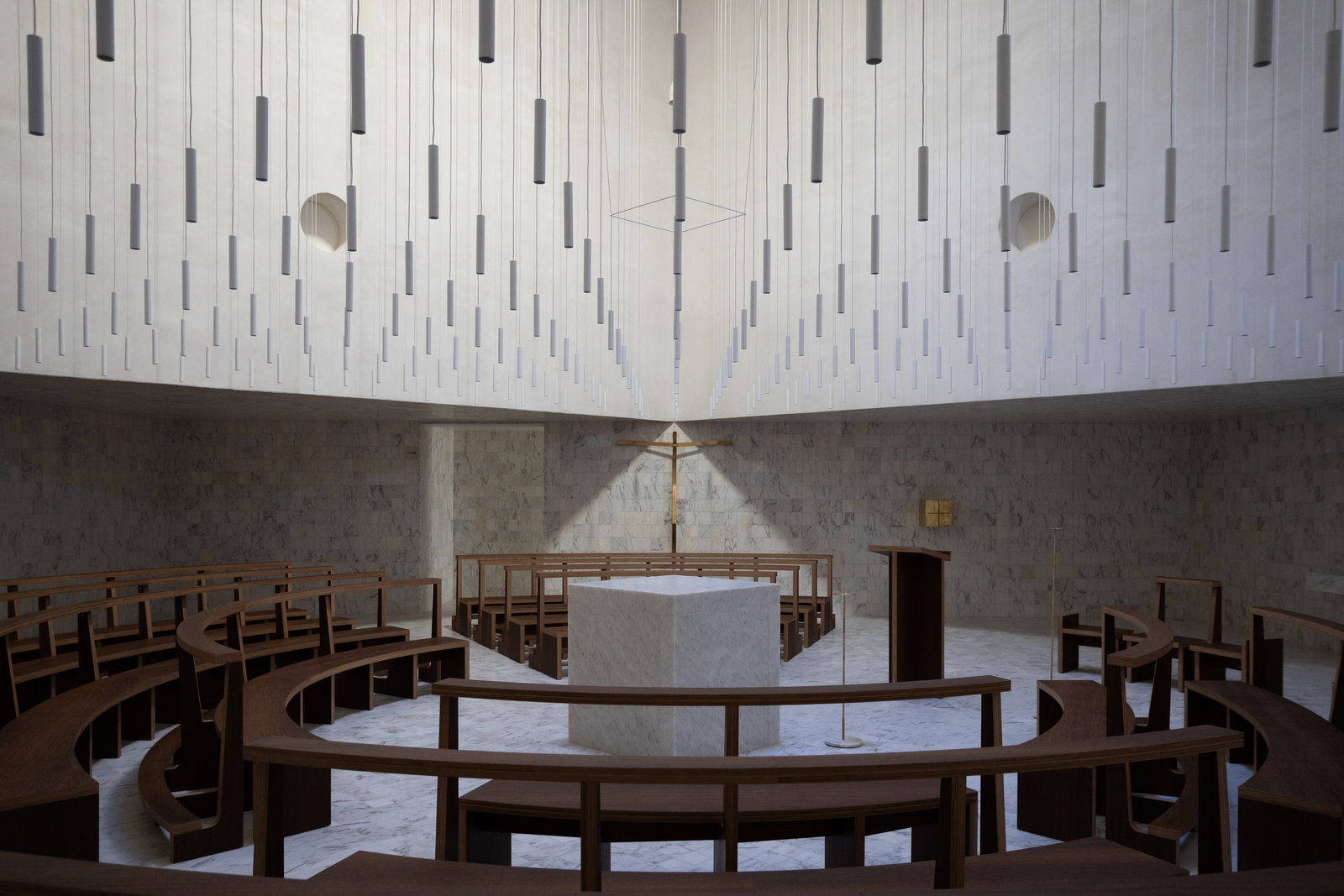
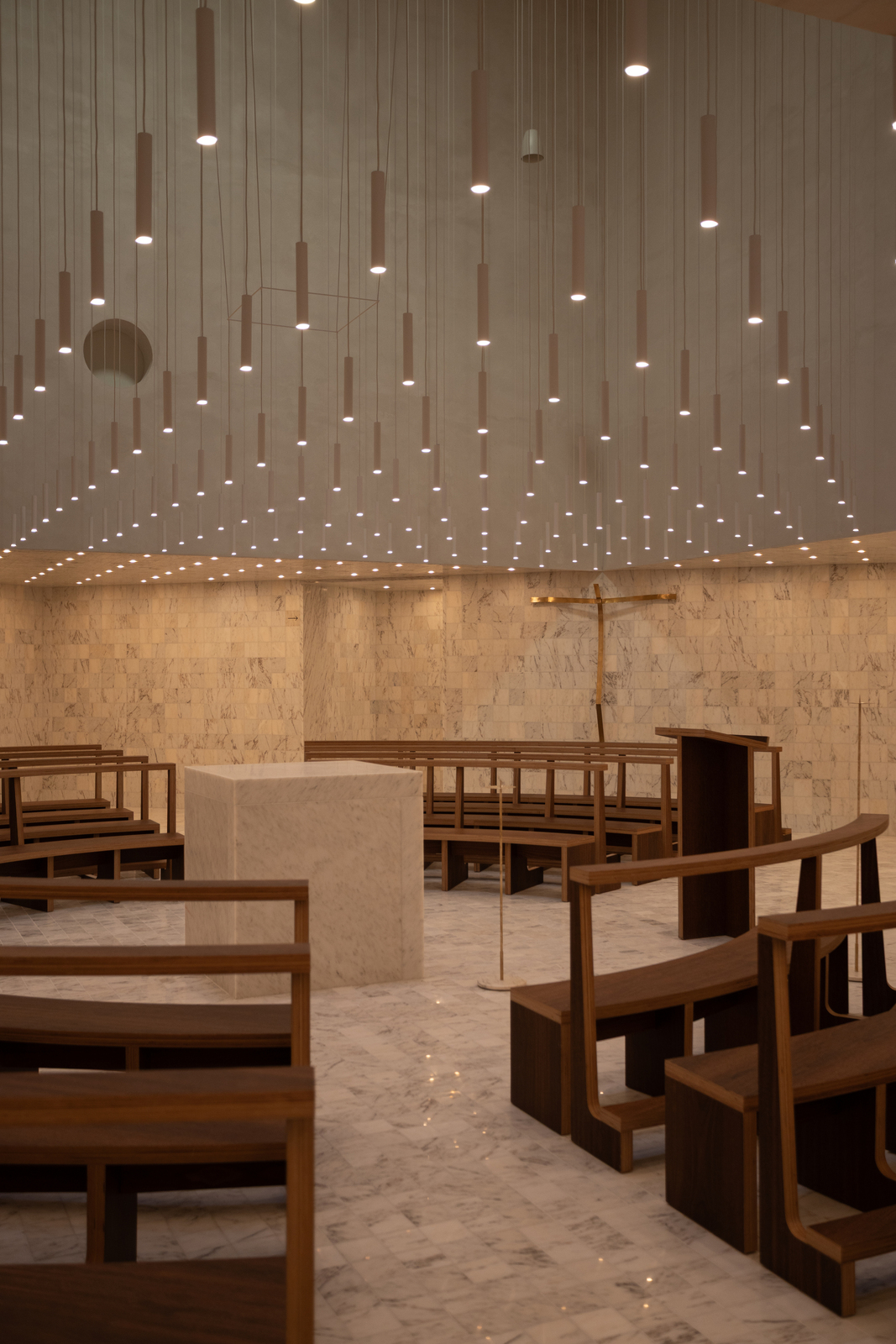
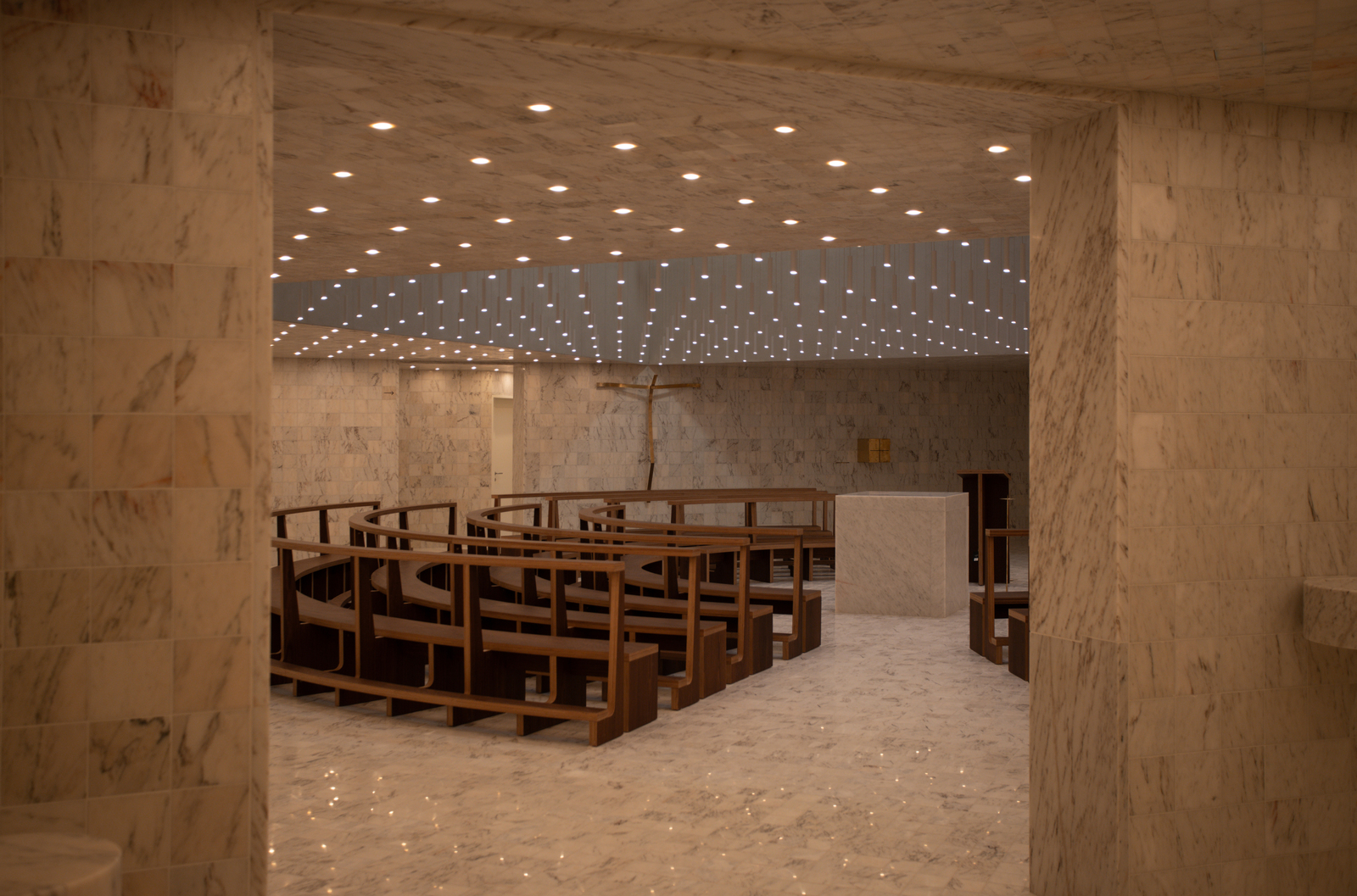
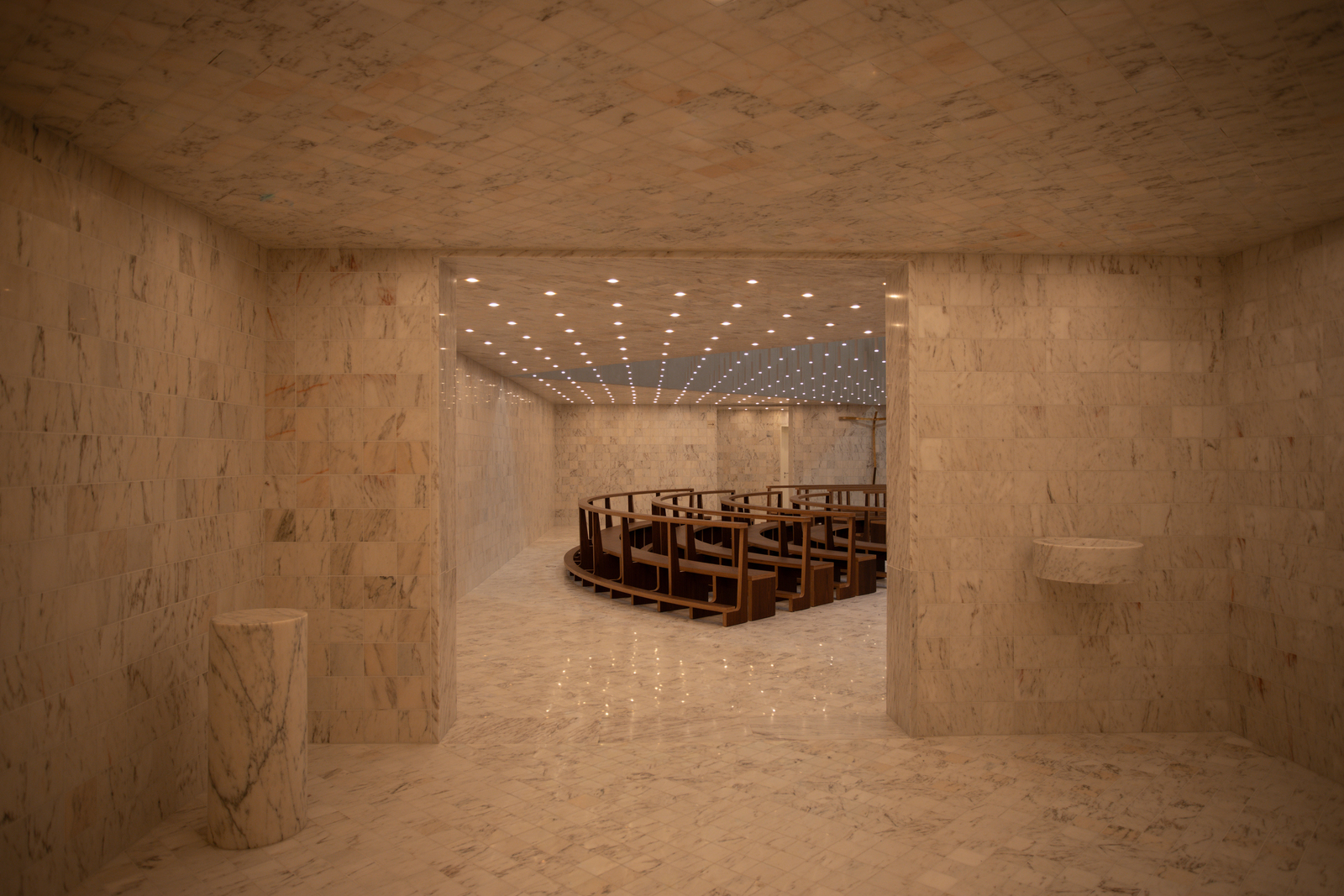
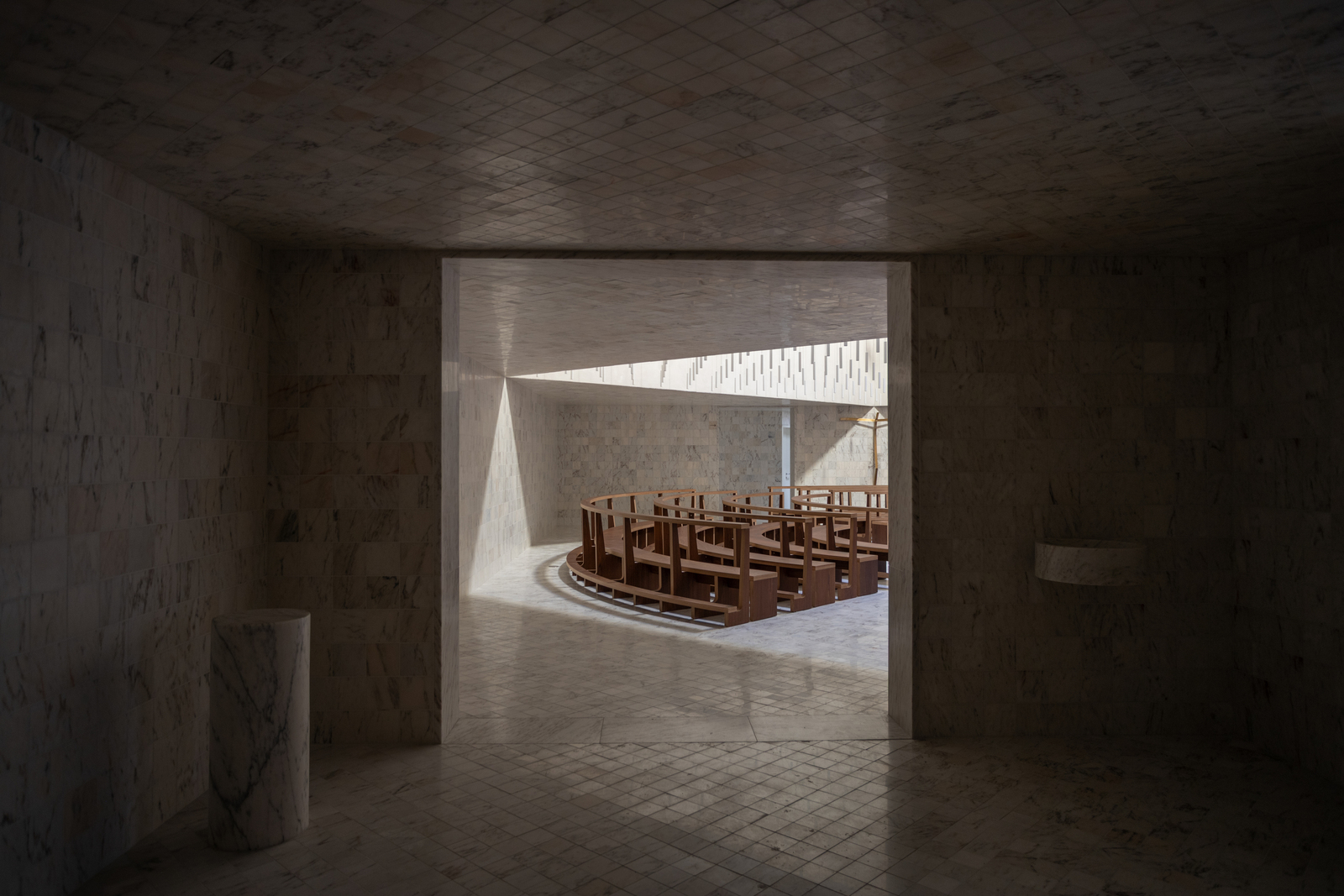
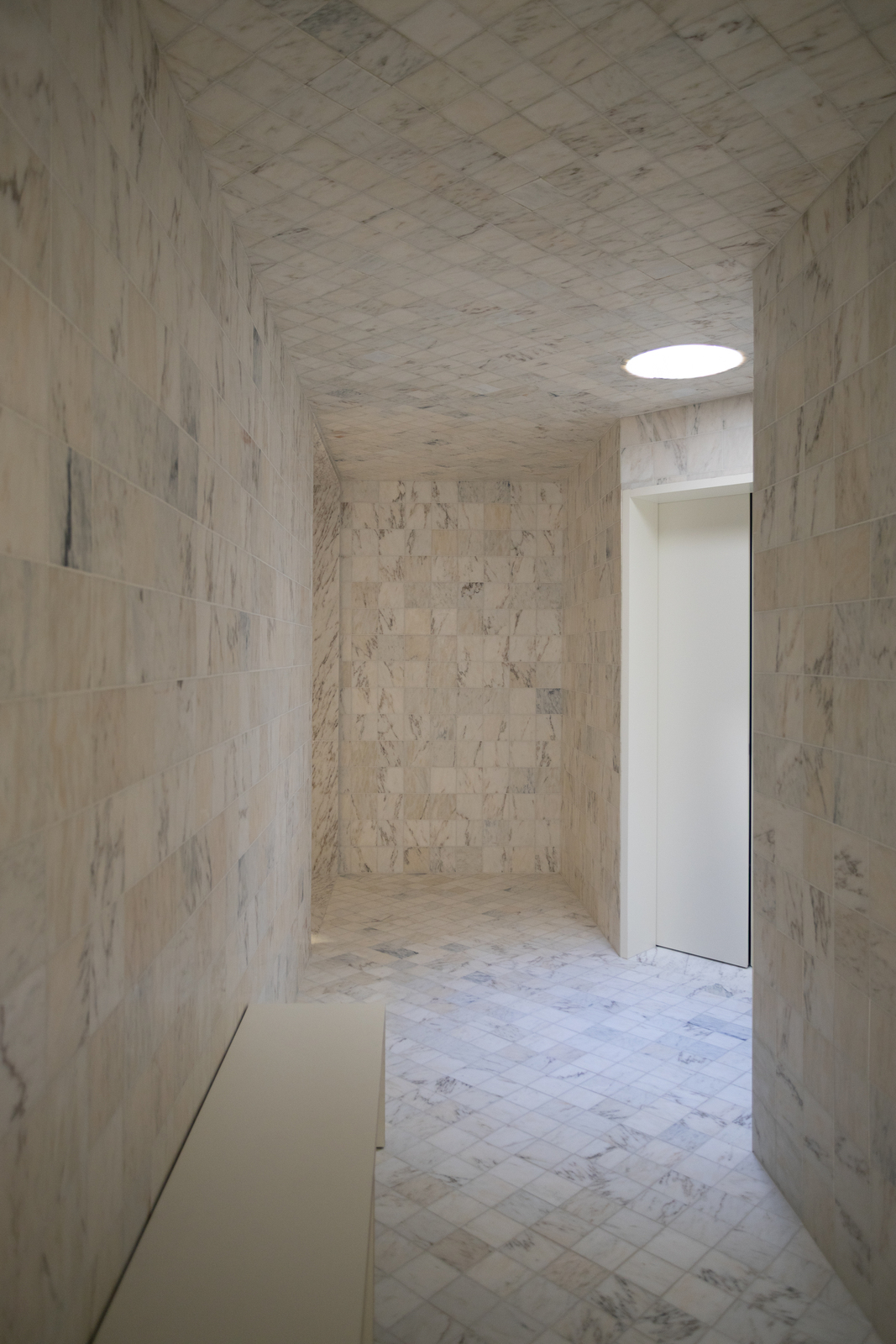
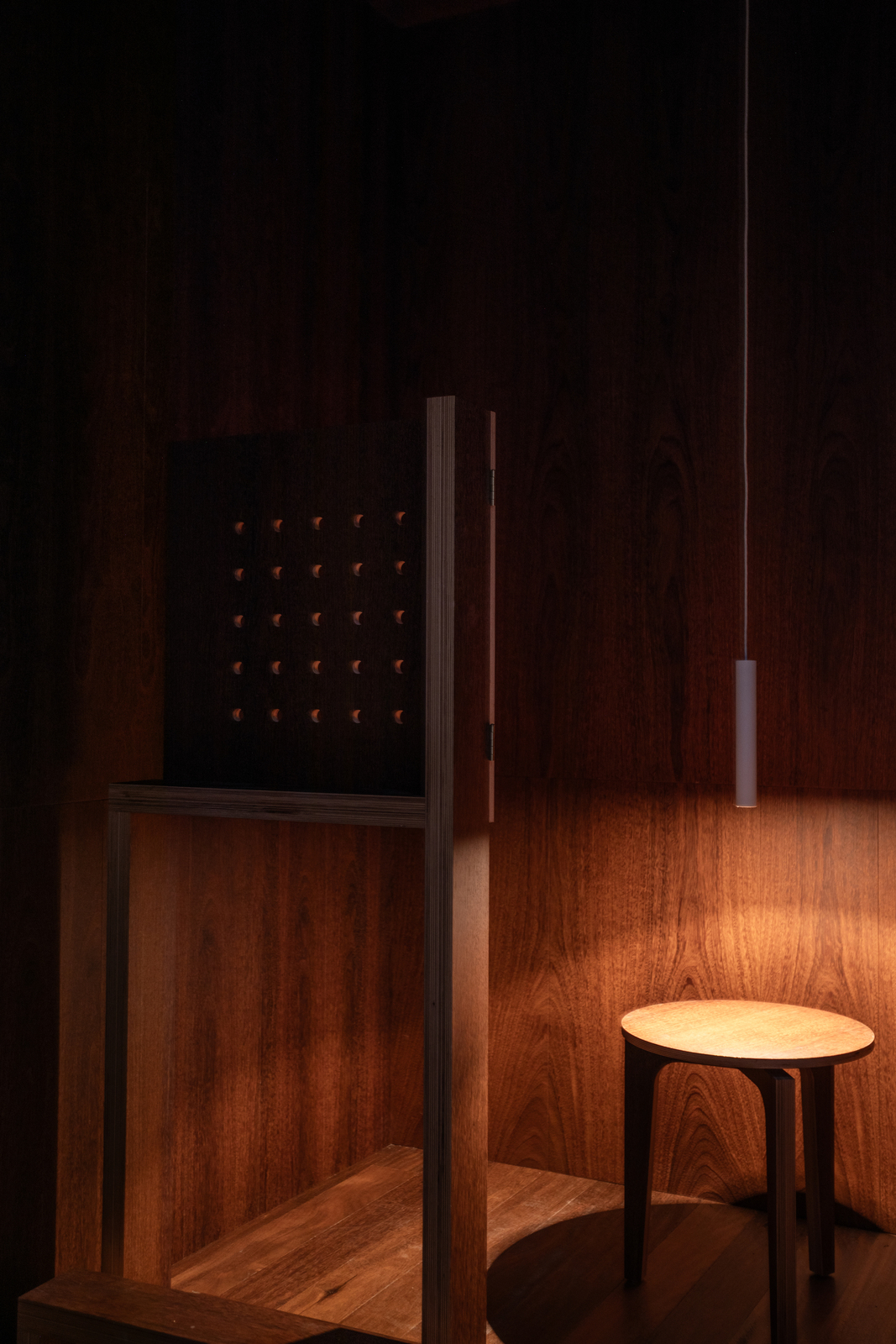
Within the nave, traditional ecclesiastical proportions are reinterpreted in alignment with the principles of the Second Vatican Council, eliminating strict separation between assembly and presbytery. Orientation toward the altar remains central, yet spatial configuration promotes proximity and participation. A measured verticality lends the interior a sense of ascension, while a clear hierarchy distinguishes the main nave from the more secluded side nave, which accommodates the baptistery at the entrance and the confessional at the opposite end. Through this calibrated spatial order, the project reconciles symbolic resonance with contemporary liturgical practice.
Project Gallery
Project Location
Address: Lisbon, Portugal
The location specified is intended for general reference and may denote a city or country, but it does not identify a precise address.

