

Architects: AAA Office
Area: 3,200 m²
Year: 2023
Photography: Barbara Rossi, Alessandro Gattara, Roberto Conte
Architects Team: Lucio Serpagli, Italo Jemmi, Alessandro Gattara
Civil & Structural Engineering: Giuseppe Stefanini, Paolo Bertozzi, Luca Marchini
Fluid & Thermal Engineering: Davide Malaguti
Client: Municipality of Sissa Trecasali (Paolo Bonoli, responsible)
City: Parma
Country: Italy
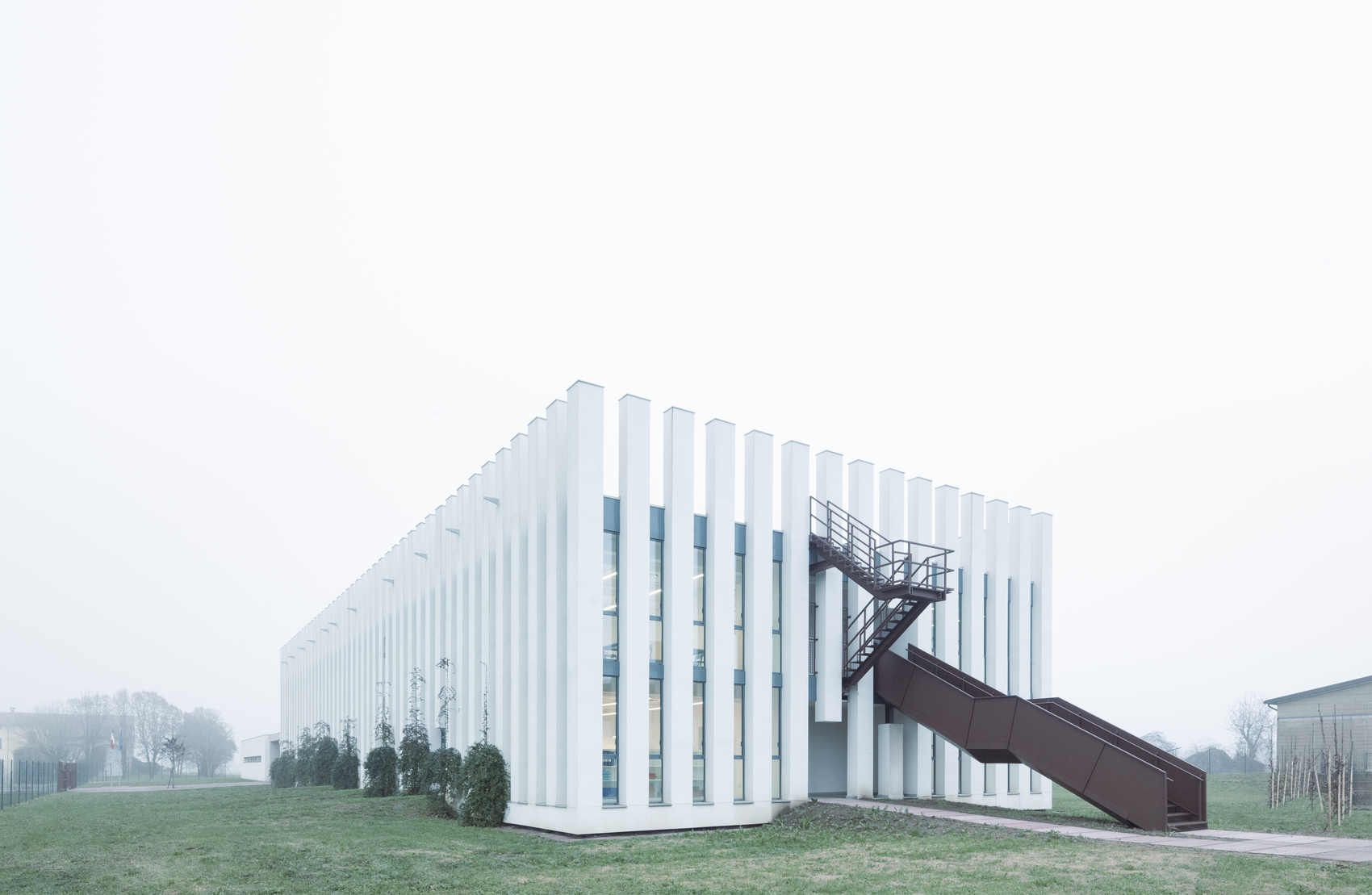
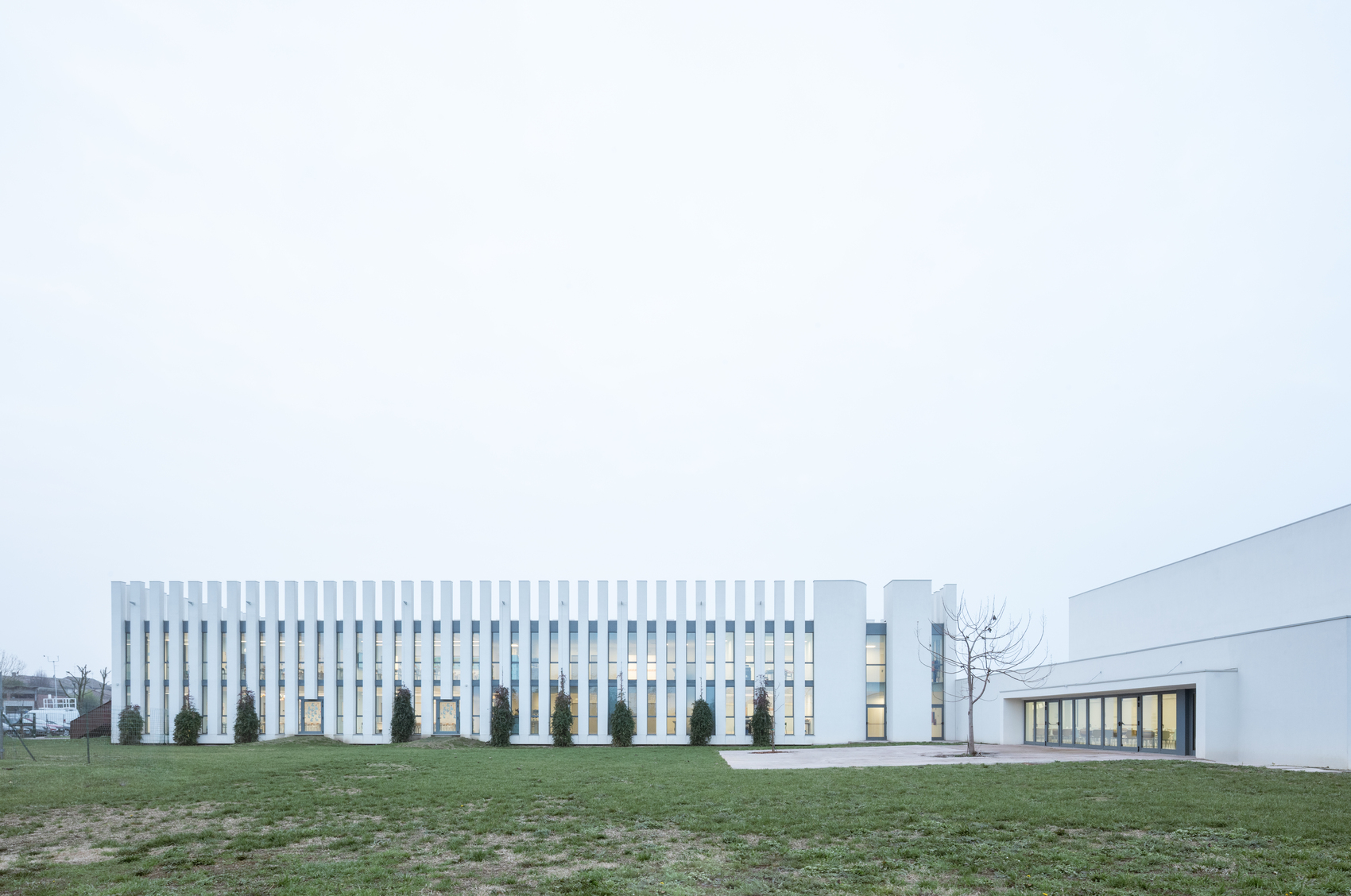
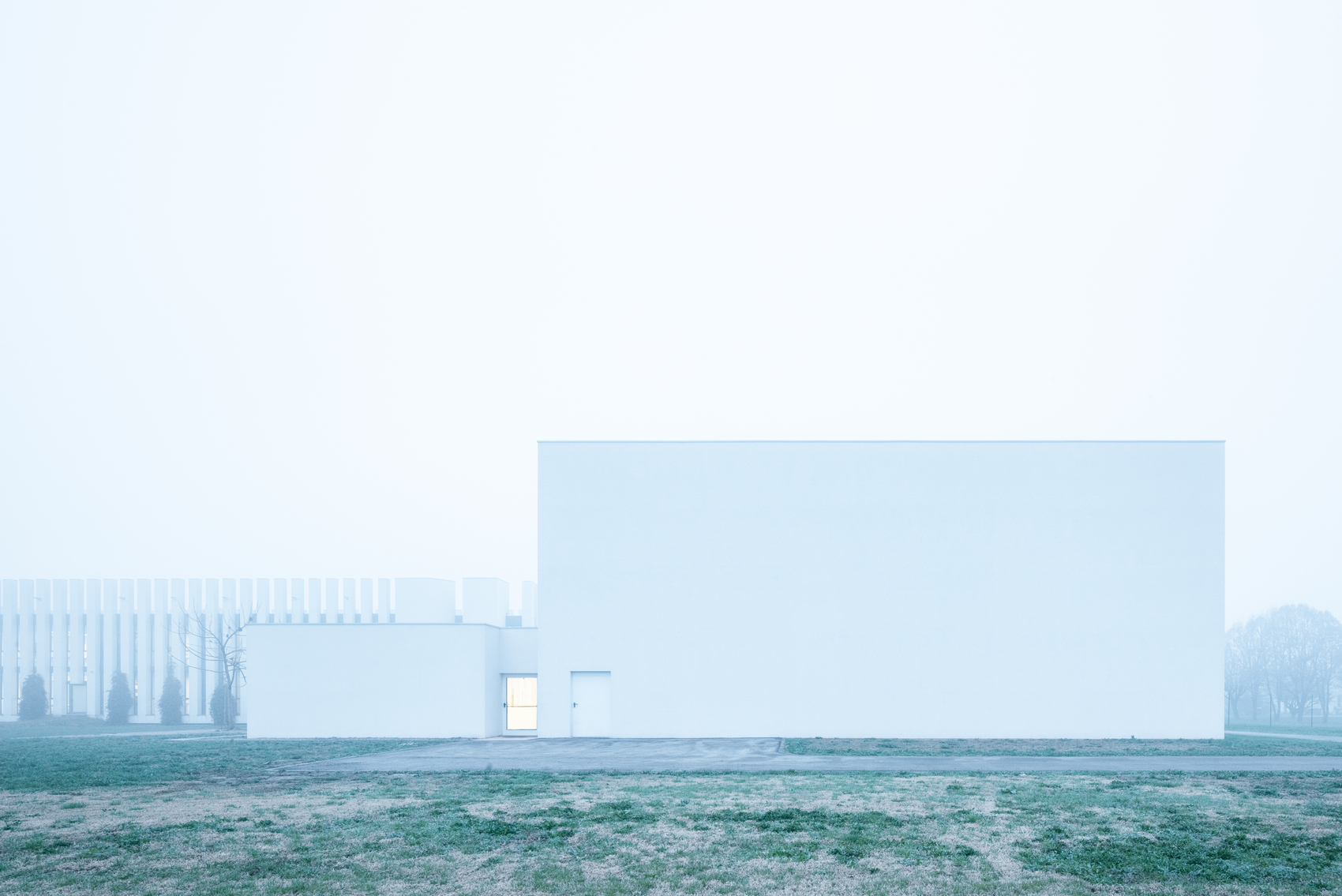
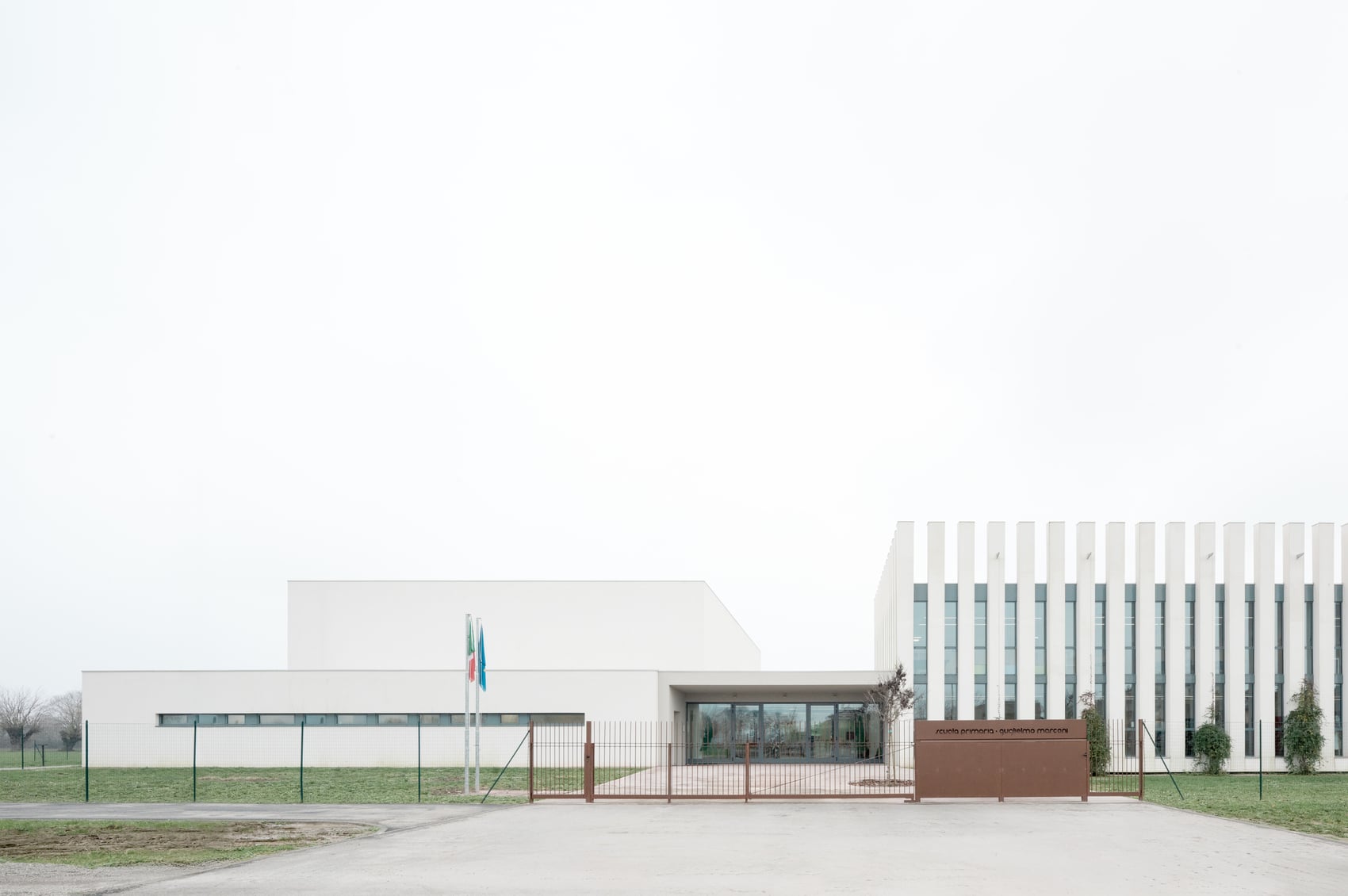
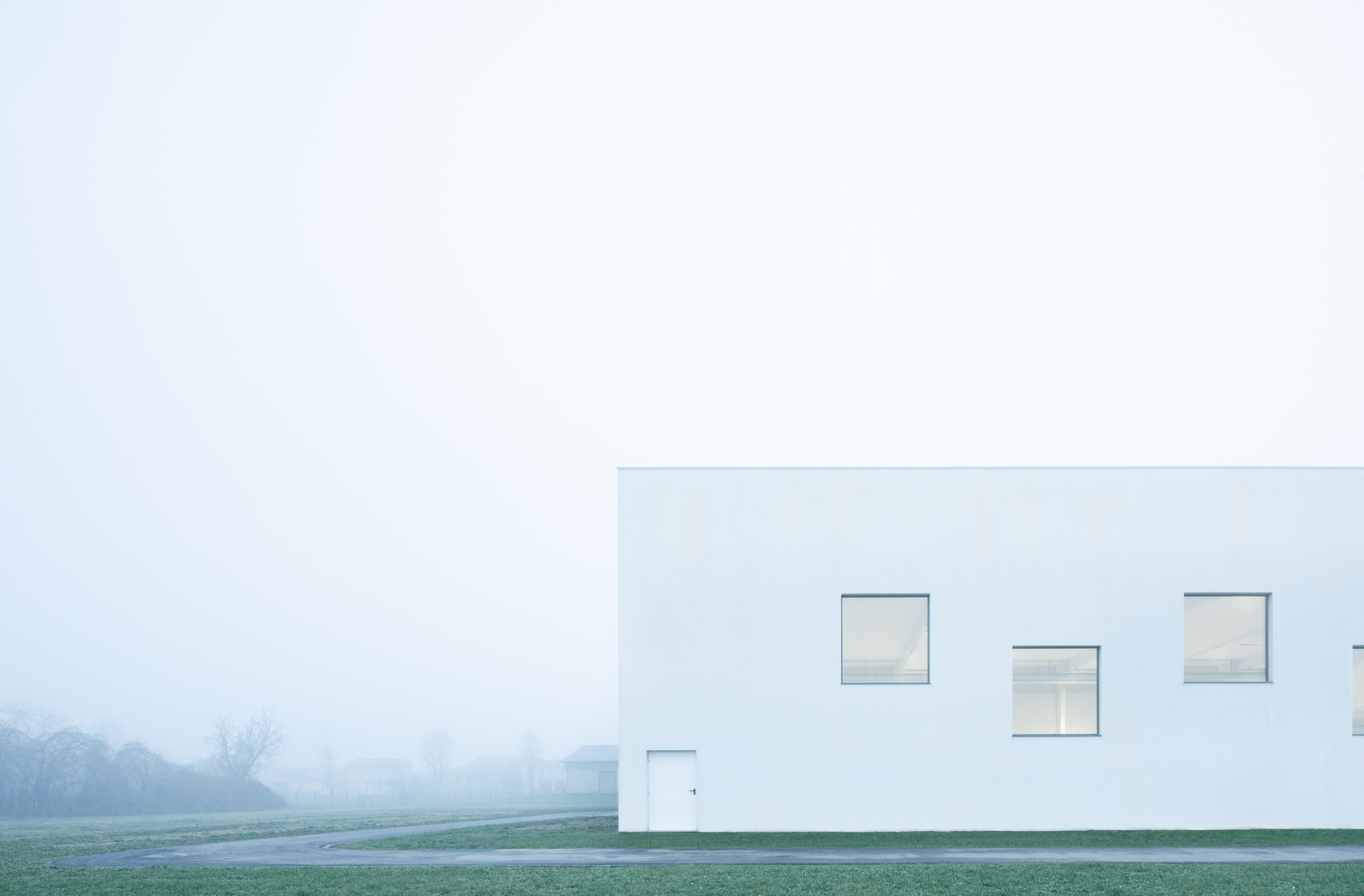
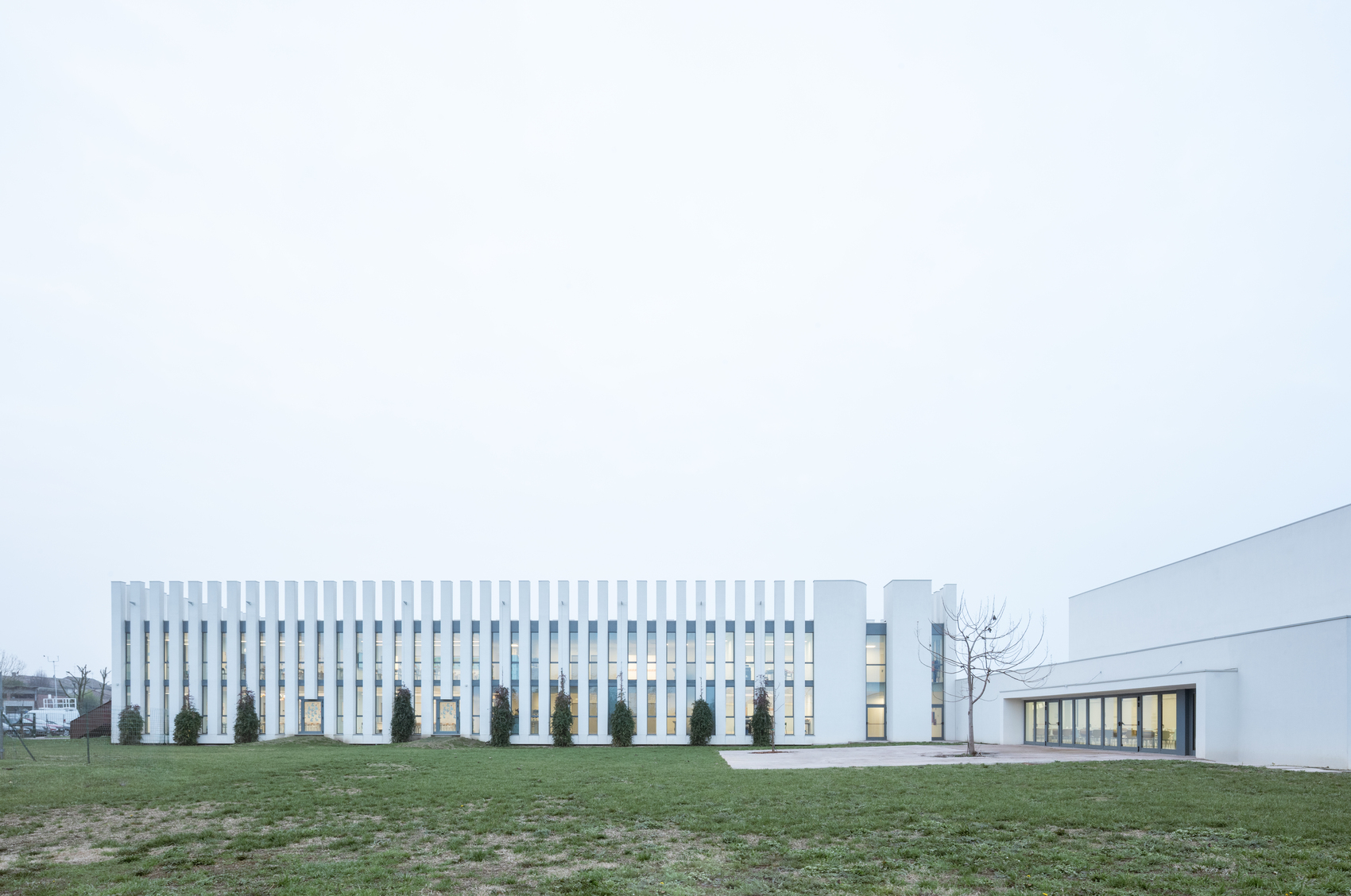
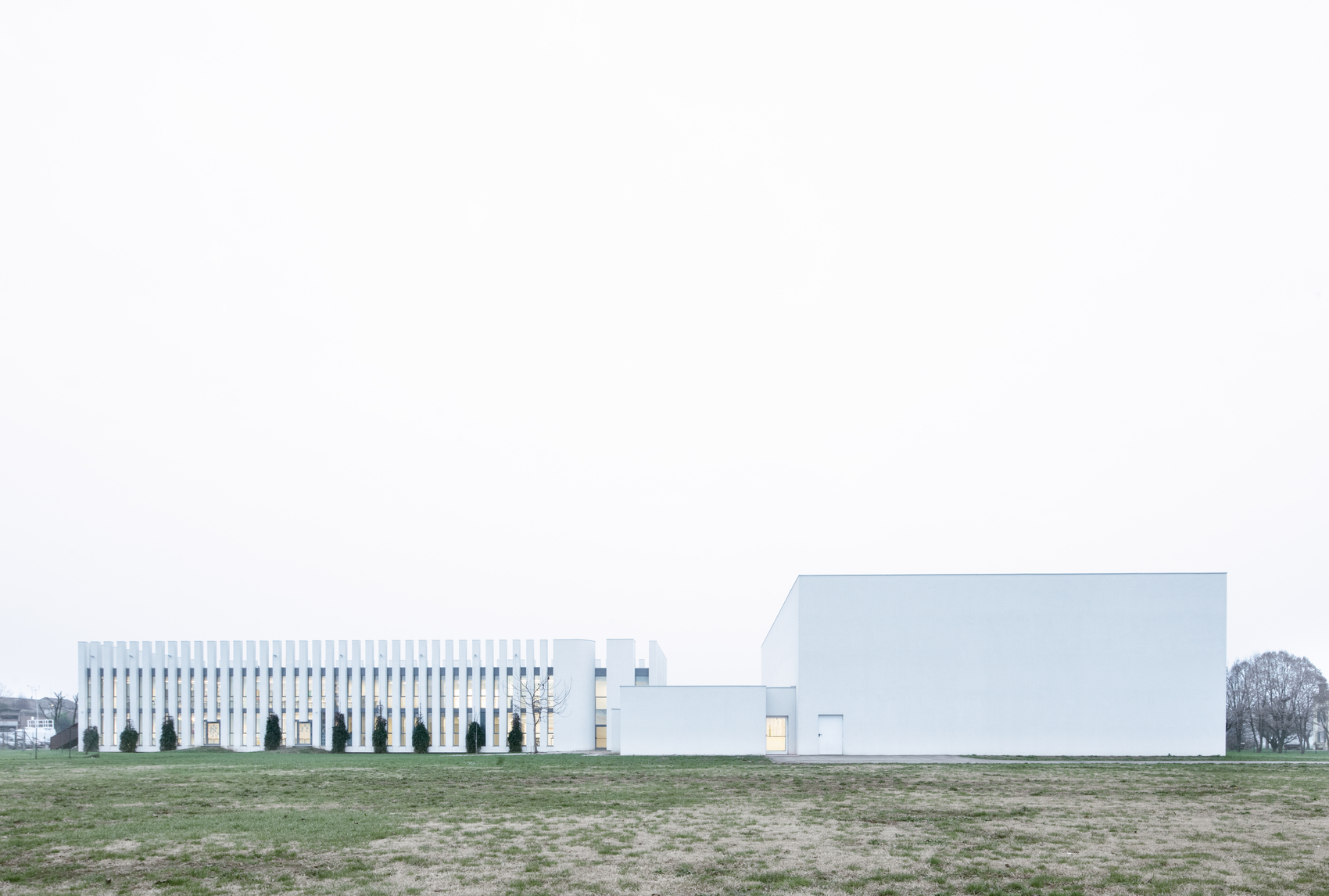
The Sissa School Complex (Guglielmo Marconi Primary School), designed by the AAA Office led by Lucio Serpagli, was completed in 2023. It introduces a contemporary educational environment that responds directly to the agricultural landscape of Italy’s lower Emilian plain. Occupying 3,200 square meters, the two-story facility accommodates up to 250 students through a program that includes classrooms, adaptable laboratories, a cafeteria, and a gymnasium that also serves the wider community. The project organizes these functions into distinct architectural volumes, establishing clarity of circulation while reinforcing a strong relationship with the surrounding countryside. Large vertical windows maximize daylight and connect interior spaces with the landscape, while exposed timber construction and prefabricated cross-laminated timber panels support efficient, sustainable building methods. Outdoor learning areas, expanded gardens, and vegetated façades contribute to environmental comfort and encourage interaction with nature. Together, these strategies create a flexible and durable educational setting that balances environmental performance, user well-being, and architectural expression within a civic building designed to serve both students and the local community.
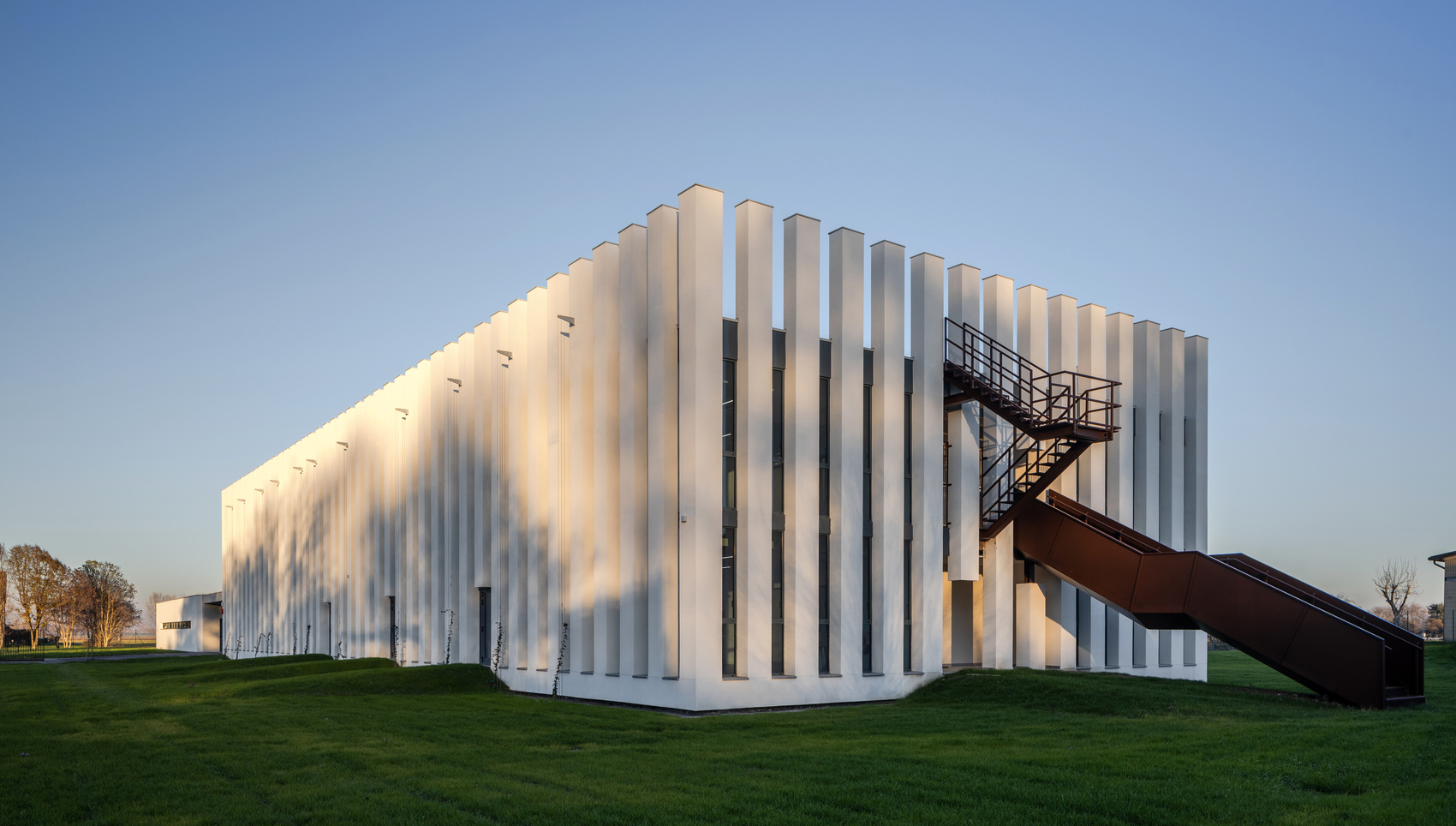
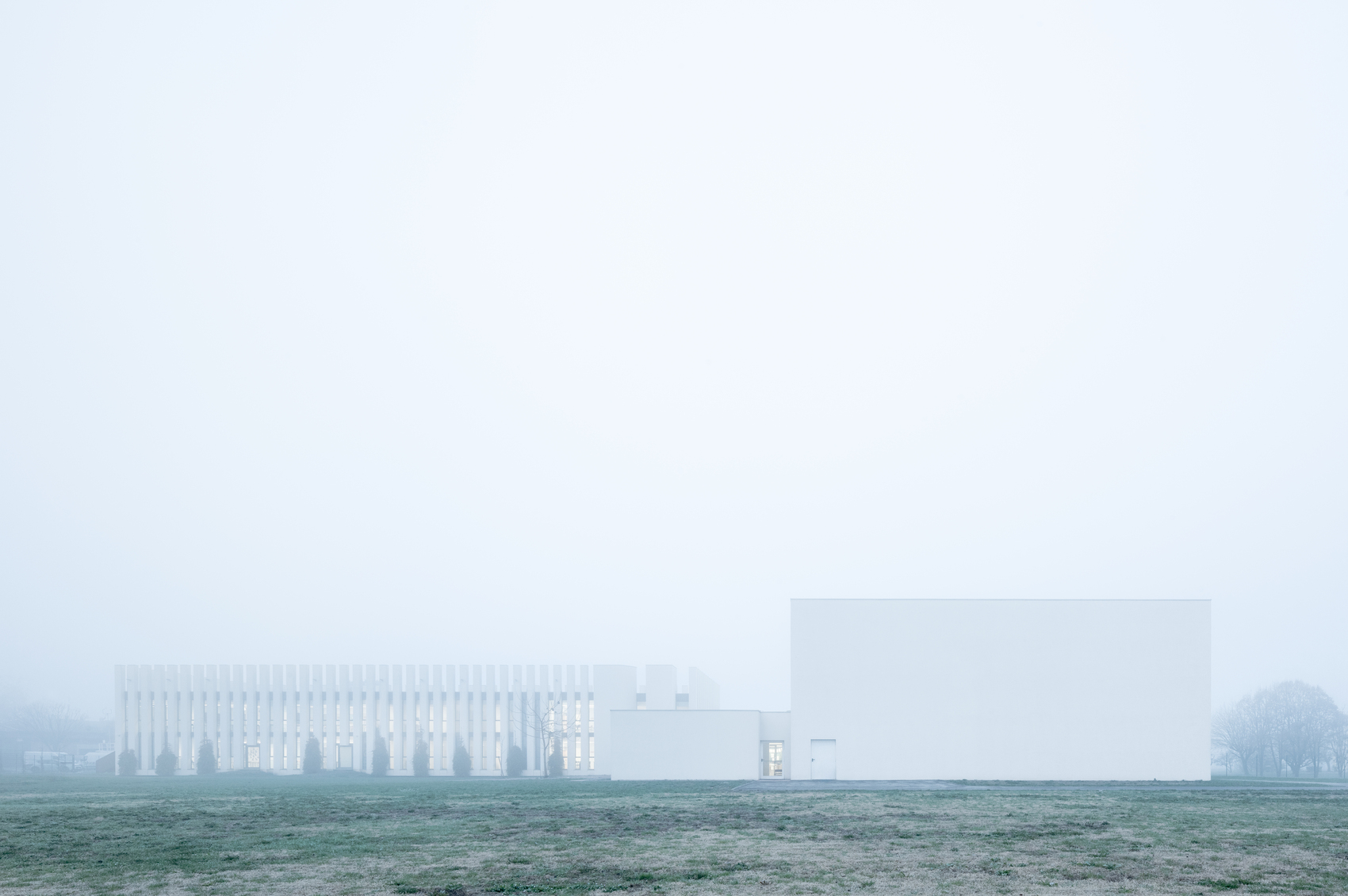
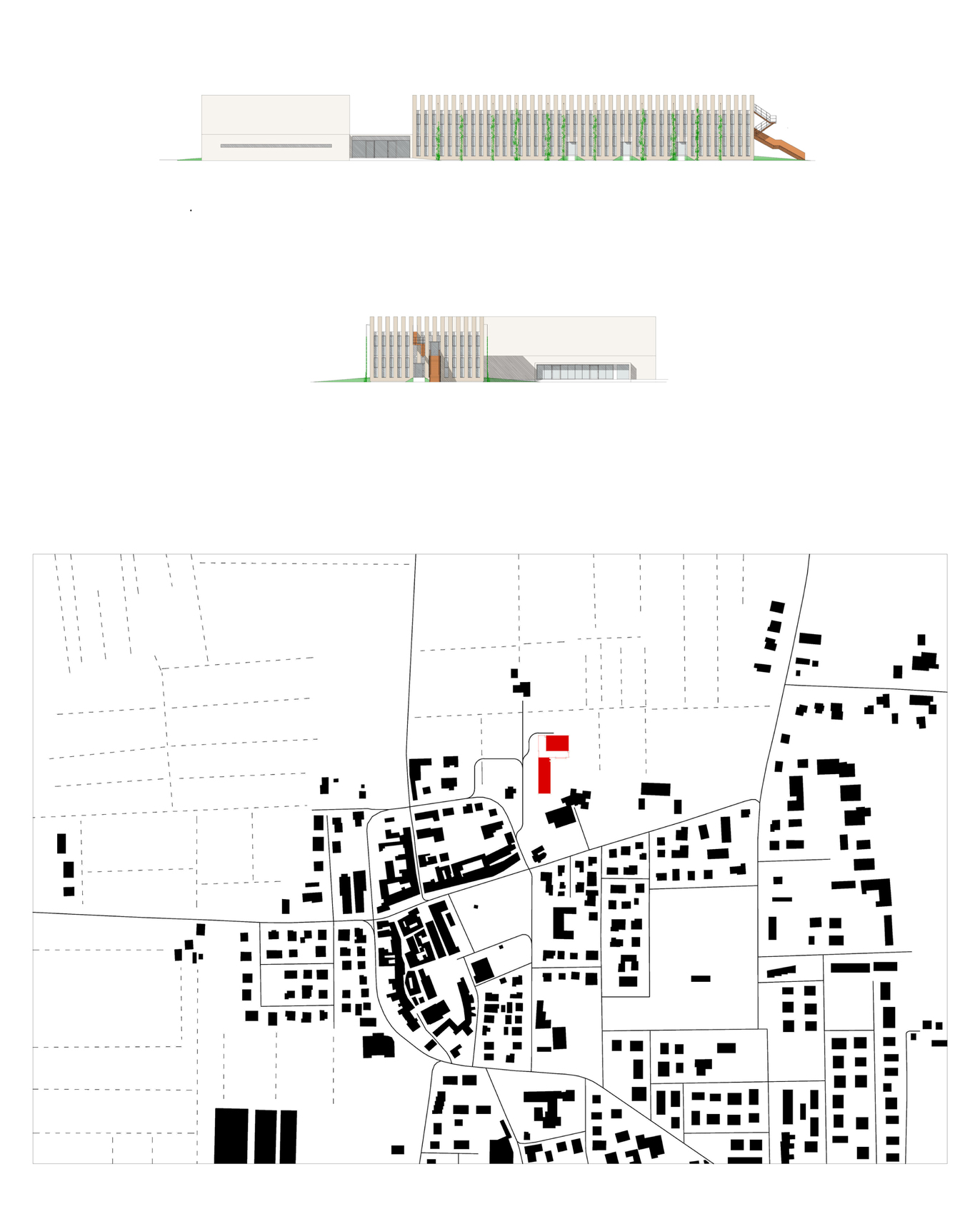
The Sissa School Complex is situated on a transitional site where the urban edge of Sissa gives way to the cultivated fields of the lower Emilian plain. Rather than establishing a dominant institutional presence, the project adopts an architectural language that reflects the rhythms and textures of the surrounding landscape. This contextual approach guided the redesign developed during the executive phase, refining the original competition proposal through adjustments to proportions, construction systems, and detailing while maintaining its principal objectives.
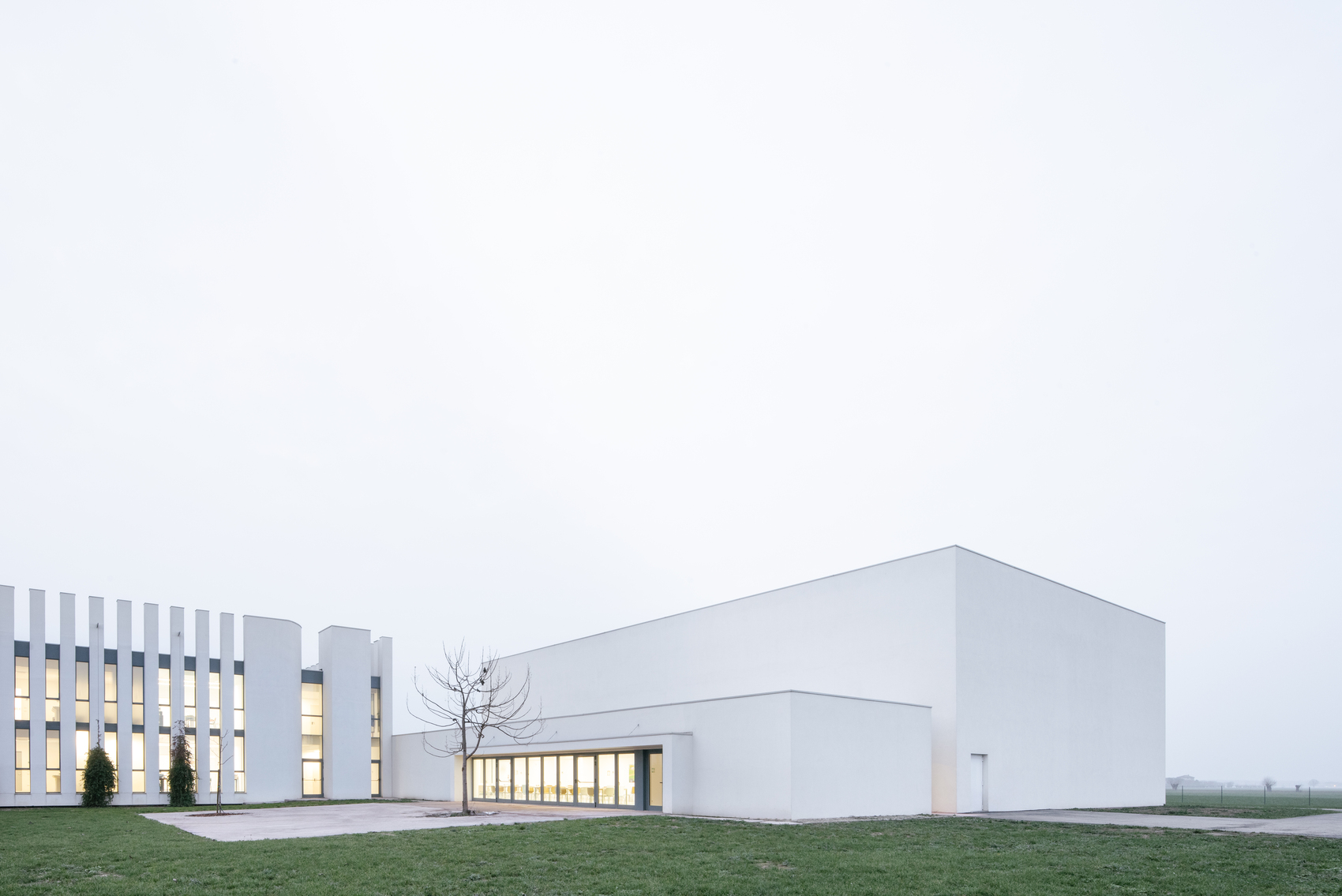
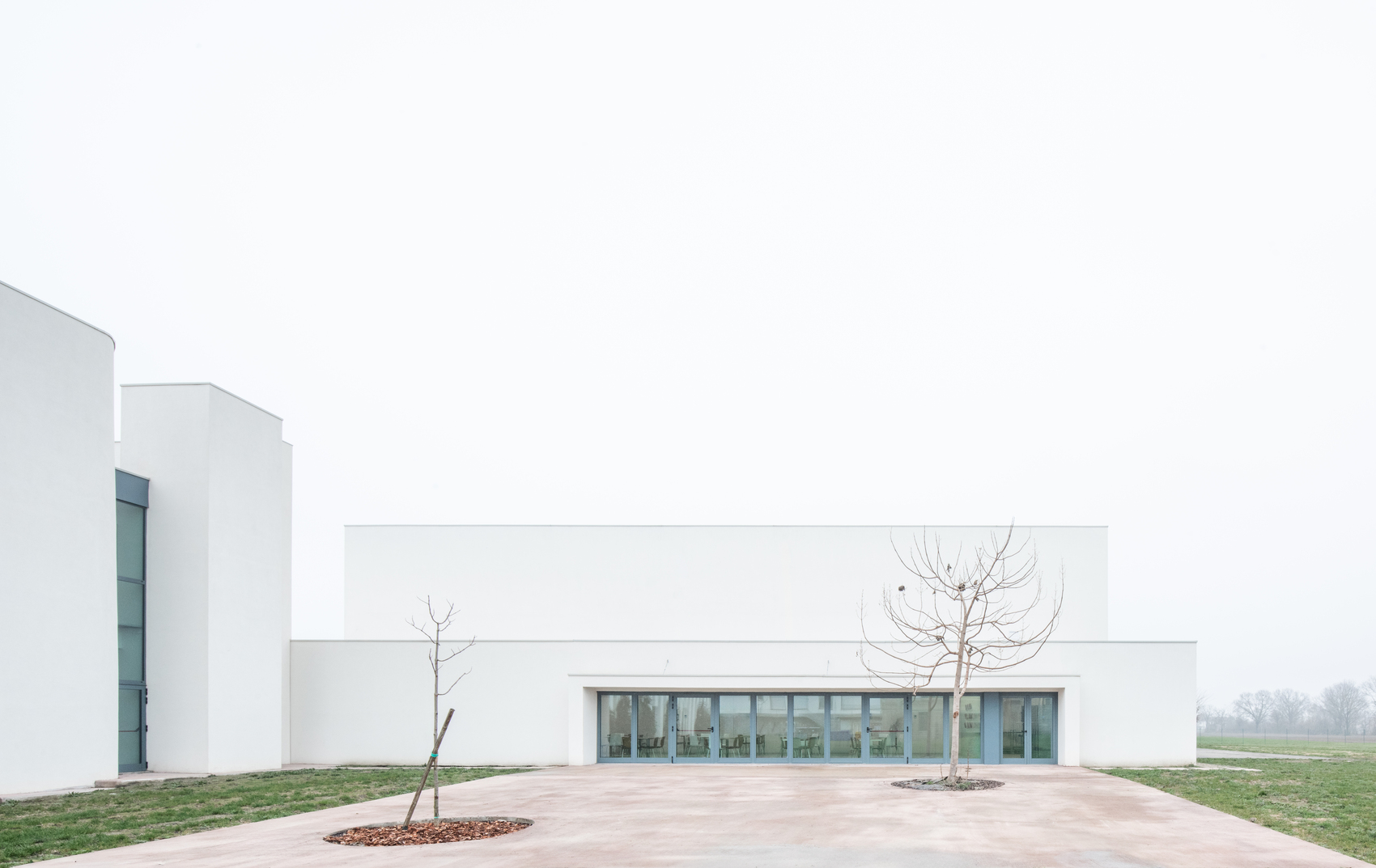
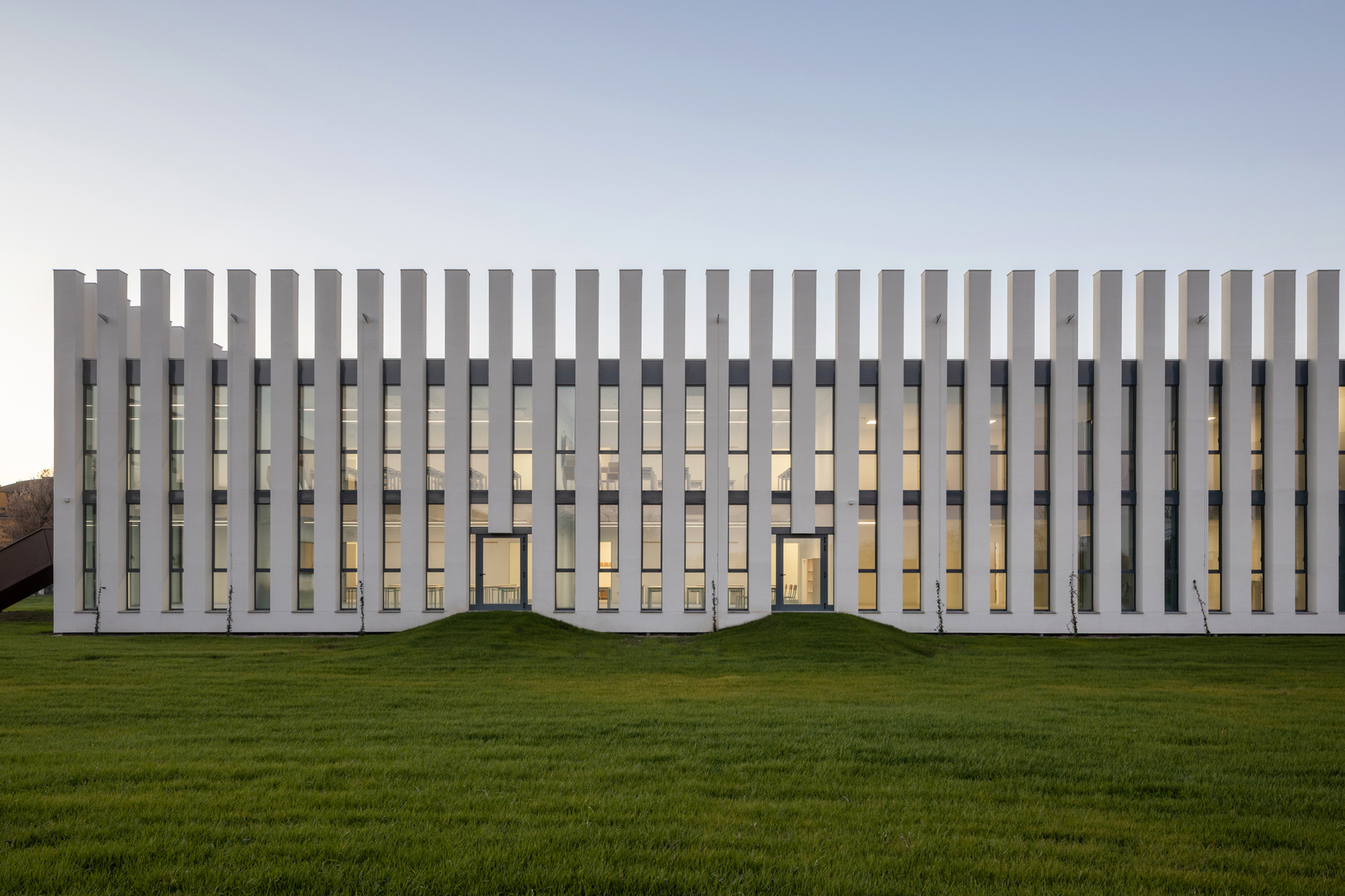
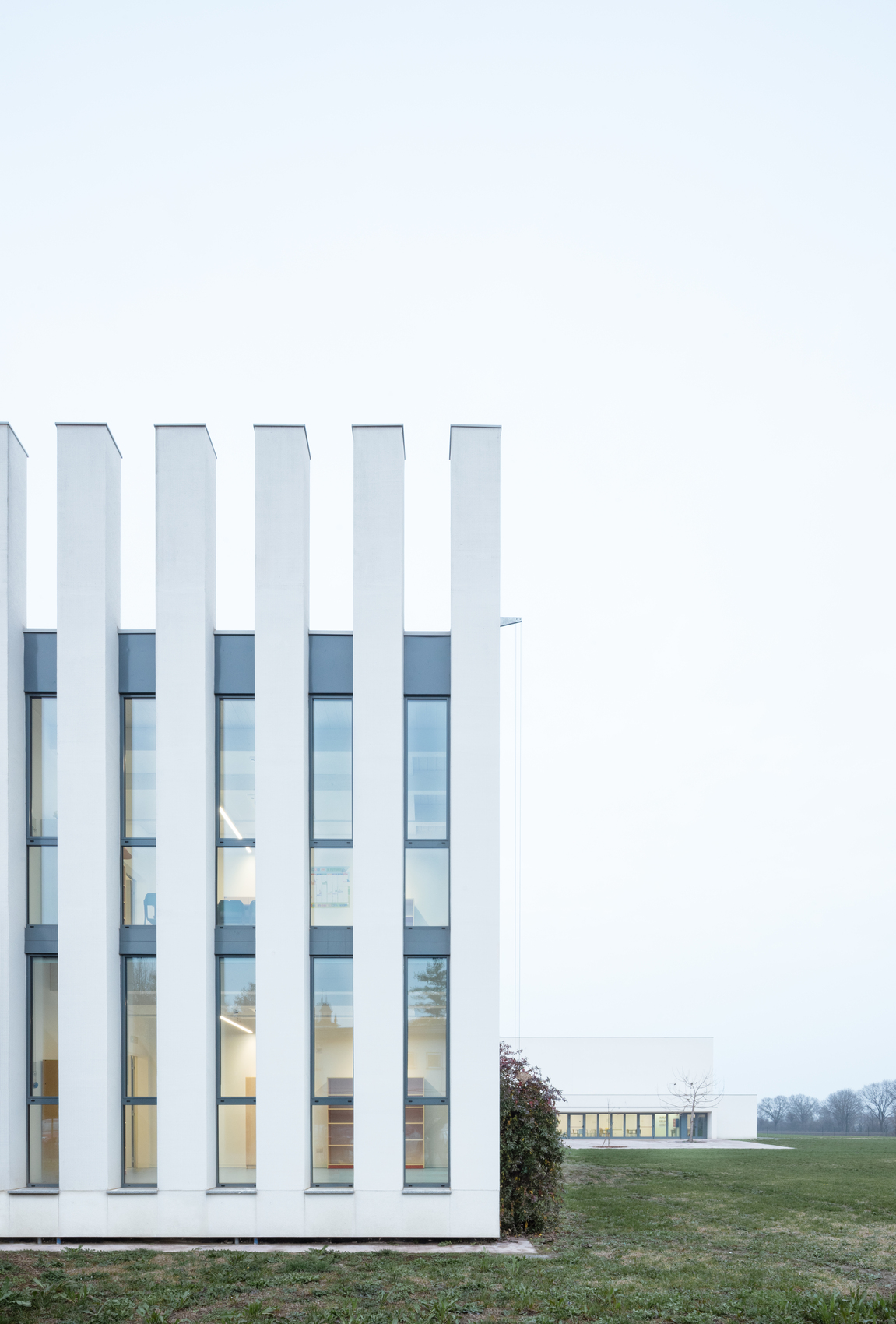
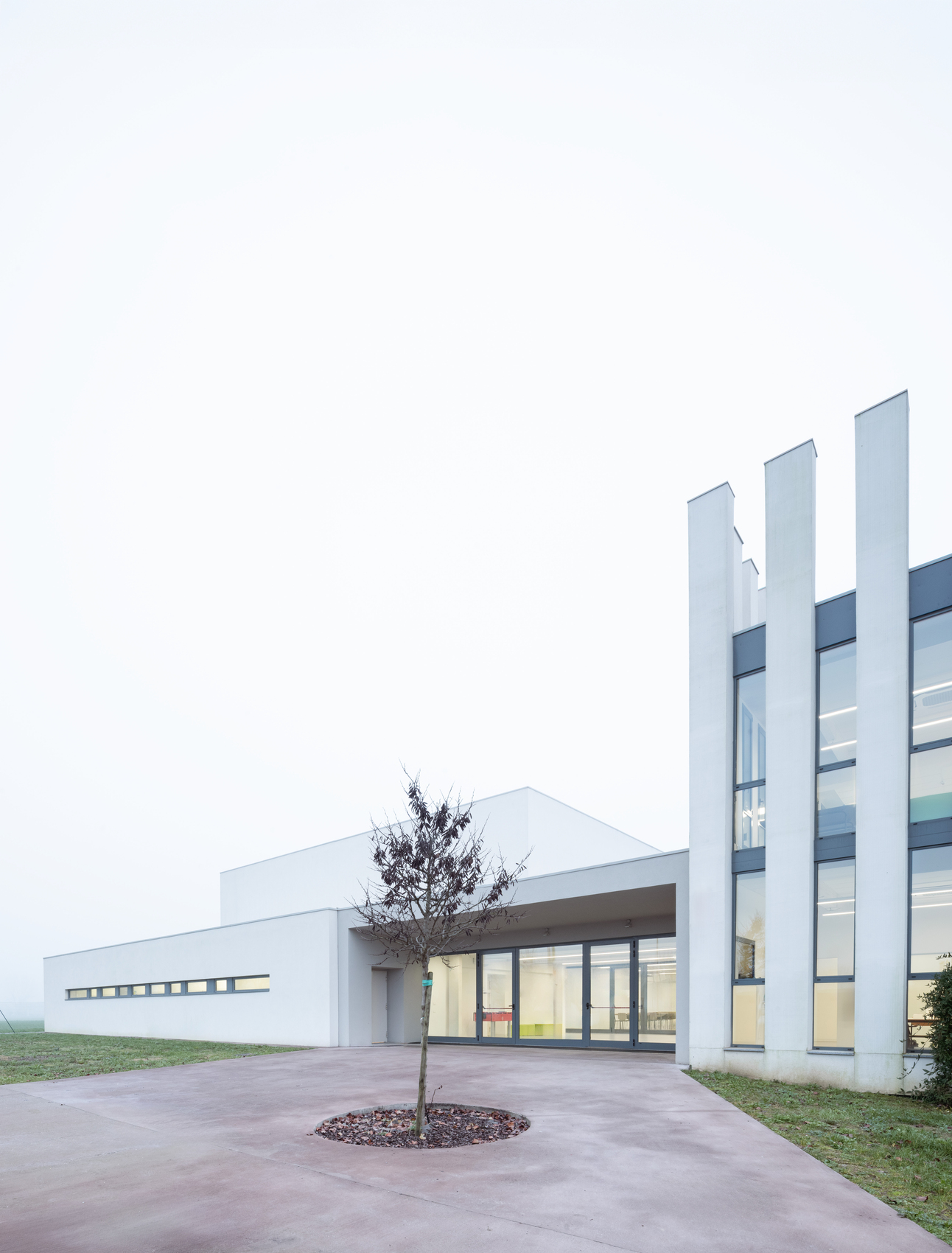
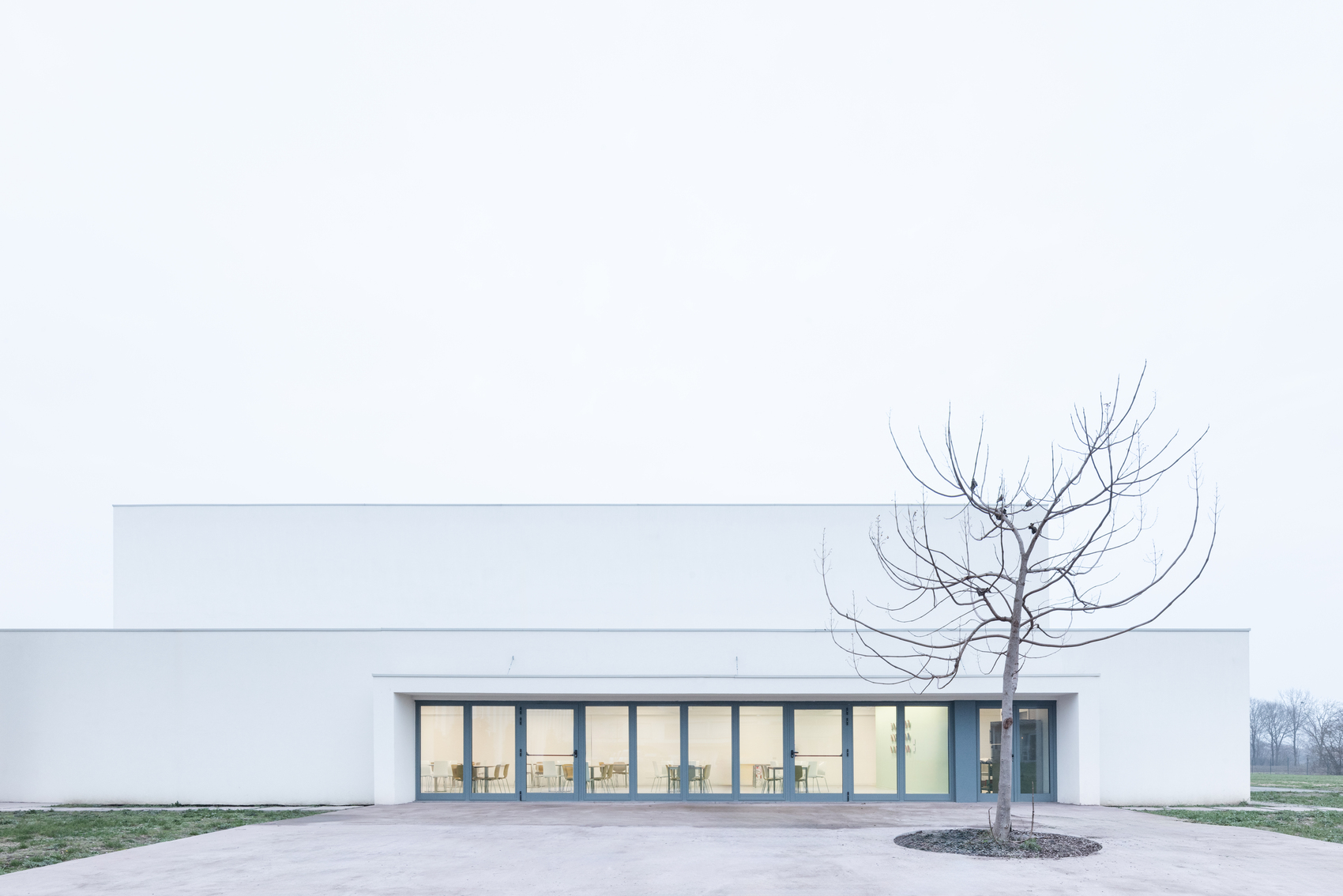
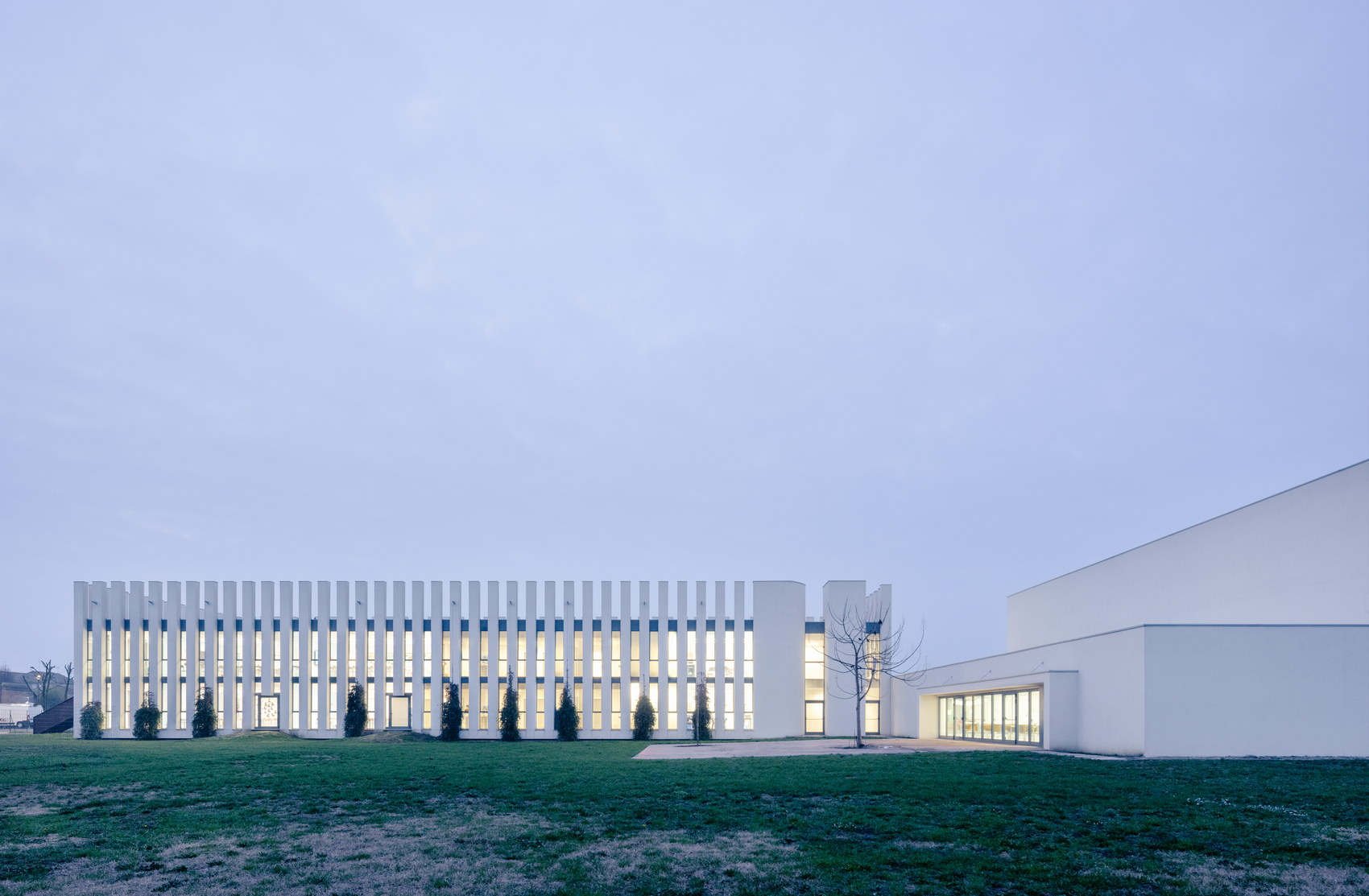
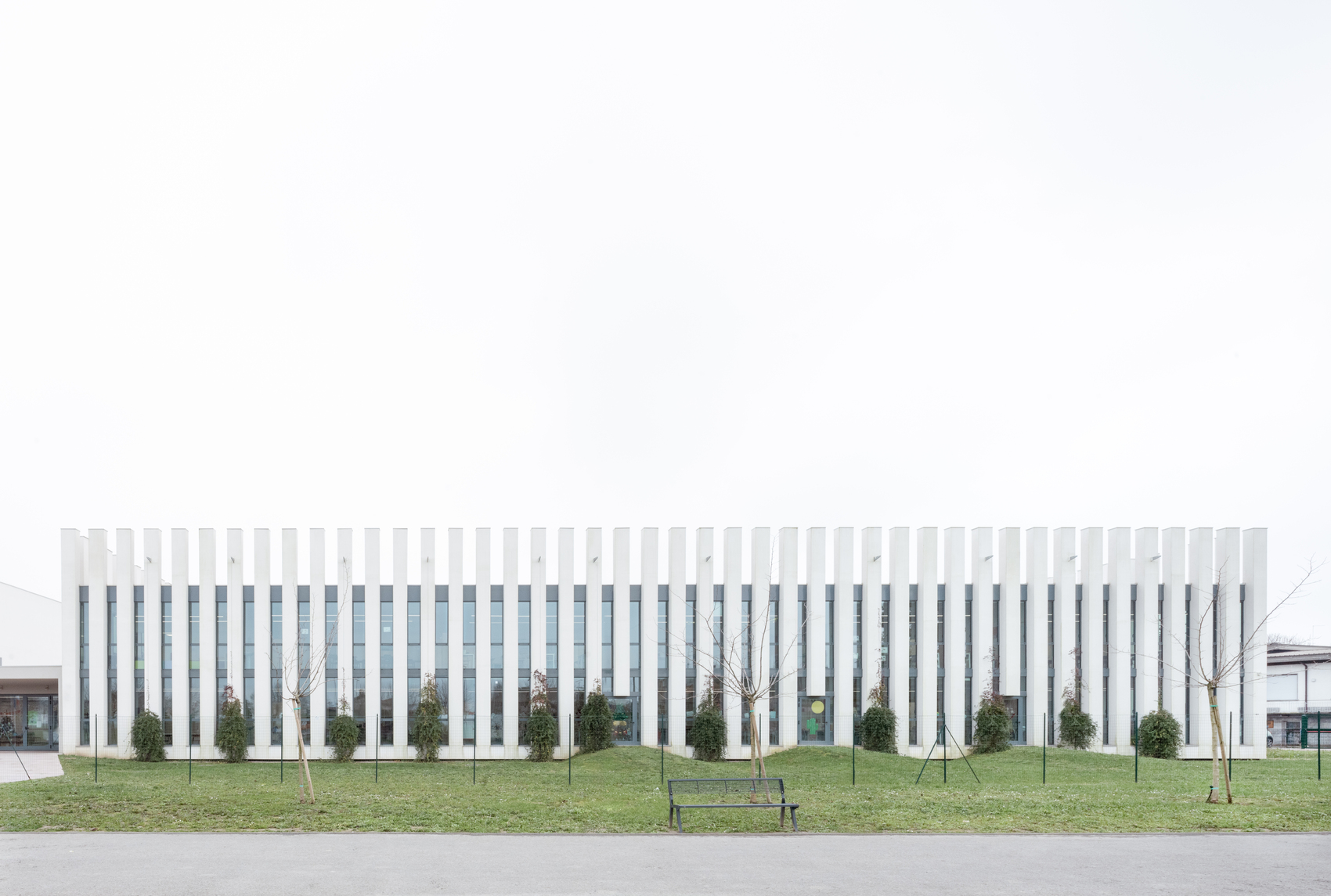
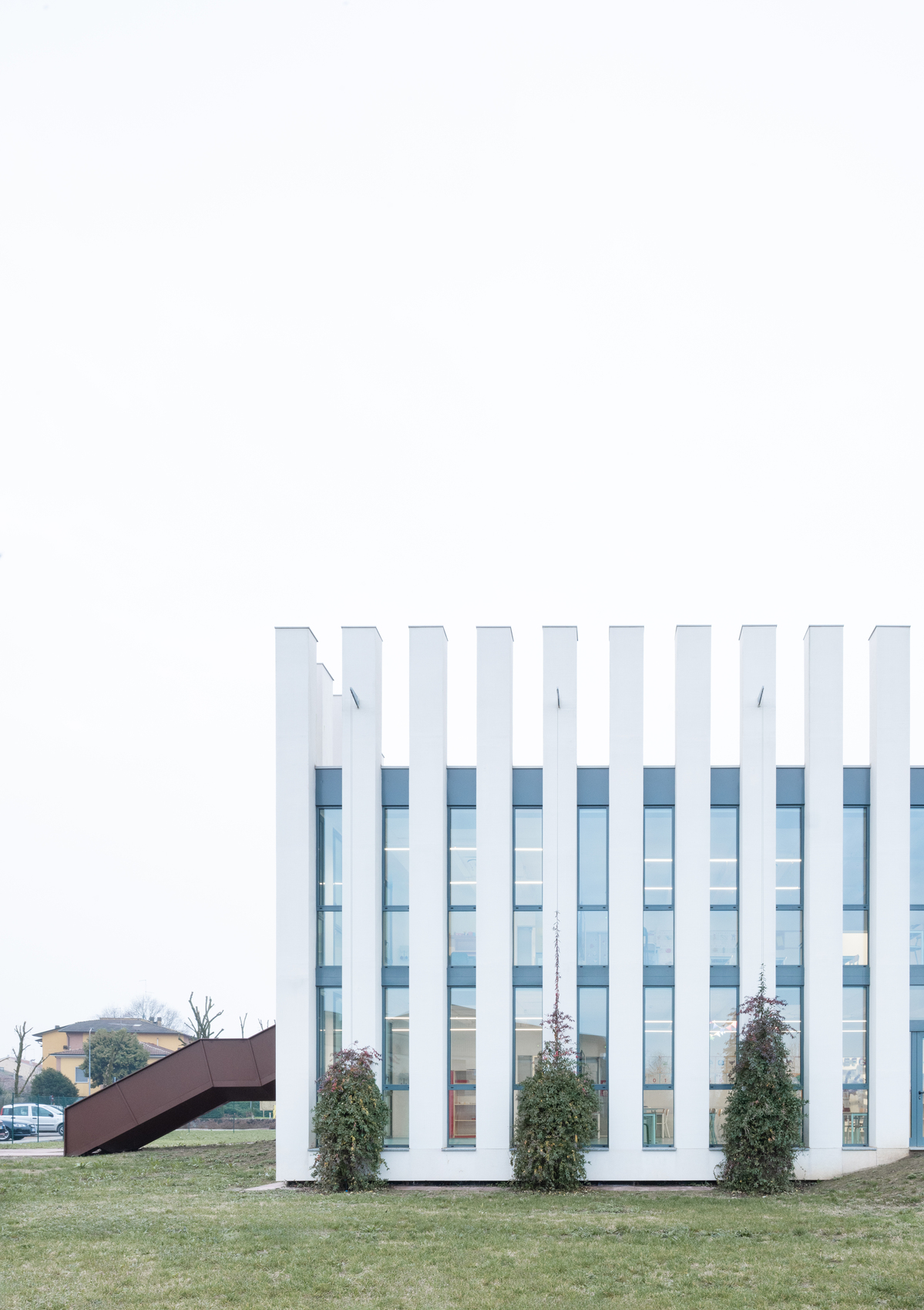
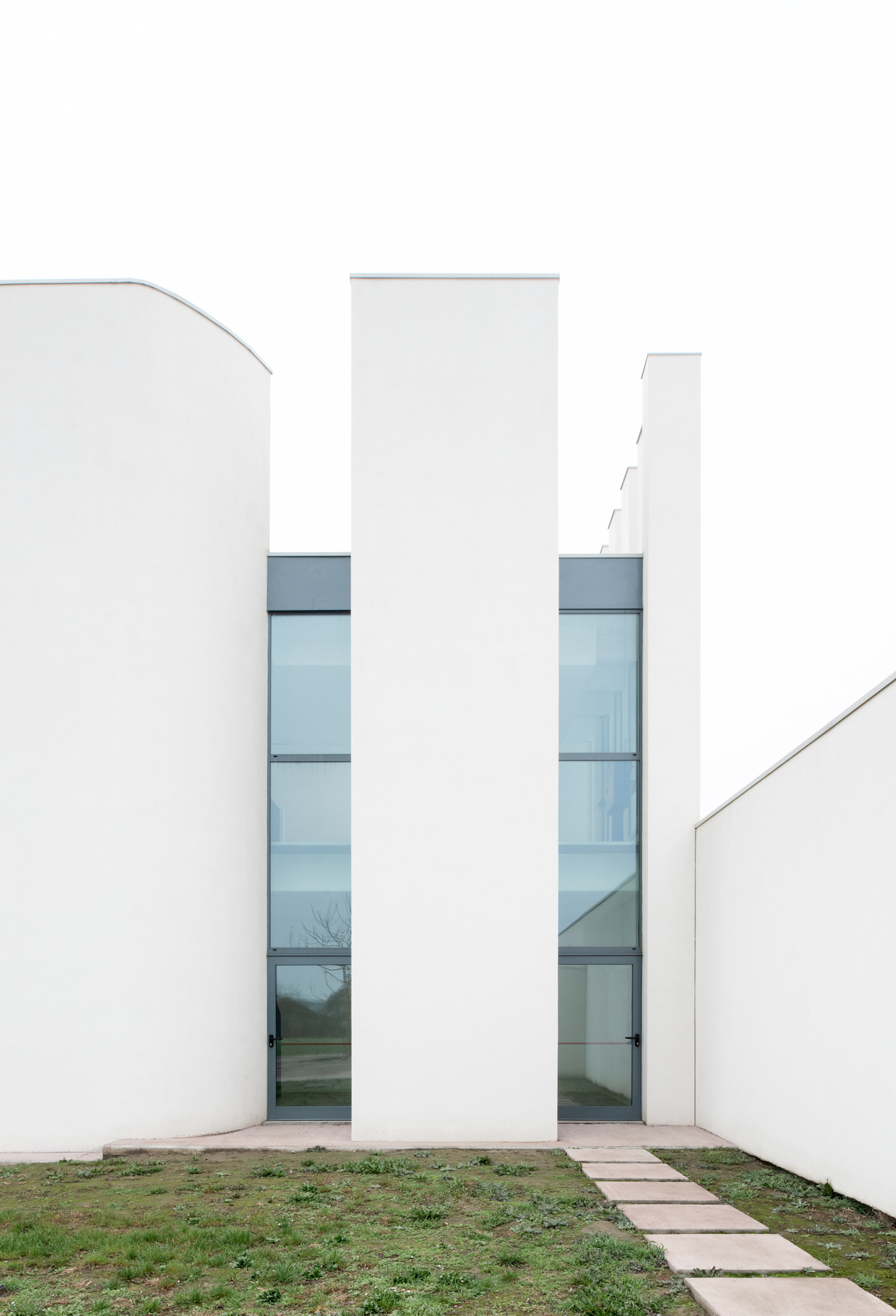
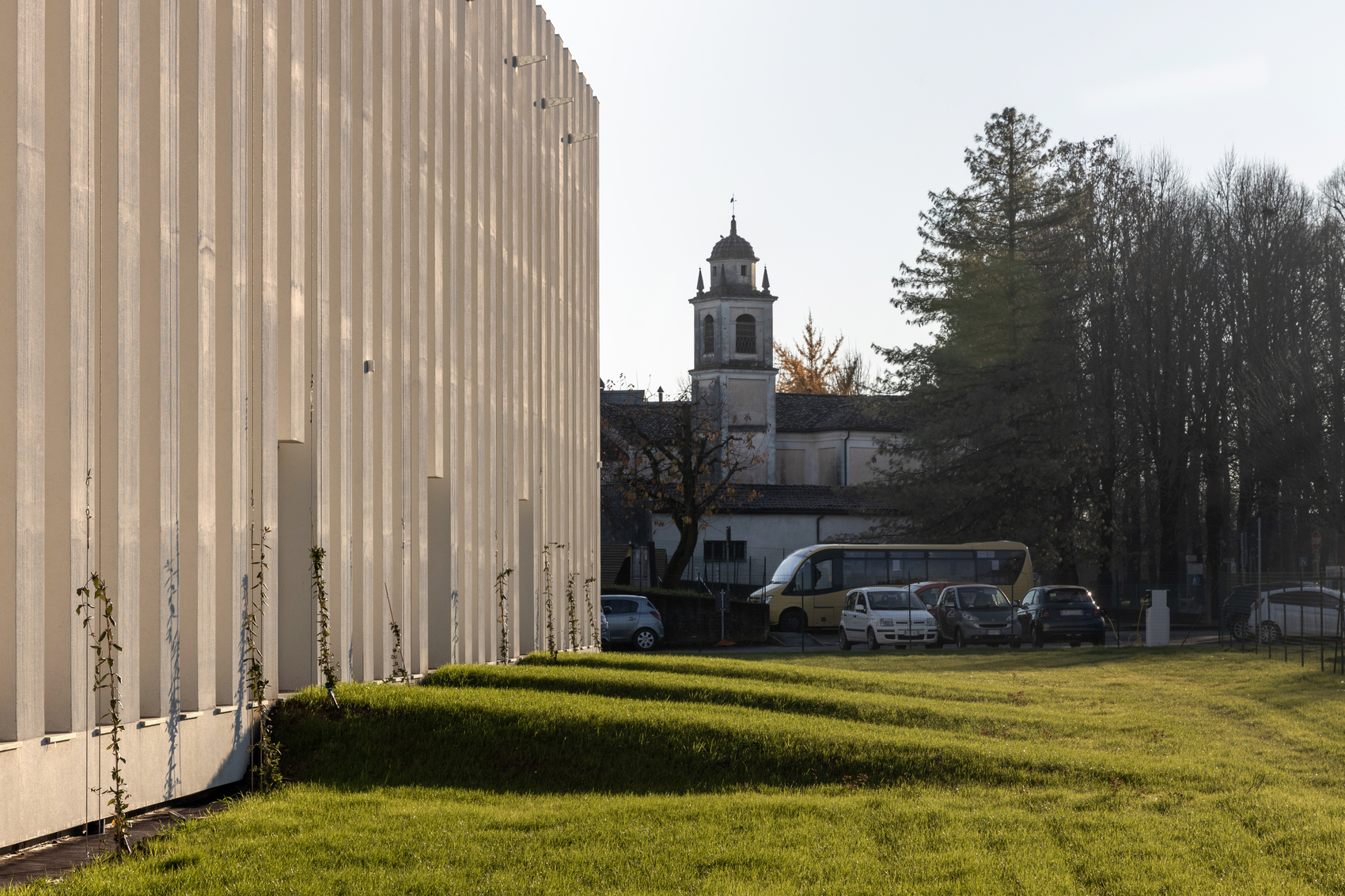
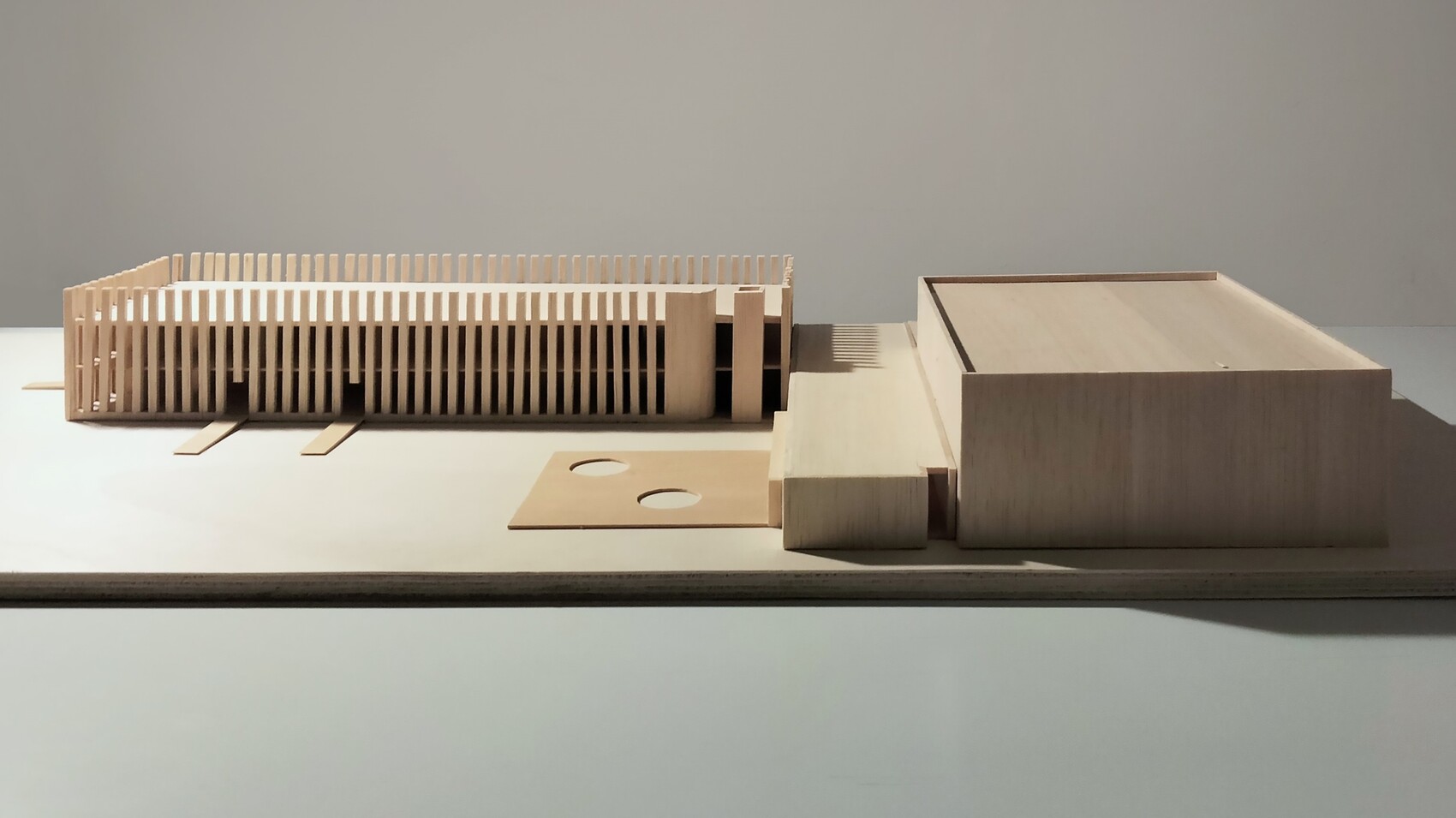
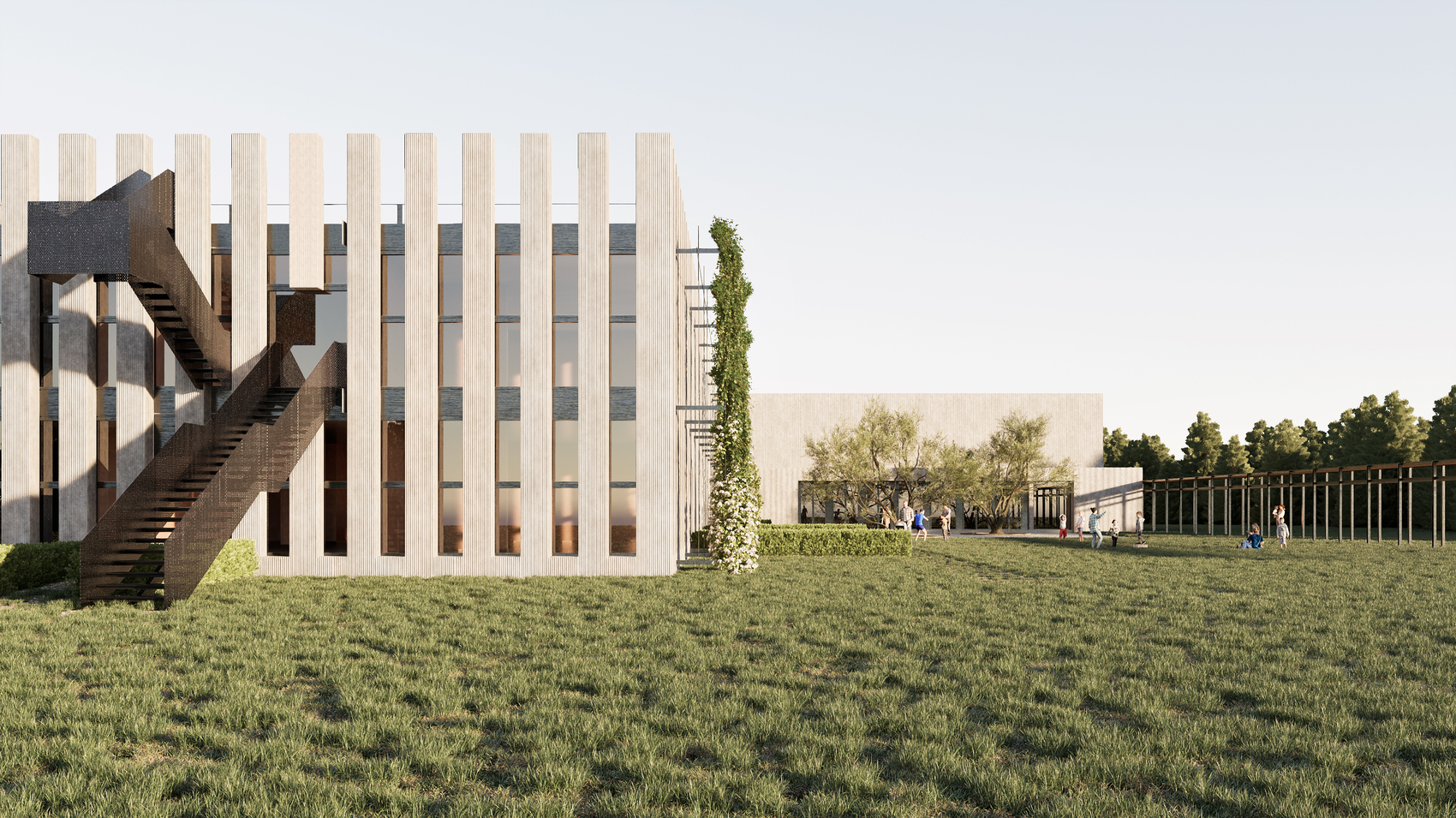
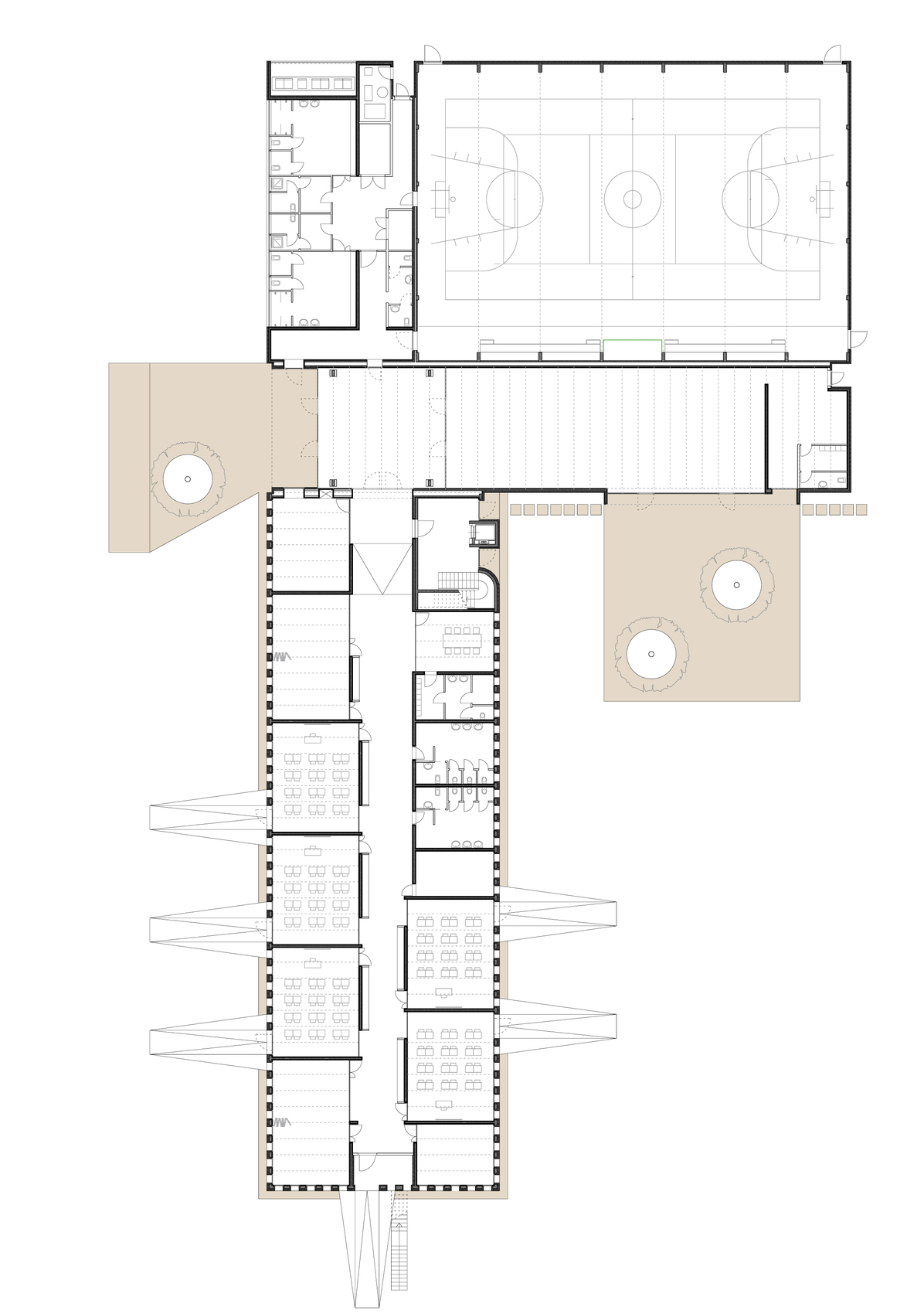
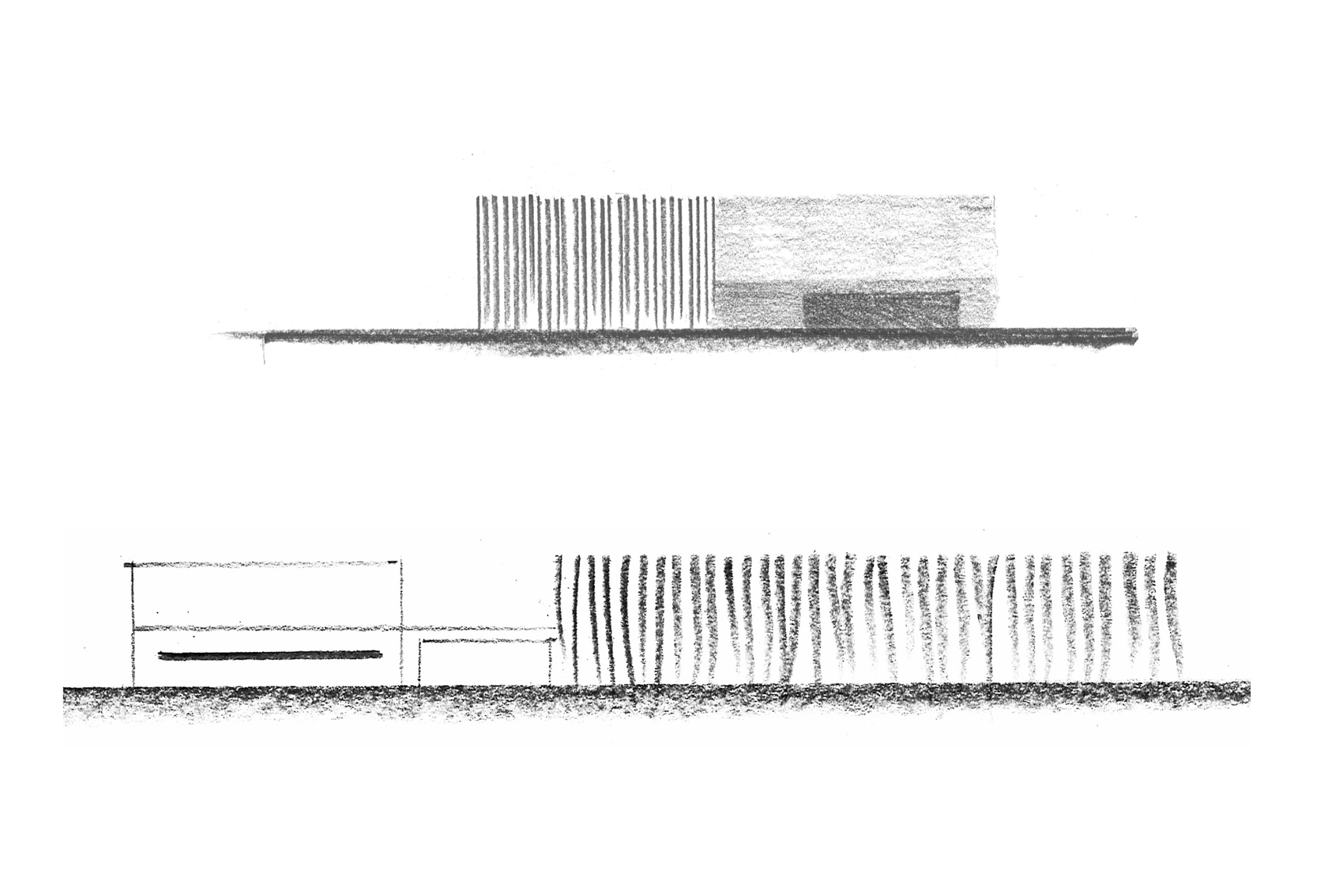
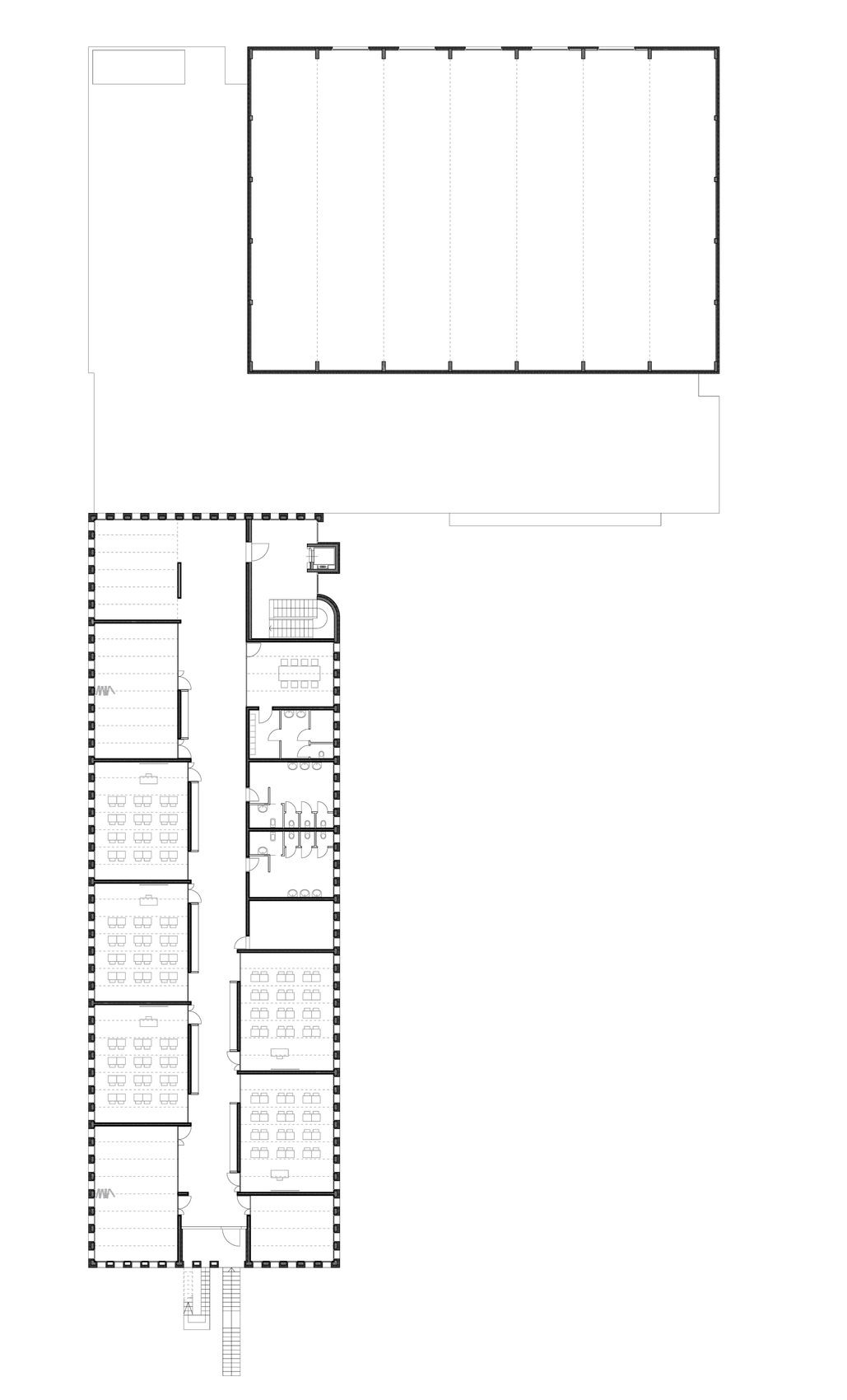
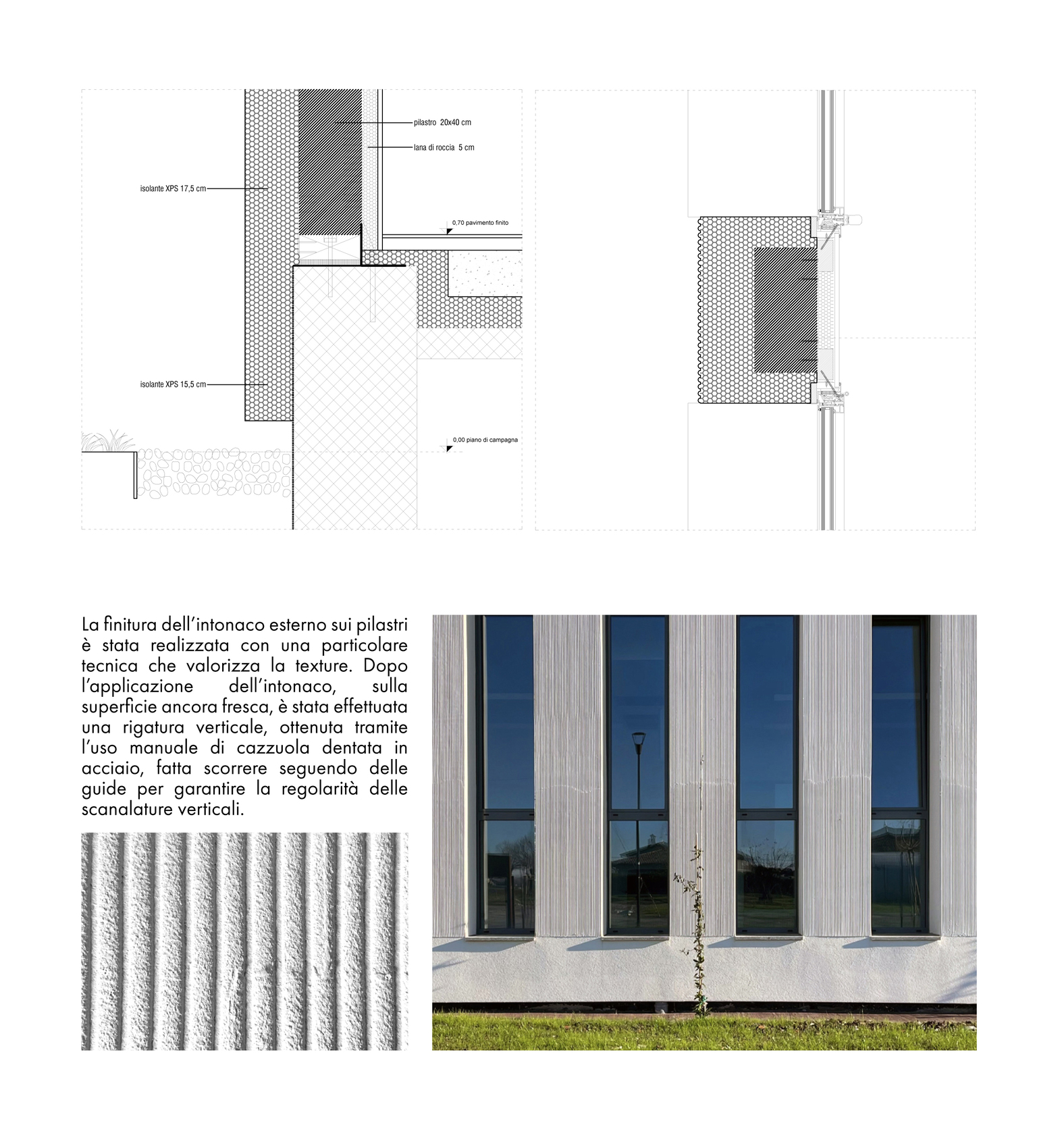
The building is organized into three clearly defined volumes housing the classrooms, cafeteria, and gymnasium, allowing each function to establish its own architectural identity while contributing to a cohesive composition. The restrained geometry creates a careful balance between solidity and openness, with the classroom block distinguished by tall, narrow windows that establish continuous visual relationships with the surrounding fields. Their vertical rhythm echoes the agricultural patterns of rows of trees, vineyards, and drainage channels that characterize the Emilian countryside.
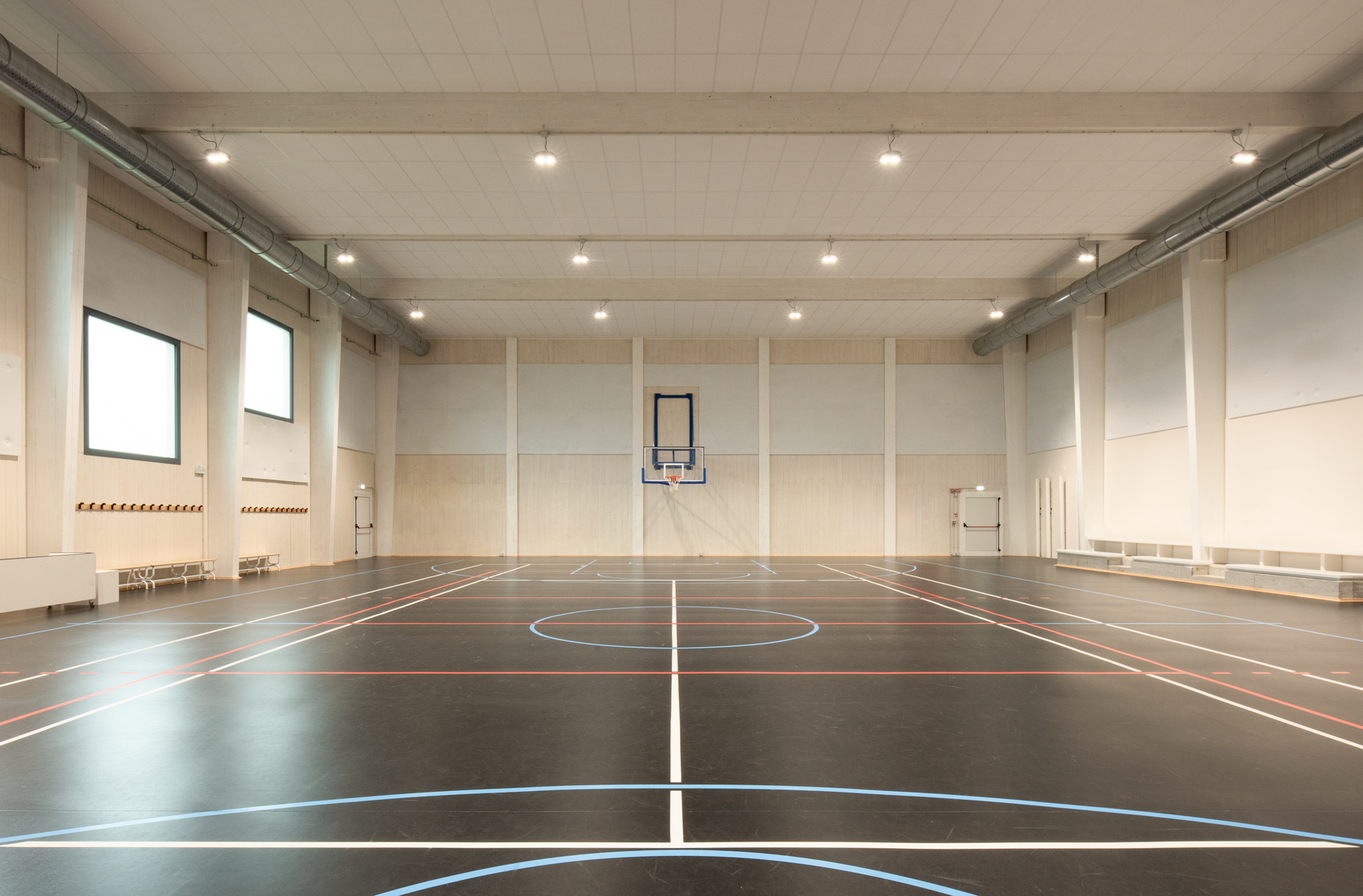
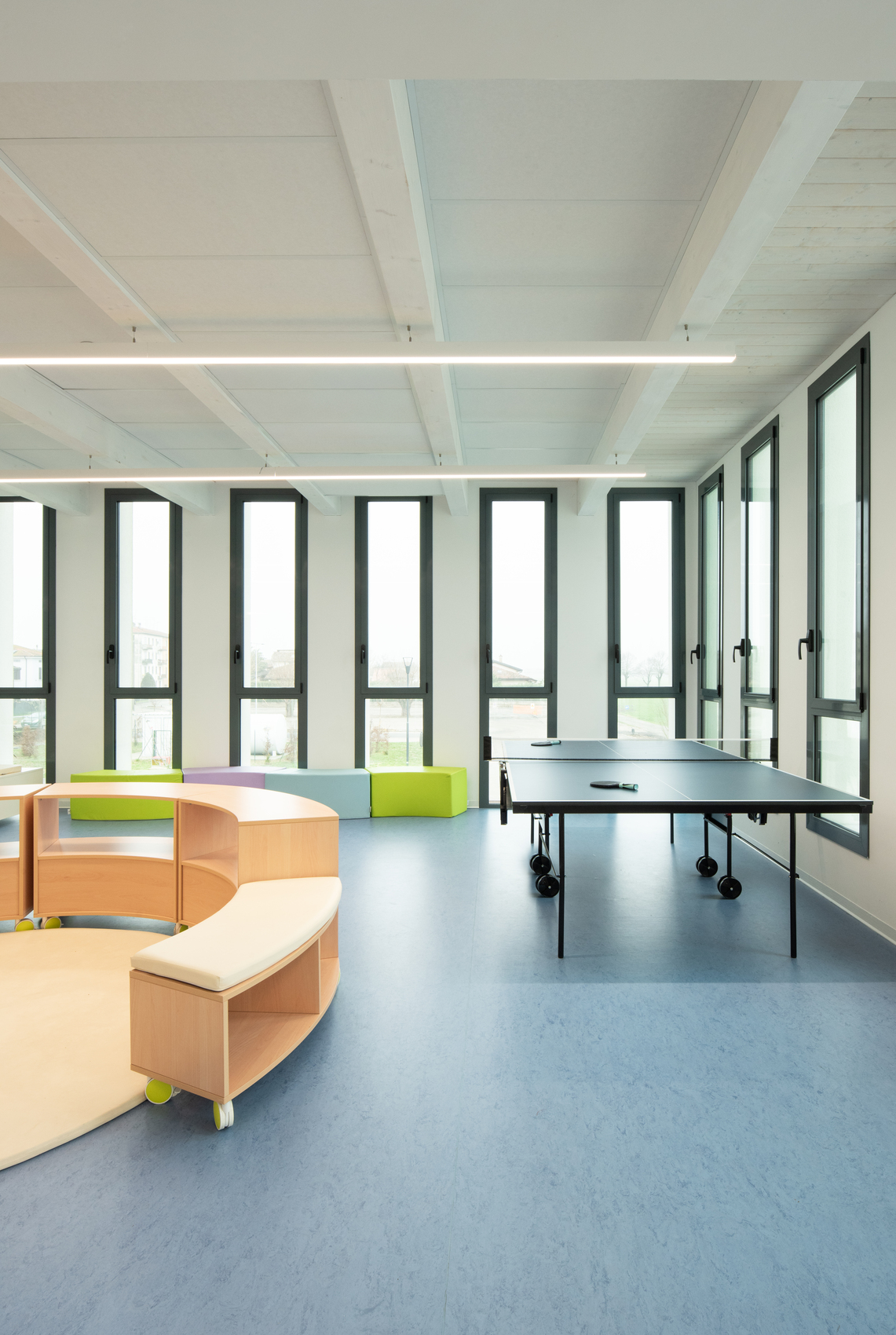
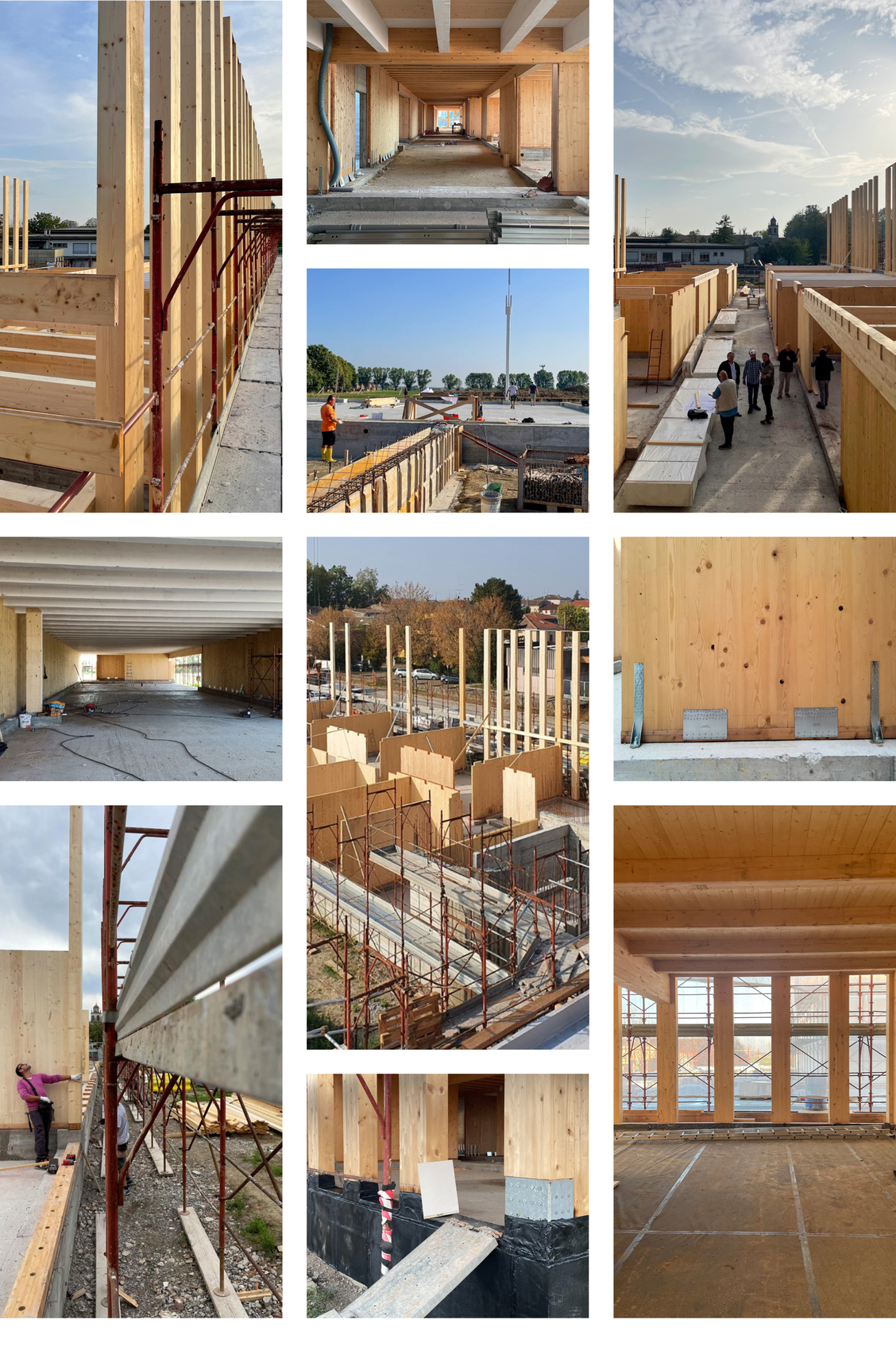
Educational quality informed many of the project’s architectural decisions. Expanded glazed openings provide generous levels of natural daylight, creating bright and comfortable learning environments while strengthening visual connections with outdoor spaces. Within the classrooms, the exposed cross-laminated timber structure becomes an integral design element, with beams carefully aligned to the window frames to reveal the building’s construction and reinforce the spatial clarity of the interiors.
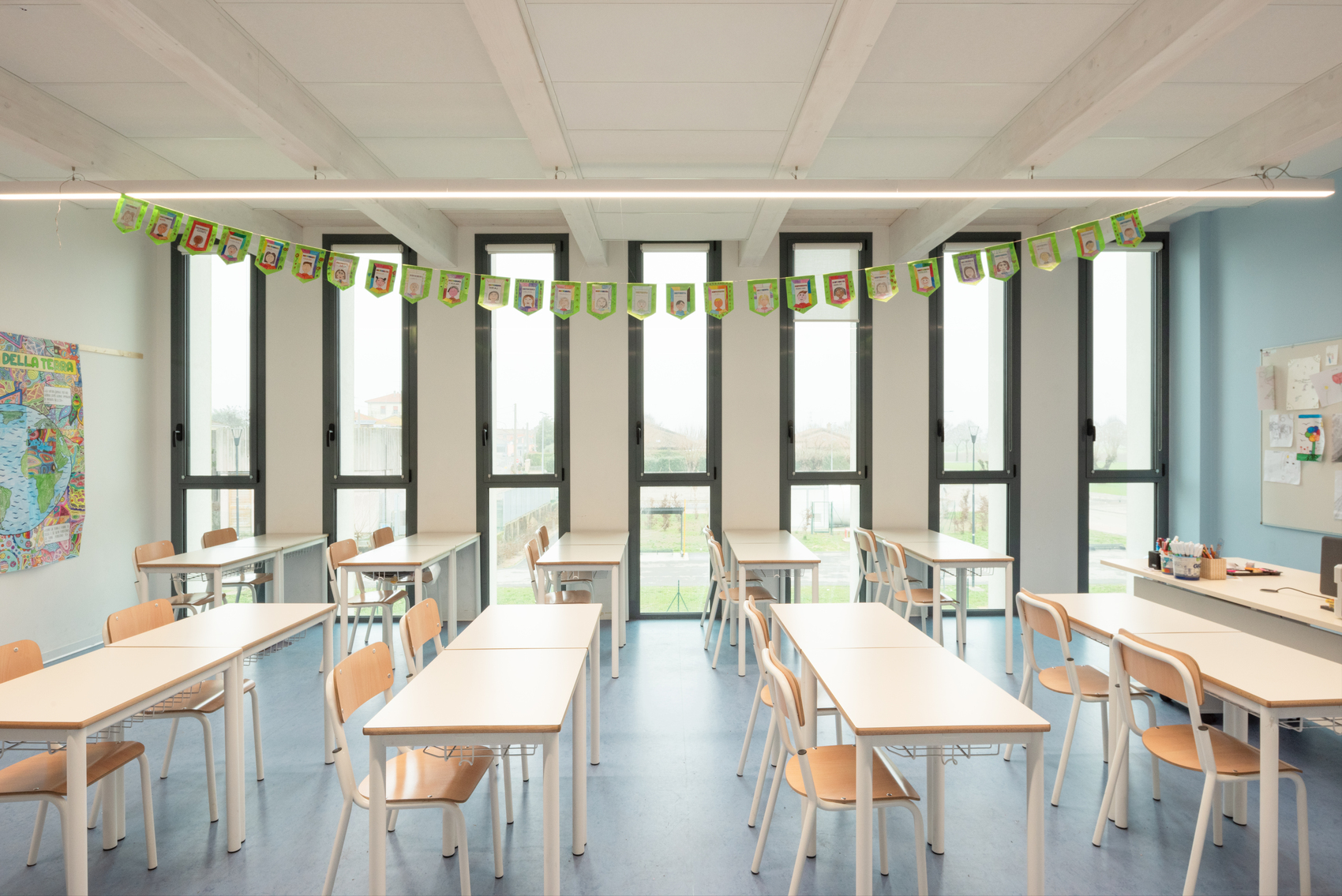
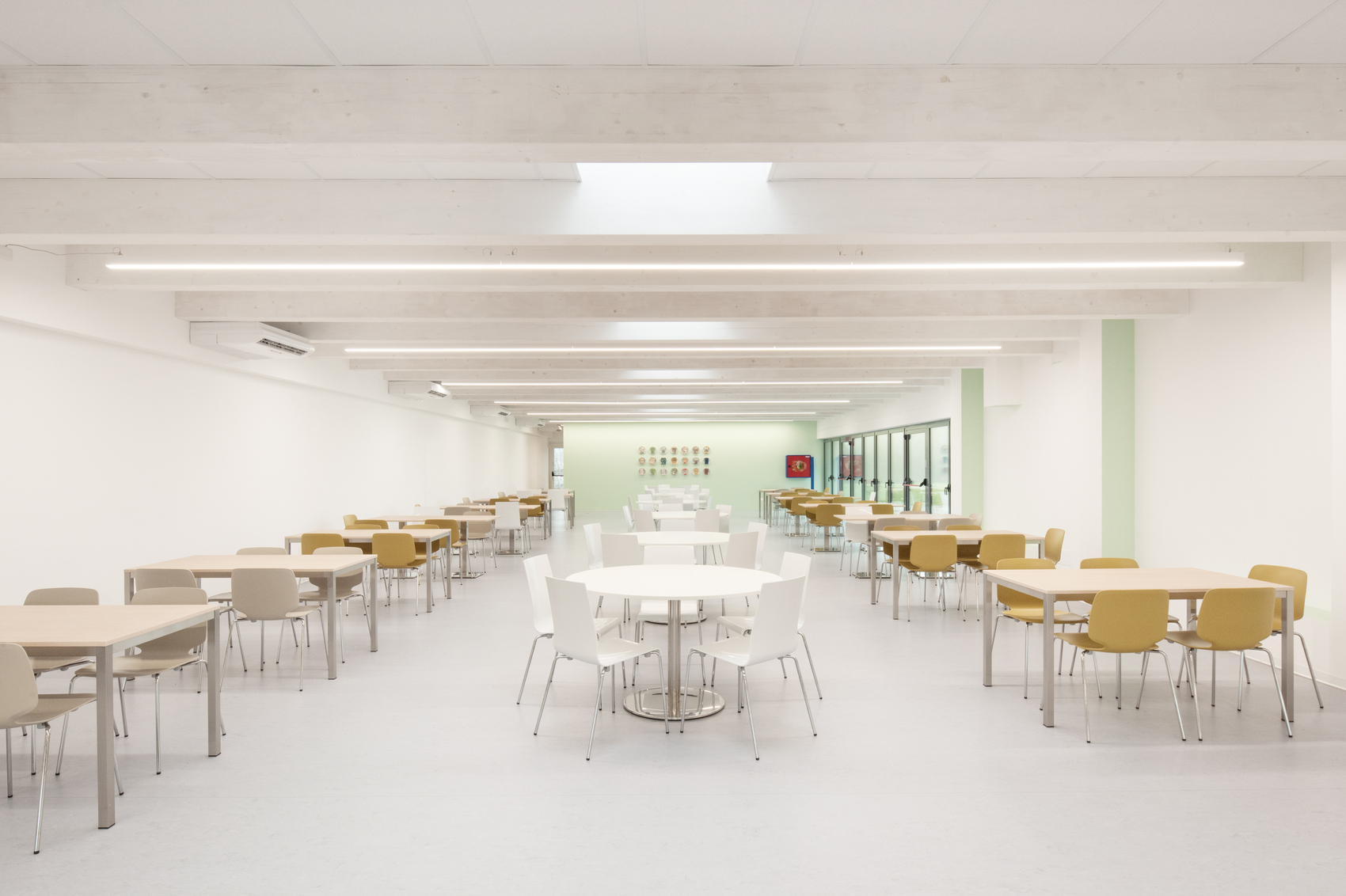
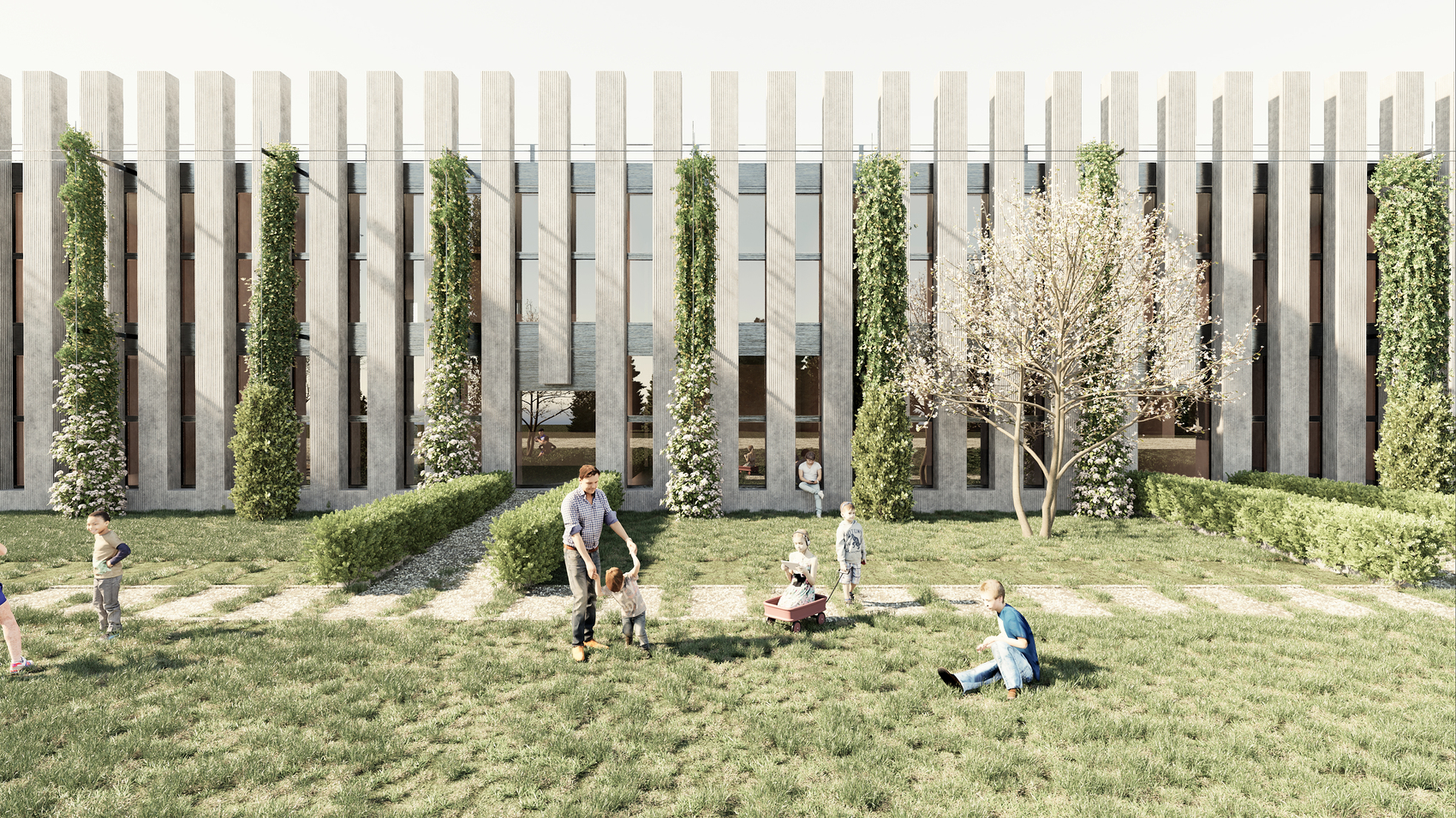
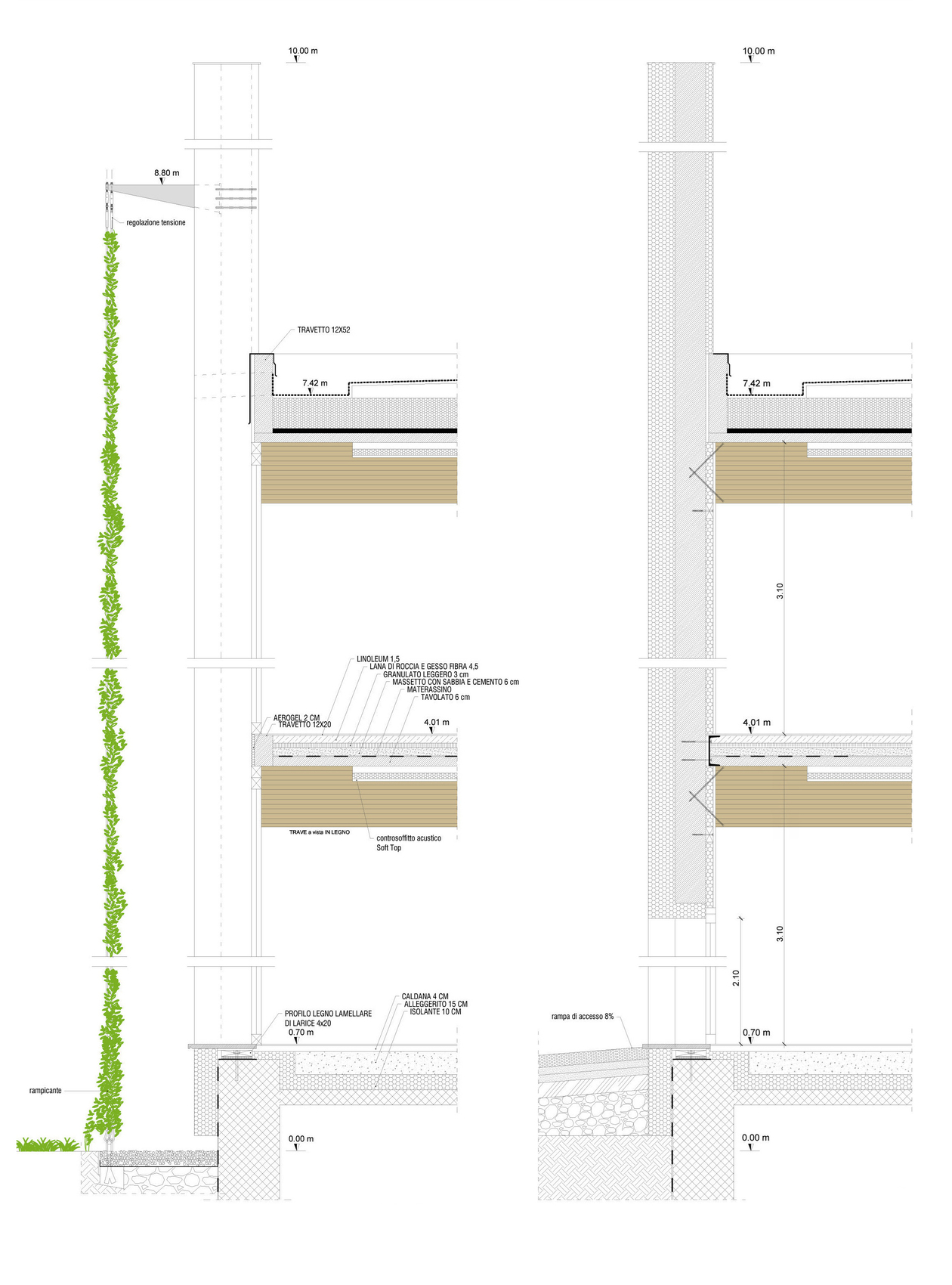
Material selection and landscape integration further strengthen the project’s environmental ambitions. The façade colors and finishes draw inspiration from the surrounding rural setting rather than conventional educational architecture, while steel trellis structures support climbing vegetation that provides seasonal shading and improves environmental comfort. At ground level, classrooms open directly onto landscaped gardens, encouraging outdoor learning, while an expanded courtyard adjacent to the cafeteria creates a flexible social space for recreation and informal gathering.
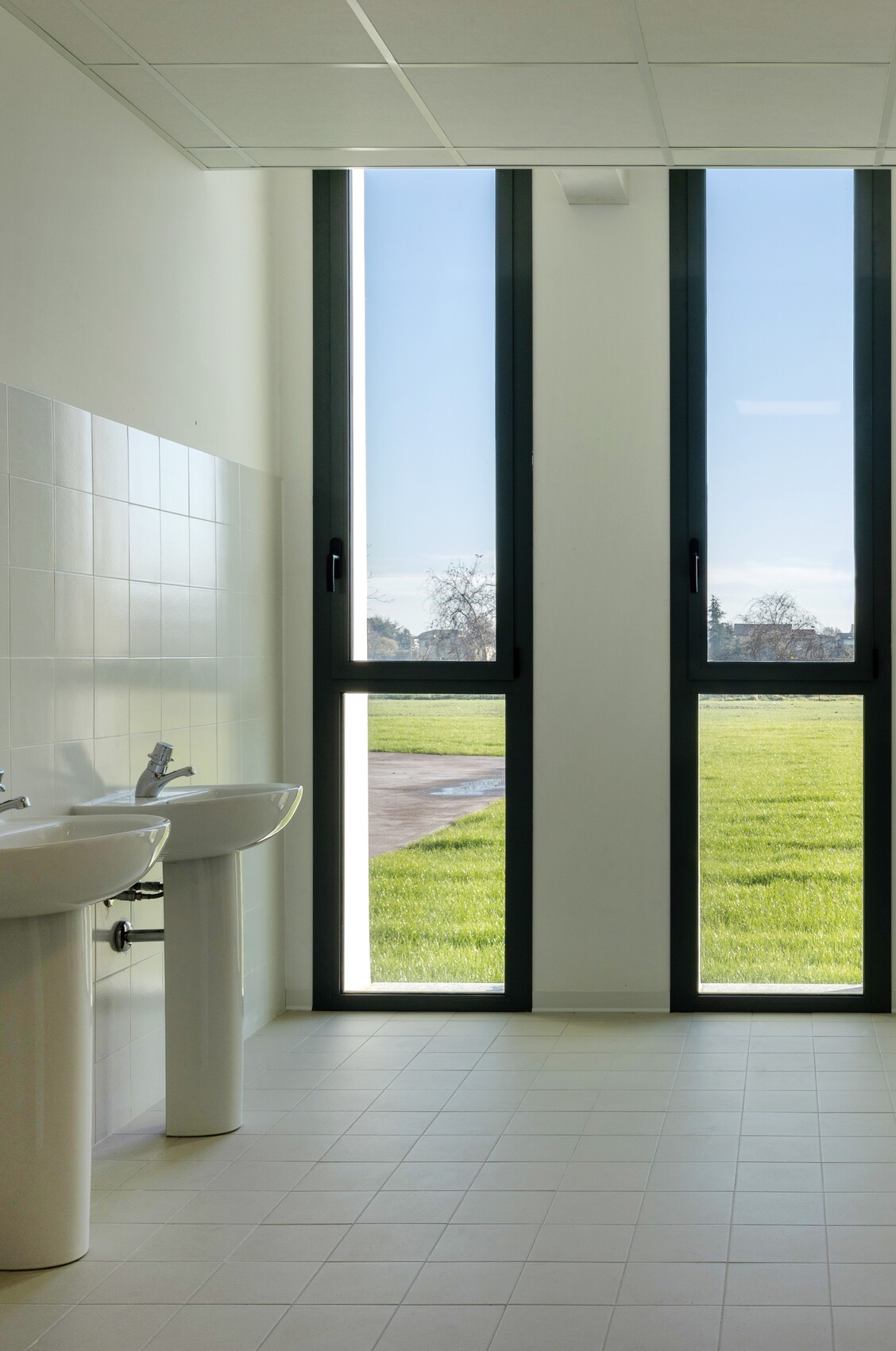
The building’s construction combines reinforced concrete foundations with prefabricated cross-laminated timber panels, enabling efficient assembly while reducing environmental impact. Soft interior finishes in neutral tones accented by muted pastel colors establish calm learning environments that can evolve through artwork created by students, allowing the school to develop its own identity over time. By integrating sustainable construction, contextual design, and carefully considered educational spaces, the Sissa School Complex presents a contemporary model for civic architecture that responds equally to its users and its landscape.
Project Gallery
Project Location
Address: Viale della Costituzione 2/A, 43018 Sissa Trecasali, Parma, Emilia-Romagna, Italy
The location specified is intended for general reference and may denote a city or country, but it does not identify a precise address.

