

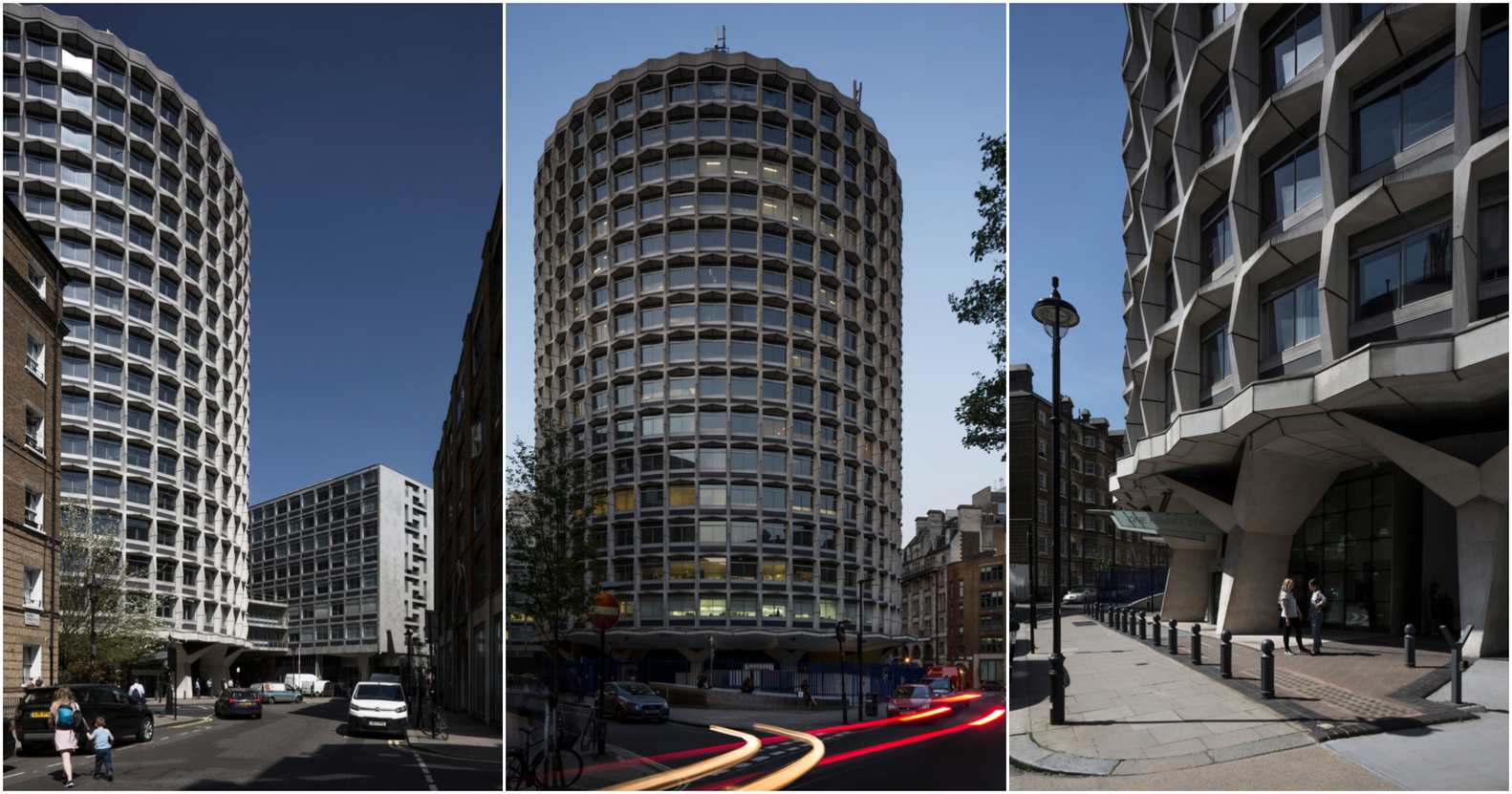
Space House, a Brutalist 16-story cylindrical office block designed by George Marsh and Richard Seifert in London, has remained a striking landmark since its completion in 1968. Using modular precast concrete, Y-shaped columns, and a functional yet bold design, it exemplifies key Brutalist principles. Celebrating its 50th anniversary, photographer Ste Murray captures the building’s unique form, emphasizing its relationship with the surrounding architecture while revealing its classical symmetry and hidden complexity.
Brutalism, often respected by architects but criticized by the public, defined post-war architecture in the UK and other regions. In his 1955 article The New Brutalism, Reyner Banham described it as requiring “1, Formal legibility of plan; 2, clear exhibition of structure, and 3, valuation of materials for their inherent qualities as found.”
One Kemble Street, a 16-story cylindrical office block initially named “Space House” and designed by George Marsh and Richard Seifert, exemplifies these Brutalist principles, standing as a landmark in central London that remains just as impactful as it was at its 1968 completion. Photographer Ste Murray captures the essence of this Grade-II listed building across different times of day, marking its 50th anniversary while revealing its form in a way that draws connections to contrasting architectural ideologies.

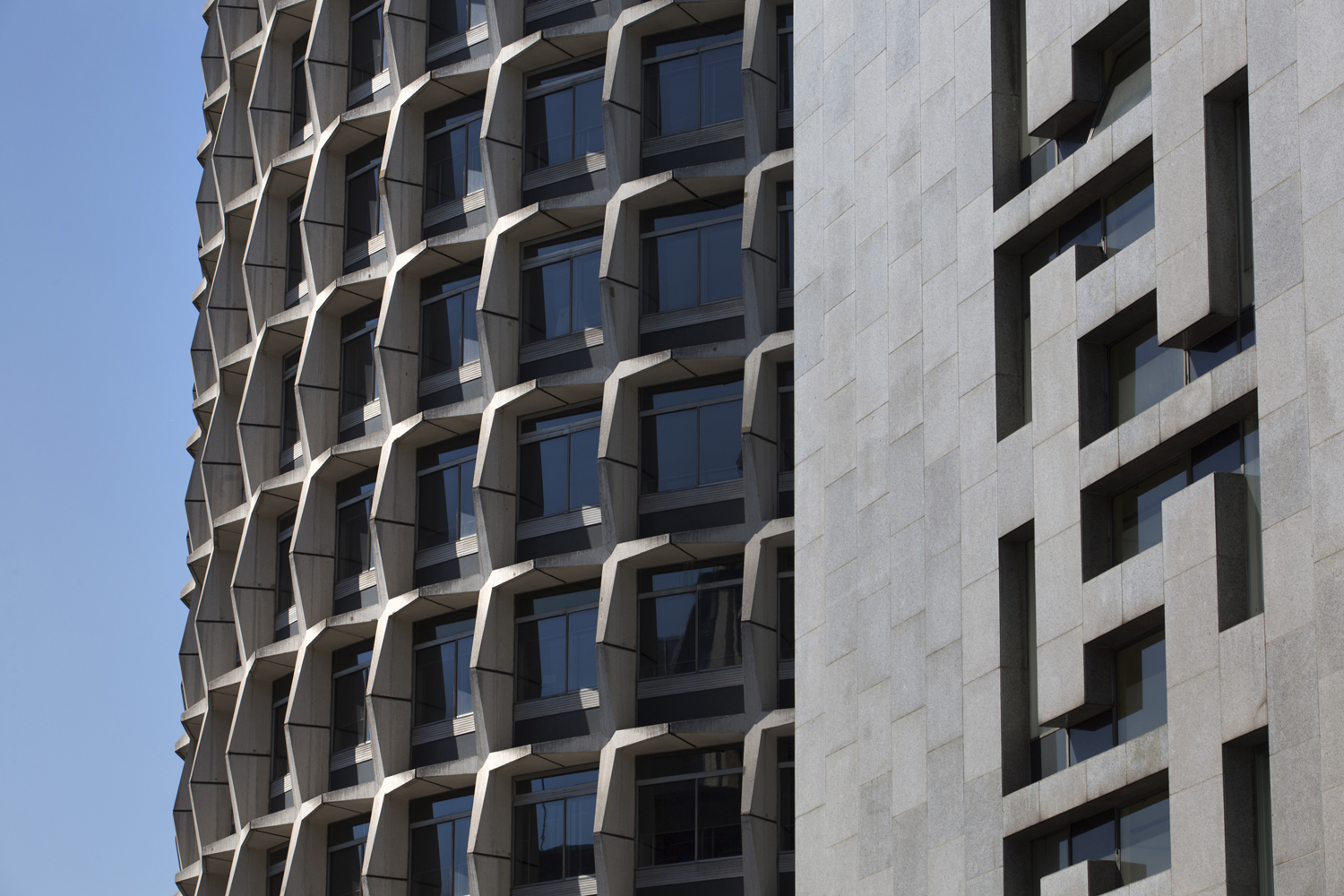
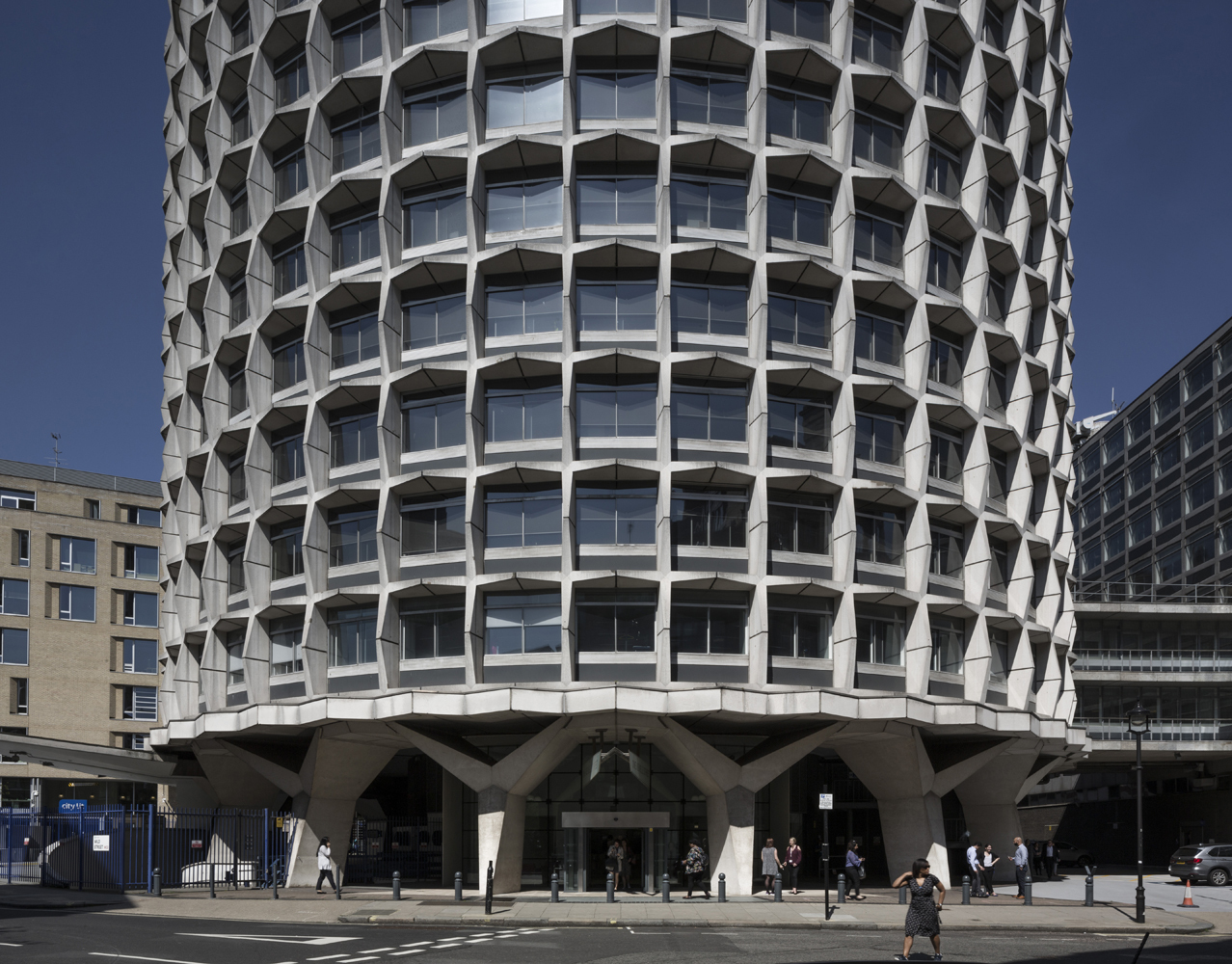
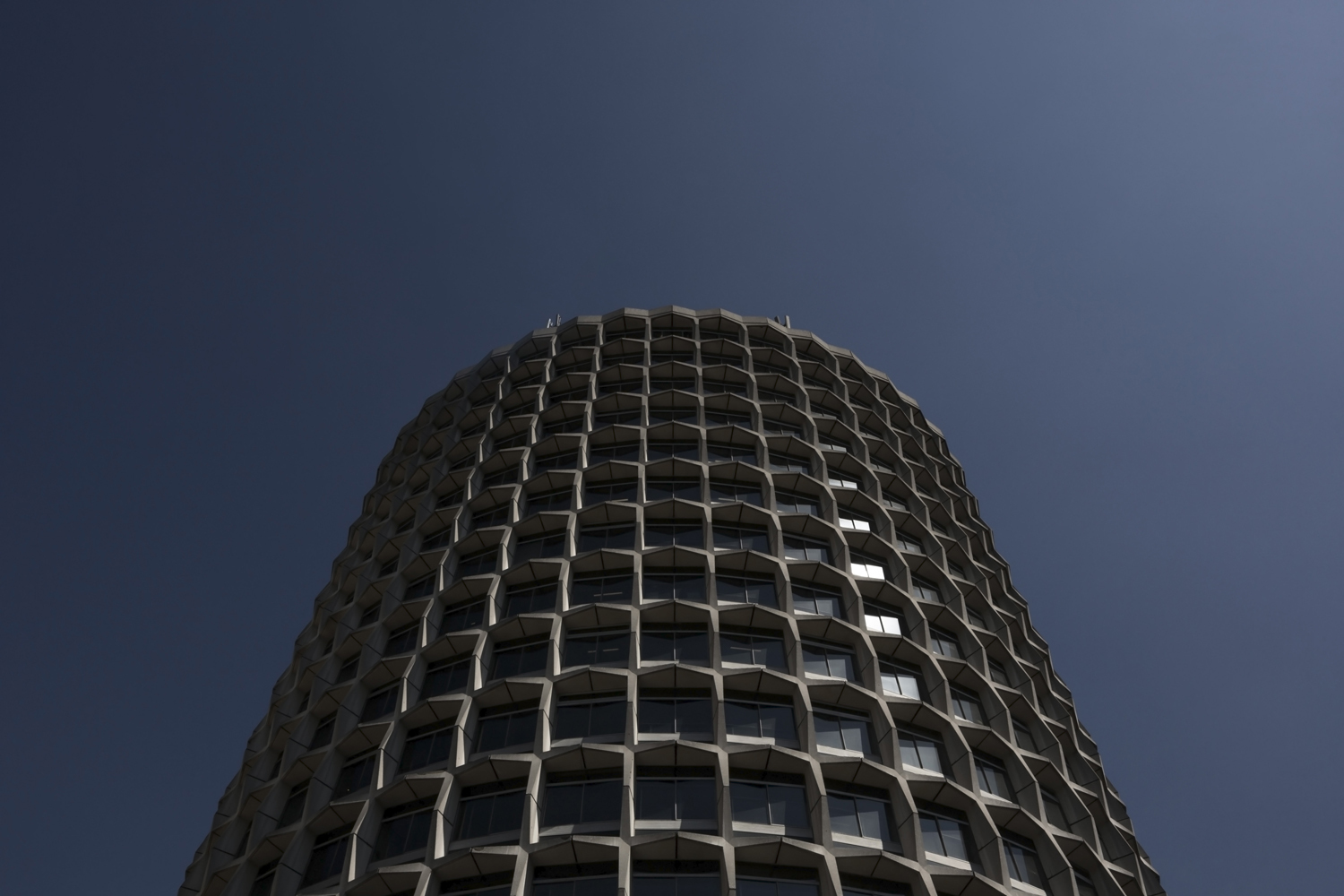
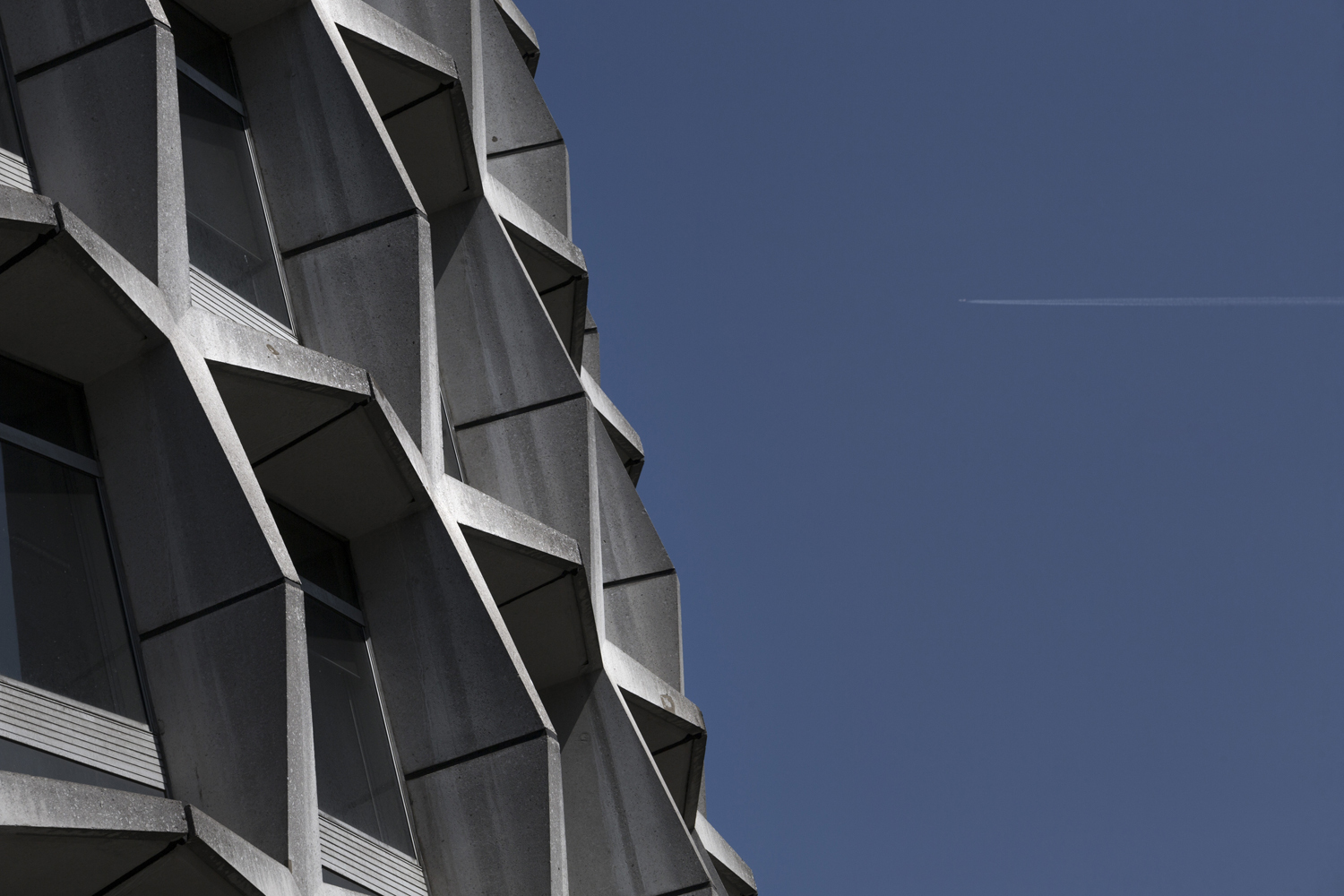
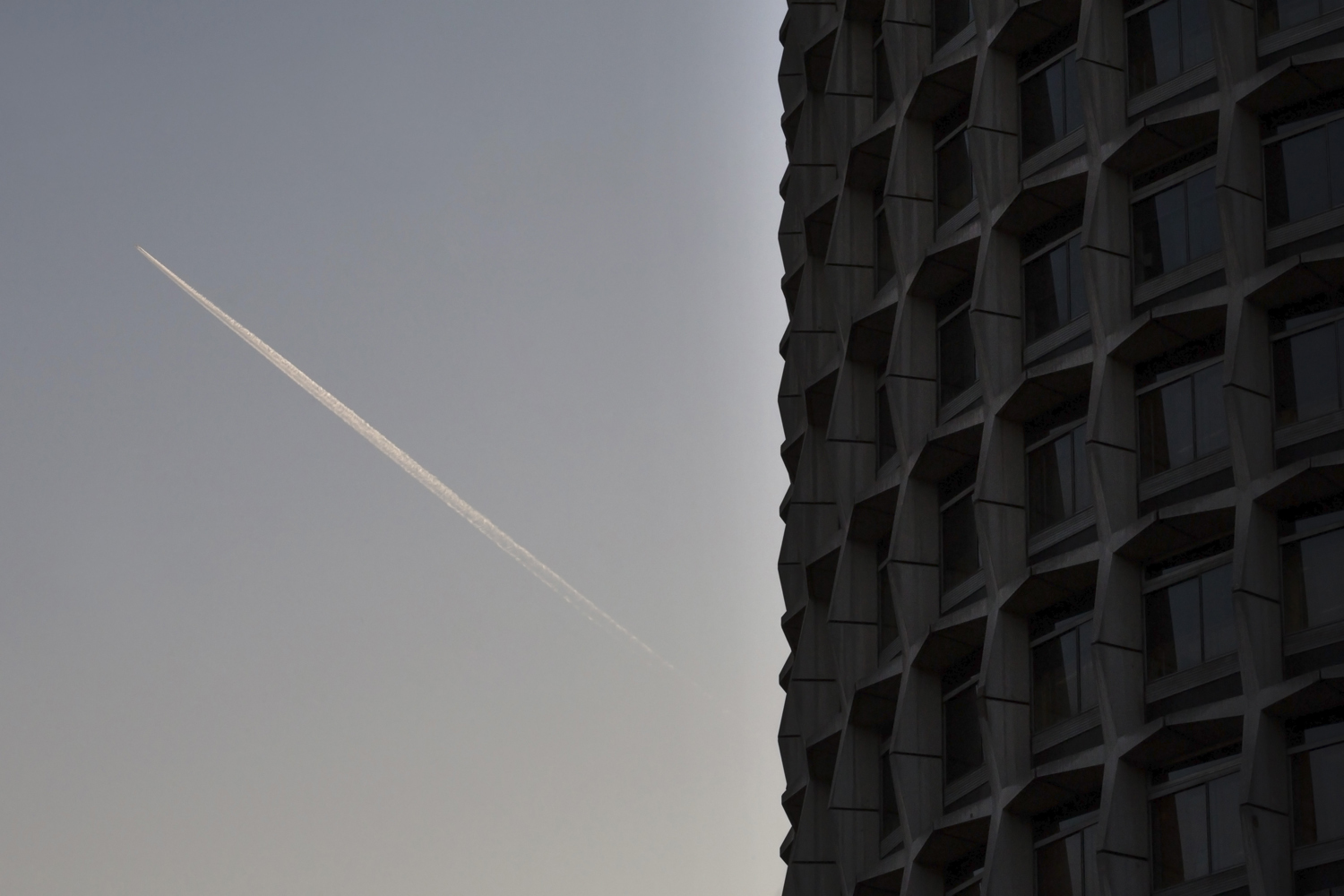
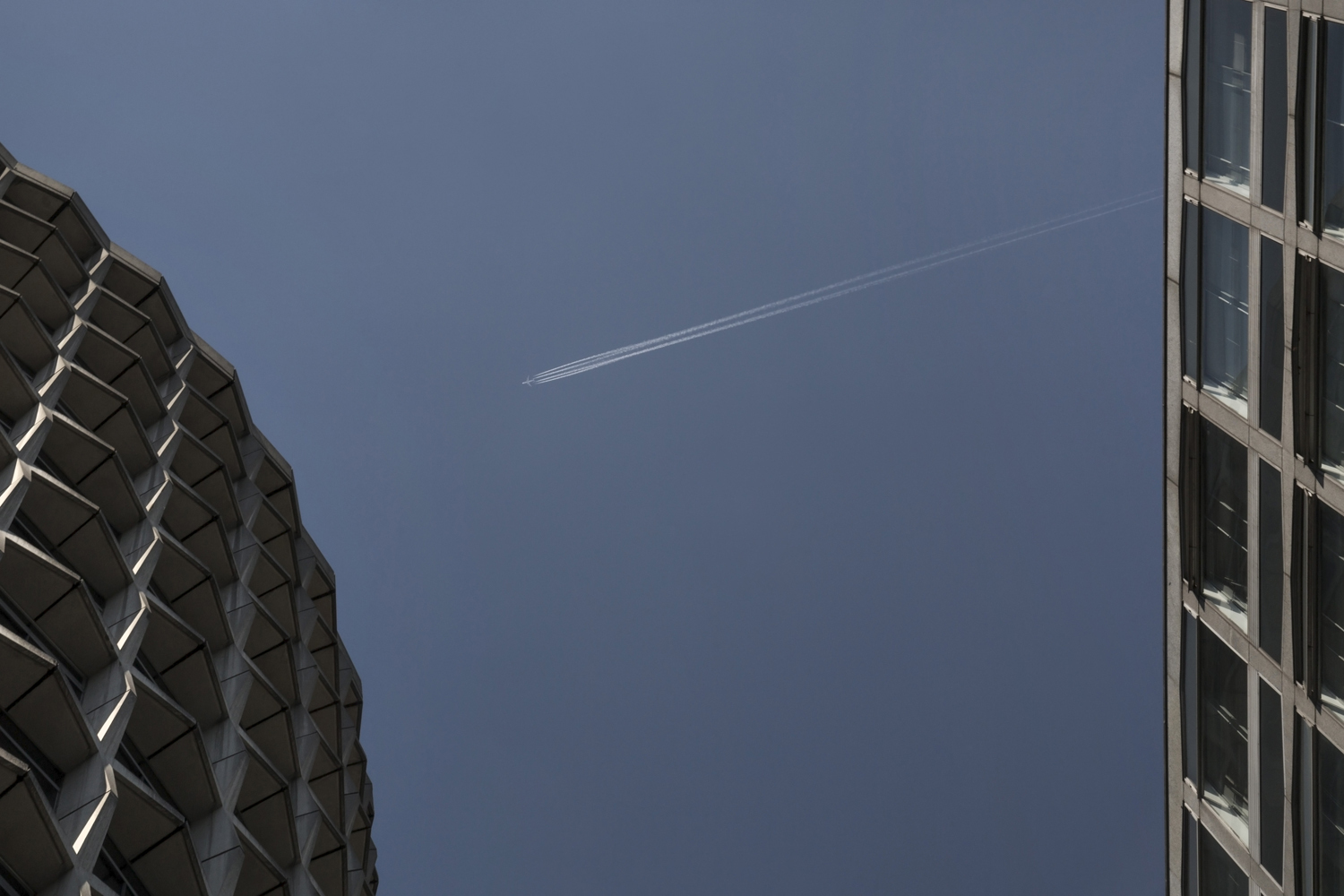
The building’s Y-shaped columns—similar to those used by Marsh and Seifert at Centre Point Tower—elevate the structure and create an inviting public space around its circular plan. These columns support a modular design, with three-meter-high precast concrete cruciform blocks forming a cylindrical shell with large windows. The exoskeleton’s depth casts shadows on its surface, enhancing the undulating appearance of the raw, white concrete.

Unlike the Edwardian structure it replaced, Space House maintains a distinctive aesthetic through its functional Brutalist design. The precast modules enabled cost-effective, scaffold-free construction, while the floors were also precast to speed up the building process. Its iconic shape, driven by efficiency, was not a deliberate design statement but a response to reducing lateral forces and lowering engineering costs during the 1960s commercial boom.

“I was interested in how this building, practically symmetrical in its uniform circular form, reacted to its context and vice-versa. There is an inherent stubbornness with bold modernist buildings such as this; confident in their own agenda, they can sometimes turn their back on an area. With Space House, it feels quietly self-assured in its own self-esteem—allowing the various other buildings in the area to work alongside it.”
– Ste Murray, architectural photographer

Murray’s photographs, when isolating the building from its surroundings, bring out its almost classical symmetry, with the angles of each module giving the impression of a colosseum from a distance. Evening images, featuring the building’s silhouette against the night sky, reveal a hidden complexity that echoes the ornate architecture nearby. Jonathan Foyle, chief executive of the World Monuments Fund Britain, reflects on the Brutalist movement:
“It is damned by its name, which comes from the French ‘béton brut’, or raw concrete, but we use the same word [Brut] to describe Champagne, and this perhaps sums up the dichotomy at the heart of this style.”

Gallery







Location
Address: Space House, 1 Kemble Street, London WC2B 4AN, United Kingdom
Location is for general reference and may represent a city or country, not necessarily a precise address.

