

Architects: ARC Z Architects, Practice on Earth
Area: 90 m²
Year: 2025
Photography: Qingyan Zhu, Action Media
Lead Architects: Haotian Wu, Cloe Yun Wang, Zi Meng
Design Team: Haotian Wu, Yun Wang, Baolin Liu, Yuyang Tong, Wenze Zhang; Zi Meng, Yinuo Qiu, Guanming Huang
Contractor: Suzhou Shengyao Environmental Art Engineering Co., Ltd.
Structural Engineering: De Li
Materials: Stainless steel, ring-lock scaffolding system, angle steel, PVC mesh
Lighting Consultant: ELA
Façade Consultant: Suzhou Shaoxinsi Architectural Technology
Client: SUSAS 2025
Chief Curators: Xiangning Li, Changjun Gao
On Site Coordination: Feng Zhang, Wenjun Zhang
LDI: Tongji Architectural Design (Group) Co., Ltd.
Manufacturers: KadaRay
City: Shanghai
Country: China
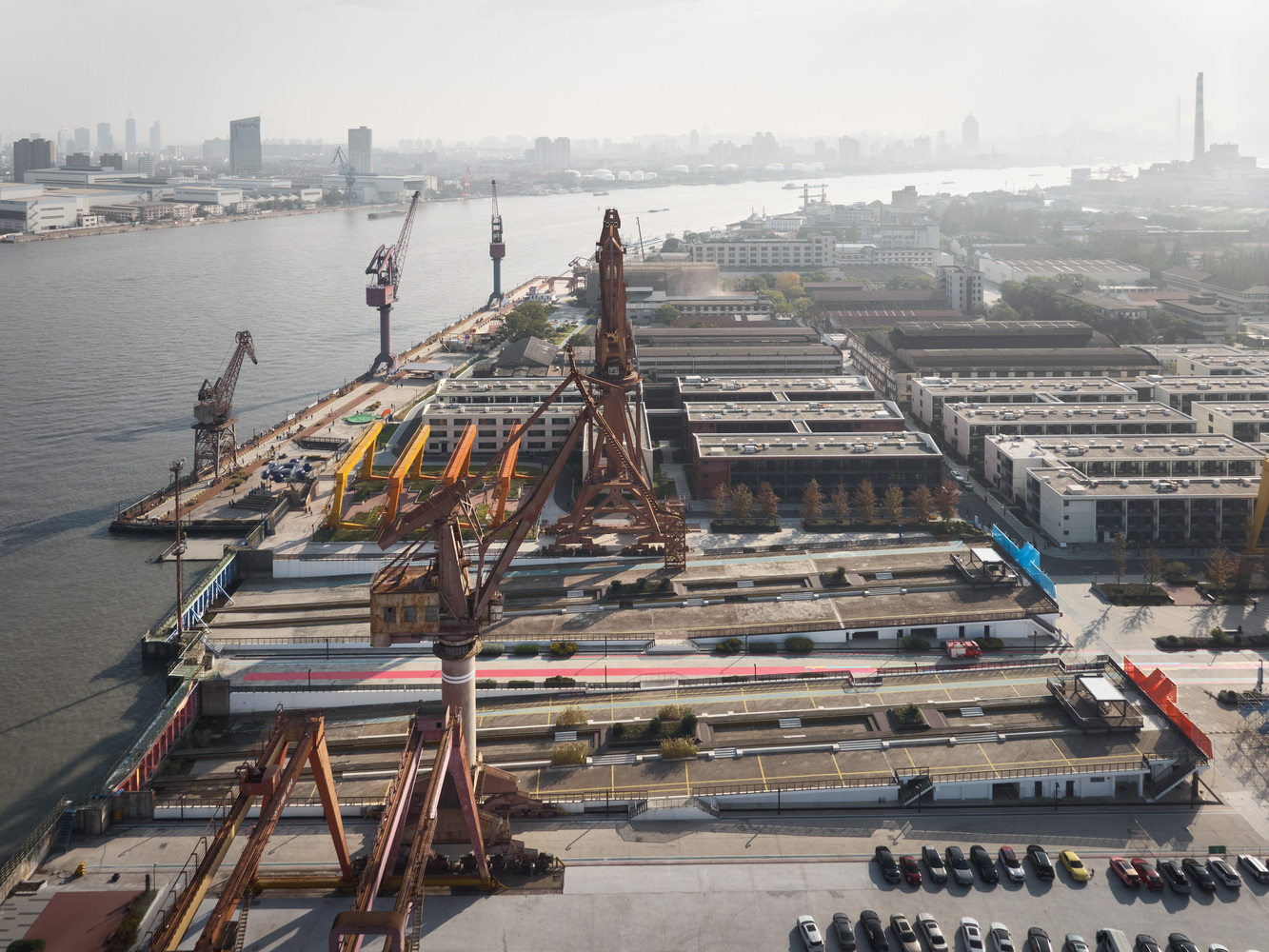
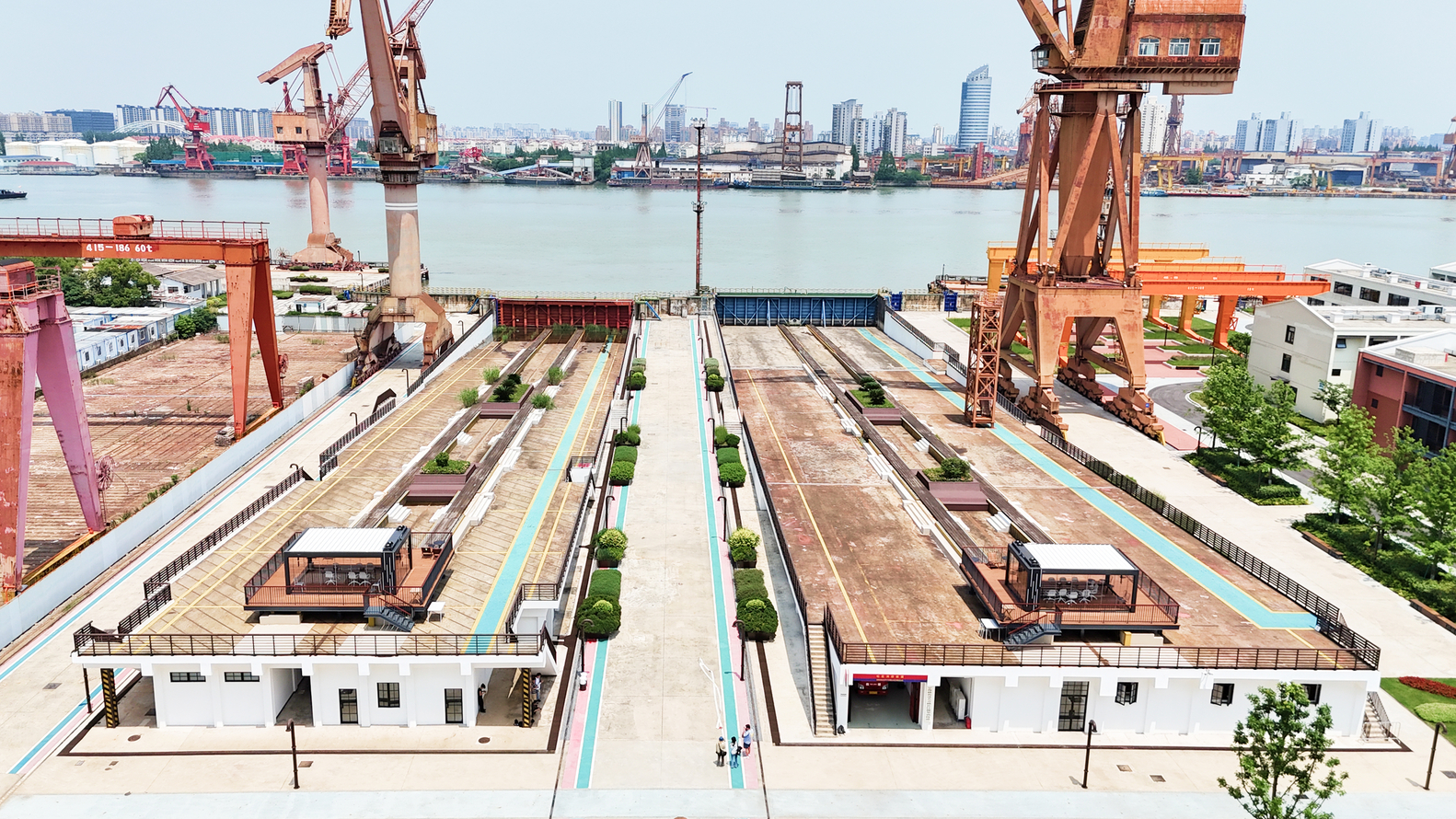
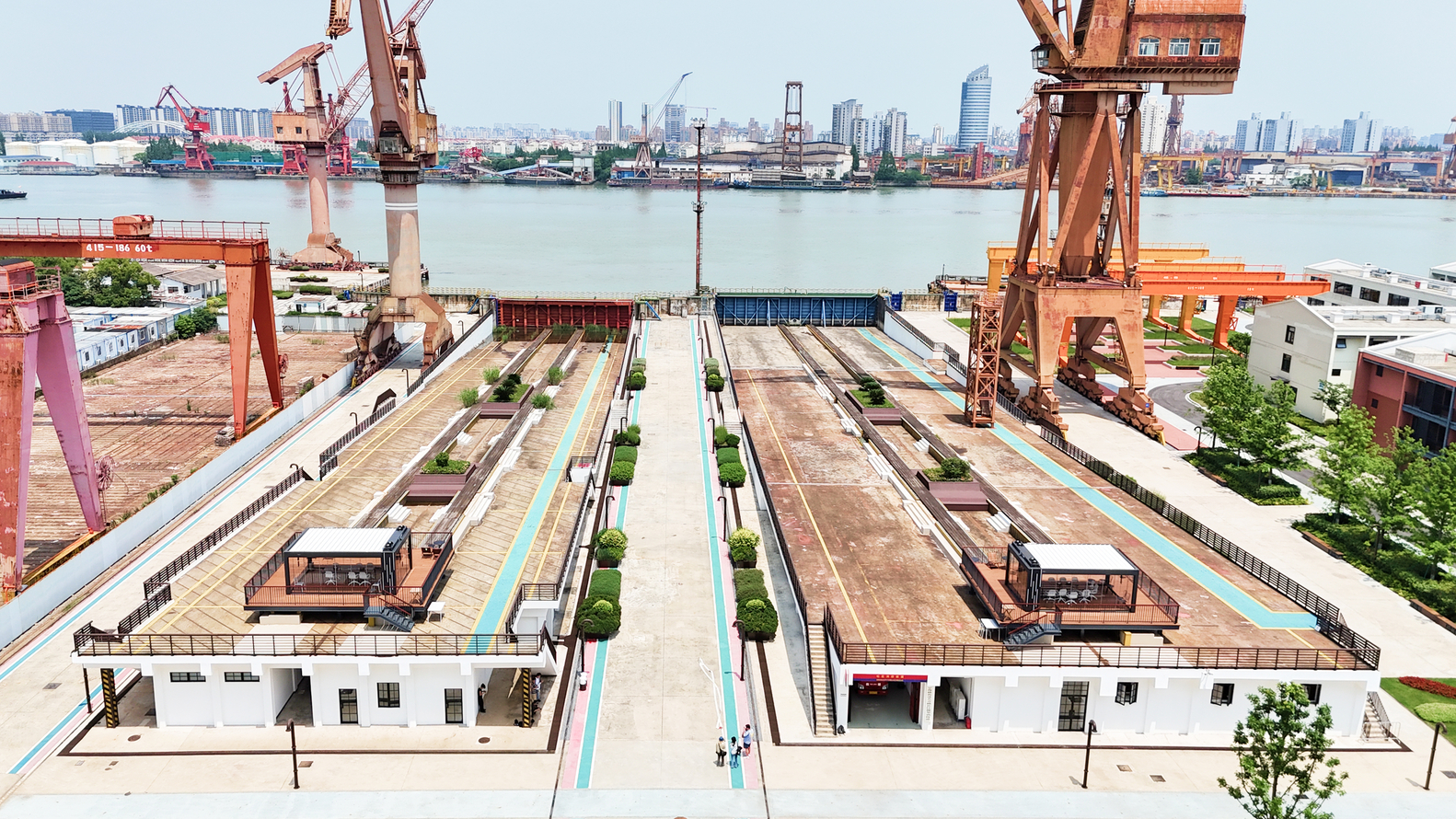
Created for the 2025 edition of the Shanghai Urban Space Art Season, The Day of Launching is a temporary installation by Practice on Earth and ARC Z Architects that reinterprets the industrial heritage of Fuxing Island’s former China Shipbuilding Factory. Occupying 90 square meters within a historic slipway, the project draws conceptual inspiration from the ritual of ship launching and a workers’ anthology of the same name published during the 1970s. Rather than applying a decorative intervention to the existing structure, the design introduces a modular scaffold-based apparatus that frames views toward the Huangpu River while reflecting fragments of the surrounding industrial landscape. Stainless steel mirrors, translucent PVC mesh, and lightweight steel framing combine to create a spatial instrument that oscillates between object, observatory, and public shelter. Developed through reversible clamp-based connections aligned with the slipway’s original structural grid, the installation avoids permanent alteration while extending the site’s tectonic logic. The project transforms an overlooked industrial remnant into an experiential public environment that invites reflection on labor, memory, and the collective processes embedded within Shanghai’s shipbuilding history.
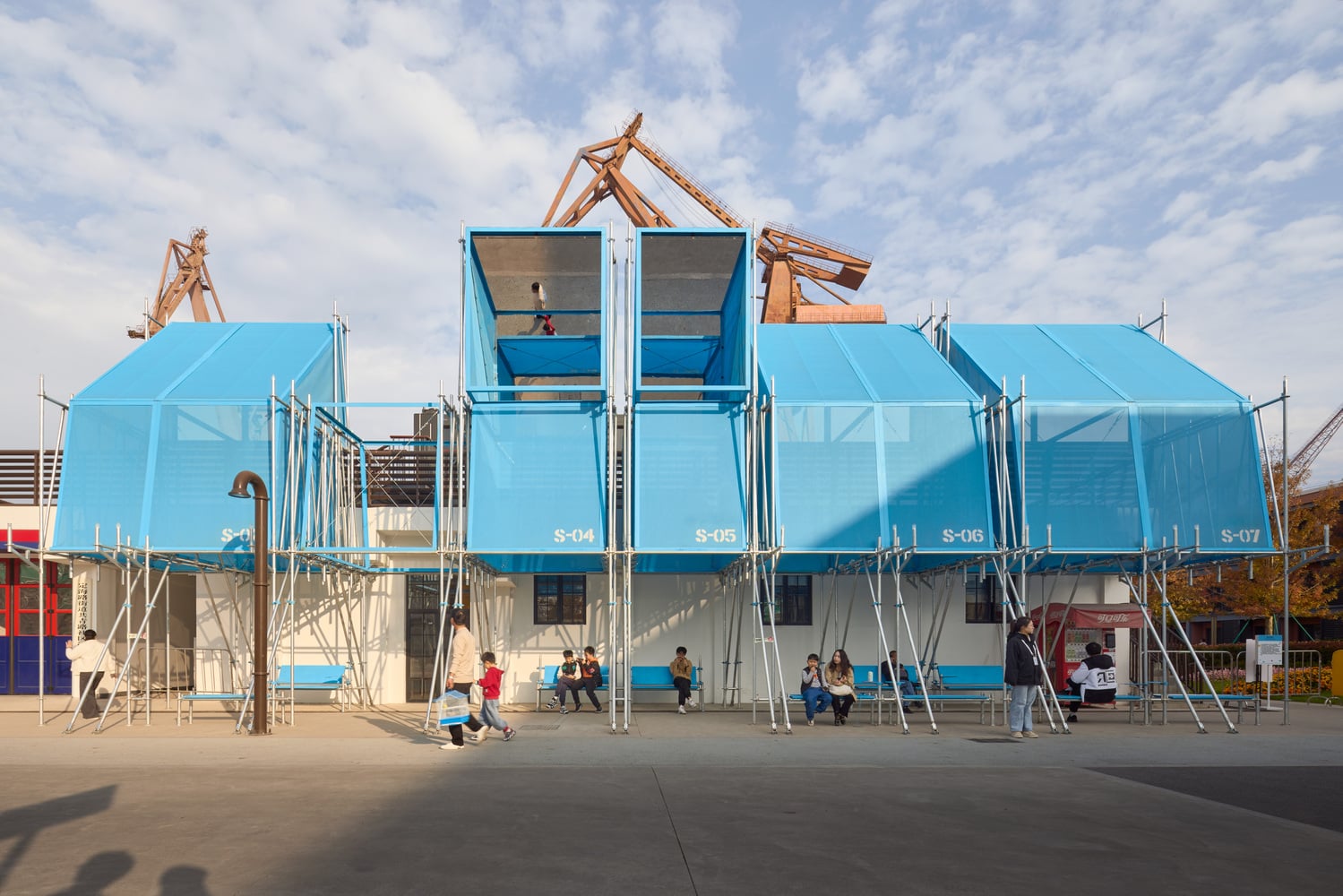
The adaptive reuse of industrial sites frequently oscillates between preservation and reinvention, often struggling to establish a meaningful relationship with the histories embedded in obsolete infrastructure. At Fuxing Island in Shanghai, Practice on Earth and ARC Z Architects approach this challenge through an intervention that privileges interpretation over restoration. Positioned within the monumental slipway of the former China Shipbuilding Factory, The Day of Launching reconstructs the latent spatial and emotional conditions of shipbuilding through a temporary installation that transforms industrial memory into a contemporary public encounter.
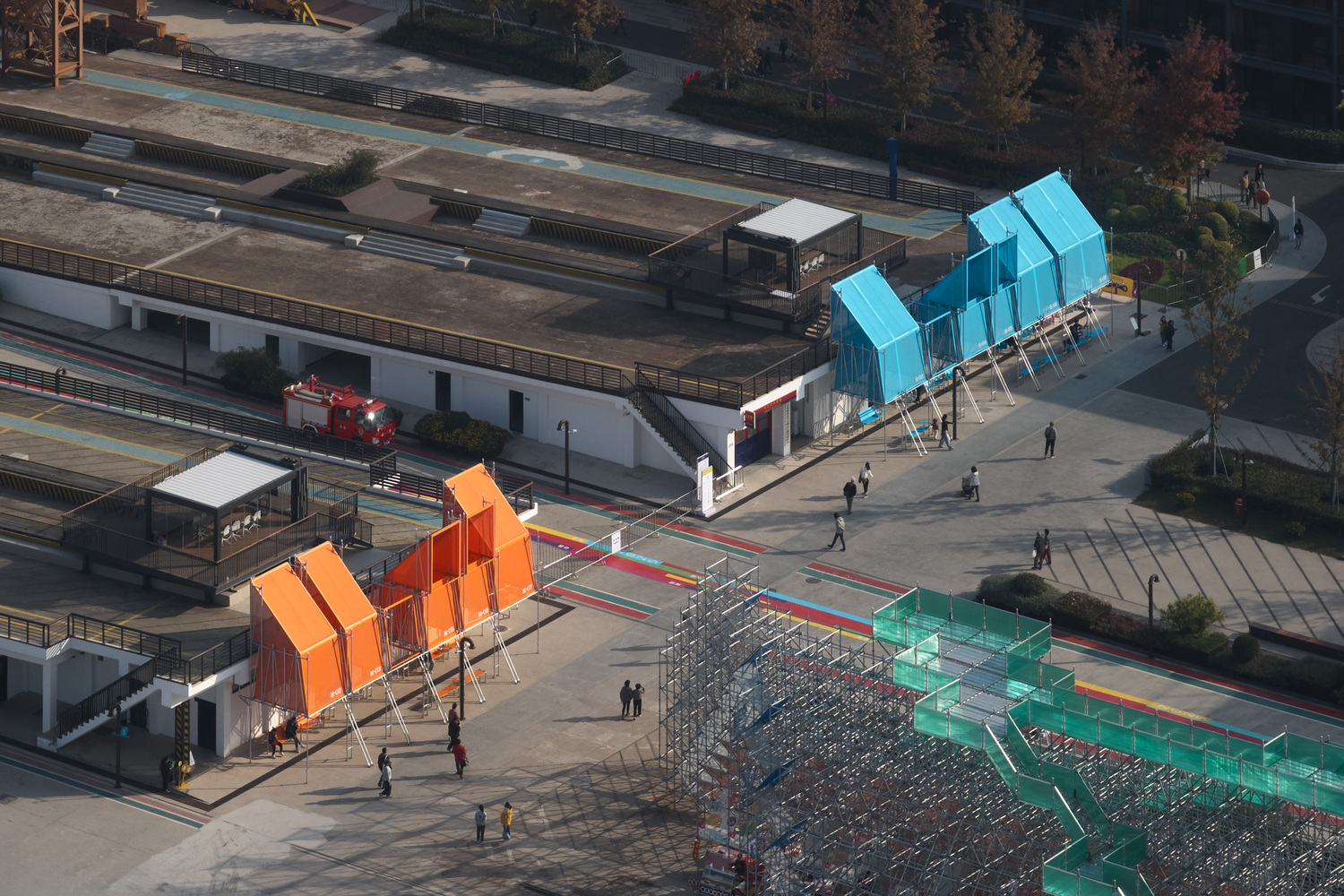
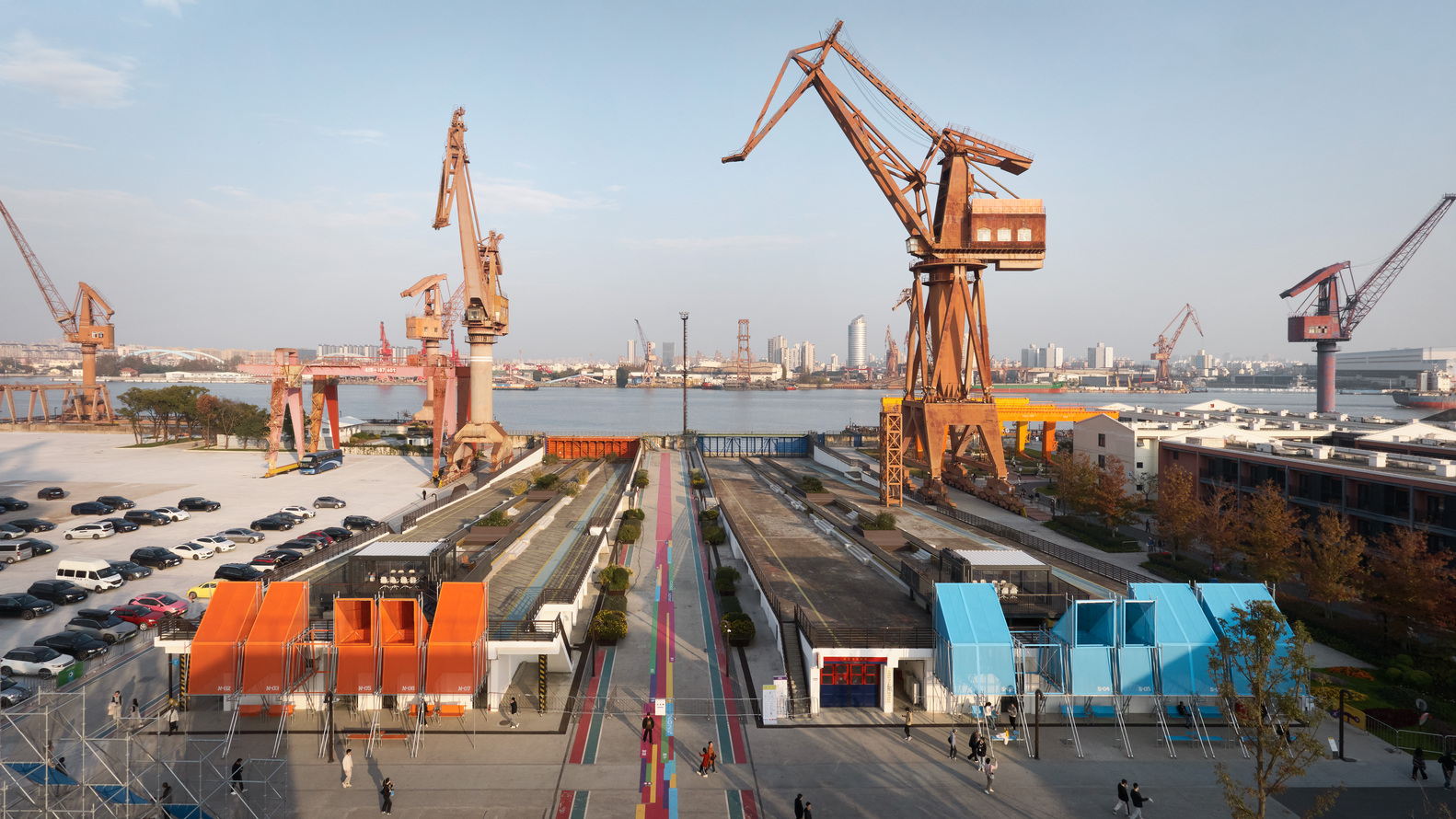
The project emerged from a critical reconsideration of the original commission brief. Initially conceived as an enhancement to the exposed elevation of the slipway, the architects quickly recognized that the structure’s significance extended far beyond its visual presence. The slipway formed the central axis of the shipyard and represented the final threshold where vessels completed months or years of assembly before entering the Huangpu River. This understanding shifted the design process toward a broader conceptual inquiry into the mechanics and symbolism of launching as both a technical procedure and a ceremonial culmination of collective labor.
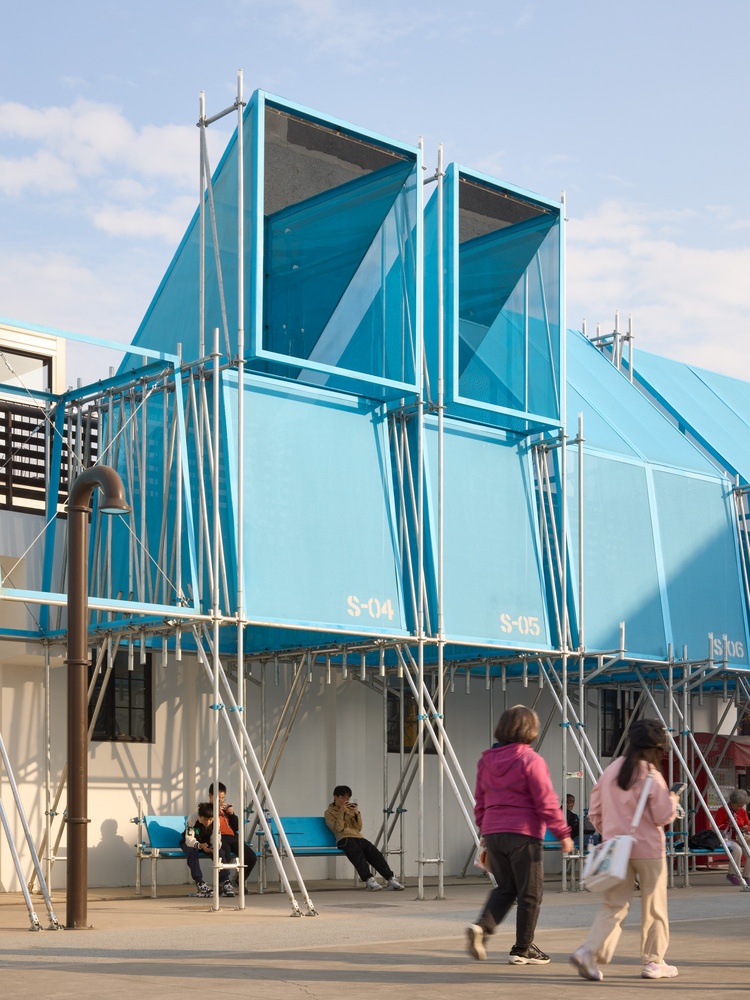
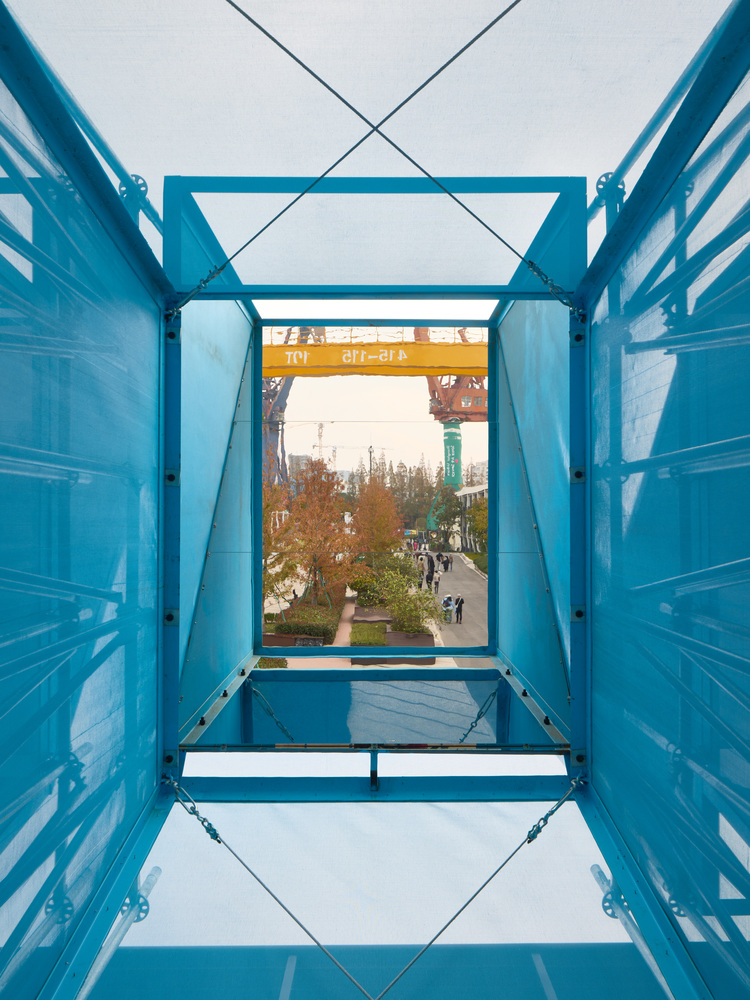
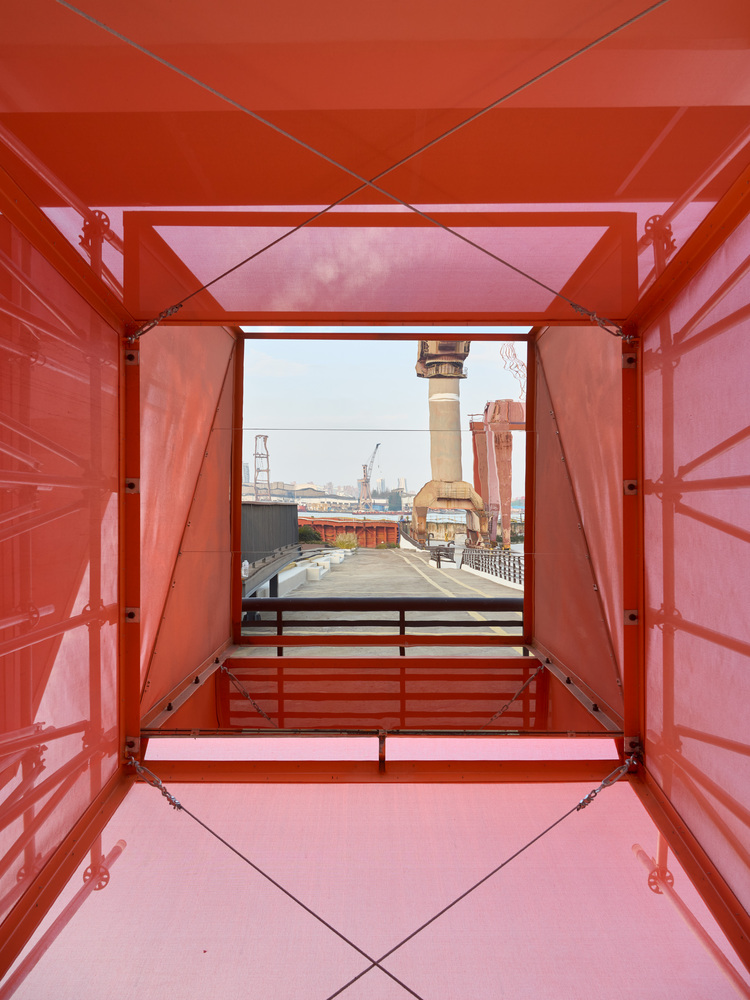
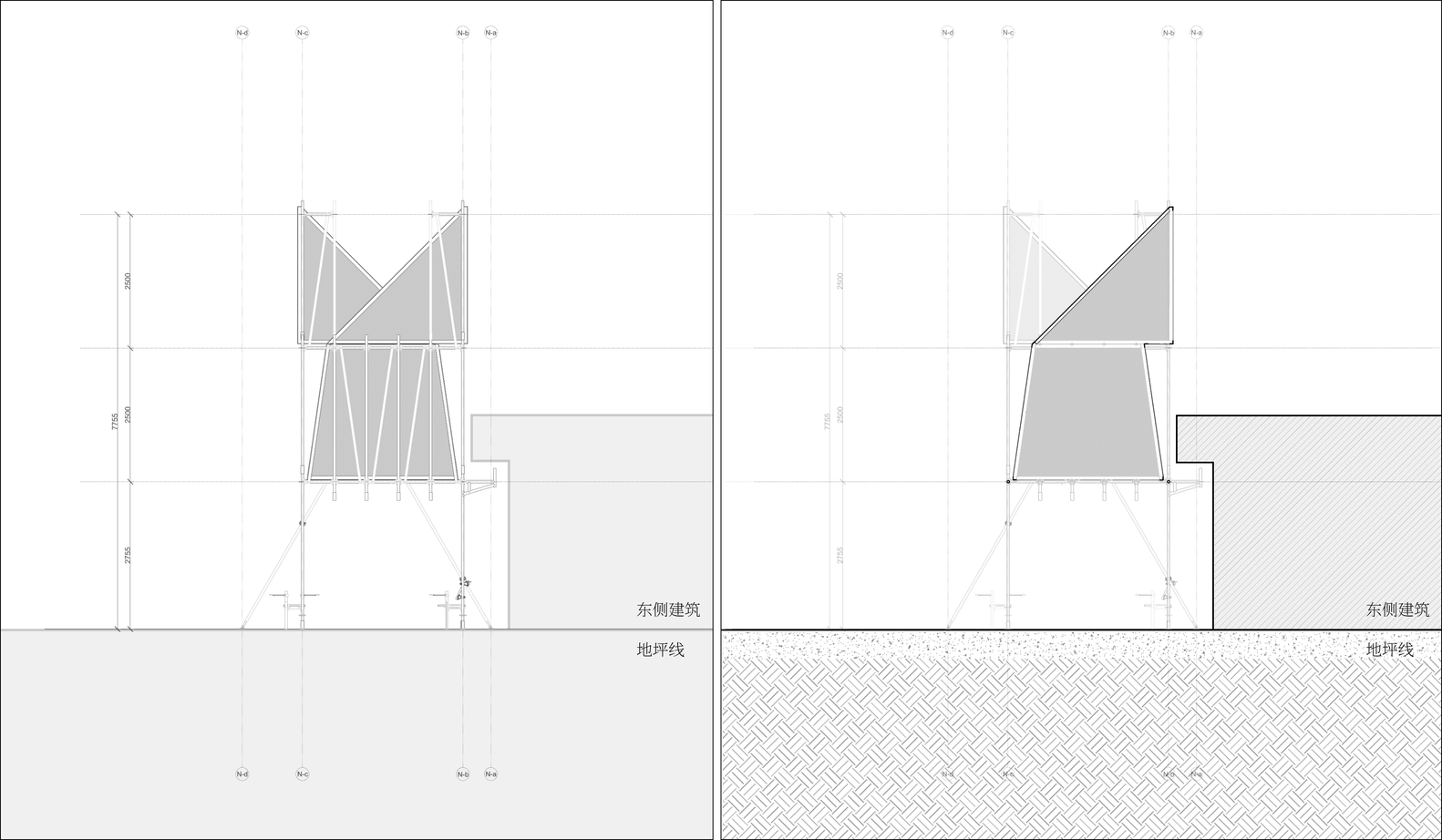
Drawing from a 1970s workers’ publication produced at the shipyard, from which the installation takes its title, the architects translated this moment of release into a spatial device centered on redirected vision. A tilted stainless-steel mirror positioned above the scaffolded structure functions as a contemporary periscope, allowing visitors to visually reconnect with the distant launching gates. This gesture reestablishes an interrupted relationship between the body, the slipway, and the river, restoring awareness of the site’s original operational sequence while framing a broader reflection on industrial transformation.
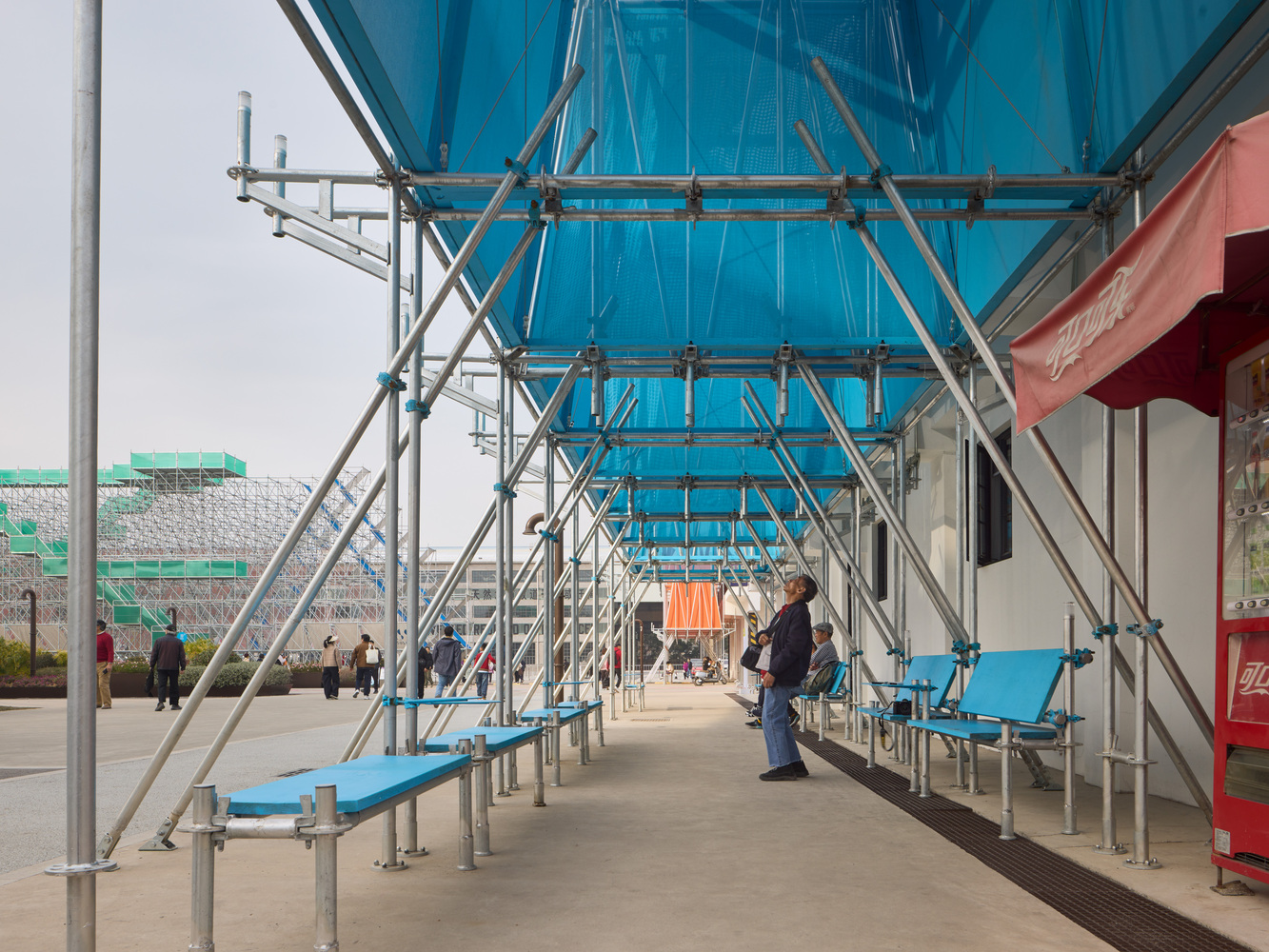
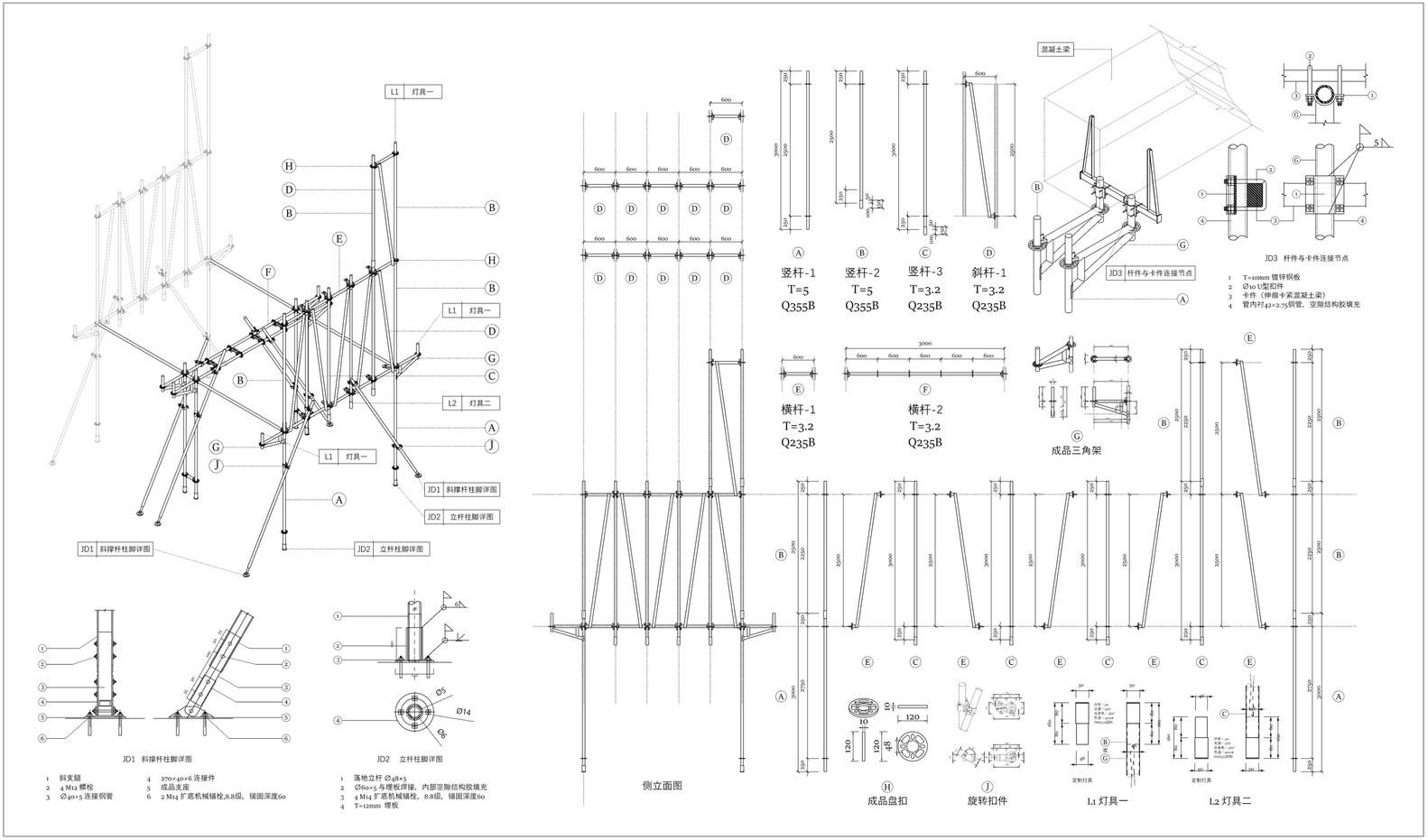
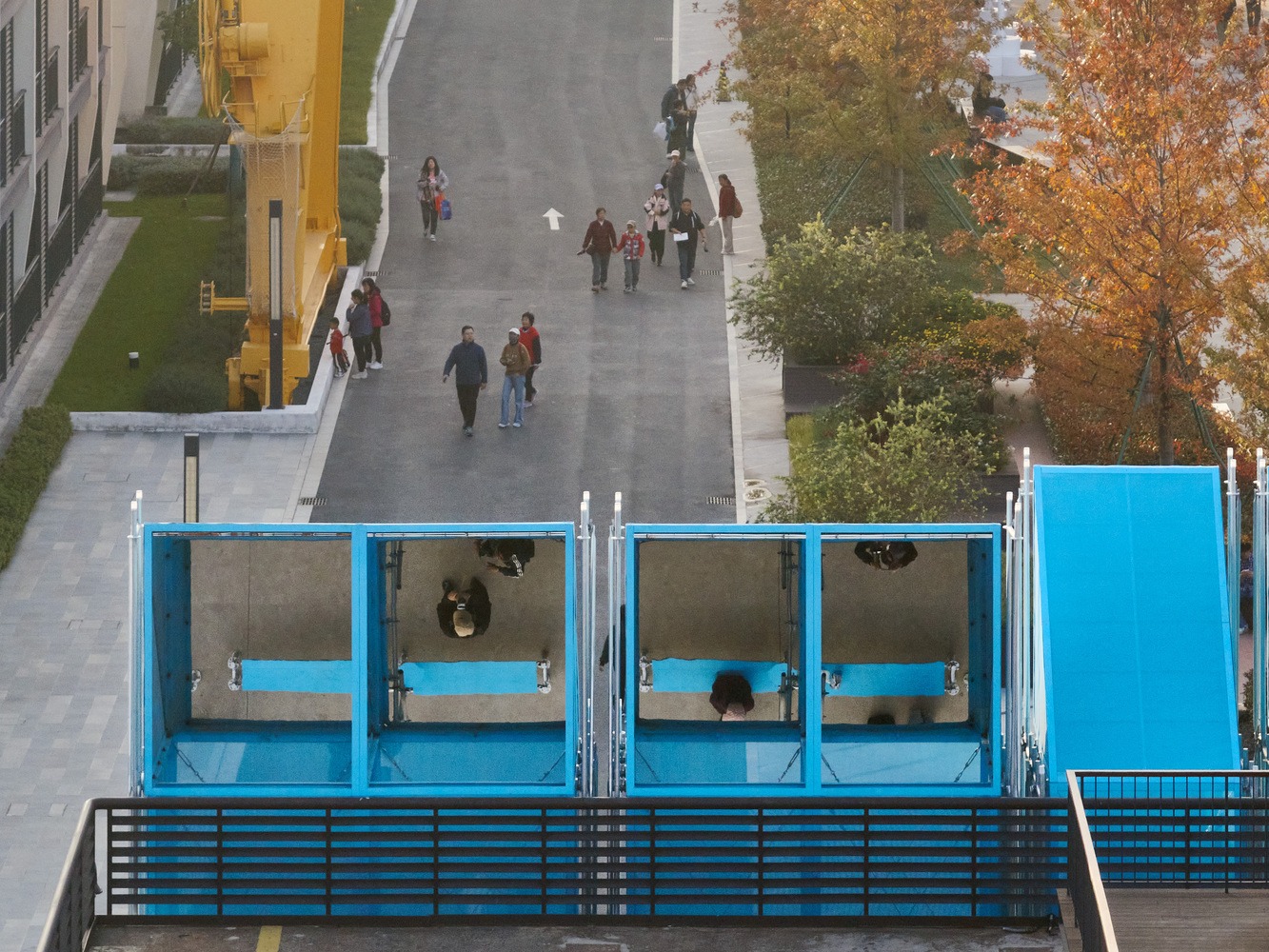
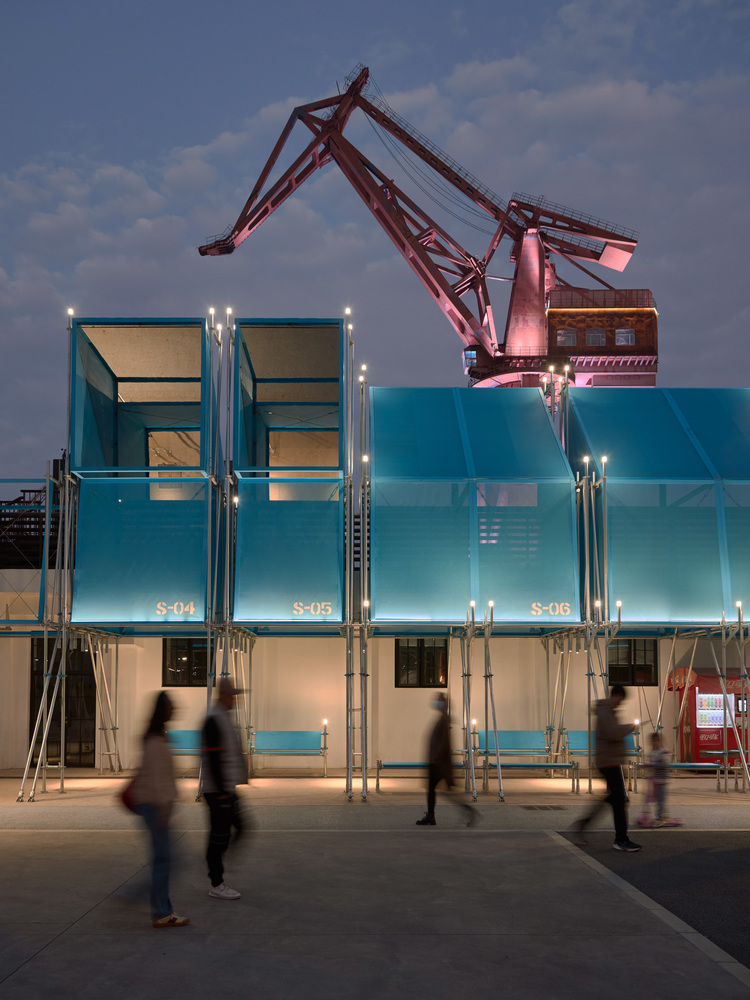
Practical constraints introduced an additional layer of formal complexity. The presence of a VIP viewing box overlooking the slipway required visual privacy, directly conflicting with the installation’s intended sightlines. Rather than compromise the concept, the architects responded by rotating select modules and leaving portions intentionally unresolved. This disruption produces a dynamic composition that appears simultaneously assembled and incomplete, creating shifting reflections that capture both the massive crane structures nearby and the active shipyard across the river. The resulting visual overlap collapses distinctions between historical artifact and contemporary production.
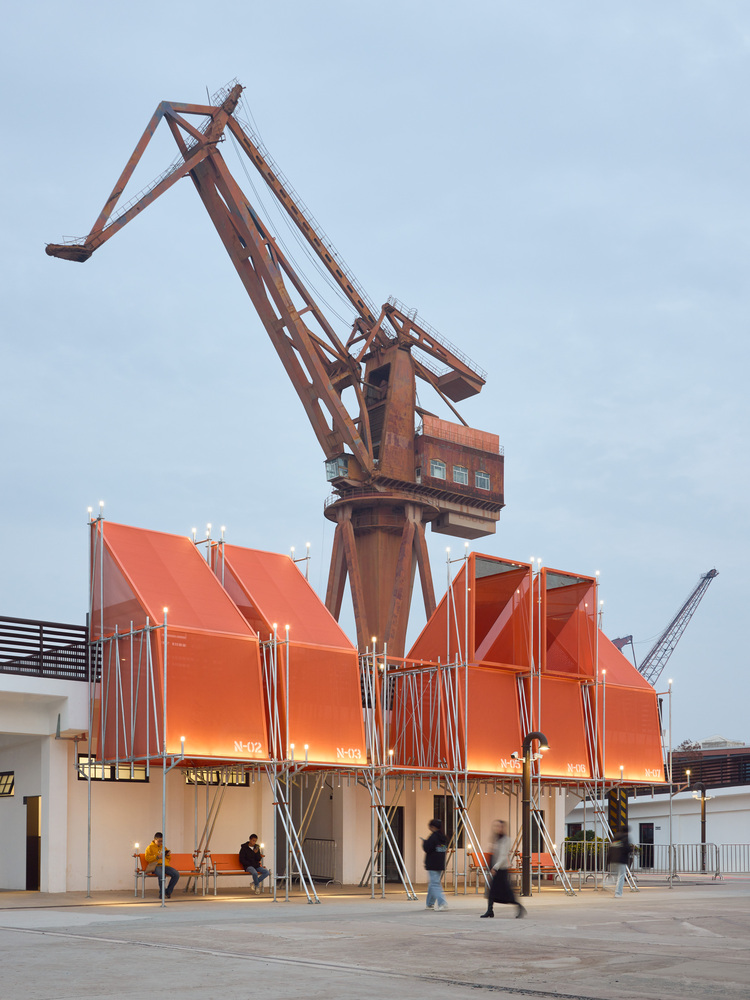
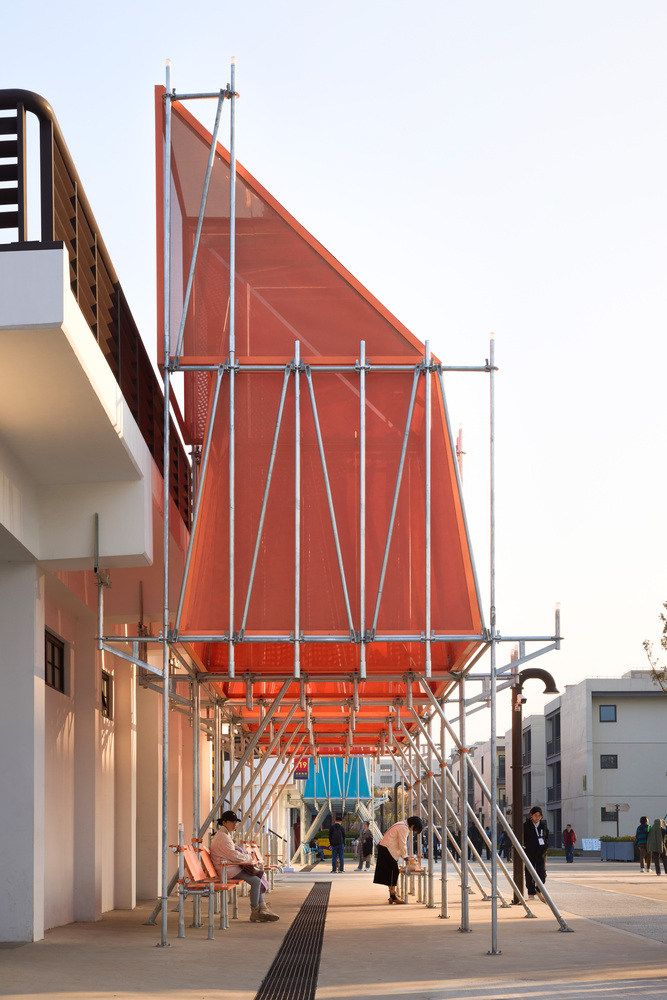
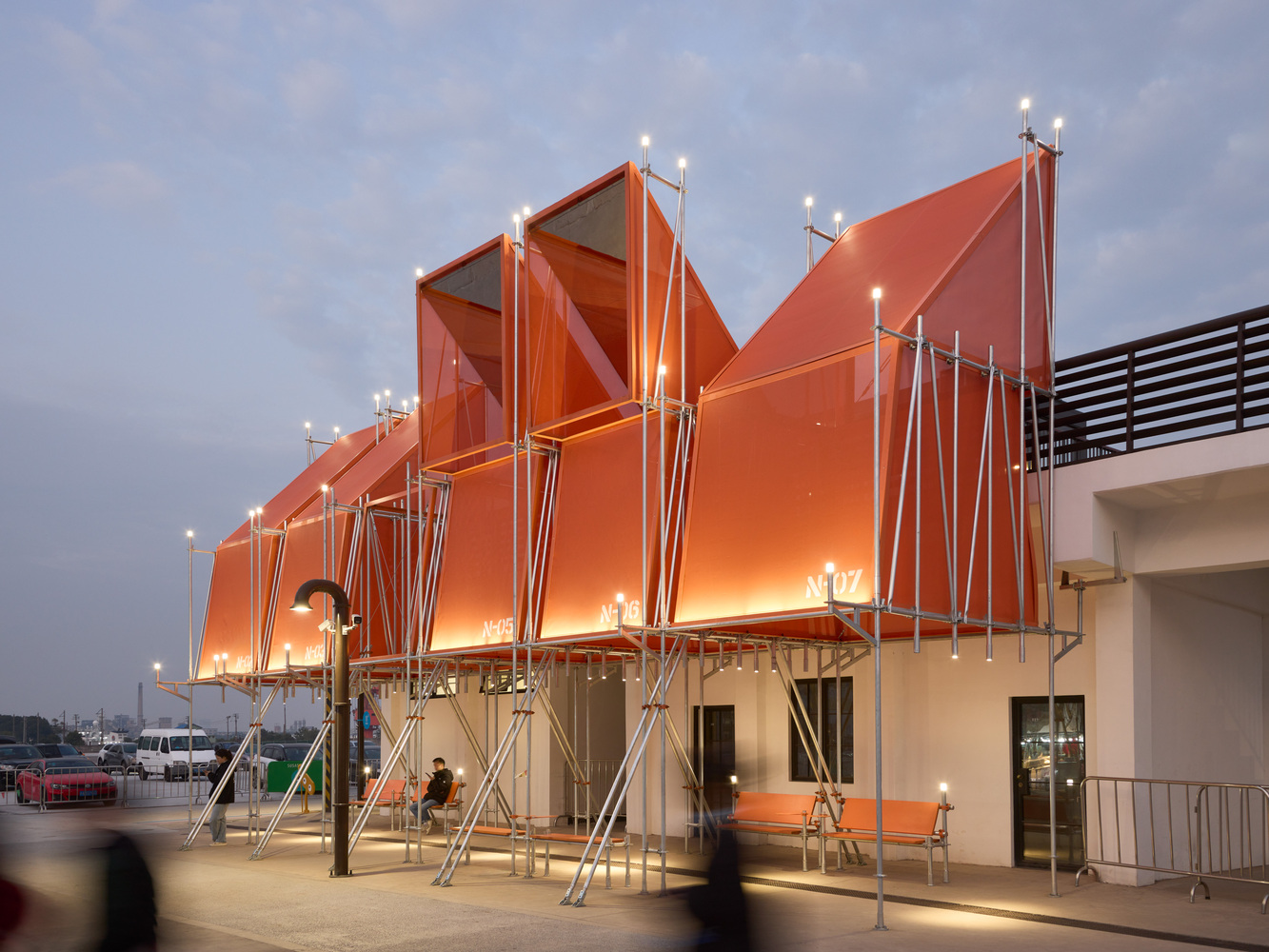
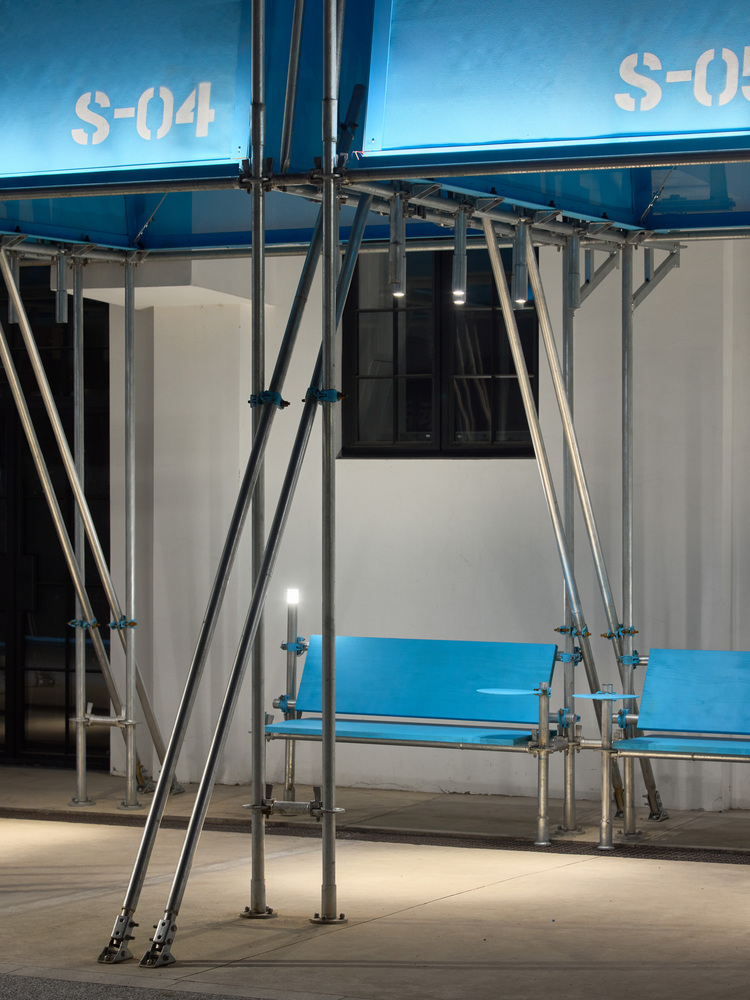
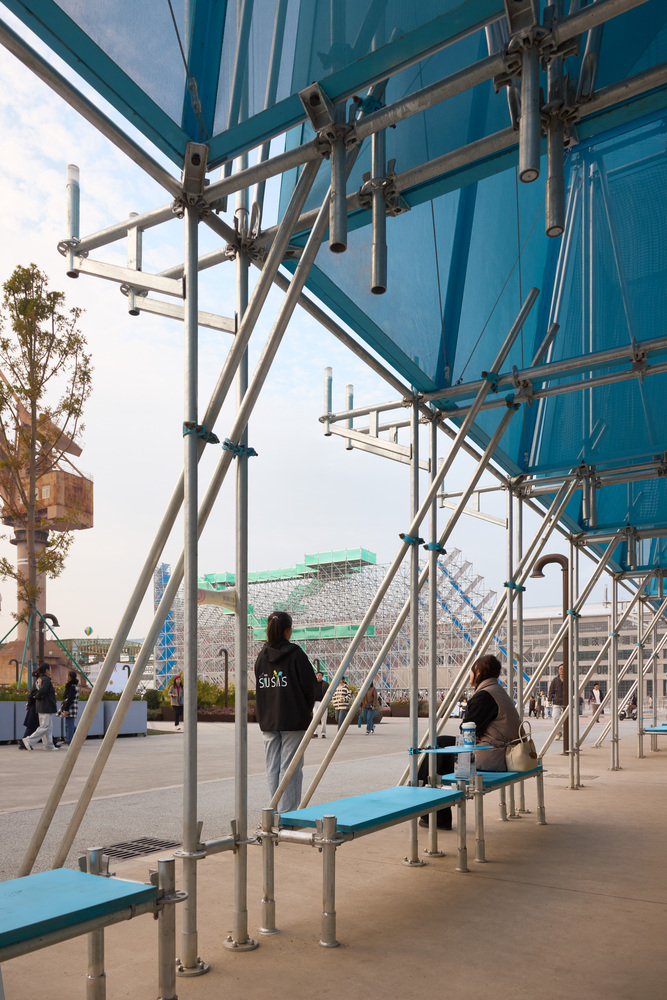
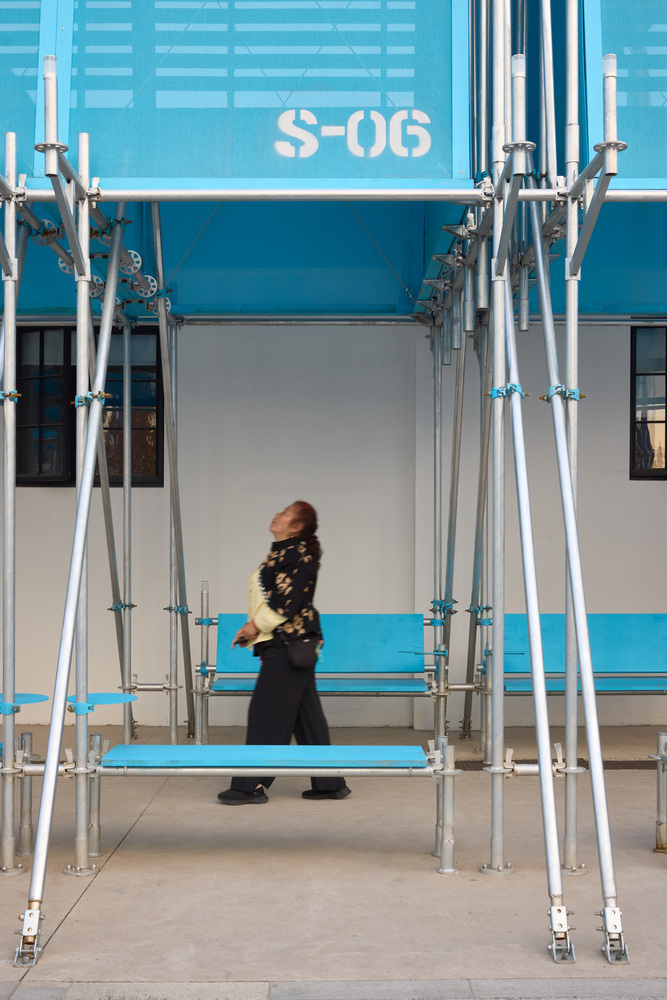
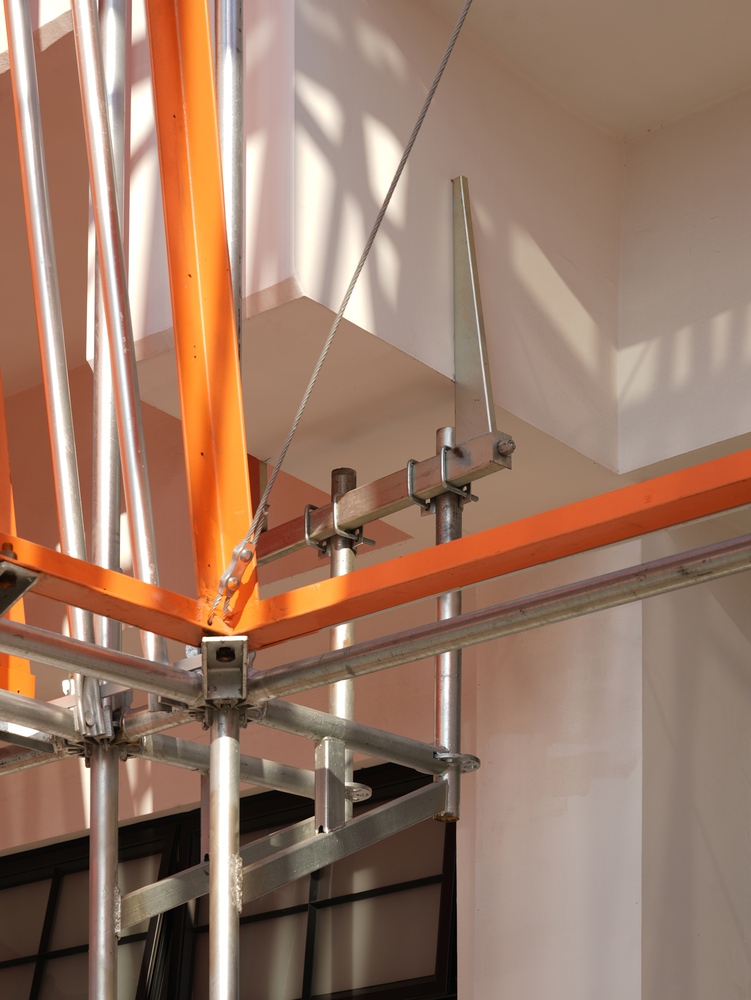
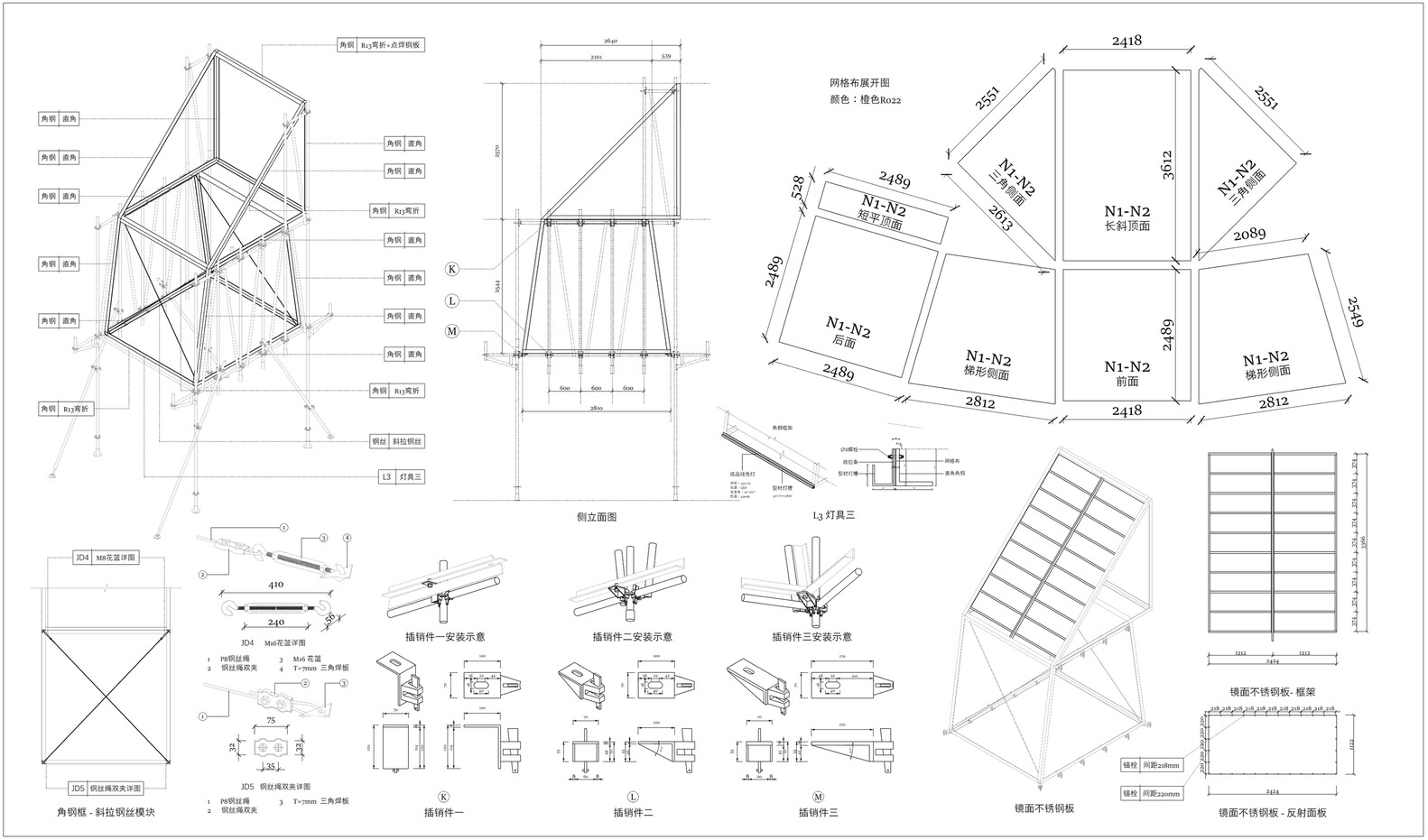
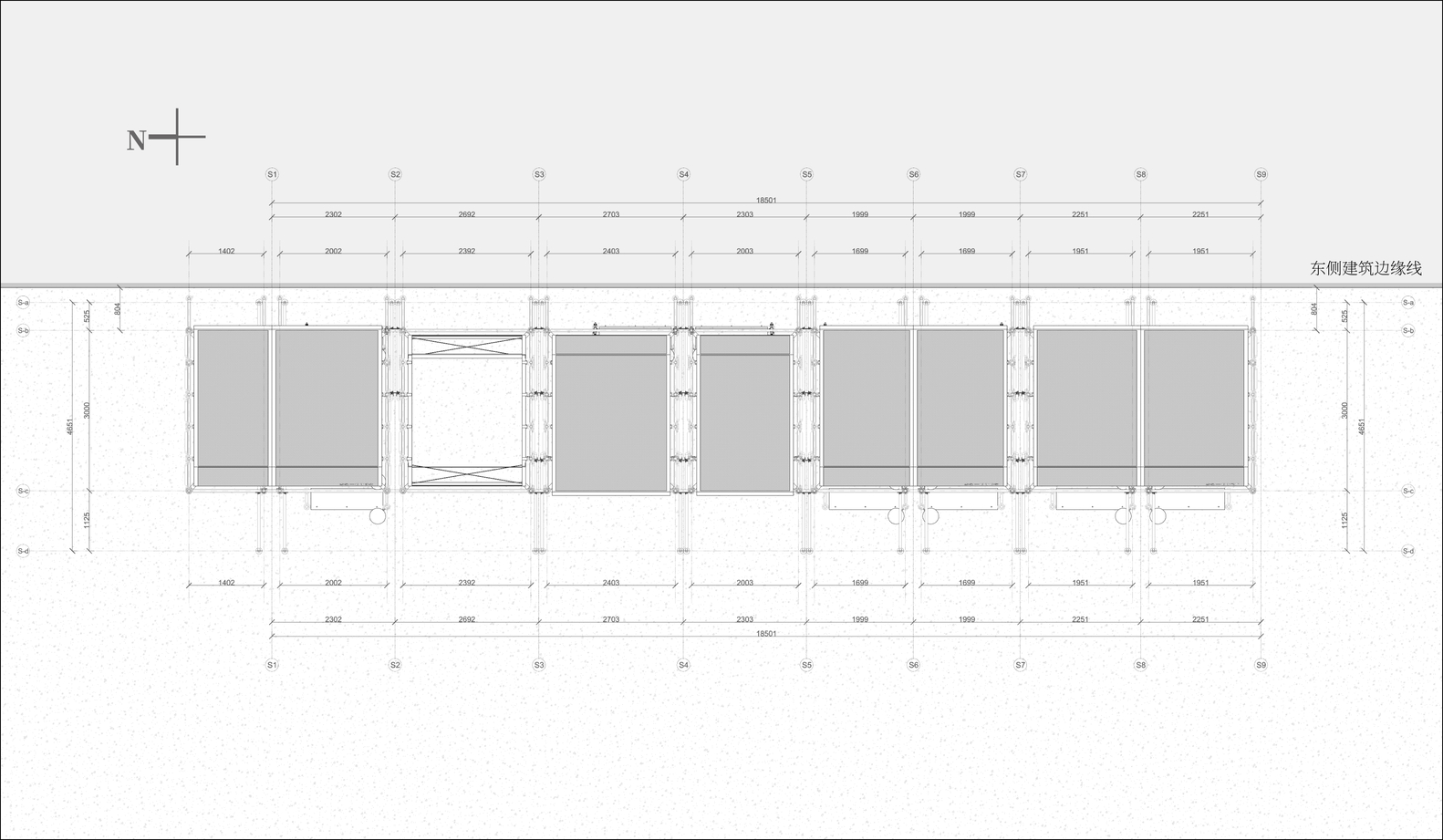
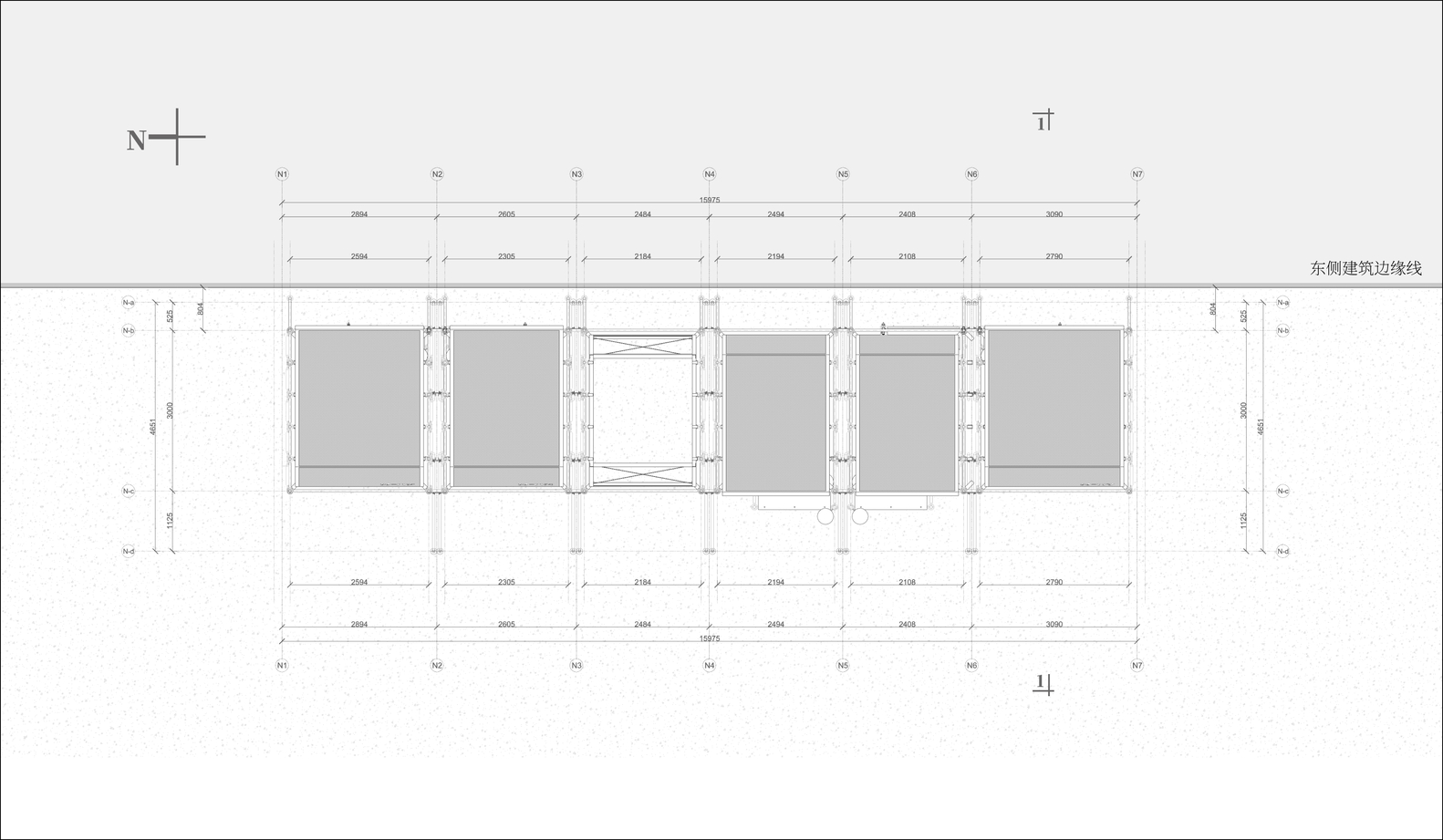
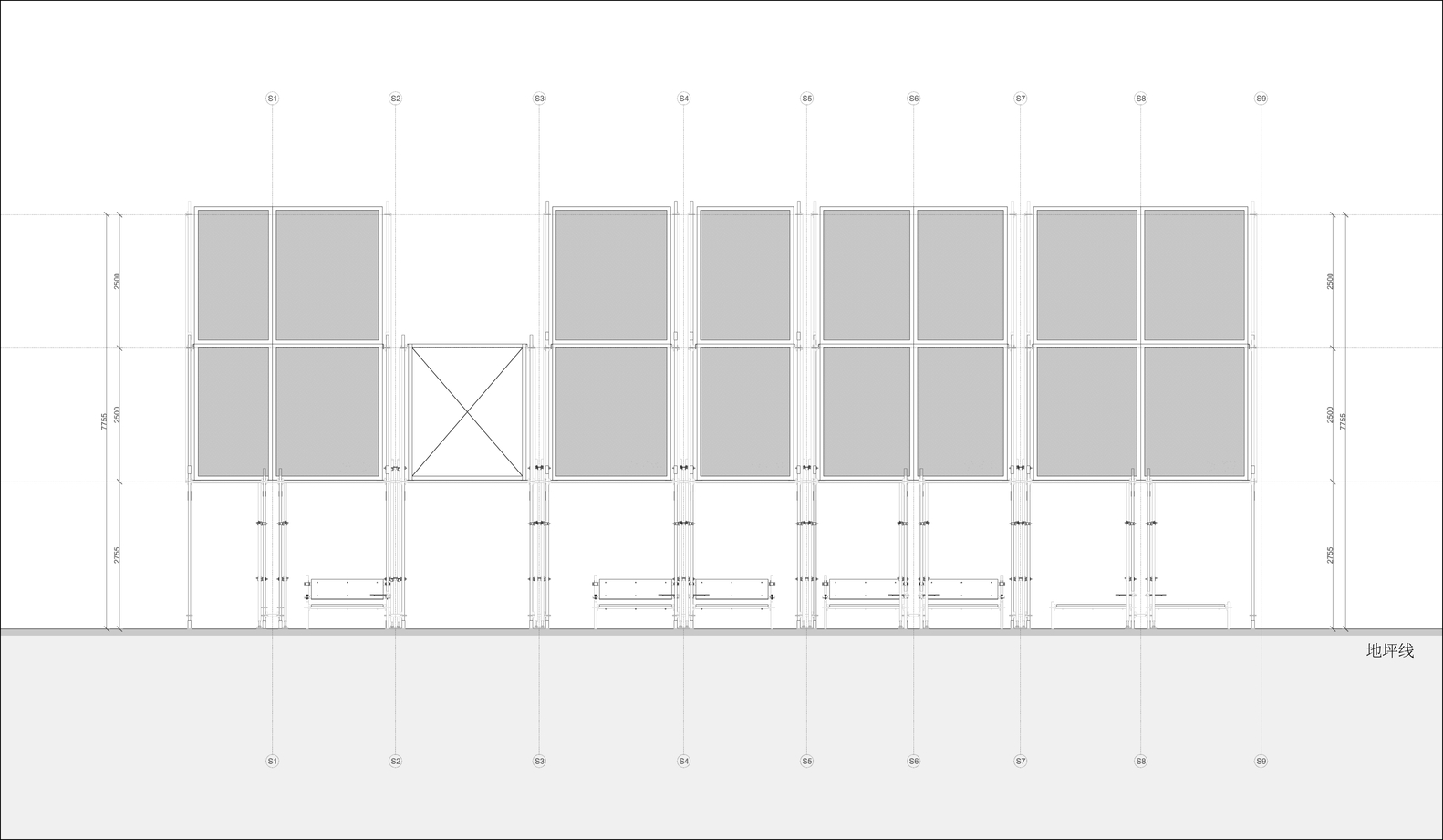
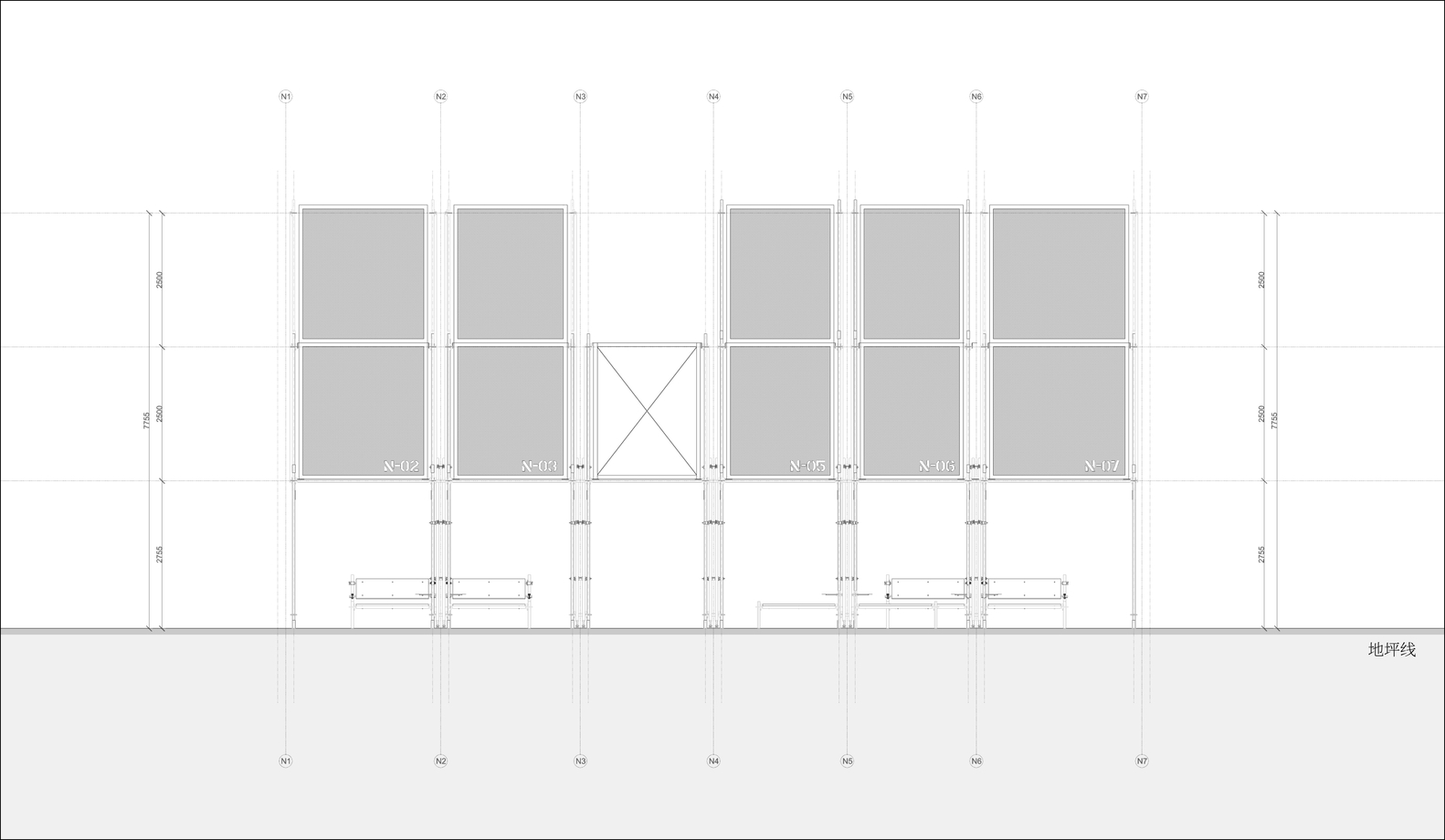
Material and structural decisions reinforce the project’s conceptual alignment with shipbuilding logic. Constructed from a standard ring-lock scaffolding system, the installation embraces modularity and prefabrication as primary tectonic principles. Collaboration with structural consultant De Li enabled the lower framework to achieve an unusual lightness, counterbalancing the typically heavy visual language of scaffolding. Above, angle-steel framing and diagonal bracing establish a deliberately top-heavy silhouette that recalls the poised resistance of industrial cranes, while simultaneously articulating the interdependence of structural components.
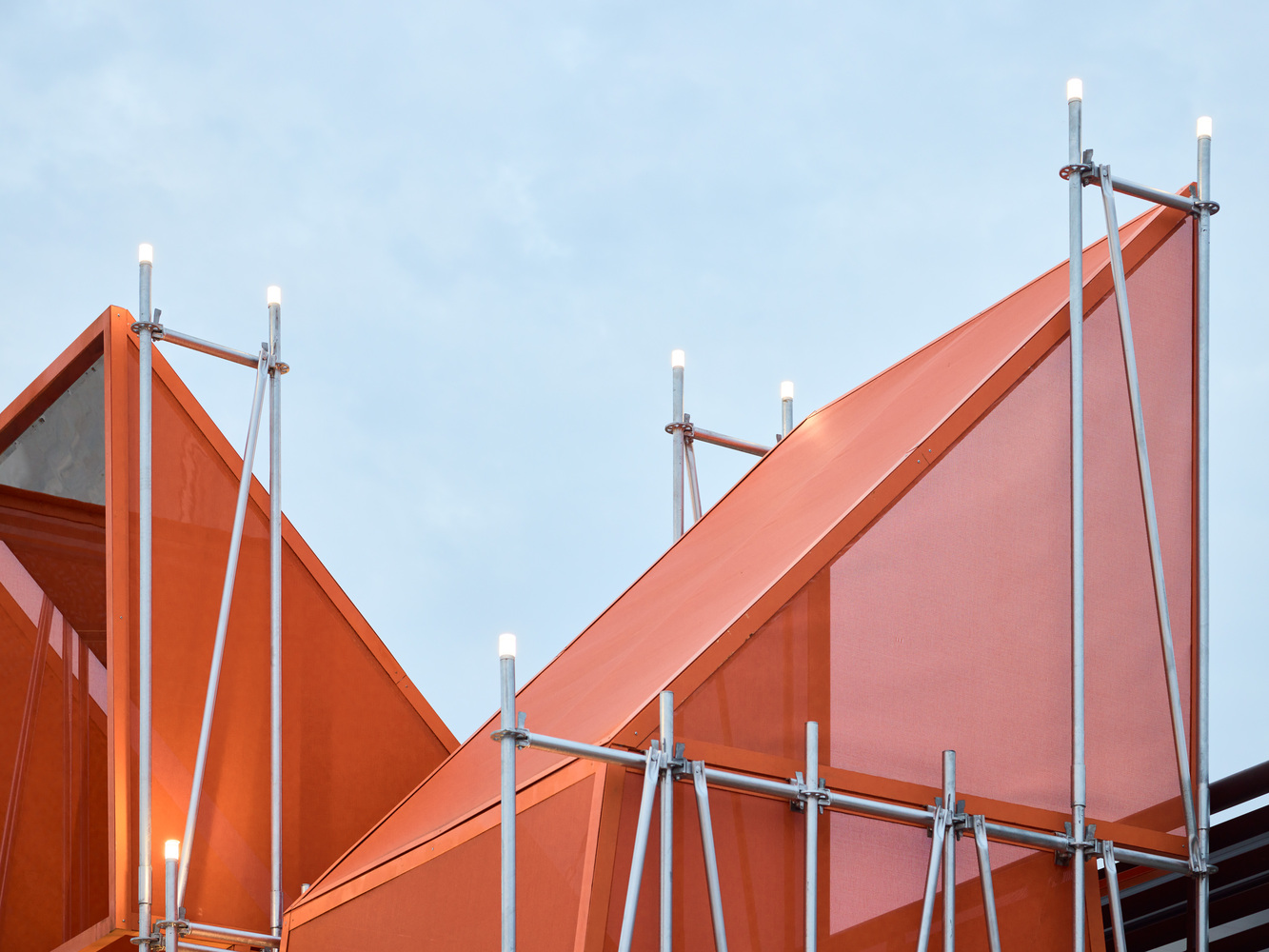
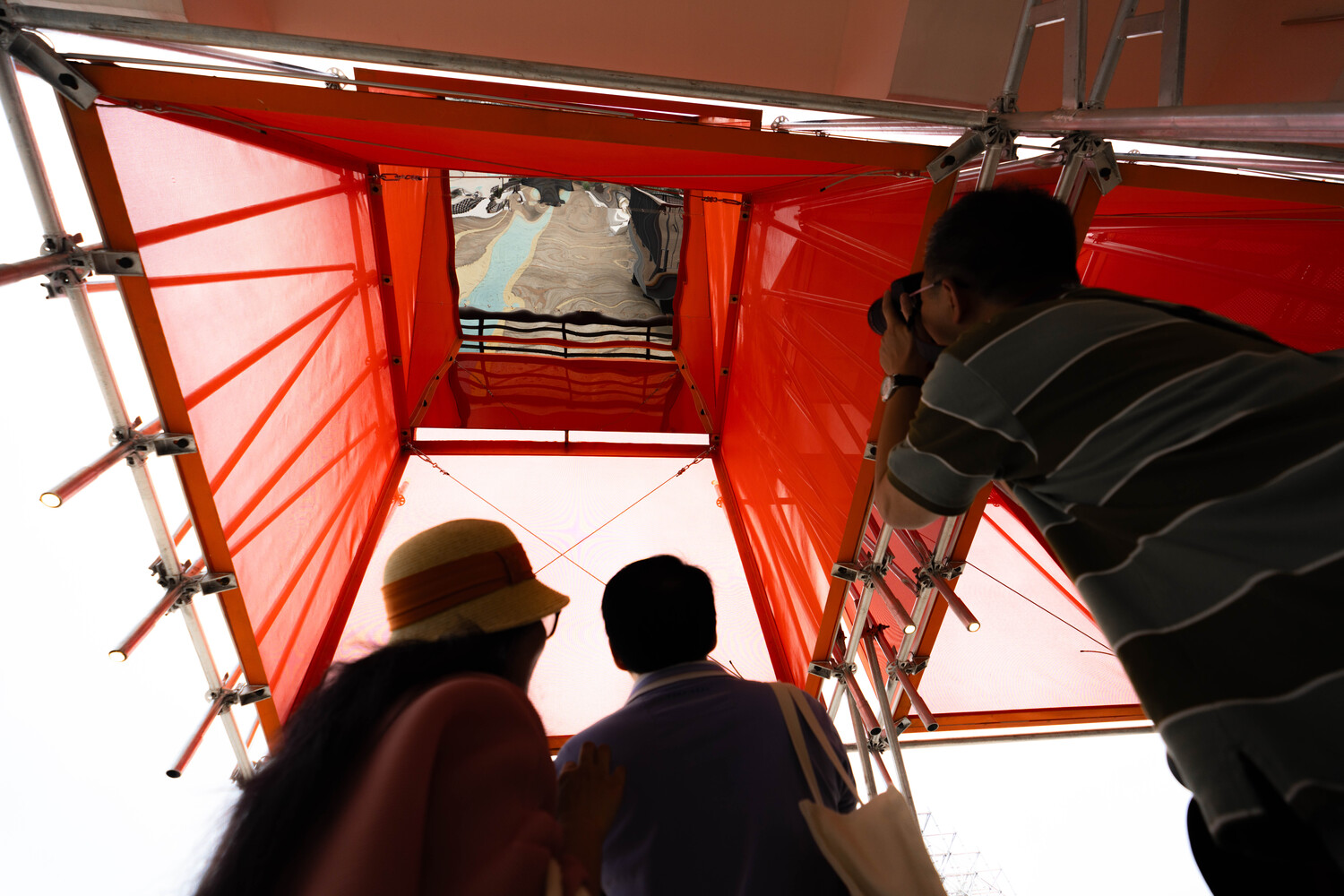
The translucent PVC mesh envelope further extends this duality between mass and permeability. From a distance, it presents an unexpectedly solid volume embedded within the slipway; at close range, it dissolves into a porous membrane that filters light and creates inhabitable shade. Integrated benches, loungers, and tea tables continue this constructive language at a smaller scale, inviting prolonged occupation. Through its reversible clamp-based attachment system, the installation leaves the historic structure untouched while activating it anew, demonstrating how temporary architecture can engage industrial heritage not as static memory, but as an evolving framework for collective experience.

Project Gallery
Project Location
Address: Yangpu District, Shanghai, China
The location specified is intended for general reference and may denote a city or country, but it does not identify a precise address.

