

Architects: Kevin Roche John Dinkeloo and Associates
Area: 38,600 m² (415,000 ft²)
Year: 1967
Photography: KRJDA, Ford Foundation, Ezra Stoller, Esto, Richard Anderson, Rian Castillo, Iwan Baan, Wikimedia Commons, Gigi Altarejos, Sarojini Seupersad, Cc2723, ajay_suresh, Epicgenius, KangZeLiu
Design Architects: Kevin Roche, John Dinkeloo
Landscape Architect: Dan Kiley
Structural Engineer: Severud Associates
Mechanical Engineer: Cosentini Associates
Interior Design Adviser: Warren Platner
Contractor: Turner Construction
Client: Ford Foundation
Renovation: 2015–2018
Renovation Architect: Gensler
City: New York City
Country: United States
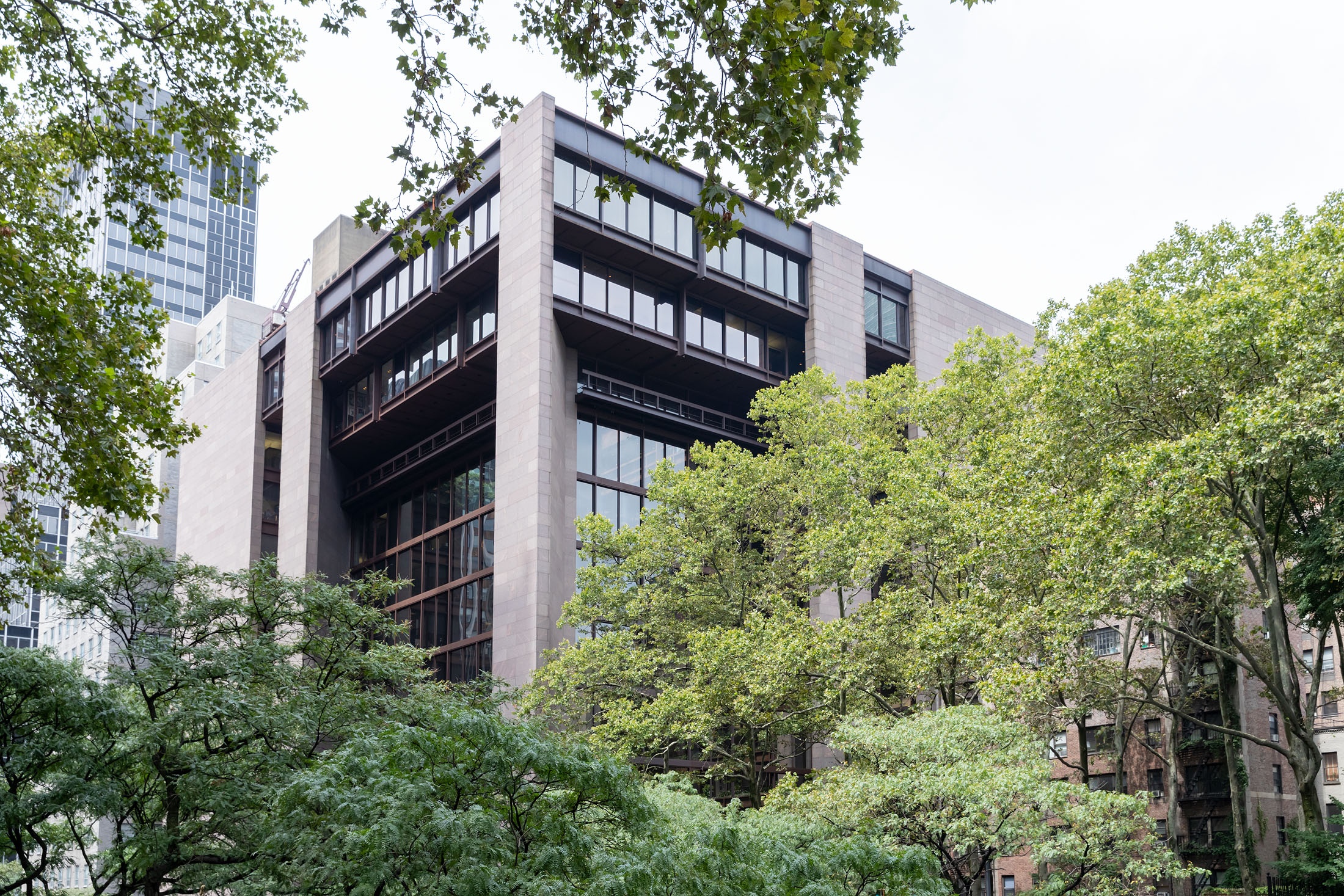
Ford Foundation Building office building designed by Kevin Roche John Dinkeloo and Associates in New York City redefined the relationship between workplace, public space, and urban landscape. Completed in 1967, the project established a new office typology that prioritized social interaction, daylight, and visual connection rather than maximum floor area. The building occupies only a portion of its site, allowing a large public garden atrium to become the center of the institution. The twelve-story structure introduced one of the first enclosed public atriums in an American office building and remains a significant work of late modern architecture. The building combines concrete, granite, weathering steel, and glass within a composition that integrates offices, landscape, and public space. The project reflects the Ford Foundation’s mission while creating a workplace organized around openness, visibility, and community. The building received landmark designation in 1997 and underwent a major restoration between 2015 and 2018 that preserved its original architectural character while improving accessibility, sustainability, and public access.
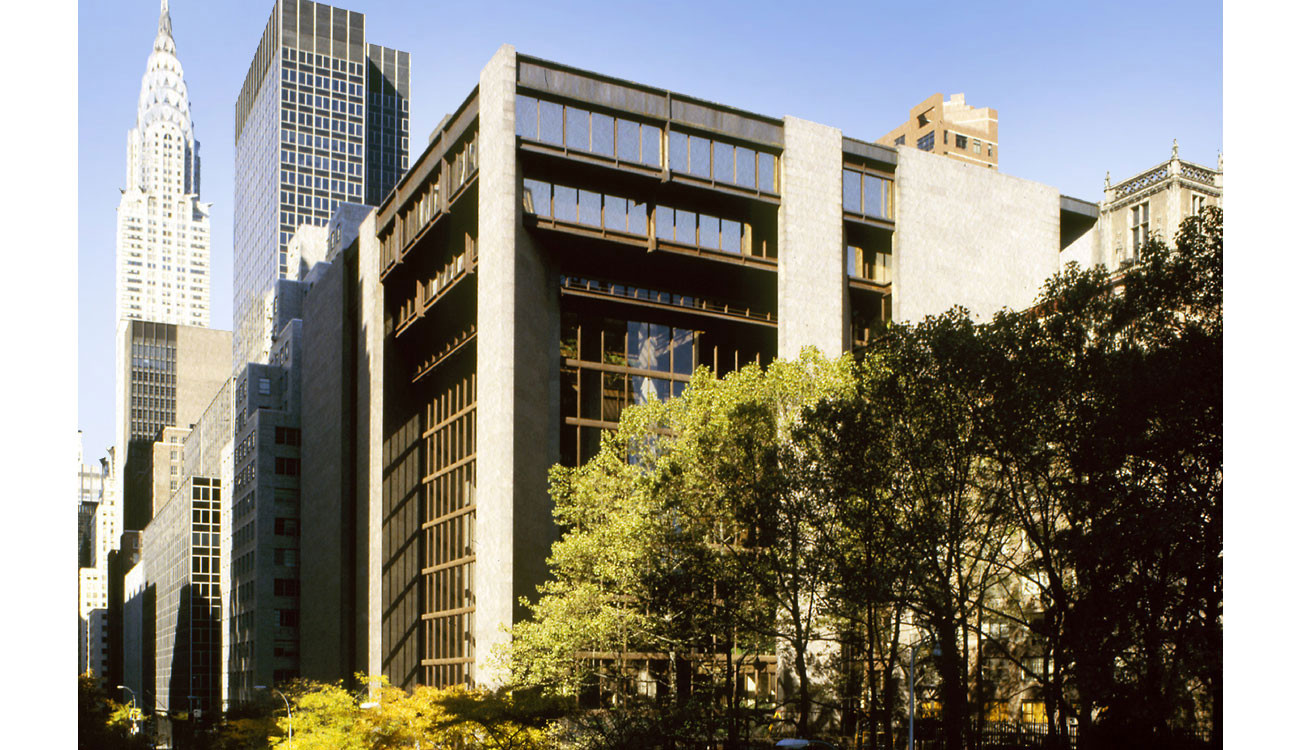
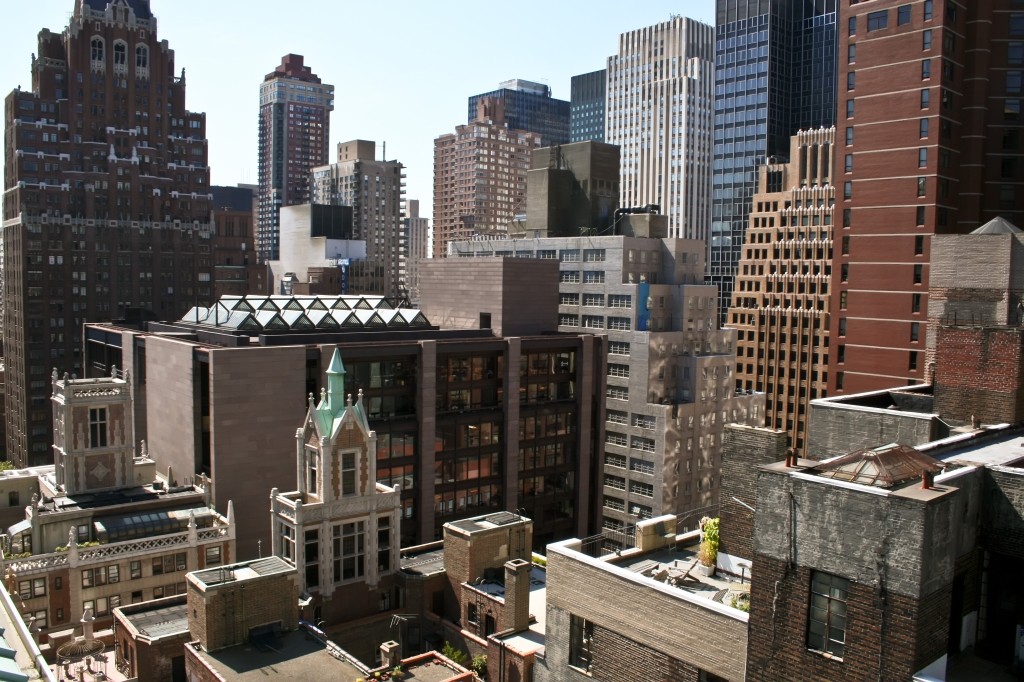
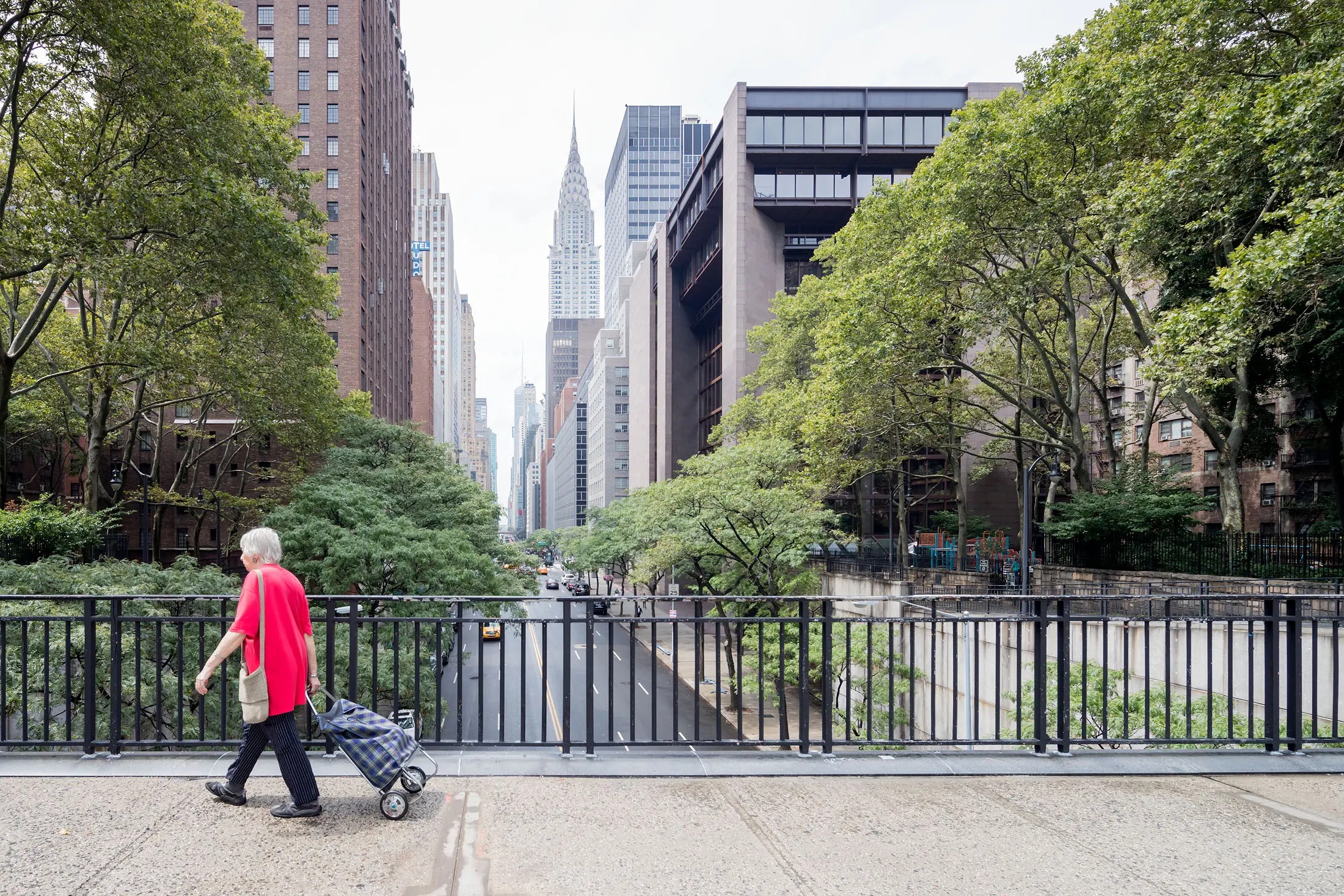
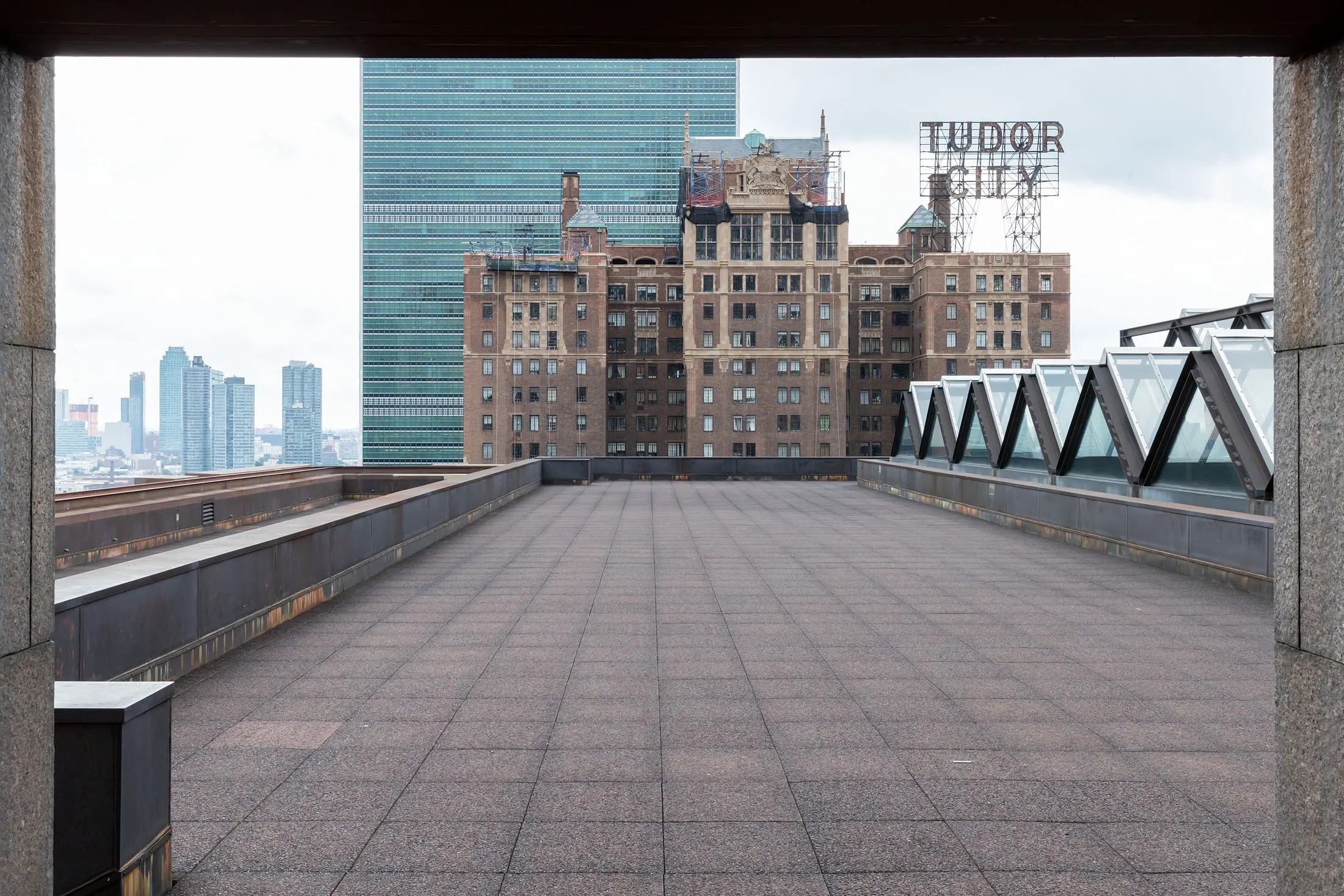
The Ford Foundation commissioned its new headquarters during the early 1960s as the institution expanded its activities in education, international affairs, public policy, and the arts. Kevin Roche and John Dinkeloo, who had recently assumed leadership of the former Eero Saarinen office, developed the project as one of their first major independent works. The building occupies a full block between 42nd and 43rd Streets in East Midtown Manhattan, close to the United Nations headquarters and Tudor City.
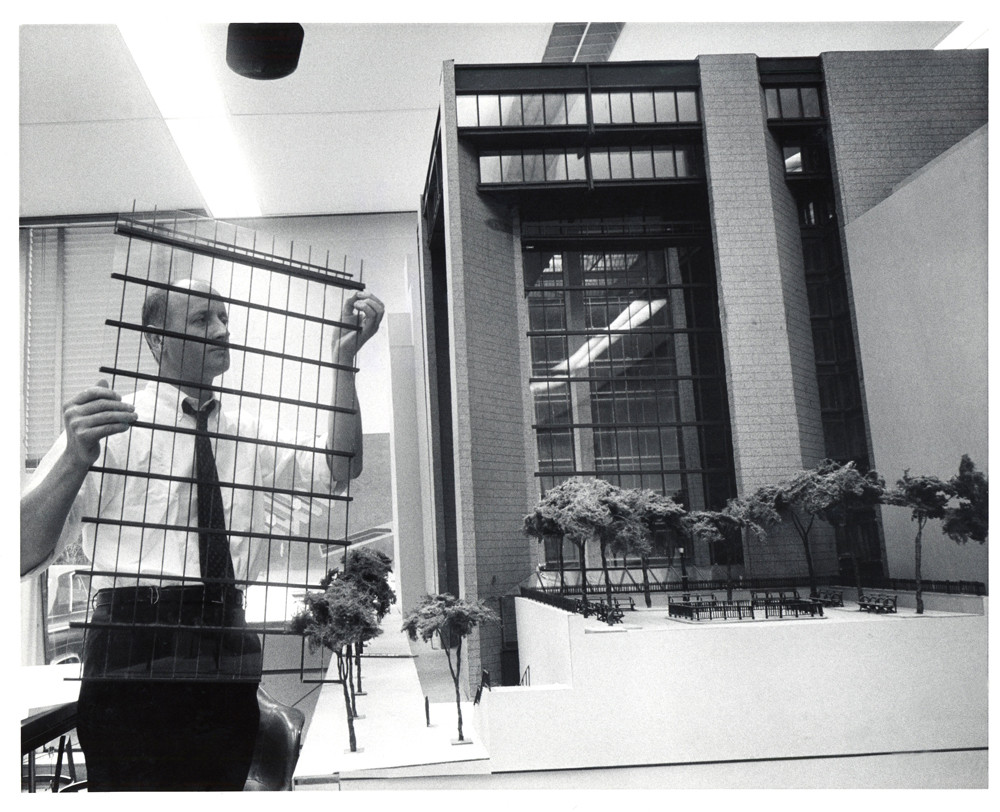
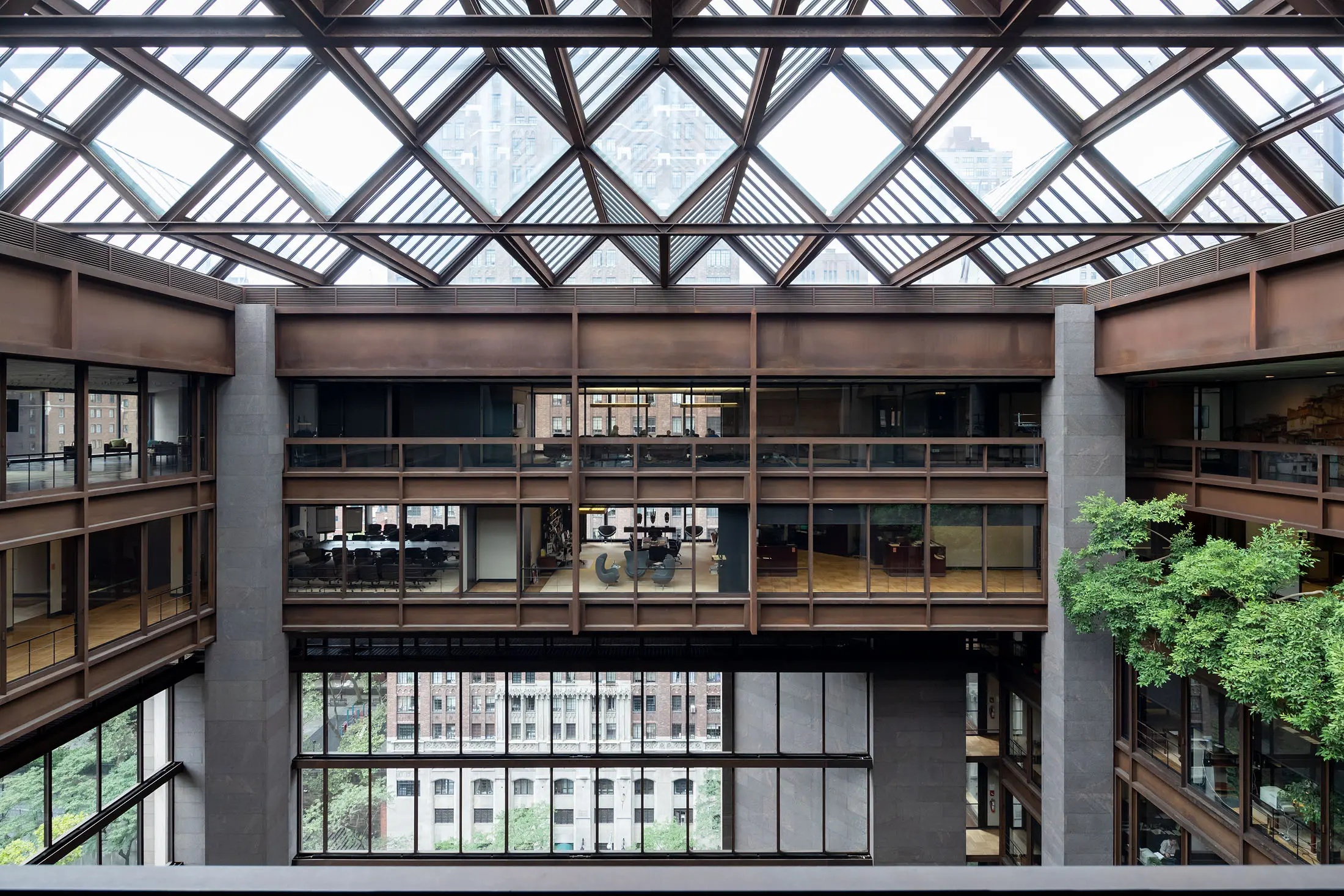
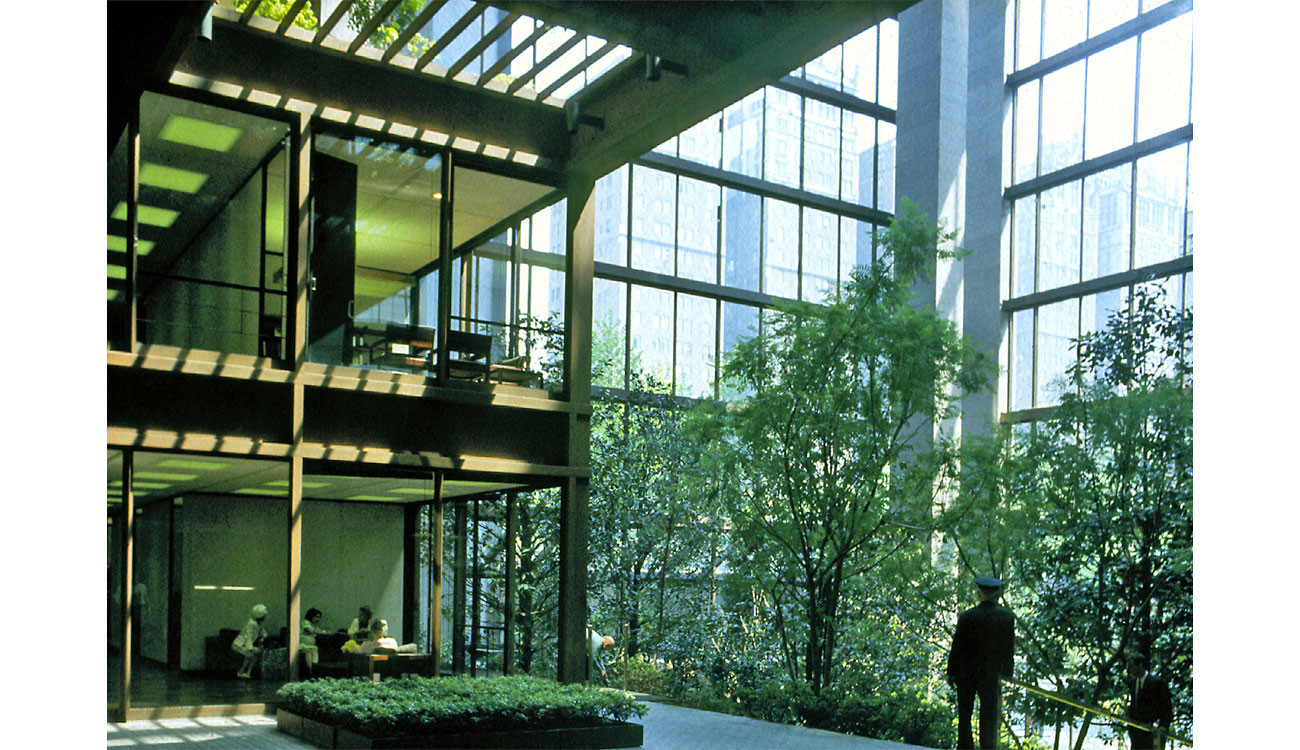
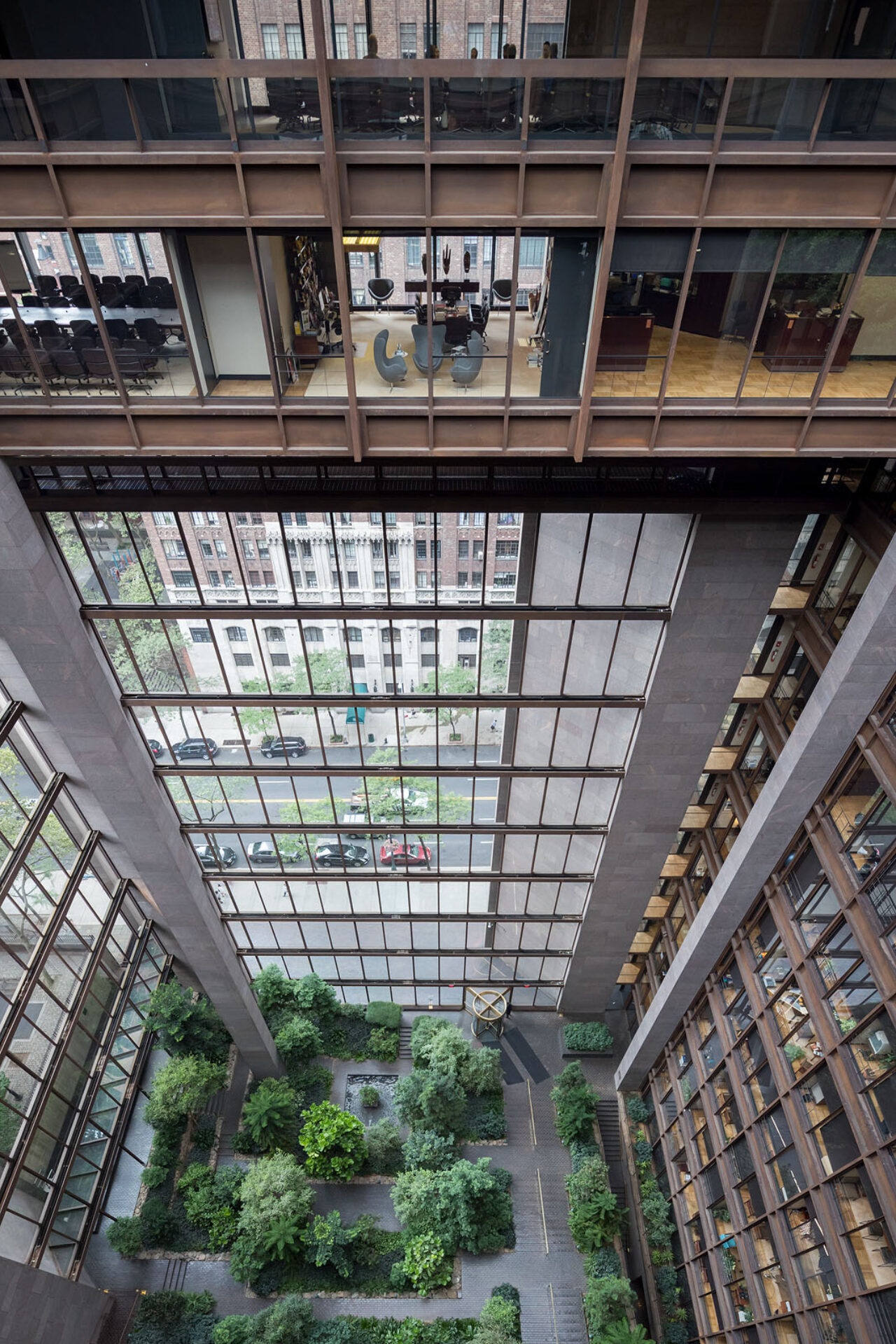
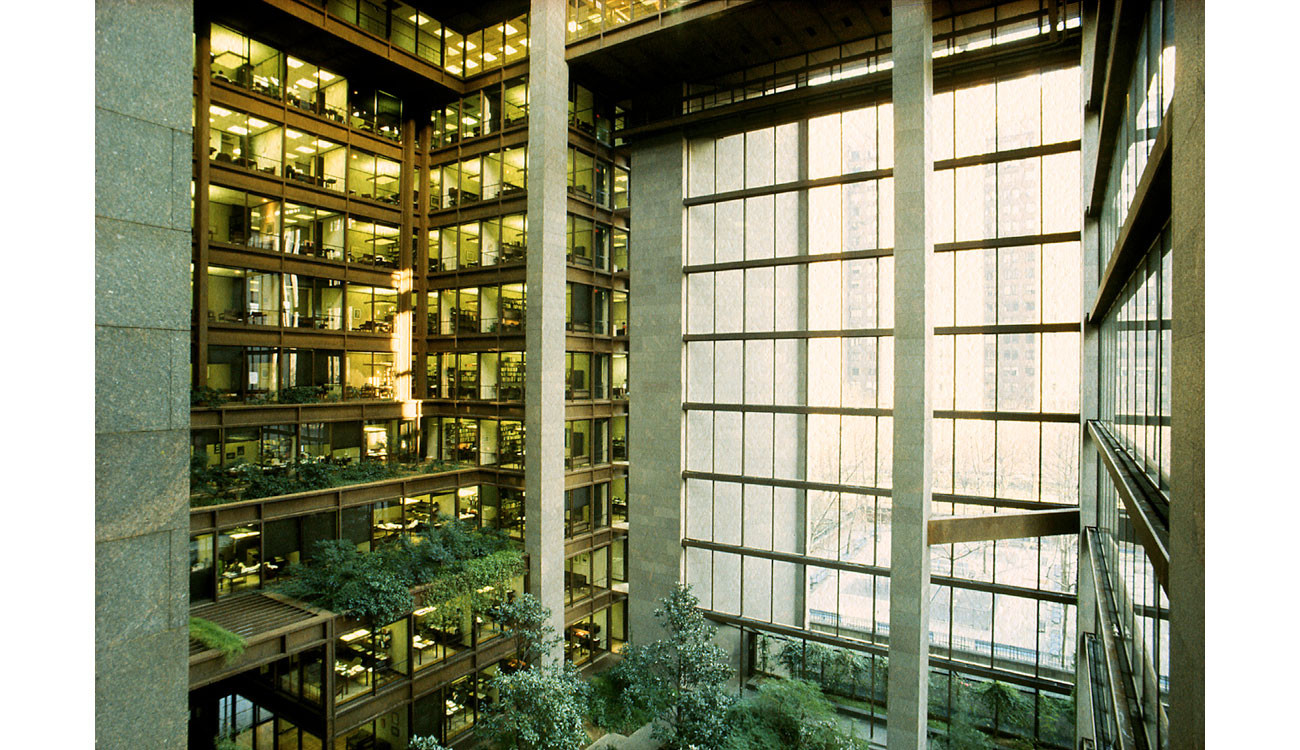
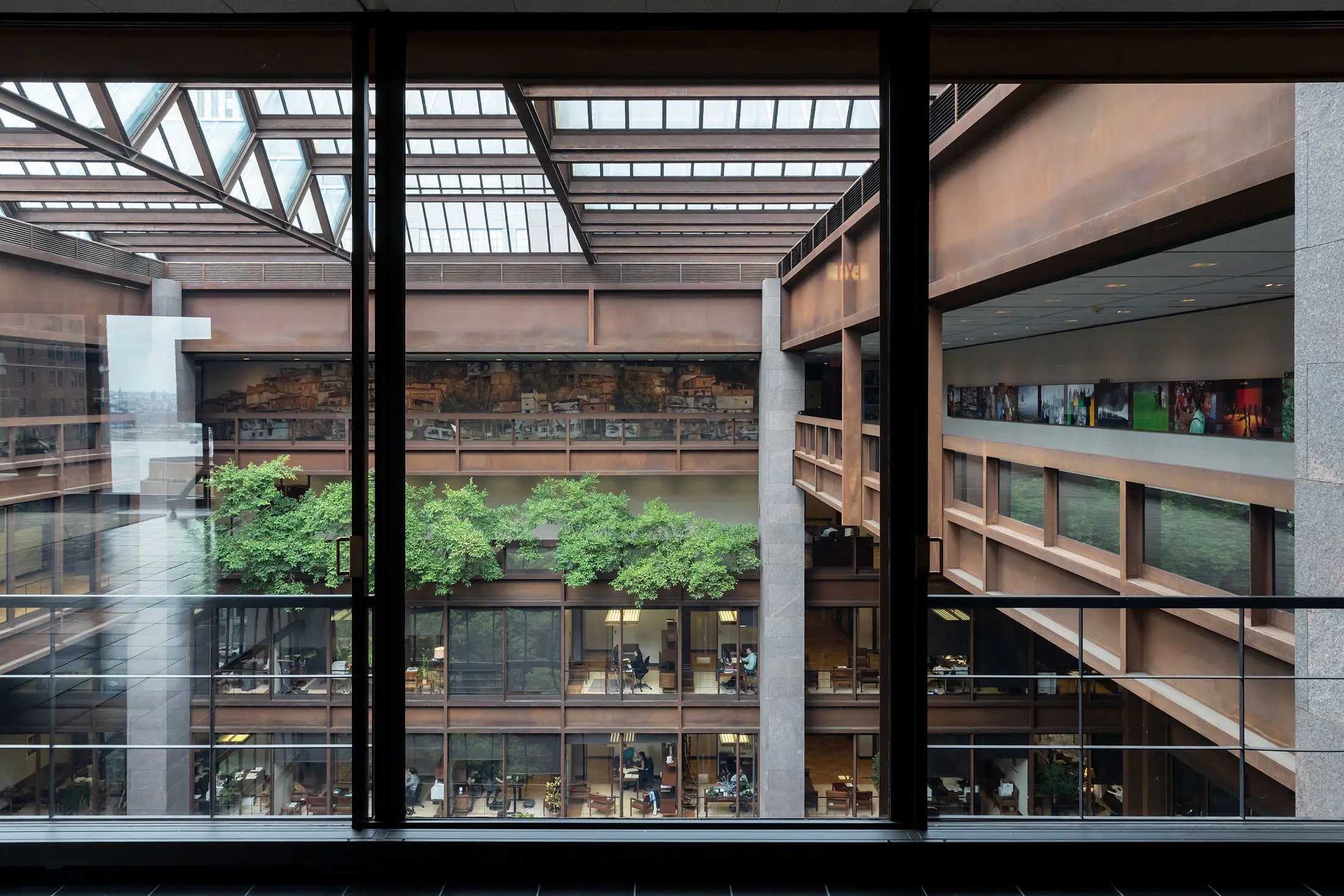
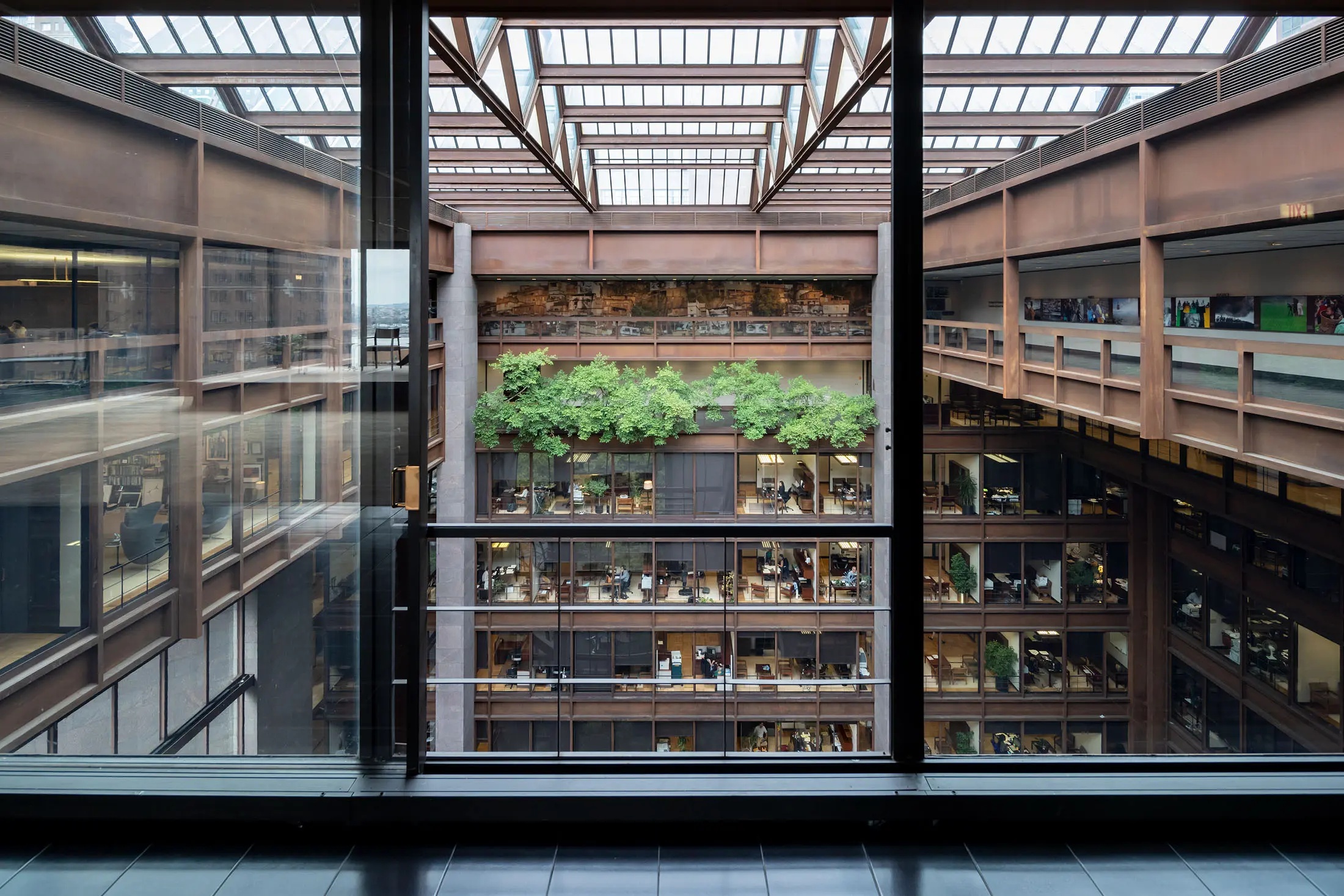
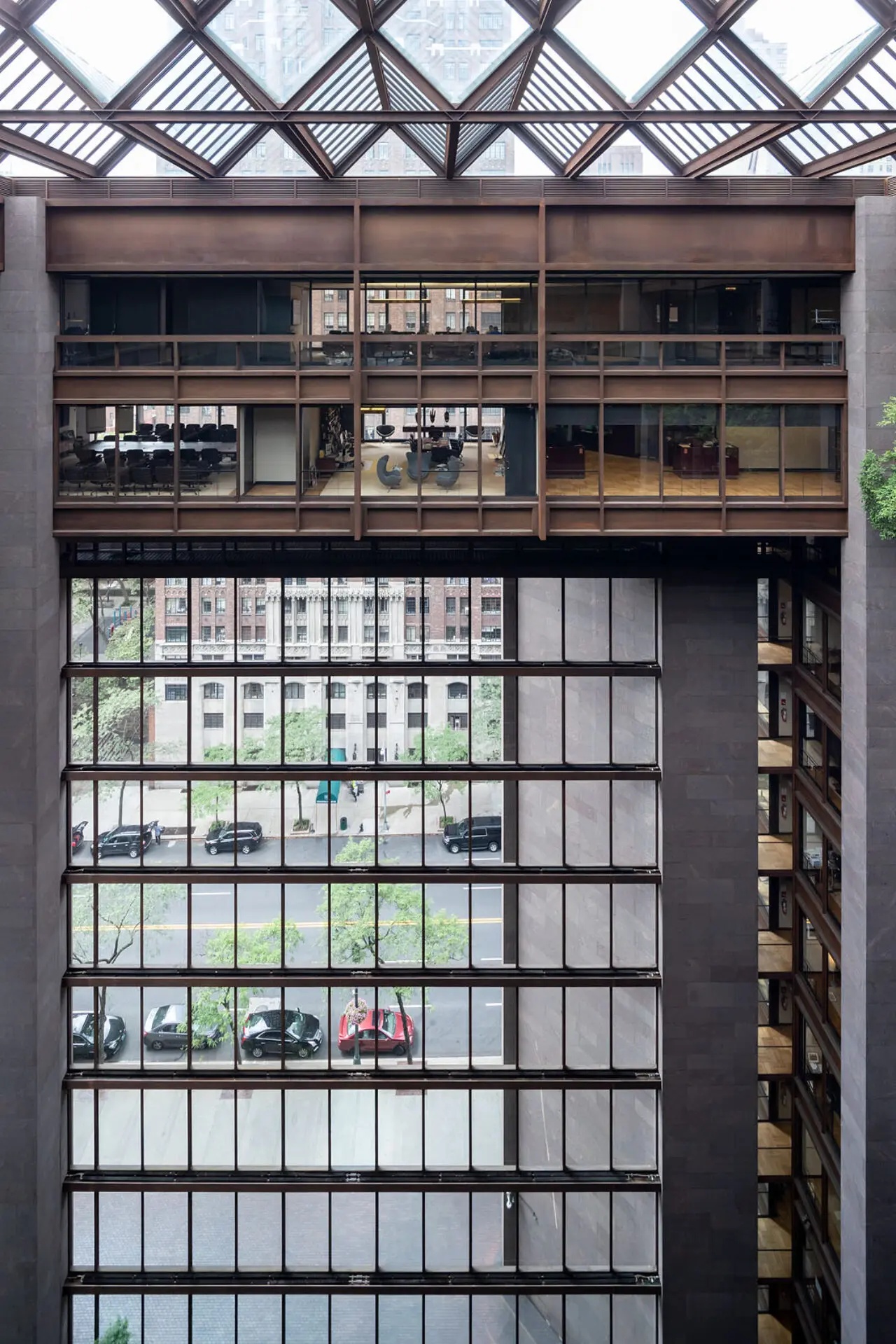
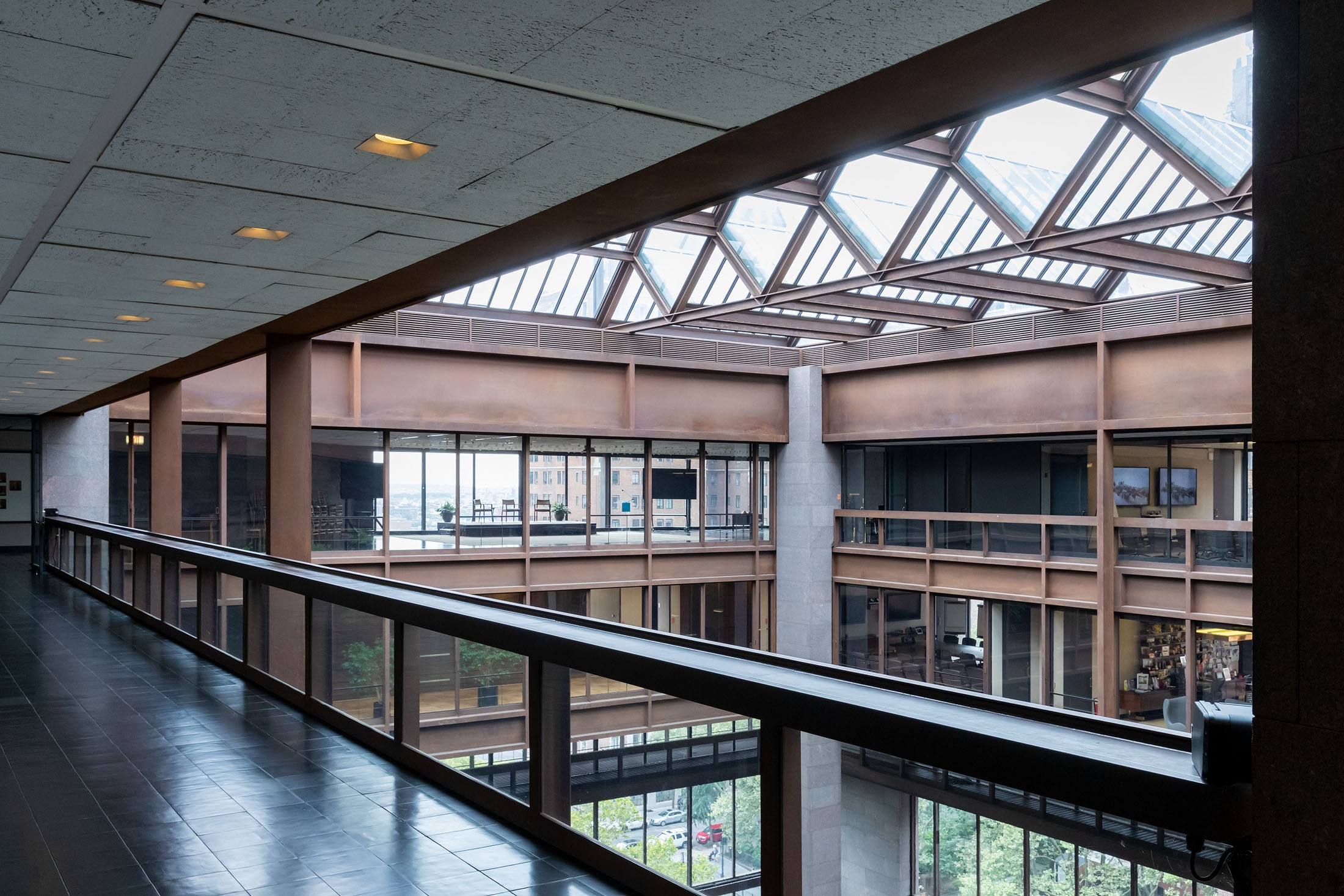
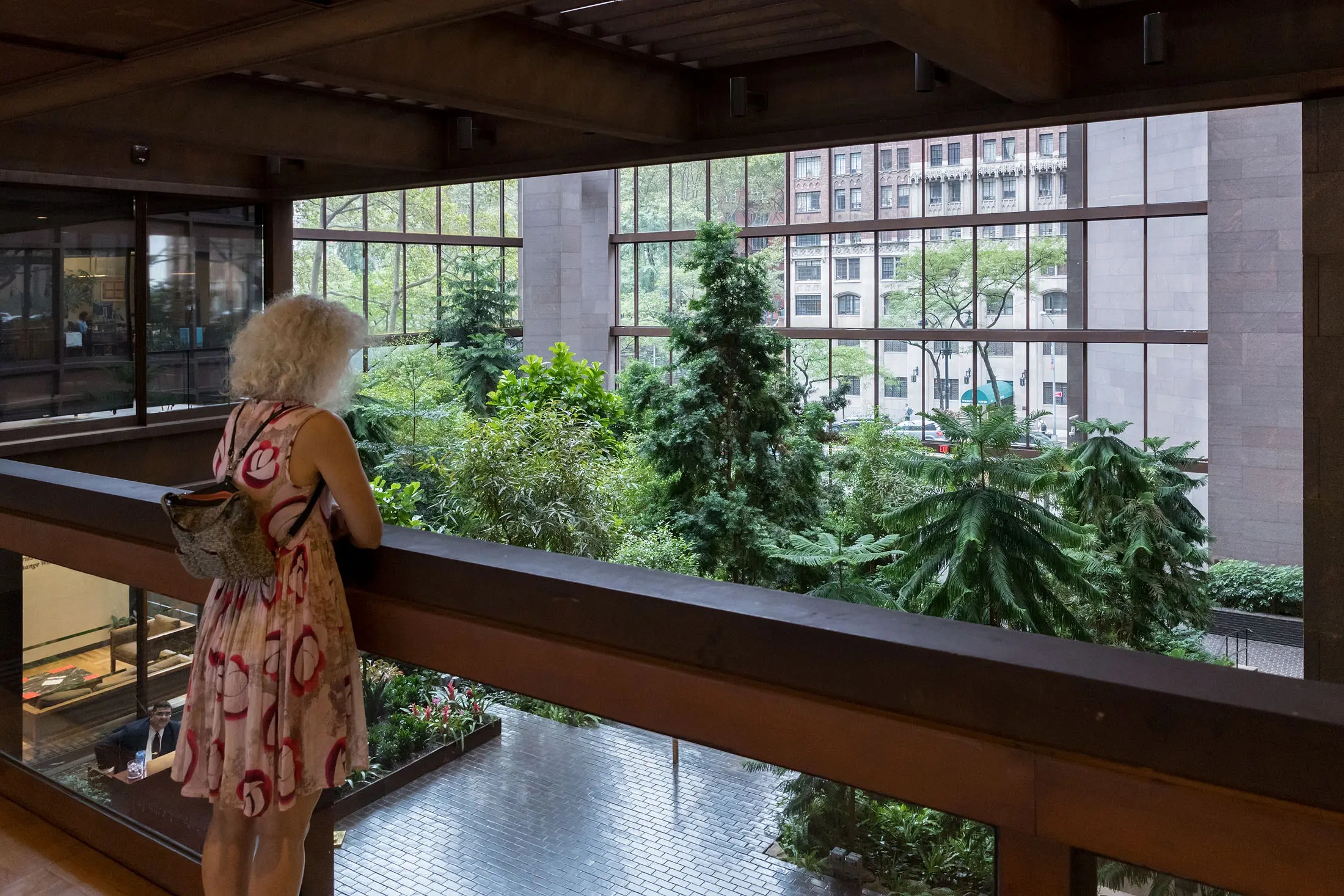
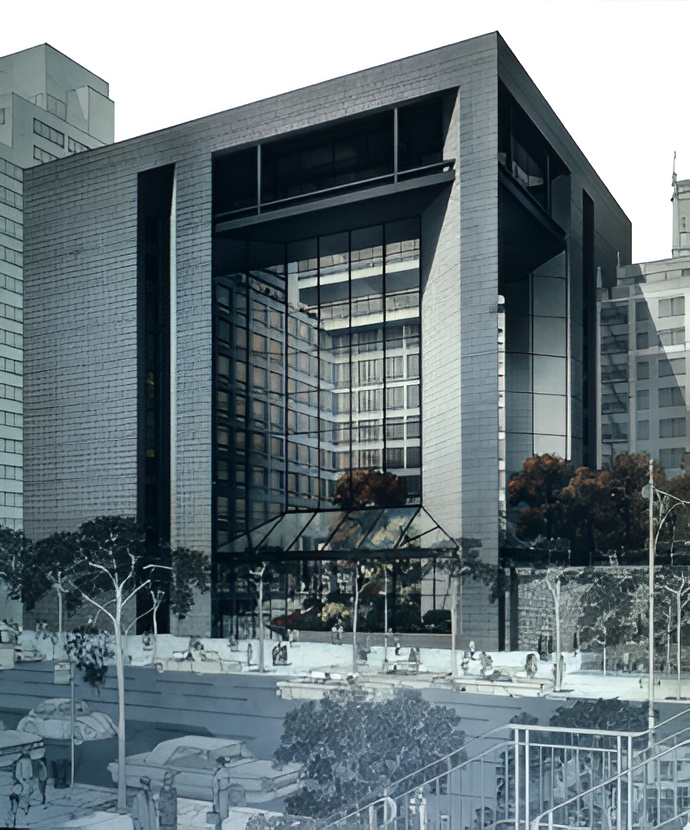
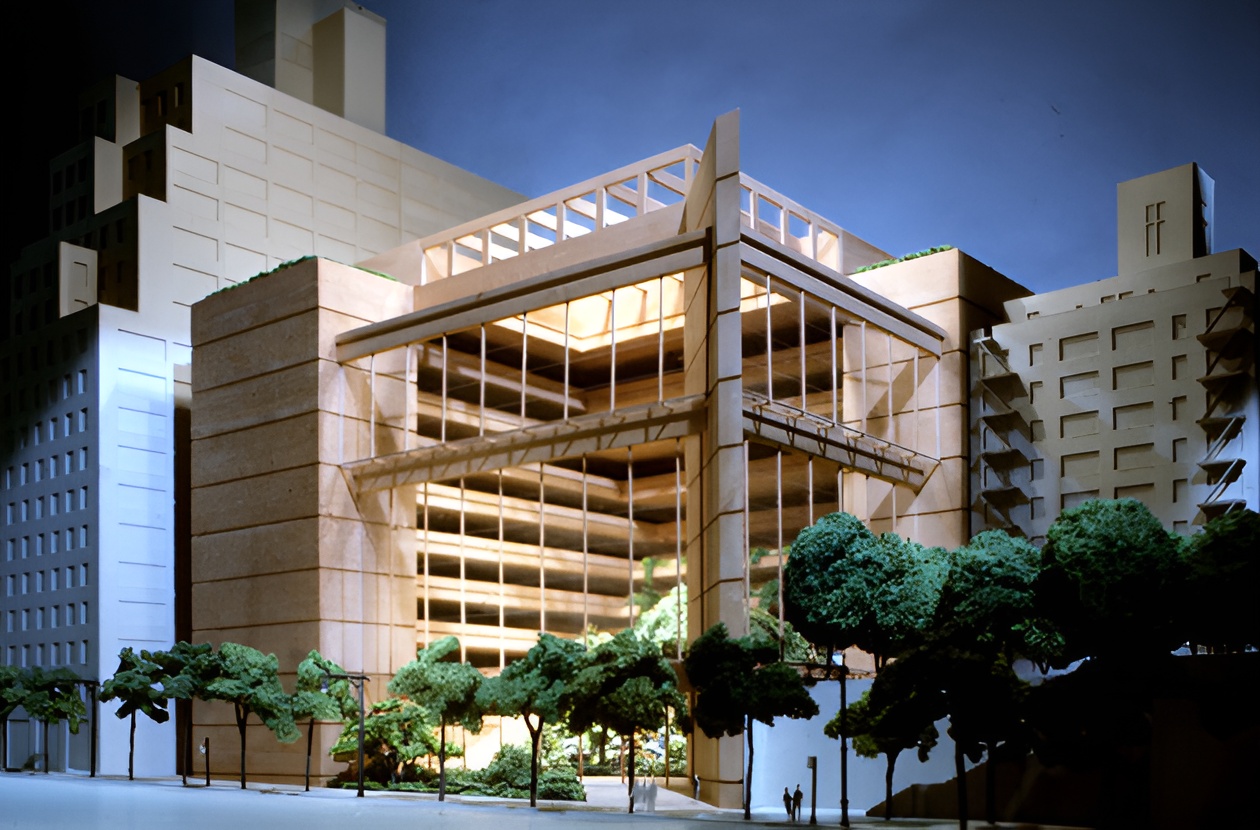
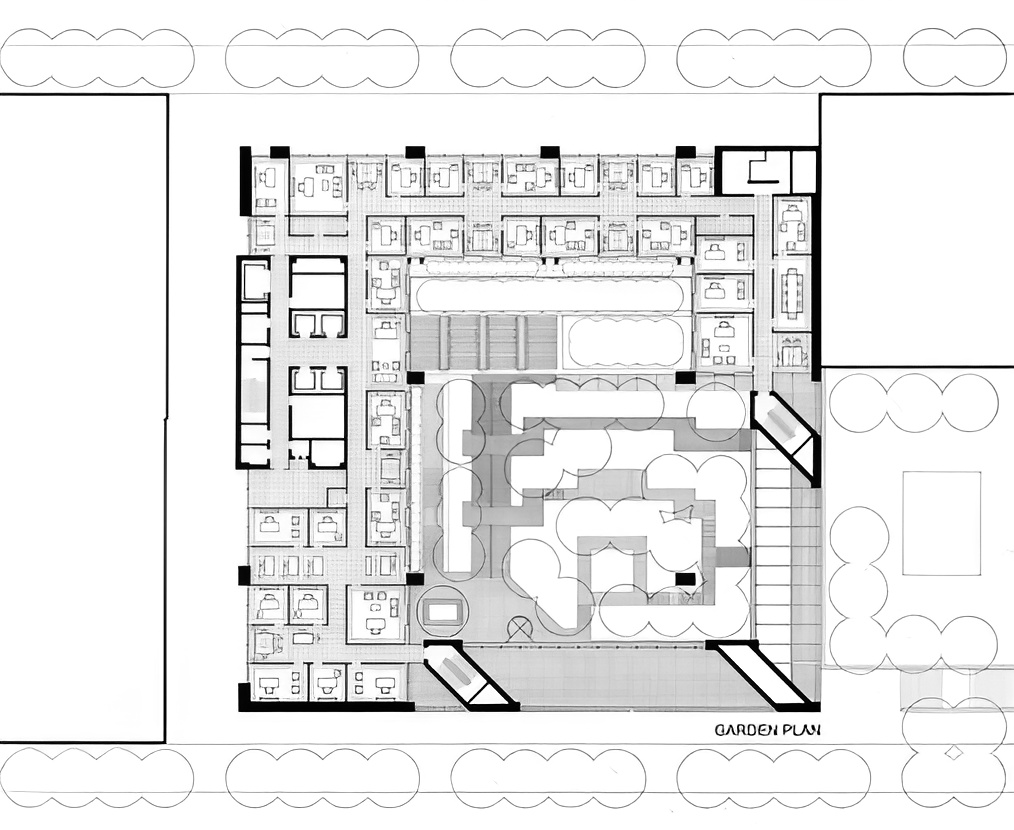
The project departs from the conventional Manhattan office tower. Zoning regulations permitted a substantially larger building, yet the architects intentionally reduced the building footprint and organized the offices around a large interior garden. This decision created a public atrium measuring approximately 30 by 30 meters beneath a glazed roof, establishing a new relationship between office building and city.
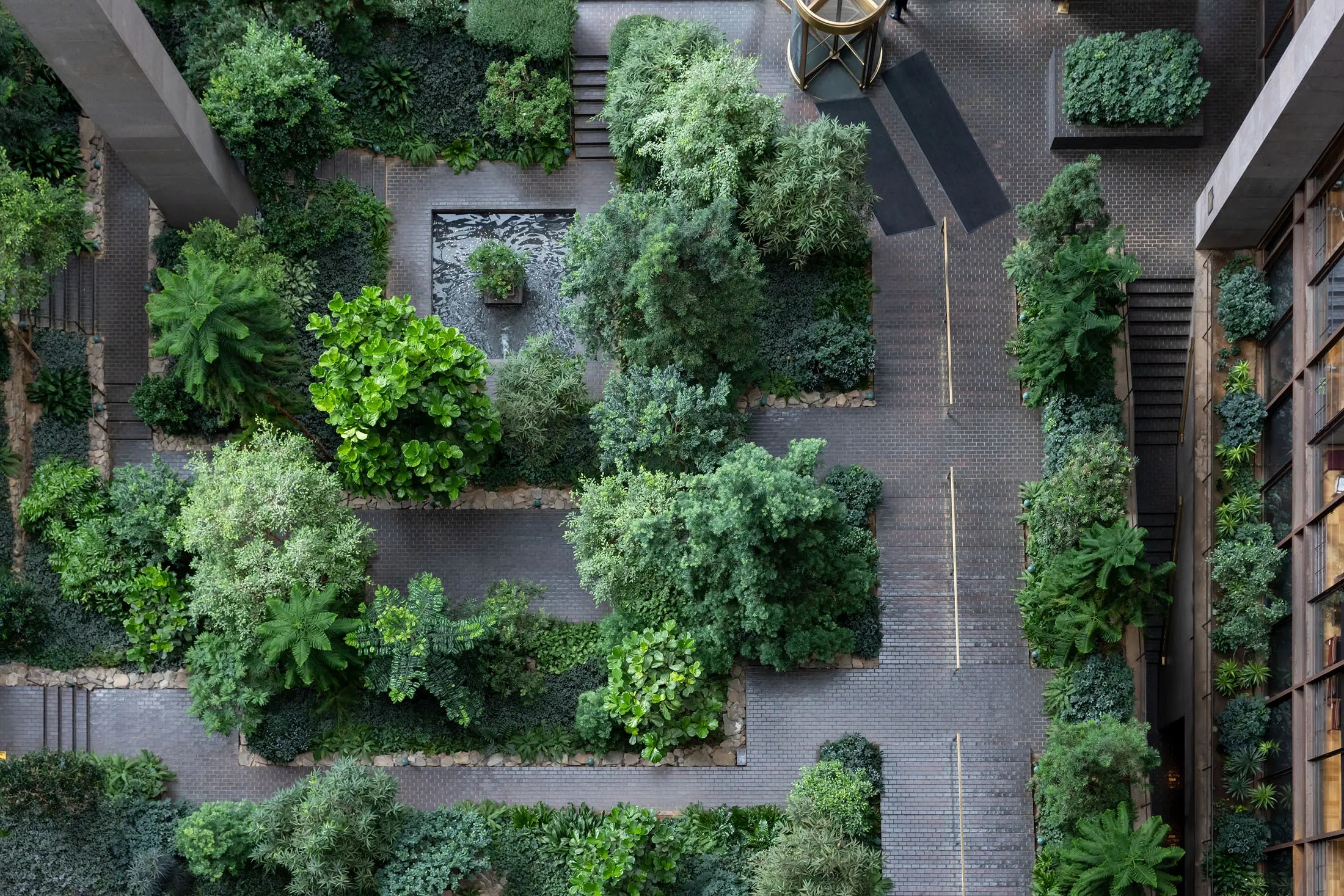
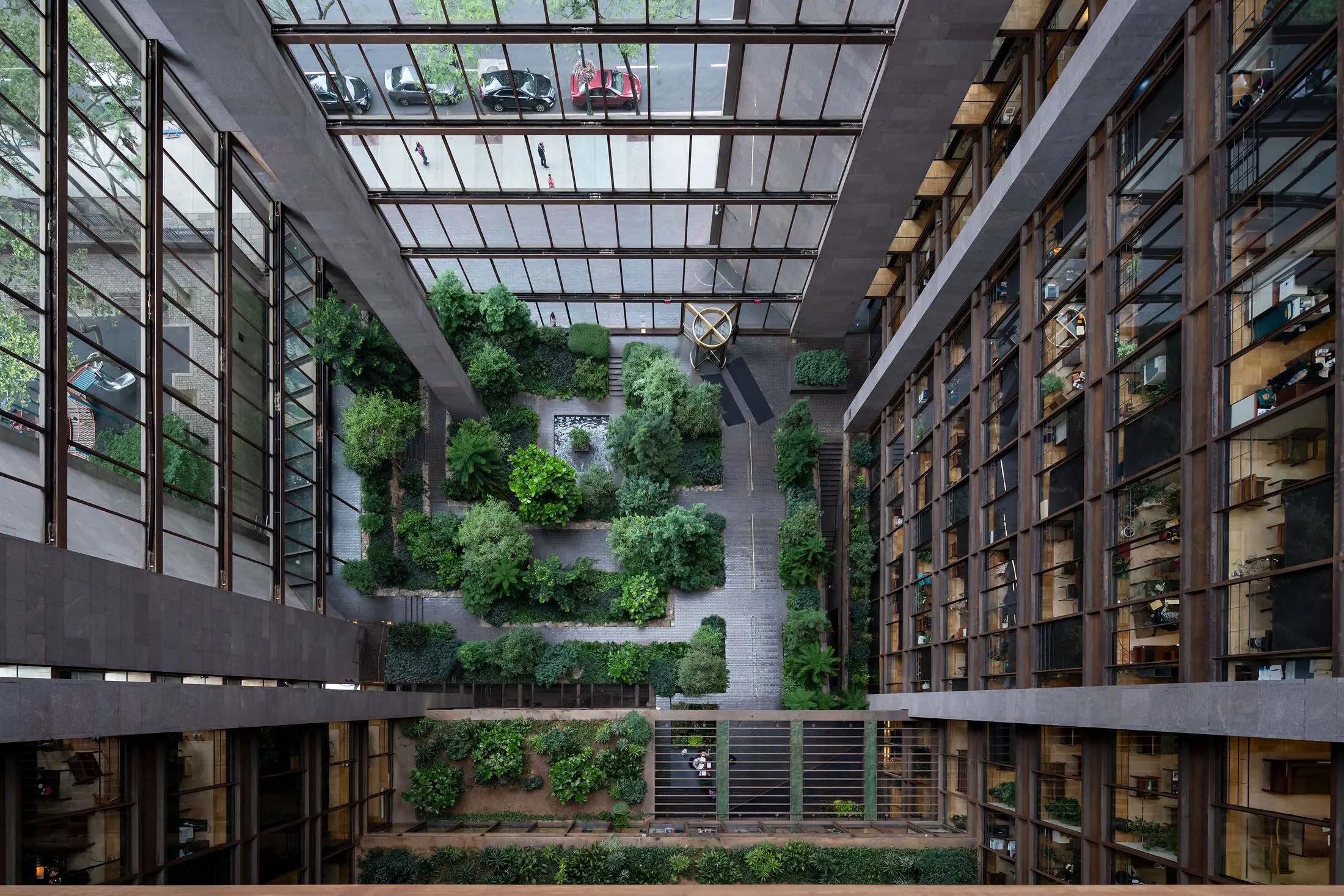
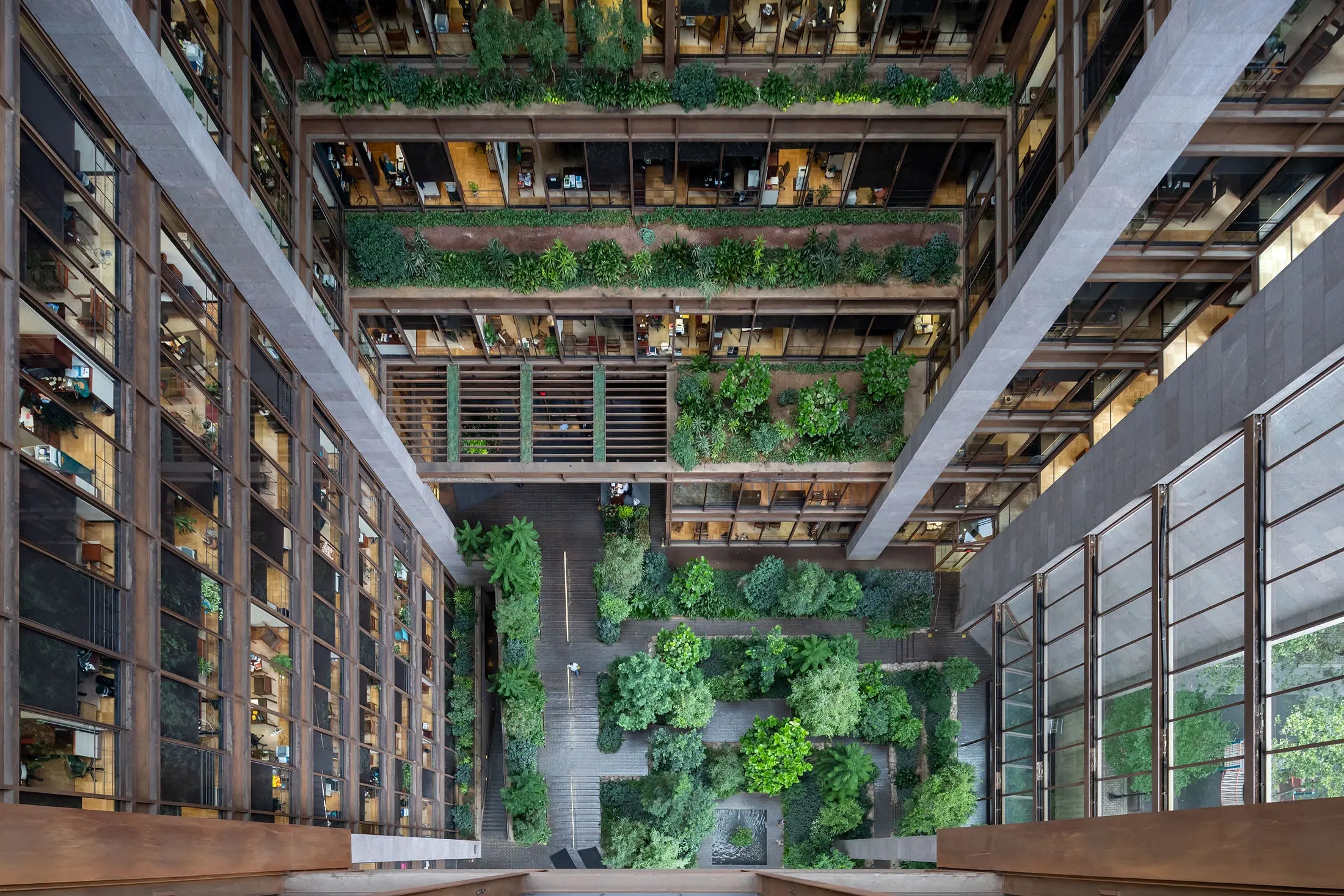
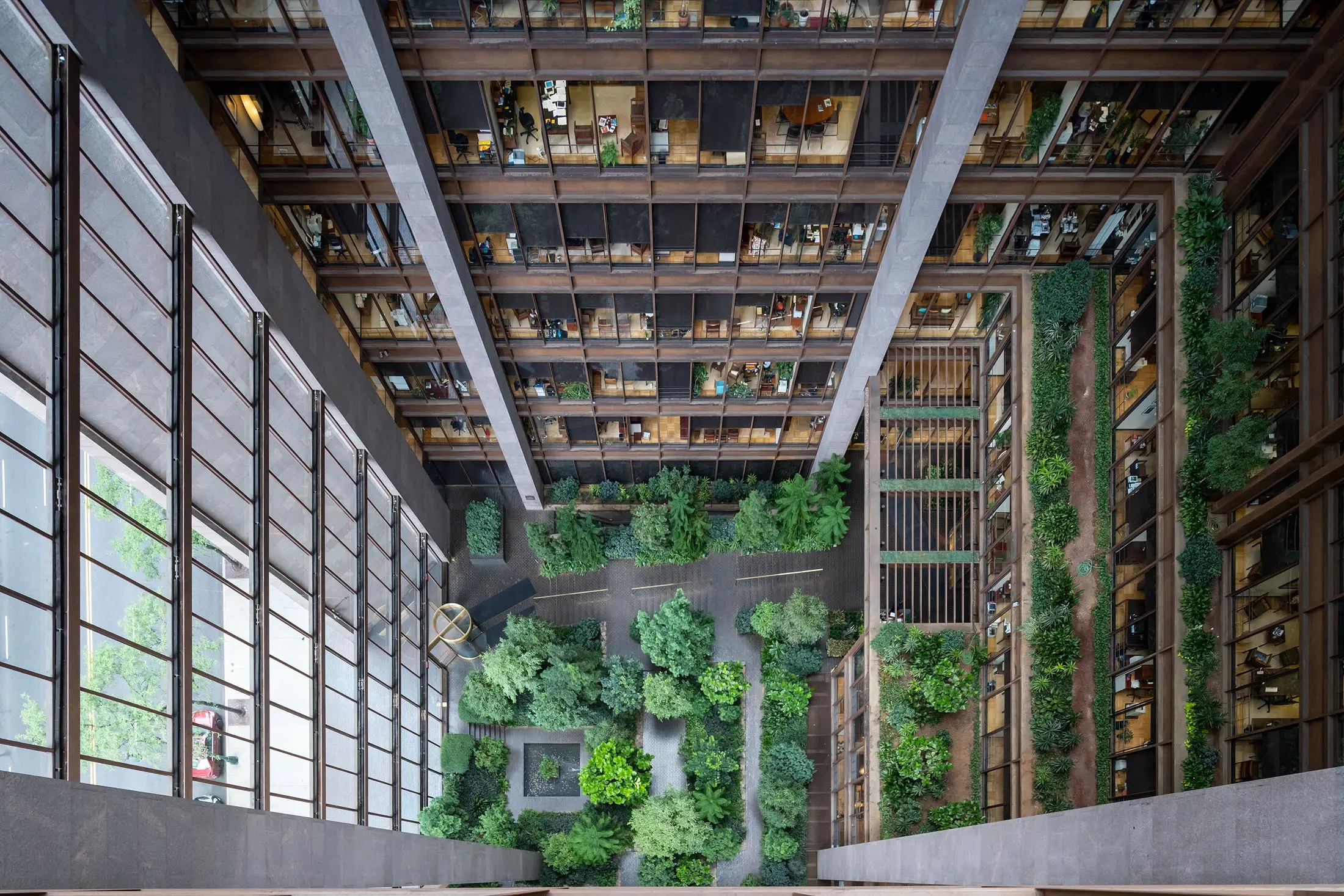
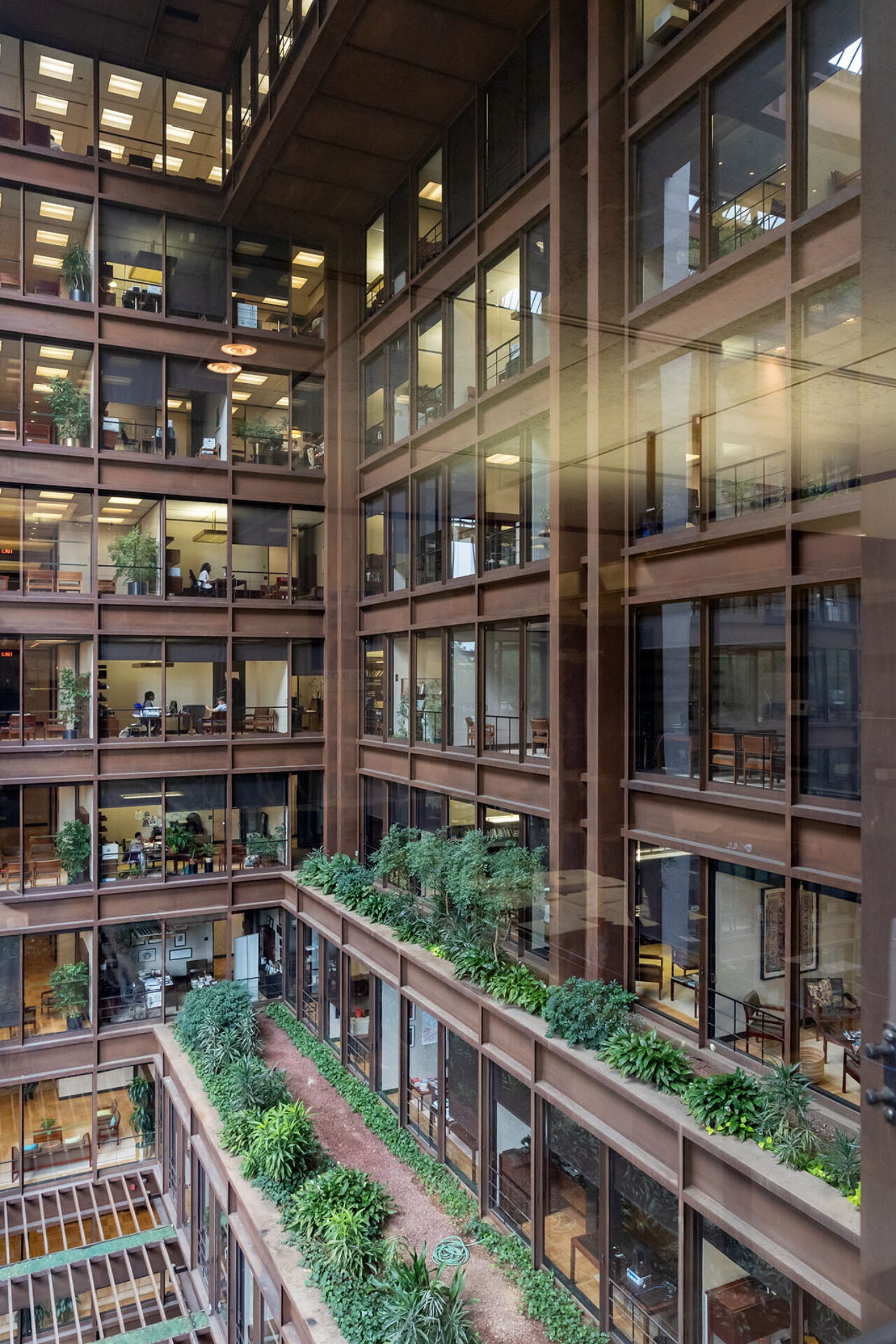
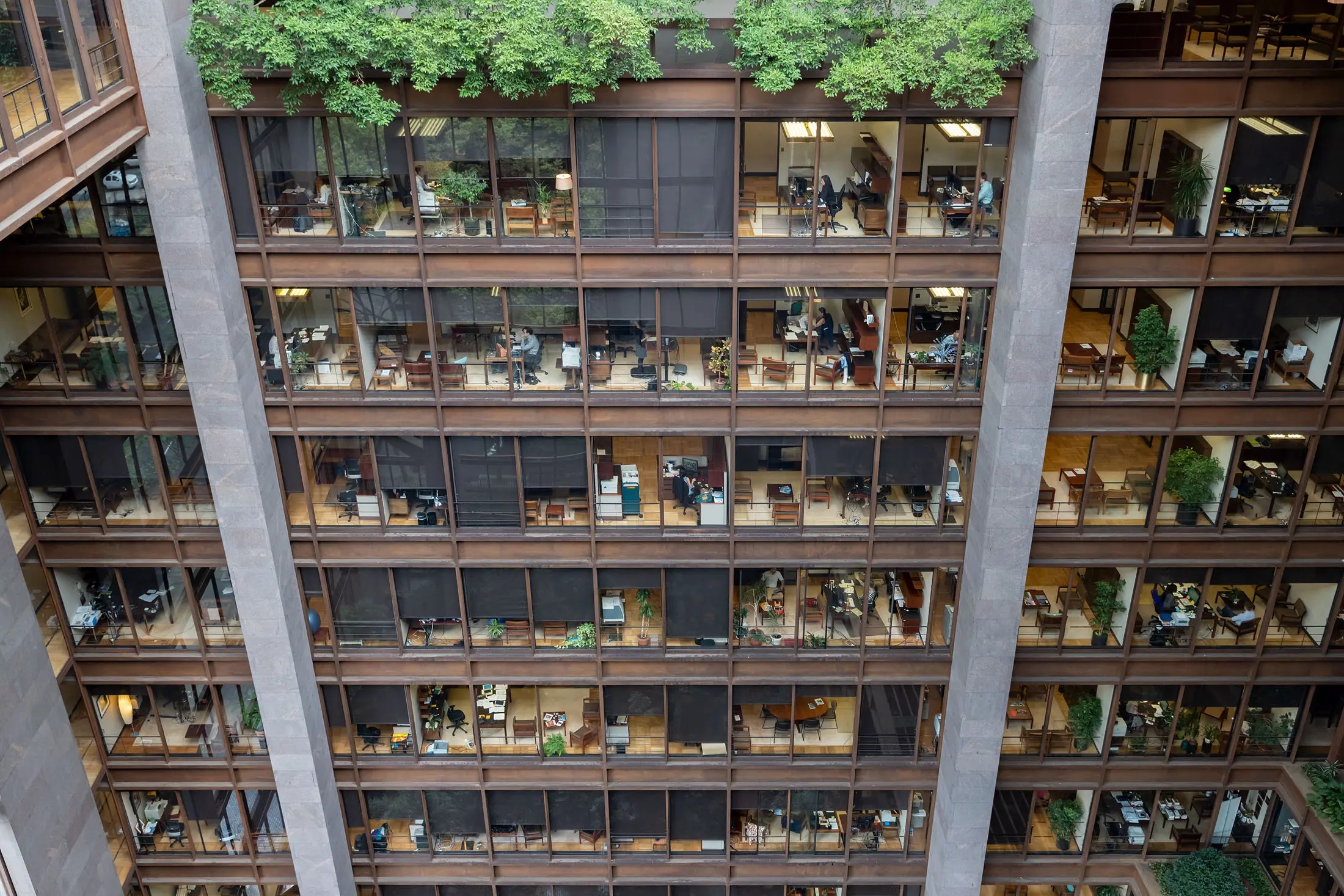
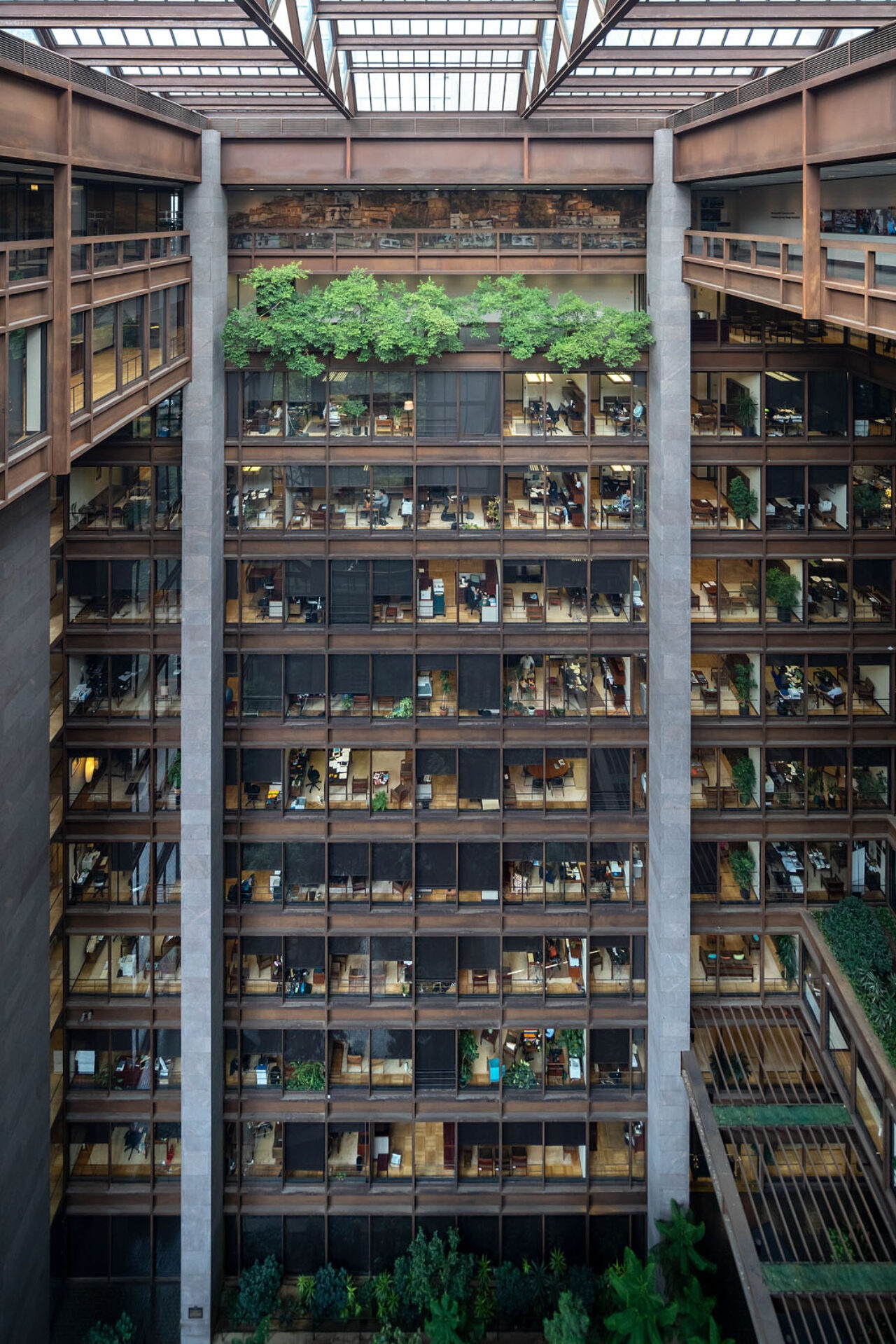
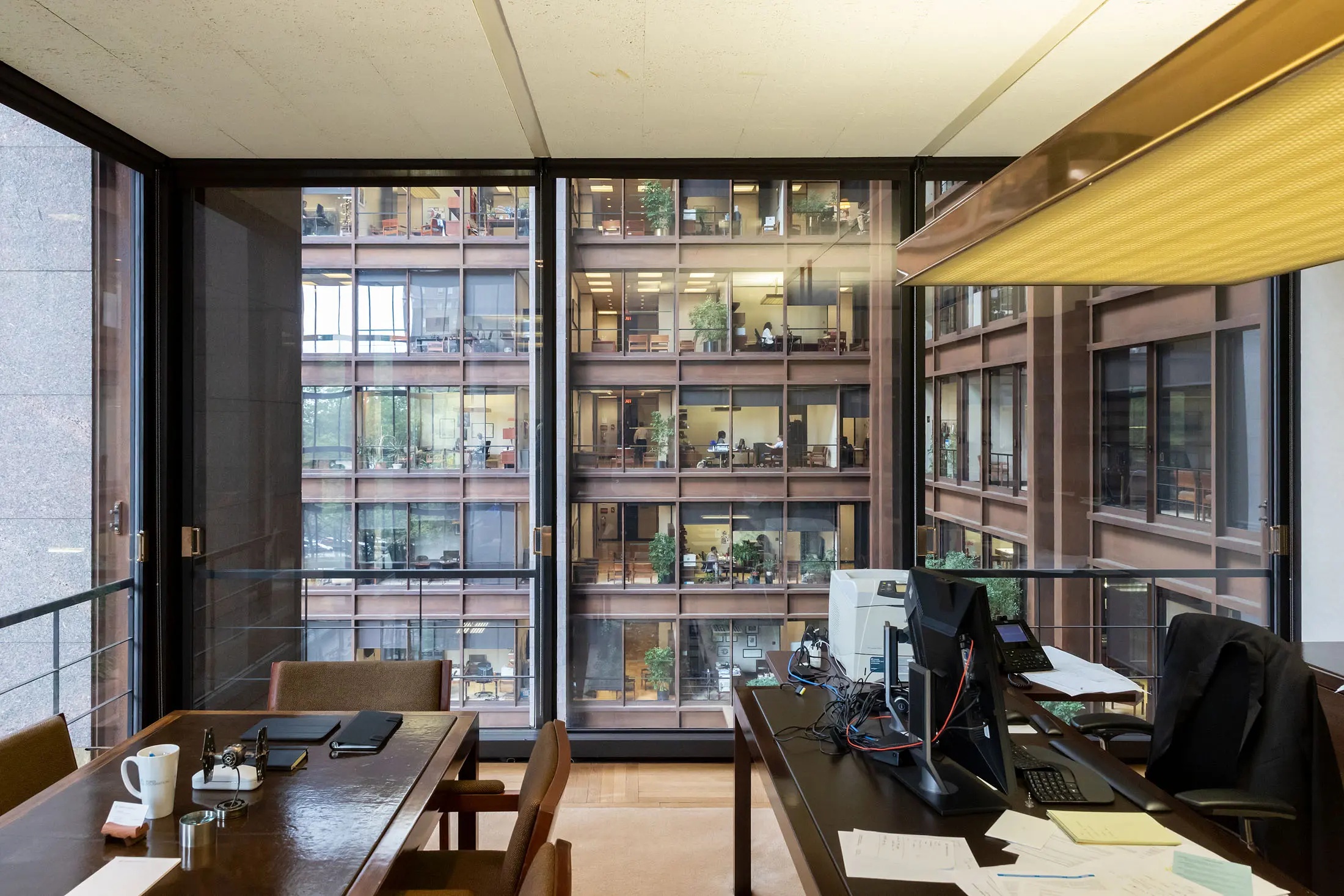
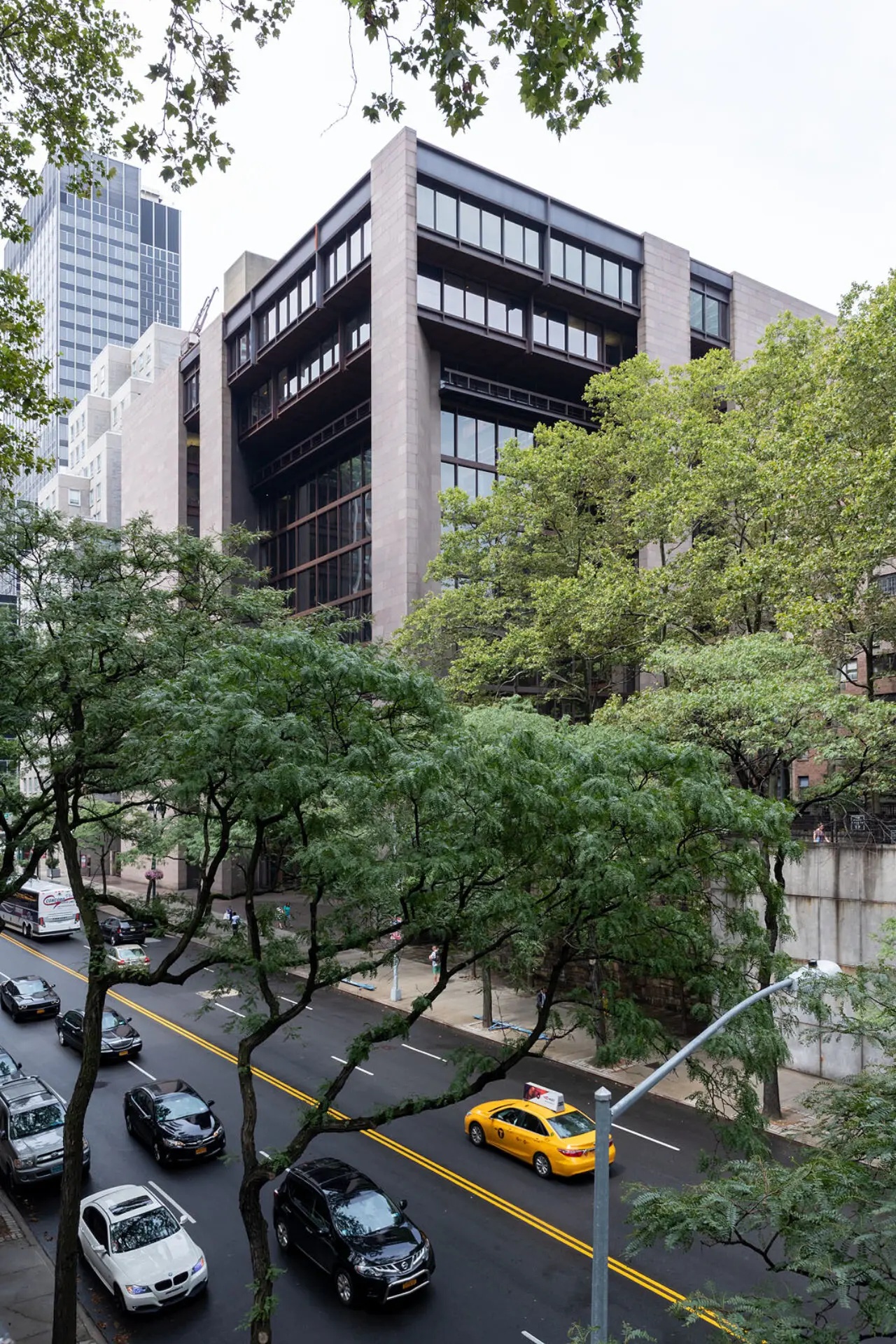
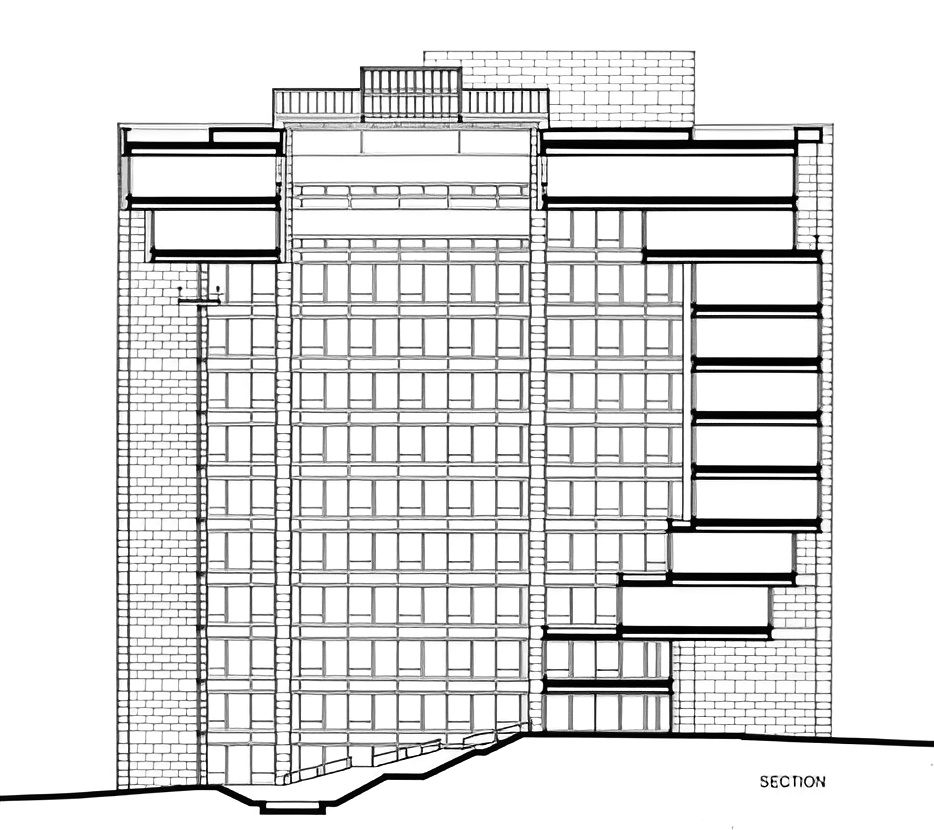
The building rises twelve stories and reaches approximately 53 meters in height. A large atrium occupies the southern and eastern portions of the structure, while office wings line the northern and western edges. The arrangement allows employees to see across the garden and maintain visual connections between departments and floors. Roche described this strategy as a means of reinforcing a shared institutional purpose.
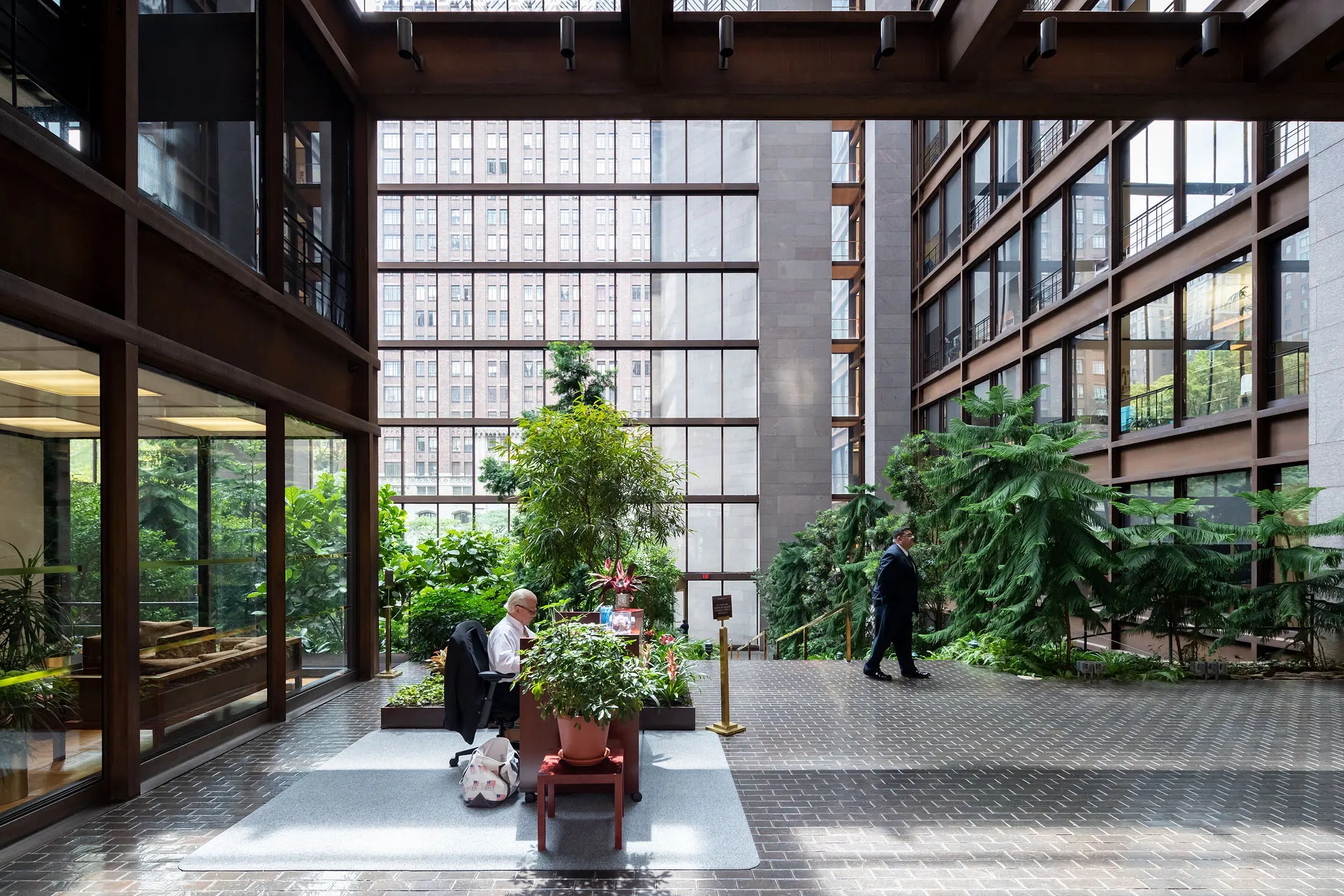
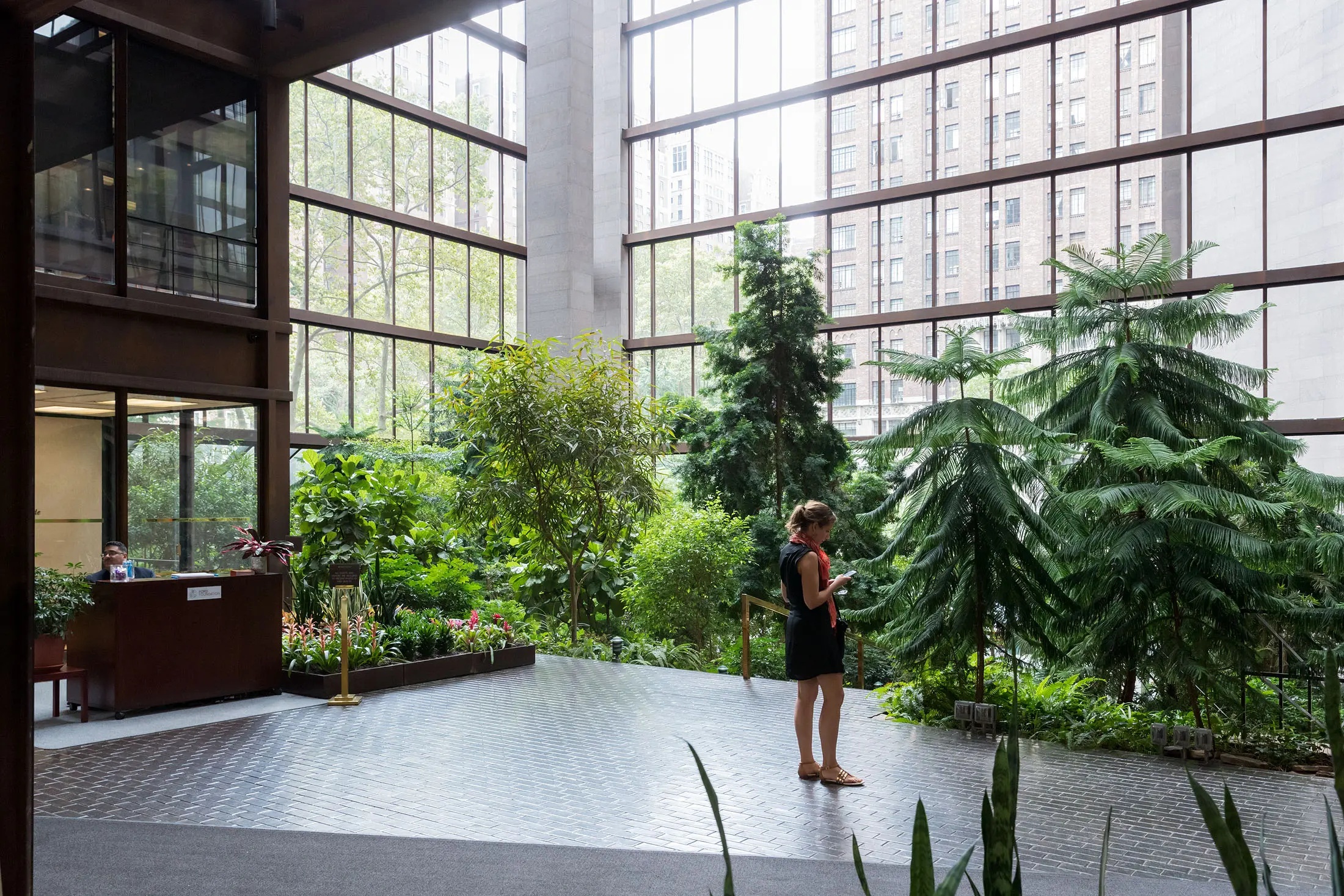
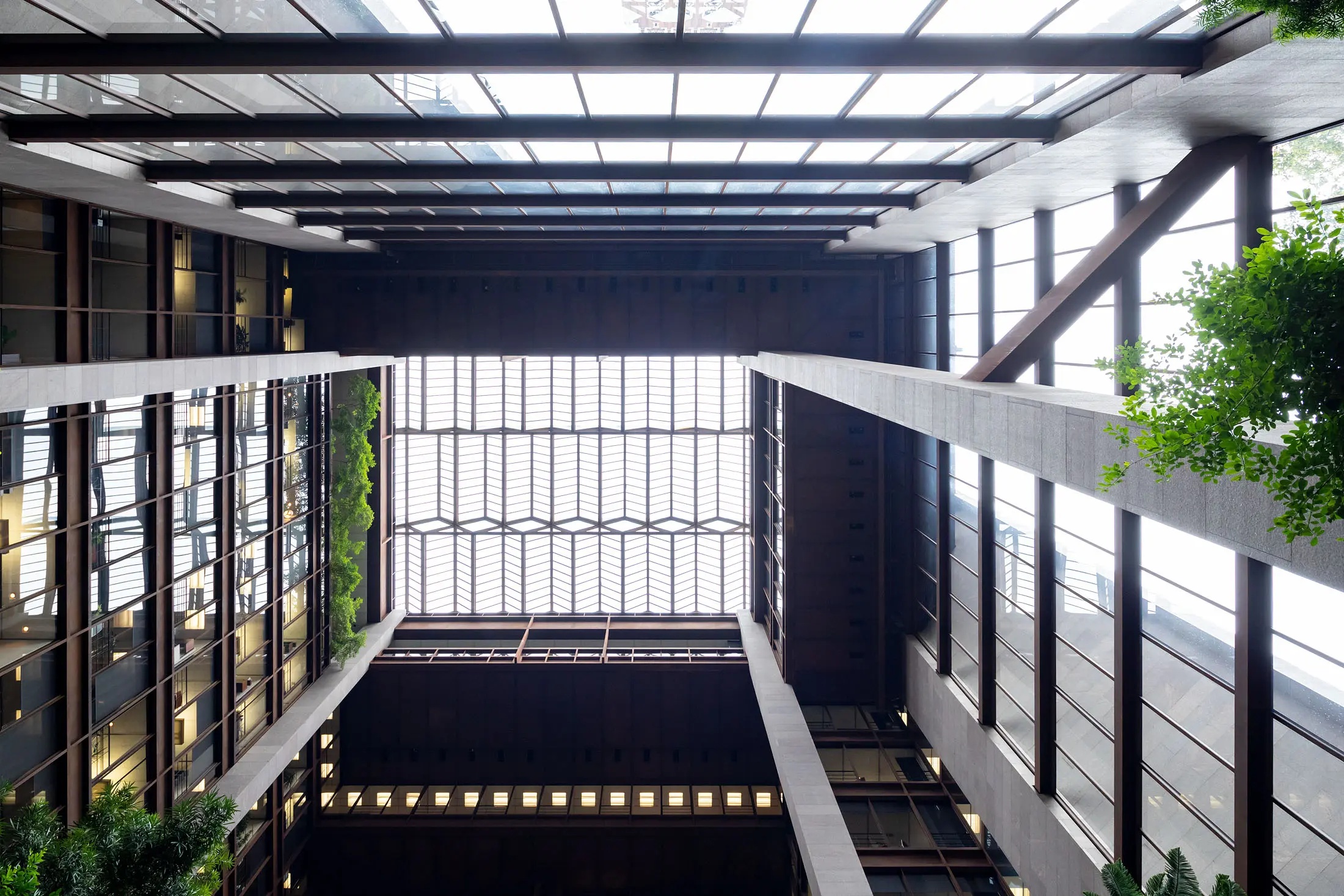
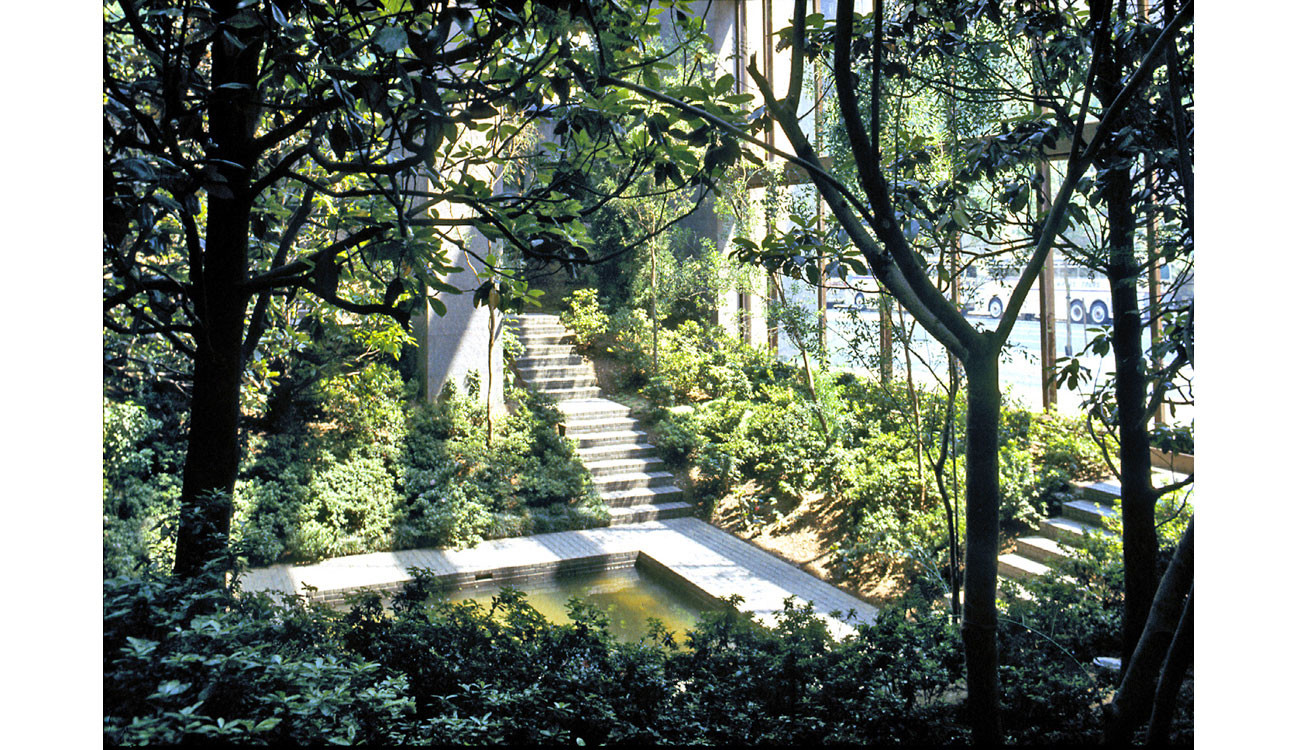
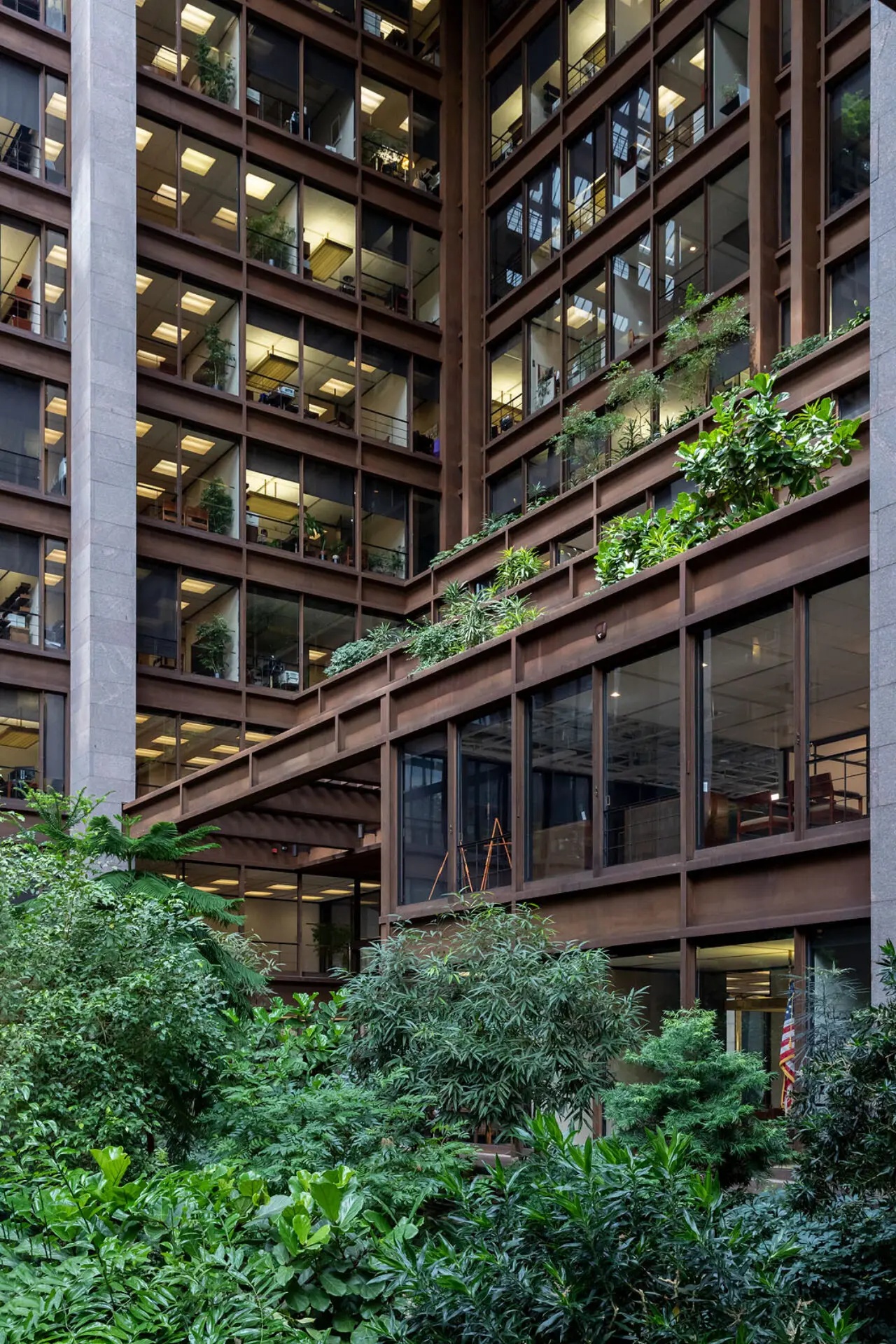
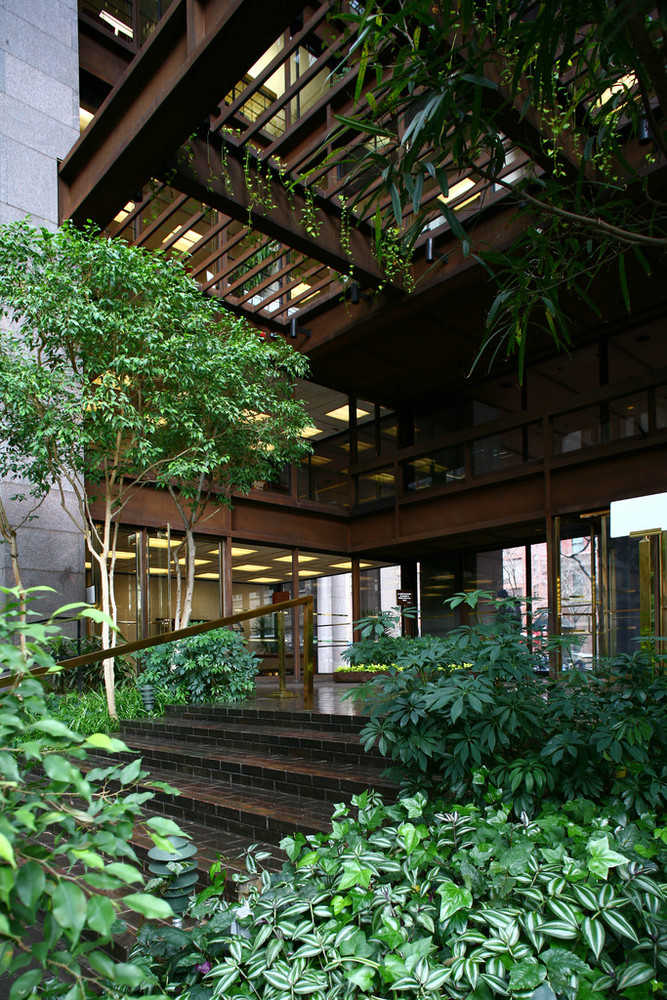
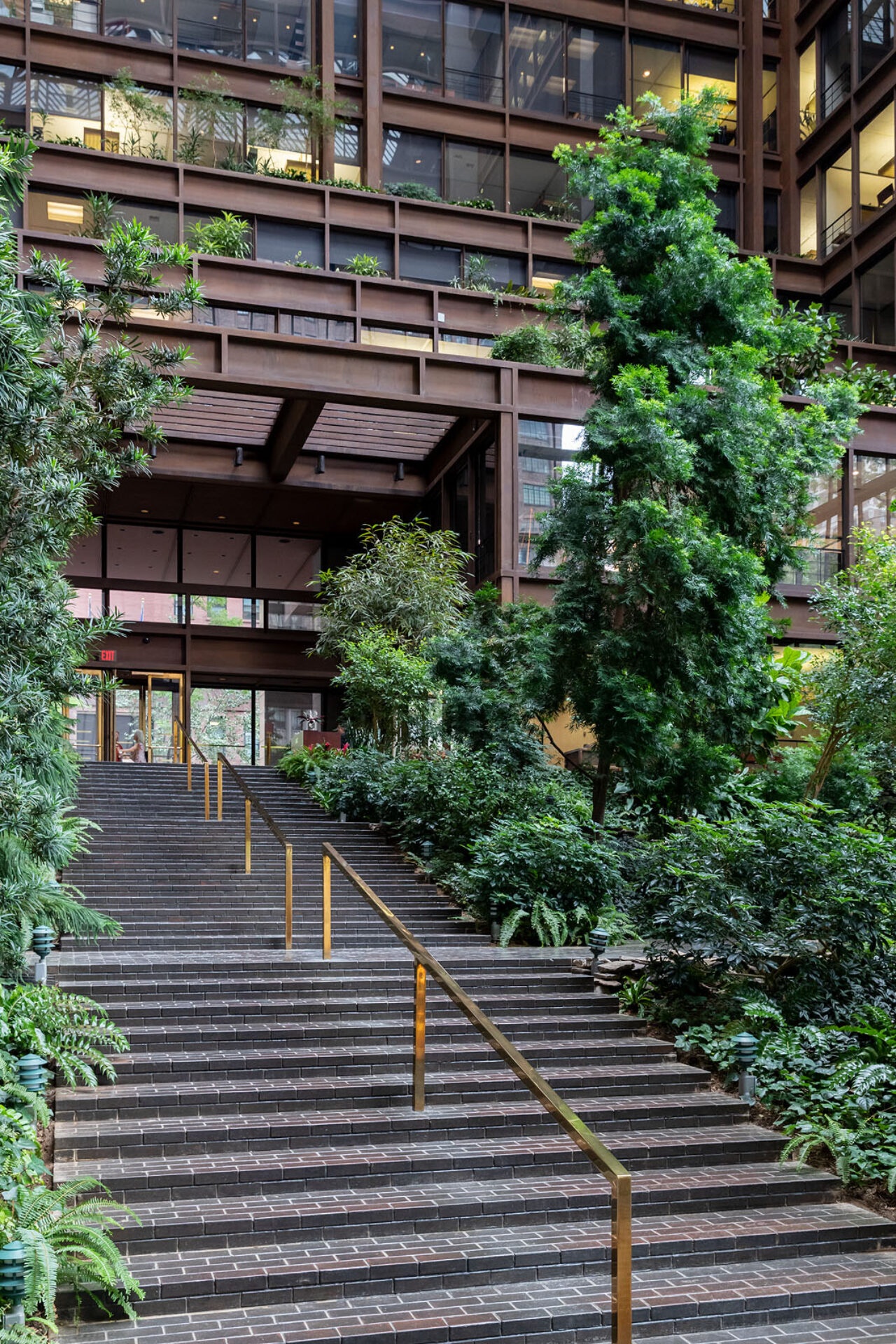
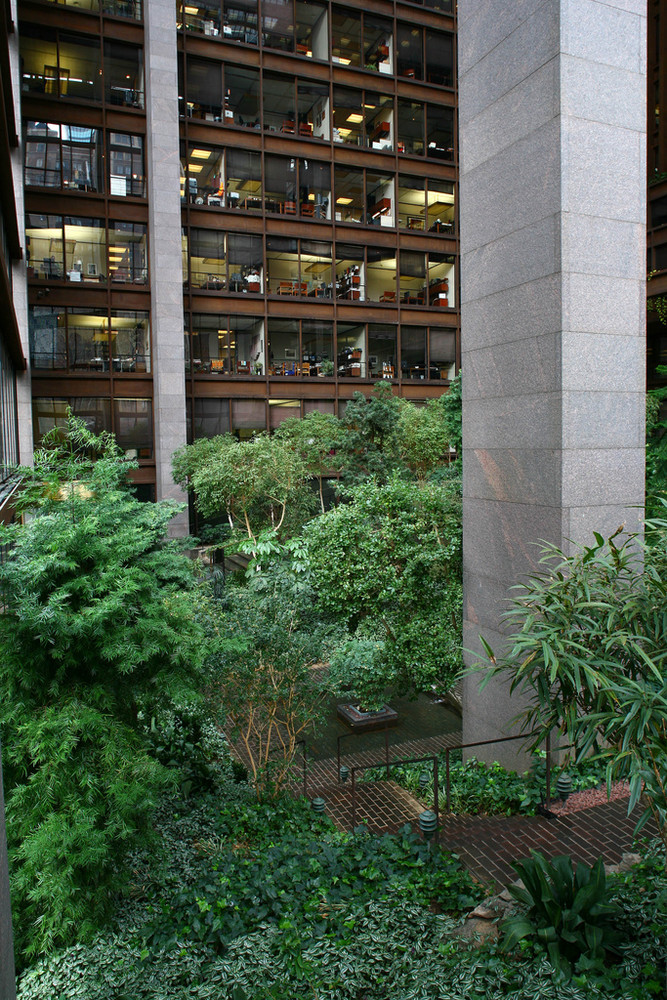
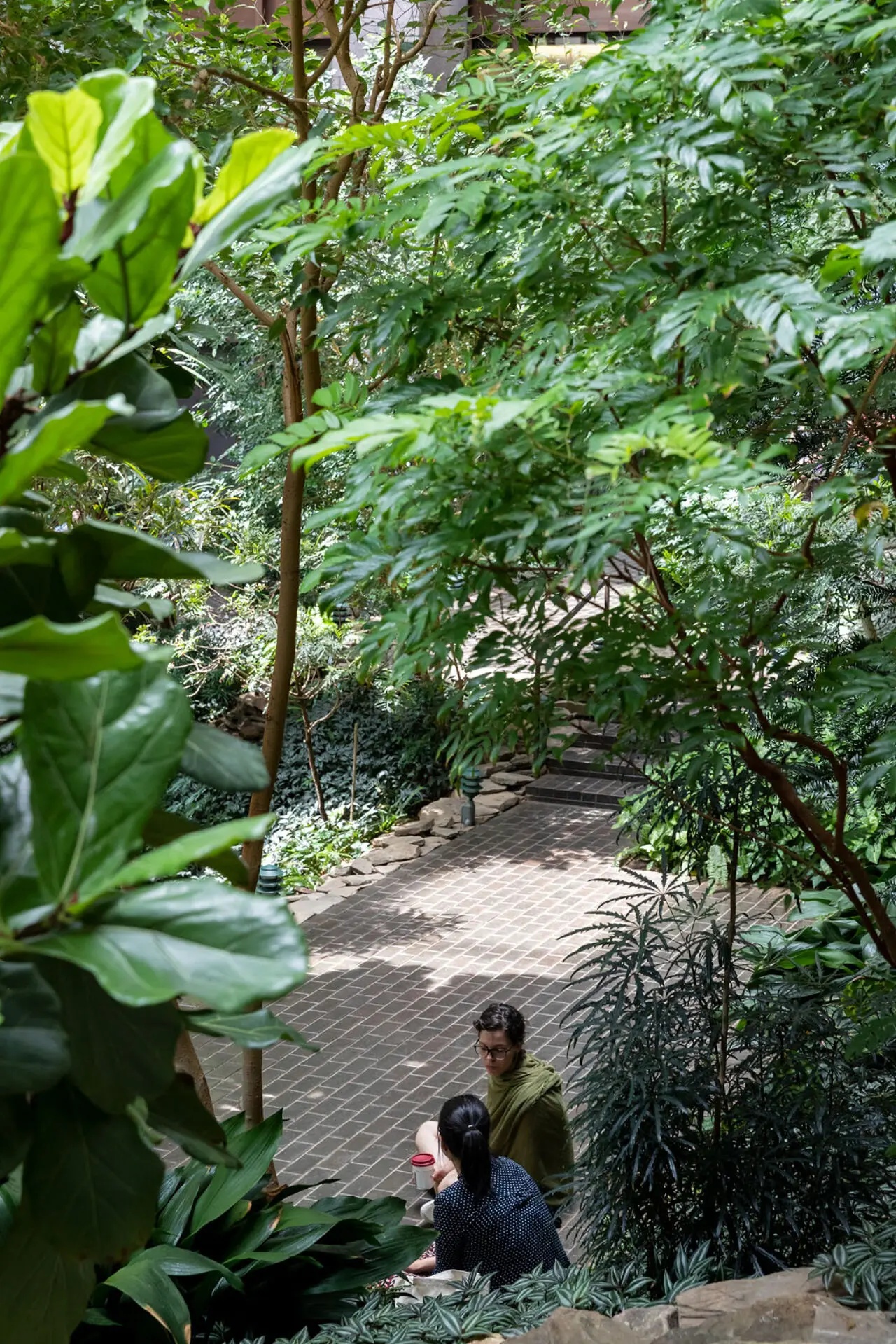
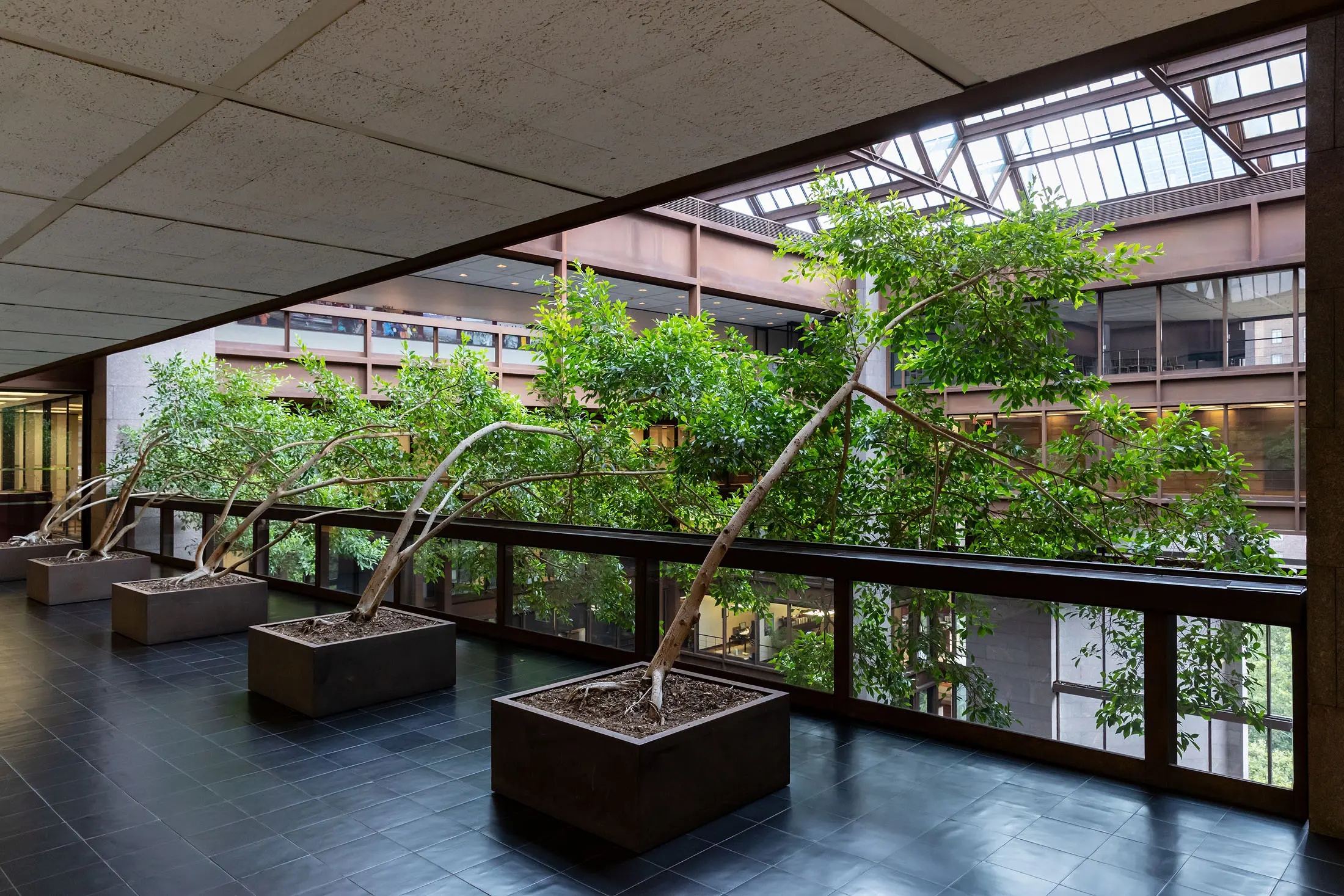
Dan Kiley designed the interior landscape as a subtropical garden containing trees, shrubs, vines, and ground cover arranged across a series of terraces. The garden slopes gradually between 42nd and 43rd Streets, reflecting the site’s topography. A glazed roof introduces daylight into the interior while maintaining a controlled environment for vegetation.
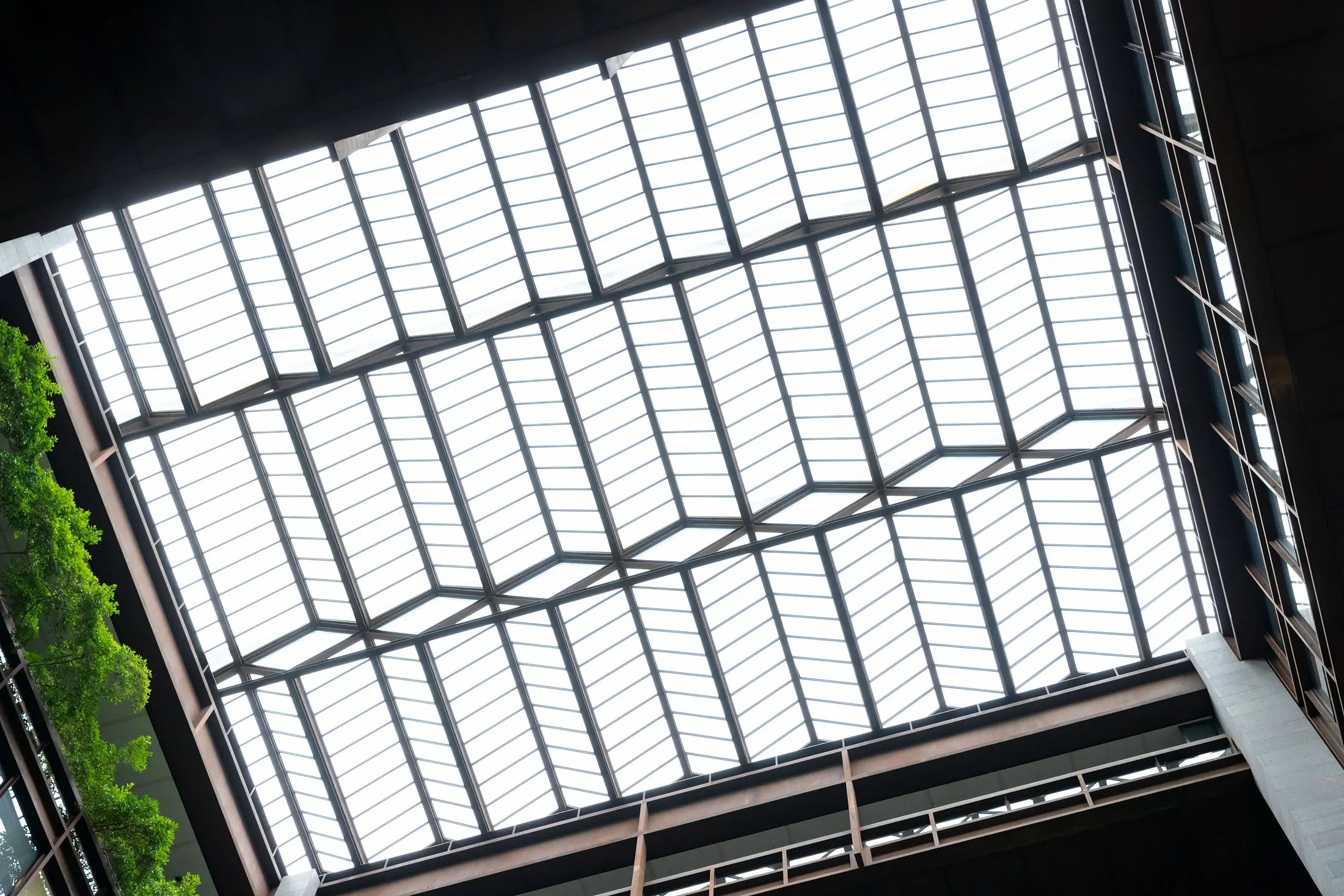
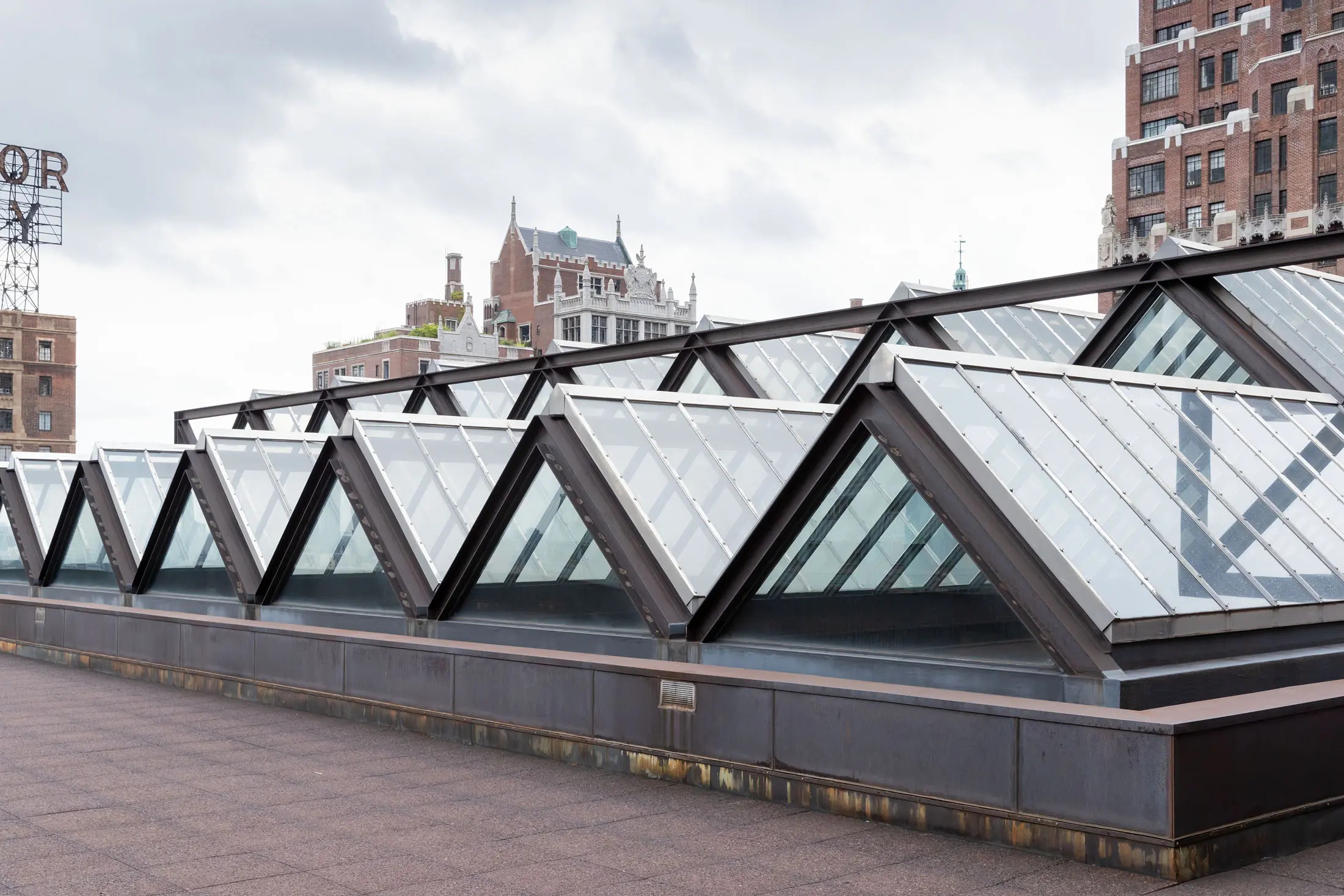
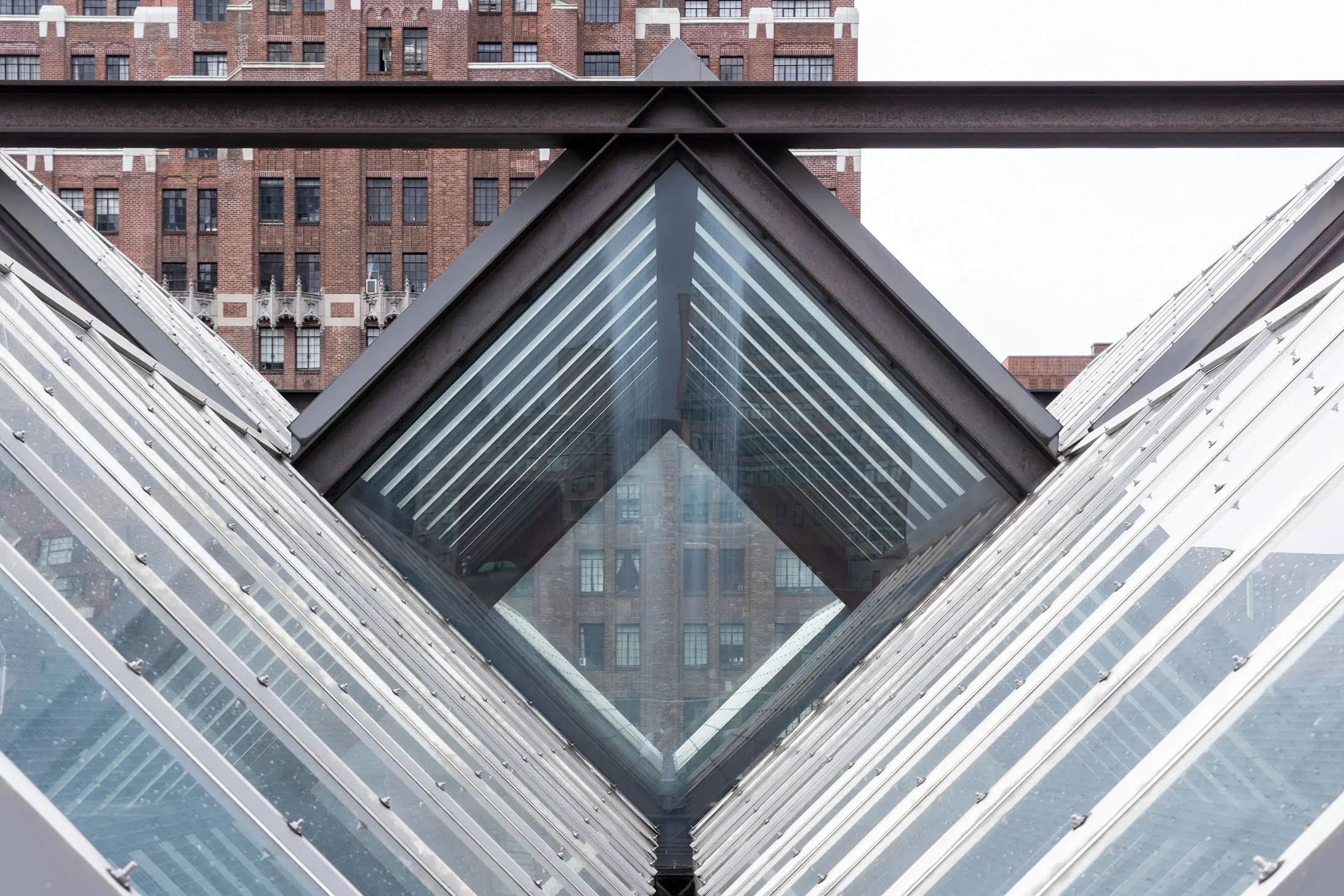
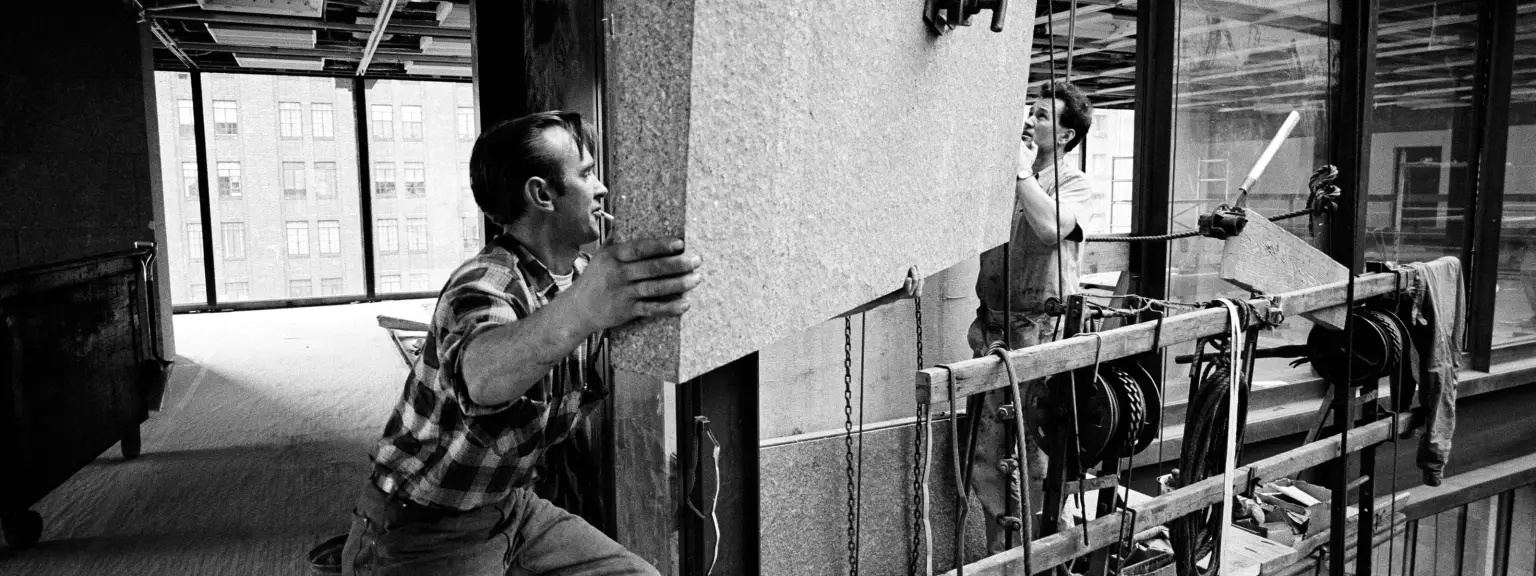
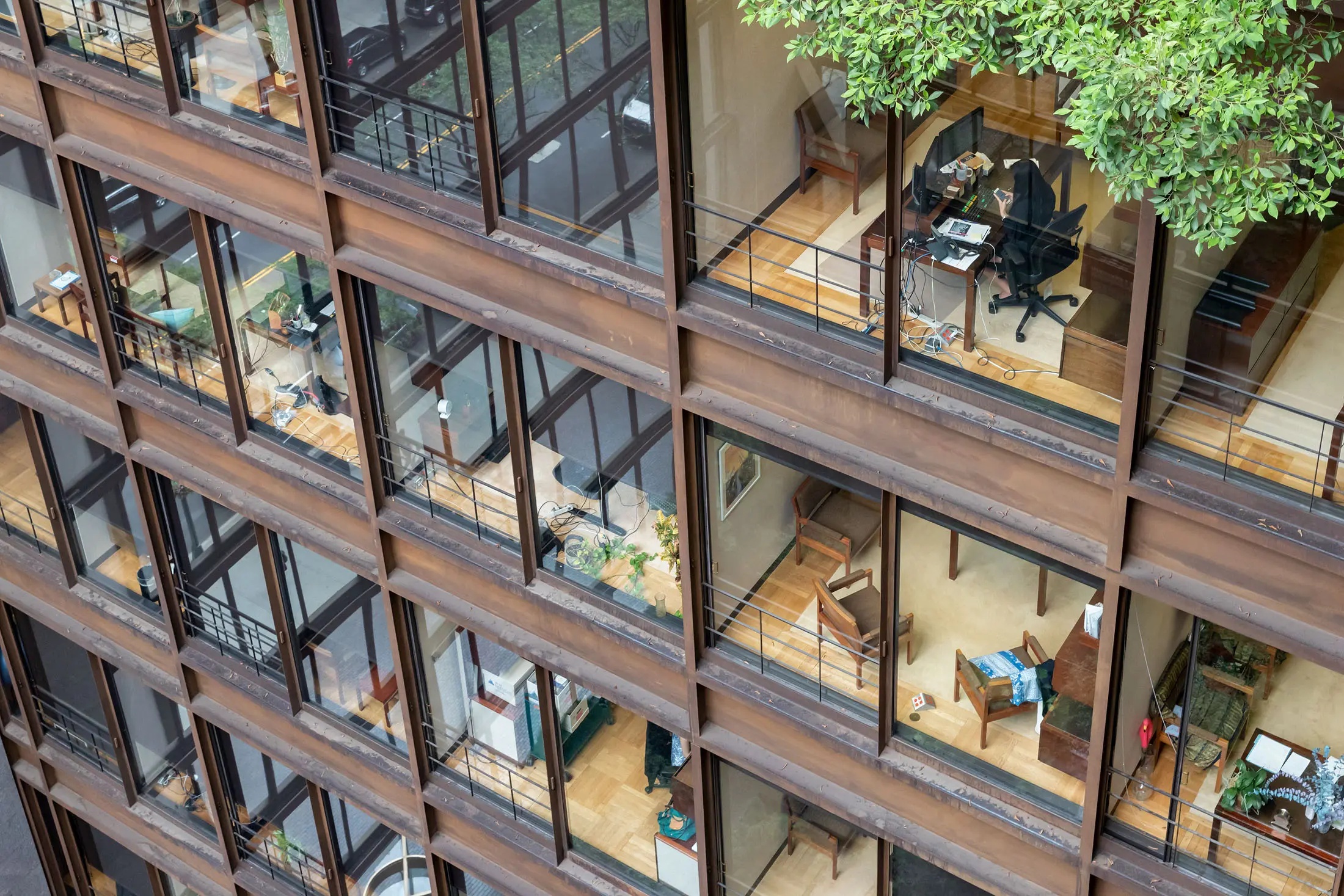
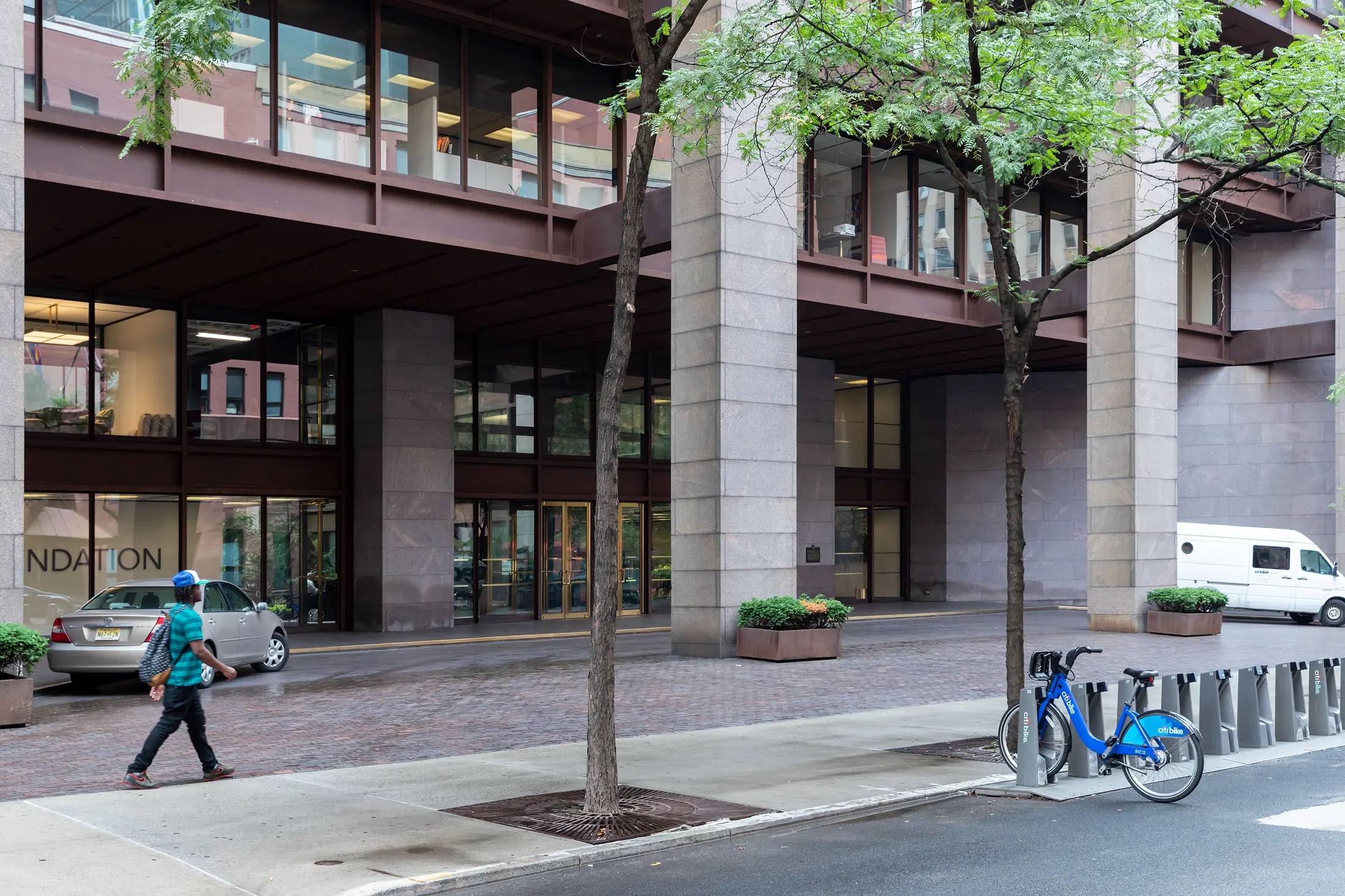
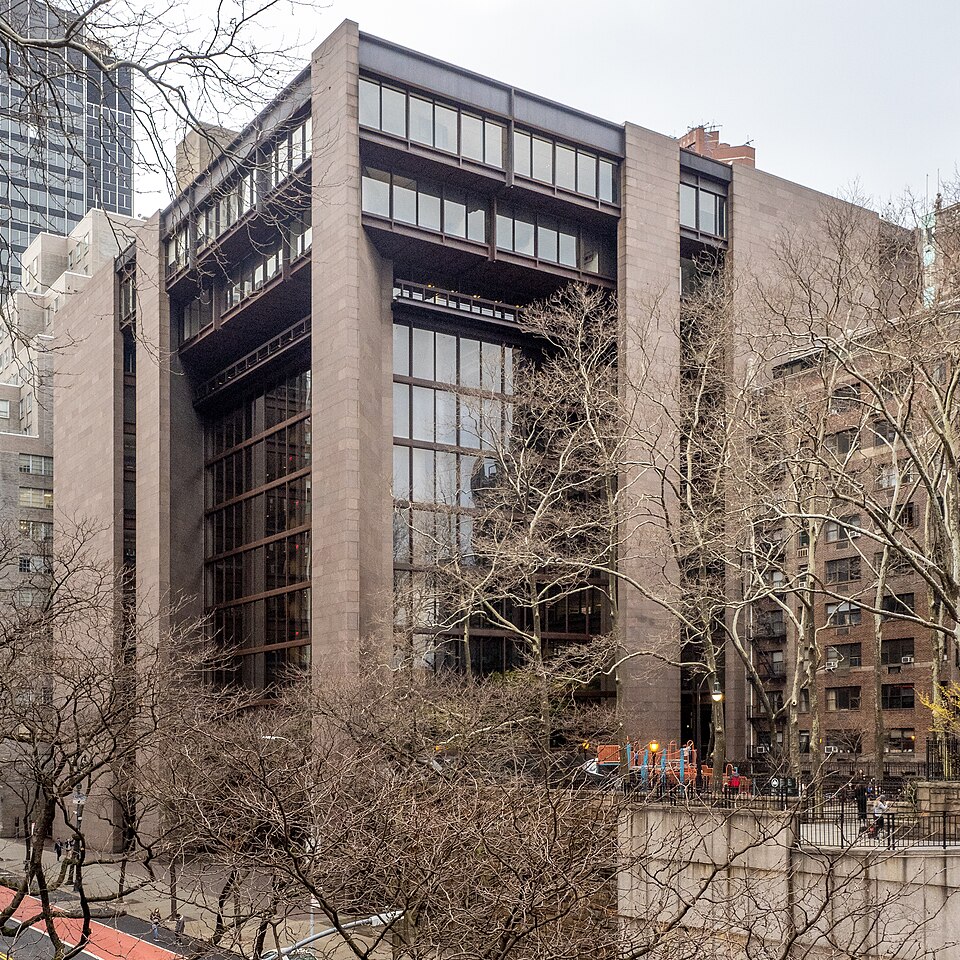
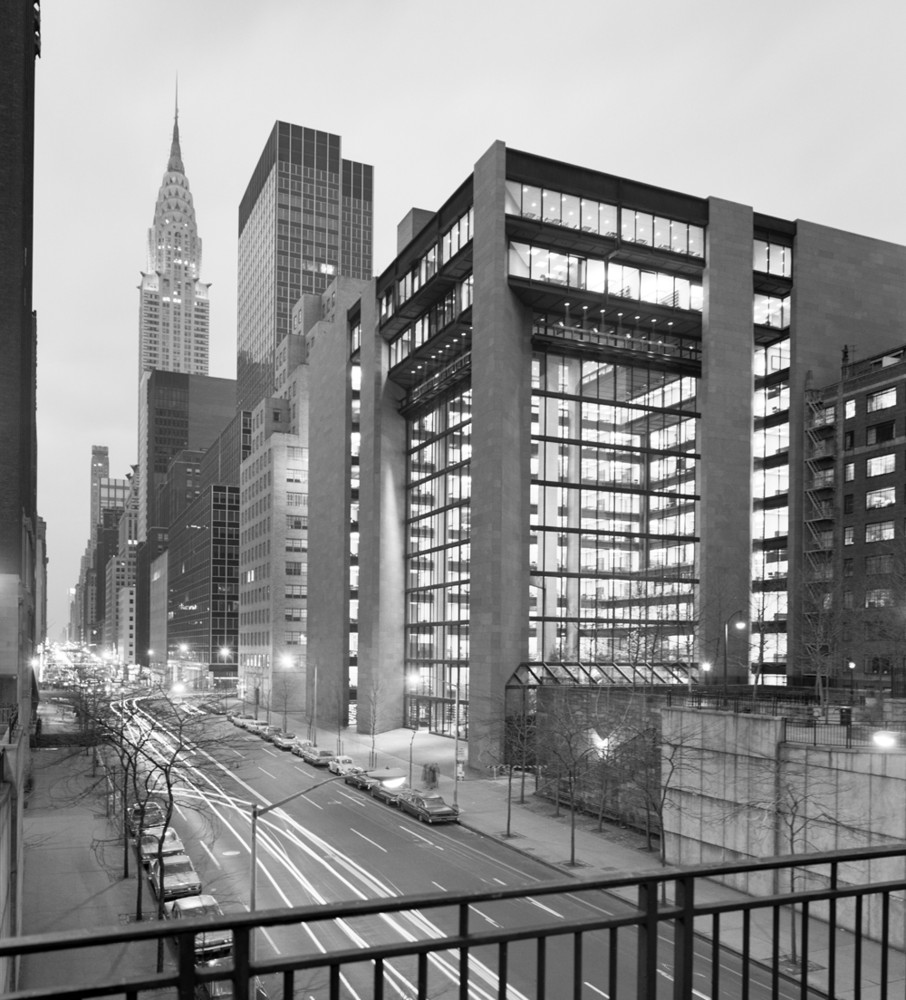
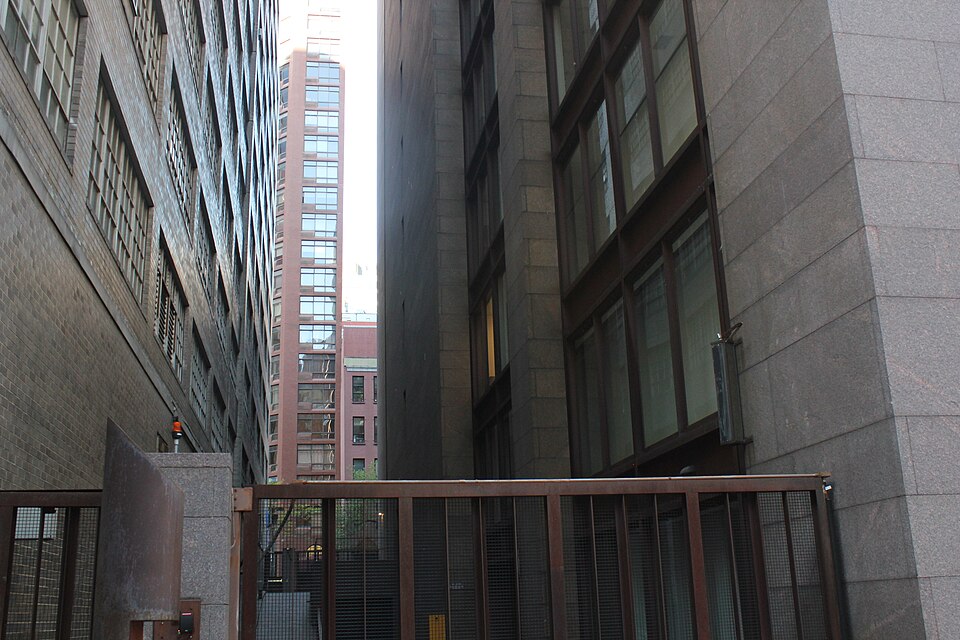
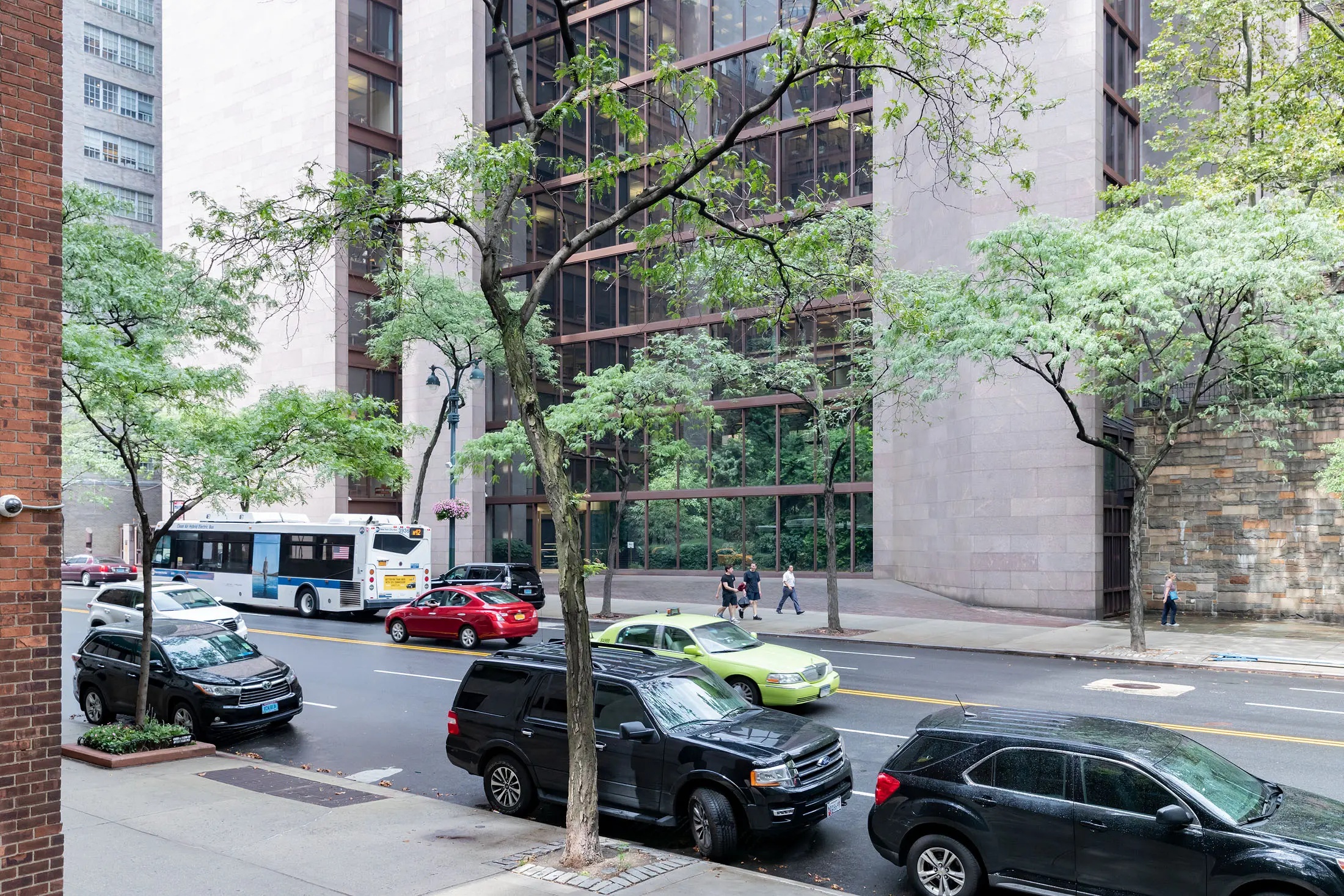
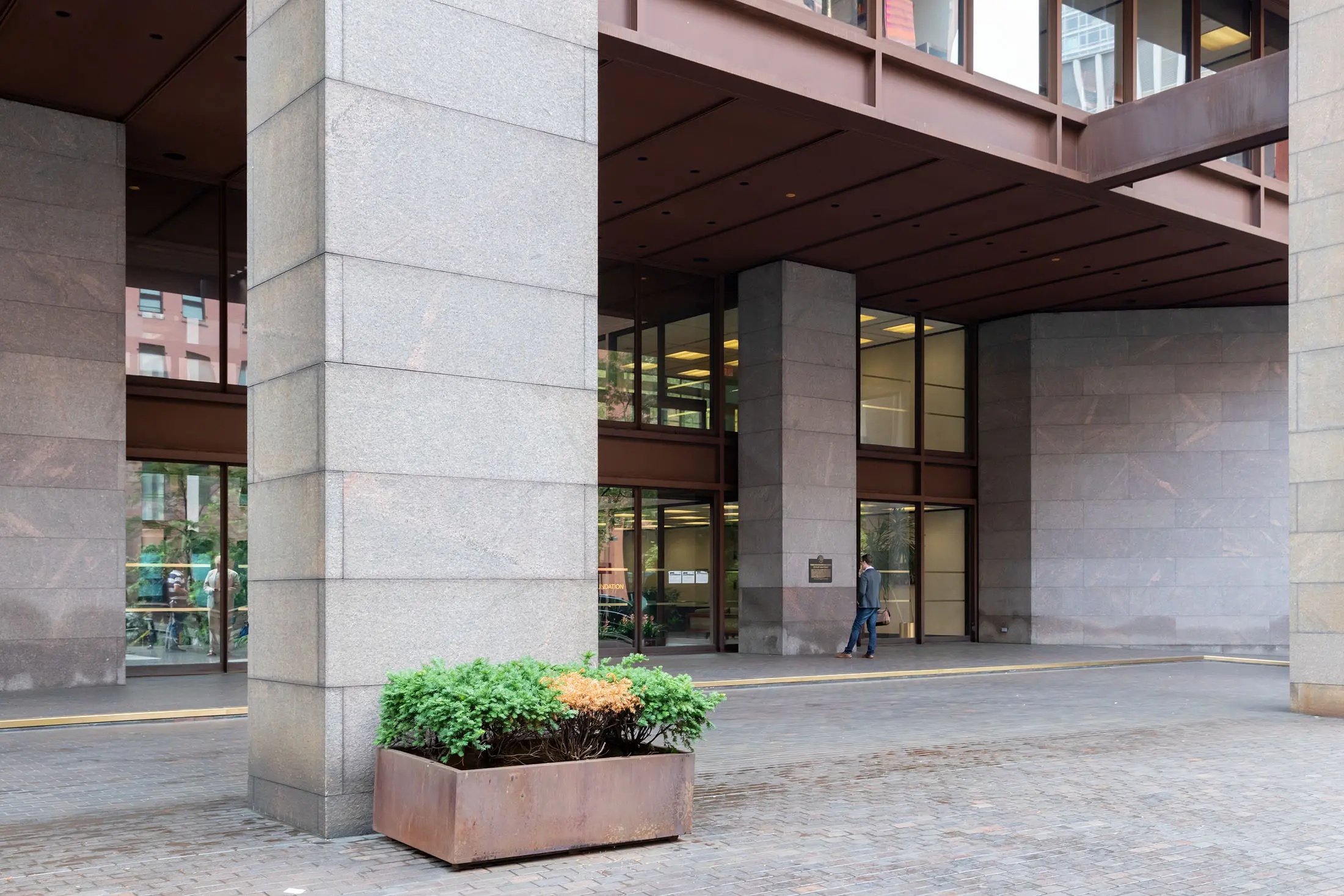
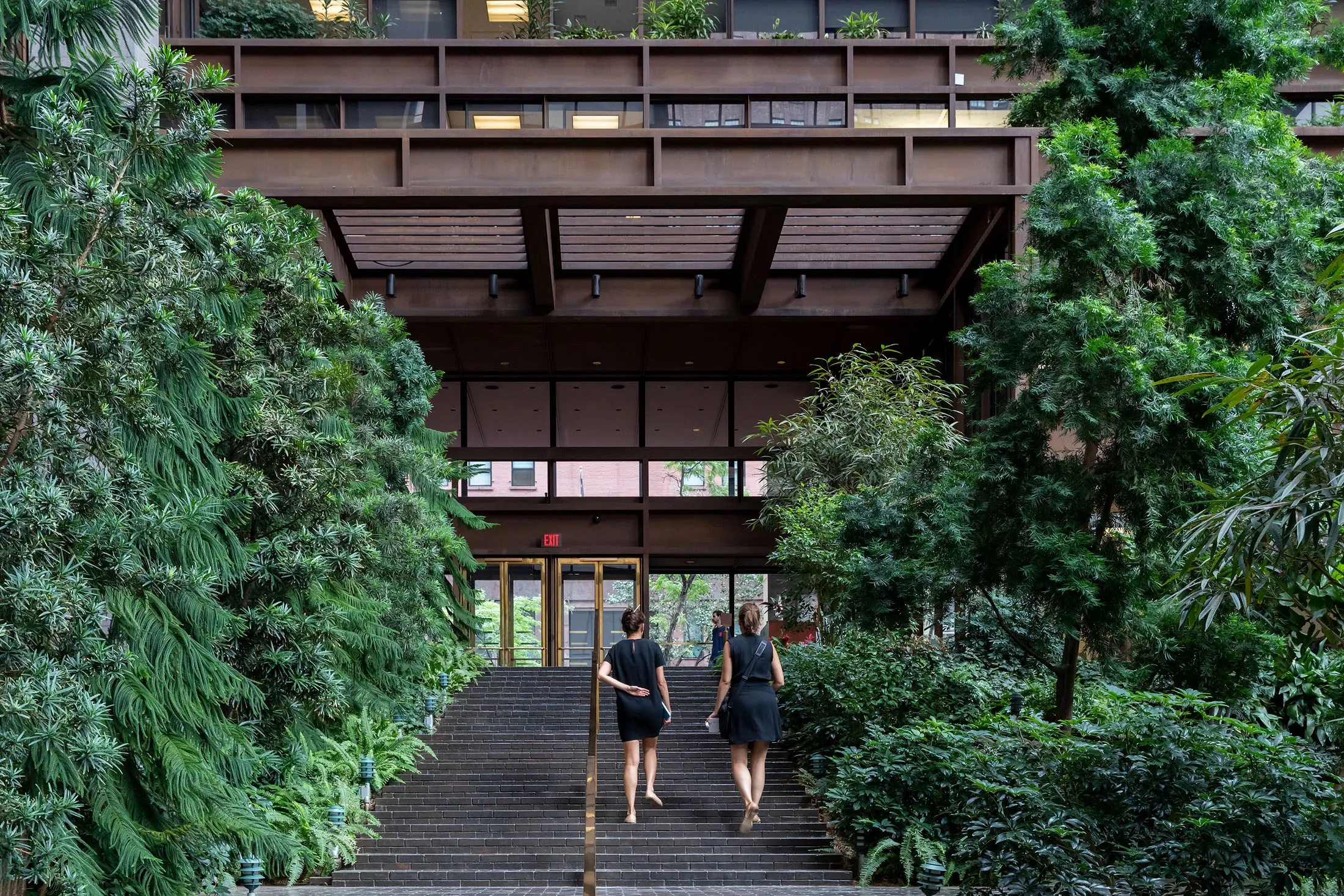
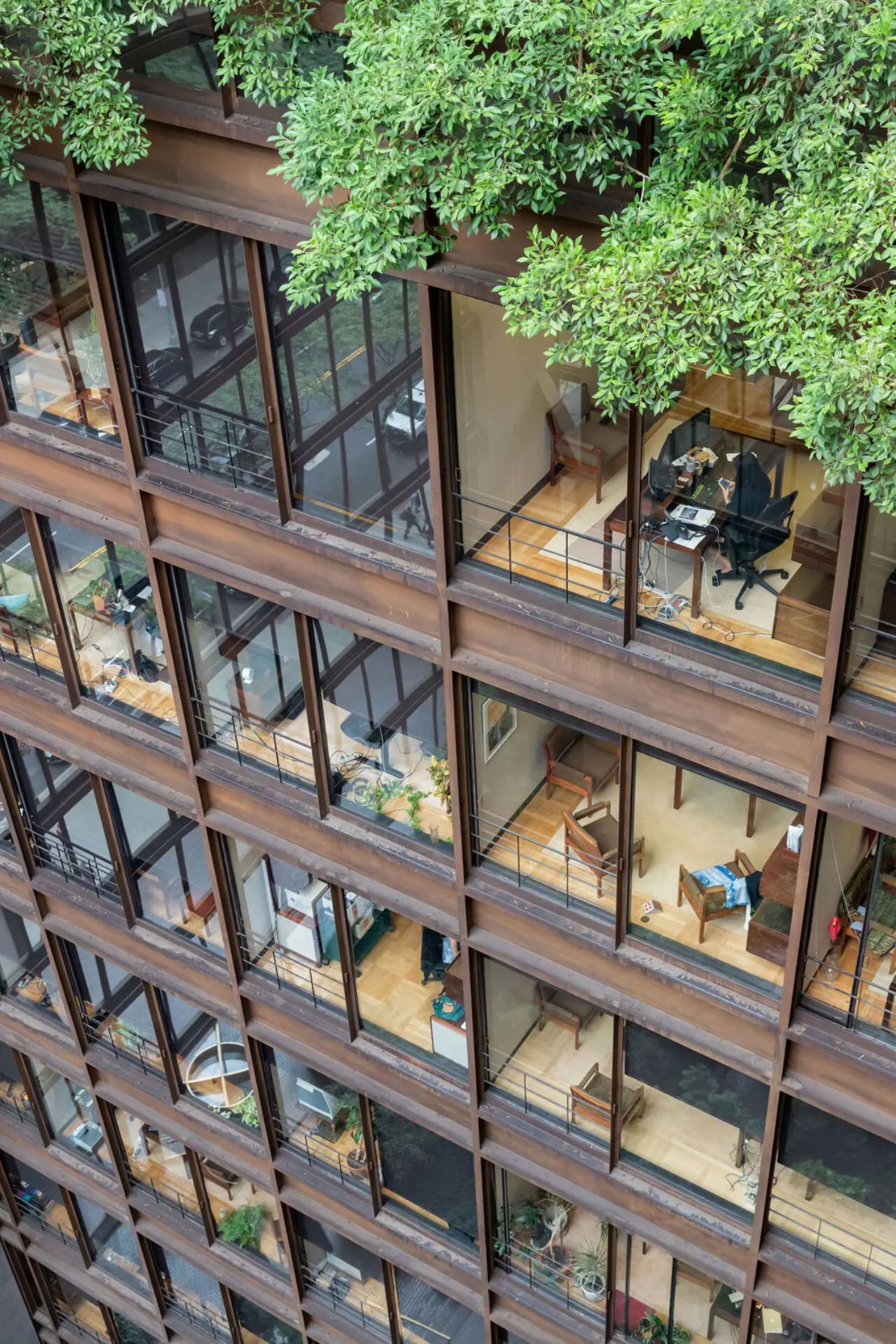
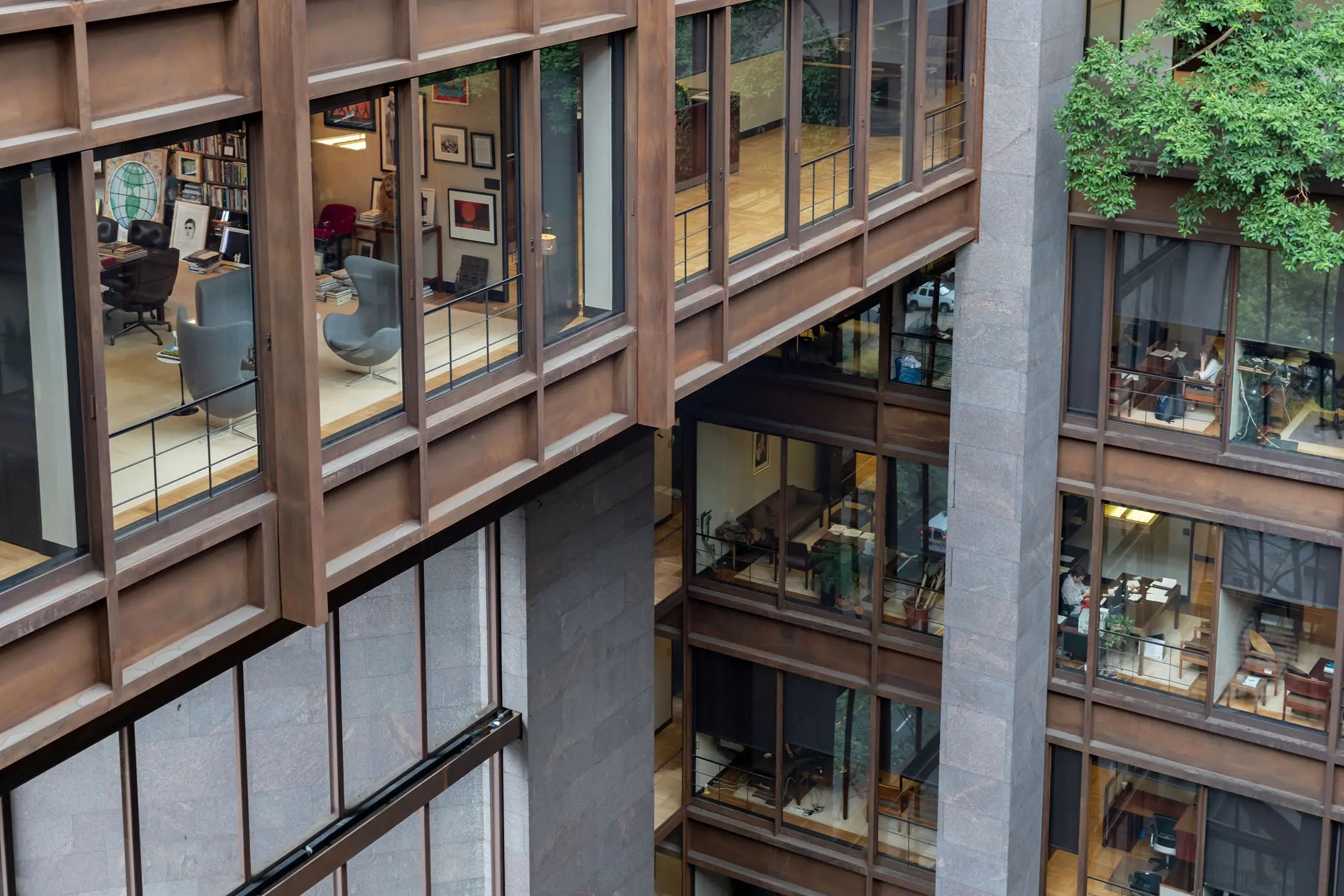
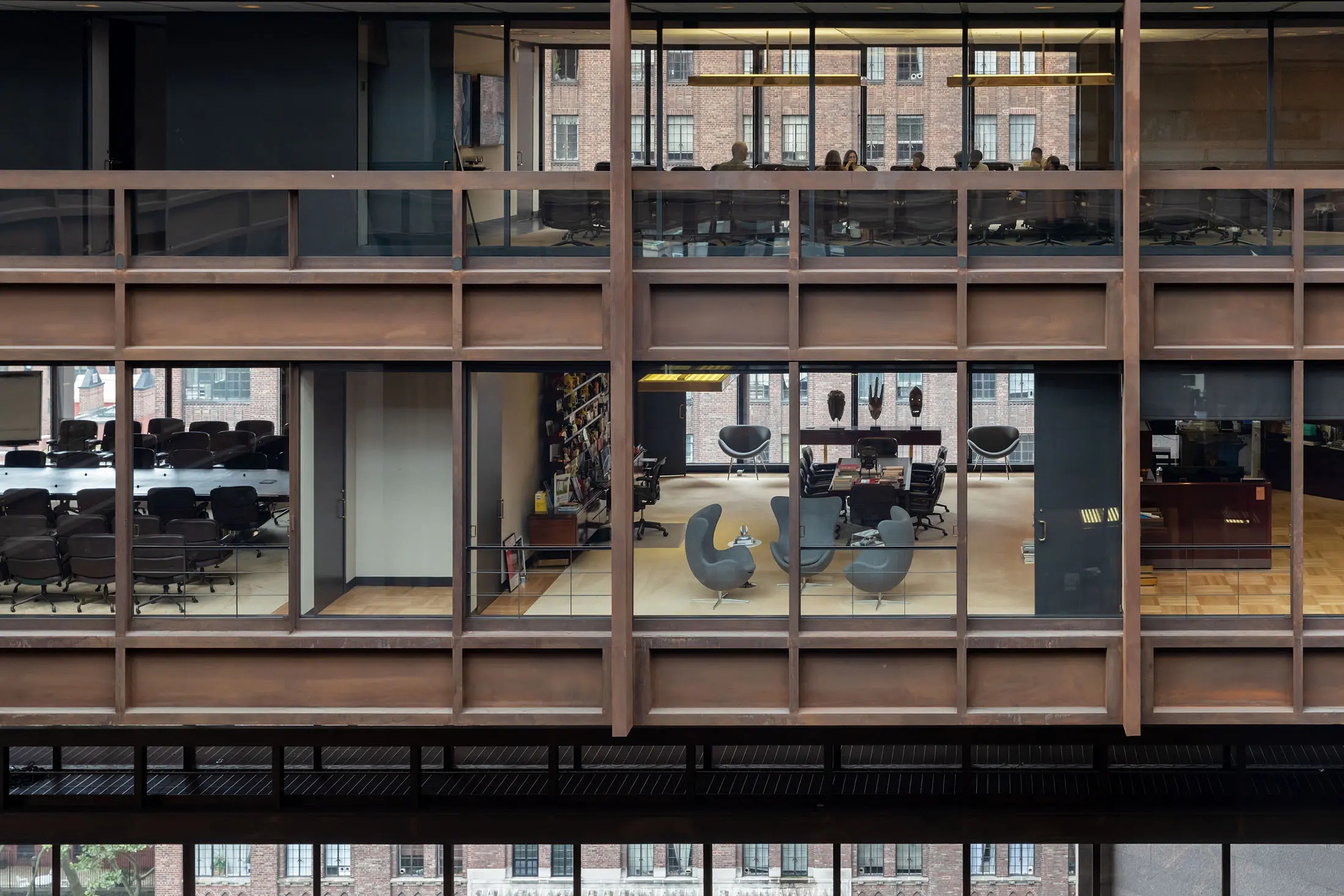
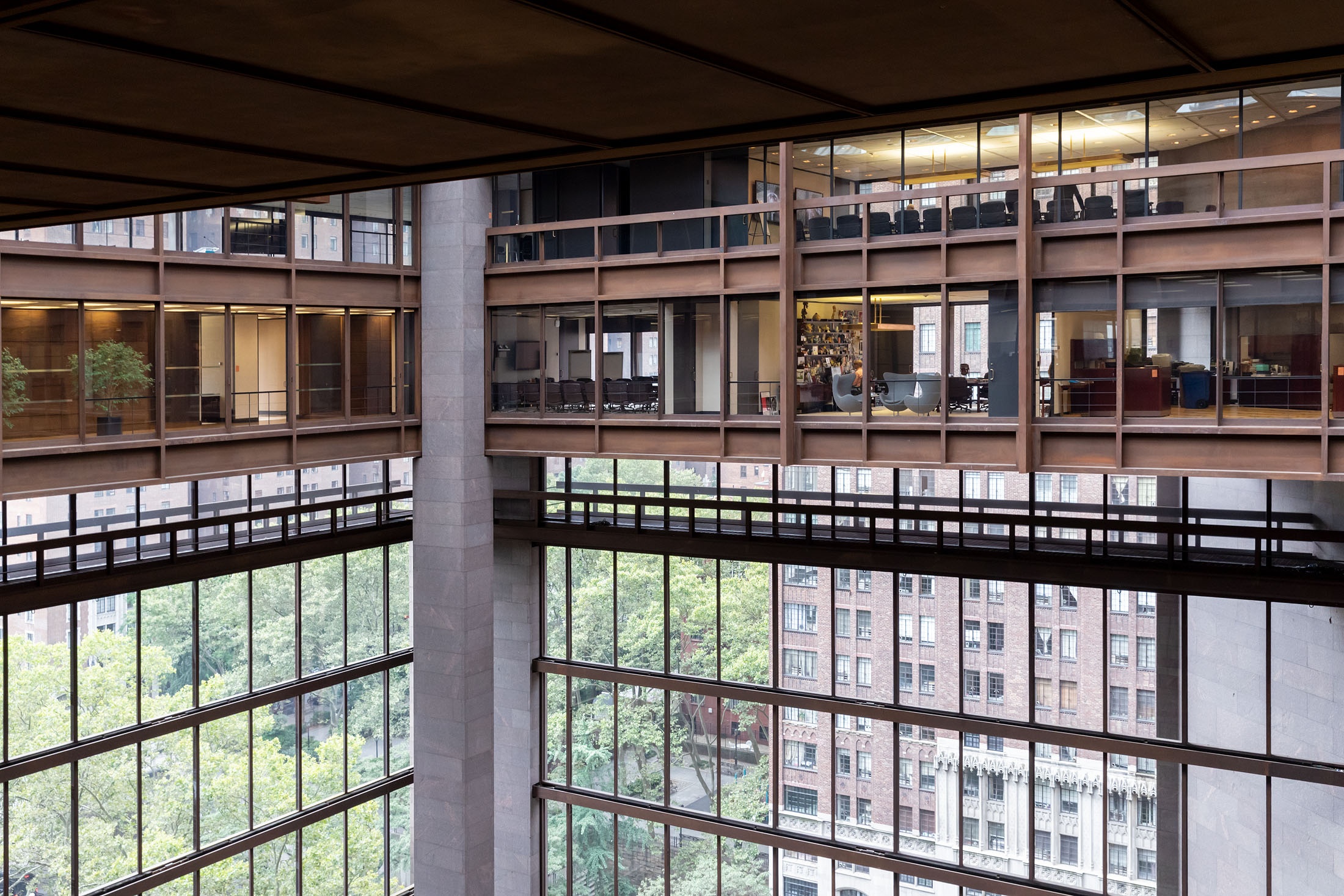
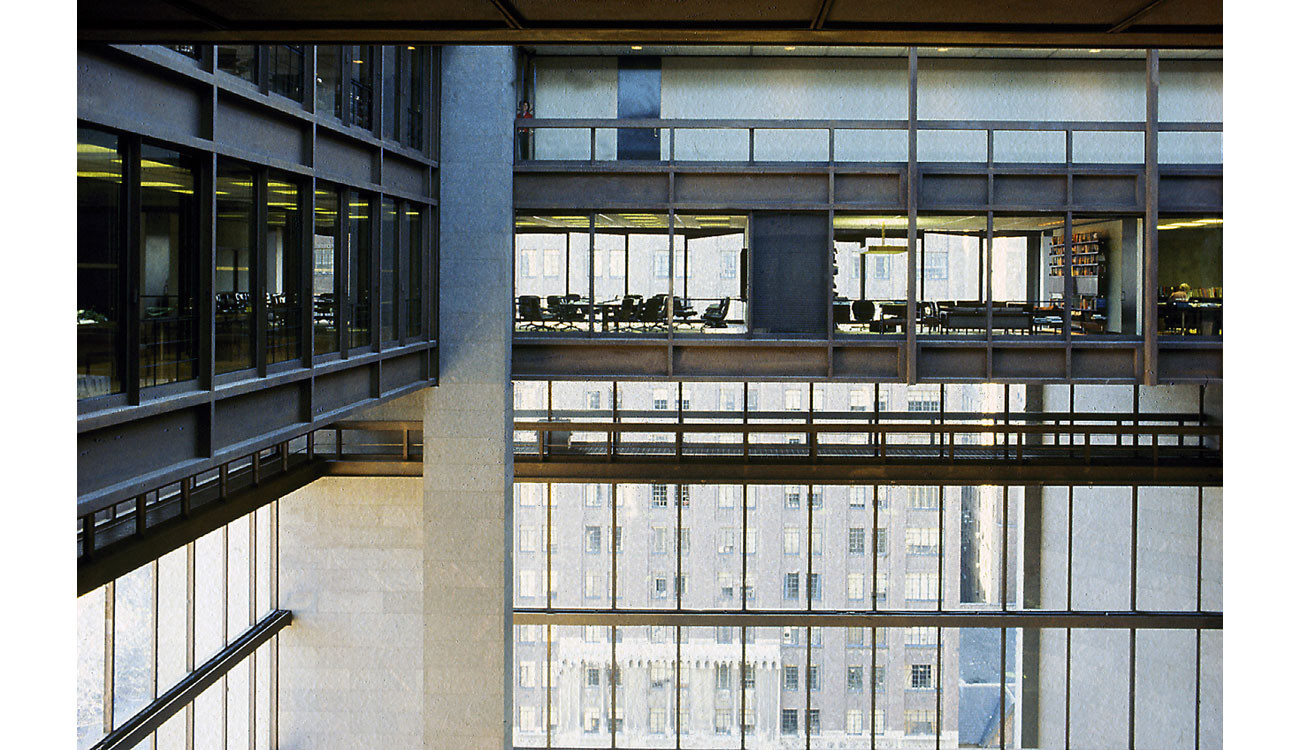
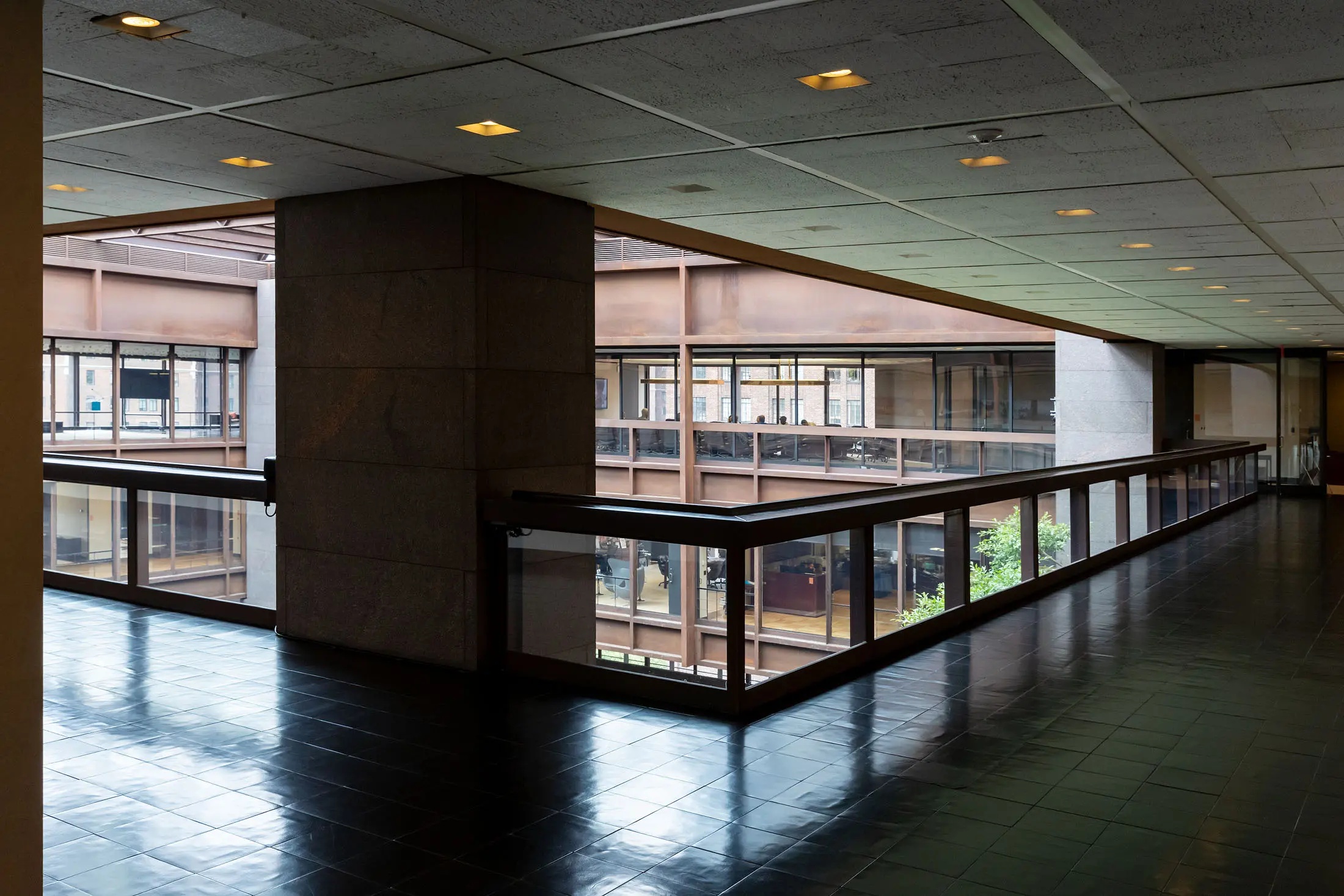
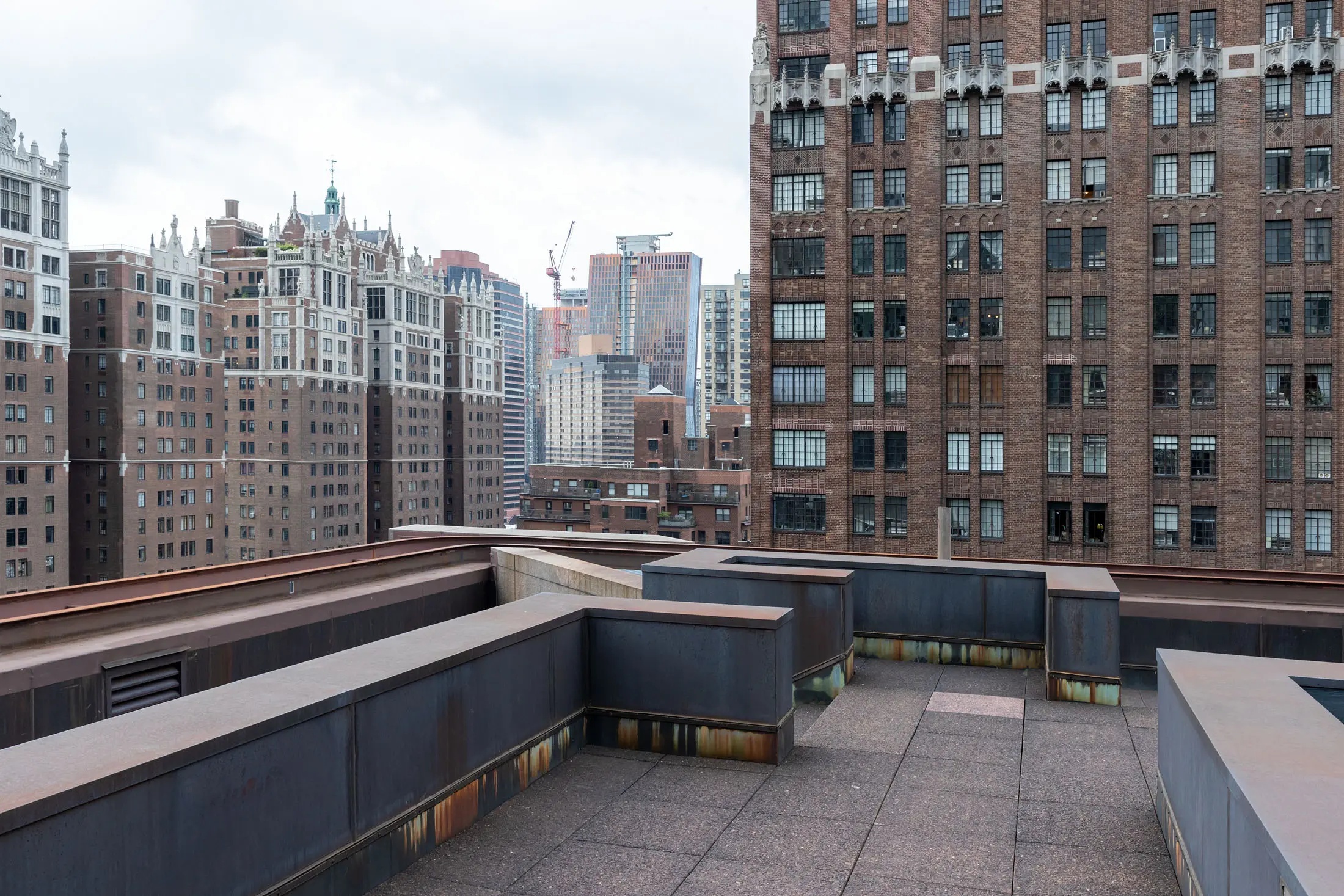
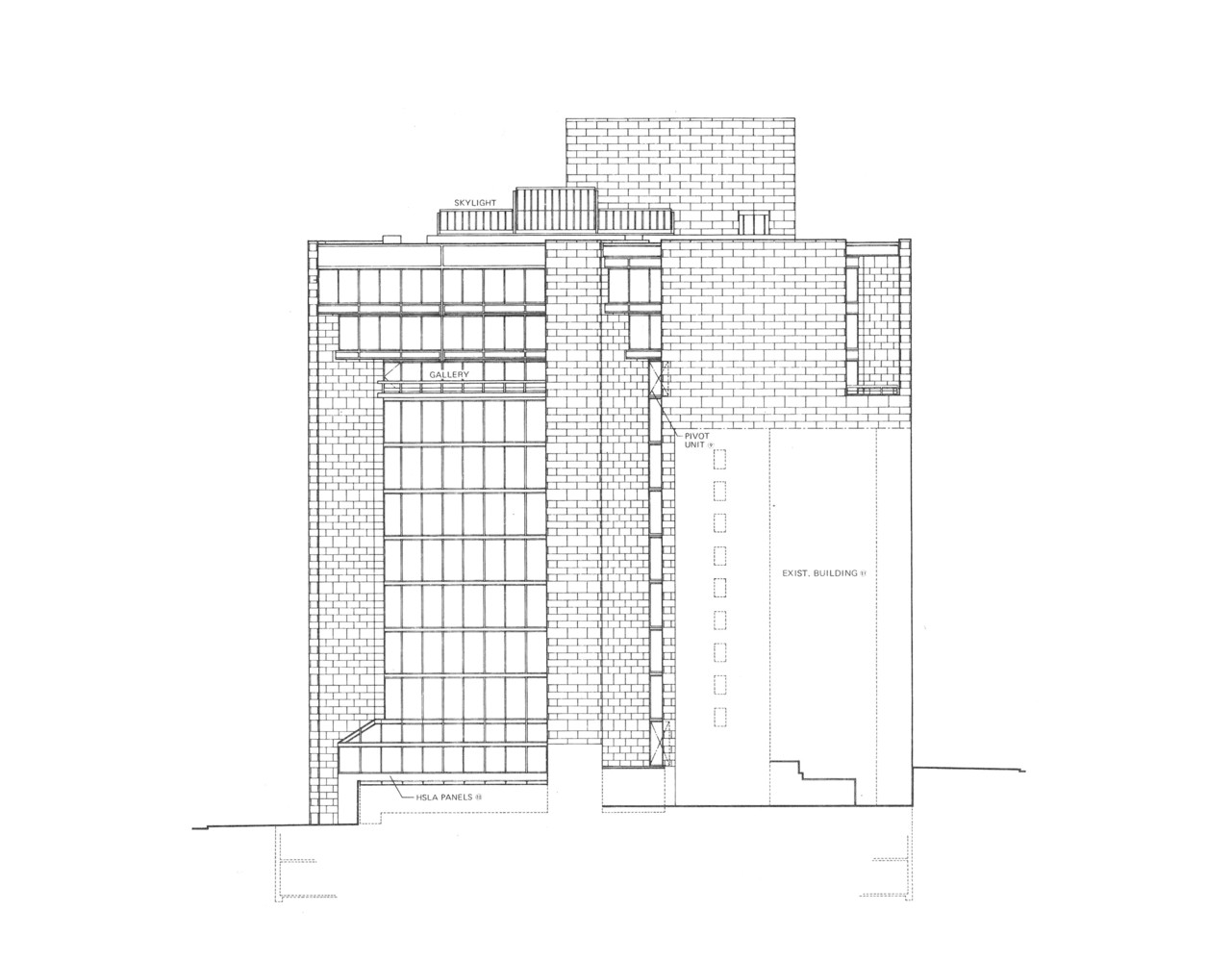
The structure combines concrete, granite, weathering steel, and glass. Concrete piers clad in South Dakota granite support large steel spans that allow extensive glazing along the atrium elevations. Cor-Ten steel members were left exposed and weathered naturally, producing a material palette that relates to the surrounding masonry buildings. Approximately 60,000 glass panes create transparent façades that reveal the garden and office spaces.
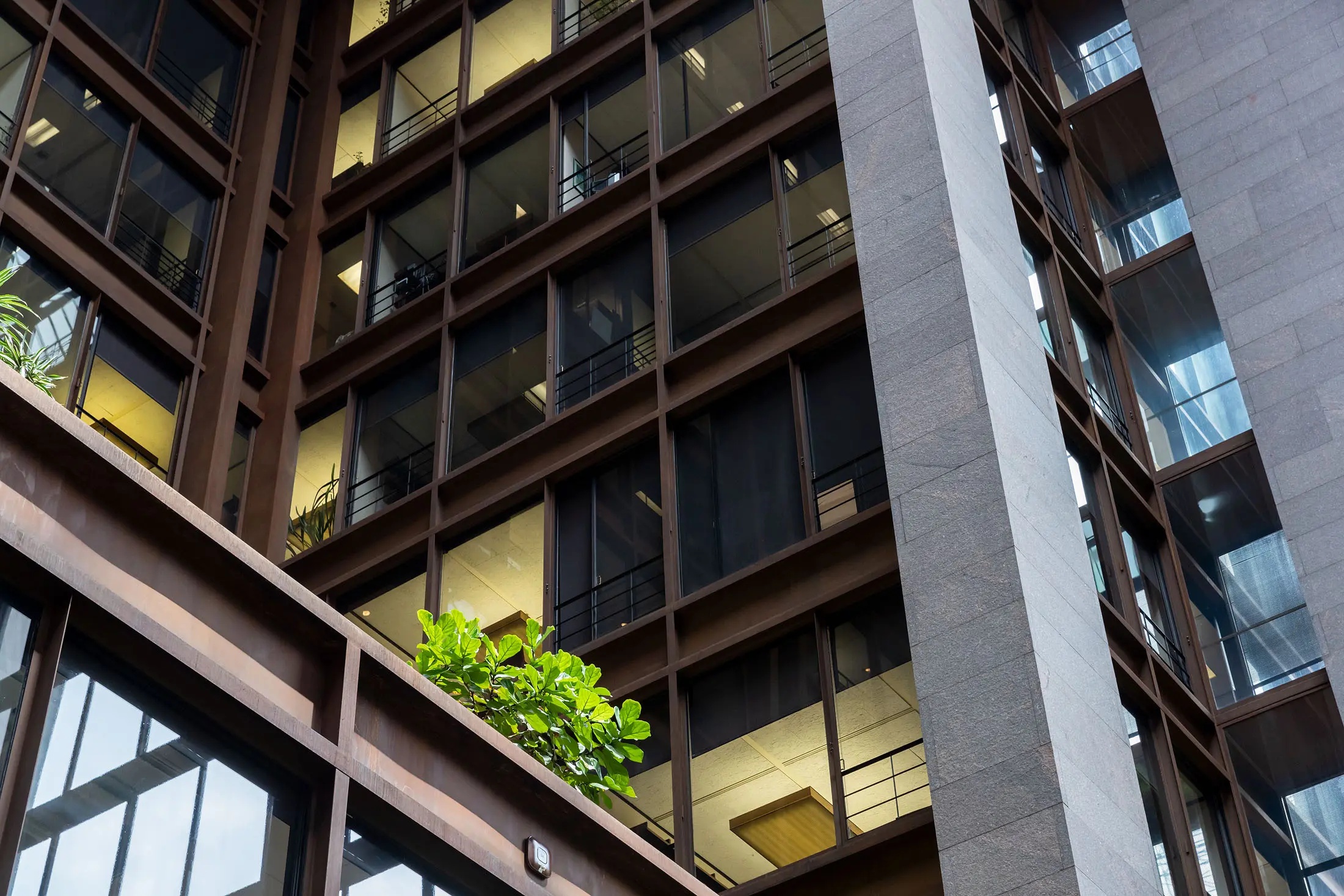
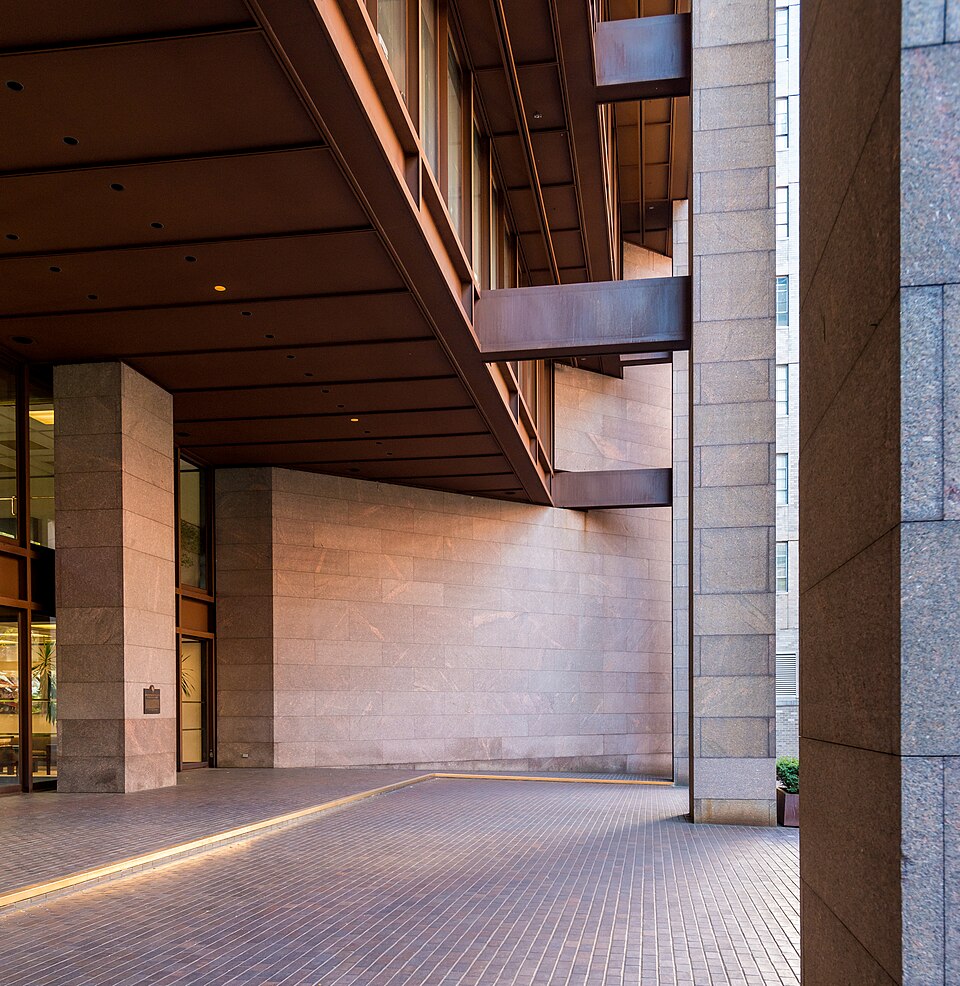
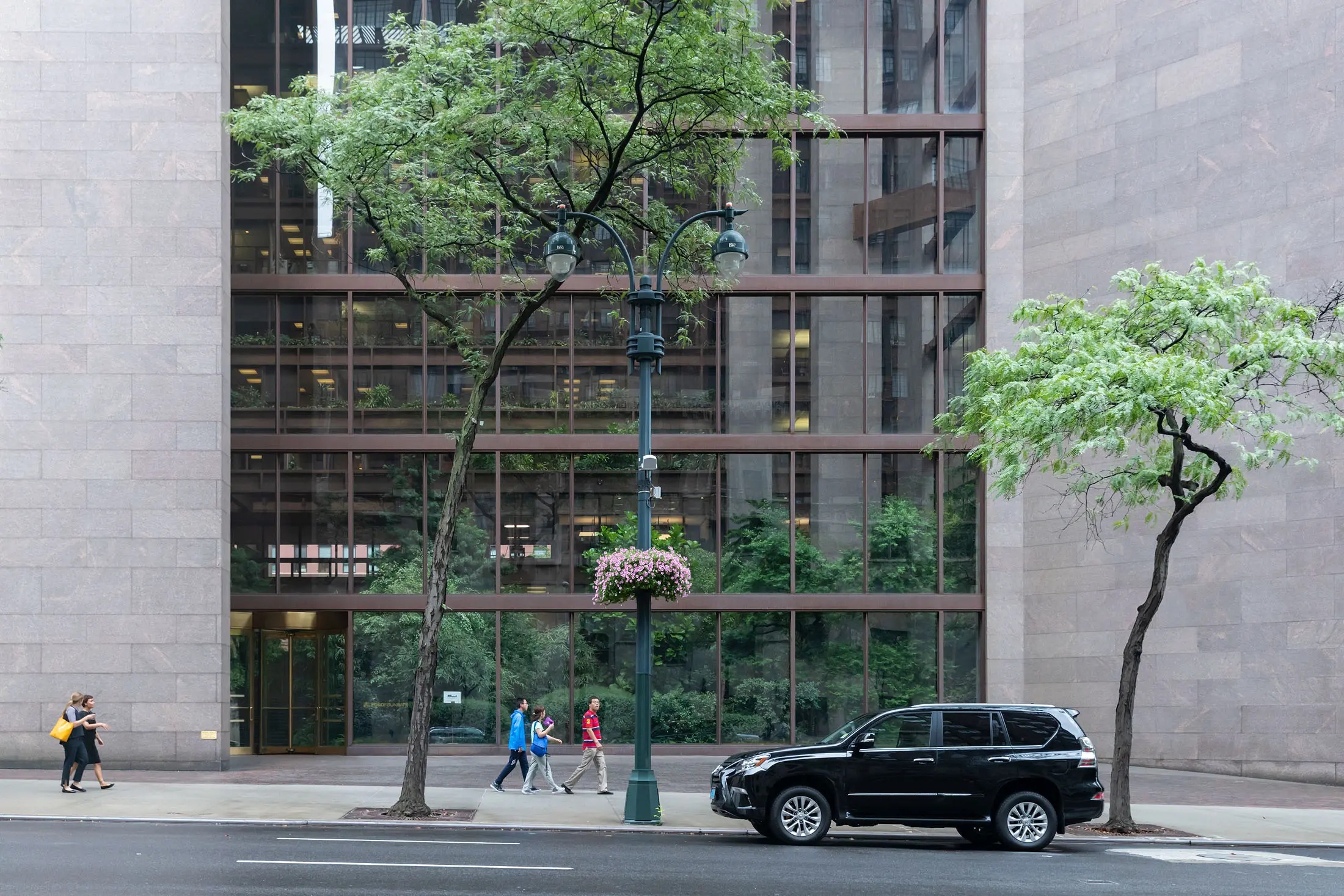
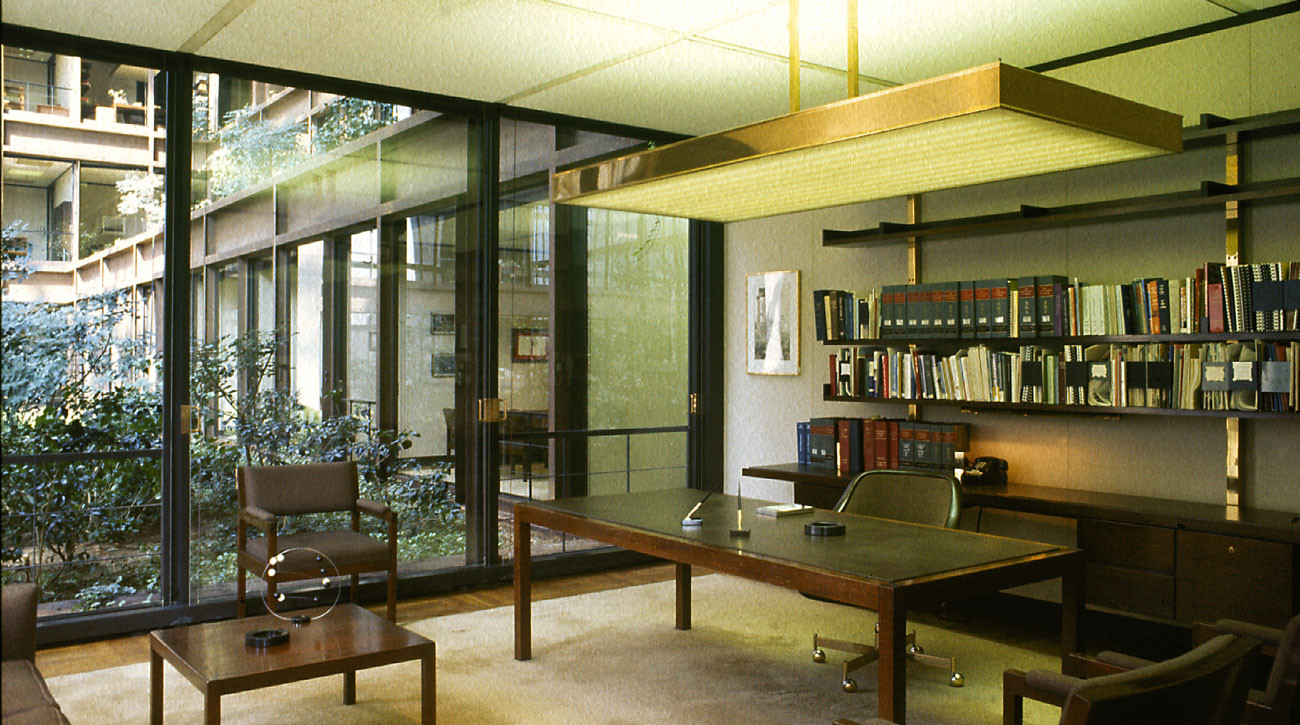
The northern entrance on 43rd Street introduces visitors through a recessed porte-cochère, while a secondary entrance addresses 42nd Street. The lower floors step inward to form terraces overlooking the atrium. Sliding glass doors and large windows connect offices directly to the internal landscape.
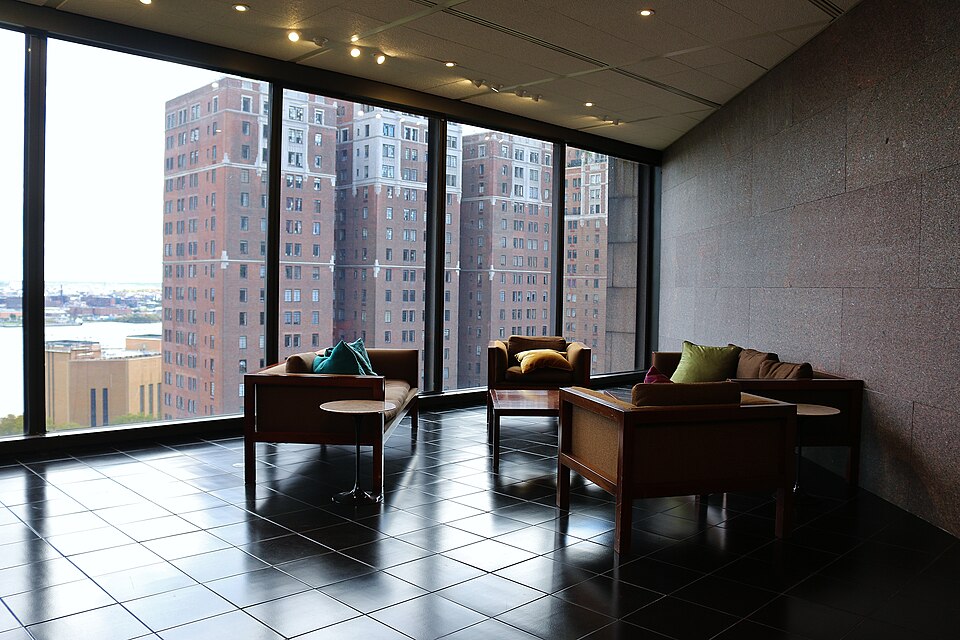
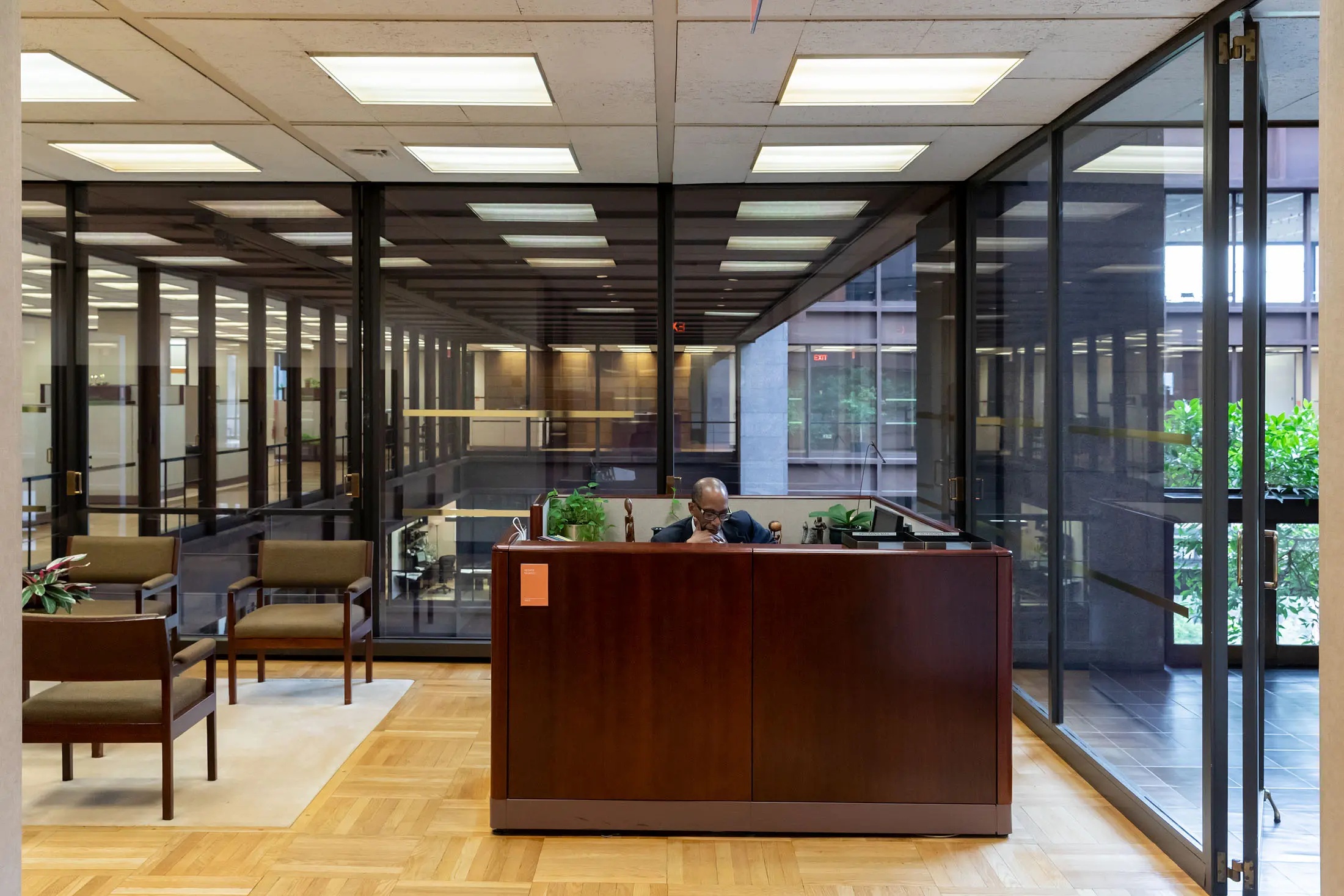
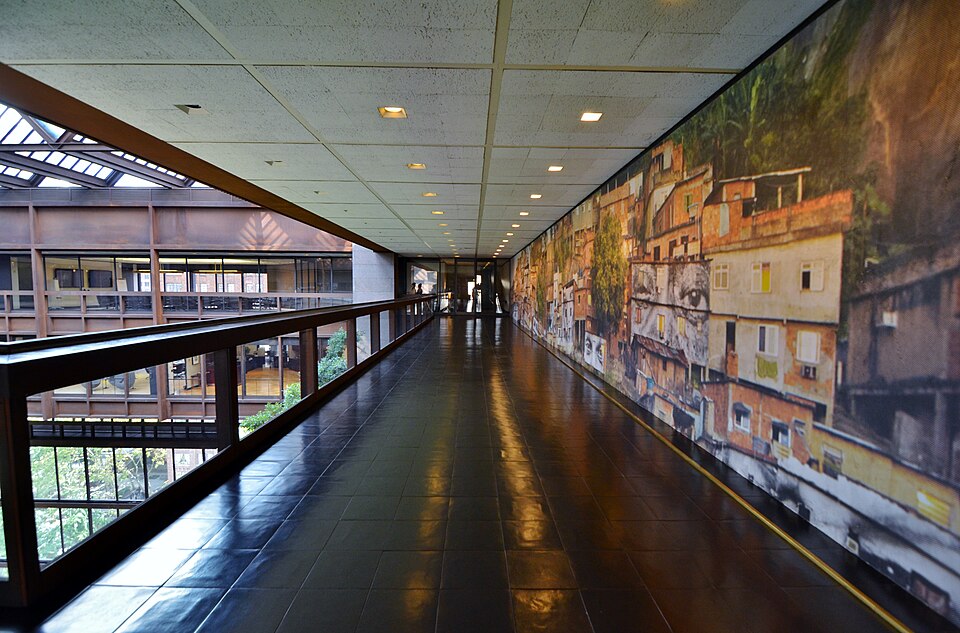
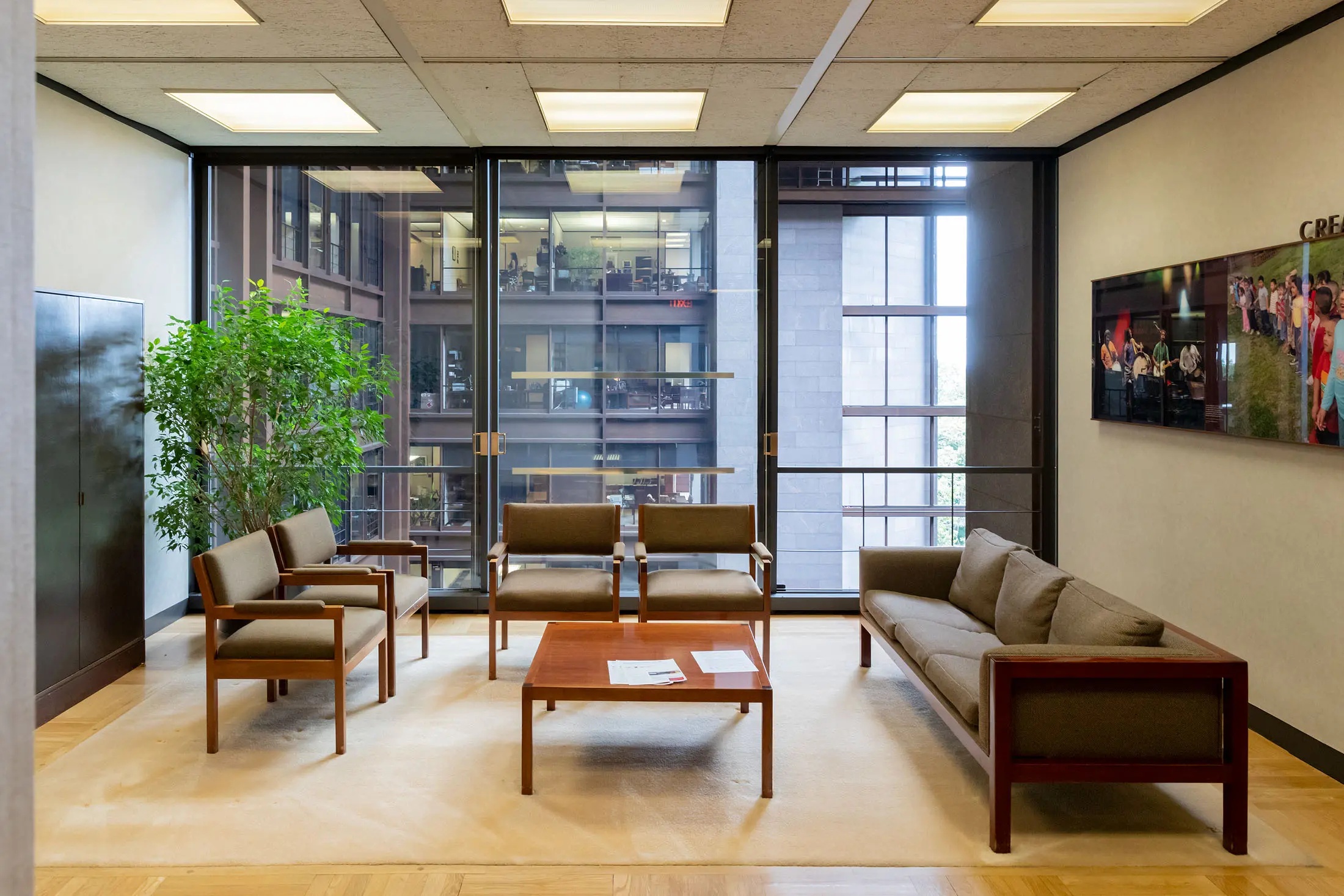
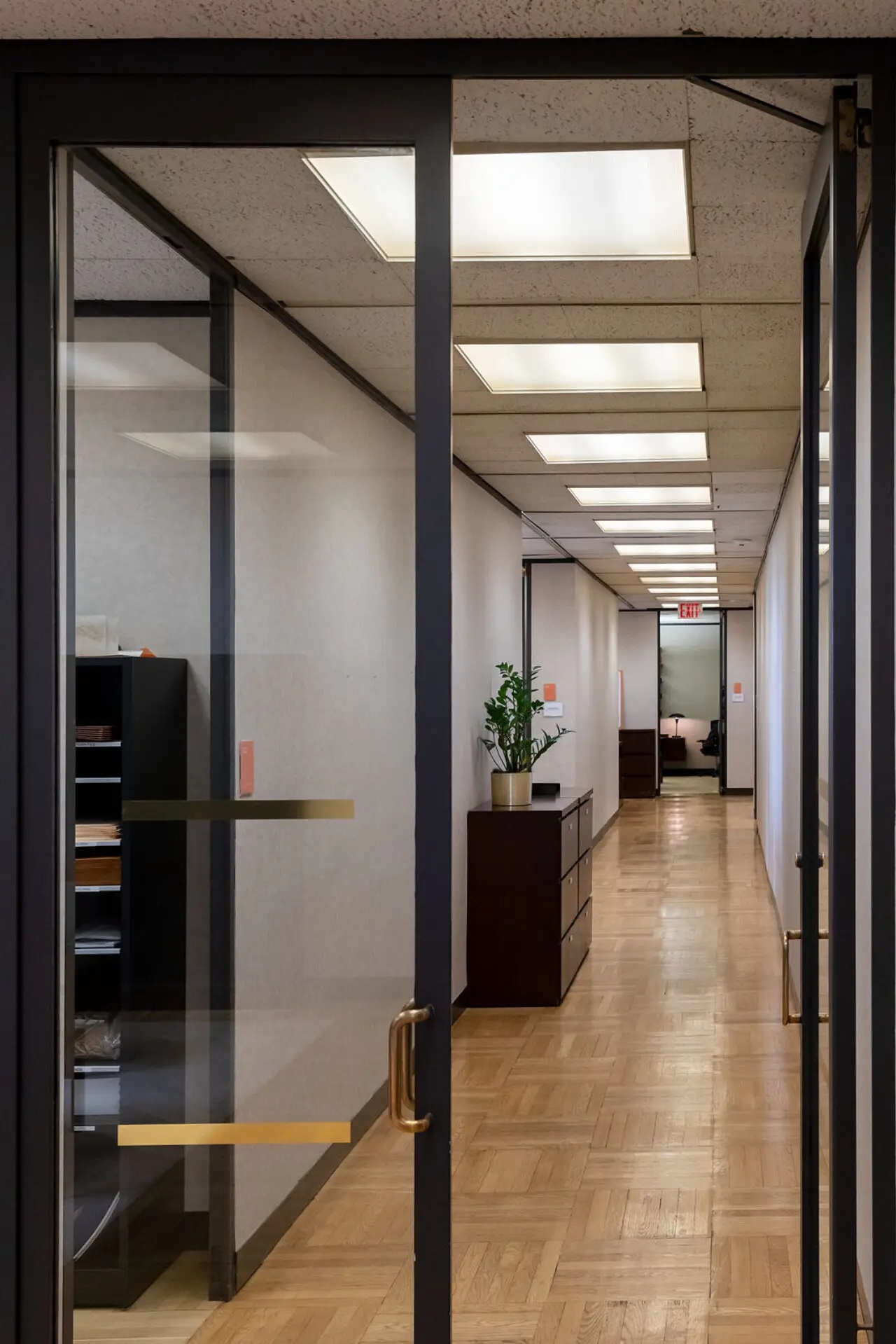
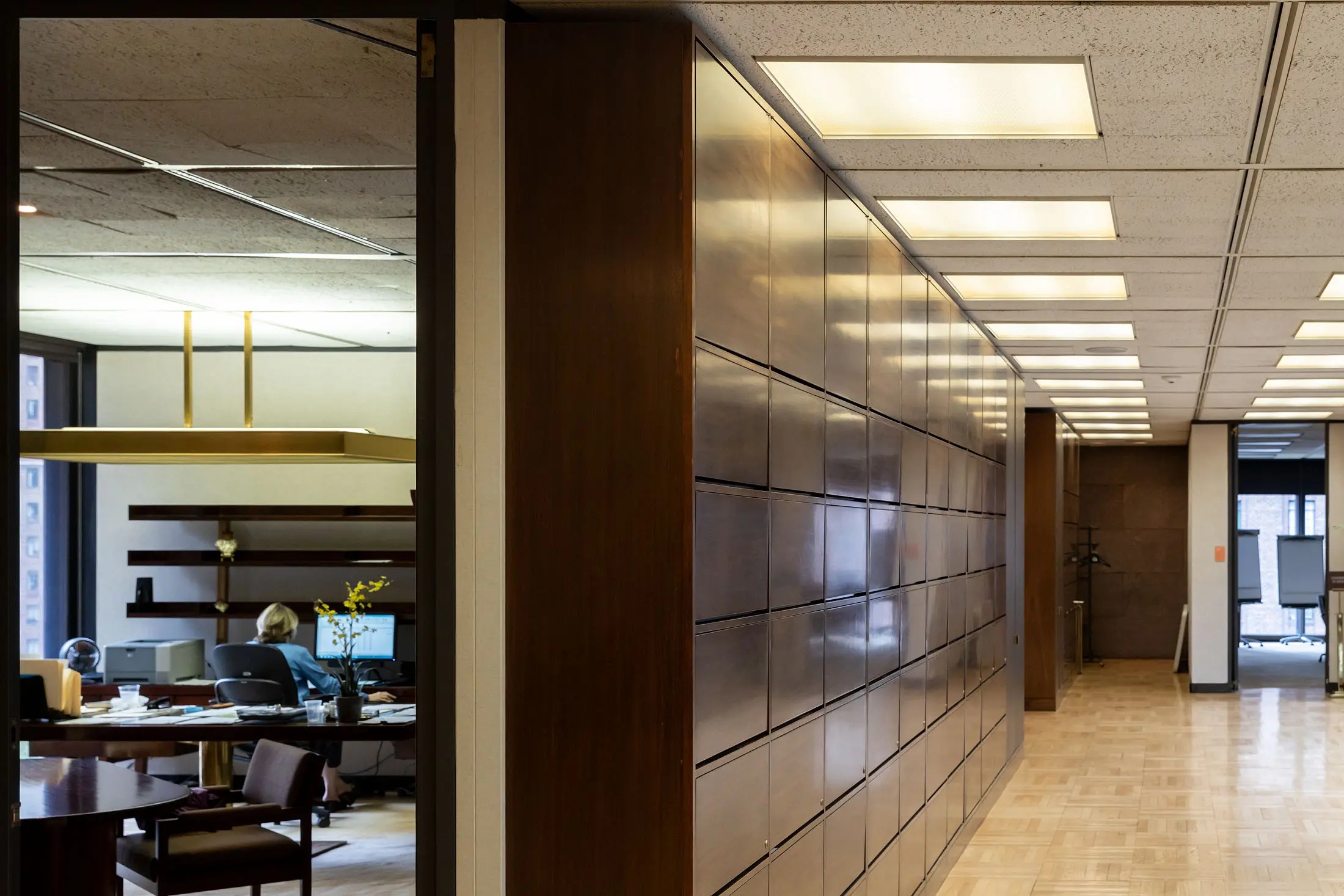
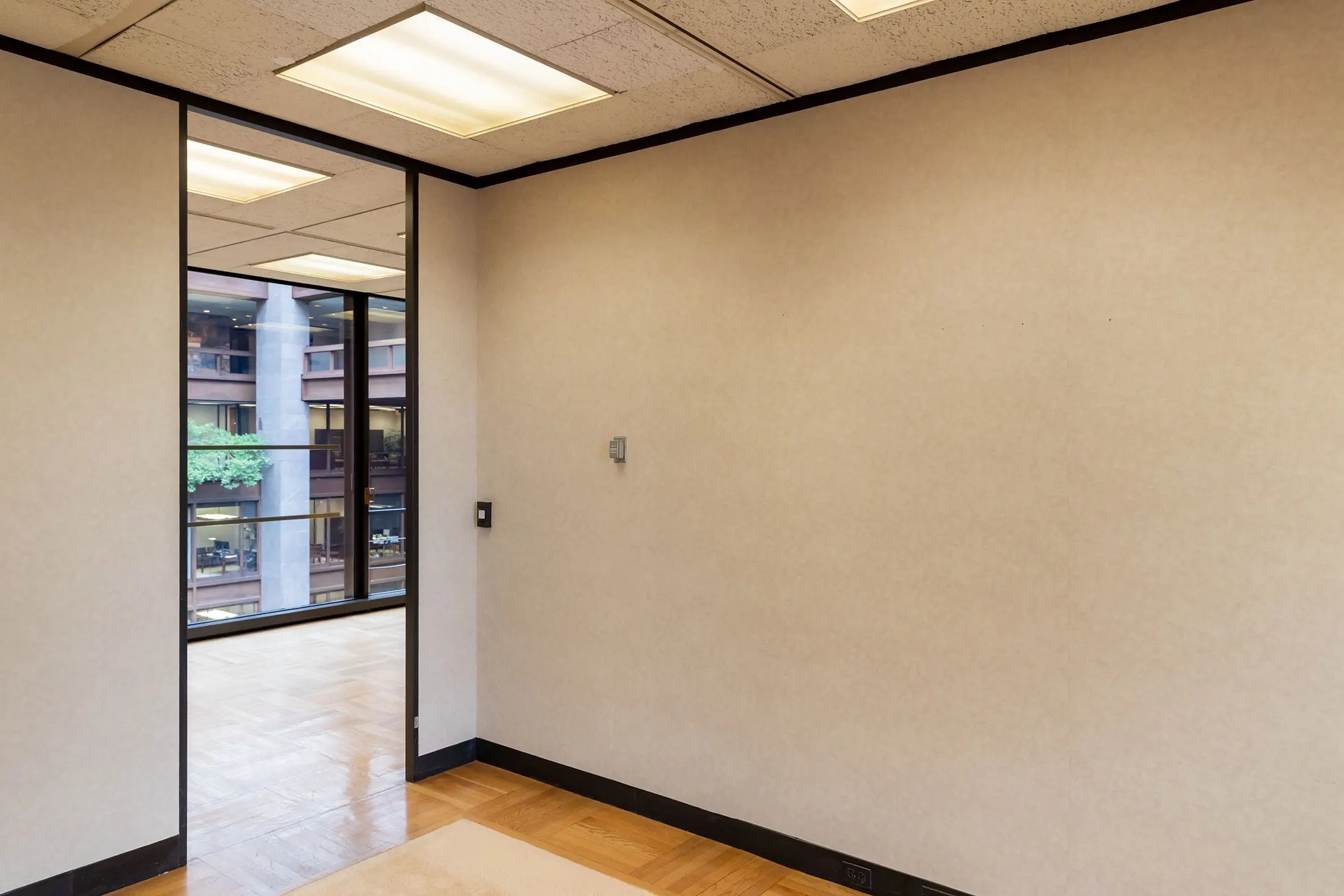
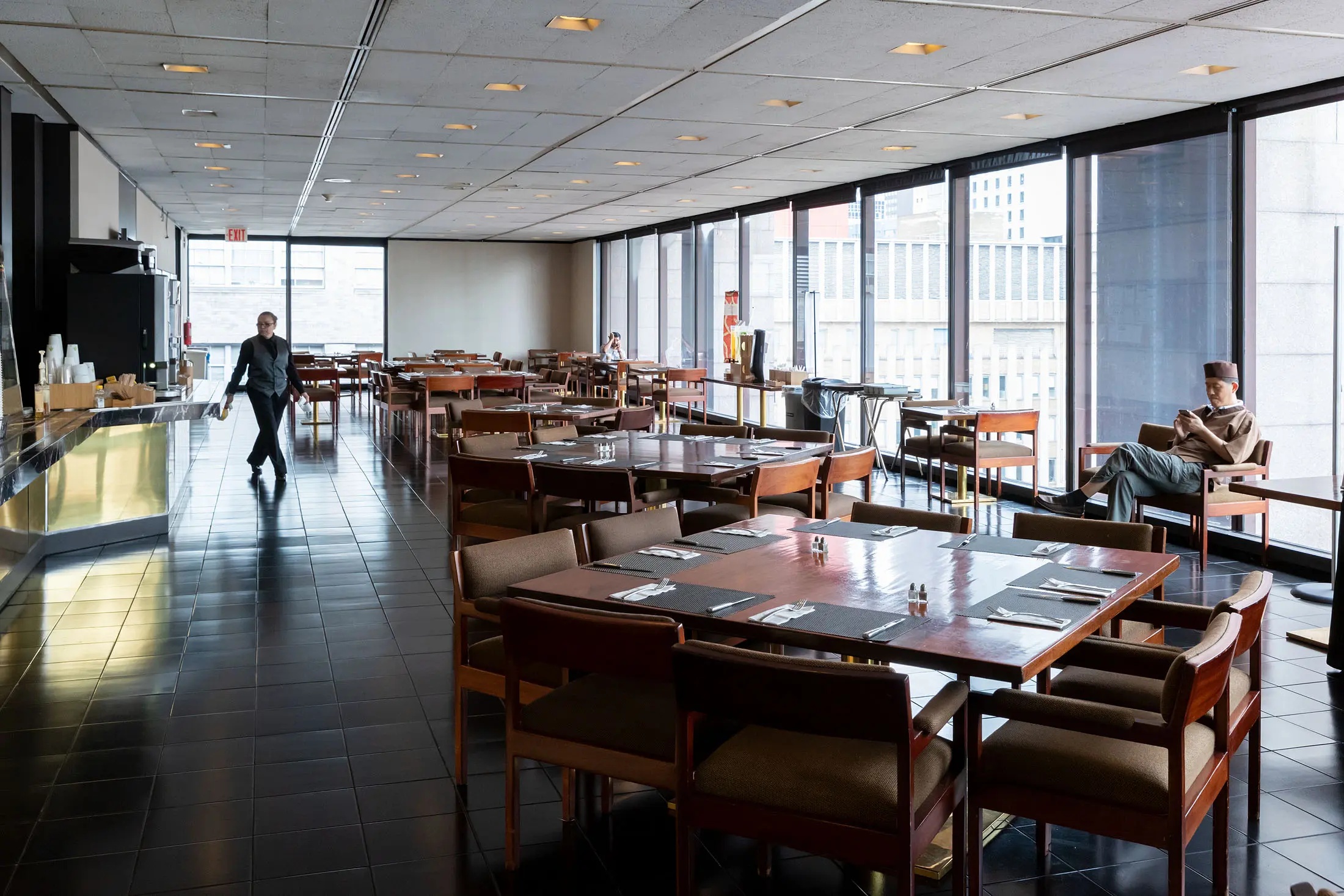
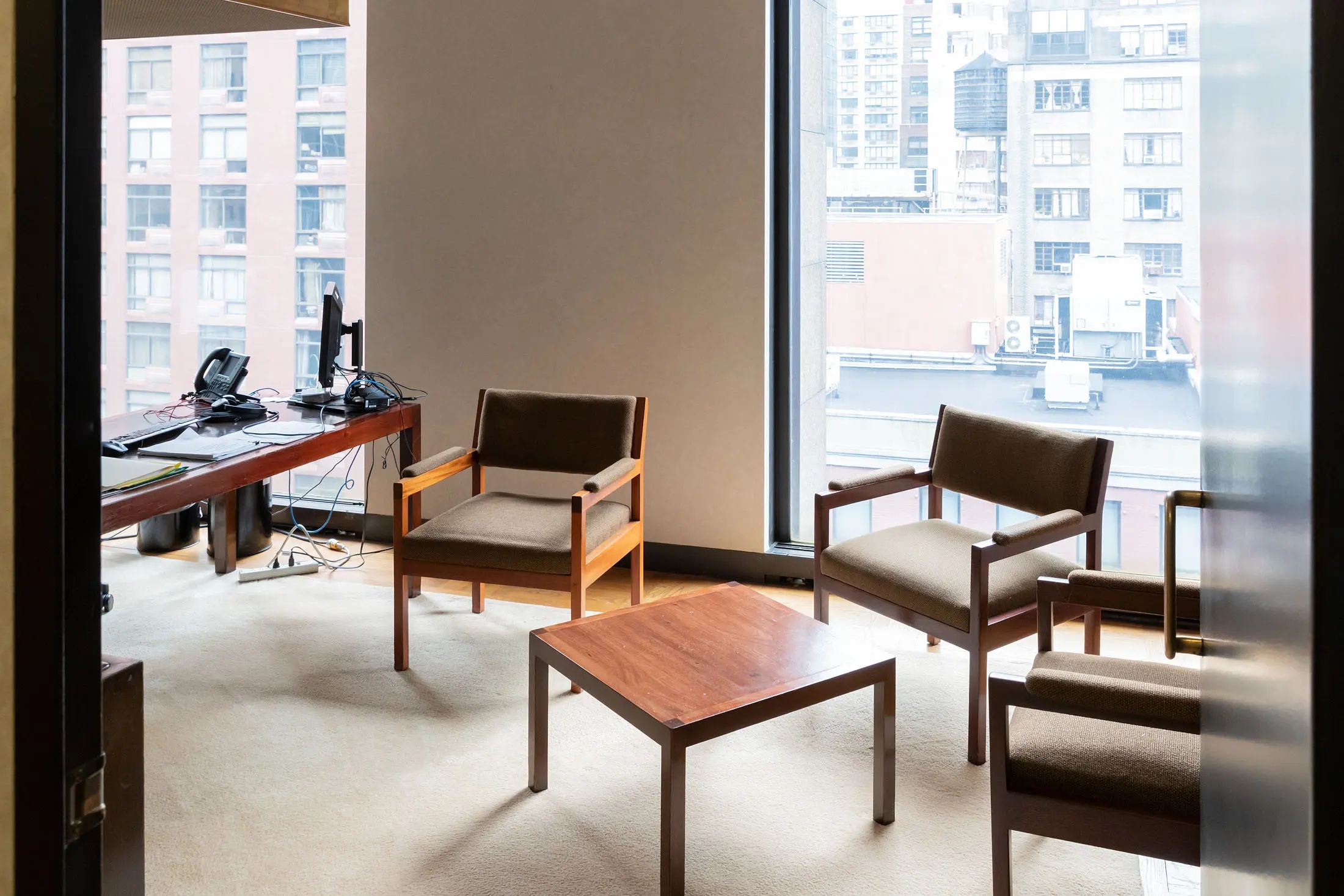
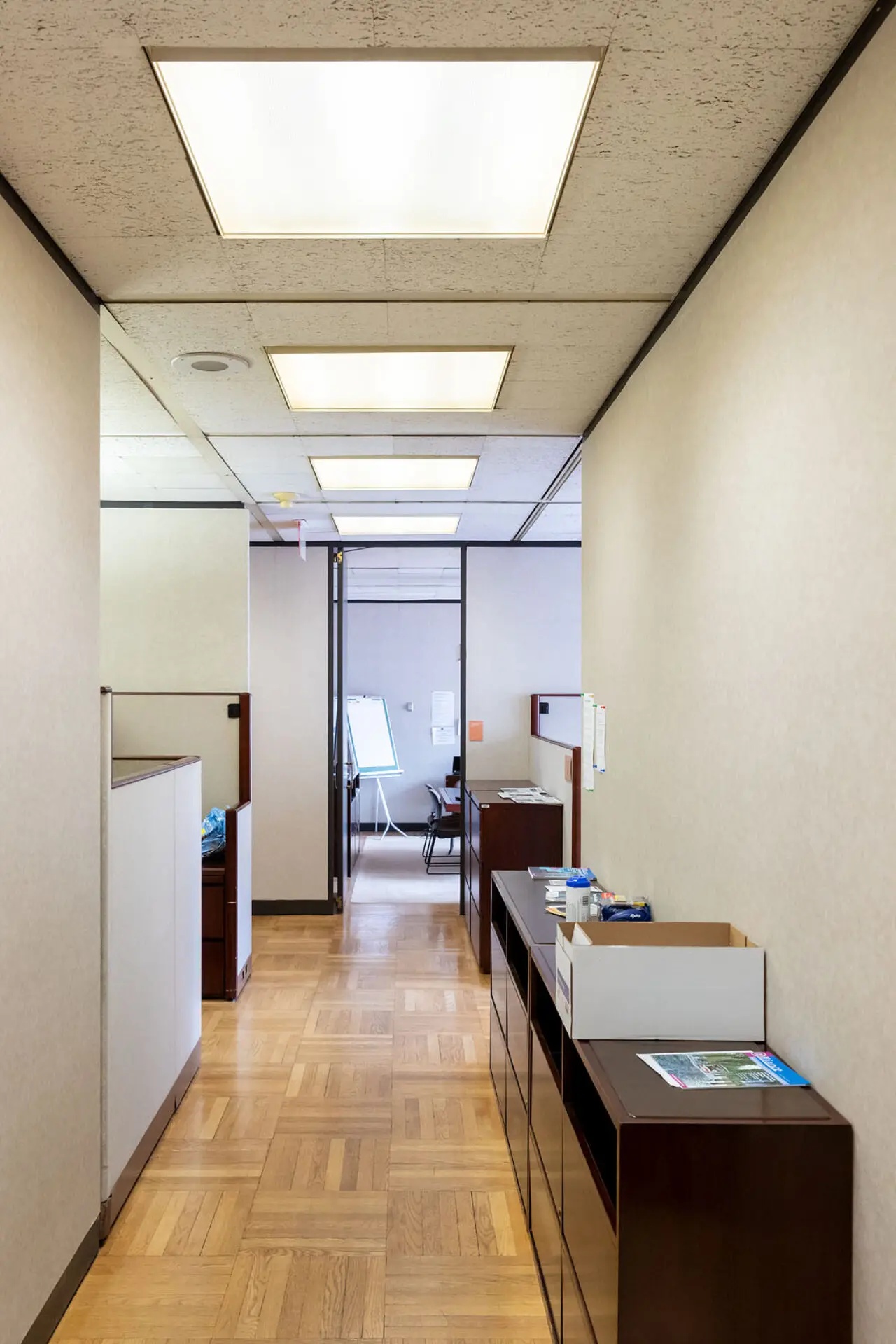
Office spaces were originally organized in modular layouts with private rooms facing either the city or the garden. Senior offices occupied the atrium edge, allowing visual contact throughout the building. Terraces, bridges, and circulation paths reinforce interaction between employees while maintaining individual workspaces.
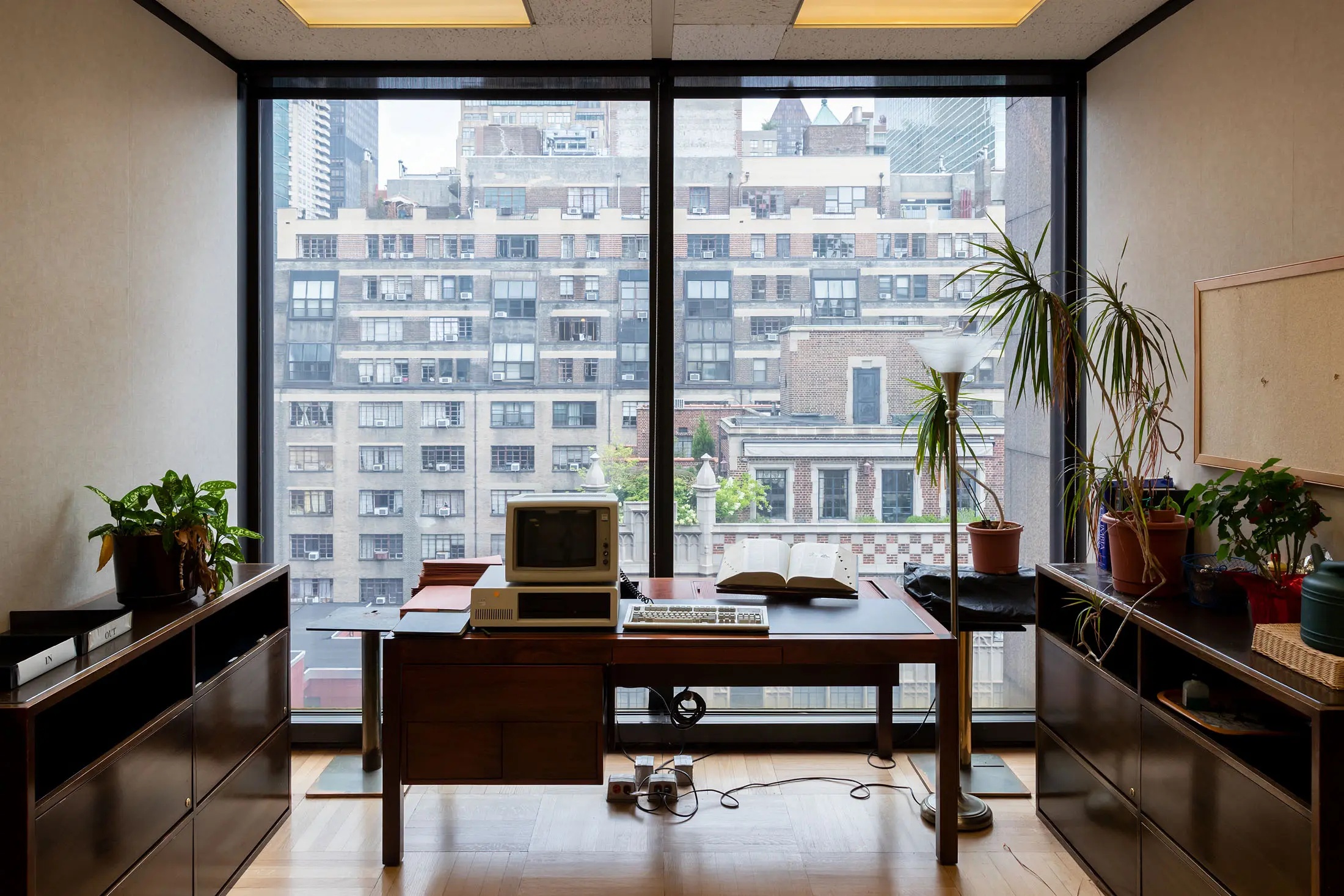
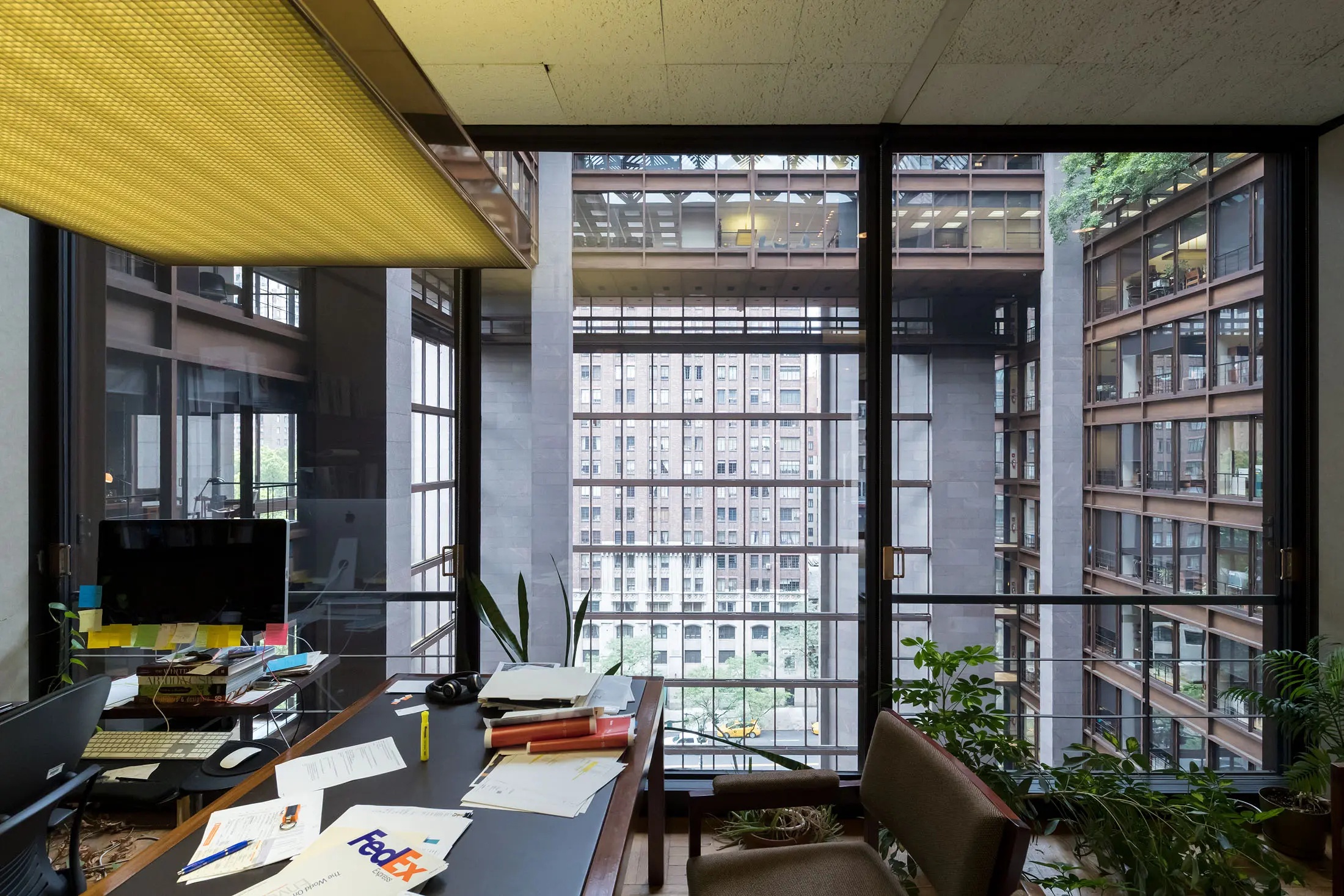
The atrium became one of the building’s defining contributions to office design. Public access to the garden established a civic dimension rarely associated with private foundations or corporate headquarters during the period. The space influenced numerous later office buildings that incorporated interior landscapes and publicly accessible atriums.
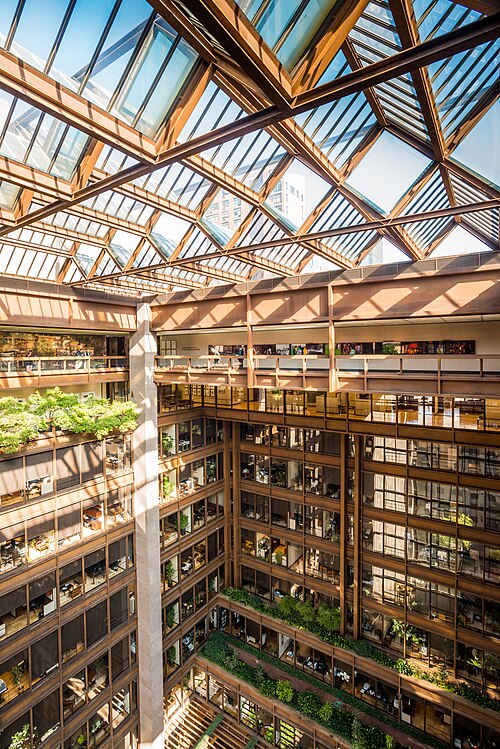
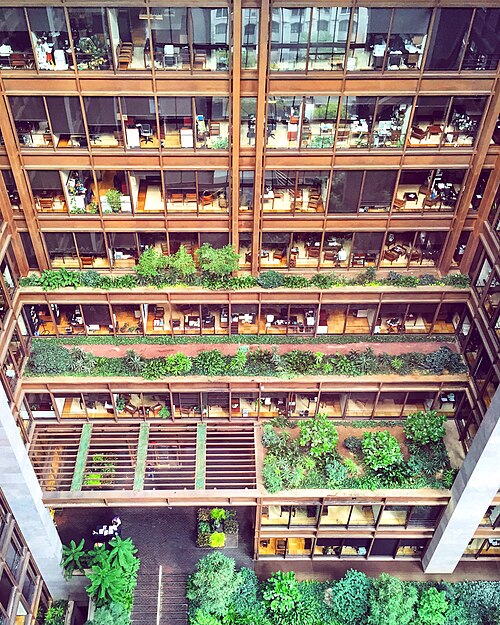
The Ford Foundation Building received immediate critical recognition. Ada Louise Huxtable described it as a building aware of its surroundings as well as a work of architecture. The project received the Albert S. Bard Civic Award in 1968 and the AIA Twenty-five Year Award in 1995. The New York City Landmarks Preservation Commission designated both the building and its atrium as landmarks in 1997.
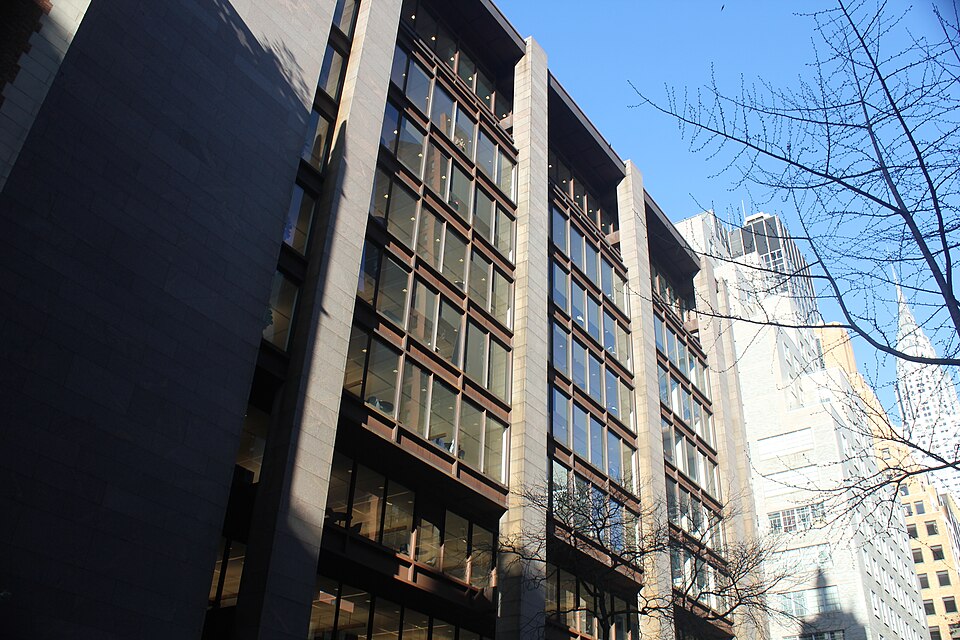
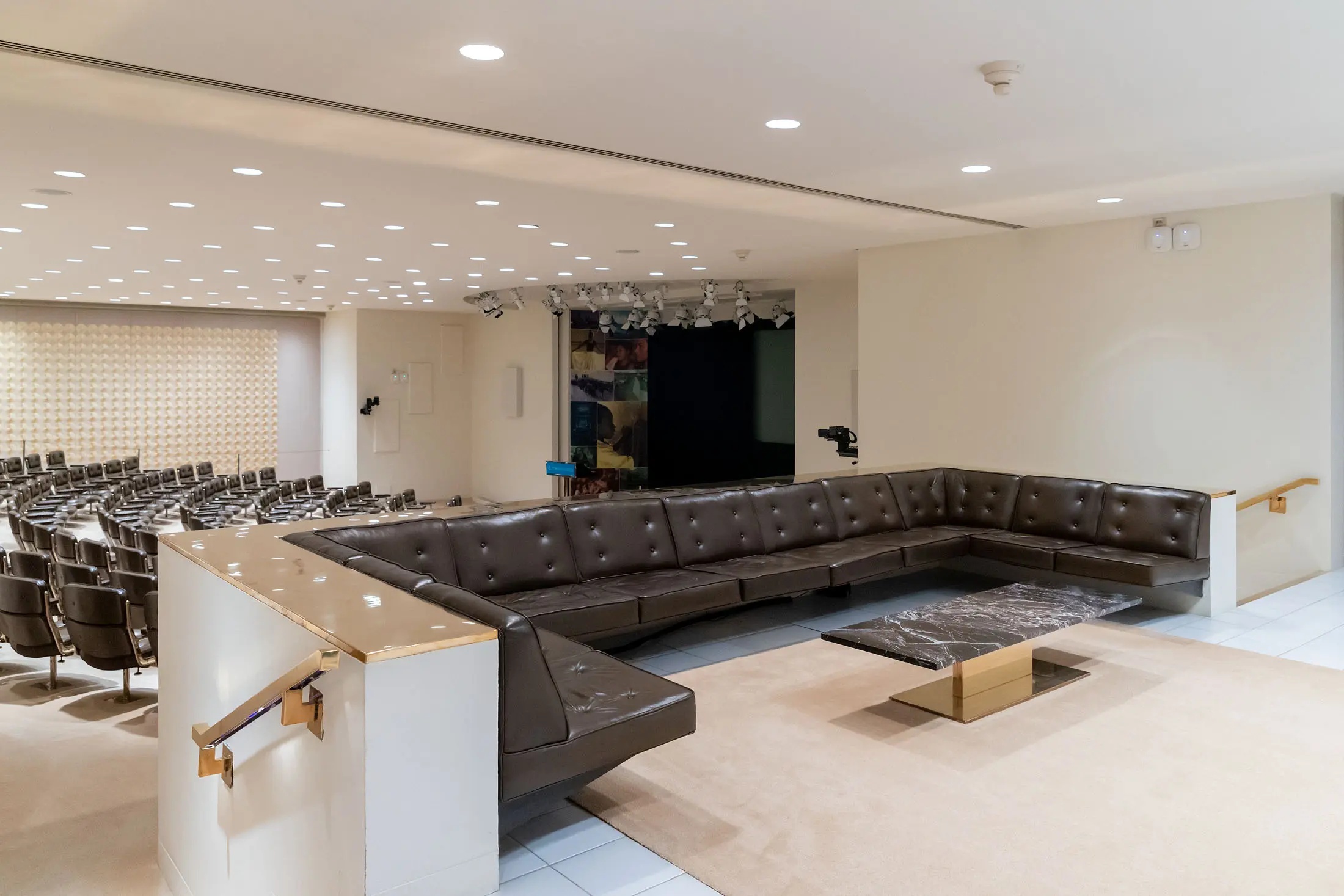
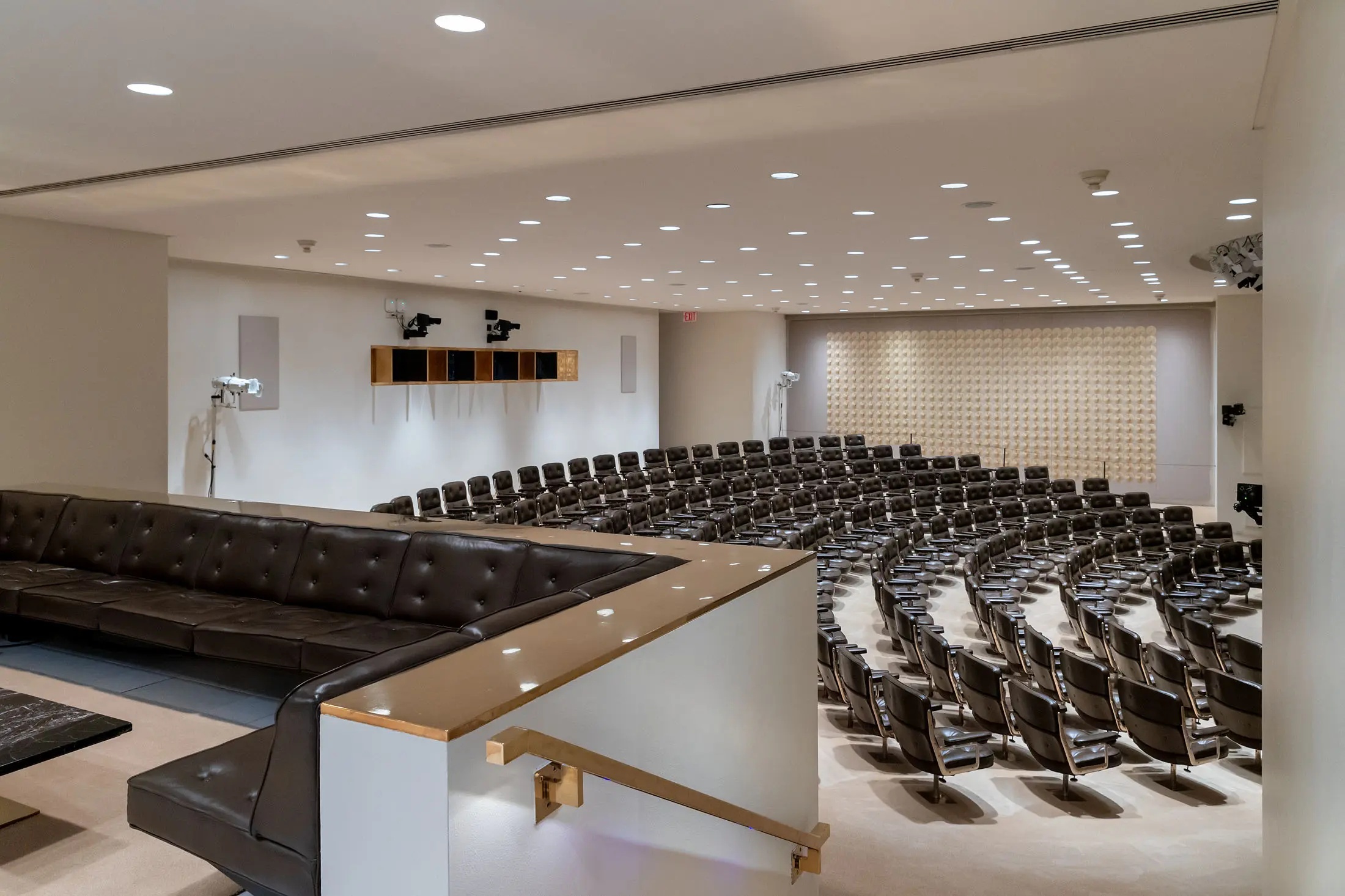
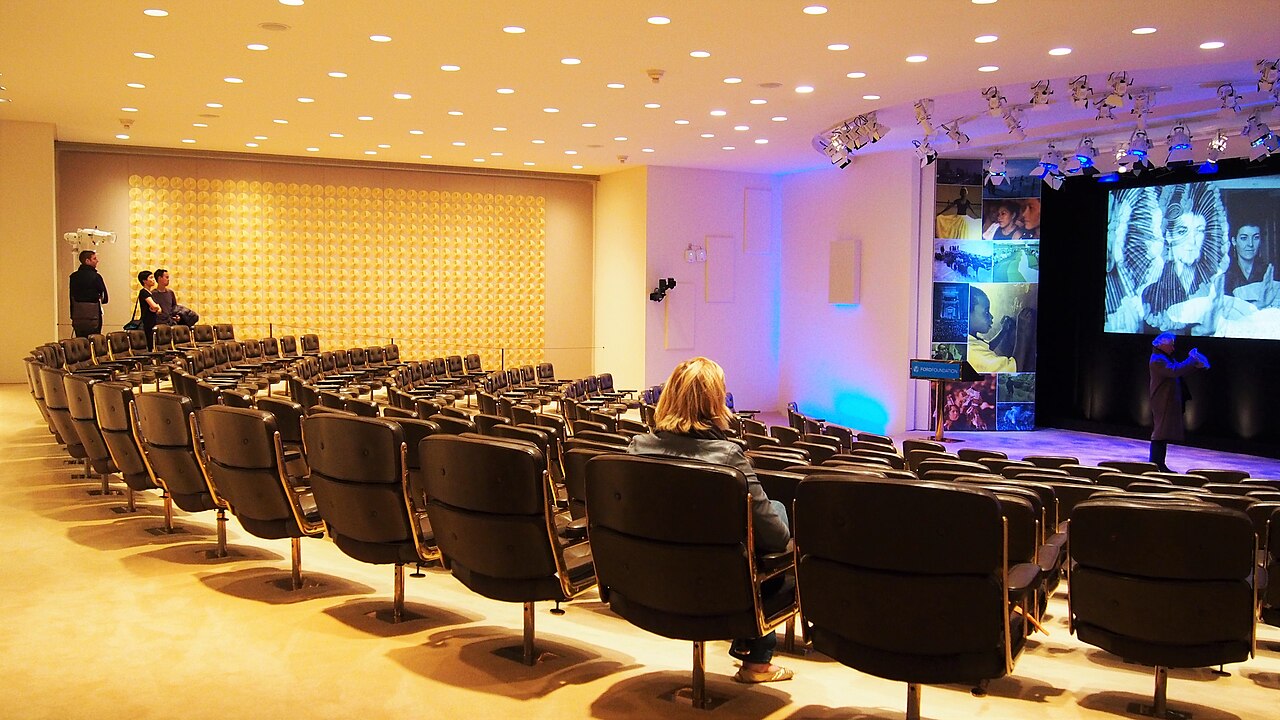
A renovation completed in 2018 by Gensler restored the building while improving accessibility, environmental performance, and public facilities. The project introduced new event spaces and reopened portions of the building to public use while preserving the original relationship between architecture, landscape, and workplace.
Project Gallery
Project Location
Address: 320 East 43rd Street, New York, New York 10017, United States
Location is for general reference and may represent a city or country, not necessarily a precise address.

