

Architects: OMA, Shohei Shigematsu
Area: 7 miles (11.3 kilometers)
Year: Initial phase announced in 2020, first phase opening in Spring 2025
Photography: OMA, The ReefLine, Ilai Belaustegui, Ben Dreith
City: Miami
Country: United States
The ReefLine, designed by OMA under Shohei Shigematsu, is Miami Beach’s first underwater sculpture park and artificial reef, spanning seven miles from South Beach to Bal Harbour. Conceived by Ximena Caminos with the City of Miami Beach, it merges art, science, and conservation to protect marine ecosystems and foster biodiversity. Opening its first mile in Spring 2025, it will serve as an artificial reef and snorkel trail featuring works by artists like Leandro Erlich, Shohei Shigematsu, and Carlos Betancourt. OMA’s masterplan incorporates sustainable modular units forming a living breakwater to foster coral growth and protect the shoreline, while innovative materials like carbon-capturing concrete enhance marine habitats. Supported by the Knight Foundation and Blavatnik Family Foundation, the project collaborates with Coral Morphologic and the University of Miami, offering an evolving underwater art experience that merges culture, conservation, and community engagement. It aims to position Miami Beach as a leader in sustainable public art and marine restoration.
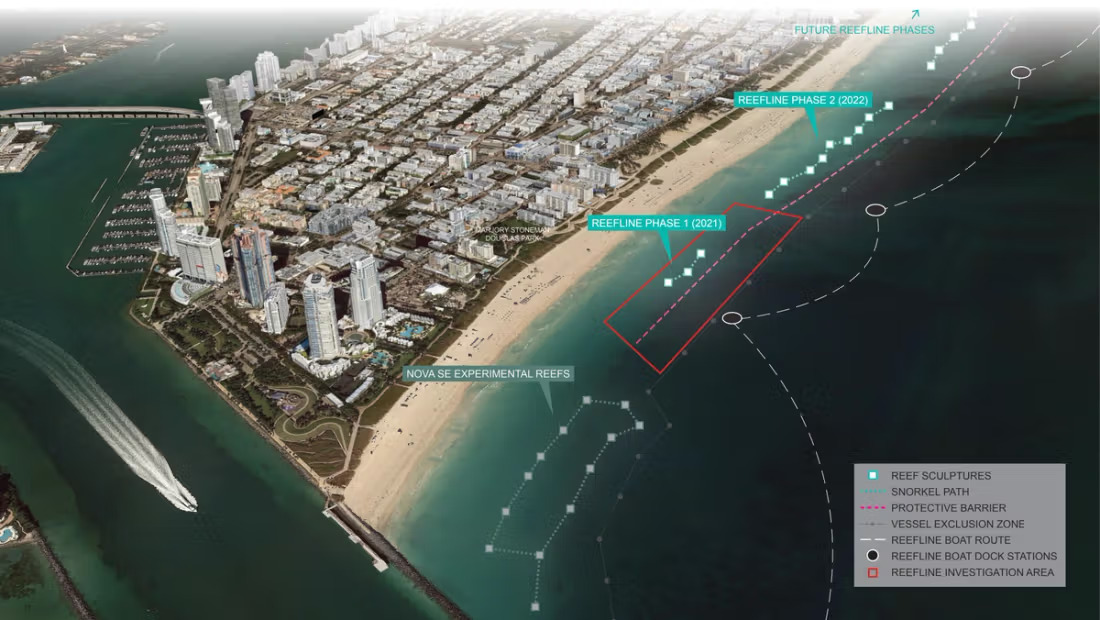
The ReefLine, designed by OMA under the direction of Shohei Shigematsu, is Miami Beach’s first underwater public sculpture park and artificial reef. This transformative 7-mile (11.3-kilometer) environmental and cultural initiative stretches along the coastline, from South Beach to Bal Harbour, combining art, science, and conservation to protect marine ecosystems and promote biodiversity. Conceived by cultural placemaker Ximena Caminos and developed in collaboration with the City of Miami Beach, marine biologists, researchers, and artists, The ReefLine will offer a unique underwater art experience while addressing the critical challenges posed by climate change. The project was initially announced in 2020 and will be completed in phases, with the first mile set to open in Spring 2025. It will function as an artificial reef, creating habitats for marine life and improving Miami Beach’s coastal resilience, while also serving as an accessible snorkel trail and public art park. The first phase will feature permanent installations by renowned artists, including Leandro Erlich and Shohei Shigematsu/OMA, while subsequent phases will include works by Ernesto Neto, Agustina Woodgate, Carlos Betancourt, and others.
Design and Environmental Vision
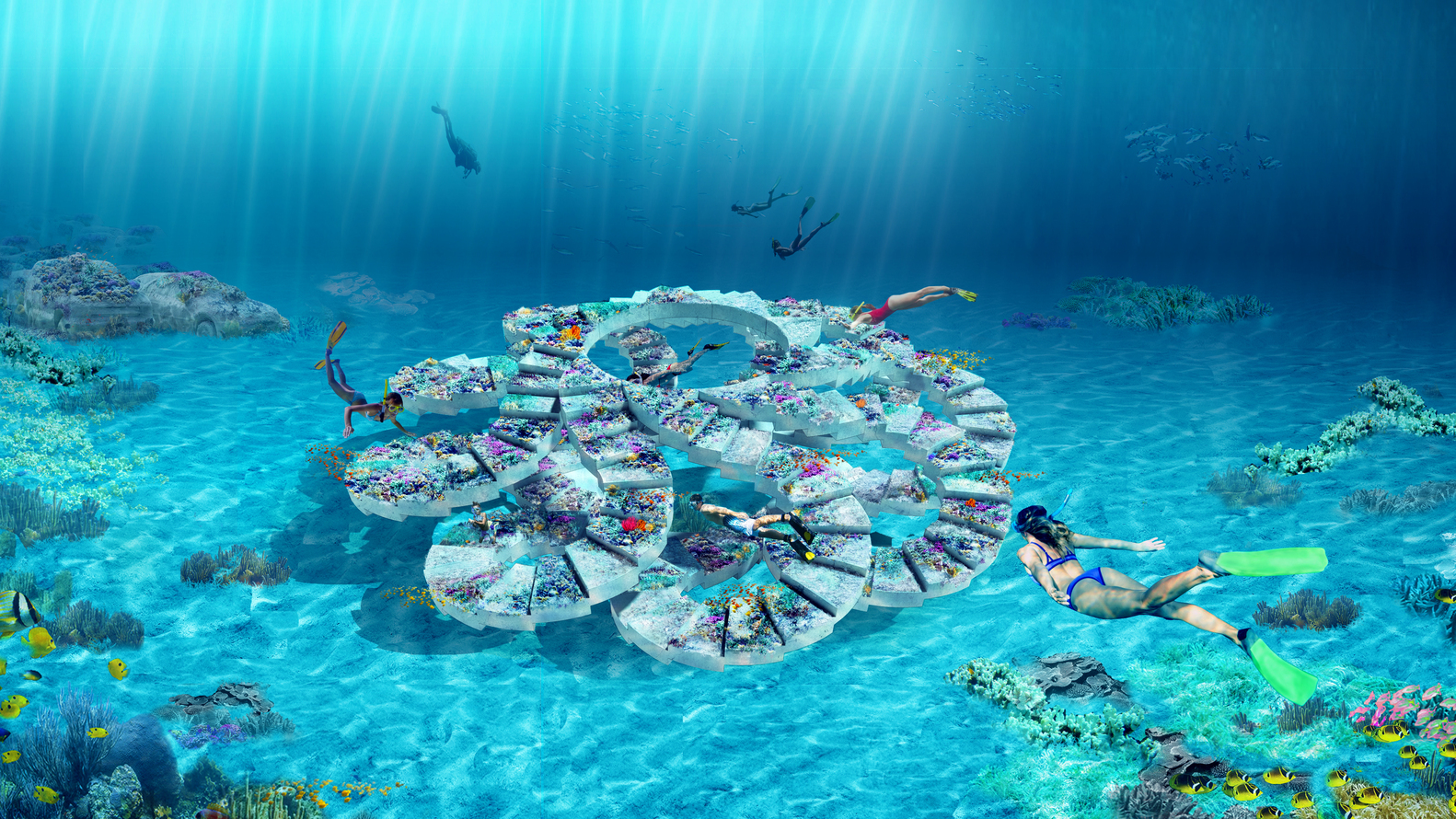
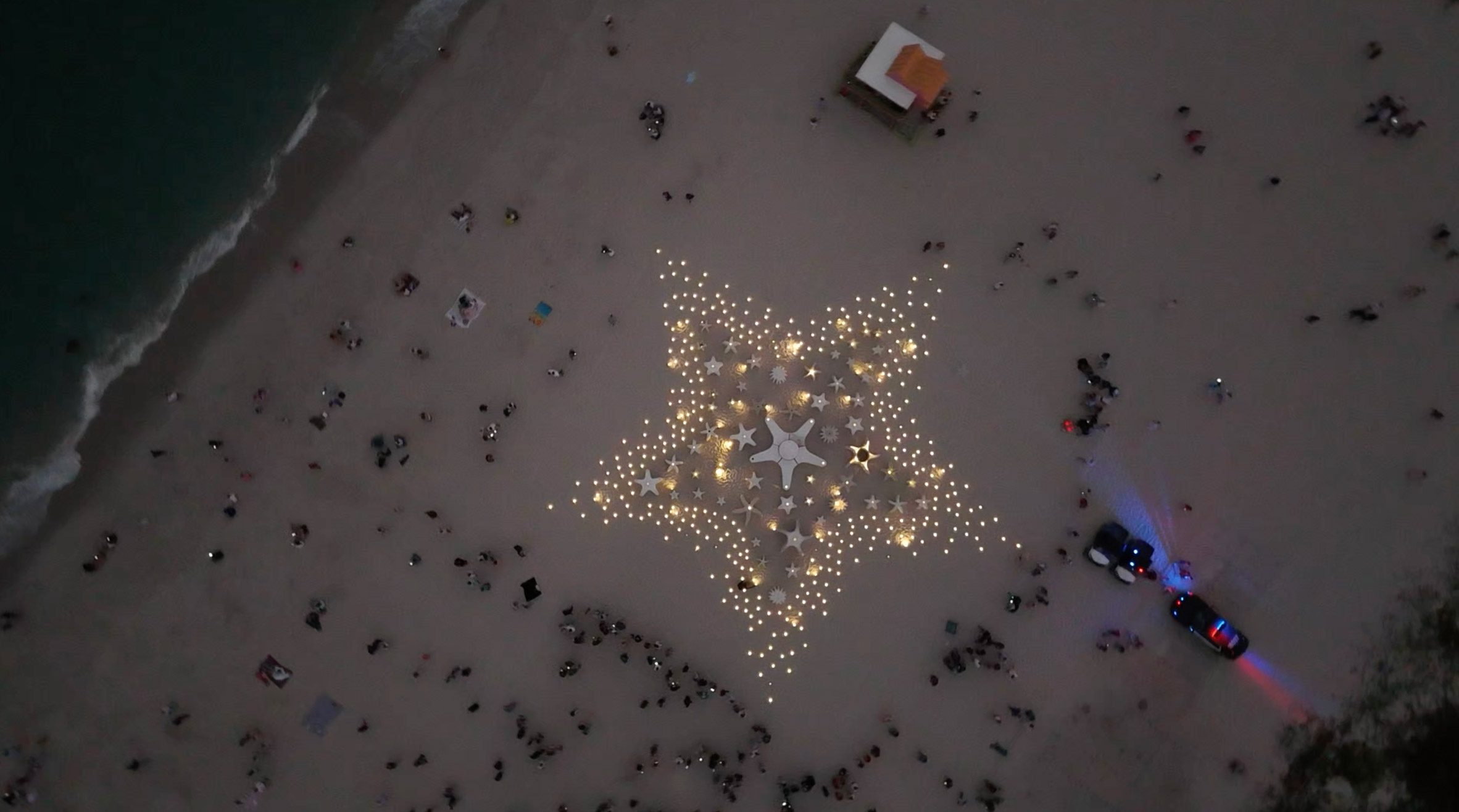
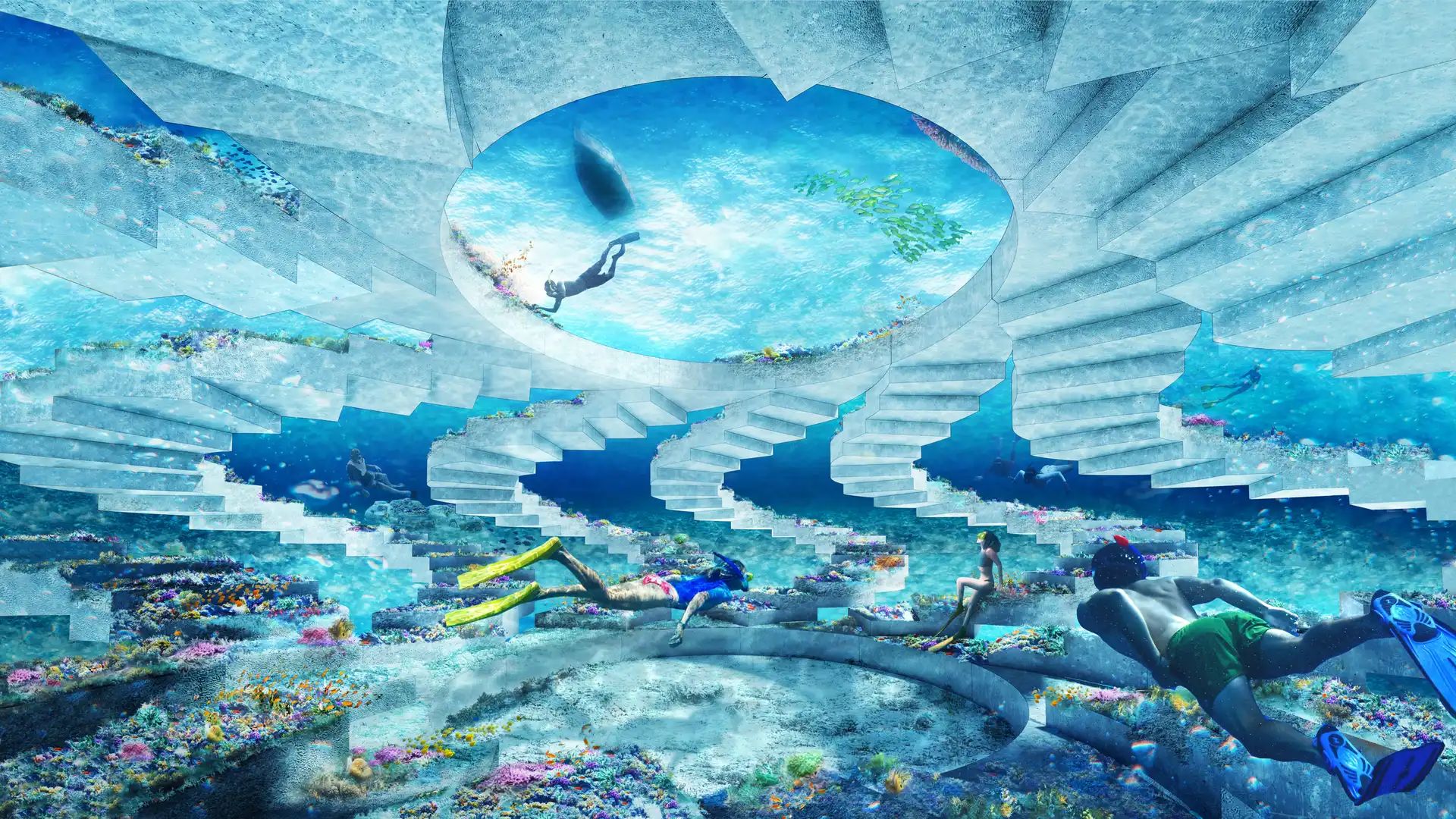
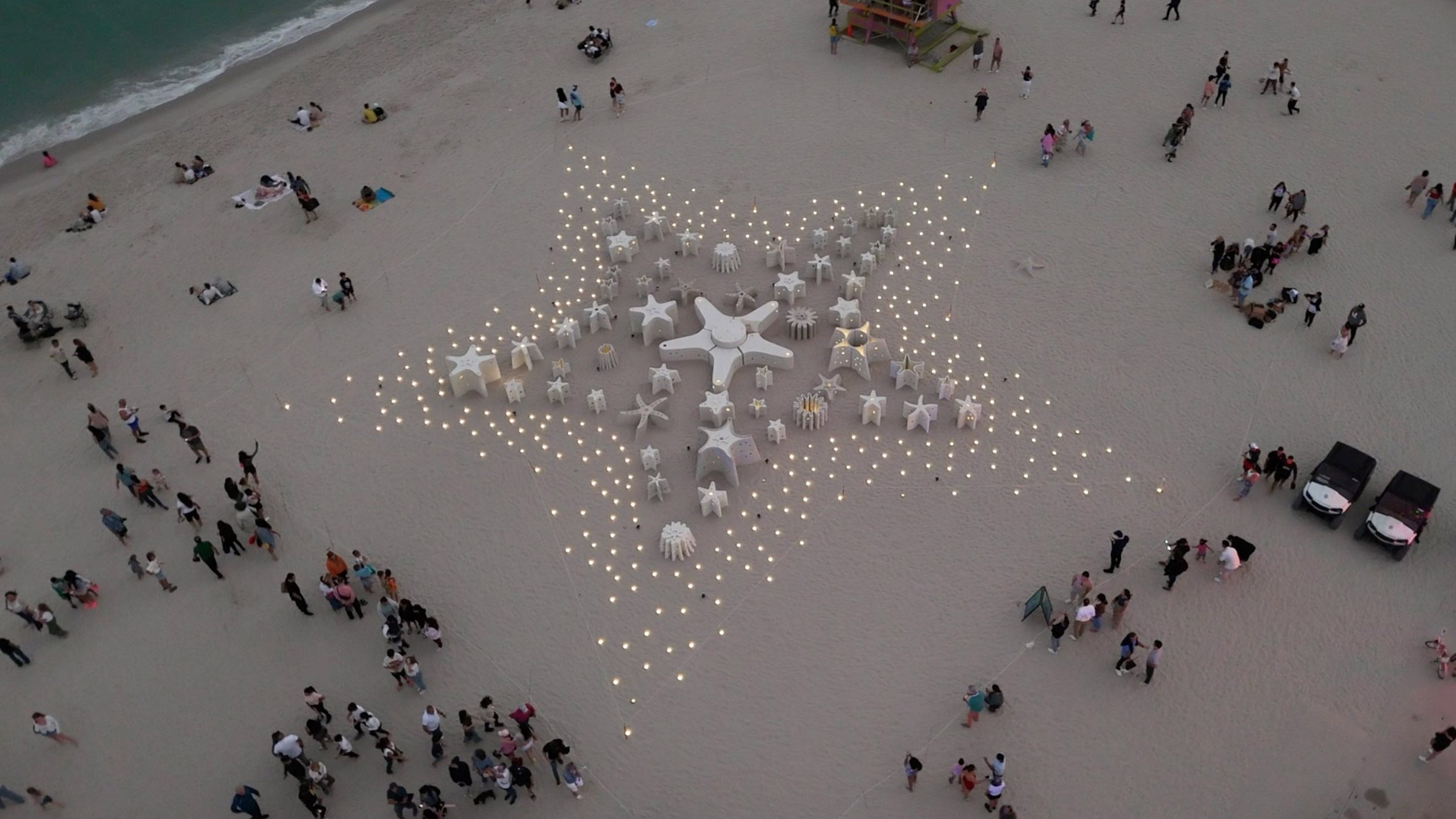
At its core, The ReefLine merges innovative design with environmental preservation. OMA’s masterplan introduces a geometric modular unit crafted from sustainable, marine-friendly materials. These units will be deployed and stacked along the seabed, forming a continuous living breakwater that protects Miami Beach’s shoreline while fostering coral growth and marine biodiversity. The design adapts to the topography of the seabed, connecting site-specific installations across its seven-mile span. Shohei Shigematsu, OMA partner, described the project as “a cultural and environmental hybrid that highlights the dangers of climate change in Miami while enriching the city’s art scene.” His underwater sculpture, a series of sinuous spiral staircases, exemplifies this approach. Designed to mimic the organic forms of marine life, the structure creates layered zones for coral reef growth and provides interstitial spaces for underwater exploration. The stairs spiral around a central forum intended for underwater gatherings and activities, offering a physical and symbolic space for community interaction. The modular system also includes contributions from other artists, such as Carlos Betancourt and Alberto Latorre’s Miami Reef Star, which features 46 star-shaped modules arranged in a larger star formation. These structures, fabricated with CarbonXinc—a geopolymer concrete that captures carbon and promotes coral growth—are part of The ReefLine’s innovative approach to environmental art. The Reef Star’s design includes openings and cavities to foster marine life habitats, blending artistic expression with ecological functionality.

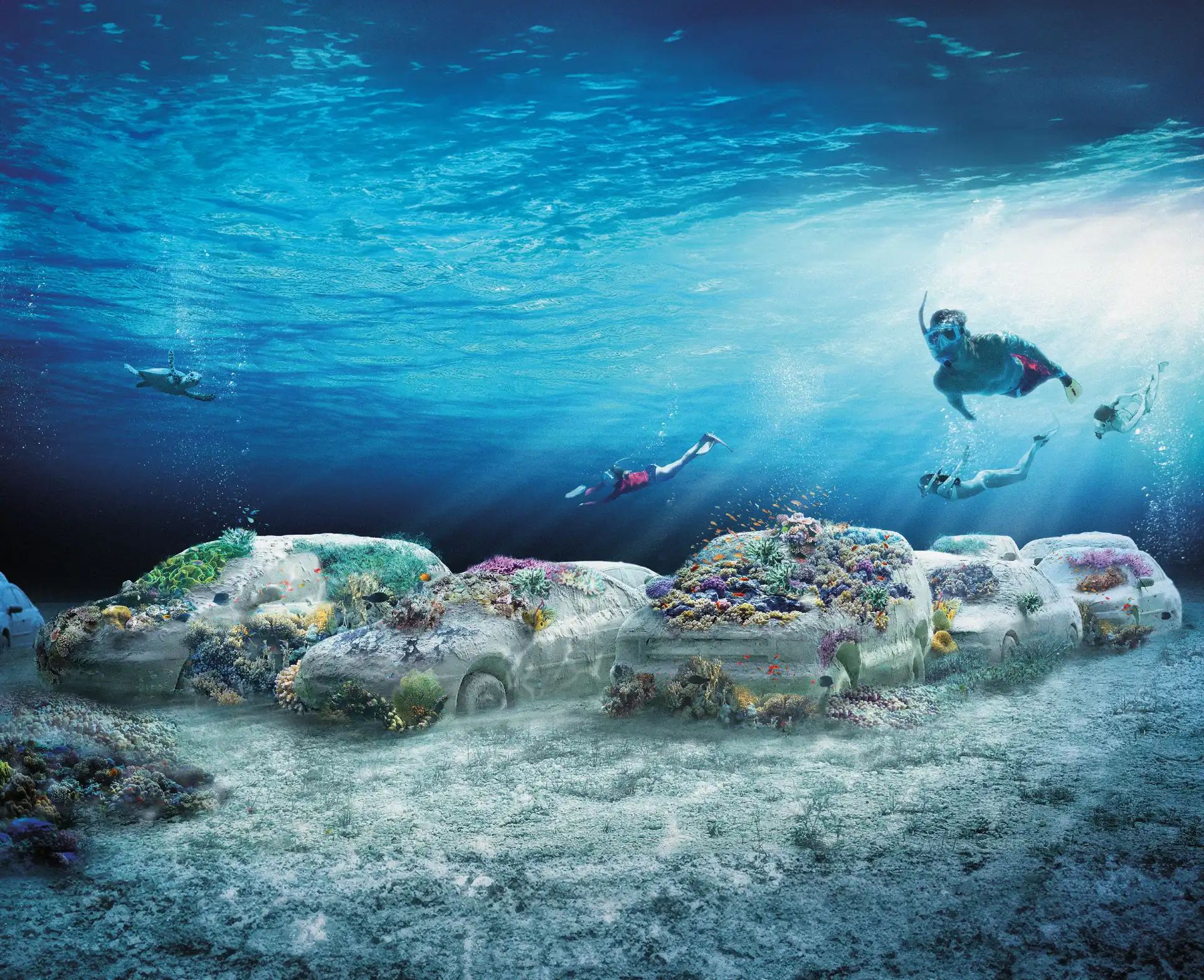
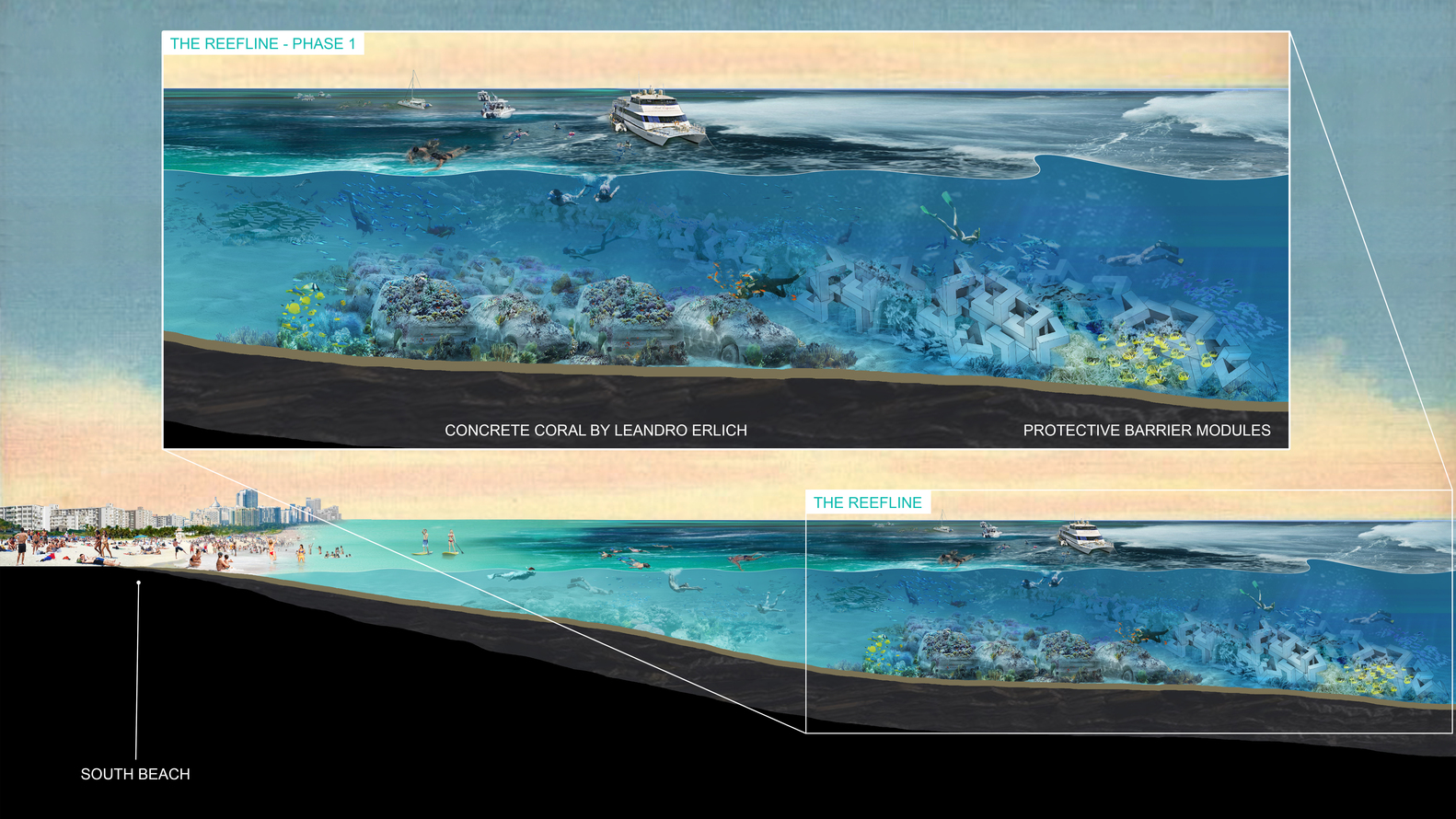
The ReefLine invites visitors to experience an “underwater art crawl” that showcases works by internationally acclaimed artists. One of the first installations to debut will be Leandro Erlich’s “Concrete Coral”, an underwater adaptation of his sand-sculpted “traffic jam” from Miami Art Week 2019. This installation transforms symbols of environmental degradation, like cars and trucks, into platforms for coral growth and a call to action for sustainability. Another significant contribution is British artist Petroc Sesti’s “Heart of Okeanos”, inspired by the anatomy of a stranded blue whale. This monumental sculpture serves as a habitat for marine life and underscores the fragility of ocean ecosystems. Meanwhile, Betancourt’s Miami Reef Star installation recalls the artist’s childhood memory of starfish migrations and serves as an interactive, illuminated artwork during Miami Art Week, before its eventual submersion as part of The ReefLine. Other planned works include Agustina Woodgate’s large-scale interactive sculptures and Ernesto Neto’s tactile, immersive pieces. Each installation is designed to amplify awareness of the delicate marine ecosystem and promote community engagement with Miami’s underwater biodiversity.


The ReefLine is the product of interdisciplinary collaboration among architects, artists, marine biologists, and environmental organizations. Ximena Caminos, the project’s founder and artistic director, spearheaded the initiative alongside Coral Morphologic and the University of Miami. “The ReefLine demonstrates how art, tourism, and critical habitat creation can coexist and thrive,” Caminos explained. This visionary project received initial funding from the Knight Foundation’s Arts Challenge Award in 2019, as well as a grant from the Blavatnik Family Foundation. Environmental innovation plays a key role in The ReefLine’s execution. For example, the installations will use Coral Lok, a device that supports coral out-planting by cultivating coral in controlled environments before transferring it to the wild. These advancements, coupled with materials like CarbonXinc, demonstrate how public art can serve as a catalyst for environmental restoration and climate action.

The ReefLine offers an immersive underwater experience accessible to snorkelers. Located within swimming distance of the shore, visitors can engage directly with the sculptures while exploring the vibrant marine biodiversity of Miami’s coastline. From colorful fish to sea turtles, the project not only enhances the ocean floor but also makes art and conservation tangible for the public. The installations are designed to evolve over time, as coral growth transforms the artworks into living ecosystems. Visitors are encouraged to return and witness how The ReefLine’s underwater environment changes, fostering a deeper connection to Miami’s marine life and ecological challenges.

Set to “break water” in Spring 2025, The ReefLine exemplifies the potential of blue technology and art to address environmental issues while enriching urban culture. As Caminos describes it, the project is a form of “marine acupuncture,” strategically targeting pressure points in the ocean to unlock its regenerative potential. By merging culture, conservation, and tourism, The ReefLine positions Miami Beach as a global leader in innovative public art and marine restoration, offering a blueprint for other coastal cities to follow. With its bold vision and commitment to sustainability, The ReefLine will leave a lasting impact on both the art world and the environment.
Project Gallery



Project Location
Address: 36th Street, Miami Beach, Florida 33140, United States
Location is for general reference and may represent a city or country, not necessarily a precise address.

