

Architects: Abdel Qader Tarabieh
Year: 2024–2025
Photography: Muhammad Almasri
Lead Architects: Abdel Qader Tarabieh
Drawings: Abdel Qader Tarabieh
Materials: Locally sourced white chiseled stone, concrete, natural wood, glass
City: Amman
Country: Jordan
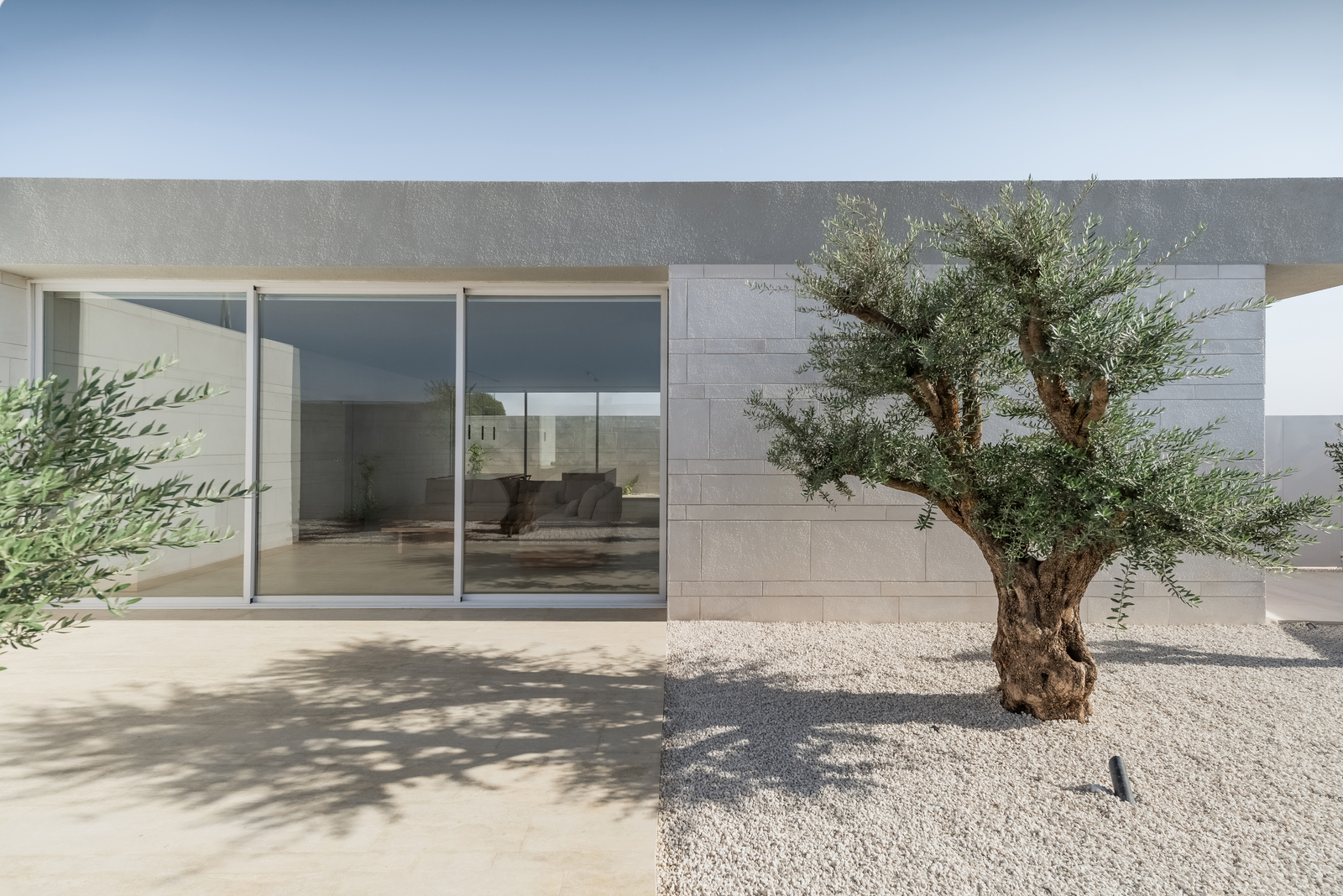
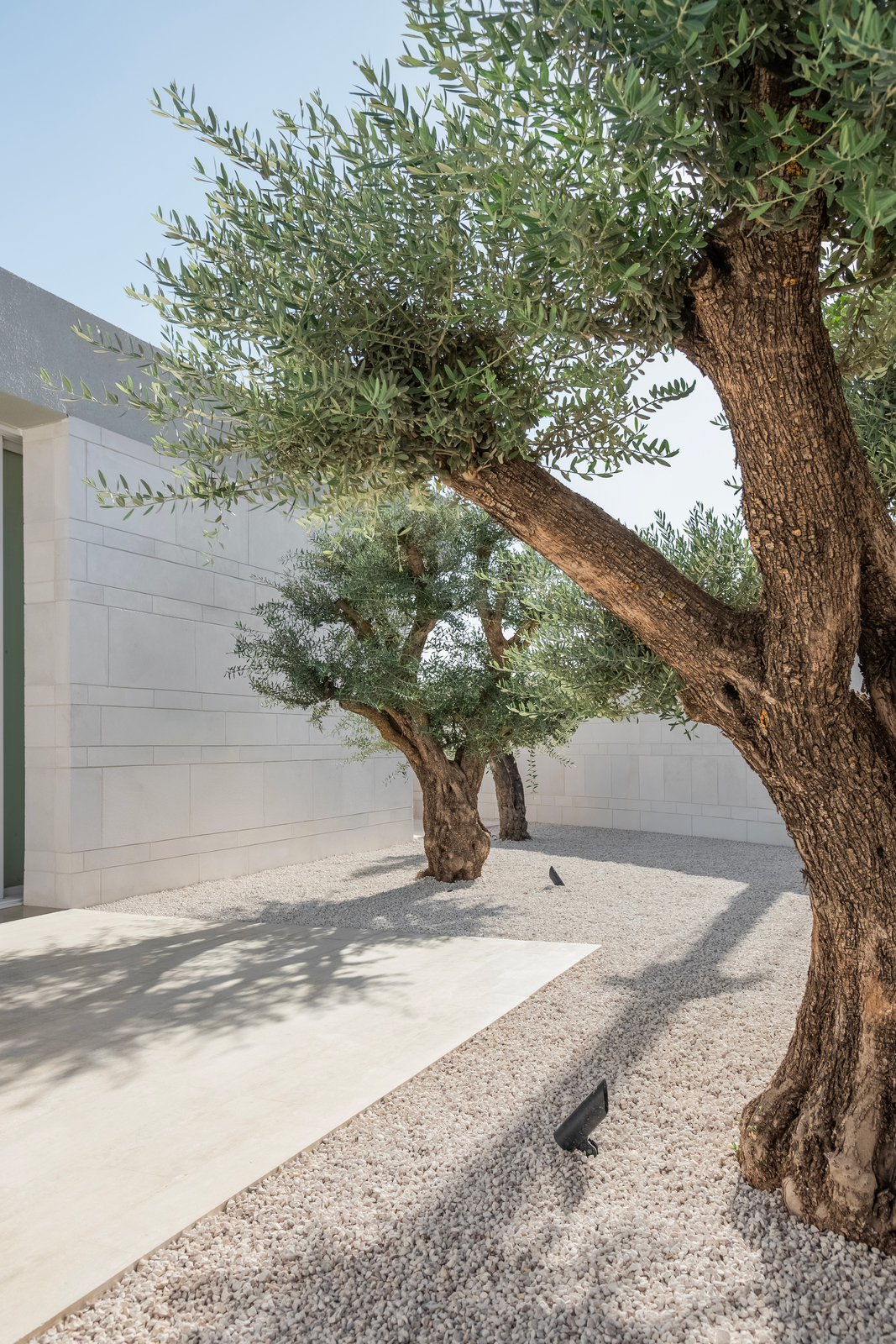
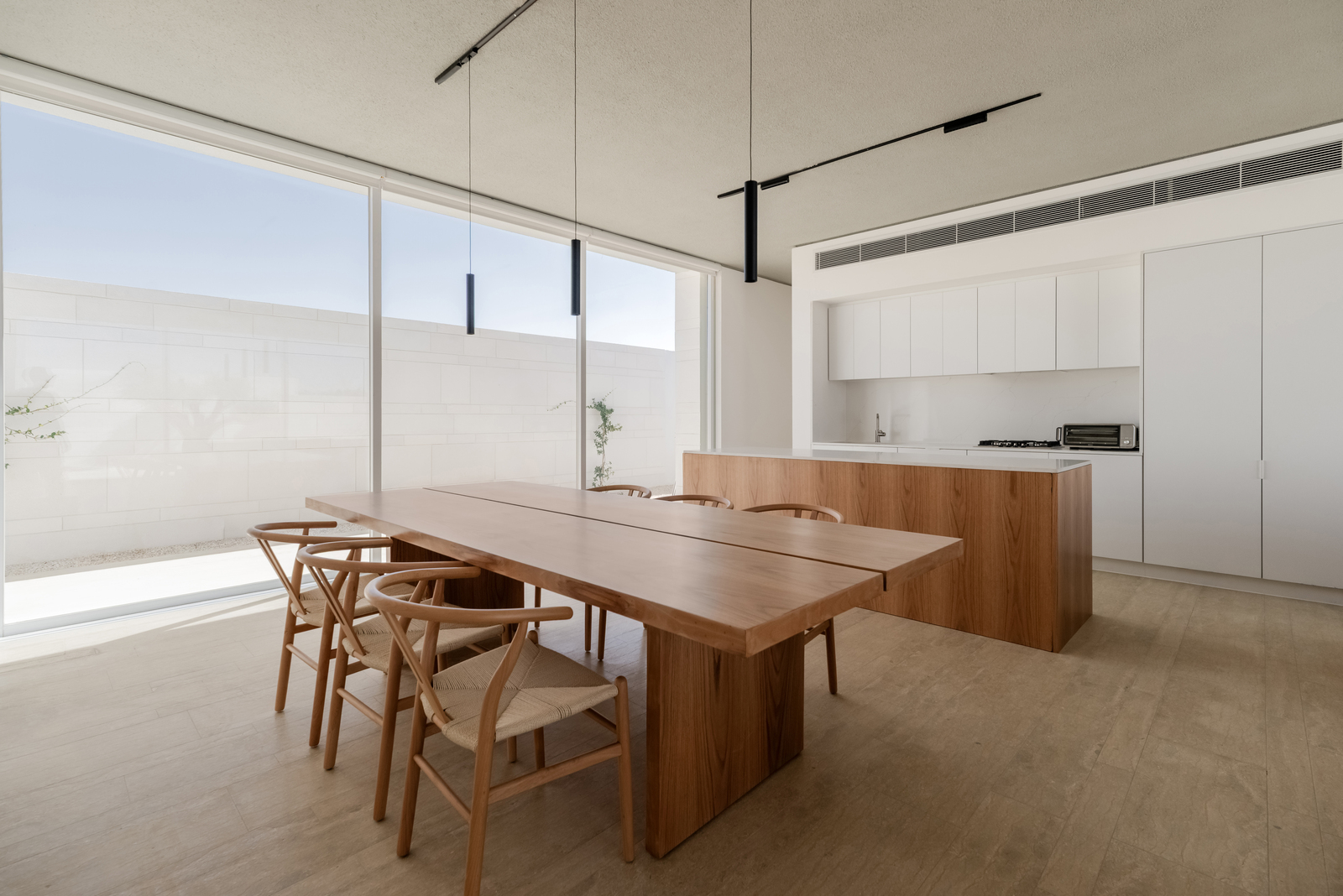
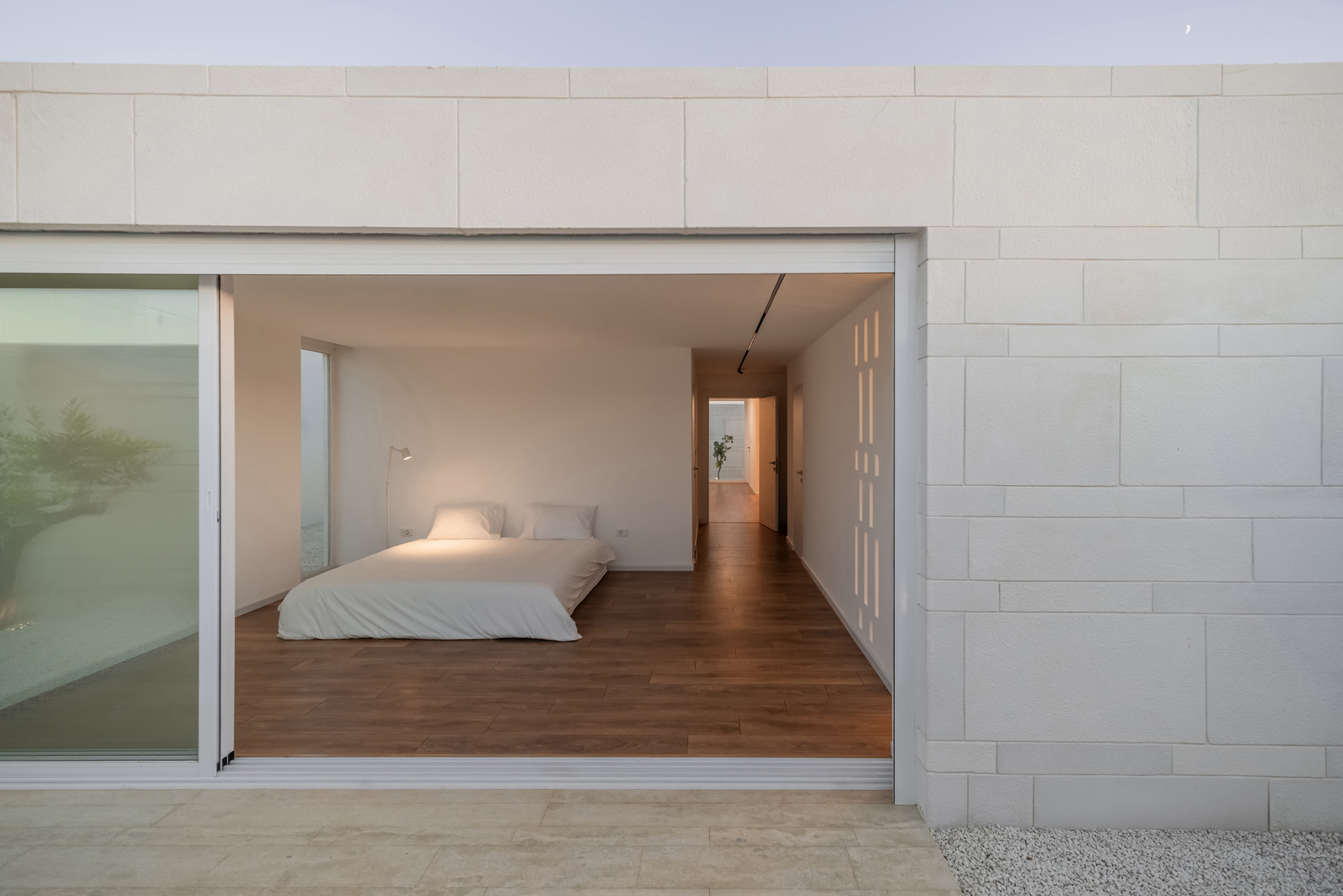
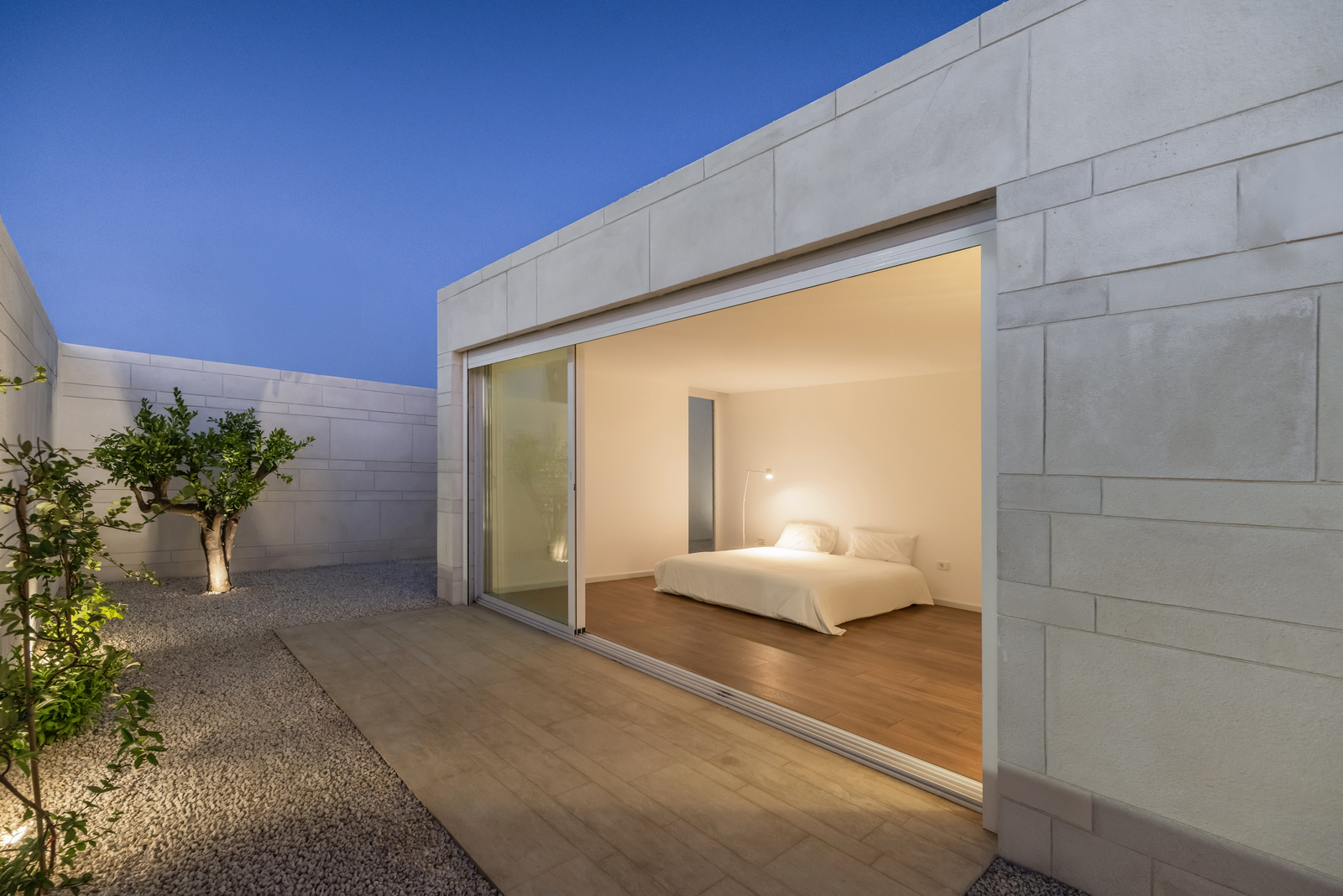
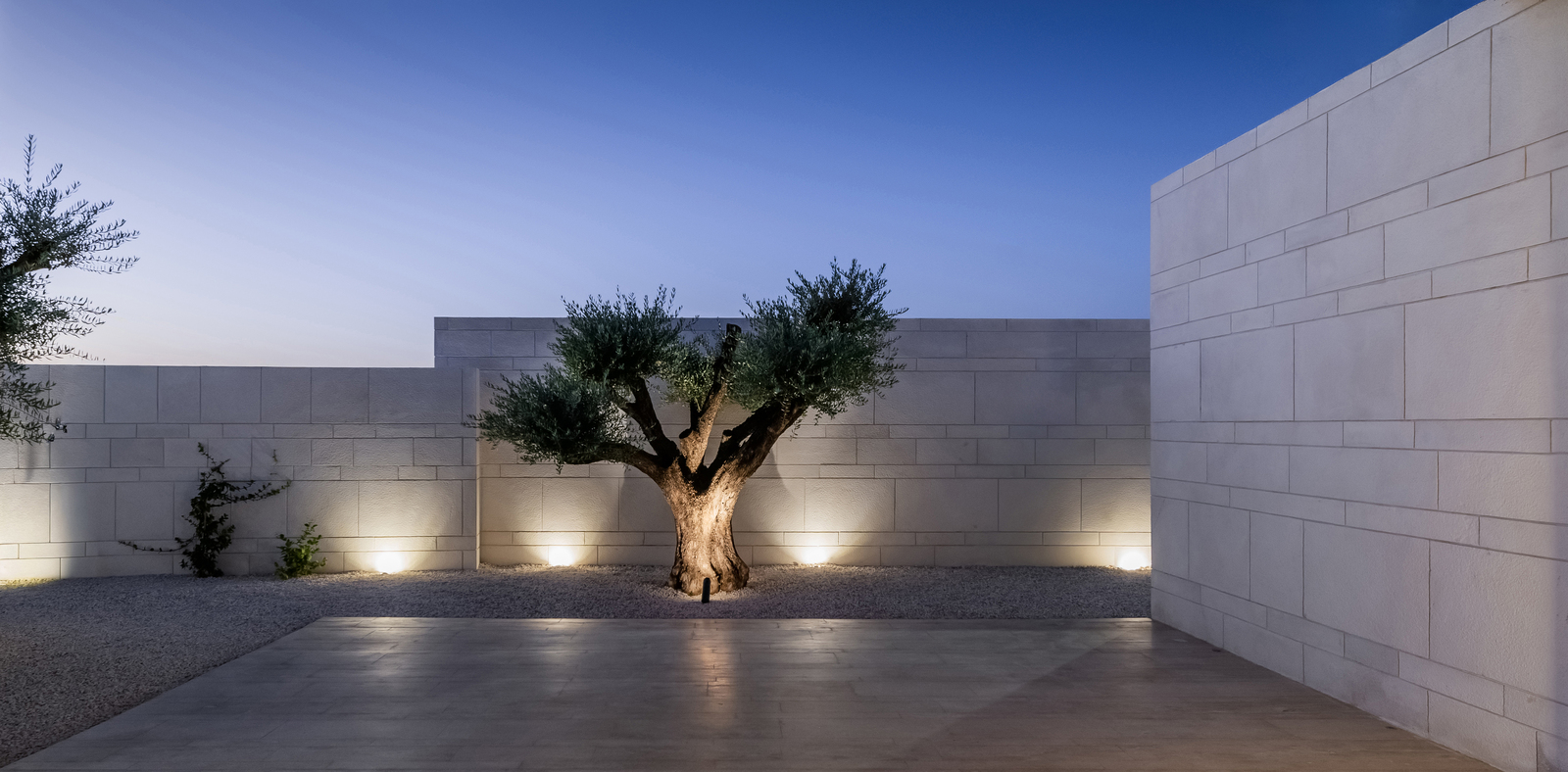
Tneib House is a private residence located in Tneib, near Amman, Jordan, designed by architect Abdel Qader Tarabieh. The project is organized around a central courtyard that structures both the spatial composition and environmental experience of the dwelling. Two solid architectural volumes frame an open living space positioned at the heart of the plan, allowing daily life to unfold within a calm, inward-oriented environment. The house employs a restrained palette of locally sourced white stone, exposed concrete, and natural wood, emphasizing material continuity with the surrounding landscape. Sliding glass doors embedded within the stone walls allow interior spaces to expand into the courtyard, creating fluid transitions between built form and outdoor space. Salvaged olive trees placed within the courtyard reinforce the project’s connection to regional memory and agricultural heritage. Through its emphasis on enclosure, light control, and material tactility, the design establishes a residential environment that balances protection with openness while remaining closely tied to its cultural and geographic context.

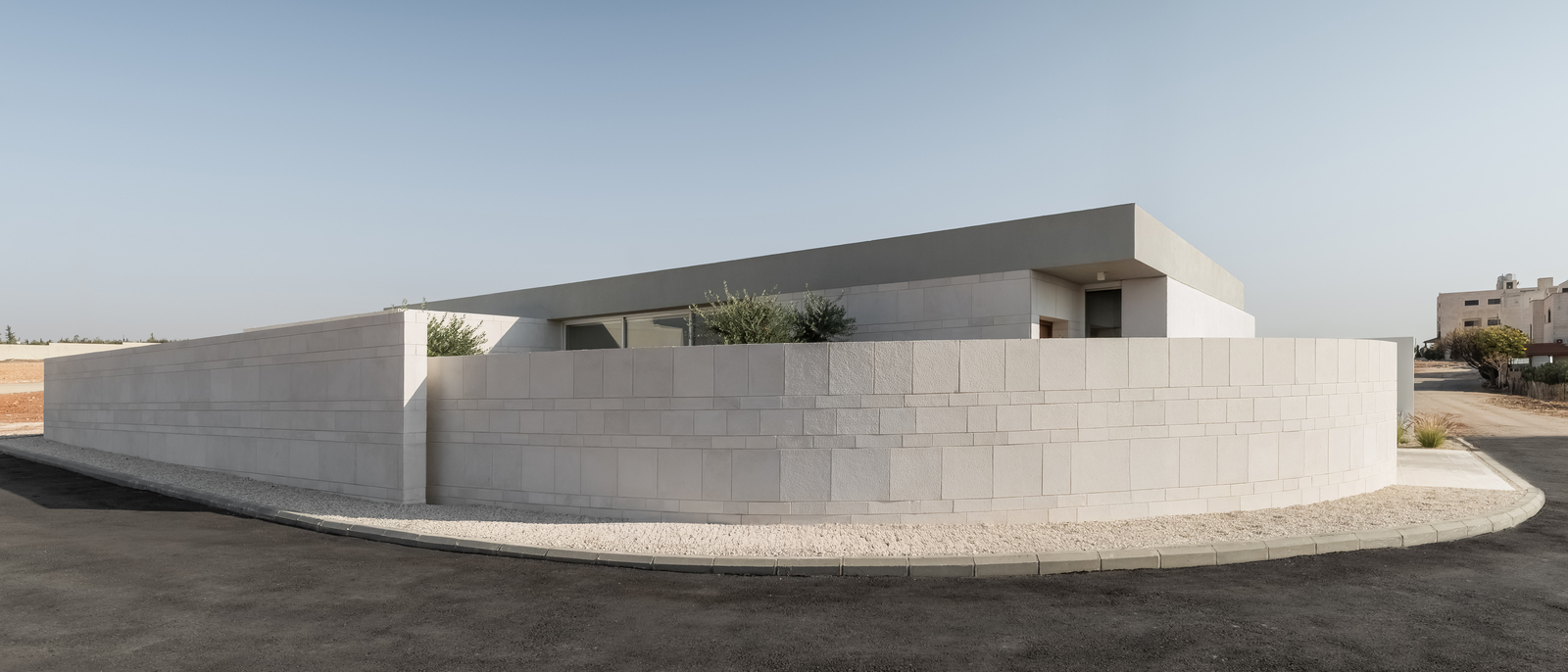
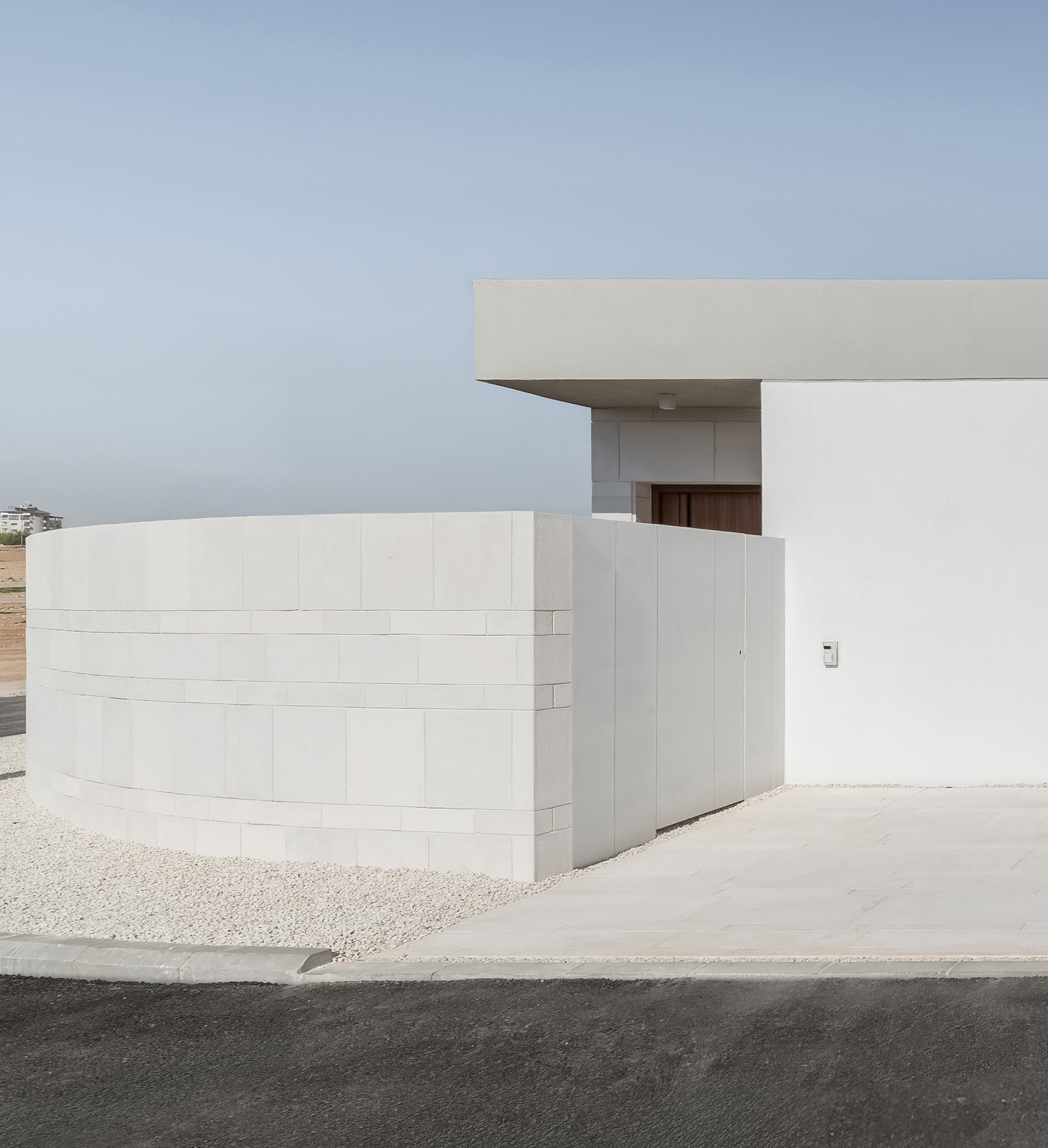
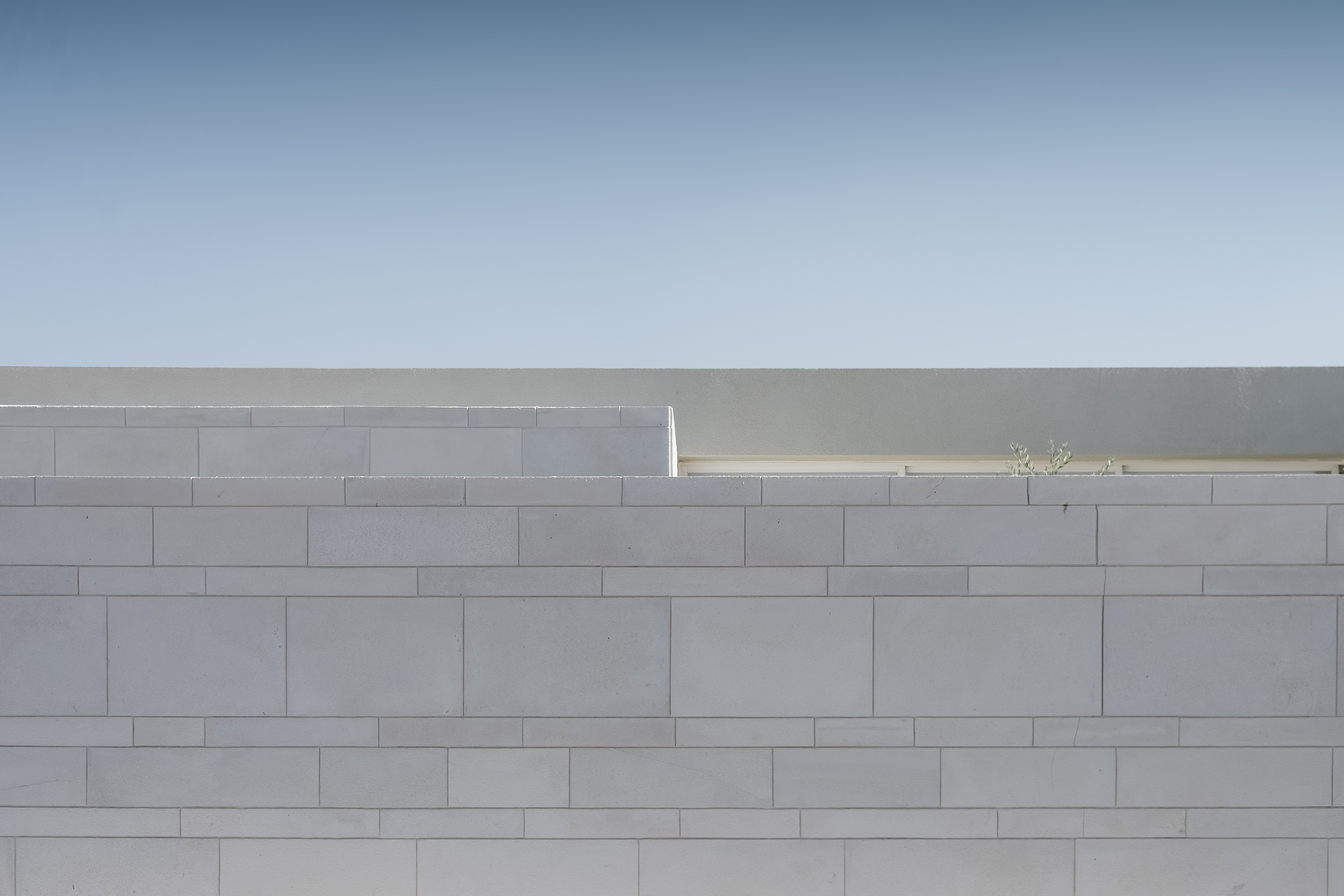
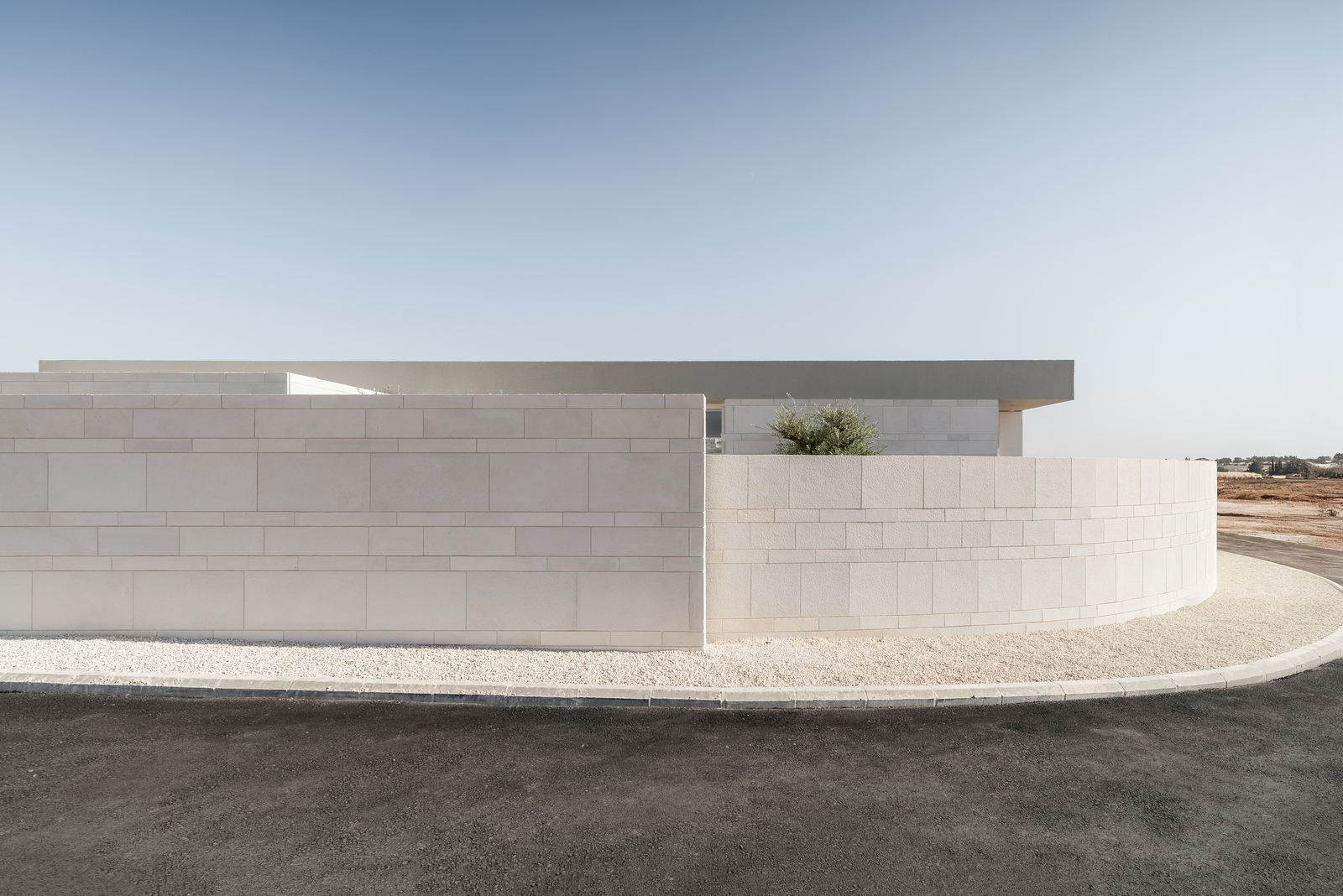
The Tneib House explores the idea of the dwelling as a place of retreat, where architecture prioritizes calmness and inward orientation rather than outward display. Located in the rural context of Tneib outside Amman, the house presents a quiet architectural presence in its surroundings. From the street, the project appears as a sequence of low stone walls supporting a continuous horizontal concrete plane. This restrained exterior composition conceals the spatial life of the house, establishing a subtle threshold between the public realm and the private domestic environment.

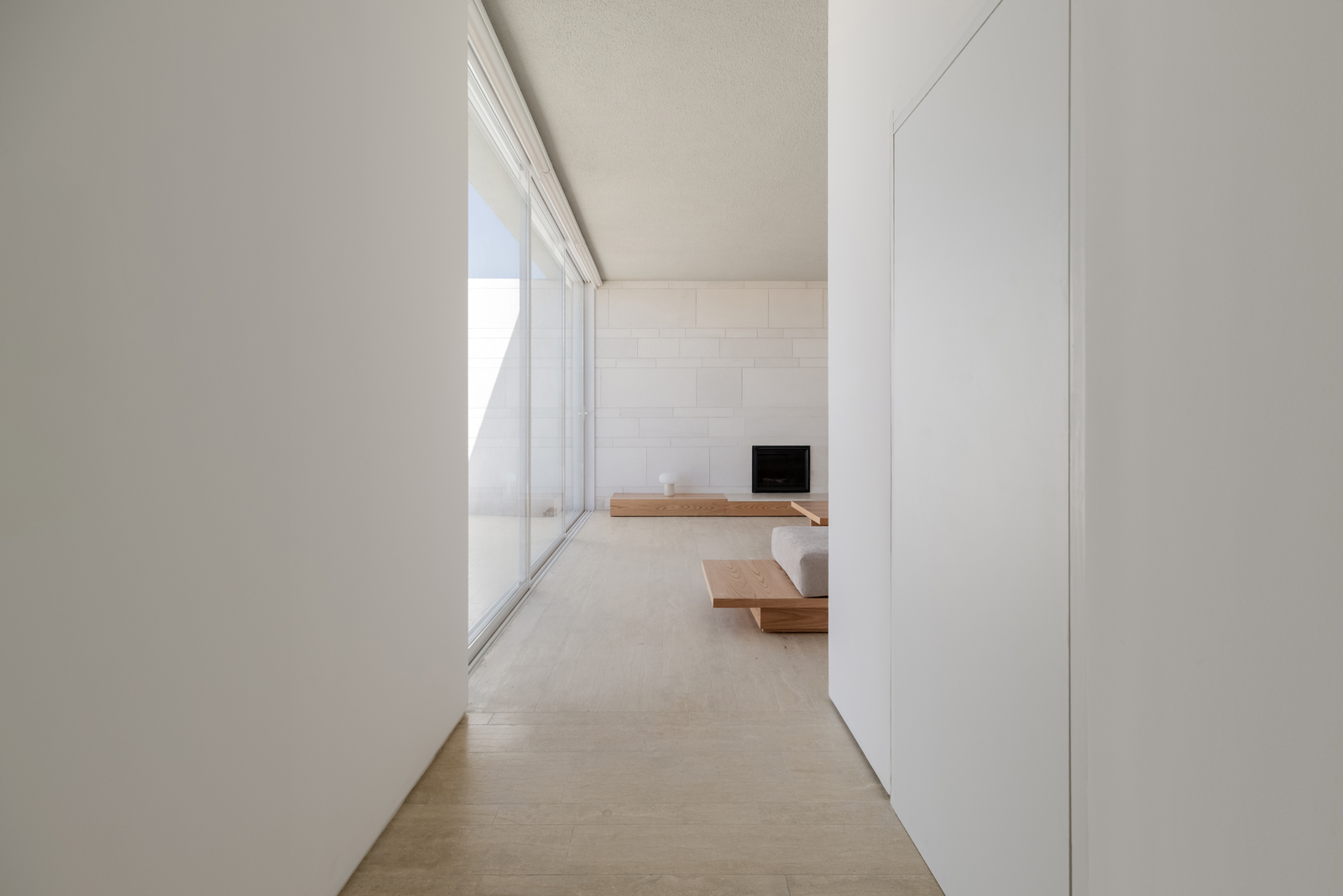
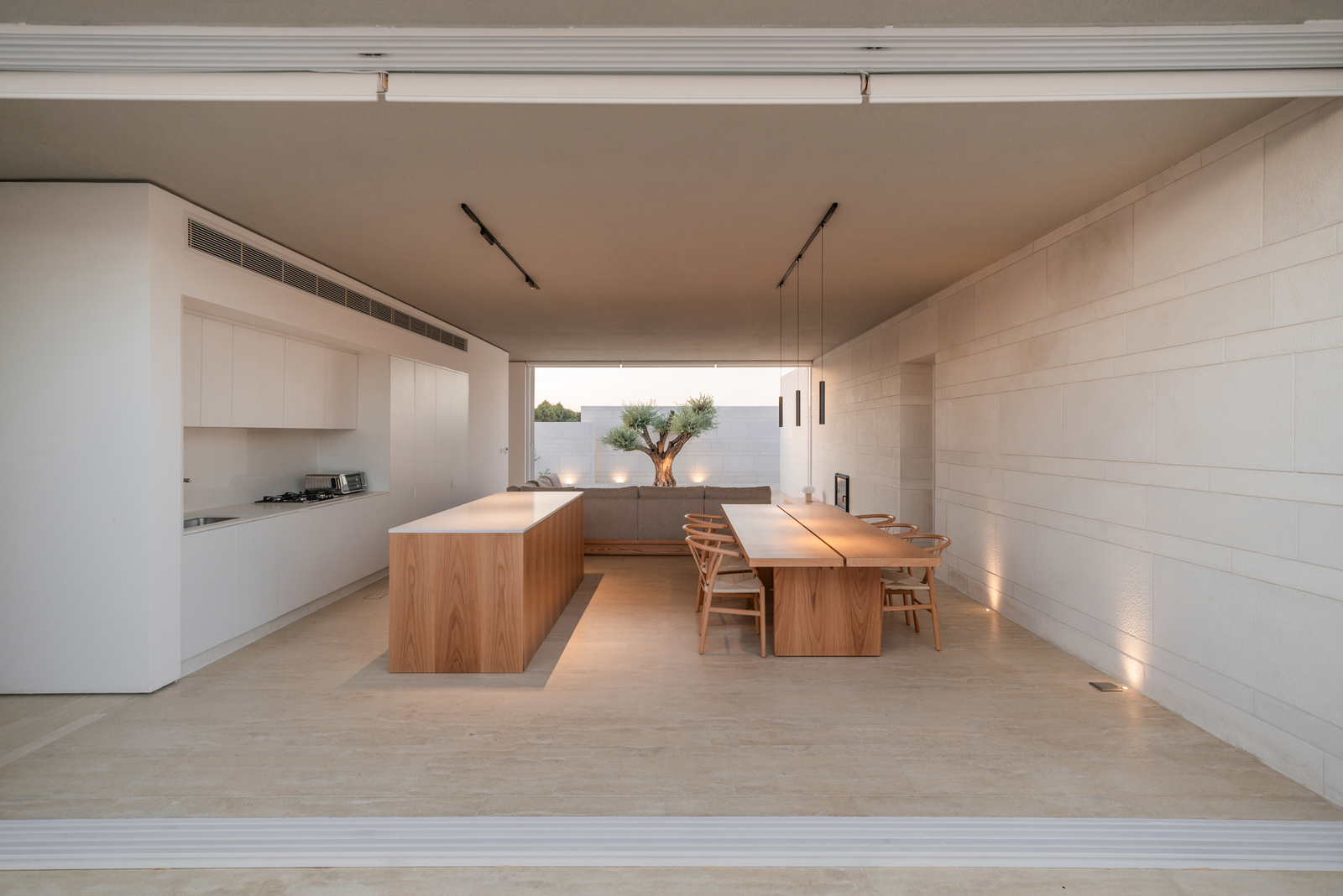
Structurally, the project is defined by a concrete roof slab supported by inverted beams that span the main living area. This structural strategy allows the central space to remain open and visually uninterrupted. Within this framework, the plan is organized around two solid volumes that contain private rooms and service functions. Positioned between these volumes, the main living area emerges as an open void that acts as the spatial core of the house, connecting the various programmatic components while maintaining a sense of clarity and proportion.
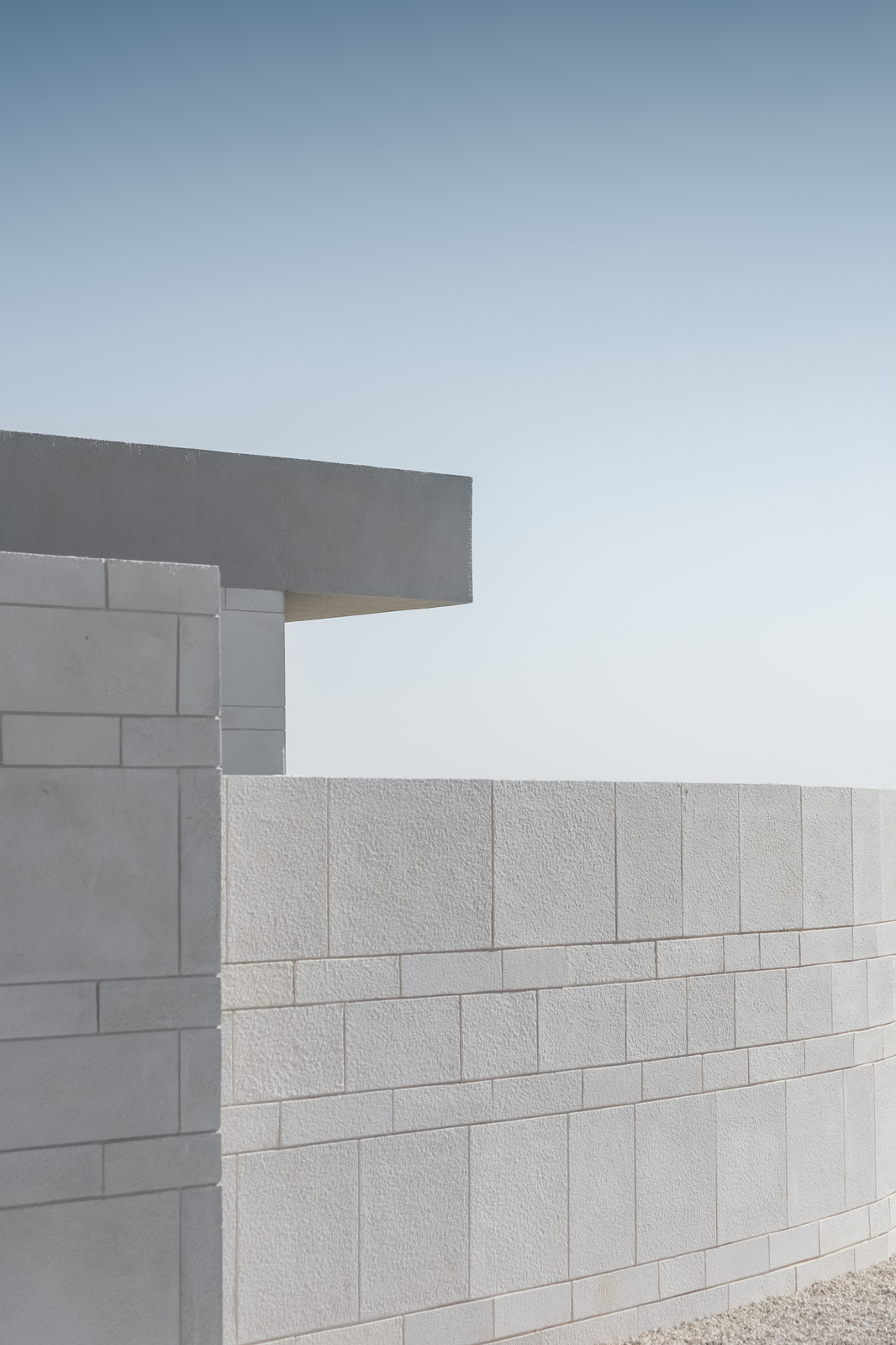
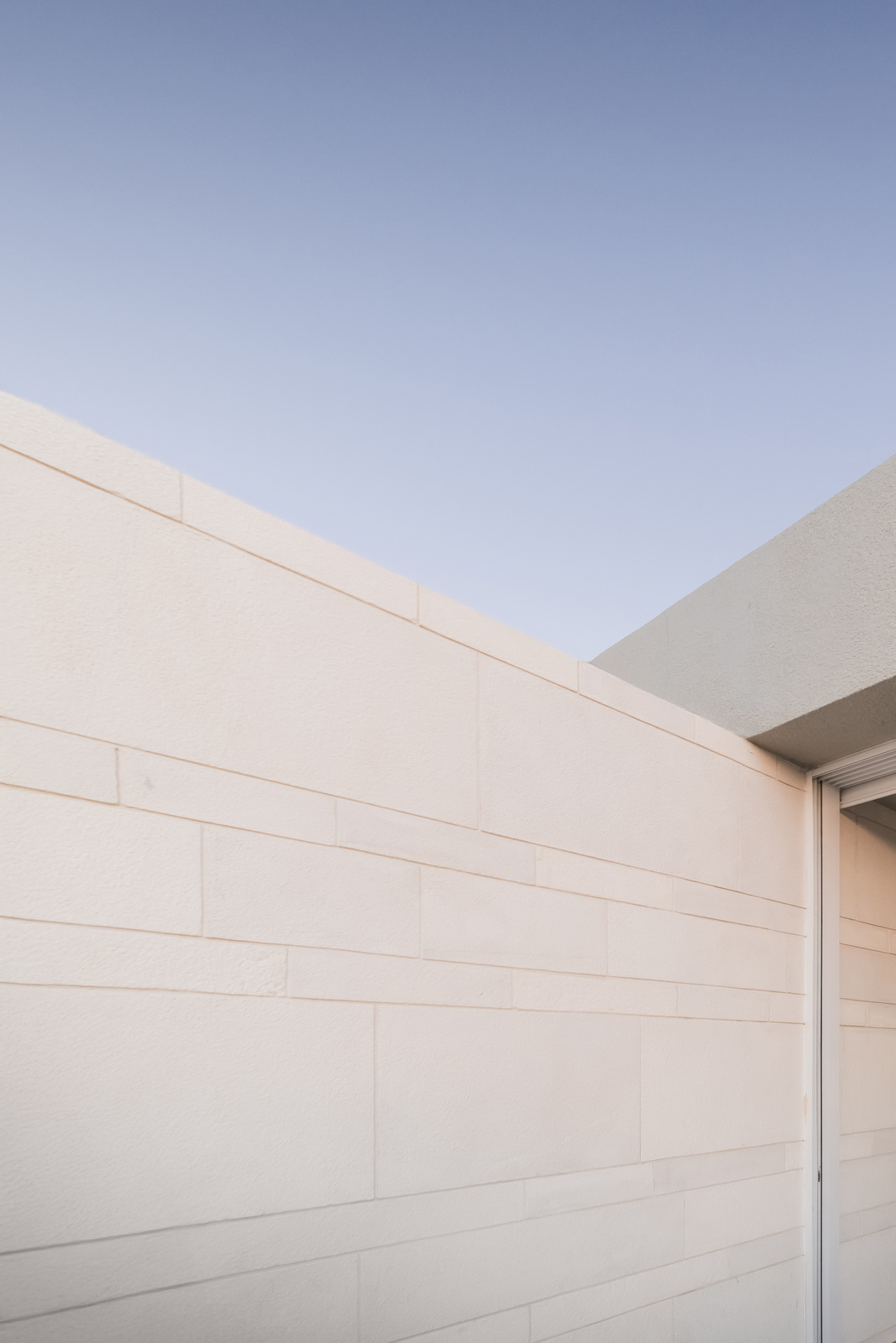
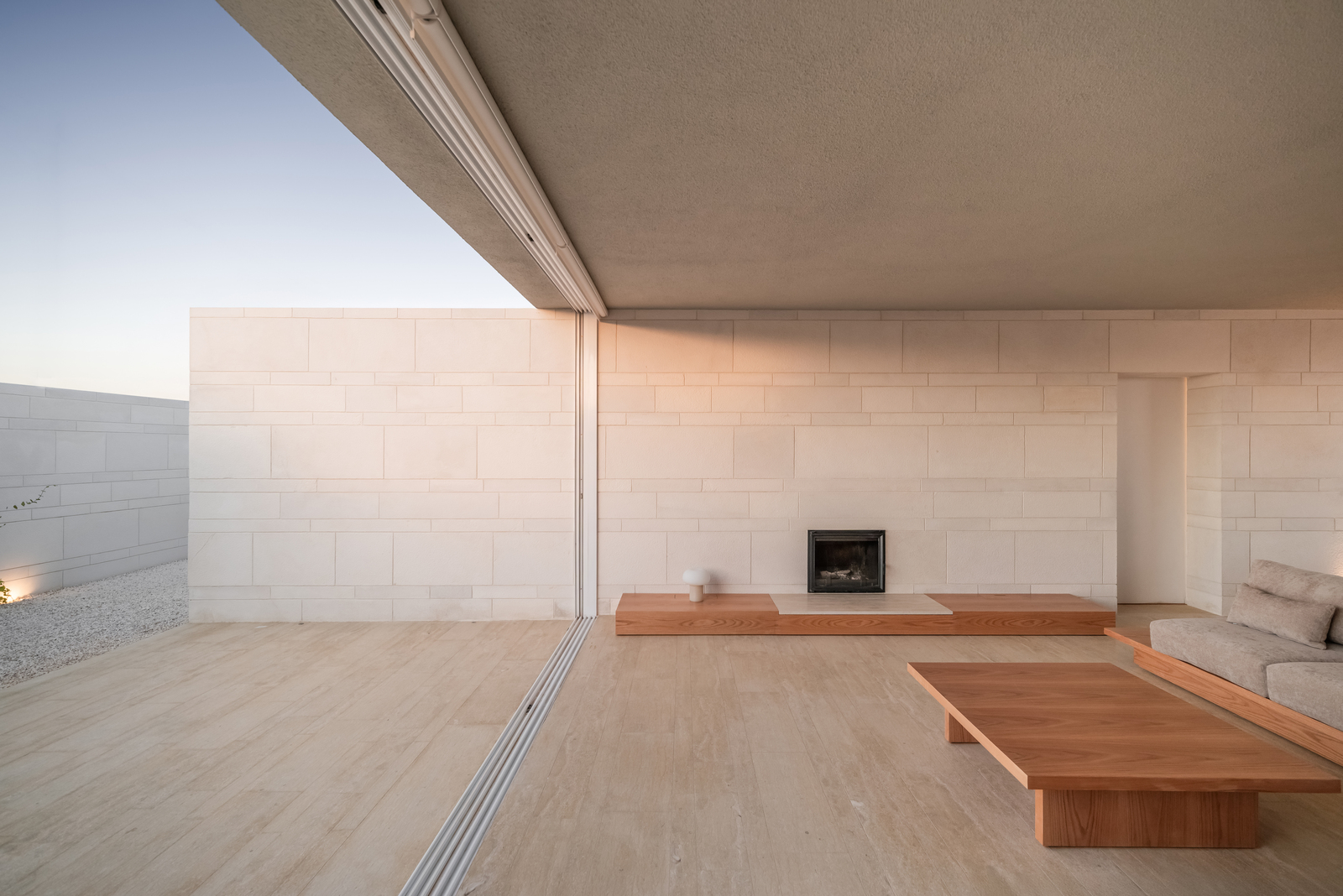
The relationship between interior and exterior spaces is carefully mediated through large sliding glass doors integrated within the thickness of the stone walls. When retracted, these openings allow the living area to extend outward beneath a shaded concrete canopy toward the courtyard. This spatial continuity enables the house to expand into the landscape while remaining protected from the region’s intense sunlight, producing transitional spaces that support both daily domestic activities and seasonal climatic comfort.
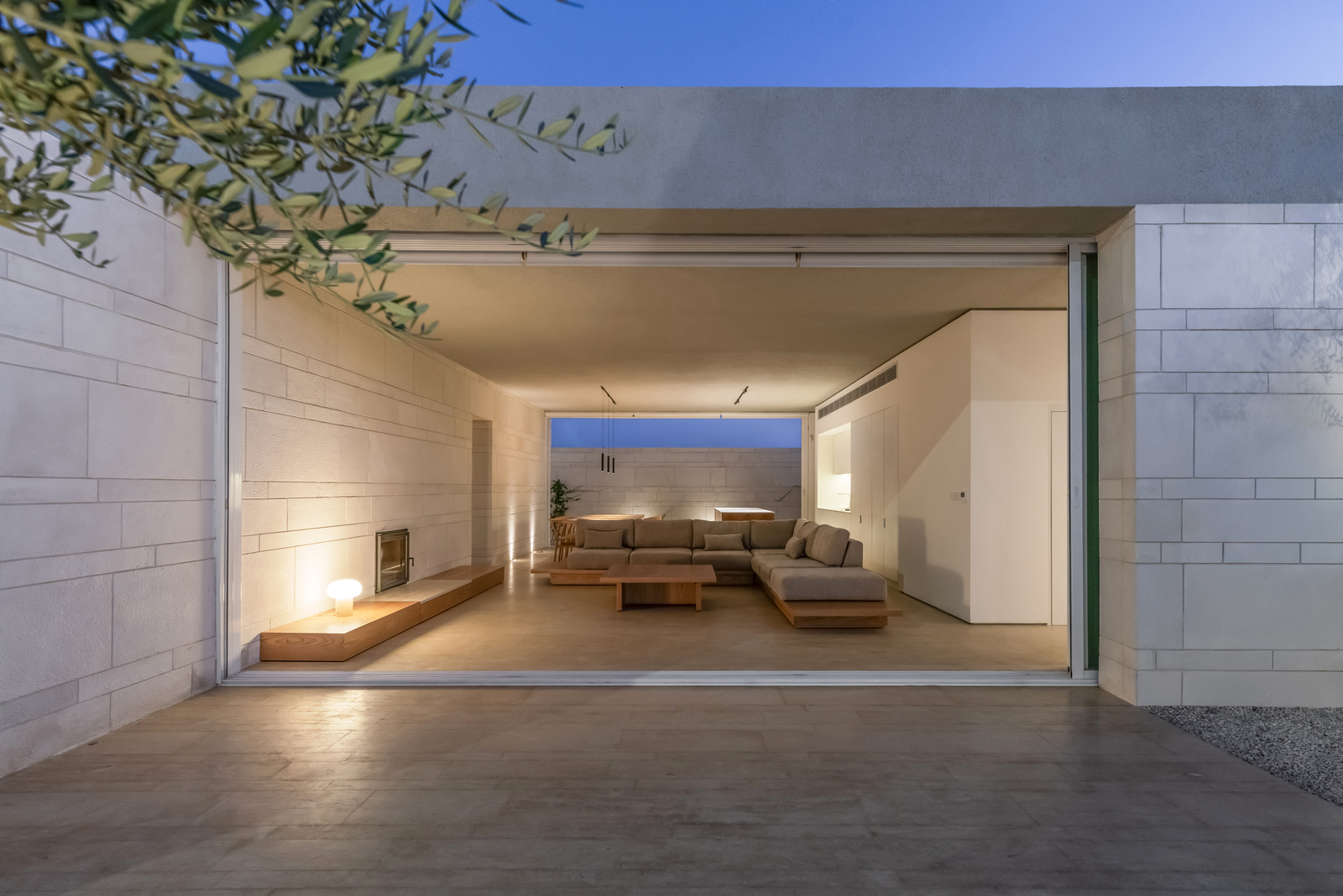
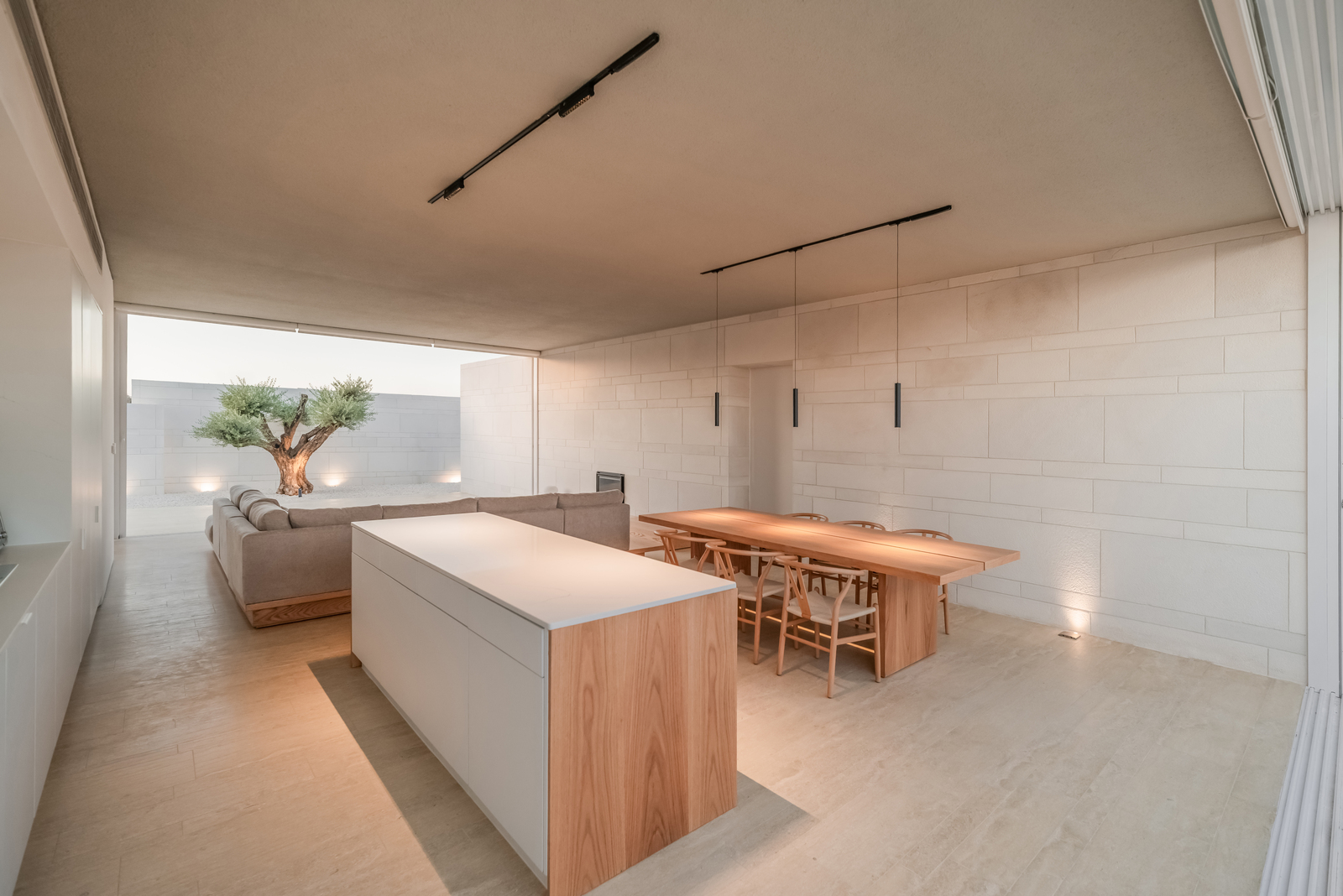
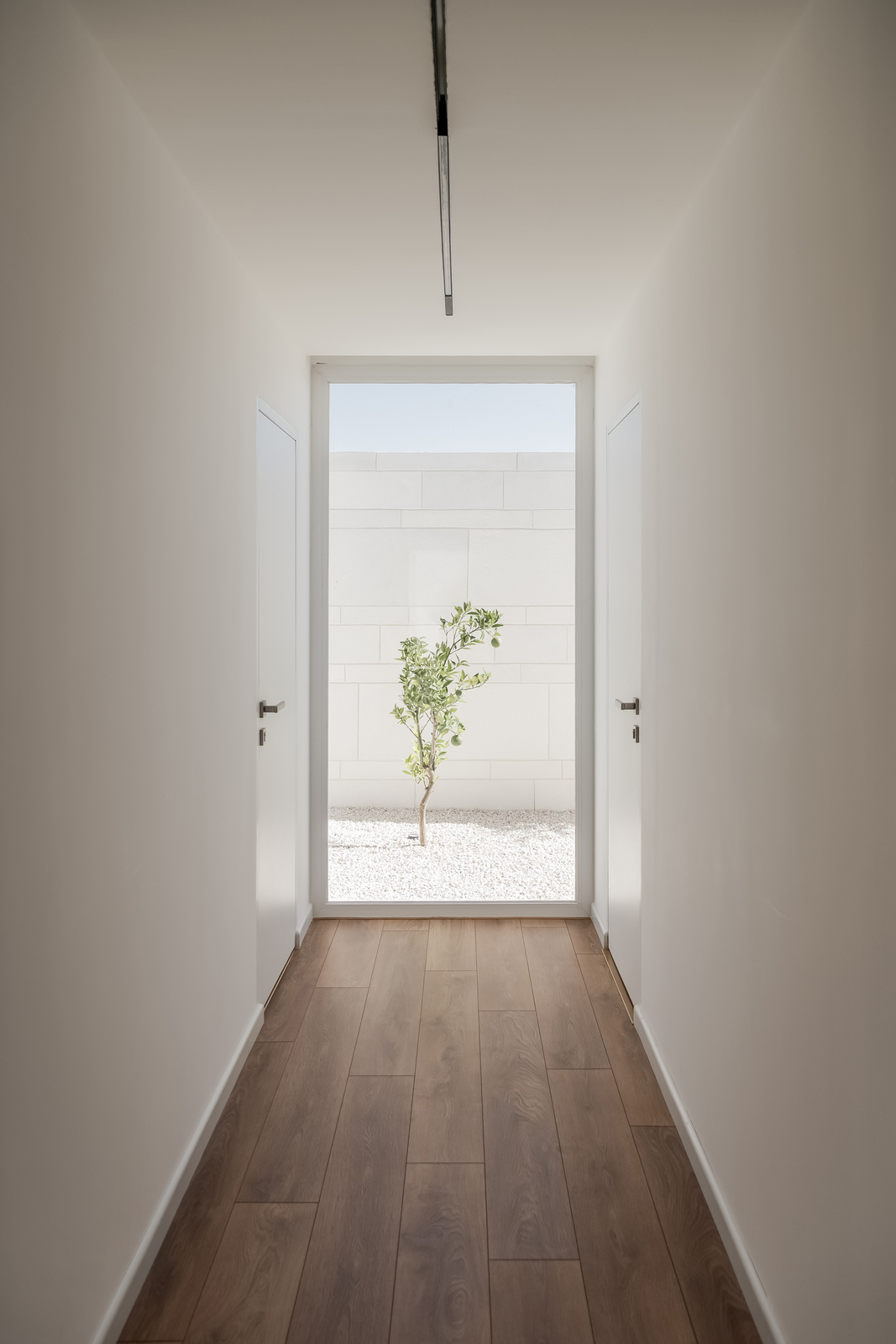
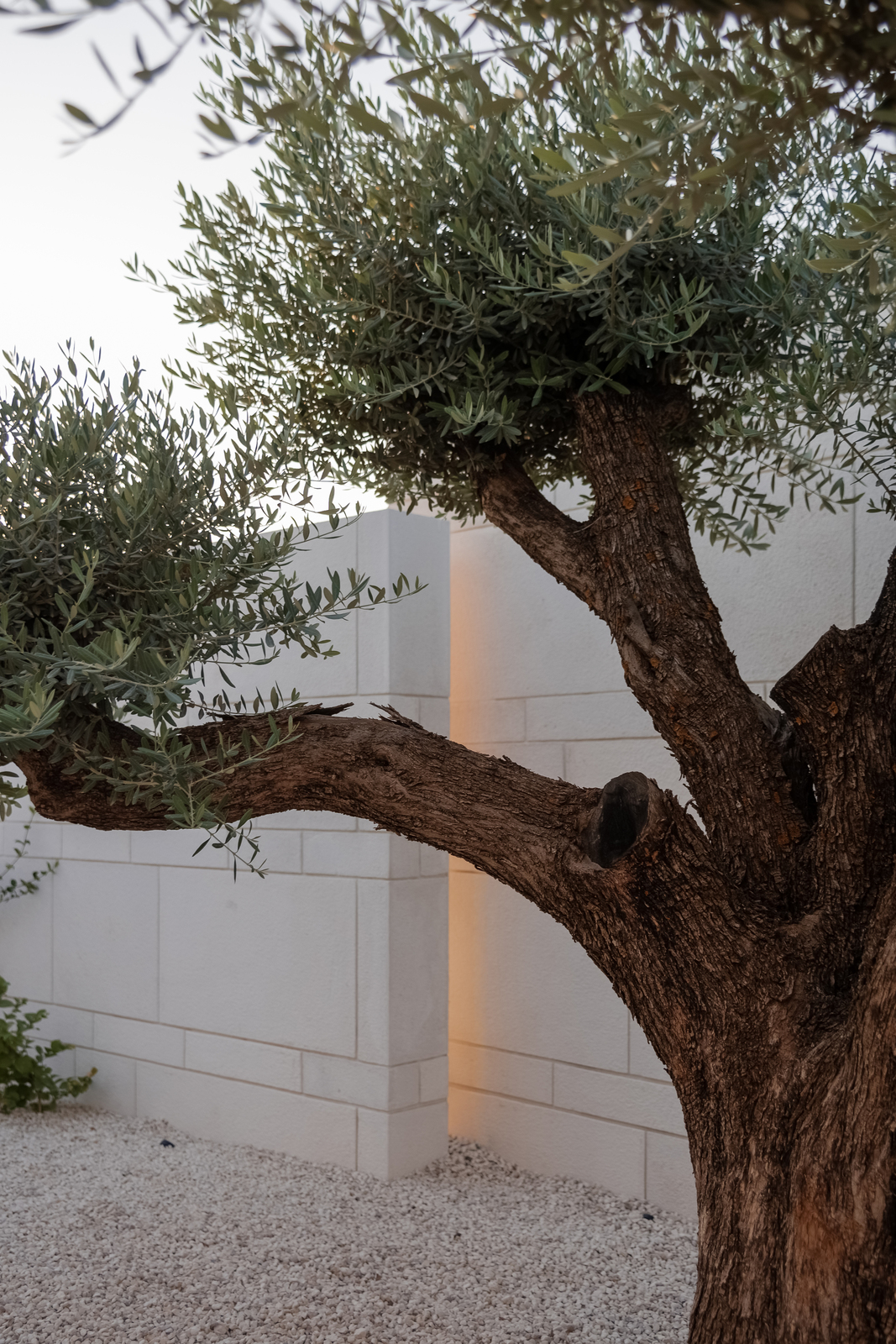
At the center of the courtyard, salvaged olive trees introduce a quiet symbolic presence. These trees serve not merely as landscape elements but as markers of time and cultural continuity within the project. Their placement reinforces the courtyard as the emotional and spatial heart of the dwelling, grounding the architecture within the agricultural traditions and environmental memory of the region.
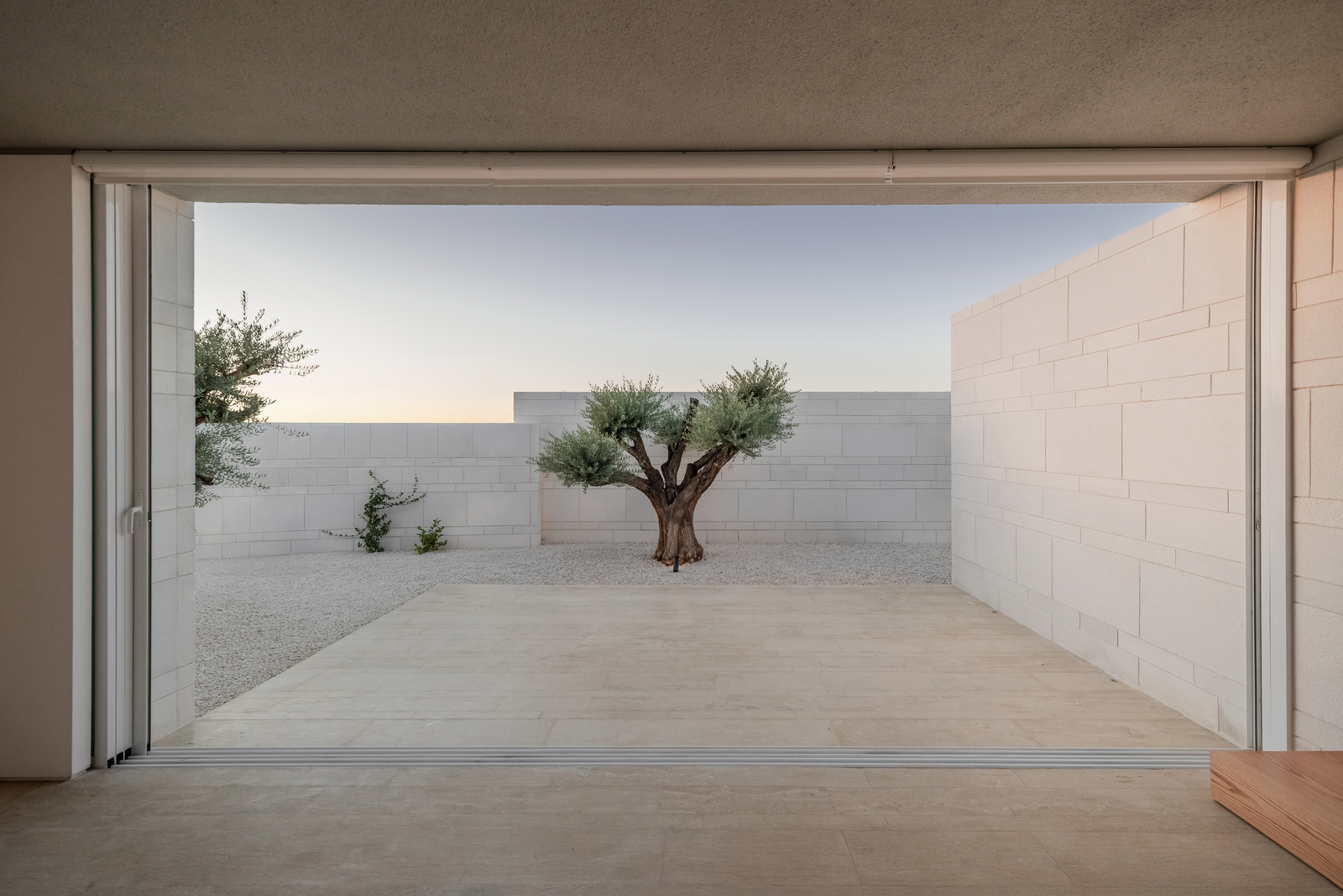
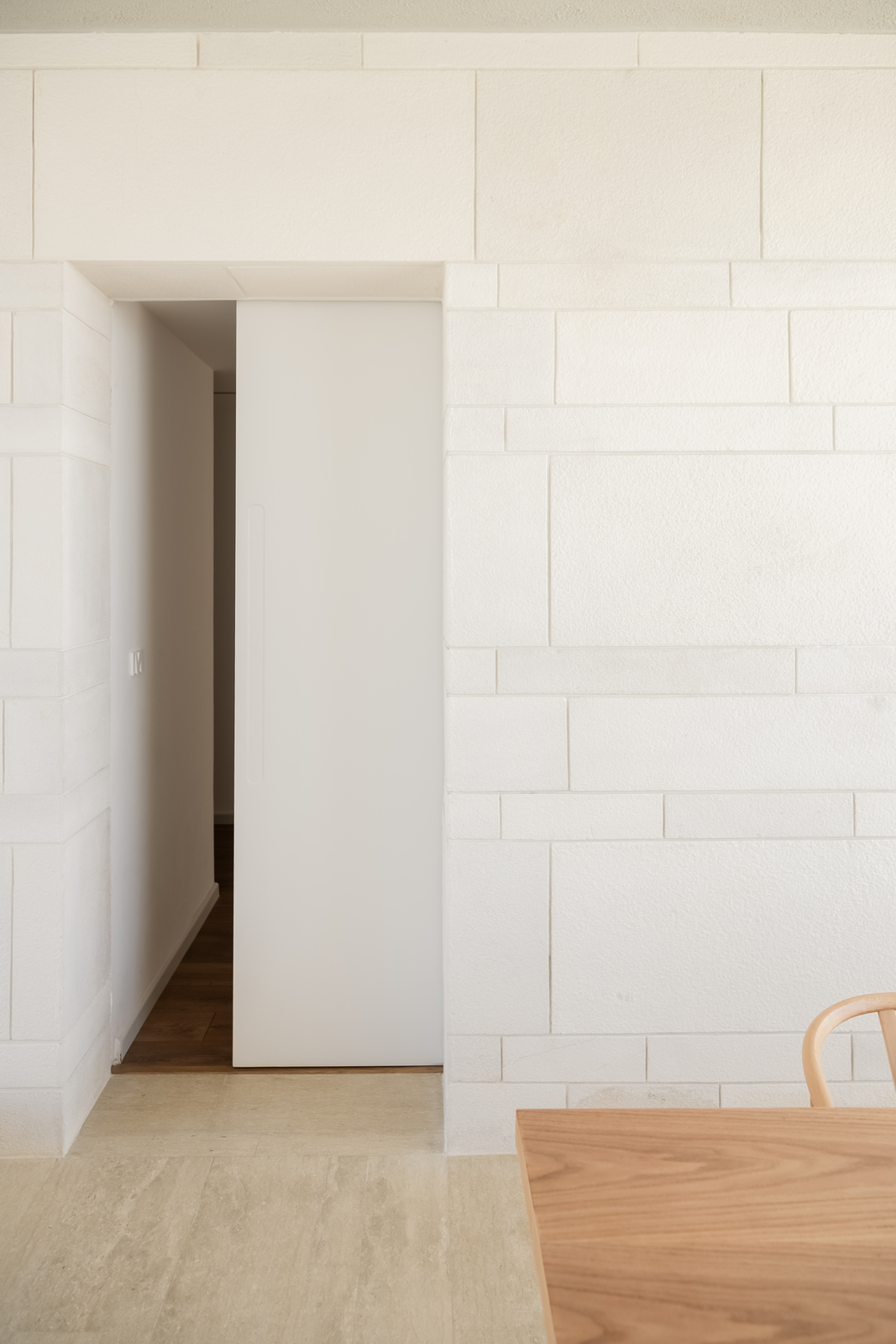
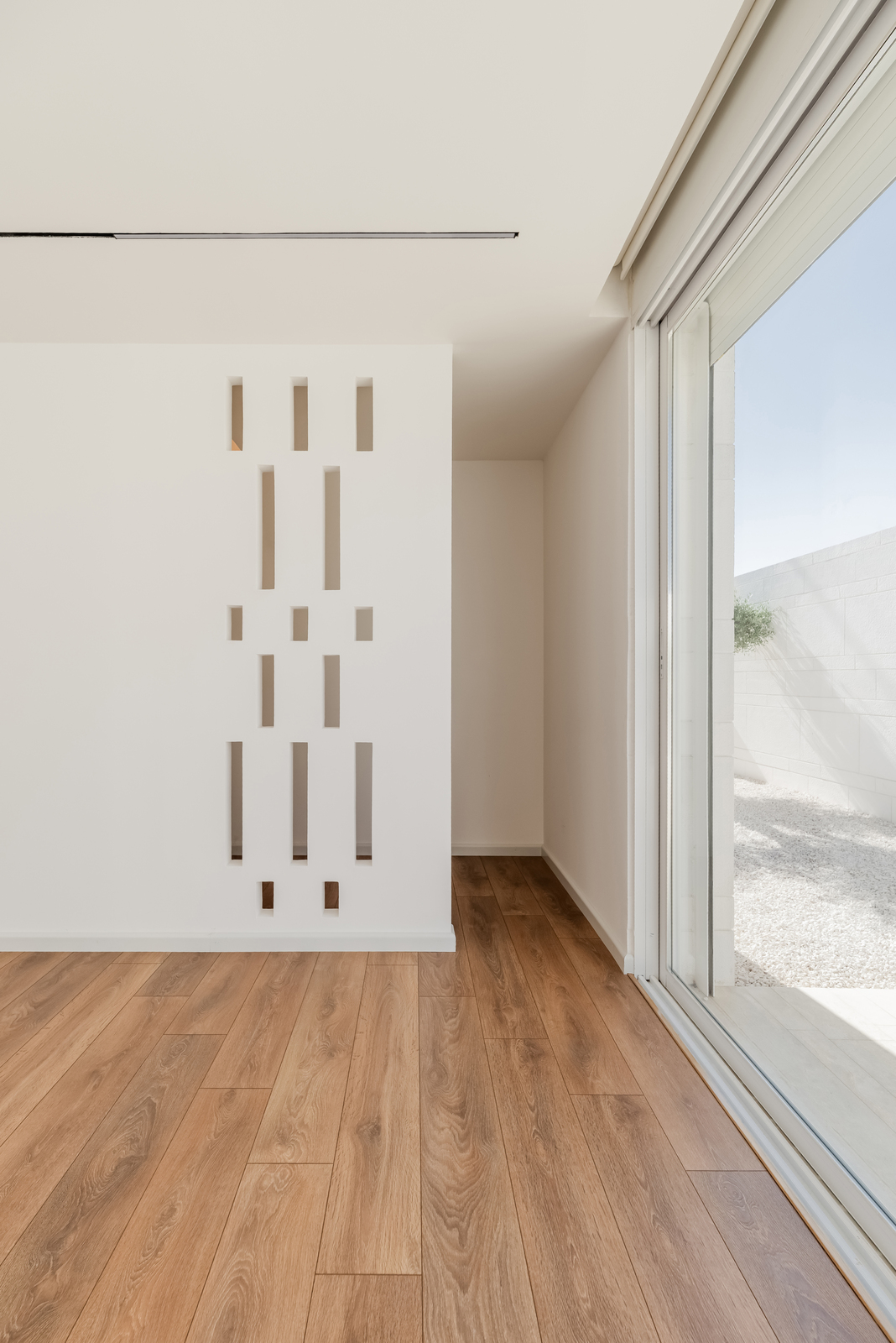
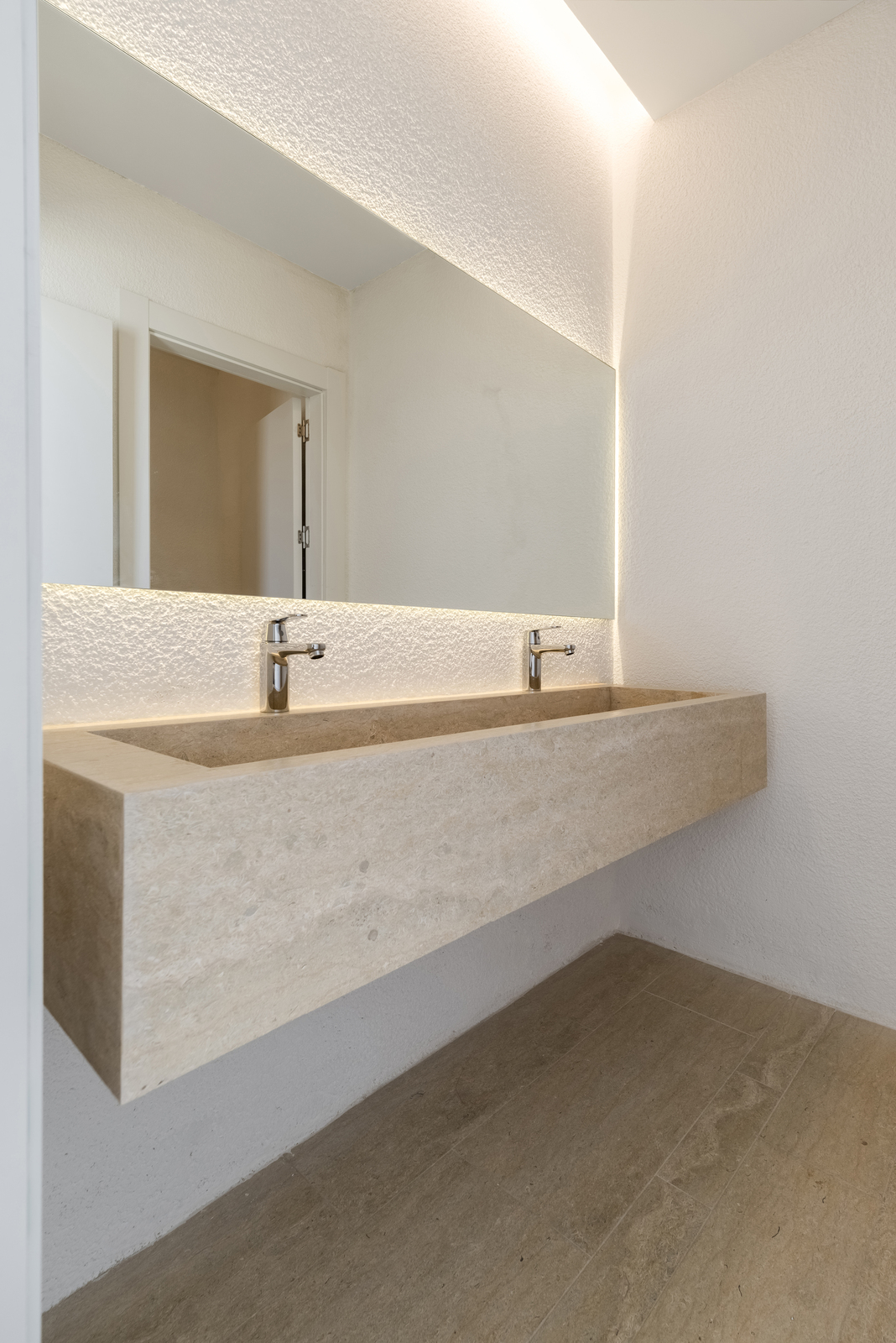
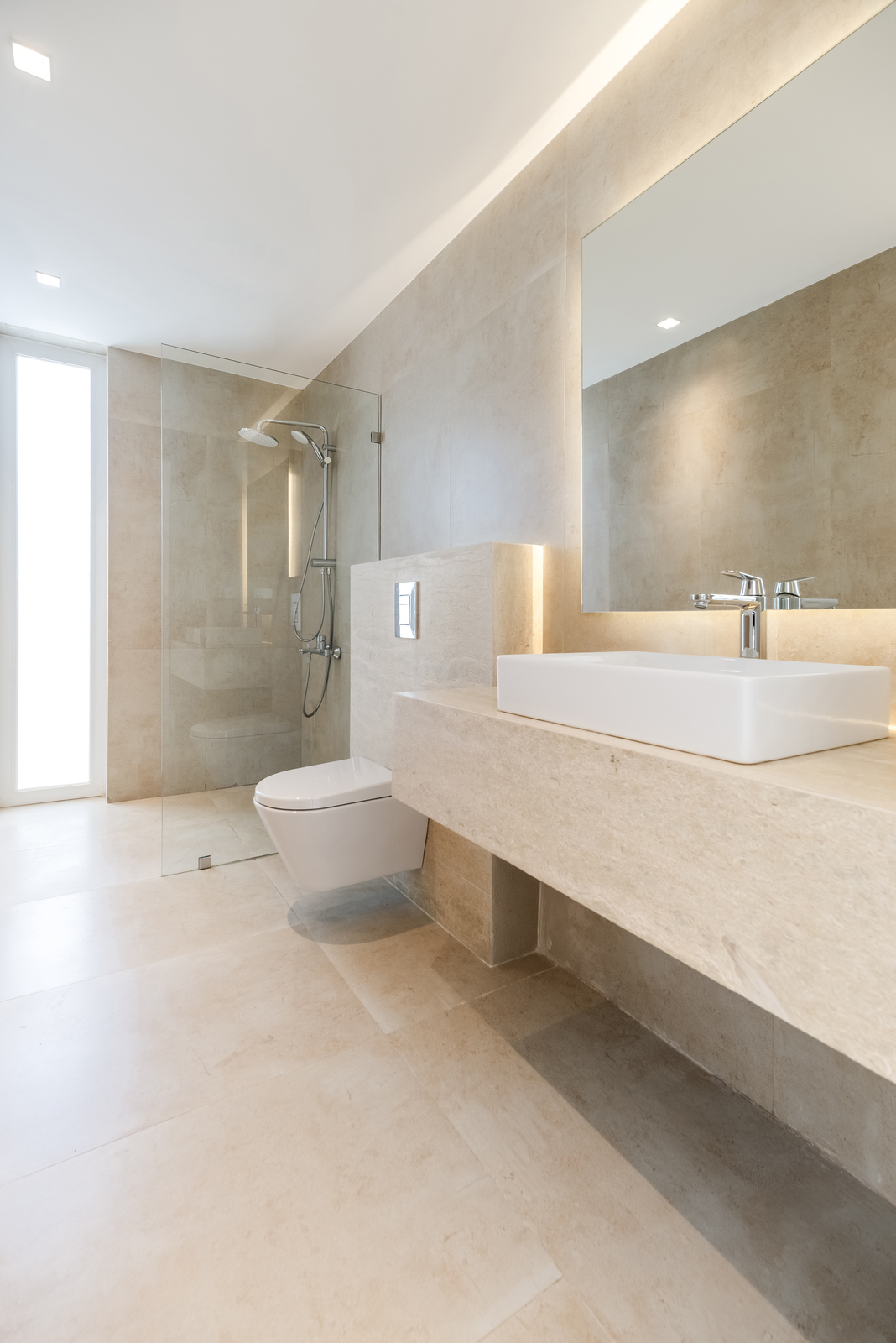
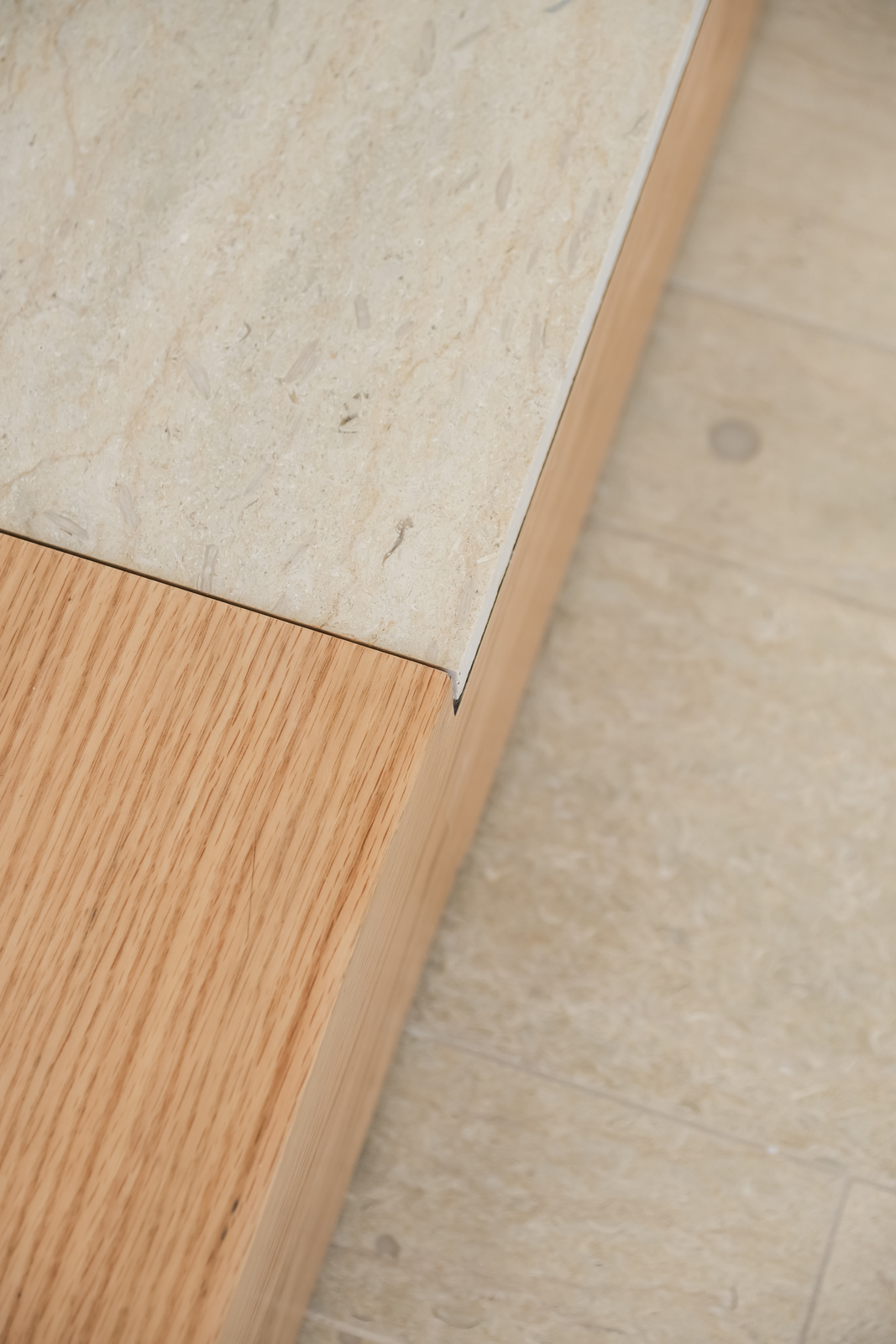
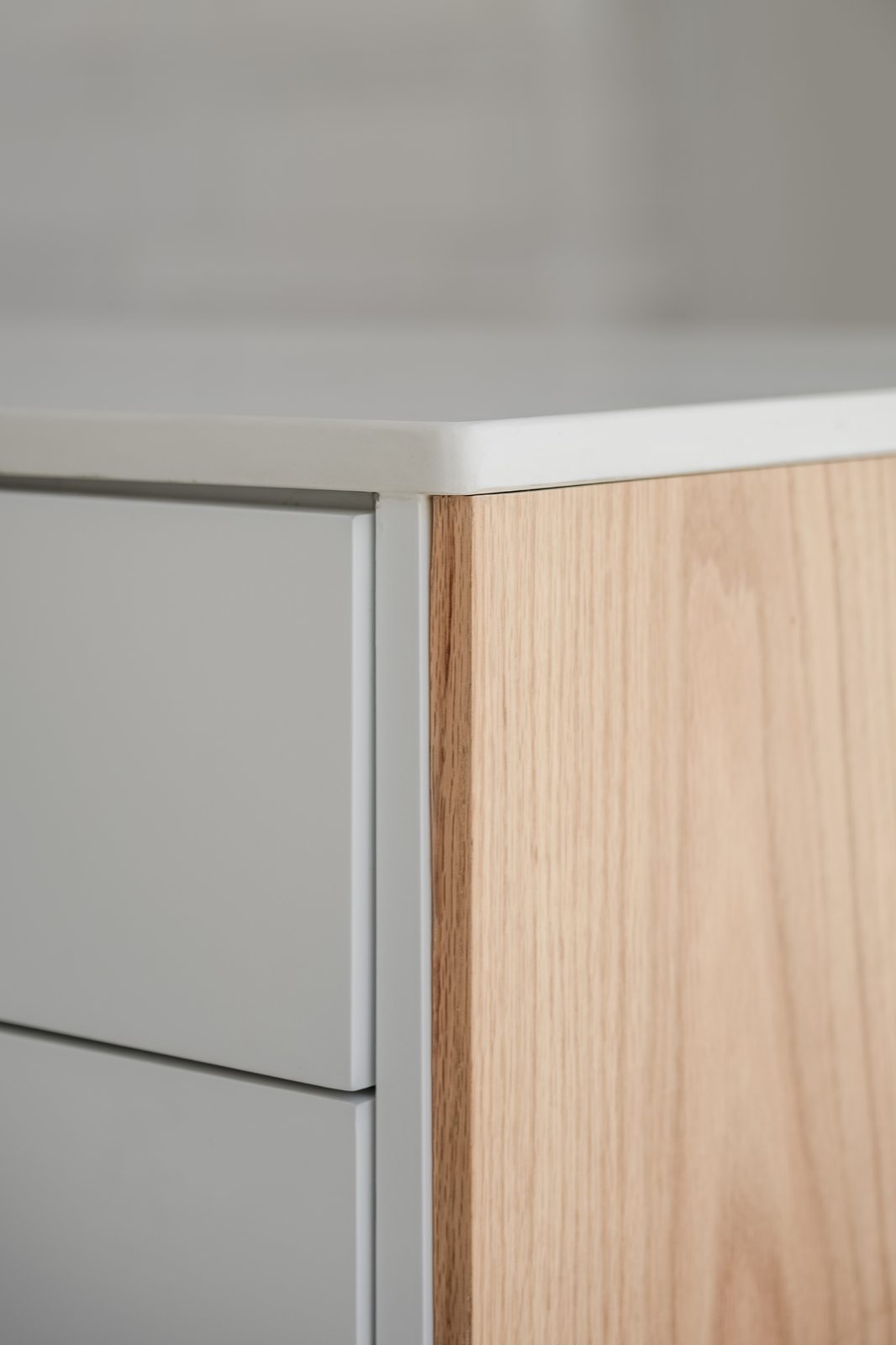
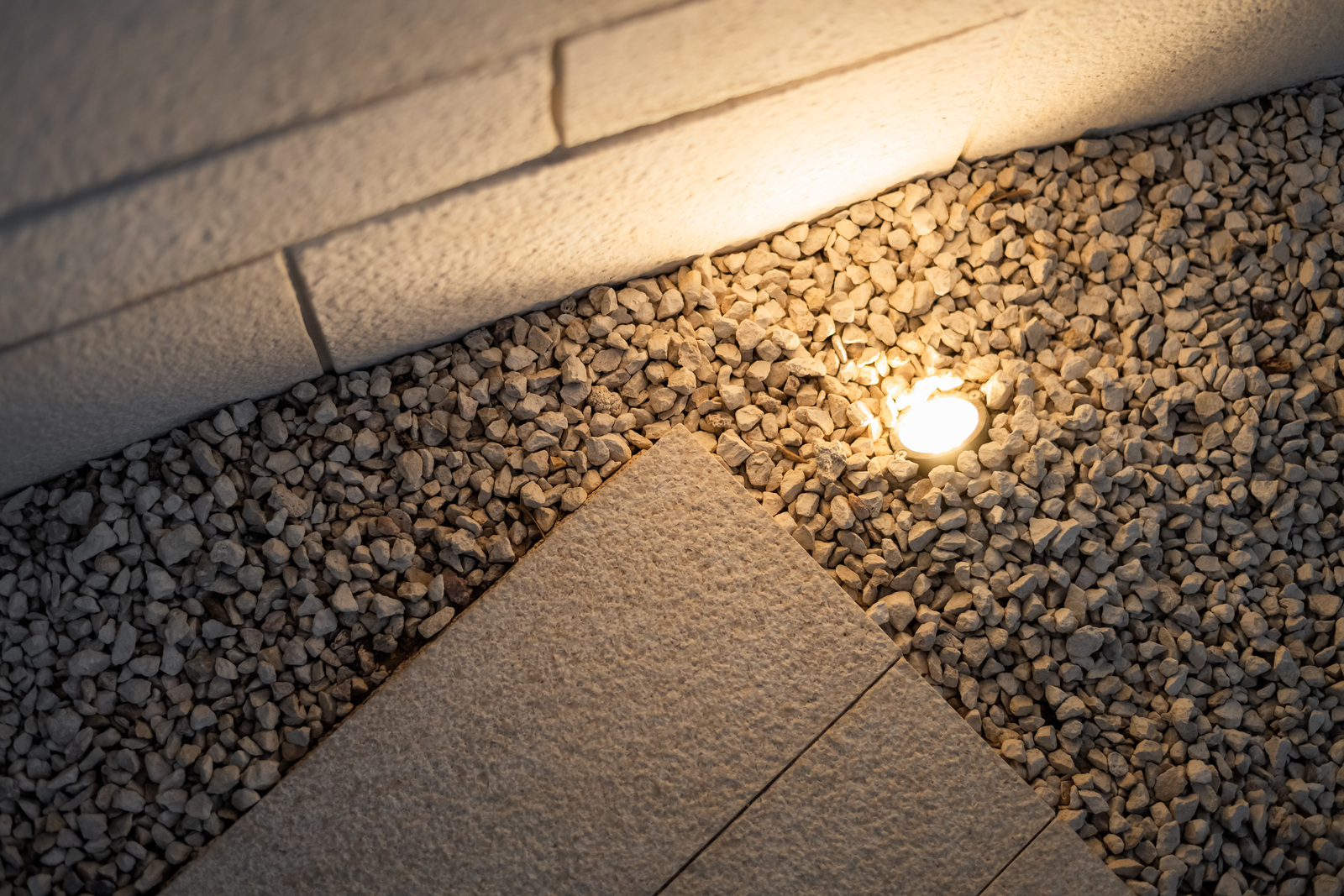
Material choices reinforce the project’s emphasis on permanence and restraint. Exterior walls are constructed from locally sourced white chiseled stone laid in a subtle horizontal pattern that accentuates the solidity of the enclosure. Inside, natural wood surfaces and muted finishes soften the weight of the stone, creating a warm interior atmosphere shaped by light and shadow. Through this careful balance of mass, material, and spatial openness, Tneib House establishes an architecture of quiet inhabitation that privileges experience, continuity, and connection to place.

Project Gallery

Project Location
Address: Tneib, Amman, Jordan
The location specified is intended for general reference and may denote a city or country, but it does not identify a precise address.

