

Types of tiles define more than finish—they determine slip control, structural demands, moisture behavior, and lifecycle cost. Each tile type carries specific implications for substrate prep, detailing, and maintenance planning. From ceramic to natural stone, from glass to resilient modular systems, tile specification links material behavior with program performance.
This guide outlines 23 types of tiles used across residential and light-commercial interiors, with attention to cost per square foot (USD, EUR, GBP), expected service life, and application logic. Categories span fired clay, dense porcelain, stone variants, cement-based formats, and resilient alternatives like vinyl, rubber, and carpet tile.
Selection begins with function—wet zones, impact, acoustics, movement—not surface aesthetics alone. Each type of tile performs differently under traffic, weather, and cleaning routines. This is a technical reference, structured for early-stage specification and material compatibility checks.
Ceramic and clay tile families
1. Ceramic Tile
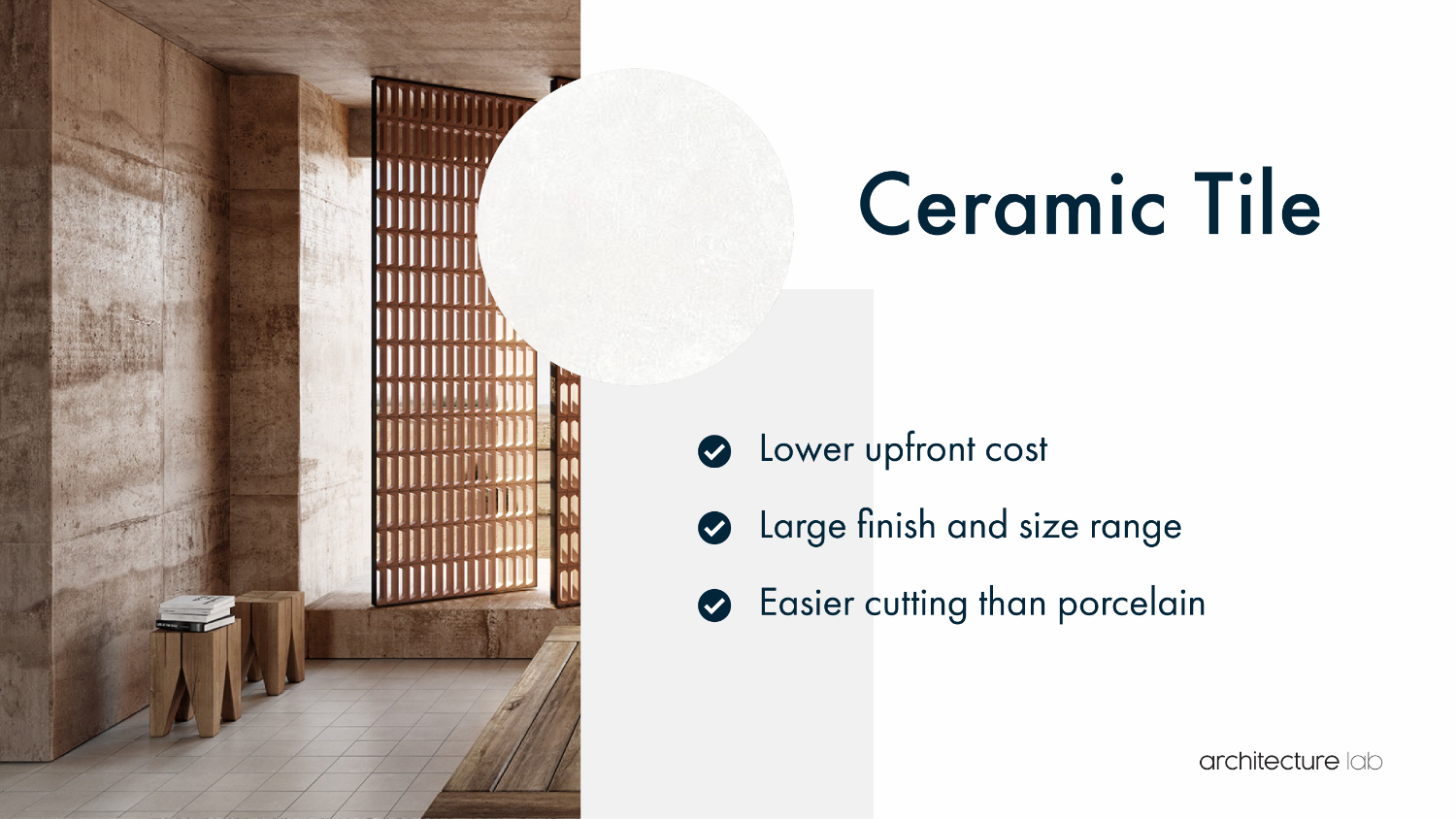
Ceramic tile is the broad baseline for hard tile specification. It is made from fired clay and usually finished with a glaze. Ceramic works well on walls, backsplashes, and lighter-duty floors where budget and design range matter more than maximum density. Installed cost usually lands around $12–$40 per sq. ft. (approx €10–€34, £9–£30), and typical life runs about 20–50 years.
Best for: walls, backsplashes, powder rooms, bedrooms, low- to medium-traffic floors
What We Like
- Lower upfront cost
- Large finish and size range
- Easier cutting than porcelain
What We Don’t Like - Less dense than porcelain
- Glazed face may chip on impact
- Weaker fit for freeze-thaw exposure and heavy traffic
2. Porcelain Tile
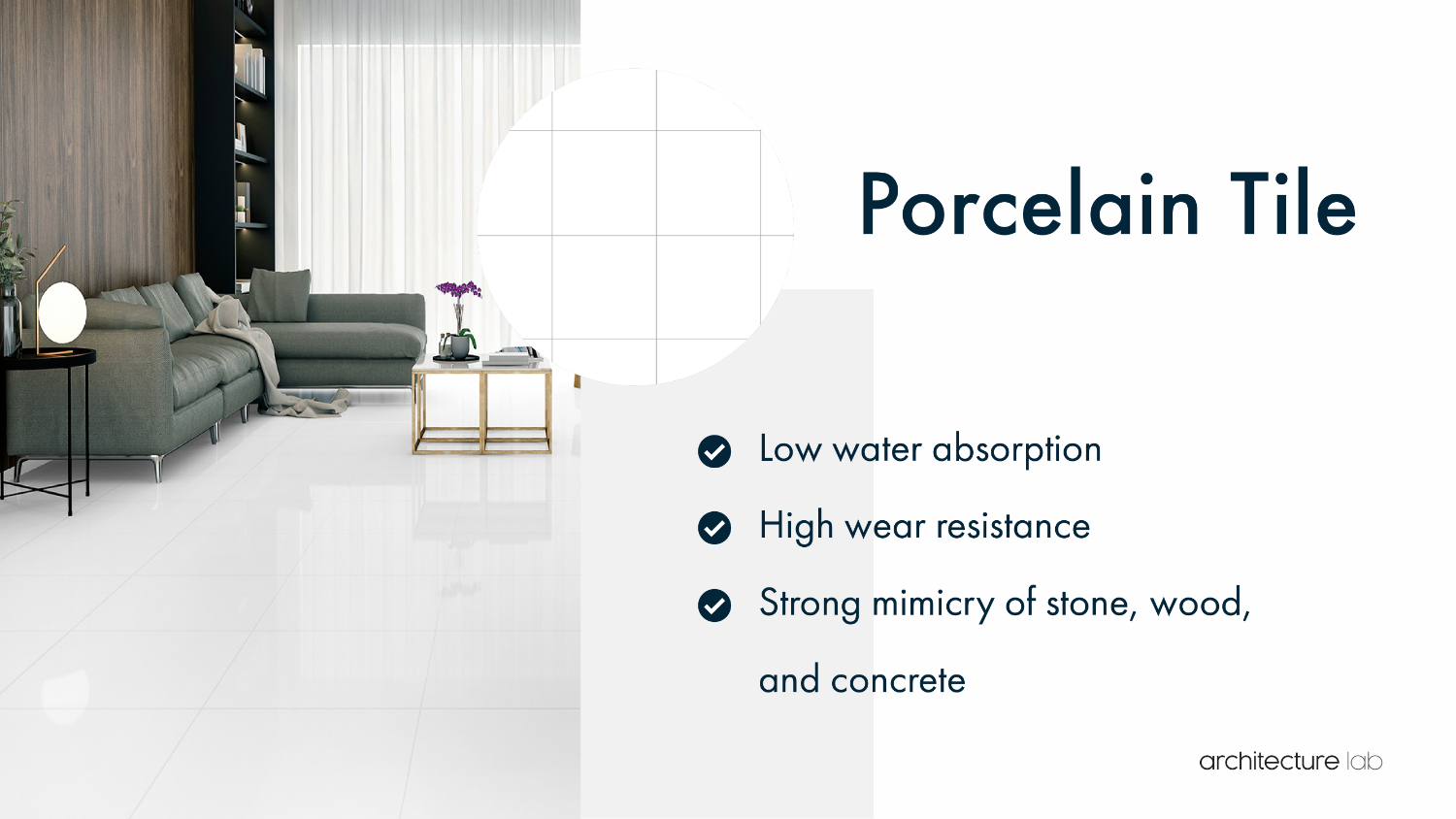
Porcelain tile is a ceramic subtype with much lower water absorption and higher density. That combination makes it the default “safe” specification for wet rooms, kitchens, hallways, and many exterior or freeze-thaw conditions. Installed cost usually falls around $15–$50 per sq. ft. (approx €13–€43, £11–£38), and life often reaches 50–100+ years.
Best for: bathrooms, kitchens, entries, mudrooms, commercial interiors, terraces with correct rating
What We Like
- Low water absorption
- High wear resistance
- Strong mimicry of stone, wood, and concrete
What We Don’t Like - Harder cutting and drilling
- Higher labor cost than basic ceramic
- Colder and harder underfoot than resilient tile
3. Mosaic Tile
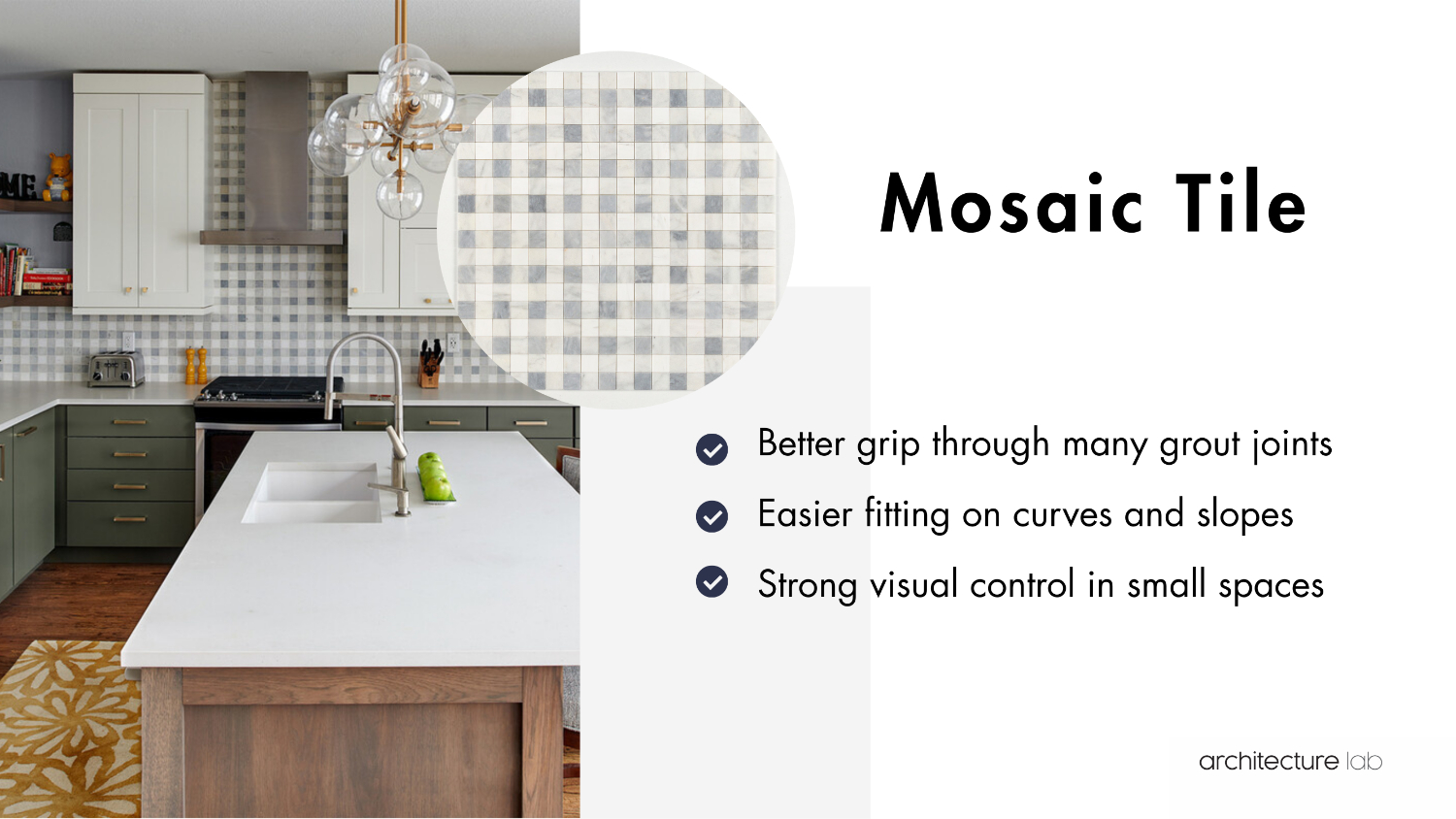
Mosaic is a format more than a single material. Most mosaics use ceramic, porcelain, glass, metal, or stone pieces mounted on sheets, usually in sizes around 2 inches or less. Mosaic earns its place in this list because grout density changes slip, drainage, and detailing. Installed cost often runs from $11–$30+ per sq. ft. (approx €9–€26+, £8–£23+), with service life tied to the body material.
Best for: shower floors, niches, curved surfaces, borders, feature walls
What We Like
- Better grip through many grout joints
- Easier fitting on curves and slopes
- Strong visual control in small spaces
What We Don’t Like - Higher labor per square foot
- More grout to clean
- Poor layout shows fast because sheet lines telegraph
4. Quarry Tile
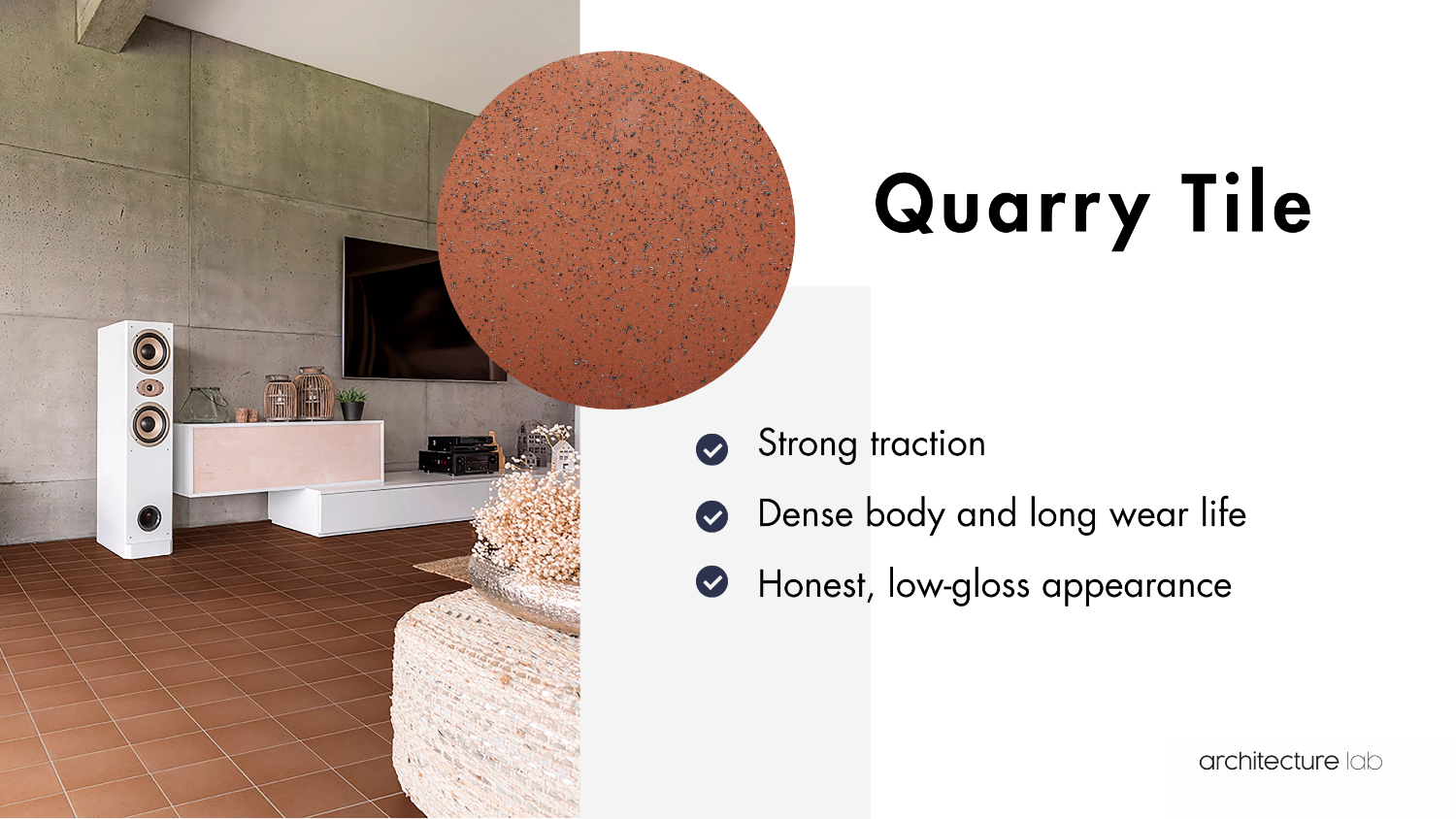
Quarry tile is an unglazed extruded ceramic tile, usually earthy in color and specified for its traction and toughness rather than visual polish. It remains common in kitchens, service corridors, back-of-house spaces, and some exterior locations. Installed cost usually sits around $10–$30 per sq. ft. (approx €9–€26, £8–£23), and life often reaches 30–70 years.
Best for: utility rooms, commercial kitchens, service entries, patios with correct detailing
What We Like
- Strong traction
- Dense body and long wear life
- Honest, low-gloss appearance
What We Don’t Like - Limited color range
- More staining risk than glazed porcelain
- An industrial look does not suit every interior
5. Terracotta and Saltillo Tile
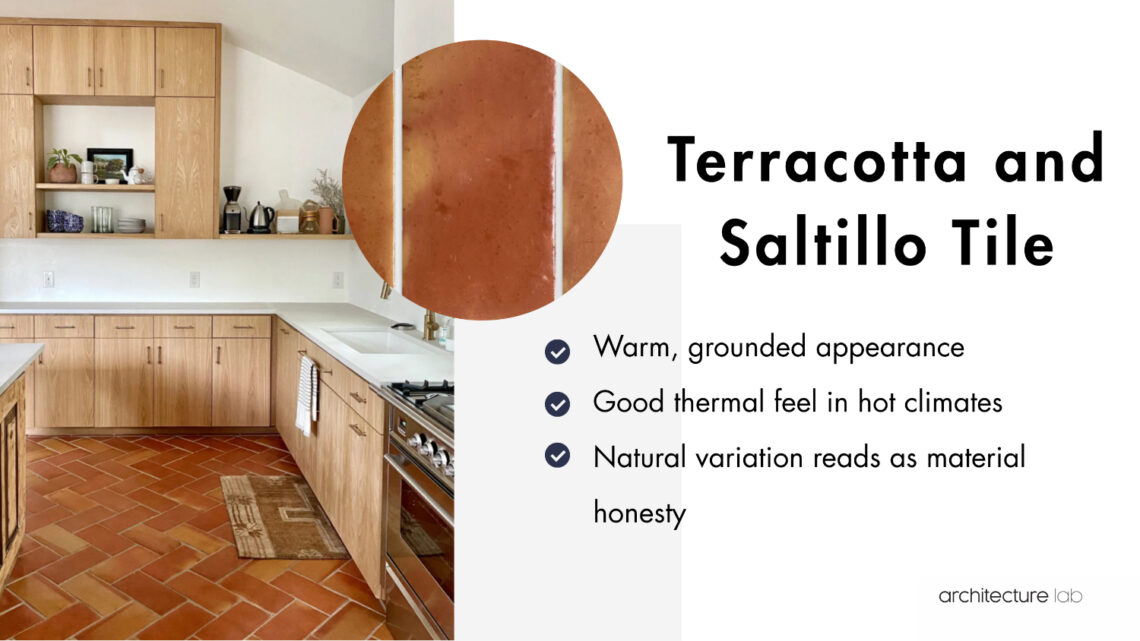
Terracotta is fired clay with a porous body and warm earth tones. Saltillo is the best-known handmade terracotta subtype from Mexico. These tiles bring texture, thermal mass, and age well, yet they demand sealing and realistic expectations about variation. Installed cost often ranges from $10–$32 per sq. ft. (approx €9–€28, £8–£24), and life commonly runs 30–75 years or more if sealed and maintained.
Best for: Mediterranean, rustic, courtyard, enclosed porch, and low- to medium-traffic interiors
What We Like
- Warm, grounded appearance
- Good thermal feel in hot climates
- Natural variation reads as material honesty
What We Don’t Like - High porosity
- Regular sealing needs
- Size variation raises labor time
6. Zellige Tile
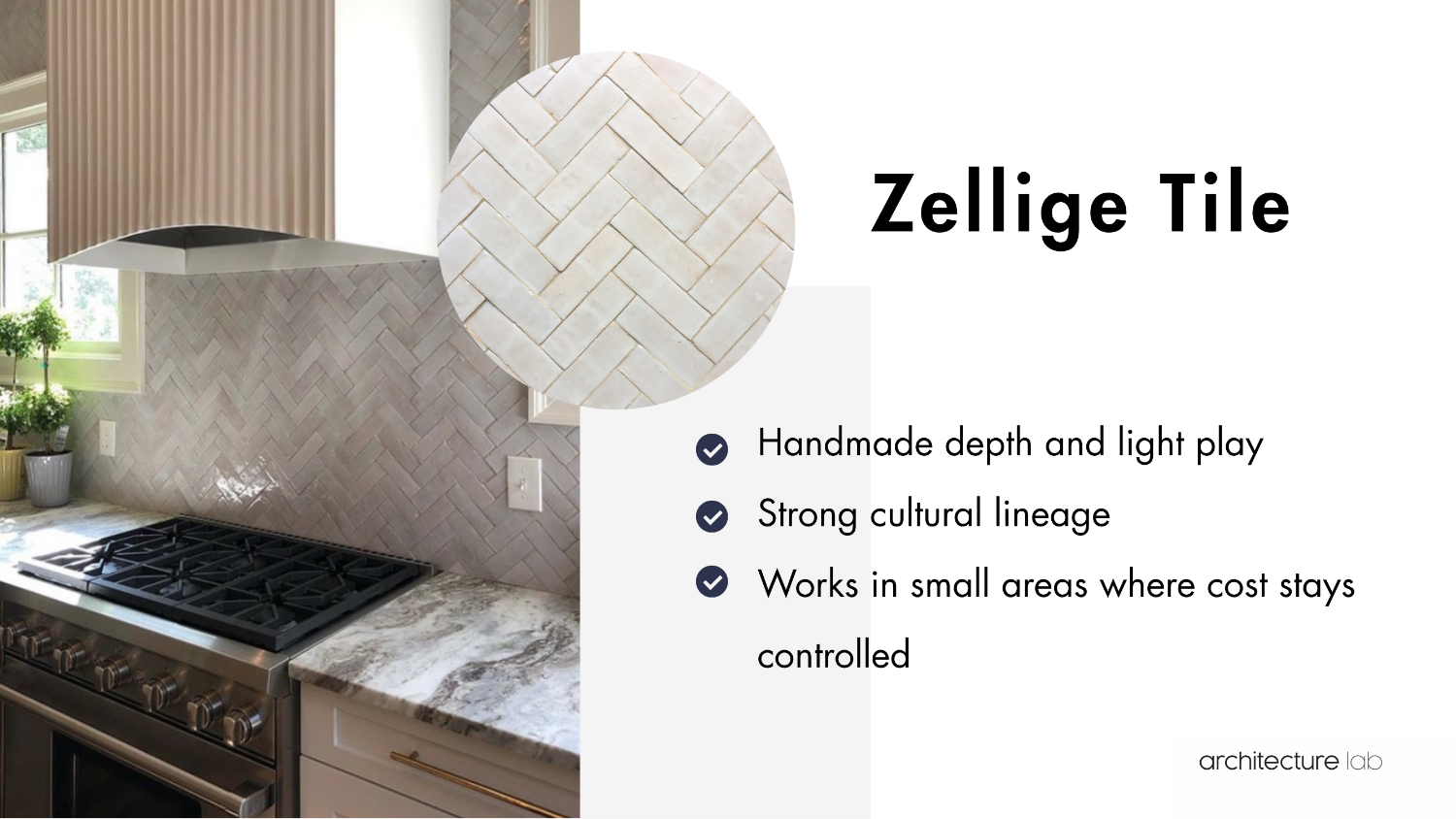
Zellige is a handmade Moroccan glazed terracotta tile cut from kiln-fired pieces and laid with visible variation in edge, tone, and reflection. Zellige is more architectural than mass-market subway tile and more demanding to install. Installed cost often spans $27–$60+ per sq. ft. (approx €23–€52+, £20–£45+). Life on interior walls is often measured in decades.
Best for: backsplashes, bathrooms, fireplaces, bar fronts, feature walls
What We Like
- Handmade depth and light play
- Strong cultural lineage
- Works in small areas where cost stays controlled
What We Don’t Like - Premium labor requirement
- Irregularity frustrates installers used to factory tile
- Floor use needs much more caution than wall use
Glass, cement, and specialty tile families
7. Glass Tile
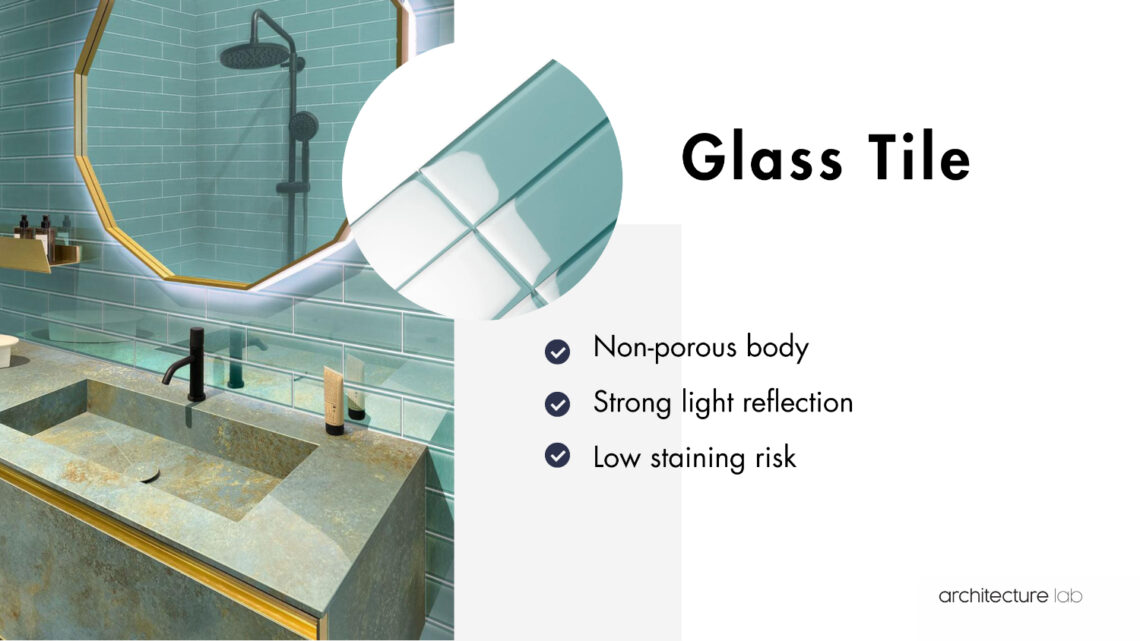
Glass tile is non-porous, color-stable, and bright in low-light spaces. It is strongest on walls and accents rather than high-impact floors. Installed cost usually runs about $20–$100 per sq. ft. (approx €17–€86, £15–£75), and life often reaches 20–50+ years if the substrate and setting materials are correct.
Best for: shower walls, backsplashes, accents, pool waterlines
What We Like
- Non-porous body
- Strong light reflection
- Low staining risk
What We Don’t Like - Chipping risk on edges
- Busy grout pattern in small formats
- Substrate flaws show through translucent tile
8. Cement and Encaustic Cement Tile
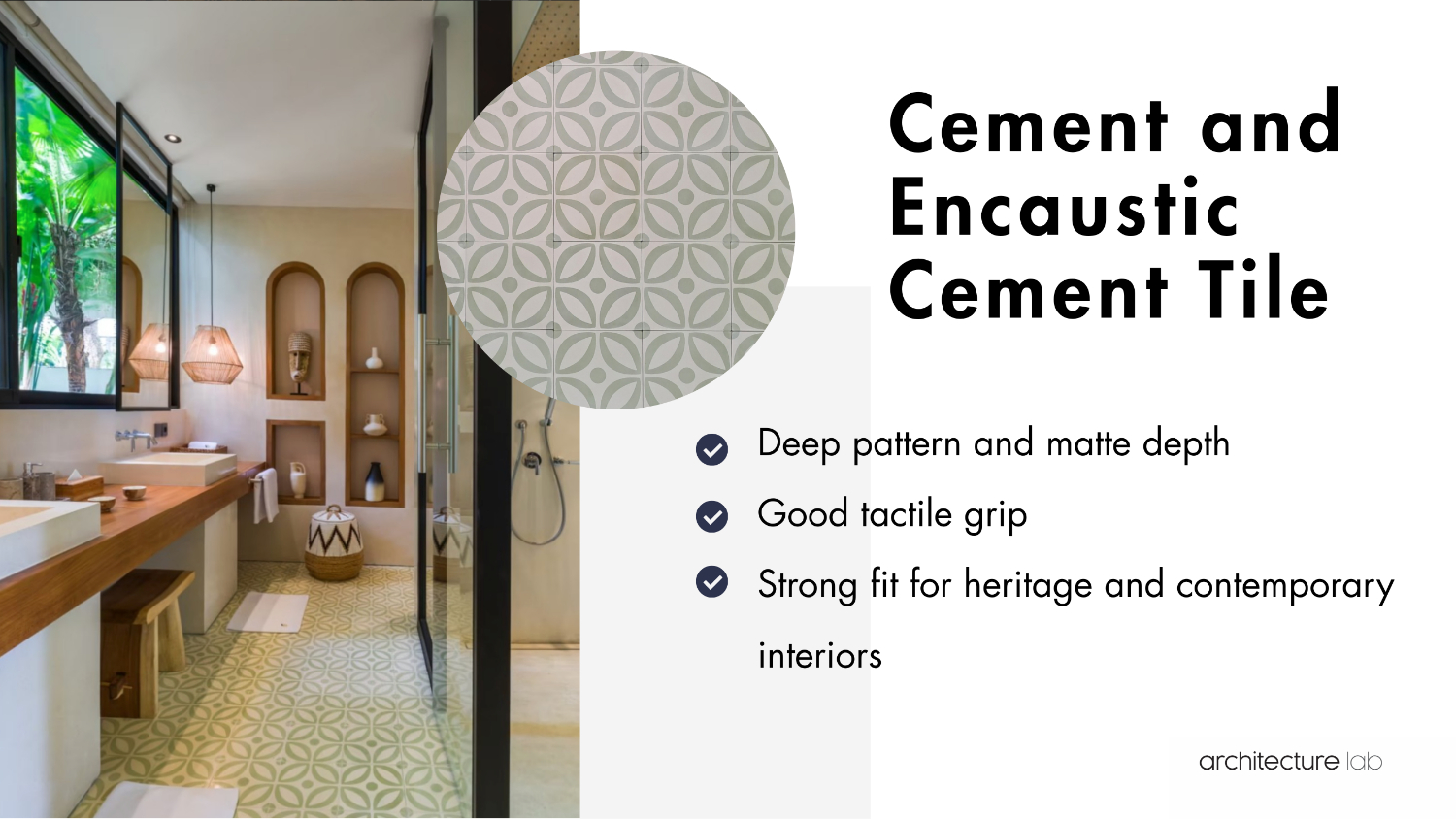
Cement tile is not fired like ceramic. It is pressed from cement, marble dust, sand, and pigments. “Encaustic cement tile” usually means the pattern sits in the body rather than on a glaze. Cement tile offers graphic force and good slip in matte finishes, yet it is porous and acid-sensitive. Installed cost often lands at $20–$50 per sq. ft. (approx €17–€43, £15–£38), and lifespan often reaches 30–75 years with sealing and careful maintenance.
Best for: kitchens, powder rooms, entry floors, small statement areas
What We Like
- Deep pattern and matte depth
- Good tactile grip
- Strong fit for heritage and contemporary interiors
What We Don’t Like - Sealing is mandatory
- Acid etching risk
- Patterned floors punish poor layout discipline
9. Terrazzo Tile
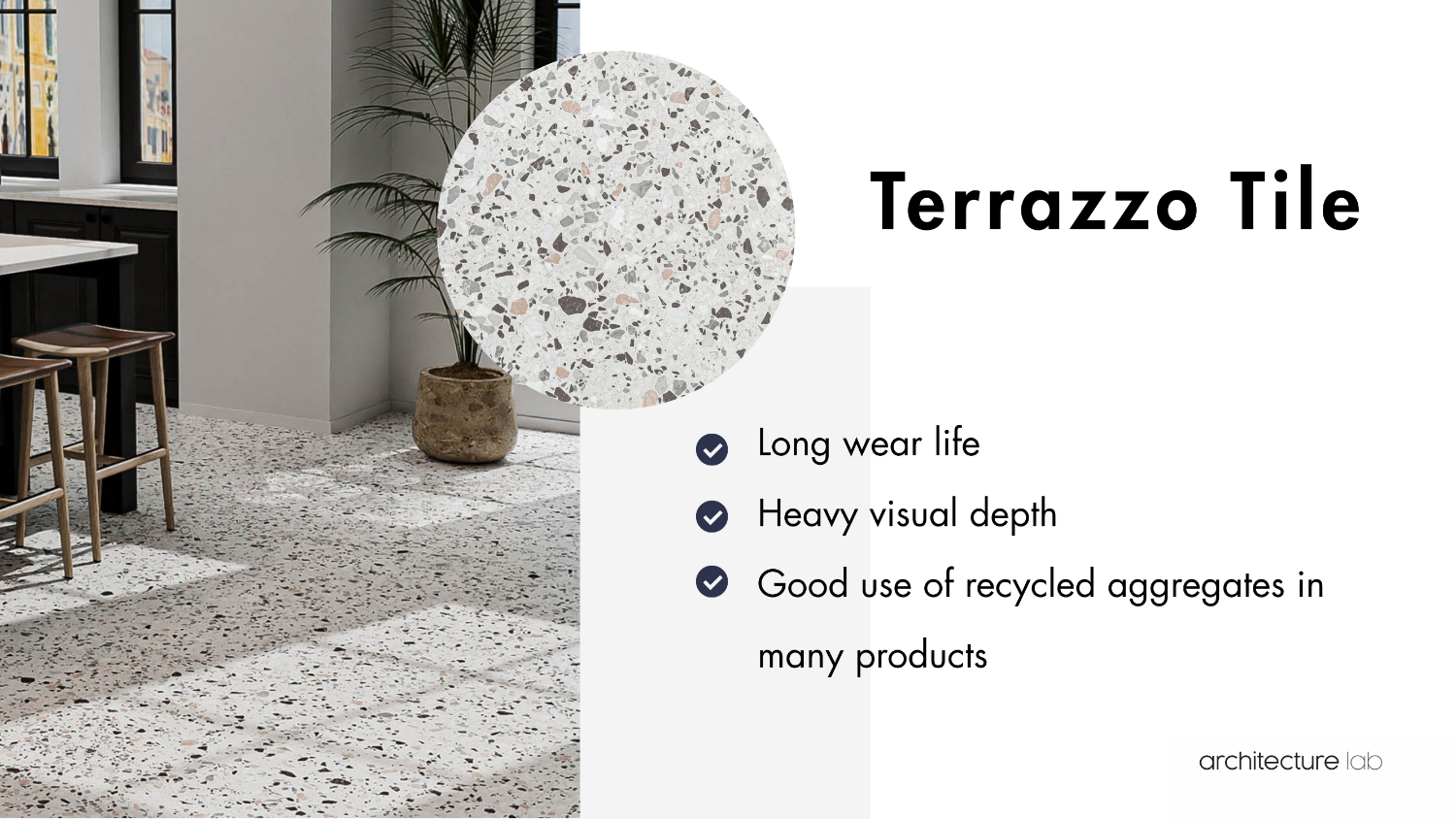
Terrazzo tile uses marble, glass, quartz, or porcelain chips in a cement or epoxy matrix, then grinds or polishes the surface. Tile-format terrazzo is cheaper than poured terrazzo and easier to stage on small jobs. Installed cost usually runs around $15–$35 per sq. ft. (approx €13–€30, £11–£26) for tile, while long life often reaches 50–75+ years.
Best for: hallways, retail, hospitality, bathrooms, kitchens, public interiors
What We Like
- Long wear life
- Heavy visual depth
- Good use of recycled aggregates in many products
What We Don’t Like - Higher weight than many alternatives
- Hard surface underfoot
- Premium detailing cost at corners and transitions
10. Metal Tile
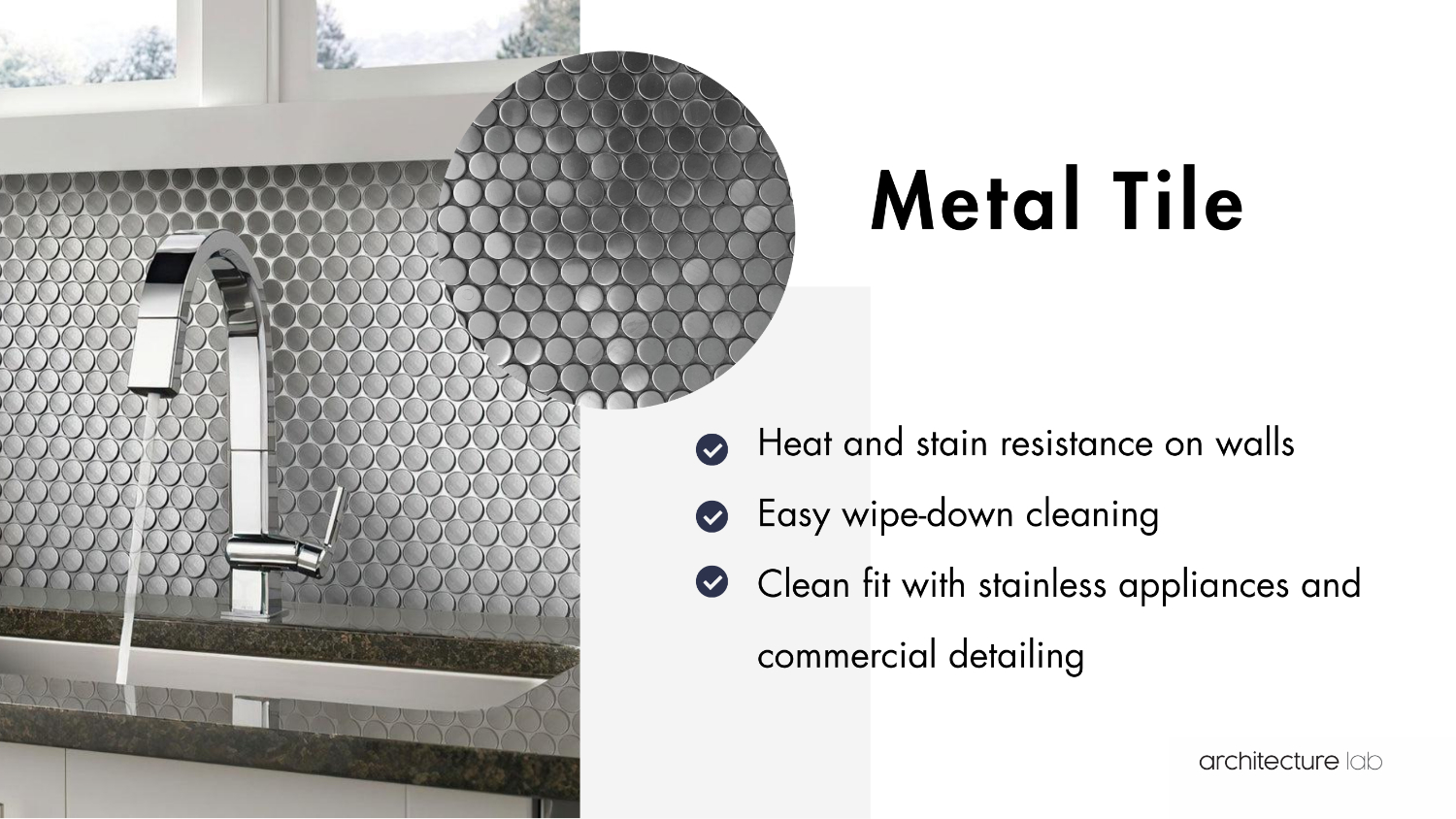
Metal tile usually means stainless steel, aluminum, copper, or brass tile for vertical surfaces. It is less a general floor material and more a specialty wall finish. Installed cost often ranges from $25–$70 per sq. ft. (approx €22–€60, £19–£53), and wall lifespan often reaches decades in dry interiors.
Best for: kitchen backsplashes, bar fronts, industrial or hospitality accents
What We Like
- Heat and stain resistance on walls
- Easy wipe-down cleaning
- Clean fit with stainless appliances and commercial detailing
What We Don’t Like - Scratch visibility
- Limited residential warmth
- Rare choice for full-height large surfaces outside specific styles
Natural stone tile families
Natural stone behaves differently from ceramic because it lacks the repeatable consistency of factory-made bodies. Its variability demands more structural planning, more on-site mockups, and a more realistic approach to maintenance over time. Both TCNA and CTEF highlight a critical distinction: stone tile installations require greater substrate stiffness—typically L/720 deflection, compared to L/360 for ceramic or porcelain. That structural gap accounts for a large share of cracked-stone failures in built work. Tile trade programs, catalogs, and technical portals now reflect this distinction, embedding deflection requirements directly into product filters and substrate compatibility data.
11. Marble Tile
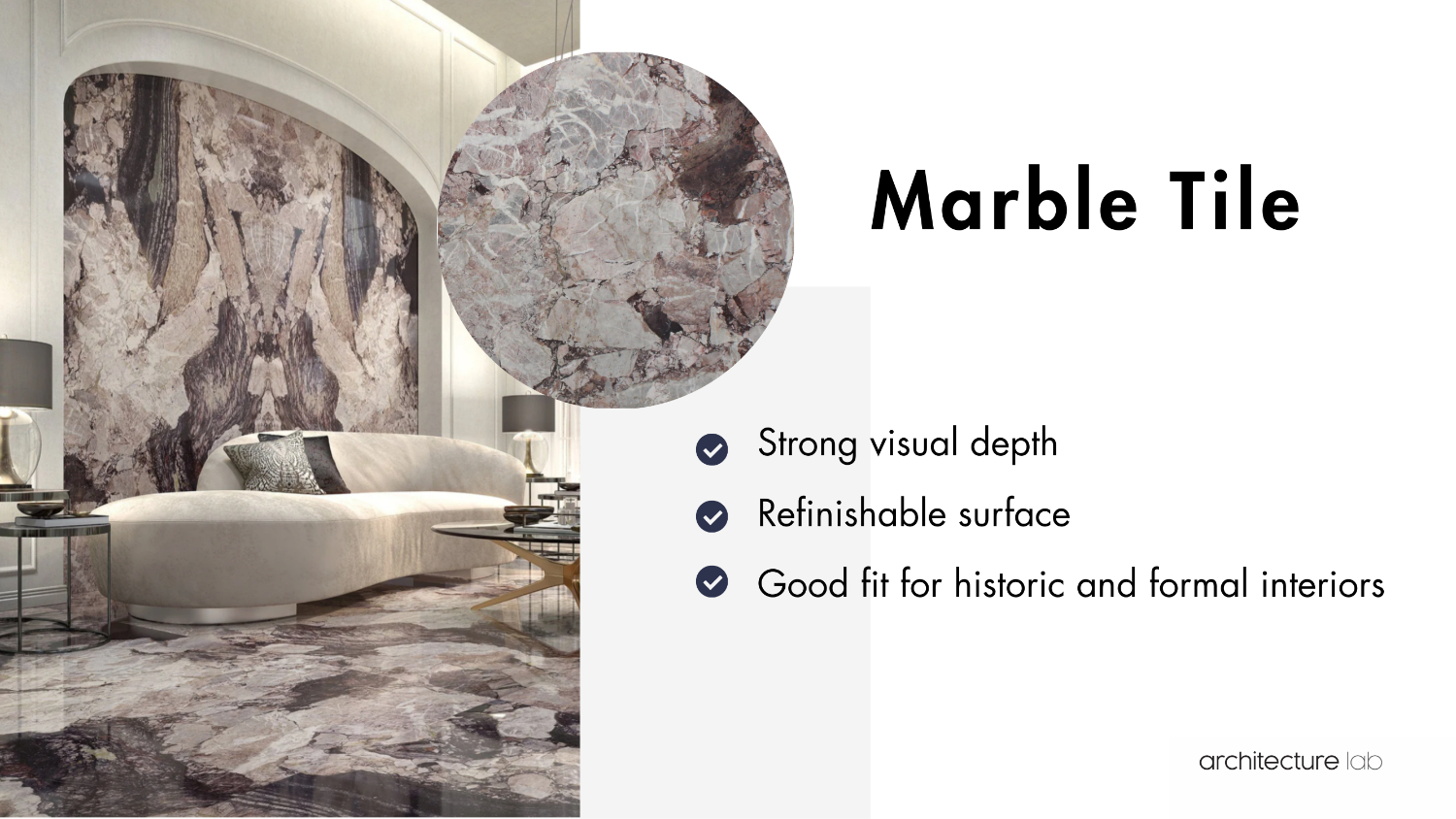
Marble is the classic luxury stone tile. It gives deep veining and a polished or honed finish that few manufactured materials match. It is softer and more acid-sensitive than granite or porcelain. Installed cost usually runs about $10–$40 per sq. ft. (approx €9–€34, £8–£30), and well-maintained life often reaches 50–100+ years.
Best for: foyers, powder rooms, vanities, fireplace surrounds, lower-abuse floors
What We Like
- Strong visual depth
- Refinishable surface
- Good fit for historic and formal interiors
What We Don’t Like - Etches under acids
- Needs sealing
- Polished finishes get slick when wet
12. Granite Tile
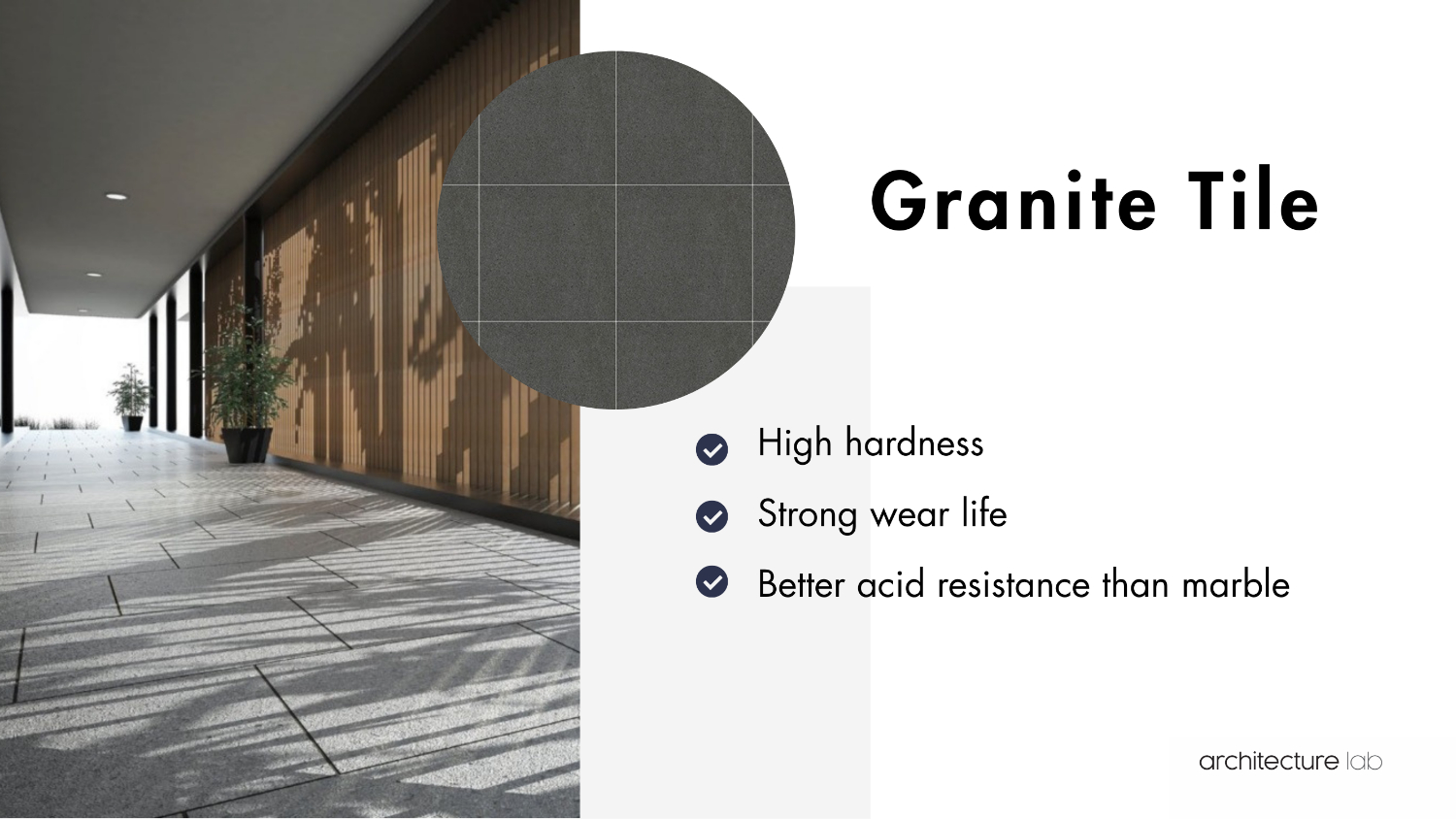
Granite is one of the hardest common stone tiles used in interiors. It resists heat, scratching, and heavy wear better than many other stones, though sealing still matters. Installed cost often falls around $15–$55 per sq. ft. (approx €13–€47, £11–£41), and life often reaches 75–100+ years.
Best for: kitchens, entries, commercial lobbies, heavy-use floors
What We Like
- High hardness
- Strong wear life
- Better acid resistance than marble
What We Don’t Like - Heavier cutting and handling
- Regular sealing still matters
- Polished look can feel formal or cold in small rooms
13. Granite Tile
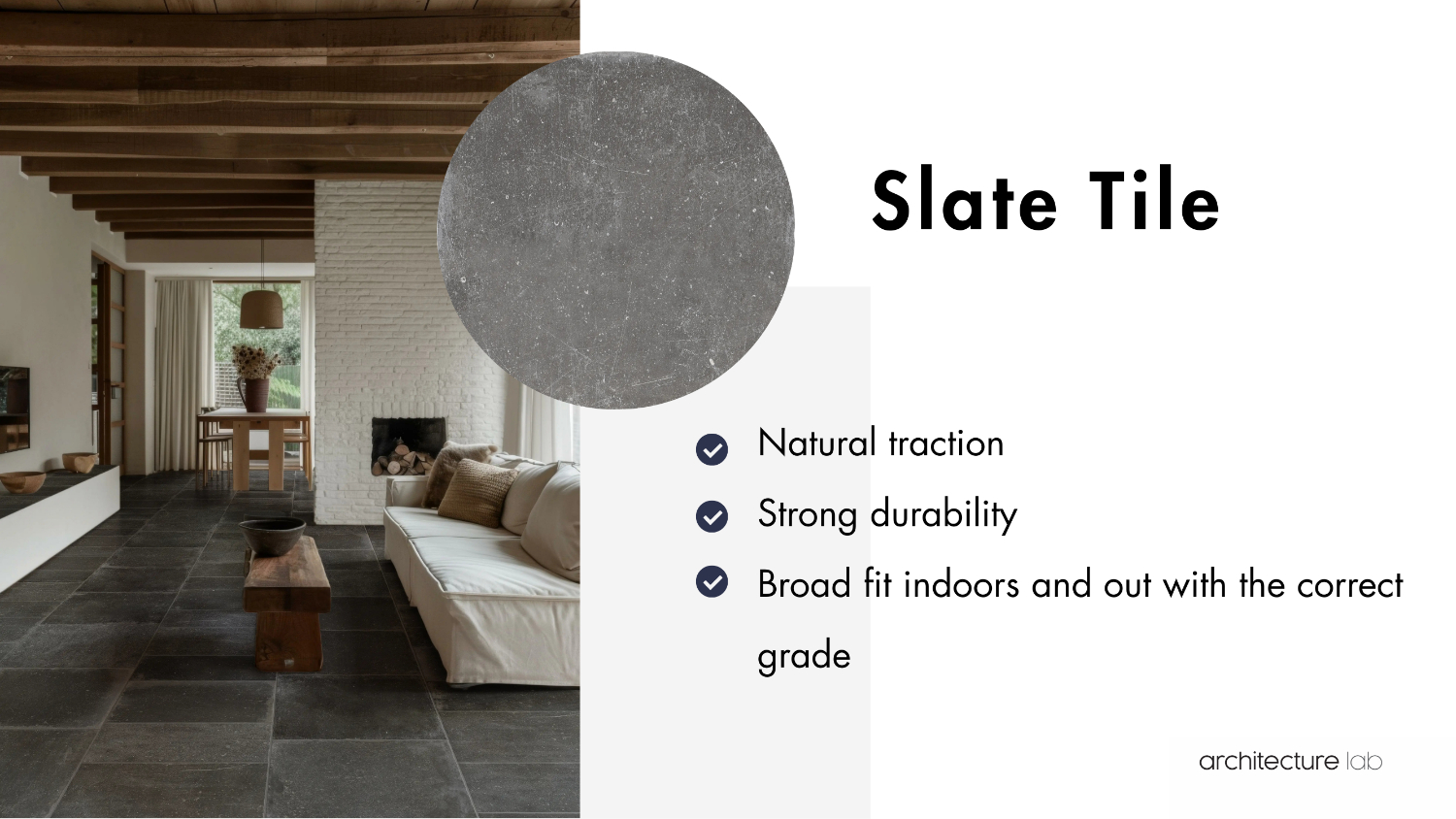
Slate is a dense metamorphic stone with a cleft texture that often gives better grip than polished stones. It is one of the most practical natural-stone floor choices. Installed cost usually spans $15–$50 per sq. ft. (approx €13–€43, £11–£38), and life often reaches 50–100+ years.
Best for: mudrooms, bathrooms, entries, patios, earthy contemporary interiors
What We Like
- Natural traction
- Strong durability
- Broad fit indoors and out with the correct grade
What We Don’t Like - Cleft face traps dirt
- Color and thickness vary by lot
- Some slats delaminate if the grade is poor
14. Limestone Tile
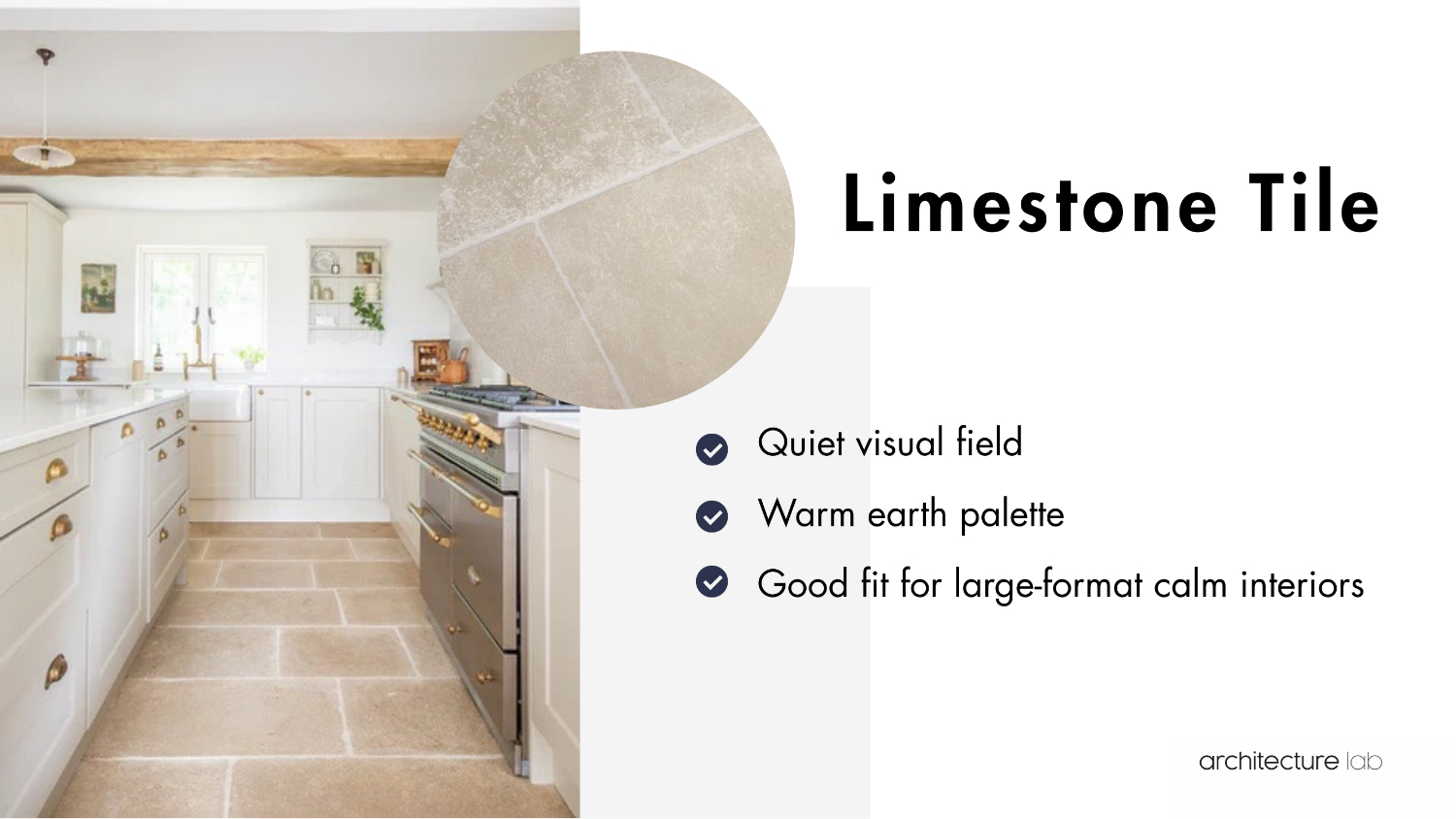
Limestone is a sedimentary stone with a softer, quieter appearance than granite or slate. It gives a soft mineral look that architects often use for warm, restrained rooms. Installed cost usually lands around $12–$35 per sq. ft. (approx €10–€30, £9–£26), and life often reaches 30–75+ years with sealing and mild cleaners.
Best for: spa-like bathrooms, living areas, light- to medium-traffic interiors
What We Like
- Quiet visual field
- Warm earth palette
- Good fit for large-format calm interiors
What We Don’t Like - Acid sensitivity
- Slip risk rises on polished finishes
- Some varieties fail in freeze-thaw paving conditions
15. Travertine Tile
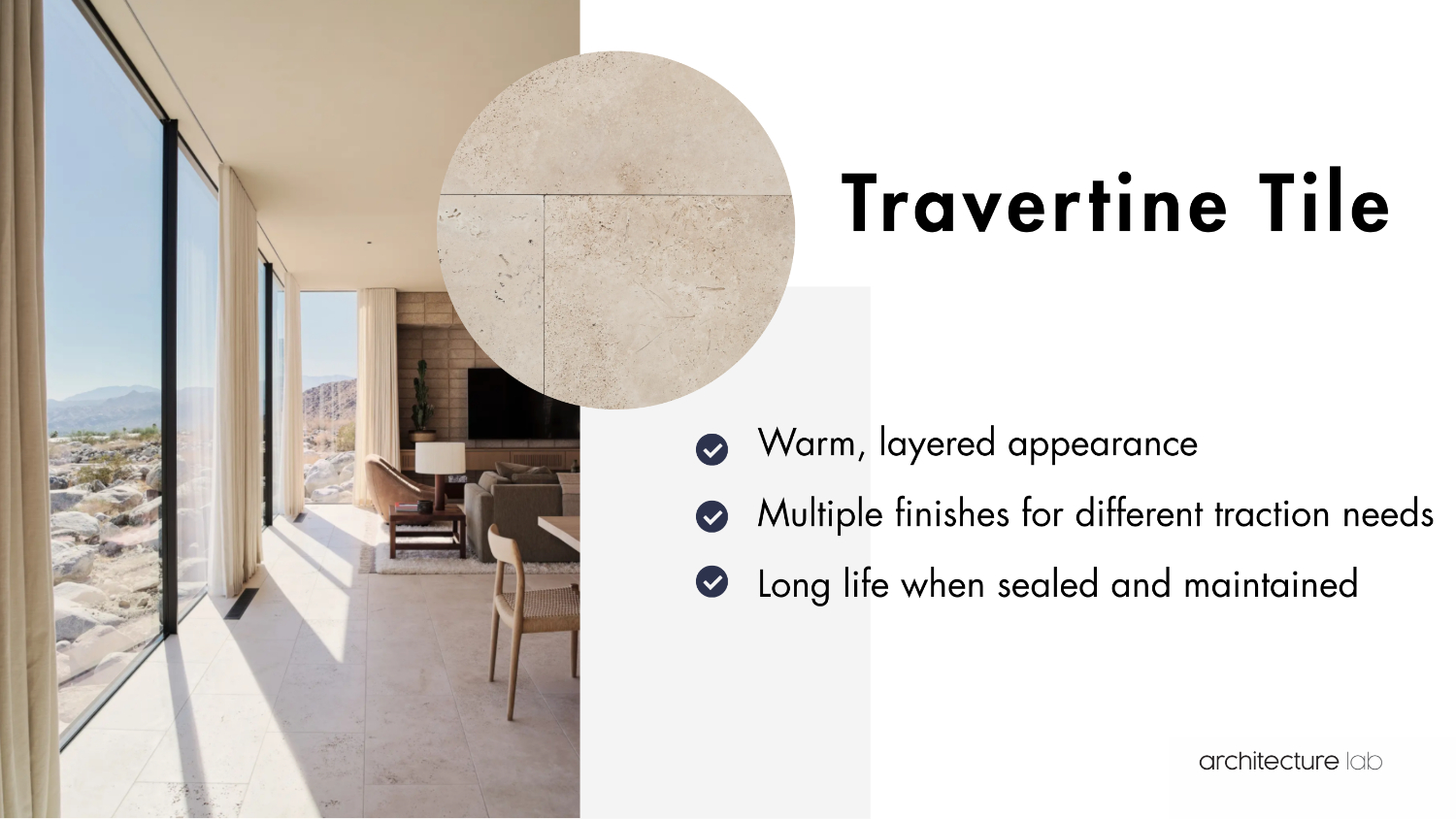
Travertine is a limestone subtype with pores and banding that give it a lighter, stratified look. It remains a staple in Mediterranean and resort-style interiors. Installed cost usually runs around $17–$35 per sq. ft. (approx €15–€30, £13–£26) for standard grades, with premium work moving higher. Life often reaches 50–100+ years.
Best for: bathrooms, hallways, patios, pool decks, old-world interiors
What We Like
- Warm, layered appearance
- Multiple finishes for different traction needs
- Long life when sealed and maintained
What We Don’t Like - Filling and resealing needs
- Acid etching risk
- Open pores read as wear if maintenance slips
16. Quartzite Tile
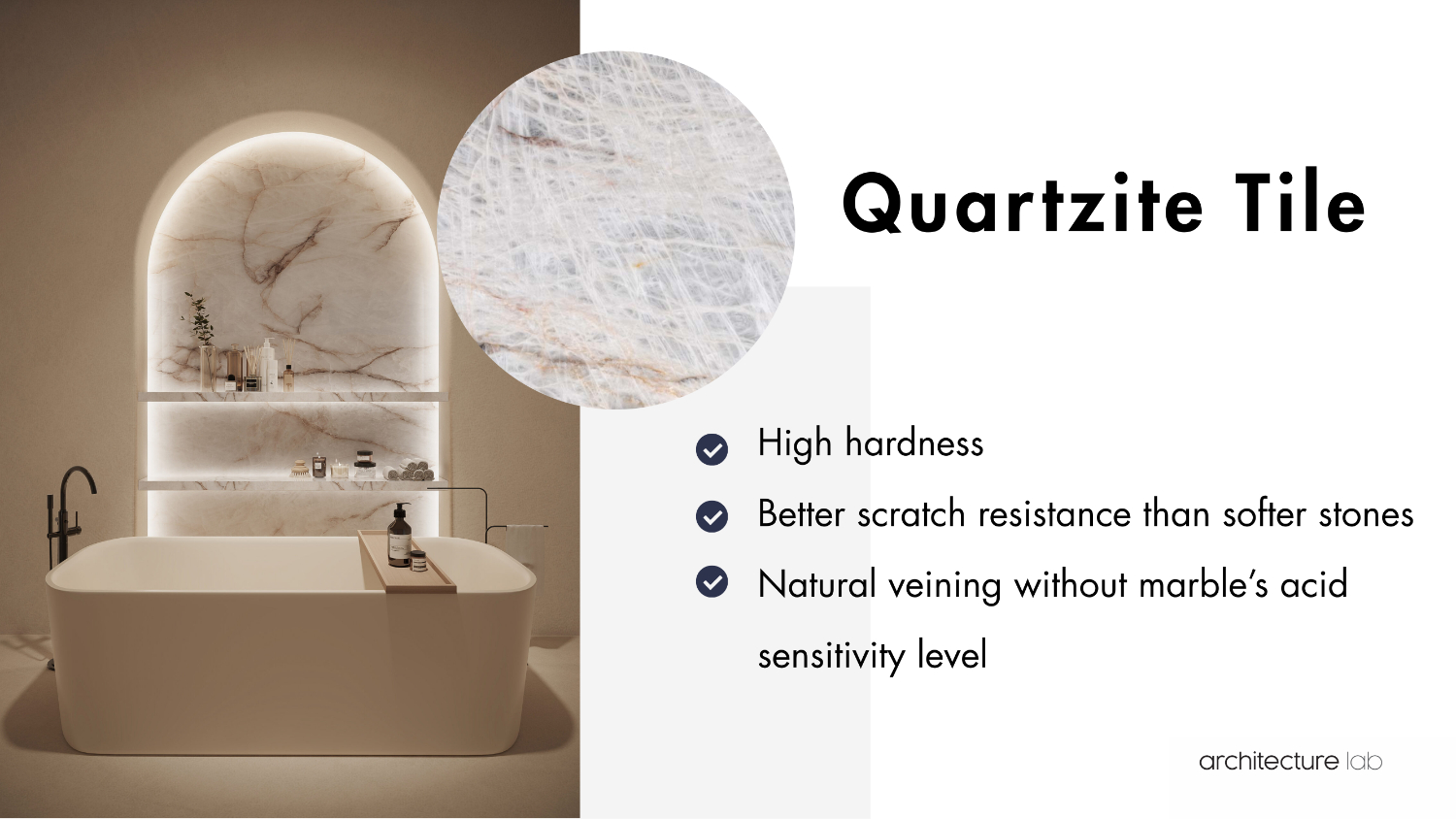
Quartzite is a metamorphic stone formed from sandstone, and it is harder than many stones people compare it with. It gives a natural look closer to stone slab culture than to overtly decorative tile. Installed cost usually sits around $20–$50+ per sq. ft. (approx €17–€43+, £15–£38+), and life often reaches 50–100+ years.
Best for: high-end kitchens, halls, fireplaces, heavy-use spaces that still want natural stone
What We Like
- High hardness
- Better scratch resistance than softer stones
- Natural veining without marble’s acid sensitivity level
What We Don’t Like - Premium cost
- Sealing still matters
- Market confusion with engineered quartz leads to bad buying decisions
17. Sandstone Tile.
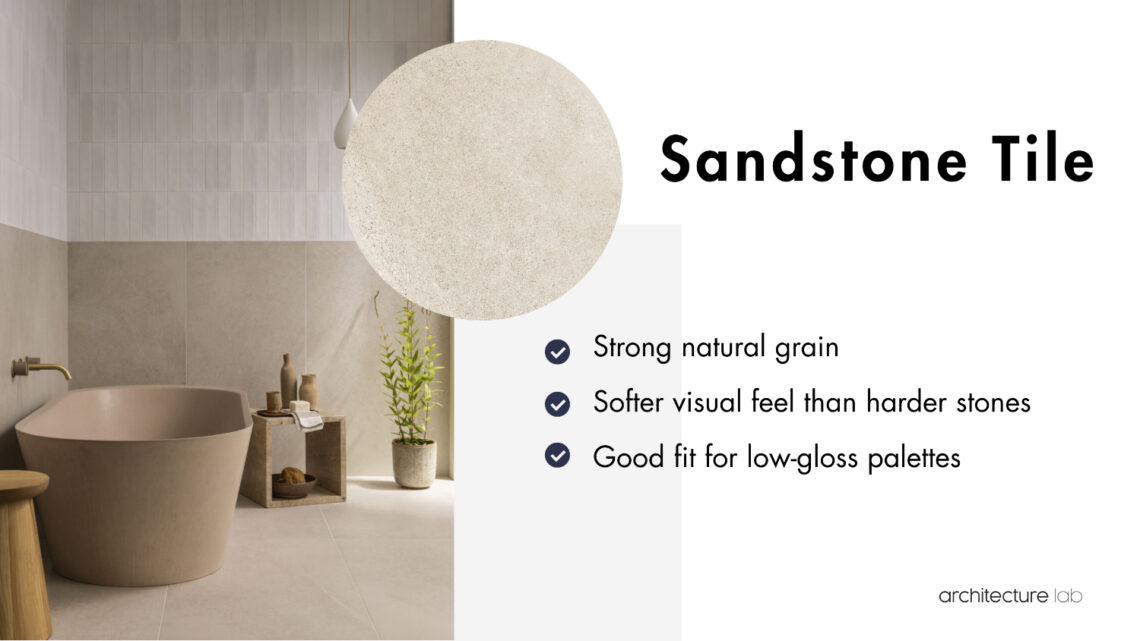
Sandstone is a sedimentary stone with grain, warmth, and a softer, more weathered look than granite or quartzite. It works best where the design wants tactility more than polish. Installed cost often falls around $15–$40 per sq. ft. (approx €13–€34, £11–£30), and life usually runs 30–75+ years depending on density and exposure.
Best for: rustic interiors, garden rooms, patios in suitable climates, textured wall applications
What We Like
- Strong natural grain
- Softer visual feel than harder stones
- Good fit for low-gloss palettes
What We Don’t Like - Higher porosity than denser stones
- Sealing burden
- Abrasion and staining risk in hard-use interiors
Resilient and modular tile families
These next categories stretch the word “tile” beyond ceramic and stone. They still matter in specification because cost, acoustics, speed, comfort, and replacement strategy often point away from hard tile.
18. Luxury Vinyl Tile
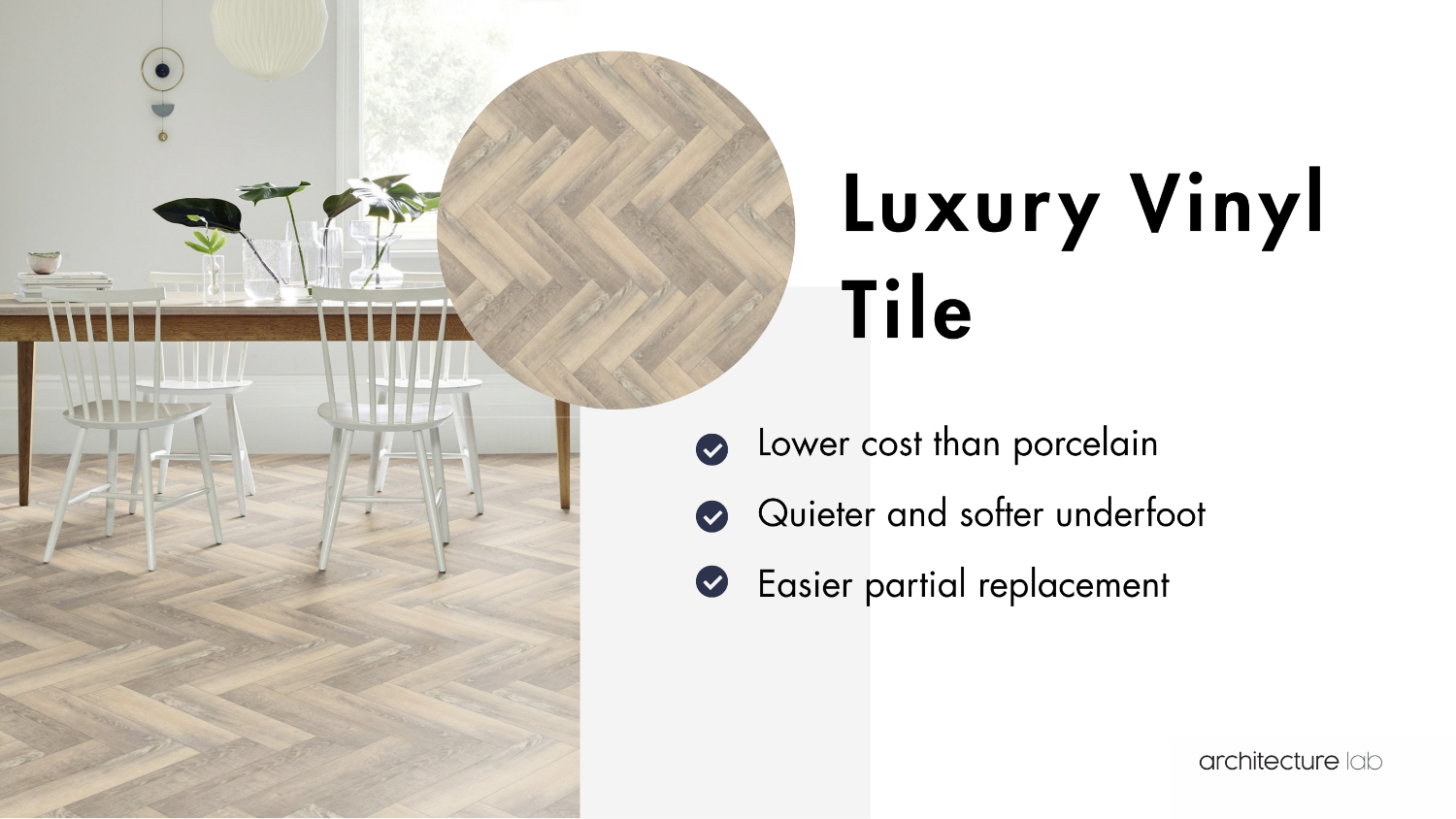
Luxury Vinyl Tile, or LVT, is a resilient, modular floor that mimics stone, ceramic, and wood through a printed layer and protective wear layer. It trades permanence for comfort, speed, and lower installation cost. Installed cost usually runs around $4–$10 per sq. ft. (approx €3–€9, £3–£8), and life often reaches 15–25 years.
Best for: kitchens, rentals, basements, retail, fast-turn fit-outs
What We Like
- Lower cost than porcelain
- Quieter and softer underfoot
- Easier partial replacement
What We Don’t Like - Shorter life than true tile
- Printed surface lacks the depth of real stone or ceramic
- Heat and gouging remain concerns
19. Vinyl Composition Tile
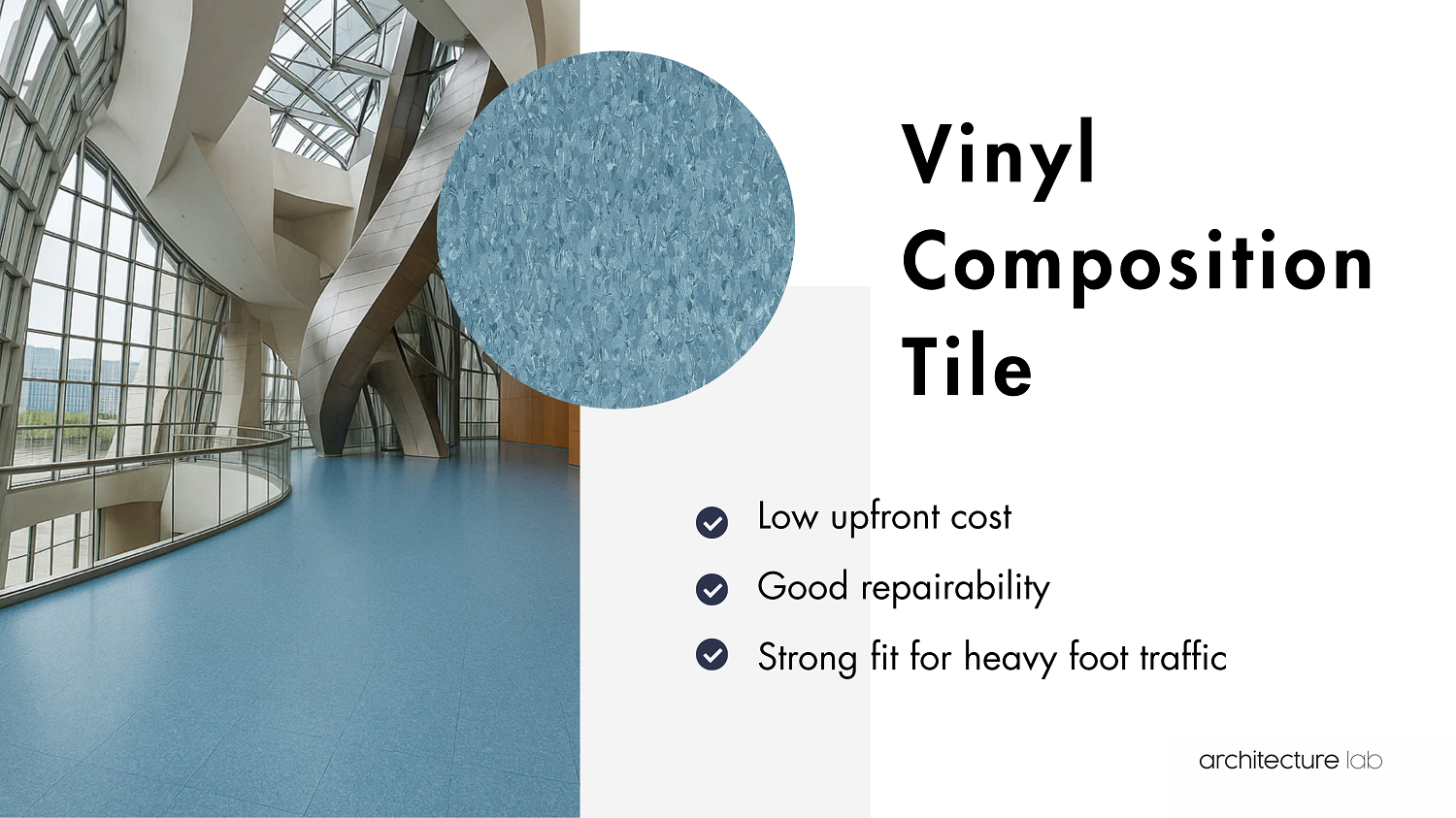
VCT is the workhorse resilient tile of schools, hospitals, and older commercial interiors. It stays popular because it is cheap, tough, and easy to replace tile by tile, though finish maintenance is part of the deal. Installed cost usually sits around $2.50–$6.50 per sq. ft. (approx €2–€6, £2–£5), and life often runs 10–25+ years.
Best for: schools, healthcare, back-of-house, tight-budget commercial projects
What We Like
- Low upfront cost
- Good repairability
- Strong fit for heavy foot traffic
What We Don’t Like - Ongoing strip-and-finish maintenance
- Less design depth than LVT
- More institutional appearance
20. Linoleum Tile
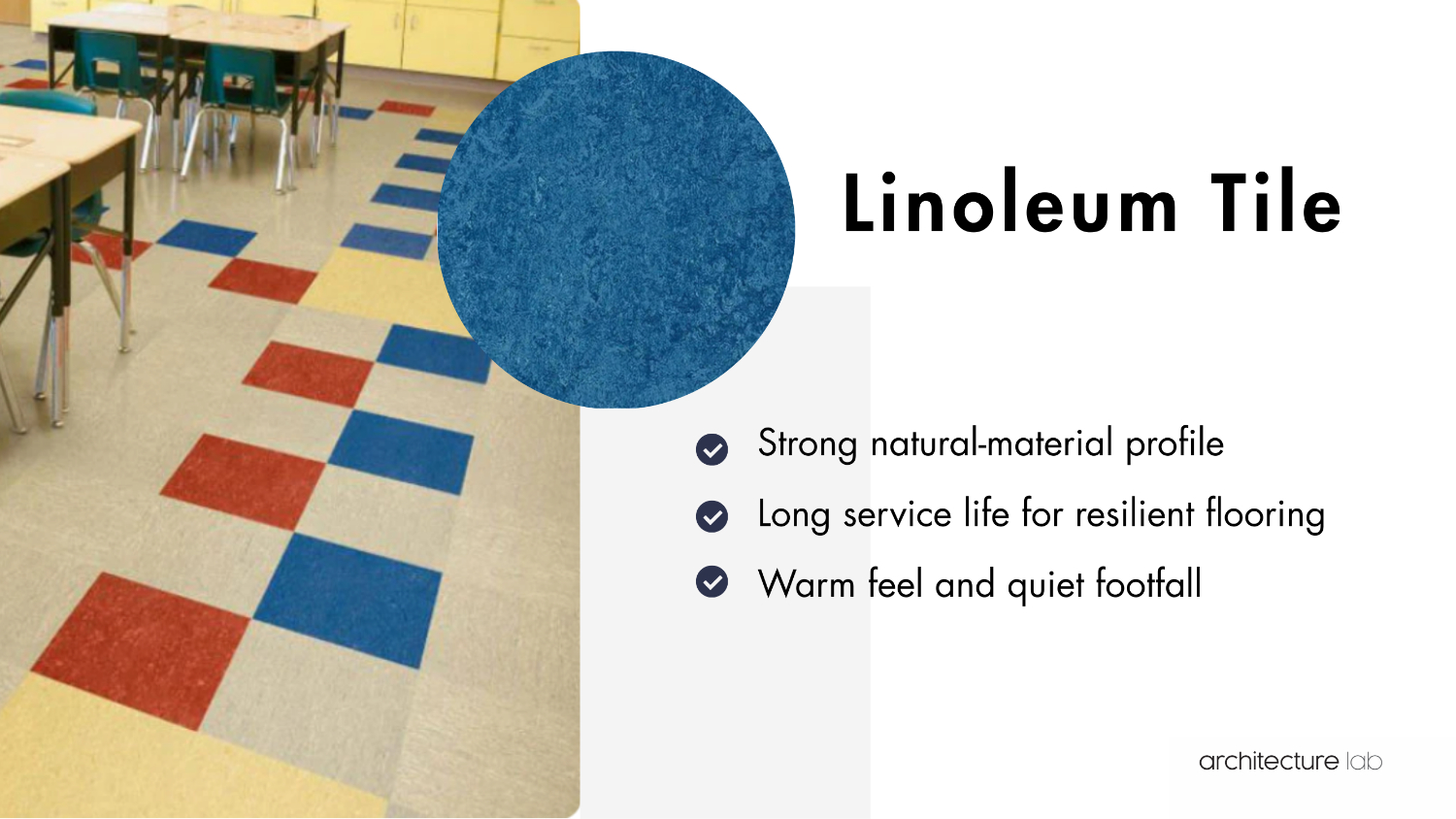
Linoleum tile is a natural, resilient floor made largely from linseed oil, wood flour, limestone, jute, and pigments. It is older than vinyl, greener in material profile, and still strong in education and healthcare fit-outs. Installed cost usually lands around $4–$11 per sq. ft. (approx €3–€9, £3–£8), and service life often reaches 20–30+ years.
Best for: schools, healthcare, family kitchens, eco-led interiors
What We Like
- Strong natural-material profile
- Long service life for resilient flooring
- Warm feel and quiet footfall
What We Don’t Like - Smaller market than vinyl
- Moisture control still matters
- Style language reads more matte and material-led than glossy luxury finishes
21. Rubber Tile
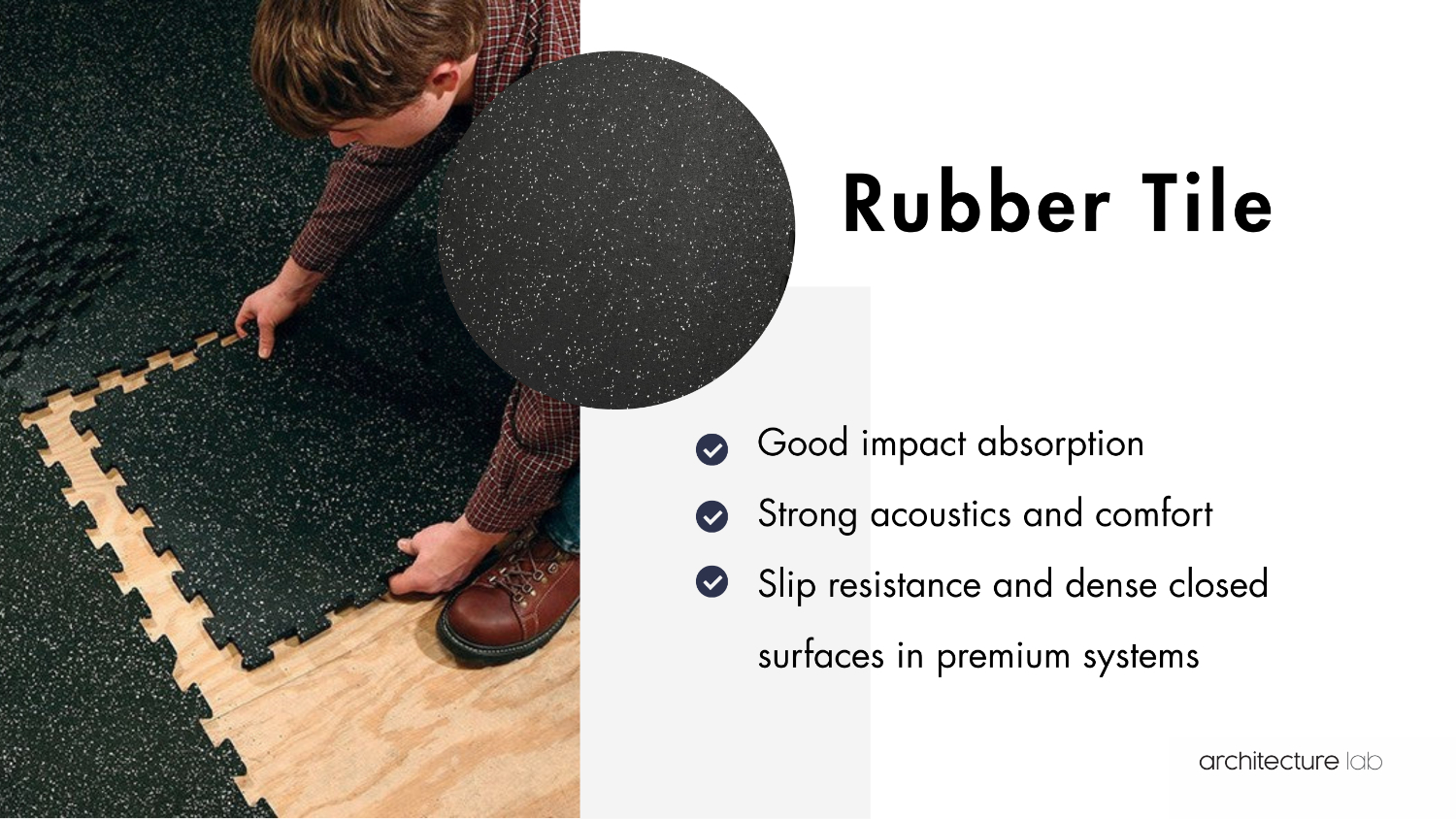
Rubber tile is an elastic, high-impact floor used in gyms, schools, transit, healthcare, and some commercial interiors. Installed cost usually runs around $4–$12 per sq. ft. (approx €3–€10, £3–£9), and life often reaches 10–20+ years in general use, with premium commercial systems lasting far longer.
Best for: fitness areas, play spaces, healthcare, and circulation zones that need comfort and sound control
What We Like
- Good impact absorption
- Strong acoustics and comfort
- Slip resistance and dense closed surfaces in premium systems
What We Don’t Like - Limited residential appeal in many styles
- Initial odor in some products
- Cost sits above basic resilient floors
22. Cork Tile
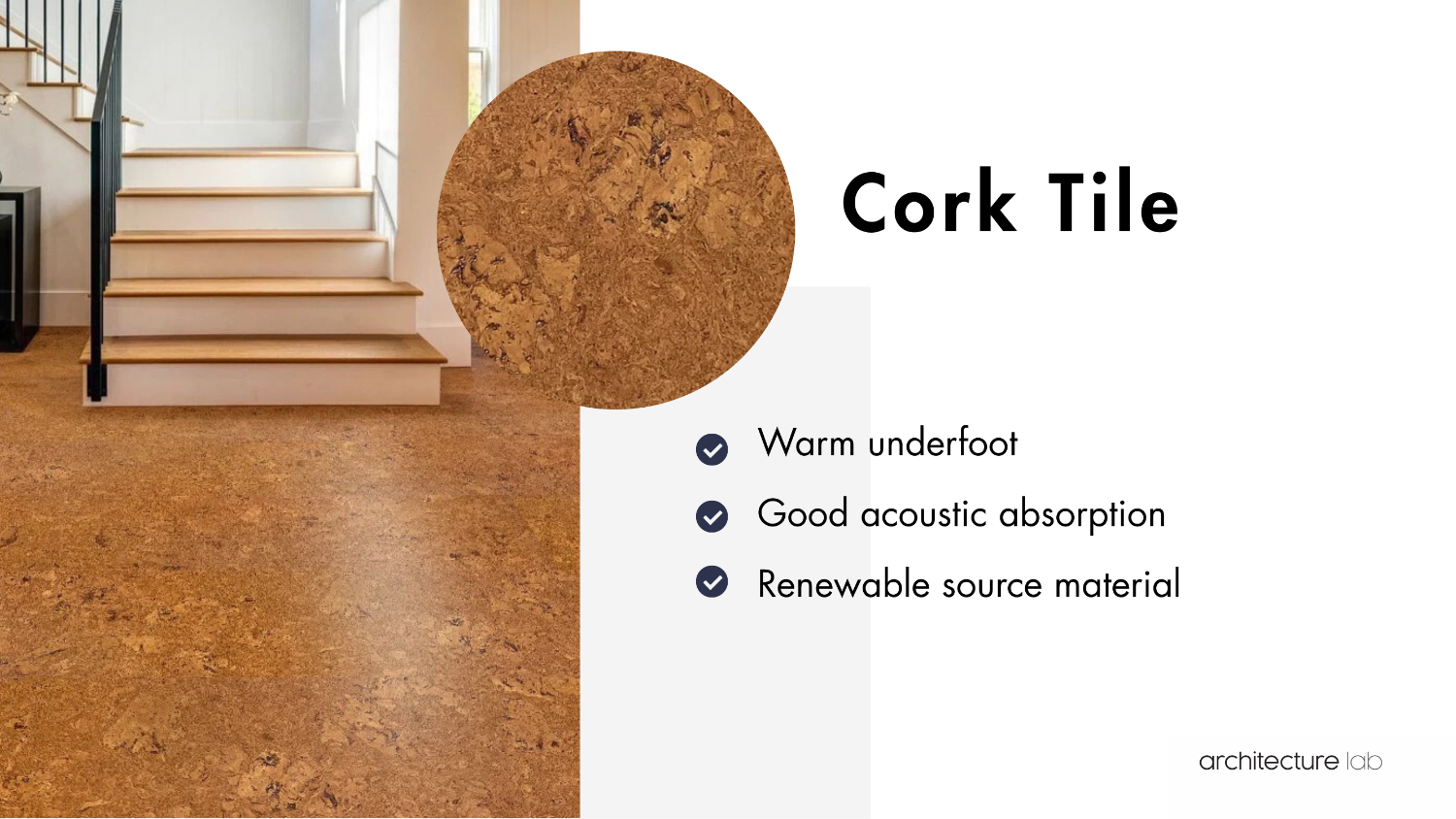
Cork tile is a warm, compressible, resilient floor made from cork oak bark. It is one of the few tile products that changes the acoustic and thermal character of a room immediately. Installed cost usually spans $5–$19 per sq. ft. (approx €4–€16, £4–£14), and lifespan ranges from about 15–40+ years depending on product quality and moisture exposure.
Best for: bedrooms, home offices, libraries, family rooms, quiet interiors
What We Like
- Warm underfoot
- Good acoustic absorption
- Renewable source material
What We Don’t Like - Dents and scratches more easily than hard tile
- Standing water is a real threat
- Sun fade and resealing need planning
23. Carpet Tile
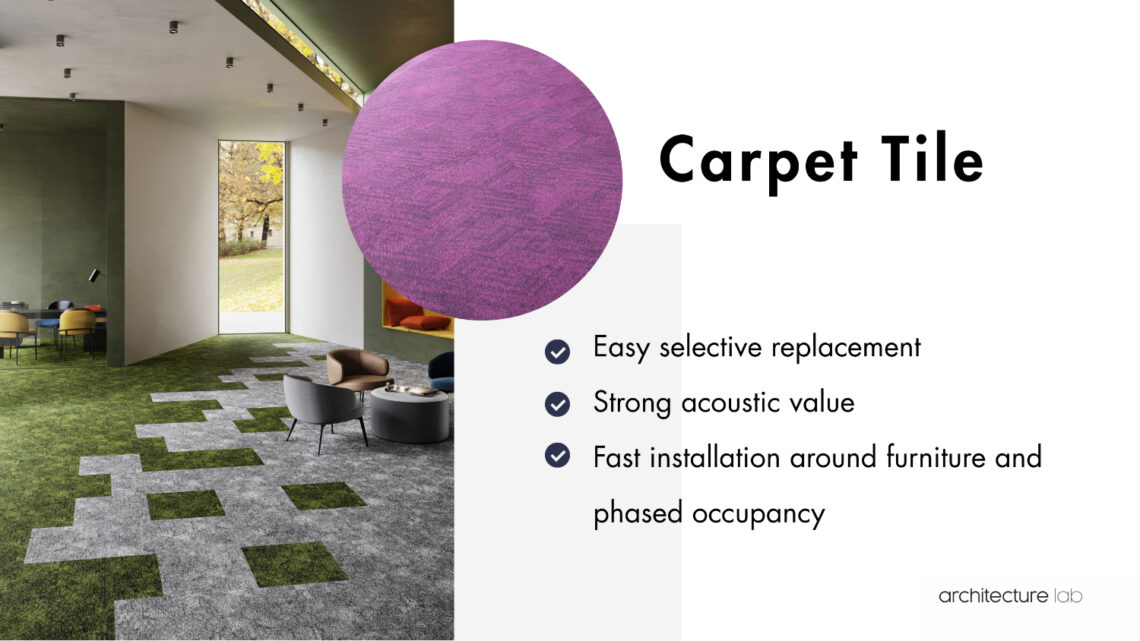
Carpet tile is a modular textile floor rather than a hard tile, yet it belongs in this guide because it is one of the most common tile-format specifications in offices and educational interiors. Installed cost usually ranges from $3–$16 per sq. ft. (approx €3–€14, £2–£12), and lifespan often runs 7–15 years.
Best for: offices, classrooms, tenant fit-outs, spaces that need fast tile-by-tile replacement
What We Like
- Easy selective replacement
- Strong acoustic value
- Fast installation around furniture and phased occupancy
What We Don’t Like - Shorter life than hard tile
- Seams remain visible
- Poor fit for wet areas
How to choose the right tile type
Tile selection gets easier when the sequence is right.
Ceramic and porcelain projects should start with wet exposure, traffic, and slip requirements. DCOF matters in wet interior floors, PEI matters for glazed wear surfaces, and polished surfaces need real caution in bathrooms and entries. Large format reduces grout lines, yet smaller mosaics still win on shower floors because extra grout joints help traction and drainage.
Natural stone projects should start with structure and maintenance tolerance. Stone wants a flatter substrate, more rigidity, sealing discipline, mockups, and lot blending. Honed finishes usually age better than polished finishes in family use. Sealing is not a cure for wrong material choice.
Resilient and modular projects should start with lifecycle and replacement logic. If a school or office expects partial replacement, phased work, better acoustics, or soft walking comfort, LVT, linoleum, rubber, cork, or carpet tile may beat ceramic on real project value even if ceramic lasts longer. Guidance from the Natural Stone Institute and the Carpet and Rug Institute makes the same point from different angles: material choice must match use, maintenance staff, and traffic profile, not just the look board.
A practical rule helps. Bathrooms and wet rooms usually point to porcelain, mosaic, textured slate, or correctly specified stone. Kitchens often point to porcelain, quarry, terrazzo tile, LVT, or linoleum, depending on budget and comfort goals. Quiet rooms often point to cork or carpet tile. Service-heavy commercial areas often point to quarry, VCT, rubber, or robust porcelain.
Resources
- ANSI / TCNA – “Standard Specifications for Ceramic Tile (ANSI A137.1:2022)”
- Tile Council of North America – “Deflection and Substrate Stiffness FAQ”
- ASTM International – “Ceramic Tile Testing Overview and C373 Reference” (ANSI Blog, 2024)
- Tile of Spain – “Spanish Ceramics Classification Guide”
- Natural Stone Institute – “Travertine, Limestone, and Dolomitic Limestone Technical Notes”
- Forbo Flooring Systems – “Linoleum and Marmoleum Service-Life Data”
- Nora Systems – “Rubber Flooring Product and Durability Information.”
- Carpet and Rug Institute – “Carpet Tile Construction and Performance Guidance”
- HomeGuide & HomeAdvisor – “Tile Floor Cost and Material Cost Guides” (2025–2026)
- National Terrazzo and Mosaic Association – “Terrazzo FAQ and Epoxy System Notes”
- D and G Flooring – “Mosaic Tile Format and Cost Guide” (2026)
- Cement Tile Shop / BongTiles – “Cement Tile Maintenance and Technical Notes”
- Flooring Clarity – “Zellige Cost and Installation Guidance”
- Bob Vila – “Glass Tile Properties and Installation Notes” (2025)
- HomeAdvisor – “Natural Stone Flooring Guide: Granite, Marble, Slate, Travertine, Limestone, Quartzite, Sandstone”

