

Architects: Juan O’Gorman, Gustavo Saavedra, Juan Martínez de Velasco
Area: 16,000 m² (172,223 ft²)
Year: 1956
Photography: Thomas Guignard, Garrette Ziegler, Adlai Pulido, Maria Gonzalez, Arquine, The Metropole, Wikimedia Commons, Lobaluna, Noahedits, ProtoplasmaKid, Dead.rabbit, Alejandro, Armineaghayan
Advisors: Juan Íñiguez, Rafael Carrasco Puente, José María Luján
UNESCO World Heritage: 2007
City: Mexico City
Country: Mexico
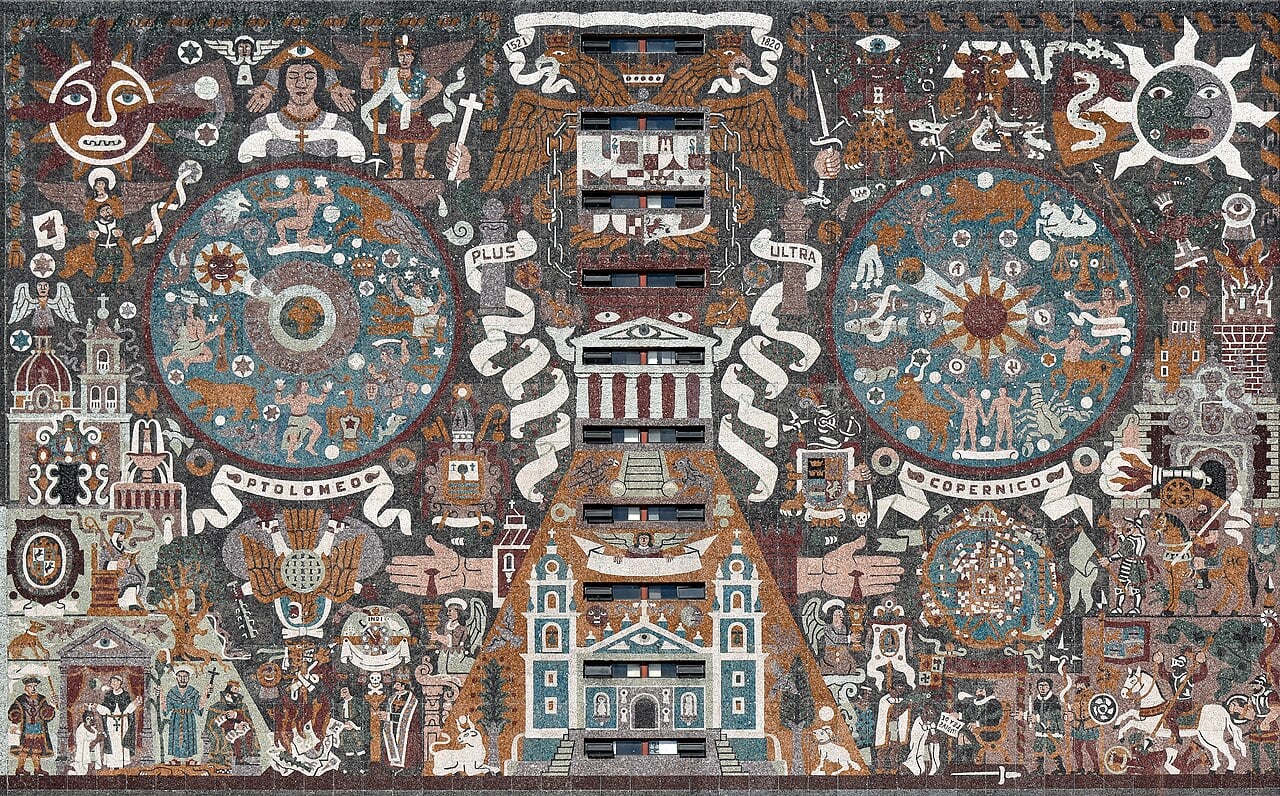
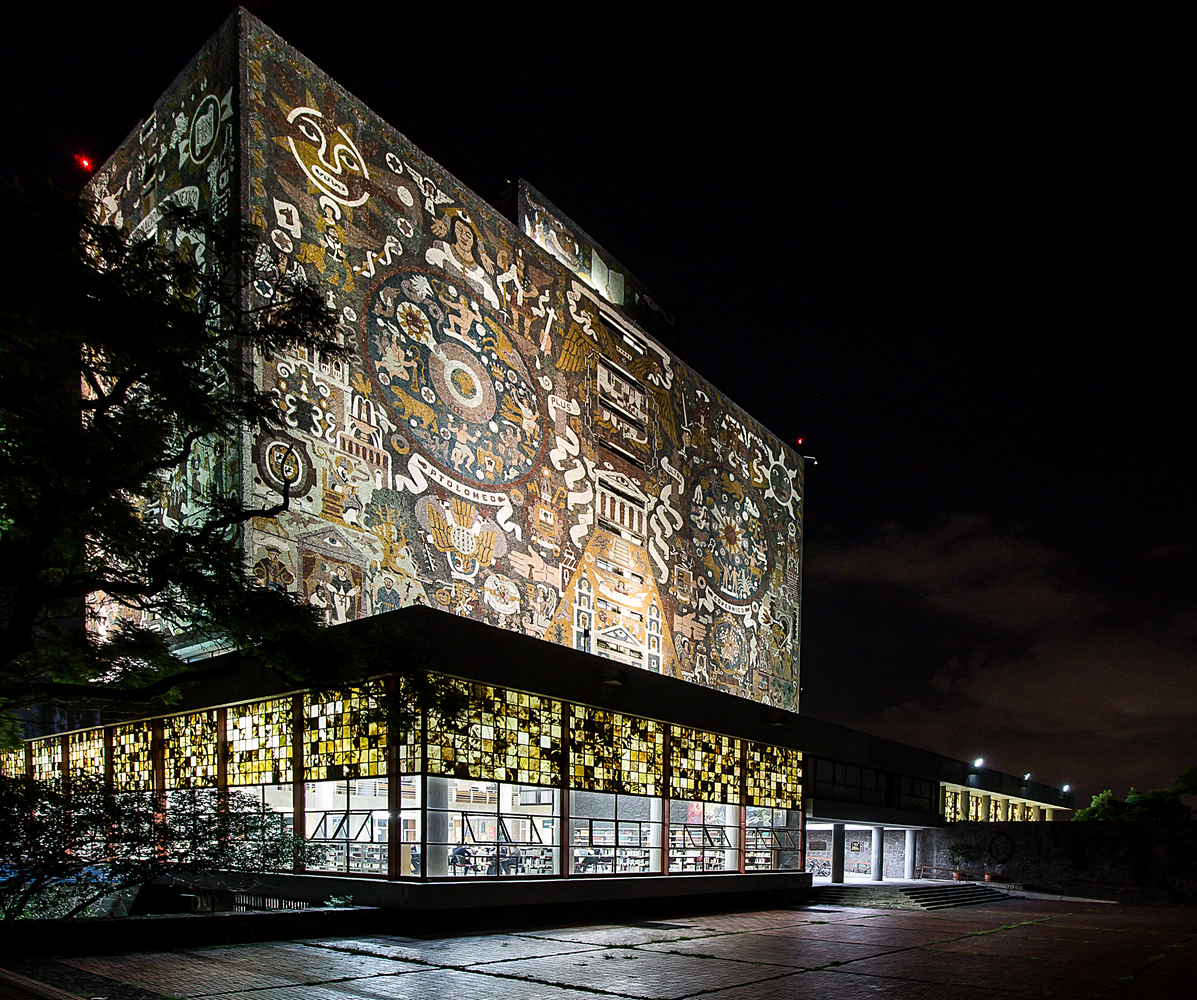
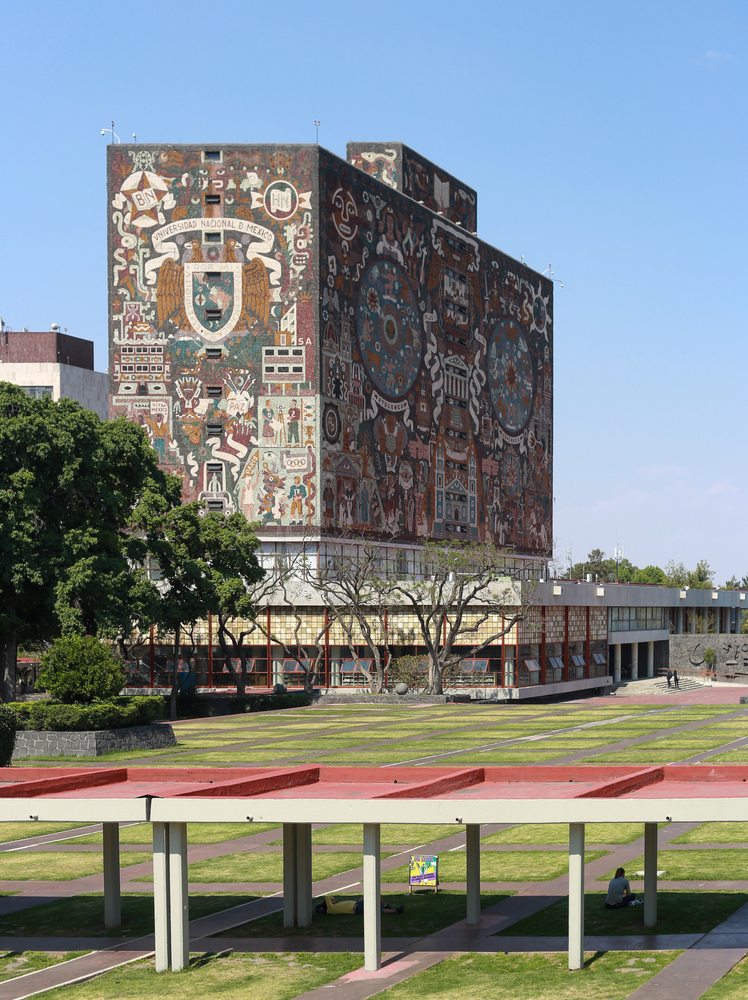
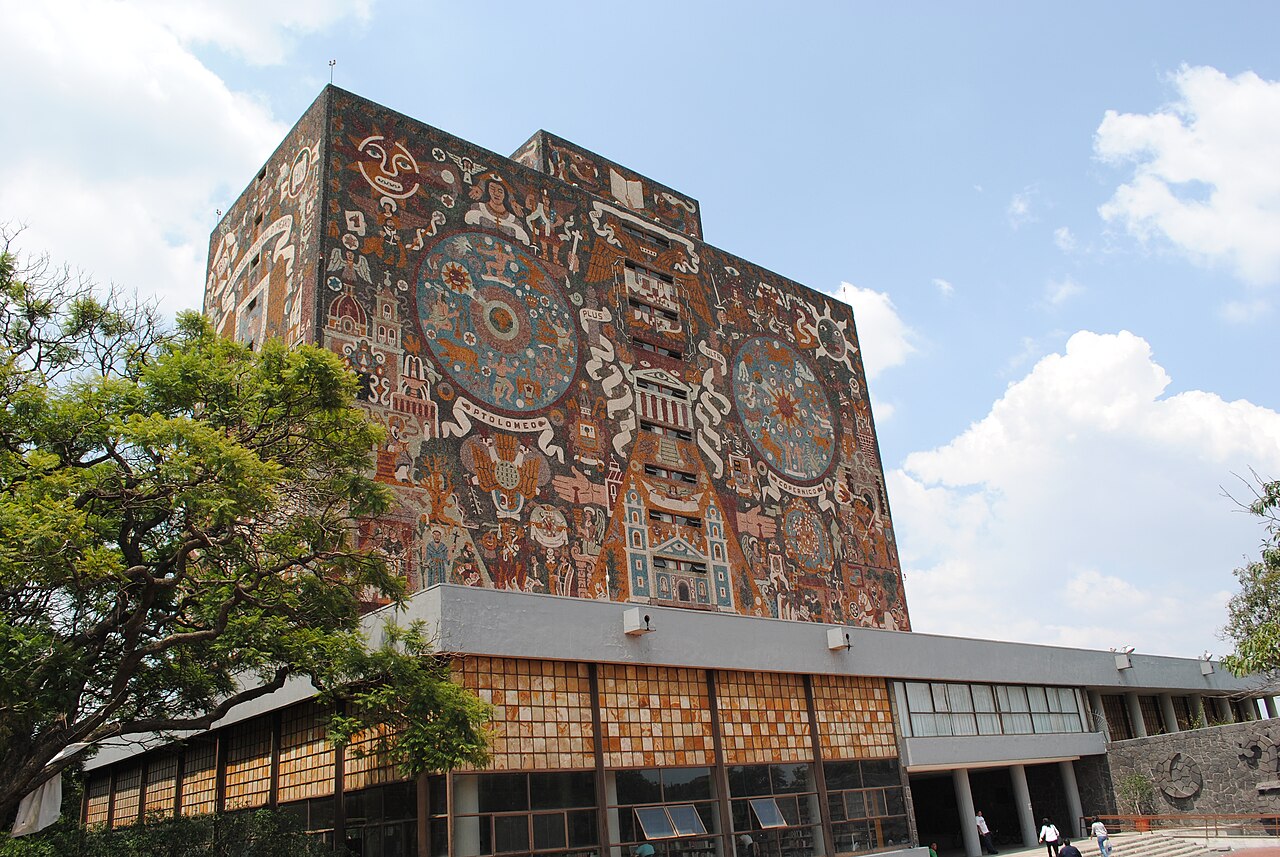
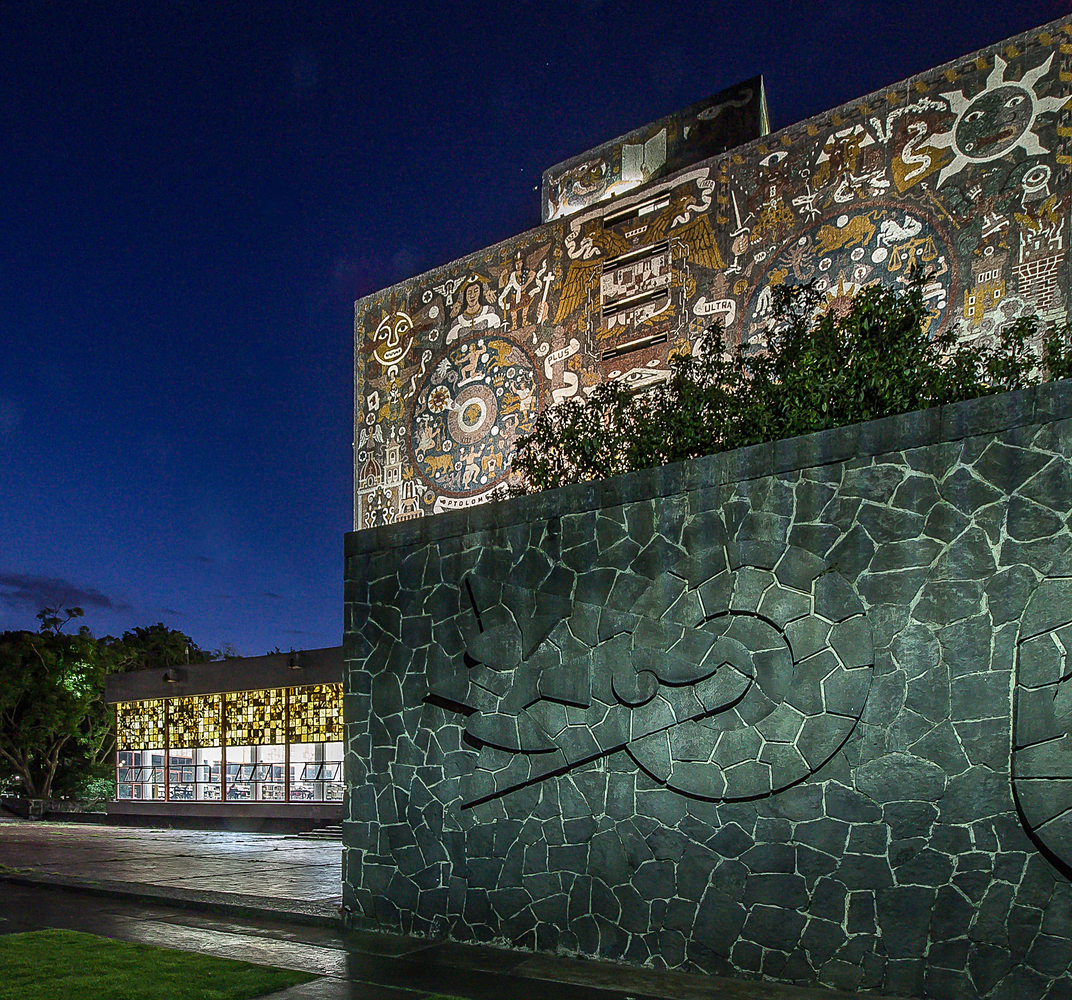
UNAM Central Library educational building designed by Juan O’Gorman, Gustavo Saavedra, and Juan Martínez de Velasco in Ciudad Universitaria, Coyoacán, Mexico City, Mexico, established a landmark of modern Mexican architecture through the integration of Functionalist design, monumental mural art, and cultural symbolism, completed in 1956. Conceived as the principal library of the National Autonomous University of Mexico (UNAM), the project combined academic infrastructure with a large-scale artistic program that reflects Mexican history, knowledge, and cultural identity. Built on the volcanic landscape of the Pedregal de San Ángel, the 16,000 m² structure was designed to house extensive archival collections while providing public reading and learning spaces. The building’s ten-story archival tower and public ground floor follow Functionalist principles, emphasizing efficient organization, circulation, and environmental control. Its defining feature is Juan O’Gorman’s mural Historical Representation of Culture, which covers the four façades using naturally colored stones gathered from across Mexico. The mosaic depicts the pre-Hispanic period, the colonial era, modern Mexico, and the role of the university, creating a visual narrative of cultural continuity and transformation. The windowless archive tower provided O’Gorman with a monumental surface for the artwork, allowing architecture and muralism to function as a unified composition. UNESCO recognized the significance of the building and the broader Ciudad Universitaria campus in 2007 by inscribing the site on the World Heritage List. Today, UNAM Central Library remains one of the most recognized works of twentieth-century Mexican architecture, combining education, art, history, and national identity within a single architectural landmark.
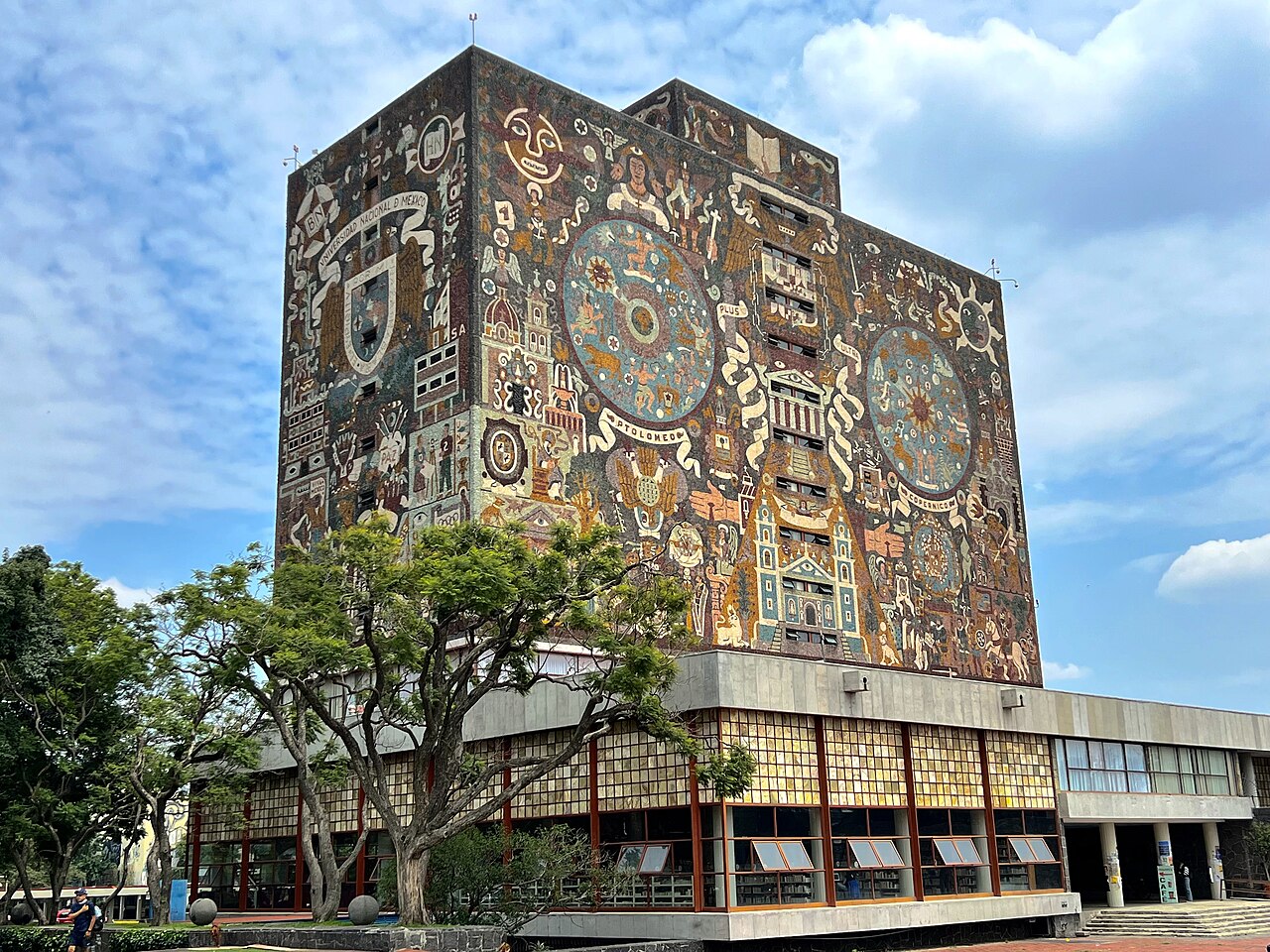
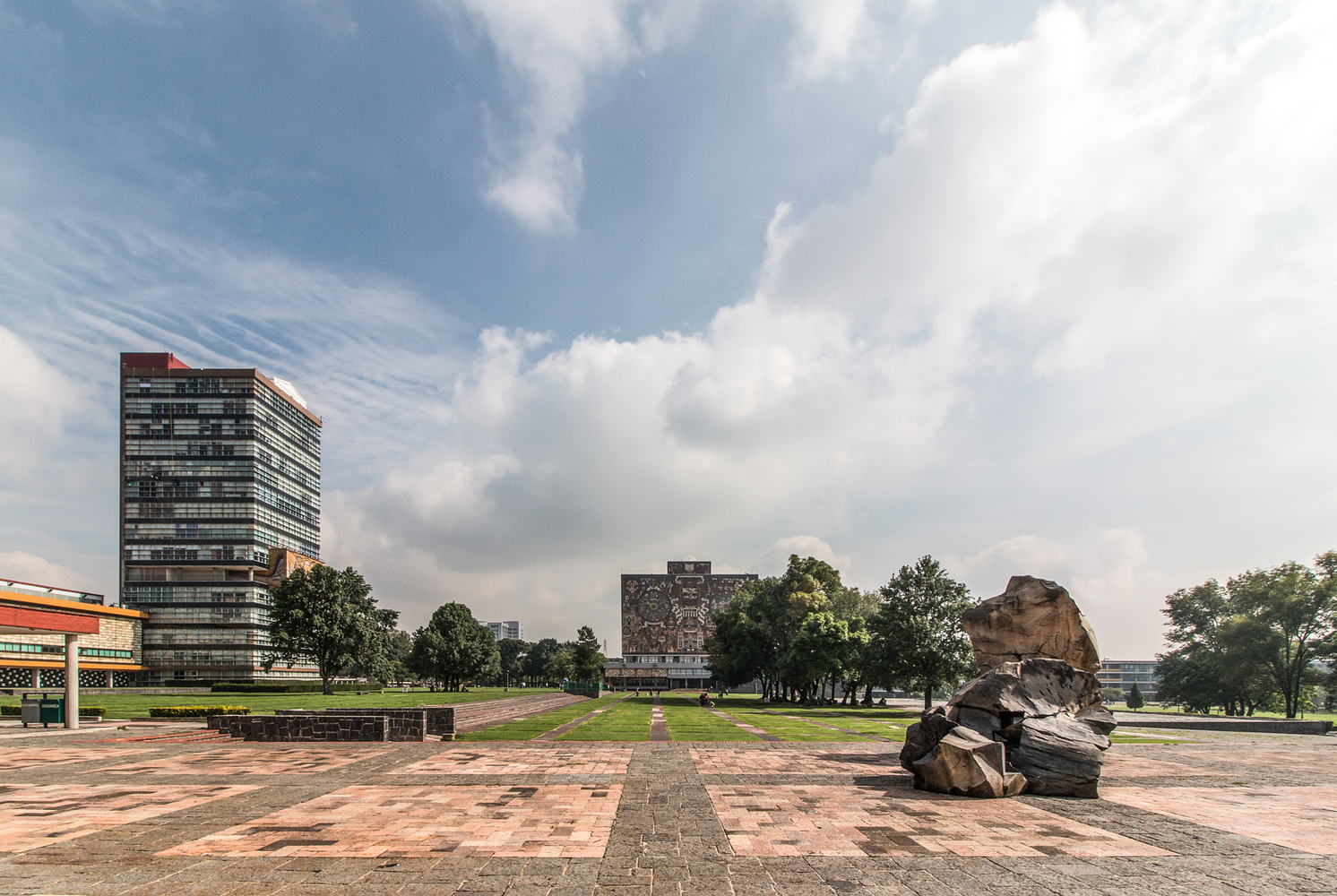
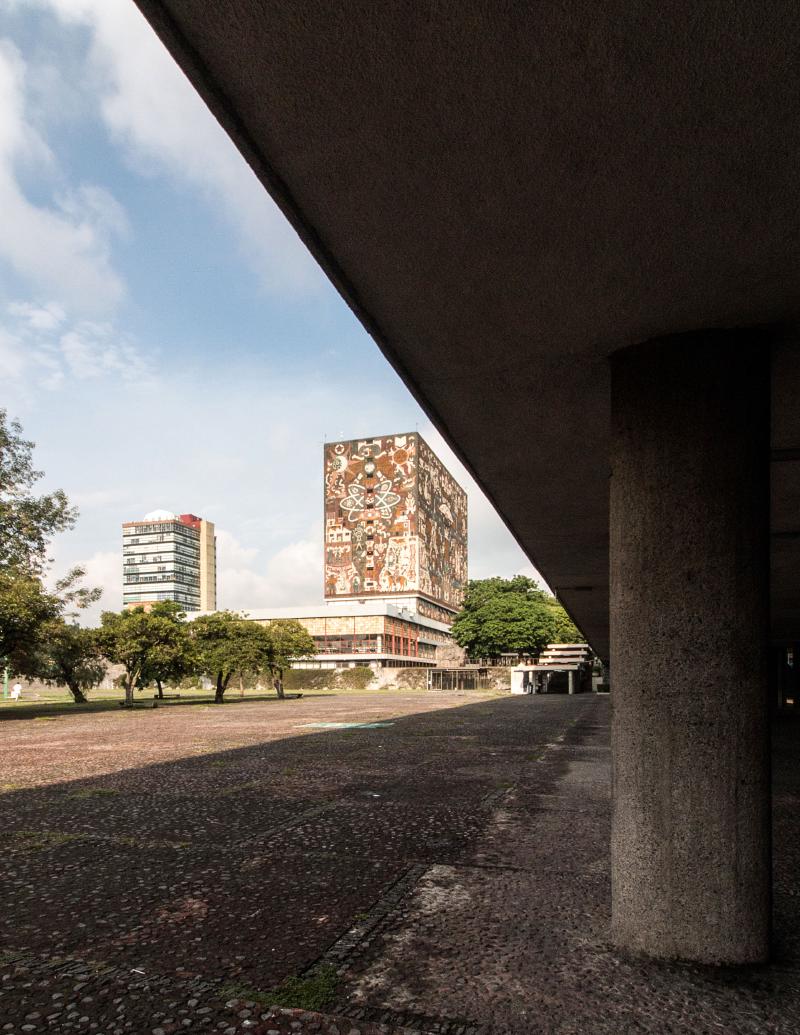
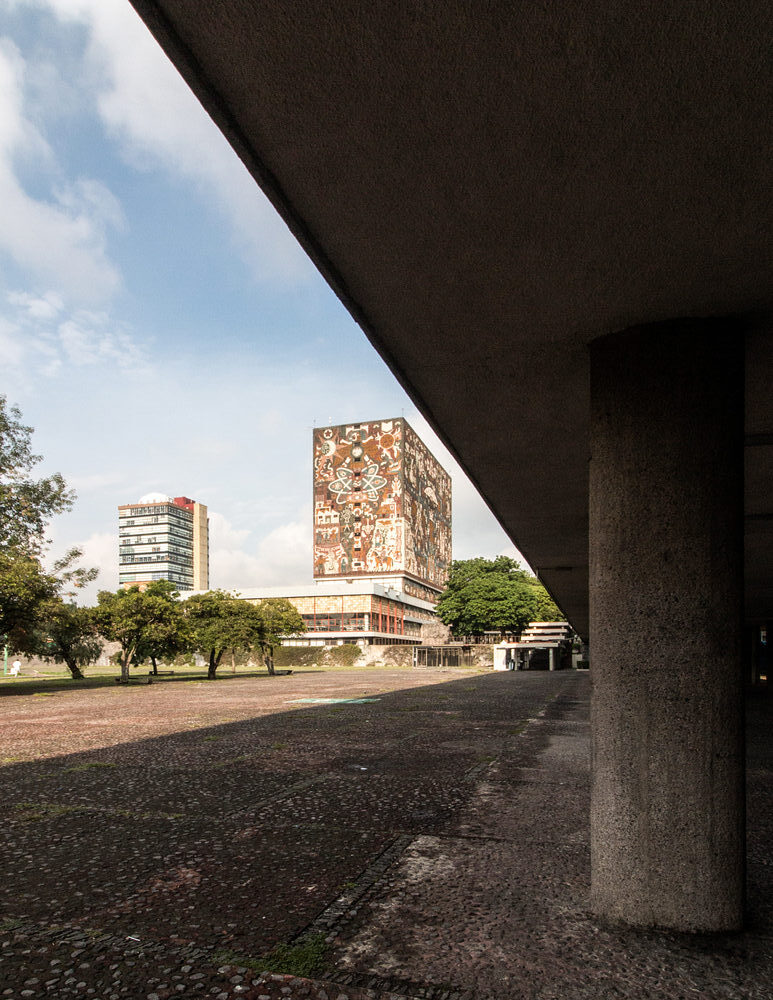
UNAM Central Library occupies a prominent position within Ciudad Universitaria, the main campus of the National Autonomous University of Mexico. The building represents a synthesis of modern architecture, muralism, and cultural symbolism, expressing the university’s role in preserving and disseminating knowledge while reinforcing Mexican identity.
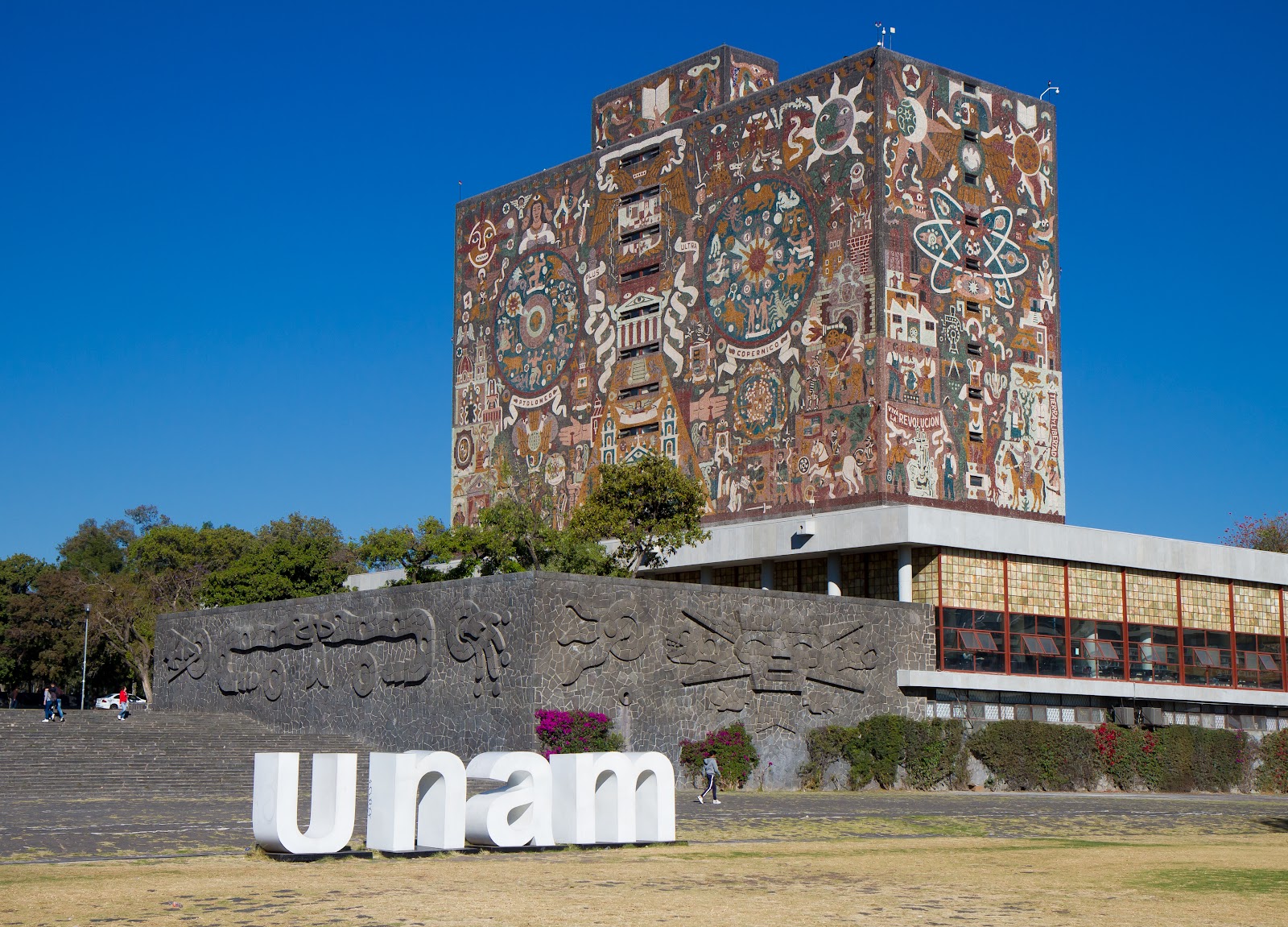
The project was developed by Juan O’Gorman, Gustavo Saavedra, and Juan Martínez de Velasco. Juan Íñiguez, Rafael Carrasco Puente, and José María Luján participated as advisors during the design process. The library formed part of the broader Ciudad Universitaria master plan, one of the most significant public architectural initiatives undertaken in Mexico during the mid-twentieth century.

UNAM Central Library was conceived according to Functionalist principles that guided much of O’Gorman’s architectural work. The design prioritizes the activities housed within the building, resulting in an open and rational organization. The project introduced architectural ideas associated with modernism into a distinctly Mexican context, contributing to the development of modern Mexican architecture during the 1940s and 1950s.
Construction began in 1950 on a 16,000 m² site originally intended to accommodate both the library and the National Archives. The completed project became the Central Library of Ciudad Universitaria. The building contains a public ground floor and ten upper levels dedicated to book storage and archival collections. The original program was designed to house more than one million volumes and included sections for periodicals, reserve collections, book loans, and consultation areas.
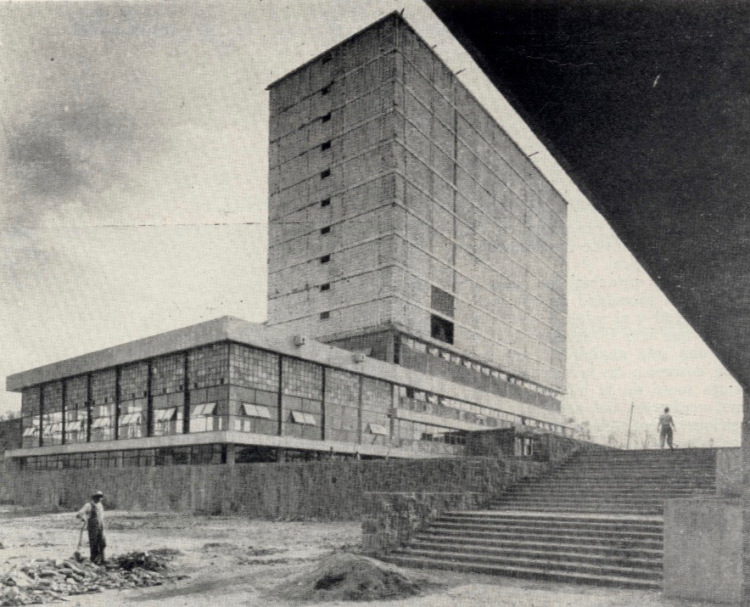
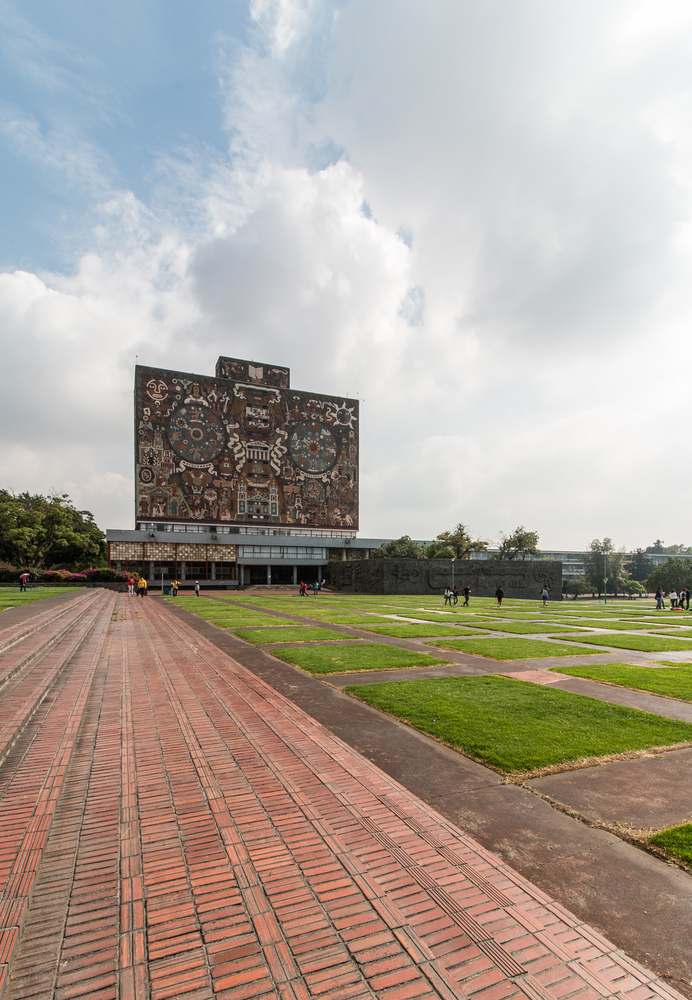
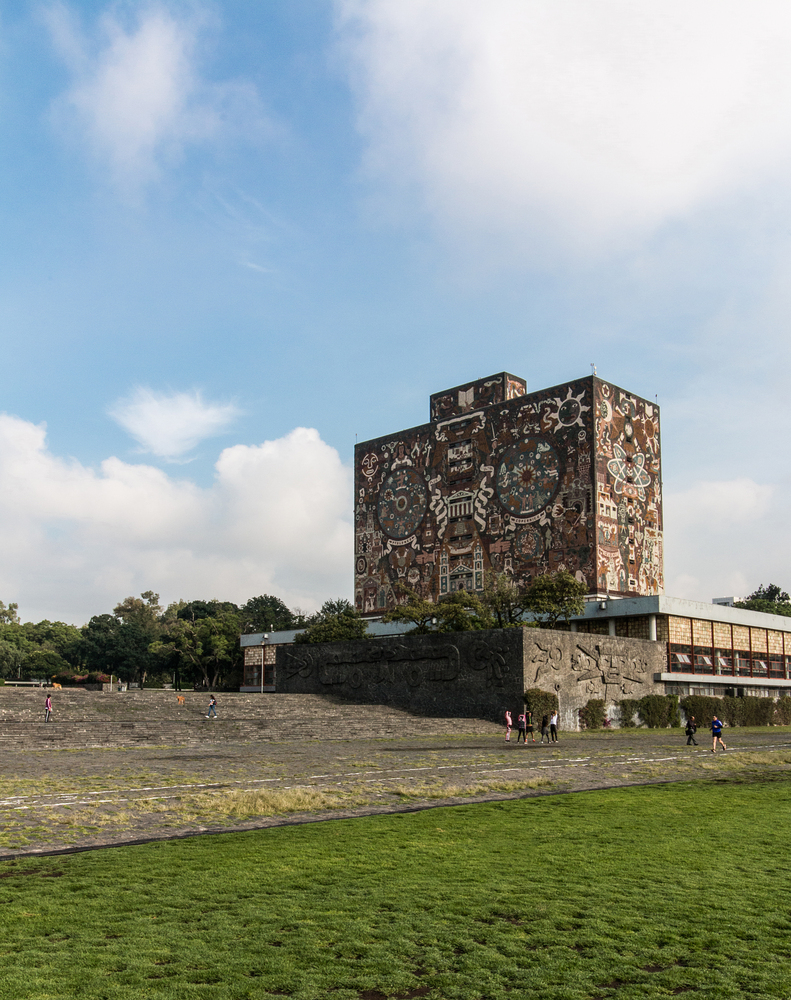
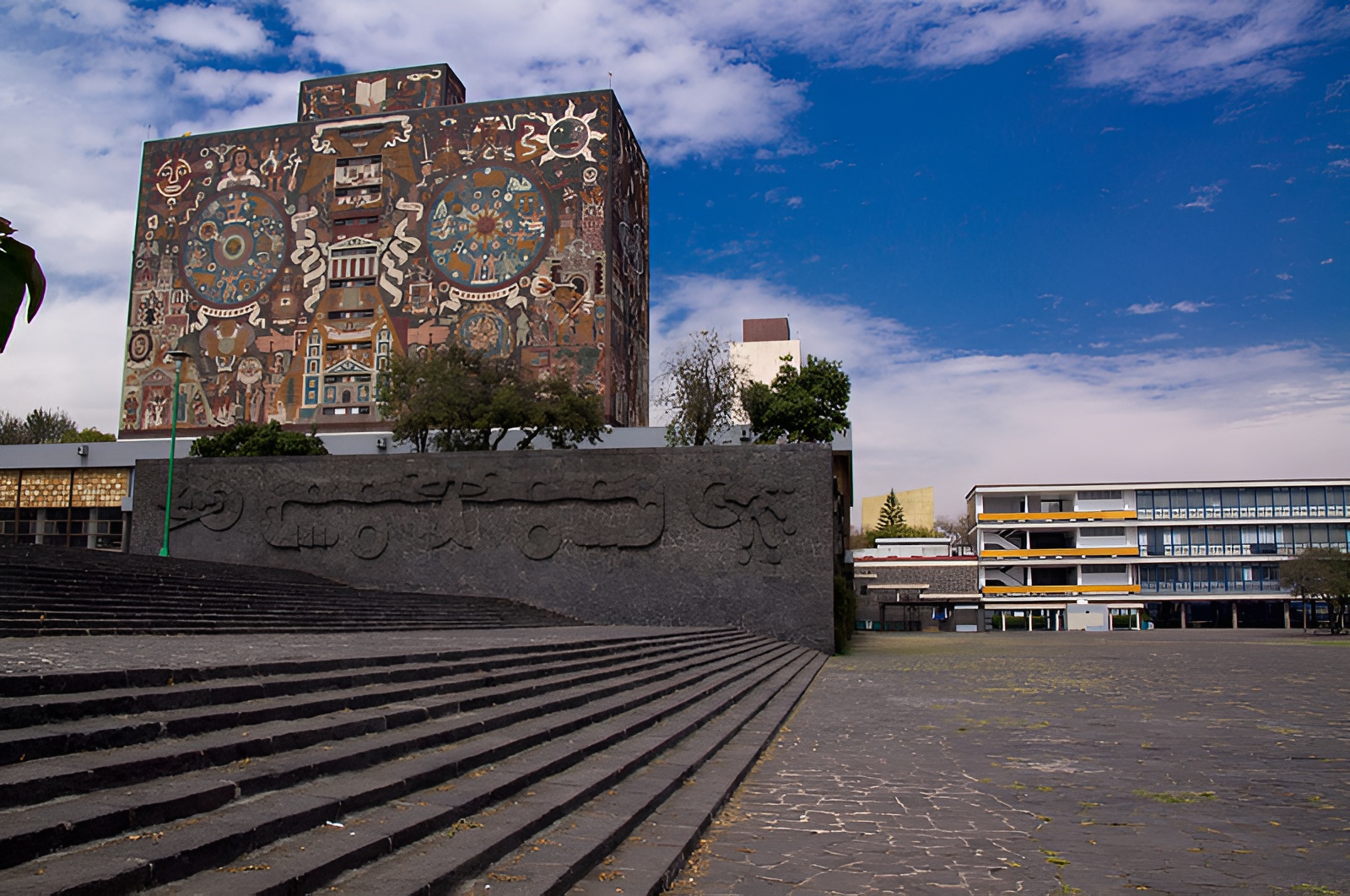
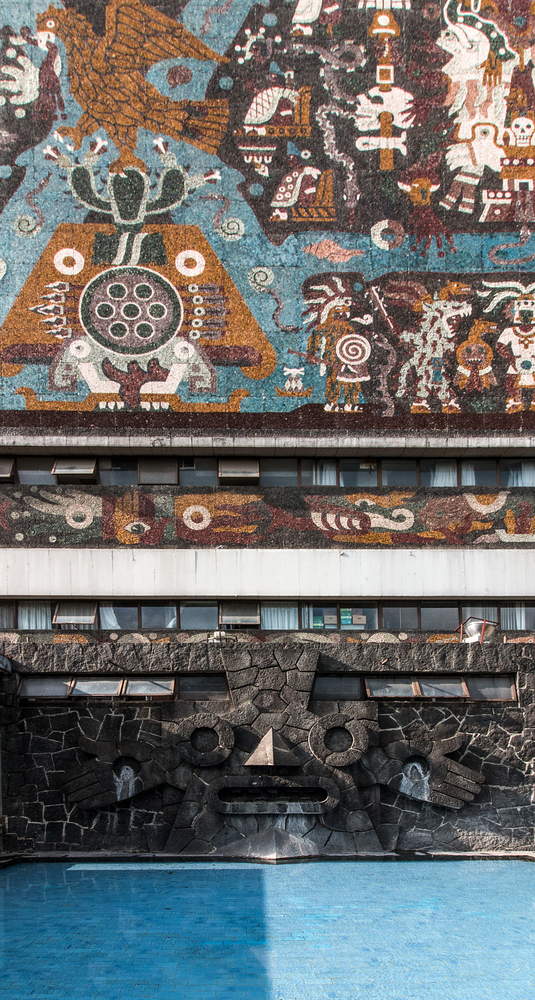
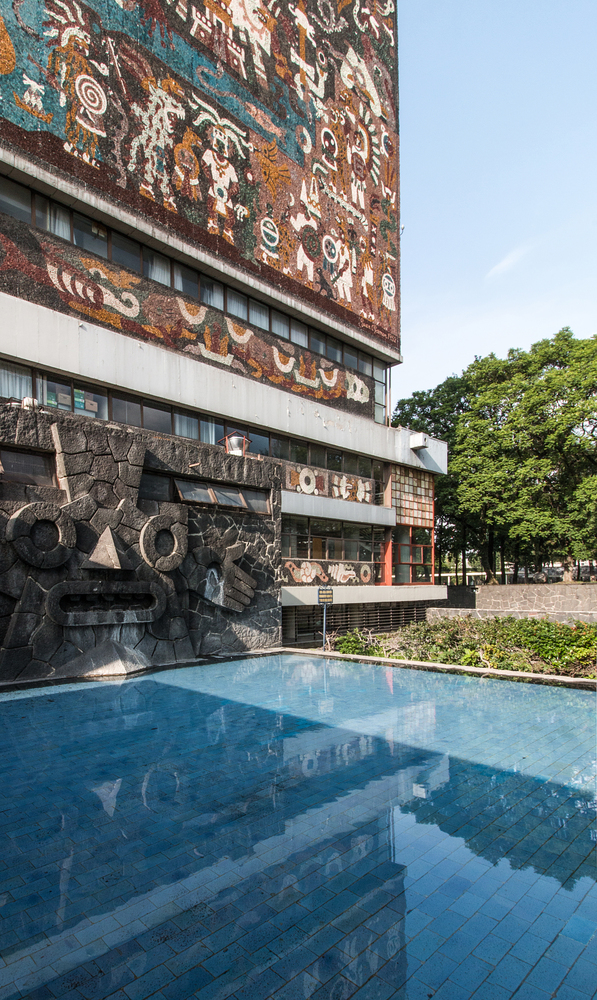
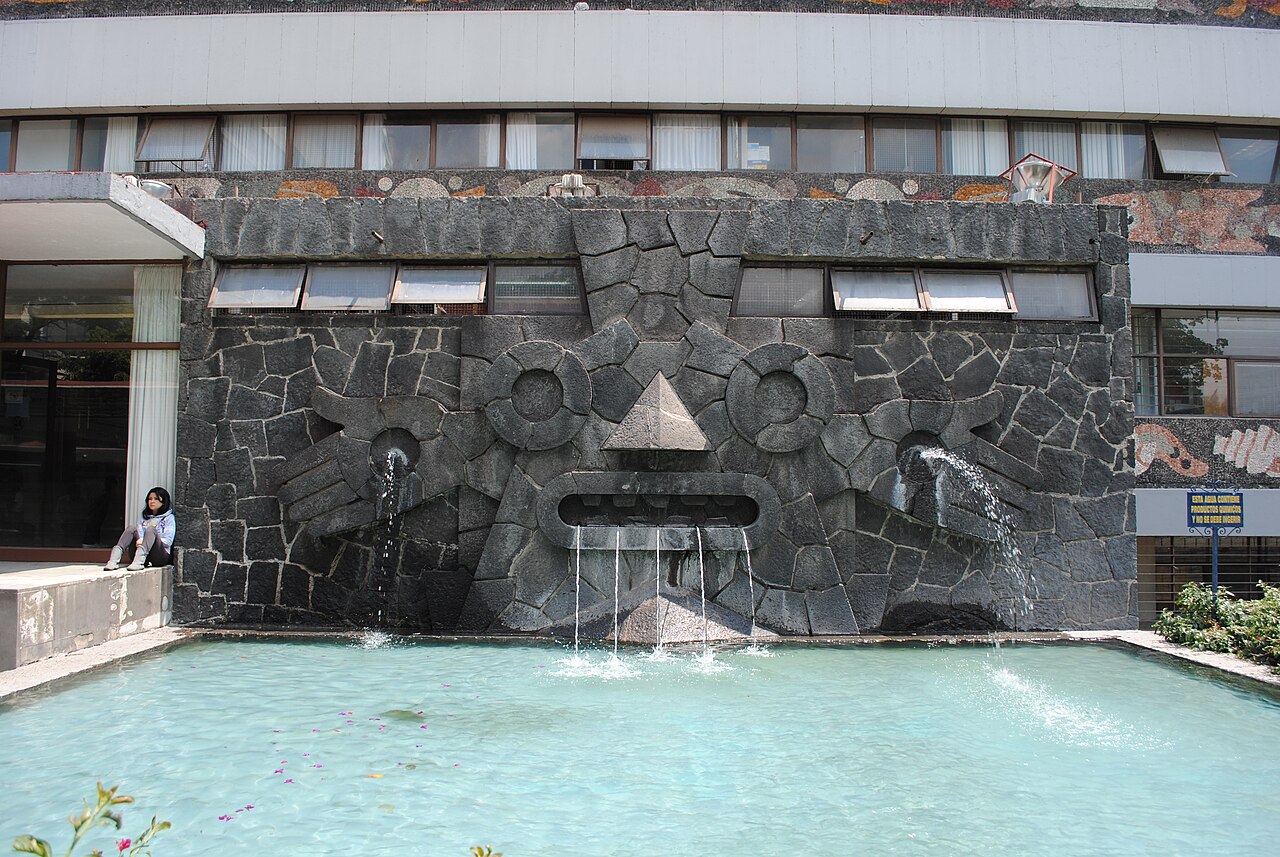
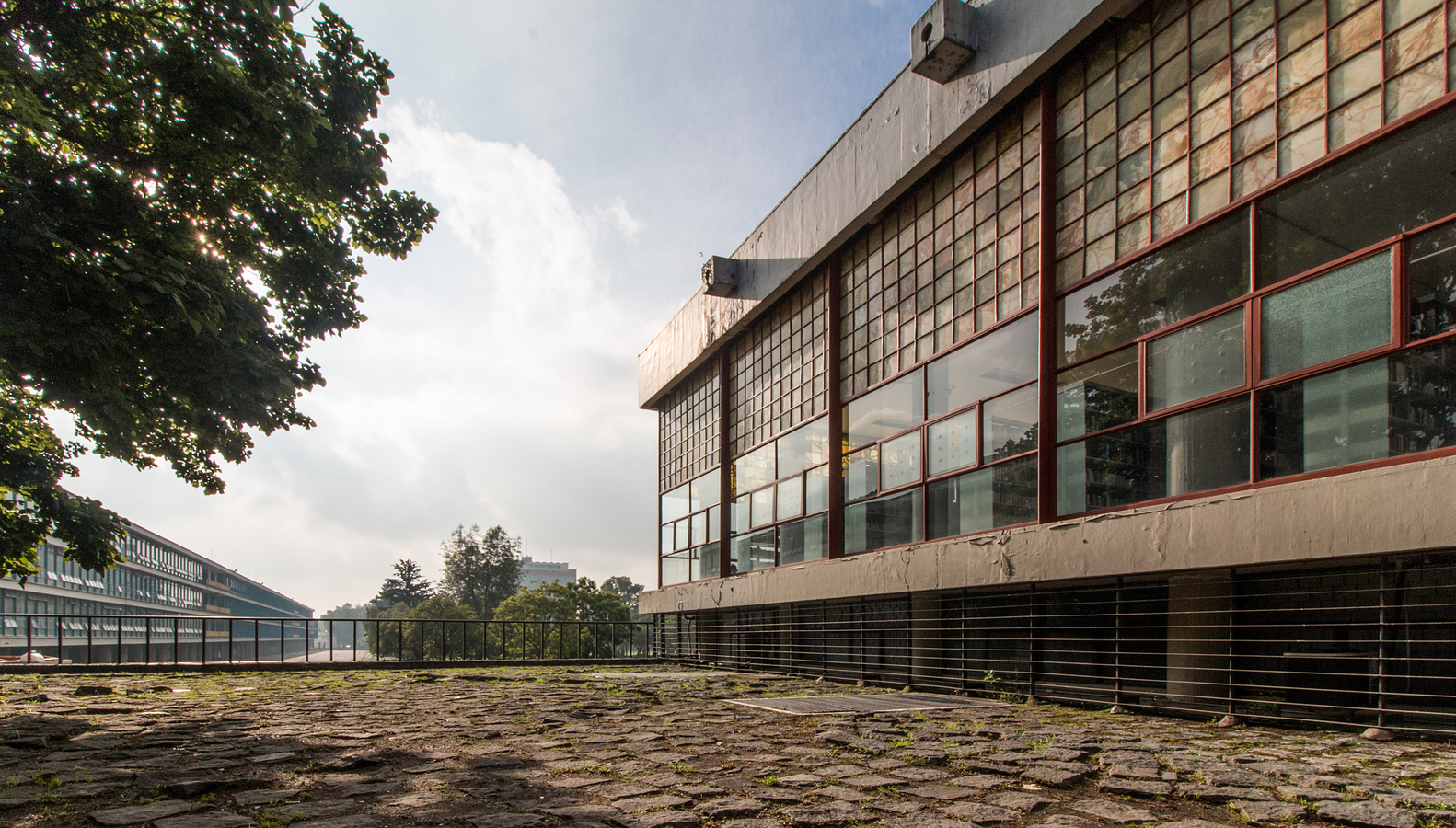
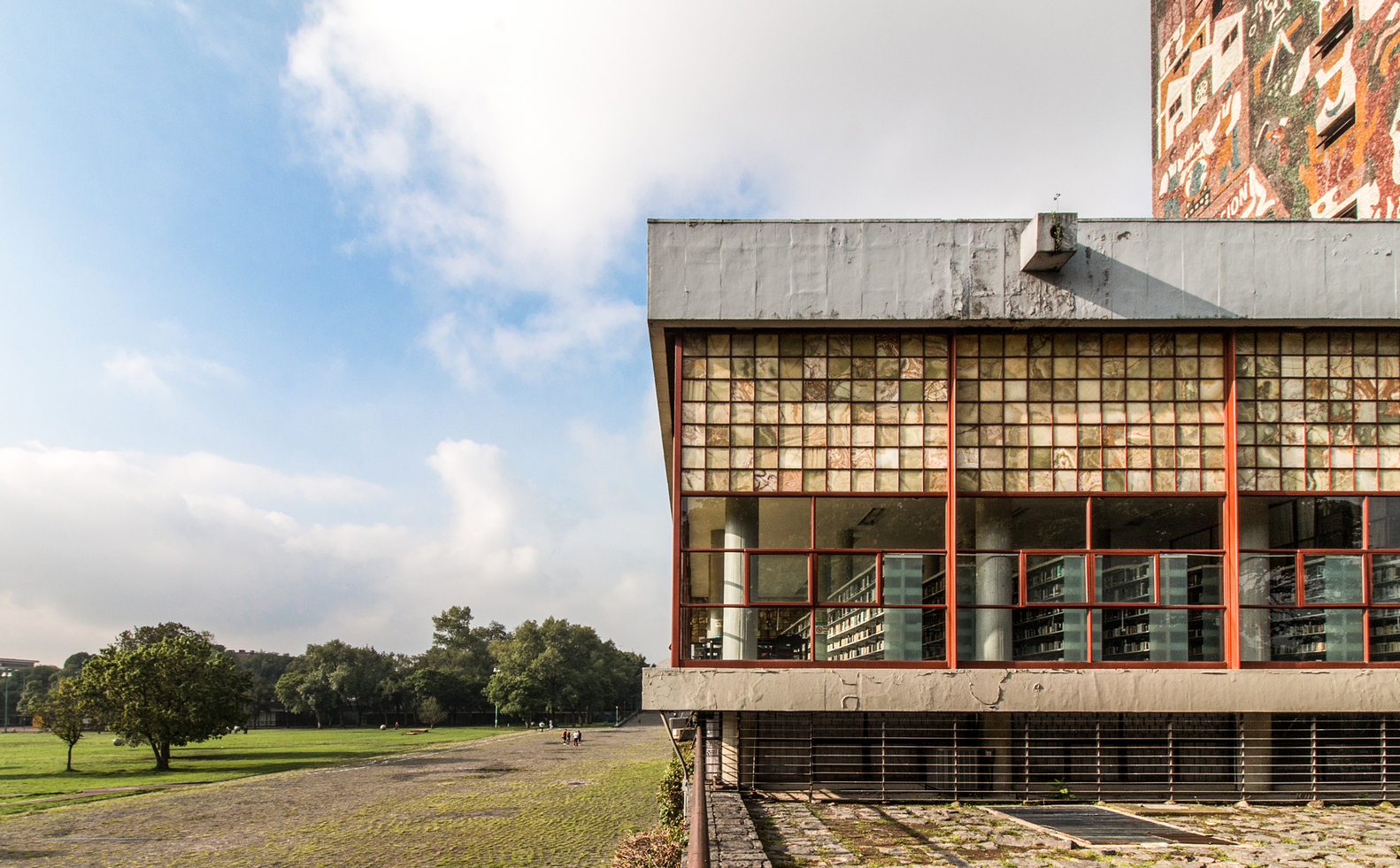
UNAM Central Library rises from the volcanic terrain of the Pedregal de San Ángel. The public level functions as a base integrated into the site’s topography and contains lecture halls, reading areas, and reference collections. Daylight control was a key consideration for these spaces. Stained-glass windows filter direct sunlight while maintaining comfortable interior conditions and introducing warm tones that shape the atmosphere of the reading rooms.
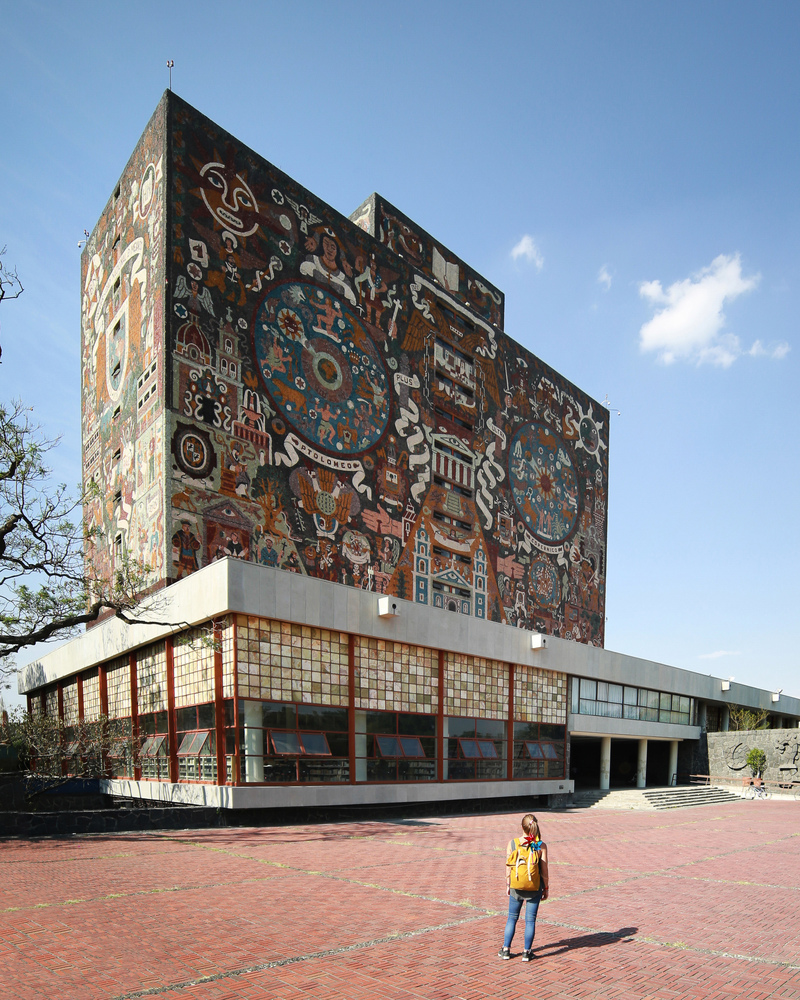
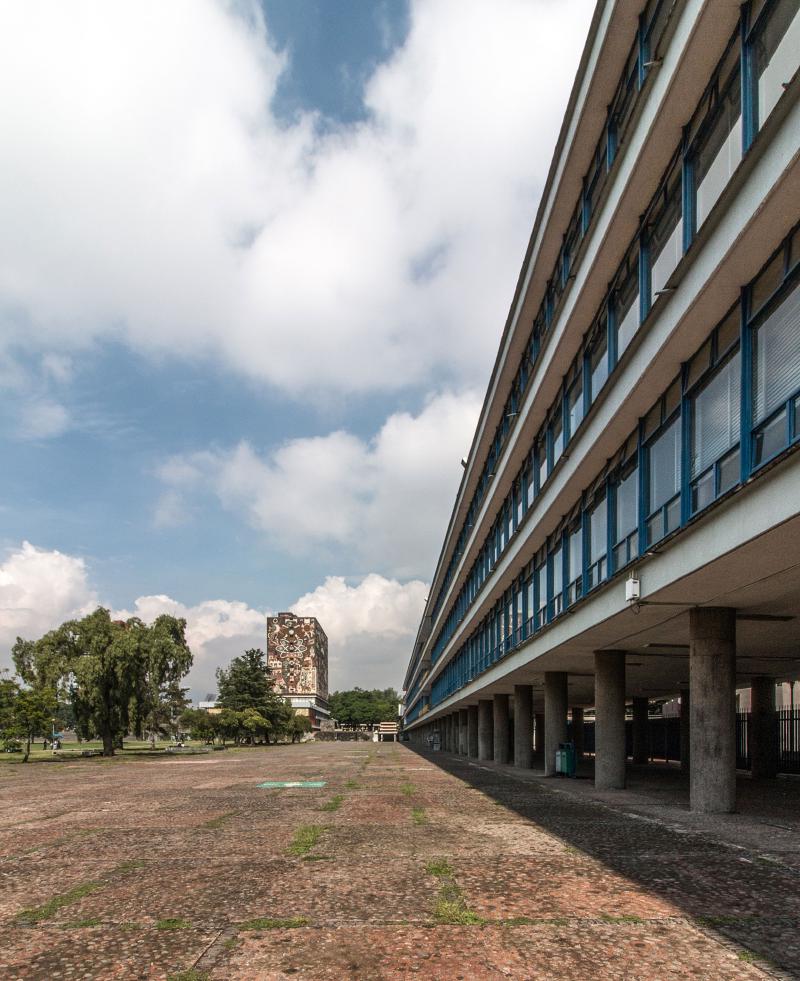
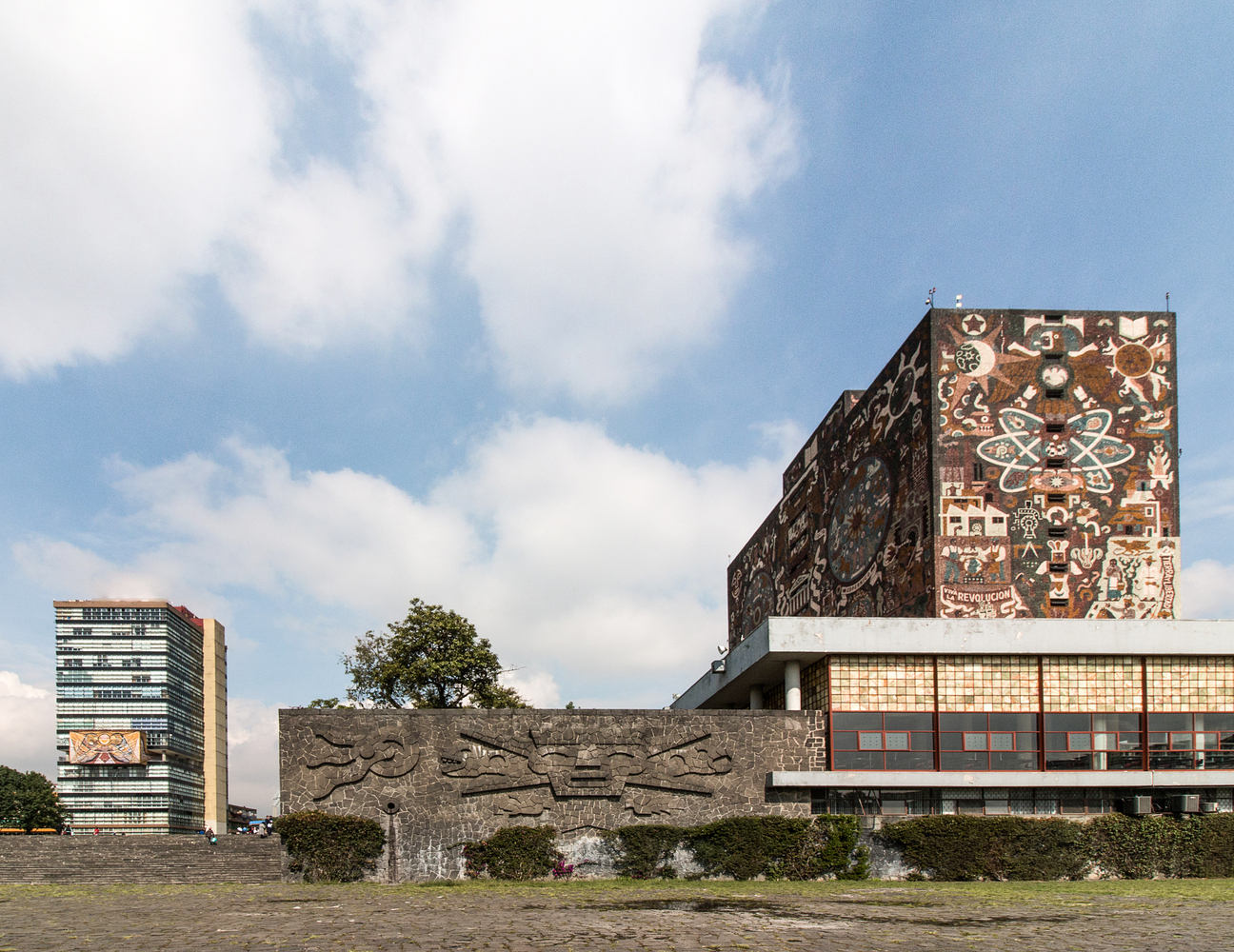
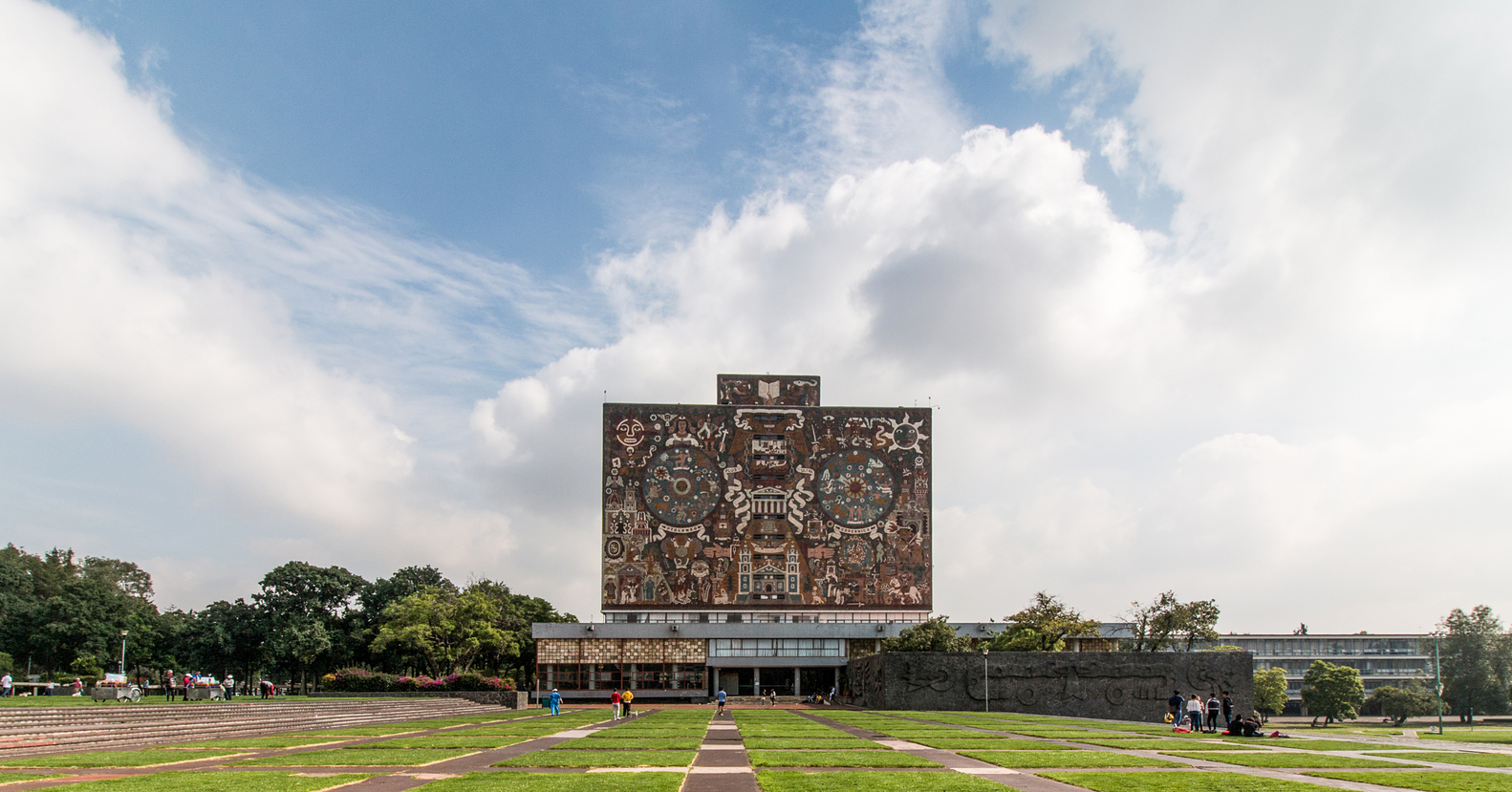
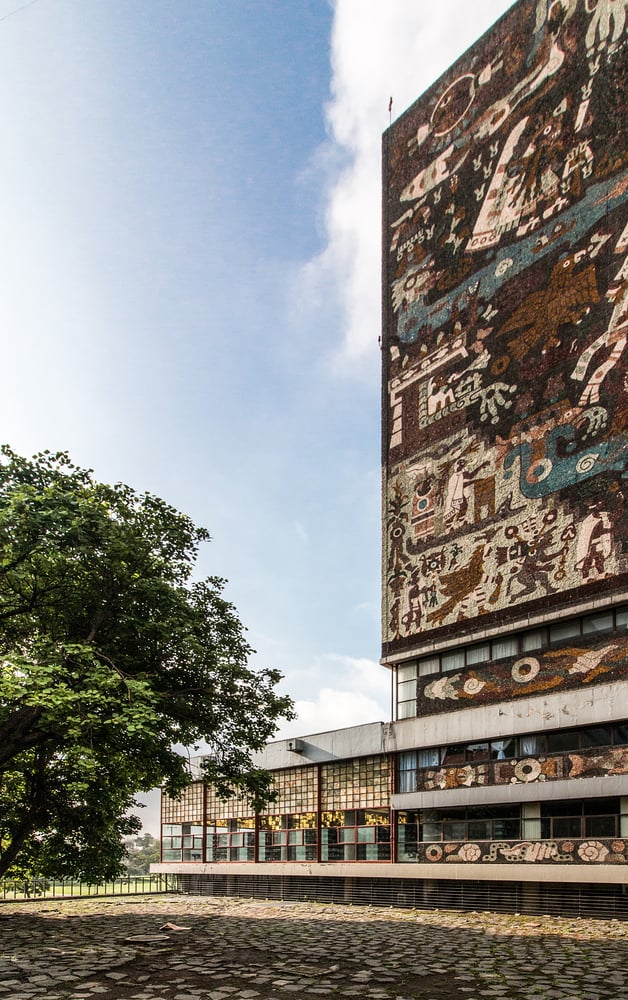
The building follows a highly ordered composition based on cubic forms, columns, and free façades. While the public areas emphasize openness and natural illumination, the archive tower remains largely enclosed to ensure appropriate conservation conditions for the collections. This windowless volume created four monumental surfaces that O’Gorman transformed into one of the most significant examples of architectural muralism in Mexico.
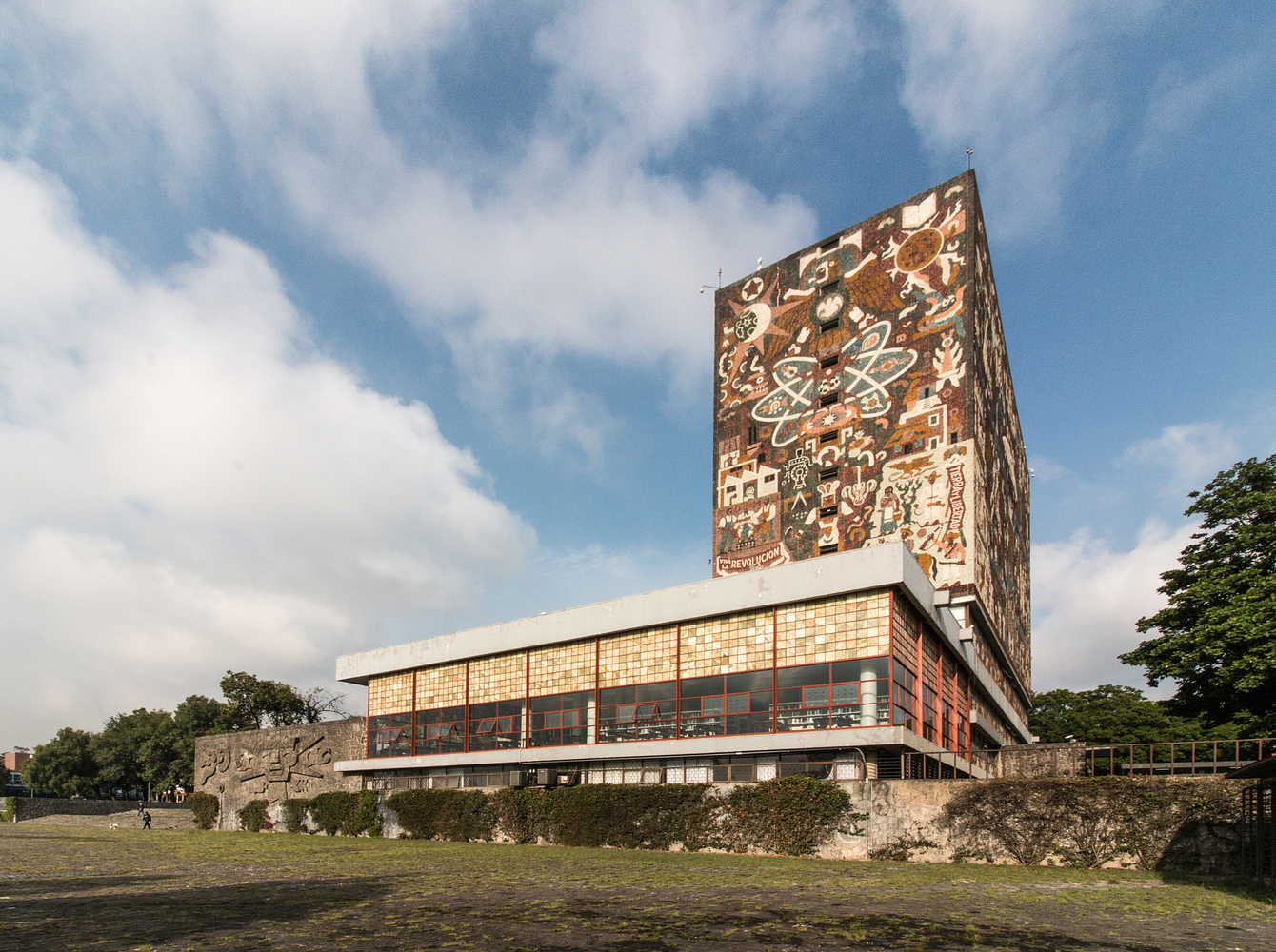
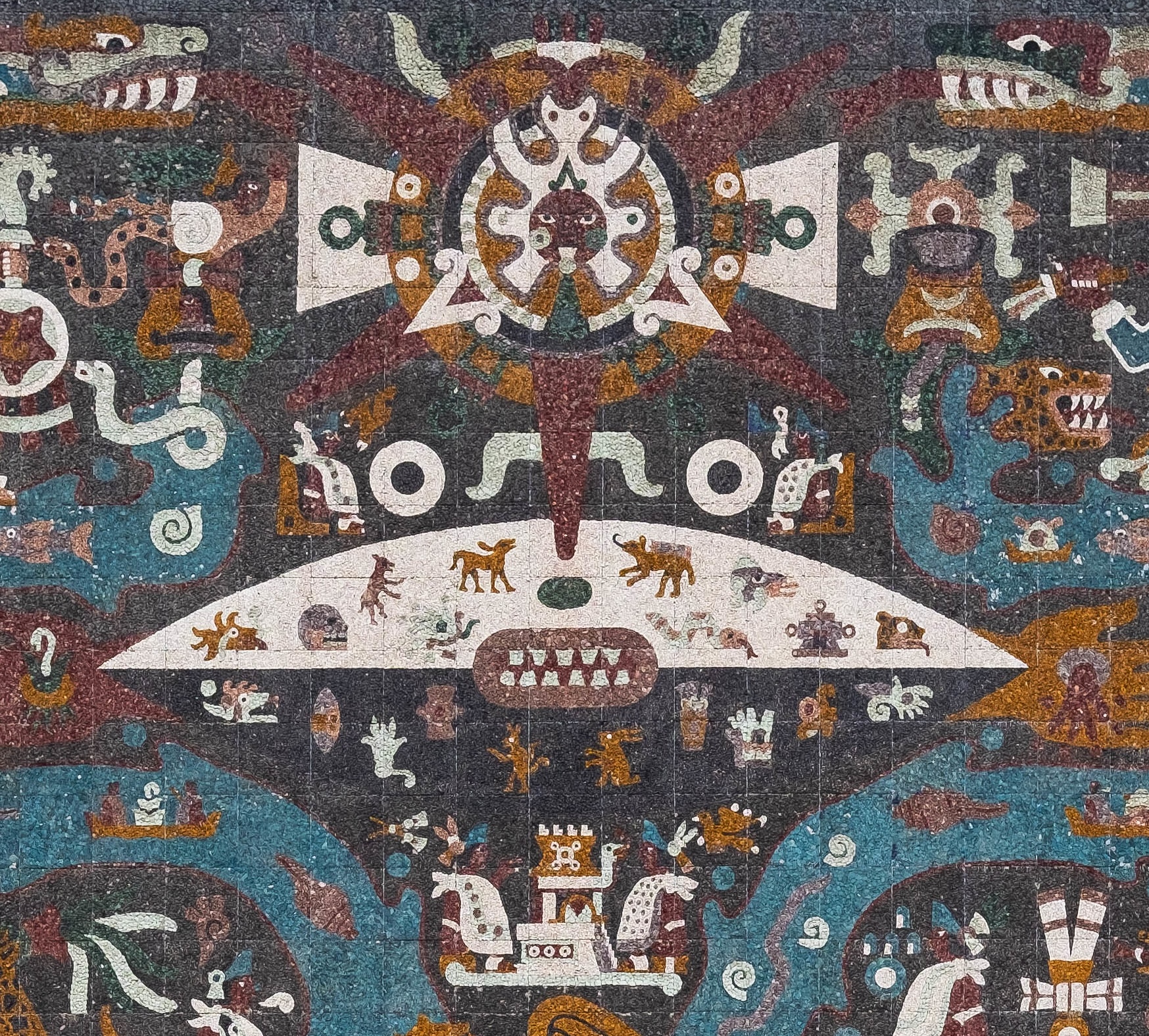
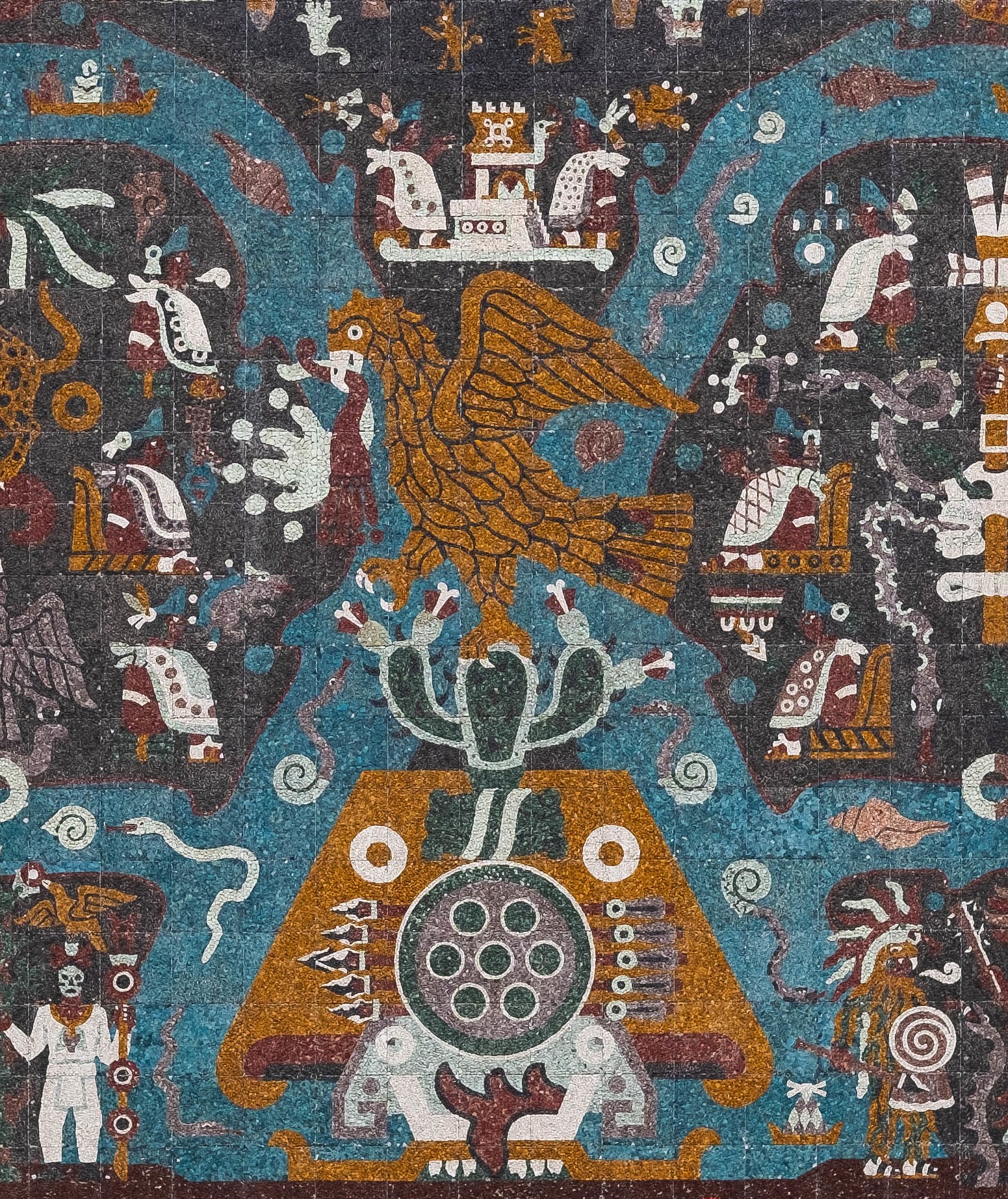
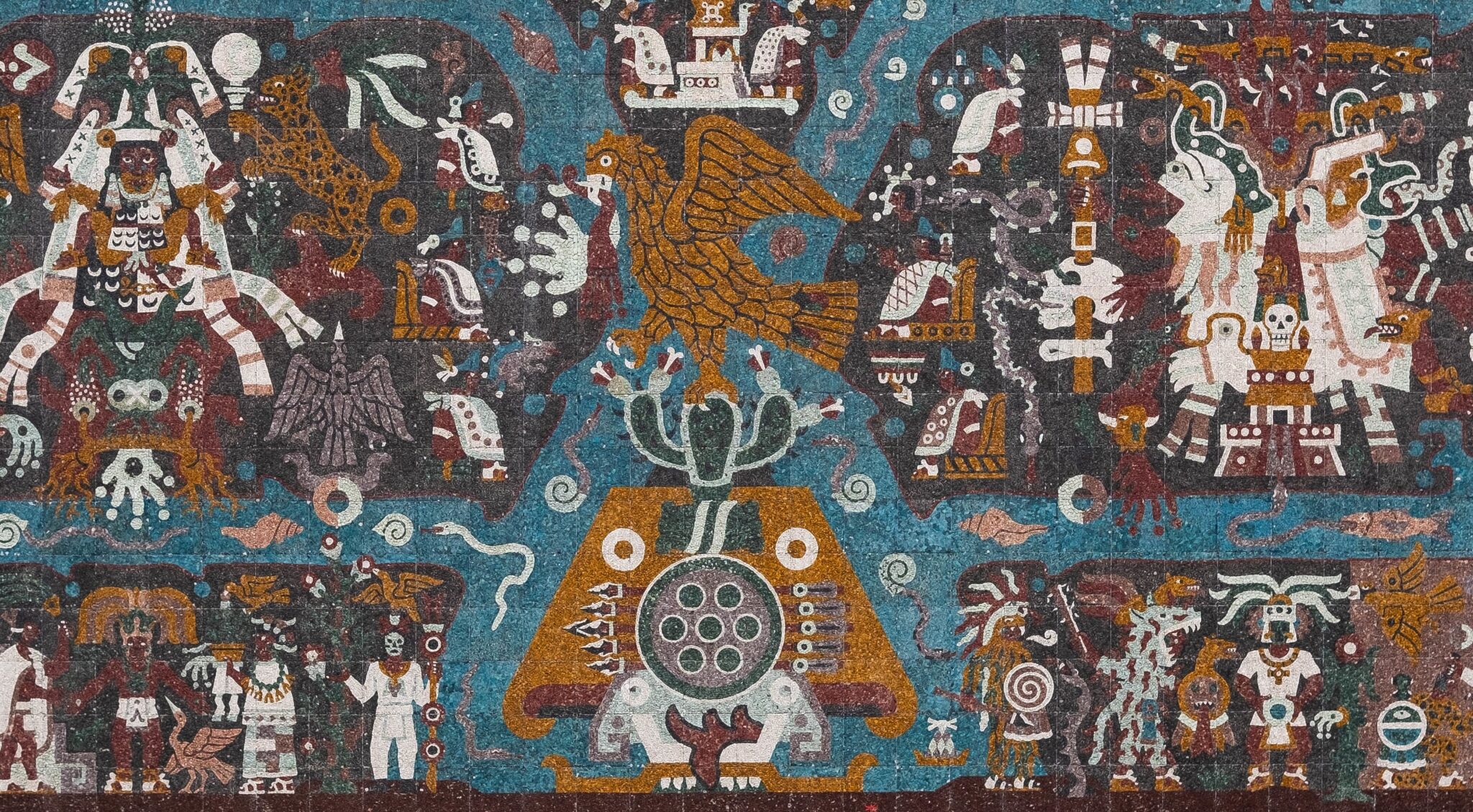
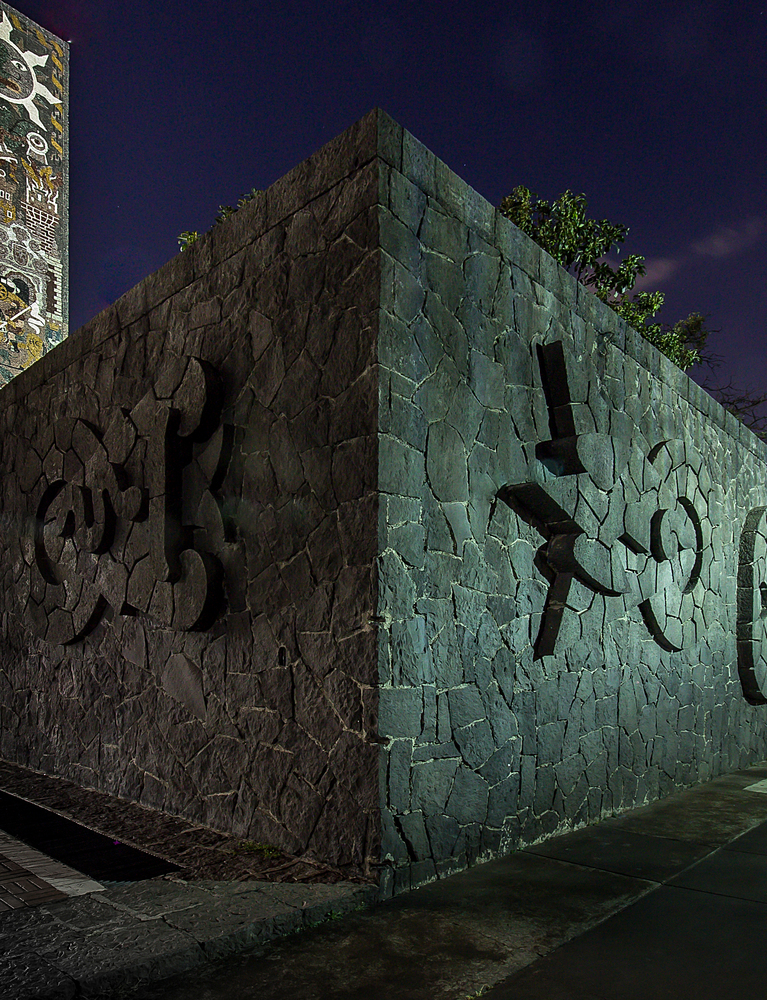
O’Gorman proposed a mural composed of naturally colored stones that would express the relationship between the university, Mexican history, and cultural development. Drawing on his experience working with Diego Rivera on the Anahuacalli Museum, he adopted techniques that utilized volcanic and natural stone rather than painted surfaces. This approach provided durability while establishing a direct connection between the artwork and the landscape of Mexico.
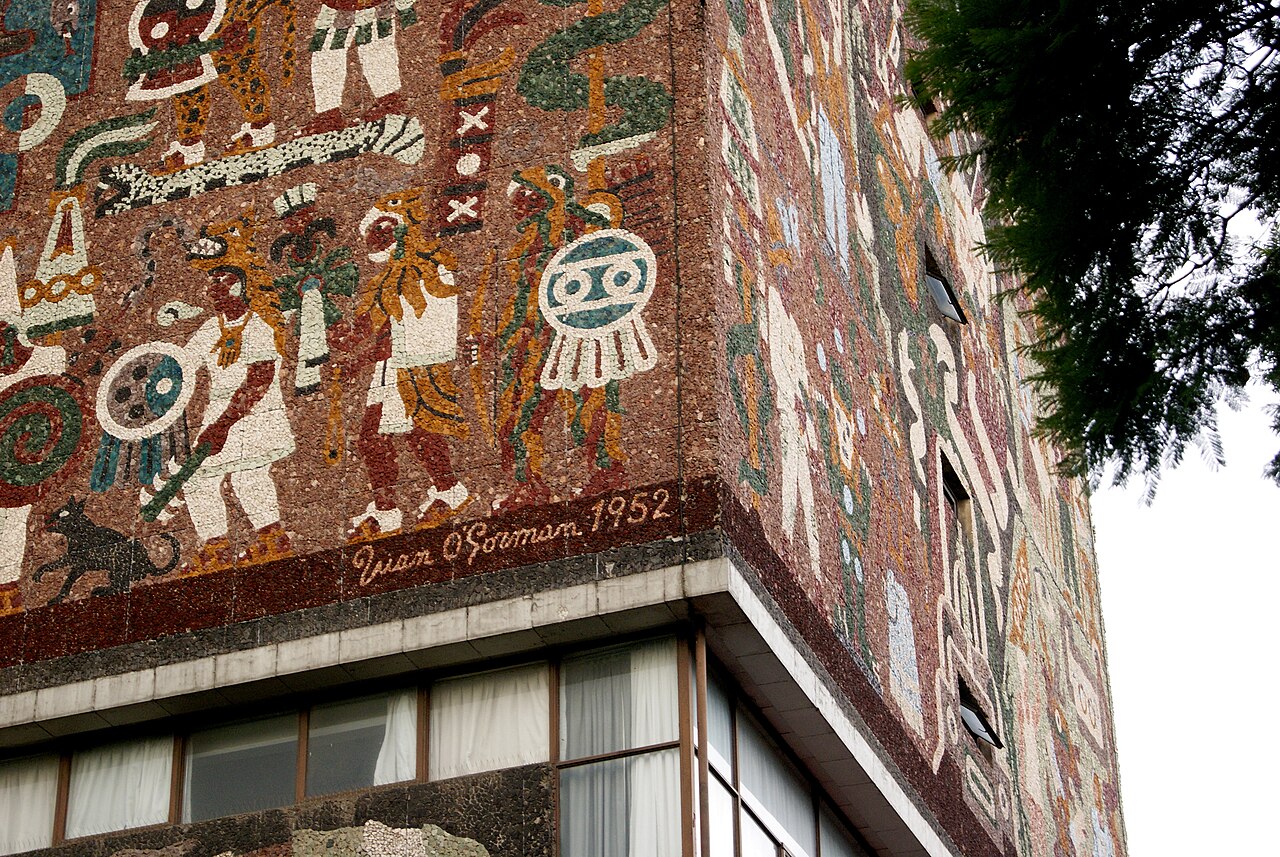
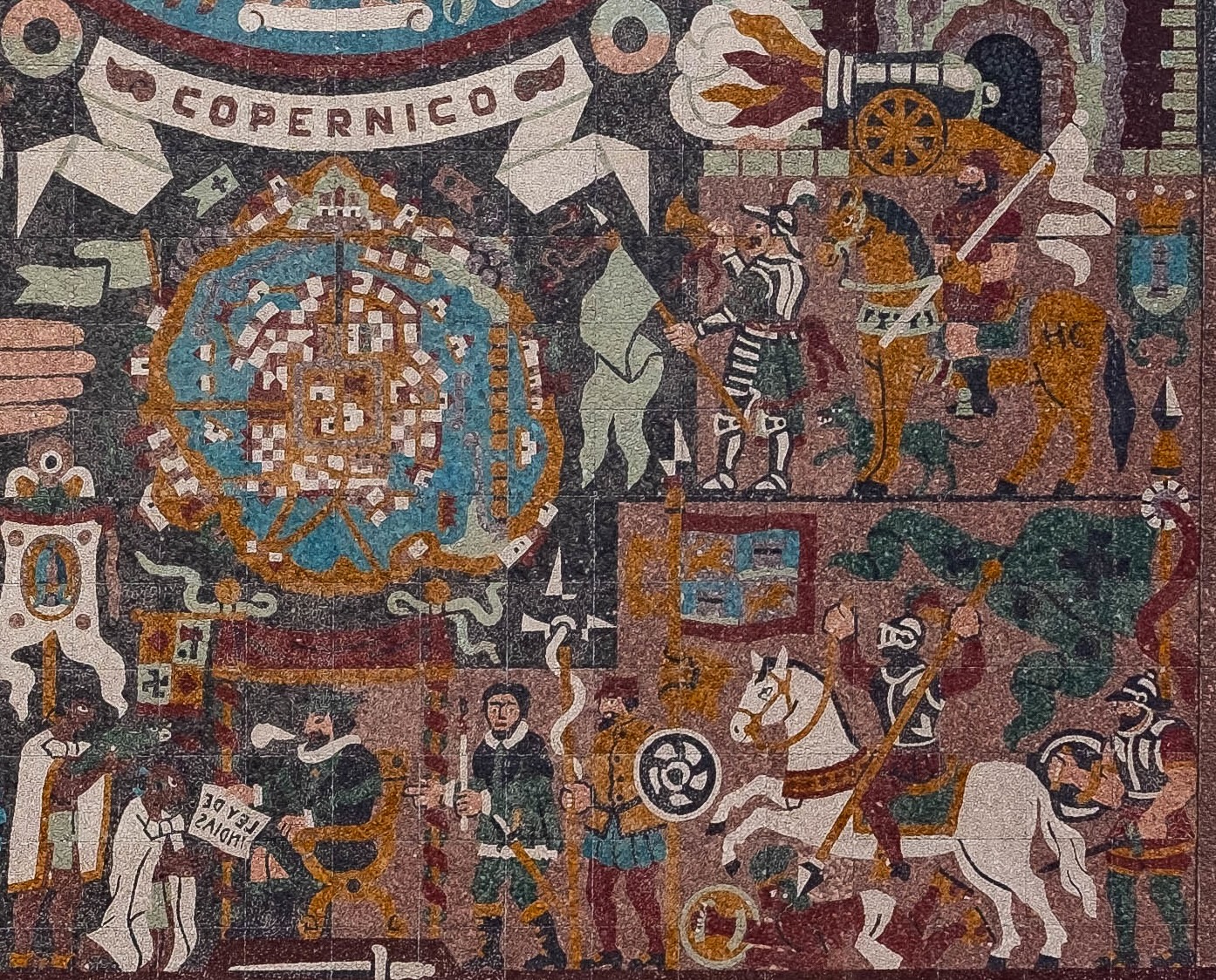
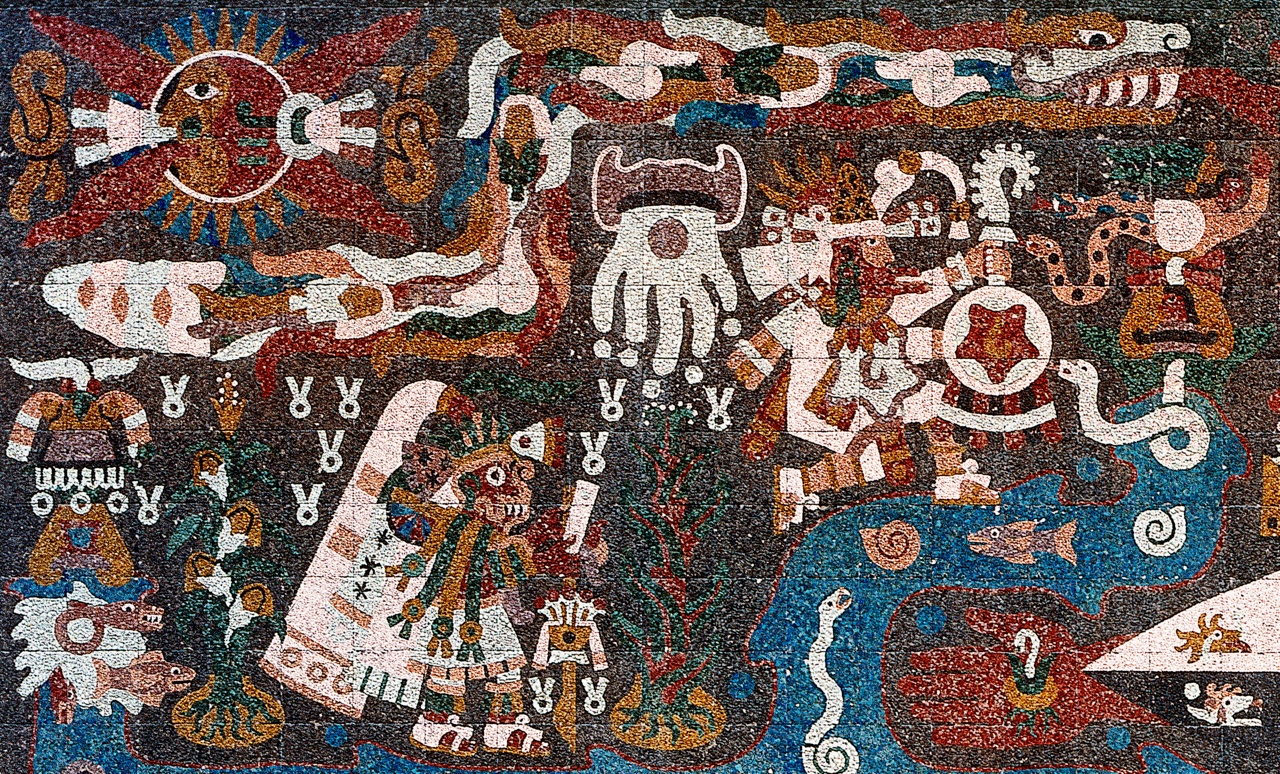
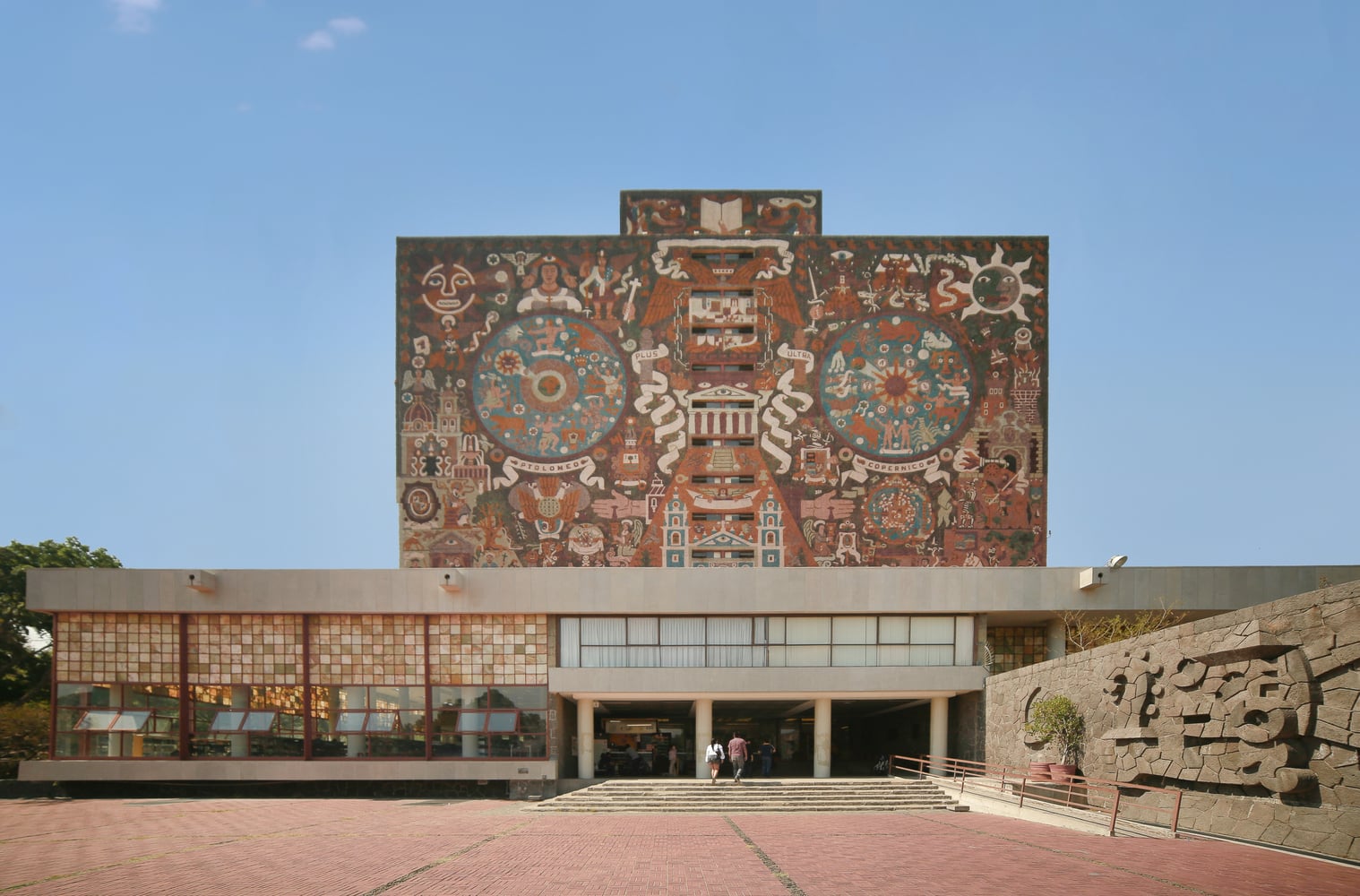
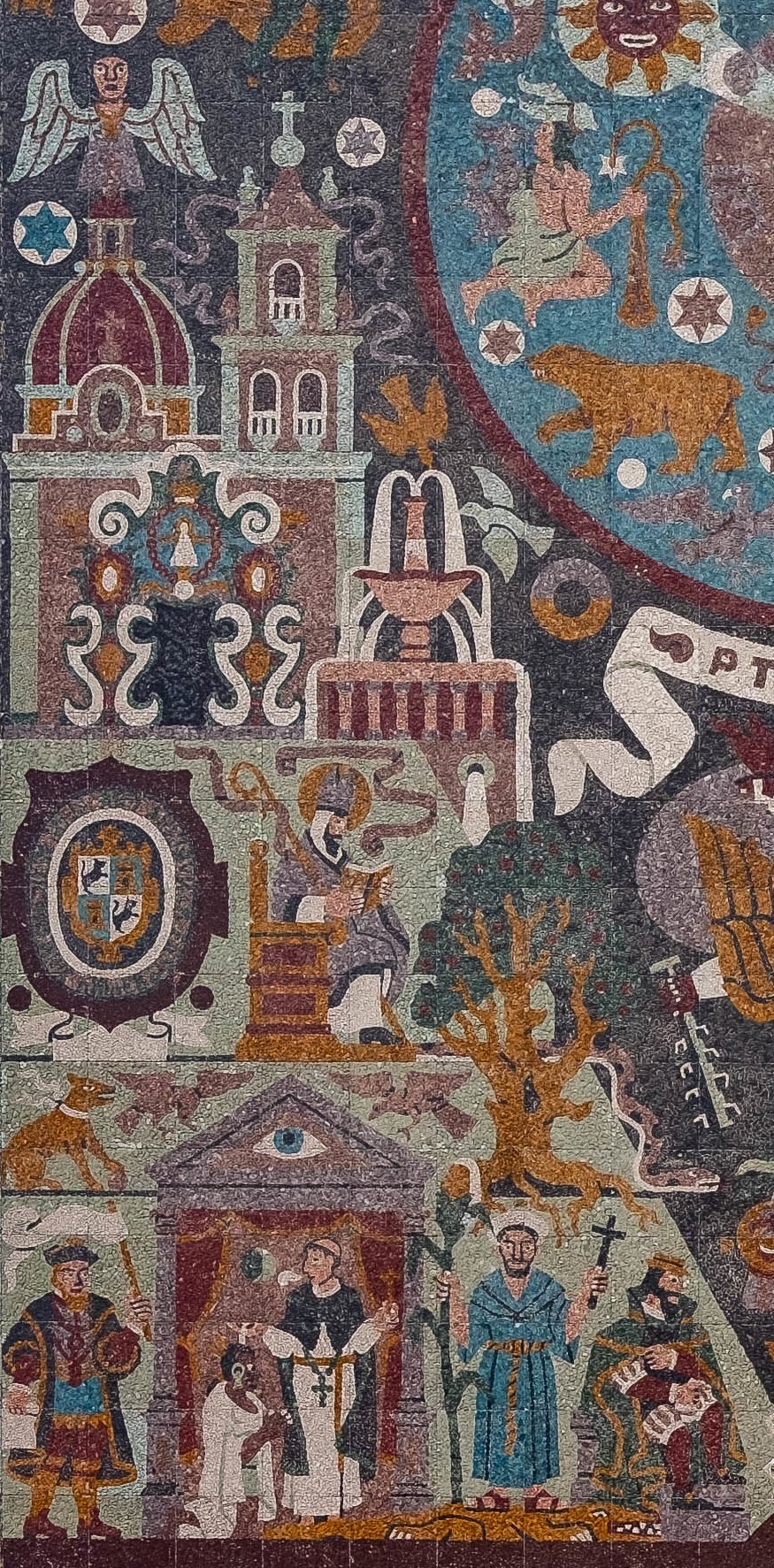
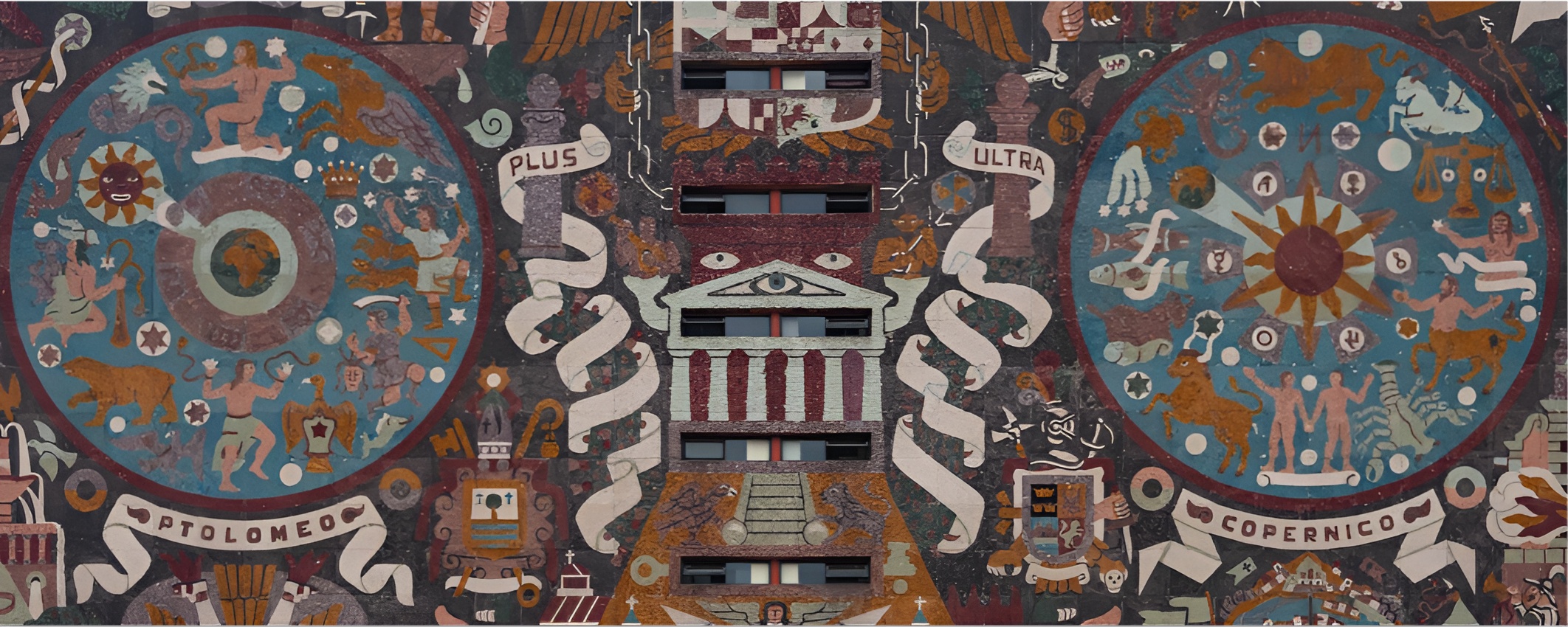
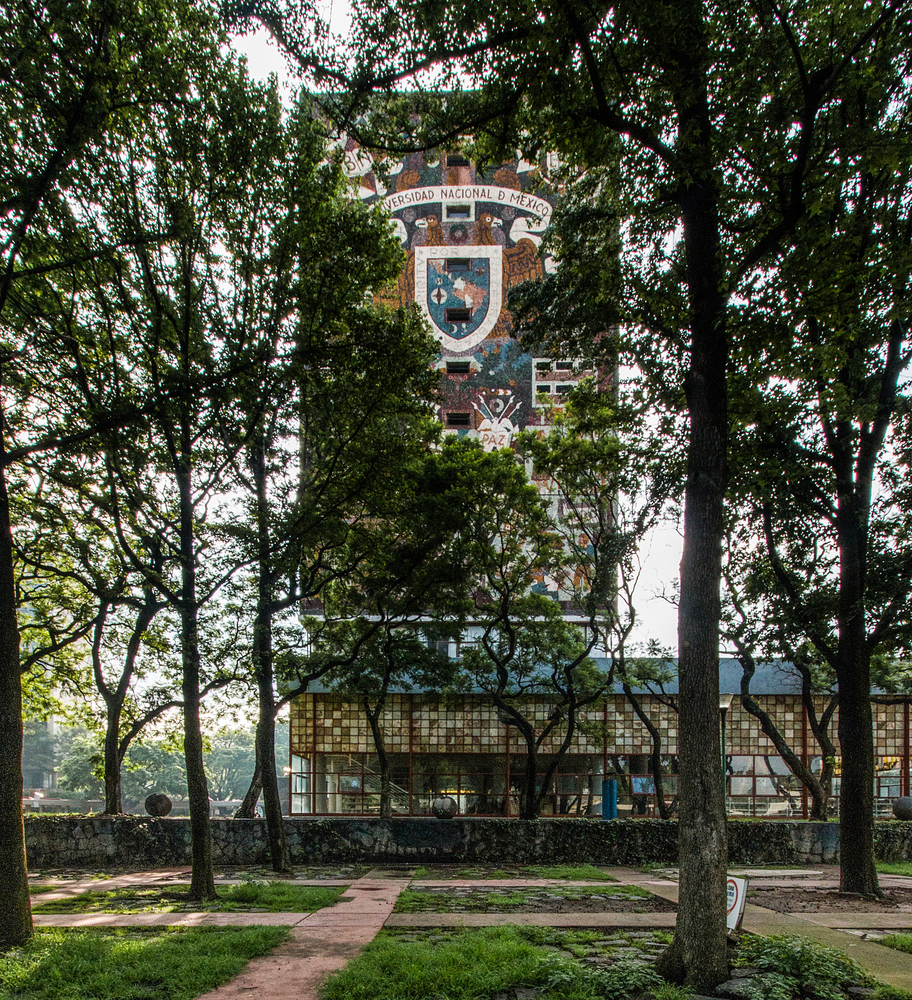
The resulting mural, titled Historical Representation of Culture, covers all four façades of the tower. The composition examines the evolution of Mexican culture through different historical periods. The north façade represents the pre-Hispanic world and its cosmology. The south façade addresses the colonial period and the encounter between Indigenous and Spanish cultures. The east façade depicts the contemporary world, balancing themes of tradition, industrialization, science, and social change. The west façade presents the university, modern Mexico, and the role of education, incorporating the UNAM crest as a central element.
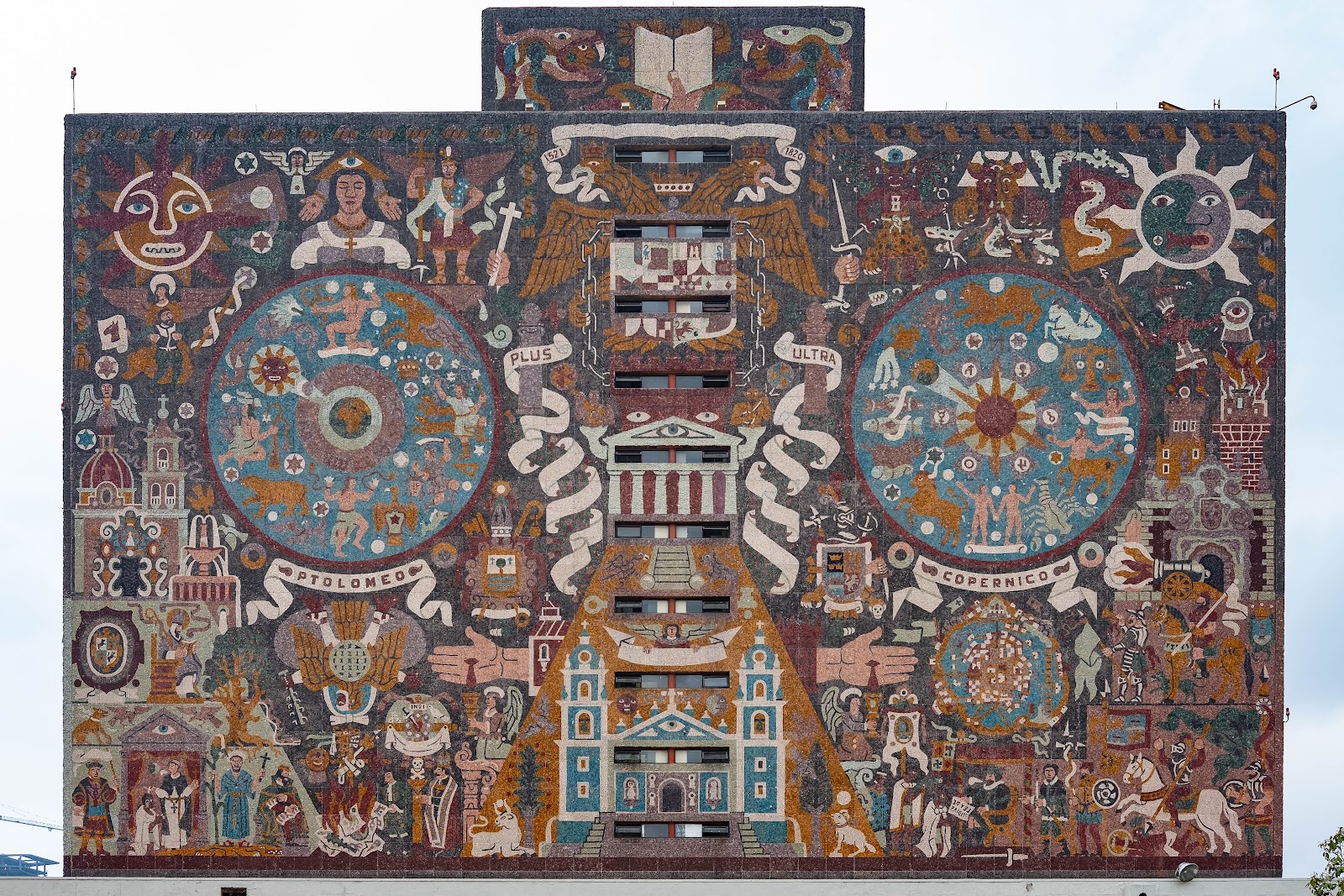
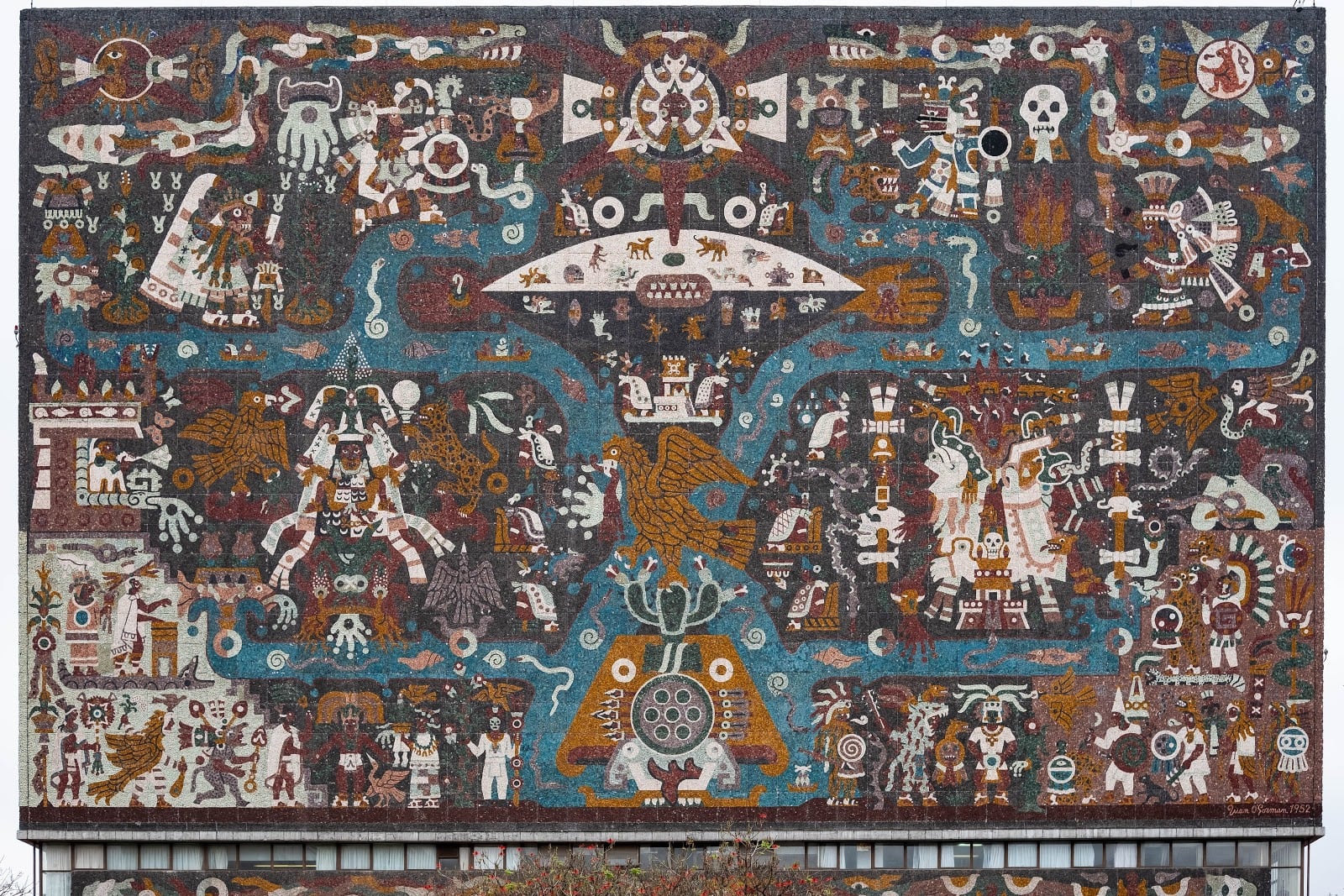
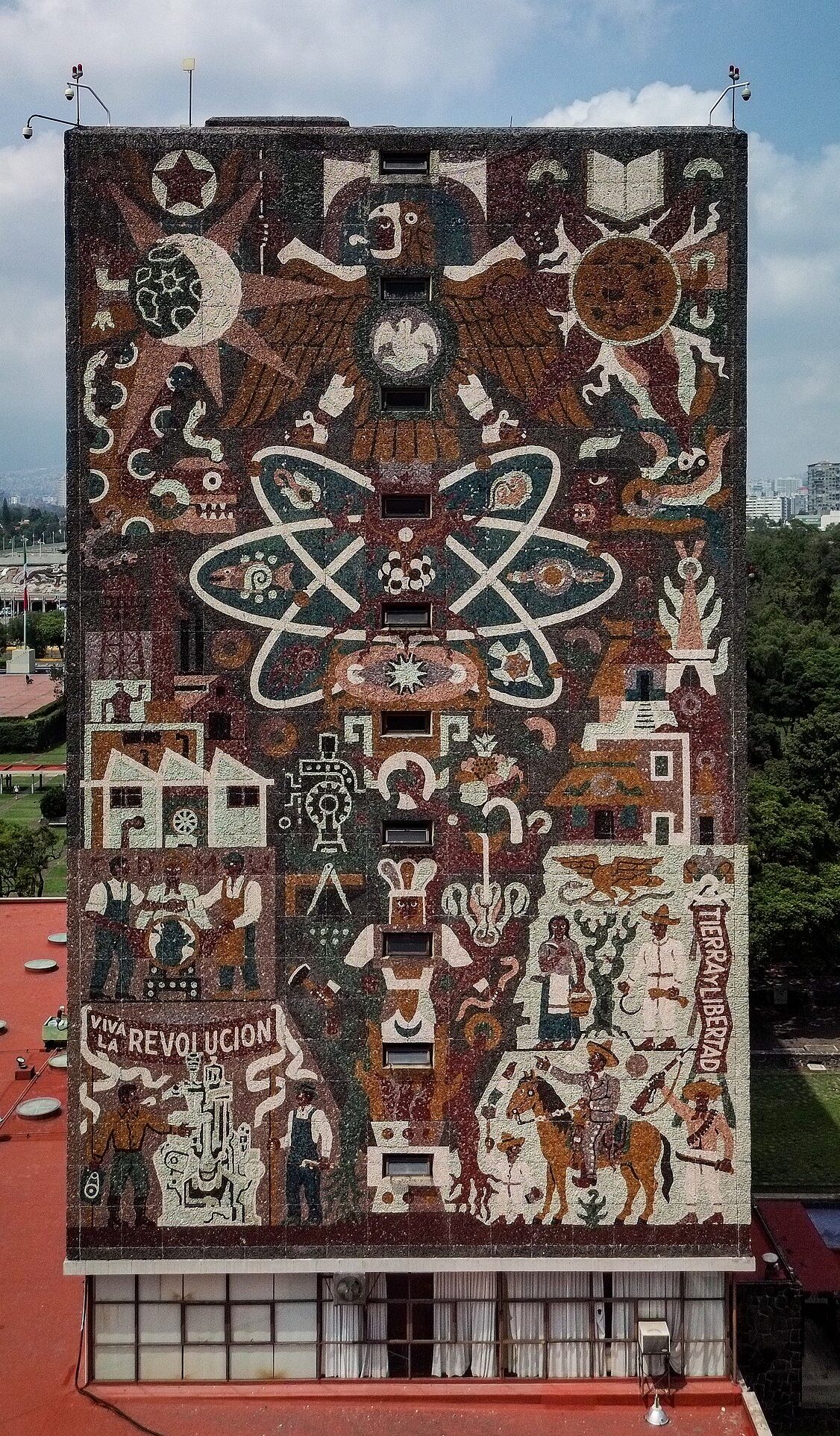
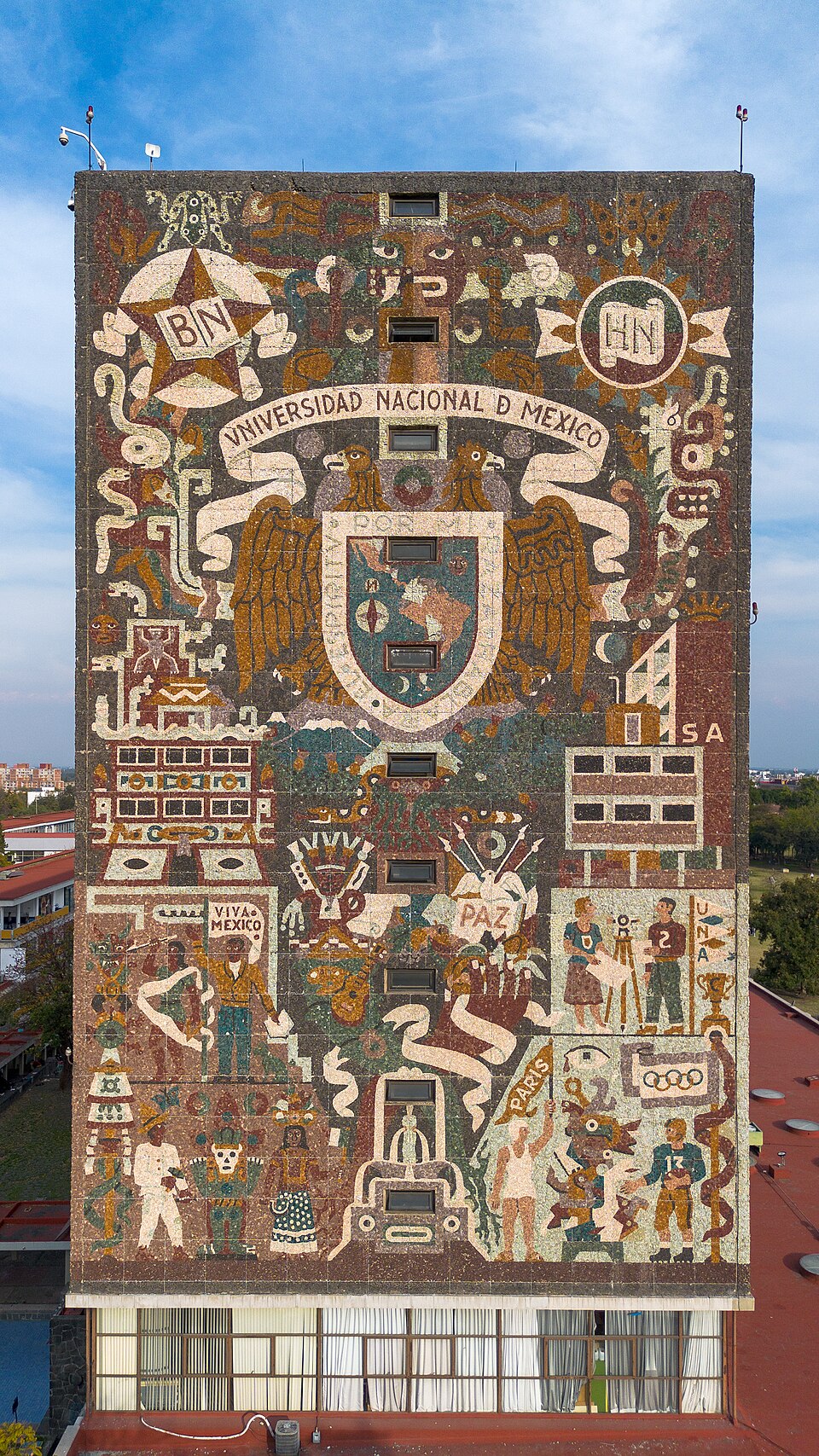
The mural was created using naturally colored stones collected from different regions of Mexico and carefully arranged according to color. Rather than relying on paint, O’Gorman used the inherent qualities of the materials to achieve lasting visual effects across the building’s exterior. The work remains one of the largest architectural mosaics in the world.
UNAM Central Library opened to users on April 5, 1956. The building became a central component of Ciudad Universitaria, a project that embodied a new vision for education, national development, and cultural identity in postwar Mexico. O’Gorman’s integration of architecture and muralism reinforced the university’s position as a repository of science, history, and knowledge.
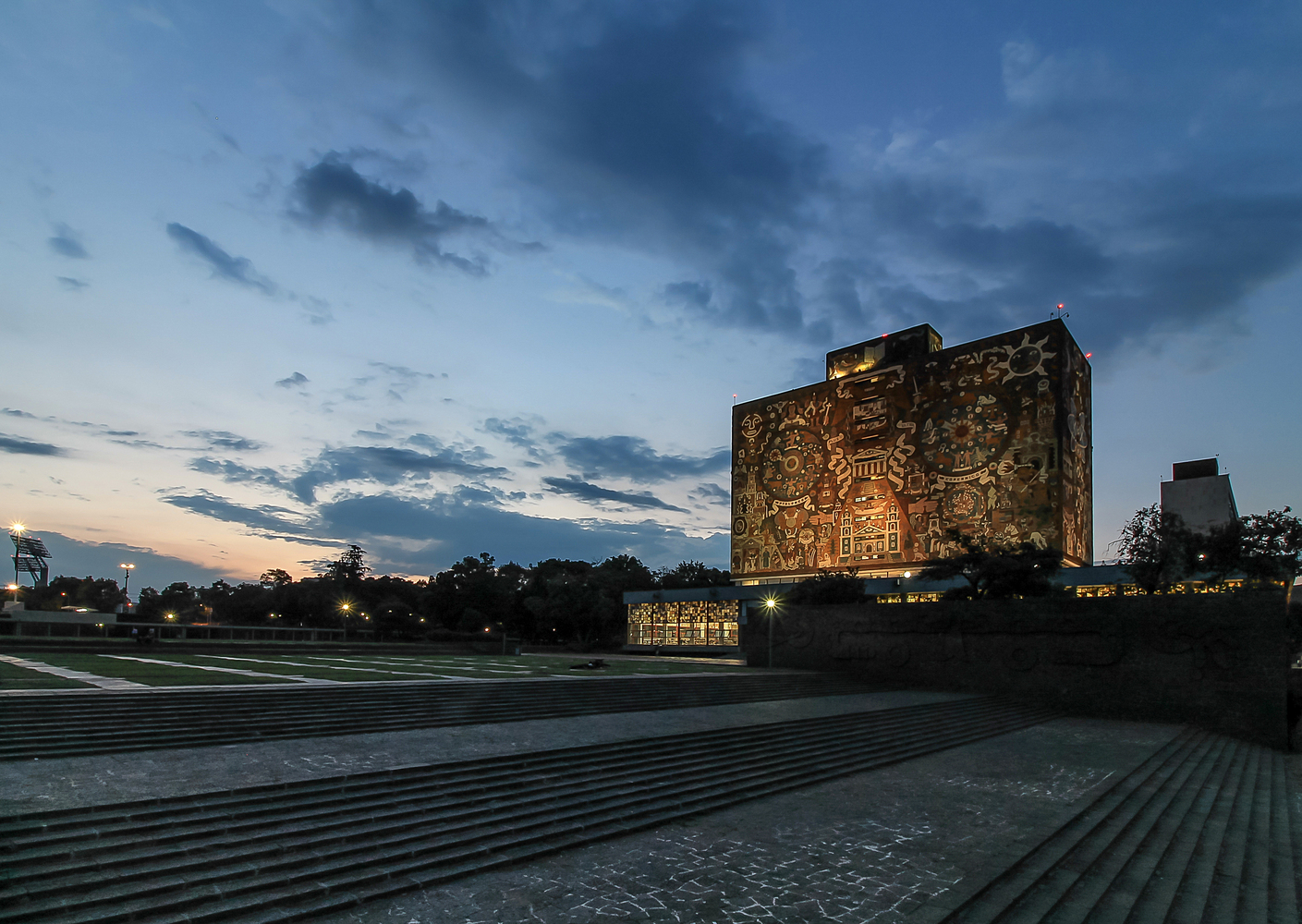
UNAM Central Library continues to function as one of Mexico’s most important academic libraries. Its collections, architecture, and mural program have established it as an enduring symbol of Mexican modernism. In 2007, UNESCO included the Central Library and the Central Campus of Ciudad Universitaria on the World Heritage List, recognizing their cultural and architectural significance.
Project Gallery

Project Location
Address: Escolar S/N, Ciudad Universitaria, Coyoacán, 04510 Ciudad de México, CDMX, Mexico
Location is for general reference and may represent a city or country, not necessarily a precise address.

