

Architect: Wallace K. Harrison
Area: 82,600 m² (889,000 ft²)
Year: 1951
Photography: Wallace K. Harrison, Štěpán Vrzala, Matthew Tenbruggencate, Terry Mosley, Tomas Eidsvold, Nils Huenerfuerst, Daryan Shamkhali, Gabriel Tovar, The Blowup, FLC, ADAGP, UN, DPI, Wikimedia Commons, Michael Mommert, Erik Drost, ajay_suresh, muhammad, U.S. Department of State, unmultimedia.org
Board of Design: Le Corbusier, Oscar Niemeyer, Nikolai G. Bassov, Gaston Brunfaut, Ernest Cormier, Liang Seu-Cheng, Sven Markelius, Sir Howard Robertson, G. A. Soilleux, Julio Vilamajó
Interior Designer: Abel Sorenson
Manufacturers: One Collection
Client: United Nations
Renovation: 2010–2012
City: New York City
Country: United States
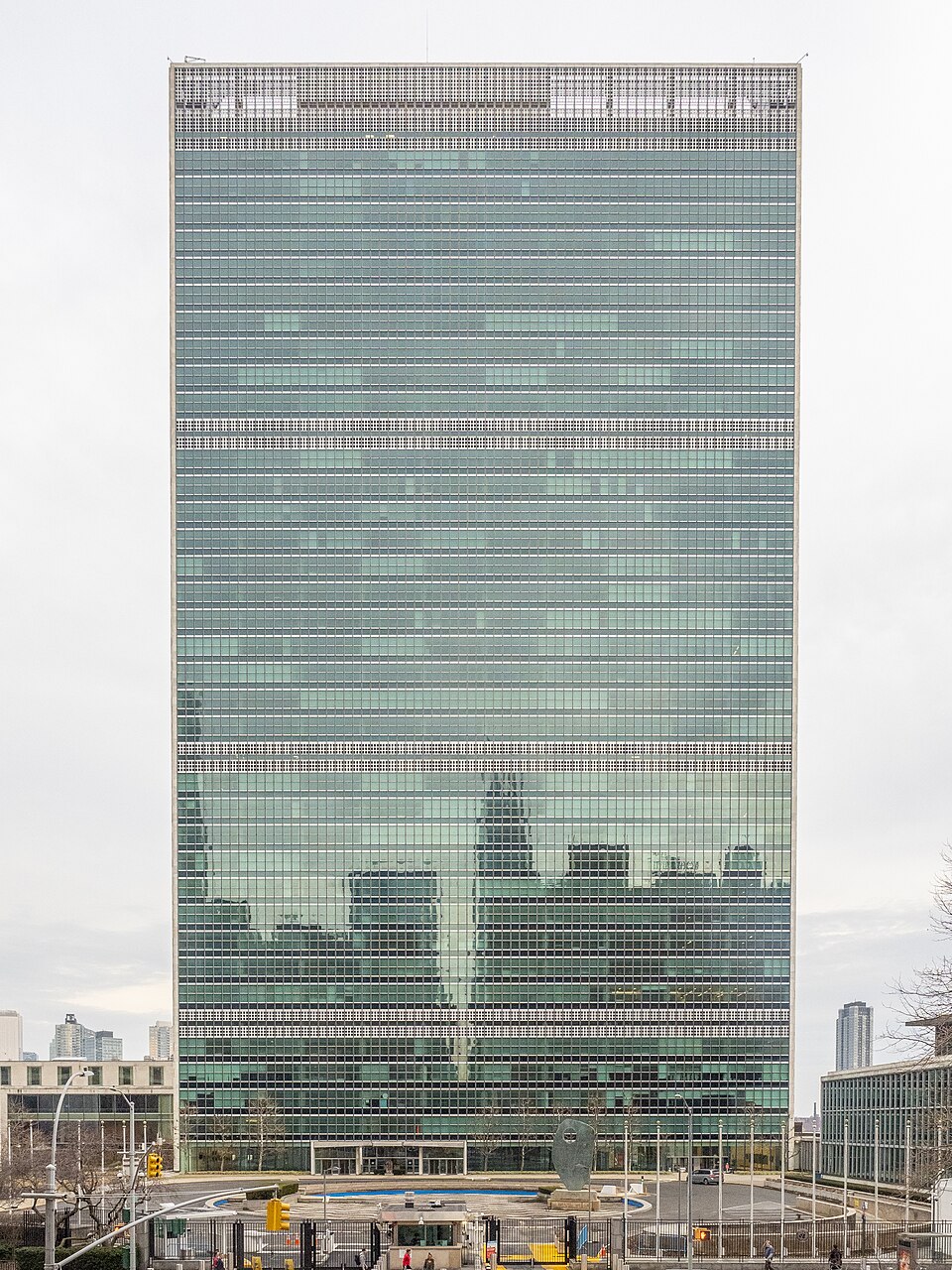
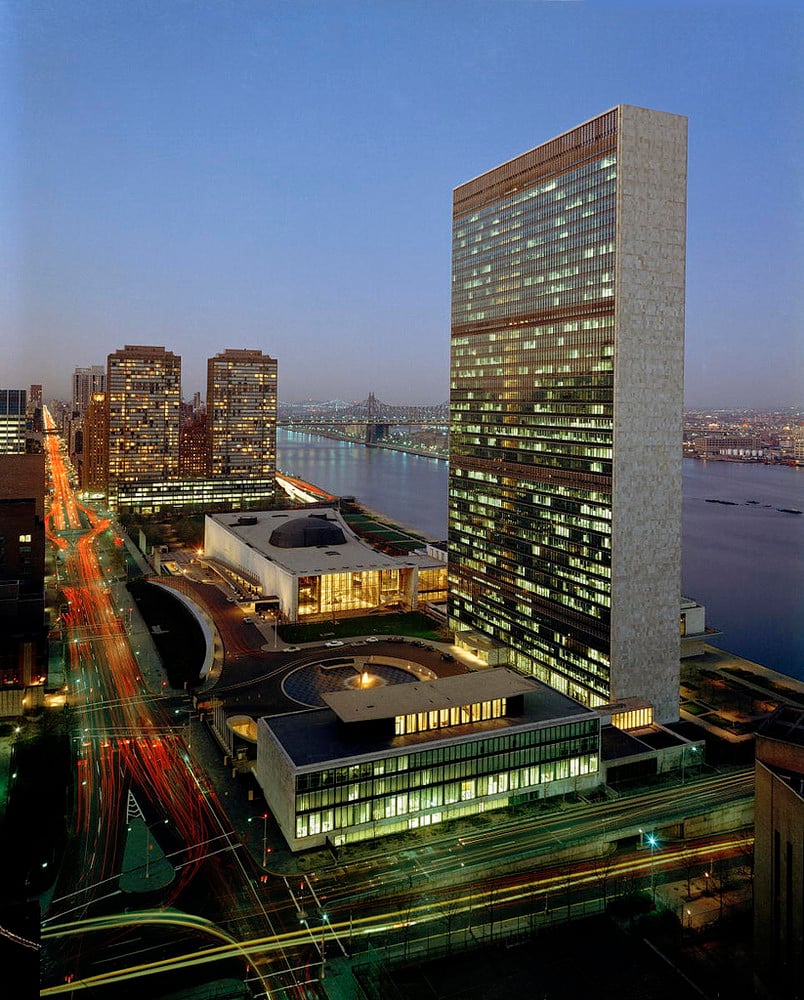
United Nations Secretariat Building office skyscraper designed by Wallace K. Harrison with an international Board of Design in New York, United States, established a new architectural image for global diplomacy through its International Style slab form, glass curtain wall, and modern administrative program, completed in 1951. Developed as part of the United Nations Headquarters on the East River, the project followed John D. Rockefeller Jr.’s donation of the Turtle Bay site and brought together architects from several founding nations in a collaborative design process. United Nations Secretariat Building became the administrative core of the organization, housing the offices of the United Nations Secretariat within a 39-story tower. The design combined Oscar Niemeyer’s site strategy, Le Corbusier’s influence on the headquarters composition, and Wallace K. Harrison’s direction of the final scheme. The tower’s east and west elevations use blue-green glass curtain walls, while the north and south elevations are clad in Vermont marble. This contrast between transparency and solidity gave the building its civic presence and introduced one of New York’s earliest glass curtain wall skyscrapers. The Secretariat Building helped define the architectural language of postwar international institutions and influenced later office towers in Manhattan and beyond.
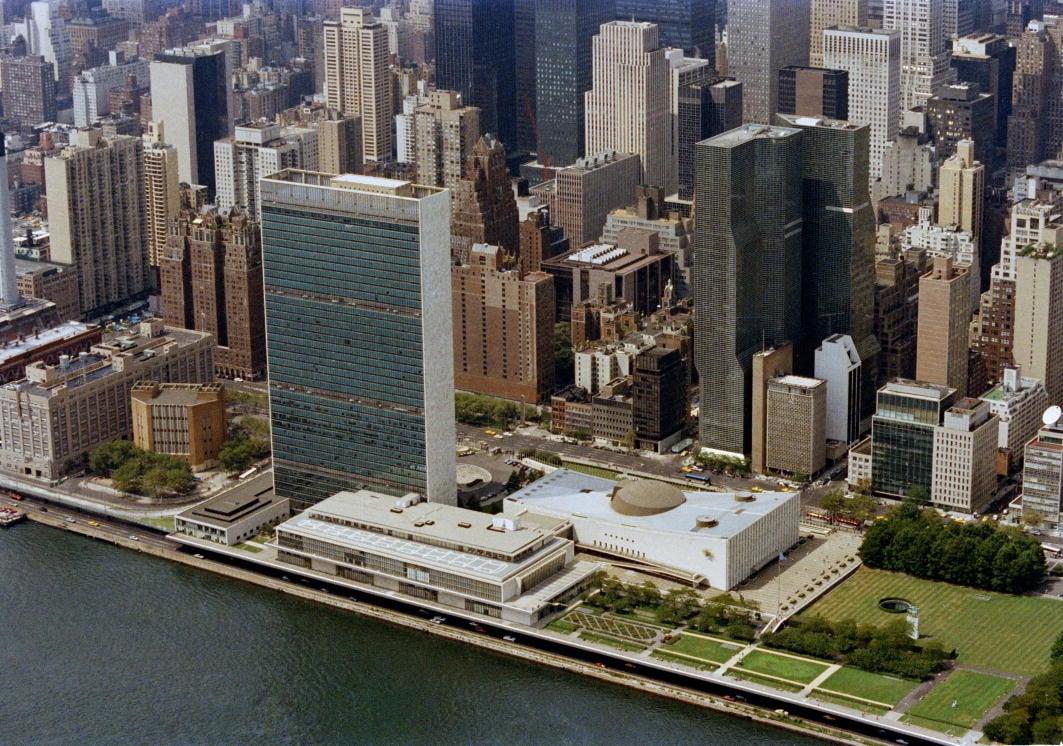
The United Nations Secretariat Building forms the administrative tower of the United Nations Headquarters in Turtle Bay, Manhattan. Designed under the direction of Wallace K. Harrison with an international Board of Design, the building was completed in 1951 as one of the central architectural symbols of the postwar international order.
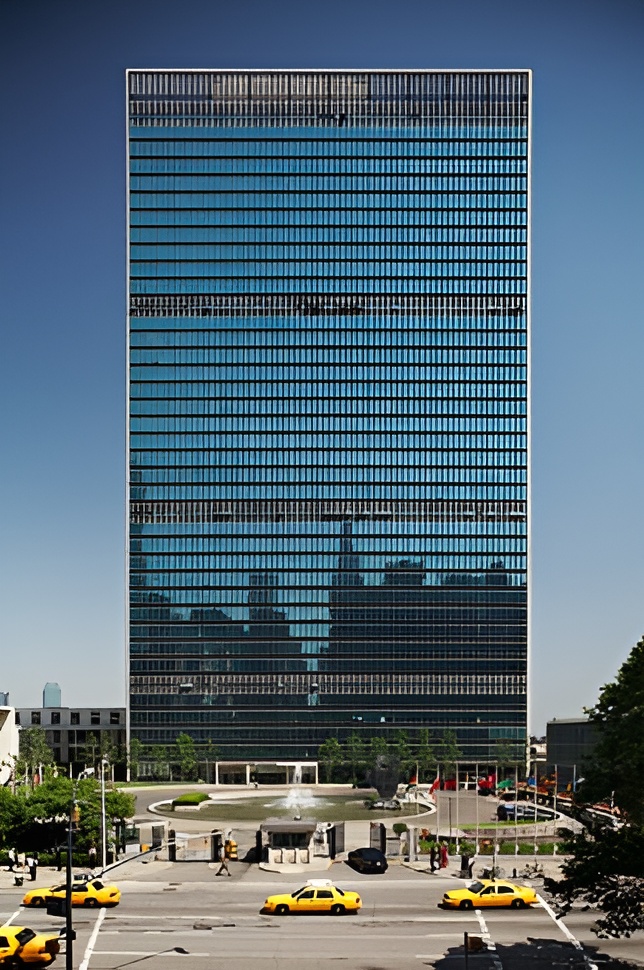
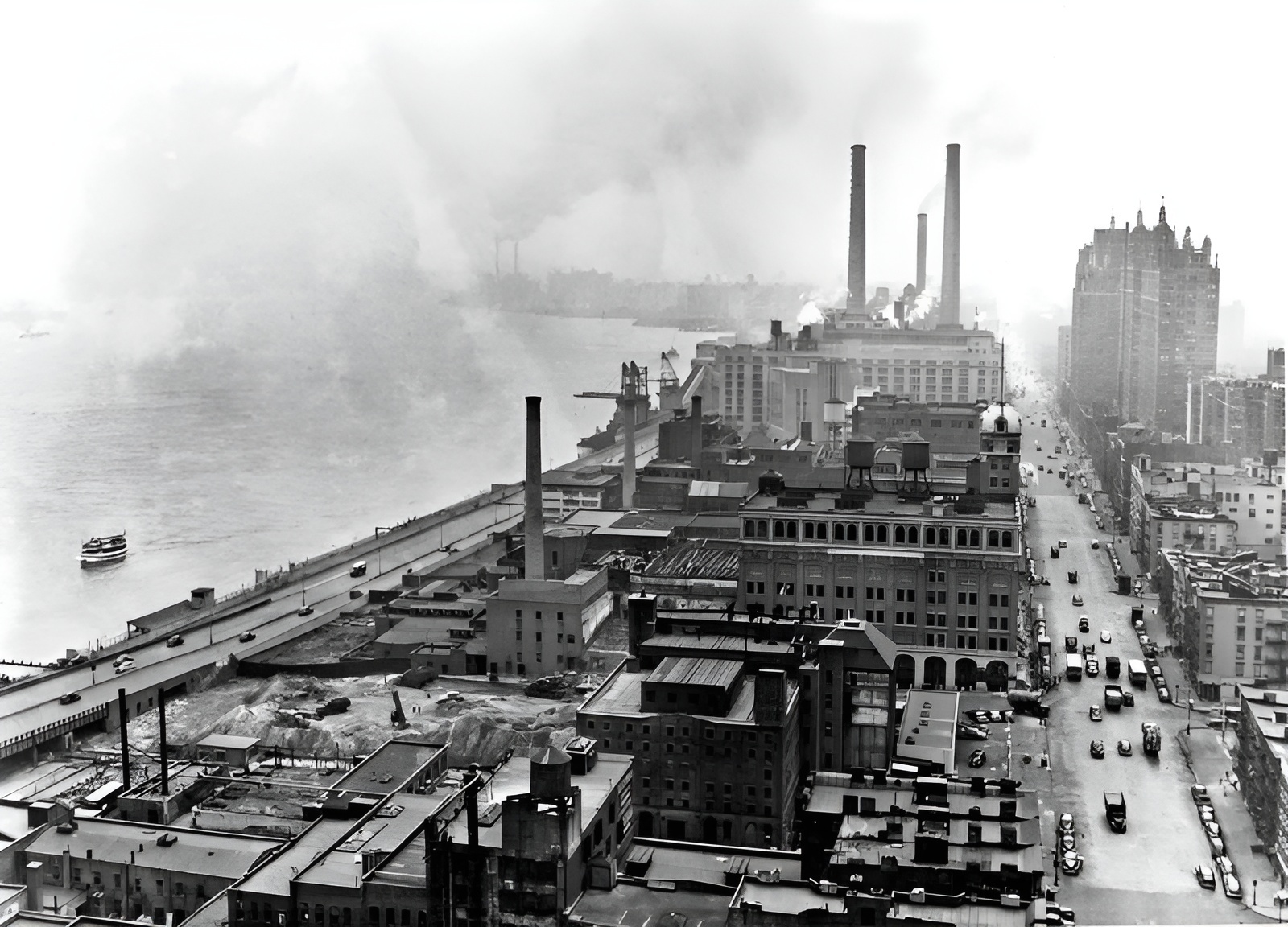
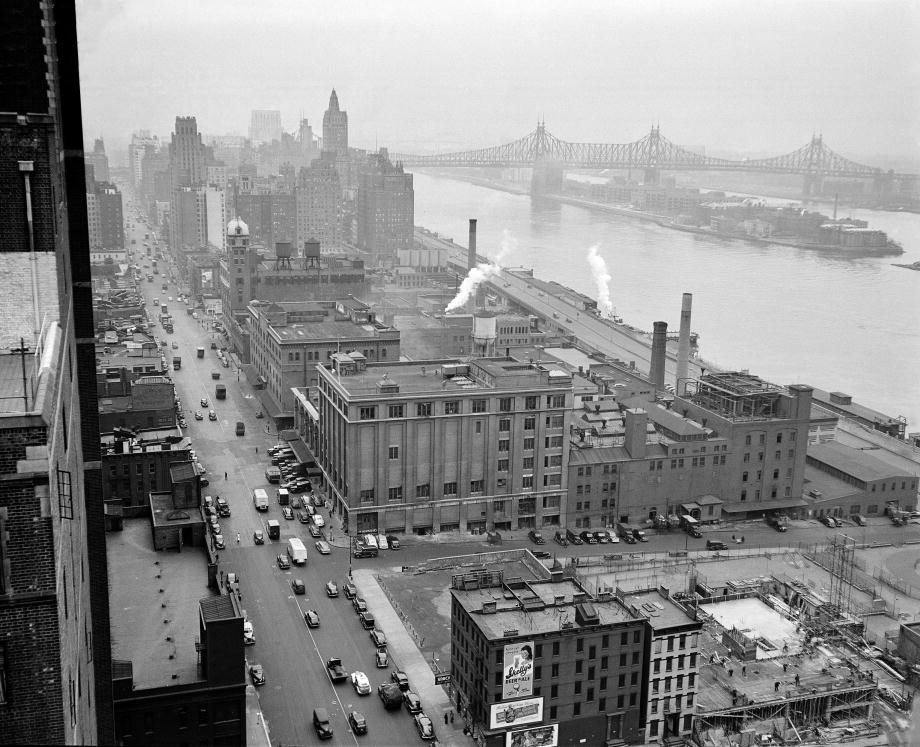
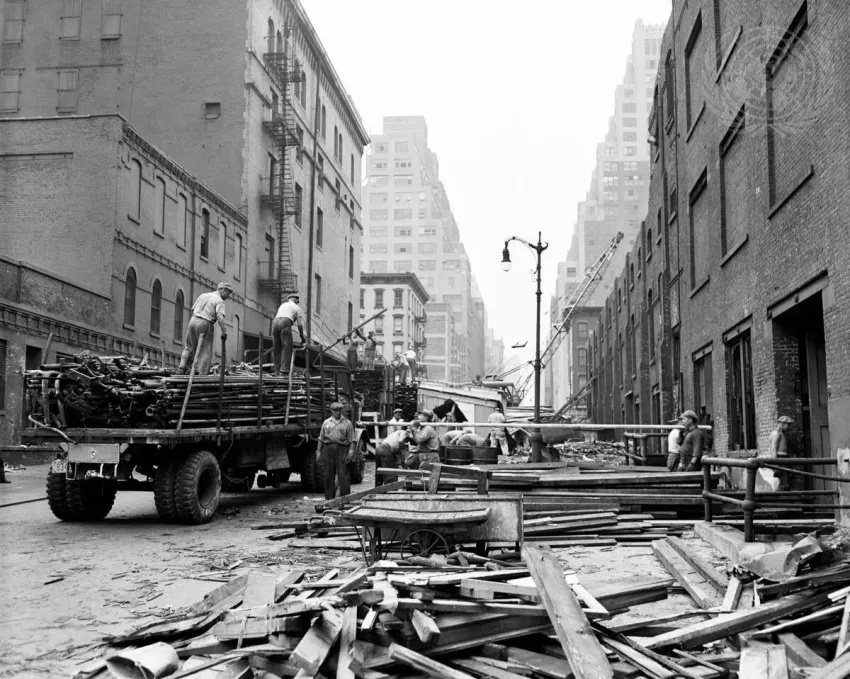
The project began after the founding of the United Nations in 1945, when the organization sought a permanent headquarters. Several cities and sites were considered before John D. Rockefeller Jr. donated land along the East River in Manhattan. The site’s location offered international accessibility and positioned the headquarters within one of the world’s major diplomatic and commercial centers.
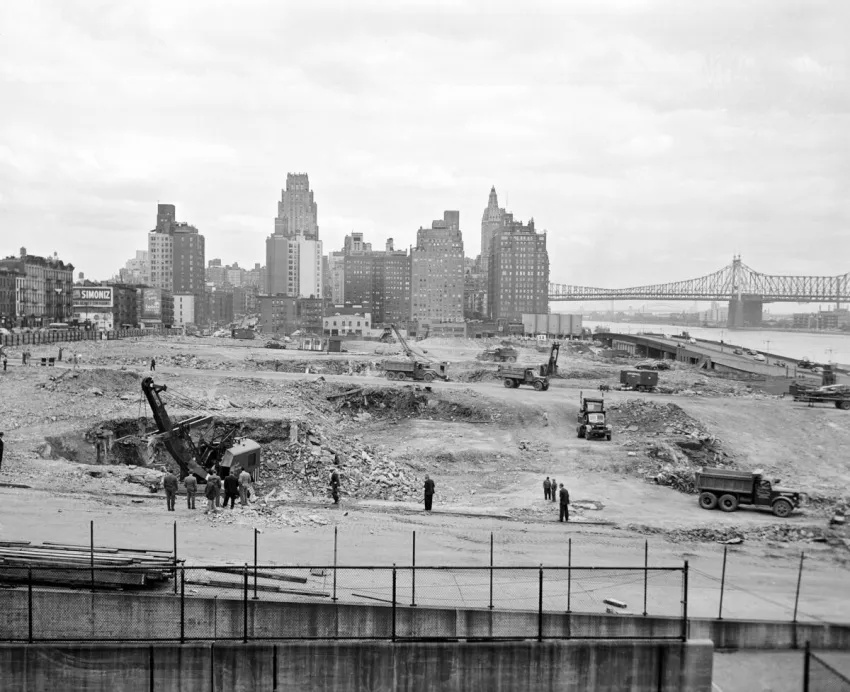
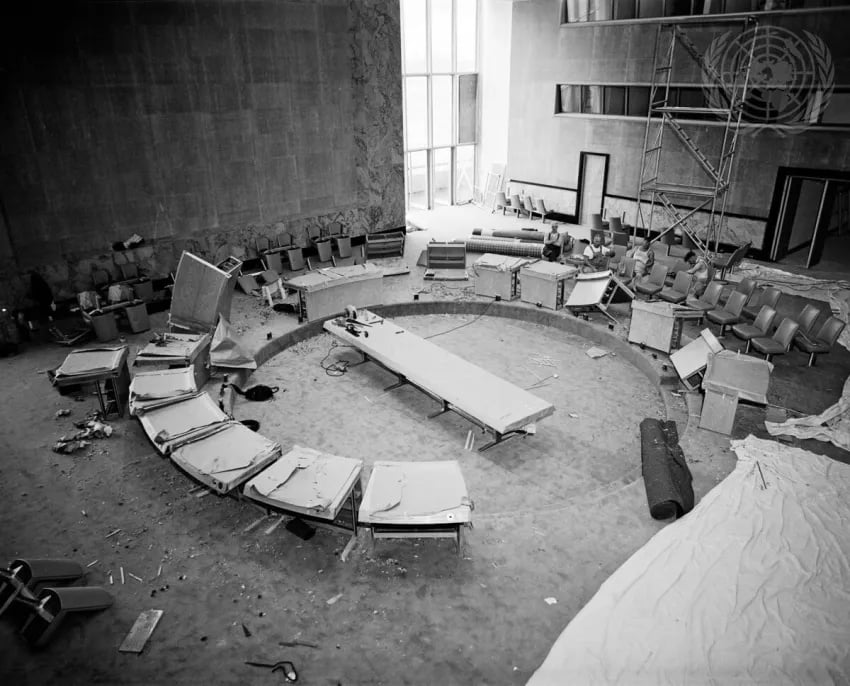
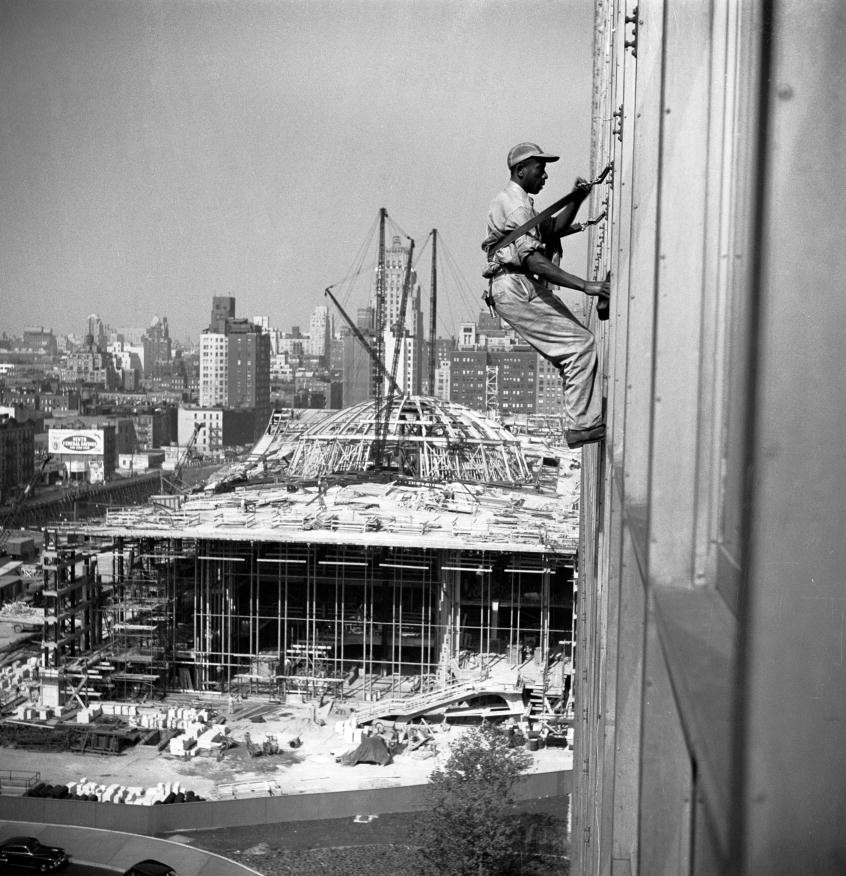
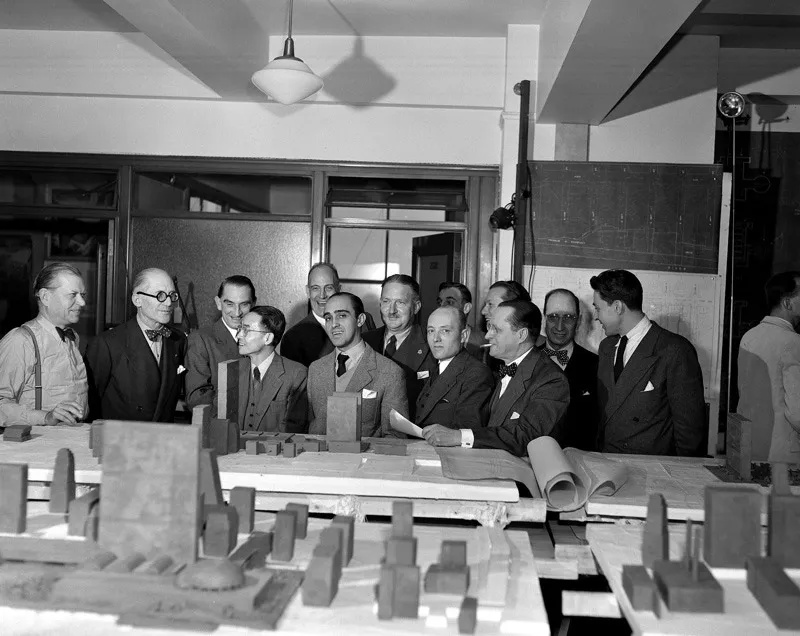
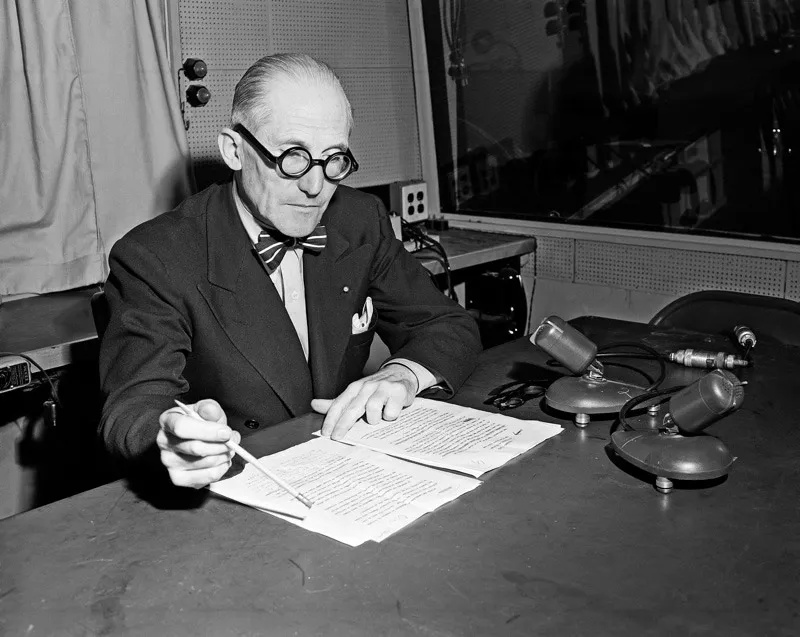
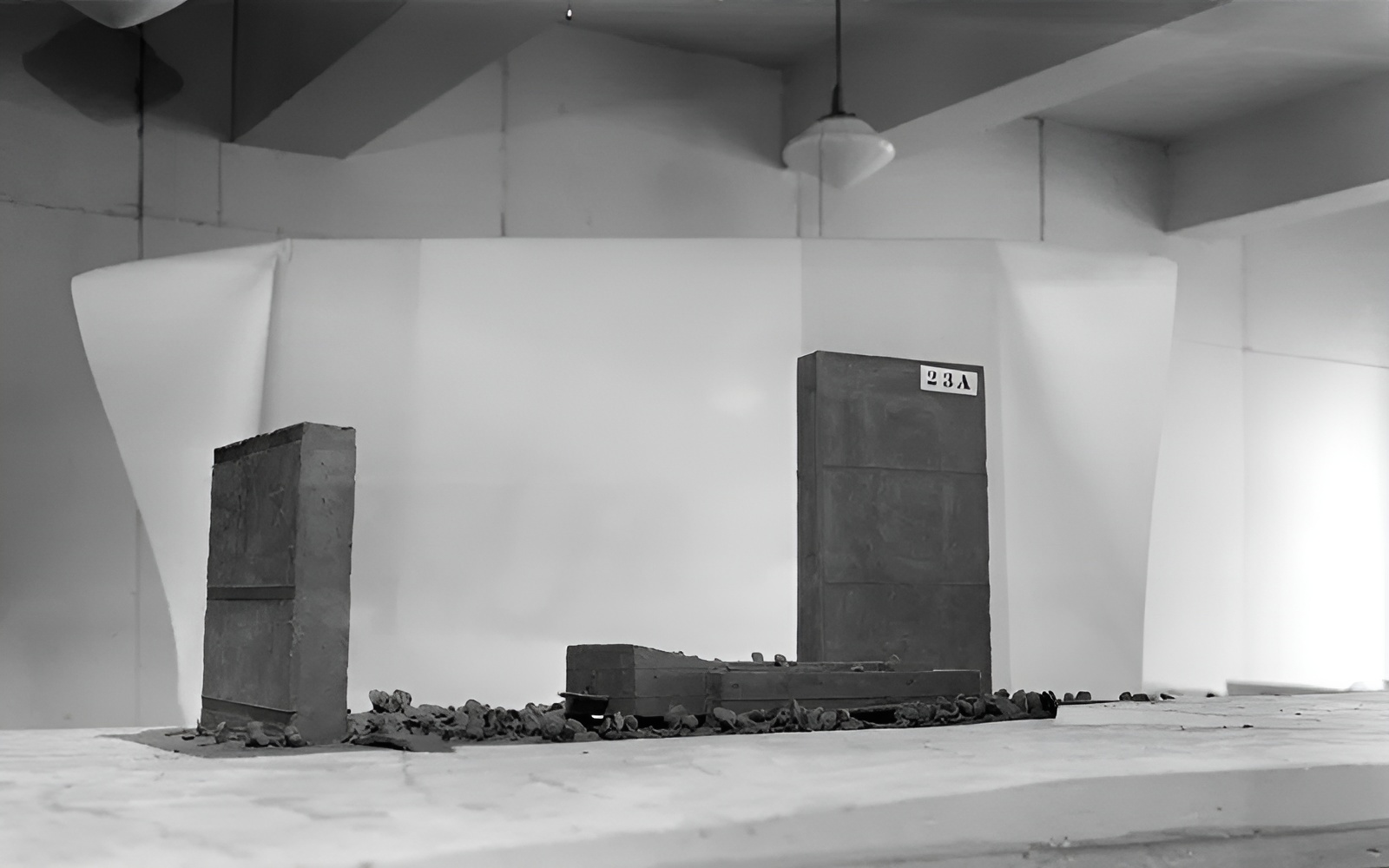
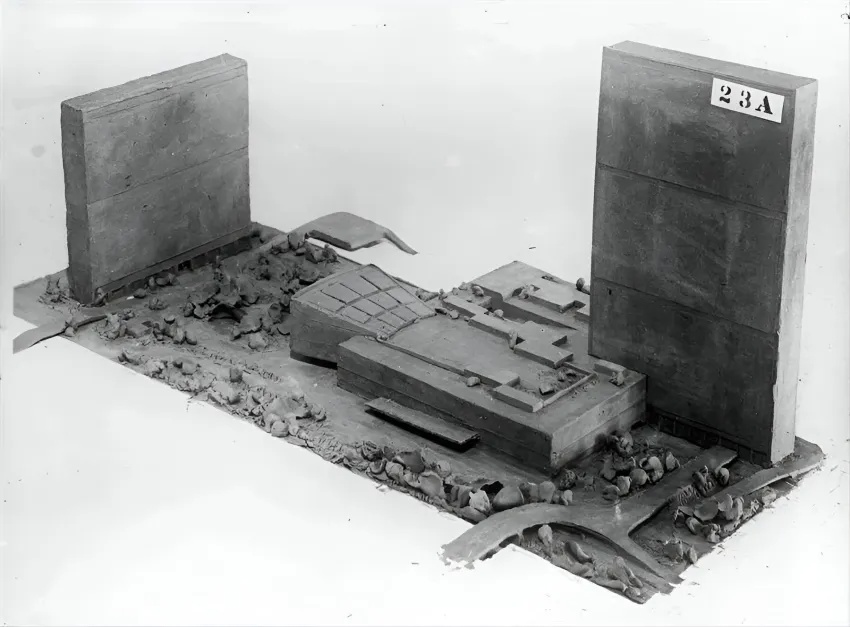
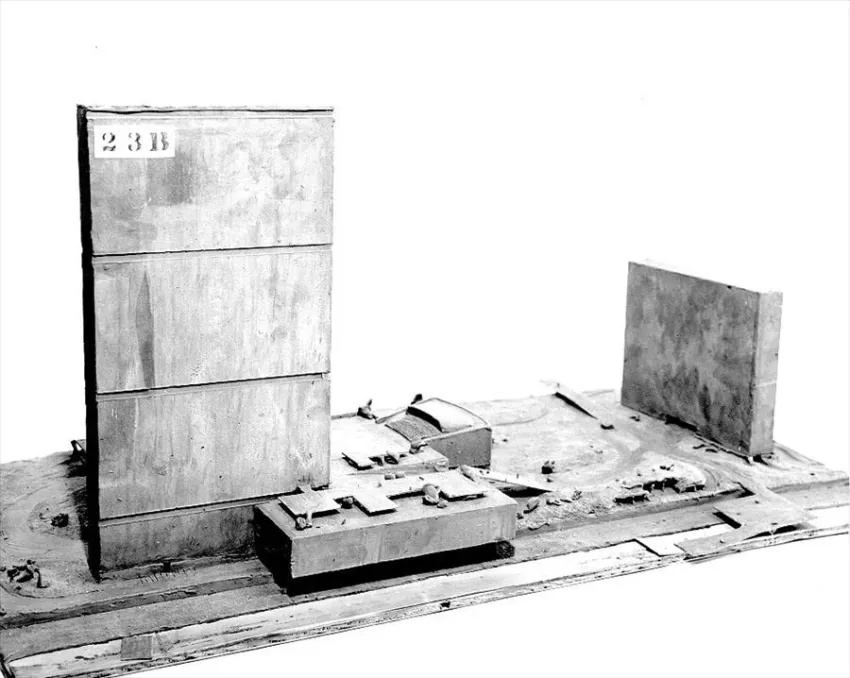
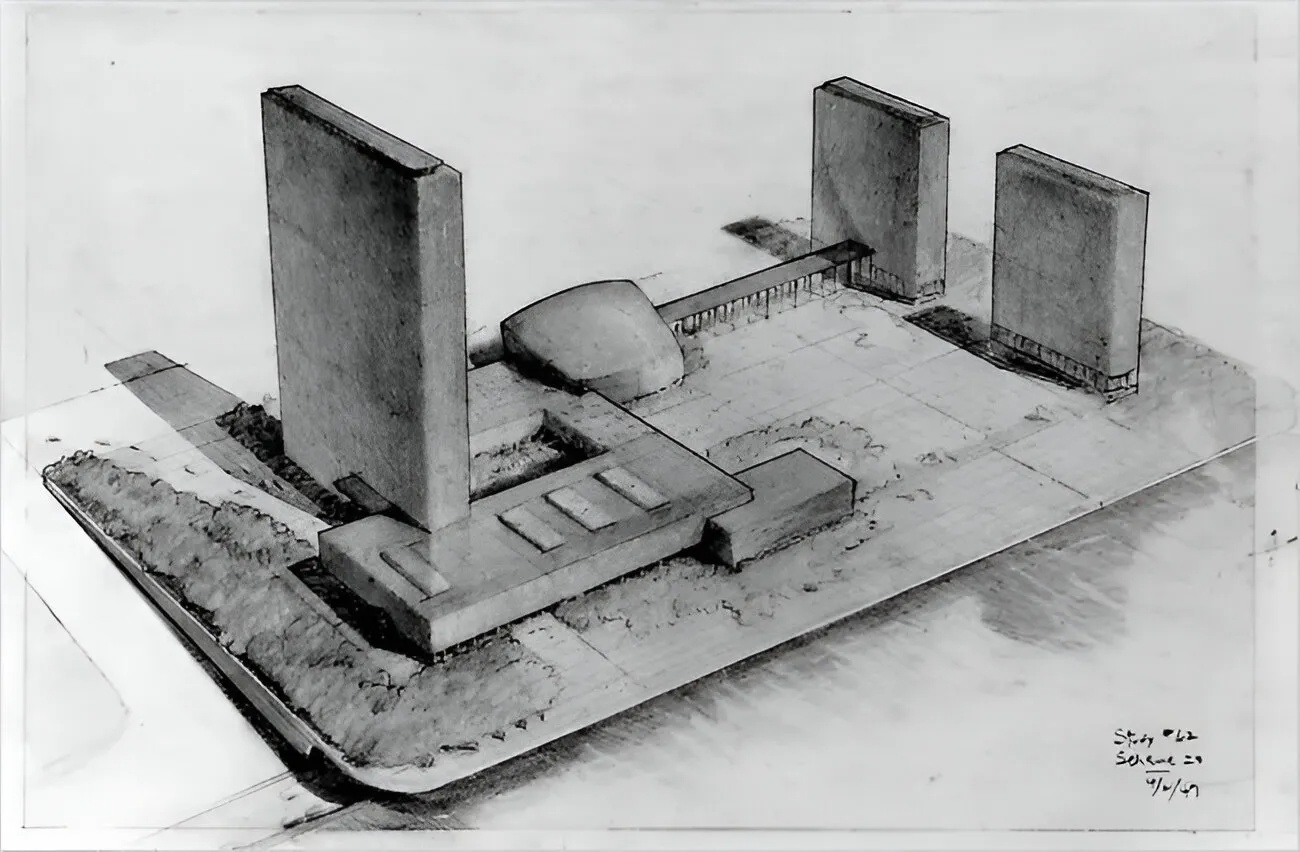
Rather than organizing a conventional design competition, the United Nations assembled an international group of architects from member nations. Wallace K. Harrison served as planning director and coordinated the work of figures including Le Corbusier, Oscar Niemeyer, Sven Markelius, Liang Seu-Cheng, Ernest Cormier, Sir Howard Robertson, and others. The design process generated multiple schemes before a final composition emerged from the interaction between Niemeyer’s and Le Corbusier’s proposals.
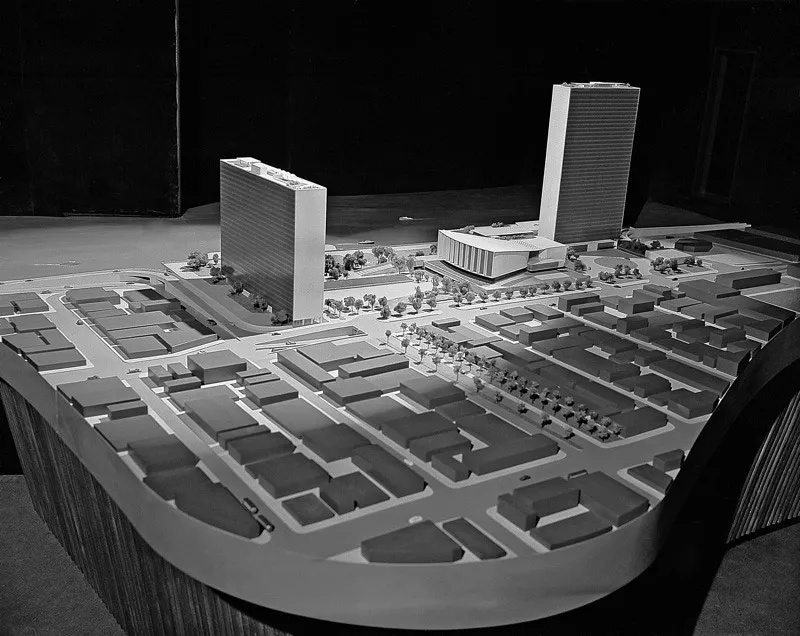
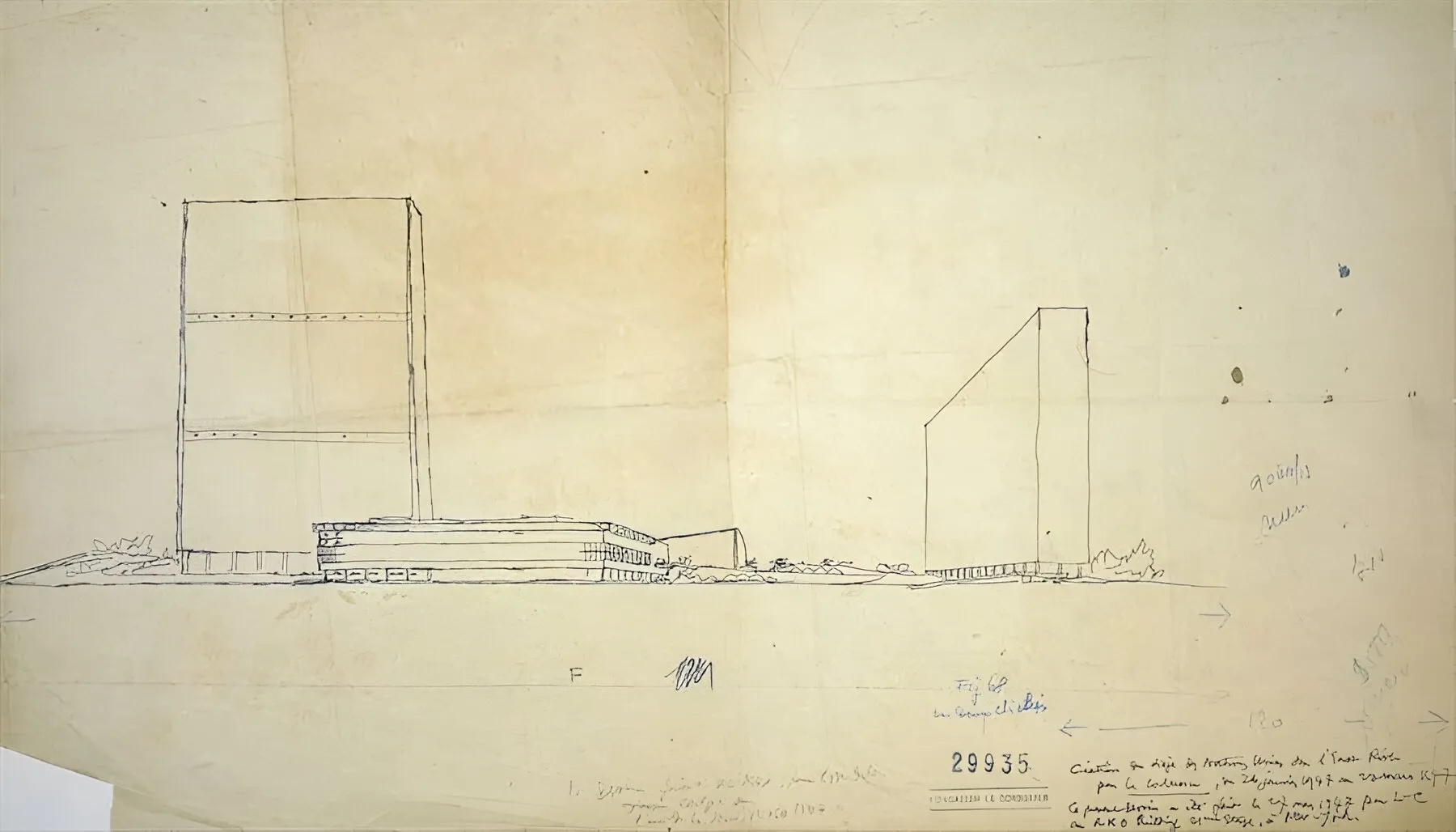
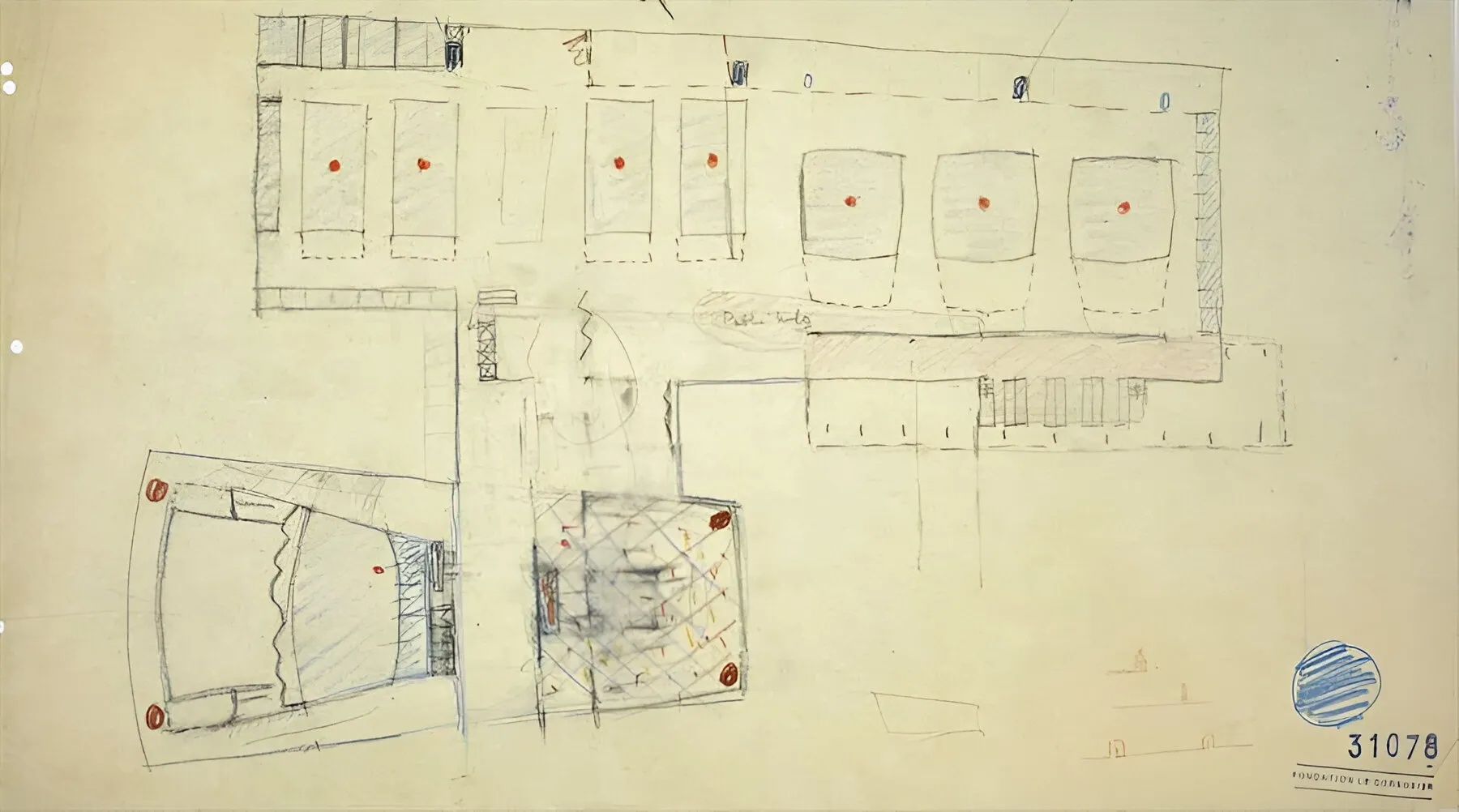
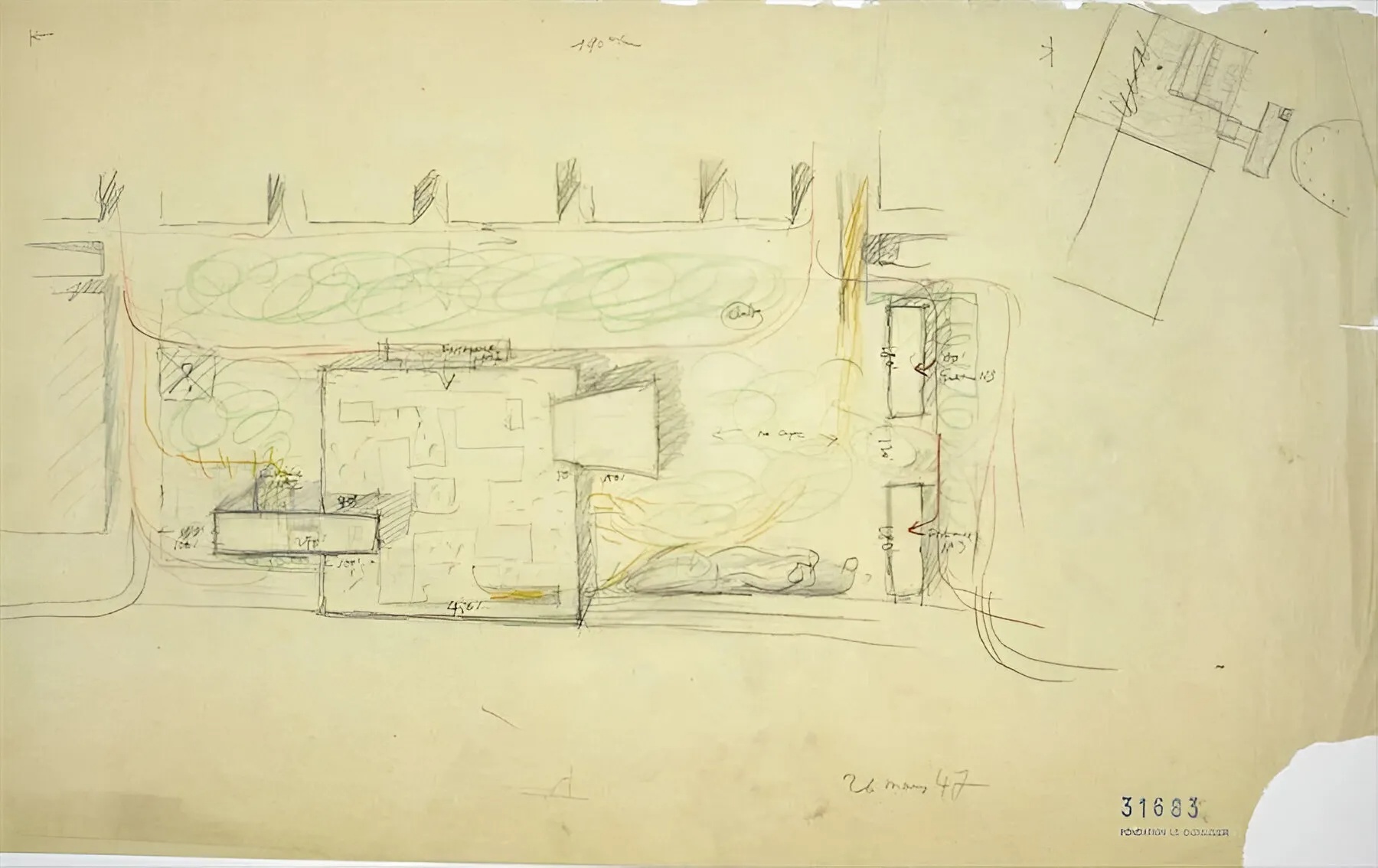
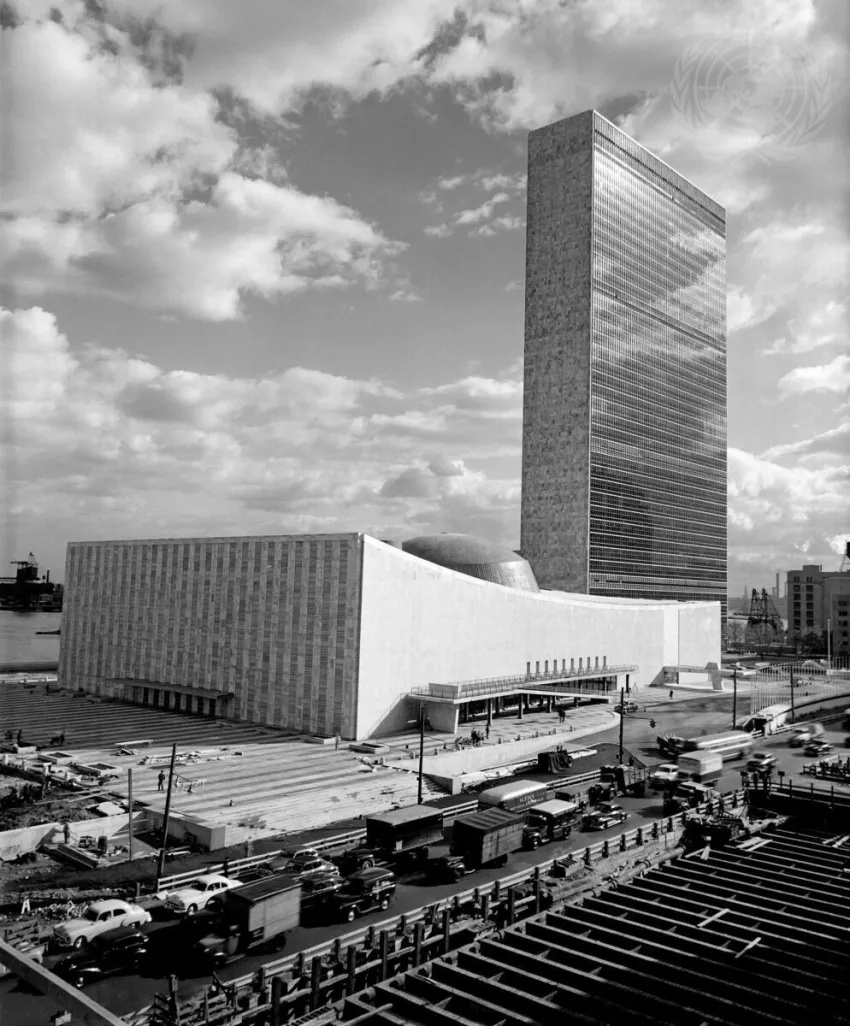
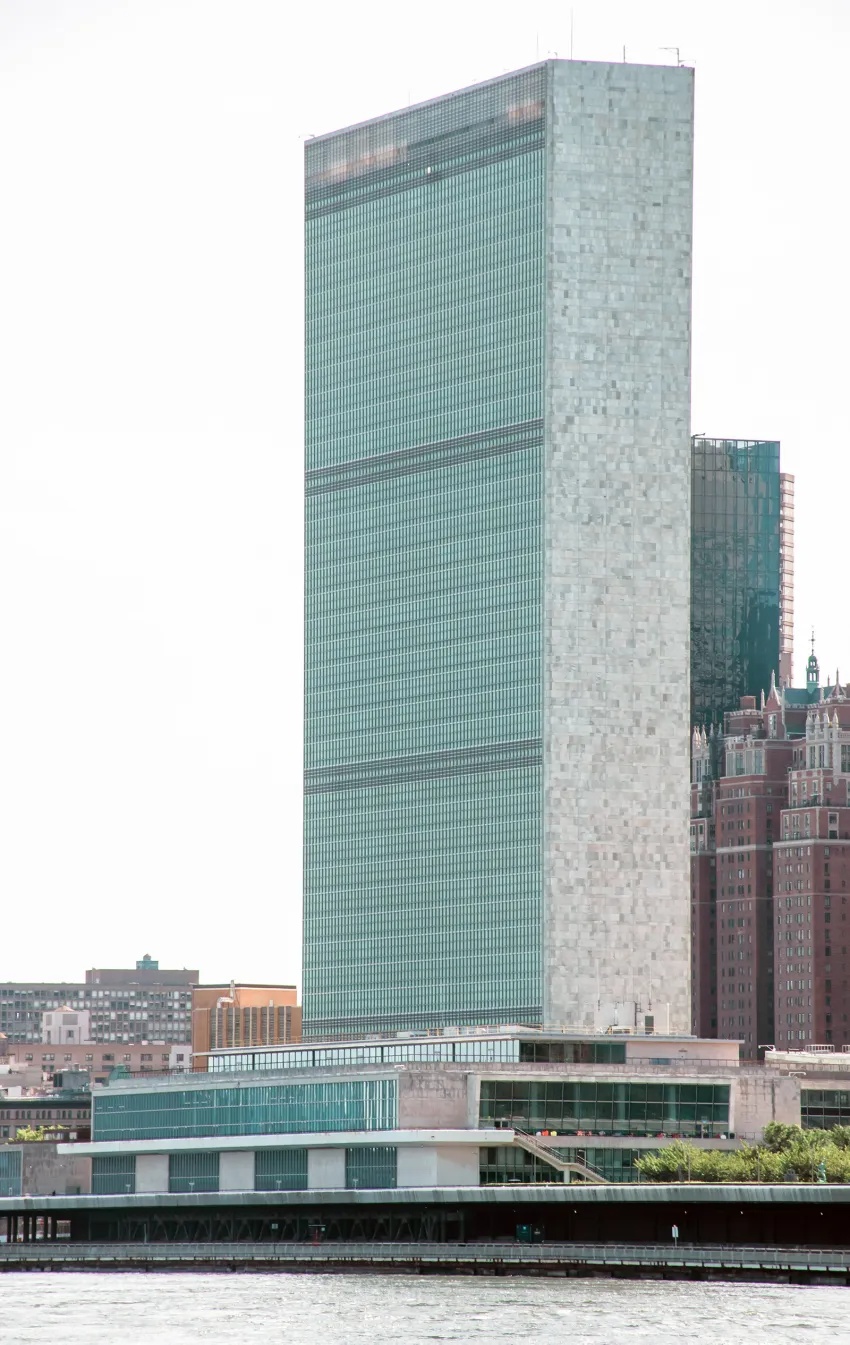
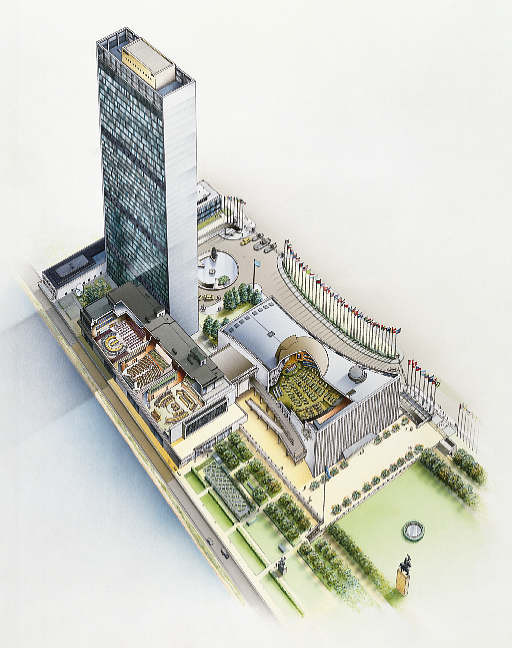
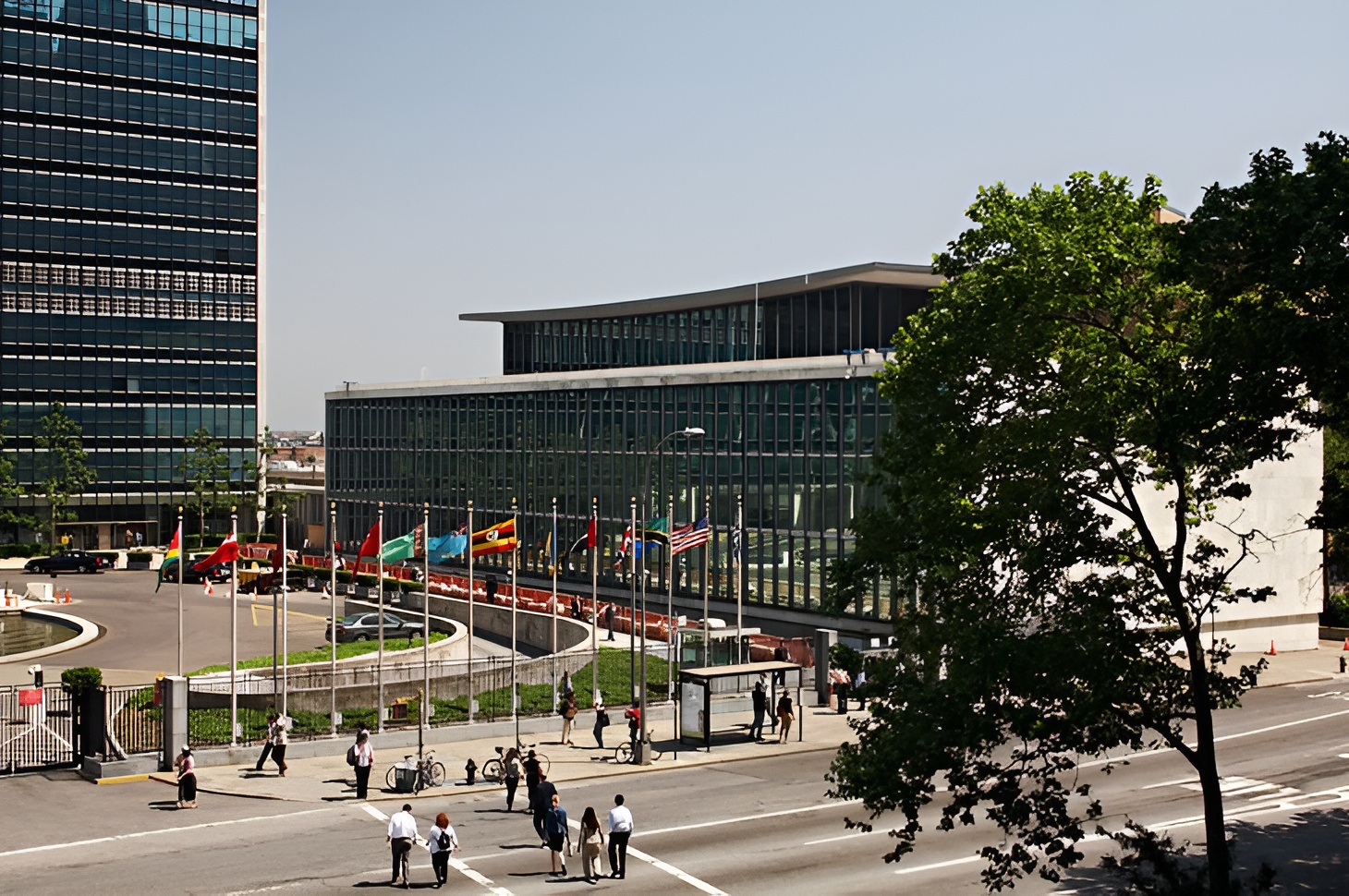
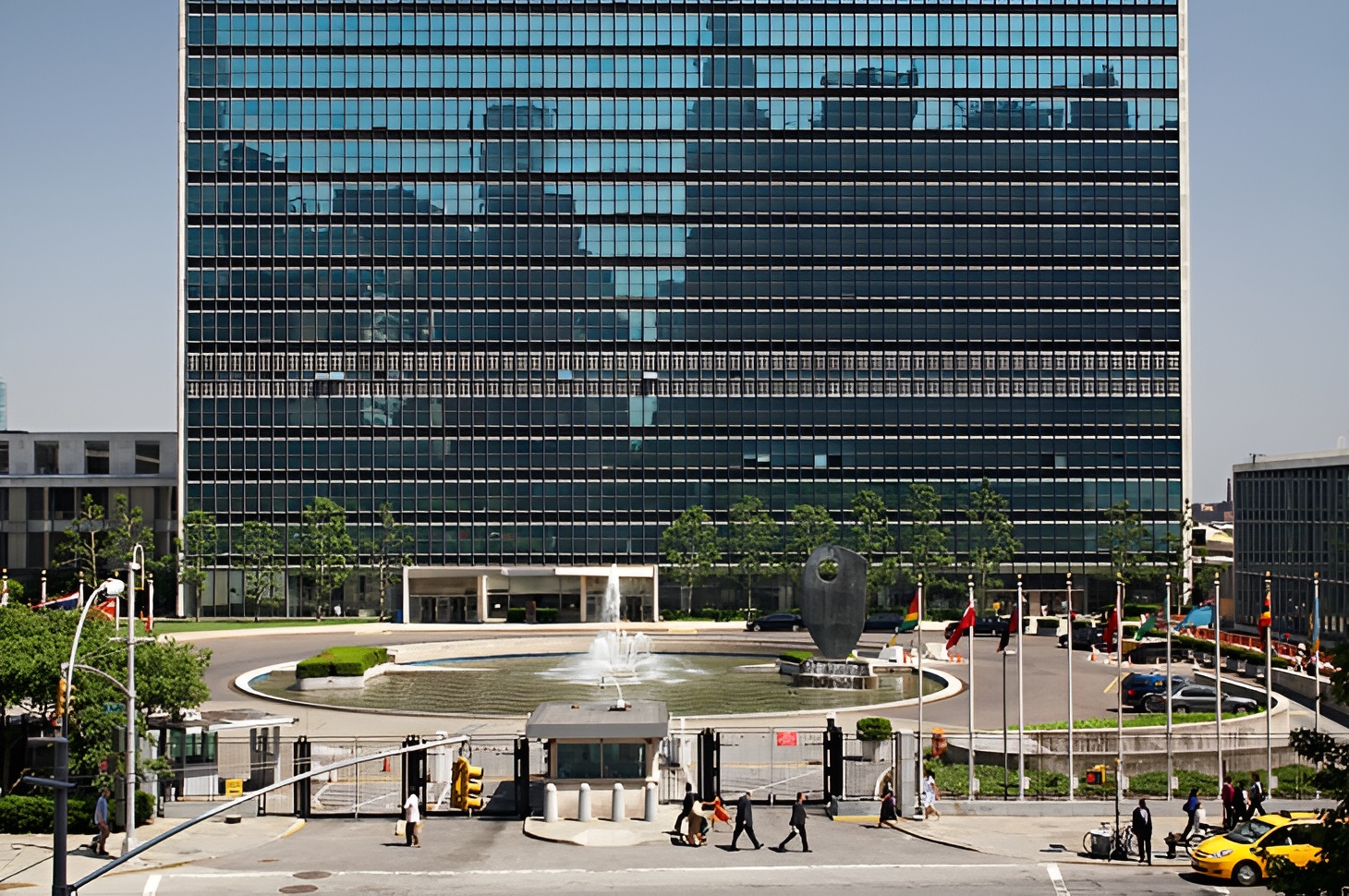
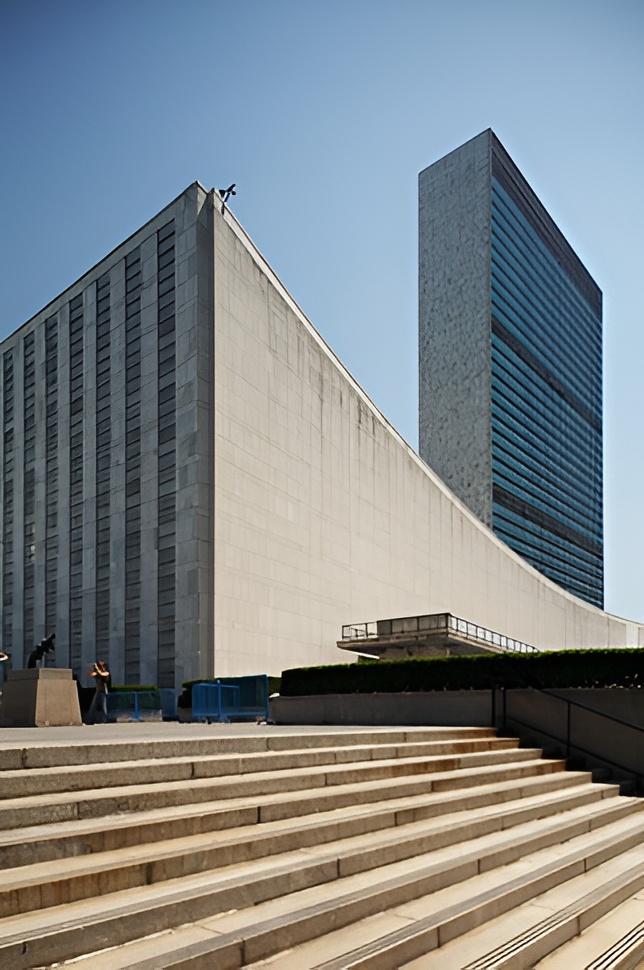
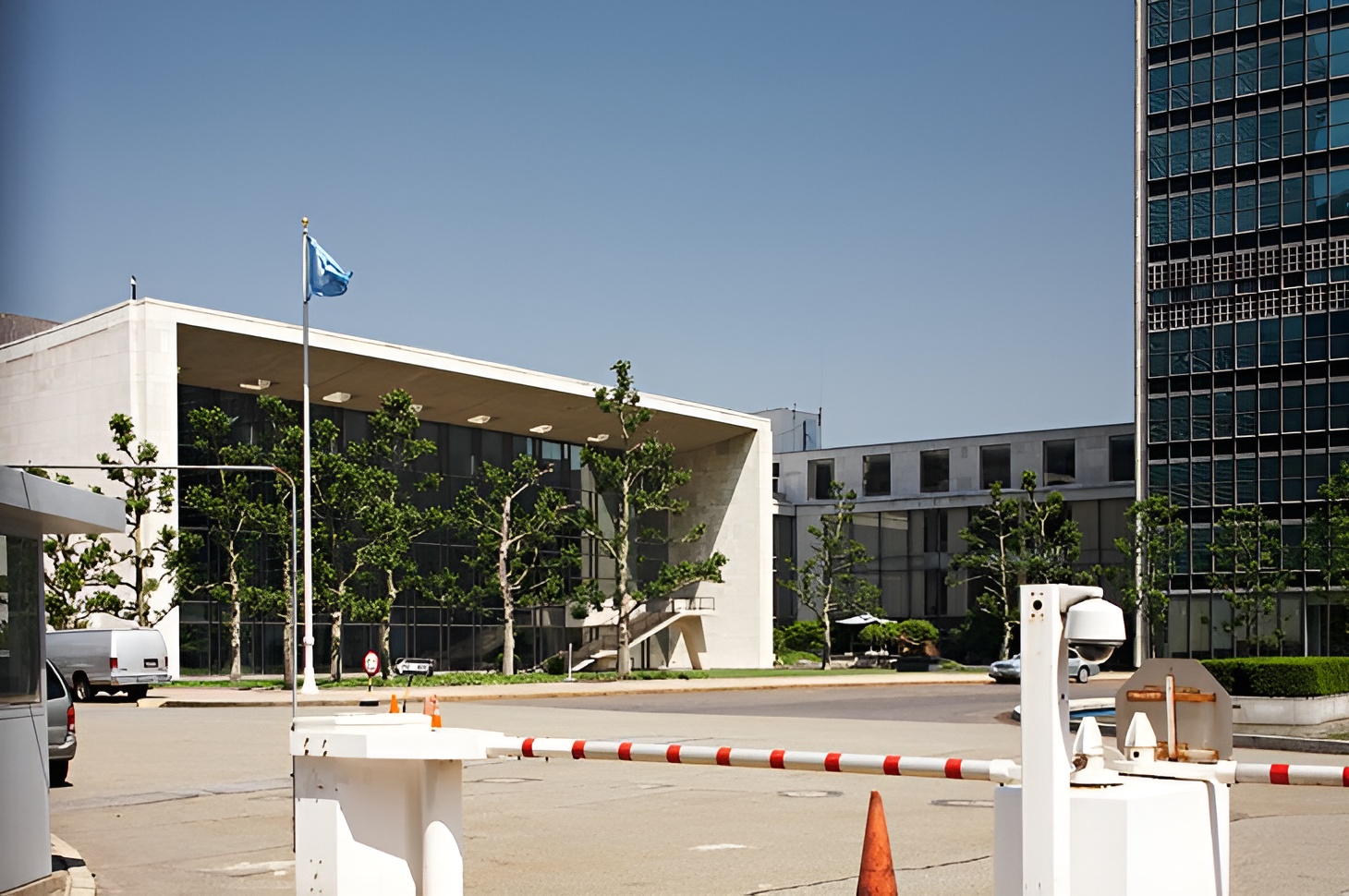
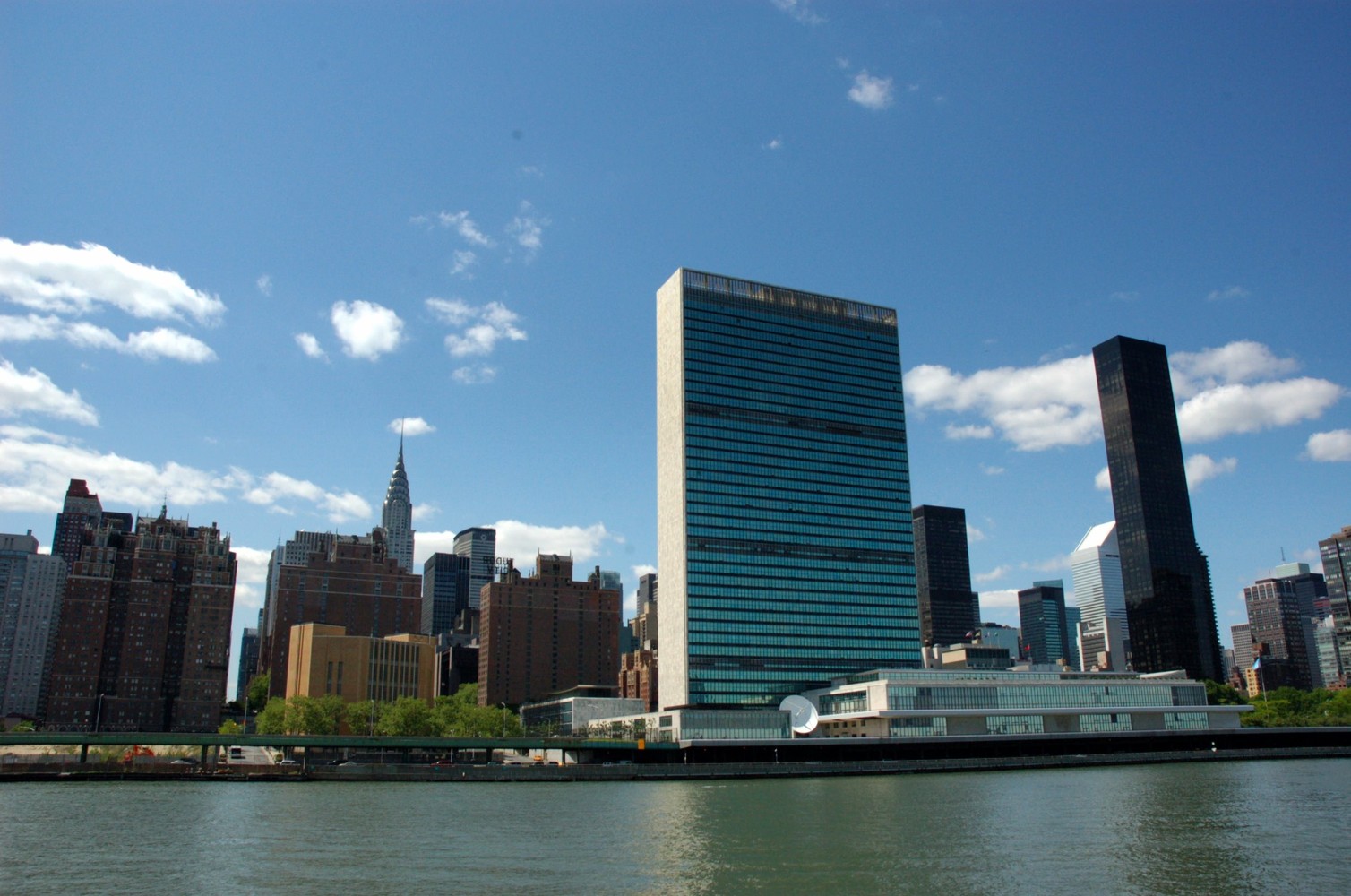
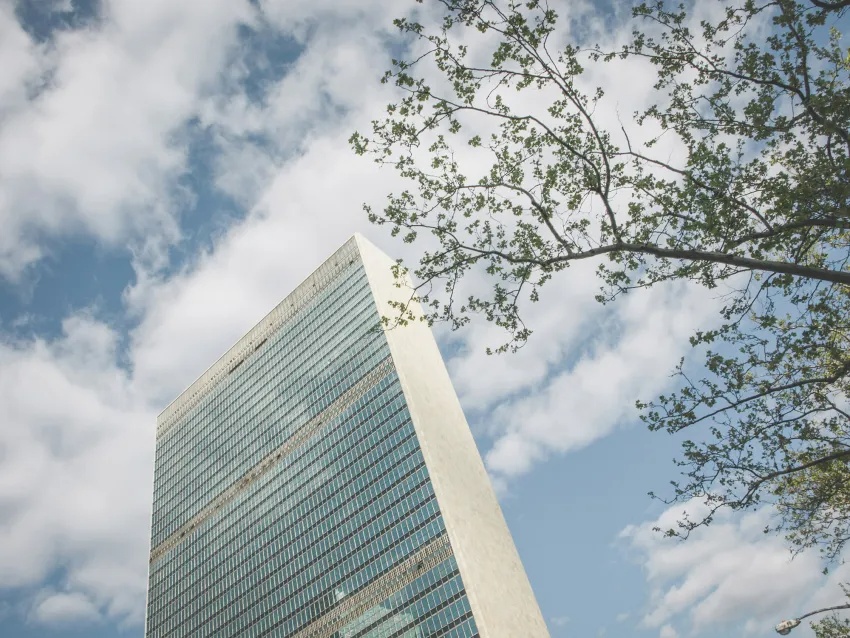
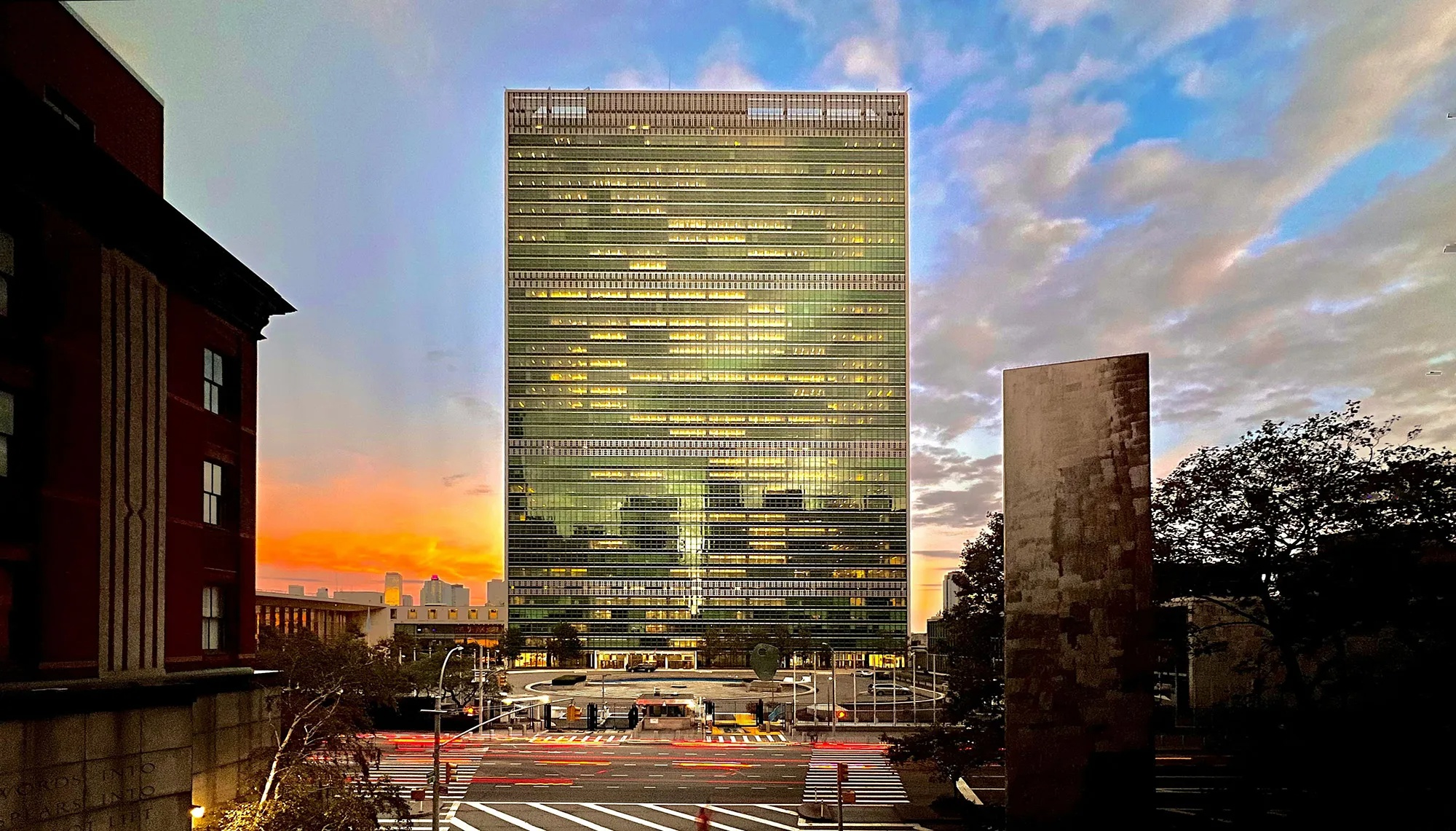
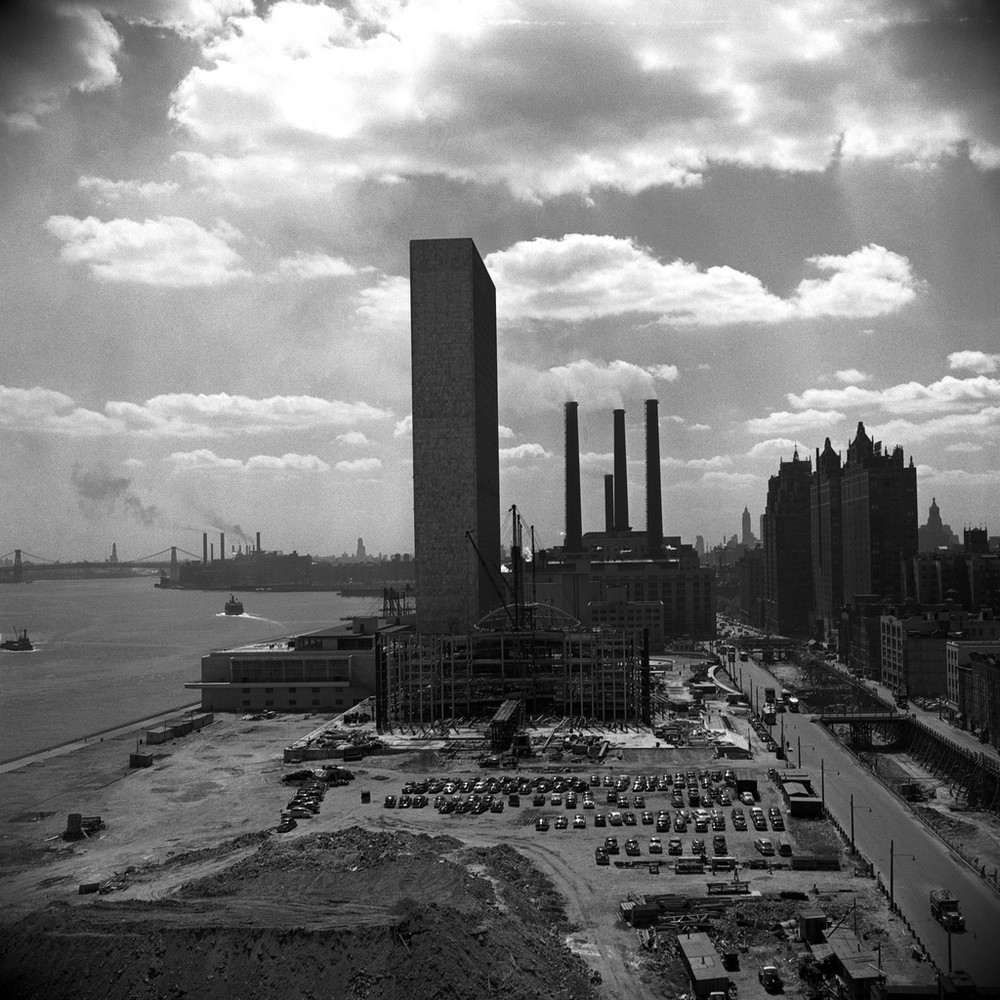
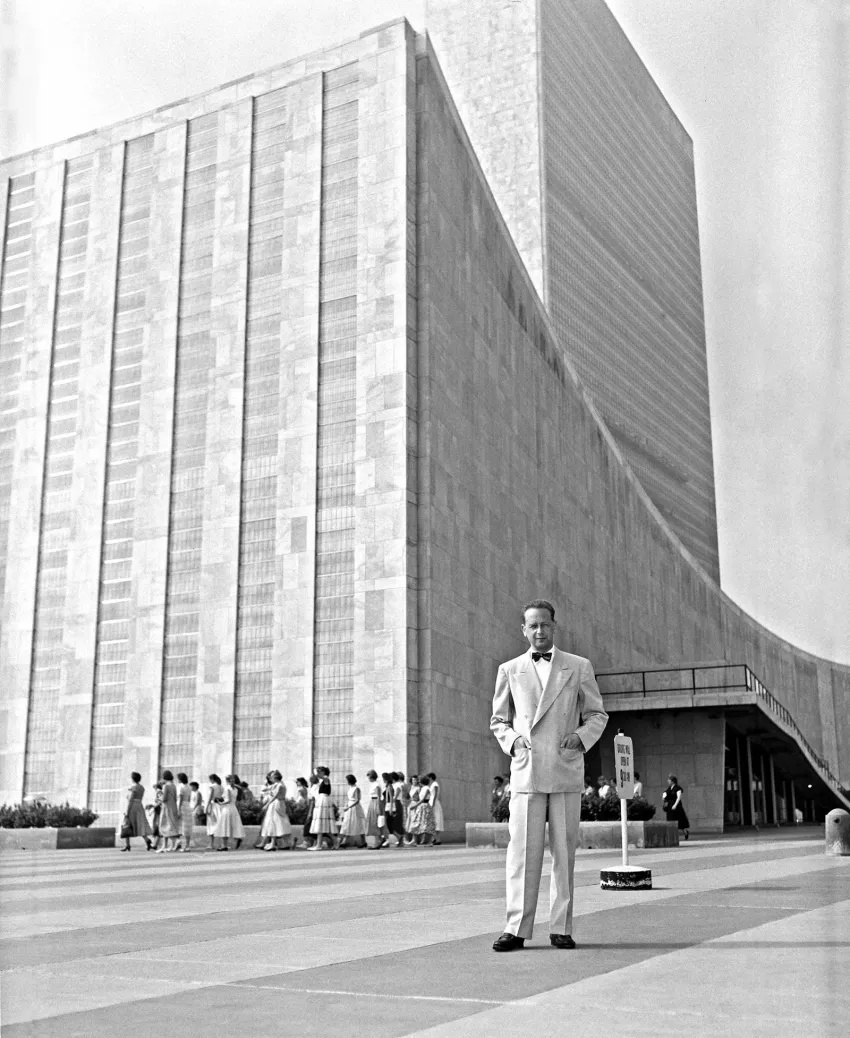
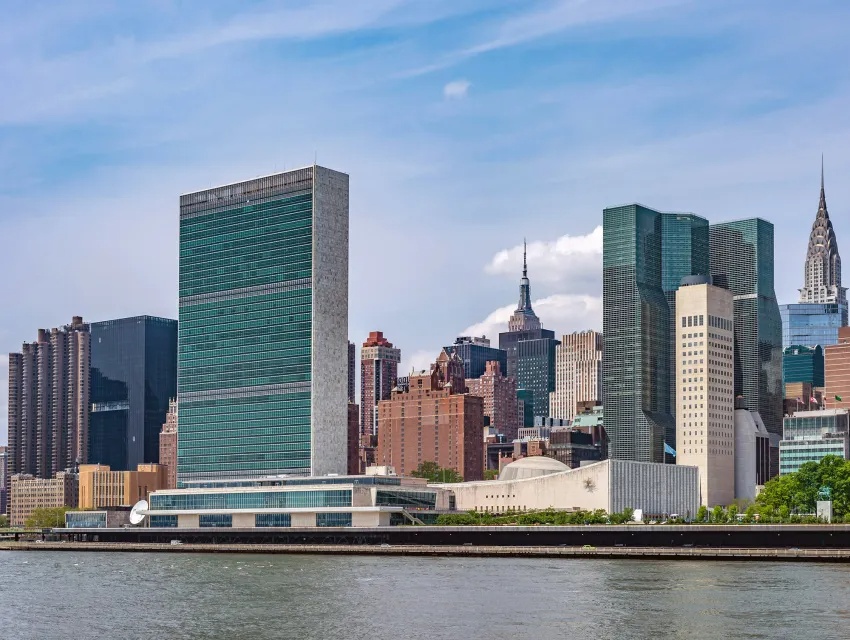
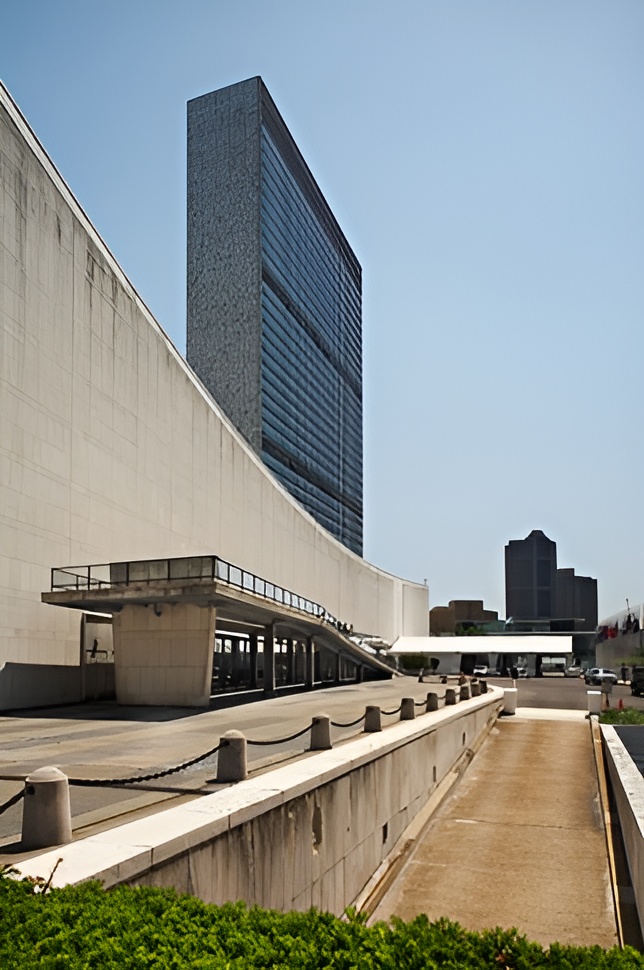
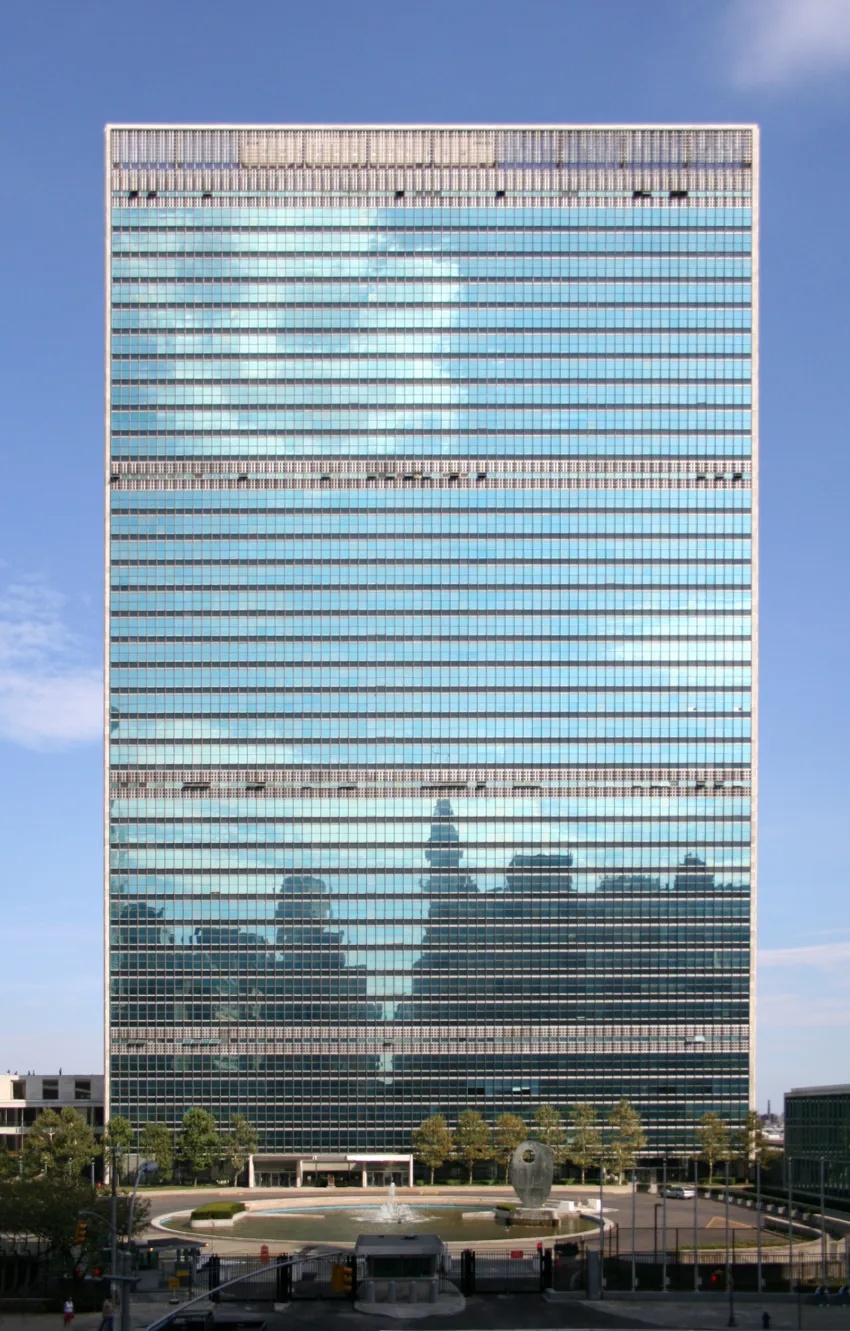
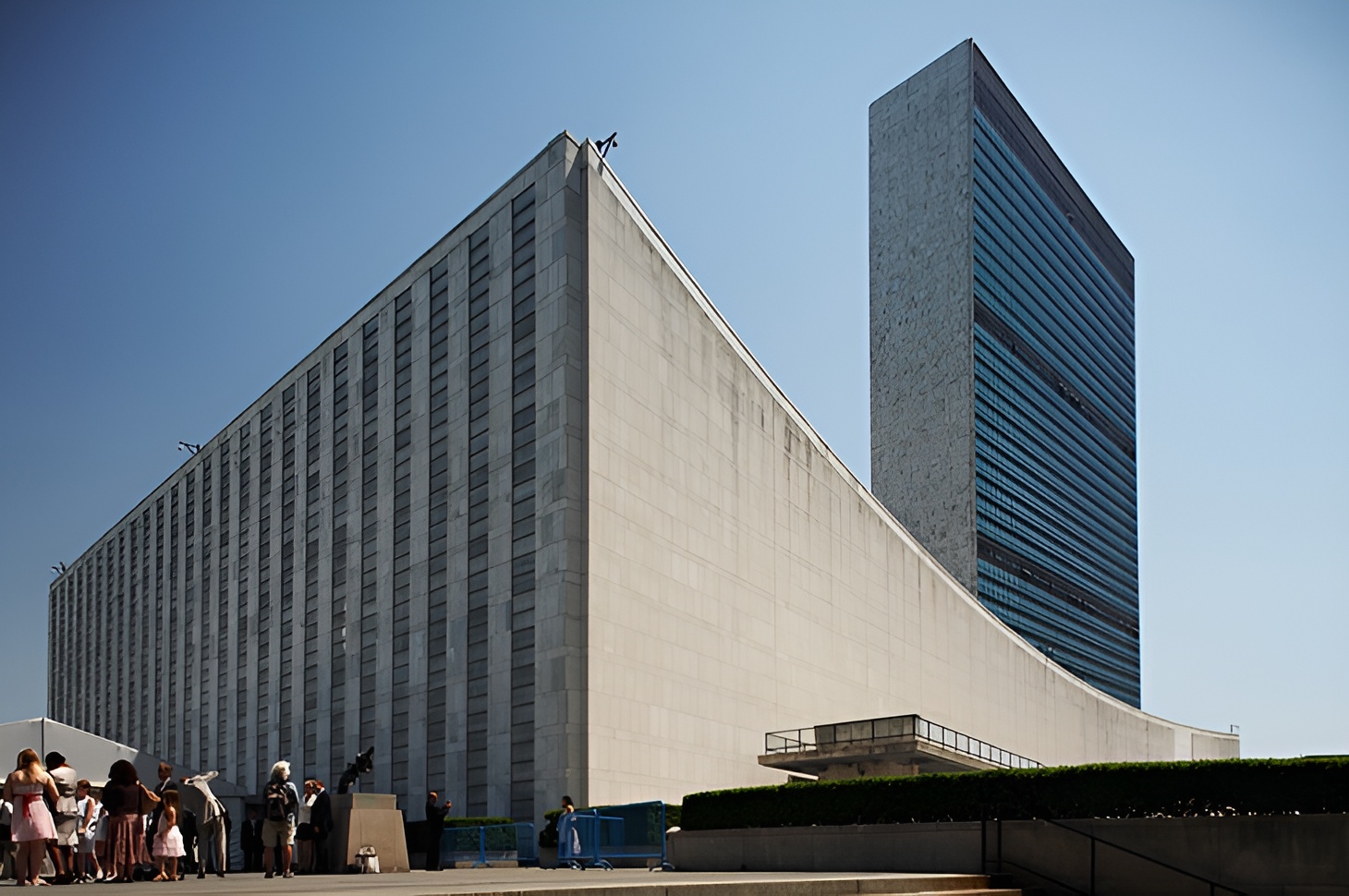
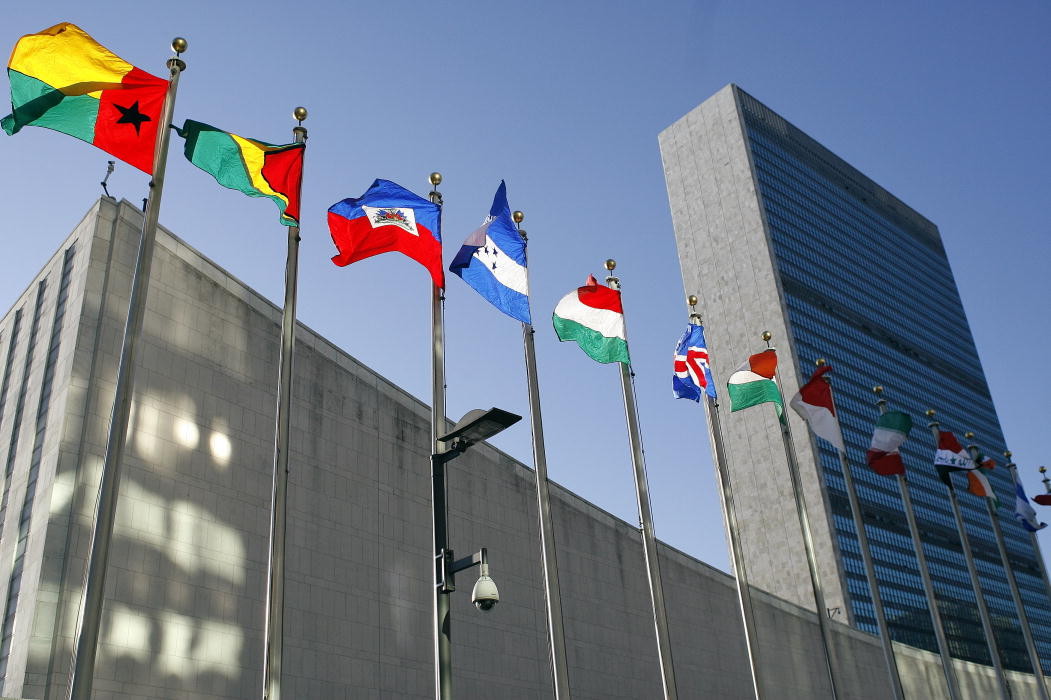
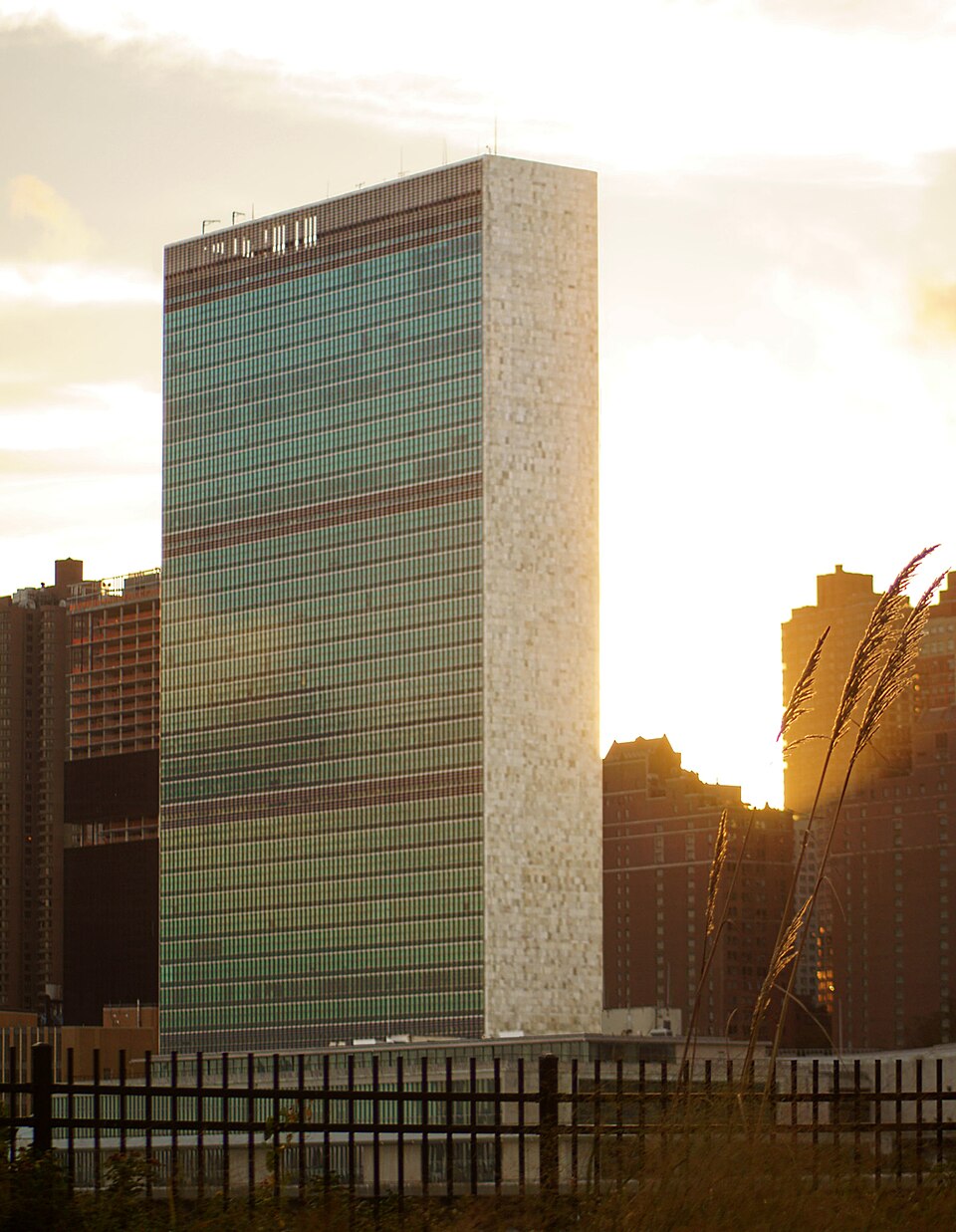
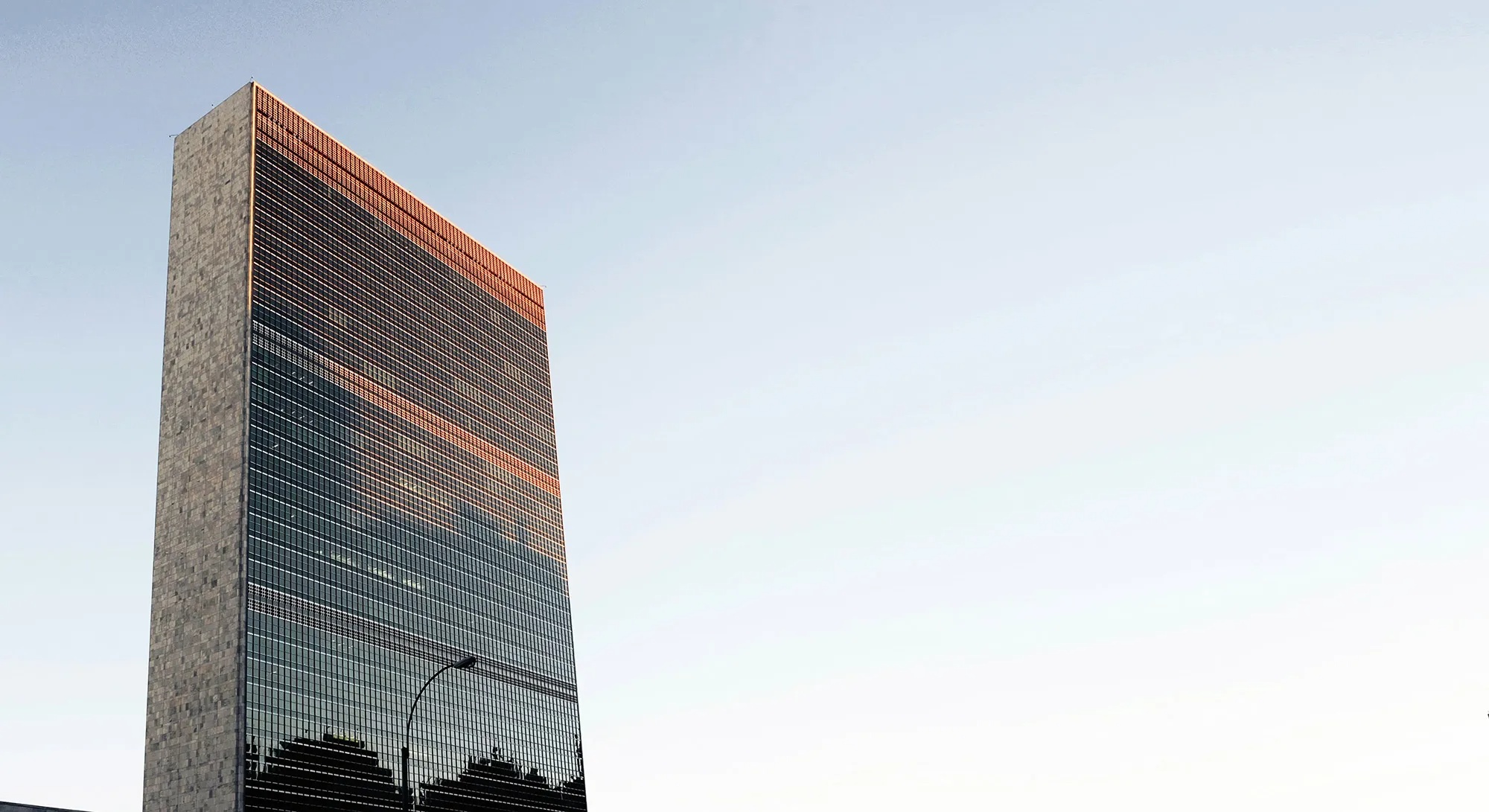
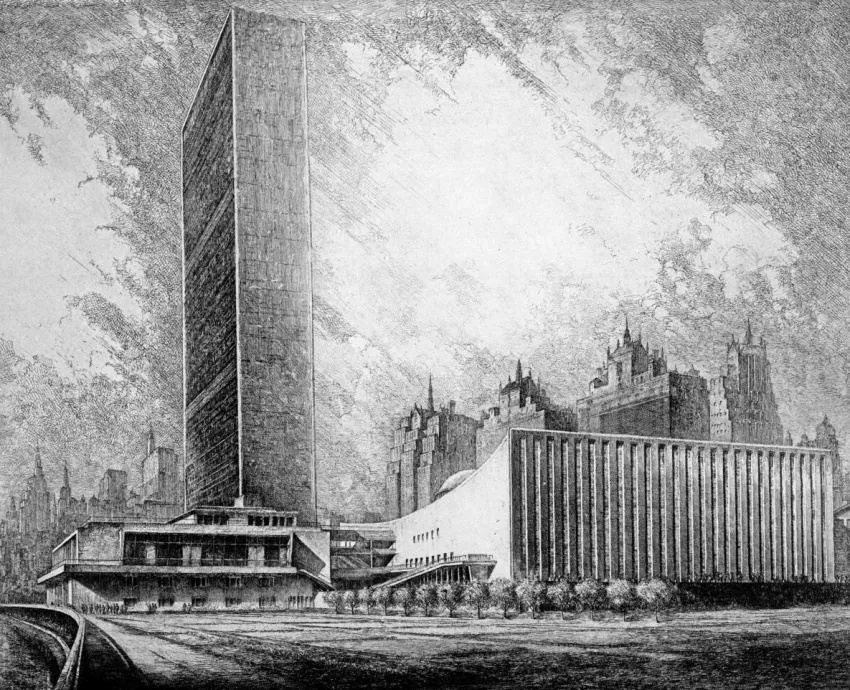
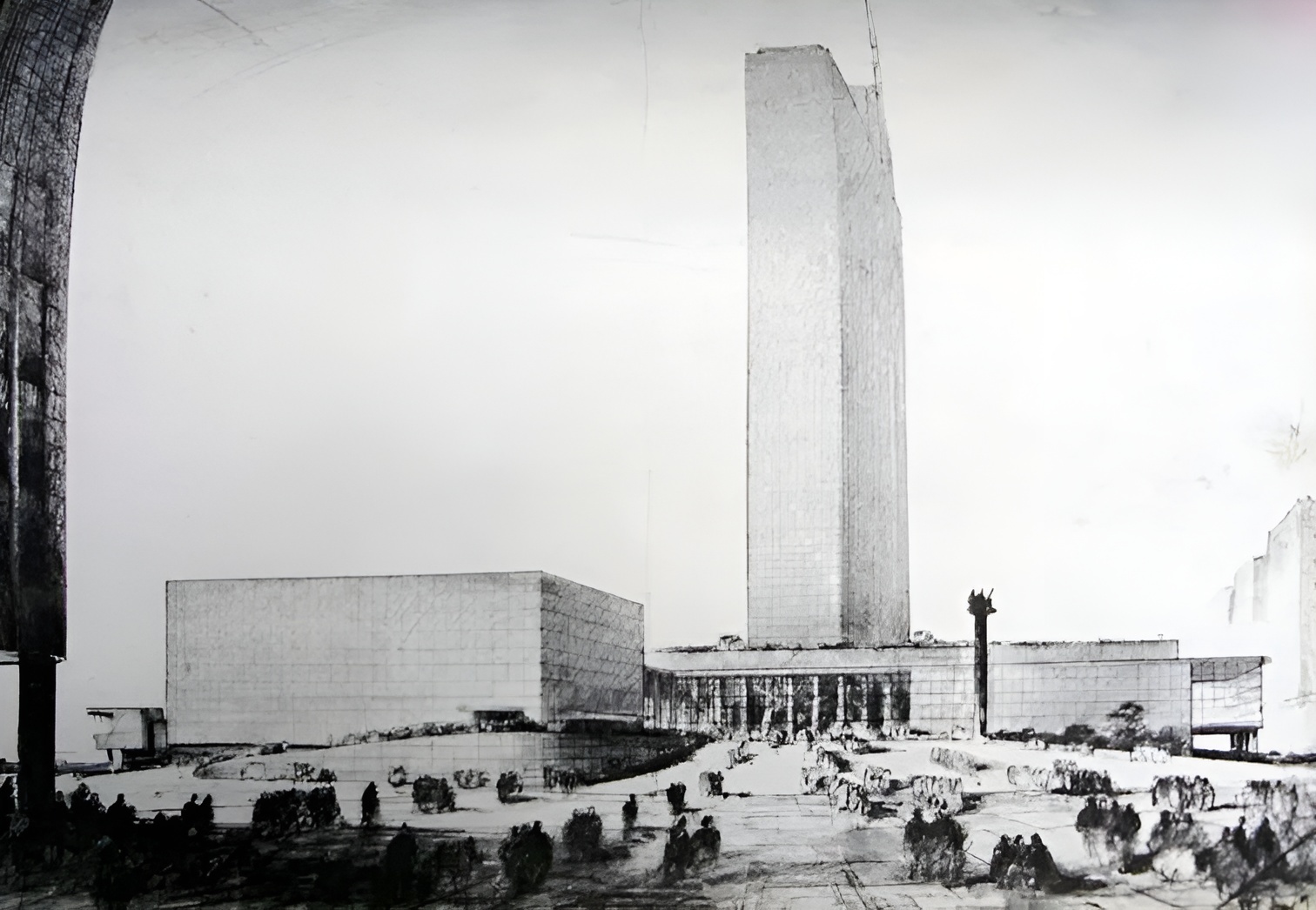
The completed headquarters complex balances a tall Secretariat tower with lower buildings for the General Assembly, conference functions, and related programs. The Secretariat Building became the most recognizable element of the composition. Its slender rectangular slab rises 39 stories and reaches 154 meters in height. The tower is oriented north-south, with its broad east and west faces treated as glass curtain walls and its narrow north and south ends clad in Vermont marble.
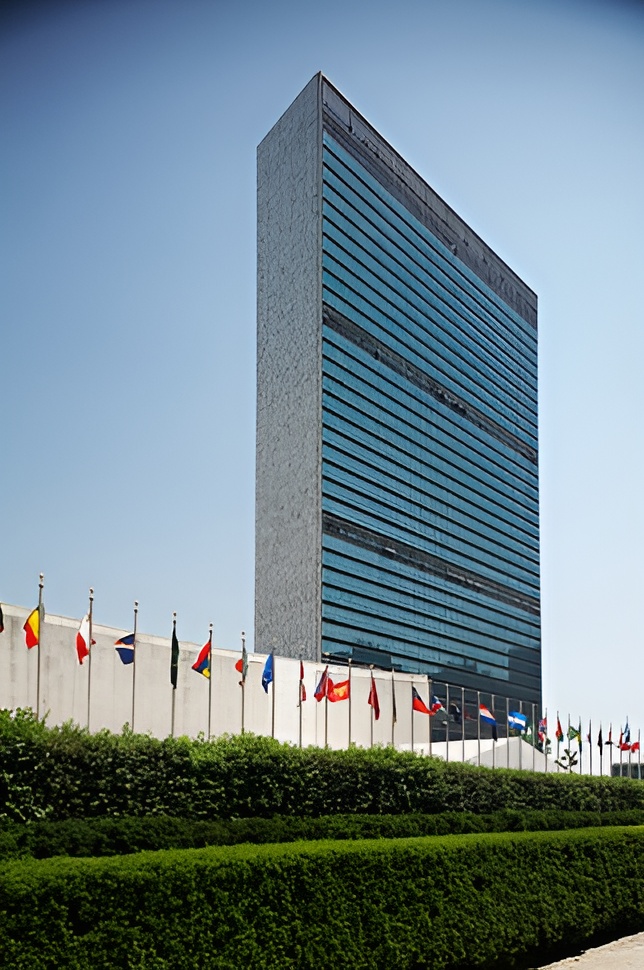
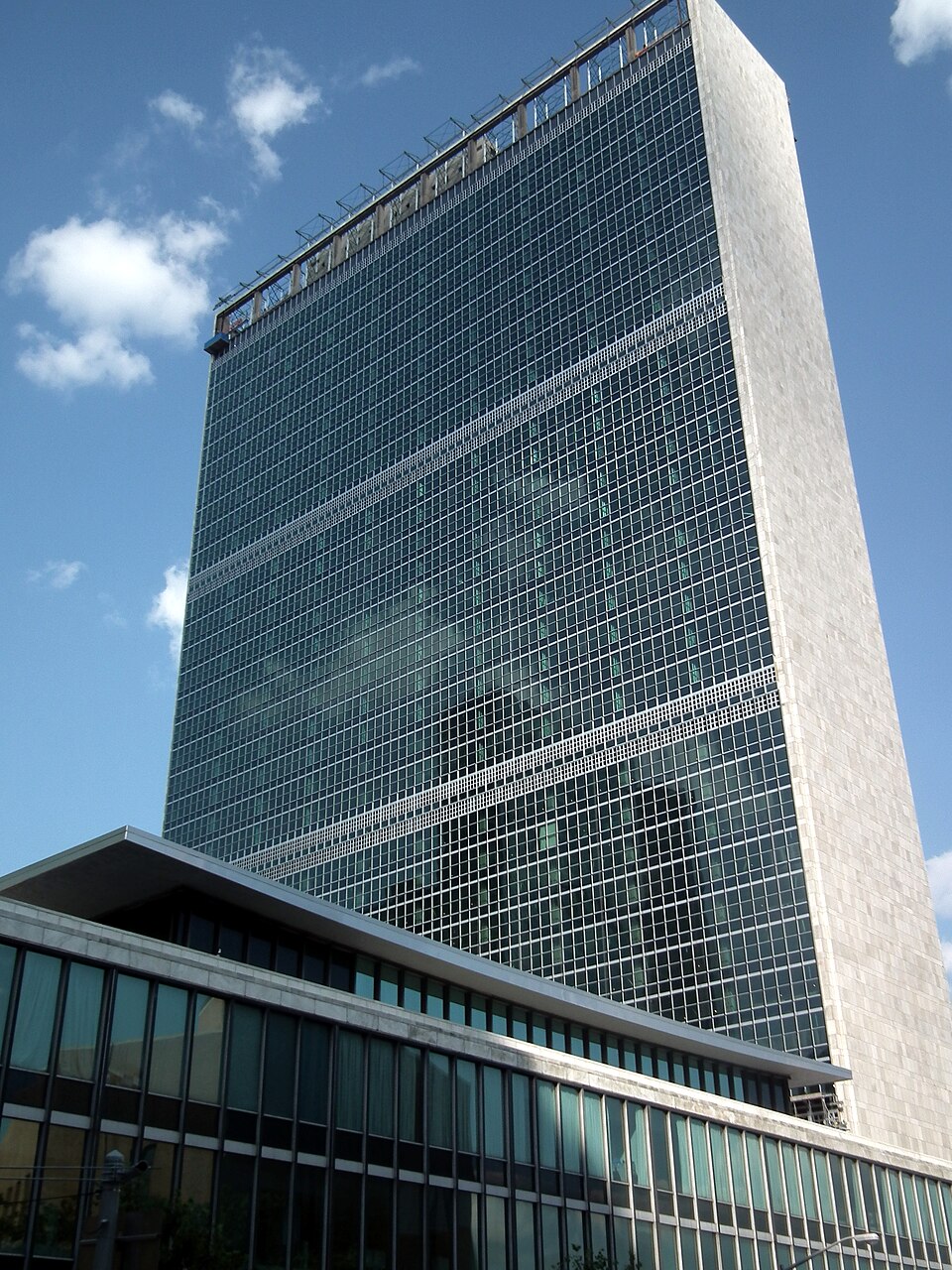
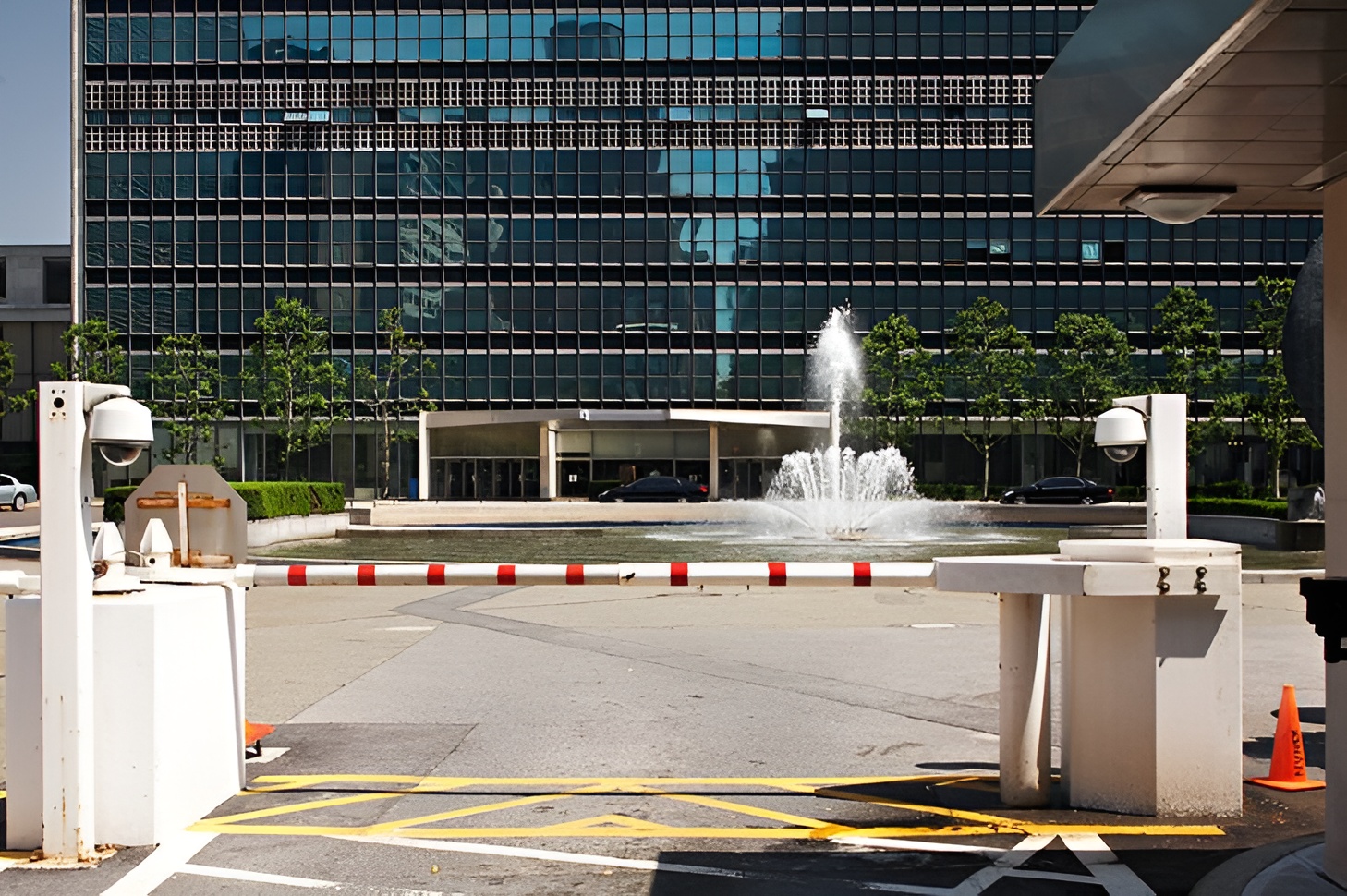
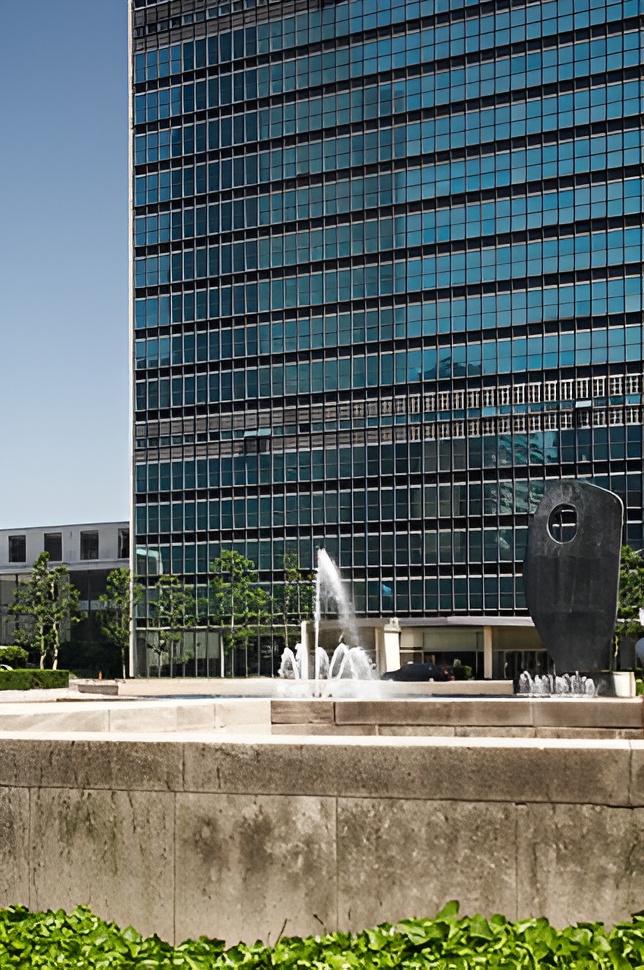
The building’s blue-green glass curtain wall was a major technical and symbolic gesture. At the time of construction, it represented one of the earliest uses of a glass curtain wall on a New York skyscraper. The façade expressed the principles of the International Style through a clean structural grid, minimal ornament, and a strong contrast between transparent office surfaces and solid marble end walls.
Inside, the Secretariat Building was organized for administrative work. The upper floors housed offices for the United Nations Secretariat, while lower levels accommodated press functions, staff services, technical spaces, and support facilities. Office layouts were based on modular planning, with movable partitions aligned to the façade grid. This system reflected the building’s modern administrative function and allowed internal arrangements to change over time.
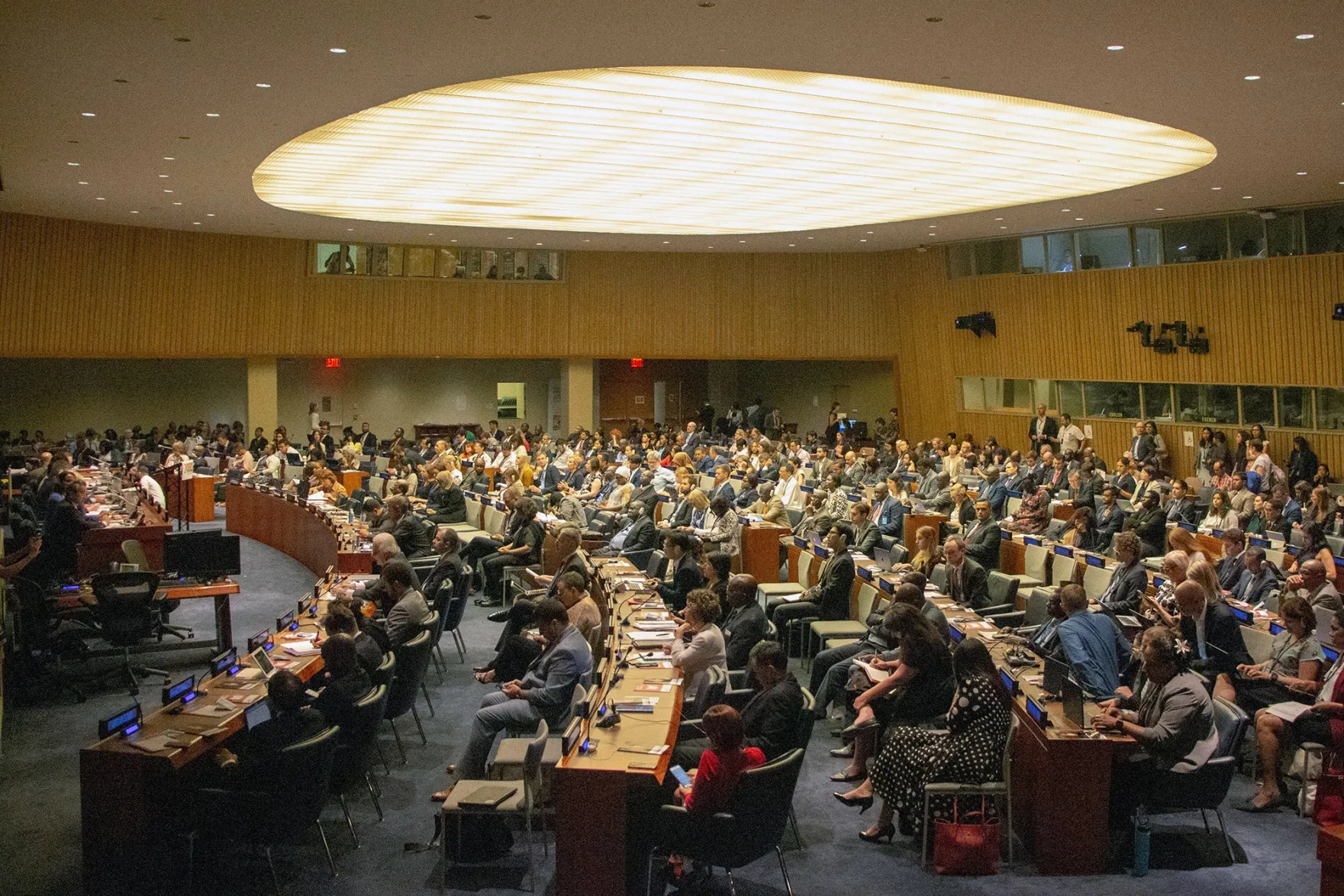
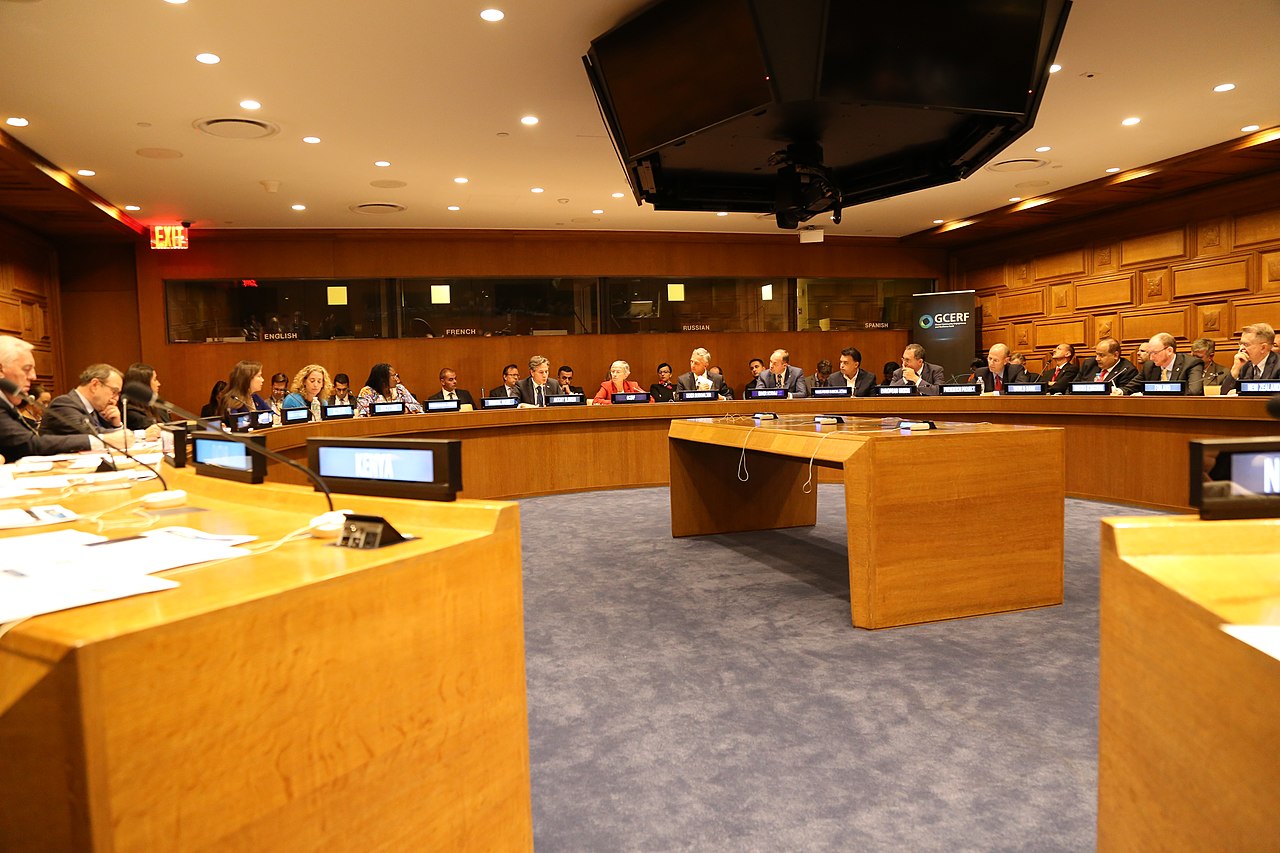
The tower was built with a steel superstructure and concrete floor slabs. Curtain walls on the east and west elevations were suspended in front of the structural frame, while the marble-clad end walls concealed bracing and gave the tower a monumental profile. Mechanical systems, elevators, and service cores were integrated into the plan to support a large international workforce.
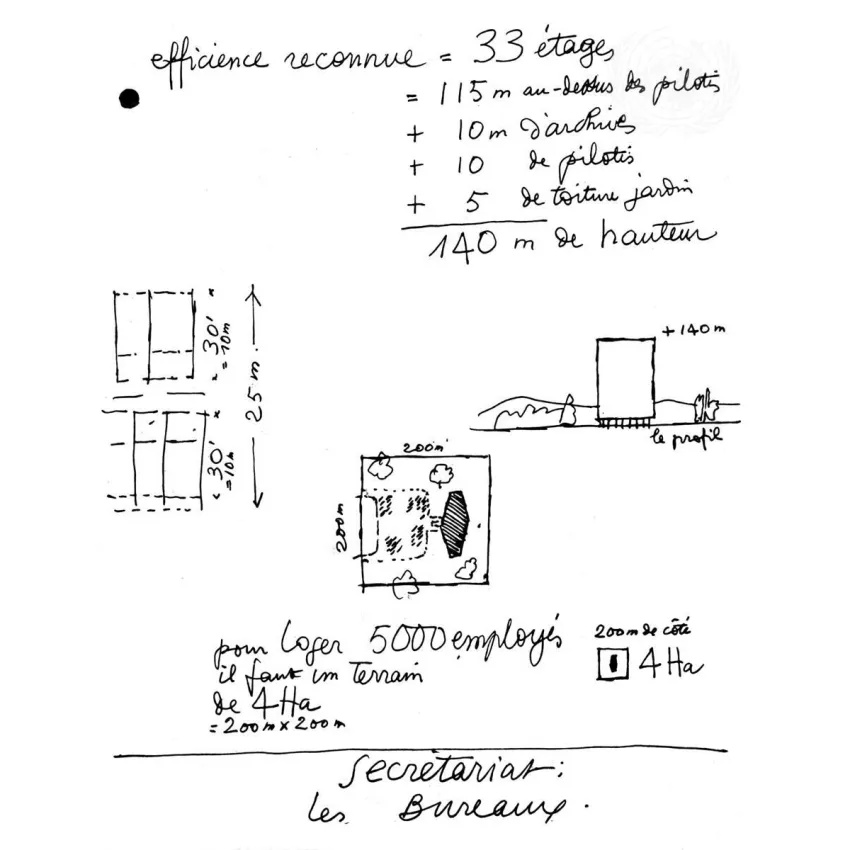
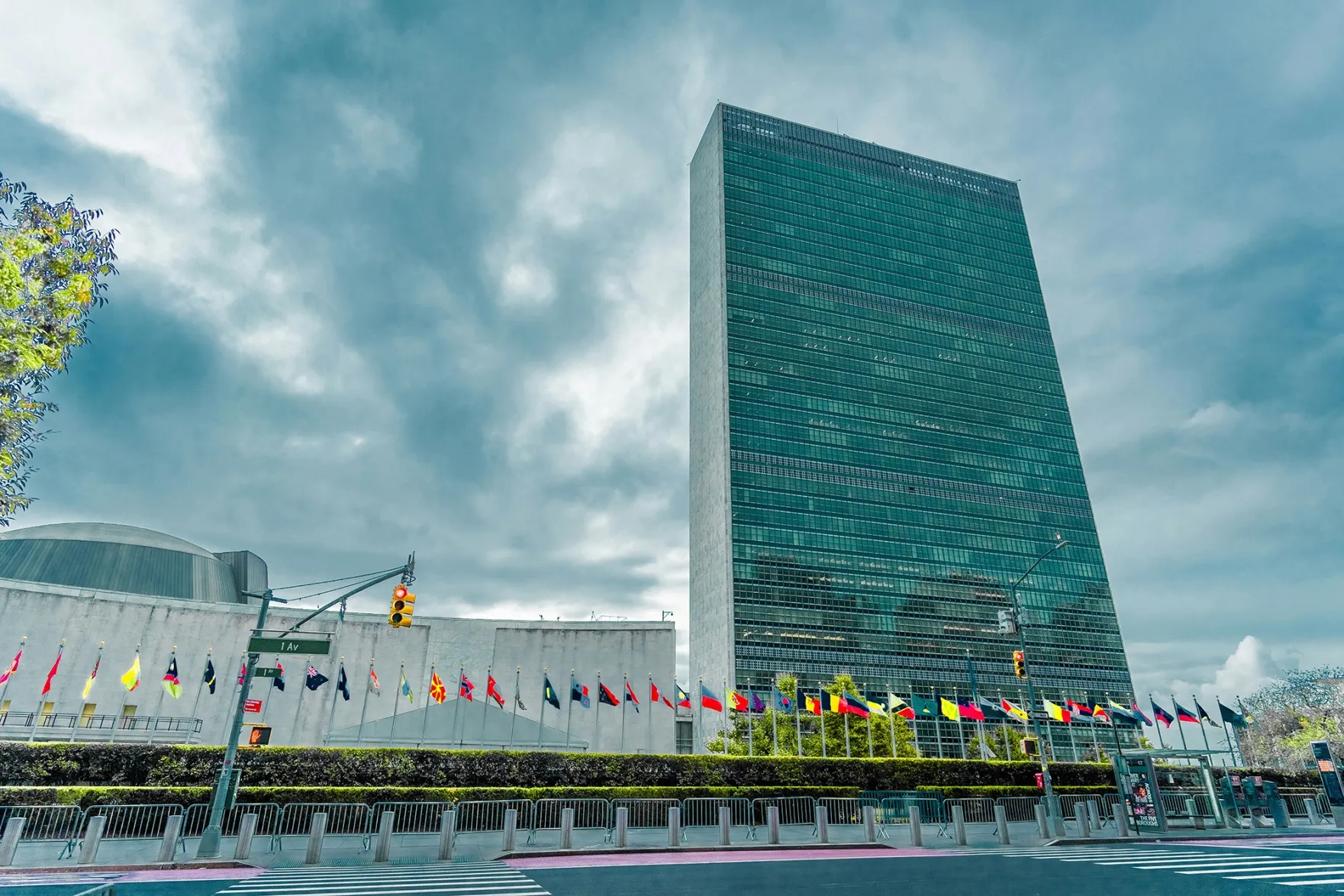
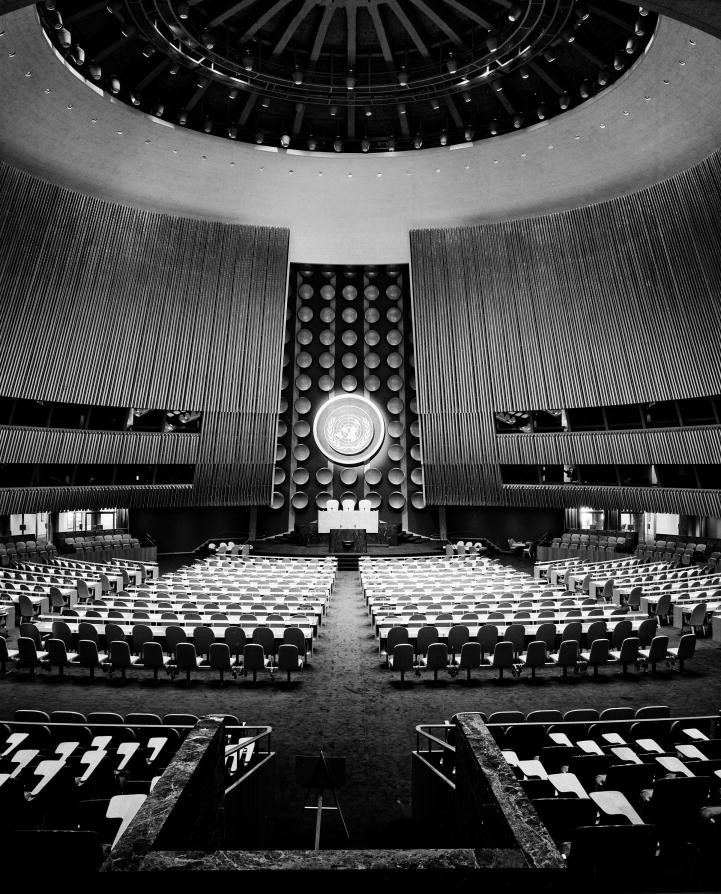
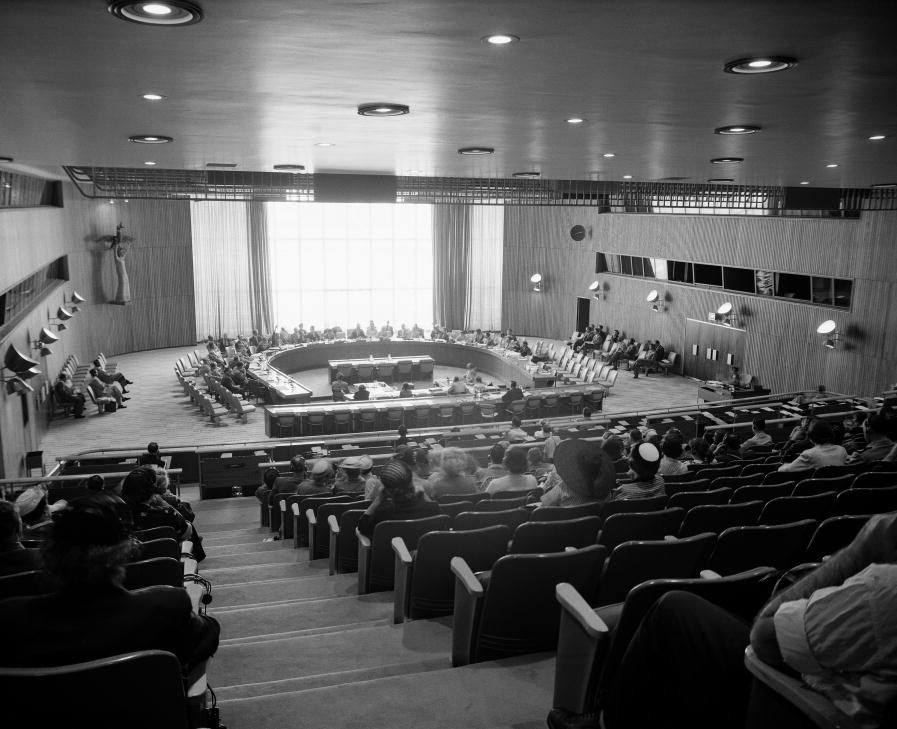
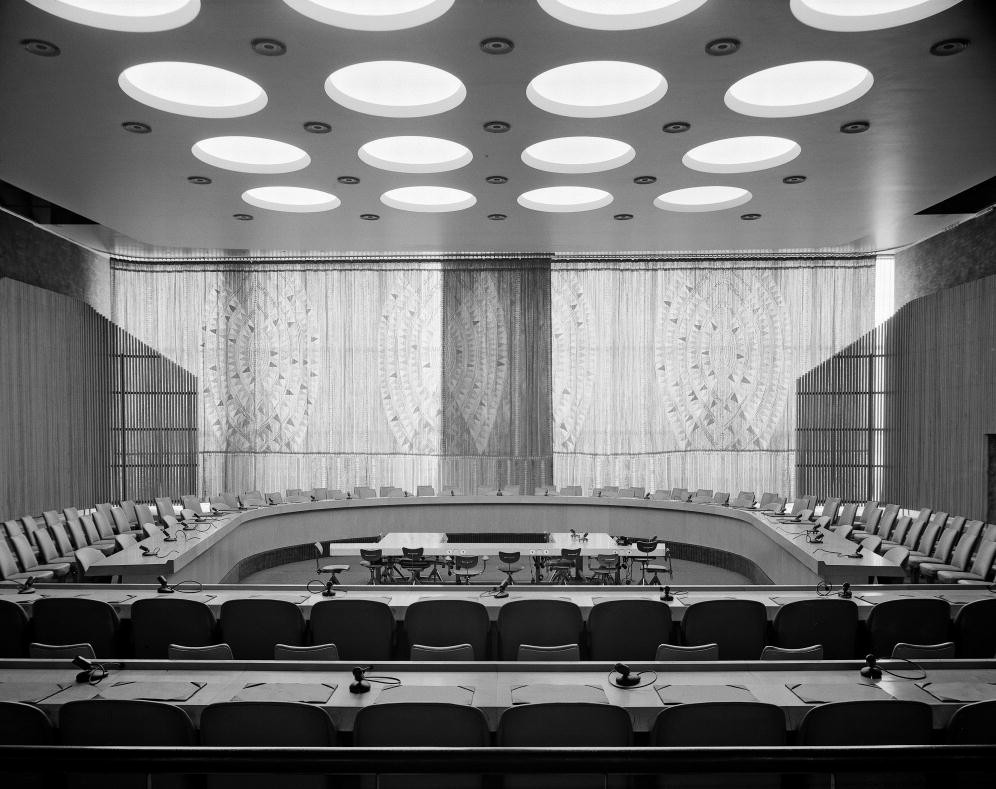
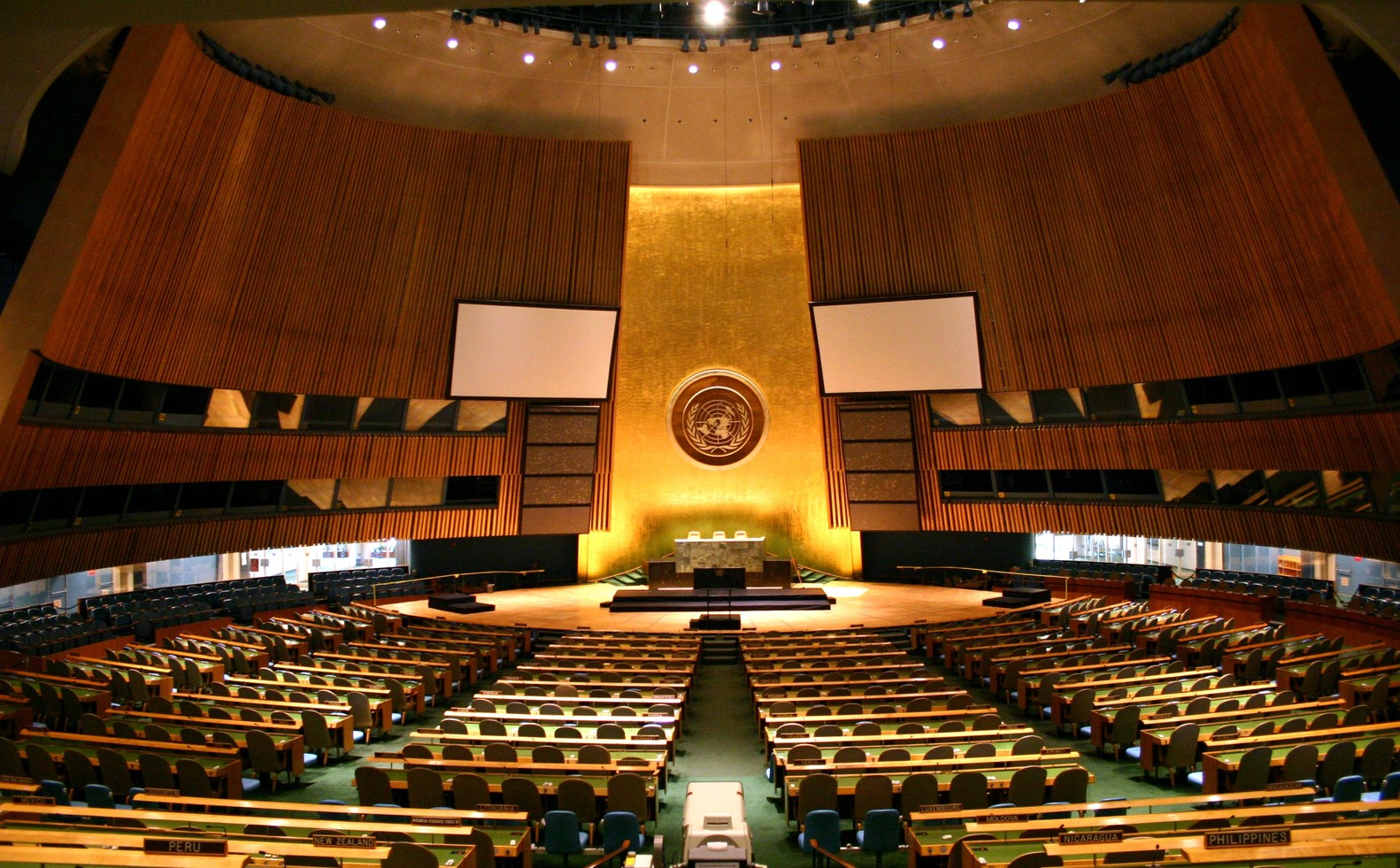
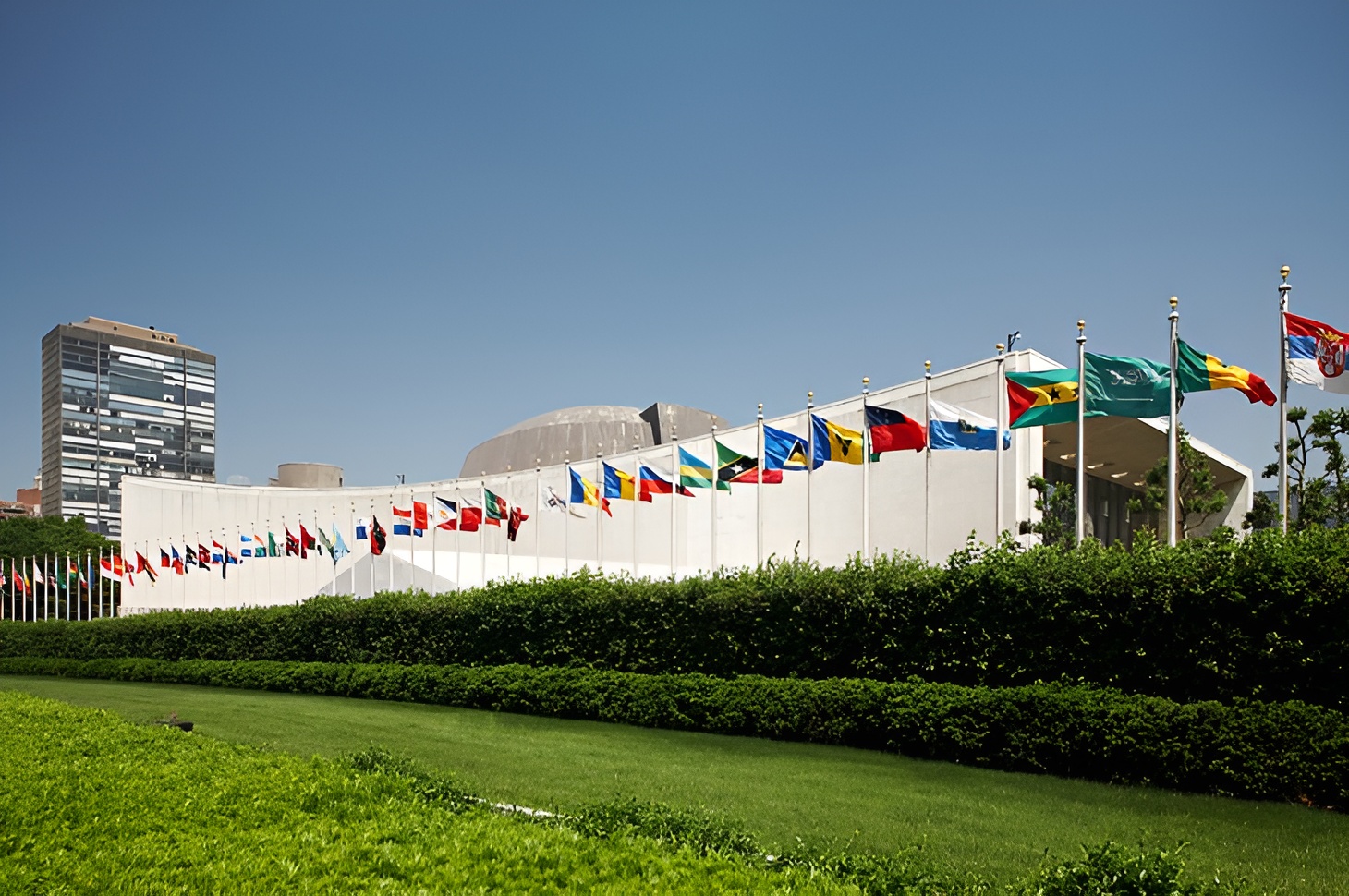
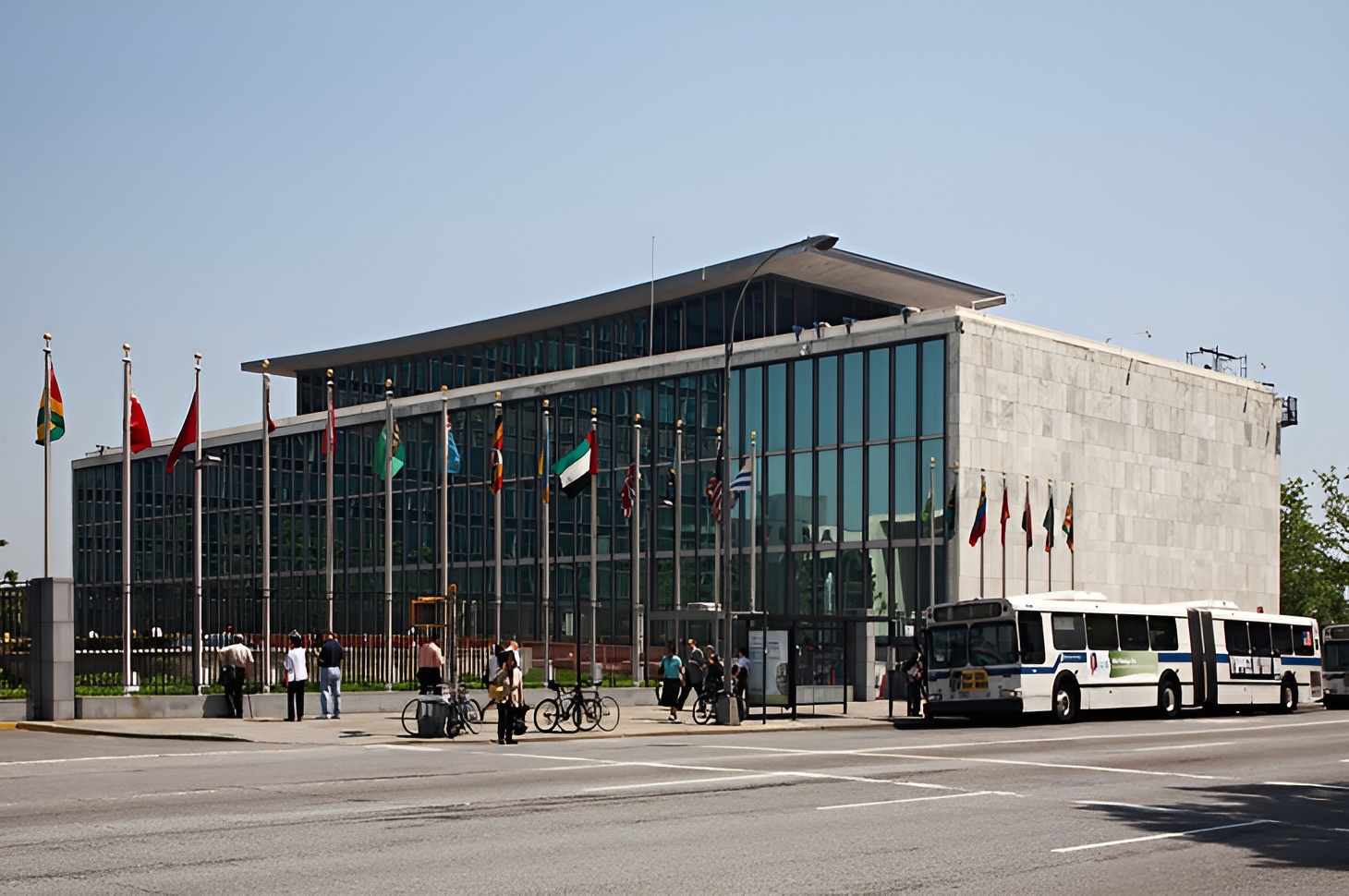
The General Assembly Building, conference areas, plazas, gardens, and riverfront setting complete the larger headquarters ensemble. Together, these elements established an architectural image of openness, diplomacy, and collective governance after World War II. The composition’s contrast between the vertical Secretariat tower and the lower assembly volumes became central to the identity of the United Nations.
By the late twentieth century, the Secretariat Building required substantial repair. Its original curtain wall leaked, mechanical systems became outdated, and the building no longer met contemporary performance standards. A major renovation began in 2010 and was completed in phases by 2012. The work replaced the glass façade with energy-efficient and blast-resistant glazing that preserved the tower’s original appearance while improving safety and environmental performance.
The United Nations Secretariat Building remains one of the most influential office towers of the twentieth century. Its glass slab form shaped later corporate architecture in New York, including the development of postwar curtain wall skyscrapers. More importantly, the building continues to operate as an architectural symbol of international cooperation, placing modern architecture at the service of global diplomacy.
Project Gallery
Project Location
Address: 405 East 42nd Street, Turtle Bay, Manhattan, New York, NY 10017, United States
Location is for general reference and may represent a city or country, not necessarily a precise address.

