

Architects: Adalberto Libera
Area: 500 m² (5,382 ft²)
Year: 1938
Photography: Adalberto Libera, Gloria Saravia Ortiz, Sean Munson, Poet Architecture, YSL Commercial, Karel Doležel, Klára Kozderová, Wikimedia Commons, Eoghanacht, FriedrichFrisch, architecture-history.org, Angelo Ferraris, Getty images
Builder: Adolfo Amitrano
Client: Curzio Malaparte
Restoration: Niccolò Rositani
City: Capri
Country: Italy
Villa Malaparte, a residential house designed by Adalberto Libera in Capri, has redefined the relationship between architecture, authorship, and landscape through a built form shaped by both rationalist intent and client intervention. The project stands on Punta Massullo as an isolated volume where Curzio Malaparte’s direct involvement altered the design trajectory and blurred authorship. This condition reflects a tension between Libera’s initial rationalist scheme and the realized structure, embedding the client’s vision into the architectural language. The house organizes space through a compact mass, a roof terrace, and a monumental stair that operates as a circulation and spatial device. Its engagement with the Mediterranean terrain relies on material continuity, using local stone and a red plastered envelope that positions the object between contrast and integration. Openings and interior sequencing frame the sea while emphasizing horizon and isolation. Beyond domestic use, the building extends into cultural presence through periods of abandonment and later restoration. Villa Malaparte remains a critical work within modern architecture, where questions of authorship, spatial logic, and symbolic intent converge into a singular built form.
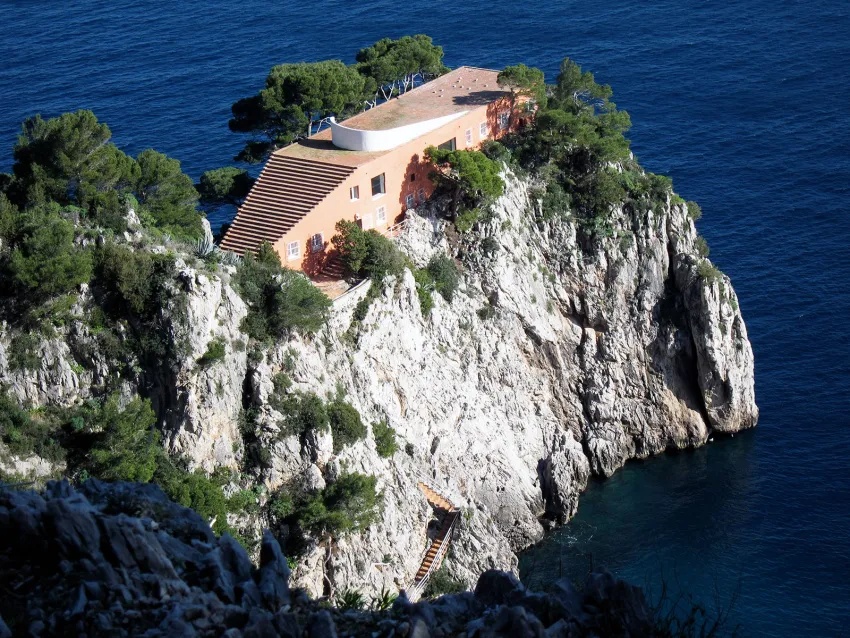
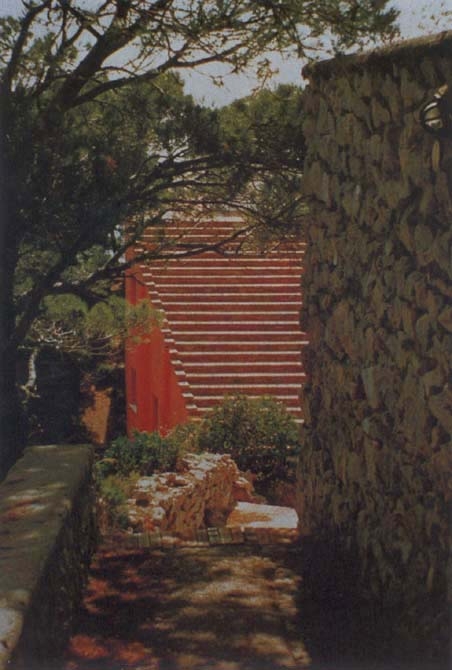
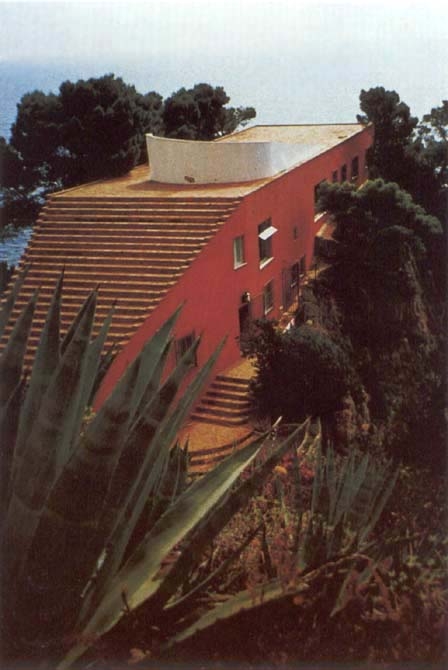
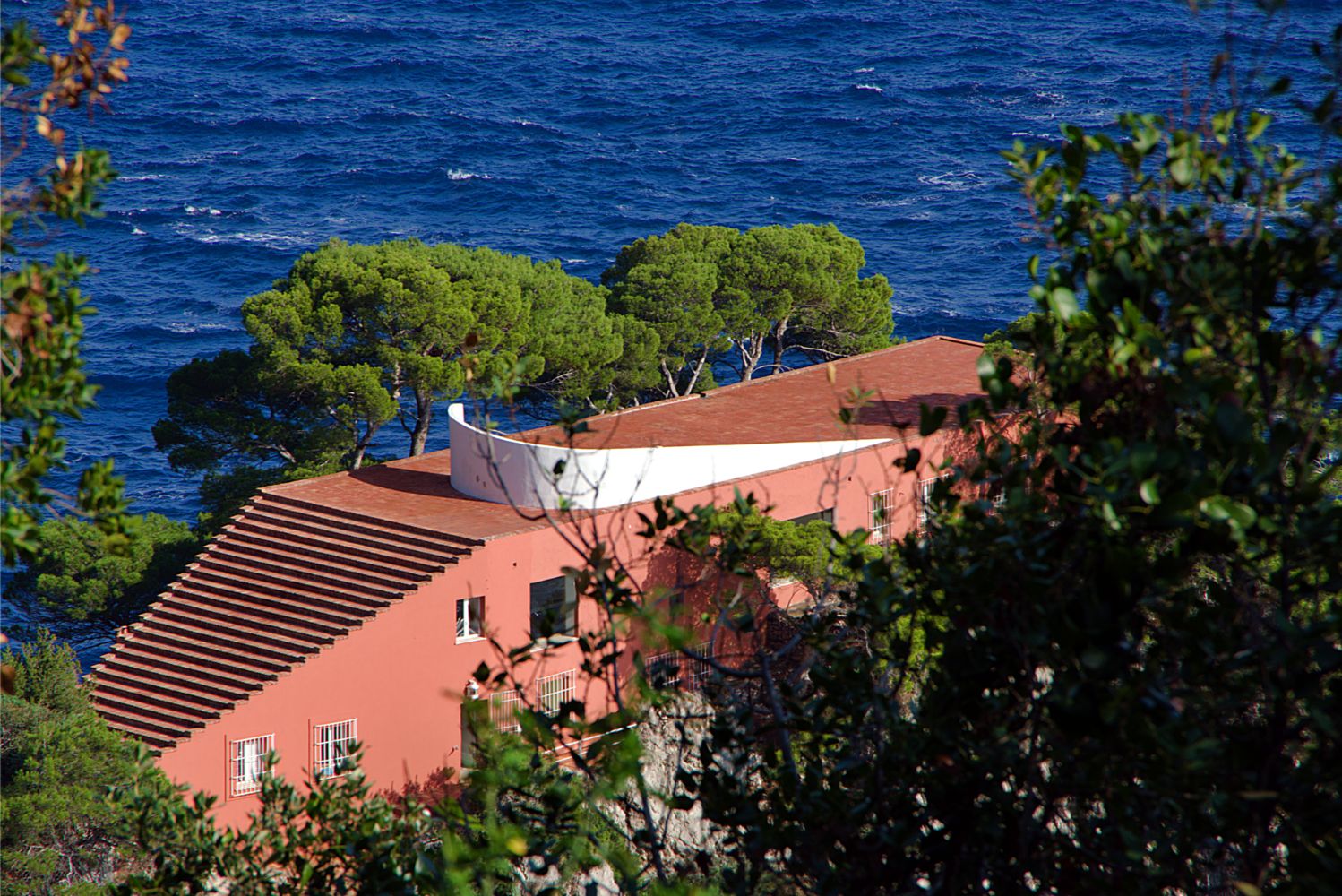
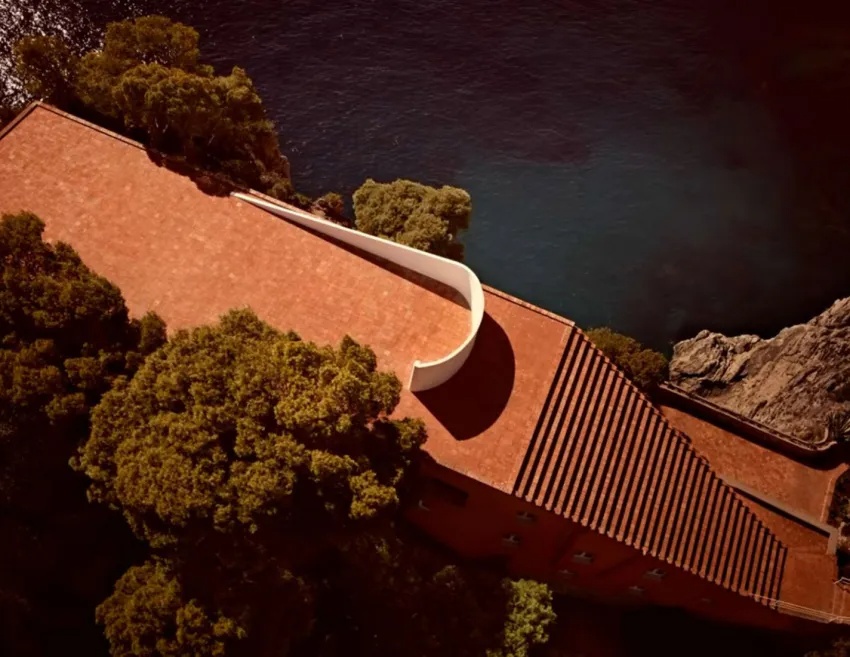
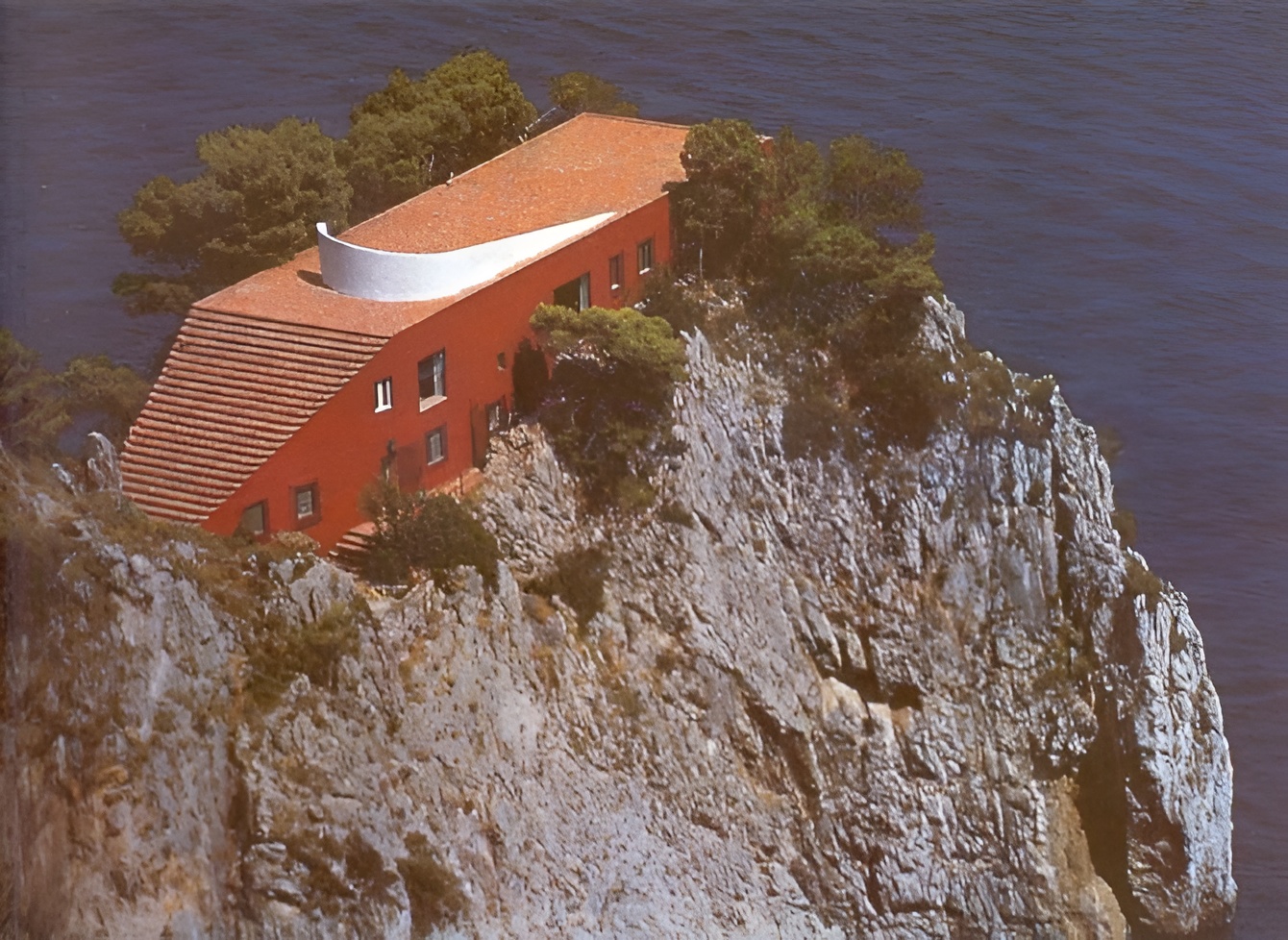
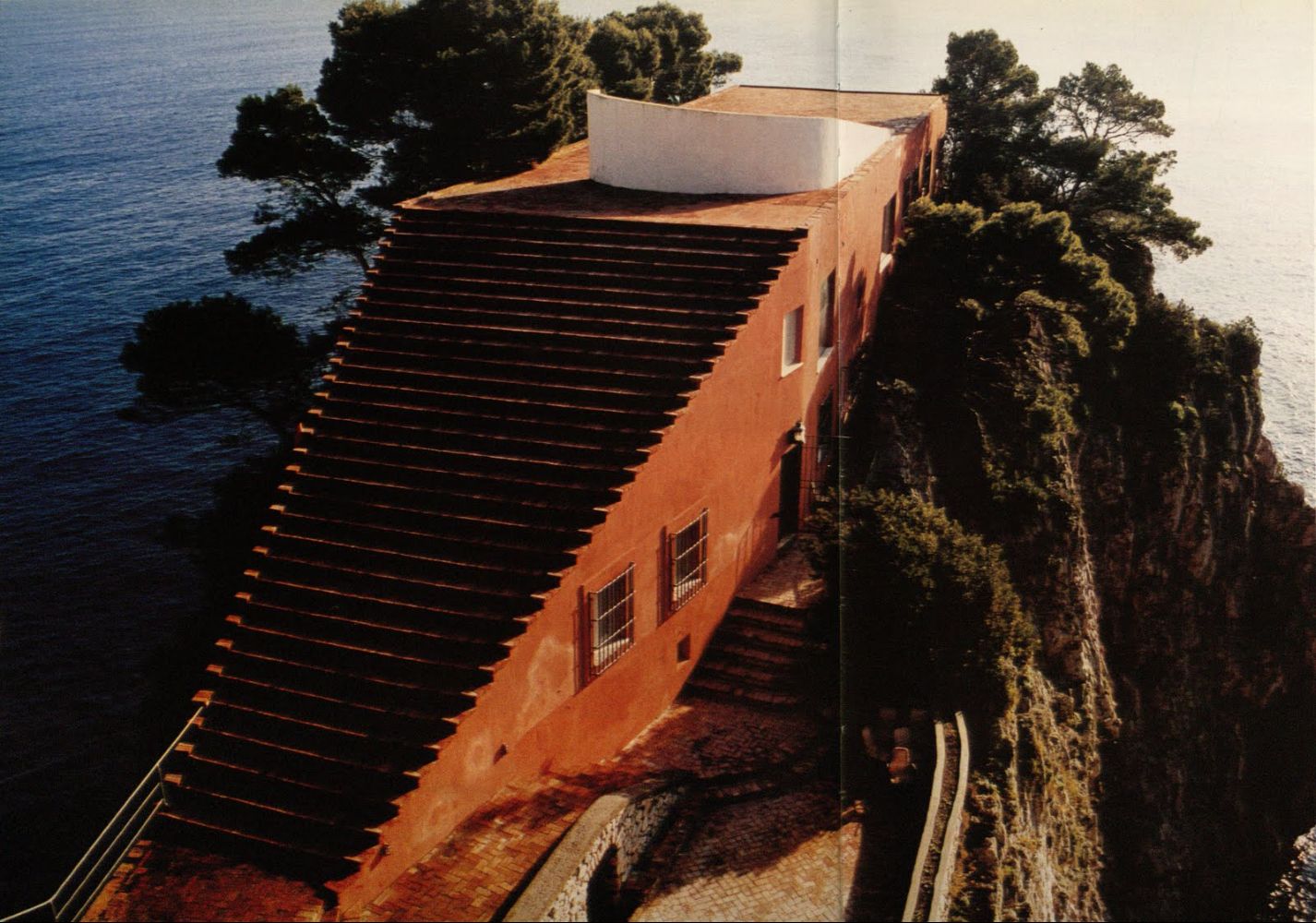
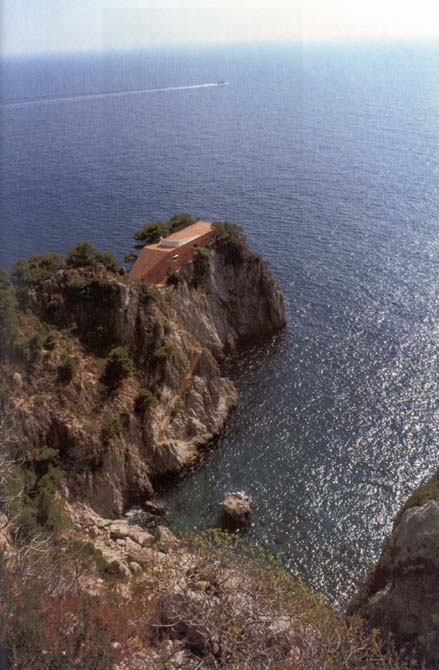
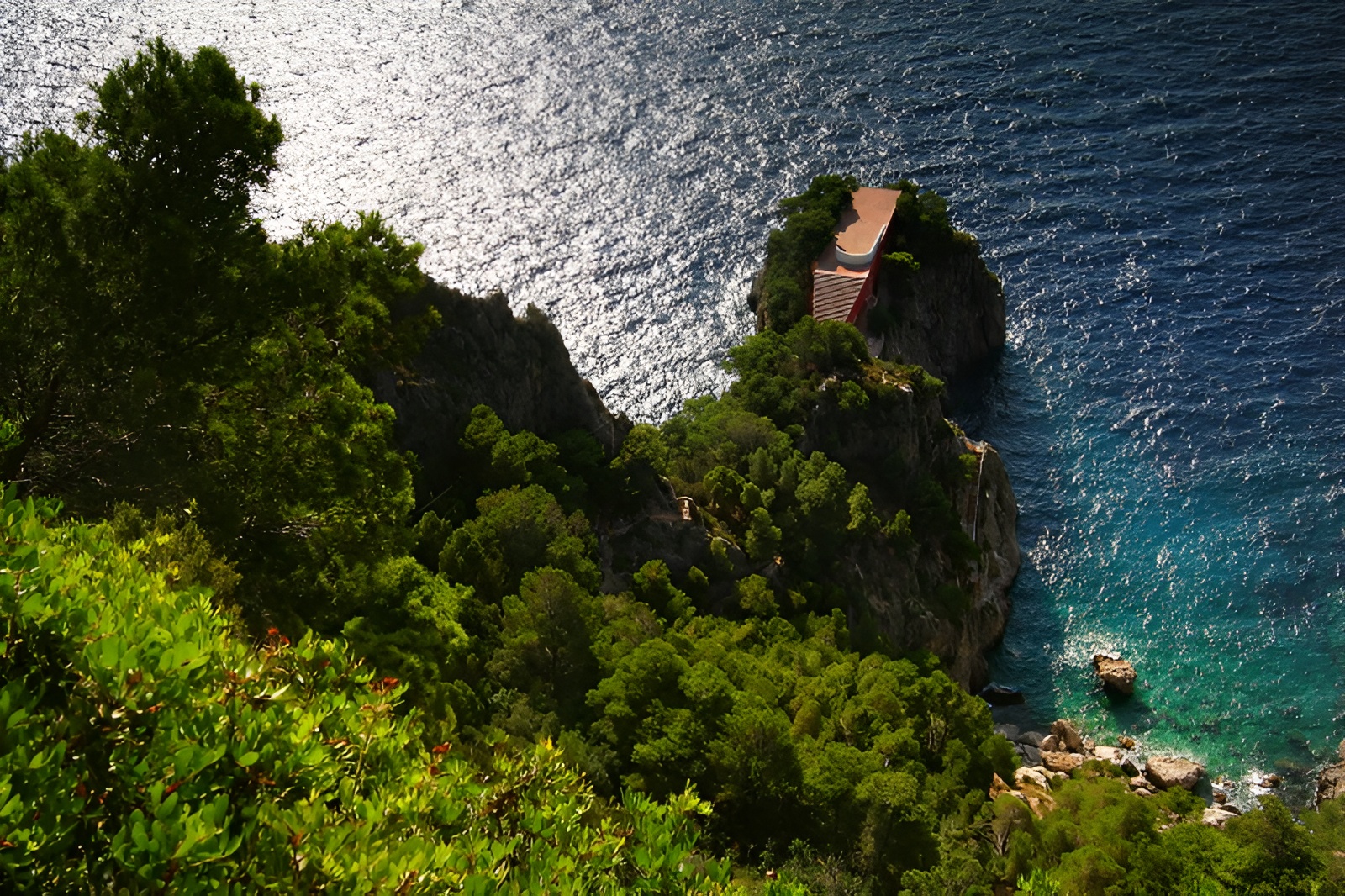
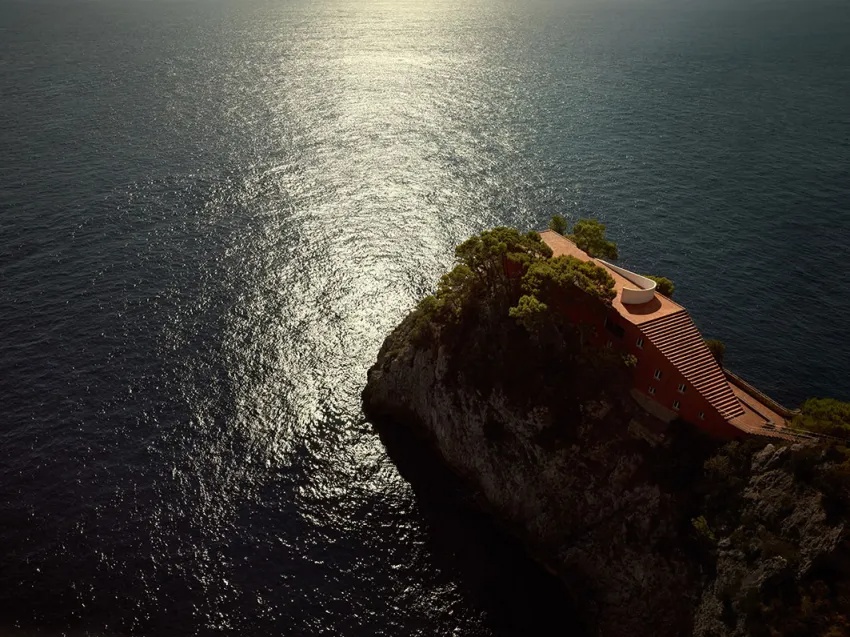
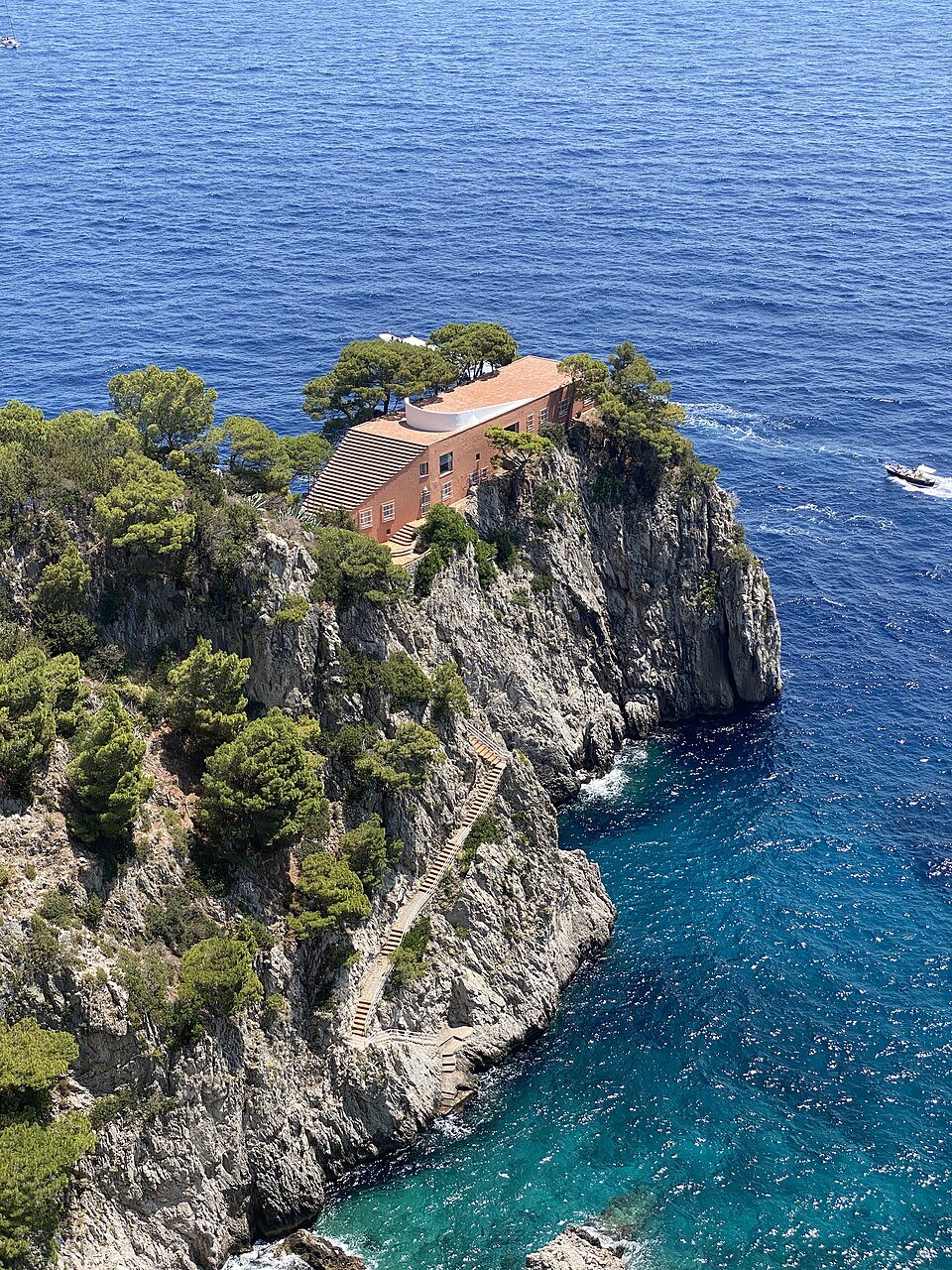
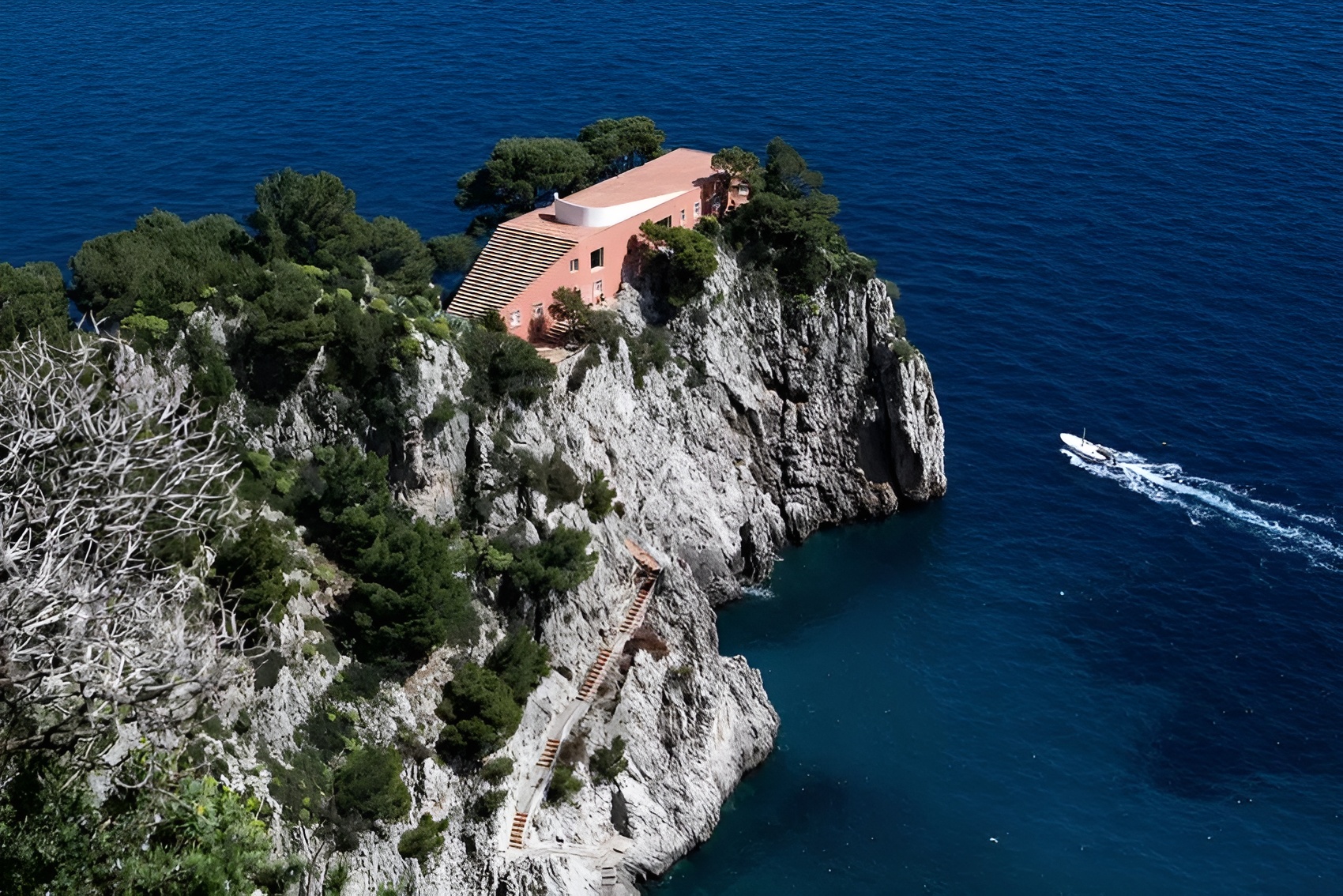
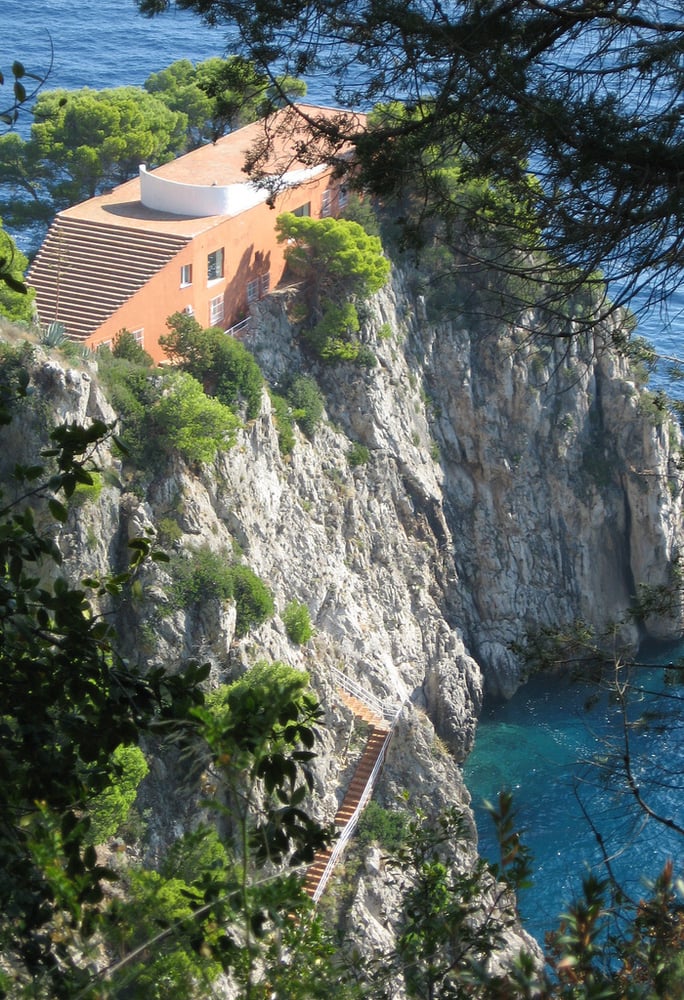
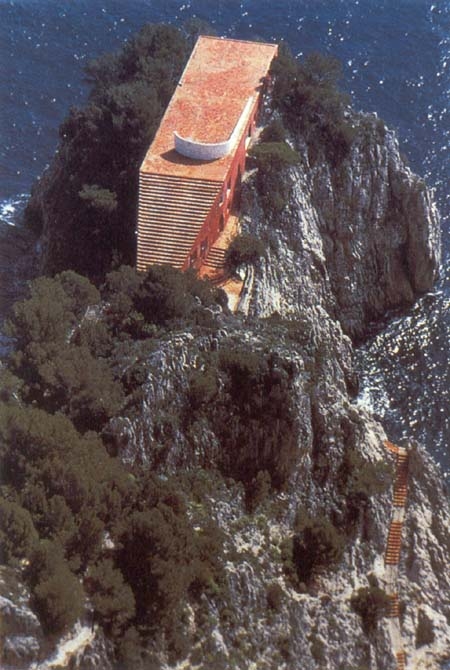
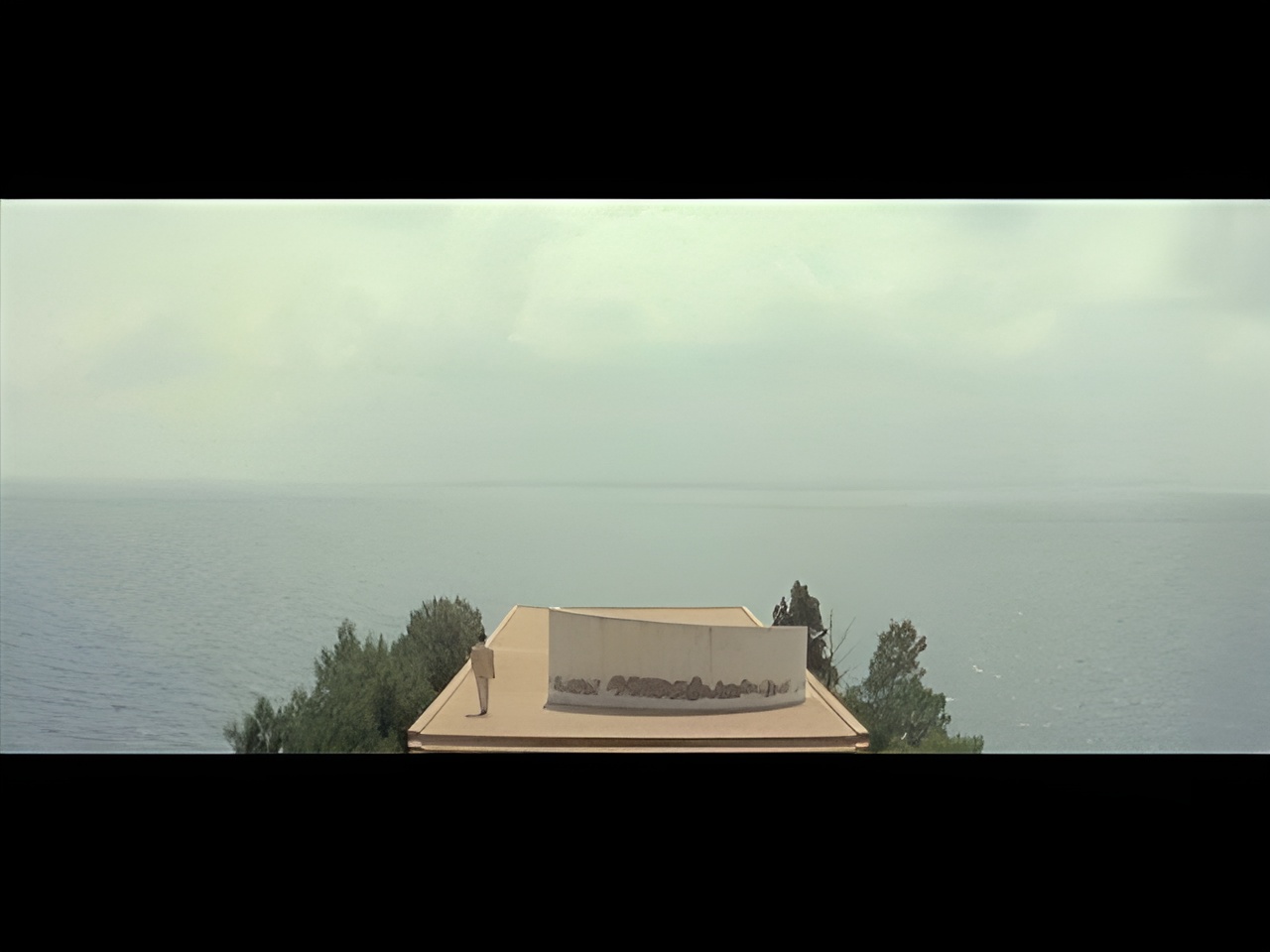
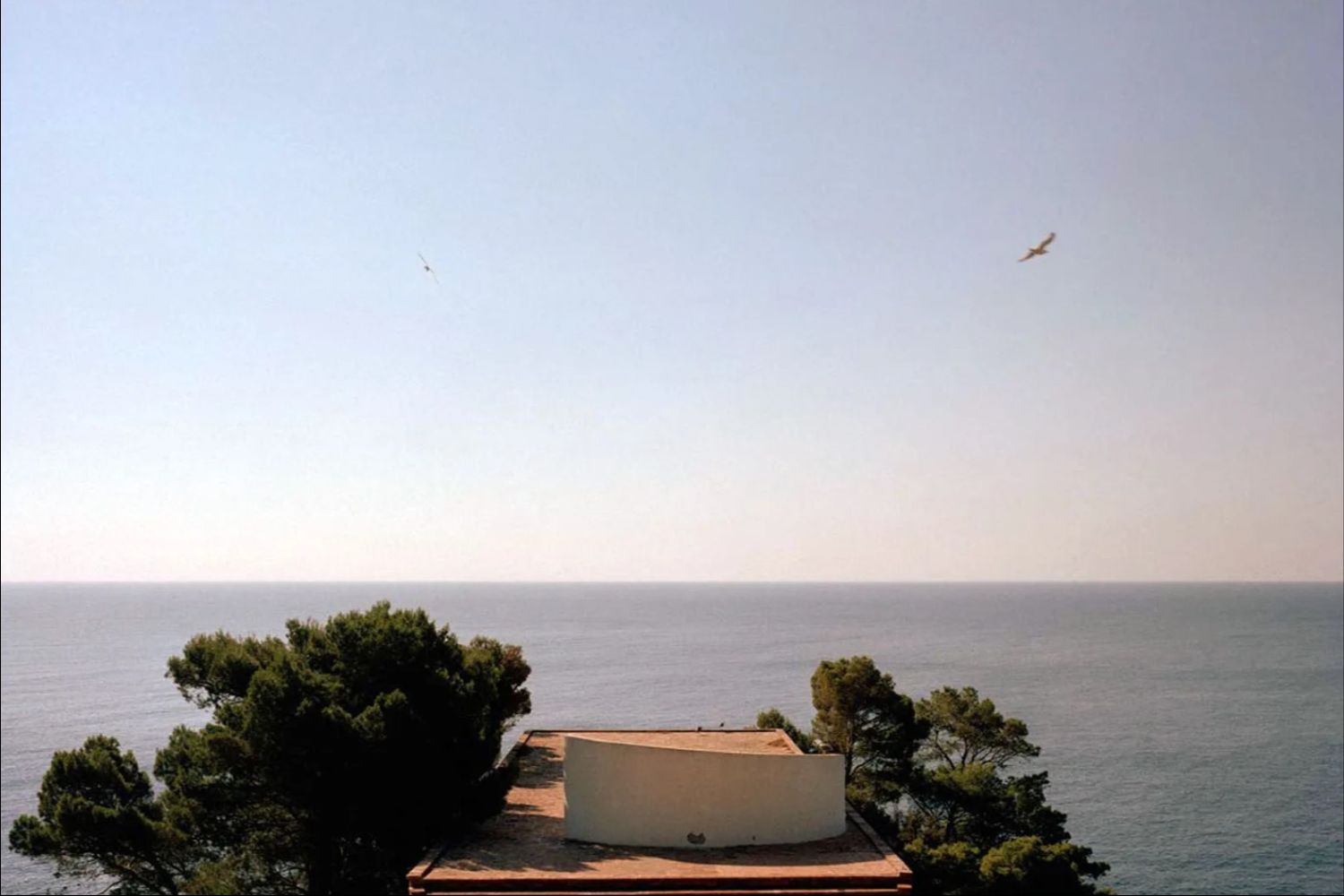
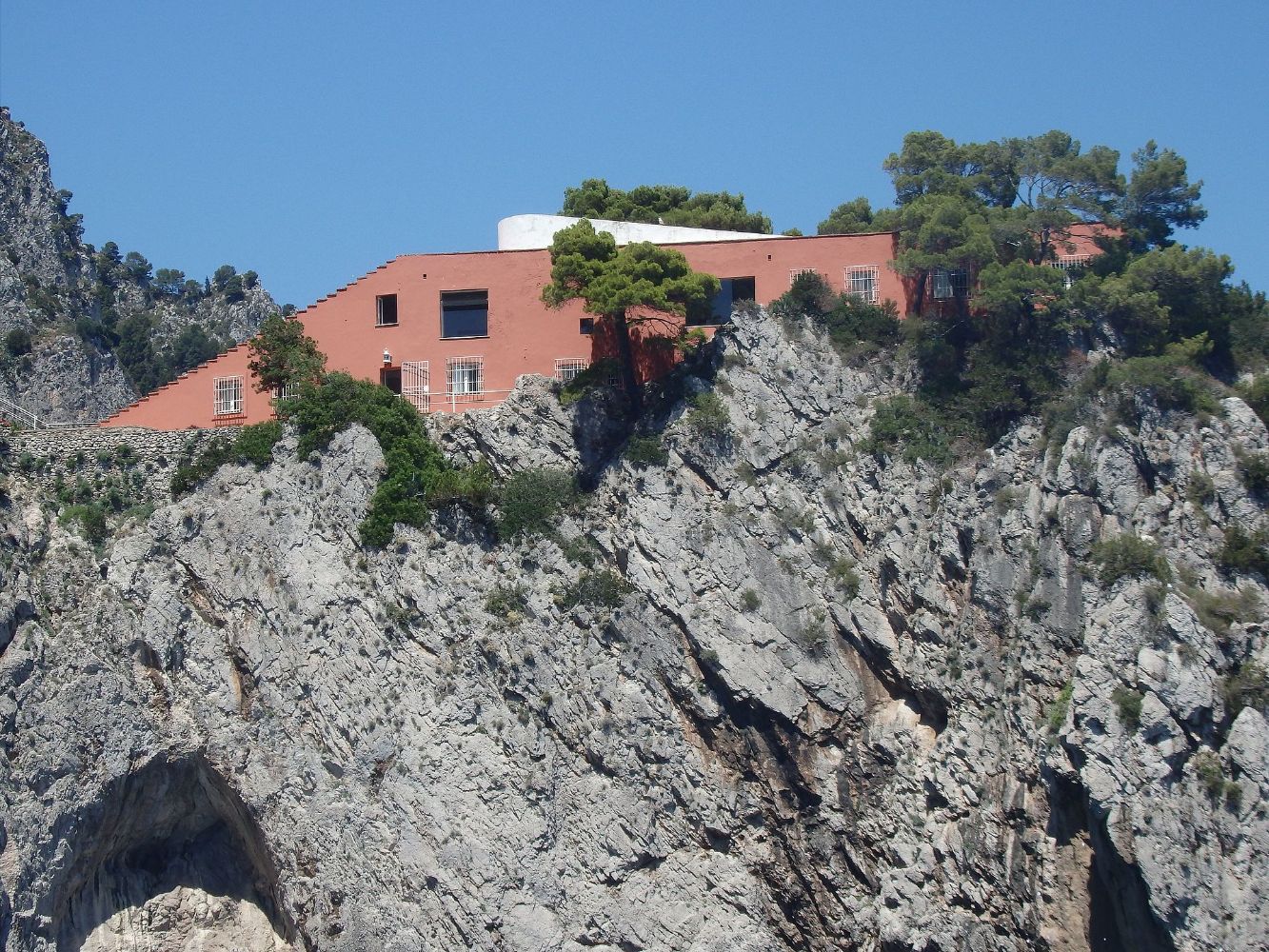
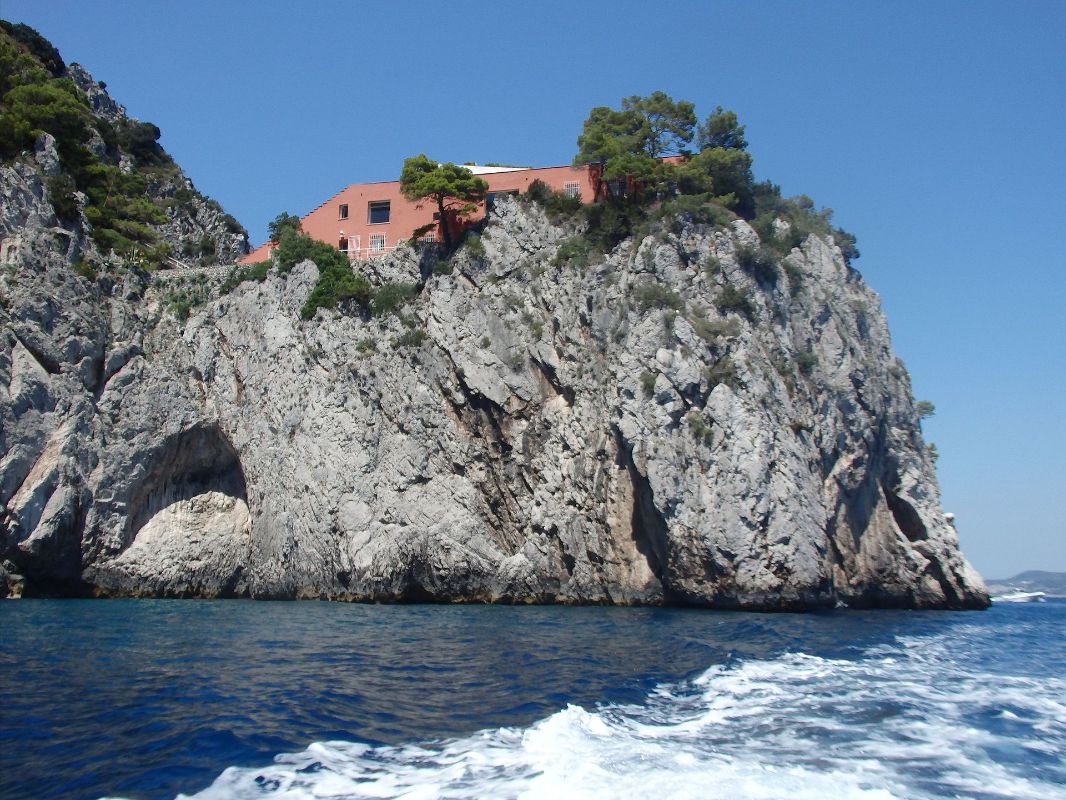
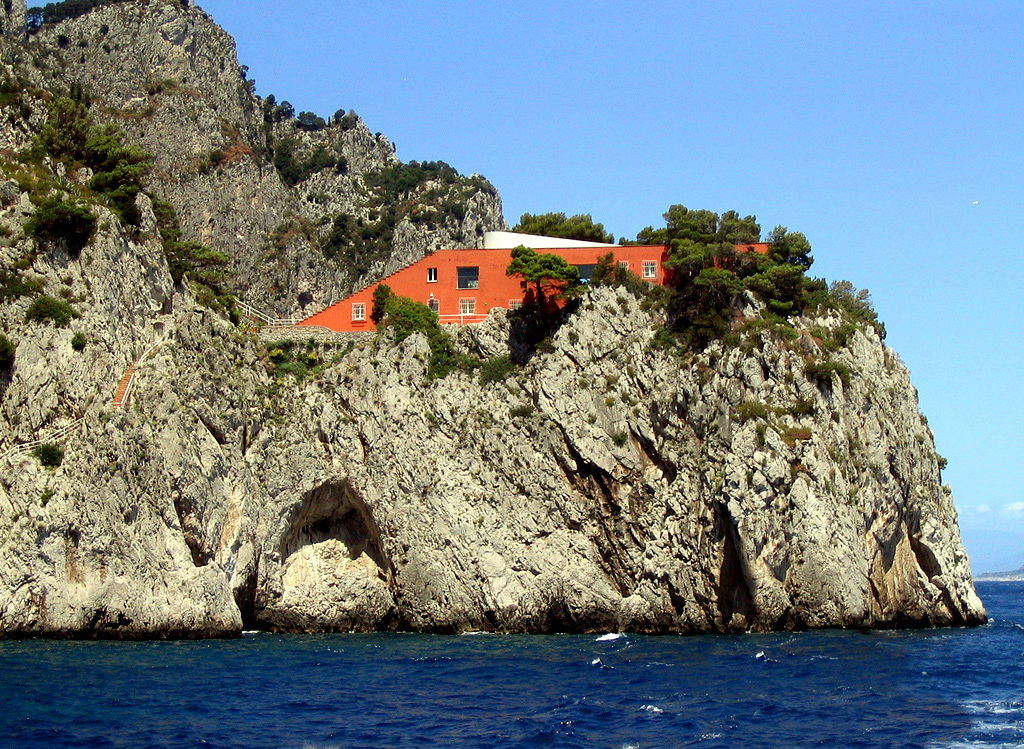
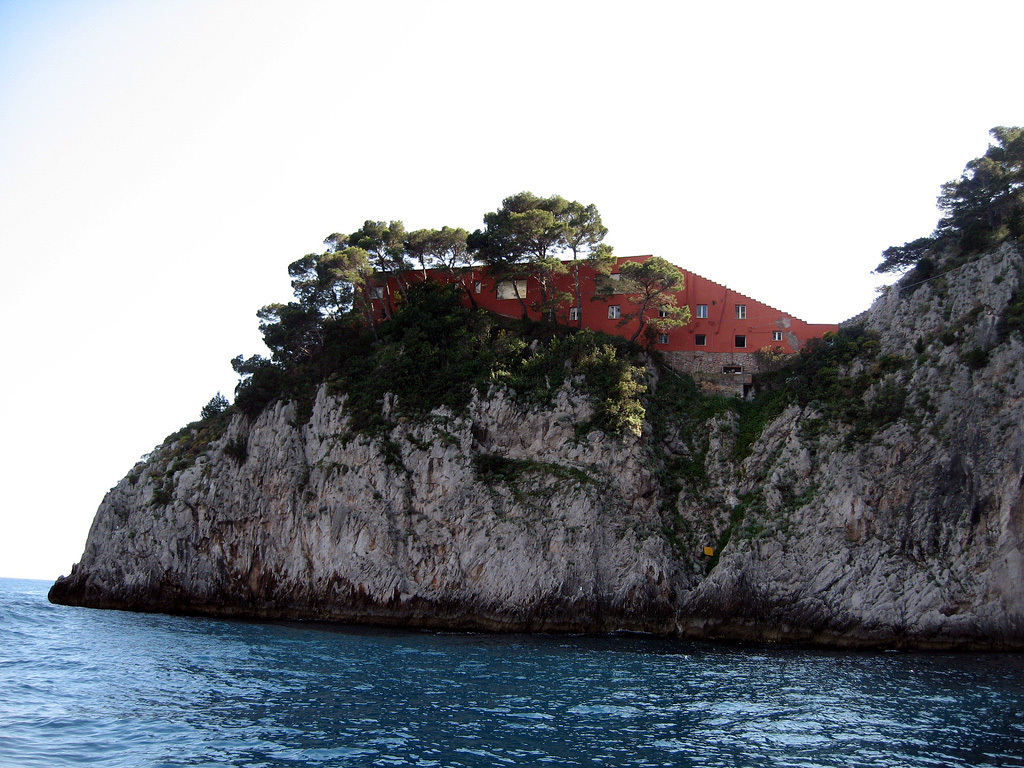
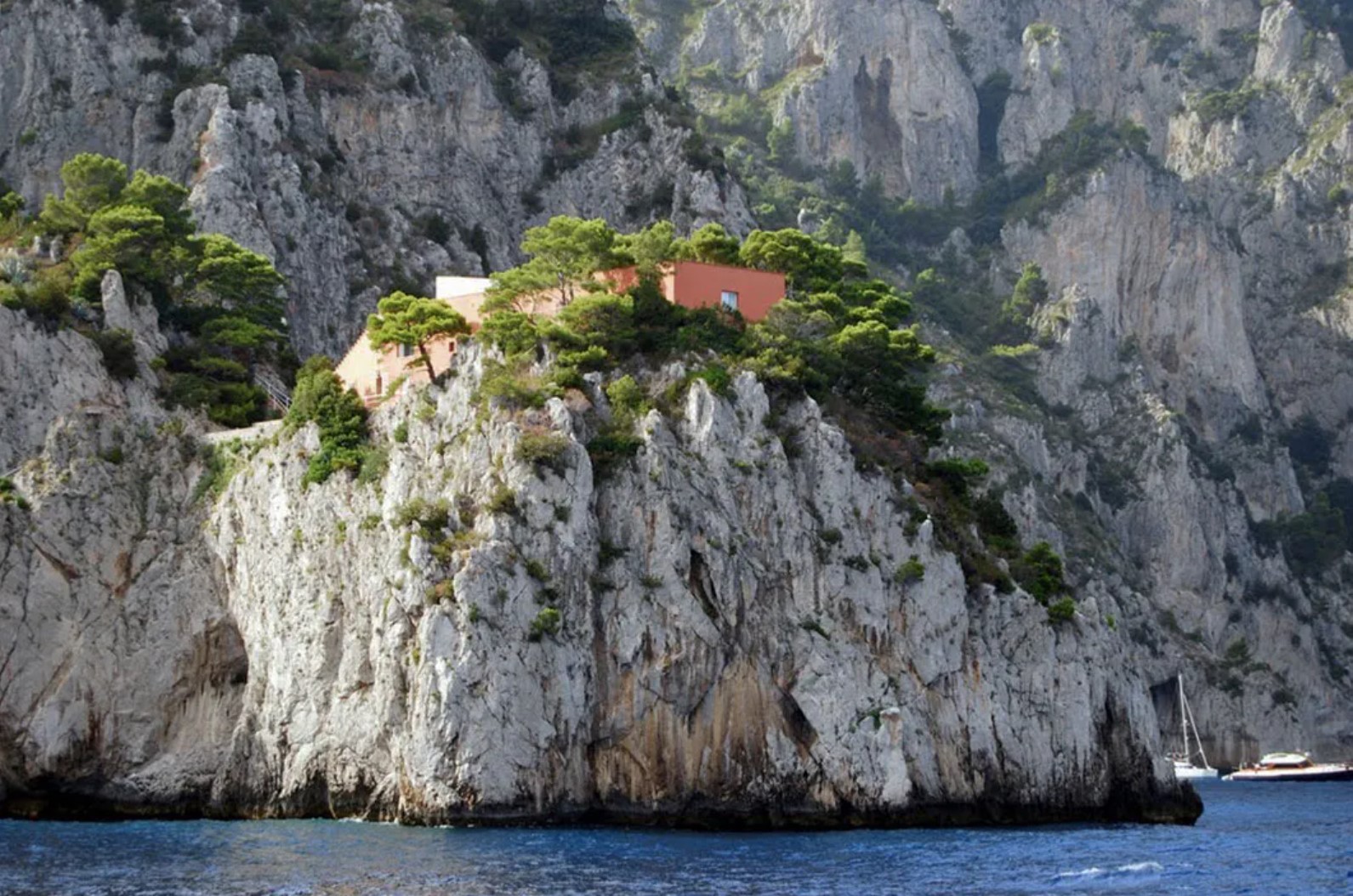
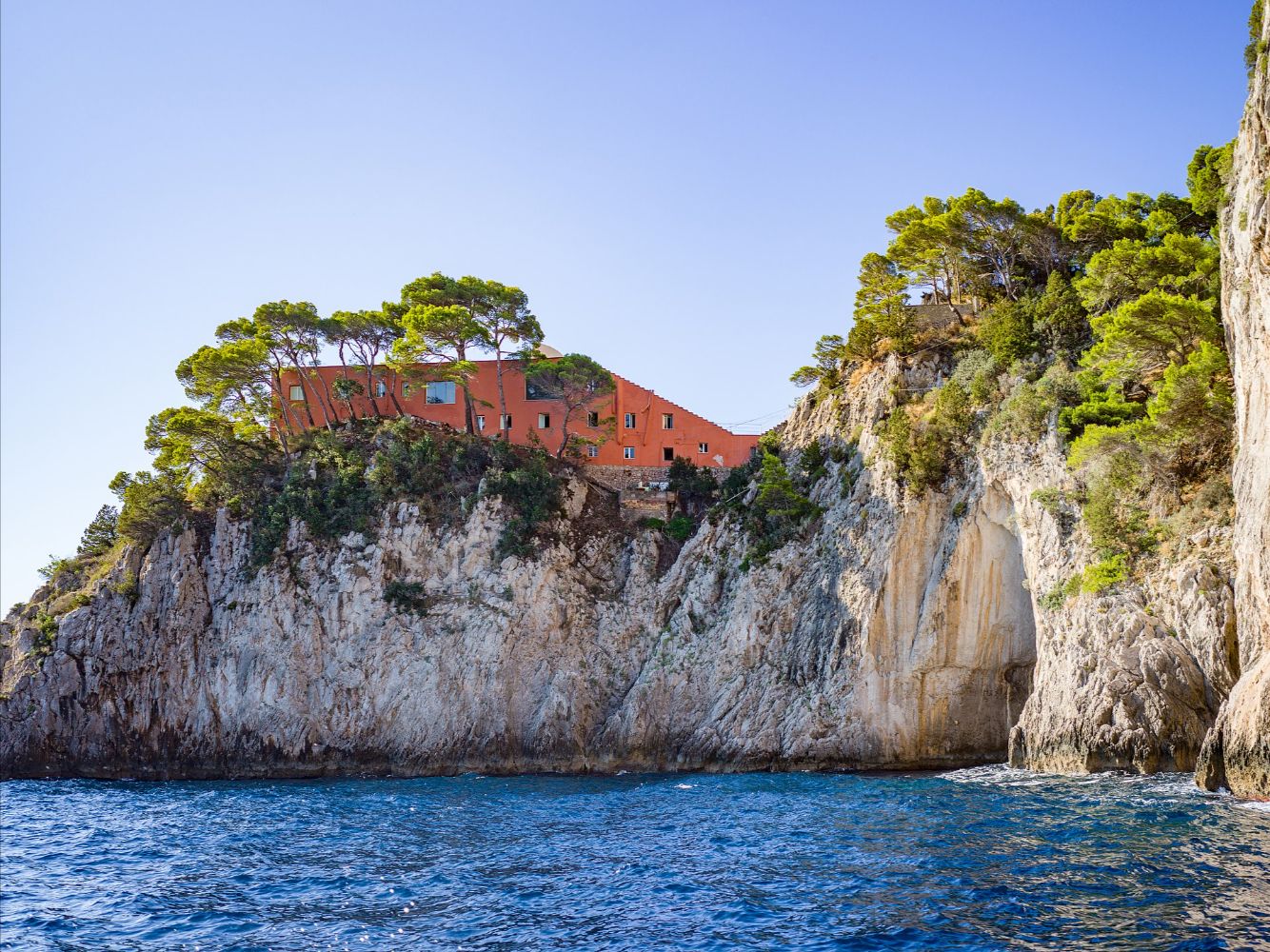
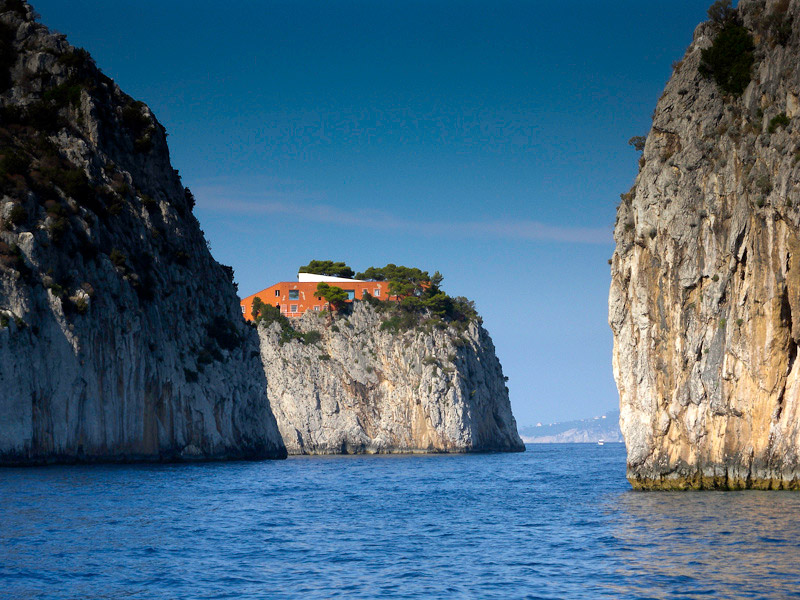
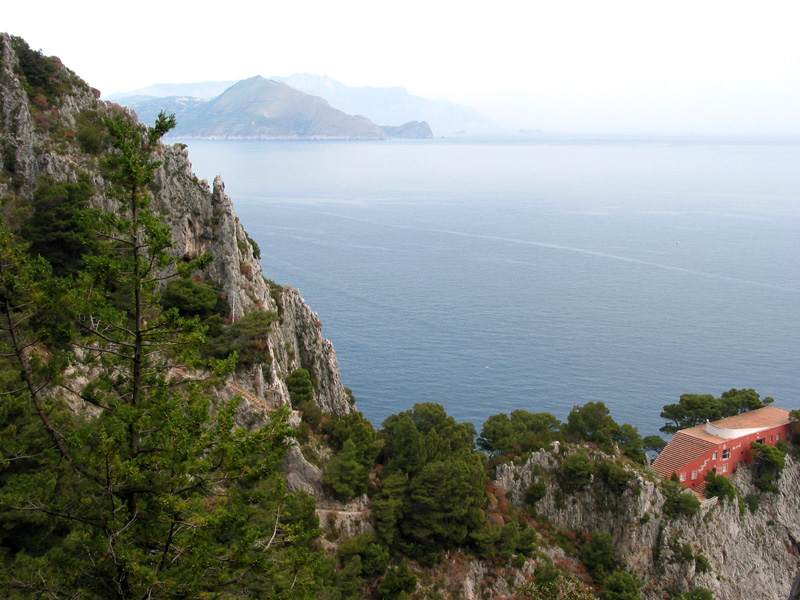
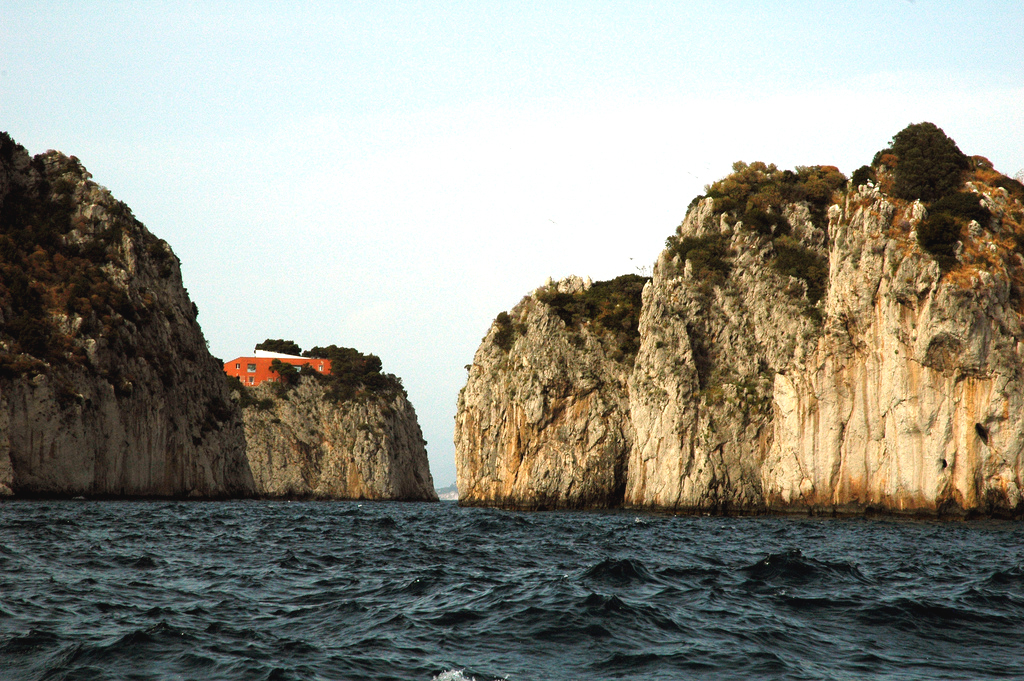
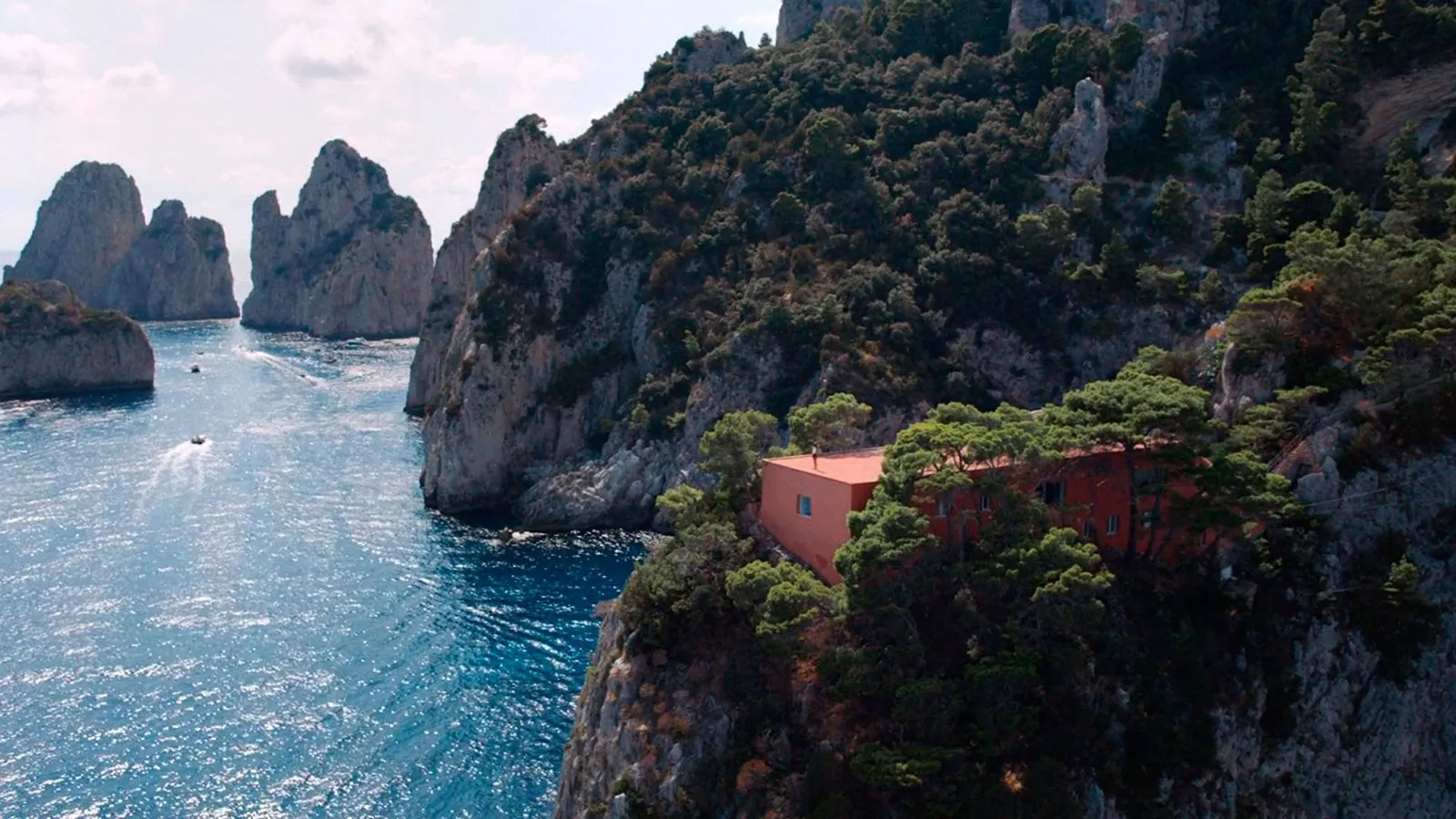
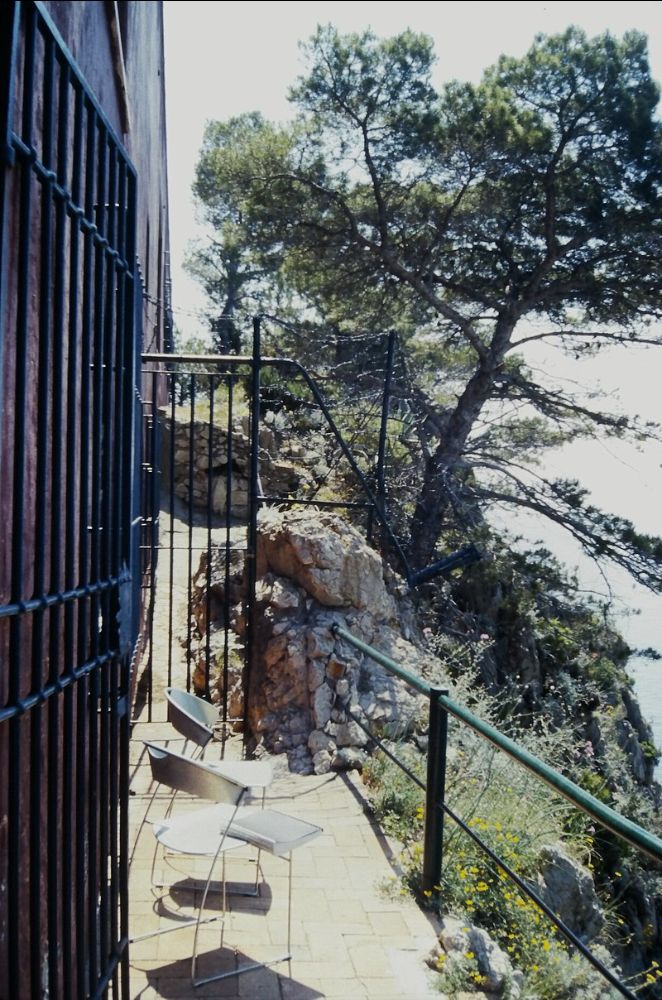
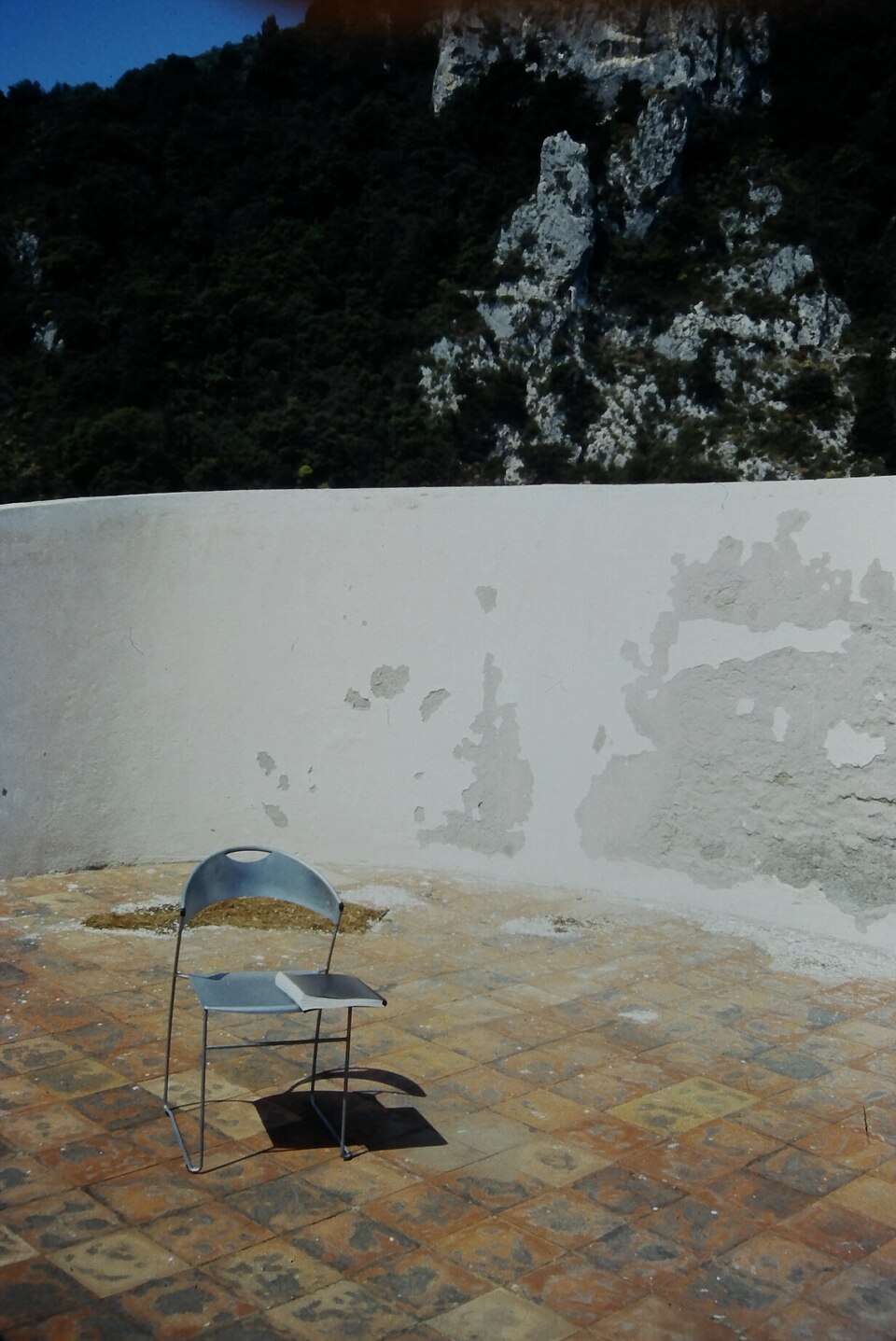
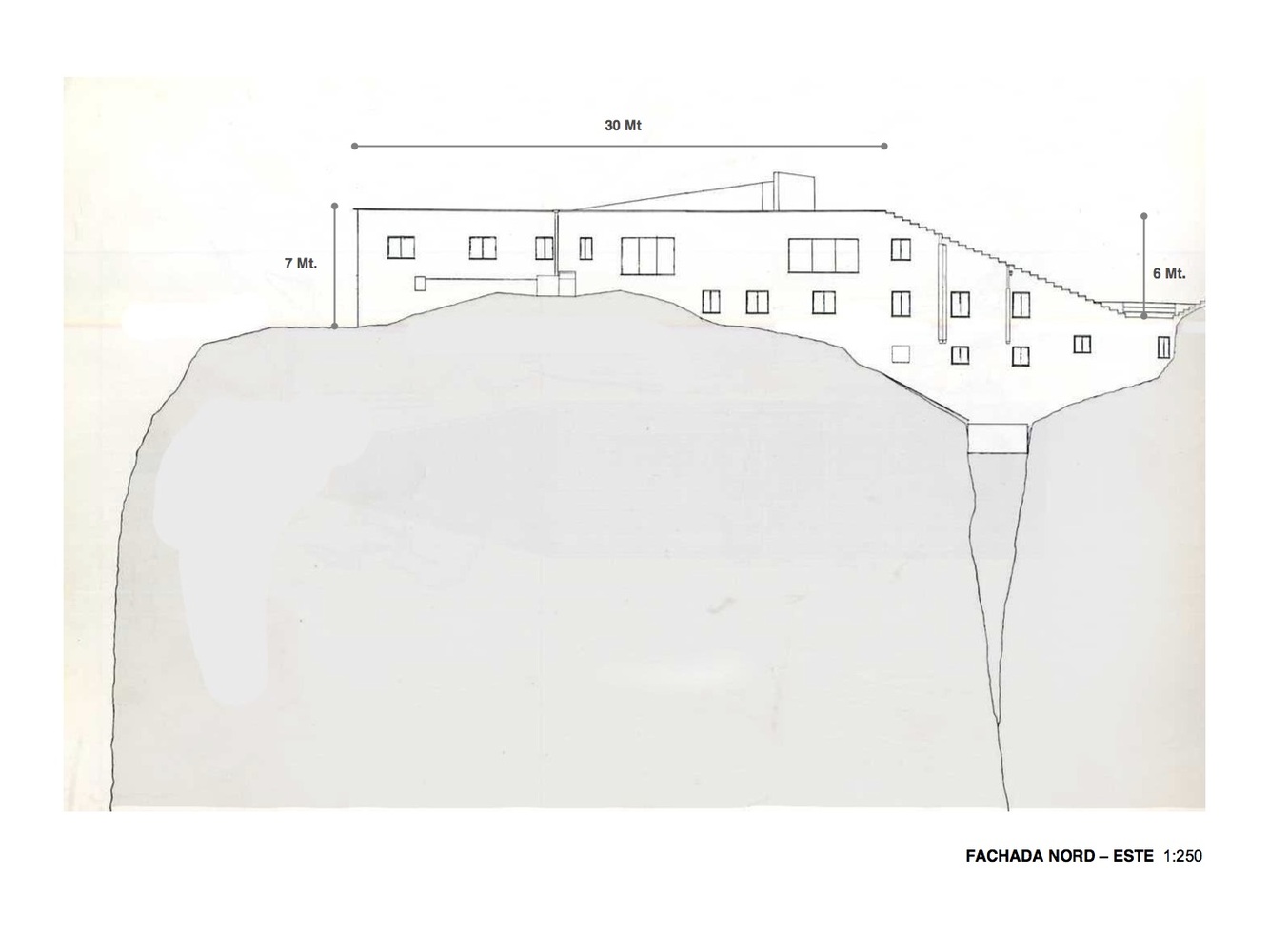
Villa Malaparte stands on Punta Massullo on the island of Capri as a compact volume positioned 32 meters above the Gulf of Salerno. The house presents a red masonry form defined by a reverse pyramidal stair that leads to a roof terrace capped by a curving white wall. Access remains limited to footpaths or by sea, reinforcing isolation and a controlled approach sequence.
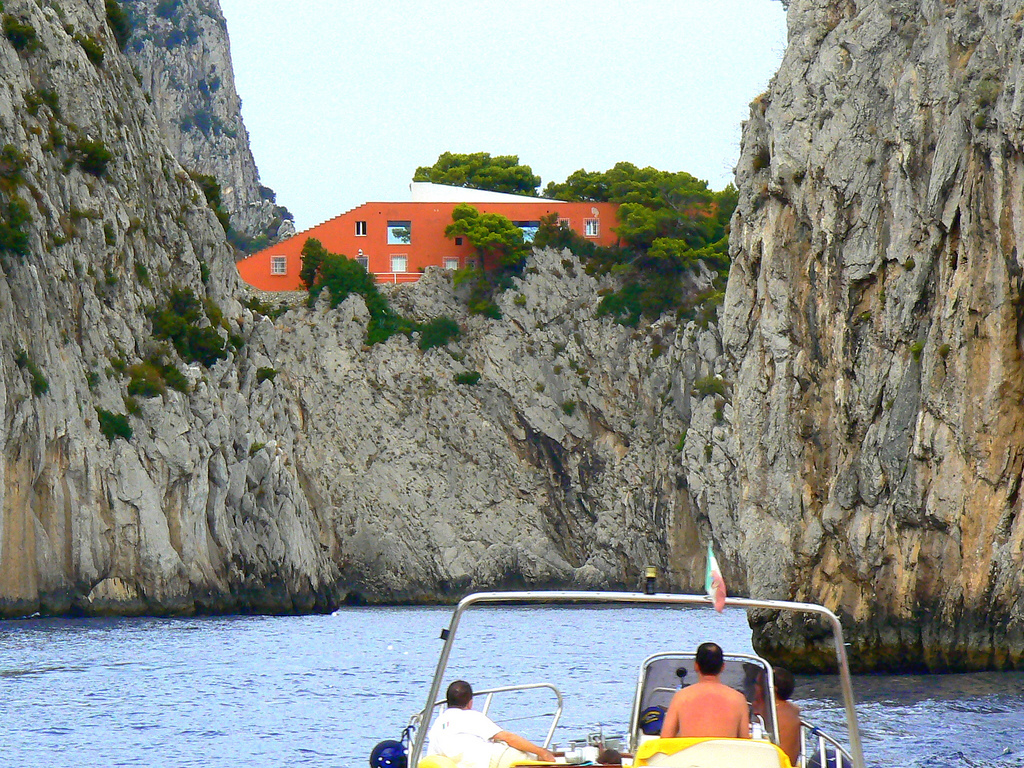
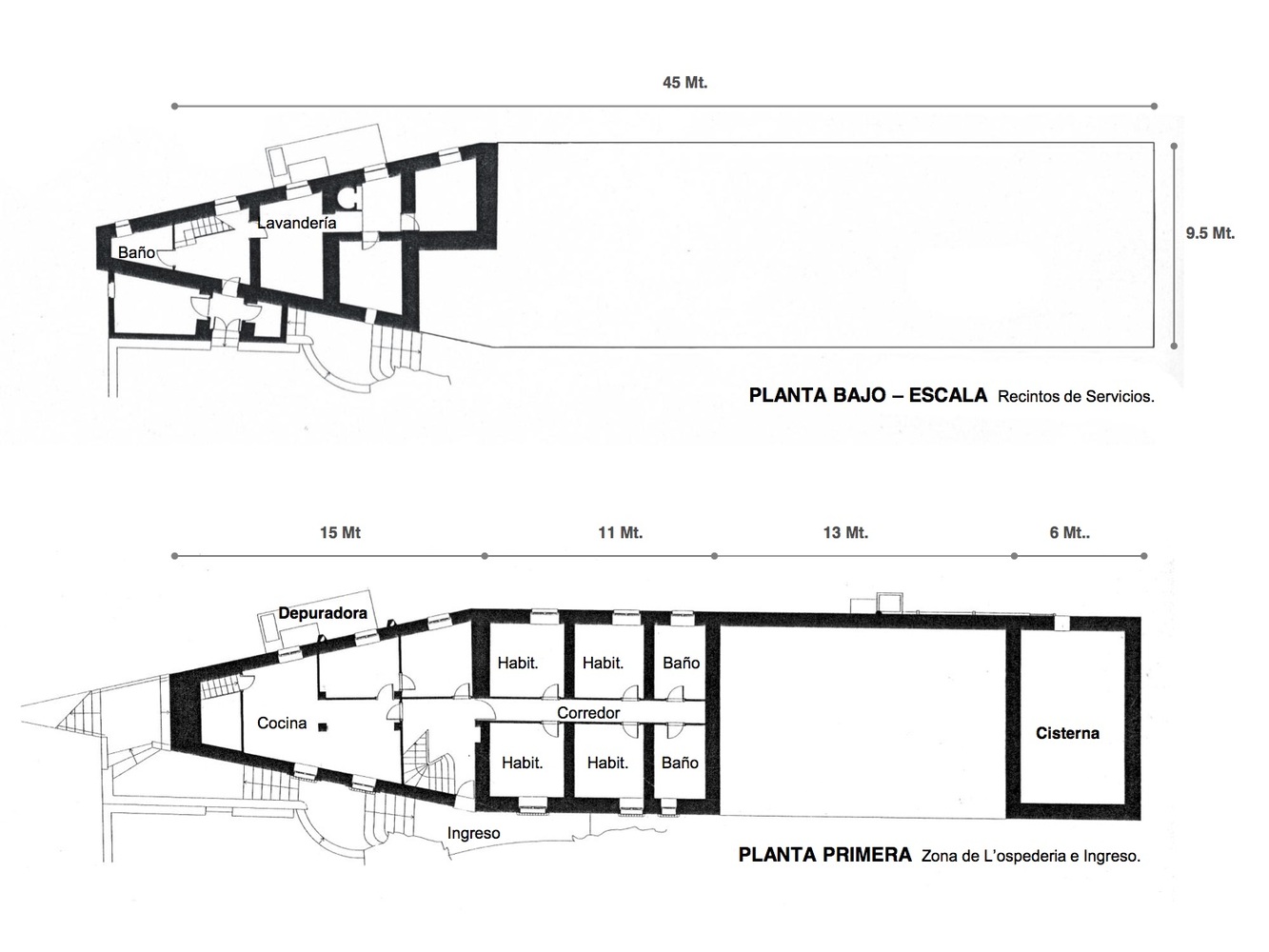
Villa Malaparte originated in 1938 through a commission to Adalberto Libera, a central figure of Italian Rationalism. The initial proposal defined a linear, two-story scheme with a corridor-based organization and stepped terraces responding to the promontory. The built work diverged from this scheme during construction, as Curzio Malaparte assumed control of the process, working with builder Adolfo Amitrano and modifying the design extensively. The realized house therefore, reflects a combined authorship, where Libera’s proposal operates as a conceptual base rather than a completed design.
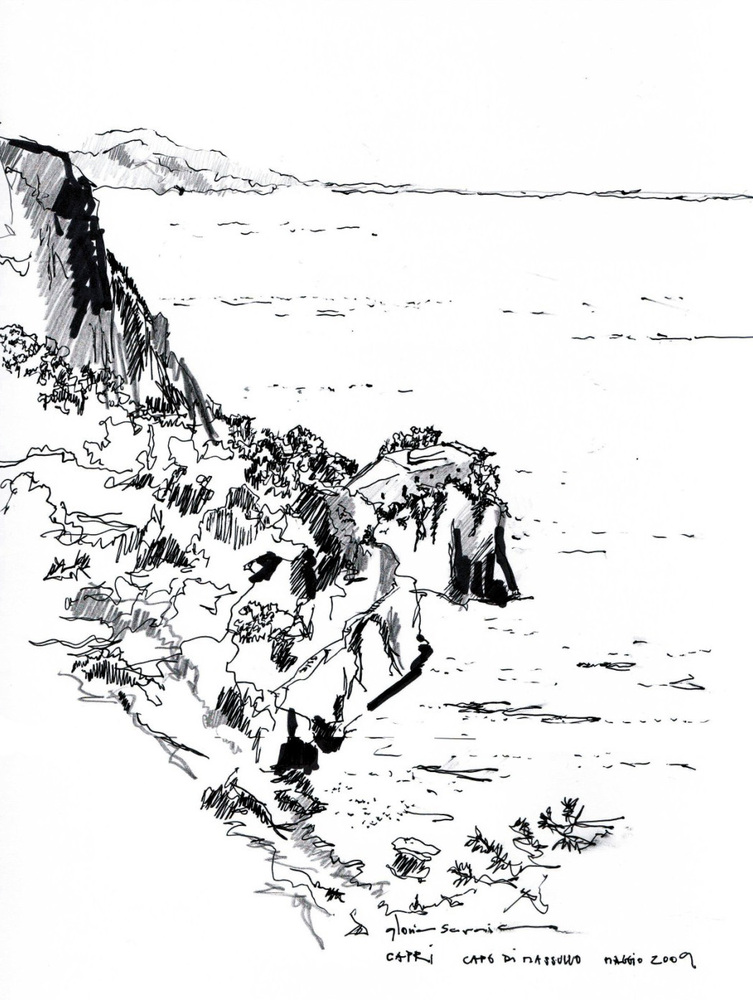
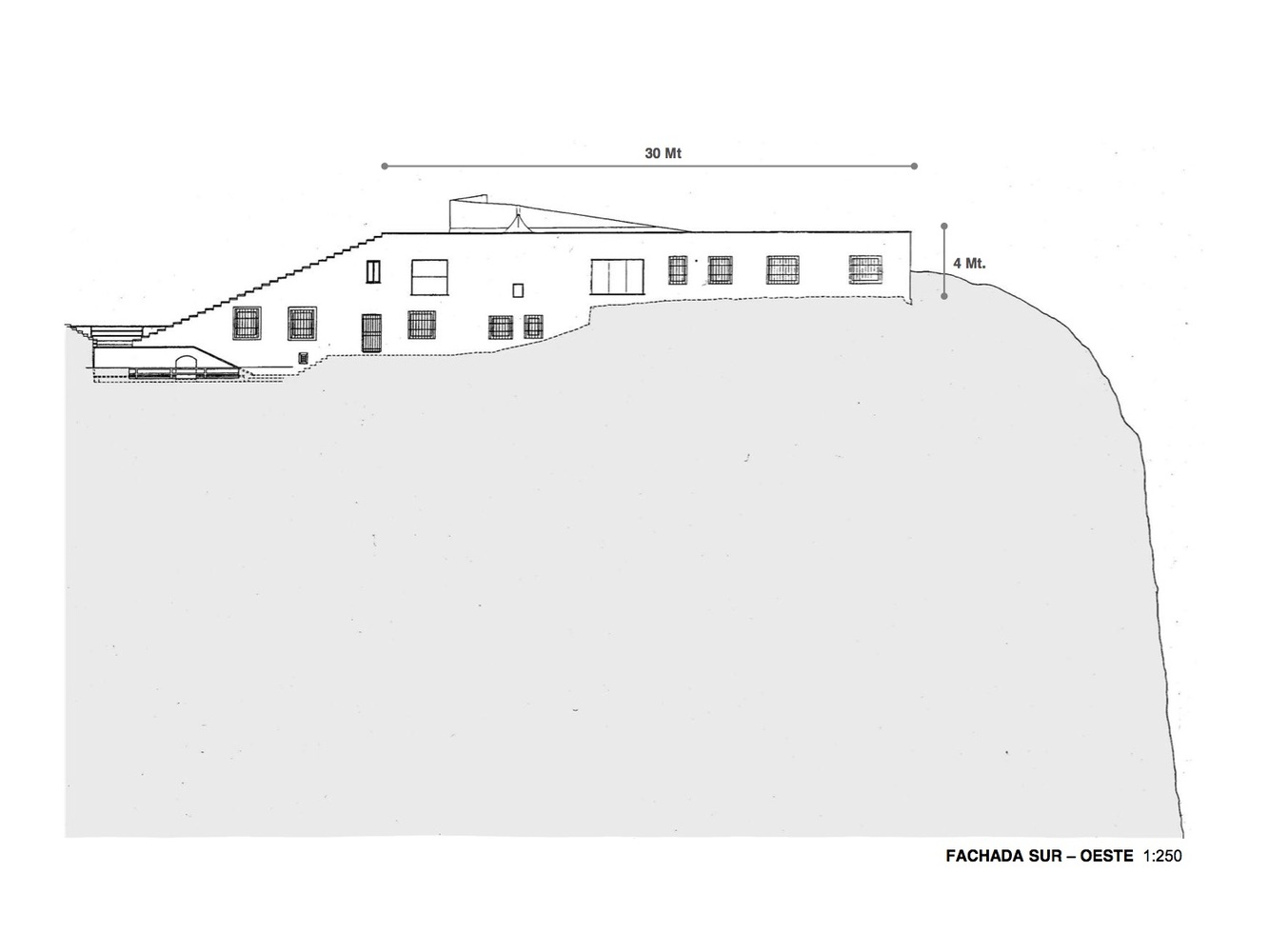
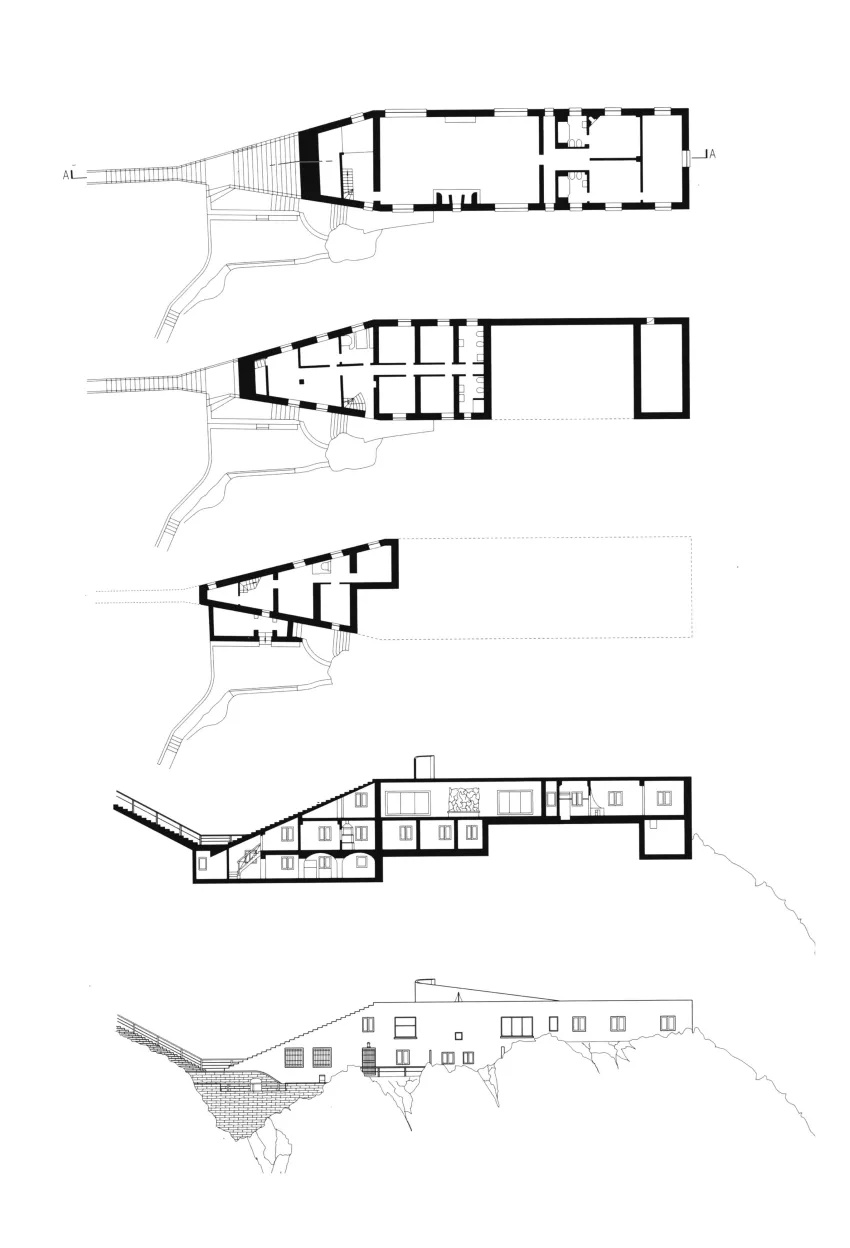
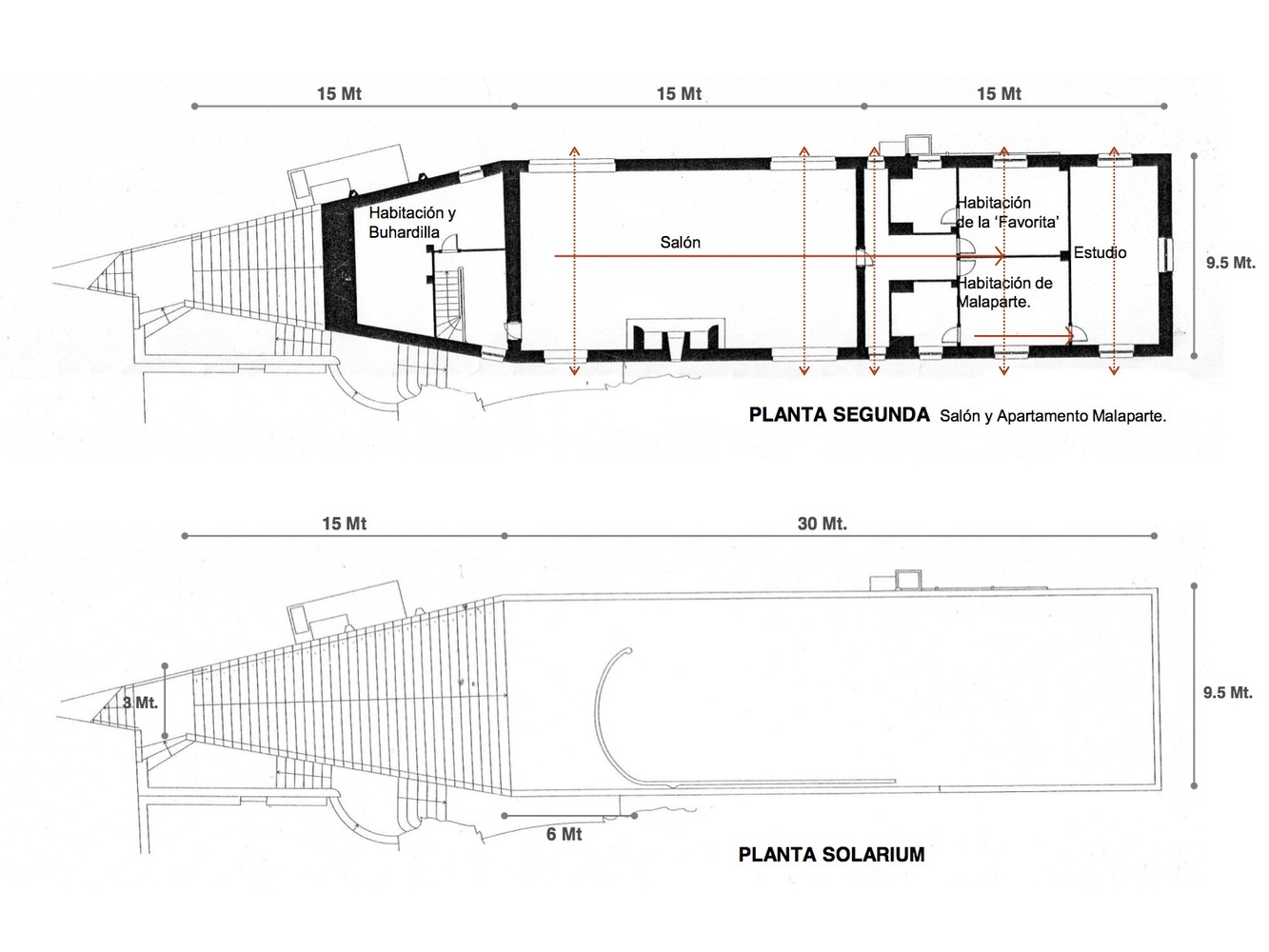
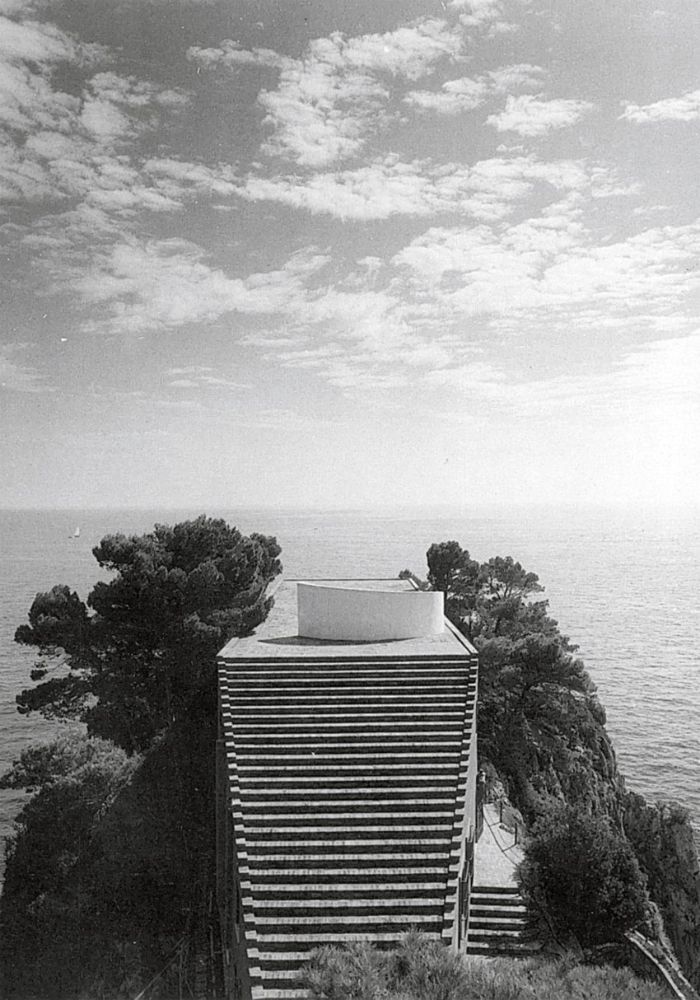
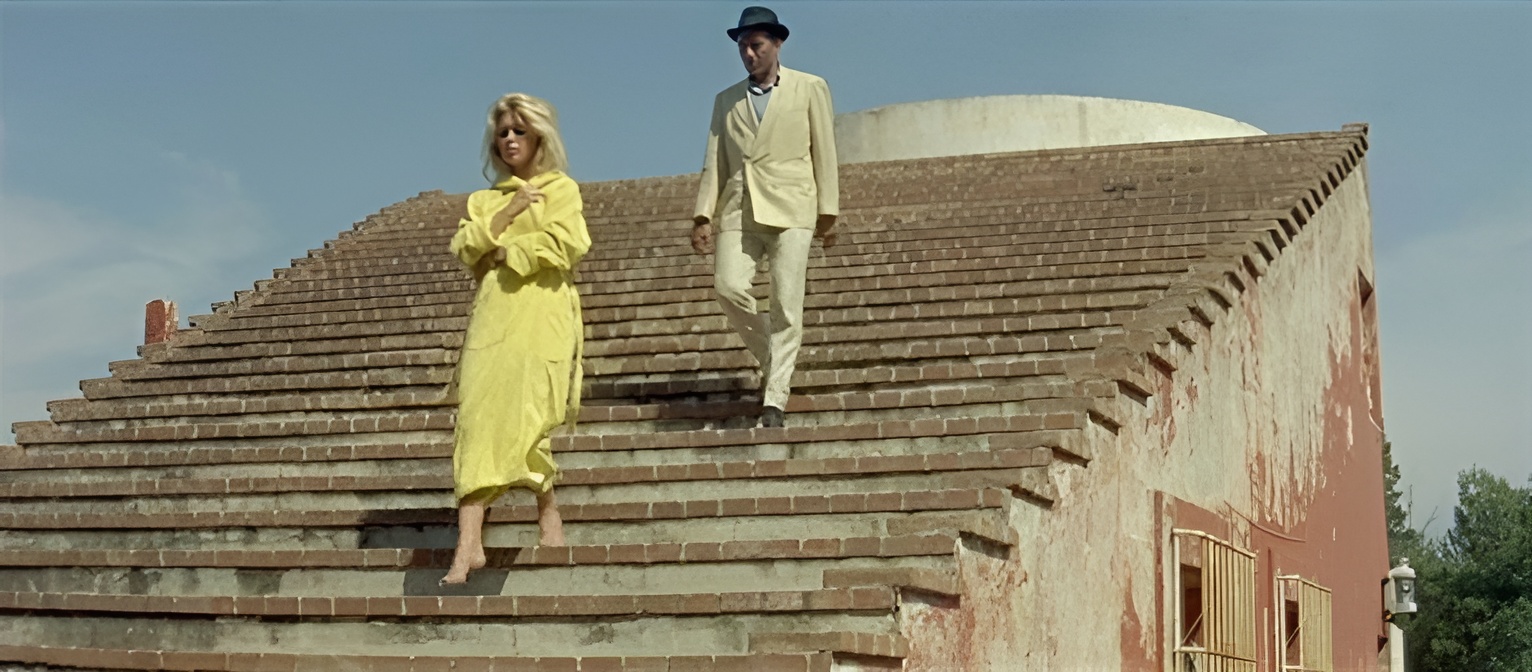
The most defining transformation appears in the external stair, which occupies a substantial portion of the volume and leads directly to the roof. This element unifies the mass into a single geometric figure while establishing a ceremonial route toward the horizon. References link this gesture to Malaparte’s exile, particularly to the Church of the Annunziata on Lipari, where a similar ascending form left a strong impression.
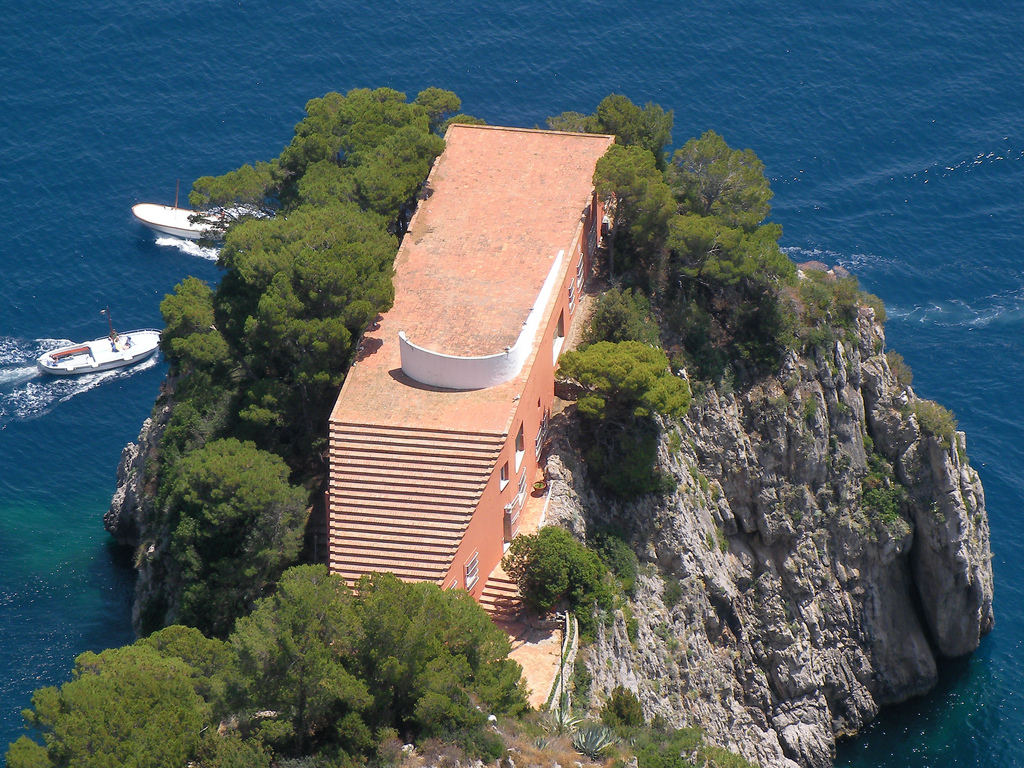
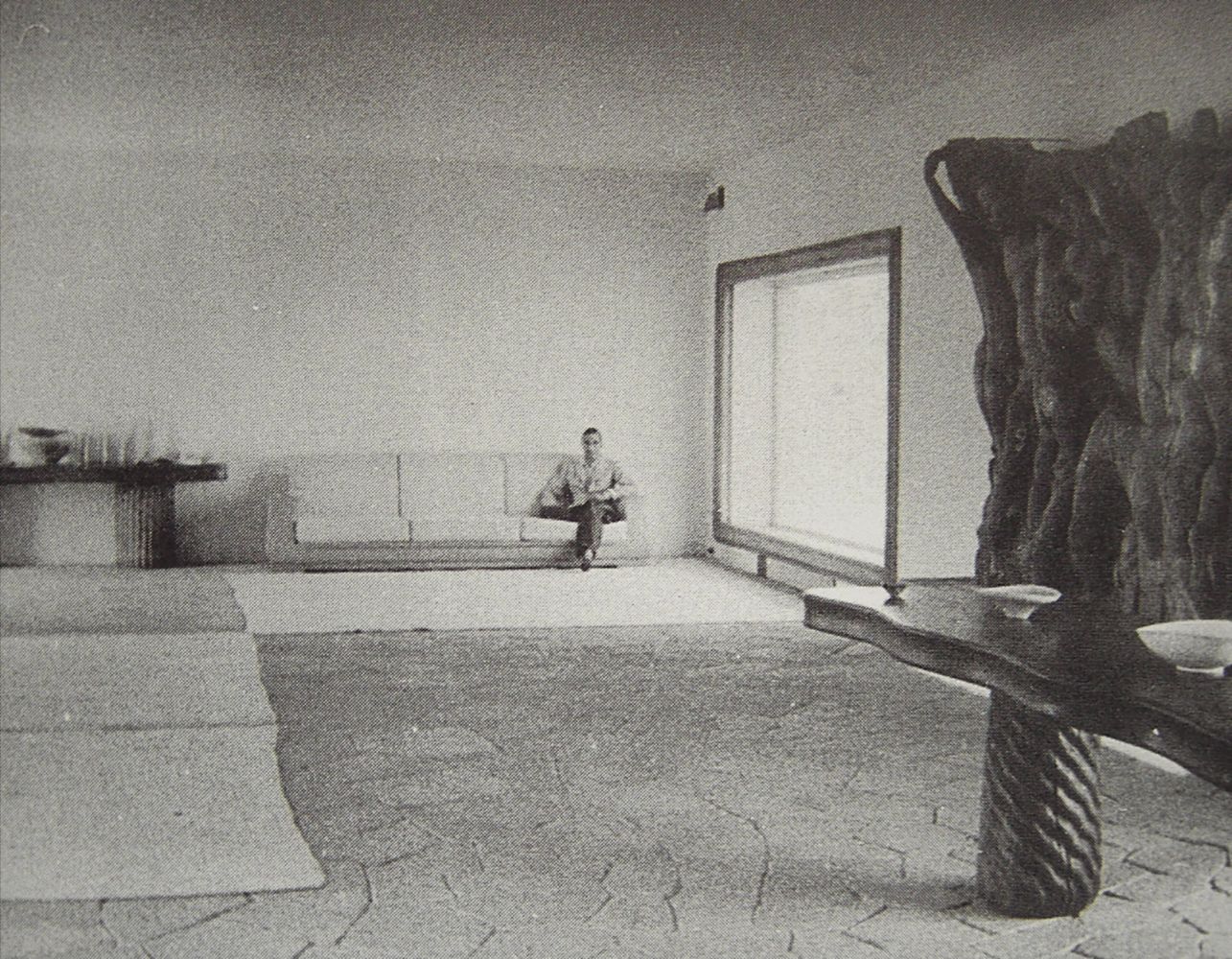
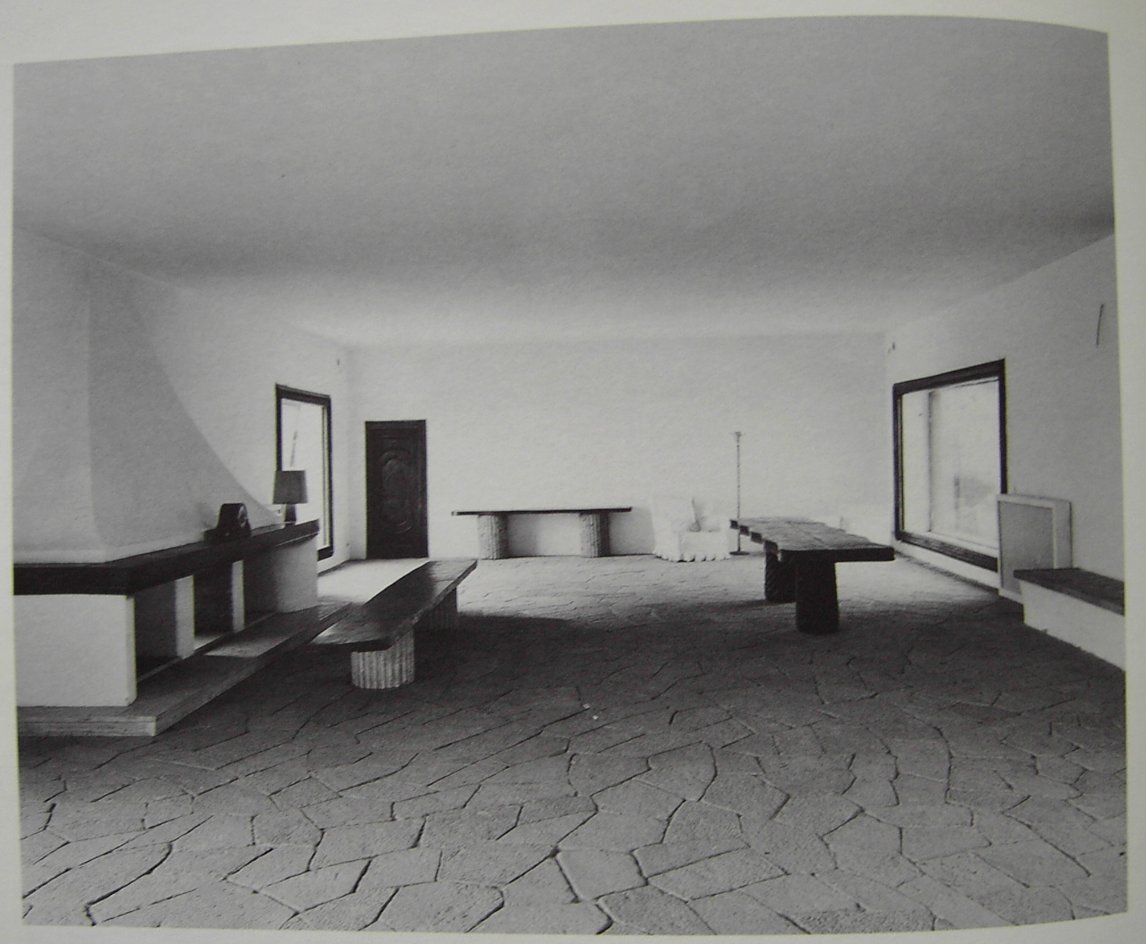
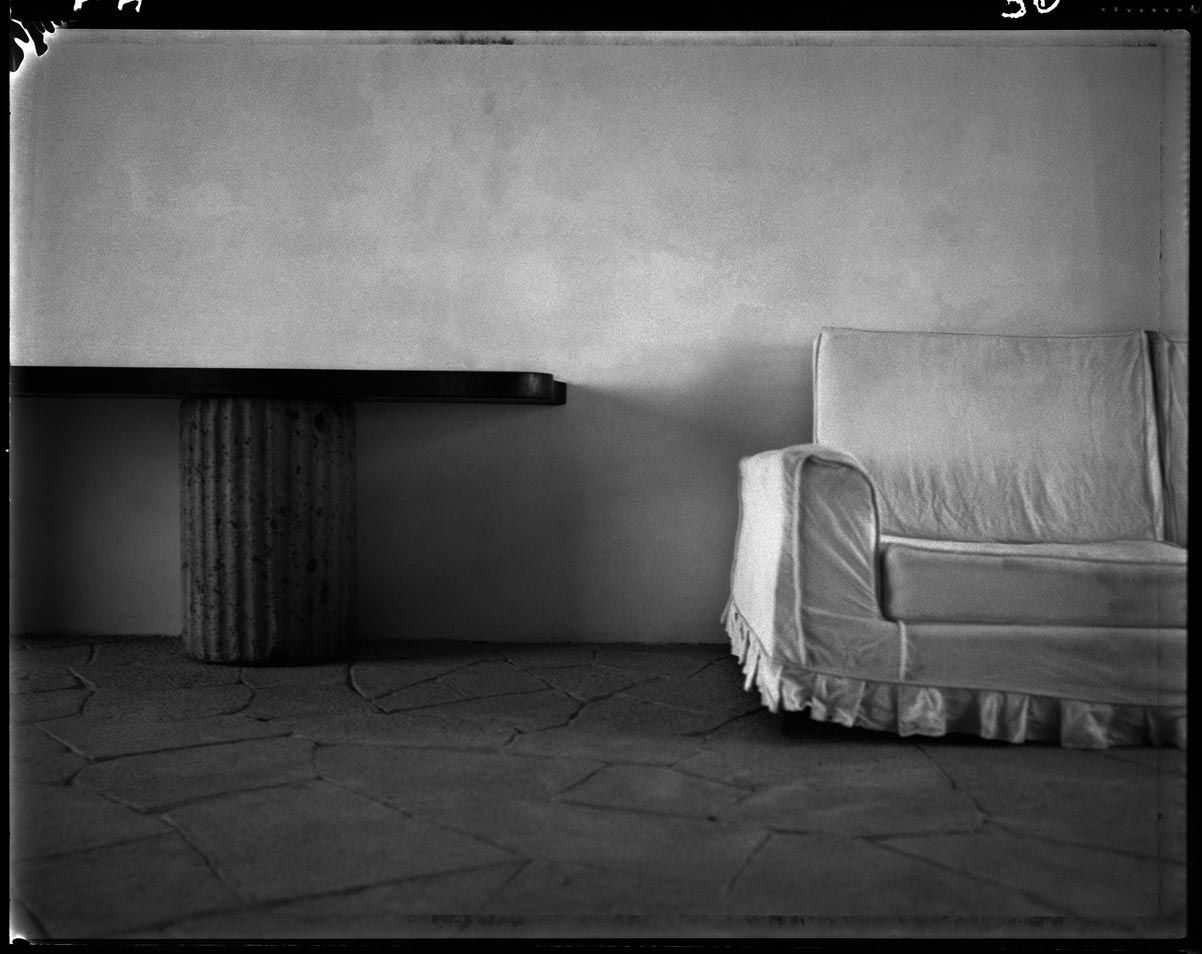
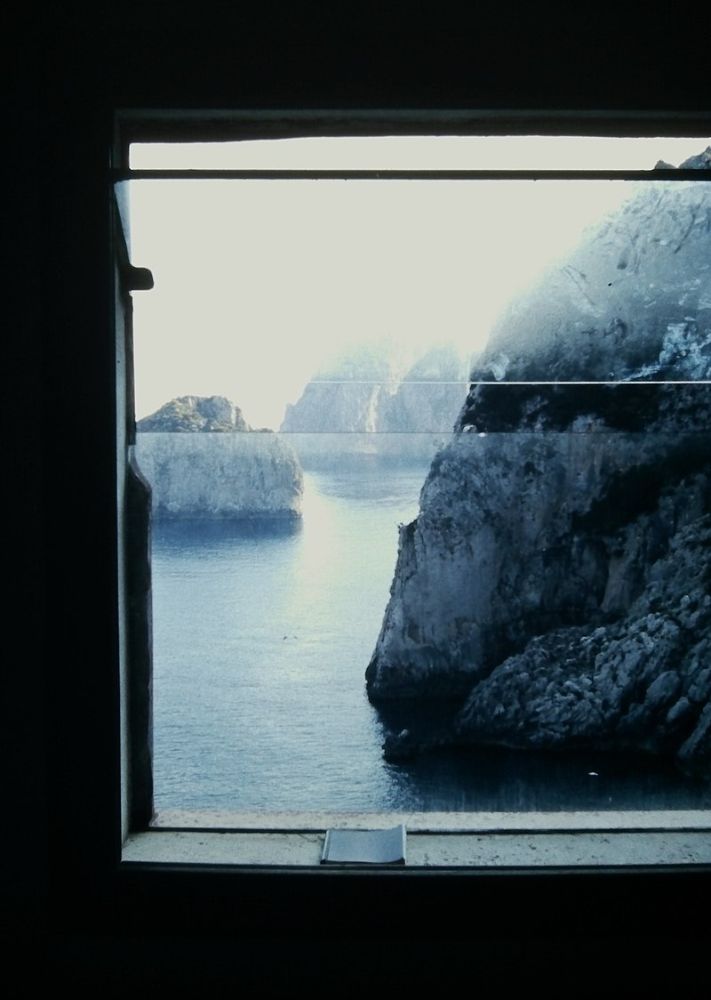
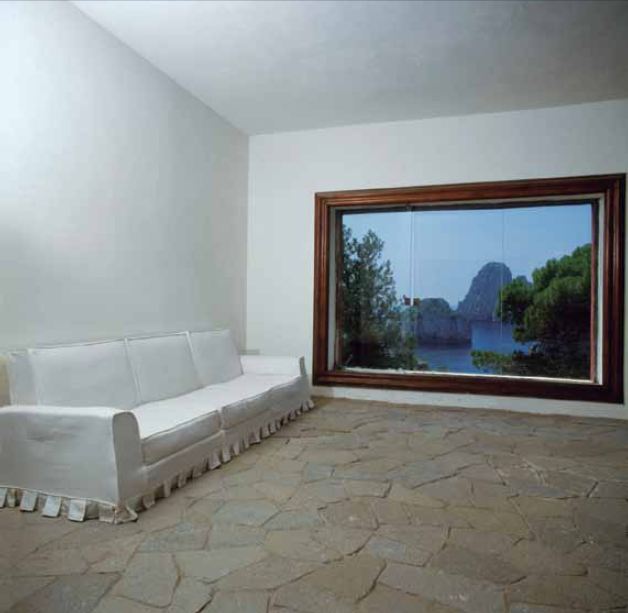
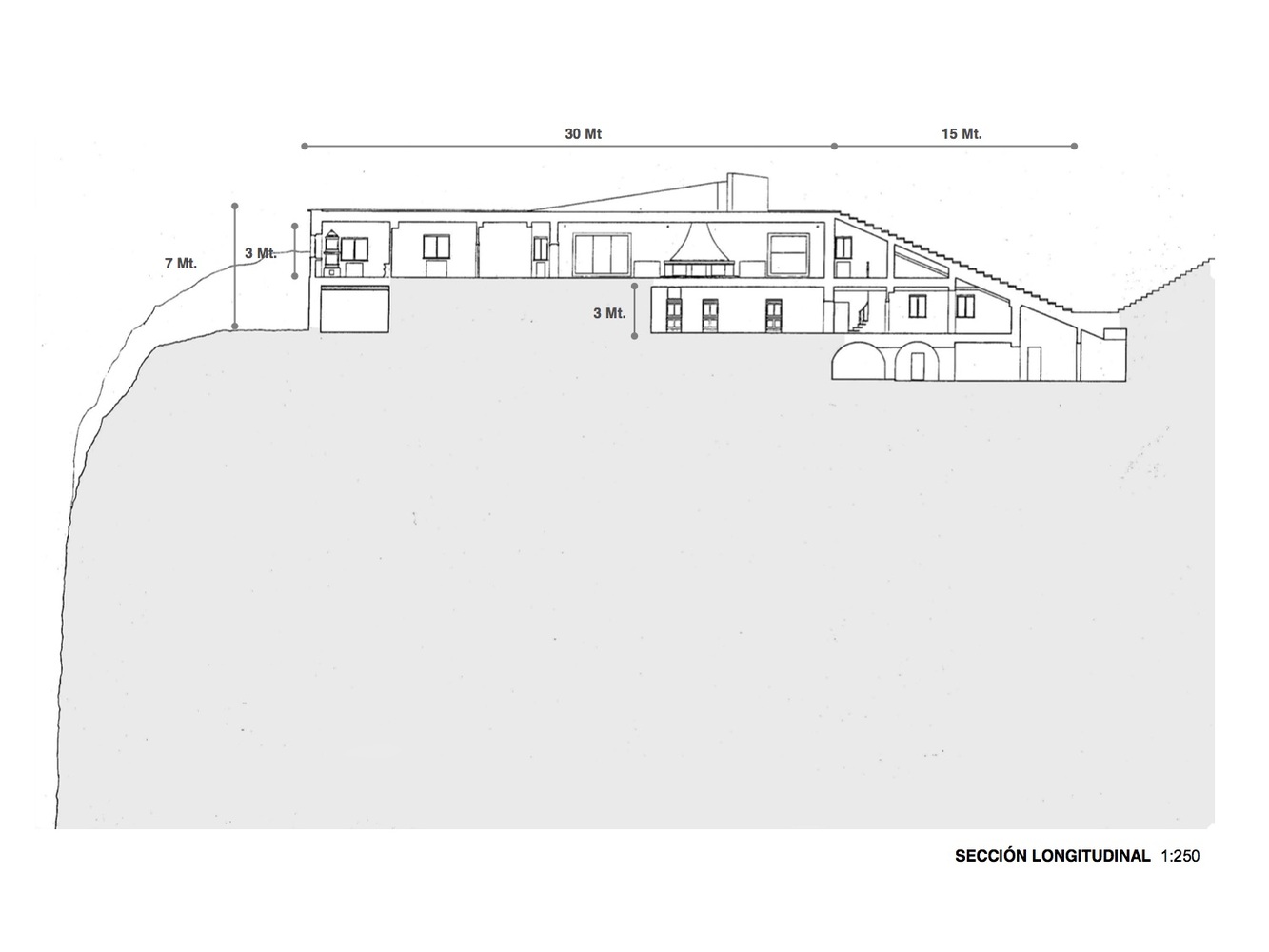
The interior develops across three levels with a rectilinear distribution. The lower level contains service spaces, including storage and laundry. The middle level accommodates the entrance, kitchen, and guest rooms, accessed from the southwest façade. The upper level forms the principal living domain, where a large salon occupies roughly half of the plan and opens through four windows that frame the surrounding landscape. Adjacent rooms, including bedrooms and a study, connect in sequence with reduced partitioning, encouraging movement through aligned spaces rather than isolated rooms. This arrangement prioritizes longitudinal views and continuity, though the internal circulation remains less resolved than the exterior composition.
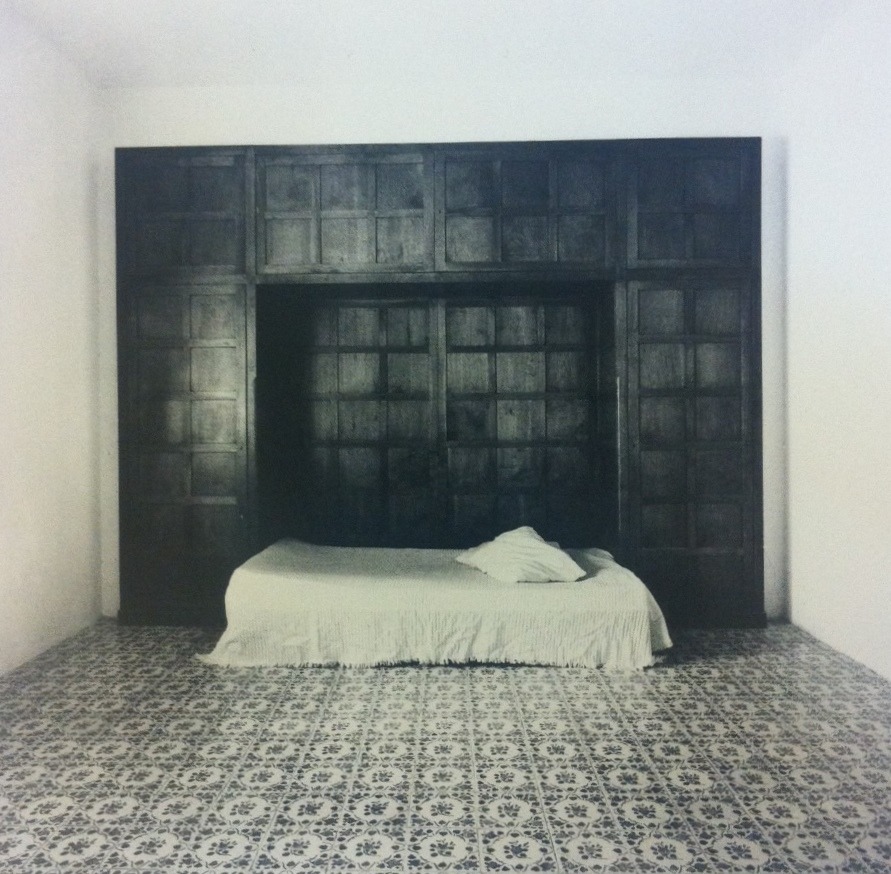
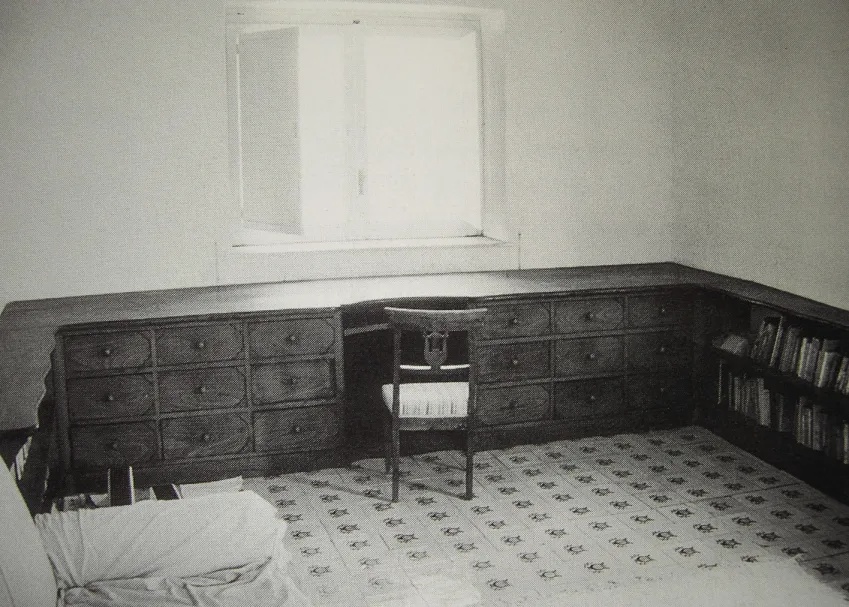
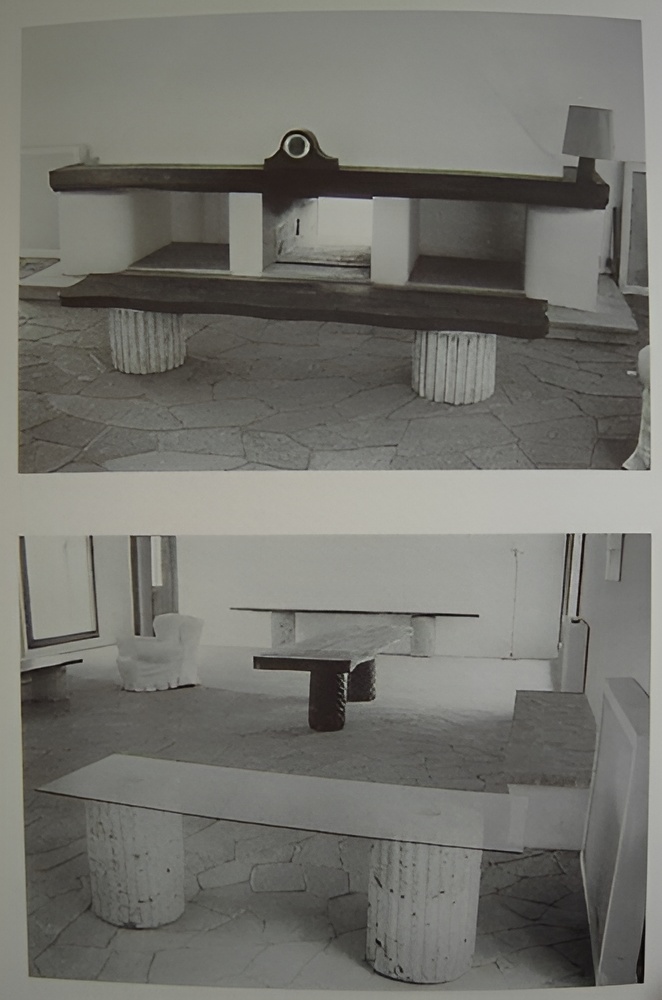
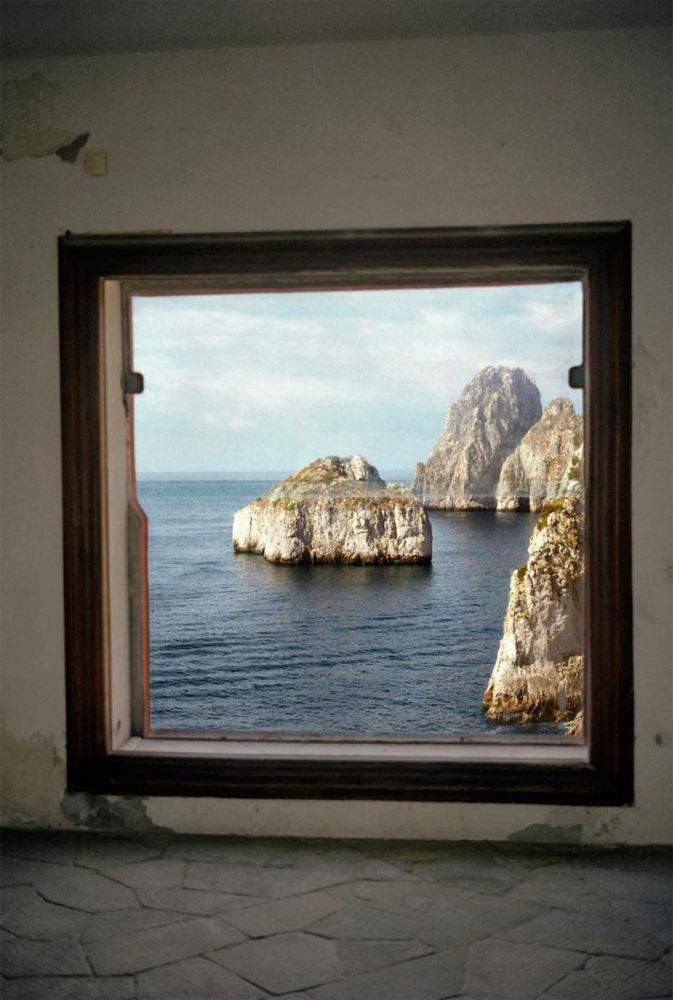
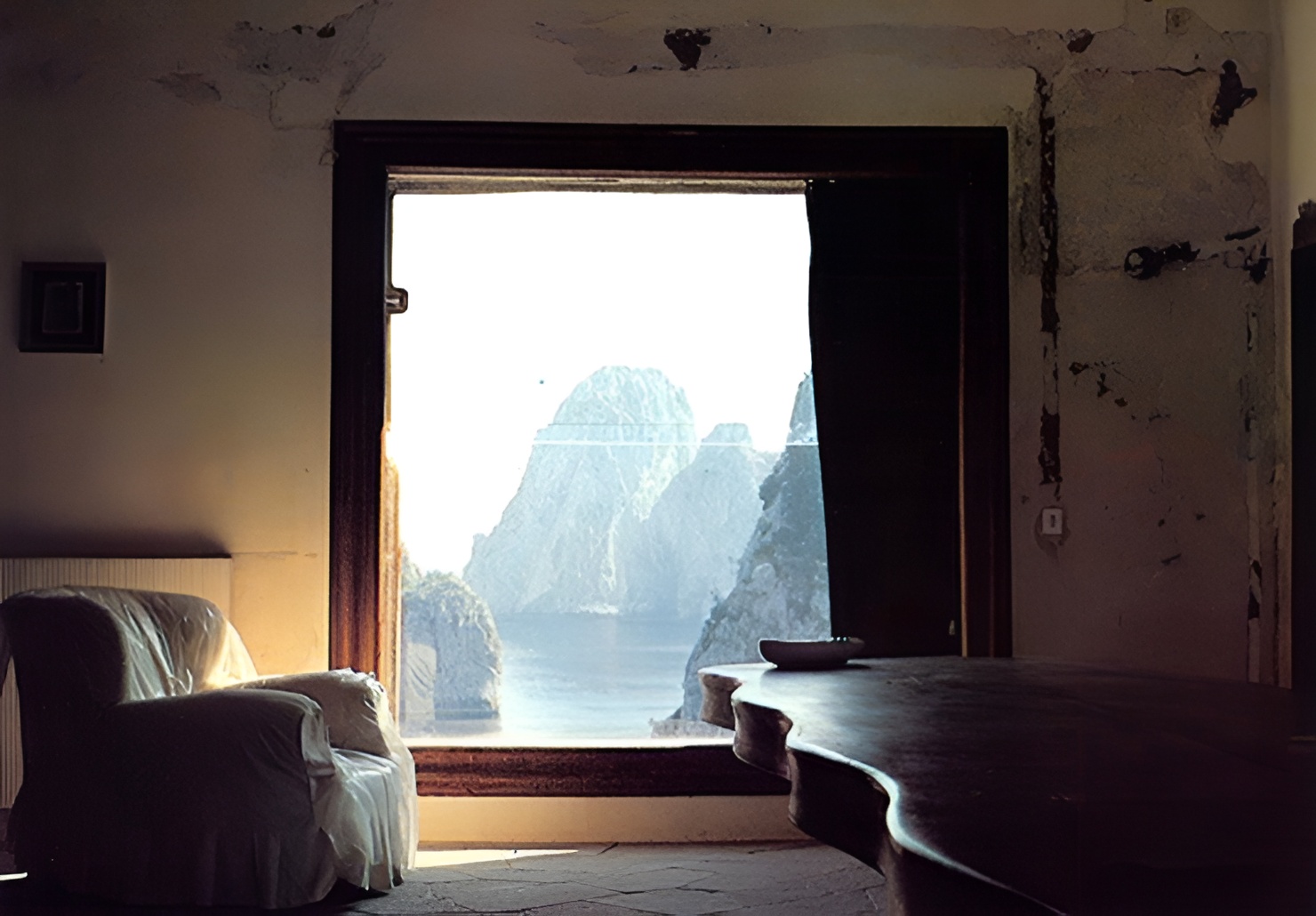
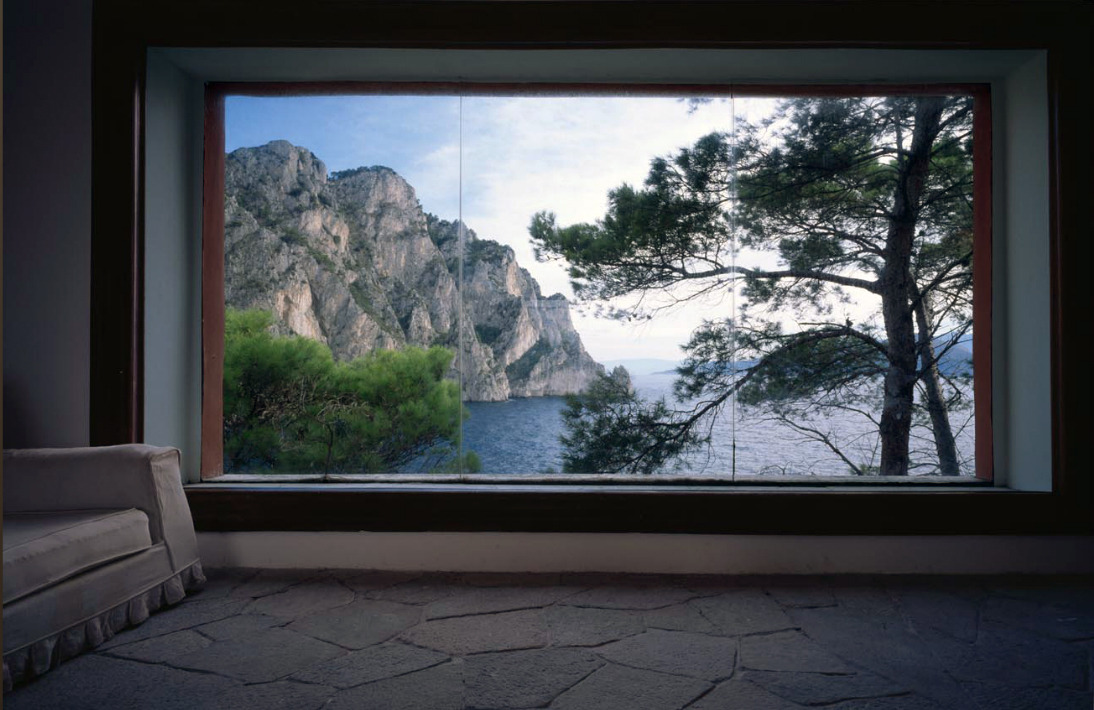
The house establishes a dual relationship with its site. The geometry asserts autonomy through a clear volumetric presence and a distinct red surface, often described as Pompeian red. At the same time, the use of local stone and the alignment of the elongated form with the promontory anchor the building to its terrain. The inclined stair echoes the slope of the cliff, reinforcing a connection between constructed form and natural topography.
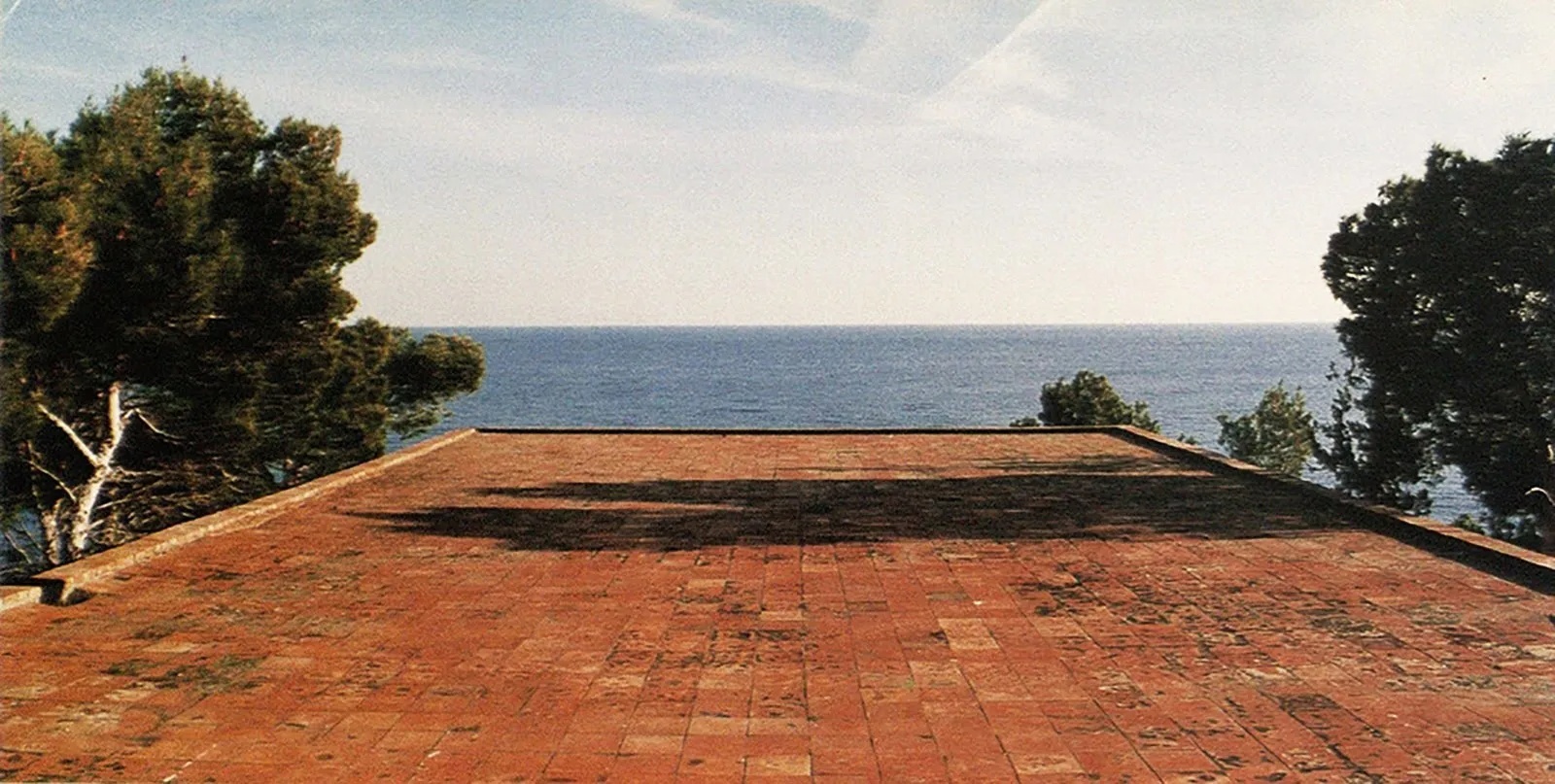
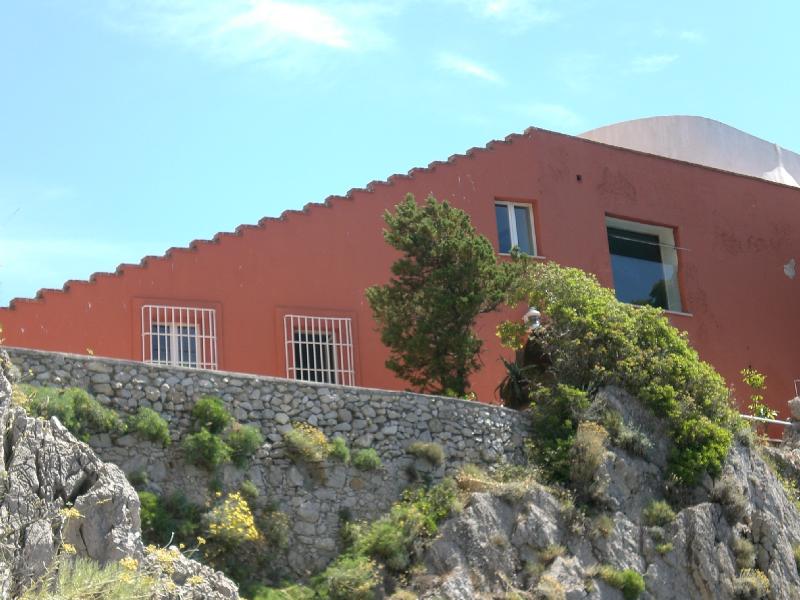
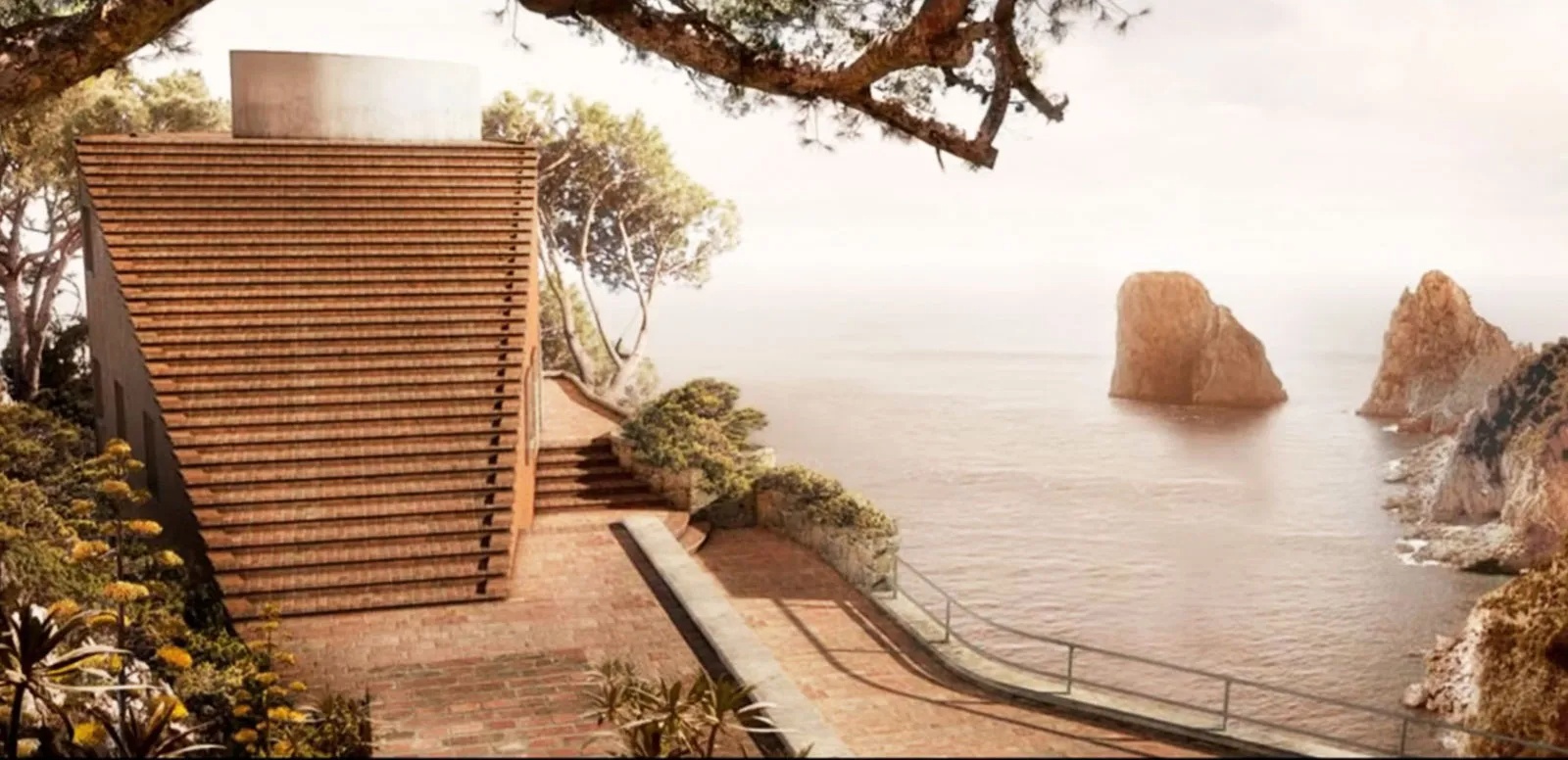
Villa Malaparte extends beyond architecture into cultural discourse. The house gained international recognition through its appearance in Jean-Luc Godard’s film Le Mépris (1963), where the architecture plays a central role in the narrative structure. After Malaparte died in 1957, the building entered a period of abandonment and deterioration. Restoration efforts began in the late 1980s and early 1990s under Niccolò Rositani, returning the house to a stable condition while preserving much of its original character.
Villa Malaparte persists as a work defined by contradiction: architect and client, rationalism and personal expression, object and landscape. The project remains a precise example of how authorship, site, and spatial intent can converge into a singular architectural statement.
Project Gallery
Project Location
Address: Punta Massullo, 80076 Capri, Metropolitan City of Naples, Campania, Italy
Location is for general reference and may represent a city or country, not necessarily a precise address.

