

Architects: Skidmore, Owings & Merrill (SOM)
Area: 413,960 m² (4,455,844 ft²)
Year: 1974
Photography: SOM
Lead Architect: Bruce Graham
Structural Engineer: Fazlur Rahman Khan
MEP Engineering: Jaros, Baum & Bolles
Contractor: Diesel Construction Company
Manufacturers: Kuraray, Campolonghi
Client: Sears, Roebuck & Co.
City: Chicago
Country: United States
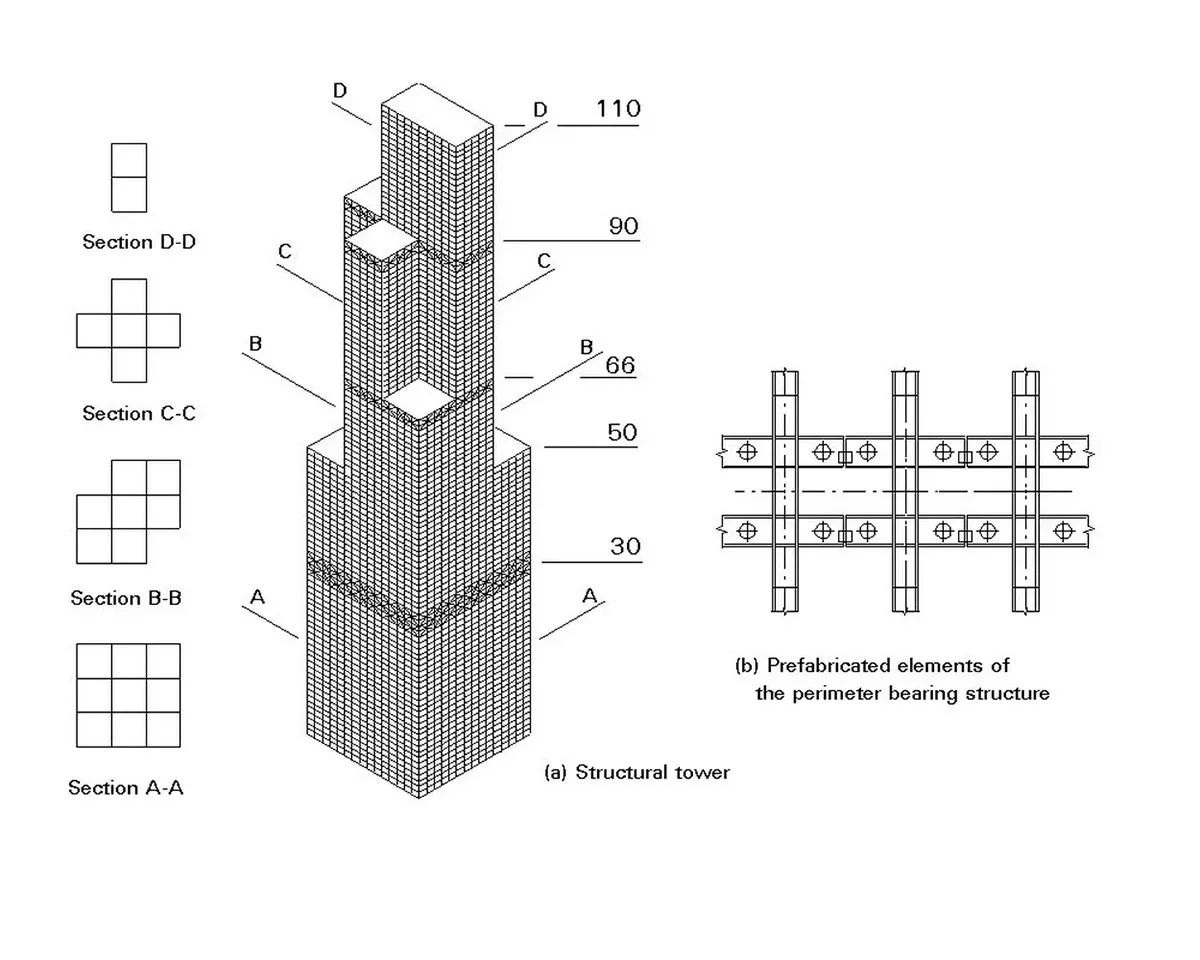
Willis Tower (Sears Tower), an office skyscraper designed by Skidmore, Owings & Merrill in Chicago, has redefined tall-building design through a bundled-tube structural system developed for Sears, Roebuck & Co. and completed in 1974. Formerly known as Sears Tower, the project consolidated the company’s dispersed offices into a single headquarters while providing flexible, rentable floors for future tenants. The tower organizes nine 75-foot-by-75-foot square tubes in a 3-by-3 matrix, allowing the structure to rise in stepped setbacks that respond to program, wind loads, and rentable floor-area needs. Willis Tower advances structural engineering through Fazlur Rahman Khan’s bundled-tube system, which reduced steel use while enabling large column-free office floors at the base and smaller plates at upper levels. The building’s black aluminum and bronze-tinted glass façade expresses the structure’s vertical logic while moderating light and heat. The project extends its public role through the Skydeck on the 103rd floor and The Ledge, which transformed the observation experience with projecting glass balconies. Willis Tower has influenced skyscraper design worldwide by demonstrating how structure, form, and program can function as a single integrated high-rise system.

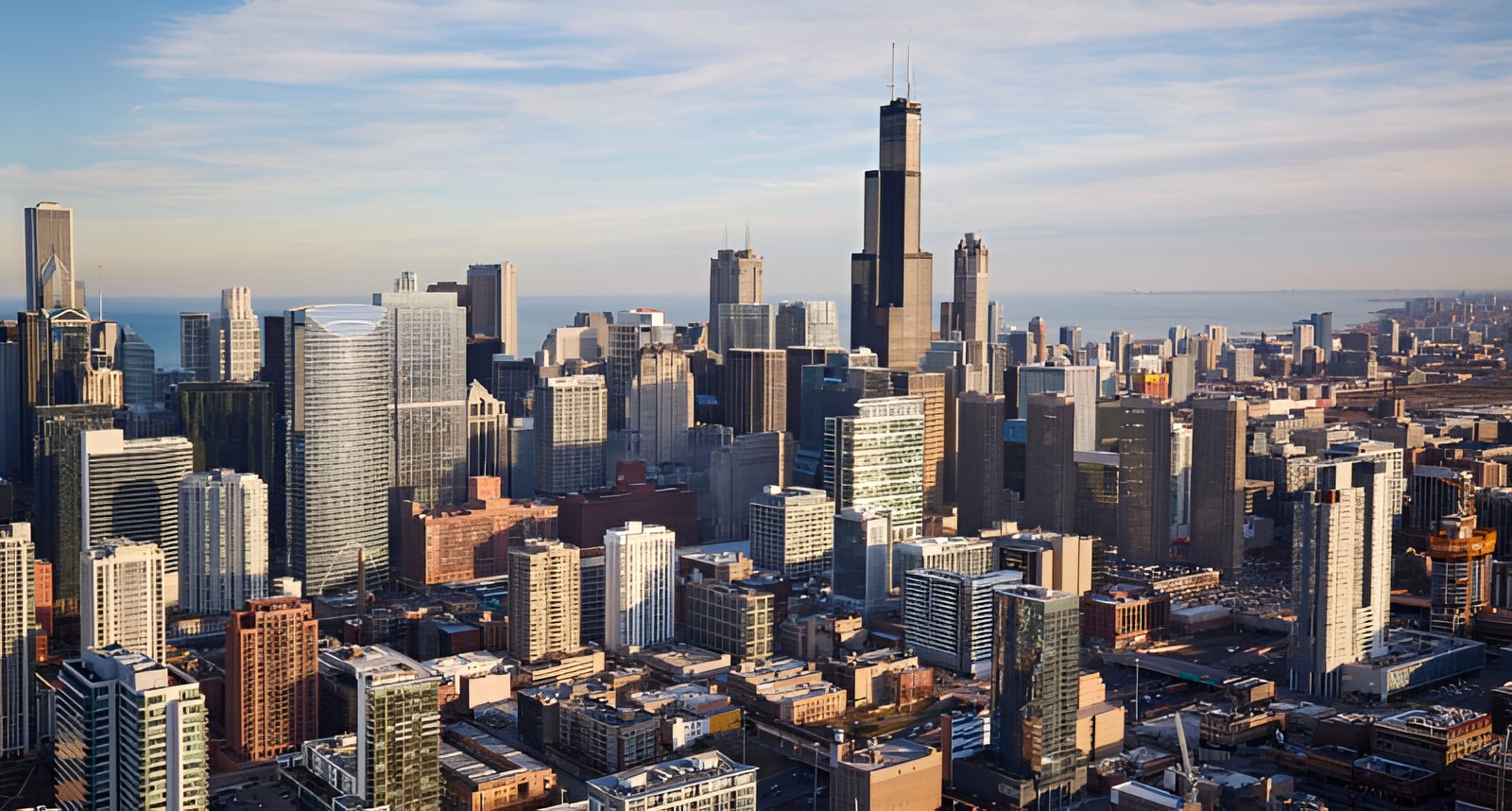
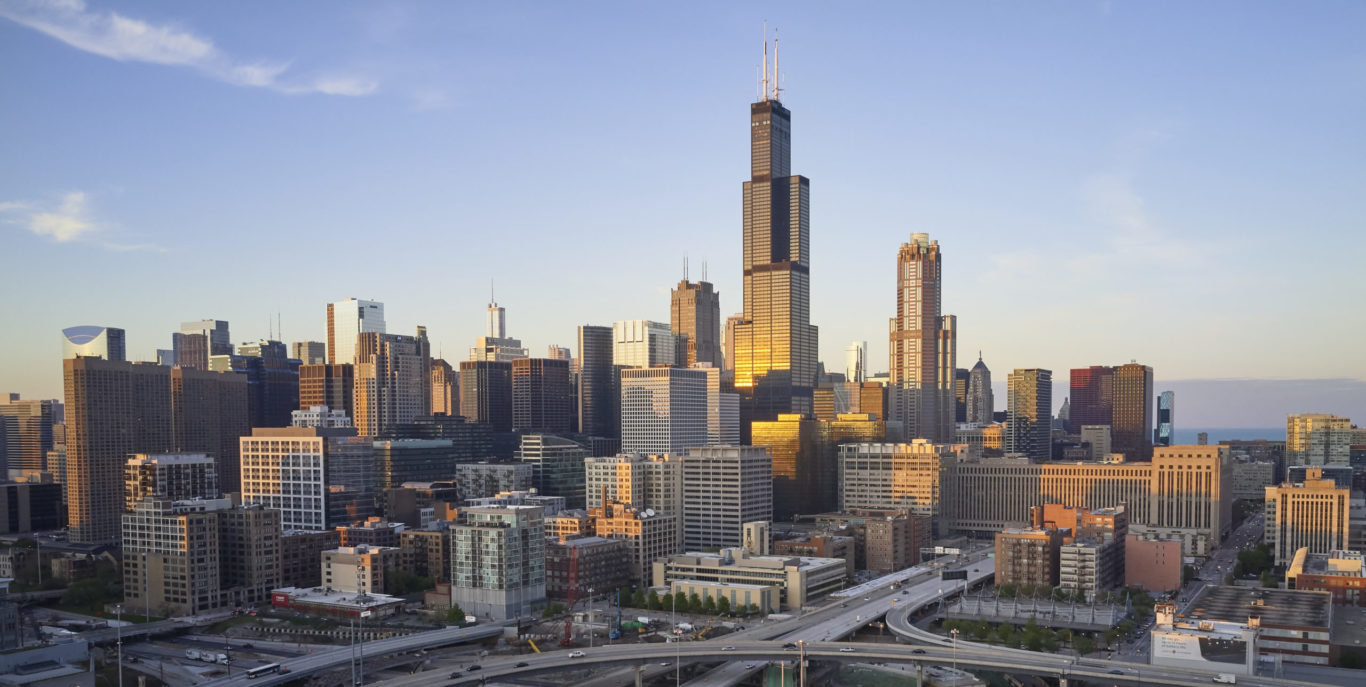
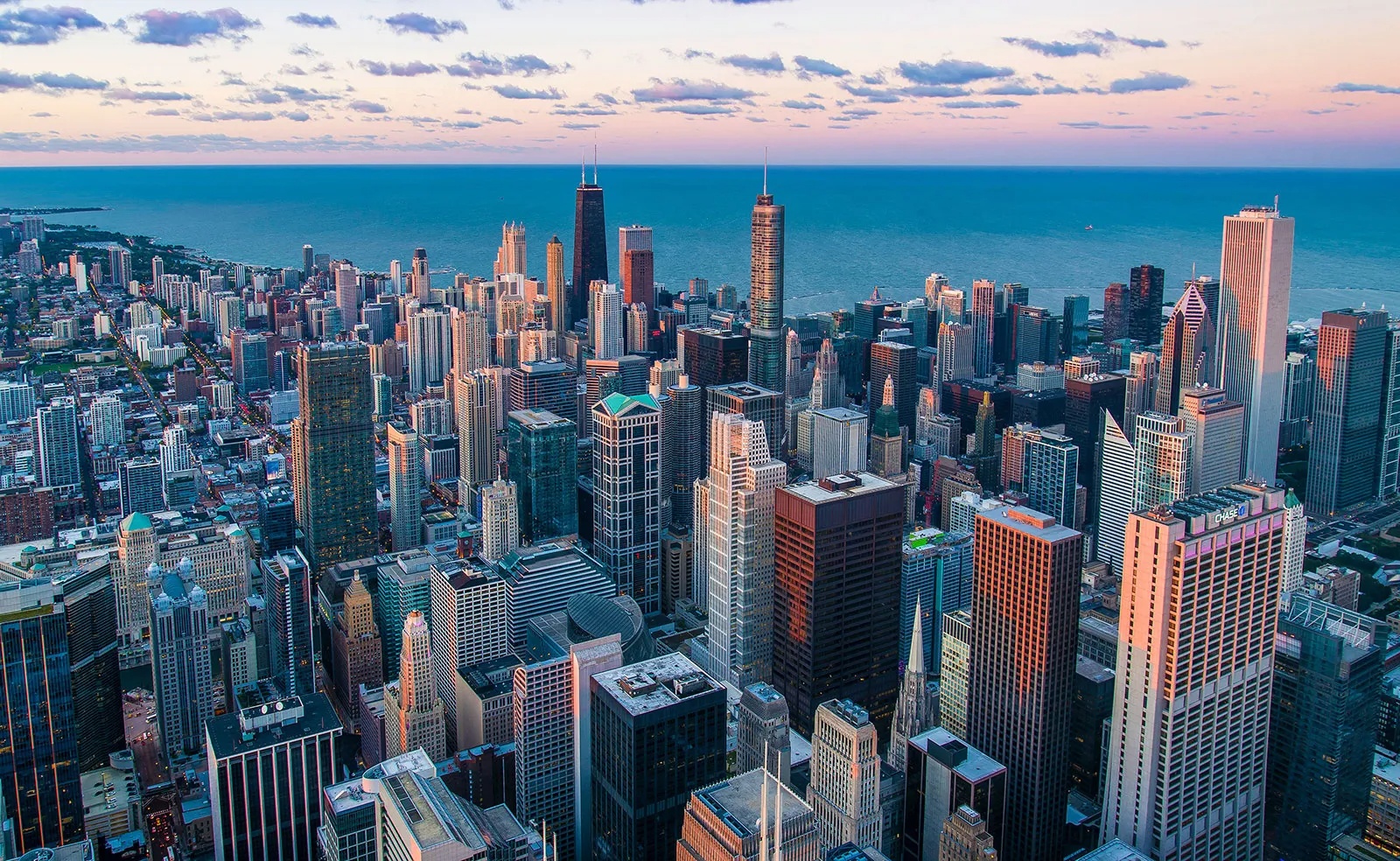
Willis Tower, formerly known as Sears Tower, stands in Chicago’s Loop as one of the most significant skyscrapers of the late twentieth century. Sears, Roebuck & Co. commissioned Skidmore, Owings & Merrill to consolidate its offices across Chicago into a single headquarters with enough space for future growth. The project became a defining moment in corporate high-rise design and held the title of the world’s tallest building for nearly 25 years after completion.
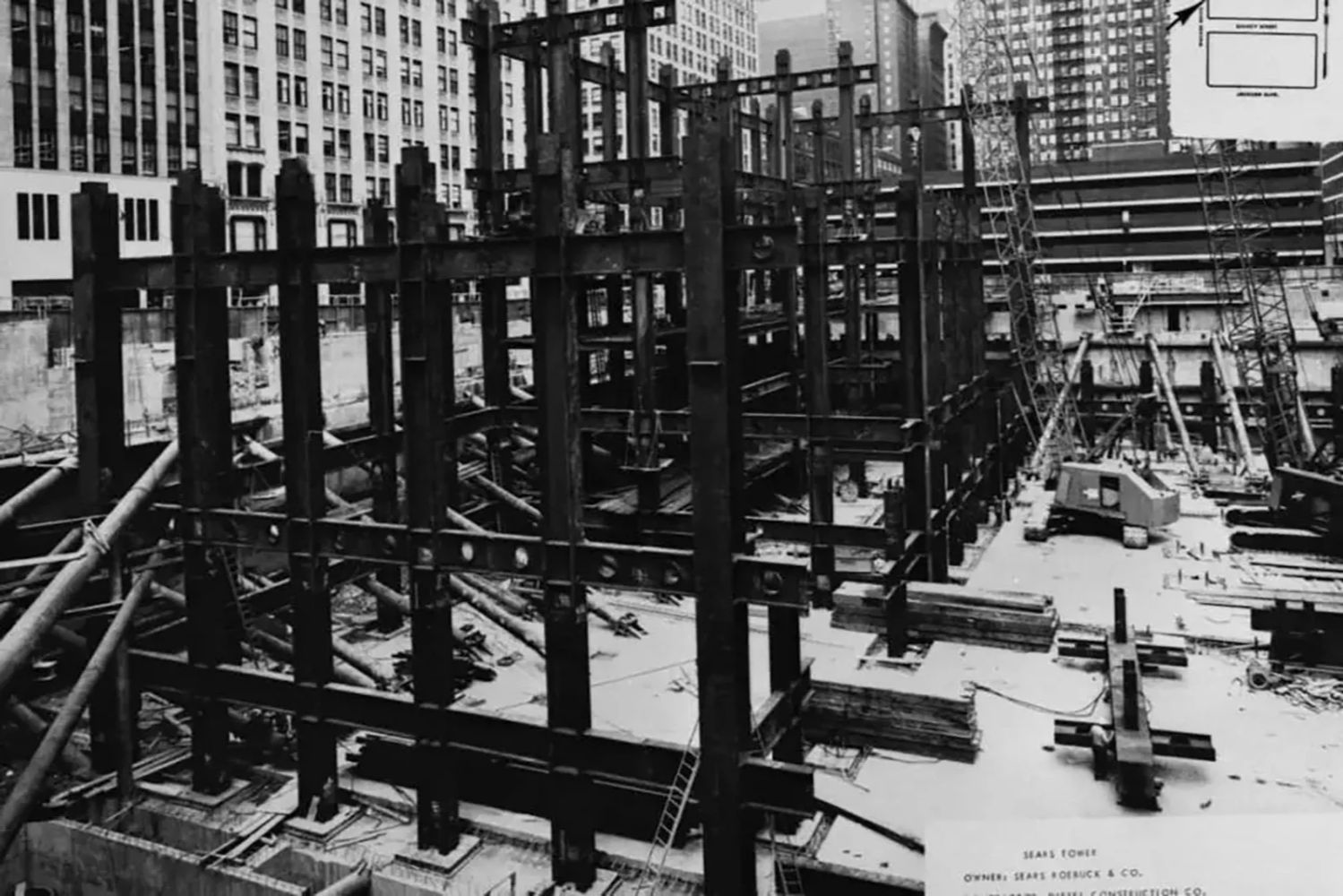
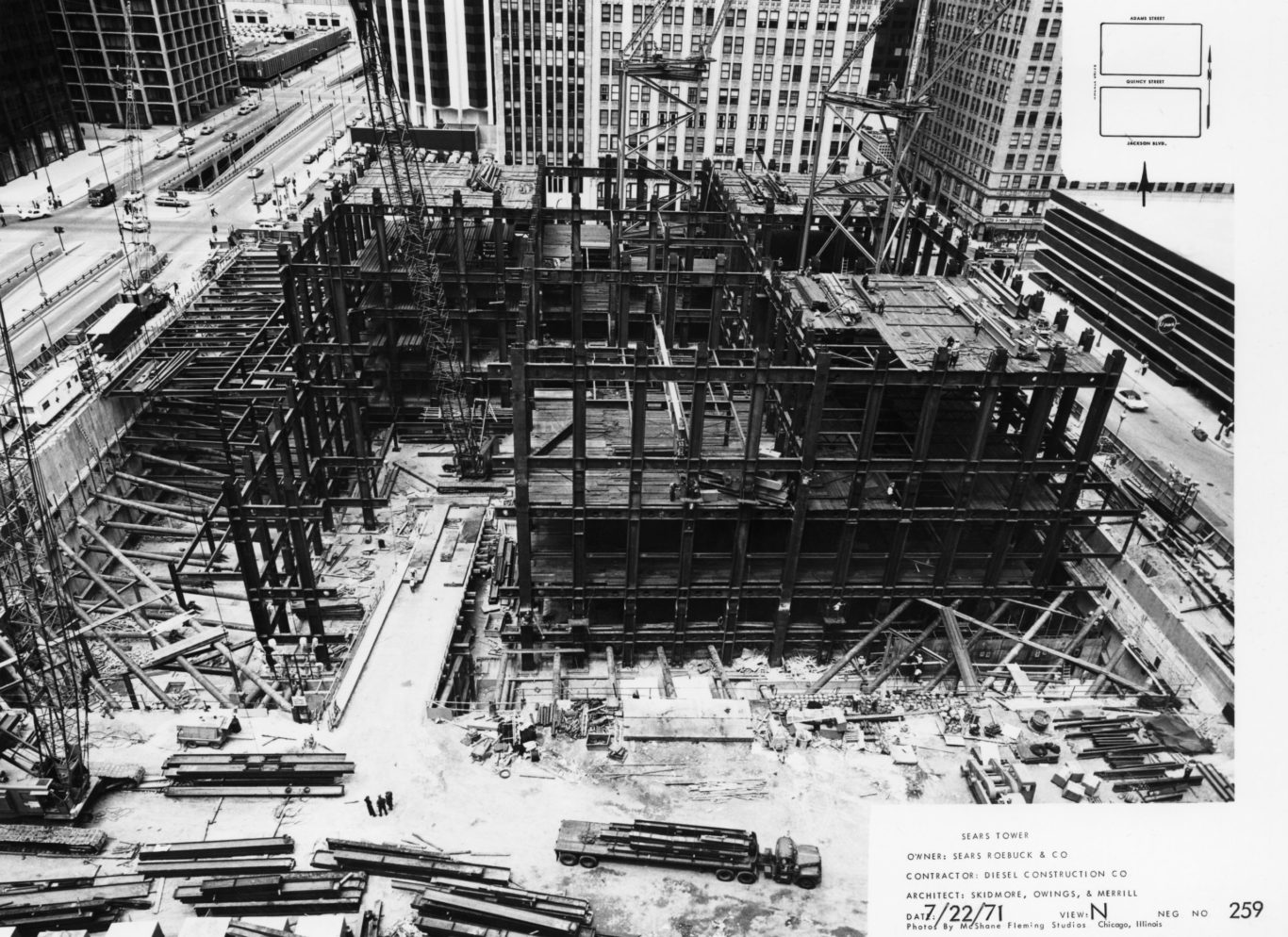


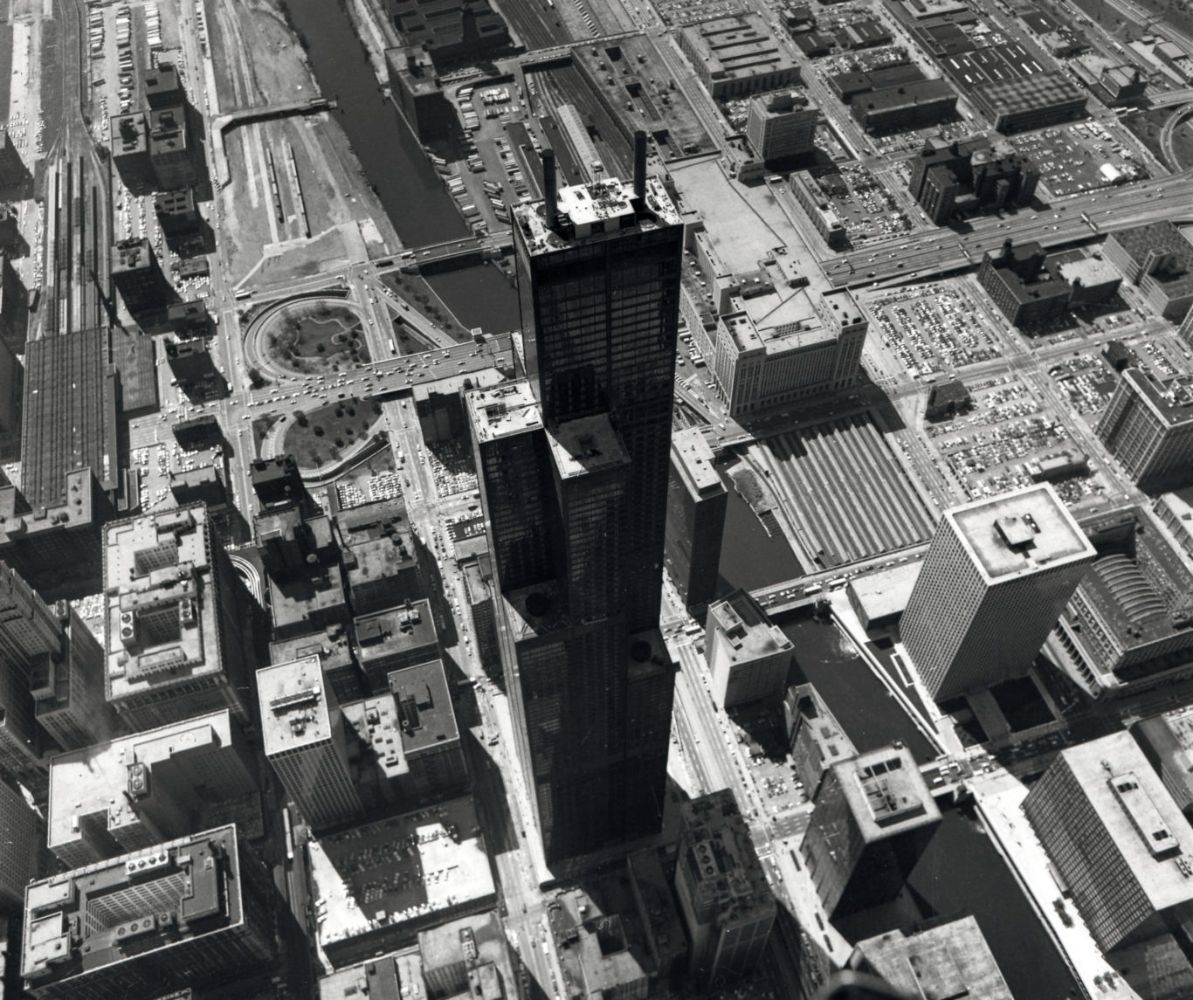


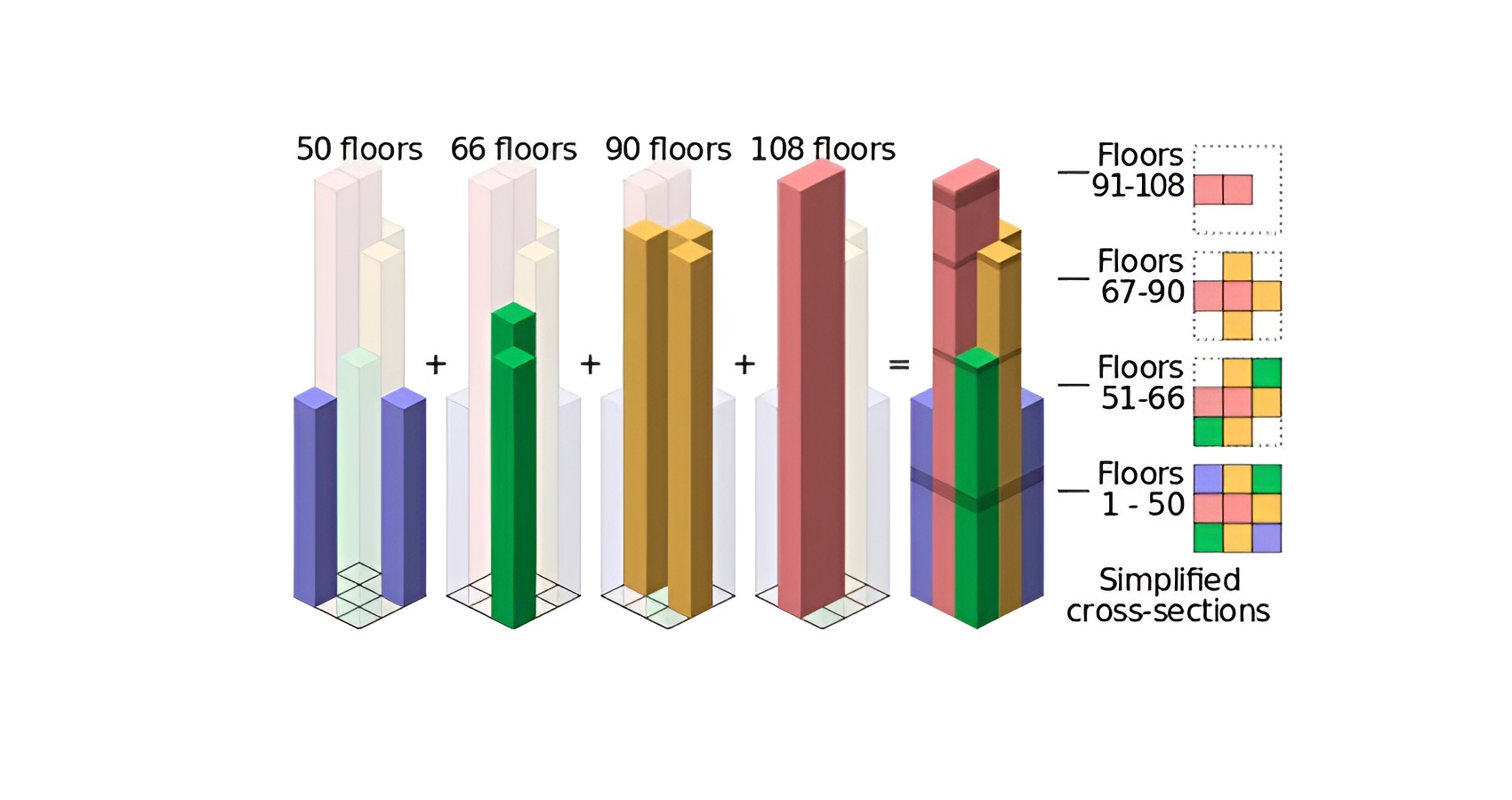
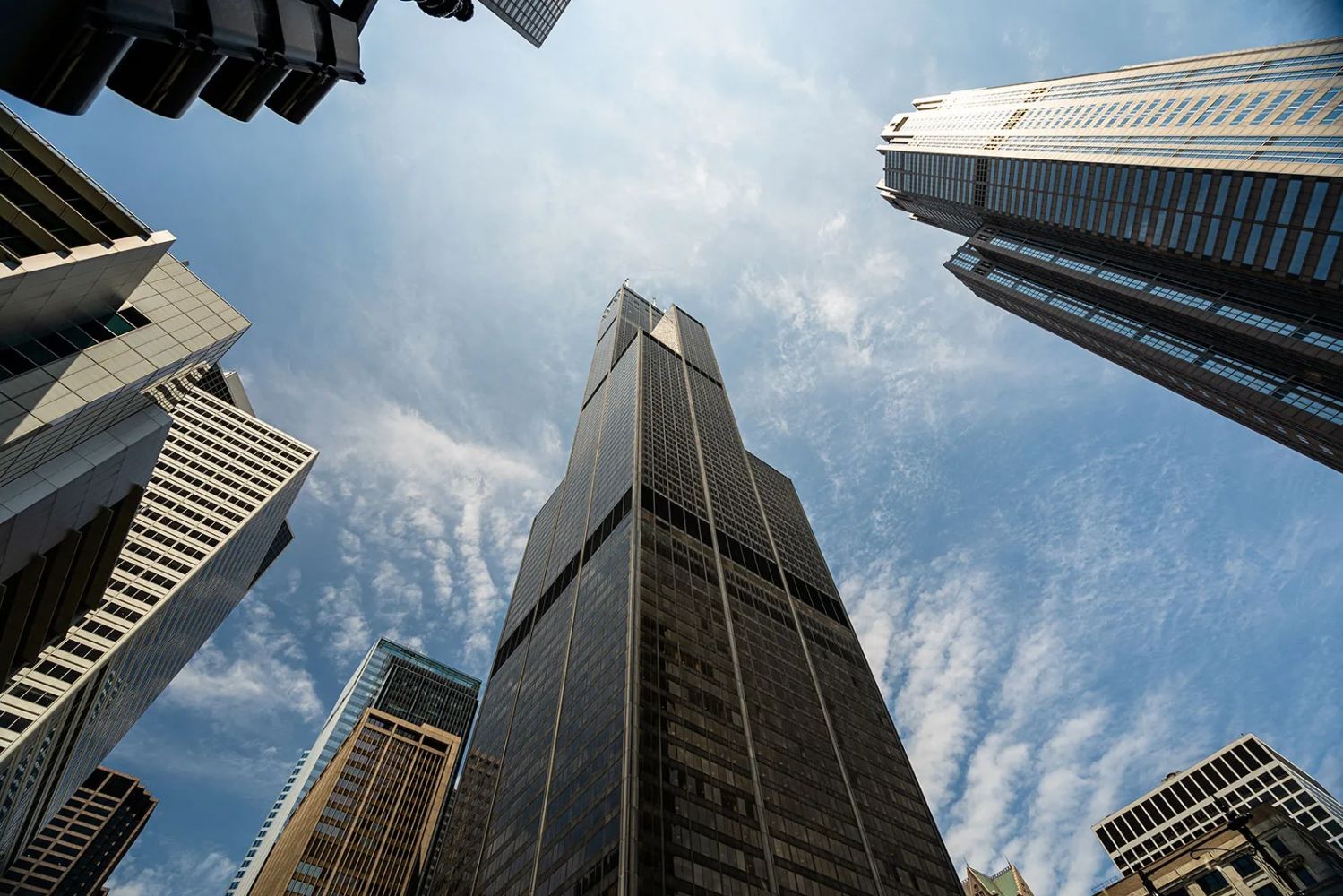
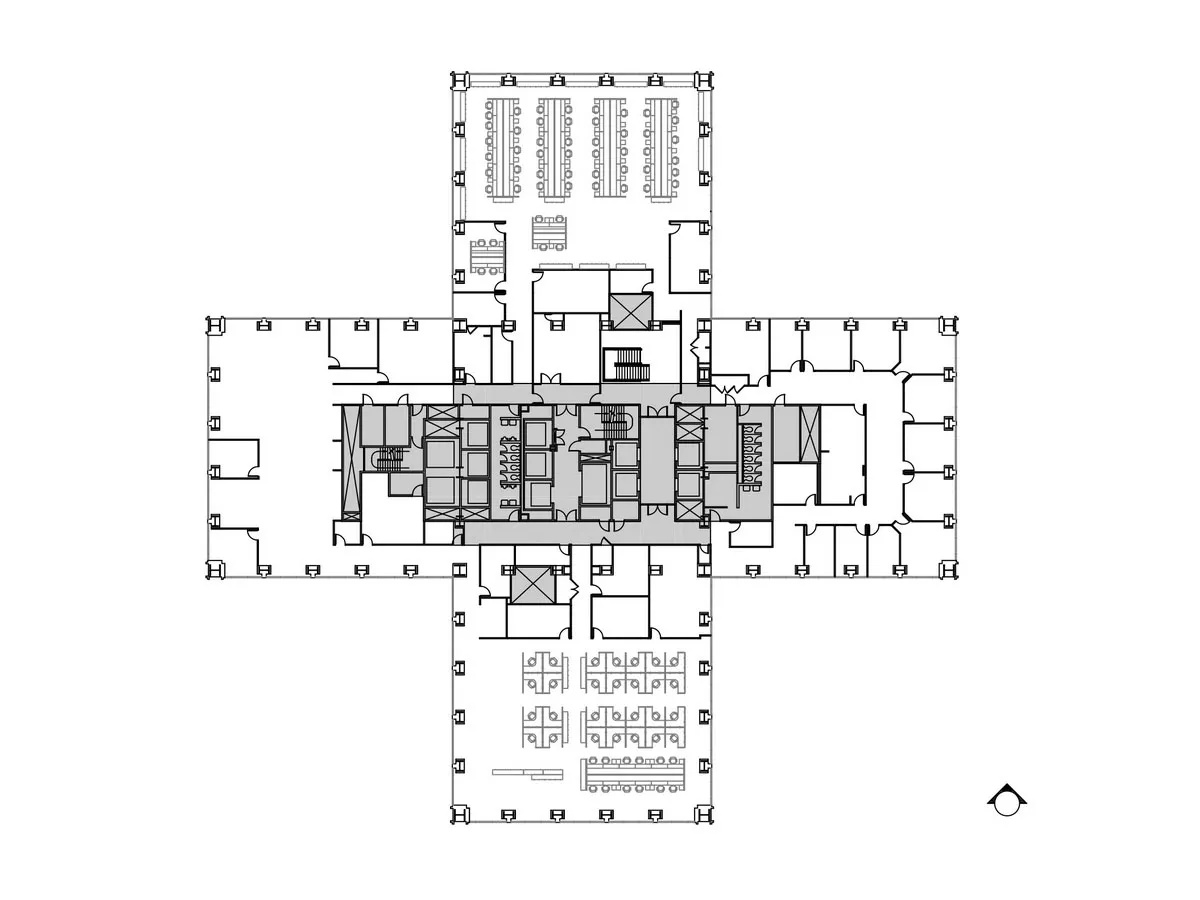
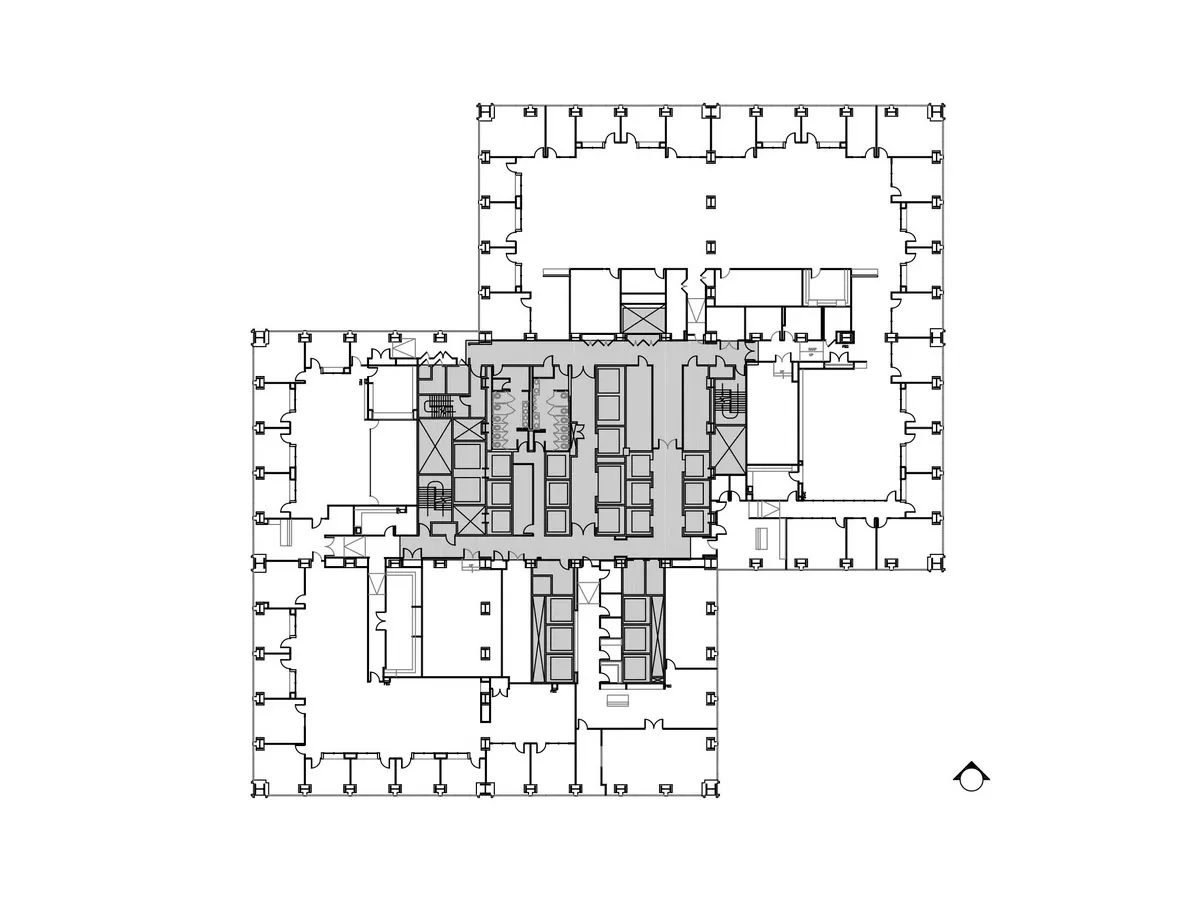
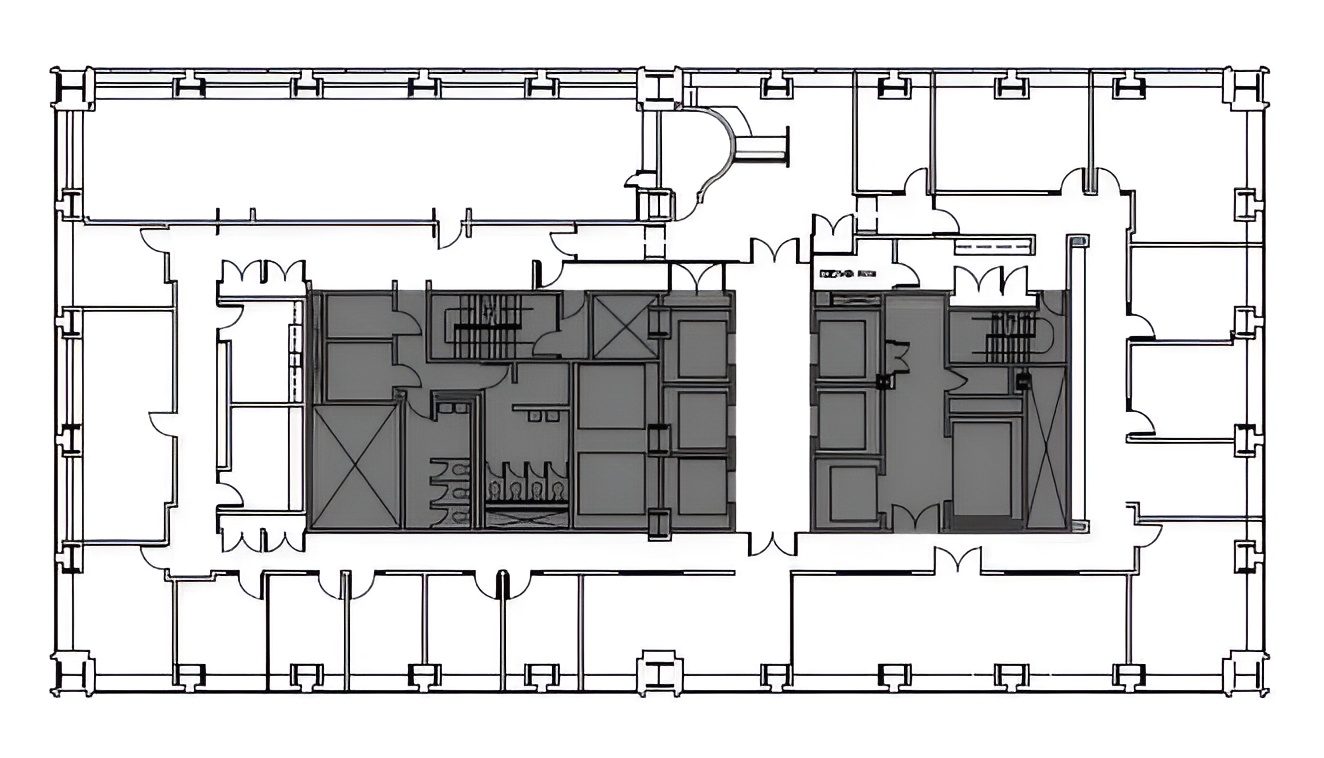
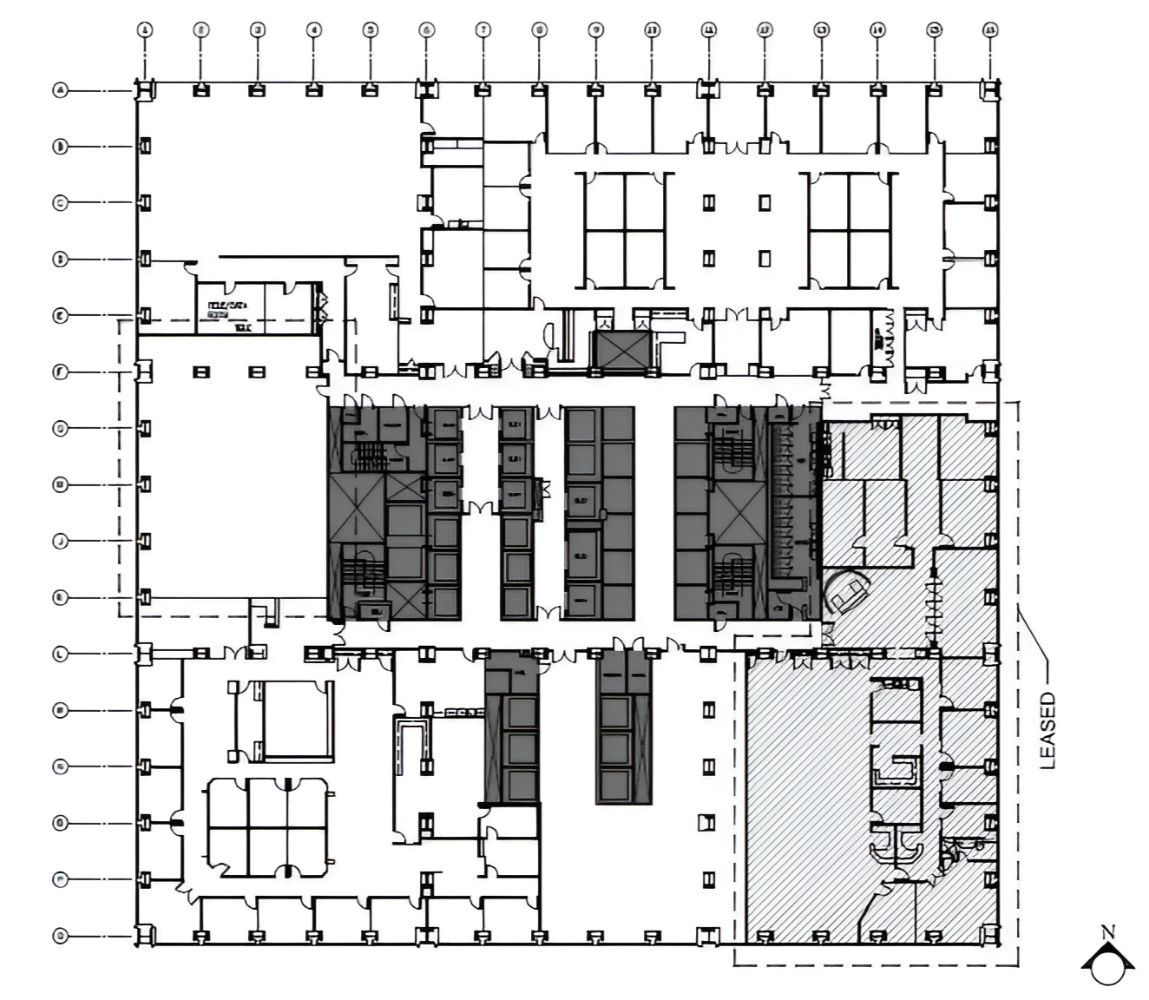
The tower’s form emerged from Sears’s need for both large and smaller office spaces. SOM developed a stepped volume composed of nine bundled structural tubes, each measuring 75 feet by 75 feet and terminating at different heights to form the building’s tiered profile. Fazlur Rahman Khan’s bundled-tube system defines the building’s engineering logic, with the nine tubes acting as a rigid structural frame that resists wind forces while reducing steel use. This configuration allowed large open floors for Sears in the lower levels and smaller rentable floors above, while enabling the tower to reach exceptional height with efficient material use.

The façade reinforces this structural order. Black aluminum cladding and bronze-tinted glass panels wrap the tower, while mechanical bands mark several levels across the elevation. The exterior reflects the building’s modular logic and gives the tower its dense, vertical presence on the skyline.


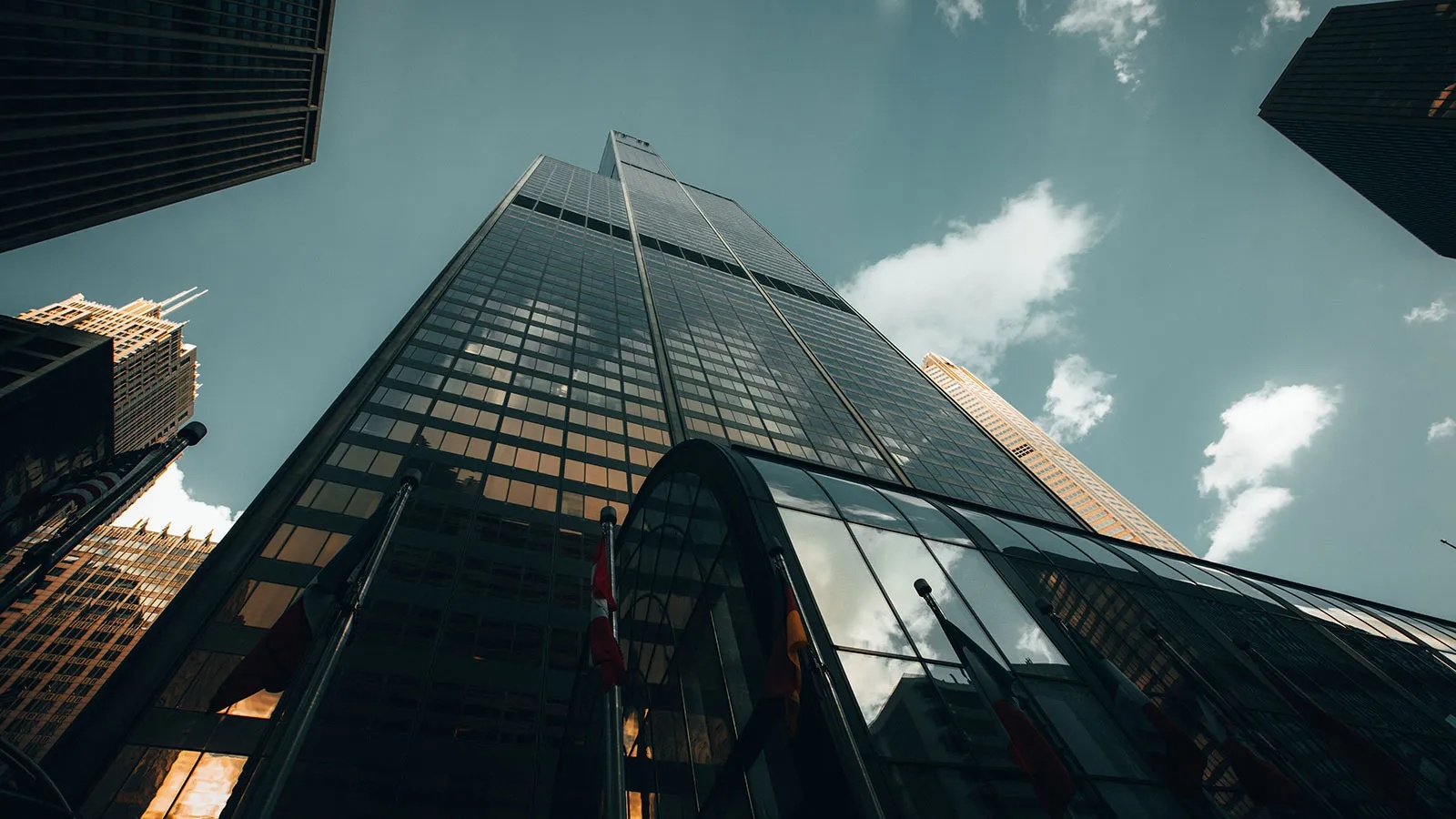
The building’s interior was designed around flexibility and scale. Large lower floors supported Sears’s corporate operations, while the upper levels provided rentable office space with wider views across the city. Sky lobbies, elevator banks, mechanical floors, and service systems were organized to manage the movement and infrastructure demands of a 110-story building.

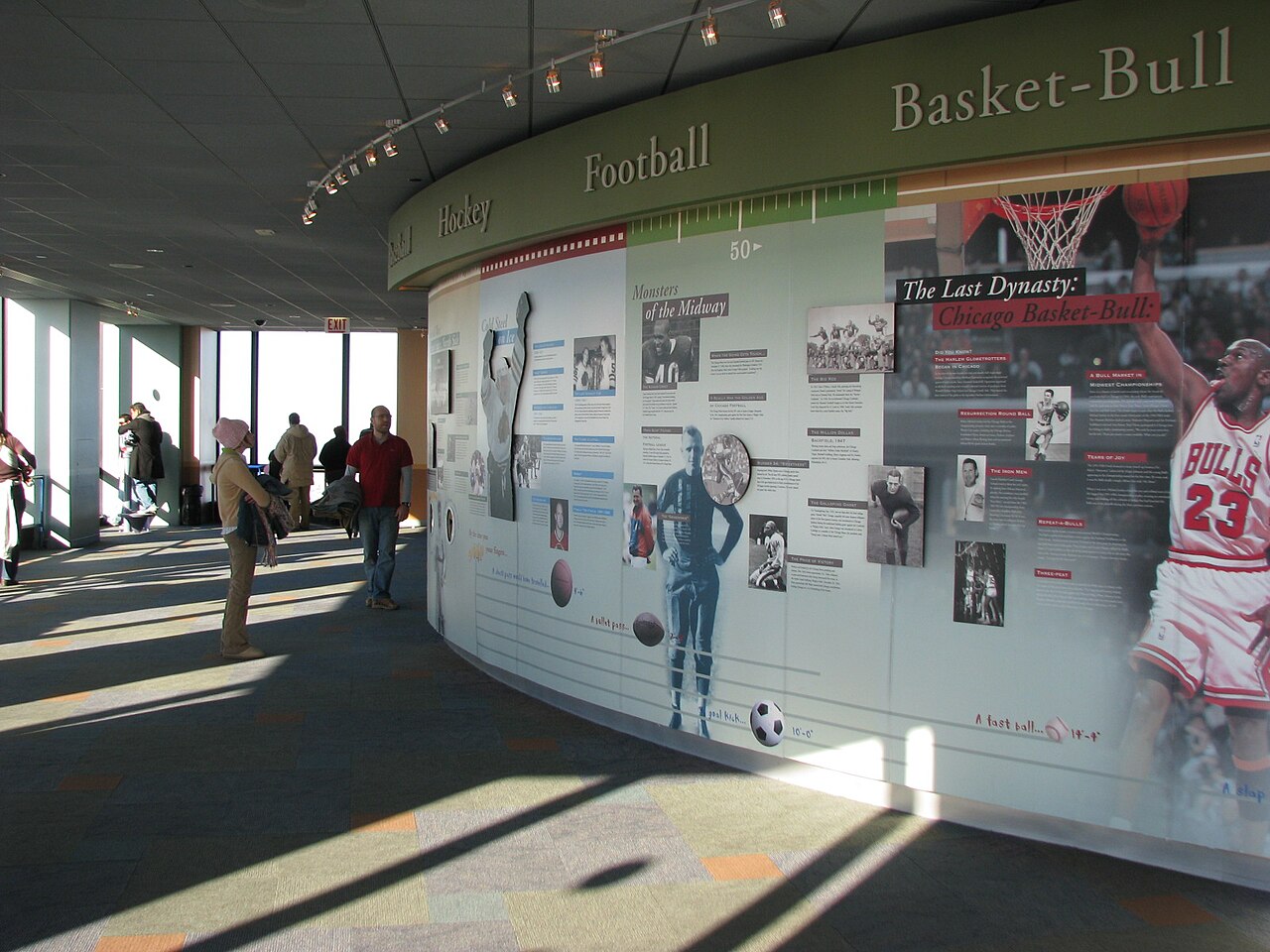

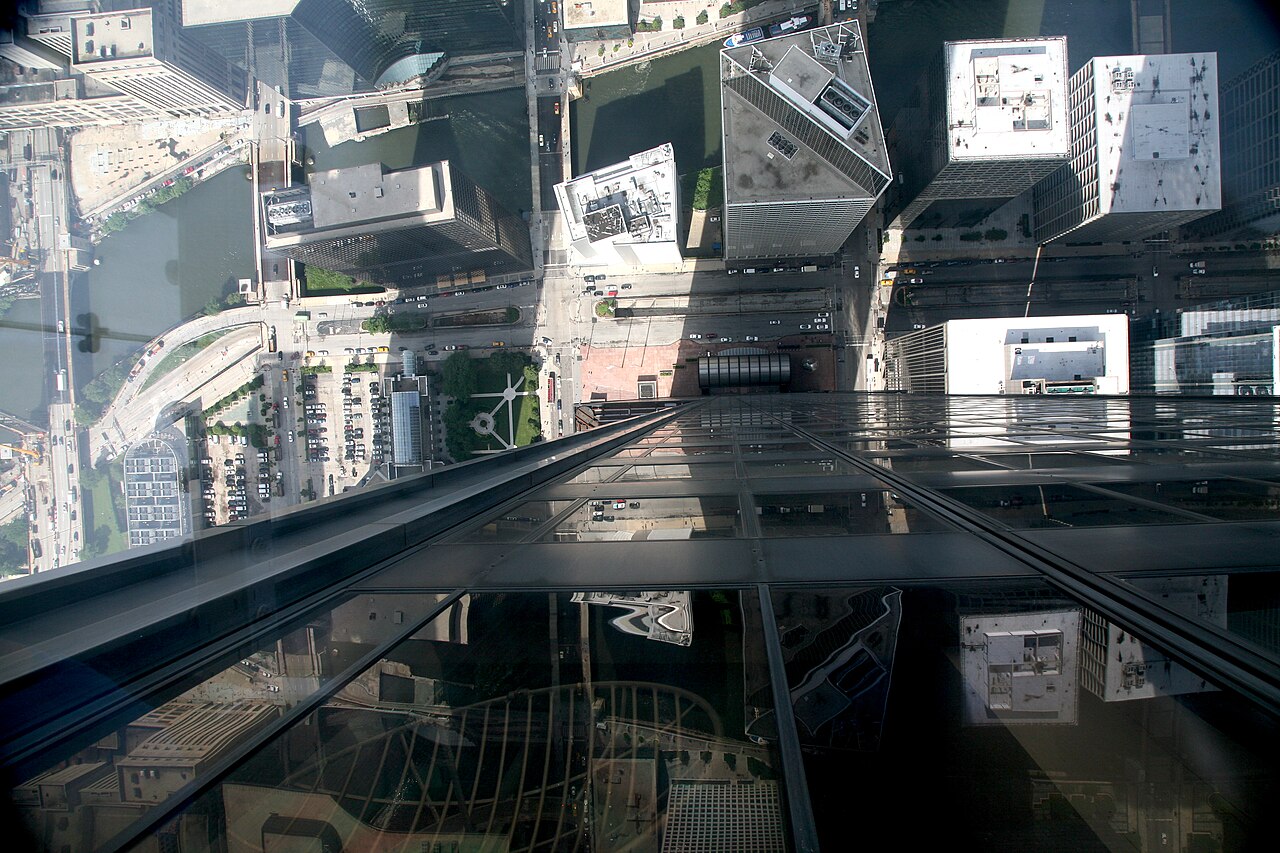
Willis Tower extends beyond its office function through the Skydeck on the 103rd floor. The observation deck became one of Chicago’s major public attractions, offering wide views across the city, Lake Michigan, and neighboring states on clear days. In 2009, The Ledge added glass balconies projecting from the façade, intensifying the tower’s public experience.

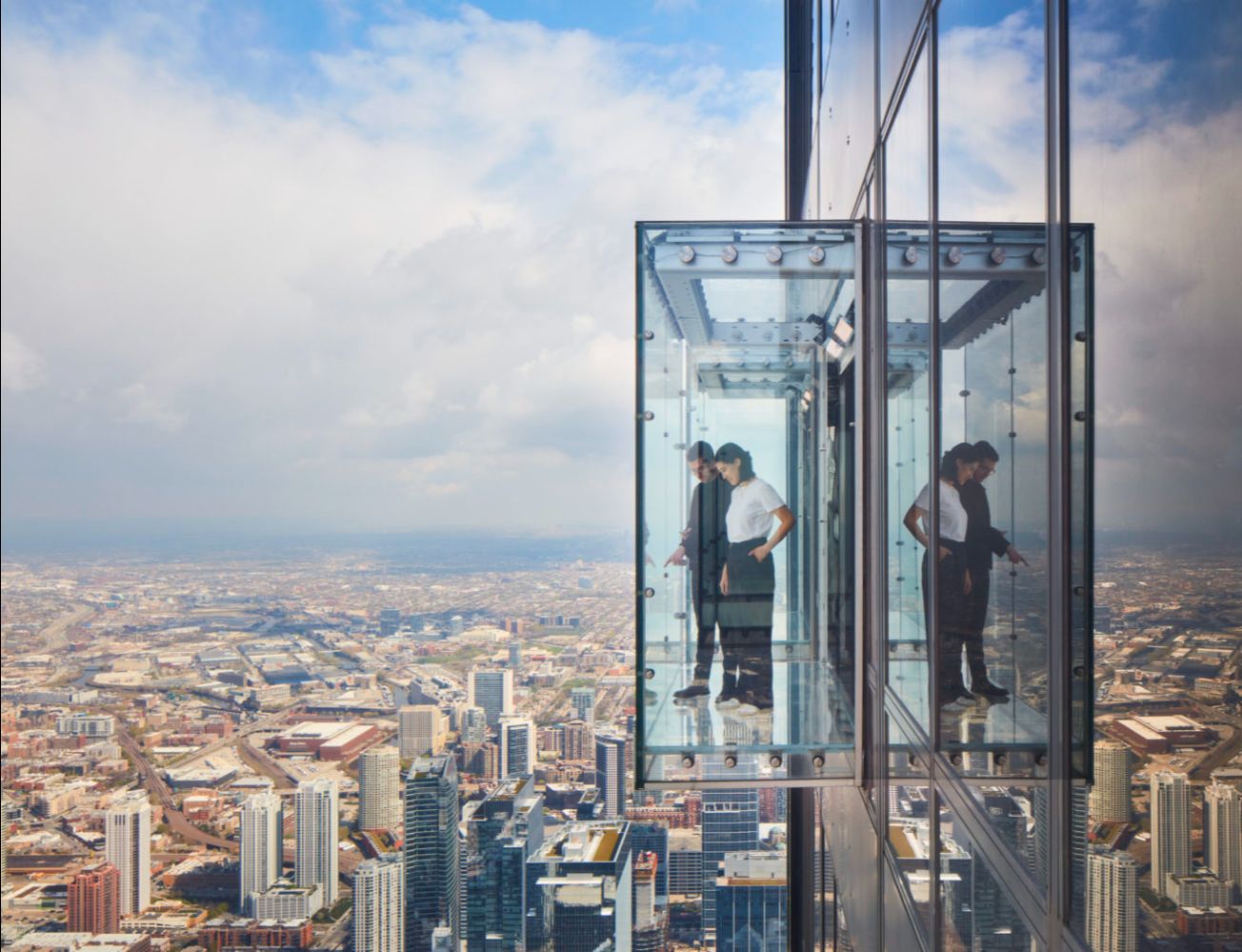



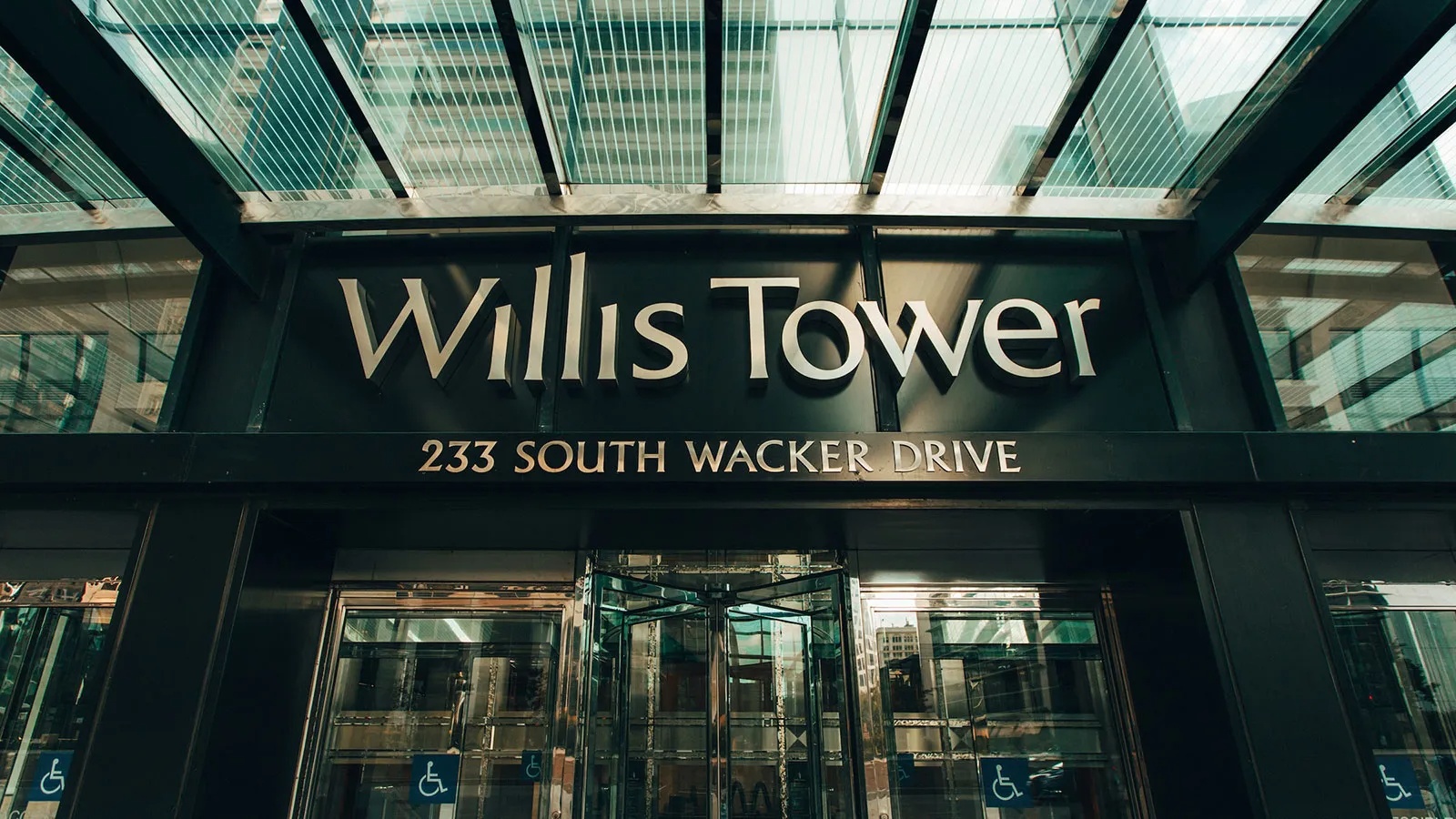
The tower’s later history reflects shifts in corporate ownership and urban use. Sears vacated the building in the 1990s, and the tower was renamed Willis Tower in 2009 after Willis Group Holdings acquired naming rights. Subsequent renovations, including major improvements under Blackstone ownership, expanded the base with retail, dining, tenant amenities, and updated visitor facilities.

Willis Tower defines a landmark condition in Chicago architecture through the integration of height, structure, and program as a single system. The bundled-tube concept shaped later supertall buildings and established a model in which structural engineering directly informs architectural form.

Project Gallery












Project Location
Address: 233 South Wacker Drive, Chicago, Illinois 60606, United States
Location is for general reference and may represent a city or country, not necessarily a precise address.

